Chapter 1: Writing And City Life
Picture a man sitting in the shade of a temple storeroom in Uruk, a city in southern Mesopotamia, around 3200 BCE. Sacks are being carried in from the fields, and animals are being driven through the gate. He must record what arrives.
He wets a lump of clay, pats it into a lozenge he can hold in one hand — no taller than a few finger-widths — and smoothens its surface with care. Then, with the sharp end of a reed, he presses in small picture-like signs: an ox, a fish, a loaf of bread, and beside each of them a number. The clay is drying as he works, and once it dries no sign can be added. So he must finish before it hardens.
The tablet is not literature. It is a receipt. When the delivery it records no longer matters, someone throws it out.
That is the whole point. The discarded tablet dries in the sun, hardens like pottery, and lies in the rubbish of the city for five thousand years — until an archaeologist lifts it out of the earth. Thousands of such tablets survive. They are the reason we can say what was carried into a temple in Uruk on an ordinary morning, and the reason we know more about Mesopotamian cities than about many places far closer to us in time.
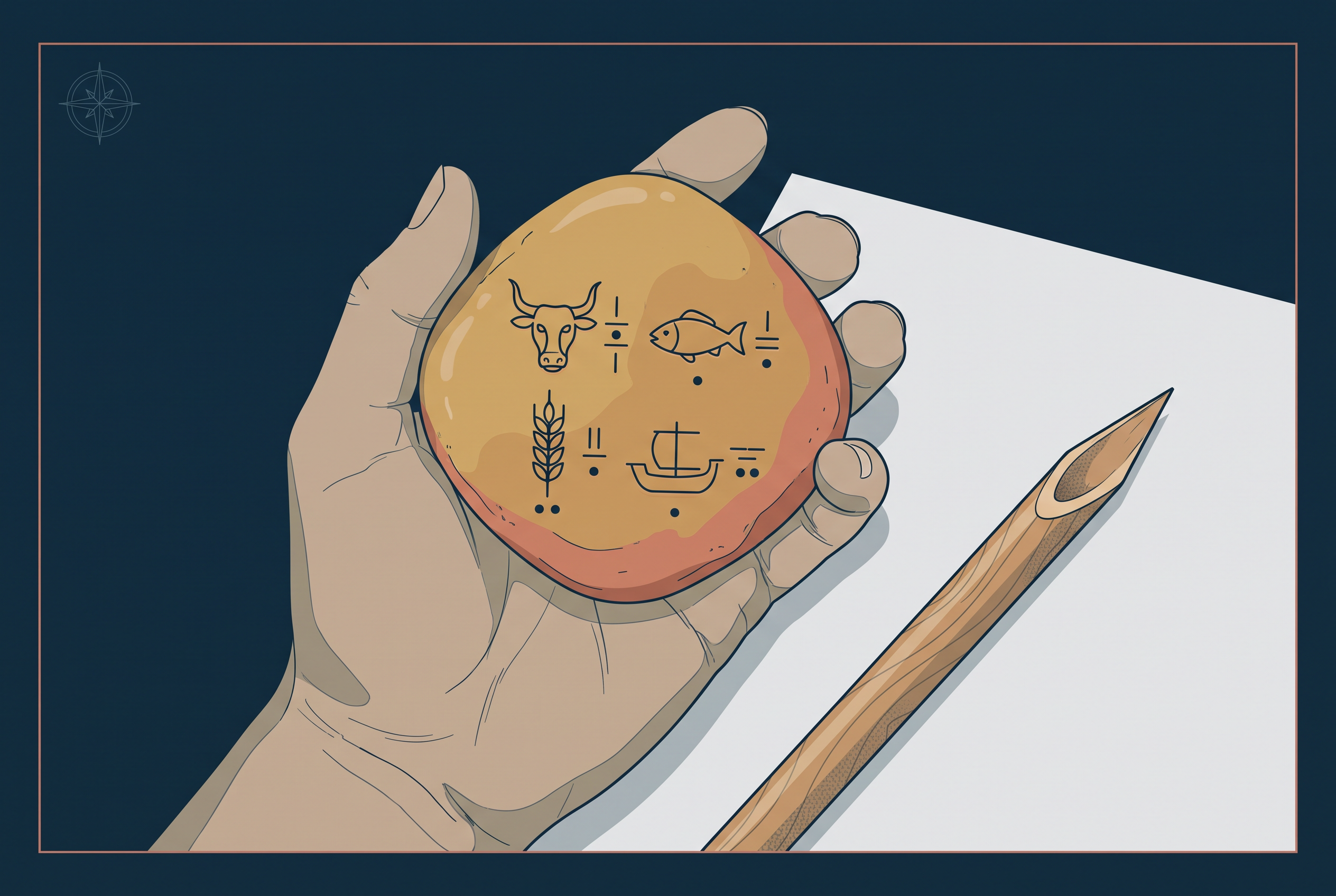
Fig. 1.0 – A scribe’s tablet and reed stylus.
1.1 Introduction
City life began in Mesopotamia. The name belongs to the land between the Euphrates and the Tigris rivers, which is now part of the Republic of Iraq. The word itself is Greek: mesos means middle, and potamos means river. So ‘Mesopotamia’ says nothing about the people who lived there — it simply describes a land held between two rivers.
Mesopotamian civilisation is known for its prosperity and its city life, for a large and rich literature, and for its mathematics and astronomy. It is also known for something more basic than any of these: writing.
After 2000 BCE, Mesopotamia’s writing system and its literature spread west and north — to the eastern Mediterranean, to northern Syria, and to Turkey. The kingdoms of that whole region then wrote to one another, and to the Pharaoh of Egypt, in the language and script of Mesopotamia. A script invented for keeping accounts in one small corner of the world had become the diplomatic writing of many kingdoms.
This chapter explores the connection between city life and writing, and then looks at some of the outcomes of a tradition of writing that was sustained for thousands of years.
What The Land Was Called
The land did not carry one name for all of its history. In the beginning of recorded history, the land — mainly the urbanised south, which we shall come to below — was called Sumer and Akkad.
After 2000 BCE, when Babylon became an important city, the term Babylonia was used for the southern region. From about 1100 BCE, when the Assyrians established their kingdom in the north, the region became known as Assyria. The names shifted because power shifted, and a student should read each name as a clue to who was dominant, and when.
Languages Of The Land
The languages changed too. The first known language of the land was Sumerian. It was gradually replaced by Akkadian around 2400 BCE, when Akkadian speakers arrived.
Akkadian flourished for a very long time — until about the time of Alexander, the conqueror from Macedonia who took Babylon, whose campaigns fall between 336 and 323 BCE. Over those centuries the language absorbed regional changes, but it did not die out.
From 1400 BCE, Aramaic also trickled in. This language, similar to Hebrew, became widely spoken after 1000 BCE. It is still spoken in parts of Iraq today. The sequence is set out in Fig. 1.1.
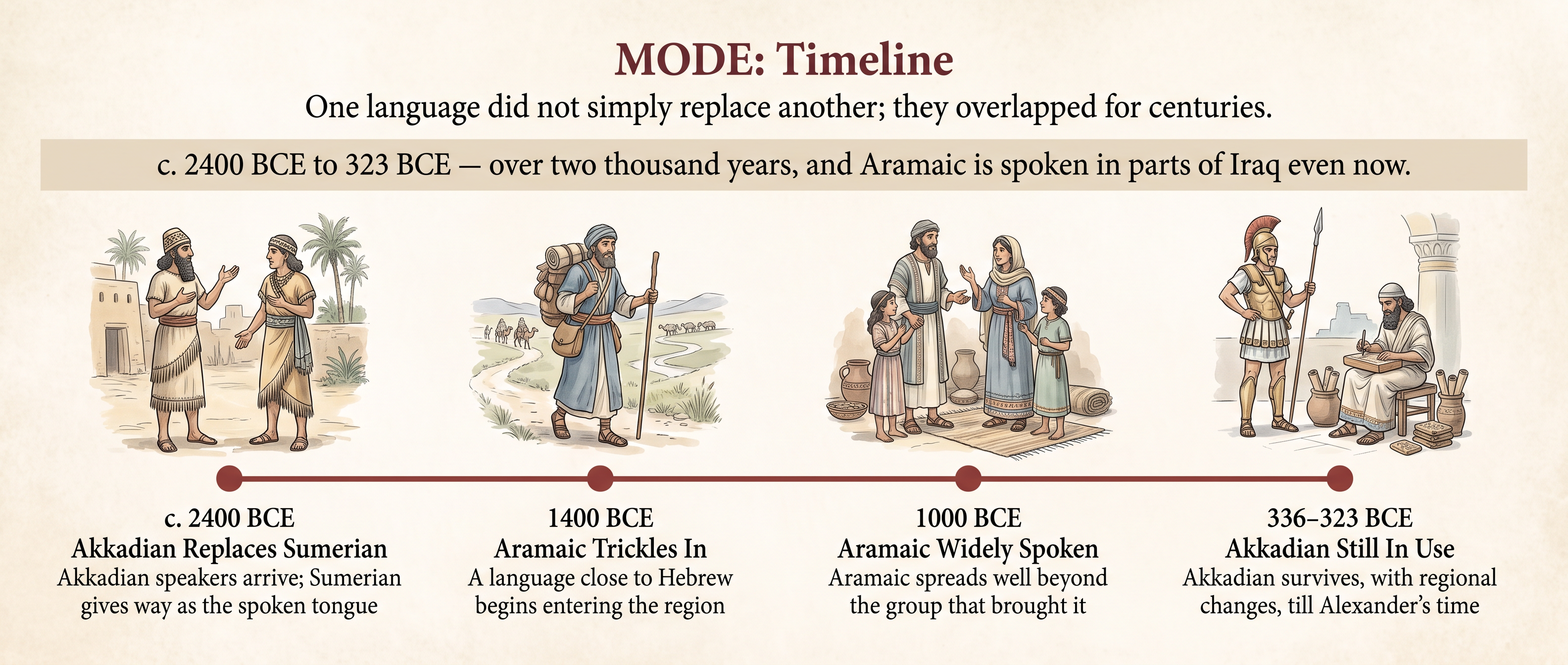
Fig. 1.1 – The Languages Of Mesopotamia.
How Mesopotamia Was Rediscovered
Archaeology is the study of the past through what people left behind in the ground — buildings, tools, bones, pots, graves. Archaeology in Mesopotamia began in the 1840s.
At one or two sites, including Uruk and Mari, which we discuss later in this chapter, excavations continued for decades. No Indian site has ever seen such long-term projects. That patience matters: a mound dug for forty years yields a different kind of knowledge from one dug for two seasons.
Because of this work, we can study hundreds of Mesopotamian buildings, statues, ornaments, graves, tools and seals as sources. And alongside all of that, there are thousands of written documents.
Why Europeans Came Digging
Mesopotamia was important to Europeans because of references to it in the Old Testament, the first part of the Bible. The Book of Genesis of the Old Testament refers to ‘Shimar’, meaning Sumer, as a land of brick-built cities.
Travellers and scholars of Europe therefore looked on Mesopotamia as a kind of ancestral land. When archaeological work began in the area, there was an attempt to prove the literal truth of the Old Testament. The diggers, in other words, went out already knowing what they hoped to find — which is exactly the situation a historian must watch for.
From the mid-nineteenth century there was no stopping the enthusiasm for exploring the ancient past of Mesopotamia. In 1873, a British newspaper funded an expedition of the British Museum to search for a tablet narrating the story of the Flood, mentioned in the Bible.
The Flood story that drove that expedition is worth knowing, because a strikingly similar story existed in Mesopotamia itself.
Many societies have myths about floods. These are often ways of preserving and expressing memories about important changes in history. Find out more about such myths, and as you read them, note carefully how life before the flood and life after the flood are represented — what is said to have been lost, and what is said to have begun.
From The Bible To Ordinary Lives
By the 1960s, it was understood that the stories of the Old Testament were not literally true. They may instead have been ways of expressing memories about important changes in history — a real upheaval remembered afterwards as a story.
Gradually, archaeological techniques became far more sophisticated and refined. What is more, attention was directed to different questions, including reconstructing the lives of ordinary people. Establishing the literal truth of Biblical narratives receded into the background.
That shift is the hinge of this chapter. Much of what we discuss in the rest of the chapter is based on these later studies — the ones that asked what a city dweller ate, owed, inherited and buried, rather than whether a sacred text could be proved word for word.
The whole region of West Asia within which this story unfolds is shown in Map 1.
Map
Map 1 Caption: West Asia, with the Euphrates and the Tigris running through it and the cities discussed in this chapter marked along them. Brief: Reproduce NCERT’s Map 1. Show the Mediterranean, Black, Caspian and Aral seas, the Persian Gulf and the Arabian Sea; mark Turkey, Syria, Lebanon, Iran, Egypt and the Desert of Arabia; show the rivers Euphrates, Tigris, Nile and Indus; shade mountainous regions with the printed symbol and key; mark Mari, Babylon, Uruk and Ur. Present-day country names are for location only; no ancient boundaries are to be drawn.
1.2 Mesopotamia And Its Geography
Iraq is a land of diverse environments. It is easy to say ‘Mesopotamia’ and picture a single landscape, but the country holds at least four, and each one offered people a different way to live. Map 2 shows them together.
Four Landscapes In One Country
In the north-east lie green, undulating plains. They rise gradually into tree-covered mountain ranges, with clear streams and wild flowers, and there is enough rainfall here to grow crops without any help from a river. Here, agriculture began between 7000 and 6000 BCE.
In the north there is a stretch of upland called a steppe — dry, open grassland, too poor for reliable farming. Here, animal herding offers people a better livelihood than agriculture. After the winter rains, sheep and goats feed on the grasses and low shrubs that grow here.
To the east, tributaries of the Tigris — the smaller rivers that flow into it — provide routes of communication into the mountains of Iran. A river valley is a road as much as a water supply.
And the south is a desert. This is where the first cities and writing emerged, as the rest of this chapter will show. That is the puzzle worth pausing on: the region with the least rain produced the earliest cities.
Map
Map 2 Caption: Mesopotamia, showing the mountains, the steppe, the desert, and the irrigated zone of the south. Brief: Reproduce NCERT’s Map 2. Show the rivers Balikh, Habur, Euphrates and Tigris; label the STEPPE and the DESERT; mark Mari, Assur, Nimrud, Nineveh, Babylon, Tell Abu Salabikh, Uruk and Ur, with Assyria named in the north and Baghdad marked for reference; carry the printed key — zone of agricultural productivity (irrigated), southern limit of the zone of rain-fed agriculture, and mountainous region. No modern national boundaries are to be drawn.
Why A Desert Could Feed Cities
This desert could support cities because of the two rivers. The Euphrates and the Tigris rise in the northern mountains, and they carry loads of silt — fine mud, ground down from the hills and held in the moving water. When the rivers flood, or when their water is let out on to the fields, that fertile silt is deposited.
After the Euphrates has entered the desert, its water flows out into small channels. These channels flood their banks and, in the past, functioned as irrigation canals: water could let into the fields of wheat, barley, peas or lentils exactly when the crop needed it.
The result is remarkable. Of all ancient systems — that of the Roman Empire, which this book studies in Chapter 3, included — it was the agriculture of southern Mesopotamia that was the most productive. And this in a region that did not have sufficient rainfall to grow crops at all.
More Than Farming
Farming was not the whole of the region’s wealth. Mesopotamian sheep and goats grazed on the steppe, on the north-eastern plains and on the mountain slopes — that is, on tracts of land lying too high for the rivers to flood and fertilise. From these animals came meat, milk and wool in abundance.
There was more. Fish was available in the rivers, and date-palms gave fruit in summer. Between the fields, the flocks, the river and the palm groves, the land could feed a large number of people well.
Let us not, however, make the mistake of thinking that cities grew simply because of rural prosperity. Many regions in history have been well fed without ever producing a city. Other factors were at work, and we shall discuss them by and by — but first let us be clear about what city life actually is.
1.3 The Significance Of Urbanism
Cities and towns are not just places with large populations. A very big village is still a village. What turns a settlement into a city is not the number of people in it but the kind of work they do.
It is when an economy develops in spheres other than food production that it becomes an advantage for people to cluster in towns. An urban economy comprises, besides food production, trade, manufactures and services — that is, people who move goods, people who make things, and people who do work for others rather than for themselves.
The consequence is that city people cease to be self-sufficient. They depend on the products or services of other people, whether those people live in the city or in a village. And so there is continuous interaction among them.
Nobody Is Self-Sufficient
Take the carver of a stone seal. He requires bronze tools, which he himself cannot make. He requires coloured stones for the seals, and he does not even know where to get them. His specialisation — the one thing he does, and does very well — is fine carving, not trading.
Now follow the chain one step further. The bronze tool maker does not himself go out to get the metals, copper and tin. Besides, he needs regular supplies of charcoal for fuel, which someone else must bring him.
This is the division of labour: work broken into separate trades, each done by a different person, so that no one produces everything they need. It is a mark of urban life.
Somebody Has To Organise It
Further, there must be a social organisation in place. Fuel, metal, various stones, wood and much else come from many different places for city manufacturers. This does not happen by itself: organised trade and storage is needed.
There are also deliveries of grain and other food items from the village to the city, and these food supplies need to be stored and distributed. A city that eats every day must be fed every day, from fields it does not own.
Besides, many different activities have to be coordinated. There must be not only stones but also bronze tools and pots available for the seal cutters, and all of them must be there at the same time.
Obviously, in such a system some people give commands that others obey. That is a plain and important sentence: urban life produces authority, because coordination requires it. And urban economies often require the keeping of written records — which is where this chapter is heading.
Metals And The Bronze Age
The earliest cities in Mesopotamia date back to the bronze age, c. 3000 BCE. Bronze is an alloy of copper and tin — that is, two metals melted together to make a third, harder than either. Using bronze meant procuring these metals, often from great distances.
Metal tools were necessary for accurate carpentry, for drilling beads, for carving stone seals, and for cutting shell for inlaid furniture. Mesopotamian weapons were also of bronze — for example, the tips of the spears carried by the figures we shall see later in this chapter.
Hold that thought and argue it out: would city life have been possible at all without the use of metals? Take each urban craft in turn — carpentry, bead-drilling, seal-cutting, weapon-making — and ask what would remain of it if the bronze were taken away.
The Warka Head
One object shows the whole argument of this section in a single piece of stone.
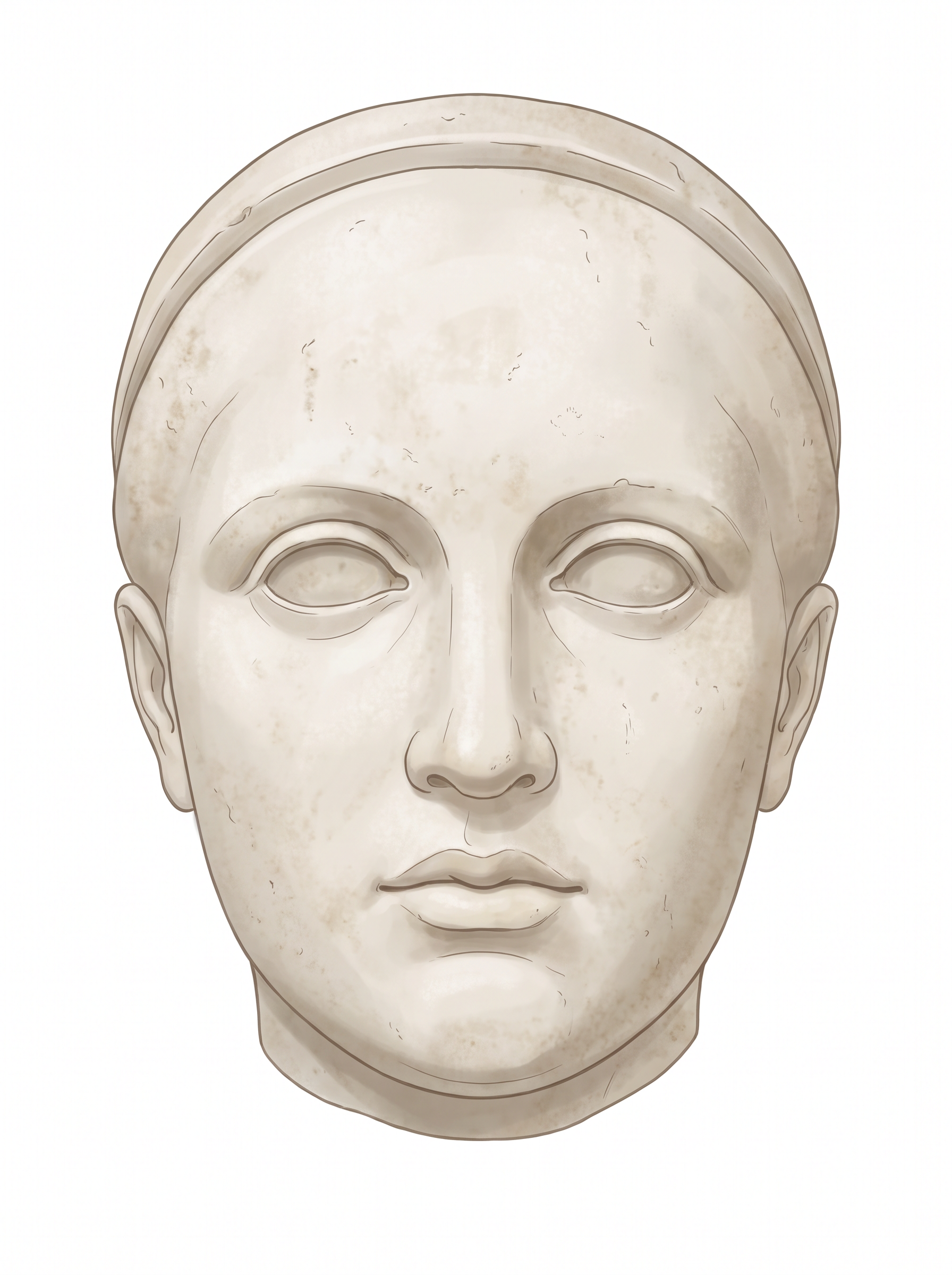
Fig. 1.2 – The Warka Head.
This woman’s head was sculpted in white marble at Uruk before 3000 BCE. The eyes and the eyebrows would probably have taken inlays: lapis lazuli, which is blue, for the eyes; shell, which is white; and bitumen, which is black. There is a groove along the top of the head, perhaps for an ornament.
It is a world-famous piece of sculpture, admired for the delicate modelling of the woman’s mouth, chin and cheeks. And note the material — it was modelled in a hard stone that would have been imported from a distance. The nearest thing to marble in southern Mesopotamia is nothing at all.
So now do the counting yourself. Beginning with the procurement of the stone, list all the specialists who would have been involved in the production of such a piece of sculpture. Do not stop at the sculptor: think of who found the stone, who carried it, who fed the carrier, who made the tools that cut it, and who supplied the inlays.
1.4 Movement Of Goods Into Cities
Rich In Food, Poor In Stone And Metal
However rich the food resources of Mesopotamia, its mineral resources were few. The land that could feed a city could not, on its own, equip one.
Most parts of the south lacked stones for tools, seals and jewels. The wood of the Iraqi date-palm and poplar was not good enough for carts, cart wheels or boats. And there was no metal for tools, vessels or ornaments.
Read that list again and notice what it rules out. No stone, no strong timber, no metal — that is, no tools, no wheels, no boats, no seals, no weapons. Everything a city needed in order to be a city had to come from somewhere else.
What Could Be Given In Exchange
So we can surmise what happened. The ancient Mesopotamians could have traded their abundant textiles and agricultural produce for wood, copper, tin, silver, gold, shell and various stones. These came from Turkey and Iran, to the north and the east, or from across the Gulf.
Those latter regions were the mirror image of southern Mesopotamia. They had mineral resources, but much less scope for agriculture. Each side had what the other lacked.
Note the word ‘surmise’. It is an honest word, and it is doing careful work.
Such exchanges were not casual. Regular exchanges were possible only when there was a social organisation in place — someone to equip foreign expeditions, and someone to direct the exchanges. And these were initiated by the people of southern Mesopotamia. The city did not wait to be visited; it reached out.
Why Transport Decides Everything
Besides crafts, trade and services, efficient transport is also important for urban development. This point is easy to skip past, and it should not be.
If it takes too much time, or too much animal feed, to carry grain or charcoal into cities on pack animals or bullock carts, the city economy will not be viable. A city fed by a route that eats up more than it delivers is a city that will not last.
The cheapest mode of transportation is, everywhere, over water. River boats or barges loaded with sacks of grain are propelled by the current of the river, or by the wind, or by both. When animals transport goods, by contrast, they need to be fed.
The canals and natural channels of ancient Mesopotamia were in fact routes of goods transport between large and small settlements. The same water that fed the fields also carried the cargo. When we come to the city of Mari later in this chapter, the importance of the Euphrates as a ‘world route’ will become clear.
1.5 The Development Of Writing
All societies have languages in which certain spoken sounds convey certain meanings. This is verbal communication — the ordinary business of talking and being understood.
Writing too is verbal communication, but in a different way. When we talk about writing, or about a script, we mean that spoken sounds are represented in visible signs. Sound is turned into something you can see, hold and store.
Writing Begins With Lists
The first Mesopotamian tablets were written around 3200 BCE. They contained picture-like signs and numbers — no sentences, no stories.
There were about 5,000 of them, and they were lists: lists of oxen, fish, bread loaves and other goods. These were goods that were brought into, or distributed from, the temples of Uruk, a city in the south. Writing did not begin with a poem or a prayer. It began with a stocktaking.
Clearly, writing began when society needed to keep records of transactions. And that need is an urban need. In city life, transactions occurred at different times, involved many people, and covered a variety of goods. No single memory could hold all that; a clay tablet could.
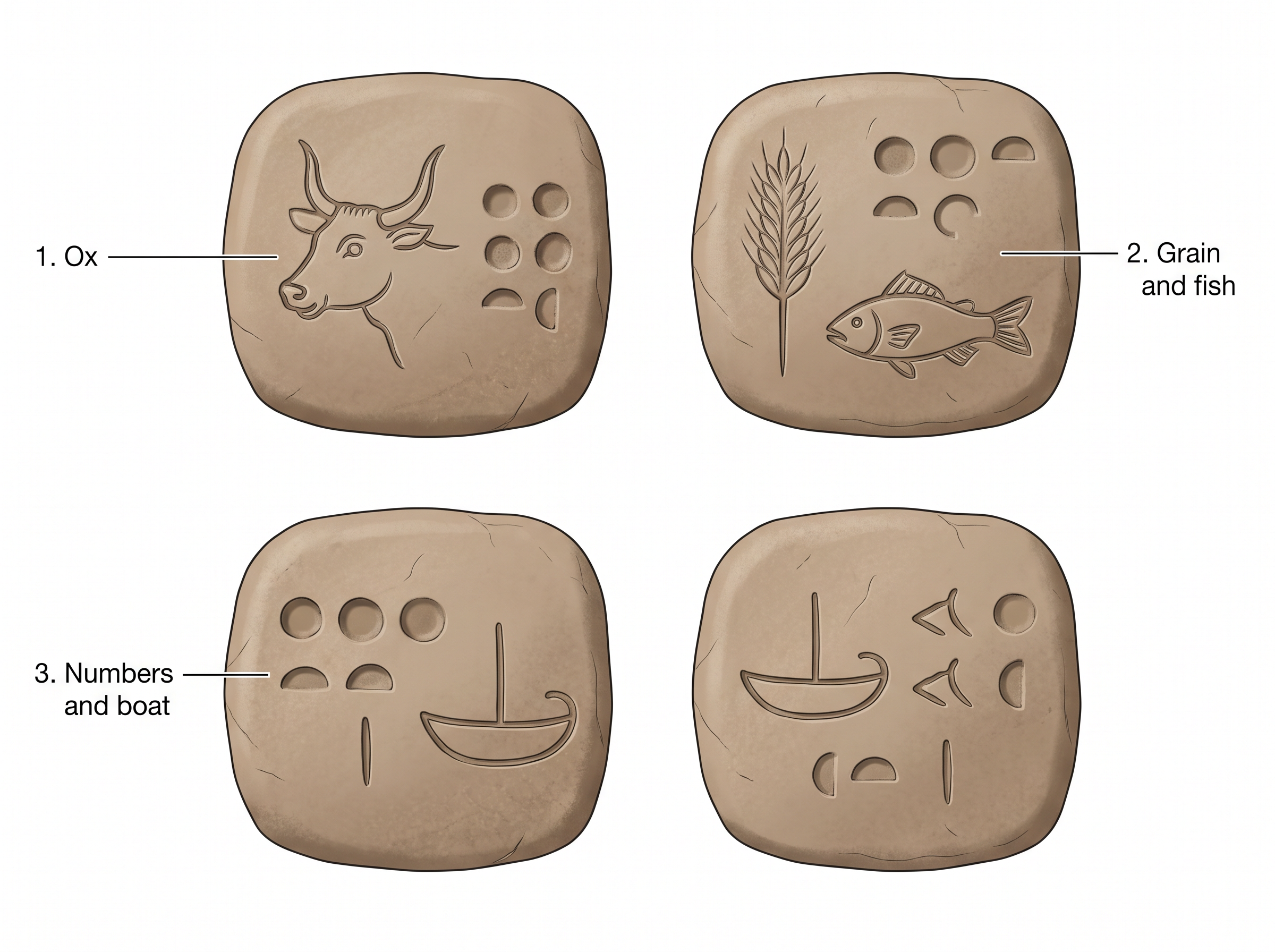
Fig. 1.3 – Early clay tablets with picture-like signs.
Wedges Pressed Into Wet Clay
Mesopotamians wrote on tablets of clay. A scribe — a person trained to write, in a society where almost nobody could — would wet clay and pat it into a size he could hold comfortably in one hand. He would then carefully smoothen its surfaces.
With the sharp end of a reed cut obliquely, he would press wedge-shaped signs on to the smoothened surface while it was still moist. These wedge-shaped signs are called cuneiform, from the Latin words cuneus, meaning wedge, and forma, meaning shape.
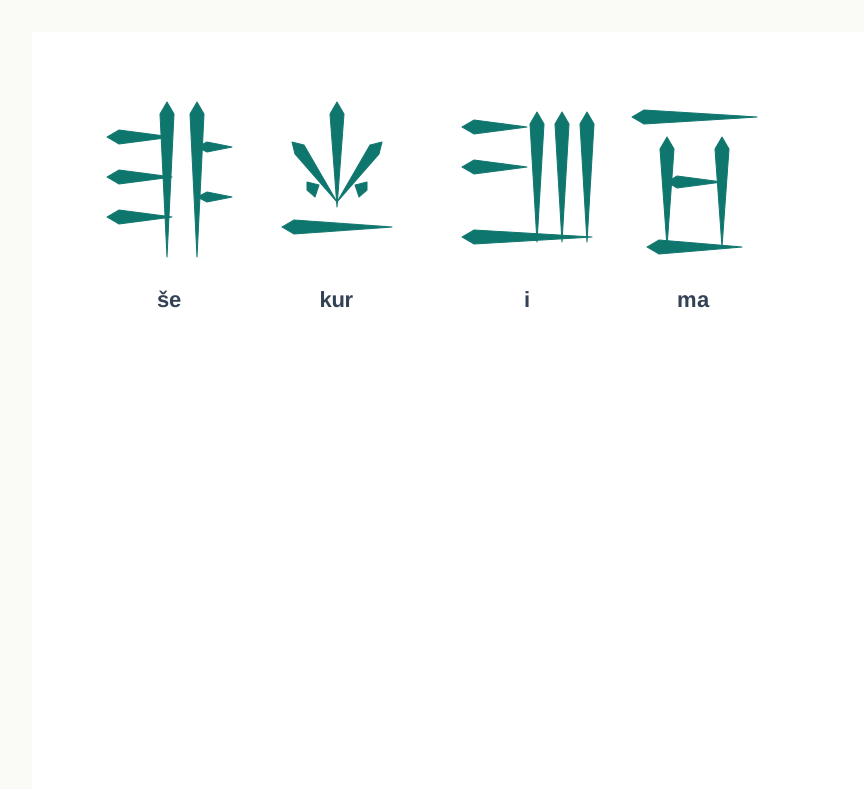
Fig. 1.4 – Cuneiform syllabic signs.
Once dried in the sun, the clay would harden, and the tablets would be almost as indestructible as pottery. This ordinary fact about clay has shaped everything we know about Mesopotamia.
Once the surface dried, signs could not be pressed on to a tablet. So each transaction, however minor, required a separate written tablet. And when a written record — of, say, the delivery of pieces of metal — had ceased to be relevant, the tablet was simply thrown away.
This is why tablets occur by the hundreds at Mesopotamian sites. And it is because of this wealth of sources that we know so much more about Mesopotamia than we do about contemporary India.
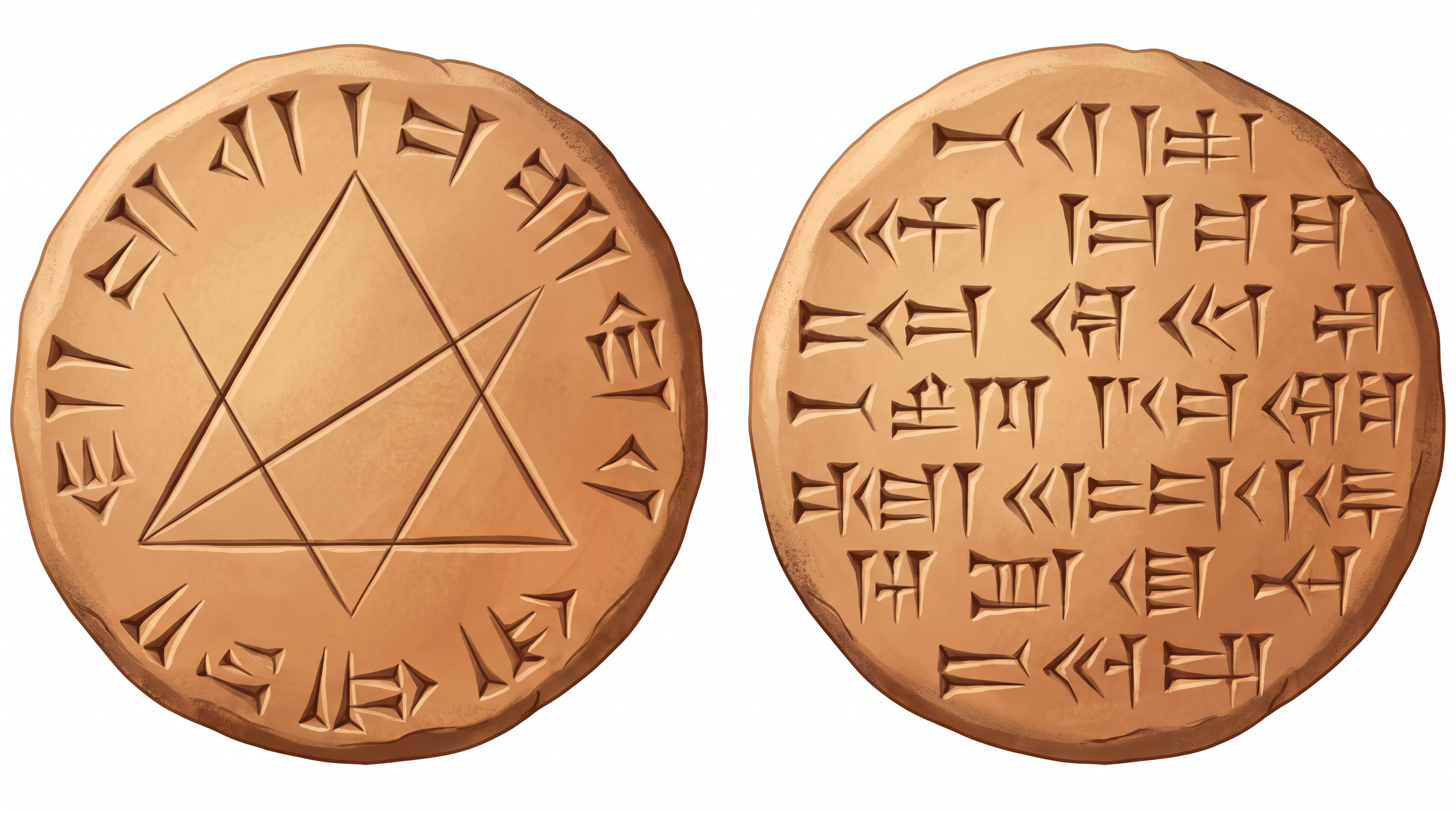
Fig. 1.5 – Clay tablet with a mathematical exercise.
What Writing Was Soon Used For
By 2600 BCE or so, the letters became cuneiform, and the language written was Sumerian. From this point writing broke out of the storeroom.
It was now used not only for keeping records, but also for making dictionaries, for giving legal validity to land transfers, for narrating the deeds of kings, and for announcing the changes a king had made in the customary laws of the land. Each of those uses is a form of power: to fix a meaning, to prove ownership, to be remembered, to command.
Sumerian, the earliest known language of Mesopotamia, was gradually replaced after 2400 BCE by the Akkadian language. But the script did not die with the language it was invented for. Cuneiform writing in the Akkadian language continued in use until the first century CE — that is, for more than 2,000 years. Fig. 1.6 sets out that long life.
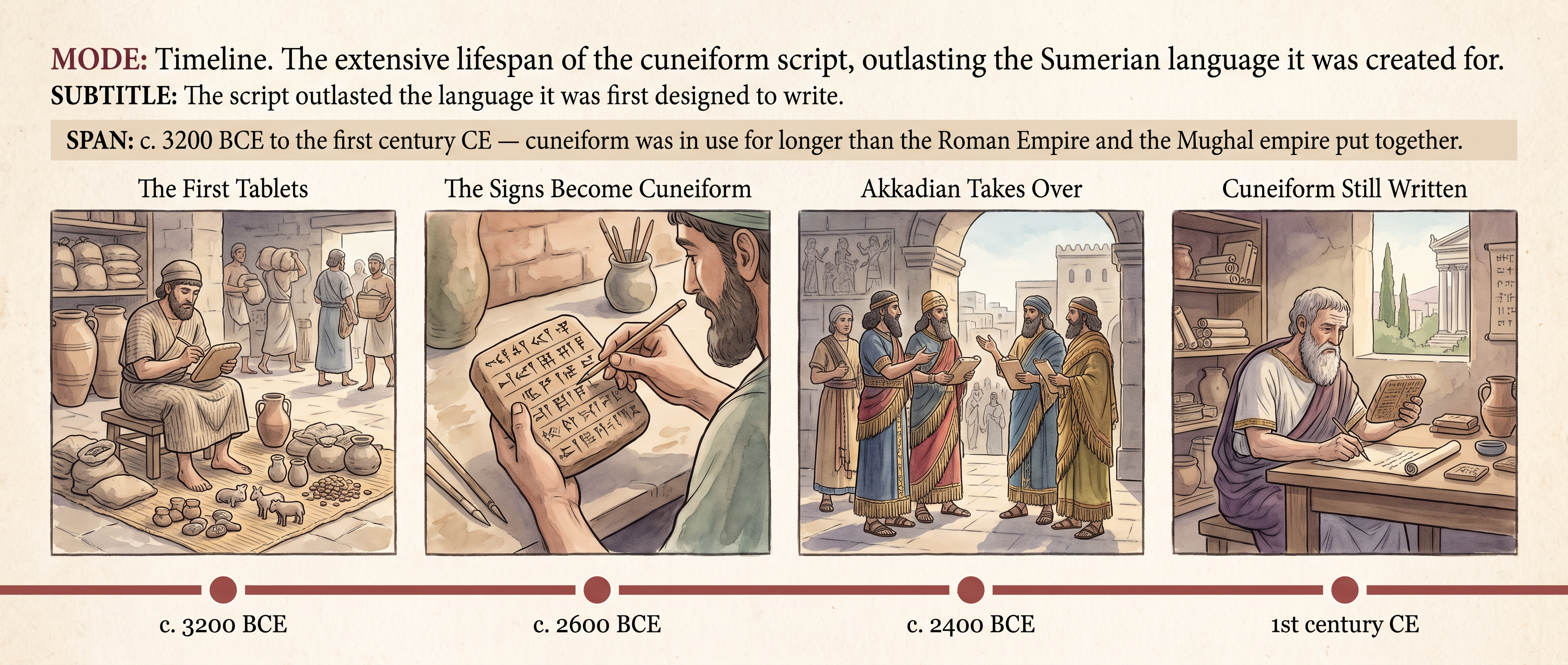
Fig. 1.6 – The Long Life Of Cuneiform.
1.6 The System Of Writing
We now know what cuneiform looked like. But how did it actually work? What did one wedge-shaped sign stand for?
Signs For Syllables, Not For Letters
The sound that a cuneiform sign represented was not a single consonant or a single vowel. In the English alphabet, the letter m stands for one consonant sound and the letter a for one vowel sound. Cuneiform did not work like that.
A cuneiform sign stood for a syllable — a whole beat of sound, usually a vowel with consonants attached to it. The syllables -put-, -la- and -in- are examples of the kind of unit one cuneiform sign could carry.
Why That Meant Hundreds Of Signs
Follow the consequence. If every syllable needs its own sign, then the number of signs cannot be small. There are only so many single sounds in a language, but there are a great many combinations of them.
Thus, the signs that a Mesopotamian scribe had to learn ran into hundreds. And learning them was only half the difficulty. He also had to be able to handle a wet tablet and get it written before it dried — a skill of the hands, under the pressure of drying clay.
A Craft, And Something More Than A Craft
So writing in Mesopotamia was a skilled craft. It took a trained hand, a prepared tablet and a properly cut reed, and it had to be done at speed.
But it was more important than that. It was an enormous intellectual achievement. Somebody had worked out that the flow of speech can be broken into repeatable units of sound, and that each unit can be given a visible mark of its own. To convey in visual form the entire system of sounds of a particular language is one of the hardest things human beings have ever thought of doing — and in Mesopotamia it was done first for the sake of counting oxen.
1.7 Literacy
Literacy means the ability to read and write. In Mesopotamia, very few people had it.
The reason is already clear from the last section. Not only were there hundreds of signs to learn, many of these were complex. Mastering them took years, and years of schooling were not available to most people.
Even Kings Boasted About It
Reading was rare enough to be worth advertising. If a king could read, he made sure that this was recorded in one of his boastful inscriptions.
Pause on that. A man with an army, a treasury and a temple thought it worth telling posterity that he could read. That single habit tells us more about how uncommon literacy was than any count of scribes could.
Writing That Sounds Like Speaking
For the most part, writing reflected the mode of speaking. A letter from an official would have to be read out to the king, and the words on the tablet were shaped for that moment of reading aloud.
You can see this in the opening formula of such a letter. The writer does not address the king directly; he instructs the messenger who will speak the words.
The word ‘speak’ is the giveaway. A tablet was not read silently by the king in a quiet room; it was performed aloud by someone standing in front of him. Notice also the ranking built into the very first line — ‘my lord’ and ‘your servant’. The letter cannot begin until both men’s places are fixed.
What the extract does not show is just as important. We do not learn from it whether the king could read at all, what work had been assigned, or whether it was really done. A formula tells you about the form of power, not about the facts of a case.
Written Down, But Meant To Be Heard
The same is true of literature. A long mythical poem about creation ends by asking to be passed on — not by being read, but by being spoken and taught.
Look at who is listed: the elder, the scholar, the father, the sons, and the herdsman. Four of the five are being spoken to, not reading. The poem survives on clay, but it expects to travel by voice.
That is the paradox of Mesopotamian literacy. A society that invented writing, and left us thousands of tablets, was one in which almost nobody could read them.
1.8 The Uses Of Writing
The connection between city life, trade and writing is brought out in a long Sumerian epic — a long poem narrating the deeds of heroes and kings. This one is about Enmerkar, one of the earliest rulers of Uruk.
Uruk matters here. In Mesopotamian tradition, Uruk was the city par excellence, and it was often known simply as The City. When Mesopotamians told a story about how their world began to work, they set it in Uruk.
A King, A Temple And A Distant Land
Enmerkar is associated with the organisation of the first trade of Sumer. In the early days, the epic says, ‘trade was not known’.
Enmerkar wanted lapis lazuli and precious metals for the beautification of a city temple. Notice what starts the whole story: not hunger, not war, but the wish to make a temple beautiful with materials the city did not have. So he sent his messenger out to get them from the chief of a very distant land called Aratta.
The epic describes the journey. Read it for the sheer distance it insists on.
The people of Susa ‘saluted him like tiny mice’ is not an insult. The poet means that once the messenger had climbed to a great height, everything appeared small in the valley far below. It is a way of measuring the climb by what it did to the view.
And notice the counting: five ranges, six ranges, seven ranges. The poem is telling its listeners that the materials a city temple needed came from impossibly far away — which, as we saw in the last sections, was true.
When Speech Fails, Clay Begins
The mission did not go well. The messenger could not get the chief of Aratta to part with lapis lazuli or silver. He had to make the long journey back and forth, again and again, carrying threats and promises from the king of Uruk.
Ultimately, the messenger ‘grew weary of mouth’. He got all the messages mixed up. A message carried in the memory of a tired man is a message that will not survive the seventh mountain range.
That is the epic’s explanation of why writing was invented: because speech was failing over a long distance. The king does not consult a scribe. He forms the tablet himself.
The Ruler Of Aratta Stares At The Clay
The tablet is carried to Aratta, and the poem records what its ruler did with it.
The ‘nails’ are the wedge-shaped cuneiform signs, which look like nails driven into the surface. The chief of a distant land is holding speech in his hand, and he cannot stop looking at it. The poet wants his audience to feel the strangeness of that.
What The Poem Actually Tells A Historian
This should not be taken as the literal truth. No historian thinks a king sat down one afternoon and invented writing to win an argument.
But something can still be inferred from it. In Mesopotamian understanding, it was kingship that organised trade and writing. Both are shown flowing from the king’s will — he opens trade, and he makes the first tablet.
The poem also tells us something about how writing was valued. Besides being a means of storing information and of sending messages afar, writing was seen as a sign of the superiority of Mesopotamian urban culture. The city writes; the distant land can only stare.
1.9 Urbanisation In Southern Mesopotamia: Temples And Kings
From 5000 BCE, settlements had begun to develop in southern Mesopotamia. The earliest cities emerged from some of these settlements — but not from all of them, and not in one way.
The cities were of various kinds. Some gradually developed around temples. Some developed as centres of trade. And some were imperial cities, built by rulers of empires. It is the cities of the first two kinds that we shall discuss here.
The Temple: A House For A God
Early settlers — and their origins are unknown to us — began to build and rebuild temples at selected spots in their villages. The rebuilding matters. A place was chosen, and then it was held on to, generation after generation.
The earliest known temple was a small shrine made of unbaked bricks. It was not grand. Its importance lies in what grew out of it.
Temples were the residences of various gods: of the Moon God of Ur, for instance, or of Inanna, the Goddess of Love and War. Constructed in brick, temples became larger over time, with several rooms around open courtyards.
Some of the early ones were possibly not unlike the ordinary house — for the temple was, quite literally, the house of a god. But there was one difference. Temples always had their outer walls going in and out at regular intervals, which no ordinary building ever had.
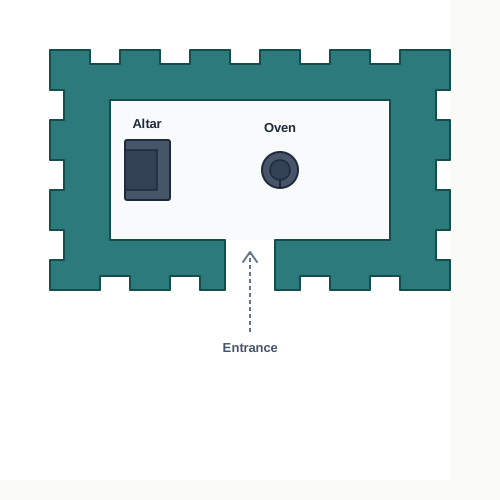
Fig. 1.7 – Plan of the earliest known southern temple.
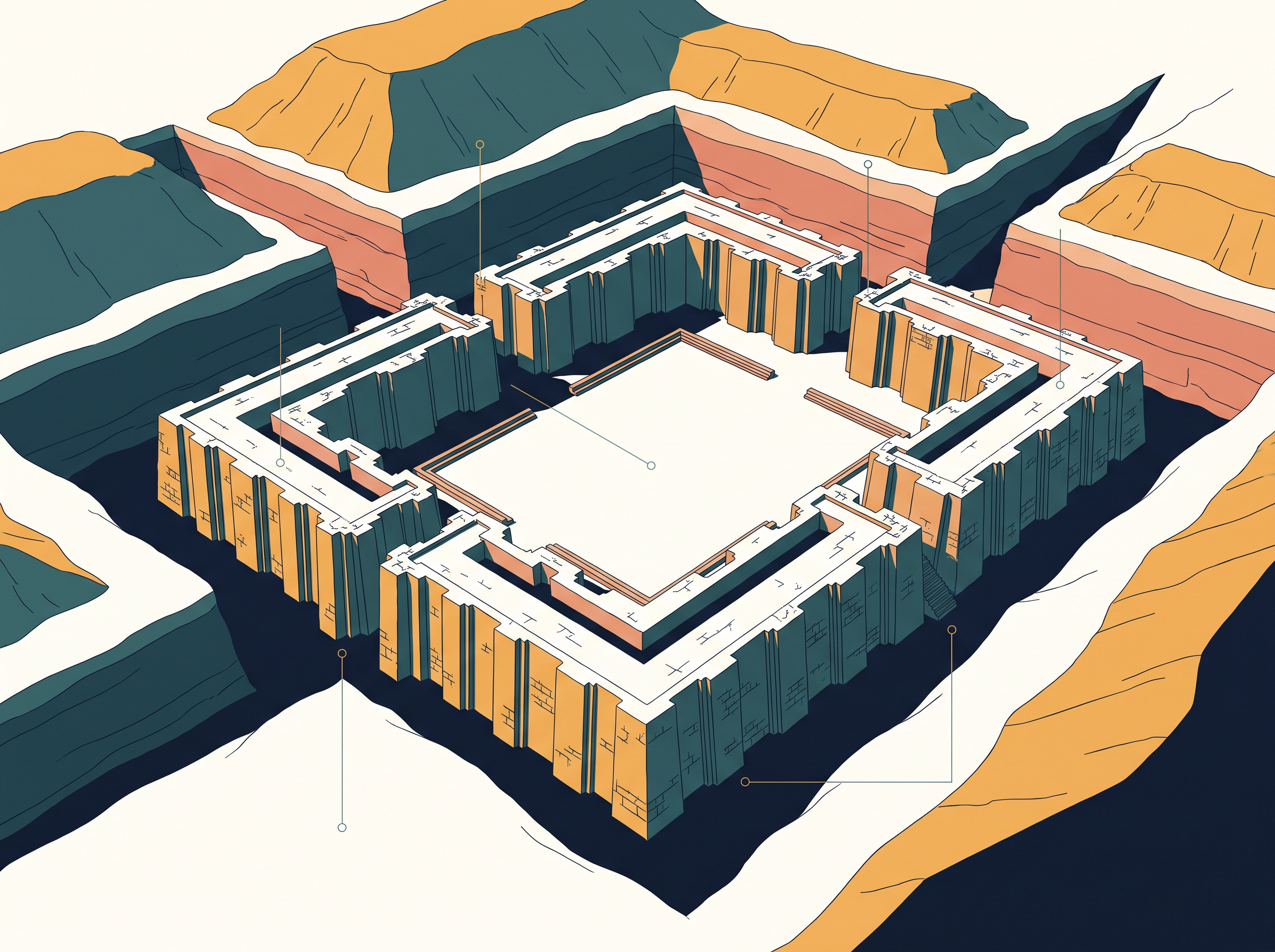
Fig. 1.8 – Excavated temple with stepped outer wall.
The Temple Becomes A Business
The god was the focus of worship. To him or to her, people brought grain, curd and fish — and the floors of some early temples had thick layers of fish bones, so we are not guessing about that.
The god was also the theoretical owner of the agricultural fields, the fisheries and the herds of the local community. ‘Theoretical’ is the word to weigh. The god did not plough anything; but if the fields belonged to the god, then whoever spoke for the god had a claim on what the fields produced.
In time, the processing of produce was also done in the temple — oil pressing, grain grinding, spinning, and the weaving of woollen cloth. The house of the god had become a workshop.
So look at what the temple now was. It was the organiser of production at a level above the household. It was the employer of merchants. And it was the keeper of written records of distributions and allotments of grain, plough animals, bread, beer, fish and much else.
Step by step, the temple gradually developed its activities and became the main urban institution. But there was also another factor on the scene, and it came out of the fields and the water channels.
Water, And The Quarrels It Caused
In spite of natural fertility, agriculture was subject to hazards. Fertile land is not the same thing as safe land.
The natural outlet channels of the Euphrates would have too much water one year and flood the crops. Sometimes they would change course altogether, leaving fields dry that had been watered the year before. As the archaeological record shows, villages were periodically relocated in Mesopotamian history — people picked up and moved because the water had moved.
There were man-made problems as well, and these were worse, because they set neighbour against neighbour. Those who lived on the upstream stretches of a channel could divert so much water into their fields that villages downstream were left without water. Or they could neglect to clean out the silt from their stretch of the channel, blocking the flow of water further down.
So the early Mesopotamian countryside saw repeated conflict over land and water. This is not a story of quarrelsome people. It is what happens when many settlements depend on one channel and nobody has the authority to make them share it.
From War Leader To King
When there was continuous warfare in a region, some chiefs were successful in war. A successful chief could oblige his followers by distributing the loot among them. He could also take prisoners from the defeated groups and employ them as his guards or servants. In this way he could increase his influence and clout.
But such war leaders would be here today and gone tomorrow. Loot runs out; followers drift away. Nothing in a raid builds anything that lasts.
The change came when such leadership began to increase the well-being of the community, through the creation of new institutions or practices. In time, victorious chiefs began to offer precious booty to the gods, and thus to beautify the community’s temples. They would send men out to fetch fine stones and metal for the benefit of the god and the community. And they would organise the distribution of temple wealth in an efficient way, by accounting for the things that came in and went out.
That last activity is worth pausing on, because it is written records again. As the poem about Enmerkar shows, all of this gave the king high status and the authority to command the community.
The Cycle That Built A City
We can now imagine a mutually reinforcing cycle of development. Leaders encouraged the settlement of villagers close to themselves, so that they could rapidly get an army together. And villagers had their own reason to come: people would be safe living in close proximity to one another.
At Uruk, one of the earliest temple towns, we find depictions of armed heroes and their victims. Careful archaeological surveys have shown that around 3000 BCE, when Uruk grew to the enormous extent of 250 hectares, dozens of small villages were deserted. A hectare is 10,000 square metres, so 250 hectares is a very large town by the standards of the ancient world — twice as large as Mohenjo-daro, the Harappan city on the Indus in what is now Pakistan, would be in later centuries.
Those two facts belong together. The city filled up and the villages emptied out. There had been a major population shift.
Significantly, Uruk also came to have a defensive wall at a very early date. People who gather for safety build a wall, and a wall in turn is worth gathering behind.
The site was continuously occupied from about 4200 BCE to about 400 CE, and by about 2800 BCE it had expanded to 400 hectares. Fig. 1.9 sets out that span.
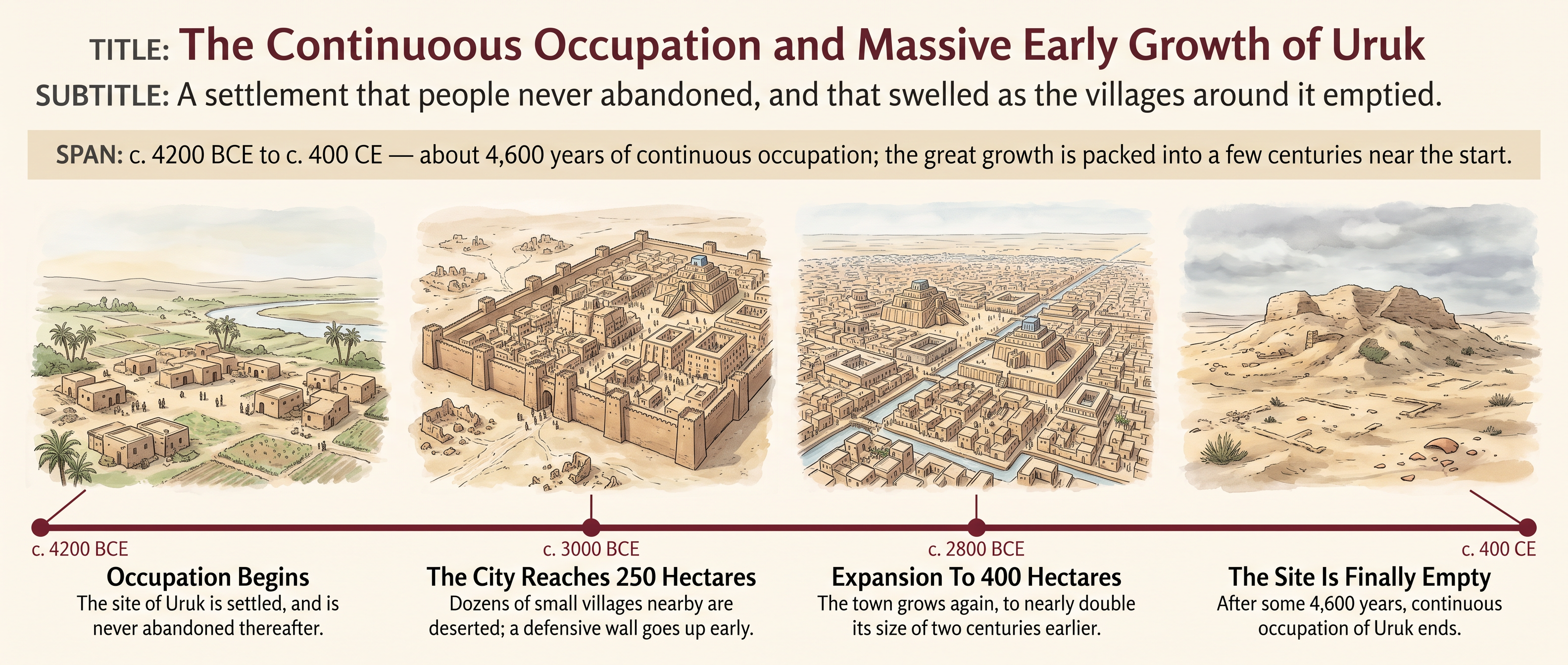
Fig. 1.9 – Uruk, One Site, Four Thousand Years.
Who Actually Built The Temples
War captives and local people were put to work for the temple, or directly for the ruler. This work, rather than an agricultural tax, was compulsory. A Mesopotamian city did not chiefly take a share of your harvest; it took your labour.
Those who were put to work were paid rations — fixed allotments of food and goods, given out instead of wages. Hundreds of ration lists have been found. They give, against people’s names, the quantities of grain, cloth or oil allotted to them.
What Command Made Possible
With rulers commanding people to fetch stones or metal ores, to come and make bricks or lay the bricks for a temple, or else to go to a distant country to fetch suitable materials, there were also technical advances at Uruk around 3000 BCE.
Bronze tools came into use for various crafts. Architects learnt to construct brick columns — a real problem solved, because there was no suitable wood to bear the weight of the roof of large halls. If you cannot import a beam, you must invent a column.
Hundreds of people were put to work at making and baking clay cones. These could be pushed into temple walls and painted in different colours, creating a colourful mosaic — a picture built up out of many small pieces set side by side.
In sculpture, there were superb achievements, and they were made not in easily available clay but in imported stone. The choice of the harder, costlier material is itself a statement about what the city could command.
And then there was a technological landmark that we can say is appropriate to an urban economy: the potter’s wheel. In the long run, the wheel enables a potter’s workshop to ‘mass produce’ dozens of similar pots at a time — many pots, alike, quickly. That is exactly what a city, and not a village household, needs.
Heroes, Captives And The Images Of Power
The armed hero appears again and again in the art of this period, and always in the same posture — above someone.
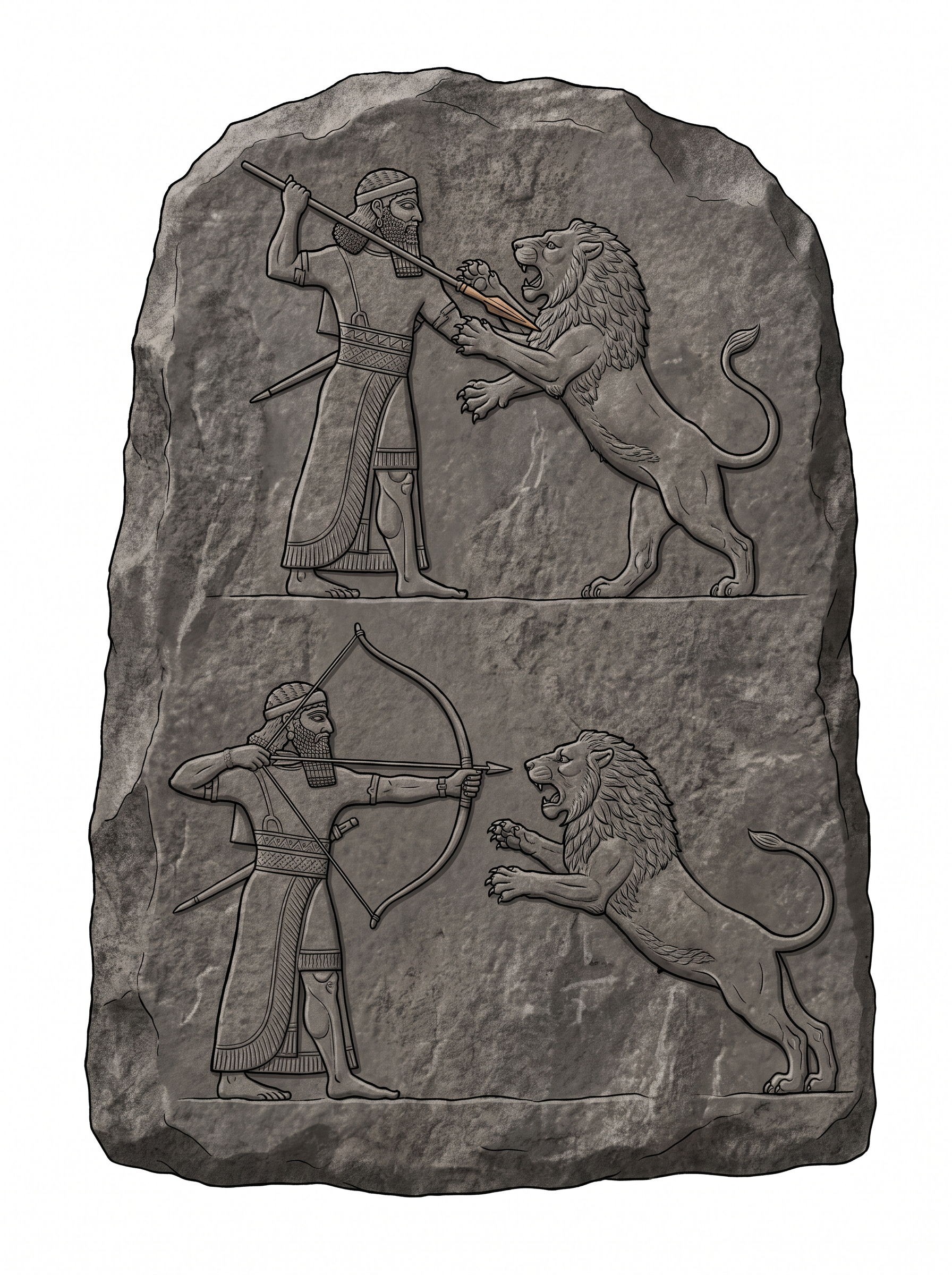
Fig. 1.10 – Basalt stele showing a warrior and lions.
A stele is a stone slab with inscriptions or carvings on it. This one shows the same bearded man twice — in the lower scene he attacks a lion with a huge bow and arrow, and in the scene above, the hero finally kills the rampant lion with a spear. The tips of such spears, as we noted earlier, were of bronze; the imported metal is right there in the picture.
The next image shows the same kind of figure, but the lion has been replaced by human beings.
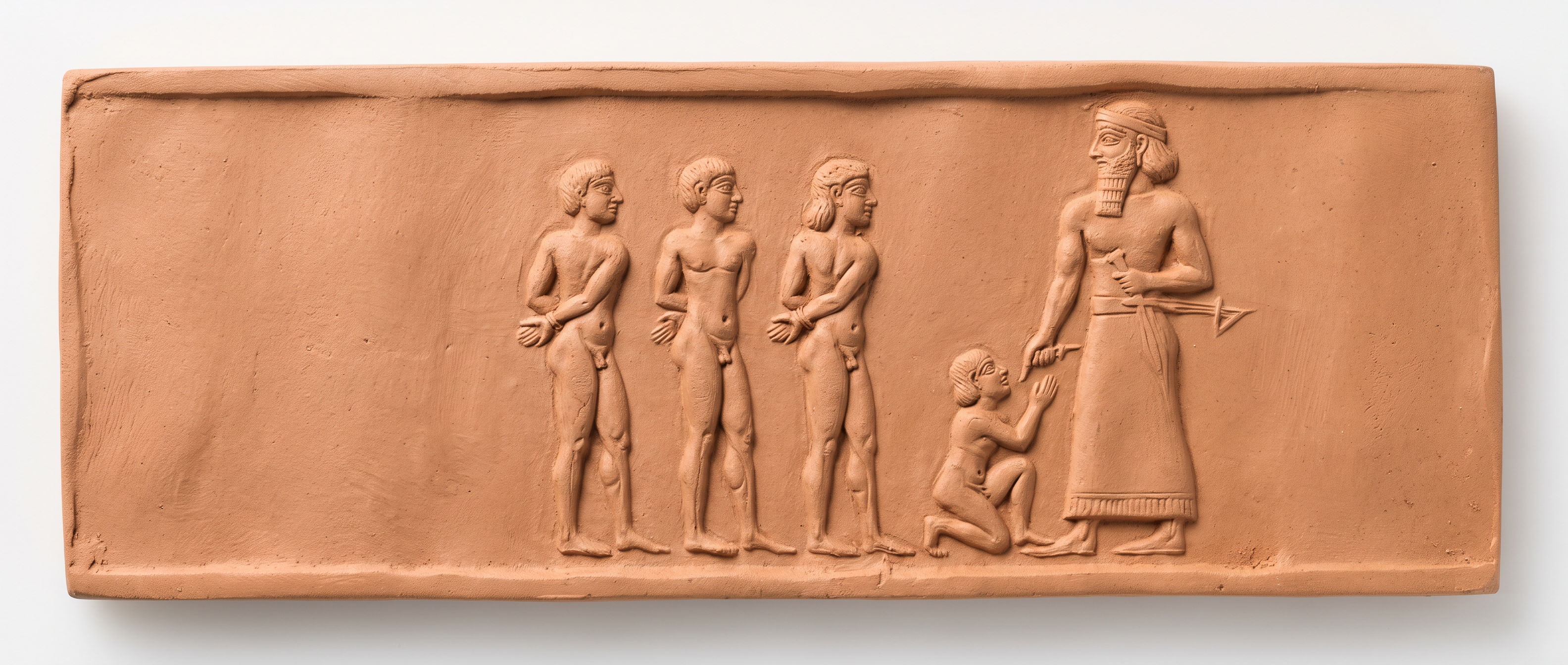
Fig. 1.11 – Cylinder seal impression of a war leader and captives.
Look at what the seal shows: three prisoners of war, their arms bound, and a fourth man beseeching the war leader. The bearded and armed standing figure is similar in dress and hairstyle to the hero in the stele. The same man who kills lions is the man who holds captives.
The Seal — An Urban Artefact
That brings us to the seal itself, which is one of the most useful objects this chapter will hand you.
In India, early stone seals were stamped — pressed down once, like a rubber stamp. In Mesopotamia, until the end of the first millennium BCE, seals were made differently. They were cylindrical stone seals, pierced down the centre, fitted with a stick and rolled over wet clay, so that a continuous picture was created.
They were carved by very skilled craftsmen, and they sometimes carry writing: the name of the owner, his god, his official position, and so on.
What was a seal for? A seal could be rolled on clay covering the string knot of a cloth package, or the mouth of a pot, keeping the contents safe — once the clay hardened, nobody could open the package without visibly breaking the seal. And when rolled on a letter written on a clay tablet, it became a mark of authenticity, proving who had sent it.
So the seal was the mark of a city dweller’s role in public life. A man with a seal was a man whose word could be verified, and whose goods could travel without him.
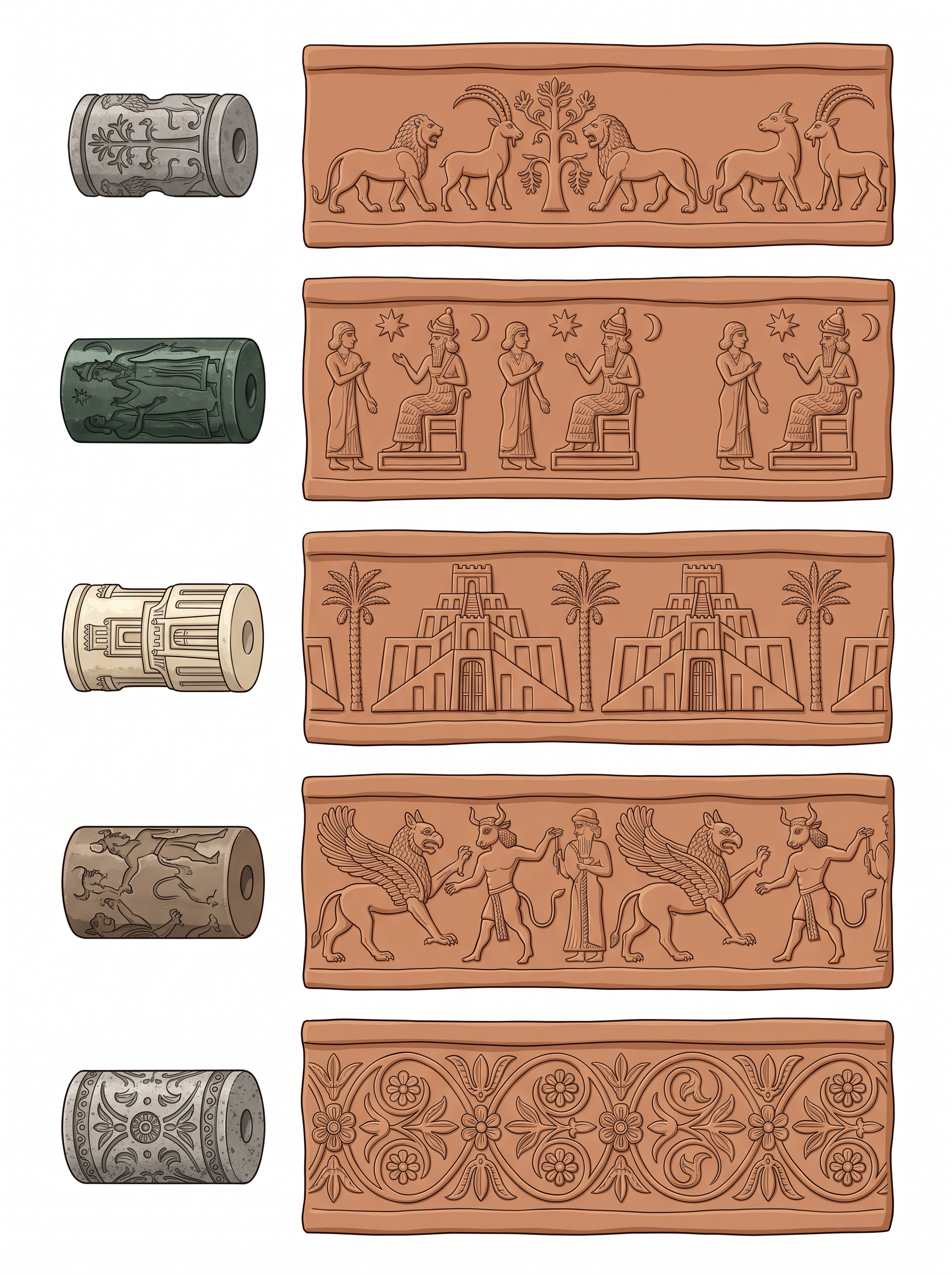
Fig. 1.12 – Early cylinder seals and their clay impressions.
Study the impressions in Fig. 1.12 one at a time. Describe what you see in each of them. And ask a second question of them: is the cuneiform script shown on any of these impressions?
1.10 Life In The City
What we have seen so far is that a ruling elite had emerged — a small section of society that held a major share of the wealth. This is the shape a city takes once some people can command the labour of others.
Nothing makes this fact as clear as the graves at Ur. Enormous riches were buried with some kings and queens there: jewellery, gold vessels, wooden musical instruments inlaid with white shell and lapis lazuli, ceremonial daggers of gold, and more.
Wealth like that is not saved up by a household. It is gathered from many people and spent on a few. But the graves raise the obvious question at once: what of the ordinary people?
Families, Marriage And Inheritance
For ordinary people we turn to the legal texts — records of disputes, inheritance matters and the like. These were written to settle quarrels, not to describe society, and that is precisely why they are useful: people quarrel over what actually mattered to them.
From these we know that in Mesopotamian society the nuclear family was the norm. A nuclear family comprises a man, his wife and children. In practice, though, a married son and his family often resided with his parents. The father was the head of the family.
We also know a little about the procedures for marriage, and it is worth setting the steps out in order.
A declaration was first made about the willingness to marry, with the bride’s parents giving their consent to the marriage. Then a gift was given by the groom’s people to the bride’s people.
When the wedding took place, gifts were exchanged by both parties. The two families ate together and made offerings in a temple, so the marriage was witnessed both socially and before the god.
Then, when her mother-in-law came to fetch her, the bride was given her share of the inheritance by her father. Note carefully what this share was not. The father’s house, herds, fields and so on were inherited by the sons. A daughter received her portion when she left; the property that produced income stayed with the men of the family.
The Streets Of Ur
Let us now look at Ur, one of the earliest cities to have been excavated. Ur was a town whose ordinary houses were systematically excavated in the 1930s — and ‘ordinary houses’ is the point. Archaeologists there were not chasing a palace.
The streets were narrow and winding. This tells us something immediately: wheeled carts could not have reached many of the houses. Sacks of grain and firewood would have arrived on donkey-back.
The narrow winding streets, together with the irregular shapes of the house plots, also indicate an absence of town planning. Nobody laid Ur out. It grew, house by house, as people built where they could.
There were no street drains of the kind we find in contemporary Mohenjo-daro. Drains and clay pipes were instead found in the inner courtyards of the Ur houses.
From this, it is thought that house roofs sloped inwards, and that rainwater was channelled via the drainpipes into sumps in the inner courtyards. A sump is a covered basin in the ground into which water and sewage flow. This would have been a way of preventing the unpaved streets from becoming excessively slushy after a downpour.
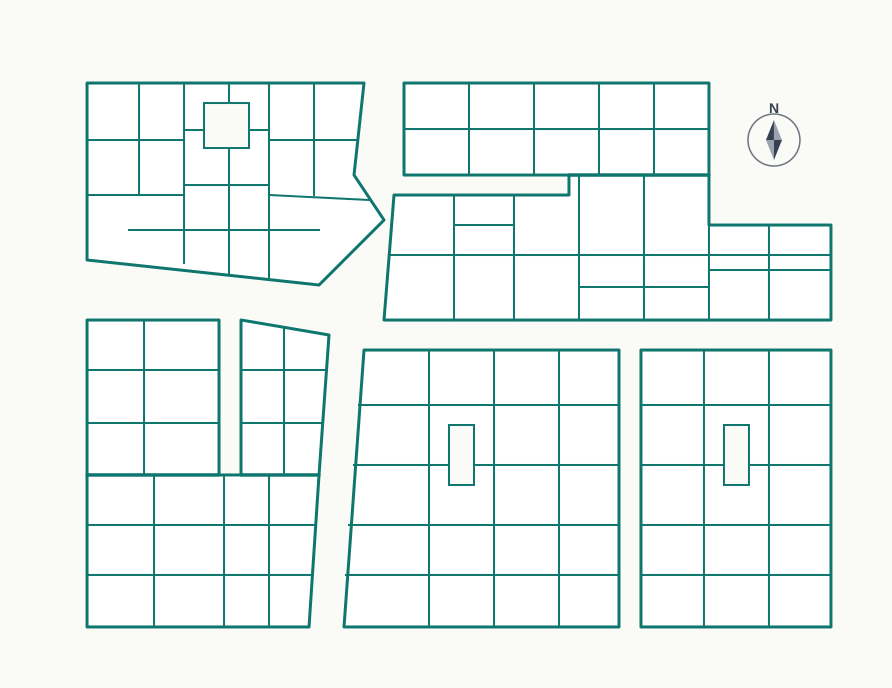
Fig. 1.13 – Plan of a residential area at Ur.
Spend some time with this plan before reading on. Besides the winding streets, can you locate two or three blind alleys — lanes that begin and then simply stop?
Rubbish, Doorways And Omens
And yet, for all the care taken with rainwater, people seem to have swept all their household refuse into the streets, to be trodden underfoot.
This had a slow, strange consequence. The street levels rose. And as they rose, over time the thresholds of houses had also to be raised, so that no mud would flow inside after the rains. The city was, quite literally, climbing on top of its own rubbish.
Light came into the rooms not from windows but from doorways opening into the courtyards. This would also have given families their privacy: a house that turns its light inwards turns its back on the street.
There were superstitions about houses, recorded in omen tablets at Ur — tablets that listed signs and what they were believed to foretell. A raised threshold brought wealth. A front door that did not open towards another house was lucky. But if the main wooden door of a house opened outwards, instead of inwards, the wife would be a torment to her husband.
These beliefs are not a curiosity to be smiled at and skipped. They show that a house was not only a shelter; it was a thing full of meaning, where the direction a door swung could be read as a warning about a marriage.
The Dead In The City
There was a town cemetery at Ur, in which the graves of royalty and of commoners have both been found. Kings and ordinary people were buried in the same ground.
But a few individuals were found buried under the floors of ordinary houses. We do not know why these few were kept inside, beneath the feet of the living, when there was a cemetery to be had.
1.11 A Trading Town In A Pastoral Zone
After 2000 BCE the royal capital of Mari flourished. Mari was not a southern city, and that is the whole interest of it.
Where Mari Stood
Look again at Map 2. Mari stands not on the southern plain with its highly productive agriculture, but much further upstream on the Euphrates. It had none of the south’s advantages.
Map 3, with its colour coding, shows what it did have. Agriculture and animal rearing were carried out close to each other in this region. Some communities in the kingdom of Mari had both farmers and pastoralists — people who live by rearing and moving herds of animals rather than by growing crops. But most of the kingdom’s territory was used for pasturing sheep and goats.
Map
Map 3 Caption: The location of Mari, showing how closely farmland and pasture lay to one another. Brief: Reproduce NCERT’s Map 3 with its colour key intact: land flooded each year and used for late spring grazing; agricultural land; terraces that canal water cannot reach, used as pasture; pasture land in spring; seasonal streams (wadis); and low-lying land rising to plateau. Mark the Euphrates and the site of Mari. Show the plateau enclosing the river strip. No modern boundaries.
Farmers And Herders Need Each Other, And Fight
Herders need to exchange things. They have young animals, cheese, leather and meat; they want grain, metal tools and the like in return. And the manure of a penned flock is of great use to a farmer, whose field it enriches.
Yet, at the same time, there may be conflict — and the conflicts come out of exactly the same closeness. A shepherd may take his flock to water across a sown field, to the ruin of the crop. Herdsmen, being mobile, can raid agricultural villages and seize their stored goods. For their part, settled groups may deny pastoralists access to river and canal water along a certain set of paths.
Newcomers Who Became Kings
Through Mesopotamian history, nomadic communities of the western desert filtered into the prosperous agricultural heartland. Nomadic means moving from place to place with the herds, rather than living in one settled village.
Shepherds would bring their flocks into the sown area in the summer. Such groups would come in as herders, as harvest labourers or as hired soldiers. Occasionally they became prosperous, and settled down.
A few gained the power to establish their own rule. These included the Akkadians, the Amorites, the Assyrians and the Aramaeans — names you have already met in this chapter as the peoples whose languages and kingdoms shaped the region. You will read more about rulers who came from pastoral societies in Chapter 3.
The kings of Mari were Amorites. Their dress differed from that of the original inhabitants. And they respected not only the gods of Mesopotamia; they also raised a temple at Mari for Dagan, god of the steppe — the god of the grazing lands they had come from.
Mesopotamian society and culture were thus open to different people and cultures. The vitality of the civilisation was perhaps due to this intermixture. The word ‘perhaps’ is the historian’s, and it is honest: this is a judgement, not a proven fact.
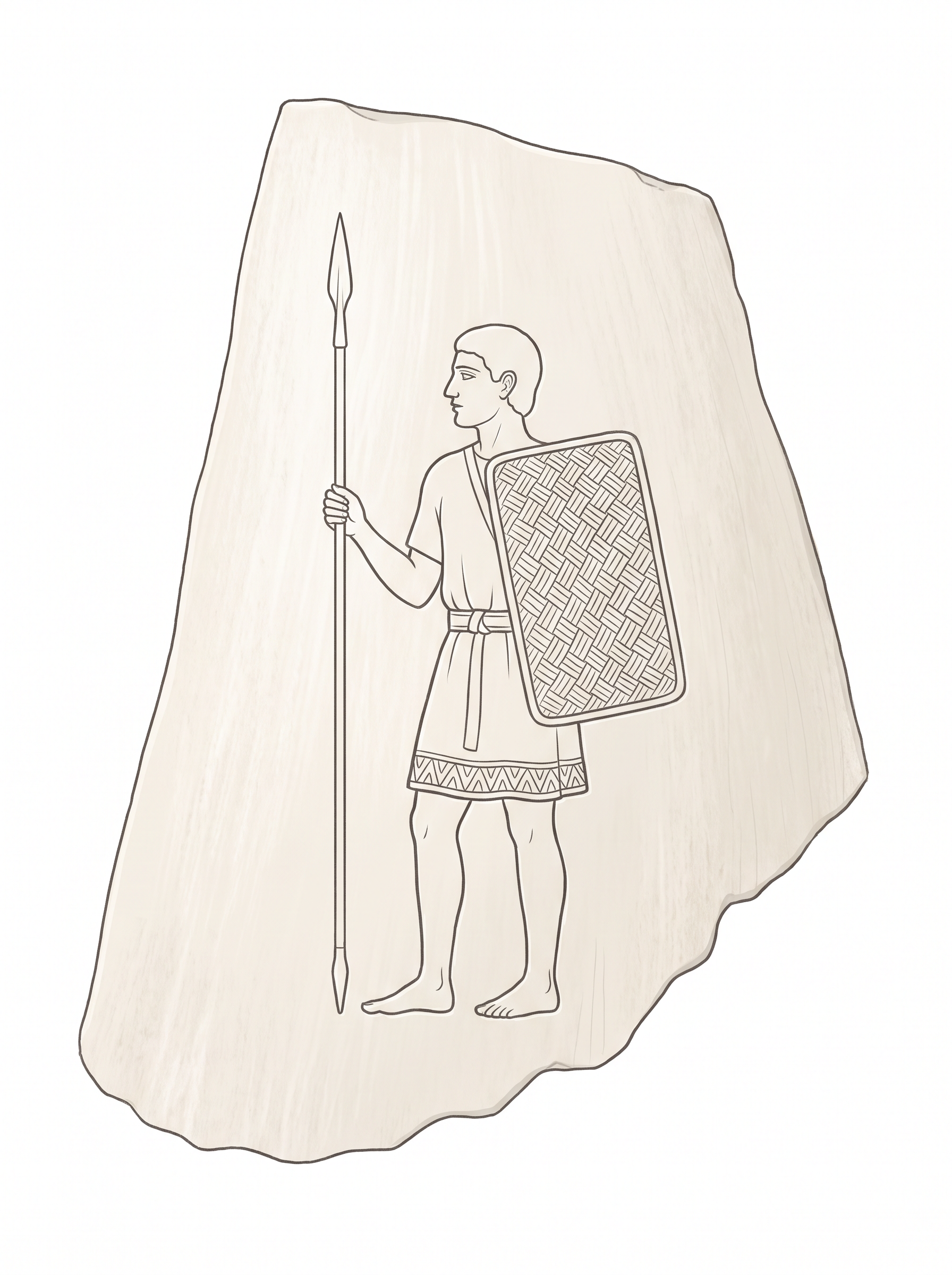
Fig. 1.14 – Amorite warrior incised on shell.
Compare this warrior with the figure on the cylinder seal impression in Fig. 1.11. The weapons are not the point; the clothes are. The dress here is typical of Amorites, and it is different from that of the Sumerian warrior. Two peoples, two costumes, one civilisation.
The Palace At Mari
The great palace of Mari belonged to King Zimrilim, who ruled from 1810 to 1760 BCE. It was three things at once: the residence of the royal family, the hub of administration, and a place of production, especially of precious metal ornaments.
It was so famous in its time that a minor king came all the way from north Syria just to see it — carrying with him a letter of introduction from a royal friend of Zimrilim. People travelled to look at this building the way they might travel to see a wonder.
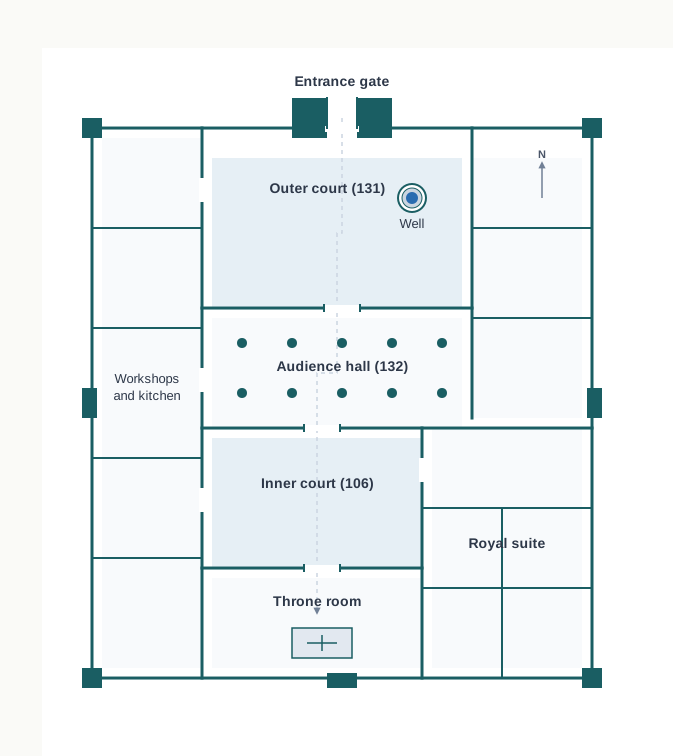
Fig. 1.15 – Plan of King Zimrilim’s palace at Mari.
Daily lists reveal how the palace ate. Huge quantities of food were presented each day for the king’s table: flour, bread, meat, fish, fruit, beer and wine. He probably ate in the company of many others, in or around courtyard 106, which was paved white.
You will notice from the plan that the palace had only one entrance, on the north. Everyone who came in, came in through that gate, and could be seen doing so.
The large open courtyards, such as 131, were beautifully paved. The king would have received foreign dignitaries and his own people in 132 — a room with wall paintings that would have awed the visitors. The palace was a sprawling structure, with 260 rooms, and it covered an area of 2.4 hectares.
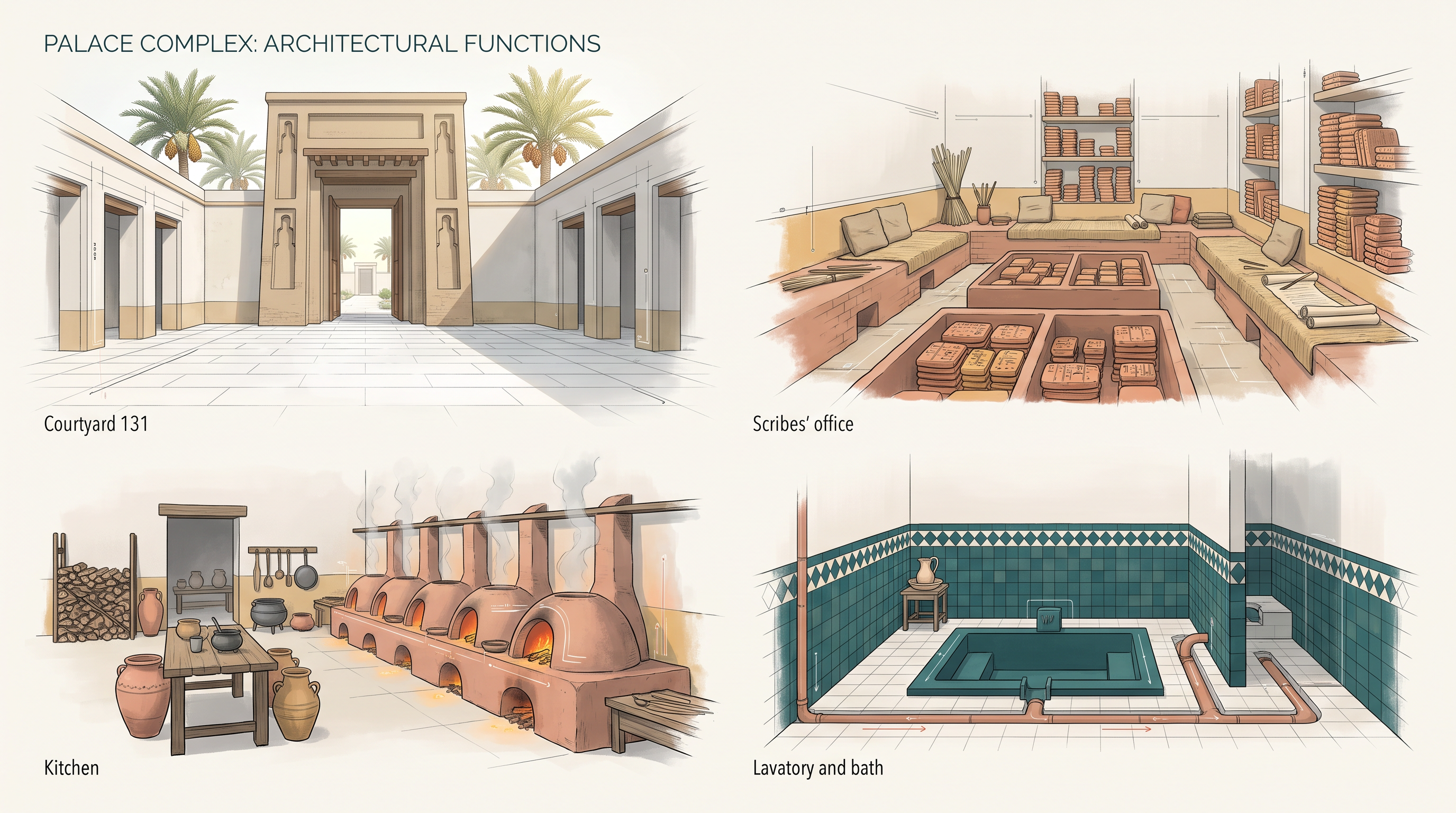
Fig. 1.16 – Reconstructed spaces in the palace at Mari.
Look hard at one of those drawings — the scribes’ office, with its benches and its clay bins for storing tablets. A palace needed a room whose whole purpose was to write and to file. That is the argument of this entire chapter, built in brick.
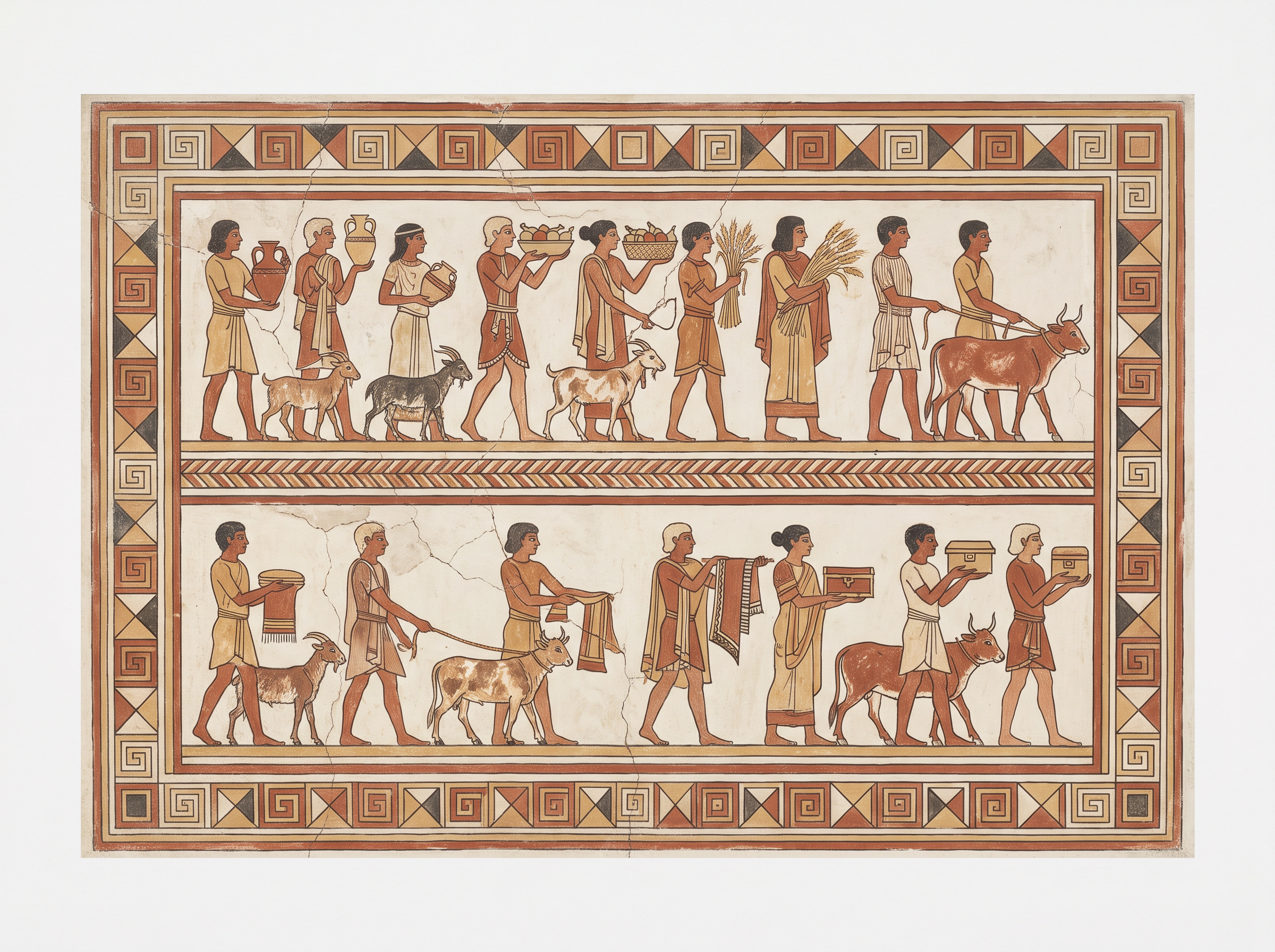
Fig. 1.17 – Wall painting from the audience hall.
Now work with the plan. Trace the route from the entrance to the inner court, noting every courtyard and doorway a visitor would have to pass through. Then ask two further questions: what do you think would have been kept in the storerooms, and how has the kitchen been identified?
Watching The Herders
The kings of Mari, however, had to be vigilant. Herders of various tribes were allowed to move in the kingdom — but they were watched.
The camps of herders are mentioned frequently in letters between kings and officials. In one letter, an officer writes to the king that he has been seeing frequent fire signals at night, sent by one camp to another, and he suspects that a raid or an attack is being planned.
Notice what that letter actually contains: a light, a suspicion and a guess. The officer does not know what the signals mean. What the letter proves is not a plot, but a state of watchfulness — the price a trading town paid for sitting in a pastoral zone.
A Town That Lived On The River
Mari was located on the Euphrates in a prime position for trade. Wood, copper, tin, oil, wine and various other goods were carried in boats along the river, between the south and the mineral-rich uplands of Turkey, Syria and Lebanon. Mari sat in the middle of that traffic.
Boats carrying grinding stones, wood, and wine and oil jars would stop at Mari on their way to the southern cities. Officers of this town would go aboard and inspect the cargo — a single river boat could hold 300 wine jars — and levy a charge of about one-tenth the value of the goods before allowing the boat to continue downstream. For every ten jars’ worth of value moving down the Euphrates, roughly one stayed at Mari.
Barley came in special grain boats. Most important, tablets refer to copper from ‘Alashiya’, the island of Cyprus, which was known for its copper. Tin was also an item of trade. And since bronze was the main industrial material for tools and weapons, and bronze is copper and tin, this trade was of great importance.
Thus, although the kingdom of Mari was not militarily strong, it was exceptionally prosperous. That sentence is worth underlining, because it breaks a rule students often assume: that wealth follows armies. Here it followed a river.
Excavating Mesopotamian Towns
How is any of this known? The answer has changed over time, and it is worth pausing on.
Today, Mesopotamian excavators have much higher standards of accuracy and care in recording than in the old days. As a result, few dig huge areas the way Ur was excavated. Moreover, few archaeologists have the funds to employ large teams of excavators. The mode of obtaining data has changed: less ground, examined far more closely.
Take the small town at Abu Salabikh, about 10 hectares in area in 2500 BCE, with a population of less than 10,000. The outlines of its walls were at first traced by scraping surfaces. This involves scraping off the top few millimetres of the mound with the sharp and wide end of a shovel or other tool. While the soil underneath was still slightly moist, the archaeologist could make out different colours, textures and lines — of brick walls, of pits, of other features. A few of the houses that were discovered were then excavated.
The archaeologists also sieved through tons of earth to recover plant and animal remains. In the process they identified many species of plants and animals, and found large quantities of charred fish bones that had been swept out on to the streets.
From such remains, rooms could be told apart. Plant seeds and fibre remained after dung cakes had been burned as fuel — and thus kitchens were identified. Living rooms were those with fewer traces.
Because they found the teeth of very young pigs on the streets, archaeologists concluded that pigs must have roamed freely here, as in any other Mesopotamian town. In fact, one house burial contained some pig bones: the dead person must have been given some pork for his nourishment in the afterlife.
The archaeologists also made microscopic studies of room floors, to decide which rooms in a house were roofed — with poplar logs, palm leaves, straw and the like — and which were open to the sky.
Notice what the whole account has in common. Not one of these conclusions came from a written tablet. A kitchen was found through burnt dung, a roof through a microscope, and a street pig through a tooth. This is archaeology answering questions that no king ever thought worth writing down.
1.12 Cities In Mesopotamian Culture
Mesopotamians valued city life. And what they valued about it was not only its wealth: it was that people of many communities and cultures lived side by side there.
We know they valued it because of how they behaved when they lost it. After cities were destroyed in war, they recalled them in poetry. A society does not compose laments for something it was glad to be rid of.
The End Of The Gilgamesh Epic
The most poignant reminder to us of the pride Mesopotamians took in their cities comes at the end of the Gilgamesh Epic, which was written on twelve tablets.
Gilgamesh is said to have ruled the city of Uruk some time after Enmerkar — the same Uruk whose growth, whose wall and whose temple lists we have already followed. He was a great hero, who subdued people far and wide.
Then his heroic friend died, and Gilgamesh got a shock. Death, which he had dealt to others, was coming for him too.
So he set out to find the secret of immortality, crossing the waters that surround the world. It is the greatest journey in the poem, and it is the one that fails. After a heroic attempt, Gilgamesh failed, and returned to Uruk.
Where The Hero Finds His Comfort
Watch what he does when he gets home. He consoled himself by walking along the city wall, back and forth. He admired the foundations, made of fired bricks, that he had put into place.
It is on the city wall of Uruk that this long tale of heroism and endeavour fizzles out. There is no last battle and no last victory. A man who wanted to live forever ends up looking at brickwork — and finding it enough.
What Gilgamesh Does Not Say
Now notice a silence in the poem, because it carries the whole argument.
Gilgamesh does not say that even though he will die, his sons will outlive him. That is what a tribal hero would have said. Descendants are how a man in a kinship-based society survives his own death.
He takes consolation, instead, in the city that his people had built. Not in his line, but in his walls; not in his family, but in a place that many communities shared. That shift — from the family to the city as the thing that outlives you — is the deepest measure in this chapter of what urban life had done to the way Mesopotamians thought.
1.13 The Legacy Of Writing
Moving narratives can be transmitted orally. A poem can live in the mouths of people who cannot read, as we saw with the herdsman whose ears were to be opened.
Science cannot. Science requires written texts that generations of scholars can read and build upon. A calculation must be checked; a table must be consulted; a result must be available to someone born a century later. Speech will not hold that.
So perhaps the greatest legacy of Mesopotamia to the world is its scholarly tradition of time reckoning and mathematics — and that legacy rests entirely on the clay tablet.
Mathematics On Clay
Dating around 1800 BCE are tablets with multiplication and division tables, square- and square-root tables, and tables of compound interest. These are not the writings of a genius; they are the working equipment of a school.
The square root of 2 was given as follows:
\[1 + \frac{24}{60} + \frac{51}{60^2} + \frac{10}{60^3}\]
Look at what sits under each line. Every denominator is 60, then 60 multiplied by itself, then 60 multiplied by itself again. The Mesopotamians counted in sixties, and their fractions were sixtieths of sixtieths.
Now work it out, step by step:
\(\frac{24}{60} = 0.4\)
\(\frac{51}{60^2} = \frac{51}{3600} = 0.01416666...\)
\(\frac{10}{60^3} = \frac{10}{216000} = 0.00004629...\)
Add these to the 1 at the front, and you get 1.41421296. The correct value of the square root of 2 is 1.41421356. The Mesopotamian answer is only slightly different — wrong in the seventh decimal place, and no further.
Students were also set problems of a thoroughly practical kind: a field of area such and such is covered one finger deep in water; find out the volume of water. That is an irrigated country teaching its children the mathematics it actually needed.
How We Divide Time
Some Mesopotamian habits are still in your daily life, and you have never noticed them.
The division of the year into 12 months, according to the revolution of the moon around the earth. The division of the month into four weeks. The division of the day into 24 hours, and of the hour into 60 minutes. All of it — everything we take for granted when we look at a clock or a calendar — has come to us from the Mesopotamians.
These time divisions did not travel to us directly. They were adopted by the successors of Alexander, and from there transmitted to the Roman world, then to the world of Islam, and then to medieval Europe. Chapter 5 tells you how that last stage happened.
Watching The Sky
Whenever solar and lunar eclipses were observed, their occurrence was noted according to year, month and day. An eclipse was not simply seen; it was dated and filed.
So too there were records about the observed positions of stars and constellations in the night sky. Observation was written down, kept, and so made available for comparison with the next observation.
The Schools That Made It Possible
None of these momentous Mesopotamian achievements would have been possible without writing — and without the urban institution of schools.
In these schools, students read and copied earlier written tablets. Copying is not a small thing: it is how a text survives, and how a beginner learns a script of hundreds of signs.
And some boys were trained to become something more. Not record keepers for the administration, but intellectuals who could build on the work of their predecessors. Note who the chapter says was trained — boys. Girls do not appear in this account of the schools, and the tablets do not tell us of any who did.
Two Kings Who Went Looking For The Past
We would be mistaken if we thought that the preoccupation with the urban world of Mesopotamia is a modern phenomenon. Long before any European archaeologist arrived, Mesopotamians themselves were digging up, copying and repairing the relics of their own past.
Let us look, finally, at two early attempts to locate and preserve the texts and traditions of the past.
An Early Library
In the iron age, the Assyrians of the north created an empire, at its height between 720 and 610 BCE, that stretched as far west as Egypt.
The state economy was now a predatory one. It extracted labour and tribute — payments made by a subject people to a ruling power — in the form of food, animals, metal and craft items, from a vast subject population. This is worth saying plainly: the library we are about to admire was paid for by the forced levies of conquered peoples.
The great Assyrian kings had themselves been immigrants. And they acknowledged the southern region, Babylonia, as the centre of high culture. The last of them, Assurbanipal, who ruled from 668 to 627 BCE, collected a library at his capital, Nineveh, in the north.
He made great efforts to gather tablets on history, epics, omen literature, astrology, hymns and poems. He sent his scribes south to find old tablets.
Why south? Because that is where the tablets were. Scribes in the south were trained to read and write in schools where they all had to copy tablets by the dozen. As a result, there were towns in Babylonia where huge collections of tablets were created, and acquired fame.
And there is a second reason the search could succeed at all. Although Sumerian ceased to be spoken after about 1800 BCE, it continued to be taught in schools — through vocabulary texts, sign lists, and bilingual tablets in Sumerian and Akkadian. So even in 650 BCE, cuneiform tablets written as far back as 2000 BCE were intelligible, and Assurbanipal’s men knew where to look for early tablets or their copies.
Copies were made of important texts, such as the Epic of Gilgamesh. The copier stated his name and wrote the date — an ordinary habit that turns a copy into a dated piece of evidence.
Some tablets ended with a reference to Assurbanipal himself, and it is worth reading his words closely, because a king describing his own library is a king making a claim.
More important than the boasting was the cataloguing. A basket of tablets would carry a clay label that read: ‘n number of tablets about exorcism, written by X’. That is a shelf mark — a count, a subject and an author.
Assurbanipal’s library had a total of some 1,000 texts, amounting to about 30,000 tablets, grouped according to subject.
And, An Early Archaeologist
A man of the southern marshes, Nabopolassar, released Babylonia from Assyrian domination in 625 BCE. His successors increased their territory and organised building projects at Babylon.
From that time onwards — even after the Achaemenids of Iran conquered Babylon in 539 BCE, and right until 331 BCE, when Alexander conquered Babylon — Babylon was the premier city of the world. It covered more than 850 hectares. It had a triple wall, great palaces and temples, a ziggurat, which is a stepped tower, and a processional way leading to the ritual centre. Its trading houses had widespread dealings, and its mathematicians and astronomers made some new discoveries.
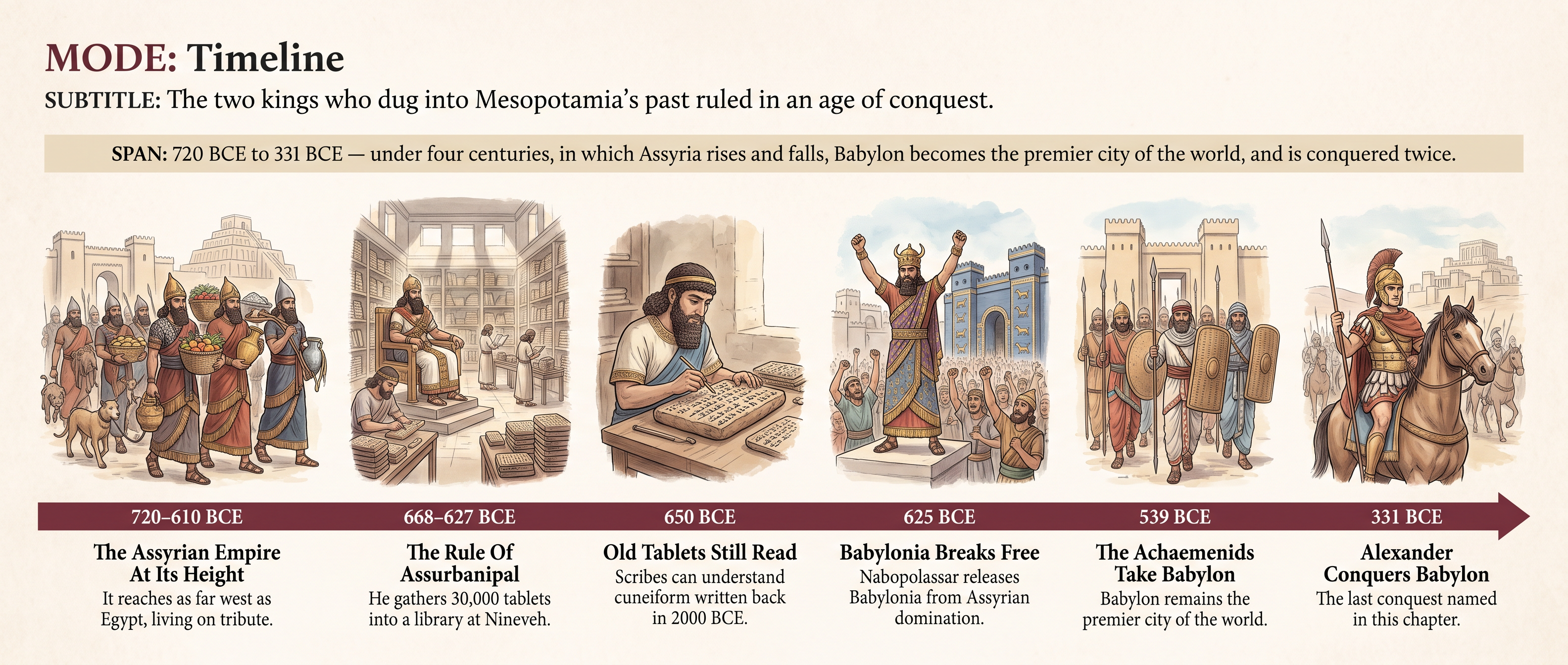
Fig. 1.18 – Empire, Library And The Search For The Past.
Nabonidus was the last ruler of independent Babylon. He writes that the god of Ur came to him in a dream and ordered him to appoint a priestess to take charge of the cult in that ancient town in the deep south.
There was a difficulty. Nobody remembered what such a priestess was supposed to look like.
What he did next is the reason this box is titled as it is. He found the stele of a very early king — one whom we today date to about 1150 BCE — and saw on that stele the carved image of the Priestess. He observed the clothing and the jewellery that were depicted there. This is how he was able to dress his own daughter for her consecration as Priestess.
Stop and see what has just happened. A king faced with a gap in living memory did not invent an answer. He went to an old carved object, read the evidence on it, and used it to reconstruct a lost practice. That is exactly what an archaeologist does.
On another occasion, Nabonidus’s men brought him a broken statue inscribed with the name of Sargon, king of Akkad. We know today that Sargon ruled around 2370 BCE — that is, more than seventeen centuries before Nabonidus’s own lifetime.
Nabonidus, and indeed many intellectuals of his day, had heard of this great king of remote times. He felt he had to repair the statue.
Two things are being preserved at once here, and they are not the same thing. One is an object from the deep past. The other is the idea of kingship itself — for a king who honours a king of seventeen centuries ago is also arguing that kingship is ancient, sacred and worth obeying.
Now think carefully about both these men — Assurbanipal, who sent scribes hunting for tablets, and Nabonidus, who read a stele to dress his daughter. Why do you think they cherished early Mesopotamian traditions?
1.14 Summary
The Land And The City
- City life began in Mesopotamia, the land between the Euphrates and the Tigris in what is now the Republic of Iraq. The region was called Sumer and Akkad, then Babylonia, then Assyria, as power shifted.
- Iraq holds several environments: rain-fed plains and mountains in the north-east, a steppe fit for herding in the north, and a desert in the south. The first cities and writing appeared in the desert.
- The desert could feed cities because the rivers carried silt, and their channels were used as irrigation canals. Southern Mesopotamian agriculture became the most productive of the ancient world.
- But rural prosperity alone does not make a city. What makes a settlement urban is an economy that has grown beyond food production, into trade, manufactures and services.
- Because city people are not self-sufficient, urban life rests on the division of labour, on organised trade and storage, on some people commanding others — and on written records.
- The south had almost no stone, metal or good timber. Everything a city needed had to be brought in, most cheaply over water, along the canals and rivers.
Writing
- The first tablets, of about 3200 BCE, were lists of oxen, fish and bread loaves moving in and out of the temples of Uruk. Writing began as accounting.
- Scribes pressed wedge-shaped cuneiform signs into wet clay. Each transaction needed a fresh tablet, and discarded tablets survive in their hundreds — which is why we know so much about Mesopotamia.
- Each sign stood for a syllable, not a single sound, so hundreds of signs had to be learnt. Very few people could read; even a literate king boasted about it.
- Writing was soon used for dictionaries, land transfers, royal deeds and changes in the law. The epic of Enmerkar shows Mesopotamians crediting kingship with organising both trade and writing, and treating writing as a mark of urban superiority.
Temples, Kings And City Life
- Temples began as houses of gods and grew into the main urban institution: owner of fields and herds, organiser of production, employer of merchants, keeper of written records.
- Floods, shifting channels and quarrels over water brought conflict. Successful war leaders became kings when they began to serve the community — beautifying temples, fetching stone and metal, and keeping the accounts.
- Around 3000 BCE Uruk grew to 250 hectares and later to 400, while dozens of villages were deserted. Labour was compulsory and paid in rations, not taxed; one temple took 1,500 men, ten hours a day, five years.
- A ruling elite held much of the wealth, as the royal graves at Ur show. Ordinary Ur had winding lanes, no town planning, no street drains, refuse in the streets and omens about doors.
- Mari, upstream on the Euphrates, prospered on trade rather than on armies, levying about a tenth of the value of every cargo that passed. Herders and farmers there needed each other and quarrelled with each other, and pastoral peoples repeatedly settled and even ruled.
- The Gilgamesh Epic ends with a hero who cannot escape death consoling himself with the wall of his city, not with his sons. The city had become what outlives a person.
The Legacy
- Science needs writing, because it must be checked and built upon. Mesopotamia’s scholarly tradition of mathematics and time reckoning is its greatest gift to the world.
- Our 12 months, four weeks, 24 hours and 60 minutes descend from Mesopotamia, through the successors of Alexander, the Roman world, the world of Islam and medieval Europe.
- Schools taught boys to copy tablets, and trained some of them to become intellectuals rather than clerks.
- Assurbanipal collected about 30,000 tablets at Nineveh and had them catalogued by subject. Nabonidus read an ancient stele to reconstruct a forgotten office, and repaired a statue of Sargon. Mesopotamians were studying their own past long before Europeans came to dig it up.
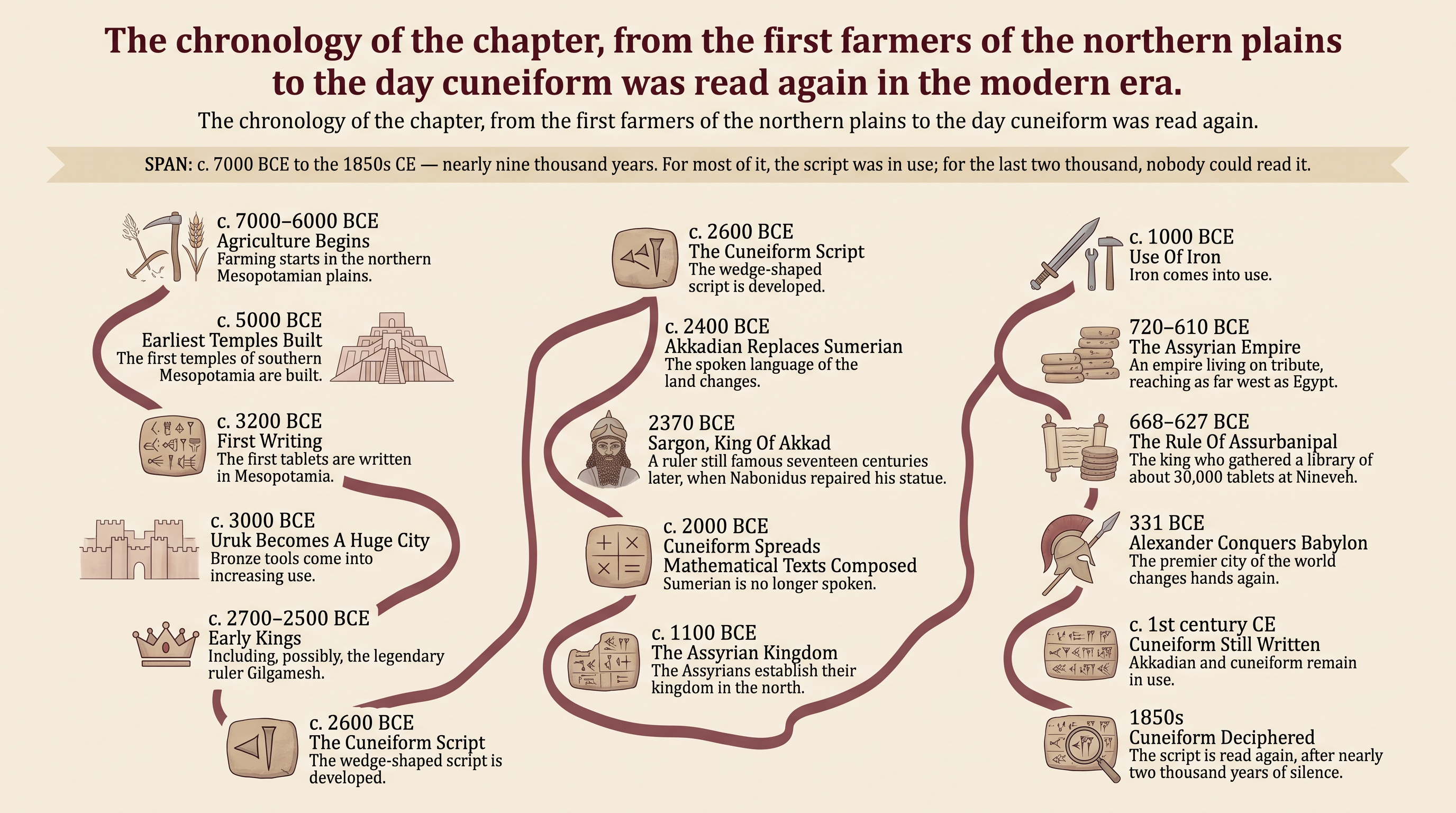
Fig. 1.19 – Writing And City Life.
What The Evidence Cannot Tell Us
Almost everything in this chapter comes from clay written by scribes, for temples and for kings. That is a narrow window. The ration lists give us the names of workers and the grain they were allotted, but never what they thought of the work; the omen tablets tell us a door could predict a quarrelsome wife, but no woman of Ur wrote down her own view of it.
The silences are not accidents. The people who could write were counting, praising and commanding. Nobody was paid to record the ordinary life of a herder, a war captive or a housewife — so the evidence is loudest exactly where power was, and quietest everywhere else.
And some things the clay simply never held. We do not know where the early settlers of southern Mesopotamia came from, or why a few individuals at Ur were buried under the floors of their own houses. A History built from what survives must always say, plainly, where it stops.
1.15 NCERT Questions
Answer In Brief
Why do we say that it was not natural fertility and high levels of food production that were the causes of early urbanisation?
Which of the following were necessary conditions and which the causes, of early urbanisation, and which would you say were the outcome of the growth of cities: (a) highly productive agriculture, (b) water transport, (c) the lack of metal and stone, (d) the division of labour, (e) the use of seals, (f) the military power of kings that made labour compulsory?
Why were mobile animal herders not necessarily a threat to town life?
Why would the early temple have been much like a house?
Answer In A Short Essay
Of the new institutions that came into being once city life had begun, which would have depended on the initiative of the king?
What do ancient stories tell us about the civilisation of Mesopotamia?
1.16 Check Your Concepts
Look carefully at Fig. 1.13, the plan of a residential area at Ur. State two things the plan allows you to conclude about how the town grew, and one thing it cannot tell you about the people who lived there.
Source 1 begins by instructing someone to ‘speak’. What does this opening tell you about how a letter reached a Mesopotamian king? Explain why it does not settle the question of whether the king himself could read.
Uruk and Mari were both cities, but they did not grow rich in the same way. Explain how each of them prospered, and why a militarily weak kingdom like Mari could still be exceptionally wealthy.
Set out, step by step, how conflict in the countryside over land and water led to the rise of kings. At which step in that chain does a temporary war leader turn into a ruler with lasting authority, and why?
At Abu Salabikh, archaeologists identified kitchens and concluded that pigs roamed the streets freely. Describe the evidence behind each conclusion, and state one limit of that kind of evidence.
The chapter argues that moving narratives can be passed on by mouth, but that science requires writing. Using the mathematical tablets of about 1800 BCE and the records of eclipses, explain why this is so.
Hundreds of ration lists survive, giving people’s names against quantities of grain, cloth and oil. Name two things about the lives of these workers that such lists can never tell us, and explain why those particular silences exist in the Mesopotamian evidence.