Chapter 5: Changing Cultural Traditions
In 1543, an old man lay dying. In his hands was a manuscript he had spent much of his life on, and which he had refused to let anyone print.
His name was Copernicus. He was a devout Christian, and he had worked out something that frightened him. Christians of his time believed that the earth stood still at the centre of the universe, a sinful place too heavy with sin to move, while the celestial planets circled around it. Copernicus had concluded that this was wrong. The planets, he said, move around the sun — and the earth is one of those planets.
He knew what traditionalist clergymen would say. So he kept the manuscript, De revolutionibus — ‘The Rotation’ — unprinted. Only on his deathbed did he hand it to his follower, Joachim Rheticus.
Notice what he did not do. He did not claim a vision, and he did not appeal to scripture. He had watched the sky, made calculations, and followed where they led. That was the new and dangerous thing: the idea that what you can observe may outweigh what you have been told.
That idea did not arrive alone. Between the fourteenth and the seventeenth centuries, Europeans also rebuilt their towns, reopened ancient books, printed them by the thousand, painted the human body as it actually looked, and split their Church. This chapter is about how that happened — and how we know it did.
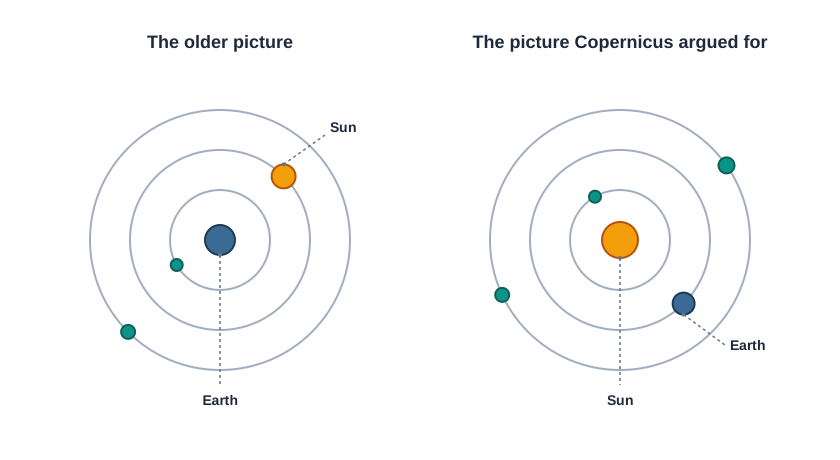
Fig. 5.0 – The earth-centric and sun-centric universe.
5.1 Introduction
From the fourteenth century to the end of the seventeenth, towns were growing in many countries of Europe. More people lived in them, and more of what mattered — money, books, argument — was concentrated in them. Along with the towns grew a distinct urban culture: a way of living and thinking that belonged to town-dwellers rather than to the countryside.
Townspeople began to think of themselves as more ‘civilised’ than rural people. That was a claim about status, not a fact about ability, and it tells us more about how townsfolk saw themselves than about how villagers actually lived. Certain towns — Florence, Venice and Rome, all in Italy — became centres of art and learning.
Artists and writers in these towns were patronised by the rich and the aristocratic. A patron paid an artist to work, gave him a place to live, and took the credit when the work was admired. Art in this period was therefore rarely produced for its own sake; somebody with money had usually asked for it.
What Changed Between 1300 And 1700
At the same time, printing was invented. Books and prints could now be made in many copies, and they reached people living in distant towns and even distant countries. An idea written down in Italy no longer had to stay in Italy.
A sense of history also developed in Europe. People began to place themselves in time, and to contrast their own ‘modern’ world with the ‘ancient’ one of the Greeks and Romans. To speak of your own age as modern, you must first decide that some other age was not — and that decision is itself a piece of history-writing.
Religion changed too. It came to be seen as something which each individual should choose for himself, rather than something an institution settled on his behalf. Meanwhile the Church’s earth-centric belief — that the earth stands still at the centre of things — was overturned by scientists who began to understand the solar system.
Geography was overturned as well. Europeans had held a Europe-centred view of the world, in which the Mediterranean Sea, the sea between southern Europe and North Africa, was its centre. New geographical knowledge destroyed that picture. Two of the certainties a European had grown up with — where the earth sat in the universe, and where Europe sat on the globe — were both taken away within a few generations.
What Survives From These Centuries
There is a vast amount of material on European history from the fourteenth century. It survives in many forms: documents, printed books, paintings, sculptures, buildings and textiles.
Much of this has been carefully preserved in archives, which are collections of original written records, and in art galleries and museums, in Europe and in America. This matters for a very practical reason. A historian can only ask the questions that the surviving evidence will answer, and for these centuries an unusual amount survives.
The Historian Who Named The Period
From the nineteenth century, historians used the term Renaissance — literally, rebirth — to describe the cultural changes of this period. Notice the date. The word was applied to these centuries by scholars living hundreds of years later, not by the people who lived through them.
The historian who emphasised these changes most was a Swiss scholar, Jacob Burckhardt (1818–97) of the University of Basle in Switzerland. He had been a student of the German historian Leopold von Ranke (1795–1886), and the relationship between the two men is worth pausing on, because it is really a quarrel about what history is for.
Ranke had taught him that the primary concern of the historian was to write about states and politics, using the papers and files of government departments. Burckhardt was dissatisfied with these very limited goals that his master had set out for him. To him, politics was not the be-all and end-all in history writing. History, he held, was as much concerned with culture as with politics.
In 1860 he wrote a book called The Civilisation of the Renaissance in Italy. In it he called his readers’ attention to literature, architecture and painting, and used them to tell the story of how a new ‘humanist’ culture had flowered in Italian towns from the fourteenth to the seventeenth century.
That culture, he wrote, was characterised by a new belief — that man, as an individual, was capable of making his own decisions and developing his skills. Such a person was ‘modern’, in contrast to ‘medieval’ man, whose thinking had been controlled by the church.
Burckhardt’s picture is powerful, and much of this chapter follows the changes he pointed to. But keep his argument at arm’s length as you read. He was drawing a sharp line between two ages, and a sharp line is exactly the kind of claim a historian must test rather than inherit. The chapter returns to that test at the end.
5.2 The Revival Of Italian Cities
After the fall of the western Roman Empire, many of the towns that had been political and cultural centres in Italy fell into ruin. Trade shrank, buildings decayed, and the machinery of government that had held the peninsula together simply stopped working.
There was no unified government to replace it. The Pope in Rome was sovereign in his own state — that is, he ruled it in his own right, answering to no higher power — but he was not a strong political figure. Italy had no single ruler and no single capital.
A Weakness That Turned Into An Advantage
Elsewhere, Europe was being pulled into shape. Western Europe was being reshaped by feudal bonds, the ties of land and service that bound lords, knights and peasants to one another, and it was unified under the Latin Church. Eastern Europe was held together under the Byzantine Empire, the surviving eastern half of the Roman world, ruled from Constantinople.
Further west, Islam was creating a common civilisation across a huge stretch of territory. Beside these large, consolidated blocs, Italy was weak and fragmented. It looked like the loser.
However, it was these very developments that helped in the revival of Italian culture. Italy lay between them — between the Byzantine lands, the Islamic world and western Europe — and goods moving from any one of these to another had to pass through or near Italian hands.
Trade Brings The Ports Back To Life
With the expansion of trade between the Byzantine Empire and the Islamic countries, the ports on the Italian coast revived. Ships needed harbours, warehouses, money-changers and agents, and the coastal towns supplied them.
From the twelfth century, two further openings appeared. The Mongols opened up trade with China via the Silk Route, the long overland trading road across Asia that you have met in an earlier chapter, and trade with western European countries also increased. Italian towns sat in the middle of both, and played a central role.
Map
Map 1 Caption: The Italian states, showing the cities named in this chapter. Brief: Reproduce NCERT’s Map 1 of the Italian states, with the Adriatic Sea, the Tyrrhenian Sea and the Mediterranean Sea labelled; mark Genoa, Padua, Venice, Mantua, Bologna, Florence and Rome, with Corsica, Sardinia, Sicily and the Swiss Federation shown as printed. The boundaries are those of the Italian states of this period, not of the modern Italian republic; say so on the map.
From Subjects To Citizens
The Italian towns no longer saw themselves as part of a powerful empire. They saw themselves as independent city-states: a city and the land immediately around it, governing itself as a state in its own right.
Two of these — Florence and Venice — were republics, states in which rulers are chosen rather than born to the office. Many others were court-cities, ruled by princes.
One of the most vibrant cities was Venice; another was Genoa. They were different from other parts of Europe in a way that mattered enormously. The clergy were not politically dominant here, nor were there powerful feudal lords.
That absence left a space, and rich merchants and bankers filled it. They actively participated in governing the city, and this helped the idea of citizenship — membership of a city, carrying rights and a share in its government — to strike root.
The idea proved tough. Even when these towns were ruled by military despots, that is, by commanders who seized power and held it by force, the pride felt by the townspeople in being citizens did not weaken. A citizen might lose control of his government and still refuse to think of himself as a subject.
A Venetian Describes His Own Republic
How did such a city describe its own government? We have an answer from a man who lived in one. Cardinal Gasparo Contarini (1483-1542) was a Venetian who rose high in the Church, and he set out the workings of his city-state in a book written for readers elsewhere in Europe. He is proud of Venice, and he is defending it — both of which shape what he says.
Read the extract slowly, and notice how narrow the word ‘citizen’ has become. Power lies in a council; the council is open to gentlemen of the city over the age of 25; and the common people are deliberately kept out of it. Contarini does not hide this. He explains it, and he thinks the explanation does his ancestors credit.
His reasoning is worth following. Government by the common people, he argues, produces tumults. Government by the wealthy would be no better, because honest men often lose their money and would then lose their voice. So the right to govern is fixed to birth — to nobility of lineage — with the important proviso that it must not be confined to the very greatest families alone, or Venice would be ruled by a few men rather than by a commonwealth.
Notice also the small opening he leaves: those ‘ennobled by virtue’ could obtain this right too. Venice, then, called itself a republic and meant it — but its liberty belonged to a defined body of men, and to no one else. The women of Venice, and the artisans, sailors and shopkeepers who kept it running, appear in this document only as the crowd to be excluded.
The city Contarini was defending can also be seen. Giovanni Bellini’s painting of a great religious procession shows Venice as its own citizens liked to picture it: crowded, wealthy, orderly, built on water, and putting on a public show of devotion in which the leading men of the city are prominently on display.
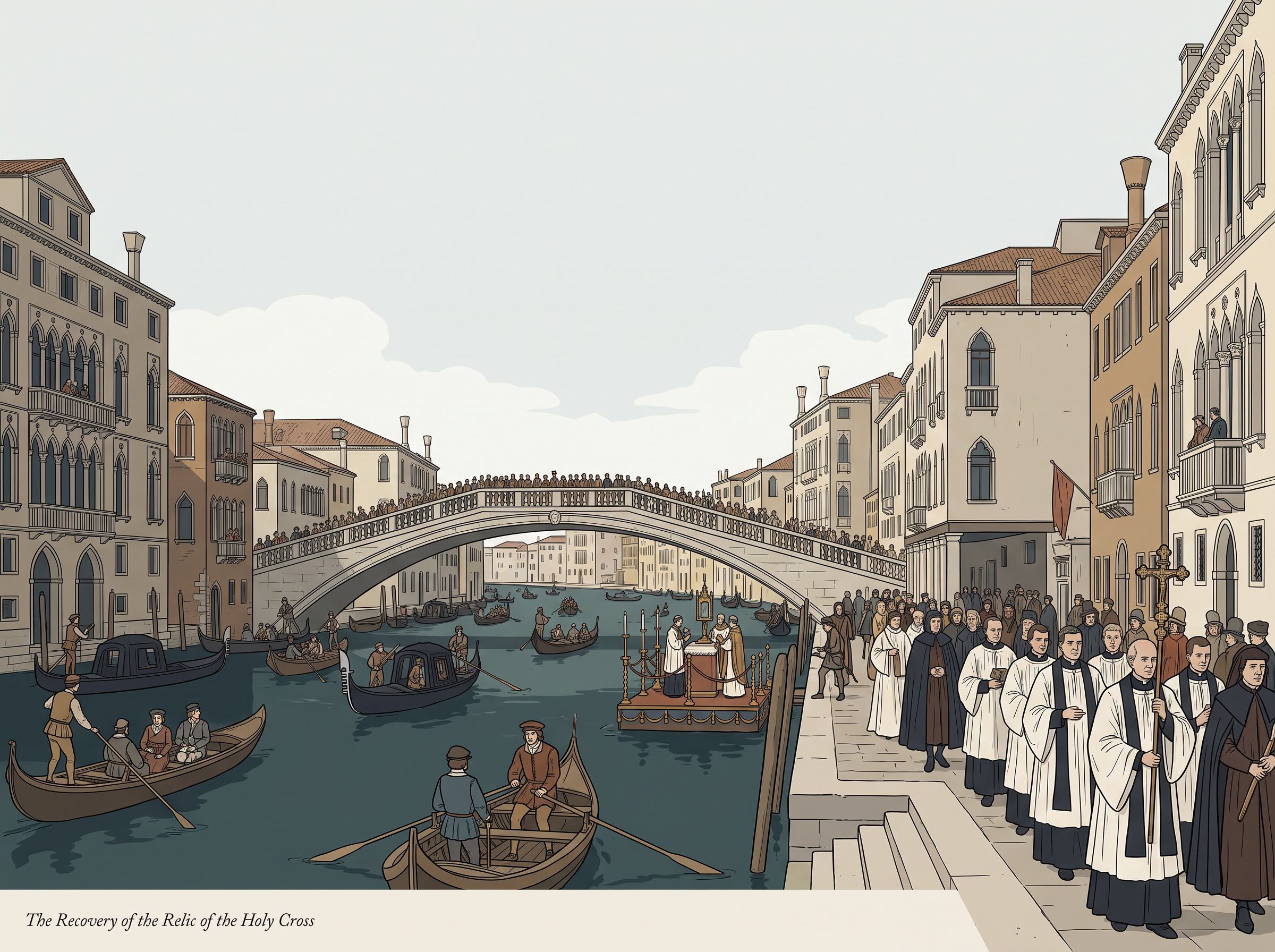
Fig. 5.1 – G. Bellini’s ‘The Recovery of the Relic of the Holy Cross’, 1500.
5.3 Universities And Humanism
Before going further, fix the century in your mind. The list below is NCERT’s own chronology of the fourteenth and fifteenth centuries, and almost every name in it will return later in this chapter.
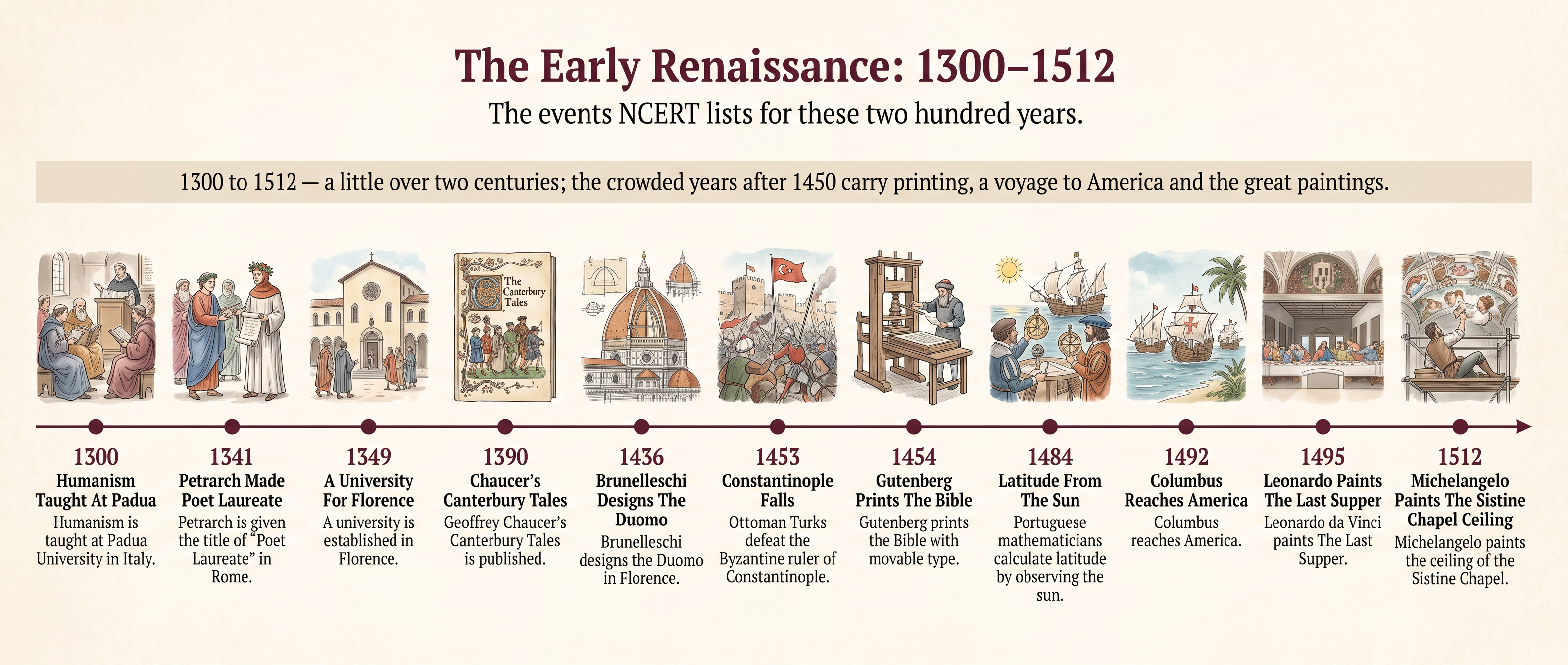
Fig. 5.2 – The Fourteenth And Fifteenth Centuries.
Before you read on, do a small exercise with what you have already seen. Find Venice on Map 1, and then look carefully at Bellini’s painting of the city in Fig. 5.1. How would you describe this place? In what ways is it different from a cathedral-town — a town whose life, work and skyline are organised around its great church?
Why A Trading City Needed A University
The earliest universities in Europe had been set up in Italian towns. The universities of Padua and Bologna had been centres of legal studies from the eleventh century, well before the changes this chapter describes.
The reason lies in the streets outside them. Commerce was the chief activity in the city, and commerce runs on written agreements. There was therefore an increasing demand for lawyers and for notaries — a combination of solicitor and record-keeper — who could write and interpret rules and written agreements. Without such men, trade on a large scale was not possible.
Law was therefore a popular subject of study. But there was now a shift in emphasis. Law began to be studied in the context of earlier Roman culture, not simply as a set of rules to be applied.
What ‘Humanism’ Meant
This was the culture which historians in the nineteenth century were to label humanism. Once again, notice that the name was given later, by scholars looking back — the people described by it did not go about calling themselves that.
The word ‘humanist’ does belong to the period, though in a narrower sense. By the early fifteenth century it was used for masters who taught a particular group of subjects: grammar, rhetoric (the art of speaking and writing persuasively), poetry, history and moral philosophy.
The Latin word humanitas, from which ‘humanities’ was derived, lies behind the term. It had been used many centuries earlier by the Roman lawyer and essayist Cicero (106-43 BCE), a contemporary of Julius Caesar, to mean culture. Cicero’s word had waited a long time to be picked up again.
Two things stand out about these subjects. They were not drawn from, or connected with, religion. And they emphasised skills developed by individuals through discussion and debate — not truths handed down to be accepted.
Debate As Exercise
The humanists took debate seriously enough to argue for it in print. Giovanni Pico della Mirandola, a humanist of Florence, put the case in a book with a title that says a good deal on its own: On the Dignity of Man.
Follow the comparison Pico is making. The mind, he says, is like a body: it grows strong by being exercised, and debate is its gymnasium. Truth, on this view, is something you have to go and get, by argument, rather than something you receive and repeat.
Notice also whom he cites — Plato and Aristotle, two Greek philosophers. His authority for thinking freely is an ancient authority. That is very characteristic of humanism, and it is a reminder that these men did not think they were breaking with the past. They believed they were returning to it.
Florence Becomes The Centre
These revolutionary ideas attracted attention in many other universities, and particularly in the newly established university in Petrarch’s own home-town of Florence.
Till the end of the thirteenth century, this city had not made a mark as a centre of trade or of learning. Things changed dramatically in the fifteenth century — and a city is known by its great citizens as much as by its wealth.
Florence had come to be known because of two men. Dante Alighieri (1265-1321) was a layman, that is, not a churchman, who nevertheless wrote on religious themes. Giotto (1267-1337) was an artist who painted lifelike portraits, very different from the stiff figures done by earlier artists.
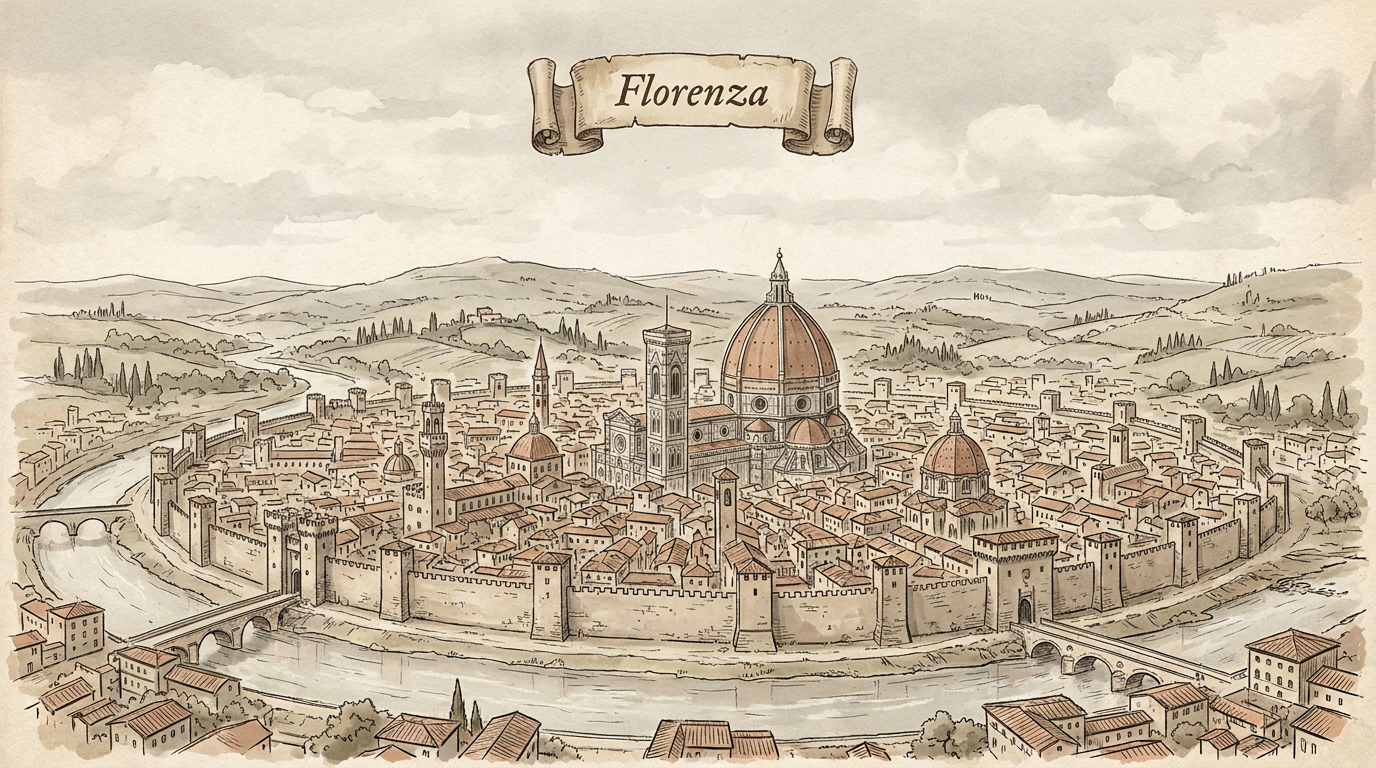
Fig. 5.3 – Panoramic sketch of Florence in 1470.
From then on, Florence developed as the most exciting intellectual city in Italy and as a centre of artistic creativity.
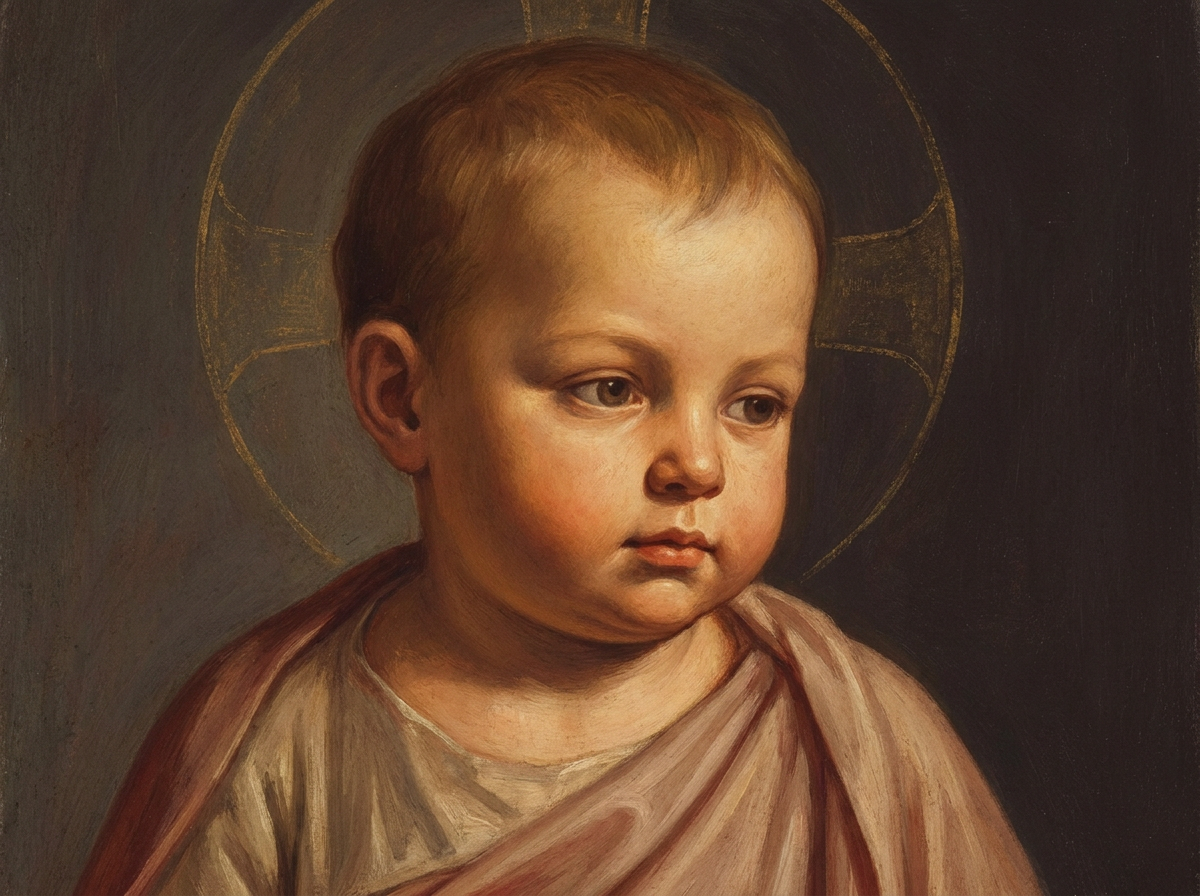
Fig. 5.4 – Giotto’s lifelike painting of the child Jesus, Assisi.
The period produced a particular kind of person, and later ages gave him a name. The term ‘Renaissance Man’ is often used to describe a person with many interests and skills. It was coined because so many of the individuals who became well known at this time were people of many parts — scholar, diplomat, theologian and artist combined in one.
5.4 The Humanist View Of History
Humanists thought that they were restoring ‘true civilisation’ after centuries of darkness. They believed that a ‘dark age’ had set in after the collapse of the Roman Empire, and that they were now switching the lights back on.
Following them, later scholars unquestioningly assumed that a ‘new age’ had begun in Europe from the fourteenth century. That word — unquestioningly — matters. A claim made by people about themselves was taken over by historians and repeated as though it were a finding.
Naming The Middle
The term ‘Middle Ages’, or ‘medieval period’, was used for the millennium — the thousand years — after the fall of Rome. The name itself carries an argument. It says that these centuries were the middle of something: a long, dull stretch between a great ancient world and a great modern one, valuable chiefly for being over.
In the ‘Middle Ages’, the humanists argued, the Church had had such complete control over men’s minds that all the learning of the Greeks and Romans had been blotted out. For the period from the fifteenth century, they used the word ‘modern’ — and they meant themselves.
Dividing the past into named stretches of time is called periodisation, and it is one of the most powerful things a historian does. Once a period has a name, the name begins to do the thinking. Call an age ‘dark’ and you have already decided what you will find in it.
The Scheme They Left Behind
The scheme that resulted was neat, and it long outlived the men who made it.
Look at the top two rows together. The Middle Ages run from the fifth to the fourteenth century, and the Dark Ages sit inside them, from the fifth to the ninth. Then come the Early and the Late Middle Ages, and from the fifteenth century the Modern Age begins — the age in which the men drawing up the scheme happened to be living.
The Scheme Under Question
Recently, historians have questioned this division. More research is being done, and more is being found out about Europe in this period.
As a result, scholars are increasingly reluctant to make sharp divisions between centuries in terms of being culturally vibrant or otherwise. The closer you look at any century, the harder it is to say that it was uniformly asleep. It seems unfair to label any period as the ‘Dark Ages’.
5.5 Science And Philosophy: The Arabs’ Contribution
Much of the writings of the Greeks and Romans had been familiar to monks and clergymen through the ‘Middle Ages’. Familiar, but locked away: they had not made these widely known. The texts existed, and almost nobody outside the cloisters could get at them.
In the fourteenth century, many scholars began to read translated works of Greek writers like Plato and Aristotle. This is often told as a story of Europeans recovering their own inheritance. It was not.
For these texts they were indebted not to their own scholars but to Arab translators, who had carefully preserved and translated ancient manuscripts — books written out by hand, long before printing existed. Plato reached them as Aflatun, and Aristotle as Aristu, which is what those names had become in Arabic.
Traffic In Both Directions
The traffic did not run one way. While some European scholars read Greek in Arabic translation, the Greeks translated works of Arabic and Persian scholars for further transmission to other Europeans.
These were not works of poetry or piety. They were works on natural science, mathematics, astronomy, medicine and chemistry — the practical, testable end of knowledge.
The words themselves still carry the fingerprints of this journey. Ptolemy’s Almagest is a work on astronomy, written in Greek before 140 CE and later translated into Arabic. Its title carries the Arabic definite article ‘al’ — the equivalent of the English ‘the’ — which brings out the Arabic connection in a book that began life in Greek.
The Men Italy Read
Among the Muslim writers who were regarded as men of wisdom in the Italian world was Ibn Sina — ‘Avicenna’ in Latin — who lived from 980 to 1037. He was an Arab physician and philosopher of Bukhara, a city on the trading routes of Central Asia.
Another was al-Razi, known in Latin as ‘Rhazes’, the author of a medical encyclopaedia. A doctor in fifteenth-century Italy could learn his trade from books written centuries earlier and thousands of kilometres away.
Ibn Rushd, ‘Averroes’ in Latin, lived from 1126 to 1198 and was an Arab philosopher of Spain. He worked on a problem that would soon trouble Europe as well: the tension between philosophical knowledge — the knowledge of the faylasuf, the philosopher — and religious beliefs. His method was adopted by Christian thinkers, who had the same difficulty on their hands.
Notice what that did over time. The European spelling of these individuals’ names made later generations think they were Europeans. A debt was not so much denied as quietly mislaid, one syllable at a time.
Humanism Moves Into The Schools
Humanists reached out to people in a variety of ways, and the classroom was one of them.
The universities did not surrender easily. Their curricula continued to be dominated by law, medicine and theology, the study of God and religious doctrine. Change came from below rather than from above.
Humanist subjects slowly began to be introduced in schools — and not just in Italy, but in other European countries as well. Once a subject is taught to children, it stops being the property of a few scholars and becomes part of what an educated person is simply assumed to know.
One limit on this should be stated plainly, because it decides who the ‘individual’ of this chapter actually is. Schools at this time were only for boys.
5.6 Artists And Realism
Formal education was not the only way through which humanists shaped the minds of their age. Most people never saw the inside of a university, but almost everyone saw pictures, statues and buildings.
Art, architecture and books were wonderfully effective in transmitting humanist ideas. A painting could carry an idea about human beings to people who could not read a word of Latin.
An Artist States The Rule
The German artist Albrecht Durer set down what the new art demanded of the person making it. Read him as a craftsman writing about his craft: he is telling other artists where beauty comes from, and his answer is not ‘from your imagination’.
Three claims sit in those few lines. Art is already there in nature, waiting to be extracted. Geometry can prove that your work is right. And no one can invent a beautiful figure who has not first spent years copying real ones.
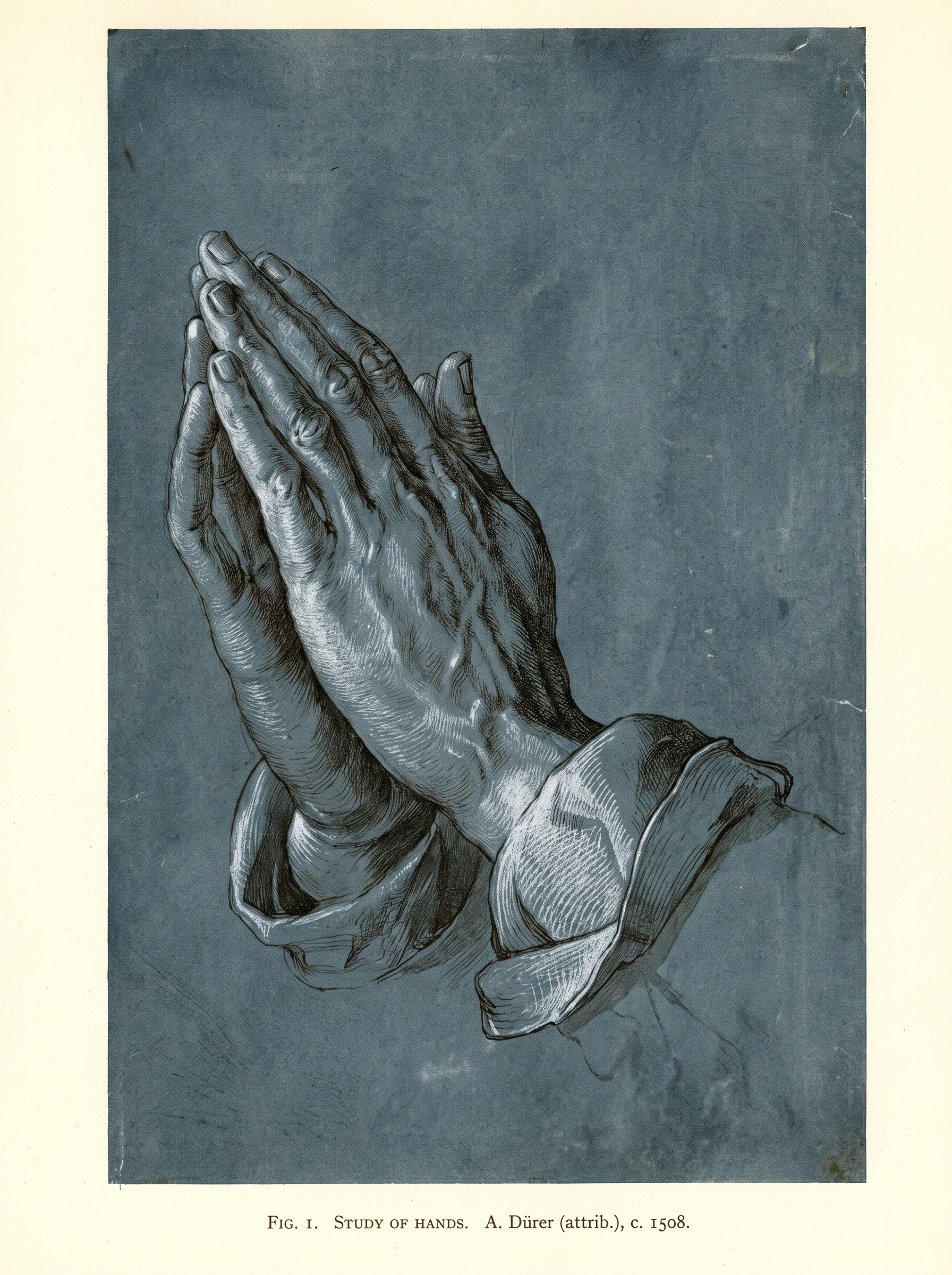
Fig. 5.5 – ‘Praying Hands’, brush drawing by Albrecht Durer, 1508.
This sketch by Durer gives us a sense of Italian culture in the sixteenth century. People were deeply religious — these are praying hands — but they also had a sense of confidence in man’s ability to achieve near-perfection, and to unravel the mysteries of the world and the universe. Devotion and self-confidence are in the same drawing, and neither cancels the other.
Digging Up A Standard Of Beauty
Artists were inspired by studying works of the past. The material remains of Roman culture were sought with as much excitement as ancient texts, and for the same reason: they were the words of the ancients, in another form.
A thousand years after the fall of Rome, fragments of art were discovered in the ruins of ancient Rome and other deserted cities. Broken statues came out of the ground, and Italian sculptors stood and looked at them.
What struck them was proportion. Their admiration for the figures of ‘perfectly’ proportioned men and women, sculpted so many centuries ago, made Italian sculptors want to continue that tradition. In 1416, Donatello (1386-1466) broke new ground with his lifelike statues.
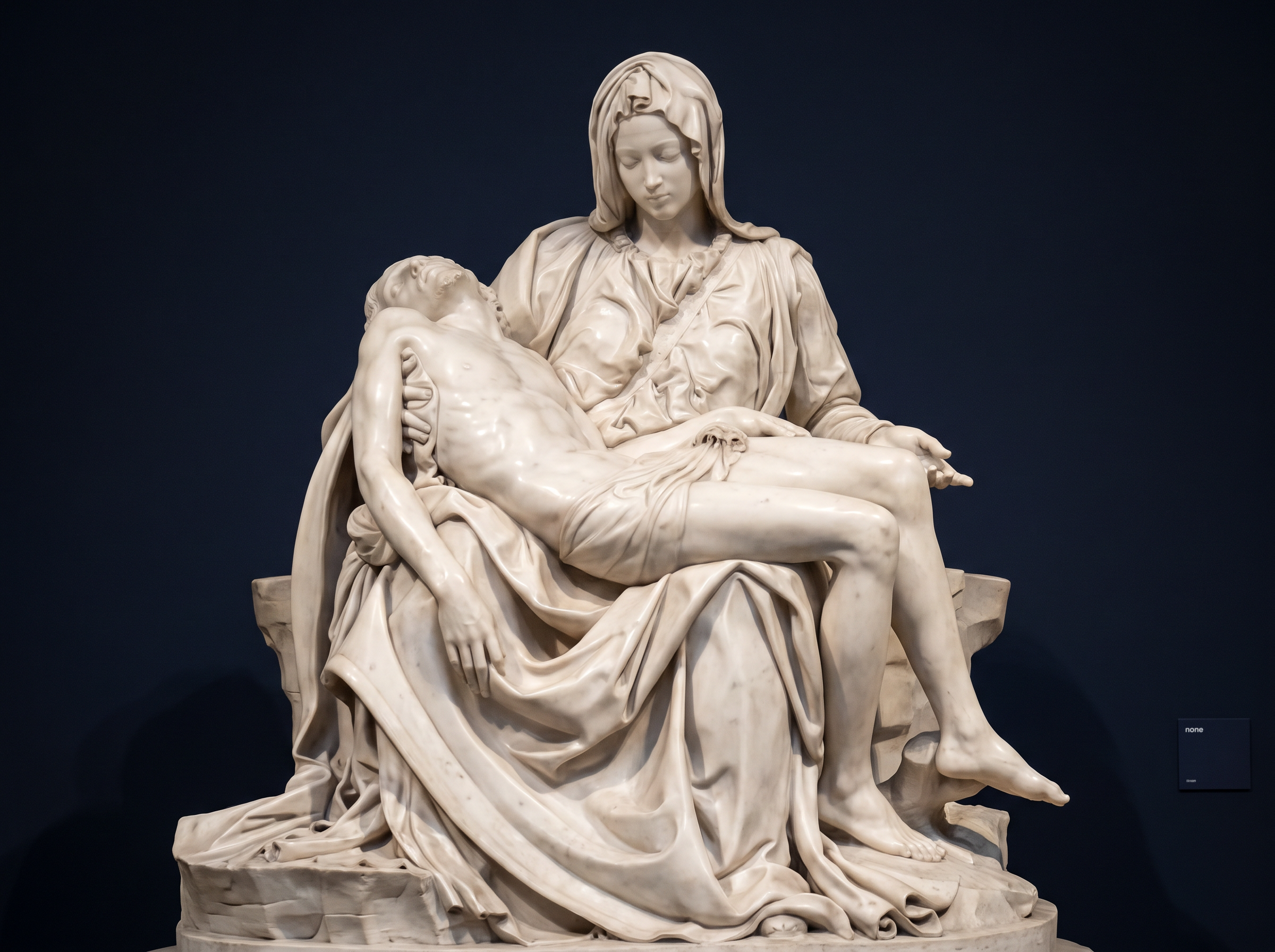
Fig. 5.6 – Michelangelo’s ‘Pieta’ in Rome.
Artists In The Dissection Room
Artists’ concern to be accurate was helped by the work of scientists. If you want a shoulder to look right, it helps to know what is underneath the skin.
To study bone structures, artists went to the laboratories of medical schools. Andreas Vesalius (1514-64), a Belgian and a professor of medicine at the University of Padua, was the first to dissect the human body. This was the beginning of modern physiology, the study of how the body’s parts actually work.
So the painter and the physician were, for a while, in the same room, looking at the same thing for different reasons.
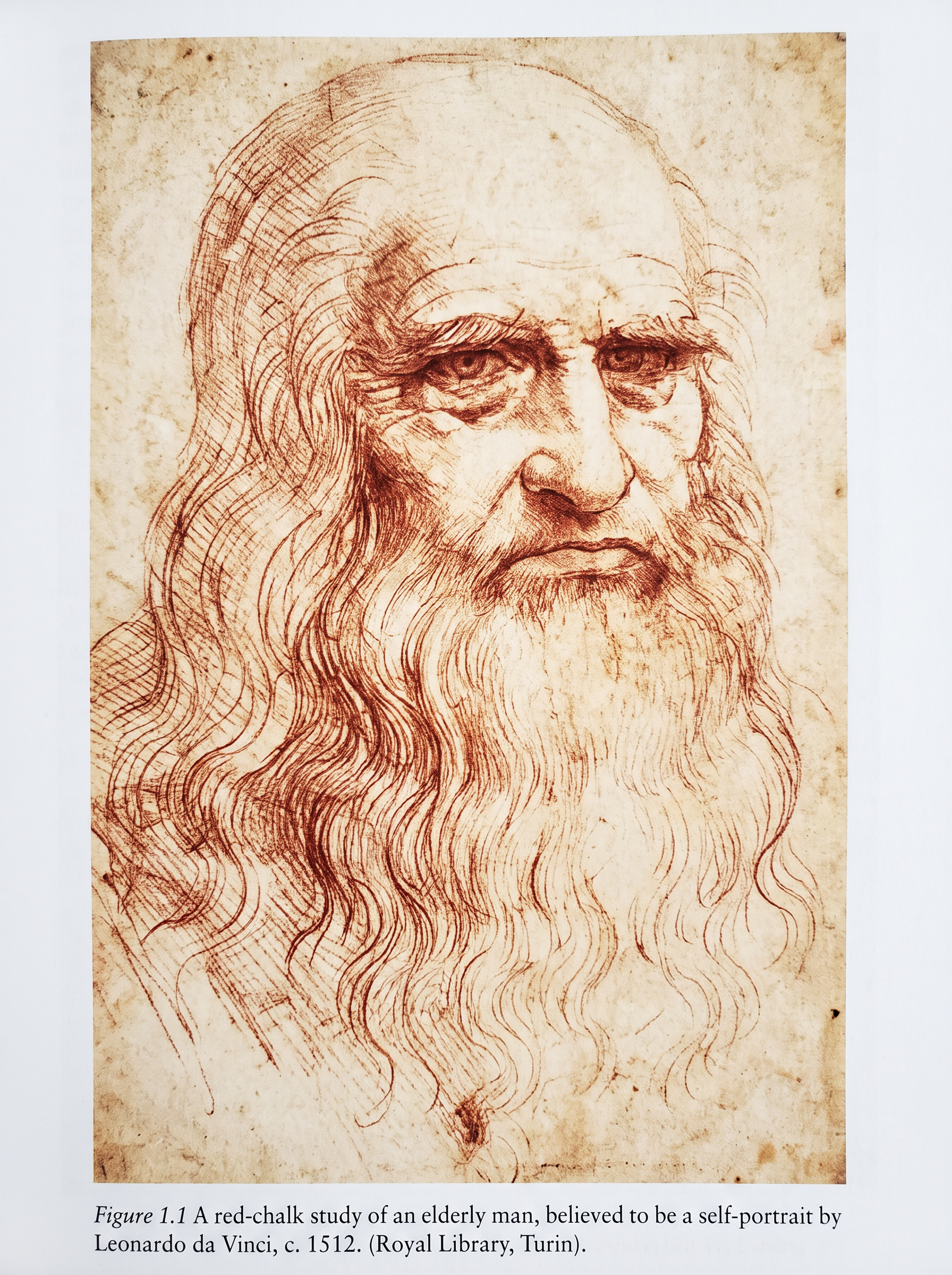
Fig. 5.7 – Chalk self-portrait by Leonardo da Vinci.
That signature is worth pausing on. Not ‘painter’, not ‘master’ — disciple of experiment. He is describing where he thinks knowledge comes from.
What Made Painting Look Real
Painters faced a harder problem than sculptors. Sculptors had ancient statues to measure themselves against; painters did not have older works to use as a model. Yet they, like sculptors, painted as realistically as possible.
They solved it with mathematics and with observation. They found that a knowledge of geometry helped them understand perspective — the way in which things appear smaller and lines seem to converge as they recede from the eye. By noting the changing quality of light, they gave their pictures a three-dimensional quality, so that a flat surface began to hold depth.
Materials mattered too. The use of oil as a medium for painting gave a greater richness of colour to paintings than before.
And these paintings were not purely European objects. In the colours and designs of costumes in many paintings, there is evidence of the influence of Chinese and Persian art, made available to Italian artists by the Mongols, whose empire had linked these worlds by trade.
Pause here and answer a question for yourself, because it gathers up this whole section. What were the different scientific elements in the work of sixteenth-century Italian artists? Look back for the geometry, the light, the bones and the chemistry of colour before you read the next paragraph.
Thus anatomy, geometry and physics, as well as a strong sense of what was beautiful, gave a new quality to Italian art. It came to be called realism — the attempt to show things as the eye actually sees them — and it continued till the nineteenth century, a run of some three hundred years.
5.7 Architecture
The city of Rome revived in a spectacular way in the fifteenth century. It had been a place of ruins and weak authority; it now became a building site again.
The recovery began with a political repair. Since 1378 the Church had been divided by the election of two rival popes, each claiming to be the true head of Christendom, and a divided papacy is a weak one. From 1417 that weakness had ended, and the popes were politically stronger.
Digging Up Rome To Rebuild It
A stronger papacy could now afford to look at the city it sat in. The popes actively encouraged the study of Rome’s history, and the ruins in Rome were carefully excavated by archaeologists.
Note the parenthesis NCERT adds, because it is easy to read past: archaeology — the study of the past through what people made and left behind in the ground — was a new skill. Nobody had done this systematically before. The men digging in Rome were inventing a method while they used it.
What came out of the ground changed what went up above it. The excavations inspired a ‘new’ style in architecture, which was actually a revival of the imperial Roman style — now called ‘classical’. The word ‘new’ deserves its inverted commas, since the style was more than a thousand years old.
Money and command followed. Popes, wealthy merchants and aristocrats employed architects who were familiar with classical architecture. Artists and sculptors were also engaged to decorate these buildings with paintings, sculptures and reliefs — figures carved so that they stand out from a flat surface.
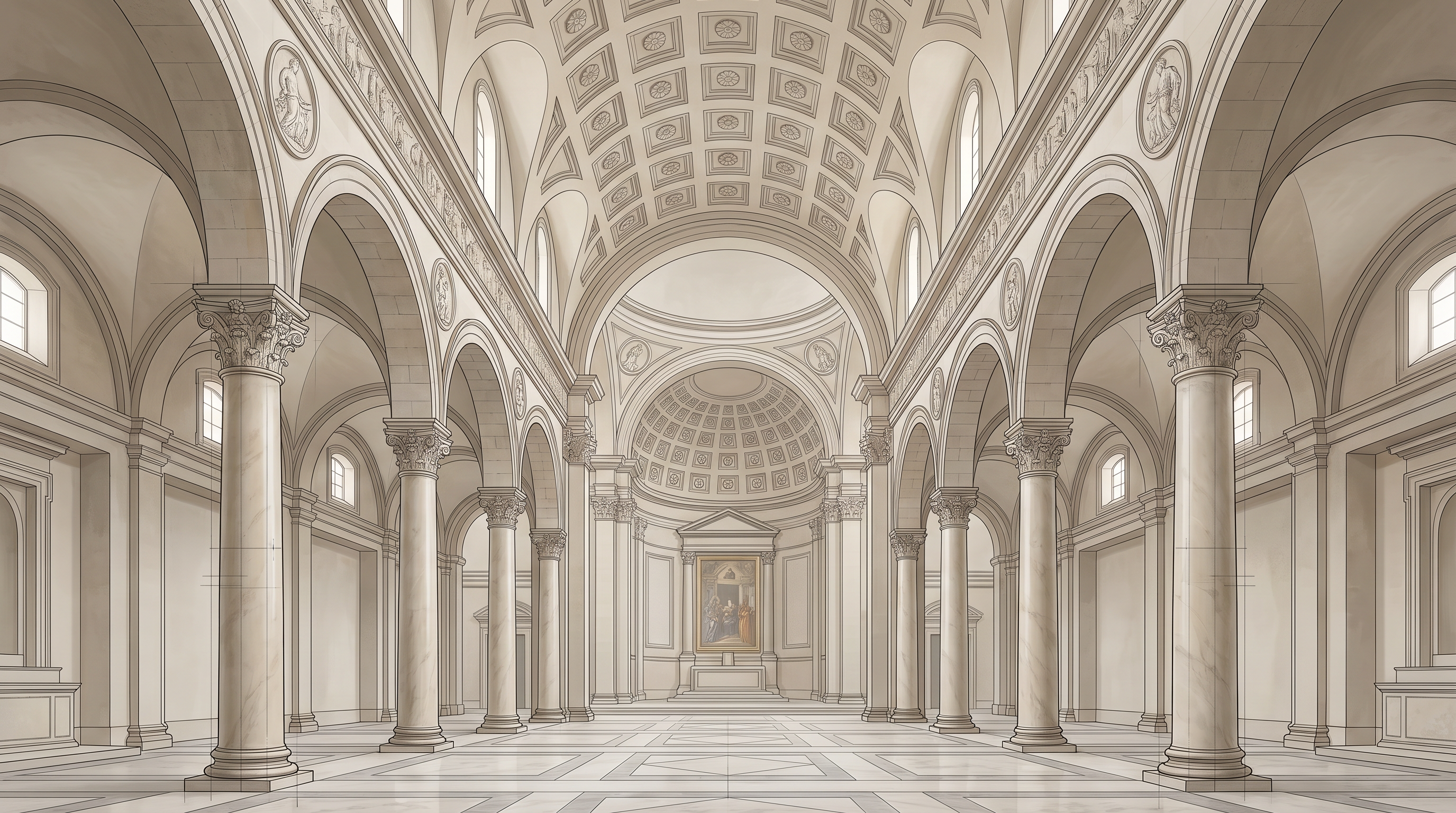
Fig. 5.8 – Sixteenth-century Italian architecture reviving Roman classical style.
One Man, Three Crafts
Some individuals were skilled equally as painters, sculptors and architects. This was not thought strange. If art rests on geometry and on the study of real bodies, the same training serves for a statue, a picture and a dome.
The most impressive example is Michelangelo Buonarroti (1475-1564). He is immortalised by three works, all in Rome: the ceiling he painted for the Pope in the Sistine Chapel, the sculpture called ‘The Pieta’ that you have already seen in Fig. 5.6, and his design of the dome of St Peter’s Church.
The traffic ran the other way too. Filippo Brunelleschi (1337-1446), the architect who designed the spectacular Duomo of Florence, had started his career as a sculptor.
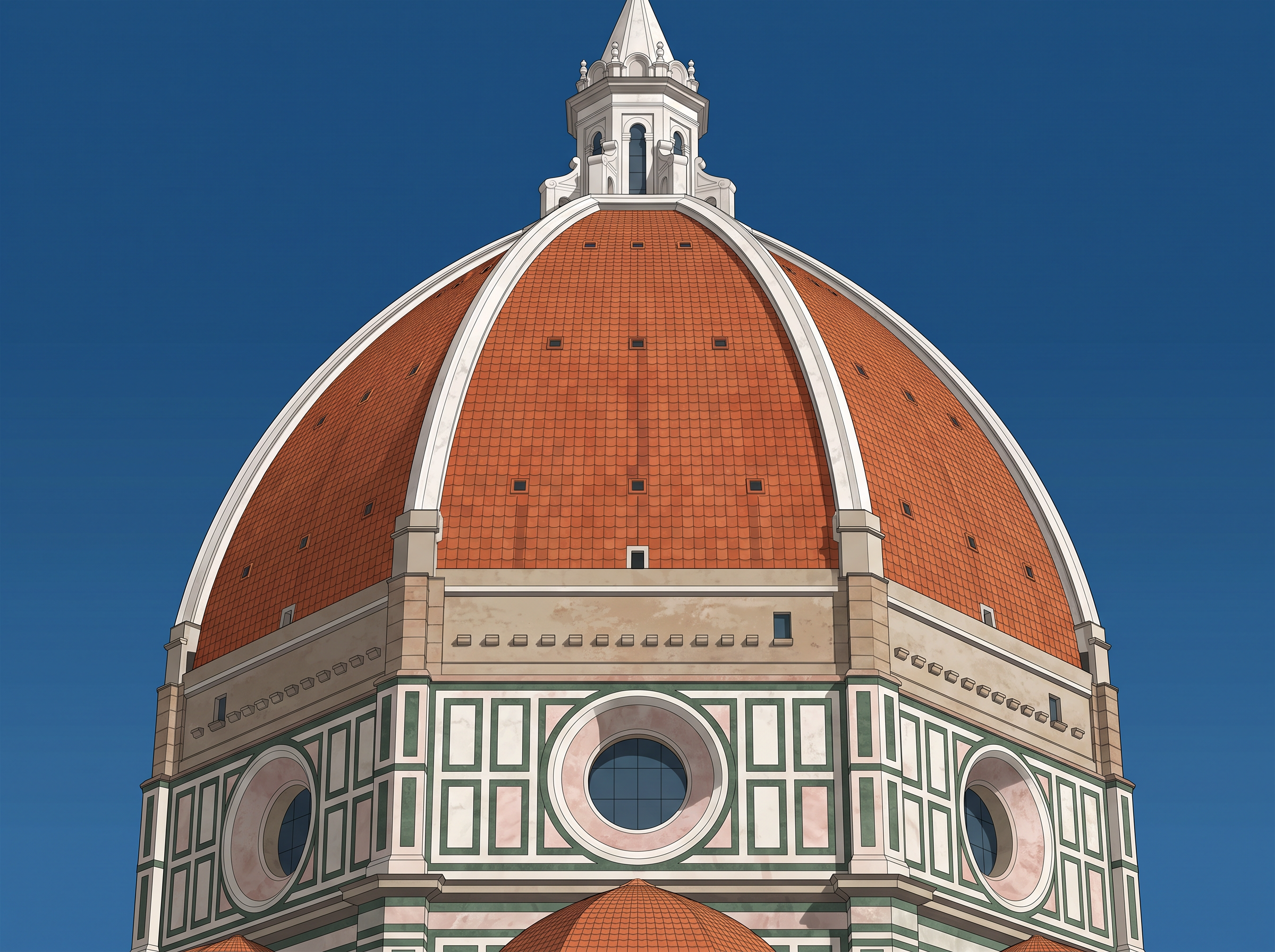
Fig. 5.9 – The dome of Florence cathedral, designed by Brunelleschi.
What An Architect Was Supposed To Be
Alberti’s definition of an architect, written in this period, catches the ambition exactly. He was a man who wrote on art theory and architecture, and he is not describing a builder who follows orders. He is describing someone who can move great weights and produce beauty at the same time.
Read the sentence in three parts. The architect must devise and complete — design it and get it built. He must handle weights and the massing of bodies of material, which is engineering. And the result must be beautiful and useful to mankind. Skill, science and purpose are being asked of one man.
The Artist Gets A Name
Another remarkable change came with all this. From this time, artists were known individually, by name.
Earlier they had been known as members of a group or a guild — an association of craftsmen that controlled a trade, trained its apprentices and spoke for them collectively. The work belonged to the workshop; now it began to belong to the man.
That shift is small in the telling and large in its consequences. It is the same idea that runs through this whole chapter: the individual, standing on his own, capable of being known for what he himself can do.
5.8 The First Printed Books
If people in other countries wanted to see the paintings, sculptures or buildings of great artists, they had to travel to Italy. A dome cannot be posted to Germany. Art of that kind stays where it is made, and so does its influence.
The written word was different. What was written in Italy travelled to other countries — and it did so because of the greatest revolution of the sixteenth century, the mastery of the technology of printing.
A Technology Borrowed From Asia
Europeans did not invent this technology. They were indebted for it to other peoples.
The Chinese had the printing technology. The Mongol rulers were the link, because European traders and diplomats had become familiar with printing during visits to their courts. Knowledge moved along the same routes as goods, carried by men who had gone abroad for quite other reasons.
This was also the case with three other important innovations — firearms, the compass and the abacus. Set that list beside the Arab translators of the last section, and a pattern appears. A great deal of what Europe called its own rebirth arrived from outside it.
What Printing Actually Changed
Before printing, texts existed in a few hand-written copies. Every copy was a separate act of labour, and every copy took months.
In 1455, 150 copies of the Bible were printed in the workshop of Johannnes Gutenberg (1400-1458), the German who made the first printing press. Earlier, a monk would have taken the same amount of time to write out one copy of the Bible.
Hold those two numbers together, because the whole revolution is in the gap between them. The same stretch of time now produced 150 books instead of one.
Readers, Not Just Listeners
By 1500, many classical texts, nearly all in Latin, had been printed in Italy. That is a large change in a short time.
As printed books became available, it was possible to buy them. Students did not have to depend solely on lecture-notes taken down while a master read a rare manuscript aloud. The text itself could now sit on the student’s own table.
Ideas, opinions and information moved more widely and more rapidly than ever before. A printed book promoting new ideas could quickly reach hundreds of readers, and it could do so without the author being present.
This also made it possible for individuals to read books, since it was possible to buy copies for oneself. Reading changed from something done in company, out loud, to something a person did alone. This developed the reading habit among people — and a habit of private reading is also a habit of private judgement.
Why Humanism Crossed The Alps
The chief reason that the humanist culture of Italy spread more rapidly across the Alps — the mountain wall that separates Italy from the rest of western Europe — from the end of the fifteenth century is that printed books were circulating.
This also explains something about the centuries before. Earlier intellectual movements had been limited to particular regions, and now we can see why. A movement can only travel as far as its texts, and hand-copied texts hardly travelled at all.
5.9 A New Concept Of Human Beings
One of the features of humanist culture was a slackening of the control of religion over human life. Slackening, not ending. The grip loosened; it did not let go.
Italians of this period were strongly attracted to material wealth, power and glory. They wanted big houses, high office and a name that would last. But they were not necessarily irreligious — the same men paid for altarpieces and went to church.
Wealth And Pleasure Defended
What was new was that these desires now found defenders in print. Francesco Barbaro (1390-1454), a humanist from Venice, wrote a pamphlet — a short printed argument, cheap to make and quick to circulate — defending the acquisition of wealth as a virtue.
That is a striking claim to have to argue for. It implies that the Church’s teaching had made it a claim that needed arguing.
Lorenzo Valla (1406-1457) went at the question from another side. He believed that the study of history leads man to strive for a life of perfection, and in his book On Pleasure he criticised the Christian injunction against pleasure — the Church’s instruction that pleasure was to be denied rather than enjoyed.
There was also, at this time, a concern with good manners: how one should speak politely and dress correctly, and what skills a person of culture should learn. Character had become something a person could design, practise and display.
The Many-Sided Individual
Humanism also implied that individuals were capable of shaping their own lives through means other than the mere pursuit of power and money. A man could make himself by what he learnt, wrote, built or argued.
This ideal was closely tied with the belief that human nature was many-sided — that one person could be several things, and need not be summed up by his rank.
That belief cut against the way medieval society had described itself. Feudal society believed in three separate orders: those who prayed, those who fought, and those who worked. In that scheme, you were born into your order, and your order told you what you were.
A many-sided individual does not fit into a scheme like that. He belongs to no single box, and he claims the right to define himself. Hold on to this, because in the last section of the chapter you will see where it eventually leads.
Machiavelli Looks At Men As They Are
Not every humanist thought well of human beings. Niccolo Machiavelli set out to describe men not as they ought to be but as they actually are, and what he saw was not flattering. Read him alongside the confident picture just given, and notice how differently a ‘many-sided’ human nature can be judged.
Look at how the passage is built. Machiavelli begins by refusing to discuss imaginary things and promises to deal only with what truly exists. Then he lays out pairs of opposites — generous and miserly, cruel and compassionate, religious and sceptical — with no attempt to say which a man ought to be.
That refusal is the point. He is not preaching. He is compiling a list of the qualities men are actually noted for, as an observer might list the properties of a metal.
His own conclusion was bleak. Machiavelli believed that ‘all men are bad and ever ready to display their vicious nature partly because of the fact that human desires are insatiable’ — that is, our wants can never be filled, so we never stop. The most powerful motive he saw as the incentive for every human action is self-interest.
5.10 The Aspirations Of Women
The new ideal of individuality and citizenship excluded women. Everything you have read so far — the citizen in his council, the many-sided man shaping his own life, the artist known by his own name — was, in practice, about men.
That is not an afterthought to this chapter. It is a fact about it, and it has to be stated before anything else in this section can be understood.
In Aristocratic Households
Men from aristocratic families dominated public life, and they were the decision-makers within their families as well. Authority in the street and authority at home ran together.
They educated their sons to take their place in family businesses or in public life. Younger sons were at times sent to join the Church, which gave a family a foothold in a second kind of power.
Money complicates the picture, but it does not change it. A bride brought a dowry — property or money given with her at marriage — and these dowries were invested in the family businesses. Yet women generally had no say in how their husbands should run their business. Their wealth was in the firm; their voice was not.
Marriages themselves were often instruments. They were intended to strengthen business alliances, which means a daughter’s marriage was a decision taken about her, in the interest of the family’s trade.
And if an adequate dowry could not be arranged, the daughter was not simply married elsewhere. She was sent to a convent to live the life of a nun. A shortage of money in her father’s house could decide the whole shape of her life.
Obviously, the public role of women was limited, and they were looked upon as keepers of the households.
In Merchant Households
The position of women in the families of merchants, however, was somewhat different — and the difference came from work, not from principle.
Shopkeepers were very often assisted by their wives in running the shop. In families of merchants and bankers, wives looked after the businesses when the male members were away on work, which in a trading city meant frequently and for long stretches.
The early death of a merchant pushed this further. It compelled his widow to perform a larger public role than was the case in aristocratic families. A business does not pause for a funeral, and someone had to hold it together.
So a merchant’s wife might negotiate, keep accounts and give orders — not because anyone had granted her the right to, but because the household could not function otherwise.
Women Who Wrote Back
A few women were intellectually very creative, and sharply aware of what a humanist education was worth. One of them stated the problem exactly.
‘Even though the study of letters promises and offers no reward for women and no dignity’, wrote the Venetian Cassandra Fedele (1465-1558), ‘every woman ought to seek and embrace these studies.’ She concedes the whole case against her in the first half of the sentence, and then refuses it in the second.
Fedele was one of a handful of women who questioned the idea that women were incapable of achieving the qualities of a humanist scholar. She questioned it by being one. She was known for her proficiency in Greek and Latin, and was invited to give orations — formal public speeches — at the University of Padua, an institution that did not otherwise belong to women.
Fedele’s writings bring into focus the general regard for education in that age. She was also one of many Venetian women writers who criticised the republic ‘for creating a highly limited definition of freedom that favoured the desires of men over those of women’. Set that beside Contarini’s proud account of Venetian government in Section 5.2, and you are looking at the same republic from two very different positions.
A Woman Who Ruled
Another remarkable woman was the Marchesa of Mantua, Isabella d’Este (1474-1539). Mantua was a small state, and she ruled it while her husband was absent.
Under her, the court of Mantua was famed for its intellectual brilliance. A court’s reputation depended on whom it attracted and what it paid for, and hers attracted the best.
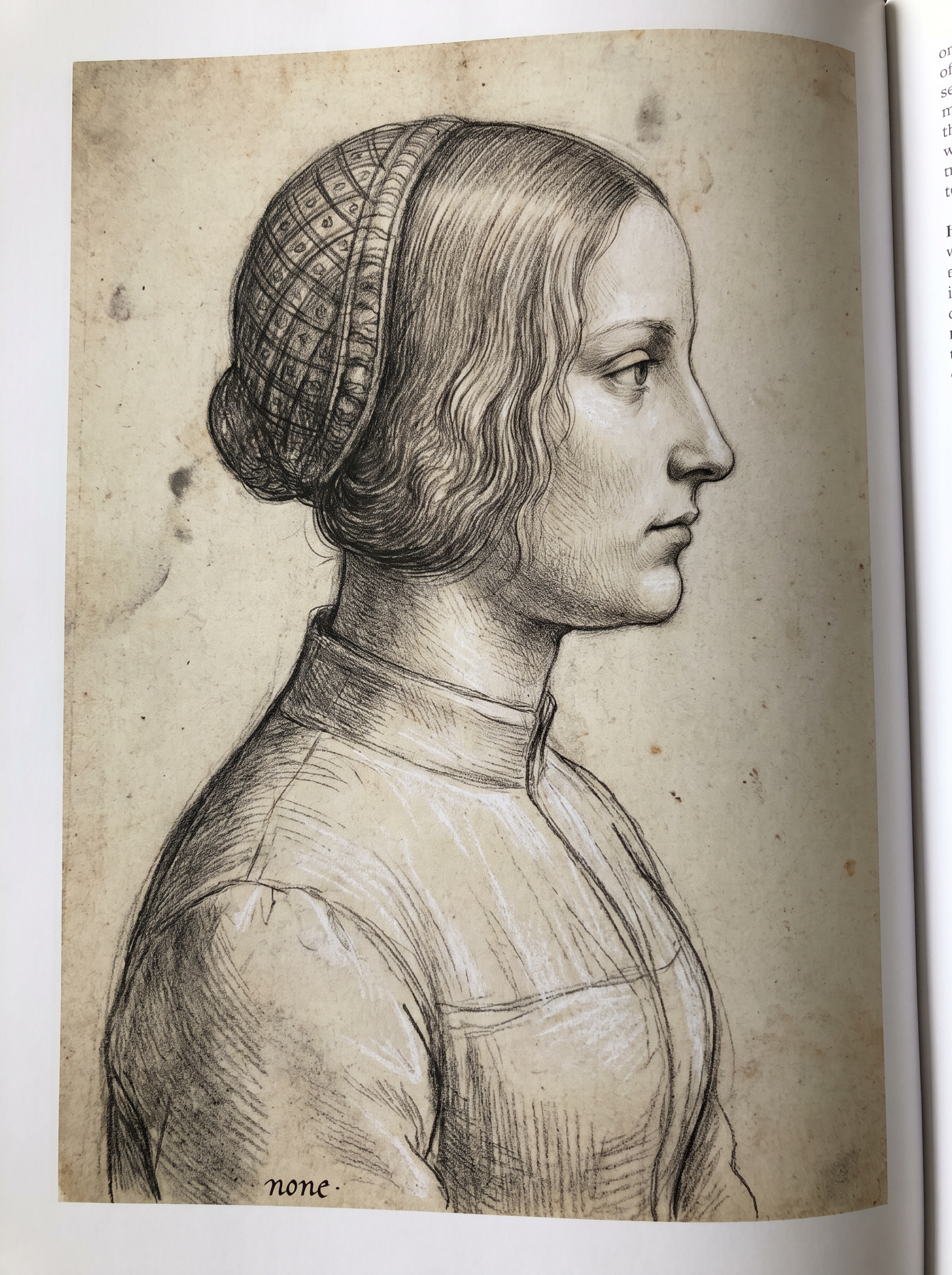
Fig. 5.10 – Chalk profile portrait of Isabella d’Este.
Taken together, women’s writings of this period revealed a clear conviction. They held that they should have economic power, property and education, in order to achieve an identity in a world dominated by men. Notice that all three demands are practical. They are asking for the things that made men individuals.
Two Views Of What A Woman Should Be
Set against Fedele stands a very different account, written by a man, and enormously influential. Balthasar Castiglione was an author and diplomat, and his book The Courtier told the polished society of the courts how to behave. Read what he says a woman should be — and read it as advice, addressed to a particular kind of household.
Now do the comparison for yourself, and take it slowly. Compare the aspirations for women expressed by a woman, Fedele, with those expressed by a man, Castiglione. Where do they agree, and where does Castiglione set a limit that Fedele does not accept?
Then ask the harder question. Did they have only women of a particular class in mind? Look at the words Castiglione uses — courtier, good family, sports suitable for women — and ask who could possibly have followed such advice. Ask, too, who Fedele was addressing when she said every woman ought to embrace the study of letters, in a century when schools were only for boys.
Neither of them is writing about the woman who worked in the fields, or served in another woman’s house. Whatever else the aspirations of this period were, they had a narrow address.
5.11 Debates Within Christianity
Trade and travel, military conquest and diplomatic contacts linked Italian towns and courts with the world beyond. Ideas moved with the men who moved.
The new culture was admired and imitated by the educated and the wealthy. That last phrase should be read carefully. Very few of the new ideas filtered down to the ordinary man who, after all, could not read or write. Humanism was a culture of readers, in a Europe where most people were not.
Humanism North Of The Alps
In the fifteenth and early sixteenth centuries, many scholars in universities in north Europe were attracted to humanist ideas. Like their Italian colleagues, they too focused on classical Greek and Roman texts, and they studied these along with the holy books of the Christians.
But there was a difference, and it turned out to matter enormously. In Italy, professional scholars dominated the humanist movement. In north Europe, humanism attracted many members of the Church itself — men on the inside.
These churchmen called on Christians to practise religion in the way laid down in the ancient texts of their religion. They wanted the unnecessary rituals discarded, condemning them as later additions to what had once been a simple religion. Apply Petrarch’s rule — go back to the actual words of the original text — to the Bible rather than to Cicero, and this is where you arrive.
Theirs was a radically new view of human beings as free and rational agents: people who can think for themselves and choose for themselves. Later philosophers were to return to this over and over again. They were inspired by the belief in a distant God, who created man but allowed him complete freedom to live his life freely, in pursuit of happiness ‘here and now’ — not only in the next world.
The Sale Of Indulgences
Christian humanists like Thomas More (1478-1535) in England and Erasmus (1466-1536) in Holland felt that the Church had become an institution marked by greed, extorting money at will from ordinary people.
One of the favourite methods of the clergy was to sell indulgences — documents which apparently freed the buyer from the burden of the sins he had committed. Forgiveness, in effect, had a price, and the poor were paying it.
How did ordinary Christians come to know that this was not part of their religion? They read it. Christians came to realise, from printed translations of the Bible in local languages, that their religion did not permit such practices. The Bible had been in Latin, which only the learned could read; once it appeared in the languages people actually spoke, and in printed copies they could buy, the clergy no longer stood between the believer and the text.
Peasants, Princes And A Forged Document
In almost every part of Europe, peasants began to rebel against the taxes imposed by the Church. Their objection was concrete: money was being taken from them.
The princes had a different grievance. While the common folk resented the extortions of churchmen, princes found the interference of the clergy in the work of the state irritating. A ruler who cannot control the courts and the taxes in his own territory is not fully a ruler.
So both were pleased when the humanists went after the foundation of clerical power. The clergy’s claim to judicial and fiscal powers — that is, the right to run courts and to levy taxes — rested on a document called the ‘Donation of Constantine’, supposed to have been issued by Constantine, the first Christian Roman Emperor. Humanist scholars were able to point out that this was not genuine, and had been forged later.
Luther And The Protestant Reformation
In 1517, a young German monk called Martin Luther (1483-1546) launched a campaign against the Catholic Church. His argument struck at the priest’s job itself: a person did not need priests to establish contact with God.
He asked his followers to have complete faith in God, for faith alone could guide them to the right life and to entry into heaven. If faith alone is enough, then indulgences, rituals and the whole apparatus of clerical mediation are not.
This movement was called the Protestant Reformation. It led to the churches in Germany and Switzerland breaking their connection with the Pope and the Catholic Church. In Switzerland, Luther’s ideas were popularised by Ulrich Zwingli (1484-1531), and later by Jean Calvin (1509-64).
The reformers were backed by merchants, and their support had a clear geography. They had greater popular appeal in towns, while in rural areas the Catholic Church managed to retain its influence. The town — literate, commercial, used to governing itself — was again the place where the new idea took hold.
The Radicals
Other German reformers went much further. The Anabaptists blended the idea of salvation — being saved by God — with the end of all forms of social oppression.
Their reasoning was simple and dangerous. Since God had created all people as equal, they said, they were not expected to pay taxes, and they had the right to choose their own priests. Equality before God was turned into a claim about equality on earth.
This appealed powerfully to peasants oppressed by feudalism, for whom taxes and a priest chosen by somebody else were daily facts.
The Bible In The Mother-Tongue
One of the sharpest defences of the Protestant case was made by a translator. William Tyndale had put the Bible into English, and he knew exactly why the clergy objected. Read him as a man defending his own life’s work — and notice the accusation he is making about why scripture was kept in Latin.
Tyndale’s charge is that the clergy kept the scripture out of the mother-tongue on purpose, so that they could ‘sit in the consciences of the people’ — that is, decide for them what to believe. Against that, he offers a modest-sounding remedy: lay the text plainly before people’s eyes, in their own language, and let them see its process, order and meaning for themselves.
It is a partisan document, written by a man in a fight, and it accuses his opponents of ambition and greed. But notice what it assumes: that ordinary people are capable of reading and judging for themselves. That assumption is the humanist view of human beings, arriving in a village church.
Luther Draws A Line
Luther did not support radicalism. He called upon the German rulers to suppress the peasants’ rebellion, which they did in 1525. The man who had told Christians they needed no priest was not prepared to tell peasants they needed no lord.
But radicalism survived. It merged with the resistance of Protestants in France, who were persecuted by the Catholic rulers there. Out of that persecution came a large political claim: that a people has the right to remove an oppressive ruler and to choose someone of their own liking.
Eventually, in France, as in many other parts of Europe, the Catholic Church allowed Protestants to worship as they chose. In England, the rulers ended the connection with the Pope, and from then onwards the king or queen was the head of the Church.
The Catholic Church Reforms Itself
The Catholic Church itself did not escape the impact of these ideas, and it began to reform itself from within.
In Spain and in Italy, churchmen emphasised the need for a simple life and service to the poor — the very things the critics said the Church had abandoned.
In Spain, Ignatius Loyola set up the Society of Jesus in 1540, in an attempt to combat Protestantism. His followers were called Jesuits. Their mission was to serve the poor, and to widen their knowledge of other cultures — which took them, in the following centuries, a very long way from Spain.
Before going on, gather the argument in your own words. What were the issues on which the Protestants criticised the Catholic Church? Go back through this section and list them: the sale of indulgences, the extortion of money and taxes, the unnecessary rituals, the forged basis of clerical power, the priest standing between the believer and God, and the scripture withheld from the mother-tongue.
5.12 The Copernican Revolution
Set the next two hundred years out before you begin. NCERT’s chronology for the sixteenth and seventeenth centuries carries the Reformation you have just read about and the science you are about to meet, side by side — and that is exactly how they happened.
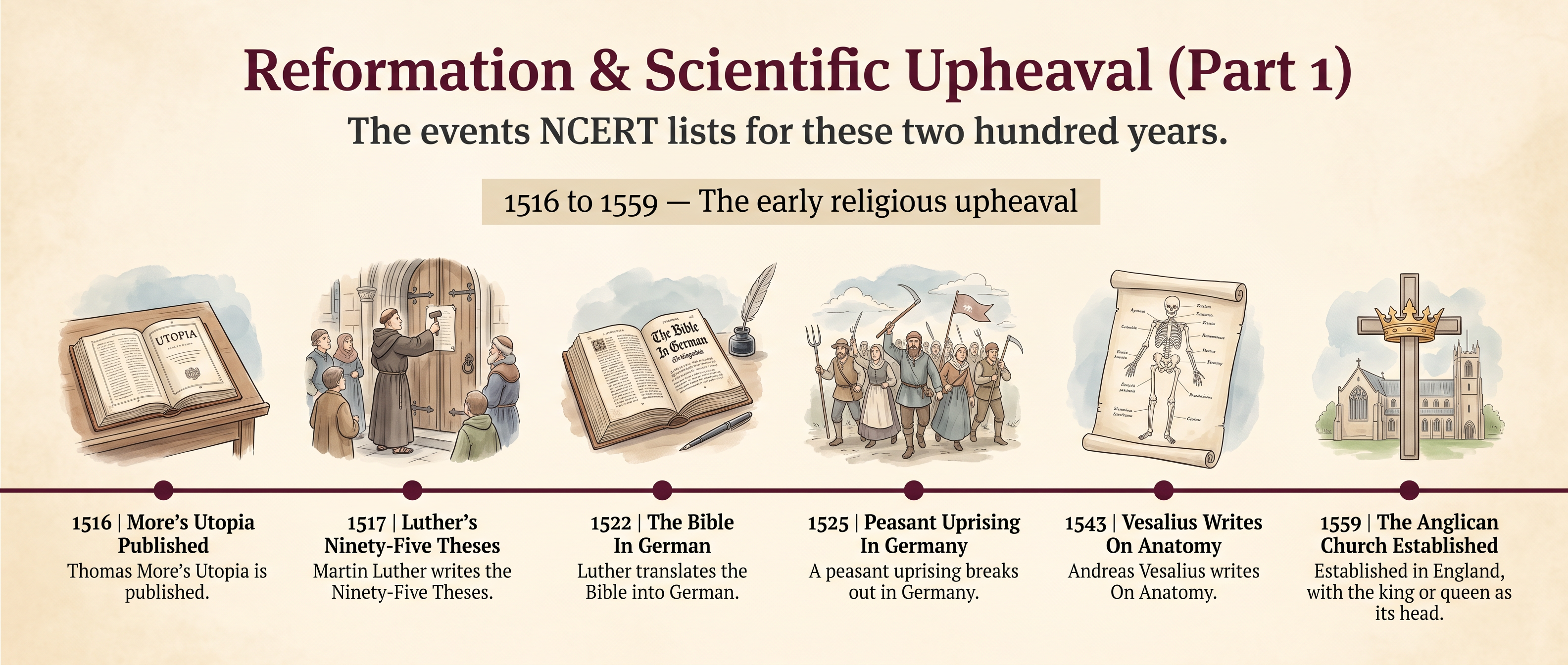
Fig. 5.11 – The Sixteenth And Seventeenth Centuries.
A Question From An Unexpected Direction
The Christian notion of man as a sinner was questioned from an entirely different angle — by scientists. Not by rebels inside the Church, and not by humanists reading Cicero, but by men looking at the sky.
The turning point in European science came with the work of Copernicus (1473-1543), a contemporary of Martin Luther. The two men were pulling at the same structure from opposite ends, at the same time.
To see why his work mattered, you have to see what it displaced. Christians had believed that the earth was a sinful place, and that the heavy burden of sin made it immobile. The earth stood still at the centre of the universe, and around it moved the celestial planets.
Notice how tightly that picture ties astronomy to religion. The earth does not move because it is sinful. Its position in space is a statement about its moral condition.
What Copernicus Asserted, And Why He Hid It
Copernicus asserted that the planets, including the earth, rotate around the sun. The earth was one planet among others, in motion like the rest.
He was a devout Christian, and he was afraid of the possible reaction to his theory by traditionalist clergymen. For this reason he did not want his manuscript, De revolutionibus — ‘The Rotation’ — to be printed. On his deathbed, he gave it to his follower, Joachim Rheticus. You met that moment at the opening of this chapter; here, notice only what it cost. The most important scientific claim of the century was held back from print by the fear of its own author.
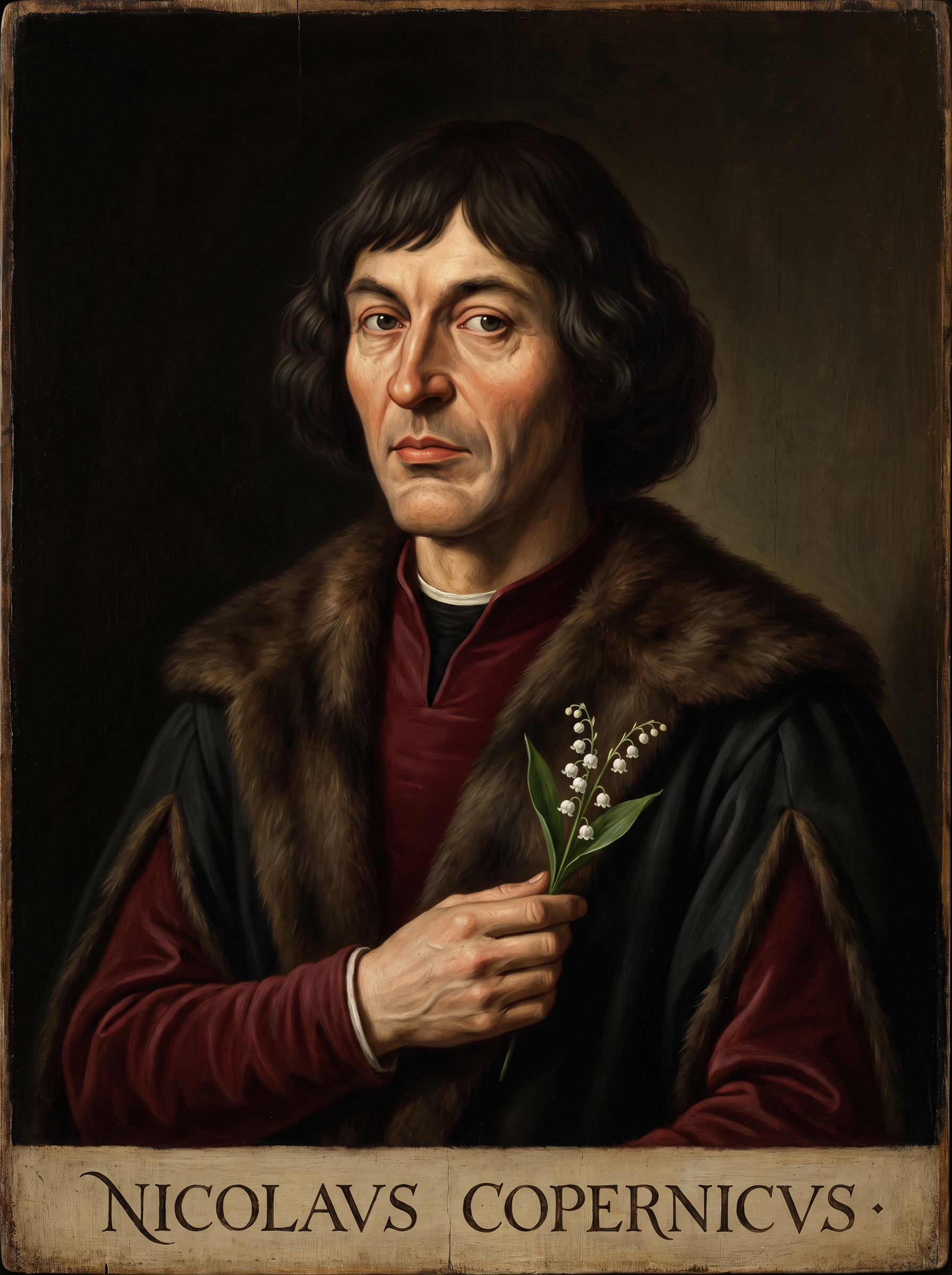
Fig. 5.12 – Self-portrait by Copernicus.
The Gap Between Heaven And Earth Is Closed
It took time for people to accept this idea. It was much later — more than half a century later, in fact — that the difference between ‘heaven’ and earth was bridged, through the writings of astronomers like Johannes Kepler (1571-1630) and Galileo Galilei (1564-1642).
Read that phrase carefully. To bridge the difference between ‘heaven’ and earth is to say that the same laws hold in both, and that the sky is not a separate, divine kind of place with rules of its own.
The theory of the earth as part of a sun-centred system was made popular by Kepler’s Cosmographical Mystery. It demonstrated that the planets move around the sun not in circles but in ellipses — flattened, oval paths rather than perfect circles. Kepler had let the observations, rather than an idea of what is perfect, decide the shape.
Galileo confirmed the notion of a dynamic world — a world in motion — in his work The Motion. And this revolution in science reached its climax with Isaac Newton’s theory of gravitation, which gave a single explanation for why bodies move as they do, on earth and in the heavens alike.
5.13 Reading The Universe
Galileo once remarked that the Bible, which lights the road to heaven, does not say much on how the heavens work.
Read that slowly, because it is not an attack on the Bible. It is a division of labour. Scripture, he says, tells you how to live and where you are going; it does not tell you the mechanics of the sky. Two different questions, two different kinds of answer.
Knowledge As Distinct From Belief
The work of these thinkers showed that knowledge, as distinct from belief, was based on observation and experiments. Belief is what you hold to be true; knowledge, on this new account, is what you can check.
That is a rule about method, and once it is accepted it can be applied to anything. It does not stop at the planets.
Once these scientists had shown the way, experiments and investigations expanded rapidly into what came to be called physics, chemistry and biology. Fields that had barely existed as separate studies now had a method to work with, and they grew fast.
Historians were to label this new approach to the knowledge of man and of nature the Scientific Revolution. As with the word ‘Renaissance’, notice who did the naming — historians, afterwards.
God, Nature And The Public Lecture
The consequences reached beyond the laboratory. In the minds of sceptics — people who doubt received claims — and of non-believers, God began to be replaced by Nature as the source of creation.
Even those who retained their faith in God shifted their ground. They started talking about a distant God, who does not directly regulate the act of living in the material world. God set things going; nature then runs on its own rules, which men can study.
These ideas did not stay among specialists. They were popularised through scientific societies, which established a new scientific culture in the public domain — that is, in the open, where anyone might come and watch.
The Paris Academy was established in 1670. The Royal Society in London, for the promotion of natural knowledge, had been formed in 1662. Both held lectures and conducted experiments for public viewing.
That last detail is worth holding on to. An experiment performed in front of an audience is an argument of a particular kind: it invites you to look, and to judge for yourself what you have seen.
5.14 Was There A European ‘Renaissance’ In The Fourteenth Century?
Let us now reconsider the concept of the ‘Renaissance’. You have used the word through this whole chapter; it is time to ask whether it will bear the weight.
Two questions do the work. Can we see this period as marking a sharp break with the past, and the rebirth of ideas from Greek and Roman traditions? And was the earlier period — the twelfth and thirteenth centuries — really a time of darkness?
The Case Against Burckhardt
Recent writers, like Peter Burke of England, have suggested that Burckhardt was exaggerating. In using the term ‘Renaissance’, Burckhardt drew a sharp difference between this period and the one that preceded it.
The word itself smuggles in two claims. It implies that the Greek and Roman civilisations were reborn at this time — as though they had been dead. And it implies that scholars and artists of this period substituted the pre-Christian world-view for the Christian one — as though they had swapped one outlook for another.
Both arguments were exaggerated, and the evidence in this chapter shows why. Scholars in earlier centuries had been familiar with Greek and Roman cultures; you saw that monks and clergymen knew these writings through the ‘Middle Ages’, even if they did not spread them. And religion continued to be a very important part of people’s lives — Durer drew praying hands, Copernicus was a devout Christian, and the whole quarrel of the Reformation was a quarrel between believers.
To contrast the Renaissance as a period of dynamism and artistic creativity with the Middle Ages as a period of gloom and lack of development is an over-simplification. Many elements associated with the Renaissance in Italy can be traced back to the twelfth and thirteenth centuries. Some historians have suggested that in ninth-century France there had been a similar literary and artistic blossoming — several hundred years before the period this chapter is about.
Not Only Greece And Rome
There is a second correction to make, and it is larger. The cultural changes in Europe at this time were not shaped only by the ‘classical’ civilisation of Rome and Greece.
The archaeological and literary recovery of Roman culture did create a great admiration of that civilisation — you have seen the statues coming out of the ground and the ancient authors coming off the press. But technologies and skills in Asia had moved far ahead of what the Greeks and Romans had known. Copying Rome could not, by itself, have produced a printing press.
Much more of the world had become connected. New techniques of navigation enabled people to sail much further than had been possible earlier. The expansion of Islam and the Mongol conquests had linked Asia and North Africa with Europe — not politically, but in terms of trade and of learning skills.
So the Europeans learned not just from the Greeks and Romans. They learned from India, from Arabia, from Iran, from Central Asia and from China. Gather the evidence from this chapter itself: the Arab translators who preserved Plato and Aristotle, the Arabic article in the title of the Almagest, Ibn Rushd’s method taken over by Christian thinkers, printing and the compass and the abacus and firearms, and Chinese and Persian designs in the costumes of Italian paintings.
Why is this not the story usually told? Because when the history of this period started to be written, historians saw it from a Europe-centred viewpoint — a way of writing history in which Europe is the subject and everyone else is scenery. These debts were therefore not acknowledged for a long time.
What Did Change
None of this means nothing happened. Two changes in this period were real, and both outlast it.
The first is a slow separation of two areas of life. Gradually, the ‘private’ and the ‘public’ spheres began to become separate. The ‘public’ sphere meant the area of government and of formal religion. The ‘private’ sphere included the family and personal religion.
The individual now had a private role as well as a public one. He was not simply a member of one of the ‘three orders’ — those who prayed, those who fought, those who worked — into which feudal society had sorted him. He was also a person in his own right. An artist was not just a member of a guild; he was known for himself, as you saw in Section 5.7.
That idea did not stay quiet. In the eighteenth century, this sense of the individual would be expressed in a political form: in the belief that all individuals had equal political rights. The claim that began as a claim about painters and scholars ended as a claim about voters.
The second change is about how Europe was held together. The different regions of Europe started to have their separate sense of identity, based on language.
Europe had earlier been united partly by the Roman Empire, and later by Latin and by Christianity — one law, one learned language, one Church. It was now dissolving into states, each united by a common language. The Latin that had bound the continent’s scholars together was being replaced, in Bibles and in books, by the mother-tongues of ordinary people.
5.15 Summary
What This Chapter Established
- Between the fourteenth and the seventeenth centuries, towns grew across Europe and a distinct urban culture grew with them. Townspeople thought themselves more ‘civilised’ than country people, and the rich patronised artists and writers.
- A vast amount of evidence survives from these centuries — documents, printed books, paintings, sculptures, buildings and textiles — preserved in archives, galleries and museums.
- The word ‘Renaissance’ is a historian’s word, applied from the nineteenth century. Jacob Burckhardt, a student of Ranke, used it in 1860 to argue that history is as much about culture as about politics, and that a new humanist culture had flowered in Italian towns.
- Italy was politically weak and fragmented, but it lay between the Byzantine, Islamic and western European worlds. Trade revived its ports, and its towns became independent city-states — Florence and Venice as republics, others as court-cities ruled by princes.
- With no dominant clergy and no powerful feudal lords, rich merchants and bankers governed cities like Venice and Genoa, and the idea of citizenship took root. But citizenship was narrow: Contarini’s Venice reserved government to gentlemen over 25, by birth.
- Universities in Italian towns taught law for a commercial society. Petrarch shifted the emphasis, insisting that antiquity be read in the actual words of the ancients.
- The culture that resulted was later labelled humanism. Humanist masters taught grammar, rhetoric, poetry, history and moral philosophy — subjects unconnected with religion, built on discussion and debate.
- Humanists divided the past into named periods, calling the thousand years after Rome the ‘Middle Ages’ and their own time ‘modern’. Recent historians reject the sharp divisions, and refuse to call any period the ‘Dark Ages’.
- Europeans recovered Greek learning through Arab translators, and read Ibn Sina, al-Razi and Ibn Rushd as men of wisdom. Latinised spellings later hid these debts.
- Art turned to realism. Sculptors copied the proportions of excavated Roman figures; painters used geometry for perspective, studied bone structure in medical schools, and used oil for richer colour. Chinese and Persian designs entered their costumes.
- Rome was rebuilt in a classical style after 1417, using a new skill — archaeology. Artists were now known by name rather than as members of a guild.
- Printing, learned from China through the Mongol courts, made 150 Bibles in the time a monk took to copy one. Printed books spread humanism across the Alps and created the habit of private reading.
- Humanist culture loosened religion’s control over life: wealth and pleasure were defended in print, and human nature was held to be many-sided, against the three orders of feudal society. Machiavelli, observing men as they are, saw self-interest behind every action.
- The new ideal of individuality and citizenship excluded women. Dowries were invested in family businesses in which wives had no say, and daughters without dowries went to convents. Merchants’ wives ran shops and businesses in practice; Fedele claimed learning, and Isabella d’Este ruled Mantua.
- In north Europe, humanism entered the Church itself. Critics attacked the sale of indulgences, and humanist scholars exposed the ‘Donation of Constantine’ as a forgery.
- Luther’s campaign of 1517 began the Protestant Reformation; Zwingli and Calvin carried it further, and radicals like the Anabaptists demanded social equality too. Luther called for the peasants’ rebellion to be suppressed, and it was, in 1525. The Catholic Church reformed from within, and the Jesuits were founded in 1540.
- Copernicus argued that the planets, including the earth, move round the sun, and withheld his manuscript from print for fear of the clergy. Kepler, Galileo and finally Newton completed the change.
- The Scientific Revolution separated knowledge, based on observation and experiment, from belief. Scientific societies performed experiments in public.
- Recent writers such as Peter Burke argue that the ‘Renaissance’ break was exaggerated: earlier centuries knew the classics, and religion never lost its hold. Europe’s debts to India, Arabia, Iran, Central Asia and China went unacknowledged because history was first written from a Europe-centred viewpoint.
- What did change was the slow separation of the public and the private spheres, the emergence of the individual as a person in his own right, and the growth of regional identities based on language.
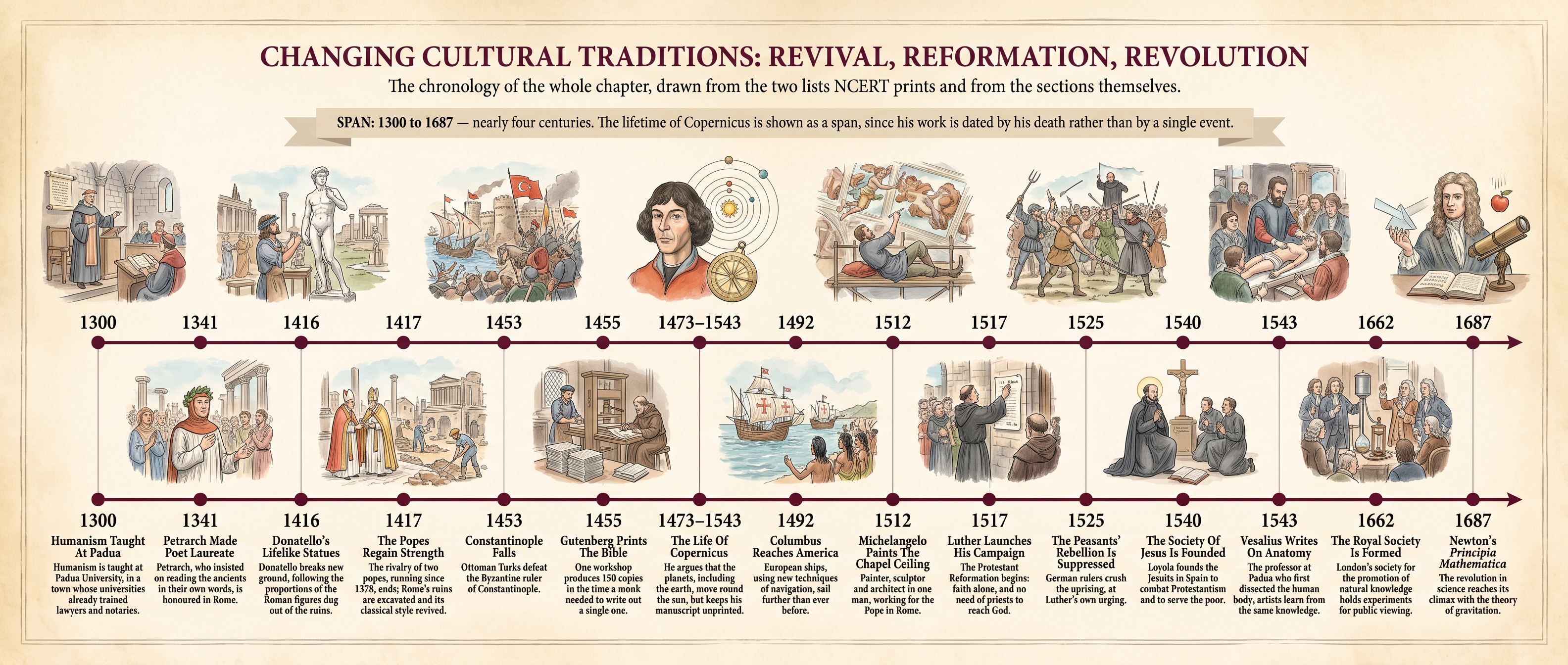
Fig. 5.13 – Changing Cultural Traditions, 1300 To 1687.
What The Evidence Cannot Tell Us
Almost everything that survives from these centuries was made, written or paid for by the educated and the wealthy. Very few of the new ideas filtered down to the ordinary man, who could not read or write — and because he could not write, we do not have his opinion of humanism, of the new art, or of the Reformation preached in his church.
The silences are specific. The masons who raised Brunelleschi’s dome, the workmen who printed Gutenberg’s Bibles, the peasants crushed in 1525 — all of them left work behind, and none of them left words. Women appear chiefly through a handful of aristocratic and merchant voices; the women who served in other people’s houses appear not at all.
There is one further silence, and it was created deliberately. The debts Europe owed to India, Arabia, Iran, Central Asia and China were not acknowledged for a long time, because the historians who first wrote this period’s history asked Europe-centred questions. Evidence does not only disappear on its own. Sometimes it is simply not looked for.
5.16 NCERT Questions
Answer In Brief
Which elements of Greek and Roman culture were revived in the fourteenth and fifteenth centuries?
Compare details of Italian architecture of this period with Islamic architecture.
Why were Italian towns the first to experience the ideas of humanism?
Compare the Venetian idea of good government with those in contemporary France.
Answer In A Short Essay
What were the features of humanist thought?
Write a careful account of how the world appeared different to seventeenth-century Europeans.
5.17 Check Your Concepts
Look again at Table 5.1. Who drew up this scheme of periods, and what judgement about a thousand years of the past is built into the name ‘Dark Ages’? Why do historians today refuse to use it?
Europeans read Plato and Aristotle again in the fourteenth century. Explain how those texts reached them, and show what the Arabic article in the title of Ptolemy’s Almagest reveals about the route the text had travelled.
Reconstruct the chain of events by which printing changed the Church. Begin with the printing press and the Bible in local languages, and end with an ordinary Christian’s view of the sale of indulgences.
The position of women in aristocratic families and in merchant families was not the same. Set the two side by side, using the chapter, and explain what produced the difference. Was it a change in principle, or in circumstance?
Using Fig. 5.5 and Fig. 5.6, explain what an artist of this period had to know before he could make a human body look real. Name at least three kinds of knowledge, and say where each came from.
Humanist scholars showed that the ‘Donation of Constantine’ was a forgery. What was the document supposed to establish, what skill allowed the scholars to expose it, and what did exposing it not change?
Machiavelli held that self-interest lies behind every human action. Humanists held that human nature was many-sided and that individuals could shape their own lives. State both positions, with the evidence the chapter gives for each. Do not settle the question.
The chapter says that very few of the new ideas reached the ordinary man, who could not read or write. What does this fact do to the evidence available to a historian of these centuries? Name two groups whose views on humanism or the Reformation we cannot recover, and say why.