Chapter 2: An Empire Across Three Continents
In August 79 CE, the volcano Vesuvius erupted on the Bay of Naples in Italy. Ash and burning gas buried the Roman town of Pompeii where it stood. Somewhere in that chaos died an elderly Roman official and scholar, the Elder Pliny, the author of a famous work called ‘Natural History’. He had spent his life collecting information about everything from plants to perfumes to the frankincense factories of Alexandria.
Two things survived that day, and both are why you can study Rome at all.
The first is Pliny’s book. It is a text, written by a man who lived at the time, with his own opinions and his own blind spots.
The second is Pompeii itself. The town was not slowly abandoned and picked clean. It was sealed. Its shops, its painted dining rooms, the advertisements on its main streets and the rude scribbles on its walls all stayed exactly where they were, waiting eighteen centuries for archaeologists.
A historian of Rome therefore works from three kinds of evidence: texts written by contemporaries, documents such as inscriptions and papyri, and material remains dug out of the ground. Each of them, on its own, tells you only so much. A senator’s history will not tell you what a slave thought. A buried town will not tell you the name of the emperor.
Putting them together is the whole art.
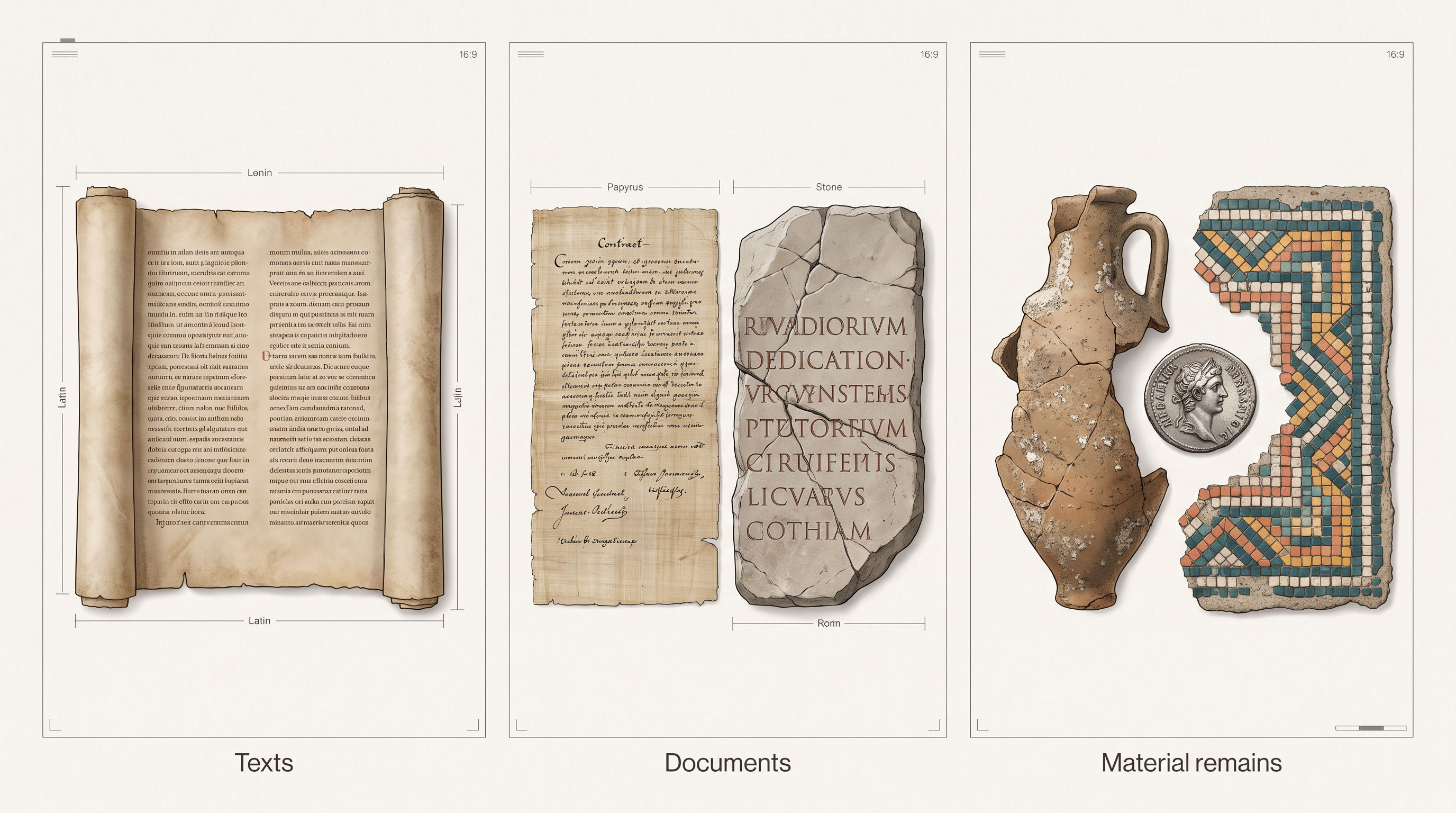
Fig. 2.0 – The three kinds of evidence.
2.1 The Early Empire
The Roman Empire covered a vast stretch of territory. It included most of Europe as we know it today, a large part of the Fertile Crescent — the arc of well-watered land running from the eastern Mediterranean coast up through Syria and down the Tigris and Euphrates — and North Africa. In this chapter we shall look at how that empire was organised, at the political forces that shaped its destiny, and at the social groups into which its people were divided.
Some of what you find will surprise you. The empire held a wealth of local cultures and languages rather than one. Women had a stronger legal position in Roman law than they do in many countries today. And yet much of the economy ran on slave labour, denying freedom to very large numbers of people.
From the fifth century onwards the empire fell apart in the west. In its eastern half it remained intact and exceptionally prosperous. The caliphate you will study later built on that prosperity and inherited the empire’s urban and religious traditions.
How We Know About Rome
Historians of Rome have a rich collection of sources to work from. These fall broadly into three groups: texts, documents and material remains.
Texts are the written works of the period. They include histories written by people who lived at the time — these were usually called ‘Annals’, because the narrative was built up year by year — as well as letters, speeches, sermons and laws.
Documents are mainly inscriptions and papyri. Inscriptions were usually cut on stone, which is why so many of them survive, in both Greek and Latin. The papyrus was a reed-like plant that grew along the banks of the Nile in Egypt. It was processed to make a writing material used very widely in everyday life. Thousands of contracts, accounts, letters and official documents survive ‘on papyrus’, and have been published by scholars called ‘papyrologists’.
Material remains are the things archaeologists dig up or trace on the surface — through excavation and field survey. They include buildings, monuments and other structures, pottery, coins, mosaics, and even entire landscapes, mapped from the air by aerial photography.
Each of these sources can tell us only so much on its own. Combining them can be a fruitful exercise, but how well this is done depends on the historian’s skill.
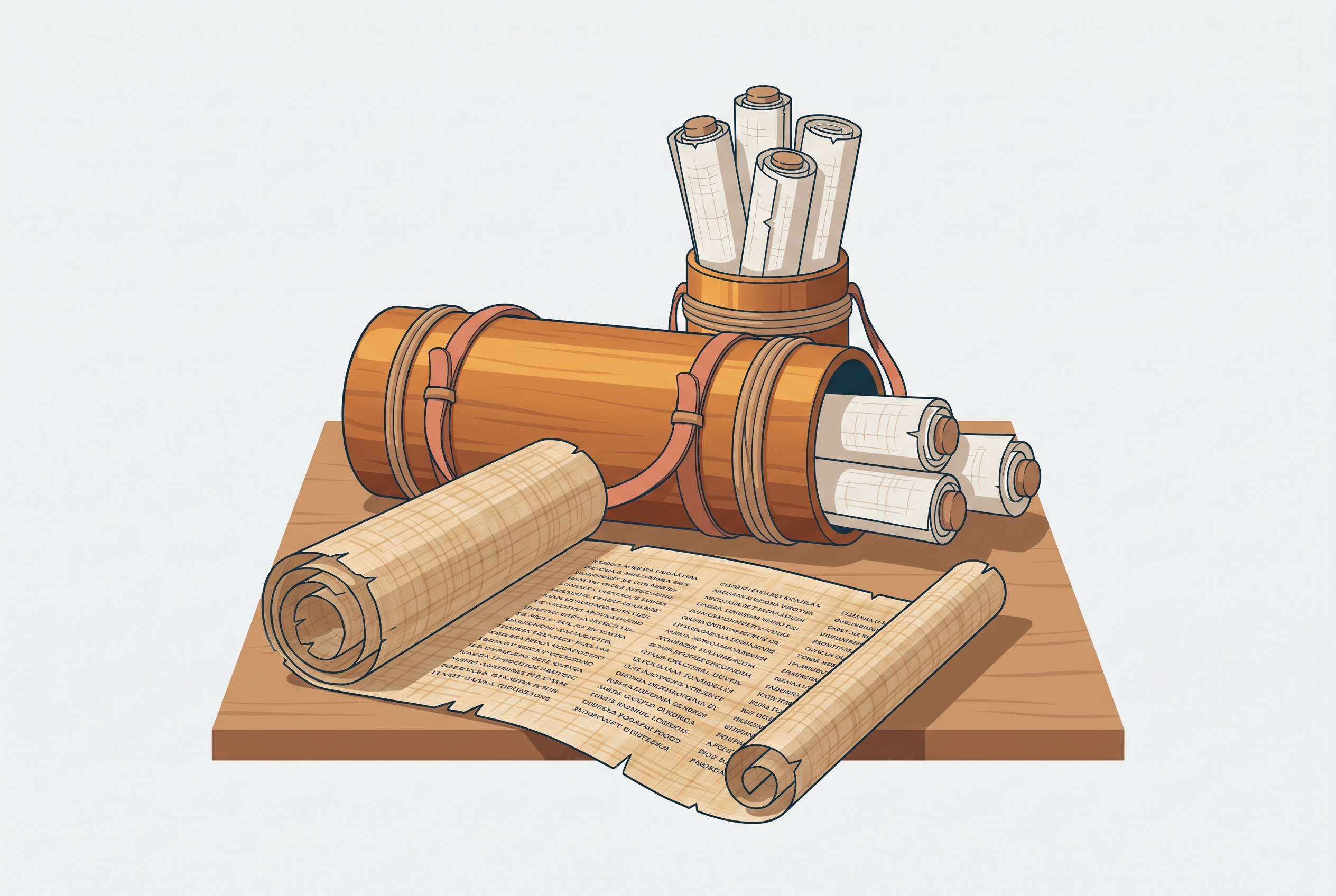
Fig. 2.1 – Papyrus scrolls.
Where The Empire Lay
Two powerful empires ruled over most of Europe, North Africa and the Middle East in the period between the birth of Christ and the early part of the seventh century — say, down to the 630s. These were the empires of Rome and of Iran. The Romans and Iranians were rivals and fought each other for much of their history. Their empires lay next to each other, separated only by a narrow strip of land that ran along the river Euphrates. This chapter is about the Roman Empire, but Iran will keep appearing at its edges.
If you look at Map 1 you will see that the continents of Europe and Africa are separated by a sea that stretches all the way from Spain in the west to Syria in the east. This sea is the Mediterranean, and it was the heart of Rome’s empire. Rome dominated the Mediterranean and all the regions around it, north as well as south.
To the north, the boundaries of the empire were formed by two great rivers, the Rhine and the Danube. To the south, the boundary was the huge expanse of desert called the Sahara. That was the shape of the Roman Empire: not a solid block of land, but a sea with land wrapped around it.
Iran controlled the whole area south of the Caspian Sea down to eastern Arabia, and sometimes large parts of Afghanistan as well. Between them, these two superpowers had divided up most of the world that the Chinese called Ta Ch’in (‘greater Ch’in’, roughly the west).
Map
Map 1 Caption: Europe and North Africa in the Roman period, with the Mediterranean at the centre of the empire. Brief: Redraw NCERT’s Map 1. Show the Mediterranean basin from Spain to Syria; mark the Atlantic Ocean, Black Sea, Aegean Sea, Adriatic Sea, Tyrrhenian Sea, Ionian Sea, Red Sea, Sahara Desert; the rivers Rhine, Danube, Nile and Guadalquivir; the Alps, Pyrenees, Apennines, Atlas and Carpathian mountains; the regions Gaul, Aquitania, Hispania, Baetica, Morocco, Numidia, Africa Proconsularis, Tunisia, Tripolitania, Cyrenaica, Egypt, Campania, Sicily, Macedonia; the cities Rome, Naples, Hipponium, Carthage, Tangiers, Alexandria, Fayyum, Constantinople, Ephesus, Antioch, Damascus. This is a historical map of the Roman period; do not draw any modern national boundaries.
Early And Late
The Roman Empire can broadly be divided into two phases, ‘early’ and ‘late’. The third century sits between them as a sort of historical watershed. The whole period down to the main part of the third century is called the ‘early empire’; the period after that is the ‘late empire’.
One Ruler, Many Cultures
A major difference between the two superpowers lay in how mixed their populations were. The Parthians and later the Sasanians, the dynasties that ruled Iran in this period, ruled over a population that was largely Iranian. The Roman Empire, by contrast, was a mosaic of territories and cultures, chiefly bound together by a common system of government.
Many languages were spoken in the empire, but for the purposes of administration Latin and Greek were the most widely used — indeed the only languages. The upper classes of the east spoke and wrote in Greek, those of the west in Latin.
The boundary between these two broad language areas ran somewhere across the middle of the Mediterranean. It passed between the African provinces of Tripolitania, which was Latin-speaking, and Cyrenaica, which was Greek-speaking. Both provinces lay along the North African coast, one to the west and one to the east.
All those who lived in the empire were subjects of a single ruler, the emperor, no matter where they lived and what language they spoke. That single fact — one ruler, many cultures — is the puzzle this chapter keeps returning to.
The Principate And The Senate
The regime established by Augustus, the first emperor, in 27 BCE was called the ‘Principate’. Augustus was the sole ruler and the only real source of authority. Yet the fiction was carefully kept alive that he was only the ‘leading citizen’ — Princeps in Latin — and not the absolute ruler.
Why keep up a fiction? It was done out of respect for the Senate, the body that had controlled Rome earlier, in the days when it was a Republic.
A Republic was the name for a regime in which the reality of power lay with the Senate, a body dominated by a small group of wealthy families who formed the ‘nobility’. In practice, the Republic was the government of the nobility, exercised through the Senate. NCERT records its span as 509 BC to 27 BC, when it was overthrown by Octavian — the adopted son and heir of Julius Caesar, who later changed his name to Augustus. Membership of the Senate was for life, and wealth and office-holding counted for more than birth.
The Senate had existed in Rome for centuries, and it remained a body representing the aristocracy — the wealthiest families of Roman and, later, Italian descent, mainly landowners.
This matters for a reason that has nothing to do with law. Most of the Roman histories that survive in Greek and Latin were written by people from a senatorial background. From these it is clear that emperors were judged by how they behaved towards the Senate. The worst emperors, on this view, were those who were hostile to the senatorial class, behaving with suspicion or with brutality and violence.
Many senators yearned to go back to the days of the Republic. Most must have realised that this was impossible.
The Army
Next to the emperor and the Senate, the other key institution of imperial rule was the army.
The army of Rome’s rival in the Persian empire was a conscripted army — one that is forcibly recruited, in which military service is compulsory for certain groups or categories of the population. The Romans did it differently. They had a paid professional army, in which soldiers had to put in a minimum of 25 years of service. The existence of a paid army was a distinctive feature of the Roman Empire.
The army was the largest single organised body in the empire — 600,000 men by the fourth century — and it certainly had the power to decide the fate of emperors. Soldiers constantly agitated for better wages and service conditions. These agitations often took the form of mutinies, if the soldiers felt let down by their generals or even by the emperor.
Once again, our picture of the Roman army depends largely on the way it was portrayed by historians with senatorial sympathies. The Senate hated and feared the army, because it was a source of often-unpredictable violence. This was especially so in the tense conditions of the third century, when the government was forced to tax more heavily to pay for its mounting military expenditure.
Emperors, Succession And Peace
To sum up, the emperor, the aristocracy and the army were the three main ‘players’ in the political history of the empire. The success of individual emperors depended on their control of the army. When the armies were divided, the result usually was civil war — armed struggle for power within the same country, in contrast to conflict between different countries.
Except for one notorious year, 69 CE, when four emperors mounted the throne in quick succession, the first two centuries were on the whole free from civil war, and in this sense relatively stable.
Succession to the throne was based as far as possible on family descent, either natural or adoptive, and even the army was strongly wedded to this principle. Tiberius (14–37 CE), the second in the long line of Roman emperors, was not the natural son of Augustus, the ruler who founded the Principate. Augustus adopted him precisely to ensure a smooth transition.
External warfare was also much less common in the first two centuries. The empire that Tiberius inherited from Augustus was already so vast that further expansion was felt to be unnecessary. In fact, the ‘Augustan age’ is remembered for the peace it ushered in, after decades of internal strife and centuries of military conquest.
The one major campaign of expansion in the early empire was Trajan’s fruitless occupation of territory across the Euphrates, in the years 113–17 CE. His successors abandoned it. The historian Fergus Millar, writing about the Roman Near East, describes what Trajan reached in the course of that campaign.
Notice how many hands this story passes through. Cassius Dio, a Roman historian, wrote down what he believed Trajan felt; Millar, a modern historian, quotes him. Nobody recorded the emperor’s thoughts at the time. What the passage does tell us reliably is something about Rome’s mental map: the merchant ship setting off for India shows that the Persian Gulf was already a doorway to Indian trade, and Rome knew it.
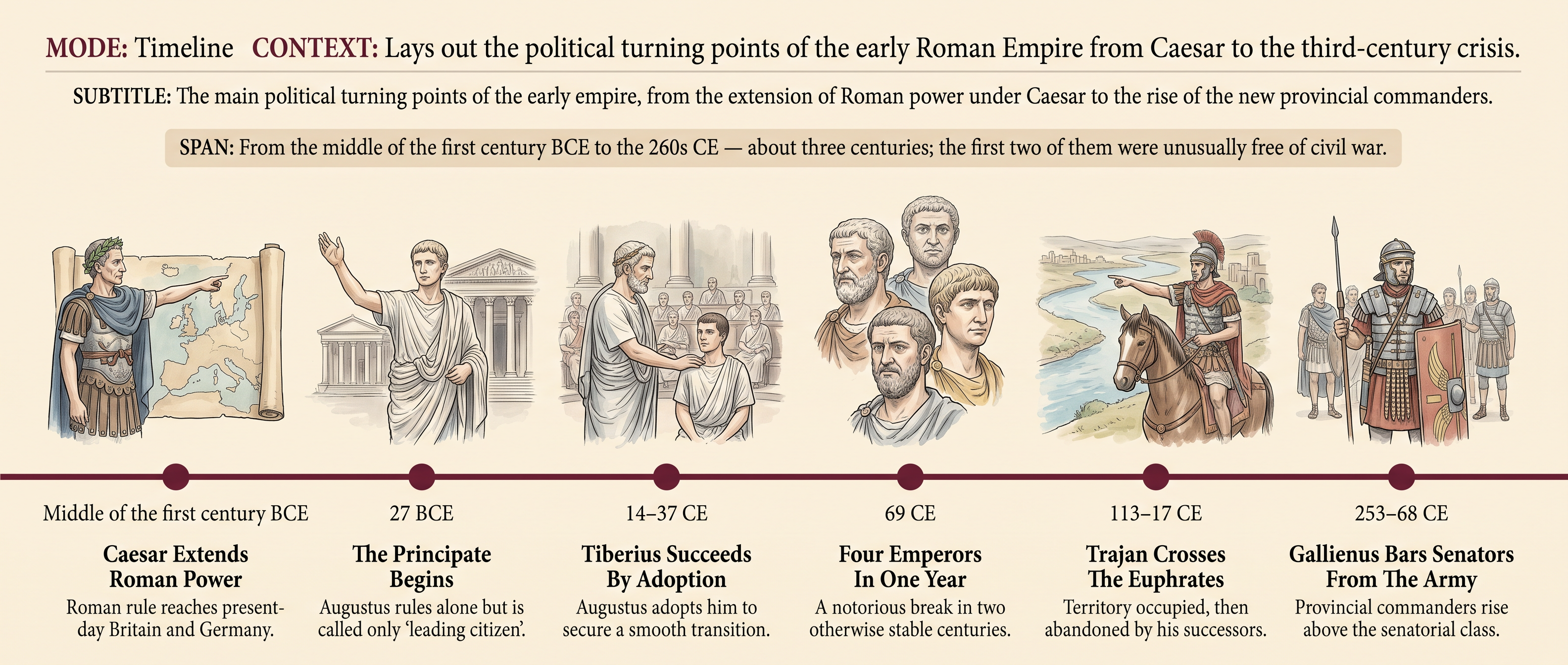
Fig. 2.2 – The Early Empire, From Caesar To Gallienus.
Swallowing The Client Kingdoms
Much more characteristic of Rome than conquest was the gradual extension of direct rule. This was done by absorbing a whole series of ‘dependent’ kingdoms into Roman provincial territory.
The Near East — from the perspective of someone living in the Roman Mediterranean, this meant all the territory east of that sea, chiefly the Roman provinces of Syria, Palestine and Mesopotamia, and in a looser sense the surrounding territories, for example Arabia — was full of such kingdoms. These were local kingdoms that were ‘clients’ of Rome. Their rulers could be relied on to use their forces in support of Rome, and in return Rome allowed them to exist.
By the early second century, those client kingdoms which lay west of the Euphrates, on the Roman side, had disappeared, swallowed up by Rome.
Some of these kingdoms were exceedingly wealthy. Herod’s kingdom, for example, yielded the equivalent of 5.4 million denarii per year — equal to over 125,000 kg of gold. The denarius was a Roman silver coin containing about 4½ gm of pure silver. Hold those two figures together for a moment: a single client kingdom, one of many, was producing an annual revenue worth more than a hundred tonnes of gold.
Provinces And The Power Of Cities
Except for Italy, which was not considered a province in these centuries, all the territories of the empire were organised into provinces — administrative divisions subject to taxation.
At its peak in the second century, the Roman Empire stretched from Scotland to the borders of Armenia, and from the Sahara to the Euphrates and sometimes beyond. Its population in the mid-second century was some 60 million.
There was no government in the modern sense to help run any of this — no ministries, no salaried village-level officials, no telegraph. So how was it possible for one emperor to control and administer such a vast and diverse set of territories?
The answer lies in the urbanisation of the empire.
The great urban centres that lined the shores of the Mediterranean — Carthage, Alexandria and Antioch were the biggest among them — were the true bedrock of the imperial system. It was through the cities that ‘government’ was able to tax the provincial countrysides, which generated much of the wealth of the empire.
What this means in plain terms is that the local upper classes actively collaborated with the Roman state. They administered their own territories and raised taxes from them. Rome did not have to reach every village. It had to reach the city, and the city reached the villages.
The Shift From Italy To The Provinces
One of the most interesting aspects of Roman political history is the dramatic shift in power between Italy and the provinces.
Throughout the second and third centuries, it was the provincial upper classes who supplied most of the cadre that governed the provinces and commanded the armies. They came to form a new elite of administrators and military commanders. This elite became much more powerful than the senatorial class, because it had the backing of the emperors.
As this new group emerged, the emperor Gallienus (253–68) consolidated their rise to power by excluding senators from military command. We are told that Gallienus forbade senators from serving in the army or having access to it — in order to prevent control of the empire from falling into their hands.
To sum up, in the late first, second and early third centuries the army and administration were increasingly drawn from the provinces, as citizenship spread to these regions and was no longer confined to Italy. Individuals of Italian origin continued to dominate the Senate at least till the third century, when senators of provincial origin became a majority.
These trends reflected two things at once: the general decline of Italy within the empire, both political and economic, and the rise of new elites in the wealthier and more urbanised parts of the Mediterranean, such as the south of Spain, Africa and the east.
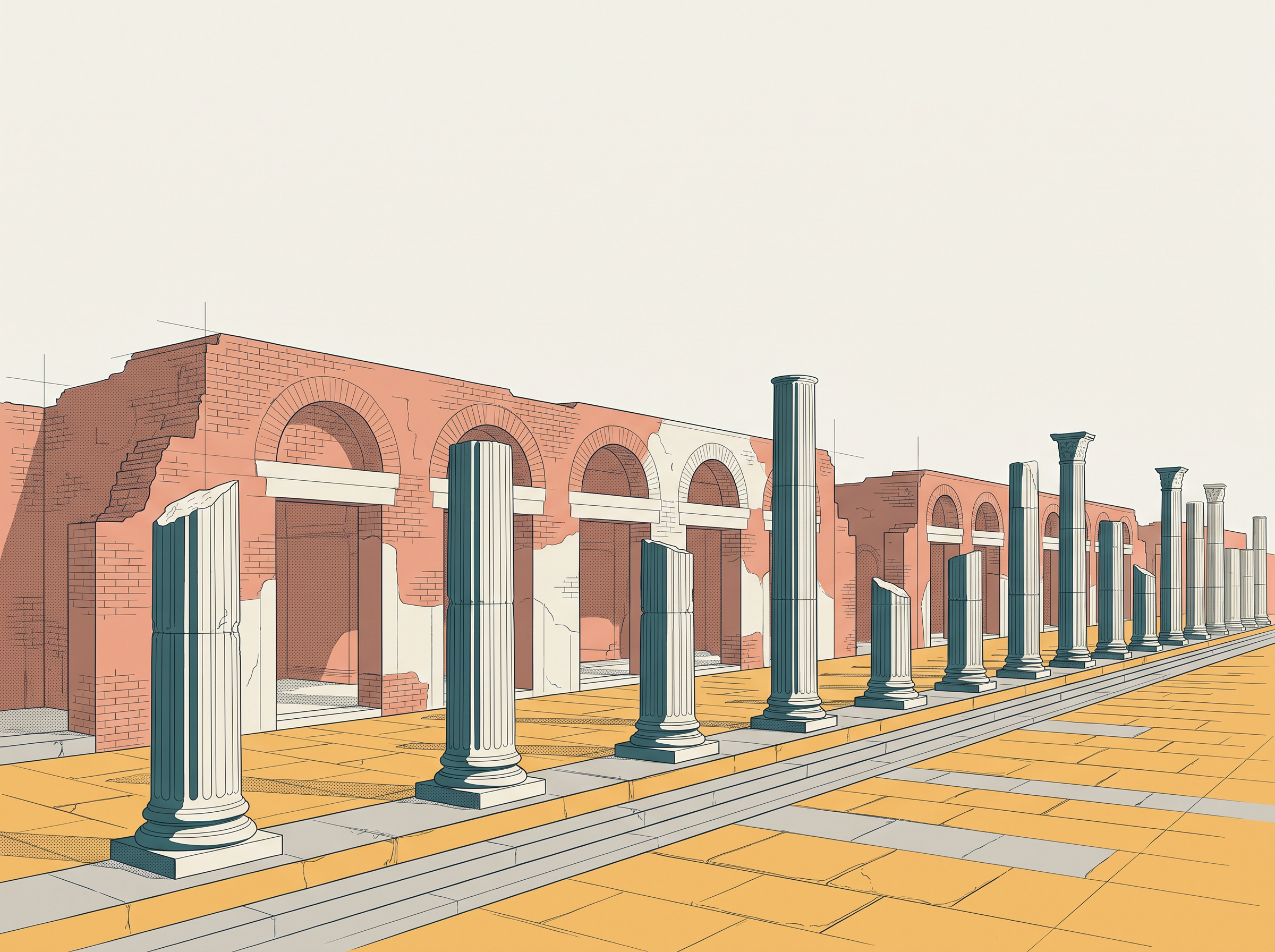
Fig. 2.3 – Shops in the Forum Julium, Rome.
What A City Meant
A city in the Roman sense was not simply a big settlement. It was an urban centre with its own magistrates, its own city council, and a ‘territory’ containing villages that came under its jurisdiction.
Magistrates were the elected office-holders who ran a city’s affairs — its courts, its markets, its finances. The city council was the body of leading local men who took its decisions.
Because a city held territory, one city could not lie inside the territory of another city. Villages almost always could, and did. Villages could be upgraded to the status of cities, and cities could be demoted to villages — usually as a mark of imperial favour, or the opposite.
One crucial advantage of living in a city was simply this: during food shortages, and even during famines, a city might be far better provided for than the countryside.
The doctor Galen, writing about diet and illness, explains exactly how that advantage worked — and what it cost the villages. He is not making a political argument. He is a physician explaining why country people fell ill.
Read the passage again and notice the order of events. The city takes first, and takes the food that stores well. What is left to the villages is what the city does not want, and even of that the city takes a large share. By spring the peasants are eating twigs and roots. The city’s advantage in a famine was not an accident of geography; it was built into how the grain moved.
City Life
Public baths were a striking feature of Roman urban life. They were so distinctively Roman that when one Iranian ruler tried to introduce them into Iran, he ran into the wrath of the clergy there. In Iran water was a sacred element, and to use it for public bathing may have seemed a desecration.
Urban populations also enjoyed a much higher level of entertainment than villagers. One calendar tells us that spectacula — public shows — filled no less than 176 days of the year. That is close to one day in two.
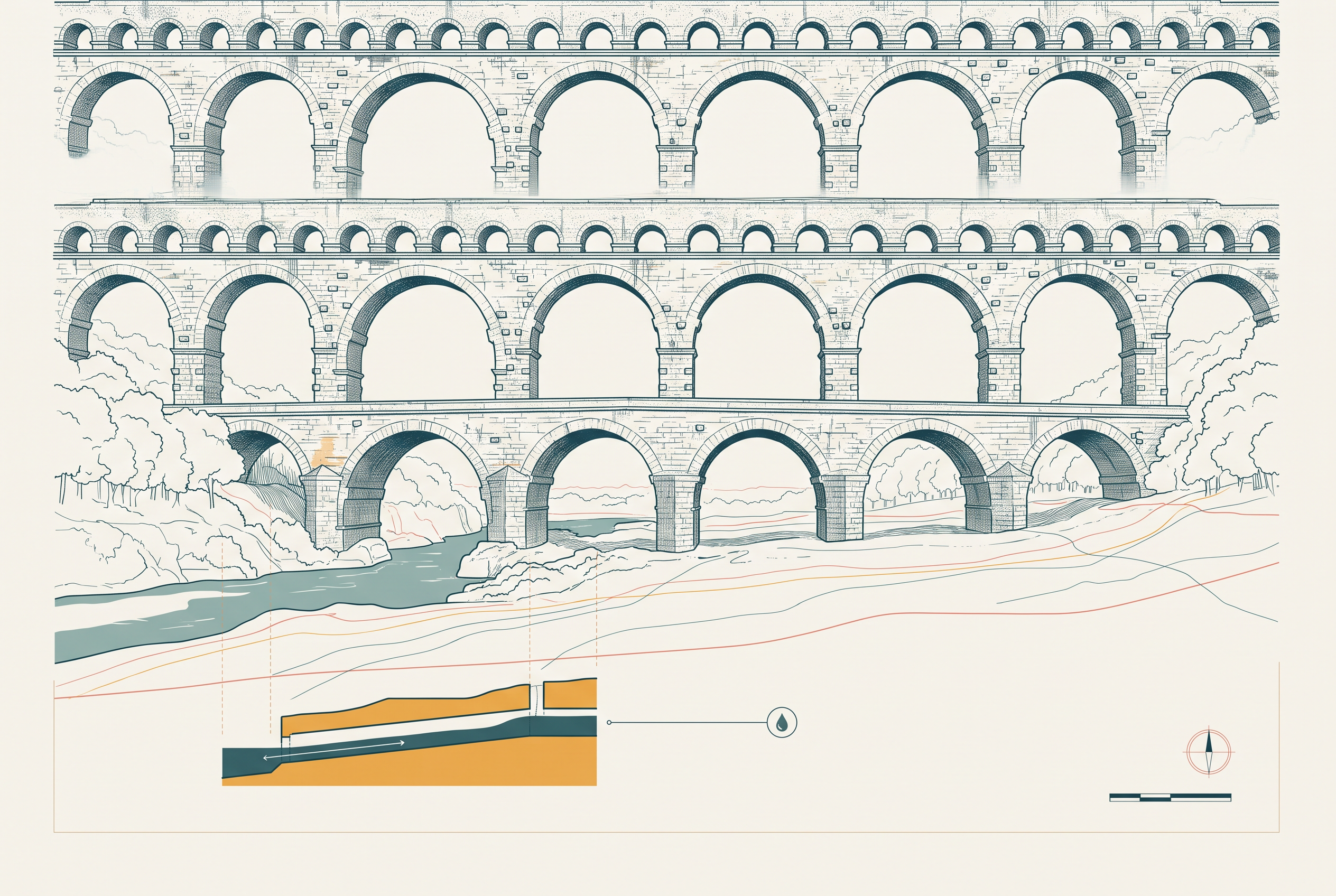
Fig. 2.4 – The Pont du Gard aqueduct.
An aqueduct like the Pont du Gard is worth pausing on. Baths, fountains and crowded cities all need water in quantity, and it had to be carried, sometimes for tens of kilometres, on stone arches built to a very slight and very exact slope. The empire’s city life rested on engineering of this order.
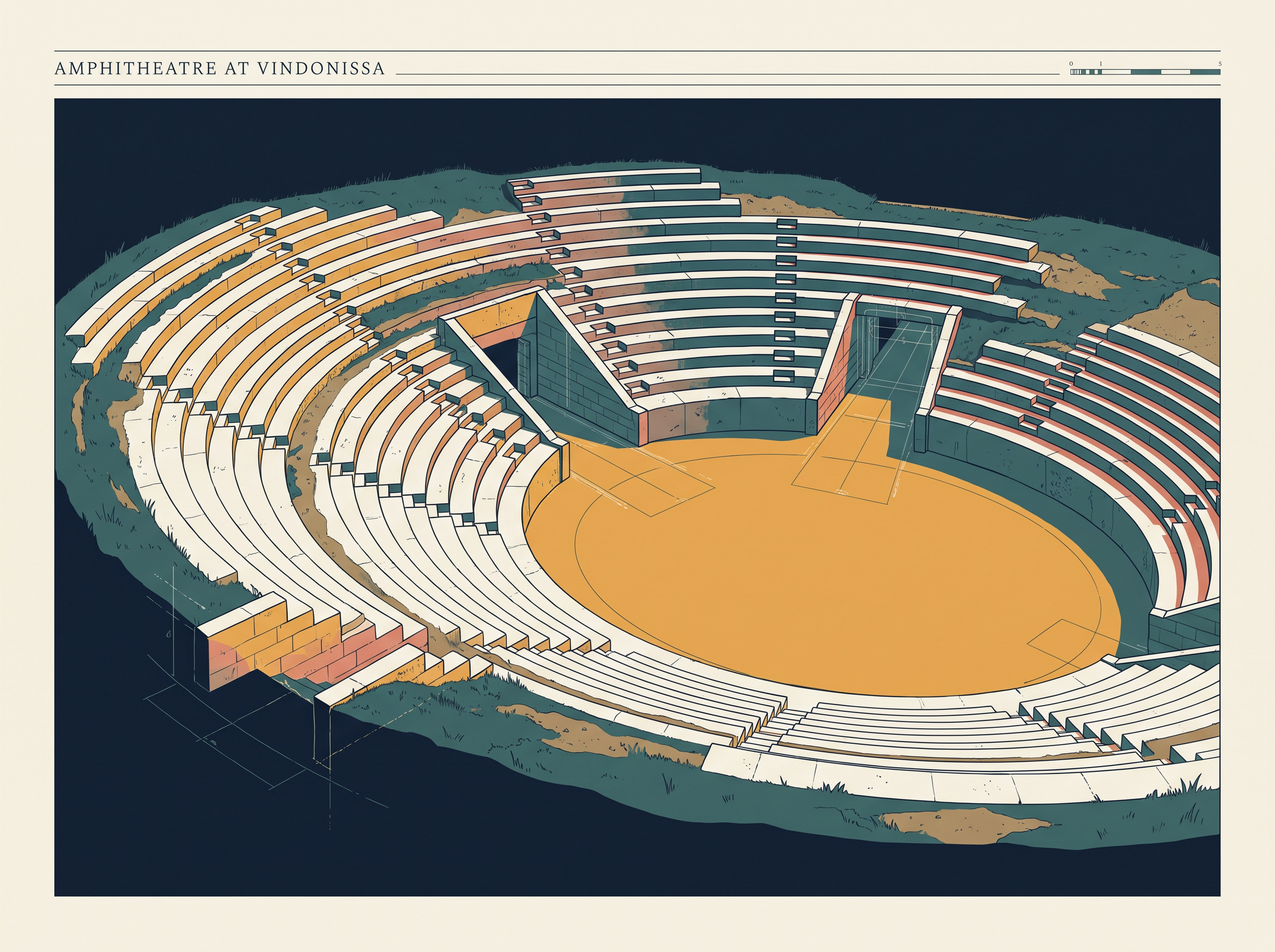
Fig. 2.5 – The amphitheatre at Vindonissa.
2.2 The Third-Century Crisis
If the first and second centuries were by and large a period of peace, prosperity and economic expansion, the third century brought the first major signs of internal strain.
From the 230s, the empire found itself fighting on several fronts at the same time. That is the heart of the crisis. An empire can absorb a war. It struggles to absorb three at once.
Pressure From The East
In Iran a new and more aggressive dynasty emerged in 225. They called themselves the ‘Sasanians’, and within just 15 years they were expanding rapidly in the direction of the Euphrates — the river that formed the narrow dividing line between the two superpowers.
In a famous rock inscription cut in three languages, Shapur I, the Iranian ruler, claimed that he had annihilated a Roman army of 60,000. He also claimed to have captured Antioch, the eastern capital of the Roman Empire and one of the largest cities in the Mediterranean world.
That claim is worth handling carefully. It is a king’s own account of his own victory, carved to be read by his subjects and by anyone who came after him.
Pressure From The North
Meanwhile, a whole series of Germanic tribes — or rather tribal confederacies, since several tribes acted together — began to move against the Rhine and Danube frontiers. The most notable of them were the Alamanni, the Franks and the Goths.
The whole period from 233 to 280 saw repeated invasions of a long line of provinces. These stretched from the Black Sea in the east, across to the Alps and southern Germany in the west. The Romans were forced to abandon much of the territory beyond the Danube.
The emperors of this period were constantly in the field against what the Romans called ‘barbarians’. Notice that this is Rome’s own word for the peoples beyond its frontier. It tells you what Romans thought of them; it tells you nothing about how those peoples lived or governed themselves.
A Symptom You Can Count
There is one striking measure of the strain. In the third century, 25 emperors mounted the throne in 47 years.
An emperor who lasted, on average, less than two years was an emperor who could not plan, could not reform and could not afford to be away from his armies. Rapid succession is not just a list of names. It is the political symptom of an empire that had to fight everywhere at once.
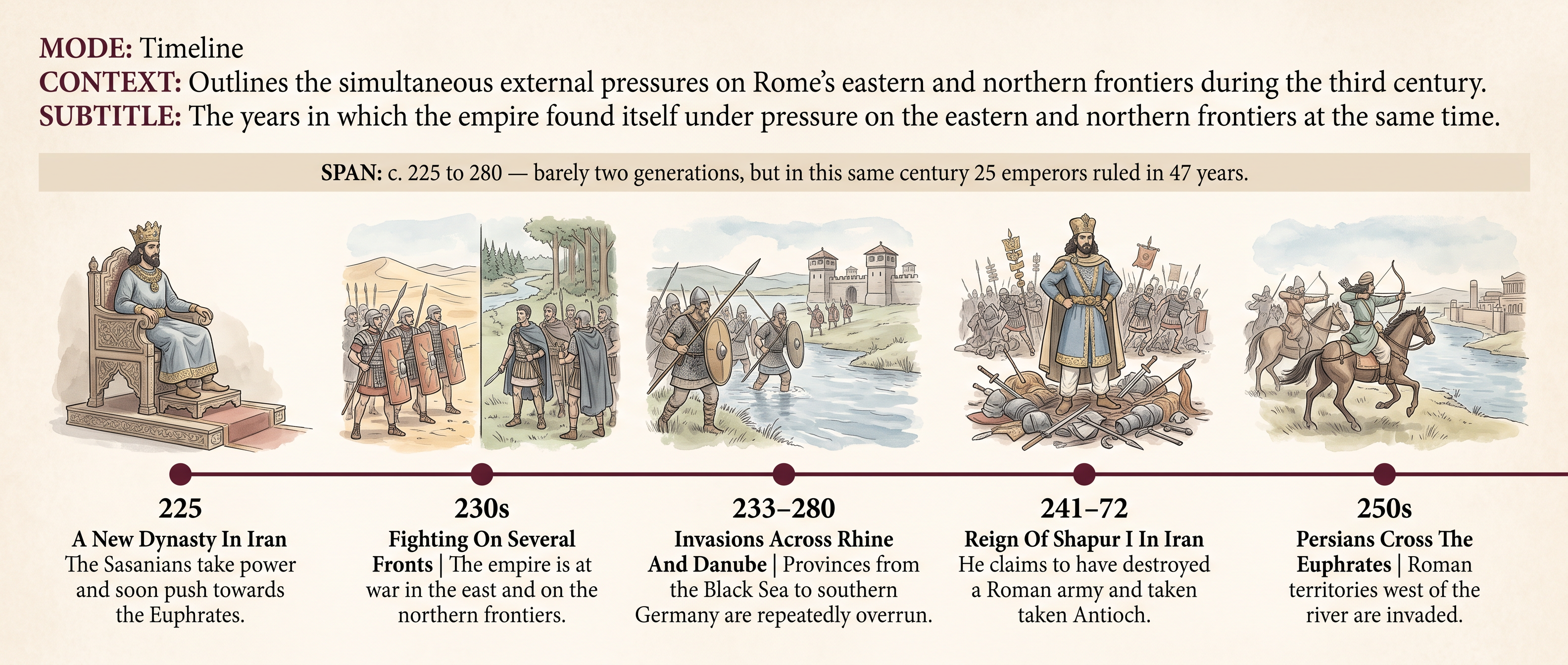
Fig. 2.6 – The Third-Century Crisis.
2.3 Gender, Literacy, Culture
The Roman Family
One of the more modern features of Roman society was the widespread prevalence of the nuclear family — a household of parents and their young children, rather than a large joint household of several married brothers.
Adult sons did not live with their families. It was exceptional for adult brothers to share a common household. On the other hand, slaves were included in the family, as the Romans understood the word. A Roman ‘family’ meant everyone under the authority of the head of the house, and that included the people he owned.
Marriage And Property
By the late Republic — the first century BCE — the typical form of marriage was one in which the wife did not transfer to her husband’s authority. She retained full rights in the property of her natal family, that is, the family she was born into.
The woman’s dowry went to the husband for the duration of the marriage. But she herself remained a primary heir of her father, and became an independent property owner on her father’s death.
Roman women therefore enjoyed considerable legal rights in owning and managing property. Put another way: in law, the married couple was not one financial entity but two, and the wife enjoyed complete legal independence.
Divorce was relatively easy. It needed no more than a notice of intent to dissolve the marriage, given by either the husband or the wife.
The Limits Of That Independence
Now set the law beside the practice, because they do not match.
Men married in their late twenties or early thirties. Women were married off in their late teens or early twenties. There was thus an age gap between husband and wife, and this would have encouraged a certain inequality between them. A woman of nineteen married to a man of thirty-two does not negotiate as an equal, whatever the property law says.
Marriages were generally arranged. And there is no doubt that women were often subject to domination by their husbands.
The evidence for this is not a guess. Augustine, the great Catholic bishop who spent most of his life in North Africa, tells us that his mother was regularly beaten by his father, and that most other wives in the small town where he grew up had similar bruises to show.
Finally, fathers had substantial legal control over their children. This went to a shocking degree: a father held a legal power of life and death in exposing unwanted children, by leaving them out in the cold to die. This was not a hidden abuse. It was a right the law recognised.
Reading And Writing
What about literacy?
It is certain that rates of casual literacy — the use of reading and writing in everyday, often trivial, contexts — varied greatly between different parts of the empire. Casual literacy is not the literacy of scholars. It is the literacy of a shopkeeper writing a price, or a bored man scratching a joke on a wall.
Pompeii is the clearest case. The town was buried in a volcanic eruption in 79 CE, and there is strong evidence there of widespread casual literacy. Walls on the main streets of Pompeii often carried advertisements, and graffiti were found all over the city. Nobody writes an advertisement for people who cannot read it.
Some of the graffiti are simply funny. One of them is a complaint addressed to the wall itself.
Egypt gives us the opposite picture, and the contrast is instructive. Hundreds of papyri survive from Egypt, and most formal documents such as contracts were usually written by professional scribes. These contracts often tell us plainly that X or Y is unable to read and write.
Even in Egypt, though, literacy was certainly more widespread among certain categories of people: soldiers, army officers and estate managers. Reading and writing followed the job.
Many Languages, Few Scripts
The cultural diversity of the empire showed itself in many ways and at many levels. It showed in the vast diversity of religious cults and local deities. It showed in the plurality of languages spoken, in styles of dress and costume, in the food people ate, in their forms of social organisation — tribal or non-tribal — and even in their patterns of settlement.
Take the languages alone. Aramaic was the dominant language group of the Near East, at least west of the Euphrates. Coptic was spoken in Egypt. Punic and Berber were spoken in North Africa. Celtic was spoken in Spain and the northwest of the empire.
But many of these linguistic cultures were purely oral — spoken, not written — at least until a script was invented for them. A language without a script leaves almost nothing behind for a historian to read.
The dates make the point sharply. Armenian only began to be written as late as the fifth century. Coptic, by contrast, already had a translation of the Bible by the middle of the third century — two centuries earlier.
Elsewhere the spread of Latin displaced the written form of languages that were otherwise widespread. This happened notably with Celtic, which ceased to be written after the first century. The language did not die when it stopped being written; it simply became invisible to us.
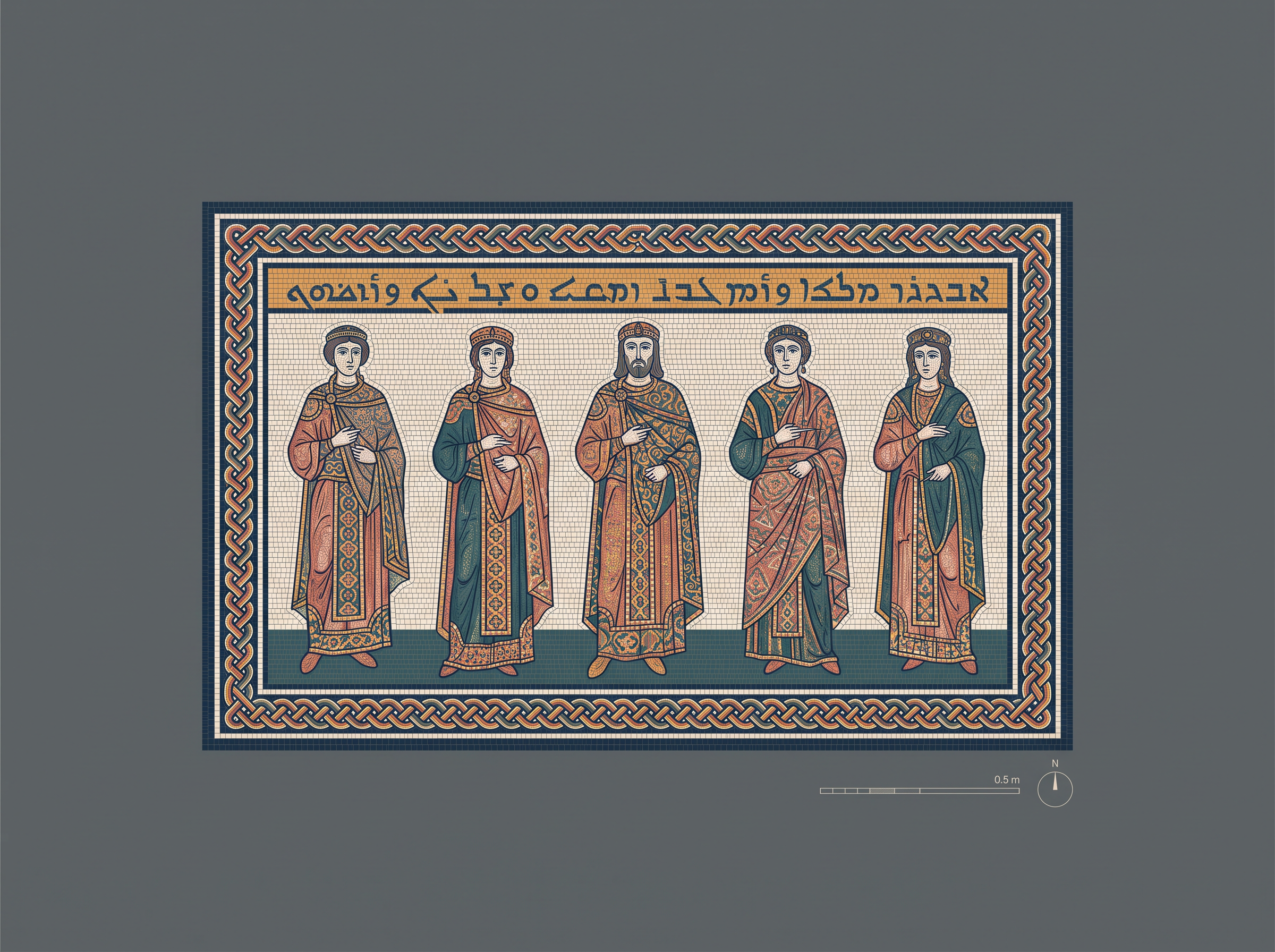
Fig. 2.7 – Mosaic at Edessa, second century CE.
Look at what a single mosaic carries. It is a material remain, dug out of the ground; it is also a document, because it is inscribed; and the inscription is in Syriac, not in Latin or Greek. The languages of administration were two. The languages people actually used were many.
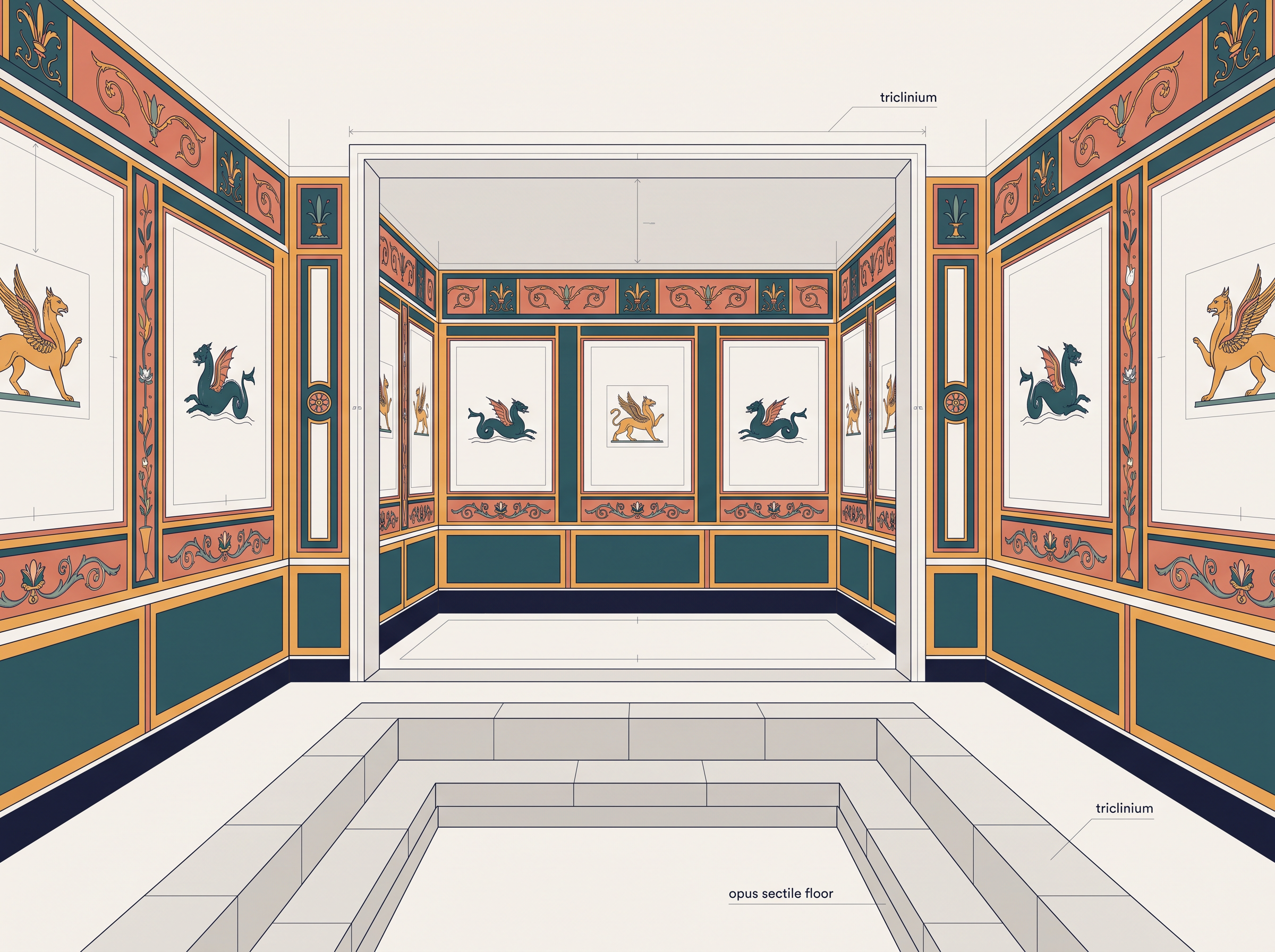
Fig. 2.8 – A wine-merchant’s dining-room in Pompeii.
A wine merchant, not a senator, ate in that room. The painted walls tell us that a comfortable urban trading family in a small Italian town lived surrounded by images and by decoration. Cultural life in the empire was not confined to the very top.
2.4 Economic Expansion
The empire had a substantial economic infrastructure. It had harbours, mines, quarries, brickyards, olive oil factories, and much else. These were not village workshops. They were the fixed installations of an economy that produced for distant markets.
Wheat, wine and olive oil were traded and consumed in huge quantities. They came mainly from Spain, the Gallic provinces, North Africa and Egypt, and to a lesser extent from Italy — the regions where conditions were best for these crops.
The Jars That Tell The Story
Liquids like wine and olive oil could not be shipped loose. They were transported in large pottery containers called ‘amphorae’.
Pottery breaks. And because it breaks, it survives. The fragments and sherds of an enormous number of these jars remain: Monte Testaccio in Rome — a hill made largely of discarded pottery — is said to contain the remnants of over 50 million vessels.
From these fragments, archaeologists can do three separate things.
They can reconstruct the precise shapes of the containers, because a jar built for oil is not shaped like a jar built for wine. They can therefore tell us what the jar carried. And they can say exactly where it was made, by examining the clay content and matching the finds with clay pits throughout the Mediterranean. Clay from one riverbank is not the clay of another.
Reading The Distribution Maps
Follow the reasoning carefully, because this is how an entire economy is reconstructed from rubbish.
Spanish olive oil in the period of its greatest success was mainly carried in a container called ‘Dressel 20’, named after the archaeologist who first established its form. If finds of Dressel 20 are widely scattered across sites in the Mediterranean, that suggests Spanish olive oil circulated very widely indeed.
By using such evidence — the remains of amphorae of different kinds, and their ‘distribution maps’ — archaeologists are able to show that Spanish producers succeeded in capturing markets for olive oil from their Italian counterparts.
Now ask why buyers would have switched. This would only have happened if Spanish producers supplied a better quality oil at lower prices. In other words, the big landowners from different regions competed with each other for control of the main markets for the goods they produced.
We can therefore now say with some confidence that Spanish olive oil was a vast commercial enterprise, and that it reached its peak in the years 140-160.
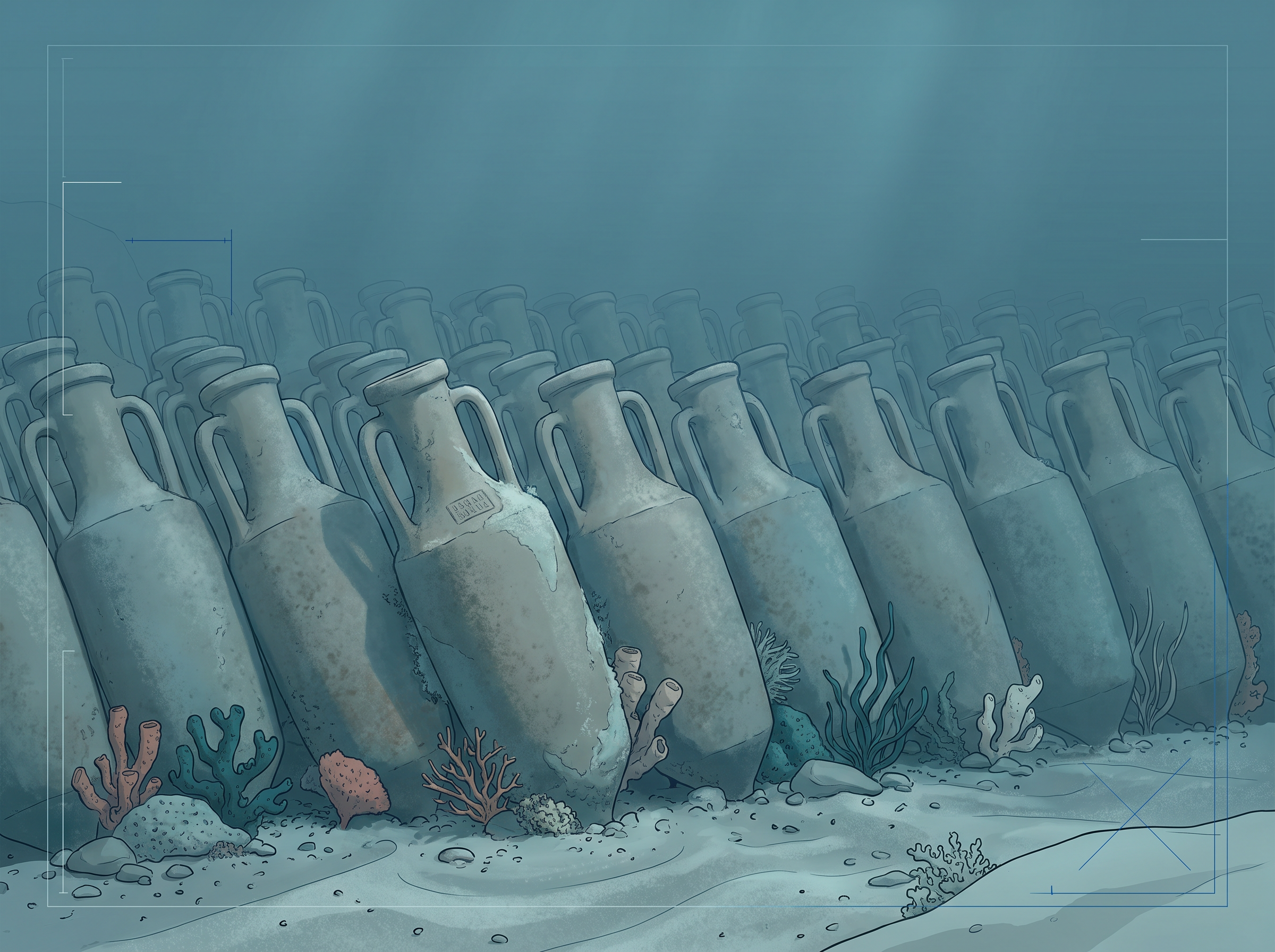
Fig. 2.9 – Shipwreck amphorae off the south coast of France.
The Leadership Changes Hands
The success of the Spanish olive growers was then repeated by North African producers. Olive estates in this part of the empire dominated production through most of the third and fourth centuries.
Later, after 425, North African dominance was broken by the East. In the later fifth and sixth centuries, the Aegean, southern Asia Minor (modern Turkey), Syria and Palestine became major exporters of wine and olive oil. Containers from Africa show a dramatically reduced presence on Mediterranean markets — the African sherds simply stop turning up.
Behind these broad movements lies a simple point. The prosperity of individual regions rose and fell depending on how effectively they could organise the production and transport of particular goods, and on the quality of those goods.
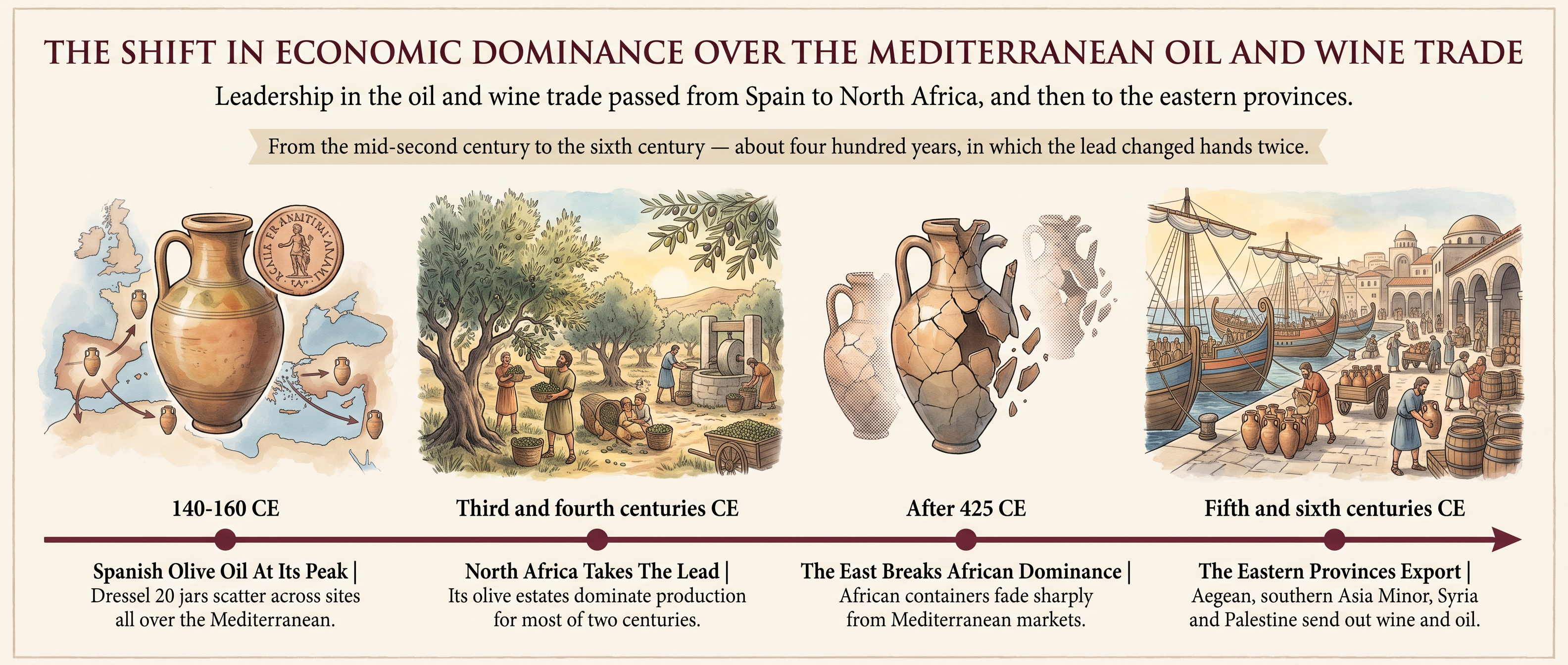
Fig. 2.10 – Who Supplied The Mediterranean With Oil And Wine.
The Rich Regions
The empire included many regions that had a reputation for exceptional fertility.
Campania in Italy, Sicily, the Fayum in Egypt, Galilee, Byzacium (modern Tunisia), southern Gaul — called Gallia Narbonensis — and Baetica (southern Spain) were all among the most densely settled or wealthiest parts of the empire, according to ancient writers like Strabo and Pliny.
Each was known for something in particular. The best kinds of wine came from Campania. Sicily and Byzacium exported large quantities of wheat to Rome; the capital could not feed itself, and had to be fed by its provinces. Galilee was densely cultivated — ‘every inch of the soil has been cultivated by the inhabitants’, wrote the historian Josephus. And Spanish olive oil came mainly from numerous estates, called fundi, along the banks of the river Guadalquivir in the south of Spain.
The Other Roman Countryside
Large expanses of Roman territory, however, were in a much less advanced state. It would be a mistake to picture the whole empire as a landscape of prosperous export estates.
Transhumance — the herdsman’s regular annual movement between the higher mountain regions and low-lying ground, in search of pasture for sheep and other flocks — was widespread in the countryside of Numidia, in modern Algeria. These pastoral and semi-nomadic communities were often on the move, carrying their oven-shaped huts, called mapalia, with them.
What happened to them is worth stating plainly. As Roman estates expanded in North Africa, the pastures of those communities were drastically reduced, and their movements were more tightly regulated. Someone else’s economic expansion was their loss of land and of freedom of movement.
Even in Spain the north was much less developed. It was inhabited largely by a Celtic-speaking peasantry that lived in hilltop villages called castella. When we think of the Roman Empire, we should never forget these differences.
Not A Primitive Economy
We should also be careful not to imagine that, because this was the ‘ancient’ world, its forms of cultural and economic life were necessarily backward or primitive.
The evidence runs the other way. There were diversified applications of water power around the Mediterranean, as well as advances in water-powered milling technology. Hydraulic mining techniques — using controlled flows of water to break up and wash away ore-bearing rock — were used in the Spanish gold and silver mines. Those mines were worked on a gigantic industrial scale in the first and second centuries, with levels of output that would not be reached again till the nineteenth century, some 1,700 years later.
Add to this the existence of well-organised commercial and banking networks, and the widespread use of money. All of these are indications of how much we tend to under-estimate the sophistication of the Roman economy.
But an economy on this scale needed hands. Mines worked industrially, estates pressing oil for export, ships loading tens of thousands of jars — every one of them had to be worked by someone. This raises the issue of labour, and of the use of slavery, which is where the next section begins.
2.5 Controlling Workers
Slavery was an institution deeply rooted in the ancient world, both in the Mediterranean and in the Near East. It was not challenged by the empire’s new religion either: not even Christianity, when it emerged and triumphed as the state religion in the fourth century, seriously questioned the institution.
How Much Of The Work Did Slaves Do?
It does not follow, however, that the bulk of the labour in the Roman economy was performed by slaves.
That may have been true of large parts of Italy in the Republican period. Under Augustus there were still 3 million slaves in a total Italian population of 7.5 million — two people in every five. But it was no longer true of the empire as a whole.
Slaves were an investment, and were treated as one. At least one Roman agricultural writer advised landowners against using slaves in contexts where too many might be required at once, for example for harvests, or where their health could be damaged, for example by malaria.
Read that advice carefully. It was not based on any sympathy for the slaves. It was based on hard economic calculation: a slave who died was capital lost, and a slave hired in a crowd for one busy fortnight was capital wasted.
If the Roman upper classes were often brutal towards their slaves, ordinary people did sometimes show much more compassion. The historian Tacitus, writing about the early empire, records a famous incident from the reign of the emperor Nero, in which a city official was murdered by one of the people he owned.
Notice what the passage shows and what it does not. The law was savage — every slave in the house was to die for the act of one — and the Senate voted to apply it. The ordinary people of Rome tried physically to stop it, and the state answered with troops. Compassion existed, but it was the compassion of the crowd, and the state overruled it.
Why Slavery Became Expensive
As warfare became less widespread with the establishment of peace in the first century, the supply of slaves tended to decline. Fewer wars meant fewer captives.
The users of slave labour therefore had to turn to one of two things. The first was slave breeding — the practice of encouraging female slaves and their partners to have more children, who would of course also be slaves. The second was cheaper substitutes, such as wage labour, which was more easily dispensable.
The economics here are worth spelling out, because they explain a great deal. Unlike hired workers, slaves had to be fed and maintained throughout the year, whether or not there was work to do. That increased the cost of holding this kind of labour. A wage worker, by contrast, could be hired for the harvest and let go afterwards.
This is probably why slaves are not widely found in the agriculture of the later period, at least not in the eastern provinces. It is also why free labour was extensively used on public works at Rome — precisely because an extensive use of slave labour would have been too expensive.
Slaves did not disappear, though. They changed roles. Slaves and freedmen — that is, slaves who had been set free by their masters — were extensively used as business managers, where, obviously, they were not required in large numbers. Masters often gave their slaves or freedmen capital to run businesses on their behalf, or even businesses of their own.
Supervision: The Roman Theory Of Work
The Roman agricultural writers paid a great deal of attention to the management of labour, and what they wrote is unusually revealing.
Columella, a first-century writer who came from the south of Spain, recommended that landowners should keep a reserve stock of implements and tools — twice as many as they needed — so that production could never stop. His reason was purely financial: ‘for the loss in slave labour-time exceeds the cost of such items’. Idle slaves still had to be fed.
There was a general presumption among employers that without supervision no work would ever get done. Supervision was therefore paramount, for both free workers and slaves.
To make supervision easier, workers were sometimes grouped into gangs or smaller teams. Columella recommended squads of ten, claiming that in work groups of this size it was easier to tell who was putting in effort and who was not. This shows a detailed, almost managerial, consideration of labour.
Not everyone approved. Pliny the Elder, the author of the very famous ‘Natural History’, condemned the use of slave gangs as the worst method of organising production — mainly because slaves who worked in gangs were usually chained together by their feet.
Draconian, But Not Unfamiliar
All this looks draconian, that is, harsh. The word comes from an early sixth-century BCE Greek lawmaker called Draco, who prescribed death as the penalty for most crimes.
We should remember, though, that most factories in the world today enforce similar principles of labour control — timings, supervision, output targets. Indeed, some industrial establishments in the empire enforced even tighter controls than modern ones.
The Elder Pliny described conditions in the frankincense factories, called officinae, of Alexandria. Frankincense is the European name for an aromatic resin used in incense and perfumes; it is tapped from Boswellia trees by slashing the bark and allowing the exuded resins to harden, and the best-quality frankincense came from the Arabian peninsula. It was, in short, an expensive commodity — and the workers who handled it were treated accordingly.
In those factories, Pliny tells us, no amount of supervision seemed to suffice. ‘A seal is put upon the workmen’s aprons, they have to wear a mask or a net with a close mesh on their heads, and before they are allowed to leave the premises, they have to take off all their clothes.’
The Evidence That Work Was Hated
How do we know that this labour was disliked? Because of what people did to escape it.
Agricultural labour must have been fatiguing and disliked, for a famous edict of the early third century refers to Egyptian peasants deserting their villages ‘in order not to engage in agricultural work’. The same was probably true of most factories and workshops. And a law of 398 referred to workers being branded, so that they could be recognised if and when they ran away and tried to hide.
A state does not pass a law about branding runaway workers unless workers are running away.
Debt As A Chain
Many private employers cast their agreements with workers in the form of debt contracts. The purpose was to be able to claim that their employees were in debt to them, and thus to ensure tighter control over them.
An early, second-century writer tells us: ‘Thousands surrender themselves to work in servitude, although they are free.’ In other words, a lot of the poorer families went into debt bondage in order to survive.
The cost of this fell on children too. From one of the recently discovered letters of Augustine we learn that parents sometimes sold their children into servitude for periods of 25 years. Augustine asked a lawyer friend of his whether these children could be liberated once the father died. The question itself tells us how uncertain their position was.
Rural indebtedness was even more widespread. To take just one example, in the great Jewish revolt of 66 CE — a rebellion in Judaea against Roman domination, which was ruthlessly suppressed by the Romans in what is called the ‘Jewish war’ — the revolutionaries destroyed the moneylenders’ bonds to win popular support. Burning the debt records was the first act of a popular rising. That tells you what the debt records meant to ordinary people.
But Not All Labour Was Coerced
Again, we should be careful not to conclude that the bulk of labour was coerced in these ways.
The late-fifth-century emperor Anastasius built the eastern frontier city of Dara in less than three weeks. He did it by attracting labour from all over the East, by offering high wages. An emperor in a hurry did not round up slaves; he paid, and workers came.
From the papyri we can even form some estimate of how widespread wage labour had become in parts of the Mediterranean by the sixth century, especially in the East.
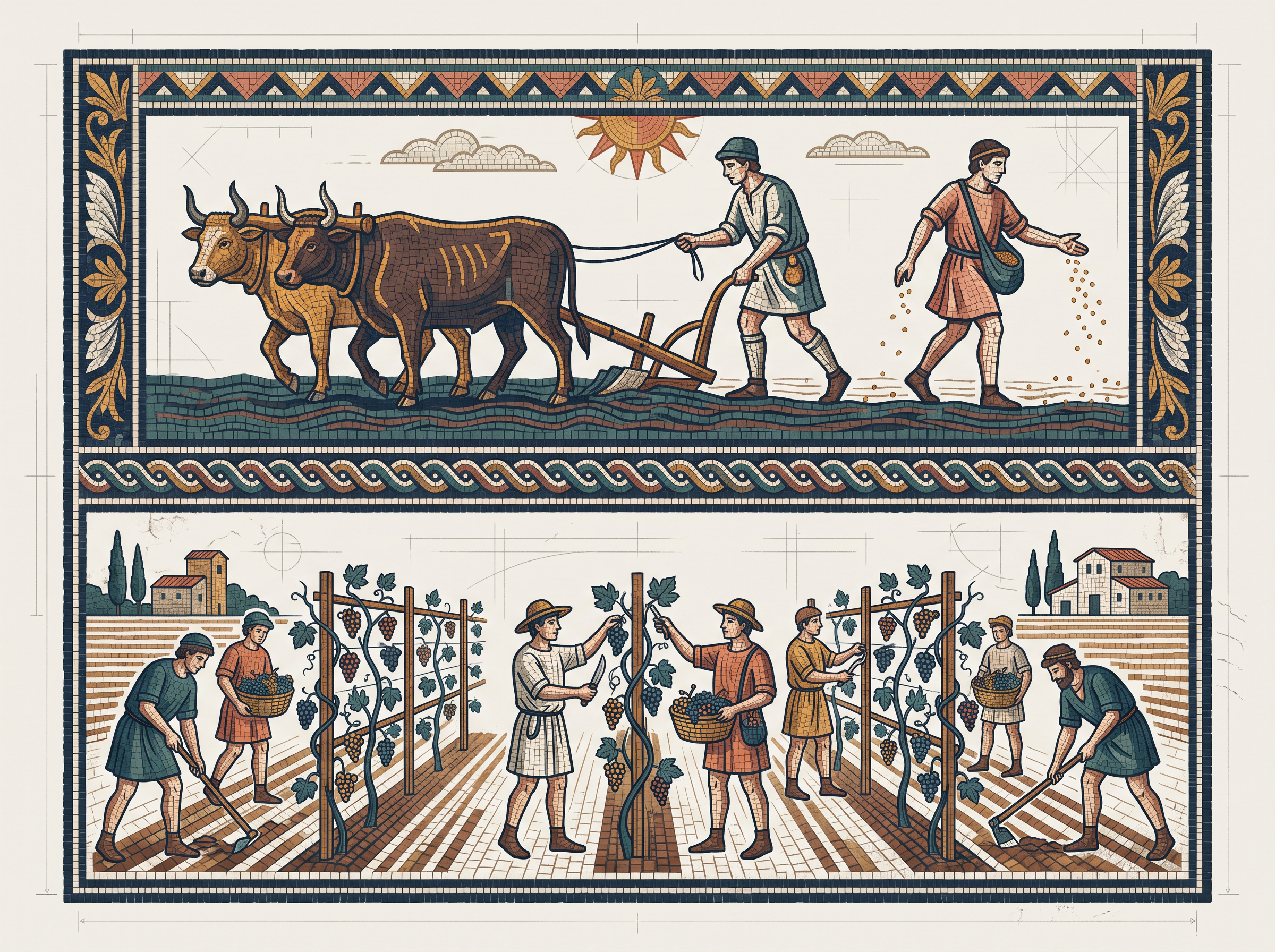
Fig. 2.11 – Mosaic at Cherchel showing agricultural scenes.
The mosaic was commissioned by a landowner, not by the labourers in it. It shows work as an orderly, prosperous business — no chains, no branding, no debt contract. Compare it with what you have just read, and you have the historian’s problem in a single image.
2.7 Late Antiquity
We shall conclude this chapter by looking at the cultural transformation of the Roman world in its final centuries.
Late antiquity is the term now used to describe the final, fascinating period in the evolution and break-up of the Roman Empire. It refers broadly to the fourth to the seventh centuries. It is worth pausing on the word ‘break-up’. This was not a period of simple decline; it was a period in which one world came apart in the west while another kept growing in the east.
The fourth century itself was one of considerable ferment, both cultural and economic.
At the cultural level, the period saw momentous developments in religious life. The emperor Constantine decided to make Christianity the official religion, and in the seventh century came the rise of Islam. But there were equally important changes in the structure of the state, and these began earlier, with the emperor Diocletian (284-305). It is best to start with them.
Diocletian: Cutting Back To Hold On
Overexpansion had led Diocletian to ‘cut back’. He abandoned territories that had little strategic or economic value — a hard-headed decision that reversed centuries of Roman instinct.
He also did three other things. He fortified the frontiers. He reorganised provincial boundaries. And he separated civilian from military functions, granting greater autonomy to the military commanders (duces), who now became a more powerful group.
That last change matters more than it looks. Once a commander no longer answered to a civilian governor, the army became a career of its own — and, as you saw in the last section, the military elites of the late empire came to outrank the old aristocracy.
Constantine: Gold And A Second Capital
Constantine consolidated some of Diocletian’s changes and added others of his own.
His chief innovations were in the monetary sphere. He introduced a new denomination, the solidus — a coin of 4½ gm of pure gold, which would in fact outlast the Roman Empire itself. Solidi were minted on a very large scale, and their circulation ran into millions.
Hold that coin against the older one. The denarius of the early empire was a silver coin of about 4½ gm; the solidus was the same weight in gold. The state had not merely changed metals. It had built its whole system on the metal it still had.
The other area of innovation was the creation of a second capital at Constantinople — at the site of modern Istanbul in Turkey, and previously called Byzantium. The city was surrounded on three sides by the sea, which made it exceptionally defensible.
A new capital required a new senate. The fourth century was therefore a period of rapid expansion of the governing classes: more offices, more officials, more families rising into imperial service.
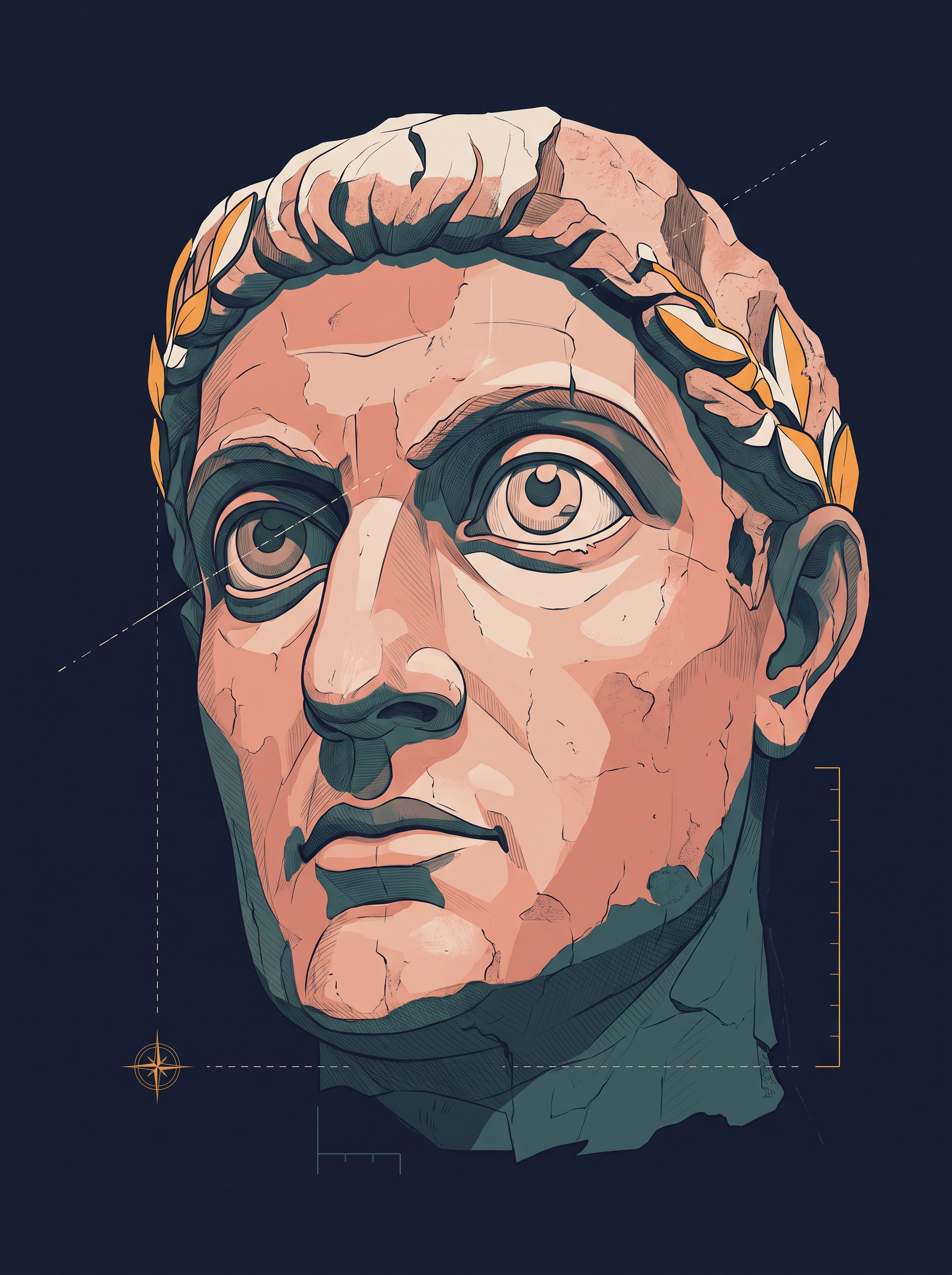
Fig. 2.12 – Colossal statue of Constantine, 313 CE.
The statue is worth a moment. It is deliberately colossal, and the eyes are enormous and turned upwards. An emperor who wanted to be seen as a distant, more-than-human ruler did not commission a life-sized portrait.
Prosperity In The Late Empire
Monetary stability and an expanding population stimulated economic growth, and this is not a guess: the archaeological record shows it.
There was considerable investment in rural establishments. This included industrial installations like oil presses and glass factories. It included newer technologies, such as screw presses and multiple water-mills. And it included a revival of the long-distance trade with the East.
All of this carried over into strong urban prosperity, marked by new forms of architecture and an exaggerated sense of luxury. The ruling elites were wealthier and more powerful than ever before.
Egypt shows this most clearly, because Egypt is where the papyri survive. Hundreds of them come from these later centuries, and they show us a relatively affluent society where money was in extensive use and where rural estates generated vast incomes in gold.
The tax figures make the point. In the reign of Justinian in the sixth century, Egypt contributed taxes of over 2½ million solidi a year — roughly 35,000 lbs of gold. That is one province, in one year, paying its taxes in gold.
Indeed, large parts of the Near Eastern countryside were more developed and densely settled in the fifth and sixth centuries than they would be even in the twentieth century. This is the social background against which the cultural developments of the period must be set.
Religion: A Slow, Untidy Change
The traditional religious culture of the classical world, both Greek and Roman, had been polytheist. That is, it involved a multiplicity of cults. These included Roman and Italian gods like Jupiter, Juno, Minerva and Mars, as well as numerous Greek and eastern deities, worshipped in thousands of temples, shrines and sanctuaries throughout the empire.
One detail tells you how differently these people thought about religion from the way we do. Polytheists had no common name or label to describe themselves. They did not form a ‘religion’ with a boundary; they simply worshipped.
The other great religious tradition in the empire was Judaism. But Judaism was not a monolith either — the word means, literally, a large block of stone, and is used for anything, such as a society or a culture, that lacks variety and is all of the same type. There was a great deal of diversity within the Jewish communities of late antiquity.
Against this background, the Christianisation of the empire in the fourth and fifth centuries — the process by which Christianity spread among different groups of the population and became the dominant religion — was a gradual and complex process. It was not a single moment of conversion.
Polytheism did not disappear overnight, especially in the western provinces. There, the Christian bishops waged a running battle against beliefs and practices that they condemned far more than the Christian laity did — the laity being the ordinary members of a religious community, as opposed to the priests or clergy who hold official positions within it.
In other words, the pressure for a sharp religious boundary came from the leadership, not from ordinary believers. The boundaries between religious communities were much more fluid in the fourth century than they would later become. They hardened only because of the repeated efforts of religious leaders — the powerful bishops who now led the Church — to rein in their followers and enforce a more rigid set of beliefs and practices.
Two Halves, Two Fates
The general prosperity was especially marked in the East, where the population was still expanding till the sixth century. This continued despite the impact of the plague which affected the Mediterranean in the 540s.
In the West, by contrast, the empire fragmented politically. Germanic groups from the North — Goths, Vandals, Lombards and others — took over all the major provinces and established kingdoms that are best described as ‘post-Roman’.
The most important of these were three. The kingdom of the Visigoths in Spain, which was destroyed by the Arabs between 711 and 720. The kingdom of the Franks in Gaul (c.511-687). And the kingdom of the Lombards in Italy (568-774).
These kingdoms foreshadowed the beginnings of a different kind of world, the one usually called ‘medieval’.
In the East, where the empire remained united, the reign of Justinian is the highwater mark of prosperity and imperial ambition. Justinian recaptured Africa from the Vandals in 533. But his recovery of Italy, from the Ostrogoths, left that country devastated — and, by wrecking it, paved the way for the Lombard invasion that followed. A reconquest can ruin the thing it recovers.
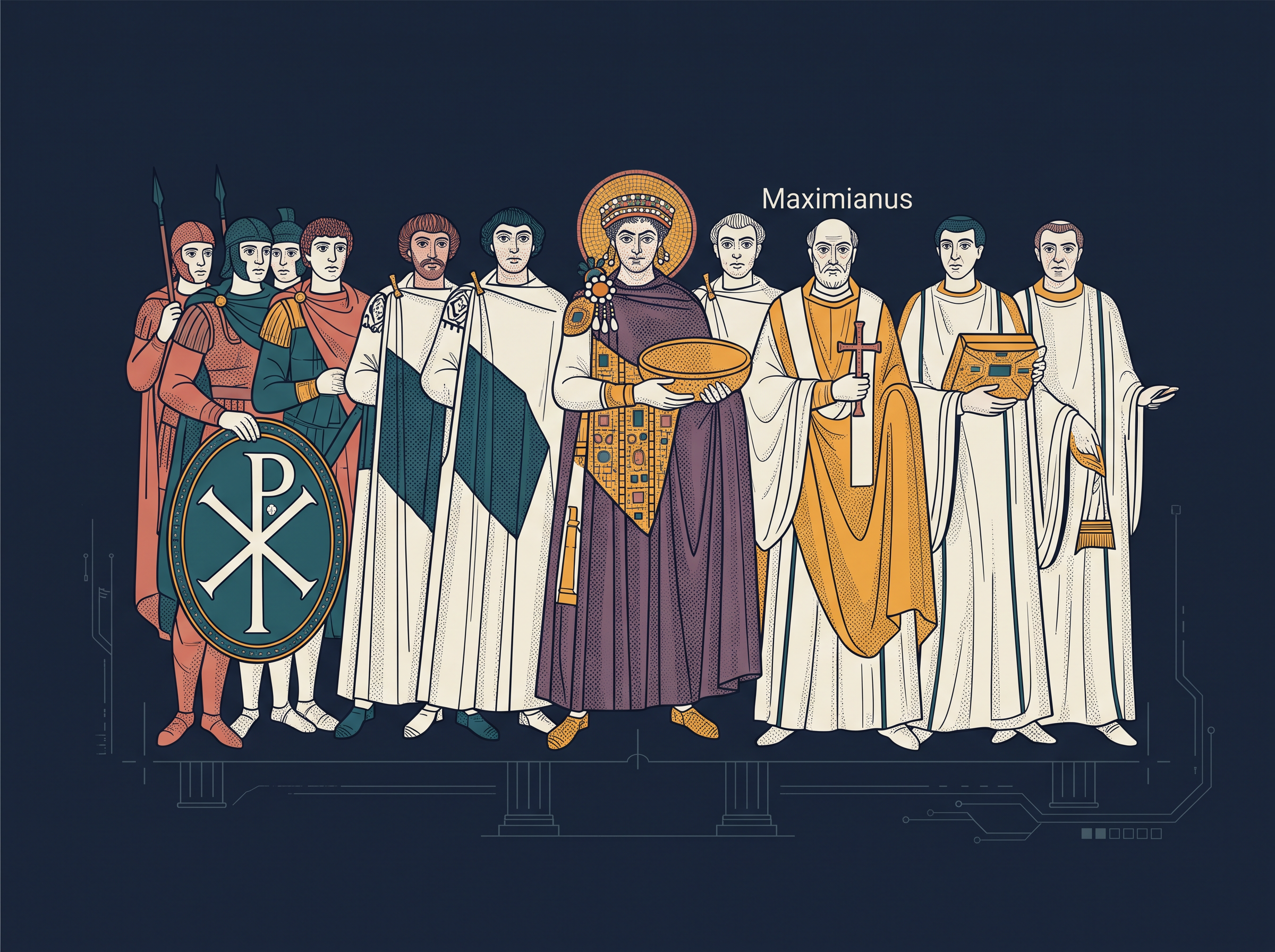
Fig. 2.13 – Mosaic at Ravenna showing the emperor Justinian.
Look at who stands beside the emperor in that mosaic: churchmen on one side, soldiers on the other. Church and army were now the two supports of imperial power, and the image says so without a word.
The Last Blow, From The South-East
By the early seventh century, the war between Rome and Iran had flared up again. The Sasanians, who had ruled Iran since the third century, launched a wholesale invasion of all the major eastern provinces, including Egypt.
When Byzantium — as the Roman Empire was now increasingly known — recovered these provinces in the 620s, it was just a few years away, literally, from the final major blow. And that blow came from a direction nobody had been watching: the south-east.
The expansion of Islam from its beginnings in Arabia has been called ‘the greatest political revolution ever to occur in the history of the ancient world’.
By 642, barely ten years after the Prophet Muhammad’s death, large parts of both the eastern Roman and the Sasanian empires had fallen to the Arabs, in a series of stunning confrontations. Two superpowers that had fought each other for centuries were overtaken within a decade.
We should be careful, however, about how we picture this. Those conquests eventually — a century later — extended as far afield as Spain, Sind and Central Asia. But they began with something much closer to home: the subjection of the Arab tribes by the emerging Islamic state, first within Arabia itself, and then in the Syrian desert and on the fringes of Iraq. As we will see in Chapter 4, the unification of the Arabian peninsula and its numerous tribes was the key factor behind the territorial expansion of Islam.
Map
Map 2 Caption: West Asia in the period of the Arab conquests, showing the lands that lay between the Roman and Sasanian empires. Brief: Redraw NCERT’s Map 2. Show the Mediterranean Sea, Black Sea, Caspian Sea, Red Sea, Persian Gulf, Arabian Sea and Sahara Desert; the rivers Nile, Tigris, Euphrates and Indus; the regions Armenia, Syria, Palestine, Judaea, Persia (Iran), Arabia, Afghanistan; and the cities Constantinople, Edessa, Antioch, Damascus, Baghdad, Ctesiphon, Bukhara, Samarqand, Medina and Mecca. This is a historical map; do not draw any modern national boundaries.
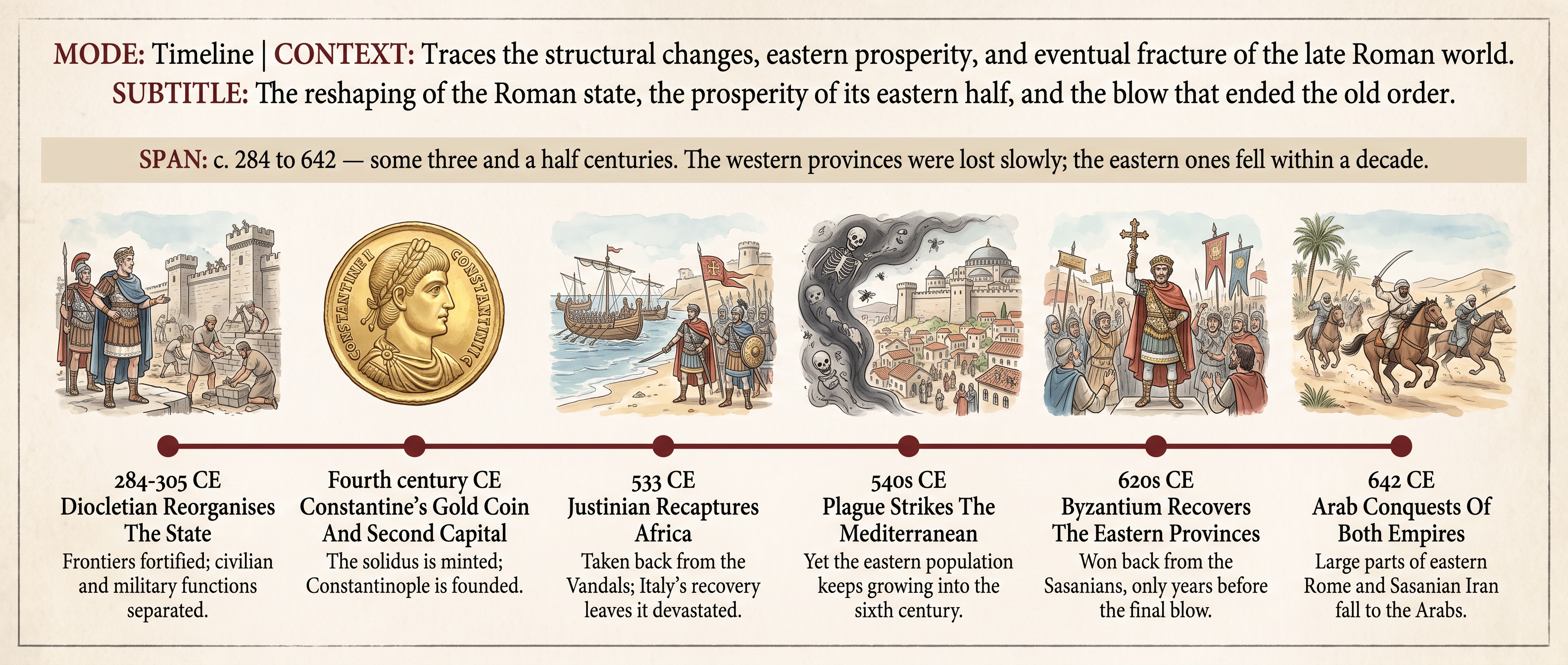
Fig. 2.14 – Late Antiquity, From Diocletian To The Arab Conquests.
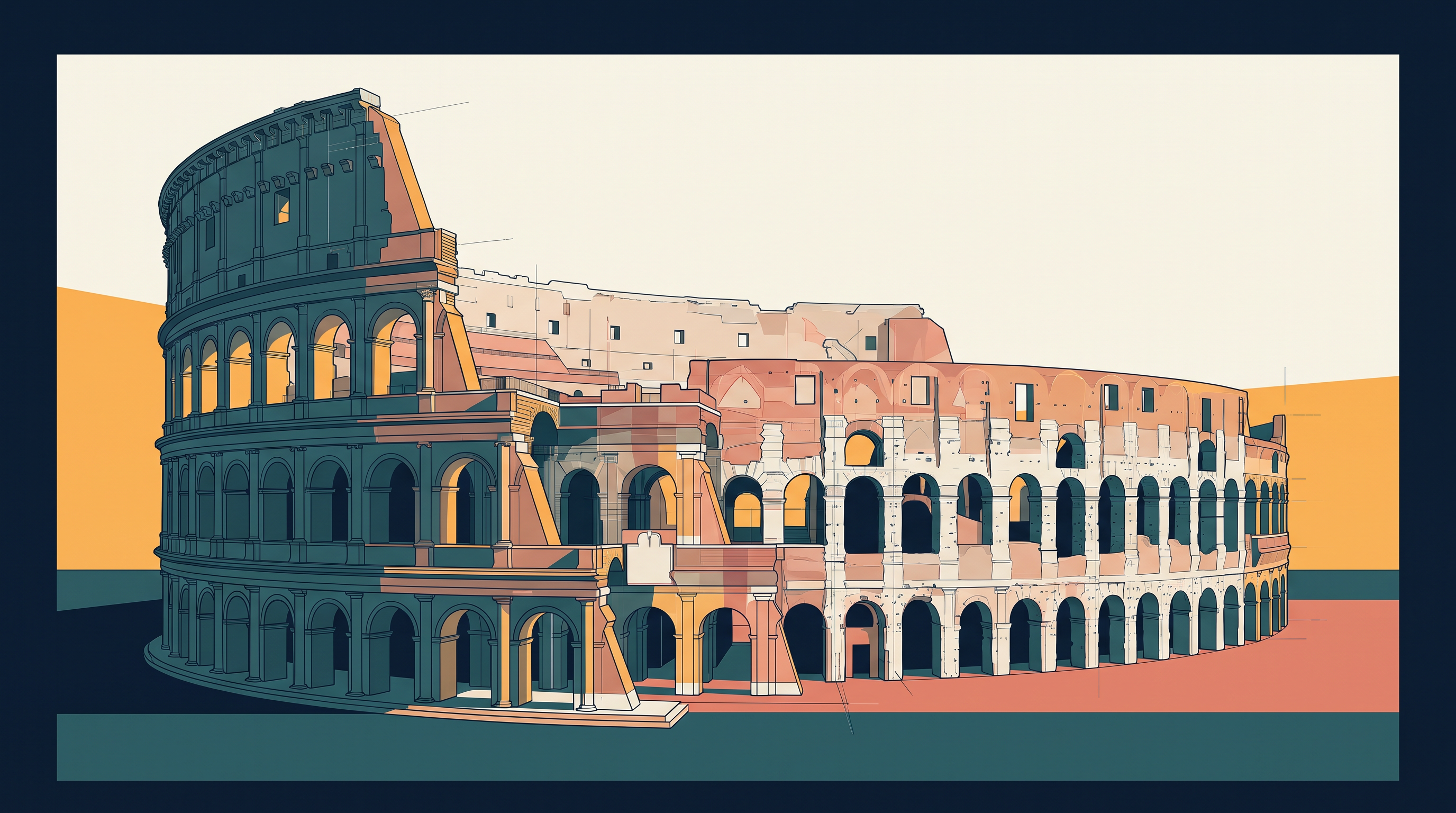
Fig. 2.15 – The Colosseum in Rome.
The Colosseum outlasted the empire that built it — as did the solidus, and as did Roman law. That is the useful way to think about ‘fall’. Institutions, coins and buildings can survive the state that made them, and the caliphate you will study next inherited a great deal from the world you have just read about.
2.8 Summary
What This Chapter Established
- Historians of Rome work from three kinds of evidence — texts, documents and material remains — and each of them can carry us only so far on its own.
- Two superpowers, Rome and Iran, divided most of Europe, North Africa and the Middle East between them, separated by a narrow strip of land along the Euphrates.
- The Mediterranean was the heart of Rome’s empire, bounded by the Rhine and the Danube to the north and by the Sahara to the south.
- The empire’s history divides into an ‘early’ phase, down to the main part of the third century, and a ‘late’ phase after it.
- Unlike Iran, the Roman Empire was culturally a mosaic; only Latin and Greek were used for administration, but everyone in it was the subject of a single emperor.
- Augustus founded the ‘Principate’ in 27 BCE, ruling alone while keeping alive the fiction that he was only the ‘leading citizen’, out of respect for the Senate.
- The emperor, the aristocracy and the army were the three main players in Roman politics, and an emperor who lost control of the army lost everything.
- Rome had a paid professional army, unlike Iran’s conscripted one; by the fourth century it numbered 600,000 men.
- The empire was governed not through a modern bureaucracy but through its cities, and the local upper classes collected the taxes on Rome’s behalf.
- Power shifted from Italy to the provinces: provincial elites came to supply the governors and commanders, and Gallienus barred senators from military command.
- Cities were better provided for in a famine than the countryside, as the doctor Galen described from the inside.
- The third century brought crisis — the Sasanians pressed on the Euphrates, Germanic confederacies crossed the Rhine and the Danube, and 25 emperors ruled in 47 years.
- Roman women held considerable legal rights over property and could divorce easily, yet marriages were arranged, husbands were much older, and domination was common.
- Fathers held legal power of life and death over unwanted children.
- Casual literacy varied greatly: Pompeii’s walls carried advertisements and graffiti, while Egyptian contracts routinely record that a party could not read or write.
- The empire held many languages — Aramaic, Coptic, Punic, Berber, Celtic — but few of them had scripts, and Latin displaced the written form of some.
- Amphora sherds allow archaeologists to say what was carried, where it was made, and how far it travelled; Spanish olive oil took Italian markets, and the lead later passed to North Africa and then to the East.
- Parts of the countryside remained pastoral or poor, and Roman estates in North Africa pushed transhumant communities off their pastures.
- The Roman economy was not primitive: water-powered milling, hydraulic mining, banking networks and the widespread use of money all point the other way.
- Slavery was deeply rooted, but slaves did not perform the bulk of the empire’s labour; slaves had to be fed all year, which made wage labour cheaper.
- Roman labour control ran on supervision, gangs, branding, and debt contracts that bound legally free people into servitude.
- Not all labour was coerced: Anastasius built the city of Dara in under three weeks by offering high wages.
- Tacitus’s social order — senators, equites, respectable people, plebs sordida, slaves — gave way in the late empire to a merged aristocracy, a state-dependent middle class, and the vast humiliores below.
- Exhausted silver mines forced Constantine to base the coinage on gold, and officials paid in gold bought up land.
- The Roman state was authoritarian, yet a strong tradition of law emerged that even the most fearsome emperors could not simply override.
- Diocletian cut back and reorganised the state; Constantine issued the solidus, founded Constantinople, and made Christianity the official religion.
- Christianisation was gradual and untidy, and it was the bishops, not the laity, who worked to harden the boundaries between communities.
- The west fragmented into post-Roman Germanic kingdoms, while the east remained united and exceptionally prosperous into the sixth century.
- By 642, barely ten years after the Prophet Muhammad’s death, large parts of both the eastern Roman and the Sasanian empires had fallen to the Arabs.
Two Threads Of The Same Chronology
The chapter’s own chronology runs on two parallel threads. Fig. 2.16 lists the events. Fig. 2.17 lists the rulers who reigned while those events happened — Roman emperors, and, running alongside them, the Iranian rulers who were their rivals for four centuries. Read them together: Shapur I is reigning in Iran while the empire loses 25 emperors in 47 years; Khusro I is reigning while Justinian recovers Africa and Italy.
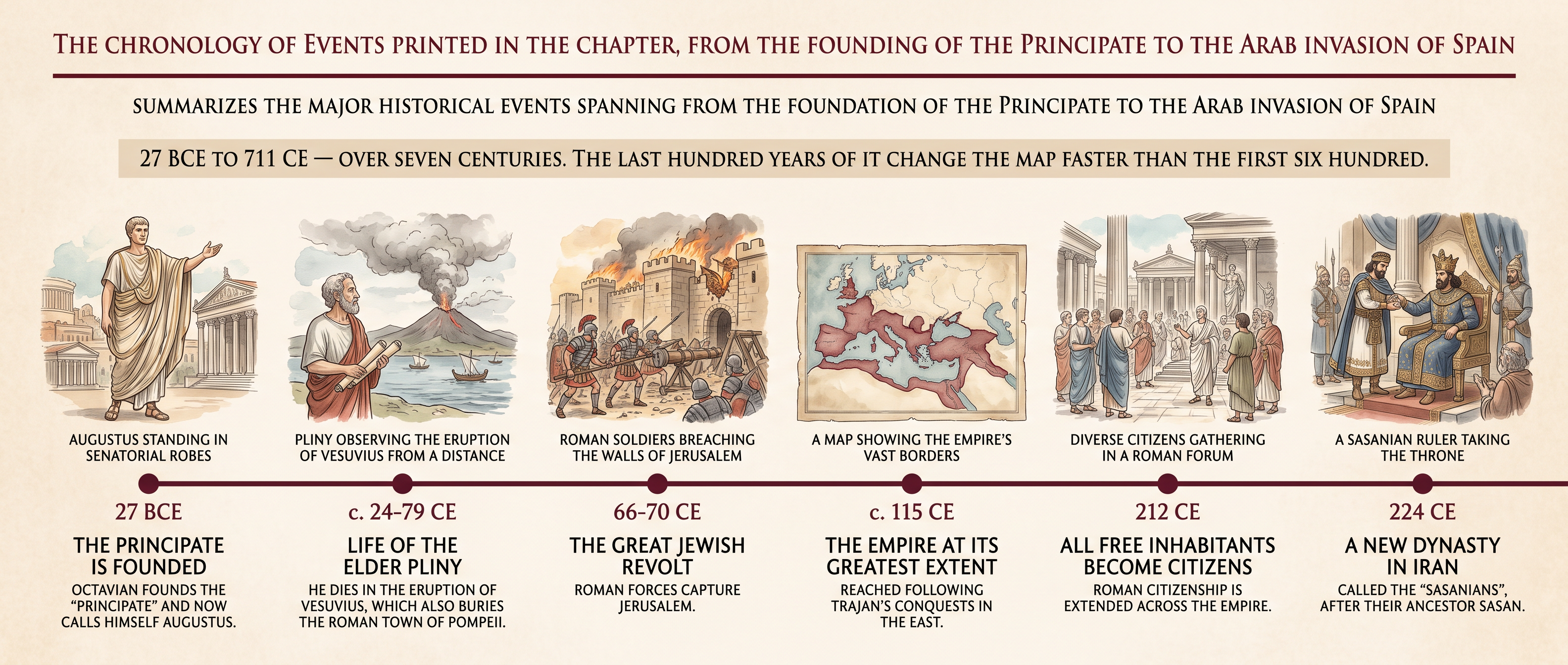
Fig. 2.16 – The Events.
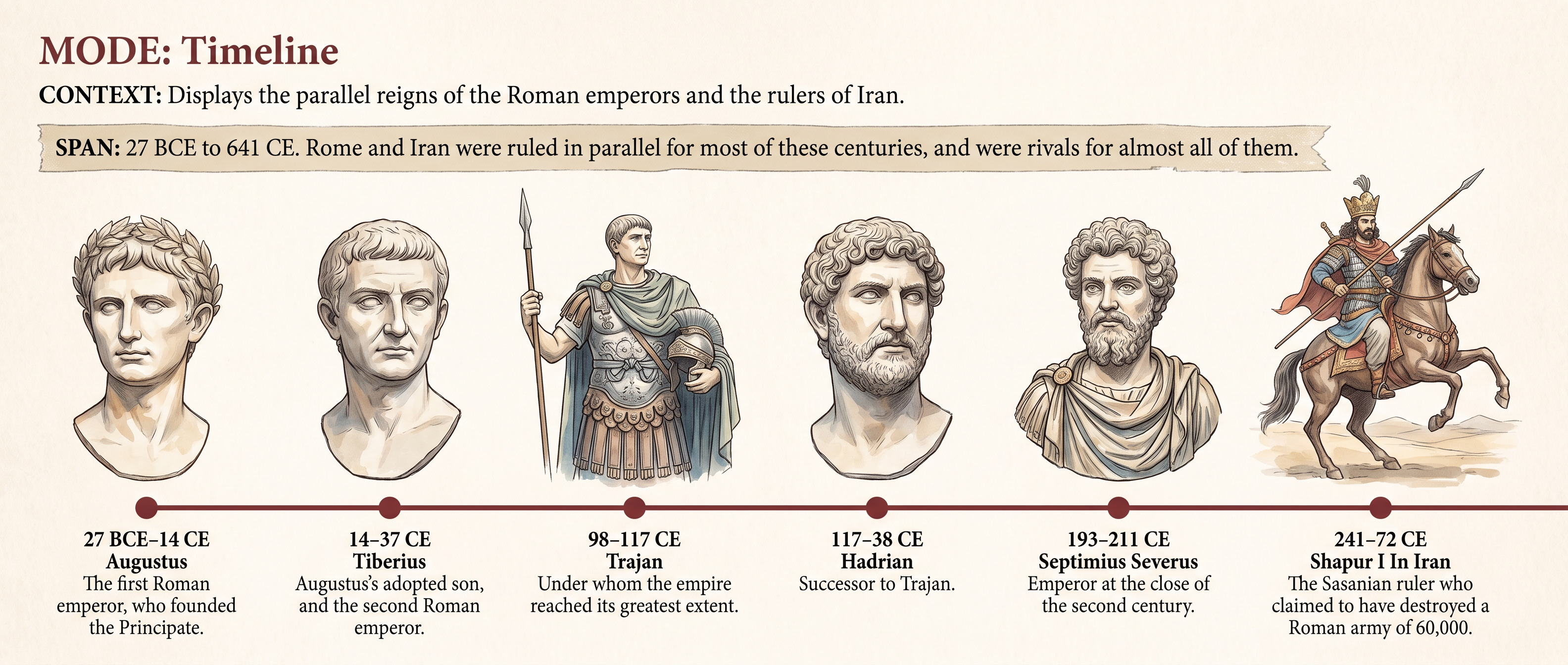
Fig. 2.17 – The Rulers.
What The Evidence Cannot Tell Us
Almost everything we have read was written by, or for, people at the top. The Roman histories come from men of senatorial background; the chronicles of aristocratic income come from an admiring ambassador; the mosaics were commissioned by landowners. The slave who killed Lucius Pedanius Secundus never speaks in Tacitus’s account of him, and we do not know why he did it.
The silences are not random, either. Egypt’s papyri and Pompeii’s ash preserve two corners of the empire in extraordinary detail, so those two places dominate what we can say about literacy, wages and daily life. Provinces where nothing was written on papyrus, or where nothing survived, are simply dark.
And a whole world of speech is missing. Celtic, Berber, Punic and other tongues were spoken by millions and written by almost none. Their speakers left no line of their own for us to read. What survives is not what mattered most; it is what happened to last.
2.9 NCERT Questions
Answer In Brief
If you had lived in the Roman Empire, where would you rather have lived — in the towns or in the countryside? Explain why.
Compile a list of some of the towns, cities, rivers, seas and provinces mentioned in this chapter, and then try and find them on the maps. Can you say something about any three of the items in the list you have compiled?
Imagine that you are a Roman housewife preparing a shopping list for household requirements. What would be on the list?
Why do you think the Roman government stopped coining in silver? And which metal did it begin to use for the production of coinage?
Answer In A Short Essay
Suppose the emperor Trajan had actually managed to conquer India and the Romans had held on to the country for several centuries. In what ways do you think India might be different today?
Go through the chapter carefully and pick out some basic features of Roman society and economy which you think make it look quite modern.
2.10 Check Your Concepts
Slaves were not paid, and hired workers were. Explain why, even so, slave labour could cost a Roman landowner more than wage labour.
Look again at Fig. 2.11, the mosaic at Cherchel. What kind of agricultural work it show? Now list two things about Roman labour, described in this chapter, that the mosaic does not show — and suggest why the landowner who commissioned it left them out.
Read Source 2, Galen’s account of famine. What does it establish reliably about how grain moved between city and countryside? Name two things it does not tell us.
Using Source 4, explain what the killing of Lucius Pedanius Secundus reveals about Roman law, the Senate and the ordinary people of the city. Whose voice is entirely absent from Tacitus’s account, and why does that matter?
The empire had no government in the modern sense, yet it taxed some 60 million people. Set out, as a chain of steps, how this led first to the rise of the provincial upper classes and finally to Gallienus barring senators from military command.
The chapter says that a Roman wife enjoyed complete legal independence, and also that Roman women were often subject to domination by their husbands. Explain, with evidence from the chapter, how both statements can be true at once.
We know a great deal about casual literacy in Pompeii and about wages in Egypt, and very little about either in most other provinces. Explain why, and describe how this uneven survival of evidence might bend our picture of the empire as a whole.
Compare the social groups Tacitus described in the early empire with the social hierarchy of the late empire. Which two groups had merged, what sustained the new middle class, and who made up the humiliores?
2.6 Social Hierarchies
Let us stand back from the details now, and try to get a sense of the social structures of the empire — who stood where, and what changed between the early empire and the late.
Tacitus Describes The Early Empire
The historian Tacitus described the leading social groups of the early empire in a clear order.
At the top were the senators (patres, literally ‘fathers’). Next came the leading members of the equestrian class. Then came the respectable section of the people — those attached to the great houses, that is, dependent on rich patrons. Below them was the unkempt lower class (plebs sordida) who, Tacitus tells us, were addicted to the circus and to theatrical displays. And finally there were the slaves.
Notice that this is one Roman’s ordering, not a neutral census. The contempt in ‘unkempt’ and ‘addicted’ is Tacitus’s own. He is a man of senatorial background describing the people below him, and the sneer is part of the evidence.
The equites — ‘knights’ or ‘horsemen’ — were traditionally the second most powerful and wealthy group. Originally they were families whose property qualified them to serve in the cavalry, which is where the name comes from. Like senators, most ‘knights’ were landowners. But unlike senators, many of them were shipowners, traders and bankers — that is, they were involved in business activities.
In the early third century, when the Senate numbered roughly 1,000 members, approximately half of all senators still came from Italian families.
The Late Empire: A New Aristocracy
By the late empire — which starts with the reign of Constantine I in the early part of the fourth century — the picture had changed in a striking way.
The first two groups mentioned by Tacitus, the senators and the equites, had merged into a unified and expanded aristocracy. And at least half of all these families were of African or eastern origin. The empire’s ruling class was no longer an Italian ruling class.
This ‘late Roman’ aristocracy was enormously wealthy. Yet it was in many ways less powerful than the purely military elites, who came almost entirely from non-aristocratic backgrounds. Wealth and power had come apart.
Q. How could the richest families in the empire be less powerful than the generals?
A. Because power now followed command of the army, not birth or land. The military elites had the troops; the aristocrats only had the money.
The ‘middle’ class of the late empire was made up of two rather different sorts of people. First, the considerable mass of persons connected with imperial service — in the bureaucracy and in the army. Second, the more prosperous merchants and farmers, of whom there were many in the eastern provinces.
Compare that with the past. Tacitus had described the ‘respectable’ middle class of his day as clients of the great senatorial houses — that is, dependants of the aristocracy. Now it was chiefly government service, and dependence on the State, that sustained many of these families. The great house had been replaced by the state office.
The Humiliores
Below them all were the vast mass of the lower classes, known collectively as the humiliores — literally, ‘lower’.
This was not one group but many, and it is worth listing them as the chapter does, because the list is the shape of the Roman working world.
It comprised a rural labour force, of which many were permanently employed on the large estates. It comprised workers in industrial and mining establishments. It comprised migrant workers, who supplied much of the labour for the grain and olive harvests and for the building industry. It comprised self-employed artisans, who, it was said, were better fed than wage labourers. It comprised a large mass of casual labourers, especially in the big cities. And of course it comprised the many thousands of slaves that were still found all over the western empire in particular.
Notice how much movement is buried in that list. The harvests and the building sites of the empire ran on people who travelled to find work, and went home again.
The Scale Of Aristocratic Wealth
How rich was the aristocracy at the top of this hierarchy? One writer of the early fifth century, the historian Olympiodorus — who was also an ambassador — gives us figures.
He tells us that the aristocracy based in the City of Rome drew annual incomes of up to 4,000 lbs of gold from their estates, and that this was not counting the produce they consumed directly.
Source 5 — Incomes Of The Roman Aristocracy, Early Fifth Century From: Olympiodorus of Thebes. “Each of the great houses of Rome contained within itself everything which a medium-sized city could hold, a hippodrome, fora, temples, fountains and different kinds of baths… Many of the Roman households received an income of four thousand pounds of gold per year from their properties, not including grain, wine and other produce which, if sold, would have amounted to one-third of the income in gold. The income of the households at Rome of the second class was one thousand or fifteen hundred pounds of gold.”
Follow the arithmetic in the extract, because it is doing more work than it seems. A first-class household drew 4,000 lbs of gold a year in cash. Its produce, if sold, would have been worth another third of that — so about 1,300 lbs more, never counted, simply eaten. A second-class household drew 1,000 to 1,500 lbs of gold. Even the second rank of Rome’s aristocracy was drawing, in coin alone, what a mine or a province would take to produce.
Source 5 Olympiodorus is a historian and an ambassador, moving among the great houses and impressed by them. He gives us the top of the pyramid in figures. He gives us nothing at all about the humiliores who worked those estates — and it was their labour that produced the gold he is counting.
Why The Coinage Changed
The monetary system of the late empire broke with the silver-based currencies of the first three centuries. The reason was physical, not political: the Spanish silver mines were exhausted, and the government ran out of sufficient stocks of the metal to support a stable coinage in silver.
Constantine therefore founded the new monetary system on gold. There were vast amounts of this in circulation throughout late antiquity.
This had a social consequence that is easy to miss. The late Roman bureaucracy, both its higher and its middle echelons, was a comparatively affluent group — because it drew the bulk of its salary in gold, and invested much of that gold in buying up assets like land. Officials who are paid in gold end up owning the countryside.
From Silver To Gold The Spanish silver mines are exhausted → the state cannot keep a stable silver coinage → Constantine bases the new system on gold → gold circulates in vast quantities → officials draw their salaries in gold → they buy land with it → the bureaucracy becomes a wealthy, land-owning class.
Corruption, Criticism And The Law
There was, of course, also a great deal of corruption — especially in the judicial system, and in the administration of military supplies. The extortion practised by the higher bureaucracy and the greed of the provincial governors were proverbial.
But the government intervened repeatedly to curb these forms of corruption. And here is the point a historian must not miss: we only know about the corruption in the first place because of the laws that tried to put an end to it, and because historians and other members of the intelligentsia denounced such practices. This element of ‘criticism’ is a remarkable feature of the classical world.
That Roman Officials Were Corrupt Evidence: The laws the state passed to stop extortion, and the writings of historians and intellectuals who denounced it. Reasoning: A state legislates against what is actually happening; and educated Romans were willing to say so in public. Limit: Laws tell us what was condemned, not how common it was — and never whether any of the laws worked.
Two things about the Roman state must be held together, uncomfortably.
The Roman state was an authoritarian regime. Dissent was rarely tolerated, and the government usually responded to protest with violence — especially in the cities of the East, where people were often fearless in making fun of emperors.
Yet a strong tradition of Roman law had emerged by the fourth century, and this acted as a brake on even the most fearsome emperors. Emperors were not free to do whatever they liked, and the law was actively used to protect civil rights.
That is why, in the later fourth century, it was possible for powerful bishops like Ambrose to confront equally powerful emperors, when those emperors were excessively harsh or repressive in their handling of the civilian population.
A Law Above The Ruler Then: Roman emperors could kill, tax and repress — yet a body of law existed that they were not supposed to override, and men like Ambrose invoked it against them. Now: The idea that even the highest office-holder is answerable to law is written into modern constitutions, including India’s.