Chapter 4: The Three Orders
Push open the door of a small stone church in a French village. It is a weekday, so the building is empty. You are not here to pray. You are here because this church is one of the best archives of the European Middle Ages that anyone has ever kept.
On a shelf lies a bound register. Inside it, in cramped handwriting, are the births, the marriages and the deaths of the people of this village, entered year after year by priests who never imagined a historian reading them. From those entries you can work out how large families were, at what age people married, and in which terrible years far too many people died at once.
On the wall there is an inscription put up by an association of traders. In the memory of the village there are songs about brave knights, and stories told at feasts and festivals.
None of this was written to explain the past to you. That is exactly why it is so useful. A king’s chronicle tells you what a king wanted remembered. A parish register simply counts, without arguing.
Out of registers, land records, prices and law-court cases like these, historians have reconstructed the world of medieval Europe: a world its own priests described as three ‘orders’ — those who pray, those who fight, and those who work.
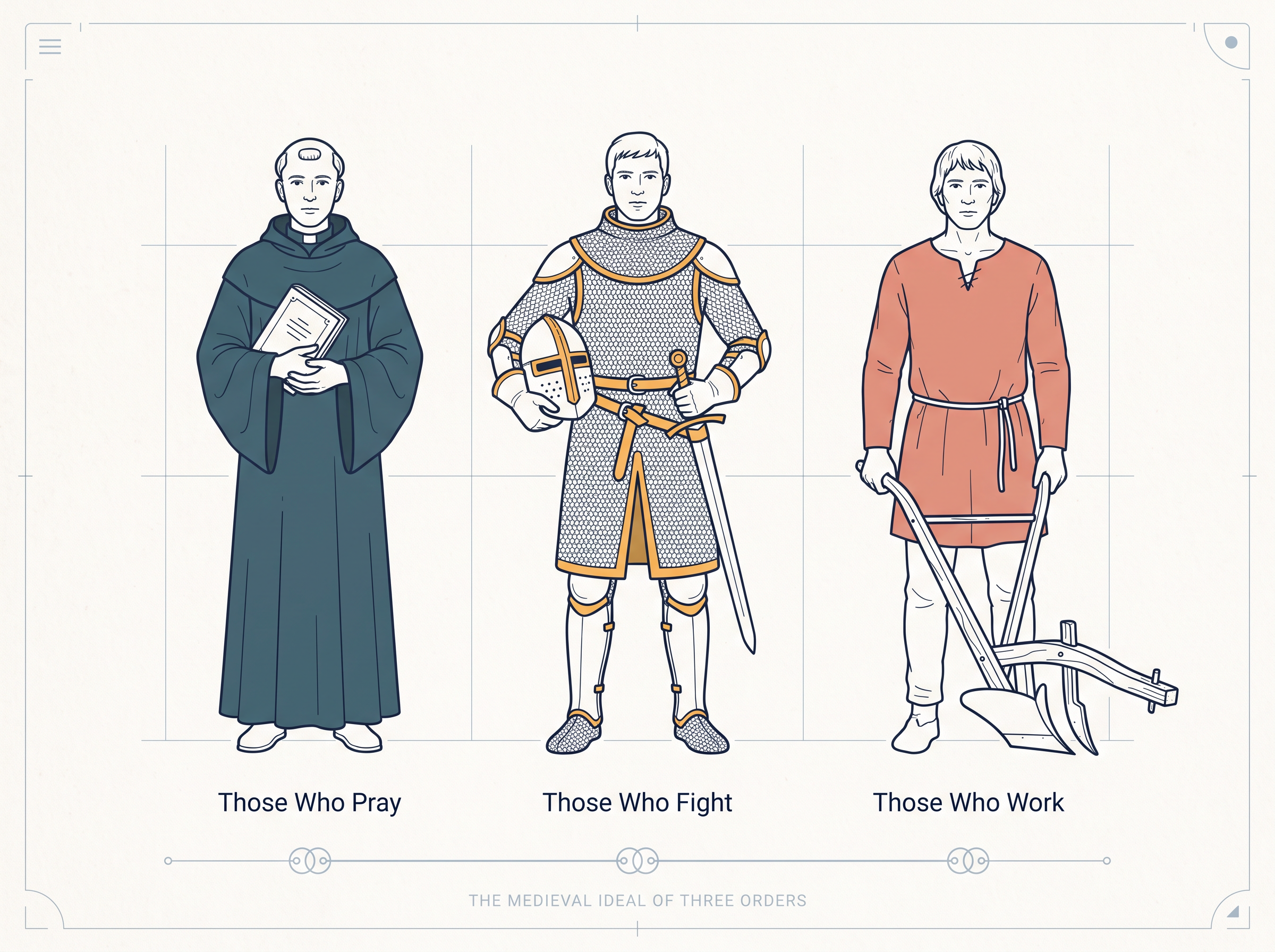
Fig. 4.0 – The three orders: those who pray, fight and work.
4.1 An Introduction To Feudalism
This chapter is about the social, economic and political changes that took place in western Europe between the ninth and the sixteenth centuries. It is a long stretch of time — about seven hundred years — and the society at the end of it looked very different from the society at the start.
The story begins with a collapse. After the fall of the Roman Empire, many groups of Germanic people from eastern and central Europe moved into and occupied regions of Italy, Spain and France. The old imperial state, which had once collected taxes and kept order across a vast territory, was gone.
Nothing replaced it. There was no single political force holding western Europe together, and military conflict was frequent. In such conditions, the most urgent question for anyone with power was how to gather enough resources to protect his own land.
That question shaped everything else. Social organisation came to be centred on the control of land. Its features were drawn from two sources at once: the traditions of imperial Rome, and the customs of the Germanic peoples who had settled in the old Roman provinces.
One Roman institution did survive the collapse. Christianity had become the official religion of the Roman Empire from the fourth century, and it outlived the empire that adopted it, spreading gradually into central and northern Europe. The Church did not merely survive; it became a major landholder and a political power in its own right.
The Three Categories This Chapter Follows
The ‘three orders’ of the title are three social categories: Christian priests, landowning nobles and peasants. Medieval writers thought of them as fixed groups, each with its own task.
The relationships between these three groups did not stay the same. They changed, and the changing relationship between them was an important factor in shaping European history for several centuries. Watching that relationship shift — and asking who gained and who lost as it shifted — is the work of this chapter.
How Historians Know About Village Life
Over the last hundred years, European historians have done detailed work on the histories of regions, and even of individual villages. That is an extraordinary claim. How can anyone reconstruct one village from eight hundred years ago?
They can do it because, from the medieval period onwards, a great deal of written material survives: documents, details of landownership, prices and legal cases. Churches, for example, kept records of births, marriages and deaths. From those records historians can work out the structure of families and of the population as a whole.
Other traces survive too. Inscriptions in churches give information about traders’ associations. Songs and stories give a sense of festivals and community activities.
All of this can be used to understand economic and social life, and to track change — change over a long period, such as an increase in population, or change over a short period, such as a peasant revolt.
Of the many scholars in France who worked on feudalism, one of the earliest was Marc Bloch.
What ‘Feudalism’ Means
The term feudalism is used by historians to describe the economic, legal, political and social relationships that existed in Europe in the medieval era. It is derived from the German word ‘feud’, which means ‘a piece of land’ — and land is exactly what the whole system turned on.
The medieval era is the name historians give to the period in European history between the fifth and the fifteenth centuries. It is a label applied long afterwards, not one that people living then used about themselves.
Feudalism, in this sense, refers to the kind of society that developed in medieval France, and later in England and in southern Italy. Not all of Europe worked this way, and the word is a historian’s tool for describing a pattern, not a law that every region obeyed.
In an economic sense, feudalism refers to a kind of agricultural production based on the relationship between lords and peasants. Peasants cultivated their own land, and also cultivated the land of the lord.
The exchange ran in both directions, but not equally. The peasants performed labour services for the lords; in return, the lords provided military protection. The lords also had extensive judicial control over the peasants — that is, they judged and punished them in their own courts.
That last point matters. A relationship in which one side works and the other side both protects and judges is not simply an economic bargain. Feudalism went beyond the economic to cover the social and political aspects of life as well.
When Did It Begin?
Its roots have been traced to practices that already existed in the Roman Empire, and to the age of the French king Charlemagne (742-814). But roots are not the same thing as a system.
As an established way of life across large parts of Europe, feudalism may be said to have emerged later, in the eleventh century. The sequence is set out in Fig. 4.1.
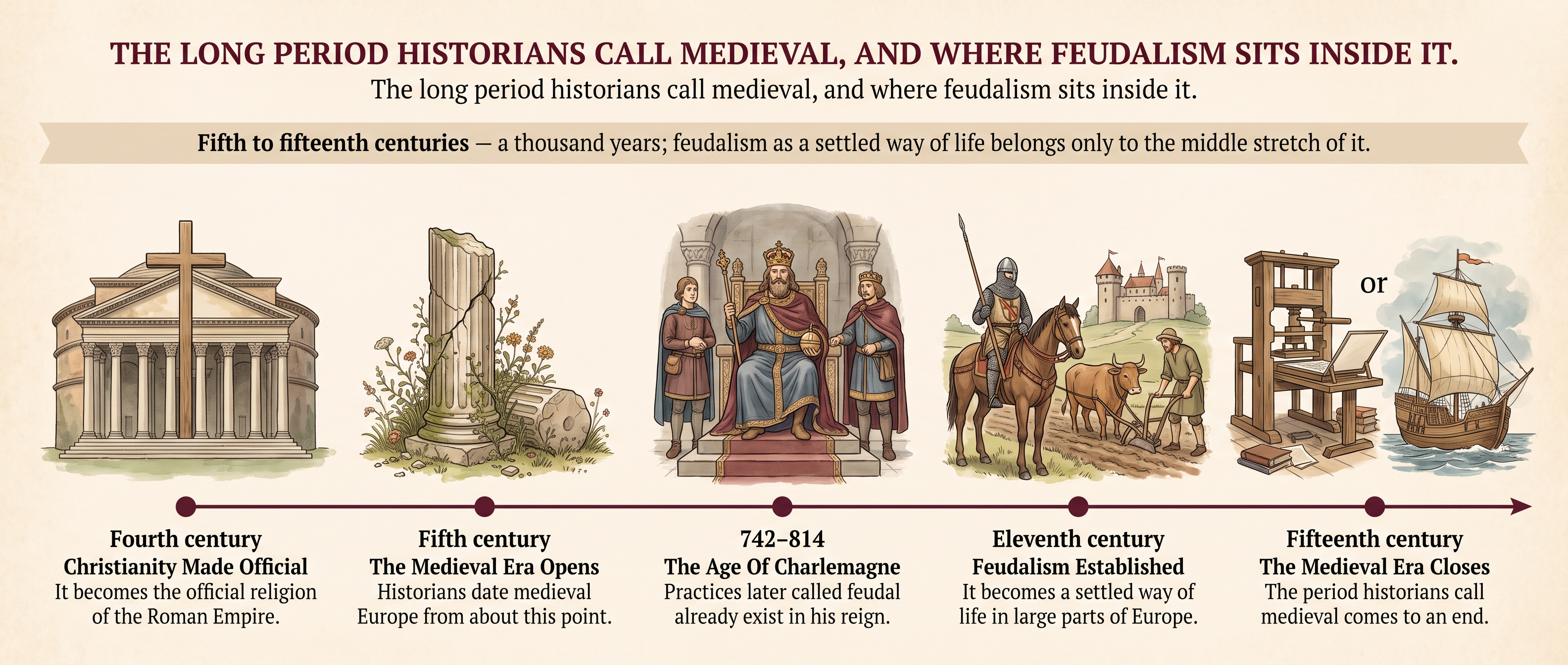
Fig. 4.1 – The frame of the medieval era.
The regions this chapter deals with are shown in Fig. 4.2. Keep it beside you: almost every place named in the coming sections appears on it.
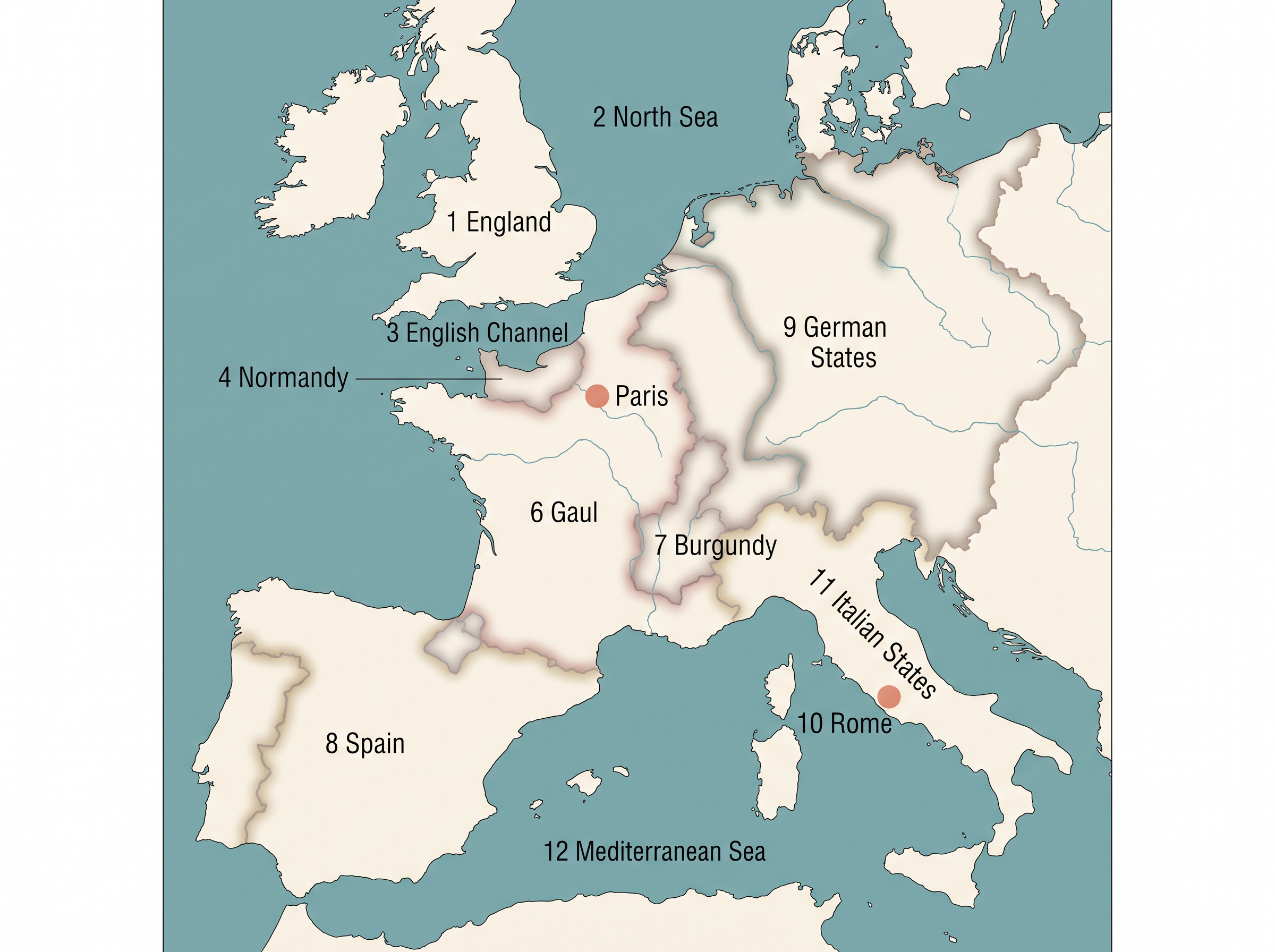
Fig. 4.2 – Western Europe.
4.2 France And England
Before there was a France, there was Gaul. Gaul was a province of the Roman Empire, covering much of the land we now call France, and it was unusually well supplied by nature.
It had two extensive coastlines, mountain ranges, long rivers, forests, and large tracts of plains suited to agriculture. That last feature is the one to hold on to. A region with wide, workable plains can feed a large population — and a large farming population is what a land-based social order needs.
The Franks And The Church
The Franks were a Germanic tribe, one of the groups that moved into the old Roman provinces. They gave their name to Gaul, and the name stuck: Gaul became ‘France’.
From the sixth century, this region was a kingdom ruled by Frankish, or French, kings. These kings were Christian, and the French had very strong links with the Church.
Those links were strengthened further in 800, when the Pope gave King Charlemagne the title of ‘Holy Roman Emperor’. The title made Charlemagne the Christian emperor of the west, crowned by the head of the western Church itself.
This pairing of a religious head with a ruler was not unique to the west. The head of the Eastern Church, in Constantinople — the great city on the straits between Europe and Asia, in what is now Turkey — had a similar relationship with the Byzantine emperor, the ruler of the eastern half of the old Roman Empire, which had not collapsed.
The kingdom that Charlemagne inherited had been built up over three centuries of conquest and conversion. That story is set out in Fig. 4.3.
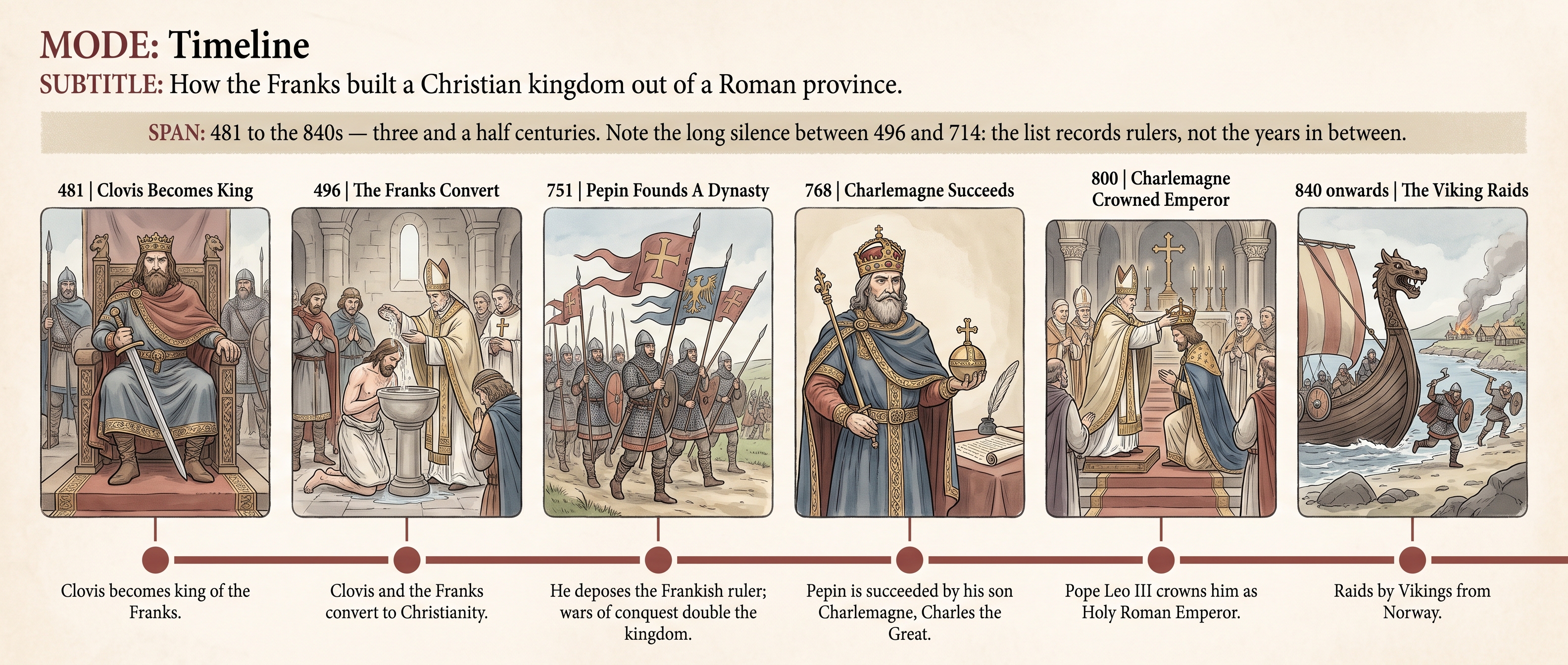
Fig. 4.3 – Early history of France.
Across The Channel
Across a narrow channel of sea lay the island of England–Scotland. In the eleventh century, it was conquered by a duke from the French province of Normandy, on the northern coast of France.
That single sentence matters more than it looks. It means that from the eleventh century onwards the ruling class of England was French-speaking and French in origin, and that the histories of the two countries were locked together — as later sections will show, often in war.
4.3 The Three Orders
French priests held a particular idea about how society was arranged. They believed that every person belonged to one of three ‘orders’, and that what decided a person’s order was the kind of work he did.
A bishop of the time put it in a single sentence: ‘Here below, some pray, others fight, still others work…’ Praying, fighting and working — three tasks, three groups.
Broadly, then, the three orders of society were the clergy, the nobility and the peasantry. The clergy were the priests and bishops of the Church. The nobility were the landowning warriors. The peasantry were the people who farmed.
Notice who drew up this scheme, and where they placed themselves. It was written down by priests, and the priests are the first order. A description of society is never innocent when the people describing it are inside it.
An Argument For Inequality
The three-order picture did not simply describe a difference. It defended it, and defended it in religious language.
One of the clearest statements of that defence was written in the twelfth century by Hildegard of Bingen. She was an abbess — the head of a religious community — and, as we shall see later in this chapter, a gifted musician. Here she is arguing that human beings must be kept in ranks.
The argument runs in two steps. First, an image from farming: nobody keeps every kind of animal in one stable, so distinction is natural. Second, the religious claim: God himself makes distinctions, and love does not require equality.
It is an argument made from inside the first order, by someone whose own position the scheme protects. That does not make it dishonest — Hildegard almost certainly believed it — but it does mean the source tells us what the Church taught about inequality, not what the peasants thought of being taught it.
4.4 The Second Order: The Nobility
Priests placed themselves in the first order, and the nobles in the second. On paper, then, the nobility ranked below the clergy.
In reality, the nobility had a central role in social processes. The reason is simple and it runs through this whole chapter: they controlled land. In a society where wealth, food, soldiers and justice all came out of the soil, whoever controlled the soil controlled almost everything else.
That control was the outcome of a practice called vassalage — an arrangement in which one man accepted another as his master and received land in return for loyalty and service.
Vassalage: A Promise Both Ways
The kings of France were linked to the people by vassalage. The practice was similar to one already found among the Germanic peoples, of whom the Franks were one, so it was not an invention of the French kings but an inheritance.
The links ran down in a chain. The big landowners — the nobles — were vassals of the king. The peasants, in turn, were vassals of the landowners.
A nobleman accepted the king as his seigneur, which means ‘senior’, and the two made a mutual promise. The seigneur, or lord, would protect the vassal; the vassal would be loyal to him.
This was not a casual understanding between two men. The relationship involved elaborate rituals, and an exchange of vows taken on the Bible in a church — which meant that breaking the promise was not merely dishonourable but a sin.
At the ceremony, the vassal received something he could hold: a written charter, or a staff, or even a clod of earth. The clod of earth is the most revealing of the three. A handful of soil stood for the whole estate that his master was granting him.
What A Noble Could Do
The noble enjoyed a privileged status, and the list of what he could lawfully do explains why the second order was, in practice, the strongest.
He had absolute control over his property, in perpetuity — that is, for ever, with the land passing to his heirs. He could raise troops, called ‘feudal levies’. He held his own courts of justice. He could even coin his own money.
Read that list again and ask what is left for a king to do. Taxing, judging, minting and arming are the powers we now expect a state to hold. Under feudalism, a noble held all four on his own land.
He was the lord of all the people settled on his land. He owned vast tracts of it, and those tracts contained his own dwellings, his private fields and pastures, and the homes and fields of his tenant-peasants. His house was called a manor.
The lord’s private lands were cultivated by peasants. Those same peasants were also expected to act as foot-soldiers in battle when required — and all of this was in addition to working on their own farms.
That is the arrangement in one sentence. The peasant fed himself, fed his lord, and fought for him. The painting in Fig. 4.4 shows the other end of the same arrangement.
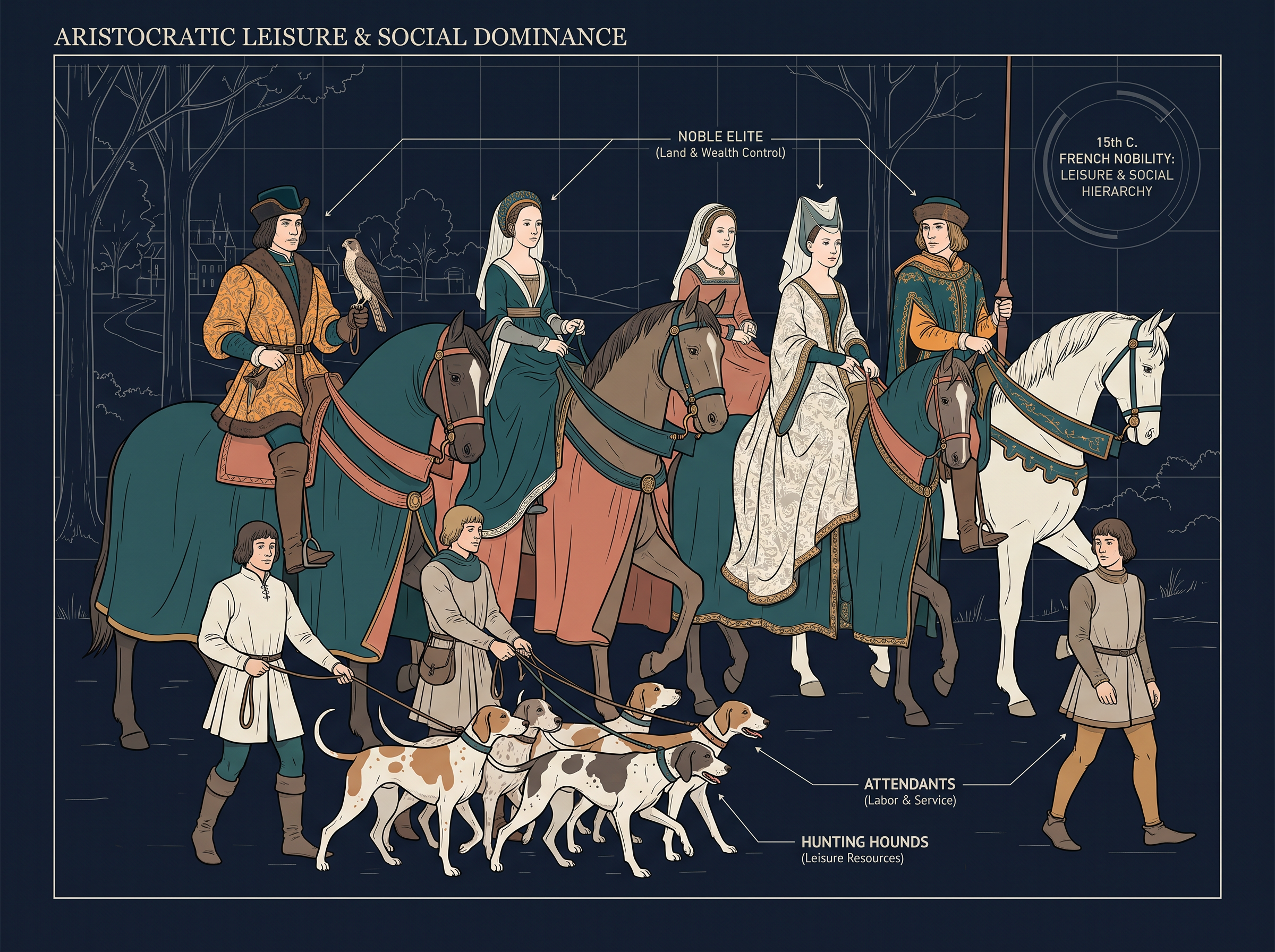
Fig. 4.4 – French nobles starting for a hunt.
4.5 The Manorial Estate
A lord had his own manor-house to live in. But his world did not stop at the walls of that house.
He also controlled villages where peasants lived — and the scale varied enormously. Some lords controlled hundreds of villages. A small manorial estate could contain a dozen families, while larger estates might include fifty or sixty.
Hold those numbers next to each other. A dozen families is a hamlet you could walk across in a few minutes. Hundreds of villages is a small kingdom. Both belonged to men called ‘lords’, which is a reminder that the second order was not one uniform group.
Almost Everything In One Place
Almost everything needed for daily life was found on the estate. That is the single most important fact about a manor, and it explains why so much of medieval life happened without money changing hands.
Grain was grown in the fields. Blacksmiths and carpenters maintained the lord’s implements and repaired his weapons. Stonemasons looked after his buildings.
Women spun and wove fabric. Children worked in the lord’s wine-presses. Every kind of labour the estate needed, the estate itself supplied — from its own people, without wages.
The estate also had extensive woodlands and forests, where the lords hunted, and pastures where the lord’s cattle and horses grazed. There was a church on the estate, and a castle for defence. The whole arrangement is laid out in the plan in Fig. 4.5.
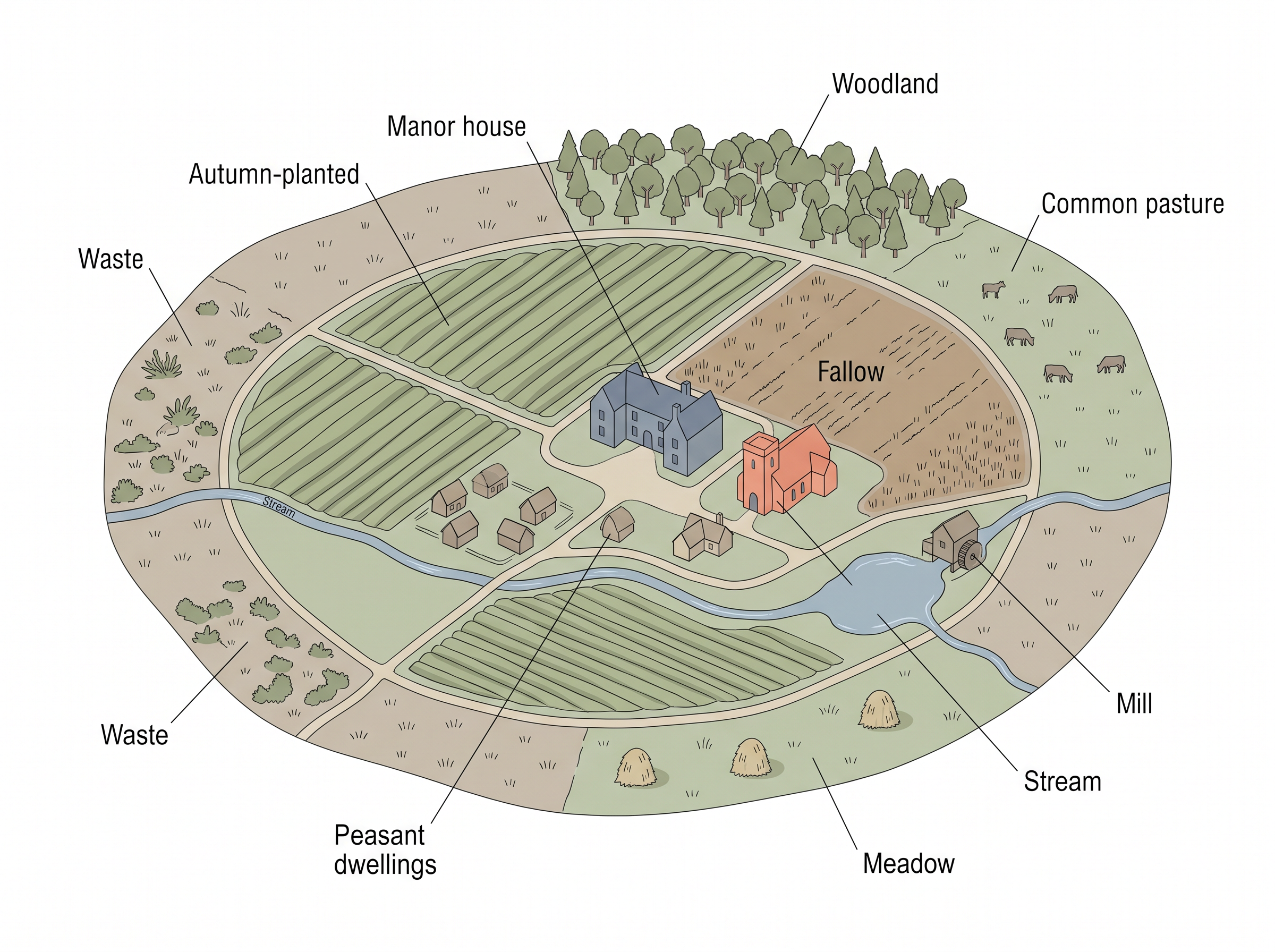
Fig. 4.5 – A manorial estate.
The Castle
From the thirteenth century, some castles were made bigger, so that they could be used as a residence for a knight’s family. A castle was thus not only a fort; it became a home, and a headquarters.
In England, castles were practically unknown before the Norman Conquest — the eleventh-century conquest by the duke of Normandy that you met in section 4.2. Under the feudal system, they developed there as centres of political administration and military power.
The point is worth pausing on. The castle arrived in England along with feudalism, and it arrived because a conquering ruling class needed to hold down a country that was not theirs.
What The Manor Could Not Make
For all its workshops and fields, the manor could not be completely self-sufficient. Certain things simply could not be produced on the spot.
Salt, millstones and metalware had to be obtained from outside sources. Salt preserved food, a millstone ground the grain, and metal made tools — so these were not luxuries. They were necessities that had to travel.
Then there were the things the lord wanted rather than needed. Those lords who wanted a luxurious lifestyle, and were keen to buy rich furnishings, musical instruments and ornaments not produced locally, had to get these from other places.
So there were always two threads running out of the manor to the wider world: one thin and unavoidable, made of salt and iron, and one made of the lord’s appetite for fine things. Both would matter later, when towns and traders began to grow.
An Activity To Try
Discuss social hierarchies based on different criteria: occupation, language, wealth and education. Which of these decides a person’s place in the society you are reading about here, and which of them seems to matter more today?
Then compare medieval France with Mesopotamia and with the Roman Empire, both of which you have already studied in this book. In each case, ask the same question: what put a person at the top, and could anyone move?
4.6 The Knights
From the ninth century, there were frequent localised wars in Europe. These were not great wars between empires; they were small, constant conflicts between neighbouring lords, fought over land.
Such wars changed what a fighting man had to be. The amateur peasant-soldiers were not sufficient, and good cavalry was needed. A peasant called from his fields for a few weeks a year cannot ride, wheel and charge in armour; that takes a lifetime of training and a horse that costs more than he will ever own.
This led to the growing importance of a new section of people — the knights. They were trained, mounted, professional fighters, and they now became necessary to any lord who wanted to hold his land.
The Fief
The knights were linked to the lords, just as the lords were linked to the king. The same bargain simply repeated itself one level down.
The lord gave the knight a piece of land, called a fief, and promised to protect it. The fief could be inherited, which meant the arrangement outlived both men who made it.
A fief was substantial. It extended to anything between 1,000 and 2,000 acres or more. It included a house for the knight and his family, a church, and other establishments to house his dependants, besides a watermill and a wine-press.
As in the feudal manor, the land of the fief was cultivated by peasants. This is the pattern to notice: whoever stood at the top of the chain, and however many links it had, the same people did the digging.
In exchange for the fief, the knight paid his lord a regular fee and promised to fight for him in war. To keep up their skills, knights spent time each day fencing and practising tactics with dummies. War was their profession, and they trained at it daily.
A knight might serve more than one lord. But his foremost loyalty was to his own lord — the one who had given him his fief.
Songs About Knights
In France, from the twelfth century, minstrels travelled from manor to manor, singing songs which told stories about brave kings and knights. The stories were partly historical and partly invented, and no one at the time was much troubled by where the line between the two fell.
These travelling bards were very popular, and for a good reason. This was an age when not too many people could read, and manuscripts were few. A song that could be carried in the memory reached far more people than a book that had to be copied by hand.
Many manors had a narrow balcony above the large hall where the people of the manor gathered for meals. This was the minstrels’ gallery, from where singers entertained the nobles while they feasted.
Here is a fragment of what those singers sang.
Every line pushes the same idea: loyalty to the lord is stronger than the fear of death. That is exactly the value a lord would most want his fighting men to hold, and this song was performed in his own hall, at his own feast, for his own knights.
4.7 The First Order: The Clergy
The Catholic Church was not simply a religious body. It had its own laws, it owned lands given to it by rulers, and it could levy taxes.
Put those three powers together and you have something close to a state. It was thus a very powerful institution which did not depend on the king — and an institution that does not depend on the king can, when it chooses, stand against him.
At the head of the western Church was the Pope, and he lived in Rome. Below him, the Christians of Europe were guided by bishops and clerics. These men constituted the first ‘order’.
The Church reached the ordinary person through the village. Most villages had their own church, where people assembled every Sunday to listen to the sermon by the priest and to pray together. Once a week, in every village, the first order spoke and the third order listened.
Who Could Not Be A Priest
Everyone could not become a priest. The bars were explicit, and it is worth listing them exactly.
Serfs — unfree peasants, bound to their lord’s land, whom you will meet in detail in section 4.10 — were banned. So were the physically challenged. Women could not become priests at all. Men who did become priests could not marry.
So the first order was closed to most of the population by birth, by body or by sex. A person born a serf could not pray for a living, however devout he was; the order that claimed to speak for all souls was open only to some bodies.
How The Church Was Paid
Bishops were the religious nobility, and the phrase is exact. Like the lords who owned vast landed estates, the bishops also had the use of vast estates, and they lived in grand palaces.
Where did the money come from? Partly from a tax. The Church was entitled to a tenth share of whatever the peasants produced from their land over the course of the year. This share was called a tithe.
A tithe is easier to feel with a number in front of you. If a peasant family harvested 100 measures of grain in a year, the Church’s share was
\[\text{tithe} = \frac{1}{10} \times 100 = 10 \text{ measures}\]
— ten measures gone before the lord’s demands were even counted. The tithe was taken from the crop, not from any surplus, so it fell just as heavily in a bad year as in a good one.
Money also came in a second way: from endowments, which were gifts made by the rich. The rich made them for their own welfare and for the welfare of their deceased relatives in the afterlife. A gift of land to the Church, in other words, was understood as a purchase of prayer.
Church And Feudal Custom
Some of the important ceremonies conducted by the Church copied formal customs of the feudal elite. Once you know this, you begin to see the manor inside the church.
The act of kneeling while praying, with hands clasped and head bowed, was an exact replica of the way in which a knight conducted himself while taking vows of loyalty to his lord. Similarly, the use of the term ‘lord’ for God was another example of feudal culture finding its way into the practices of the Church.
Thus the religious and the lay worlds of feudalism shared many customs and symbols. They were not two separate worlds that happened to sit side by side; they were one world, using the same gestures for God and for a landholder.
4.8 Monks
Apart from the Church, devout Christians had another kind of organisation altogether.
Some deeply religious people chose to live isolated lives. In this they were in contrast to the clerics, who lived amongst people in towns and villages. A priest’s work was with a congregation; these people wanted to withdraw from one.
They lived in religious communities called abbeys or monasteries, often in places very far from human habitation. Distance from other people was not an inconvenience of monastic life. It was the point of it.
Two of the more well-known monasteries were the one established by St Benedict in Italy in 529, and that of Cluny, in Burgundy in eastern France, in 910. Nearly four centuries separate the two, which tells you how slowly, and how steadily, this way of life spread.
Life Inside An Abbey
Monks took vows to remain in the abbey for the rest of their lives. It was a decision taken once, in youth, and not revisited.
Their days were spent in three things: prayer, study, and manual labour such as farming. An abbey fed itself, and the man who prayed at dawn dug in the afternoon.
In one respect monasticism was more open than the priesthood. Unlike priesthood, this life was open to both men and women — men became monks and women became nuns. Except in a few cases, all abbeys were single-sex communities, that is, there were separate abbeys for men and for women. Like priests, monks and nuns did not marry.
Here is a question to work through with your class. Discuss examples of expected patterns of behaviour between people of different social levels — in a medieval manor, in a palace, and in a place of worship. Who is expected to speak first, who must stay silent, who kneels, who sits? Then ask what each of those rules of behaviour is actually protecting.
The Rules
Monastic life was not vaguely spiritual. It was governed by written regulation, in remarkable detail.
In Benedictine monasteries there was a manuscript of 73 chapters of rules, which were followed by monks for many centuries. A few of them are given below.
Read the five rules together and a whole way of life appears: silence, obedience, poverty, work, and self-sufficiency. Chapter 48 is the manorial estate’s principle applied to a religious house — everything needed, found within the bounds.
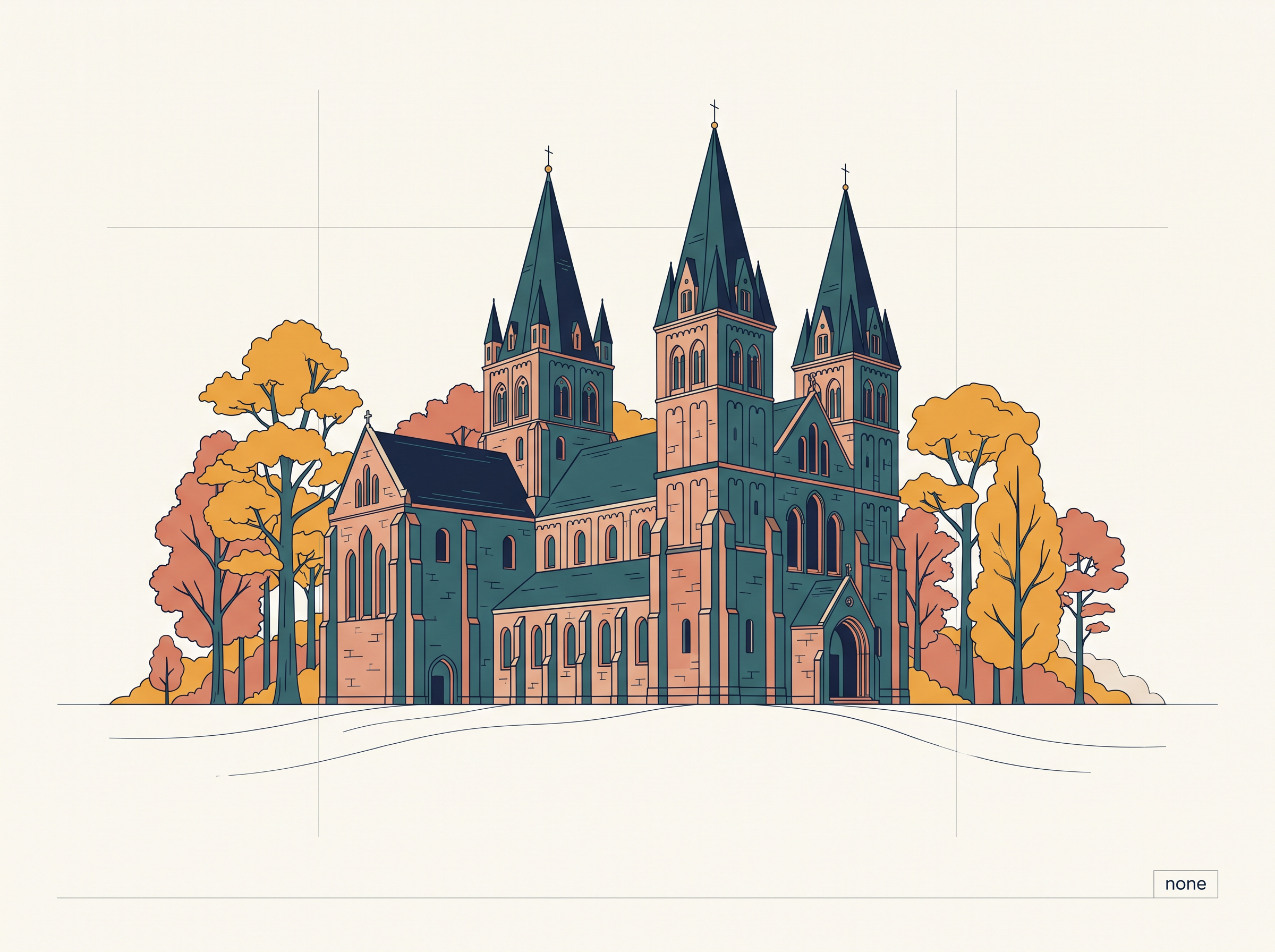
Fig. 4.6 – St Michael’s Benedictine abbey in Farnborough.
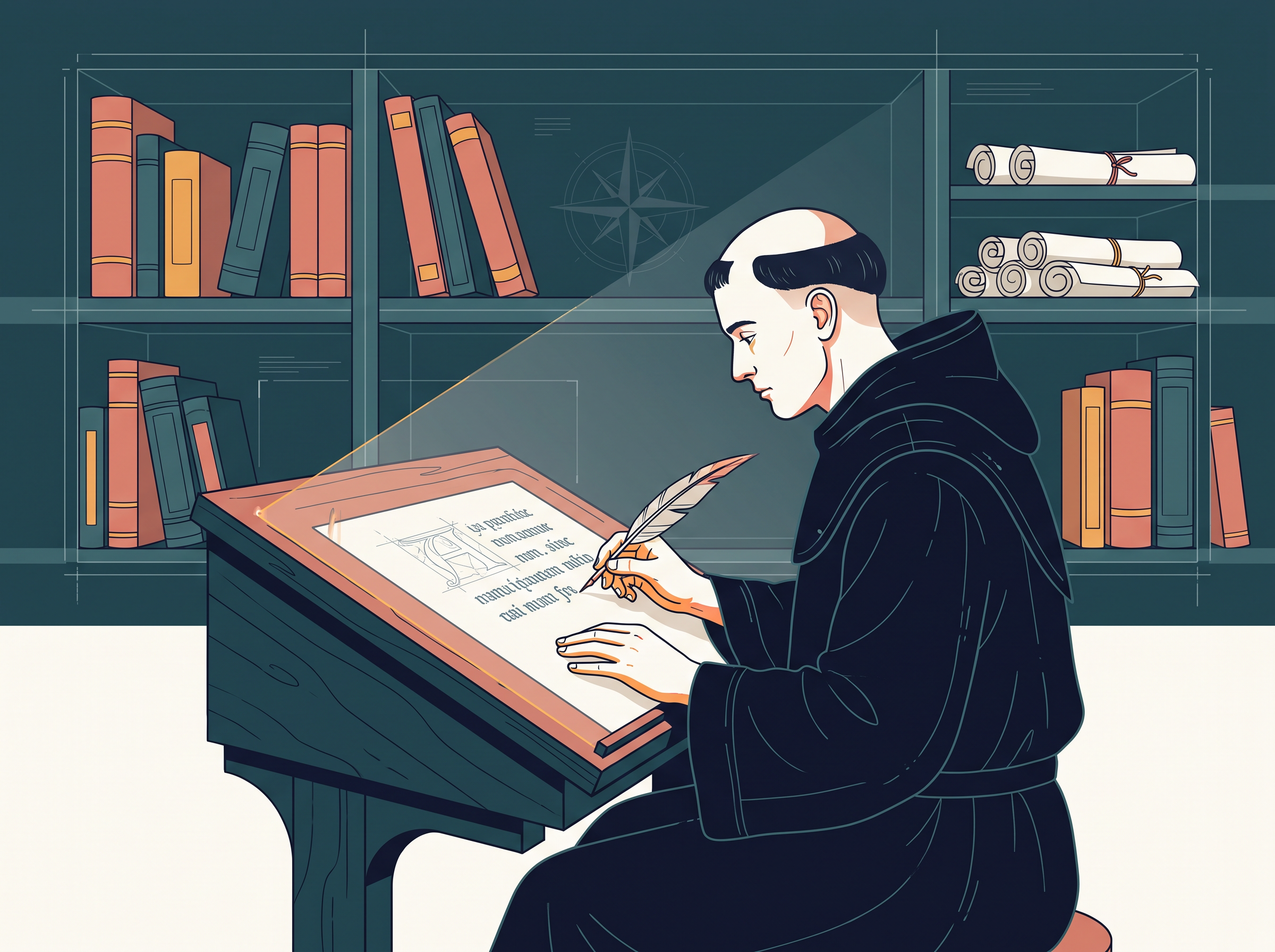
Fig. 4.7 – A Benedictine monk working on a manuscript.
Growth, And Then Doubt
Monasteries did not stay small. From small communities of 10 or 20 men or women, they grew into communities often of several hundred, with large buildings and landed estates, and with schools or colleges and hospitals attached to them.
They also contributed to the development of the arts. Abbess Hildegard — whose defence of human inequality you read in section 4.3 — was a gifted musician, and did much to develop the practice of community singing of prayers in church.
From the thirteenth century, some groups of monks chose a different path. Called friars, they refused to be based in a monastery at all, and instead moved from place to place, preaching to the people and living on charity.
By the fourteenth century, there was a growing uncertainty about the value and purpose of monasticism. The question being asked was blunt: were these communities still doing what they had been founded to do?
In England, Langland’s poem Piers Plowman (c.1360-70) contrasted the ease and luxury of the lives of some monks with the ‘pure faith’ of ‘simple ploughmen and shepherds and poor common labourers.’ The criticism is pointed. It sets the third order’s faith above the first order’s comfort.
Also in England, Chaucer wrote the Canterbury Tales, which had comic portraits of a nun, a monk and a friar. You will read from it in the next section.
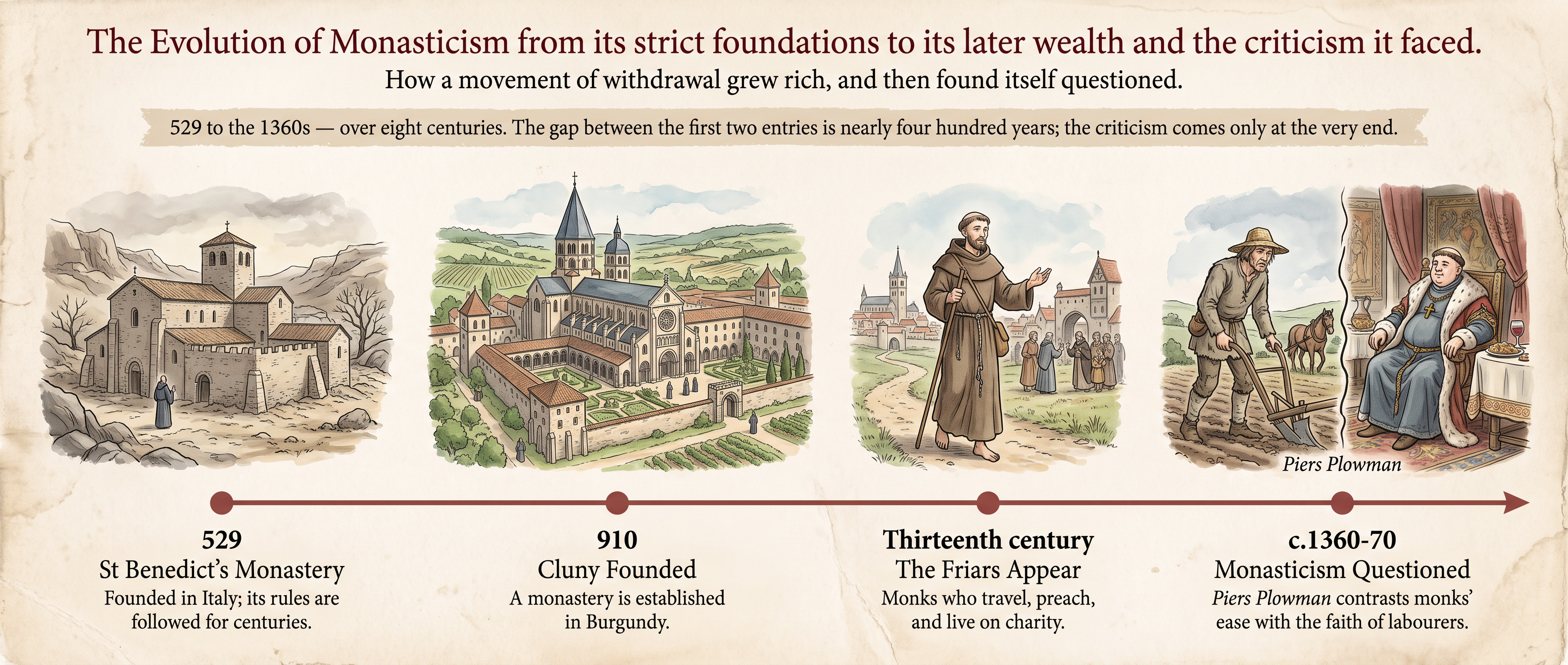
Fig. 4.8 – Monasticism, from foundation to doubt.
4.9 The Church And Society
Though Europeans became Christian, they did not stop believing everything they had believed before. They still held on to some of their old beliefs in magic and in folk traditions.
This is worth stating plainly, because it complicates a neat picture. Conversion did not wipe a slate clean. It laid a new religion over an older world, and a great deal of that older world showed through.
Festivals On Older Foundations
Christmas and Easter became important dates from the fourth century. Both, however, were placed on ground that was already occupied.
Christ’s birth was celebrated on 25 December, and that day replaced an old pre-Roman festival. The date of that older festival was calculated by the solar calendar — a calendar reckoned by the sun, in which a given day falls at the same point in the year every year. So Christmas has a fixed date.
Easter marked the crucifixion of Christ and his rising from the dead. Its date was not a fixed one. It replaced an older festival celebrating the coming of spring after a long winter, and that festival was dated by the lunar calendar, which is reckoned by the phases of the moon and therefore drifts against the solar year.
There is a third survival, and it is the clearest of all. Traditionally, on the day of that spring festival, the people of each village used to make a tour of their village lands, walking their own boundaries.
With the coming of Christianity, they continued to do exactly this. What changed was the name: they now called the village the parish, meaning the area under the supervision of one priest.
Holy Days
Overworked peasants welcomed ‘holy days’, or holidays, and the reason was not entirely pious. On these days they were not expected to work.
The days were meant for prayer. In practice, people usually spent a good part of them having fun and feasting. The Church supplied the occasion; the village supplied the celebration.
Pilgrimage
Pilgrimage was an important part of a Christian’s life. Many people went on long journeys to the shrines of martyrs, or to big churches.
Such a journey was a considerable undertaking in an age of bad roads and no maps. It was also, for most peasants, the only reason they would ever travel far from the parish they were born in.
The most famous description of these journeys in English comes from Geoffrey Chaucer, whose Canterbury Tales you met at the end of the last section. The poem opens by explaining why spring makes people restless.
The ‘palmers’ in the eighth line were monks who travelled to distant shrines. Notice what Chaucer gives as the reason for the journey: not sin, not a vow, but April — rain, roots and birdsong. Devotion and the itch to travel are tangled together, and he knows it.
4.10 The Third Order: Peasants, Free And Unfree
We now turn to the vast majority of people: those who sustained the first two orders. Every cathedral, every castle, every knight’s horse and every bishop’s palace in this chapter was paid for out of the labour of the people in this section.
The cultivators were of two kinds: free peasants, and serfs. The word ‘serf’ comes from the verb ‘to serve’, and it is worth remembering that the name given to these people was simply the name of what they did for someone else.
Free Peasants
Free peasants held their farms as tenants of the lord. They were not his property, but they were not independent either — they held their land from him, and they paid for it in work.
The men had to render military service of at least forty days every year. Forty days is close to six weeks: six weeks a year in which a man was not farming his own land at all.
Peasant families had to set aside certain days of the week, usually three but often more, when they would go to the lord’s estate and work there. The output from that labour, called labour-rent, went directly to the lord.
Consider what three days means. Out of every seven,
\[\frac{3}{7} \approx 43\%\]
— more than two-fifths of the week’s labour of a whole family, given to a man whose fields they did not own, and ‘often more’ than that.
That was not the end of it. In addition, they could be required to do other unpaid labour services: digging ditches, gathering firewood, building fences, and repairing roads and buildings.
Nor did the demands stop with the men. Besides helping in the fields, women and children had to do other tasks. They spun thread, wove cloth, made candles, and pressed grapes to prepare wine — for the lord’s use.
Finally, there was a tax. One direct tax, called the taille, was sometimes imposed on peasants by kings. The clergy and the nobles were exempted from paying it.
Notice who paid and who did not. The two orders that owned the land were excused; the order that worked the land was not.
Serfs
Serfs cultivated plots of land, but those plots belonged to the lord. Much of the produce from these plots had to be given to him.
They also had to work on the land which belonged exclusively to the lord. For this work they received no wages.
And they could not leave the estate without the lord’s permission. This is the line that separates a serf from a free peasant more sharply than any other: a free peasant was a tenant, but a serf was tied to the ground he stood on.
The lord also claimed a number of monopolies at the expense of his serfs. Serfs could use only their lord’s mill to grind their flour, only his oven to bake their bread, and only his wine-presses to distil wine and beer.
The lord’s authority even reached inside the family. He could decide whom a serf should marry — or he might give his blessing to the serf’s own choice, but only on payment of a fee.
How Free Was A Free Peasant?
It helps to hold the two side by side, because the difference is real but narrower than the words suggest.
A free peasant held his farm as a tenant and could not be sold with the land; a serf cultivated plots that belonged to the lord outright. A free peasant owed labour-rent, unpaid services and forty days of military service; a serf owed much of his produce, unpaid work, and fees at every monopoly the lord held. A free peasant could, in principle, move; a serf could not leave the estate without permission.
What they shared is more striking than what divided them. Both worked land they did not fully control, both handed over a large part of what they produced, and both had a lord standing above them who was also their judge.
The sketch in Fig. 4.9 shows what all this looked like on the ground: a man, a plough, a team of animals, and a field.
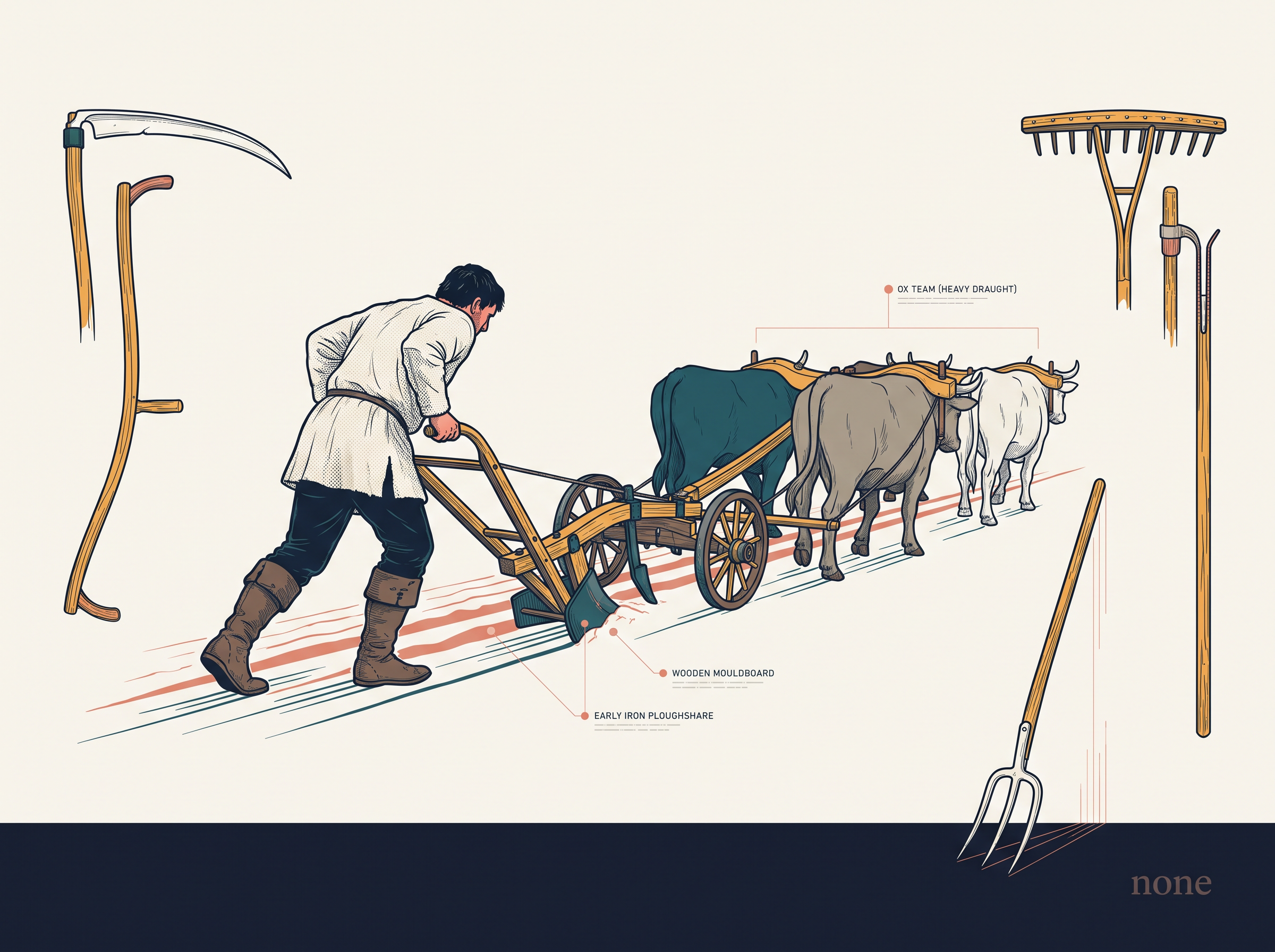
Fig. 4.9 – An English ploughman.
4.11 England
Feudalism developed in England from the eleventh century. That is late — the practices you have been reading about had been taking shape in France for generations — and the lateness matters, because in England the system did not grow slowly. It arrived with an army.
The Norman Conquest
First, who was already there. The Angles and the Saxons, peoples from central Europe, had settled in England in the sixth century. The country’s name, England, is a variant of ‘Angle-land’.
Then, in the eleventh century, William, the Duke of Normandy, crossed the English Channel with an army and defeated the Saxon king of England. Normandy, as you saw in section 4.2, was a French province — so the man who now ruled England was a French duke, and so were the nobles who came with him.
The consequences reached far beyond one battle. From this time, France and England were often at war with each other, because of disputes over territory and trade. Two kingdoms whose ruling class was now the same family of landholders had every reason to quarrel over where one ended and the other began.
The line of descent from that conquest has never been broken. The British monarch today is descended from William I.
Feudalism Imposed From Above
What William did next is the clearest example in this whole chapter of feudalism being built deliberately, by a ruler, rather than growing by itself.
That is the real difference between the two countries. In France, feudal relations grew up over centuries, and lords fought one another. In England, the whole structure was created at a stroke by a king who had just won a war, and who wrote the rules while the ink of the survey was still wet.
Castles came with the same conquest, and Fig. 4.10 shows one of them.
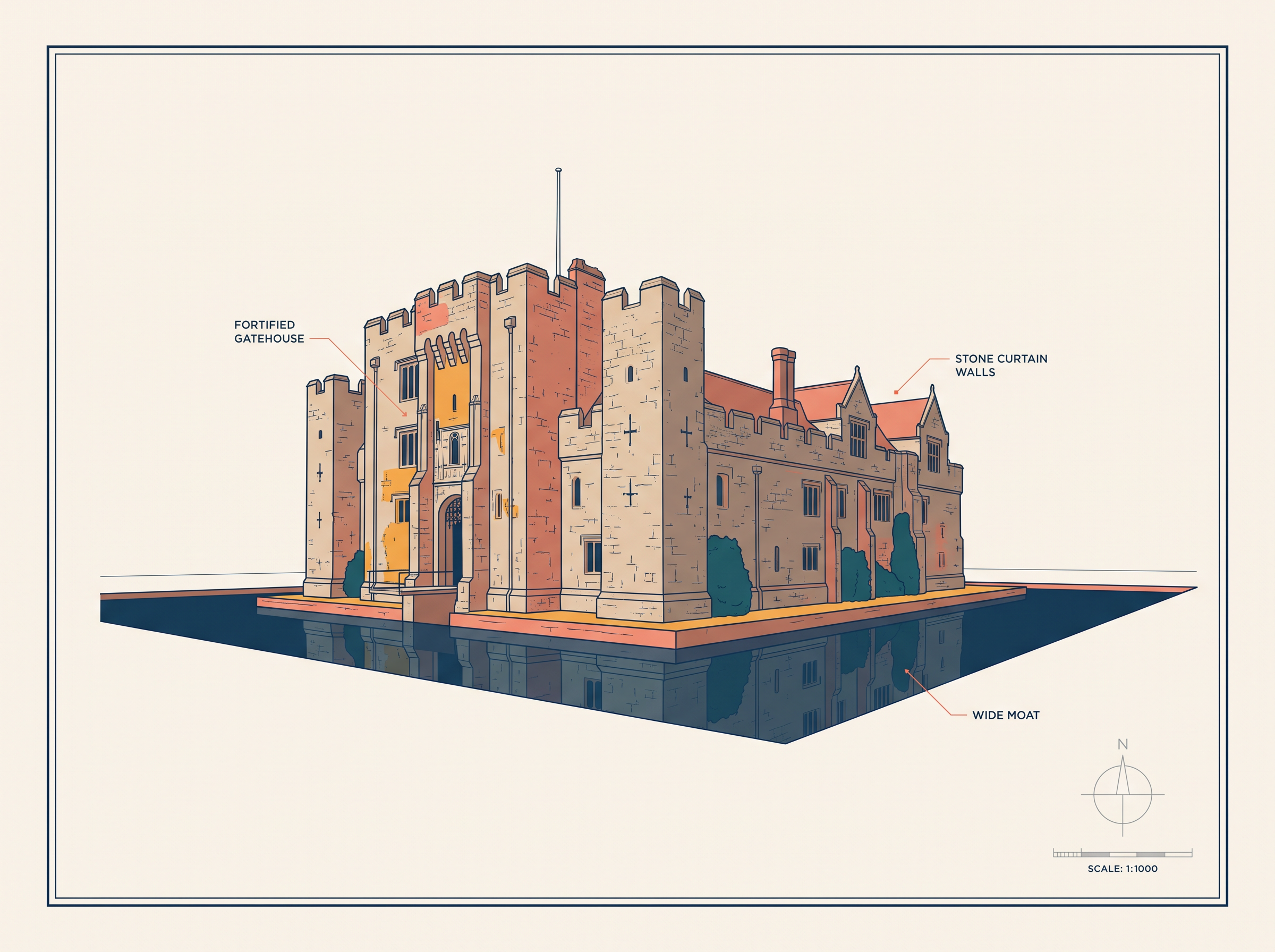
Fig. 4.10 – Hever Castle, England.
4.13 The Environment
The Cold Centuries
From the fifth to the tenth centuries, most of Europe was covered with vast forests. Picture that before anything else: not the open, hedged farmland of a modern photograph, but tree cover reaching over most of the continent.
Two consequences followed, and they pulled in opposite directions.
The first was hard on everyone. Because the forests took up so much of the land, the land available for agriculture was limited. Less arable land means less food, and less food means fewer people.
The second was useful to exactly one group — the peasants. A peasant dissatisfied with his conditions could flee from oppression and take refuge in the forest. The trees that hemmed in the fields also offered a way out of the manor.
There was also the weather, and in this period the weather was against Europe. The continent was undergoing an intensely cold climatic spell.
The effects ran straight into the harvest. Winters were severe and prolonged. The growing season for crops was shortened. Yields from agriculture were reduced.
The Warm Phase
From the eleventh century, this reversed. Europe entered a warm phase, and average temperatures increased.
The effect on agriculture was profound, and it worked in two ways at once. Peasants now had a longer growing season, so crops had more weeks in which to ripen. And the soil, now less subjected to frost, could be more easily ploughed — a frozen field turns aside a plough that a soft field will accept.
Environmental historians have noted something else as well: a significant receding of the forest line in many parts of Europe. The trees pulled back, and the fields moved into the space they left.
This made expansion of the area under cultivation possible. Remember what limited European agriculture in the earlier centuries — forest, frost, and a short summer. All three eased at once.
Notice, finally, what this section has done to the story. Nothing in it was decided by a king, a bishop or a lord. The most powerful cause of change in eleventh-century Europe was the temperature.
4.14 Land Use
The Wooden Plough
Initially, agricultural technology was very primitive. The only mechanical aid available to the peasant was the wooden plough, drawn by a team of oxen.
Think about what a wooden blade can and cannot do to soil. This plough could at best scratch the surface of the earth. It could not turn the deeper soil, and so it was unable to fully draw out the natural productivity of the land.
Everything that the plough could not do, human beings had to do instead. Agriculture was therefore very labour intensive. Fields had to be dug by hand, often once in four years, and enormous manual labour was required.
That last sentence is the whole economy of the third order in miniature. A poor tool means more hands, and more hands means longer days for the people who had no choice about working.
Half The Land Idle
An ineffective method of crop rotation was also in use. Crop rotation means changing what is grown on a field, or resting it, so that the soil is not exhausted by the same demand year after year.
The method in use worked like this. The land was divided in half. One field was planted in autumn with winter wheat, while the other field was left fallow — that is, left unsown for the season so that it could recover. The next year, rye was planted on that fallow piece of land, while the other half was put to fallow in its turn.
The arithmetic is the problem. At any given moment,
\[\text{land under crop} = \frac{1}{2} \times \text{total land}\]
— half of every estate was growing nothing at all.
And it did not even work. With this system, the soil slowly deteriorated, and famines were not uncommon. Chronic malnutrition alternated with devastating famines, and life was difficult for the poor.
Read that sentence slowly, because it is easy to pass over. It says that hunger was the normal condition, and starvation the periodic one.
Squeezing More Out Of The Same Land
Despite these hardships, the lords were anxious to maximise their incomes. Their difficulty was that output could not be increased from the land itself — the plough was weak and the rotation was poor.
So they increased what they could increase: the effort. Peasants were forced to bring under cultivation all the land in the manorial estate, and to spend more time doing this than they were legally bound to do.
Note the phrase ‘than they were legally bound to do’. Even by the rules of a system that was already stacked against them, this was a demand beyond what was owed.
Passive Resistance
The peasants did not bow quietly to oppression. This is the sentence to remember from this section, and it corrects an impression that a description of feudalism can easily leave.
They could not protest openly, so they resorted to passive resistance — resistance that never announces itself, and is therefore hard to punish.
In practice this meant three things. They spent more time cultivating their own fields, and kept much of the product of that labour for themselves. And they avoided performing the unpaid extra services that were demanded of them.
There was also a fight over land that nobody had ploughed. Peasants came into conflict with the lords over the pasture and the forest lands.
The disagreement was not about facts. It was about what kind of thing those lands were.
4.15 New Agricultural Technology
By the eleventh century, there is evidence of several technological changes. None of them looks dramatic on the page. Together they altered what a European peasant could grow, what he could eat, and in the end what he could demand.
Better Ploughs, Better Harnesses
Instead of the basic wooden ploughs, cultivators began using heavy iron-tipped ploughs fitted with mould-boards — curved plates behind the blade that lift the cut soil and turn it right over.
The gain was double. These ploughs could dig much deeper than a wooden blade that merely scratched the surface, and the mould-boards turned the topsoil properly. With this, the nutrients from the soil were better utilised.
The methods of harnessing animals to the plough also improved. Instead of the neck-harness, the shoulder-harness came into use, and this enabled animals to exert greater power. A strap across the throat chokes an animal that pulls hard; a strap across the shoulders lets it pull with its whole body.
Horses were now better shod, with iron horseshoes, which prevented foot decay. A lame horse ploughs nothing, so the horseshoe is not a small detail.
There was also increased use of wind and water energy for agriculture. More water-powered and wind-powered mills were set up all over Europe, for purposes such as milling corn and pressing grapes.
The Three-Field System
The most revolutionary change, however, was not a tool. It was a way of dividing a field.
Peasants switched from a two-field to a three-field system. Under it, a field could be used two years out of three, provided that one crop was planted in it in autumn and a different crop in spring, a year and a half later.
That meant farmers could break their holdings into three fields, each doing a different job. In the first, they planted wheat or rye in autumn, for human consumption. The second was used in spring to raise peas, beans and lentils for human use, and oats and barley for the horses. The third lay fallow. Each year, they rotated the use among the three fields.
Compare that with the old system, where half the land was idle at any time. Under three fields, the share of the estate under crop each year is
\[\frac{2}{3} \text{ instead of } \frac{1}{2}, \text{ a gain of } \frac{2}{3} - \frac{1}{2} = \frac{1}{6}\]
— one sixth of all the land in Europe, brought back into use without clearing a single new acre.
More Food, Smaller Farms
With these improvements, there was an almost immediate increase in the amount of food produced from each unit of land. Food availability doubled.
The quality of the food changed too, not only its quantity. The greater use of plants like peas and beans meant more vegetable proteins in the diet of the average European, and a better source of fodder for their animals.
For cultivators, this meant better opportunities, and it produced a result that sounds backwards until you think it through. They could now produce more food from less land.
So the farms shrank. The average size of a peasant’s farm fell from about 100 acres to 20 to 30 acres by the thirteenth century — to somewhere between a fifth and a third of what it had been.
Holdings which were smaller could be more efficiently cultivated, and they reduced the amount of labour needed. And that gave the peasants something they had never had before: time for other activities.
Who Paid For The New Technology
Not all of these changes were within a peasant’s reach. Some of them cost a great deal of money.
Peasants did not have enough money to set up watermills and windmills, and so the initiative in building them was taken by the lords. A mill built by a lord is a mill owned by a lord — which is exactly why he could compel his serfs to use it, as you saw in section 4.10.
But it would be wrong to conclude that peasants merely received what their betters gave them. They took the initiative in many things themselves.
They extended arable land — that is, land fit for ploughing. They switched to the three-field rotation of crops. And they set up small forges and smithies in the villages, where iron-tipped ploughs and horseshoes could be made and repaired cheaply.
Money Enters The Village
From the eleventh century, the personal bonds that had been the basis of feudalism began to weaken. The reason was not a revolt or a law. It was money.
Economic transactions were becoming more and more money based. Lords found it convenient to ask for rent in cash, instead of services. Cultivators were selling their crops for money, instead of exchanging them for other goods, to traders — who would then take those goods to be sold in the towns.
Look at what this does to vassalage. A relationship that had been sworn on a Bible, and paid in loyalty and labour, was quietly turning into a payment. A lord who takes cash does not need a vassal; he needs a tenant who can pay.
The increasing use of money also began to influence prices, which became higher in times of poor harvests. In England, for instance, agricultural prices doubled between the 1270s and the 1320s.
4.16 A Fourth Order? New Towns And Townspeople
The expansion in agriculture did not stay inside the fields. It was accompanied by growth in three related areas: population, trade and towns. Each of the three fed the other two.
More People, Living Longer
The numbers are worth setting down carefully. From roughly 42 million in 1000, Europe’s population stood at 62 million around 1200, and 73 million in 1300.
That is a rise of 31 million people in three hundred years:
\[\frac{73 - 42}{42} \approx 74\%\]
— roughly three-quarters more Europeans at the end of the period than at the beginning, in an age with no medicine worth the name.
The cause was food. Better food meant a longer lifespan, and the gain was large: by the thirteenth century, an average European could expect to live 10 years longer than in the eighth century.
But that average conceals something, and the chapter says so plainly. Women and girls had shorter lifespans than men — because the men ate better food. When a household has a limited amount of food, who eats first is a social decision, not a natural one, and here it shortened women’s lives.
Why Towns Grew Again
The towns of the Roman Empire had become deserted and ruined after its fall. For centuries, western Europe was a countryside dotted with the shells of dead cities.
From the eleventh century, this reversed. As agriculture increased and became able to sustain higher levels of population, towns began to grow again.
The first cause was ordinary and practical. Peasants who had surplus grain to sell needed a place where they could set up a selling centre, and where they could buy tools and cloth.
This led to the growth of periodic fairs and small marketing centres. Gradually these developed town-like features: a town square, a church, roads where merchants built shops and homes, and an office where those who governed the town could meet.
Other towns grew for a different reason — not from below, but around something already powerful. In such places, towns grew up around large castles, bishops’ estates, or large churches.
Life in a town ran on a different principle from life on a manor. In towns, instead of services, people paid a tax to the lords who owned the land on which the town stood. Cash replaced labour, and that single substitution changed everything about what a person’s day belonged to.
Town Air Makes Free
Towns offered two things that a manor could not: the prospect of paid work, and freedom from the lord’s control. For young people from peasant families, that combination was worth walking away for.
‘Town air makes free’ was a popular saying, and it was not only a saying. Many serfs craving to be free ran away and hid in towns. If a serf could stay for one year and one day without his lord discovering him, he would become a free man.
One year and one day. That is a precise, legal threshold, which tells you that running away was common enough to need a rule.
Who, then, lived in these towns? Many of the people were free peasants or escaped serfs, who provided unskilled labour. Shopkeepers and merchants were numerous. Later, there was a need for individuals with specialised skills, such as bankers and lawyers.
The bigger towns had populations of about 30,000 — small by our standards, and enormous by the standards of a manor of fifty families.
These townspeople fitted nowhere in the scheme of section 4.3. They did not pray, they did not fight, and they did not plough. They could be said to have formed a ‘fourth’ order — and the question mark in this section’s title is the point. The three-order picture was a description of society that society itself had begun to outgrow.
The Guild
The basis of economic organisation in a town was the guild — an association of everyone working in a single craft or industry.
Each craft or industry was organised into a guild, and the guild controlled three things: the quality of the product, its price, and its sale. This is worth noticing. In the town, as on the manor, an individual’s work was governed by a body above him; what had changed was the identity of that body.
The ‘guild-hall’ was a feature of every town. It was a building for ceremonial functions, and the place where the heads of all the guilds met formally.
Towns needed people to do work that no farm ever required. Guards patrolled the town walls. Musicians were called to play at feasts and in civic processions. Innkeepers looked after travellers.
Here is a task for your class. Look carefully at the map in Fig. 4.11 and at any drawing of a town you can find. What would you notice as the special features of a medieval European town — its walls, its square, its church, the way its streets are packed inside a boundary? And how was such a town different from towns in other places and other periods, including the cities of Mesopotamia and of the Roman Empire that you studied earlier in this book?
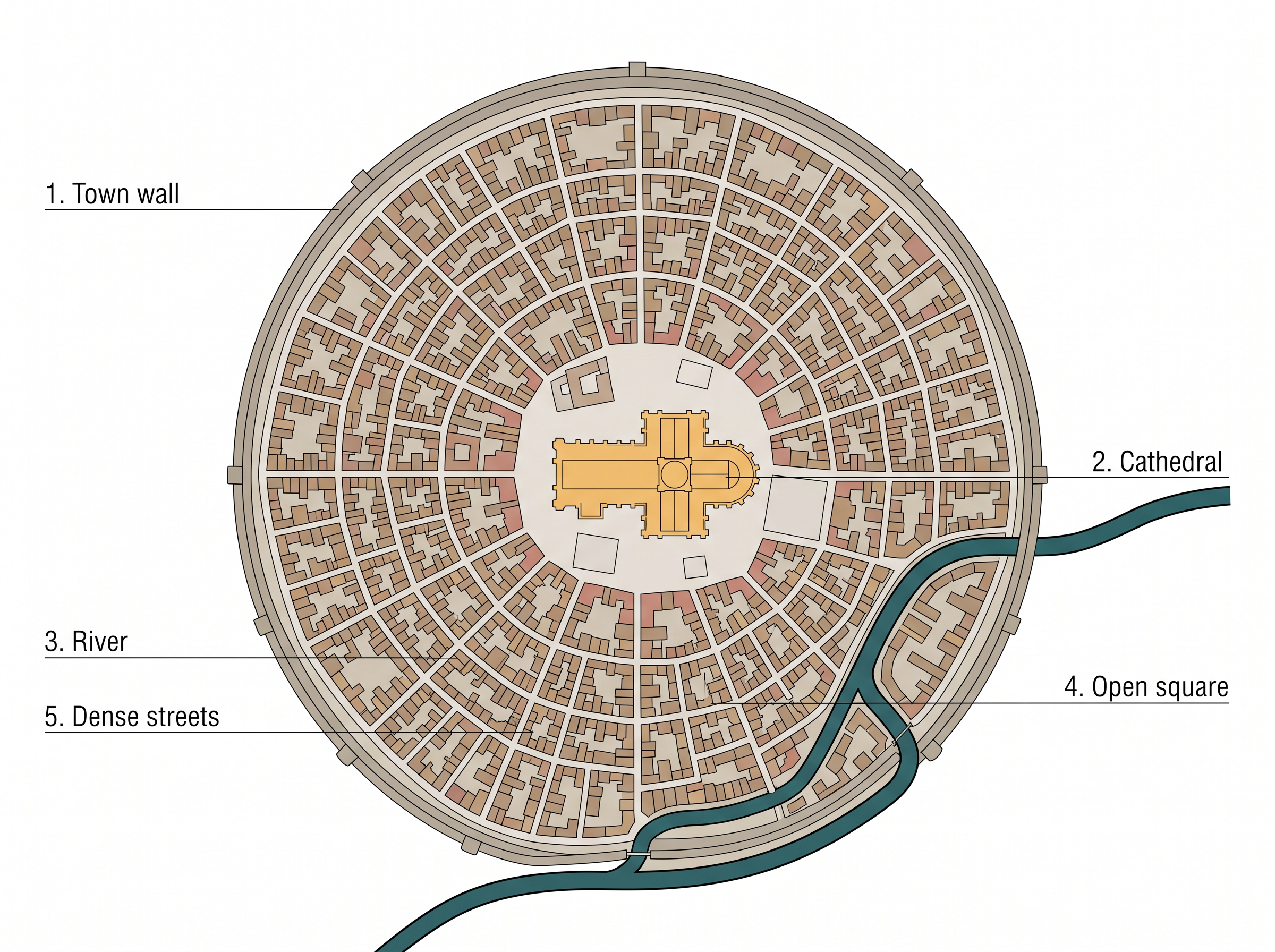
Fig. 4.11 – Reims, French cathedral-town.
Trade Routes And Merchants
By the eleventh century, new trade routes with West Asia were developing, which you will study in Chapter 5.
Goods began moving over long distances. Scandinavian merchants sailed south from the North Sea to exchange furs and hunting-hawks for cloth. English traders came to sell tin.
In France, by the twelfth century, commerce and crafts began to grow. The change in how craftsmen lived is a small detail with a large meaning. Earlier, craftsmen used to travel from manor to manor, carrying their skill to wherever it was wanted. Now they found it easier to settle in one place, where goods could be produced and traded for food.
A craftsman who settles is a craftsman who can specialise, keep a workshop, take apprentices and build a business. That is a town, in one sentence.
As the number of towns grew and trade continued to expand, town merchants became rich and powerful. In time they rivalled the power of the nobility — which is a remarkable thing to say about men who owned no land, held no court, and could not raise a single knight.
4.17 Cathedral-Towns
One of the ways that rich merchants spent their money was by making donations to churches. Remember who these merchants were: men of the new ‘fourth’ order, who had no land and no title. A gift to the Church bought them standing that birth had denied them.
From the twelfth century, large churches — called cathedrals — were being built in France. These belonged to monasteries, but a cathedral was never the work of the monks alone.
Different groups of people contributed to their construction with their own labour, their own materials, or their own money. Some gave coins; some gave stone; some gave months of carrying and cutting.
How A Church Made A Town
Cathedrals were built of stone, and took many years to complete. That slowness is the reason a cathedral did not merely stand in a town — it created one.
As they were being built, the area around the cathedrals became more populated. Workers, suppliers and their families had to live somewhere, for years on end. And when the buildings were completed, they became centres of pilgrimage, which brought a steady stream of travellers who needed food, beds and goods.
Thus small towns developed around them.
Built For Sound And Light
A cathedral was designed, not simply built, and what it was designed for tells you what it was expected to do.
It was designed so that the priest’s voice could be heard clearly within the hall, where large numbers of people gathered. It was designed so that the singing by the monks could sound beautiful. And it was designed so that the chiming bells calling people to prayer could be heard over a great distance.
Then there was the light. Stained glass was used for the windows, and it worked in two directions at two times of day.
During the day, the sunlight would make the windows radiant for the people inside the cathedral. After sunset, the light of candles would make them visible to people outside.
The windows were not only beautiful. The stained glass narrated the stories in the Bible through pictures — which meant that illiterate people could ‘read’ them.
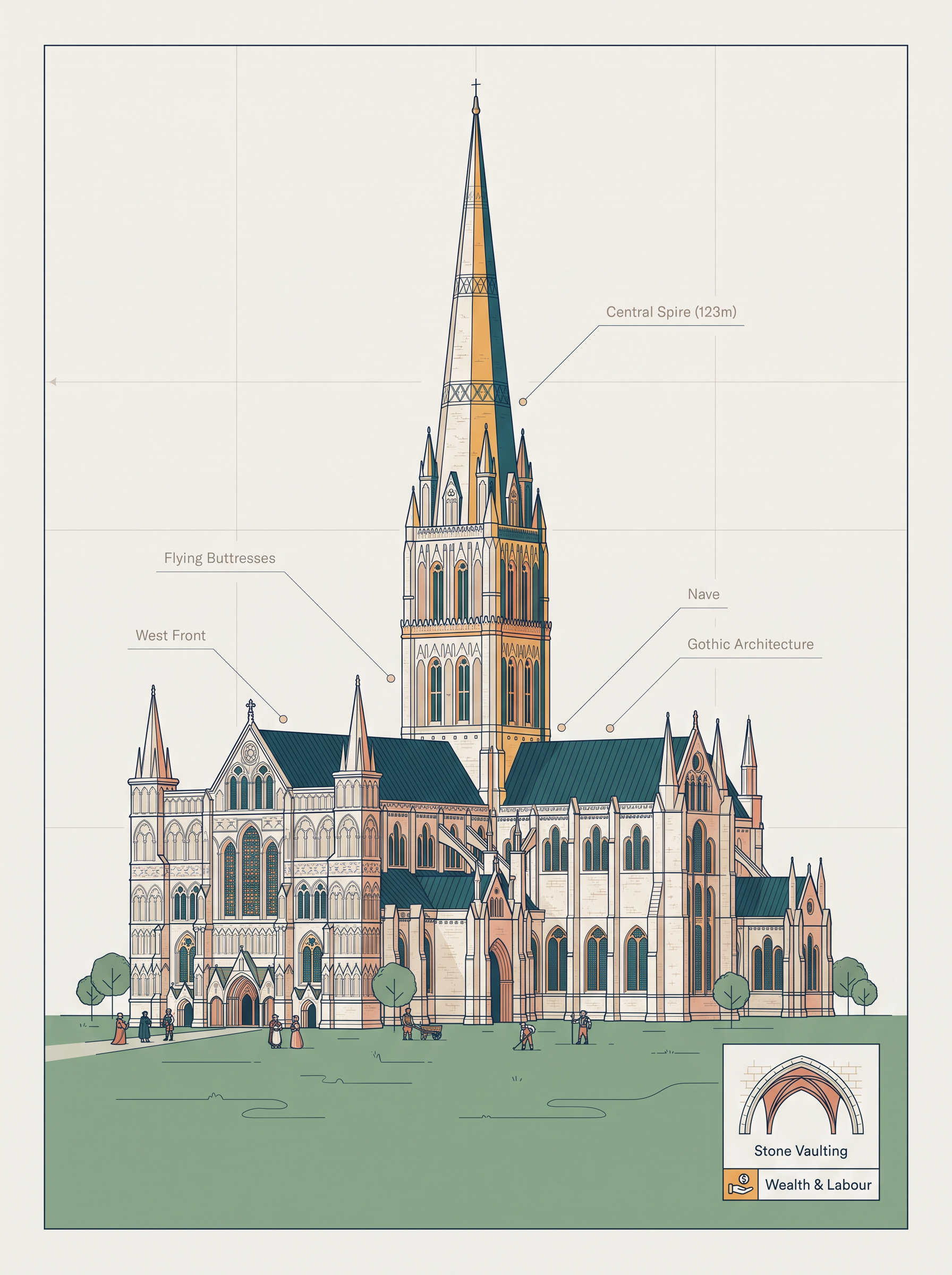
Fig. 4.12 – Salisbury Cathedral, England.
An Abbot Describes His Own Building Project
We are not left to guess why such churches were enlarged and decorated. One of the men who did it wrote about it.
Abbot Suger was head of the Abbey of St Denis, near Paris, in the first half of the twelfth century. Here he explains why the church had to be made bigger, and how he arranged for its windows.
Two things are worth pulling out of this. The first is the reason for the building work: the church was simply too small, and the crowds on feast days were dangerous. Suger’s picture of women being pushed forward over the heads of the men is an eyewitness detail of a kind that rarely survives.
The second is the payment. The craftsman and the goldsmith were paid in coins from the altar and flour from the storehouse — part money, part food. Even in the age when money was spreading, a wage could still be half a meal.
The windows he was so anxious to protect looked like the one in Fig. 4.13.
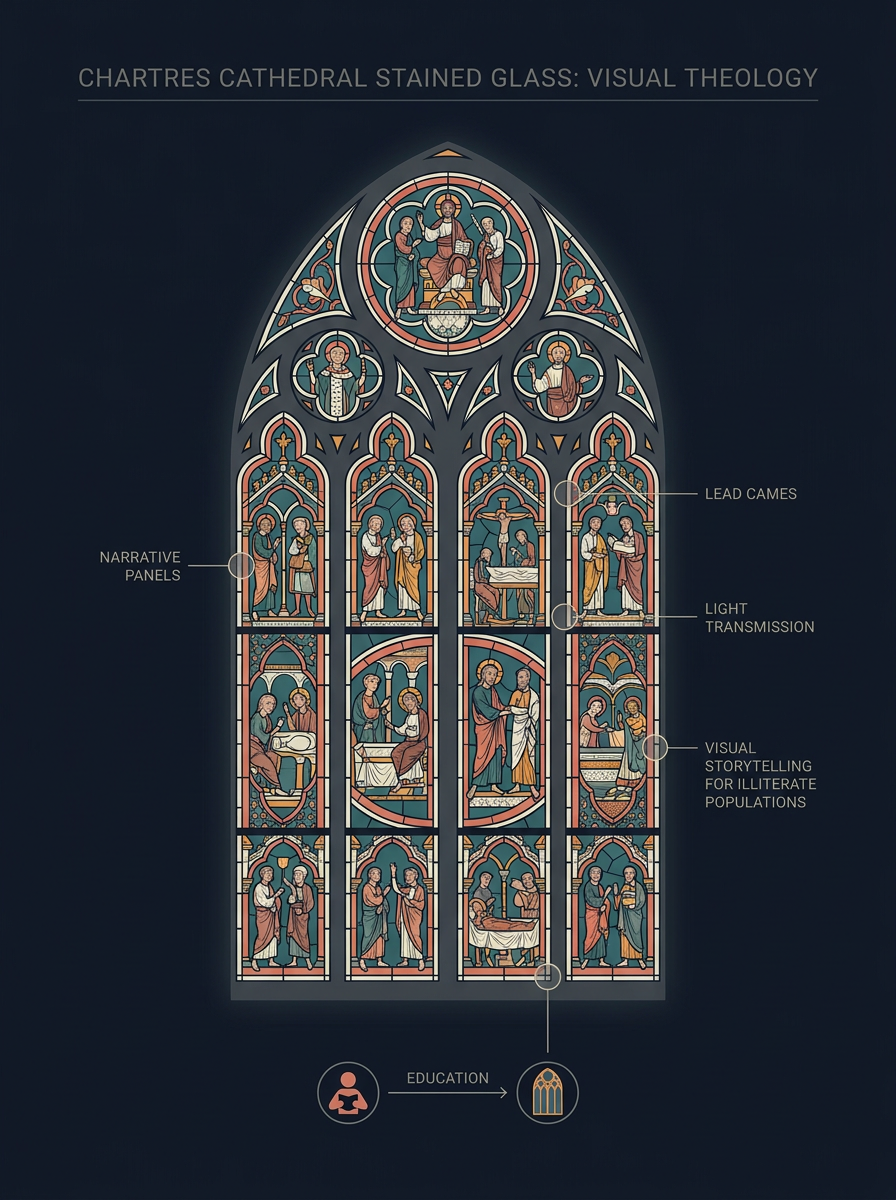
Fig. 4.13 – Stained-glass window, Chartres cathedral.
4.18 The Crisis Of The Fourteenth Century
By the early fourteenth century, Europe’s economic expansion slowed down. Three hundred years of growth — in food, in people, in towns and in trade — came to a halt.
This was due to three factors. Take them one at a time, because they arrived one at a time, and each made the next one worse.
The Climate Turns
The first factor was the weather, and it simply reversed what section 4.13 described. In northern Europe, by the end of the thirteenth century, the warm summers of the previous 300 years had given way to bitterly cold summers.
The consequences were immediate and physical. The seasons for growing crops were reduced by a month. It became difficult to grow crops on higher ground, which had only been worth farming while the climate was kind.
Storms and oceanic flooding destroyed many farmsteads. A destroyed farmstead pays no dues, so this also resulted in less income in taxes for governments.
There was a second, slower problem, and it was of Europe’s own making. The favourable climate before the thirteenth century had encouraged large-scale reclamation of forest and pasture land for agriculture. But intensive ploughing had exhausted the soil, despite the three-field rotation, because the clearance was not accompanied by proper soil conservation.
The shortage of pasturage also reduced the number of cattle — and fewer cattle meant less manure, less traction and less meat.
Put the pieces together and the result was arithmetic, not bad luck. Population growth was outstripping resources, and the immediate result was famine. Severe famines hit Europe between 1315 and 1317, followed in the 1320s by massive cattle deaths.
A Shortage Of Silver
The second factor was money — or rather, the metal that money was made of.
Trade was hit by a severe shortage of metal money, caused by a shortfall in the output of the silver mines in Austria and Serbia. Coins in this period were valued for the metal in them, so when the silver ran short, the coinage itself was in trouble.
Governments responded by reducing the silver content of the currency, and mixing it with cheaper metals. The coin kept its name and its face; it no longer kept its worth.
The Black Death
The third factor was the worst, and it came in on the back of Europe’s own success.
As trade expanded in the thirteenth and fourteenth centuries, ships carrying goods from distant countries had started arriving in European ports. Along with the ships came rats — and the rats carried the deadly bubonic plague infection, known as the Black Death.
Western Europe had been relatively isolated in earlier centuries. Now it was connected, and it was hit by the epidemic between 1347 and 1350.
The scale is hard to take in. The modern estimate of mortality in that epidemic is that 20 per cent of the people of the whole of Europe died, with some places losing as much as 40 per cent of their population. In the worst-hit places, two people in every five were gone within a few years.
One of the writers who lived through it was Giovanni Boccaccio, an Italian author. He is not giving statistics. He is trying to make a reader who was not there understand what it was like.
Notice what Boccaccio chooses to describe. Not the disease, but the breakdown of everything a society does around death: the sick untended, the dead unmourned, the churchyards overwhelmed, the bodies stacked in trenches. For a Christian city, the failure to bury the dead properly was itself a catastrophe.
As trade centres, the cities were the hardest hit — the same crowding and traffic that had made them prosperous now spread the infection.
Enclosed communities were hit hardest of all. In monasteries and convents, when one individual contracted the plague, it was not long before everyone did. And in almost every case, none survived.
The plague took its worst toll among infants, the young and the elderly. There were further, relatively minor episodes of plague in the 1360s and the 1370s.
The final count is the plainest sentence in this chapter. The population of Europe, 73 million in 1300, stood reduced to 45 million in 1400:
\[\frac{73 - 45}{73} = \frac{28}{73} \approx 38\%\]
— nearly two Europeans in every five had vanished, and a century of population growth had been wiped out and reversed.
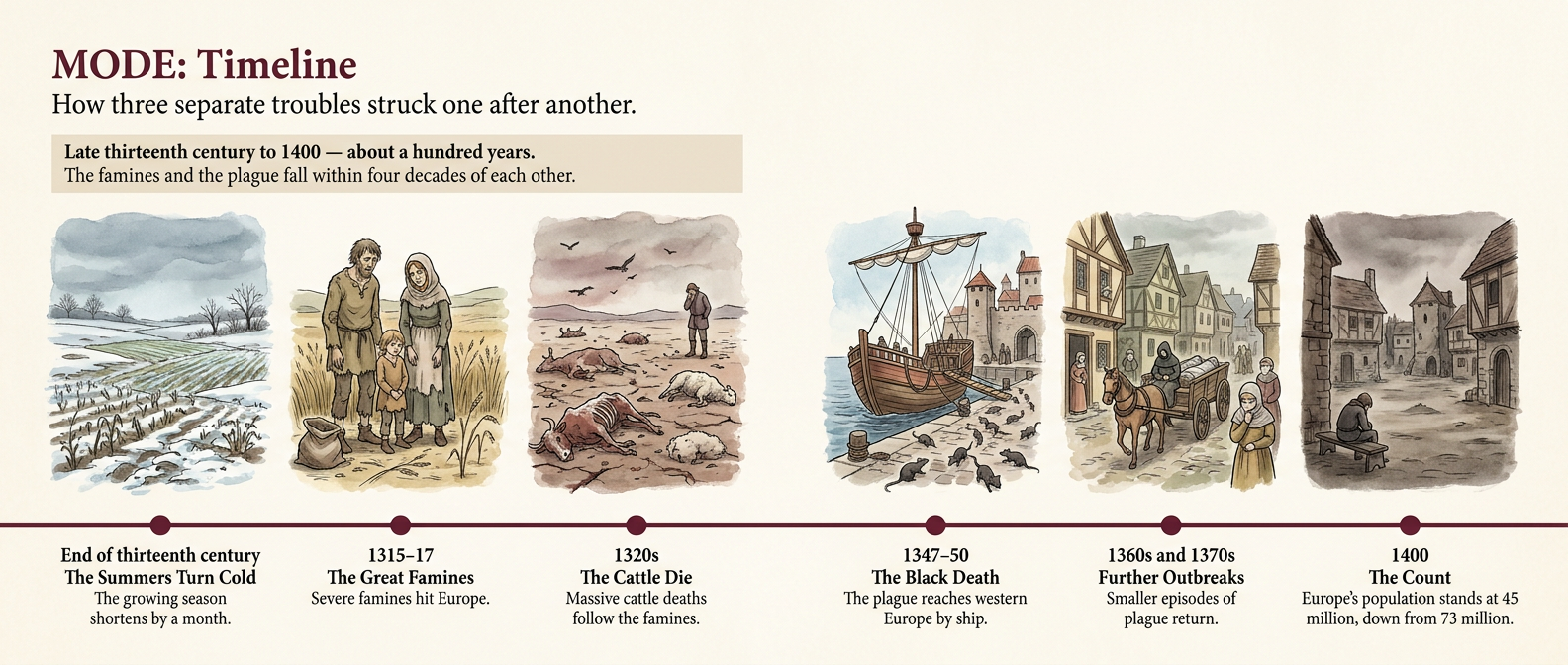
Fig. 4.14 – The fourteenth-century crisis.
What Depopulation Did
This catastrophe, combined with the economic crisis, caused immense social dislocation. Everything that had rested on a growing population now had to be rethought.
Depopulation resulted in a major shortage of labour. Serious imbalances were created between agriculture and manufacture, because there were simply not enough people to engage in both equally.
Two prices then moved in opposite directions, and this is the hinge of the whole section.
Prices of agricultural goods dropped, because there were fewer people left to buy them. But wage rates increased, because the demand for labour rose — and it rose sharply. In England, the demand for agricultural labour rose by as much as 250 per cent in the aftermath of the Black Death.
The surviving labour force could now demand twice their earlier wages. For the first time in this chapter, the people at the bottom held something scarce, and they knew it.
4.20 Political Changes
Developments in the political sphere paralleled the social processes you have just read about. While the manor was being undermined by money, plague and revolt, something was being built in its place: the state.
The New Monarchs
In the fifteenth and sixteenth centuries, European kings strengthened their military and their financial power. The powerful new states they created were as significant for Europe as the economic changes that were occurring.
Historians have therefore called these kings ‘the new monarchs’. Louis XI in France, Maximilian in Austria, Henry VII in England, and Isabelle and Ferdinand in Spain were absolutist rulers — rulers who claimed authority that no assembly, noble or council could limit.
They began three things that we now take for granted in a state. Standing armies, which are permanent professional forces rather than levies raised for a single campaign. A permanent bureaucracy, meaning a body of salaried officials who serve the state continuously. And national taxation, collected across the kingdom on the king’s own authority.
In Spain and Portugal, these rulers also began to play a role in Europe’s expansion overseas.
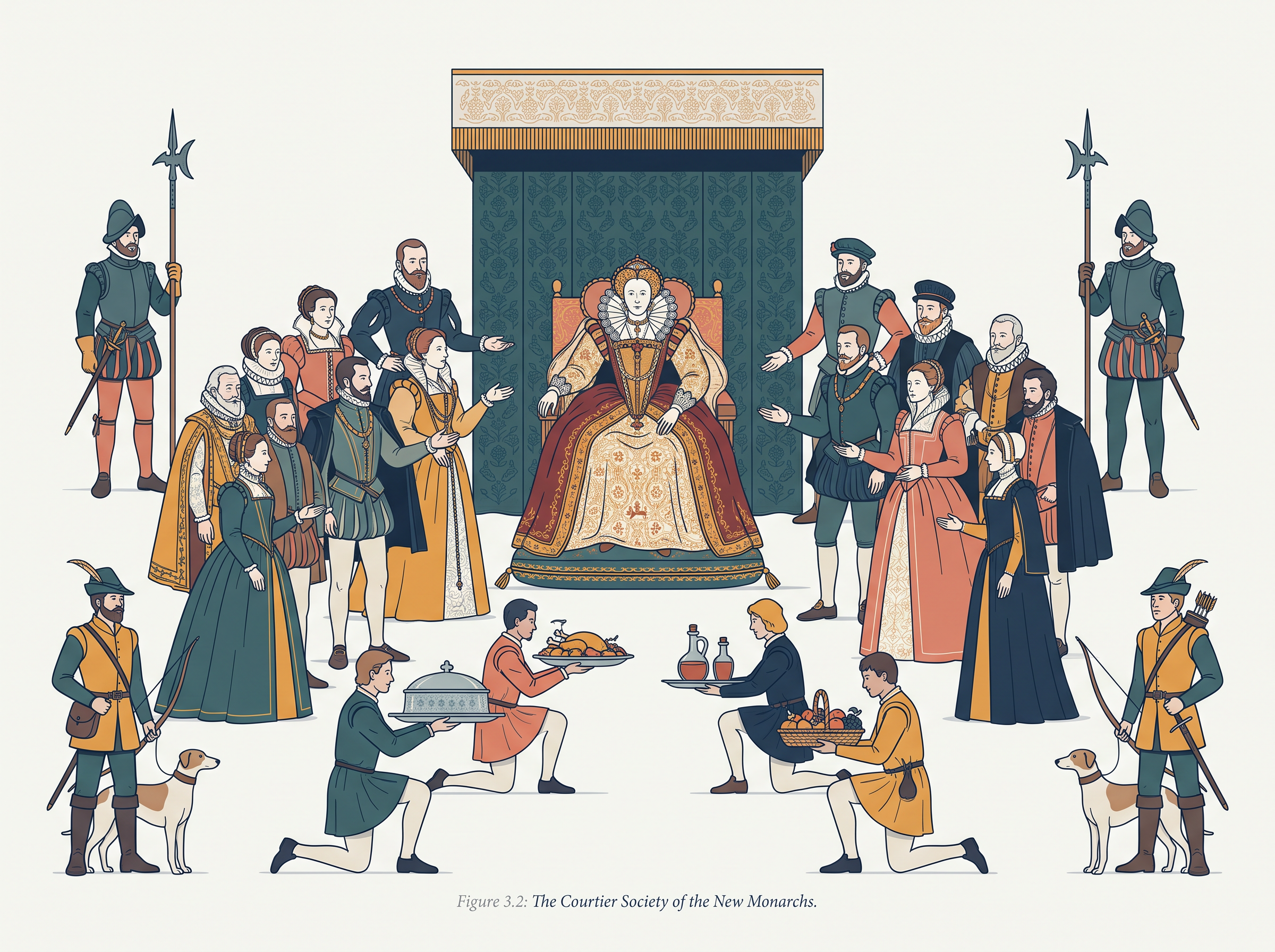
Fig. 4.16 – Queen Elizabeth I of England at a picnic.
Guns Against Knights
Why did these monarchies triumph now, and not two centuries earlier? The most important reason was the social changes which had taken place in the twelfth and the thirteenth centuries.
The feudal system of lordship and vassalage was dissolving, and the rate of economic growth had slowed. Together these gave kings their first opportunity to increase their control over their subjects, the powerful and the not-so-powerful alike.
Then came the decisive change, and it was a change in weapons. Rulers dispensed with the system of feudal levies for their armies. In their place they introduced professionally trained infantry, equipped with guns and siege artillery, and placed directly under their own control. You met these weapons in Chapter 3.
The resistance of the aristocracies crumbled in the face of the firepower of the kings.
Taxes And Resistance
By increasing taxes, the monarchs got enough revenues to support larger armies. With those armies they defended and expanded their frontiers, and overcame internal resistance to royal authority.
Centralisation, however, did not occur without resistance from the aristocracy. And a common thread ran through every kind of opposition to the new monarchies: the question of taxation. Who may take money from whom, and by whose consent, is a question every state must settle — and here it was settled largely by force.
In England, rebellions occurred and were put down in 1497, 1536, 1547, 1549 and 1553. In France, Louis XI (1461-83) had to wage a long struggle against dukes and princes.
Lesser nobles, often members of local assemblies, resisted what they regarded as royal usurpation of their powers. The ‘religious’ wars in France in the sixteenth century were in part a contest between royal privileges and regional liberties — a reminder that a conflict conducted in the language of religion may be about something else as well.
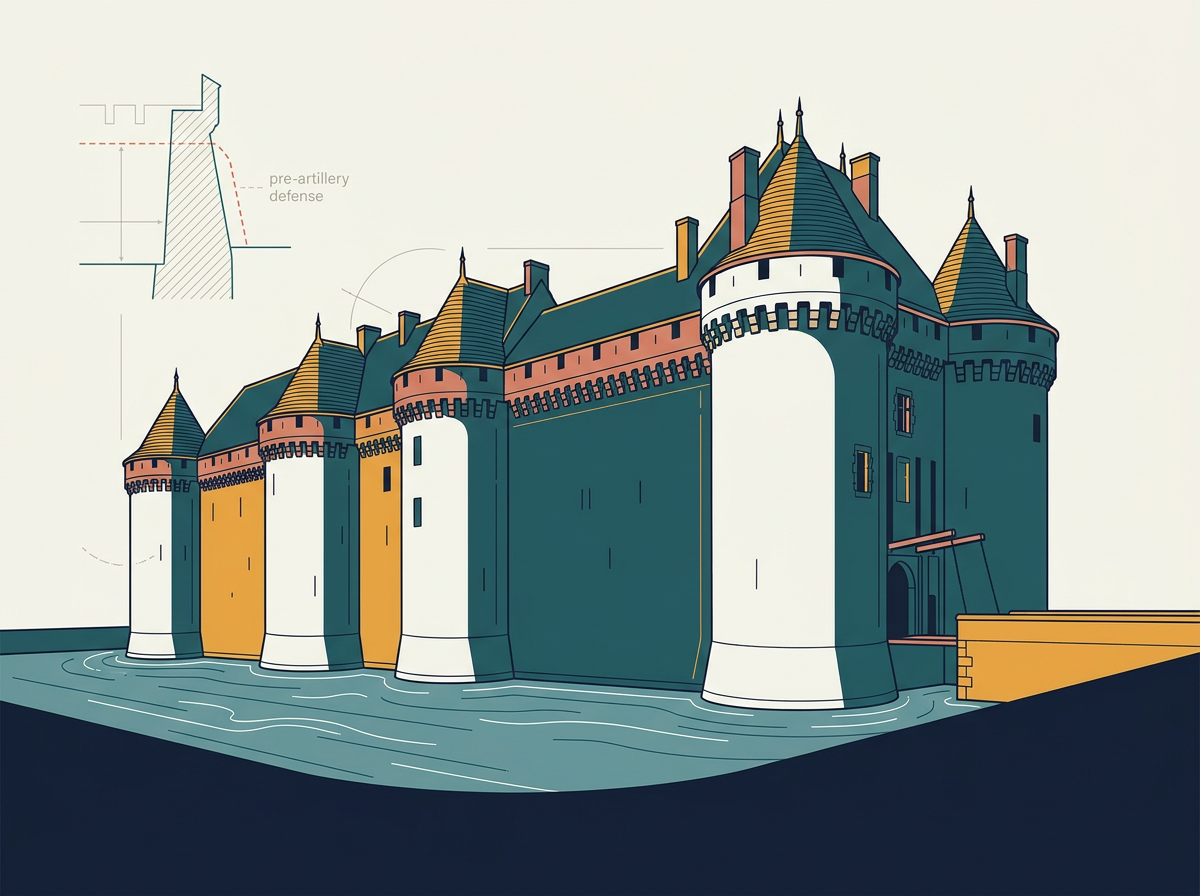
Fig. 4.17 – Nemours Castle, France.
The Nobility Changes Sides
Faced with kings they could not defeat, the nobility managed a tactical shift in order to ensure their survival. From being opponents of the new regimes, they quickly transformed themselves into loyalists.
It is for this reason that royal absolutism has been called a modified form of feudalism. Precisely the same class of people who had been the rulers in the feudal system — the lords — continued to dominate the political scene. They were given permanent positions in the administrative service.
So the personnel of power did not change. But the new regimes were different in some important ways, and the difference is worth stating exactly.
The king was no longer at the apex of a pyramid in which loyalty was a matter of personal dependence and trust. He was now at the centre of an elaborate courtier society, and of a network of patron–client relationships.
Money At Court
All monarchies, weak or powerful, needed the cooperation of those who could command authority. Patronage — the giving of office, favour and protection in return for support — became the means of ensuring that cooperation.
And patronage could be given or obtained by means of money. That single fact opened the court to people who had been shut out of it for centuries.
Money therefore became an important way in which non-aristocratic elements, such as merchants and bankers, could gain access to the court. They lent money to the kings, and the kings used it to pay the wages of soldiers.
Rulers thus made space for non-feudal elements in the state system. The men of the ‘fourth’ order, who neither prayed nor fought nor ploughed, had found the one thing a king could not do without.
France And England Take Different Paths
The later history of France and England was shaped by these changes in the power structure. Both countries had an assembly that could, in principle, check a king. They ended in opposite places.
In France, in the reign of the child-king Louis XIII, a meeting was held in 1614 of the French consultative assembly known as the Estates-General. It had three houses, to represent the three estates or orders — the clergy, the nobility, and the rest.
After that meeting it was not summoned again for nearly two centuries, until 1789. The reason is stated plainly: the kings did not want to share power with the three orders.
What happened in England was very different, and its roots lay before the feudal age there had even begun. Even before the Norman Conquest, the Anglo-Saxons had a Great Council, which the king had to consult before imposing any tax.
That council developed into what was called Parliament. It consisted of the House of Lords, whose members were the lords and the clergy, and the House of Commons, which represented the towns and the rural areas.
Kings did not accept this readily. King Charles I ruled for 11 years, from 1629 to 1640, without calling Parliament at all. When he was forced to call it — because he needed money, which is almost always the reason — a section of Parliament decided to go to war against him.
They later executed him and established a republic. This did not last long, and the monarchy was restored. But it was restored on one condition: that Parliament would be called regularly.
Today, France has a republican form of government and England has a monarchy. That looks like a reversal of where each began, and it is. It is explained by the different directions in which the histories of the two countries went after the seventeenth century.
4.21 Summary
The Society
- After the fall of the Roman Empire, Germanic peoples settled in Italy, Spain and France. With no unifying political force, warfare was frequent, and social organisation came to be centred on the control of land.
- Christianity, the official religion of the Roman Empire from the fourth century, survived the collapse. The Church became a major landholder and a political power.
- French priests described society as three ‘orders’ — those who pray, those who fight, those who work — and defended that inequality as God’s own arrangement.
- Feudalism is the historians’ name for the economic, legal, political and social relationships of medieval Europe. Its root is the German word ‘feud’, a piece of land.
- Under vassalage, nobles were vassals of the king and peasants were vassals of the nobles. Protection was promised from above; loyalty, labour and service were owed from below.
- A noble held absolute control over his property, raised feudal levies, ran his own courts and could coin his own money. His house was the manor, and his estate supplied nearly everything it needed — except salt, millstones and metalware.
- From the ninth century, constant localised wars made trained cavalry necessary, and the knights rose. A knight held a fief of 1,000 to 2,000 acres or more, and owed his lord a fee and his sword.
- The clergy formed the first order. The Church had its own laws, lands and taxes, took a tithe of every harvest, and was closed to serfs, to the physically challenged and to women.
- Monks withdrew into abbeys, took lifelong vows, and lived by written rule. Monasteries grew rich and large; from the thirteenth century friars chose to travel and live on charity; by the fourteenth century monasticism itself was being questioned.
- Christian festivals were laid over older ones, and the village became the parish. Peasants welcomed holy days because no work was owed on them.
- The third order sustained the other two. Free peasants held farms as tenants and owed labour-rent, unpaid services and forty days of military service. Serfs cultivated the lord’s land, received no wages, could not leave without permission, and paid for the use of his mill, oven and wine-press.
- In England, feudalism was imposed at a stroke. William I mapped the land, distributed it among 180 Norman nobles, and forbade private warfare.
The Changes
- From the eleventh century, Europe entered a warm phase. The forest line receded, the growing season lengthened, and more land could be cultivated.
- The old two-field rotation left half the land idle and exhausted the soil. Famine and chronic malnutrition were normal. Lords demanded more than was legally owed, and peasants answered with passive resistance and with conflict over pasture and forest.
- Iron-tipped ploughs, mould-boards, shoulder-harnesses, horseshoes, water and wind mills, and the three-field system doubled food availability. Farms shrank from about 100 acres to 20 to 30 acres, and peasants gained time.
- Transactions became money based. Lords took rent in cash; peasants sold crops to traders. In England, agricultural prices doubled between the 1270s and the 1320s.
- Population rose from 42 million in 1000 to 73 million in 1300. Towns revived, guilds organised each craft, and a serf who hid in a town for a year and a day became free.
- Townspeople — merchants, bankers, lawyers, escaped serfs — fitted none of the three orders. They could be said to have formed a ‘fourth’ one.
- Merchants’ donations built cathedrals from the twelfth century. Towns grew around them, and their stained glass told Bible stories to people who could not read.
The Crisis And After
- From the early fourteenth century, expansion stopped: bitterly cold summers, exhausted soil, a silver shortage that debased the coinage, and finally the Black Death of 1347–50.
- Twenty per cent of Europe died, some places losing 40 per cent. The population fell from 73 million in 1300 to 45 million in 1400.
- Depopulation made labour scarce. Agricultural prices fell and wages rose — by as much as 250 per cent in England.
- Lords tried to revive labour-services. Peasants revolted in Flanders in 1323, France in 1358 and England in 1381. The revolts were crushed, but the money economy could not be reversed and the old feudal privileges were never restored.
- In the fifteenth and sixteenth centuries, the ‘new monarchs’ built standing armies, permanent bureaucracies and national taxation. Guns and siege artillery broke aristocratic resistance.
- The nobility survived by changing sides, taking permanent posts in royal service — which is why royal absolutism has been called a modified form of feudalism.
- Money let merchants and bankers into the court through patronage, and non-feudal men entered the state system.
- France’s Estates-General met in 1614 and was not called again until 1789. England’s Parliament forced its king to summon it regularly. France is a republic today and England a monarchy, because of the roads the two took after the seventeenth century.
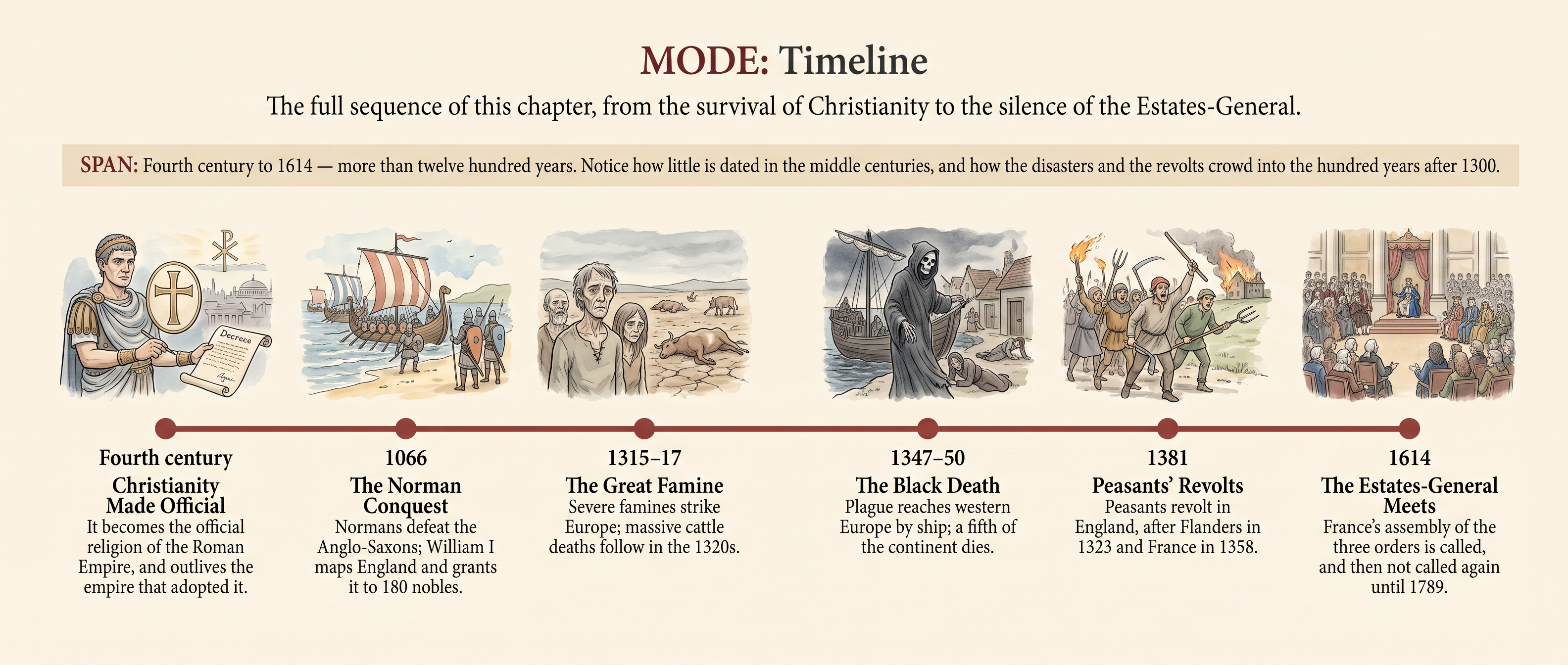
Fig. 4.18 – The three orders: the whole chronology.
What The Evidence Cannot Tell Us
Almost everything we have read was written by the people at the top. Chronicles, rules, poems, an abbot’s account of his own building work, an abbess defending inequality — the first and second orders wrote, and the third order was written about.
The peasants who fill this chapter left almost no words of their own. We meet them in estate records, in prices and in tax lists, which count what a lord could see and value, and nothing else. Their passive resistance survives in history only because it annoyed someone who could write.
And the silence falls unevenly. The women who spun the thread, made the candles, pressed the grapes and died younger than the men because they ate worse appear in the sources mainly when a lord’s accounts happen to need them.
4.22 NCERT Questions
Answer In Brief
Describe two features of early feudal society in France.
How did long-term changes in population levels affect economy and society in Europe?
Why did knights become a distinct group, and when did they decline?
What was the function of medieval monasteries?
Answer In A Short Essay
Imagine and describe a day in the life of a craftsman in a medieval French town.
Compare the conditions of life for a French serf and a Roman slave.
4.23 Check Your Concepts
Look carefully at the plan of the manorial estate in Fig. 4.5. List the parts of the estate that a peasant family would have used in the course of a single year, and then name one thing the plan cannot tell you about that family.
Read the extract ‘Abbess Hildegard On Human Difference’ again. What two separate arguments does she use to justify inequality among human beings, and whose position does that argument protect?
Show, with the arithmetic, why the switch from a two-field to a three-field rotation increased the amount of land under crop each year — even though not a single new acre was cleared.
A free peasant and a serf both worked land they did not own, and both handed over much of what they produced. What, then, actually separated them? Answer in your own words, without using a table.
Merchants, bankers, lawyers and escaped serfs lived in the new towns. Explain why none of them could be fitted into the scheme of three orders, and what that failure tells us about the scheme itself.
In France, feudal relations grew up gradually over centuries. In England, they were introduced after a conquest, when William I mapped the land and granted it to 180 Norman nobles. What difference did that make to the power of the king in each country?
The Black Death killed a fifth of Europe. Trace the chain that led from that catastrophe to the peasant revolts of 1323, 1358 and 1381 — and explain why the lords, having crushed every revolt, still could not restore the feudal privileges of earlier days.
The sources in this chapter were written by an abbess, an abbot, a poet, a chronicler of the plague and the compilers of monastic rules. Almost none were written by peasants. Name two kinds of evidence about peasants that do survive, say what each was originally designed to record, and explain how that shapes what we can and cannot know about the third order.
4.19 Social Unrest
Why The Lords Tried To Turn Back The Clock
The income of the lords was badly hit by the crisis. Both halves of their position moved against them at once: agricultural prices came down, so what they sold fetched less, and the wages of labourers increased, so what they had to pay cost more.
In desperation, they reached for the past. They tried to give up the money-contracts they had entered into, and to revive labour-services — that is, to go back to being paid in a peasant’s working days rather than in cash.
Understand what was being demanded. A man who had been paying rent, and selling his own crop, was now being told to return to unpaid work on the lord’s fields, as his grandfather had done.
The Revolts
This was violently opposed by the peasants. And it is worth noting exactly which peasants led the opposition: particularly the better-educated and the more prosperous ones.
The revolts came in three waves, in three countries. In 1323, peasants revolted in Flanders. In 1358, they revolted in France. In 1381, they revolted in England.
Q. Why did the better-off peasants lead the resistance, rather than the poorest?
A. Because they had the most to lose. The prosperity of the previous centuries had given them cash, holdings and standing — and it was precisely those gains that the lords were now trying to take back.
The Road To Revolt Prices fall and wages rise → the lords’ incomes collapse → they try to scrap money-contracts and revive labour-services → peasants who had gained most resist most fiercely → revolts in 1323, 1358 and 1381.
What The Revolts Achieved
These rebellions were ruthlessly crushed. Every one of them. On the surface, then, the lords won.
But look at where the rebellions were fiercest. They occurred with the most violent intensity in exactly those areas which had experienced the prosperity of the economic expansion. That is not a coincidence; it is a sign of what the peasants were fighting for. They were attempting to protect the gains they had made in previous centuries.
And despite the severe repression, the sheer intensity of peasant opposition ensured that the old feudal relations could not be reimposed. Crushing a revolt is one thing; restoring a whole system of unpaid labour, against a population that has just shown what it will do, is another.
There was a second reason, and it had nothing to do with courage. The money economy was too far advanced to be reversed. Rents in cash, crops sold to traders, wages paid to labourers — these had become the ordinary way business was done, and no lord could simply un-invent them.
Therefore, though the lords succeeded in crushing the revolts, the peasants ensured that the feudal privileges of earlier days could not be reinvented.
Q5. The lords crushed the peasant revolts. Why could they not bring back the old feudal privileges?
A. Because the intensity of the resistance made the old relations impossible to reimpose — and because the money economy had gone too far to be reversed. Rents in cash and wages for labour had become normal, and no lord could un-invent them.
Did The Peasants Win Or Lose? One view: they lost. Every revolt was crushed, and the repression was severe. Another view: they won what mattered. The old feudal privileges were never restored. What would you need to know to decide — how many died, or what a peasant owed his lord fifty years later?
The Century In One Column
Before moving on to the political changes, set the events of these centuries side by side. NCERT lists them together, and they are given below.
Fig. 4.15 – Eleventh to fourteenth centuries.
Now do something with that list. Read through the events and processes given with their dates, and connect them into a single narrative account — one continuous story in your own words, in which each item leads into, or is made possible by, the ones before it. Where you cannot find a link, say so; not everything in a century is caused by everything else.