Chapter 6: Displacing Indigenous Peoples
In 1968, an audience in Australia sat down to hear a lecture by an anthropologist named W.E.H. Stanner. What he said left them stunned. He called his lecture ‘The Great Australian Silence’.
The silence he meant was not the silence of the desert. It was the silence of the history books. Australia’s textbooks told the story of the continent as though it had begun with the arrival of Captain Cook — as though nothing worth recording had happened in the forty thousand years before that. The people who had lived there all along appeared, if at all, only as obstacles.
Stanner’s point was uncomfortable, and it was not only about Australia. Until the middle of the twentieth century, American history books did much the same. They described how Europeans had ‘discovered’ the Americas. The native peoples were mentioned mainly to suggest that they were hostile to the newcomers.
A silence like that does not happen by accident. Somebody has to leave things out — and somebody has to decide that they were not worth putting in.
This chapter is about what was left out. It is about the peoples of America and Australia who lost their land, and about the settlers who took it and then wrote the histories. It is also about how, within living memory, historians began to notice the hole in their own books and set about filling it.
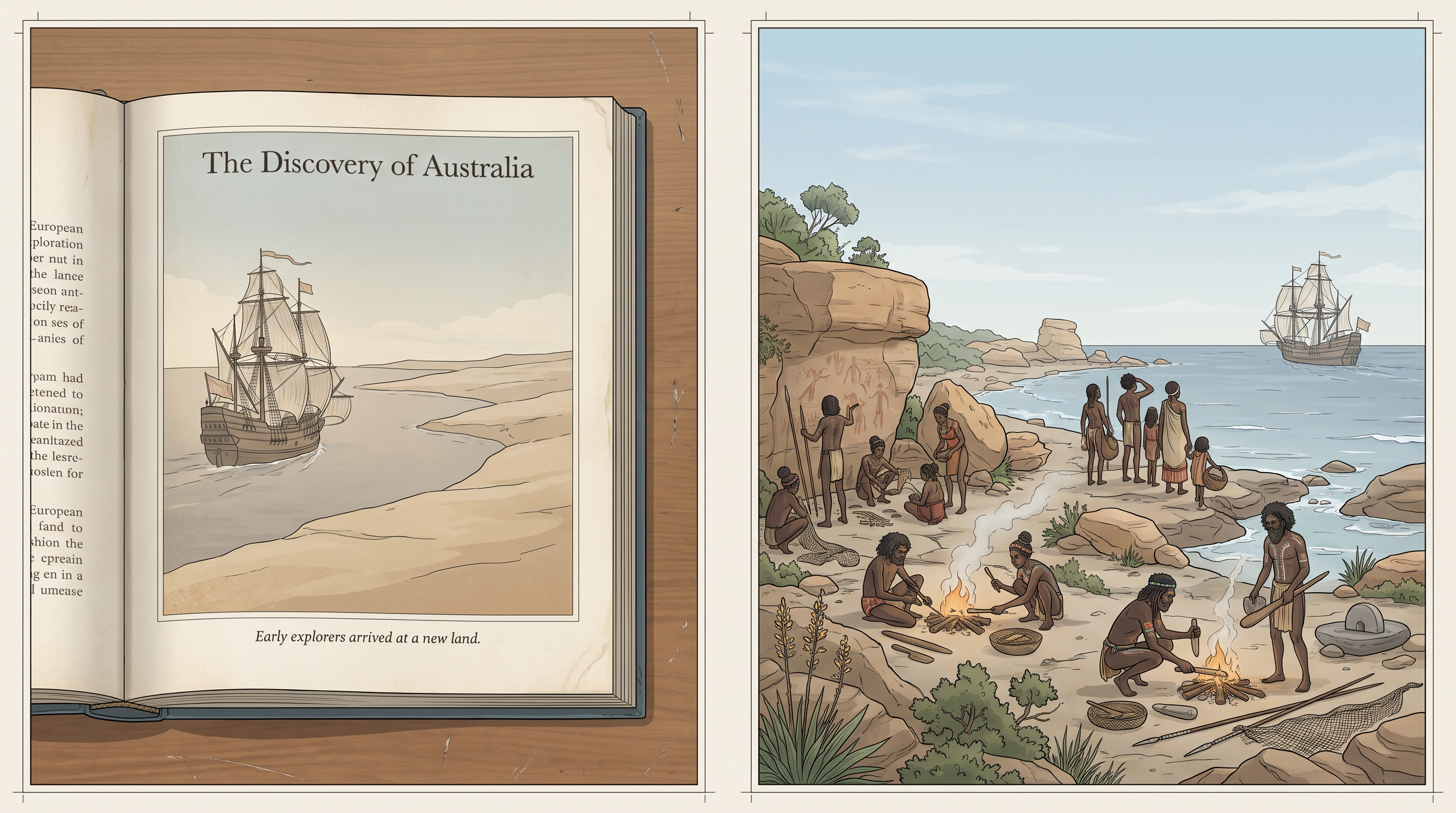
Fig. 6.0 – The history book’s empty shore versus the lived reality.
6.1 Introduction
This chapter tells parts of the history of the native peoples of America and Australia. In Chapter 8 you read about the Spanish and Portuguese colonisation of South America. Here the story moves on, and it moves north and south at once.
From the eighteenth century, immigrants from Europe began to settle in far more places than before. They came to South America, Central America and North America, to South Africa, and to Australia and New Zealand. Wherever they settled in numbers, the peoples already living there were pushed out into other areas.
Colonies That Became Countries
The settlements that Europeans made overseas were called colonies — territories occupied and governed by people from another country, for that country’s benefit. The country the settlers had come from was known as the ‘mother-country’.
In time, the European inhabitants of some of these colonies stopped taking orders from the mother-country and declared themselves independent of it. When that happened, the colony became a ‘state’ or a country in its own right. The United States of America and Canada came into being in exactly this way, and so, later, did Australia.
Notice who is doing the deciding in that sentence. Independence, when it came, was independence for the settlers. It did not return the land to the peoples who had lived on it first, and it did not make them citizens. That gap between the two independences is one of the things this chapter is about.
The People Who Are Hardly Seen
In the nineteenth and twentieth centuries, people from Asian countries also migrated to some of these countries. Today the descendants of these Europeans and Asians form the majority of the population, and the number of native inhabitants is very small.
They are hardly seen in the towns. People have forgotten that these were once the peoples who occupied much of the country. The forgetting is so complete that most citizens no longer notice the one place where the native presence survives in plain sight — the map.
Many of the names of rivers and towns come from native names. Ohio, Mississippi and Seattle in the USA are native words. So is Saskatchewan in Canada. Wollongong and Parramatta, both near the east coast of Australia, are native names too. Every one of them is spoken daily by people who could not say where the word came from.
Map
Map 6.A1 Caption: The lands where European immigrants settled in large numbers from the eighteenth century onwards. Brief: World outline map. Shade South America, Central America, North America, South Africa, Australia and New Zealand. Label each. Do not draw modern national boundaries inside these regions; this map shows where settlement happened, not present-day states. Where India appears on the world outline, show its full extent as officially defined.
How History Was Written — And Who Was Left Out
Till the middle of the twentieth century, American and Australian history textbooks described how Europeans had ‘discovered’ the Americas and Australia. The native peoples were hardly mentioned. When they did appear, it was usually to suggest that they had been hostile to Europeans.
These peoples were studied, however — but as objects of curiosity rather than as makers of history. From the 1840s, anthropologists in America began to examine them. Anthropology is the study of human societies and their cultures, and in this period it was used to explain how the natives differed from Europeans, not to record what the natives themselves had to say.
Much later, from the 1960s, the native peoples were encouraged to write their own histories, or to dictate them. Where a historian records what a person says about the past instead of reading it in a document, the result is called oral history. For peoples who had never written their languages down, oral history was not a second-best method. It was the only door into a past that no archive held.
The Silence Begins To Break
Today it is possible to read historical works and fiction written by the native peoples themselves. Visitors to museums in these countries will find galleries of ‘native art’, and special museums that show the aboriginal way of life.
The new National Museum of the American Indian in the USA has been curated by American Indians themselves. That word — curated — carries the whole change in it. It means that the people on display are now the people choosing what is displayed, and how.
6.2 European Imperialism
The American empires of Spain and Portugal, which you met in Chapter 8, did not expand after the seventeenth century. Their moment had passed. From that time other countries — France, Holland and England — began to extend their trading activities and to establish colonies of their own, in America, Africa and Asia.
Ireland, lying just across the sea from England, was virtually a colony of England as well. It was never called one, but the landowners there were mostly English settlers, and the land belonged to them rather than to the Irish who worked it.
Profit Everywhere, Control Of Different Kinds
From the eighteenth century, something became obvious. The motive that drove Europeans to found colonies was almost always the same — the prospect of profit. But the nature of the control they established varied enormously from place to place.
Profit is the constant. How you get it depends on what is already there — a dense farming population, an empty-looking grassland, a coast worth trading on. Hold on to that idea, because the whole difference between British India and settler Australia grows out of it.
South Asia: Rule Through An Existing State
In South Asia, trading companies like the East India Company made themselves into political powers. The Company had come to buy and sell, but it defeated local rulers and annexed their territories, and turned itself into a government. This is the story you met in Class 9 and 10 as the beginning of British rule in India.
Having taken over, the Company did not sweep away what it found. It retained the older, well-developed administrative system already in place, and used it to collect taxes from landowners. A working revenue machine was too valuable to break.
Later, the British built railways to make trade easier, excavated mines, and established big plantations — large estates growing a single crop, such as tea or indigo, for sale far away. Notice what is missing from this list: there is no wave of European families arriving to farm the land themselves. In India, Europeans ruled and taxed. They did not settle.
Africa: The Coast First, Then The Interior
In Africa, Europeans for a long time traded only on the coast. South Africa was the exception, where they moved inland much earlier. Only in the late nineteenth century did the other European powers venture into the African interior at all.
Once they did, the scramble was quick. Some of the European countries reached an agreement among themselves to divide up Africa as colonies. The agreement was between Europeans; the peoples whose land was being divided were not asked.
Who Is A ‘Settler’?
The word settler is used for a particular kind of European abroad — one who came not to trade or govern but to live, farm and stay. It describes the Dutch in South Africa, the British in Ireland, New Zealand and Australia, and the Europeans in America.
The official language in these colonies was English. Canada is the exception, and French is an official language there too — a trace, still visible on every Canadian cereal packet, of who arrived first.
Naming The New World
Europeans did not only take these lands. They named them, and the names have stuck.
‘America’ was first used after the publication of the travels of Amerigo Vespucci (1451-1512), and the continent carries his first name to this day. ‘Canada’ comes from kanata, which means ‘village’ in the language of the Huron-Iroquois — the word the explorer Jacques Cartier heard in 1535 and took to be the name of a country.
‘Australia’ was a sixteenth-century name for land in the Great Southern Ocean; austral is Latin for ‘south’. ‘New Zealand’ was the name given by Tasman of Holland, the first European to sight these islands in 1642, and zee is Dutch for ‘sea’.
That last habit ran deep. The Geographical Dictionary (pp 805-22) lists over a hundred place-names in the Americas and Australia which begin with ‘New’ — New England, New South Wales, and dozens more. A settler naming his home after the place he had left was saying something about which world he thought was the real one.
6.3 North America
The continent of North America extends from the Arctic Circle in the far north to the Tropic of Cancer in the south, and from the Pacific Ocean on one side to the Atlantic on the other. It is a very large piece of the earth, and it is not one landscape but many.
West of the chain of the Rocky Mountains lies the desert of Arizona and Nevada. Still further west are the Sierra Nevada mountains. To the east of the Rockies stretch the Great Plains, the Great Lakes, the valleys of the Mississippi and the Ohio, and the Appalachian Mountains. To the south is Mexico. Forty per cent of Canada is covered with forests.
Map
Map 6.A2 Caption: The landscapes of North America — mountains, plains, lakes and rivers named in this chapter. Brief: Physical map of North America. Mark and label the Rocky Mountains, the Sierra Nevada, the deserts of Arizona and Nevada, the Great Plains, the Great Lakes, the Mississippi and Ohio rivers, the Appalachian Mountains, and Mexico to the south. Mark the Arctic Circle and the Tropic of Cancer as lines. Show no political boundaries and no dates; this map is for orientation only.
A Continent Of Resources
Oil, gas and mineral resources are found in many areas of North America. That single fact explains a great deal about the present — it is why so many big industries grew up in the USA and Canada. Today wheat, corn and fruit are grown extensively across the continent, and fishing is a major industry in Canada.
Two Hundred Years, And Thousands Before Them
Here is the point that the rest of this chapter rests on. The mining, the industry and the extensive agriculture have all been developed only in the last 200 years, and they were developed by immigrants — from Europe, from Africa and from China. Not all of those immigrants came by choice; the chapter will return to the Africans who were brought as slaves, and to the Chinese workers who laid the railway lines.
But there were people who had been living in North America for thousands of years before the Europeans even learnt that the continent existed. Two hundred years of mines and cornfields sit on top of a much longer human history.
6.3.1 The Native Peoples
The earliest inhabitants of North America came from Asia over 30,000 years ago. They walked. At that time a land-bridge lay across the Bering Straits — the narrow stretch of water that today separates north-eastern Asia from Alaska — and people crossed it on foot.
During the last Ice Age, 10,000 years ago, they moved further south into the warmer parts of the continent. The oldest artefact found in America is an arrow-point, and it is 11,000 years old. An artefact is any object made or shaped by human hands, and for a period with no writing it is the historian’s main witness.
The population started to increase about 5,000 years ago, when the climate became more stable. Steady weather means dependable food, and dependable food means more children who live to grow up.
Before you go further, fix the scale in your mind. The entire European presence in North America is a few centuries long. The human presence there is more than thirty thousand years long. The sequence is set out in Fig. 6.1.
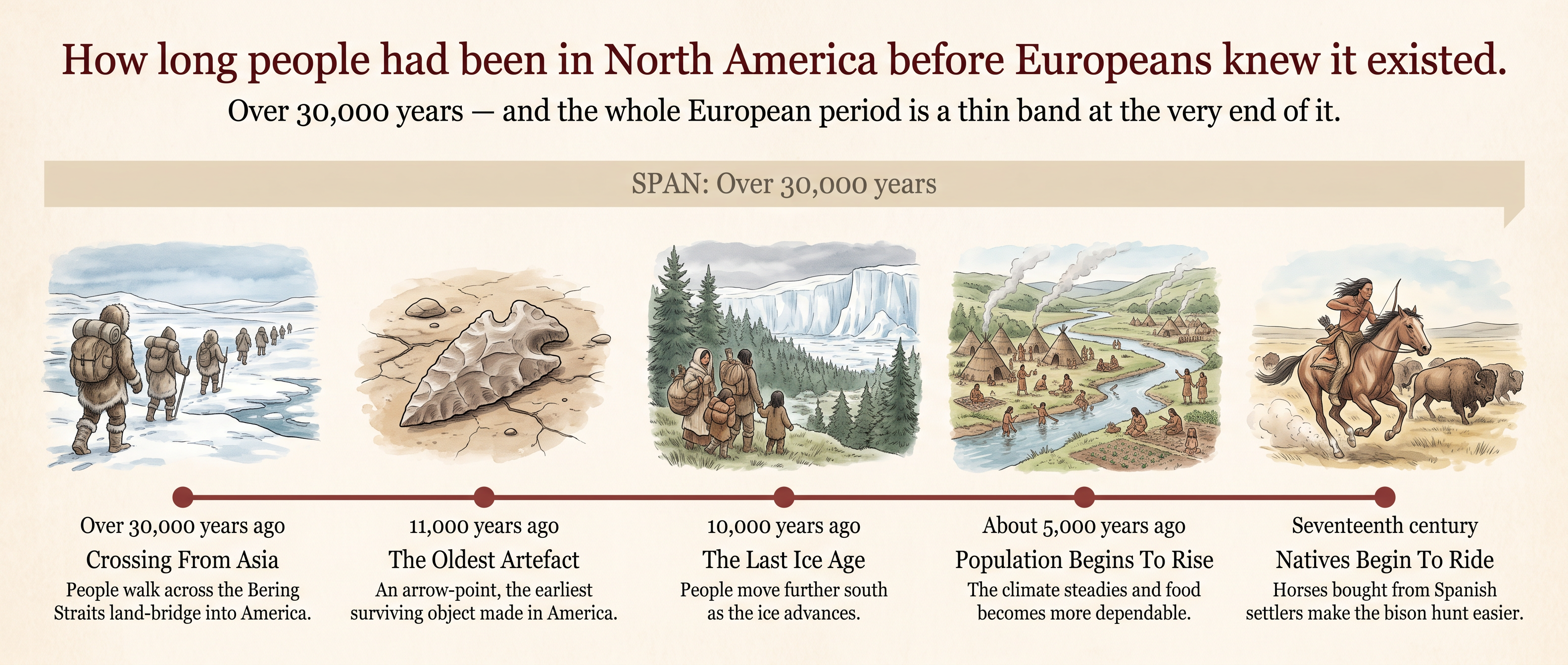
Fig. 6.1 – The long human past of North America.
What ‘Native’ Means
The word native simply means a person born in the place where he or she lives. There is nothing else in it.
But words carry the history of their use. Till the early twentieth century, Europeans used ‘native’ to describe the inhabitants of the countries they had colonised — and in their mouths it came to suggest someone backward, someone not their equal. The word will appear throughout this chapter. Read it with that history attached.
Diversity At Every Hand
Before you read what Europeans said about these peoples, read what a writer looking back on them saw. William Macleish begins his book on the continent by imagining the day before the Europeans arrived — not an empty wilderness waiting to be found, but a crowded human world.
The word to hold on to is ‘diversity’. Macleish is not saying that the natives all lived one way. He is saying the opposite. There were more than a hundred languages and every possible way of getting food, and the choices people made followed partly from the soil they had and partly from their own ideas about how life should be lived.
There was therefore no single native people to describe, and no single native way of life. Almost every generalisation the settlers later made about ‘the Indian’ breaks on that one fact.
Living With The Land
These peoples lived in bands — small communities held together by kinship — in villages along river valleys. They ate fish and meat, and cultivated vegetables and maize.
They often went on long journeys in search of meat, chiefly that of bison, the wild buffalo that roamed the grasslands. Hunting became easier from the seventeenth century, when the natives started to ride horses, which they bought from Spanish settlers. Even then, they killed only as many animals as they needed for food. Hold on to that restraint; it is the exact opposite of what the settlers would later do to the same herds.
They did not attempt extensive agriculture. Because they did not produce a surplus — food left over after everyone has eaten — they did not develop kingdoms and empires, as people did in Central and South America. A king, an army and a tax collector all have to be fed by somebody else’s spare grain.
Land Nobody Owned
There were some instances of quarrels between tribes over territory. But by and large, control of land was not an issue. They were content with the food and shelter they got from the land, without feeling any need to ‘own’ it.
An important feature of their tradition was that of making formal alliances and friendships, and exchanging gifts. Goods were obtained not by buying them, but as gifts. This is an entire economy, and it runs on relationships rather than prices. A gift creates a bond between two groups; a purchase ends the relationship the moment payment is made.
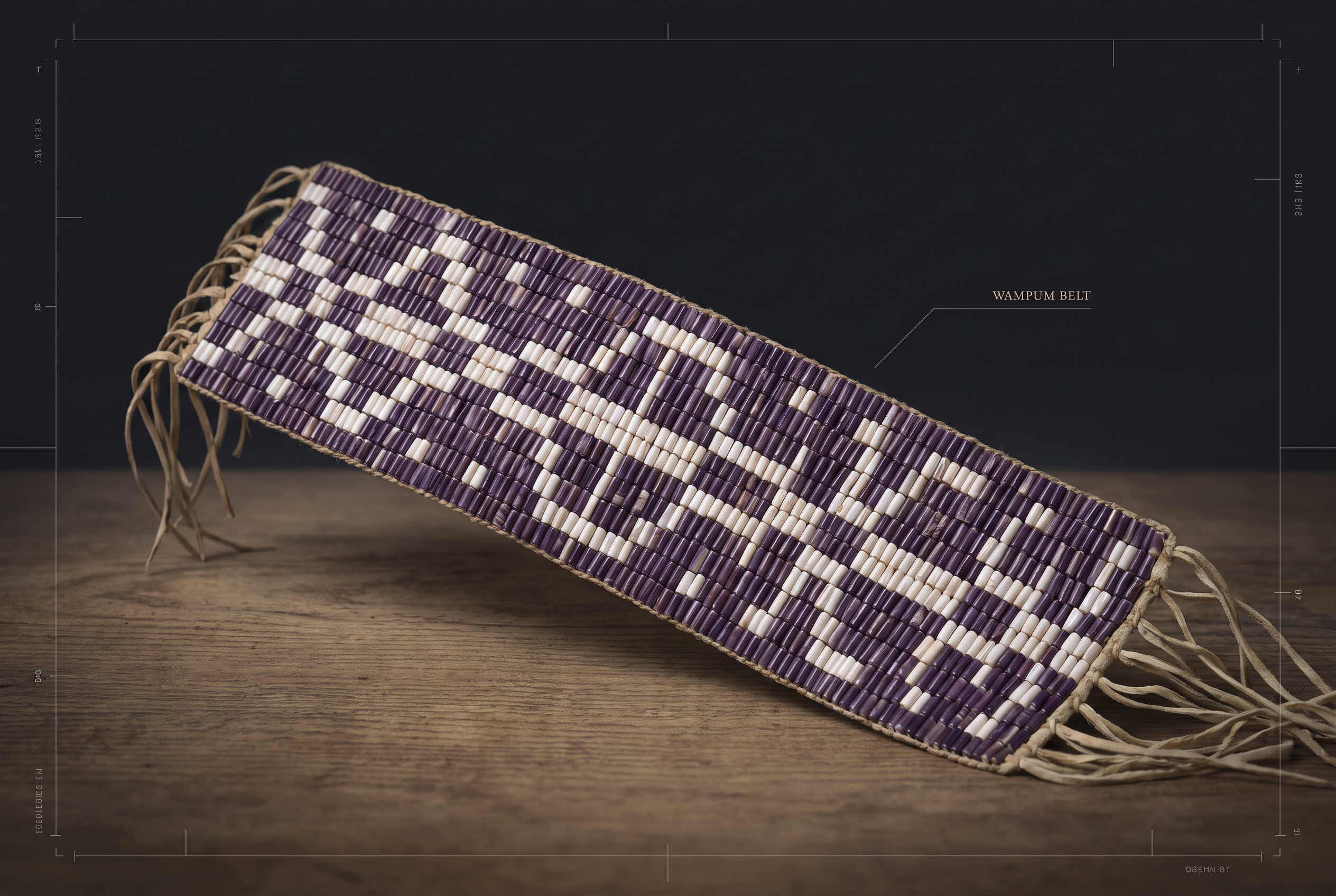
Fig. 6.2 – Wampum belt exchanged by native tribes.
A treaty, for these peoples, was not a sheet of paper to be filed away. It was a belt of shells, handed over and kept, with the agreement worked into its pattern. Remember that when, later in this chapter, natives are asked to sign treaties selling their land.
Reading The Land Instead Of A Book
Numerous languages were spoken in North America, though these were not written down. Each tribe had accounts of its origins and its earlier history, and passed them on by speech from one generation to the next.
They believed that time moved in cycles, returning rather than marching forward. That is a very different idea from the European one of history as a straight line of progress. They were also skilled craftspeople, and wove beautiful textiles.
And they could read the land. They could understand the climates and the different landscapes in the way that literate people read written texts. A tracker who can tell from a bent stem what passed that way, and when, is doing exactly what you are doing now with these sentences.
Hold those two facts together. A people without writing is not a people without knowledge or without history. It is a people whose knowledge is stored somewhere the newcomers did not know how to look.
6.3.2 Encounters With Europeans
The Words We Use
Before the encounter itself, a word of caution about words. English uses several different terms for the native peoples of the ‘New World’, and they do not all mean the same thing. Some were chosen by outsiders and some by the peoples themselves, and you can hear the difference.
Aborigine means the native people of Australia. It comes from Latin: ab means ‘from’ and origine means ‘the beginning’ — the people who were there from the start. Aboriginal is properly an adjective, though it is often misused as a noun.
American Indian, and its shortened forms Amerind and Amerindian, refer to the native peoples of North and South America and the Caribbean. First Nations peoples is the term for the organised native groups recognised by the Canadian government. The Indians Act of 1876 called them ‘bands’; from the 1980s the word ‘nations’ has been used instead. That change of word was a change of status, and it took a century.
Indigenous people means people belonging naturally to a place. Native American is the indigenous people of the Americas, and this is the term now commonly used. ‘Red Indian’ was the name given to the brown-complexioned people whose land Columbus mistook for India — a term built on somebody else’s navigational error, and one you will not see used today.
There is a stranger afterlife to these names. Names of native tribes are often given to things entirely unconnected with them: Dakota is an aeroplane, Cherokee a jeep, Pontiac a car, and Mohawk a haircut. The peoples themselves vanished from the history books while their names were sold back as brands.
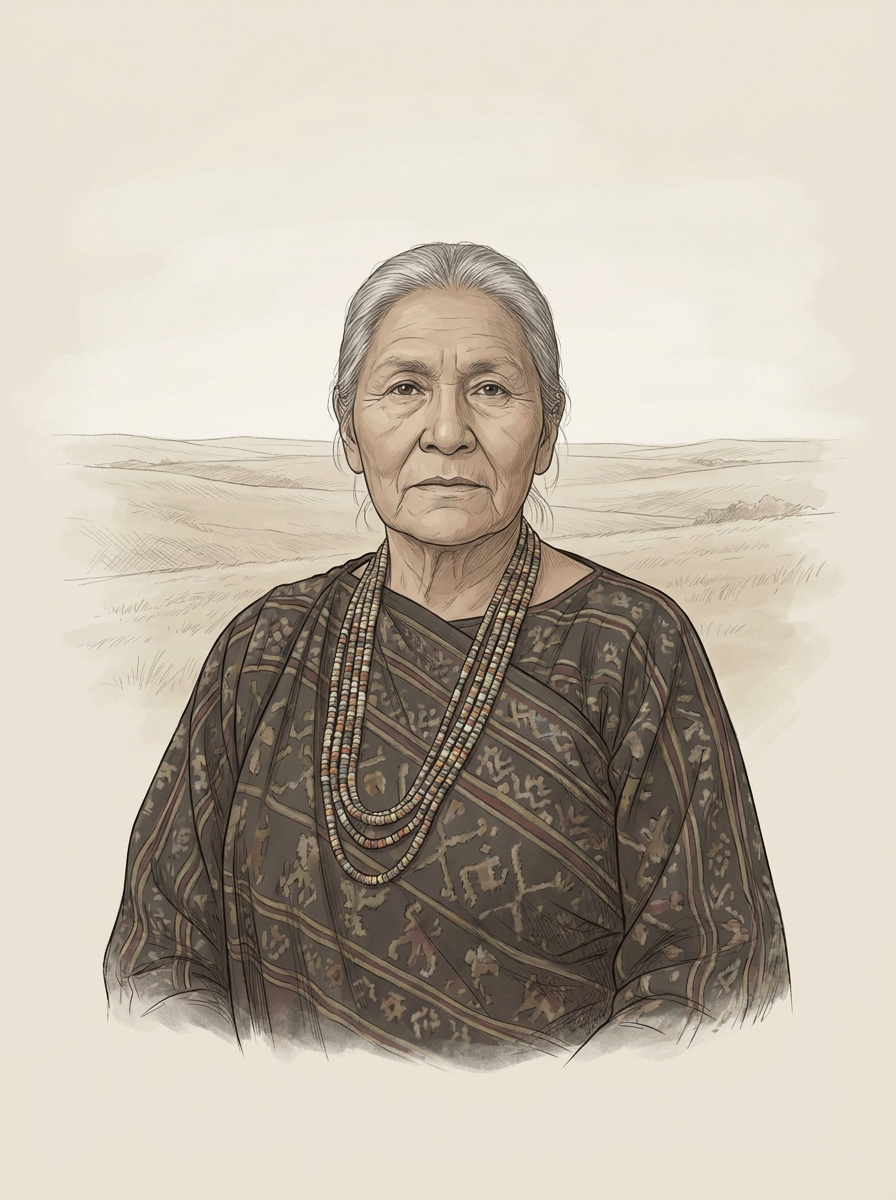
Fig. 6.3 – A woman of the Winnebago tribe.
Read that caption again. It says, quietly, that in the 1860s the people of this tribe were moved to Nebraska. A photograph of a person and a sentence about a forced removal sit side by side, and the second is easy to miss.
A Prophecy And A Trinket
The native peoples told the story of the encounter in their own way, and one of those tellings survives. The Hopis, a native tribe who now live near California, keep an account of what happened when the Spanish arrived. It was retold in a talk given by Lee Brown in 1986.
The whole meeting is contained in one gesture. A hand is held out for a handshake — the greeting of an equal, the beginning of a relationship. What is dropped into it is a trinket — a cheap object, a thing of no value, given in place of a bond. The Hopis understood at once what kind of exchange was being offered.
Fish, Furs And Friendliness
The Europeans who came to the north of the continent were a different sort from the Spanish who had gone south. In the seventeenth century, European traders reached the north coast of North America after a difficult two-month voyage, and were relieved to find the native peoples friendly and welcoming.
The Spanish in South America had been overcome by the abundance of gold in the country. These adventurers had no gold to dream about. They came to trade in fish and furs, and in this they got the willing help of the natives, who were expert at hunting. For a while, the two sides needed each other.
Further south, along the Mississippi river, the French found something they had not expected — a working system of exchange already in place. The natives held regular gatherings at which they exchanged handicrafts unique to a particular tribe, or food items that were not available in other regions. Nobody had taught them to trade.
What Changed Hands
In exchange for local products, the Europeans gave the natives blankets and iron vessels, which they used sometimes in place of their clay pots. They gave them guns, a useful supplement to bows and arrows for killing animals. And they gave them alcohol.
This last item was something the natives had not known earlier, and they became addicted to it. The addiction suited the Europeans, because it enabled them to dictate terms of trade. A trading partner who needs what you alone can supply is no longer a partner; he is a man who will accept whatever price you name.
The traffic ran both ways, though not evenly. The Europeans acquired from the natives an addiction to tobacco.
The First Footholds
The dates of the first European landings and settlements in the north are worth laying side by side, because two rival powers — France and Britain — were working along the same coasts at the same time.
Notice how close together 1607 and 1608 are. The British colony of Virginia and the French colony of Quebec were founded within a year of each other, at opposite ends of the same coastline. The rivalry between those two powers, and the wars it produced, will run through the rest of this story — and the native peoples will be caught between them.
6.3.3 Mutual Perceptions
What ‘Civilised’ Meant To Europeans
In the eighteenth century, western Europeans had a working definition of a ‘civilised’ people. It had three tests: literacy, an organised religion, and urbanism — that is, living in towns and cities. Measured against that list, the natives of America appeared ‘uncivilised’.
Look closely at the tests. Every one of them describes Europe. A people who kept their history by speech, who found the sacred in the land itself, and who lived in villages along river valleys, failed all three — not because they lacked knowledge, faith or community, but because they held them in a shape the tester did not recognise.
The Noble Savage
Not every European looked down on them. To some, like the French philosopher Jean-Jacques Rousseau, such people were to be admired, precisely because they were untouched by the corruptions of ‘civilisation’. A popular term for this admired figure was ‘the noble savage’.
But listen to the phrase. It grants nobility while keeping the word ‘savage’, and it praises the natives for what they supposedly lacked. Rousseau had never met a native American. He was using them to argue about Europe.
The English poet William Wordsworth gives us another perspective, and he had not met one either. He described them as living ‘amid wilds/Where fancy hath small liberty to grace/The affections, to exalt them or refine’. Unpacked, that means he thought people living close to nature had only limited powers of imagination and emotion.
Someone Who Had Actually Been There
Washington Irving was a writer much younger than Wordsworth, and he had actually met native people. He described them quite differently. Read him against the poets, and notice how much of what the poets called native character turns out to be the behaviour of people being watched by strangers.
Irving’s point is a lesson in method. The silent, unsmiling ‘Indian’ of European poetry was silent because he was among people he did not trust and could not understand. Put a white man in the same position and he would be silent too. What the Europeans had recorded as a permanent trait of a race was, in fact, a reaction to themselves.
And when the natives were among their own people, they were mimicking the whites and laughing at them — while the whites went on believing they had been received with profound respect.
That mockery has a longer history than the Europeans knew. Many folk tales of the natives made fun of Europeans and described them as greedy and deceitful. Because these were told as imaginary stories, it was only much later that the Europeans understood the references.
Jefferson’s Language
The contempt was not confined to poets and traders. Thomas Jefferson was the third President of the USA and a contemporary of Wordsworth, a man celebrated for his writings on liberty. He spoke of the natives in words that would lead to a public outcry today, calling them ‘This unfortunate race which we have been taking so much pains to civilise… have justified extermination.’
That sentence is worth stopping over. Extermination means killing off a people entirely. A leading champion of liberty could use the word about the original inhabitants of his own country, and be understood, and be admired — because in his mind the natives were not part of the public whose rights he defended.
Gifts And Commodities
The two sides were also using the same objects to mean different things. To the natives, the goods they exchanged with the Europeans were gifts, given in friendship. For the Europeans, dreaming of becoming rich, the fish and furs were commodities — goods produced in order to be sold for a profit.
The prices of the goods the Europeans sold varied from year to year, depending on the supply. The natives could not understand this. They had no sense of the ‘market’ in faraway Europe, where a glut of furs one year meant low prices the next. They were puzzled by the fact that the European traders sometimes gave them a great deal in exchange for their goods, and sometimes very little.
They were also saddened by the greed of the Europeans. In their impatience to get furs, the traders had slaughtered hundreds of beavers. The natives were very uneasy at this, fearing that the animals would take revenge on them for the destruction.
From Traders To Settlers
Following the first Europeans, who were traders, came those who intended to ‘settle’. From the seventeenth century, there were groups of Europeans who were being persecuted for belonging to a different sect of Christianity — Protestants living in predominantly Catholic countries, or Catholics in countries where Protestantism was the official religion. Many of them left Europe and went to America to begin a new life.
As long as there was vacant land, this was not a problem. But gradually the Europeans moved further inland, near native villages. They used their iron tools to cut down the forests and lay out farms.
Natives and Europeans saw different things when they looked at the same forest. The natives identified tracks that were invisible to the Europeans. The Europeans imagined the forest cut down and replaced by cornfields.
Jefferson’s ‘dream’ was a country populated by Europeans with small farms. The natives grew crops for their own needs, not for sale and profit, and thought it wrong to ‘own’ the land. They could not understand what the settlers wanted. In Jefferson’s view, this failure to understand was exactly what made them ‘uncivilised’.
Two New Countries Take Shape
While all this was happening on the ground, two new political units were forming on the map. The dates below trace the making of Canada and of the United States out of European colonies.
The countries we know as Canada and the United States of America came into existence at the end of the eighteenth century. At that time they occupied only a fraction of the land they now cover. Over the next hundred years they extended their control over more and more territory, until they reached their present size.
Large areas were acquired by the USA by purchase. They bought land in the south from France — this is known as the ‘Louisiana Purchase’ — and they bought Alaska, in the far north-west, from Russia. Other land was acquired by war: much of southern USA was won from Mexico.
Map
Map 1 Caption: The expansion of the USA. Brief: Reproduce the NCERT map of the growth of the USA, with its full legend — United States 1783; Louisiana Purchase from France 1803; Ceded by Great Britain 1818, 1842; Purchased from Spain 1819; Annexed 1845; Assigned by treaty with Great Britain 1846; Ceded by Mexico 1848; Gadsden Purchase 1853; Ceded by Russia 1867 (Alaska, inset). Shade each acquisition separately and label the states and territories as printed. These are nineteenth-century boundaries, not present-day ones; state this on the map.
Look at the map and ask the question the map does not ask. Every one of those blocks of colour was bought from, or won from, another European or European-descended power — France, Spain, Britain, Russia, Mexico. It did not occur to anyone that the consent of the natives living in these areas should have been asked. They were on the land; they were not on the deed.
The western frontier of the USA — the moving edge of settlement, the line beyond which the settlers had not yet gone — was a shifting one. As it moved west, the natives were forced to move back before it.
Who Came, And Why They Wanted Land
The landscapes of America changed drastically in the nineteenth century, because the Europeans treated the land differently from the natives. But the settlers were not one kind of person, and it is worth asking what had pushed each group out of Europe.
Some of the migrants from Britain and France were younger sons, who under the inheritance customs of the time would get none of their fathers’ property. In America they could own land of their own. Later there were waves of immigrants from countries like Germany, Sweden and Italy, who had lost their lands to big farmers at home and wanted farms they could own.
People from Poland were happy to work in the prairie grasslands — the vast open plains of the interior — which reminded them of the steppes of their homes. They were excited at being able to buy huge properties at very low prices.
They cleared the land and developed agriculture. They introduced crops — rice and cotton — which could not grow in Europe and could therefore be sold there for a profit. To protect their huge farms from wild animals, wolves and mountain lions were hunted to extinction. Even so, the settlers felt totally secure only with the invention of barbed wire in 1873, which allowed a farmer to fence in more land than he could ever walk around.
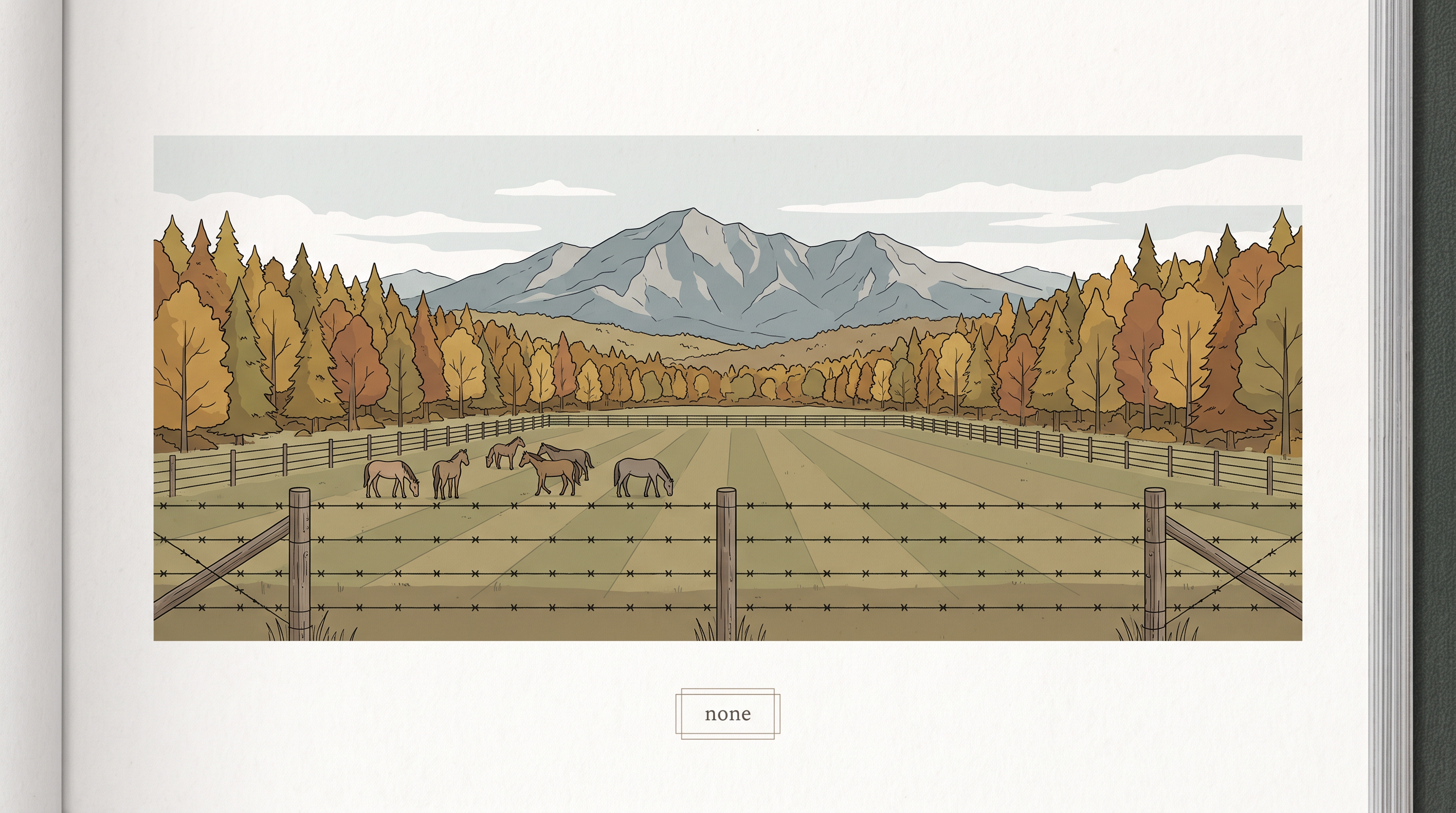
Fig. 6.4 – A ranch in Colorado.
Slavery In The Southern States
In the southern region the climate was too hot for Europeans to work outdoors, and the experience of the South American colonies had shown that the natives who had been enslaved there died in large numbers. So the plantation owners bought slaves in Africa.
Set out plainly, that is the whole of the planters’ reasoning, and it is a chain of decisions made entirely about their own convenience. Nowhere in it is there a question about whether human beings may be bought at all.
Protests by anti-slavery groups eventually led to a ban on the slave trade — the shipping of new captives across the Atlantic. But this changed nothing for the Africans who were already in the USA. They remained slaves, and so did their children, who had been born into a status they had done nothing to acquire.
The northern states of the USA had an economy that did not depend on plantations, and therefore did not depend on slavery. They argued for ending it, condemning it as an inhuman practice. In 1861-65 there was a war between the states that wanted to retain slavery and those supporting abolition. The latter won, and slavery was abolished.
Abolition, however, was not equality. It was only in the twentieth century that African Americans were able to win the battle for civil liberties, and that segregation — the enforced separation of ‘whites’ and ‘non-whites’ in schools and public transport — was ended. A law can be changed in a day. A century was needed to change what the law had made normal.
The Canadian Problem
The Canadian government had a problem of its own, one that seemed to it far more urgent than the question of the natives, and which took a very long time to solve.
In 1763, Canada had been won by the British after a war with France. But the settlers already living there were French, and they repeatedly demanded autonomous political status — the right to run their own affairs rather than be governed as a conquered province.
It was only in 1867 that the problem was solved, by organising Canada as a Confederation of autonomous states, in which each unit kept powers of its own. Two European peoples had found a way to share a country. Neither of them thought to ask the third.
6.3.4 The Native Peoples Lose Their Land
In the USA, as settlement expanded, the natives were induced or forced to move. The land changed hands legally: they signed treaties selling it. That word ‘signed’ is doing an enormous amount of work, and this section is about what lay behind it.
The prices paid were very low. And there were instances when the Americans — a term used here to mean the European people of the USA — cheated the natives outright, taking more land than the treaty allowed or paying less than they had promised.
The Cherokee Case
Even high officials saw nothing wrong in depriving the native peoples of their land. This is clearest in an episode in Georgia, a state in the south-east of the USA.
Officials there argued that the Cherokee tribe was governed by the laws of the state of Georgia, but could not enjoy the rights of citizens. Read that twice: bound by the law, but outside its protection. It was despite the fact that, of all the native peoples, the Cherokees were the ones who had made the most effort to learn English and to understand the American way of life. Even so, they were not allowed the rights of citizens.
The case reached the highest court in the country. In 1832, an important judgment was announced by the US Chief Justice, John Marshall. He said that the Cherokees were ‘a distinct community, occupying its own territory in which the laws of Georgia had no force’, and that they had sovereignty in certain matters. Sovereignty means the right of a community to govern itself and make its own laws.
The Cherokees had won. It made no difference at all.
The Excuses That Were Offered
Those who took the land occupied by the tribes justified it by saying that the natives did not deserve to occupy land which they did not use to the maximum. Land that was not producing a profit was, in this way of thinking, being wasted.
They went on to criticise the natives for being lazy — because they did not use their craft skills to produce goods for the market, because they were not interested in learning English, and because they did not dress ‘correctly’, which meant dressing like Europeans. They deserved to ‘die out’, the settlers argued.
The prairies were cleared for farmland, and the wild bison were killed off. A visiting Frenchman wrote the whole logic of the age in a single sentence: ‘Primitive man will disappear with the primitive animal’.
It is worth naming what that sentence does. It turns a killing into a law of nature. The bison did not disappear; they were shot. The natives did not fade away; they were driven out. Calling the process inevitable was a way of not calling it a choice.
Anthropology Arrives
It is significant that it was at exactly this time, from the 1840s, that the subject of anthropology — which had been developed in France — was introduced in North America. It came out of a curiosity to study the differences between the native ‘primitive’ communities and the ‘civilised’ communities of Europe.
Some anthropologists argued that, just as there were no ‘primitive’ people left to be found in Europe, the American natives too would ‘die out’. A science of humanity was thus recruited to predict, calmly and in print, the disappearance of the people it was studying.
Counting The Losses
Two sets of population figures let you see what a century of settlement had done, and how differently colonisation worked in two parts of the same hemisphere. Compare them carefully, and then say what you think they show.
Work through the arithmetic before you reach for an explanation. In the USA in 1820, natives are 0.6 million out of 11.6 million — about one person in twenty. In Spanish America in 1800, natives are 7.5 million out of 16.9 million — nearly half. The ‘mixed European’ row tells the same story from another angle: 5.3 million in Spanish America, but only 0.1 million in the USA.
Reservations
Meanwhile, the natives were pushed steadily westward. They were given land elsewhere, and told it was ‘theirs in perpetuity’ — that is, theirs for ever. In practice they were often moved again, if any mineral, such as lead or gold, or any oil was found on their lands.
Many tribes were forced to share the land originally occupied by a single tribe, which led to quarrels between them. They were locked off in small areas called reservations — tracts set aside for natives to live in, often land with which they had no earlier connection at all. A people whose history, sacred places and knowledge of the ground were tied to one landscape were dropped into another.
They did not give in without a fight. The US army crushed a series of rebellions from 1865 to 1890. In Canada there were armed revolts by the Metis — people of mixed native and European descent — between 1869 and 1885. But after that they gave up.
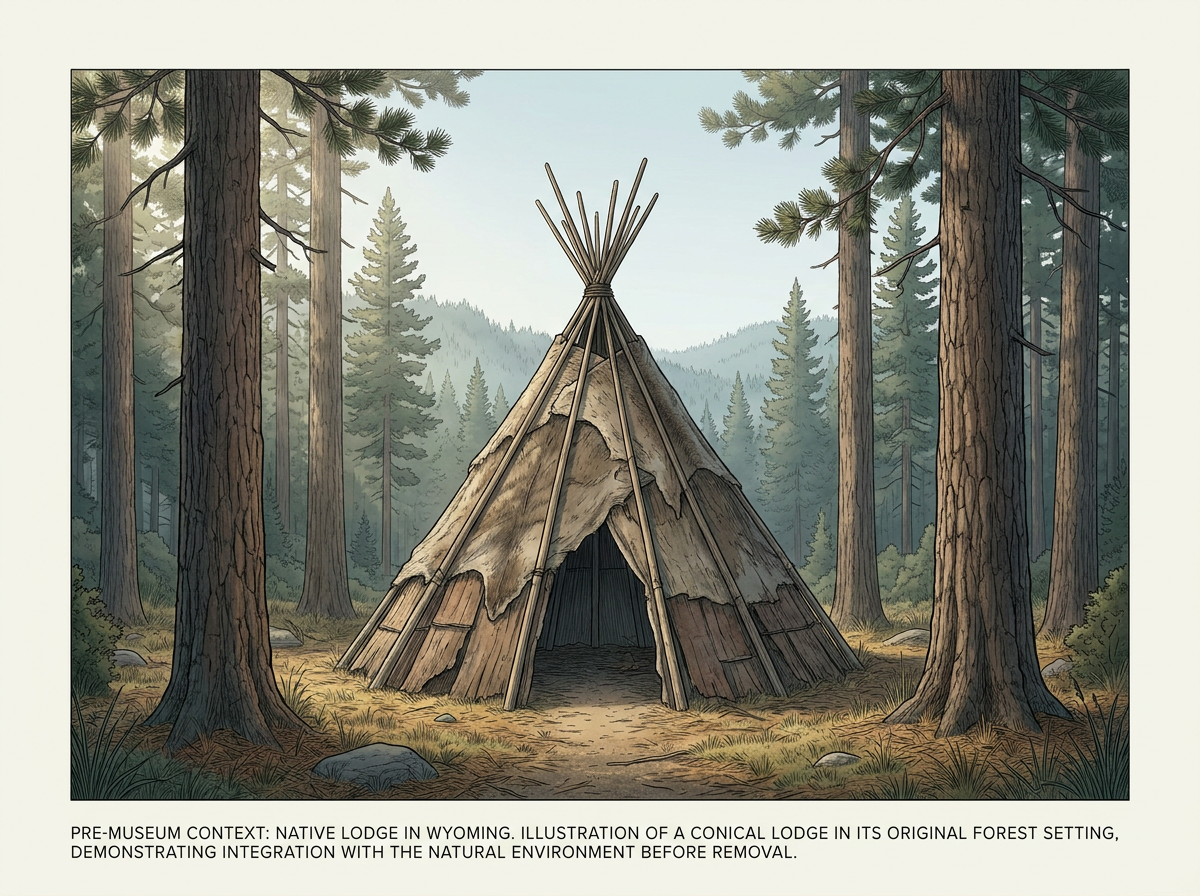
Fig. 6.5 – A native lodge in its original setting.
There is a bitter symmetry in that caption. The people were moved off the land into reservations; their buildings were moved off the land into museums.
‘How Can You Buy Or Sell The Sky?’
In 1854 the President of the USA received a letter from a native leader, Chief Seattle. The president had asked the chief to sign a treaty giving a large part of the land his people lived on to the American government. This was the reply.
Chief Seattle is not refusing a price. He is refusing the idea that there is a price — that the sky, the air and the water are the kind of thing that can be owned by one person and transferred to another. Against that, the American government’s offer of a reservation, and its promise to be a father to its children, sounds exactly like what it was: an instruction dressed up as kindness.
6.3.5 The Gold Rush, And The Growth Of Industries
There was always the hope that there was gold in North America. In the 1840s, traces of gold were found in the USA, in California, on the Pacific coast. That was enough.
The ‘Gold Rush’ followed — thousands of eager Europeans hurrying to America in the hope of making a quick fortune. Very few of them found gold. What they did was fill a continent with people who needed to be carried, fed and supplied.
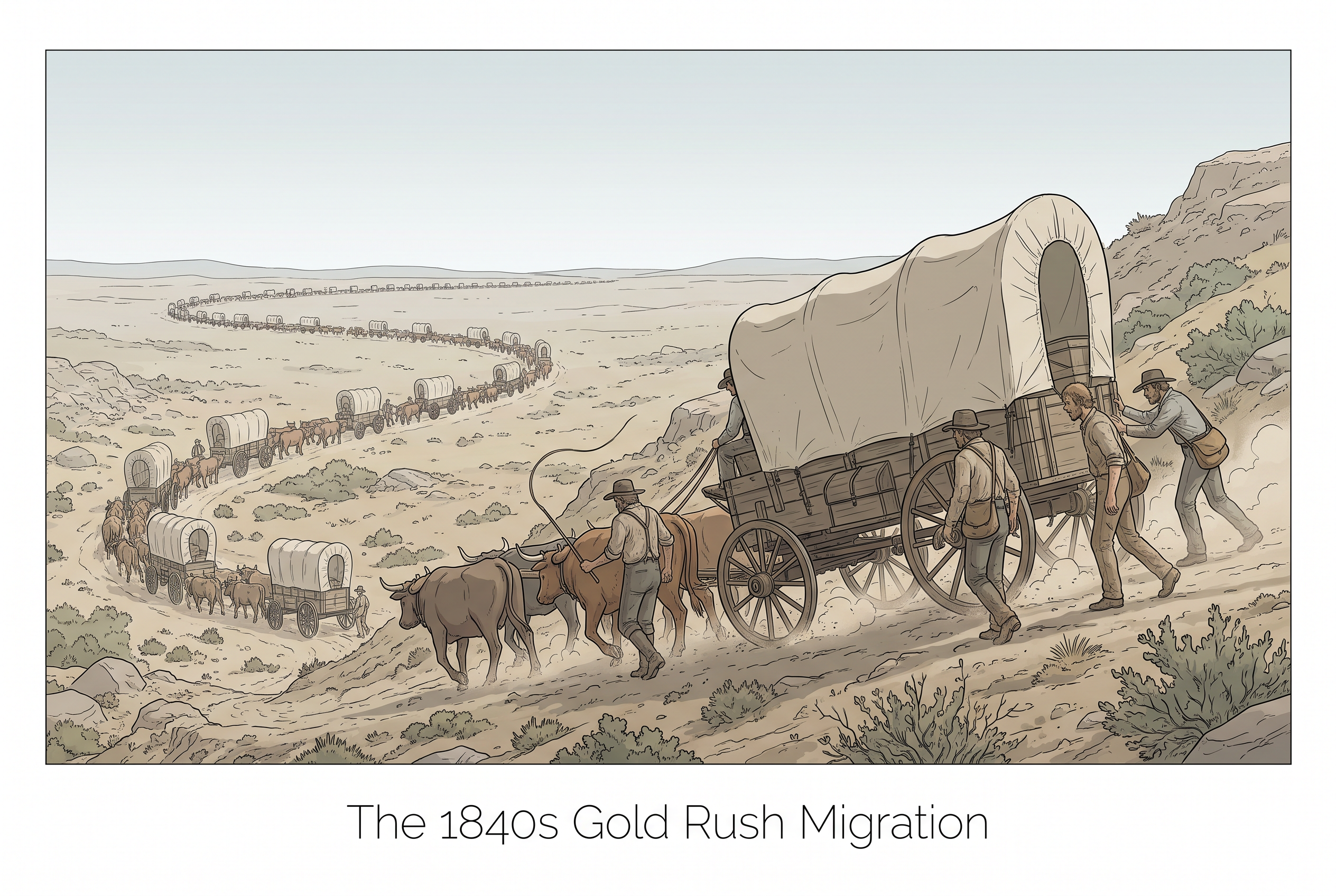
Fig. 6.6 – Moving to California during the Gold Rush.
The Railways, And Who Built Them
Carrying all those people across a continent needed railway lines, and the Gold Rush led directly to the building of them. For this work, thousands of Chinese workers were recruited.
The USA’s railway was completed by 1870, that of Canada by 1885. The men who laid the track across mountains and deserts are the least visible people in this whole story: they were not settlers, they were not natives, and they did not get farms at the end of it.
Andrew Carnegie was a poor immigrant from Scotland who became one of the first millionaire industrialists in the USA, and he caught the mood of the country exactly. ‘The old nations creep on at a snail’s pace’, he said; ‘the Republic thunders on at the speed of an express’. It is a railway metaphor, and it was chosen by a man who was getting rich from steel.
Why This Industrial Revolution Was Different
You have met the Industrial Revolution in Chapter 9. One reason it happened in England when it did was that small peasants were losing their land to big farmers, and moving into jobs in factories. Industry there grew out of people being pushed off the land.
In North America, industries developed for very different reasons. Factories were built to manufacture railway equipment, so that rapid transport could link distant places, and to produce machinery that would make large-scale farming easier. Here industry grew out of distance and out of the size of the farms — not out of a crowd of landless people looking for work.
Industrial towns grew and factories multiplied, in the USA and in Canada alike. In 1860 the USA had been an undeveloped economy. In 1890 it was the leading industrial power in the world. Thirty years is a very short time for such a change, and it is worth asking what made it possible: a continent of resources, a flood of immigrants, and land that had been cleared of the people who lived on it.
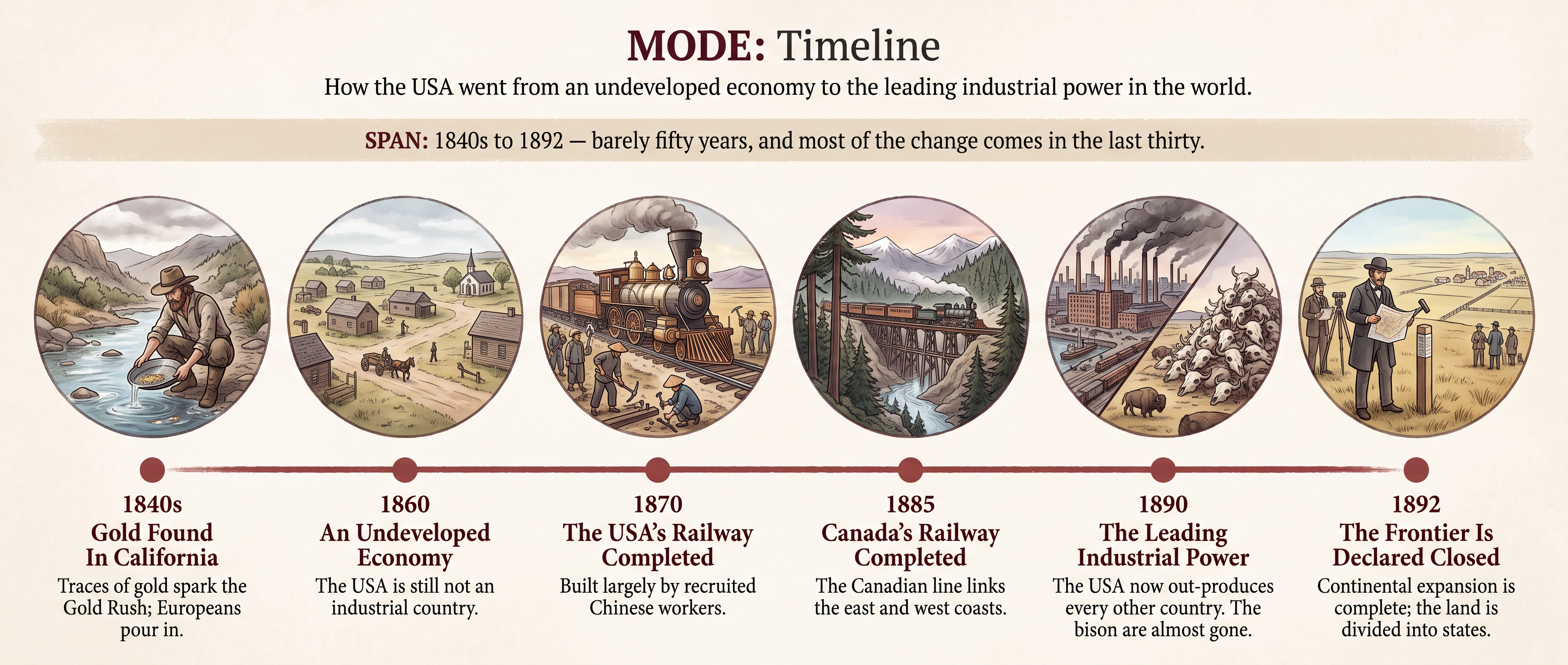
Fig. 6.7 – From Gold Rush to industrial power.
Farms, Bison, And The End Of A Way Of Life
Large-scale agriculture expanded alongside industry. Vast areas were cleared and divided up into farms.
By 1890 the bison had almost been exterminated. Say plainly what that meant for the people of the plains: it ended the life of hunting that the natives had followed for centuries. Their food, their clothing and the journeys around which their year was organised all disappeared with the herds. A way of life does not need to be outlawed if the animal it rests on is shot.
The Frontier Closes, And A New Empire Opens
In 1892, the USA’s continental expansion was complete. The whole area between the Pacific and the Atlantic Oceans had been divided up into states. There no longer remained the ‘frontier’ that had pulled European settlers west for many decades.
The settlers had run out of west. Within a few years, the USA was setting up colonies of its own — in Hawaii and the Philippines, both far out in the Pacific. The country that had begun as a set of colonies in revolt against an empire had become an imperial power itself.
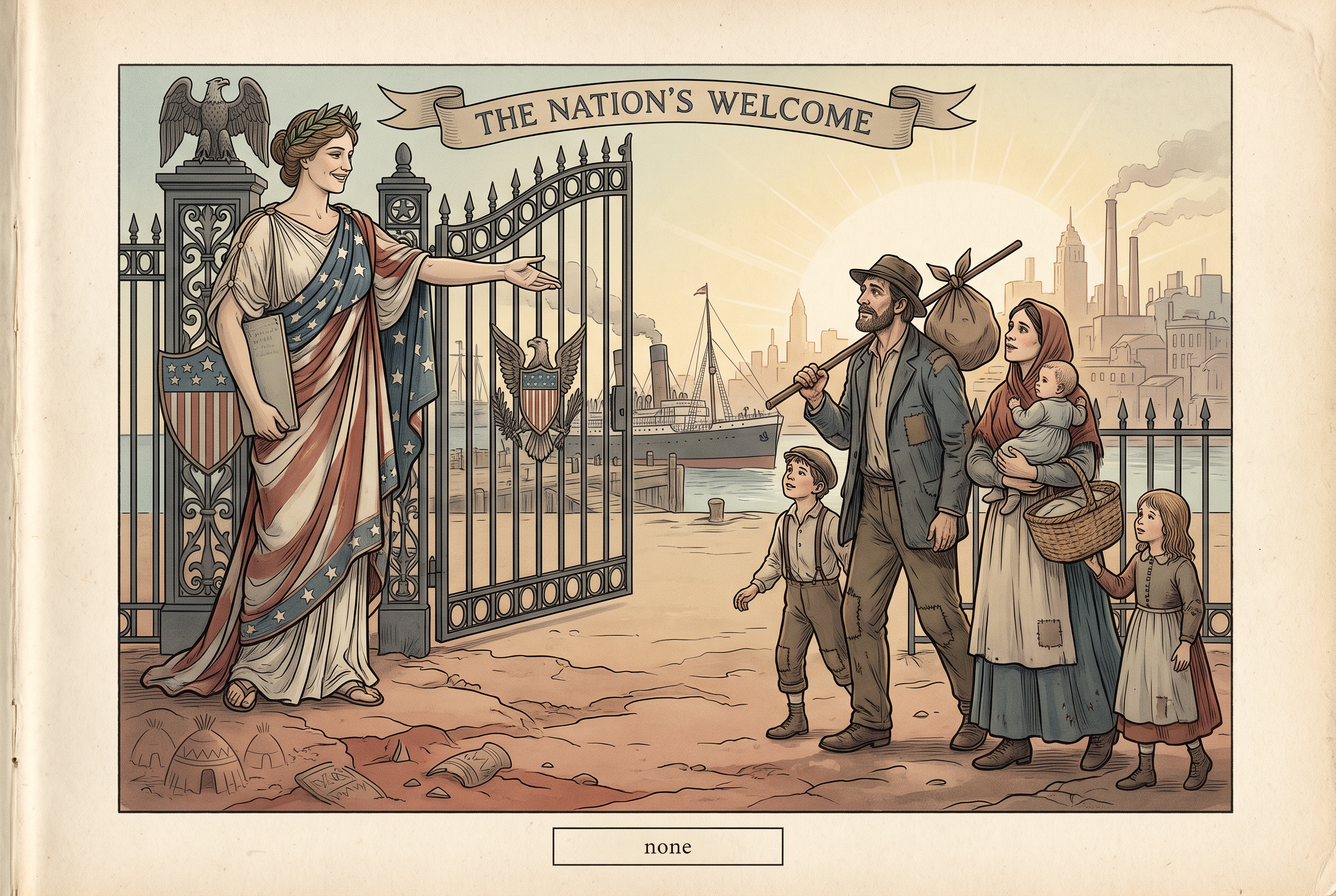
Fig. 6.8 – Immigrants welcomed by the USA, 1909.
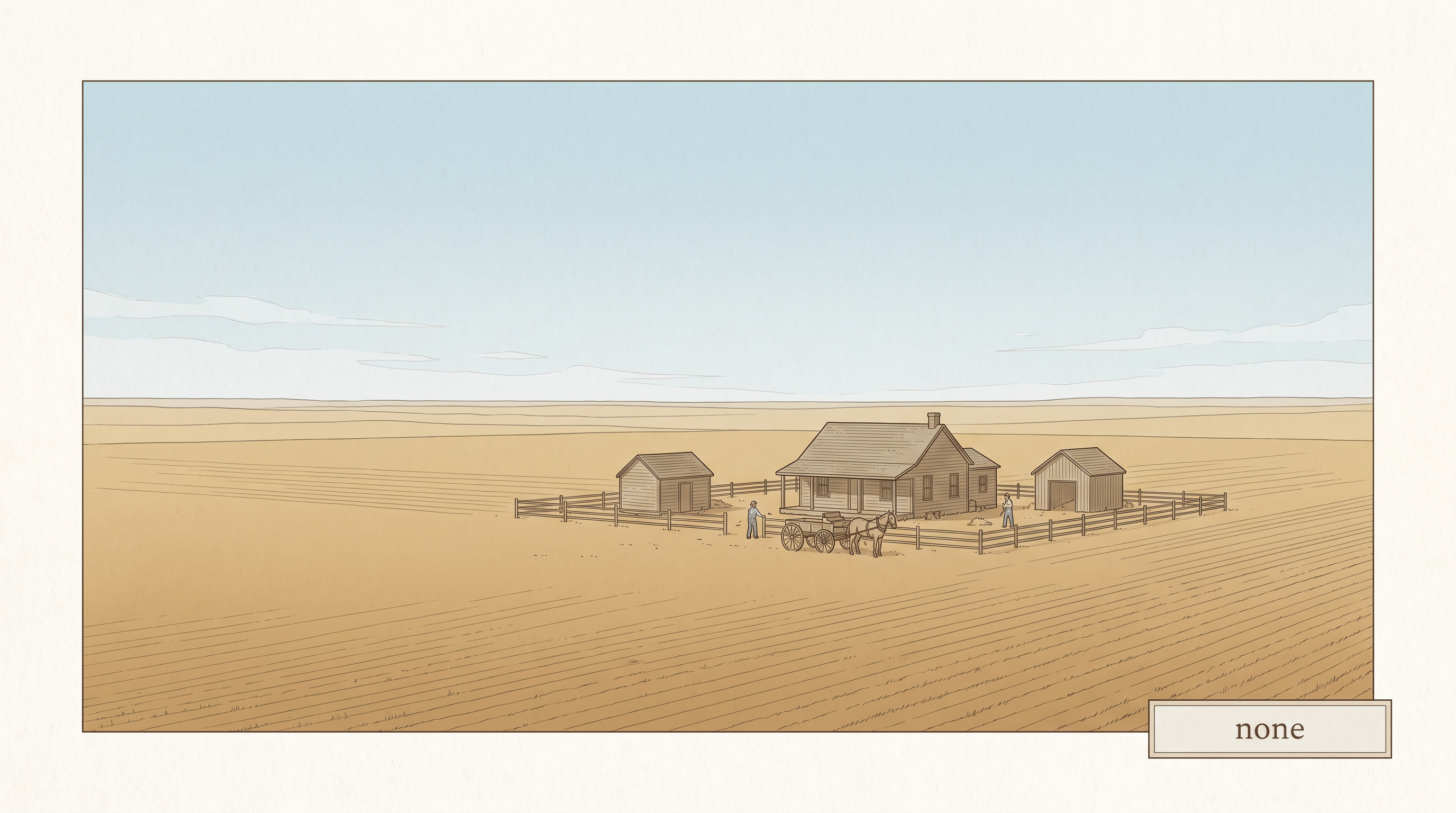
Fig. 6.9 – Prairie ranch and the immigrant dream.
Put the two pictures side by side. The colour print of 1909 is the promise; the photograph of the prairie ranch is the thing promised. Neither of them contains a single native person, and that absence is the point of this chapter.
6.3.6 Constitutional Rights
The ‘democratic spirit’ had been the rallying cry of the settlers in their fight for independence in the 1770s. Afterwards it came to define the identity of the USA — a republic of citizens, deliberately set against the monarchies and aristocracies of the Old World that the settlers had left behind.
Also important to them was that their constitution — the fundamental law that sets out how a country is governed and what its citizens may claim — included the individual’s ‘right to property’. This was a right the state itself could not override. A government could not simply take a man’s land.
Rights, And Who Held Them
But read the sentence that follows carefully, because everything turns on it. Both the democratic rights — the right to vote for representatives to Congress and for the President — and the right to property were only for white men.
So the strongest protection in the constitution, the one shielding property from the state, did not reach the people whose land was actually being taken. The Cherokees, evicted by presidential order, were not covered by it. Neither were women, of any colour, and neither were enslaved Africans.
A Debt Nobody Acknowledged
There is a further irony, and it was pointed out in 2000 by Daniel Paul, a Canadian native, in his book We Were Not the Savages. Thomas Paine was the great champion of democracy at the time of the War for American Independence and the French Revolution. Paul notes that Paine ‘used the Indians as models of how society might be organized’.
From this, Paul argues that ‘the Native Americans by their example sowed the seeds for the long-drawn-out movement towards democracy by the people of Europe’ (p. 333). Societies without kings, without a landed aristocracy, without private ownership of the earth — European thinkers looked at them and saw a possibility.
If Paul is right, the natives helped supply Europe with an idea of freedom, and were then denied the vote in the country built on it.
The Frontier As Seen From Europe
The American frontier was being watched from across the Atlantic too, and not always admiringly. Karl Marx (1818-83), the great German philosopher, described it as ‘the last positive capitalist utopia…the limitless nature and space to which the limitless thirst for profit adapts itself’ (‘Bastiat and Carey’, Grundrisse).
Marx is saying two things at once. The frontier looked like a paradise because land seemed endless, and the hunger for profit could keep expanding into it without limit. It is a description of freedom and of appetite in the same breath — and it says nothing about the people already standing on that limitless space.
6.3.7 The Winds Of Change…
Not till the 1920s did things begin to improve for the native peoples of the USA and Canada. Nearly a century had passed since the Cherokees were driven west.
The turn began with a piece of evidence. The Problem of Indian Administration was a survey directed by the social scientist Lewis Meriam and published in 1928. It painted a grim picture of the terribly poor health and education facilities available to natives in the reservations. It appeared only a few years before the USA was swept by a major economic depression that affected all its people.
Sympathy, And A Law
White Americans felt sympathy for the natives, who were being discouraged from the full exercise of their cultures and at the same time denied the benefits of citizenship. Both things at once: keep your culture out of sight, and stay outside the nation.
This led to a landmark law in the USA — the Indian Reorganisation Act of 1934, which gave natives in the reservations the right to buy land and to take loans. It was a modest law. It restored to some of them the ability to do what any citizen could do with a bank and a plot of ground.
‘Joining The Mainstream’
In the 1950s and 1960s, the US and Canadian governments thought of ending all special provisions for the natives. The hope was that they would ‘join the mainstream’ — that is, adopt European culture and stop being distinct at all.
But the natives did not want this. In 1954, in the ‘Declaration of Indian Rights’ which they themselves prepared, a number of native peoples accepted citizenship of the USA — but on two conditions. Their reservations were not to be taken away, and their traditions were not to be interfered with.
A similar development occurred in Canada. In 1969 the government announced that it would ‘not recognise aboriginal rights’. The natives, in a well-organised opposition move, held a series of demonstrations and debates.
The question could not be resolved till 1982, when the Constitution Act accepted the existing aboriginal and treaty rights of the natives. Many details remain to be worked out even now.
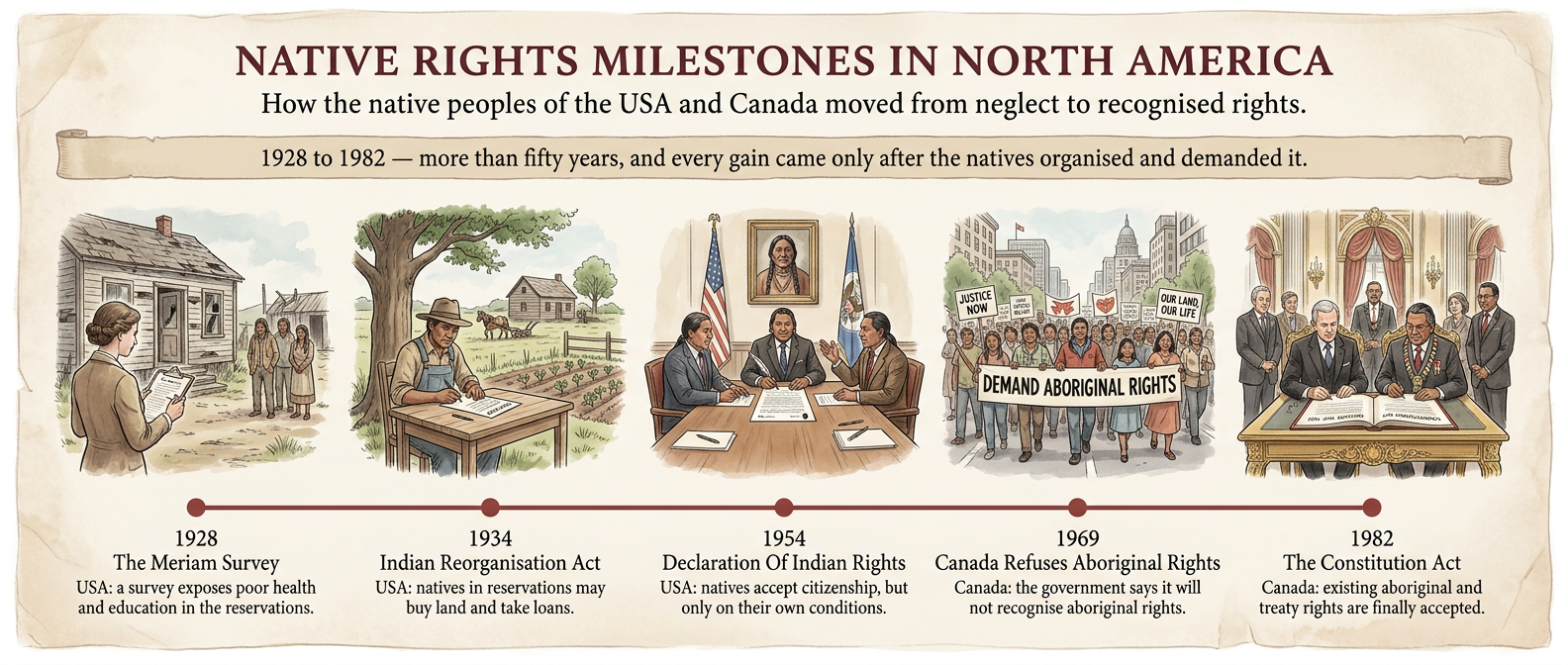
Fig. 6.10 – Winning ground back in North America.
The two countries do not move in step, but they move under the same pressure. In both, change came when the native peoples organised — a declaration in one, demonstrations and debates in the other — and not because a government thought of it first.
Today it is clear that the native peoples of both countries, though reduced so much in numbers from what they had been in the eighteenth century, have been able to assert their right to their own cultures, and — particularly in Canada — to their sacred lands. Their ancestors in the 1880s could not have done any of this.
An Historian’s Verdict
The American historian Howard Spodek summed up what independence had meant to the two sides in a single sentence. Read it against everything this section has described, and then decide whether you agree with him.
The Excuses, Set Side By Side
Colonisers everywhere had to explain to themselves why the people they ruled were not entitled to what they themselves claimed. The explanations differed from place to place, but the conclusion was always the same one.
Set them beside one another and the pattern is unmistakable. Each group is denied equality, and in each case a reason is produced afterwards to make the denial look like a judgement about them rather than a decision about profit. Rationalisation is exactly this — a respectable-sounding reason invented for something you were going to do anyway.
6.4 Australia
As in the Americas, human habitation in Australia has a very long history. The ‘aborigines’ — a general name given to a large number of different societies — began to arrive on the continent over 40,000 years ago, and possibly even earlier.
They came from New Guinea, which lies to the north of Australia and was then connected to it by a land-bridge. Notice the pattern: as in North America, the first people walked in across land that the sea later covered.
The Dreamtime
That, however, is the historian’s account. It is not the account the aborigines themselves give. In the natives’ traditions, they did not come to Australia at all. They had always been there.
The past centuries were called the ‘Dreamtime’. Europeans found this idea very difficult to understand, because in it the distinction between past and present is blurred. Ancestors and events of long ago are not shut away behind a date; they are present in the land, and can be reached through story, song and ceremony.
Many Peoples, Not One
In the late eighteenth century there were between 350 and 750 native communities in Australia, each with its own language. Even today, 200 of these languages are spoken.
Keep that number in view. This was not a single ‘aboriginal people’; it was hundreds of societies, as varied as the peoples of North America were.
There is another large group of indigenous people living in the north of the country, called the Torres Strait Islanders. The term ‘Aborigine’ is not used for them, as they are believed to have migrated from elsewhere and to belong to a different race. Together, the two groups made up 2.4 per cent of Australia’s population in 2005.
That figure is the shape of the whole story in one number. The original inhabitants of an entire continent are now a fortieth of the people who live on it.
Australia is sparsely populated. Even now, most of the towns lie along the coast — where the British first arrived in 1770 — because the central region is arid desert.
Map
Map 2 Caption: Australia. Brief: Reproduce the NCERT map of Australia. Mark and label Darwin, Perth, Adelaide, Melbourne, Sydney and Canberra, the state of New South Wales, the island of Tasmania, and New Zealand to the south-east. Label the Indian Ocean, the Pacific Ocean and the Southern Ocean. Note on the map that the interior is arid desert and the towns cluster on the coast.
The Europeans Reach Australia
The story of the interaction between the European settlers, the native peoples and the land in Australia has many points of similarity to the story of the Americas — but it began nearly 300 years later. Everything that had happened to the natives of North America since the seventeenth century was about to happen again, to a different people, with the same reasoning.
Cook’s Death, And What Was Made Of It
The initial reports from Captain Cook and his crew about their encounters with the natives are enthusiastic about their friendliness. Then the feeling on the British side reversed sharply, because Cook was killed by a native — not in Australia at all, but in Hawaii, thousands of kilometres away across the Pacific.
As often happened, a single incident of this kind was used by colonisers to justify subsequent acts of violence towards other people. One man’s death, in another ocean, became an argument for what was done to the Daruks and every other people in Australia.
What The Daruks Saw
The British landed at Sydney in 1788 with a colony of convicts. What follows is a modern historians’ reconstruction of what that arrival looked like from the other side — from the point of view of the Daruk people, on whose land the settlement was being built.
Read the passage again as a description of ordinary building work, which is all it is. Stones stacked together is a wall. Clay dug up, shaped and cooked is a brick. Holes made in the ground are post-holes. What the historians have done is describe a British settlement using only what a Daruk observer could actually see — and it becomes incomprehensible, and frightening.
The last sentence is the one to sit with. The Daruks kept away from the settlement, and the only way the British could bring them back was by an official kidnapping. Not a treaty, not an offer: a kidnapping, and an official one.
The Daruks did not foresee what was coming. In the nineteenth and twentieth centuries, nearly 90 per cent of the aboriginal population would die — from exposure to germs against which they had no immunity, from the loss of their lands and resources, and in battles against the settlers.
A Colony Of Convicts
Why were the newcomers so ready to push people off their land? Part of the answer lies in who they were.
Britain had for a long time solved the problem of its prisons by sending convicts overseas. (Portugal had tried the same thing in Brazil, and abandoned the experiment when the convicts’ violent behaviour provoked angry reprisals from the natives.) The British had used the American colonies for this purpose until they became independent — and then they continued the practice in Australia.
Most of the early settlers in Australia were therefore convicts, deported from England. When their jail term ended, they were allowed to live as free people in Australia, on one condition: they must not return to Britain.
Think about the position that put them in. They had no way home, no property, and no prospect of anything except what they could make out of this land, so different from their own. They felt no hesitation whatever about ejecting natives from land taking over for cultivation.
Wool, Wheat And Gold
The economic development of Australia under European settlement was not as varied as in America. Vast sheep farms and mining stations were established, over a long period and with a great deal of labour, followed later by vineyards and wheat farming. These came to form the basis of the country’s prosperity.
When the states were united and it was decided, in 1911, that a new capital would be built for Australia, one name suggested for it was Woolwheatgold. The joke tells you exactly what the settlers thought their country was made of.
In the end it was called Canberra — from kamberra, a native word meaning ‘meeting place’. The capital of settler Australia carries an aboriginal name, just as the rivers of the USA do.
Whose Labour Built It
Somebody had to do the work on those sheep farms and mining stations. Some natives were employed on the farms, under conditions of work so harsh that it was little different from slavery.
Later, Chinese immigrants provided cheap labour, as they had in California. The tables and records of the time call them ‘coolies’, a colonial word for indentured labour from Asia. But unease about being dependent on non-whites led the governments of both countries — Australia and the USA — to ban Chinese immigrants.
The fear went much further than that. Till 1974, so strong was the popular fear that ‘dark’ people from South Asia or Southeast Asia might migrate to Australia in large numbers that there was a government policy to keep ‘non-white’ people out. A country built entirely by immigrants had decided which immigrants were allowed to exist.
6.4.1 The Winds Of Change…
The change in Australia began with a lecture. In 1968, people were electrified by a talk given by the anthropologist W.E.H. Stanner, entitled ‘The Great Australian Silence’ — by which he meant the silence of historians about the aborigines. You met that lecture at the start of this chapter. Here is what came of it.
From Curiosity To Respect
From the 1970s — and this was happening in North America at the same time — there was a new eagerness to understand the natives. Not as anthropological curiosities, to be measured and compared with Europeans, but as communities in their own right.
They had distinct cultures. They had unique ways of understanding nature and climate. They had a strong sense of community, vast bodies of stories, and skills in textile, painting and carving. All of this, it was now argued, should be understood, recorded and respected rather than collected and labelled.
Underlying it all was the urgent question that Henry Reynolds later put into the title of a powerful book, Why Weren’t We Told? The book condemned the practice of writing Australian history as though it had begun with Captain Cook’s ‘discovery’ — as though 40,000 years of human life on the continent were merely the background to a European arrival.
The Institutions Change
Since then, the change has been solid and visible. University departments have been instituted to study native cultures. Galleries of native art have been added to art galleries. Museums have been enlarged to incorporate dioramas — full-scale reconstructed scenes — and imaginatively designed rooms explaining native culture. And natives have begun writing their own life histories.
This has been a wonderful effort, and it came at a critical moment. If native cultures had remained ignored for another generation, much of them would simply have been forgotten. Knowledge kept by speech does not wait; it dies with the last person who holds it.
From 1974, ‘multiculturalism’ has been official policy in Australia. It gives equal respect to the native cultures and to the different cultures of the immigrants from Europe and Asia. Set that date beside the one in the previous section: 1974 is also the year the policy of keeping ‘non-white’ people out came to an end.
A Poem Across The Divide
One of the clearest statements of what the separation had cost came from a white Australian poet, writing to an aboriginal friend. Judith Wright wrote ‘Two Dreamtimes’ for Oodgeroo Noonuccal.
Wright addresses the other woman as a sister with a torn heart, and thanks her for the Dreamtime stories of joy and grief written on paperbark. Then she says the thing the poem is really about: as a child, she was not allowed to play with the dark children by the riverbank, and she could not turn her friend white. So she met her late, and learnt late — and what she learnt was that the land she had loved all her life had been taken out of her friend’s hands.
The title carries the argument. Two dreamtimes: two childhoods, on the same land, kept apart by colour, and only one of them told the truth about how that land was obtained.
Terra Nullius
From the 1970s the term ‘human rights’ began to be heard at meetings of the UNO and other international agencies. Australians began to measure their own country against it, and the Australian public realised with dismay what it found.
In contrast to the USA, Canada and New Zealand, Australia had no treaties with the natives formalising the takeover of land by Europeans. There was no paperwork, however unjust, because none had ever been thought necessary. The government had always termed the land of Australia terra nullius — a Latin phrase meaning land belonging to nobody.
Think about what that phrase had to ignore in order to be written down: between 350 and 750 communities, each with its own language, living on the continent for 40,000 years. Terra nullius was not a mistake about the facts. It was a decision about who counted as a person with a claim.
The Stolen Children
There was also a long and agonising history of children of mixed blood — one native parent, one European — being forcibly captured and separated from their native relatives. Children were taken from their families in order to keep ‘white’ and ‘coloured’ people apart.
This is not a small footnote to the story of the land. A people can be dismantled by removing its children as surely as by removing its territory, and the removals went on, as the dates below show, from the 1820s to the 1970s.
Agitation around these questions led to enquiries, and to two important decisions. The first was to recognise that the natives had strong historic bonds with land that was ‘sacred’ to them, and which should be respected. The second was that, while past acts could not be undone, there should be a public apology for the injustice done to the children.
Read the table as a sequence and you can see a country arguing with itself. First it stops excluding people by colour. Then a court destroys the legal fiction on which the whole settlement rested. Then it investigates what was done to the children. Then, on a single named day, it apologises. Many details remain to be worked out — but nothing in this list was granted before it was demanded.
6.5 Summary
The Argument Of This Chapter
- From the eighteenth century, European immigrants settled in South, Central and North America, South Africa, Australia and New Zealand. Wherever they came in numbers, the peoples already living there were pushed out.
- These settlements were colonies. When the European inhabitants broke free of the mother-country, the colonies became states — but independence was for the settlers, not for the native peoples.
- Today the descendants of Europeans and Asians form the majority in these countries, and the natives are very few. Their names survive on the map — Ohio, Mississippi, Seattle, Saskatchewan, Wollongong, Parramatta — long after the people were forgotten.
- Profit drove colonisation everywhere, but the form of control varied. In South Asia, trading companies took over an existing state and taxed it. In America and Australia, Europeans came to settle, farm and stay.
- The first inhabitants of North America came from Asia over 30,000 years ago across the Bering Straits land-bridge. They lived in bands in river valleys, hunted bison, and produced no surplus — and therefore built no kingdoms.
- They felt no need to ‘own’ land. Goods moved as gifts, not purchases, and a treaty was recorded in a wampum belt, not on paper.
- Europeans defined ‘civilised’ by literacy, organised religion and towns, and so found the natives ‘uncivilised’. Rousseau’s ‘noble savage’ and Wordsworth’s poetry were equally the work of men who had never met one; Washington Irving, who had, described them very differently.
- Traders exchanged blankets, iron vessels, guns and alcohol for fish and furs. Addiction to alcohol allowed the Europeans to dictate the terms of trade.
- The natives were induced or forced to sign treaties selling their land at very low prices. In 1832 Chief Justice Marshall ruled for the Cherokees; President Jackson ignored the judgment and had them driven west, and over a quarter of the 15,000 died on the ‘Trail of Tears’.
- Natives were confined to reservations, moved again whenever minerals or oil were found, and their rebellions were crushed between 1865 and 1890. Chief Seattle’s reply of 1854 asked how the sky and the water could be bought or sold at all.
- The Gold Rush of the 1840s brought railways, built by recruited Chinese workers, and factories to supply them. In 1860 the USA was an undeveloped economy; in 1890 it was the leading industrial power in the world.
- By 1890 the bison had almost been exterminated, ending the hunting life of the plains peoples. In 1892 the frontier closed, and the USA soon took colonies of its own in Hawaii and the Philippines.
- The US constitution protected the right to property and the right to vote — but only for white men, which is why it did not protect the people whose land was being taken.
- Change came slowly and only under pressure: the Meriam survey of 1928, the Indian Reorganisation Act of 1934, the Declaration of Indian Rights of 1954, and in Canada the Constitution Act of 1982.
- In Australia, the aborigines had lived on the continent for over 40,000 years, in between 350 and 750 communities with their own languages. The British arrived in 1770 and founded a convict colony at Sydney in 1788.
- Nearly 90 per cent of the aboriginal population died in the nineteenth and twentieth centuries — from germs, from the loss of land and resources, and in battles with the settlers. Children of mixed descent were taken from their families.
- Australia had no treaties with the natives at all. The land was declared terra nullius, belonging to nobody — until the High Court in the Mabo case of 1992 declared that legally invalid.
- From Stanner’s lecture of 1968 and Reynolds’s Why Weren’t We Told?, historians stopped writing Australian history as though it began with Cook. Multiculturalism became official policy in 1974, and in 1999 the country held a National Sorry Day.
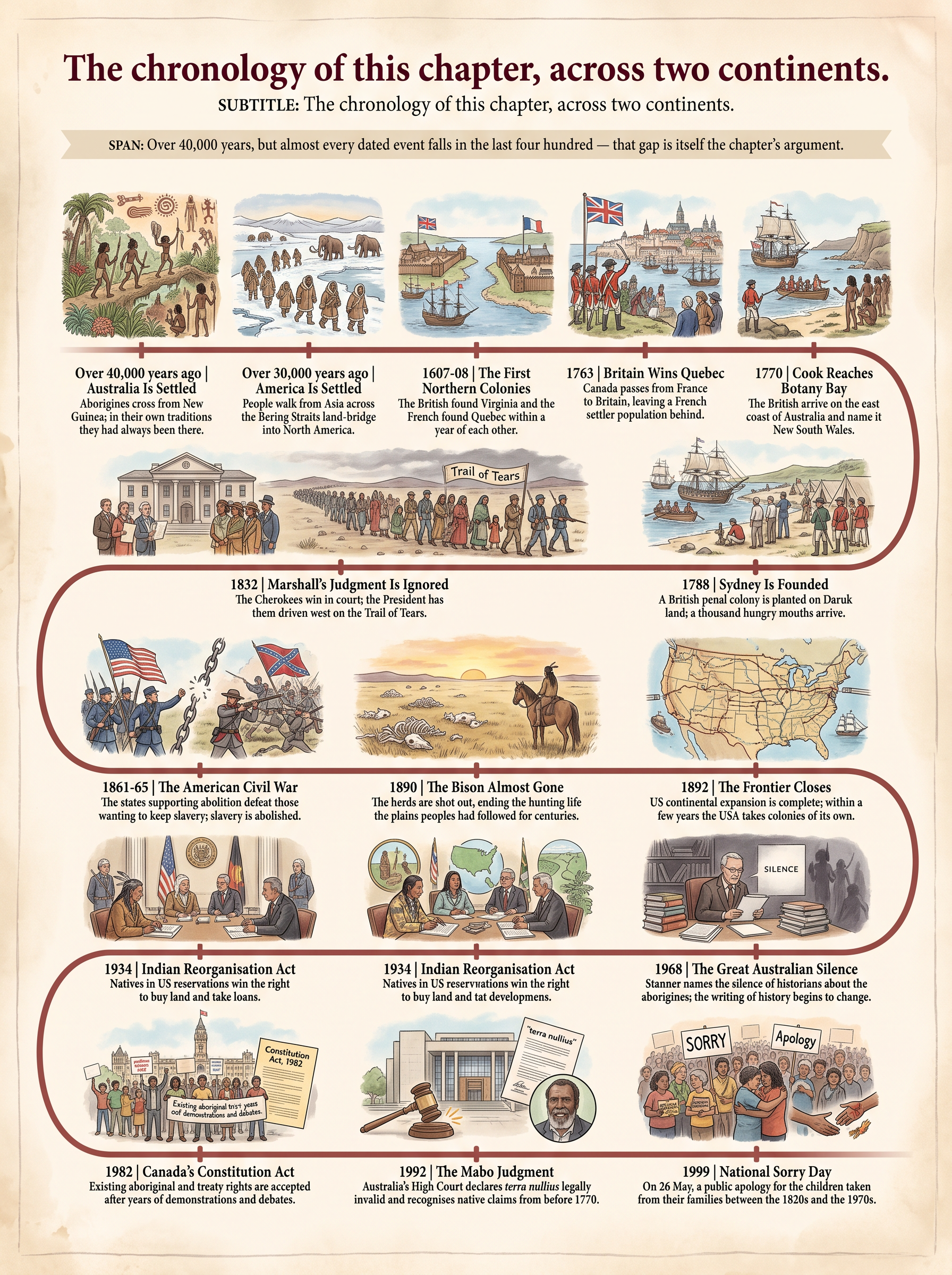
Fig. 6.11 – The whole story across two continents.
What The Evidence Cannot Tell Us
Almost everything written down in this chapter was written by the people who took the land. The traders’ letters, the poets’ verses, the judges’ rulings, the presidents’ speeches and the settlers’ histories all come from one side of the encounter, and the other side had no writing at all.
What the natives thought reaches us only through gaps: a chief’s reply carried by a translator, a Hopi story retold in 1986, historians in the 1990s imagining what the Daruks saw, a settler poet admitting late what she had not been told. Not one of these is a native document made at the time.
So we can count the acres, the treaties and the dead with some confidence, and we can say very little about what any of it felt like to the people it happened to. That silence is not an accident of survival. It is the shape the record was given by the people who kept it.
6.6 NCERT Questions
Answer In Brief
Comment on any points of difference between the native peoples of South and North America.
Other than the use of English, what other features of English economic and social life do you notice in nineteenth-century USA?
What did the ‘frontier’ mean to the Americans?
Why was the history of the Australian native peoples left out of history books?
Answer In A Short Essay
How satisfactory is a museum gallery display in explaining the culture of a people? Give examples from your own experience of a museum.
Imagine an encounter in California in about 1880 between four people: a former African slave, a Chinese labourer, a German who had come out in the Gold Rush, and a native of the Hopi tribe, and narrate their conversation.
6.7 Check Your Concepts
The natives thought they were exchanging gifts; the Europeans thought they were buying commodities. Explain the difference between the two ideas, and show how it shaped the fur trade.
Read Source 3. What did Washington Irving say the poets had got wrong about native character, and what explanation did he offer for the natives’ silence in the company of white men?
Set out, step by step, the chain of events by which the bison herds disappeared and the plains peoples lost the way of life they had followed for centuries.
In 1832 the Cherokees won their case before the Chief Justice, and still lost their land. What does this episode tell you about whom the rights guaranteed by the US constitution actually protected?
Study Table 6.5. The reasons given for treating Indians under British rule, the natives of America and Australia, and African slaves as unequal were all different. What did the three reasons have in common?
The USA signed many treaties with the native peoples; Australia signed none, and called the land terra nullius. Did this difference change what finally happened to the land in the two countries? Use the Mabo case of 1992 in your answer.
Almost every written record in this chapter was produced by settlers. Using Source 2, Source 4 and Source 5, explain how historians try to recover what the native peoples thought — and state clearly what this kind of evidence still cannot tell us.