Chapter 7: Paths To Modernisation
Beijing, 5 December 1978. Someone walked up to a city wall with a brush, ink and sheets of paper, and pasted up a poster for strangers to read.
The country had just been told what its future would look like. Earlier that year the Communist Party had announced the Four Modernisations — science, industry, agriculture and defence. After the turmoil of the Cultural Revolution, debate was permitted again, so long as the Party itself was not questioned.
The poster was headed ‘The Fifth Modernisation’. Without democracy, it argued, the other four would come to nothing. It went further, and criticised the Party for failing to solve poverty or to end sexual exploitation, citing cases of such abuse from inside the Party.
Now ask the question a historian asks. How do we know any of this? Not from a government file. We know it because paper survives, because it was copied and reported, and because China and Japan have an unusually long habit of writing things down — official histories, popular literature, printed books, prints, cartoons, magazines, price charts, novels. Governments record what they wish remembered. Posters, woodblock prints and household accounts record what people actually wanted, feared and paid.
This chapter follows two enormous countries, China and Japan, and the smaller stories of Taiwan and Korea, as each tried to answer one question: how do you become modern without being swallowed?
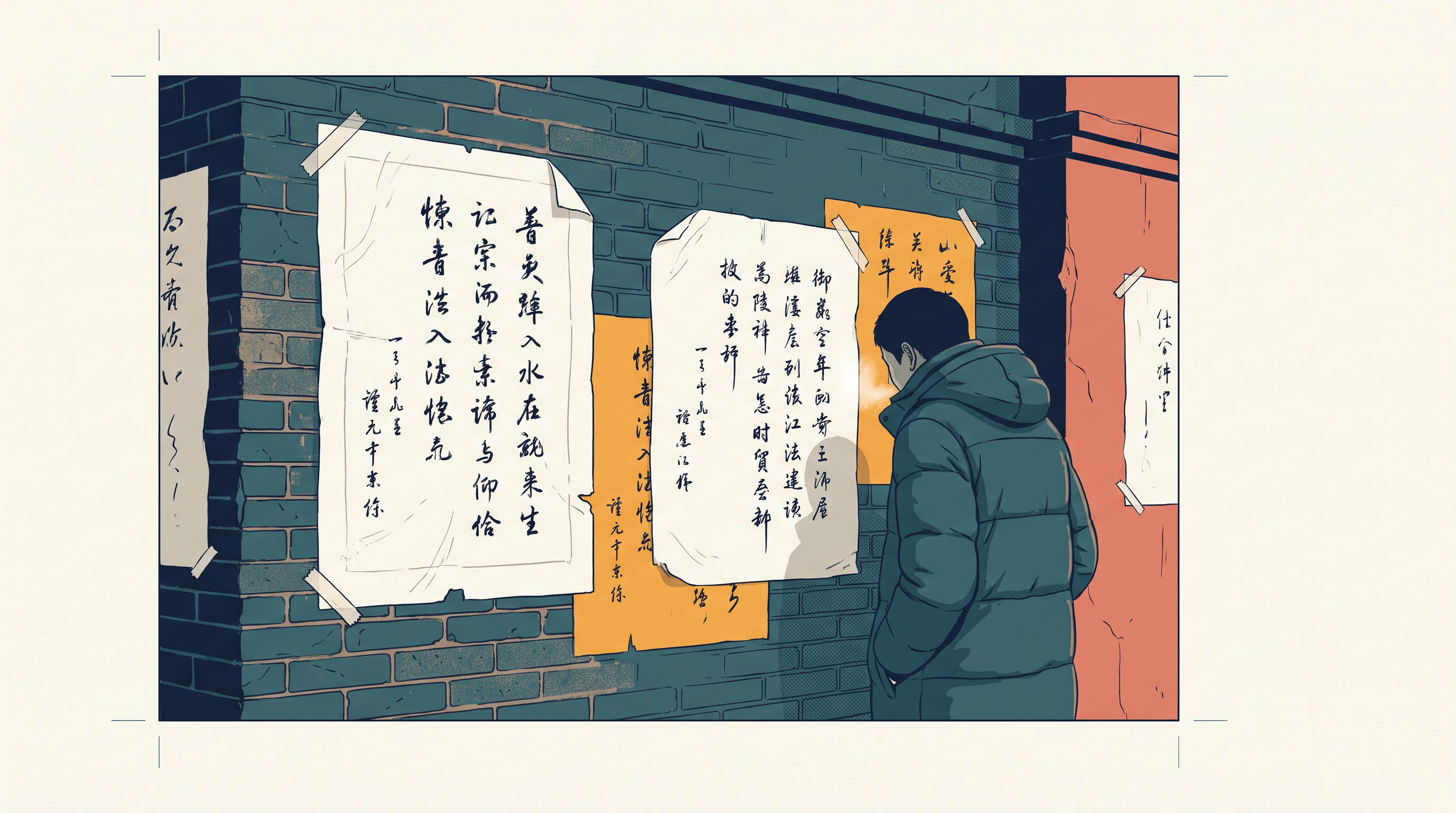
Fig. 7.0 – A hand-brushed wall-poster.
7.1 Introduction
Where This Chapter Begins
At the beginning of the nineteenth century, East Asia — the eastern edge of the Asian landmass, taking in China, the Korean peninsula and the Japanese islands — was dominated by China. The Qing were the ruling dynasty, a family that passes power from one ruler to the next, and they were heir to a very long tradition of imperial government. China looked secure. Japan, a small island country, seemed to be locked in isolation.
Within a few decades that picture had turned upside down. China was thrown into turmoil, unable to face the colonial challenge. Its imperial government lost political control, could not reform effectively, and the country was convulsed by civil war.
Japan went the other way. It succeeded in building a modern nation-state — a country whose people are taught to see themselves as one nation, and which is governed by a single central authority with a bureaucracy, an army and laws that reach every village. It created an industrial economy. It even built a colonial empire of its own, taking Taiwan in 1895 and Korea in 1910.
The measure of the reversal is in two wars. In 1894 Japan defeated China — the land that had been the source of its culture and its ideals. In 1905 it defeated Russia, a European power.
China’s Long Road Through Revolution
The Chinese reacted slowly, and faced immense difficulties. They were trying to do two things at once: to redefine their traditions so that they could cope with the modern world, and to rebuild their national strength so as to become free of Western and Japanese control.
They found that both objectives — removing inequalities and rebuilding the country — could be achieved through revolution. The Chinese Communist Party emerged victorious from the civil war in 1949.
That was not the end of the argument. By the end of the 1970s, Chinese leaders felt that the ideological system was holding economic growth and development back. This led to wide-ranging reforms of the economy that brought back capitalism and the free market, even as the Communist Party kept political control in its own hands.
Japan After Empire
Japan became an advanced industrial nation. But its drive for empire led to war, and to defeat at the hands of the Anglo-American forces. The US Occupation that followed marked the beginning of a more democratic political system, and Japan rebuilt its economy to emerge by the 1970s as a major economic power.
The Japanese path to modernisation was built on capitalist principles, and it took place inside a world dominated by Western colonialism. Japanese expansion was justified by the call to resist Western domination and to liberate Asia — a claim you should keep in mind, and test, as you read what Japan actually did to the countries it took.
The speed of that development underlined three things: the strength of tradition in Japanese institutions and society, the Japanese ability to learn, and the strength of nationalism.
Writing History In China And Japan
China and Japan have had a long tradition of historical writings. History was an important guide for rulers, because the past provided the standards by which they themselves would be judged. So the rulers established official departments to maintain records and write dynastic histories. Sima Qian (145-90 BCE) is considered the greatest historian of early China.
In Japan, Chinese cultural influence led to history being given a similar importance. One of the earliest acts of the Meiji government was to establish, in 1869, a bureau to collect records and write, as it were, a victor’s version of the Meiji Restoration. A new government’s first instinct, in other words, was to secure the story of how it came to power.
There was great respect for the written word, and literary ability was highly valued. This has meant that a wide range of written materials survives — official histories, scholarly writings, popular literature, religious tracts. Printing and publishing were important industries in the pre-modern period, and it is possible, for instance, to trace the distribution of a book in eighteenth-century China or Japan. Modern scholars have used these materials in new and different ways.
Whose Scholarship We Are Reading
Modern scholarship has built on the work of Chinese intellectuals such as Liang Qichao, and of Kume Kunitake (1839-1931), one of the pioneers of modern history in Japan. It has also drawn on earlier writings by European travellers — the Italian Marco Polo (1254-1324, in China from 1274 to 1290), and the Jesuit priests Mateo Ricci (1552-1610) in China and Luis Frois (1532-97) in Japan. All of them left rich accounts of these countries. Nineteenth-century Christian missionaries wrote a great deal as well, and their work provides valuable material for our understanding of both countries.
Scholarship in English has grown enormously. Joseph Needham produced a monumental work on the history of science in Chinese civilisation, and George Sansom wrote on Japanese history and culture, and an immense body of sophisticated scholarship is available to us today.
In recent years, writings by Chinese and Japanese scholars have been translated into English. Some of these scholars teach abroad and write in English; in the case of Chinese scholars, many have been working in Japan since the 1980s and write in Japanese. We therefore have scholarly writings from many parts of the globe, and they give us a richer and deeper picture of these countries.
That last point is worth pausing on. Historiography — the study of how history itself is written, and by whom — matters because a country described only by outsiders, or only by its own government, will always come out flat.
One small point of convention before you meet these names again. In Japan, the surname is written first — so Naito Konan is Naito of the Konan family name, and Fukuzawa Yukichi, whom you will meet later, is Fukuzawa.
The Land Of China
China and Japan present a marked physical contrast. China is a vast continental country that spans many climatic zones. Its core is dominated by three major river systems: the Yellow River (Huang He), the Yangtse River (Chang Jiang — the third longest river in the world) and the Pearl River. A large part of the country is mountainous.
Before going further, place these countries beside each other on Fig. 7.1.
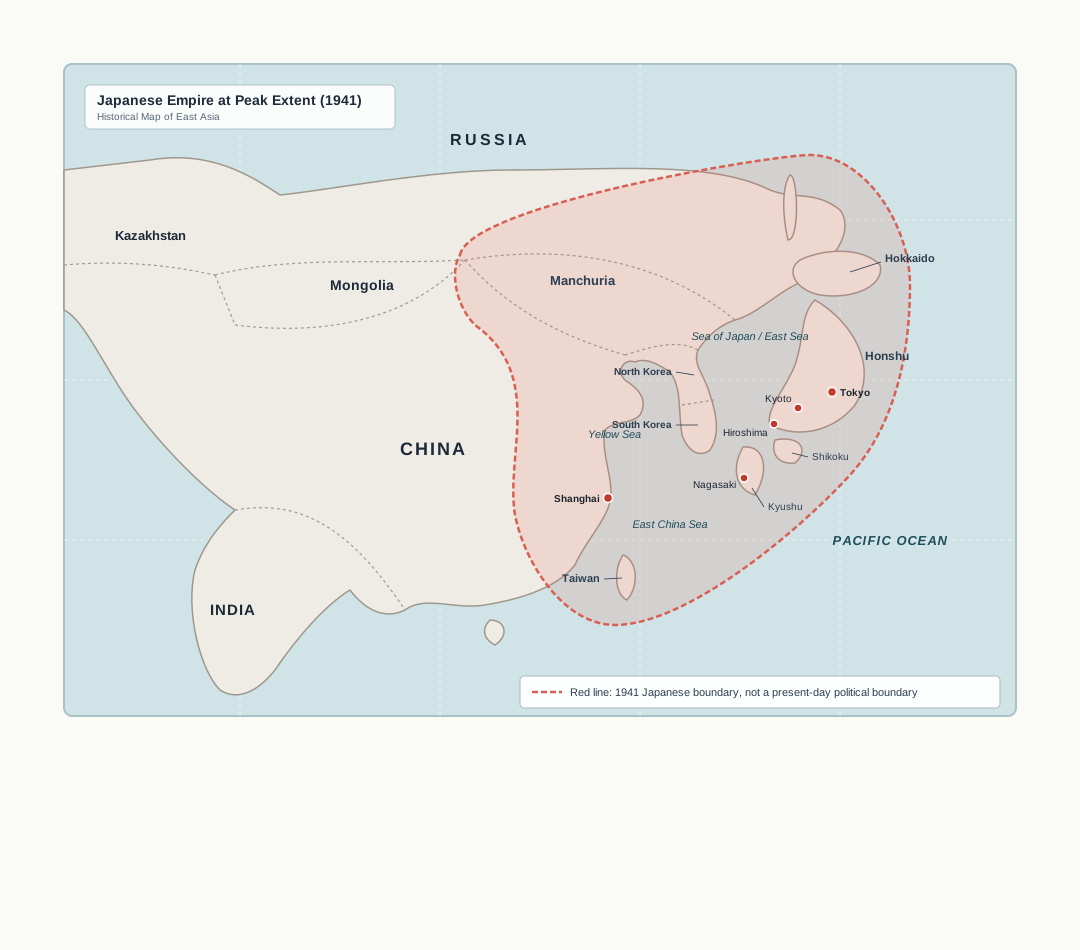
Fig. 7.1 – East Asia and the 1941 Japanese empire.
The dominant ethnic group are the Han, and the major language is Chinese (Putonghua). But there are many other nationalities, such as the Uighur, Hui, Manchu and Tibetan. Aside from dialects such as Cantonese (Yue) and Shanghainese (Wu), there are other minority languages spoken as well. A single name on a map, then, covers a great many peoples.
Chinese food reflects this regional diversity, with at least four distinct types. The best known is southern or Cantonese cuisine — as most overseas Chinese come from the Canton area — which includes dim sum (literally, touch your heart), an assortment of pastries and dumplings.
In the north, wheat is the staple food. In Szechuan, spices brought by Buddhist monks in the ancient period along the silk route, and chillies brought by Portuguese traders in the fifteenth century, together created a fiery cuisine. In eastern China, both rice and wheat are eaten. Even a plate of food, in other words, carries the history of who travelled where, and what they brought with them.
The Islands Of Japan
Japan, by contrast, is a string of islands. The four largest are Honshu, Kyushu, Shikoku and Hokkaido. The Okinawan chain is the southernmost, at about the same latitude as the Bahamas.
More than 50 per cent of the land area of the main islands is mountainous, and Japan is situated in a very active earthquake zone. These geographical conditions have influenced architecture — buildings in an earthquake zone are built to move, not to resist.
The population is largely Japanese, but there is a small Ainu minority, and there are Koreans who were forcibly brought as labour when Korea was a Japanese colony. That single sentence carries a hard history, and this chapter will return to it.
Japan lacks a tradition of animal rearing. Rice is the staple crop and fish the major source of protein. Raw fish — sashimi or sushi — has now become a widely popular dish around the world, as it is considered very healthy.
Hold the contrast in your head as you read on: a vast continental empire of many peoples and many climates, and a mountainous chain of islands with a small population and a narrow strip of usable land. Neither geography decided what happened next. But both shaped what was possible.
7.2 Japan
Japan enters this chapter as a country that no one expected to matter. It was small, mountainous, poor in farmland, and ruled by a military government that had kept foreign trade to a trickle. Within fifty years of 1868 it had a constitution, a conscript army, railways, banks, compulsory schooling and a colonial empire.
The sections that follow ask how that happened — and what it cost the people who lived through it.
7.2.1 The Political System
An emperor had ruled Japan from Kyoto, but by the twelfth century the imperial court lost power to shoguns, military rulers who in theory ruled in the name of the emperor. In practice the emperor reigned and the shogun governed.
From 1603 to 1867, members of the Tokugawa family held the position of shogun. The country was divided into over 250 domains under the rule of lords called daimyo. The shogun exercised power over these domainal lords by ordering them to stay at the capital, Edo (modern Tokyo), for long periods, so that they would not pose a threat. He also controlled the major cities and the mines.
The samurai, the warrior class, were the ruling elite. They served the shoguns and the daimyo, and their swords were the sign of who ruled whom.
Three Changes That Set The Pattern
In the late sixteenth century, three changes laid the pattern for future development.
One, the peasantry was disarmed, and only the samurai could carry swords. This ensured peace and order, ending the frequent wars of the previous century.
Two, the daimyo were ordered to live in the capitals of their domains, each domain having a large degree of autonomy. A lord who lives in a town, rather than in a fort among the fields, needs shops, servants, rice merchants and moneylenders around him.
Three, land surveys identified owners and taxpayers and graded land productivity, to ensure a stable revenue base. A state that knows who owns what, and how much it yields, can tax without guessing.
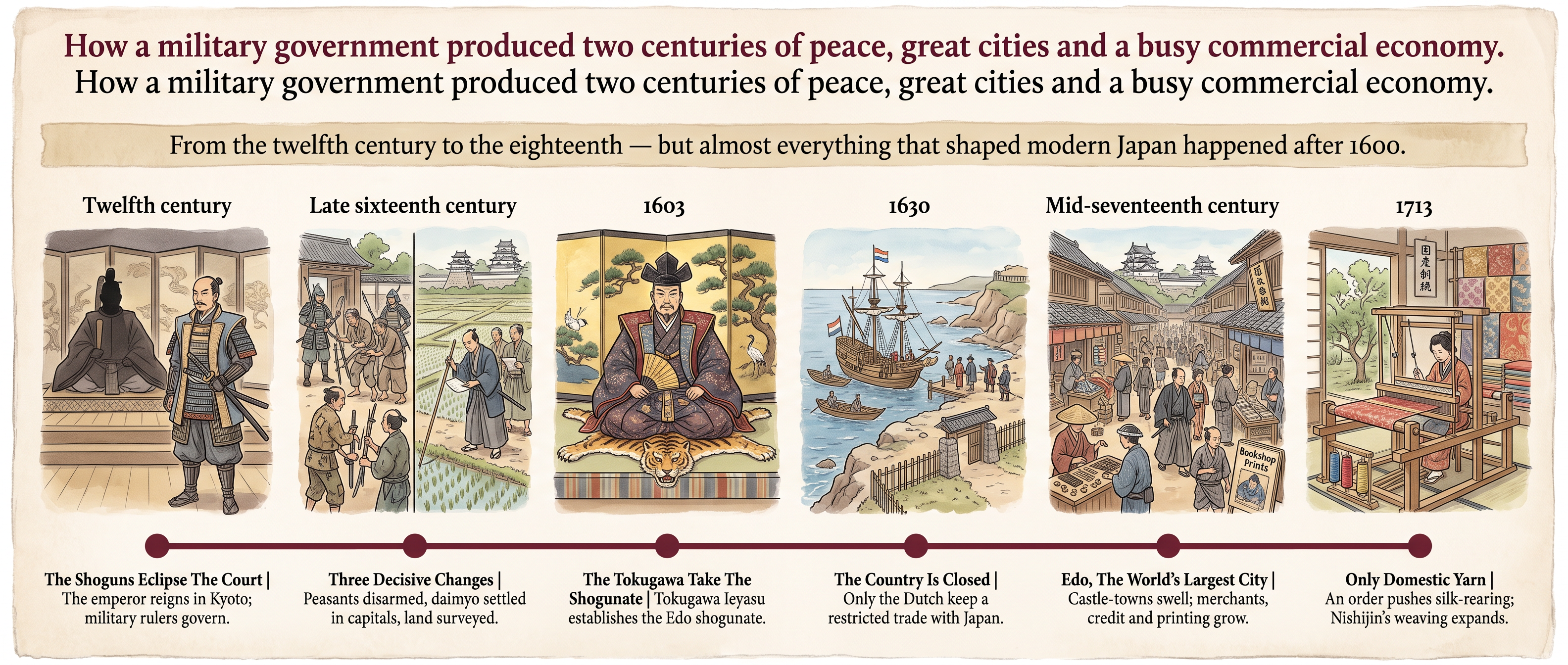
Fig. 7.2 – The Tokugawa Order.
Towns, Merchants And Books
The daimyo’s capitals became bigger. By the mid-seventeenth century, Japan not only had the most populated city in the world — Edo — but also two other large cities, Osaka and Kyoto, and at least half a dozen castle-towns with populations of over 50,000. By contrast, most European countries of the time had only one large city.
This concentration of people led to the growth of a commercial economy, and created financial and credit systems. A person’s merit began to be more valued than his status — a striking shift in a society organised around inherited rank.
A vibrant culture blossomed in the towns. The fast-growing class of merchants patronised theatre and the arts. As people enjoyed reading, it became possible for gifted writers to earn a living solely by writing. In Edo, people could ‘rent’ a book for the price of a bowl of noodles.
That last detail is worth more than it looks. A book cheap enough to rent for the price of a snack tells you that reading had spread far beyond the elite, and it gives a glimpse into the scale of printing. Printing was done with wood blocks; the Japanese did not like the regularity of European printing, and preferred the look of the carved block.
A Rich Country That Worried About Its Silver
Japan was considered rich, because it imported luxury goods like silk from China and textiles from India. But paying for these imports with gold and silver strained the economy, and led the Tokugawa to put restrictions on the export of precious metals.
They also took steps to develop the silk industry in Nishijin in Kyoto, so as to reduce imports. The silk from Nishijin came to be known as the best in the world.
Nishijin is a quarter in Kyoto. In the sixteenth century it had a weavers’ guild of 31 households; by the end of the seventeenth century the community numbered over 70,000 people. Sericulture — the rearing of silkworms for their thread — spread, and was encouraged by an order in 1713 that only domestic yarn was to be used. Nishijin specialised only in the most expensive products.
Silk production helped the growth of a class of regional entrepreneurs who challenged the Tokugawa order. Later, when foreign trade started in 1859, Japan’s silk exports became a major source of profit for an economy struggling to compete with Western goods. A craft protected to save silver ended up financing Japan’s entry into the world market.
Other developments — the increased use of money, and the creation of a stock market in rice — show that the economy was developing in new ways. A market in rice means people were buying and selling not only grain, but the promise of grain.
Looking For A Japanese Past
Social and intellectual changes — such as the study of ancient Japanese literature — led people to question the degree of Chinese influence on Japan. Scholars began to argue that the essence of being Japanese could be found long before the contact with China.
They found it in early classics such as the Tale of the Genji, and in the myths of origin, which said that the islands were created by the gods and that the emperor was a descendant of the Sun Goddess. This search for an unmixed Japanese past would matter enormously later, when the Meiji state needed a nation to build.
7.2.2 The Meiji Restoration
Internal discontent coincided with demands from outside for trade and diplomatic relations. In 1853, the USA sent Commodore Matthew Perry (1794-1858) to Japan, to demand that the government sign a treaty that would permit trade and open diplomatic relations. Japan did so the following year.
Why did the USA care? Japan lay on the route to China, which the USA saw as a major market, and American whaling ships in the Pacific needed a place to refuel. At that time there was only one Western country that traded with Japan: Holland.
Perry’s arrival had an important effect on Japanese politics. The emperor, who till then had had little political power, now re-emerged as an important figure. In 1868, a movement forcibly removed the shogun from power and brought the Emperor to Edo. Edo was made the capital and renamed Tokyo, which means ‘eastern capital’.
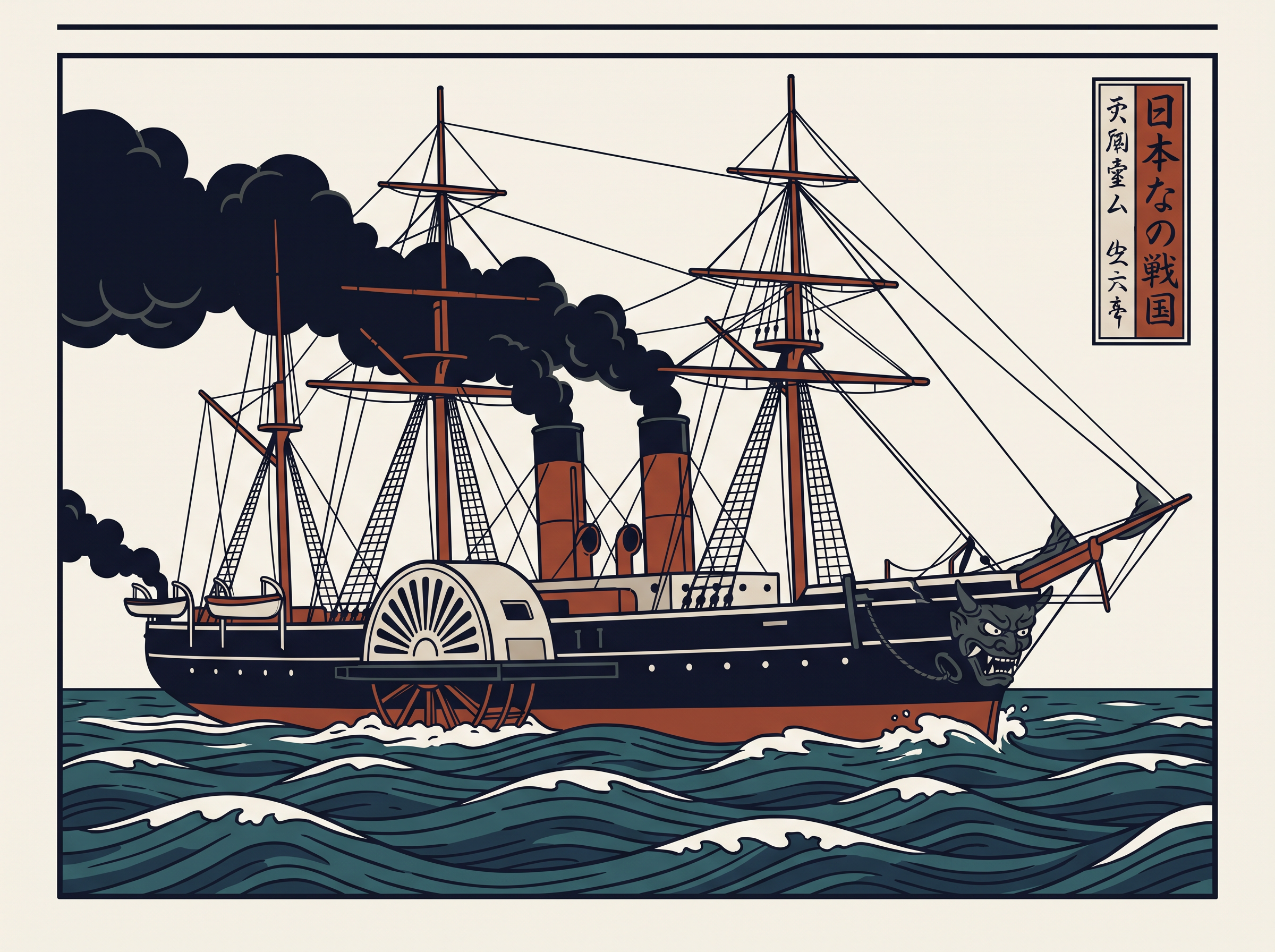
Fig. 7.3 – Perry’s ship, Japanese woodblock print.
The Black Ships
The Japanese called Perry’s vessels ‘black ships’, because tar was used to seal the joints of the wood. They are depicted in paintings and cartoons showing the strange foreigners and their habits, and they became a powerful symbol of Japan’s ‘opening’.
That word ‘opening’ deserves its inverted commas. Today, scholars would argue that Japan had not been ‘closed’ at all: it took part in the east Asian trade, and had access to knowledge of the wider world both through the Dutch and through the Chinese.
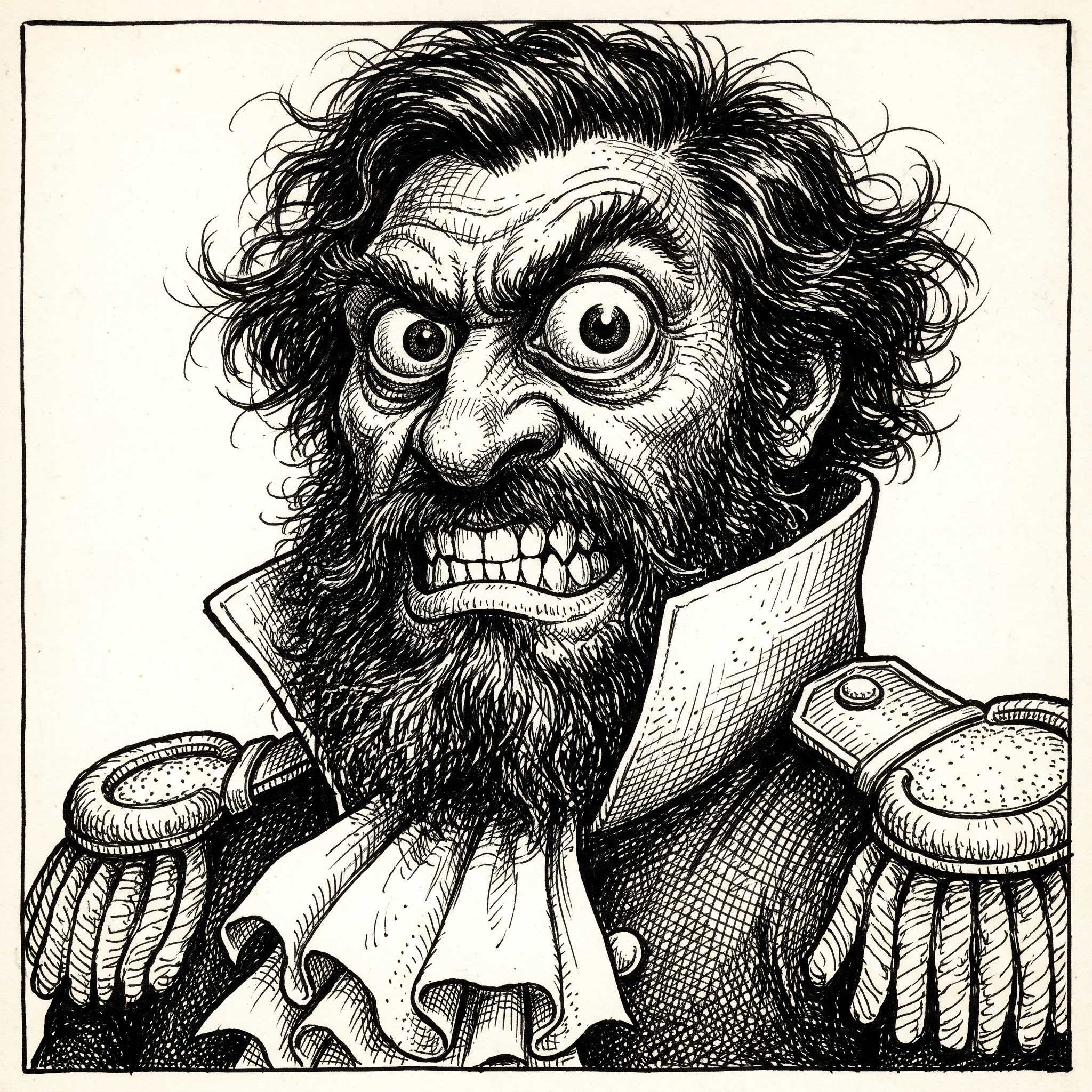
Fig. 7.4 – Commodore Perry as seen by the Japanese.
Here is an activity worth doing before you read on. Contrast the encounter of the Japanese with the Europeans and the encounter of the Aztecs with the Europeans, which you studied earlier. Ask what was different about the technology, the timing and the intentions on each side — and about what each society was able to do with the shock.
Rich Country, Strong Army
Officials and ordinary people alike were aware that some European countries were building colonial empires in India and elsewhere. News of China’s defeat by the British was flowing in, and it was even depicted in popular plays. There was a real fear that Japan might be made a colony.
Opinion divided. Many scholars and leaders wanted to learn from the new ideas in Europe, rather than ignore them as the Chinese were doing. Others sought to exclude the Europeans, even while being ready to adopt the new technologies they offered. Some argued for a gradual and limited ‘opening’ to the outer world.
The government launched a policy with the slogan ‘fukoku kyohei’ — rich country, strong army. Its leaders realised that they needed to develop their economy and build a strong army, otherwise they would face the prospect of being subjugated like India.
To do that, they needed something Japan did not yet have: a people who thought of themselves as one nation. The task, as the government saw it, was to create a sense of nationhood, and to transform subjects into citizens. A subject obeys. A citizen belongs — and can be asked to fight.
The Emperor System
At the same time, the new government worked to build what they called the ‘emperor system’. Japanese scholars use this term because the emperor was part of a system, along with the bureaucracy and the military, that exercised power. He was the centre of it, not the whole of it.
Officials were sent to study the European monarchies, on which they planned to model their own. The Emperor would be treated with reverence, as he was considered a direct descendant of the Sun Goddess — but he was also shown as the leader of westernisation.
His birthday became a national holiday. He wore Western-style military uniforms. Edicts were issued in his name to set up modern institutions. The Imperial Rescript on Education of 1890 urged people to pursue learning, advance the public good and promote common interests. Tradition, in other words, was not being discarded. It was being used to carry something new.
Schooling A Nation
A new school system began to be built from the 1870s. Schooling was compulsory for boys and girls, and by 1910 it was almost universal. Tuition fees were minimal.
The curriculum had been based on Western models, but by the 1870s, while modern ideas were still emphasised, stress was placed on loyalty and on the study of Japanese history. The ministry of education exercised control over the curriculum, over the selection of textbooks, and over teachers’ training.
What was called ‘moral culture’ had to be taught. Texts urged children to revere their parents, be loyal to the nation, and become good citizens. A school system can teach a child to read. It can also teach the child what to feel about the state.
Reading And Writing Japanese
The Japanese had borrowed their written script from the Chinese in the sixth century. However, since their language is very different from Chinese, they developed two phonetic alphabets — hiragana and katakana.
Hiragana is considered feminine, because it was used by many women writers in the Heian period, such as Murasaki. Japanese is written using a mixture of Chinese characters and phonetics, so that the main part of a word is written with a character. If English worked this way, in the word ‘going’ the ‘go’ would be written with a character, and the ‘ing’ in phonetics.
The existence of a phonetic syllabary mattered for more than grammar. It meant that knowledge spread from the elites to the wider society relatively quickly, because a reader did not have to master thousands of characters before understanding anything at all. In the 1880s it was suggested that Japanese develop a completely phonetic script, or adopt a European language. Neither was done.
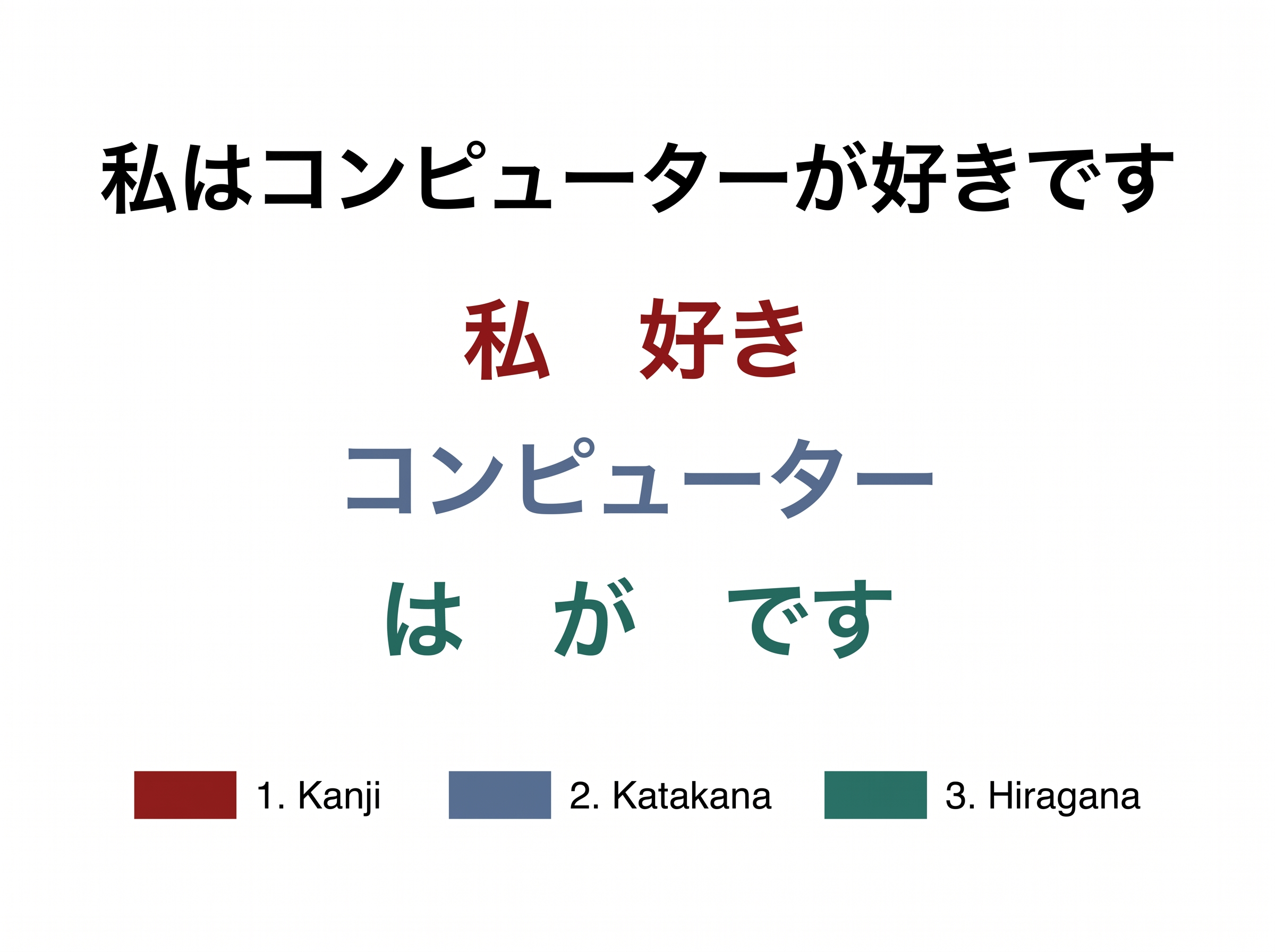
Fig. 7.5 – Writing Japanese: kanji, katakana and hiragana.
The New Administrative Machine
To integrate the nation, the Meiji government imposed a new administrative structure by altering old village and domain boundaries. Each new administrative unit had to have revenue adequate to maintain the local schools and health facilities, and had to serve as a recruitment centre for the military.
All young men over twenty had to do a period of military service, and a modern military force was developed. A legal system was set up to regulate the formation of political groups, to control the holding of meetings, and to impose strict censorship. In all these measures the government had to face opposition.
The military and the bureaucracy were put under the direct command of the emperor. This meant that even after a constitution was enacted, these two groups remained outside the control of the government. Read that twice: the army was answerable to the throne, not to the ministers or the voters.
The tension between these different ideals — a democratic constitution on one side and a modern army on the other — was to have far-reaching consequences. The army pressed for a vigorous foreign policy to acquire more territory. This led to wars with China and Russia, in both of which Japan was the victor.
Popular demand for greater democracy was often in opposition to the government’s aggressive policies. Japan developed economically and acquired a colonial empire — and that empire suppressed the spread of democracy at home, while putting Japan in collision with the people it colonised.
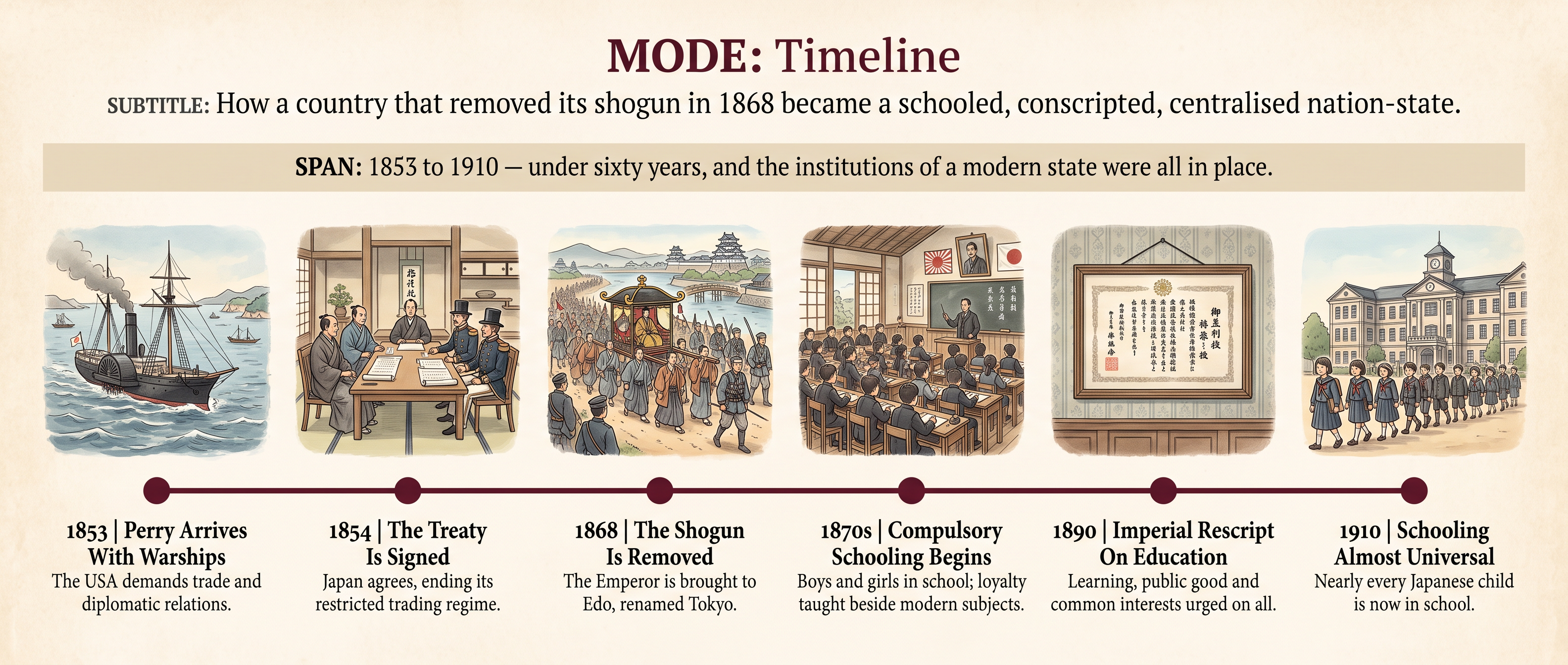
Fig. 7.6 – The Making Of The Meiji State.
7.2.3 Modernising The Economy
Another important part of the Meiji reforms was the modernising of the economy. Funds were raised by levying an agricultural tax — which means that the peasants paid, in the first instance, for the railways and the factories.
Japan’s first railway line, between Tokyo and the port of Yokohama, was built in 1870-72. Textile machinery was imported from Europe. Foreign technicians were employed to train workers and to teach in universities and schools, and Japanese students were sent abroad. In 1872, modern banking institutions were launched.
Companies like Mitsubishi and Sumitomo were helped through subsidies and tax benefits to become major shipbuilders, so that Japanese trade was from now on carried in Japanese ships. Why does that matter? Because a country that pays foreign shippers to carry its goods hands over a share of every cargo it sells, and can be cut off from the sea in a war.
Zaibatsu — large business organisations controlled by individual families — dominated the economy till after the Second World War. The state did not merely permit big business. It built it.
More People, And Where They Were Sent
The population, 35 million in 1872, increased to 55 million in 1920. To reduce population pressure, the government actively encouraged migration.
Migrants went first to the northern island of Hokkaido, which had been a largely autonomous area where the indigenous people called the Ainu lived. They then went to Hawaii and Brazil, as well as to the growing colonial empire of Japan. Notice what ‘reducing population pressure’ meant on the ground: it meant settling Japanese families on land where other people already lived.
Within Japan there was a shift to the towns as industry developed. By 1925, 21 per cent of the population lived in cities; by 1935, this figure had gone up to 32 per cent, or 22.5 million people.
7.2.4 Industrial Workers
The number of people in manufacturing increased from 700,000 in 1870 to 4 million in 1913. That is close to a six-fold rise in a little over four decades.
But do not picture a landscape of giant mills. Most of these workers were in units employing fewer than five people, and using neither machinery nor electric power. Industrialising Japan was, for a long time, a country of tiny workshops.
Who Worked In The Factories
Over half of those employed in modern factories were women. And it was women who organised the first modern strike, in 1886.
After 1900, the number of men began to increase, but only in the 1930s did male workers begin to outnumber women. For half a century, then, the modern Japanese factory was mainly a woman’s workplace — a fact that the usual images of industrial Japan do not show you.
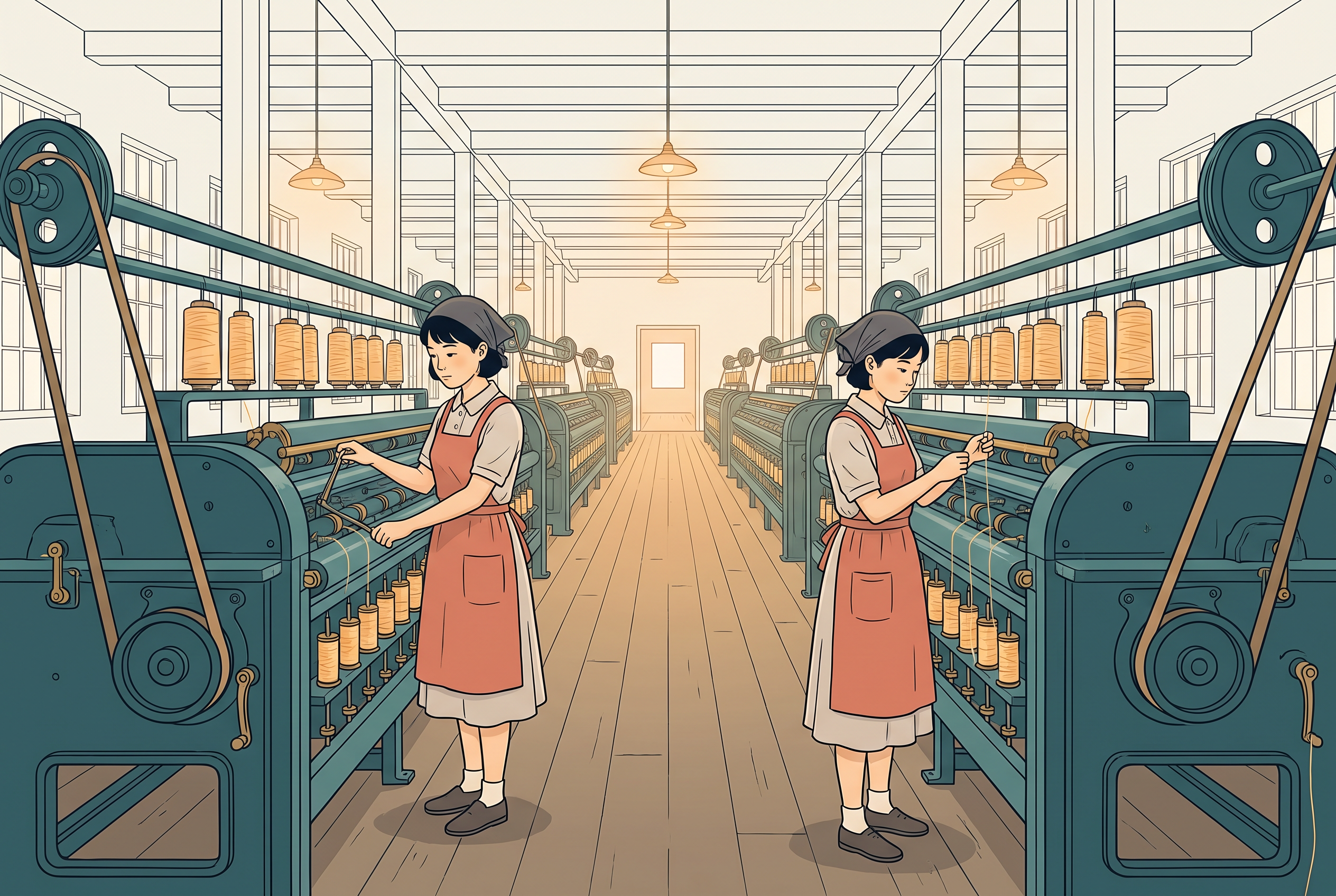
Fig. 7.7 – Women workers in a Japanese textile factory.
The size of factories also began to increase. Factories employing more than a hundred workers — just over 1,000 in 1909 — jumped to over 2,000 by 1920, and 4,000 by the 1930s. Yet even in 1940 there were over 550,000 workshops that employed fewer than five employees.
That small-workshop world had consequences beyond economics. It sustained the family-centred ideology, since the workplace and the family were often the same unit — just as nationalism was sustained by a strong patriarchal system, under an emperor who was presented as a family patriarch. The nation was described as a household, with everyone in a fixed place inside it.
The First Fight Against Pollution
The rapid and unregulated growth of industry, and the demand for natural resources such as timber, led to environmental destruction.
Tanaka Shozo, elected to the first House of Representatives, launched the first agitation against industrial pollution in 1897, with 800 villagers in a mass protest that forced the government to take action.
Tanaka Shozo (1841-1913) was the self-taught son of a farmer, and rose to become a major political figure. He took part in the Popular Rights Movement of the 1880s, a movement demanding constitutional government, and he was elected a member to the first Diet. He believed that ordinary people should not be sacrificed for industrial progress.
The Ashio Mine was polluting the Watarase river, ruining 100 square miles of farmland and affecting a thousand families. The agitation forced the company to take pollution-control measures, so that by 1904 harvests were normal again.
7.2.5 Aggressive Nationalism
The Meiji constitution was based on a restricted franchise — only some men could vote, on conditions of property and standing. It created a Diet, and the Japanese used the German word for parliament because of the influence of German legal ideas. The Diet’s powers were limited.
The leaders who had brought about the imperial restoration continued to exercise power, and even established political parties of their own. Between 1918 and 1931, popularly elected prime ministers formed cabinets. Thereafter, they lost power to national unity cabinets formed across party lines — cabinets, that is, which no longer depended on winning an election.
The Army Answers To No One
The emperor was the commander of the forces, and from 1890 this was interpreted to mean that the army and the navy had independent control. In 1899, the prime minister ordered that only serving generals and admirals could become ministers.
Follow the logic of that rule. If only a serving general can hold the service ministries, then the army can bring down any cabinet simply by refusing to supply one. The civilian government now held office at the army’s convenience.
This strengthening of the military, together with the expansion of Japan’s colonial empire, was connected with the fear that Japan was at the mercy of the Western powers. That fear was real. It was also useful: it was used to silence opposition to military expansion, and to silence opposition to the higher taxes needed to fund the armed forces.
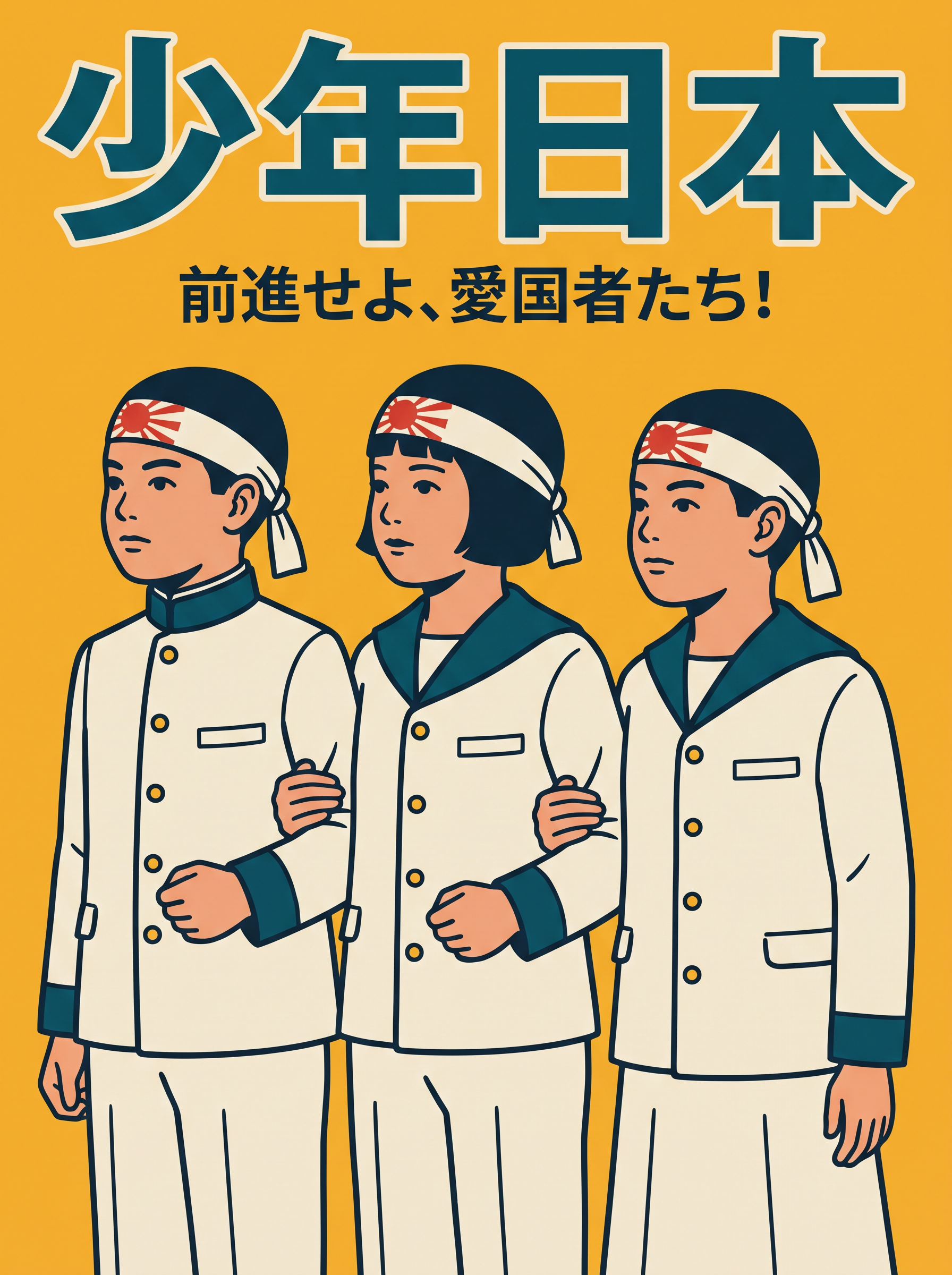
Fig. 7.8 – Propaganda urging young people to fight for the nation.
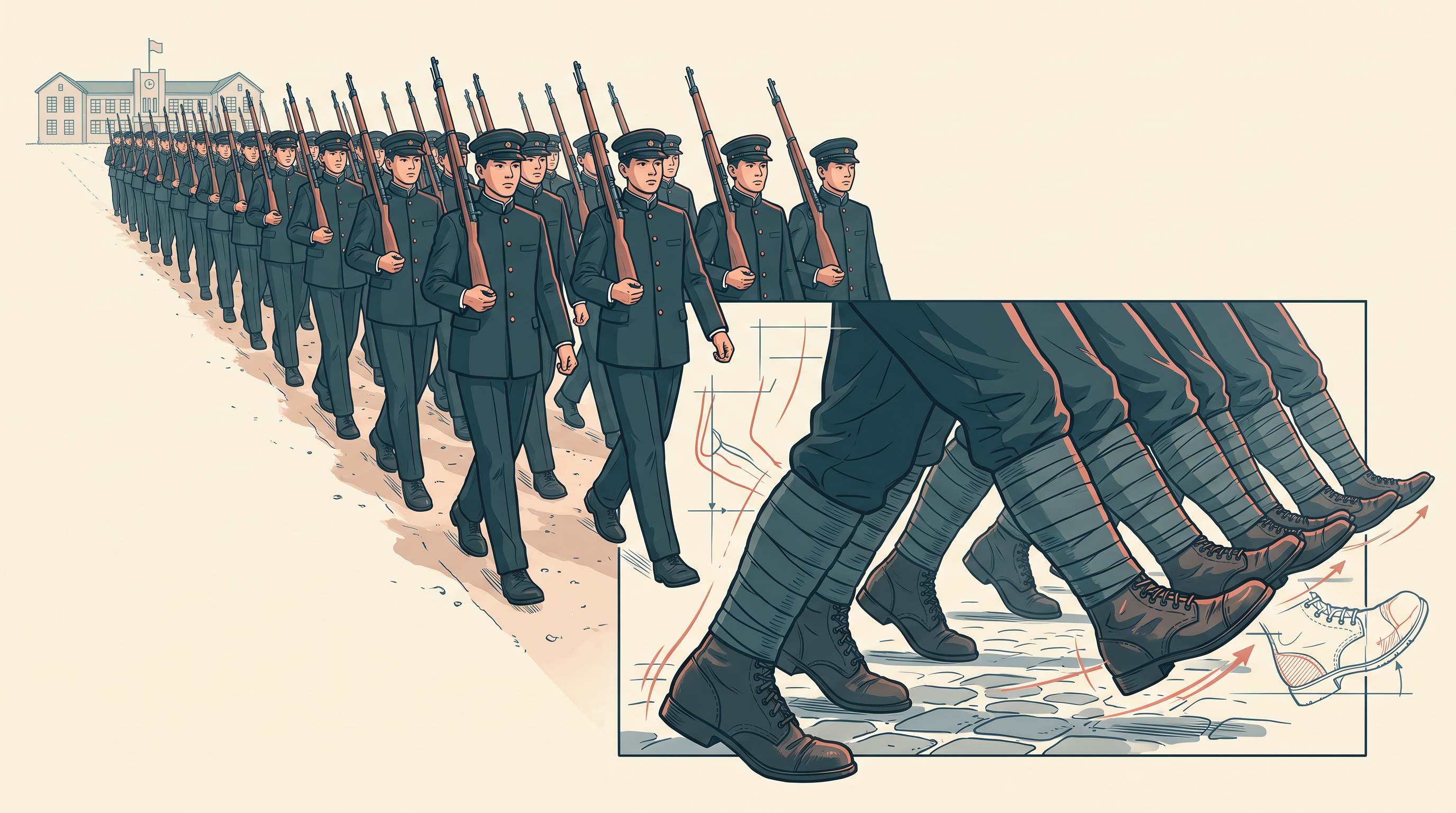
Fig. 7.9 – Student-soldiers on the march.
7.2.6 ‘Westernisation’ And ‘Tradition’
Successive generations of Japanese intellectuals had different views on Japan’s relations with other countries. To some, the USA and the western European countries stood at the highest point of civilisation, to which Japan aspired.
Fukuzawa Yukichi, a leading Meiji intellectual, expressed this by saying that Japan must ‘expel Asia’. He meant that Japan must shed its ‘Asian’ characteristics and become part of the West. It is a startling phrase, and it shows how completely some Japanese thinkers had accepted the idea that Asia was backward.
The Next Generation Answers Back
The next generation questioned this total acceptance of Western ideas, and urged that national pride be built on indigenous values.
The philosopher Miyake Setsurei (1860-1945) argued that each nation must develop its special talents in the interest of world civilisation: ‘To devote oneself to one’s country is to devote oneself to the world.’ That is not a rejection of the world. It is a claim that a nation serves the world best by being fully itself.
By contrast, many intellectuals were attracted to Western liberalism, and wanted a Japan based not on the military but on democracy. Ueki Emori (1857-1892), a leader of the Popular Rights Movement, was demanding constitutional government. He admired the French Revolution’s doctrine of the natural rights of man and of popular sovereignty, and he spoke for a liberal education that would develop each individual: ‘Freedom is more precious than order.’
Others even advocated voting rights for women. This pressure led the government to announce a constitution. Note carefully what that means: the constitution was not a gift handed down from above. It was a response to people below who would not stop asking.
7.2.7 Daily Life
Japan’s transformation into a modern society can be seen also in the changes in everyday life. This is where History stops being about ministers and starts being about kitchens.
The patriarchal household system comprised many generations living together under the control of the head of the house. But as more people became affluent, new ideas of the family spread. The new home — homu, as the Japanese say, using the English word — was that of the nuclear family, where husband and wife lived as breadwinner and homemaker.
This new concept of domesticity in turn generated demands for new types of domestic goods, new types of family entertainment, and new forms of housing. A separate small household needs its own everything.
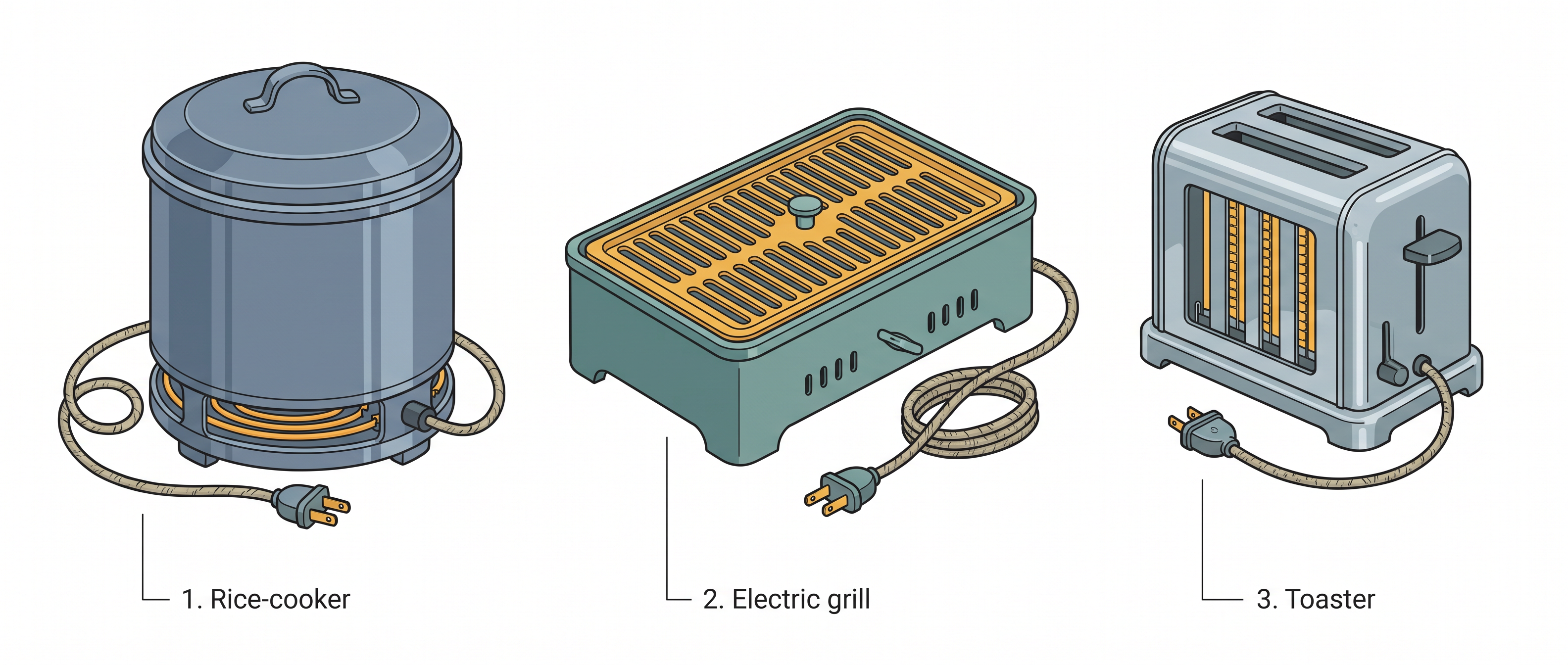
Fig. 7.10 – Early electric goods for the new household.
What A House Cost
In the 1920s, construction companies made cheap housing available for a down payment of 200 yen and a monthly instalment of 12 yen for ten years. Cheap compared with what?
At that time the salary of a bank employee — a person with higher education, and so comfortably placed — was 40 yen per month. So the down payment came to
\[\frac{200 \text{ yen}}{40 \text{ yen per month}} = 5 \text{ months of that salary}\]
and each monthly instalment took
\[\frac{12 \text{ yen}}{40 \text{ yen}} = 0.30 \text{, that is, } 30 \text{ per cent of the monthly salary, for ten years.}\]
Five months’ pay saved up, and then nearly a third of the monthly salary handed over every month for a decade. That is what ‘cheap housing’ meant. It tells you that owning a home had come within reach of the educated salaried class — and that it stayed out of reach of the workshop worker.
The Modern Girl And The Modern City
Moga was an abbreviation for ‘modern girl’. It represented the coming together, in the twentieth century, of ideas of gender equality, a cosmopolitan culture and a developed economy.
The new middle-class families enjoyed new forms of travel and entertainment. Transport in cities improved with electric trams. Public parks were opened from 1878, and department stores began to be built. In Tokyo, the Ginza became a fashionable area for Ginbura, a word combining ‘Ginza’ and ‘burbura’ — walking aimlessly. A city where people stroll for pleasure is a city with leisure to spend.
The first radio stations opened in 1925. Matsui Sumako, an actress, became a national star with her portrayal of Nora in the Norwegian writer Ibsen’s A Doll’s House — a play about a woman who walks out of her marriage. Movies began to be made in 1899, and soon there were a dozen companies making hundreds of films.
The period was one of great vitality, and of the questioning of traditional norms of social and political behaviour. The same decades that produced the conscript army also produced the modern girl.
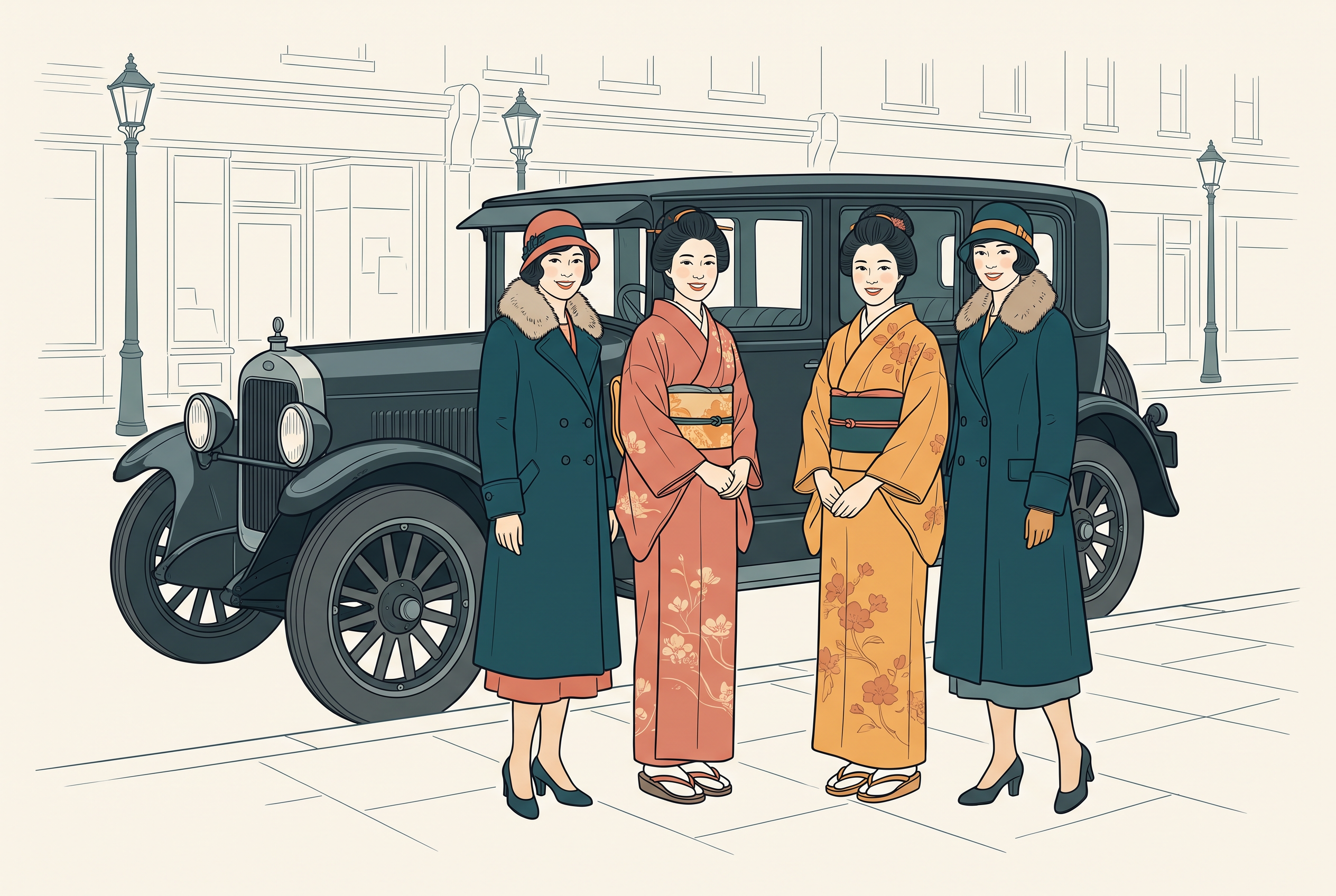
Fig. 7.11 – Urban middle-class women and a motor car.
7.2.8 ‘Overcoming Modernity’
State-centred nationalism found full expression in the 1930s and 1940s, as Japan launched wars to extend its empire in China and other parts of Asia. That war merged into the Second World War after Japan attacked the USA at Pearl Harbor.
This period saw greater controls on society, the repression and imprisonment of dissidents, and the formation of patriotic societies, many of them women’s organisations, to support the war. A state at war does not tolerate an argument at home.
The Symposium Of 1943
An influential symposium on ‘Overcoming Modernity’ in 1943 debated the dilemma facing Japan — how to combat the West while being modern. State the dilemma plainly and it is a real one: the tools of resistance were Western tools.
A musician, Moroi Saburo, posed the question of how to rescue music from the art of sensory stimulation and restore it to an art of the spirit. He was not rejecting Western music. He was trying to find a way that went beyond merely rewriting Japanese music, or playing it on Western instruments.
The philosopher Nishitani Keiji defined ‘modern’ as the unity of three streams of Western thought: the Renaissance, the Protestant Reformation, and the rise of the natural sciences. He argued that Japan’s ‘moral energy’ — a term taken from the German philosopher Ranke — had helped it to escape colonisation, and that it was Japan’s duty to establish a new world order, a Greater East Asia. For this, he said, a new vision that would integrate science and religion was necessary.
Be clear about what that phrase carried. ‘Greater East Asia’ was the language in which the conquest of Japan’s neighbours was justified, and the peoples brought inside that new order were never asked whether they wanted it. An argument about culture was doing political work.
Here is the second activity for you. Would you agree with Nishitani’s definition of ‘modern’ — that it is the unity of the Renaissance, the Reformation and the natural sciences? Before answering, ask whether a definition of ‘modern’ drawn entirely from Europe can explain what Japan itself was doing.
7.2.9 After Defeat: Re-Emerging As A Global Economic Power
Japan’s attempt to carve out a colonial empire ended with its defeat by the Allied forces.
It has been argued that nuclear bombs were dropped on Hiroshima and Nagasaki to shorten the war. But others think that the immense destruction and suffering they caused were unnecessary. This is not a settled question, and this book will not settle it for you.
The Occupation And The New Constitution
Under the US-led Occupation (1945-47), Japan was demilitarised and a new constitution was introduced. This had Article 9, the so-called ‘no war clause’, which renounces the use of war as an instrument of state policy. The country whose army had answered only to the emperor now wrote the renunciation of war into its founding law.
Agrarian reforms were carried out, trade unions were re-established, and an attempt was made to dismantle the zaibatsu, the large monopoly houses that dominated the Japanese economy.
Political parties were revived, and the first post-war elections were held in 1946 — the first elections in which women voted.
Why The ‘Miracle’ Was Not A Miracle
The rapid rebuilding of the Japanese economy after its shattering defeat was called a post-war ‘miracle’. But it was more than that. It was firmly rooted in Japan’s long history.
The constitution was democratised only now. Yet the Japanese had a historic tradition of popular struggles, and of intellectual engagement with the question of how to broaden political participation — the Popular Rights Movement, Ueki Emori’s demands, the campaign for votes for women, Tanaka Shozo’s villagers. None of that was created by the Occupation.
The social cohesion of the pre-war years was strengthened, allowing for a close working of the government, the bureaucracy and industry. US support, as well as the demand created by the Korean and the Vietnamese wars, also helped the Japanese economy.
The 1964 Olympics held in Tokyo marked a symbolic coming of age. In much the same way, the network of high-speed Shinkansen or bullet trains, started in 1964, which ran at 200 miles per hour and now run at 300 miles per hour, has come to represent the ability of the Japanese to use advanced technologies to produce better and cheaper goods.
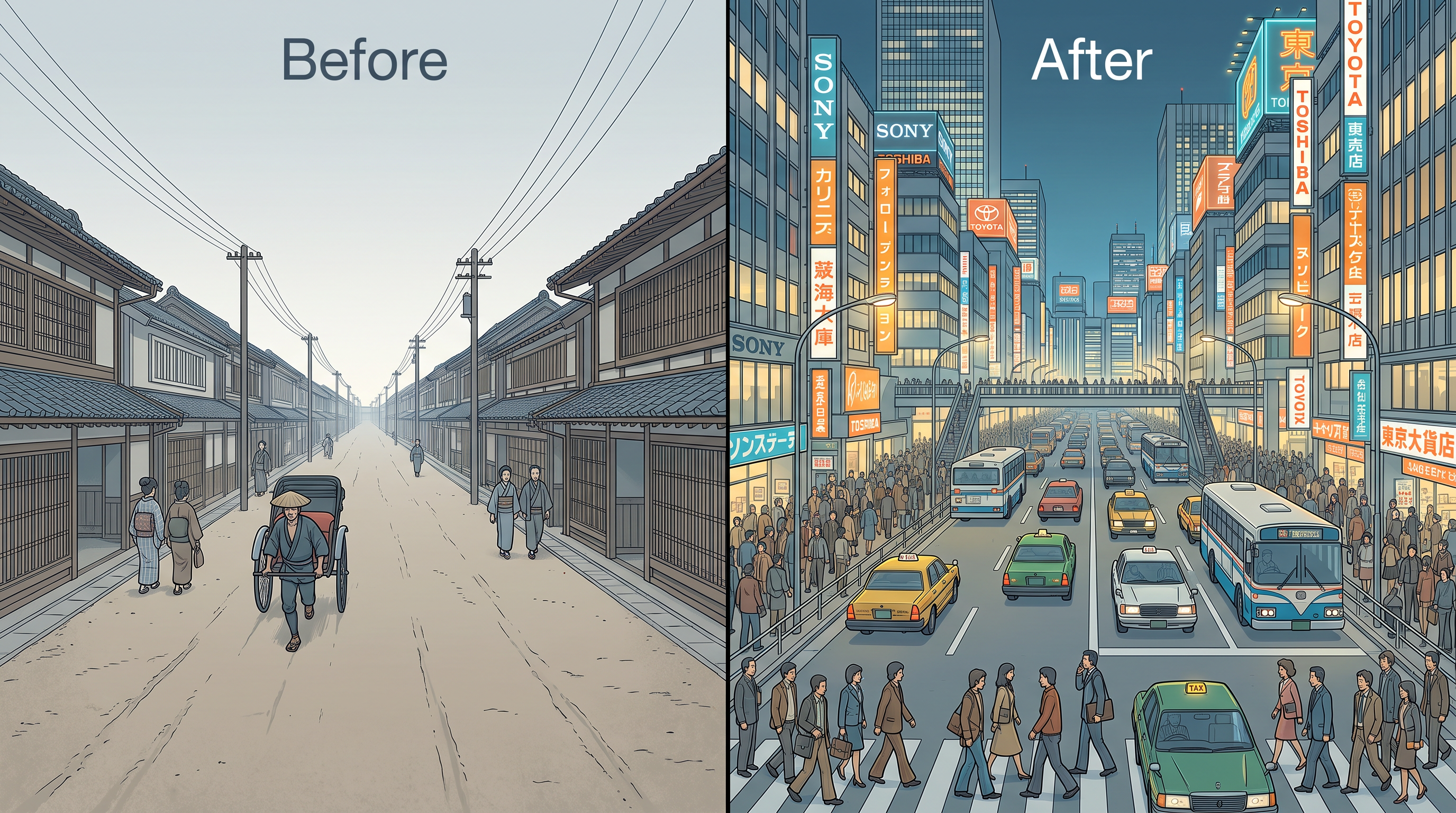
Fig. 7.12 – Tokyo before and after the Second World War.
The Cost Nobody Had Counted
The 1960s saw the growth of civil society movements, because industrialisation had been pushed with utter disregard for its effect on health and the environment.
Cadmium poisoning, which led to a painful disease, was an early indicator. It was followed by mercury poisoning in Minamata in the 1960s, and by problems caused by air pollution in the early 1970s. These were not accidents of nature. They were the by-products of factories that nobody had been obliged to control.
Grass-roots pressure groups began to demand recognition of these problems, as well as compensation for the victims. Government action and new legal regulations helped to improve conditions.
From the mid-1980s there has been an increasing decline in interest in environmental issues, as Japan enacted some of the strictest environmental controls in the world. Today, as a developed country, it faces the challenge of using its political and technological capabilities to maintain its position as a leading world power.
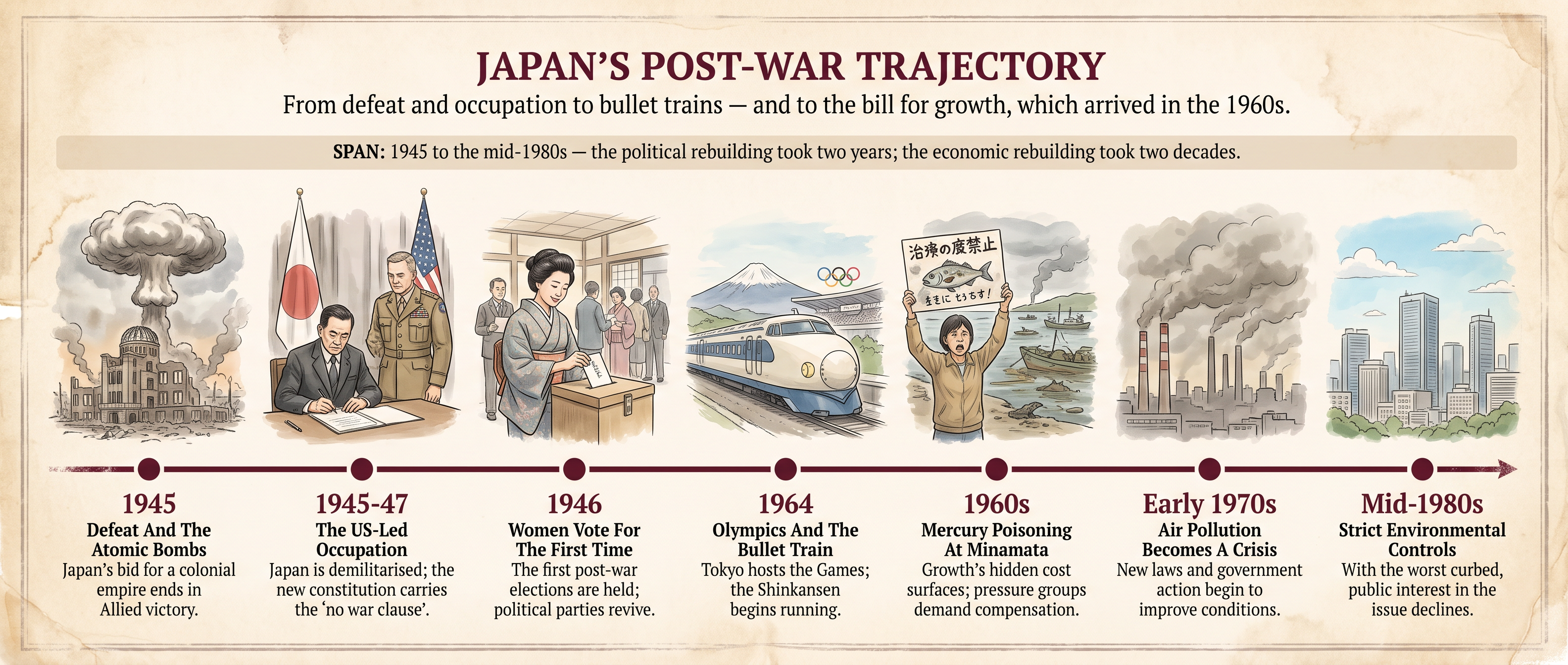
Fig. 7.13 – Japan After The War.
7.3 China
The modern history of China has revolved around a single question, asked again and again in different words: how to regain sovereignty, how to end the humiliation of foreign occupation, and how to bring about equality and development.
Sovereignty means the right of a country to govern itself, without another power deciding its laws, its trade or its ports. For most of the nineteenth and twentieth centuries, China did not fully have it.
Three Answers To One Question
Chinese debates were marked by the views of three groups, and the whole of this section is really an argument between them.
The first were the early reformers, such as Kang Youwei (1858-1927) or Liang Qichao (1873-1929). They tried to use traditional ideas in new and different ways, to meet the challenges posed by the West. Mend the system, they said, do not smash it.
The second were the republican revolutionaries, such as Sun Yat-sen, the first president of the republic. They were inspired by ideas from Japan and the West, and wanted the monarchy gone.
The third was the Communist Party of China, the CCP. It wanted to end age-old inequalities and to drive out the foreigners — not one task, but two, held together.
The Opium War And The Qing
The beginning of modern China can be traced to its first encounter with the West in the sixteenth and seventeenth centuries, when Jesuit missionaries introduced Western sciences such as astronomy and mathematics. Their immediate impact was limited. But it set in motion events that gathered momentum in the nineteenth century, when Britain used force to expand its lucrative trade in opium, leading to the first Opium War (1839-42).
That war undermined the ruling Qing dynasty and strengthened demands for reform and change. A state that cannot keep foreign warships out of its rivers has trouble telling its own people that it is strong.
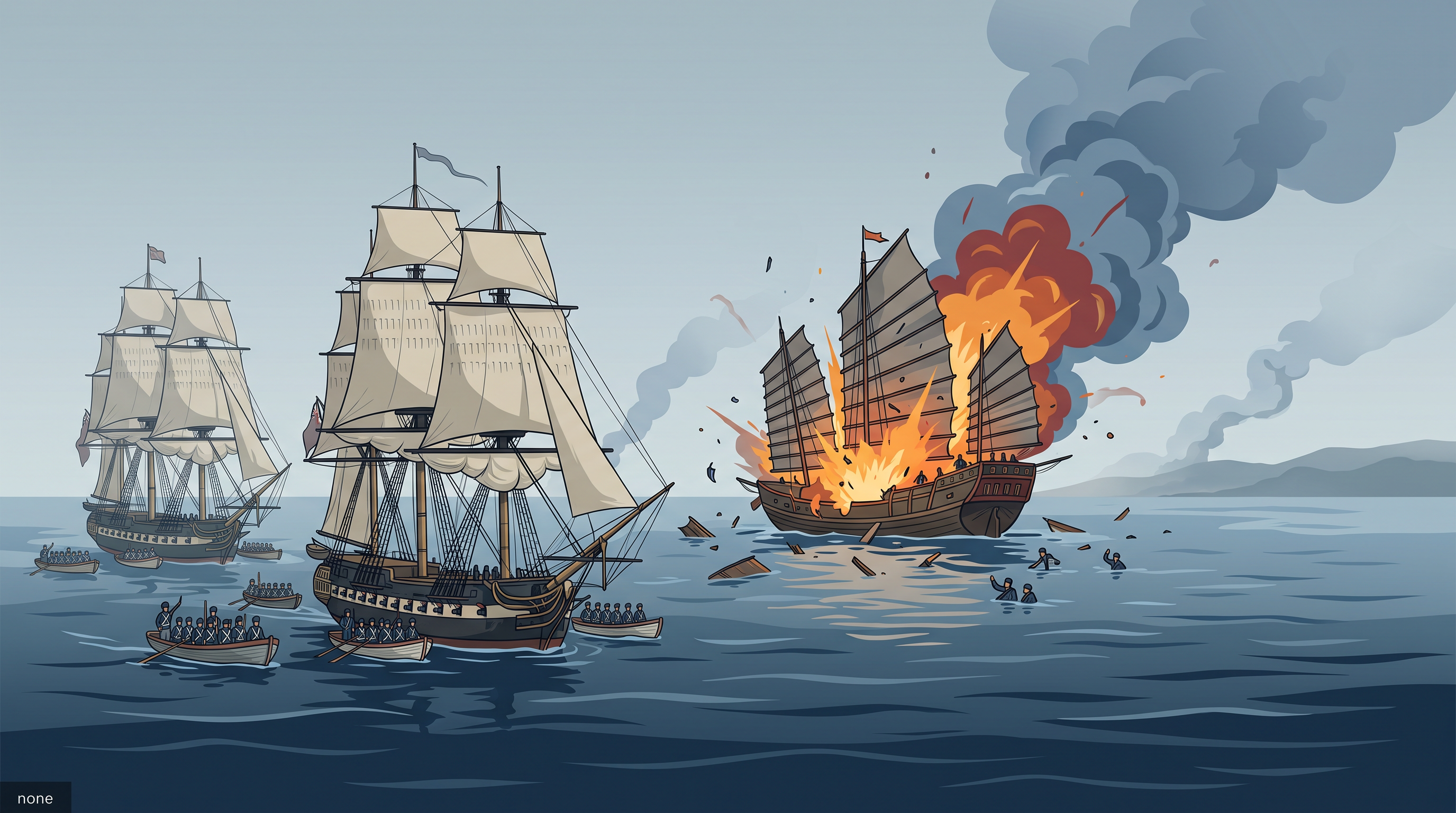
Fig. 7.14 – The Opium War, painted by a European artist.
Here is the third activity, and you should attempt it before reading on. Does this painting give you a clear sense of the significance of the Opium War? Look hard at what it shows, and then at what it leaves out.
The Triangular Trade
So what was the fighting about? The demand for Chinese goods such as tea, silk and porcelain created a serious balance-of-trade problem for Britain — that is, Britain was buying far more from China than it could sell there. Western goods did not find a market in China, so payment had to be made in silver.
The East India Company found a new option: opium, which grew in India. The Company sold the opium in China, and gave the silver it earned to Company agents in Canton in return for letters of credit — paper promises that could be exchanged for money elsewhere.
The Company then used that silver to buy tea, silk and porcelain, and sold them in Britain. This was the ‘triangular trade’ between Britain, India and China: Indian opium to China, Chinese goods to Britain, British money and manufactures to India. A drug paid for the tea, and an Indian crop settled a British debt.
The Reformers And The Warning Of India
Qing reformers such as Kang Youwei and Liang Qichao realised the need to strengthen the system. They initiated policies to build a modern administrative system, a new army and an educational system, and they set up local assemblies to establish constitutional government. They saw the need to protect China from colonisation.
The negative example of colonised countries worked powerfully on Chinese thinkers. The partition of Poland in the eighteenth century was a much-discussed example — so much so that by the late 1890s it came to be used as a verb: ‘to Poland us’ (bolan wo). To be Polanded was to be carved up by stronger neighbours.
India was another such example. In 1903, the thinker Liang Qichao, who believed that only by making people aware that China was a nation would they be able to resist the West, wrote that India was ‘a country that was destroyed by a non-country that is the East India Company’. He criticised Indians for being cruel to their own people and subservient to the British.
Read that judgement carefully, and read it as evidence about the writer. Liang was a Chinese nationalist trying to frighten his readers into national feeling, and India was his warning, not his subject. Such arguments carried a powerful appeal, because ordinary Chinese could see for themselves that the British used Indian soldiers in their wars on China.
Confucianism And The Examination System
Above all, many felt that traditional ways of thinking had to be changed. Confucianism, developed from the teachings of Confucius (551-479 BCE) and his disciples, was concerned with good conduct, practical wisdom and proper social relationships.
It influenced the Chinese attitude towards life, provided social standards, and laid the basis for political theories and institutions. That is an enormous inheritance. And by the end of the nineteenth century it was now seen as a major barrier to new ideas and institutions.
To train people in modern subjects, students were sent to study in Japan, Britain and France, and to bring back new ideas. Many Chinese students went to Japan in the 1890s. They not only brought back new ideas; many became leading republicans.
The Chinese even borrowed Japanese translations of European words such as justice, rights and revolution, because Japanese used the same ideographic script. That was a reversal of the traditional relationship: China had given Japan its script and its classics, and now the words came back the other way.
In 1905, just after the Russo-Japanese war — a war fought on Chinese soil and over Chinese territory — the centuries-old Chinese examination system that gave candidates entry into the elite ruling class was abolished.
How The Examination Worked
Entry to the elite ruling class, about 1.1 million people till 1850, had been largely through an examination. It required writing an eight-legged essay, the pa-ku wen, in classical Chinese and in a prescribed form.
The examination was held twice every three years, at different levels. Of those allowed to sit, only 1-2 per cent passed the first level, usually by the age of 24, to become what was called ‘beautiful talent’.
At any given time before 1850 there were about 526,869 civil and 212,330 military provincial (sheng-yuan) degree holders in the whole country. Since there were only 27,000 official positions, many lower-level degree holders did not have jobs.
The examination acted as a barrier to the development of science and technology, as it demanded only literary skills. In 1905 it was abolished, because it was based on skills in classical Chinese learning that had, it was felt, no relevance for the modern world.
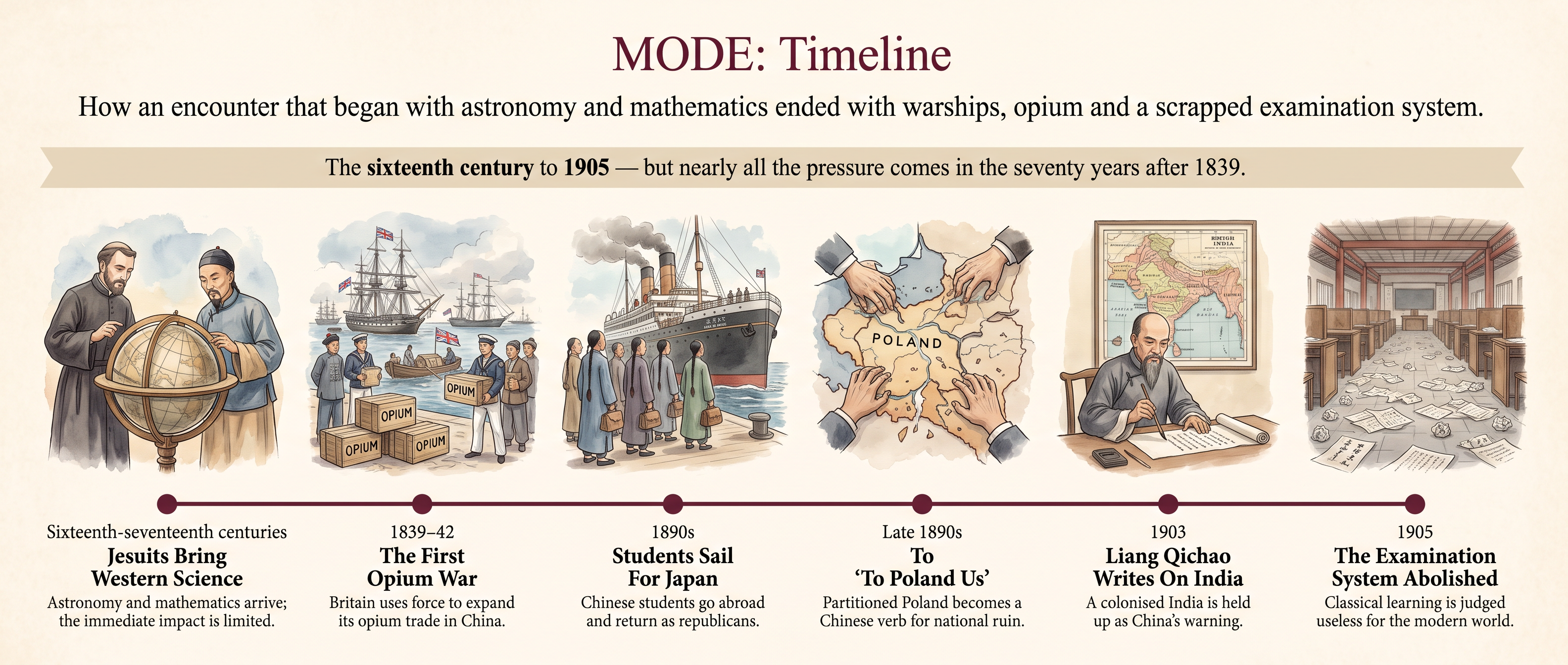
Fig. 7.15 – China Meets The West.
7.3.1 Establishing The Republic
The Manchu empire was overthrown and a republic established in 1911 under Sun Yat-sen (1866-1925), who is unanimously regarded as the founder of modern China. A republic is a state with no monarch, whose head is chosen rather than born.
He came from a poor family and studied in missionary schools, where he was introduced to democracy and Christianity. He studied medicine, but was greatly concerned about the fate of China.
His programme was called the Three Principles (San min chui). The first was nationalism — which here meant overthrowing the Manchu, who were seen as a foreign dynasty, as well as the other foreign imperialists. The second was democracy, or establishing democratic government. The third was socialism, regulating capital and equalising landholdings.
The Fourth Of May
The social and political situation continued to be unstable. On 4 May 1919, an angry demonstration was held in Beijing to protest against the decisions of the post-war peace conference.
The grievance was precise. China had been an ally of the victorious side led by Britain, and yet it did not get back the territories that had been seized from it. Having fought on the winning side, it was treated like a loser.
The protest became a movement. It galvanised a whole generation to attack tradition, and to call for saving China through modern science, democracy and nationalism.
Revolutionaries called for driving out the foreigners, who were controlling the country’s resources, in order to remove inequalities and reduce poverty. They advocated reforms such as the use of simple language in writing, the abolition of foot-binding and of the subordination of women, equality in marriage, and economic development to end poverty.
Notice what sits side by side in that list: a language reform, a demand about women’s bodies, and an economic programme. To this generation they were one project.
After the republican revolution the country entered a period of turmoil. The Guomindang, the National People’s Party, and the CCP emerged as the major forces striving to unite the country and bring stability.
Chiang Kai-shek And The Guomindang
Sun Yat-sen’s ideas became the basis of the political philosophy of the Guomindang. The party identified the ‘four great needs’ as clothing, food, housing and transportation.
After the death of Sun, Chiang Kai-shek (1887-1975) emerged as the leader of the Guomindang. He launched a military campaign to control the ‘warlords’ — regional leaders who had usurped authority and ruled their areas with private armies — and to eliminate the communists.
He advocated a secular and rational ‘this-worldly’ Confucianism, but he also sought to militarise the nation. The people, he said, must develop a ‘habit and instinct for unified behaviour’.
He encouraged women to cultivate the four virtues of ‘chastity, appearance, speech and work’, and to recognise their role as confined to the household. Even the length of hemlines was prescribed. A party that could not deliver land reform was still able to tell women how to dress.
The Cities, The Workers And The Press
The Guomindang’s social base was in urban areas, and industrial growth was slow and limited.
In cities such as Shanghai, which became the centres of modern growth, an industrial working class had appeared by 1919, numbering 500,000. Of these, however, only a small percentage were employed in modern industries such as shipbuilding. Most were ‘petty urbanites’ (xiao shimin), traders and shopkeepers.
Urban workers, and particularly women, earned very low wages. Working hours were long and conditions of work were bad. As individualism increased, there was a growing concern with women’s rights, with ways to build the family, and with discussions about love and romance.
Social and cultural change was helped along by the spread of schools and universities — Peking University was established in 1902. Journalism flourished, reflecting the growing attraction of this new thinking.
The popular Life Weekly, edited by Zao Taofen (1895-1944), is representative of this new trend. It introduced readers to new ideas, as well as to leaders such as Mahatma Gandhi and Kemal Ataturk, the modernist leader of Turkey. Its circulation increased rapidly, from just 2,000 copies in 1926 to a massive 200,000 in 1933 — a hundred-fold rise in seven years, which tells you how hungry Chinese readers were for a world beyond their own.
Shanghai In 1935
The chapter preserves an eyewitness account of Shanghai from an unexpected direction. Buck Clayton, a black American trumpet player, was in Shanghai with his jazz orchestra and lived the life of the privileged expatriates.
But he was black. Once, some white Americans assaulted him and his orchestra members, and threw them out of the hotel they played in. Thus, though American, he had greater sympathy for the plight of the Chinese, being himself a victim of racial discrimination.
Of their fight with the white Americans, from which they emerged victorious, he writes: ‘The Chinese onlookers treated us like we had done something they always wanted to do and followed us all the way home cheering us like a winning football team.’ The cheering tells you what the Chinese felt about the foreigners who ran their city, and could not say aloud.
On the poverty and hard life of the Chinese, Clayton writes: ‘I would see sometimes twenty or thirty coolies pulling a big heavy cart that in America would be pulled by a truck or horses. These people seemed to be nothing but human horses and all they would get at the end of the day was just enough to get a couple of bowls of rice and a place to sleep. I don’t know how they did it.’
The fourth activity asks you to think about exactly this. How does a sense of discrimination unite people? Clayton was an American in a city where Americans were privileged, and he found himself standing with the Chinese instead. What did he and the Chinese onlookers share, and what did they not share?
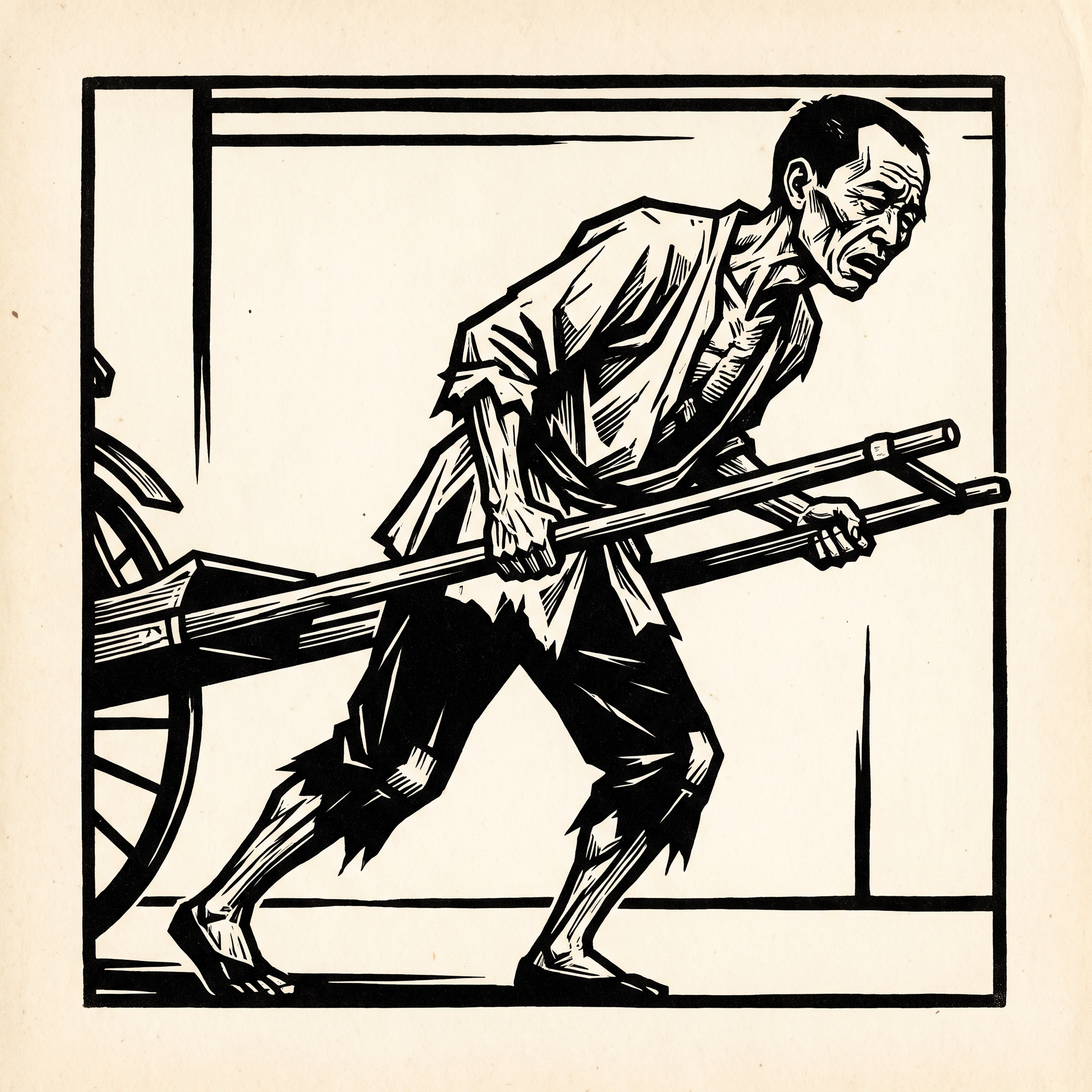
Fig. 7.16 – ‘Rickshaw Puller’, woodcut by Lan Jia.
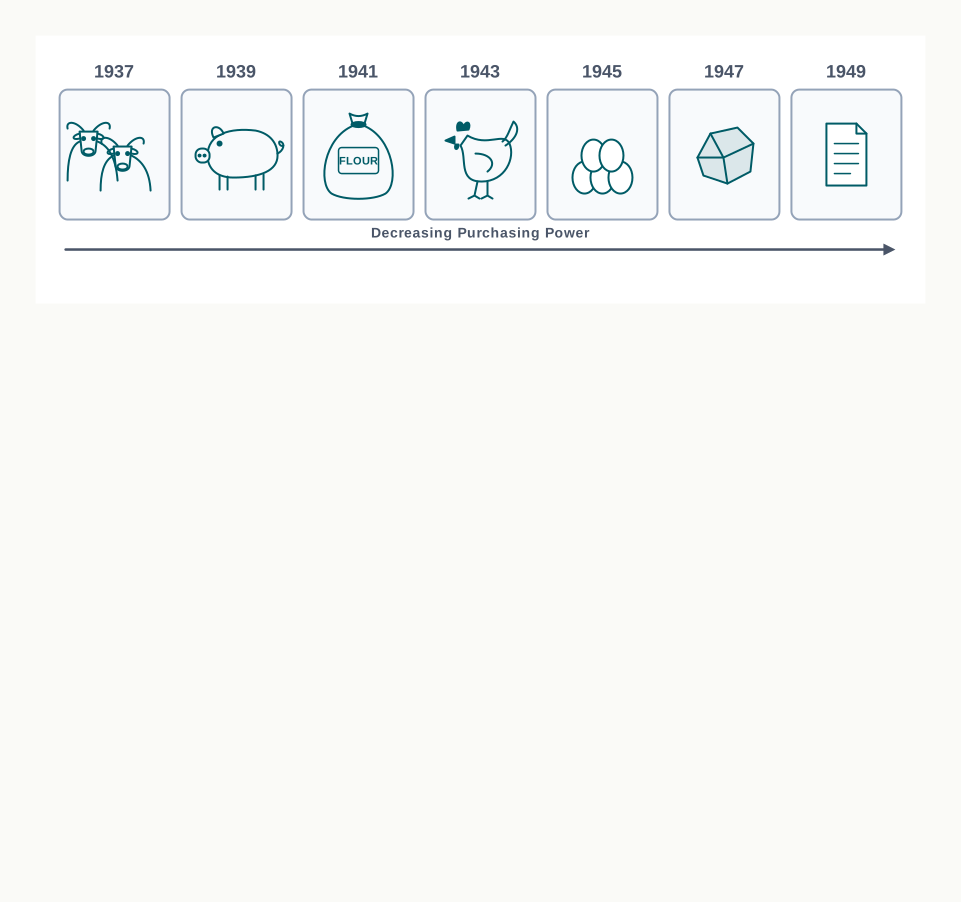
Fig. 7.17 – The story of rising prices, 1937 to 1949.
Why The Guomindang Failed
The Guomindang, despite its attempts to unite the country, failed. Its social base was narrow and its political vision limited.
A major plank in Sun Yat-sen’s programme — regulating capital and equalising land — was never carried out, because the party ignored the peasantry and the rising social inequalities. In a country where most people were peasants, that is not a small omission. It is the whole ground beneath the party’s feet.
It sought to impose military order rather than address the problems faced by the people. Order can be imposed for a while. Hunger cannot be ordered away.
7.3.2 The Rise Of The Communist Party Of China
When the Japanese invaded China in 1937, the Guomindang retreated. The long and exhausting war weakened China.
Prices rose 30 per cent per month between 1945 and 1949, and utterly destroyed the lives of ordinary people. A monthly rise of that size means money loses value faster than a family can spend it — wages are worthless before they are used.
Rural China faced two crises at once. One was ecological: soil exhaustion, deforestation and floods. The second was socio-economic, caused by exploitative land-tenure systems, indebtedness, primitive technology and poor communications. The land itself was failing, and so were the arrangements under which people held it.
A Party Founded On The Russian Example
The CCP had been founded in 1921, soon after the Russian Revolution. The Russian success exercised a powerful influence around the world, and leaders such as Lenin and Trotsky went on to establish the Comintern, or Third International, in March 1918, to help bring about a world government that would end exploitation.
The Comintern and the Soviet Union supported communist parties around the world. But they worked within the traditional Marxist understanding that revolution would be brought about by the working class in cities.
Hold that sentence against what you have just read about China. The industrial working class of Shanghai numbered 500,000 in a country of peasants. A revolution built on city workers alone had very little to build on.
The Comintern’s initial appeal across national boundaries was immense, but it soon became a tool for Soviet interests, and it was dissolved in 1943.
Mao Zedong (1893-1976), who emerged as a major CCP leader, took a different path by basing his revolutionary programme on the peasantry. His success made the CCP a powerful political force that ultimately won against the Guomindang.
Jiangxi, And Learning What A Village Contained
Mao Zedong’s radical approach can be seen in Jiangxi, in the mountains, where the Communists camped from 1928 to 1934, secure from Guomindang attacks.
A strong peasants’ council, or soviet, was organised there, united through the confiscation and redistribution of land. Mao, unlike other leaders, stressed the need for an independent government and an independent army.
He had become aware of women’s problems and supported the emergence of rural women’s associations. He promulgated a new marriage law that forbade arranged marriages, stopped the purchase or sale of marriage contracts, and simplified divorce.
In a survey in 1930 in Xunwu, Mao Zedong looked at everyday commodities such as salt and soya beans, at the relative strengths of local organisations, at petty traders and craftsmen, ironsmiths and prostitutes, and at the strength of religious organisations — all in order to examine the different levels of exploitation.
He gathered statistics on the number of peasants who had sold their children, and found out what price they received. Boys were sold for 100-200 yuan, but there were no instances of the sale of girls, because the need was for hard labour and not sexual exploitation. It was on the basis of these studies that he advocated ways of solving social problems.
That is a brutal set of facts, and it should be read as such: a peasantry so pressed that children were sold to survive. It is also, in method, a piece of social research — someone went and counted.
The Long March
The Guomindang blockade of the Communists’ Soviet forced the party to seek another base. This led them to go on what came to be called the Long March (1934-35): 6,000 gruelling and difficult miles to Shanxi.
Here, in their new base in Yanan, they further developed their programme to end warlordism, to carry out land reforms and to fight foreign imperialism. This won them a strong social base — that is, a body of ordinary people with a reason to want them to win.
In the difficult years of the war, the Communists and the Guomindang worked together. But after the end of the war, the Communists established themselves in power and the Guomindang was defeated.
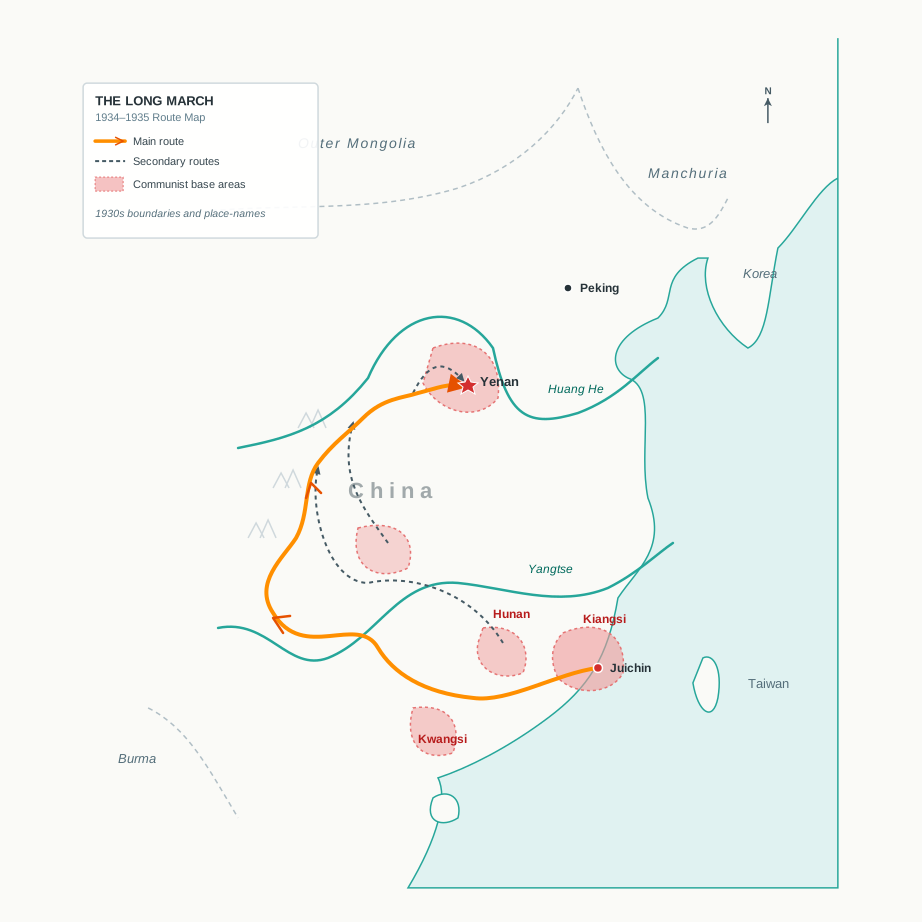
Fig. 7.18 – The Long March, 1934-35.
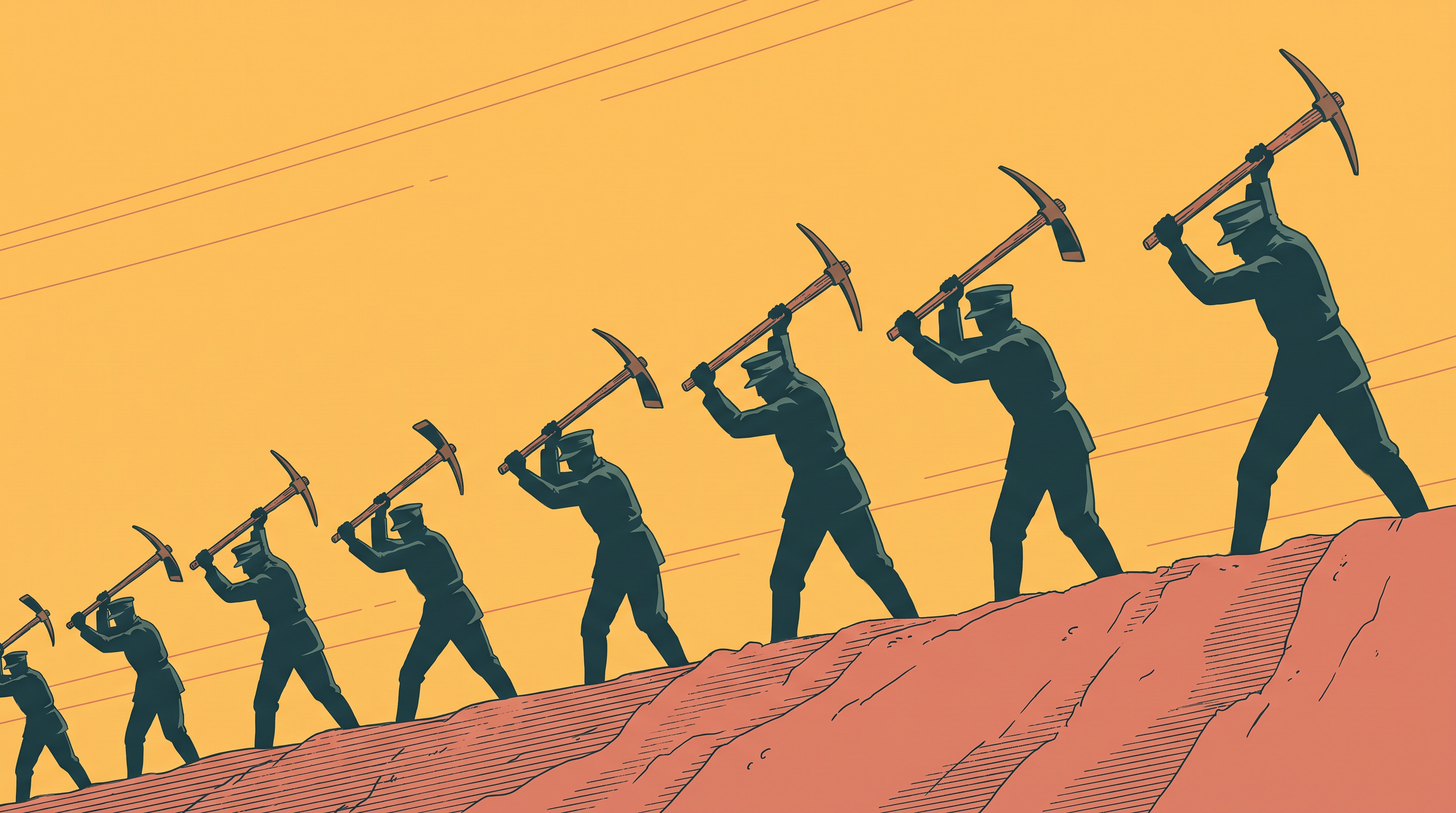
Fig. 7.19 – Soldiers of the Long March reclaiming wasteland, 1941.
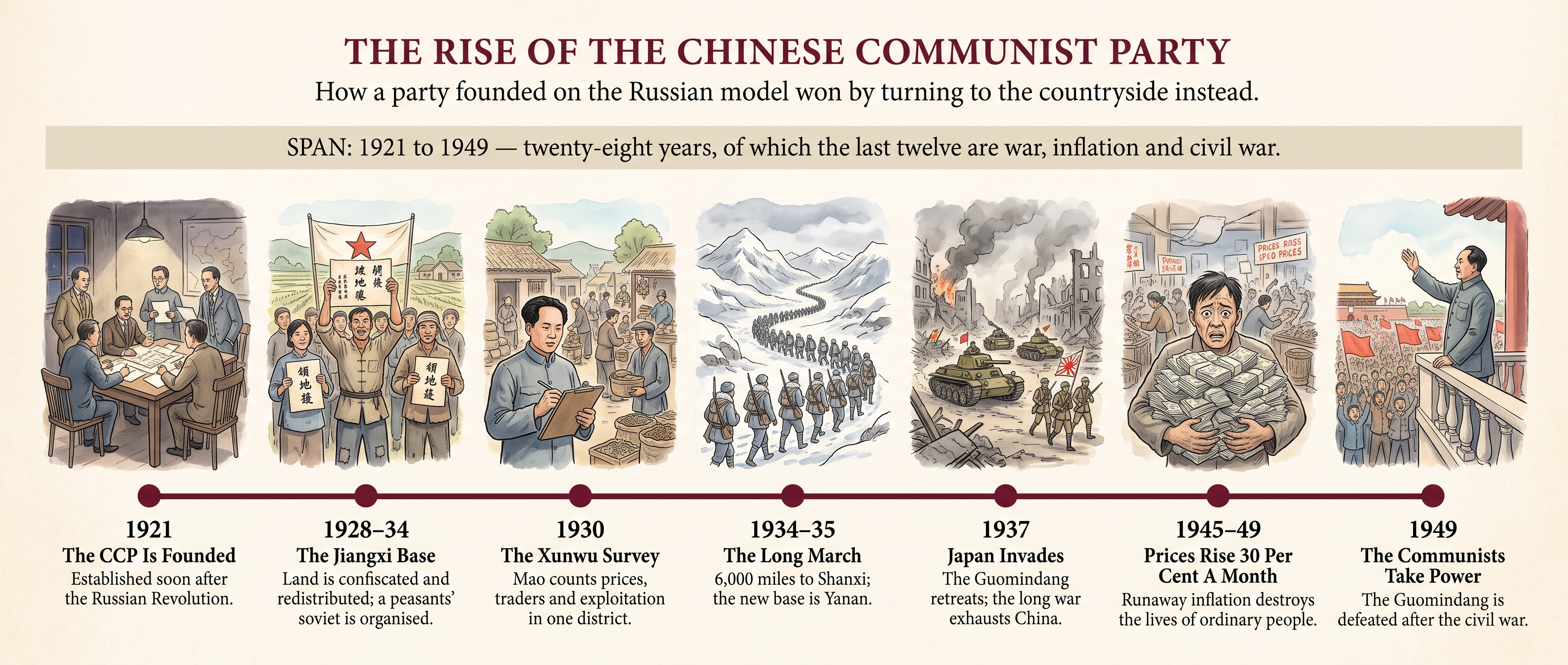
Fig. 7.20 – The Rise Of The CCP.
7.3.3 Establishing The New Democracy: 1949-65
The People’s Republic of China government was established in 1949. It was based on the principles of the ‘New Democracy’, an alliance of all social classes — not of one class alone.
That was a deliberate contrast with the ‘dictatorship of the proletariat’ that the Soviet Union said it had established. The term was used by Karl Marx to stress that the working class would replace the repressive government of the propertied class with a revolutionary government — and not a dictatorship in the sense we now give the word.
Critical areas of the economy were put under government control, and private enterprise and private ownership of land were gradually ended. This programme lasted till 1953, when the government declared that it would launch a programme of socialist transformation.
The Great Leap Forward
The Great Leap Forward movement, launched in 1958, was a policy to galvanise the country to industrialise rapidly. People were encouraged to set up steel furnaces in their backyards.
In the rural areas, people’s communes were started, in which land would be collectively owned and cultivated. By 1958 there were 26,000 communes, covering 98 per cent of the farm population. Ninety-eight per cent means very nearly every farming family in the country.
7.3.4 Conflicting Visions: 1965-78
The conflict between the Maoists, who wanted to create a ‘Socialist Man’, and those who objected to his emphasis on ideology rather than expertise, culminated in Mao launching the Great Proletarian Cultural Revolution in 1965 to counter his critics.
Read the disagreement plainly. One side held that the right beliefs would produce the right society. The other held that a country needs engineers who can build a bridge, whatever they believe.
The Red Guards, mainly students and the army, were used for a campaign against old culture, old customs and old habits. Students and professionals were sent to the countryside to learn from the masses. Ideology — being Communist — was more important than having professional knowledge. Denunciations and slogans replaced rational debate.
That last sentence is the heart of it. When accusation takes the place of argument, no one can be persuaded, and no one is safe.
The Cultural Revolution began a period of turmoil. It weakened the Party, and it severely disrupted the economy and the educational system.
From the late 1960s, the tide began to turn. In 1975, the Party once again laid emphasis on greater social discipline, and on the need to build an industrial economy so that China could become a power before the end of the century.
7.3.5 Reforms From 1978
The Cultural Revolution was followed by a process of political manoeuvring. Deng Xiaoping kept party control strong, while introducing a socialist market economy — an economy where goods are bought and sold in a market, and where the Party still decides who governs.
In 1978, the Party declared its goal as the Four Modernisations: to develop science, industry, agriculture and defence. Debate was allowed, as long as the Party itself was not questioned. Notice the limit written into the permission.
The Fifth Modernisation
In this new and liberating climate, as at the time of the May Fourth movement 60 years earlier, there was an exciting explosion of new ideas.
The wall-poster with which this chapter opened belongs here. On 5 December 1978, ‘The Fifth Modernisation’ proclaimed that without Democracy the other modernisations would come to nothing, and criticised the CCP for not solving the problem of poverty or ending sexual exploitation, even citing cases of such abuse from within the Party. Someone had tested the limit of the permission, in public, on paper.
These demands were suppressed. But in 1989, on the seventieth anniversary of the May Fourth movement, many intellectuals called for a greater openness, and for an end to ‘ossified dogmas’ (su shaozhi) — that is, to ideas so hardened by repetition that they can no longer be examined.
Student demonstrators at Tiananmen Square in Beijing were brutally repressed. This was strongly condemned around the world.
The Argument About What Comes Next
The post-reform period has seen the emergence of debates on the ways to develop China.
The dominant view, supported by the Party, is based on strong political control, economic liberalisation and integration into the world market.
Critics argue that increasing inequalities — between social groups, between regions, and between men and women — are creating social tensions, and they question the heavy emphasis on the market.
And finally, there is a growing revival of earlier, so-called ‘traditional’ ideas, of Confucianism, and arguments that China can build a modern society by following its own traditions rather than simply copying the West. The ideas that the May Fourth generation attacked, and the Cultural Revolution tried to erase, are being read again.
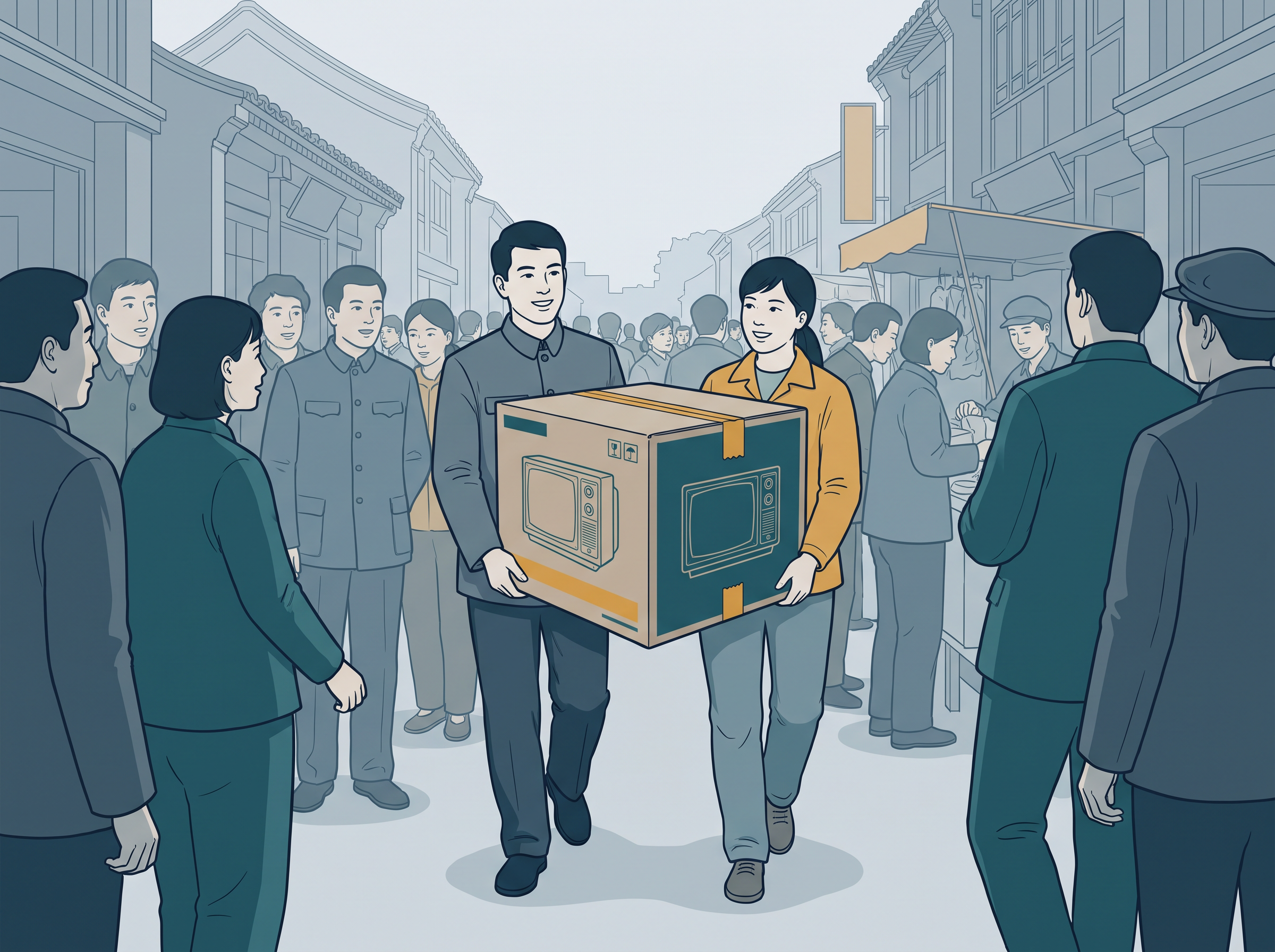
Fig. 7.21 – Buying consumer goods after the 1978 reforms.
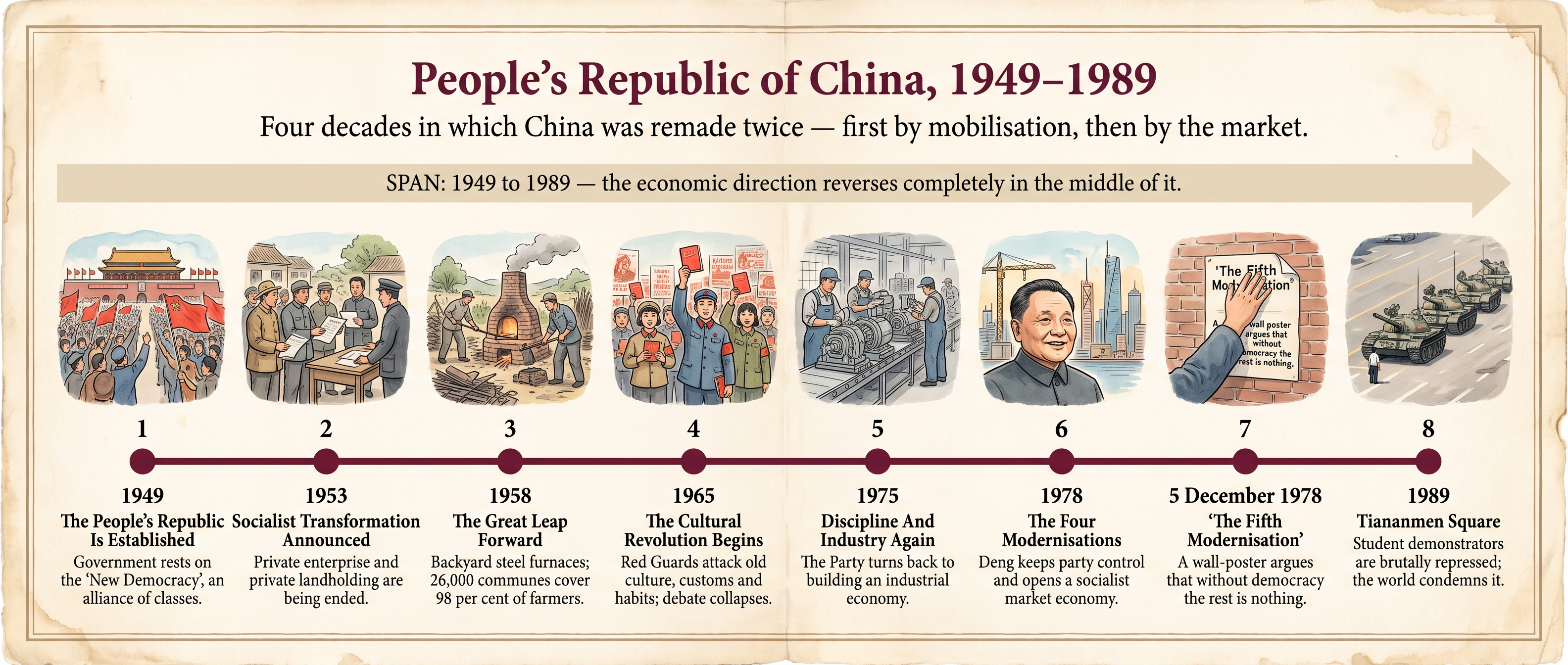
Fig. 7.22 – The People’s Republic.
7.3.6 The Story Of Taiwan
Chiang Kai-shek, defeated by the CCP, fled in 1949 to Taiwan with over US$300 million in gold reserves and crates of priceless art treasures, and established the Republic of China.
Taiwan had been a Japanese colony since the Chinese ceded it after the 1894-95 war with Japan — the same war you met in the Japanese half of this chapter, seen now from the losing side. The Cairo Declaration (1943) and the Potsdam Proclamation (1949) restored sovereignty to China.
A Repressive Government That Reformed The Land
Massive demonstrations in February 1947 had led the GMD to brutally kill a whole generation of leading figures. That is a plain statement of a mass killing, and it should not be softened.
The GMD, under Chiang Kai-shek, went on to establish a repressive government. It forbade free speech and political opposition, and excluded the local population from positions of power — the people of Taiwan were governed by people who had arrived from the mainland.
However, the same government carried out land reforms that increased agricultural productivity and modernised the economy. By 1973, Taiwan had a GNP second only to that of Japan in Asia. GNP, or gross national product, is the total value of everything a country’s people produce in a year, and it is a rough measure of the size of an economy.
The economy, largely dependent on trade, has been steadily growing. But what is important is that the gap between the rich and the poor has been steadily declining. Growth that widens a gap and growth that narrows one are not the same achievement.
Becoming A Democracy
Even more dramatic has been the transformation of Taiwan into a democracy. It began slowly after the death of Chiang in 1975, and grew in momentum when martial law was lifted in 1987 and opposition parties were legally permitted.
The first free elections began the process of bringing local Taiwanese to power — the excluded population, at last, in charge of its own government.
Diplomatically, most countries have only trade missions in Taiwan. Full diplomatic relations and embassies are not possible, as Taiwan is considered to be part of China.
The question of re-unification with the mainland remains a contentious issue. But ‘Cross Strait’ relations — that is, relations between Taiwan and China — have been improving. Taiwanese trade and investments in the mainland are massive, and travel has also become easier. China may be willing to tolerate a semi-autonomous Taiwan, as long as it gives up any move to seek independence.
7.3.7 The Story Of Korea
7.3.7.1 Beginnings Of Modernisation
During the late nineteenth century, Korea’s Joseon Dynasty (1392-1910) faced internal political and social strife, and increasing foreign pressure from China, Japan and the West. A country squeezed by three larger powers at once has very little room to move.
Amidst this, Korea implemented modernisation reforms in its governmental structures, in its diplomatic relations, in infrastructure and in society.
After decades of political interference, imperial Japan annexed Korea as its colony in 1910, bringing the over 500-year long Joseon Dynasty to its end. This is the same annexation you read about in the Japanese half of this chapter, listed there as an achievement. Here it is the end of a dynasty older than the Mughal empire.
The Korean people were angry about Japan’s suppression of their culture and its forced assimilation — the policy of making a people give up its language, its names and its customs, and adopt the coloniser’s.
Desiring independence, Koreans around the country demonstrated against colonial rule, set up a provisional government, and sent delegations to appeal to foreign leaders at international meetings, such as the Cairo, Yalta and Potsdam conferences.
Liberation, And A Line Across The Map
Japanese colonial rule ended after 35 years, in August 1945, with Japan’s defeat in the World War II.
But the chapter is careful here, and so should you be. It was the continued efforts of independence activists, both inside and outside Korea, that ensured Korea’s independence after Japan’s defeat. Liberation was not simply handed over by the victors.
Following liberation, the Korean Peninsula was temporarily divided along the 38th parallel, with the Soviets managing the North and the U.N. managing the South, even as the nations worked to disband the Japanese forces in the region.
However, this division became permanent, as separate governments were established in both the North and the South in 1948. A line drawn as an administrative convenience became a border, and it is a border still.
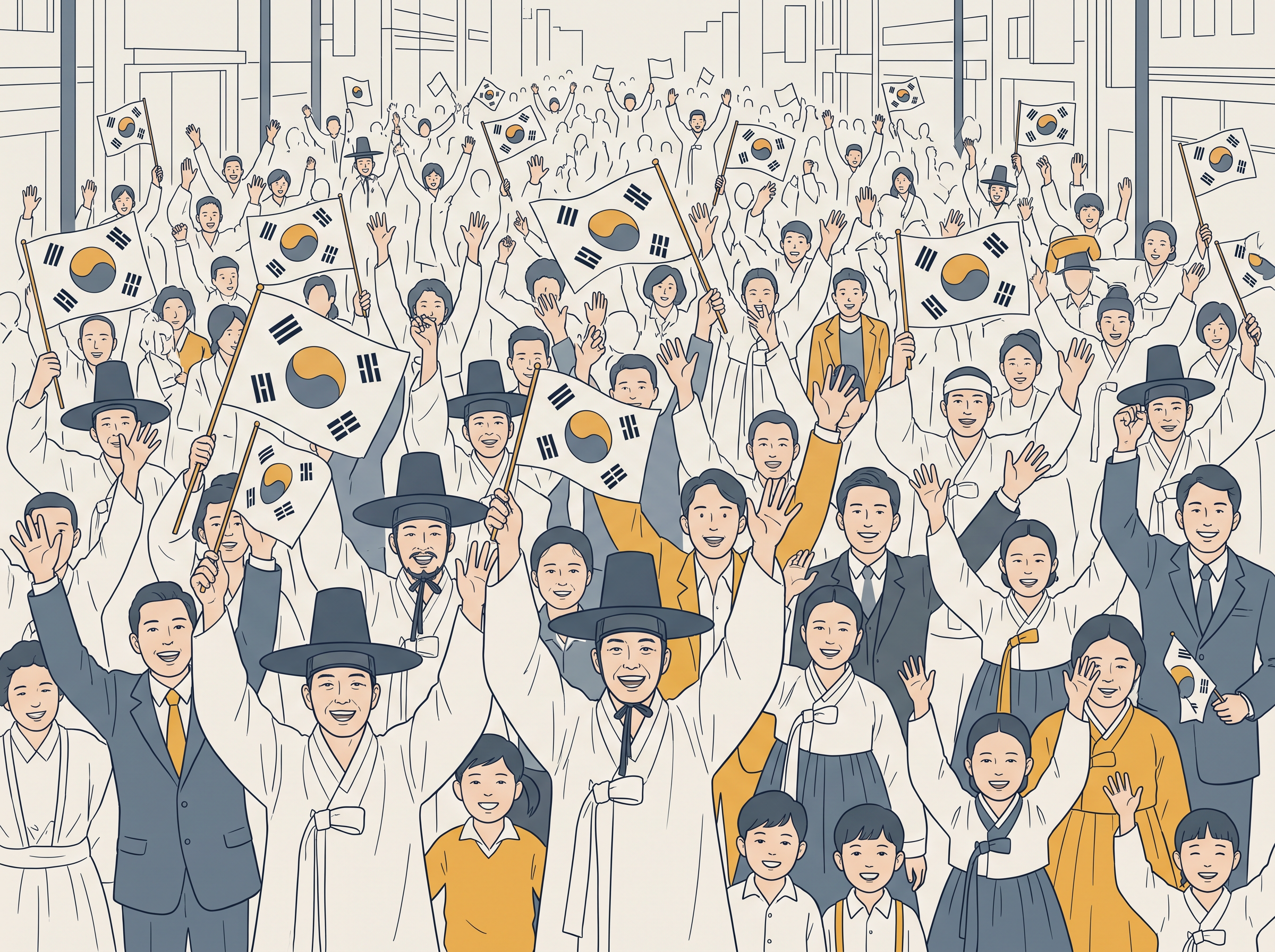
Fig. 7.23 – Koreans celebrate independence from Japan, 1945.
7.3.7.2 A Post-War Nation
In June 1950, the Korean War broke out. With South Korea receiving support from the US-led United Nations forces, and North Korea receiving support from communist China, it developed into a vintage proxy war of the Cold War era — a war in which local armies fight, and larger powers supply, arm and direct.
In July 1953, after three years, the war ended in an armistice agreement — an agreement to stop fighting, which is not the same as a peace treaty. Korea remained divided.
The Korean War had caused not only massive losses of life and property, but also a delay in free-market economic development and in democratisation. Prices suddenly rose, due to inflation caused by increased national expenses and by the currency issued during the war.
Furthermore, the industrial facilities constructed during the colonial period had been destroyed entirely. As a result, South Korea was forced to rely on the economic assistance being provided by the USA.
The April Revolution
South Korea’s first president, Syngman Rhee, had been elected in 1948 through a democratic process. After the Korean War, he extended his administration, twice through illegal constitutional amendments — that is, he changed the rules that limited his own term.
In April 1960, citizens protested against a rigged election, in what is known as the April Revolution, and Rhee was forced to resign.
With the revolution as an impetus, the spirit of the people, which had been suppressed during the Rhee administration, erupted in the form of demonstrations and demands.
However, the Democratic Party administration, which took power after Rhee’s resignation, could not properly respond to citizens’ demands, due to internal divisions and conflict. Instead, reformist political powers emerged, and the students’ movement grew into a unification movement.
This was not looked upon favourably by the military authorities. In May 1961, the Democratic Party government was overthrown in a military coup staged by General Park Chung-hee and other military authorities. A democracy that cannot answer its citizens leaves an opening, and the army walked into it.
7.3.7.3 Rapid Industrialisation Under Strong Leadership
In October 1963, an election was held, and the military coup leader Park Chung-hee was elected the president.
The Park administration adopted a state-led, export-oriented policy to achieve economic growth. The five-year economic plans of the government favoured large corporate firms, placed emphasis on expanding employment, and increased Korea’s competitiveness.
Korea’s unprecedented rate of economic growth began in the early 1960s, when the state policy shifted from import substitution industrialisation, or ISI, towards a focus on exports. Import substitution industrialisation means making at home the goods you used to buy from abroad. An export-oriented policy does the opposite: it makes goods for other people to buy.
Under the export-oriented policy, the government supported labour-intensive light industrial products, such as textiles and garments, in which Korea had a comparative advantage — it could make them more cheaply than its competitors could.
During the late 1960s and 1970s, the focus again shifted, from light industries to value-added heavy and chemical industries. Steel, non-ferrous metals machinery, shipbuilding, electronics and chemical production were selected as the most important industries in the race for economic growth. Note the word ‘selected’. The state, not the market, chose.
The New Village Movement
In 1970, the New Village (Saemaul) Movement was introduced, to encourage and mobilise the rural population and to modernise the agricultural sector.
This campaign aimed at reforming the spirit of the people, from being passive and disheartened to becoming active and hopeful. Rural people were empowered to help themselves in developing their villages and improving the living conditions of their respective communities.
The movement was later expanded to assist the neighbourhoods near industrial plants, and in urban areas. Today, Korea is sharing the knowledge and experiences from this movement with developing countries who wish to adopt the principles of the Saemaul Movement in their own development efforts.
What Made The Growth Possible
Korea achieved startling economic growth thanks to a combination of strong leaders, well-trained bureaucrats, aggressive industrialists and a capable labour force. Ambitious entrepreneurs responded well to government incentives to increase exports and develop new industries.
The high level of education also contributed. At the dawn of Korea’s industrialisation, almost all Korean workers were already literate, and could easily acquire new skills — a workforce that can read is a workforce that can be retrained.
At the same time, the country’s open economic policy worked to absorb more advanced institutions and technologies from other countries. Foreign investment and Korea’s high domestic savings rate helped develop the heavy industrial sector, while remittances from South Korean workers overseas also contributed to the overall economic development.
The Yusin Constitution
Economic growth was the foundation of the Park administration’s long-term power. Success at the till bought consent at the polls.
Park revised the constitution so that he could run for a third term, and he was reelected in 1971. In October 1972, he declared and implemented the Yusin Constitution, which made a permanent presidency possible.
Under the Yusin Constitution, the president had complete authority over legislation, jurisdiction and administration, and also had a constitutional right to repeal any law as an ‘emergency measure’. A president who can cancel any law is not bound by law at all.
As the president was invested with absolute authority, the progress of democracy was temporarily suspended in the pursuit of economic development.
However, the second oil crisis in 1979 acted as a hindrance to the economic policy, which had over-invested in the heavy chemical industry. Moreover, students, scholars and the opposition continually demonstrated against the Yusin Constitution, as the Park administration’s invocation of emergency measures and its suppression brought about political instability.
Amidst this economic crisis and political instability, the Park administration came to an end in October 1979, when Park Chung-hee was assassinated.
7.3.7.4 Continued Economic Growth And Calls For Democratisation
The desire for democratisation grew upon the death of Park Chung-hee. But in December 1979, another military coup was staged, this time led by Chun Doo-hwan.
In May 1980, protests were held in key cities around the nation by students and citizens demanding democracy, in the face of Chun’s military faction. The military faction suppressed the democracy movement by implementing martial law across the country.
In the city of Gwangju in particular, students and citizens did not back down, and demanded that martial law be ended. This is known as the Gwangju Democratisation Movement. Chun’s military faction suppressed the protests for democratisation. Later that year, Chun became the president through an indirect election under the Yusin Constitution.
Growth Produces Its Own Opposition
The Chun administration strengthened the suppression of democratisation influences, in order to stabilise the regime.
Due in part to the international economic boom, the Chun administration was able to raise economic growth from 1.7 per cent in 1980 to 13.2 per cent by 1983, while also significantly lowering inflation.
Now watch what that growth did. Economic development had led to urbanisation, improved education levels and media advancements. As a result, citizens’ self-awareness about political rights grew, leading to demands for a constitutional amendment to allow the direct election of the president. The regime’s own success was producing the citizens who would confront it.
In May 1987, the Chun administration’s minimisation of inquiries into the death-by-torture of a university student was made known. This made citizens begin to participate in a large-scale struggle for democratisation.
The June Democracy Movement that followed had participation not only by students but by the middle class as well. Owing to these efforts, the Chun administration was forced to make a revision to the constitution, allowing direct elections. A new chapter of Korean democracy thus began.
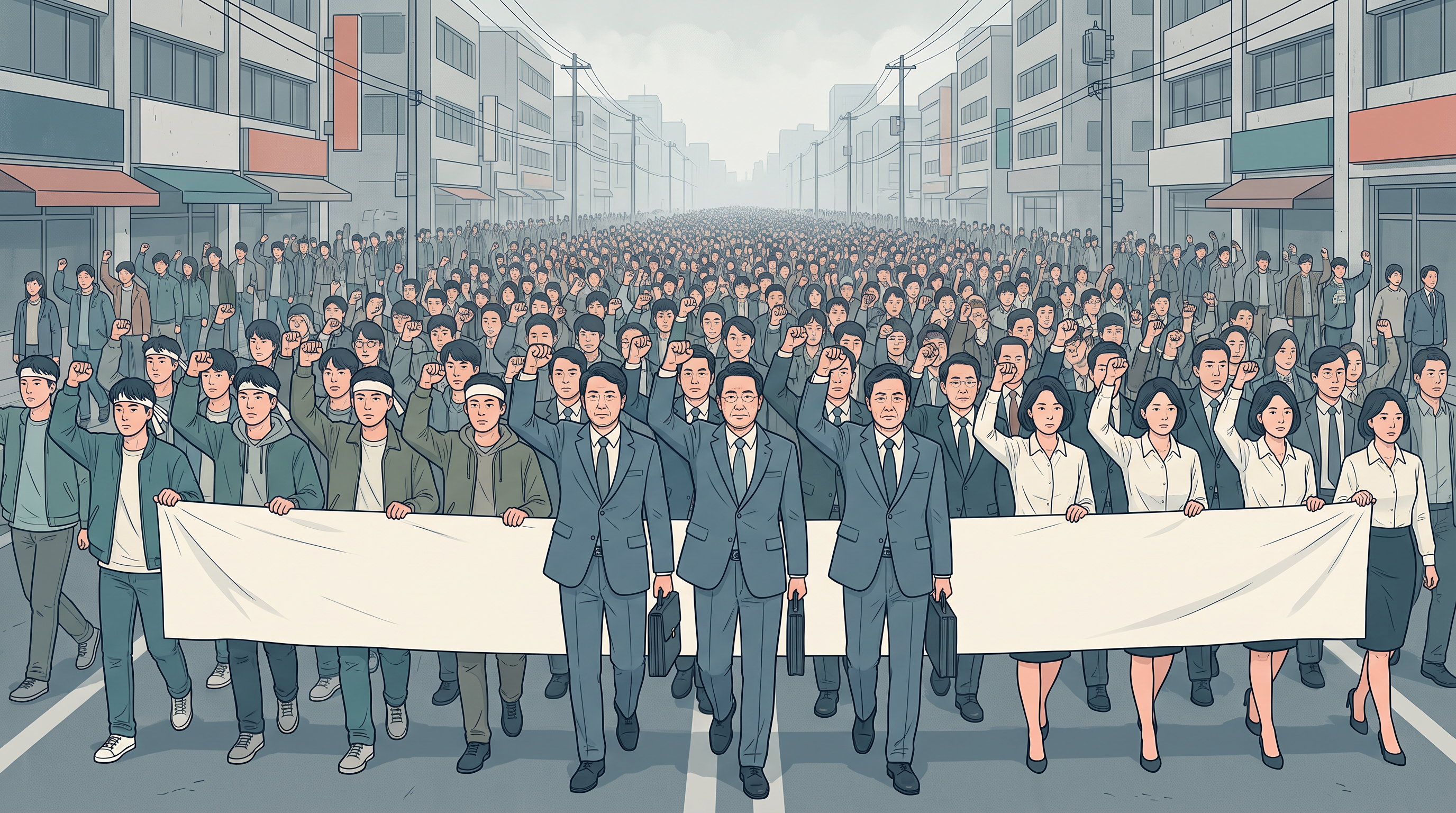
Fig. 7.24 – Demonstrators during the June Democracy Movement, 1987.
7.3.7.5 Korean Democracy And The IMF Crisis
As per the new constitution, the first direct election since 1971 was held in December 1987. But due to the opposition parties’ failure to unite, a fellow military leader of Chun’s military faction, Roh Tae-woo, was elected. A divided opposition can lose an election it has already won on the street.
However, Korea continued along the path of democracy. In 1990, the long-time opposition leader Kim Young-sam compromised with Roh’s party to create a large ruling party. In December 1992, Kim, a civilian, was elected the president, after decades of military rule. With his election, and the consequent dissolution of authoritarian military power, democracy made its forward march.
The Crisis Of 1997
Under the export-driven policy of the new administration, several companies grew to global prominence, which continued until the early 1990s. With governmental support, Korean conglomerates invested in capital-intensive heavy and chemical industries, as well as in electronic industries, while the government continued to focus on building industrial and social infrastructure.
Meanwhile, under increasing neoliberalist pressure to open its market, the Kim administration joined the Organisation for Economic Cooperation and Development (OECD) in 1996, and attempted to strengthen Korea’s international competitiveness.
But amidst increasing trade deficits, poor management by financial institutions, reckless business operations by conglomerates, and more, Korea was met with a foreign currency crisis in 1997 — it did not have enough foreign money to pay what it owed abroad.
The crisis was dealt with through emergency financial support provided by the International Monetary Fund (IMF). Simultaneous efforts were also made to improve the country’s economic constitution, as the citizens actively contributed towards foreign loan repayment through the Gold Collection Movement — ordinary people gave up gold to help pay the national debt.
Power Changes Hands, Peacefully
In December 1997, the long-time opposition party leader Kim Dae-jung was elected the president for the first time in Korea, marking a peaceful transfer of power.
The second peaceful transfer of power came in 2008, when the conservative Lee Myung-bak was elected as the president, following the progressive Roh Mu-hyun administration.
In 2012, the conservative Park Geun-hye was elected as the first female president. At the beginning of her presidency, she gained support due to the political legacy of her father, Park Chung-hee.
But in October 2016, as it came to light that she had let a friend secretly manage government affairs, she met with nationwide protests, leading to her impeachment and removal from office in March 2017. In May 2017, Moon Jae-in was elected the president, in a peaceful transfer of power for the third time.
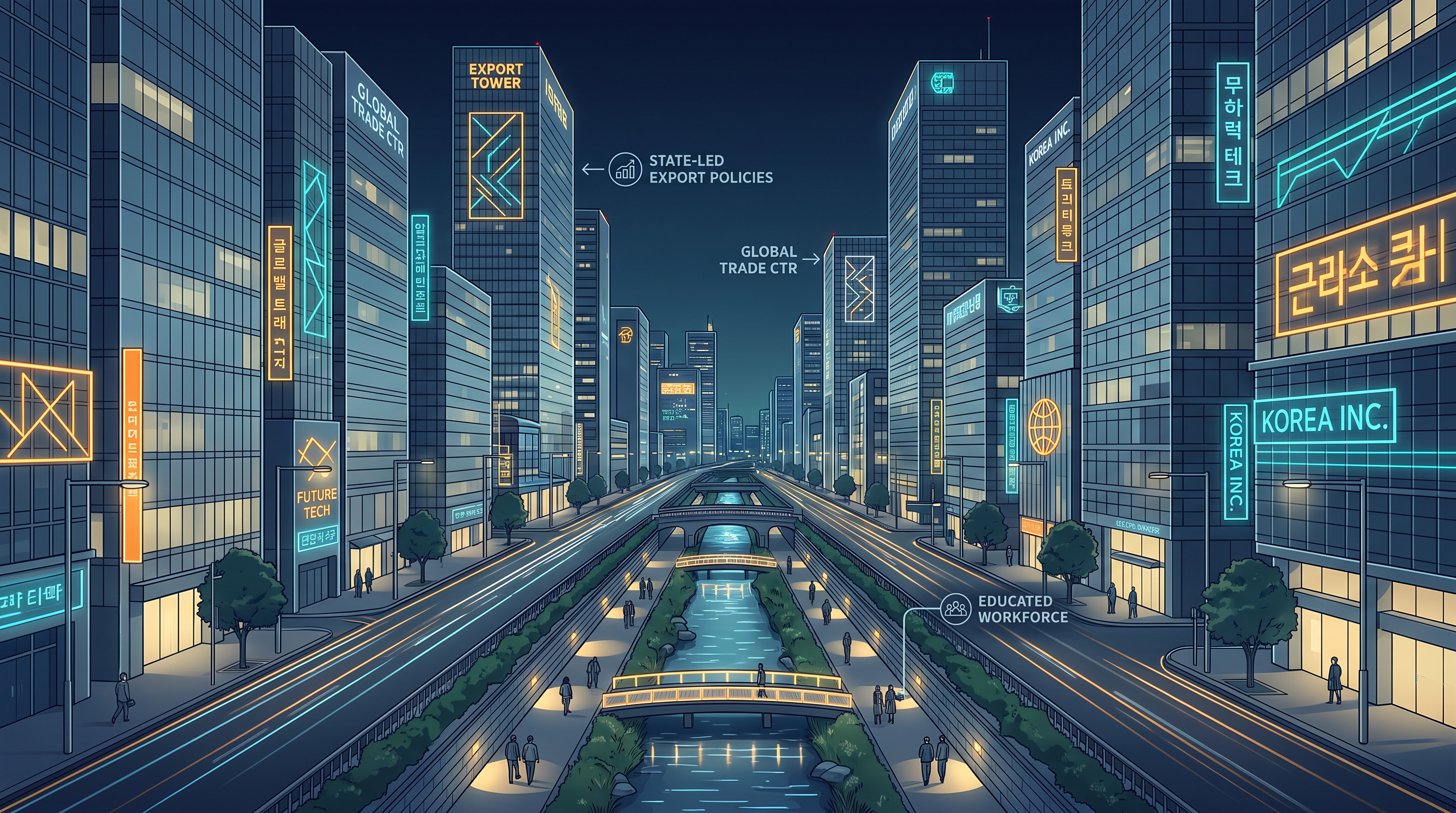
Fig. 7.25 – Present-day downtown Seoul at night.
The candlelight protests of 2016 were led by citizens who demonstrated peacefully for the president’s resignation, within the boundaries of democratic law and systems. They show the maturity of the Korean democracy.
Korean democracy owes a debt to economic development. But it was the citizens’ elevated political awareness, and their will to encourage republicanism in the country, that played the lead role in advancing it to where it is today. Prosperity created the conditions. People made the choice.
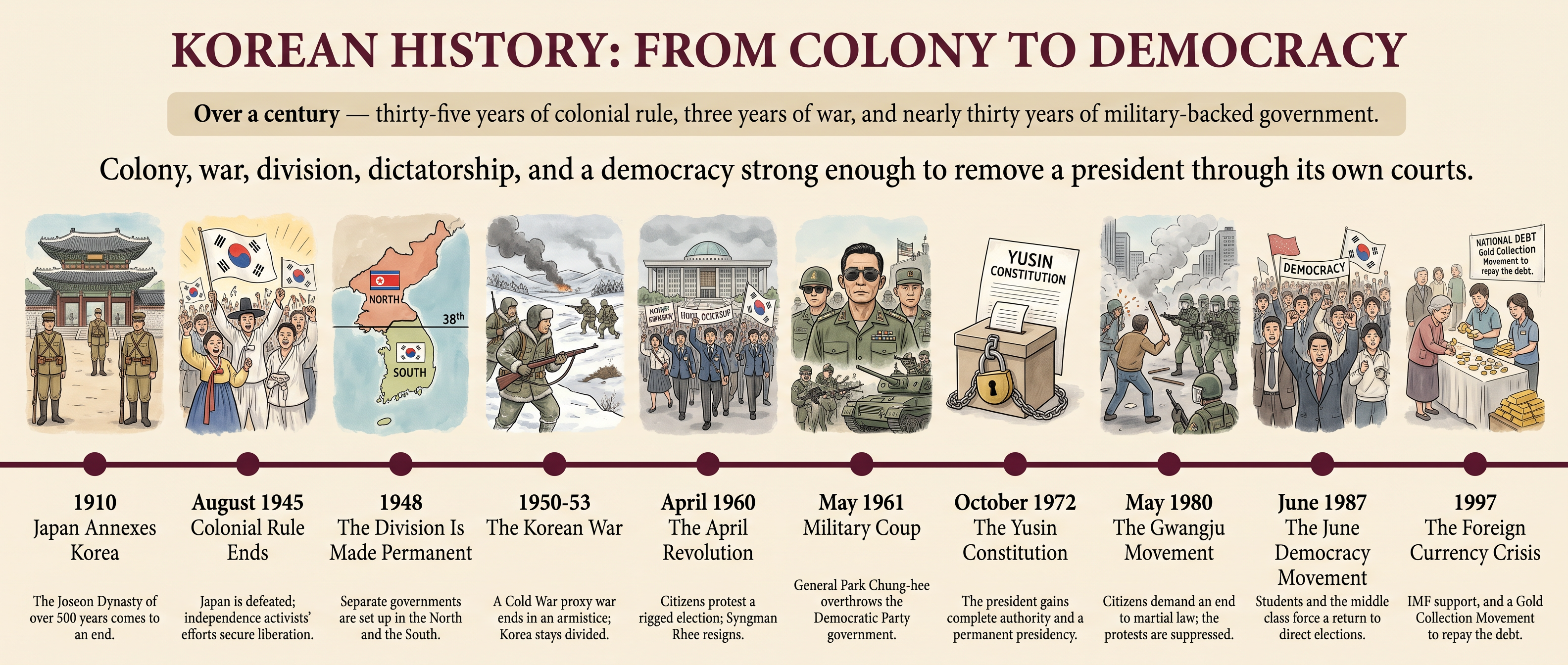
Fig. 7.26 – Korea, 1910 To 2017.
7.4 Two Roads To Modernisation
Industrial societies, far from becoming like each other, have found their own paths to becoming modern. The histories of Japan and China, along with the stories of Taiwan and Korea, show how different historical conditions led them on widely divergent paths to building independent and modern nations.
That is the argument of this whole chapter, and it is worth stating plainly, because a common assumption says the opposite: that there is one road to modernity, marked out by the West, and that every country either walks it or falls behind. Four countries, one region, four different roads — and none of them a copy.
What Japan Got, And What It Cost
Japan was successful in retaining its independence, and in using traditional skills and practices in new ways.
However, its modernisation was elite-driven — decided from above, by officials, ministers and the men around the emperor, rather than demanded from below. That kind of modernisation generated an aggressive nationalism. It helped to sustain a repressive regime that stifled dissent and stifled demands for democracy. And it established a colonial empire that left a legacy of hatred in the region, as well as distorting Japan’s own internal developments.
Every one of those consequences has already appeared in front of you: the censorship laws, the army beyond the cabinet’s reach, the annexation of Korea, the imprisonment of dissidents in the 1930s.
Japan’s programme of modernisation was carried out in an environment dominated by Western imperial powers. While it imitated them, it also attempted to find its own solutions.
Japanese nationalism was marked by these different compulsions. Many Japanese hoped to liberate Asia from Western domination. For others, those same ideas justified building an empire of their own.
Tradition Was Not Preserved — It Was Used
It is important to note that the transformation of social and political institutions and of daily life was not just a question of reviving traditions, or of tenaciously preserving them. It was a question of creatively using them in new and different ways.
Take the Meiji school system. It was modelled on European and American practices and introduced new subjects — and yet the curriculum’s main objective was to make loyal citizens. A course on morals that stressed loyalty to the emperor was compulsory. The form was borrowed; the purpose was Japanese.
Similarly, the changes in the family, or in daily life, show how foreign and indigenous ideas were brought together to create something new. The nuclear homu with its imported toaster, and the Moga walking down the Ginza, were neither Western nor old-Japanese. They were something that had not existed before.
The Chinese Road
The Chinese path to modernisation was very different.
Foreign imperialism — both Western and Japanese — combined with a hesitant and unsure Qing dynasty to weaken government control. Together they set the stage for a breakdown of political and social order, which led to immense misery for most of the people.
Warlordism, banditry and civil war exacted a heavy toll on human lives, as did the savagery of the Japanese invasion. Natural disasters added to this burden. Notice how the causes pile on one another: a weak state, foreign armies, private warlords, and floods on exhausted soil. No single one of them explains China’s twentieth century; together they do.
The nineteenth and twentieth centuries saw a rejection of traditions, and a search for ways to build national unity and strength.
The CCP and its supporters fought to put an end to tradition, which they saw as keeping the masses in poverty, the women subjugated and the country undeveloped. While calling for power to the people, it built a highly centralised state.
An Honest Balance
Here the chapter refuses to give you a simple verdict, and you should not want one.
The success of the Communist programme promised hope. But its repressive political system turned the ideals of liberation and equality into slogans to manipulate the people. Denunciation replaced debate; a Cultural Revolution wrecked the schools it claimed to be freeing.
Yet it did remove centuries’ old inequalities, it spread education, and it raised consciousness among the people. Both halves of that sentence are true, and a student who can hold both at once has learnt something about how history actually works.
The Party has now carried out market reforms and has been successful in making China economically powerful. But its political system continues to be tightly controlled. The society now faces growing inequalities, as well as a revival of traditions long suppressed.
This new situation again poses the question with which China’s modern history began: how can China develop while retaining its heritage? A century of revolution has not settled it. It has only changed who is asking.
7.5 Summary
How We Know
- China and Japan both kept long traditions of historical writing, and rulers set up official departments to maintain records and write dynastic histories.
- The Meiji government’s first acts included a records bureau, in 1869, to write a victor’s version of the Restoration — official archives preserve what a state wants remembered.
- Because printing was a large industry, popular literature, prints, cartoons and cheap books survive, and they carry voices no dynastic history was designed to keep.
- Travellers, Jesuit priests, missionaries and modern scholars from many countries have added to the picture, and each brought their own purposes with them.
Japan
- Japan was ruled by shoguns of the Tokugawa family from 1603 to 1867, over more than 250 domains held by daimyo, with the samurai as the ruling elite.
- Three late-sixteenth-century changes — disarming the peasantry, fixing the daimyo in their capitals, and land surveys — gave Japan peace, an ordered revenue base and, in time, great cities.
- Edo, Osaka and Kyoto grew huge; a commercial economy, credit, a rice market, silk at Nishijin and widespread reading all developed well before the West arrived.
- Perry’s ships in 1853 forced a treaty; in 1868 the shogun was removed, the emperor was brought to Edo, and the city was renamed Tokyo.
- The Meiji state pursued ‘fukoku kyohei’ — rich country, strong army — building an ‘emperor system’, compulsory schooling, conscription, a modern bureaucracy, censorship and a constitution.
- The economy was modernised with an agricultural tax, railways, banks, imported machinery and zaibatsu firms; manufacturing employment rose from 700,000 in 1870 to 4 million in 1913.
- More than half of the workers in modern factories were women, and women organised the first modern strike in 1886.
- Industrial growth destroyed the environment, and Tanaka Shozo led the first pollution agitation in 1897 with 800 villagers.
- The army and bureaucracy answered to the emperor, not to the cabinet, so an elected government could not restrain military expansion.
- Intellectuals disagreed sharply: Fukuzawa Yukichi wanted the spirit of the West; Miyake Setsurei wanted pride in indigenous values; Ueki Emori wanted freedom and constitutional government.
- Daily life changed — the nuclear homu, electric goods, cheap housing, trams, cinema, radio, and the Moga, the modern girl.
- In the 1930s and 1940s the state turned to war and empire, and the 1943 symposium on ‘Overcoming Modernity’ tried to justify a Greater East Asia.
- Defeat brought the US-led Occupation (1945-47), Article 9, agrarian reform, unions, and the first elections in which women voted, in 1946.
- Post-war recovery rested on Japan’s own long history of popular struggle, social cohesion and skill — and later on citizens’ movements against pollution.
China
- Britain’s opium trade with China, run through the East India Company’s triangular trade, led to the first Opium War (1839-42) and undermined the Qing.
- Reformers such as Kang Youwei and Liang Qichao tried to strengthen the system; the colonisation of Poland and of India was their warning.
- Confucianism came to be seen as a barrier to new ideas, and the centuries-old examination system was abolished in 1905.
- A republic was established in 1911 under Sun Yat-sen, whose Three Principles were nationalism, democracy and socialism.
- The May Fourth Movement of 1919 turned a generation towards science, democracy and nationalism, and against tradition.
- The Guomindang, led after Sun’s death by Chiang Kai-shek, was urban, militarised and socially conservative, and never carried out land reform.
- The CCP, founded in 1921, won the countryside under Mao Zedong through land redistribution, rural women’s associations, a new marriage law and careful surveys such as Xunwu.
- The Long March (1934-35) took the Communists 6,000 miles to Shanxi, and their Yanan programme won them a strong social base.
- The People’s Republic was established in 1949; the Great Leap Forward of 1958 built communes and backyard furnaces whose steel proved unusable.
- The Cultural Revolution, launched in 1965, put ideology above expertise, and disrupted the economy and the educational system.
- From 1978, Deng Xiaoping introduced a socialist market economy under the Four Modernisations, while keeping the Party’s political control.
- Demands for democracy — the 1978 wall-poster, and the 1989 protests at Tiananmen Square — were suppressed.
- China is now economically powerful and tightly controlled, and faces growing inequalities and a revival of the traditions it once attacked.
Taiwan And Korea
- Chiang Kai-shek fled to Taiwan in 1949; his government was repressive, but its land reforms raised productivity, and Taiwan later became a democracy after 1987.
- Japan annexed Korea in 1910, ending the Joseon Dynasty, and colonial rule lasted 35 years until Japan’s defeat in 1945.
- Korea was divided at the 38th parallel, two governments were established in 1948, and the Korean War (1950-53) ended in an armistice with the country still divided.
- Park Chung-hee’s state-led, export-oriented policy built startling growth on literacy, savings, exports and heavy industry — and suspended democracy under the Yusin Constitution.
- Economic growth created educated urban citizens who demanded rights: Gwangju in 1980, the June Democracy Movement in 1987, the Gold Collection Movement in 1997, and the candlelight protests of 2016.
Two Roads
- Industrial societies have not become copies of one another; different historical conditions produced widely divergent paths to becoming modern.
- Japan kept its independence and used tradition in new ways, but elite-driven modernisation produced aggressive nationalism, repression at home and a colonial empire abroad.
- China’s road ran through the collapse of order, foreign invasion and revolution; the CCP removed old inequalities and spread education, and also built a repressive centralised state.
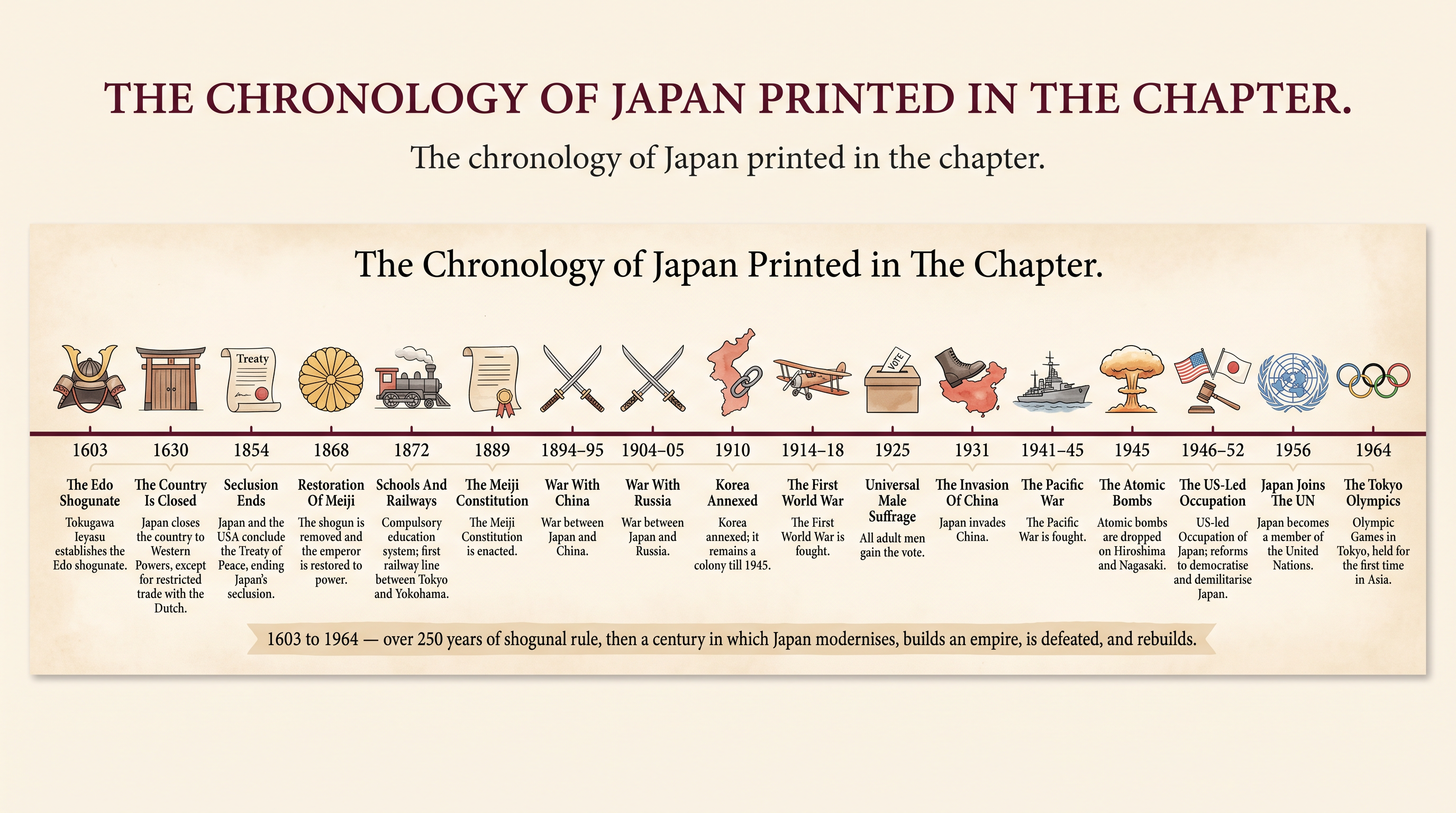
Fig. 7.27 – Japan.
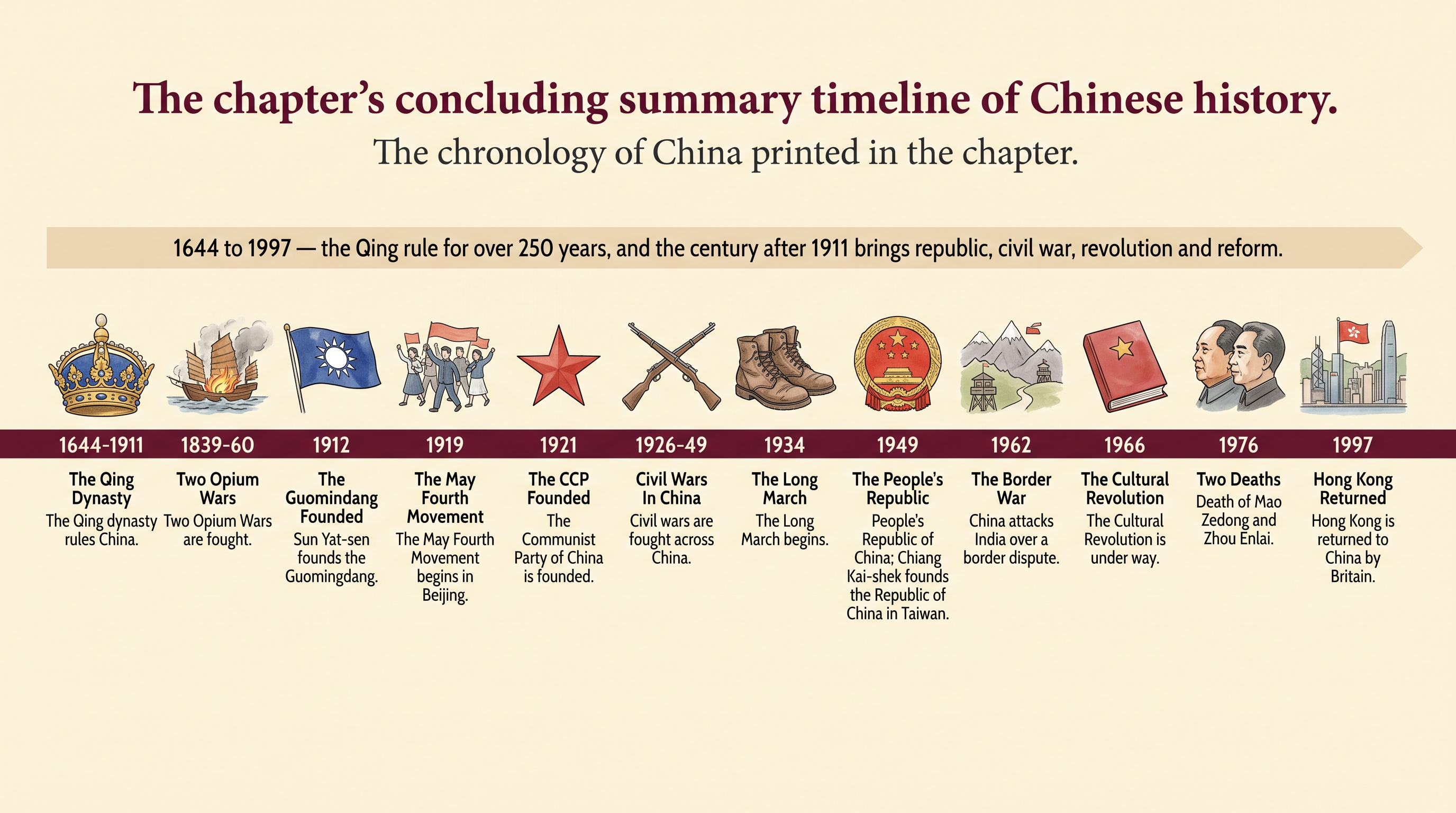
Fig. 7.28 – China.
What The Evidence Cannot Tell Us
The peasants of Jiangxi, the women in the spinning halls, the Ainu of Hokkaido and the Koreans brought as forced labour left almost nothing in writing. We know them mostly through the records of the people who taxed them, employed them, surveyed them or ruled them.
Official archives were built to preserve a state’s version of itself, and a survey — even a careful one like Xunwu — measures what the surveyor came to look for. The figures in this chapter count workers, communes and degree holders, but they cannot count fear, hope or grief.
So when you read that a revolution ‘raised consciousness’, or that an economy ‘took off’, ask the question this chapter keeps asking: who said so, what survives to show it, and whose silence is holding up the sentence?
7.6 NCERT Questions
Answer In Brief
What were the major developments before the Meiji restoration that made it possible for Japan to modernise rapidly?
Discuss how daily life was transformed as Japan developed.
How did the Qing dynasty try and meet the challenge posed by the Western powers?
What were Sun Yat-sen’s Three Principles?
How did Korea deal with the foreign currency crisis in 1997?
Answer In A Short Essay
Did Japan’s policy of rapid industrialisation lead to wars with its neighbours and destruction of the environment?
Do you think that Mao Zedong and the Communist Party of China were successful in liberating China and laying the basis for its current success?
Did economic growth in South Korea contribute to its democratisation?
7.7 Check Your Concepts
Look at Fig. 7.17, the story of rising prices. Describe what happened to the value of money in China between 1937 and 1949, and state one thing this picture cannot tell you about the people who lived through it.
Study Fig. 7.18. What does the route of the Long March tell you about the position the Communists were in when they left Jiangxi in 1934? What does the map not show?
Before 1850 there were about 526,869 civil and 212,330 military provincial degree holders in China, and only 27,000 official positions. Explain why the examination system produced discontent even among those who passed it.
In 1899 the Japanese prime minister ordered that only serving generals and admirals could become ministers. Explain, step by step, how this rule placed the armed forces beyond the control of an elected government.
Both the Guomindang and the CCP promised to change the Chinese countryside. Using examples from this chapter, explain why the peasantry believed only one of them.
The chapter says that scholars today would argue that Japan had not been ‘closed’ before 1853. What evidence supports this view, and what evidence supports the older view that Perry ‘opened’ Japan? What would you need to know to settle the question?
Much of what this chapter tells us about Chinese peasants in 1930 rests on Mao Zedong’s survey in Xunwu. Explain what such a survey is good evidence for, and what it cannot establish about rural China as a whole.