Chapter 5: Patterns of Social Inequality and Exclusion
On a weekday morning in almost any Indian town, two children step out of their homes at roughly the same hour. One walks to school with a bag on her shoulder. The other walks a few steps behind a family she works for, carrying their child’s bag to the school gate, and then returns to a day of sweeping, washing and running errands. She will not go in.
Most of us have seen something like this. What is striking is not that we see it, but that we are not startled by it. The sight passes without comment. Inequality that we meet every day begins to look like part of the natural order of things.
When we do stop to explain it, we often reach for the simplest explanation available: effort. Perhaps those at the bottom did not try hard enough. Yet look again at who actually does the hardest physical work in this country — breaking stone, digging earth, carrying loads, pulling carts. It is done by the poorest, day after day, and it almost never lifts them out of poverty. A South American proverb catches the point sharply: “If hard labour were really such a good thing, the rich would keep it all for themselves!”
So effort cannot be the whole story. Something other than individual ability is at work — something that belongs to society itself.
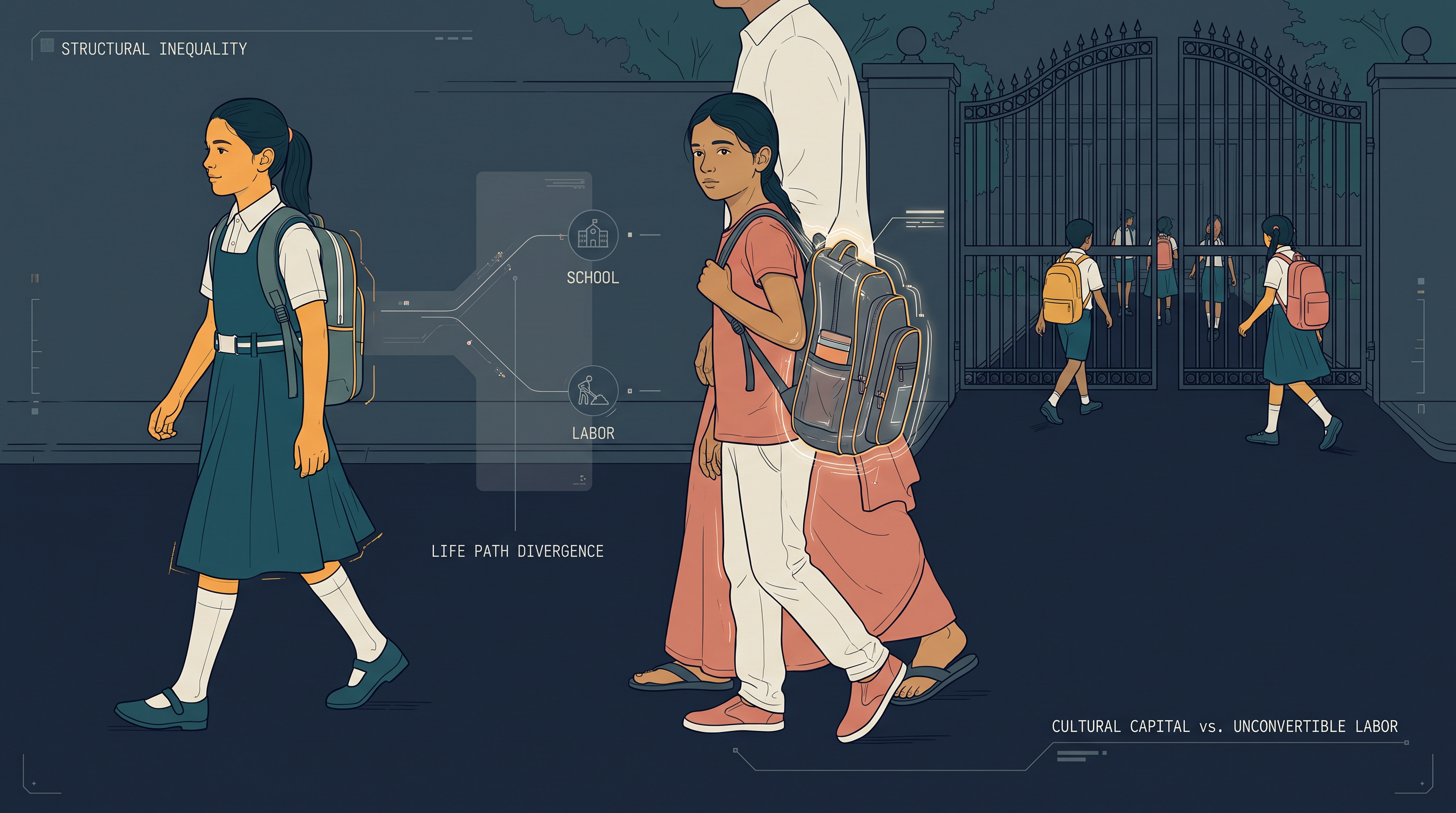
Fig. 5.1 – School gate at morning and the normalisation of inequality.
This chapter will answer each of these questions.
5.2 Caste and Tribe – Systems Justifying and Perpetuating Inequality
The previous section gave us the tools: inequality that attaches to groups, resources that are inherited, and an ideology that makes the whole arrangement look natural. We now watch those tools at work on the two institutions that have organised inequality in India most powerfully — caste and tribe.
5.2.1 The Caste System as a Discriminatory System
The caste system is a distinctively Indian social institution that legitimises and enforces practices of discrimination against people born into particular castes. Those practices are humiliating, exclusionary and exploitative — and it is worth noticing that all three words are needed, because caste does not merely rank people, it acts upon them.
Occupation, status and birth
Historically, the caste system classified people by their occupation and their status. Every caste was associated with an occupation, which meant that people born into a particular caste were also ‘born into’ the occupation attached to it. There was no choice in the matter.
More important still, each caste also had a specific place in the hierarchy of social status. Occupational categories were themselves ranked by social status, and within any broad occupational category there could be further ranking. A person’s place was thus fixed twice over: by what work she was expected to do, and by how much respect that work and that birth commanded.
In strict scriptural terms, social status and economic status were supposed to be sharply separated. The ritually highest caste — the Brahmins — were not supposed to amass wealth, and were subordinated to the secular power of kings and rulers belonging to the Kshatriya castes. Conversely, despite holding the highest secular status and power, the king was subordinated to the Brahmin in the ritual-religious sphere. Ritual authority and worldly power were meant to be held by different hands.
What actually happened
Scriptural theory is one thing; historical practice is another, and sociology is interested in the second.
In actual historical practice, economic and social status tended to coincide. There was a fairly close correlation between social status — that is, caste status — and economic status. The ‘high’ castes were almost invariably of high economic status, while the ‘low’ castes were almost always of low economic status. The separation the scriptures imagined did not survive contact with the real distribution of land, wealth and labour.
What has changed, and what has not
Things have changed, and the changes are real.
In modern times, and particularly since the nineteenth century, the link between caste and occupation has become much less rigid. Ritual-religious prohibitions on changing one’s occupation cannot easily be imposed today, and it is easier than before to move into a different line of work. Compared with a hundred or even fifty years ago, the correlation between caste and economic status is also weaker: rich and poor people are now to be found in every caste.
But — and this is the key point — the caste–class correlation is still remarkably stable at the macro level. As the system has become less rigid, distinctions between castes of broadly similar social and economic standing have weakened; a person may no longer care much about small ritual differences between neighbouring castes of the same rank. Yet between different socio-economic groupings, the distinctions continue to be maintained.
Look at the whole of society rather than at individual cases, and the pattern is stubborn. It is still true that the privileged and high-income sections are overwhelmingly ‘upper’ caste, while the disadvantaged and low-income sections are dominated by the so-called ‘lower’ castes. The proportion of the population living in poverty or in affluence differs greatly across caste groups, as Tables 5.1 and 5.2 show.
Note: OBC = Other Backward Classes; UC = ‘Upper Castes’, i.e., not SC/ST/OBC. Source: Report of NITI Aayog, 2014; Panagariya and More, 2013.
Note: OBC = Other Backward Classes.
Read the two tables together and they tell a single story from two ends. In Table 5.1, poverty in rural India stands at 25.4 per cent for all groups taken together, but at 45.3 per cent for the Scheduled Tribes and 31.5 per cent for the Scheduled Castes — well above the average — while the figure for the forward castes is 15.5 per cent, well below it. The same ordering repeats in urban India. Table 5.2 turns the telescope around and looks at affluence: only 1.4 per cent of Scheduled Tribes and 1.7 per cent of Scheduled Castes in rural India spend enough to count as affluent, against 4.3 per cent for all groups.
A single number makes the point. In rural India, an ST household is roughly three times as likely to be poor as an average household, and roughly three times less likely to be affluent. Group membership, not individual effort, is doing the work here — which is exactly what Section 5.1 predicted.
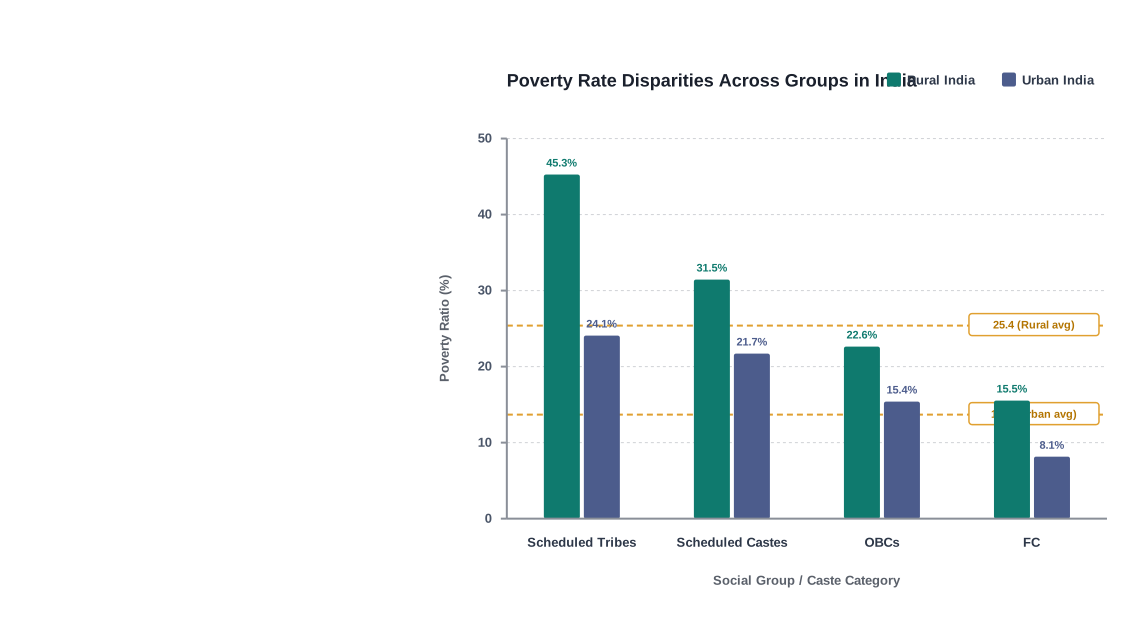
Fig. 5.4 – Poverty percentage among social groups in rural and urban India.
So the balance sheet is genuinely mixed, and sociologists read it differently.
In short: despite major changes brought about by social movements over more than a century, despite changed modes of production, and despite concerted attempts by the state to suppress its public role in independent India, caste continues to shape the life chances of Indians today.
5.2.2 Untouchability
Untouchability is an extreme and particularly vicious aspect of the caste system. It prescribes stringent social sanctions against members of castes located at the bottom of the purity–pollution scale.
Strictly speaking, the ‘untouchable’ castes are placed outside the caste hierarchy rather than at its lowest rung. They were considered so ‘impure’ that their mere touch was held to pollute members of all other castes severely, bringing terrible punishment upon the person who had touched, and forcing the person touched to perform elaborate purification rituals. In many regions, particularly in the south, notions of ‘distance pollution’ existed, by which even the presence or the shadow of an ‘untouchable’ person was considered polluting.
Despite the limited literal meaning of the word, the institution of untouchability refers not only to the avoidance or prohibition of physical contact, but to a much broader set of social sanctions.
The three dimensions
Untouchability has three main dimensions, and all three are equally important in defining it: exclusion, humiliation-subordination and exploitation. Leave out any one of them and the phenomenon is not properly described.
Other low castes — the ‘touchable’ ones — are also subjected to subordination and exploitation to some degree. What they do not suffer are the extreme forms of exclusion reserved for ‘untouchables’. Dalits experience forms of exclusion that are unique, and not practised against any other group: being prohibited from sharing drinking water sources, for instance, or from taking part in collective religious worship, in social ceremonies and in festivals.
Untouchability is also almost always tied to economic exploitation of one kind or another — most commonly through the imposition of forced, unpaid or under-paid labour, or through the confiscation of property. And it is a pan-Indian phenomenon, found across the country, although its specific forms and its intensity vary considerably across regions and socio-historical contexts.
The politics of a name
The so-called ‘untouchables’ have been referred to collectively by many names over the centuries. Whatever the specific etymology of these names, they are all derogatory and carry a strongly pejorative charge. Many of them continue to be used as terms of abuse even today, although such use is now a criminal offence — the law recognises that a word can be an act.
Mahatma Gandhi popularised the term ‘Harijan’, literally ‘children of God’, in the 1930s, to counter the pejorative charge carried by the older caste names.
However, the ex-untouchable communities and their leaders coined another term, Dalit, which is now the generally accepted term for referring to these groups. In Indian languages the word literally means ‘downtrodden’, and conveys the sense of an oppressed people. Notice what has happened: a name chosen for a community by a sympathetic outsider has given way to a name chosen by the community for itself.
The term was neither coined by Dr. Ambedkar nor frequently used by him, but it certainly resonates with his philosophy and with the movement for empowerment that he led. It received wide currency during the caste riots in Mumbai in the early 1970s. The Dalit Panthers, a radical group that emerged in western India at that time, used the term to assert their identity as part of their struggle for rights and dignity.
5.2.3 State and Non-State Initiatives Addressing Caste and Tribe Discrimination
The Indian state has had special programmes for the Scheduled Tribes and Scheduled Castes since even before Independence.
The ‘Schedules’ were simply official lists — schedules attached to a law — naming the castes and tribes recognised as deserving of special treatment because of the massive discrimination practised against them. They were drawn up in 1935 by the British Indian government. After Independence, the same policies were continued and many new ones added. Among the most significant additions is the extension of special programmes to the Other Backward Classes (OBCs) since the early 1990s.
Reservations
The most important state initiative attempting to compensate for past and present caste discrimination is the one popularly known as reservations.
This involves setting aside a proportion of places or ‘seats’ for members of the Scheduled Castes and Scheduled Tribes in different spheres of public life. These include reservation of seats in the State and Central legislatures — that is, in state assemblies, the Lok Sabha and the Rajya Sabha; reservation of jobs in government service across all departments and in public sector companies; and reservation of seats in educational institutions.
The proportion of reserved seats is equal to the percentage share of the Scheduled Castes and Scheduled Tribes in the total population. For the OBCs, the proportion is decided differently. The same principle is extended to other developmental programmes of the government, some of which are meant exclusively for the Scheduled Castes or Tribes, while others simply give them preference.
The laws
Alongside reservations, a series of laws has been passed to end, prohibit and punish caste discrimination, and untouchability in particular.
One of the earliest was the Caste Disabilities Removal Act of 1850, which disallowed the curtailment of the rights of citizens solely because they had changed their religion or caste; in practice it was used to allow the entry of Dalits into government schools. The most recent such law is the Constitution Amendment (Ninety Third Amendment) Act of 2005, which became law on 23rd January 2006 and introduced reservation for the Other Backward Classes in institutions of higher education. Coincidentally, both the 1850 law and the 2006 amendment concerned education.
In between came the most important laws of all: the Constitution of India itself, passed in 1950, which abolished untouchability (Article 17) and introduced the reservation provisions described above; and the Scheduled Castes and Scheduled Tribes (Prevention of Atrocities) Act of 1989.
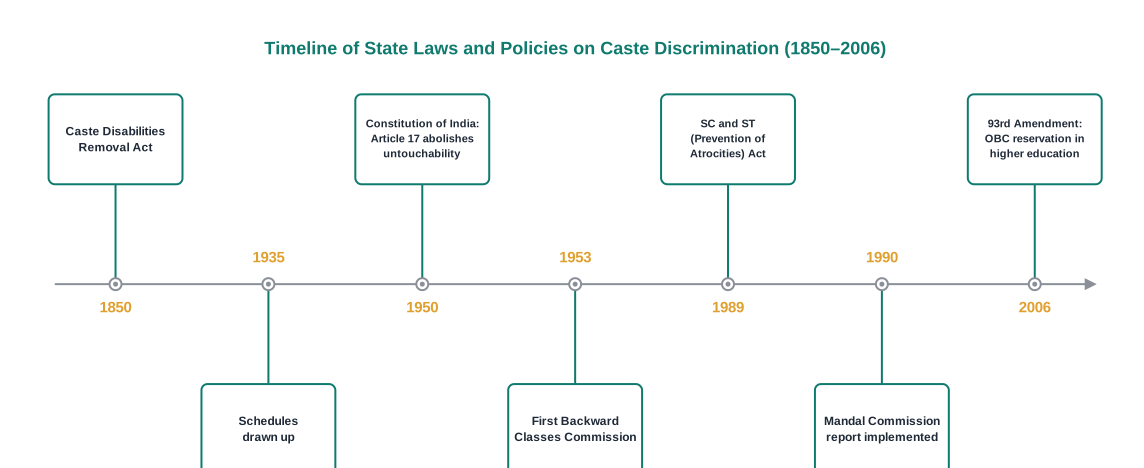
Fig. 5.5 – Timeline of state action against caste discrimination.
The struggle from below
State action alone cannot ensure social change. And in any case, no social group, however weak or oppressed, is only a victim.
Human beings are always capable of organising and acting on their own — often against very heavy odds — to struggle for justice and dignity. This is one of the most important corrections sociology makes to the way inequality is usually discussed. A group at the bottom of a hierarchy is not simply something that happens to society; it is also an agent within it.
Dalits have been increasingly active on the political, agitational and cultural fronts. From the pre-Independence struggles and movements launched by Jyotiba Phule, Iyotheedas, Periyar, Ambedkar and others, to contemporary political organisations such as the Bahujan Samaj Party in Uttar Pradesh or the Dalit Sangharsh Samiti in Karnataka, Dalit political assertion has come a long way.
5.2.4 The Other Backward Classes
Untouchability was the most visible and the most comprehensive form of social discrimination. But there was also a large group of castes that were of low status and were subjected to varying levels of discrimination short of untouchability. These were the service and artisanal castes who occupied the lower rungs of the caste hierarchy — the potters, weavers, oil-pressers, barbers, herders and cultivators whose work society needed and whose status society kept low.
The Constitution of India recognises the possibility that there may be groups, other than the Scheduled Castes and Scheduled Tribes, who suffer from social disadvantages. These groups — which need need not be based on caste alone, though they generally are identified by caste — were described as the ‘socially and educationally backward classes’. That constitutional phrase is the basis of the popular term ‘Other Backward Classes’ (OBCs), in common use today.
A category defined negatively
Like the category of the ‘tribe’, the OBCs are defined negatively — by what they are not. They are neither part of the ‘forward’ castes at the upper end of the status spectrum, nor of the Dalits at the lower end. They are, in effect, the middle that is left over once both ends have been named.
Moreover, since caste has entered all the major Indian religions and is not confined to Hinduism alone, there are members of other religions who belong to the backward castes, share the same traditional occupational identification, and have similar or worse socio-economic status.
For these reasons the OBCs are a much more diverse group than the Dalits or the adivasis — and that diversity is not a detail but a political fact, as we shall see.
The history of a political question
The first government of independent India, under Jawaharlal Nehru, appointed a commission to look into measures for the welfare of the OBCs. The First Backward Classes Commission, headed by Kaka Kalelkar, submitted its report in 1953. But the political climate at the time led to the report being sidelined. From the mid-fifties, the OBC issue became a regional affair, pursued at the state level rather than the central one.
The southern states had a long history of backward caste political agitation, beginning in the early twentieth century. Because of those powerful social movements, policies addressing the problems of the OBCs were in place there long before they were even discussed in most northern states.
The OBC issue returned to the central level in the late 1970s, after the Emergency, when the Janata Party came to power. The Second Backward Classes Commission, headed by B.P. Mandal, was appointed at this time. However, it was only in 1990, when the central government decided to implement the ten-year-old Mandal Commission report, that the OBC question became a major one in national politics.
Since the 1990s we have seen the resurgence of lower caste movements in north India, among both the OBCs and the Dalits. The politicisation of the OBCs allows them to convert their large numbers — recent surveys show that they are about 41% of the national population — into political influence. This had not been possible at the national level before, as the sidelining of the Kalelkar Commission report and the long neglect of the Mandal Commission report both showed.
The large disparities between the upper OBCs — who are largely landed castes and enjoy dominance in rural society in many regions of India — and the lower OBCs — who are very poor and disadvantaged, and often not very different from Dalits in socio-economic terms — make this a difficult political category to work with.
However, the OBCs are severely under-represented in all spheres except landholding and political representation, where they have a large number of MLAs and MPs. And although the upper OBCs are dominant in the rural sector, the situation of urban OBCs is much worse, being much closer to that of the Scheduled Castes and Tribes than to the upper castes.
5.2.5 Adivasi Struggles
Like the Scheduled Castes, the Scheduled Tribes are social groups duly recognised by the Constitution of India.
The jana or tribes were believed to be ‘people of the forest’, whose distinctive habitat in hill and forest areas shaped their economic, social and political attributes. Yet ecological isolation was nowhere absolute. Tribal groups have had long and close association with Hindu society and culture, which makes the boundary between ‘tribe’ and ‘caste’ quite porous — a point already discussed in the chapter on social institutions.
The movement of populations complicates the picture further. Today, barring the North-Eastern states, there are no areas of the country inhabited exclusively by tribal people; there are only areas of tribal concentration. Since the middle of the nineteenth century, non-tribals have moved into the tribal districts of central India, while tribal people from those same districts have migrated out to plantations, mines, factories and other places of employment.
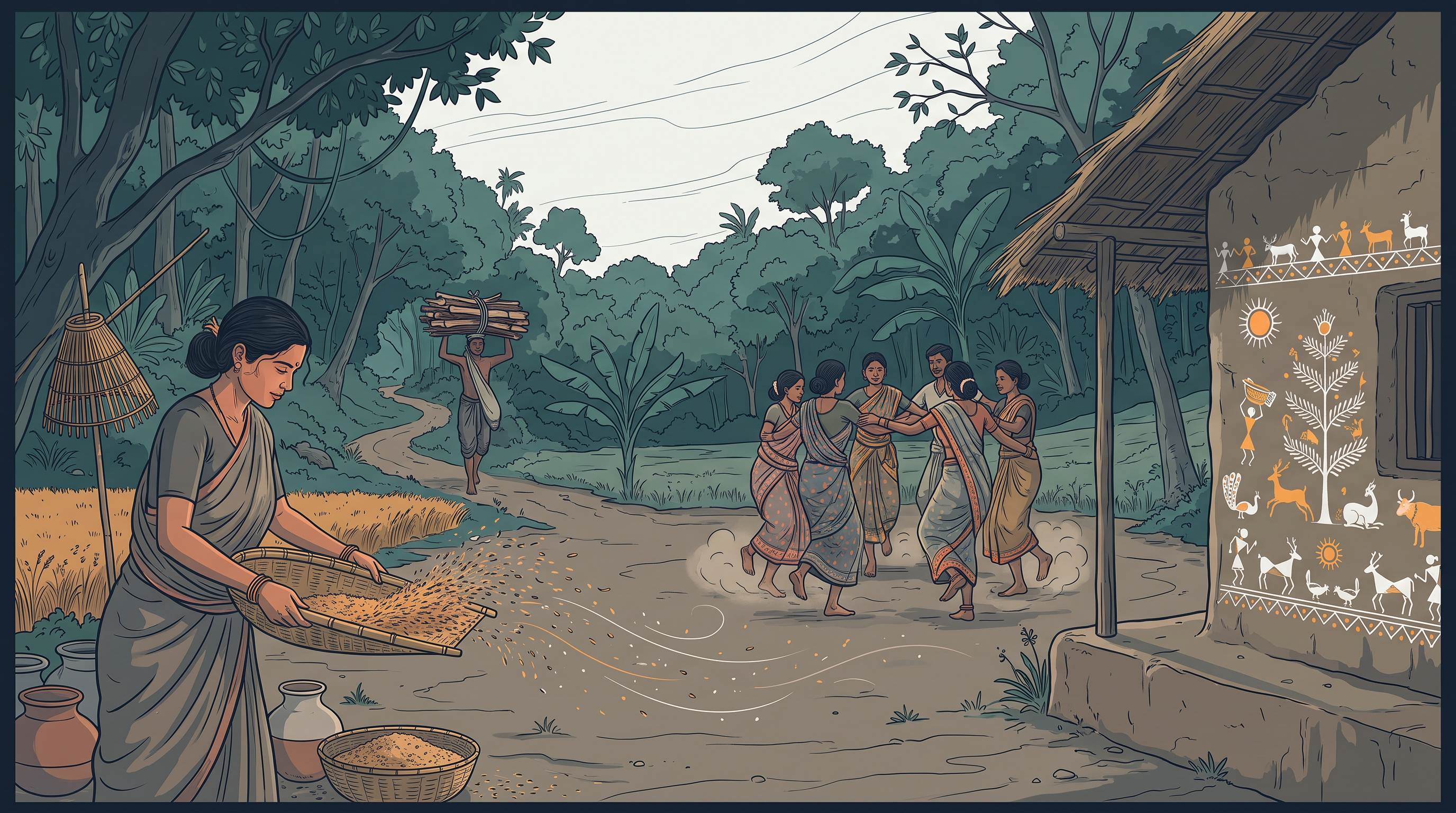
Fig. 5.6 – Everyday work and community life in an adivasi settlement.
In the areas where tribal populations are concentrated, their economic and social conditions are usually much worse than those of non-tribals. To understand why, we have to go back to a policy, not to a people.
Dispossession, colonial and post-colonial
The impoverished and exploited circumstances in which many adivasis live can be traced historically to a pattern of accelerated resource extraction — begun by the colonial British government and continued by the government of independent India.
From the late nineteenth century onwards, the colonial government reserved most forest tracts for its own use. In doing so it severed rights that adivasis had long exercised: to gather produce from the forest, and to practise shifting cultivation, in which a patch of forest is cleared, cultivated for a few seasons, and then left to recover while the cultivators move on. Forests were now to be protected in order to maximise timber production. Timber was wanted for railways, ships and buildings; the people who lived in the forest were not consulted.
With this policy the mainstay of adivasi livelihoods was taken away, and their lives became poorer and more insecure. Denied access to forests and to land for cultivation, adivasis were left with two options: to use the forest illegally — and be harassed and prosecuted as ‘encroachers’ and thieves on land they had always used — or to migrate in search of wage labour.
After Independence in 1947, the government’s monopoly over forests continued. The policy of capital-intensive industrialisation adopted by the Indian government required mineral resources and power-generation capacities, and these were concentrated in adivasi areas. Adivasi lands were rapidly acquired for new mining and dam projects. In the process, millions of adivasis were displaced without any appropriate compensation or rehabilitation.
Justified in the name of ‘national development’ and ‘economic growth’, these policies were also a form of internal colonialism — subjugating adivasis and alienating them from the very resources on which they depended. The phrase is deliberate: it says that a nation can do to a population within its own borders what a colonial power does to a subject people, taking the resources of a region while leaving its inhabitants poorer.
Projects such as the Sardar Sarovar dam on the river Narmada in western India and the Polavaram dam on the river Godavari in Andhra Pradesh displaced hundreds of thousands of adivasis from their original habitats. These processes continue, and have become even more powerful since the 1990s, when economic liberalisation policies were officially adopted by the Indian government. It is now easier for corporate firms to acquire large areas of land by displacing adivasis.
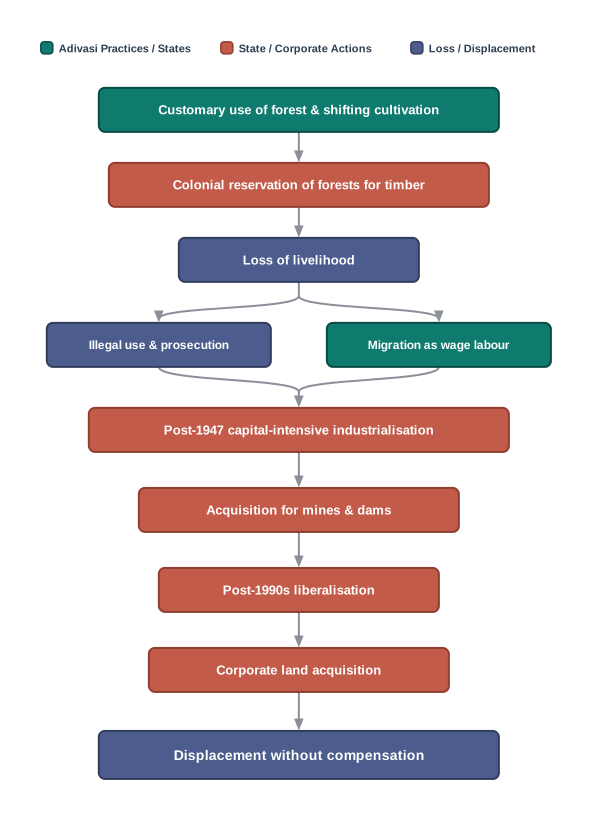
Fig. 5.7 – The historical process of adivasi dispossession.
The making of a political identity
Like the term Dalit, the term Adivasi connotes political awareness and the assertion of rights.
Literally meaning ‘original inhabitants’, the term was coined in the 1930s as part of the struggle against intrusion by the colonial government and by outside settlers and moneylenders. Being Adivasi is about shared experiences: the loss of forests, the alienation of land, and repeated displacements since Independence in the name of ‘development projects’ — and much more besides.
In spite of the heavy odds against them, and in the face of their marginalisation, many tribal groups have waged struggles against outsiders — called dikus — and against the state.
In post-Independence India, the most significant achievements of Adivasi movements include the attainment of statehood for Jharkhand and Chattisgarh, which were originally part of Bihar and Madhya Pradesh respectively. In this respect adivasis and their struggles differ from the Dalit struggle: unlike Dalits, adivasis were concentrated in contiguous areas, and could therefore demand states of their own. Geography, in other words, shaped what a movement could ask for. Dalits, scattered as a minority in villages across the country, could demand rights and representation; adivasis, living together across a stretch of territory, could demand a state.
5.3 The Struggle for Women’s Equality and Rights
Caste and tribe are systems that most people are willing to call social. Gender is different: because the biological and physical differences between men and women are so obvious, the inequality between them is often treated as natural — as though it followed from the body itself.
It does not, and scholars have shown why.
Nothing biological about it
Consider what would have to be true if inequality between women and men were natural.
There are no biological reasons that can explain why so few women are found in positions of public power. Nor can nature explain why women generally receive a smaller share — or no share at all — in family property in most societies. A rule about inheritance is written by people, not by biology.
But the strongest argument comes from the societies that were different from the ‘normal’ or common pattern. If women were biologically unfit to be inheritors and heads of families, how did matrilineal societies — societies in which descent, and often property, pass through the mother’s line, as among the Nairs of Kerala in the past and as among the Khasis of Meghalaya still today — work for centuries? And how have women managed to be such successful farmers and traders in so many African societies?
The exception destroys the rule. If even one society organises inheritance and authority through women and works perfectly well, then no arrangement can be described as biologically necessary.
There is, in short, nothing biological about the inequalities that mark the relations between women and men. Gender is therefore a form of social inequality and exclusion, like caste and class — but with its own specific features, which is why it needs a section of its own.
The rest of this section asks two questions. How did gender inequality come to be recognised as inequality in the Indian context? And what kinds of response did that recognition produce?
The women’s question and the nineteenth century
The women’s question arose in modern India as part of the nineteenth-century middle-class social reform movements. The nature of these movements varied from region to region.
They are often called middle-class reform movements because many of the reformers came from the newly emerging, western-educated Indian middle class — men who had passed through the new colleges, read English books, and entered the professions and the colonial administration. They were often inspired at once by the democratic ideals of the modern West and by a deep pride in the democratic traditions of their own past, and many used both these resources to fight for women’s rights.
Four examples give the range: the anti-sati campaign led by Raja Rammohun Roy in Bengal; the widow remarriage movement in the Bombay Presidency, in which Ranade was one of the leading reformers; Jyotiba Phule’s simultaneous attack on caste and gender oppression; and the social reform movement in Islam led by Sir Syed Ahmed Khan.
Rammohun Roy and the campaign against sati
Raja Rammohun Roy’s attempts to reform society, religion and the status of women can be taken as the starting point of nineteenth-century social reform in Bengal.
A decade before he established the Brahmo Samaj in 1828, Roy had undertaken the campaign against sati — the practice by which a widow was burnt on her husband’s funeral pyre. It was the first women’s issue to receive public attention in India.
Roy’s ideas represented a curious mixture of Western rationality and an assertion of Indian traditionality, and both trends belong within one larger context: a response to colonialism. He therefore attacked the practice of sati on two fronts at once, appealing to humanitarian and natural rights doctrines as well as to the Hindu shastras, the classical scriptural texts. Notice the strategy. To argue only from Western reason was to concede that Indian tradition was indefensible; to argue only from scripture was to give up the language of rights. Roy refused to choose.
Ranade and the remarriage of widows
The deplorable and unjust treatment of Hindu upper-caste widows was a major issue taken up by the social reformers. A widow could be stripped of ornaments and colour, excluded from festive occasions, and made a permanent dependent in her own household — and if she had been married as a child, this could be her condition for fifty years.
M.G. Ranade worked on both sides of the divide we have just seen. He used the writings of scholars such as Bishop Joseph Butler, whose Analogy of Religion and Three Sermons on Human Nature dominated the moral philosophy syllabus of Bombay University in the 1860s. At the same time, his own writings — The Texts of the Hindu Law on the Lawfulness of the Remarriage of Widows and Vedic Authorities for Widow Marriage — elaborated the shastric sanction for the remarriage of widows.
Phule: caste and gender together
Ranade and Rammohun Roy belonged to one kind of nineteenth-century reformer: upper caste and middle class. Jotiba Phule, whom we met in the previous section as a pioneer of anti-caste struggle, came from a socially excluded caste, and his attack was directed against caste and gender discrimination together.
He founded the Satyashodak Samaj, with its primary emphasis on “truth seeking”. His first practical social reform efforts were to aid the two groups considered lowest in traditional Brahmin culture: women and untouchables. That pairing is the whole point. For Phule, the subordination of women and the subordination of the lowest castes were not two problems but one.
Sir Syed Ahmed Khan and the education of girls
A similar trend of drawing upon both modern Western ideas and the sacred texts characterised Sir Syed Ahmed Khan’s efforts to reform Muslim society.
He wanted girls to be educated, but within the precincts of their homes. Like Dayanand Saraswati of the Arya Samaj, he stood for women’s education, while seeking a curriculum that included instruction in religious principles, training in the arts of housekeeping and handicrafts, and the rearing of children.
This may appear very stereotypical today, and it is fair to say so. But one has to realise what such a demand set in motion. Once rights such as education for women were accepted in principle, a process began that finally made it impossible to confine women to only some kinds of education. A door opened a little cannot easily be shut again.
Women writing for themselves
It is often assumed that social reform for women’s rights was fought for entirely by male reformers, and that ideas of women’s equality are alien imports. Two books written by women — one in 1882, the other in 1905 — show how wrong both assumptions are.
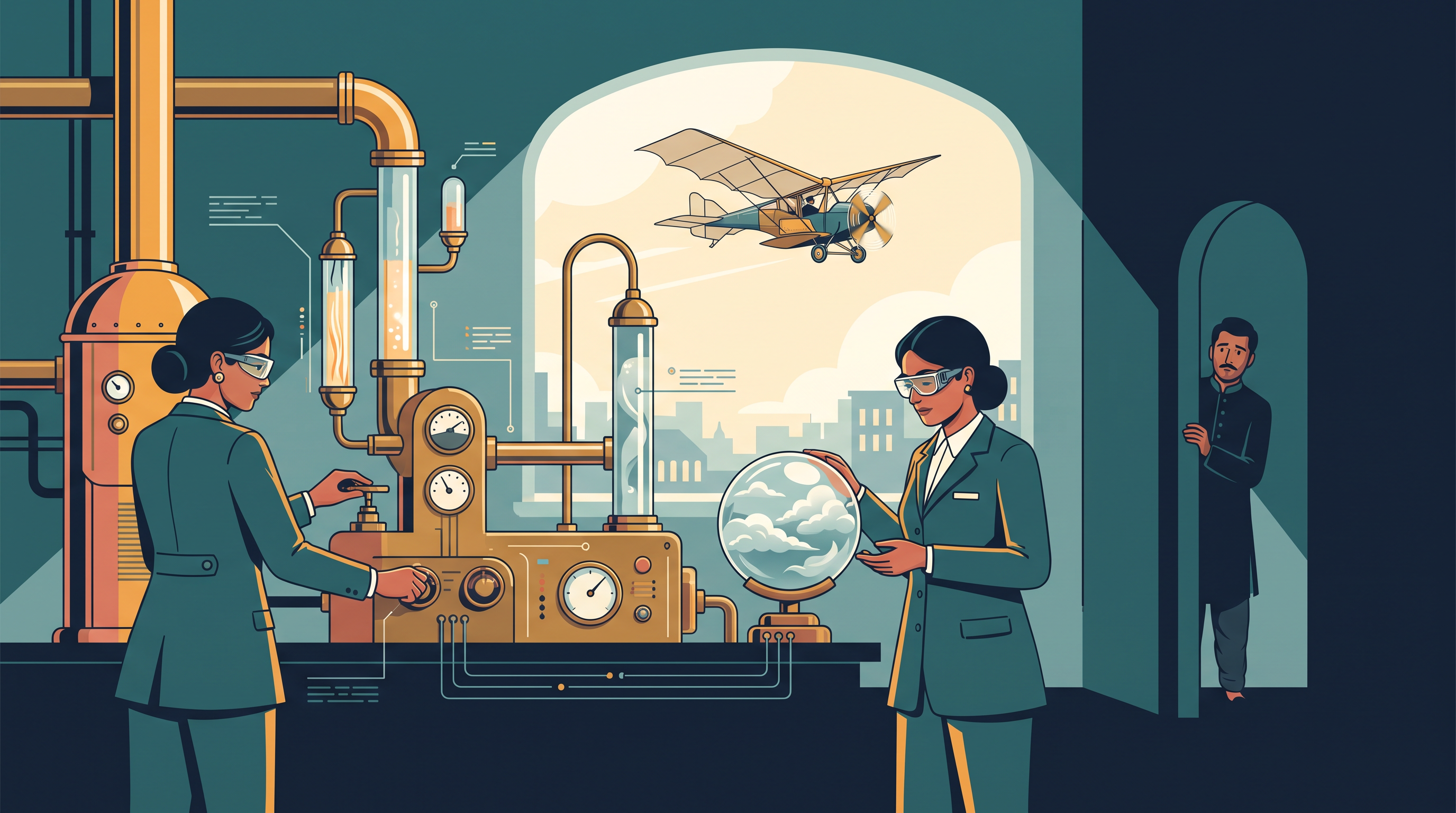
Fig. 5.8 – Sultana’s Dream and the reversal of gender roles.
From reform to a movement
Apart from these early feminist visions, a large number of women’s organisations arose in the early twentieth century, both at the all-India level and locally. And then began the participation of women in the national movement itself. Not surprisingly, women’s rights were part and parcel of the nationalist vision.
In 1931, the Karachi Session of the Indian National Congress issued a declaration on the Fundamental Rights of Citizenship in India, by which it committed itself to women’s equality. The declaration stated that all citizens are equal before the law, irrespective of religion, caste, creed or sex; that no disability attaches to any citizen, by reason of religion, caste, creed or sex, in regard to public employment, office of power or honour, or the exercise of any trade or calling; that the franchise shall be on the basis of universal adult suffrage; and that women shall have the right to vote, to represent, and to hold public office.
Read that list again and notice what became of it. These commitments, made by a political movement in 1931, reappear in the Constitution of independent India as fundamental rights — which is one reason a sociologist treats a movement’s declarations as more than words.
The 1970s and after
Two decades after Independence, women’s issues re-emerged in the 1970s — and the agenda had changed.
In the nineteenth-century reform movements, the emphasis had been on the backward aspects of tradition: sati, child marriage, the ill-treatment of widows. In the 1970s the emphasis fell on ‘modern’ issues — the representation of women in popular media, and the gendered consequences of unequal development. The question was no longer only what tradition was doing to women, but what modern development and modern media were doing to them.
The law became a major site of reform in the 1980s and after, especially once it was discovered that many laws of concern to women had not been changed since the nineteenth century.
As we enter the twenty-first century, new sites of gender injustice are emerging. You will recall the discussion of the declining sex ratio in the chapter on India’s demographic structure. The sharp fall in the child sex ratio — the number of girls per thousand boys in the age group 0–6 — and the implicit social bias against the girl child that it reveals, represent one of the new challenges of gender inequality.
It is a sobering point on which to end. The nineteenth century fought a custom that killed widows. The twenty-first century faces a bias that acts before a girl is born. The forms change; the underlying inequality has proved remarkably good at finding new ones.
5.4 The Struggles of the Disabled
Begin with the sentence that carries this whole section. People who are differently abled are not ‘disabled’ only because they are physically or mentally ‘impaired’. They are disabled because society is built in a manner that does not cater to their needs.
Read it twice. It moves the problem out of the body and into the world the body has to move through.
A struggle recognised late
In contrast to the struggles over Dalit rights, adivasi rights or women’s rights, the rights of persons with disabilities have been recognised only very recently. Yet in all historical periods, and in all societies, there have been people who are disabled. They were always there; they were simply not seen.
One of the leading activists and scholars of disability in the Indian context, Anita Ghai, argues that this invisibility can be compared to the Invisible Man of Ralph Ellison — the novel of that name being a famous indictment of racism against African Americans in the USA. Ellison’s narrator explains that he is invisible not because of anything about his body but because people refuse to see him: when they approach him they see their surroundings, they see themselves, they see the figments of their own imagination — everything and anything except him.
That is the condition Ghai is pointing to. The very term ‘disabled’ is significant, because it draws attention to the fact that the public perception of the ‘disabled’ is what needs to be questioned.
How disability is commonly understood
Some features are central to the public perception of disability all over the world:
- Disability is understood as a biological given.
- Whenever a disabled person is confronted with problems, it is taken for granted that the problems originate from her or his impairment.
- The disabled person is seen as a victim.
- Disability is supposed to be linked with the disabled individual’s self-perception.
- The very idea of disability suggests that they are in need of help.
Notice what these five assumptions have in common. Every one of them places the problem inside the individual — in the body, in the mind, in the person’s own view of herself — and none of them looks at the staircase, the syllabus or the employer.
The Indian setting
In India, labels such as ‘disability’, ‘handicap’, ‘crippled’, ‘blind’ and ‘deaf’ are used synonymously, and often these terms are hurled at people as insults.
In a culture that looks up to bodily ‘perfection’, all deviations from the ‘perfect body’ come to signify abnormality, defect and distortion. Labels such as bechara — ‘poor thing’ — accentuate the victim status of the disabled person. The word sounds kind. It is not: it fixes a person permanently in the position of someone to be pitied.
The roots of such attitudes lie in a cultural conception that views an impaired body as the result of fate. Destiny is seen as the culprit, and disabled people are the victims. The common perception views disability as retribution for actions in a past life — for past karma — from which there can be no reprieve. The dominant cultural construction in India therefore treats disability as essentially a characteristic of the individual, and popular images in mythology portray the disabled in an extremely negative fashion.
The social model of disability
The very term ‘disabled’ challenges each of the assumptions listed above.
Terms such as ‘mentally challenged’, ‘visually impaired’ and ‘physically impaired’ came to replace the more trite negative terms such as ‘retarded’, ‘crippled’ or ‘lame’. This is not merely a change of vocabulary. Behind it lies a claim: the disabled are rendered disabled not because they are biologically disabled but because society renders them so.
The activist and writer Simon Brisenden put the argument in a single line of reasoning. We are disabled, he wrote, by buildings that are not designed to admit us — and this leads on to a whole range of further disablements, in our education, in our chances of gaining employment, in our social lives. The disablement, he concluded, lies in the construction of society, not in the physical condition of the individual.
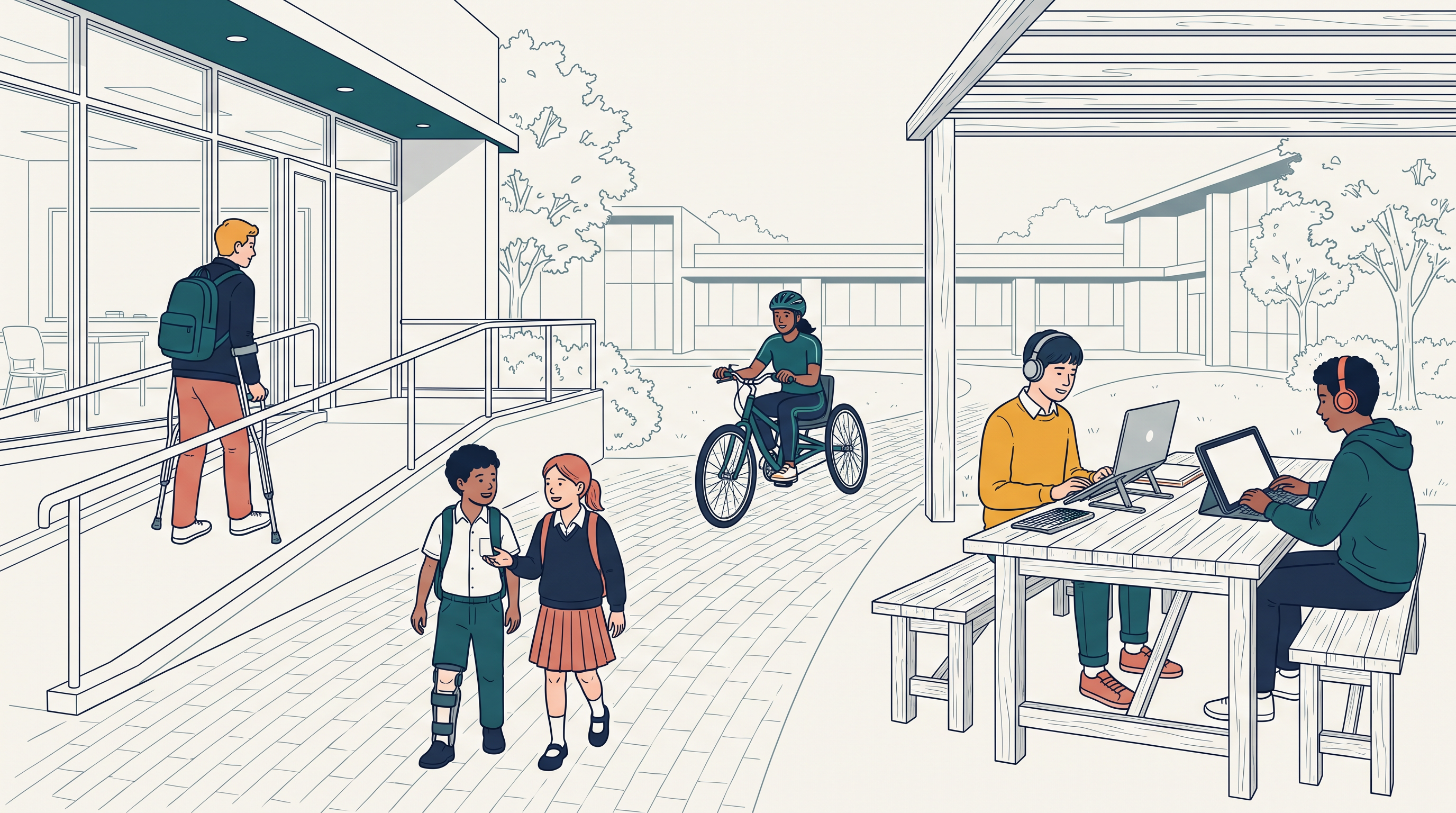
Fig. 5.9 – An accessible environment enabling full social participation.
Disability and poverty
The social construction of disability has yet another dimension. There is a close relationship between disability and poverty, and it runs in both directions.
Malnutrition; mothers weakened by frequent childbirth; inadequate immunisation programmes; accidents in overcrowded homes — all of these contribute to an incidence of disability among poor people that is higher than among people living in easier circumstances. Poverty, in other words, produces disability.
And disability produces poverty. It creates and exacerbates poverty by increasing isolation and economic strain — not just for the individual but for the whole family, which may lose a worker’s earnings and gain a caring responsibility at the same time. There is little doubt that disabled people are among the poorest in poor countries.
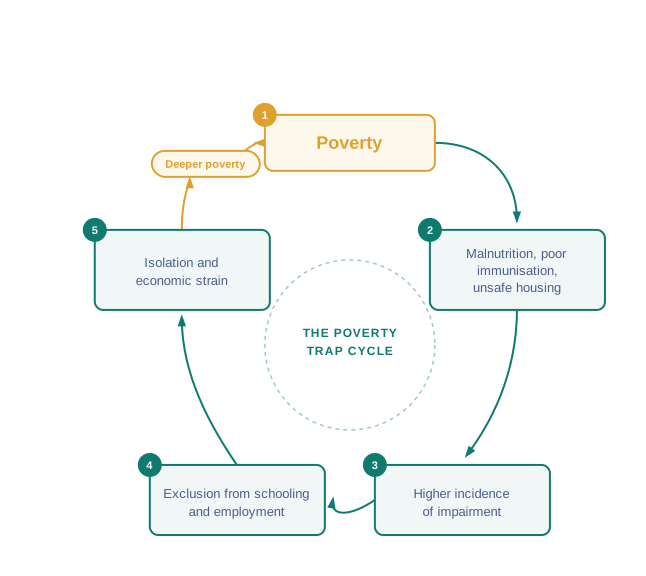
Fig. 5.10 – The reinforcing cycle of poverty and disability.
Counting, protesting, and the school gate
Significantly, the efforts to redress the situation have come from the disabled themselves, and the government has had to respond.
It is only recently, and through the efforts of the disabled themselves, that some awareness has begun to build in society about the need to rethink ‘disability’.
Recognition of disability is largely absent from the wider educational discourse as well. This is evident in the historical practices of the educational system, which continue to marginalise the issue by maintaining two separate streams — one for disabled students, and one for everyone else.
Looking back at the chapter
In this chapter we have looked at caste, tribe, gender and disability as institutions that generate and perpetuate inequality and exclusion. But we have also seen that they do something else: they provoke struggles against those very inequalities. Every section here has had two halves — a system of exclusion, and a movement against it.
Historically, the understanding of inequality in the social sciences was dominated by the notions of class and race, and more recently of gender. It is only later that the complexities of other categories, such as caste and tribe, received attention. In the Indian context, caste, tribe and gender are now getting the attention they deserve.
But some categories remain in need of attention — for instance, those who are marginalised by religion, or by a combination of categories. This last point is where the sociology of inequality is now moving. More complex formations — groups defined by religion and caste together, by gender and religion, or by caste and region — are likely to claim our attention in the near future, as is shown, for example, by the Sachar Committee Report on the Muslim community.
The lesson is one to carry beyond this chapter. Real people are never located on only one axis of inequality. A woman is also of some caste; an adivasi may also live with a disability; a Dalit household is also poor or not poor. Inequalities do not queue up politely one behind another. They intersect — and that is where the next questions in Indian sociology lie.
5.5 Summary
What is social about social inequality and exclusion (5.1)
- Hard work and ability matter, but they cannot explain inequality, because everything else between two people is almost never equal. Sociology studies the group differences, not the individual ones.
- Inequality and exclusion are called social in three senses: they are about groups rather than individuals; they are not merely economic; and they are systematic and structured rather than accidental.
- Social resources — money, property, education, health, power — take three forms of capital: economic capital (assets and income), cultural capital (qualifications and status) and social capital (networks of contacts). Each can be converted into the others, which is why advantage accumulates and mere effort does not.
- Social inequality is the pattern of unequal access to social resources. A small part of it reflects innate differences of ability and effort; by and large it is produced by society.
- Social stratification is the system by which categories of people are ranked in a hierarchy, shaping identity, relationships and access to opportunity.
- Three principles explain stratification: (1) it is a characteristic of society, not simply a function of individual differences; (2) it persists over generations, because position is ascribed and reinforced by endogamy; (3) it is supported by patterns of belief, or ideology, which make it appear fair or inevitable. Those with the greatest privilege support such systems most strongly; those at the bottom are the likeliest to challenge them.
- Exclusion is not only economic. People are also excluded on grounds of gender, religion, ethnicity, language, caste and disability.
- Prejudice is a pre-conceived attitude, formed before evidence and resistant to it, and may be negative or favourable. It rests on stereotypes — fixed, inflexible characterisations of a whole group, many of them in India partly colonial creations.
- Discrimination is actual behaviour that shuts a group out of opportunities open to others. It is hard to prove, because it is usually presented as motivated by some other, more justifiable reason such as merit.
- Social exclusion is the systematic, structural process by which people are cut off from full participation in society, including access to education, health, transport, banking, the police and the judiciary. It is not accidental.
- Law alone cannot end exclusion; a constant social campaign to change awareness and sensitivity is also needed. The chapter follows four groups — Dalits, adivasis, women, and the differently abled — and notes two more, transgender persons and the third gender, who now have legal recognition in India.
Caste and tribe (5.2)
- The caste system legitimises and enforces discrimination against people born into particular castes, and does so in ways that are humiliating, exclusionary and exploitative.
- Historically it fixed both occupation and status by birth. Scripture separated ritual status from wealth and power; historical practice brought them together, so that ‘high’ castes were almost always of high economic status and ‘low’ castes of low economic status.
- Since the nineteenth century the tie between caste and occupation has loosened, and rich and poor are found in every caste. But at the macro level the caste–class correlation remains remarkably stable: privilege is still concentrated among the ‘upper’ castes, and poverty among the ‘lower’ ones (Tables 5.1 and 5.2).
- Untouchability is an extreme aspect of the caste system, placing certain castes outside the hierarchy at the bottom of the purity–pollution scale. It has three equally important dimensions: exclusion, humiliation-subordination and exploitation. It is a pan-Indian phenomenon whose forms and intensity vary by region.
- The older collective names for these communities are derogatory. Gandhi popularised ‘Harijan’ in the 1930s; the communities themselves adopted ‘Dalit’, meaning downtrodden, which gained wide currency around the caste riots in Mumbai in the early 1970s and the Dalit Panthers.
- State initiatives: the Schedules of 1935; reservations in legislatures, government jobs and educational institutions, in proportion to population share (decided differently for OBCs); the Caste Disabilities Removal Act of 1850; the Constitution of 1950, which abolished untouchability (Article 17); the SC and ST (Prevention of Atrocities) Act of 1989; and the Ninety Third Amendment (2005, law from 23 January 2006), which introduced OBC reservation in higher education.
- Repeated legislation is itself proof that law alone cannot end a social practice: atrocities against Dalits and adivasis continue.
- No oppressed group is only a victim. Dalit assertion runs from Phule, Iyotheedas, Periyar and Ambedkar to contemporary organisations such as the Bahujan Samaj Party and the Dalit Sangharsh Samiti, and to a large body of Dalit literature.
- The Other Backward Classes are the low-status service and artisanal castes, discriminated against but short of untouchability. They are defined negatively, are found across religions, and are internally very diverse — upper OBCs are landed and locally dominant, lower OBCs are close to Dalits. About 41% of the national population.
- The Kalelkar Commission reported in 1953 and was sidelined; the Mandal Commission was appointed in the late 1970s and its report implemented only in 1990, after which the OBC question became central to national politics.
- Adivasis: the Scheduled Tribes are constitutionally recognised, but ecological isolation was never absolute and the tribe–caste boundary is porous. Today there are only areas of tribal concentration, not exclusively tribal areas, outside the North-East.
- Adivasi impoverishment is historical, not natural: colonial reservation of forests from the late nineteenth century destroyed customary rights of gathering and shifting cultivation; after 1947 capital-intensive industrialisation, mining and dams (Sardar Sarovar on the Narmada, Polavaram on the Godavari) displaced millions without adequate compensation — a form of internal colonialism, made easier still by liberalisation since the 1990s.
- ‘Adivasi’, coined in the 1930s, asserts rights, as ‘Dalit’ does. Adivasi movements have struggled against outsiders (dikus) and the state, and — because adivasis live in contiguous areas — achieved statehood for Jharkhand and Chattisgarh.
Women (5.3)
- Gender inequality looks natural but is not. Nothing biological explains women’s absence from public power or their smaller share in family property, and matrilineal societies (the Nairs, the Khasis) show that other arrangements work.
- The women’s question arose within the nineteenth-century middle-class social reform movements, whose reformers drew both on modern Western democratic ideals and on Indian traditions.
- Examples: Rammohun Roy’s campaign against sati, argued from natural rights and from the shastras, a decade before he founded the Brahmo Samaj in 1828; Ranade on widow remarriage; Phule’s joint attack on caste and gender through the Satyashodak Samaj; Sir Syed Ahmed Khan’s argument for girls’ education, limited in scope but impossible to contain once conceded.
- Women were not only the objects of reform: Tarabai Shinde’s Stree Purush Tulana (1882) attacked the double standards of a male-dominated society, and Begum Rokeya Sakhawat Hossain’s Sultana’s Dream (1905) imagined a world with the gender roles reversed.
- Women’s organisations grew in the early twentieth century, women joined the national movement, and the Karachi Session of the Indian National Congress in 1931 committed itself to equality before the law, no disability on grounds of sex, universal adult suffrage, and women’s right to vote and hold office.
- The agenda changed after Independence. Nineteenth-century reform attacked backward aspects of tradition; the movement of the 1970s took up ‘modern’ issues — the representation of women in popular media and the gendered consequences of unequal development; the 1980s made law a major site of reform. The falling child sex ratio is a new site of gender injustice.
Disability (5.4)
- People are disabled not only by impairment but because society is built in a way that does not cater to their needs. Their rights have been recognised very late.
- Common assumptions worldwide treat disability as a biological given, treat every problem as originating in the impairment, and see the disabled person as a victim in need of help.
- In India, labels are used as insults, bodily ‘perfection’ is prized, words like bechara fix the person as an object of pity, and disability is widely explained by fate or past karma — so that disability appears as a characteristic of the individual.
- The social view reverses this: the disablement lies in the construction of society, not in the physical condition of the individual. Buildings that cannot be entered lead on to exclusion from education, employment and social life.
- Disability and poverty reinforce each other: malnutrition, weakened mothers, poor immunisation and unsafe housing raise the incidence of impairment among the poor, while disability deepens isolation and economic strain for the whole household.
- Change has come from the disabled themselves, and the state has had to respond — as seen in the more careful approach to counting disability in Census 2011, which covered eight types as against five in 2001.
- Education still marginalises disability by maintaining two separate streams, and public buildings — even courts — often remain inaccessible.
- Caste, tribe, gender and disability generate inequality and also provoke struggle. The categories now needing attention are those marginalised by religion, and those defined by combinations of categories — religion and caste, gender and religion, caste and region — as the Sachar Committee Report on the Muslim community indicates.
5.6 Key Terms
Adivasi — Literally ‘original inhabitant’; a term coined in the 1930s and carrying political awareness and the assertion of rights, used for communities officially listed as Scheduled Tribes.
Apartheid — The South African policy of separating the races, informally practised for years and made law in 1948, which denied the Black majority citizenship, land and a voice in government.
Ascription — The fixing of a person’s social position at birth, so that children take on the positions of their parents rather than earning them.
Caste system — A distinctively Indian social institution that ranks people by birth, ties them to occupations, and legitimises and enforces discrimination against those born into particular castes.
Child sex ratio — The number of girls per thousand boys in the youngest age group of the population; its sharp fall reveals a social bias against the girl child.
Cultural capital — Advantage in the form of educational qualifications, skills, taste and the confidence that comes with status.
Dalit — Literally ‘downtrodden’; the term adopted by the ex-untouchable communities themselves to assert identity and dignity, now the generally accepted term for these groups.
Differently abled — The term used in this chapter for persons with disabilities, chosen to question the assumption that impairment alone makes a person unable.
Dikus — Outsiders; the term used by tribal communities for settlers, moneylenders and others intruding into their areas.
Disability — A condition commonly assumed to lie in an individual’s body or mind, but which sociologists show is produced by the way society is built and organised.
Discrimination — Actual behaviour or practice that disqualifies members of one group from opportunities open to others; often concealed behind reasons such as merit.
Economic capital — Advantage in material form: land, property, income and other assets.
Endogamy — The rule that marriage must take place within one’s own group, which keeps caste boundaries intact from one generation to the next.
Exploitation — In the context of untouchability, the imposition of forced, unpaid or under-paid labour, and the confiscation of property; one of its three defining dimensions.
Gender — The social meanings, roles and inequalities that a society builds upon the biological difference between male and female.
Humiliation-subordination — The systematic degrading and keeping down of a group; the second of the three dimensions that define untouchability.
Ideology — A set of beliefs that explains an unequal arrangement and makes it appear fair, natural or inevitable.
Internal colonialism — The subjugation of a population within a country’s own borders, whose resources are extracted while its people are left poorer — as with adivasi displacement for mines and dams.
Life chances — The realistic opportunities a person has to improve the conditions of life, shaped largely by access to social resources.
Matrilineal — Describing a society in which descent, inheritance and family name pass through the mother’s line, as among the Khasis of Meghalaya.
Other Backward Classes (OBCs) — The low-status service and artisanal castes, described in the Constitution as the ‘socially and educationally backward classes’; discriminated against, but short of untouchability.
Prejudice — A pre-conceived opinion or attitude about a group, formed before any evidence is considered and resistant to change; it may be negative or favourable.
Purdah — The seclusion of women behind a veil or within the women’s quarters of a house.
Purity and pollution — The ritual opposition by which the caste hierarchy is justified, with some births and occupations held to be pure and others polluting.
Reservations — The setting aside of a proportion of seats in legislatures, government jobs and educational institutions for members of the Scheduled Castes, Scheduled Tribes and, on a different basis, the OBCs.
Sati — The practice by which a widow was burnt on her husband’s funeral pyre; the first women’s issue to receive public attention in modern India.
Scheduled Castes — The castes officially listed as deserving special treatment because of the discrimination practised against them; the Schedules were first drawn up in 1935.
Scheduled Tribes — The tribal communities officially listed in the Constitution as deserving special treatment and protection.
Social capital — Advantage in the form of networks of contacts, relatives, friends and associations that can be drawn upon when needed.
Social construction of disability — The argument that people are disabled by buildings, schools, workplaces and attitudes that exclude them, rather than by their physical condition alone.
Social exclusion — The systematic and structured process by which individuals or groups are cut off from full involvement in the wider society and from the goods, services and institutions available to the majority.
Social inequality — The pattern of unequal access to valued social resources, produced by society rather than by natural differences between individuals.
Social reform movements — The nineteenth century middle class movements, varying by region, that raised the question of women’s rights and attacked practices such as sati and enforced widowhood.
Social resources — The valued things a society distributes unequally — money, property, education, health and power.
Social stratification — A system by which whole categories of people are ranked in a hierarchy, shaping their identity, relationships and access to resources and opportunities.
Stereotype — A fixed and inflexible characterisation of a whole group, denying the variation that exists between individuals and across time.
Third gender — The social category of persons who are neither male nor female, based on self-understanding, and now legally recognised in India, including the right to contest elections.
Transgender — The conversion of the gender status of the body into the opposite gender, whether by choice or under certain compulsions.
Untouchability — An extreme aspect of the caste system, defined by three equally important dimensions — exclusion, humiliation-subordination and exploitation — and abolished by Article 17 of the Constitution.
5.7 Points to Ponder
If hard work and talent really decided a person’s position in society, what would we expect to find when we look at who does the heaviest work in India? What do we actually find, and what does the gap between the two tell us about the way we usually explain success and failure?
The chapter argues that no system of stratification can survive across generations unless most people accept it as fair or inevitable. If that is true, is changing what people believe enough to end inequality — or can a belief be dismantled while the ownership of land, capital and contacts stays exactly where it was?
Laws against untouchability have been passed repeatedly since 1850. Does the need to keep passing them show that law is powerless against social practice, or that law is doing something slowly which nothing else could do at all?
Both Dalits and adivasis have faced severe exclusion, yet their movements have demanded different things — rights and representation in one case, states of their own in the other. What does this suggest about the way geography shapes what an oppressed group can even imagine asking for?
Nineteenth-century reformers argued for women’s education, but often wanted that education confined to religion, housekeeping and child-rearing. Can a reform that begins with such limits still be counted as a step towards equality — and who decides where the limits finally fall?
If a person in a wheelchair is disabled by a staircase rather than by her body, then who exactly is responsible for her exclusion: the architect, the school, the state, or all of us who never noticed the staircase at all?
5.8 NCERT Questions
How is social inequality different from the inequality of individuals?
What are some of the features of social stratification?
How would you distinguish prejudice from other kinds of opinion or belief?
What is social exclusion?
What is the relationship between caste and economic inequality today?
What is untouchability?
Describe some of the policies designed to address caste inequality.
How are the Other Backward Classes different from the Dalits (or Scheduled Castes)?
What are the major issues of concern to adivasis today?
What are the major issues taken up by the women’s movement over its history?
In what sense can one say that ‘disability’ is as much a social as a physical thing?
5.9 Objective Questions
Which of the following is NOT one of the three forms of capital discussed in this chapter?
- Economic capital
- Cultural capital
- Political capital
- Social capital [1 mark]
The practice by which marriage is restricted to members of the same caste is called:
- Exogamy
- Endogamy
- Ascription
- Hierarchy [1 mark]
The three dimensions that together define untouchability are:
- Poverty, illiteracy and unemployment
- Exclusion, humiliation-subordination and exploitation
- Prejudice, stereotype and discrimination
- Purity, pollution and hierarchy [1 mark]
The ‘Schedules’ listing the castes and tribes recognised as deserving special treatment were first drawn up in:
- 1850
- 1935
- 1950
- 1989 [1 mark]
The Second Backward Classes Commission was headed by:
- Kaka Kalelkar
- Jawaharlal Nehru
- B.P. Mandal
- M.G. Ranade [1 mark]
Recent surveys cited in the chapter show that the OBCs are approximately what proportion of the national population?
- 15%
- 27%
- 41%
- 52% [1 mark]
Assertion (A): Social stratification persists over generations. Reason (R): A person’s social position is ascribed at birth, and this is reinforced by the practice of endogamy.
- Both A and R are true, and R is the correct explanation of A.
- Both A and R are true, but R is not the correct explanation of A.
- A is true, but R is false.
- A is false, but R is true. [1 mark]
Assertion (A): Discrimination is often very hard to prove. Reason (R): Discriminatory practices are usually presented as being motivated by other, more justifiable reasons, such as merit.
- Both A and R are true, and R is the correct explanation of A.
- Both A and R are true, but R is not the correct explanation of A.
- A is true, but R is false.
- A is false, but R is true. [1 mark]
Assertion (A): Adivasi movements were able to demand states of their own, while the Dalit struggle was not. Reason (R): Adivasis were concentrated in contiguous areas, whereas Dalits were scattered across villages throughout the country.
- Both A and R are true, and R is the correct explanation of A.
- Both A and R are true, but R is not the correct explanation of A.
- A is true, but R is false.
- A is false, but R is true. [1 mark]
Match the following writers and scholars with their contribution: | Column A | Column B | |—|—| | a. Pierre Bourdieu | i. Sultana’s Dream | | b. Tarabai Shinde | ii. The three forms of capital | | c. Begum Rokeya Sakhawat Hossain | iii. Disability in the Indian context | | d. Anita Ghai | iv. Stree Purush Tulana | [1 mark]
Match each law with its year: | Column A | Column B | |—|—| | a. Caste Disabilities Removal Act | i. 1950 | | b. Constitution of India | ii. 1989 | | c. SC and ST (Prevention of Atrocities) Act | iii. 1850 | | d. Constitution Amendment (Ninety Third Amendment) Act | iv. 2005 | [1 mark]
Fill in the blank: Untouchability was abolished by Article ______ of the Constitution of India. [1 mark]
Fill in the blank: The term ______, literally meaning ‘original inhabitants’, was coined in the 1930s as part of the struggle against the colonial government, outside settlers and moneylenders. [1 mark]
Fill in the blank: The policy of separation of the races adopted by the White minority in South Africa, and made law in 1948, was called ______. [1 mark]
True or False: Prejudice always refers to a negative pre-judgement about another group. [1 mark]
True or False: According to Table 5.1, the percentage of Scheduled Tribes living below the poverty line in rural India is higher than the figure for all groups taken together. [1 mark]
True or False: The proportion of seats reserved for the Scheduled Castes and Scheduled Tribes is equal to their percentage share in the total population. [1 mark]
5.10 Check Your Concepts
Define social stratification. [2 marks]
What is meant by ‘life chances’? [2 marks]
Name the three forms of capital and give one example of each. [2 marks]
State any two dimensions of untouchability. [2 marks]
What is meant by ‘internal colonialism’ in the context of adivasi displacement? [2 marks]
Who were called ‘dikus’, and by whom? [2 marks]
What is a stereotype? Give one example of a stereotype that the chapter describes as partly a colonial creation. [2 marks]
Name any two women who wrote against gender inequality in the nineteenth or early twentieth century, and name the work each of them wrote. [2 marks]
Differentiate between prejudice and discrimination, giving one example of each. [4 marks]
Explain, with an Indian example, why sociologists insist that gender inequality is social and not natural. [4 marks]
The OBCs are described as a category ‘defined negatively’. Explain what this means, and give one reason why it makes the OBCs a difficult political category to work with. [4 marks]
‘Legislation alone is unable to transform society.’ Give reasons for this statement, using examples of laws against caste discrimination. [4 marks]
Look again at Table 5.1. Approximately how many times higher than the all-groups figure is the rural poverty percentage of the Scheduled Tribes? Show the calculation, and explain what this ratio tells us about the relationship between caste and class. [4 marks]
Using Table 5.2, compare the percentage of Scheduled Castes living in affluence in rural India with the figure for all groups. What does the comparison add to what Table 5.1 already tells us? [4 marks]
Why did nineteenth-century reformers appeal to Western rationality and to the sacred texts at the same time? Illustrate with one example from the chapter. [4 marks]
Explain the three principles of social stratification with Indian examples. What does the third principle — that stratification is supported by ideology — leave unexplained if taken by itself? [6 marks]
‘Caste no longer matters in twenty-first century India.’ How far do you agree? Evaluate the claim using the evidence in this chapter, including Tables 5.1 and 5.2. [6 marks]
Explain the three forms of capital, with the evidence that supports the idea and one criticism of it. Use the idea to explain why the hardest physical labour so rarely improves a person’s position. [6 marks]
Discuss the causes and consequences of adivasi dispossession from the late nineteenth century to the present. How far is ‘internal colonialism’ an appropriate description of what happened? [6 marks]
Compare the concerns of the nineteenth century social reform movements with those of the women’s movement from the 1970s onwards. What does the shift in concerns tell us about the relationship between development and gender injustice? [6 marks]
Explain the relationship between disability and poverty, and discuss why the chapter says that efforts to redress the situation have come chiefly from disabled people themselves. [6 marks]
5.11 Passage-Based Questions
In a village in central India, the drinking water hand-pump used by most households stands near the temple. Families living in the settlement at the eastern edge of the village do not use it; they walk to a second pump beyond the fields. Their children sit together at the back of the classroom in the village school. At harvest time, the men of these families work on the land of others for wages that are settled by custom rather than by bargaining, and they are expected to carry away the carcasses of dead cattle without payment. Nobody in the village describes any of this as a rule. It is simply how things are done.
- Identify the social institution at work in this passage, and name the extreme form of it that the passage describes. [2 marks]
- Which three dimensions of that practice can you find in the passage? Support each with one detail from the account. [2 marks]
- Name the constitutional provision that abolished this practice, and explain, using the passage, why a law abolishing it has not been enough. [2 marks] [6 marks]
Study the following figures, taken from the tables in this chapter.
Group Below the poverty line, rural India (%) Affluent, rural India (%) Scheduled Tribes 45.3 1.4 Scheduled Castes 31.5 1.7 OBCs 22.7 3.3 All groups 25.4 4.3 - Which group is furthest above the all-groups poverty figure, and by roughly how many times? [2 marks]
- The OBC poverty figure is below the all-groups average, yet the chapter still treats the OBCs as a disadvantaged category. Give two reasons from the chapter that explain this apparent puzzle. [2 marks]
- What do the two columns together tell you about the caste–class correlation at the macro level? [2 marks] [6 marks]
A district in a mineral-rich region is chosen for a large power project. Families who have lived in the surrounding forest for generations have long gathered produce there and cultivated small clearings, though they hold no papers for the land. When the project begins, the reservoir submerges several settlements. Compensation is offered only to those who can produce documents of ownership. Within two years, many of the displaced families are living on the edge of a town two hundred kilometres away, where the men find intermittent work at construction sites and the children have stopped attending school. Local newspapers describe the project as a milestone in the state’s development.
- Identify the two processes described in this passage that the chapter discusses in connection with adivasi communities. [2 marks]
- Explain why the chapter describes such processes as a form of ‘internal colonialism’. [2 marks]
- The newspapers call the project a milestone in development. Using the chapter, explain what question a sociologist would insist on asking about such a claim. [2 marks] [6 marks]
A young man who has used a wheelchair since childhood is called for an interview at a government office. The office is on the first floor of an old building; there is a lift, but it is reached by a short flight of steps. On the day of the interview two staff members carry his chair up the steps, and he is thanked warmly for his ‘spirit’. He is not selected. He is told that the work would involve moving between floors, and that the selection was made purely on suitability for the job.
- Name the view of disability that the chapter contrasts with the assumption being made in this office, and state its central claim. [2 marks]
- Identify the concept from Section 5.1 that describes what happened at the point of selection, and explain why such behaviour is usually hard to prove. [2 marks]
- The staff praise the man’s ‘spirit’. Explain, using the chapter, why sociologists are wary of the language of pity and of the label bechara. [2 marks] [6 marks]
In a middle-class household, a family is discussing the future of its two children. The son, who has finished school with average marks, is to be sent to a city three hundred kilometres away for a professional course. The daughter, who stood first in her class, is to be enrolled in a college in the same town, because it is felt that a girl should not live away from home, and because the family has begun to look for a suitable marriage alliance for her. Nobody in the household believes that girls are less able than boys; the mother herself points out that her daughter has always been the better student.
- Identify the form of social inequality at work here, and explain why the chapter insists it is social rather than natural. [2 marks]
- The family does not think girls are less able. What does this tell you about how such inequality is sustained even in the absence of an openly stated belief in inferiority? [2 marks]
- Nineteenth-century reformers argued for women’s education while often confining it to the home. How does this passage help you judge whether that argument was a step towards equality? [2 marks] [6 marks]
5.1.1 Social Inequality
In every society, some people command a larger share of the things that are valued — money, property, education, health and power — than others do. Sociologists call these valued things social resources.
Social resources can be sorted into three forms of capital. Economic capital is material: assets, land, income, savings. Cultural capital is what a person has acquired by way of educational qualifications, skills, accent, taste and the confidence that comes with status. Social capital is the web a person sits in — networks of contacts, relatives, friends, associations, the people who can be telephoned when something is needed. This threefold distinction comes from the French sociologist Pierre Bourdieu.
Bourdieu’s three forms of capital Proposed by: Pierre Bourdieu (French sociologist, writing in 1986) Core idea: The resources that decide a person’s position in society are not only economic. Advantage also takes cultural and social forms, and each form can be converted into the others. Key terms: social resources; economic capital; cultural capital; social capital; conversion of capital Evidence: A family with money can buy expensive schooling, turning economic capital into cultural capital; a well-connected person can turn an introduction into a job, turning social capital into economic capital. Limitation: The three forms are hard to measure precisely, and the framework describes how advantage is transmitted more convincingly than it explains why some groups came to hold it in the first place — in India, for instance, it says little on its own about caste.
The important point is that the three forms overlap, and that one can be turned into another. A person from a well-off family (economic capital) can afford expensive higher education, and so acquires cultural capital. A person with influential relatives and friends (social capital) may, through good advice, a recommendation or a piece of information reaching him first, land a well-paid job.
Follow that logic once more, because it explains something that puzzles many people. Effort is not a form of capital. However hard a person labours, hard labour does not convert into schooling, contacts or land; it converts, at best, into a slightly larger day’s wage. This is why the hardest physical work in India — stone-breaking, digging, loading, pulling — so rarely lifts anyone out of the position they started in. What decides life chances, the realistic opportunities a person has to improve the conditions of life, is access to resources, and that access is unequally distributed before the working day even begins.
Q1. If hard work alone decided who rises in life, why do the people who do the heaviest physical work so rarely improve their position?
A. Because rising in society depends less on effort than on the social resources a person can draw upon — economic capital, cultural capital and social capital — and these can be converted into one another, while sheer physical effort cannot be converted into any of them. Those who do the heaviest work are precisely those who have the least of all three, so their labour is spent without ever becoming an asset that improves their life chances.
Fig. 5.2 – Three forms of capital and their conversion.
Patterns of unequal access to social resources are what is meant by social inequality. Some part of this inequality does reflect innate differences between individuals — their varying abilities and efforts. Someone may be exceptionally talented, or may have worked extremely hard for wealth and status.
But by and large, social inequality is not the outcome of innate or ‘natural’ differences between people. It is produced by the society in which they live.
Social inequality is the pattern of unequal access to valued social resources — wealth, property, education, health and power — that is produced by society rather than by natural differences between individuals.
When these patterns harden into a ranking, sociologists use a second and stronger term. Social stratification refers to a system by which categories of people in a society are ranked in a hierarchy. That hierarchy then shapes their identity and their experiences, their relations with others, and their access to resources and opportunities.
Social stratification is a system in which whole categories of people in a society are ranked one above another in a hierarchy, and this ranking shapes their identity, their relationships and their access to resources and opportunities.
Social inequality vs Social stratification Social inequality describes the unequal distribution itself; social stratification describes the ranked, layered system that produces and preserves it.
Three principles of social stratification
NCERT sets out three principles that together explain how stratification works. Take them in order, because each answers a different objection.
1. Social stratification is a characteristic of society, not simply a function of individual differences. Stratification is a society-wide system that distributes social resources unequally among categories of people. In societies with the simplest technologies — hunting and gathering societies, for instance — very little was produced beyond what was immediately needed, so only rudimentary stratification could exist. In technologically more advanced societies, where people produce a surplus over and above their basic needs, that surplus is distributed unequally among social categories, regardless of the innate abilities of the individuals in them. In other words, stratification appears once there is something to be unequally divided, and it divides groups, not talents.
2. Social stratification persists over generations. It is closely tied to the family and to the inheritance of social resources from one generation to the next. A person’s social position is ascribed — that is, fixed at birth, so that children take on the social positions of their parents rather than earning them. Within the caste system, birth dictates what occupations are open to a person. This ascribed character is reinforced by endogamy, the rule that marriage must take place within the group. Because marriage is usually restricted to members of the same caste, the possibility of blurring caste lines through inter-caste marriage is ruled out, and the boundaries are renewed in each generation.
3. Social stratification is supported by patterns of belief, or ideology. No system of stratification is likely to last across generations unless it is widely regarded as either fair or inevitable. An ideology here means a set of beliefs that explains an unequal arrangement and makes it appear legitimate. The caste system, for example, is justified in terms of the opposition of purity and pollution — the ritual idea that some occupations and some births are pure and others polluting — with Brahmins designated the most superior and Dalits the most inferior by virtue of their birth and occupation.
Not everyone, though, finds such a system legitimate. Typically, it is the people with the greatest social privileges who express the strongest support for systems of stratification such as caste and race. Those who have experienced the exploitation and humiliation of being at the bottom of the hierarchy are the most likely to challenge it. Belief, in short, is not evenly distributed either.
Q. If stratification is supported by belief, does that mean inequality would disappear if people simply changed their minds about it?
A. No. Belief is one of the three supports, not the whole structure. Ideology makes a hierarchy seem legitimate, but the hierarchy also rests on the unequal ownership of resources and on inheritance through the family. Changing what people believe is necessary — but resources and inheritance have to change too, which is why sociologists insist that stratification is a system and not merely an attitude.
Q2. What makes an inequality “social” rather than simply a matter of individual talent or bad luck?
A. Three things. It attaches to groups rather than to individuals; it is not only about money, since people are also ranked by caste, gender, religion, language and disability; and it is systematic — it persists across generations through inheritance and endogamy, and is held in place by an ideology that makes it appear fair or inevitable. Bad luck is random. Social inequality has a pattern, and patterns have causes.
More than money
We often discuss exclusion and discrimination as though they concerned economic resources alone. That is only partly true.
People face discrimination and exclusion because of their gender, religion, ethnicity, language, caste and disability — and this happens even when they are not poor. A woman from a privileged background may face sexual harassment in a public place. A middle-class professional from a minority religious or ethnic group may find it hard to get accommodation in a middle-class colony, even in a metropolitan city.
Behind such treatment lie the ideas people carry about one another. Each of us grows up inside a community, and from it we acquire ideas not only about our own ‘community’, ‘caste’, ‘class’ and ‘gender’, but about everyone else’s as well. Very often these ideas are prejudices.
Prejudice refers to pre-conceived opinions or attitudes held by members of one group towards another. The word literally means ‘pre-judgement’: an opinion formed in advance of any familiarity with the subject, before any available evidence has been considered.
A prejudiced person’s views are typically based on hearsay rather than on direct experience, and they are stubborn — they resist change even when new information contradicts them. Prejudice may be negative or positive. Although the word is generally used for hostile pre-judgements, a person may equally be prejudiced in favour of members of his or her own caste or group, believing them, without any evidence, to be superior to everyone else.
Prejudice is a pre-conceived opinion or attitude held by members of one group towards another, formed in advance of any familiarity with the subject and held resistant to evidence. It may be either negative or favourable.
Prejudices are often grounded in stereotypes: fixed and inflexible characterisations of a group of people. Stereotypes are applied especially to ethnic and racial groups and to women.
In a country such as India, colonised for a long time, many of these stereotypes are partly colonial creations. Some communities were classified by the colonial administration as ‘martial races’; others were described as ‘effeminate’ or ‘cowardly’; still others as ‘untrustworthy’. These were the labels of rulers who needed to sort a subject population into those who could be recruited, those who could be ignored and those who had to be watched. In both English and Indian fiction we regularly meet an entire group of people written off as ‘lazy’ or ‘cunning’.
Now, it may well be true that some individuals are sometimes lazy or cunning, brave or cowardly. But such a statement is true of individuals in every group. Even of those individuals it is not true all of the time — the same person may be lazy on one day and hardworking on another.
This is exactly what a stereotype refuses to admit. It fixes a whole group into a single, homogeneous category, denying the variation that exists across individuals, across contexts and across time. It treats an entire community as though it were a single person with a single, all-encompassing trait.
the harm in labelling A label does not merely describe a group; it acts upon it. Once a community has been called ‘criminal’ or ‘backward’ or ‘lazy’, the label travels into policing, hiring, admissions and everyday conversation, and the people so labelled must live with consequences they did nothing to earn. For a sociologist this matters twice over: it is a social process to be studied, and it is a trap to be avoided in one’s own writing and speech. Describe what a group does and what has been done to it; never characterise it by a trait.
If prejudice describes attitudes and opinions, discrimination refers to actual behaviour towards another group or individual. Discrimination can be seen in practices that disqualify members of one group from opportunities open to others — as when a person is refused a job because of their gender or religion.
Discrimination is often very hard to prove, because it is rarely open or explicitly stated. Discriminatory practices are usually presented as motivated by other, more justifiable reasons. The person refused a job because of his or her caste may simply be told that others were better qualified, and that the selection was made purely on merit.
how discrimination hides behind a justifiable reason A young woman applies for a rented flat in a city housing colony. She is a qualified professional with a steady salary and can pay the deposit. On the telephone the owner is welcoming; after meeting her he says the flat has been promised to a relative. Over the next month she watches the same advertisement reappear twice. Nothing was said to her about her religion, and nothing was written down. What she experienced is discrimination: an actual practice that shut her out of an opportunity open to others, presented as an ordinary and justifiable decision.
Prejudice vs Discrimination | Feature | Prejudice | Discrimination | |—|—|—| | What it is | An attitude or opinion | An actual behaviour or practice | | Where it exists | In the mind, in what is said and believed | In what is done — hiring, renting, admitting, serving | | Direction | May be negative or favourable | Puts a group at a disadvantage | | Basis | Hearsay and stereotype rather than evidence | Application of that pre-judgement to a real decision | | Visibility | Often openly expressed | Often concealed, and presented as merit or some other justifiable reason | | Difficulty for a researcher | Can be recorded from speech and writing | Hard to prove, because the stated reason is rarely the real one |
Fig. 5.3 – The path from stereotype to social exclusion.
Collect examples of prejudiced behaviour from films or novels. In class, discuss what your classmates have gathered: how is prejudice reflected in the way a social group is shown on screen or on the page? How do you decide whether a particular portrayal is prejudiced or not? And can you tell apart the instances where the film-maker or writer intended to show prejudice as prejudice, from those where the prejudice is unconscious and unintended?