Chapter 1: Constitution: Why And How?
On 9 December 1946, an assembly held its first sitting to write a constitution for an India that was still undivided. On 14 August 1947, it met again — and the room had changed.
Under the Partition plan of 3 June 1947, the members who had been elected from territories that now fell under Pakistan ceased to be members of the Constituent Assembly. The number of members came down to 299. Outside the chamber, the subcontinent was living through the violence that the Partition had unleashed upon it. The Constitution of India was drafted against that backdrop, by people writing under immense pressure, in a country whose wounds were still open.
There was an obvious lesson available to them, and it was the wrong one. If religion had just torn the country apart, a new state could be built to favour the community that remained. The Assembly refused it. It committed itself instead to a new conception of citizenship: minorities would be secure, and religious identity would have no bearing on a person’s rights as a citizen.
That was not a technical decision about drafting. It was a political choice, argued out, and it shaped everything that followed — who would vote, what the government could do, and what it could never be allowed to do.
This chapter asks why a society needs such a document at all, what a constitution actually does, and how India’s Constitution came to be made.
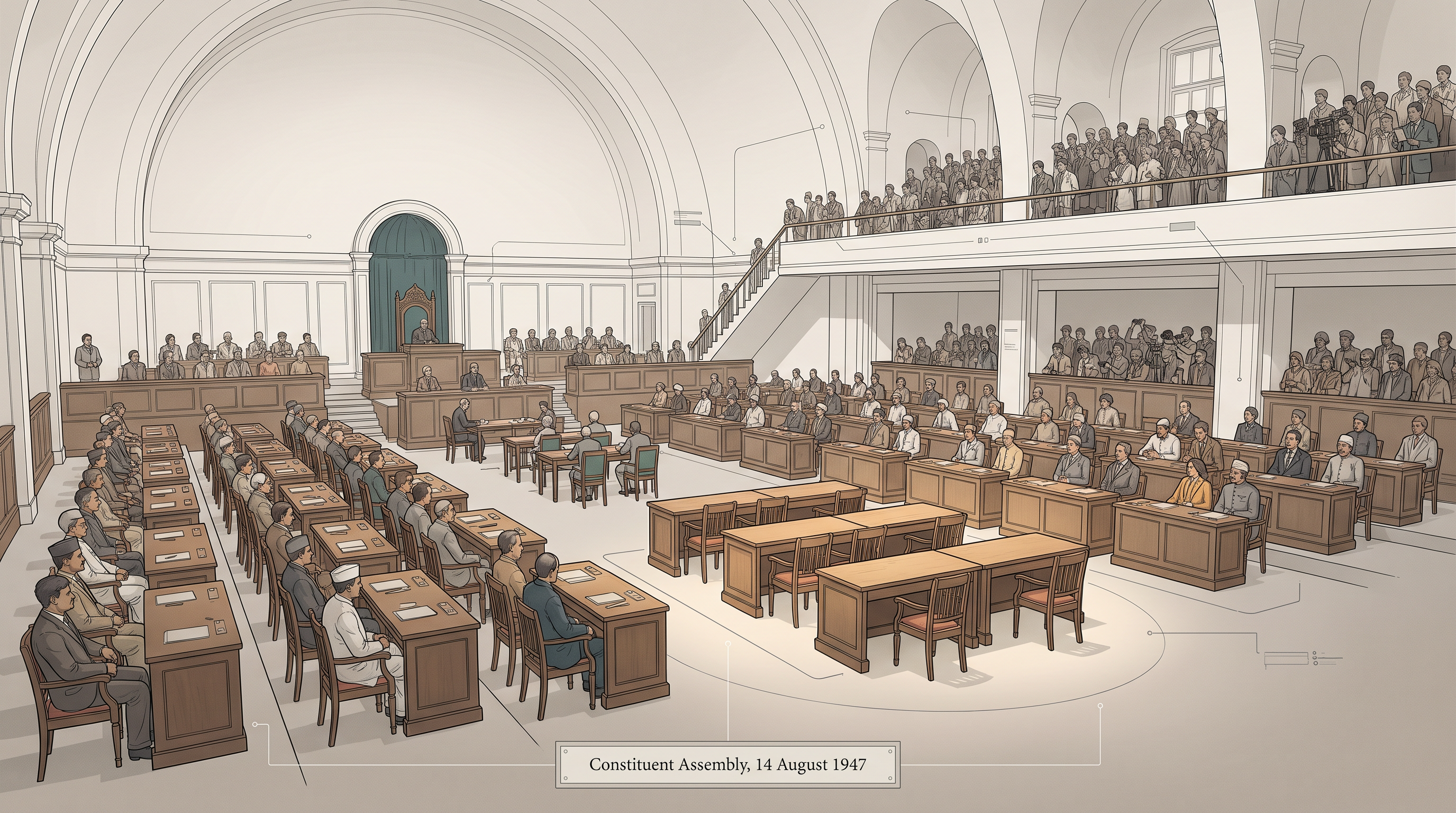
Fig. 1.0 – The Constituent Assembly reassembles for a divided India, 14 August 1947.
1.1 Introduction
This book is about the working of the Indian Constitution. In the chapters that follow, you will read about the different parts of that working: the institutions of government in our country, and the relationship each of them has with the others.
By institutions of government we mean the bodies that actually run the state — Parliament, which makes the laws; the government of the day, which carries them out; and the courts, which interpret them and settle disputes about them. You will meet each of these in later chapters.
But before you begin reading about elections, governments, presidents and prime ministers, one point has to be settled. The entire structure of the government, and the principles that bind its institutions together, have their origin in one document: the Constitution of India.
That is worth pausing on. A Prime Minister does not create the office of Prime Minister. Parliament does not grant itself the authority to make laws. Every one of these offices, and every power it holds, was set up by something that came before it. A constitution is that founding document — the supreme set of rules from which the government draws its powers, and by which it is limited.
What This Chapter Will Answer
After studying this chapter, you will learn:
- what a constitution means;
- what a constitution does to the society;
- how constitutions govern the allocation of power in society; and
- what was the way in which the Constitution of India was made.
Notice the order of those four. We begin not with India, but with the idea itself — because until you can say what a constitution is for, you cannot judge whether India’s has done its work.
1.2 Why Do We Need A Constitution?
What is a constitution? What are its functions? What role does it perform for a society? How does a constitution relate to our daily existence? These sound like questions for a specialist. They are not. Answering them is not as difficult as you might think, and this section will build the answer one step at a time.
We will do it by asking what would go wrong without a constitution. That is usually the fastest way to see what something is for.
1.2.1 Constitution Allows Coordination And Assurance
Imagine yourself to be a member of a reasonably large group. Now give that group some characteristics.
The members of this group are diverse in many ways. They have different religious allegiances: some are Hindus, some are Muslims, some are Christians, and some perhaps profess no religion at all. They are varied in other respects too. They pursue different professions, have different abilities, have different hobbies, and have different tastes in everything from films to books. Some are rich and some are poor. Some are old, some are young.
You do not have to imagine very hard. A group like this is very much like the people of a village — and it could just as easily be your own colony, your town, or your school. Stop for a moment and ask whether the description fits the place where you live.
Where Disagreement Comes From
Now imagine further that the members of this group are likely to have disputes over various aspects of life. How much property should one person be allowed to own? Should it be compulsory that every child is sent to school, or should the parents be allowed to decide? How much should this group spend on its safety and security — or should it build more parks instead? Should the group be allowed to discriminate against some of its members?
Every one of those questions will draw a variety of answers from different people. That is not a defect in the group. It is simply what happens when people who are genuinely different are asked what should be done.
But here is the difficulty. For all their diversity, this group has to live together. They are dependent upon each other in various ways. They require the cooperation of each other. What will enable the group to live together peacefully?
Rules That Are Known, And Rules That Bite
One may say that perhaps the members of this group can live together if they can agree on some basic rules. Why would the group need such rules at all? Think of what would happen in their absence.
Every individual would be insecure, simply because they would not know what other members of this group could do to each other, or who could claim rights over what. You would not know whether your land could be taken, whether your shop could be shut, or whether your child could be turned away from a school. Insecurity of this kind makes cooperation impossible.
So any group will need some basic rules that are publicly promulgated — that is, formally announced and made known to everyone — so that a minimal degree of coordination becomes possible. Coordination here simply means that people can act together, and can predict what others will do, because everyone is working from the same set of rules.
But it is not enough for these rules to be known. They must also be enforceable. If citizens have no assurance that others will follow the rules, they will themselves have no reason to follow them. Why keep your side of a bargain that nobody else is keeping?
This is where legal enforceability does its work. Saying that the rules are legally enforceable gives an assurance to everybody that others will follow them, for if they do not, they will be punished. The rule is backed by something more than good intentions.
The first function of a constitution is to provide a set of basic rules that allow for minimal coordination amongst members of a society.
Try The Thought Experiment Yourself
NCERT asks you to enact the thought experiment of this section in the classroom. The entire class should discuss and arrive at some decisions that would apply to everyone for the entire session. The decisions could be about the questions below.
Notice what the last item is really asking. It is asking you to observe your own class doing, in miniature, what a Constituent Assembly does.
1.2.2 Specification Of Decision Making Powers
A constitution is a body of fundamental principles according to which a state is constituted or governed. But what should these fundamental rules be? And what makes them fundamental in the first place?
Here the argument takes a sharp turn, and it is worth following it slowly.
The Question Before All Other Questions
The first question you will have to decide is this: who gets to decide what the laws governing the society should be?
You may want rule X, but others may want rule Y. How do we decide whose rules or preferences should govern us? You may think the rules you want everyone to live by are the best; but others think that their rules are the best. How do we resolve this dispute?
So even before you decide what rules should govern this group, you have to decide something earlier: who gets to decide?
The constitution has to provide an answer to this question. It specifies the basic allocation of power in a society. It decides who gets to decide what the laws will be.
The Many Possible Answers
In principle, the question of who gets to decide can be answered in many ways.
In a monarchical constitution, a monarch decides. In some constitutions, like that of the old Soviet Union, one single party was given the power to decide. But in democratic constitutions, broadly speaking, the people get to decide.
But even that answer is not so simple. Saying that the people should decide does not tell you how the people should decide. For something to become law, should everyone agree to it? Should the people directly vote on each matter, as the ancient Greeks did in their city assemblies? Or should the people express their preferences by electing representatives?
And if the people act through their representatives, further questions open up at once. How should these representatives be elected? How many of them should there be? Each of these is a real design choice, and a constitution has to make it.
In the Indian Constitution, for example, it is specified that in most instances Parliament gets to decide laws and policies, and that Parliament itself be organised in a particular manner.
Why The Constitution Outranks Parliament
Now follow the logic to its conclusion. Before identifying what the law in any given society is, you have to identify who has the authority to enact it. If Parliament has the authority to enact laws, there must be a law that bestows this authority on Parliament in the first place.
That is the function of the constitution. It is an authority that constitutes government in the first place — it brings the law-making body into existence and tells it what it may do.
The second function of a constitution is to specify who has the power to make decisions in a society. It decides how the government will be constituted.
A Cartoonist On Constitution Making
If deciding who gets to decide is this difficult, we should expect constitution making to be an argument rather than a ceremony. A cartoonist made exactly that point about an attempt in Europe. The countries of the European Union — the grouping of European states that cooperate closely on trade, law and movement across their borders — tried to agree on a single constitution for the Union.
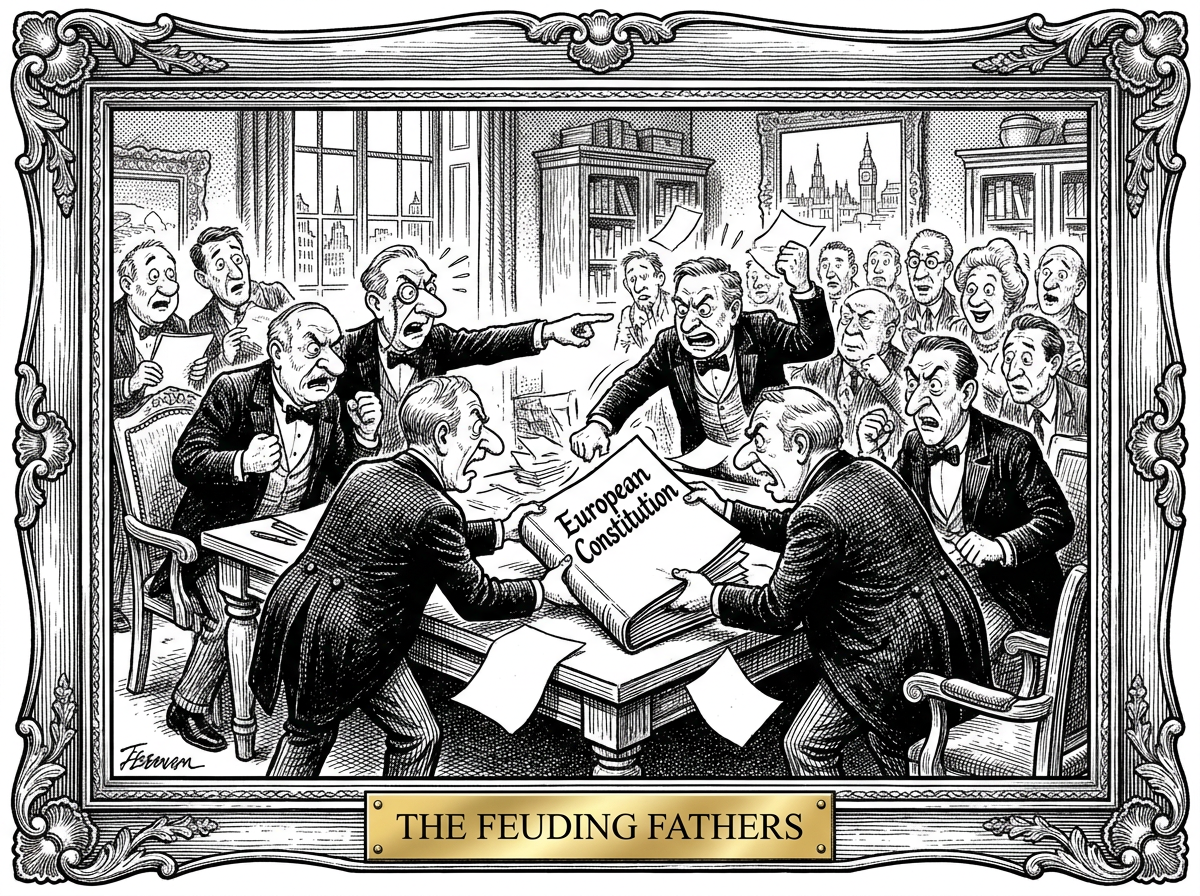
Fig. 1.1 – The failed attempt to create a European constitution. Inspiration: Patrick Chappatte, International Herald Tribune.
Read the plaque first, because the whole joke sits there. Constitution makers are conventionally honoured as ‘Founding Fathers’. The cartoonist has changed one letter and made them the ‘Feuding Fathers’ — the men who are supposed to found a political order are shown squabbling over the paper it is written on. The exaggeration is in the crowding and the shouting: everyone wants a hand on the document.
The claim being made is a serious one. Writing a constitution is not the calm recording of an agreement that already exists. It is the fight about what the agreement should be, and it can fail. In the case of the European constitution, it did.
Now the limit. A cartoon states one opinion in one image, and it cannot draw the counter-argument. This one tells you that the attempt collapsed in disagreement; it cannot tell you what the disagreements were about, which countries held which position, or what the Union agreed on despite them. It is one cartoonist’s published verdict in one newspaper on one day, not an account of the negotiations. And it certainly cannot answer its own question — whether constitution making always ends this way. For that you would have to look at cases where it did not, and India is one of them.
1.2.3 Limitations On The Powers Of Government
But specifying who has the authority to decide is clearly not enough.
Suppose you decided who had the authority to make decisions. But then this authority passed laws that you thought were patently unfair. Suppose it prohibited you from practising your religion. Or it enjoined that clothes of a certain colour were prohibited, or that you were not free to sing certain songs.
Suppose it went further. Suppose it laid down that people who belonged to a particular group — a caste or a religion — would always have to serve others, and would not be allowed to retain any property. Or that the government could arbitrarily arrest someone, with no reason given. Or that only people of a certain skin colour would be allowed to draw water from wells.
You would obviously think these laws were unjust and unfair. And here is the point: even though they were passed by a government that had come into existence based on certain procedures, there would be something obviously unjust about that government enacting these laws. Correct procedure is not the same thing as a just outcome. A properly elected government can still do a monstrous thing.
So the third function of a constitution is to set some limits on what a government can impose on its citizens. These limits are fundamental in the sense that government may never trespass them.
How The Limits Are Built
Constitutions limit the power of government in many ways. The most common way is to specify certain fundamental rights — rights that all of us possess as citizens, and which no government can ever be allowed to violate.
The exact content and interpretation of these rights varies from constitution to constitution. But most constitutions will protect a basic cluster of them. Citizens will be protected from being arrested arbitrarily and for no reason; this is one basic limitation upon the power of government. Citizens will normally have the right to some basic liberties as well: freedom of speech, freedom of conscience, freedom of association, freedom to conduct a trade or business, and so on.
In practice, these rights can be limited during times of national emergency, and the constitution specifies the circumstances under which they may be withdrawn. Note carefully what that sentence does and does not say. It does not say the government may suspend rights whenever it finds them inconvenient. It says the constitution itself names the circumstances — so even the power to withdraw rights is a power the constitution has defined and fenced in.
‘Why Create The Monster At All?’
At this point a fair objection appears, and NCERT puts it in the mouth of a student in the margin: so you first create a monster, and then start worrying about saving yourself from it? Why create this monster called government in the first place?
It is a serious question, and the answer is already in front of you. Go back to the group in the first sub-section — diverse, interdependent, disputing, insecure. Without an authority that can enforce basic rules, that group has no assurance and no coordination. Government is created because ungoverned life is worse. Having created it, we then limit it, because power that is created can also be misused.
1.2.4 Aspirations And Goals Of A Society
So far the constitution has been doing two kinds of work: creating power, and restraining it. Most of the older constitutions limited themselves largely to this — allocating decision-making power and setting some limits to government power.
But many twentieth-century constitutions do something more. They also provide an enabling framework for the government to do certain positive things, and thereby express the aspirations and goals of society. The Indian Constitution is the finest example of this, and it was particularly innovative in this respect.
Why would a constitution need to do that? Because societies with deeply entrenched inequalities of various kinds will not only have to set limits on the power of government; they will also have to enable and empower the government to take positive measures to overcome forms of inequality or deprivation. A government that is merely restrained will leave an unequal society exactly as unequal as it found it.
For example, India aspires to be a society that is free of caste discrimination. If this is our society’s aspiration, the government will have to be enabled or empowered to take all the necessary steps to achieve this goal. In a country like South Africa, which had a deep history of racial discrimination, its new constitution had to enable the government to end racial discrimination.
The Balancing Act Of 1949
Aspirations, though, are not single. A society has many, and they pull against one another. The constitution makers had to address themselves to very different aspirations at once, and a cartoonist caught them in the act.
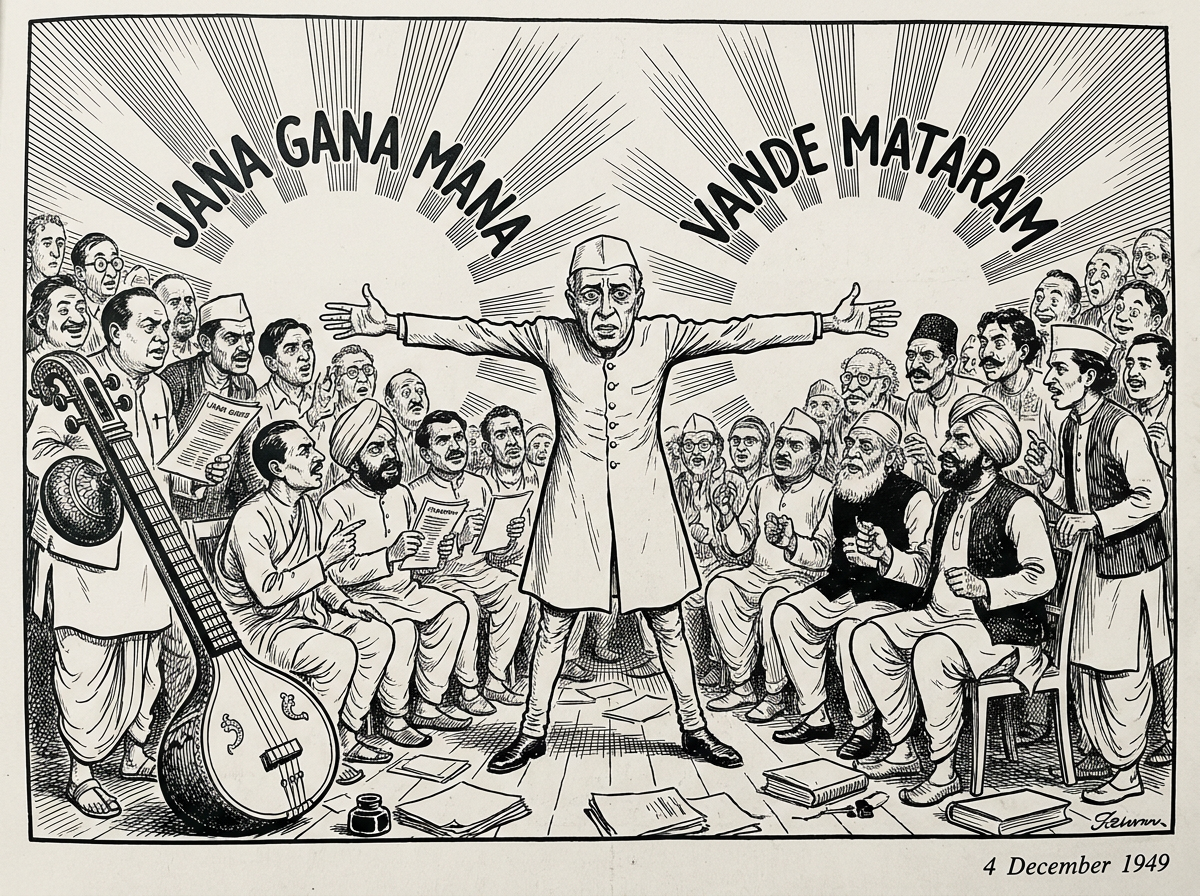
Fig. 1.2 – Balancing different visions and ideologies. Inspiration: Shankar, Children’s Book Trust.
The two groups in the drawing are singing different songs, and each song stands for a different vision of the nation and how it should imagine itself. Nehru is drawn in the middle with his arms out, like a conductor trying to bring two halves of an orchestra into one piece of music. The exaggeration is in his posture: the man is stretched between the two, holding both, belonging wholly to neither.
The cartoonist’s claim is that the framing of a constitution is an act of balancing, not of choosing a winner. That is a claim about the whole enterprise, made in a single image.
And now its limit, which is unusually clear here. The cartoon asks who prevailed in the balancing act, but it cannot answer its own question — a drawing made on one day in December 1949 cannot show what the final document settled, or what was conceded by whom to get there. It shows two aspirations, when the Assembly was in fact holding many. And it tells you nothing about the members who were arguing over federalism, property or the judiciary at the same time. A cartoon simplifies in order to make one point land; that is its method, and also its boundary.
What The Indian Constitution Enables
More positively, a constitution may enshrine the aspirations of a society. The framers of the Indian Constitution thought that each individual in society should have all that is necessary for them to lead a life of minimal dignity and social self-respect — minimum material well-being, education, and so on. The Indian Constitution therefore enables the government to take positive welfare measures, some of which are legally enforceable.
As you go on studying the Indian Constitution, you will find that such enabling provisions have the support of the Preamble, the opening declaration of the Constitution which states the values the document is meant to serve. Those provisions are found in the section on Fundamental Rights. The Directive Principles of State Policy also enjoin the government to fulfil certain aspirations of the people. They are instructions to the government about the kind of society it should be working towards, and you will study them closely in a later chapter.
The fourth function of a constitution is to enable the government to fulfil the aspirations of a society and create conditions for a just society.
India is not alone in writing enabling provisions of this kind. Constitutions are not only rules and regulations controlling the powers of the government; they also give powers to the government for pursuing the collective good of the society. The Constitution of South Africa assigns many responsibilities to the government: it wants the government to take measures to promote conservation of nature, to make efforts to protect persons or groups subjected to unfair discrimination, and it provides that the government must progressively ensure adequate housing for all, health care, and so on. In the case of Indonesia also, the government is enjoined to establish and conduct a national education system, and the Indonesian Constitution ensures that poor and destitute children will be looked after by the government.
‘What Is The Point Of Lofty Words?’
Here NCERT places another student’s objection in the margin, and it deserves a straight answer. What does it take to write nice things in a constitution? What is the point of writing down lofty aspirations and goals if they cannot change the life of the people?
The objection has force. Words on paper have never by themselves built a school or ended a discrimination. But notice what an enabling provision actually does. It makes the goal the government’s business, and it authorises the government to act — so that when a government does act to reduce an inequality, no one can say it has exceeded its powers. And where such a provision is legally enforceable, a citizen can go to court and demand it. Whether that is enough is a fair question, and the chapter does not pretend it is settled.
1.2.5 Fundamental Identity Of A People
Finally, and perhaps even most importantly, a constitution expresses the fundamental identity of a people.
This is the least obvious of the four functions, so take it in three steps.
How Constitutions Differ, And How They Agree
If one looks at constitutions around the world, they differ in many respects — in the form of government they enjoin, and in many procedural details. But they also share a good deal. Most modern constitutions create a form of government that is democratic in some respects, and most claim to protect certain basic rights.
Where constitutions really differ is in the way they embody conceptions of national identity. Most nations are an amalgamation of a complex set of historical traditions; they weave together the diverse groups that reside within the nation in different ways.
For example, German identity was constituted by being ethnically German, and the constitution gave expression to this identity. The Indian Constitution, on the other hand, does not make ethnic identity a criterion for citizenship. That is a choice, and a consequential one: it means that who your ancestors were does not determine whether you belong.
Different nations also embody different conceptions of what the relationship between the different regions of a nation and the central government should be. Should the regions be strong and the centre light? Or the reverse? This relationship, too, constitutes the national identity of a country.
Who Holds The Pen In Iraq?
The question of identity and the question of who gets to decide are not separate questions. They meet whenever a new constitution is being written. A cartoonist made the point about Iraq.
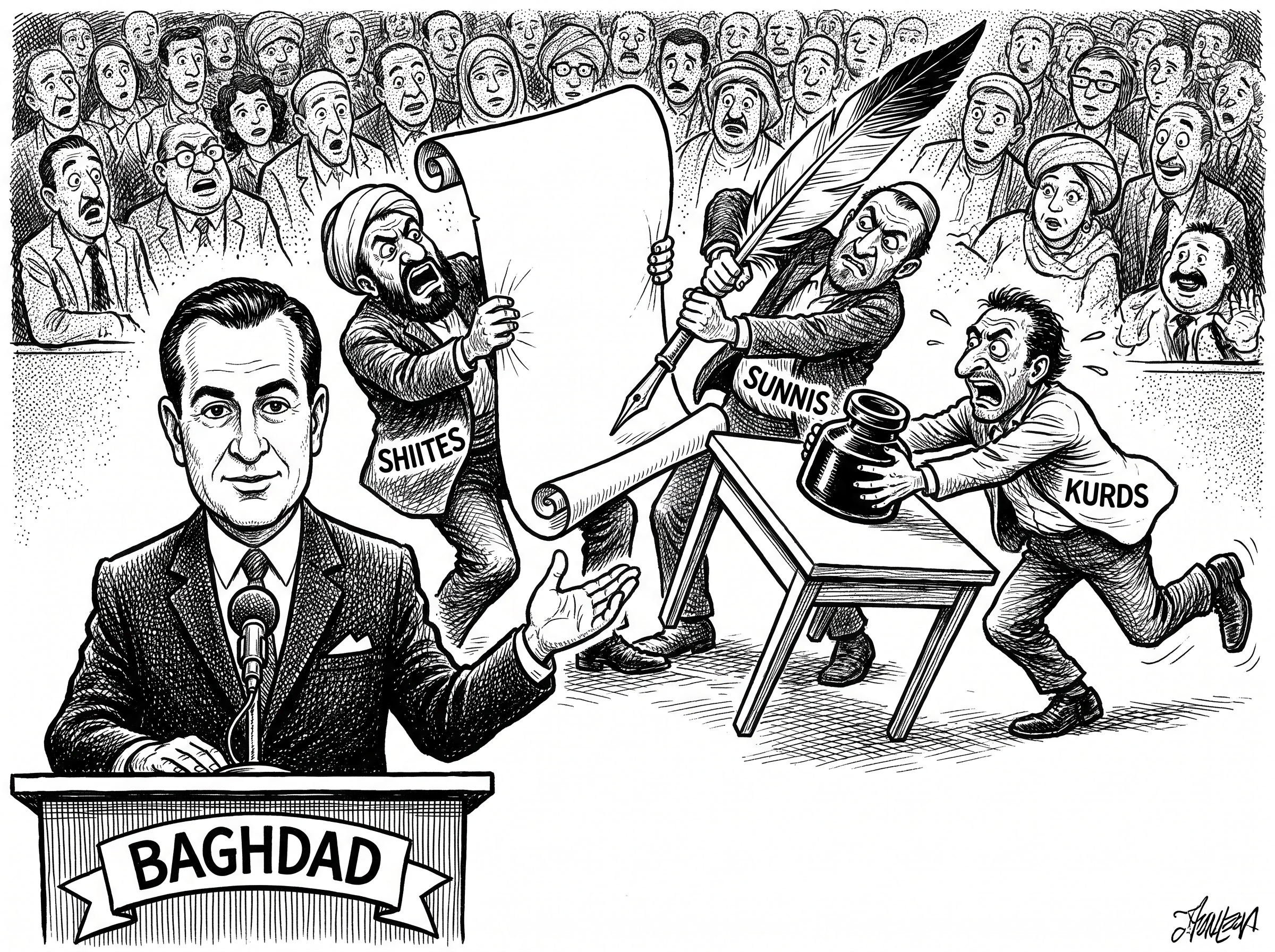
Fig. 1.3 – Conflict over writing the new Iraqi constitution. Inspiration: John Trever, Albuquerque Journal.
Look at what the figures are fighting over. Not a clause, not a right — the pen, the paper, the ink. The cartoonist has made the fight physical so that you can see what it is really about: not what the constitution should say, but who gets to write it. That is the question of decision-making power from sub-section 1.2.2, drawn as a scramble.
The official at the microphone is announcing an agreement while the disagreement is going on visibly behind his back. The gap between the two is the joke, and the argument.
Now compare, as the question asks. The European cartoon shows constitution makers feuding among themselves as equals. This one shows groups fighting over who counts as an author at all — and each of them is labelled by community. That difference matters, and it points to the limit of the drawing. Labelling whole populations as single blocs is exactly what a cartoon must do to be readable in one glance, and exactly what flattens them: it cannot show you the disagreements inside each group, and it does not tell you what any of these groups actually wanted written into the document. A cartoon can show you that there was a conflict. It cannot tell you what the conflict was about.
Check Your Progress
Before moving on, test the four functions against real provisions. Here are some provisions of the Indian and other constitutions. For each, write the function that the provision performs. NCERT works the first one for you as an example: ‘the government cannot order any citizen to follow or not to follow any religion’ performs the function of setting limitations on the power of the government. Now do the rest.
1.3 The Authority Of A Constitution
We have outlined some of the functions a constitution performs. These functions explain why most societies have a constitution. But there are three further questions we can ask about constitutions:
- What is a constitution?
- How effective is a constitution?
- Is a constitution just?
What A Constitution Is
In most countries, ‘Constitution’ is a compact document that comprises a number of articles about the state, specifying how the state is to be constituted and what norms it should follow. When we ask for the constitution of a country, we are usually referring to this document.
But some countries do not have one. The United Kingdom, for instance, does not have a single document that can be called the Constitution. Rather it has a series of documents and decisions that, taken collectively, are referred to as its constitution.
So the definition has to be framed by function, not by format. A constitution is the document, or set of documents, that seeks to perform the functions we described in the previous section — coordination, the allocation of decision-making power, limits on government, and the expression of a society’s aspirations and identity.
Words On Paper, Or Something More
But many constitutions around the world exist only on paper. They are mere words existing on a parchment, printed and bound and ignored.
The crucial question, therefore, is the second one: how effective is a constitution? What makes it effective? What ensures that it has a real impact on the lives of people? Making a constitution effective depends upon many factors, and the rest of this chapter is about three of them.
1.3.1 Mode Of Promulgation
The first factor is the mode of promulgation. This refers to how a constitution comes into being. Who crafted the constitution, and how much authority did they have?
In many countries constitutions remain defunct — dead letters, obeyed by nobody — because they are crafted by military leaders, or by leaders who are not popular and do not have the ability to carry the people with them. A constitution written by people the country does not trust begins its life with a weakness it may never recover from.
The most successful constitutions, like those of India, South Africa and the United States, are constitutions which were created in the aftermath of popular national movements. That is not a coincidence. A movement that has already carried millions of people has already done the work of building trust.
When Constitution Making Does Not Settle
Making a constitution is not always an easy and smooth affair, and Nepal is an example of the complicated nature of constitution making.
Since 1948, Nepal has had five constitutions — in 1948, 1951, 1959, 1962 and 1990. But all these constitutions were ‘granted’ by the King of Nepal. That single word carries the whole problem. A constitution that is granted is a gift from the ruler, and a gift can be withdrawn; it is not an authority that stands above the ruler.
The 1990 constitution introduced multi-party competition, though the King continued to hold final powers in many respects. For many years Nepal was faced with militant political agitations for restructuring the government. The main issue was the role of the monarchy in the constitution of Nepal. Some groups in Nepal wanted to abolish the institution of monarchy and establish a republican form of government — one in which the head of state is not a hereditary monarch. Others believed that it may be useful to shift to a limited monarchy with a reduced role for the King. The King himself was not ready to give up powers, and he took over all powers in October 2002.
Many political parties and organisations demanded the formation of a new constituent assembly. The Communist Party of Nepal (Maoist) was in the forefront of the struggle for a popularly elected constituent assembly. Finally, under pressure of popular agitation, the King had to install a government acceptable to the agitating parties. This government stripped the King of almost all powers. In 2008, Nepal emerged as a democratic republic after abolishing the monarchy. Finally, Nepal adopted a new constitution in 2015.
The sequence is set out in Fig. 1.4. Read it against the Indian case. Nepal’s earlier constitutions did not lack articles or institutions; they lacked the one thing the Indian Constitution had — the authority of the people who enacted it.
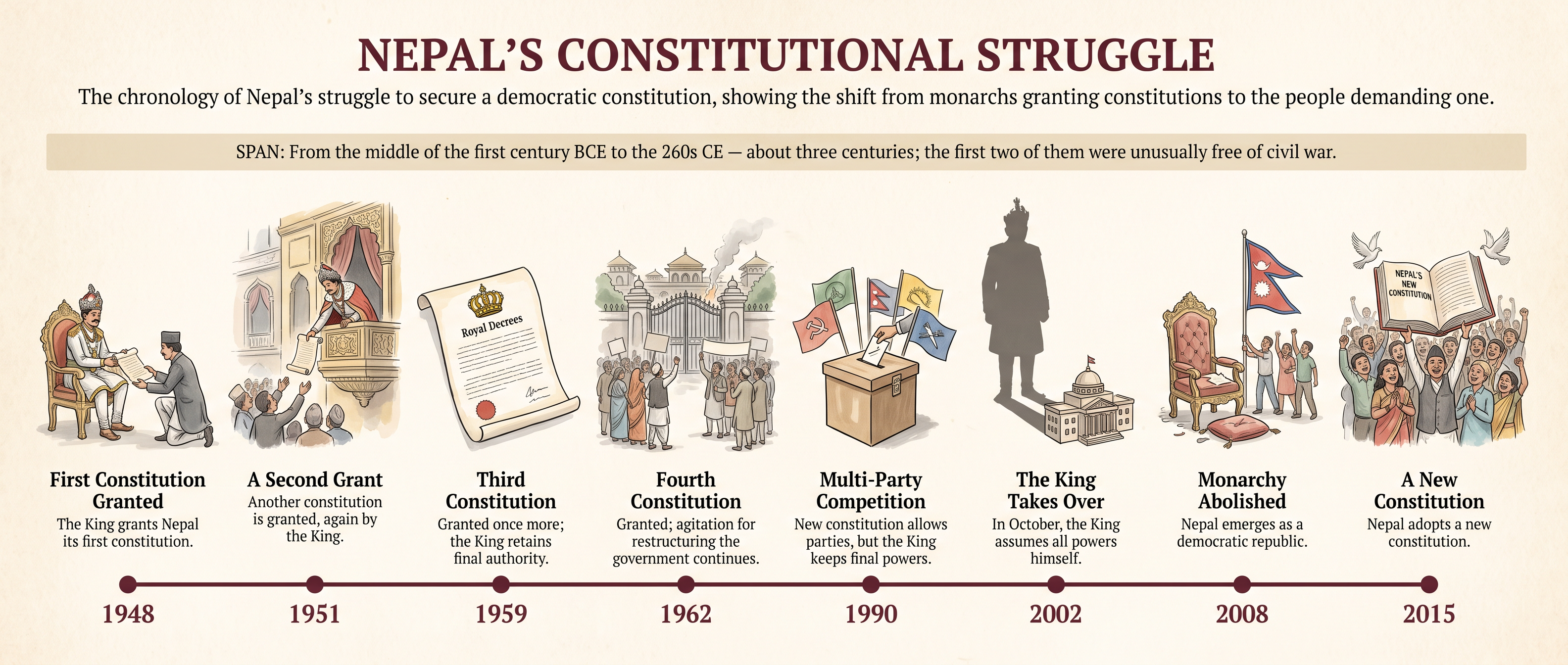
Fig. 1.4 – Nepal’s Search For A Constitution.
NCERT puts two questions in the margin here, and they follow directly from Nepal’s experience. What do people do if they find out that their constitution is not just? What happens to people when a constitution exists only on paper? Hold on to both. They are the questions the next two sub-sections answer.
1.3.2 The Substantive Provisions Of A Constitution
The second factor is what the constitution actually contains. Substantive provisions are the provisions that decide who gets what — the rights, the protections, the guarantees. They are what a citizen would actually feel.
It is the hallmark of a successful constitution that it gives everyone in society some reason to go along with its provisions.
Consider what happens when it does not. A constitution that allowed permanent majorities to oppress minority groups within society would give minorities no reason to go along with its provisions. A constitution that systematically privileged some members at the expense of others, or that systematically entrenched the power of small groups in society, would cease to command allegiance. If any group feels their identity is being stifled, they will have no reason to abide by the constitution.
That is a practical argument, not only a moral one. A document that a section of the people has no reason to obey will eventually be a document that section does not obey.
No constitution by itself achieves perfect justice. But it has to convince people that it provides the framework for pursuing basic justice. Notice how modest and how demanding that standard is at the same time. It does not promise a just society. It promises the means to argue and work towards one.
Now do this thought experiment, as NCERT asks. Ask yourself this question: what would be the content of some basic rules in society, such that they gave everyone a reason to go along with them?
The more a constitution preserves the freedom and equality of all its members, the more likely it is to succeed. Does the Indian Constitution, broadly speaking, give everyone a reason to go along with its broad outlines? After studying this book, one should be able to answer this question in the affirmative.
1.3.3 Balanced Institutional Design
The third factor concerns how power is arranged.
Constitutions are often subverted — not by the people, but by small groups who wish to enhance their own power. Well-crafted constitutions fragment power in society intelligently, so that no single group can subvert the constitution.
One way of designing a constitution intelligently is to ensure that no single institution acquires a monopoly of power. This is often done by fragmenting power across different institutions. The Indian Constitution, for example, horizontally fragments power across the Legislature, which makes law; the Executive, which carries it out; and the Judiciary, which interprets it — and even across independent statutory bodies like the Election Commission, the body that conducts elections in India.
This ensures that even if one institution wants to subvert the Constitution, others can check its transgressions. An intelligent system of checks and balances — an arrangement in which each institution can restrain the others — has facilitated the success of the Indian Constitution.
Rigid Enough To Hold, Flexible Enough To Last
Another important aspect of intelligent institutional design is this: a constitution must strike the right balance between treating certain values, norms and procedures as authoritative, and at the same time allowing enough flexibility in its operations to adapt to changing needs and circumstances.
Push it too far in either direction and it breaks. Too rigid a constitution is likely to break under the weight of change. A constitution that is, on the other hand, too flexible will give no security, predictability or identity to a people — if anything can be altered at any time, then nothing has really been settled.
Successful constitutions strike the right balance between preserving core values and adapting them to new circumstances. You will notice the wisdom of the makers of the Indian Constitution in the chapter on the Constitution as a living document, which is Chapter 9 of this book. The Indian Constitution is described as ‘a living’ document. By striking a balance between the possibility of changing the provisions and the limits on such changes, the Constitution has ensured that it will survive as a document respected by people. This arrangement also ensures that no section or group can, on its own, subvert the Constitution.
A Constitution Built On Cards
A cartoonist drew the opposite case — a constitution with no such balance beneath it.
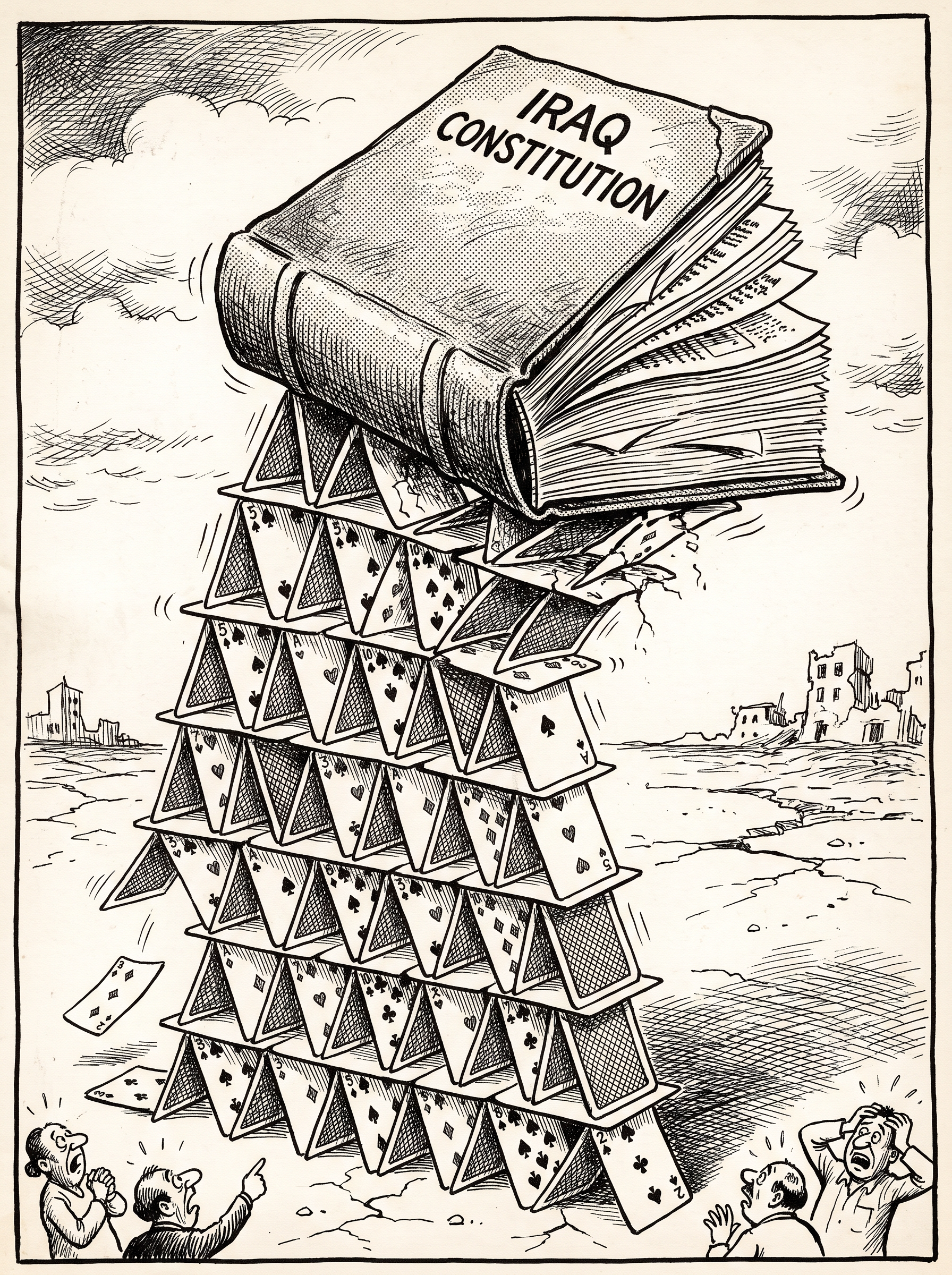
Fig. 1.5 – The new Iraqi Constitution resting on a castle of cards. Inspiration: Ares, Cagle Cartoons.
A castle of cards is the standard image for something that looks like a structure but is held up by nothing. Cards can be stacked into walls and towers, and one push brings the whole thing down. The cartoonist has placed a constitution — a heavy book, the heaviest object in the frame — on top of exactly such a structure. The weight is the point of the exaggeration: the document is far too heavy for what is under it.
The claim, then, is not about the words in the Iraqi Constitution. It is about the foundation beneath them. A constitution rests on the credibility of those who made it and on institutions strong enough to hold it up. Where those are missing, the text may be excellent and still collapse.
Now the limit, and it is a large one. This is one cartoonist’s prediction, published in 2005, drawn in a single image; it cannot show us the foundations it claims are absent, and a cartoon has no way of drawing an institution that is working quietly. Nor can it tell us who built the cards, or what would have to change for the structure to hold. It is a verdict, not evidence. The second question printed under it — would this description apply to the Indian Constitution? — is a question you must answer from the evidence in this chapter, not from the drawing.
Three Questions To Ask Of Any Constitution
Therefore, in determining whether a constitution has authority, you can ask yourself three questions.
- Were the people who enacted the constitution credible? This question will be answered in the remaining part of this chapter.
- Secondly, did the constitution ensure that power was intelligently organised, so that it was not easy for any group to subvert the constitution? And, most importantly, does the constitution give everyone some reason to go along with it? Most of this book is about this question.
- Also, is the constitution the locus of people’s hopes and aspiration? The ability of the constitution to command voluntary allegiance of the people depends to a certain extent upon whether the constitution is just. What are the principles of justice underlying the Indian Constitution? The last chapter of this book will answer this question.
1.3.4 How Was The Indian Constitution Made?
Let us find out how the Indian Constitution was made.
Formally, the Constitution was made by the Constituent Assembly — an assembly elected for the single purpose of drafting a constitution. This one had been elected for undivided India. It held its first sitting on 9 December 1946, and reassembled as the Constituent Assembly for divided India on 14 August 1947.
Its members were chosen by indirect election — not by the voters directly, but by the members of the Provincial Legislative Assemblies, which had themselves been established under the Government of India Act, 1935. The Constituent Assembly was composed roughly along the lines suggested by the plan proposed by the committee of the British cabinet known as the Cabinet Mission.
According to this plan:
- Each Province and each Princely State, or group of States, were allotted seats proportional to their respective population, roughly in the ratio of 1:10,00,000. As a result, the Provinces — those that were under direct British rule — were to elect 292 members, while the Princely States were allotted a minimum of 93 seats.
- The seats in each Province were distributed among the three main communities — Muslims, Sikhs and general — in proportion to their respective populations.
- Members of each community in the Provincial Legislative Assembly elected their own representatives by the method of proportional representation with single transferable vote. In this method, a voter ranks the candidates in order of preference, and seats are filled in a way that reflects the strength of different groups rather than handing every seat to the largest one.
- The method of selection in the case of representatives of Princely States was to be determined by consultation.
For more details, visit http://164.100.47.194/loksabha/constituent/facts.html
The whole chain, from the Cabinet Mission plan to the Assembly that finally sat, is set out in Fig. 1.6.
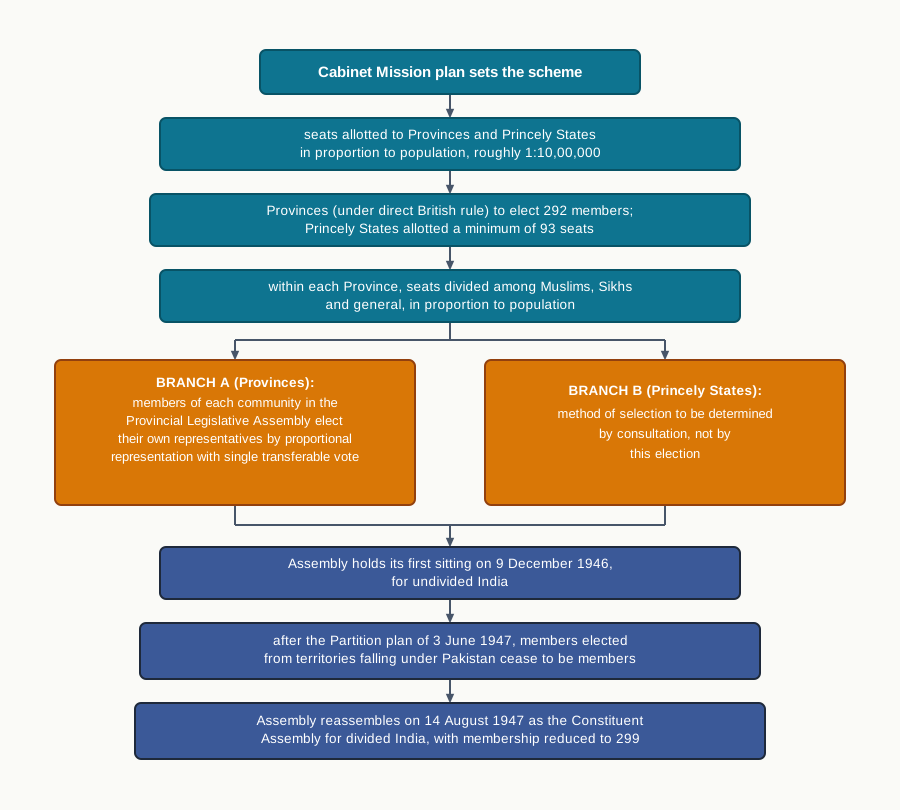
Fig. 1.6 – How the Constituent Assembly was composed.
Notice what the flowchart shows and what it therefore proves. No ordinary Indian voter appears anywhere in it. Whether that makes the Assembly unrepresentative is a question we will take up shortly — but the mechanism itself is not in dispute.
What The Assembly Was Aiming At
The Assembly was not merely designing machinery. Its members argued about what democracy in India was ultimately for. Dr B. R. Ambedkar, Chairman of the Drafting Committee, put the point in his closing address to the Assembly.
Take the argument in the order Ambedkar builds it. Political democracy means the vote, the election, the government that can be turned out. Social democracy means a way of life in which liberty, equality and fraternity are the principles people actually live by. His claim is that the first cannot survive without the second.
The word trinity is doing real work here. A trinity is a set of three that cannot be separated without destroying the thing itself. Ambedkar says liberty, equality and fraternity are exactly that. Take equality away, and liberty produces the supremacy of the few over the many — the strong are free to dominate. Take liberty away, and equality kills individual initiative — everyone is level, and no one may move. Take fraternity away, that sense of belonging to a single people, and the other two never become natural; they remain rules imposed rather than a way of living.
Now the limit. This is a speech, and a speech records what a leader chose to say in public at a particular moment — here, at the close of the Assembly’s work, when he was addressing the country as much as the members. It tells you what Ambedkar argued for. It cannot tell you whether the Assembly agreed with him, whether the Constitution succeeded in embedding social democracy, or what the members who disagreed with him thought. A statement of ideals is evidence of the ideals, not of their achievement. Ambedkar himself is careful about this: he says political democracy cannot last unless social democracy lies beneath it. That is a warning, not a report.
1.3.5 Composition Of The Constituent Assembly
The previous section discussed the three factors that make a constitution effective and respectable. How far does the Indian Constitution pass this test? We begin with the people who wrote it.
As a consequence of the Partition under the plan of 3 June 1947, those members who were elected from territories which fell under Pakistan ceased to be members of the Constituent Assembly. The number of members in the Assembly was reduced to 299.
The Constitution was adopted on 26 November 1949. 284 members were actually present on 24 January 1950 and appended their signature to the Constitution as finally passed. The Constitution came into force on 26 January 1950 — the date India observes as Republic Day.
The Constitution was thus framed against the backdrop of the horrendous violence that the Partition unleashed on the subcontinent. But it is a tribute to the fortitude of the framers that they were not only able to draft a constitution under immense pressure; they also learnt the right lessons from the unimaginable violence that accompanied the Partition. The Constitution was committed to a new conception of citizenship, in which not only would minorities be secure, but religious identity would have no bearing on citizenship rights.
Was It A Representative Body?
But this account of the composition of the Constituent Assembly that drafted the Constitution touches upon only the surface of how our Constitution was made.
The members of the Assembly were not elected by universal suffrage. Universal suffrage means that all citizens reaching a certain age are entitled to vote, irrespective of religion, caste, education, gender or income. The Assembly was not chosen that way, and that is a real limitation, not a detail to be brushed aside.
Even so, there was a serious attempt to make the Assembly a representative body. Members of all religions were given representation under the scheme described above. In addition, the Assembly had twenty-eight members from the Scheduled Castes.
In terms of political parties, the Congress dominated the Assembly, occupying as many as eighty-two per cent of the seats after the Partition. That figure looks damning at first sight — one party holding four seats in five. But the Congress itself was such a diverse party that it managed to accommodate almost all shades of opinion within it. The argument, in other words, happened inside the party as much as between parties.
NCERT asks in the margin what would have happened if the Constituent Assembly had been elected by all the people of India. Could it have been very different from what it was? That is a question worth taking seriously, and it does not have an obvious answer.
1.3.6 The Principle Of Deliberation
The authority of the Constituent Assembly does not come only from the fact that it was broadly, though not perfectly, representative. It comes from the procedures it adopted to frame the Constitution, and from the values its members brought to their deliberations.
In any assembly that claims to be representative, it is desirable that diverse sections of society participate. But it is equally important that they participate not only as representatives of their own identity or community. Each member deliberated upon the Constitution with the interests of the whole nation in mind. There were often disagreements amongst members, but few of these disagreements could be traced to members protecting their own interests.
Differences Of Principle
The differences were legitimate, and they were many.
Should India adopt a centralised or a decentralised system of government? What should be the relations between the States and the centre? What should be the powers of the judiciary? Should the Constitution protect property rights? Almost every issue that lies at the foundation of a modern state was discussed with great sophistication.
Only one provision of the Constitution was passed without virtually any debate: the introduction of universal suffrage. Pause on how remarkable that is. In much of the world, the right to vote had been extended slowly and grudgingly, hedged about with conditions of property, education or gender. In India, the members felt no need at all to discuss the issue of who should have the right to vote — while every other matter was seriously discussed and debated. Nothing can be a better testament to the democratic commitment of this Assembly.
Public Reason
The Constitution drew its authority from the fact that members of the Constituent Assembly engaged in what one might call public reason — the practice of defending your position by giving reasons that others can weigh, rather than simply asserting what you want.
The members of the Assembly placed a great emphasis on discussion and reasoned argument. They did not simply advance their own interests; they gave principled reasons to other members for their positions. And the very act of giving reasons to others makes you move away from a narrow consideration of your own interest — because to make others go along with your view point, you have to offer them grounds they can accept.
The voluminous debates in the Constituent Assembly, where each clause of the Constitution was subjected to scrutiny and debate, are a tribute to public reason at its best. These debates deserved to be memorialised as one of the most significant chapters in the history of constitution making, equal in importance to the French and American revolutions.
1.3.7 Procedures
The importance of public reason was emphasised in the mundane procedures of the Assembly as well. Grand principles are one thing; the question is whether the daily routine of the body enacts them.
The Constituent Assembly had eight major Committees on different subjects. Usually, Jawaharlal Nehru, Rajendra Prasad, Sardar Patel or B. R. Ambedkar chaired these Committees.
These were not men who agreed with each other on many things. Ambedkar had been a bitter critic of the Congress and Gandhi, accusing them of not doing enough for the upliftment of Scheduled Castes. Patel and Nehru disagreed on many issues. Nevertheless, they all worked together — and the Constitution is what came out of that working together, not out of any agreement between them.
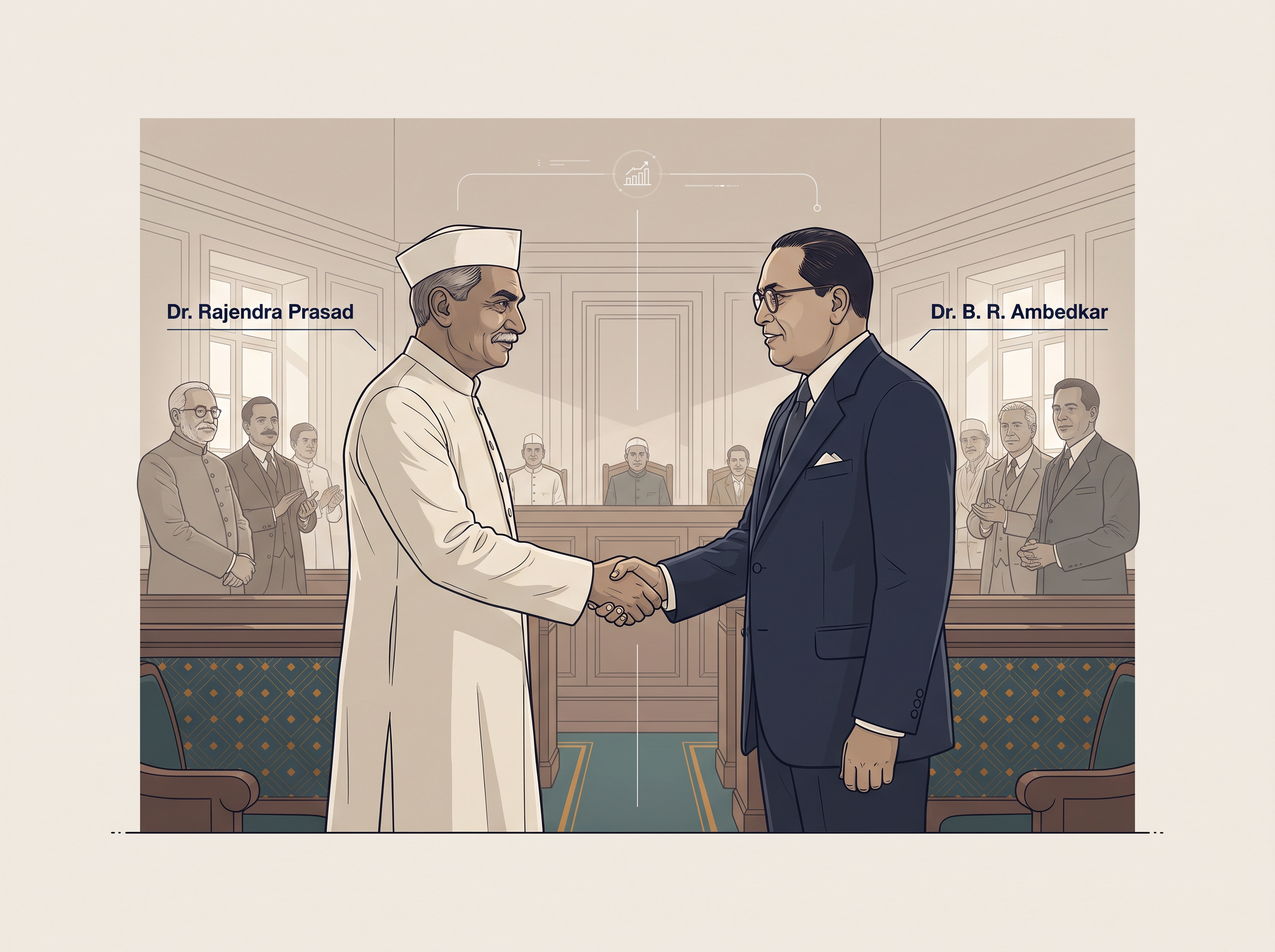
Fig. 1.7 – Dr. Rajendra Prasad and Dr. B. R. Ambedkar greeting each other.
Each Committee usually drafted particular provisions of the Constitution, which were then subjected to debate by the entire Assembly. Usually an attempt was made to reach a consensus, in the belief that provisions agreed to by all would not be detrimental to any particular interests. Some provisions were subject to the vote. But in each instance, every single argument, query or concern was responded to with great care — and in writing.
The Assembly met for one hundred and sixty six days, spread over two years and eleven months. Its sessions were open to the press and the public alike. That last fact is easy to skip past, and it should not be. An assembly that argues in public is an assembly that can be held to its reasons.
The President of the Assembly, Dr Rajendra Prasad, described the Drafting Committee’s work in his address on 26 November 1949.
Two words are worth unpacking. ‘Indifferent health’ is the formal English of the period for poor health. ‘Invidious’ means likely to cause resentment — Prasad is saying it would be unfair to single out any one member as better than the others, having just singled out Ambedkar.
The substance of the extract is a public tribute, delivered from the chair on 26 November 1949, the day the Constitution was adopted. Read it alongside what you have just been told about the Assembly: that Ambedkar had been a bitter critic of the Congress, and that Prasad was himself a senior Congress leader. The tribute is therefore evidence of something real — that disagreement in that Assembly did not prevent recognition of work well done.
But now the limit, and it matters. This is a speech of thanks, made at a ceremonial moment, by the man in the chair. Speeches of that kind are designed to praise. It records what Prasad chose to say in public about Ambedkar; it cannot tell you what he thought of him privately, what the arguments inside the Drafting Committee were like, or what the members who lost those arguments felt. And praise from the President of the Assembly is not an independent assessment of the Constitution — it is the Assembly assessing itself.
1.3.8 Inheritance Of The Nationalist Movement
But no constitution is simply a product of the Assembly that produces it.
An Assembly as diverse as the Constituent Assembly of India could not have functioned if there was no background consensus on the main principles the Constitution should enshrine. Members disagreed about a great deal — but they did not disagree about everything, and that is why the disagreements could be settled at all.
Where did that background consensus come from? These principles were forged during the long struggle for freedom. In a way, the Constituent Assembly was giving concrete shape and form to the principles it had inherited from the nationalist movement.
For decades preceding the promulgation of the Constitution, the nationalist movement had debated many questions that were relevant to the making of the constitution — the shape and form of government India should have, the values it should uphold, the inequalities it should overcome. Answers forged in those debates were given their final form in the Constitution. The Assembly did not begin with a blank page.
The Objectives Resolution
Perhaps the best summary of the principles that the nationalist movement brought to the Constituent Assembly is the Objectives Resolution — the resolution that defined the aims of the Assembly — moved by Nehru in 1946. This resolution encapsulated the aspirations and values behind the Constitution.
What the previous section terms as the substantive provisions of the constitution is inspired by, and summed up by, the values incorporated in the Objectives Resolution. Based on this resolution, our Constitution gave institutional expression to these fundamental commitments: equality, liberty, democracy, sovereignty and a cosmopolitan identity.
Thus, our Constitution is not merely a maze of rules and procedures, but a moral commitment to establish a government that will fulfil the many promises that the nationalist movement held before the people.
These are the main points of the Objectives Resolution:
- India is an independent, sovereign, republic;
- India shall be a Union of erstwhile British Indian territories, Indian States, and other parts outside British India and Indian States as are willing to be a part of the Union;
- Territories forming the Union shall be autonomous units and exercise all powers and functions of the Government and administration, except those assigned to or vested in the Union;
- All powers and authority of sovereign and independent India and its constitution shall flow from the people;
- All people of India shall be guaranteed and secured social, economic and political justice; equality of status and opportunities and equality before law; and fundamental freedoms — of speech, expression, belief, faith, worship, vocation, association and action — subject to law and public morality;
- The minorities, backward and tribal areas, depressed and other backward classes shall be provided adequate safeguards;
- The territorial integrity of the Republic and its sovereign rights on land, sea and air shall be maintained according to justice and law of civilized nations;
- The land would make full and willing contribution to the promotion of world peace and welfare of mankind.
Read the fourth point again. All powers and authority shall flow from the people. That single line is the answer Nepal’s constitutions could not give, and it was written into India’s aims before a single Article was drafted.
Would The Timing Have Changed The Document?
NCERT asks a sharp question in the margin here. What would have happened if we had got independence in 1937? Or if we had to wait till 1957? Would our Constitution be very different from what it is today?
The question is not idle. If the Constitution gave final form to principles forged in the nationalist movement, then the length and the moment of that movement matter. A constitution written earlier would have inherited fewer of those debates; one written later would have inherited more, and different ones. The chapter does not answer the question, and neither will we. But you now have the material to argue it.
1.3.9 Institutional Arrangements
The third factor ensuring the effectiveness of a constitution is a balanced arrangement of the institutions of government.
The basic principle is that government must be democratic and committed to the welfare of the people. The Constituent Assembly spent a lot of time on evolving the right balance among the various institutions — the executive, the legislature and the judiciary.
This led to the adoption of two arrangements. The first is the parliamentary form of government, in which the executive is drawn from the legislature and remains answerable to it. The second is the federal arrangement, which would distribute governmental powers between the legislature and the executive on the one hand, and between the States and the central government on the other.
Borrowing, And Why It Was Not Imitation
While evolving the most balanced governmental arrangements, the makers of our Constitution did not hesitate to learn from the experiments and experiences of other countries. The framers were not averse to borrowing from other constitutional traditions.
Indeed, it is a testament to their wide learning that they could lay their hands upon any intellectual argument, or historical example, that was necessary for fulfilling the task at hand. So they borrowed a number of provisions from different countries.
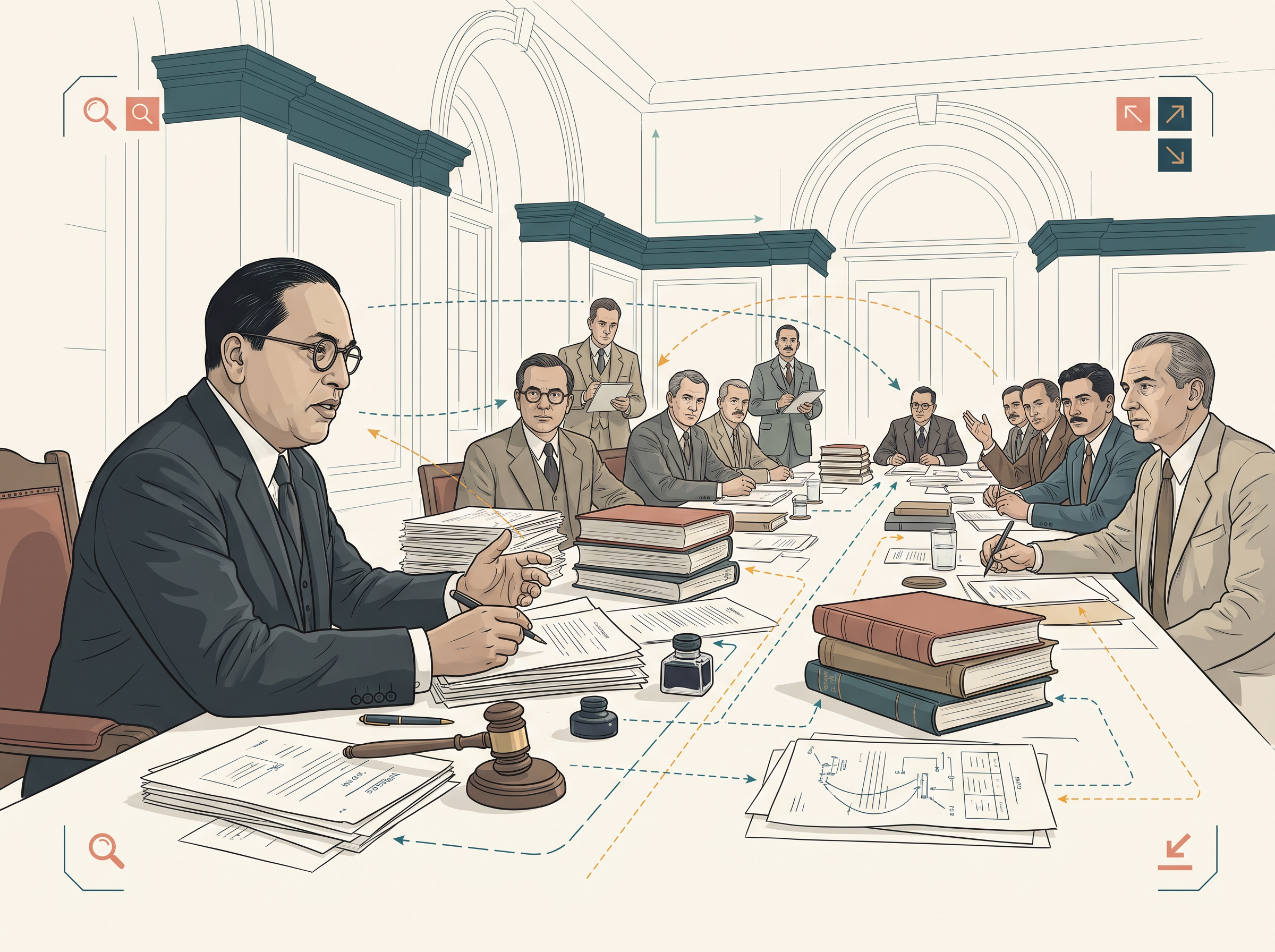
Fig. 1.8 – Dr. B. R. Ambedkar presiding over a discussion in the Assembly.
But borrowing these ideas was not slavish imitation. Far from it. Each provision of the Constitution had to be defended on grounds that it was suited to Indian problems and aspirations. A provision did not enter the Constitution because it worked in London or Washington; it entered because a member could show it would work here.
India was extremely lucky to have an Assembly that, instead of being parochial in its outlook, could take the best available everywhere in the world and make it their own. Ambedkar made this argument directly on the floor of the Assembly.
The argument is a compact one, so unpack it. By 1948, constitutions had been written for a century and a half across the world. Every basic device — an elected legislature, an independent court, a bill of rights — already existed somewhere. To demand a wholly original constitution is therefore to demand something no one could supply.
Where, then, is the originality? Ambedkar locates it precisely: in the variations. What is new is what you change — the faults you remove, and the adjustments you make to fit the needs of your own country. On this argument, originality lies in judgement, not in invention.
And the limit. This is an extract from a speech made by the Chairman of the Drafting Committee, defending the draft he was responsible for, to members who had criticised it as borrowed. He had every reason to argue that borrowing was legitimate. The extract is excellent evidence of how the framers justified what they did. It is not, by itself, evidence that the justification is correct — that has to be tested provision by provision, against what each borrowed device actually became in India. That test is the rest of this book.
What Was Adapted, And From Where
The provisions adapted from the constitutions of different countries are shown in Fig. 1.9.
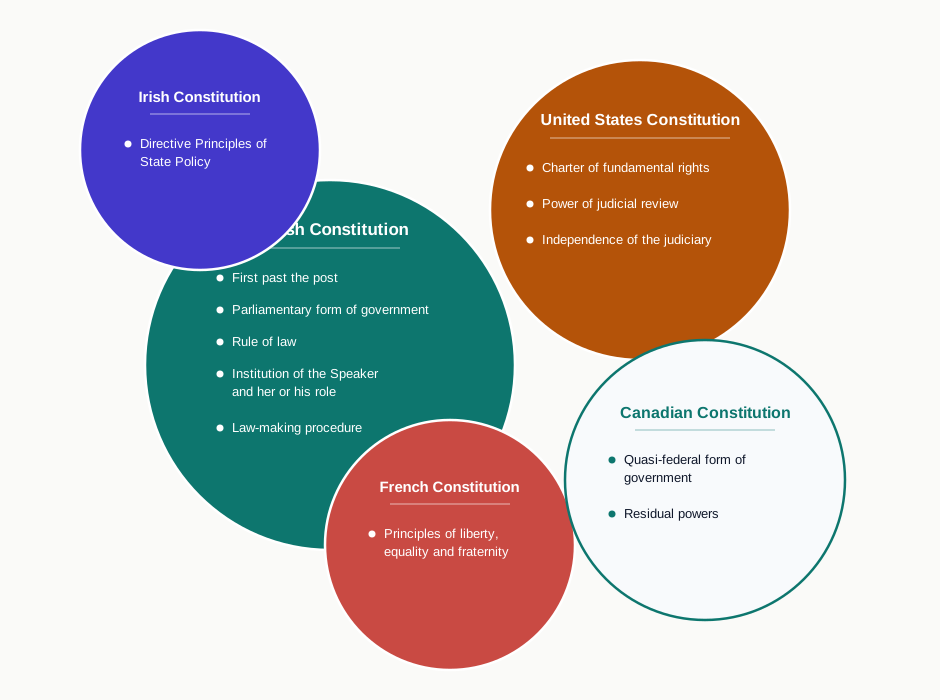
Fig. 1.9 – Provisions adapted from constitutions of different countries.
From the British Constitution came first past the post, the electoral method in which the candidate with the most votes in a constituency wins; the parliamentary form of government; the idea of the rule of law, the principle that everyone, including the government, is bound by the law; the institution of the Speaker and her or his role, presiding over the House and keeping order in it; and the law-making procedure.
From the United States Constitution came the charter of fundamental rights, and the power of judicial review — the power of a court to examine a law and strike it down if it conflicts with the Constitution — along with the independence of the judiciary.
From the Irish Constitution came the Directive Principles of State Policy. From the French Constitution came the principles of liberty, equality and fraternity. And from the Canadian Constitution came a quasi-federal form of government — a federal system with a strong central government — and the idea of residual powers, the powers over subjects that the Constitution has not listed and assigned to anyone, and which therefore have to be placed somewhere.
Read the list as evidence, not as a checklist to be memorised. It shows that no single country was the model; the framers took a rights charter from one tradition, a form of government from another, a theory of federal balance from a third. That is precisely the pattern Ambedkar described.
But notice what the diagram cannot show. It lists what was taken; it says nothing about what was rejected, or about the debates in which each borrowed provision had to be defended as suited to Indian conditions. A diagram of sources is not a diagram of reasons.
1.4 Summary
What A Constitution Does
- A diverse, interdependent group needs basic rules that are publicly known, so that people can coordinate; and legally enforceable, so that each person has the assurance that others will follow them too.
- The first function of a constitution is to provide a set of basic rules that allow for minimal coordination amongst members of a society.
- Before a society can settle what its laws should be, it must settle who gets to decide. A monarch decides in a monarchical constitution; a single party decided in the old Soviet Union; in democratic constitutions the people decide — though how they decide still has to be designed.
- The second function is to specify who has the power to make decisions. The constitution constitutes the government in the first place, which is why its authority stands above that of Parliament.
- A government created by correct procedures can still pass unjust laws. So the third function is to set limits that the government may never trespass — most commonly through fundamental rights, which may be withdrawn only in circumstances the constitution itself specifies.
- Many twentieth-century constitutions do more than restrain. The fourth function is to enable government to pursue a society’s aspirations and create conditions for a just society — as in India’s commitment against caste discrimination, South Africa’s against racial discrimination, and Indonesia’s provisions on education and destitute children.
- Finally, a constitution expresses the fundamental identity of a people: a political identity, formed by agreeing to basic norms; a moral identity, formed by the values we may not trespass; and values increasingly shared across constitutional traditions.
How India’s Constitution Was Made
- The Constituent Assembly was elected indirectly by members of the Provincial Legislative Assemblies, on the plan proposed by the Cabinet Mission, and reduced to 299 members after the Partition plan of 3 June 1947.
- It was not elected by universal suffrage, and the Congress held eighty-two per cent of the seats — yet all religions were represented, twenty-eight members came from the Scheduled Castes, and the Congress itself contained almost every shade of opinion.
- Its authority came above all from how it worked: eight major Committees, every clause debated, every query answered in writing, 166 days of sittings over two years and eleven months, and sessions open to the press and the public. This was public reason at work.
- Universal suffrage was the single provision passed without virtually any debate. Everything else — centralisation, centre–State relations, the powers of the judiciary, property rights — was argued out.
- The Assembly did not begin with a blank page. It gave concrete form to principles forged in the nationalist movement, summed up in the Objectives Resolution moved by Nehru in 1946: equality, liberty, democracy, sovereignty and a cosmopolitan identity, with all authority flowing from the people.
- The framers borrowed widely — from Britain, the United States, Ireland, France and Canada — but each provision had to be defended as suited to Indian problems and aspirations.
The Conclusion NCERT Draws
It is a tribute to the wisdom and foresight of the makers of the Constitution that they presented to the nation a document enshrining fundamental values and the highest aspirations shared by the people. This is one of the reasons why this intricately crafted document has not only survived but become a living reality, when so many other constitutions have perished with the paper they were first written on.
India’s Constitution is a unique document, which in turn became an exemplar for many other constitutions, most notably South Africa. The main purpose behind the long search that went on for almost three years was to strike the right balance — so that the institutions created by the Constitution would not be haphazard or tentative arrangements, but would be able to accommodate the aspirations of the people of India for a long time to come. You will know more about these arrangements through the study of the remaining chapters in this book.
The Chapter’s Chronology In One Place
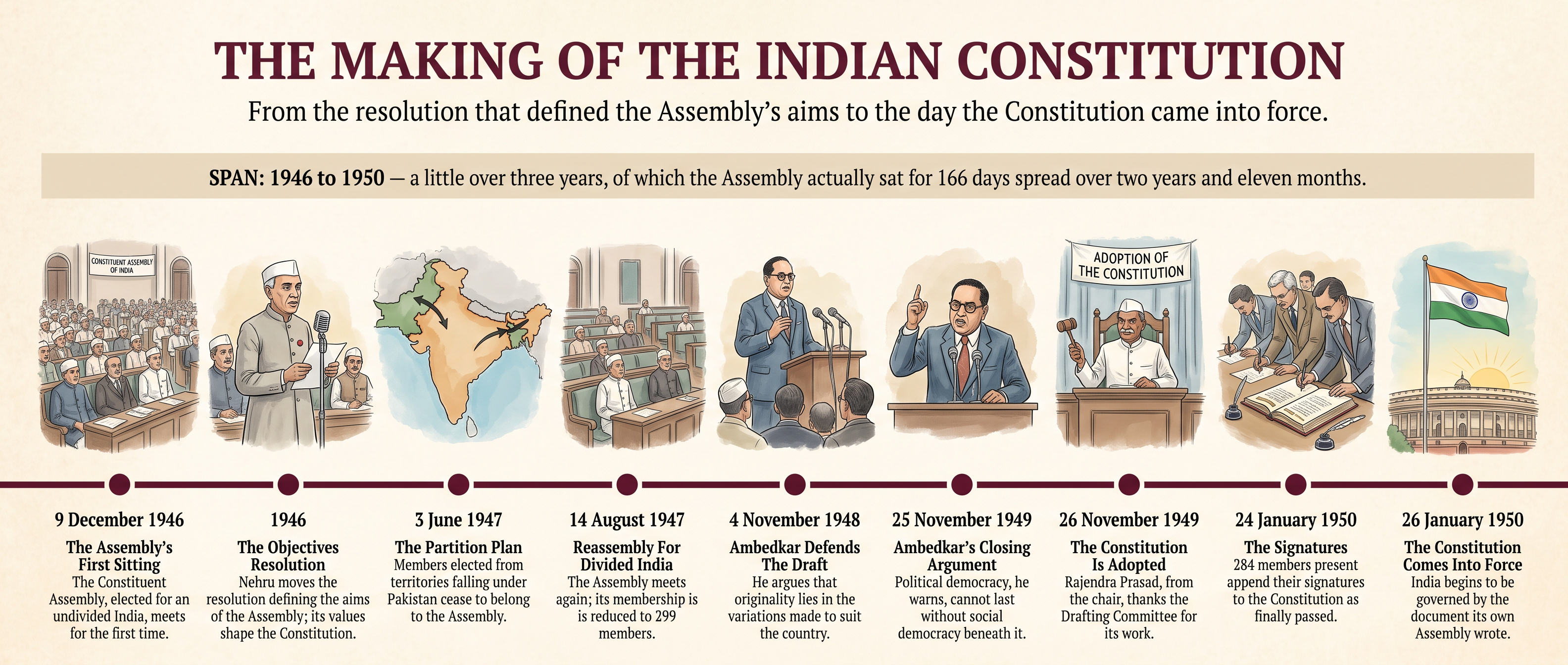
Fig. 1.10 – The Making Of The Indian Constitution.
Watch And Discuss
You may watch and discuss the Rajya Sabha TV series Samvidhaan: The Making of the Constitution of India, and films such as Gandhi, Sardar and Dr. Babasaheb Ambedkar. These audio-visual materials will deepen your understanding of the context in which the Constitution was made, and will help you learn about the life and times of our national leaders.
What Remains Contested
The chapter states that the Constituent Assembly was broadly, though not perfectly, representative — and then leaves the harder question standing. Would a Constitution written by an Assembly elected by all Indians have looked different? Nobody can say, and the chapter does not pretend to.
Notice, too, whose voices the evidence in this chapter was never designed to record. The sources here are speeches by the Assembly’s own leading members, delivered to that Assembly, at moments of ceremony. They tell us how the framers justified their work. They cannot tell us what the people outside the chamber — who had not elected the Assembly, and who were living through the violence of Partition — made of the document being written in their name.
And the largest question is deliberately left open for the rest of the book. Does the Indian Constitution in fact give everyone a reason to go along with it? The chapter says that after studying this book you should be able to answer in the affirmative. It also says that no constitution by itself achieves perfect justice. Holding both of those together is your work now.
1.5 NCERT Questions
Which of these is not a function of the constitution?
- It gives a guarantee of the rights of the citizen.
- It marks out different spheres of power for different branches of government.
- It ensures that good people come to power.
- It gives expression to some shared values.
Which of the following is a good reason to conclude that the authority of the constitution is higher than that of the parliament?
- The constitution was framed before the parliament came into being.
- The constitution makers were more eminent leaders than the members of the parliament.
- The constitution specifies how parliament is to be formed and what are its powers.
- The constitution cannot be amended by the parliament.
State whether the following statements about a constitution are True or False.
- Constitutions are written documents about formation and power of the government.
- Constitutions exist and are required only in democratic countries.
- Constitution is a legal document that does not deal with ideals and values.
- A constitution gives its citizens a new identity.
State whether the following inferences about the making of the Indian Constitution are Correct or Incorrect. Give reasons to support your answer.
- The Constituent Assembly did not represent the Indian people since it was not elected by all citizens.
- Constitution making did not involve any major decision since there was a general consensus among the leaders at that time about its basic framework.
- There was little originality in the Constitution, for much of it was borrowed from other countries.
Give two examples each to support the following conclusions about the Indian Constitution:
- The Constitution was made by credible leaders who commanded peoples’ respect.
- The Constitution has distributed power in such a way as to make it difficult to subvert it.
- The Constitution is the locus of people’s hopes and aspirations.
Why is it necessary for a country to have a clear demarcation of powers and responsibilities in the constitution? What would happen in the absence of such a demarcation?
Why is it necessary for a constitution to place limitations on the rulers? Can there be a constitution that gives no power at all to the citizens?
The Japanese Constitution was made when the US occupation army was still in control of Japan after its defeat in the Second World War. The Japanese constitution could not have had any provision that the US government did not like. Do you see any problem in this way of making the constitution? In which way was the Indian experience different from this?
Rajat asked his teacher this question: ‘The constitution is a fifty year old and therefore outdated book. No one took my consent for implementing it. It is written in such tough language that I cannot understand it. Tell me why should I obey this document?’ If you were the teacher, how would you answer Rajat?
In a discussion on the experience of the working of our Constitution, three speakers took three different positions:
- Harbans: The Indian Constitution has succeeded in giving us a framework of democratic government.
- Neha: The Constitution made solemn promises of ensuring liberty, equality and fraternity. Since this has not happened, the Constitution has failed.
- Nazima: The Constitution has not failed us. We have failed the Constitution. Do you agree with any of these positions? If yes, why? If not, what is your own position?
1.6 Check Your Concepts
The chapter says that basic rules must be both publicly known and legally enforceable. Explain, in your own words, why rules that everyone knows but nobody can enforce would still leave the members of a group insecure.
Look again at Fig. 1.1. Explain the wordplay in the plaque at the base of the drawing, and state the claim the cartoonist is making about constitution making. Then state one thing this cartoon cannot tell you about the European attempt.
The chapter says that a constitution which is too rigid and one which is too flexible both fail, but for different reasons. Explain each failure, and describe how the Indian Constitution is said to strike a balance between them.
Nepal had five constitutions between 1948 and 1990, and adopted another in 2015. Why does the chapter emphasise that the earlier five were ‘granted’ by the King? Reconstruct the sequence of events, from the King taking over all powers to the adoption of the new constitution.
Under the plan proposed by the Cabinet Mission, trace the steps by which a member from a Province reached the Constituent Assembly. How was the method of selection different in the case of the Princely States?
In Source 1.1, Ambedkar calls liberty, equality and fraternity a ‘union of trinity’. Using only the reasons he himself gives, explain what he says happens when any one of the three is separated from the other two.
Source 1.2 is a speech of thanks delivered from the chair on the day after the Constitution was adopted. What does this extract tell you reliably about the working of the Constituent Assembly, and what is it not able to tell you? Answer in two short paragraphs.
Fig. 1.9 sets out the provisions adapted from the constitutions of five countries. Using Source 1.3, explain where Ambedkar located the originality of a constitution framed ‘so late in the day’. Then explain what a diagram of borrowed provisions cannot show about how those provisions entered the Indian Constitution.