Chapter 6: Judiciary
In 1980, a man held inside Tihar jail in Delhi wrote on a scrap of paper. He was not a lawyer. He had no money for one, and no way of filing anything in the proper form. What he had was information: prisoners around him were being physically tortured. He managed to get that scribbled piece of paper out of the jail and addressed to Justice Krishna Iyer of the Supreme Court.
By every ordinary rule of law, nothing should have happened next. Courts do not act on scraps of paper. Until then, a person could approach a court only if he or she had been personally wronged — you could ask for justice for yourself, not for someone else, and certainly not by post.
Justice Krishna Iyer did something else. He had the letter converted into a petition, and the Supreme Court heard it. The case became known as Sunil Batra vs. Delhi Administration (1980), and it stands among the pioneers of public interest litigation in India. Later, the Court gave up the practice of treating letters as petitions. But the door it had pushed open did not close.
That single decision raised a genuinely political question, and this chapter is about it. Who is allowed to knock on the door of a court? And how much power should the people behind that door have?
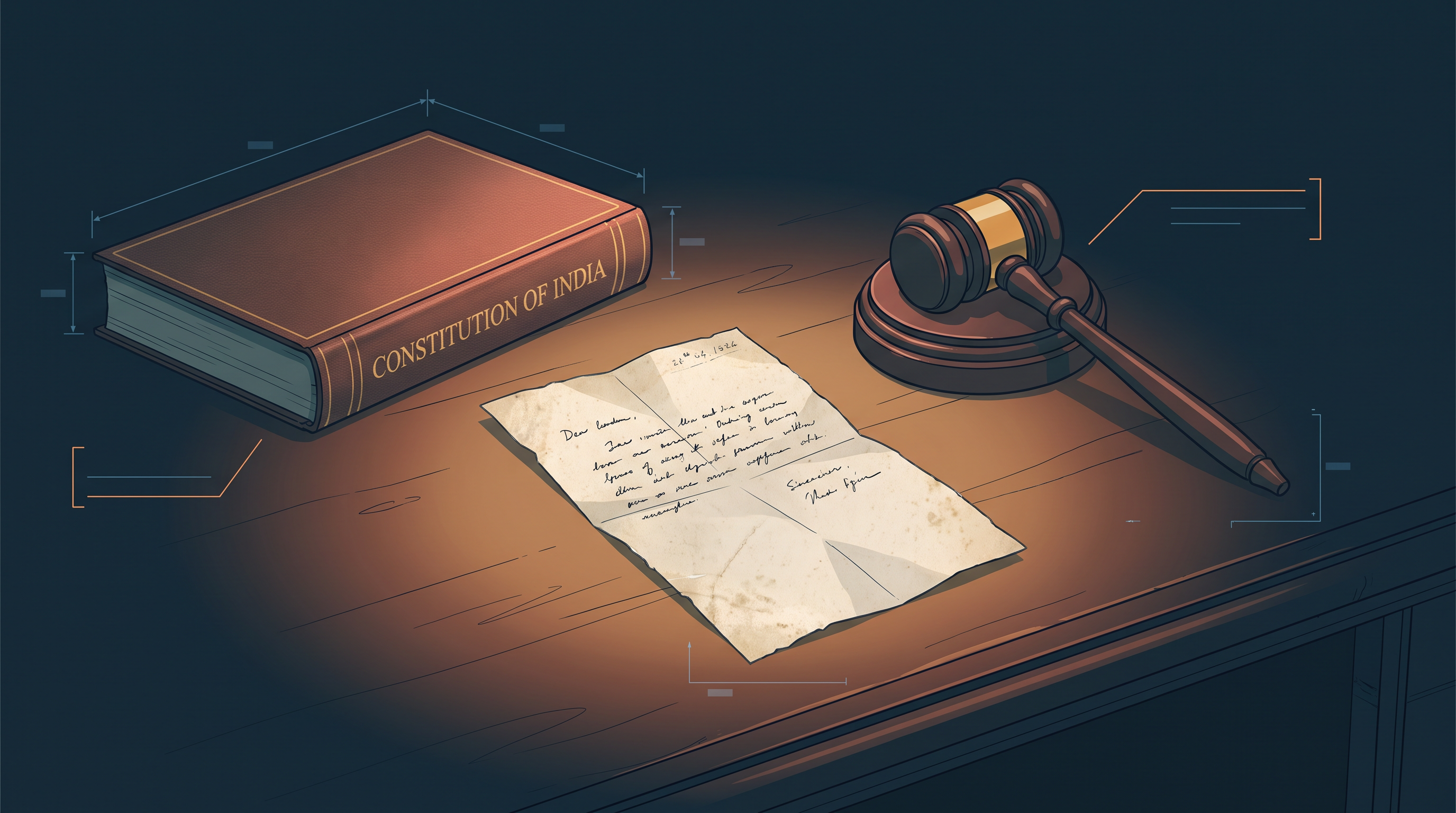
Fig. 6.0 – A prisoner’s letter as a petition.
6.1 Introduction
Most of us picture a court in one way. Two parties are quarrelling — over a plot of land, a debt, a theft — and a judge decides which of them is right. On this picture, a court is simply an umpire between private persons, and it has nothing to do with politics.
That picture is true, but it is far too small. The judiciary — the whole system of courts, from the local court in a district to the Supreme Court — is one of the three organs of the government, alongside the legislature that makes laws and the executive that carries them out. An organ of government is not a private umpire. It exercises public power, and its decisions bind everybody, including the government itself.
A Court With Political Functions
So the judiciary performs political functions as well. Saying this does not mean that judges belong to parties or fight elections. It means that courts decide questions on which the whole political system turns: what a law really means, how far a government may go, and what the Constitution permits.
The Supreme Court of India is, in fact, one of the very powerful courts in the world. Right from 1950 — the year the Constitution came into force — the judiciary has played an important part in interpreting the Constitution and in protecting it. Seventy-odd years of Indian democracy have run through its courtrooms as much as through its polling booths.
What This Chapter Asks
You have already read, in the chapter on fundamental rights, that the judiciary matters enormously for protecting our rights. This chapter now studies the institution itself — its role and its importance.
By the end of it, you should understand:
- the meaning of independence of the judiciary;
- the role of the Indian judiciary in protecting our rights;
- the role of the judiciary in interpreting the Constitution; and
- the relationship between the judiciary and the Parliament of India.
Notice that the last of these is a relationship, not a rule. Parliament makes the laws; the courts decide what those laws mean and whether they may stand. Two powerful institutions face each other across that line, and where exactly the line lies has been argued over for as long as the Constitution has existed. Keep that argument in view as you read.
6.2 Why Do We Need An Independent Judiciary?
In any society, disputes are bound to arise. They arise between one individual and another, between groups, and — this is the interesting case — between individuals or groups on one side and the government on the other. Somebody has to settle them, and that somebody cannot be one of the quarrelling parties.
All such disputes must be settled by an independent body, and settled in accordance with the principle of the rule of law. Rule of law is the idea that all individuals — rich and poor, men or women, forward or backward castes — are subject to the same law. Nobody is above it, and nobody is outside it.
What A Court Is For
From this follows the principal role of the judiciary: to protect the rule of law and to ensure the supremacy of law. It safeguards the rights of the individual. It settles disputes according to law rather than according to strength. And it ensures that democracy does not give way to individual or group dictatorship — that a person or a faction with power cannot simply do as it pleases.
None of this is possible unless the judiciary is independent of political pressures. A court that can be leaned on is not a court; it is a department. So two questions follow, and this section answers both. What is meant by an independent judiciary? And how is that independence actually ensured?
Before that, look at how a cartoonist saw the courtroom.
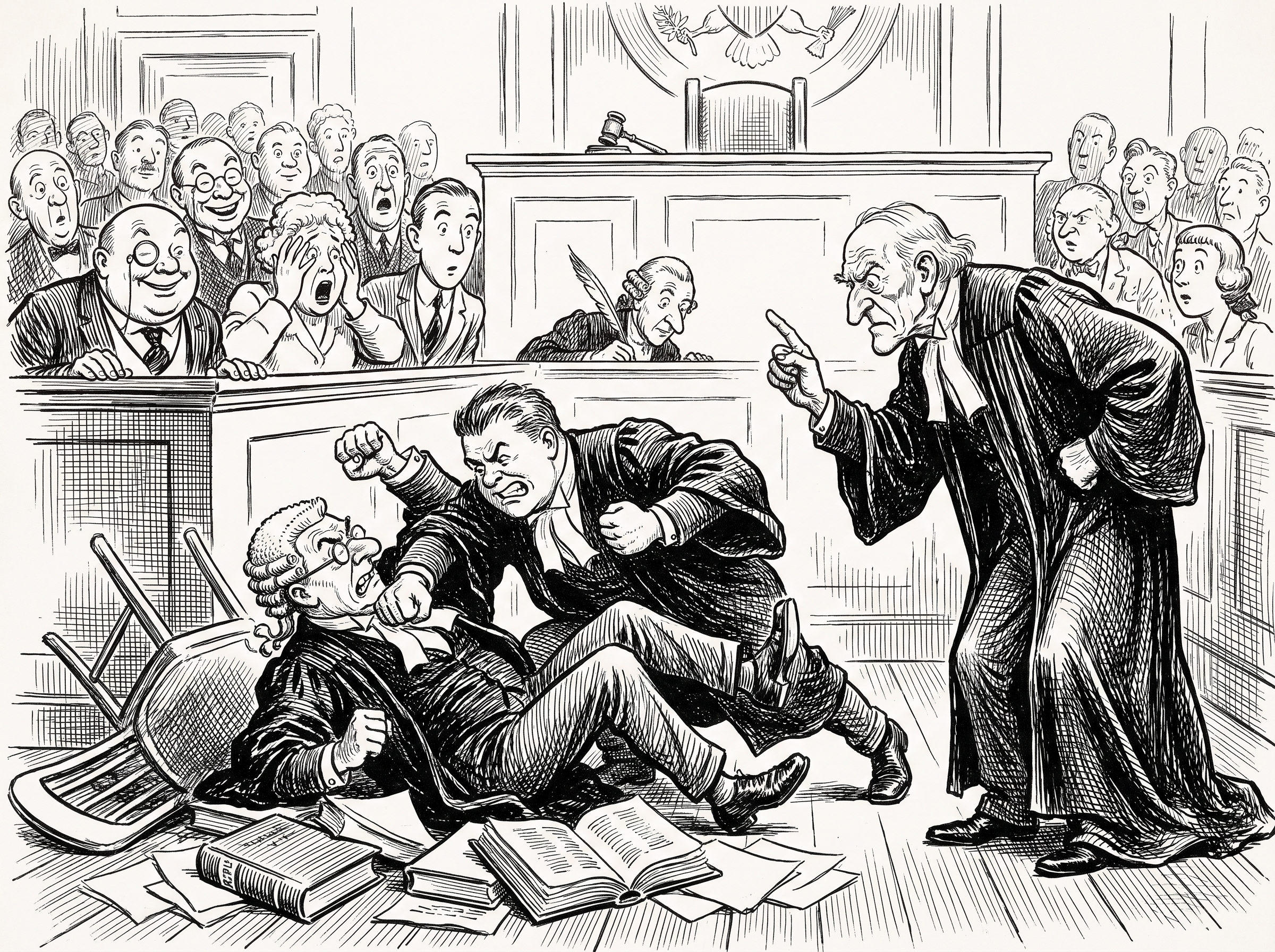
Fig. 6.1 – No fisticuffs please, this is rule of law. Inspiration: R K Laxman, The Times of India.
The joke works on a contrast. A fistfight is the oldest way of settling a dispute: whoever is stronger wins. The figure standing over the brawl does not stop it by force. He answers it with sections, sub-sections and cross-references — that is, with law. That is exactly the swap a court is supposed to make. Force is replaced by rules, and the rules apply to the eminent lawyer as much as to anyone else.
The cartoonist is also having some fun at the law’s expense. The string of numbers is so tangled that it is comic, and by the time the sentence ends the fight would be long over. There is a serious point buried in the humour: law that ordinary people cannot follow, or that arrives too late, protects nobody.
What the cartoon cannot tell you is whether courts in India actually deliver on the promise. One drawing states one opinion in one image. It cannot show how long a case takes, how much it costs, or who never reaches a courtroom at all. For that you need evidence of a different kind — and this chapter will supply some of it.
6.2.1 Independence Of Judiciary
Simply stated, independence of the judiciary means three things.
- The other organs of the government, such as the executive and the legislature, must not restrain the working of the judiciary in a way that leaves it unable to do justice.
- The other organs of the government should not interfere with the decisions of the judiciary.
- Judges must be able to perform their functions without fear or favour.
That last phrase is worth pausing on. A judge acts without fear if nothing bad can happen to her for deciding against a powerful party. She acts without favour if nothing good can happen to her for deciding in its favour. Independence is simply the set of arrangements that make both true.
Independence Is Not Immunity
Independence of the judiciary does not imply arbitrariness, and it does not imply the absence of accountability. Judges are not free to decide as they please; they are bound by the Constitution and by law. The judiciary is a part of the democratic political structure of the country. It is therefore accountable to the Constitution, to the democratic traditions of the country, and to its people.
Accountability of this kind is real, but it is slow and indirect, and a student is right to feel uneasy about it. You may already be thinking of the case of Machal, mentioned in Chapter Two, and of the old saying that justice delayed is justice denied. If a court takes years to reach a person, its independence has not helped that person much, and somebody ought to be doing something about it. Hold on to that objection. It is a fair one, and the chapter returns to it.
How The Constitution Protects Independence
The Indian Constitution has ensured the independence of the judiciary through a number of measures. Take them one at a time, because each is a small piece of engineering with a purpose behind it.
The legislature is not involved in the process of appointing judges. The thinking was straightforward: keep the law-making chamber out of it, and party politics will not drive the choice of judges. To be appointed a judge, a person must have experience as a lawyer and/or must be well versed in law. Political opinions and political loyalty are not to be the criteria for appointment to the judiciary.
Judges also have a fixed tenure. They hold office till they reach the age of retirement, and only in exceptional cases may a judge be removed. This is called security of tenure — the assurance that a judge cannot be pushed out for an inconvenient judgment. The Constitution prescribes a very difficult procedure for removal, precisely because the Constitution makers believed that a difficult removal procedure would give the members of the judiciary security of office.
Money is the third pressure point, and it is blocked too. The judiciary is not financially dependent on either the executive or the legislature. The Constitution provides that the salaries and allowances of judges are not subject to the approval of the legislature. A House that could cut a judge’s pay would have a quiet hold over the judge.
Contempt Of Court
The actions and decisions of judges are immune from personal criticism, and the judiciary has the power to punish those found guilty of contempt of court — conduct that obstructs the working of a court or attacks its authority. This power is seen as an effective protection for judges against unfair criticism. Alongside it, Parliament cannot discuss the conduct of a judge, except when proceedings to remove that judge are actually under way. Together, these give the judiciary the freedom to decide cases without fear of being criticised for deciding them.
This is likely to confuse you, and it should. In a democracy you may criticise the Prime Minister, or even the President — but not the judges? And are you yourself guilty of contempt for asking such questions in a classroom? No. Discussing how courts work, arguing about a judgment, or asking who appoints judges is the ordinary business of a citizen and of this subject. What the law of contempt targets is conduct that scandalises the court or obstructs justice, not the honest examination of it. Where exactly that line falls is itself contested — which is the point of the debate below.
Before going further, take up NCERT’s debate.
6.2.2 Appointment Of Judges
The appointment of judges has never been free from political controversy. That is not a scandal; it is a fact about what appointment is. It is part of the political process.
It makes a difference who serves in the Supreme Court and the High Courts — a difference in how the Constitution gets interpreted. The political philosophy of judges, and their views about whether the judiciary should be active and assertive or controlled and committed, has an impact on the fate of the legislation that a legislature enacts. That is why so many people take an interest. The Council of Ministers, Governors, Chief Ministers and the Chief Justice of India all influence the process of judicial appointment.
The Convention, And Its Breaking
Take the appointment of the Chief Justice of India (CJI) — the senior-most judge of the Supreme Court, who heads the court. Over the years a convention had developed that the senior-most judge of the Supreme Court would be appointed as the CJI. A convention is not a written rule; it is a practice followed so consistently that departing from it becomes a political act.
This convention was broken twice. In 1973 A. N. Ray was appointed CJI, superseding three senior judges. Again, in 1975, Justice M.H. Beg was appointed superseding Justice H.R. Khanna. Seniority, in other words, held only until a government decided it should not.
The other judges of the Supreme Court and the High Courts are appointed by the President after ‘consulting’ the CJI. Remember that the President acts on the advice of the Council of Ministers. So this, in effect, meant that the final decision in matters of appointment rested with the Council of Ministers. Which raises the obvious question: what was the status of the consultation with the Chief Justice? Was it advice that could be politely ignored?
From Consultation To Collegiality
The matter came before the Supreme Court again and again between 1982 and 1998. The Court’s own answer changed over those sixteen years. Initially, the court felt that the role of the Chief Justice was purely consultative — an opinion to be heard, not obeyed. Then it took the view that the opinion of the Chief Justice must be followed by the President.
Finally, the Supreme Court came up with a novel procedure. It suggested that the Chief Justice should recommend the names of persons to be appointed in consultation with the four senior-most judges of the Court. Thus the Supreme Court established the principle of collegiality in making recommendations for appointments — the decision is taken not by one judge alone, but by a group of senior judges together.
At the moment, therefore, in matters of appointment, the decision of the group of senior judges of the Supreme Court carries greater weight. So it is not true that the Council of Ministers finally decides everything; nor is it true that the judiciary has become a purely self-appointing body. In matters of appointment to the judiciary, the Supreme Court and the Council of Ministers both play an important role.
6.2.3 Removal Of Judges
If appointment is difficult, removal is far harder — deliberately so. A judge of the Supreme Court or a High Court can be removed only on the ground of proven misbehaviour or incapacity. Not for an unpopular judgment. Not for annoying a government. Only misbehaviour that has been proved, or an incapacity to do the work.
The procedure runs through Parliament. A motion containing the charges against the judge must be approved by a special majority in both Houses. Special majority, which you met in the chapter on Elections, is a higher threshold than an ordinary vote: the motion needs the support of a majority of the total membership of the House, and of two-thirds of the members present and voting. Both conditions, in both Houses.
It is clear from this procedure that removing a judge is extremely difficult, and that unless there is a general consensus among Members of Parliament, a judge cannot be removed. Note also how the two organs are made to share the power. The executive plays a crucial role in making appointments; the legislature holds the power of removal. Neither can act alone against a judge, and this has secured both a balance of power and the independence of the judiciary.
The full procedure, including what happens when the motion fails, is set out in Fig. 6.2.
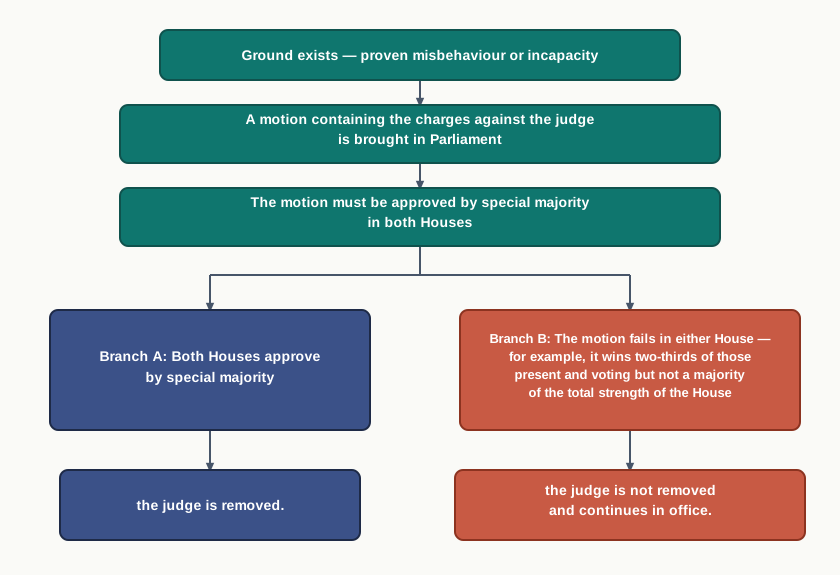
Fig. 6.2 – Procedure for removing a judge.
An Unsuccessful Attempt To Remove A Judge
So far, only one case of removal of a Supreme Court judge has come up for consideration before Parliament, and it ended in Branch B of that chart. The motion got a two-thirds majority, but it did not have the support of a majority of the total strength of the House. The judge was therefore not removed.
The case is worth knowing in detail. In 1991, the first-ever motion to remove a Supreme Court Justice was signed by 108 members of Parliament. Justice V. Ramaswami, during his tenure as the Chief Justice of the Punjab and Haryana High Court, had been accused of misappropriating funds.
In 1992, a year after Parliament had begun the removal proceedings, a high-profile inquiry commission consisting of judges of the Supreme Court found Justice V. Ramaswami ‘guilty of wilful and gross misuses of office . . . and moral turpitude by using public funds for private purposes and reckless disregard of statutory rules’ while he was Chief Justice of the Punjab and Haryana High Court.
Despite this strong indictment, Ramaswami survived the parliamentary motion recommending his removal. The motion did get the required two-thirds majority among the members who were present and voting. But the Congress party abstained from voting in the House, and so the motion could not get the support of one-half of the total strength of the House.
Read that sequence again, because it shows something the rulebook alone does not. An abstention is not a vote against. Yet in a procedure that counts a share of the total strength of the House, staying seated does the same work as voting no. The threshold designed to protect judges from a hostile majority also protected a judge whom an inquiry of his own peers had indicted.
Independence, in short, has a price, and this case is the bill. That is not an argument for making judges easy to remove; it is an argument for seeing clearly what the design costs and what it buys.
6.3 Structure Of The Judiciary
The Constitution of India provides for a single integrated judicial system. That phrase repays unpacking, because it describes a choice India made and some other countries did not.
India is a federation: power is divided between the Union government and the State governments, each with its own list of subjects. You might expect the courts to be divided the same way — one set of courts for Union law, a separate set of State courts for State law. That is how some other federal countries of the world are organised. India does not have separate State courts. One ladder of courts applies both Union law and State law.
A Pyramid Of Courts
The structure of the judiciary in India is pyramidal. The Supreme Court sits at the top. Below it are the High Courts, and below them the district and subordinate courts at the lowest level. The lower courts function under the direct superintendence of the higher courts — the court above does not merely hear appeals from the court below; it supervises it.
Each rung has its own work, and Fig. 6.3 sets the whole ladder out at a glance.
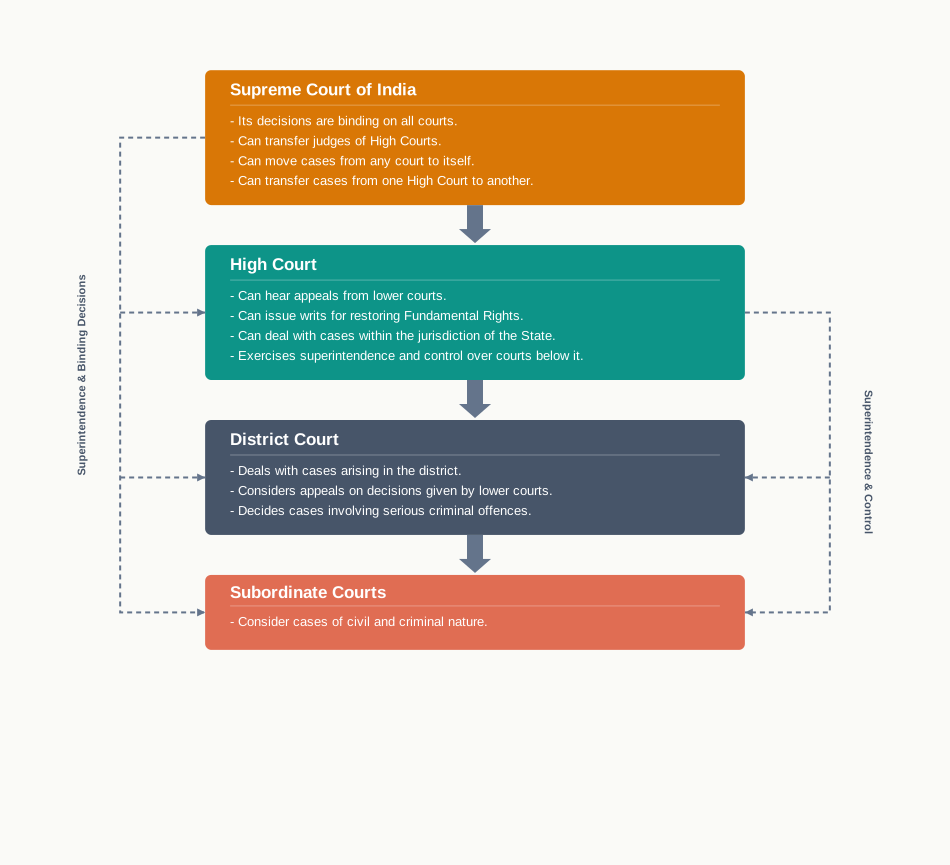
Fig. 6.3 – The integrated judicial system of India.
Read the boxes from the bottom up and the logic becomes clear. The subordinate courts consider cases of a civil and criminal nature — a civil case is a dispute between parties, over property or a contract, say, while a criminal case is a prosecution by the state for an offence. The district court deals with cases arising in the district, considers appeals on decisions given by the courts below it, and decides cases involving serious criminal offences.
The High Court is the highest court of a State. It hears appeals from lower courts, deals with cases within the jurisdiction of that State, exercises superintendence and control over the courts below it, and can issue writs for restoring Fundamental Rights. At the top, the Supreme Court’s decisions are binding on all courts; it can transfer judges of the High Courts, move a case from any court to itself, and transfer a case from one High Court to another.
6.3.1 Jurisdiction Of Supreme Court
The Supreme Court of India is one of the very powerful courts anywhere in the world. But powerful is not the same as unlimited. It functions within the limitations imposed by the Constitution, and its functions and responsibilities are defined by the Constitution. The Supreme Court has a specific jurisdiction — a defined scope of powers, that is, the kinds of cases it may take up and what it may do with them.
Fig. 6.4 groups those powers under five heads.
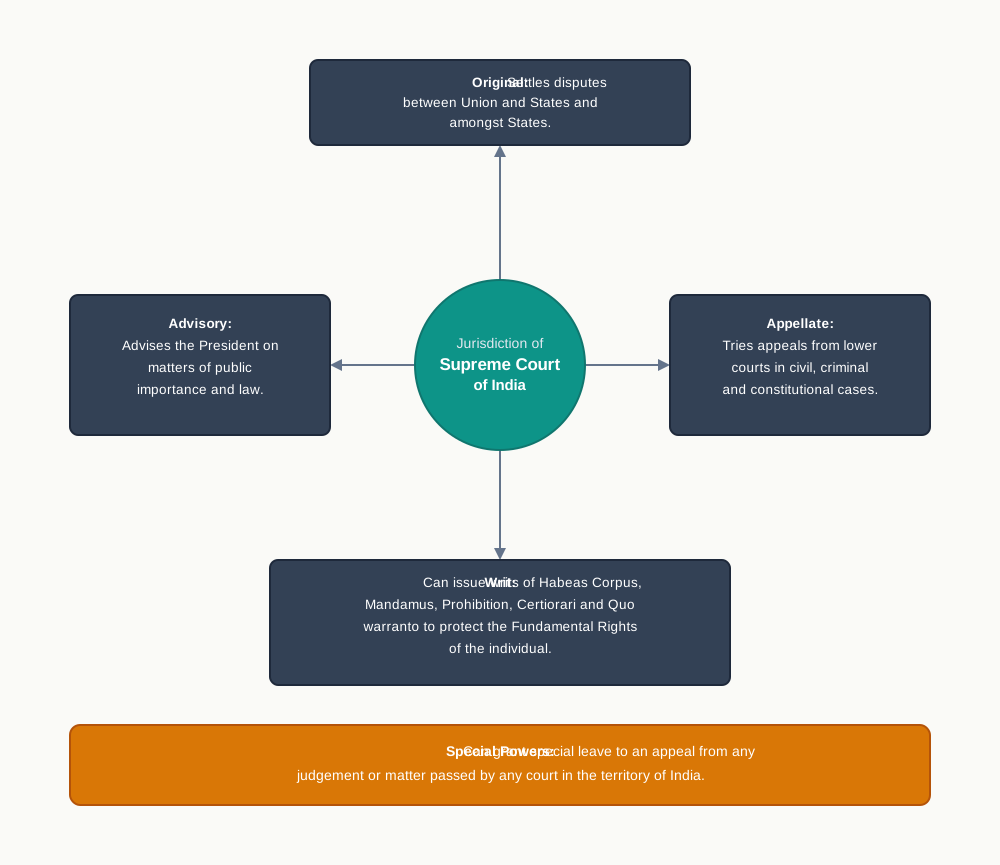
Fig. 6.4 – Powers of the Supreme Court.
6.3.1.1 Original Jurisdiction
Original jurisdiction means cases that the Supreme Court can consider directly, without their going to the lower courts first. From the diagram above you will notice that cases involving federal relations go straight to the Supreme Court.
This establishes the Supreme Court as the umpire in all disputes regarding federal matters. In any federal country, legal disputes are bound to arise between the Union and the States, and among the States themselves — over a river, a boundary, a tax, a power that both claim. The Constitution entrusts the power to resolve such cases to the Supreme Court of India.
It is called original jurisdiction because the Supreme Court alone has the power to deal with such cases. Neither the High Courts nor the lower courts can deal with them. And notice what the Court is really doing here. It is not just settling a quarrel; in this capacity it also interprets the powers of the Union and the State governments as laid down in the Constitution. Every such judgment redraws, a little, the map of who may do what.
6.3.1.2 Writ Jurisdiction
As you have already studied in the chapter on fundamental rights, any individual whose fundamental right has been violated can move the Supreme Court directly for a remedy. The Supreme Court can give special orders in the form of writs — formal commands issued by a court to a public authority.
The High Courts can also issue writs. So a person whose rights are violated has a choice: approach the High Court, or approach the Supreme Court directly. Through such writs the Court can give orders to the executive to act, or not to act, in a particular way — which is a remarkable thing for a court to be able to say to a government.
6.3.1.3 Appellate Jurisdiction
The Supreme Court is the highest court of appeal. A person can appeal to the Supreme Court against the decisions of a High Court. However, the High Court must certify that the case is fit for appeal — that is to say, that it involves a serious matter of interpretation of law or of the Constitution.
In addition, in criminal cases, if the lower court has sentenced a person to death, an appeal can be made to the High Court or the Supreme Court. And the Supreme Court holds the power to decide whether to admit an appeal even when the appeal is not allowed by the High Court. That is the special power shown in Fig. 6.4: the Court can grant special leave to an appeal from any judgement or matter passed by any court in the territory of India. Fig. 6.5 traces the route, including what happens when the High Court says no.
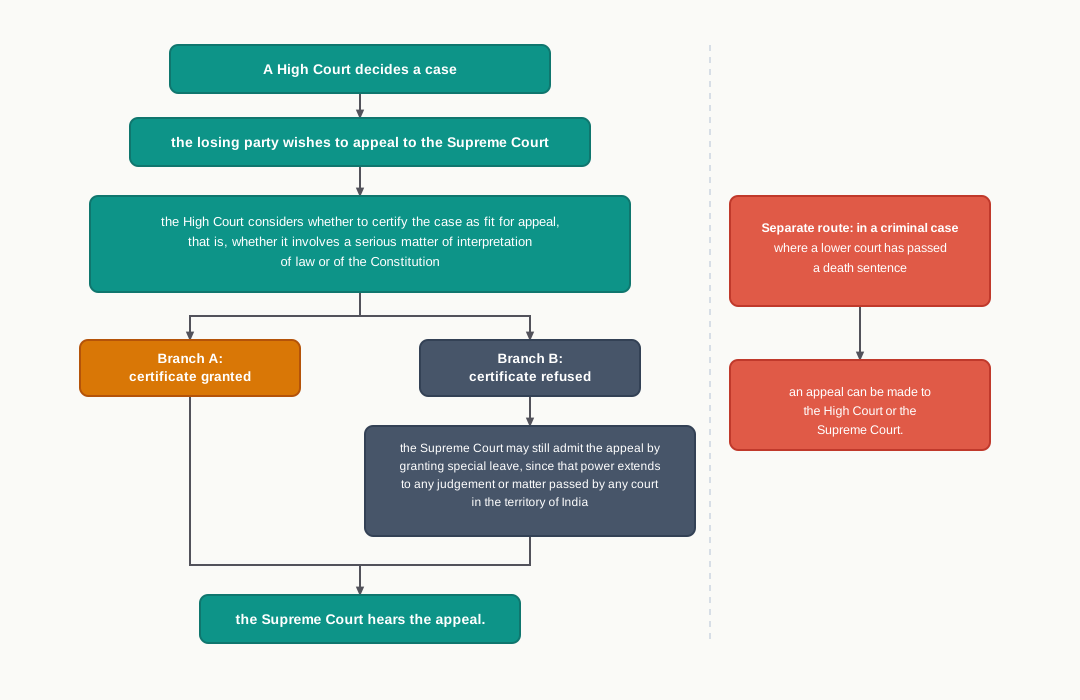
Fig. 6.5 – Path of appeal to the Supreme Court.
Appellate jurisdiction means that the Supreme Court will reconsider the case and the legal issues involved in it. If the Court thinks that the law or the Constitution has a different meaning from what the lower courts understood, then the Supreme Court will change the ruling — and along with that, also give a new interpretation of the provision involved. That second half is the part to remember. An appeal decides one case; the interpretation it produces governs every case that follows.
The High Courts too have appellate jurisdiction over the decisions given by the courts below them.
6.3.1.4 Advisory Jurisdiction
In addition to original and appellate jurisdiction, the Supreme Court of India possesses advisory jurisdiction also. This means that the President of India can refer to the Supreme Court, for its advice, any matter that is of public importance, or that involves the interpretation of the Constitution.
Two things about this power are odd, and you should not let them pass. The Supreme Court is not bound to give advice on such matters. And the President is not bound to accept such advice. Giving is optional; accepting is optional. If courts are supposed to give decisions that bind, what is the use of an opinion that binds nobody?
The utility is two-fold. In the first place, it allows the government to seek a legal opinion on a matter of importance before taking action on it. A law that is going to be struck down is better identified in advance, and this may prevent unnecessary litigations later. Secondly, in the light of the advice of the Supreme Court, the government can make suitable changes in its action or in its legislation. Advice that binds nobody can still be decisive, because everyone concerned knows what the Court is likely to do if the matter returns as a case.
What The Constitution Itself Says
Two Articles quoted in this chapter tell you a great deal about the unified nature of our judiciary and about the powers of the Supreme Court. Read them closely.
The words are few and their effect is large. The Supreme Court itself is not bound by its own decision and can at any time review it. A court that could never revisit its own rulings would be a court that could never correct itself — and courts, like everyone else, can be wrong.
Here a fair objection arises. Why is the Supreme Court allowed to change its own ruling? Is it because courts can also make mistakes? And is it possible that the same judge sits on the Bench — the group of judges hearing a particular case — that revises a ruling he or she helped give in the first place? Article 137 does not answer that. It grants the power of review; it does not say who must sit on the review, or when a review should be granted rather than refused. The text leaves those questions open, and the Court has had to settle them itself.
This is the sentence that makes the pyramid a single structure. Decisions made by the Supreme Court are binding on all other courts within the territory of India, and orders passed by it are enforceable throughout the length and breadth of the country. The civil authorities — the administration — are commanded to assist it too.
And if someone refuses? If there is a case of contempt of the Supreme Court, then the Supreme Court itself decides such a case. Notice what has just happened. The court that has been defied is also the court that tries the defiance. The Article does not tell you whether that is a necessary strength or an uncomfortable concentration of power; it tells you only that the authority exists. Nor does either Article tell you anything about how these powers have actually been used over seventy years. For that you need the record of the judgments themselves, and the sections that follow turn to it.
6.4 Judicial Activism
Have you heard of the term judicial activism? Or of Public Interest Litigation? Both terms are often used in discussions about the judiciary in recent times. Many people think that these two things have revolutionised the functioning of the judiciary and made it more people-friendly.
Notice the word ‘revolutionised’. It is a strong claim, and this section is where you learn to test it — first by seeing what actually changed, and then by asking what the change cost.
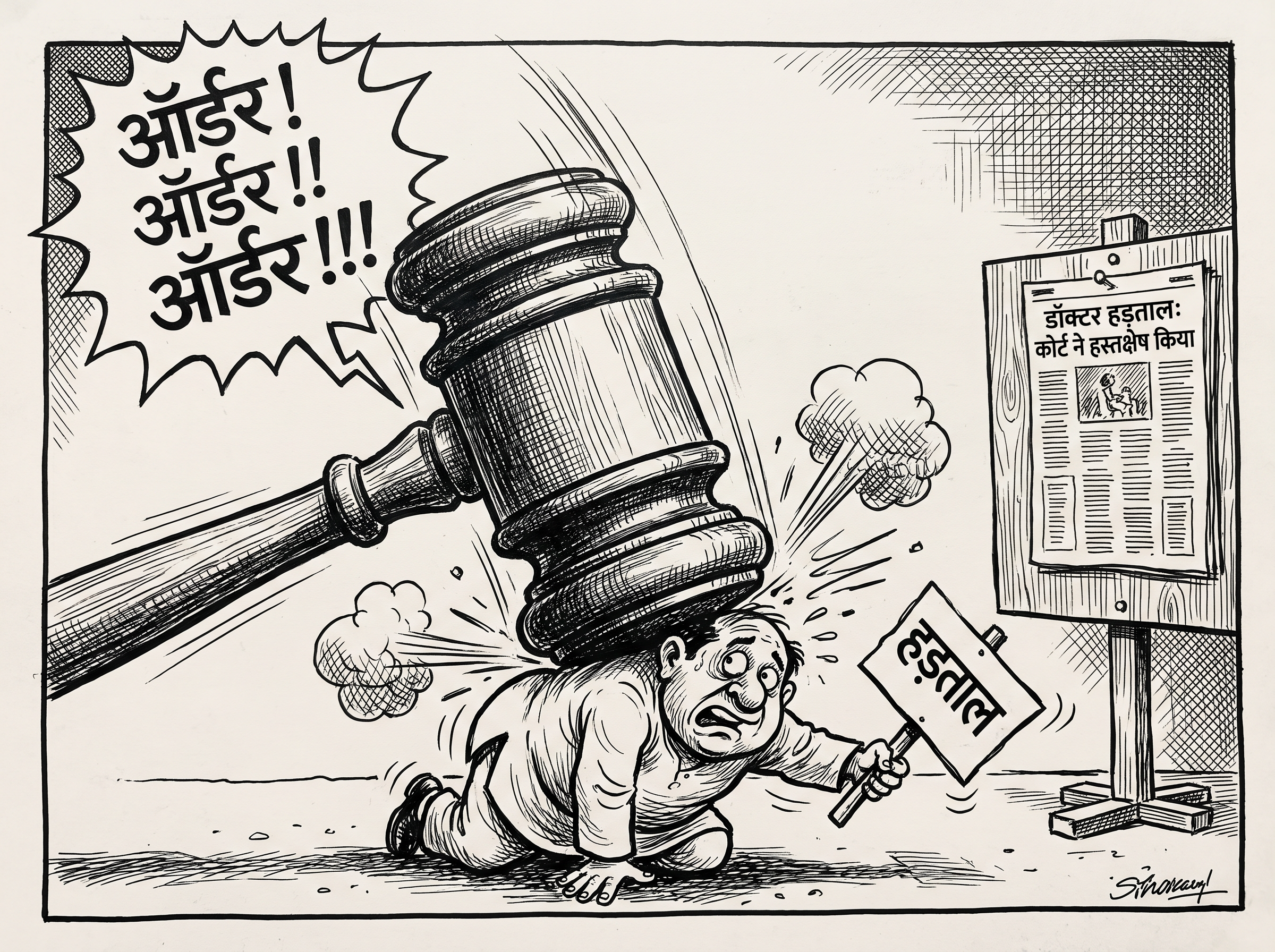
Fig. 6.6 – The judiciary ruling against strikes. Inspiration: Irfan.
A hartal is a strike or shutdown called as a protest, and a bandh is a general shutdown of shops, offices and transport enforced across a town or a State. In the cartoon the court strikes one down with its own instrument, the gavel, while the newspaper reports that the court has intervened in a doctors’ strike. The exaggeration is the size of the hammer. What is being flattened is not a criminal but a form of protest, and the courtroom cry of ‘order’ does double duty: the judge’s call for silence, and the state’s demand for order in the streets.
The claim the cartoonist is making is left open. You could read the drawing as approval — at last someone is protecting ordinary people from forced shutdowns. You could read it as unease — a court is now deciding how citizens may protest. That ambiguity is the cartoon’s point, and it is also its limit. One image cannot tell you how the court reasoned, whom the ruling protected, or what those who called the strike would say in reply. For that you need the judgment, and the arguments on both sides.
The Rule That Changed
The chief instrument through which judicial activism has flourished in India is Public Interest Litigation (PIL), also called Social Action Litigation (SAL) — a case brought before a court not by the person who was wronged, but on behalf of a public interest.
To see why that is a change, look at what came before. In the normal course of law, an individual can approach the courts only if he or she has been personally aggrieved. That is to say, only a person whose rights have been violated, or who is involved in a dispute, could move a court of law. The rule sounds fair. It also quietly locks out everyone who is too poor, too frightened, too illiterate or too far away to file anything at all.
This concept underwent a change around 1979. In that year the Court set the trend when it decided to hear a case in which the petition was filed not by the aggrieved persons but by others on their behalf. As the case involved a consideration of an issue of public interest, it — and other such cases — came to be known as public interest litigations. Around the same time, the Supreme Court also took up the case about the rights of prisoners.
This opened the gates for a large number of cases in which public-spirited citizens and voluntary organisations sought judicial intervention: for the protection of existing rights, for the betterment of the life conditions of the poor, for the protection of the environment, and for many other issues in the interest of the public. PIL has become the most important vehicle of judicial activism.
The judiciary is an institution that had traditionally confined itself to responding to cases brought before it. Now it began considering many cases merely on the basis of newspaper reports and postal complaints received by the court. A court that reaches out is doing something different from a court that waits. That is why the term judicial activism became the more popular description of the role of the judiciary.
Some Early PILs
Two early cases show exactly how this worked.
In 1979, newspapers published reports about ‘under trials’ — people held in jail while their trial is still going on, and who have therefore not been convicted of anything. There were many prisoners in Bihar who had spent long years in jail, longer than what they would have spent if they had been punished for the offences for which they were arrested. The report prompted an advocate to file a petition. The Supreme Court heard the case, and it became famous as one of the early Public Interest Litigations: the Hussainara Khatoon vs. Bihar case.
The second is the case you met on the opening page of this chapter. In 1980, a prison inmate of the Tihar jail managed to send a scribbled piece of paper to Justice Krishna Iyer of the Supreme Court, narrating the physical torture of prisoners. The judge got it converted into a petition. Though the Court later abandoned the practice of considering letters, this case — Sunil Batra vs. Delhi Administration (1980) — also became one of the pioneers of public interest litigation.
The name itself has been contested. Some people say, drily, that PIL means ‘private interest litigation’. The jibe is worth taking seriously. Once anyone may file on anyone’s behalf, a petition dressed as a public cause may in fact serve a private one — a business rival, a political score, a builder’s plan. The label ‘public interest’ is claimed by the petitioner; it is not proved by the filing. Who then decides whether the interest is genuinely public? The court does — and you will be asked to try that job yourself before this section ends.
What PIL Did To Rights
Through the PIL, the court has expanded the idea of rights. Clean air, unpolluted water, decent living and the like are rights of the entire society, not of one individual alone. The courts therefore felt that individuals, as parts of society, must have the right to seek justice wherever such rights were violated.
Secondly, through PIL and the judicial activism of the post-1980 period, the judiciary has also shown a readiness to take into consideration the rights of those sections who cannot easily approach the courts. For this purpose, the judiciary allowed public-spirited citizens, social organisations and lawyers to file petitions on behalf of the needy and the deprived. A judge of the Supreme Court set out the reasoning.
Unpack the key phrase. The adversarial procedure is the ordinary way a court works: two parties, each with a lawyer, fight the matter out, and the judge decides between them. It assumes that both sides can afford a lawyer, gather evidence and stay the course for years. Justice Bhagwati’s argument is that for a bonded labourer this assumption is simply false. Following the procedure blindly would leave such a person with rights on paper that can never be enforced in fact.
Two limits are worth stating. First, this is a judge explaining and defending a change that judges themselves were making. It is a reason offered from the bench, not a neutral report on whether the change worked. Secondly, the extract tells you what a different judicial approach was meant to achieve. It cannot tell you whether the labourers in that case were actually freed, or whether the courts have kept the promise since. A statement of intention is evidence of intention, and of nothing more.
The Gains
Judicial activism has had a manifold impact on the political system.
It has democratised the judicial system by giving access to the courts not just to individuals but also to groups. It has forced executive accountability — a government that knows it can be hauled before a court behaves differently from one that knows it cannot.
It has also made an attempt to make the electoral system much more free and fair. The court asked candidates contesting elections to file affidavits indicating their assets and income, along with their educational qualifications, so that people could elect their representatives on the basis of accurate knowledge. That is a court reaching directly into the machinery of democracy — which is precisely what its critics object to.
The Costs
There is a negative side to the large number of PILs and to the idea of a proactive judiciary.
In the first place, it has overburdened the courts. Every hour spent on a public cause is an hour not spent on the pile of ordinary cases — including, remember, the undertrial still waiting in jail for a hearing.
Secondly, judicial activism has blurred the line of distinction between the executive and the legislature on the one hand and the judiciary on the other. The court has been involved in resolving questions that belong to the executive. Reducing air or sound pollution, investigating cases of corruption, or bringing about electoral reform is not exactly the duty of the judiciary. These are matters to be handled by the administration, under the supervision of the legislatures.
Therefore some people feel that judicial activism has made the balance among the three organs of government very delicate. Democratic government is based on each organ of government respecting the powers and jurisdiction of the others. Judicial activism may be creating strains on this democratic principle.
There is a mirror worth holding up here. If judicial activism is largely about telling the legislature and the executive what they ought to do, then ask the reverse question: what would happen if the legislature and the executive started giving justice? We would call it a takeover, and we would be right. The separation of powers protects us in both directions, or it protects us in neither.
You Are The Judge
Now decide one yourself. NCERT sets out a situation in which two claims of ‘public interest’ collide, and beside it prints the oldest symbol of the job.
Fig. 6.7 – Balancing competing claims of public interest.
6.5 Judiciary And Rights
We have already seen that the judiciary is entrusted with the task of protecting the rights of individuals. But a task is not a power. What exactly can a court do when a right has been violated? The Constitution provides two ways in which the Supreme Court can remedy the violation of rights.
- First, it can restore fundamental rights by issuing writs of Habeas Corpus, mandamus and so on (article 32). The High Courts also have the power to issue such writs (article 226).
- Secondly, the Supreme Court can declare the concerned law as unconstitutional and therefore non-operational (article 13).
Look at how different these two remedies are. The first goes after the act — an unlawful detention, an official who will not do his duty. The second goes after the law itself. The first rescues one person; the second removes the rule that made the wrong possible for everyone. Together, these two provisions of the Constitution establish the Supreme Court as the protector of the fundamental rights of the citizen on the one hand, and as the interpreter of the Constitution on the other.
The second of the two ways involves judicial review.
What Judicial Review Means
Perhaps the most important power of the Supreme Court is the power of judicial review. Judicial review means the power of the Supreme Court (or the High Courts) to examine the constitutionality of any law. If the Court arrives at the conclusion that the law is inconsistent with the provisions of the Constitution, such a law is declared unconstitutional and inapplicable.
Now a surprise. The term judicial review is nowhere mentioned in the Constitution. There is no Article that says ‘the courts shall have the power of judicial review’. So where does the power come from?
It comes by implication, and the reasoning runs in two steps. India has a written constitution, which means there is a fixed text against which any law can be measured. And the Supreme Court can strike down a law that goes against fundamental rights. Put those two facts together and the Court must be able to examine whether a law squares with the Constitution — which is judicial review. The power is implicit in the design, even though the words are absent.
Review And The Federal Balance
Rights are not the only ground for review. As we saw in the section on the jurisdiction of the Supreme Court, in the case of federal relations too the Supreme Court can use its review powers — this time where a law is inconsistent with the distribution of powers laid down by the Constitution.
Take the example the chapter offers. Suppose the central government makes a law which, according to some States, concerns a subject from the State list — that is, a subject on which only the States are entitled to legislate. The States can go to the Supreme Court. If the Court agrees with them, it would declare that the law is unconstitutional.
So the review power of the Supreme Court has two grounds. A law may be reviewed because it violates fundamental rights, or because it violates the federal distribution of powers. And the review power extends to laws passed by the State legislatures also. No legislature in India, at either level, is beyond it.
Two Powers, Compared
Before consolidating this, be clear about how the writ power and the review power differ, because it is easy to blur them.
The writ power is a remedy for a person. Someone’s fundamental right has been violated, so she moves the Supreme Court under article 32, or a High Court under article 226, and the Court issues an order to the executive — produce the detained man, perform the duty you are avoiding. The law itself is untouched.
The review power is a judgment on a law. The Court examines whether the law is consistent with the Constitution, and if it is not, the law is declared unconstitutional and inapplicable. Nobody has to be rescued; a rule is removed. Table 6.A1 sets the two side by side.
Together, the writ powers and the review power make the judiciary very powerful. In particular, the review power means that the judiciary can interpret the Constitution and the laws passed by the legislature. Many people think that this feature enables the judiciary to protect the Constitution effectively, and to protect the rights of citizens. The practice of entertaining PILs has further added to the powers of the judiciary in protecting the rights of citizens.
It is tempting, reading all this, to conclude that a judge has the best job in the political system — real power, and no elections to win, no public support to keep. But hold that thought against what you have already read. A judge who decides a case wrongly cannot be voted out, and can barely be removed. That is precisely why the question of who becomes a judge, and how far a court may reach, is argued over so fiercely.
The Same Idea Elsewhere
The practice of public interest litigation is now becoming more and more acceptable in many other countries. Many courts across the world, particularly in South Asia and Africa, practise some form of judicial activism comparable to that of the Indian judiciary.
South Africa, at the southern tip of the African continent, has gone further than most. Its constitution has incorporated public interest litigation into its bill of rights. In South Africa, therefore, it is a fundamental right of the citizen to bring before the Constitutional Court cases of violation of other persons’ rights. What India’s courts arrived at through their own rulings, South Africa wrote into the constitutional text.
Rights That Reach The Poor
Do you remember the right against exploitation, mentioned in the chapter on rights? It prohibits forced labour, trade in human flesh, and the employment of children in hazardous jobs.
Read that list again and a hard question follows. Who, exactly, are the people it protects? A bonded labourer. A trafficked woman. A child in a quarry. And how could any of them approach a court? They have no money, no lawyer, often no literacy, and sometimes no freedom of movement at all. A right that only its victim can enforce is, for such people, no right at all.
PIL and judicial activism made it possible for courts to consider these violations. Thus the court considered a whole set of cases: the blinding of jail inmates by the police, inhuman working conditions in stone quarries, sexual exploitation of children, and so on. This trend has made rights really meaningful for the poor and disadvantaged sections.
6.6 Judiciary And Parliament
Apart from taking a very active stand on the matter of rights, the court has been active in seeking to prevent the subversion of the Constitution through political practice. The phrase is worth slowing down on. A Constitution can be defeated without a single word of it being changed — simply by officials using their powers for purposes the Constitution never intended.
So areas that were once considered beyond the scope of judicial review — such as the powers of the President and of the Governor — were brought under the purview of the courts. A Governor, the head of a State appointed by the President, holds powers that can decide which party governs a State. Once a court will examine how such a power was used, the holder of the power must be ready to explain it.
There are many other instances in which the Supreme Court actively involved itself in the administration of justice by giving directions to executive agencies. It gave directions to the CBI — the Central Bureau of Investigation, the country’s principal agency for investigating serious crime and corruption — to initiate investigations against politicians and bureaucrats in the hawala case, the Narasimha Rao case, the illegal allotment of petrol pumps case, and others. You may have heard of some of them. Many of these instances are products of judicial activism.
The Design: Limited Separation Of Powers
Why should any of this cause conflict? Because the Constitution gives each organ its own territory, and these cases run along the fences.
The Indian Constitution is based on a delicate principle of limited separation of powers and checks and balances. Separation of powers means each organ of the government has a clear area of functioning. Checks and balances means each is nevertheless able to restrain the others, so that no one organ can act unchecked.
The division is stated plainly. Parliament is supreme in making laws and in amending the Constitution. The executive is supreme in implementing them. The judiciary is supreme in settling disputes and in deciding whether the laws that have been made are in accordance with the provisions of the Constitution.
Notice that the word ‘supreme’ appears three times, in three different places. That is the whole idea — and also the whole difficulty. Despite such a clear-cut division of power, conflict between the Parliament and the judiciary, and between the executive and the judiciary, has remained a recurrent theme in Indian politics.
The Property Quarrel
The sharpest of these conflicts concerned the right to property and Parliament’s power to amend the Constitution. Recall the sequence briefly, because everything that follows grows out of it.
Immediately after the implementation of the Constitution began, a controversy arose over Parliament’s power to restrict the right to property. Parliament wanted to put some restrictions on the right to hold property so that land reforms could be implemented — that is, so that large landholdings could be redistributed.
The Court held that Parliament cannot restrict fundamental rights in this way. Parliament then tried to amend the Constitution. And the Court said that even through an amendment, a fundamental right cannot be abridged. Each move produced a counter-move, and the ground of the quarrel kept rising: first a law, then an amendment, then the amending power itself.
Four questions sat at the centre of the controversy between Parliament and the judiciary.
- What is the scope of the right to private property?
- What is the scope of Parliament’s power to curtail, abridge or abrogate fundamental rights?
- What is the scope of Parliament’s power to amend the constitution?
- Can Parliament make laws that abridge fundamental rights while enforcing directive principles?
The last question is the deepest. Directive principles tell the state what kind of society to build; fundamental rights tell the state what it may never do to a citizen. When a government says that abolishing a landlord’s holding will serve the common good, it is invoking one against the other. Somebody has to decide which yields.
A Warning From The Constituent Assembly
The men and women who wrote the Constitution had seen this collision coming. One of them said so, on the floor of the Assembly, days before the Constitution was adopted.
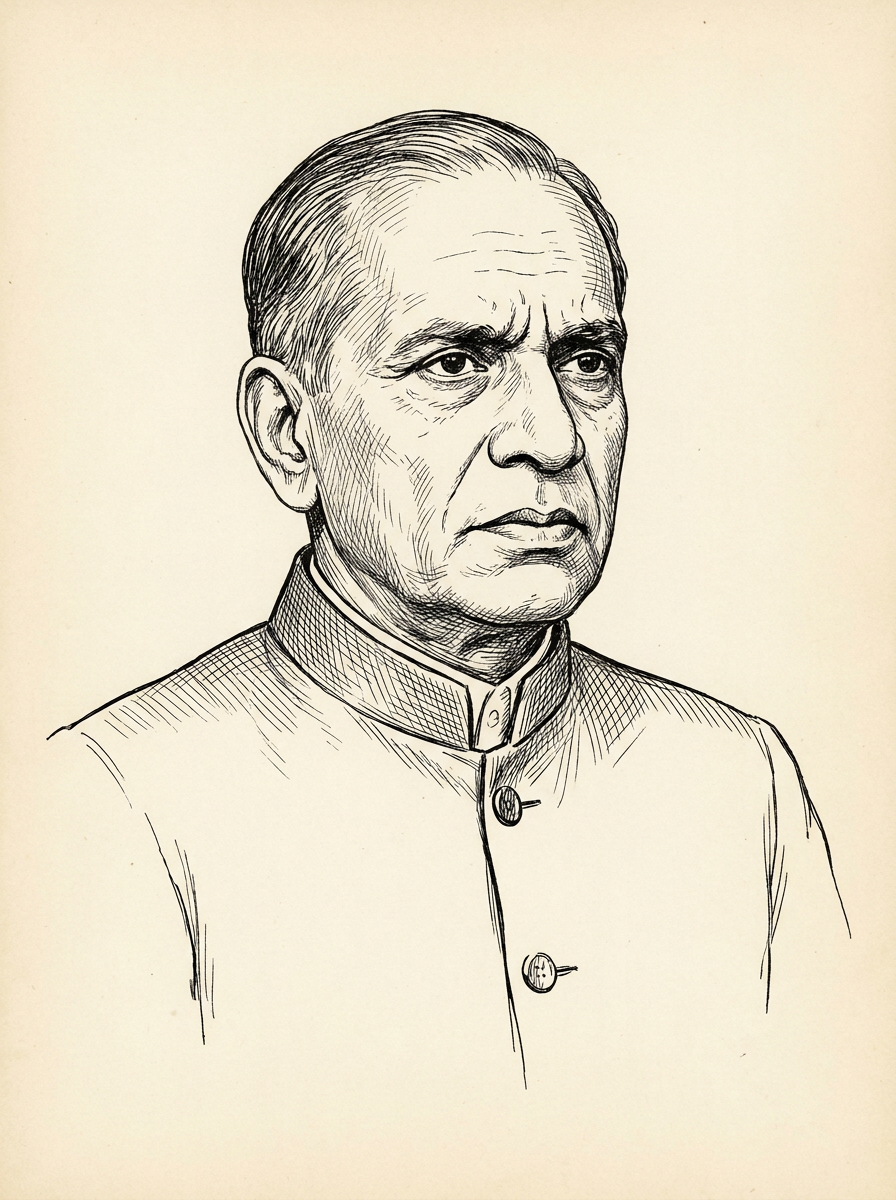
Fig. 6.8 – Alladi Krishnaswami Ayyar.
CAD stands for the Constituent Assembly Debates — the record of the discussions in which the Constitution was written. A dogma is a belief held as beyond question. Ayyar’s argument is finely balanced, and it is easy to misquote in either direction. He does not doubt for a moment that the judiciary must be independent. He warns against turning that independence into an article of faith so absolute that the judiciary begins to legislate or to administer — to act as a super-legislature or a super-executive. Its job, he says, is to interpret the Constitution and to adjudicate upon rights.
Now the limit. This is a speech, and a speech records what one member of the Constituent Assembly chose to argue in public in November 1949. It is not the view of the Assembly as a whole, and it settles nothing: the Assembly did not write his warning into the text as a rule. Nor can a warning given before the Constitution came into force tell you anything about how judges and Parliament would actually behave once it did. For that, look at what happened next.
The Kesavananda Bharati Case
During the period 1967 and 1973, this controversy became very serious. The conflict between the legislature and the judiciary now stretched well beyond land reform laws. It took in laws enforcing preventive detention — detention without trial — laws governing reservations in jobs, regulations acquiring private property for public purposes, and laws deciding the compensation for such acquisition.
In 1973, the Supreme Court gave a decision that has regulated the relations between Parliament and the judiciary ever since.
The basic structure doctrine is best understood as a limit on the limit. Parliament may amend the Constitution; it may not amend the Constitution out of existence. What falls inside that protected core, though, has never been listed once and for all — and that is exactly what irritates a reader coming to it for the first time. Why cannot the Court simply tell us which features are basic and be done with it?
Because it decided not to. The Court reserved the question for itself, case by case. That has a cost — nobody can be certain in advance what is protected — and it has a purpose: a list written in 1973 could not have anticipated the amendments of every decade that followed. Whether that trade is a wise one is a fair thing to argue about, and people have argued about it ever since.
The ruling changed the nature of the conflicts between the legislature and the judiciary. As you studied earlier, the right to property was taken away from the list of fundamental rights in 1979, and this too helped change the relationship between these two organs of government. The particular bone that had been fought over for nearly thirty years was simply removed.
What Is Still Unresolved
Some issues remain a bone of contention between the two. Can the judiciary intervene in, and regulate, the functioning of the legislatures?
In a parliamentary system, the legislature has the power to govern itself and to regulate the behaviour of its members. It can punish a person whom it holds guilty of breaching its privileges — the special rights a House and its members enjoy so that they can do their work without obstruction. Now put the hard questions. Can a person held guilty of breach of parliamentary privileges seek the protection of the courts? Can a member of the legislature against whom the House has taken disciplinary action get protection from a court? These issues are unresolved, and they are matters of potential conflict between the two.
The friction runs both ways, and it is worth being exact about it. The Constitution provides that the conduct of judges cannot be discussed in Parliament — yet there have been several instances where Parliament and State legislatures have cast aspersions on the functioning of the judiciary. Equally, the judiciary too has criticised the legislatures, and has issued instructions to them about the conduct of legislative business. The legislatures see this as violating the principle of parliamentary sovereignty — the claim that a House, elected by the people, is master of its own proceedings.
Gathered together, the main issues in the conflict between the judiciary and Parliament have been these: the appointment of judges; the salaries and allowances of judges; the scope of Parliament’s power to amend the Constitution; and interference by Parliament in the functioning of the judiciary.
These issues indicate how delicate the balance between any two organs of the government is. They also show how important it is, in a democracy, for each organ of the government to respect the authority of the others. The balance is not kept by the Constitution alone. It is kept, or lost, by how the institutions choose to behave.
6.7 Summary
The Chapter In Short
- Courts are not only umpires between private parties. The judiciary is an organ of the government, and it performs political functions — deciding what laws mean and how far governments may go.
- The judiciary must be independent so that it can protect the rule of law: the principle that rich and poor, men and women, forward and backward castes are all subject to the same law.
- Independence means the other organs do not restrain the judiciary or interfere with its decisions, and judges act without fear or favour. It does not mean arbitrariness or the absence of accountability.
- The Constitution secures independence through the exclusion of the legislature from appointments, security of tenure, an extremely difficult removal procedure, salaries not needing legislative approval, the power to punish contempt, and a bar on Parliament discussing a judge’s conduct.
- Appointments have never been free from political controversy. The convention of appointing the senior-most judge as Chief Justice of India was broken in 1973 and again in 1975. Between 1982 and 1998 the Supreme Court arrived at the principle of collegiality, under which the Chief Justice recommends names in consultation with the four senior-most judges.
- A judge may be removed only for proven misbehaviour or incapacity, by a special majority in both Houses. The one motion that reached Parliament, against Justice V. Ramaswami, failed in 1992.
- India has a single integrated judicial system, pyramidal in shape: the Supreme Court, then the High Courts, then district and subordinate courts, with the higher courts supervising those below.
- The Supreme Court’s jurisdiction is original (federal disputes), writ (protection of fundamental rights), appellate (the highest court of appeal), and advisory (opinions for the President that bind neither side), together with the power to grant special leave to appeal.
- Public Interest Litigation, which emerged around 1979, allowed cases to be filed by people other than those aggrieved. It became the chief instrument of judicial activism, and it made rights reachable for the poor and the deprived.
- Judicial activism democratised access to the courts and forced executive accountability. It also overburdened the courts and blurred the line between the judiciary and the other two organs.
- The Court protects rights in two ways: by issuing writs (article 32; article 226 for the High Courts) and by declaring a law unconstitutional (article 13). The second is judicial review — a power the Constitution nowhere names, but implies.
- Parliament and the judiciary have clashed repeatedly, above all over the right to property and the power to amend the Constitution. In the Kesavananda Bharati case of 1973 the Court held that Parliament cannot violate the basic structure of the Constitution, and reserved to itself the power to decide what the basic structure contains.
What The Chapter Concludes
In spite of the tensions that arose from time to time between the judiciary on one side and the executive and the legislature on the other, the prestige of the judiciary has increased considerably. So have the expectations placed upon it.
Ordinary citizens also wonder how it is possible for so many people to get easy acquittals, and how witnesses change their testimonies to suit the wealthy and the mighty. These are issues about which the judiciary itself is concerned. The last cartoon in the chapter puts the worry bluntly.
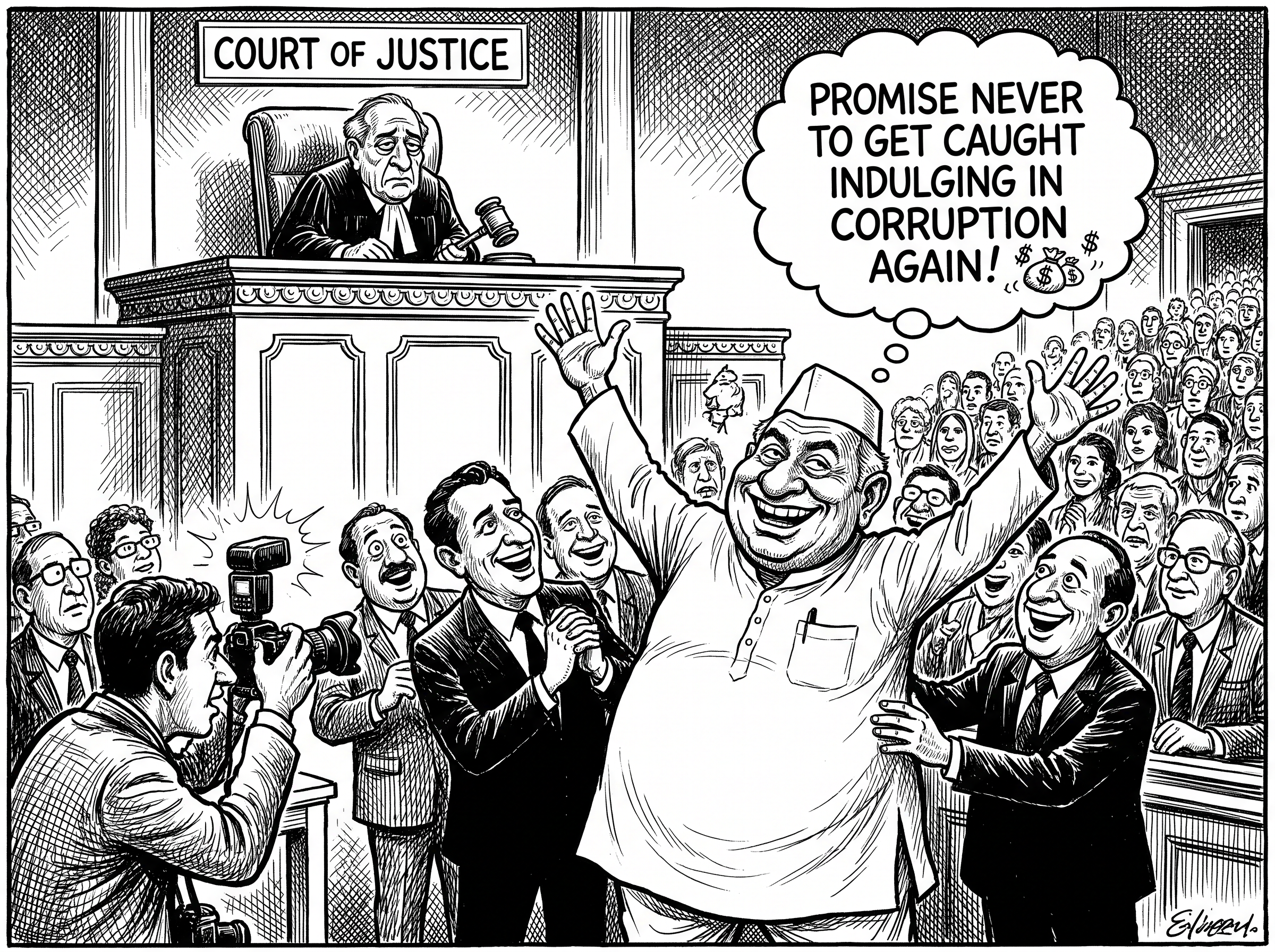
Fig. 6.9 – Corruption, acquittals and the judiciary. Inspiration: R K Laxman, The Times of India.
The joke is in the last sentence, and it is a confession. A man who has been declared innocent promises not to do it again — which only a guilty man would need to say. The cartoonist is drawing the gap between a verdict and the truth: an acquittal means the case was not proved, and the crowd cheering him has drawn its own conclusion about why.
What the cartoon cannot do is measure the gap. It is one cartoonist’s opinion, stated in one image, and it names nobody. It cannot tell you how many acquittals are wrongful, why witnesses turn hostile, or whether the fault lies with the police, the prosecution, the delay or the judges. It states a suspicion widely held in public life; proving it would take evidence of a kind no drawing can supply.
Reaching The Courts At All
The chapter closes with a public notice, and its placement is deliberate. Everything you have read is worthless to a person who cannot afford a lawyer.
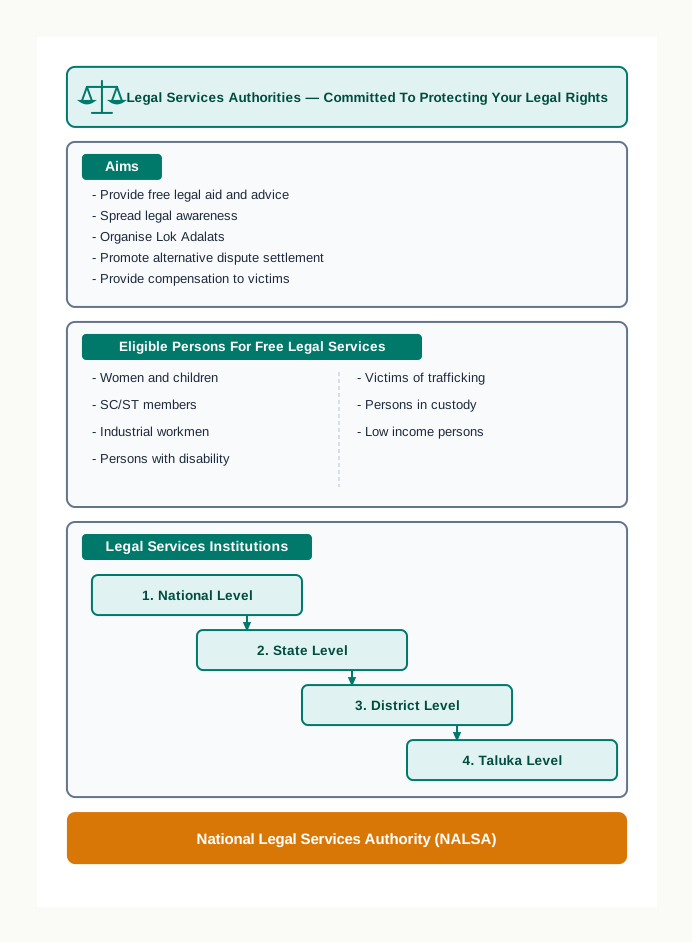
Fig. 6.10 – Legal Services Authorities and access to justice.
The poster sets out three things. The Legal Services Authorities aim to provide free legal aid and advice, spread legal awareness, organise Lok Adalats, promote the settlement of disputes through alternative mechanisms, and provide compensation to victims of crime. Free legal services are available to listed categories of persons — among them women and children, members of the Scheduled Castes and Scheduled Tribes, industrial workmen, persons with disability, victims of trafficking, persons in custody, and persons whose annual income falls below the prescribed limit. And these services are delivered through institutions at every level of the judicial pyramid you studied in 6.3, from the taluka up to the Supreme Court.
The Arguments In One Place
The chapter’s central claim is that India needs a judiciary that is independent and powerful, because rights that cannot be enforced against a government are not rights at all. Everything from security of tenure to judicial review is built to serve that claim.
The strongest position against it is stated inside the chapter itself, by Alladi Krishnaswami Ayyar. Independence must not be raised to the level of a dogma, or the judiciary begins to act as a super-legislature or a super-executive — and a body that nobody elects and nobody can remove is a strange place to lodge the last word.
The chapter does not choose between these. It says instead that democracy hinges on a delicate balance of power between the judiciary and Parliament, and that both institutions have to function within the limitations set by the Constitution.
What Remains Contested
Which features belong to the basic structure has never been settled once and for all — the Court reserved that question for itself, case by case. So has the question of whether a court may reach into the internal discipline of a legislature, and whether the legislature may in turn discuss the conduct of a judge.
Whether PIL has democratised justice or merely overloaded the courts is not settled either, and the chapter gives you evidence for both readings. Notice, too, what its sources are made of: a judge’s speech, a framer’s speech, two Articles, three cartoons. Every one of them was produced by people who could already be heard. The undertrial in a Bihar jail, the labourer in the stone quarry, the family that waited a decade for a hearing — none of them wrote a document that anyone preserved. Their side of this story reaches us only when somebody else files it for them.
6.8 NCERT Questions
What are the different ways in which the independence of the judiciary is ensured? Choose the odd ones out.
- The Chief Justice of the Supreme Court is consulted in the appointment of the other judges of the Supreme Court.
- Judges are generally not removed before the age of retirement.
- A judge of a High Court cannot be transferred to another High Court.
- Parliament has no say in the appointment of judges.
Does independence of the judiciary mean that the judiciary is not accountable to anyone? Write your answer in not more than 100 words.
What are the different provisions in the constitution in order to maintain the independence of the judiciary?
Read the news report below and identify the following aspects:
- What is the case about?
- Who has been the beneficiary in the case?
- Who is the petitioner in the case?
- Visualise what would have been the different arguments put forward by the company.
- What arguments would the farmers have put forward?
Supreme Court orders REL to pay Rs 300 crore to Dahanu farmers Our Corporate Bureau, 24 March 2005 Mumbai: The Supreme Court has ordered Reliance Energy to pay Rs. 300 crore to farmers who grow the chikoo fruit in the Dahanu area outside Mumbai. The order comes after the chikoo growers petitioned the court against the pollution caused by Reliance’s thermal power plant. Dahanu, which is 150 km from Mumbai, was a self-sustaining agricultural and horticultural economy known for its fisheries and forests just over a decade ago, but was devastated in 1989 when a thermal power plant came into operation in the region. The next year, this fertile belt saw its first crop failure. Now, 70 per cent of the crop of what was once the fruit bowl of Maharashtra is gone. The fisheries have shut and the forest cover has thinned. Farmers and environmentalists say that fly ash from the power plant entered ground water and polluted the entire eco-system. The Dahanu Taluka Environment Protection Authority ordered the thermal station to set up a pollution control unit to reduce sulphur emissions, and in spite of a Supreme Court order backing the order the pollution control plant was not set up even by 2002. In 2003, Reliance acquired the thermal station and re-submitted a schedule for the installation process in 2004. As the pollution control plant is still not set up, the Dahanu Taluka Environmental Protection Authority asked Reliance for a bank guarantee of Rs. 300 crores.
- Read the following news report and,
- Identify the governments at different levels.
- Identify the role of the Supreme Court.
- What elements of the working of the judiciary and the executive can you identify in it?
- Identify the policy issues, and the matters related to legislation, implementation and interpretation of the law, involved in this case.
Centre, Delhi join hands on CNG issue By Our Staff Reporter, The Hindu, 23 September 2001 NEW DELHI, SEPT. 22. The Centre and the Delhi Government today agreed to jointly approach the Supreme Court this coming week… for phasing out of all non-CNG commercial vehicles in the Capital. They also decided to seek a dual fuel policy for the city instead of putting the entire transportation system on the single-fuel mode ‘which was full of dangers and would result in disaster.’ It was also decided to discourage the use of CNG by private vehicle owners in the Capital. Both governments would press for allowing the use of 0.05 per cent low sulphur diesel for running of buses in the Capital. In addition, it would be pleaded before the Court that all commercial vehicles which fulfil the Euro-II standards should be allowed to ply in the city. Though both the Centre and the State would file separate affidavits, these would contain common points. The Centre would also go out and support the Delhi Government’s stand on the issues concerning CNG. These decisions were taken at a meeting between the Delhi Chief Minister, Ms. Sheila Dikshit, and the Union Petroleum and Natural Gas Minister, Mr. Ram Naik. Ms. Dikshit said the Central Government would request the court that in view of the high powered Committee appointed under Dr. R.A. Mashelkar to suggest an ‘Auto Fuel Policy’ for the entire country, it would be appropriate to extend the deadline as it was not possible to convert the entire 10,000-odd bus fleet into CNG during the prescribed time frame. The Mashelkar Committee is expected to submit its report within a period of six months. The Chief Minister said time was required to implement the court directives. Referring to the coordinated approach on the issue, Ms. Dikshit said this would take into account the details about the number of vehicles to be run on CNG, eliminating long queues outside CNG filling stations, the CNG fuel requirements of Delhi and the ways and means to implement the directive of the court. The Supreme Court had …refused to relax the only CNG norm for the city’s buses but said it had never insisted on CNG for taxis and auto rickshaws. Mr. Naik said the Centre would insist on allowing use of low sulphur diesel for buses in Delhi as putting the entire transportation system dependent on CNG could prove to be disastrous. The Capital relied on pipeline supply for CNG and any disruption would throw the public transport system out of gear.
The following is a statement about Ecuador. What similarities or differences do you find between this example and the judicial system in India? ‘It would be helpful if a body of common law, or judicial precedent, existed that could clarify a journalist’s rights. Unfortunately, Ecuador’s courts don’t work that way. Judges are not forced to respect the rulings of higher courts in previous cases. Unlike the US, an appellate judge in Ecuador (or elsewhere in South America, for that matter) need not provide a written decision explaining the legal basis of a ruling. A judge may rule one way today and the opposite way, in a similar case, tomorrow, without explaining why.’
Read the following statements and match them with the different jurisdictions the Supreme Court can exercise — Original, Appellate, and Advisory.
- The government wanted to know if it can pass a law about the citizenship status of residents of Pakistan-occupied areas of Jammu and Kashmir.
- In order to resolve the dispute about the river Cauvery, the government of Tamil Nadu wants to approach the court.
- The Court rejected the appeal by people against their eviction from the dam site.
In what way can public interest litigation help the poor?
Do you think that judicial activism can lead to a conflict between the judiciary and the executive? Why?
How is judicial activism related to the protection of fundamental rights? Has it helped in expanding the scope of fundamental rights?
6.9 Check Your Concepts
Explain, in your own words, how security of tenure and a salary that needs no approval from the legislature together allow a judge to function ‘without fear or favour’.
Look again at Source 6.1 (Article 137). What power does this Article give the Supreme Court, and what does its wording leave undecided about how a review should be heard?
Study Cartoon 6.2 once more. What claim is the cartoonist making about the courts, and what can a single cartoon not tell you about the ruling it refers to?
The motion to remove Justice V. Ramaswami won the required two-thirds majority of the members present and voting, yet he was not removed. Walk through the removal procedure step by step and explain why the motion failed.
The advisory jurisdiction produces an opinion that binds neither the Court nor the President. Explain why such an opinion can still shape what a government finally does.
Reconstruct, as a chain of events, the conflict between Parliament and the judiciary from the first controversy over the right to property up to the removal of that right from the list of fundamental rights in 1979. At which point does the Kesavananda Bharati case change the direction of the chain?
Some people say that PIL really means ‘private interest litigation’. Using the chapter, explain what this criticism is pointing at, and what a court would have to satisfy itself about before accepting that a petition is genuinely in the public interest.
In Source 6.4, Alladi Krishnaswami Ayyar warns against raising judicial independence to the level of a dogma. Which developments described in this chapter would a person who agrees with him point to, and which would a person who disagrees with him point to?