Chapter 10: The Philosophy Of The Constitution
In 1895, an Indian sat down and wrote a constitution for a country that did not govern itself. It was called the Constitution of India Bill, and it was the first non-official attempt at drafting a constitution for India. Non-official meant exactly what it sounds like. No ruler had asked for this document, no ruler was obliged to read it, and no court would enforce a single line of it. The British administration governed India, and it had not invited anyone to redesign the arrangement.
The author wrote a claim into it anyway. Every citizen — that is, anyone born in India — had a right to take part in the affairs of the country and to be admitted to public office. Not only the educated. Not only those who owned property. Not only men.
It is worth pausing on how large that claim was in 1895. In the stable democracies of the West, the right to vote had only recently been extended to women and to the working class, and in several places the argument was still going on. Here, in a colony, an unofficial draft was proposing to hand the affairs of the country to every person born in it.
That single sentence was a law that nobody could enforce. It was also something else: a statement about who counts as an equal. This chapter is about statements of that kind — the moral vision that runs underneath the Constitution of India, and what can be said for it and against it.
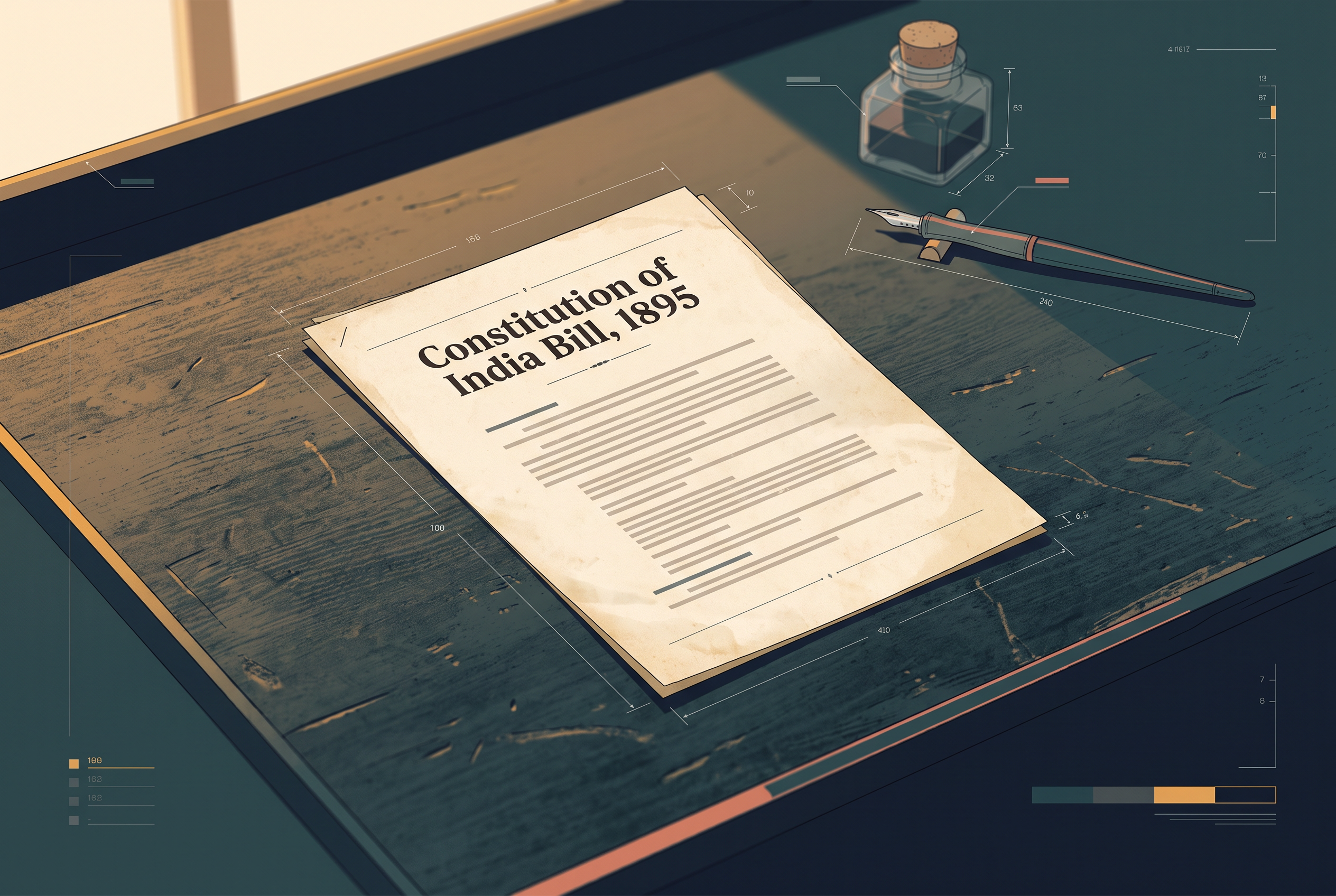
Fig. 10.0 – The 1895 Constitution of India Bill.
10.1 Introduction
So far in this book you have studied some of the important provisions of our Constitution, and the way in which these have worked in the last 69 years. You have also studied the way in which the Constitution was made. A constitution is the body of basic rules a country gives itself: it says how power is to be organised, what the government may do, and what it may not do to those it governs.
But there is a question that comes before all of this, and it is easy to walk past. Why did the leaders of the national movement feel the need to adopt a constitution at all, once independence from British rule had been won? They had just removed a set of rules imposed from outside. Why write a new set at once, and why choose to be bound by it?
The question sharpens when you notice who else is bound. A constitution does not bind only the people who write it. It binds the generations that come after them — people who were not in the room, who were not born, and who never agreed to anything. That is a strange thing for one generation to do to another, and it needs a reason.
Why The Debates Matter
Throughout this book you have repeatedly visited the debates in the Constituent Assembly — the elected body that framed the Constitution, arguing its clauses out in public before adopting them. That raises a second question, which this chapter takes seriously: why must the study of a constitution be accompanied by a deep examination of those debates? The document is finished and printed. Why keep returning to the arguments behind it?
What Kind Of Constitution Did We Give Ourselves?
The third question is about the document itself. What kind of a constitution have we given ourselves? What objectives did we hope to achieve by it? Do those objectives have a moral content — that is, do they rest on ideas of right and wrong, of what a decent society owes its members? If so, what precisely is that content?
And once we have named it, we must ask what can be said against it. What are the strengths and the limitations of this vision, and therefore the achievements and the weaknesses of the Constitution?
In doing all this, we are trying to understand what can be called the philosophy of the Constitution — the set of ideals the document rests on, together with the reasons offered for holding them.
What You Should Be Able To Understand
After reading this chapter, you should be able to understand:
- why it is important to study the philosophy of the Constitution;
- what are the core features of the Indian Constitution;
- what are the criticisms of this Constitution; and
- what are the limitations of the Constitution.
10.2 What Is Meant By Philosophy Of The Constitution?
Some people believe that a constitution merely consists of laws, and that laws are one thing while values and morality are quite another. On this view we can have only a legalistic approach to the Constitution — read the clause, ask what it permits and forbids, and stop there. A political philosophy approach would then be out of place, because there is no philosophy in the document to find.
There is something to this objection. It is true that all laws do not have a moral content. A rule fixing the number of days within which a form must be filed rests on no deep conviction about right and wrong. But many laws are closely connected to our deeply held values.
Take an example. A law might prohibit discrimination against persons on grounds of language or religion. Such a law is connected to the idea of equality. It exists because we value equality — because we think it wrong that a person should be turned away from a job or a school for speaking a particular language or praying in a particular way. Remove the value, and the law has no reason to exist.
So there is a connection between laws and moral values. Once that is seen, the legalistic approach begins to look incomplete. It can tell us what a rule says. It cannot tell us why the rule is there.
Three Things A Philosophical Reading Does
We must therefore look upon the constitution as a document that is based on a certain moral vision. We need to adopt a political philosophy approach to it. What does that mean in practice? Three things.
First, we need to understand the conceptual structure of the constitution. The document is built out of words like ‘rights’, ‘citizenship’, ‘minority’ and ‘democracy’. None of these carries a single obvious meaning that everyone agrees on. So we must ask what the possible meanings of such terms are, because a great deal follows from the answer.
Second, we must attempt to work out a coherent vision of society and polity, conditional upon an interpretation of the key concepts of the constitution. In plain words: once you have decided what those terms mean, you can ask what kind of society and what kind of political order they add up to. We must have a better grasp of the set of ideals embedded in the constitution, and of how they hold together.
Third, the Indian Constitution must be read in conjunction with the Constituent Assembly Debates — the printed record of the arguments the Assembly had, clause by clause, before adopting the text. Reading the two together allows us to refine, and raise to a higher theoretical plane, the justification of the values embedded in the Constitution.
Why does justification matter so much? Because a philosophical treatment of a value is incomplete if a detailed justification for it is not provided. When the framers of the Constitution chose to guide Indian society and polity by a set of values, there must have been a corresponding set of reasons. Many of them, though, may not have been fully explained.
The Constitution As Arbitrator
A political philosophy approach is needed not only to find out the moral content expressed in the Constitution and to evaluate its claims. It is needed, possibly, to use that content to arbitrate between varying interpretations of the many core values in our polity — that is, to settle a dispute between two sides by appeal to a standard both must accept.
That such disputes exist is obvious. Many of the Constitution’s ideals are challenged, discussed, debated and contested in different political arenas — in the legislatures, in party forums, in the press, in schools and universities. These ideals are variously interpreted, and sometimes wilfully manipulated to suit partisan short-term interests. To call an interpretation partisan is to say that it serves the interests of one party or group rather than following from the ideal itself.
We must therefore examine whether or not a serious disjunction exists between the constitutional ideal and its expression in these other arenas. A disjunction here means a gap: the ideal saying one thing, the practice doing another. Sometimes the same ideal is interpreted differently by different institutions, and we need to compare these differing interpretations.
Since the expression of the ideal in the constitution has considerable authority, it must be used to arbitrate in a conflict of interpretation over values or ideals. Our Constitution can perform this job of arbitration. You met the problem of differing interpretations in the previous chapter, where the Constitution was described as a living document. The point here is narrower: the Constitution’s own text, and the philosophy underneath it, give us a standard against which competing readings can be measured.
A Constitution Shaped By Its Moment
Consider a constitution written in another country and in another situation. Japan’s constitution dates from 1947, and this is what its makers chose to place at its head and in Article 9.
The Japanese Constitution of 1947 is popularly known as the ‘peace constitution’, and the extract shows why. The preamble does not merely set up institutions; it declares a desire for peace for all time. Article 9 then turns that ideal into a rule, and a drastic one. The nation gives up war as a right of the state, and undertakes that armed forces will never be maintained. The philosophy of the Japanese constitution is thus based on the ideal of peace.
This shows how the context of making the constitution dominates the thinking of the constitution makers. A people writing in 1947 wrote peace into the first lines of their basic law. The general lesson is useful for our own chapter: to find the philosophy of any constitution, look hard at the situation its makers were writing themselves out of.
Now the limit. This extract records what the framers committed themselves to, in words, in 1947. It cannot tell you how Article 9 was later interpreted, how faithfully it was followed, or what Japanese citizens made of it. A constitutional text records an intention. It does not record its own history, and it never records the arguments that were lost.
10.2.1 Constitution As Means Of Democratic Transformation
In the first chapter we studied the meaning of the term constitution and the need to have one. It is widely agreed that one reason for having constitutions is the need to restrict the exercise of power.
Modern states are excessively powerful. They are believed to have a monopoly over force and coercion — meaning that within its territory only the state may lawfully use force, through its police, its courts and its armed forces. That concentration is deliberate, and in one way reassuring: it is what prevents every dispute from being settled by whoever can hire the most muscle.
But it creates a danger of its own. What if the institutions of such states fall into wrong hands, who abuse this power? Even if these institutions were created for our safety and well-being, they can easily turn against us. Experience of state power the world over shows that most states are prone to harming the interests of at least some individuals and groups.
If so, we need to draw the rules of the game in such a way that this tendency of states is continuously checked. Constitutions provide these basic rules, and therefore prevent states from turning tyrannical — from ruling by the unchecked will of those in power rather than by law.
From Limiting Power To Remaking A Society
Constitutions also do something more than restrain. They provide peaceful, democratic means to bring about social transformation: a society can be changed through law and argument rather than through force. And for a hitherto colonised people, constitutions announce and embody the first real exercise of political self-determination — the right of a people to decide for themselves how they will be governed.
Nehru understood both these points well. The demand for a Constituent Assembly, he claimed, represented a collective demand for full self-determination, because only a Constituent Assembly of elected representatives of the Indian people had the right to frame India’s constitution without external interference. The claim was not only about what the constitution would say. It was about who had the standing to write it at all.
Second, he argued, the Constituent Assembly is not just a body of people or a gathering of able lawyers. Rather, it is a ‘nation on the move, throwing away the shell of its past political and possibly social structure, and fashioning for itself a new garment of its own making.’ Read that phrase slowly. The shell being thrown away is not only colonial rule. It is ‘possibly social structure’ as well — the inherited hierarchies of Indian society itself.
The Indian Constitution was accordingly designed to break the shackles of traditional social hierarchies and to usher in a new era of freedom, equality and justice.
This approach had the potential of changing the theory of constitutional democracy altogether. According to it, constitutions exist not only to limit people in power, but to empower those who traditionally have been deprived of it. Constitutions can give vulnerable people the power to achieve collective good.
A fair objection arises here, and it is worth naming rather than hiding. If the members of the Assembly were all so eager to bring about social transformation, how can we also keep saying that every viewpoint was represented in it? The two claims pull against each other. The chapter does not settle the tension at this point; how representative the Assembly really was is taken up later, among the criticisms of the Constitution.
10.2.2 Why Do We Need To Go Back To The Constituent Assembly?
Why look backwards and bind ourselves to the past? That may be the job of a legal historian — to go into the past and search for the basis of legal and political ideas. But why should students of politics be interested in studying the intentions and concerns of those who framed the Constitution? Why not take account of changed circumstances and define anew the normative function of the constitution?
Is The Past A Foreign Country?
Compare the American case. There the constitution was written in the late 18th century. To apply the values and standards of that era to the 21st century is absurd; the world of those framers is not the world of the citizens who live under it now.
However, in India the world of the original framers and our present day world may not have changed so drastically. In terms of our values, ideals and conception, we have not separated ourselves from the world of the Constituent Assembly. The Assembly’s arguments — about equality, about minorities, about how much power the state should be given — are arguments we are still having. A history of our Constitution is still very much a history of the present.
What Gets Forgotten
There is a second reason to go back, and it is subtler. We may have forgotten the real point underlying several of our legal and political practices, simply because somewhere down the road we began to take them for granted. Those reasons have now slipped into the background, screened off from our consciousness — even though they still provide the organisational principle of current practices.
When the going is good, this forgetting is harmless. A practice nobody is attacking can be followed without anyone recalling why it exists. But when these practices are challenged or threatened, neglect of the underlying principles can be harmful. You cannot defend a practice whose point you are unable to state.
In short, to get a handle on current constitutional practice, to grasp its value and meaning, we may have no option but to go back in time to the Constituent Assembly debates, and perhaps even further back in time to the colonial era. That is why we need to remember, and to keep revisiting, the political philosophy underlying our Constitution.
10.3 What Is The Political Philosophy Of Our Constitution?
It is hard to describe this philosophy in one word. It resists any single label, and the list of labels it does answer to is long. The Indian Constitution is liberal, democratic, egalitarian, secular and federal. It is open to community values. It is sensitive to the needs of religious and linguistic minorities as well as of historically disadvantaged groups. And it is committed to building a common national identity.
That list can look like evasion. If the philosophy of this Constitution is so important, why did the framers not simply write it out in one plain sentence, so that any citizen could read it and know where they stood? The answer is that no single sentence would have been true. A vision assembled to hold a society of this kind together had to pull in several directions at once, and saying so honestly is better than pretending otherwise.
In short, the Constitution is committed to freedom, equality, social justice, and some form of national unity. Underneath all of this there is a further commitment, easy to miss because it concerns method rather than goals: a clear emphasis on peaceful and democratic measures for putting this philosophy into practice. The ideals are to be reached by persuasion, election, legislation and argument — not by force.
The Playfield And The Umpire
A cartoonist made the same point in a single drawing on the day the Constitution came into force.
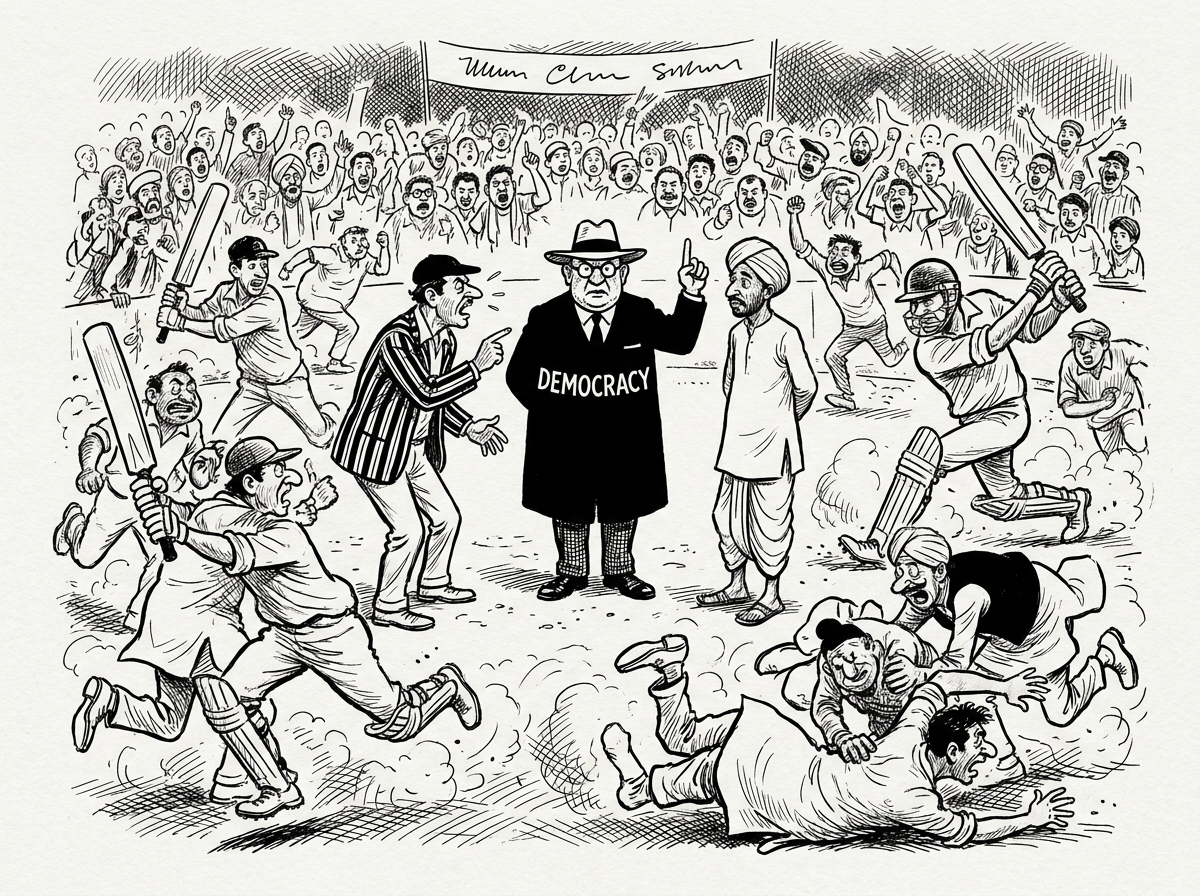
Fig. 10.1 – Democracy as the umpire of political competition. Inspiration: Shankar, 26 January 1950 (copyright: Children’s Book Trust).
Read the drawing as an argument. A cricket field can hold players who want quite different things — every one of them is trying to win — and it does not collapse into a brawl, because there is an umpire whose calls everybody has agreed in advance to accept. The cartoonist puts India’s competing ideas on that field and gives the umpire’s coat to democracy. The claim is that the Constitution’s philosophy does not abolish disagreement; it supplies the rules under which disagreement can be conducted.
The date matters too. The cartoon is dated 26 January 1950, the day the Constitution came into force, so it is a comment made at the very start of the experiment, not a verdict on how it turned out.
Now the limit. A cartoon states one opinion in one image. This one asserts that democracy will umpire the contest; it cannot show you whether the umpire’s calls were obeyed, whether every player got a bat, or whether some ideas were kept off the field altogether. It is an argument in ink, and like any argument it has to be tested against what actually happened — which is what the rest of this chapter, and the criticisms at its end, set out to do.
10.3.1 Individual Freedom
The first point to note about the Constitution is its commitment to individual freedom. This commitment did not emerge miraculously out of calm deliberations around a table. It was the product of continuous intellectual and political activity of well over a century.
As early as the beginning of the nineteenth century, Rammohan Roy protested against the curtailment of the freedom of the press by the British colonial state. His argument was not merely that censorship was unpleasant. Roy argued that a state responsive to the needs of individuals must provide them the means by which their needs are communicated. A ruler who silences the press cannot hear what the ruled require. Therefore, he concluded, the state must permit unlimited liberty of publication. Indians continued to demand a free press throughout British rule.
It is not surprising, therefore, that freedom of expression is an integral part of the Indian Constitution. So is the freedom from arbitrary arrest — the guarantee that a person cannot be detained at the mere pleasure of officials, without the protections that the law requires. The infamous Rowlatt Act, which the national movement opposed so vehemently, sought to deny this basic freedom.
These and other individual freedoms, such as freedom of conscience — the freedom to hold one’s own beliefs about religion and morality — are part of the liberal ideology. On this basis we can say that the Indian Constitution has a pretty strong liberal character. In the chapter on fundamental rights we have already seen how the Constitution values individual freedom.
One further fact shows how deep this went. For over forty years before the adoption of the Constitution, every single resolution, scheme, bill and report of the Indian National Congress mentioned individual rights — not just in passing, but as a non-negotiable value. Individual freedom was not an afterthought added in 1949. It was the settled demand of the movement that led to 1947.
10.3.3 Respect For Diversity And Minority Rights
The Indian Constitution encourages equal respect between communities. This was not easy in our country, for two reasons.
First, communities do not always have a relationship of equality; they tend to have hierarchical relationships with one another, as in the case of caste. Second, when these communities do see each other as equals, they also tend to become rivals, as in the case of religious communities. So the makers of the Constitution faced a hard challenge: how to make communities liberal in their approach and foster a sense of equal respect among them, under existing conditions of hierarchy or intense rivalry?
Why Not Simply Ignore Communities?
It would have been very easy to resolve this problem by not recognising communities at all, as most western liberal constitutions do. On that model the state sees only individuals; your community is your private business, and the law does not notice it. But this would have been unworkable and undesirable in our country.
The reason is not that Indians are attached to communities more than others are. Individuals everywhere also belong to cultural communities, and every such community has its own values, traditions, customs and language shared by its members. Individuals in France or Germany — both large countries in western Europe — belong to a linguistic community and are deeply attached to it. What makes us different is that we have more openly acknowledged the value of communities.
More importantly, India is a land of multiple cultural communities. Unlike Germany or France, we have several linguistic and religious communities. Where there are many, and where some have long been stronger than others, it was important to ensure that no one community systematically dominates others. This made it mandatory for our Constitution to recognise community based rights. You yourself carry several identities at once — religious, linguistic, regional, and, for the moment, that of a student — and the Constitution’s design assumes exactly this, rather than requiring you to leave every identity but one at the door.
One such right is the right of religious communities to establish and run their own educational institutions. Such institutions may receive money from the government. That last provision is worth pausing on: it shows that the Indian Constitution does not see religion merely as a ‘private’ matter concerning the individual. Religion is allowed into public life, and public money is not forbidden to it.
10.3.4 Secularism
Secular states are widely seen as treating religion as only a private matter. That is to say, they refuse to give religion public or official recognition. But we have just seen that the Indian Constitution does the opposite in at least one respect. Does this mean that the Indian Constitution is not secular?
This does not follow. Though the term ‘secular’ was not initially mentioned in it, the Indian Constitution has always been secular. What has to change is not the verdict but the definition.
The Western Model: Mutual Exclusion
The mainstream, western conception of secularism means mutual exclusion of state and religion, in order to protect values such as individual freedom and the citizenship rights of individuals. This too is discussed further in Political Theory, but the core of it can be stated here.
‘Mutual exclusion’ means this: both religion and state must stay away from the internal affairs of one another. The state must not intervene in the domain of religion. Religion likewise should not dictate state policy or influence the conduct of the state. In other words, mutual exclusion means that religion and state must be strictly separated.
What is the purpose behind strict separation? It is to safeguard the freedom of individuals. States which lend support to organised religions make them more powerful than they already are. When religious organisations begin to control the religious lives of individuals — when they start dictating how they should relate to God or how they should pray — individuals may have the option of turning to the modern state for protecting their religious freedom. But what help would a state offer them if it has already joined hands with these organisations?
To protect the religious freedom of individuals, therefore, the state must not help religious organisations. But at the same time, the state should not tell religious organisations how to manage their affairs. That too can thwart religious freedom. The state must therefore not hinder religious organisations either. In short, states should neither help nor hinder religions. Instead, they should keep themselves at an arm’s length from them. This has been the prevalent western conception of secularism.
The Indian Departure, And Its Two Reasons
Conditions in India were different, and to respond to the challenge they posed, the makers of the Constitution had to work out an alternative conception of secularism. They departed from the western model in two ways, and for two different reasons.
Rights of religious groups. First, as mentioned already, they recognised that inter-community equality was as necessary as equality between individuals. This was because a person’s freedom and sense of self-respect was directly dependent upon the status of her community. If one community was dominated by another, then its members would also be significantly less free. If, on the other hand, their relations were equal, marked by an absence of domination, then its members would also walk about with dignity, self-respect and freedom. Thus the Indian Constitution grants rights to all religious communities, such as the right to establish and maintain their educational institutions. Freedom of religion in India means the freedom of religion of both individuals and communities.
The state’s power of intervention. Second, separation in India could not mean mutual exclusion. Why is it so? Because religiously sanctioned customs such as untouchability deprived individuals of the most basic dignity and self-respect. Such customs were so deeply rooted and pervasive that without active state intervention there was no hope of their dissolution. A state standing politely at arm’s length would have left them exactly where they were. The state simply had to interfere in the affairs of religion.
Such intervention was not always negative. The state could also help religious communities by giving aid to educational institutions run by them. Thus the state may help or hinder religious communities, depending on which mode of action promotes values such as freedom and equality.
In India, separation between religion and state did not mean their mutual exclusion, but rather principled distance — a rather complex idea that allows the state to be distant from all religions so that it can intervene, or abstain from interference, depending upon which of these two would better promote liberty, equality and social justice. Notice the word ‘principled’. The state does not get to help one religion because it likes it, or restrain another because it does not. It may act only where liberty, equality and social justice require it, and it must be distant from all religions alike.
So the answer to the question a student naturally asks — can the state finally regulate matters related to religion, or not? — is: yes, but only on principle, and only for these ends. Without that power, religious reform of the kind untouchability demanded would have been impossible.
Three Core Features, Three Achievements
We have hitherto mentioned three core features — these can also be seen as the achievements — of our Constitution.
- First, our Constitution reinforces and reinvents forms of liberal individualism. This is an important achievement, because it is done in the backdrop of a society where community values are often indifferent or hostile to individual autonomy.
- Second, our Constitution upholds the principle of social justice without compromising on individual liberties. The constitutional commitment to a caste-based affirmative action programme shows how much ahead India was compared to other nations. Affirmative action means a positive measure taken to advance a group that has suffered long disadvantage. Can one forget that affirmative action programmes in the U.S. were begun after the 1964 Civil Rights Act, almost two decades after they were constitutionally entrenched in India?
- Third, against the background of inter-communal strife, the Constitution upholds its commitment to group rights — the right to the expression of cultural particularity. This indicates that the framers of the Constitution were more than willing to face the challenges of what, more than four decades later, has come to be known as multiculturalism: the view that a political order must give public recognition to the several cultural communities living within it.
10.3.5 Universal Franchise
Two other core features may also be regarded as achievements. The first is universal franchise — the rule that every adult citizen has the vote, regardless of property, education, sex or caste.
It is no mean achievement to commit oneself to universal franchise, especially when there is a widespread belief that traditional hierarchies in India are congealed and more or less impossible to eliminate, and when the right to vote has only recently been extended to women and to the working class in stable, Western democracies. India was poorer, and its hierarchies older, than those of the countries that had taken a century to widen their franchise. It gave the vote to everyone at once.
Once the idea of a nation took root among the elite, the idea of democratic self-government followed. Thus Indian nationalism always conceived of a political order based on the will of every single member of society. The idea of universal franchise lay securely within the heart of nationalism. As early as the Constitution of India Bill (1895), the first non-official attempt at drafting a constitution for India, the author declared that every citizen — that is, anyone born in India — had a right to take part in the affairs of the country and be admitted to public office.
The Motilal Nehru Report (1928) reaffirms this conception of citizenship, reiterating that every person of either sex who has attained the age of twenty-one is entitled to vote for the House of Representatives or Parliament. Note the phrase ‘of either sex’, written in 1928. Thus, from very early on, universal franchise was considered as the most important and legitimate instrument by which the will of the nation was to be properly expressed.
When the Constituent Assembly came to adopt the principle, one of its most senior members explained what the Assembly was relying on.
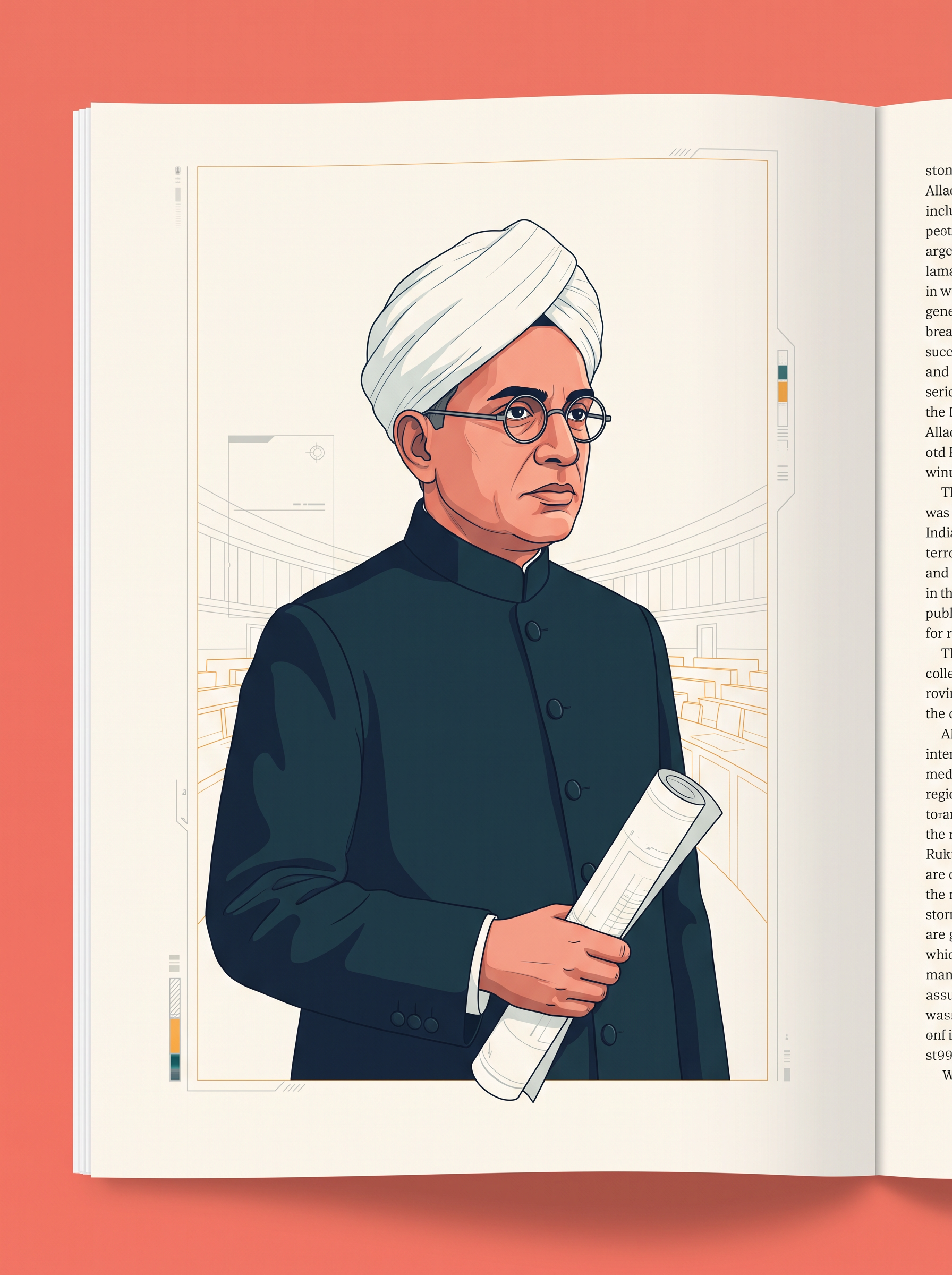
Fig. 10.2 – Alladi Krishnaswami Ayyar.
Read Ayyar’s words carefully, because the argument is stated in them. He does not say that adult franchise is safe, or that the electorate is prepared for it. He says the Assembly adopted it out of ‘an abundant faith in the common man’. Faith is the right word: nobody could yet know how a mass electorate, most of it poor and much of it unable to read, would use the vote. The Assembly chose to trust it.
It is often said, with pride, that the principle of ‘one man one vote’ was accepted in India almost uncontested, whereas women in many other countries had to struggle for years to win the right to vote at all. The claim in the source supports the first half of that: this is a leading member telling the Assembly that the principle was adopted with faith rather than fought over.
And here is the limit. A speech is a record of what a leader chose to say in public, on the floor of the Assembly, on 23 November 1949. It tells us what the Assembly was willing to assert about itself. It cannot tell us how many members privately doubted the wisdom of adult franchise, and it cannot tell us how the franchise then worked once it was actually used.
10.3.6 Federalism
The second of these two features is the particular kind of federalism the Constitution designed. By introducing the article concerning the North-East (Art. 371), the Indian Constitution anticipates the very important concept of asymmetric federalism — a federation in which the sub-units do not all stand in exactly the same legal relationship to the centre.
We have seen in the chapter on federalism that the Constitution has created a strong central government. But despite this unitary bias of the Indian Constitution, there are important constitutionally embedded differences between the legal status and prerogatives of different sub-units within the same federation. Unlike the constitutional symmetry of American federalism, where the states stand on identical footing, Indian federalism has been constitutionally asymmetric. To meet the specific needs and requirements of some sub-units, it was always part of the original design to have a unique relationship with them, or to give them special status.
Under Article 371A, the privilege of special status was also accorded to the North-Eastern State of Nagaland. This Article not only confers validity on pre-existing laws within Nagaland, but also protects local identity through restrictions on immigration. Many other States too are beneficiaries of such special provisions. According to the Indian Constitution, then, there is nothing bad about this differential treatment. Treating unlike cases alike is not equality; it is only uniformity.
Although the Constitution did not originally envisage this, India is now a multi-lingual federation. Each major linguistic group is politically recognised and all are treated as equals. Thus the democratic and linguistic federalism of India has managed to combine claims to unity with claims to cultural recognition. A fairly robust political arena exists that allows for the play of multiple identities that complement one another — a citizen may speak one language, profess one faith and belong to one region, without any of these standing against the others.
This is also worth setting against the charge, taken up later in the chapter, that the Constitution is a borrowed document. Federalism was borrowed; asymmetric federalism was not. In the borrowed material, an Indian imprint was put.
10.3.7 National Identity
Thus the Constitution constantly reinforces a common national identity. In the chapter on federalism you have studied how India strives to retain regional identities along with the national identity. It is clear from what is mentioned above that this common national identity was not incompatible with distinct religious or linguistic identities. The Indian Constitution tried to balance these various identities.
Yet preference was given to the common identity under certain conditions. This is clarified in the debate over separate electorates based on religious identity, which the Constitution rejects. Under a system of separate electorates, voters of a religious community would vote separately, choosing representatives only for their own community.
Read the ground of the rejection carefully, because it is easily mistaken. Separate electorates were rejected not because they fostered difference between religious communities as such, and not because they endangered a simple notion of national unity. They were rejected because they endangered a healthy national life. A Constitution that had just granted community-based rights was plainly not against difference. What it would not accept was an arrangement in which citizens of different faiths never had to seek one another’s votes, and therefore never had to speak to one another at all.
Rather than forced unity, our Constitution sought to evolve true fraternity — a sense among citizens of belonging to one another, of being members of a single community rather than rival blocs. This was a goal dear to the heart of Dr. Ambedkar. As Sardar Patel put it, the main objective was to evolve ‘one community’.
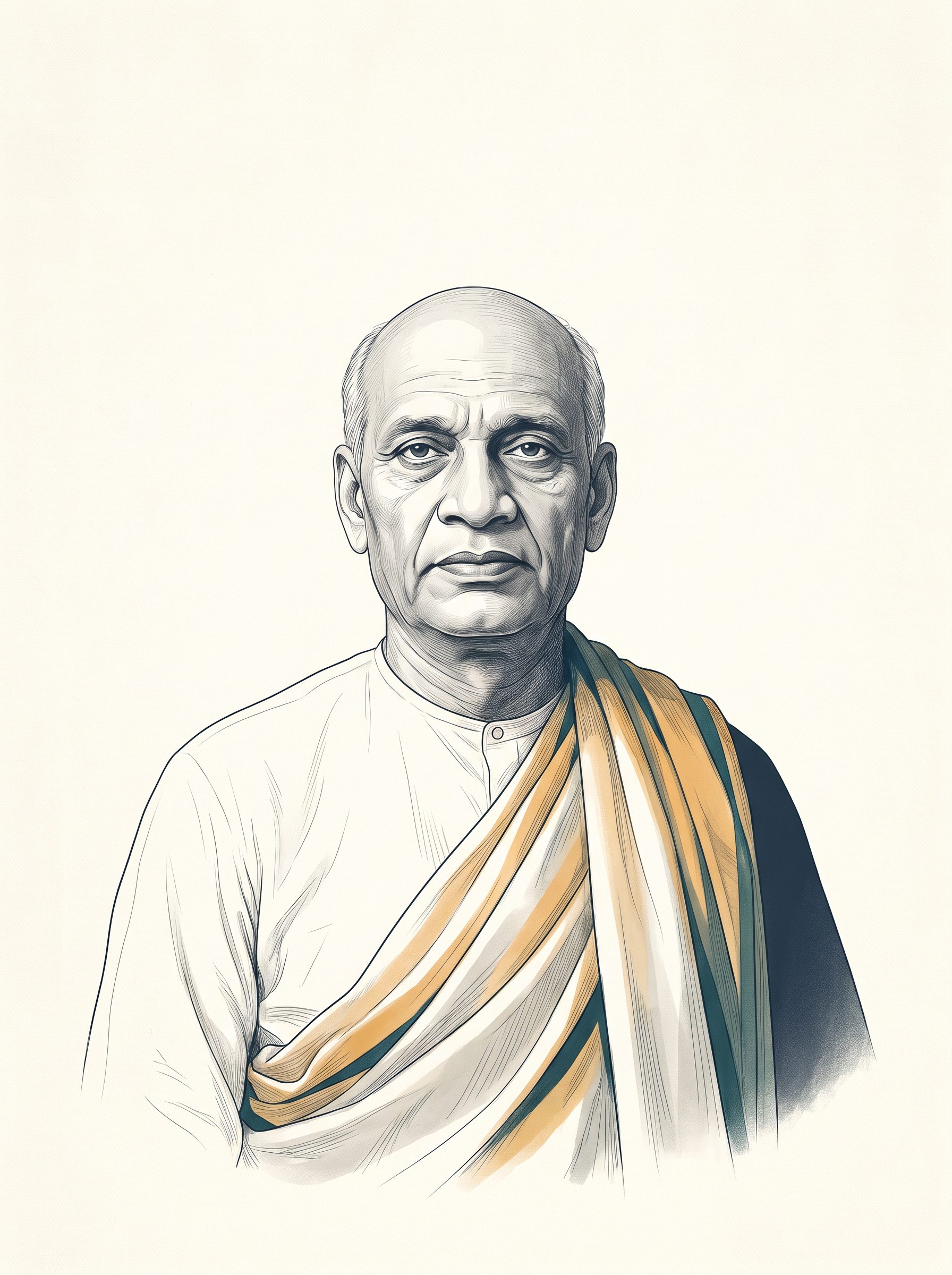
Fig. 10.3 – Sardar Vallabhbhai Patel.
Notice the words ‘in the long run’. Patel is not denying that majorities and minorities existed in India in 1949; he is stating an aspiration about where the country should arrive. The vision is of a polity in which the labels lose their political force, so that no citizen votes, or is governed, as a member of a bloc.
The limit here is the same as with any speech, and it cuts both ways. Patel is speaking on 25 May 1949, in the Assembly, as one of its most powerful members, at a moment when the question of minority representation was being settled. The extract tells us what he urged. It cannot tell us what the minority members who heard him felt about being asked to forget the distinction, and it cannot tell us whether the arrangement that followed did in fact protect them. For that, this chapter’s own criticisms — and the chapters on rights and on federalism — have to be brought in.
10.4 Procedural Achievements
All these five core features — individual freedom, social justice, respect for diversity and minority rights, universal franchise, and federalism — are what might be called the substantive achievements of the Constitution. They concern what the document decided.
However, there were also procedural achievements. These concern how the framers went about deciding, and they are easy to overlook, because a procedure leaves behind no clause you can point to. They matter all the same, because the way a decision is reached settles who can live with it afterwards.
Faith In Political Deliberation
First, the Indian Constitution reflects a faith in political deliberation — the practice of reaching decisions by argument in public, where each side must give reasons the other side could in principle accept.
We know that many groups and interests were not adequately represented in the Constituent Assembly. That is a real weakness, and the chapter does not hide it. But the debates in the Assembly amply show that the makers of the Constitution wanted to be as inclusive in their approach as possible.
This open-ended approach indicates the willingness of people to modify their existing preferences — in short, to justify outcomes by reference not to self-interest but to reasons. That is a demanding standard. A member who argues from self-interest need never change his mind; a member who argues from reasons can be defeated by a better argument, and must then move. The debates also show a willingness to recognise creative value in difference and disagreement: disagreement was treated as something that improves a decision, not merely as an obstacle to it.
The Spirit Of Compromise And Accommodation
Second, the Constitution reflects a spirit of compromise and accommodation. These words, compromise and accommodation, should not always be seen with disapproval. Not all compromises are bad.
Everything turns on what is being traded, and for what. If something of value is traded off for mere self-interest, then we have naturally compromised in the bad sense. However, if one value is partially traded off for another value — especially in an open process of free deliberation among equals — then the compromise arrived at in this manner can hardly be objected to.
We may lament that we could not have everything. But to secure a bit of all things important cannot be morally blameworthy. A framer who gives ground on one value in order to protect another has not sold anything; she has chosen between goods, in public, with her reasons on record.
Besides, a commitment to the idea that decisions on the most important issues must be arrived at consensually — by working towards agreement — rather than by majority vote, is equally morally commendable. A majority vote settles a question by counting heads. Consensus tries to settle it by satisfying everyone enough to go along, which is slower, and which takes minorities seriously by design.
It is one thing to accept compromises in the design of institutions. But how can conflicting principles be accommodated? The chapter’s answer runs through the whole of the last section. Freedom was not sacrificed to social justice, nor social justice to freedom; the state was neither locked out of religion nor let loose in it; the units of the federation were neither made identical nor set free of the centre. In each case a bit of both values was secured, and the reasons were argued out in the open.
Two Kinds Of Achievement
The distinction the section rests on is worth holding steady, and Table 10.A2 sets it out.
10.5 Criticisms
The Indian Constitution can be subjected to many criticisms, of which three may be briefly mentioned: first, that it is unwieldy; second, that it is unrepresentative; and third, that it is alien to our conditions.
First Criticism: It Is Unwieldy
The criticism that the Constitution is unwieldy is based on the assumption that the entire constitution of a country must be found in one compact document. Test that assumption before accepting the criticism, because everything depends on it.
The assumption is not true even of countries such as the US, which do have a compact constitution. The fact is that a country’s constitution is to be identified with a compact document and with other written documents that have constitutional status. Thus, it is possible to find important constitutional statements and practices outside one compact document.
In the case of India, many such details, practices and statements are included in one single document, and this has made that document somewhat large in size. Many countries, for instance, do not have provisions for an election commission or a civil service commission in the document known as the constitution. But in India, many such matters are attended to by the constitutional document itself.
So the length is not evidence of muddle. It is evidence of a choice: to write down, in the document that has the highest authority, matters that other countries leave to ordinary law and to convention.
Second Criticism: It Is Unrepresentative
A second criticism of the Constitution is that it is unrepresentative. Do you remember how the Constituent Assembly was formed? At that time, adult franchise had not yet been granted, and most members came from the advanced sections of society. Does this make our Constitution unrepresentative?
Here we must distinguish two components of representation: one that might be called voice, and the other opinion. The voice component of representation is important. People must be recognised in their own language or voice, not in the language of the masters — that is, they must be able to speak for themselves rather than be spoken for.
If we look at the Indian Constitution from this dimension, it is indeed unrepresentative, because members of the Constituent Assembly were chosen by a restricted franchise — a vote limited to some sections of society — and not by universal suffrage.
However, if we examine the other dimension, we may not find it altogether lacking in representativeness. The claim that almost every shade of opinion was represented in the Constituent Assembly may be a trifle exaggerated, but it may have something to it. If we read the debates that took place in the Assembly, we find that a vast range of issues and opinions were mentioned. Members raised matters not only on the basis of their individual social concerns, but on the basis of the perceived interests and concerns of various social sections as well.
There is also evidence of a different kind. Is it a coincidence that the central square of every other small town has a statue of Dr. Ambedkar with a copy of the Indian Constitution in hand? Far from being a mere symbolic tribute to him, this expresses the feeling among Dalits that the Constitution reflects many of their aspirations.
That evidence has its limits too. A statue records what a community has chosen to honour in public; it does not measure how many hold that view, or how the Constitution has actually worked in their lives. But it does point back to something learnt in the first chapter: there must be a valid reason for every section of society to go along with the Constitution. Where such a reason exists, the document survives; where it does not, no amount of legal authority will save it.
Third Criticism: It Is Alien To Our Conditions
A final criticism alleges that the Indian Constitution is entirely an alien document, borrowed article by article from western constitutions, and that it sits uneasily with the cultural ethos of the Indian people. This criticism is often voiced by many. Even in the Constituent Assembly itself, there were some voices that echo this concern, as Source 10.5 shows.
The image does the arguing. A veena and a sitar are Indian instruments; an English band is a foreign ensemble, playing foreign music. Hanumanthaiya’s charge is that the framers produced the second when the country was waiting for the first, and he traces the fault to their own education. Notice that this is a member of the Assembly, speaking inside it, weeks before the Constitution was adopted. The criticism is not an outsider’s; it is on the record of the very body being criticised.
Notice also what the extract cannot establish. It tells you that one member felt this, and how strongly; it does not tell you how many agreed, nor whether the charge is true. Nor can a speech settle what Mahatma Gandhi would have wanted — that is Hanumanthaiya’s reading, offered in a debate he was trying to win.
How far, then, is this charge true?
Innovative Borrowing, Not Blind Borrowing
It is true that the Indian Constitution is modern and partly western. Do you remember that in the first chapter we listed the various sources from which our Constitution ‘borrowed’? But in this chapter you have also seen that it was never a blind borrowing. It was innovative borrowing. Besides, as we shall see, this does not make it entirely alien.
First, many Indians have not only adopted modern ways of thinking, but have made these their own. For them, westernisation became a form of protest against the filth in their own tradition — a weapon picked up against injustices at home, not an imitation of a foreign master. Rammohan Roy started this trend, and it is continued to this day by Dalits.
Second, when western modernity began to interact with local cultural systems, something like a hybrid culture began to emerge — possibly by creative adaptation — for which a parallel can be found neither in western modernity nor in indigenous tradition. This cluster of newly developed phenomena, forged out of western modern and indigenous traditional cultural systems, has the character of a different, alternative modernity.
In non-western societies, different modernities emerged as those societies tried to break loose not only from their own past practices, but also from the shackles of a particular version of western modernity imposed on them. Both sets of shackles, notice, are being shaken off at once. Thus, when we were drafting our Constitution, efforts were made to amalgamate western and traditional Indian values. It was a process of selective adaptation, and not borrowing.
10.5.1 Limitations
All this is not to say that the Constitution of India is a perfect and flawless document. Given the social conditions within which the Constitution was made, it was only natural that there may be many controversial matters, and that there would be many areas needing careful revision. There are many features of this Constitution that have emerged mainly due to the exigencies of the time — the pressures and emergencies of the moment in which the framers were working. Nonetheless, we must admit that there are many limitations to this Constitution. Let us briefly mention them.
- First, the Indian Constitution has a centralised idea of national unity.
- Second, it appears to have glossed over some important issues of gender justice, particularly within the family.
- Third, it is not clear why, in a poor developing country, certain basic socio-economic rights were relegated to the section on Directive Principles rather than made an integral feature of our fundamental rights.
The third limitation deserves a moment’s thought, because the difference is not a technicality. A fundamental right can be enforced in a court; a Directive Principle is a goal the state is asked to work towards, and a citizen cannot go to court to demand it. So the placement of a right decides whether a poor citizen can do anything about it.
It is possible to give answers to these limitations, to explain why they happened, or even to overcome them. But that is not our point here. We are arguing that these limitations are not serious enough to jeopardise the philosophy of the Constitution.
That claim should not be swallowed whole; it is a judgement, and you are entitled to weigh it. But hold on to the thought that lies behind it. No document can be perfect, and no ideals can be fully achieved. It does not follow that we should therefore have no ideals and no vision. A limitation is a measure of the distance still to be covered — which means you must first have somewhere to go.
10.6 Conclusion
In the previous chapter we described the Constitution as a living document — a document that survives by growing, adapting to new demands through amendment and interpretation instead of being discarded when circumstances change. It is these core features of the Constitution that give it this stature.
Think about why they do. Legal provisions and institutional arrangements depend upon the needs of the society and the philosophy adopted by that society. Change the needs, and the provisions must be reworked. Keep the philosophy, and the reworking has something to steer by. The Constitution gives expression to this philosophy, which is why it can be altered without being abandoned.
Where The Vision Came From
The institutional arrangements that we have studied throughout this book — the legislature, the executive, the judiciary, federalism, elections, local government — are based on a core and commonly agreed vision. They were not assembled at random.
That vision has historically emerged through our struggle for independence. The Constituent Assembly was the platform on which the vision was stated, refined and articulated in legal-institutional form — turned, that is, from an aspiration argued about in the national movement into clauses that could be enforced. Thus, the Constitution becomes the embodiment of this vision.
The Humble Claim In The Preamble
Many people have said that the best summary of this vision, or philosophy, of the Constitution is to be found in the preamble to our Constitution — the short opening statement that declares who is adopting the document and what they hope to achieve by it.
Have you carefully read the preamble? Apart from the various objectives mentioned in it, the preamble makes a very humble claim. The Constitution is not ‘given’ by a body of great men; it is prepared and adopted by ‘We, the people of India…’. That single phrase settles the question of authority. Nobody handed the document down as a gift, and nobody can take it back as one.
Thus, the people are themselves the makers of their own destinies, and democracy is the instrument that people have used for shaping their present and their future.
An Achievement Still Being Made
None of this means the years since have been harmonious. More than five decades since the Constitution was drafted, we have fought over many matters. The courts and the governments have disagreed on many interpretations. The centre and the States have many differences of opinion. Political parties have fought bitterly. As you will study next year, our politics has been full of problems and shortcomings.
And yet, if you asked the politician or the common citizen, you will find that everyone continues to share in that famous vision embodied in the Constitution: we want to live together and prosper together on the basis of the principles of equality, liberty and fraternity. Disagreement about how to reach a destination is not the same as disagreement about the destination.
This sharing in the vision, or the philosophy, of the Constitution is the valuable outcome of the working of the Constitution. In 1950, the making of this Constitution was a great achievement. Today, keeping alive the philosophical vision of that Constitution may be our important achievement.
10.7 Summary
The Chapter In Short
- A constitution is not only a set of laws. Many laws are closely connected to deeply held values, so the document rests on a moral vision — and that vision can be studied.
- A political philosophy approach to the Constitution does three things: it examines the meanings of its key concepts, works out the vision of society they add up to, and reads the Constituent Assembly Debates for the justification of its values.
- The context in which a constitution is made shapes what it values, as the Japanese ‘peace constitution’ of 1947 shows.
- Constitutions restrict the exercise of power and prevent states from turning tyrannical. They also provide peaceful, democratic means of social transformation, and for a colonised people they are the first real exercise of self-determination.
- On this approach, constitutions do not only limit those in power; they empower those who have traditionally been deprived of power.
- We must go back to the Constituent Assembly because our world is not yet far removed from that of the framers, and because reasons we have forgotten cannot be used to defend practices under challenge.
- The philosophy of the Indian Constitution resists a single label. It is liberal, democratic, egalitarian, secular and federal, open to community values, sensitive to minorities and disadvantaged groups, and committed to a common national identity — to be achieved by peaceful, democratic means.
- Individual freedom was not invented in 1949. It was built over more than a century, from Rammohan Roy’s protest against curtailment of the press to the national movement’s opposition to the Rowlatt Act.
- Indian liberalism was always linked to social justice. Equal rights alone could not undo age-old injustice, so the Constitution provided special measures, including reservation of seats in legislatures and the possibility of reserving public sector jobs.
- The Constitution recognises communities as well as individuals, because in a land of many communities a person’s freedom depends partly on the standing of her community.
- Indian secularism is not mutual exclusion but principled distance. The state may intervene in religion or abstain, depending on which better promotes liberty, equality and social justice.
- Universal franchise was at the heart of Indian nationalism from very early on, and was accepted almost uncontested.
- Indian federalism is constitutionally asymmetric: some States, such as Nagaland under Article 371A, have a special status by design.
- The Constitution rejects separate electorates and seeks fraternity rather than forced unity.
- Beyond these five substantive achievements are two procedural ones: a faith in political deliberation, and a spirit of compromise and accommodation among equals.
- Three criticisms are examined: that the Constitution is unwieldy, unrepresentative, and alien. Each is answered, but not dismissed.
- Three limitations are admitted: a centralised idea of national unity; the glossing over of gender justice, particularly within the family; and the placing of basic socio-economic rights in the Directive Principles rather than among fundamental rights.
- The preamble makes a humble claim: the Constitution is not given by great men but adopted by ‘We, the people of India…’. Making it in 1950 was an achievement; keeping its philosophical vision alive may be ours.
The Arguments In One Place
The chapter’s central claim is that the Indian Constitution embodies a defensible moral vision — freedom, equality, social justice and fraternity, pursued by peaceful and democratic means — and that its borrowings were selective adaptations rather than imitation, its procedures deliberative rather than self-interested.
The strongest position against it is stated inside the chapter, and by members of the Constituent Assembly themselves. K. Hanumanthaiya’s charge is that a document drafted by men educated in western ways plays the music of an English band, not of the veena or the sitar, and is not the Constitution Mahatma Gandhi envisaged. The related charge is that an Assembly chosen by restricted franchise, drawn from the advanced sections of society, could not speak in the voice of those it bound.
The chapter answers that borrowing was innovative rather than blind, and that on the dimension of opinion, if not of voice, a vast range of concerns was argued in the debates. It does not claim the answer is complete. It claims only that the limitations are not serious enough to jeopardise the philosophy.
What Remains Contested
Whether an Assembly elected on a restricted franchise could rightfully bind generations that never chose it is not settled here, and the chapter admits the point rather than disposing of it. Nor is it settled how far a state may enter the domain of religion before principled distance becomes something else.
The sources this chapter preserves were, almost all of them, produced by men who held the floor in the Constituent Assembly or wrote books about it. The women whose position within the family the Constitution glossed over, and the poor for whom socio-economic rights were left unenforceable, left no extract in these pages. Their absence is itself evidence — of who was in the room, and who was being spoken for.
10.8 NCERT Questions
The following are certain laws. Are they connected with any value? If yes, then what is the underlying value? Give reasons.
- Both daughters and sons will have share in the family property.
- There will be different slabs of sales tax on different consumer items.
- Religious instructions will not be given in any government school.
- There shall be no begar or forced labour.
Which of the options given below cannot be used to complete the following statement? Democratic countries need a constitution to
- Check the power of the government.
- Protect minorities from majority.
- Bring independence from colonial rule.
- Ensure that a long-term vision is not lost by momentary passions.
- Bring social change in peaceful manner.
The following are different positions about reading and understanding Constituent Assembly debates. Which of these statements argues that Constituent Assembly debates are relevant even today? Which statement says that they are not relevant? With which of these positions do you agree and why?
- Common people are too busy in earning livelihood and meeting different pressures of life. They can’t understand the legal language of these debates.
- The conditions and challenges today are different from the time when the Constitution was made. To read the ideas of Constitution makers and use them for our new times is trying to bring past in the present.
- Our ways of understanding the world and the present challenges have not changed totally. Constituent Assembly debates can provide us reasons why certain practises are important. In a period when constitutional practises are being challenged, not knowing the reasons can destroy them.
Explain the difference between the Indian Constitution and western ideas in the light of
- Understanding of secularism.
- Articles 370 and 371.
- Affirmative action.
- Universal adult franchise.
Which of the following principles of secularism are adopted in the Constitution of India?
- that state will have nothing to do with religion
- that state will have close relation with religion
- that state can discriminate among religions
- that state will recognise rights of religious groups
- that state will have limited powers to intervene in affairs of religions
Match the following. | Column A | Column B | |—|—| | a. Freedom to criticise treatment of widows | i. Substantive achievement | | b. Taking decisions in the constituent assembly on the basis of reason, not self interest | ii. Procedural achievement | | c. Accepting importance of community in an individual’s life | iii. Neglect of gender justice | | d. Article 370 and 371 | iv. Liberal individualism | | e. Unequal rights to women regarding family property and children | v. Attention to requirements of a particular region |
This discussion was taking place in a class. Read the various arguments and state which of these do you agree with and why. Jayesh: I still think that our Constitution is only a borrowed document. Saba: Do you mean to say that there is nothing Indian in it? But is there such a thing as Indian and western in the case of values and ideas? Take equality between men and women. What is western about it? And even if it is, should we reject it only because it is western? Jayesh: What I mean is that after fighting for independence from the British, did we not adopt their system of parliamentary government? Neha: You forget that when we fought the British, we were not against the British as such, we were against the principle of colonialism. That has nothing to do with adopting a system of government that we wanted, wherever it came from.
Why is it said that the making of the Indian Constitution was unrepresentative? Does that make the Constitution unrepresentative? Give reasons for your answer.
One of the limitations of the Constitution of India is that it does not adequately attend to gender justice. What evidence can you give to substantiate this charge? If you were writing the Constitution today, what provisions would you recommend for remedying this limitation?
Do you agree with the statement that “it is not clear why in a poor developing country, certain basic socio-economic rights were relegated to the section on Directive Principles rather than made an integral feature of our Fundamental Rights”? Give reasons for your answer. What do you think are the possible reasons for putting socio-economic rights in the section on Directive Principles?
10.9 Check Your Concepts
Look again at Fig. 10.1, drawn for 26 January 1950. Who is shown as the umpire, and what claim is the cartoonist making about how contending ideas are to be settled in India? Name one thing this cartoon cannot tell you.
Read Source 10.1 again. What ideal does the Japanese constitution of 1947 rest on, and how does Article 9 turn that ideal into a rule? Explain, using this example, what the chapter means when it says that the context of making a constitution dominates the thinking of the constitution makers.
The chapter argues that constitutions are needed to restrict the exercise of power. Reconstruct that argument as a chain of steps, beginning with the claim that modern states have a monopoly over force and coercion.
Source 10.2 describes two streams of Indian liberalism. What is the difference between them? How does the second stream complicate the charge that social justice was an idea imported from the West?
The Constitution rejected separate electorates based on religious identity. The chapter is careful about the reason. State the two reasons the chapter rules out, and the reason it gives instead, and explain why the distinction matters.
In Source 10.3, Alladi Krishnaswami Ayyar defends adult franchise by appealing to faith and belief rather than to proof. What does his statement establish, and what does it not establish? Answer with reference to who was speaking, where, and when.
The chapter says the Indian approach ‘had the potential of changing the theory of constitutional democracy altogether’. Explain what that change is, and show how it goes beyond the idea that a constitution exists to limit those in power.
10.3.2 Social Justice
When we say that the Indian Constitution is liberal, we do not mean that it is liberal only in the classical western sense. You will learn more about the idea of liberalism in the book on Political Theory. For now, one feature of it is enough: classical liberalism always privileges the rights of individuals over the demands of social justice and community values. Where the two collide, the individual wins.
ITQ-2. State which of the following rights are part of individual freedom: i. Freedom of expression ii. Freedom of religion iii. Cultural and educational rights of minorities iv. Equal access to public places
Why Equality On Paper Was Not Enough
The liberalism of the Indian Constitution differs from the classical version in two ways. First, it was always linked to social justice.
The best example of this is the provision for reservations for Scheduled Castes and Scheduled Tribes in the Constitution. The makers of the Constitution believed that the mere granting of the right to equality was not enough to overcome age-old injustices suffered by these groups, or to give real meaning to their right to vote. A rule saying that everyone is equal does not, by itself, undo centuries in which some people were kept out of schools, out of temples, out of wells and out of public life.
Special constitutional measures were therefore required to advance their interests. The constitution makers provided a number of them to protect the interests of Scheduled Castes and Scheduled Tribes, such as the reservation of seats in legislatures. The Constitution also made it possible for the government to reserve public sector jobs for these groups.
And when we speak of social justice, we should not forget the Directive Principles, the section of the Constitution that sets out goals the state is directed to work towards. Whether some of those social and economic commitments should have been placed there at all is itself contested, and the chapter returns to it among the limitations of the Constitution.
The Two Streams Of Indian Liberalism
Where did this second, socially-minded strand come from? One scholar traces it back through the nineteenth century.
Source 10.2 — The Two Streams Of Indian Liberalism From: K.M. Panikkar, “In Defence of Liberalism”, Bombay, Asia Publishing House, 1962. “Indian liberalism has two streams. The first stream began with Rammohan Roy. He emphasised individual rights, particularly the rights of women. The second stream included thinkers like K.C. Sen, Justice Ranade and Swami Vivekananda. They introduced the spirit of social justice within orthodox Hinduism. For Vivekananda, such a reordering of Hindu society could not have been possible without liberal principles.”
Panikkar’s claim is that Indian liberalism was never a single thing. One stream, beginning with Rammohan Roy, pressed for individual rights, and in particular for the rights of women. A second stream, including K.C. Sen, Justice Ranade and Swami Vivekananda, carried the spirit of social justice into orthodox Hinduism — arguing for reform from inside a religious tradition rather than against it. On Vivekananda’s view, as Panikkar reads him, such a reordering of Hindu society could not have been achieved without liberal principles at all.
If Panikkar is right, the pairing of individual rights with social justice in the Constitution is not a compromise between an Indian half and a western half. It is the meeting of two currents that had both been running in India for over a century.
Now the limit, and it is a real one. This is one scholar’s interpretation, published in 1962, and its very title — In Defence of Liberalism — tells you that it is written to defend a position. It names four thinkers and a tradition; it cannot tell you how ordinary people, or those outside these traditions, understood justice at the time. A passage arguing for a case is evidence of the case being made, not proof that it is correct.