Chapter 4: Change and Development in Rural Society
Look closely at the Indian festival calendar and you will notice something curious. Pongal in Tamil Nadu, Bihu in Assam, Baisakhi in Punjab, Ugadi in Karnataka — these celebrations fall at different times and carry different names, yet they mark the same thing. They mark a harvest, and they announce the opening of a new agricultural season. A festival that looks purely religious or purely regional turns out, on inspection, to be organised around the rhythm of the fields.
That tells you something important about India. According to the 2011 Census, sixty-nine per cent of Indians live in rural areas, and most of them make their living from agriculture or from occupations that depend on it. So land is not merely an economic asset in India. It shapes what people eat, when they marry, whom they work for, what songs they sing, and when they rest.
But look again at the village where the harvest is being celebrated. The people singing together do not stand in the same position at all. A few families own most of the land. Many own a small plot. Others own nothing and must work on somebody else’s field for a daily wage. The festival is shared. The harvest is not.
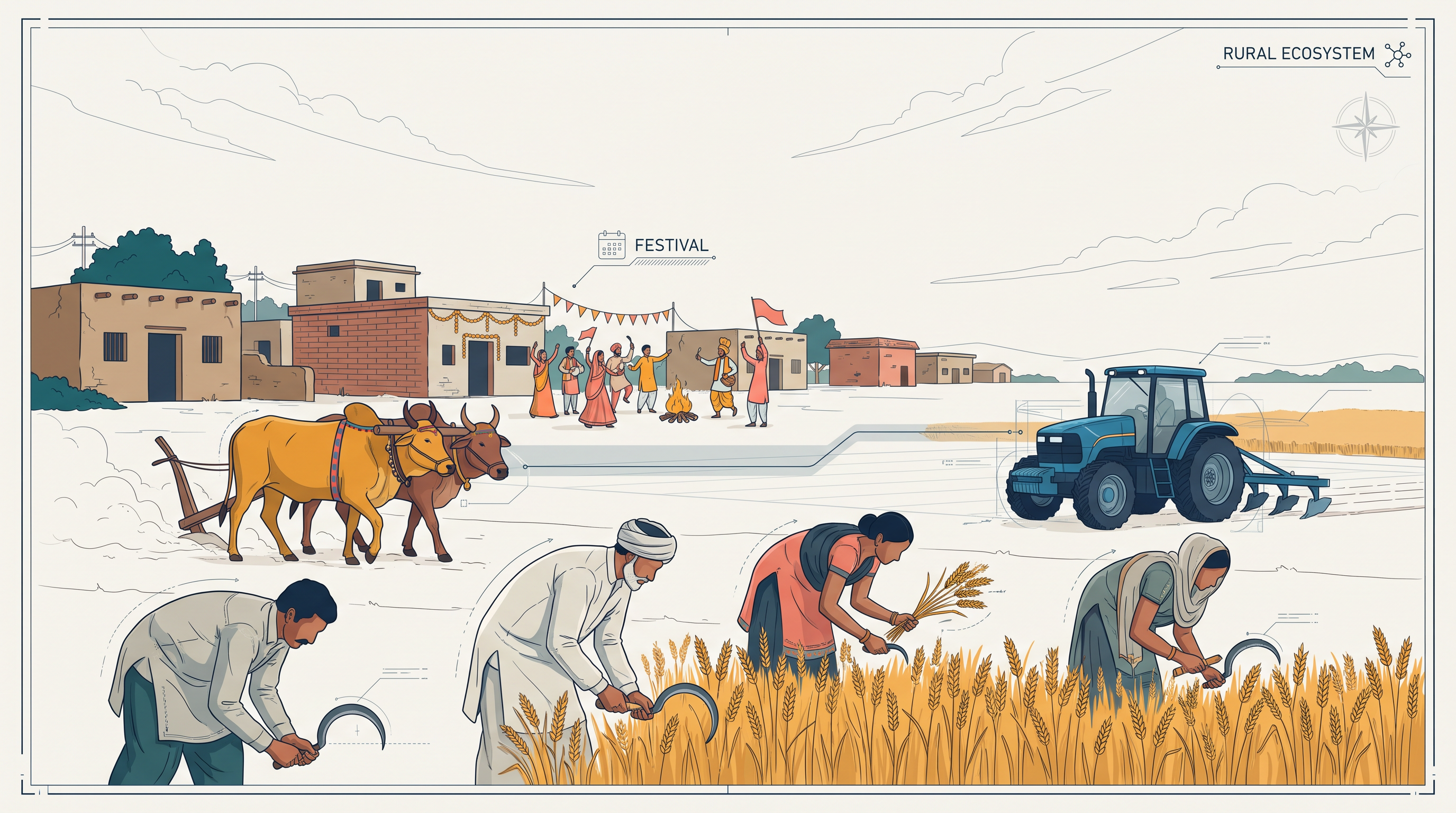
Fig. 4.1 – Agriculture as a livelihood and a way of life.
Sociology begins exactly at that gap between the shared festival and the unshared harvest.
This chapter will help you answer each of these questions.
4.1 Agrarian Structure: Caste and Class in Rural India
India is still, in the main, a rural society, even though urbanisation is growing steadily. According to the 2011 Census, 69 per cent of India’s people live in rural areas, and the great majority of them earn their living from agriculture or from occupations tied to it.
This single fact carries a great deal of sociological weight. It means that agricultural land is the most important productive resource for a very large number of Indians. It is also the most important form of property that a rural household can hold.
But it would be a mistake to think of land only as a “means of production”, or only as a “form of property”. And it would be equally mistaken to think of agriculture only as a way of earning a living. Agriculture is also a way of life.
You have already seen in the earlier chapters of this book how closely structural change and cultural change are interwoven. Rural India is a standing illustration of that link. As the opening pages of this chapter showed, the calendar of celebration in different regions of India is built around the agricultural year — which is why so much of our cultural life carries the imprint of an agrarian past.
The connection runs deeper than festivals. The way agriculture is practised varies enormously across the country — what is grown, how it is watered, when it is sown, who does which task. These variations are reflected in the different regional cultures of India. Both the culture and the social structure of rural India are bound up with agriculture and with the agrarian way of life.
Rural Is Not the Same as Agricultural
Agriculture is the single most important source of livelihood for the majority of the rural population. But the rural is not only agriculture, and it never was.
A great many activities that support agriculture and village life are themselves sources of livelihood. Rural India has long had a large number of artisans — potters, carpenters, weavers, ironsmiths, goldsmiths. They were once part and parcel of the village economy, producing what the village needed and receiving a share of the harvest or a payment in return.
Their numbers have been steadily lessening since the colonial period. You have already read in Chapter 1 how the influx of cheap manufactured goods displaced hand-made products, and with them the livelihoods of those who made them.
Rural life also supported many other specialists and craftspersons — story-tellers, astrologers, priests, water-distributors, oil-pressers. Look at Fig. 4.2 and you will see how many different kinds of work a single village could contain.
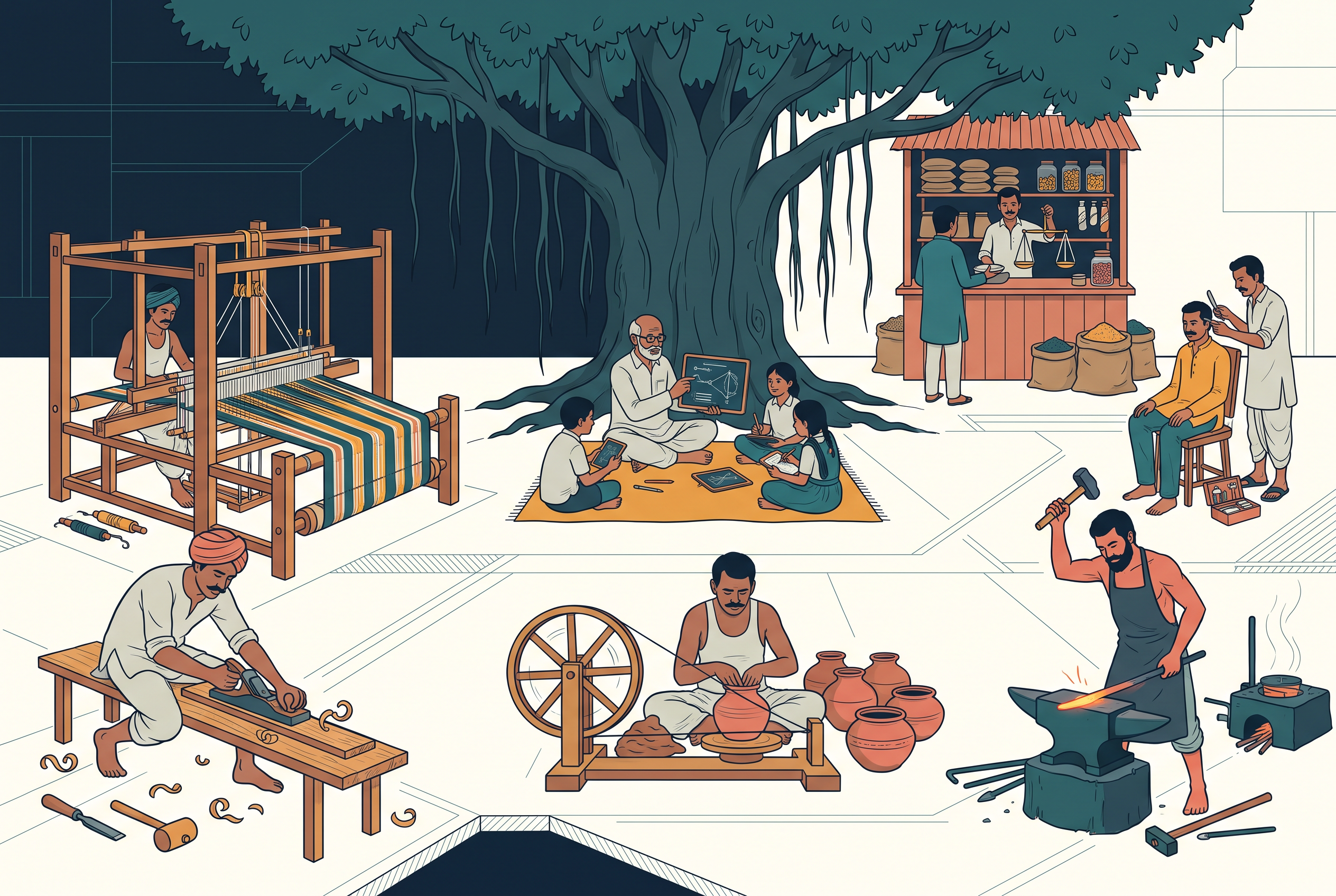
Fig. 4.2 – Traditional diversity of occupations in a village.
This diversity of occupations was reflected in the caste system, which in most regions included specialist and ‘service’ castes such as Dry Cleaners, Potters and Goldsmiths. Occupation was not simply a job one chose; it was, for most people, an inheritance.
Some of these traditional occupations have declined. But the increasing interconnection of the rural and urban economies has produced many new and diverse occupations in their place. Large numbers of rural people now live in the village but do not farm.
They are employed in, or have livelihoods based on, rural non-farm activities. There are rural residents working in government services such as the Postal and Education Departments, others who are factory workers, others who serve in the army. All of them live in rural India and earn their living outside agriculture.
How Land Is Distributed
Agricultural land, then, is the single most important resource and form of property in rural society. But it is not equally distributed among the people living in a particular village or region, and not everyone has access to it at all.
In fact the distribution of landholdings in most regions is highly unequal among households. In some parts of India, the majority of rural households own at least some land — usually a very small plot. In other areas, as much as 40 to 50 per cent of families do not own any land at all.
A family that owns no land must depend on agricultural labour, or on other kinds of work, for its livelihood. The arithmetic of this is unforgiving. A few families in a village are well-to-do; the majority live just above or just below the poverty line.
Notice also who is missing from the list of owners. In most regions of India, women are usually excluded from the ownership of land, because of the prevailing patrilineal kinship system and its mode of inheritance — a system in which descent, and therefore property, passes through the male line.
By law, women are supposed to have an equal share of family property. In reality they have only limited rights and some access to land, and that access comes to them only as members of a household headed by a man. Ownership and access are not the same thing, and the distinction matters.
Land, Class and the Agrarian Structure
Sociologists use the term agrarian structure to refer to the structure or distribution of landholding in a rural society.
Because agricultural land is the most important productive resource in rural areas, access to land shapes the rural class structure. Where you stand in relation to land largely determines what role you play in the process of agricultural production, and therefore what kind of income and security you can expect.
Consider the positions in turn. Medium and large landowners are usually able to earn sufficient or even large incomes from cultivation. This is not guaranteed — it depends on agricultural prices, which can fluctuate greatly, and on other factors such as the monsoon — but the possibility of a good income exists for them.
Agricultural labourers stand at the other end. They are more often than not paid below the statutory minimum wage and earn very little. Their incomes are low and their employment is insecure.
Most agricultural labourers are daily-wage workers, and they do not have work for many days of the year. Being available for work but finding none for long stretches is known as underemployment. It is one of the defining conditions of the rural poor.
Between these two positions stand the tenants — cultivators who lease their land from landowners. Tenants have lower incomes than owner-cultivators for a simple reason: they must hand over a substantial rent to the landowner, often as much as 50 to 75 per cent of the income from the crop.
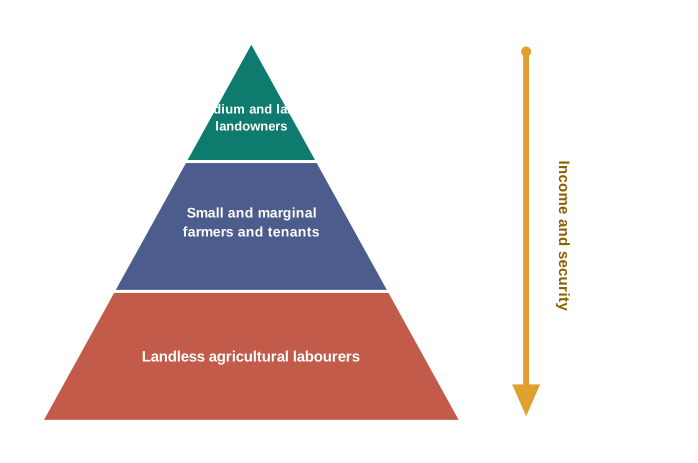
Fig. 4.3 – The agrarian class structure.
Why Class Alone Is Not Enough
Agrarian society, therefore, can be understood in terms of its class structure. But we must also remember that this structure is itself shaped through the caste system.
In rural areas there is a complex relationship between caste and class, and it is not always straightforward. We might expect the higher castes to have more land and higher incomes, and expect caste rank and class position to correspond neatly as one moves down the hierarchy. In many areas this is broadly true — but not exactly.
Take the clearest exception. In most areas the highest caste, the Brahmins, are not major landowners. They are part of rural society, but they fall outside the agrarian structure altogether. Ritual rank and economic power, in other words, are two different ladders, and they do not always line up.
What is generally true is that in most regions of India the major landowning groups belong to the upper castes. In each region there are usually just one or two major landowning castes, who are also numerically important.
Such groups were termed by the sociologist M.N. Srinivas dominant castes. In each region, the dominant caste is the most powerful group, economically and politically, and it dominates local society.
Examples of dominant landowning groups are the Jats and Rajputs of U.P., the Vokkaligas and Lingayats in Karnataka, the Kammas and Reddis in Andhra Pradesh, and the Jat Sikhs in Punjab.
The Lower End of the Structure
While the dominant landowning groups are usually middle or high ranked castes, most of the marginal farmers and the landless belong to lower caste groups. In official classification they belong to the Scheduled Castes or Scheduled Tribes (SC/STs) or the Other Backward Classes (OBCs).
In many regions of India, the former ‘Untouchable’ or dalit castes were not allowed to own land at all. They provided most of the agricultural labour for the dominant landowning groups.
Trace the consequence carefully, because it is the heart of the matter. A caste rule about who may own land created, at the same time, a permanently available supply of labour. That labour force allowed landowners to cultivate their land intensively and get higher returns. The ritual order and the economic order propped each other up.
Land, Labour and Power
The rough correspondence between caste and class means that typically the upper and middle castes also had the best access to land and resources, and hence to power and privilege. This had important implications for the rural economy and for rural society.
In most regions of the country a ‘proprietary caste’ group owns most of the resources and can command labour to work for it. Command is the operative word: what is being controlled is not only land, but people’s time and bodies.
Until recently, practices such as begar, or free labour, were prevalent in many parts of northern India. Members of low ranked caste groups had to provide labour for a fixed number of days per year to the village zamindar or landlord, without payment.
Many of the working poor were tied to landowners in ‘hereditary’ labour relationships — arrangements a person was born into rather than entered by choice. Although such practices have been abolished legally, they continue to exist in many areas. A law can end a practice on paper long before it ends it in a field.
4.2 The Impact of Land Reforms
You have just seen that in every region of India one or two groups came to dominate the countryside. That did not happen by accident, and it did not happen all at once. There are historical reasons why each region came to be dominated by just one or two major groups.
It is important to realise that the agrarian structure has changed enormously over time — from the pre-colonial period, to the colonial period, to the decades after Independence. What looks fixed today is the settled residue of a long history of law, revenue and struggle.
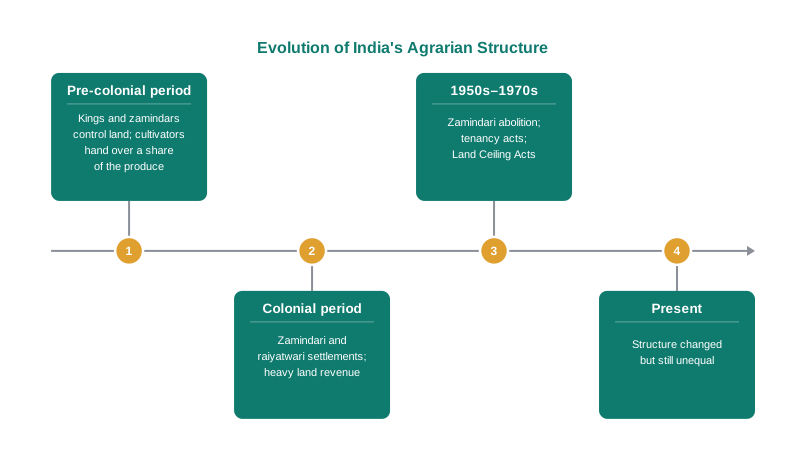
Fig. 4.4 – Timeline of agrarian change in India.
4.2.1 The Colonial Period
Begin before the British. In the pre-colonial period the same castes that are dominant today were probably already cultivating castes — but they were not the direct owners of land.
Land was controlled by ruling groups: local kings, and zamindars, landlords who were also politically powerful in their areas and who usually belonged to Kshatriya or other high castes. The peasants or cultivators who actually worked the land had to hand over a substantial portion of the produce to them.
When the British colonised India, in many areas they simply ruled through these local zamindars. It was cheaper and easier to collect revenue through a man who was already collecting it.
They went further. They granted property rights to the zamindars, so that under the British the zamindars were given more control over land than they had ever had before. A customary claim to a share of the produce was converted into a legal title to the land itself.
At the same time the colonisers imposed heavy land revenue — taxes — on agriculture. Squeezed from above and holding legal power below, the zamindars extracted as much produce or money as they could out of the cultivators.
One result of this zamindari system was that agricultural production stagnated or declined during much of the period of British rule. Peasants fled from oppressive landlords, and frequent famines and wars decimated the population. A system designed to maximise revenue collection ended by damaging the very agriculture it taxed.
The Other Settlement
Many districts of colonial India were administered through the zamindari system. But other areas, which were under direct British rule, had what was called the raiyatwari system of land settlement (raiyat means cultivator in Telugu).
In this system, the ‘actual cultivators’ rather than the zamindars were responsible for paying the tax. The phrase deserves its quotation marks, because these ‘actual cultivators’ were themselves often landlords and not cultivators at all.
Even so, the arrangement worked differently. Because the colonial government dealt directly with the farmers or landlords, rather than through a layer of overlords, the burden of taxation was less, and cultivators had more incentive to invest in agriculture. As a result, these areas became relatively more productive and prosperous.
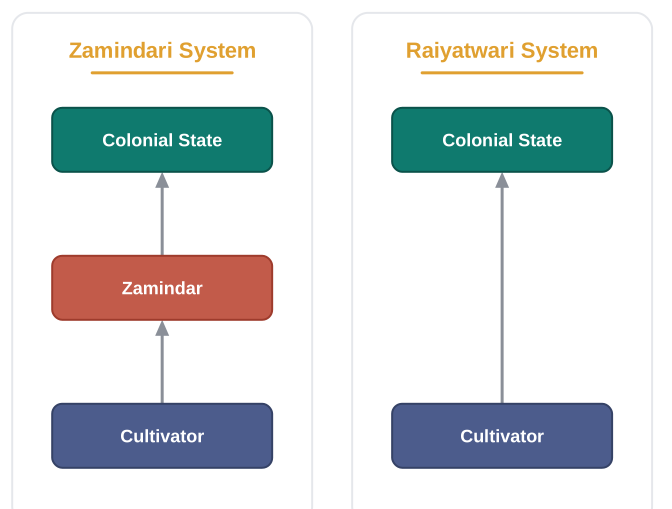
Fig. 4.5 – Flow of revenue in colonial land settlements.
This background about land revenue administration in colonial India — much of which you have met in your history books — is worth keeping firmly in mind when studying the agrarian structure of present-day India. The structure we have today did not appear at Independence. It evolved through a series of changes that begin in exactly this period.
4.2.2 Independent India
After India became independent, Nehru and his policy advisors embarked on a programme of planned development that focused on agrarian reform as well as industrialisation.
The policymakers were responding to a dismal agricultural situation. Productivity was low. India depended on imported food grains. A large section of the rural population lived in intense poverty.
Their diagnosis was structural, and this is the sociologically interesting point. They concluded that a major reform in the agrarian structure — and especially in the landholding system and the distribution of land — was necessary if agriculture were to progress at all. Improve the seed and the plough all you like; if the man who tills has no claim on what he grows, he will not invest in the soil.
From the 1950s to the 1970s, therefore, a series of land reform laws were passed, at the national level as well as in the states, intended to bring about these changes.
Abolishing the Intermediaries
The first important legislation was the abolition of the zamindari system, which removed the layer of intermediaries who stood between the cultivators and the state.
Of all the land reform laws that were passed, this was probably the most effective. In most areas it succeeded in taking away the superior rights of the zamindars over the land, and in weakening their economic and political power.
This did not happen without a struggle, of course. Power is not surrendered on request. But the ultimate effect was to strengthen the position of the actual landholders and cultivators at the local level.
Protecting the Tenant
Among the other major land reform laws that were introduced were the tenancy abolition and regulation acts. They attempted either to outlaw tenancy altogether, or to regulate rents so as to give some security to the tenants.
In most of the states these laws were never implemented very effectively. A tenant who complains about his rent can be turned off the land, and a tenant with no written record of his tenancy cannot complain at all.
There were exceptions, and they matter. In West Bengal and Kerala there was a radical restructuring of the agrarian structure that gave land rights to the tenants. Where the political will existed, the law had teeth.
Putting a Ceiling on Land
The third major category of land reform laws were the Land Ceiling Acts. These laws imposed an upper limit on the amount of land that can be owned by a particular family.
The ceiling varies from region to region, depending on the kind of land, its productivity, and other such factors. Very productive land has a low ceiling, while unproductive dry land has a higher ceiling limit — a sensible rule, since ten acres of irrigated delta and ten acres of dry scrub are not the same property.
According to these acts, the state is supposed to identify and take possession of surplus land — land held above the ceiling limit — from each household, and redistribute it to landless families and to households in other specified categories, such as SCs and STs.
But in most of the states these acts proved to be toothless. There were many loopholes and other strategies through which most landowners were able to escape from having their surplus land taken over by the state.
Some of the strategies were remarkable. In some places rich farmers actually divorced their wives — while continuing to live with them — in order to take advantage of a provision of the Land Ceiling Act that allowed a separate share for unmarried women but not for wives. Land was also registered in the names of relatives, servants and persons who did not exist. Such fictitious transfers were called ‘benami transfers’.
Taking Stock
The agrarian structure varies greatly across India, and the progress of land reforms has also been uneven across the states.
On the whole, however, it can be said that the agrarian structure, although it has changed substantially from colonial times to the present, remains highly unequal. Zamindars were removed; landlessness was not.
This structure puts constraints on agricultural productivity, because those who work the land hardest often have the least reason and the least means to improve it. Land reforms, then, are necessary not only to boost agricultural growth but also to eradicate poverty in rural areas and to bring about social justice.
4.3 The Green Revolution and its Social Consequences
We have just seen that land reforms had only a limited impact on rural society and on the agrarian structure in most regions. The state tried to change who owned the land, and largely did not succeed.
In contrast, the Green Revolution of the 1960s and 1970s brought about significant changes in the areas where it took place. It did not touch the question of ownership at all. It changed the way land was cultivated — and that, as it turned out, was enough to reshape rural society.
Where the New Seeds Could Go
The high-yielding variety (HYV) seeds were not miraculous. They were demanding. They produced far more grain than traditional varieties, but only if they were given the right amounts of water, fertiliser and pesticide at the right time.
That single technical fact decided the social geography of the whole programme. Green Revolution programmes were introduced only in areas that had assured irrigation, because sufficient water was necessary for the new seeds and the new methods of cultivation. They were also targeted mainly at the wheat and rice-growing areas.
As a result, only certain regions received the first wave of the Green Revolution package — the Punjab, western U.P., coastal Andhra Pradesh, and parts of Tamil Nadu. As Fig. 4.6 shows, the map of the Green Revolution is a map of assured water.
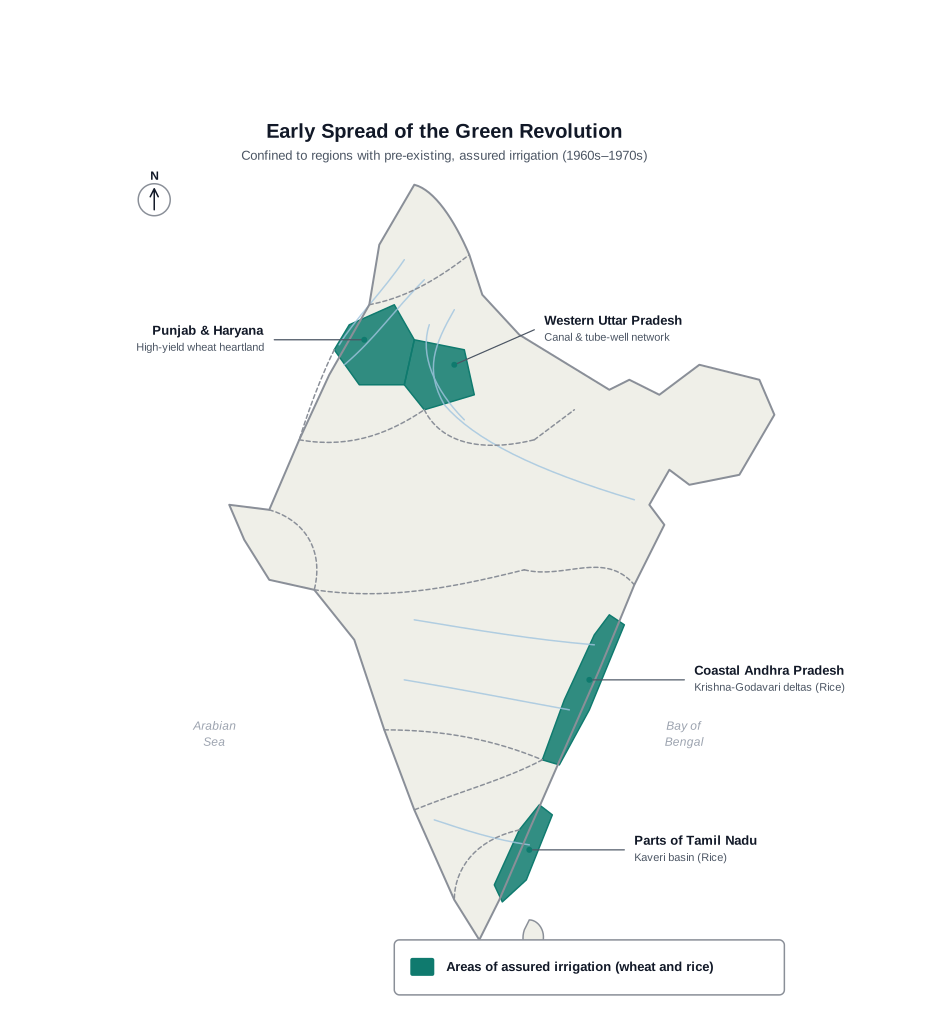
Fig. 4.6 – Regions receiving the first wave of the Green Revolution.
The rapid social and economic transformations seen in these areas stimulated a spate of studies by social scientists, and vigorous debates about the impact of the Green Revolution. Sociologists went to Punjab and to coastal Andhra Pradesh to watch a society changing in real time.
What the Green Revolution Achieved
Agricultural productivity increased sharply because of the new technology. This is not in dispute, and it should not be minimised.
India was able to become self-sufficient in foodgrain production for the first time in decades. A country that had been importing food to feed itself was now growing enough. The Green Revolution has been considered a major achievement of the government and of the scientists who contributed to the effort.
However, sociologists who studied the Green Revolution areas pointed to certain negative social effects, alongside adverse environmental impacts. The question they asked was not “did output rise?” — it plainly did — but “who gained, and who did not?”
Who Could Afford the New Technology
In most of the Green Revolution areas, it was primarily the medium and large farmers who were able to benefit from the new technology.
The reason was simple and financial. The inputs were expensive — the seeds, the fertiliser, the pesticide, the pump, the water. Small and marginal farmers could not afford to spend as much as large farmers to purchase them.
Here NCERT draws a distinction that is worth holding on to. When agriculturists produce primarily for themselves and are unable to produce for the market, this is known as subsistence agriculture, and such cultivators are usually termed ‘peasants’.
Agriculturists or farmers, by contrast, are those who are able to produce a surplus over and above the needs of the family, and who are therefore linked to the market.
It was the farmers who were able to produce a surplus for the market who were able to reap the most benefits from the Green Revolution, and from the commercialisation of agriculture that followed it.
The First Phase: Inequality Widens
Thus, in the first phase of the Green Revolution, in the 1960s and 1970s, the introduction of the new technology seemed to be increasing inequalities in rural society.
Green Revolution crops were highly profitable, mainly because they yielded more produce. Well-to-do farmers who had access to land, capital, technology and know-how, and who could invest in the new seeds and fertilisers, could increase their production and earn more money.
But profitability had a second effect, and it fell on the weakest. In many cases the new technology led to the displacement of tenant-cultivators. Because cultivation was now becoming so profitable, landowners began to take back land from their tenants and cultivate it directly.
The result was double-edged: it made the rich farmers better off, and worsened the condition of the landless and marginal holders. The same tenant who had cultivated a plot for years found that the land was worth farming himself — and so he lost it.
In addition, the introduction of machinery such as tillers, tractors, threshers and harvesters — in areas such as Punjab and parts of Madhya Pradesh — led to the displacement of the service caste groups who used to carry out these agriculture-related activities. This process of displacement also increased the pace of rural-urban migration.
The ultimate outcome of the Green Revolution was a process of differentiation, in which the rich grew richer and many of the poor stagnated or grew poorer.
The picture must be kept honest, however. It should be noted that employment and wages for agricultural workers did increase in many areas, because the demand for labour increased — intensive cultivation needs more hands, not fewer.
And yet, rising prices, together with a shift in the mode of payment of agricultural workers from payment in kind (grain) to payment in cash, actually worsened the economic condition of most rural workers. A worker paid in grain eats regardless of what the market does; a worker paid in cash must buy his food at whatever price the market sets that week.
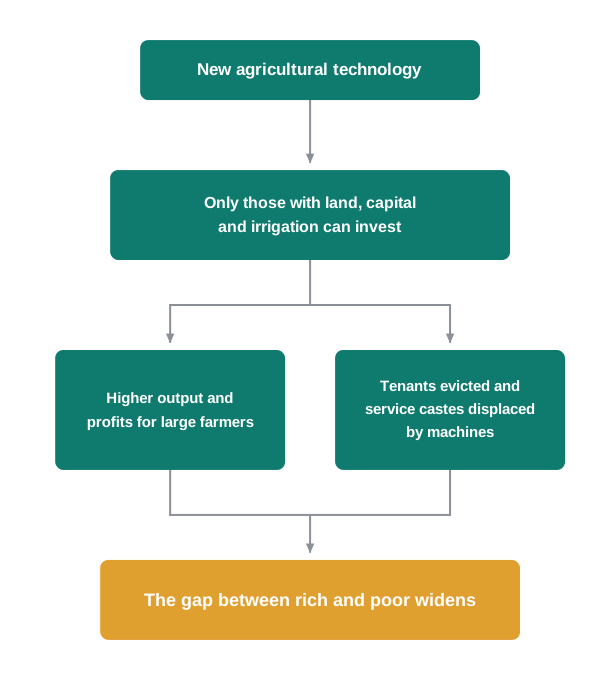
Fig. 4.7 – Differentiation in a Green Revolution village.
The Second Phase: Into the Dry Regions
The second phase of the Green Revolution began in the 1980s, when farmers living in the dry and semi-arid regions of India also began following Green Revolution cultivation practices.
In these areas there has been a significant shift from dry to wet (irrigated) cultivation, along with changes in the cropping pattern and in the type of crops grown. Fields that once grew coarse grains for the household began to grow crops for sale.
Increasing commercialisation and dependence on the market in these areas — for instance, where cotton cultivation has been promoted — has increased rather than reduced livelihood insecurity. Farmers who once grew food for their own consumption now depend on the market for their incomes.
In market-oriented cultivation, especially where a single crop is grown, a fall in prices or a bad crop can spell financial ruin for farmers. The danger is not bad luck; it is the absence of any cushion against bad luck.
In most of the Green Revolution areas, farmers have switched from a multi-crop system, which allowed them to spread their risks across several crops, to a mono-crop regime — which means that if that one crop fails, there is nothing to fall back on.
Regions That Were Left Behind
Another negative outcome of the Green Revolution strategy was the worsening of regional inequalities.
The areas that underwent this technological transformation became more developed, while other areas stagnated. Development, in other words, was not merely uneven; the unevenness itself widened.
For instance, the Green Revolution was promoted more in the western and southern parts of the country, and in Punjab, Haryana and western U.P., than in the eastern parts of the country (Das, 1999).
There remain regions with an entrenched ‘feudal’ agrarian structure, in which the landed castes and landlords maintain power over the lower castes, over landless workers and over small cultivators. Here the old structure was never dismantled by land reform, and never bypassed by new technology.
In these regions, sharp caste and class inequalities, together with exploitative labour relations, have given rise to various kinds of violence — including inter-caste violence — in recent years. Sociologically, the point is structural rather than moral: where a group’s land, wages and dignity are all controlled by another group, and no lawful means of redress works, conflict becomes likely.
Whose Knowledge Is ‘Scientific’?
It is often thought that imparting knowledge of ‘scientific’ farming methods will improve the conditions of Indian farmers.
We should remember that Indian farmers have been cultivating the land for centuries, long before the advent of the Green Revolution. They possess very deep and extensive traditional knowledge about the land they till and the crops they sow — which soil holds water, which variety survives a late monsoon, which crop follows which.
Much of this knowledge is being lost. So are the many traditional varieties of seeds that were developed over the centuries by farmers themselves, as hybrid, high-yielding and genetically modified varieties are promoted as more productive and ‘scientific’ (Gupta 1998; Vasavi 1999b).
In view of the negative environmental and social impacts of modern methods of cultivation that have been observed, a number of scientists as well as farmers’ movements now suggest a return to traditional, more organic seeds and methods of cultivation. Many rural people themselves believe that hybrid varieties are less healthy than the traditional ones.
4.4 Transformations in Rural Society after Independence
Several profound transformations in the nature of social relations in rural areas took place in the post-Independence period, especially in those regions that underwent the Green Revolution.
Notice the words “social relations”. What changed was not only how much was grown, but how people stood towards one another — who worked for whom, on what terms, and for how long. These changes included:
- an increase in the use of agricultural labour, as cultivation became more intensive;
- a shift from payment in kind (grain) to payment in cash;
- a loosening of the traditional bonds or hereditary relationships between farmers or landowners and agricultural workers (known as bonded labour);
- the rise of a class of ‘free’ wage labourers.
Read the last two together, because they are the same change seen from two sides. The old tie was hereditary, personal and binding: a labouring household was attached to a particular landowner, generation after generation. As that tie loosened, the worker was released from it — and released, at the same time, from whatever small security it carried.
From Patronage to Exploitation
The change in the nature of the relationship between landlords (who usually belonged to the dominant castes) and agricultural workers (usually low caste) was described by the sociologist Jan Breman as a shift from ‘patronage to exploitation’.
Under the old arrangement, the landlord was a patron. He commanded the labourer’s work and his obedience, but he was also expected to feed him in a lean season, help at a wedding, stand behind him in a dispute. The relationship was deeply unequal, but it was also personal and long-term.
Under the new arrangement, the labourer is hired for the day and paid in cash. Nothing is owed to him on either side of that day. The relationship is now purely economic — and for a worker with no land and no bargaining power, a purely economic relationship is often a worse one.
Such changes took place in many areas where agriculture was becoming more commercialised — that is, where crops were being grown primarily for sale in the market.
The transformation in labour relations is regarded by some scholars as indicative of a transition to capitalist agriculture. This is because the capitalist mode of production is based on the separation of the workers from the means of production (in this case, land), and on the use of ‘free’ wage labour.
Money, Roads and the Wider Economy
In general, it is true that farmers in the more developed regions were becoming more oriented to the market. As cultivation became more commercialised, these rural areas were also becoming integrated into the wider economy.
This process increased the flow of money into villages and expanded opportunities for business and employment. A village that sells its crop for cash begins to buy things for cash — and shops, transport, repair work and credit follow.
But we should remember that this transformation of the rural economy did not begin in 1947. It began during the colonial period. In many regions in the nineteenth century, large tracts of land in Maharashtra were given over to cotton cultivation, and the cotton farmers of those tracts became directly linked to the world market.
The pace and the spread of change, however, increased rapidly after Independence, as the government promoted modern methods of cultivation and attempted to modernise the rural economy through other strategies.
The state invested in the development of rural infrastructure — irrigation facilities, roads, electricity — and in the provision of agricultural inputs, including credit through banks and cooperatives. For regular agricultural growth, an uninterrupted power supply to rural India is one of the necessities.
The overall outcome of these efforts at ‘rural development’ was not only to transform the rural economy and agriculture. It was to transform the agrarian structure, and rural society itself.
The Making of a New Rural Elite
One way in which the rural social structure was altered by agricultural development from the 1960s onwards was through the enrichment of the medium and large farmers who adopted the new technologies discussed in the previous section.
What did they do with the money? This is the question that turns an economic fact into a sociological one.
In several agriculturally rich regions — such as coastal Andhra Pradesh, western Uttar Pradesh and central Gujarat — well-to-do farmers belonging to the dominant castes began to invest their profits from agriculture in other types of business ventures.
This process of diversification gave rise to new entrepreneurial groups. They moved out of the rural areas and into the growing towns of these developing regions, giving rise to new regional elites that became economically as well as politically dominant (Rutten 1995).
Along with this change in the class structure came a change in education. The spread of higher education, especially private professional colleges, in rural and semi-urban areas allowed the new rural elites to educate their children.
Many of those children then joined professional or white collar occupations, or started businesses of their own — feeding into the expansion of the urban middle classes. The road from the field to the city office runs, for these families, through the college gate.
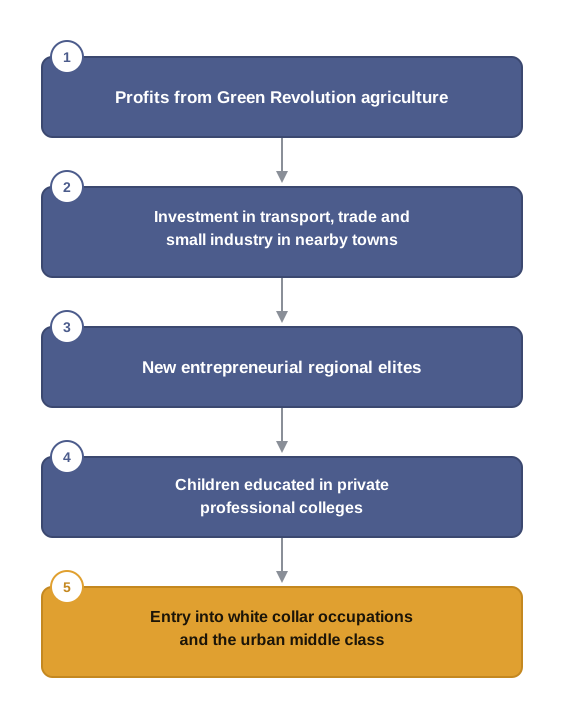
Fig. 4.8 – From the field to the town: the making of a new elite.
Three Different Countrysides
Thus, in areas of rapid agricultural development there has been a consolidation of the old landed or cultivating groups, who have transformed themselves into a dynamic entrepreneurial, rural-urban dominant class.
But this is not the whole of rural India, and it would be a serious error to generalise from Punjab or coastal Andhra Pradesh to the country as a whole.
In other regions, such as eastern U.P. and Bihar, the lack of effective land reforms, of political mobilisation, and of redistributive measures has meant that there have been relatively few changes in the agrarian structure — and hence relatively few changes in the life conditions of most people.
Kerala offers a third path altogether. There, political mobilisation, redistributive measures, and linkages to an external economy — primarily the Gulf countries — have brought about a substantial transformation of the rural countryside.
Far from the rural being primarily agrarian, the rural in Kerala is a mixed economy. It integrates some agriculture with a wide network of retail sales and services, and a large number of families there are dependent on remittances from abroad — money sent home by a family member working outside the country.

Fig. 4.9 – A house built with Gulf remittances in rural Kerala.
The comparison carries a lesson worth stating plainly. Rural change in India has no single engine. Technology transformed one countryside, political mobilisation and migration transformed another, and in a third the structure held firm — which is why sociologists insist on studying regions, and not “the Indian village” in the singular.
4.5 Circulation of Labour
Another significant change in rural society, and one closely linked to the commercialisation of agriculture, has been the growth of migrant agricultural labour.
Two things happened at once. The ‘traditional’ bonds of patronage between labourers or tenants and landlords broke down, so that a labouring household was no longer attached to one master in one village. At the same time, the seasonal demand for agricultural labour rose sharply in the prosperous Green Revolution regions, such as the Punjab, where intensive cultivation needed many hands at sowing and at harvest.
Out of these two facts a pattern of seasonal migration emerged. Thousands of workers now circulate between their home villages and the more prosperous areas where there is greater demand for labour and higher wages.
Why People Leave
Workers also migrate because of the increasing inequalities in rural areas from the mid-1990s, which have forced many households to combine multiple occupations simply to sustain themselves. A single livelihood no longer stretches across a whole year.
As a livelihood strategy, then, men migrate out periodically in search of work and better wages. Women and children are often left behind in their villages with elderly grandparents.
Migrant workers come mainly from the drought-prone and less productive regions — the countrysides that neither land reform nor the Green Revolution reached. For part of the year they go to work on the farms of Punjab and Haryana, or on the brick kilns of U.P., or on the construction sites of cities such as New Delhi or Bangalore.
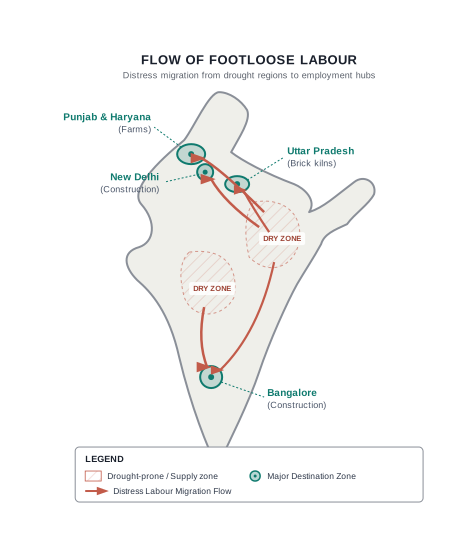
Fig. 4.10 – Streams of seasonal labour circulation in India.
‘Footloose Labour’
These migrant workers have been termed ‘footloose labour’ by Jan Breman. The word sounds like freedom. It is not.
Breman’s 1985 study shows, on the contrary, that landless workers of this kind do not have many rights. They are usually not paid the minimum wage. A worker far from home, hired through a middleman, with no local standing and no record of employment, is in a poor position to insist on anything.
It should be noted here that wealthy farmers often prefer to employ migrant workers for harvesting and other such intensive operations, rather than the local working class. The reason is blunt: migrants are more easily exploited and can be paid lower wages.
This preference has produced a peculiar pattern in some areas. The local landless labourers move out of their home villages in search of work during the peak agricultural seasons, while migrant workers are brought in from other areas to work on the very same local farms. The two streams cross each other on the road.
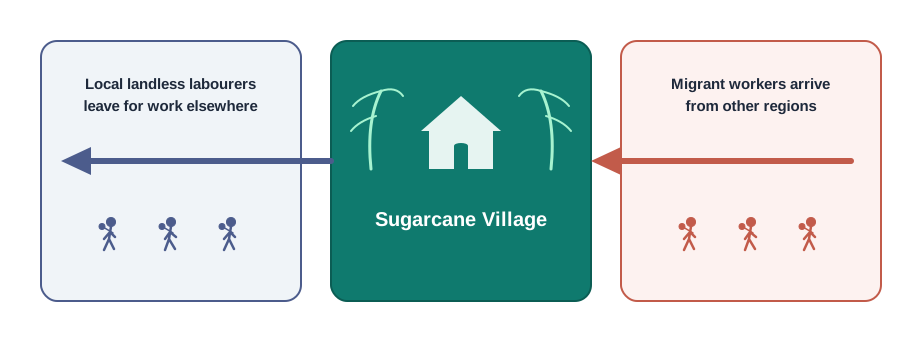
Fig. 4.11 – The cross-migration puzzle in sugarcane regions.
This pattern is found especially in the sugarcane growing areas. Migration and the lack of job security have created very poor working and living conditions for these workers.
Who Is Left Behind
The large scale circulation of labour has had several significant effects on rural society, in both the receiving and the supplying regions. The village that empties is changed as much as the village that fills.
In poor areas, where male family members spend much of the year working outside their villages, cultivation has become primarily a female task. Women are also emerging as the main source of agricultural labour — a change described as the feminisation of the agricultural labour force.
This is not, however, a straightforward gain in status, and it is important to see why. The insecurity of women is in fact greater, because they earn lower wages than men for similar work.
Their work has also been badly counted. Until recently, women were hardly visible in official statistics as earners and workers at all — a woman weeding a field was recorded, if at all, as a housewife helping out, not as a worker.
And ownership does not follow labour. While women toil on the land both as landless labourers and as cultivators, the prevailing patrilineal kinship system, and other cultural practices that privilege male rights, largely exclude them from land ownership.
Hold the three facts together and the pattern is clear. Women increasingly do the work of agriculture; they are paid less for it; and they do not own the land they work. Doing the work of a class does not, by itself, give a person the position of that class.
4.6 Globalisation, Liberalisation, and Rural Society
The policy of liberalisation that India has been following since the late 1980s has had a very significant impact on agriculture and on rural society.
The policy entails participation in the World Trade Organization (WTO), which aims to bring about a freer international trading system and which requires the opening up of Indian markets to imports.
For agriculture, this was a change of climate. After decades of state support and protected markets, Indian farmers have been exposed to competition from the global market. A farmer in a district of Maharashtra now competes, in effect, with growers in countries he has never seen.
You can see the change on a shelf. We have all seen imported fruits and other food items in our local stores — items that were simply not available a few years ago, because of import substitution policies that kept them out in order to protect Indian producers.
India has also decided, more recently, to import wheat. This was a controversial decision, because it reverses the earlier policy of self-reliance in food grains, and because it revives bitter memories of the dependence on American food grains in the early years after Independence. Whether such imports steady prices for consumers or undercut Indian growers is exactly the kind of question on which economists and farmers’ organisations disagree.
These are indicators of the globalisation of agriculture — the incorporation of agriculture into the larger global market. It is a process that has had direct effects on farmers and on rural society.
Contract Farming
In some regions, such as Punjab and Karnataka, farmers enter into contracts with multinational companies — PepsiCo, for instance — to grow certain crops such as tomatoes and potatoes, which the companies then buy from them for processing or for export.
In such systems the company identifies the crop to be grown, provides the seeds and the other inputs, as well as the know-how and often also the working capital. In return, the farmer is assured of a market, because the company guarantees that it will purchase the produce at a predetermined fixed price.
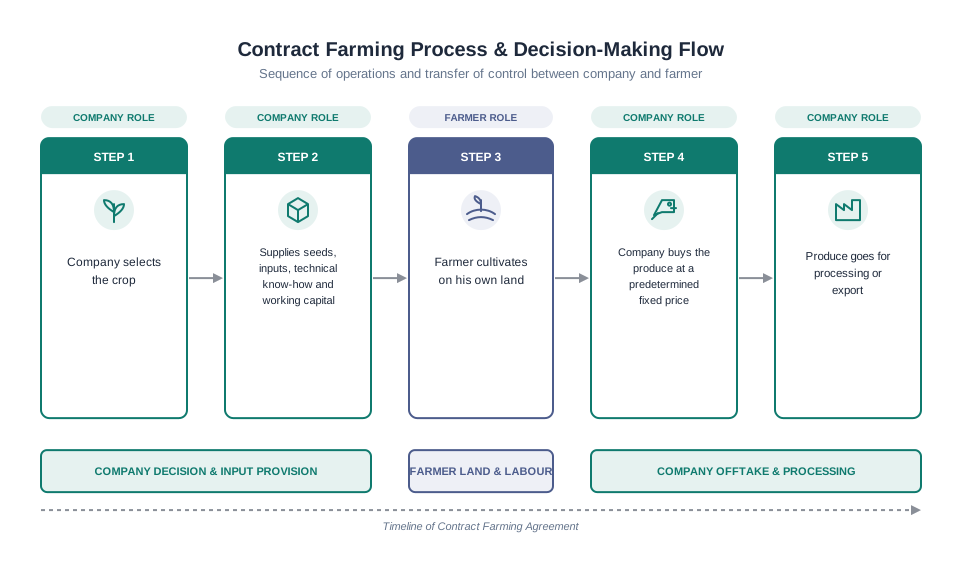
Fig. 4.12 – The process of contract farming.
Contract farming is very common now in the production of specialised items such as cut flowers, fruits such as grapes, figs and pomegranates, cotton and oilseeds. Notice what is on that list, and what is not.
While contract farming appears to provide financial security to farmers, it can also lead to greater insecurity, as farmers become dependent on these companies for their livelihoods.
There are three further consequences worth separating out.
First, contract farming of export-oriented products such as flowers and gherkins means that agricultural land is diverted away from food grain production. Land that fed a district now supplies a shelf abroad.
Second — and this is its distinctly sociological significance — contract farming disengages many people from the production process, and makes their own indigenous knowledge of agriculture irrelevant. The farmer does not decide what to plant, when to plant it, or what to put on it. He executes a plan made elsewhere. The knowledge his family built over generations has no place in that plan.
Third, contract farming caters primarily to the production of elite items, and because it usually requires high doses of fertilisers and pesticides, it is often not ecologically sustainable.
The Company at the Village Door
Another, and more widespread, aspect of the globalisation of agriculture is the entry of multinationals into this sector as sellers of agricultural inputs — seeds, pesticides and fertilisers.
Over the last decade or so, the government has scaled down its agricultural development programmes. The ‘agricultural extension’ agents who once advised farmers on behalf of the state have been replaced in the villages by the agents of seed, fertiliser and pesticide companies.
Now hold those two sentences together, because the consequence follows from them exactly. These agents are often the sole source of information for farmers about new seeds or cultivation practices — and, of course, they have an interest in selling their products. The adviser and the salesman have become the same person.
This has led to the increased dependence of farmers on expensive fertilisers and pesticides. It has reduced their profits, put many farmers into debt, and created an ecological crisis in rural areas.
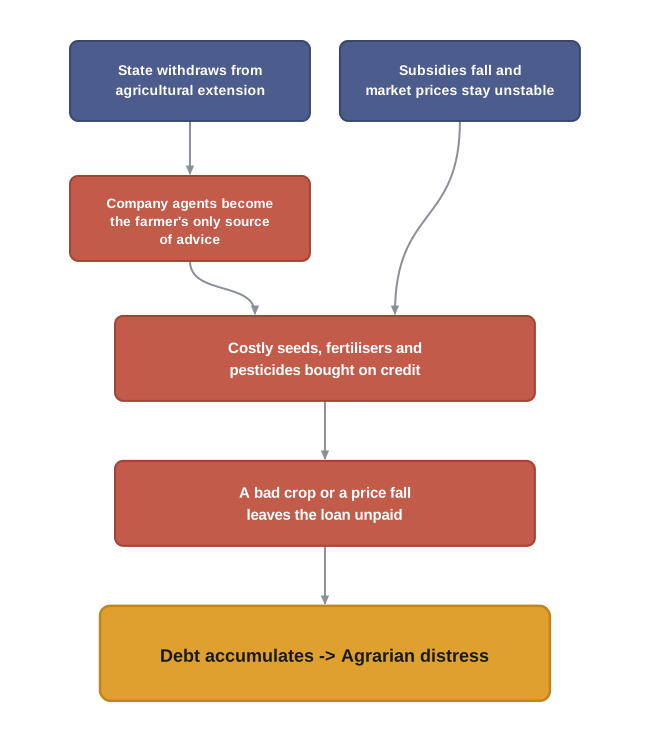
Fig. 4.13 – The cycle of agrarian distress.
Agrarian Distress
Many of the farmers who have taken their own lives in recent decades were marginal farmers who were attempting to increase their productivity, primarily by practising Green Revolution methods.
Undertaking such production, however, meant facing several risks at once. The cost of production has increased tremendously, owing to a decrease in agricultural subsidies. The markets are not stable. And many farmers borrow heavily in order to invest in expensive inputs and improve their production.
Farmers’ suicides are basically associated with debt, and also with natural disasters that result in the failure of the agricultural produce. The two work together: a loan taken to buy inputs becomes unpayable when the crop fails or the price collapses.
Sociologically, the important point is that these are not isolated private tragedies but the sharp edge of a structural condition — what sociologists call agrarian distress.
4.7 Summary
Rural India and the agrarian way of life
India remains primarily a rural society: 69 per cent of Indians lived in rural areas according to the 2011 Census, and most depend on agriculture or on occupations tied to it.
Agricultural land is the most important productive resource and the most important form of property in rural India. But agriculture is not only a livelihood — it is a way of life, and much of India’s regional culture, including its harvest festivals, is built around the agricultural year.
The rural is not the same as the agricultural. Villages have always supported artisans (potters, carpenters, weavers, ironsmiths, goldsmiths) and other specialists (story-tellers, astrologers, priests, water-distributors, oil-pressers), and this occupational diversity was reflected in the caste system.
Artisan livelihoods declined from the colonial period, as manufactured goods replaced hand-made ones. Today many rural people live by rural non-farm activities — government service, factory work, the army.
4.1 Agrarian structure: caste and class
Landholding is highly unequal. In some areas 40 to 50 per cent of families own no land at all and must live by agricultural labour. A few families are well-to-do; most live just above or below the poverty line.
Women are largely excluded from land ownership because of the patrilineal kinship system, despite an equal legal right to family property.
Agrarian structure means the distribution of landholding. Because land is the key resource, it shapes the rural class structure: medium and large landowners can earn well; tenants surrender 50 to 75 per cent of crop income as rent; agricultural labourers are paid below the statutory minimum wage, work as daily-wage workers and face underemployment.
Caste and class overlap roughly, not exactly. The highest caste, the Brahmins, are usually not major landowners and fall outside the agrarian structure, though they are part of rural society.
M.N. Srinivas termed the one or two landowning, numerically strong castes in each region the dominant castes — the Jats and Rajputs of U.P., the Vokkaligas and Lingayats in Karnataka, the Kammas and Reddis in Andhra Pradesh, the Jat Sikhs in Punjab.
Marginal farmers and the landless mostly belong to SC/ST and OBC groups. In many regions the former ‘Untouchable’ or dalit castes were not allowed to own land and supplied most of the agricultural labour, which allowed landowners to cultivate intensively.
Practices such as begar (free labour for the village zamindar) and hereditary labour ties have been legally abolished but survive in many areas.
4.2 The impact of land reforms
Before colonial rule, land was controlled by kings and zamindars, not by the cultivating castes. The British ruled through zamindars, granted them property rights, and imposed heavy land revenue — so zamindars extracted as much as they could, and agricultural production stagnated or declined.
In areas of direct rule, the raiyatwari system made the ‘actual cultivator’ responsible for the tax. With no intermediary, the tax burden was lighter and there was more incentive to invest, so these areas became relatively more prosperous.
After Independence, Nehru’s government made agrarian reform part of planned development, responding to low productivity, dependence on imported food grains and rural poverty. Land reform laws were passed from the 1950s to the 1970s.
Zamindari abolition was the most effective reform: it removed the intermediaries and weakened the zamindars’ economic and political power.
Tenancy abolition and regulation acts were poorly implemented in most states, though West Bengal and Kerala carried through a radical restructuring that gave tenants land rights.
The Land Ceiling Acts set an upper limit on family landholding (a lower ceiling on productive land, a higher one on dry land) and required the surplus to be redistributed to the landless, SCs and STs. In most states they proved toothless, defeated by loopholes and by benami transfers.
Overall, the agrarian structure has changed substantially since colonial times but remains highly unequal, constraining productivity and social justice alike.
4.3 The Green Revolution and its social consequences
The Green Revolution of the 1960s and 1970s was a government programme of agricultural modernisation, funded largely by international agencies, supplying HYV or hybrid seeds with pesticides, fertilisers and other inputs.
It went only to areas of assured irrigation and mainly to wheat and rice regions: Punjab, western U.P., coastal Andhra Pradesh and parts of Tamil Nadu received the first wave.
Productivity rose sharply and India became self-sufficient in foodgrains for the first time in decades — a major achievement of the government and its scientists.
But the benefits went mainly to medium and large farmers, since the inputs were expensive. Peasants practise subsistence agriculture and produce for themselves; farmers produce a surplus for the market — and it was the market-linked farmers who gained most.
Consequences in the first phase: rising inequality; the eviction of tenant-cultivators as owners resumed profitable cultivation; the displacement of service castes by tillers, tractors, threshers and harvesters; and faster rural-urban migration.
The outcome was differentiation — the rich grew richer while many of the poor stagnated or grew poorer. Employment and wages did rise in many areas, but rising prices and the shift from payment in grain to payment in cash worsened most workers’ conditions.
The second phase, from the 1980s, took Green Revolution practices into dry and semi-arid regions, shifting cultivation from dry to wet and from multi-crop to mono-crop — which spread commercialisation and increased livelihood insecurity, since a price fall or a bad crop can now ruin a farmer.
Regional inequalities widened, the west and south gaining more than the east. Where an entrenched ‘feudal’ structure persists, sharp caste and class inequalities and exploitative labour relations have given rise to various kinds of violence.
Farmers’ traditional knowledge and traditional seed varieties are being lost as hybrid, HYV and genetically modified seeds are promoted as ‘scientific’. Some scientists and farmers’ movements now urge a return to organic seeds and methods.
4.4 Transformations after Independence
Post-Independence rural change, especially in Green Revolution regions, involved: more intensive use of agricultural labour; a shift from payment in kind to cash; the loosening of hereditary bonds and bonded labour; and the rise of ‘free’ wage labourers.
Jan Breman described the change in the landlord–worker relationship as a shift from ‘patronage to exploitation’. Some scholars read this as a transition to capitalist agriculture, since the capitalist mode of production rests on separating workers from the means of production and using ‘free’ wage labour.
Commercialisation integrated villages into the wider economy, though the process had begun in colonial times — nineteenth-century Maharashtra cotton growers were already linked to the world market.
The state invested in rural infrastructure — irrigation, roads, electricity, credit through banks and cooperatives. The Deen Dayal Upadhyaya Gram Jyoti Yojna, launched in 2014, addresses rural power supply.
Well-to-do dominant-caste farmers in coastal Andhra Pradesh, western Uttar Pradesh and central Gujarat invested agricultural profits in business, becoming new regional elites, and educated their children in private professional colleges — feeding the urban middle classes.
Rural change is regionally uneven: an entrepreneurial rural-urban dominant class in the agriculturally advanced regions; little change in eastern U.P. and Bihar; and in Kerala a mixed economy transformed by political mobilisation, redistribution and Gulf remittances.
4.5 Circulation of labour
As patronage bonds broke down and seasonal labour demand rose in Green Revolution regions, seasonal migration emerged: workers circulate between home villages and prosperous areas.
Rising rural inequality since the mid-1990s forced households to combine occupations. Men migrate; women, children and the elderly stay behind.
Migrants come from drought-prone, less productive regions and work on farms in Punjab and Haryana, on brick kilns in U.P., and on construction sites in cities such as New Delhi and Bangalore.
Jan Breman called them ‘footloose labour’, but this is not freedom: such workers have few rights and are usually not paid the minimum wage. Employers often prefer migrants because they can be paid less — producing the odd pattern, common in sugarcane areas, where local labourers leave while migrants are brought in.
The circulation of labour has led to the feminisation of the agricultural labour force. Women now do much of the cultivation and wage labour, yet earn less than men for similar work, were long invisible in official statistics, and are largely excluded from land ownership.
4.6 Globalisation, liberalisation and rural society
Liberalisation since the late 1980s, and participation in the WTO, opened Indian markets to imports and exposed farmers to global competition, reversing decades of state support and protected markets.
Contract farming links farmers in regions such as Punjab and Karnataka to multinational companies, which choose the crop, supply seeds, inputs, know-how and often working capital, and buy at a fixed price. It is common in cut flowers, grapes, figs, pomegranates, cotton and oilseeds.
Contract farming offers security but creates dependence; it diverts land from food grains to elite export items; it disengages people from the production process and makes indigenous agricultural knowledge irrelevant; and its heavy use of fertilisers and pesticides makes it ecologically unsustainable.
Multinationals have also entered as sellers of inputs. As the state scaled down agricultural extension, company agents became the farmers’ main source of advice — advisers with an interest in selling — increasing dependence on costly inputs, reducing profits, deepening debt and worsening the ecological crisis.
Farmers’ suicides since 1997–98 are linked to agrarian distress arising from these structural changes: changed landholdings, the shift to cash crops, exposure to globalisation, high-cost inputs, the state’s withdrawal from extension, declining support for agriculture, and the individualisation of agricultural operations. Official statistics record 8,900 suicides by farmers between 2001 and 2006 in Andhra Pradesh, Karnataka, Kerala and Maharashtra.
Government schemes such as Pradhan Mantri Fasal Bima Yojana, Gram Uday se Bharat Uday Abhiyan, National Urban Mission, National Mission for Sustainable Agriculture and the Kisan Credit Card seek to provide farmers with insurance, credit and support.
4.8 Key Terms
Agrarian distress — The condition of crisis in farming produced by debt, high input costs, unstable markets, crop failure and the withdrawal of state support.
Agrarian structure — The pattern of landholding in a rural society: how land is distributed, who owns it, who works it, and on what terms.
Begar — Unpaid, compulsory labour that members of low ranked caste groups had to give to the village landlord for a fixed number of days each year; now legally abolished.
Benami transfer — The registration of land in the name of another person, real or fictitious, to conceal its true ownership and evade the Land Ceiling Acts.
Bonded labour — A hereditary labour relationship in which a worker is tied to a particular landowner, often through debt, and is not free to work elsewhere.
Capitalist agriculture — Farming carried on for the market, using ‘free’ wage labour that has been separated from ownership of land.
Circulation of labour — The seasonal movement of workers away from their home villages to areas where work is available, followed by their return.
Commercialisation of agriculture — The growing of crops primarily for sale in the market rather than for the household’s own consumption.
Contract farming — An arrangement in which a company decides the crop, supplies seeds, inputs, know-how and often capital, and buys the produce at a price fixed in advance.
Dalit — Term for the communities historically treated as ‘Untouchable’, who in many regions were not permitted to own land and supplied most agricultural labour.
Differentiation — The process by which the gap within a rural society widens, as the better-off accumulate while the poor stagnate or fall behind.
Dominant caste — A landowning, numerically strong caste that holds economic and political power in a region, even if it is not highest in ritual rank (M.N. Srinivas).
Farmer (agriculturist) — A cultivator who produces a surplus over and above the family’s needs and is therefore linked to the market.
Feminisation of the agricultural labour force — The process by which, as men migrate out for work, women come to form the bulk of those cultivating the land and working on it for wages.
Footloose labour — Jan Breman’s term for workers who move constantly in search of work; their mobility reflects insecurity and a lack of rights, not freedom.
Globalisation of agriculture — The incorporation of agriculture into the larger global market, through imports, exports, multinational companies and world prices.
Green Revolution — The government programme of agricultural modernisation of the 1960s and 1970s, supplying HYV seeds, fertilisers, pesticides and other inputs to farmers in irrigated wheat and rice regions.
High-yielding variety (HYV) seeds — Hybrid seeds that produce far larger yields, but only with assured irrigation and heavy doses of fertiliser and pesticide.
Land Ceiling Acts — Laws placing an upper limit on the land a family may own, requiring the surplus to be taken by the state and redistributed to the landless and to specified categories such as SCs and STs.
Land reforms — Laws that change the pattern of landholding — abolishing intermediaries, protecting tenants, or limiting how much land a family may own.
Liberalisation — The policy, followed in India since the late 1980s, of reducing state control and protection over the economy and opening markets to imports and to private and foreign companies.
Patrilineal — A kinship system in which descent, and with it the inheritance of property, passes through the male line.
Peasant — A cultivator who practises subsistence agriculture, producing mainly for the household and having little or nothing to sell.
Raiyatwari system — The colonial land settlement in which the ‘actual cultivator’, rather than a zamindar, paid the land revenue directly to the state (raiyat means cultivator in Telugu).
Remittances — Money sent home by a family member working outside the region or the country, as in the Gulf remittances that transformed rural Kerala.
Rural non-farm activities — Livelihoods pursued by rural residents outside agriculture, such as government service, factory work or the army.
Seasonal migration — Movement out of the village for work during particular seasons, with a return home when the season ends.
Subsistence agriculture — Cultivation carried on mainly to feed the cultivator’s own household, with little or no surplus for sale.
Tenant — A cultivator who leases land from a landowner and pays rent, often 50 to 75 per cent of the income from the crop.
Underemployment — The condition of workers who have some work but far too little of it, as with daily-wage agricultural labourers who find no work for many days of the year.
Zamindar — A landlord who controlled land and was politically powerful in his area; under British rule zamindars were granted property rights and collected revenue from cultivators.
Zamindari system — The colonial land settlement in which the zamindar, as an intermediary, was responsible for collecting and paying the land revenue; abolished after Independence.
4.9 Points to Ponder
The Green Revolution left ownership of land exactly as it was, and yet it changed rural society profoundly. Can a technology change a society without changing its structure — or does it simply work through the structure it finds?
Zamindari abolition largely succeeded, while the Land Ceiling Acts largely failed. What does this tell us about the conditions under which a law is able to change social life, and about the limits of law as an instrument of social change?
A labourer released from a hereditary bond to a landlord is, in one sense, free. In what sense is he freer, and in what sense is he not? Is the ending of an unequal relationship always a gain for the weaker party in it?
Women increasingly do the cultivating and the wage labour of rural India, yet they earn less than men for the same work and rarely own land. Why does doing the work of a class not, by itself, confer the position of that class?
Contract farming makes a farmer’s inherited knowledge of his own soil irrelevant. What is lost when a body of knowledge built over generations ceases to be used — and can such knowledge be recovered once it is gone?
Sociologists often speak of “the Indian village” in the singular, yet this chapter shows three very different countrysides — the entrepreneurial Green Revolution belt, the largely unchanged agrarian east, and remittance-fed Kerala. Is there any single thing that “rural India” now names?
4.10 NCERT Questions
Read the passage below and answer the questions that follow.
In the village of Aghanbigha, the harsh working conditions endured by labourers were the result of two kinds of power held by the maliks at the same time — their economic power as a class, and their overwhelming social power as members of a dominant caste. A crucial part of this social power was their ability to get the various arms of the state to act in their favour. Political factors, in other words, decisively widened the gulf between the dominant class and the underclass.
- Why do you think the maliks were able to use the power of the state to advance their own interests?
- Why did the labourers have such harsh working conditions?
What measures do you think the government has taken, or should take, to protect the rights of landless agricultural labourers and migrant workers?
There are direct linkages between the situation of agricultural workers and their lack of upward socio-economic mobility. Name some of them.
What are the different factors that have enabled certain groups to transform themselves into new wealthy, entrepreneurial, dominant classes? Can you think of an example of this transformation in your own state?
Hindi and regional language films were often set in rural areas. Think of a film set in rural India and describe the agrarian society and culture that is shown in it. How realistic do you think the portrayal is? Have you seen any recent film set in a rural area? If not, how would you explain this?
4.11 Objective Questions
- The term ‘dominant caste’ was introduced into Indian sociology by:
- G.S. Ghurye
- M.N. Srinivas
- Jan Breman
- Irawati Karve [1 mark]
- According to the 2011 Census, the proportion of India’s people living in rural areas was:
- 59 per cent
- 64 per cent
- 69 per cent
- 74 per cent [1 mark]
- In the raiyatwari system of land settlement, the land revenue was paid to the colonial state by:
- the zamindar
- the village panchayat
- the ‘actual cultivator’
- the moneylender [1 mark]
- Green Revolution programmes were introduced only in areas that had:
- assured irrigation
- large tribal populations
- dry and semi-arid land
- a high proportion of tenants [1 mark]
- The change in the relationship between landlords and agricultural workers was described as a shift from ‘patronage to exploitation’ by:
- M.N. Srinivas
- André Béteille
- Jan Breman
- Bina Agarwal [1 mark]
- Which of the following was NOT one of the categories of land reform law passed between the 1950s and the 1970s?
- Abolition of the zamindari system
- Tenancy abolition and regulation acts
- Land Ceiling Acts
- Contract farming acts [1 mark]
- Assertion (A): In most regions the Brahmins are not the dominant caste. Reason (R): Ritual rank in the caste hierarchy and control over land do not always coincide.
- Both A and R are true, and R is the correct explanation of A.
- Both A and R are true, but R is not the correct explanation of A.
- A is true, but R is false.
- A is false, but R is true. [1 mark]
- Assertion (A): The Land Ceiling Acts failed to redistribute much land in most states. Reason (R): Landowners evaded the ceiling through loopholes and ‘benami’ transfers.
- Both A and R are true, and R is the correct explanation of A.
- Both A and R are true, but R is not the correct explanation of A.
- A is true, but R is false.
- A is false, but R is true. [1 mark]
- Assertion (A): ‘Footloose labour’ means that migrant workers enjoy freedom in the labour market. Reason (R): Migrant workers are usually not paid the statutory minimum wage and have few rights.
- Both A and R are true, and R is the correct explanation of A.
- Both A and R are true, but R is not the correct explanation of A.
- A is true, but R is false.
- A is false, but R is true. [1 mark]
- Match the terms in Column I with their meanings in Column II.
| Column I | Column II |
|---|---|
| a. Begar | i. Land registered in another’s name to evade the ceiling |
| b. Benami transfer | ii. Free, unpaid labour given to the village landlord |
| c. Underemployment | iii. Cultivation carried on mainly to feed one’s own household |
| d. Subsistence agriculture | iv. Having work, but for far too few days in the year |
[1 mark]
Fill in the blank: Tenants often pay a rent of as much as ______ to ______ per cent of the income from the crop to the landowner. [1 mark]
Fill in the blank: As men migrate out of the villages for work and women become the main source of agricultural labour, sociologists speak of the ______ of the agricultural labour force. [1 mark]
State whether True or False: The Green Revolution package was targeted mainly at the wheat and rice-growing areas of India. [1 mark]
State whether True or False: According to official statistics, there were 8,900 suicides by farmers between 2001 and 2006 in Andhra Pradesh, Karnataka, Kerala and Maharashtra. [1 mark]
4.12 Check Your Concepts
What is meant by ‘agrarian structure’? [2 marks]
Define underemployment, and give one example of it from rural India. [2 marks]
What are rural non-farm activities? Name any two. [2 marks]
What is a ‘benami’ transfer, and why did such transfers take place? [2 marks]
State any two features of contract farming. [2 marks]
In a village of 400 households, 45 per cent of the households own no land at all. How many households is this? What does such a figure tell you about the agrarian structure of that village? [2 marks]
Differentiate between the zamindari system and the raiyatwari system of land settlement. [4 marks]
Differentiate between a peasant and a farmer, and explain why this distinction mattered during the Green Revolution. [4 marks]
Why is the highest caste in a village not always the dominant caste? Explain with an Indian example. [4 marks]
Explain what Jan Breman meant by a shift from ‘patronage to exploitation’. Why does the breakdown of a traditional bond not automatically improve a worker’s condition? [4 marks]
Give reasons why the Land Ceiling Acts proved ineffective in most states, while zamindari abolition was comparatively successful. [4 marks]
A tenant hands over 60 per cent of his crop income to the landowner as rent. If the crop earns ₹80,000 in a season, how much is left with the tenant? Explain, with reference to the agrarian structure, why this leaves him with little capacity to invest in his land. [4 marks]
Describe the feminisation of the agricultural labour force. Why does it not, by itself, improve the position of rural women? [4 marks]
“The Green Revolution raised production but also widened inequality.” How far do you agree with this claim? Support your answer with evidence from the Green Revolution regions of India. [6 marks]
Explain M.N. Srinivas’s concept of the dominant caste, with the evidence that supports it and one limitation of the concept. [6 marks]
Discuss the causes and the consequences of the circulation of labour in rural India, for both the supplying and the receiving regions. [6 marks]
Examine the impact of liberalisation and the globalisation of agriculture on Indian rural society, with reference to contract farming, the entry of multinational input sellers, and agrarian distress. [6 marks]
Rural change in India has taken very different forms in the Green Revolution regions, in eastern U.P. and Bihar, and in Kerala. Compare these three paths, and explain what accounts for the differences between them. [6 marks]
What would happen to the agrarian class structure of a village if the Land Ceiling Acts had been fully implemented there? Discuss, with reasons, and say what would still remain unchanged. [6 marks]
4.13 Passage-Based Questions
Read the passage and the table, and answer the questions that follow.
A survey of a village in a canal-irrigated district records the following distribution of land among its 200 households. Twelve households own more than ten acres each and between them hold most of the cultivated land. Sixty households own between one and three acres. Forty households own less than one acre and work on other people’s fields for part of the year. The remaining households own no land at all. The twelve largest holdings belong to a single caste, which is also the largest caste in the village and whose members sit on most local committees.
Landholding Number of households More than 10 acres 12 1 to 3 acres 60 Less than 1 acre 40 No land 88 - What proportion of the households in this village own no land at all? What does this suggest about the agrarian structure?
- Identify the sociological concept that describes the caste holding the twelve largest holdings, and explain why it applies here.
- Explain how the position of the forty households owning less than one acre is different from that of the eighty-eight who own none. [6 marks]
Read the passage and answer the questions that follow.
In a wheat-growing district, the new seeds arrive along with the canal. Yields rise sharply within a few seasons, and the larger landholders find that cultivating their own fields is now more profitable than leasing them out. Several tenants who had farmed the same plots for years are asked to leave. In the same period, the first threshing machines appear, and the households that had traditionally done the threshing for a share of the grain find no work at the end of the harvest. Two of them send their eldest sons to a city construction site. The district’s grain output is now the highest it has ever been.
- Name and explain the process that the last two sentences together illustrate.
- Why did the arrival of a profitable technology worsen the position of the tenants, even though nobody took their land away by force?
- Would you describe this district as an example of successful development? Give arguments on both sides. [6 marks]
Read the passage and answer the questions that follow.
Every year after the short rain-fed crop is cut, groups of men leave a cluster of villages in a drought-prone district and travel with a labour contractor to brick kilns several hundred kilometres away. They return in time for the next sowing. In their absence, the fields at home are cultivated by their wives, who also work for daily wages on the larger holdings of the village, at a rate lower than the men receive for the same tasks. In the sugarcane belt where the men once worked, local labourers were themselves leaving at the very time that outsiders were being brought in to cut the cane.
- Which concept describes the annual movement of these men, and how does it differ from permanent migration?
- Explain the change taking place in the women’s position, and say why it does not amount to an improvement in their status.
- Why would an employer in the sugarcane belt prefer migrant workers to local ones? [6 marks]
Read the passage and answer the questions that follow.
A farmer with four irrigated acres signs an agreement with a food processing company. The company selects the variety of tomato, supplies the seed and the fertiliser schedule, sends a field officer to advise on spraying, and promises to buy the harvest at a price fixed before sowing. The government’s agricultural extension office in the block has not had a working officer for some years; the company’s field officer is now the only person in the village who gives advice on cultivation. The first two seasons are good. In the third, the company shifts its purchasing to another district.
- Name the arrangement described here, and state two things the company provides to the farmer.
- Explain why a guaranteed price did not, in the end, give the farmer security.
- What is the sociological significance of the fact that the company’s field officer is the only source of advice in the village? [6 marks]