Chapter 7: Mass Media and Communications
```markdown
In the middle of 1975, in a few hundred villages spread across six Indian states, something arrived that most people there had never seen before: a television set. It was not placed in a home. It was installed in a school, a panchayat building or an open courtyard, and a crowd gathered around it every evening. For about a year, from August 1975 to July 1976, a satellite beamed programmes directly to some 2,400 of these community sets for four hours a day. This was the Satellite Instructional Television Experiment, and it was run not by a company selling anything, but by the government of India.
The programmes were not made to entertain. They talked about better seeds and farming practices, about health and hygiene, about schooling, about the country and its plans. The state had decided that television could carry development into the countryside faster than officials on bicycles ever could.
Look around you now. A phone in a pocket carries film songs, cricket scores, news alerts and family messages, and nobody had to gather in a courtyard to receive them. Between that courtyard and your pocket lies the whole story of this chapter: how the media in India shifted from being an instrument of the state to being, very largely, a creature of the market.
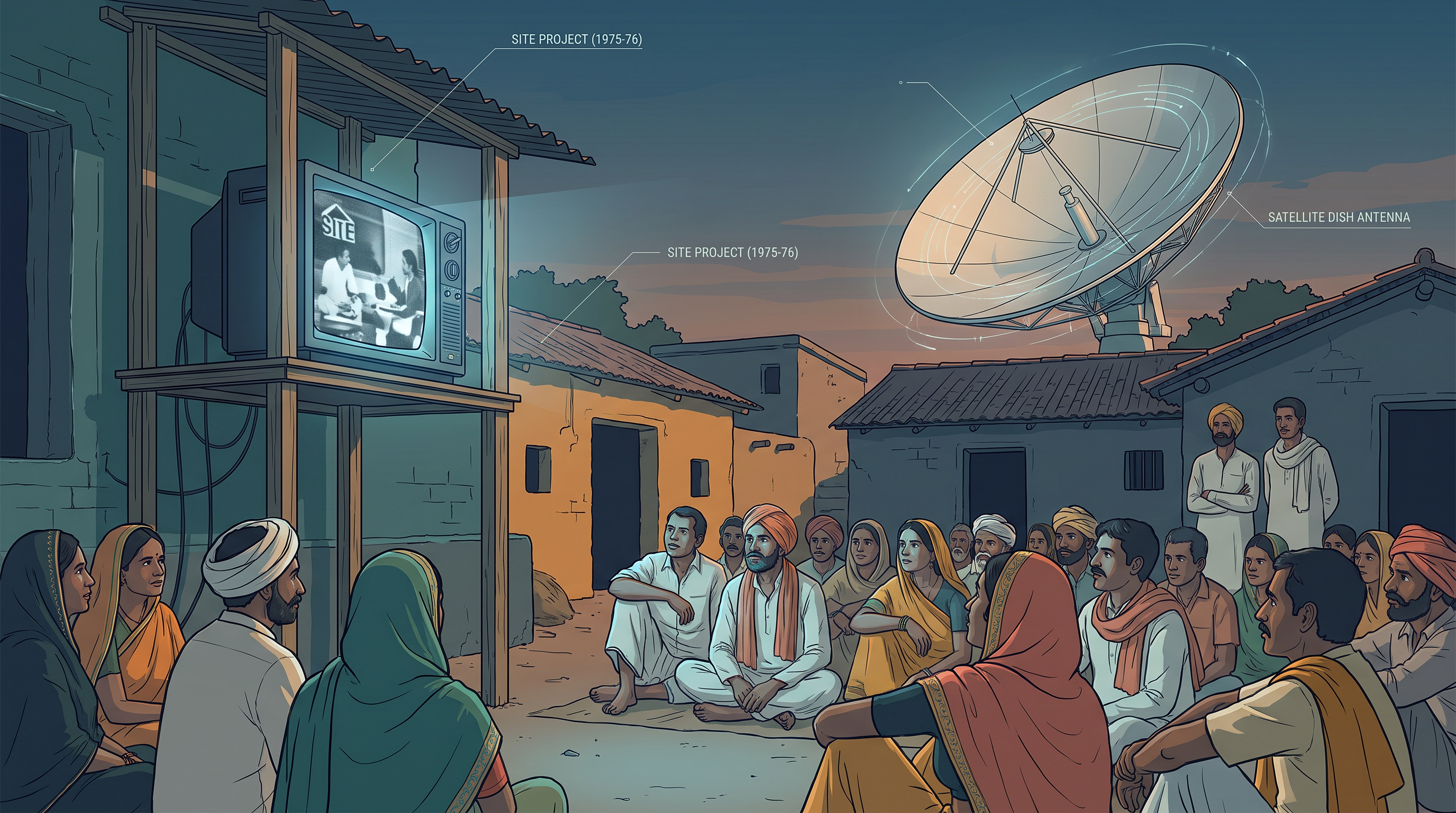
Fig. 7.1 – A village community television set during the SITE experiment.
This chapter will answer each of these questions. Keep them in mind as you read.
7.1 The Beginnings of Modern Mass Media
What Makes Media ‘Mass’ Media
Television, newspapers, films, magazines, radio, advertisements, video games and CDs look like very different things. A film is watched in a hall, a newspaper is read at a table, a radio programme is heard while cooking. Yet sociologists group all of them together under a single term, the mass media, and the reason lies in one word: mass.
They are called mass media because they reach mass audiences — audiences made up of very large numbers of people. The same film, the same bulletin, the same advertisement reaches lakhs of people who have never met one another. For this reason the media are also sometimes referred to as mass communication, or mass communications.
For many in your generation, it is probably difficult even to imagine a world without some form of mass media and communications. That difficulty is itself a sociological fact worth noticing.
Media in Everyday Indian Life
Mass media is a part of our everyday life. In many middle class households across the country, people wake up only to put on the radio, switch on the television, or look for the morning newspaper. The younger children of the same households may first glance at their mobile phones to check their missed calls.
The media are not confined to the home. Plumbers, electricians, carpenters, painters and sundry other service providers in many urban centres have a mobile telephone on which they can be easily contacted — the phone has become a tool of work, not only of talk. Many shops in cities increasingly have a small television set, and customers who come in may exchange bits of conversation about the cricket match being telecast or the film being shown.
The media also stretch across distance. Indians abroad keep regular touch with friends and families back home over the Internet and telephone. Migrants from the working class population in the cities are regularly in touch with their families in the villages over the phone.
Have you seen the range of advertisements for mobile phones? Have you noticed the diverse social groups that they are catering to? The CBSE Board results are available on both the Internet and over the mobile phone. Indeed, this very book is available on the Internet.
Four Sociological Questions About the Media
It is obvious that there has been a phenomenal expansion of mass communication of all kinds in recent years. As students of sociology, there are four aspects of this growth that are of special interest to us.
First, while we recognise the specificity of the current communication revolution, it is important to go back a little and sketch out the growth of modern mass media in the world and in India. Doing so helps us realise that, like any other social institution, the structure and content of mass media is shaped by changes in the economic, political and socio-cultural contexts. We shall see, for instance, how central the state and its vision of development were to the media in the first decades after Independence, and how in the post-1990 period of globalisation the market has a key role to play.
Second, this historical view helps us better appreciate that the relationship between mass media and society is dialectical — both influence each other. The nature and role of mass media is influenced by the society in which it is located; at the same time, the far-reaching influence of mass media on society cannot be over-emphasised. We shall see this two-way relationship as we discuss (a) the role of media in colonial India, (b) media in the first decades after Independence, and (c) media in the context of globalisation.
Third, mass communication is different from other means of communication because it requires a formal structural organisation to meet large-scale capital, production and management demands. You will find, therefore, that the state and/or the market have a major role in the structure and functioning of mass media. Mass media functions through very large organisations, with major investments and a large body of employees. A single person can write a letter; nobody can single-handedly run a daily newspaper across ten cities.
Fourth, there are sharp differences between how easily different sections of people can use mass media. You will recall the concept of the digital divide from the last chapter — access to media and to communication technology is itself unequally distributed, by income, by region, by gender and by education.
The Printing Press and the First Mass Audience
The first modern mass media institution began with the development of the printing press. The history of print in certain societies dates back many centuries, but the first attempts at printing books using modern technologies began in Europe. The technique was first developed by Johann Gutenberg in 1440. Initial attempts at printing were restricted to religious books.
With the Industrial Revolution, the print industry also grew. Even then, the first products of the press were restricted to an audience of literate elites — a printed book is useless to a person who cannot read, and expensive for a person who cannot pay. It was only in the mid-19th century, with further development in technologies, in transportation and in literacy, that newspapers began to reach out to a mass audience.
The consequence was quite unlike anything that had gone before. People living in different corners of the same country now found themselves reading or hearing the same news, on the same morning, about places they had never visited. It has been suggested that this was in many ways responsible for people across a country coming to feel connected, developing a sense of belonging or a ‘we feeling’.
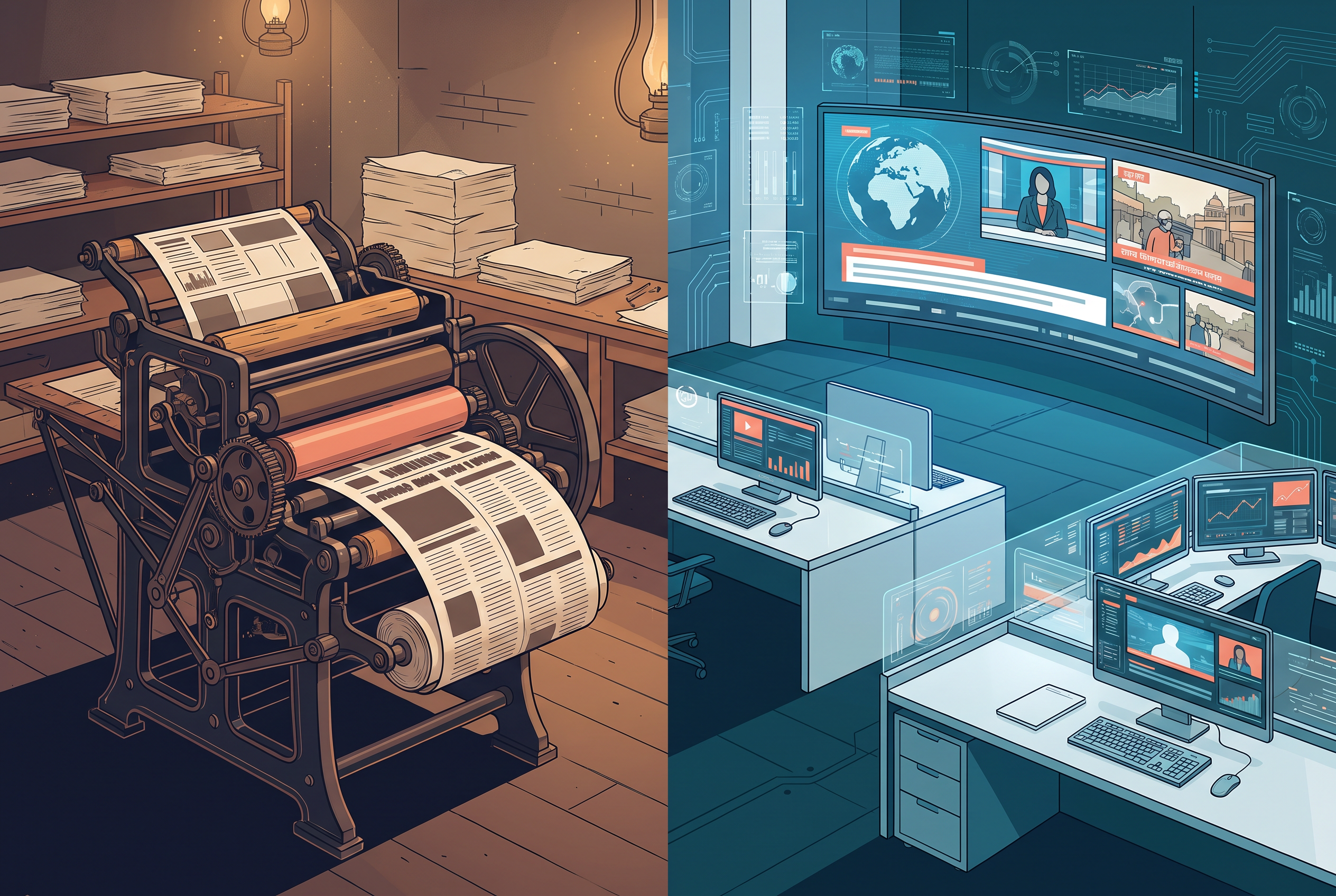
Fig. 7.2 – Workplaces of mass communication: the printing press and the modern newsroom.
The well-known scholar Benedict Anderson argued that this helped the growth of nationalism — the feeling that people who did not even know of each other’s existence could nevertheless feel like members of a single family. Print gave people who would never meet each other a sense of togetherness. Anderson thus suggested that we could think of the nation as an imagined community.
The Press in Colonial India
You will recall how 19th-century social reformers often wrote and debated in newspapers and journals. The press was where argument about widow remarriage, education and caste practices actually took place.
The growth of Indian nationalism was closely linked to the struggle against colonialism, and it emerged in the wake of the institutional changes brought about by British rule in India. Printing, the railway, the postal system and English education were introduced to serve the colonial state — but they also gave Indians the means to speak to one another across regions.
Anti-colonial public opinion was nurtured and channelised by the nationalist press, which was vocal in its opposition to the oppressive measures of the colonial state. This led the colonial government to clamp down on the nationalist press and impose censorship, for instance during the Ilbert Bill agitation in 1883.
Association with the national movement led some of the nationalist newspapers — like Kesari (Marathi), Mathrubhumi (Malayalam) and Amrita Bazar Patrika (English) — to suffer the displeasure of the colonial state. But that did not prevent them from advocating the nationalist cause and demanding an end to colonial rule.
The dates in Fig. 7.3 show how early this press was, and how many languages it spoke in.
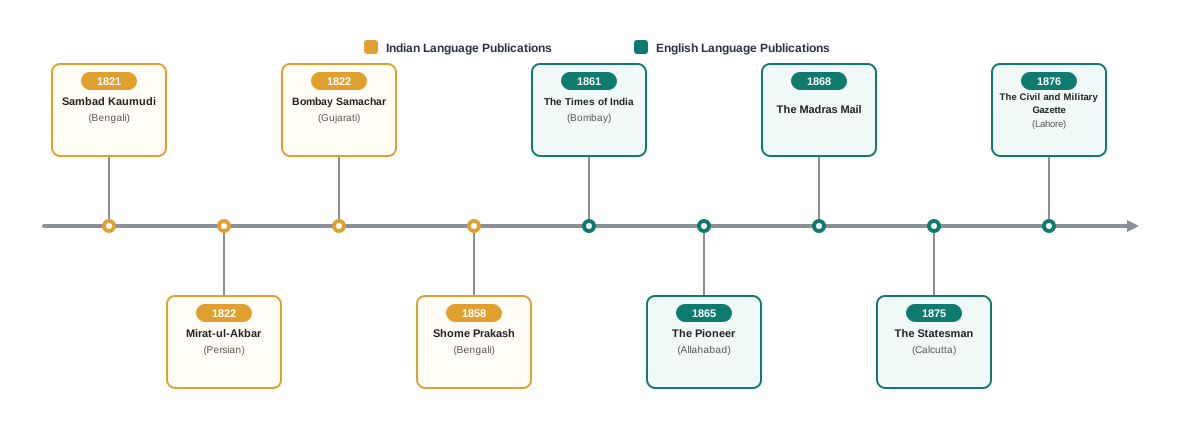
Fig. 7.3 – The early Indian press and its linguistic diversity.
The Media the Raj Allowed
Under British rule, newspapers and magazines, films and radio comprised the range of mass media available in India. Each stood in a different relationship to the colonial state.
Radio was wholly owned by the state. National views could not, therefore, be expressed on it. Newspapers and films, though autonomous from the state, were strictly monitored by the Raj — autonomy on paper is not the same as freedom in practice.
Newspapers and magazines, whether in English or in the vernacular, were not very widely circulated, because the literate public was limited. Yet their influence far outstripped their circulation. News and information were read aloud and spread by word of mouth from commercial and administrative hubs — markets and trading centres, as well as courts and towns. One printed copy could reach a hundred listeners.
The print media of the time carried a range of opinions, each expressing its own idea of a ‘free India’. Those were arguments about what kind of country was being fought for, not merely against whom. These variations were carried over into independent India — and, as the next section shows, into a very different relationship between the media and the state.
7.2 Mass Media in Independent India
7.2.1 The Approach
The country that became independent in 1947 inherited a press that had been monitored and censored, and a radio service that had been owned outright by the colonial state. What was the new nation to do with these instruments?
Jawaharlal Nehru, the first prime minister, called upon the media to function as the watchdog of democracy. At the same time, the media was expected to spread the spirit of self-reliance and national development among the people. Both roles were asked of it at once — to keep watch on power, and to work alongside it.
You will recall the general thrust of development in the early years of independence in India from your earlier chapters: planning, industrialisation, and a state that led the effort. The media was seen as a means to inform the people of these various developmental efforts.
The media was also encouraged to fight against oppressive social practices such as untouchability, child marriages, and the ostracism of widows, as well as beliefs in witchcraft and faith healing. A rational, scientific ethos was to be promoted, because a modern industrial society was thought to require modern habits of mind.
This was not left to persuasion alone. The Films Division of the government produced newsreels and documentaries. These were shown before the screening of films in every movie theatre, documenting the development process as directed by the state. If you had bought a cinema ticket in the 1950s or 1960s, you watched a dam or a steel plant before you watched the film.
7.2.2 Radio
Radio in India did not begin as a government project. It began with amateur ‘ham’ broadcasting clubs in Kolkata and Chennai in the 1920s — hobbyists with transmitters. It matured into a public broadcasting system in the 1940s during the Second World War, when it became a major instrument of propaganda for the Allied forces in South-east Asia.
At the time of Independence there were only six radio stations, located in the major cities and catering primarily to an urban audience. By 1950, there were 5,46,200 radio licences all over India — a large number in absolute terms, and a very small one for a country of that size.
Since the media was seen as an active partner in the development of the newly free nation, All India Radio’s programmes consisted mainly of news, current affairs and discussions on development.
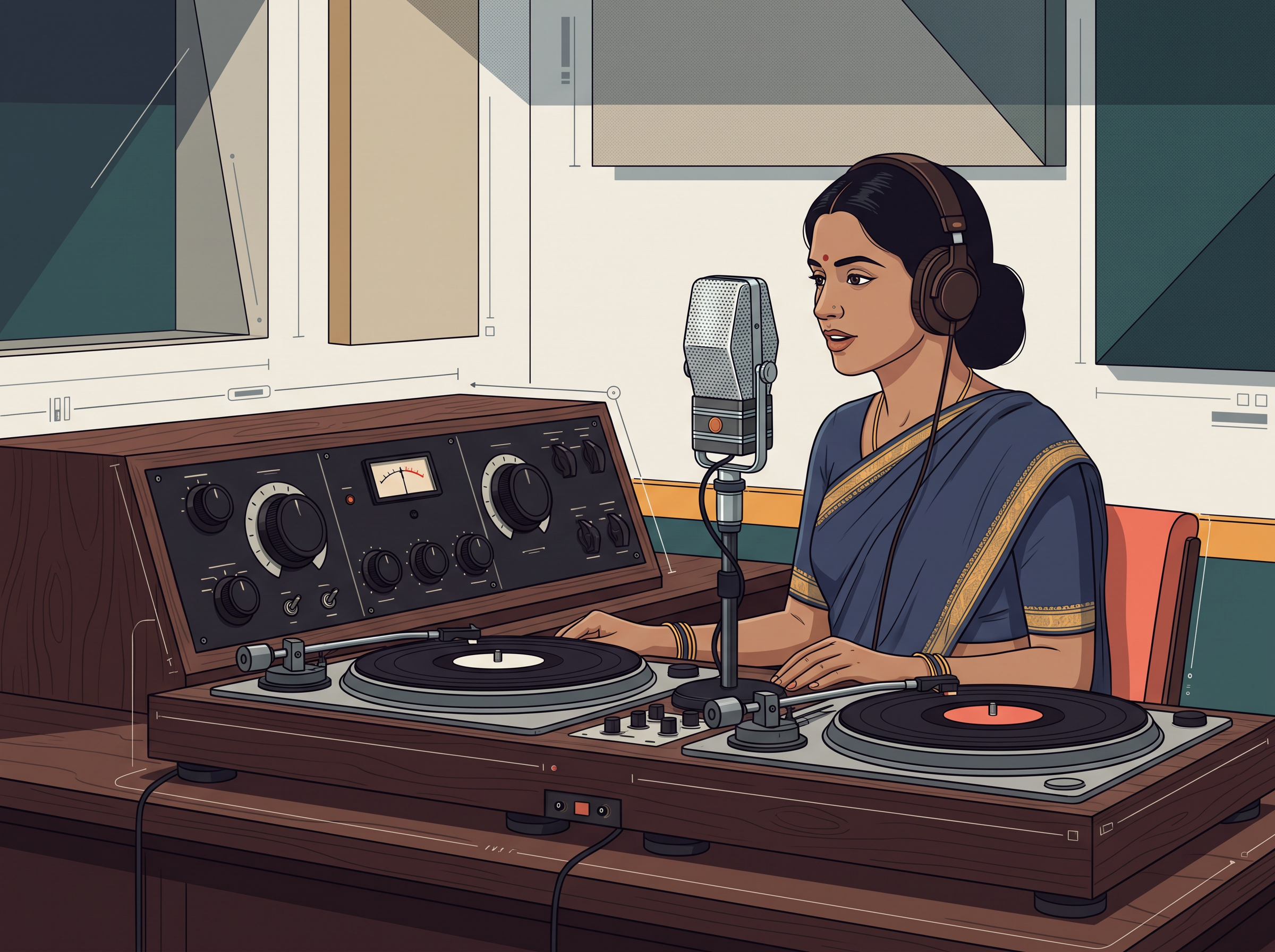
Fig. 7.4 – An All India Radio studio in the 1940s.
Entertainment enters state radio
Apart from All India Radio’s news broadcasts, there was Vividh Bharati, a channel for entertainment that primarily broadcast Hindi film songs on listeners’ request. In 1957, AIR acquired the hugely popular channel Vividh Bharati, which soon began to carry sponsored programmes and advertisements and grew to become a money-spinning channel for AIR.
This is worth pausing over. The state broadcaster, set up to inform and to develop, found that its most profitable offering was film music — and that advertisers would pay to sit beside it. The market had entered public broadcasting through the entertainment door, decades before liberalisation.
The spread of the transistor
When India gained independence in 1947, All India Radio had an infrastructure of six radio stations, located in metropolitan cities. The country had 280,000 radio receiver sets for a population of 350 million people. After independence, the government gave priority to the expansion of the radio broadcasting infrastructure, especially in state capitals and in border areas.
Over the years, AIR has developed a formidable infrastructure for radio broadcasting in India. It operates a three-tiered service — national, regional and local — to cater to India’s geographic, linguistic and cultural diversity. The three tiers are not a technicality; they are how a single broadcaster speaks to a country of many languages.
The major constraint on the popularisation of radio initially was the cost of the radio set. The transistor revolution in the 1960s changed that. Battery-operated sets made the radio mobile — it could go to the field, the shop, the bus stand — and the unit price fell substantially.
Table 7.1 lets you see the scale of the change. Six stations serving a handful of urban listeners in 1947 became a service that, by 2000, was reaching around 110 million households — two-thirds of all Indian households — in 24 languages and 146 dialects, with more than a third of those households in rural areas. As of today, AIR has grown to 480 stations and 681 transmitters, covering 99% of the population spread over 92% of the area of the country.
7.2.3 Television
Television programming was introduced experimentally in India as early as 1959, and its stated purpose was to promote rural development. Later, the Satellite Instructional Television Experiment (SITE) broadcast directly to community viewers in the rural areas of six states between August 1975 and July 1976. These instructional broadcasts reached 2,400 television sets directly, for four hours daily.
Meanwhile, television stations were set up under Doordarshan in four cities — Delhi, Mumbai, Srinagar and Amritsar — by 1975. Three more stations, in Kolkata, Chennai and Jalandhar, were added within a year. Every broadcasting centre had its own mix of programmes, comprising news, children’s and women’s programmes, farmers’ programmes, as well as entertainment programmes.
The turn towards the advertiser
As programmes became commercialised and were allowed to carry advertisements of their sponsors, a shift in the target audience was evident. Entertainment programmes grew, and they were directed at the urban consuming class.
Notice what drives this shift. An advertiser does not pay for viewers; an advertiser pays for viewers who can buy. The moment a broadcaster’s income depends on advertising, its programmes begin to tilt towards the audience with money to spend — which in India of the 1980s meant the urban middle class rather than the village that SITE had been built for. This is commercialisation: the reshaping of content by the need to sell audiences to advertisers.
The advent of colour broadcasting during the 1982 Asian Games in Delhi, and the rapid expansion of the national network, led to rapid commercialisation of television broadcasting. During 1984–85, the number of television transmitters increased all over India, covering a large proportion of the population.
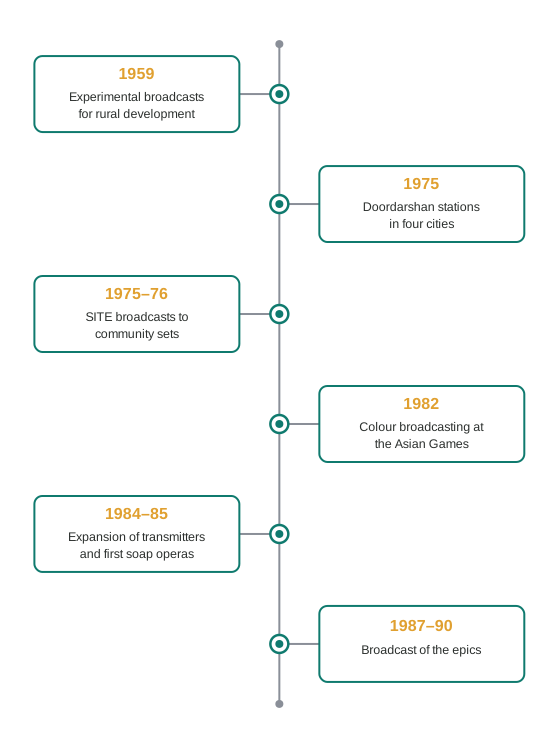
Fig. 7.5 – The growth of television broadcasting in India.
The age of the soap opera
It was in this period that indigenous soap operas, like Hum Log (1984–85) and Buniyaad (1986–87), were aired. They were hugely popular and attracted substantial advertising revenue for Doordarshan, as did the broadcasting of the epics — Ramayana (1987–88) and Mahabharata (1988–90).
A soap opera is a particular kind of programme, and it is worth defining precisely, because it is built to hold an audience week after week.
Hum Log was not only entertainment. It was a deliberate experiment in using a popular serial to teach, and it was studied closely.
Television today
Today, the situation of the television industry is very different. The Annual Report released by TRAI for the year 2015–16 clearly stated that India has the world’s second largest TV market after China. As per industry estimates, as on March 2016, of the existing 2,841 million households, around 1,811 million have television sets, which provide services of cable TV, DTH and IPTV, in addition to a terrestrial TV network of Doordarshan.
7.2.4 Print Media
The beginnings of the print media, and its role in both the spread of the social reform movement and the nationalist movement, have already been noted. After Independence, the print media continued to share the general approach of being a partner in the task of nation building, by taking up developmental issues as well as giving voice to the widest section of people.
The sense of mission this involved comes across in how journalists of the period described their own work.
Read that last sentence carefully, because it contains the whole argument of this chapter in miniature. The newspaper does not stop caring about the public; it becomes a business that also carries a public mission. The order of the words has changed, and so has the institution.
The Emergency and the limits of freedom
The gravest challenge that the media faced was with the declaration of the Emergency in 1975 and the censorship of the media that accompanied it. The period ended and democracy was restored in 1977. India, with its many problems, can be justifiably proud of a free media.
The episode is instructive rather than merely regrettable. It shows that the freedom of the press is not a possession the media holds permanently; it is a relationship with the state, which can be suspended, and which has to be recovered.
Where this leaves us
At the start of the chapter we noted that mass media is different from other means of communication because it requires a formal structural organisation to meet large-scale capital, production and management demands. And, like any other social institution, the mass media varies in structure and content according to the economic, political and socio-cultural context.
You will now have noticed how, at different points in time, both the content and the style of the media change. At some points, the state has the greater role to play. At other times, the market does. In India, this shift is very visible in recent times.
This change has also led to debates about what role the media ought to play in a modern democracy. We look at these new developments in the next section.
7.3 Globalisation and the Media
You have already read about the far-reaching impact of globalisation, and about its close link with the communication revolution, in the last chapter. This section asks what that impact looks like when we turn the lens on the media themselves.
The media have always had international dimensions — the gathering of news stories from abroad, and the distribution of primarily western films overseas. Globalisation did not invent the foreign correspondent or the imported film.
What changed is the framework. Until the 1970s, most media companies operated within specific domestic markets, in accordance with regulations laid down by national governments. The media industry was also differentiated into distinct sectors: for the most part, cinema, print media, radio and television broadcasting all operated independently of one another. A film company made films; a newspaper printed newspapers.
In the past three decades, however, profound transformations have taken place within the media industry. National markets have given way to a fluid global market, while new technologies have led to the fusion of forms of media that were once distinct. The same company now owns the newspaper, the television channel and the FM station; the same device plays all three.
The fusion of forms of media. Although the music industry is becoming ever more concentrated in the hands of a few international conglomerates, some feel that it is under a great threat. This is because the Internet allows music to be downloaded digitally, rather than purchased in the form of CDs or cassettes from local music stores. The global music industry currently comprises a complex network of factories, distribution chains, music shops and sales staff.
The changes that have taken place in mass media are so immense that this chapter can probably give you only a fragmentary understanding of them. As a young generation, you can build upon the information provided here. Let us look at the changes globalisation has brought about in the print media (primarily newspapers and magazines), in the electronic media (primarily television), and in radio.
7.3.1 Print Media
We have seen how important newspapers and magazines were for the spread of the freedom movement. It is often believed that with the growth of television and the Internet, the print media would be sidelined. Globally, that expectation was reasonable.
However, in India we have seen the circulation of newspapers grow. New technologies have helped boost the production and circulation of newspapers, and a large number of glossy magazines have also made their entry into the market.
The Eenadu story exemplifies the success of the Indian language press. Ramoji Rao, the founder of Eenadu, had successfully organised a chit-fund before launching the paper in 1974. By associating with appropriate causes in rural areas, such as the anti-arrack movement of the mid-1980s, the Telugu newspaper was able to reach the countryside. This prompted it to launch ‘district dailies’ in 1989 — tabloid inserts or features carrying sensational news from particular districts, as well as classified advertisements from villages and small towns of the area. By 1998, Eenadu was being published from 10 towns in Andhra Pradesh, and its circulation accounted for 70 per cent of the audited Telugu daily circulation.
Why Indian language newspapers grew
The reasons for this remarkable growth in Indian language newspapers are many.
First, there is a rise in the number of literate people who are migrating to cities. A newspaper needs readers, and migration was manufacturing them. The Hindi daily Hindustan printed 64,000 copies of its Delhi edition in 2003; by 2005 the figure had jumped to 425,000.
The reason lies in who Delhi’s people are. Of Delhi’s population of one crore and forty-seven lakhs, 52 per cent had come from the Hindi belt of the two states of Uttar Pradesh and Bihar. Out of these, 47 per cent had come from a rural background, and 60 per cent of them were less than 40 years of age — young, literate, and far more comfortable reading Hindi than English.
Second, the needs of readers in small towns and villages are different from those of the cities, and the Indian language newspapers cater to those needs. A reader in a district town wants to know about the district.
Dominant Indian language newspapers such as Malayala Manorama and Eenadu launched the concept of local news in a significant manner, by introducing district and, wherever necessary, block editions. Dina Thanthi, another leading Tamil newspaper, has always used simplified and colloquial language — the language people actually speak, not the language of officialdom.
The Indian language newspapers have also adopted advanced printing technologies and attempted supplements, pullouts, and literary and niche booklets. Marketing strategies have marked the Dainik Bhaskar group’s growth, as they carry out consumer contact programmes, door-to-door surveys and research.
This brings back a point made at the beginning of the chapter: modern mass media has to have a formal structural organisation. Door-to-door surveys across several states are not the work of a printer with a press; they are the work of a company with departments.
The contrast in Fig. 7.6 is the heart of the matter: the Indian language reader is where the growth is, and the English reader is a stable minority.
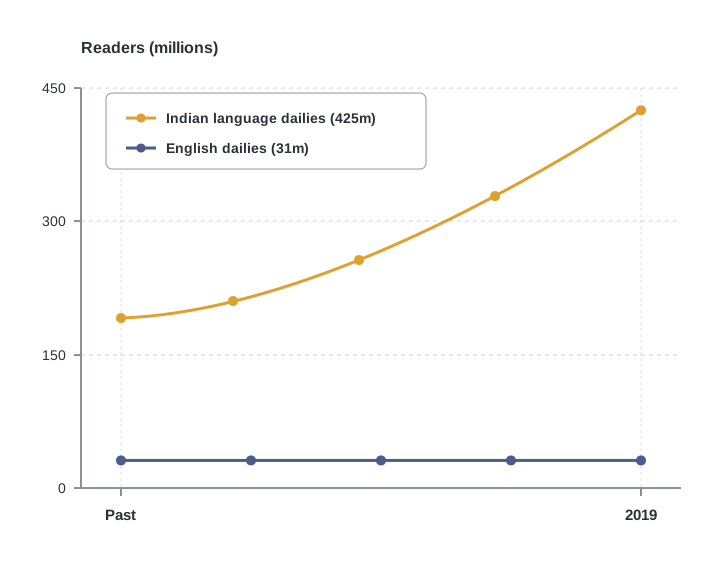
Fig. 7.6 – Readership of Indian language dailies vs English dailies.
While English newspapers, often called ‘national dailies’, circulate across regions, vernacular newspapers have vastly increased their circulation in the states and the rural hinterland. In order to compete with the electronic media, newspapers — especially English language newspapers — have on the one hand reduced prices, and on the other hand brought out editions from multiple centres.
Changing technology has also changed the role and function of a reporter. The basic tools of a news reporter — a shorthand notebook, pen, typewriter and a plain old telephone — have been replaced by new tools: a mini digital recorder, a laptop or a PC, a mobile or satellite phone, and other accessories like a modem, dish and antenna. All these technological changes in news gathering have increased the speed of news and helped newspaper managements push their deadlines to dawn. They are also able to plan a greater number of editions and provide the latest news to readers. A number of language newspapers use new technologies to bring out separate editions for each district: while print centres are limited, the number of editions has grown manifold.
Newspaper chains like the Meerut-based Amar Ujala use new technology for news gathering as well as for improving pictorial coverage. The newspaper has a network of nearly a hundred reporters and staffers and an equal number of photographers, feeding news to all its 13 editions spread across Uttar Pradesh and Uttarakhand. All hundred correspondents are equipped with PCs and modems for news transmission, and the photographers carry digital cameras; digital images are sent to the central news desk via modems.
What growth has cost
Many feared that the rise in electronic media would lead to a decline in the circulation of print media. This has not happened. Indeed, print has expanded.
This process has, however, often involved cuts in prices and an increasing dependence on the sponsors of advertisements, who in turn have a larger say in the content of newspapers. A newspaper sold below the cost of producing it must be paid for by someone, and that someone is the advertiser.
The word that box uses is worth holding on to. Infotainment is the blending of information with entertainment, so that news is packaged to hold attention rather than simply to inform.
7.3.2 Television
In 1991 there was one state-controlled TV channel, Doordarshan, in India. By 1998 there were almost 70 channels. Privately run satellite channels have multiplied rapidly since the mid-1990s. While Doordarshan broadcasts over 35 channels, there were about 900 private television networks broadcasting in 2020.
The staggering growth of private satellite television has been one of the defining developments of contemporary India. In 2002, 134 million individuals watched satellite TV on an average every week; this number went up to 190 million in 2005. The number of homes with access to satellite TV jumped from 40 million in 2002 to 61 million in 2005. Satellite subscription has now penetrated 56 per cent of all TV homes.
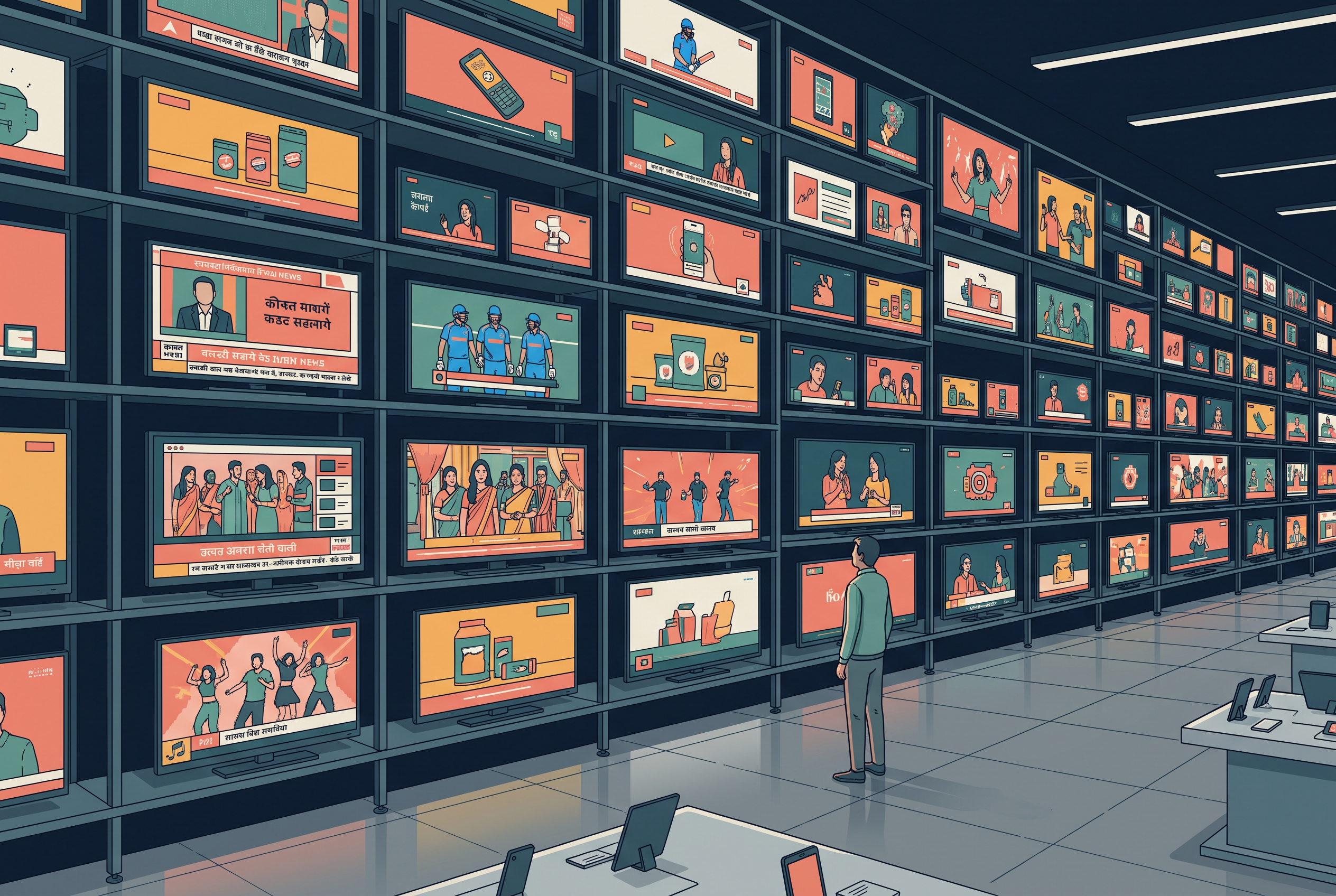
Fig. 7.7 – The explosion of satellite television in the consumer market.
How private satellite television arrived
Two events in a single year opened the door. The Gulf War of 1991, which popularised CNN, showed Indian viewers what round-the-clock international news looked like. In the same year, the launching of Star-TV by the Whampoa Hutchinson Group of Hong Kong signalled the arrival of private satellite channels in India.
In 1992, Zee TV, a Hindi-based satellite entertainment channel, also began beaming programmes to cable television viewers in India. By 2000, 40 private cable and satellite channels were available, including several that focused exclusively on regional-language broadcasting, like Sun-TV, Eenadu-TV, Udaya-TV, Raj-TV and Asianet. Meanwhile, Zee TV launched several regional networks, broadcasting in Marathi, Bengali and other languages.
None of this could have reached homes without the cable. While Doordarshan was expanding rapidly in the 1980s, the cable television industry was mushrooming in major Indian cities. The VCR greatly multiplied entertainment options for Indian audiences, providing alternatives to Doordarshan’s single-channel programming. Video viewing at home, and in community-based parlours, increased rapidly, and the video fare consisted mostly of film-based entertainment, both domestic and imported.
By 1984, entrepreneurs in cities such as Mumbai and Ahmedabad had begun wiring apartment buildings to transmit several films a day. From there, the numbers ran away, as Table 7.3 shows.
Read the table as a social fact, not merely an economic one. A cable operator is a local person with a dish, a wire and a route through the neighbourhood. Sixty thousand of them meant that a global broadcasting industry entered Indian homes through a network of very small, very local businesses.
The global channel learns the local language
The coming in of transnational television companies like Star TV, MTV, Channel [V], Sony and others made some people worried about the likely impact on Indian youth and on Indian cultural identity. The fear was of a one-way flow: western programmes, western language, western tastes.
But most of the transnational television channels realised, through research, that the use of the familiar is more effective in procuring the diverse groups that constitute the Indian audience. Audiences, it turned out, did not want to be spoken to in a language they did not use.
The early strategy of Sony International was to broadcast 10 Hindi films a week, gradually decreasing the number as the station produced its own Hindi language content. The majority of the foreign networks have now introduced either a segment of Hindi language programming (MTV India) or an entire new Hindi language channel (STAR Plus). STAR Sports and ESPN have dual commentary or an audio soundtrack in Hindi, and the larger players have launched specific regional channels in languages such as Bengali, Punjabi, Marathi and Gujarati.
Perhaps the most dramatic adoption of localisation was carried out by STAR TV. In October 1996, STAR Plus — initially an all-English general entertainment channel originating from Hong Kong — began producing a Hindi language belt of programming between 7 and 9 PM. By February 1999, the channel was converted into a solely Hindi channel, and all English serials shifted to STAR World, the network’s English language international channel. The advertising that promoted the change included the Hinglish slogan ‘Aapki Boli. Aapka Plus Point’ — your language, your plus point (Butcher, 2003).
Both STAR and Sony continued to dub US programming for a younger audience, as children appeared able to adjust to the peculiarities that arise when the language is one and the setting another. Have you watched a dubbed programme? What do you feel about it?
News, entertainment, and what gets left out
Most television channels are on throughout the day, 24×7. The format for news is lively and informal. News has been made far more immediate, democratic and intimate — a viewer in a small town can watch a debate as it happens, and can sometimes take part in it. Television has fostered public debate and is expanding its reach every passing year.
This brings us to a question that will not go away: whether serious political and economic issues are neglected in the process.
There is a growing number of news channels in Hindi and English, a large number of regional channels, and an equally large number of reality shows, talk shows, Bollywood shows, family soaps, interactive shows, game shows and comedy shows. Entertainment television has produced a new cadre of superstars who have become familiar household names, and their private lives and rivalries on set feed the gossip columns of popular magazines and newspapers.
Reality shows like Kaun Banega Crorepati, Indian Idol and Bigg Boss have become increasingly popular. Most of these are modelled along the lines of western programmes.
When the camera will not look away
Competition for viewers does not only decide what is shown. It decides how far a channel will go.
7.3.3 Radio
In 2000, AIR’s programmes could be heard in two-thirds of all Indian households, in 24 languages and 146 dialects, over some 120 million radio sets. Radio, in other words, was not dying when private FM arrived; it was already the most widely spread medium in the country.
The advent of privately owned FM radio stations in 2002 provided a boost to entertainment programmes over radio. In order to attract audiences, these privately run radio stations sought to provide entertainment to their listeners.
Their content is shaped by a rule as much as by taste. As privately run FM channels are not permitted to broadcast any political news bulletins, many of these channels specialise in ‘particular kinds’ of popular music to retain their audiences. One such FM channel claims that it broadcasts ‘All hits all day!’
Most of the FM channels that are popular among young urban professionals and students belong to media conglomerates — large companies that own several media businesses at once. ‘Radio Mirchi’ belongs to the Times of India group, Red FM is owned by Living Media, and Radio City by the Star Network.
What is missing is as telling as what is present. Independent radio stations engaged in public broadcasting, of the kind that National Public Radio (USA) or the BBC (UK) represent, are absent from our broadcasting landscape. India’s radio is either state-owned or commercially owned; the independent public broadcaster is the third possibility that has not taken root here.
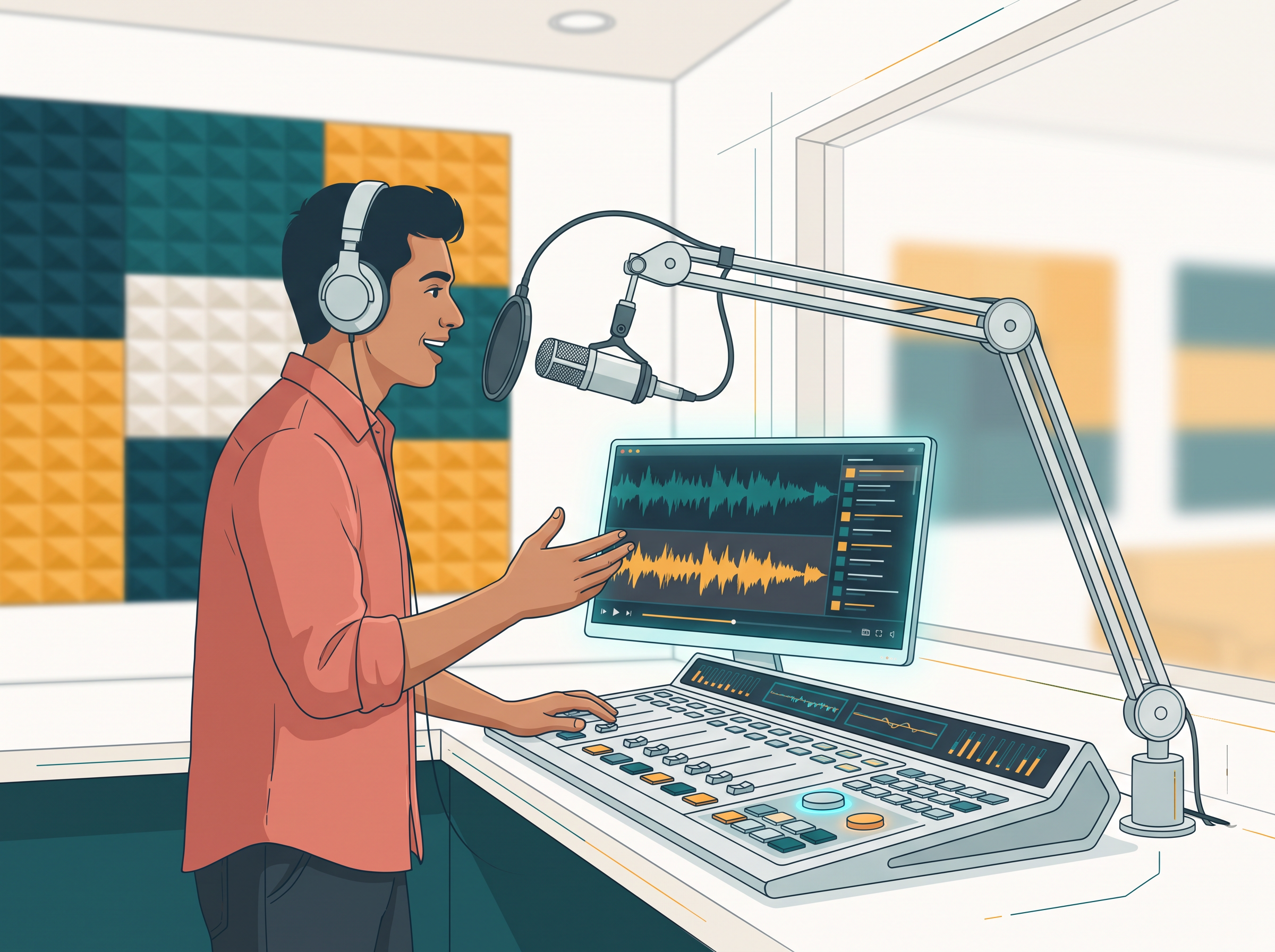
Fig. 7.8 – A modern private FM radio studio.
Radio in the popular imagination
Two films show how alive radio remains in the Indian imagination, even though both are set in the contemporary period. In ‘Rang de Basanti’, a group of angry college students, inspired by the legend of Bhagat Singh, kill a minister and then take over All India Radio in order to reach out to the people and explain themselves. In ‘Lage Raho Munna Bhai’, the heroine is a radio jockey who wakes up the city with a hearty “Good Morning Mumbai!”, and the hero too turns to the radio station — in his case, to save a girl’s life.
In both films, the microphone is what a person reaches for when they must be heard by everyone at once. That is a fair definition of a mass medium.
The local turn
The potential for using FM channels is enormous. Further privatisation of radio stations, and the emergence of community-owned radio stations, would lead to the growth of radio stations. The demand for local news is growing, and the number of homes listening to FM in India has reinforced the worldwide trend of networks being replaced by local radio.
The box below reveals not only the ingenuity of a village youth, but also the need to cater to local cultures.
His transmission kit, which he built himself, cost him 50 rupees, and is fitted to an antenna on a bamboo pole on a neighbouring three-storey hospital. The shack holds some 200 tapes of local Bhojpuri, Bollywood and devotional songs. In many parts of Bihar, where power supply is unreliable, the cheap battery-powered transistor remains the most popular source of entertainment. Raghav earns nothing from the station; his repair work brings him about two thousand rupees a month. He did not know that running an FM station requires a government licence, and when he was told his station was illegal he shut it down — until local villagers thronged his shack and persuaded him to resume. “Women listen to my station more than men,” he says; devotional songs are aired at dawn and dusk for women and older people. With no phone-in facility, listeners send their requests through couriers carrying handwritten messages, or telephone a public telephone office nearby. (Source: BBC News, 24 February 2006)
Notice what this small station has that the conglomerates do not: it knows the names of the shops it announces, and the songs its listeners actually want at dawn. The worldwide trend towards local radio, and the case for community-owned stations, rests on exactly that kind of knowledge.
7.4 Conclusion
That the mass media are an essential part of our personal and our public life today cannot be emphasised enough. They are in the household before breakfast and in the pocket all day.
This chapter can in no way capture your own life experience with the media. What it has tried to do is something different: to understand the media as an important part of contemporary society, rather than merely to describe them.
It has done so by keeping several dimensions in view at once — the link between the media and the state, and between the media and the market; the social organisation and management that a mass medium requires; and the relationship between the media and their readers, listeners and audiences.
In other words, this chapter looks in two directions at the same time. It looks at the constraints within which the media operate — of capital, of ownership, of regulation, of the need to hold an audience. And it looks at the many ways in which the media, in turn, affect our lives.
That two-way view, as Fig. 7.9 sets out, is what the sociology of the media is for. To ask only “what does television do to us?” is to forget who owns television and who pays for it. To ask only “who owns the channel?” is to forget the viewer who chooses, argues, writes letters and switches off.
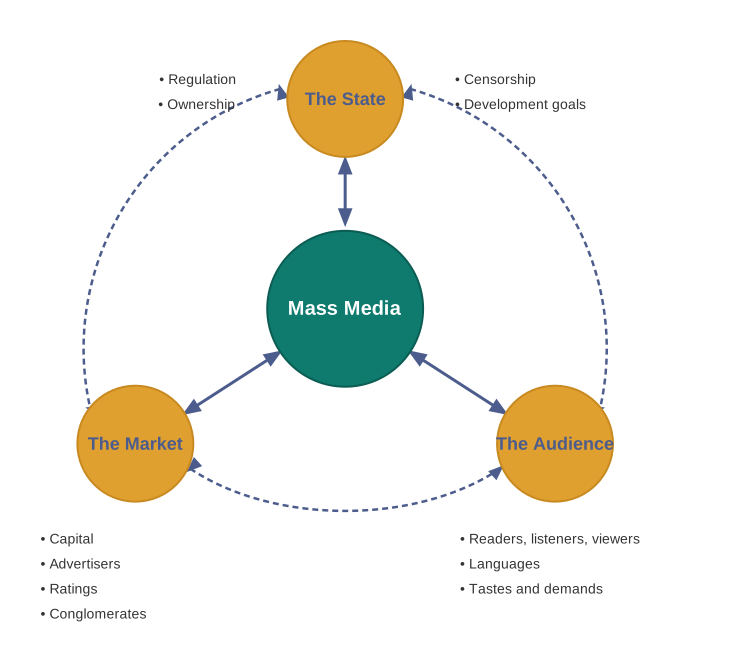
Fig. 7.9 – The three forces that shape mass media.
7.5 Summary
What mass media are
Mass media include television, newspapers, films, magazines, radio, advertisements, video games and CDs. They are called ‘mass’ media because they reach mass audiences — very large numbers of people who do not know one another. They are also referred to as mass communications.
Mass communication differs from an ordinary conversation, letter or phone call: it requires a formal structural organisation to meet large-scale capital, production and management demands. This is why the state and/or the market always have a major role in how mass media are structured and run.
The relationship between media and society is dialectical — society shapes the media, and the media shape society.
Access to media is unequal. The digital divide means that different sections of people can use the media with very different degrees of ease.
The beginnings of modern mass media (7.1)
The first modern mass media institution began with the printing press, developed by Johann Gutenberg in Europe in 1440. Early printing was restricted to religious books, and the first products of the press reached only an audience of literate elites.
With the Industrial Revolution, and with improvements in technology, transportation and literacy by the mid-19th century, newspapers began to reach a mass audience. People in distant parts of a country read the same news and began to feel a sense of belonging, a ‘we feeling’.
Benedict Anderson argued that this helped the growth of nationalism, and that the nation could therefore be thought of as an ‘imagined community’ — a community of people who will never meet but who feel like members of one family.
In India, 19th-century social reformers debated in newspapers and journals, and the nationalist press nurtured and channelised anti-colonial opinion. The colonial state responded with clampdowns and censorship, as during the Ilbert Bill agitation in 1883. Papers such as Kesari, Mathrubhumi and Amrita Bazar Patrika drew official displeasure but continued to demand an end to colonial rule.
Under the Raj, radio was wholly owned by the state, while newspapers and films, though autonomous, were strictly monitored. Circulation was small because the literate public was limited, but influence far outstripped circulation, as news spread by word of mouth from markets, courts and towns.
Mass media in independent India (7.2)
Nehru called upon the media to be the watchdog of democracy, and at the same time expected it to spread self-reliance and national development. The media was to inform people about development, fight practices such as untouchability, child marriage and the ostracism of widows, and promote a rational, scientific ethos. The Films Division produced newsreels and documentaries shown before every film screening.
Radio began with amateur ‘ham’ clubs in Kolkata and Chennai in the 1920s and became a public broadcasting system in the 1940s. At Independence there were six radio stations and 280,000 receiver sets for a population of 350 million; by 1950 there were 5,46,200 radio licences.
All India Radio’s programmes were mainly news, current affairs and development — including a sustained campaign on high-yielding varieties from 1967. In 1957 AIR acquired Vividh Bharati, which carried sponsored programmes and advertisements and became highly profitable: the market entered state radio through entertainment.
The transistor revolution of the 1960s made radio cheap and mobile. By 2000, radio reached about 110 million households — two-thirds of all Indian households — in 24 languages and 146 dialects. AIR today has 480 stations and 681 transmitters covering 99% of the population over 92% of the area.
Television began experimentally in 1959 to promote rural development, and SITE broadcast to 2,400 community sets in rural areas of six states between August 1975 and July 1976. Doordarshan stations were set up in Delhi, Mumbai, Srinagar and Amritsar by 1975, with three more added within a year.
Once programmes were commercialised and carried advertisements, the target audience shifted towards the urban consuming class. Colour broadcasting at the 1982 Asian Games and the expansion of the network accelerated commercialisation.
Hum Log (1984–85), India’s first long-running soap opera, used the entertainment-education strategy. Singhal and Rogers found high parasocial interaction, ratings of 65–90 per cent in North India and 20–45 per cent in the South, around 50 million viewers per broadcast, and over 400,000 letters. Its advertising promoted Maggi noodles, and the commercialisation of Doordarshan began.
The print media after Independence continued as a partner in nation building; journalism was regarded as a ‘calling’ before it became a profession. The gravest challenge to the media was the Emergency of 1975 and the censorship that came with it; democracy was restored in 1977.
Globalisation and the media (7.3)
Until the 1970s most media companies worked within domestic markets under national regulation, and cinema, print, radio and television operated as separate sectors. In the last three decades national markets have given way to a fluid global market, and new technologies have fused forms of media that were once distinct — as the case of the music industry shows.
Contrary to expectation, print media in India expanded rather than declined. Indian language dailies grew from 191 million readers to 425 million by 2019, while English dailies stagnated at around 31 million.
The reasons are, first, a rising number of literate migrants in the cities (Delhi’s Hindustan went from 64,000 copies in 2003 to 425,000 by 2005), and second, the ability of Indian language papers to meet small-town and rural needs — district and block editions (Malayala Manorama, Eenadu), colloquial language (Dina Thanthi), supplements, new printing technology and aggressive marketing (Dainik Bhaskar).
Growth came at a price: lower cover prices meant greater dependence on advertisers, who gained a larger say in content, and reading habits fragmented, encouraging infotainment — information packaged as entertainment.
Television changed even faster. From one state channel in 1991 to almost 70 channels by 1998 and about 900 private networks by 2020. The Gulf War of 1991 and the launch of Star-TV signalled the arrival of private satellite channels; Zee TV followed in 1992; cable operators multiplied from 100 in 1984 to about 60,000 in 1999.
Fears that transnational channels would erode Indian cultural identity were only partly borne out. Research showed the channels that the familiar sells, and they localised: Sony broadcast Hindi films, MTV added Hindi programming, STAR Plus became a Hindi channel by 1999, and regional-language channels multiplied.
Round-the-clock news has made television immediate, informal and intimate, and has fostered public debate — but it also raises the question of whether serious political and economic issues are neglected, and whether competition for ratings turns private distress into spectacle.
Radio remains widely spread. Private FM stations from 2002 boosted entertainment; barred from political news bulletins, they compete through popular music, and most belong to media conglomerates. Independent public broadcasters of the NPR or BBC type are absent in India. The growing demand for local news, and cases such as a village FM station in Bihar, point to the potential of community-owned radio.
Conclusion (7.4)
- The media must be understood in two directions at once: the constraints of capital, ownership, regulation and audience within which they operate, and the many ways in which they, in turn, affect our lives.
7.6 Key Terms
Censorship — Control by the state (or another authority) over what may be printed or broadcast; used by the colonial government against the nationalist press, and again during the Emergency of 1975.
Commercialisation — The process by which media content comes to be shaped by the need to attract advertisers, so that programmes are aimed at audiences who can afford to buy what is advertised.
Dialectical relationship — A two-way relationship in which each side shapes the other; society shapes the media, and the media in turn shape society.
Digital divide — The unequal ability of different sections of people — by income, region, gender or education — to gain access to and make use of media and communication technology.
Imagined community — Benedict Anderson’s idea that a nation is a community of people who will never meet one another, yet feel they belong together; print media, especially newspapers, helped create this shared sense of belonging.
Infotainment — A combination of information and entertainment; news and information presented in an entertaining form in order to hold the interest of readers or viewers.
Mass communication — Communication directed at a very large, unknown audience, which requires a formal structural organisation with large capital, production and management to carry it out.
Mass media — The forms of communication — television, newspapers, films, magazines, radio, advertisements and the like — that reach mass audiences made up of very large numbers of people.
Media conglomerate — A large company that owns several media businesses at once, such as newspapers, television channels and radio stations.
Parasocial interaction — The one-sided emotional bond that audience members form with media characters or personalities, as when viewers rearrange their day to ‘meet’ a favourite soap opera character or speak to them through the television set.
Public broadcasting — Broadcasting owned and run in the public interest rather than for profit; in India, radio and television broadcasting was for decades wholly state-owned, and independent public broadcasters of the National Public Radio (USA) or BBC (UK) type are absent.
Soap opera — A serialised, continuous television or radio story with no fixed ending, in which characters and their histories become familiar to the regular viewer.
7.7 Points to Ponder
If a newspaper is sold for less than it costs to print, someone other than the reader is paying for it. What does that do to the idea of a free press?
Nehru asked the media to be both a watchdog of democracy and a partner in national development. Can one institution do both at once, or does each role weaken the other?
Anderson argued that the newspaper helped people who would never meet feel like members of one nation. Do today’s media — hundreds of channels, endless feeds, each addressing a segment — still build an imagined community, or do they build many smaller ones?
Global television channels came to India speaking English and stayed by speaking Hindi, Tamil and Marathi. Is this a victory for local culture, or simply a more effective way of selling a global product?
The cheap transistor turned radio into a genuinely mass medium; the price of a device decided who counted as the ‘mass’. Which technologies are performing that role now, and who is still being left out?
A village FM station knows the names of the shops it announces; a national network does not. What can very local media do that very large media cannot — and what can they not do?
7.8 NCERT Questions
Trace out the changes that have been occurring in the newspaper industry. What is your opinion on these changes?
Is radio as a medium of mass communication dying out? Discuss the potential that FM stations have in post-liberalisation India.
Trace the changes that have been happening in the medium of television. Discuss.
7.9 Objective Questions
- Printing books using modern technologies was first developed in Europe by:
- Benedict Anderson
- Johann Gutenberg
- Raja Rammohun Roy
- Ramoji Rao [1 mark]
- The Satellite Instructional Television Experiment (SITE) broadcast to community viewers in the rural areas of six states between:
- 1959 and 1960
- August 1975 and July 1976
- 1982 and 1984
- 1991 and 1992 [1 mark]
- Colour television broadcasting was introduced in India during:
- the Emergency of 1975
- the Asian Games in Delhi in 1982
- the Gulf War of 1991
- the telecast of the Ramayana in 1987 [1 mark]
- The Hinglish advertising slogan ‘Aapki Boli. Aapka Plus Point’ was used to promote the change of language on:
- Zee TV
- MTV India
- STAR Plus
- Sony [1 mark]
- All India Radio acquired the entertainment channel Vividh Bharati in the year:
- 1947
- 1950
- 1957
- 1967 [1 mark]
- The idea of the nation as an ‘imagined community’ is associated with:
- A. R. Desai
- Benedict Anderson
- Melissa Butcher
- Everett Rogers [1 mark]
- Assertion (A): Entertainment programmes on Doordarshan came increasingly to be directed at the urban consuming class. Reason (R): Once programmes were allowed to carry advertisements of their sponsors, the target audience of television shifted.
- Both A and R are true, and R is the correct explanation of A.
- Both A and R are true, but R is not the correct explanation of A.
- A is true, but R is false.
- A is false, but R is true. [1 mark]
- Assertion (A): Many privately run FM channels in India specialise in ‘particular kinds’ of popular music. Reason (R): Privately run FM channels are not permitted to broadcast political news bulletins.
- Both A and R are true, and R is the correct explanation of A.
- Both A and R are true, but R is not the correct explanation of A.
- A is true, but R is false.
- A is false, but R is true. [1 mark]
- Assertion (A): The circulation of newspapers in India declined once television and the Internet expanded. Reason (R): The readership of Indian language dailies grew from 191 million readers to 425 million readers in 2019.
- Both A and R are true, and R is the correct explanation of A.
- Both A and R are true, but R is not the correct explanation of A.
- A is true, but R is false.
- A is false, but R is true. [1 mark]
- Match the newspaper in Column A with the language in Column B.
| Column A | Column B |
|---|---|
| a. Kesari | i. Malayalam |
| b. Mathrubhumi | ii. Tamil |
| c. Amrita Bazar Patrika | iii. Marathi |
| d. Dina Thanthi | iv. English |
[1 mark]
- Match the person in Column A with the publication in Column B.
| Column A | Column B |
|---|---|
| a. Raja Rammohun Roy | i. Bombay Samachar |
| b. Fardoonji Murzban | ii. Eenadu |
| c. Ishwar Chandra Vidyasagar | iii. Sambad Kaumudi |
| d. Ramoji Rao | iv. Shome Prakash |
[1 mark]
Fill in the blank: At the time of Independence, All India Radio had an infrastructure of __________ radio stations, located in metropolitan cities. [1 mark]
Fill in the blank: The combination of information and entertainment in the presentation of news is called __________. [1 mark]
State whether the following statement is True or False: Under British rule in India, radio was wholly owned by the state, and national views could therefore not be expressed on it. [1 mark]
7.10 Check Your Concepts
What is meant by ‘mass’ media? Name any two forms of mass media. [2 marks]
Define infotainment. [2 marks]
What is meant by the digital divide? [2 marks]
Name the two publications started by Raja Rammohun Roy, and state the language of each. [2 marks]
What is a soap opera? Give one example from Indian television. [2 marks]
State any two aims that the Indian state set for the mass media in the first decades after Independence. [2 marks]
Differentiate between mass communication and ordinary, everyday communication, giving one example of each. [4 marks]
Explain, with one Indian example, what is meant by saying that the relationship between the media and society is dialectical. [4 marks]
Why did the colonial government clamp down on the nationalist press and impose censorship? Give reasons. [4 marks]
Give reasons for the remarkable growth of Indian language newspapers in India. [4 marks]
Look again at Table 7.3 in section 7.3, which gives the number of cable operators in India in 1984, 1988, 1992 and 1999. By roughly how many times did the number of cable operators multiply between 1984 and 1999? What social change does this increase reflect? [4 marks]
Look again at Table 7.1 in section 7.2. Using the figures for 1947 and for 2000, describe how far radio had spread in India, and explain one reason for this change. [4 marks]
Differentiate between broadcasting as a state-led project and broadcasting as a market product, using examples from Indian television. [4 marks]
Explain Benedict Anderson’s idea of the nation as an ‘imagined community’. What evidence supports it, and what is one limitation of the argument? [6 marks]
“After Independence the media was asked to be a watchdog of democracy and, at the same time, a partner in national development.” Discuss both expectations with Indian examples, and explain the tension between them. [6 marks]
Discuss the causes and the consequences of the commercialisation of television in India. [6 marks]
How far do you agree that the arrival of global television channels has wiped out local culture in India? Evaluate the claim using evidence from the chapter. [6 marks]
Describe the Hum Log* experiment in entertainment-education — what it attempted, what was found about its audience, and what its limitations were.* [6 marks]
Newspapers in India have expanded even as their cover prices have fallen. Explain why this has happened, and evaluate the argument that it has made newspapers less free rather than more. [6 marks]
7.11 Passage-Based Questions
Read the passage and answer the questions that follow.
The office of a Hindi daily in a district town of northern India occupies two rooms above a shop. Fifteen years ago it carried the same pages as the state edition; today it brings out a block edition of its own, with school results, market rates and the reopening of a repaired road. Its reporters carry small digital recorders and send photographs from their phones to a central desk two hundred kilometres away. The cover price has been cut twice in five years. On most mornings, four of the sixteen pages are supplements paid for by advertisers, and the editor admits that the sports supplement is what keeps the paper alive.
- Identify the two reasons, discussed in the chapter, for the growth of Indian language newspapers that this passage illustrates. [2 marks]
- Explain how new technology has changed the work of the reporter described here. [2 marks]
- What risk arises when a newspaper’s survival depends on advertisers rather than on readers? [2 marks] [6 marks]
Read the passage and answer the questions that follow.
For two days in June, a news channel suspended its normal programming to cover a rescue operation at a collapsed building in a small town. Cameras remained on the site through the night. Viewers were invited to send messages of support by SMS, and a panel of celebrities discussed the rescue between bulletins. During the same two days, a state assembly debated its annual budget; the channel carried thirty seconds on it. The channel’s ratings for the week were its highest in two years.
- Which features of contemporary television, discussed in the chapter, does this account illustrate? [2 marks]
- Explain why competition for ratings can lead channels to cover events in this way. [2 marks]
- What ethical concerns does such coverage raise for the people being filmed and for the viewing public? [2 marks] [6 marks]
Read the passage and answer the questions that follow.
In a small town, a radio station run by volunteers broadcasts for six hours a day. It plays folk songs, announces the timings of the health centre, carries messages about lost cattle and about the school admission dates, and reads out a short bulletin of local happenings. Nobody is paid, and the equipment sits in a rented room behind a cycle shop. Forty kilometres away, in the city, an FM channel owned by a large media group plays film hits all day, runs contests, and carries no news at all. Its listeners are mostly students and young office workers.
- State two differences between the two stations described, in terms of ownership and purpose. [2 marks]
- Why does the city FM channel carry no news bulletins? [2 marks]
- What does the chapter suggest about the potential of community-owned radio in India? [2 marks]