Chapter 8: Social Movements
Think about your Sunday. Most students, office-workers and factory workers across the world work for five or six days and rest on the weekend. It feels like a natural rhythm of life, as though the week has always been shaped this way. It has not.
The weekly holiday, the idea that a working day should not stretch beyond eight hours, the principle that men and women should be paid equally for the same work, the promise of social security and a pension in old age — none of these was a gift handed down by employers or governments. Each was demanded, resisted, demanded again, and finally won by workers who organised themselves over decades. Many of them never lived to enjoy what they had fought for.
This is a strange feature of the rights we hold most casually. We assume they simply exist, the way rain and sunlight exist. In fact almost every one of them carries a history of collective struggle behind it — the nineteenth-century social reform movements against caste and gender discrimination, the nationalist movement that ended colonial rule in India in 1947, the anti-colonial movements across Asia, Africa and the Americas, the civil rights movement in the United States, the anti-apartheid struggle in South Africa.
Sociologists call this force a social movement. This chapter asks what it is, how it works, and how it has shaped India.
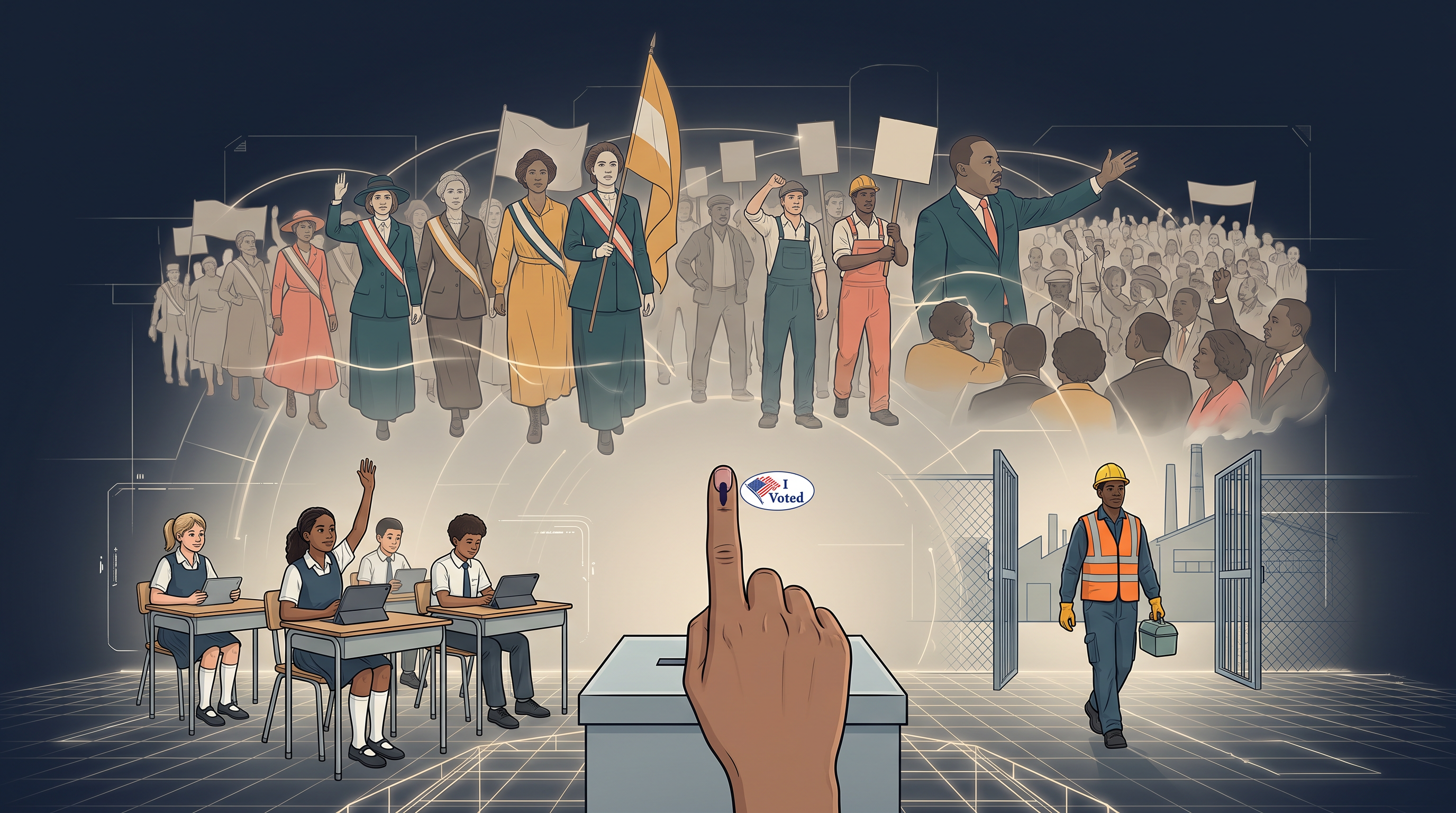
Fig. 8.1 – Ordinary rights and past collective struggles.
Read on. Every one of these questions is answered somewhere in this chapter.
8.1 Features of a Social Movement
Rights are won, not given
Before we can say what a social movement is, it helps to notice what social movements have already done. The right of every adult to vote, for instance, looks today like an obvious feature of a democracy. It was not obvious to those who resisted it, and it was not granted quietly.
Recalling such histories is not sentimental. It is the first step in thinking sociologically about change: whenever you find a right that people now take for granted, you can usually find, behind it, an organised struggle that once seemed unreasonable, dangerous or impossible.
You have already read about the nineteenth-century social reform movements, about the struggles against caste and gender discrimination, and about the nationalist movement that ended colonial rule in India in 1947. You know too of the nationalist movements across Asia, Africa and the Americas that brought colonial rule to an end, of socialist movements the world over, of the civil rights movement in the United States in the 1950s and 1960s that fought for equal rights for Blacks, and of the anti-apartheid struggle in South Africa. Each changed its society in fundamental ways.
Movements also feed one another. They do not simply change societies; they inspire further movements. You saw in Chapter 3 how the Indian national movement shaped the making of the Indian Constitution — and how the Constitution, once made, itself became a powerful instrument of social change.
What makes a movement a movement
Not every gathering of angry people is a social movement. A crowd that blocks a road for an afternoon because a bus has broken down, and disperses by evening, is not one. A social movement requires sustained collective action over time — action taken together, by many people, over months and years rather than hours.
Such action is often directed against the state, and usually takes the form of demanding a change in state policy or practice. A spontaneous, disorganised protest, however loud, cannot be called a social movement.
Collective action must also carry some degree of organisation. That organisation may include a leadership, and a structure that defines how members relate to one another, how decisions are made, and how they are carried out.
Those who take part share something further: shared objectives and ideologies. A social movement has a general orientation — a way of approaching the task of bringing about change, or of preventing it.
These defining features are not fixed for all time. They may change over the course of a movement’s life: leaders die or are replaced, structures harden, aims widen or narrow.
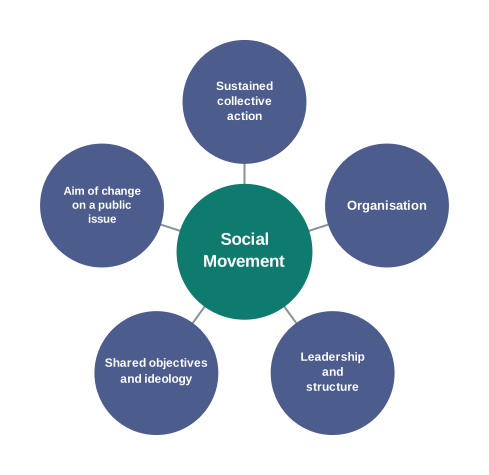
Fig. 8.2 – The five features of a social movement.
Movements and the movements against them
Social movements often arise with the aim of bringing about changes on a public issue — for example, securing the right of the tribal population to use the forests, or the right of displaced people to resettlement and compensation. Think of the other issues that movements have taken up, in the past and in the present.
But change is not welcomed by everyone. While social movements seek to bring about social change, counter movements sometimes arise in defence of the status quo — that is, in defence of things as they are. The history of Indian social reform is full of them.
When Raja Rammohun Roy campaigned against sati and formed the Brahmo Samaj, defenders of sati formed the Dharma Sabha and petitioned the British not to legislate against it. When reformers demanded education for girls, many protested that this would be disastrous for society. When reformers campaigned for widow remarriage, they were socially boycotted.
When children of the so called ‘lower castes’ enrolled in schools, some so called ‘upper caste’ children were withdrawn from those schools by their families. Peasant movements have often been brutally suppressed. More recently, the movements of groups that were formerly excluded, such as the Dalits, have often invoked retaliatory action, and proposals to extend reservation in educational institutions have led to counter movements opposing them.
The pattern is worth pausing on. A social movement cannot change society easily, because it goes against both entrenched interests and entrenched values — against people who stand to lose something, and against people who believe the existing arrangement is right. Opposition and resistance are therefore not an accident of a movement; they are a normal part of its life. Yet over a period of time, changes do take place.
The many things a movement does
Protest is the most visible form of collective action, but it is only one of the things a social movement does — and often not the most important.
Movement activists hold meetings to mobilise people around the issues that concern them. Such activity builds a shared understanding, and prepares the ground for a feeling of agreement, or consensus, about how the collective agenda should be pursued. A movement must first persuade its own people before it can persuade anyone else.
Social movements also chart out campaigns. These include lobbying with the government, with the media, and with other important makers of public opinion — the slow, unglamorous work of argument and pressure that you will recall from the discussion in Chapter 3.
Movements also develop distinct modes of protest: their own repertoire of ways to be seen and heard. These may be candle and torchlight processions, the use of black cloth, street theatre, songs and poetry. Gandhi adopted novel methods such as ahimsa (non-violence), satyagraha (the insistence on truth as a form of resistance) and the use of the charkha (the spinning wheel) in the freedom movement. Recall too the innovative modes of protest of that struggle — picketing, and the deliberate defiance of the colonial ban on producing salt.
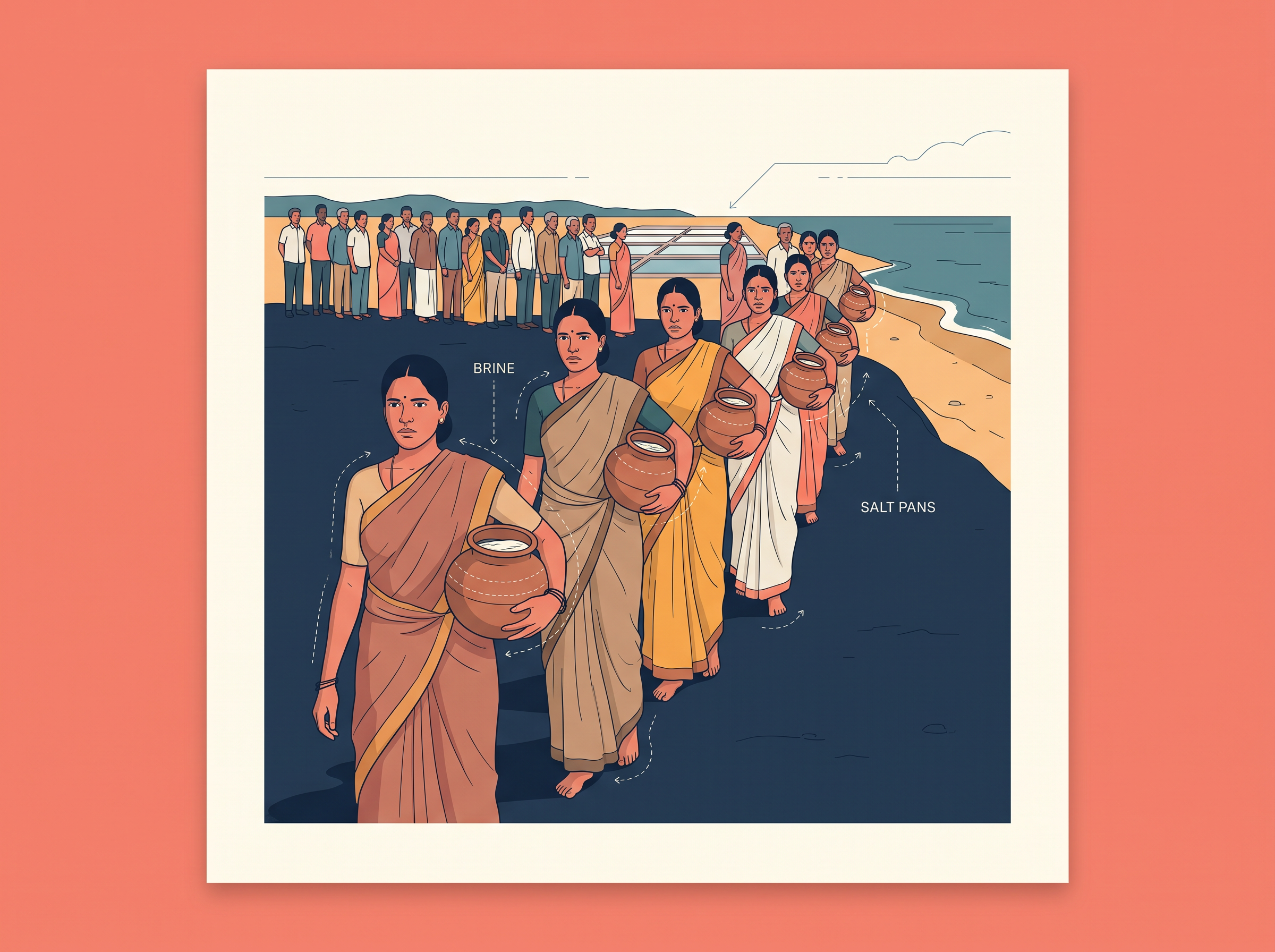
Fig. 8.3 – Breaking the salt laws, 1930.
Notice what Fig. 8.3 shows about the choice of a mode of protest. Salt was not chosen because it was valuable. It was chosen because it was ordinary — because everybody, rich and poor, used it, and everybody paid the tax on it. A good mode of protest turns something familiar into an argument.
8.2 Sociology and Social Movements
8.2.1 Why the Study of Social Movements is Important for Sociology
From the very beginning, the discipline of sociology has been interested in social movements. This is not a coincidence. Sociology was itself born in a Europe that was being shaken by collective action, and its earliest questions were questions about what such action meant.
Consider the two great upheavals in its background. The French Revolution was the violent culmination of several movements aimed at overthrowing the monarchy and establishing ‘liberty, equality and fraternity’. In Britain, the industrial revolution was marked by great social upheaval. Recall the discussion on the emergence of sociology in the west in your Class XI textbook, Introducing Sociology.
Look closely at what industrialisation actually did to people. Poor labourers and artisans left the countryside to find work in the cities, and found there the inhuman living conditions into which they were forced — overcrowded, insanitary, and insecure. They protested. Food riots in England were common, and were often suppressed by the government.
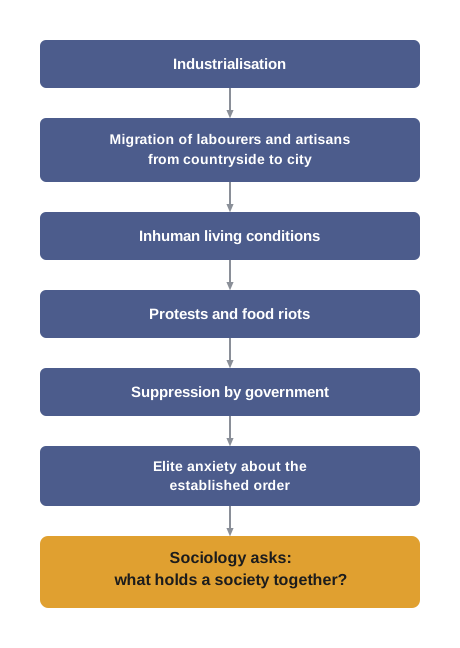
Fig. 8.4 – How collective protest became a sociological question.
Durkheim: the anxiety about order
How were these protests understood at the time? The elites of the day perceived them as a major threat to the established order of society. Their anxiety about maintaining social order was reflected in the work of the sociologist Emile Durkheim.
Durkheim’s writings — on the division of labour in society, on the forms of religious life, and even on suicide — all mirror one underlying concern: how do social structures enable social integration? What is it that binds individuals into a society and keeps them bound? From within this way of asking the question, social movements appear as forces that lead to disorder. Collective protest is read as a symptom of something coming loose.
Marx and after: the crowd has its reasons
Scholars influenced by the ideas of Karl Marx offered a different view of violent collective action. Where the first tradition saw disorder, they asked a blunter question: disorder for whom, and why?
Historians like E. P. Thompson showed that the ‘crowd’ and the ‘mob’ were not made up of anarchic hooligans out to destroy society. They too had a moral economy — their own shared understanding of what was right and wrong, of what a fair price was and what a rightful claim was, and this understanding informed their actions.
Their research showed that poor people in urban areas had good reasons for protesting. And they often resorted to public protest for a reason worth remembering: they had no other way of expressing their anger and resentment against deprivation. Where the ballot, the newspaper and the courtroom are closed to you, the street is what remains.
8.3 Types of Social Movements
8.3.1 Reformist, Redemptive, Revolutionary
Movements differ enormously in what they want. Some want to change how a person lives; some want to change a law; some want to change who rules. Sociologists have therefore classified social movements into three kinds: (i) redemptive or transformatory; (ii) reformist; and (iii) revolutionary.
A redemptive social movement aims to bring about a change in the personal consciousness and actions of its individual members. It begins with the self. For instance, people in the Ezhava community in Kerala were led by Narayana Guru to change their social practices.
A reformist social movement strives to change the existing social and political arrangements through gradual, incremental steps. It works within the system and asks the system to correct itself. The 1960s movement for the reorganisation of Indian states on the basis of language, and the more recent Right to Information campaign, are examples of reformist movements.
A revolutionary social movement attempts to radically transform social relations, often by capturing state power. It does not ask the system to correct itself; it seeks to replace it. The Bolshevik revolution in Russia, which deposed the Tsar to create a communist state, and the Naxalite movement in India, which seeks to remove oppressive landlords and state officials, can be described as revolutionary movements.
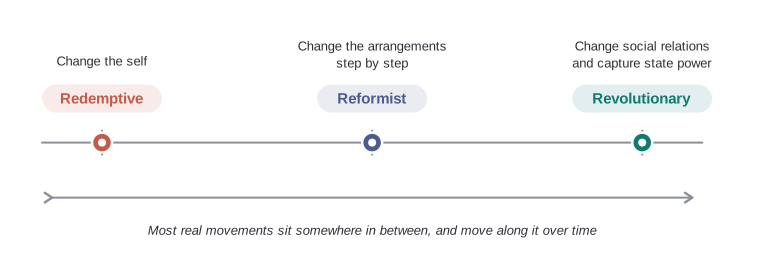
Fig. 8.5 – The spectrum of social movements.
The typology is a tool, not a box
Try classifying an actual movement using this typology, and you will discover something awkward. Most movements have a mix of redemptive, reformist and revolutionary elements. They rarely sit neatly in one column.
The orientation of a movement may also shift over its lifetime. A movement may start out with, say, revolutionary objectives and gradually become reformist. It may begin in a phase of mass mobilisation and collective protest, and then settle into offices, memberships and procedures. Social scientists who study the life cycles of movements call this a move towards social movement organisations.
Whose name for the event?
There is a further difficulty, and it is not a technical one. How a social movement is perceived and classified is always a matter of interpretation. It differs from one section of society to another.
For instance, what was a ‘mutiny’ or a ‘rebellion’ to the British colonial rulers in 1857 was ‘the first war of Independence’ to Indian nationalists. The difference is not merely a matter of vocabulary. A mutiny is an act of defiance against an authority that is supposedly legitimate — in this case, British rule. A struggle for independence is a challenge to the very legitimacy of British rule itself.
The two words therefore contain two entirely different judgements about who had the right to govern. This shows how people attach different meanings to social movements — and it is a warning to the student of sociology, who must always ask who is doing the naming.
8.3.2 Distinguishing the new social movement from the old social movements
Working class movements in the capitalist west were wresting better wages, better living conditions, social security, free schooling and health security from the state. That was also the period when socialist movements were establishing new kinds of states and societies. The point to hold on to is this: the old social movements clearly saw the reorganisation of power relations as a central goal. Who owned, who ruled, who commanded whom — these were the questions.
The old social movements also functioned within the frame of political parties. The Indian National Congress led the Indian National Movement. The Communist Party of China led the Chinese Revolution. The party was the vehicle; the movement travelled in it.
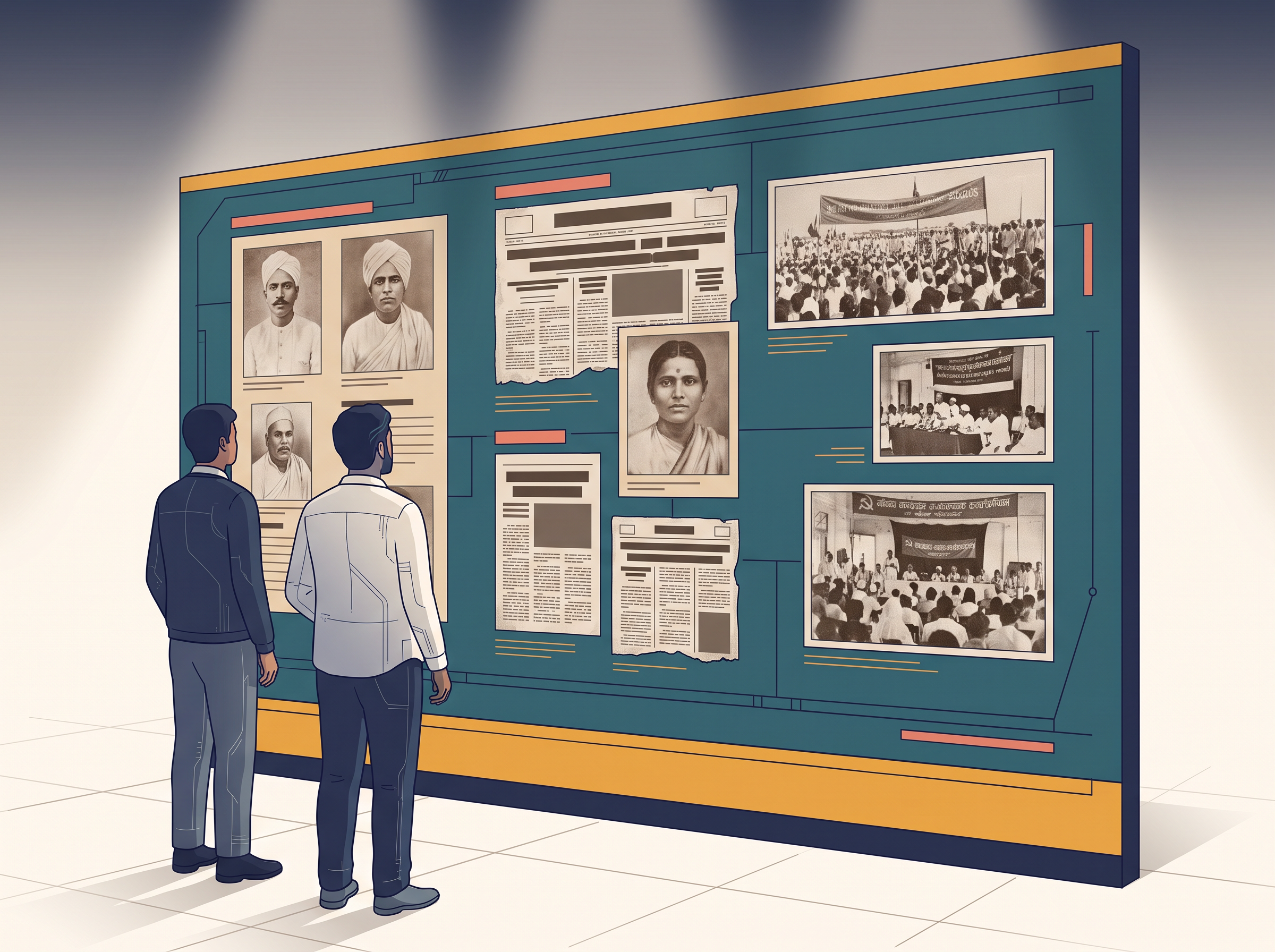
Fig. 8.6 – Archival record of the early socialist movement.
Today some believe that ‘old’ class-based political action, led by trade unions and workers’ parties, is on the decline. Others argued that in the affluent West, with its welfare state, issues of class-based exploitation and inequality were no longer central concerns. On this reading, the new social movements were not about changing the distribution of power in society at all, but about quality-of-life issues — such as having a clean environment.
Kothari: why the 1970s produced a surge
In the old social movements, the role of political parties was central. Why, then, did India in the 1970s see a surge of movements outside the party system?
The political scientist Rajni Kothari attributes this surge to people’s growing dissatisfaction with parliamentary democracy. Kothari argues that the institutions of the state have been captured by elites. Because of this, electoral representation through political parties is no longer an effective way for the poor to get their voices heard.
People left out by the formal political system therefore join social movements, or non-party political formations, in order to put pressure on the state from outside. Today the broader term civil society is used to refer to both kinds at once: to the old social movements represented by political parties and trade unions, and to the newer non-governmental organisations, women’s groups, environmental groups and tribal activists.
Globalisation and the reach of a movement
As you have read about the various dimensions of social change in India, you would have been struck by the fact that globalisation has been re-shaping people’s lives in industry and agriculture, in culture and media.
Consider where power now sits. Firms are often transnational. Legal arrangements that bind a country are often international, such as the regulations of the World Trade Organisation (WTO). Environmental and health risks, and the fear of nuclear warfare, are global in nature — a poisoned river and a warming atmosphere do not stop at a border.
Not surprisingly, therefore, many of the new social movements are international in scope. If the target of your demand is transnational, your movement cannot afford to be merely local.
What is significant, however, is that old and new movements are working together in new alliances — such as the World Social Forum, which has been raising awareness about the hazards of globalisation. The neat division begins to dissolve in practice.
What the new movements are not
The new social movements are not just about the ‘old’ issues of economic inequality. Nor are they organised along class lines alone.
Identity politics, cultural anxieties and aspirations are essential elements in creating social movements, and they occur in ways that are difficult to trace back to class-based inequality. A demand for recognition, or for the dignity of a language, cannot be explained purely by income.
Often, these movements unite participants across class boundaries. The women’s movement, for instance, includes urban, middle-class feminists as well as poor peasant women. The regional movements for separate statehood bring together different groups of people who do not share homogeneous class identities.
The conclusion is not that inequality has ceased to matter. It is that in a social movement, questions of social inequality can occur alongside other, equally important, issues. This will become clear when we turn to the Chipko movement in the next section.
8.4 Ecological Movements
For much of the modern period, the greatest emphasis has been laid on development. Over the decades, however, there has been a great deal of concern about the unchecked use of natural resources, and about a model of development that keeps creating new needs — needs whose satisfaction then demands still greater exploitation of resources that are already depleted.
This model has been criticised on a second ground as well. It assumes that all sections of people will be beneficiaries of development. The record does not bear this out. Big dams displace people from their homes and from their sources of livelihood. Industries displace agriculturalists from their land. The impact of industrial pollution on those who live near it is yet another story.
An ecological movement arises out of exactly this gap — between a promise that development will benefit everyone, and the experience of those who pay its costs. Here we take just one example, in order to examine the many issues that are interlinked in such a movement.
The Chipko Movement
The Chipko Movement, in the Himalayan foothills, is a good example of such intermingled interests and ideologies. According to Ramachandra Guha in his book Unquiet Woods, villagers rallied together to save the oak and rhododendron forests near their villages. When government forest contractors came to cut down the trees, villagers — including a large number of women — stepped forward to hug the trees and prevent their being felled.
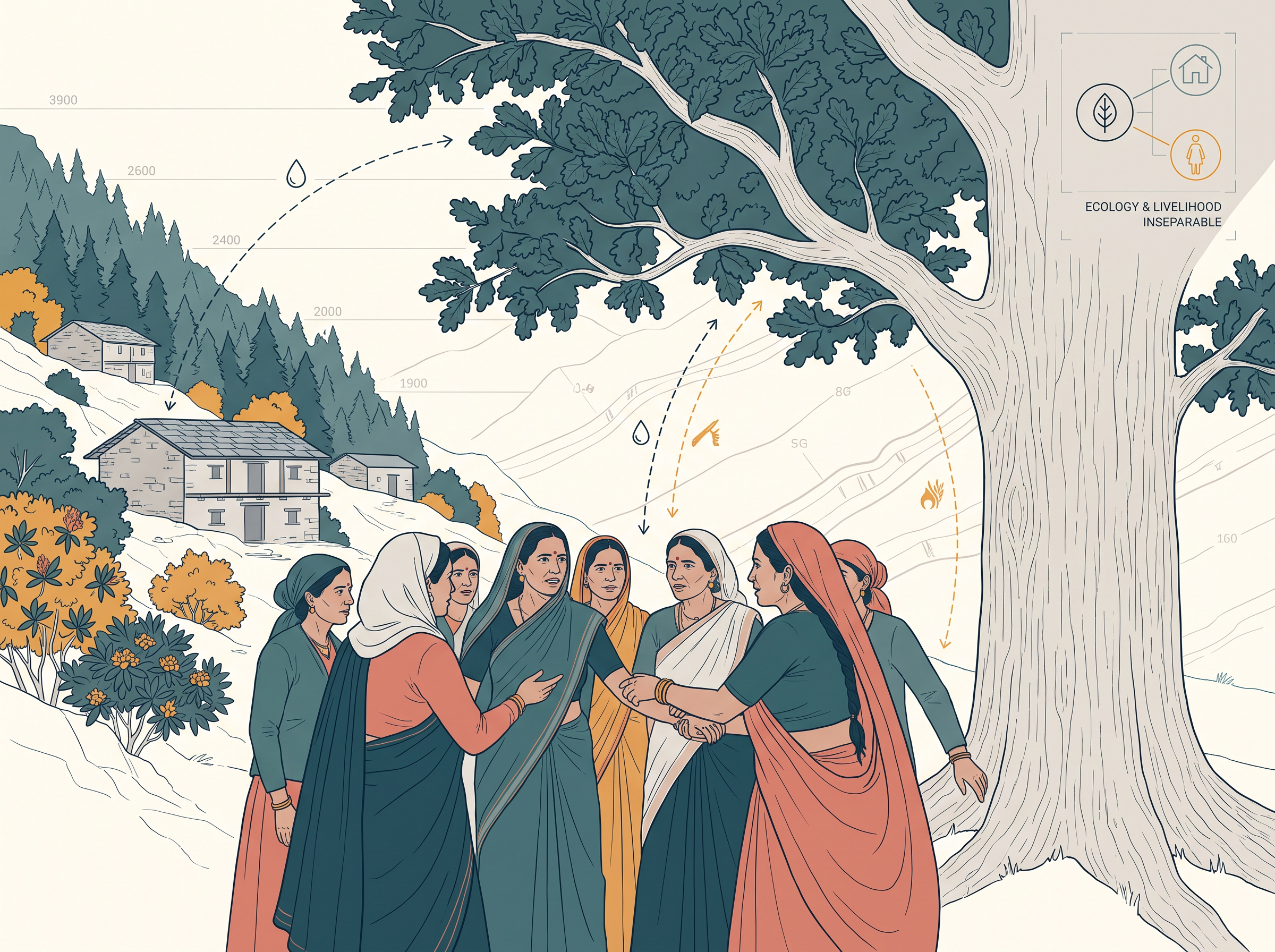
Fig. 8.7 – Chipko activists gathered at Saklana, 1986.
What was at stake was, first of all, the question of the villagers’ subsistence. All of them relied on the forest for firewood, for fodder for their animals, and for other daily necessities. A felled forest is, for such a household, not a landscape lost but a kitchen and a cattle-shed lost.
This conflict placed the livelihood needs of poor villagers against the government’s desire to generate revenues by selling timber. The economy of subsistence was pitted against the economy of profit.
Red and green together
Along with this issue of social inequality — villagers set against a government that represented commercial, capitalist interests — the Chipko Movement also raised the issue of ecological sustainability.
Cutting down natural forests was a form of environmental destruction, and it had already produced devastating floods and landslides in the region. The connection was not abstract for the people who made it; they had watched it happen.
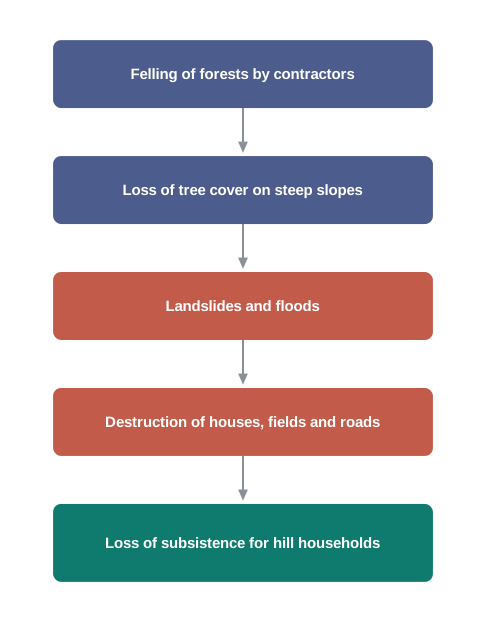
Fig. 8.8 – Deforestation and the loss of subsistence.
For the villagers, then, these ‘red’ and ‘green’ issues were interlinked. Their survival depended on the survival of the forest — but they also valued the forest for its own sake, as a form of ecological wealth that benefits all, and not only themselves.
There was a third strand as well. The Chipko Movement expressed the resentment of hill villagers against a distant government, headquartered in the plains, that seemed indifferent and hostile to their concerns. This is a question of political representation: who decides, and from how far away?
So three concerns underlay Chipko at once — economy, ecology and political representation. Any attempt to sort the movement into a single box misses it.
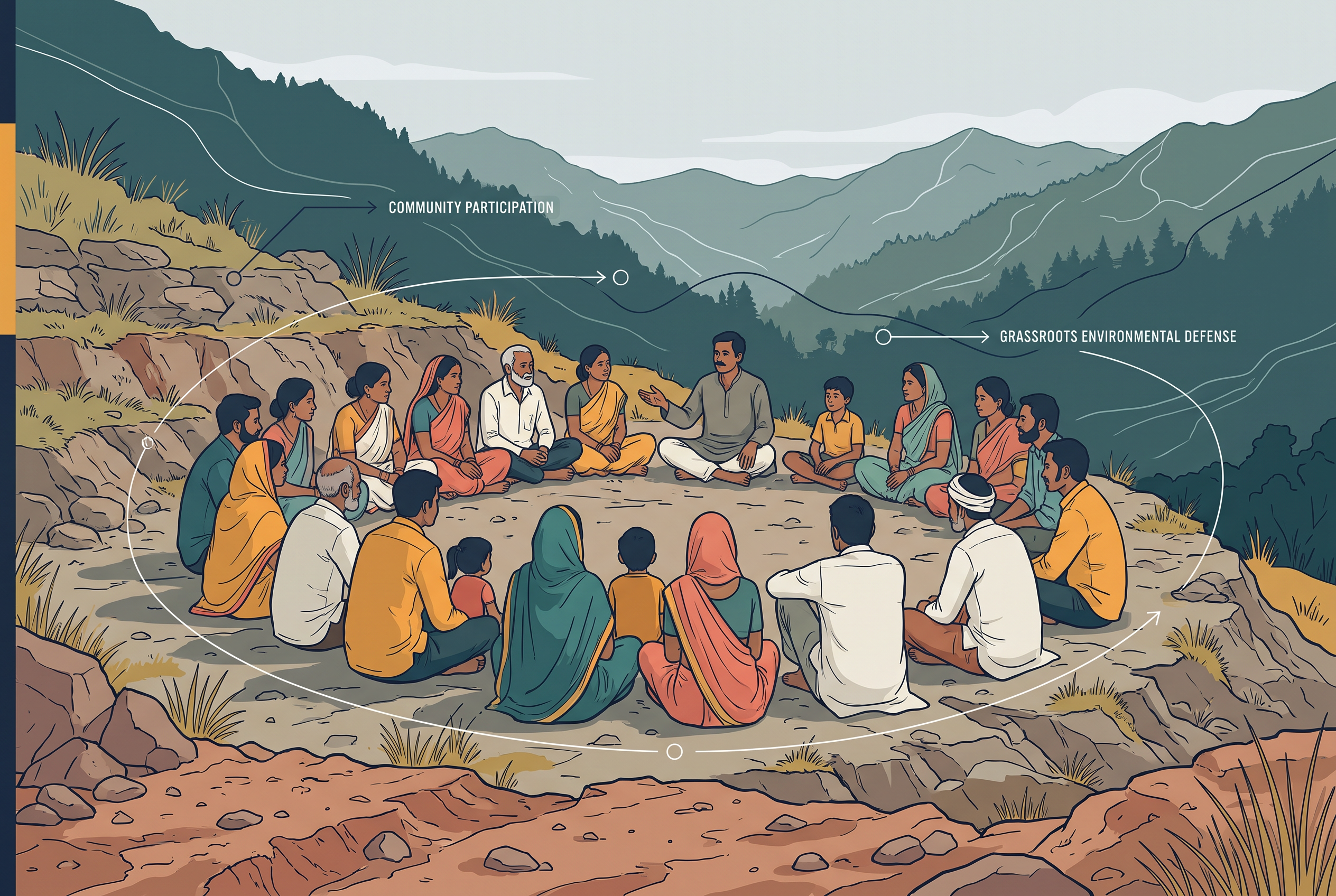
Fig. 8.9 – Villagers meeting to discuss deforestation.
Movements after Chipko
Trees are necessary for the conservation of the environment. Clean water, similarly, is necessary for a healthy environment. In the light of this, the Government of India has, since 2014, initiated systematic efforts to bring balance, structure and quality to India’s ecology.
8.5 Class Based Movements
8.5.1 Peasant Movements
Peasant movements, or agrarian struggles, have taken place from pre-colonial days. What changed under colonial rule was not that peasants began to resist, but what they were resisting — a new revenue system, a new class of intermediaries, and a new set of creditors.
The movements in the period between 1858 and 1914 tended to remain localised, disjointed, and confined to particular grievances. Each rose against a specific oppression in a specific place, and rarely joined hands with the next.
Two are well known. The Bengal revolt of 1859-62 was directed against the indigo plantation system, under which cultivators were compelled to grow indigo for planters instead of food. The ‘Deccan riots’ of 1857 were directed against moneylenders, on whom indebted cultivators had come to depend and to whom they were steadily losing their land.
From local grievance to national struggle
Some of these issues continued into the following period, and under the leadership of Mahatma Gandhi became partially linked to the Independence movement. A grievance about revenue could now be spoken in the language of the nation.
The Champaran Satyagraha (1917–18) was directed against the indigo plantations. The Bardoli Satyagraha (1928, Surat District) was a ‘non-tax’ campaign — a campaign of refusal to pay land revenue — mounted as part of the nationwide non-cooperation movement.
In the 1920s, protest movements also arose in certain regions against the forest policies of the British government and of local rulers. Recall the discussion of structural changes in Chapter 1: when a forest that villagers had always used becomes state property, the everyday act of collecting firewood becomes an offence, and resistance follows.
Peasants organise
Between 1920 and 1940, peasant organisations arose. The first to be founded was the Bihar Provincial Kisan Sabha (1929), and in 1936 the All India Kisan Sabha was formed. This is an important shift: a Sabha, unlike a riot, has an office, a membership and a programme.
The peasants organised by the Sabhas demanded freedom from economic exploitation — and not for themselves alone, but for peasants, workers and all other exploited classes. The demand had become a class demand.
At the time of Independence we have the two most classical cases of peasant movements: the Tebhaga movement (1946–47) and the Telangana movement (1946–51).
The Tebhaga movement was a struggle of sharecroppers in Bengal in North Bihar. A sharecropper cultivates another person’s land and hands over a share of the crop as rent; the customary share was half. The demand of the movement was that the cultivator should keep two-thirds of the produce instead. It had the support of the Kisan Sabha and of the Communist Party of India (CPI).
The Telangana movement was directed against the feudal conditions in the princely state of Hyderabad, and was led by the CPI.
The new farmers’ movements
New farmers’ movements began in the 1970s, in Punjab and Tamil Nadu. In several respects they were a different animal from the peasant movements that preceded them.
They were regionally organised, and they were non-party — they did not work through political parties. And they involved farmers rather than peasants. The distinction matters: farmers are said to be market-involved, as both commodity producers and purchasers. They sell what they grow, and they buy seed, fertiliser, diesel and machinery. Their fortunes therefore rise and fall with prices.
The basic ideology of the movement was strongly anti-state and anti-urban. The demands followed from this: the focus was on ‘price and related issues’ — price procurement, remunerative prices, the prices of agricultural inputs, taxation, and the non-repayment of loans.
Novel methods of agitation were used: blocking of roads and railways, refusing entry to politicians and bureaucrats in the villages, and so on. The method fits the demand — a farmer who feels ignored by the city and the state makes the city and the state feel his absence.
It has been argued that the farmers’ movements have broadened their agenda and ideology to include environmental and women’s issues. On that reading, they can be seen as a part of the worldwide ‘new social movements’ — which shows again how hard the old–new division is to hold in India.
Read the two accounts above sociologically rather than dramatically. In both, notice what is attacked: the land records, the debt papers, the hoarded grain, the documents. These are the instruments through which the relationship of exploitation was maintained. A revolutionary peasant movement attacks not merely persons but the paper on which its subordination is written.
8.5.2 Workers’ Movements
Factory production began in India in the early part of the 1860s. Recall the discussion of the specific character of industrialisation in the colonial period.
The general pattern of trade set up by the colonial regime was one in which raw materials were procured from India, goods were manufactured in the United Kingdom, and those goods were then marketed in the colony. The factories that came up in India were shaped by this pattern, and were therefore established in the port towns — Calcutta (Kolkata) and Bombay (Mumbai), and later Madras (Chennai). Tea plantations in Assam were established as early as 1839.
In the early stages of colonialism, labour was very cheap, because the colonial government did not regulate either wages or working conditions. You will remember the manner in which the colonial government ensured the supply of labour in the tea plantations (Chapter 1). Cheap labour was not a natural fact; it was an arrangement.
Protest before the union
Though trade unions emerged later, workers did protest. Their actions in this early phase were, however, more spontaneous than sustained — which, by the definition in section 8.1, means they were not yet a movement. Some of the nationalist leaders also drew workers into the anti-colonial movement.
The war changed the pressure. It led to the expansion of industries in the country, but it also brought a great deal of misery to the poor: there were food shortages and a sharp increase in prices.
The result was a wave of strikes. There were waves of strikes in the textile mills in Bombay; in September and October 1917 there were around 30 recorded strikes. Jute workers in Calcutta struck work. In Madras, the workers of Buchingham and Carnatic Mills (Binny’s) struck work demanding an increase in wages. Textile workers in Ahmedabad struck work for an increase in wages by 50 per cent (Bhowmick 2004).
Unions, and then unions of unions
The first trade union was established in April 1918 in Madras by B.P. Wadia, a social worker and member of the Theosophical Society. During the same year, Mahatma Gandhi founded the Textile Labour Association (TLA). In 1920, the All India Trade Union Congress (AITUC) was formed in Bombay.
Read Table 8.1 as a sequence rather than as a list. Nearly six decades separate the beginning of factory production from the first trade union. In between lie the strikes of 1917 — which is to say that in India, as elsewhere, the strike came first and the union came afterwards. Organisation was the result of protest, not its precondition.
The AITUC was a broad-based organisation involving diverse ideologies. Its main ideological groups were the communists, led by S.A. Dange and M.N. Roy; the moderates, led by M. Joshi and V.V. Giri; and the nationalists, which involved people like Lala Lajpat Rai and Jawaharlal Nehru.
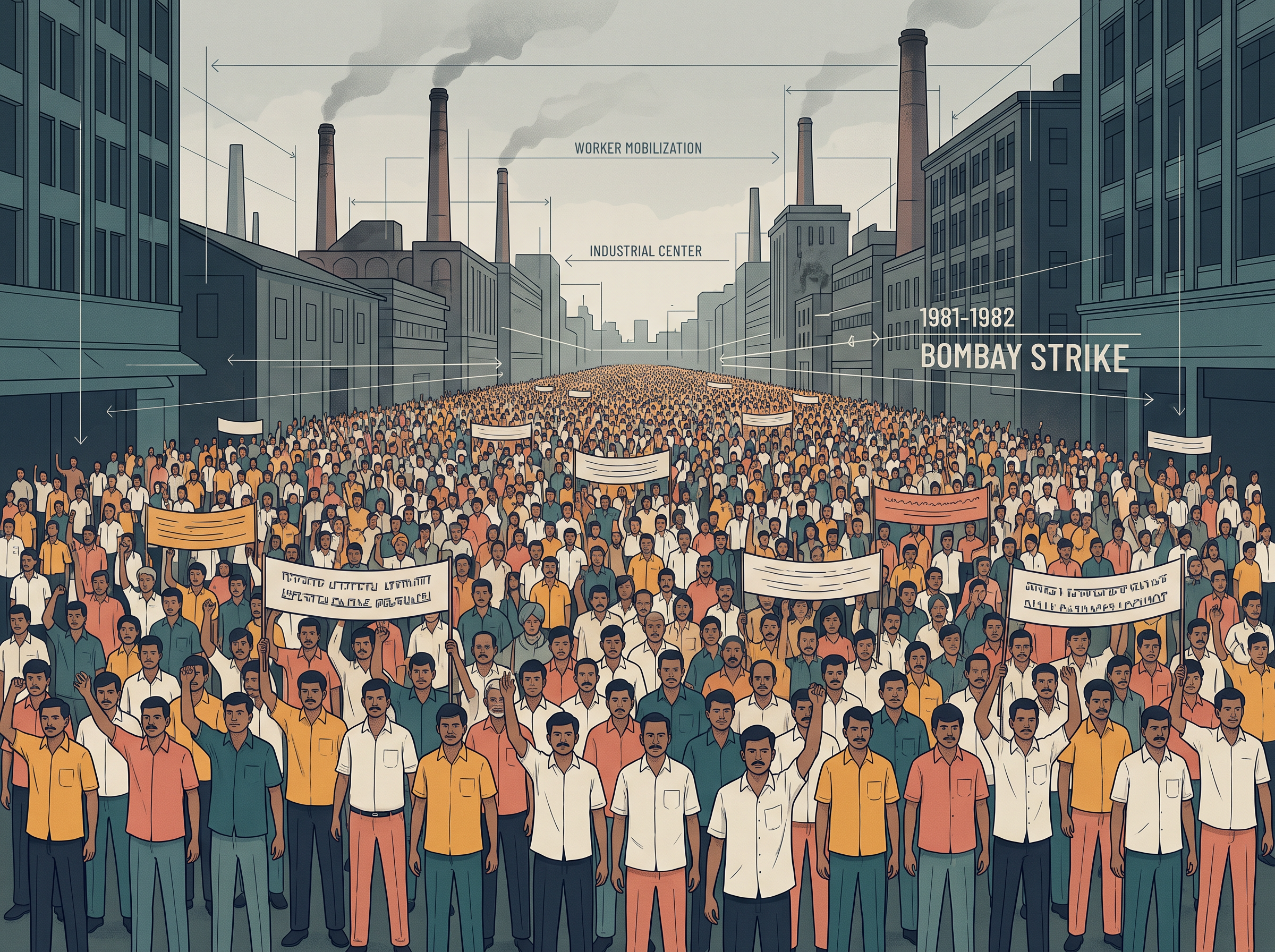
Fig. 8.10 – The Bombay textile workers’ strike, 1981–82.
Splits along party lines
During the last few years of British rule, the communists gained considerable control over the AITUC. The Indian National Congress chose to form another union, the Indian National Trade Union Congress (INTUC), in May 1947.
The split in the AITUC in 1947 paved the way for further splits on the line of political parties. Apart from the working class movement being divided on party lines at the national level, regional parties too began to form their own unions from the late 1960s.
Notice the structural consequence. A working class that is organised into many party-linked unions can be mobilised in large numbers — but it can also be divided against itself at the moment of bargaining, since two unions in the same factory may owe loyalty to two different parties.
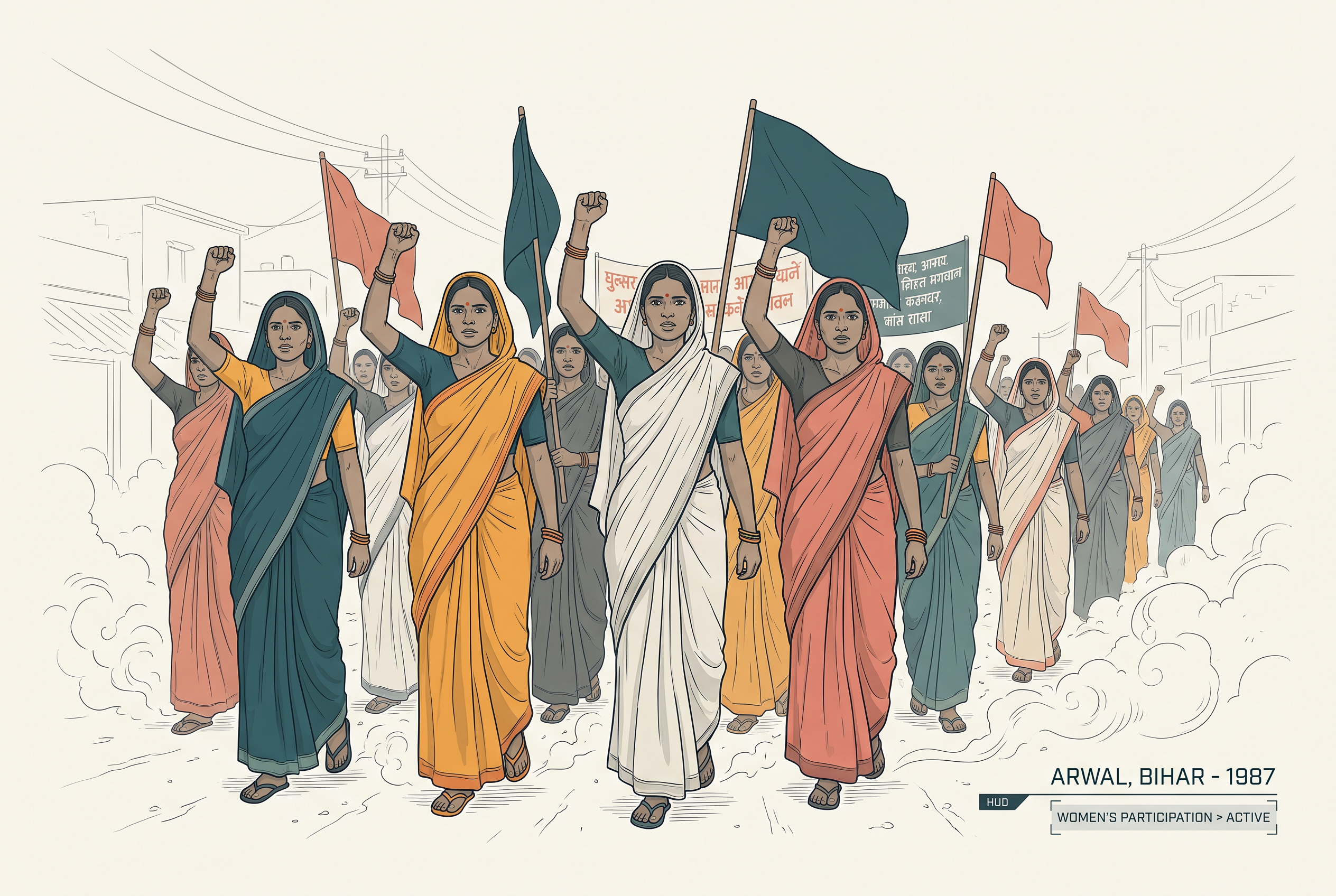
Fig. 8.11 – Women workers marching at Arwal, Bihar, 1987.
In 1966–67, the economy suffered a major recession, which led to a decrease in production and consequently in employment. There was a general unrest. In 1974 there was a major railway workers’ strike, and the confrontation between the state and the trade unions became acute. The workers’ movement was very much part of the wider struggle for civil liberties.
That last sentence is worth holding on to. A strike about wages had become, in that moment, part of a struggle about rights — which is exactly the kind of blurring that makes the old–new distinction so hard to apply in India.
8.6 Caste Based Movements
8.6.1 The Dalit Movement
The social movements of Dalits show a particular character, and it is worth pausing to see what that character is.
They cannot be explained satisfactorily by reference to economic exploitation alone, or to political oppression alone — although both these dimensions are certainly important. Land, wages and votes matter here as they matter everywhere. But something else is at stake as well.
This is a struggle for recognition as fellow human beings. It is a struggle for self-confidence, and for a space in which a community may determine itself. It is a struggle for the abolition of the stigmatisation that untouchability implied. It has, for this reason, been called a struggle to be touched.
The word ‘Dalit’
The word Dalit is commonly used in Marathi, Hindi, Gujarati and many other Indian languages, where it means the poor and oppressed persons. It was first used in its new sense in Marathi by neo-Buddhist activists, the followers of Babasaheb Ambedkar, in the early 1970s.
It refers to those who have been broken, ground down by those above them in a deliberate way. The last two words carry the argument: not by accident, not by fate, but deliberately.
Look at what the word therefore refuses. Contained in it is an inherent denial of pollution, of karma, and of a justified caste hierarchy — that is, a denial of the entire set of ideas by which untouchability was explained and defended. A community that names itself is already arguing.
Many movements, one quest
There has not been a single, unified Dalit movement in the country, now or in the past. Different movements have highlighted different issues related to Dalits, and have done so around different ideologies.
However, all of them assert a Dalit identity, even though its meaning may not be identical or precise for everyone. Notwithstanding the differences in the nature of these movements and in the meaning of the identity, there has been a common quest for equality, self-dignity, and the eradication of untouchability (Shah 2001: 194).
This common quest can be seen across very different regions and histories: in the Satnami Movement of the Chamars in the Chattisgarh plains in eastern MP, in the Adi Dharma Movement in Punjab, in the Mahar Movement in Maharashtra, in the socio-political mobilisation among the Jatavas of Agra, and in the Anti-Brahman Movement in south India.
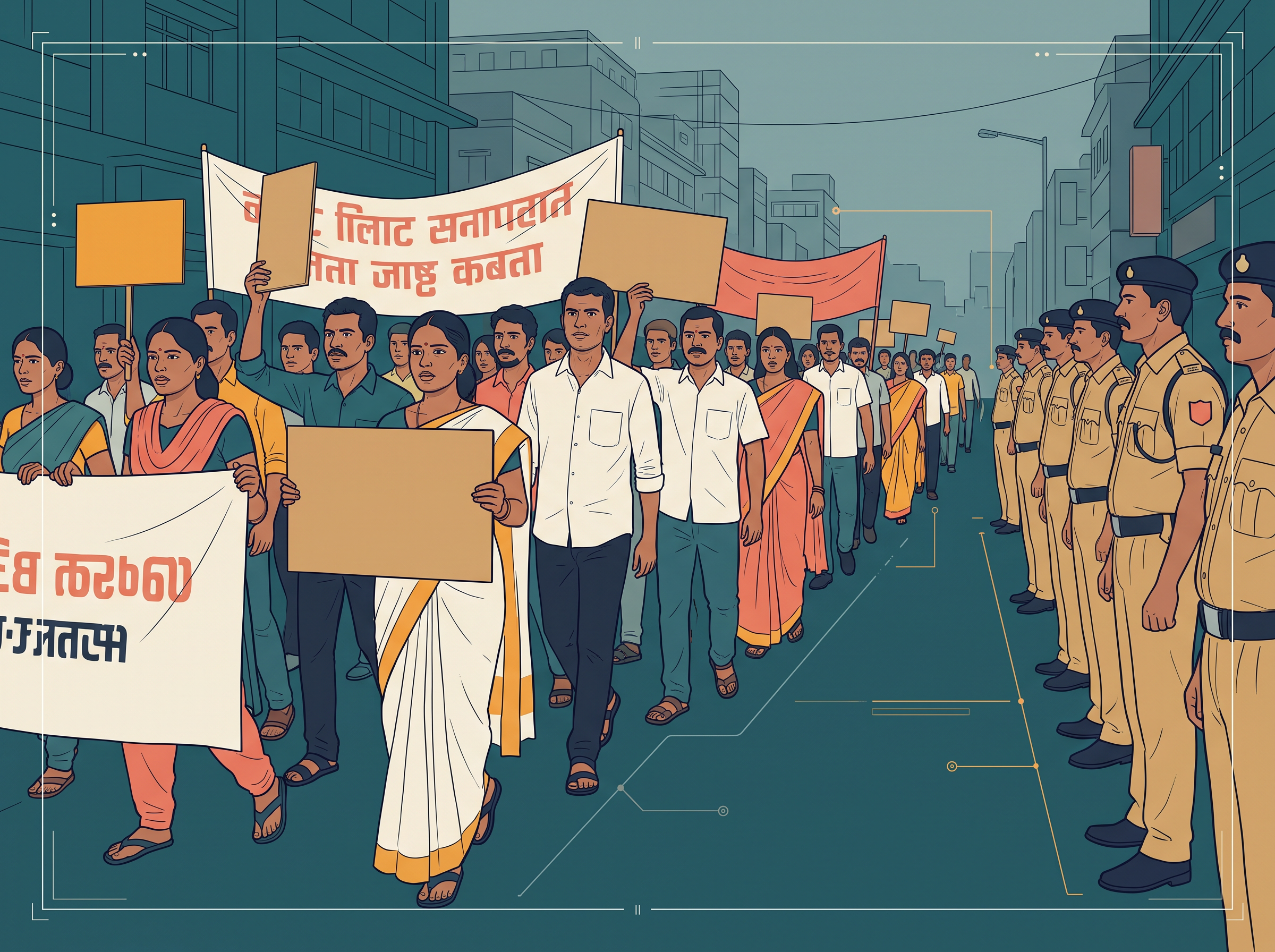
Fig. 8.12 – A Dalit rights demonstration.
Dalit literature: writing as a movement
In the contemporary period, the Dalit movement has unquestionably acquired a place in the public sphere that cannot be ignored. This has been accompanied by a growing body of Dalit literature.
Dalit writers are insistent on using their own imageries and expressions, rooted in their own experiences and perceptions. Many have felt that the high-flown social imageries of mainstream society would hide the truth rather than reveal it — that a polished literary language, borrowed from those who had never been humiliated, would make humiliation unsayable.
Dalit literature therefore gives a call for social and cultural revolt. Within it, some writers emphasise the cultural struggle for dignity and identity; others also bring in the structural features of society, including its economic dimensions.
8.6.2 Backward Class Castes Movements
The emergence of the backward castes and classes as political entities has occurred both in the colonial and in the post-colonial contexts. To see why, one has to look at how the colonial state itself worked.
The colonial state often distributed patronage on the basis of caste. Jobs, recognition and representation were sought and granted in the name of a caste. It therefore made sense for people to stay within their caste for their social and political identity in institutional life — the caste had become the address at which the state could be petitioned.
It also had a second effect. Similarly placed caste groups were pushed towards uniting with one another, forming what has been termed a horizontal stretch — an alliance reaching sideways across many castes of roughly similar standing, rather than upwards through the ritual hierarchy.
Caste thus began to lose its ritual content and to become more and more secularised for the purpose of political mobilisation. Recall the discussion on secularisation in Chapter 2: the form survives, the sacred content thins, and the institution is put to a new, worldly use.
The making of a category
The term Backward Classes has been in use in different parts of the country since the late nineteenth century. It began to be used more widely in the Madras presidency from 1872, in the princely state of Mysore from 1918, and in the Bombay presidency from 1925.
From the 1920s, a number of organisations united around the issue of caste sprang up in different parts of the country. These included the United Provinces Hindu Backward Classes League, the All-India Backward Classes Federation, and the All India Backward Classes League. By 1954, 88 organisations were counted as working for the Backward Classes.
That figure is worth reading slowly. Eighty-eight organisations is not a spontaneous outburst; it is a dense institutional field. Long before the debates on reservation that you hear about today, the backward castes had built an organisational machinery for making claims on the state.
8.7 The Tribal Movements
Different tribal groups spread across the country may share common issues — land, forests, the loss of both. But the distinctions between them are equally significant, and it would be a mistake to speak of “the tribal movement” in the singular.
Many of the tribal movements have been largely located in the so called ‘tribal belt’ in middle India: among the Santhals, Hos, Oraons and Mundas in Chota Nagpur and the Santhal Parganas. This region constitutes the main part of what has come to be called Jharkhand.
We cannot go into a detailed account of the different movements here. We take Jharkhand as an example of a tribal movement with a history that goes back a hundred years. We also touch briefly on the specificity of the tribal movements in the North East, without dealing comprehensively with the many differences that exist between one tribal movement and another within that region.
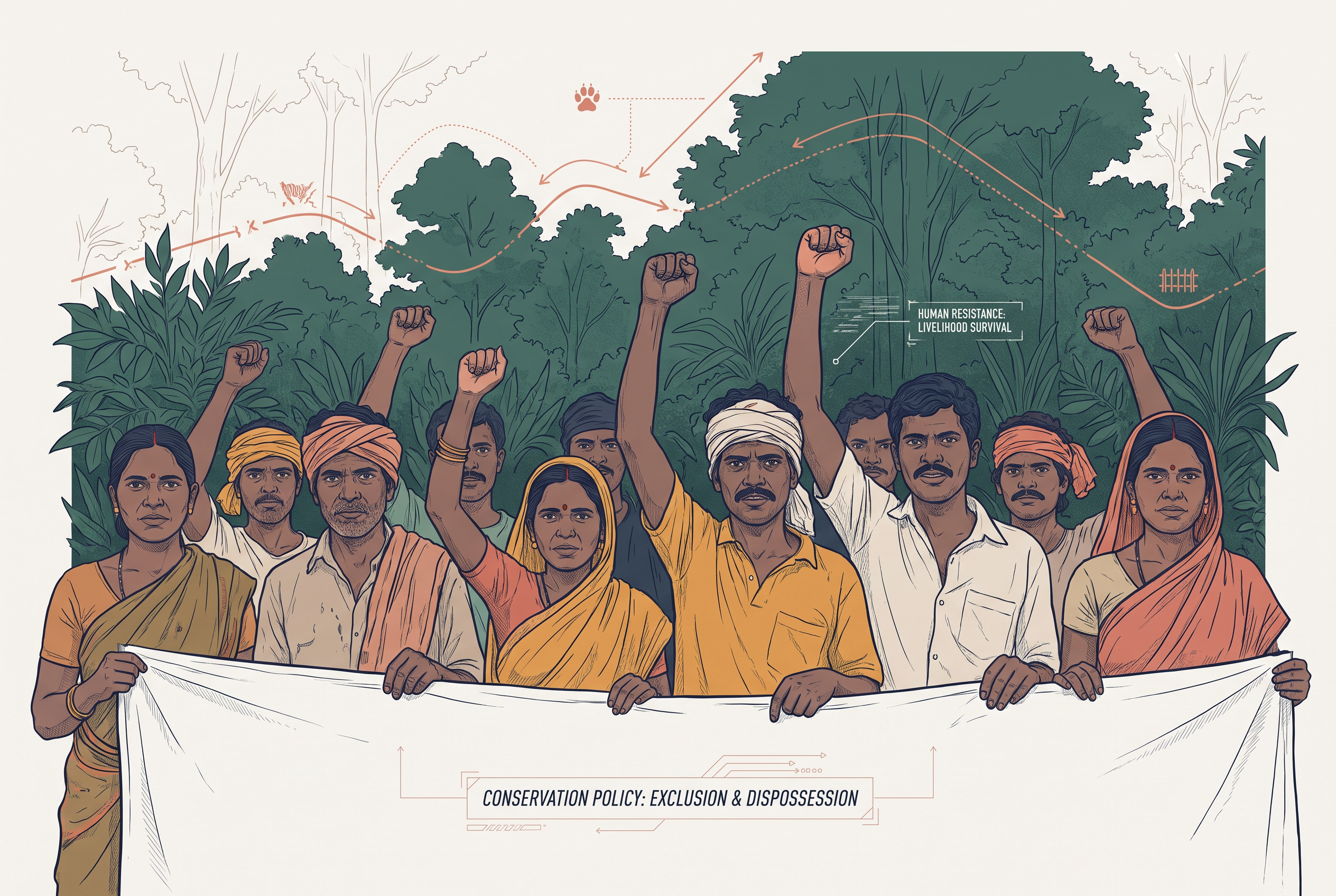
Fig. 8.13 – Adivasi protesters opposing displacement.
8.7.1 Jharkhand
Jharkhand is one of the newly formed states of India, carved out of south Bihar in the year 2000. Behind the formation of this state lies more than a century of resistance. A state that appears on the map in one year is often the deposit of many decades of movement.
The social movement for Jharkhand had a charismatic leader in Birsa Munda, an adivasi who led a major uprising against the British. After his death, Birsa became an important icon of the movement; stories and songs about him can be found all over Jharkhand.
The memory of Birsa’s struggle was also kept alive by writing, and here an unexpected agency enters the story. Christian missionaries working in south Bihar were responsible for spreading literacy in the area. Literate adivasis then began to research and write about their own history and myths. They documented and disseminated information about tribal customs and cultural practices.
The effect was not merely literary. This helped create a unified ethnic consciousness and a shared identity as Jharkhandis — an identity that had to be made, out of many separate tribes with separate histories, before it could be mobilised.
A leadership, and a grievance
Literate adivasis were also in a position to get government jobs. Over time, therefore, a middle-class adivasi intellectual leadership emerged. It was this leadership that formulated the demand for a separate state and lobbied for it, both in India and abroad.
Within south Bihar, adivasis shared a common hatred of dikus — migrant traders and moneylenders who had settled in the area, grabbed its wealth, and impoverished the original residents.
The grievance had a material shape. This is a mineral-rich region, and most of the benefits from its mining and industrial projects had gone to dikus, even as adivasi lands were being alienated. The land that carried the wealth was taken; the wealth went elsewhere; the people who had lived on it stayed poor.
Adivasi experiences of marginalisation and their sense of injustice were mobilised to create a shared Jharkhandi identity, and to inspire the collective action that eventually led to the formation of a separate state.
What the movement agitated against
The issues against which the leaders of the movement in Jharkhand agitated were:
- acquisition of land for large irrigation projects and firing ranges;
- survey and settlement operations, which were held up, and camps that were closed down;
- collection of loans, rent and cooperative dues, which were resisted;
- nationalisation of forest produce, which they boycotted.
Read that list again and notice its logic. Every item on it is an instrument of the state or the market by which land, forest and produce pass out of adivasi hands. The movement did not resist development in the abstract; it resisted the specific procedures through which dispossession was carried out.
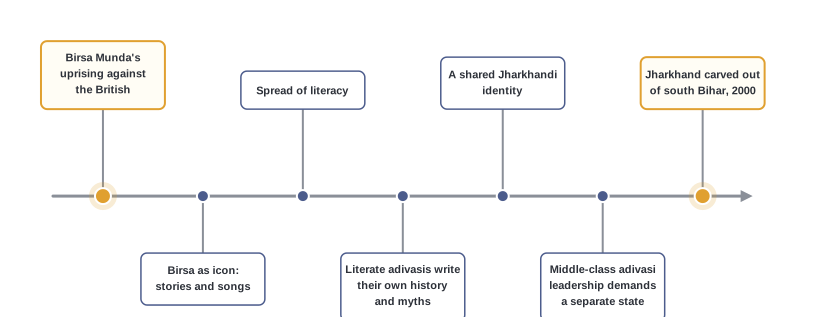
Fig. 8.14 – The long road to Jharkhand.
8.7.2 The North East
The process of state formation initiated by the Indian government following the attainment of independence generated disquieting trends in all the major hill districts of the region.
The reason lay in what the tribes of the region already possessed. Conscious of their distinct identity and of their traditional autonomy, they were unsure of being incorporated within the administrative machinery of Assam. To be made a district of a larger state is, for a people accustomed to governing itself, a demotion.
That shift is worth dwelling on. It tells us that a movement’s demand is not fixed; it is shaped by what the political system on the other side is willing to concede and to accommodate.
Why tribal movements resist the old–new division
One of the key issues that binds tribal movements from different parts of the country is the alienation of tribals from forest lands. In this sense, ecological issues are central to tribal movements — just as cultural issues of identity are, and just as economic issues such as inequality are.
This brings us back to the question about the blurring of old and new social movements in India.
8.8 The Women’s Movement
8.8.1 The 19th Century Social Reform Movements and Early Women’s Organisations
You are already familiar with the nineteenth-century social reform movements that raised various issues concerning women. Chapter 2 dealt with them, as did the earlier book. Our question here is what happened next — what came after the reformers.
The early twentieth century saw the growth of women’s organisations, at the national and at the local level. Three names are ready to hand: the Women’s India Association (WIA), founded in 1917; the National Council for Women in India (NCWI), founded in 1925; and the All India Women’s Conference (AIWC), founded in 1926.
Many of these organisations began with a limited focus, but their scope extended over time. The AIWC, for instance, began with the idea that ‘women’s welfare’ and ‘politics’ were mutually exclusive — that a body working for women should keep out of political questions altogether.
That position did not hold. A few years later, one of its Presidential addresses asked plainly: “Can the Indian man or woman be free if India be a slave?” How, it went on, could women remain silent about national freedom, which was the very basis of all great reforms? (Chaudhuri 1993: 149.) Welfare, it turned out, could not be separated from politics after all.
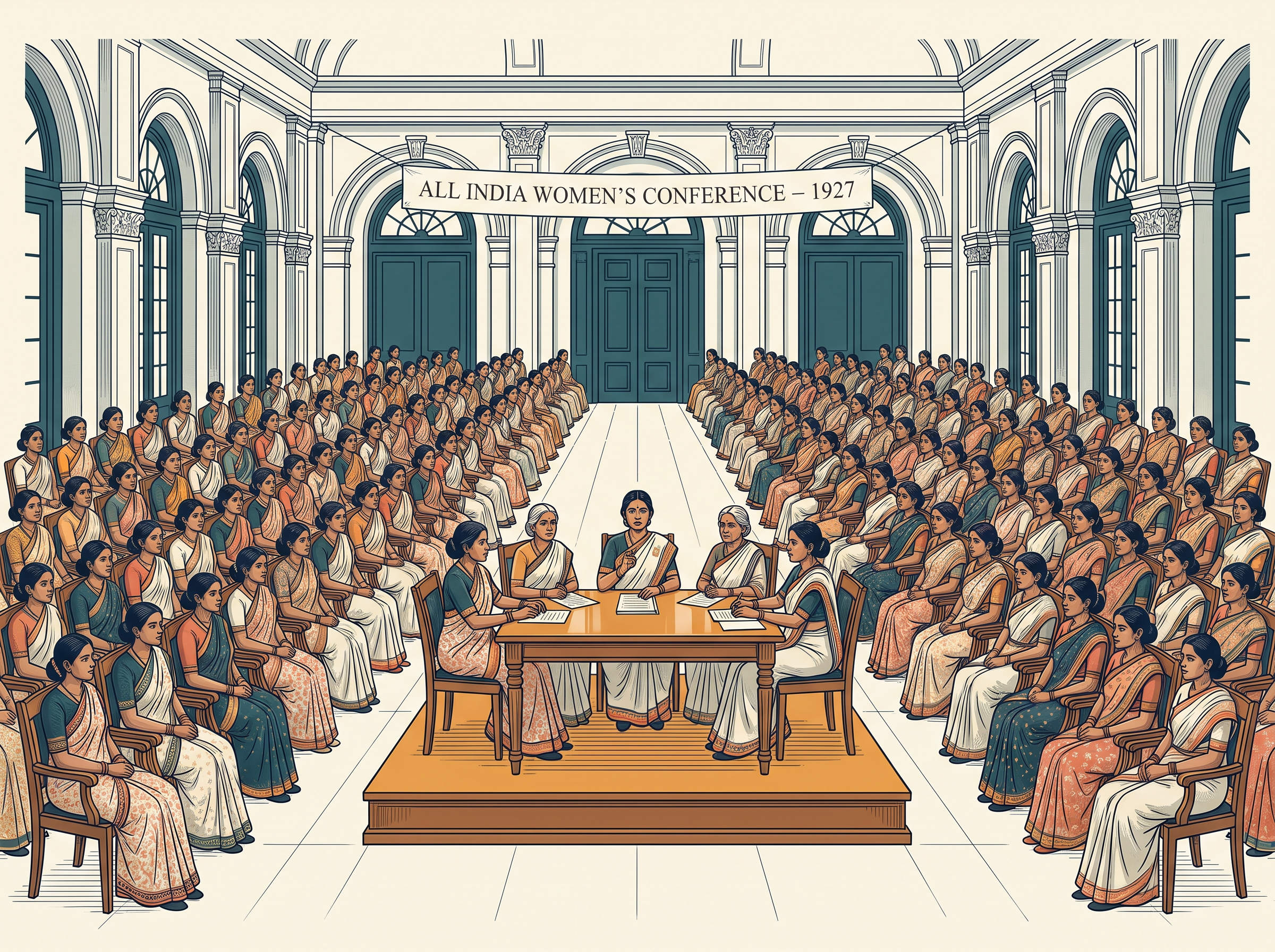
Fig. 8.15 – An early twentieth-century women’s conference.
8.8.2 Agrarian Struggles and Revolts
It is often assumed that only middle class educated women are involved in social movements. Part of the struggle has been to remember the forgotten history of women’s participation.
Women participated along with men in struggles and revolts originating in tribal and rural areas in the colonial period. You have already met two of these in section 8.5 — the Tebhaga movement in Bengal, and the Telangana armed struggle against the erstwhile Nizam’s rule. To these must be added the Warli tribal’s revolt against bondage in Maharashtra.
The point is not that a new set of movements has been discovered. It is that movements you have already studied look different once you ask who else was in them. A history of the peasant movements that leaves out the women who marched in them is not merely incomplete; it produces the false impression that political action is the property of the educated.
8.8.3 Post 1947
An issue that is often raised is this: if there was an active women’s movement before 1947, what happened afterwards?
One explanation has been that many of the women activists who had been involved in the nationalist movement got involved in the task of nation building — they moved into the institutions of the new state rather than out of them. Others cite the trauma of Partition as responsible for the lull.
The second phase
In the mid-1970s there was a renewal of the women’s movement in India. Some call it the second phase of the Indian women’s movement. Many of the concerns remained the same, but there were changes both in organisational strategy and in ideology.
Apart from these organisational changes, there were new issues that were focussed upon — violence against women, for instance. Over the years, numerous campaigns have been taken up on it.
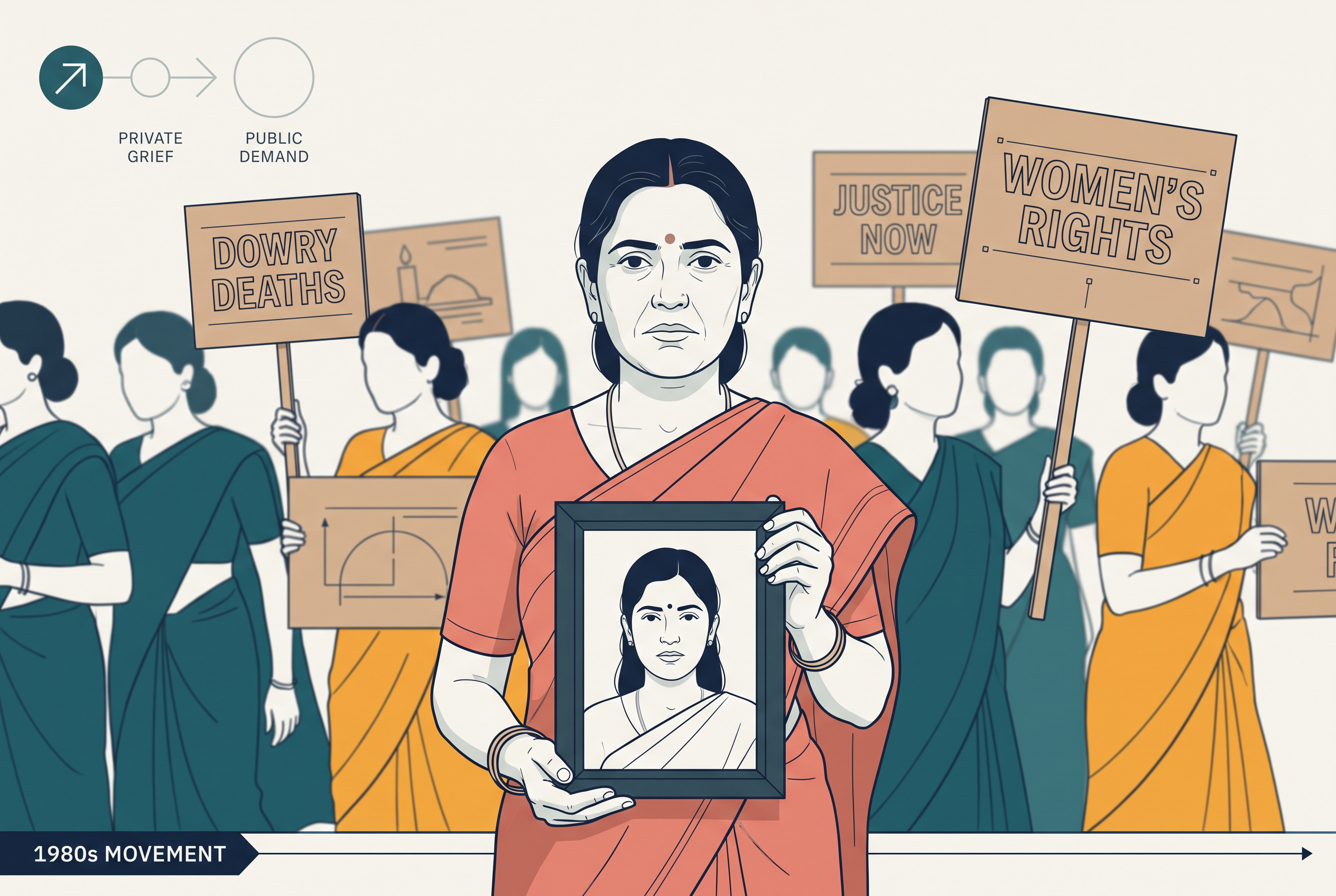
Fig. 8.16 – A street demonstration against dowry deaths.
Some of the results of these campaigns are so ordinary that you may never have noticed them. You may have observed that application forms at school carry both the father’s and the mother’s names. This was not always true. Likewise, important legal changes have taken place thanks to the campaigning of the women’s movement. Issues of land rights and employment have been fought alongside rights against sexual harassment and dowry.
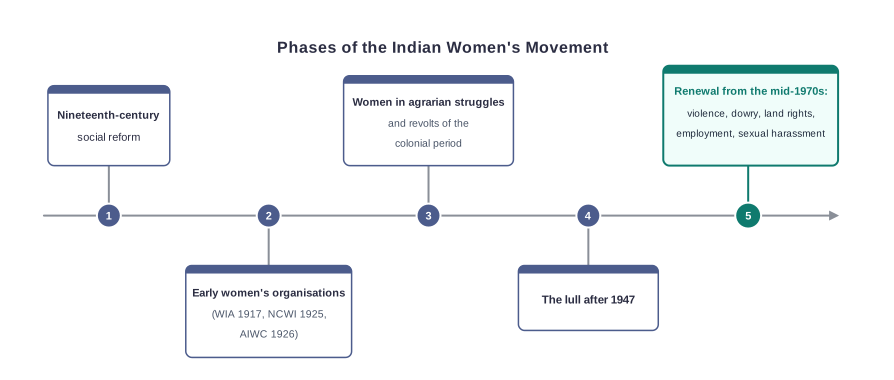
Fig. 8.17 – Phases of the women’s movement in India.
All women are not alike
There has been a recognition, too, that while all women are in some way disadvantaged vis-a-vis men, all women do not suffer the same level or the same kind of discrimination.
The concerns of the educated middle class woman are different from those of the peasant woman, just as the concerns of the Dalit woman are different from those of the ‘upper caste’ woman. Gender, in other words, does not float free of class and caste; it is lived through them.
A gender-just society
There has also been greater recognition that both men and women are constrained by the dominant gender identities. Patriarchy does not merely give men power; it also issues them a script.
For instance, men in patriarchal societies feel that they must be strong and successful. It is held not to be ‘manly’ to express oneself emotionally. This is a constraint too, even though it is not the same constraint as the one it imposes on women.
A gender-just society would allow both men and women to be free. This of course rests on the idea that for true freedom to grow and develop, injustices of all kinds have to end — one cannot free half a society while leaving its other hierarchies untouched.
8.9 Conclusion
As we reach the end of this book, it is worth going back to where we began — in our first sociology book, in Class XI. We had begun there by discussing the dialectical relationship between the individual and society: society shapes the individual, and individuals, acting together, shape society in turn.
Social movements perhaps show this relationship better than anything else in the discipline. They arise because individuals and social groups seek to change their conditions — the conditions that society has handed them.
And notice what happens when they do. In the act of trying to change their conditions, they change both themselves and the society. The hill villager who stands before a contractor, the sharecropper who claims two-thirds of the crop, the woman who signs her own name on a form: each is remade in the act of demanding.
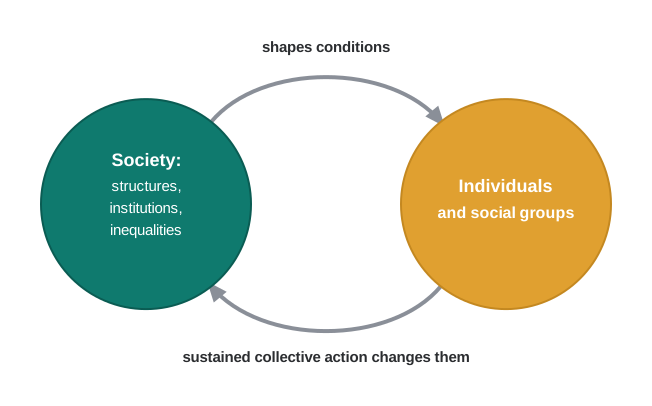
Fig. 8.18 – A social movement is where the dialectic becomes visible.
8.10 Summary
8.1 Features of a Social Movement
The rights we take for granted — the weekly holiday, the eight-hour day, equal pay, social security, the vote — were won through long collective struggle. Universal adult franchise, guaranteed by the Indian Constitution, was itself resisted elsewhere; in England, Chartism campaigned for parliamentary representation, and the suffragettes were violently opposed.
A social movement is sustained collective action over time, marked by some degree of organisation (a leadership and a structure), by shared objectives and ideologies, and by the aim of bringing about — or preventing — change on a public issue. A spontaneous, disorganised protest is not a social movement.
These features are not constant; they may change over the life of a movement.
Because change threatens both entrenched interests and entrenched values, counter movements arise in defence of the status quo: the Dharma Sabha against Rammohun Roy’s campaign against sati, opposition to girls’ education and widow remarriage, withdrawal of children from schools, suppression of peasant movements, retaliation against Dalit movements, and counter movements against the extension of reservation.
Protest is only the most visible activity. Movements also build shared understanding through meetings, run campaigns of lobbying with government, media and makers of public opinion, and develop distinct modes of protest — processions, black cloth, street theatre, songs and poetry; Gandhi’s ahimsa, satyagraha, khadi and the charkha; picketing and the defiance of the salt laws.
8.1.1 Distinguishing Social Change and Social Movements
Social change is continuous, ongoing and unplanned — the sum of countless individual and collective actions across time and space. Social movements are directed at specific goals through long, deliberate, organised effort.
Sanskritisation and westernisation are instances of social change; the efforts of the nineteenth-century social reformers were social movements.
8.2 Sociology and Social Movements
Sociology has been interested in social movements from the beginning: it grew up amid the French Revolution and the upheaval of the industrial revolution, when labourers and artisans who had migrated to the cities protested against inhuman living conditions, and food riots in England were suppressed by the government.
Elites saw such protest as a threat to the established order. Durkheim’s concern with social integration — expressed in his writings on the division of labour, religious life and suicide — reflected this anxiety; social movements appeared as forces leading to disorder.
Scholars influenced by Marx read collective action differently. E. P. Thompson showed that the ‘crowd’ and the ‘mob’ were not anarchic hooligans but people with a moral economy — their own shared sense of right and wrong. The urban poor had good reasons to protest, and protested publicly because no other way of expressing their anger against deprivation was open to them.
8.3 Types of Social Movements
Movements are classified as (i) redemptive or transformatory, (ii) reformist, and (iii) revolutionary.
Redemptive: aims to change the personal consciousness and actions of its members — Narayana Guru and the Ezhava community in Kerala.
Reformist: changes existing social and political arrangements by gradual, incremental steps — the 1960s movement for the reorganisation of states on the basis of language; the Right to Information campaign.
Revolutionary: radically transforms social relations, often by capturing state power — the Bolshevik revolution in Russia; the Naxalite movement in India.
Most movements mix all three, and may shift orientation over time; as a movement institutionalises, it moves towards social movement organisations.
Classification is always a matter of interpretation: 1857 was a ‘mutiny’ or ‘rebellion’ to the British and ‘the first war of Independence’ to Indian nationalists.
8.3.2 Old and new social movements
Old social movements saw the reorganisation of power relations as the central goal, were organised along class lines, and worked within the frame of political parties — the Indian National Congress led the Indian National Movement; the Communist Party of China led the Chinese Revolution.
New social movements are said to be about quality-of-life issues, such as a clean environment, rather than the distribution of power; they turn on identity politics, cultural anxieties and aspirations, and unite participants across class boundaries (urban feminists and poor peasant women; regional movements for statehood).
Rajni Kothari attributes the surge of movements in India in the 1970s to dissatisfaction with parliamentary democracy: the institutions of the state having been captured by elites, the poor join non-party political formations to pressure the state from outside. Civil society now covers both the old (parties, trade unions) and the new (NGOs, women’s, environmental and tribal groups).
Globalisation — transnational firms, WTO regulations, global environmental and health risks — makes many new movements international in scope; old and new work together in alliances such as the World Social Forum.
8.4 Ecological Movements
The dominant model of development has been criticised for the unchecked use of natural resources and for assuming that all sections will benefit: big dams and industries displace people, and industrial pollution harms those nearby.
The Chipko Movement in the Himalayan foothills: as Ramachandra Guha shows in Unquiet Woods, villagers — including a large number of women — hugged oak and rhododendron trees to stop government forest contractors felling them. Their subsistence (firewood, fodder, daily necessities) depended on the forest.
The conflict set the economy of subsistence against the economy of profit, and raised ecological sustainability as well: deforestation had caused devastating floods and landslides, as after the 1970 floods in the Alaknanda valley. Chipko also expressed hill villagers’ resentment against a distant government in the plains.
Economy, ecology and political representation therefore underlay Chipko together; ‘red’ and ‘green’ issues were interlinked. Since 2014, the Government of India has taken up the Integrated Ganga Conservation Mission (Namami Gange) and the Swachh Bharat Abhiyan.
8.5 Class Based Movements
Peasant movements: agrarian struggles date from pre-colonial days; between 1858 and 1914 they were localised and disjointed — the Bengal revolt of 1859-62 against indigo planters, the ‘Deccan riots’ of 1857 against moneylenders. Under Gandhi they became partly linked to the Independence movement: the Champaran Satyagraha (1917–18) and the Bardoli Satyagraha (1928, Surat District), a ‘non-tax’ campaign.
Peasant organisations arose between 1920 and 1940: the Bihar Provincial Kisan Sabha (1929) and the All India Kisan Sabha (1936). At Independence came the two classical cases — the Tebhaga movement (1946–47), sharecroppers demanding two-thirds of the produce instead of the customary half, supported by the Kisan Sabha and the CPI; and the Telangana movement (1946–51) against feudal conditions in the princely state of Hyderabad, led by the CPI.
New farmers’ movements began in the 1970s in Punjab and Tamil Nadu: regionally organised, non-party, anti-state and anti-urban, involving farmers (market-involved as producers and purchasers) and demanding ‘price and related issues’. Their methods included blocking roads and railways. Having broadened their agenda to environment and women’s issues, they are seen as part of the worldwide ‘new social movements’.
Workers’ movements: factory production began in the early 1860s in the port towns of Calcutta, Bombay and later Madras; tea plantations in Assam date from 1839. Labour was cheap because the colonial government regulated neither wages nor working conditions.
Early worker protest was spontaneous rather than sustained. The war brought food shortages and price rises: around 30 recorded strikes in Bombay’s textile mills in September–October 1917, strikes by jute workers in Calcutta, by workers of Buchingham and Carnatic Mills in Madras, and by Ahmedabad textile workers for a 50 per cent wage increase.
The first trade union was founded in Madras in April 1918 by B.P. Wadia; Gandhi founded the Textile Labour Association the same year; the AITUC was formed in Bombay in 1920, with communist, moderate and nationalist groupings. The INTUC was formed in May 1947, and the 1947 split led to further divisions along party lines; regional parties formed unions from the late 1960s. The recession of 1966–67 and the railway strike of 1974 made the confrontation between state and unions acute, and the workers’ movement became part of the wider struggle for civil liberties.
8.6 Caste Based Movements
Dalit movements cannot be explained by economic exploitation or political oppression alone. They are struggles for recognition as fellow human beings, for self-confidence and self-determination, and against the stigmatisation implied by untouchability — a struggle to be touched.
‘Dalit’, used in Marathi, Hindi, Gujarati and other languages for the poor and oppressed, was given its present sense in the early 1970s by neo-Buddhist followers of Babasaheb Ambedkar. It denies pollution, karma and any justification of caste hierarchy.
There is no single unified Dalit movement, but a common quest for equality, self-dignity and the eradication of untouchability runs through the Satnami Movement, the Adi Dharma Movement, the Mahar Movement, the mobilisation among the Jatavas of Agra, and the Anti-Brahman Movement.
Dalit literature insists on its own imagery and calls for social and cultural revolt. Sociologists find Dalit movements to contain reformative, redemptive and revolutionary elements; on the whole, it is argued, the movement has been reformist in its results.
Backward Class Castes movements: the colonial state distributed patronage by caste, encouraging people to organise within and across castes — a ‘horizontal stretch’. Caste thereby lost ritual content and became secularised for political mobilisation. The term ‘Backward Classes’ spread from the late nineteenth century (Madras 1872, Mysore 1918, Bombay 1925); organisations multiplied from the 1920s, and 88 were counted working for the Backward Classes in 1954.
8.7 The Tribal Movements
Tribal movements share issues but differ greatly. Many lie in the ‘tribal belt’ of middle India — Santhals, Hos, Oraons and Mundas of Chota Nagpur and the Santhal Parganas — the region that became Jharkhand.
Jharkhand, carved out of south Bihar in 2000, rests on more than a century of resistance. Birsa Munda, an adivasi who led a major uprising against the British, became its icon. Literacy spread by Christian missionaries enabled adivasis to write their own history and myths, creating a shared Jharkhandi identity, and a middle-class adivasi leadership formulated the demand for a separate state.
Adivasis shared a hatred of dikus — migrant traders and moneylenders who took the region’s wealth — while the benefits of mining and industry went to outsiders and adivasi land was alienated. The movement agitated against land acquisition for irrigation projects and firing ranges, survey and settlement operations, the collection of loans, rent and cooperative dues, and the nationalisation of forest produce.
The North East: post-Independence state formation unsettled the hill districts, whose tribes, conscious of their distinct identity and traditional autonomy, were unsure of incorporation within Assam’s administration. Nongbri reads the rise of ethnicity as a response to contact with a powerful alien system, and notes a shift from an earlier secessionist tendency to a search for autonomy within the framework of the Constitution.
The alienation of tribals from forest lands binds these movements together, making ecological, cultural and economic issues inseparable — and blurring the line between old and new social movements in India.
8.8 The Women’s Movement
After the nineteenth-century social reform movements came women’s organisations: the Women’s India Association (1917), the National Council for Women in India (1925) and the All India Women’s Conference (1926). The AIWC began by treating ‘women’s welfare’ and ‘politics’ as mutually exclusive, but soon insisted that national freedom was the basis of all reform.
Whether or not this period was a social movement can be argued both ways; it had organisations, ideology, leadership and shared understanding, and it created an atmosphere in which the women’s question could not be ignored.
Women were not only middle class and educated: they took part in the Tebhaga movement, the Telangana armed struggle and the Warli tribal’s revolt against bondage.
After 1947 there was a lull — activists moved into nation building, and the trauma of Partition is also cited. The mid-1970s brought a renewal, the second phase, with changes in organisational strategy and ideology, and new issues such as violence against women; campaigns won legal changes, and fought for land rights and employment alongside rights against sexual harassment and dowry.
All women are disadvantaged relative to men, but not all suffer the same kind of discrimination: the concerns of the middle class woman, the peasant woman, the Dalit woman and the ‘upper caste’ woman differ.
Dominant gender identities constrain men too, who are expected to be strong and unemotional. A gender-just society would free both, and rests on two factors — educated women with multiple roles, and an improved sex ratio; the Beti Bachao, Beti Padhao Yojana is an effort in this direction.
8.9 Conclusion
- Social movements display the dialectical relationship between the individual and society with which the study of sociology began: people act collectively to change the conditions society has given them, and in doing so change both themselves and their society.
8.11 Key Terms
adivasi — the original inhabitant of a region; the term used for India’s tribal communities, as in the Jharkhand movement.
ahimsa — non-violence; one of the modes of protest Gandhi brought into the freedom movement.
Backward Classes — a term in use since the late nineteenth century for castes and groups recognised as socially and educationally disadvantaged, around which many organisations were formed from the 1920s.
charkha — the spinning wheel, used by Gandhi as a symbol of self-reliance and of resistance to mill-made cloth.
Chartism — a social movement in England that demanded parliamentary representation, including universal male suffrage and the right to stand for election without owning property.
civil society — the broad term covering both old social movements (political parties, trade unions) and new formations such as NGOs, women’s groups, environmental groups and tribal activists.
collective action — action taken together by many people; when it is sustained and organised, it becomes a social movement.
counter movement — a movement that arises in defence of the status quo, to oppose the changes a social movement is seeking.
Dalit — a term used in Marathi, Hindi, Gujarati and other Indian languages for the poor and oppressed; given its present sense in the early 1970s by neo-Buddhist followers of Babasaheb Ambedkar, it denies pollution, karma and caste hierarchy.
Dalit literature — writing by Dalit authors that uses their own imagery and experience, and calls for social and cultural revolt.
diku — the outsider: the migrant trader or moneylender who settled in adivasi areas and took over their land and wealth.
ecological movement — a movement arising out of the costs of a model of development that depletes natural resources and displaces people, such as the Chipko Movement.
ecological sustainability — the use of natural resources in a way that does not destroy them, so that forests, rivers and land remain available as wealth that benefits all.
ethnicity — a shared cultural identity; in the North East, its rise is read as a response to a tribe’s contact with a powerful alien system.
gender-just society — a society in which both men and women are free of the constraints imposed by dominant gender identities; it rests on educated women with multiple roles and an improved sex ratio.
globalisation — the growing interconnection of economies, cultures and risks across borders, which makes many new social movements international in scope.
horizontal stretch — the coming together of similarly placed caste groups into a single political alliance, cutting sideways across the ritual hierarchy.
identity politics — political mobilisation based on a shared identity and on cultural anxieties and aspirations, rather than on class alone.
jotedar — a substantial landholder in Bengal, on whose fields sharecroppers laboured.
karma — the doctrine of moral consequence used to explain and justify a person’s position in the caste hierarchy; a doctrine the term ‘Dalit’ explicitly rejects.
khadi — hand-spun, hand-woven cloth, worn by Gandhi in support of Indian cotton-growers, spinners and weavers.
land alienation — the process by which tribal communities lose their land, chiefly through acquisition, survey, settlement and law.
leadership — the persons and bodies that direct a movement, take decisions and speak for it; one of the defining features of a social movement.
moral economy — the shared understanding of right and wrong — of fair prices and rightful claims — that informs the actions of a protesting crowd.
new social movements — movements said to be about quality-of-life issues, identity and culture rather than the distribution of power; often international in scope and cutting across class.
non-party political formations — organised groups outside the party system, joined by people left out by formal politics in order to pressure the state from outside.
old social movements — movements that saw the reorganisation of power relations as their central goal, were organised along class lines, and functioned within the frame of political parties.
patriarchy — a social arrangement of male dominance which also constrains men, requiring them to be strong, successful and unemotional.
redemptive (transformatory) social movement — a movement that seeks to change the personal consciousness and actions of its individual members.
reformist social movement — a movement that seeks to change existing social and political arrangements through gradual, incremental steps.
revolutionary social movement — a movement that seeks to transform social relations radically, often by capturing state power.
sati — the practice against which Rammohun Roy campaigned, and whose defenders formed the Dharma Sabha as a counter movement.
satyagraha — the insistence on truth as a form of resistance; Gandhi’s method of protest, used in campaigns such as Champaran and Bardoli.
sharecropper — a cultivator who works another’s land and gives the owner a share of the crop as rent; the Tebhaga movement demanded that this share be reduced to one-third.
social change — continuous, ongoing change in society, the sum of countless individual and collective actions, with no single goal or leadership.
social integration — the binding of individuals into a society by its structures; Durkheim’s central concern, and the reason he saw movements as disorder.
social movement — sustained collective action, with some degree of organisation, a leadership, shared objectives and an ideology, aimed at bringing about or preventing change on a public issue.
social movement organisation — what a movement becomes as it institutionalises, moving from mass mobilisation to a settled organisational form.
suffragette — a woman activist who campaigned for the right of all adult women to vote.
trade union — an organisation of workers formed to bargain collectively over wages and conditions; the first in India was established in Madras in April 1918.
untouchability — the practice of stigmatisation and exclusion against which the Dalit movement is directed; its abolition is one of that movement’s central goals.
8.12 Points to Ponder
If a social movement wins its demand and then becomes an organisation with offices and procedures, has it succeeded or has it ended? Can a movement survive its own victory?
Sociologists distinguish social change from social movements by saying that change is unplanned and movements are deliberate. But if a movement’s effects outlive its intentions — as the reformers’ campaigns did — how much of the change that follows can really be credited to the movement?
The features of a social movement include sustained collective action, organisation, leadership and shared objectives. If a protest today can be assembled in an afternoon on a phone and dissolved by the evening, does the definition need rethinking, or does it simply tell us that such a protest is not a movement?
Chipko’s participants defended a forest they depended on for firewood and fodder. Is a movement less “environmental” because it is also about survival? What would an environmental movement look like that had no material interest behind it at all?
Counter movements arise because change threatens both interests and values. Which of the two do you think is harder for a movement to overcome — the people who lose something, or the people who believe the old arrangement was right?
India’s tribal, peasant, women’s and Dalit movements each combine questions of economy, culture and political voice. Does this mean the old–new distinction is simply wrong, or that it was built for a society very different from ours?
8.13 NCERT Questions
Imagine a society in which there has been no social movement. Discuss what such a society would be like, and describe how you imagine it.
Write short notes on:
- the Women’s Movement
- the Tribal Movements
In India it is difficult to make a clear distinction between the old and the new social movements. Discuss.
Environmental movements often also contain economic and identity issues. Discuss.
Distinguish between peasant movements and the new farmers’ movements.
8.14 Objective Questions
Which of the following is NOT a defining feature of a social movement?
- Sustained collective action over time
- Some degree of organisation, including a leadership and a structure
- Spontaneous, disorganised expression of anger
- Shared objectives and ideologies [1 mark]
A movement that seeks to change the personal consciousness and actions of its individual members is called:
- reformist
- redemptive
- revolutionary
- counter movement [1 mark]
The Dharma Sabha, formed by the defenders of sati, is an example of:
- a reformist movement
- a social movement organisation
- a counter movement
- a non-party political formation [1 mark]
The historian E. P. Thompson argued that the ‘crowd’ and the ‘mob’ possessed:
- social integration
- a moral economy
- a horizontal stretch
- identity politics [1 mark]
The Tebhaga movement (1946–47) was a struggle of sharecroppers for:
- the abolition of land revenue
- two-thirds of the produce instead of the customary half
- remunerative prices for agricultural produce
- the nationalisation of forest produce [1 mark]
Fill in the blank: The first trade union in India was established in April 1918 in Madras by __________. [1 mark]
Fill in the blank: Similarly placed caste groups uniting with one another for political purposes has been termed a __________. [1 mark]
True or False: According to Rajni Kothari, the surge of social movements in India in the 1970s was caused by growing satisfaction with parliamentary democracy. [1 mark]
True or False: Ramachandra Guha’s account of the Chipko Movement appears in his book Unquiet Woods. [1 mark]
Match the following:
| Column A | Column B |
|---|---|
| a. Narayana Guru | i. All India Trade Union Congress, 1920 |
| b. Birsa Munda | ii. The Ezhava community in Kerala |
| c. B.P. Wadia | iii. The Jharkhand movement |
| d. Gaura Devi | iv. First trade union, Madras, 1918 |
| e. Emile Durkheim | v. The Reni forest, Chipko |
| vi. Social integration and the division of labour |
[1 mark]
- Match the organisation with the year of its founding:
| Column A | Column B |
|---|---|
| a. Women’s India Association | i. 1926 |
| b. National Council for Women in India | ii. 1936 |
| c. All India Women’s Conference | iii. 1917 |
| d. All India Kisan Sabha | iv. 1925 |
[1 mark]
- Assertion (A): A spontaneous protest that ends the same day cannot be called a social movement. Reason (R): A social movement requires sustained collective action marked by some degree of organisation.
- Both A and R are true, and R is the correct explanation of A
- Both A and R are true, but R is not the correct explanation of A
- A is true, but R is false
- A is false, but R is true [1 mark]
- Assertion (A): The term ‘Dalit’ denies the ideas of pollution, karma and a justified caste hierarchy. Reason (R): The term refers to those who have been broken and ground down deliberately by those above them.
- Both A and R are true, and R is the correct explanation of A
- Both A and R are true, but R is not the correct explanation of A
- A is true, but R is false
- A is false, but R is true [1 mark]
- Assertion (A): Many of the new social movements are international in scope. Reason (R): Firms are often transnational, binding legal arrangements such as WTO regulations are international, and environmental and health risks are global in nature.
- Both A and R are true, and R is the correct explanation of A
- Both A and R are true, but R is not the correct explanation of A
- A is true, but R is false
- A is false, but R is true [1 mark]
- Assertion (A): The classification of a social movement is always a matter of interpretation. Reason (R): What the British colonial rulers called a ‘mutiny’ in 1857 was called ‘the first war of Independence’ by Indian nationalists.
- Both A and R are true, and R is the correct explanation of A
- Both A and R are true, but R is not the correct explanation of A
- A is true, but R is false
- A is false, but R is true [1 mark]
8.15 Check Your Concepts
Define a social movement, naming any three of its defining features. [2 marks]
What is a counter movement? Give one example from the chapter. [2 marks]
What is meant by a ‘moral economy’? [2 marks]
State what is meant by a ‘social movement organisation’. [2 marks]
Who are the ‘dikus’, and why did adivasis in south Bihar resent them? [2 marks]
Name the two factors on which the idea of a gender-just society is said to rest. [2 marks]
Why is the Dalit movement described as a struggle for recognition and not merely a struggle against economic exploitation? [2 marks]
Differentiate between social change and a social movement, with one example of each. [4 marks]
Distinguish between redemptive, reformist and revolutionary social movements, giving one Indian example of each. [4 marks]
Explain, with examples from the chapter, why counter movements arise whenever a social movement seeks to change society. [4 marks]
“Protest is only the most visible thing a social movement does.” Describe three other kinds of activity through which a social movement works. [4 marks]
Explain why caste came to be used as a resource for political mobilisation, and what is meant by the ‘horizontal stretch’. [4 marks]
Study Table 8.1 in section 8.5 (Landmarks in the early industrial and trade union history of India). Roughly how many decades separate the beginning of factory production in India from the founding of the first trade union? What does this gap suggest about the relationship between protest and organisation in the workers’ movement? [4 marks]
Explain how a shared Jharkhandi identity was created, and why the chapter treats that identity as an achievement of the movement rather than as its starting point. [4 marks]
Why does the chapter argue that all women do not suffer the same kind of discrimination? Explain with an Indian example. [4 marks]
“Environmental movements in India are never only about the environment.” Evaluate this claim with reference to the Chipko Movement. [6 marks]
Compare the sociological reading of collective protest that grows out of Durkheim’s concern with social integration with the reading offered by scholars influenced by Marx. What does each see, and what does each miss? [6 marks]
“In India it is difficult to hold apart old and new social movements.” Discuss this statement using the farmers’, tribal and women’s movements as evidence. [6 marks]
Trace the development of the workers’ movement in India from the early strikes to the splits of the post-Independence period, and explain how the division of unions along party lines affected the movement. [6 marks]
How far do you agree that the Dalit movement has been reformist in its results, even where it was revolutionary in its aims? Support your answer with evidence from the chapter. [6 marks]
Explain, with reference to Rajni Kothari’s argument, why people who feel unrepresented by political parties turn to non-party political formations. What does the growth of such formations tell us about a democracy? [6 marks]
8.16 Passage-Based Questions
Read the passage and answer the questions that follow.
For nearly three years, the residents of a hill settlement have been meeting on the last Sunday of every month in the village school. A committee of seven, elected each year, decides what the settlement will do next; a retired postmaster speaks for it when officials come. Their demand has not changed: no felling contract on the slope above the village until the effect on the springs below is assessed. Some members argue for a written petition to the district administration; others want to sit outside the forest office until they are heard. Last winter, a rival association was formed by those who supply timber to the depot, and it has been petitioning the administration to let the contract proceed.
- Identify the features that make the residents’ action a social movement rather than a protest.
- What is the timber suppliers’ association an example of, and why do such formations arise?
- Which of the three types — redemptive, reformist or revolutionary — best describes the residents’ action, and why? [6 marks]
Read the passage and answer the questions that follow.
In a mineral-rich district, a family has cultivated a small plot for three generations. They have no paper title; the land was simply known to be theirs. When a large project is sanctioned, the plot is surveyed, recorded and acquired. Compensation is paid to those whose names appear in the record, and their names do not. The father now works as a daily-wage labourer at the project site, on the ground that was once his field. Traders and contractors who moved into the district a generation ago have prospered from the same project.
- Name and explain the process the passage describes.
- Using the chapter, explain why tribal movements treat ecological, economic and cultural issues as inseparable.
- Which two demands raised by the Jharkhand movement does this situation illustrate? [6 marks]
Read the passage and answer the questions that follow.
Two women in the same district read the same newspaper report about a new law protecting workers from harassment at the workplace. One works in a district office: there is a notice board, a written procedure, and a supervisor who has been told to display it. The other is hired each morning by a contractor at a road-building site; no register carries her name, and she knows that a complaint made today may mean no work tomorrow. The law is the same for both.
- What sociological point about the women’s movement does this passage illustrate?
- Explain why a legal right may not translate into an equal outcome for all women.
- Name one issue, mentioned in the chapter, that the women’s movement has taken up alongside the question of harassment. [6 marks]
Study the table and answer the questions that follow.
Year Landmark Early 1860s Factory production begins in India September–October 1917 Around 30 recorded strikes in the textile mills of Bombay April 1918 First trade union established in Madras 1920 All India Trade Union Congress formed in Bombay May 1947 Indian National Trade Union Congress formed - What does the sequence in the table suggest about whether organisation came before or after collective protest?
- Why were the earliest factories established in port towns such as Bombay, Calcutta and Madras?
- Explain one consequence, for workers, of unions coming to be organised along the lines of political parties. [6 marks]