Chapter 1: Business, Trade and Commerce
Business is among the oldest organised human activities. Wherever people live, they need goods and services they cannot produce for themselves, and an arrangement grows up to supply them. A factory converts raw material into finished goods, a trader buys the stock, a transporter carries the consignment, a bank finances the purchase and an insurer covers the risk of loss on the way. Each of them earns a living from the activity, and together they make it possible for a consumer to buy what is required, where it is required and when it is required. The Indian subcontinent has carried on activity of this kind for a very long time, and the production, exchange and finance visible today continue an old pattern.
Not everything that keeps a person occupied, however, is a business. Some work is a profession, some is employment, and some is done out of affection rather than for a livelihood. This chapter explains the meaning and characteristics of business, the classification of business activities into industry and commerce, the objectives a business pursues, the risks it carries, and the factors to be settled before starting one.
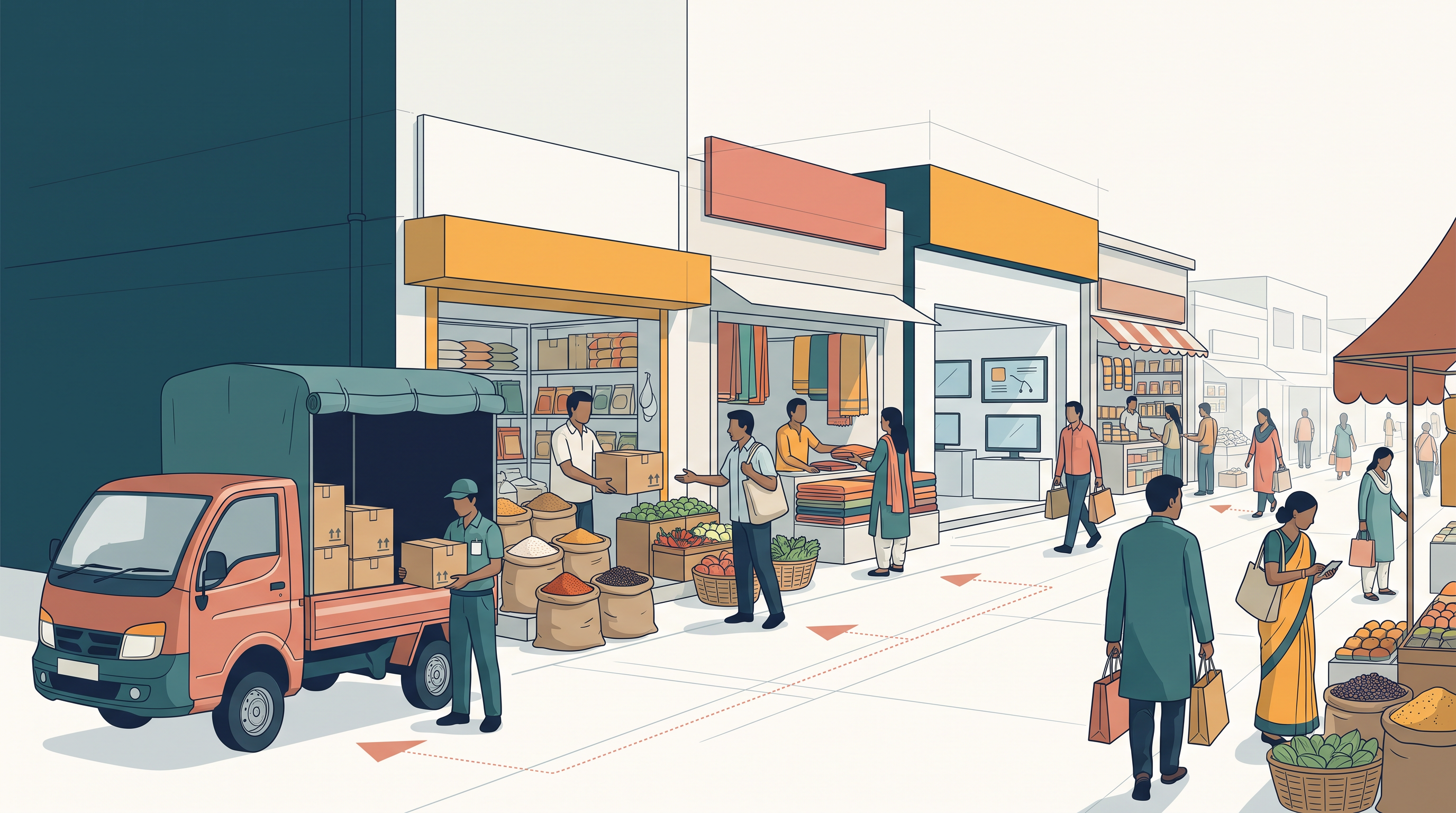
Fig. 1.0 – A busy neighbourhood market street.
1.1 Introduction
All human beings, wherever they live, need different kinds of goods and services to satisfy their needs. Look around and you will notice that people require a wide variety of products — food, clothing, medicines, books, transport, electricity, mobile services — and that almost none of these are made by the people who use them.
How do people obtain these goods and services? They go to a market. The market may be a physical one, such as a shop, a mandi or a shopping centre, or an electronic one over the internet. In either case, several sellers offer the required commodities and the buyer chooses what suits him or her best.
The goods and services do not reach the market on their own. They are made available by different sets of people engaged in economic activities such as production, manufacturing, distribution and exchange. Each of these activities exists so that the needs and wants of customers are finally satisfied.
Business is a major economic activity concerned with the production and sale of goods and services required by people. Business is central to our lives. Many other institutions in modern society — schools, colleges, hospitals, political parties and religious bodies — also influence how we live, but business has a major influence on our daily lives. It is therefore important to understand the concept, nature and purpose of business.
Business starts with production and ends with consumption. Making the finished product reach the consumer involves a series of steps. The relationship between these steps is shown in Fig. 1.1.
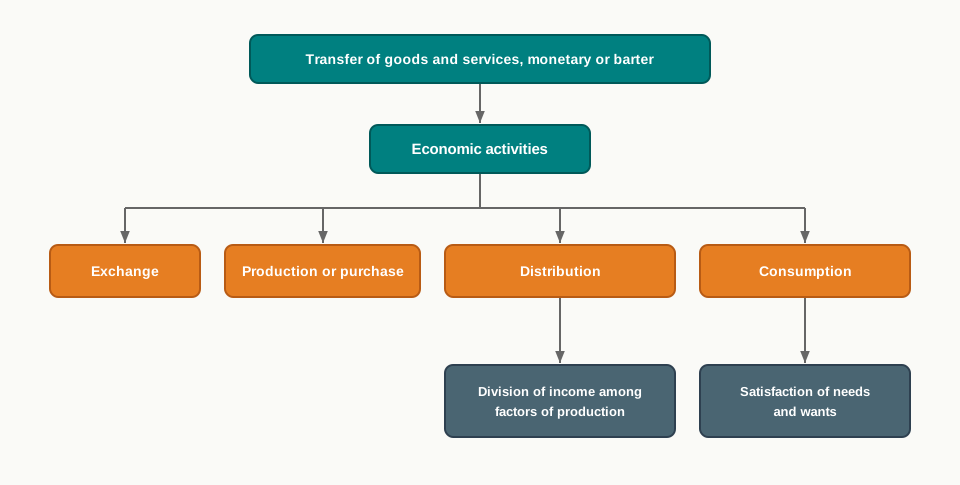
Fig. 1.1 – Economic activities in the transfer of goods and services.
The work of producing goods is covered under industry, and the remaining activities — those that help goods and services move from the producer to the consumer — belong to commerce. In a nutshell, we call the whole of it ‘business’, which is a wider term and includes industry, trade and commerce.
1.1.1 Role of Business in the Development of Economy
Business, which includes trade and commerce, has played a vital role since time immemorial. India had a golden past, and trading activities contributed significantly to its prosperity and gains. Archaeological evidence shows that trading activities were the mainstay of the economy in ancient times, and that these activities were carried out by both water and land routes. The Silk Route and maritime trade were prominent in transporting goods and commodities for trading purposes.
Ancient Trade And Economic Life
Goods were traded both within the subcontinent and with foreign lands, and this generated surplus income. As a result, people were engaged in a wide range of economic activities — agriculture and domestication of animals, weaving cotton, dyeing fabrics, making clay pots, utensils and handicrafts, sculpting, cottage industries and masonry. Family-based workshops, known as karkhanas, carried on manufacturing and were an important component of economic life.
The money earned from this trade did not lie idle. It was channelised into further investment, and this led to the growth of a strong indigenous banking system that financed trading activities.
The Indigenous Banking System
An example of this system is the age-old use of the hundi and the chitties, the latter used in the southern region. These were written documents that made it possible to transfer money from one hand to another for trading purposes. As an instrument of exchange, a hundi involved a contract which (i) warranted the payment of money under a promise or order that was unconditional, and (ii) was capable of being changed through transfer by valid negotiation.
Why was there a need to create an intangible form of exchange of money at all? Travelling long distances by land or sea involved the risk of theft and robbery, and carrying coin over such distances was unsafe. The hundi, which literally means ‘to collect’, was written in the vernacular language, allowed money to move safely between parties, and thus promoted trading activities.
Different merchant communities used different forms of the hundi. Broadly, a darshani hundi was payable on presentation, while a muddati hundi was payable after a fixed term. The main varieties practised were as follows.
Dhani-jog, darshani — payable to any person, with no liability over who received the payment.
Sah-jog, darshani — payable to a specific person, someone ‘respectable’, with liability over who received the payment.
Firman-jog, darshani — a hundi made payable to order.
Dekhan-har, darshani — payable to the presenter or bearer.
Dhani-jog, muddati — payable to any person, with no liability over who received payment, but payment made only after a fixed term.
Firman-jog, muddati — a hundi made payable to order following a fixed term.
Jokhmi, muddati — drawn against dispatched goods. If the goods were lost in transit, the drawer or holder bore the cost and the drawee carried no liability.
The emergence of credit transactions and the availability of loans and advances further enhanced commercial operations. The Indian subcontinent enjoyed the fruits of a favourable balance of trade, in which exports exceeded imports by large margins, and the indigenous banking system supplied manufacturers, traders and merchants with additional capital funds for expansion and development. Commercial and industrial banks evolved later to finance trade and commerce, and agricultural banks were set up to provide both short-term and long-term loans to agriculturists.

Fig. 1.2 – A traditional hundi document.
Major Trade Centres Of Ancient India
Many leading trade centres developed in ancient times for the import and export of goods. Their locations, on river banks, sea coasts and major land routes, explain why they grew.
Pataliputra — known as Patna today. It was not only a commercial town but also a major centre for the export of stones.
Peshawar — an important exporting centre for wool and an importing centre for horses. It had a huge share in commercial transactions between India, China and Rome in the first century A.D.
Taxila — a major centre on the important land route between India and Central Asia. It was also a city of financial and commercial banks, and occupied an important place as a Buddhist centre of learning, where the famous Taxila University flourished.
Indraprastha — the commercial junction on the royal road where most routes leading to the east, west, south and north converged.
Mathura — an emporium of trade where people subsisted on commerce. Many routes from South India touched Mathura and Broach.
Varanasi — well placed on the Gangetic route and on the highway linking the North with the East. It grew as a major centre of the textile industry and became famous for beautiful gold silk cloth and sandalwood workmanship, and had links with Taxila and Bharuch.
Mithila — its traders crossed the seas by boat through the Bay of Bengal to the South China Sea and traded at ports on the islands of Java, Sumatra and Borneo. Mithila established trading colonies in South China, especially in Yunnan.
Ujjain — agate, carnelian, muslin and mallow cloth were exported from here to different centres. It also had trade relations by the land route with Taxila and Peshawar.
Surat — the emporium of western trade during the Mughal period. Textiles of Surat were famous for their gold borders, called zari. It is noteworthy that the Surat hundi was honoured in far-off markets of Egypt and Iran.
Kanchi — known today as Kanchipuram. The Chinese used to come here in foreign ships to purchase pearls, glass and rare stones, and in return sold gold and silk.
Madura — the capital of the Pandayas, who controlled the pearl fisheries of the Gulf of Mannar. It attracted foreign merchants, particularly Romans, for overseas trade.
Broach — the greatest seat of commerce in Western India, situated on the banks of the river Narmada and linked with all important marts by roadways.
Kaveripatta — also known as Kaveripatnam, scientific in its construction as a city, providing loading, unloading and strong storage facilities for merchandise. Foreign traders had their headquarters here. It was convenient for trade with Malaysia, Indonesia, China and the Far East, and was a centre of trade in perfumes, cosmetics, scents, silk, wool, cotton, corals, pearls, gold and precious stones, as well as for ship building.
Tamralipti — one of the greatest ports, connected both by sea and by land with the West and the Far East, and linked by road to Banaras and Taxila.
Major export items were spices, wheat, sugar, indigo, opium, sesame oil, cotton, parrots, live animals and animal products. Major imports were horses, animal products, Chinese silks, linen, wine, gold, silver and copper.
There were all kinds of towns — port towns, manufacturing towns, mercantile towns, sacred centres and pilgrimage towns. Their existence is an index of the prosperity of merchant communities and professional classes.
Business activities also led to the growth of different aids to trade, such as transportation, banking, finance and communication, which improved the prospects of trading activities. With the active contribution of Indian traders and other merchant communities, the Indian subcontinent was popularly called ‘Swaran Bhoomi and Swaran Deep’ in the writings of many travellers, such as Megasthenes, Faxian (FaHien), Xuanzang (Huen Tsang), Al Beruni of the eleventh century, Ibn Batuta of the fourteenth century and the Frenchman Francois of the seventeenth century. They repeatedly refer to the prosperity of the country.
India In The World Economy
Between the first and the seventh centuries CE, India is estimated to have had the largest economy of the ancient and medieval world, controlling about one-third to one-fourth of the world’s wealth. The changing share of India in world output over the centuries is set out in Fig. 1.3. The figures are drawn from the estimates of Angus Maddison in The World Economy: A Millennial Perspective and The World Economy: Historical Statistics.
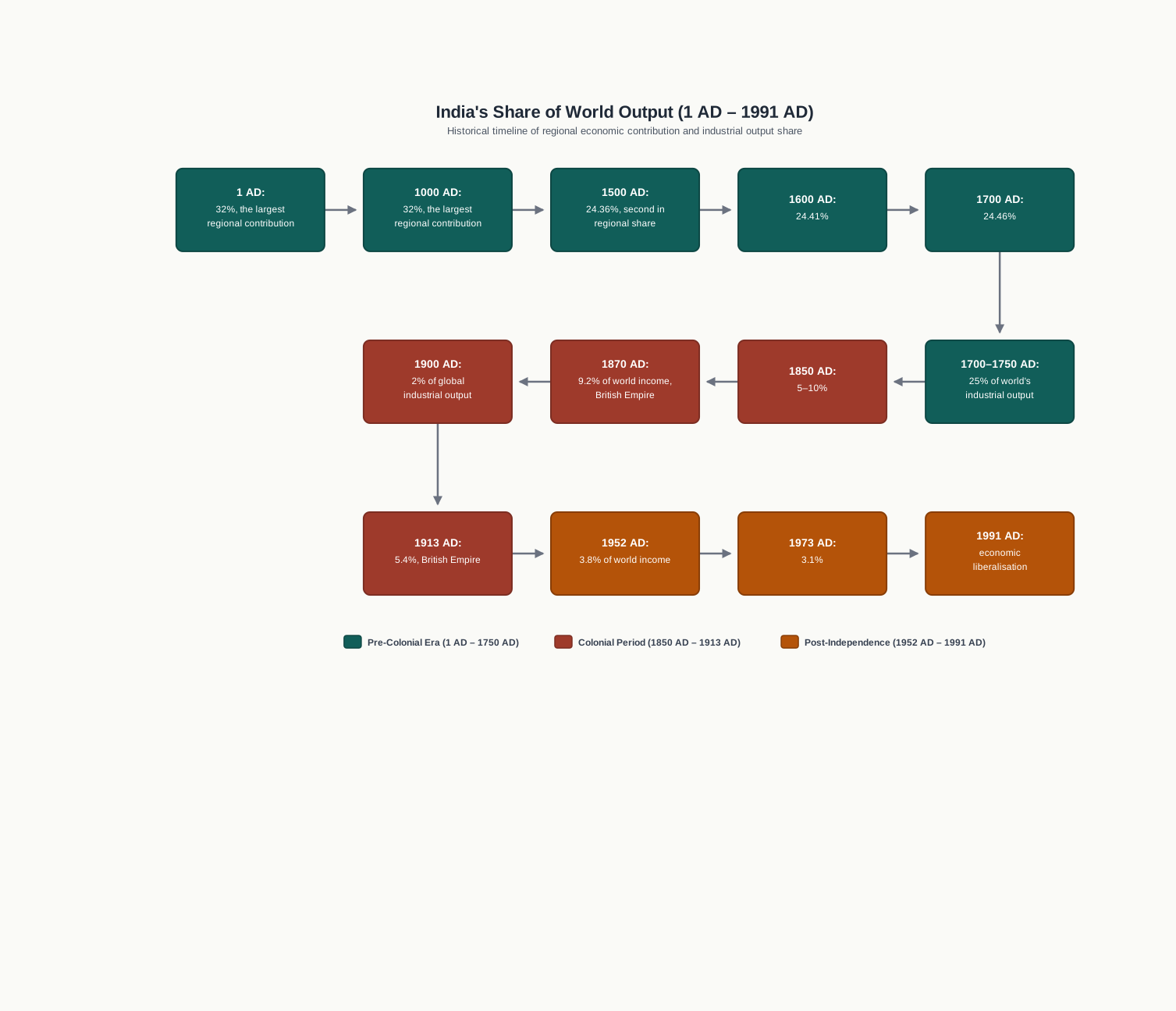
Fig. 1.3 – India’s share in world income and output.
The Colonial Period
With the emergence of the British Empire in India, the East India Company used the revenues generated by the provinces under its rule to purchase Indian raw materials, spices and goods. This changed the condition of the Indian economy: from being an exporter of processed goods, India became an exporter of raw materials and a buyer of manufactured goods. The fall in India’s share of world output shown in Fig. 1.3 belongs to this period.
Rebuilding After Independence
After independence, the process of rebuilding the economy started and India embarked on planned development, with the objective of achieving a self-reliant socialistic pattern of society. The measures taken were characterised by centralised economic planning and by an emphasis on public investment in basic and key industries.
Due importance was given to the establishment of modern industries, modern technological and scientific institutes, and space and nuclear programmes. However, several problems persisted — lack of capital formation, a rise in population, a weak financial system, inadequate infrastructure, huge expenditure on defence, high fiscal deficits and continuous deficits in the balance of payments. The international community’s confidence in India’s ability to manage its economy was severely affected, and the balance of payments situation became precarious. As a result, India agreed to economic liberalisation in 1991.
A three-pronged approach of stabilisation, restructuring and globalisation of the Indian economy was adopted to address the changes in the economic and business scenario and to integrate India with the global economy. The Government of India announced major economic reform packages aimed at restoring the growth momentum in the economy. Major policy changes were effected from 1991 onwards with respect to fiscal matters, monetary matters, trade, industry, agriculture, infrastructure, foreign exchange and foreign investment.
The Economy Today
The Indian economy is emerging as one of the faster growing economies in the world today and is a preferred destination for foreign direct investment. Rising incomes, savings, investment opportunities, increased domestic consumption and a younger population together ensure growth for decades to come.
High growth sectors have been identified which are likely to grow at a rapid pace, and recent initiatives of the Government of India such as ‘Make in India’, ‘Skill India’ and ‘Digital India’ are expected to help the economy in terms of exports and imports, with a steady and sustainable trade balance.
1.2 Concept of Business
The term business is derived from the word ‘busy’. In its plainest sense, therefore, business means being busy. In its specific sense, however, business refers to an occupation in which people regularly engage in activities related to the purchase, production and sale of goods and services with a view to earning profits.
If you look around, you will observe that people undertake many different activities to satisfy their needs. These activities may be broadly classified into two groups — economic activities and non-economic activities.
Economic activities are those by which we earn our livelihood. Non-economic activities are performed out of love, sympathy, sentiment, patriotism and similar motives, and not for money. A worker working in a factory, a doctor attending to patients in a clinic, a manager working in an office and a teacher teaching in a school are all earning their livelihood, and are therefore engaged in economic activity. In contrast, a person cooking food for the family, or a boy helping an elderly man cross the road, is performing a non-economic activity, because the work is done out of love or sympathy.
Economic activities may be further divided into three categories, namely business, profession and employment. A profession is an occupation that requires specialised knowledge and training, membership of a professional body and adherence to a professional code of conduct, and it earns a fee. Employment is work done for an employer under a contract of service in return for a salary or wages. Business, the third category, is defined below.
1.2.1 Characteristics of Business Activities
To appreciate how business activity differs from other activities in society, the nature of business, or its fundamental character, must be explained in terms of its distinguishing characteristics. These are as follows.
An economic activity — business is considered an economic activity because it is undertaken with the objective of earning money or a livelihood, and not out of love, affection, sympathy or any other emotion. This activity may be carried on at a small and individual level, such as purchase and sale by a shopkeeper, or on a large scale at a more formal and organised level, such as purchase and sale by a cooperative society or a company.
Production or procurement of goods and services — before goods are offered to people for consumption, they must either be produced or procured by business enterprises. Every business enterprise either manufactures the goods it deals in, or acquires them from producers to sell further to consumers or users. Goods may be consumable items of daily use, such as sugar, ghee, pens and notebooks, or capital goods, such as machinery and furniture. Services may include facilities offered to consumers, business firms and organisations in the form of transportation, banking and electricity.
Sale or exchange of goods and services — directly or indirectly, business involves the transfer or exchange of goods and services for value. If goods are produced not for the purpose of sale but for personal consumption, the activity cannot be called business. Cooking food at home for the family is not business, but cooking food and selling it to others in a restaurant is business. One essential characteristic of business, therefore, is that there must be a sale or exchange of goods or services between a seller and a buyer.
Dealings in goods and services on a regular basis — business involves dealings in goods or services on a regular basis, so a single transaction of sale or purchase does not constitute business. For example, if a person sells his or her domestic radio set, even at a profit, it will not be considered a business activity. But if the same person sells radio sets regularly, either through a shop or from his or her residence, it will be regarded as a business activity.
Profit earning — one of the main purposes of business is to earn income by way of profit. No business can survive for long without profit, since profit is what replaces the money spent and rewards the risk taken. That is why businessmen make all possible efforts to maximise profits, either by increasing the volume of sales or by reducing costs.
Uncertainty of return — uncertainty of return refers to the lack of knowledge about the amount of money that the business is going to earn in a given period. Every business invests money, that is, capital, to run its activities with the objective of earning profit, but it is not certain what amount of profit will actually be earned. There is also always the possibility of losses being incurred, despite the best efforts put into the business.
Element of risk — risk is the uncertainty associated with an exposure to loss, and it is caused by some unfavourable or undesirable event. Risks are related to factors such as changes in consumer taste and fashion, changes in the method of production, a strike or lockout at the workplace, increased competition in the market, fire, theft, accidents and natural calamities. No business can altogether do away with risks.
1.2.2 Comparison of Business, Profession and Employment
As mentioned earlier, economic activities may be divided into three major categories, namely business, profession and employment. All three provide a livelihood, but they differ in how a person enters them, what qualification is required, what return is earned and how much risk is carried. The differences are set out in Table 1.1.
Board questions on this topic are usually application-based: a short situation is given and the student is asked to identify whether the person is carrying on business, practising a profession or in employment, and to give the basis on which the answer rests. The safest bases to look for are the mode of establishment, the nature of the reward and the presence or absence of risk.
1.3 Classification of Business Activities
Various business activities may be classified into two broad categories — industry and commerce. Industry is concerned with the production or processing of goods and materials. Commerce includes all those activities which are necessary for facilitating the exchange of goods and services.
On the basis of these two categories, business firms may be classified into industrial enterprises and commercial enterprises. The two are not rivals; industry makes goods available, and commerce makes them reach the people who need them. Let us examine in detail the activities relating to business.
1.3.1 Industry
Industry refers to economic activities which are connected with the conversion of resources into useful goods. Generally, the term industry is used for activities in which mechanical appliances and technical skills are involved. These include activities relating to producing or processing goods, as well as breeding and raising animals.
The term industry is also used to mean a group of firms producing similar or related goods. For example, the cotton textile industry refers to all manufacturing units producing textile goods from cotton, and the electronic industry includes all firms producing electronic goods. Further, in common parlance, certain services such as banking and insurance are also referred to as an industry, as in the expressions banking industry and insurance industry.
Industries may be divided into three broad categories, namely primary, secondary and tertiary. This classification follows the stage at which the activity stands in the process of production, and is summarised in Fig. 1.4.
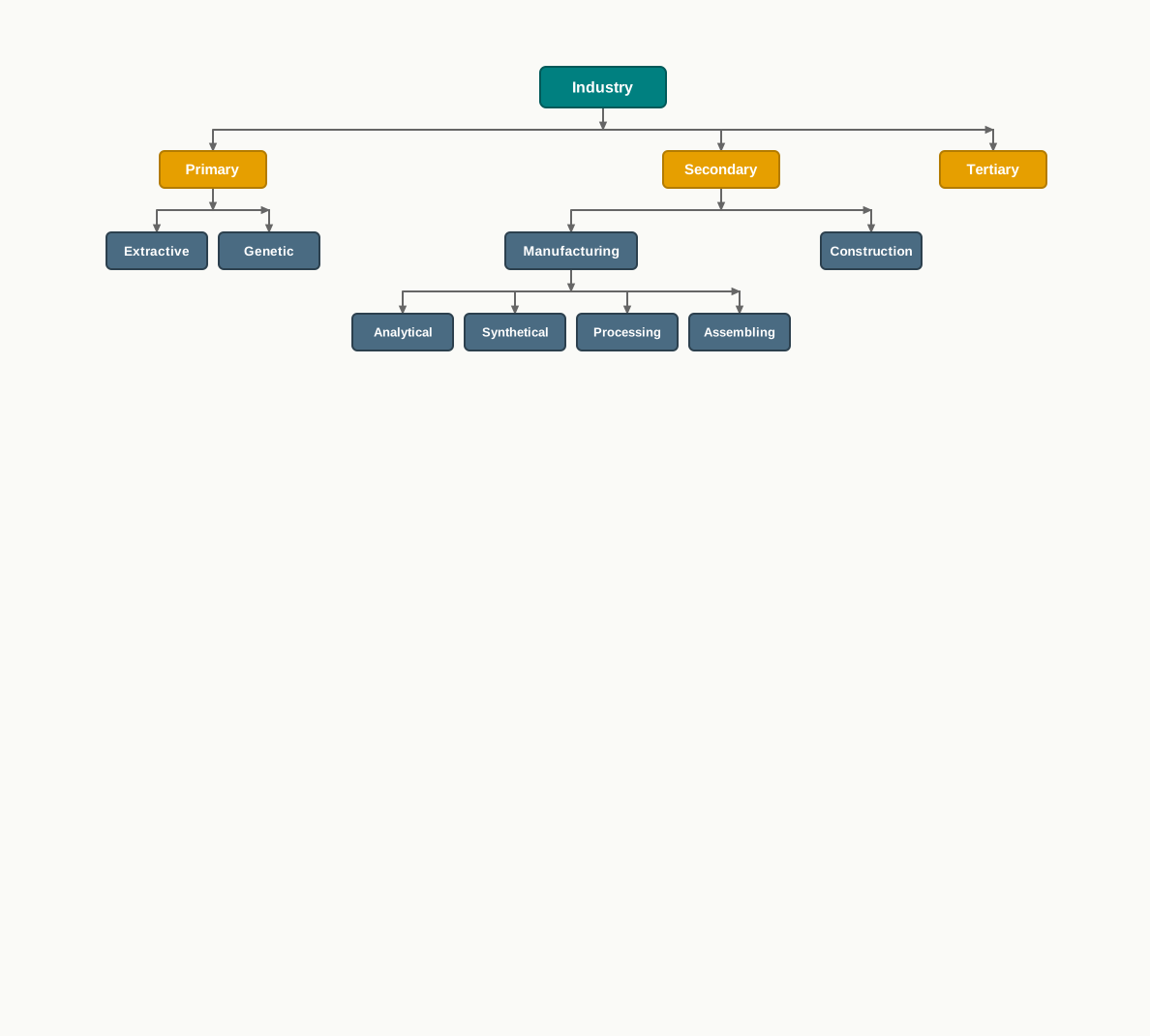
Fig. 1.4 – Types of industry.
- Primary industries — these include all those activities which are concerned with the extraction and production of natural resources, and with the reproduction and development of living organisms and plants. They stand at the beginning of the production chain, because every later stage depends on the material they supply. Primary industries are divided as follows.
Divisions Of Primary Industry
Extractive industries — these industries extract or draw products from natural sources. They supply some basic raw materials that are mostly products of the geographical or natural environment. The products of these industries are usually transformed into many other useful goods by manufacturing industries. Important extractive industries include farming, mining, lumbering, hunting and fishing operations.
Genetic industries — these industries are engaged in breeding plants and animals for their use in further reproduction. Seed and nursery companies are typical examples of genetic industries. In addition, the activities of cattle breeding farms, poultry farms and fish hatcheries come under genetic industries.
Secondary industries — these are concerned with using materials which have already been extracted at the primary stage. These industries process such materials to produce goods either for final consumption or for further processing by other industrial units. For example, the mining of iron ore is a primary industry, but the manufacturing of steel by further processing raw iron is a secondary industry. Secondary industries are divided as follows.
Divisions Of Secondary Industry
- Manufacturing industries — these industries are engaged in producing goods through the processing of raw materials, and thus create form utility. They bring out the diverse finished products that we consume or use, through the conversion of raw materials or partly finished materials in their manufacturing operations. Manufacturing industries may be further divided into four categories on the basis of the method of operation used for production.
Analytical industry, which analyses and separates different elements from the same material, as in the case of an oil refinery.
Synthetical industry, which combines various ingredients into a new product, as in the case of cement.
Processing industry, which involves successive stages for manufacturing finished products, as in the case of sugar and paper.
Assembling industry, which assembles different component parts to make a new product, as in the case of television sets, cars and computers.
Construction industries — these industries are involved in the construction of buildings, dams, bridges and roads, as well as tunnels and canals. Engineering and architectural skills are an important part of construction industries.
Tertiary industries — these are concerned with providing support services to primary and secondary industries, as well as with activities relating to trade. These industries provide service facilities. As business activities, they may be considered part of commerce, because as auxiliaries to trade these activities assist trade. Included in this category are transport, banking, insurance, warehousing, communication, packaging and advertising.
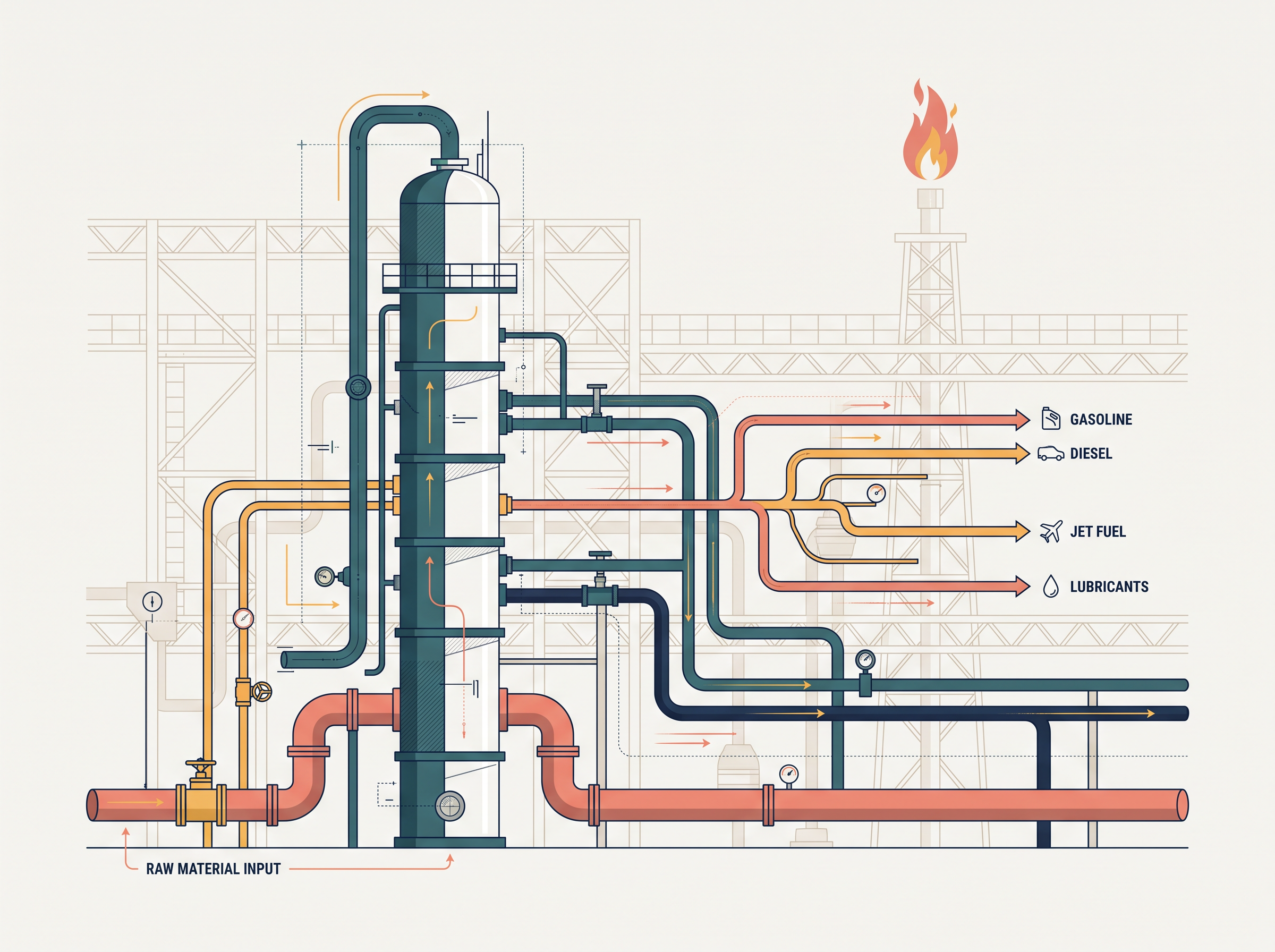
Fig. 1.5 – An oil refinery as an analytical industry.
1.3.2 Commerce
Commerce includes two types of activities, namely trade and auxiliaries to trade. The buying and selling of goods is termed as trade. But a great many other activities are required to facilitate the purchase and sale of goods, and these are called services, or auxiliaries to trade. They include transport, banking, insurance, communication, advertisement, packaging and warehousing. Commerce, therefore, includes both the buying and selling of goods, that is trade, and the auxiliaries such as transport and banking.
Commerce provides the necessary link between producers and consumers. It embraces all those activities which are necessary for maintaining a free flow of goods and services. Thus, all activities involving the removal of hindrances in the process of exchange are included in commerce.
The hindrances may be in respect of persons, place, time, risk, finance and information. Each hindrance is removed by a particular activity.
The hindrance of persons is removed by trade, which makes goods available to consumers from the possession or ownership of producers.
The hindrance of place is removed by transport, which moves goods from the place of production to the markets for sale.
The hindrance of time is removed by storage and warehousing, which allow stocks of goods to be held and sold as and when required.
The hindrance of risk is removed by insurance, because goods held in stock, as well as goods in the course of transport, are subject to the risk of loss or damage due to theft, fire and accidents.
The hindrance of finance is removed by banking and financing institutions, which provide the capital required to undertake all the above activities.
The hindrance of information is removed by advertising, which makes it possible for producers and traders to inform consumers about the goods and services available in the market.
Hence, commerce is said to consist of the activities of removing the hindrances of persons, place, time, risk, finance and information in the process of the exchange of goods and services. The whole structure of commerce is summarised in Fig. 1.6.
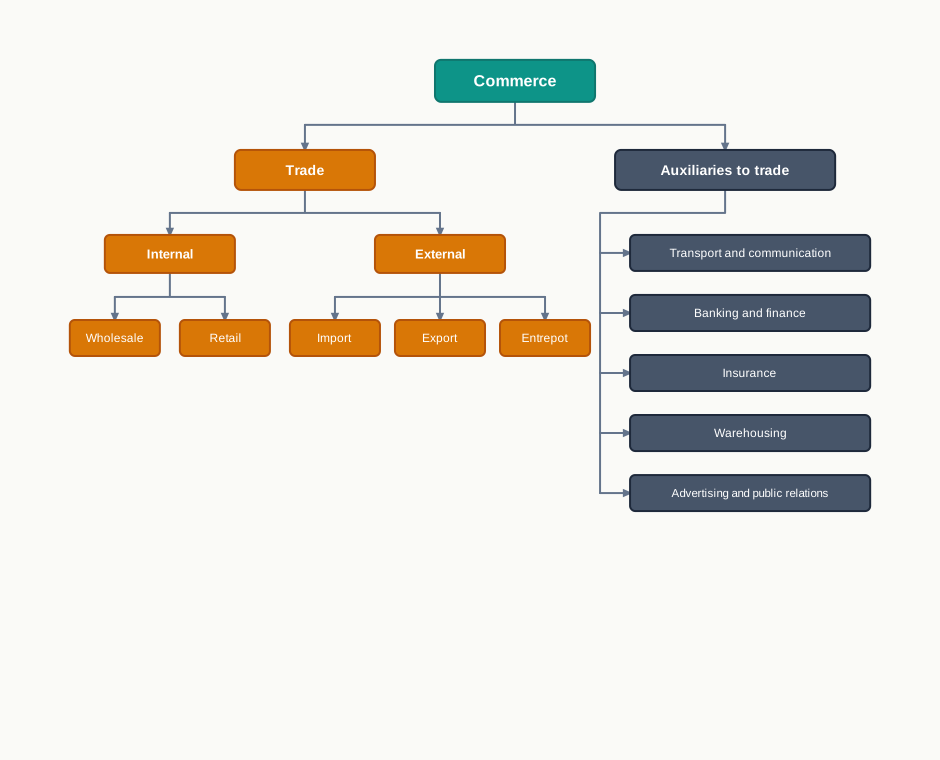
Fig. 1.6 – Components of commerce.
1.3.3 Trade and Auxiliaries to Trade
Trade is an essential part of commerce. It refers to the sale, transfer or exchange of goods, whether physical or virtual. It helps in making the goods produced available to consumers or users.
These days goods are produced on a large scale, and it is difficult for producers themselves to reach out to individual buyers to sell their products. Businessmen are engaged in trading activities to make goods available to consumers in different markets. In the absence of trade, it would not be possible to undertake production activities on a large scale, because a producer would have no means of disposing of a large output.
Activities which are meant for assisting trade are known as auxiliaries to trade. These activities are generally referred to as services, because they are in the nature of facilitating the activities relating to industry and trade. Transport, banking, insurance, warehousing and advertising are regarded as auxiliaries to trade, that is, activities playing a supportive role.
In fact, these activities support not only trade but also industry, and hence the entire business activity. Auxiliaries are an integral part of commerce in particular and of business activity in general. They help in removing the various hindrances which arise in connection with the production and distribution of goods.
Transport facilitates the movement of goods from one place to another. Banking provides financial assistance to the manufacturer and the trader. Insurance covers various kinds of business risks. Warehousing creates time utility by way of storage facilities. Advertising provides information to consumers. In other words, these activities facilitate movement, storage, financing, risk coverage and the sales promotion of goods. The auxiliaries to trade are discussed below.
Transport and communication — the production of goods generally takes place in particular locations. For instance, tea is mainly produced in Assam, cotton in Gujarat and Maharashtra, jute in West Bengal and Odisha, and sugar in Uttar Pradesh, Bihar and Maharashtra. But these goods are required for consumption in different parts of the country. The obstacle of place is removed by transport through road, rail or coastal shipping. Transport facilitates the movement of raw material to the place of production, and of finished products from factories to the place of consumption. Along with transport facilities, there is also a need for communication facilities so that producers, traders and consumers may exchange information with one another. Thus, postal services and telephone facilities may also be regarded as auxiliaries to business activities.
Banking and finance — business activities cannot be undertaken unless funds are available for acquiring assets, purchasing raw materials and meeting other expenses. The necessary funds can be obtained by businessmen from a bank, and banking therefore helps business activities to overcome the problem of finance. Commercial banks generally lend money by providing overdraft and cash credit facilities, loans and advances. Banks also undertake the collection of cheques, the remittance of funds to different places and the discounting of bills on behalf of traders. In foreign trade, commercial banks help exporters in collecting money from importers. Commercial banks also help the promoters of companies to raise capital from the public.
Insurance — business involves various types of risks. Factory buildings, machinery and furniture must be protected against fire, theft and other risks. Materials and goods held in stock or in transit are subject to the risk of loss or damage. Employees are also required to be protected against the risks of accident and occupational hazards. Insurance provides protection in all such cases. On payment of a nominal premium, the amount of loss or damage, and compensation for injury if any, can be recovered from the insurance company.
Warehousing — usually, goods are not sold or consumed immediately after production. They are held in stock to make them available as and when required. Special arrangements must be made for the storage of goods to prevent loss or damage. Warehousing helps business firms to overcome the problem of storage and facilitates the availability of goods when needed. Prices are thereby maintained at a reasonable level through the continuous supply of goods.
Advertising and public relations — there is an old saying that advertising is what a firm pays for, and public relations is what it prays for. Both advertisement and public relations activities are tools used to influence and promote a product, a service or an idea among potential customers, and to motivate target customers to recognise the accomplishments of the firm. Advertising and public relation activities are among the most important methods of promoting the sale of products and services in a market place, because it is practically impossible for producers and traders to contact each and every customer. For promoting sales, information about features, price and similar matters is made available to potential customers through advertisements and publicity tools. There is also a need to persuade potential customers and buyers about the utility, quality, price and competitive features of the goods and services offered. The publicity of such attributes is carried out using various public relations techniques, of which a popular tool is the press release in print and on social media platforms. Advertisements are always a paid activity, in which the business occupies space in print or non-print media to promote its product or service. Public relations activities, on the other hand, are normally unpaid, and the business enters into a strategic communication to build a mutually beneficial relationship.
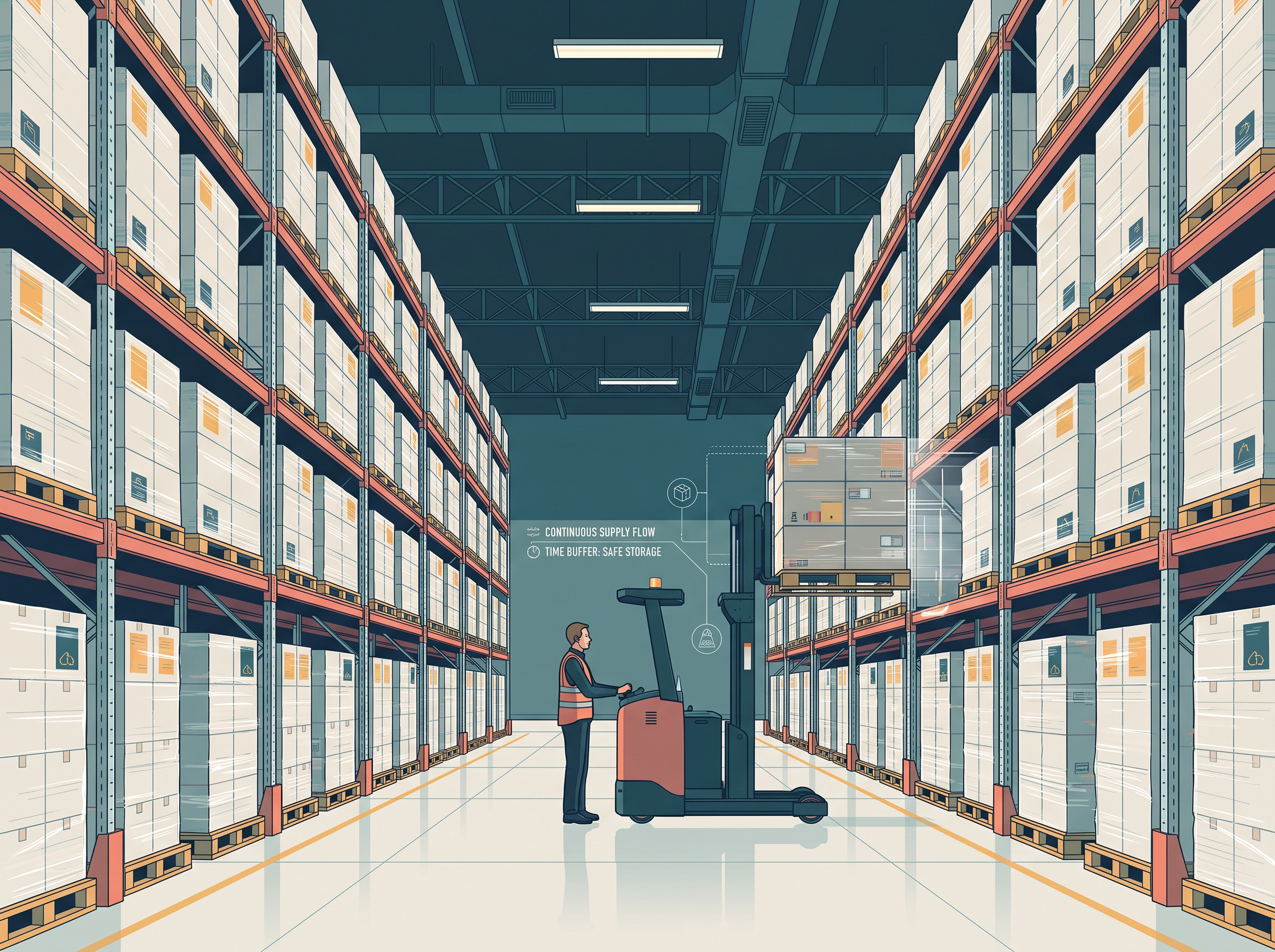
Fig. 1.7 – A modern warehouse.
1.4 Objectives of Business
An objective is the starting point of business. Every business is directed towards the achievement of certain objectives. Objectives refer to all that business people want to get in return for what they do, and they give the enterprise something definite to work towards.
It is generally believed that business activity is carried on only for profit. Business persons themselves proclaim that their primary objective is to produce or distribute goods and services for profit. Every business is said to be an attempt on the part of business people to get more than what has been spent or invested — in other words, to earn profit, which is the excess of revenue over cost.
However, it is being increasingly realised nowadays that business enterprises are part of society and need to fulfil several objectives, including social responsibility, in order to survive and prosper in the long run. Profit is found to be a leading objective, but not the only one.
Importance Of Profit
Although earning profit cannot be the only objective of business, its importance cannot be ignored. Profit may be regarded as an essential objective of business for the following reasons.
Source of income — profit is a source of income for business persons, and is the return they receive for the effort and the risk they have taken.
Source of finance — profit can be a source of finance for meeting the expansion requirements of the business, since money earned and retained can be reinvested without borrowing.
Indicator of efficiency — profit indicates the efficient working of the business, because a firm that keeps its costs below its revenue is using its resources well.
Society’s approval — profit can be taken as society’s approval of the utility of the business, since customers pay willingly only for goods and services that they find useful.
Reputation — profit builds the reputation of a business enterprise, and a firm known to be profitable finds it easier to obtain credit, attract investors and retain employees.
Danger Of Overemphasis On Profit
Too much emphasis on profit, to the exclusion of other objectives, can be dangerous for good business. Obsessed with profit, business managers may neglect all their other responsibilities towards customers, employees, investors and society at large.
Such managers may even be inclined to exploit various sections of society in order to earn an immediate profit. This may result in non-cooperation, or even opposition, from the affected people against the malpractices of business enterprises.
The consequence returns to the enterprise itself. Firms that lose the goodwill of customers, employees and the community might lose business and may then be unable to earn profit at all. Balancing profit with other objectives is therefore essential for the survival and prosperity of the business.
1.5 Classification of Objectives of Business
Objectives are needed in every area that influences the survival and prosperity of a business. Since a business has to balance a number of needs and goals, it requires multiple objectives. It cannot follow only one objective and expect to achieve excellence.
Objectives have to be specific in every area and sphere of business. A vague intention to ‘do well’ cannot be acted upon, whereas a specific objective tells each department what is expected of it. Objectives also enable the business to analyse its own performance and take steps as necessary to improve that performance in future.
The areas in which objectives are usually set are market standing, innovation, productivity, physical and financial resources, earning profits and social responsibility. These areas are shown together in Fig. 1.8 and are described below.
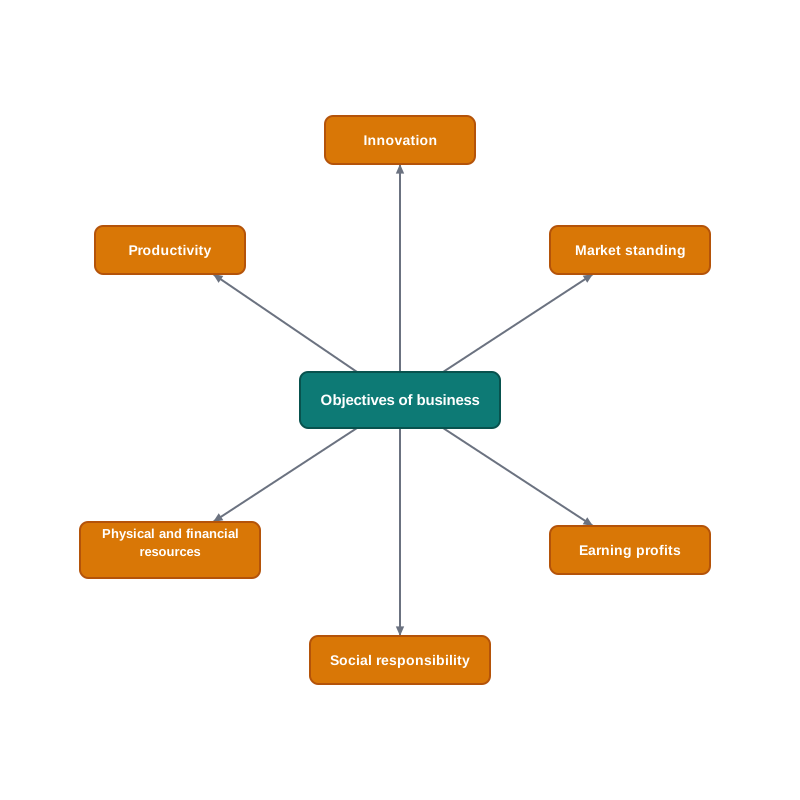
Fig. 1.8 – Areas in which business objectives are set.
Market standing — maintaining the goodwill and reputation of one’s business is paramount if the firm is to succeed and prosper. It helps in forming a distinct identity in the market, and this position of the firm in relation to its competitors is referred to as its market standing. A business enterprise must aim at standing on a stronger footing in terms of offering competitive products at reasonable prices to its customers and serving them to their satisfaction.
Innovation — innovation is central to the growth of any business enterprise. It helps a business to scale up and gives the enterprise a competitive edge in the market. Innovation does not imply that a new product must be manufactured; any modification in an existing product to enhance its operation also denotes innovativeness. There are two kinds of innovation in every business, that is, innovation in products or services, and innovation in the various skills and activities needed to supply those products and services. No business enterprise can flourish in a competitive world without innovation, and innovation therefore becomes an important objective.
Productivity — productivity is ascertained by comparing the value of output with the value of inputs. It is used as a measure of efficiency, because it shows how much the firm has obtained from the resources it has consumed. In order to ensure continuous survival and progress, every enterprise must aim at greater productivity through the best use of available resources.
Physical and financial resources — any business requires physical resources, such as plants, machines and offices, and financial resources, that is, funds, in order to be able to produce and supply goods and services to its customers. The business enterprise must aim at acquiring these resources according to its requirements and at using them efficiently, since resources that lie idle add to cost without adding to output.
Earning profits — one of the objectives of business is to earn profits on the capital employed. Profitability refers to profit in relation to capital investment, and is therefore a better test of performance than the amount of profit by itself. Every business must earn a reasonable profit, which is so important for its survival and growth.
Social responsibility — social responsibility refers to the obligation of business firms to contribute resources for solving social problems and to work in a socially desirable manner.
1.6 Business Risk
The term business risk refers to the possibility of inadequate profits, or even losses, due to uncertainties or unexpected events. Every business commits money today in the expectation of a return tomorrow, and since tomorrow cannot be known with certainty, some risk is always carried.
For example, the demand for a particular product may decline because of a change in the tastes and preferences of consumers, or because of increased competition from other producers. Lower demand results in lower sales and lower profits.
In another situation, a shortage of raw materials in the market may push up their price. The firm using those raw materials will have to pay more for buying them. As a result, the cost of production may increase, which in turn may reduce profits.
Types Of Business Risk
Business enterprises constantly face two types of risk, namely speculative risk and pure risk.
Speculative risks involve both the possibility of gain and the possibility of loss. They arise due to changes in market conditions, including fluctuations in demand and supply, changes in prices, and changes in fashion and the tastes of customers. Favourable market conditions are likely to result in gains, whereas unfavourable ones may result in losses.
Pure risks involve only the possibility of loss or of no loss. The chance of fire, theft or strike are examples of pure risks. Their occurrence may result in loss, whereas their non-occurrence merely means the absence of loss, and not a gain.
1.6.1 Nature of Business Risks
The nature of business risks can be understood in terms of their peculiar characteristics, which are as follows.
Risk is an essential part of every business — every business has some risk. No business can avoid risk, although the amount of risk may vary from one business to another. Risk can be minimised by careful planning and by insurance, but it cannot be eliminated.
Business risks arise due to uncertainties — uncertainty refers to the lack of knowledge about what is going to happen in future. Natural calamities, changes in demand and prices, changes in government policies, improvements in technology and similar events are examples of uncertainty. They create risk for business because the outcomes of these future events are not known in advance.
Degree of risk depends mainly upon the nature and size of business — the nature of business, that is, the type of goods and services produced and sold, and the size of business, that is, the volume of production and sale, are the main factors which determine the amount of risk in a business. For example, a business dealing in fashionable items carries a high degree of risk, because tastes change quickly and unsold stock loses value. Similarly, a large-scale business generally carries a higher risk than a small-scale business, because a larger amount of money is committed to it.
Profit is the reward for risk taking — ‘no risk, no gain’ is an age-old principle which applies to all types of business. The greater the risk involved in a business, the higher is the chance of profit. An entrepreneur undertakes risks under the expectation of a higher profit. Profit is thus the reward for risk taking, and this explains why a person is willing to commit money to an uncertain venture at all.
1.6.2 Causes of Business Risks
Business risks arise due to a variety of causes, which are classified as shown in Fig. 1.9 and explained below.
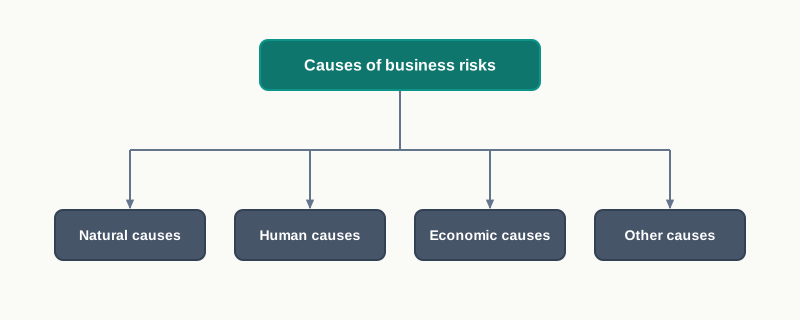
Fig. 1.9 – Causes of business risks.
Natural causes — human beings have little control over natural calamities such as flood, earthquake, lightning, heavy rains and famine. Such events cause damage to property and loss of income in business.
Human causes — human causes include unexpected events such as dishonesty, carelessness or negligence of employees, stoppage of work due to power failure, strikes, riots and management inefficiency.
Economic causes — these include uncertainties relating to the demand for goods, competition, price, the collection of dues from customers, and changes of technology or method of production. Financial problems, such as a rise in the interest rate for borrowing and the levy of higher taxes, also come under this type of cause, as they result in a higher and unexpected cost of operating the business.
Other causes — these are unforeseen events such as political disturbances, mechanical failures like the bursting of a boiler, and fluctuations in exchange rates, which lead to the possibility of business risks.

Fig. 1.10 – Fire safety equipment at a factory.
1.7 Starting a Business — Basic Factors
Starting a business enterprise is similar to any other human effort in which resources are employed to achieve certain objectives. The process of setting up one’s own business is called entrepreneurship. The person who sets up the business is called an entrepreneur, and the output of the process, that is, the business unit itself, is called a business enterprise.
Entrepreneurship does more than provide self-employment to the entrepreneur. It is responsible to a great extent for the creation and expansion of opportunities for the other two economic activities as well, that is, employment and profession, because a new enterprise hires workers and buys the services of professionals. In the process, business entrepreneurship becomes crucial for the overall economic development of a nation.
When a person makes this choice, he or she becomes a job-provider rather than a job-seeker, besides enjoying a host of other financial and psychological rewards.
Starting and managing one’s own business does not emerge spontaneously. Rather, it is the outcome of interaction between a person and the business environment. The choice of being an entrepreneur lies with the individual, and in this regard it becomes necessary to look at both sets of influences — the factors present in the environment, and the factors in the individual’s own perception of how desirable and how feasible the venture is.
The decisions that must be settled before a business can begin are listed in Fig. 1.11 and are explained below. They are placed in this order because each decision narrows the choices available in the one that follows.
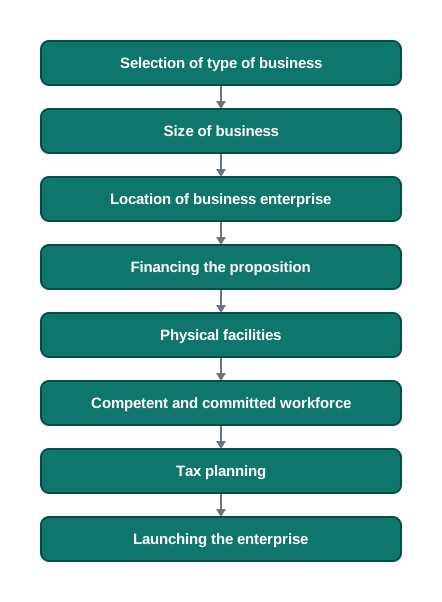
Fig. 1.11 – Basic factors in starting a business.
Selection of type of business — the first thing to be decided by an entrepreneur is the nature and type of business to be undertaken. He or she will obviously like to enter that branch of industry and commerce which has the possibility of a greater amount of profit. The decision will be influenced by customer requirements in the market, and also by the kind of technical knowledge and interest the entrepreneur has for producing a particular product.
Size of business — the size of the firm, or the scale of its operations, is another important decision to be taken at the start of the business. The entrepreneur must decide whether the business is to be set up in the MSME sector or as a large-scale enterprise, and whether it will operate in manufacturing or in the tertiary sector. Some factors favour a large size, whereas others tend to restrict the scale of operation. If the entrepreneur is confident that the demand for the proposed product is likely to be good over time, and can arrange the necessary capital for the business, the operation may be started on a large scale.
Location of business enterprise — an important factor to be considered at the start of the business is the place where the enterprise will be located. Any mistake in this regard can result in a high cost of production, inconvenience in obtaining the right kind of production inputs, or difficulty in serving customers in the best possible way. The availability of raw materials and labour, the power supply, and services such as banking, transportation, communication and warehousing are important factors while making a choice of location.
Financing the proposition — financing is concerned with providing the necessary capital for starting the business as well as for continuing it. Capital is required for investment in fixed assets, such as land, building, machinery and equipment, and in current assets, such as raw materials, book debts and the stock of finished goods. Capital is also required for meeting day-to-day expenses.
Physical facilities — the availability of physical facilities, including machines and equipment, buildings and supportive services, is an important factor to be considered at the start of the business. The decision relating to this factor will depend on the nature and size of the business, the availability of funds and the process of production.
Competent and committed workforce — every enterprise needs a competent and committed workforce to perform various activities, so that physical and financial resources are converted into the desired output. Since no individual entrepreneur can do everything alone, he or she must identify the requirement of skilled and unskilled workers and of managerial staff. Plans should also be made about how the employees will be trained and motivated to give their best performance.
Tax planning — tax planning has become necessary these days because there are a number of tax laws in the country and they influence almost every aspect of the functioning of a modern business. The entrepreneur has to consider in advance the tax liability arising under the various tax laws and its impact on business decisions.
Launching the enterprise — after the decisions relating to the above factors have been taken, the entrepreneur can go ahead with the actual launching of the enterprise. This would mean mobilising the various resources, fulfilling the necessary legal formalities, starting the production process and initiating the sales promotion campaign. A business enterprise may be a sole proprietor firm, a partnership firm or a company, and for each of these proper financial planning must be done to determine (a) the requirement of capital, (b) the source from where the capital will be raised, and (c) the best ways of utilising the capital in the firm.
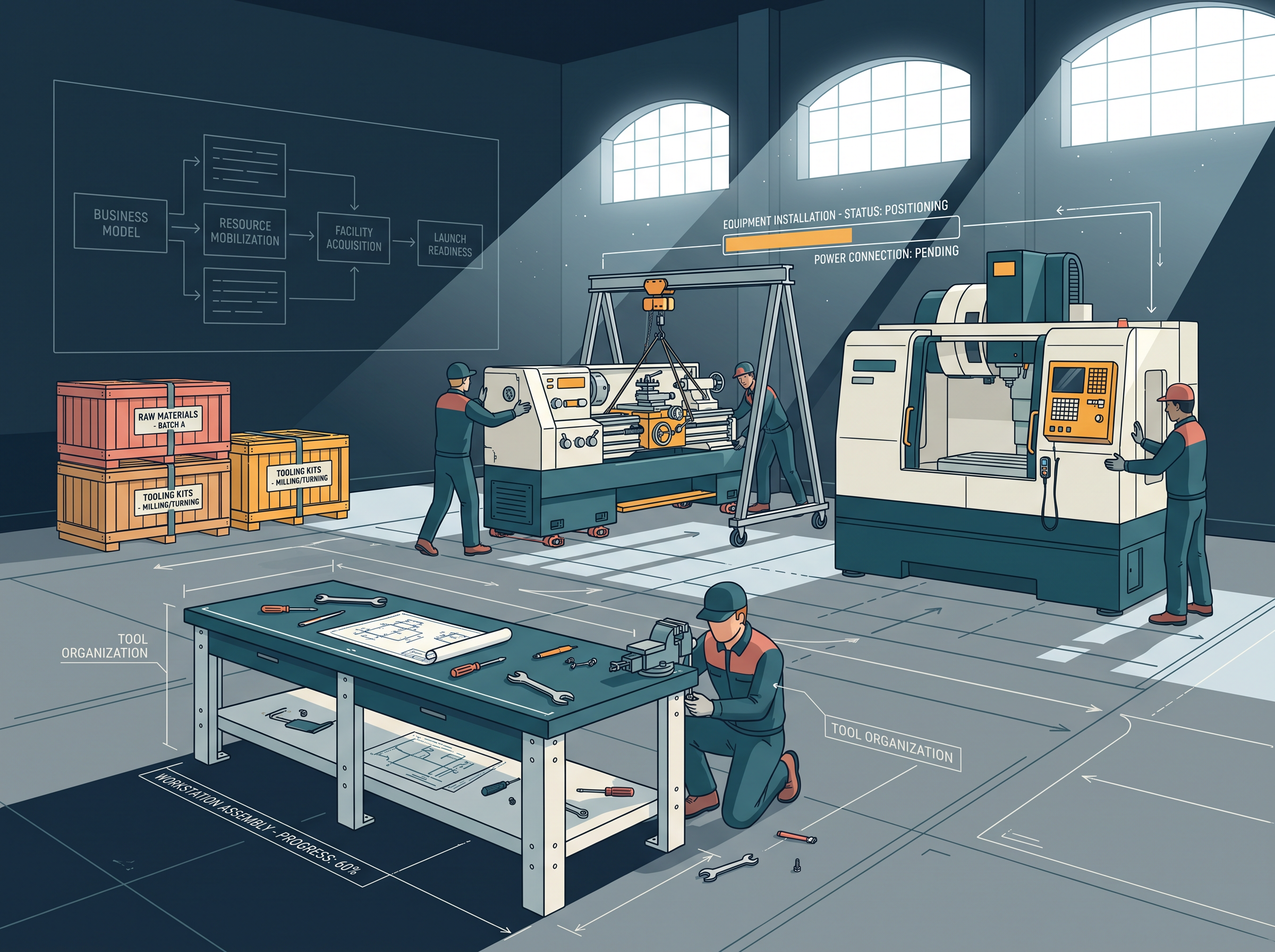
Fig. 1.12 – Setting up a small manufacturing unit.
1.8 Summary
People need goods and services they cannot produce themselves, and these are supplied through economic activities such as production, distribution and exchange. Business is the major economic activity concerned with producing and selling the goods and services people require.
Trade and commerce have contributed to India’s prosperity since ancient times. Trade was carried on by land and sea routes, family workshops called karkhanas supported manufacturing, and an indigenous banking system using instruments such as the hundi and the chitties financed and safeguarded the movement of money.
Leading trade centres such as Pataliputra, Taxila, Ujjain, Surat, Broach, Kaveripatta and Tamralipti handled a large export and import trade, and travellers to India repeatedly recorded the prosperity of the country. India’s share of world output remained among the largest until the colonial period, after which it fell sharply.
After independence India followed planned development, but persistent problems in finance, infrastructure and the balance of payments led to economic liberalisation in 1991 through stabilisation, restructuring and globalisation. The economy today is among the faster growing economies and a preferred destination for foreign investment.
Human activities are either economic, undertaken to earn a livelihood, or non-economic, undertaken out of love, sympathy or sentiment. Economic activities fall into three categories, namely business, profession and employment.
Business is an economic activity involving the production and sale of goods and services with the motive of earning profit by satisfying human needs in society.
The characteristics of business are that it is an economic activity, involves the production or procurement of goods and services, involves their sale or exchange, is carried on regularly, aims at earning profit, carries uncertainty of return and always contains an element of risk.
Business, profession and employment differ in the mode of establishment, nature of work, qualification required, reward earned, capital invested, risk borne, transferability of interest and the code of conduct that applies.
Business activities are classified into industry and commerce. Industry converts resources into useful goods and is divided into primary, secondary and tertiary industries. Commerce covers trade and the auxiliaries to trade.
Primary industries are extractive or genetic; secondary industries are manufacturing or construction, with manufacturing further divided into analytical, synthetical, processing and assembling; tertiary industries provide the supporting services on which the other two depend.
Trade is the buying and selling of goods, while the auxiliaries to trade — transport and communication, banking and finance, insurance, warehousing, and advertising and public relations — remove the hindrances of place, finance, risk, time and information respectively. Trade itself removes the hindrance of persons.
Profit is an essential objective of business because it is a source of income and of finance for expansion, indicates efficiency, reflects society’s approval and builds reputation. Overemphasis on profit alone harms customers, employees, investors and society, and eventually the firm itself.
Business objectives are set in several areas, namely market standing, innovation, productivity, physical and financial resources, earning profits and social responsibility.
Business risk is the possibility of inadequate profits or losses due to uncertainties. Speculative risks carry the possibility of gain as well as loss, while pure risks carry only the possibility of loss or no loss.
Risk is an essential part of every business, arises from uncertainty, varies with the nature and size of the business, and is rewarded by profit. Its causes are natural, human, economic and other unforeseen causes.
Setting up one’s own business is called entrepreneurship. Before launching, an entrepreneur must settle the type of business, its size, its location, its financing, physical facilities, workforce and tax planning, and the overall classification of business is summarised in Fig. 1.13.
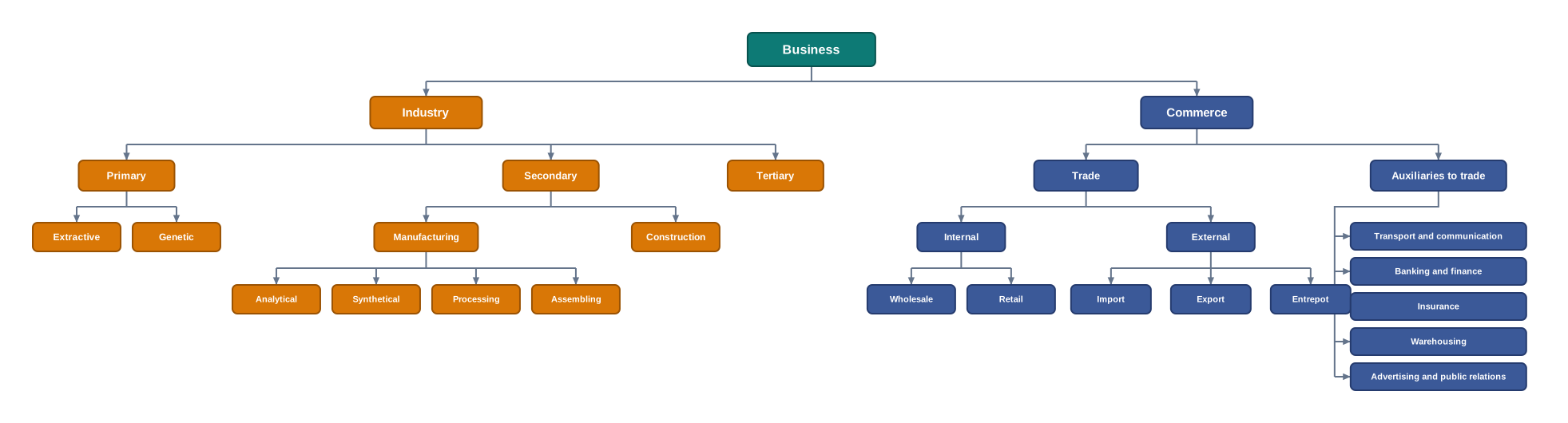
Fig. 1.13 – Structure of business activities.
1.9 Key Terms
- Business An economic activity involving the production and sale of goods and services, undertaken with the motive of earning profit by satisfying human needs in society.
- Hundi A written instrument of the indigenous banking system containing an unconditional promise or order to pay money, transferable to another person by valid negotiation.
- Balance of trade The relationship between the value of a country’s exports and the value of imports; it is favourable when exports exceed imports.
- Economic activities Activities undertaken to earn a livelihood, and therefore carrying a money income.
- Non-economic activities Activities performed out of love, sympathy, sentiment or similar motives, for which no income is expected.
- Profession An occupation requiring specialised knowledge and training, membership of a professional body and adherence to a code of conduct, earning a fee.
- Employment Work done for an employer under a contract of service in return for a salary or wages.
- Profit The excess of revenue over cost, being the surplus left with a business after meeting all expenses incurred in earning that revenue.
- Industry Economic activities concerned with the conversion of resources into useful goods, including the production and processing of goods and the breeding and raising of animals.
- Commerce All activities necessary for facilitating the exchange of goods and services, consisting of trade and the auxiliaries to trade.
- Trade The sale, transfer or exchange of goods, which makes goods produced available to consumers or users.
- Auxiliaries to trade Services such as transport and communication, banking and finance, insurance, warehousing and advertising, which assist trade and industry by removing hindrances in exchange.
- Objective The end that a business sets out to achieve and against which its performance is measured.
- Market standing The position and reputation of a business enterprise in the market in relation to its competitors.
- Innovation The introduction of new ideas or new methods in the way something is done or made, whether in the product or service or in the activities that supply it.
- Productivity A measure of efficiency ascertained by comparing the value of output with the value of inputs used.
- Social responsibility The obligation of a business firm to contribute resources towards solving social problems and to work in a socially desirable manner.
- Business risk The possibility of inadequate profits or even losses in a business, arising out of uncertainties or unexpected events.
- Speculative risk A risk that carries the possibility of gain as well as of loss, arising from changes in market conditions.
- Pure risk A risk that carries only the possibility of loss or of no loss, such as fire, theft or strike.
- Entrepreneurship The systematic, purposeful and creative activity of identifying a need, mobilising resources and organising production to deliver value to customers, returns to investors and profit to oneself, while bearing the associated risks.
- Entrepreneur The person who sets up a business enterprise, mobilises the resources for it and bears the risks and uncertainties involved.
- Business enterprise The business unit that results from the process of entrepreneurship.
1.10 NCERT Questions
Short Answer Questions
- Why is business considered an economic activity?
- How does business contribute to the economic development of a country?
- State the different types of economic activities.
- State the meaning of business.
- How would you classify business activities?
- What are the various types of industries?
- Explain any two business activities which are auxiliaries to trade.
- What is the role of profit in business?
- What is meant by business risk?
- State the causes of risks involved in business.
Long Answer Questions
- Discuss the development of the indigenous banking system in the Indian subcontinent.
- Define business. Describe its important characteristics.
- Compare business with profession and employment.
- Define industry. Explain the various types of industries, giving examples.
- Describe the activities relating to commerce.
- Explain any five objectives of business.
- Explain the concept of business risk and its causes.
- What factors are to be considered while starting a business? Explain.
1.11 Check Your Concepts
- Why is a single transaction of sale not treated as business, even when it earns a profit?
- Distinguish between economic and non-economic activities on the basis of motive and return.
- Why does a business need multiple objectives rather than the single objective of earning profit?
- What happens to an enterprise that neglects its customers, employees and the community in order to earn an immediate profit?
- Distinguish between speculative risk and pure risk, giving one example of each.
- Why can business risk be minimised but never eliminated?
- Why is mining of iron ore a primary industry while the manufacture of steel is a secondary industry?
- Identify the type of manufacturing industry in each case and give a reason: (a) a cement plant, (b) an oil refinery, (c) a car assembly unit, (d) a paper mill.
- Why are tertiary industries treated as a part of commerce?
- Name the hindrance removed by each of the following: transport, warehousing, insurance, banking, advertising.
- Why would large-scale production be impossible in the absence of trade?
- Identify the term: the surplus left with a business after all costs incurred in earning its revenue have been met.
- Identify the term: the position of a business enterprise in the market in relation to its competitors.
- Arrange the following in the order in which an entrepreneur would decide them, and justify the order: financing the proposition, selection of type of business, launching the enterprise, location of the enterprise, size of business.
- Match the following:
| Column A | Column B |
|---|---|
| a. seed and nursery company | i. extractive industry |
| b. dam construction | ii. genetic industry |
| c. fishing | iii. construction industry |
| d. insurance company | iv. tertiary industry |
- Assertion (A): Profit is regarded as the reward for risk taking. Reason (R): Business risk arises out of uncertainty about future events. Choose the correct option.
- Both A and R are true, and R is the correct explanation of A.
- Both A and R are true, but R is not the correct explanation of A.
- A is true but R is false.
- A is false but R is true.
- Assertion (A): All trade is commerce, but all commerce is not trade. Reason (R): Commerce includes trade as well as the auxiliaries that assist trade. Choose the correct option.
- Both A and R are true, and R is the correct explanation of A.
- Both A and R are true, but R is not the correct explanation of A.
- A is true but R is false.
- A is false but R is true.
- Why does a business dealing in fashionable items carry a higher degree of risk than one dealing in staple foodgrains?
- Distinguish between profit and profitability, and state which of the two is a better test of performance.
1.12 Case-Based Questions
- Harsimran works as an accounts officer in a bank and receives a fixed salary every month. Her sister Jasleen is a practising architect who charges a fee for each project and is registered with a professional body. Their father runs a hardware store, where earnings vary from month to month and a part of the stock sometimes remains unsold.
- Identify the category of economic activity in each of the three cases.
- State two bases on which the three activities differ.
- Sunrise Enterprises purchases groundnuts from farmers, extracts oil from them at its own mill, stores the oil in a rented godown, sends consignments to distant towns by road, and takes an insurance policy covering loss of goods in transit. It also publishes advertisements in local newspapers.
- Name the type of industry in which Sunrise Enterprises is engaged and justify your answer.
- Identify any three auxiliaries to trade being used by the firm.
- State the hindrance removed by each auxiliary you have identified.
- Meghna set up a unit making paper cups after studying the demand in nearby restaurants. She chose a site close to a paper market, arranged funds partly from her savings and partly from a bank loan, purchased machines, and hired six trained workers. Before beginning production she also examined the tax liability applicable to her unit.
- Identify any four factors of starting a business that Meghna has considered.
- Explain why the decision on location had to be taken before the purchase of machines.
- Dev Textiles Ltd. bought a large stock of a printed fabric expecting it to remain in fashion for the season. The fashion changed early and the fabric had to be sold below cost. In the same year, a short circuit damaged a part of the company’s godown, and the loss was recovered from the insurance company.
- Identify the type of risk involved in each of the two events.
- State the cause of business risk in the second event.
- Explain why only one of the two losses could be recovered from the insurer.