Chapter 6: Social Responsibilities of Business and Business Ethics
Every business enterprise operates inside a society. It uses land, water, power, raw materials and human skills that belong to that society, and it sells its goods and services to the same people. Society allows a business to function and to earn profit, and in return it expects the business to act in ways that do not damage the interests of others. A factory that discharges untreated waste into a river may reduce its own costs, but the cost is transferred to farmers, fishermen and households downstream. This simple transfer of cost from a firm to the people around it is the practical problem this chapter deals with.
Business Studies examines this problem under two connected ideas. Social responsibility is the obligation of a business to take decisions and perform actions that are desirable in terms of the objectives and values of society. Business ethics is the set of moral standards that should guide how a business behaves while pursuing its objectives.
This chapter explains the concept and need for social responsibility, its kinds, the responsibility of business towards different interest groups, the relationship between business and environmental protection, and the concept and elements of business ethics.
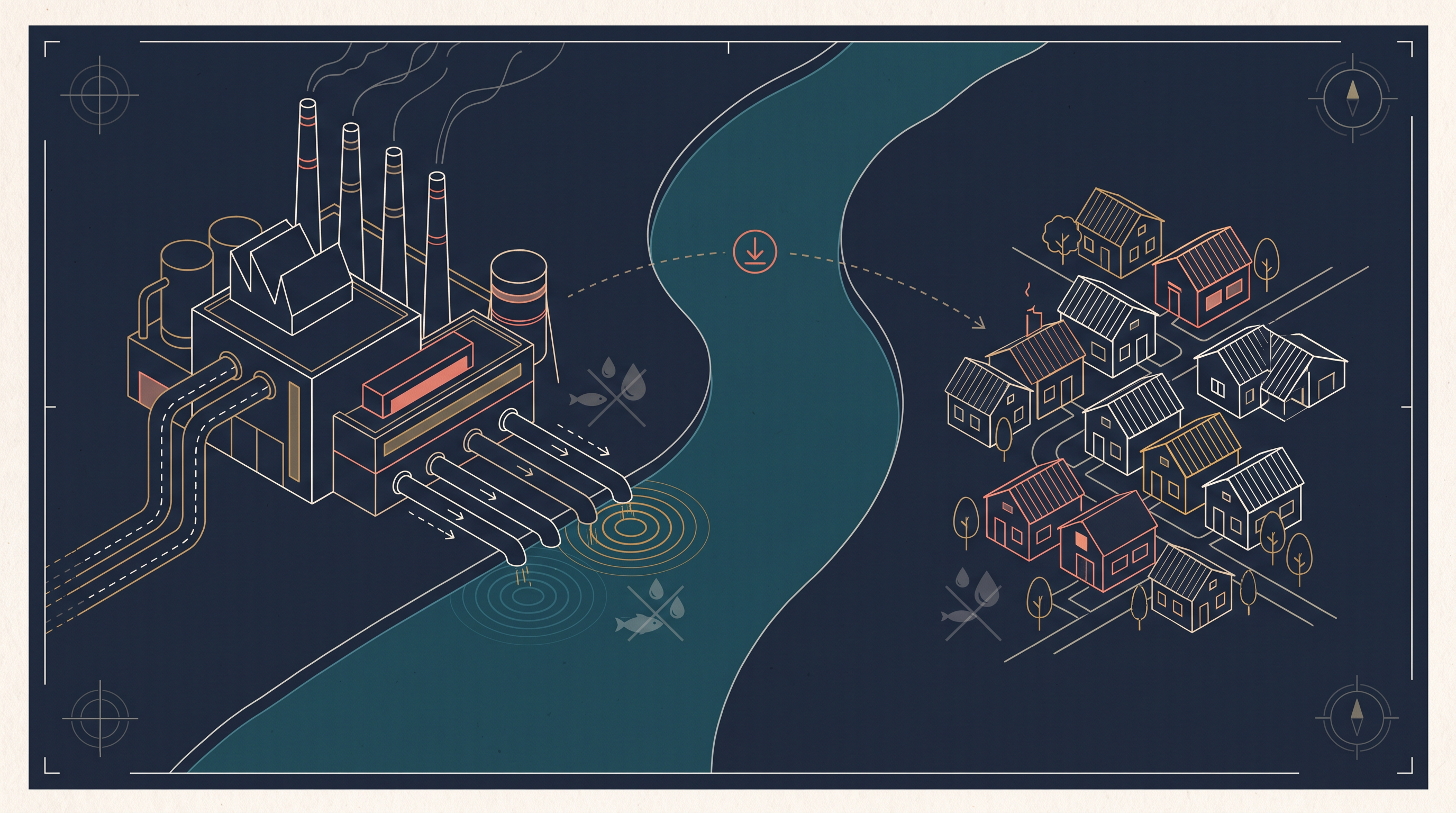
Fig. 6.0 – An industrial unit beside a residential locality.
6.1 Introduction
A business enterprise should carry on its activities and earn money in ways that meet the expectations of the society in which it works. Every individual living in society has certain obligations towards it. A person has to respect social values and accepted norms of behaviour, and a business enterprise is expected to do the same.
Society permits a business enterprise to carry on industrial or commercial activity and thereby earn profit. This permission is not unconditional. It is obligatory on the part of the enterprise not to do anything that is undesirable from society’s point of view.
6.4 Kinds of Social Responsibility
The social responsibility of business can broadly be divided into four categories. They differ from one another mainly in the degree of choice the enterprise has: the first is unavoidable, the second is enforced by law, and the last two rest increasingly on the free will of the enterprise. The four kinds are shown in Fig. 6.1.
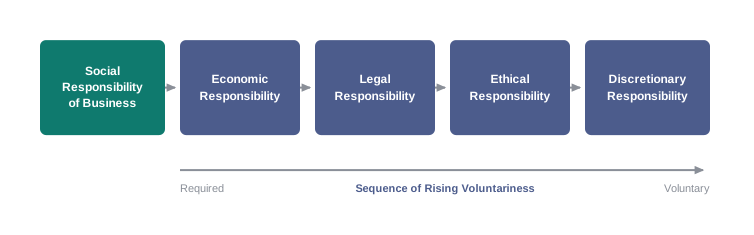
Fig. 6.1 – Kinds of social responsibility.
Economic responsibility — a business enterprise is basically an economic entity and, therefore, its primary social responsibility is economic, that is, to produce goods and services that society wants and to sell them at a profit. There is little discretion in performing this responsibility, because an enterprise that fails to do so cannot survive at all.
Legal responsibility — every business has a responsibility to operate within the laws of the land. Since these laws are meant for the good of society, a law-abiding enterprise is a socially responsible enterprise as well. Payment of taxes, observance of factory and labour laws, and compliance with quality and safety standards fall under this head.
Ethical responsibility — this includes the behaviour of the firm that is expected by society but is not codified in law. Respecting the religious sentiments and dignity of people while advertising for a product is an example. There is an element of voluntary action in performing this responsibility, since no statute compels it.
Discretionary responsibility — this refers to a purely voluntary obligation that an enterprise assumes, for instance, providing charitable contributions to educational institutions or helping the affected people during floods or earthquakes. It is also the responsibility of the company management to safeguard the capital investment by avoiding speculative activity and undertaking only healthy business ventures which give good returns on investment.
The four kinds together form a sequence of rising voluntariness. An enterprise must first be economically sound, then lawful, then fair beyond the law, and finally generous. A firm that neglects the first two and spends heavily on charity has not discharged its social responsibility properly.
6.5 Social Responsibility Towards Different Interest Groups
Once the social objective of business is recognised, it becomes important to know to whom and for what the business and its management are responsible. A business unit has to decide the areas in which it should carry out its social goals, because its resources are limited and its actions affect several groups at once.
The four main interest groups are shown in Fig. 6.2, and the specific responsibilities of an enterprise towards each of them are outlined below.
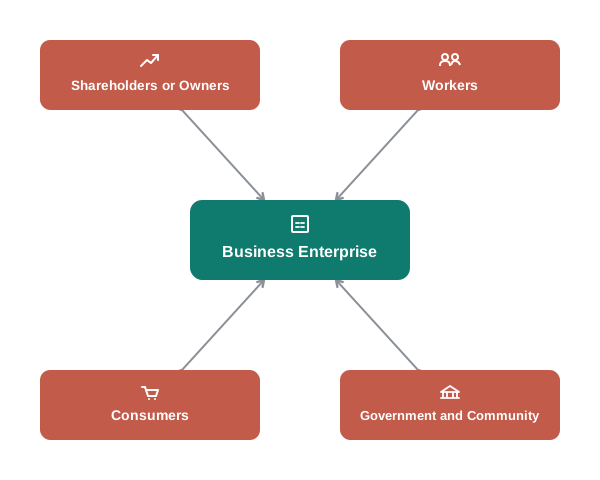
Fig. 6.2 – Interest groups of a business enterprise.
Responsibility towards the shareholders or owners — a business enterprise has the responsibility to provide a fair return to the shareholders or owners on their capital investment and to ensure the safety of such investment. A corporate enterprise organised as a company must also provide the shareholders with regular, accurate and full information about its working as well as its schemes of future growth. This is necessary because shareholders supply the capital but do not manage the company themselves, and can protect their interest only through the information given to them.
Responsibility towards the workers — the management of an enterprise is also responsible for providing opportunities to the workers for meaningful work. It should try to create the right kind of working conditions so that it can win the cooperation of workers. The enterprise must respect the democratic right of the workers to form unions. The worker must also be ensured a fair wage and a fair deal from the management.
Responsibility towards the consumers — supply of the right quality and quantity of goods and services to consumers at reasonable prices constitutes the responsibility of an enterprise towards its customers. The enterprise must take proper precautions against adulteration, poor quality, lack of desired service and courtesy to customers, and misleading and dishonest advertising. Consumers must also have the right to information about the product, the company and other matters having a bearing on their purchasing decision.
Responsibility towards the government and community — an enterprise must respect the laws of the country and pay taxes regularly and honestly. It must behave as a good citizen and act according to the well-accepted values of society. It must protect the natural environment and should avoid discharge of effluents, smoky chimneys, ugly buildings and dirty working conditions. It must also develop a proper image in society through continuous interaction with various groups of people.
These responsibilities are connected rather than separate. Goods of poor quality lose customers, which reduces profits, which in turn reduces the return available to shareholders. An enterprise that ignores one interest group usually ends up harming the others as well.
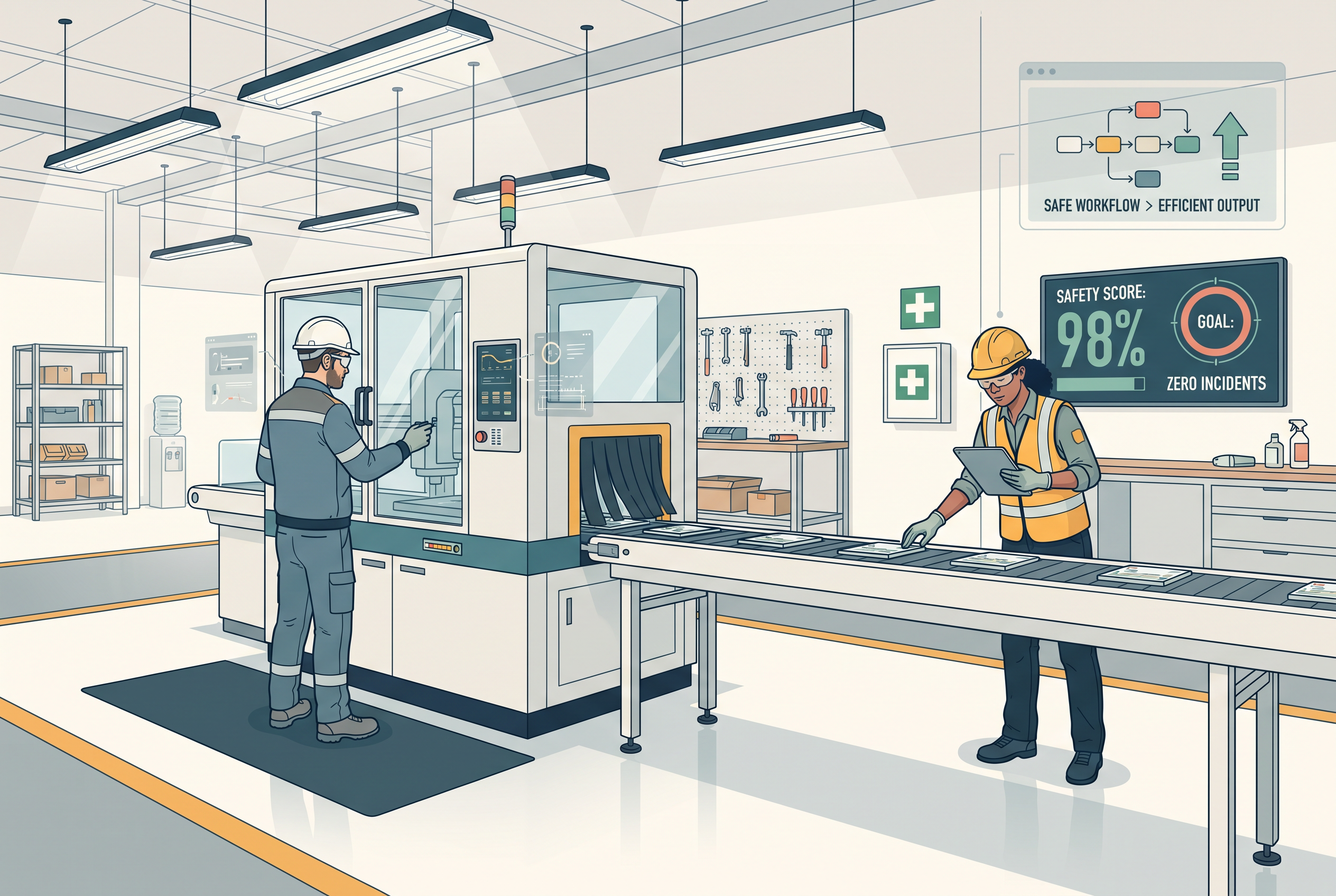
Fig. 6.3 – Workers on a well-equipped factory shop floor.
6.6 Business and Environmental Protection
Protection of the environment is a serious issue that confronts business managers and decision makers. The environment is defined as the totality of man’s surroundings, both natural and man-made.
These surroundings are also in the nature of resources that are useful for human life. They may be natural resources such as land, water, air, fauna and flora and raw materials, or man-made resources such as cultural heritage, socio-economic institutions and the people.
It is widely recognised that the quality of the environment is fast deteriorating, particularly due to industrial activity. This is a common sight around major cities like Kanpur, Jaipur, Delhi, Panipat and Kolkata, and others in various states of our country, where emissions are seriously affecting the health of the people.
Pollution, the injection of harmful substances into the environment, is in fact largely the result of industrial production. Since some waste is inevitable in the use of materials and energy, manufacturers face a great challenge in minimising the adverse impact of this waste by using proper technologies. Protection of the environment is good for all of us.
Effects Of Pollution
Pollution changes the physical, chemical and biological characteristics of air, land and water. It harms human life and the life of other species. It also degrades living conditions while wasting or depleting raw material resources. The country’s cultural heritage is also affected, and it is becoming increasingly difficult to protect all historical monuments.
Pollution exists because the environment can absorb only a limited amount of pollutants and wastes. Some hazardous wastes or toxic by-products and chemicals are termed as hazardous pollutants, because they have toxic characteristics that the environment cannot assimilate.
Pollution thus causes risks to environmental quality and human health, and damage to natural and man-made resources. Protection of the environment is directly related to the control of pollution.
Environmental Problems Identified By The United Nations
The United Nations has identified eight problems that cause damage to the natural environment. These are ozone depletion, global warming, solid and hazardous wastes, water pollution, freshwater quality and quantity, deforestation, land degradation, and danger to biological diversity.
6.6.1 Causes of Pollution
It must be recognised that all sectors of our society generate waste. Industry, government, agriculture, mining, energy, transportation, construction and consumers all contribute to it.
Wastes contain pollutants, which are the materials or chemicals that have been discarded during the process of production or consumption. Pollution is caused by these pollutants being released into the environment beyond its assimilation capacity.
Among the various sources of pollution, industry is a major generator of waste in terms of both its quantity and its toxicity. Business activities such as production, distribution, transport, storage and consumption of goods and services are known to be the most critical sources of environmental pollution problems. Many business enterprises have been responsible for causing air, water, land and noise pollution. These four types are shown in Fig. 6.4 and discussed below.
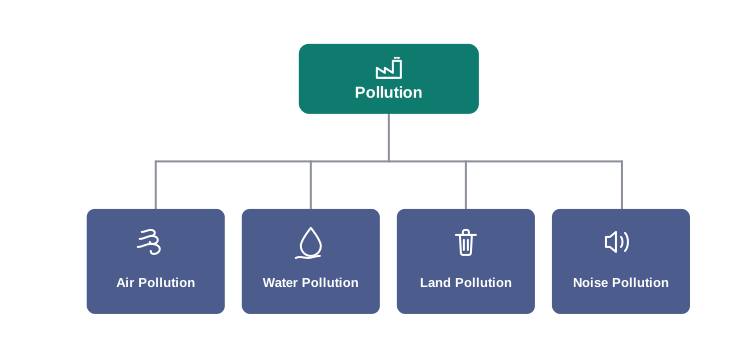
Fig. 6.4 – Types of pollution caused by business activity.
Air pollution — air pollution is the result of a combination of factors which lower the quality of air. It is mainly due to carbon monoxide emitted by automobiles, which contributes heavily to air pollution. Similarly, smoke and other chemicals from manufacturing plants pollute the air. The resultant air pollution has created a hole in the ozone layer, leading to dangerous warming of the earth.
Water pollution — water becomes polluted primarily from chemical and waste dumping. For years, business enterprises have been dumping waste into rivers, streams and lakes with little regard for the consequences. Water pollution has led to the death of several animals and has posed a serious threat to human life.
Land pollution — dumping of toxic wastes on land causes land pollution. This damages the quality of land, making it unfit for agriculture or plantation. Restoring the quality of land that has already been damaged is a big problem.
Noise pollution — noise caused by the running of factories and vehicles is not merely a source of annoyance but is also a serious health hazard. Noise pollution can be responsible for many diseases like loss of hearing, malfunctioning of the heart and mental disorder.
6.6.2 Need for Pollution Control
Pollution prevention or control is needed to preserve precious environmental resources and to improve environmental quality, so that the preserved resources can be utilised for the benefit of mankind and for the improvement of the health and well-being of the people.
The amount of damage to a particular medium — air, water or land — varies according to the type of pollutant, the amount of pollutant disposed of, and the distance from the source of pollution. But all pollutants alter the quality of the environment and render it, to some degree, unfit to preserve normal life.
People are now raising their voice loudly against pollution-generating activities, and business enterprises cannot remain unaffected by environmental destruction. They need to take suitable measures for pollution control, not merely to avoid criticism against them but also to enjoy other benefits of such measures. Some of the important reasons which make a case for pollution control are as follows.
Reduction of health hazards — there is increasing evidence that many diseases like cancer, heart attacks and lung complications are caused by pollutants in the environment. Pollution control measures can not only check the seriousness of such diseases but can also be supportive of a healthy life on earth.
Reduced risk of liability — it is possible that an enterprise is held liable to pay compensation to people affected by the toxicity of the gaseous, liquid and solid wastes it has released into the environment. It is therefore sound business policy to install pollution control devices on its premises to reduce the risk of liability.
Cost savings — an effective pollution control programme is also needed to save the costs of operating a business. Cost savings are particularly noticeable when improper production technology results in greater wastes, which leads to a higher cost of waste disposal and a higher cost of cleaning the plants.
Improved public image — as society becomes increasingly conscious of environmental quality, a firm’s policies and practices for controlling wastes will increasingly influence people’s attitude towards its working. A firm that promotes the cause of the environment will be able to enjoy a good reputation and will be perceived as a socially responsible enterprise.
Other social benefits — pollution control results in many other benefits like clearer visibility, cleaner buildings, better quality of life, and the availability of natural products in a purer form.
6.6.3 Role of Business in Environmental Protection
Since the quality of the environment is important for all of us, we have a collective responsibility to protect it from being spoiled. Whether it is government, business enterprises, consumers, workers or other members of society, each one can do something to stop polluting the environment. Government can enact laws to ban hazardous products, while consumers, workers and other members of society can avoid using certain products and doing things that are not environment friendly.
Business enterprises should, however, take the lead in providing their own solutions to environmental problems. It is the social responsibility of every business to take steps not only to check all sorts of pollution but also to protect environmental resources.
There is a practical reason why business must lead. Business enterprises are leading creators of wealth, employment, trade and technology, and they command huge financial, physical and human resources. They also have the know-how to solve environmental pollution problems with a preventive approach, by controlling pollutants at the source. In most cases, a modification or change in the process of production, redesign of equipment, substituting poor quality materials with better ones, or other innovative approaches could greatly reduce or even eliminate pollution entirely.
Some of the specific steps which can be taken by business enterprises for environmental protection are stated below.
A definite commitment by the top management of the enterprise to create, maintain and develop a work culture for environmental protection and pollution prevention.
Ensuring that the commitment to environmental protection is shared throughout the enterprise by all divisions and employees.
Developing clear-cut policies and programmes for purchasing good quality raw materials, employing superior technology, using scientific techniques of disposal and treatment of wastes, and developing employee skills for the purpose of pollution control.
Complying with the laws and regulations enacted by the Government for the prevention of pollution.
Participation in government programmes relating to the management of hazardous substances, clearing up of polluted rivers, plantation of trees, and checking deforestation.
Periodical assessment of pollution control programmes in terms of costs and benefits, so as to increase the progress made with respect to environmental protection.
Arranging educational workshops and training materials to share technical information and experience with suppliers, dealers and customers, in order to get them actively involved in pollution control programmes.
Environmental Protection In India
The Government of India has taken several steps for the protection of the environment, and business enterprises are expected to work within this framework.
Laws — the directive principles of state policy in the Constitution of India lay emphasis on protection of the environment. Some of the laws enacted are the Wildlife Protection Act, 1972; the Water (Prevention and Control of Pollution) Act, 1974, amended in 1974 and 1988; the Air (Prevention and Control of Pollution) Act, 1974, amended in 1974 and 1988; the Environment (Protection) Act, 1986; the Forest (Conservation) Act, 1980, amended in 1988; and the Hazardous Wastes Act, 1989.
Regulations — administrative orders and policy guidelines have been laid down by the government. A separate Department of Environment, Government of India, was created in 1980.
Regulatory bodies — certain regulatory bodies or quasi-judicial authorities have been established, such as the National Afforestation and Eco-development Board and the National Wastelands Development Board.
Closure and shifting of units — manufacturing units have been closed in cities. The High Court of Delhi ordered the shifting of manufacturing units out of Delhi and the closing of such units. Similarly, courts have ordered the removal of foundries from Agra city and the shifting of manufacturing factories from Kanpur.
Awareness programmes — various programmes on environment education, and seminars on creating awareness about resources, are being organised regularly.
Action plan — the Government has also laid down the Environment Action Plan.
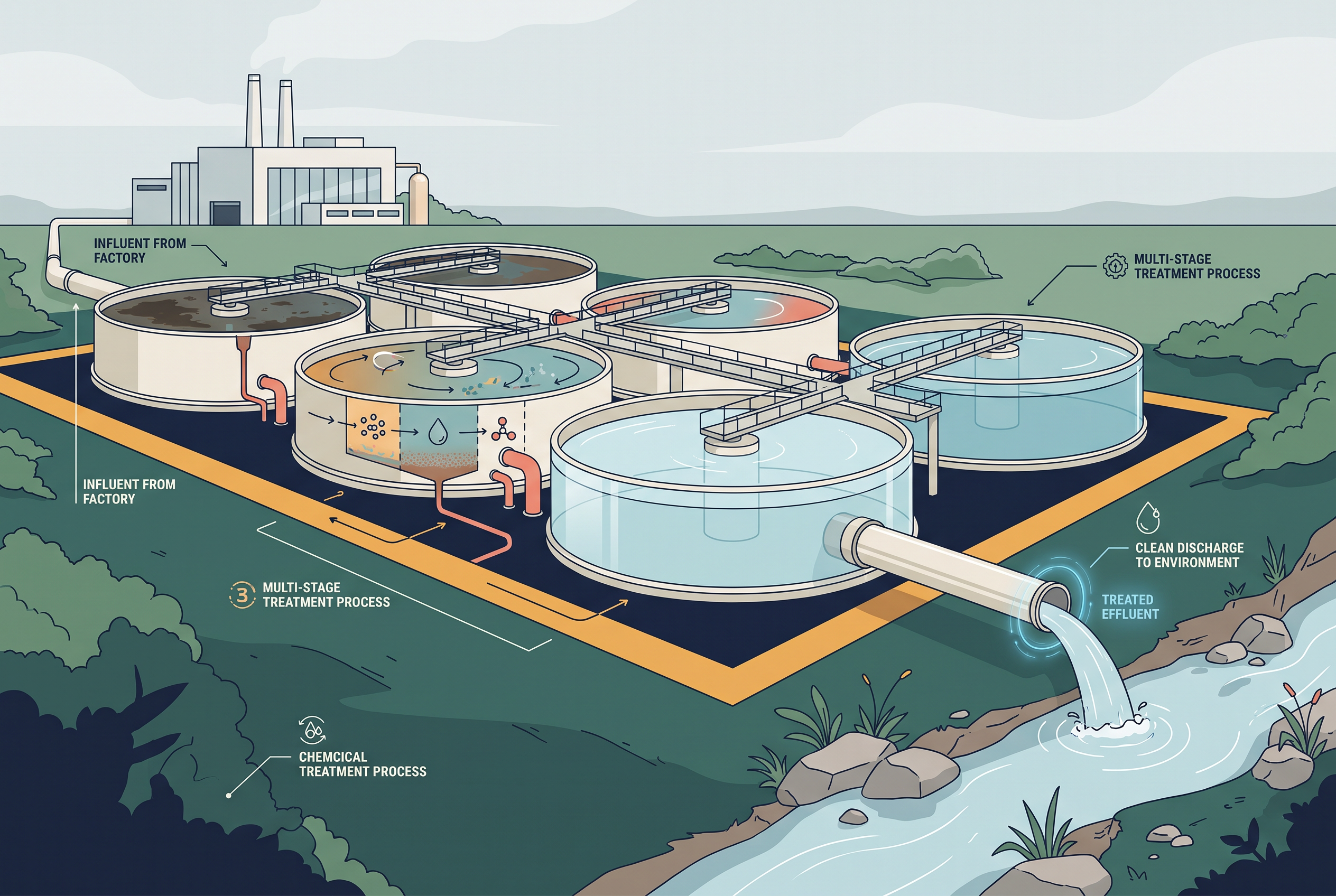
Fig. 6.5 – An industrial effluent treatment plant.
6.7 Business Ethics
From the social point of view, business exists to supply goods and services to the people. From the individual point of view, the primary objective of a business firm is to earn profit. One may expect that the individual goals of the firm would not be in conflict with the objectives of society.
However, business enterprises are run by human beings whose decisions and actions may not always be in accordance with the expectations of society. An enterprise may be good in terms of economic performance, such as revenue, costs and profits, but poor in terms of social performance, such as supplying products of reasonable quality at reasonable prices.
This raises the question of what is right or wrong from society’s point of view. The answer to this question is important because business enterprises are products of society and are influenced by it. They have to interpret and adjust to the preferences or values of society. The subject matter of ethics is concerned with establishing linkages between individual good and social good.
6.7.1 Concept of Business Ethics
The word ethics has its origin in the Greek word ‘ethics’, meaning character, and refers to the norms, ideals or morals prevailing in a group or society. Ethics is concerned with what is right and what is wrong in human behaviour, judged on the basis of a standard form of conduct or behaviour of individuals as approved by society in a particular field of activity.
Ethics may be viewed as the entire body of moral values that society attaches to the actions of human beings. Ethics can also refer to codes or other systems for controlling means so that they serve human ends.
Ethical standards are often enacted into laws. But ethical behaviour is just and fair conduct which goes beyond observing laws and government regulations. It means adhering to moral principles, being guided by particular values, and behaving in the way people ought to act. The set of principles called ethics may be written or unwritten codes or principles governing a professional or human activity.
What Business Ethics Means
Business ethics concerns itself with the relationship between business objectives, practices and techniques, and the good of society. Business ethics refers to the socially determined moral principles which should govern business activities.
A few examples of business ethics are charging fair prices from customers, using fair weights for the measurement of commodities, giving fair treatment to workers, and earning reasonable profits. A businessperson behaves ethically when her or his actions are upright and serve the interests of society.
Ethical conduct, of course, also applies to those who are not in business. The essential difference is perhaps that businesspersons, by virtue of their widespread control over society’s resources, have a much greater effect on what happens in a society than persons in other areas of activity do. Business people and politicians are expected to maintain higher standards over and above other people. This is perhaps the price they pay for being allowed to make decisions on behalf of society.
Why Ethics Matters To Business
There is a growing realisation all over the world that ethics is vitally important for every business and for the progress of any society. Ethical business is good business.
Ethical business behaviour improves public image, earns people’s confidence and trust, and leads to greater success. Ethics and profits go together in the long run. Ethics alone, and not government or laws, can make a society great.
An ethically responsible enterprise develops a culture of caring for people and the environment, and commands a high degree of integrity in dealing with others. Ethical activity is indeed valuable in itself, for its own sake, because it enhances the quality of our lives and that of the work we do.
Ground Rules Of Ethics
The following are some of the universal virtues which every human being should imbibe, develop and practise in order to be ethical in life.
Be trustworthy.
Have respect for others.
Own responsibility.
Be fair in dealings.
Be caring towards the well-being of others.
Prove to be a good citizen, through civil virtues and duties.
6.7.2 Elements of Business Ethics
Since ethical business behaviour is good for both the business enterprise and society, it makes sense to discuss how enterprises can foster ethics in their day-to-day working. Good intentions at the top are not enough; ethics has to be built into the routine working of the organisation. Some of the basic elements of business ethics while running a business enterprise are as follows.
Top management commitment — top management has a crucial role in guiding the entire organisation towards ethically upright behaviour. To achieve results, the Chief Executive Officer and other higher level managers need to be openly and strongly committed to ethical conduct. They must give continuous leadership for developing and upholding the values of the organisation.
Publication of a ‘code’ — enterprises with effective ethics programmes do define the principles of conduct for the whole organisation in the form of written documents, which is referred to as the code of ethics. This generally covers areas such as fundamental honesty and adherence to laws; product safety and quality; health and safety in the workplace; conflicts of interest; employment practices; fairness in selling and marketing practices; and financial reporting.
Establishment of compliance mechanisms — in order to ensure that actual decisions and actions comply with the firm’s ethical standards, suitable mechanisms should be established. Some examples of such mechanisms are paying attention to values and ethics in recruiting and hiring; emphasising corporate ethics in training; auditing performance regularly to analyse the degree of compliance; and instituting communication systems to help employees report incidents of unethical behaviour.
Involving employees at all levels — it is the employees at different levels who implement ethics policies to make ethical business a reality. Their involvement in ethics programmes therefore becomes a must. For example, small groups of employees can be formed to discuss the important ethics policies of the firm and to examine the attitudes of employees towards these policies.
Measuring results — although it is difficult to accurately measure the end results of ethics programmes, firms can certainly audit to monitor compliance with ethical standards. The top management team and other employees should then discuss the results to decide the further course of action.
These five elements work in sequence. Commitment at the top produces a written code, the code needs mechanisms to enforce it, the mechanisms work only if employees participate, and measurement tells the enterprise whether the whole effort is achieving anything.
6.8 Summary
Concept of social responsibility — social responsibility of business refers to its obligation to take those decisions and perform those actions which are desirable in terms of the objectives and values of our society.
Need for social responsibility — the need for social responsibility of business arises both because of the firm’s own interest and because of the interest of society. There are, however, arguments both for and against social responsibility.
Arguments for social responsibility — the major arguments are justification for existence and growth; long-term interest and image of the firm; avoidance of government regulation; maintenance of an orderly society; availability of resources with business; converting problems into opportunities; better environment for doing business; and holding business responsible for social problems.
Arguments against social responsibility — the major arguments against are violation of the profit maximisation objective; burden on consumers; lack of social skills; and lack of broad public support.
Reality of social responsibility — despite the differing arguments, business enterprises are concerned with social responsibility because of the influence of certain external forces. These forces are the threat of public regulation; pressure of the labour movement; impact of consumer consciousness; development of social standards for business; development of business education; the relationship between social interest and business interest; and the development of a professional, managerial class.
Kinds of social responsibility — the social responsibility of business is of four kinds: economic, legal, ethical and discretionary.
Social responsibility towards different interest groups — business enterprises have a responsibility towards shareholders or owners, workers, consumers, and government and community. Giving a fair return on and safety of investment to shareholders, providing opportunities to workers for meaningful work, supplying the right quality and quantity of goods and services to consumers, paying dues to the government, and protecting the natural environment are some of the social responsibilities of business.
Business and environmental protection — protection of the environment is a serious issue that confronts managers and decision makers. The environment is defined as the totality of man’s surroundings, both natural and man-made. Pollution, the injection of harmful substances into the environment, is largely the result of industrial production, and it has harmful effects both for human life and for the life of other species.
Causes of pollution — among the various sources of pollution, industry is a major generator of waste in terms of both its quantity and its toxicity. Many business enterprises have been responsible for causing air, water, land and noise pollution.
Need for pollution control — the important reasons which make a case for pollution control are reduction of health hazards; reduced risk of liability; cost savings; improved public image; and other social benefits.
Role of business in environmental protection — each member of society can do something to protect the environment, but business enterprises should take the lead in providing their own solutions to environmental problems. Some of the steps they can take are top management commitment, clear-cut policies and programmes, abiding by government regulations, participation in government programmes, periodical assessment of pollution control programmes, and proper education and training of the people concerned.
Concept of business ethics — ethics is concerned with what is right and what is wrong in human behaviour, judged on the basis of socially determined standards of behaviour. Business ethics concerns itself with the relationship between business objectives, practices and techniques and the good of society. Ethics is important for every business.
Elements of business ethics — an enterprise can foster ethics at the workplace by following the basic elements of business ethics, namely top management commitment, publication of a code, establishment of compliance mechanisms, involving employees at all levels, and measuring results.
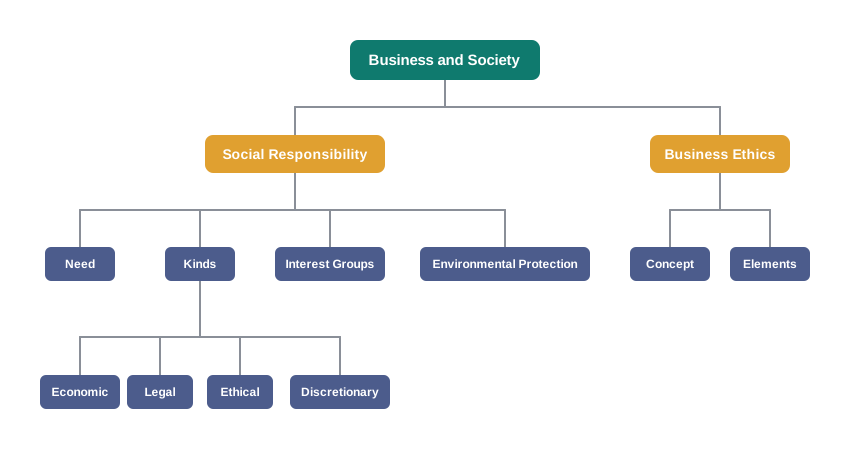
Fig. 6.6 – Structure of the chapter.
6.9 Key Terms
- Social responsibility The obligation of a business to take those decisions and perform those actions which are desirable in terms of the objectives and values of our society.
- Legal responsibility The obligation of a business to operate within the laws of the land.
- Corporate social responsibility The responsibility of an enterprise for its impact on society, discharged through commitment to economic development while improving the quality of life of the workforce, the community and society at large.
- Corporate sustainability The role companies play in meeting the agenda of sustainable development through a balanced approach to economic progress, social progress and environmental protection.
- Economic responsibility The primary responsibility of a business enterprise to produce goods and services that society wants and to sell them at a profit.
- Ethical responsibility Behaviour of a firm that is expected by society but is not codified in law.
- Discretionary responsibility A purely voluntary obligation that an enterprise assumes, such as charitable contributions or relief during natural calamities.
- Interest groups The groups whose interests are affected by the decisions and actions of a business enterprise, namely shareholders, workers, consumers, and government and community.
- Environment The totality of man’s surroundings, both natural and man-made, which are in the nature of resources useful for human life.
- Environmental protection The steps taken by government, business and society to prevent damage to the environment and to control pollution.
- Pollution The injection of harmful substances into the environment, which changes the physical, chemical and biological characteristics of air, land and water.
- Air pollution Lowering of the quality of air, mainly by carbon monoxide from automobiles and smoke and chemicals from manufacturing plants.
- Water pollution Pollution of water, primarily from the dumping of chemicals and waste into rivers, streams and lakes.
- Land pollution Damage to the quality of land caused by the dumping of toxic wastes, making it unfit for agriculture or plantation.
- Noise pollution Harmful noise caused by the running of factories and vehicles, which is both an annoyance and a serious health hazard.
- Ethics The body of moral values concerned with what is right and what is wrong in human behaviour, judged by a standard of conduct approved by society.
- Business ethics The socially determined moral principles which should govern business activities.
- Code of ethics A written document defining the principles of conduct for the whole organisation.
6.10 NCERT Questions
Short Answer Questions
- What do you understand by social responsibility of business? How is it different from legal responsibility?
- What is environment? What is environmental pollution?
- What is business ethics? Mention the basic elements of business ethics.
- Briefly explain (a) air pollution, (b) water pollution, and (c) land pollution.
- What are the major areas of social responsibility of business?
- State the meaning of Corporate Social Responsibility as per the Companies Act, 2013.
Long Answer Questions
- Build up arguments for and against social responsibilities.
- Discuss the forces which are responsible for the increasing concern of business enterprises towards social responsibility.
- ‘Business is essentially a social institution and not merely a profit making activity.’ Explain.
- Why do enterprises need to adopt pollution control measures?
- What steps can an enterprise take to protect the environment from the dangers of pollution?
- Explain the various elements of business ethics.
- Discuss the guidelines enumerated by the Companies Act, 2013 for Corporate Social Responsibility.
6.11 Check Your Concepts
- Why is social responsibility described as broader than legal responsibility, even though it includes legal responsibility?
- A firm complies with every law that applies to it but refuses to do anything more for the community around its plant. Can it be called a socially responsible enterprise? Give reasons.
- Distinguish between ethical responsibility and discretionary responsibility, giving one example of each.
- Why is the argument ‘availability of resources with business’ considered a strong argument in favour of social responsibility?
- What happens to an enterprise in the long run if a large number of workers, consumers and shareholders come to believe that it is not serving their interest?
- Explain why the Companies Act, 2013 does not allow spending meant exclusively for employees and their families to be counted as CSR.
- Arrange the following four kinds of social responsibility in order of increasing voluntariness: ethical responsibility, economic responsibility, discretionary responsibility, legal responsibility.
- Identify the type of pollution in each case: (a) a factory generator running through the night in a residential area, (b) dumping of toxic waste on vacant ground, (c) discharge of untreated dye into a stream.
- Match the interest group in Column A with the responsibility in Column B:
| Column A | Column B |
|---|---|
| a. shareholders | i. supply of goods of the right quality and quantity at reasonable prices |
| b. workers | ii. honest and regular payment of taxes |
| c. consumers | iii. fair return on and safety of capital investment |
| d. government and community | iv. fair wages and the right to form unions |
- Identify the element of business ethics being described: an enterprise audits the performance of its departments regularly to analyse the degree of compliance with its ethical standards.
- Assertion (A): Pollution control is in the financial interest of a business enterprise. Reason (R): Improper production technology generates greater waste, which raises the cost of waste disposal and of cleaning the plants.
- Both A and R are true, and R is the correct explanation of A.
- Both A and R are true, but R is not the correct explanation of A.
- A is true, but R is false.
- A is false, but R is true.
- Assertion (A): Business ethics requires nothing more than obeying the laws of the country. Reason (R): Ethical standards are often enacted into laws.
- Both A and R are true, and R is the correct explanation of A.
- Both A and R are true, but R is not the correct explanation of A.
- A is true, but R is false.
- A is false, but R is true.
- Why is top management commitment placed first among the elements of business ethics? What is likely to happen to the remaining elements without it?
- ‘The principle of caveat emptor has been substituted by the principle of customer is king.’ Explain how this change has increased the concern of business with social responsibility.
- State whether each statement is true or false, with a reason: (a) social responsibility can be fully enforced through law, (b) a firm with good economic performance is automatically good in social performance, (c) industry is a major generator of waste in terms of both quantity and toxicity.
6.12 Case-Based Questions
- Ojaswi Chemicals Ltd. produces industrial solvents. Its plant meets every standard fixed by law, and its accounts are audited without objection. The villages next to the plant, however, have no source of safe drinking water, and the company refuses a request to help build a water supply line, stating that this is the government’s work and not its own.
- Identify the kind of social responsibility the company is discharging and the kind it is refusing to discharge.
- State one argument in favour of social responsibility that supports the villagers’ request.
- Sudarsh Appliances Ltd. has been advertising a water purifier as removing all impurities, although its own laboratory reports show that it removes only some of them. Sales rise sharply for a year. A consumer organisation then tests the product, and the company faces widespread criticism and a fall in orders from its dealers.
- Name the interest group towards which the company has failed in its responsibility, and state two responsibilities it owes to that group.
- Explain, with reference to this situation, why the long-term interest of a firm lies in socially responsible behaviour.
- Kritan Steel Ltd. sets up a committee of board members, including one independent director, and decides to spend a fixed part of its average net profit of the previous three years on setting up skill training centres in nearby districts. The board also decides that spending on a holiday home for its own employees will be shown separately and not under this head.
- Name the statutory provision the company is complying with, and state the prescribed rate of spending.
- Give the reason why the spending on the holiday home is shown separately.
- Manthira Papers Ltd. finds that its production process releases a large quantity of untreated waste. The management redesigns part of the process, replaces poor quality raw material with better material, trains employees in waste handling, and reviews the results of the programme every six months.
- Identify any three steps taken by the enterprise for environmental protection.
- State two benefits, other than avoiding criticism, that the enterprise is likely to gain from these measures.
- Arunay Foods Ltd. has a written code of conduct and a strong statement of values signed by its Chief Executive Officer. However, employees at the plant level say they have never been consulted about the code and do not know whom to approach if they notice a violation.
- Identify the two elements of business ethics that are missing in the enterprise.
- Suggest one practical measure for each missing element.
Socially Undesirable Practices
Some practices increase the profit of an enterprise but have an adverse effect on society at large. Manufacture and sale of adulterated goods, making deceptive advertisements, not paying taxes which are due, polluting the environment and exploiting workers are examples of such practices.
These practices are undesirable because the gain of the enterprise is obtained at the cost of someone else — the buyer who is cheated, the government that loses revenue, or the worker who is underpaid. A short-term gain of this kind eventually damages the reputation of the enterprise and invites legal action.