Chapter 7: Formation of a Company
A trained engineer running a small workshop develops an improved fuel-saving part for car engines. To manufacture and market it on a large scale, she needs far more money than she can raise on her own, and the product is new enough to carry real commercial risk. Neither a sole proprietorship nor a partnership suits her requirement, because both limit the funds that can be collected and expose the owners’ personal assets to loss. She is advised to form a company.
A company can raise large amounts of capital from many investors, limits the liability of its members, and continues to exist independently of them. These advantages, however, come with a price: a company cannot simply be started. It is created by law, and it comes into existence only after a defined set of legal formalities has been completed with the Registrar of Companies.
This chapter explains those formalities. It covers the three stages in the formation of a company — promotion, incorporation and capital subscription — the steps and documents involved in each, and the significance of the certificate of incorporation and the certificate of commencement of business.

Fig. 7.0 – Registration formalities of a new company.
7.1 Introduction
Business today is carried on at a scale that a single owner or a small group of partners can rarely finance. Setting up a factory, building a distribution network or developing a new product calls for large amounts of money, which usually has to be collected from a wide body of investors rather than from one or two individuals.
At the same time, the level of risk in business has risen. Competition has increased and technology changes quickly, so a product or process that is profitable today may lose its value in a few years. An owner who has to bear this risk with personal assets is in a difficult position.
The company form of organisation answers both problems. It can raise capital from a large number of investors, and the liability of each of them is limited. For this reason, more and more business firms, particularly medium and large sized ones, prefer to organise themselves as companies.
From Idea To Legal Existence
A company, however, does not come into existence merely because someone decides to start one. A series of legal steps has to be completed, beginning from the moment a business idea originates and ending when the company is legally ready to commence business. These steps are called the stages in the formation of a company.
The persons who take these steps, and who bear the risks associated with them, are said to be promoting the company. They are called its promoters.
This chapter describes each stage of formation in detail, along with the steps required at every stage, so that the whole procedure can be seen as one connected process.
7.2 Stages in the Formation of a Company
Forming a company is a complex activity. It is not a single act of registration but a chain of legal formalities and procedures that must be completed in a fixed order, because each step depends on the one before it.
To understand the process clearly, these formalities are grouped into three distinct stages, as shown in Fig. 7.1.

Fig. 7.1 – Stages in the formation of a company.
Promotion — the stage at which a business opportunity is identified, examined for feasibility, and a decision is taken to form a company to exploit it.
Incorporation — the stage at which the company is registered with the Registrar of Companies and legally comes into existence.
Capital subscription — the stage at which the company raises the funds it needs by inviting the public to subscribe to its securities.
How Far Each Stage Applies
These three stages describe the formation of a company in general terms. They do not apply in the same way to every kind of company.
A private company is prohibited from raising funds from the public. It therefore does not go through the capital subscription stage in the manner a public company does: it need not issue a prospectus, which is an invitation to the public to invest in the company, and it is not required to meet the formality of minimum subscription. For a private company, formation is effectively complete with promotion and incorporation.
A public limited company, on the other hand, collects its capital from the general public and must complete all three stages before it can begin operations. The main differences between the two are set out in Table 7.1.
The three stages are examined in detail in the sections that follow.
7.3 Promotion of a Company
7.3.1 Meaning of Promotion
Promotion is the first stage in the formation of a company. It involves conceiving a business idea and taking the initiative to form a company, so that a practical shape can be given to the business opportunity that has been discovered.
The process therefore begins with somebody spotting a potential business idea. Any person, a group of persons, or even an existing company may discover such an opportunity. If they then proceed to form a company to exploit it, they are said to be the promoters of that company.
A promoter is the person who undertakes to form a company with reference to a given project, who sets it going, and who takes the steps necessary to accomplish that purpose. Apart from conceiving the business opportunity, promoters analyse its prospects and bring together the men, materials, machinery, managerial abilities and financial resources needed to set the organisation going.
Who Is A Promoter In Law
The law does not leave the term to ordinary usage, because promoters carry legal responsibilities towards the company they create. As per section 69, a promoter means a person:
who has been named as such in a prospectus, or is identified by the company in the annual return referred to in section 92; or
who has control over the affairs of the company, directly or indirectly, whether as a shareholder, director or otherwise; or
in accordance with whose advice, directions or instructions the Board of Directors of the company is accustomed to act. It is, however, provided that nothing in this sub-clause shall apply to a person who is acting merely in a professional capacity.
After thoroughly examining the feasibility of the idea, the promoters assemble resources, prepare the necessary documents, give the proposed company a name, and perform various other activities to get the company registered and to obtain the certificate that enables it to commence business. In doing all this, the promoters perform a number of distinct functions, which are taken up in the subsections that follow.
7.3.2 Identification of Business Opportunity
The first and foremost activity of a promoter is to identify a business opportunity. The opportunity may lie in producing a new product or service, in making an existing product available through a different channel of distribution, or in any other proposal that has investment potential.
An idea by itself is not enough. The opportunity identified is then analysed to see whether it is technically and economically feasible, because resources committed to an unworkable idea cannot be recovered later.
7.3.3 Feasibility Studies
It may not be feasible or profitable to convert every identified business opportunity into a real project. The promoters therefore undertake detailed feasibility studies to investigate all aspects of the business they intend to start.
Depending upon the nature of the project, the following studies may be undertaken with the help of specialists such as engineers and chartered accountants, to examine whether the perceived business opportunity can be profitably exploited.
Technical feasibility — sometimes an idea is sound but is technically not possible to execute, because the required raw material or technology is not easily available. If a manufacturer needs a particular metal that is neither produced in the country nor freely importable, the project remains technically unfeasible until arrangements are made to obtain that metal from alternative sources.
Financial feasibility — every business activity requires funds. The promoters have to estimate the fund requirement for the identified opportunity. If the outlay needed is so large that it cannot easily be arranged within the available means, the project has to be given up. Developing townships, for example, may appear lucrative, but the funds required may run into several crores of rupees, which cannot be arranged by floating a company. The idea is then abandoned for lack of financial feasibility.
Economic feasibility — at times a project is technically viable and financially feasible, but the chance of its being profitable is very small. In such cases too, the idea may have to be abandoned.
Promoters usually take the help of experts to conduct these studies. It may be noted that such experts do not become promoters merely because they are assisting the promoters in these studies.
Only when these investigations throw up positive results do the promoters decide to actually launch a company.
7.3.4 Name Approval
Having decided to incorporate a company, the promoters have to select a name for it and submit an application to the registrar of companies of the state in which the registered office of the company is to be situated, for approval of that name.
The proposed name may be approved if it is not considered undesirable. It may happen that another company already exists with the same or a very similar name, or that the preferred name is misleading. In such cases the proposed name is not accepted, though some alternate name may be approved. For this reason, three names are given in the application to the Registrar of Companies, in order of their priority.
When A Name Is Undesirable
A name is considered undesirable in the following cases:
if it is identical with, or too closely resembles, the name of an existing company;
if it is misleading, which is so considered if the name suggests that the company is in a particular business, or is an association of a particular type, when it is not true;
if it is violative of the provisions of ‘The Emblem and Names (Prevention of Improper Use) Act 1950’, as given in the schedule to that Act. This schedule specifies, inter alia, the name, emblem or official seal of the UNO and its bodies such as WHO and UNESCO, the Government of India, State Governments, the President of India or the Governor of any State, and the Indian National Flag. The Act also prohibits the use of any name which may suggest patronage of the Government of India, or of any state government or any local authority.
7.3.5 Fixing Up Signatories to the Memorandum of Association
The promoters have to decide about the members who will sign the Memorandum of Association of the proposed company. Usually, the people signing the memorandum are also the first Directors of the company.
Their written consent to act as Directors, and to take up the qualification shares in the company, is necessary.
7.3.6 Appointment of Professionals
Certain professionals, such as mercantile bankers and auditors, are appointed by the promoters to assist them in preparing the documents that are required to be filed with the Registrar of Companies.
Their work is not limited to registration alone. The names and addresses of shareholders, and the number of shares allotted to each, are submitted to the Registrar in a statement called the return of allotment.

Fig. 7.2 – Promoters consulting professionals.
7.3.7 Preparation of Necessary Documents
The promoters take steps to prepare certain legal documents which, under the law, have to be submitted to the Registrar of Companies for getting the company registered. The principal documents are the Memorandum of Association, the Articles of Association and the consent of directors.
7.3.7.1 Memorandum of Association
The Memorandum of Association is the most important document of a company, as it defines the objectives of the company. No company can legally undertake activities that are not contained in its Memorandum of Association. This is why the document is prepared with great care: it fixes the outer boundary of everything the company may lawfully do.
The Memorandum of Association contains the following clauses:
The name clause — this clause contains the name of the company by which the company will be known, which has already been approved by the Registrar of Companies.
Registered office clause — this clause contains the name of the state in which the registered office of the company is proposed to be situated. The exact address of the registered office is not required at this stage, but the same must be notified to the Registrar within thirty days of the incorporation of the company.
Objects clause — this is probably the most important clause of the memorandum, as it defines the purpose for which the company is formed. A company is not legally entitled to undertake an activity which is beyond the objects stated in this clause. The main objects for which the company is formed are listed in this sub-clause. It must be observed that an act which is either essential or incidental to the attainment of the main objects of the company is deemed to be valid, although it may not have been stated explicitly.
Liability clause — this clause limits the liability of the members to the amount unpaid on the shares owned by them. For example, if a shareholder has purchased 1000 shares of ₹10 each and has already paid ₹6 per share, his or her liability is limited to ₹4 per share. Thus, even in the worst case, he or she may be called upon to pay ₹4,000 only.
Capital clause — this clause specifies the maximum capital which the company will be authorised to raise through the issue of shares. The authorised share capital of the proposed company, along with its division into the number of shares having a fixed face value, is specified in this clause. For example, the authorised share capital of a company may be ₹25 lakhs, divided into 2.5 lakh shares of ₹10 each. The company cannot issue share capital in excess of the amount mentioned in this clause.
The signatories to the Memorandum of Association state their intention to be associated with the company and give their undertaking to subscribe to the shares mentioned against their names. The memorandum of a company shall be in the respective forms specified in Tables A, B, C, D and E in Schedule I, as may be applicable to such company.
Table A — MOA of a company limited by shares
Table B — MOA of a company limited by guarantee and not having share capital
Table C — MOA of a company limited by guarantee and not having share capital
Table D — MOA of an unlimited company and not having share capital
Table E — MOA of an unlimited company and having share capital
The Memorandum of Association must be signed by at least seven persons in the case of a public company, and by two persons in the case of a private company.
7.3.7.2 Articles of Association
The Articles of Association are the rules regarding the internal management of a company. These rules are subsidiary to the Memorandum of Association and hence should not contradict or exceed anything stated in the memorandum. In practice, the memorandum states what the company may do; the articles state how it will be done.
The articles of a company shall be in the respective forms specified in Tables F, G, H, I and J in Schedule I, as may be applicable to such company. However, companies are free to make their own articles of association, which may be contrary to the clauses of Tables F, G, H, I and J, and in that case the articles of association as adopted by the company shall apply.
Table F — AOA of a company limited by shares
Table G — AOA of a company limited by guarantee and having share capital
Table H — AOA of a company limited by guarantee and not having share capital
Table I — AOA of an unlimited company and having share capital
Table J — AOA of an unlimited company and not having share capital
Matters Generally Contained In The Articles
The articles generally contain the following matters:
Exclusion wholly or in part of Table F.
Adoption of preliminary contracts.
Number and value of shares.
Issue of preference shares.
Allotment of shares.
Calls on shares.
Lien on shares.
Transfer and transmission of shares.
Nomination.
Forfeiture of shares.
Alteration of capital.
Buy back.
Share certificates.
Dematerialization.
Conversion of shares into stock, and incorporation of companies and matters incidental thereto.
Voting rights and proxies.
Meetings and rules regarding committees.
Directors, their appointment and delegations of powers.
Nominee directors.
Issue of debentures and stocks.
Audit committee.
Managing director, whole-time director, manager, secretary.
Additional directors.
Seal.
Remuneration of directors.
General meetings.
Directors meetings.
Borrowing powers.
Dividends and reserves.
Accounts and audit.
Winding up.
Indemnity.
Capitalisation of reserves.
Since both documents are filed at the time of registration and are often confused with each other, their differences are set out in Table 7.2.
7.3.7.3 Other Documents and the Registration Fee
Besides the memorandum and the articles, the following are required for registration.
Consent of proposed directors — a written consent of each person named as a director is required, confirming that they agree to act in that capacity and undertake to buy and pay for qualification shares, as mentioned in the Articles of Association.
Agreement — the agreement, if any, which the company proposes to enter into with any individual for appointment as its Managing Director, or a whole time Director or Manager, is another document required to be submitted to the registrar for getting the company registered under the Act.
Statutory declaration — a declaration stating that all the legal requirements pertaining to registration have been complied with is to be submitted to the Registrar along with the documents mentioned above. This statement can be signed by an advocate, or by a Chartered Accountant, a Cost Accountant or a Company Secretary in practice who is engaged in the formation of the company, and by a person named in the articles as a director, manager or secretary of the company.
Receipt of payment of fee — along with the above-mentioned documents, the necessary fees have to be paid for the registration of the company. The amount of such fees depends on the authorised share capital of the company.
7.3.8 Position of Promoters
Promoters undertake various activities to get a company registered and to bring it to the position of commencement of business. Their legal position, however, is peculiar, because the company does not yet exist while they are working for it.
Promoters are neither the agents nor the trustees of the company. They cannot be its agents, since the company is yet to be incorporated, and an agent must have a principal in existence. They are therefore personally liable for all the contracts entered into by them for the company before its incorporation, in case the same are not ratified by the company later on. Promoters are also not the trustees of the company.
Promoters enjoy a fiduciary position with the company, which they must not misuse. They can make a profit only if it is disclosed, but must not make any secret profits. In the event of a non-disclosure, the company can rescind the contract and recover the purchase price paid to the promoters. It can also claim damages for the loss suffered due to the non-disclosure of material information.
Promoters are not legally entitled to claim the expenses incurred in the promotion of the company. However, the company may choose to reimburse them for the pre-incorporation expenses. The company may also remunerate the promoters for their efforts by paying a lump sum amount, or a commission on the purchase price of property purchased through them or on the shares sold. It may also allot them shares or debentures, or give them an option to purchase the securities at a future date.
7.4 Incorporation
Incorporation is the second stage in the formation of a company. It is the stage at which the company is registered under the law and acquires a legal existence separate from the persons who created it.
After completing the formalities of promotion, the promoters make an application for the incorporation of the company. The application is to be filed with the Registrar of Companies of the state within which they plan to establish the registered office of the company.
7.4.1 Documents to Accompany the Application
The application for registration must be accompanied by certain documents, most of which were prepared during the promotion stage. They may be briefly listed again.
The Memorandum of Association, duly stamped, signed and witnessed. In the case of a public company, at least seven members must sign it; for a private company, the signatures of two members are sufficient. The signatories must also give information about their address, occupation and the number of shares subscribed by them.
The Articles of Association, duly stamped and witnessed as in the case of the memorandum. However, as stated earlier, a public company may adopt Table A, which is a model set of articles given in the Companies Act. In that case a statement in lieu of the prospectus is submitted, instead of the Articles of Association.
Written consent of the proposed directors to act as directors, and an undertaking to purchase qualification shares.
The agreement, if any, with the proposed Managing Director, Manager or whole-time director.
A copy of the Registrar’s letter approving the name of the company.
A statutory declaration affirming that all legal requirements for registration have been complied with. This must be duly signed.
A notice about the exact address of the registered office. This may be submitted along with these documents; however, if it is not submitted at the time of incorporation, it can be submitted within 30 days of the receipt of the certificate of incorporation.
Documentary evidence of payment of registration fees.
7.4.2 Scrutiny by the Registrar
On submission of the application along with the required documents, the Registrar has to be satisfied that the documents are in order, and that all the statutory requirements regarding registration have been complied with. It is not the Registrar’s duty to carry out a thorough investigation into the authenticity of the facts mentioned in the documents.
When the Registrar is satisfied about the completion of the formalities for registration, a Certificate of Incorporation is issued to the company. This certificate signifies the birth of the company, and may therefore be called the birth certificate of the company.
With effect from November 1, 2000, the Registrar of Companies allots a Corporate Identity Number (CIN) to the company.
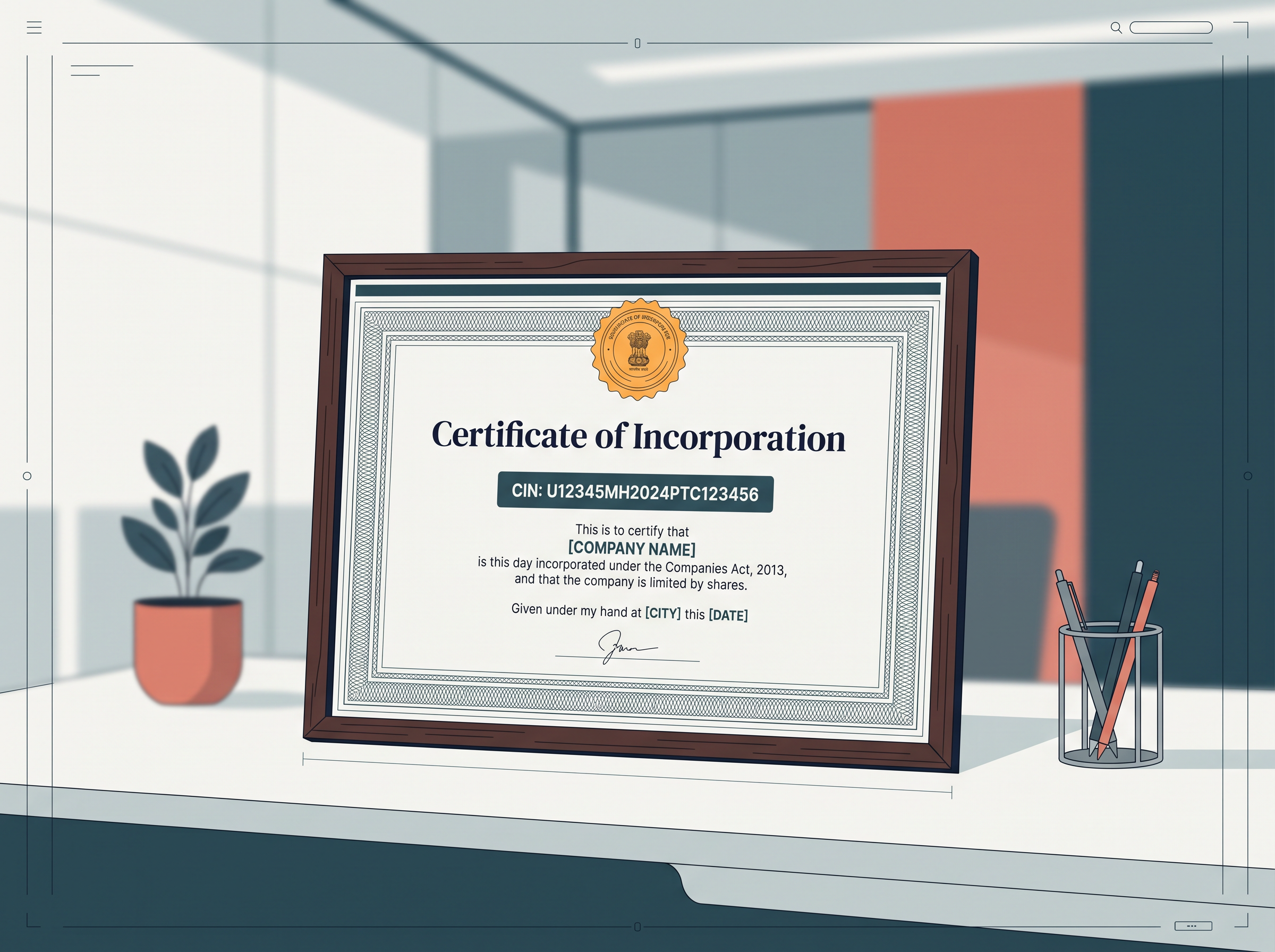
Fig. 7.3 – Certificate of incorporation of a company.
7.4.3 Effect of the Certificate of Incorporation
A company is legally born on the date printed on the Certificate of Incorporation. It becomes a legal entity with perpetual succession on such date, and becomes entitled to enter into valid contracts.
The Certificate of Incorporation is conclusive evidence of the regularity of the incorporation of a company. The reason for this rule is practical. Consider an outside party that enters into a contract with the company, and later finds that the incorporation of the company was improper and therefore invalid. Such a party would suffer for a defect it had no means of detecting. The legal position, therefore, is that once a Certificate of Incorporation has been issued, the company has become a legal business entity irrespective of any flaw in its registration. The certificate is thus conclusive evidence of the legal existence of the company.
Two examples show how far this conclusiveness extends.
Documents for registration were filed on 6th January and the Certificate of Incorporation was issued on 8th January, but the date mentioned on the certificate was 6th January. It was decided that the company was in existence on 6th January, and the contracts signed on that date were considered valid.
A person forged the signatures of others on the memorandum. The incorporation was still considered valid.
Thus, whatever be the deficiency in the formalities, the Certificate of Incorporation, once issued, is conclusive evidence of the existence of the company. Even when a company gets registered with illegal objects, the birth of the company cannot be questioned; the only remedy available is to wind it up. Because the Certificate of Incorporation is so crucial, the Registrar has to go very carefully before issuing it.
7.4.4 Certificate of Commencement of Business
Registration alone does not permit business operations to begin. Both public and private companies are required to obtain the Certificate of Commencement of Business within 180 days of incorporation. Once this certificate is issued by the Registrar of Companies, the company can undertake its business operations.
The whole sequence, from the filing of the application to the start of operations, is summarised in Fig. 7.4.
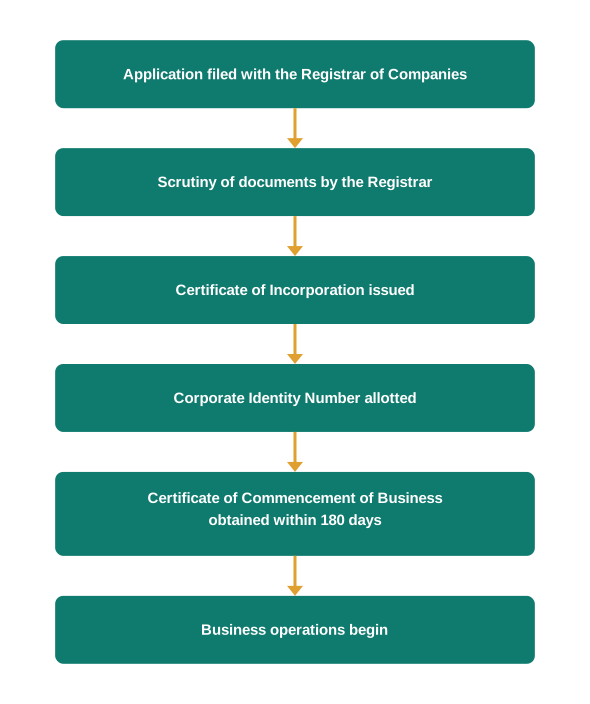
Fig. 7.4 – From application to commencement of business.
7.4.5 Preliminary and Provisional Contracts
During the promotion of the company, promoters enter into certain contracts with third parties on behalf of the company. These are called preliminary contracts, or pre-incorporation contracts.
Such contracts are not legally binding on the company, because at the time they were made the company did not exist. A company, after coming into existence, may, if it so chooses, decide to enter into fresh contracts on the same terms and conditions in order to honour the contracts made by the promoters. It cannot, however, ratify a preliminary contract, and so it cannot be forced to honour one. The promoters remain personally liable to third parties for these contracts.
Contracts signed after incorporation but before the commencement of business are called provisional contracts.
7.5 Capital Subscription
A company that has been incorporated still has to collect the money with which it will actually run its business. A public company can raise the required funds from the public by means of the issue of securities, such as shares and debentures. For doing this, it has to issue a prospectus and undergo various other formalities.
The steps required for raising funds from the public are summarised in Fig. 7.5 and explained below.
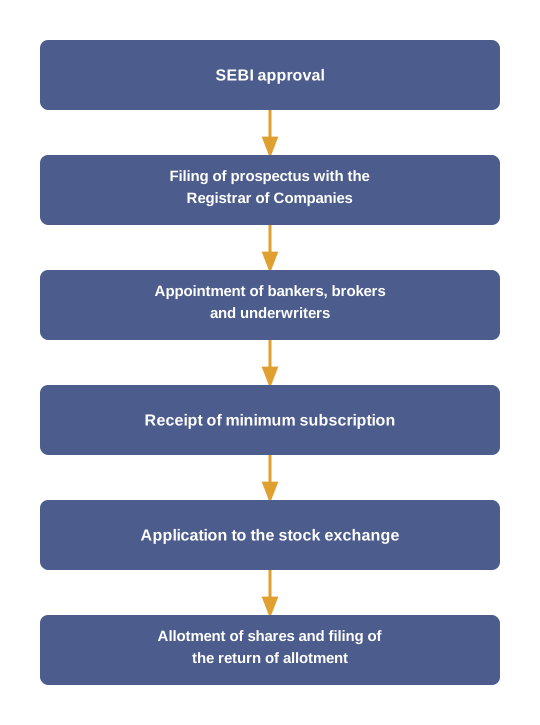
Fig. 7.5 – Steps in capital subscription.
7.5.1 SEBI Approval
The Securities and Exchange Board of India, which is the regulatory authority for the securities market in our country, has issued guidelines for the disclosure of information and for investor protection.
A public company inviting funds from the general public must make adequate disclosure of all relevant information and must not conceal any material information from potential investors. This is necessary for protecting the interest of the investors, who commit their savings on the strength of what the company tells them. Prior approval from SEBI is, therefore, required before going ahead with raising funds from the public.
7.5.2 Filing of Prospectus
A copy of the prospectus, or of the statement in lieu of prospectus, is filed with the Registrar of Companies.
Investors make up their minds about investing in a company primarily on the basis of the information contained in this document. Therefore, there must not be a mis-statement in the prospectus, and all material significant information must be fully disclosed.
A public company that raises funds from friends and relatives rather than from the public does not issue a prospectus. It has to file a statement in lieu of prospectus with the Registrar of Companies at least three days before the allotment of shares.
7.5.3 Appointment of Bankers, Brokers and Underwriters
Raising funds from the public is a stupendous task, and the company needs specialised help to carry it out.
The application money is to be received by the bankers of the company. The brokers try to sell the shares by distributing the forms and encouraging the public to apply for them.
If the company is not reasonably assured of a good public response to the issue, it may appoint underwriters to the issue. Underwriters undertake to buy the shares if these are not subscribed by the public, and they receive a commission for underwriting the issue. The appointment of underwriters is not necessary.
7.5.4 Minimum Subscription
A company that begins business with far less money than its project requires is likely to fail, and the loss falls on the investors who have already paid. To prevent companies from commencing business with inadequate resources, it has been provided that the company must receive applications for a certain minimum number of shares before going ahead with the allotment of shares. According to the Companies Act, this is called the ‘minimum subscription’.
Thus, if applications received for the shares are for an amount less than 90 per cent of the issue size, the allotment cannot be made and the application money received must be returned to the applicants.
7.5.5 Application to Stock Exchange
An application is made to at least one stock exchange for permission to deal in the shares or debentures of the company. This listing allows investors to buy and sell the securities afterwards, which makes the issue attractive in the first place.
If such permission is not granted before the expiry of ten weeks from the date of closure of the subscription list, the allotment shall become void, and all money received from the applicants will have to be returned to them within eight days.

Fig. 7.6 – A stock exchange building.
7.6 Summary
There are two stages in the formation of a private company, promotion and incorporation. A public company has to undergo the capital subscription stage as well before it can begin operations.
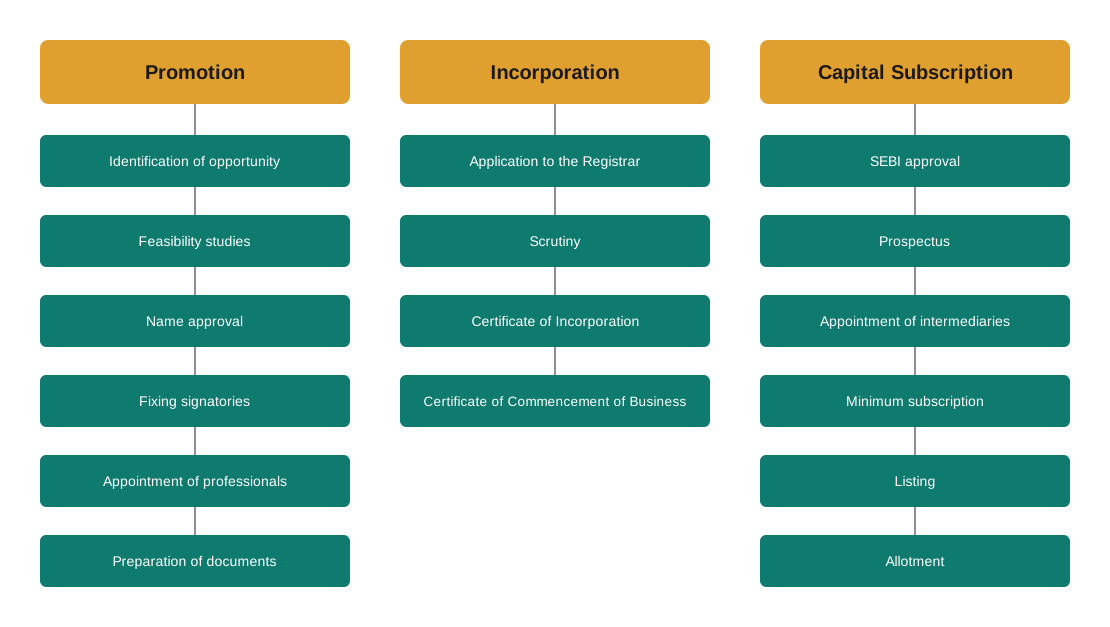
Fig. 7.7 – Formation of a company at a glance.
- Promotion — it begins with a potential business idea. Certain feasibility studies, that is, technical, financial and economic, are conducted to determine whether the idea can be profitably exploited. In case the investigations yield favourable results, promoters may decide to form the company. Persons who conceive the business idea, decide to form a company, take the necessary steps for the same and assume the associated risks are called promoters.
Steps In Promotion
a. Approval of the company's name is taken from the Registrar of Companies.

b. Signatories to the Memorandum of Association are fixed.

c. Certain professionals are appointed to assist the promoters.

d. Documents necessary for registration are prepared.
Necessary Documents
a. Memorandum of Association.

b. Articles of Association.

c. Consent of proposed directors.

d. Agreement, if any, with the proposed managing or whole time director.

e. Statutory declaration.
Incorporation — an application is made by the promoters to the Registrar of Companies along with the necessary documents and the registration fee. The Registrar, after due scrutiny, issues the certificate of incorporation. The certificate of incorporation is conclusive evidence of the legal existence of the company.
Capital subscription — a public company raising funds from the public needs to take the following steps for fundraising.
Steps In Capital Subscription
a. SEBI approval.

b. File a copy of the prospectus with the Registrar of Companies.

c. Appointment of brokers, bankers and underwriters.

d. Ensure that minimum subscription is received.

e. Application for listing of the company's securities.

f. Refund or adjust the excess application money received.

g. Issue allotment letters to successful applicants.

h. File the return of allotment with the Registrar of Companies.
A public company raising funds from friends or relatives, and not from the public, has to file a statement in lieu of prospectus with the Registrar of Companies at least three days before the allotment of shares, and the return of allotment after completing the allotment. As per the SEBI guidelines, minimum subscription has to be 90 per cent of the shares to be issued to the public.
Preliminary contracts — contracts signed by promoters with third parties before the incorporation of the company.
Provisional contracts — contracts signed after incorporation but before the commencement of business.
7.7 Key Terms
Promoter A person who undertakes to form a company with reference to a given project, sets it going, and bears the risks associated with bringing it into existence.
Prospectus Any document described or issued as a prospectus, inviting the public to subscribe to or purchase the securities of a body corporate, or to make deposits in it.
Promotion The first stage in the formation of a company, in which a business opportunity is conceived, examined and taken up by forming a company.
Qualification Shares Shares that the Articles of Association require a director to buy and pay for, so that the director has a stake in the company.
Return of Allotment A statement giving the names and addresses of shareholders and the number of shares allotted to each, filed with the Registrar of Companies within 30 days of allotment.
Memorandum of Association The main document of a company, defining its objectives and the limits within which it may lawfully act.
Articles of Association The document containing the rules for the internal management of a company, subsidiary to the Memorandum of Association.
Incorporation The registration of a company with the Registrar of Companies, on completion of which it comes into existence as a legal entity.
Director Identification Number A unique number allotted by the Central Government to an individual intending to be appointed as a director of a company.
Certificate of Incorporation The document issued by the Registrar of Companies that marks the birth of the company and is conclusive evidence of its legal existence.
Corporate Identity Number The identification number allotted by the Registrar of Companies to a company at the time of its incorporation.
Certificate of Commencement of Business The certificate that a company must obtain within 180 days of incorporation before it can undertake business operations.
Preliminary Contracts Contracts signed by the promoters with third parties on behalf of the company before its incorporation, for which the promoters remain personally liable.
Provisional Contracts Contracts signed after incorporation but before the commencement of business.
Capital Subscription The stage at which a public company raises the funds it requires by inviting the public to subscribe to its securities.
Underwriters Persons or institutions who undertake, for a commission, to buy the shares of an issue that are not subscribed by the public.
Minimum Subscription The minimum amount of applications a company must receive before allotting shares, fixed by the SEBI guidelines at 90 per cent of the size of the issue.
7.8 NCERT Questions
Short Answer Questions
- Name the stages in the formation of a company.
- List the documents required for the incorporation of a company.
- What is a prospectus? Is it necessary for every company to file a prospectus?
- Briefly explain the term ‘Return of Allotment’.
- At which stage in the formation of a company does it interact with SEBI?
Long Answer Questions
- What is meant by the term ‘Promotion’? Discuss the legal position of promoters with respect to a company promoted by them.
- Explain the steps taken by promoters in the promotion of a company.
- What is a ‘Memorandum of Association’? Briefly explain its clauses.
- Distinguish between ‘Memorandum of Association’ and ‘Articles of Association’.
- What is the meaning of ‘Certificate of Incorporation’?
- Discuss the stages of formation of a company.
7.9 Check Your Concepts
- Why does a private company not have to complete the capital subscription stage?
- A promoter appoints a chartered accountant to conduct a feasibility study for the proposed company. Does the chartered accountant become a promoter? Give a reason for your answer.
- Why are three names, in order of priority, submitted in the application for name approval?
- Distinguish between technical feasibility and economic feasibility.
- What happens if a company undertakes an activity that is not stated in the objects clause of its Memorandum of Association?
- Why is the Certificate of Incorporation treated as conclusive evidence of the legal existence of a company, even where the registration formalities were defective?
- Arrange the following steps of capital subscription in their correct order: application to the stock exchange; SEBI approval; allotment of shares; filing of prospectus with the Registrar of Companies; receipt of minimum subscription.
- Why must the application money remain in a separate bank account until shares are allotted?
- Assertion: A company cannot be forced to honour a preliminary contract. Reason: A preliminary contract is signed before the company comes into existence and cannot be ratified by it. Choose the correct option.
- Both the assertion and the reason are true, and the reason explains the assertion.
- Both the assertion and the reason are true, but the reason does not explain the assertion.
- The assertion is true but the reason is false.
- The assertion is false but the reason is true.
- Identify the term: the maximum amount of capital a company is permitted to raise through the issue of shares, as stated in its Memorandum of Association.
- Why is the appointment of underwriters not compulsory, while the receipt of minimum subscription is?
- Match the following documents with what they contain:
| Column A | Column B |
|---|---|
| a. Memorandum of Association | i. rules of internal management |
| b. Articles of Association | ii. invitation to the public to subscribe to securities |
| c. Prospectus | iii. objects for which the company is formed |
| d. Statutory declaration | iv. affirmation that all legal requirements of registration have been complied with |
- Why is the liability clause important to a person who is considering buying shares in a company?
7.10 Case-Based Questions
- Ishaan and three of his friends decide to manufacture solar water pumps. They study the availability of components, estimate that the project will need ₹18 crore, and examine whether the pumps can be sold profitably at the price farmers can pay. Only after these studies do they decide to go ahead and form a company.
- Name the function of promoters being performed here and state its three types.
- Explain why this function is carried out before any legal formality is begun.
- Sanchay Tools Ltd. was registered on 12th August, and the certificate issued to it carried that date. Two days after registration, the company entered into a contract with a machinery supplier. It later came to light that one of the persons who signed the memorandum had not, in fact, been authorised by the shareholder whose name he had used.
- Name the document issued to the company on 12th August.
- State, with reason, whether the contract with the machinery supplier remains valid.
- State the only remedy available where a company has been registered with illegal objects.
- Prerna Foods Ltd. made a public issue of shares. It obtained regulatory approval, filed the required document with the Registrar of Companies, and appointed bankers and brokers, but decided not to appoint underwriters. By the closing date, applications had been received for only 82 per cent of the issue.
- Name the document filed with the Registrar of Companies before the issue.
- State the requirement that the company has failed to meet and the percentage prescribed for it.
- State what the company must now do with the money received from applicants.
- Meghna promotes a company to manufacture packaging material. Before registration, she orders machinery worth ₹30 lakh from a supplier in the name of the proposed company. After the company is incorporated, its Board refuses to accept the order.
- Name the type of contract Meghna has entered into.
- State who remains liable to the supplier and why.
- State how the company may still honour the arrangement if it wishes to.