Chapter 9: MSME and Business Entrepreneurship
Not every business begins with a large factory, a big loan or a well-known brand name. A great many Indian businesses begin with one worker, a single machine and a product made for a nearby market. A tailor’s son in Imphal who began stitching purses from leftover fabric built such a venture, registered it, studied his costs and demand, and grew it into a recognised bag-making enterprise. Businesses of this kind are known as micro, small and medium enterprises, or MSME. They employ crores of people, supply everything from handloom cloth to precision engineering components, and keep industry alive in small towns and villages rather than only in large cities. They also face difficulties that large firms do not: shortage of finance, weak bargaining power for raw materials, limited managerial expertise and heavy competition. This chapter explains what MSME are and how their size is defined, the role they play in India’s economy, the problems they face, how entrepreneurship drives them, and how intellectual property rights protect the ideas on which they are built.
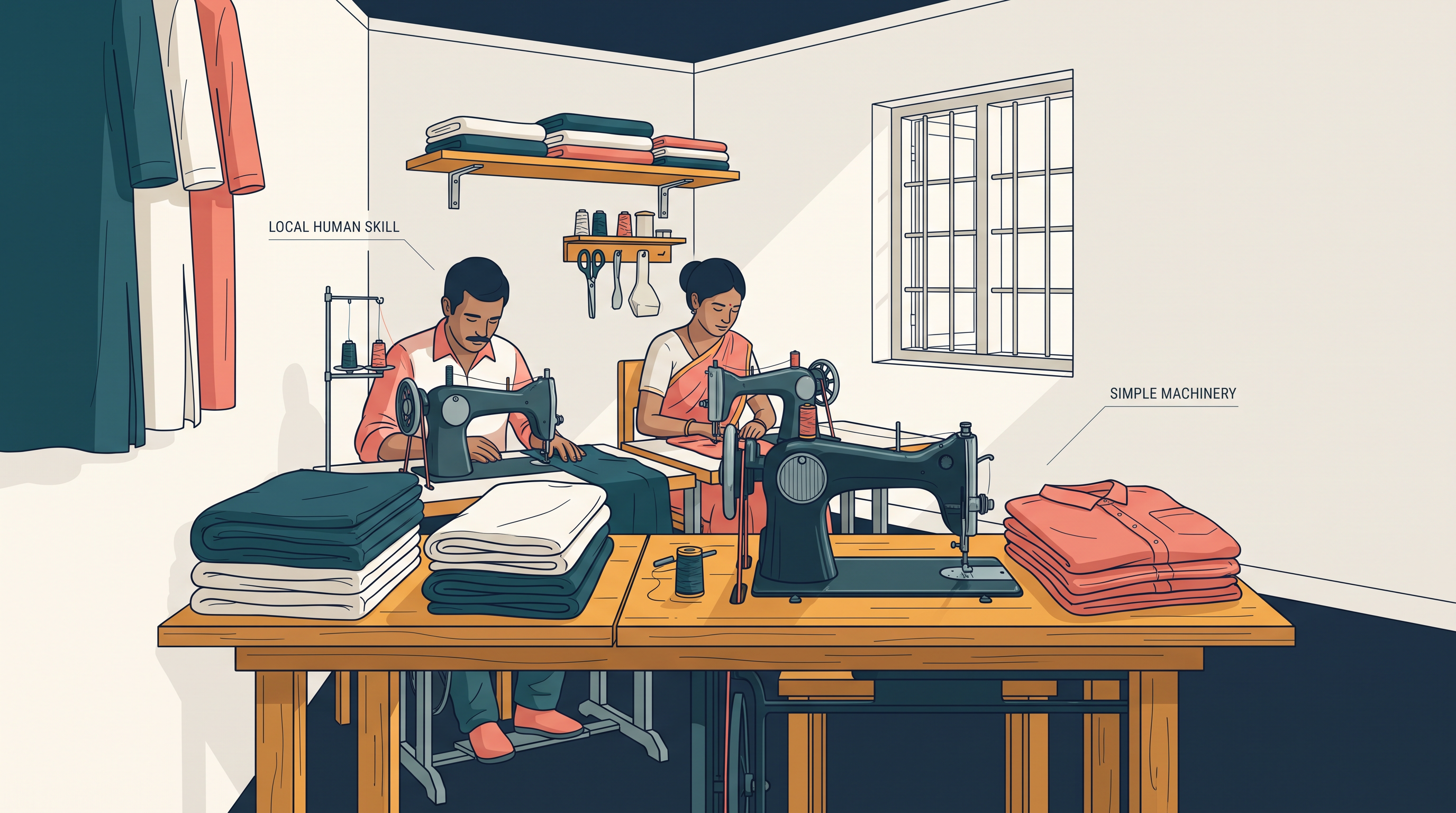
Fig. 9.0 – A small enterprise workshop.
9.1 Introduction
Micro, small and medium enterprises (MSME) are business units that operate on a comparatively small scale of investment and turnover. They contribute significantly to the development process of the country and act as a vital link in industrialisation in terms of production, employment and exports.
Their contribution to economic prosperity works in two ways. They widen the entrepreneurial base by allowing a large number of people to start businesses of their own, and they make use of local raw materials and indigenous skills that would otherwise remain unused. MSME dominate the industrial scenario in the country, absorbing a sizeable proportion of the labour force and carrying tremendous export potential.
Contribution To The Economy
MSME play a significant role in economic growth. They contribute approximately 29.7 per cent of the gross domestic product and 49.66 per cent of exports. The sector offers employment to nearly 60 million people through 28.5 million enterprises, making it the largest source of employment after the agriculture sector.
MSME are complementary to large industries and often work as ancillary units, that is, small units that manufacture parts, components or sub-assemblies for a larger firm. In this way they form an integral part of the value chain and help build a conducive environment for indigenous skills, grass root innovations and entrepreneurship development.
The output of the sector is remarkably wide. It ranges from simple consumer goods used in ordinary households to high-precision, sophisticated finished products supplied to advanced industries.
Policy Support For The Sector
Recognising the potential of this sector for national development, the government has encouraged this segment of industry in both the pre-reform and the post-reform period. The purpose in both periods has been the same — fulfilling the objective of self-reliance and rural industrialisation.
Self-reliance means meeting the country’s own requirements from domestic production instead of depending on imports. Rural industrialisation means locating industry in villages and small towns so that employment reaches people where they live, rather than forcing them to migrate.
Composition Of The Sector
In India, the MSME sector consists of both ‘traditional’ and ‘modern’ small industries. Traditional industries rely largely on hand skills passed down over generations, while modern small industries use machinery and current technology. The sector has eight subgroups, listed in Fig. 9.1.
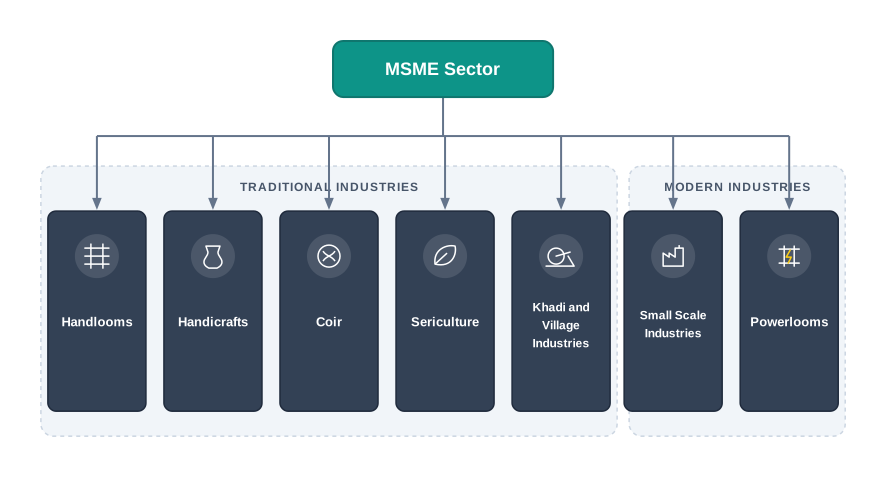
Fig. 9.1 – Subgroups of the Indian MSME sector.
The khadi and village industries and coir segment is another major contributor to the growth of MSME, since it supports a very large number of rural artisans at low capital cost.
Many global companies are increasingly looking to Indian MSME for strategic partnerships of mutual benefit. The reason is the innovative capability of these units in the niche of low-cost manufacturing, combined with local skills and capabilities that are difficult to replicate elsewhere.
The sector therefore holds the key to inclusive growth. It spreads the benefits of industry to small producers, rural artisans and first-generation entrepreneurs, and plays a critical role in India’s future.
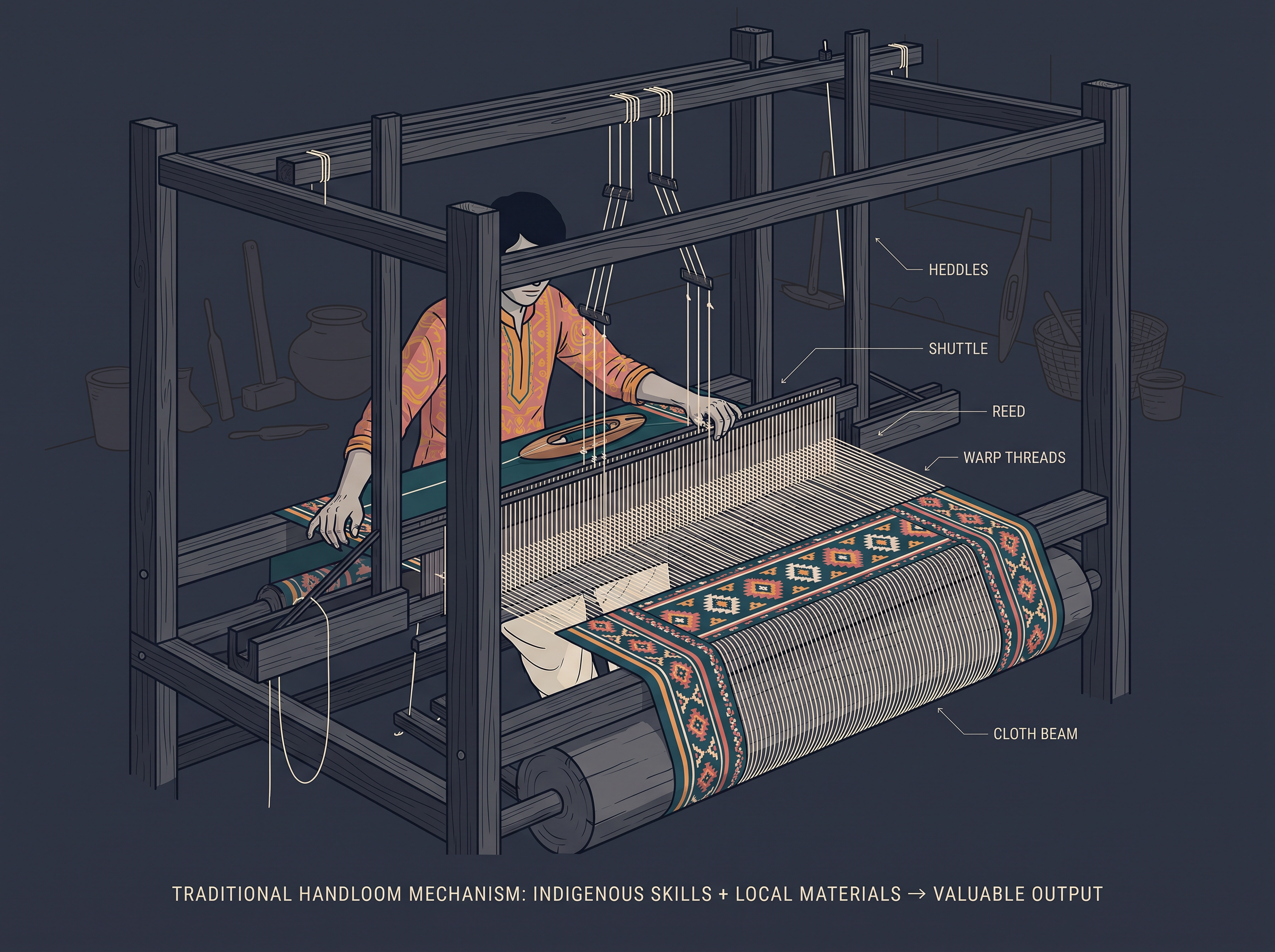
Fig. 9.2 – A traditional handloom weaver.
9.2 Micro, Small and Medium Enterprises
Before a government can support small businesses, it must first decide what counts as ‘small’. Concessions, subsidised credit and reserved schemes can only be given if there is a clear, measurable boundary between a small unit and a large one. It is therefore important to know how size is defined in our country with reference to MSME establishments.
Several parameters can be used to measure the size of a business unit. These include the number of persons employed in the business, the capital invested in the business and the turnover of the business.
The Measure Used In India
The definition used by the Government of India to describe MSME is based on the investment in plant and machinery and on turnover. Investment in plant and machinery shows how much fixed capital the unit has put into its productive assets, while turnover is the total value of sales made by the unit in a year.
This measure seeks to keep in view the socio-economic environment in India, where capital is scarce and labour is abundant. A unit here may employ a large number of workers while still using very little machinery, so employment alone would be a misleading test of size.
The classification and the share of each category in the total number of MSME are given in Table 9.1.
The share figures show how the sector is actually composed. Almost the entire sector consists of micro enterprises, while small and medium units together form well under one per cent. Any policy meant for MSME therefore has to be designed for very small units first.
Why A Single Legal Framework Was Needed
The emergence of a large service sector made it necessary for the government to bring other enterprises under the same umbrella, covering both the small scale industries (SSI) sector and related service entities.
At the same time, small enterprises were expanding and growing into medium enterprises. To remain competitive in a fast globalising world, these units were required to adopt higher levels of technology. It was therefore necessary to address the concerns of such enterprises as micro, small and medium together, and to provide them with a single legal framework.
The Micro, Small and Medium Enterprises Development (MSMED) Act, 2006 came into force with effect from October 2006. It addressed issues relating to the definition of these enterprises, credit, marketing and technology upgradation. Medium scale enterprises and service related enterprises also come under the purview of this Act.
Village And Cottage Industries
Two traditional categories of small production are described separately, because they are recognised by the nature of their location and work rather than by the ordinary investment tests.
9.3 Role of MSME
MSME in India enjoy a distinct position in view of their contribution to the socio-economic development of the country. The emphasis on MSME has always been an integral part of India’s industrial strategy.
The development of MSME prevents the migration of rural population to urban areas in search of employment. When work is available near home, people are not forced to move to crowded cities to earn a living. The sector also contributes to other socio-economic aspects, such as reduction in income inequalities, dispersed development of industries and linkage with other sectors of the economy.
In fact, the promotion of MSME and rural industrialisation has been considered by the Government of India as a powerful instrument for realising the twin objectives of ‘accelerated industrial growth and creating additional productive employment potential in rural and backward areas.’
The following points highlight their contribution.
Balanced regional development — the contribution of these industries to the balanced regional development of our country is noteworthy. Small industries in India account for 95 per cent of the industrial units in the country, so industrial activity is not confined to a few large centres.
Employment generation — MSME are the second largest employers of human resources, after agriculture. They generate a greater number of employment opportunities per unit of capital invested compared to large industries. They are therefore considered to be more labour intensive and less capital intensive, which is a boon for a labour surplus country like India.
Variety of products — MSME in our country supply an enormous variety of products. These include mass consumption goods, readymade garments, hosiery goods, stationery items, soaps and detergents, domestic utensils, leather, plastic and rubber goods, processed foods and vegetables, wood and steel furniture, paints, varnishes and safety matches. Among the sophisticated items manufactured are electric and electronic goods such as televisions, calculators, electro-medical equipment, electronic teaching aids like overhead projectors, air conditioning equipment, drugs and pharmaceuticals, agricultural tools and equipment, and several other engineering products. A special mention should be made of handlooms, handicrafts and other products from traditional village industries in view of their export value.
Freedom from locational constraints — MSME which produce simple products using simple technologies and depend on locally available resources, both material and labour, can be set up anywhere in the country. Since they can be widely spread without any locational constraints, the benefits of industrialisation can be reaped by every region. They thus contribute significantly to the balanced development of the country.
Scope for entrepreneurship — MSME provide ample opportunity for entrepreneurship. The latent skills and talents of people can be channelled into business ideas which can be converted into reality with little capital investment and almost nil formalities to start a small business.
Low cost of production — MSME also enjoy the advantage of low cost of production. Locally available resources are less expensive, and the establishment and running costs of small industries are on the lower side because of low overhead expenses. In fact, the low cost of production which small industries enjoy is their competitive strength.
Quick decision making — due to the small size of the organisations, quick and timely decisions can be taken without consulting many people, as happens in large sized organisations. New business opportunities can be captured at the right time.
Why These Advantages Matter
Points 1 and 4 work together. Because a small unit can be located almost anywhere, industry spreads outward instead of concentrating in a few cities, and that spread is what produces balanced regional development.
Points 6 and 7 explain why small firms survive alongside far bigger competitors. A large firm has better technology and finance, but it also carries heavy overheads and long decision chains. A small firm keeps costs low and can change its product or price quickly, which is a real advantage in markets where demand shifts fast.
9.4 Problems Associated With MSME
The potential of MSME is often not realised fully, because of several problems related to size and operations. We shall now examine some of the major problems that small businesses, whether in urban or in rural areas, encounter in their day-to-day functioning.
MSME are at a distinct disadvantage as compared to large-scale industries. The scale of operations, the availability of finance, the ability to use modern technology and the procurement of raw materials are some of these areas, and each of them gives rise to further problems.
The problems majorly include remote location with less developed infrastructural facilities, lack of managerial talent, poor quality, traditional technology and inadequate availability of finance. Small units that export face problems of their own — lack of adequate data on foreign markets, lack of market intelligence, exchange rate fluctuations, quality standards and pre-shipment finance.
In general, small businesses are faced with the following problems.
Finance — one of the severe problems faced by MSME is the non-availability of adequate finance to carry out operations. Generally these businesses begin with a small capital base. Many units in the small sector lack the credit worthiness required to raise capital from the capital markets. As a result they depend heavily on local financial resources and are frequently the victims of exploitation by money lenders. These units also suffer from a lack of adequate working capital, that is, the funds needed to meet day-to-day expenses, either because payments due to them are delayed or because their capital is locked up in unsold stocks. Banks do not lend money without adequate collateral security or guarantees and margin money, which many of these units are not in a position to provide.
Raw materials — another major problem of MSME is the procurement of raw materials. If the required materials are not available, they have to compromise on quality or pay a high price to get good quality materials. Their bargaining power is relatively low because of the small quantity of purchases made by them. They also cannot afford to take the risk of buying in bulk, as they have no facilities to store the materials. Because of the general scarcity of metals, chemicals and extractive raw materials in the economy, the small scale sector suffers the most. This also means a waste of production capacity for the economy and the loss of further units.
Managerial skills — these businesses are generally promoted and operated by a single person, who may not possess all the managerial skills required to run the business. Many small business entrepreneurs possess sound technical knowledge but are less successful in marketing the output. Moreover, they may not find enough time to take care of all functional activities, and at the same time they are not in a position to afford professional managers.
Marketing — marketing is one of the most important activities, as it generates revenue. Effective marketing of goods requires a thorough understanding of the customer’s needs and requirements. In most cases, marketing is a weaker area of small organisations. These organisations have therefore to depend excessively on middlemen, who at times exploit them by paying a low price and delaying payments. Further, direct marketing may not be feasible for small business firms, as they lack the necessary infrastructure.
Quality — many MSME do not adhere to desired standards of quality. Instead, they concentrate on cutting cost and keeping prices low. They do not have adequate resources to invest in quality research and maintain the standards of the industry, nor do they have the expertise to upgrade technology. In fact, maintaining quality is their weakest point when competing in global markets.
Capacity utilisation — due to lack of marketing skills or lack of demand, many firms have to operate below full capacity, because of which their operating costs tend to increase. Gradually this leads to sickness and closure of the business.
Global competition — apart from the problems stated above, MSME are not without fears, especially in the present context of globalisation. These enterprises face competition not only from medium and large industries, but also from multinational companies which are giants in terms of their size and business volumes.
How These Problems Feed Each Other
These seven problems are not separate difficulties. Shortage of finance prevents a unit from buying raw materials in bulk or investing in better technology. Weak technology keeps quality low, and low quality restricts the market the unit can reach.
A smaller market then means the unit runs below full capacity, its cost per unit rises, and its ability to repay loans falls further. This is why the sequence often ends in sickness. Understanding this chain matters in the examination, since application questions usually describe one symptom and expect the student to name the underlying problem.
9.5 MSME and Entrepreneurship Development
Entrepreneurship is the process of setting up one’s own business, as distinct from pursuing any other economic activity, be it employment or practising some profession. The person who sets up the business is called an entrepreneur, and the output of the process, that is, the business unit itself, is called an enterprise.
Why Entrepreneurship Matters To A Nation
Besides providing self-employment to the entrepreneur, entrepreneurship is responsible to a great extent for the creation and expansion of opportunities for the other two economic activities, that is, employment and profession. When a new enterprise is set up, it creates jobs for others and generates work for professionals such as accountants, designers and transporters. In this process, entrepreneurship becomes crucial for the overall economic development of a nation.
Every country, whether developed or developing, needs entrepreneurs. A developing country needs entrepreneurs to initiate the process of development, while a developed country needs entrepreneurship to sustain it.
In the present Indian context, employment opportunities in the public sector and the large-scale sector are shrinking, while vast opportunities arising from globalisation are waiting to be exploited. Entrepreneurship can therefore take India to the heights of becoming a super economic power. The need for entrepreneurship thus arises from the functions entrepreneurs perform in relation to the process of economic development and in relation to the business enterprise.
Characteristics Of Entrepreneurship
Systematic activity — entrepreneurship is not a mysterious gift or a charm, and it is not something that happens by chance. It is a systematic, step-by-step and purposeful activity. It has certain temperamental, skill, knowledge and competency requirements that can be acquired, learnt and developed, both through formal education and vocational training and through observation and work experience. Such an understanding of the process is crucial for dispelling the myth that entrepreneurs are born rather than made.
Lawful and purposeful activity — the object of entrepreneurship is lawful business. It is important to take note of this, as one may try to legitimise unlawful actions as entrepreneurship on the ground that just as entrepreneurship entails risk, so do illicit businesses. The purpose of entrepreneurship is the creation of value for personal profit and social gain.
Innovation — from the point of view of the firm, innovation may be cost saving or revenue enhancing. If it does both, it is more than welcome, and even if it does neither, it is still welcome, as innovation must become a habit. Entrepreneurship is creative in the sense that it involves the creation of value: by combining the various factors of production, entrepreneurs produce goods and services that meet the needs and wants of society, and every entrepreneurial act results in income and wealth generation. It is creative also in the sense that it involves innovation — the introduction of new products, the discovery of new markets and new sources of supply of inputs, technological breakthroughs, and the introduction of newer organisational forms for doing things better, cheaper and faster, and in the present context in a manner that causes the least harm to the ecology and the environment.
Organisation of production — production implies the creation of form, place, time and personal utility, and requires the combined utilisation of diverse factors of production such as land, labour, capital and technology. The entrepreneur, in response to a perceived business opportunity, mobilises these resources into a productive enterprise or firm. The entrepreneur may not personally possess any of these resources; he may just have the ‘idea’ that he promotes among the resource providers. In an economy with a well-developed financial system, he has to convince only the funding institutions, and with the capital so arranged he may enter into contracts of supply of equipment, materials, utilities such as water and electricity, and technology. What lies at the core of the organisation of production is knowledge about the availability and location of resources, as well as the optimum way to combine them. An entrepreneur therefore needs negotiation skills to raise these in the best interests of the enterprise.
Risk-taking — it is generally believed that entrepreneurs take high risks. Individuals opting for a career in entrepreneurship do take a bigger risk than those in employment or in the practice of a profession, since there is no assured payoff. In practice, when a person quits a job to start on his own, he tries to calculate whether he or she would be able to earn the same level of income or not. To an observer, the risk of quitting a well-entrenched and promising career seems a high risk, but what the person has taken is a calculated risk. Entrepreneurs are so sure of their capabilities that they convert fifty per cent chances into hundred per cent success. They avoid situations with higher risks, as they hate failure as anyone would; they also dislike lower risk situations, as business then ceases to be a challenge. Risk for them is more than a financial stake — it becomes a matter of personal stake, where less than expected performance causes displeasure and distress.
Support For New Entrepreneurs
Since entrepreneurship can be learnt, it can also be encouraged through policy. The objective of the Startup India Scheme is to build a strong ecosystem for nurturing innovation and startups in the country. The scheme specifically aims to:
trigger an entrepreneurial culture and inculcate entrepreneurial values in society at large, and influence the mindset of people towards entrepreneurship;
create awareness about the attractions of being an entrepreneur and about the process of entrepreneurship;
encourage more dynamic startups by motivating educated youth, scientists and technologists to consider entrepreneurship as a lucrative, preferred and viable career; and
broad base the entrepreneurial supply by meeting the specific needs of under-represented target groups, such as women, socially and economically backward communities and under-represented regions, so as to achieve inclusiveness and sustainable development and address the needs of the population at the bottom of the pyramid.
9.6 Intellectual Property Rights (IPR)
Over the past two decades, intellectual property rights have grown to a stature from where they play a major role in the development of the global economy. Intellectual property is everywhere — the music you listen to, the technology that makes your phone work, the design of your favourite car, the logo on your sneakers. All of these are products of human creativity and skill, such as inventions, books, paintings, songs, symbols, names, images or designs used in business.
All inventions and creations begin with an ‘idea’. Once the idea becomes an actual product, that is, intellectual property, the creator can apply to the authority concerned under the Government of India for protection. The legal rights conferred on such products are called intellectual property rights (IPR).
Intellectual property (IP) therefore refers to products of the human mind, and just like other types of property, the owners of IP can rent, give or sell it to other people. Specifically, it refers to the creations of the human mind such as inventions, literary and artistic works, symbols, names, images and designs used in business.
Broad Categories Of Intellectual Property
Intellectual property is divided into two broad categories, shown in Fig. 9.3.
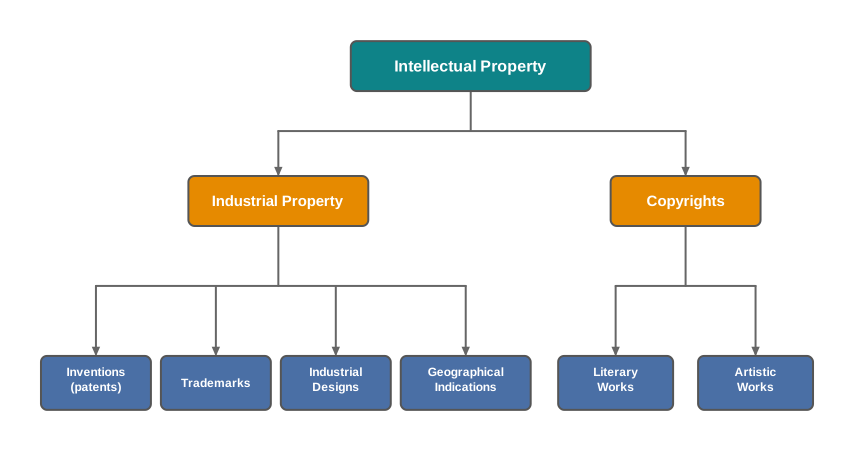
Fig. 9.3 – Broad categories of intellectual property.
Industrial property includes inventions, that is patents, along with trademarks, industrial designs and geographical indications. Copyrights cover literary and artistic works such as novels, poems, plays, films and musical works, as well as artistic works such as drawings, paintings, photographs, sculptures and architectural designs.
The most noticeable difference between intellectual property and other forms of property is that intellectual property is intangible, that is, it cannot be defined or identified by its own physical parameters. A factory can be seen and measured; the design that gives its product its distinctive look cannot.
The scope and definition of intellectual property is constantly evolving with the inclusion of newer forms. In recent times, integrated circuits and undisclosed information, protection of plant varieties, and semi-conductors have been brought under the umbrella of intellectual property.
The following types of intellectual property rights are recognised in India: copyright, trademark, geographical indication, patent, design, plant variety, and semiconductor integrated circuit layout design. In addition to these, traditional knowledge also falls under IP.
Traditional Knowledge
You must often have taken homely remedies passed on from your grandparents and great-grandparents as a cure for an ailment. These homely remedies are traditional medicines that have been practised in India for the past several centuries, and are known as ‘traditional knowledge’. Some examples of Indian traditional medicinal systems are Ayurveda, Unani, Siddha and Yoga.
A Traditional Knowledge Digital Library has been developed by the Government of India. It is essentially a digital knowledge repository of the traditional knowledge that has existed in our ancient civilisation, especially about medicinal plants and formulations used in Indian systems of medicine. This rich body of knowledge helps prevent the wrongful patenting of our traditional knowledge, since an examiner elsewhere in the world can check that the claimed invention was already known in India.
Trade Secrets
Another type of IP is the trade secret. The recipe of a well-known aerated beverage is said to be known to only three people in the whole world. Such secret information is termed a trade secret.
A trade secret is basically any confidential information which provides a competitive edge. Trade secrets in India are protected under the Indian Contract Act, 1872 and other acts enacted by the Government of India from time to time.
9.6.1 Why is IPR Important for Entrepreneurs?
IPR encourages the creation of new, path-breaking inventions, such as medicines to cure cancer. It incentivises inventors, authors and creators for their work, because they know the benefit of the effort will come back to them and not to whoever copies it first.
It allows the work created by a person to be distributed and communicated to the public only with his or her permission. Therefore, it helps in the prevention of loss of income. It also helps authors, creators, developers and owners to get recognition for their works.
9.6.2 Types of IPs
IPRs are extremely essential for fostering creativity and contribute towards the economic growth of a nation. Such rights allow creators and inventors to have control over their creations and inventions.
These rights create incentives for artists, entrepreneurs and inventors to further commit the necessary resources to research, develop and market new technology and creative works. The changing global economy is creating unprecedented challenges as well as opportunities for continued progress in human development.
There are business opportunities to market or sell IP worldwide, and geographical borders present no impediments, since consumers enjoy near immediate access to almost everything. It is therefore critical that we are aware of the importance of IPRs and how they affect daily life. The types recognised in India are summarised in Fig. 9.4.
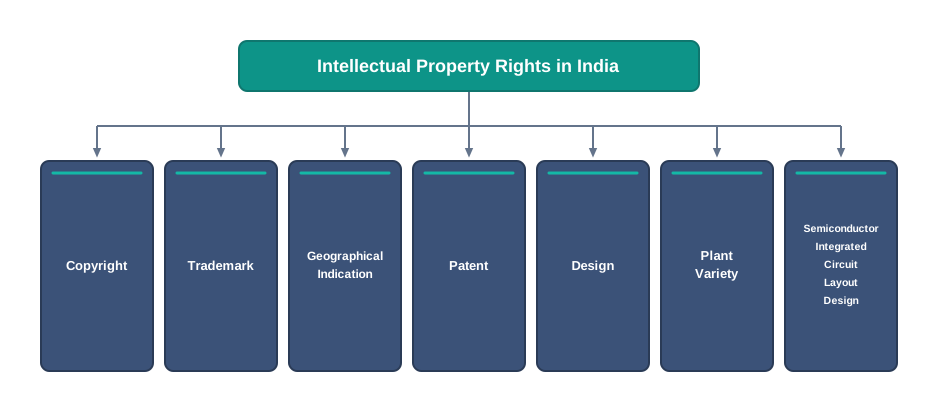
Fig. 9.4 – Types of IPR recognised in India.
Copyright
Copyright is the right to ‘not copy’. It is offered when an original idea is expressed by the creator or author. It is a right conferred upon the creators of literary, artistic, musical, sound recording and cinematographic film.
Copyright is an exclusive right of the creator to prohibit the unauthorised use of the content, which includes reproducing and distributing copies of the subject matter.
The unique feature of copyright is that the protection of the work arises automatically as soon as the work comes into existence. The registration of the content is not mandatory, but it is essential in order to exercise exclusive rights in case of an infringement, because registration provides ready proof of ownership. What is protected under copyright is set out in Table 9.2.
Trademark
A trademark is any word, name or symbol, or their combination, that lets us identify the goods made by an individual, company or organisation. Trademarks also let us differentiate the goods of one company from another.
In a single brand or logo, a trademark can convey a great deal about a company’s reputation, goodwill, products and services. A trademark helps in distinguishing similar products in the market from those of competitors.
A competitor cannot use the same or a similar trademark to sell their product in the market, as this falls under the concept of deceptive similarity, which may be defined as phonetic, structural or visual similarity. In other words, a mark that sounds like, is built like, or looks like an existing mark is not permitted.
Trademarks may be categorised as conventional and non-conventional.
Conventional trademark — words, colour combination, label, logo, packaging, shape of goods and the like.
Non-conventional trademark — marks which were not considered distinctive previously but started getting recognition with the passage of time, such as a sound mark or a dynamic mark.
Besides these, smell and taste are also considered for protection as trademarks in some parts of the world, but they are not recognised as trademarks in India.
The registration of a trademark is not mandatory under the Trademark Act 1999, but registration of a trademark helps establish exclusive rights over the mark. The mark can be registered with the Indian Trademark Registry.
Geographical Indication
Geographical indications are part of our collective and intellectual heritage that needs to be protected and promoted. Goods protected and registered as GI are categorised into agricultural products, natural products, handicrafts, manufactured goods and food stuffs.
Naga Mircha, Mizo Chilli, Shaphee Lanphee, Moirangphee and Chakhesang Shawl, Bastar Dhokra, Warli Paintings, Darjeeling Tea, Kangra Painting, Nagpur Orange, Banaras Brocades and Sarees, and Kashmir Pashmina are some of the examples of GIs.
The importance of GIs has increasingly grown over the past few decades. A GI represents the collective goodwill of a geographical region, which has built itself over centuries. Today consumers are paying more and more attention to the geographical origin of products, and give much weight to the specific characteristics present in the products that they purchase. In some cases there is a difference between the place of origin and the geographical indication, which suggests to consumers that the product will have a particular quality or characteristic that they may value.
Patent
A patent is a type of IPR which protects scientific inventions, whether products or processes, which show a technical advancement over already known products. A patent is an exclusive right granted by the government which provides the exclusive ‘right to exclude’ all others and prevent them from making, using, offering for sale, selling or importing the invention.
For an invention to be patentable, it must satisfy three conditions.
Novelty — it must be new, that is, it should not already exist in the current knowledge anywhere in the world.
Inventive step — it must be non-obvious to any person who is skilled in the relevant field of technology. That is, the standard applied is that of a person reasonably skilled in such a field of study.
Industrial application — it must be capable of industrial application, that is, capable of being used or manufactured in industry.
A patent can only be filed to get rights over an invention and not over a discovery. Newton saw the apple fall and discovered gravity, which is considered to be a discovery. On the other hand, Alexander Graham Bell invented the telephone. Thus, when we use our ability to bring something novel or unique into existence, it is called an invention, whereas the process of highlighting the existence of an already existing thing is called a discovery.
The purpose of a patent is to encourage innovation in the scientific field. A patent grants exclusive rights to the inventor for a period of 20 years, during which anybody else who wishes to use the patented subject-matter needs to seek permission from the patentee by paying certain costs for the commercial use of the invention. This process of seeking the exclusive rights of the patentee for a fee is called licensing.
A patent creates a temporary monopoly. Once the term of a patent expires, the invention is in the public domain, which means it is free for use by people. The time limit prevents the patentee from involving himself in anti-competitive practices such as creating a permanent monopoly.
Design
A design includes the shape, pattern, and arrangement of lines or colour combination that is applied to any article. It is a protection given to aesthetic appearance or eye-catching features rather than to the working of the article.
The term of protection of a design is valid for 10 years, which can be renewed for a further 5 years after the expiration of this term. During this period a registered design can only be used after getting a licence from its owner, and once the validity period is over, the design is in the public domain.
Plant Variety
Plant variety is essentially the grouping of plants into categories based on their botanical characteristics. It is a type of variety which is bred and developed by farmers, and hybrid versions of potatoes are one example.
Protection of plant varieties helps in conserving, improving and making available plant genetic resources. Such protection promotes investment in research and development, recognises Indian farmers as cultivators, conservers and breeders, and facilitates the supply of high quality seeds and planting material. This leads to the growth of the seed industry.
Semiconductor Integrated Circuits Layout Design
A semiconductor is an integral part of every computer chip, and integrated circuits are commonly known as ‘ICs’. Any product that contains transistors and other circuitry elements used and formed on a semiconductor material, on an insulating material, or inside the semiconductor material, and whose design is to perform an electronic circuitry function, falls in this category. The layout design of such a circuit is what the law protects.
Protecting And Respecting IP
Whether a business is establishing its presence in the marketplace or is already well entrenched, protecting and managing its intellectual property is critical in taking the business ahead. Any business has to continuously innovate and think ahead, otherwise it will simply stagnate and wither away.
It is equally essential to respect the IP of others, not only on ethical grounds but also on legal ones. Respect for the IP of others begets respect for one’s own IP.
A start-up is an entrepreneurial venture that capitalises on developing, improving and innovating new products, processes and services for a target audience. Start-ups today are responsible for several disruptive technologies that have changed the very way we think and live. With more than 20,000 start-ups, India is said to have the third largest start-up ecosystem in the world.
The Start-up India initiative seeks to capture the entrepreneurial streak in Indians and create a nation of job-creators rather than job-seekers. Intellectual property rights can be critical in aiding new ventures to monetise their ideas and establish competitiveness in the market, by extending the protective umbrella offered by IPRs.
9.7 Summary
Role of small business in India — small scale industries play a very important role in the socio-economic development of the country. These industries account for 95 per cent of industrial units, contributing up to 40 per cent of the gross industrial value added and 45 per cent of the total exports.
Employment and output — small scale industries are the second largest employers of human resources after agriculture, and they produce a wide variety of products for the economy, from simple consumer goods to sophisticated engineering items.
Balanced regional development — these units contribute to the balanced regional development of the country by using locally available material and indigenous technology, so industry is not confined to a few large centres.
Other advantages — they provide ample scope for entrepreneurship, enjoy the advantage of low cost of production and quick decision making, and have quick adaptability, which makes them best suited to customised production.
Role of small business in rural India — small business units provide multiple sources of income through a wide range of non-agricultural activities, and provide employment opportunities in rural areas, especially for traditional artisans and the weaker sections of society.
Measuring size — the Government of India defines micro, small and medium enterprises on the basis of investment in plant and machinery and turnover, a measure suited to an economy where capital is scarce and labour is abundant. The MSMED Act, 2006 brought these enterprises, including service enterprises, under a single legal framework.
Problems of MSME — the main problems relate to finance, raw materials, managerial skills, marketing, quality, capacity utilisation and global competition, and these problems reinforce one another until a unit becomes sick.
Entrepreneur — the terms ‘entrepreneur’, ‘entrepreneurship’ and ‘enterprise’ can be understood by drawing an analogy with the structure of a sentence in the English language. The entrepreneur is the person, that is the subject; entrepreneurship is the process, that is the verb; and the enterprise is the creation of the person and the output of the process, that is the object.
Characteristics of entrepreneurship — entrepreneurship is a systematic activity, a lawful and purposeful activity, an innovative and creative activity, an organisation of production, and a calculated risk-taking activity.
Intellectual property rights — IPR are the legal rights conferred on creations of the human mind. The types recognised in India are copyright, trademark, geographical indication, patent, design, plant variety and semiconductor integrated circuit layout design, with traditional knowledge and trade secrets also falling under intellectual property. IPR help entrepreneurs prevent loss of income, gain recognition and monetise their ideas.
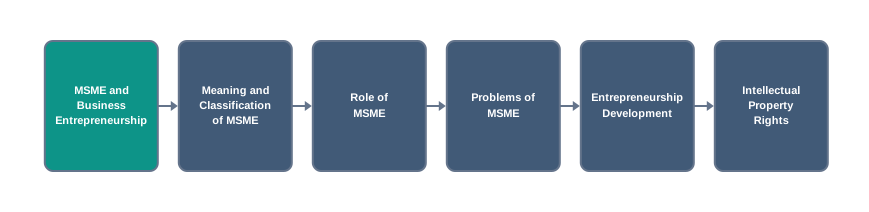
Fig. 9.5 – Structure of the chapter.
9.8 Key Terms
- Micro, small and medium enterprises (MSME) Business units classified by the Government of India on the basis of investment in plant and machinery and turnover.
- Ancillary unit A small unit that manufactures parts, components or sub-assemblies for a larger firm.
- Turnover The total value of sales made by a business unit in a year.
- Village industry Any industry located in a rural area which produces goods or renders services, with or without the use of power, and in which the fixed capital investment per head or artisan or worker is specified by the central government from time to time.
- Cottage industries Rural or traditional industries which are not defined by capital investment criteria, unlike other small scale industries.
- Small scale industries Industrial units operating on a small scale of investment and turnover, forming a major part of the MSME sector.
- Balanced regional development The spread of industrial activity across all regions of the country instead of its concentration in a few centres.
- Labour intensive Using a larger amount of labour and a smaller amount of capital per unit of output.
- Working capital The funds required by a business to meet its day-to-day operating expenses.
- Collateral security An asset pledged to a lender which the lender can sell if the loan is not repaid.
- Margin money The portion of the project cost that the borrower must contribute from personal funds.
- Entrepreneurship The process of setting up one’s own business, as distinct from employment or the practice of a profession.
- Entrepreneur The person who sets up and runs a business of his or her own.
- Enterprise The business unit created by the entrepreneur, being the output of the process of entrepreneurship.
- Innovation The introduction of new products, new markets, new sources of supply, technological breakthroughs or newer organisational forms of doing things.
- Calculated risk A risk taken after assessing the likely costs, returns and one’s own capability, rather than a blind gamble.
- Intellectual property (IP) The creations of the human mind, such as inventions, literary and artistic works, symbols, names, images and designs used in business.
- Intellectual property rights (IPR) The legal rights conferred by the state on creations of the human mind, allowing the owner to control their use.
- Traditional knowledge The knowledge, systems, innovations and practices of local communities, developed over years and passed down through generations.
- Trade secret Any confidential business information which provides a competitive edge to its holder.
- Copyright The exclusive right of the creator of a literary, artistic, musical, sound recording or cinematographic work to prohibit its unauthorised use.
- Trademark Any word, name or symbol, or their combination, that identifies the goods of one individual, company or organisation and distinguishes them from those of others.
- Geographical indication (GI) An indication identifying a product as originating from a definite geographical territory, where a given quality, reputation or characteristic is essentially attributable to that origin.
- Patent An exclusive right granted by the government over a scientific invention that is new, non-obvious and capable of industrial application, for a period of 20 years.
- Licensing The process of seeking the exclusive rights of a patentee for commercial use by paying a fee.
- Design The shape, pattern, and arrangement of lines or colour combination applied to an article, protected for its aesthetic appearance.
- Plant variety A grouping of plants based on botanical characteristics, bred and developed by farmers and protected to conserve plant genetic resources.
- Start-up An entrepreneurial venture that capitalises on developing, improving and innovating new products, processes and services for a target audience.
9.9 NCERT Questions
Very Short Answer Questions
- In which year was the MSMED Act passed?
- What is a micro enterprise?
- What is a cottage industry?
- What is meant by village and khadi industry?
- Give any two characteristics of entrepreneurship development.
Short Answer Questions
- What is MSME?
- State the meaning of entrepreneurship.
- MSME and entrepreneurship are connected. Do you agree? Give two reasons.
- State the role of MSME in the development of a country.
- What are the different parameters used to measure the size of MSME?
- State the meaning of village and khadi industries.
- State any three major problems faced by MSME.
Long Answer Questions
- How do small scale industries contribute to the socio-economic development of India? Discuss.
- Describe the role of small business in rural India.
- Discuss the problems faced by small scale industries.
- What measures has the government taken to solve the problem of finance and marketing in the small scale sector?
- ‘Innovation is integral to MSME’. Discuss, giving reasons for your answer.
- ‘Creativity and innovation is the key to MSME’. Justify the statement.
9.10 Check Your Concepts
- Why does the Government of India define MSME on the basis of investment in plant and machinery and turnover rather than on the basis of the number of workers employed?
- Distinguish between a village industry and a cottage industry on the basis of the criteria used to identify each.
- Micro enterprises form 99.4 per cent of all MSME. What does this imply for the design of government support schemes for the sector?
- Why is a small enterprise able to take quick decisions while a large organisation cannot? State the advantage that follows from this.
- What happens to the operating cost per unit of a small firm when it works below full capacity, and why does this eventually lead to sickness?
- Explain how a shortage of working capital in a small unit can lead to a fall in the quality of its output.
- Why do small units have low bargaining power while purchasing raw materials?
- Arrange the following in the correct sequence as it usually occurs in a sick small unit: rising cost per unit, weak marketing, operating below capacity, closure of the business.
- ‘Entrepreneurs are born, not made.’ Do you agree? Support your answer with reference to the characteristics of entrepreneurship.
- An entrepreneur owns none of the factors of production but still sets up a productive enterprise. Which characteristic of entrepreneurship does this describe, and how is it carried out?
- Assertion: entrepreneurs prefer situations of moderate risk. Reason: entrepreneurs take calculated risks and dislike both very high and very low risk situations. Choose the correct option.
- Both assertion and reason are true, and the reason is the correct explanation of the assertion.
- Both assertion and reason are true, but the reason is not the correct explanation of the assertion.
- The assertion is true but the reason is false.
- The assertion is false but the reason is true.
- Identify the term: a legal right that arises automatically as soon as an original work comes into existence, for which registration is not mandatory.
- Why can a patent not be granted for a discovery? Explain with the help of one example of each.
- Distinguish between a patent and a design on the basis of what each protects and the period for which it is protected.
- Why does a patent create only a temporary monopoly rather than a permanent one?
- How does the Traditional Knowledge Digital Library help protect Indian traditional knowledge from wrongful patenting?
- Match the following.
| Column A | Column B |
|---|---|
| a. Darjeeling Tea | i. Non-conventional trademark |
| b. A sound mark used by a broadcaster | ii. Plant variety |
| c. The confidential recipe of a beverage | iii. Geographical indication |
| d. A hybrid variety of potato bred by farmers | iv. Trade secret |
9.11 Case-Based Questions
- Devyani sets up a unit in her village making bamboo furniture. She employs twelve workers from nearby households, buys bamboo from local growers and uses simple tools that she can afford. Her cost of production is well below that of a city-based factory, and she is able to change her designs within days when buyers ask for something new. Several young people in the village who would otherwise have moved to the city for work now stay on.
- State any two advantages of MSME that Devyani’s unit demonstrates.
- Explain how her unit contributes to balanced regional development.
- Manav Udyog is a small unit making steel almirahs. It receives orders regularly but is unable to buy sheet metal in bulk because it has no storage space and no funds to pay in advance. It therefore buys in small lots at a higher price. Its owner, who is a trained fabricator, handles production, accounts and sales himself and cannot afford to hire a manager. Sales are made only through two dealers who pay him after ninety days.
- Identify any three problems of MSME faced by Manav Udyog.
- State one consequence of the delay in payment by the dealers.
- Sudiksha works as a chemist in a large firm. She observes that farmers in her district have no local facility for testing soil, and prepares a plan estimating the cost of a small testing laboratory, the number of samples she can handle and her expected income for three years. She then resigns, obtains a bank loan, rents a room, buys second-hand equipment and hires two assistants.
- Identify any two characteristics of entrepreneurship shown by Sudiksha.
- Distinguish between the terms ‘entrepreneur’ and ‘enterprise’ with reference to this case.
- Aarohi designs a new folding stand for hand looms, which is lighter and cheaper than existing stands. She also gives it a distinctive shape and sells it under the brand name ‘Sthir’ with a special logo. A competitor begins selling a stand of the same internal construction under a name that sounds almost identical to hers.
- Name the type of intellectual property right that protects the working of her new stand, and state any one condition it must satisfy.
- Name the intellectual property right that protects the distinctive shape of the article and the one that protects her brand name.