Chapter 10: Internal Trade
A packet of salt made in a factory in one state may be sold the same month in a village shop hundreds of kilometres away. No manufacturer can reach every household on its own, and no household can travel to every factory. Between the two stands a long chain of traders who buy goods, store them, break them into smaller lots and place them within reach of the buyer. That chain is what we call trade.
When this buying and selling takes place within the boundaries of one country, it is called internal trade. It covers the wholesaler who supplies a hundred shops, the corner general store, the weekly market, the pavement vendor, the departmental store, the chain outlet and the vending machine. Each of these serves a different kind of customer and survives for a different reason.
This chapter explains the meaning and types of internal trade, the services wholesalers and retailers provide, the forms of small scale and large scale retailing, the Goods and Services Tax, and the role of chambers of commerce in promoting trade.
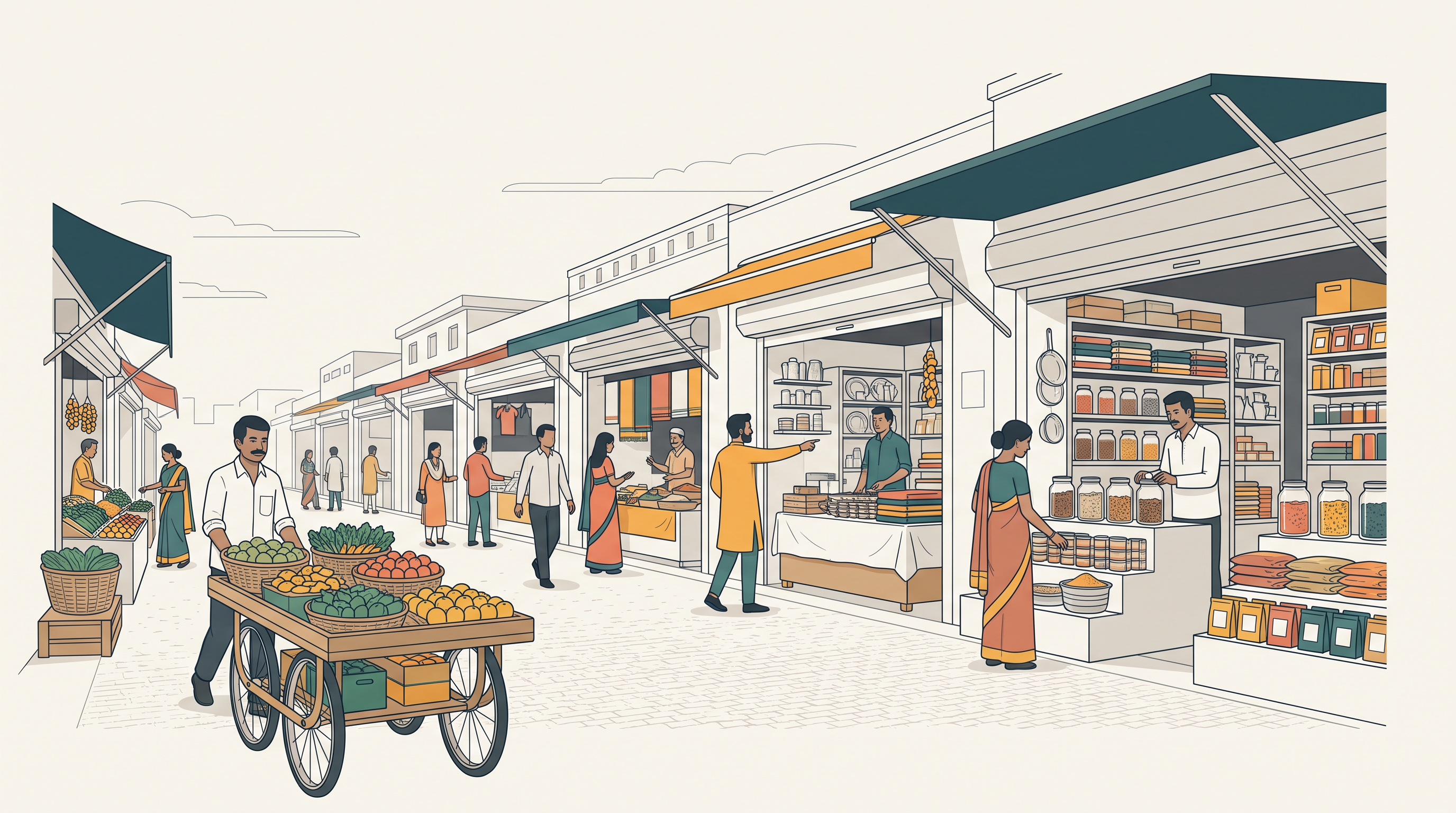
Fig. 10.0 – A busy Indian market street.
10.1 Introduction
Trade means buying and selling of goods and services with the objective of earning profit. It is one of the oldest business activities known to us. Human beings have been engaged in trading, in one form or another, since the early days of civilisation.
The importance of trade has grown steadily in modern times. New products are being developed every day and are being made available for consumption throughout the world. As the variety of goods increases, so does the need for someone to move those goods from where they are produced to where they are wanted.
The reason trade exists at all is that no individual and no country can claim to be self-sufficient in producing all the goods and services it requires. Land, climate, skills, capital and technology are unevenly spread. Each producer therefore concentrates on producing what it is best suited to produce, and exchanges the excess produce with others. Trade is the mechanism through which this exchange takes place.
Classification Of Trade
On the basis of the geographical location of buyers and sellers, trade can broadly be classified into two categories, as shown in Fig. 10.1.
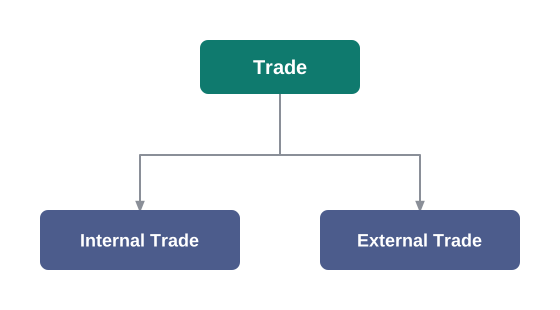
Fig. 10.1 – Classification of trade.
Trade which takes place within a country is called internal trade. Trade between two or more countries, on the other hand, is called external trade. The difference lies only in whether the buyer and the seller are located inside the same national boundary or in different countries.
This chapter deals with the first of these two. It discusses in detail the meaning and nature of internal trade, explains its different types, and describes the role of chambers of commerce in promoting internal trade.
10.2 Internal Trade
Buying and selling of goods and services within the boundaries of a nation is referred to as internal trade. What matters is not the size of the transaction or the kind of shop involved, but the fact that both the buyer and the seller are located within the same country.
Whether the products are purchased from a neighbourhood shop in a locality, a central market, a departmental store, a mall, a door-to-door salesperson or an exhibition, all of these are examples of internal trade, because the goods are purchased from an individual or an establishment within the country.
Features Of Internal Trade
Two features follow directly from this. First, no custom duty or import duty is levied on such trade, since the goods are part of domestic production and are meant for domestic consumption. Second, payment has generally to be made in the legal tender of the country, or in any other acceptable currency.
Why Middlemen Are Needed
Products are usually made in one place but consumed over a very wide area. Where goods have to be distributed to a large number of buyers spread across a wide geographical area, it becomes very difficult for producers to reach all the consumers or users directly.
Consider vegetable oil or bathing soap produced in a factory in one part of the country, which has to reach millions of consumers throughout the country. The producer cannot open a counter in every locality. Here the help of wholesalers and retailers becomes very important, because they take over the work of distribution.
Two Categories Of Internal Trade
Internal trade can be classified into two broad categories, wholesale trade and retail trade. The basis of this classification is the quantity in which goods are dealt in and the purpose for which they are bought. The classification is shown in Fig. 10.2.
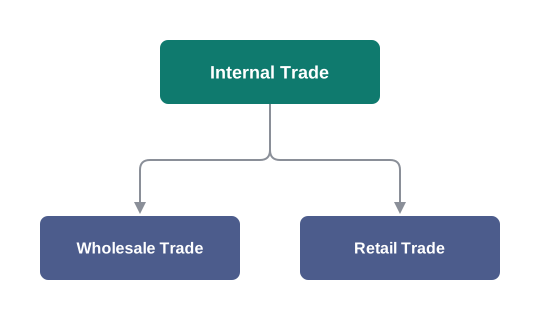
Fig. 10.2 – Categories of internal trade.
Purchase and sale of goods and services in large quantities for the purpose of resale or intermediate use is referred to as wholesale trade. Purchase and sale of goods in relatively small quantities, generally to the ultimate consumers, is referred to as retail trade.
Traders dealing in wholesale trade are called wholesalers, and those dealing in retail trade are called retailers. Both are important marketing intermediaries, that is, they stand between the producer and the final user and perform very useful functions in the process of exchange of goods and services. The distinction between the two is summarised in Table 10.1.
Taken together, internal trade aims at the equitable distribution of goods within a nation, speedily and at a reasonable cost.
10.3 Wholesale Trade
As explained in the previous section, wholesale trade refers to buying and selling of goods and services in large quantities for the purpose of resale or intermediate use. The wholesaler, therefore, is not selling to the person who will finally use the product.
Wholesaling is concerned with the activities of those persons or establishments which sell to retailers and other merchants, and to industrial, institutional and commercial users, but who do not sell in any significant amount to ultimate consumers.
Position Of The Wholesaler
Wholesalers serve as an important link between manufacturers and retailers. Their position in the chain of distribution is shown in Fig. 10.3.

Fig. 10.3 – Chain of distribution in internal trade.
Because of this position, wholesalers enable producers not only to reach a large number of buyers spread over a wide geographical area, through retailers, but also to perform a variety of functions in the process of distribution of goods and services.
Wholesalers generally take the title of the goods, that is, ownership passes to them. They bear the business risks by purchasing and selling the goods in their own name. They purchase in bulk and sell in small lots to retailers or industrial users.
Functions Undertaken By Wholesalers
In carrying on this business, wholesalers undertake a number of distinct activities:
Grading of products according to quality and size.
Packing the goods into smaller lots suitable for retailers.
Storage of goods until they are demanded.
Transportation of goods from the factory to their warehouses and onward to retailers.
Promotion of goods among retailers and buyers.
Collection of market information about demand, prices and competition.
Collection of small and scattered orders of retailers and distribution of supplies to them.
They also relieve the retailers of the burden of maintaining a large stock of articles, and extend credit facilities to them.
Most of the functions performed by wholesalers are such that they cannot be eliminated. If there are no wholesalers, these functions will still have to be performed, either by the manufacturers or by the retailers. This is an important point in the common debate on whether middlemen only add to price.
Services Of Wholesalers
Wholesalers provide various services to manufacturers as well as to retailers, and give immense help in the distribution of goods and services. By making the products available at a place where these are needed, they provide place utility. By making them available at a time when these are needed for consumption or use, they provide time utility. The services of wholesalers to the different sections are discussed below.
10.3.1 Services to Manufacturers
The major services offered by wholesalers to the producers of goods and services are as follows:
Facilitating large scale production — wholesalers collect small orders from a number of retailers and pass on the pool of such orders to the manufacturers, making purchases in bulk quantities. This enables the producers to undertake production on a large scale and take advantage of the economies of scale.
Bearing risk — the wholesale merchants deal in goods in their own name, take delivery of the goods, and keep the goods purchased in large lots in their warehouses. In the process they bear a variety of risks, such as the risk of a fall in prices, theft, pilferage, spoilage and fire. To that extent, they relieve the manufacturers from bearing these risks.
Financial assistance — wholesalers generally make cash payment for the goods purchased by them. To that extent the manufacturers need not block their capital in stocks. Sometimes wholesalers also advance money to the producers for bulk orders placed by them.
Expert advice — as wholesalers are in direct contact with the retailers, they are in a position to advise the manufacturers about various aspects, including customers’ tastes and preferences, market conditions, competitive activities and the features preferred by buyers. They serve as an important source of market information on these and related aspects.
Help in marketing function — wholesalers take care of the distribution of goods to a number of retailers, who in turn sell these goods to a large number of customers spread over a large geographical area. This relieves the manufacturers of many marketing activities and enables them to concentrate on the production activity.
Facilitate production continuity — wholesalers make it possible for production to continue throughout the year, by purchasing the goods as and when these are produced and storing them till the time they are demanded by retailers or consumers in the market.
Storage — wholesalers take delivery of goods when these are produced in the factory and keep them in their godowns or warehouses. This reduces the burden on manufacturers of providing storage facilities for finished products. They thus provide time utility.
10.3.2 Services to Retailers
The important services offered by wholesalers to the retailers are described below:
Availability of goods — retailers have to maintain adequate stock of varied commodities so that they can offer variety to their customers. Wholesalers make the products of various manufacturers readily available to them. This relieves the retailers of the work of collecting goods from several producers and of keeping a big inventory of the same.
Marketing support — wholesalers perform various marketing functions and provide support to the retailers. They undertake advertising and other sales promotional activities to induce customers to purchase the goods. Retailers benefit because this helps in increasing the demand for various new products.
Grant of credit — wholesalers generally extend credit facilities to their regular customers. This enables retailers to manage their business with a relatively small amount of working capital.
Specialised knowledge — wholesalers specialise in one line of products and know the pulse of the market. They pass on the benefit of this specialised knowledge to the retailers by informing them about new products, their uses, quality and prices. They may also advise them on the decor of the retail outlet, allocation of shelf space and demonstration of certain products.
Risk sharing — wholesalers purchase in bulk and sell in relatively small quantities to the retailers. Being able to purchase merchandise in smaller quantities, retailers are in a position to avoid the risk of storage, pilferage, obsolescence, reduction in prices and demand fluctuations in respect of the larger quantities of goods that they would otherwise have had to purchase.
10.4 Retail Trade
A retailer is a business enterprise that is engaged in the sale of goods and services directly to the ultimate consumers. The retailer normally buys goods in large quantities from the wholesalers and sells them in small quantities to the ultimate consumers.
Retailing represents the final stage in distribution, where goods are transferred from the hands of the manufacturers or wholesalers to the final consumers or users. Retailing is, thus, that branch of business which is devoted to the sale of goods and services to the ultimate consumers for their personal and non-business use.
What Counts As Retailing
There may be different ways of selling goods, such as personally, on telephone, or through vending machines. The products may also be sold at different places, such as in a store, at the customer’s house, or at any other place.
Some of the common situations we encounter in daily life are the sale of ball pens, or some magic medicine, or a book of jokes in roadways buses; the sale of cosmetics and detergent powder on a door-to-door basis; and the sale of vegetables by the roadside by a small farmer. As long as the goods are sold to ultimate consumers, all of these are treated as cases of retail selling.
The test, therefore, is not ‘how’ the products are sold or ‘where’ the sale is made. If the sales are made directly to the consumers, it will be considered as retailing.
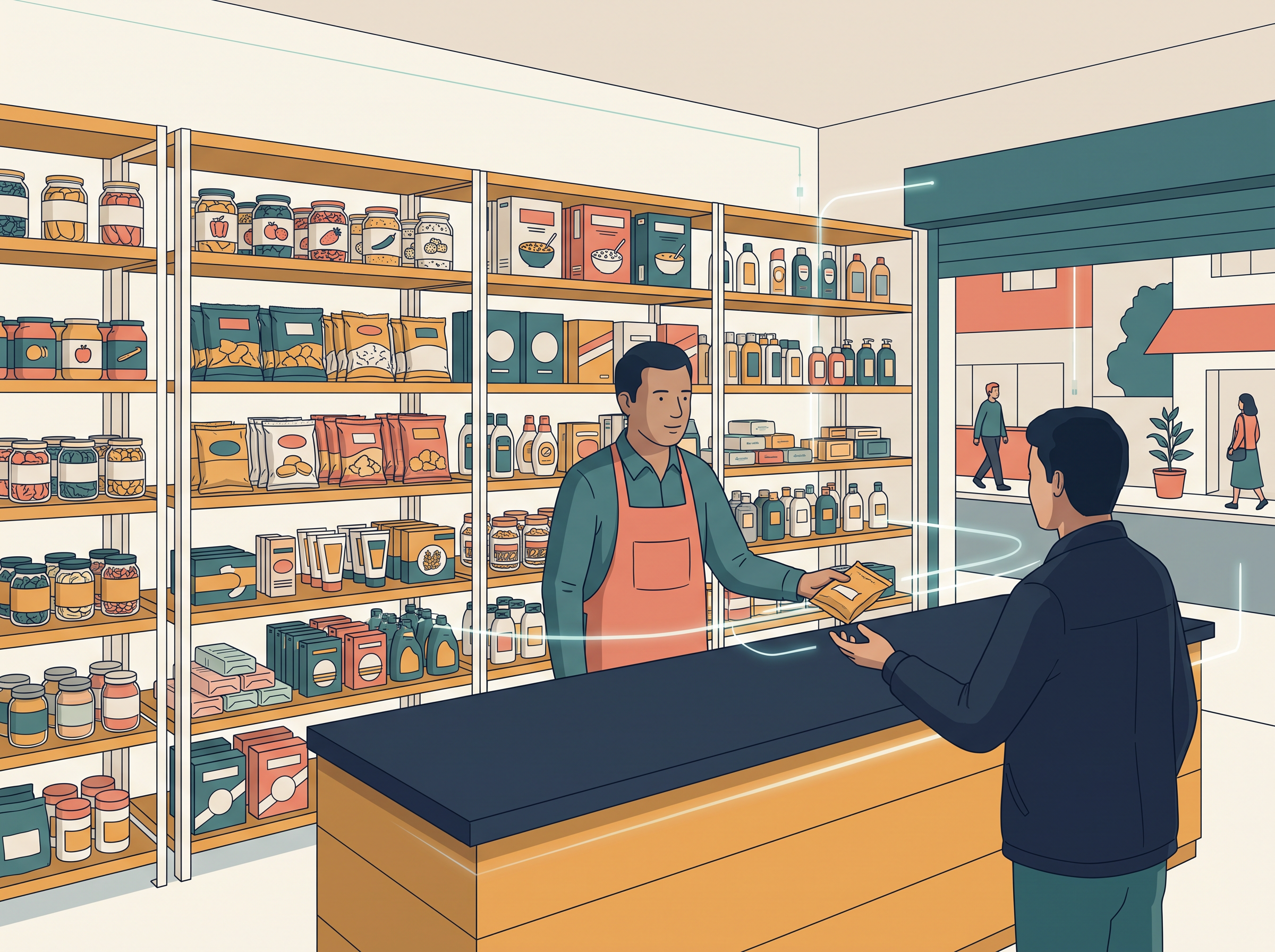
Fig. 10.4 – A neighbourhood retail shop.
Functions Of A Retailer
A retailer performs different functions in the distribution of goods and services. He or she purchases a variety of products from the wholesale distributors and others, arranges for proper storage of goods, sells the goods in small quantities, bears business risks, grades the products, collects market information, extends credit to the buyers, and promotes the sale of products through displays and participation in various schemes.
Services Of Retailers
Retailers serve as an important link between the producers and the final consumers in the distribution of products and services. They provide useful services to the consumers, to the wholesalers and to the manufacturers. Some of the important services of retailers are described below.
10.4.1 Services to Manufacturers and Wholesalers
The invaluable services that retailers render to the wholesalers and producers are as follows:
Help in distribution of goods — a retailer’s most important service to the wholesalers and manufacturers is to help in the distribution of their products by making these available to the final consumers, who may be scattered over a large geographic area. They thus provide place utility.
Personal selling — in the sale of most consumer goods, some amount of personal selling effort is necessary. By undertaking personal selling efforts, retailers relieve the producers of this activity and greatly help them in the process of actualising the sale of the products.
Enabling large-scale operations — on account of the retailer’s services, the manufacturers and wholesalers are freed from the trouble of making individual sales to consumers in small quantities. This enables them to operate on a relatively large scale and to concentrate fully on their other activities.
Collecting market information — as retailers remain in direct and constant touch with the buyers, they serve as an important source of collecting market information about the tastes, preferences and attitudes of customers. Such information is very useful in taking important marketing decisions in an organisation.
Help in promotion — from time to time, manufacturers and distributors have to carry on various promotional activities in order to increase the sale of their products. For example, they have to advertise their products and offer short-term incentives in the form of coupons, free gifts and sales contests. Retailers participate in these activities in various ways and thereby help in promoting the sale of the products.
10.4.2 Services to Consumers
Some of the important services of retailers from the point of view of consumers are as follows:
Regular availability of products — the most important service of a retailer to consumers is to maintain regular availability of various products produced by different manufacturers. This enables the buyers to buy products as and when needed.
New products information — by arranging for effective display of products and through their personal selling efforts, retailers provide important information about the arrival and special features of new products to the customers. This serves as an important factor in the buying decision making process for the purchase of such goods.
Convenience in buying — retailers generally buy goods in large quantities and sell these in small quantities, according to the requirements of their customers. They are also normally situated very near to residential areas and remain open for long hours. This offers great convenience to customers in buying products of their requirements.
Wide selection — retailers generally keep stock of a variety of products of different manufacturers. This enables consumers to make their choice out of a wide selection of goods.
After-sales services — retailers provide important after-sales services in the form of home delivery, supply of spare parts and attending to customers. This becomes an important factor in the buyers’ decision for repeat purchase of the products.
Provide credit facilities — retailers sometimes provide credit facilities to their regular buyers. This enables the latter to increase their level of consumption and, thereby, their standard of living.
Common Terms Of Trade
A few standard terms are used in trade to fix who bears the cost and the risk in a transaction. A student should be able to recognise them:
Cash on delivery (COD) — a type of transaction in which payment for goods or services is made at the time of delivery. If the buyer is unable to make payment when the goods or services are delivered, they will be returned to the seller.
Free on Board or Free on Rail (FoB or FOR) — a contract between the seller and the buyer in which all the expenses up to the point of delivery to a carrier, which may be a ship, rail or lorry, are to be borne by the seller.
Cost, Insurance and Freight (CIF) — the price of goods which includes not only the cost of the goods but also the insurance and freight charges payable on the goods up to the destination port.
Errors and Omissions Excepted (E&OE) — a term used in trade documents to say that mistakes, and things that have been forgotten, should be taken into account.
10.5 Types of Retailing Trade
There are many types of retailers in India. For proper understanding, it is useful to classify them into certain common categories. Different classifications have been used by experts to categorise retailers into different types.
For example, on the basis of ‘size of business’, retailers may be categorised into large, medium and small retailers. On the basis of ‘type of ownership’, they may be categorised into ‘sole trader’, ‘partnership firm’, ‘cooperative store’ and ‘company’. Similarly, on the basis of ‘merchandise handled’, the classifications may be ‘speciality store’, ‘supermarket’ and ‘departmental store’.
Another common basis of classification is whether or not the retailer has a fixed place of business. On this basis there are two categories of retailers, itinerant retailers and fixed shop retailers. This is the classification the chapter follows, and it is summarised in Fig. 10.5.
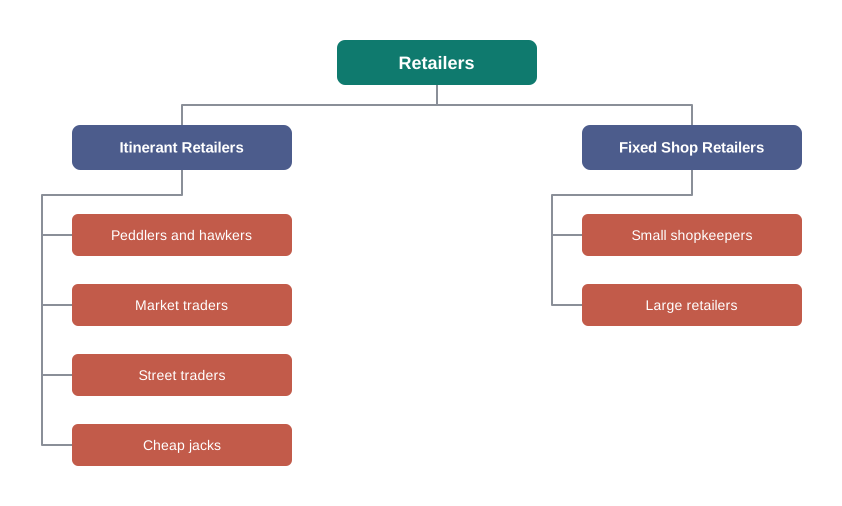
Fig. 10.5 – Types of retailers by place of business.
Both these types of retailers are described in detail in the sections that follow.
10.5.1 Itinerant Retailers
Itinerant retailers are traders who do not have a fixed place of business to operate from. They keep on moving with their wares from street to street or place to place, in search of customers.
Characteristics Of Itinerant Retailers
They are small traders operating with limited resources.
They normally deal in consumer products of daily use, such as toiletry products, fruits and vegetables.
The emphasis of such traders is on providing greater customer service by making the products available at the very doorstep of the customers.
As they do not have any fixed business establishment to operate from, these retailers have to keep their limited inventory of merchandise either at home or at some other place.
Types Of Itinerant Retailers
Some of the most common types of itinerant retailers operating in India are given below:
Peddlers and hawkers — they are probably amongst the oldest form of retailers in the market place, and have not lost their utility even in modern times. They are small producers or petty traders who carry the products on a bicycle, a hand cart, a cycle-rickshaw or on their heads, and move from place to place to sell their merchandise at the doorstep of the customers. They generally deal in non-standardised and low-value products such as toys, vegetables and fruits, fabrics, carpets, snacks and ice creams. They are also found in the streets of residential areas, at places of exhibitions or meals, and outside schools during a lunch break. The main advantage of this form of retailing is the provision of convenient service to the consumers. However, one should be careful in dealing with them, as the products they deal in are not always reliable in terms of quality and price.
Market traders — they are small retailers who open their shops at different places on fixed days or dates, such as every Saturday or alternate Saturdays. These traders may deal in one particular line of merchandise, say fabrics or ready-made garments, toys or crockery, or alternatively they may be general merchants. They mainly cater to the lower-income group of customers and deal in low-priced consumer items of daily use.
Street traders, also called pavement vendors — they are small retailers who are commonly found at places where a huge floating population gathers, for example near railway stations and bus stands. They sell consumer items of common use, such as stationery items, eatables, ready-made garments, newspapers and magazines. They are different from market traders in the sense that they do not change their place of business so frequently.
Cheap jacks — they are petty retailers who have independent shops of a temporary nature in a business locality. They keep on changing their business from one locality to another, depending upon the potentiality of the area. However, the change of place is not as frequent as in the case of hawkers or market traders. They deal in consumer items as well as services such as repair of watches, shoes and buckets.
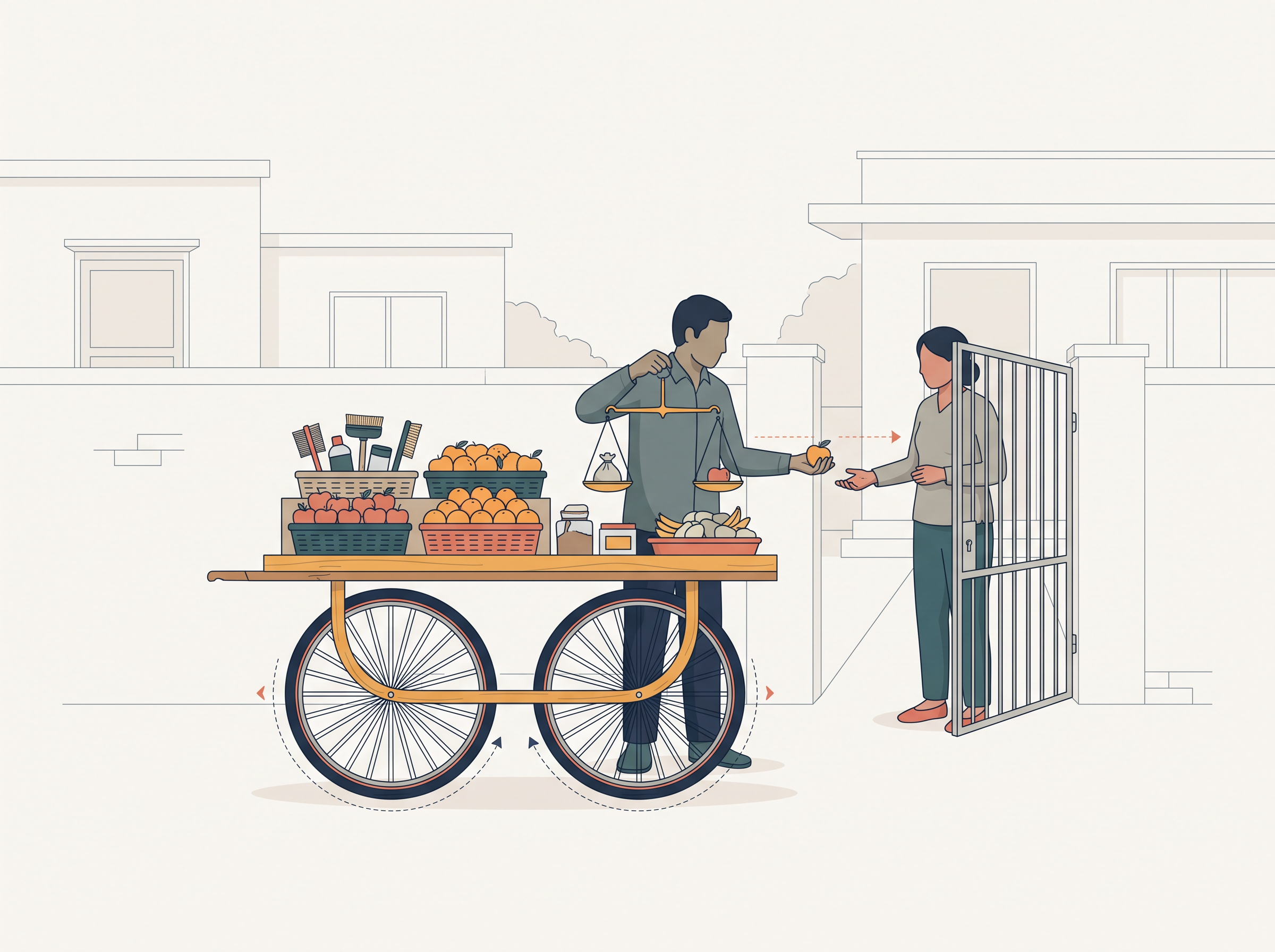
Fig. 10.6 – Hawker selling goods from a handcart.
10.5.2 Fixed Shop Retailers
Fixed shop retailers are the most common type of retailing in the market place. As is evident from the name, these are retail shops which maintain a permanent establishment to sell their merchandise. They, therefore, do not move from place to place to serve their customers.
Characteristics Of Fixed Shop Retailers
Compared with the itinerant traders, they normally have greater resources and operate on a relatively large scale. However, there are different size groups of fixed shop retailers, varying from very small to very large.
These retailers may be dealing in different products, including consumer durables as well as non-durables.
This category of retailers has greater credibility in the minds of customers, and they are in a position to provide greater services to the customers, such as home delivery, guarantees, repairs, credit facilities and availability of spares.
The fixed shop retailers can be classified into two distinct types on the basis of the size of their operations, namely small shopkeepers and large retailers. The different types of retailers falling under these two broad heads are described below.
10.5.2.1 Fixed Shop Small Retailers
General stores — these are most commonly found in local markets and residential areas. As the name indicates, these shops carry stock of a variety of products required to satisfy the day-to-day needs of the consumers residing in nearby localities. Such stores remain open for long hours at convenient timings and often provide credit facilities to some of their regular customers. Their biggest advantage is convenience to the customers in buying products of daily use, such as grocery items, soft drinks, toiletry products, stationery and confectionery. As most of their customers are residents of the same locality, an important factor contributing to their success is the image of the owner and the rapport he has established with them.
Speciality shops — this type of retail store is, of late, becoming very popular, particularly in urban areas. Instead of selling a variety of products of different types, these retail stores specialise in the sale of a specific line of products. For example, there are shops selling children’s garments, men’s wear, ladies’ shoes, toys and gifts, school uniforms, college books or consumer electronic goods. Speciality shops are generally located in a central place where a large number of customers can be attracted, and they provide a wide choice to the customers in the selection of goods.
Street stall holders — these small vendors are commonly found at street crossings or other places where the flow of traffic is heavy. They attract floating customers and deal mainly in goods of a cheap variety, like hosiery products, toys, cigarettes and soft drinks. They get their supplies from local suppliers as well as from wholesalers. The total area covered by a stall is very limited and, therefore, they handle goods on a very small scale. Their main advantage is in providing convenient service to customers in buying some of the items of their needs.
Second-hand goods shops — these shops deal in second-hand or used goods, like books, clothes, automobiles, furniture and other household goods. Generally persons with modest means purchase goods from such shops, as the goods are sold at lower prices. Such shops may also stock rare objects of historical value and antique items, which are sold at rather heavy prices to people who have a special interest in such antique goods. These shops may be located at street crossings or in busy streets in the form of a stall having very little structure, such as a table or a temporary platform to display the books, or they may have reasonably good infrastructure, as in the case of those selling furniture, used cars, scooters or motorcycles.
Single line stores — these stores deal in a single product line, such as ready-made garments, watches or shoes. They keep a variety of items of the same line and are usually situated at a central location. The difference from a speciality shop is one of depth: a single line store covers the whole line, whereas a speciality shop concentrates on one specific segment within it.
10.5.2.2 Fixed Shop Large Stores
In fixed shop large stores, the volume and the variety of goods stocked is large. The important forms are described below.
Departmental Stores
A departmental store is a large establishment offering a wide variety of products, classified into well-defined departments, aimed at satisfying practically every customer’s need under one roof. It has a number of departments, each one confining its activities to one kind of product. For example, there may be separate departments for toiletries, medicines, furniture, groceries, electronics, clothing and dress material within a store. Thus, they satisfy diverse market segments with a wide variety of goods and services.
It is not uncommon for a department store in the United States of America to carry ‘needle to an aeroplane’ or ‘all shopping under one roof’. Everything from ‘a pin to an elephant’ is the spirit behind a typical department store. In India, real departmental stores have not yet come in a big way in the retailing business. However, some stores on this line in India include Akberally in Mumbai and Spencer’s in Chennai.
Some of the important features of a departmental store are as follows:
A modern departmental store may provide all facilities such as a restaurant, a travel and information bureau, a telephone booth and restrooms. As such, they try to provide maximum service to a higher class of customers, for whom price is of secondary importance.
These stores are generally located at a central place in the heart of a city, which caters to a large number of customers.
As the size of these stores is very large, they are generally formed as a joint stock company managed by a board of directors. There is a managing director assisted by a general manager and several department managers.
A departmental store combines both the functions of retailing as well as warehousing. They purchase directly from manufacturers and operate separate warehouses. That way they help in eliminating undesirable middlemen between the producers and the customers.
They have centralised purchasing arrangements. All the purchases in a department store are made centrally by the purchase department of the store, whereas sales are decentralised in different departments.
The major advantages of retailing through departmental stores are as follows:
Attract large number of customers — as these stores are usually located at central places, they attract a large number of customers during the best part of the day.
Convenience in buying — by offering a large variety of goods under one roof, the departmental stores provide great convenience to customers in buying almost all goods of their requirements at one place. As a result, customers do not have to run from one place to another to complete their shopping.
Attractive services — a departmental store aims at providing maximum services to the customers. Some of the services offered by it include home delivery of goods, execution of telephone orders, grant of credit facilities and provision for restrooms, telephone booths, restaurants and saloons.
Economy of large-scale operations — as these stores are organised at a very large scale, the benefits of large scale operations, particularly in respect of purchase of goods, are available to them.
Promotion of sales — the departmental stores are in a position to spend a considerable amount of money on advertising and other promotional activities, which help in boosting their sales.
There are, however, certain limitations of this type of retailing. These are described below:
Lack of personal attention — because of the large-scale operations, it is very difficult to provide adequate personal attention to the customers in these stores.
High operating cost — as these stores give more emphasis on providing services, their operating costs tend to be on the higher side. These costs, in turn, make the prices of the goods high. They are, therefore, not attractive to the lower income group of people.
High possibility of loss — as a result of high operating costs and large-scale operations, the chances of incurring losses in a departmental store are high. For example, if there is any change in the tastes of customers or in the latest fashions, it becomes necessary to sell such out-of-fashion articles in a clearance sale, to reduce the huge inventory of goods built up.
Inconvenient location — as a departmental store is generally situated at a central location, it is not convenient for the purchase of goods that are needed at short notice.
In spite of some of these limitations, departmental stores have been popular in some of the western countries of the world, because of their benefits to a certain class of customers.
Chain Stores Or Multiple Shops
Chain stores or multiple shops are networks of retail shops that are owned and operated by manufacturers or intermediaries. Under this type of arrangement, a number of shops with similar appearance are established in localities spread over different parts of the country.
These different shops normally deal in standardised and branded consumer products, which have a rapid sales turnover. The shops are run by the same organisation and have identical merchandising strategies, with identical products and displays.
Some of the important features of such shops are described below:
These shops are located in fairly populous localities, where a sufficient number of customers can be approached. The idea is to serve the customers at a point which is nearest to their residence or work place, rather than attracting them to a central place.
The manufacturing or procurement of merchandise for all the retail units is centralised at the head office, from where the goods are despatched to each of these shops according to their requirements. This results in savings in the cost of operation of these stores.
Each retail shop is under the direct supervision of a Branch Manager, who is held responsible for its day-to-day management. The Branch Manager sends daily reports to the head office in respect of the sales, cash deposits and the requirements of stock.
All the branches are controlled by the head office, which is concerned with formulating the policies and getting them implemented.
The prices of goods in such shops are fixed and all sales are made on a cash basis. The cash realised from the sales of merchandise is deposited daily into a local bank account on behalf of the head office, and a report is sent to the head office in this regard.
The head office normally appoints inspectors, who are concerned with day-to-day supervision of the shops, in respect of the quality of customer service provided, adherence to the policies of the head office, and so on.
The chain operation is most effective in handling high-volume merchandise whose sales are relatively constant throughout the year. In India, Bata shoe stores, DCM, Nirula’s and Raymond are typical examples of such shops.
Multiple shops offer various advantages to the consumers, which are described below:
Economies of scale — as there is central procurement, the multiple-shop organisation enjoys the economies of scale.
Elimination of middlemen — by selling directly to the consumers, the multiple-shop organisation is able to eliminate unnecessary middlemen in the sale of goods and services.
No bad debts — since all the sales in these shops are made on a cash basis, there are no losses on account of bad debts.
Transfer of goods — goods not in demand in a particular locality may be transferred to another locality where they are in demand. This reduces the chances of dead stock in these shops.
Diffusion of risk — the losses incurred by one shop may be covered by profits in other shops, reducing the total risk of the organisation.
Low cost — because of centralised purchasing, elimination of middlemen, centralised promotion of sales and increased sales, the multiple shops have a lower cost of business.
Flexibility — under this system, if a shop is not operating at a profit, the management may decide to close it or shift it to some other place, without really affecting the profitability of the organisation as a whole.
The limitations of multiple shops are as follows:
Limited selection of goods — some of the multiple shops deal only in a limited range of products. This is especially a problem with the chain stores which are owned and operated by manufacturers, as such stores mostly sell the products produced by themselves and do not sell products of other manufacturers. In that way the consumers get only a limited choice of goods. This, however, is not the case with retailer-owned chain stores such as Big Apple or Reliance Retail, which sell products of a large number of manufacturers.
Lack of initiative — the personnel managing the multiple shops have to obey the instructions received from the head office. This makes them habitual of looking up to the head office for guidance on all matters, and takes away the initiative from them to use their creative skills to satisfy the customers.
Lack of personal touch — lack of initiative in the employees sometimes leads to indifference and a lack of personal touch in them.
Difficult to change demand — if the demand for the merchandise handled by multiple shops changes rapidly, the management may have to sustain huge losses because of large stocks lying unsold at the central depot.
Although both departmental stores and multiple shops are large establishments, there are certain differences between the two. These are given in Table 10.2.
Mail Order Houses
Mail order houses are the retail outlets that sell their merchandise through mail. There is generally no direct personal contact between the buyers and the sellers in this type of trading.
For obtaining orders, potential customers are approached through advertisements in newspapers or magazines, circulars, catalogues, samples and bills, and price lists sent to them by post. All the relevant information about the products, such as the price, features, delivery terms and terms of payment, is described in the advertisement. On receiving the orders, the items are carefully scrutinised with respect to the specifications asked for by the buyers, and are complied with through the post office.
There can be different alternatives for receiving payments:
The customers may be asked to make full payment in advance.
The goods may be sent by Value Payable Post (VPP). Under this arrangement, the goods are sent through post and are delivered to the customers only on making full payment for the same.
The goods may be sent through a bank, which is instructed to deliver the articles to the customers. In this arrangement there is no risk of bad debt, as the goods are handed over to the buyer only after full payment is made. However, there is a need to assure the buyers that the goods despatched are in accordance with their specifications.
This type of business is not suitable for all types of products. Goods that are perishable in nature, or are bulky and cannot be easily handled, are not recommended for mail order trading. Only goods which satisfy the following conditions are suitable for this type of trading:
They can be graded and standardised.
They can be easily transported at low cost.
They have ready demand in the market.
They are available in large quantity throughout the year.
They involve the least possible competition in the market.
They can be described through pictures and similar means.
Another important point in this regard is that mail order business cannot be successfully carried out unless education is widespread. It is so because only literate people can be reached through advertisements and other forms of written communication.
The advantages of mail order houses are as follows:
Limited capital requirement — mail order business does not require heavy expenditure on building and other infrastructural facilities. Therefore, it can be started with a relatively low amount of capital.
Elimination of middlemen — the biggest advantage of mail order business from the point of view of consumers is that unnecessary middlemen between the buyers and sellers are eliminated. This may result in a lot of savings both to the buyers as well as to the sellers.
Absence of bad debt — since the mail order houses do not extend credit facilities to the customers, there are no chances of any bad debt on account of non-payment of cash by the customers.
Wide reach — under this system the goods can be sent to all the places having postal services. This opens wide scope for business, as a large number of people throughout the country can be served through mail.
Convenience — under this system goods are delivered at the doorstep of the customers. This results in great convenience to the customers in buying these products.
The limitations of mail order houses are as follows:
Lack of personal contact — as there is no personal contact between the buyers and the sellers, there are greater possibilities of misunderstanding and mistrust between the two. The buyers are not in a position to examine the products before buying, and the sellers cannot pay personal attention to the likes and dislikes of the buyers or clear all their doubts through catalogues and advertisements.
High promotion cost — the mail order business has to rely heavily on advertisements and other methods of promotion in order to inform and persuade the potential buyers to buy their products. As a result, there is heavy expenditure on promotion of the products.
No after sales service — in mail order selling, the buyers and sellers may be located very far away from each other and there is no personal contact between the two. As a result, there is an absence of after sales services, which is so important for the satisfaction of the customers.
No credit facilities — the mail order houses do not provide credit facilities to the buyers. Thus, customers with limited means may not be interested in this type of trading.
Delayed delivery — there is no immediate delivery of goods to the customers, as receipt and execution of an order through mail takes its own time.
Possibility of abuse — this type of business provides greater possibility of abuse to dishonest traders, who may cheat the customers by making false claims about the products or by not honouring the commitments made through handbills or advertisements.
High dependence on postal services — the success of mail order business depends heavily on the availability of efficient postal services at a place. But in a vast country like ours, where many places are still without postal facilities, this type of business has limited prospects.
Consumer Cooperative Stores
A consumer cooperative store is an organisation owned, managed and controlled by consumers themselves. The objective of such stores is to reduce the number of middlemen, who increase the cost of produce, and thereby to provide service to the members.
The cooperative stores generally buy in large quantity, directly from manufacturers or wholesalers, and sell to the consumers at reasonable prices. Since the middlemen are eliminated or reduced, the members get products of good quality at cheaper rates. The profits earned by consumer cooperative stores during a year are utilised for declaring bonus to members and for strengthening the general reserves and general welfare funds, or similar funds for social and educational benefits of the members.
To start a consumer cooperative store, at least 10 people have to come together and form a voluntary association and get it registered under the Cooperative Societies Act. The capital of a cooperative store is raised by issue of shares to members. The management of the store is democratic and is entrusted to an elected managing committee, where one man one vote is the rule. The liability of the members of a cooperative store is generally limited to the extent of the capital contributed by them. To ensure fair management of funds, the accounts of the stores are audited by the Registrar of Cooperative Societies or a person authorised by him or her.
The major advantages of a consumer cooperative store are as follows:
Ease in formation — it is easy to form a consumer cooperative society. Any ten people can come together to form a voluntary association and get themselves registered with the Registrar of Cooperative Societies by completing certain formalities.
Limited liability — the liability of the members in a cooperative store is limited to the extent of the capital contributed by them. Over and above that amount, they are not liable personally to pay for the debts of the society, in case the liabilities are greater than its assets.
Democratic management — cooperative societies are democratically managed through management committees which are elected by the members. Each member has one vote, irrespective of the number of shares held by him or her.
Lower prices — a cooperative store purchases goods directly from the manufacturers or wholesalers and sells them to members and others. Elimination of middlemen results in lower prices for the consumer goods to the members.
Cash sales — the consumer cooperative stores normally sell goods on a cash basis. As a result, the requirement for working capital is reduced.
Convenient location — the consumer cooperative stores are generally opened at convenient public places, where the members and others can easily buy the products as per their requirements.
The limitations of consumer cooperative stores are as follows:
Lack of initiative — as the cooperative stores are managed by people who work on an honorary basis, there is a lack of sufficient initiative and motivation amongst them to work more effectively.
Shortage of funds — the primary source of funds for a cooperative store is the money raised from members by issue of shares. The stores generally face a shortage of funds as membership is limited. This comes in the way of growth and expansion of the cooperative stores.
Lack of patronage — the members of the cooperative stores generally do not patronise them regularly. As a result, the stores are not able to operate successfully.
Lack of business training — the people entrusted with the management of cooperative stores lack expertise, as they are not trained in running the stores efficiently.
Super Markets
A super market is a large retailing business unit selling a wide variety of consumer goods on the basis of low price appeal, wide variety and assortment, self-service and heavy emphasis on merchandising appeal.
The goods traded are generally food products and other low priced, branded and widely used consumer products, such as grocery, utensils, clothes, electronic appliances, household goods and medicines. Super markets are generally situated at the main shopping centres. Goods are kept on racks with clearly labelled price and quality tags. The customers move into the store to pick up goods of their requirements, bring them to the cash counter, make payment and take home the delivery.
Super markets are organised on a departmental basis, where customers can buy various types of goods under one roof. However, as compared to departmental stores, these markets do not offer certain services such as free home delivery and credit facilities, and also do not appoint sales persons to convince customers about the quality of products.
Some of the important characteristics of a super market are as follows:
A super market generally carries a complete line of food items and groceries, in addition to non-food convenience goods.
The buyers can purchase different products as per their requirements under one roof in such markets.
A super market operates on the principle of self-service. The distribution cost is, therefore, lower.
The prices of the products are generally lower than in other types of retail stores, because of bulk purchasing, lower operational cost and low profit margins.
The goods are sold on a cash basis only.
The super markets are generally located at central locations to secure high turnover.
The merits of super markets are as follows:
One roof, low cost — super markets offer a wide variety of products at low cost under one roof. These outlets are, therefore, not only convenient but also economical to the buyers for making their purchases.
Central location — the super markets are generally located in the heart of the city. As a result, these are easily accessible to a large number of people staying in the surrounding localities.
Wide selection — super markets keep a wide variety of goods of different designs and colours, which enables the buyers to make a better selection.
No bad debts — as the sales are generally made on a cash basis, there are no bad debts in super markets.
Benefits of being large scale — a super market is a large scale retailing store. It enjoys all the benefits of large scale buying and selling, because of which its operating costs are lower.
The major limitations of super markets are as follows:
No credit — super markets sell their products on a cash basis only. No credit facilities are made available to the buyers. This restricts the purchasing power of buyers from such markets.
No personal attention — super markets work on the principle of self-service. The customers, therefore, do not get any personal attention. As a result, such commodities that require personal attention by sales people cannot be handled effectively in super markets.
Mishandling of goods — some customers handle the goods kept on the shelf carelessly. This may raise costs in super markets.
High overhead expenses — super markets incur high overhead expenses. As a result, these have not been able to create a low price appeal among the customers.
Huge capital requirement — establishing and running a super market requires huge investment. The turnover of a store should be high so that the overheads are kept at a reasonable level. This can be possible in bigger towns but not in small towns.
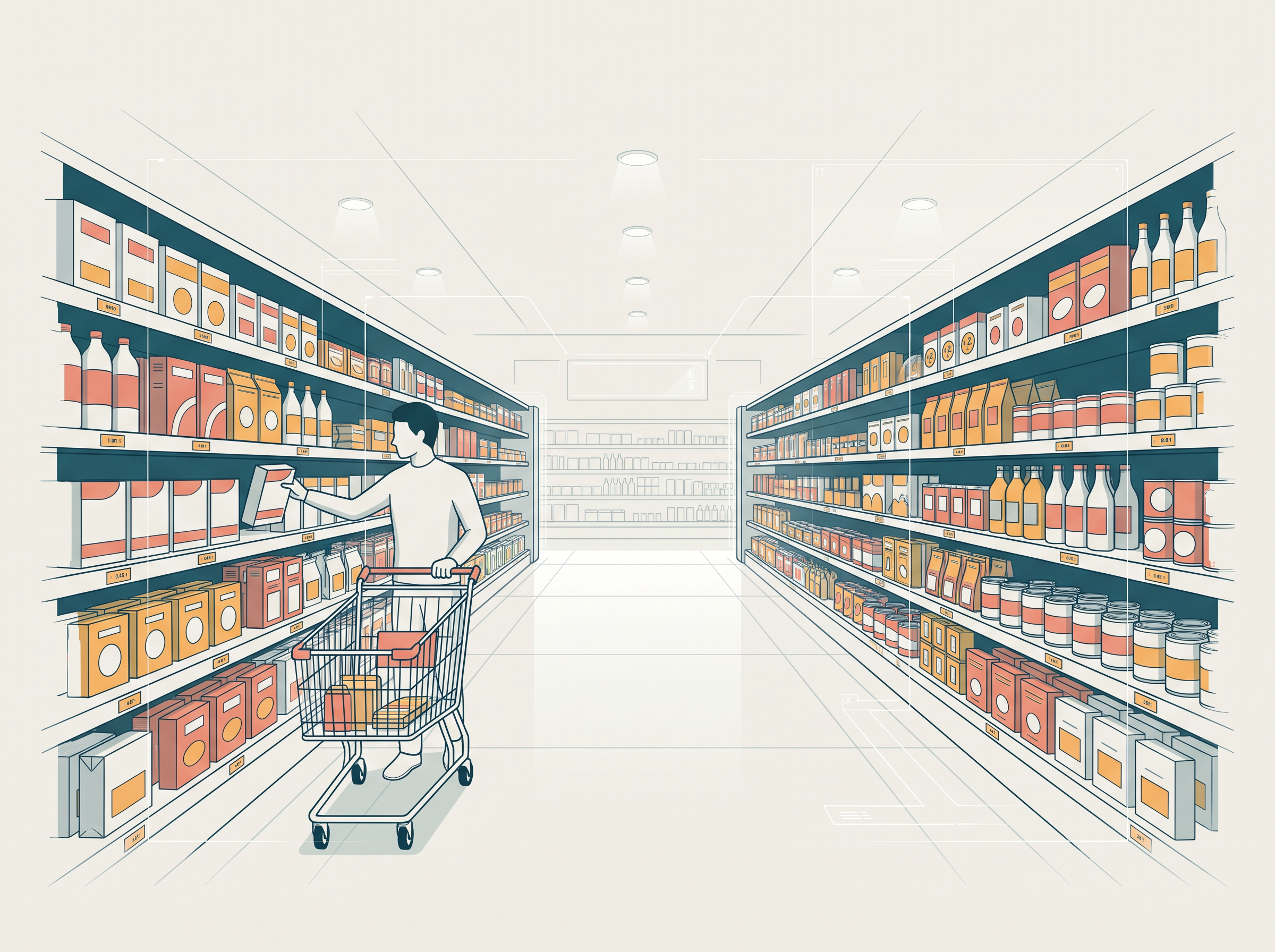
Fig. 10.7 – Self-service aisles in a super market.
Vending Machines
Vending machines are the newest revolution in marketing methods. Coin operated vending machines are proving useful in selling several products such as hot beverages, platform tickets, milk, soft drinks, chocolates and newspapers, in many countries.
Apart from the products mentioned here, the latest area in which this concept is getting popular in many parts of our country, particularly in the urban areas, is the case of Automated Teller Machines (ATM) in the banking service. As the name suggests, these machines have altogether changed the concept of banking and made it possible to withdraw money at any time without visiting any branch of a bank.
Vending machines can be useful for selling pre-packed brands of low priced products which have high turnover and which are uniform in size and weight. The reason for this restriction is simple: the machine cannot judge quality or size, so the product must be identical every time.
However, the initial cost of installing a vending machine and the expenditure on regular maintenance and repair are quite high. Also, consumers cannot feel or see the product before buying and do not have the opportunity of returning unwanted goods. Apart from that, special packs have to be developed for the machines, and the machines have to be made reliable in their operations.
In spite of these limitations, with the growth in the economy, vending machines have a promising future in retail sales of high turnover and low priced consumer products.
10.6 Goods and Services Tax
Before 2017, a product moving from a factory in one state to a shop in another passed through several different taxes, levied separately by the Central government and by each State government. Each tax was charged on a value that already included an earlier tax. This raised prices, made compliance difficult, and effectively divided the country into separate tax markets.
The Government of India, following the credo of ‘One Nation and One Tax’, and wanting a unified market in order to ensure the smooth flow of goods across the country, implemented the Goods and Services Tax (GST) from July 1, 2017. The move also aims to make life easier for manufacturers, producers, investors and consumers.
This system is regarded as the most revolutionising tax reform in Indian taxation history. A tax, apart from being a source of revenue for growth, also plays a key role in making the State accountable to its taxpayers. Effective taxation ensures that public funds are effectively employed in fulfilling social objectives for sustainable development.
What GST Is
GST is a destination-based single tax on the supply of goods and services from the manufacturer to the consumer. It has replaced multiple indirect taxes levied by the Central and the State governments, thereby converting the country into a unified market.
Among other benefits, GST is expected to improve the ease of doing business in tax compliance, reduce the tax burden by eliminating tax-on-tax, improve tax administration, mitigate tax evasion, broaden the organised segment of the economy and boost tax revenues.
The GST has replaced 17 indirect taxes, 8 at the Central level and 9 at the State level, and 23 cesses of the Centre and the States. This has eliminated the need for filing multiple returns and assessments, and has rationalised the tax treatment of goods and services along the supply chain from producers to consumers.
Components Of GST
GST comprises Central GST (CGST) and State GST (SGST), subsuming levies previously charged by the Central and the State governments respectively. Where a supply crosses state boundaries, Integrated GST (IGST) is charged instead. The structure is shown in Fig. 10.8.
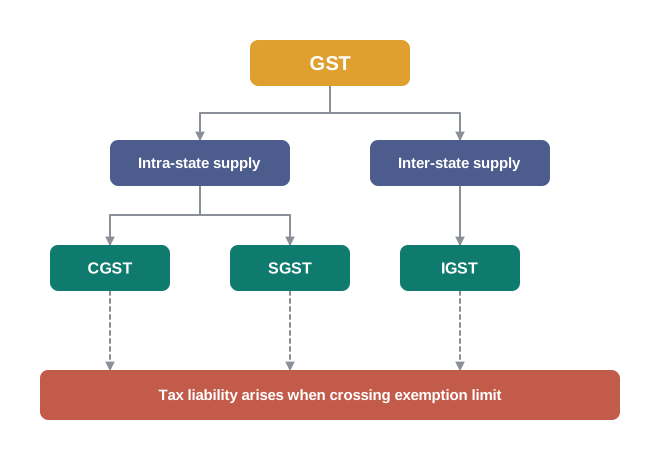
Fig. 10.8 – Structure of the Goods and Services Tax.
How The Tax Credit Mechanism Works
GST, that is CGST plus SGST, is charged at each stage of value addition. At each stage the supplier offsets the levy already paid on inputs in the previous stages of the value chain through the tax credit mechanism. This offset is known as input tax credit.
The last dealer in the supply chain passes on the added GST to the consumer, which is what makes GST a destination-based consumption tax. Because credit is available at each stage, tax is not charged on tax already paid. This avoids the cascading effect, and is expected to reduce prices of commodities and benefit consumers.
Key Features Of GST
The territorial spread of GST is the whole country.
GST is applicable on the ‘supply’ of goods or services, as against the earlier concept of tax on the manufacture or sale of goods, or on the provision of services.
It is based on the principle of destination-based consumption tax, against the earlier principle of origin-based taxation.
Import of goods and services is treated as inter-State supplies and is subject to IGST, in addition to the applicable customs duties.
CGST, SGST and IGST are levied at rates mutually agreed upon by the Centre and the States under the aegis of the GST Council.
There are four tax slabs, namely 5 per cent, 12 per cent, 18 per cent and 28 per cent, for all goods or services.
Exports and supplies to Special Economic Zones are zero-rated.
There are various modes of payment of tax available to the taxpayer, including Internet banking, debit or credit card, and National Electronic Funds Transfer (NEFT) or Real Time Gross Settlement (RTGS).
Constitution Of The GST Council
The GST Council is the body that decides the rules and the rates under GST. It is constituted as follows:
The Chairperson is the Finance Minister.
The Vice Chairperson is to be chosen from amongst the Ministers of State Governments.
The members are the Minister of State (Finance) and all Ministers of Finance or Taxation of each State.
The quorum is 50 per cent of total members.
The States have two-third weightage and the Centre has one-third weightage.
A decision is taken by a 75 per cent majority.
The Council shall make recommendations on everything related to GST, including rules and rates.
How GST Benefits Citizens
Reduction in the overall tax burden.
No hidden taxes.
Development of a harmonised national market for goods and services.
Higher disposable income in hand, for education and essential needs.
Wider choice for customers.
Increased economic activity.
More employment opportunities.
Some Facts About GST
GST aims to subsume a plethora of taxes into one single tax across the country and make goods uniformly priced across India, although some goods have become costly and some cheaper.
With the implementation of GST, luxury goods have become costlier, while items of mass consumption have become cheaper.
GST is not taxation at source. It is a destination tax, or rather a consumption tax. A product may be manufactured in Tamil Nadu and travel through the country before it reaches Delhi, where the buyer or consumer pays tax for it. Both the Centre and the State have their share in this tax.
The Indian GST has a mechanism of matching of invoices. Input tax credit of purchased goods and services is available only if the taxable supplies have actually been received and reported by the supplier. The Goods and Services Tax network is a self-regulating mechanism, which not only checks tax frauds and tax evasion, but also brings more and more businesses into the formal economy.
An anti-profiteering measure is one of the key features of the Goods and Services Tax law. Such measures prevent entities from making excessive profits. Since GST, along with the input tax credit, is eventually expected to bring down prices, a National Anti-profiteering Authority (NAA) is to be set up to ensure that the benefits accruing to entities due to reduction in costs are passed on to the consumers. Entities that hike rates inordinately, citing GST as the reason, will be checked by this body.
10.7 Role of Commerce and Industry Associations in the Promotion of Internal Trade
Traders and manufacturers face many problems that no single firm can solve on its own. A tax rule, a transport regulation or an inspection procedure affects an entire industry at once. For this reason, associations of business and industrial houses are formed to promote and protect their common interest and goals.
Many such associations have been formed and are present in the country, such as the Associated Chamber of Commerce and Industry (ASSOCHAM), the Confederation of Indian Industry (CII), and the Federation of Indian Chambers of Commerce and Industry (FICCI). These associations, or chambers of commerce, act as the national guardians of trade, commerce and industry.
These associations have been playing a catalytic role in strengthening internal trade and in making it an important part of overall economic activity. The Chambers of Commerce and Industry interact with the government at different levels to reorient, or to put in place, policies which reduce hindrances, increase interstate movement of goods, introduce transparency, and remove multiple layers of inspection and bureaucratic hurdles. Besides this, the chambers also aim at erecting sound infrastructure and at simplifying and harmonising the tax structures.
Areas Of Intervention
The interventions of these associations are mainly in the following areas:
Interstate movement of goods — the Chambers of Commerce and Industry help in many activities concerning inter state movement of goods, which include registration of vehicles, surface transport policies, and construction of highways and roads. For example, the construction of the golden quadrilateral corridor, announced by the Prime Minister of India in one of the Annual General Meetings of the Federation of Indian Chambers of Commerce and Industry, will facilitate internal trade.
Octroi and other local levies — octroi and local taxes are important sources of revenue of the local government. These are collected on goods, and from people, entering the state or the municipal limits. The Chambers of Commerce try to ensure that their imposition is not at the cost of smooth transportation and local trade.
Harmonisation of sales tax structure and Value Added Tax — the Chambers of Commerce and Industry play an important role in interacting with the government to harmonise the sales tax structure in different states. Sales tax is an important part of state revenue. A rational structure of sales tax, and uniform rates across states, are important for promoting a balance in trade. As per the new policy of the government, Value Added Tax is levied in place of sales tax, to remove the cascading effect of the sales tax.
Marketing of agro products and related issues — the associations of agriculturists and other federations play an important role in the marketing of agro products. Streamlining of local subsidies, and the marketing policies of organisations selling agro products, are some of the areas where the Chambers of Commerce and Industry can really intervene and interact with concerned agencies like farming cooperatives.
Weights and measures and prevention of duplication of brands — laws relating to weights and measures, and to protection of brands, are necessary to protect the interest of the consumers as well as of the traders. These need to be enforced strictly. The Chambers of Commerce and Industry interact with the government to formulate such laws, and to take action against those who violate rules and regulations.
Excise duty — central excise is a chief source of government revenue, levied across states by the central government. The excise policy plays an important role in the pricing mechanism. The trade associations need to interact with the government to ensure streamlining of excise duties.
Promoting sound infrastructure — sound infrastructure such as roads, ports, electricity and railways plays a catalytic role in promoting trade. The Chambers of Commerce and Industry hold discussions with government agencies for investments into these projects.
Labour legislation — simple and flexible labour legislation is helpful in running industries, maximising production and generating employment. The Chambers of Commerce and Industry and the government are constantly interacting on issues such as labour laws and retrenchment.
Taken together, these interventions show why such associations matter for internal trade. Trade grows when goods can move without avoidable delay, when taxes are predictable, when weights and brands are honestly maintained, and when infrastructure is adequate. The chambers work on precisely these conditions.
10.8 Summary
Trade refers to buying and selling of goods and services with the objective of earning profit. On the basis of the geographical location of buyers and sellers, it is classified into internal trade and external trade.
Internal trade is the buying and selling of goods and services within the boundaries of a nation. No custom duty or import duty is levied on such trade, as the goods are part of domestic production and are meant for domestic consumption.
Internal trade is categorised into wholesale trade and retail trade.
Wholesale trade is the purchase and sale of goods and services in large quantities for the purpose of resale or intermediate use. Wholesalers perform a number of functions in the process of distribution and provide valuable services to manufacturers and retailers.
Wholesalers are an important link between manufacturers and retailers. They add value by creating time utility and place utility.
The services provided by wholesalers to manufacturers are facilitating large scale production, bearing risk, providing financial assistance, expert advice, help in the marketing function, facilitating production continuity, and storage.
The services provided by wholesalers to retailers are availability of goods, marketing support, grant of credit, specialised knowledge, and risk sharing.
Retail trade is carried on by a retailer, who is a business enterprise engaged in the sale of goods and services directly to the ultimate consumers for their personal and non-business use.
Retailers are an important link between the producers and the final consumers, and provide useful service to consumers, wholesalers and manufacturers.
The services provided by retailers to wholesalers and manufacturers are helping in the distribution of goods, personal selling, enabling large scale operations, collecting market information, and help in the promotion of goods and services.
The services provided by retailers to consumers are regular availability of products, new product information, convenience in buying, wide selection, after sales services, and provision of credit facilities.
Retail trade can be classified according to size, type of ownership, merchandise handled, and whether or not the retailer has a fixed place of business. On the last basis, retailers are categorised as itinerant retailers and fixed shop retailers. The overall structure of the chapter is shown in Fig. 10.9.
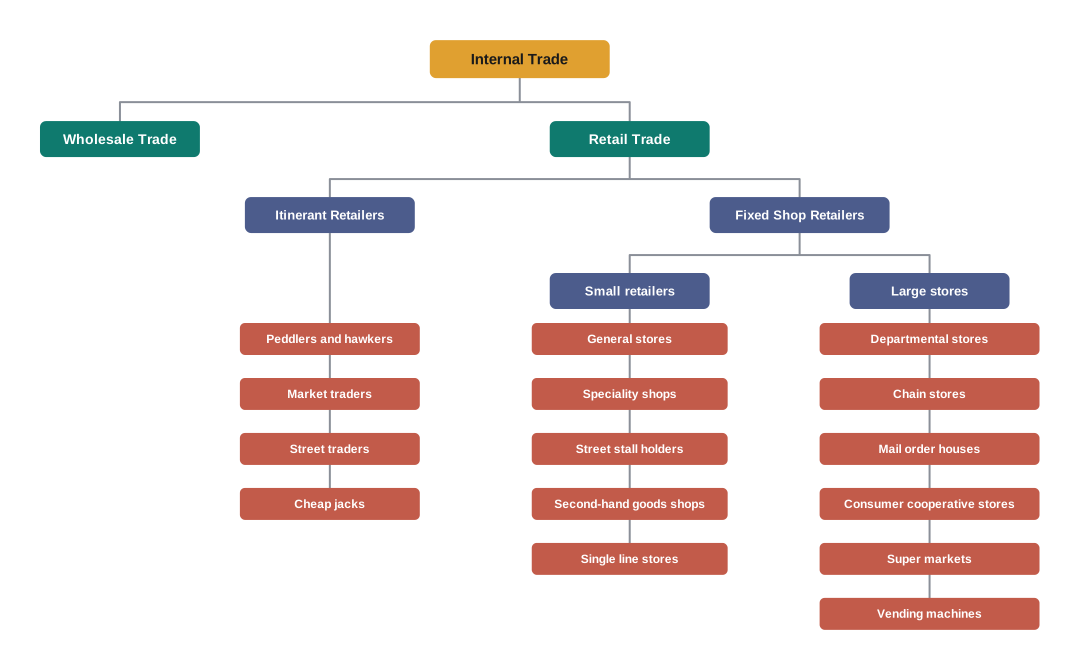
Fig. 10.9 – Structure of internal trade.
Itinerant retailers are traders who do not have a fixed place of business. They are small traders with limited resources who keep moving with their wares from street to street or place to place in search of customers. The major types are peddlers and hawkers, market traders, street traders and cheap jacks.
Peddlers and hawkers are small producers or petty traders who carry products on a bicycle, handcart or on their heads and move from place to place to sell goods at the doorstep of customers.
Market traders are small retailers who open their shops at different places on fixed days or dates, catering mainly to the lower income group and dealing in low priced consumer items of daily use.
Street traders are small retailers commonly found at places where a huge floating population gathers, and they do not change their place of business frequently.
Cheap jacks are petty retailers who have independent shops of a temporary nature in a business locality, dealing in consumer items and also providing services such as repairs.
Fixed shop retailers maintain a permanent establishment. On the basis of size of operations they are classified as small shopkeepers and large retailers.
The forms of fixed shop small retailers are general stores, speciality shops, street stall holders, second-hand goods shops, and single line stores.
In fixed shop large stores, the volume and variety of goods stocked is large. A departmental store is a large establishment offering a wide variety of products, classified into well-defined departments, aimed at satisfying practically every customer’s need under one roof.
The advantages of departmental stores are that they attract a large number of customers, offer convenience in buying, provide attractive services, obtain the economy of large scale operations, and can promote sales. Their limitations are lack of personal attention, high operating cost, high possibility of loss, and inconvenient location.
Chain stores or multiple shops are networks of retail shops owned and operated by manufacturers or intermediaries, dealing in standardised and branded consumer products having rapid sales turnover.
The advantages of chain stores are economies of scale, elimination of middlemen, no bad debts, transfer of goods, diffusion of risk, low cost and flexibility. Their limitations are limited selection of goods, lack of initiative, lack of personal touch, and difficulty in meeting a change in demand.
Departmental stores and multiple shops differ on the bases of location, range of products, services offered, pricing, class of customers, credit facilities and flexibility.
Mail order houses are retail outlets that sell their merchandise through mail, without any direct personal contact with the buyers. Their advantages are limited capital requirement, elimination of middlemen, absence of bad debts, wide reach and convenience. Their limitations are lack of personal contact, high promotion cost, no after sales service, no credit facilities, delayed delivery, possibility of abuse, and high dependence on postal services.
A consumer cooperative store is an organisation owned, managed and controlled by consumers themselves, formed with the objective of reducing the number of middlemen and thereby providing service to members. Its advantages are ease in formation, limited liability, democratic management, lower prices, cash sales and convenient location. Its limitations are lack of initiative, shortage of funds, lack of patronage and lack of business training.
A super market is a large retailing business unit selling a wide variety of consumer goods on the basis of low price appeal, wide variety and assortment, self-service and heavy emphasis on merchandising appeal. Its advantages are one roof and low cost, central location, wide selection, no bad debts, and benefits of large scale. Its limitations are no credit, no personal attention, mishandling of goods, high overhead expenses, and huge capital requirement.
Vending machines are useful in selling pre-packed brands of low priced products which have high turnover and which are uniform in size and weight. Automated Teller Machines in banking are a familiar example of this idea.
The Goods and Services Tax, implemented from July 1, 2017, is a destination-based single tax on the supply of goods and services which has replaced multiple indirect taxes of the Centre and the States. It comprises CGST and SGST on intra-state supply and IGST on inter-state supply, and its input tax credit mechanism avoids the cascading effect of tax on tax.
Chambers of commerce and industry associations such as ASSOCHAM, CII and FICCI promote internal trade by interacting with the government on interstate movement of goods, octroi and local levies, harmonisation of the sales tax structure and Value Added Tax, marketing of agro products, weights and measures and brand protection, excise duty, infrastructure, and labour legislation.
10.9 Key Terms
- Trade Buying and selling of goods and services with the objective of earning profit.
- Internal trade Buying and selling of goods and services within the boundaries of a nation, on which no custom duty or import duty is levied.
- External trade Trade carried on between two or more countries.
- Wholesale trade Purchase and sale of goods and services in large quantities for the purpose of resale or intermediate use.
- Retail trade Purchase and sale of goods in relatively small quantities, generally to the ultimate consumers.
- Wholesalers Traders who deal in wholesale trade and act as a link between manufacturers and retailers.
- Retailers Traders who sell goods and services directly to the ultimate consumers for personal and non-business use.
- Wholesaling The activities of persons or establishments who sell to retailers, other merchants and industrial, institutional and commercial users, but not in significant amount to ultimate consumers.
- Place utility The value created by making a product available at the place where it is needed.
- Time utility The value created by making a product available at the time when it is needed.
- Cash on delivery A transaction in which payment for goods or services is made at the time of delivery.
- Free on Board or Free on Rail A contract in which all expenses up to the point of delivery to a carrier are borne by the seller.
- Cost, Insurance and Freight A price which includes the cost of the goods along with the insurance and freight charges payable up to the destination port.
- Errors and Omissions Excepted A term used in trade documents stating that mistakes and things forgotten should be taken into account.
- Itinerant retailers Traders without a fixed place of business, who move from street to street or place to place in search of customers.
- Peddlers and hawkers Petty traders who carry goods on a bicycle, handcart or on their heads and sell at the doorstep of customers.
- Market traders Small retailers who open their shops at different places on fixed days or dates.
- Street traders Small retailers found at places where a huge floating population gathers, who do not change their place of business frequently.
- Cheap jacks Petty retailers with independent shops of a temporary nature in a business locality, who shift from one locality to another.
- Fixed shop retailers Retailers who maintain a permanent establishment to sell their merchandise and do not move from place to place.
- General stores Small shops in a local market or residential area carrying a variety of products of daily need.
- Speciality shops Retail stores that specialise in the sale of a specific line of products.
- Street stall holders Small vendors at street crossings or heavy-traffic points who deal in cheap variety goods on a very small scale.
- Second-hand goods shops Shops dealing in used goods, and sometimes in rare or antique items.
- Single line stores Stores dealing in a single product line and keeping a variety of items of that same line.
- Departmental store A large establishment offering a wide variety of products, classified into well-defined departments, to satisfy practically every customer’s need under one roof.
- Chain stores Networks of similar retail shops, owned and operated by manufacturers or intermediaries, dealing in standardised and branded products.
- Mail order houses Retail outlets that sell their merchandise through mail, without direct personal contact with the buyers.
- Consumer cooperative store An organisation owned, managed and controlled by consumers themselves to reduce middlemen and serve its members.
- Super market A large retailing unit selling a wide variety of consumer goods on the basis of low price appeal, wide assortment and self-service.
- Vending machines Coin operated machines used to sell pre-packed brands of low priced products that are uniform in size and weight.
- Goods and Services Tax A destination-based single tax on the supply of goods and services which has replaced multiple indirect taxes of the Centre and the States.
- Central GST The component of GST levied by the Central government on intra-state supply of goods or services.
- State GST The component of GST levied by the State government on intra-state supply of goods or services.
- Integrated GST The component of GST levied on inter-state supply of goods and services.
- Input tax credit The set-off available to a supplier for the tax already paid on inputs at earlier stages of the value chain.
- Cascading effect The charging of tax on an amount that already includes tax paid at an earlier stage.
- Chambers of commerce Associations of business and industrial houses formed to promote and protect their common interests and to strengthen trade.
10.10 NCERT Questions
Short Answer Questions
- What is meant by internal trade?
- Specify the characteristics of fixed shop retailers.
- What purpose is served by wholesalers providing warehousing facilities?
- How does market information provided by the wholesalers benefit the manufacturers?
- How does the wholesaler help the manufacturer in availing the economies of scale?
- Distinguish between single line stores and speciality stores. Can you identify such stores in your locality?
- How would you differentiate between street traders and street shops?
- Explain the services offered by wholesalers to manufacturers.
- What are the services offered by retailers to wholesalers and consumers?
Long Answer Questions
- Itinerant traders have been an integral part of internal trade in India. Analyse the reasons for their survival in spite of competition from large scale retailers.
- Discuss the features of a departmental store. How are they different from multiple shops or chain stores?
- Why are consumer cooperative stores considered to be less expensive? What are their relative advantages over other large scale retailers?
- Imagine life without your local market. What difficulties would a consumer face if there is no retail shop?
- Explain the usefulness of mail order houses. What type of products are generally handled by them? Specify.
10.11 Check Your Concepts
- Why is no custom duty levied on internal trade, while it is levied on external trade?
- It is often said that middlemen only add to the price of a product. Using the functions performed by wholesalers, explain why most of these functions cannot be eliminated.
- Explain how a wholesaler creates time utility and place utility. Give one example of each.
- What happens to a small retailer’s working capital requirement if wholesalers stop granting credit? Explain the effect on the retailer’s business.
- Distinguish between wholesale trade and retail trade on the bases of quantity dealt in, purpose of purchase and buyers served.
- Why do departmental stores find it difficult to give personal attention to customers, while a general store is able to do so?
- Chain stores sell only on a cash basis, while departmental stores may extend credit. Explain the reasoning behind each policy.
- Why can perishable and bulky goods not be sold successfully through mail order houses?
- Consumer cooperative stores are able to sell at lower prices, yet many of them do not operate successfully. Explain this apparent contradiction.
- Why is a super market unlikely to succeed in a small town?
- Why must goods sold through vending machines be uniform in size and weight?
- Arrange the following in the correct sequence of distribution: retailer, manufacturer, ultimate consumer, wholesaler.
- Identify the type of retailer in each case: (a) a trader who opens a shop in a different locality every Saturday; (b) a shop dealing only in ladies’ footwear; (c) a shop selling used furniture and old books.
- Match the following retail forms with their identifying feature:
| Column A | Column B |
|---|---|
| a. departmental store | i. centralised purchase with branch managers |
| b. chain store | ii. one man one vote |
| c. mail order house | iii. all needs under one roof |
| d. consumer cooperative store | iv. sale through post |
- Assertion (A): GST is called a destination-based consumption tax. Reason (R): The tax is finally borne by the consumer in the state where the goods are consumed. Choose the correct option:
- Both A and R are true, and R is the correct explanation of A.
- Both A and R are true, but R is not the correct explanation of A.
- A is true but R is false.
- A is false but R is true.
- Explain how the input tax credit mechanism under GST removes the cascading effect of tax, and state one benefit of this for the consumer.
10.12 Case-Based Questions
- Girish Traders buys biscuits and packaged snacks in bulk from three manufacturers, stores them in a rented godown, sorts them into smaller cartons, and supplies them every week to about eighty small shops in the district. It pays the manufacturers in cash at the time of despatch and allows its regular shopkeepers fifteen days to pay.
- Identify the type of trader described here.
- State any two services being provided to the manufacturers.
- State any one service being provided to the retailers.
- Sunrise Stores is a large establishment in the centre of a city. It has separate sections for groceries, clothing, electronics and medicines, employs a manager for each section, buys directly from manufacturers through one central purchase department, and offers home delivery and a restaurant on its premises. Its prices are higher than those in nearby shops.
- Identify the form of large scale retailing being described.
- State any two features of this form visible in the situation.
- State one limitation that explains its higher prices.
- Neelkanth Footwear owns forty identical outlets in different localities of a state. All goods are procured centrally and despatched to the outlets, prices are fixed and uniform, all sales are made in cash, and each outlet sends a daily report to the head office. One outlet has been making losses and the management is considering shifting it elsewhere.
- Name the form of retailing being followed.
- Identify the advantage of this form that allows the loss-making outlet to be shifted.
- State any one limitation the outlet managers are likely to face under this system.
- Fifteen residents of a colony come together, contribute capital by taking shares, register their association, and open a store that buys grocery directly from wholesalers and sells to residents at reasonable prices. The store is run by a committee elected by the members, where each member has one vote. Sales are made only in cash. After two years, the committee finds that many members buy from other shops instead.
- Identify the form of retail organisation described.
- State any two advantages of this form evident in the situation.
- Name the limitation the store is now facing.
- Devyani Foods manufactures a packaged beverage in one state and sells it to dealers in three other states. Its finance manager notes that the firm pays tax on the value it adds and sets off the tax already paid on its inputs, and that the tax on supplies made outside the state is accounted for differently from supplies made within the state.
- Name the tax being referred to and state the date from which it was implemented.
- Name the component of this tax that applies to the firm’s inter-state supplies.
- Name the mechanism that allows the firm to set off the tax paid on its inputs.