Chapter 3: Food, Nutrition, Health And Fitness
A Laboratory In The Nilgiris In 1918, in the hill town of Coonoor in the Nilgiris, a small laboratory was set up with a single question in front of it: why were so many people falling ill with beri-beri? It was called the Beri-Beri Enquiry Unit, and it was led by Robert McCarrison, an army physician who had spent years watching how differently people fared on different diets.
McCarrison’s method was plain. He fed groups of laboratory animals the everyday diets of different parts of India — one group the wheat, milk and vegetables common in the north-west, another a diet built almost entirely on polished rice — and then watched them grow. The animals on the poorer diets grew badly and fell ill. Nothing harmful had been added to their food. What was missing from it was doing the damage.
That small unit grew. It became the Nutrition Research Laboratories, moved to Hyderabad in 1958, and in 1969 was renamed the National Institute of Nutrition. It is the laboratory that now works out how much of each nutrient an Indian body needs at every age, and that sorted the foods of Indian kitchens into the five food groups you will meet in this chapter. A great many of the figures a dietitian in India uses today can be traced back to a question asked in a hill station about a disease nobody could yet explain.
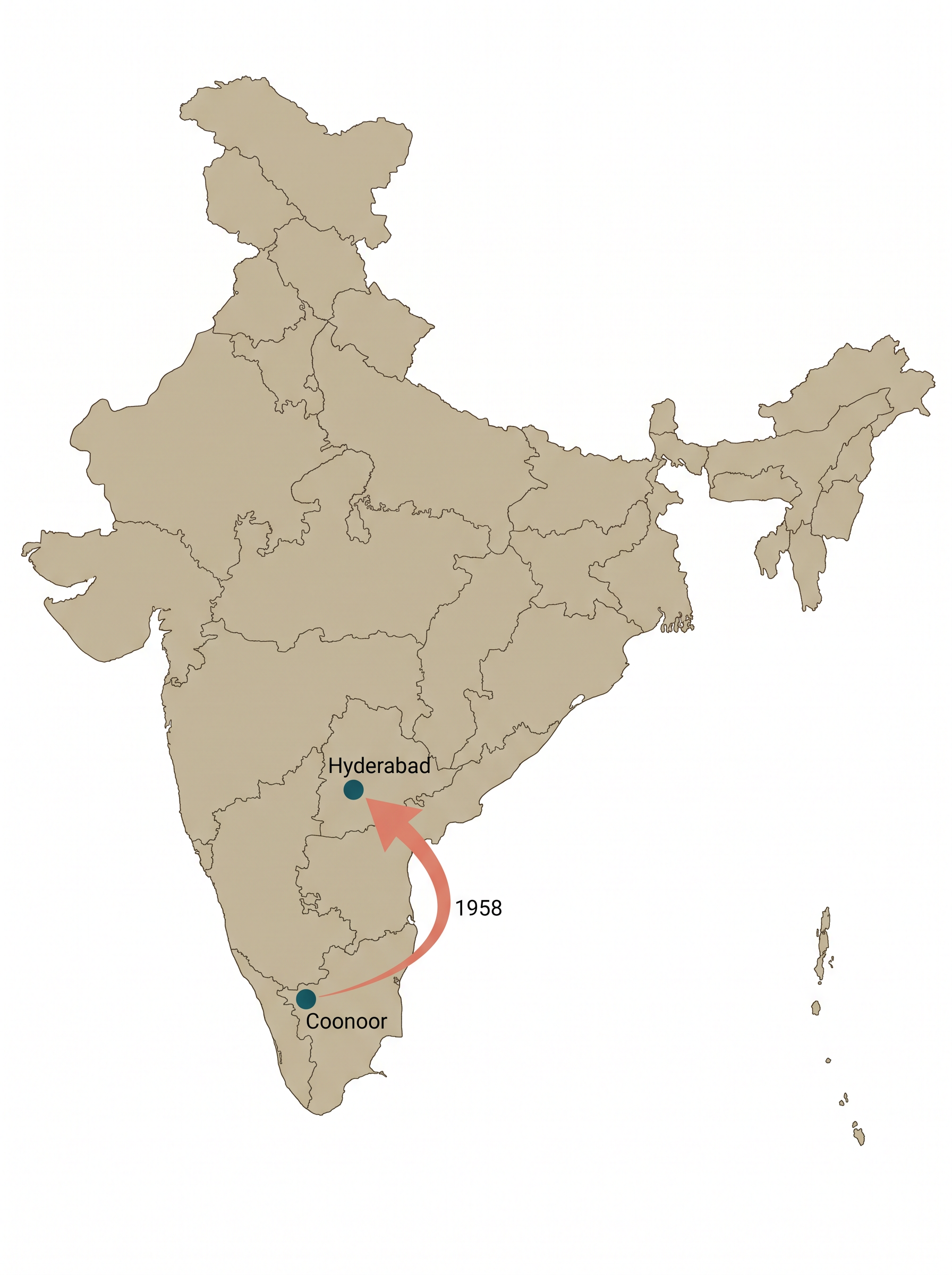
Fig. 3.0 – The move from Coonoor to Hyderabad.
3.1 Food, Nutrition And Nutrients
Adolescence brings a set of changes that no other stage of life matches for speed. Somewhere between the ages of about 12 and 18, the body enters a growth spurt — a stretch of two or three years in which height and weight increase far faster than they did in childhood. The bones lengthen, muscle is laid down, and the composition of the body itself shifts.
This spurt is set off by hormones, which are chemical messengers made by the body that reach and affect every organ. A body building itself at that rate needs more raw material each day than it did at ten years old, and more than it will need at twenty-five.
That is why nutrient needs follow a particular shape: they climb steadily through childhood, peak during adolescence, and then level off or fall a little as a person becomes an adult. Eating well matters at every age, but it matters most urgently at the age you are now.
We eat dal, chapatti, bread, rice, vegetables, milk and lassi, and each of these carries something the body can use. Health depends to a large extent on nutrition, and nutrition depends on what is actually eaten. Food is therefore the single most important factor in health and fitness, and it is worth defining the terms carefully before going further.
3.1.1 Food
Food is anything solid or liquid which, when swallowed, digested and assimilated in the body, supplies it with essential substances called nutrients and keeps it well. The word covers everything from a bowl of rice to a glass of water — the test is not taste or cost but whether the body can take something useful from it.
Notice that the definition contains three separate steps. A substance has to be swallowed, then broken down by digestion, then absorbed and taken into the body’s own tissues, which is what assimilation means. Something that passes through without any of that happening has not been used as food, whatever it tasted like.
Food does four things once it is inside. It supplies energy for every activity from breathing to running; it enables growth and the repair of tissues and organs; it protects the body from disease; and it regulates the body’s functions, such as keeping the temperature and the water balance steady.
3.1.2 Nutrition
If food is the material, nutrition is the study of it — the science of foods, of the nutrients and other substances they contain, and of what those substances do once they are inside the body.
That journey inside the body has five named stages, and the science covers all of them: ingestion, or taking the food in; digestion, or breaking it down; absorption, or passing it into the blood; metabolism, or using it in the body’s chemical reactions; and excretion, or removing what is left over.
Those five stages describe only the physiological side. Nutrition also has social, psychological and economic dimensions, because what a household eats depends as much on custom, celebration, mood, price and availability as it does on the chemistry of the food. A festival sweet and a hospital diet are both nutrition.
3.1.3 Nutrients
Nutrients are the constituents in food that must be supplied to the body in suitable amounts — the useful substances food is made of, rather than the food itself. There are seven kinds: carbohydrates, proteins, fats, minerals, vitamins, water and fibre.
The phrase ‘in suitable amounts’ is doing real work in that definition. Too little of a nutrient and the body cannot carry out the job that nutrient does; too much of some nutrients is also harmful. Suitable, not maximum, is the standard.
Almost no food carries only one nutrient. Milk supplies protein and fat together, along with calcium; a chapatti supplies carbohydrate, some protein and some fibre. This is exactly why no single food can be called complete, and why variety in the diet is not a luxury but a method.
3.1.4 Macronutrients And Micronutrients
Nutrients are classified into two groups on the basis of the quantity the body needs each day. Those required in large amounts are called macronutrients, and those required in small amounts are called micronutrients. Fig. 3.1 sets out the whole classification.
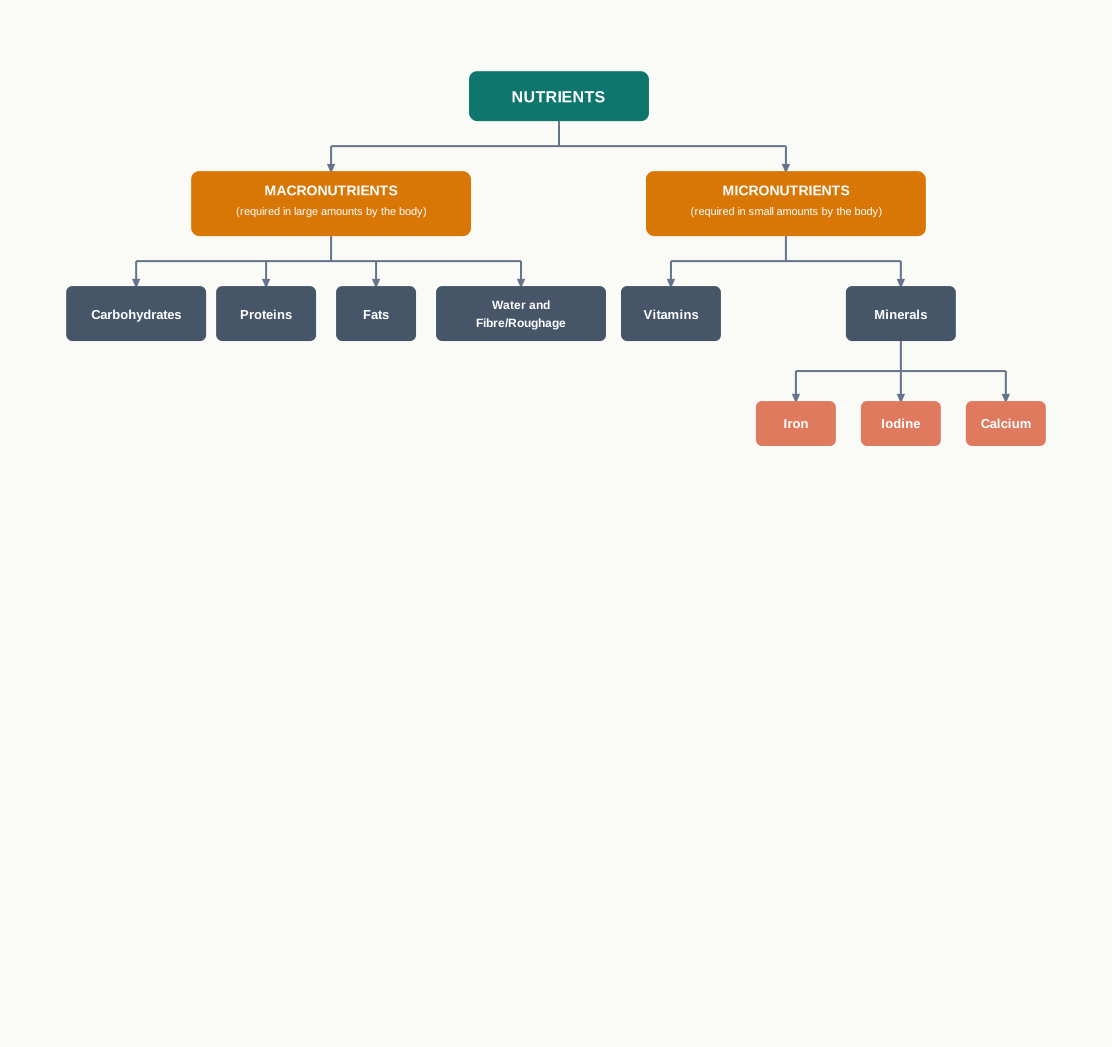
Fig. 3.1 – Basic nutrients in our food.
The difference is one of quantity, not of importance. Carbohydrates, proteins and fats are measured in grams a day, and water and fibre are also needed in large amounts. Vitamins and minerals are measured in milligrams or micrograms — thousandths and millionths of a gram — yet a shortage of iron or iodine will make a person ill just as surely as a shortage of protein.
There is a second real difference between the two groups. Macronutrients supply the body with energy and with the material it is built from; micronutrients supply no energy at all, and work instead by regulating the chemical processes that release and use that energy. Table 3.1 lays the two side by side.
Every food you meet in the rest of this chapter can be read through this classification. When you are told that a group of foods supplies energy and protein, you are being told what macronutrients it carries; when you are told it supplies iron and folic acid, you are being told what micronutrients it carries.
3.2 Balanced Diet
Knowing what the nutrients are does not yet tell you what to eat. That question is answered by the idea of a balanced diet, which is the working tool of the whole subject.
A balanced diet is one which includes a variety of foods in adequate amounts and correct proportions to meet the day’s requirements of all the essential nutrients — proteins, carbohydrates, fats, vitamins, minerals, water and fibre. Three conditions are packed into that sentence, and all three have to hold.
Variety matters because no single food carries every nutrient. Adequate amount matters because a nutrient present in a trace does not meet a need measured in grams. Correct proportion matters because the nutrients are not interchangeable — a day’s food can carry plenty of energy and still leave the body short of the material it needs to build tissue.
A balanced diet does one more thing that is easy to miss. It leaves the body with a safety margin — a small reserve of nutrients held in the body’s own tissues, which can carry it through a short spell when the diet does not supply enough. A day of fasting, a day of illness with little appetite, or a stretch when a particular food is not available need not immediately damage health, because the reserve absorbs the shortfall.
3.2.1 The Safety Margin And Recommended Dietary Allowances
Where does that margin come from? It is built into the figures themselves. If a diet meets the Recommended Dietary Allowances (RDA) for a person, the safety margin has already been included, because the allowances are deliberately set above the bare need.
To see why, you have to separate two ideas that sound alike. A requirement is the smallest amount of a nutrient a particular individual needs each day to stay in good health. It is a personal figure, and it differs from one person to the next — with age, with body size, with activity, and with states such as pregnancy and lactation. Nobody can measure your own requirement for iron by looking at you.
An allowance is a public figure built on top of that. It is worked out for a group rather than an individual, and a margin of safety is added so that the figure covers the needs of practically all healthy people in that group, including those whose requirement happens to be at the high end.
Fig. 3.2 shows the relationship in one line.
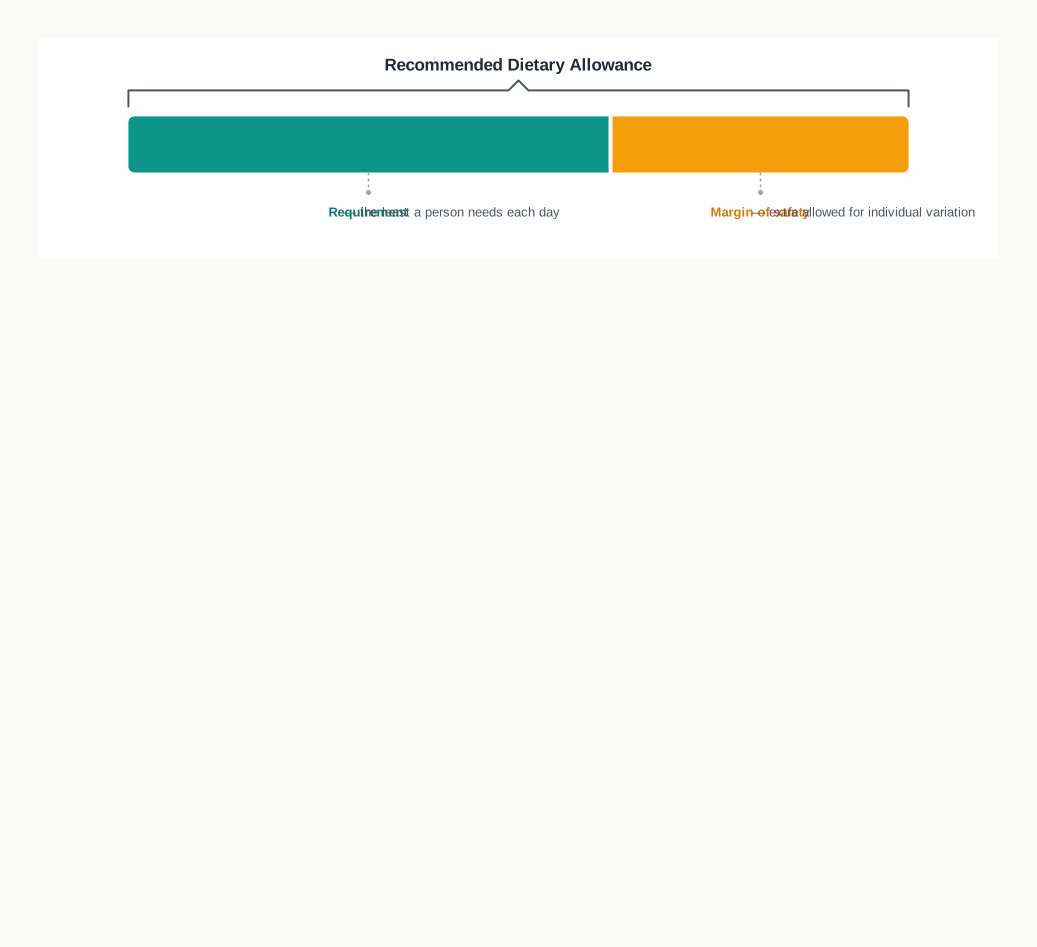
Fig. 3.2 – Recommended Dietary Allowance and safety margin.
Two cautions follow from this, and both matter in practice. The RDA is a guideline for planning and assessing diets, not a prescription for any one individual — a person who eats a little less than the RDA on a given day is not thereby ill. And the allowances are not fixed for all time. Table 3.2 sets the two ideas against each other.
3.2.2 What A Balanced Diet Takes Care Of
Putting all of this together, a diet can be called balanced when it does the following six things.
- Includes a variety of food items.
- Meets the RDA for all nutrients.
- Includes nutrients in correct proportions.
- Provides a safety margin for nutrients.
- Promotes and preserves good health.
- Maintains an acceptable body weight for height.
These six are a checklist you can actually use. Given any day’s meals — your own school lunch, a menu planned for a hostel, a diet sheet in a magazine — you can run down the list and ask which of the six it satisfies and which it does not. A diet that fails even one of them is not yet balanced, however good it looks.
3.3 Health And Fitness
Ask a class what it means to be healthy and most answers will be about not being ill. That is where the subject used to stand too, and moving past it took a deliberate decision by the World Health Organisation.
3.3.1 Health And Positive Health
The World Health Organisation describes health as a state of complete physical, mental and social well-being, and not merely the absence of disease or infirmity. The definition was written into the WHO Constitution and has not been amended since it came into force in 1948.
The important part of that sentence is its second half. A person who has no diagnosed illness is not automatically healthy by this standard; the definition asks for something positive to be present, not only for something negative to be absent. Health is measured by what a person is able to do and feel, not by an empty medical file.
The three parts of that definition are what is meant by positive health — a blend of the physical, the mental and the social, each supporting the others. Taking adequate amounts of the essential nutrients is necessary for maintaining positive health, which is the direct link between this chapter’s first half and its second: the diet you plan is one of the few parts of health you can act on daily.
3.3.2 Mental Health
Physical health is the part most easily understood, because it can be seen and measured. Mental health is harder to picture, and so it is worth stating carefully.
Mental health is a state of emotional and psychological well-being in which a person is able to use her or his cognitive and emotional capabilities, function in society, and meet the ordinary demands of everyday life. Cognitive capabilities here means the thinking abilities — attention, memory, judgement, reasoning.
As with health in general, the absence of a recognised mental disorder is not by itself an indicator of mental health. One useful way to assess it is to look at how effectively and successfully a person is functioning. Several everyday signs point to good mental health.
- Feeling capable and competent.
- Being able to handle normal levels of stress.
- Maintaining satisfying relationships.
- Leading an independent life.
- Being able to recover from difficult situations.
The last of these is worth pausing on. Difficulty is normal, and recovering from it is not the same as never meeting it. A person who has had a hard year and has come through it is showing good mental health, not the lack of it.
3.3.3 Physical Fitness
Physical fitness is good bodily health, and it is the result of three things together — regular exercise, proper diet and nutrition, and proper rest for physical recovery. Leave out any one of the three and fitness does not follow: training without rest injures, and training without adequate food gives the body nothing to rebuild with.
The term is used in two ways. General fitness means a state of health and well-being. Specific fitness is task-oriented, and is defined by the ability to perform particular aspects of a sport or an occupation — the grip strength a potter needs, or the endurance a footballer needs.
At the level of the body, physical fitness is the capacity of the heart, blood vessels, lungs and muscles to function at optimal efficiency. Fitness is therefore an internal condition of the organs, and the visible performance is only its outward sign.
How The Definition Changed
Fitness was once defined as the capacity to carry out the day’s activities without undue fatigue. That was a reasonable test when most work was physical. Automation, increased leisure time and the changes in ways of living that followed the Industrial Revolution meant that a person could get through an ordinary day without ever taxing the heart or the muscles, so the old criterion stopped separating the fit from the unfit. In the present context, optimum efficiency is the key.
Physical fitness is now defined as the body’s ability to function efficiently and effectively in work and leisure activities, to be healthy, to resist diseases, and to meet emergency situations.
Fitness is not one quality but several, and Fig. 3.3 shows the five into which it is divided.
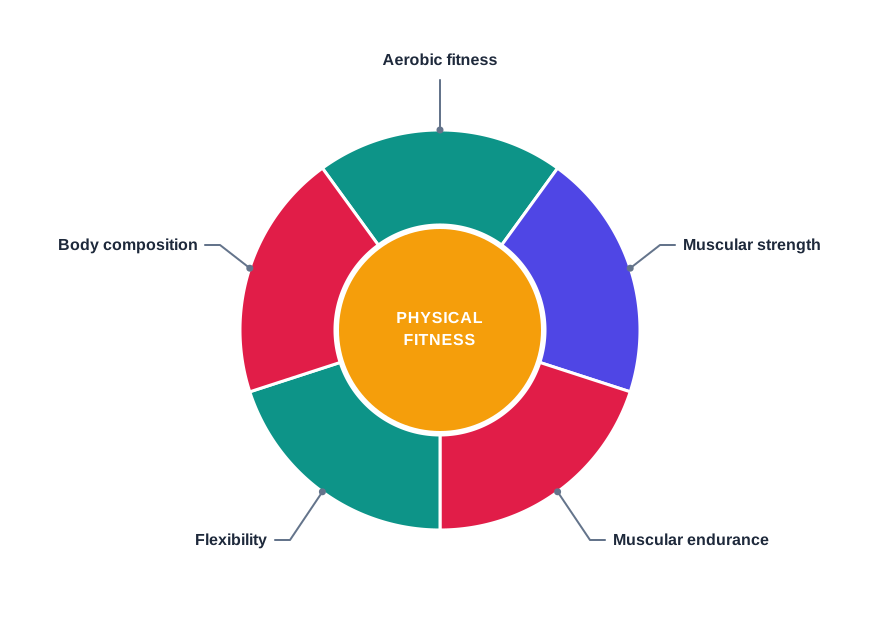
Fig. 3.3 – The five categories of physical fitness.
Reading the phrase ‘to meet emergency situations’ in the new definition tells you what fitness is really for. It provides the ability to meet routine physical demands with enough reserve energy left over to rise to a sudden challenge — running to catch a bus, or carrying a heavy load up a flight of stairs when the lift has failed. A person with no reserve manages the routine and nothing beyond it.
Being fit also prepares a person to meet mental and emotional challenges, which is why fitness belongs in a chapter about well-being and not only in a chapter about the body.
Putting The Two Together
Health and fitness are related but they are not the same thing, and the distinction is set out in Table 3.3.
A well-nourished and fit person learns better, and has more energy, stamina and self-esteem. A healthy eating pattern together with regular exercise is what builds both. Where eating patterns become seriously disturbed during the teenage years, a set of health conditions known as eating disorders can develop; these are taken up in section 3.9.
3.4 Using Basic Food Groups For Planning Balanced Diets
A balanced diet has now been defined, but defining it and planning one are different jobs. Nobody stands in a kitchen calculating milligrams. The simplest practical way to plan a balanced diet is to divide foods into groups, and then make sure every group appears in the day’s meals.
A food group is a set of different foods which share common characteristics. The shared feature may be the source of the food, the physiological function it performs, or the nutrients it contains. Grouping by nutrients is the basis used in India, because a classification built on nutrients ensures that all the nutrients are made available to the body and offers greater variety within each group.
Grouping is a shortcut, and like every shortcut it has a condition attached. Not all foods within a group are equal in nutrient content — they are similar, not identical. This is why the rule is to eat a variety of foods from each group, and not simply to tick the group off with the same item every day.
3.4.1 The Five Food Groups
Food group classifications vary from one country to another, because they are built on what people actually eat. Many factors are weighed while compiling them — the availability of foods, their cost, the usual meal pattern, and the deficiency diseases prevalent in the population. The five food group classification is the one used in India as a guide to meal planning, and it is suggested by the Indian Council of Medical Research (ICMR). The five groups are:
- Cereals, grains and products
- Pulses and legumes
- Milk and meat products
- Fruits and vegetables
- Fats and sugars
Before going through them, one term in the group descriptions needs explaining. Invisible fat is the fat present naturally inside a food — in the germ of a cereal grain, in a pulse, in green leaves — as against the visible fat added in the kitchen as oil, butter or ghee. It is counted because it adds up: a day’s cereals and pulses supply a real quantity of fat that no one sees going into the pan.
Group I: Cereals, Grains And Products
This group carries rice, wheat, ragi, bajra, maize, jowar, barley, rice flakes and wheat flour. It is the foundation of most Indian meals and supplies the bulk of the day’s energy.
Cereals supply energy, protein, invisible fat, vitamin B₁ (thiamine), vitamin B₂ (riboflavin), folic acid, iron and fibre. The protein in cereals is present in modest quantity and is not of the best quality on its own, which becomes important in the next group.
Group II: Pulses And Legumes
Bengal gram, black gram, green gram, red gram, lentil — whole as well as split into dals — cowpea, peas, rajmah, soyabeans and beans make up this group.
Pulses supply energy, protein, invisible fat, vitamin B₁, vitamin B₂, folic acid, calcium, iron and fibre. Their protein complements cereal protein: the amino acids in short supply in a cereal are better supplied by a pulse, and the two eaten together in the same meal give a better protein quality than either alone. This is the reasoning behind the cereal–pulse combinations that Indian meals have used for centuries.
Group III: Milk, Meat And Products
The milk part of this group covers milk, curd, skimmed milk and cheese, and supplies protein, fat, vitamin B₁₂ and calcium. The meat part covers chicken, liver, fish, egg and meat, and supplies protein, fat and vitamin B₂.
Both halves supply protein of high quality, which is why this group is the main body-building group. Milk carries almost every nutrient the body needs, with three exceptions worth remembering — iron, vitamin C and fibre.
Group IV: Fruits And Vegetables
This is the largest and most varied group, and it is read in three parts.
Fruits — mango, guava, ripe tomato, papaya, orange, sweet lime and watermelon — supply carotenoids, vitamin C and fibre. Carotenoids are the orange, yellow and deep green plant pigments that the body converts into vitamin A.
Green leafy vegetables — amaranth, spinach, drumstick leaves, coriander leaves, mustard leaves and fenugreek leaves — supply invisible fats, carotenoids, vitamin B₂, folic acid, calcium, iron and fibre. Weight for weight they are among the richest foods available in an Indian market, and among the cheapest.
Other vegetables — carrots, brinjal, ladies finger, capsicum, beans, onion, drumstick and cauliflower — supply carotenoids, folic acid, calcium and fibre.
Group V: Fats And Sugars
Fats include butter, ghee, hydrogenated oils, and cooking oils such as groundnut, mustard and coconut oil. They supply energy, fat and essential fatty acids. Sugars include sugar and jaggery, and supply energy alone.
This group is small in quantity and large in effect. It carries more energy per spoonful than anything else in the diet and, apart from the essential fatty acids in fats, brings very little else with it. Table 3.4 sets out all five groups together, and Fig. 3.4 shows them as they appear in a market.
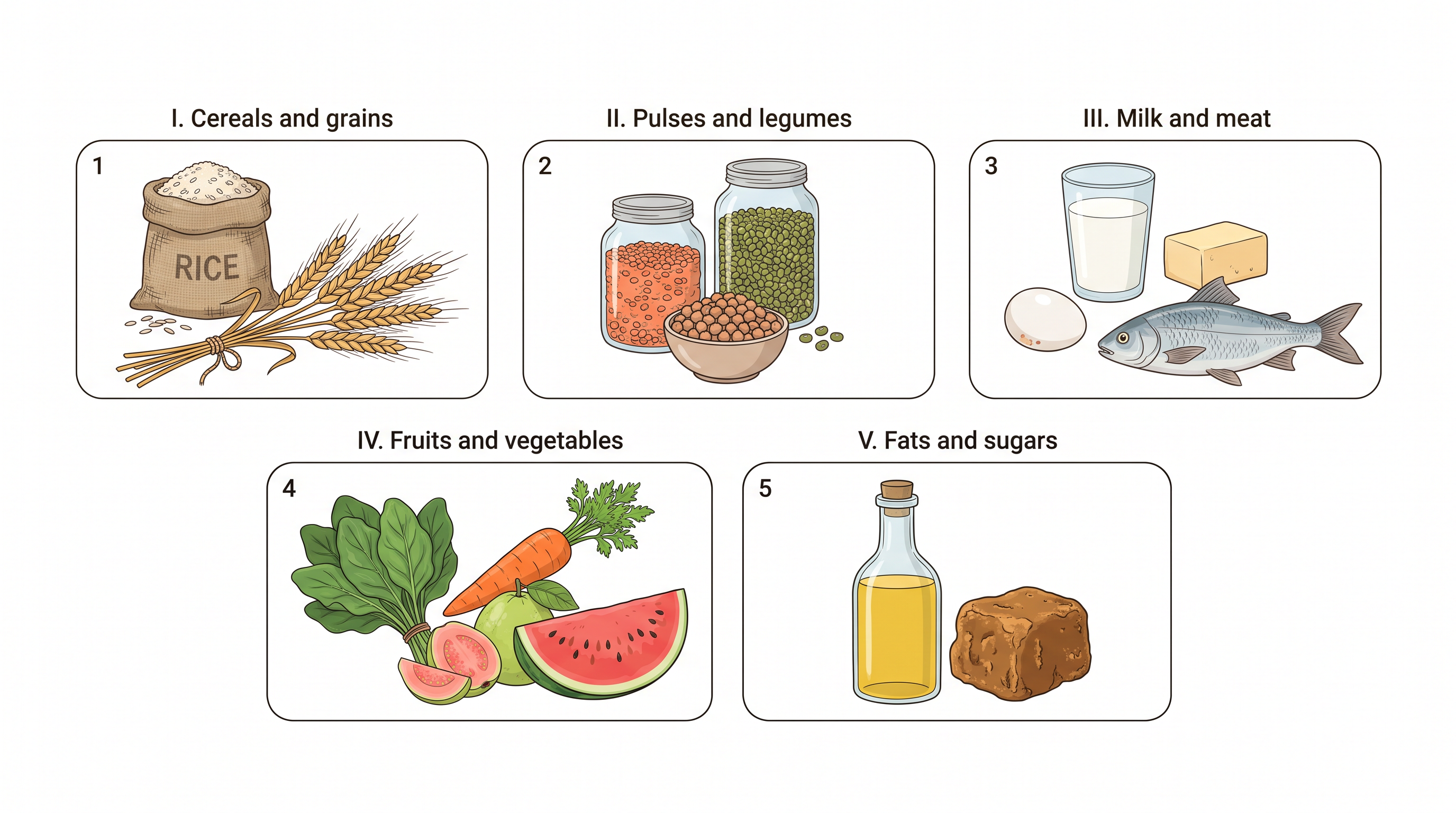
Fig. 3.4 – The five basic food groups.
3.4.2 Energy Value Of The Macronutrients
Three of the nutrients supply energy, and they do not supply it equally. Energy in food is measured in kilocalories (kcal) — the amount of heat needed to raise the temperature of one kilogram of water by 1 °C. On a food label the word Calorie with a capital C means the same unit.
One gram of each energy-yielding nutrient releases:
- carbohydrate — 4 kcal
- protein — 4 kcal
- fat — 9 kcal
Read those three figures together and a whole set of everyday observations falls into place. Fat carries more than twice the energy of the same weight of carbohydrate or protein, which is why a spoon of oil added to a dish changes its energy value far more than a spoon of sugar does, and why the last food group is the one used most sparingly.
3.4.3 Guidelines For Using The Basic Food Groups
The five food group system can be used both for planning balanced diets and for assessing diets that have already been eaten. It is a simple daily food guide, and it is also used in nutrition education because it can be taught to someone who cannot read a nutrient table. The following guidelines make it work.
- Include at least one serving, or a minimum number of servings, from each food group in each meal.
- Make choices within each group, since foods within a group are similar but not identical in nutritive value.
- If the meal is vegetarian, use suitable combinations to improve the overall protein quality of the diet — for example, serving cereal–pulse combinations, or including small quantities of milk or curds in the meal.
- Include uncooked vegetables and fruits in the meals.
- Include at least one serving of milk to ensure a supply of calcium and other nutrients, since milk contains all nutrients except iron, vitamin C and fibre.
- Cereals should not supply more than 75 per cent of the total kilocalories.
The last two guidelines are the ones most often broken, and each has a clear reason behind it. Uncooked fruits and vegetables are asked for because vitamin C is destroyed by heat, so a diet in which every vegetable is cooked can be short of it even when vegetables are eaten daily. The ceiling on cereals exists because cereals are cheap and filling: a diet in which they crowd out everything else can meet the day’s energy need and still leave the body short of protein quality, calcium and vitamins.
Underneath all six guidelines lies a single rule about proportion.
3.4.4 The Food Guide Pyramid
The same idea can be drawn instead of stated. The food guide pyramid is a graphic depiction of the daily food guide, designed to show three things at once — variety, moderation and proportion. Fig. 3.5 shows it.
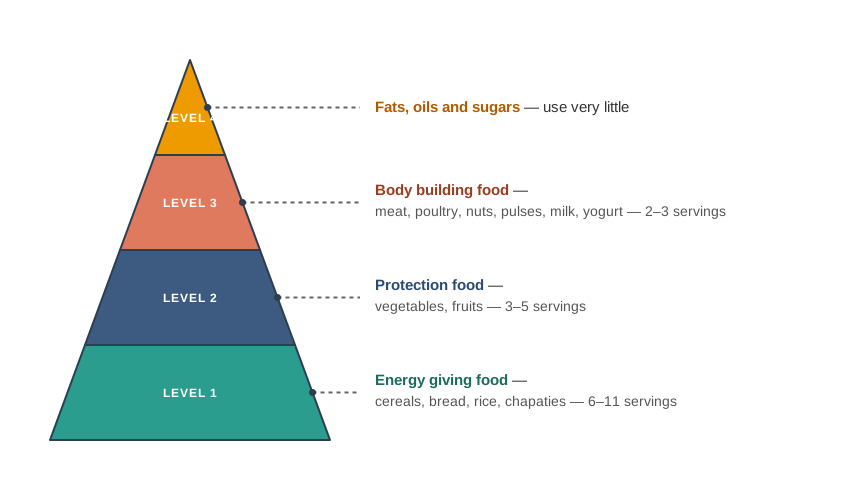
Fig. 3.5 – The food guide pyramid.
The size of each section represents the number of daily servings recommended, so the shape itself carries the message. The broad base says that grains should be abundant and form the foundation of a healthy diet. Fruits and vegetables appear at the next level, showing that they have a less prominent but still important place. Meats and milks appear in a smaller band near the top; a few servings of each contribute valuable nutrients such as proteins, vitamins and minerals without too much fat and cholesterol. Fats, oils and sweets occupy the tiny apex, indicating that they should be used sparingly.
Two kinds of item are missing from the picture and are worth accounting for. Alcoholic beverages do not appear in the pyramid at all, but if consumed they too should be limited. Items such as spices, coffee, tea and diet soft drinks provide few nutrients, if any, but can add flavour and pleasure to meals when used judiciously — the pyramid is a guide to nourishment, not a list of everything a person may put on the table.
Read the lower three levels together and a pattern appears. The daily food guide and the pyramid both emphasise grains, vegetables and fruits — all of them plant foods — and some 75 per cent of a day’s servings should come from these three groups. This strategy helps all people obtain complex carbohydrates, fibre, vitamins and minerals with little fat. It also makes diet planning easier for people who eat no meat at all, which is where the next section begins.
3.5 Vegetarian Food Guide
A large number of households in India eat no meat, and a diet planner has to be able to work with that as easily as with any other. Vegetarian diets rely mainly on plant foods — grain, vegetables, legumes, fruits, seeds and nuts. Some vegetarian diets also include eggs, milk products, or both.
People who eat no meat or no milk products can still use the daily food guide to create an adequate diet. The food groups are the same and the number of servings remains the same; what changes is which item is chosen inside a group. Alternatives to meat include legumes, seeds, nuts, tofu — a soft curd made from soyabean milk — and, for those who eat them, eggs.
Meeting The Nutrients That Meat Usually Supplies
Two nutrients need a little planning when animal foods are left out, and the guide names the solution for each. Legumes, together with at least one cup of dark leafy greens, help to supply the iron that meats usually provide. For calcium and certain vitamins, people who do not drink cow’s milk can use soy milk, a product made from soyabeans that provides similar nutrients if it has been fortified.
Fortification means that specific nutrients have been added to a food during processing, over and above what the food naturally contains. Soy milk is fortified with calcium, vitamin D and vitamin B₁₂ for exactly this reason — those are the nutrients it would otherwise lack when it replaces cow’s milk in the diet. Table 3.5 sets out the substitutions.
What The Pyramid Is And Is Not
The food guide pyramid emphasises foods from the five food groups shown in its three lower sections. Each of these groups provides some, but not all, of the nutrients a person needs, and foods in one group cannot replace those in another. No one food group is more important than another — for good health you need all of them.
That last point is the one to hold on to. A person who doubles the fruit to make up for skipping the pulses has not made up anything, because the nutrients concerned are different nutrients. Substitution works within a group, not across groups.
The pyramid, then, is an outline of what to eat each day. It is not a rigid prescription but a general guide that lets a person choose a healthful diet that suits her or him. It asks for a variety of foods, so that all the nutrients are covered, and at the same time for the right amount of Calories — enough to meet the day’s needs, and no more than the body can use.
3.6 Dietary Patterns In Adolescence
Healthy eating is vital for a teenager’s health and well-being. Nutritional needs during these years vary a great deal from one person to another, but they generally increase, because of the rapid growth and the changes in body composition — the proportions of muscle, bone, fat and water in the body — that occur during puberty, the stage at which the body matures sexually.
Adequate nutrition at this age is vital for overall emotional as well as physical health. Good eating habits formed now also help to prevent chronic illness later in life, including obesity, heart disease, cancer and diabetes. The habits are being set at the same time as the needs are at their highest, which is what makes the period important.
Studies of nutrient intakes show a consistent pattern in what adolescents actually eat. They are likely to obtain less vitamin A, thiamine, iron and calcium than is recommended, and to consume more fat, sugar, protein and sodium than is currently thought to be optimal. Notice that both halves of that sentence describe the same diet — it is possible to eat a great deal and still fall short.
Reading The Common Patterns
Concern is often expressed about the habit of eating between meals, but it has been shown that teenagers obtain substantial nourishment from foods eaten outside the traditional meals. The choice of foods is of greater importance than the time or the place of eating. What is worth emphasising is fresh vegetables and fruits, along with whole-grain products, to complement the foods high in energy value and protein that adolescents commonly choose anyway.
Among the more common eating patterns of this age group are skipping meals, eating fast foods routinely, avoiding fruits and vegetables, snacking frequently, and dieting. Understanding these patterns is what allows a diet to be assessed sensibly rather than simply disapproved of, and each is taken up in turn below.
3.6.1 Irregular Meals And Skipping Meals
The number of meals teenagers miss, and the number they eat away from home, increases from early adolescence to late adolescence. This reflects a growing need for independence and more time spent away from home, and it is a normal part of growing up rather than a fault. The evening meal appears to be the most regularly eaten meal of the day.
Studies report that girls skip the evening meal, as well as breakfast and lunch, more often than boys do. And in homes with limited resources, adolescents may not receive an adequate number of meals, or adequate amounts at those meals, which leads directly to nutrient deficiency. The two situations look similar on a diet record and have completely different causes, so they call for completely different responses.
Why Breakfast Matters
Breakfast is the meal most frequently neglected, and it is omitted more often by teenagers and young adults under 25 years of age than by any other age group in the population. One likely explanation for girls missing breakfast more often than boys is the pursuit of thinness and frequent attempts at dieting.
Many teenagers believe they can control their weight by omitting breakfast or lunch. In fact this approach is likely to accomplish the opposite. By mid-morning or lunchtime they may be so hungry that they overcompensate for the kilocalories they thought they had saved. The morning itself is also affected: going without food after a long night makes concentration and physical performance harder to sustain through school hours.
3.6.2 Snacking
Snacking is probably a survival technique for teenagers, and it does not have to be a bad habit. It can help maintain energy levels, particularly in adolescents who are active and growing. Many adolescents fail to eat three regular meals a day because of the skipping-meal factor described above, and in that situation snacking can actually be beneficial, since it is what ensures an adequate intake of essential nutrients.
The judgement therefore falls on what is being eaten rather than on when. A snack of fruit, roasted chana or a handful of nuts brings nutrients with its energy; a snack that brings energy and nothing else does not. Surviving only on snacks, however, is harmful to health, because no set of snacks put together casually will cover all five food groups.
3.6.3 Fast Foods
Adolescents, particularly in urban areas, are more apt to eat fast food. It is convenient, it is typically a social occasion rather than a solitary meal, and it may be seen as the fashion of the day. Fast food is often packed with fat and with empty calories — energy supplied by a food that brings almost no protein, vitamins, minerals or fibre along with it.
The nutritional limitations of fast-food meals are fairly consistent, and knowing them is what makes a smarter choice possible at the counter.
- Calcium, riboflavin and vitamin A are low, unless milk or a milkshake is ordered.
- Folic acid and fibre have few fast-food sources at all.
- The percentage of energy coming from fat is high in many meal combinations.
- The sodium content of fast-food meals is high, which is not desirable.
- Common meal combinations contain excessive energy compared with the amounts of other nutrients provided.
Read that list against the five food groups and the shape of the problem is clear. Fast foods can contribute nutrients to the diet, but they cannot completely meet the nutritional needs of teenagers. They are acceptable nutritionally when they are eaten judiciously and as part of a well-balanced diet; there is cause for concern only when they become the mainstay of the diet.
A nutrient imbalance of this kind may not appear to be a problem for a number of years, unless some specific condition such as a chronic disease already exists. That delay is precisely what makes it easy to ignore. Evidence is accumulating to show that the food intake patterns of teenagers affect their health in later life.
3.6.4 Dieting
Obesity among adolescents is a growing public health concern in India, and it is a health condition rather than a matter of appearance. It is associated with a higher risk of several medical problems, including diabetes, high blood pressure, high cholesterol and sleep apnoea, a sleep disorder in which breathing is repeatedly interrupted during sleep. Obesity in adolescence often continues into adult life, which is why it is addressed early — and it is managed with the help of a doctor or a qualified dietitian, not by a plan a young person draws up alone.
At the same time, many adolescents whose weight is entirely normal diet because of the perception that thinness is desirable. Images of what counts as a beautiful body, and messages about ways to achieve a lower body weight, arrive constantly through the media, and in a society that places a high value on physical appearance they send mixed signals to teenagers. The result can be unhealthy and unnecessary attempts to lose weight.
Dieting that is not supervised by an expert can lead to dangerous outcomes, including eating disorders. Several practices are recognised warning signs: skipping meals, episodes of binge eating, fasting, and the use of laxatives or diet pills. The consequences are well documented and go beyond the immediate.
- Repeated cycles of weight loss and regain, which increase the likelihood of developing eating disorders and of obesity.
- Lowered self-esteem and other psychological difficulties.
- Increased cardiovascular risk, that is, risk of heart problems, and in severe cases a risk to life.
If any of these signs appear, in yourself or in a friend, the step to take is to speak to a doctor, a school counsellor or a trusted adult. These are treatable health conditions, and they are treated with help rather than with more willpower.
One useful approach to the whole problem is to drop the word ‘diet’ and replace it with ‘healthy eating’. A person who regularly builds healthy lifestyle and dietary practices into daily life is far less likely to be dieting on and off. Recognising good eating habits is the first step towards them, and the aim throughout is a way of living that combines sound eating habits with regular exercise.
3.7 Modifying Diet Related Behaviour
As you have read in the chapter on the self, adolescence is a time when a person begins to question authority and to establish her or his own standing. Eating behaviour is one of the mediums through which that individuality gets expressed. Rejecting the routine food cooked at home, which may well be the healthier option, and eating outside, which often is not, sometimes in order to fit in with what friends prefer, is not uncommon at this age.
That is worth understanding rather than simply criticising, because it explains why instruction alone rarely changes what a teenager eats. Lifestyle and diet patterns change far more easily when a person is convinced that she wants to change them. The practices below are therefore offered as choices a person can make for herself or himself, each with the reason behind it.
3.7.1 Everyday Practices That Help
Limiting Screen Time
Television viewing is best limited to about one or two hours each day, and that limit includes playing video games and using the computer. Two separate things happen during those hours. Watching a screen uses up very few Calories, so the day’s energy expenditure falls; and it encourages erratic eating, since eating while watching is easy and almost automatic. Both overeating and under-eating are common among people who eat in front of a screen, because attention is elsewhere and the body’s own signals go unnoticed.
Regular Meals And Planned Snacks
The pattern that works is three balanced meals of average size each day, plus two nutritious snacks, with meals not skipped. Snacks are best limited to two a day and chosen from foods that bring nutrients with their energy, such as raw fruits or vegetables. High-fat items are best avoided as everyday snacks — potato chips, biscuits and fried foods in particular. A favourite snack eaten once in a while is not a problem; the same snack eaten daily has become the diet.
Drinking Water
Drinking four to six glasses of water each day is a good habit, and more is needed in hot weather, during illness, and after exercise. Water supplies no energy at all, yet the body cannot work without it — it carries nutrients, removes wastes and regulates temperature. Soft drinks and packaged fruit juices are better kept occasional rather than frequent, since a single serving can supply in the region of 150 to 170 kilocalories, almost all of it from sugar, with very little else.
Keeping A Record
Keeping a weekly record of food and beverages taken, and of the time spent watching television, playing video games and exercising, is a point of departure. Its value is that it replaces impressions with observations: most people are surprised by what a written week actually shows. Such records are most useful when they are discussed with a doctor, a dietitian or a teacher, who can read a pattern that is hard to see from inside it.
3.7.2 Exercise
Exercise is essential for a healthy life, and it is the one half of fitness that food cannot supply. Taking part in extra-curricular activities such as sports is the simplest way to keep activity levels high, because it builds movement into the week without requiring a separate decision each day. Some ways to increase physical activity are:
- Walk or ride a bicycle for short distances.
- Use the stairs instead of the lift in a building.
- Do regular exercise for 20 to 30 minutes, 3 to 4 times each week — walking, jogging, swimming or cycling.
Playing games and sports such as skipping rope, hockey, basketball, volleyball or football, and doing yoga, are advisable at all ages. The phrase ‘at all ages’ is worth noticing: nothing in the list is reserved for the young, for one sex, or for people who are already fit.
3.7.3 Substance Use And Abuse
Substance use and abuse in adolescence is a public health problem of major significance and concern. Substance abuse means the use of a substance in a way that damages health or functioning, and the substances most widely abused by adolescents are tobacco, alcohol, marijuana and other addictive drugs.
The abuse of drugs and alcohol has a harmful effect on the nutrition and health status of adolescents. Appetite and food intake fall, the body’s use of several nutrients is disturbed, and the money and time that would have gone to food go elsewhere, so undernutrition often accompanies the damage done directly to the organs.
Recovery is treated as a medical and psychosocial process, not a matter of resolve. Nutrition intervention, support and counselling all play a major part in physical and psychosocial rehabilitation. Anyone worried about a friend, or about herself or himself, should speak to a doctor, a school counsellor or a trusted adult, and the earlier this happens the better the outcome.
3.7.4 Adolescents In Rural Settings
Much of what has been described so far is more relevant to adolescents in urban and semi-urban areas. Rural environments are different, and a diet plan built for one will not fit the other.
Rural girls and boys are often engaged in agricultural tasks, and may help their parents in enterprises such as poultry-keeping, cattle-rearing and bee-keeping. Boys may help in farming. Girls also help in looking after younger siblings and with cooking and cleaning while their parents earn a livelihood. Then there are the tasks of collecting fodder for the cattle, firewood and water. In tribal areas many people depend on forest products such as berries, flowers, leaves and roots, and spend time gathering and processing them.
Adolescents doing these tasks have high activity levels, so their energy needs are higher. Protein needs are also higher, because of the high growth rate at adolescence. Where the household cannot meet those raised needs, the chances of an adolescent being malnourished are very high, and this is why undernutrition is concentrated in rural areas among poorer communities.
Adolescents from better-off families in rural areas face many of the same problems as those in higher-income groups in cities. They tend to be sedentary and to eat rich food with plenty of fat and carbohydrate. The lesson is that place alone does not decide nutrition; activity level, household resources and food choice do.
The Nutrient Most Often Short
One deficiency runs through all of this and deserves separate attention.
The survey figures repay a careful reading, and Fig. 3.6 shows them as a chart.
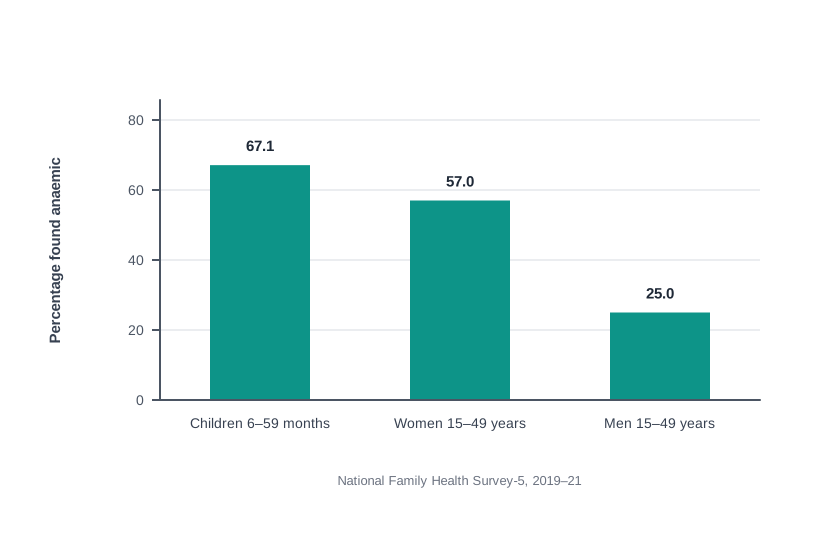
Fig. 3.6 – Anaemia in India by age and sex group.
3.8 Factors Influencing Eating Behaviour
By the time a person reaches adolescence, the influences on her or his eating habits are numerous, and the way those habits form is extremely complex. Three changes at this age matter most: growing independence, increased participation in social life, and a generally busy schedule of activities. All three have a definite impact on what a teenager eats.
There is also a practical shift. Adolescents begin to buy and to prepare more food for themselves than they ever did as children, and they often eat rapidly and away from home. The decisions are moving from the household to the individual, which is exactly why this is the stage at which understanding the influences is worth something.
3.8.1 External And Internal Factors
The influences are usually sorted into two sets. External factors act on a person from outside — the family, the people around her, what is sold and advertised. Internal factors act from within — the body’s own needs, and what a person thinks, believes and prefers. Fig. 3.7 sets out the full model.
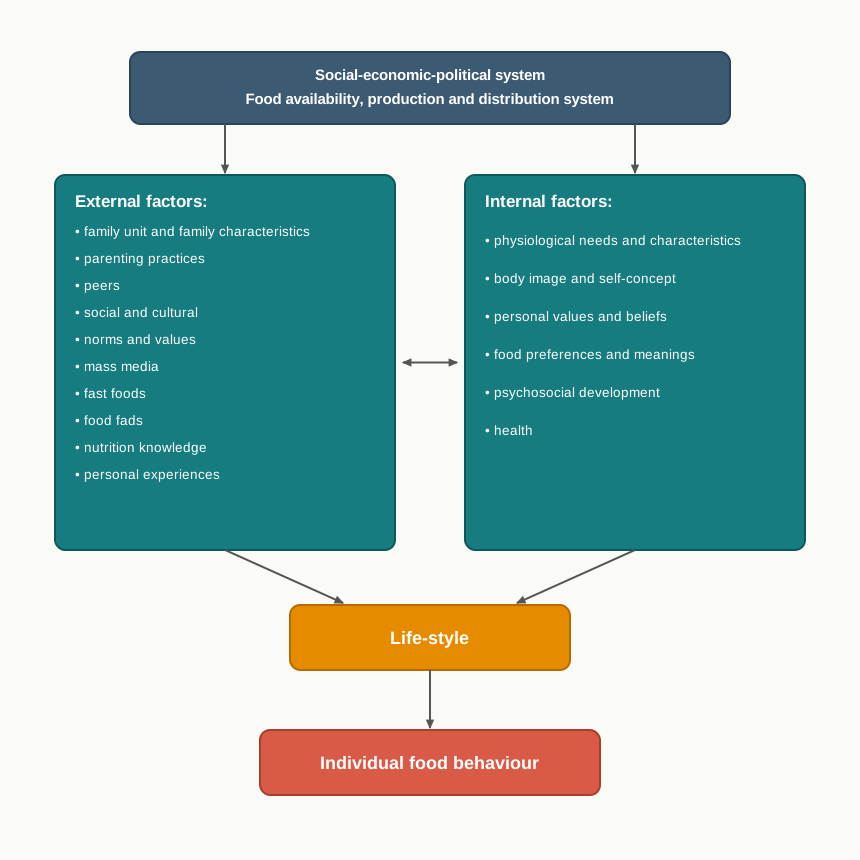
Fig. 3.7 – Factors affecting adolescent food behaviour.
Read the chart from the top down. The box above everything else is the wider setting — the social, economic and political system, and the system by which food is made available, produced and distributed. Neither an adolescent nor her family chooses this. It decides what food exists in the market at all, and at what price, and so it sets the limits inside which every other influence works.
Below it, the two sets of factors face each other, joined by a double-headed arrow because they act on each other continuously. A television advertisement is an external factor; whether it appeals to you depends on internal ones, including your body image, which is the picture a person holds of her or his own body and how it looks to others.
One external factor on the chart is easily misread. Food fads are food beliefs and practices that become popular for a short while without being founded on evidence — a food declared miraculous one season and forgotten the next. They spread through the same channels as reliable nutrition knowledge, which sits on the chart just below them, and telling the two apart is a skill this whole chapter is meant to build.
The two sets do not act on food behaviour directly. They shape a person’s life-style — the settled pattern of how she spends her day, what she does, and what she eats — and the life-style is what produces individual food behaviour. This is why a single lecture about nutrition rarely changes what anyone eats, and why a change in routine often does.
3.8.2 Influences Within The Family
The basic foundation for eating habits is laid in the family, long before adolescence. What helps most is not instruction but opportunity: parents who give children the chance to choose from a range of nourishing foods as they are growing up raise children who can make reasonable choices later, because choosing is a skill and it has been practised.
By the time children are teenagers, they need some freedom to use the kitchen. This is true for boys as well as for girls. A person who can cook two or three dishes competently is not at the mercy of whatever happens to be for sale near the school gate, and cooking is a household skill that every member of a household has reason to possess.
3.8.3 Influences Outside The Home
While the family lays the foundation, many influences on eating behaviour originate outside the home, and they grow stronger through the teenage years.
Peers
The influence of peers — the people of one’s own age group — can be a useful source of support as well as a source of stress. Support from friends genuinely helps an adolescent who is trying to change an eating pattern, including a teenager who is being treated for obesity. The same group can also turn on such an adolescent and tease her or him about weight, which does real harm and makes the eating pattern worse rather than better. Teasing of this kind is not a small matter, and it is something a class, a teacher or a school can decide to stop.
Television And Advertising
Teenagers are very vulnerable to advertising messages. Food commercials, and the eating habits shown in the programmes themselves, have influenced people for decades now. The majority of food advertisements are for products with a high concentration of sweetness and fat, for the plain reason that these are the products with a margin large enough to advertise.
The response asked for is not avoidance but discernment. An advertisement is designed to sell, and it makes claims that can be checked — against the nutrients the product actually supplies, and against the food group it belongs to.
The Ease Of Getting Ready-To-Eat Food
The sheer availability of ready-to-eat food influences eating habits as much as any advertisement does. Through home delivery and vending machines, at cinemas, at melas and sporting events, at fast-food outlets and convenience stores, food is available at numerous points throughout the day.
The consequence is arithmetical. When food is available at every hour, adolescents eat more often, and much of what is available at those hours is not the healthier option. Watching this tendency in oneself is advisable — not because eating out is wrong, but because a pattern built out of many small unnoticed choices is still a pattern.
3.9 Eating Disorders At Adolescence
Adolescence brings rapid physical growth at the same time as body image is developing, and the two together can intensify problems of self-esteem. This is why eating disorders are of special concern at this stage of life.
An eating disorder is a recognised health condition in which eating behaviour becomes seriously disturbed, along with the thoughts and feelings attached to food and to the body. It is an illness, not a habit and not a choice, and it is treated by doctors, dietitians and counsellors working together.
Part of the ordinary work of adolescence is arriving at a settled and reasonable picture of one’s adult body. For a teenager with an eating disorder that progress is interrupted, which is why the condition tends to persist unless it is treated.
3.9.1 Anorexia Nervosa
Anorexia nervosa is an eating disorder in which a person severely restricts what she or he eats, driven by an intense fear of gaining weight and by a distorted picture of her or his own body. It is tied so closely to body image distortion that it is most commonly seen in adolescence — the period when a person is struggling with self-identity and is most vulnerable to problems of body image.
The distortion is the part hardest for others to understand. A person with anorexia nervosa may be undernourished and yet be genuinely unaware of it, and may continue to believe that she or he is overweight when this is not the case. Because the belief is a symptom of the illness, arguing against it does not help; it is one of the reasons the condition needs professional treatment.
Two other features are common and are easy to miss from outside. Self-esteem tends to be low, and low mood or depression often accompanies the disorder. Withdrawal from family and friends is frequent, so a person who has stopped joining meals and stopped meeting people may be showing two signs at once.
3.9.2 Bulimia
Bulimia is another type of eating disorder. It often begins in late adolescence or early adulthood, and frequently follows a series of unsuccessful attempts at weight-reduction dieting — which is the direct link back to the dieting practices discussed in section 3.6.
Bulimia involves repeated episodes of bingeing, meaning eating a large quantity of food in a short time with a sense of having lost control over the eating, followed by attempts to undo it, such as purging. The cycle is usually hidden, and a person with bulimia may be of an entirely ordinary weight, so the disorder can continue for a long time before anyone notices.
Eating disorders are more often diagnosed in girls and women, but boys and men develop them too, and are frequently identified late because the condition is not looked for in them. Table 3.6 sets the two disorders side by side.
3.9.3 Consequences And Dietary Interventions
Both disorders have serious physical consequences, because the body is being deprived of what it needs while it is still growing. These include convulsions, renal failure — that is, failure of the kidneys — irregular heartbeats, and erosion of the teeth.
In adolescent girls, anorexia nervosa can delay the onset of menstruation. It can also permanently reduce adult stature, since the growth spurt does not come round again, and it can result in osteoporosis, a weakening of the bones that makes them break easily.
What Helps
Perhaps the best protection against these disorders is learning to appreciate one’s own uniqueness. Respecting and valuing oneself is genuinely protective, and it is something a family, a classroom and a friend group can either strengthen or damage. Where teasing about weight or appearance is treated as ordinary, it does damage.
Treatment is medical, psychological and dietary together. On the dietary side, the important interventions are ensuring a balanced diet, improving dietary fibre intake, and using nutrient or food supplements to make up what has been lost. Each of these is planned and supervised by a doctor or a qualified dietitian, because a body that has been deprived for a long time has to be brought back to normal intake carefully.
The step that matters most comes before any of that. If you are worried about your own eating, or about a friend’s, speak to a doctor, a school counsellor or a trusted adult. These are treatable conditions, and they are treated far more easily the earlier they are recognised.
Looking Back, And Forward
To sum up, the physical, social and emotional changes of adolescence can profoundly affect a young person’s nutritional status and eating patterns. Few people of your age are interested in nutrition for the sake of a long life, but the same knowledge answers a much nearer question — how to plan what you eat this week so that it does what you need it to do.
Health is itself a key resource, and it influences the availability and use of every other resource a person has. What are those other resources, and how is each best used? That is the question the next chapter, on the management of resources, takes up, beginning with time, energy and money.
3.10 Summary
- Food is anything solid or liquid which, when swallowed, digested and assimilated in the body, provides it with essential substances called nutrients and keeps it well.
- Food performs four functions:
- it supplies energy;
- it enables growth and the repair of tissues and organs;
- it protects the body from disease;
- it regulates body functions.
- Nutrition is the science of foods, of the nutrients they contain, and of their action within the body, including ingestion, digestion, absorption, metabolism and excretion.
- Nutrition also has social, psychological and economic dimensions, and not only physiological ones.
- Nutrients are the constituents in food that must be supplied to the body in suitable amounts, and there are seven kinds — carbohydrates, proteins, fats, minerals, vitamins, water and fibre.
- Nutrients are classified on the basis of the quantity needed each day into macronutrients, required in large amounts, and micronutrients, required in small amounts.
- Macronutrients supply energy and the material for growth and repair; micronutrients supply no energy and work by regulating the body’s processes.
- A balanced diet is one which includes a variety of foods in adequate amounts and correct proportions to meet the day’s requirements of all essential nutrients.
- A balanced diet also leaves the body a safety margin, a reserve that carries it through a short spell of inadequate intake.
- Recommended Dietary Allowances = Requirements + Margin of safety.
- A requirement is the least amount an individual needs each day; an RDA is a group guideline set high enough to cover practically all healthy people in that group.
- A balanced diet takes care of six aspects:
- includes a variety of food items;
- meets the RDA for all nutrients;
- includes nutrients in correct proportions;
- provides a safety margin for nutrients;
- promotes and preserves good health;
- maintains an acceptable body weight for height.
- The World Health Organisation defines health as a state of complete physical, mental and social well-being, and not merely the absence of disease or infirmity.
- Positive health is a blend of the physical, the mental and the social, and adequate nutrient intake is necessary to maintain it.
- Mental health is a state of emotional and psychological well-being in which a person can use her or his cognitive and emotional capabilities, function in society, and meet the ordinary demands of everyday life.
- Physical fitness results from regular exercise, proper diet and nutrition, and proper rest, and is defined as the body’s ability to function efficiently and effectively in work and leisure activities, to be healthy, to resist diseases and to meet emergency situations.
- Fitness is divided into five categories:
- aerobic fitness;
- muscular strength;
- muscular endurance;
- flexibility;
- body composition.
- Health is a state of complete well-being, while fitness is the ability to meet the demands of a physical task.
- A food group is a set of foods sharing common characteristics, which may be the source, the physiological function performed, or the nutrients present.
- The Indian Council of Medical Research suggests five basic food groups:
- cereals, grains and products;
- pulses and legumes;
- milk and meat products;
- fruits and vegetables;
- fats and sugars.
- Foods within a group are similar but not identical in nutritive value, so a variety is chosen from each group.
- One gram of carbohydrate supplies 4 kcal, one gram of protein 4 kcal, and one gram of fat 9 kcal.
- The guidelines for using the food groups ask for at least one serving from each group in every meal, cereal–pulse combinations in vegetarian meals, uncooked fruits and vegetables, at least one serving of milk, and cereals supplying not more than 75 per cent of the total kilocalories.
- In planning balanced diets, cereals and pulses are taken adequately, fruits and vegetables liberally, animal foods moderately, and oils and sugars sparingly.
- The food guide pyramid is a graphic depiction of the daily food guide, drawn to show variety, moderation and proportion, with the size of each section representing the number of daily servings recommended.
- About 75 per cent of a day’s servings should come from grains, vegetables and fruits.
- A vegetarian diet can meet all the body’s needs, provided that legumes, seeds, nuts, tofu and eggs replace meat, that legumes with dark leafy greens supply iron, and that milk or a fortified soy milk supplies calcium and vitamin B₁₂.
- Foods in one group cannot replace those in another, and no one food group is more important than another.
- Nutrient needs rise through childhood, peak in adolescence because of the growth spurt, and level off in adulthood.
- Adolescents commonly obtain less vitamin A, thiamine, iron and calcium than recommended, and more fat, sugar, protein and sodium than is thought optimal.
- The eating patterns common at this age are skipping meals, routine consumption of fast foods, avoiding fruits and vegetables, frequent snacking, and dieting.
- Snacking is not in itself harmful and can help meet nutrient needs, but surviving only on snacks is harmful.
- Fast-food meals are typically low in calcium, riboflavin, vitamin A, folic acid and fibre, and high in fat, sodium and energy.
- Dieting unsupervised by an expert can lead to cycles of weight loss and regain, lowered self-esteem, increased cardiovascular risk and eating disorders.
- Diet-related behaviour can be modified by limiting screen time, eating three balanced meals with two nutritious snacks, drinking enough water, keeping a record of food and activity, and exercising for 20 to 30 minutes, 3 to 4 times each week.
- Substance abuse harms the nutrition and health status of adolescents, and nutrition intervention, support and counselling are part of rehabilitation.
- Adolescents doing heavy physical work in rural settings have higher energy and protein needs, and the risk of malnutrition is greatest where the household cannot meet them.
- Eating behaviour is shaped by external factors and internal factors acting together, which produce a life-style, which in turn produces individual food behaviour.
- Anorexia nervosa involves severe restriction of food intake together with a distorted body image, and bulimia involves repeated bingeing followed by attempts to compensate.
- Both disorders can cause convulsions, renal failure, irregular heartbeats and dental erosion, and anorexia nervosa in adolescent girls can delay menstruation, reduce adult stature and cause osteoporosis.
- Eating disorders are treatable health conditions, and treatment is medical, psychological and dietary together, under professional supervision.
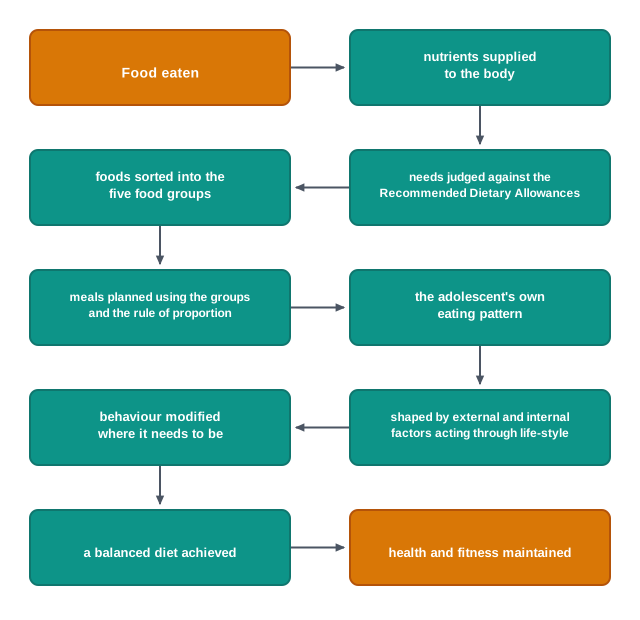
Fig. 3.8 – The chapter in one chain.
3.11 Key Terms
- Anaemia — a condition in which the blood carries less haemoglobin than it should, so less oxygen reaches the tissues; most often caused by a shortage of iron.
- Anorexia nervosa — an eating disorder in which a person severely restricts food intake, driven by an intense fear of gaining weight and a distorted picture of her or his own body.
- Balanced diet — a diet which includes a variety of foods in adequate amounts and correct proportions to supply all the essential nutrients and preserve good health.
- Body image — the picture a person holds of her or his own body and of how it appears to others.
- Bulimia — an eating disorder marked by repeated episodes of bingeing, followed by attempts to compensate for the food eaten.
- Carotenoids — the orange, yellow and deep green plant pigments that the body converts into vitamin A.
- Eating disorder — a health condition in which eating behaviour, and the thoughts and feelings attached to food and body weight, become seriously disturbed.
- Empty calories — energy supplied by a food that brings almost no protein, vitamins, minerals or fibre with it.
- Food — anything solid or liquid which, when swallowed, digested and assimilated, supplies the body with nutrients and keeps it well.
- Food fads — food beliefs and practices that become popular for a short while without being founded on evidence.
- Food group — a set of different foods sharing common characteristics, which may be their source, the function they perform, or the nutrients they contain.
- Food guide pyramid — a graphic depiction of the daily food guide, drawn so that the size of each section shows the number of daily servings recommended.
- Fortification — the addition of specific nutrients to a food during processing, over and above what the food naturally contains.
- Growth spurt — the stretch of two or three years in adolescence during which height and weight increase far faster than in childhood.
- Health — a state of complete physical, mental and social well-being, and not merely the absence of disease or infirmity.
- Invisible fat — the fat present naturally within a food, as distinct from the visible fat added in the kitchen as oil, butter or ghee.
- Kilocalorie — the unit in which food energy is measured; the heat needed to raise the temperature of one kilogram of water by 1 °C.
- Macronutrients — the nutrients required by the body in large amounts, measured in grams each day.
- Mental health — a state of emotional and psychological well-being in which a person can use her or his cognitive and emotional capabilities, function in society, and meet the ordinary demands of everyday life.
- Micronutrients — the nutrients required by the body in small amounts, measured in milligrams or micrograms each day.
- Nutrients — the constituents in food that must be supplied to the body in suitable amounts: carbohydrates, proteins, fats, minerals, vitamins, water and fibre.
- Nutrition — the science of foods, of the nutrients they contain, and of their action within the body, from ingestion through to excretion.
- Osteoporosis — a weakening of the bones that makes them break easily.
- Peers — the people of one’s own age group, whose influence may be a source of support or of stress.
- Physical fitness — the body’s ability to function efficiently and effectively in work and leisure activities, to be healthy, to resist diseases and to meet emergency situations.
- Positive health — health understood as a blend of physical, mental and social well-being, rather than as the mere absence of illness.
- Puberty — the stage of adolescence at which the body matures sexually.
- Recommended Dietary Allowances — allowances of nutrients set high enough to cover the needs of practically all healthy individuals in a group; guidelines for planning and assessing diets, not requirements for any one person.
- Requirement — the least amount of a nutrient a particular individual needs each day to remain in good health.
- Safety margin — the reserve of nutrients a balanced diet leaves in the body, which carries it through a short spell of inadequate intake.
- Substance abuse — the use of a substance in a way that damages health or functioning.
3.12 Points To Ponder
- Food group classifications differ from one country to another, and are built on the foods, costs and deficiency diseases of that country. What would have to change in India before the five-group classification needed rewriting?
- An individual’s requirement for a nutrient cannot be measured in ordinary practice, yet allowances are published for whole groups of people. What is gained, and what is lost, when a personal figure is replaced by a public one?
- The chapter shows that nutrition knowledge is only one of many factors shaping what a person eats. Why, then, is nutrition worth teaching at all — what exactly does knowledge change, and what does it leave untouched?
- The food guide pyramid places cereals at its broad base, while the guidelines for the food groups set a ceiling of 75 per cent of the day’s kilocalories on cereals. How can both of these be sound advice at the same time?
- Ready-to-eat food is now available at far more hours of the day than it once was. Is the availability itself the nutritional problem, or only the kind of food that happens to be available?
- Part of the pressure behind disordered eating comes from what a society treats as a desirable body. What can a school realistically do about that pressure, and what lies beyond its reach?
3.13 Objective Questions
- One gram of which nutrient releases 9 kcal of energy? (1 mark)
- Carbohydrate
- Protein
- Fat
- Fibre
- Which of the following is a micronutrient? (1 mark)
- Protein
- Iodine
- Water
- Fat
- According to the guidelines for using the basic food groups, cereals should not supply more than what share of the total kilocalories? (1 mark)
- 50 per cent
- 60 per cent
- 75 per cent
- 90 per cent
- Milk contains all nutrients except: (1 mark)
- Protein, fat and calcium
- Iron, vitamin C and fibre
- Calcium, vitamin B₁₂ and fat
- Carotenoids, protein and iron
- Assertion (A): The Recommended Dietary Allowance for a nutrient is higher than the requirement of most individuals in the group. (1 mark) Reason (R): A margin of safety is added to the allowance so that it covers the needs of practically all healthy people in that group. Choose the correct option:
- Both A and R are true, and R is the correct explanation of A.
- Both A and R are true, but R is not the correct explanation of A.
- A is true, but R is false.
- A is false, but R is true.
- Assertion (A): A vegetarian meal that combines a cereal with a pulse supplies protein of better quality than either food eaten alone. (1 mark) Reason (R): Cereals and pulses belong to the same food group. Choose the correct option:
- Both A and R are true, and R is the correct explanation of A.
- Both A and R are true, but R is not the correct explanation of A.
- A is true, but R is false.
- A is false, but R is true.
- Match the foods in Column I with the food group they belong to in Column II. (1 mark)
| Column I | Column II |
|---|---|
| a. Amaranth | i. Fats and sugars |
| b. Rajmah | ii. Fruits and vegetables |
| c. Jaggery | iii. Pulses and legumes |
Fill in the blank: The fat present naturally inside cereals, pulses and green leaves, as distinct from the oil or ghee added in the kitchen, is called ______ fat. (1 mark)
State whether true or false: Micronutrients supply the body with energy. (1 mark)
Name the following: the condition in which the blood carries less haemoglobin than it should, so that less oxygen reaches the tissues. (1 mark)
Identify the odd one out and give a reason for your choice: guava, papaya, spinach, watermelon. (1 mark)
3.14 Check Your Concepts
Define a food group, and state any one basis on which foods are grouped together. (2 marks)
Give a reason why uncooked fruits and vegetables should be included in the day’s meals. (2 marks)
Differentiate between macronutrients and micronutrients, stating the basis of difference. (3 marks)
Differentiate between a dietary requirement and a Recommended Dietary Allowance, stating the basis of difference. (3 marks)
Explain, with one example, why foods belonging to one food group cannot replace foods belonging to another. (3 marks)
Fitness was once defined as the capacity to carry out the day’s activities without undue fatigue. Explain why this definition was replaced, and state the definition used now. (4 marks)
What would happen to the nutritional adequacy of a diet in which cereals supplied almost all the day’s kilocalories? Answer with reference to at least three nutrients. (4 marks)
Discuss the factors that influence eating behaviour at adolescence, distinguishing clearly between external and internal factors. (5 marks)
Differentiate between anorexia nervosa and bulimia, stating the basis of difference, and explain the dietary interventions used in their treatment. (5 marks)
3.15 Identify & Label
Study Fig. 3.1. Name the two classes into which nutrients are divided, state the basis of the division, and name two nutrients placed in each class. (3 marks)
Study Fig. 3.3. Name the five categories into which physical fitness is divided. (2 marks)
Study Fig. 3.5. Identify the food groups placed at the base and at the apex, and state the serving guidance given for each. Explain what the width of each level of the drawing represents. (3 marks)
Study Fig. 3.7. State whether each of the following belongs among the external factors or the internal factors, and give a reason in each case: mass media, body image and self-concept, parenting practices. (3 marks)
3.16 Case & Application Based Questions
- The mess of a residential school serves the following on a Tuesday. Breakfast: upma and tea. Lunch: khichdi and a potato preparation. Evening: biscuits and tea. Dinner: aloo paratha and a potato preparation. Milk is supplied to the mess only on Wednesdays, and the vegetable order for the week has not arrived.
- Identify the food groups that are missing or under-represented in this day’s menu. (2 marks)
- Name two nutrients likely to fall short on this day, and state the food group that would have supplied each. (2 marks)
- Suggest one change to any two of the four meals, giving the nutritional reason for each change. Your suggestions must work without any milk supply. (3 marks)
- A school canteen committee has been asked to add two new items to its counter. Four options have been proposed: a fried potato snack; a sprouted moong chaat; a packaged fruit-flavoured drink supplying about 160 kcal per serving, almost entirely from sugar; and a curd preparation with chopped vegetables.
- Which two items would you recommend adding? Give the nutritional reasoning for each choice. (3 marks)
- For each of the two items you rejected, state which food group it belongs to and what its main nutritional limitation is. (2 marks)
- The committee is told that the school has no refrigeration. State how this single fact changes your recommendation, and what you would put in place of the affected item. (2 marks)
3.17 Practice With Data
- A day’s diet supplies 300 g of carbohydrate, 60 g of protein and 50 g of fat. (4 marks)
- Calculate the energy supplied by each of the three nutrients, showing your working.
- Calculate the total energy value of the day’s diet.
- Calculate what percentage of the total energy comes from fat.
- A day’s diet supplies 2 000 kcal in all, of which the cereals supply 1 600 kcal. (3 marks)
- Calculate the percentage of the total energy supplied by cereals.
- State whether this diet meets the guideline given for cereals, and justify your answer with the figure.
- Suggest one change that would bring the diet closer to the guideline without reducing the total energy.
- Study Fig. 3.6, which gives the anaemia figures from the National Family Health Survey-5, 2019–21. (3 marks)
- State which group shows the highest prevalence of anaemia, and give the figure.
- Calculate the difference, in percentage points, between the figures for women and for men aged 15–49 years.
- Give two reasons why the figure for women is higher than the figure for men.