Chapter 8: Nutrition, Health and Well-being
A Spoon Of Sugar, A Pinch Of Salt
For most of the twentieth century, a child losing fluid rapidly through diarrhoea could be saved only by a drip. Fluid had to go straight into a vein, which meant a hospital, sterile equipment and a trained nurse — none of which reaches a village quickly.
Through the 1950s and 1960s, researchers working in Kolkata and in Dhaka returned again and again to one puzzle. Salt and water swallowed by mouth seemed to pass straight through a body that was already losing fluid. Why would the gut not take it back in?
The answer turned on glucose. The lining of the small intestine carries a transport system that draws in sodium and glucose together, and water follows the salt. Add sugar to a salt solution and the intestine absorbs it even while an infection is emptying it. By 1968 the idea had been tested on patients and it held.
In 1971, Dr Dilip Mahalanabis used the solution in a crowded relief camp at Bangaon in West Bengal, where a cholera outbreak was killing close to three in every ten people treated. Drums of the salt-and-glucose mixture were kept filled, and anyone able to drink was given it. Deaths fell to under four in a hundred.
That mixture is oral rehydration solution. It costs a few rupees, needs no needle, and any adult in a household can mix it correctly in a minute.
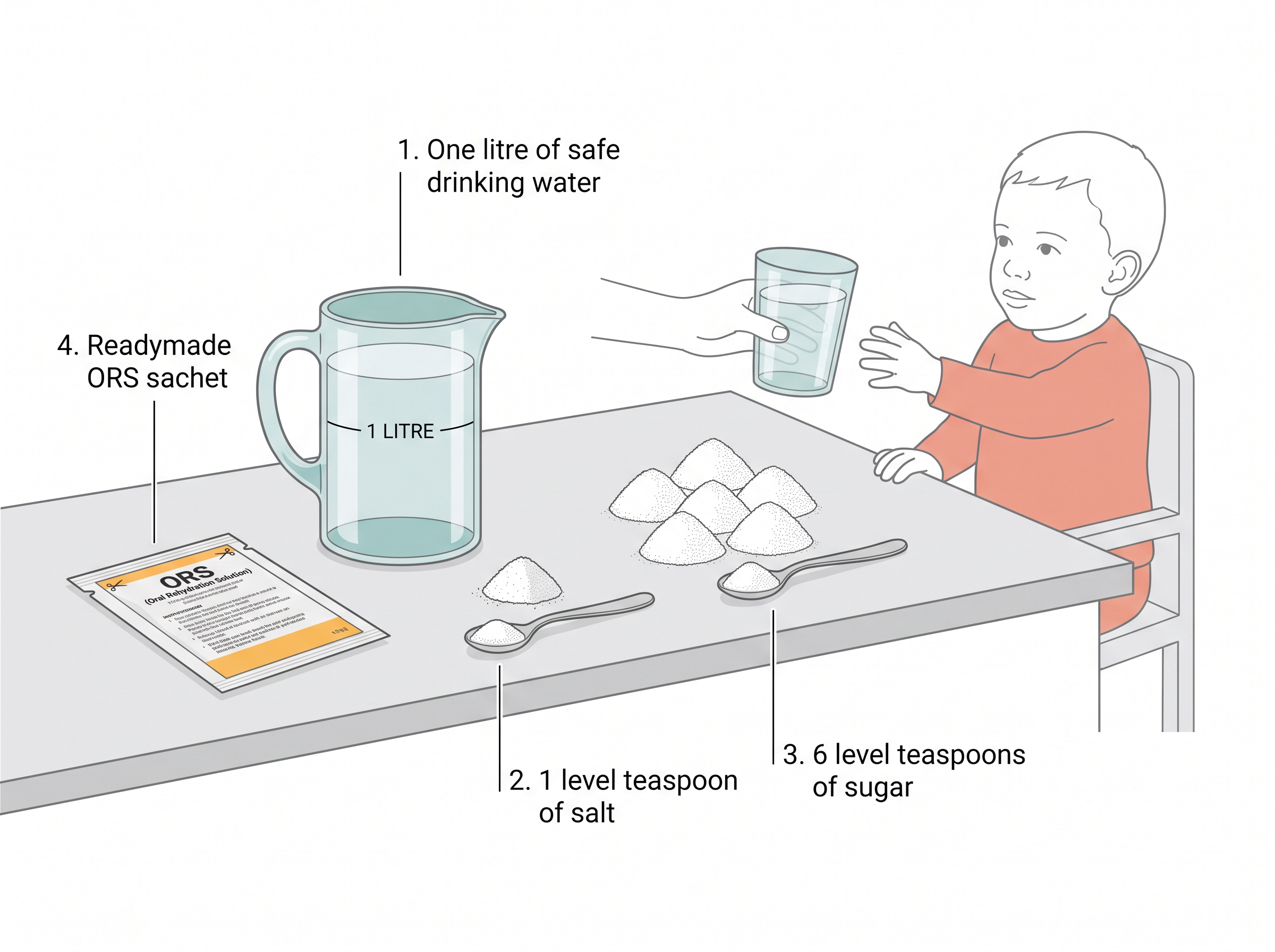
Fig. 8.0 – Preparing oral rehydration solution at home.
8.1 Introduction
At an ordinary family meal, everyone is eating out of the same pot. The grandmother takes a small helping, the school-going child a large one, and the two-year-old a mashed spoonful with extra ghee. The three-month-old in the next room is not eating from that pot at all.
The food has not changed. What differs is the body it is going into, and the work that body is doing at this stage of its life. This chapter follows that idea through the first twelve years of life.
What Nutrition Means
Nutrition is the whole process by which the body takes in food, breaks it down, absorbs what is released, and puts it to use for energy, growth, repair and protection against disease. It begins at the plate and ends inside the cell.
A nutrient is a substance in food that the body needs for one or more of those purposes. Carbohydrates, proteins, fats, vitamins, minerals, water and dietary fibre are the nutrient groups, and every food is a particular mixture of them.
Because the body’s work changes with age, the mixture it needs changes as well. An infant is laying down new tissue faster than she ever will again, so protein and energy per kilogram of her body weight matter enormously. A school-age child is growing more slowly but moving a great deal more, so total energy rises while the demand per kilogram falls.
Health And Well-being
Health is not simply the absence of illness. A child who has no fever today but is listless, underweight and falls sick every second month is not a healthy child, even though nothing has been diagnosed. Health is a positive state of the whole person, and the World Health Organization has defined it that way since 1948.
Well-being is the part of that state the person experiences from the inside: feeling able to eat, sleep, play, learn, work and take part in family and community life. Nutrition sits underneath all three of these — physical, mental and social — because a poorly fed child tires in class, plays less, and falls behind her friends in ways that have nothing to do with ability.
The opposite condition is malnutrition, which means bad nutrition in either direction. Too little food, or food of the wrong kind, produces undernutrition; too much energy for too little activity produces overnutrition. Both are covered in this chapter.
Growth And Development Are Not The Same Thing
These two words are used loosely in everyday speech, but in Home Science they mean different things, and the difference is set out in Table 8.1.
Growth is an increase in physical size — in weight, in length or height, in head circumference. It can be measured with a scale and a tape, which is why it is the first thing a health worker checks.
Development is an increase in complexity and skill: holding the head steady, sitting, walking, speaking, holding a pencil, sitting still long enough to finish a sum. It is judged by what the child can now do that she could not do before.
The two are tied together. A child who is not growing well is usually not developing well either, but growth is the one we can put a number on, so it becomes our early warning system.
Requirement, Allowance And The Balanced Diet
Two terms that sound alike are used differently. A nutritional requirement is the smallest amount of a nutrient one particular person must receive to stay in good health. It differs from person to person, and there is no practical way to measure it for every child in a country.
A Recommended Dietary Allowance (RDA) solves that problem. It is a figure set for a whole group — infants, preschool children, adolescent girls — by taking the average requirement of the group and adding a safety margin, so that the allowance covers nearly every healthy person in it. In India these figures are set by the Indian Council of Medical Research through the National Institute of Nutrition, and the current set is the ICMR–NIN Recommended Dietary Allowances of 2020.
A balanced diet is the practical answer to the RDA. It is a day’s food, chosen from all the food groups in the right proportions, that supplies every nutrient in the amounts the person needs, with a small reserve for lean days. Planning such a diet for a particular child — her age, her appetite, her family’s food habits and its budget — is what most of this chapter is about.
Nutrition Is Decided At Several Levels
What a child eats looks like a private matter, but very little of it is decided by the child. The individual has an appetite and a preference; the family decides what is cooked and who is served how much; the community shapes what is grown, sold and thought fit to eat; and the nation acts through programmes such as the Integrated Child Development Services and the Mid-Day Meal Scheme, and through the immunisation schedule.
Keep that ladder in view as you read. Almost every problem in this chapter can be attacked at more than one of its rungs, and the choice of rung is what separates a household solution from a public one.
The chapter takes the first twelve years in three stages — infancy, from birth to twelve months; the preschool years, from one to six; and the school-age years, from seven to twelve. Each stage is treated the same way: what the body is doing, what it therefore needs, how a household can supply it, and what goes wrong when it does not.
8.2 Nutrition, Health And Well-being During Infancy (Birth–12 Months)
Infancy is the first year of life, from birth to twelve months. No later stage asks so much of food, and no later stage is so completely dependent on the household getting the feeding right.
A baby cannot ask for what she needs, cannot choose between two dishes, and cannot make up tomorrow for what she missed today. Everything about her nutrition is decided for her, which is why this section is the longest in the chapter.
8.2.1 Growth And Nutrient Needs In Infancy
Watch any family with a new baby and the same remark comes up every few weeks: the clothes have stopped fitting again. That observation is the whole of infant nutrition in one sentence.
How Fast An Infant Grows
Growth in the first year is faster than at any other time after birth. A healthy infant roughly doubles her birth weight by about five months and trebles it by her first birthday. Her length increases by about half — from around 50 centimetres at birth to around 75 centimetres at one year.
The brain is growing quickly too, faster in this year than it ever will again. Nerve cells are forming their connections and laying down their fatty insulating sheaths, and both processes need a steady supply of energy, protein and fatty acids.
Growth this rapid has a direct consequence. For every kilogram she weighs, an infant needs far more energy, protein, calcium and iron than an adult does — because the adult is only maintaining a body while the infant is building one.
Why Growth Is Watched, Not Guessed
Because growth is the most sensitive early sign that something is wrong, health workers track it rather than judging by appearance. Growth monitoring is the regular weighing of a child and the plotting of that weight against her age on a chart.
The chart used in India is the growth chart, printed inside the Mother and Child Protection Card. Its curved reference lines come from the World Health Organization Child Growth Standards, which describe how healthy, well-fed children of that age actually grow. Fig. 8.1 shows the chart.
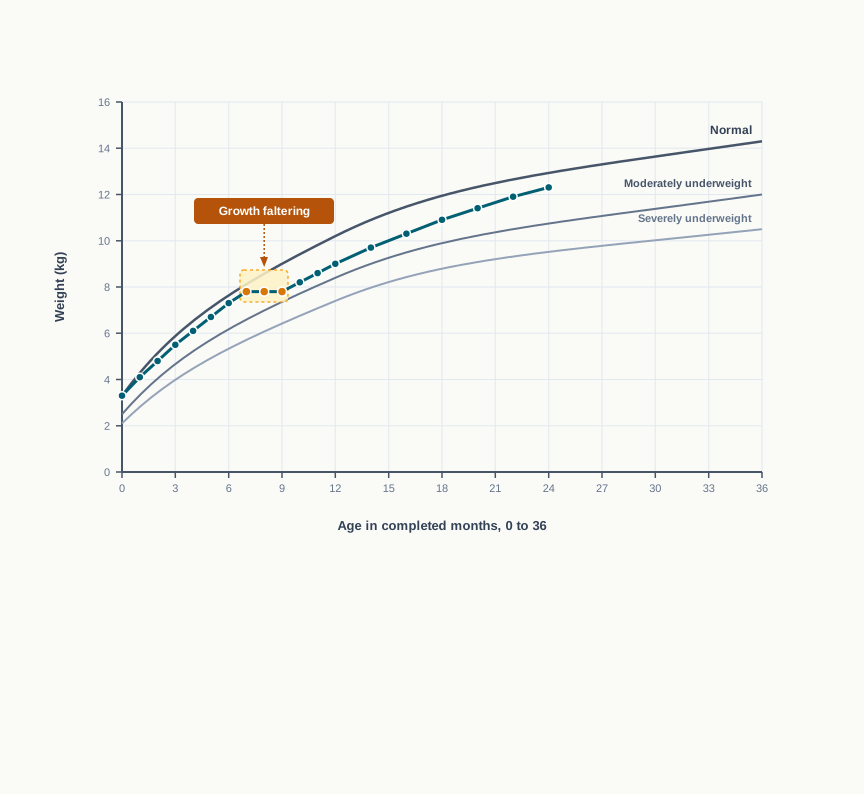
Fig. 8.1 – Reading a weight-for-age growth chart.
The single dot on such a chart matters far less than the direction of the line joining the dots. A child who is small but climbing steadily is growing well; a child who is average but flat for two months needs attention now, not at the next visit.
What The Infant Body Needs
Three features of the infant body decide her nutrient needs, and each explains a feeding practice you will meet later in this section.
- Her stomach is very small, so a feed cannot be large. She must therefore be fed often, and the food must be concentrated rather than dilute.
- Her kidneys are still immature and cannot handle a heavy load of salts and protein waste. Food meant for adults is too strong for her.
- Her stores of iron, laid down before birth, are enough for roughly the first six months and no longer. From then on iron must come from food.
8.2.2 Dietary Requirements Of Infants
The Indian Council of Medical Research sets allowances for infants in two age bands, because the same child’s needs change sharply at six months. Table 8.2 gives the current figures.
Two things in this table are worth pausing on. First, the total energy allowance rises with age, as you would expect, because the baby is bigger. Second, the allowance per kilogram falls, because the rate of growth is already slowing after six months.
Compare either figure with an adult’s, which works out at roughly a third as much per kilogram. An infant is running her body at a pace no adult ever matches, on a stomach that holds a few spoonfuls.
Protein needs are high for the same reason, but quantity is not the whole story. The protein must be of good quality, meaning it supplies all the essential amino acids in the proportions the body needs, and the protein of breast milk is the standard against which others are judged.
Water — The Nutrient That Is Easiest To Forget
Water is a nutrient, and infants are more vulnerable to losing it than anyone else in the household. A larger proportion of an infant’s body is water, she turns that water over faster, and her immature kidneys cannot concentrate urine well to conserve it.
Her skin surface is also large in relation to her body mass, so she loses more water through it. Put those together and a baby can move from well to seriously dehydrated in hours, over a loss an adult would not notice.
8.2.3 Breast Feeding
For the first six months, one food meets every requirement in Table 8.2. Exclusive breastfeeding means giving the infant nothing but breast milk — no water, no honey, no gripe water, no animal milk, no tea — apart from medicines or drops a doctor prescribes.
The recommendation of the World Health Organization, followed by India’s Ministry of Health and Family Welfare, is exclusive breastfeeding for the first six months, with breastfeeding continued alongside other foods up to two years of age and beyond. Feeding should begin within one hour of birth.
Why Breast Milk Fits So Exactly
Breast milk is not simply a good food that happens to suit babies. It is species-specific, which means its composition matches the growth pattern of a human infant rather than a calf’s.
Its main sugar is lactose, which supplies energy and helps calcium absorption. Its protein is largely whey, which forms a soft, quickly digested curd in the stomach, unlike the firm curd of undiluted animal milk. Its fat comes with the long-chain fatty acids the growing brain needs, and with an enzyme that helps digest that very fat.
Breast milk also changes as the feed goes on. The milk at the start of a feed is thinner and quenches thirst; the milk at the end is richer in fat and satisfies hunger. A baby taken off one side too early to be moved to the other gets the thin milk twice and the rich milk not at all.
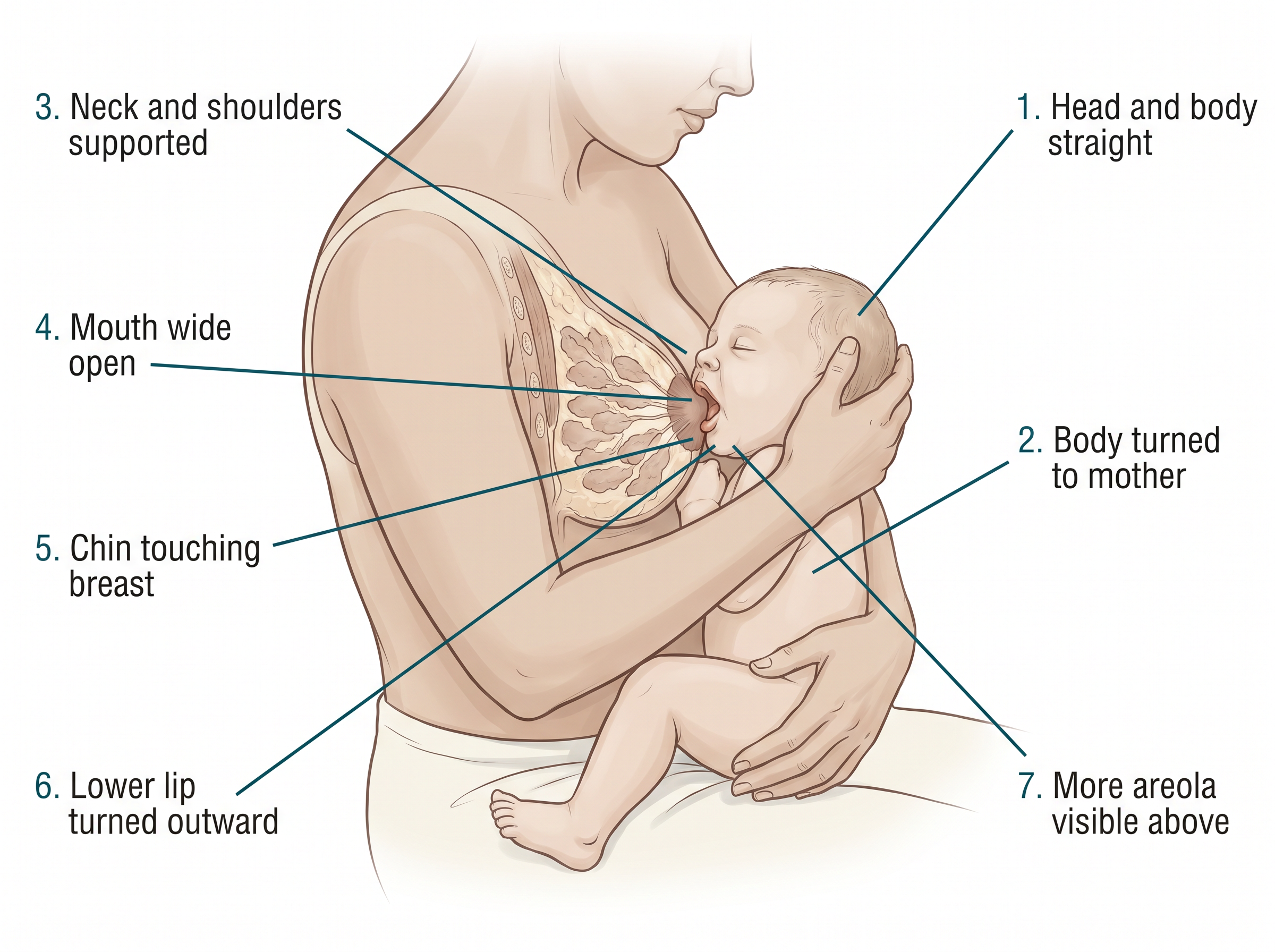
Fig. 8.2 – Correct positioning and attachment for breastfeeding.
Attachment matters because milk is not sucked out of the nipple like liquid through a straw. It is pressed out of the milk ducts under the areola, so a baby latched onto the nipple alone gets little milk and a sore nipple results.
8.2.3.1 Colostrum
The milk of the first two to three days after delivery is not ordinary milk. Colostrum is a thick, sticky, deep yellow fluid, produced in very small amounts, and it is a different substance from the mature milk that follows.
Its yellow colour comes from carotene, and it is far richer in vitamin A than mature milk. It carries a high concentration of protein, and much of that protein consists of antibodies — chiefly a type that coats the lining of the infant’s gut and blocks organisms from crossing it.
It is comparatively low in fat and lactose, which suits a newborn whose digestion is only starting. It also acts as a mild laxative, helping the newborn pass meconium, the dark first stool, and so clearing the gut and reducing jaundice.
The small quantity misleads people. A newborn’s stomach holds only a few millilitres on the first day, so a few teaspoonfuls of colostrum is a full feed, not a failed one. In many households colostrum is still discarded as stale or unclean; it is neither, and throwing it away costs the baby her first and best protection against infection.
8.2.3.2 Benefits Of Breast Feeding
The advantages run in three directions at once — to the infant, to the mother, and to the household.
For The Infant
- It supplies every nutrient she needs for six months, in the right proportions and in a form she absorbs well.
- It protects her against infection through antibodies, through lactoferrin, which starves harmful bacteria of iron, and through factors that encourage helpful bacteria in her gut.
- It is sterile and at body temperature, so there is nothing to boil, measure, dilute or contaminate.
- It is digested easily, so colic, constipation and diarrhoea are all less common.
- Sucking at the breast works the jaw muscles, which helps the jaw and teeth develop properly.
- Close, repeated skin contact supports the emotional bond between the infant and the person feeding her.
For The Mother
- Suckling triggers the release of a hormone that makes the uterus contract, reducing bleeding after delivery and helping it return to its usual size.
- Full breastfeeding delays the return of fertility, which helps space births.
- Women who breastfeed have a lower lifetime risk of breast and ovarian cancer.
- There is nothing to prepare at two in the morning.
For The Household
- It costs nothing beyond the extra food the mother needs, while formula, fuel and feeding equipment all cost money every month.
- It saves the time and fuel that boiling, sterilising and preparing feeds would take.
- A baby who falls ill less often means fewer clinic visits, less expense and less lost work for the adults.
8.2.4 Feeding The Low Birth Weight Infant
An infant weighing less than 2.5 kilograms at birth is described as a low birth weight infant. Two quite different situations produce that figure: the baby may have been born too early, or she may have been born at term but small because she grew poorly in the womb.
Poor growth before birth traces back to the mother’s own condition — undernutrition during pregnancy, anaemia, infection, very short gaps between births, or pregnancy in adolescence when the mother’s own body is still growing. This is one of the clearest places on the scale ladder where a household problem and a community one meet.
A low birth weight infant is at a disadvantage from the first hour. She has little body fat, so she loses heat quickly. Her sucking and swallowing reflexes may be weak. Her stores of iron, calcium and vitamins, which are laid down mainly in the last weeks before birth, are small.
How She Is Fed
The principle is unchanged: breast milk is still the right food, and it is even more valuable here because it protects a baby who has almost no defences of her own. What changes is the method of getting it into her.
- Where she cannot suck effectively, the mother expresses her milk and it is given by clean cup, paladai or spoon.
- Feeds are small and frequent, because the stomach is tiny and tires quickly.
- She is fed on a schedule rather than on demand, since a weak baby may sleep through hunger instead of crying.
- Iron, calcium and vitamin D supplements are given on medical advice, to make up stores she did not have time to build.
- She is kept warm and handled with strict hygiene, because heat loss and infection are the two commonest dangers.
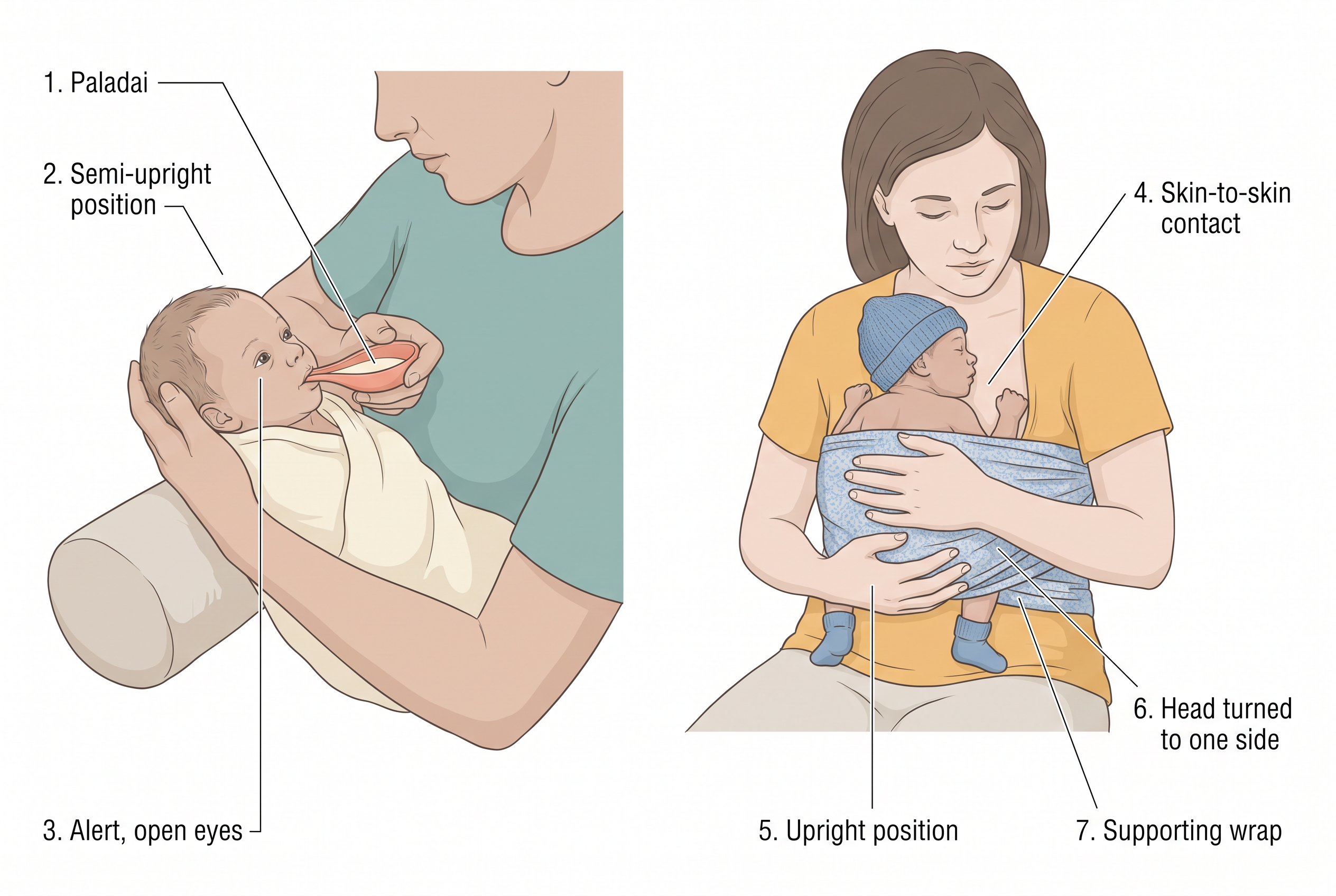
Fig. 8.3 – Cup feeding and kangaroo mother care.
8.2.5 Complementary Foods
Somewhere around six months a well-fed, exclusively breastfed baby begins to seem hungry after a full feed. Nothing has gone wrong with the milk. The baby has simply outgrown what one food can supply.
Complementary foods are the foods given to an infant from about six months of age alongside continued breastfeeding, to fill the widening gap between what breast milk provides and what the growing infant needs. The word is exact: these foods complete the milk, they do not replace it.
Why Six Months, And Not Four Or Nine
The timing is not a convention. Several changes converge at around six months, and starting well before or well after all of them causes trouble.
- The iron stores laid down before birth are running out, and breast milk is low in iron. Iron must now come from food.
- Energy and protein needs have outgrown the milk supply, so the gap widens month by month if nothing is added.
- The gut lining has matured enough to handle proteins other than those of breast milk, so the risk of allergy is lower than it would have been at four months.
- The tongue-thrust reflex, which pushes solids back out of the mouth, has faded, and the baby can sit with support and turn her head away when she has had enough.
Starting too early displaces breast milk with something less nutritious and brings infection in with it. Starting too late leaves the baby short of energy and iron exactly when she can least afford it, and the flat stretch on a growth chart between seven and nine months is very often this and nothing else.
8.2.5.1 Types Of Complementary Foods
Complementary foods are grouped in two useful ways: by what they are for, and by what stage of the first year they suit.
By purpose, three kinds are needed together.
- Energy-rich foods — mashed rice, wheat, ragi, potato, banana, with a spoon of ghee or oil added. Fat is the most compact source of energy available, which matters when the stomach is small.
- Protein-rich foods — well-cooked dals, mashed paneer or curd, mashed egg, ground groundnut or sesame. A cereal and a pulse eaten together supply better protein than either alone, because the amino acid each is short of is the one the other supplies.
- Protective foods — mashed papaya, mango, carrot, pumpkin and soft-cooked green leafy vegetables, for vitamin A, vitamin C, folate and other micronutrients.
By stage, the food changes in texture and quantity as the baby’s mouth and hands develop. Fig. 8.4 sets out the progression.
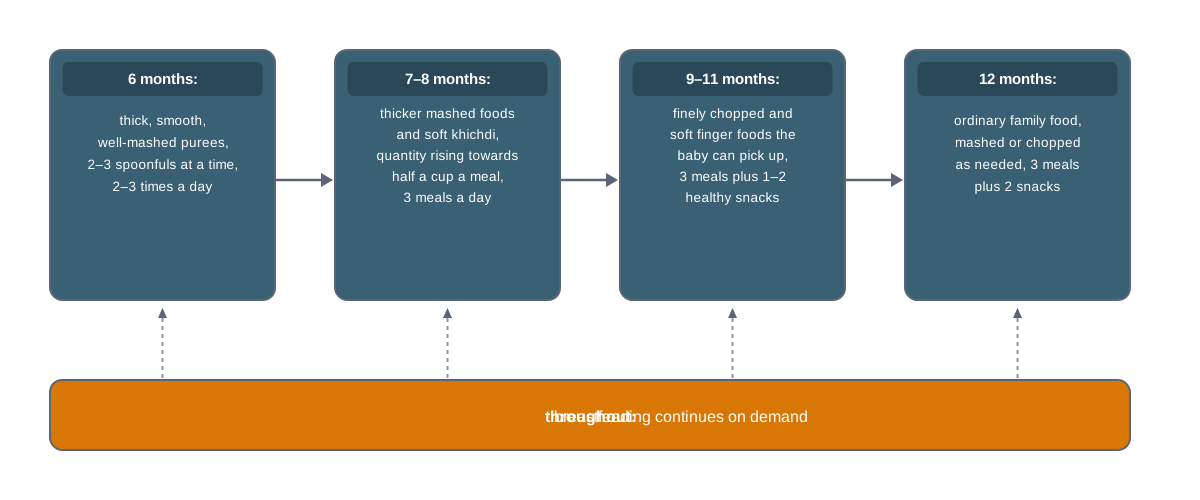
Fig. 8.4 – Progression of complementary foods in the first year.
Notice that thickness comes first and variety second. A thin, watery gruel fills the stomach without delivering much energy, and a baby cannot simply eat more of it to compensate. The test used by health workers is a practical one: food that runs straight off a tilted spoon is too thin for a six-month-old.
8.2.5.2 Low Cost Complementary Foods
Tinned and packaged infant cereals are expensive and no household needs them. The same nutrition is made at home from the grains and pulses already in the kitchen, in a form that keeps for weeks.
A multimix is a home-prepared powder combining a cereal, a pulse, an oilseed or nut, and a sweetener, roasted and ground together. The usual proportion is four parts cereal to two parts pulse to one part nut or oilseed, with jaggery or sugar added for taste and extra energy.
Each part earns its place. The cereal supplies bulk energy; the pulse supplies the amino acid the cereal lacks; the groundnut or sesame supplies fat, which raises the energy in every spoonful without raising the volume.
There is a further trick, and it rests on a principle worth understanding before the method.
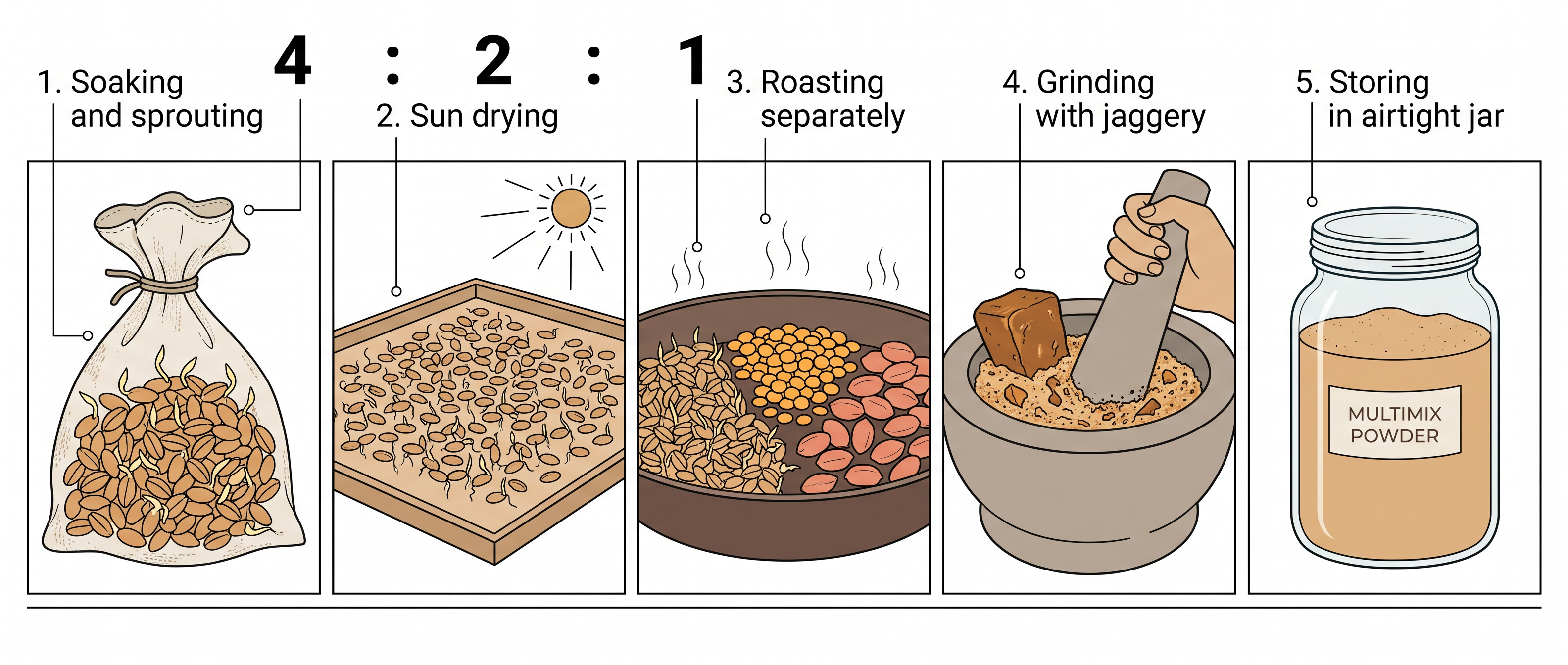
Fig. 8.5 – Stages in preparing a home-made multimix.
8.2.5.3 Guidelines For Complementary Feeding
Good complementary feeding is judged on four counts, and each one names a way it commonly goes wrong.
- Timely — started at the completion of six months, neither earlier nor later.
- Adequate — enough energy, protein and micronutrients, which means thick consistency, added fat, and enough meals in the day.
- Safe — prepared, stored and fed hygienically, with clean hands, clean utensils and freshly cooked food.
- Properly fed — the child is fed patiently and attentively, with encouragement, not left with a bowl or force-fed.
Some working rules follow from these.
- Continue breastfeeding on demand. Complementary food is added to the milk, not substituted for it, and a feed of milk should not be dropped to make room for a meal.
- Introduce one new food at a time and wait two or three days before the next. If the child reacts badly, you know at once what caused it.
- Begin with two or three spoonfuls and increase gradually. A refusal on the first day is not a rejection of that food for life; a new taste may need eight or ten offerings.
- Raise the thickness and the lumpiness on schedule. A child kept on smooth puree past nine months learns to chew late and often refuses family food afterwards.
- Do not add salt or sugar to an infant’s food. Her kidneys handle salt poorly, and an early taste for sweetness is difficult to undo.
- Feed from her own bowl, so that the adult can see exactly how much she has eaten.
- During illness, feed more often and in smaller amounts, and give an extra meal every day for two weeks after recovery to make up what was lost.
8.2.6 Immunisation In Infancy
Food alone does not keep an infant well. Several of the diseases that kill or disable young children are preventable outright, and preventing them protects nutrition as much as any diet does.
Immunisation is the process of making a person resistant to an infectious disease by giving a vaccine — a preparation containing a killed, weakened or partial form of the organism. The body responds by making its own antibodies and by keeping the memory cells that let it respond fast if the real organism ever arrives.
That is active immunity, built by the body and long-lasting. It differs from the passive immunity a baby receives ready-made through the placenta and through breast milk, which protects her at once but fades within months. Immunisation is what takes over as that borrowed protection runs out.
The National Immunisation Schedule
In India, vaccines are provided free under the Universal Immunisation Programme, run by the Ministry of Health and Family Welfare. The schedule sets out which vaccine is due at which age, and Table 8.3 gives the part of it that falls within the first year.
Two features of the schedule are worth explaining rather than memorising. The pentavalent vaccine combines five vaccines in one injection, which means three pricks instead of fifteen over the first fourteen weeks. And several vaccines are given in three doses six weeks apart because one dose primes the immune response while the later doses build it to a protective level — a course left half-finished leaves the child largely unprotected.
The dates and doses are entered on the Mother and Child Protection Card, the same card that carries the growth chart. Fig. 8.6 shows it.
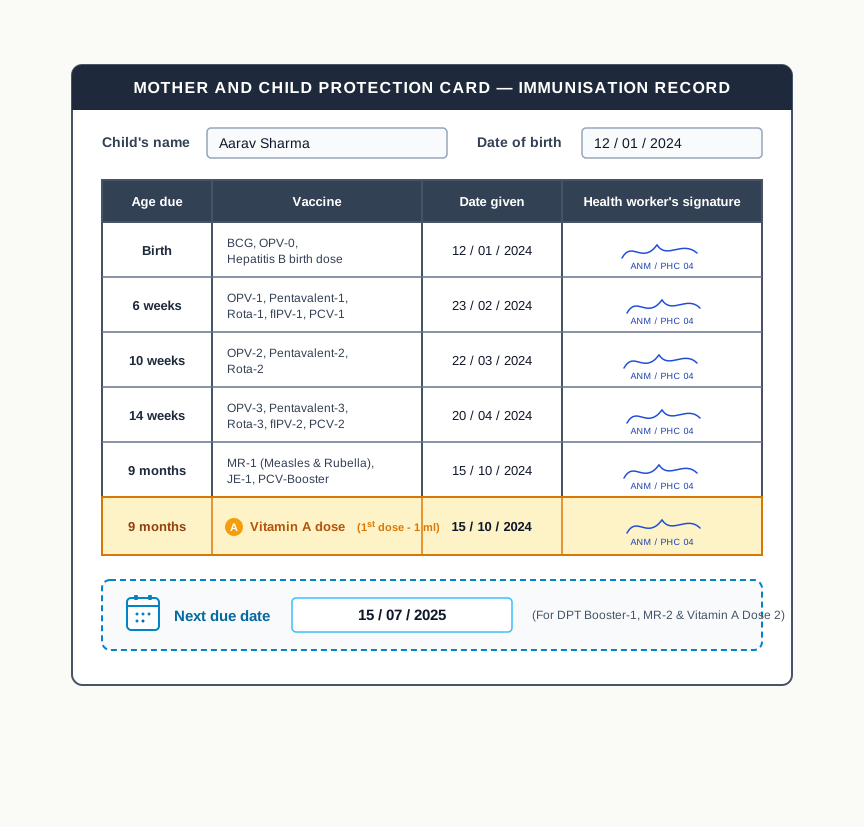
Fig. 8.6 – Immunisation record on the Mother and Child Protection Card.
8.2.7 Common Health And Nutrition Problems In Infants And Young Children
The problems of this age group fall into two groups that are, in practice, one problem. Deficiency diseases arise when food is short or one-sided; infections arise when hygiene, water and immunisation are poor. Each makes the other worse.
8.2.7.1 Nutritional Deficiency Diseases
Protein Energy Malnutrition
Protein energy malnutrition is the condition that results when a child’s diet supplies too little energy and protein over a long period. It is the most widespread nutritional disorder of young children in India, and its milder forms are far commoner than its severe ones.
It is described using three measurements. A child who is low in weight for her age is underweight. A child who is short in height for her age is stunted, which indicates that the shortage has lasted a long time. A child who is thin for her height is wasted, which indicates recent, rapid loss.
Two severe forms have names of their own, and Table 8.4 separates them.
Both are medical emergencies and both are treated under supervision, with careful re-feeding rather than large meals, because a body that has adapted to starvation cannot handle a sudden load. What a household can do is prevent them, and prevention is exactly the ordinary practice this section has described — exclusive breastfeeding, complementary food started on time and given thick, continued feeding through illness, and a growth chart that is actually looked at.
Vitamin A Deficiency
Vitamin A maintains the moist surface of the eye and the health of the skin and mucous membranes, and it is needed to see in dim light. Where it is short, the earliest sign is night blindness, difficulty seeing when light fades, and it appears before any damage is visible.
If the shortage continues, the white of the eye becomes dry and dull and greyish triangular patches called Bitot’s spots appear on it. The condition is then called xerophthalmia, and untreated it goes on to damage the cornea and can end in blindness. It is entirely preventable and, caught early, entirely reversible.
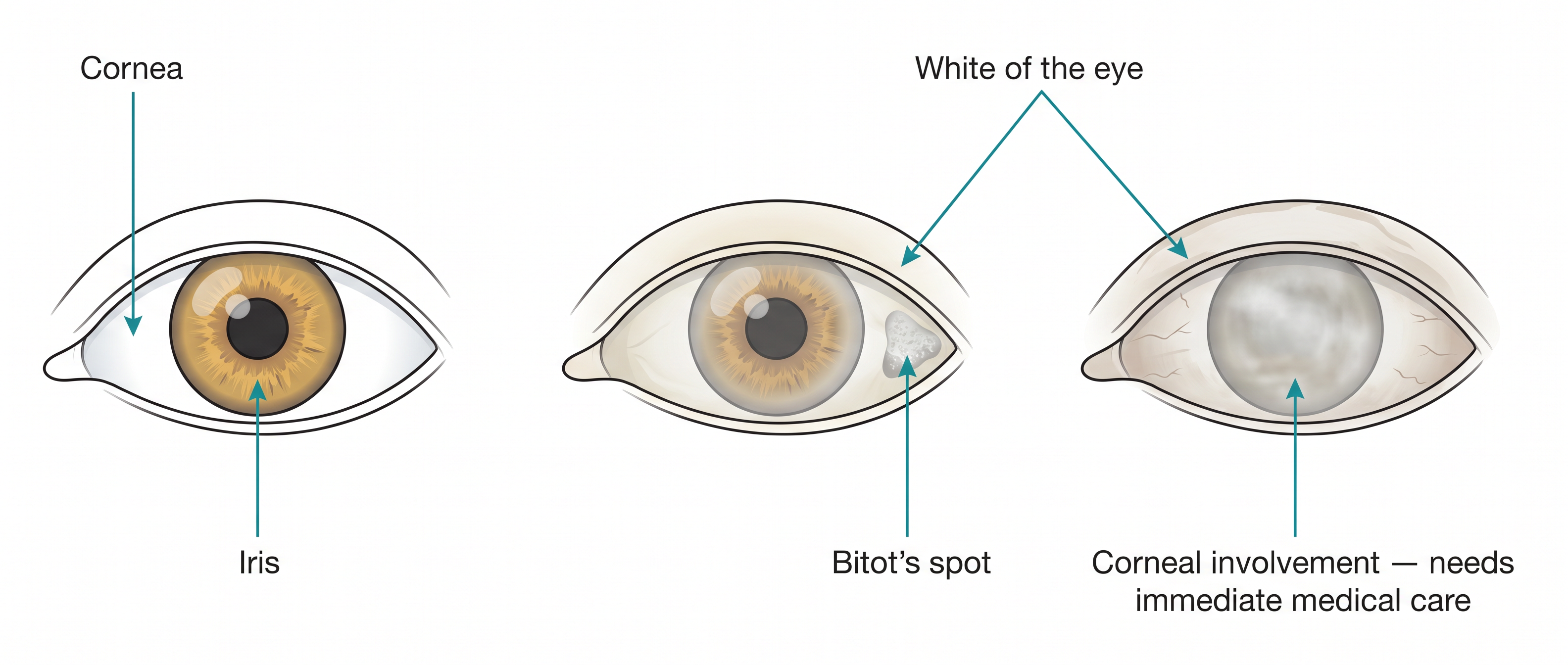
Fig. 8.7 – Eye signs of vitamin A deficiency.
Prevention works on two levels of the ladder at once. In the household, dark green leafy vegetables, yellow and orange fruits and vegetables, milk, egg and liver supply it, and since it is fat soluble, a little fat in the meal helps absorption. Nationally, the government’s vitamin A prophylaxis programme gives a large dose at nine months along with the measles–rubella vaccine, and a further dose every six months up to five years of age.
Iron Deficiency Anaemia
Anaemia is a shortage of haemoglobin, the pigment in red blood cells that carries oxygen. A child with anaemia tires easily, looks pale in the tongue, nail beds and inner eyelids, eats poorly and falls ill more often, and she learns less well because her brain is short of oxygen.
Iron deficiency is its commonest cause in this age group, and the reason is one you already know: birth stores run out at six months. If complementary foods are late or low in iron, the child moves straight from adequate to short.
Green leafy vegetables, pulses, jaggery, ragi, egg and, for families who eat it, liver and meat supply iron. Vitamin C taken in the same meal — a squeeze of lemon, a piece of amla or guava — greatly increases how much iron the body takes up from plant foods. Tea, given to small children in some households, does the opposite and should be avoided. Nationally, the Anaemia Mukt Bharat programme provides iron and folic acid syrup twice a week for children from six to fifty-nine months.
Iodine Deficiency And Rickets
Iodine is needed to make thyroid hormones, which control the rate at which the body works and are essential for brain development before and after birth. Where soil and water are low in iodine, the thyroid gland enlarges to compensate, producing the swelling at the front of the neck called goitre, and a severe shortage during pregnancy and infancy causes lasting damage to the child’s intellectual development. Universal iodisation of salt is the reason this is now uncommon, and the practical instruction is simply to buy iodised salt and store it in a closed container away from heat, since iodine is lost to light, heat and damp.
Rickets results from a shortage of vitamin D, which the body needs to absorb calcium and lay it down in bone. Without it the growing bones stay soft and bend under the child’s weight, producing bowed legs, a beaded appearance along the ribs and delayed closing of the skull’s soft spot. Vitamin D is made in the skin on exposure to sunlight, so a little uncovered skin in the mild morning sun, along with milk, curd, egg yolk and fish for those who eat them, prevents it.
8.2.7.2 Communicable Diseases And Malnutrition
Diarrhoea, respiratory infections such as pneumonia, measles, whooping cough and tuberculosis are the infections that most affect young children. Their effect on nutrition is out of all proportion to how long they last, and the reason is a loop rather than a single push.
An infection reduces appetite, so the child eats less. Fever raises the rate at which her body burns energy, so she needs more. Vomiting and diarrhoea remove nutrients before they can be absorbed. In many households she is then put on thin gruel or plain rice water, or taken off milk, so intake falls further exactly when it should rise.
The child comes out of the illness weaker and thinner. A weakened child has fewer defences, so the next infection arrives sooner and hits harder. Fig. 8.8 sets out the loop.
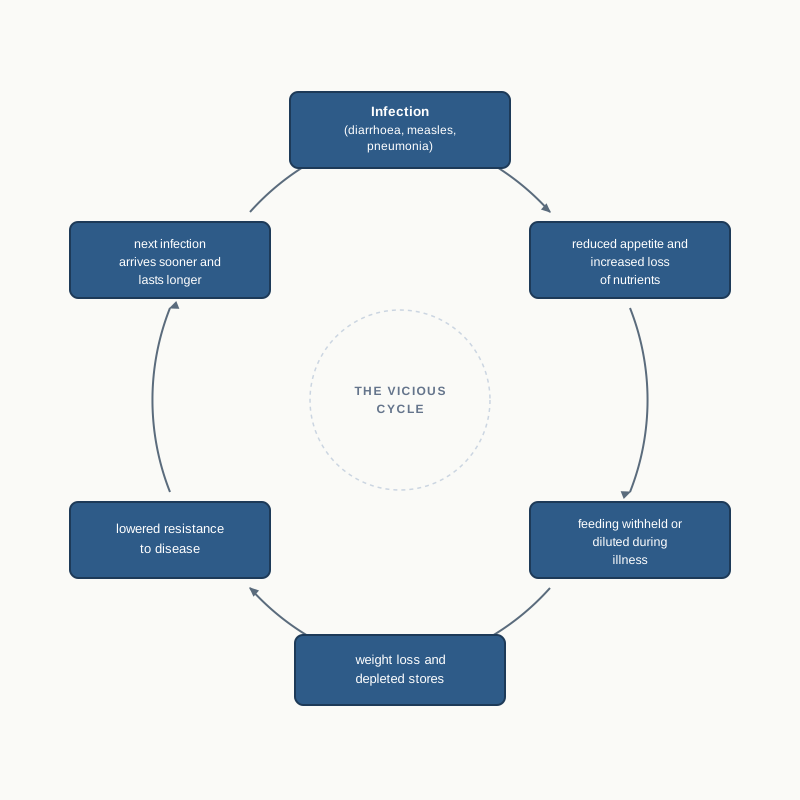
Fig. 8.8 – The malnutrition–infection cycle.
The cycle can be broken at any point on it, and that is the useful part. Immunisation stops several of the infections from starting. Safe water, hand washing and clean feeding prevent diarrhoea. Continued feeding during illness stops the loss. Extra feeding for two weeks afterwards restores what was lost before the next round begins.
Managing Diarrhoea At Home
Diarrhoea kills through dehydration, not through the infection itself, so the treatment is to replace what is being lost, faster than it is lost. This is why oral rehydration solution matters so much: the glucose in it carries sodium and water across the gut wall even while the gut is inflamed, and the preparation is shown in Fig. 8.0.
8.3 Nutrition, Health And Well-being Of Preschool Children (1–6 Years)
The years from one to six are called the preschool years, and they change the feeding problem completely. The child is no longer carried and fed; she walks, runs, climbs, refuses, demands and imitates.
Growth has slowed after the first year, so appetite is smaller and more variable than the family expects. Activity, meanwhile, has risen sharply. Getting enough into a child who would rather be playing is the central difficulty of this age, and most of this section is about how a household solves it.
8.3.1 Nutritional Needs Of Preschool Children
Table 8.5 gives the allowances for the two preschool age bands. Read the two columns across before reading either down, because the change between them is the useful part.
Every figure rises, because the child is bigger. But work out the energy per kilogram and it comes to roughly 86 kcal at one to three years and about 74 kcal at four to six — still far above an adult’s, and still falling as the rate of growth eases.
Why These Nutrients In Particular
Energy comes first because everything else depends on it. If a child does not get enough energy, her body burns protein for fuel instead of using it to build tissue, and a diet that looks adequate in protein behaves as though it were not.
Protein needs are high in relation to her size because she is still adding muscle, bone and blood. The practical rule is that a pulse and a cereal should appear together at most meals, and that milk, curd, egg, fish or meat should appear where the family eats them.
Calcium and vitamin D belong together and are the reason milk matters so much at this age. Bone is being laid down fast, calcium is the mineral it is made of, and vitamin D is what allows the calcium to be absorbed and fixed.
Iron is the nutrient most often short in this age group across India, and its consequences are quiet ones — a child who tires early, catches every infection and concentrates poorly, rather than a child who looks ill. Vitamin A, the B vitamins and vitamin C are needed in small quantities but continuously, and a diet built only on cereal supplies none of them well.
8.3.2 Guidelines For Healthy Eating For Preschoolers
Ask any household with a three-year-old what the problem is, and the answer is almost never that the family cannot name a good food. It is that the child will not sit, will not finish, wants only one thing, or eats well on Monday and nothing on Tuesday.
Most of that is normal. Growth has slowed, so appetite genuinely is smaller; and a child of this age is discovering that refusing food is one of the few decisions she is allowed to make. The guidelines below work with that reality rather than against it.
Small Stomach, Frequent Meals
A preschooler’s stomach holds roughly a cup at a time. Three adult-sized meals cannot carry the energy she needs, and pressing her to finish a large plate produces resistance rather than nutrition.
The answer is to divide the day’s food into five or six small occasions — three meals and two or three planned snacks — so that each one is small enough to finish. A snack at this age is not an indulgence between meals; it is a quarter of the day’s nutrition and is planned as carefully as lunch.
Rules That Work At The Table
- Offer food at fixed times. A child who grazes all day is never hungry at a meal, and a child who is given a biscuit on demand at eleven will not eat dal at one.
- Keep helpings small and let her ask for more. A small plate finished is a success; a large plate half left is a failure, even when the quantity eaten is the same.
- Let her feed herself once she can, and accept the mess. Self-feeding builds appetite, coordination and independence together.
- Do not use food as a reward, a punishment or a bribe. A sweet offered for finishing vegetables teaches exactly the lesson you did not intend — that the vegetable is the price and the sweet is the prize.
- Offer a refused food again on another day, cooked differently, without comment. Children accept new tastes by repeated exposure, not by persuasion.
- Give the same food as the rest of the family, adjusted for texture and spice. A child fed separately for years finds family food strange when the separate cooking stops.
- Make the food look interesting. Colour, shape and a plate of her own do more at this age than any explanation of nutrients.
- Let her eat with the family. Children imitate what they see, and a child watching adults eat a vegetable will try it far sooner than one who is told to.
- Keep sugary drinks, fried snacks and packaged foods out of the routine. They fill a small stomach with energy and almost nothing else, which is the one thing this age group cannot afford.
Behind all nine lies a single division of responsibility that is worth stating plainly. The adult decides what is offered, when it is offered and where it is eaten; the child decides whether she eats and how much. Households that hold both halves of that line have far less trouble at mealtimes than those that try to control all four.
8.3.3 Planning Balanced Meals For Preschool Children
Knowing the allowances in Table 8.5 does not by itself put a meal on the table. Nobody cooks in kilocalories. Planning is the work of turning nutrient figures into dishes a particular household can afford, cook and get a child to eat.
8.3.3.1 Variety, Balance And Moderation
Three ideas govern all meal planning, and they are easier to hold than any table.
Variety means using many different foods rather than a few. No single food carries every nutrient, and the more different foods appear in a week, the smaller the chance that any one nutrient is missing. Variety also keeps a child interested, which at this age is a nutritional argument and not merely a pleasant one.
Balance means the right proportion between the groups. A plate heavy in cereal and light in everything else supplies energy and little else, which is how a child can be well fed by volume and undernourished by content.
Moderation means the right quantity — enough to meet needs, not so much that a small child is defeated by the sight of it, and not so much of the fats and sugars that the rest is displaced.
8.3.3.2 Using The Five Food Groups
To make variety and balance usable, foods are sorted by what they mainly contribute. The five food groups used in India are set out in Table 8.6, and a meal that draws on all five is balanced without any calculation.
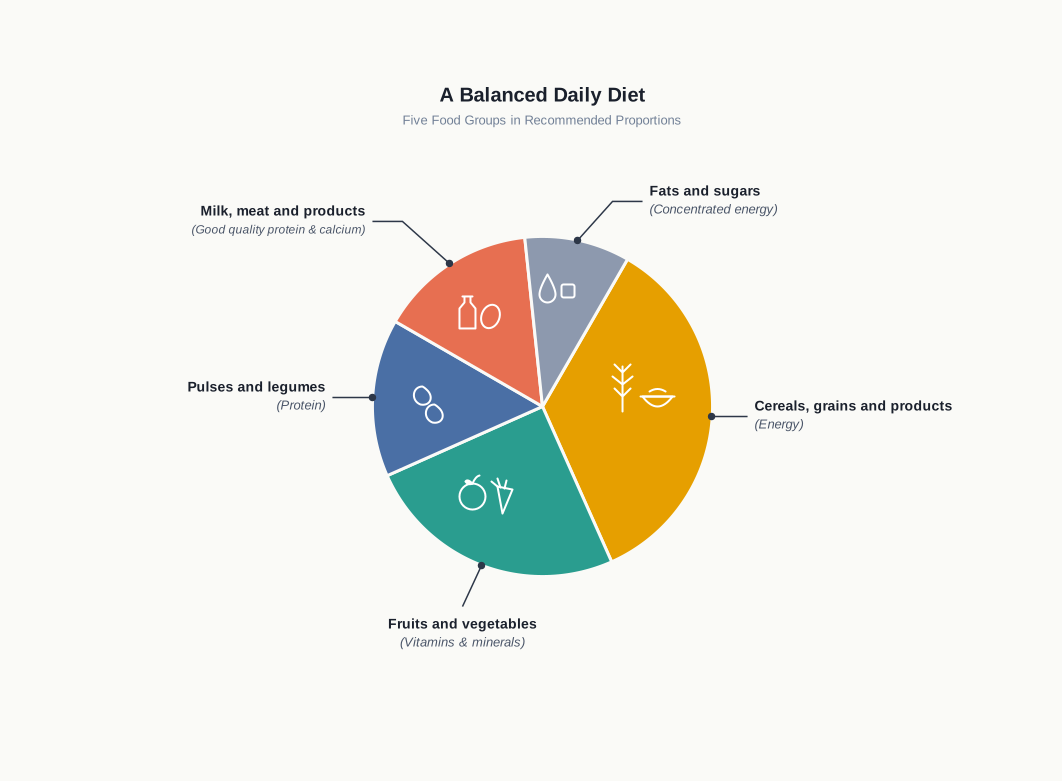
Fig. 8.9 – The five food groups.
Notice that the two smallest wedges are not the least important. Fats and sugars occupy little space because a little goes a long way, yet for a preschooler a spoon of ghee in the dal is a sensible way to raise energy without raising bulk — the same reasoning that put fat into an infant’s porridge.
Quantities are handled through the idea of a serving, which is a standard household measure of a food — one katori of cooked dal, one small phulka, one cup of milk. Planning in servings lets a household work with the vessels it already owns instead of a weighing scale.
A preschooler’s serving is roughly half an adult’s, and it grows with the child. Fig. 8.10 makes the comparison.
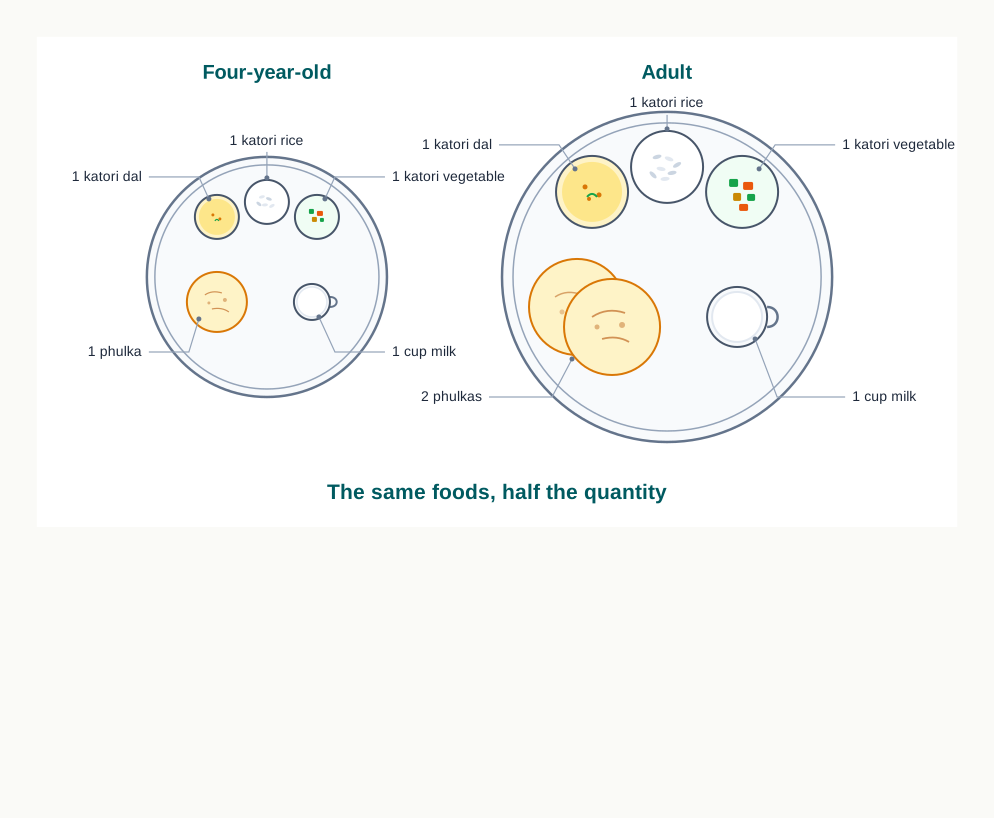
Fig. 8.10 – A preschooler’s serving compared with an adult’s.
8.3.3.3 A Day’s Meals And Snacks For A Preschooler
Planning a day runs in a fixed order, and Fig. 8.11 sets it out. Follow it once with a pencil and it becomes automatic afterwards.
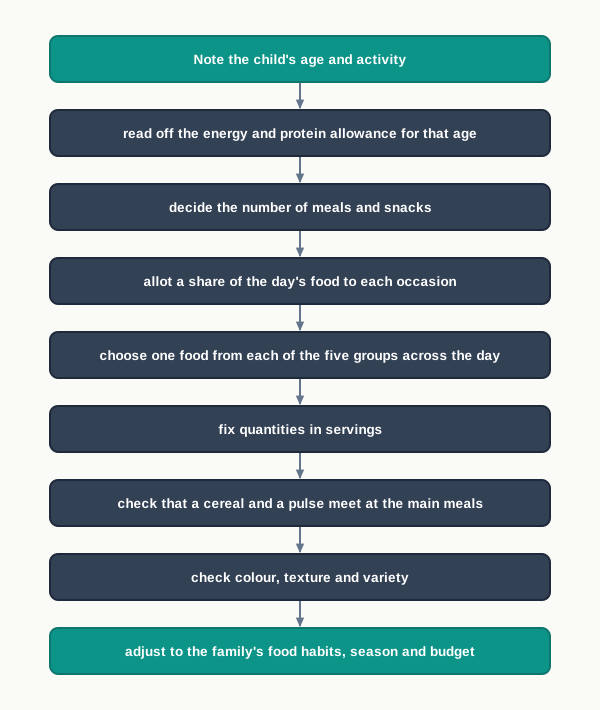
Fig. 8.11 – Steps in planning a day’s meals.
The plan below is for a four-year-old, and it is built to the allowance in Table 8.5.
The plan is an illustration, not a prescription. Change the cereal to jowar or rice, the pulse to lobia or masoor, the fruit to whatever the season has brought, and the plan still works — because what has been fixed is the pattern of groups and quantities, not the list of dishes.
8.3.3.4 Low Cost Snacks
Since snacks carry a quarter of a preschooler’s nutrition, what goes into them decides a good deal. A packet of fried chips and a home-made snack may cost the same; they do not deliver the same thing.
The useful ones share a shape: a cereal or pulse base for energy and protein, something from the fruit and vegetable group for micronutrients, and a little fat or jaggery to lift the energy without adding bulk.
- Poha tossed with peanuts, curry leaves and a squeeze of lemon.
- Steamed sweet corn with a pinch of salt and lemon.
- Sattu stirred into water or milk with jaggery, taken as a drink.
- Sprouted whole moong tossed with chopped tomato and onion, lightly steamed until soft.
- A wedge of seasonal fruit — whatever is cheapest that month is usually also the best.
- Home-made sesame or peanut chikki, in a small piece.
- Vegetable-stuffed paratha cut into strips a small hand can hold.
8.3.4 Feeding Children With Special Needs
Some children in this age group need the general plan adjusted. The adjustment is always a change in method or texture, never a reduction in what the child is entitled to.
The Child Who Is Ill Or Recovering
Illness raises needs and lowers appetite at the same time, which is the worst possible combination for a small child. The response is to make each mouthful count and to increase the number of mouthfuls offered.
- Give small quantities often, rather than three meals she cannot face.
- Raise the energy in what she does eat — a spoon of ghee or oil, a little jaggery, milk instead of water in a porridge.
- Keep fluids going steadily, especially where there is fever, vomiting or loose motions.
- Offer soft, bland, familiar foods; this is not the moment to introduce anything new.
- Continue for two weeks after recovery with one extra meal a day, so the weight lost is regained.
The Fussy Or Poor Eater
A child who refuses most foods worries a family a great deal, and the worry itself often makes the refusal worse. Where a child is growing along her line on the growth chart, the diet is working even if the mealtimes are difficult.
Serve small helpings, keep the meal to about twenty minutes, remove the plate without argument when she has finished, and offer nothing but water until the next planned occasion. Where the growth line has flattened, or where a child refuses whole food groups for weeks, the matter has moved beyond mealtime management and needs a doctor.
The Child With A Food Allergy
A food allergy is a reaction of the body’s defence system to a particular protein in a food, producing rashes, swelling, vomiting, loose motions or difficulty in breathing. It is not the same as disliking a food, and it is not the same as an intolerance such as difficulty digesting lactose.
The management is to remove the food completely and to replace what it was supplying, which is why this belongs in a chapter on planning rather than only in one on health. A child who cannot take milk still needs her calcium, so ragi, sesame, green leafy vegetables and a doctor’s advice on supplements take its place. Any suspected allergy is confirmed by a doctor, never by trial at home.
The Child With A Disability
A child with a physical or developmental disability may have trouble with chewing, swallowing, sitting steadily or holding a spoon, and may need much longer over a meal. What she needs is an adjustment of texture, position, utensil and time — food mashed or thickened, a supported upright seat, a deep bowl and a shaped spoon, and an unhurried adult.
She is entitled to the same variety and the same food groups as any other child, and to eat with the family rather than apart from it. Where feeding is genuinely difficult, a doctor or a therapist can assess what she can manage safely.
8.3.5 Immunisation In The Preschool Years
Protection built in infancy is not complete. Several vaccines need a further dose after the first year, because the level of antibody produced in infancy falls over time. A booster dose is a repeat dose given after the primary course, to raise protection back to a lasting level.
Table 8.7 gives the doses due between one and six years under the Universal Immunisation Programme.
Two practical points follow. A child who has missed a dose is not disqualified; catch-up schedules exist and the health worker will place her on one, so the card should be taken to the centre rather than hidden.
And the vitamin A doses are given twice a year up to five years for a reason worth noticing — vitamin A is fat soluble and can be stored in the liver, so a large dose at intervals does what a daily small dose would, in a form a national programme can actually deliver.
8.4 Health, Nutrition And Well-being Of School-age Children (7–12 Years)
School changes the shape of a child’s day, and with it the shape of her nutrition. She is out of the house for six or seven hours, she eats at least one meal away from any adult who knows what she needs, and for the first time she has money, friends and opinions about food.
Growth in these years is steady rather than dramatic, and then, towards the end of the period, it accelerates again as the growth spurt of adolescence begins — earlier in girls than in boys. Appetite rises with it, and a household that was coaxing a five-year-old to finish her plate finds itself refilling an eleven-year-old’s.
8.4.1 Nutritional Requirements Of School-age Children
Table 8.8 gives the current allowances. From ten years the figures are stated separately for boys and girls, and the reason is in the row above them.
Read the reference weights across the ten-to-twelve columns and something looks wrong: the girls are heavier than the boys. Nothing is wrong. Girls enter the adolescent growth spurt about two years earlier, so between ten and twelve they are on average ahead in both height and weight, and the boys overtake them later.
The energy figures nonetheless run the other way, because boys of this age are on average more physically active and are building more muscle. Protein is slightly higher for girls, matching their earlier spurt.
Calcium rises steeply at ten years, from 650 to 850 milligrams a day, and this is the most important line in the table. Bone mineral is being laid down now at a rate that will not be matched again, and the peak bone mass a person reaches in her twenties is largely built in these years. Milk, curd, ragi, sesame, green leafy vegetables and small fish eaten with their bones all contribute.
Iron matters for a second reason from about eleven or twelve years, when menstruation begins for many girls and adds a monthly loss to an already high demand. Anaemia at this age shows up in the classroom before it shows up anywhere else.
8.4.2 Planning Diets For School-age Children
8.4.2.1 Points To Keep In Mind While Planning
Planning for this age group is planning around a timetable that the household does not control.
- Build the day around the school hours. Between an early breakfast and a late-afternoon return there may be seven hours, and one small tiffin box has to bridge them.
- Never let a child leave without breakfast. After the overnight fast her blood glucose is low, and the first hours of school are the hours she is expected to concentrate hardest.
- Pack a tiffin that survives. It must stay safe without refrigeration for four hours, be eaten in a short break, need no cutlery, and not leak.
- Allow for the growth spurt. A child who suddenly seems always hungry is usually growing, and the answer is more food of the same kind, not restriction.
- Account for activity. A child who cycles to school and plays games needs noticeably more than one who does neither, and the difference is real rather than notional.
- Plan the family meal, then adapt it. Cooking separately for a child of this age wastes fuel and time and teaches her that her food is a different category from everyone else’s.
- Include her in the planning. She is old enough to choose between two vegetables, help write the week’s menu and pack her own tiffin, and food she has chosen is food she eats.
- Work with the season and the budget. Vegetables and fruit in season cost less and are better in quality, and a plan the household cannot afford next week is not a plan.
8.4.2.2 Quantities From The Food Groups
The five food groups from Section 8.3.3.2 do not change; only the number of servings does. Table 8.9 gives a working guide for the two school-age bands.
These are guides, not quotas. A child who is very active may need more from the cereal group; a child recovering from illness may take less for a week and more the next. The figure to trust over all of them is still the line on her growth chart.
One point in the table is worth stopping on. The milk group does not rise between the two age bands even though calcium does, which means the milk at ten to twelve has to be joined by other calcium sources rather than simply increased.
8.4.2.3 A Day’s Meals For School-age Children
The plan below is for a nine-year-old and is built to the 1700 kcal and 23 g of protein in Table 8.8.
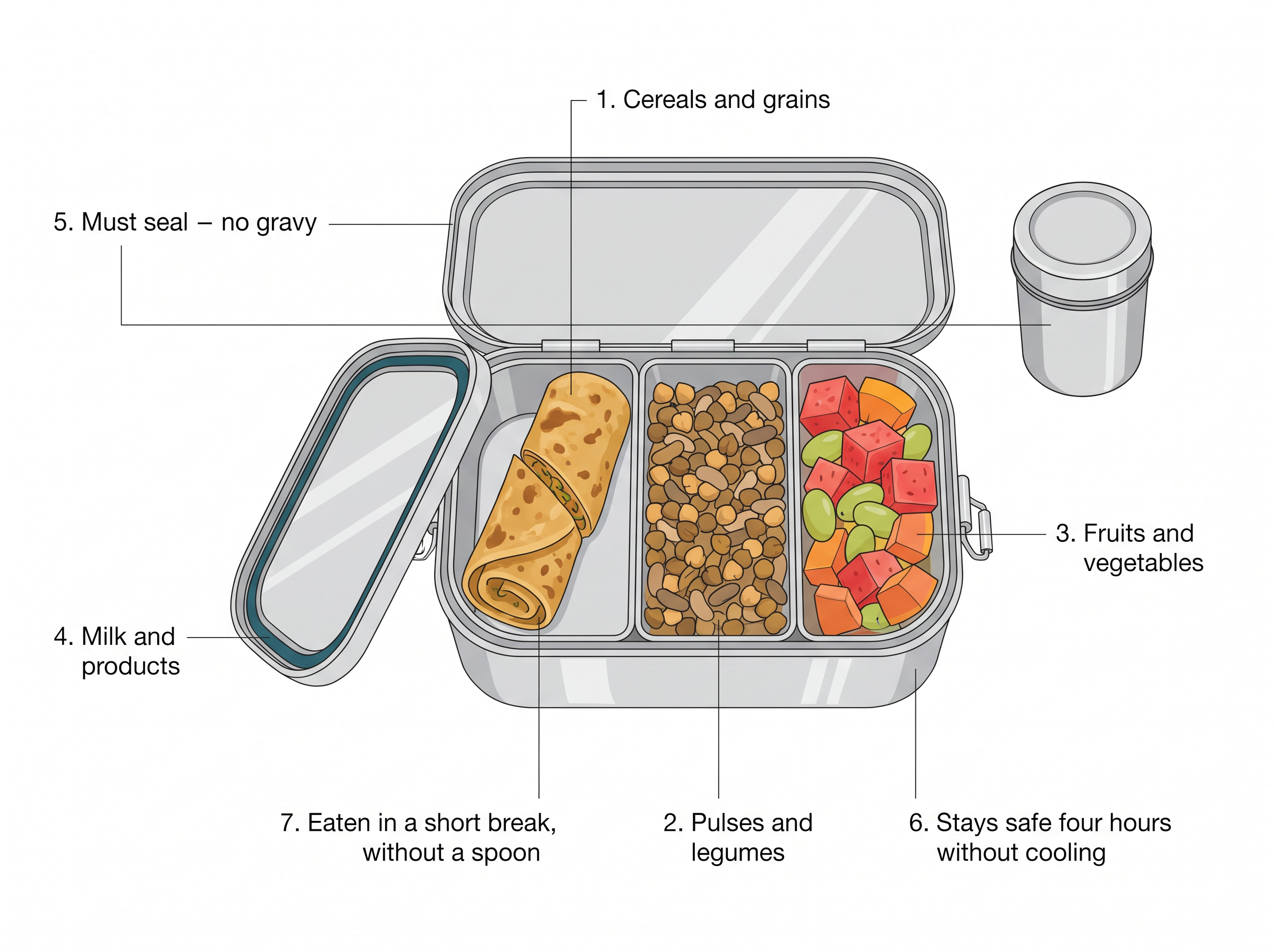
Fig. 8.12 – A tiffin box planned from the five food groups.
8.4.2.4 Regional Patterns In Family Meals
None of this depends on a particular cuisine. Households across India arrive at the same nutritional pattern through completely different foods, and Table 8.10 shows four ordinary midday meals set against the five food groups.
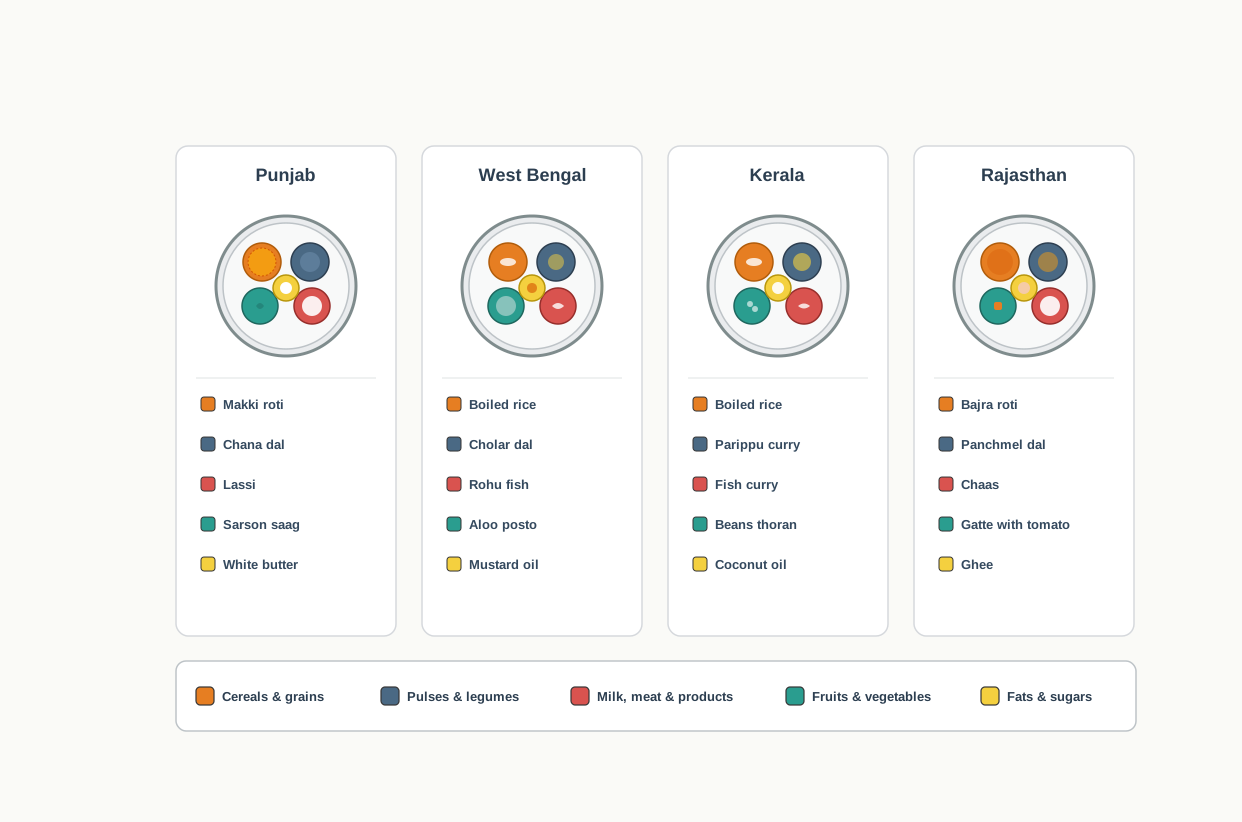
Fig. 8.13 – Four regional thalis and the five food groups.
This is also the practical answer to a common worry. A family need not buy unfamiliar foods to feed a child well. It needs to check that its own everyday meal is not missing a group, and to add the missing one from what is locally grown and locally affordable.
8.4.3 Factors That Influence Diet Intake Of Preschool-age And School-age Children
What a child actually eats is rarely what a chart says she should. Several forces sit between the two, and a plan that ignores them fails quietly.
Family food habits come first. A child eats what her household eats, cooked the way her household cooks it, at the times her household eats. Habits formed here last decades, which is why this age is the one worth investing in.
Income and availability set the outer limit. Milk, fruit, pulses and eggs cost more per calorie than cereals, so a household under pressure buys energy first and everything else afterwards. Season and local supply matter as much as price: a fruit that is cheap in one month is unaffordable in another.
Beliefs about food operate quietly and can help or hinder. Some are sound and worth keeping; others withhold useful foods during illness, pregnancy or convalescence, and it is worth asking what a rule is actually doing before following it.
Appetite, activity and health vary from child to child and week to week. An active child eats more; an unwell child eats less; a child with worms or repeated infection may eat normally and still absorb little.
Peers and school become powerful from about seven. What the friend at the next desk has in her box is now a fact about the world, and a child will trade away a good tiffin for a shared packet of something else.
Advertising and packaged food push in one direction only. Products aimed at children are engineered to be attractive, are advertised heavily, and are dense in fat, sugar and salt while thin in almost everything else. Reading a label is therefore a skill this age group can and should learn.
Time and who cooks shape the outcome as much as any of these. Where every adult in the household leaves early, breakfast shrinks and packaged food fills the gap — which is an argument for planning and preparing ahead, and for sharing the cooking among the adults and older children rather than leaving it to one person.
8.4.4 Healthy Habits
Nutrition is only part of health, and the habits formed in the school years carry a great deal of the rest.
- Eat at regular times, and do not skip breakfast.
- Wash hands with soap before eating and after using the toilet. This single habit prevents more childhood illness than any other.
- Drink safe water, and enough of it. A child at school often drinks too little simply because the bottle is empty and the tap is far.
- Brush twice a day and rinse after sweet food. Dental decay in these years affects chewing, and chewing affects what a child will eat.
- Bathe, keep nails short and clean, and wear clean clothes. Nails carry the eggs of intestinal worms, which are a common and preventable cause of anaemia.
- Get at least an hour of active play every day. Bone responds to being loaded, so running and jumping build the skeleton along with the calcium.
- Sleep enough, at a regular hour. Children of this age need appreciably more sleep than adults, and growth hormone is released mainly during it.
- Keep screen time limited and out of mealtimes. A child watching a screen while eating stops noticing that she is full.
- Use a toilet and not the open ground. Sanitation and nutrition are the same problem approached from two sides.
8.4.5 Health And Nutrition Issues Of School-age Children
India now carries two nutrition problems in the same age group and often in the same city. Some children take in more energy than they use; many more take in too little of what they need. Both are forms of malnutrition, and both are addressed by the same basic tools — a varied diet, activity, and a household that pays attention.
Underneath both lies one idea.
8.4.5.1 Overnutrition And Obesity
Overnutrition is a state in which intake exceeds needs over a long period. Obesity is the condition in which the amount of body fat has risen to a level that affects health. It is diagnosed by a doctor, using the child’s weight and height plotted against reference charts for her age — not by appearance, and not by any figure a family can calculate at home.
It is becoming commoner among children in Indian cities, and the reasons are ordinary rather than mysterious. Meals eaten out and packaged snacks eaten at home are dense in fat, sugar and refined starch. Sweetened drinks add energy without registering as food at all. Playgrounds have shrunk, journeys are motorised, and the hours once spent running are now spent seated.
A child living with obesity may face raised blood pressure, disturbed blood glucose and blood fats, breathing difficulty in sleep, and strain on the knees and hips at an age when the joints are still forming. She is also very often teased, and the effect of that on her willingness to play, eat with others or attend school can be as damaging as the physical effects.
What helps is a change in the household’s routine rather than a plan imposed on one child. Meals cooked at home and eaten at fixed times, water instead of sweetened drinks, fruit instead of packaged snacks, an hour of active play that the whole family joins, and screens kept away from the table — these change what is available and what is normal, which is what actually decides a child’s intake.
Two things do not help, and both are common. Putting a growing child on a reduced diet, or on any slimming regime, risks her growth and her bone development, and no such plan belongs anywhere except in the hands of a doctor who is monitoring her. And commenting on a child’s body, however kindly meant, reliably makes matters worse. Where a family is concerned, the step is a paediatrician, not a diet.
8.4.5.2 Undernutrition
Undernutrition remains by far the larger problem, and in this age group it is often invisible because the child is neither thin enough nor ill enough to alarm anyone.
Its long-term form is stunting — height low for age — which begins in the first two years and is largely fixed by then, so a school-age child who is short for her age is usually carrying the record of a much earlier shortage. Its current form is thinness for height, which reflects what is happening now. India’s National Family Health Survey-5, conducted in 2019–21, found 35.5 per cent of children under five stunted and 32.1 per cent underweight, which indicates the size of the pool arriving at school.
The third form has no visible sign at all. Hidden hunger is a shortage of vitamins and minerals in a diet that supplies enough energy, and it is the commonest nutritional problem of Indian school children. A plate of rice and a little pickle satisfies hunger, fills the stomach and leaves the child short of iron, vitamin A, calcium and B vitamins.
The consequences show up first in school. Iron deficiency lowers the oxygen reaching the brain, so attention and memory suffer; frequent illness costs attendance; and a child who is behind on both counts falls further behind each term. The National Deworming Day, on which schools give a single deworming tablet to all children twice a year, exists for exactly this reason, as does the weekly iron and folic acid tablet given to school children under the Anaemia Mukt Bharat programme.
8.4.5.3 The Mid-Day Meal Scheme And School Health
The single largest response to all of this is a meal served in the school itself. PM POSHAN — Pradhan Mantri Poshan Shakti Nirman — is the national school meal programme, run by the Ministry of Education. It is the scheme long known as the Mid-Day Meal Scheme, which began nationally in 1995 and was renamed in September 2021.
One hot cooked meal is served on every school day to children from the pre-primary Bal Vatika through Class VIII in government and government-aided schools. The nutritional norms it must meet are laid down centrally, and are given in Table 8.11.
Compare the primary norm with the 1700 kcal in Table 8.8 and the meal is supplying roughly a quarter of the day’s energy. That is deliberate. It is designed to remove classroom hunger and to fill the widest gap, not to replace what the household provides.
The scheme is also doing several things at once, which is why it has been studied so closely. It raises enrolment and attendance, because a meal is a reason to come and to stay. It reduces the mid-morning hunger that makes teaching impossible. And because children of every community sit and eat the same food together, it works on social barriers that no nutrition argument would touch. States decide the actual menu from local cereals, pulses and seasonal vegetables, so the meal differs across the country while the norms do not.
Alongside it runs school health. Under the Rashtriya Bal Swasthya Karyakram, health teams visit schools to screen children for defects, deficiencies, diseases and developmental delays, and refer those who need care. Height and weight are recorded, eyes and teeth are checked, and the deworming and iron supplementation described above are delivered through the same system.
8.5 Summary
- Nutrition is the whole process by which the body takes in food, breaks it down, absorbs the nutrients and uses them for energy, growth, repair and protection.
- Health is a state of complete physical, mental and social well-being, and not merely the absence of disease.
- Malnutrition means bad nutrition in either direction — undernutrition from too little or one-sided food, and overnutrition from more energy than the body uses.
- Growth is an increase in body size and can be measured; development is an increase in skill and complexity and is observed.
- A nutritional requirement is what one person needs; a Recommended Dietary Allowance is a group figure carrying a safety margin, set in India by ICMR–NIN, and revised most recently in 2020.
- A balanced diet turns those figures into a day’s food drawn from all the food groups in the right proportions.
- Nutrition is decided at four levels — the individual, the family, the community and the nation — and most problems can be attacked at more than one of them.
- Growth in infancy is faster than at any later stage: birth weight roughly doubles by five months and trebles by one year, and length increases by about half.
- Growth monitoring means weighing a child regularly and plotting the weight against age on a growth chart; the direction of the line matters more than any single dot.
- Nutrient needs per kilogram of body weight are highest in infancy, because the infant is building a body while an adult is only maintaining one.
- Infants dehydrate rapidly, because a greater share of the body is water, the turnover is faster and the kidneys cannot yet conserve it.
- Exclusive breastfeeding — breast milk and nothing else — is recommended for the first six months, begun within one hour of birth, and breastfeeding continues alongside other foods up to two years and beyond.
- Colostrum, the thick yellow milk of the first two to three days, is rich in antibodies and vitamin A and acts as a mild laxative, and it must never be discarded.
- Breastfeeding benefits three parties at once:
- the infant, through complete nutrition, protection from infection, easy digestion and jaw development;
- the mother, through contraction of the uterus, spacing of births and lower lifetime risk of breast and ovarian cancer;
- the household, through savings in money, fuel, time and illness.
- An infant weighing under 2.5 kg at birth is a low birth weight infant; she is fed expressed breast milk by cup, paladai or spoon, in small frequent scheduled feeds, and is kept warm and handled hygienically.
- Complementary foods are given from six months alongside continued breastfeeding, because iron stores are exhausted, energy and protein needs have outgrown the milk, the gut has matured and the tongue-thrust reflex has faded.
- Complementary foods are of three kinds used together — energy-rich, protein-rich and protective — and their texture moves from smooth puree at six months to family food at twelve.
- Thickness comes before variety, because a watery gruel fills a small stomach without supplying energy.
- A home-made multimix combines four parts cereal, two parts pulse and one part nut or oilseed with jaggery, and germinating the cereal activates its own amylase, which cuts the bulk so more energy fits into the same stomach.
- Complementary feeding is judged on four counts: timely, adequate, safe and properly fed.
- Immunisation gives active immunity by prompting the body to make its own antibodies; the passive immunity received through the placenta and breast milk protects at once but fades.
- Vaccines are provided free under the Universal Immunisation Programme of the Ministry of Health and Family Welfare, on a national schedule running from birth to sixteen years.
- Protein energy malnutrition is described by three measurements — underweight, stunted and wasted — and its severe forms are marasmus, marked by extreme wasting without swelling, and kwashiorkor, marked by oedema.
- The other common deficiencies of early childhood are:
- vitamin A deficiency, showing first as night blindness and then as xerophthalmia;
- iron deficiency anaemia, the commonest of all, worsened by tea and eased by vitamin C in the same meal;
- iodine deficiency, causing goitre and lasting damage to brain development, prevented by iodised salt;
- vitamin D deficiency, causing rickets, prevented by sunlight and by milk, egg and fish.
- Infection and malnutrition form a cycle: illness reduces intake and increases loss, the weakened child is more susceptible, and the next infection comes sooner.
- The cycle is broken by immunisation, safe water and hygiene, continued feeding during illness and extra feeding for two weeks afterwards.
- Diarrhoea kills through dehydration, and oral rehydration solution works because glucose carries sodium and water across the gut wall even while the gut is inflamed.
- In the preschool years growth slows and activity rises, so appetite is smaller and more variable than families expect.
- A preschooler’s stomach holds about a cup, so the day’s food is divided into five or six small occasions, and a planned snack carries about a quarter of her nutrition.
- Mealtimes work best when the adult decides what is offered, when and where, and the child decides whether and how much.
- Meal planning rests on variety, balance and moderation, made usable through the five food groups — cereals and grains; pulses and legumes; milk, meat and their products; fruits and vegetables; and fats and sugars.
- Quantities are handled in servings, a preschooler’s serving being roughly half an adult’s.
- Low-cost snacks follow one shape: a cereal or pulse base, something from the fruit and vegetable group, and a little fat or jaggery.
- The Integrated Child Development Services, working through the anganwadi, provides supplementary nutrition together with growth monitoring, immunisation, health check-ups, referral and preschool education.
- Children with special needs require a change of method, not a reduction of entitlement — small frequent energy-dense meals during illness, calm routine for a poor eater, complete removal and replacement of an allergen, and adjusted texture, seating and utensils for a child with a disability.
- Booster doses between sixteen months and six years restore protection built in infancy, and vitamin A is given every six months up to five years because it can be stored in the liver.
- From ten years the allowances are stated separately for boys and girls, and calcium rises to 850 mg a day because bone mineral is being laid down at a rate never matched again.
- Planning for school-age children works around the school timetable: breakfast is never skipped, and the tiffin must stay safe for four hours without cooling.
- Households across India reach the same nutritional pattern through different foods; no region’s meal is the standard against which the others are variations.
- Diet intake is influenced by family food habits, income and availability, beliefs about food, appetite and health, peers and school, advertising, and the time available for cooking.
- Habits formed in the school years — regular meals, hand washing, safe water, dental care, daily active play, enough sleep and use of a toilet — carry much of a child’s health.
- Energy taken in is spent on basal needs, growth and activity; where intake persistently exceeds expenditure the excess is stored as fat, and where it falls short a child pays in height before she pays in weight.
- Obesity in childhood is diagnosed by a doctor against reference charts, and is addressed by changing the whole household’s routine, never by putting a growing child on a slimming diet.
- Undernutrition remains the larger problem, and its commonest form is hidden hunger — enough energy but too little of the vitamins and minerals.
- PM POSHAN, formerly the Mid-Day Meal Scheme, serves one hot cooked meal on every school day to children from Bal Vatika to Class VIII, meeting norms of 450 kcal and 12 g protein at the primary stage and 700 kcal and 20 g protein at the upper primary stage.
- School health services screen children for defects, deficiencies, diseases and developmental delays, and deliver deworming and iron supplementation through the same system.
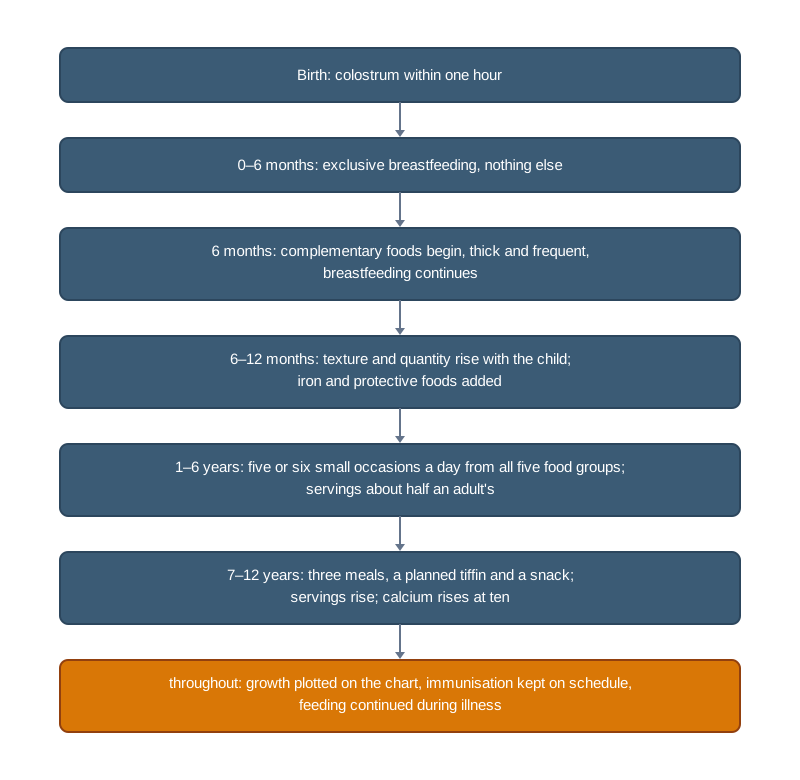
Fig. 8.14 – Feeding a child from birth to twelve years.
8.6 Key Terms
- Anaemia — a shortage of haemoglobin, the pigment in red blood cells that carries oxygen round the body.
- Anganwadi — the village or neighbourhood centre through which the Integrated Child Development Services reaches children and their families.
- Balance — the right proportion between the food groups in a day’s food, so that no group crowds out another.
- Balanced diet — a day’s food chosen from all the food groups in the right proportions, supplying every nutrient in the amounts needed, with a small reserve.
- Booster dose — a repeat dose of a vaccine given after the primary course, to raise protection back to a lasting level.
- Colostrum — the thick, yellowish milk produced in the first two to three days after delivery, rich in antibodies and vitamin A.
- Complementary foods — foods given from about six months alongside continued breastfeeding, to fill the gap between what breast milk supplies and what the infant needs.
- Development — an increase in the complexity and skill of what a person can do, judged by observation rather than measurement.
- Energy-rich foods — foods that supply concentrated energy, chiefly cereals, roots, tubers and added fats.
- Exclusive breastfeeding — giving an infant breast milk and nothing else, apart from prescribed medicines or drops.
- Five food groups — the grouping of foods by what they chiefly supply: cereals and grains; pulses and legumes; milk, meat and their products; fruits and vegetables; and fats and sugars.
- Food allergy — a reaction of the body’s defence system to a particular protein in a food, quite different from disliking that food.
- Goitre — the swelling of the thyroid gland at the front of the neck, caused by a shortage of iodine.
- Growth — an increase in the physical size of the body or its parts, which can be measured.
- Growth chart — the chart on which a child’s weight is plotted against her age, so that the direction of her growth can be seen.
- Growth monitoring — the regular weighing of a child and the plotting of that weight on a growth chart.
- Health — a state of complete physical, mental and social well-being, and not merely the absence of disease.
- Hidden hunger — a shortage of vitamins and minerals in a diet that supplies enough energy, so the person is neither hungry nor nourished.
- Immunisation — making a person resistant to an infectious disease by giving a vaccine, so that her own body builds protection.
- Infancy — the first year of life, from birth to twelve months.
- Integrated Child Development Services (ICDS) — the national programme, begun in 1975, that provides supplementary nutrition, growth monitoring, immunisation, health check-ups, referral and preschool education through the anganwadi.
- Low birth weight — a birth weight of less than 2.5 kilograms, arising either from preterm birth or from poor growth in the womb.
- Malnutrition — bad nutrition in either direction, covering both undernutrition and overnutrition.
- Moderation — the right quantity of food, enough to meet needs without overwhelming the eater or displacing other foods.
- Multimix — a home-prepared powder combining a cereal, a pulse, a nut or oilseed and a sweetener, roasted and ground together.
- Night blindness — difficulty in seeing when the light fades, the earliest sign of vitamin A deficiency.
- Nutrient — a substance in food that the body needs for energy, growth, repair or protection.
- Nutrition — the whole process by which the body takes in food, breaks it down, absorbs what is released and puts it to use.
- Nutritional requirement — the smallest amount of a nutrient one particular person must receive to stay in good health.
- Obesity — a condition in which the amount of body fat has risen to a level that affects health, diagnosed by a doctor against reference charts.
- Overnutrition — a state in which intake exceeds the body’s needs over a long period.
- PM POSHAN — Pradhan Mantri Poshan Shakti Nirman, the national school meal programme, formerly the Mid-Day Meal Scheme.
- Protective foods — foods that supply vitamins and minerals in quantity, chiefly fruits and vegetables.
- Protein energy malnutrition — the condition resulting when a diet supplies too little energy and protein over a long period.
- Protein-rich foods — foods that supply protein in quantity, chiefly pulses, milk, egg, fish, meat, nuts and oilseeds.
- Recommended Dietary Allowance (RDA) — a nutrient figure set for a whole group, being the group’s average requirement plus a safety margin.
- Rickets — the softening and bending of growing bones caused by a shortage of vitamin D.
- Serving — a standard household measure of a food, such as one katori of dal or one small phulka, used to fix quantities in a meal plan.
- Stunted — short in height for one’s age, indicating a shortage of food that has lasted a long time.
- Underweight — low in weight for one’s age.
- Universal Immunisation Programme — the programme of the Ministry of Health and Family Welfare under which vaccines are provided free on a national schedule.
- Vaccine — a preparation containing a killed, weakened or partial form of an organism, given to prompt the body to build its own protection.
- Variety — the use of many different foods rather than a few, so that no nutrient is likely to be missing.
- Wasted — thin for one’s height, indicating recent and rapid loss of weight.
- Well-being — the experienced part of health: feeling able to eat, sleep, play, learn, work and take part in family and community life.
- Xerophthalmia — the drying of the eye’s surface caused by vitamin A deficiency, which can progress to damage of the cornea.
8.7 Points To Ponder
Colostrum is discarded in some households as stale or unclean, although the same households would never throw away ordinary milk. How do food beliefs of this kind take hold, and what would be more likely to change one — a rule, a demonstration, or an explanation?
A growth chart is read for the direction of the line rather than for any single dot on it. Where else in Home Science does a trend tell you more than a single reading, and why is a single reading so often trusted instead?
The school meal supplies roughly a quarter of a child’s day’s energy, yet it is also credited with raising attendance and with bringing children of different communities to eat together. If the same money were given to families as a take-home ration instead, which of those effects would survive and which would not?
Germinating a grain is usually explained as making it more nutritious, but its most useful effect in infant feeding is that it makes the porridge thinner. Suggest another everyday kitchen practice whose real purpose is different from the reason usually given for it.
Undernutrition and obesity are now found in the same city, sometimes in the same street. What does that suggest about treating malnutrition as a problem of food supply alone, and what else would have to be addressed?
A preschooler is told what is offered and when, and decides for herself whether and how much to eat. Is that division of responsibility a matter of nutrition, of child development, or of both — and what happens to a child when an adult takes over her half of it?
8.8 Objective Questions
- Choose the correct option. Colostrum is described as the first milk because it is produced (1 mark)
- during the last month of pregnancy
- for the first two to three days after delivery
- at the beginning of every feed
- for the first six weeks after delivery
- Choose the correct option. Complementary foods are begun at the completion of six months chiefly because (1 mark)
- breast milk stops being produced after six months
- the infant’s teeth have appeared by then
- the iron stores laid down before birth are exhausted by then
- the infant can walk and reach for food by then
- Choose the correct option. Which set of vaccines is due at birth under the Universal Immunisation Programme? (1 mark)
- BCG, OPV-0 and hepatitis B birth dose
- Pentavalent-1, OPV-1 and rotavirus-1
- Measles–Rubella-1 and vitamin A
- DPT booster-1 and OPV booster
- Choose the correct option. A four-year-old is served rice, potato curry and a banana. The food group missing from this meal is (1 mark)
- cereals, grains and products
- pulses and legumes
- fruits and vegetables
- fats and sugars
- Choose the correct option. Under PM POSHAN, the nutritional norm for a child of the primary stage is (1 mark)
- 300 kcal and 8 g protein
- 450 kcal and 12 g protein
- 700 kcal and 20 g protein
- 1700 kcal and 23 g protein
- Read the assertion and reason and choose the correct option. (1 mark) Assertion (A): A porridge given to a six-month-old should be thick rather than thin. Reason (R): An infant’s stomach is small, so a dilute food fills it without supplying enough energy.
- Both A and R are true, and R is the correct explanation of A.
- Both A and R are true, but R is not the correct explanation of A.
- A is true but R is false.
- A is false but R is true.
- Read the assertion and reason and choose the correct option. (1 mark) Assertion (A): Colostrum should never be discarded. Reason (R): Colostrum is lower in fat and lactose than mature milk.
- Both A and R are true, and R is the correct explanation of A.
- Both A and R are true, but R is not the correct explanation of A.
- A is true but R is false.
- A is false but R is true.
- Read the assertion and reason and choose the correct option. (1 mark) Assertion (A): A squeeze of lemon over a bowl of dal helps a child’s blood. Reason (R): Vitamin C taken in the same meal increases the amount of iron absorbed from plant foods.
- Both A and R are true, and R is the correct explanation of A.
- Both A and R are true, but R is not the correct explanation of A.
- A is true but R is false.
- A is false but R is true.
Match the deficiency in Column A with its sign in Column B. (1 mark) | Column A | Column B | |—|—| | a. Vitamin A | i. Bowing of the growing bones | | b. Iodine | ii. Night blindness | | c. Vitamin D | iii. Swelling of the gland at the front of the neck |
Fill in the blank. A healthy infant roughly trebles her birth weight by the age of ______________. (1 mark)
Fill in the blank. According to the ICMR–NIN Recommended Dietary Allowances of 2020, a child of 4–6 years needs ______________ mg of calcium a day. (1 mark)
State whether the following statement is true or false. A child whose intake falls a little below the RDA is, by that fact alone, undernourished. (1 mark)
Name the following. (1 mark)
- The enzyme, activated when a grain is germinated, that reduces the thickness of a porridge.
- The centre through which the Integrated Child Development Services reaches a village.
- Identify the odd one out and give a reason for your choice: rajma, masoor, lobia, poha. (1 mark)
8.9 Check Your Concepts
Define exclusive breastfeeding and state the period for which it is recommended. (2 marks)
Give a reason why an infant needs far more energy per kilogram of body weight than an adult does. (2 marks)
State two reasons why a feeding bottle is not recommended for giving expressed milk to an infant. (2 marks)
List any four healthy habits that a school-age child should form, and state briefly what each protects. (2 marks)
Differentiate between growth and development, stating the basis of difference. (3 marks)
Explain, with an example, why a cereal and a pulse are eaten together at a meal. (3 marks)
Why is the direction of the line on a growth chart more useful than any single weighing? (3 marks)
Explain the four counts on which complementary feeding is judged, naming for each one the way it commonly goes wrong. (4 marks)
Differentiate between marasmus and kwashiorkor on any four bases. (4 marks)
What would happen if a household continued to feed only smooth puree to a child of eleven months? Give the immediate and the later consequences. (4 marks)
Explain the malnutrition–infection cycle, and state three separate points at which a household or a health service can break it. (5 marks)
A three-year-old refuses most foods and her family is anxious. Explain the guidelines you would give the household for handling mealtimes, and state the one sign that would tell them the matter has moved beyond mealtime management. (5 marks)
8.10 Identify & Label
Look at Fig. 8.1. Identify what the flat stretch of the plotted line between the seventh and ninth months indicates, name the condition, and state one likely cause at that age. (3 marks)
Look at the second drawing in Fig. 8.7. Identify the sign marked on the white of the eye, name the nutrient whose shortage causes it, and name the sign that would have appeared before it. (3 marks)
Look at Fig. 8.2. Identify any three signs of correct attachment at the breast shown in the drawing. (3 marks)
Look at Fig. 8.9. Name the group occupying the largest wedge, name the group that chiefly supplies vitamin C, and state why the smallest wedge is not the least important. (3 marks)
Look at Fig. 8.12. Label each compartment of the tiffin box with the food group it represents, and give a reason for the instruction printed on the lid. (3 marks)
8.11 Case & Application Based Questions
- An anganwadi worker weighs a seven-month-old boy and finds that his weight has not changed since the previous month. His mother says that she is still breastfeeding him, and that for the past two weeks she has been giving him a thin rice gruel twice a day because he seemed hungry.
- Identify two things that are being done correctly. (2 marks)
- Identify two faults in the feeding, and explain the principle each one breaks. (3 marks)
- Suggest one low-cost preparation the anganwadi worker could teach the mother, and explain how it corrects both faults. (3 marks)
- In a household of five, both adults leave for work at seven in the morning. Their ten-year-old daughter leaves for school at half past seven with money instead of a tiffin, and buys a packet of fried snacks and a sweetened drink during the break. Over the past year she has been falling ill often and tires quickly in the evening.
- Name two nutrients most likely to be short in this pattern of eating, and state one sign of each. (2 marks)
- Explain why buying food at school, rather than carrying it, is likely to change what she actually eats. (2 marks)
- Plan a tiffin for her that can be prepared the previous night, keeps safe for four hours without cooling, and draws on at least three food groups. Give a reason for each item. (4 marks)
- A four-year-old has been diagnosed by a doctor with an allergy to milk protein, and milk, curd and paneer have been withdrawn from her diet. Her family is worried that she will not grow properly.
- Name the nutrient most at risk, and state what it is needed for at this age. (2 marks)
- Suggest three foods that could supply it, drawn from at least two food groups. (3 marks)
- State one thing the family should not do, and give a reason. (2 marks)
8.12 Practice With Data
- A four-year-old girl’s food intake over one day was recorded and analysed, and was found to supply 940 kcal of energy and 13.5 g of protein.
- Using Table 8.5, state her Recommended Dietary Allowance for energy and for protein. (1 mark)
- Calculate the shortfall in each, and express the energy shortfall as a percentage of the allowance. (2 marks)
- Suggest two additions to her day’s food that would close the gap without increasing the bulk of any one meal, and give a reason for each. (3 marks)
- The weights of an infant girl, recorded at the anganwadi on the same date each month, are given below.
| Age in completed months | 6 | 7 | 8 | 9 | 10 | 11 | 12 |
|---|---|---|---|---|---|---|---|
| Weight in kg | 6.9 | 7.2 | 7.3 | 7.3 | 7.4 | 7.9 | 8.4 |
- Plot these readings as a line, taking age along the horizontal axis and weight along the vertical axis. (2 marks)
- Identify the period during which growth faltered, and state how you read that from the line rather than from any single figure. (2 marks)
- State what most probably changed after the tenth month, and give a reason for your answer. (2 marks)
- A household compares two ways of feeding a nine-month-old. A 500 g packet of a branded infant cereal costs ₹240. A home-made multimix of the same weight is prepared from 300 g wheat at ₹40 per kg, 150 g green gram at ₹120 per kg, 50 g groundnut at ₹160 per kg, and 50 g jaggery at ₹60 per kg.
- Calculate the cost of 500 g of the home-made multimix. (2 marks)
- Calculate how much cheaper it is per 100 g than the branded cereal. (2 marks)
- State two advantages of the home-made mix other than cost, and one point on which the branded product is more convenient. (3 marks)