Chapter 9: Our Apparel
Dressed Like Little Adults
For most of recorded history, a child’s clothes were simply an adult’s clothes made small. Painted portraits from three hundred years ago show boys and girls in stiff bodices, heavy skirts and layered coats — the same shapes their parents wore, shrunk to fit. Newborns in many parts of the world were wrapped tightly in long strips of cloth called swaddling bands, so that the arms and legs were held straight and still.
Then people began to watch children more closely, and what they saw slowly changed how children were dressed. A child does not sit still. She crawls, falls, spills, outgrows a garment in a season, and wants to dress herself long before she can manage a row of small buttons at the back. Clothes designed for a seated adult answered none of this.
Over the last two centuries the child’s wardrobe was rebuilt around the child. Front openings replaced back fastenings. Deep hems and wide tucks were stitched in, so a frock could be let down as its wearer grew taller. Soft absorbent cotton replaced stiff cloth against a baby’s skin. In Indian homes the jhabla — a loose cotton top tied at the side, with no button, seam or elastic pressing on the neck — did the same work in its own way.
None of this happened because fashion changed. It happened because someone asked what the wearer actually needed. That question is the subject of this chapter.
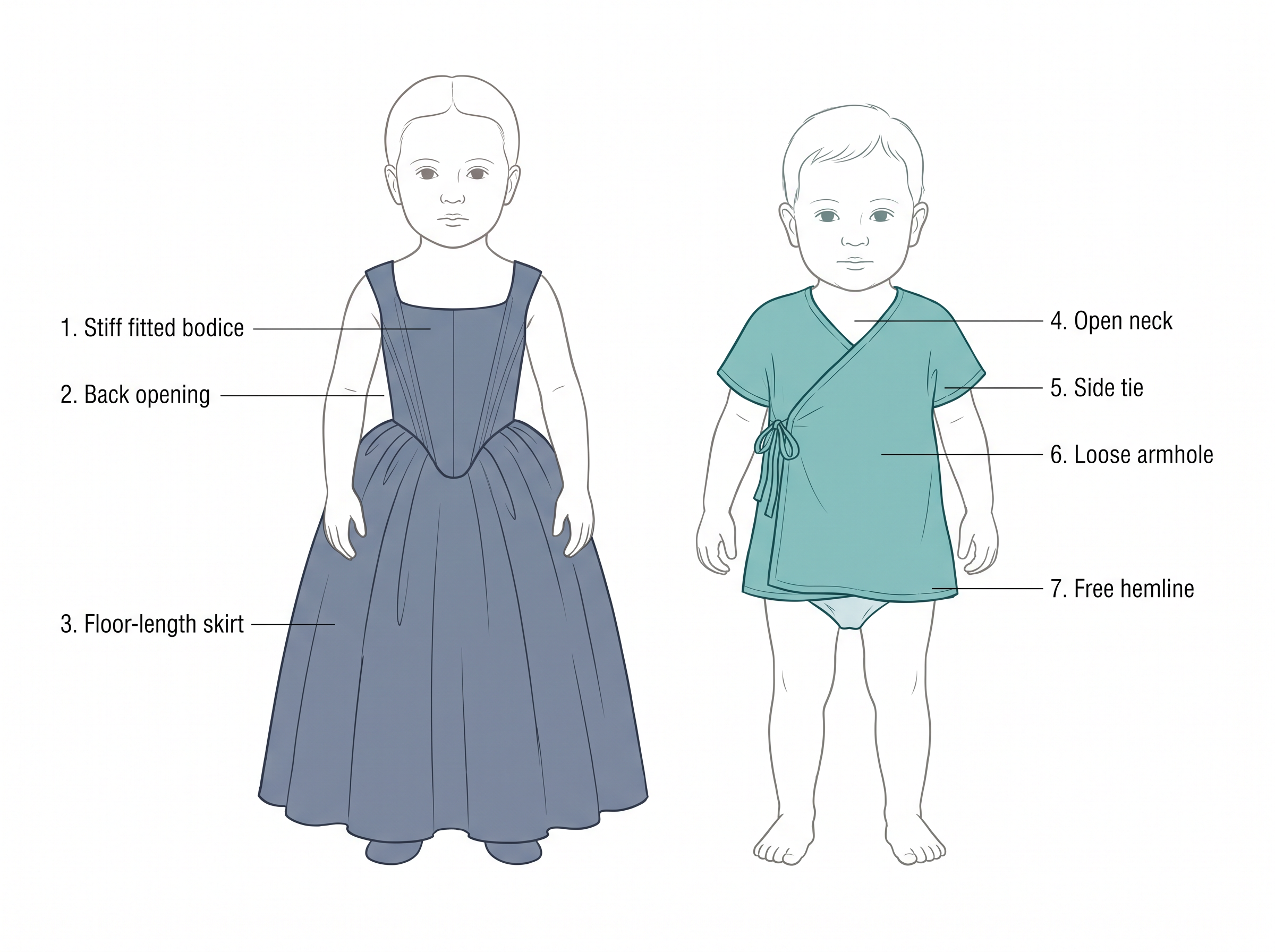
Fig. 9.0 – A child’s garment, then and now.
9.1 Clothing Functions And The Selection Of Clothes
Everything a person wears — a kurta, a saree, a school uniform, a pair of shoes, a woollen cap — is together called apparel. Nobody chooses apparel at random. Even a hurried choice made at six in the morning is a decision, and it is made for reasons.
Ask yourself why you are wearing what you are wearing right now. You may find you have covered the parts of the body your family and your school expect to be covered. You may find you have dressed for the weather outside, or for the particular place you are going to, or simply because you like the colour.
Those answers are not separate. They are the four kinds of work that clothing does everywhere in the world, and they are set out in Fig. 9.1.
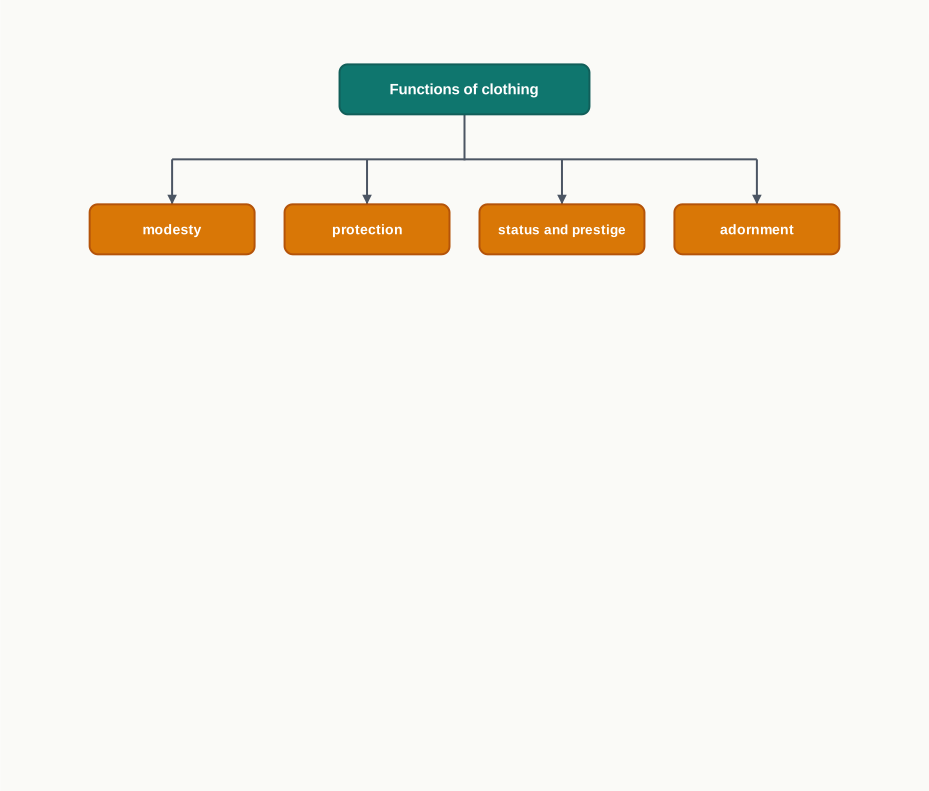
Fig. 9.1 – The four functions of clothing.
How The Four Functions Work Together
A single garment usually performs more than one function at once. A farmer’s cotton turban shades the head from the sun, absorbs sweat, and is tied in a style that other people in the region recognise at a glance. Separating the four functions is a way of thinking clearly about clothing, not a claim that real garments come in four separate kinds.
The four functions also pull against one another. A heavily embroidered jacket may be beautiful but too warm; a garment that covers well may be too stiff to work in. Choosing apparel means deciding which function matters most for this wearer, on this day, in this place.
9.1.1 Modesty
Modesty is the covering of the body in the manner a person’s own society treats as proper. It is the function most people name first, and it is also the one most often misunderstood, because it feels fixed from the inside and is not fixed at all.
What counts as modest changes with the culture, the occasion and the century. A garment that is entirely ordinary in a college corridor may be out of place in a place of worship. Clothing worn comfortably by an athlete on a field would not be worn to a family wedding. In a great many Indian households the same person keeps different standards for the courtyard, the street and a formal visit, and moves between them without thinking about it.
Because the standard shifts, modesty cannot be judged by the amount of cloth alone. It is judged by the fit between the garment and the setting the wearer is in.
9.1.2 Protection
Protection is the function that makes clothing a matter of health and safety rather than of preference. Clothes stand between the body and everything the environment does to it — heat, cold, rain, sun, dust, insects, chemicals, sparks and rough surfaces.
Protection From Heat And Cold
It is tempting to say that a sweater warms you and a cotton kurta cools you. Neither statement is true as it stands. Cloth has no heat of its own to give and no coldness to lend.
This single principle explains almost every summer and winter garment you own. Wool is warm because its crimped fibres trap a great deal of still air, and still air conducts heat poorly. Two thin layers are warmer than one thick one, because a second layer of trapped air is added between them. A loose cotton garment is cool because cotton absorbs sweat readily and the open weave lets the vapour escape.
Colour matters as well. Light colours reflect more of the sun’s radiation and dark colours absorb more of it, which is why light shades dominate summer wardrobes across most of India. Table 9.1 sets the two seasons side by side.
Protection From Sun, Dust And Insects
Clothing also shields the skin from ultraviolet radiation, which is why people working outdoors through the middle of the day cover the head, the neck and the arms rather than uncovering them. A closely woven fabric blocks more radiation than an open one of the same colour.
Full-sleeved clothing and covered feet reduce insect bites, and this matters where mosquito-borne illness is common. In dusty conditions, an outer garment that can be shaken out and washed keeps grit off the skin and out of the hair.
Protection At Work
Some occupations require clothing designed for one particular hazard, and here the garment is protective equipment rather than dress. A laboratory coat, closed shoes and goggles guard against splashes and breakage. A welder’s leather apron and face shield stop sparks. A construction worker’s helmet takes the force of a falling object. Health workers in an operating theatre wear sterile gowns, caps and masks so that micro-organisms do not pass from the wearer to the patient. Fig. 9.2 shows four such sets of clothing.
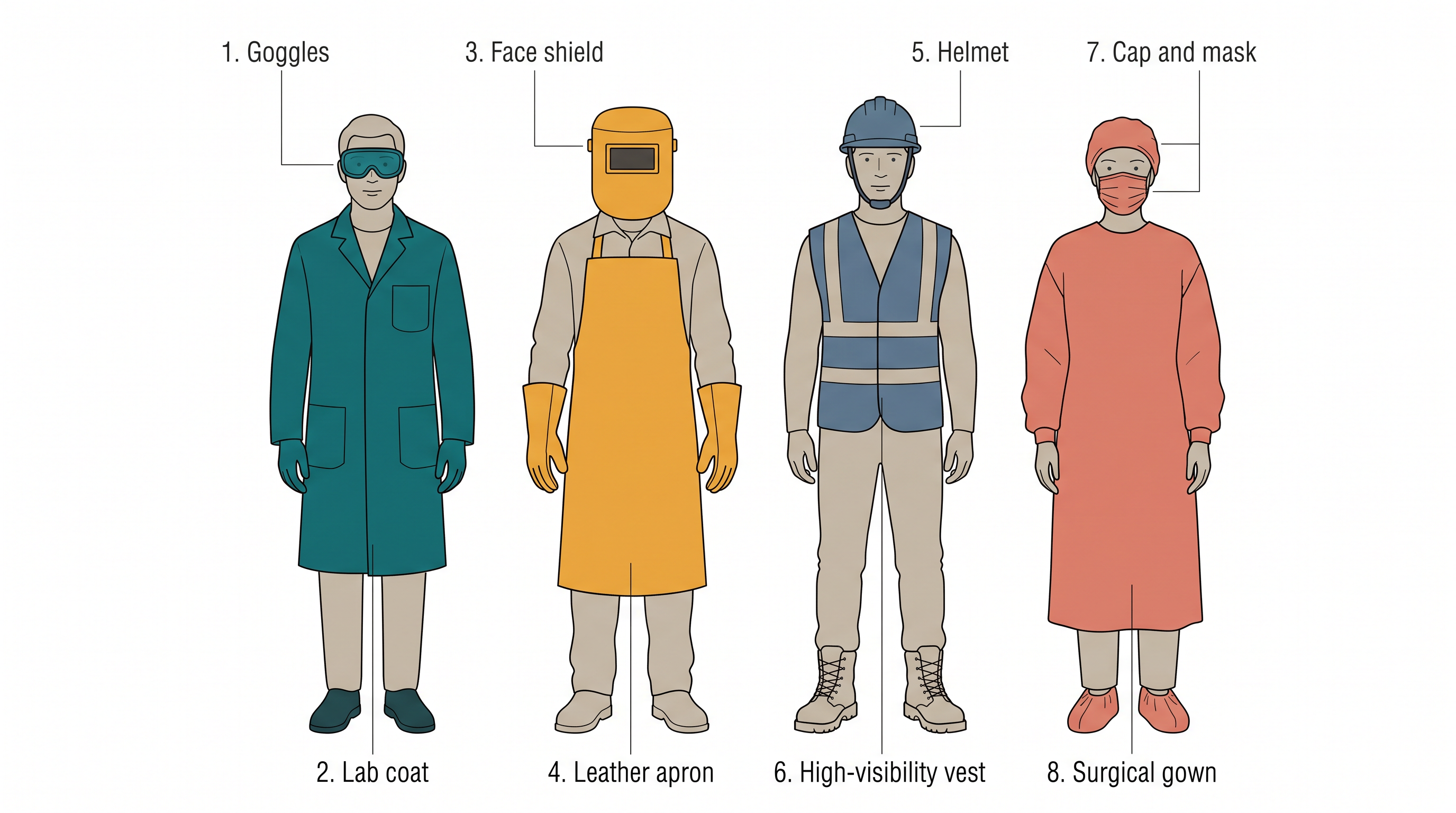
Fig. 9.2 – Protective clothing for different hazards.
Notice that in every one of these four cases the garment was designed backwards, starting from the hazard. That is the habit worth carrying into the rest of this chapter: name the hazard first, then ask what a garment must do about it.
9.1.3 Status And Prestige
Clothing carries information about the wearer, and other people read it quickly. Status in this sense means the position a person holds in a group, and clothing that signals it lets the group recognise its own members without anybody having to explain.
The clearest case is the uniform — a set form of dress worn by everyone in a defined group. A school uniform marks a student of one school; the uniforms of the armed forces, the police, nurses, railway staff and air crew mark an occupation, and often a rank within it as well. A uniform also removes visible differences of income between the people wearing it, which is one reason schools use them.
Clothing marks occasions and stages of life in the same way. Wedding clothing, mourning clothing, the dress worn for a festival or for a first day at work all announce what is happening, not only who the wearer is. Handwoven silk kept for ceremonial use in a family carries prestige because of what it costs in skilled labour and because of when it is brought out.
None of this makes expensive clothing better clothing. Prestige is a meaning that a society attaches to a garment; it is not a quality of the cloth, and a person’s worth is not read off what she can afford to wear.
9.1.4 Adornment
Adornment is the decoration of the person — the reason a plain and perfectly serviceable garment is given an embroidered yoke, a woven border, a line of contrast piping or a row of mirrors. It answers no need of temperature or safety, and it is nonetheless the function people most often choose a garment for.
Adornment works through colour, texture, surface decoration, and the shape a garment gives the body. It is also how a wearer says something about herself: a preferred colour, an inherited textile, a self-chosen style. Fig. 9.3 shows where decoration is usually placed on a garment, and it is worth noticing how much of it clusters at the edges and openings, where the eye naturally travels.
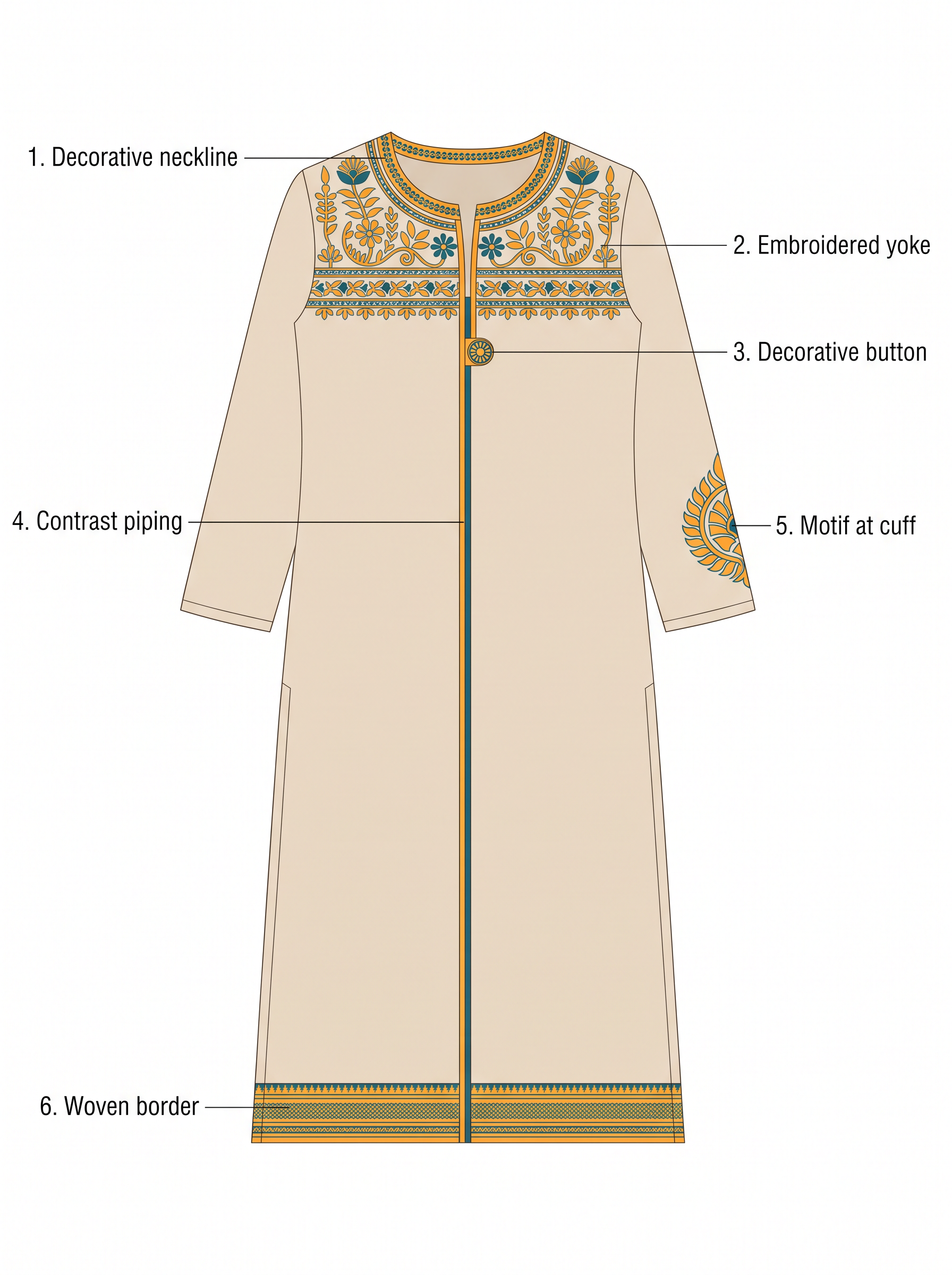
Fig. 9.3 – Decoration placement on a garment.
Adornment and the other three functions frequently disagree. A heavy border adds weight to a summer garment; a decorative trim at the neck may scratch the skin; an elaborate outfit may be impossible to launder at home. When they disagree, the wearer decides, and this chapter is about deciding well.
9.2 Factors Affecting Selection Of Clothing In India
Knowing what clothing does still does not tell you what to buy. The four functions describe every garment ever made; they do not choose between the two shirts in front of you in a shop.
That choice is made under conditions, and the conditions are real ones. Who will wear the garment, in what weather, for what occasion, at what price, and against what everyone else is wearing this year. Five factors cover almost every clothing decision made in an Indian household, and they are taken up one at a time below.
Notice, before you begin, that a clothing decision usually sits between the individual and the family. The wearer decides what suits her; the household decides what it can buy, store, wash and hand down.
9.2.1 Age
Age changes what a body needs from a garment, and it changes it several times over a lifetime. An infant cannot hold up her own head, so a garment must be put on without lifting her. A school-age child runs and falls and needs strong seams. An older adult may have stiff finger joints, and a row of small hooks at the back becomes an impossible garment however handsome it is.
Age also changes what the wearer wants. Adolescents pay close attention to what their group is wearing, and clothing that marks them out as different is worn unwillingly however sensible it is. That is a real factor in selection, not a failing to be corrected.
Table 9.2 sets out the main requirement at each stage of life. The stages of childhood are only summarised here, because they are treated in full in section 9.4.
9.2.2 Climate And Season
India carries a wide range of climates, and clothing across the country varies with them far more than it varies with anything else. The principle behind the variation was set out in section 9.1: a fabric either traps still air, which keeps heat in, or absorbs and releases moisture, which lets heat out.
In hot and dry conditions the problem is radiation and dust, so the answer is loose, absorbent, light-coloured cotton, with the head and neck covered. In hot and humid conditions sweat does not evaporate easily, so a thin open weave that lets air move over the skin matters more than the amount of cover. In cold regions the answer is wool in several layers, closed at the neck, wrists and ankles. Fig. 9.4 maps the four broad conditions.
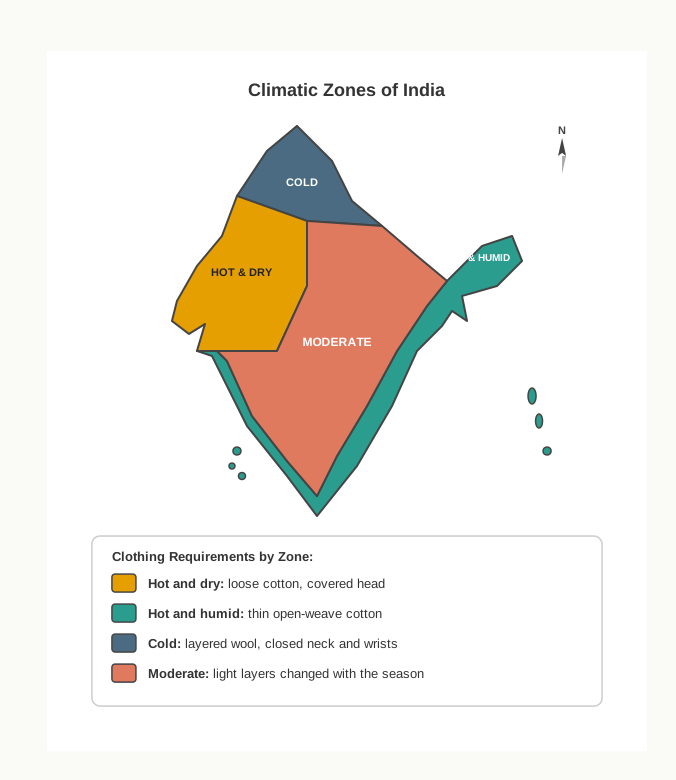
Fig. 9.4 – Climate and clothing across India.
Season matters as much as region, because most of India lives through three of them. The same household keeps cotton for the summer, a change of fabric and an extra layer for the monsoon, when clothes must dry indoors, and wool for whatever winter that place has. Quick-drying fabrics and fewer layers are the sensible monsoon choice, for a garment that will not dry is a garment that will not be available tomorrow.
9.2.3 Occasion
The occasion is the event or setting a garment is worn for, and it is often the factor that decides between two garments that are equally comfortable and equally affordable. Clothing that is right for one occasion is not made wrong for another by anything about the cloth; it is made wrong by the setting.
Occasions can be sorted roughly into everyday wear, work or school wear, and ceremonial wear. Everyday clothing is judged on comfort, cost and ease of washing. Work and school clothing is judged on what the job or the institution requires. Ceremonial clothing is judged on what the occasion is understood to deserve, and it is worn rarely, which is why it can be less comfortable and harder to launder without much loss. Fig. 9.5 shows one basic garment adjusted for three settings.
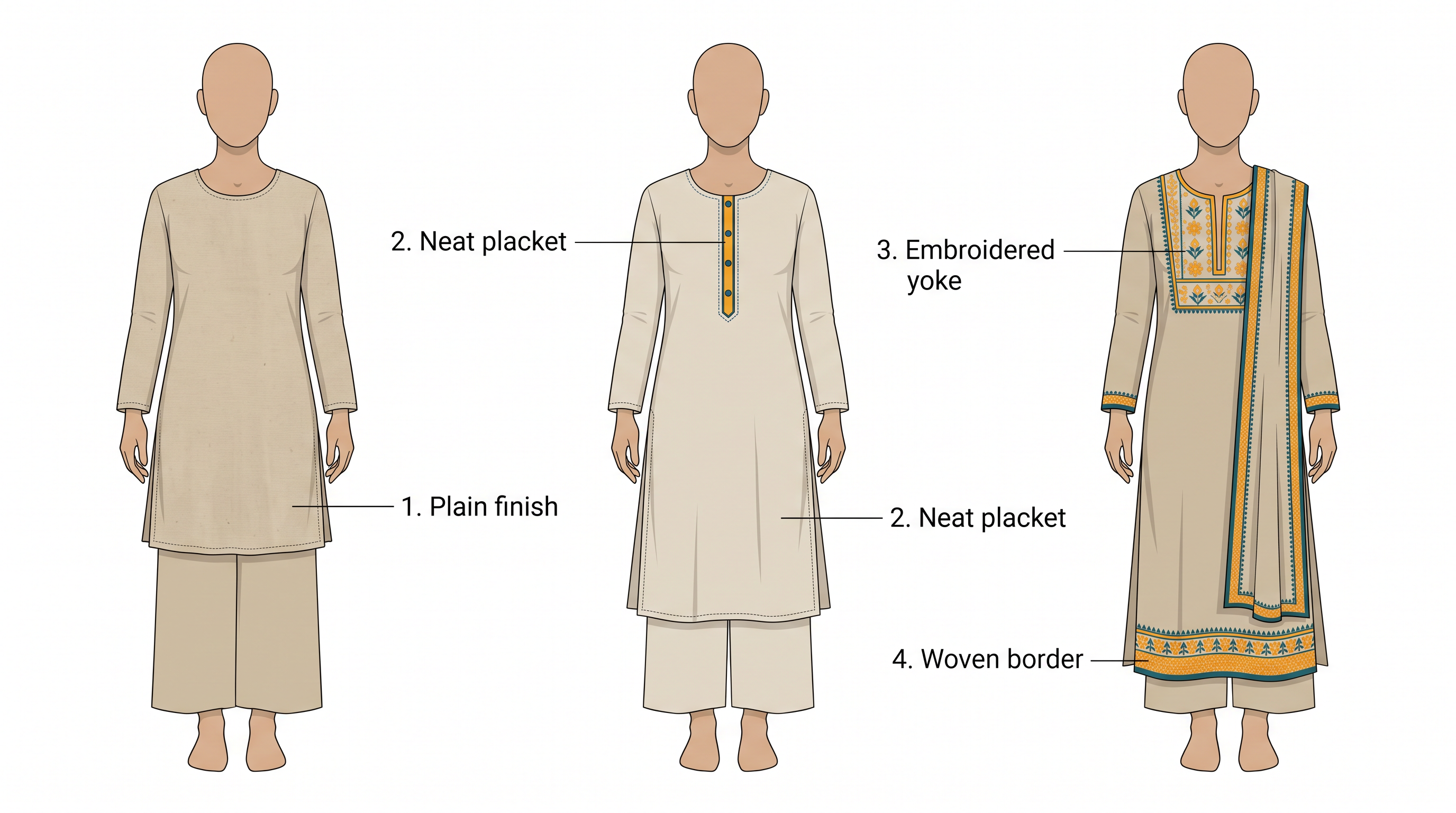
Fig. 9.5 – One garment for three occasions.
9.2.4 Fashion
Fashion is the style of dress that a large number of people accept and wear at a particular time and place. It is worth being exact about the word, because it is used loosely in conversation and precisely in this subject.
Two related words are needed to see fashion clearly. A fad is a style taken up very quickly by a small group and dropped just as quickly, often within a single season. A classic is a style that stays acceptable for many years — the shirt, the plain cotton saree, the kurta and pyjama — and so can be bought without much risk.
Fashion is a genuine factor in selection because clothing is worn in public and people want to be dressed as their group is dressed. It is also the factor that costs the most money for the least service, since a fad garment may be worn a handful of times before it looks wrong. A wardrobe built mainly on classics, with a small number of current pieces, costs less and lasts longer than one built the other way round.
9.2.5 Income
Income sets the limit within which every other factor works, and it is the factor most likely to be discussed badly. A clothing budget is a tool, not a verdict. Households at every income level make clothing decisions, and the skill lies in getting the most service from whatever amount is available.
Three habits stretch a clothing budget, and none of them depends on spending more. The first is planning purchases against what the wardrobe already holds, so that a new garment combines with several existing ones instead of standing alone. The second is judging cost by use rather than by price, which is done by dividing the price of a garment by the number of times it is likely to be worn. The third is counting the cost of upkeep, because a garment that must be dry-cleaned after every wearing carries a bill that does not appear on its label.
9.3 Understanding Children’s Basic Clothing Needs
A child is not a small adult, and a child’s garment is not a small adult’s garment. The body is differently proportioned, the skin is more easily irritated, the wearer is far more active, and the wearer is growing all the time.
Children’s clothing is therefore designed from the child outwards. Seven needs cover what a garment must answer, and they are listed in Fig. 9.6. Every one of them will be met by design decisions — a seam placed here rather than there, a fastening in front rather than behind — and it is those decisions that this section is about.
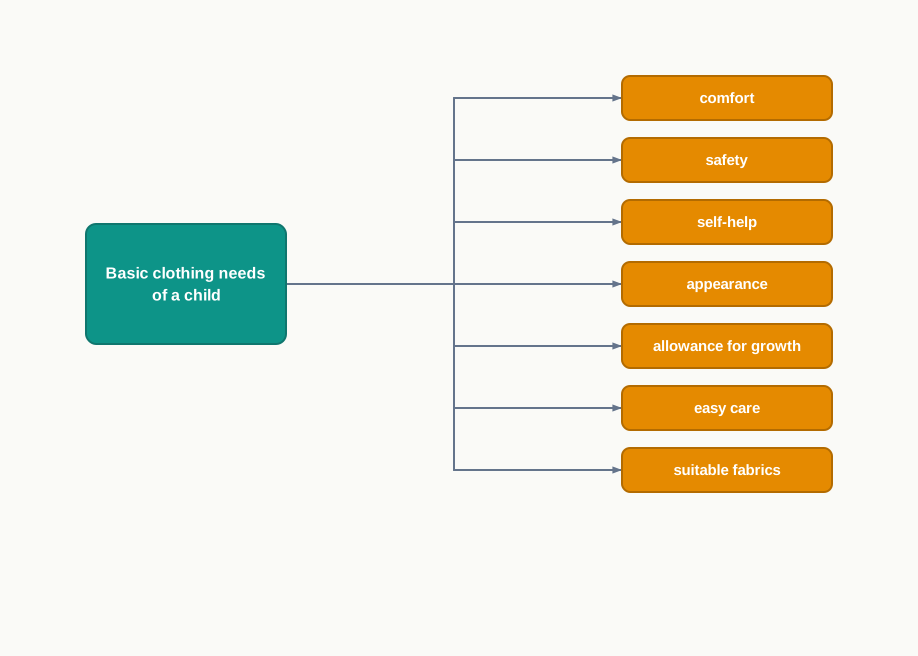
Fig. 9.6 – The seven basic clothing needs of a child.
9.3.1 Comfort
A child who is uncomfortable in a garment will pull at it, refuse it, or simply stop moving as freely as she would otherwise. Comfort is therefore the first requirement, and it has three separate sources: freedom of movement, the feel of the fabric on the skin, and the weight and warmth of the garment.
Freedom of movement is settled by the cut. Armholes must be deep and loose, because a child raises her arms far more often than an adult does. Skirts and shorts must allow squatting and climbing. Nothing should grip at the waist, the wrist or the thigh, so elastic is used lightly and never as a tight band.
The feel of the fabric matters because a young child’s skin is thin and easily reddened. Fabric next to the skin should be soft and absorbent. Seams are best kept flat, and a seam that runs across the shoulder or down the back of a garment worn by a baby who lies down will be felt every minute she lies on it.
Weight is the source most often forgotten. A heavy garment tires a small body quickly, and heavy decoration at the front of a toddler’s dress adds weight exactly where balance is least secure. Warmth is managed as it is for adults, by adding a second thin layer rather than one thick one, so that a layer can also be removed indoors.
9.3.2 Safety
Children’s clothing is one of the few places in this book where a design fault can injure the wearer directly. Four hazards account for nearly all of it.
Fire
A garment that hangs loose and flows — a long, wide, trailing dupatta, an oversized frock, a fluttering sleeve — passes close to a flame that a fitted garment would never reach. Loose clothing also has more air around the fabric, and cloth burns faster with air around it. Around a stove, a lamp or a heater, a child is safer in a garment that stays close to the body.
The fibre matters as much as the shape. Cotton catches quickly and burns away. Polyester and nylon do not burn in the same manner: being thermoplastic, they soften and melt, and molten fibre that reaches skin sticks to it and keeps burning. This is one reason all-synthetic nightwear and playwear are a poor choice for a small child.
Tripping, Catching And Choking
A hem that reaches the floor, a trailing sash, and a trouser leg turned up but not stitched are the ordinary causes of a fall. So is a sock or a shoe with a smooth sole on a smooth floor.
Cords and ribbons at the neck can catch on a gate, a hook or a piece of play equipment, and a cord long enough to loop is a strangulation risk. Use a wide overlapping fastening at the neck rather than a drawstring. Small buttons, beads, sequins and mirrors come loose with washing, and anything that comes loose goes into a small child’s mouth, so decoration on infant and toddler clothing is stitched flat or left out.
Being Seen
A child walking to school at dusk or playing near a road is safer in light or bright colours than in dark ones, and safer again in a garment carrying a strip of reflective tape. This is a genuine clothing decision and not merely a matter of taste.
9.3.3 Self-Help
Self-help features are the details of a garment that allow a child to put it on, take it off and manage it in the toilet without an adult. They matter for two reasons at once: they save the household a great deal of time, and they give the child an early, daily experience of managing something herself.
Most children begin to manage simple garments between two and three years of age, and can dress with little help by about five. A garment is a self-help garment only if it matches what the child’s hands can actually do at her stage.
The features are all small and all deliberate, and they are shown in Fig. 9.7.
- Openings at the front, where the child can see and reach them, never at the back.
- Large flat buttons, large press studs, or hook-and-loop tape, rather than small buttons and hooks.
- Buttonholes cut a little larger than the button, so the button passes without a struggle.
- A zip with a large pull or a ring attached, and a guard behind it so the skin is not caught.
- An elastic waist on the lower garment, which a child can pull down and up unaided.
- Wide neck openings and loose armholes, so the head and arms go through without help.
- A clear front — a pocket, a motif or a contrasting band — so the child can tell front from back before she puts the garment on.
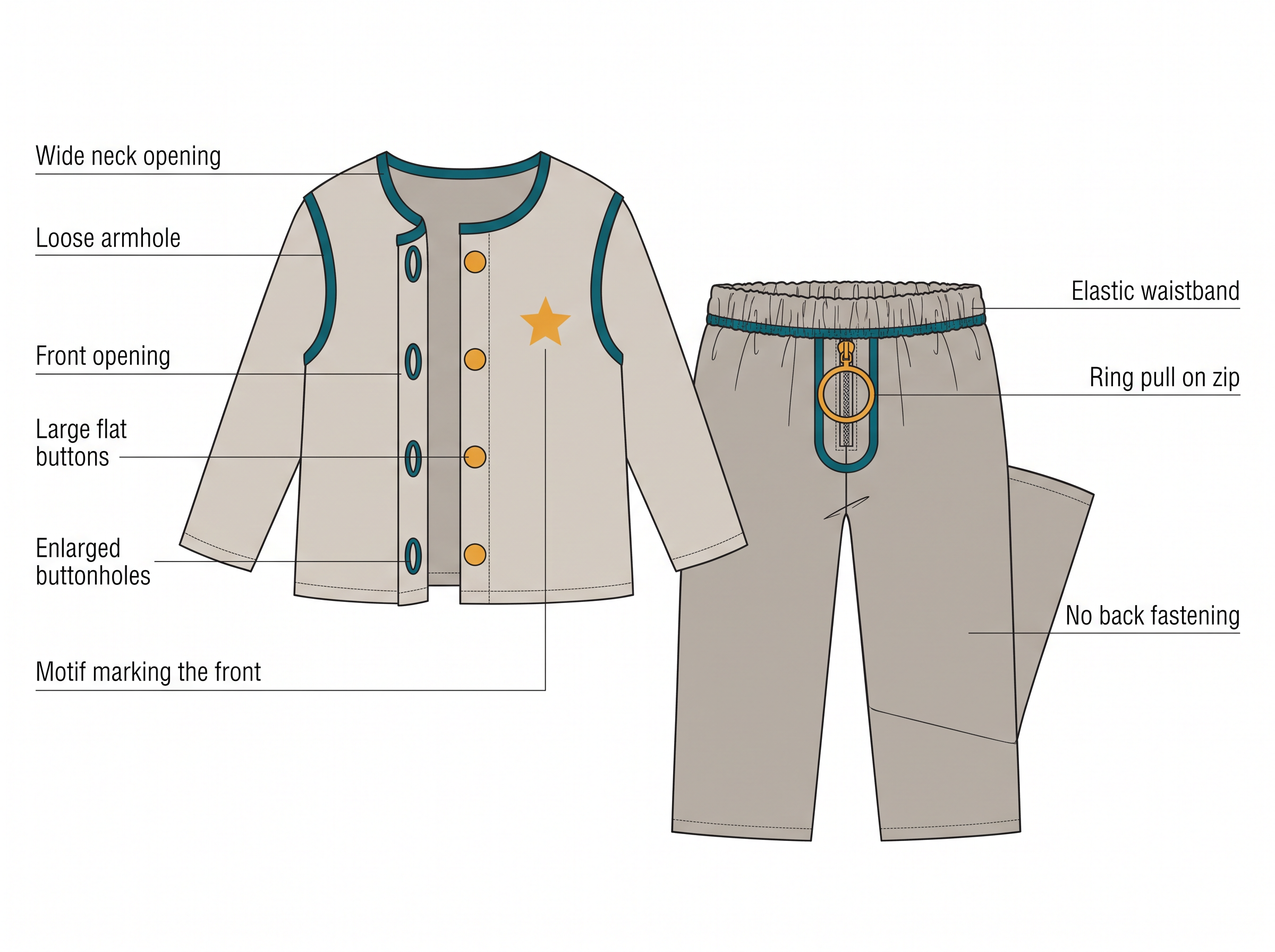
Fig. 9.7 – Self-help features in a child’s garment.
9.3.4 Appearance
A child notices how she looks, and she notices earlier than adults expect. A garment that draws unwanted comment from other children is a garment that will be resisted every morning, whatever else is right about it.
Good appearance in children’s clothing comes from proportion rather than from ornament. A small body carries a small motif, a narrow border and a simple line well; a large printed pattern or a wide frill overwhelms it. Colours that stay bright through many washes look better after six months than colours that were brighter on the first day.
Decoration should also be placed where it will survive. Trim at the cuff, the seat and the knee is trim at the points that rub, so decoration is better placed at the yoke, the pocket or the hem.
9.3.5 Allowance For Growth
A child outgrows a garment long before she wears it out, and she usually outgrows it in length first. Allowance for growth means building into a garment, at the time it is made, the extra size it will need later — so that the same garment fits for a longer period instead of being replaced.
This is not the same as buying a garment two sizes too large. An oversized garment is uncomfortable now, unsafe now, and no better later. Growth allowance keeps the garment fitting today while holding the extra fabric folded away until it is needed. The devices are shown in Fig. 9.8.
- A deep hem at the skirt or trouser edge, let down as the child grows taller.
- Tucks stitched above the hem or above the cuff, opened one at a time.
- Raglan sleeves and drop shoulders, which have no fixed shoulder point and so fit a wider range of sizes.
- Adjustable straps and braces, with two or three rows of buttons to move to.
- Elastic waists and wrap-over styles, which widen with the wearer.
- Two-piece outfits rather than one-piece, since a child’s upper and lower body do not grow at the same rate.
- Generous seam allowances at the side seams, let out when the garment becomes narrow.
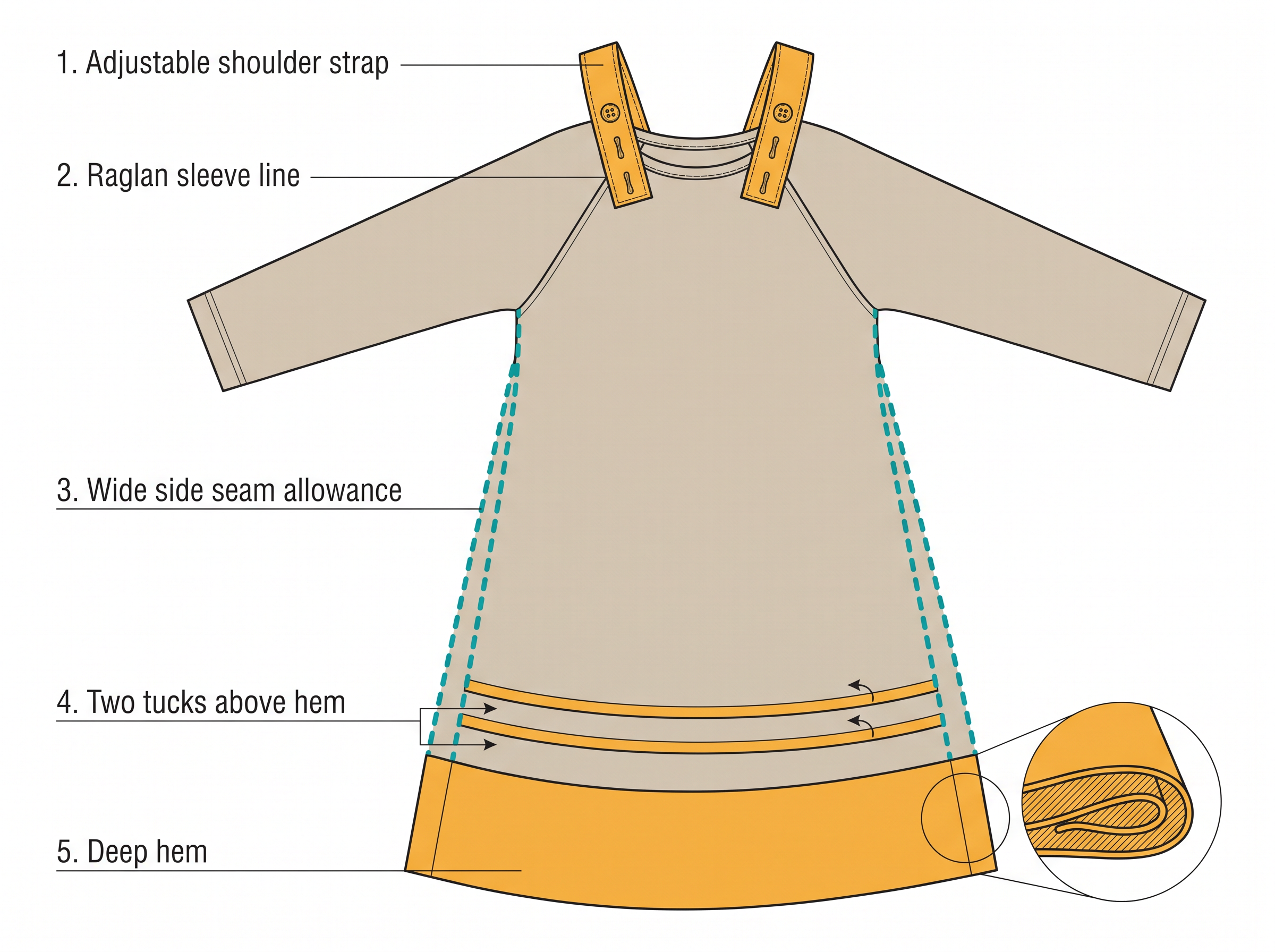
Fig. 9.8 – Growth allowance features in a child’s frock.
9.3.6 Easy Care
Children’s clothes are soiled quickly and washed often, and every wash costs somebody in the household time, water, fuel and effort. Easy care means choosing garments whose upkeep is light, because that cost is paid again every few days for as long as the garment lasts.
A garment is easy to care for when it can be washed at home rather than dry-cleaned, when it withstands vigorous washing and hot water, when its colours do not run, when it does not shrink out of shape, when it dries quickly, and when it needs little or no ironing. Trimmings that must be removed before washing, and fabrics that must be laid flat to dry, fail this test whatever else they offer.
Two fabric properties decide most of it. Colourfastness is the ability of a dye to stay in the fabric through washing, sunlight and perspiration. Shrinkage is the reduction in size a fabric undergoes when it is first washed, which is why pre-shrunk cloth is worth choosing for a child whose garment has been cut with growth allowance built in.
9.3.7 Fabrics
The needs set out above narrow the choice of fabric sharply. A child’s fabric must be absorbent, soft, strong, washable and safe, and no single fibre is best at all five. Table 9.3 compares the four groups used for children’s clothing.
Read the table as a set of trade-offs rather than as a ranking. Cotton wins on everything that touches the skin, which is why underclothing, nappies and infants’ garments are cotton and nothing else. Knitted cotton, sold in India as hosiery, adds stretch to those advantages and so fits a growing body kindly. Synthetics win on strength and drying, which is why they belong in outerwear worn over something else. The blend is the working compromise for a school uniform, which must survive both the child and the wash.
9.4 Clothing Requirements At Different Childhood Stages
The seven needs of section 9.3 hold for every child. What changes, and changes fast, is which of the seven matters most.
A newborn who lies still all day needs a garment that can be put on without lifting her, and needs nothing at all in the way of self-help. A four-year-old who dresses herself needs the opposite. The way to read this section, therefore, is to ask at each stage what the child has just become able to do, and then to ask what a garment must do about it.
Table 9.4 sets the six stages side by side. The prose that follows takes each in turn.
9.4.1 Infancy (Birth To Six Months)
An infant in the first half-year lies down for most of the day, cannot hold up her own head, and grows faster than she ever will again. Her skin is thin and reddens easily, and her body is not yet able to hold its own temperature steady, so she can be chilled and overheated with equal ease.
Every clothing decision follows from those four facts. The garment must go on without the head being lifted or turned, so it opens down the front or ties at the side, as the jhabla does, and never fastens at the back. Sleeves are cut wide and set in a kimono or raglan line, so an arm that cannot be straightened on request can still be guided through.
Fabric is soft absorbent cotton and nothing else next to the skin. The infant is wet often, and cotton takes up moisture instead of holding it against the skin; it also withstands the frequent, hot, vigorous washing that infants’ clothes receive. Wool goes over a cotton layer, never directly on the skin.
Seams are kept flat and few, and the back of the garment is kept smooth, because that is the surface the infant lies on for hours. There are no buttons, beads, lace or stiff trims at the neck. Fastenings are ties or wide overlaps, and there is no elastic anywhere that grips.
Warmth is added in thin layers that can be removed, rather than in one heavy garment. A cap, because a great deal of body heat is lost from a small head; mittens, so that fingernails do not scratch the face; and booties, since the feet cannot yet be warmed by movement. Fig. 9.9 shows the set.
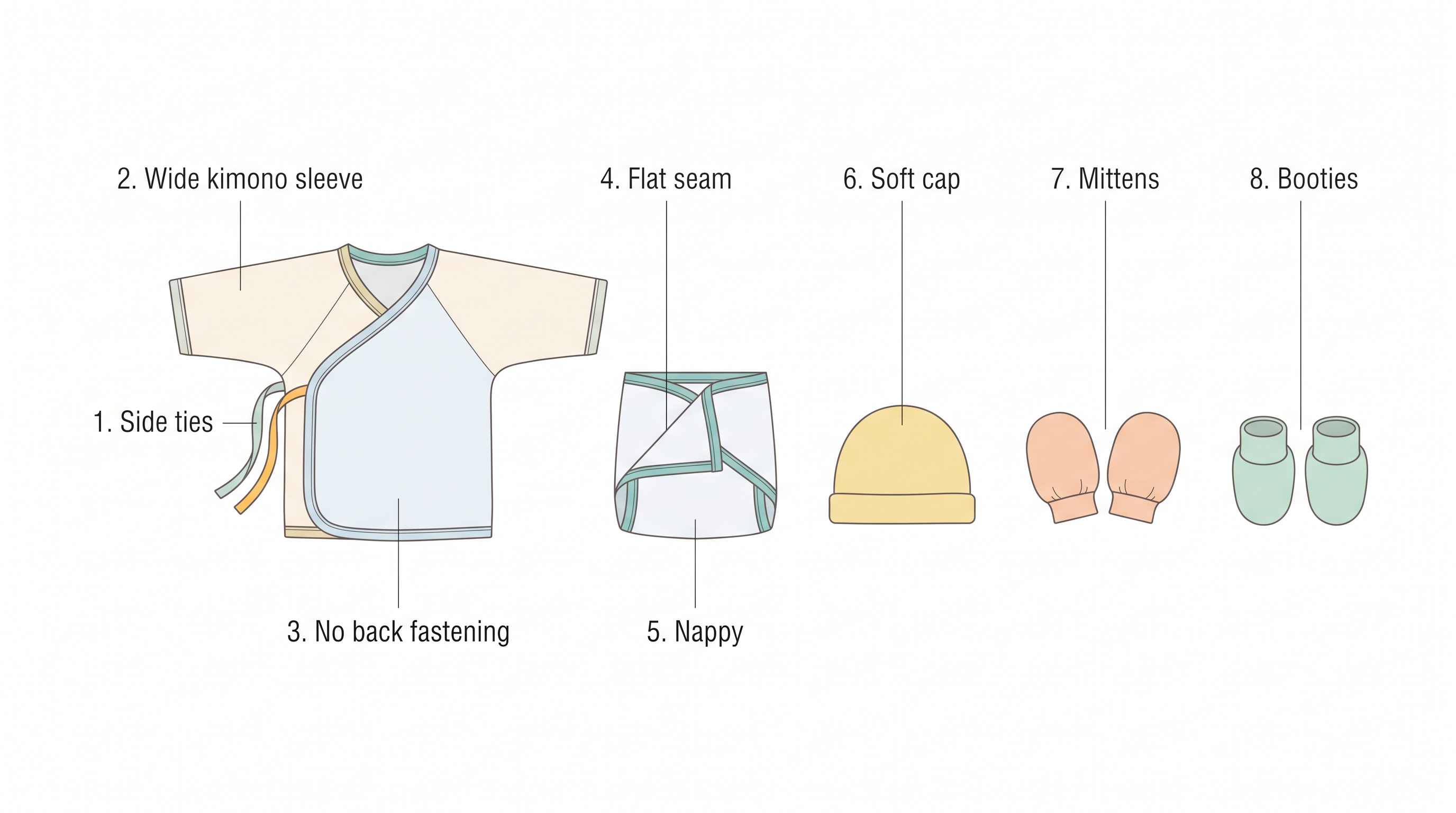
Fig. 9.9 – An infant’s basic clothing set.
Buy few garments at this stage, and buy them again when they are outgrown. Growth allowance is of little use in the first six months, because the child will pass through the size long before the cloth is worn, and a garment large enough to allow for six months’ growth is unsafe and uncomfortable now.
9.4.2 Creeping Age (6 Months To One Year)
Somewhere in the second half of the first year the child sits up, then creeps across the floor, then pulls herself upright against the furniture. She also begins teething, which means she dribbles, and she puts everything she can reach into her mouth.
Creeping changes the garment completely. A long gown that was ideal a month earlier now catches under the knees and stops the child moving. Garments must end well clear of the feet, and the knees must be strong, because the whole weight of the child is dragged across the floor on them. Reinforced or double-layered knees earn their place here.
The one-piece creeper suit answers this stage better than anything else, as Fig. 9.10 shows. It stays in place when the child is on all fours, it leaves no gap at the waist, and a row of press studs along the inner leg allows the nappy to be changed without undressing the child.
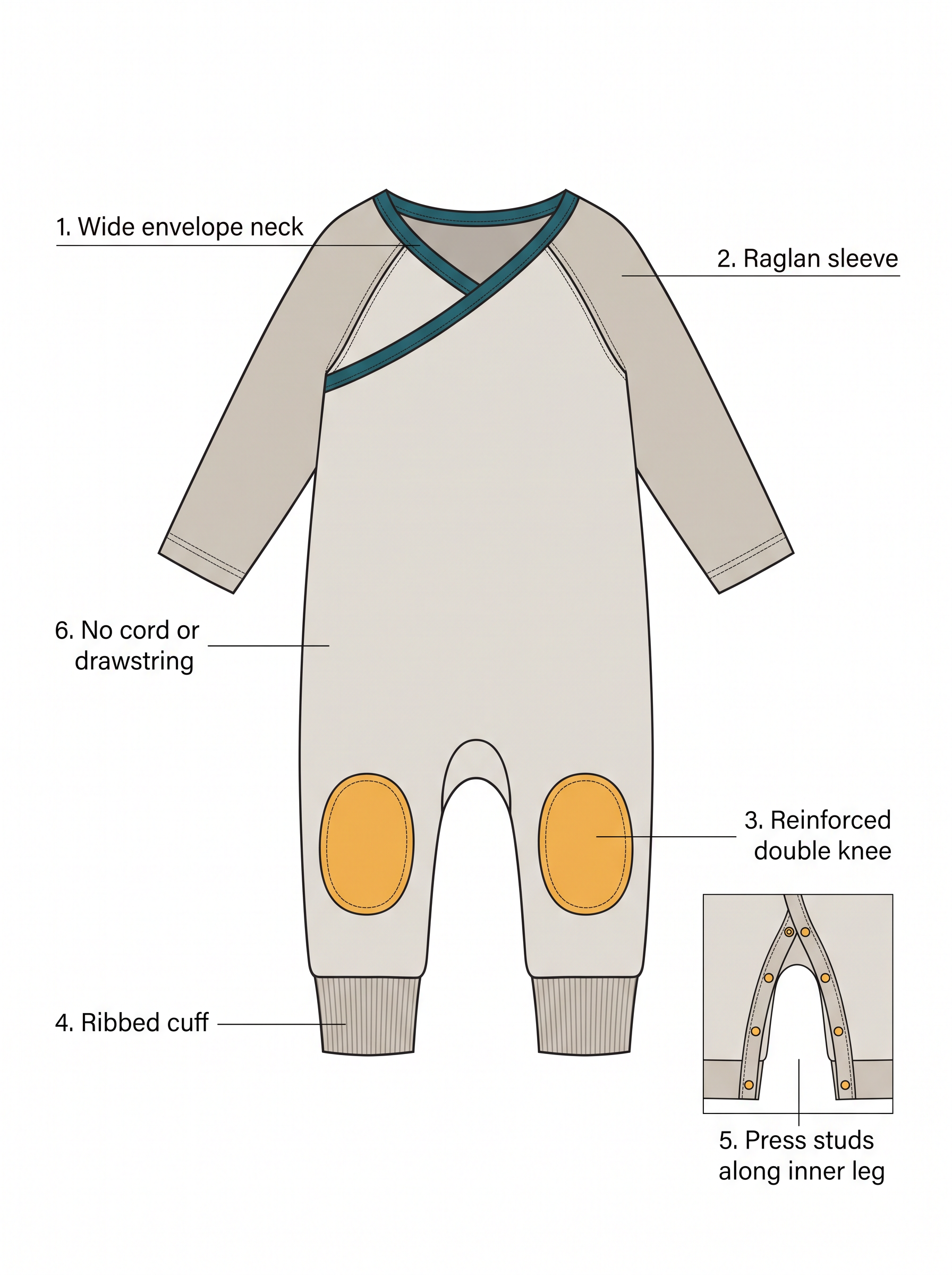
Fig. 9.10 – A one-piece creeper suit.
Knitted cotton — hosiery — is the usual fabric, because it stretches with the movement and gives a little as the child grows. Bibs become a daily garment rather than a feeding accessory. Everything must be colourfast and safe in the mouth, and every trim must be stitched down flat, since anything that works loose will be swallowed.
Shoes are not needed until the child is walking outdoors. Soft booties keep the feet warm without interfering with the movements by which a foot learns to grip.
9.4.3 Toddlerhood (1–2 Years)
The toddler walks, and walks unsteadily. She falls often, she has just begun toilet training, and she has discovered that she has preferences.
Clothing at this stage is short, light and clear of the feet. Nothing may trail, hang or wrap around the legs. Footwear needs a flexible sole with enough grip to hold on a smooth floor, and a fit checked often, because feet grow quickly and a child cannot tell you that a shoe has become tight.
Toilet training decides the lower garment. An elastic waist that the child can pull down and pull up by herself, with no button, hook or zip to defeat her, is the single most useful feature of the toddler wardrobe. Two-piece outfits work better than one-piece ones for the same reason.
Fabrics take a beating at this stage and must be strong, washable and quick to dry, since a toddler in training will need several changes in a day. Knees and seat are the wear points, and they are worth reinforcing.
9.4.4 Preschool Age (2–6 Years)
These are the years in which the child learns to dress herself, and the wardrobe should be built so that she can. Every self-help feature listed in section 9.3 belongs here, and a garment that requires an adult is a garment that costs the child a chance to practise.
The preschool child is also messy in a way that no later stage matches. She paints, digs, spills, sits on the ground and climbs whatever will bear her. Clothing must therefore be washable at high temperature, strongly seamed, and cheap enough that its ruin is not a household crisis. Dark and patterned fabrics hide the marks that survive washing.
Room to move is not negotiable. Playsuits, shorts and simple frocks with deep armholes let the child squat, kneel, stretch and climb. Pockets are worth adding, because a child of this age collects things and will otherwise carry them in her hands all day.
This is also the age at which the child begins to insist on choosing. The workable arrangement is to offer two garments that are both suitable for the day and the weather, and to let her pick between them. She gets a real choice; the household keeps the decision within sensible limits.
9.4.5 Elementary School Years (6–11 Years)
Growth steadies in these years, and the child spends most of her waking day away from home. The wardrobe divides cleanly into three: the school uniform, playclothes, and clothes for special occasions.
The uniform is worn five or six days a week and is washed almost as often, so easy care governs its choice absolutely. A polyester–cotton blend survives this treatment better than pure cotton, holds its press, and dries overnight in the monsoon. Fit is judged at the shoulder, because a garment that is correct across the shoulders can be adjusted almost anywhere else.
Playclothes and sportswear must take rough use, and they must let the body cool. Cotton next to the skin during sport is worth insisting on, since perspiration must be absorbed rather than left on the skin. Shoes need checking for fit at least as often as at any earlier stage, and socks that have shrunk are as bad as shoes that have become small.
Children of this age compare themselves with their classmates constantly and want to be dressed like them. Being included in the choosing is itself part of what the stage needs, and it is also where a child first learns that a clothing decision has a price attached to it.
9.4.6 Adolescents (11–18 Years)
Adolescence brings the fastest growth since infancy, and it brings it unevenly — height, then breadth, and the two rarely at the same time. Garments are outgrown quickly and often, so a wardrobe built on two-piece outfits, adjustable waists and generous seams gets more service than one built on fitted single garments.
The sweat glands become fully active in these years, so clothing worn next to the skin needs to be absorbent and washed daily. Cotton, and cotton-rich blends, are the sensible choice for anything worn against the skin. Well-fitted undergarments in absorbent fabric are a plain matter of comfort, hygiene and support, and should be replaced as size changes rather than endured; there is nothing about this that is not ordinary.
Appearance and acceptance by the peer group matter more at this stage than at any other, and this is a normal part of development rather than something to be argued out of. The useful response is to bring the adolescent fully into the decision: what the wardrobe already contains, what it actually lacks, what the budget is, and what a garment will cost to keep. A young person who has done that arithmetic once will do it for the rest of her life.
Clothes should suit the body the wearer has, not a body she is told to want. A garment that fits well, is comfortable to move in and is right for the occasion is a well-chosen garment, and that judgement does not depend on the wearer’s size or shape.
9.5 Clothes For Children With Special Needs
Some children have a condition that changes how they move, how they use their hands, how they feel a fabric on the skin, or how much of the day they spend seated. A child who uses a wheelchair, a child with limited movement in the fingers, a child who wears callipers, and a child who is unusually sensitive to touch are all children whose clothing has to be thought about a second time.
Nothing in the previous two sections is set aside for them. Comfort, safety, self-help, appearance, growth allowance, easy care and fabric remain the seven needs. What changes is how each one is met.
Adaptive clothing is clothing designed or altered so that a person with a particular difficulty can wear it, manage it, and be comfortable in it. The word covers a magnetic fastening, a re-cut trouser back, a seam left open along its length, and a label removed — small changes, chosen for one specific difficulty.
Two Rules That Govern Everything Here
The first rule is to design for what the child can do, not around what she cannot. A garment that an adult must manage keeps the child dependent for as long as she wears it. A garment that she can manage, even slowly and imperfectly, gives her the thing every child of her age is working towards. Start from the movement she has, and build the fastening to suit it.
The second rule is that the garment should look like the clothes her friends are wearing. A child notices being marked out, and being marked out by her clothes is a daily reminder she did not ask for. The adaptations are best hidden — hook-and-loop tape behind a placket of ordinary-looking buttons, an opening tucked into a side seam — and the colour, the cut and the current style are the child’s to choose, exactly as they are for anyone else.
Matching The Garment To The Need
Different difficulties call for different answers, and Table 9.5 sets out four common ones side by side. Read down a column to design a garment; read across a row to see how one feature changes with the need.
The seated column deserves a second look, because it is the least obvious. A garment cut for a standing body does the wrong things on a seated one: the back hem rides up and gathers at the waist, the front hem falls short across the knees, and every seam, stud and pocket at the seat is pressed between the body and the chair for hours. So the back rise is raised, the front is cut longer, the back is left flat and unpocketed, and a jacket is made short enough that it does not fold under the wearer. Fig. 9.11 shows these changes on a shirt and a pair of trousers.
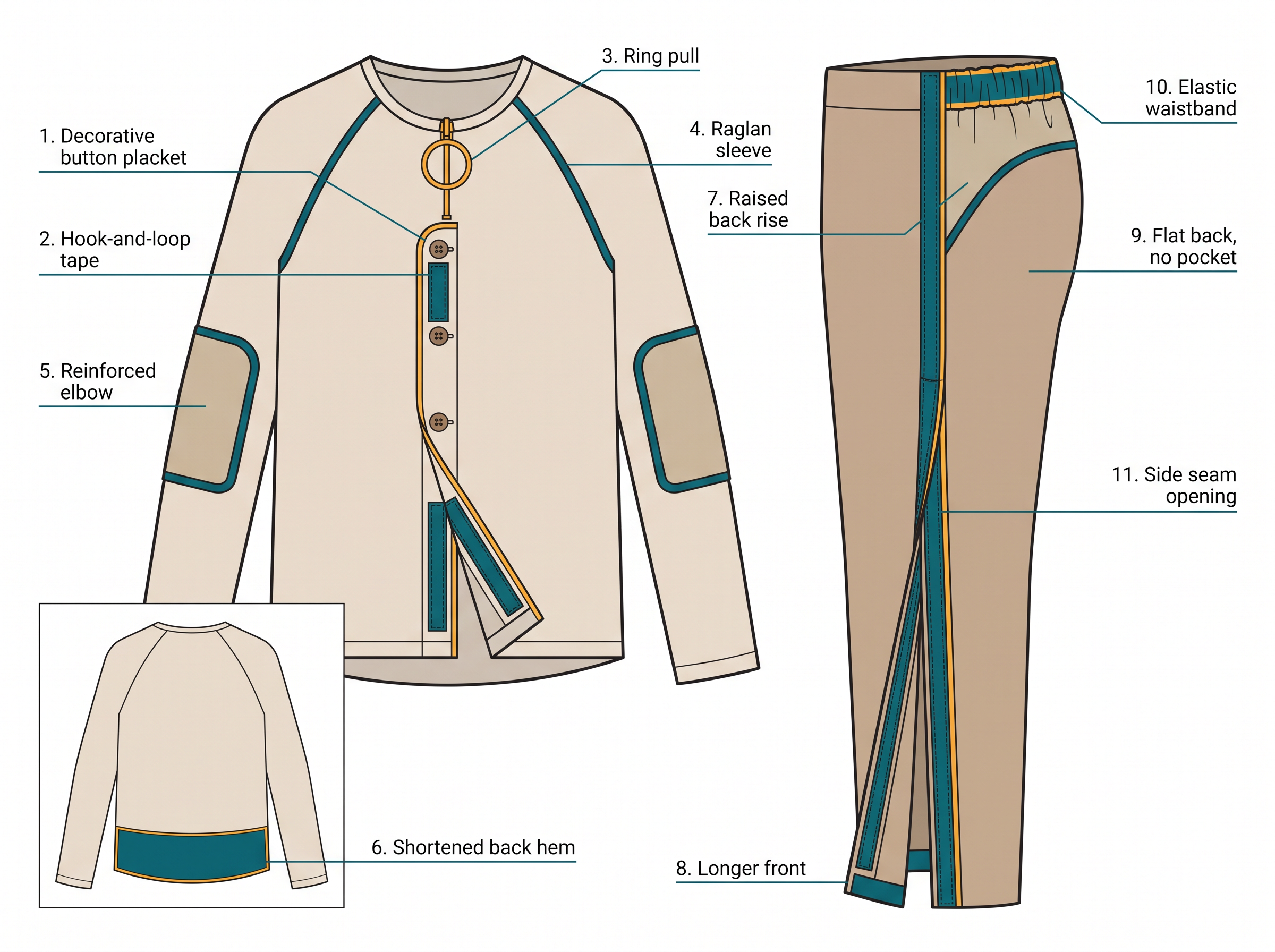
Fig. 9.11 – Adaptive features on a shirt and trousers.
Fabric, Fit And Care
Fabric choice narrows further here. Knitted cotton is the most useful cloth in this section, because it stretches as a limb passes through it, absorbs perspiration, and is soft against skin that may not be able to report discomfort. Smooth-surfaced fabrics slide over a chair or a bed more easily than rough ones.
Where a child wears a calliper, a brace or a prosthesis, the fabric at the point of contact wears through quickly. Reinforce it there, and cut the garment wide enough at that point that it is not stretched tight over the appliance.
Fit is checked more often and more carefully. A child who cannot feel pressure well cannot tell you that an elastic is too tight or that a seam is digging in, so the check has to be visual: look for a mark on the skin after the garment is removed, and change the garment if one is there.
Easy care matters more, not less, in this section. Garments here are washed often, and a garment that must be dry-cleaned or hand-washed separately is a garment that will be unavailable on the day it is needed. Choose fabrics and fastenings that survive machine washing, and check that hook-and-loop tape is closed before it goes into the wash, or it will collect lint and stop gripping.
9.6 Summary
- Apparel is everything a person wears, and every garment is chosen for a reason.
- Clothing performs four functions everywhere in the world:
- modesty;
- protection;
- status and prestige;
- adornment.
- A single garment usually performs more than one function at once, and the four functions often pull against one another.
- Modesty is the covering of the body in the way a person’s own society and situation regard as proper.
- The standard of modesty is not fixed; it changes with the culture, the occasion and the period of time.
- Protection is the function that makes clothing a matter of health and safety rather than of preference.
- Cloth neither warms nor cools the body. It controls the passage of heat between the skin and the air, and the escape of sweat as vapour.
- A fabric that traps still air keeps the wearer warm; a fabric that absorbs sweat and lets it evaporate keeps the wearer cool.
- Two thin layers are warmer than one thick layer, because a second layer of still air is trapped between them.
- Light colours reflect radiation and dark colours absorb it, which is why light shades suit summer wear.
- Clothing also protects against ultraviolet radiation, dust and insect bites, and against the specific hazards of an occupation.
- Protective clothing is designed backwards, from the hazard to the garment.
- Status is the position a person holds in a group, and clothing that signals it lets the group recognise its members.
- A uniform is a set form of dress worn by everyone in a defined group; it marks membership and hides differences of income.
- Prestige is a meaning a society attaches to a garment, not a quality of the cloth.
- Adornment is the decoration of the person, through colour, texture, surface decoration and the shape a garment gives the body.
- Five factors decide the selection of clothing in an Indian household:
- age;
- climate and season;
- occasion;
- fashion;
- income.
- Age changes both what a body needs from a garment and what the wearer wants from it.
- Climate decides the fibre, the weave, the fit, the colour and the number of layers; season repeats that decision three times a year.
- Occasion divides clothing broadly into everyday wear, work or school wear, and ceremonial wear.
- Fashion is the style of dress accepted and worn by a large number of people at a given time and place.
- A fad is a style taken up and dropped quickly; a classic is a style that stays acceptable for many years.
- Income sets the limit within which the other factors work, and a clothing budget is stretched by planning against the existing wardrobe, by judging cost per wearing rather than price, and by counting the cost of upkeep.
- A child is not a small adult, and children’s clothing is designed from the child outwards.
- Seven basic needs govern a child’s clothing:
- comfort;
- safety;
- self-help;
- appearance;
- allowance for growth;
- easy care;
- suitable fabrics.
- Comfort comes from freedom of movement in the cut, softness and absorbency next to the skin, and light weight.
- Safety in children’s clothing turns on four hazards: fire, tripping, catching or strangulation, and choking on loose trims.
- Loose flowing clothing reaches a flame that fitted clothing would not, and burns faster because more air surrounds the cloth.
- Cotton catches and burns away, while polyester and nylon melt and stick to the skin.
- Self-help features are the details that let a child dress, undress and manage the toilet without an adult — front openings, large fastenings, elastic waists, wide necks and a clear front.
- Good appearance in children’s clothing comes from proportion rather than ornament, and decoration is placed away from the points that rub.
- Allowance for growth is the extra size built into a garment when it is made — deep hems, tucks, raglan sleeves, adjustable straps, elastic waists, two-piece outfits and generous seams.
- Growth allowance is not the same as buying a garment two sizes too large, which is uncomfortable now and no better later.
- Easy care matters because the cost of upkeep is paid again every few days; colourfastness and freedom from shrinkage are the two properties that decide it.
- Cotton suits everything worn next to a child’s skin; synthetics suit outerwear; a polyester–cotton blend suits a school uniform.
- Clothing requirements change at each stage of childhood, according to what the child has newly become able to do:
- in infancy, the garment must go on without lifting the head, and is soft absorbent cotton with side or front ties;
- at the creeping age, it must clear the feet and protect the knees, which the one-piece creeper suit does;
- in toddlerhood, it must clear the floor and open at an elastic waist for toilet training;
- at preschool age, it must carry every self-help feature and survive messy play;
- in the elementary school years, it divides into uniform, playclothes and occasion wear, with easy care governing the uniform;
- in adolescence, it must allow for rapid uneven growth, be absorbent next to the skin, and be chosen with the wearer.
- Adaptive clothing is clothing designed or altered so that a child with a particular difficulty can wear it, manage it and be comfortable in it.
- Adaptive design follows two rules: build the garment around what the child can already do, and keep it looking like the clothes her friends wear.
- A garment for a seated wearer is cut with a raised back rise, a longer front, and no seam, stud or pocket where the body presses on the chair.
- Where a child has reduced sensation, fit is checked visually, because she cannot report pressure or heat herself.
- The whole chapter reduces to one sequence of questions, set out in Fig. 9.12.
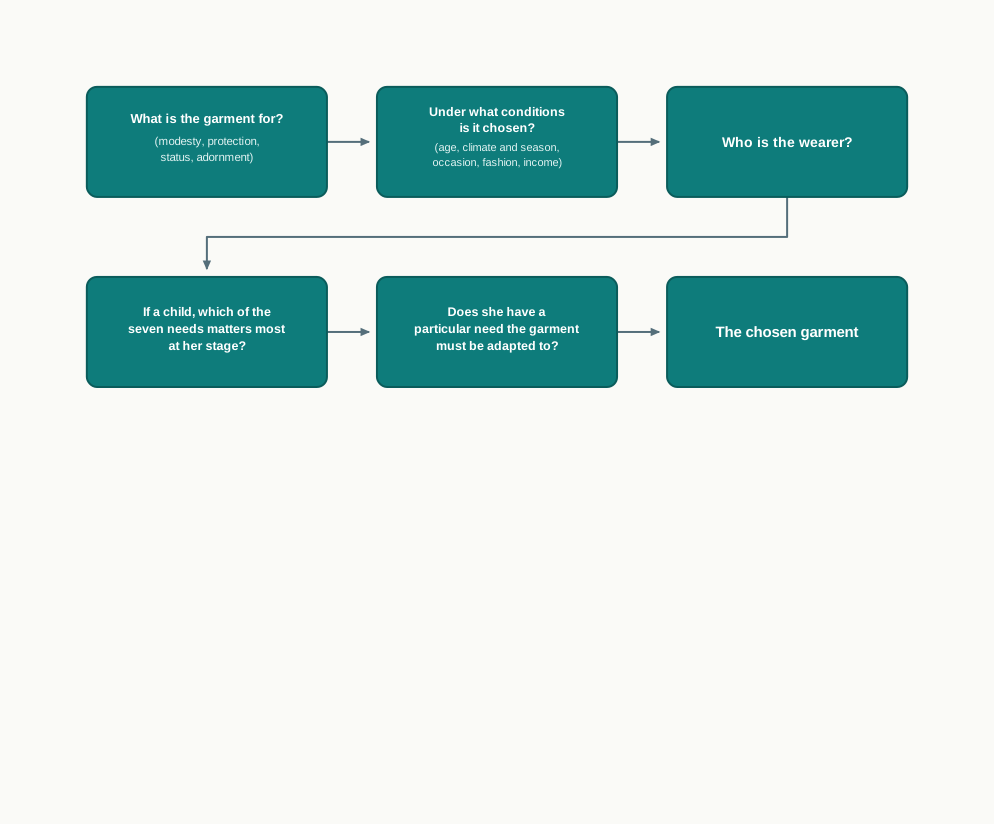
Fig. 9.12 – Choosing a garment.
9.7 Key Terms
- Adaptive clothing Clothing designed or altered so that a person with a particular difficulty can wear it, manage it and be comfortable in it.
- Adornment The decoration of the person through the colour, texture, surface decoration and shape of what is worn.
- Allowance for growth The extra size built into a garment when it is made, held folded away until the wearer grows into it.
- Apparel Everything a person wears, taken together — garments, footwear and headwear.
- Classic A style of dress that stays acceptable over many years and so can be bought with little risk.
- Colourfastness The ability of a dye to stay in a fabric through washing, sunlight and perspiration.
- Easy care The quality of a garment whose upkeep is light — home-washable, colourfast, quick-drying and needing little or no ironing.
- Fad A style taken up very quickly by a small group and dropped just as quickly, often within one season.
- Fashion The style of dress accepted and worn by a large number of people at a given time in a given place.
- Income The money available to a household, which sets the limit within which every other clothing decision is made.
- Modesty The covering of the body in the way a person’s own society and situation regard as proper.
- Occasion The event or setting a garment is worn for, which decides what is suitable independently of the cloth itself.
- Protection The function by which clothing shields the body from heat, cold, sun, rain, dust, insects and the hazards of an occupation.
- Self-help features The details of a garment that allow a child to put it on, take it off and manage it in the toilet without an adult.
- Shrinkage The reduction in the size of a fabric when it is washed, avoided by choosing pre-shrunk cloth.
- Status The position a person holds in a group, which clothing can signal at a glance.
- Uniform A set form of dress worn by everyone in a defined group, marking membership and often rank.
9.8 Points To Ponder
- A school uniform hides differences of income between the students who wear it. What does a group gain when everyone in it dresses alike, and what does it lose?
- Growth allowance saves both cloth and money, yet most ready-made children’s clothing is now sold without it. What would have to change — in how garments are made, priced or bought — for growth allowance to become usual again?
- Elastic waists, hook-and-loop fastenings and front zips were all designed for people who found other closures difficult, and are now worn by everyone. What does this suggest about whom a designer should think of first?
- The fabric that behaves best near a flame is not the fabric that is easiest to care for. When two of a child’s seven clothing needs point in opposite directions, on what basis should the choice be made?
- Fashion costs a great deal of money for a small amount of service, and almost everyone follows it to some degree anyway. What is a person actually buying when she buys a garment because it is in fashion?
- Clothing tells other people something about the wearer before she has said a word. How much of that message can a wearer choose, and how much is decided by the people reading it?
9.9 Objective Questions
- A woollen garment keeps the wearer warm mainly because it (1 mark)
- produces a small amount of heat of its own
- traps a layer of still air next to the skin
- stops the body from perspiring
- reflects radiation back towards the body
- The most suitable fastening for a child who cannot bring the thumb and finger gripping together in a pinch grip is (1 mark)
- a row of small buttons at the front
- hooks and eyes at the side
- hook-and-loop tape
- press studs placed at the centre back
- A style of dress taken up very quickly by a small group and abandoned within a season is called (1 mark)
- a classic
- a fashion
- a fad
- a uniform
- Deep hems and tucks are stitched into a child’s frock in order to provide (1 mark)
- adornment
- allowance for growth
- easy care
- self-help
- Which of the following fabrics softens and melts, rather than burning away, when it meets a flame? (1 mark)
- Cotton
- Wool
- Polyester
- Linen
- Read the assertion and the reason and choose the correct option. (1 mark) Assertion (A): A one-piece creeper suit is a suitable garment for a child of eight months. Reason (R): It stays in place when the child is on all fours and allows a nappy change without undressing her.
- Both A and R are true, and R is the correct explanation of A.
- Both A and R are true, but R is not the correct explanation of A.
- A is true but R is false.
- A is false but R is true.
- Read the assertion and the reason and choose the correct option. (1 mark) Assertion (A): Allowance for growth means buying a child’s garment two sizes larger than her present size. Reason (R): A child usually outgrows a garment in length long before the cloth is worn out.
- Both A and R are true, and R is the correct explanation of A.
- Both A and R are true, but R is not the correct explanation of A.
- A is true but R is false.
- A is false but R is true.
Match the item in Column A with its description in Column B. (1 mark) | Column A | Column B | |—|—| | a. Uniform | i. Allows a toddler to manage the toilet unaided | | b. Raglan sleeve | ii. A dye that holds through washing, sunlight and perspiration | | c. Colourfastness | iii. Marks the wearer as a member of a defined group | | d. Elastic waist | iv. Has no fixed shoulder point, so it fits a wider range of sizes |
Complete the following. (1 mark)
- A style of dress that remains acceptable over many years is called a ________.
- The reduction in the size of a fabric when it is first washed is called ________.
- State whether each statement is true or false. (1 mark)
- Two thin layers of clothing are warmer than one thick layer of the same total weight.
- Prestige is a property of the cloth from which a garment is made.
- Wool may be worn directly against an infant’s skin provided it is finely spun.
Identify the odd one out and give a reason for your choice. (1 mark) Deep hem; tucks above the cuff; raglan sleeve; reflective tape at the hem
Name the following. (1 mark)
- The garment feature that allows a nappy to be changed without undressing a creeping child.
- The function of clothing that is served by an embroidered yoke.
9.10 Check Your Concepts
Define modesty in dress, and state why the same garment may be modest in one setting and not in another. (2 marks)
Give a reason why cotton, and not polyester, is chosen for garments worn next to an infant’s skin. (2 marks)
Explain, with one example, how a single garment can serve more than one function of clothing at the same time. (3 marks)
Differentiate between a fad and a classic, stating the basis of difference. (3 marks)
Why is a garment cut for a standing body unsuitable for a wearer who spends most of the day seated? Give three reasons. (3 marks)
Explain the principle by which clothing keeps the body warm in winter and cool in summer, and show how that principle decides the fabric, the fit and the colour chosen in each season. (4 marks)
List any four self-help features of a child’s garment and state, for each, what it enables the child to do without help. (4 marks)
Differentiate between the clothing requirements of an infant of three months and those of a child of eight months, stating the basis of difference in each case. (5 marks)
What would happen if all of a small child’s clothing were chosen on appearance alone? Discuss with reference to the other six basic clothing needs. (5 marks)
9.11 Identify & Label
Fig. 9.7 shows a child’s shirt and trousers. Identify any three self-help features marked on the drawing and state what each one allows the child to do. (3 marks)
Fig. 9.10 shows a garment made for one particular stage of childhood. Identify the stage, and give two features visible in the drawing that led you to your answer. (2 marks)
Fig. 9.11 shows a pair of trousers adapted for a particular wearer. Identify the need the adaptation answers, and name two features of the cut that answer it. (3 marks)
Fig. 9.2 shows four sets of protective clothing. Identify the hazard each set is designed to guard against. (2 marks)
9.12 Case & Application Based Questions
- A household is buying clothes for a child of two who has recently begun to walk and has just started toilet training. Three garments are available in the shop: a long frock that fastens with six buttons down the back; a one-piece dungaree with a buckle at each shoulder; and a short cotton top worn with an elastic-waist trouser.
- Which of the three would you choose, and give two reasons for your choice. (2 marks)
- State one reason for rejecting each of the other two garments. (2 marks)
- Name one growth-allowance feature you would ask to have added to the chosen garment, and say how it works. (1 mark)
- The child is taken to a park each evening at dusk. What one change would you make to the garment, and why? (1 mark)
- A child of eleven joins a school where the uniform is worn six days a week and washed almost as often. The household must choose between a pure cotton uniform and one in a polyester–cotton blend. The child also plays a field sport four afternoons a week.
- Which fabric would you choose for the uniform, and give two reasons. (2 marks)
- State one disadvantage of the fabric you have chosen. (1 mark)
- At which point on the body is the fit of the uniform best judged, and why? (1 mark)
- Would you choose the same fabric for the sports kit? Give a reason. (2 marks)
- Clothes are being made for a child of nine who uses a wheelchair. She has full use of her hands and fingers, and reduced sensation below the waist. She has asked that her clothes look the same as those of the other children in her class.
- Name two changes you would make to the cut of her trousers, and give the reason for each. (2 marks)
- Explain why back pockets and thick back seams would be left out. (1 mark)
- How would you check that a garment fits her correctly, given the reduced sensation? (1 mark)
- Her fastenings need no adaptation. Explain why, using the information given. (1 mark)