Chapter 5: Fabrics Around Us
The Cloth That Was Named After Dew
For several centuries the finest cotton cloth in the world was woven in a cluster of villages along the rivers around Dhaka, in Bengal. It was called muslin, and people who saw it struggled to describe it. A length long enough to cover a room weighed almost nothing, and traders gave the best grades names taken from things that are barely there — abrawan, running water, and shabnam, evening dew.
The cloth was extraordinary because every stage behind it was chosen with care. It began with a particular cotton plant, phuti karpas, which grew on the river silt and gave an unusually fine, soft fibre. That fibre was very short, so drawing it out into thread took great patience. Spinners worked in the early morning and the late evening, close to the water, because damp air keeps cotton supple and stops the thread from snapping as it is drawn. The thread then went to weavers, who set it on a pit loom and worked slowly, since a fine yarn breaks under rough handling.
Muslin of this kind declined through the nineteenth century as mill-spun cloth took over the market and growers turned to other crops. Work to revive both the plant and the weave is under way in Bangladesh today. Fig. 5.0 shows a weaver at a pit loom of the kind such cloth was made on.
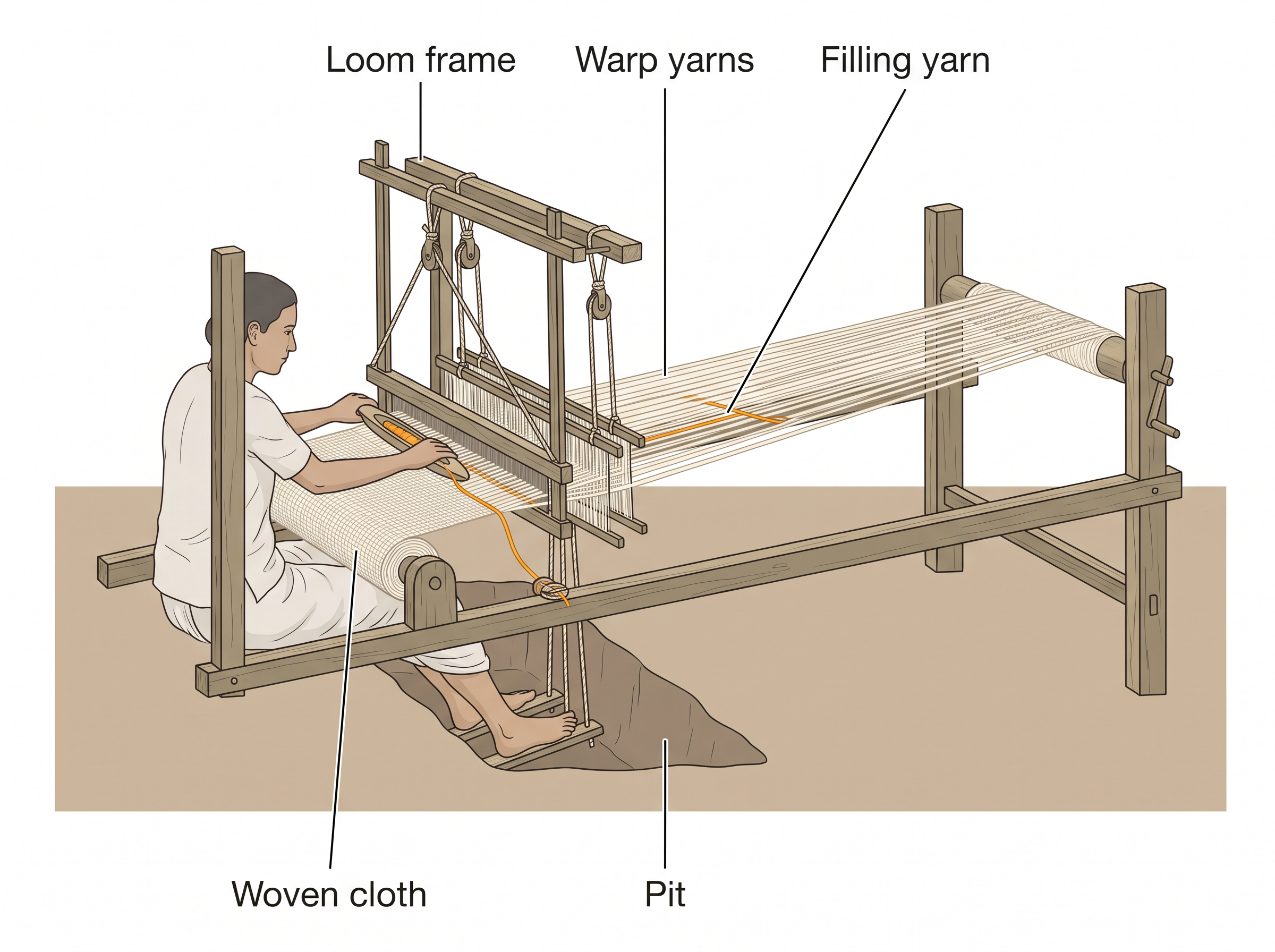
Fig. 5.0 – A weaver at a pit loom.
5.1 Introduction
Think of an ordinary morning at home. The bedsheet you push aside, the towel you use after a bath, the school uniform you put on and the bag you carry your books in are all made of cloth, and no two of them feel the same. The towel is soft and soaks up water; the bag is stiff, coarse and strong enough to take a load without tearing.
A material of this kind, made from thread-like strands joined together into a flat sheet, is called a fabric. Look around one room and you will find fabrics almost everywhere — curtains, kitchen dusters, floor mops, cushion covers and durries. They differ in kind, in weight and in thickness, and each of those differences exists because the fabric has a particular job to do.
That last point is the one to hold on to. A fabric is not chosen because it is pretty or cheap alone, but because its behaviour suits its end use. A towel that did not absorb water would be useless however handsome it looked.
From Fabric To Fibre
Take a small piece of fabric and pull at its cut edge. Thread-like structures come away in your hand. These are yarns — the continuous strands from which most fabrics are built.
Look closely at how the yarns sit in the piece. In a school shirt they cross each other at right angles, one set running along the length and the other across it. In a woollen cardigan or a T-shirt they are looped through one another instead, which is why those garments stretch. In a net or a lace they are knotted.
Now take a single yarn and untwist it. It separates into very tiny, fine, hair-like structures. These are fibres, and they are the basic building blocks of every fabric. A fibre is the smallest unit of a textile material; you cannot break it down further and still have something a yarn can be made from. Fig. 5.1 shows this whole separation in one picture.
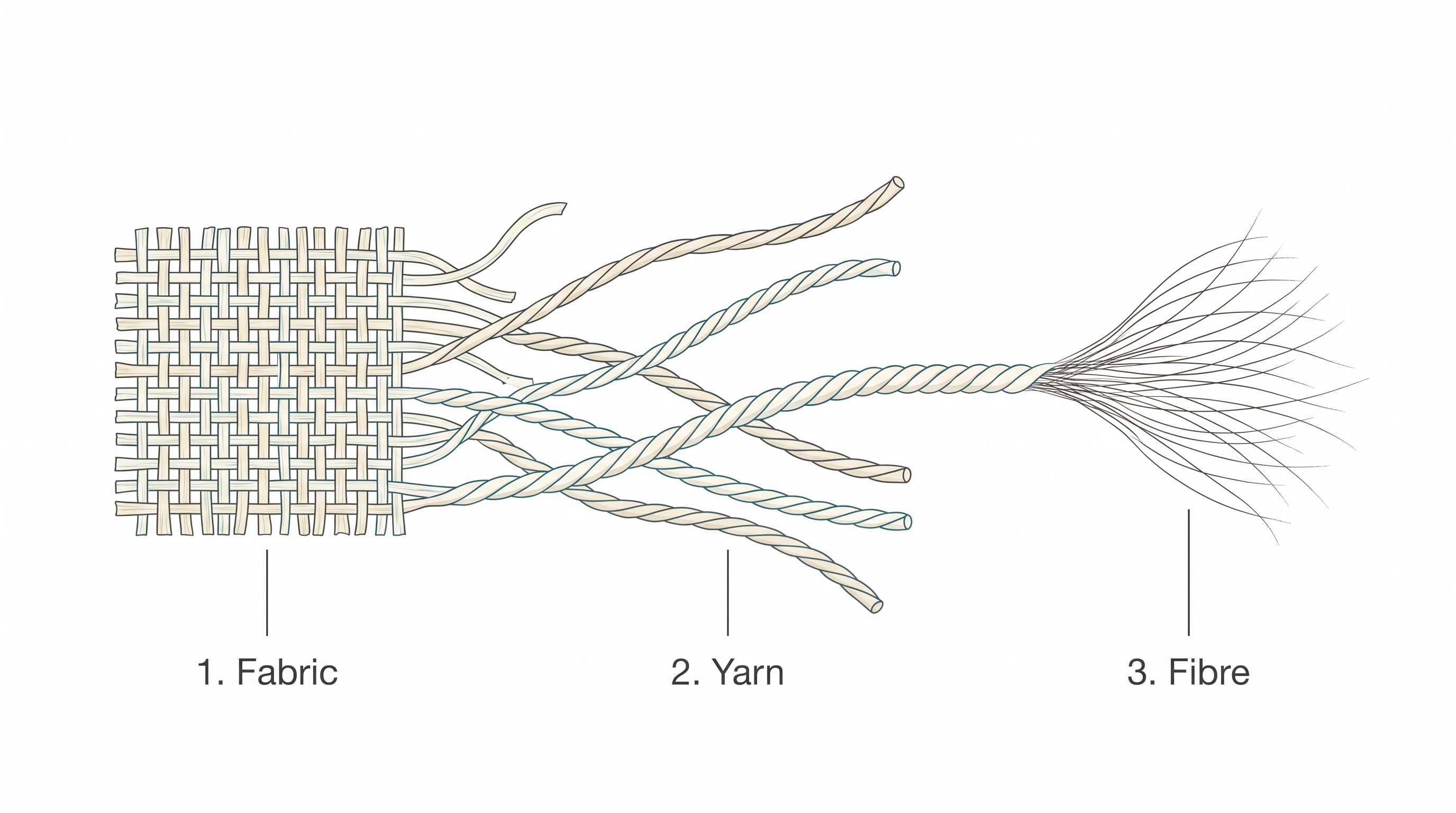
Fig. 5.1 – The transition from fabric to yarn to fibre.
Fibres, yarns and fabrics are together called textile products, or simply textiles. The word covers the material at every stage, from the loose fibre to the finished cloth on a shop shelf.
What Happens After The Fabric Is Made
A fabric as it leaves the loom is rarely ready for sale. It is usually treated further — cleaned, whitened, coloured, made more lustrous, made softer to the touch, or made to last longer in use. Any such treatment given to a fabric is called finishing.
So a fabric passes through a chain of stages, and each stage leaves its mark on the final cloth. Fig. 5.2 sets that chain out in order.

Fig. 5.2 – From fibre to fabric in use.
This is why two shirts that both look like cotton can behave quite differently. One may crush by noon and the other stay crisp, because the type of fibre, the way the yarn was made, the way the fabric was constructed and the finish given to it are four separate decisions, taken one after another.
Each of those four decisions is a topic in this chapter. Once you can name them, you can look at any fabric in a shop and ask the right questions about it instead of going by appearance alone.
5.2 Fibre Properties
A fabric can never behave better than the fibre it is made from. Whatever the fibre is like — strong or weak, smooth or rough, thirsty for water or repelling it — those qualities travel up through the yarn and into the finished cloth. So the study of fabrics begins with the study of fibres.
Thousands of substances in nature occur in fibrous form, yet only a handful are used for cloth. A fibre earns a place in the textile trade only if it satisfies three quite different sets of demands: the demands of the manufacturer, of the user, and of whoever has to launder and store the garment afterwards.
What Makes A Fibre Worth Using
The first demand is practical. A fibre must be available in large quantities and must be economical, or no mill can plan production around it. A fibre that exists in small amounts may be interesting, but it cannot clothe a country.
The second demand is the essential one. The fibre must be capable of being turned into yarn, and this capability is called spinnability. It is not a single quality but the sum of four together — the length of the fibre, its strength, its flexibility, and the structure of its surface.
Each of the four does a job. Length decides how far one fibre overlaps the next; strength decides whether the fibre survives being drawn out and twisted; flexibility lets it bend around its neighbours instead of snapping; and a rough or scaly surface helps the fibres grip one another so the yarn holds together.
What The User Looks For
The manufacturer’s needs are only half the story. From the point of view of consumer satisfaction, a different set of properties matters: colour, lustre, weight, moisture absorption, dye absorption and elasticity — the ability of a fibre to stretch under pull and return to its original length.
These are the properties you judge, usually without naming them, when you handle cloth in a shop. A dull fibre will not give a shining fabric, and a fibre that refuses dye will never give deep, bright colour however good the dye is.
What Care And Maintenance Depend On
A garment is bought once and washed a hundred times, so the properties that govern care matter as much to the user as the ones she noticed in the shop. Four of them are important.
- Abrasion resistance — how well the fibre stands up to rubbing. It decides whether a collar or a cuff wears thin early.
- Effect of chemicals, soaps and detergents — whether a strong cleaning agent damages the fibre or leaves it unharmed.
- Effect of heat — how the fibre behaves under a hot iron, hot water or a flame.
- Resistance to biological organisms — whether moths, silverfish or mildew can attack the fibre in storage.
Notice that none of these is good or bad in itself. A fibre with poor heat resistance is not a poor fibre; it is a fibre that must be ironed at a lower setting. Once you know the property, the care instruction follows from it, and you no longer have to memorise a separate rule for every garment you own.
5.3 Classification Of Textile Fibres
5.3.1 Bases Of Classification
The number of fibres in use is large enough that they have to be sorted before they can be studied. Sorting, however, can be done in more than one way, and each way answers a different question.
Textile fibres are classified on four bases:
- Origin — whether the fibre is natural, or man-made, also called manufactured.
- General chemical type — whether the fibre is cellulosic, protein or synthetic.
- Generic type — for example, whether an animal fibre is animal hair or animal secretion.
- Common trade name — the name a company sells the fibre under, as polyester is sold as terene or dacron.
The last of these is worth a caution. A trade name tells you who made the fibre, not what it is; two different names may sit on the same fibre.
Cutting across all four is a further division, and it is a division you can see with your eyes. Fibres are either staple, that is, short in length like cotton, or filament, that is, long in length like silk and polyester. Table 5.1 sets the two side by side.
Since origin is the basis that decides almost everything else about a fibre, this chapter follows it. Fig. 5.3 shows the whole family laid out on that basis.
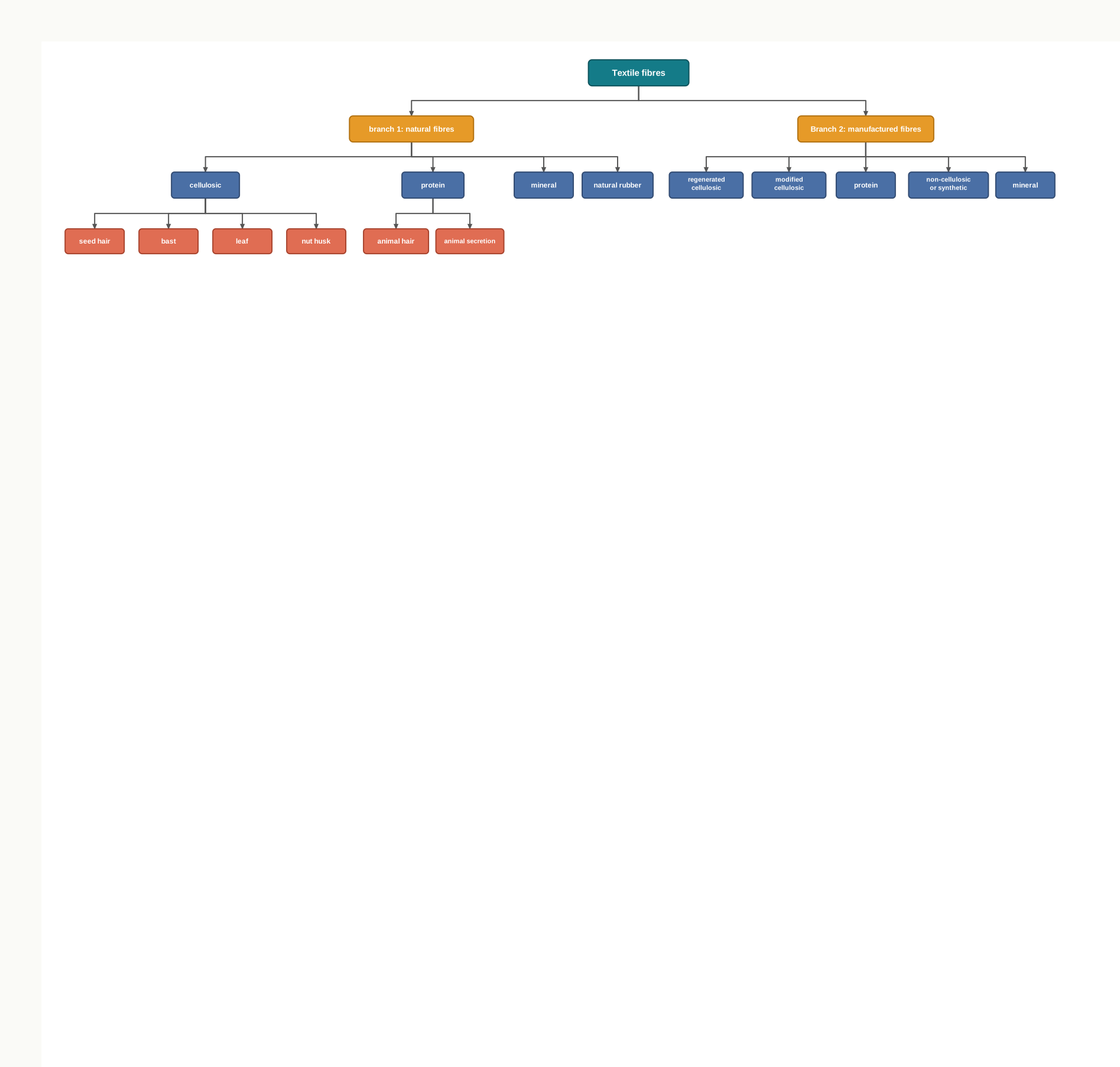
Fig. 5.3 – Classification of textile fibres by origin.
5.3.2 Natural Fibres
Natural fibres are those which are available to us in nature. They are taken from a plant, from an animal or from the earth, and are used with cleaning and sorting but without being built up chemically.
There are four types of natural fibres.
- Cellulosic fibres — obtained from plants, and made of cellulose. They are grouped by the part of the plant they come from.
- Seed hair — cotton, kapok
- Bast fibres — flax (linen), hemp, jute
- Leaf fibres — pineapple, agave (sisal)
- Nut husk fibres — coir (coconut)
- Protein fibres — obtained from animals, and made of protein.
- Animal hair — wool, speciality hair (goat, camel), fur
- Animal secretion — silk
- Mineral fibre: asbestos
- Natural rubber
The grouping is not merely tidy; it predicts behaviour. Because every cellulosic fibre is built of the same chemical substance, cotton, jute and coir absorb water readily and are all weakened by acids, however different they look. Protein fibres behave as a family too, and their family resemblances are taken up when wool and silk are studied later in this chapter.
5.3.3 Manufactured Fibres
Most of you have seen a cotton boll with fibres clinging to the seeds, or a sheep with a thick overgrown coat, and it is easy enough to imagine those being turned into yarn and cloth. How a fibre can be manufactured is harder to picture, because nothing fibrous exists at the start.
Manufactured fibres, also called man-made fibres, are fibres produced by human beings from a raw material that is not itself in fibre form. The first of them was rayon, whose commercial production began in France in 1891 CE; most of the others are products of the twentieth century.
The manufactured fibres fall into two groups by raw material. The earliest were made by modifying a non-fibrous material into a fibrous form, and these came mainly from cellulosic substances such as cotton waste or wood pulp. The second group were synthesised completely from chemicals.
5.3.3.1 How A Manufactured Fibre Is Formed
Whatever the raw material, the basic steps of converting it into a fibrous form are the same, and there are three of them.
- The solid raw material is converted into a liquid of a particular thickness, or viscosity. This may be done by a chemical action, by dissolving, by applying heat, or by a combination of these. The liquid is called the spinning solution.
- The solution is forced through a spinneret — a small thimble-shaped nozzle pierced with a series of very fine holes — into an atmosphere that hardens or coagulates the emerging streams into fine filaments.
- As the filaments harden they are collected and stretched, which makes them finer and lines up the long molecules inside them. They may instead be given further processing such as texturisation, which crimps or coils the smooth filament to improve the stretch or the bulk of the yarn.
The second step is the one that decides the shape of the fibre, since a filament comes out in the shape of the hole it is pushed through. Fig. 5.4 shows two spinnerets at work.
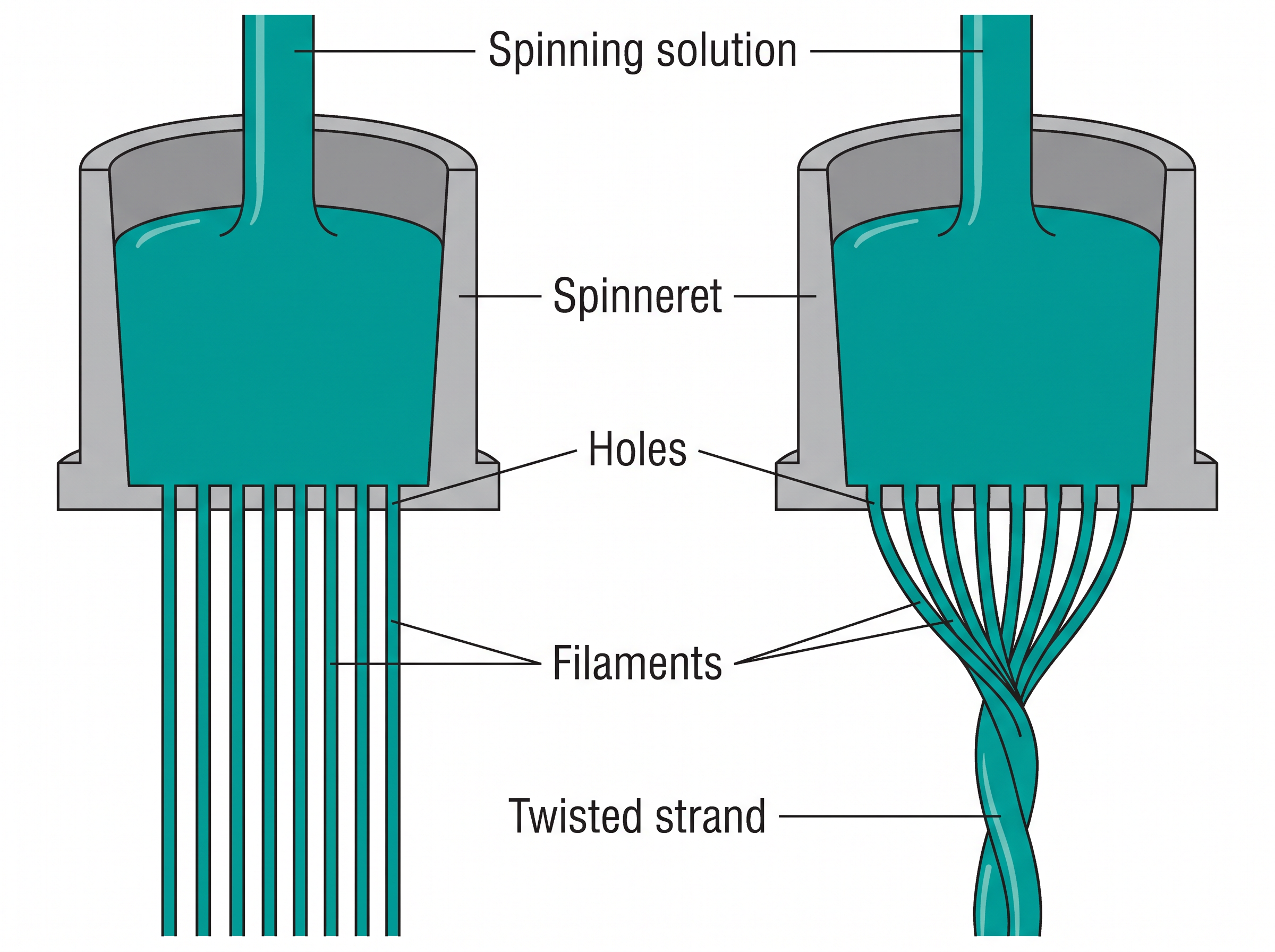
Fig. 5.4 – Spinnerets: (a) separate filaments and (b) twisted strand.
The stretching in the third step explains something you will meet again. A manufactured fibre can be made stronger simply by drawing it further, because the molecules are pulled into line with the length of the fibre. This is why the same fibre can be supplied in different strengths for different uses.
5.3.3.2 Types Of Manufactured Fibres
Manufactured fibres are grouped by what they are made of.
- Regenerated cellulosic fibres: rayon — cuprammonium, viscose, high-wet-modulus
- Modified cellulosic: acetate — secondary acetate, triacetate
- Protein fibres: azlon
- Non-cellulosic (synthetic) fibres
- nylon
- polyester — Terylene, Terene
- acrylic — Orlon, Cashmilon
- modacrylic
- spandex
- rubber
- Mineral fibres
- glass — fibreglass
- metallic — lurex
Read the list against the one for natural fibres and a pattern appears. The first three groups still begin from something that grew — wood pulp, cotton waste, milk or groundnut protein — and are only rebuilt into fibre form. Only the non-cellulosic group is synthetic in the strict sense, built up from chemicals alone.
That distinction matters when you buy cloth. A regenerated cellulosic fibre such as rayon behaves in wear and in washing much like the plant fibre it came from, while a synthetic fibre behaves quite unlike anything natural. You will see both patterns confirmed when the individual fibres are studied.
5.4 Yarns
5.4.1 What A Yarn Is
Loose fibre by itself has very few uses. It serves where a soft mass is exactly what is wanted — surgical cotton, and the stuffing of pillows, quilts, mattresses and cushions — but it cannot be shaped into cloth, because a heap of short hairs has no length to work with.
To become a fabric of the kind you see around you, fibres have to be joined end to end and side by side into a continuous strand. There are a few fabrics, such as felts and non-wovens, that are made directly from fibres without this step. In most cases, however, the fibres are first processed to an intermediate stage called yarn.
Read the definition once more and notice what it does not say. It does not name a fibre, and it does not name a fabric. A yarn is defined by being continuous and by being ready for the next stage, whatever it is made of and whatever it is going to become.
5.4.2 Yarn Processing
Turning natural staple fibres into yarn is called spinning, though spinning is in fact only the last stage of the work. Several stages come before it, and each one leaves the fibres a little cleaner, straighter and finer than it found them. Fig. 5.5 shows the sequence end to end.
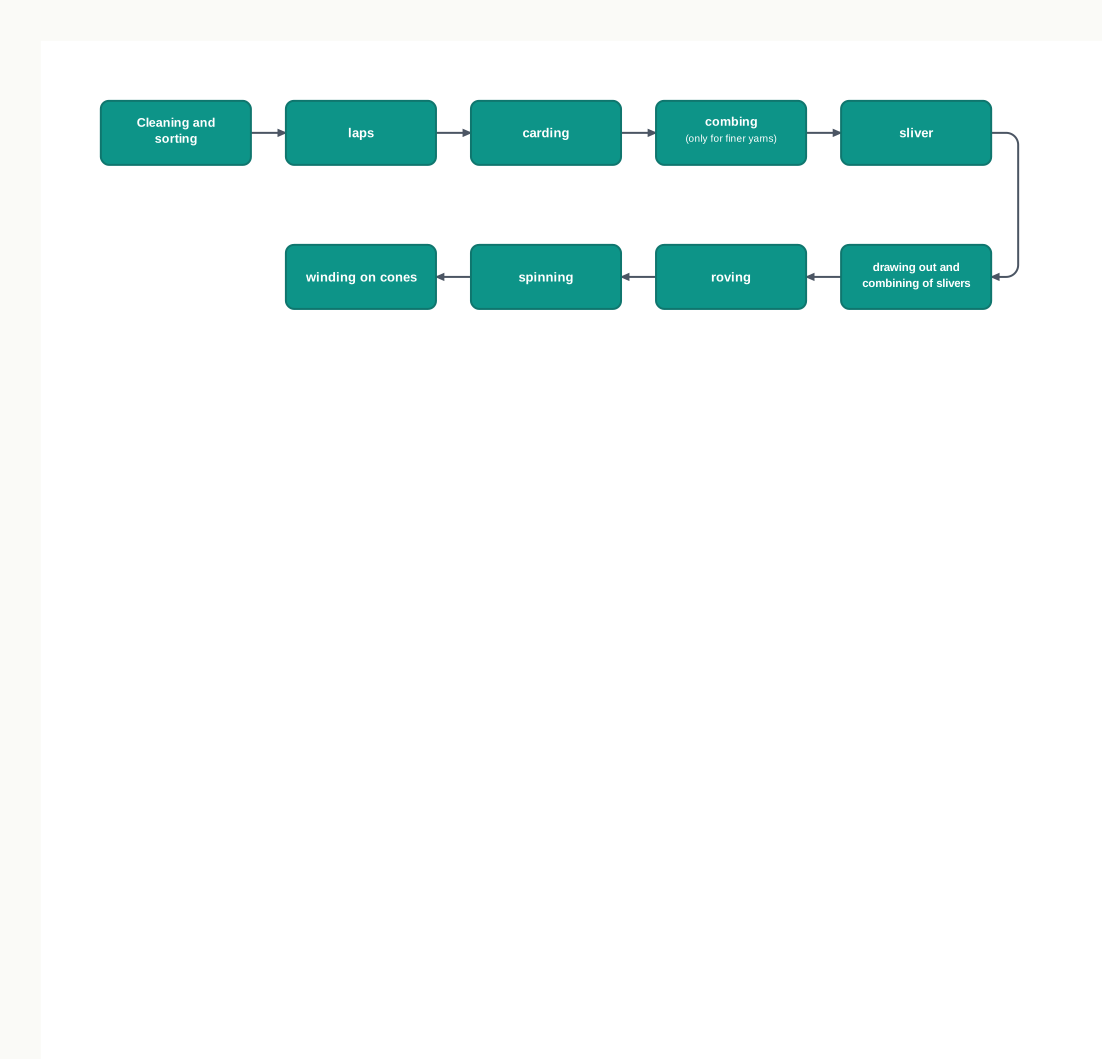
Fig. 5.5 – Stages in making a spun yarn from staple fibres.
Let us take the stages one by one.
- Cleaning: Natural fibres carry impurities that depend on where they came from — seeds and leafy matter in cotton, twigs and suint in wool. Suint is the dried perspiration of the sheep, left in the fleece after shearing. These impurities are removed, the fibres are sorted, and they are converted into laps, which are rolled sheets of loose fibre.
- Making into a sliver: The laps are unrolled and straightened, by two processes called carding and combing. The work is much like combing and brushing your own hair. Carding disentangles the fibres and lays them straight and parallel to one another. For finer fabrics the laps are combed after carding, which removes the finer impurities and the short fibres as well. The lap then passes through a funnel-shaped device that draws it into a sliver — a rope-like mass of loose fibres, 2 to 4 centimetres (cm) in diameter.
- Attenuating, drawing out and twisting: The fibres are now a continuous strand, but a far thicker one than any yarn. Bringing it down to the size required is called attenuation. Several slivers are first combined so that thick and thin patches even out, and the combined strand is then drawn out gradually, growing longer and finer as it goes. If a blended yarn is wanted, such as cotswool from cotton and wool, slivers of the different fibres are brought together at this stage. The resultant sliver is still of the same size as the original sliver, because drawing out has matched the combining.
Carding and combing sound alike and are easily confused, so Table 5.2 separates them.
The drawn sliver is taken next to the roving machine, where it is attenuated further until it is one-fourth to one-eighth of its original diameter. Here it is given a slight twist, just enough to hold the fibres together while it travels to the next machine.
The last stage is spinning proper. The strand is given its final form as yarn: it is stretched to the fineness required, the desired amount of twist is put into it, and it is wound on cones. Fig. 5.6 follows cotton through the whole journey.
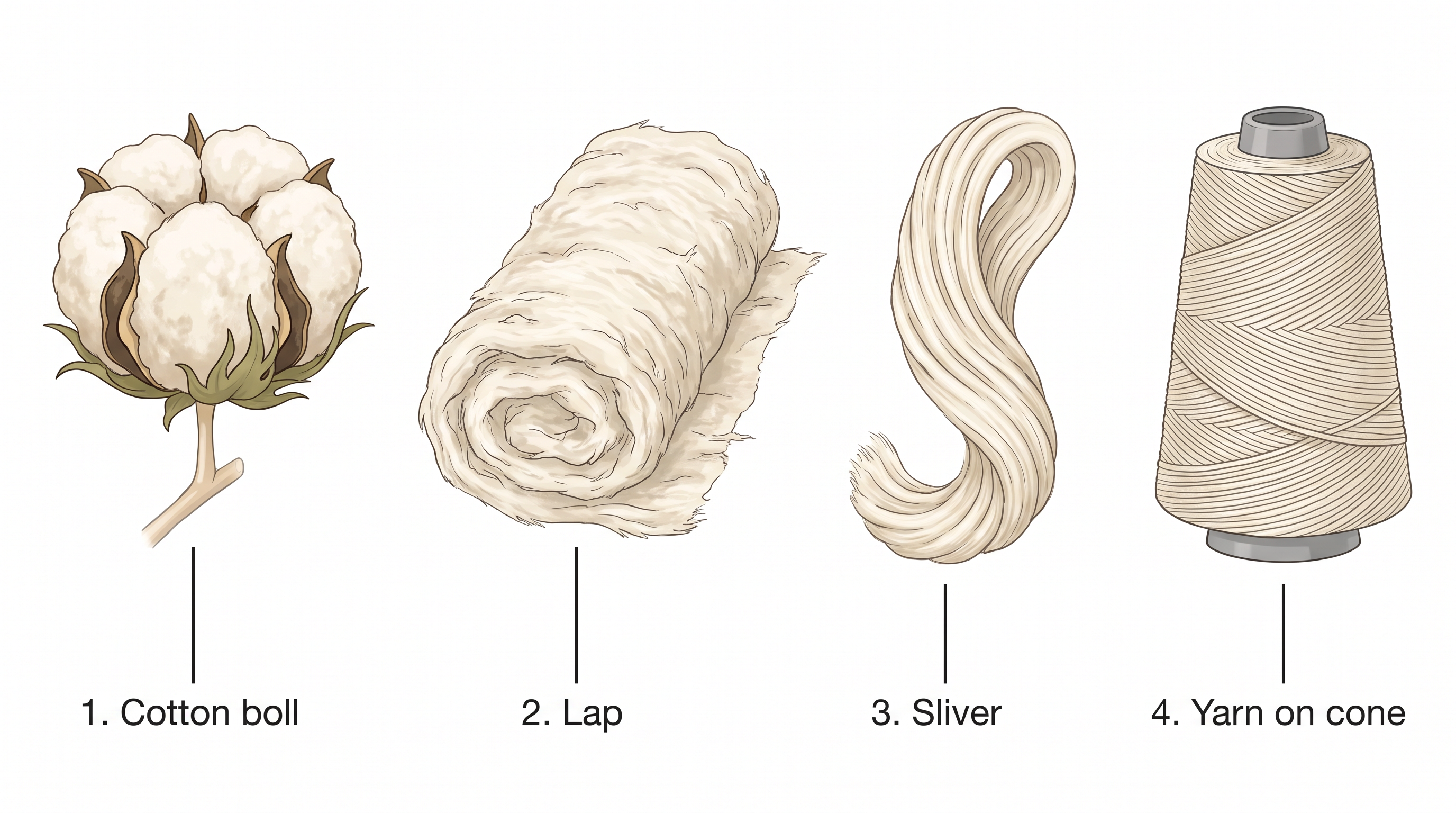
Fig. 5.6 – Processing cotton from boll to yarn.
5.4.3 Yarns From Manufactured Fibres
All manufactured fibres are first made as filaments, so the cleaning, carding and combing stages have no meaning for them. There is nothing to disentangle and nothing to remove.
Such a yarn can be built in two ways. It may be composed of a single filament, or it may be a multifilament yarn, in which a number of individual filaments are taken together and twisted as one.
It is also possible to cut the filament into staple length fibres. These are then put through the spinning process exactly as natural fibres are, and the result is called a spun yarn. Cutting a smooth filament short in this way gives a yarn with fibre ends at its surface, which feels warmer and less slippery than a filament yarn.
Staple length fibres are needed for another reason as well. A blended fabric can only be made if the two fibres are of comparable length, so filaments are cut to staple before they are blended with cotton or wool. Terecot is terene and cotton, terewool is terene and wool, and polycot is polyester and cotton.
5.4.4 Yarn Terminology
Three terms are used constantly about yarns, and all three appear on labels and reels you can buy.
- Yarn number: You have probably seen numbers such as 20, 30 or 40 printed on the labels of thread reels. Compare the reels carefully and you will find that the higher the number, the finer the thread. There is a fixed relationship between the weight of the fibre and the length of yarn drawn from it, and this relationship is expressed as the yarn number. It is therefore an indication of the fineness of the yarn.
- Yarn twist: As fibres are transformed into yarn, twist is added to hold them together, and the amount is stated as t.p.i., or twist per inch. Loosely twisted yarns are softer and more lustrous. Tightly twisted yarns are harder, and may show up as ridges on the fabric, as they do in the denim of jeans.
- Yarn and thread: The two are basically similar. Yarn is the term used for the strand from which a fabric is manufactured, while thread is the product used to join pieces of fabric together.
Twist is worth one further thought before you leave it. It is twist that makes a yarn out of loose fibres at all, so it cannot be avoided; but too much of it stiffens the yarn and dulls its shine, and too little lets the yarn pull apart. Every yarn is therefore a settlement between strength and softness, chosen for what the cloth has to do.
5.5 Fabric Production
Stand at a cloth shop counter and the variety is bewildering. Part of that variety comes from the basic fibre content, cotton or wool or polyester, and part of it comes from the type of yarn, as you have just learnt. A third difference remains, and it is one you can see if you hold the cloth up to the light: the fabrics are built in different structures.
Most of the fabrics you see are made from yarns. A small group, however, is made directly from fibres, and it is easiest to begin there.
5.5.1 Fabrics Made Directly From Fibres
There are two main types of fabric that are made without any yarn stage — felts, and non-wovens, which are also called bonded fibre fabrics.
Both are formed in the same way. The fibre, after carding and combing, is laid out in the form of a matt, and adhesion is then caused between the fibres so that they hold to one another. In felt the fibres are made to interlock, which is why wool, with its scaly surface, felts so readily; in a bonded fabric an adhesive or heat does the joining.
Because there is no yarn and no interlacing, the matt can be made not only of any required thickness but also of any shape. This is a real advantage where a shaped piece is wanted in one go, as in a namda floor covering or a stiff inner lining, and it is why such fabrics are cut without any edge fraying.
The majority of fabric constructions, however, do require the intermediate yarn stage. The main methods of fabric construction from yarns are weaving and knitting, and, to a small extent, braiding and knotting.
5.5.2 Weaving
Weaving is the oldest form of textile art, and it began before cloth did — the first weaving was done to make mats and baskets. A woven fabric consists of two sets of yarns interlaced at right angles to each other, giving a compact construction.
Weaving is done on machines called looms. One set of yarns is fitted on the loom first, and it determines the length and the width of the fabric to be woven. These are the warp yarns. The loom holds them at a fixed tension and at even spacing, which is what keeps the finished cloth straight and uniform.
The second yarn is the filling yarn, and it is interlaced through the warp to form the fabric. In the simplest interlacing, the filling yarn moves over and under one warp yarn alternately in one row, and reverses the process in the second row. Fig. 5.7 shows this arrangement.
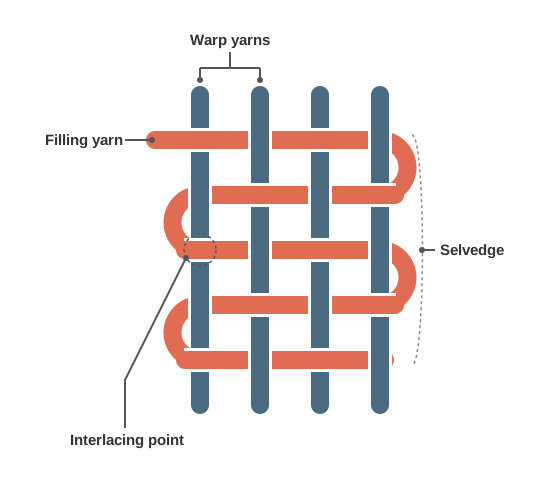
Fig. 5.7 – Structure of a plain woven fabric.
Once you can pass the filling over and under different numbers of warp yarns in a specified sequence, designs become possible. Attachments to the loom such as the dobby or the jacquard can carry this further and create figurative designs as well. The designs show up more clearly when differently coloured yarns are used for the warp and the filling.
Certain designs make use of an extra yarn, which may run parallel to the warp or to the filling yarns. During weaving this extra yarn is held up as loops. The loops may be left uncut, as in a towel, or cut afterwards, as in velvet and corduroy. That single choice explains why a towel is absorbent while velvet is soft: an uncut loop offers a large surface to water, and a cut loop gives a standing pile.
Grain, Selvedge And Weft
The direction of the yarns in a woven fabric is referred to as grain. Warp yarns run along the lengthwise grain, or selvedge. Filling yarns run along the widthwise grain, or weft. The length and width of a woven fabric are therefore spoken of as the selvedge and the weft.
When you buy a length of fabric, look at its four sides. Two of them are cut, and two are bound; the bound sides are the selvedges. The fabric is strongest along the selvedge, because the warp yarns took the tension of the loom and were made stronger to bear it.
This is a fact with an everyday use. A garment cut along the lengthwise grain hangs straight and wears longer, which is why a tailor squares up the cloth before laying out the pattern.
5.5.3 Knitting
Knitting is the interlooping of at least one set of yarns. It may be done by hand, using a set of two needles for flat fabrics or a set of four needles for circular fabrics, and it may equally be done on machines.
The process consists of making a series of loops along the knitting needle or the machine bed. Each successive row is formed by interlooping with the row of loops before it. Where the movement of the yarn is along the width of the material, the method is called filling or weft knitting, and it is used to produce articles that can be shaped while they are being constructed, such as a sock or a sleeve.
At the industrial level the knitting machines used are like the looms for weaving. They have a set of yarns fitted on the machine, as warp yarns are, and the interlooping occurs with adjacent yarns. This is known as warp knitting. It can produce continuous lengths of material which, unlike weft knitted fabric, can be cut and stitched. Fig. 5.8 and Fig. 5.9 show the two loop structures.
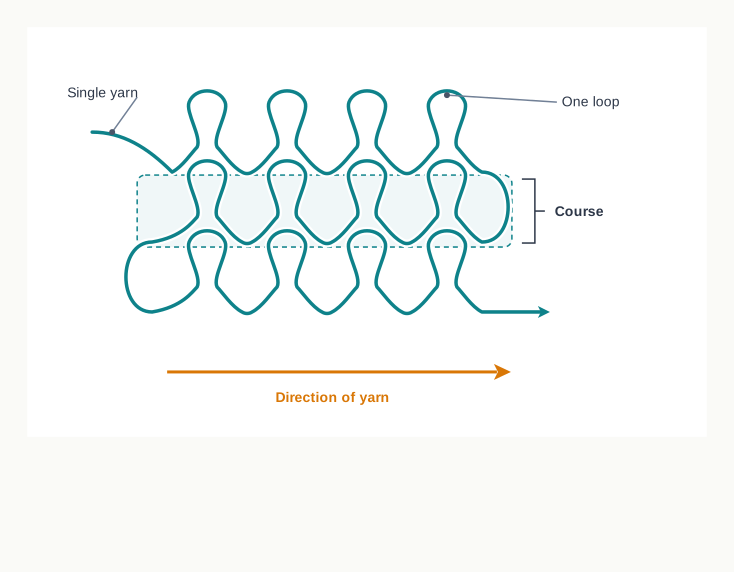
Fig. 5.8 – The structure of weft knitting.
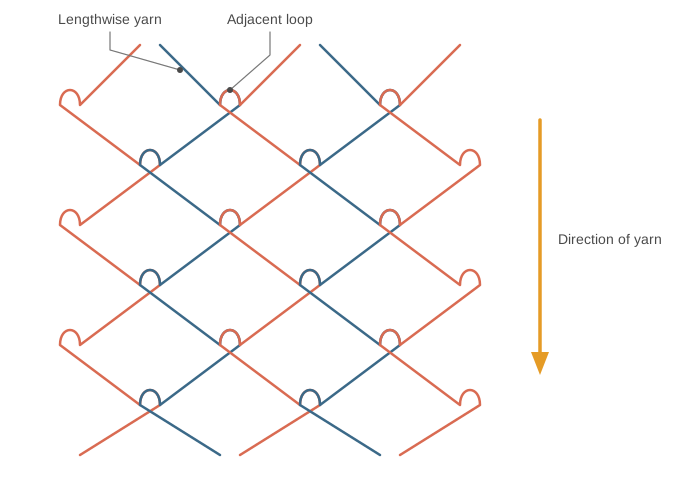
Fig. 5.9 – The structure of warp knitting.
The loop is what gives a knitted fabric its character. Knitted fabrics can be made more rapidly than woven ones, and because of the system of loops they have more elasticity, which makes them suitable for fitted articles such as vests, undergarments and socks. They are porous and permit free circulation of air, they are comfortable, and they allow freedom of movement, so they are ideally suited for sportswear.
Woven and knitted fabrics differ on almost every count that matters in use, and Table 5.3 sets those differences out.
5.5.4 Braiding
Braided fabrics have a diagonal surface effect. They are made by plaiting three or more yarns that originate from a single location and lie parallel before the interlacing occurs.
Braids are narrow rather than broad, so they appear in items where a strong cord or a trimming is needed — shoelaces, ropes, insulation for wires, and trimmings on garments.
5.5.5 Nets
Nets are open mesh fabrics with large geometric interstices, or gaps, between the yarns. They are made by inter-knotting of yarns, either by hand or by machine.
The knot is the point of the structure. Because each crossing is tied rather than merely interlaced, the large open spaces stay open and do not slide shut when the fabric is pulled.
5.5.6 Laces
Lace is an openwork fabric consisting of a network of yarns formed into intricate designs. It is not the product of a single operation but of a combination of procedures, including yarn twisting, interlooping and knotting.
That combination is why lace is placed last among the fabric constructions. It borrows from all of them, and Fig. 5.10 lets you compare its structure with the two simpler open constructions.
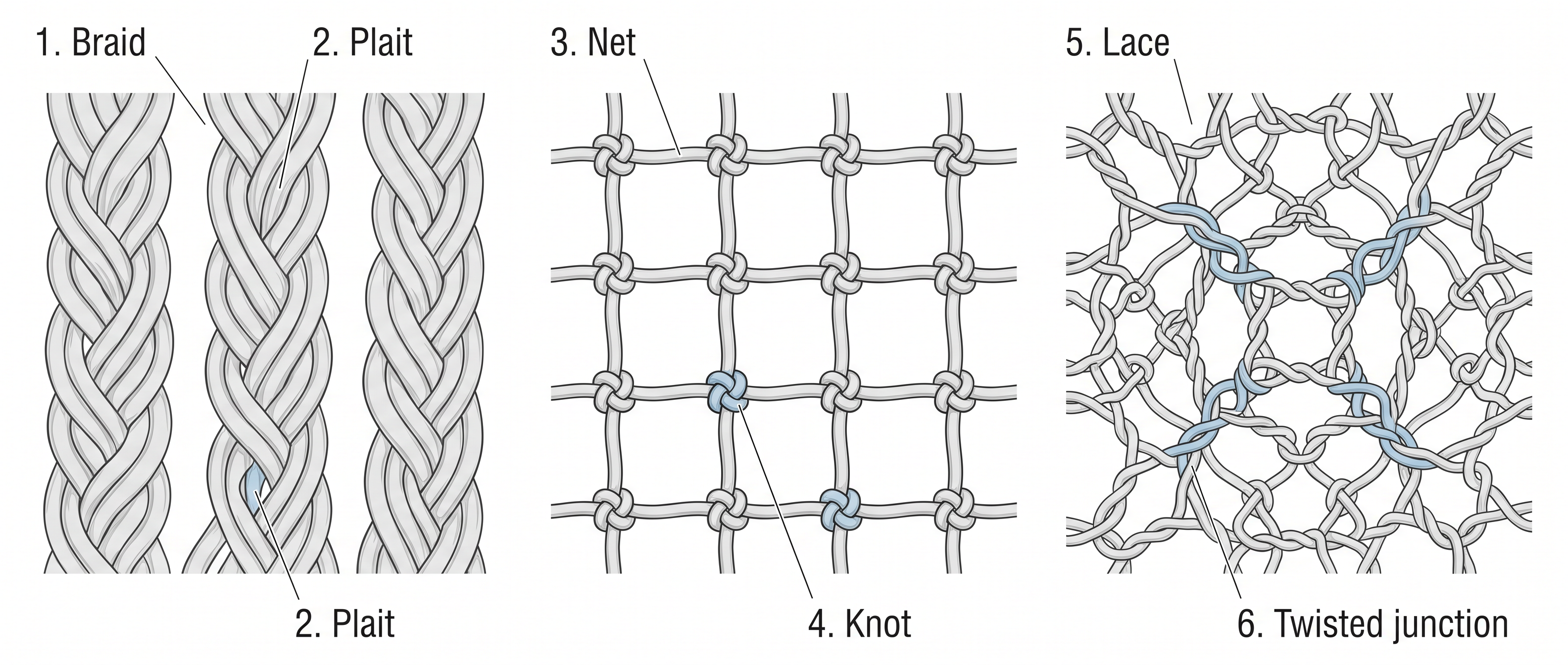
Fig. 5.10 – Open structures: (a) braid, (b) net and (c) lace.
5.6 Textile Finishing
5.6.1 What A Finish Does
If you saw a fabric as it comes off the loom, you would not recognise it as the material sold in a shop. It is dull, uneven in colour, stiff with the sizing put on the warp yarns, and often still carrying bits of leaf and oil from the fibre it began as.
Every fabric available in the market has received one or more finishing treatments, and except for whites, colour has been added to it in some form or the other. Finishing is thus not decoration added at the end; it is the stage that makes the cloth usable at all.
Some finishes are considered absolutely necessary, and these are known as routine finishes. Cleaning is one such, since no fabric can be sold or dyed with impurities still in it.
Finishes also differ in how long they last, and this is the difference you meet at home. A durable finish does not get removed on washing or dry-cleaning, as dyeing does not. A renewable finish gets removed on washing and has to be applied repeatedly, as starching and blueing must be. Table 5.4 compares the two.
Finishes Grouped By Function
A few important finishes, grouped by what they are meant to achieve, are these.
- Change appearance: cleaning, which covers scouring to remove oils and impurities and bleaching to whiten the cloth; and straightening and smoothening, which covers calendering, where the fabric is pressed between heavy rollers, and tentering, where it is stretched to an even width and dried.
- Change texture: starching or sizing, which stiffens the cloth by depositing a substance on the yarns; and special calendering, which can press in a glaze, a moiré or an embossed surface.
- Change behaviour: wash and wear and permanent press, which let a garment shed creases; water repellent or water proof; mothproof; flame retardant or fire proof; and antishrink, obtained by sanforisation, in which the cloth is shrunk under control before it is sold so that it does not shrink afterwards in your wash.
Read the third group again and notice what it is doing. Each of those finishes anticipates a problem the user would otherwise have had to live with — creasing, rain, moths, fire, shrinkage. This is why a finish is worth paying for, and also why the care label of a finished fabric may differ from what the fibre alone would suggest.
5.6.2 Finishing With Colour
Colour is often the most important factor in the selection of a fabric, whether it is to be used for apparel or in the house. It is also the finish most likely to fail, since colour that runs in the first wash spoils the fabric and everything washed with it.
Substances that can add colour to a fabric in a manner that it does not easily wash out are known as dyes. Which dye is used, and how, depends on the chemical nature of the fibre, the chemical nature of the dye, and the type of effect desired. A dye that holds fast on wool may have no grip at all on polyester, because the two fibres offer it quite different chemical sites to attach to.
Colour need not wait until the cloth is made. It can enter at any of three stages, and the stage chosen decides what patterns are possible, as Fig. 5.11 shows.
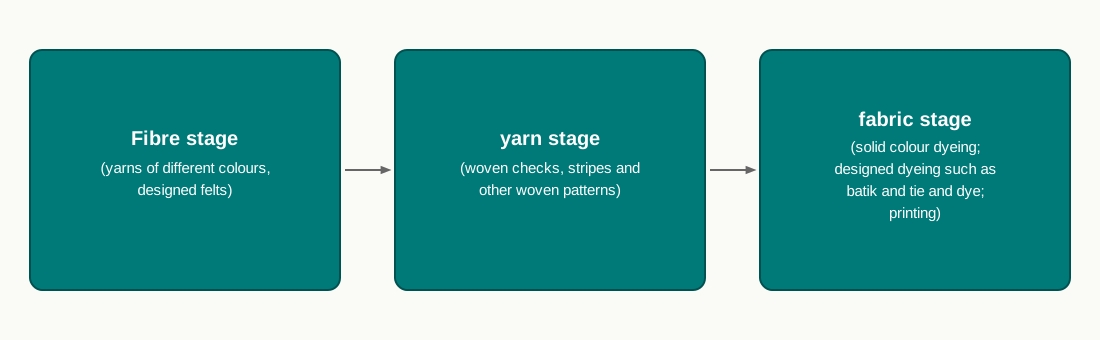
Fig. 5.11 – Stages at which colour can be applied.
- At the fibre stage — the loose fibre is dyed, which is done for yarns of different colours or for designed felts.
- At the yarn stage — the yarn is dyed before weaving, which is how woven checks, stripes and other woven patterns are produced.
- At the fabric stage — the most common method for solid colour dyeing, and also for designed dyeing such as batik and tie and dye, and for printing.
The reason for the order is worth holding on to. A pattern woven from dyed yarns appears on both faces of the cloth and cannot rub off, while a pattern put on at the fabric stage sits on one face. This is one quick way of telling a woven check from a printed one.
5.6.3 Printing
Printing is a more advanced or specialised form of dyeing. It involves the localised application of colour, restricted within the given limits of a design.
Printing uses special tools which cause the transfer of colour only to the specified areas. Because each tool carries its own colour, the method allows a number of different colours to be applied on the same fabric.
Printing can be done by hand, with tools such as blocks, stencils or screens, and at the industrial level by roller printing or automatic screen printing. Fig. 5.12 shows the three hand tools.
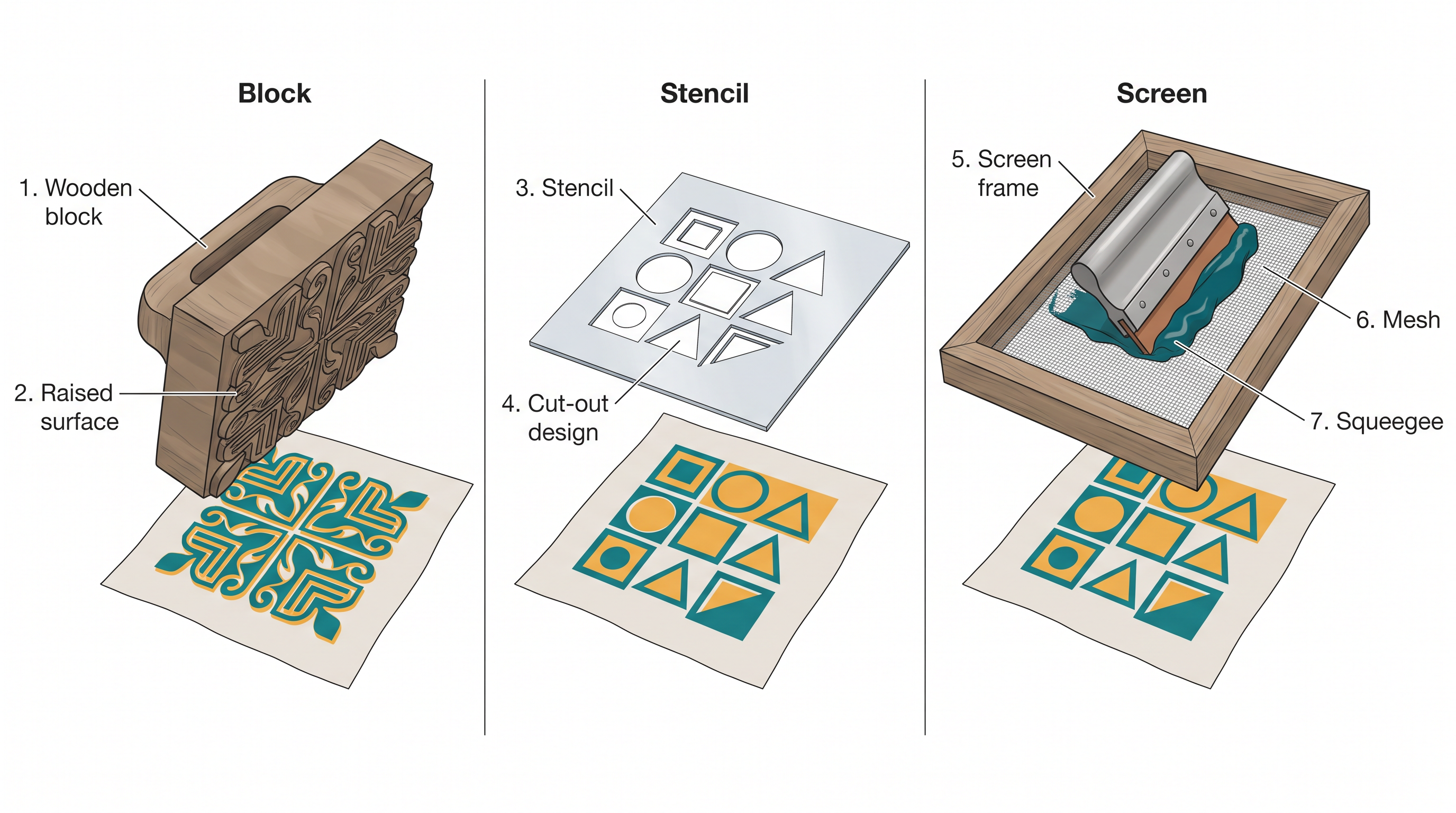
Fig. 5.12 – Hand printing tools: block, stencil and screen.
5.7 Some Important Fibres
You have followed a fibre through yarn, fabric and finish without asking which fibre it was. It is time to ask. The fibres in this section are the ones you will meet most often, and each is described in the same order — where it comes from, how it is obtained, and how it behaves.
5.7.1 Cotton
Cotton is the most widely used fibre for apparel and home textiles. It was grown and used in the Indian subcontinent from very early times, and India continues to be one of the largest cotton growing areas in the world.
Cotton fibres are obtained from the seed pod of the cotton plant. Each seed carries a large number of hairs attached to it, and when the seeds ripen the pod bursts open. The seeds are separated from the fibres by a process called ginning, after which the fibre is pressed into large bundles, or bales, and sent for spinning.
Properties
- Cotton is a natural cellulosic, staple fibre. It is the shortest fibre, with length varying from 1 cm to 5 cm, so the yarn and the fabric made from it are dull in appearance and slightly rough to the touch. It is heavier in weight than most other fibres.
- Cotton has good moisture absorbency and it also dries easily. This is what makes it comfortable for summer use.
- It is available in fabrics of all weights, finenesses, structures and finishes. Muslin, cambric, poplin, long cloth (latha), casement, denim, sheeting material and furnishing material are some of the cotton fabrics available in the market.
5.7.2 Linen
Linen is a bast fibre, obtained from the stems of the flax plant. The term bast means the fleshy part inside the bark, so a bast fibre has to be freed from the woody stem around it.
This is done by retting. The stems are steeped in water for a long time so that the soft parts rot away. After retting, the woody parts are separated, and the linen fibres are collected and sent for spinning. Fig. 5.13 shows where in the stem the fibre lies.
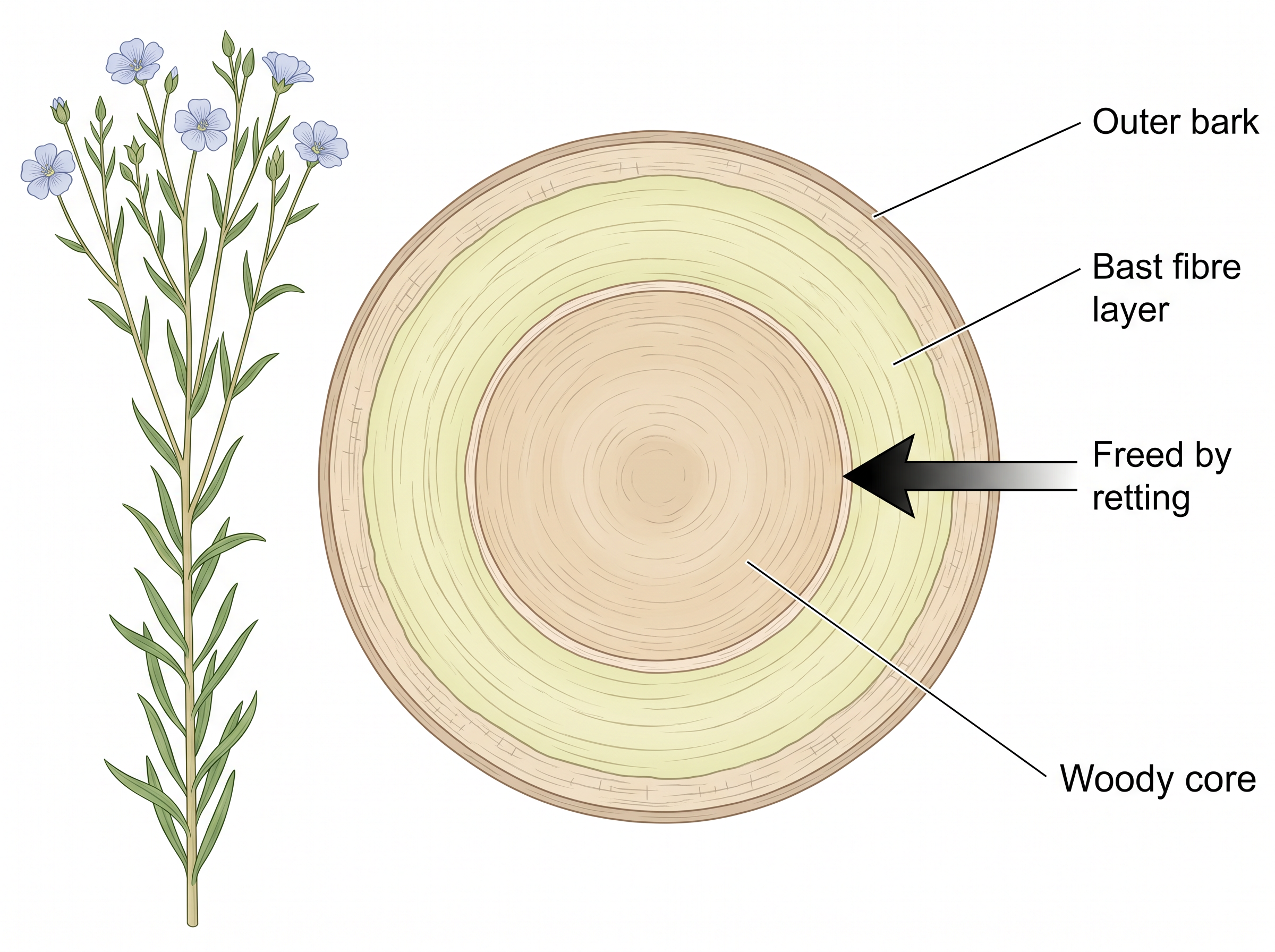
Fig. 5.13 – Obtaining linen from the flax stem.
Properties
- Linen is also a cellulosic fibre, so many of its properties are similar to those of cotton.
- The fibre is longer and finer than cotton, so the yarn produced is stronger and more lustrous.
- Like cotton, linen absorbs moisture readily and is therefore comfortable. However, it does not absorb dyes very readily, so the colours produced on it are not so bright.
The flax plant is cultivated in very few areas worldwide, and the fibre also requires a longer processing time. Both facts together explain why linen is used far less than cotton, and why it costs more.
Jute and hemp are bast fibres like linen. They are coarser fibres and do not have good flexibility, so they are used for making ropes, gunny bags and other such products rather than for clothing.
5.7.3 Wool
Wool is obtained from sheep hair. It can also be obtained from other animals such as goats, rabbits and camels, and these fibres are called speciality hair fibres.
Different breeds of sheep provide different types of hair, and some breeds are raised only for the good quality of the fibre they produce. Removal of the hair from the animal is called shearing, and it may be done once or twice a year depending on the climatic conditions.
While shearing, an effort is made to keep the hair in one piece, which is called the fleece. Keeping it whole makes sorting easy, because hair from different parts of the body varies in length and fineness, and the sorter needs to know which part a handful came from.
After sorting, the fibres are scoured to get rid of dirt, grease and dried perspiration. This is followed by carbonisation, which removes entangled vegetable matter such as leaves and twigs. The fibres are then sent for spinning.
Properties
- Wool is a natural protein fibre. The fibres vary in length from 4 cm to 40 cm, and may be coarse or fine depending on the breed of the sheep and the part of the animal’s body. Wool is characterised by a natural crimp, or built-in waviness, which is responsible for its elasticity and elongation properties.
- Compared to other fibres, wool has low strength, but it has good resilience and elastic recovery. Resilience is the ability to spring back after being crushed, which is why a woollen garment sheds creases as it hangs.
- Wool has surface scales which are water repellent in nature. Yet it can absorb a large amount of water without feeling wet on the surface, and this ability is responsible for its comfort in humid and cold atmospheres.
Fig. 5.14 shows the crimp and the scales that these properties depend on.
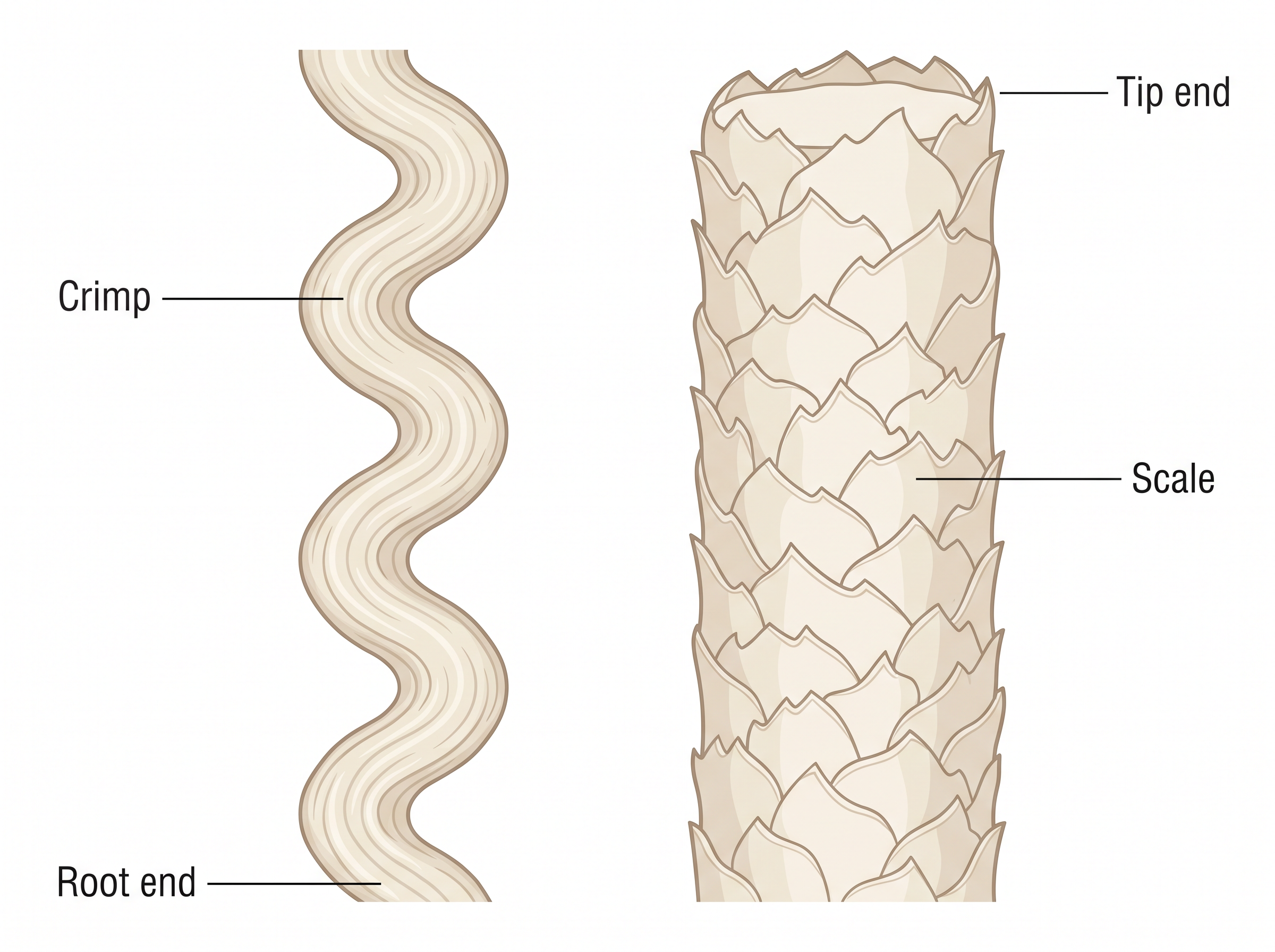
Fig. 5.14 – The structure of the wool fibre.
Wool is also used in blends with cotton, rayon and polyester, which improves its care and maintenance properties.
5.7.4 Silk
Silk is a natural filament fibre produced by the secretion of silkworms. Where it is produced in controlled conditions it is called cultivated or mulberry silk; the fibre is smooth and long, and the fabric made from it is smoother, finer and lustrous.
Where silk is produced in wild or natural conditions, the resulting fibre is coarser, stronger and short in length, and gives a thicker, coarser but stronger fabric. Tussar silk is of this kind.
For the production of good quality silk, silkworm cultivation is carefully controlled, and this cultivation is called sericulture. Being a filament fibre, silk does not require the spinning process, but has to be reeled carefully from the cocoon, and the yarns are made by twisting a number of filaments together.
Not every cocoon yields an unbroken filament. If the filaments break, or when the insects break the cocoon, the broken filaments are processed through spinning like cotton, and the result is called spun silk. Fig. 5.15 shows reeling.
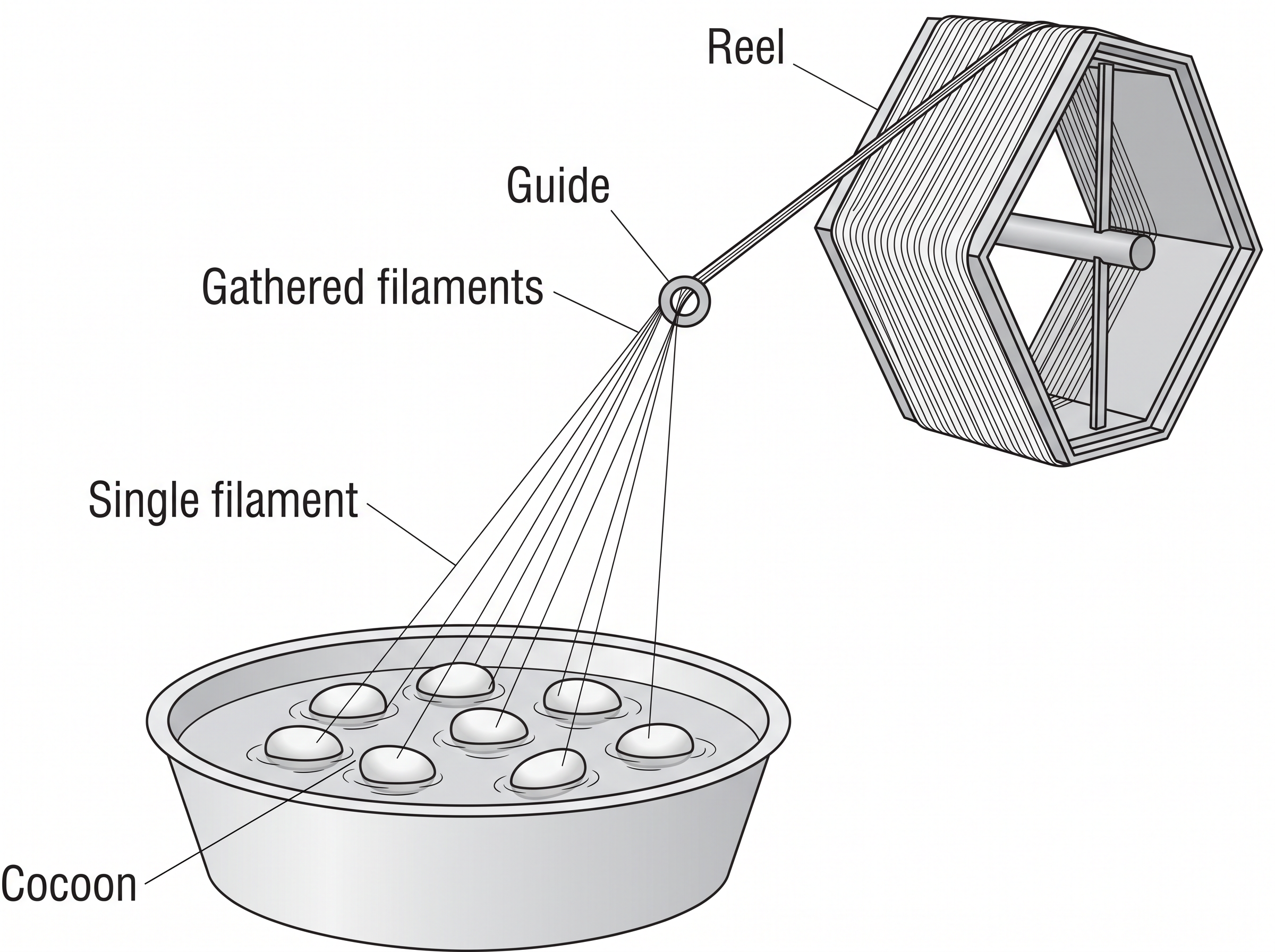
Fig. 5.15 – Reeling silk from the cocoon.
Properties
- Silk is a natural protein fibre. Its natural colour is off white to cream, while wild silk is brownish in colour.
- Silk filaments are very long, fine and smooth, and have a relatively high lustre or sheen. Silk contains a natural gum which gives it a crisp texture.
- Silk is one of the stronger fibres used in making fabrics. It has good elastic recovery and moderate elongation.
Table 5.5 brings the four natural fibres together on the counts that matter when you choose cloth.
5.7.5 Rayon
Rayon is a manufactured cellulosic fibre. It is cellulosic because it is made from wood pulp, and manufactured because that wood pulp is treated with chemicals and regenerated into fibres.
Properties
- As rayon is a manufactured fibre, its size and shape can be controlled. It has a uniform diameter and is clear and lustrous.
- Rayon, being a cellulosic fibre, has most properties like cotton. But it has lower strength and durability, and it is weaker still when wet.
The main advantage of rayon and the manufactured cellulosic fibres is that they can be reprocessed out of waste material and have an appearance like silk. A fibre made from mill waste and wood pulp thus gives a fabric of a kind that would otherwise be costly.
5.7.6 Nylon
Nylon was the first true synthetic fibre, that is, the first fibre totally manufactured from chemicals, to be produced. It was first introduced as bristles for toothbrushes.
In 1940 CE the first fabrics from nylon were socks and stockings, which were very successful. Thereafter nylon was used for all kinds of fabrics, and it also provided the impetus for the other synthetic fibres that followed it.
Properties
- Nylon filaments are usually smooth and shiny, with a uniform diameter.
- Nylon has very good strength and abrasion resistance. Its resistance to abrasion makes it appropriate for use in brushes, carpets and similar articles that are rubbed constantly.
- Nylon is a highly elastic fibre. Very fine and transparent nylon fibres are used for one-size garments such as stockings, which must stretch to fit and return to shape.
- Nylon is a popular fabric used in apparel, socks, undergarments, swimsuits, gloves, nets and sarees. It is a leading fibre in the manufacture of hosiery and lingerie, and for outerwear it may be blended with other fibres.
5.7.7 Polyester
Polyester is another manufactured synthetic fibre. It is also referred to by the trade names Terylene and Terene.
Properties
- Polyester fibre has a uniform diameter, a smooth surface and a rod-like appearance. It can be made in any strength, length and diameter as per the requirements of the end use, and the fibre is partially transparent and lustrous.
- The moisture regain of polyester is very low, that is, it does not absorb water easily. Moisture regain is the amount of moisture a fibre holds from the air, and a low value here means the fabric is not very comfortable to wear in hot summer months.
- The most advantageous property of polyester is its wrinkle resistance. It is one of the most commonly used fibres for blending with rayon, cotton and wool, and to some extent with spun silk.
Blending is worth a moment’s thought. Cotton is comfortable but creases; polyester resists creasing but does not absorb moisture. A blend of the two gives a shirt that is tolerably comfortable and needs little ironing, which is precisely why so much school and office clothing is blended.
5.7.8 Acrylic
Acrylic is another synthetic fibre. It resembles wool so closely that even an expert may not be able to find the difference between the two by handling them. It is commonly called Cashmilon, and it is cheaper than wool.
Properties
Like all manufactured fibres, the length, diameter and fineness of acrylic are controlled by the manufacturer, and the fibre can be made in varied degrees of crimp and lustre. It is not very strong, and its strength is similar to that of cotton, but the fibres have high elongation with good elastic recovery.
Acrylic is used as a substitute for wool, in children’s wear, apparel, blankets and knitted goods. Since it is manufactured, it does not need the sorting and carbonisation that a fleece does, and this is part of why it costs less.
Table 5.6 compares the four manufactured fibres you have now met.
5.7.9 Elastomeric Fibres
Apart from the fibres mentioned so far, there are a few less known ones. Elastomeric fibres are elastic, rubber-like substances, and can be produced in various forms.
In its natural form this group includes rubber, and the synthetic equivalent is spandex, sold under the name Lycra. These fibres are usually used as blends with any of the fibres above that have low elasticity.
The blend is always a small proportion, since a very little of an elastomeric fibre is enough to make a whole fabric stretch and recover. This is how a fitted garment holds its shape through a day’s wear.
Choosing A Fabric For Its End Use
Look back over the nine fibres and one point stands out: no fibre is good or bad in itself. Cotton’s absorbency is a virtue in a towel and a nuisance in a raincoat, and polyester’s low moisture regain is exactly the reverse.
Selecting a textile product therefore means matching the properties of the fibre, the yarn, the fabric structure and the finish against what the article has to do. You now have all four of those to work with, and you can read a shop label and a care label with the reasons behind them in view.
Fig. 5.16 gives one more way of telling these fibres apart, by the look of the fibre itself.
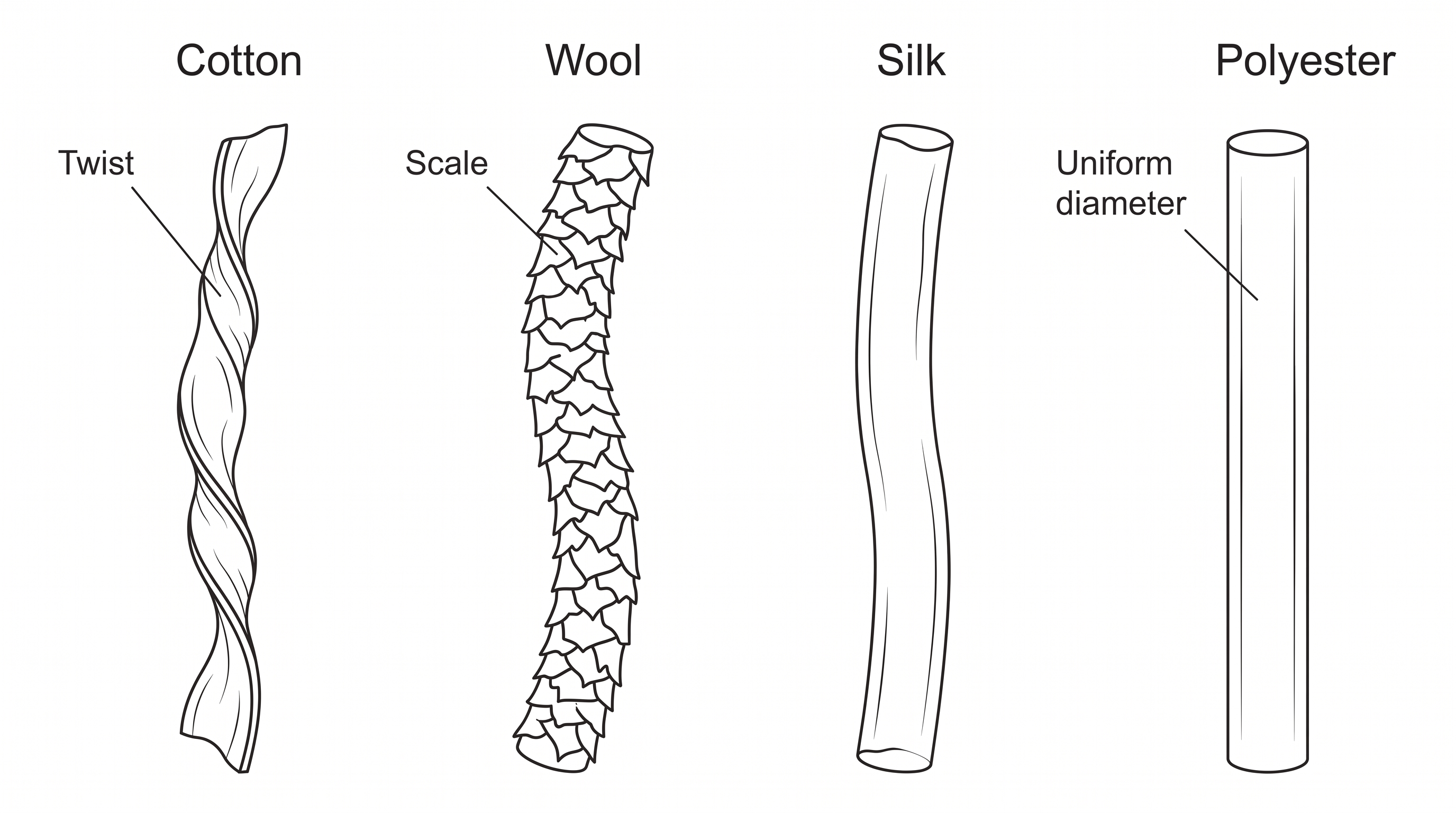
Fig. 5.16 – Lengthwise appearance of four fibres.
5.8 Summary
- Fabrics are all around us, and they differ in kind, weight and thickness because each one is chosen for a particular end use.
- A fabric can be unravelled into yarns, and a yarn untwisted into fibres, which are the basic building blocks of all fabrics.
- Fibres, yarns and fabrics together are called textile products, or simply textiles.
- Finishing is the further processing given to a fabric to improve its appearance, its touch and feel, or its serviceability.
- The behaviour of a fabric in use and in care depends on four things — the type of fibre, the yarn, the fabric construction and the finishing.
- The properties of a fibre carry through into the fabric made from it.
- A fibre is usable in the textile trade only if it is available in large quantities and is economical.
- The most essential property of a fibre is its spinnability, the ease with which it can be converted into yarn and then into fabric. It is the sum of:
- length;
- strength;
- flexibility;
- surface structure.
- Properties desired from the point of view of consumer satisfaction are colour, lustre, weight, moisture absorption, dye absorption and elasticity.
- Properties that affect care and maintenance are abrasion resistance, effect of chemicals, soaps and detergents, effect of heat, and resistance to biological organisms.
- Textile fibres are classified on four bases:
- origin — natural or manufactured;
- general chemical type — cellulosic, protein or synthetic;
- generic type — such as animal hair or animal secretion;
- common trade name.
- Fibres are also either staple, that is short in length like cotton, or filament, that is long in length like silk and polyester.
- Natural fibres are those available to us in nature, and there are four types:
- cellulosic fibres — seed hair (cotton, kapok), bast fibres (flax or linen, hemp, jute), leaf fibres (pineapple, agave or sisal) and nut husk fibres (coir);
- protein fibres — animal hair (wool, speciality hair of goat and camel, fur) and animal secretion (silk);
- mineral fibre — asbestos;
- natural rubber.
- Manufactured or man-made fibres are produced from raw materials that are not themselves in fibre form. The first of them was rayon.
- The earliest manufactured fibres were made by modifying a non-fibrous cellulosic material such as cotton waste or wood pulp; the later group was synthesised completely from chemicals.
- Whatever the raw material, a manufactured fibre is formed in three steps:
- the raw material is converted into a liquid of a specific viscosity, called the spinning solution;
- the solution is passed through a spinneret into an atmosphere that hardens it into fine filaments;
- the filaments are collected and stretched for fineness and orientation, or given further processing such as texturisation.
- Manufactured fibres are grouped as regenerated cellulosic, modified cellulosic, protein, non-cellulosic or synthetic, and mineral fibres.
- A yarn is a continuous strand of textile fibres, filaments or material, in a form suitable for knitting, weaving or otherwise intertwining to form a fabric.
- Yarn processing from natural staple fibres is called spinning, and it passes through cleaning into laps, carding and combing into a sliver, drawing out or attenuation, roving, and finally spinning and winding on cones.
- Carding disentangles the fibres and lays them parallel; combing follows carding for finer yarns and removes finer impurities and short fibres.
- A sliver is a rope-like mass of loose fibres, 2 to 4 cm in diameter, and it is attenuated at the roving stage to one-fourth to one-eighth of its original diameter.
- All manufactured fibres are first made as filaments, and the yarn may be a single filament, a multifilament yarn, or a spun yarn made from filaments cut to staple length.
- Filaments are cut to staple length when a blend such as terecot, terewool or polycot is required.
- Three terms describe a yarn:
- yarn number, which indicates its fineness, a higher number meaning a finer yarn;
- yarn twist, stated as twist per inch, which holds the fibres together;
- thread, which is the product used to join pieces of fabric, as against yarn, from which fabric is made.
- Felts and non-wovens or bonded fibre fabrics are made directly from fibres, by laying the fibre in a matt and causing adhesion between the fibres.
- The main methods of fabric construction from yarns are weaving and knitting, and to a small extent braiding and knotting.
- A woven fabric consists of two sets of yarns interlaced at right angles on a loom. The warp yarns are fitted on the loom, and the filling yarn is interlaced through them.
- The direction of the yarns in a woven fabric is called the grain. Warp yarns run along the lengthwise grain or selvedge, filling yarns along the widthwise grain or weft, and the fabric is strongest along the selvedge.
- Knitting is the interlooping of at least one set of yarns. In weft knitting the yarn moves along the width; in warp knitting the interlooping occurs with adjacent lengthwise yarns and the fabric can be cut and stitched.
- Knitted fabrics are made rapidly, are elastic and porous, and are therefore suited to fitted articles and to sportswear.
- Braids are made by plaiting three or more yarns; nets are open mesh fabrics made by inter-knotting; lace is an openwork fabric combining yarn twisting, interlooping and knotting.
- A finish is any treatment on a fabric that changes its appearance, texture or behaviour for a specific use. Finishes necessary to every fabric are called routine.
- Durable finishes such as dyeing are not removed on washing or dry-cleaning; renewable finishes such as starching and blueing have to be applied again after each wash.
- Finishes may be grouped by function:
- to change appearance — cleaning by scouring and bleaching, straightening and smoothening by calendering and tentering;
- to change texture — starching or sizing, and special calendering;
- to change behaviour — wash and wear, permanent press, water repellent or water proof, mothproof, flame retardant, and antishrink by sanforisation.
- Dyes are substances that add colour to a fabric so that it does not easily wash out, and the method of dyeing depends on the chemical nature of the fibre and of the dye.
- Colour may be applied at the fibre stage, at the yarn stage for woven checks and stripes, or at the fabric stage for solid colours, batik, tie and dye and printing.
- Printing is a specialised form of dyeing in which colour is applied only within the limits of a design, by hand tools such as blocks, stencils and screens, or industrially by roller and automatic screen printing.
- Cotton is a natural cellulosic staple fibre, 1 cm to 5 cm long, dull and slightly rough, absorbent and quick drying, and therefore comfortable for summer use.
- Linen is a bast fibre from the flax stem, obtained by retting. It is longer, finer, stronger and more lustrous than cotton, but takes dye less readily.
- Wool is a natural protein fibre, 4 cm to 40 cm long, with a natural crimp and surface scales. It has low strength but good resilience and elastic recovery, and absorbs much water without feeling wet.
- Silk is a natural protein filament fibre obtained by sericulture and reeled from the cocoon. It is fine, smooth and lustrous, contains a natural gum, and is among the stronger fibres.
- Rayon is a manufactured cellulosic fibre made from wood pulp. It is uniform, clear and lustrous, behaves largely like cotton, but has lower strength and durability.
- Nylon was the first true synthetic fibre. It is smooth, very strong, highly elastic and resistant to abrasion, and is a leading fibre for hosiery.
- Polyester, also called Terylene or Terene, is uniform and smooth, has very low moisture regain, and is valued above all for its wrinkle resistance and for blending.
- Acrylic closely resembles wool, is cheaper than wool, has strength similar to cotton with high elongation and good elastic recovery, and is used for blankets and knitted goods.
- Elastomeric fibres, natural rubber and synthetic spandex, are blended in small amounts with fibres of low elasticity to give stretch and recovery.
- Informed selection of a textile product means matching the fibre, the yarn, the fabric construction and the finish to what the article has to do.
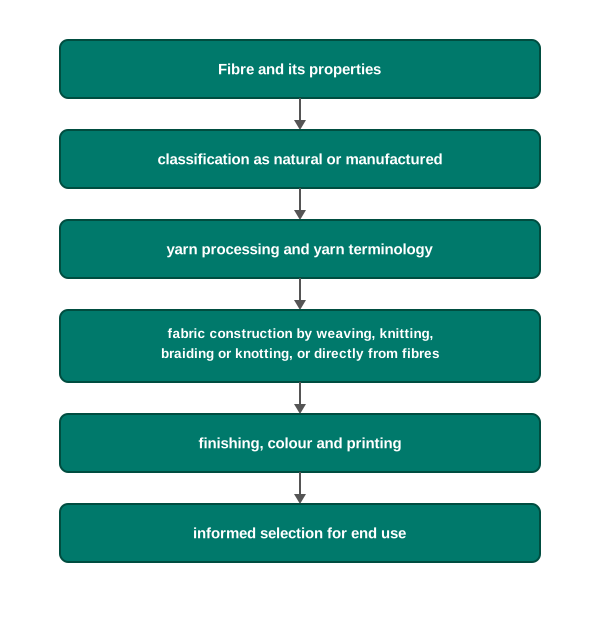
Fig. 5.17 – Chapter summary flowchart.
5.9 Key Terms
- Abrasion resistance — the ability of a fibre or fabric to stand up to rubbing without wearing thin.
- Acrylic — a synthetic fibre closely resembling wool, cheaper than wool, used for blankets and knitted goods.
- Attenuation — the gradual drawing out of a strand of fibres so that it becomes longer and finer.
- Blended yarn — a yarn made by combining fibres of two different kinds, such as cotton with wool.
- Bonded fibre fabrics — non-woven fabrics in which loose fibres are laid in a matt and joined by adhesion.
- Braiding — plaiting three or more parallel yarns to make a narrow fabric with a diagonal surface effect.
- Carding — the process that disentangles fibres and lays them straight and parallel to one another.
- Combing — a further straightening after carding, for finer yarns, which removes fine impurities and short fibres.
- Cotton — a natural cellulosic staple fibre obtained from the seed pod of the cotton plant.
- Durable finish — a finish that is not removed by washing or dry-cleaning.
- Dyes — substances that add colour to a fabric in a way that does not easily wash out.
- Elasticity — the ability of a fibre to stretch under pull and return to its original length.
- Elastomeric fibres — rubber-like fibres, natural rubber and synthetic spandex, blended in to give stretch.
- Fabric — a flat sheet material made from yarns or directly from fibres.
- Felts — fabrics made directly from fibres by laying them in a matt and causing them to interlock.
- Fibres — the fine hair-like structures that are the basic building blocks of all fabrics.
- Filament — a fibre of long, continuous length, as silk and the manufactured fibres are.
- Filling yarn — the yarn carried across the width of a woven fabric, interlacing with the warp.
- Finishing — any further processing of a fabric that changes its appearance, texture or behaviour.
- Fleece — the coat of hair removed from a sheep in one piece at shearing.
- Ginning — the process of separating cotton seeds from the fibres attached to them.
- Grain — the direction in which the yarns run in a woven fabric.
- Knitting — the interlooping of at least one set of yarns to form a fabric.
- Knotting — tying yarns at their crossings to build an open fabric such as a net.
- Laps — rolled sheets of cleaned loose fibre, formed before straightening.
- Linen — a bast fibre obtained from the stems of the flax plant by retting.
- Loom — the machine on which a woven fabric is made.
- Manufactured fibres — fibres made by human beings from a raw material that is not itself in fibre form.
- Matt — a layer of loose fibre laid out to any thickness or shape, from which felts and non-wovens are made.
- Natural fibres — fibres available to us in nature, from plants, animals or minerals.
- Non-wovens — fabrics made directly from fibres held together by adhesion rather than by yarn construction.
- Nylon — the first true synthetic fibre, smooth, strong, elastic and highly resistant to abrasion.
- Polyester — a synthetic fibre of low moisture regain, valued for wrinkle resistance and for blending.
- Rayon — a manufactured cellulosic fibre regenerated from wood pulp, silk-like in appearance.
- Renewable finish — a finish that washes out and has to be applied again, such as starching or blueing.
- Retting — steeping flax stems in water so that the soft parts rot away and the bast fibres are freed.
- Routine finish — a finish regarded as absolutely necessary for a fabric, such as cleaning.
- Selvedge — the bound lengthwise edge of a woven fabric, along which it is strongest.
- Sericulture — the controlled rearing of silkworms for the production of good quality silk.
- Shearing — the removal of hair from a sheep or other fibre-bearing animal.
- Silk — a natural protein filament fibre produced by the secretion of silkworms.
- Sliver — a rope-like mass of loose fibres, 2 to 4 cm in diameter, formed after carding.
- Speciality hair fibres — fibres obtained from animals other than sheep, such as goat, rabbit and camel.
- Spinnability — the property that allows a fibre to be converted easily into yarn and then into fabric.
- Spinneret — a thimble-shaped nozzle with very fine holes through which a spinning solution is forced.
- Spinning — the processing of staple fibres into yarn, and also its final stage, where twist is given.
- Spinning solution — the liquid of a specific viscosity prepared from the raw material of a manufactured fibre.
- Staple — a fibre of short length, as cotton, wool, jute and linen are.
- Textile products — fibres, yarns and fabrics taken together; also called simply textiles.
- Texturisation — the crimping or coiling of a smooth filament to improve the stretch or bulk of the yarn.
- Thread — the product used to join pieces of fabric together, as against yarn, from which fabric is made.
- Warp knitting — knitting in which lengthwise yarns interloop with adjacent yarns, giving cloth that can be cut.
- Warp yarns — the set of yarns fitted lengthwise on the loom at fixed tension and even spacing.
- Weaving — the interlacing of two sets of yarns at right angles to form a fabric.
- Weft — the widthwise grain of a woven fabric, along which the filling yarns run.
- Weft knitting — knitting in which the yarn moves along the width, forming a row of loops at a time.
- Wool — a natural protein fibre obtained from sheep hair, marked by crimp and surface scales.
- Yarn — a continuous strand of fibres or filaments in a form suitable for making fabric.
- Yarn number — the number indicating the fineness of a yarn, a higher number meaning a finer yarn.
- Yarn twist — the twist given to a yarn to hold its fibres together, stated as twist per inch.
5.10 Points To Ponder
- A fibre that absorbs moisture well is comfortable to wear but slow to dry, and a fibre that absorbs little is quick to dry but uncomfortable in heat. If a single fabric had to be chosen for the uniform of people working outdoors all day in a hot, humid place, on what grounds would you settle the trade-off?
- Rayon is made from wood pulp and from cotton waste, and can be reprocessed out of material that would otherwise be thrown away. Does that make it a more responsible choice than a fibre grown in a field, or are there costs on the other side that this argument leaves out?
- Handloom weaving survives alongside power looms in India, though it is slower and costlier. What does a handwoven fabric offer that a mill-made one cannot, and what does that suggest about how such crafts might continue?
- A finish can give a cheap fabric the appearance and behaviour of an expensive one. Is that a service to the buyer or a way of misleading her, and what would have to be true of the label for it to be the first rather than the second?
- Acrylic was developed as a substitute for wool and costs less. If a blanket of acrylic and a blanket of wool were placed side by side at the same price, what properties would decide the better buy, and would the answer change with the climate it is meant for?
- Almost every garment sold today carries a blend rather than a single fibre. What does blending gain, and what is quietly lost when no fabric in a wardrobe is any one fibre alone?
5.11 Objective Questions
- The shortest of the following fibres is (1 mark)
- linen
- cotton
- silk
- wool
- A sliver is (1 mark)
- a rolled sheet of cleaned loose fibre
- a rope-like mass of loose fibres, 2 to 4 cm in diameter
- a strand that has been given its final twist and wound on cones
- a filament as it emerges from the spinneret
- Which one of the following is a renewable finish? (1 mark)
- Dyeing
- Sanforisation
- Blueing
- Permanent press
- Coir is obtained from (1 mark)
- a leaf
- a seed hair
- a nut husk
- a stem
- The finish obtained by sanforisation makes a fabric (1 mark)
- water repellent
- mothproof
- flame retardant
- antishrink
- Read the statements and choose the correct option. (1 mark) Assertion (A): A woven fabric is strongest along its selvedge. Reason (R): The warp yarns are held at a fixed tension on the loom and are made strong enough to bear it.
- Both A and R are true, and R is the correct explanation of A.
- Both A and R are true, but R is not the correct explanation of A.
- A is true but R is false.
- A is false but R is true.
- Read the statements and choose the correct option. (1 mark) Assertion (A): Silk does not have to go through the spinning process. Reason (R): Silk is a staple fibre.
- Both A and R are true, and R is the correct explanation of A.
- Both A and R are true, but R is not the correct explanation of A.
- A is true but R is false.
- A is false but R is true.
- Match the process in Column I with what it does in Column II. (1 mark)
| Column I | Column II |
|---|---|
| a. Retting | i. Removal of hair from the animal |
| b. Ginning | ii. Separation of seeds from the fibres |
| c. Shearing | iii. Rotting away of the soft parts of the stem |
Fill in the blank: The liquid of a specific viscosity from which a manufactured fibre is formed is called the ____________. (1 mark)
State whether true or false: A thread reel marked 60 carries a coarser thread than one marked 30. (1 mark)
Name the loom attachment that makes figurative designs possible in a woven fabric. (1 mark)
Kapok, jute, sisal, azlon. Pick the odd one out and give a reason. (1 mark)
5.12 Check Your Concepts
Define spinnability, and name the four properties it depends on. (2 marks)
State any two properties of knitted fabric that make it suitable for sportswear. (2 marks)
Give a reason why linen is used far less than cotton. (2 marks)
List the three stages at which colour may be applied to a textile, naming one effect produced at each. (3 marks)
Differentiate between staple fibres and filament fibres, stating the basis of difference. (3 marks)
Why does a woollen garment stay comfortable in cold, damp weather? Give reasons drawn from the properties of the wool fibre. (3 marks)
Explain with an example what is meant by a durable finish and by a renewable finish. (3 marks)
Differentiate between carding and combing, stating the basis of difference. (4 marks)
What would happen if a fabric were sold exactly as it came off the loom? Answer with reference to at least three finishing treatments it would have missed. (4 marks)
Describe the stages by which staple fibres are converted into yarn. (5 marks)
Explain the three basic steps in the formation of a manufactured fibre, and state what the stretching of the filaments achieves. (5 marks)
5.13 Identify & Label
Study Fig. 5.7. Identify the fabric construction shown, and label the warp yarns, the filling yarn and the selvedge. (2 marks)
Study Fig. 5.8 and Fig. 5.9. Identify the method of knitting shown in each, and state one difference between the two fabrics they produce. (2 marks)
Study Fig. 5.12. Identify the three hand printing tools shown, and state which of them is used with a squeegee. (2 marks)
Study Fig. 5.13. Identify the plant, name the layer marked by the arrow, and name the process by which that layer is freed from the stem. (2 marks)
Study Fig. 5.16. Identify each of the four fibres shown, and for each one state the single feature of appearance by which you identified it. (3 marks)
5.14 Case & Application Based Questions
- A school in a hot and humid coastal town is choosing the fabric for its uniform. Two samples are placed before the committee at nearly the same price. Sample A is a plain woven fabric of pure cotton, with a solid colour dyed at the fabric stage. Sample B is a woven blend of polyester and cotton, carrying an antishrink and wash-and-wear finish. Several families have written to the school asking that the uniform need as little ironing as possible. (4 marks)
- Which property of cotton makes Sample A comfortable in that climate, and which property of polyester works against comfort in Sample B?
- Which sample answers the families’ request, and on what property does your answer rest?
- Name one finish that could be added to Sample A to reduce its creasing, and state what such a finish does.
- If the fabric had instead been knitted rather than woven, state one advantage and one disadvantage this would bring to a school uniform.
- A shopkeeper shows a customer two lengths of checked fabric of the same fibre and the same price. In the first, the check is formed by yarns of different colours crossing each other. In the second, the check has been applied with a screen, and the reverse side of the cloth is much paler than the face. (5 marks)
- At which stage was colour applied to each of the two fabrics?
- State the observation the customer can make on the spot to tell the two apart, and explain why it works.
- Which of the two is likely to keep its pattern better through repeated washing? Give a reason.
- The label of the second fabric reads ‘sanforised’. Explain what the customer can expect from this, and why it matters before the cloth is cut for stitching.
5.15 Practice With Data
- Four reels of sewing thread of the same fibre are marked as follows. (3 marks)
| Reel | Yarn number |
|---|---|
| P | 20 |
| Q | 40 |
| R | 60 |
| S | 80 |
- Arrange the four reels in order from the coarsest to the finest thread.
- State what the yarn number is a measure of, and what fixed relationship it rests on.
- Which reel would you choose for stitching a fine muslin garment, and why?
- Two yarns are spun from the same cotton. Yarn X is given 12 twists per inch and Yarn Y is given 30 twists per inch. (4 marks)
- Which of the two will be softer and more lustrous, and why?
- Which of the two is more likely to show up as ridges on the surface of the fabric, and name one everyday fabric in which such ridges are seen?
- If the same two twist levels were applied to a fibre 1 cm long and to a fibre 5 cm long, in which fibre would low twist be the greater risk? Give a reason.
- State the property of a fibre that decides how well it holds together under twist.