Chapter 4: Management Of Resources
The Water That Was Always There
By the mid-1980s the villages around Gopalpura, in Alwar district of Rajasthan, were running short of water. Wells had gone dry, the fields gave one poor crop, and many families had left to look for work in the towns. The rain still arrived each monsoon. It simply ran off the bare slopes within a few hours and was gone.
An old answer was lying unused all around them. A johad is a curved earthen embankment built across a slope so that rainwater collects behind it and soaks slowly into the ground, filling the wells below. The villages had these structures already. Silted up and broken, they held nothing.
A small group of volunteers from the organisation Tarun Bharat Sangh began working with the residents of Gopalpura to repair one johad. There was almost no money. What there was: people willing to dig, the memory of older residents who knew where water had once stood, and the whole of the dry season to work in before the rains came.
Over the years that followed, village communities across the district rebuilt thousands of johads. Wells filled. The Arvari, a river that had stopped flowing, ran again. In 2015 Rajendra Singh, who led that work, received the Stockholm Water Prize.
Nothing new was invented. What changed was how something already present was used.
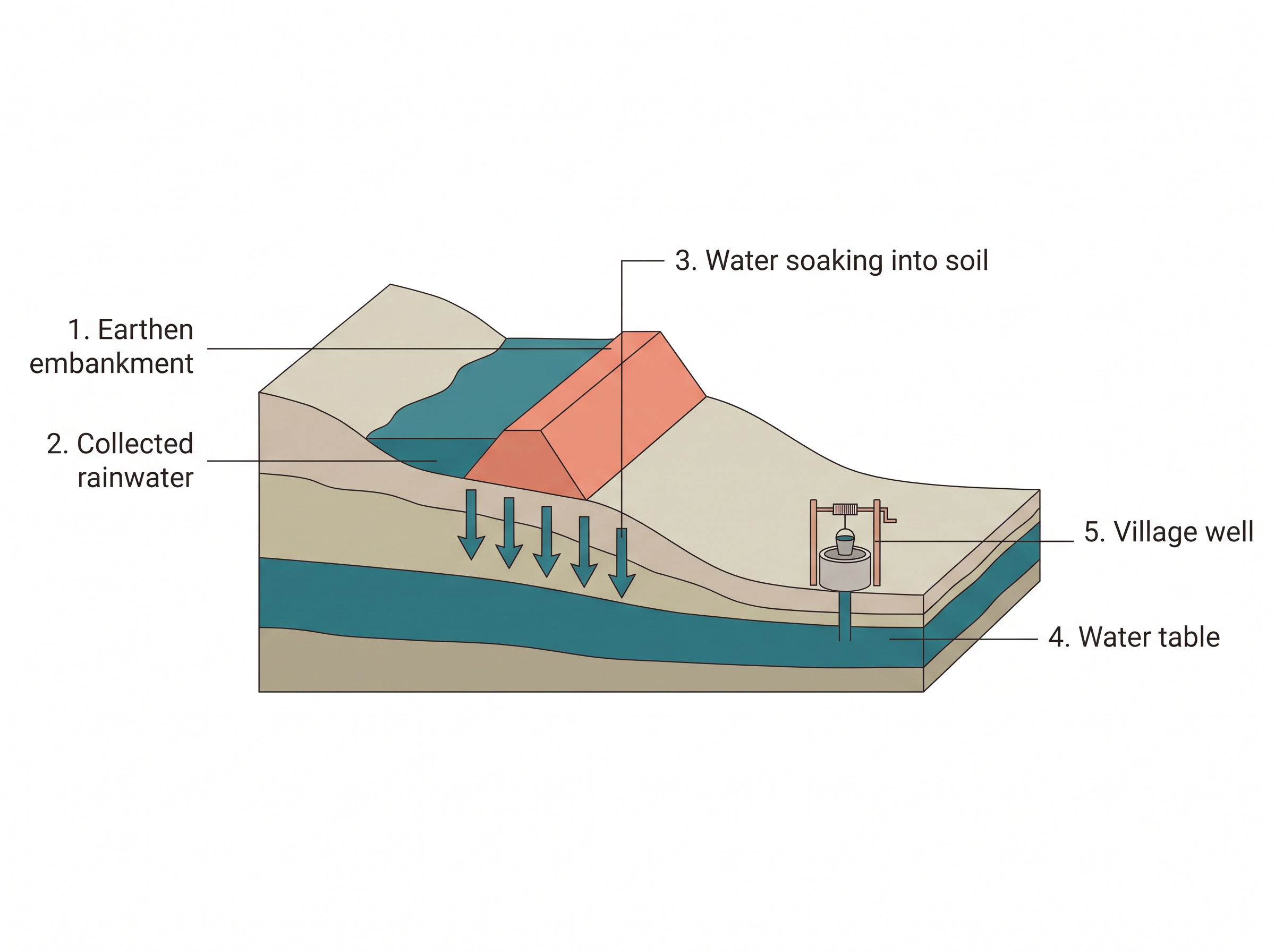
Fig. 4.0 – Cross-section of a johad and water table.
4.1 Understanding Resources
Think of something small you did this morning — mending a torn shirt, perhaps, or packing a bag for school. It felt like a single act. It was not. Even a task that takes ten minutes draws quietly on several different things at once.
Sit with that torn shirt for a moment and list what the job actually needed.
- Time — the ten or fifteen minutes it took.
- Energy — enough of it to sit up and finish rather than push the shirt aside.
- Money for purchasing required material — the few rupees the thread cost.
- Knowledge — knowing which stitch will hold on a seam and which will not.
- Interest and motivation — the willingness to begin at all.
- Skills, strengths and aptitude — steady hands and an even stitch.
- Material goods — needle, thread, scissors.
- Water and air.
- A building or space to work in, with light to see by.
Every one of these is a resource. A resource is anything you draw on in order to carry out an activity and reach a goal. Some are inside you, like knowledge and skill; some sit outside you, like money and thread; some, like air, are simply there.
Notice also that the mix changes with the task. Mending a shirt asks for skill more than money. Buying a new shirt asks for money more than skill. The same person, doing two different jobs, leans on a different set of resources each time.
What Turns A Thing Into A Resource
Here is the part that surprises students. Something becomes a resource only when it is used. Until then it is just an object lying about.
A sewing machine pushed under a bed and untouched for six years is not a resource for that household. It is a machine, and nothing more. Hand it to a neighbour who sews, and the very same machine becomes one of her most valuable resources.
So a resource is not a fixed category that things belong to. It is a relationship between a thing and a person with a goal. Change the person, or change the goal, and what counts as a resource changes with it.
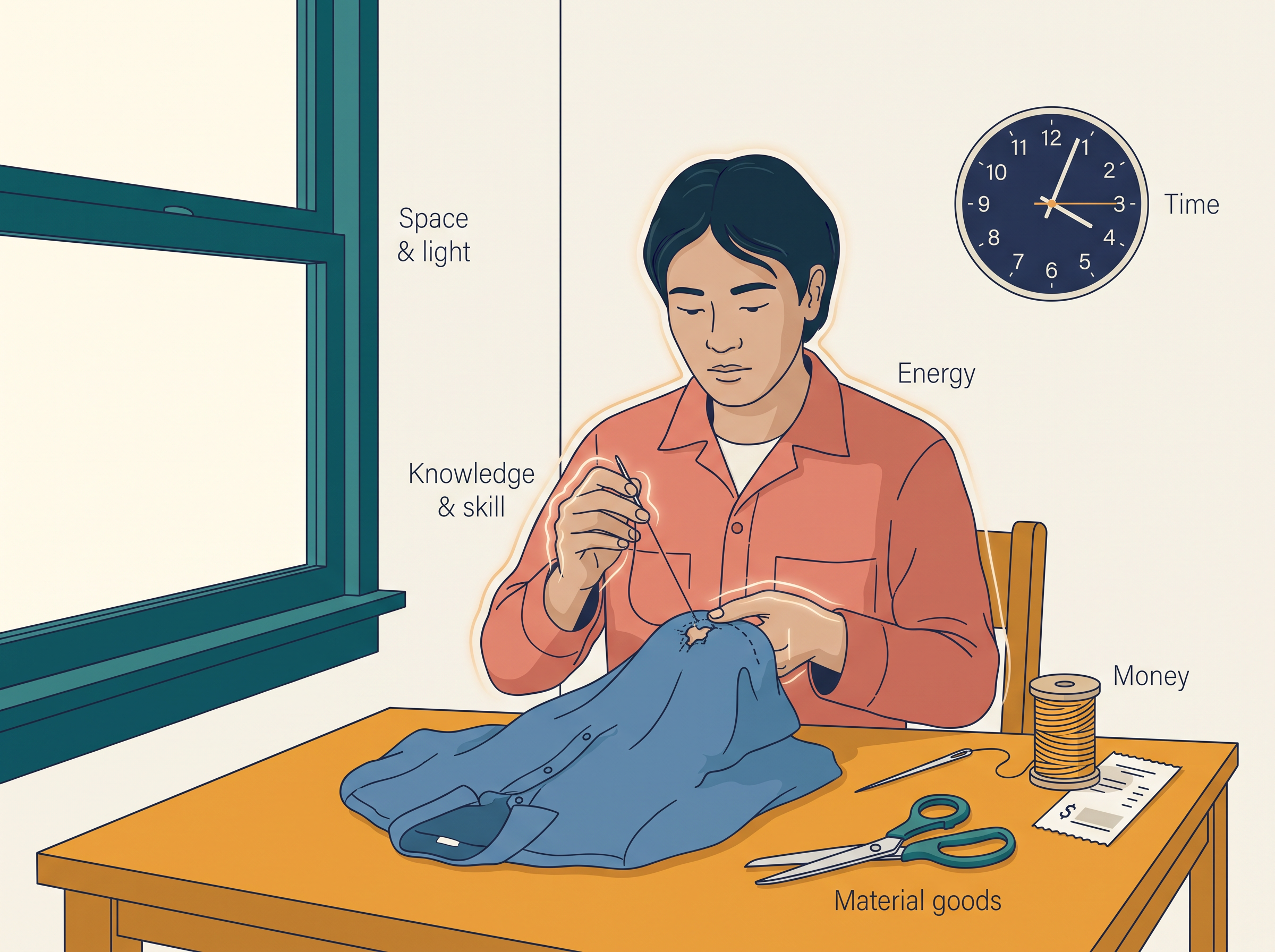
Fig. 4.1 – Resources used in one ordinary activity.
Resources Sit At Every Scale
Your own time, energy and skill belong to you alone. Your household’s monthly income, its kitchen, its water connection are shared by everyone under that roof. A village pond, a public park, a government hospital serve a whole community. A country’s rivers, forests, minerals and the skills of its working people are national resources.
The same four steps — individual, family, community, nation — run through the whole of Home Science. It is worth asking of any resource you meet: at which of these levels is it held, and who is responsible for looking after it?
4.2 Classification Of Resources
Once you start noticing resources, the list grows long very quickly. Sorting them into groups makes them easier to think about, and easier to manage.
There is no single correct way to sort them. The same resource can be placed in more than one group, depending on the question you are asking of it. This chapter uses three ways of classifying resources.
- Human and non-human resources.
- Individual and shared resources.
- Natural and community resources.
The first of these is set out in Fig. 4.2.
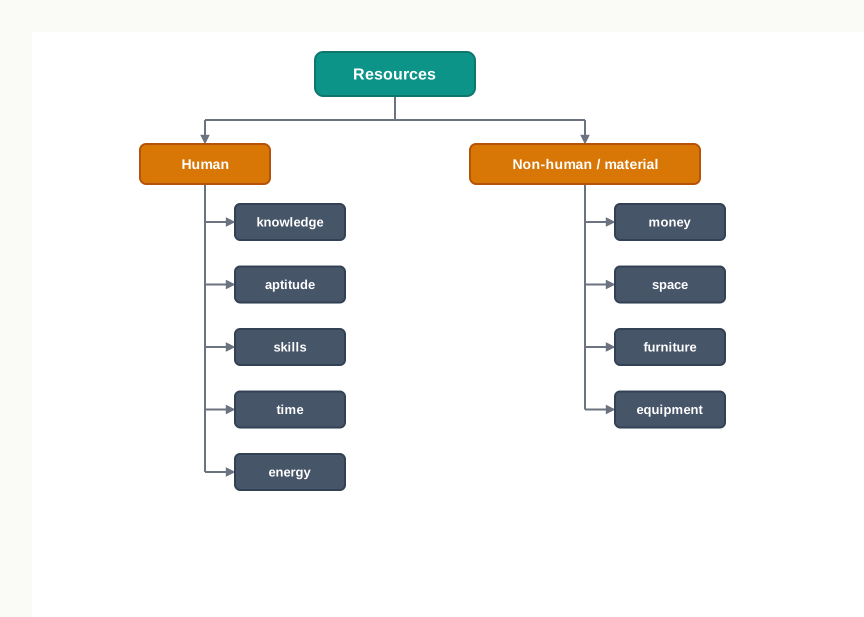
Fig. 4.2 – Classification of human and non-human resources.
4.2.1 Human And Non-Human Resources
This is the most useful of the three divisions, because the two kinds behave very differently. One kind grows when you use it. The other shrinks.
4.2.1.1 Human Resources
Human resources are the qualities and capacities a person carries within herself or himself — knowledge, motivation, skill, time and energy. They are central to every activity, because nothing else works without someone to use it. A kitchen full of equipment cooks no meal on its own.
These resources can be built up through training and self-development. Knowledge of a field can be gained. A skill can be practised until it becomes reliable, and a practised skill in turn develops aptitude. This is the quiet advantage of human resources: unlike money, they are not spent when used.
Knowledge — a resource used throughout life, and a pre-requisite for carrying out any activity successfully. Somebody cooking a meal must know how to work the gas stove or the chullah before the cooking begins. A teacher without thorough knowledge of the subject cannot teach it well, however willing he may be. Knowledge is never finished; one stays open to acquiring it lifelong.
Motivation and interest — the willingness to actually do the task. There is a common saying that where there is a will, there is a way. A student who is not interested in a piece of work will find excuses not to finish it, even when every other resource is sitting ready. The same person, given work she cares about — dance, painting, reading, a craft — will find time for it that nobody knew she had.
Skills, strength and aptitude — aptitude being a person’s natural readiness to learn and do a particular kind of work. No one is skilled at everything. Each of us is better in some areas than others, and works faster and more surely there. Two people making the same dal from the same recipe will not produce the same dal, because skill differs. What matters is that skills you do not have can be acquired, through learning and training.
Time — the one resource distributed exactly equally. Every person alive has 24 hours in a day and spends them in his or her own way. Time is also the only resource that cannot be regained once it is lost, which is why it is treated as the most valuable of all. It has to be planned continuously if the day’s work is to get finished.
Time can be thought of in three dimensions — work time, non-work time, and rest and leisure time. Work time covers study, paid work and household work. Non-work time covers the necessary business of living, such as travelling, bathing and eating. Rest and leisure time covers sleep and whatever genuinely restores you.
A person who balances all three stays physically fit, emotionally steady and mentally alert. Squeeze rest to make room for work and the work itself soon suffers. It also helps to know your own peak periods — the hours in which you think most clearly — and to place the hardest task there rather than wherever it happens to fall. Fig. 4.3 shows the three dimensions across a single day.
- Energy — essential for growth and for physical output. Energy levels are not the same for everyone; they vary with physical fitness, mental condition, personality, age, family background and standard of living. Energy also varies within one person across a day. Because it is limited, it is conserved by thinking the activity through before starting, so that steps are not repeated and the job is finished efficiently.
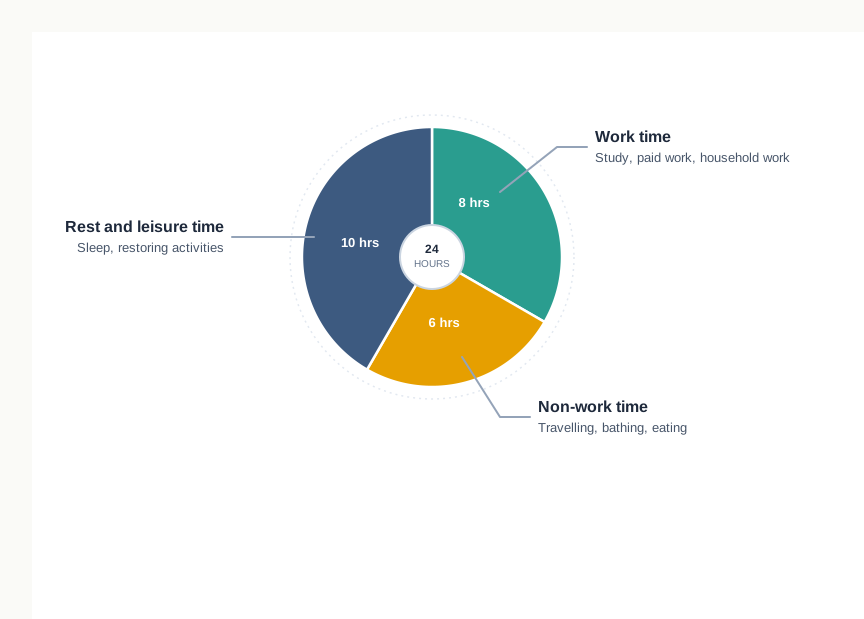
Fig. 4.3 – The three dimensions of time.
4.2.1.2 Non-Human Resources
Non-human resources are the material things a person uses — money, and goods of every kind. They exist outside the person, and they are consumed as they are used.
Money — needed by everyone, but not distributed equally among us. Some households have more of it than others. Money is limited in every household, and so it has to be spent judiciously, on what is actually required.
Material resources — space, furniture, clothes, stationery, food items and the like. These are the goods activities are carried out with, and most of them have to be bought, which is what ties them back to money.
The two kinds of resource are compared feature by feature in Table 4.1.
4.2.3 Natural And Community Resources
Shared resources divide further into two kinds, by where they come from.
Natural resources are those available in nature — water, air, soil, forests, mountains. They are available to all of us and nobody manufactures them. Precisely because they are free and feel unlimited, each one of us carries the responsibility of using them judiciously and protecting the environment they belong to.
Community resources are available to a person as a member of a community or society, and are generally provided by the government. They may be human or non-human. The consultancy and treatment given by government hospitals and doctors is a human community resource; roads, parks and post offices are non-human ones.
Community resources are paid for collectively and belong to no one household, which is exactly why they are so easily neglected. Using them well means two things: drawing on them fully rather than letting them lie idle, and helping to keep them in working order. Fig. 4.4 shows several of them in one ordinary neighbourhood.
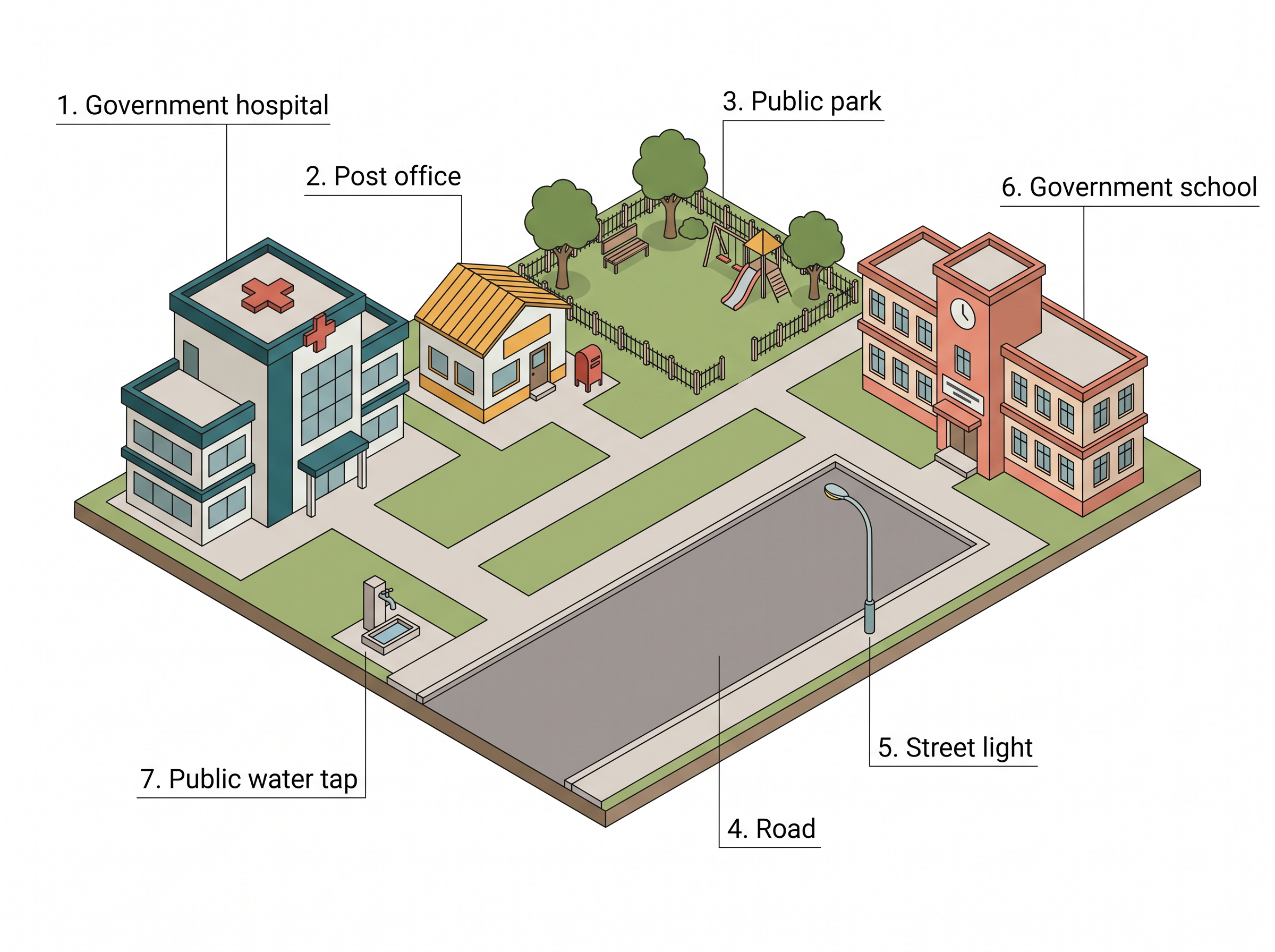
Fig. 4.4 – Community resources in a neighbourhood.
The two are compared in Table 4.2.
4.3 Characteristics Of Resources
Resources can be sorted in several ways, as you have just seen. Yet whichever group a resource falls into, it shares four features with all the rest. These four are the characteristics of resources, and each one tells you something practical about how to handle it.
- Utility — the importance or usefulness of a resource in helping you reach a goal. Utility is not fixed. Whether a resource is useful at all depends on the goal you have and the situation you are in.
Cow dung is a good example. Treated as waste, it is swept away. Dried into cakes, it becomes fuel; composted, it becomes humus, the dark crumbly manure that returns nutrients to the soil. Nothing about the dung changed. What changed was the purpose somebody found for it.
The same is true within a household. When the important resources available to a family or a community are actually put to proper use, the result is greater satisfaction than the same resources produce lying idle.
- Accessibility — how easily a resource can be reached and used. Accessibility varies in three ways. Some resources are easier to obtain than others. The same resource is easier for some people to obtain than for others. And the availability of a resource changes over time.
Money shows all three at once. Nearly every household has money as a resource. Some have enough to meet their needs comfortably; others work with limited budgets. And within a single household, the money available at the beginning of a month is not the same as the money available towards its end. A plan that assumes a resource is there must therefore check first whether it is there now.
- Interchangeability — almost every resource has a substitute. If one is not available, another can perform the same function. If the school bus does not arrive, you may reach school by car, by scooter, by bullock cart, by cycle or on foot. The goal stays the same; the resource that gets you there changes.
Substitution is rarely free, though. Walking costs more time than the bus; a taxi costs more money. Interchangeability tells you that a shortage need not stop the work, but it also tells you to look at what the substitute will cost you elsewhere. Fig. 4.5 sets out the idea.
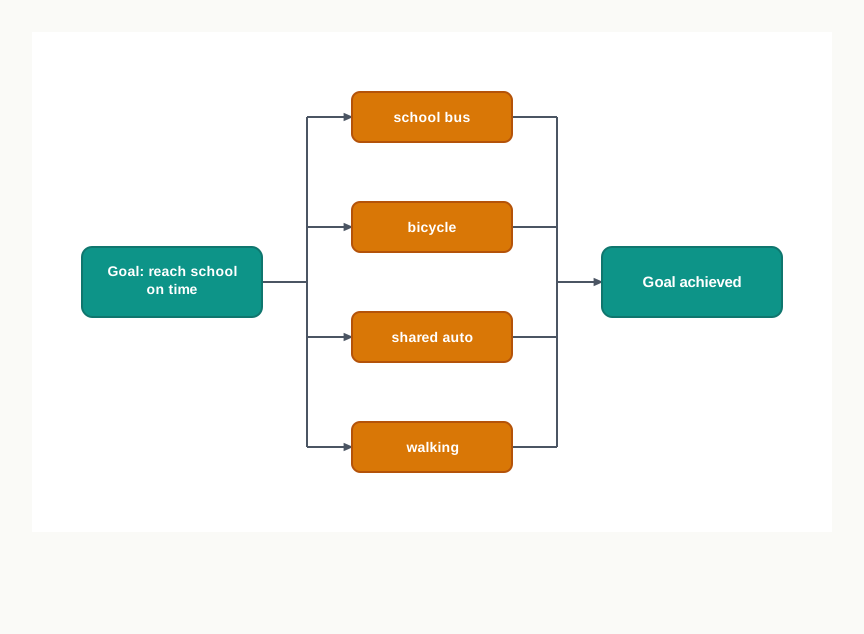
Fig. 4.5 – Interchangeability of resources.
- Manageable — resources can be managed. Since every resource is limited, it should be handled properly and effectively so that it is put to optimum use, giving the maximum output for the minimum input.
This is the plainest of the four and the easiest to test. If a load of clothes can be washed in one bucket of water, using two or three buckets is not thoroughness; it is waste. The same reasoning applies to a study hour, a kilogram of rice or a hundred-rupee note.
Why The Four Work Together
Read on their own, the four characteristics look like separate facts. Used together, they form a way of thinking about any resource in front of you.
Ask what it is useful for here, and for whom. Ask whether it is actually within reach right now, or only in principle. Ask what could take its place if it runs short. Then ask how it can be stretched further. A student who asks those four questions of a shortage will usually find a way round it, which is what the rest of this chapter is about.
4.4 The Need For Managing Resources
One fact sits underneath everything in this chapter: no resource is unlimited. Every one of them is finite. Money runs out, gas cylinders empty, energy fades by evening and the day ends at twenty-four hours whatever is left undone.
That is the whole case for management. Because resources are limited and goals are not, they have to be used effectively rather than merely used. Resources that are misused or wasted are not replaced by wishing.
Managing resources means getting the most out of the resources actually available to you, so that goals are reached faster and with less waste.
The Same Resource, Two Outcomes
Two households of four people each buy the same domestic gas cylinder in the same week. In one, it is finished in three weeks; in the other it lasts five.
The difference is not luck. In the second household, dal is soaked before it is cooked, so it needs a fraction of the fuel. Pans are kept covered. The flame is turned down once the water boils, because a fiercer flame under a boiling pot only heats the kitchen. Two dishes that need the oven go in together.
Nothing was denied to anybody and no meal was skipped. The same resource simply did more work, because somebody thought about it before lighting the stove. This is management, and it applies in exactly the same way to time, money, energy and space.
Management Happens At Every Level
An individual manages her own study hours. A household manages its monthly income, its kitchen and its water. A community manages a pond, a park or a school building. A country manages its forests, its minerals and the skills of its people.
The scale changes; the questions do not. What is the goal, what is available, how will it be used, is it working, and did it work? Those five questions are the management process, and Section 4.5 takes them one at a time.
4.5 The Management Process
Managing a resource is not one action but a sequence of them, and the sequence has a name. The management process has five aspects — planning, organising, implementing, controlling and evaluation. They are taken in that order, because each one supplies what the next one needs.
Fig. 4.6 sets out the sequence. Notice that it does not simply stop at the end; what is learnt in evaluation feeds back into the next round of planning.
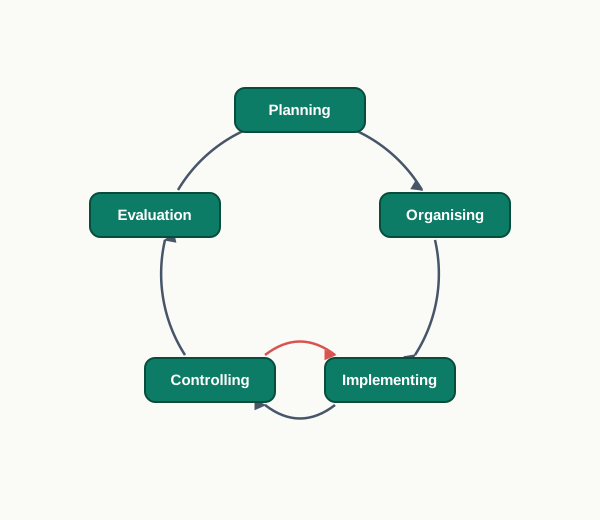
Fig. 4.6 – The management process cycle.
To follow all five clearly, this section works with one situation from start to finish.
A household finds that its food is not lasting the week. Vegetables are wilting at the back of the fridge, somebody has to run to the market on four evenings out of seven, and dinner is often late. Nothing is badly wrong, but the money, the time and the food are all leaking a little. The household decides to do something about it.
4.5.1 Planning
Planning is the first step in any management process. It lets you see the path to a goal before you set out on it, which is the only way of finding out that the path will not work while there is still time to change it.
Planning means selecting a course of action from among several possible ones. That selection is what the four basic questions below are for.
4.5.1.1 The Four Basic Questions
To plan effectively for any goal, ask yourself these four questions in order. The answers together make the plan.
What is our present situation? This means assessing where you stand now — what you have at present, and what you would like to have in future. In our household, the present situation is four market trips a week, wasted vegetables and late dinners.
Where do we want to reach? This means setting specific goals or targets, keeping present and future needs in mind. Here the goal is one market trip a week, no food thrown away, and dinner ready by eight.
What is the gap? The gap is the difference between the present situation and the desired situation. It has to be covered if the goal is to be reached. In this case, the gap is a week’s worth of buying and cooking decisions that nobody is currently taking in advance.
How can we reach the desired goal? Answering this decides how the gap will be covered, and it is where the plan itself is made.
A goal stated without its gap is only a wish. Fig. 4.7 shows why the third question does the real work: it is the distance between the two ends that tells you how much effort and how many resources the plan must arrange for.
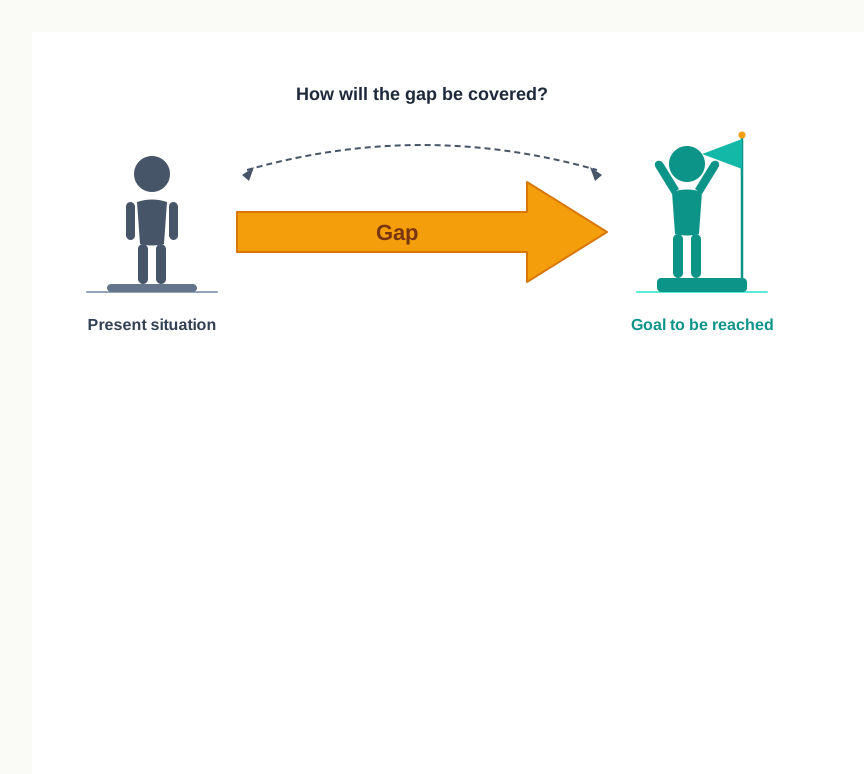
Fig. 4.7 – Present situation, gap and goal.
4.5.1.2 Steps In Planning
Answering the fourth question is itself a small process, with five steps.
- Identifying the problem.
- Identifying different alternatives.
- Choosing between alternatives.
- Acting to carry out the plan, that is, putting the plan into action.
- Accepting the consequences.
Applied to the household: the problem is unplanned buying (step a). The alternatives are to keep buying daily, to buy once a week against a written menu, or to buy once a week and store part of it cooked (step b). The household picks the written menu, because it needs no equipment it does not already own (step c). The menu is written and the shopping list drawn from it (step d).
The fifth step is the one students skip, and it matters most. Accepting the consequences means owning what follows from your choice — including the parts you did not like. Buying once a week means no fresh coriander on Friday. Choosing to study one subject on a given evening means not studying another. Every plan closes some doors, and a planner who refuses to accept that ends up making the same plan again and again without ever carrying it out. The steps are shown in Fig. 4.8.
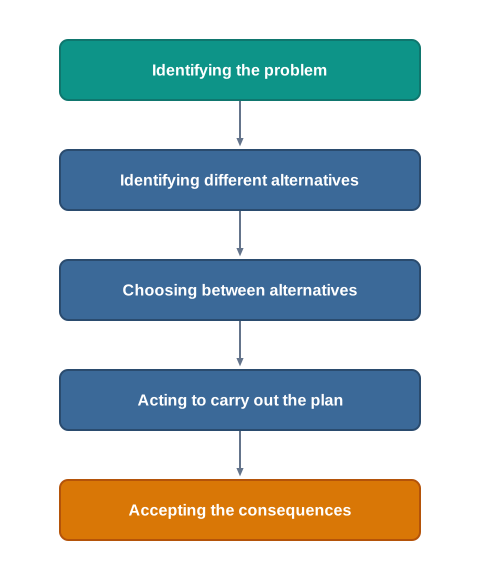
Fig. 4.8 – Steps in planning.
4.5.2 Organising
Organising is collecting and arranging the appropriate resources so that the plan can be carried out effectively and efficiently. Planning decides what will be done; organising makes sure that what is needed is present when the moment comes to do it.
For our household this means setting aside the money for one large purchase instead of four small ones, writing the list, clearing shelf and fridge space, checking that there are enough containers, and settling who will cook on which evening. None of this is cooking. All of it decides whether the cooking goes smoothly.
Organising is where human and non-human resources are brought together deliberately. Left out at this stage, a missing container or an unassigned task will stop the work later, at a point where there is no time to fix it.
4.5.3 Implementing
Implementing is carrying out the plan that has been made. It is the stage at which the work actually happens, using the resources that were organised for it.
Here, implementation is the market trip on Sunday, the vegetables washed and put away, and each evening’s meal cooked as the menu says. If planning and organising were done honestly, implementation is usually the least dramatic stage of the five.
4.5.4 Controlling
Controlling means checking, while the work is going on, that your activities are producing the results you wanted. It monitors the outcome of the activities and makes sure the plan is being followed as intended.
Controlling matters because it supplies feedback — information about how the work is actually going, returned to you in time to act on it. Feedback lets you catch errors and revise your course of action before the goal is lost.
By Wednesday our household notices that the spinach and the coriander have already wilted, although the potatoes and onions are fine. That is feedback. It does not mean the plan has failed; it means one part of it needs correcting. The leafy vegetables move to Monday and Tuesday on next week’s menu, and the sturdier ones to the end of the week.
4.5.5 Evaluation
Evaluation is the final stage, in which the outcomes actually achieved are judged against the outcomes that were wanted. The end result of the task is compared with the desired result.
Evaluation is not only about whether the goal was met. Both the limitations and the strengths of the work are noted, so that they can be used in future to reach goals more effectively.
At the end of the week, our household compares. One market trip instead of four — the goal was met. Almost nothing was thrown away — met. Dinner by eight on five nights out of seven — partly met, and worth asking why the other two ran late. Perhaps those were the two heaviest dishes, and both had been placed on evenings when the person cooking got home last. That is a limitation to correct. The strength was the written menu, which took ten minutes and saved four trips; that is worth keeping.
Controlling and evaluation are easily confused, because both involve checking. Table 4.3 separates them.
What evaluation produces is not a verdict but a better starting point. The strengths and limitations noted at the end of one round become part of the present situation you assess at the beginning of the next, which is why the management process is drawn as a cycle rather than a line.
Resources, then, are what you work with, and management is how you work with them. Among the non-human resources that a household uses daily, one of the most constant is fabric — in clothing, in bedding, in furnishing. The next chapter looks at the fabrics around us and at the properties that decide how each of them behaves.
4.6 Summary
- A resource is anything a person makes use of while carrying out an activity, and which helps in reaching a goal.
- A thing becomes a resource only when it is put to use; the same object may be a resource for one person and not for another.
- Resources are held at every level — individual, family, community and nation.
- Resources are classified in three ways in this chapter:
- human and non-human resources;
- individual and shared resources;
- natural and community resources.
- Human resources are the capacities within a person and can be developed through training and self-development. They are:
- knowledge;
- motivation and interest;
- skills, strength and aptitude;
- time;
- energy.
- Time is distributed equally to all, cannot be regained once lost, and is balanced across three dimensions — work time, non-work time, and rest and leisure time.
- Energy varies from person to person with physical fitness, mental condition, personality, age, family background and standard of living.
- Non-human resources are money and material resources such as space, furniture, clothes, stationery and food items.
- Individual resources are available to one person for personal use, while shared resources are available to many members of a community.
- Shared resources are of two kinds:
- natural resources, which occur in nature and must be used judiciously;
- community resources, generally provided by the government, which must be used optimally and maintained.
- All resources have four characteristics:
- utility, which depends on the goal and the situation;
- accessibility, which varies from person to person and from time to time;
- interchangeability, since almost every resource has a substitute;
- manageable, since resources can be managed for optimum use.
- No resource is unlimited, so resources must be managed rather than merely used.
- Management of resources means using the available human and non-human resources in a planned way, to achieve a goal with the best result and the least waste.
- The management process has five aspects — planning, organising, implementing, controlling and evaluation.
- Planning is producing a scheme for action to achieve a specified goal using available resources, and begins with four basic questions:
- what is our present situation;
- where do we want to reach;
- what is the gap between the two;
- how can we reach the desired goal.
- The basic steps in planning are:
- identifying the problem;
- identifying different alternatives;
- choosing between alternatives;
- acting to carry out the plan;
- accepting the consequences.
- Organising is collecting and arranging the appropriate resources so the plan can be carried out.
- Implementing is carrying out the prepared plan using the organised resources.
- Controlling checks, while the work is going on, that the activities are producing the desired results, and supplies feedback that allows the plan to be corrected in time.
- Evaluation compares the end result with the desired result, and notes the strengths and limitations of the work for use in future goals.
- What evaluation yields feeds back into the next round of planning, which makes the management process a cycle rather than a straight line.
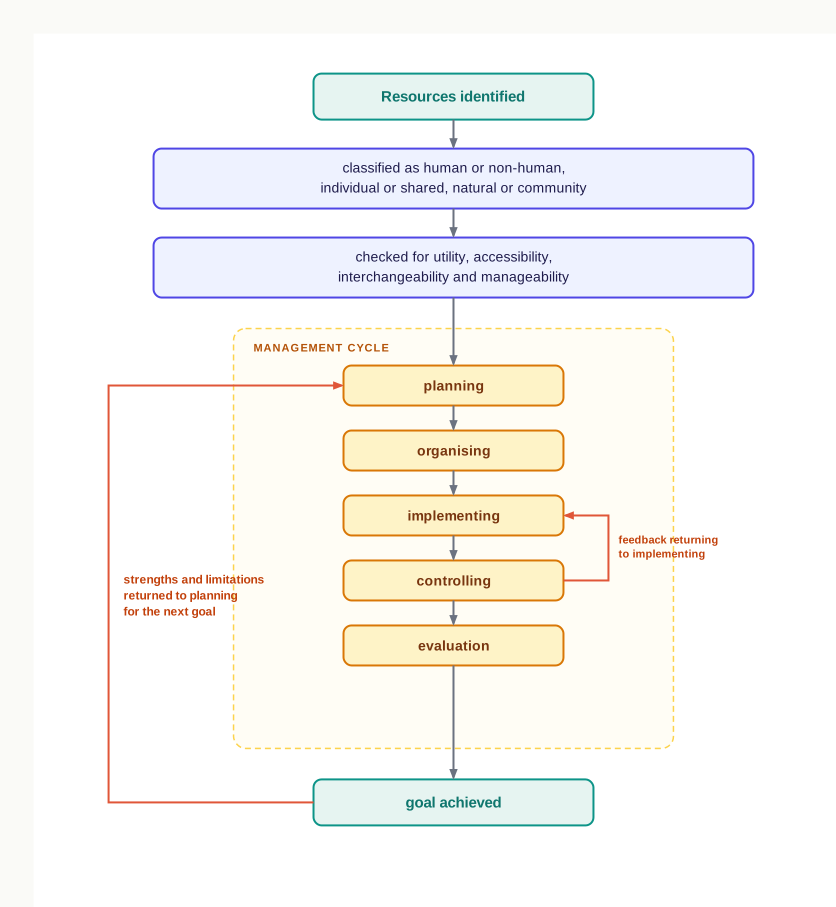
Fig. 4.9 – From resource to goal.
4.7 Key Terms
- Accessibility — how easily a resource can actually be reached and used, which varies from person to person and from time to time.
- Aptitude — a person’s natural readiness to learn and do a particular kind of work.
- Community resources — resources available to a person as a member of a community, generally provided by the government, such as government hospitals, roads, parks and post offices.
- Controlling — checking, while the work is going on, that activities are producing the desired results, and correcting the plan where they are not.
- Evaluation — comparing the end result of a task with the desired result, and noting the strengths and limitations for future use.
- Feedback — information about how work is actually going, returned in time for the plan to be corrected.
- Human resources — the capacities within a person, such as knowledge, motivation, skills and aptitude, time and energy, which can be developed through training and self-development.
- Implementing — carrying out the prepared plan using the resources that have been organised.
- Individual resources — resources available to one person for personal use only.
- Interchangeability — the fact that almost every resource has a substitute able to perform the same function.
- Manageable — the characteristic that resources can be handled and used in a planned way for optimum utilisation.
- Management process — the sequence of five aspects through which resources are managed: planning, organising, implementing, controlling and evaluation.
- Managing resources — getting the most out of the resources available, so that goals are reached with the best result and the least waste.
- Natural resources — resources occurring in nature, such as water, air, soil, forests and mountains, available to all and to be used judiciously.
- Non-human resources — material resources outside the person, that is, money and goods such as space, furniture, clothes, stationery and food items.
- Organising — collecting and arranging the appropriate resources so that a plan can be carried out effectively and efficiently.
- Planning — producing a scheme for action to achieve a specified goal, using the resources that are available.
- Resource — anything, human or material, that a person makes use of while carrying out an activity, and which helps in reaching a goal.
- Shared resources — resources available to many members of a community or society together.
- Utility — the importance or usefulness of a resource in helping a person reach a goal, depending on the goal and the situation.
4.8 Points To Ponder
Time is called the most valuable resource because it cannot be regained once it is spent. Money, too, can be lost and never recovered. What is it about time that still sets it apart from every other resource?
A skill usually grows sharper the more it is used, while a material good wears out. Should a household therefore treat its human and non-human resources by two different sets of rules, and what would each set look like?
A thing becomes a resource only when somebody uses it. Does that mean a public park nobody visits has stopped being a community resource, or is it a resource waiting for a user?
Interchangeability holds that almost every resource has a substitute. Can you think of a resource for which no real substitute exists, and what follows for anyone planning around it?
Controlling asks a person to admit, halfway through, that a plan is not working. Why is that admission so difficult to make, and what does refusing to make it usually cost?
Natural resources cost nothing at the point where they are used. Does costing nothing make them feel unlimited, and how might a community make their real limits visible to everyone who draws on them?
4.9 Objective Questions
- Choose the correct option. Which of the following is a non-human resource? (1 mark)
- Aptitude
- Furniture
- Motivation
- Energy
- Choose the correct option. A resource that is available to a person as a member of society, and is generally provided by the government, is called: (1 mark)
- an individual resource
- a natural resource
- a community resource
- a material resource
- Choose the correct option. At which stage of the management process is feedback used to correct work that is still going on? (1 mark)
- Planning
- Organising
- Controlling
- Evaluation
- Read the assertion and the reason, and choose the correct option. (1 mark) Assertion (A): An old bicycle lying untouched in a store room is not a resource for that household. Reason (R): Something becomes a resource only when it is put to use towards a goal.
- Both A and R are true, and R is the correct explanation of A.
- Both A and R are true, but R is not the correct explanation of A.
- A is true but R is false.
- A is false but R is true.
- Read the assertion and the reason, and choose the correct option. (1 mark) Assertion (A): Time is a resource distributed equally to every person. Reason (R): Time once lost cannot be regained.
- Both A and R are true, and R is the correct explanation of A.
- Both A and R are true, but R is not the correct explanation of A.
- A is true but R is false.
- A is false but R is true.
- Match the resources in Column A with their correct classification in Column B. (1 mark)
| Column A | Column B |
|---|---|
| a. Knowledge | i. Natural resource |
| b. Post office | ii. Human resource |
| c. Air | iii. Community resource |
Fill in the blank. The difference between the present situation and the desired situation is known as the ______________. (1 mark)
State whether the following statement is true or false. The accessibility of a resource stays the same for all people at all times. (1 mark)
Name the following. The three dimensions across which time has to be balanced. (1 mark)
Pick the odd one out and give a reason for your choice: money, stationery, aptitude, furniture. (1 mark)
4.10 Check Your Concepts
Define ‘utility’ as a characteristic of resources, and give one example of a material whose utility changes with the purpose it is put to. (2 marks)
List the five aspects of the management process in the order in which they are carried out. (2 marks)
Give a reason for each of the following. (3 marks)
- Human resources are said to grow rather than shrink when they are used.
- A shared resource has to be used with more restraint than an individual one.
- Accepting the consequences is treated as a step in planning.
What would happen if the controlling stage were left out of the management process? State two consequences and explain each briefly. (3 marks)
Differentiate between human and non-human resources, stating the basis of difference in each case. Give any four points. (4 marks)
Explain the four basic questions that have to be answered while planning. Use one goal of your choice to illustrate all four. (4 marks)
Explain the five aspects of the management process, using one household situation to clarify each aspect. (5 marks)
4.11 Identify & Label
Study Fig. 4.4. Identify any three community resources shown in it, and state for each whether it is a human or a non-human resource. (3 marks)
Look at Fig. 4.3. Name the three parts into which the day has been divided, and give one activity that belongs to each part. (3 marks)
Refer to Fig. 4.7. Identify what is represented by the space between the two ends of the diagram, and state why a plan cannot be made until this has been worked out. (2 marks)
4.12 Case & Application Based Questions
- Read the situation and answer the questions that follow.
A senior secondary school has one computer laboratory with twenty working computers. Six sections have to use it every week, and each section has forty students. Teachers report that students get very little practice time, and the school cannot buy more computers this year.
- Is the computer laboratory an individual resource or a shared resource? Give a reason for your answer. (1 mark)
- Identify one human and two non-human resources involved in running the laboratory. (2 marks)
- Which characteristic of resources explains why the same twenty computers can be made to serve more students without buying new ones? (1 mark)
- Describe what the school would have to do at the organising stage in order to give every section equal practice time. (2 marks)
- Read the situation and answer the questions that follow.
Meera has been asked to arrange the refreshments for her school’s annual function. Sixty people will attend, the amount fixed for the purpose is ₹3,000, and the function is two days away. Three classmates have offered to help her, but one of them is free only on the second day.
- List the human and the non-human resources available to Meera. (2 marks)
- State the present situation, the goal and the gap in this case. (3 marks)
- Explain how the availability of the third helper should change the way she organises the two days. (2 marks)
- At what point would Meera come to know that her plan needs correcting, and what should she do at that point? (2 marks)
4.13 Practice With Data
- The table below records how one student spent a Sunday. Study it and answer the questions that follow.
| Time | Activity |
|---|---|
| 6.00–7.00 a.m. | Waking, bathing and getting ready |
| 7.00–8.00 a.m. | Helping in the kitchen and eating breakfast |
| 8.00–11.00 a.m. | Studying |
| 11.00 a.m.–1.00 p.m. | Travelling to the market and back with a household list |
| 1.00–2.00 p.m. | Lunch |
| 2.00–3.30 p.m. | Sleeping |
| 3.30–6.00 p.m. | Studying |
| 6.00–7.30 p.m. | Playing |
| 7.30–9.00 p.m. | Dinner and clearing up |
| 9.00–10.00 p.m. | Watching television |
| 10.00 p.m.–6.00 a.m. | Sleeping |
- Classify each entry as work time, non-work time, or rest and leisure time. (3 marks)
- Calculate the total number of hours spent under each of the three dimensions. (2 marks)
- Which dimension takes the largest share of this day? (1 mark)
- Suggest one change that would improve the balance of the day, and give the reason for your suggestion. (2 marks)
- The table below shows four ways of covering the same six-kilometre journey to school. Study it and answer the questions that follow.
| Way of travelling | Time taken | Cost per trip |
|---|---|---|
| Walking | 75 minutes | ₹0 |
| Bicycle | 30 minutes | ₹0 |
| School bus | 35 minutes | ₹25 |
| Shared auto | 20 minutes | ₹40 |
- Which characteristic of resources does this table illustrate? (1 mark)
- Name the two resources that are being traded against each other in the table. (1 mark)
- A student finds that classes begin in twenty-five minutes. Which of the four options are still open to her, and why? (2 marks)
- Give one reason why the cheapest option in the table is not automatically the best choice for every person. (2 marks)