Chapter 2: Methods of Enquiry in Psychology
In a Class XI staffroom in a small town in Rajasthan, two teachers disagree. One says that students learn better in the first period, when the mind is fresh. The other says the first period is wasted, because half the class is still half-asleep. Both have taught for years. Both are certain. Both cannot be right.
You have probably watched an argument like this end the way most arguments end — with the louder person winning, or with everybody agreeing to disagree. But suppose you wanted to actually settle it. What would you need?
You would need to say clearly what “learn better” means, so that it can be measured — marks in a short test, perhaps, or how much students remember a week later. You would need to compare a first-period class with an afternoon class, keeping the teacher, the topic and the test the same, so that any difference you find is really about the time of day and not about something else. You would need to record what happens rather than what you expected to happen. And you would need enough students for the result to mean something.
The moment you begin thinking like this, you have stopped guessing and started doing psychology. Psychologists face exactly this problem, magnified: human beings are their subject, and human beings are variable, private, and easily influenced by the very act of being studied.

Fig. 2.1 – From everyday argument to scientific observation.
This chapter will answer each of these questions.
2.1 Introduction
In the first chapter you read that psychology is the study of experiences, behaviours and mental processes. That tells you what psychologists study. It does not yet tell you how they study it — and in science, the “how” matters just as much as the “what”.
Think about the sorts of things psychologists want to know. Why does a child who reads well at home freeze when asked to read aloud in class? Does watching violence on screen make children more aggressive? How do people cope after losing their home in a flood? These are not questions you can settle by arguing, or by trusting the opinion of the most experienced person in the room. They have to be investigated.
Like all scientists, psychologists set out to describe, predict, explain and control what they study. To do this they do not rely on casual impressions. They rely on formal, systematic observation — planned in advance, recorded carefully, and open to being checked by someone else. It is this methodology, more than the subject matter, that makes psychology a scientific enterprise rather than a collection of opinions about people.
Why one method is never enough
Questions about human behaviour are enormously varied, and no single method can answer all of them. A method that is excellent for establishing a cause is often useless for studying grief; a method that captures the richness of one person’s life cannot tell you what a whole population thinks. So psychologists keep several tools in the box. The ones used most often are observation, the experimental method, correlational research, survey research, psychological testing and case study. Each has its own strengths, and each has its own blind spots.
This chapter takes you through four things in turn: the goals of psychological enquiry and the steps a researcher follows; the nature of the information, or data, that psychologists collect; the main methods available for collecting it; and the limitations and ethical responsibilities that come with studying human beings. By the end you should be able to look at a research question and ask the question a psychologist asks first — how would I actually find out?
2.2 Goals of Psychological Enquiry
Every science begins by deciding what it is trying to achieve. Psychology is no different. Like any scientific research, psychological enquiry has five goals: description, prediction, explanation and control of behaviour, and the application of the knowledge so generated. All five are pursued in an objective manner — that is, in a way that does not depend on the private preferences of the person doing the research.
These five goals form a ladder. Each one rests on the one below it, and you cannot skip a rung. Let us take them in turn.
Description
In a psychological study, the first task is to describe a behaviour or a phenomenon as accurately as possible. A good description does something that sounds obvious but is surprisingly difficult: it separates the behaviour you are interested in from all the other behaviours around it.
Suppose a researcher is interested in the study habits of students. “Study habits” is a loose everyday phrase. What does it actually contain? It may include attending all classes regularly, submitting assignments on time, planning a study schedule, studying according to that schedule, and revising work on a daily basis. Each of these can be broken down further still.
The researcher therefore has to state clearly what she or he means by study habits before observing anyone. Description also requires recording — writing down what happened, rather than trusting memory or impression. Only a behaviour that has been described precisely and recorded faithfully can be understood properly.
Prediction
The second goal is prediction. Once you can describe a behaviour accurately, you begin to see how it is related to other behaviours, events or phenomena. That relationship allows you to forecast: under certain conditions, this behaviour is likely to occur — within a certain margin of error.
Notice that phrase. Psychological prediction is never a guarantee about one particular person on one particular day. It is a statement about likelihood.
For example, on the basis of research a psychologist may establish a positive relationship between the amount of time spent studying and achievement in different subjects. If you now learn that a particular child devotes more time to study, you can predict that the child is likely to score well in the examination. Prediction becomes more accurate as the number of persons observed increases — a pattern seen in five students may be an accident, while the same pattern in five hundred is much harder to dismiss.
Explanation
The third goal is explanation: identifying the causal factors, or determinants, of behaviour. Psychologists want to know what makes a behaviour occur — and, equally, the conditions under which it does not occur.
What makes some children more attentive in class than others? Why do some children devote less time to study than their classmates? To answer such questions, the researcher looks for the antecedent conditions of the behaviour — the conditions that came before it and led to it — so that a cause-and-effect relationship between two variables or events can be established.
Control
If you can explain why a behaviour occurs, you can begin to change it — by altering the conditions that produce it. This is what psychologists mean by control, and the word covers three quite different things: making a behaviour happen, reducing it, or enhancing it.
Take study hours again. You may leave the number of hours a student devotes to study unchanged; you may reduce them; or you may bring about an increase in them. Each of these is an instance of control. The change brought about in a person’s behaviour through psychological treatment — that is, through therapy — is a good example of control in its most valuable form.
Application
The final goal of scientific enquiry is to bring about positive changes in the lives of people. Psychological research is conducted to solve problems in a wide range of settings — schools, hospitals, workplaces, sports fields, disaster sites. Because of these efforts, the quality of life of people has become a major concern of psychologists, not an afterthought.
2.2.1 Steps in Conducting Scientific Research
Science is not so much defined by what it investigates as by how it investigates. Astronomy and psychology study utterly different things; what makes both of them sciences is the way they go about their business.
The scientific method attempts to study an event or phenomenon in a manner that is objective, systematic and testable. Each of those three words carries weight.
Objectivity
Objectivity means that if two or more persons independently study the same event, both of them should, to a great extent, arrive at the same conclusion. If you and your friend measure the length of a table using the same measuring device, it is likely that both of you would reach the same conclusion about its length. The measurement does not change depending on who is holding the tape.
Objectivity is harder to achieve in psychology than in measuring a table, because the thing being measured — a person — reacts to being measured, and the person doing the measuring has beliefs about what she expects to find. Much of the machinery you will meet later in this chapter exists precisely to protect objectivity.
A systematic sequence of steps
The second characteristic of scientific research is that it follows a systematic procedure. It moves through a fixed sequence of steps: conceptualisation of a problem, collection of data, drawing conclusions, and revising research conclusions and theory. The sequence matters, because each step supplies what the next one needs. You cannot collect data sensibly until you know what your problem is, and you cannot draw a conclusion from data you have not yet collected.
The sequence is also a circle rather than a straight line, as Fig. 2.2 shows: the last step leads back to the first, and research begins again.
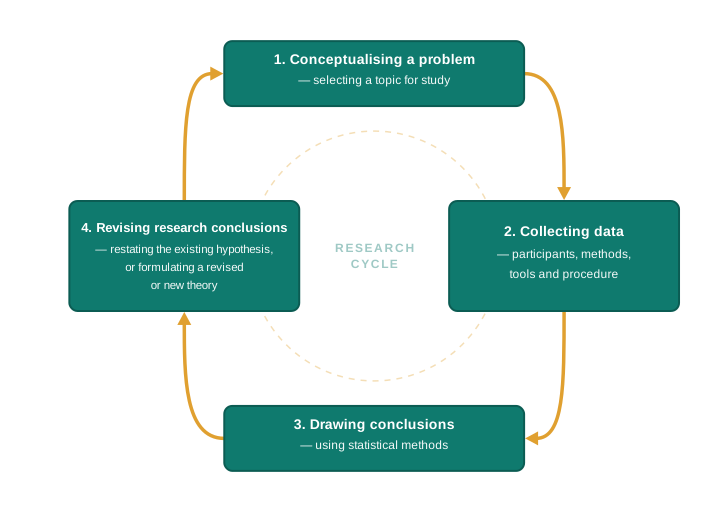
Fig. 2.2 – Steps in conducting scientific research.
Step 1: Conceptualising a problem
The process of scientific research begins when a researcher selects a theme or topic for study. She then narrows the focus and develops specific research questions or problems. This narrowing is done on the basis of a review of past research, of her own observations, and of personal experience.
Return to the researcher interested in the study habits of students. She may first identify the different facets of study habits, and then decide which of them she actually wants to investigate — and where. Study habits shown in the class and study habits shown at home are two different problems, and mixing them up would spoil the study before it began.
In psychology we study a diverse range of problems related to behaviour and experience. These problems may be related to:
- Understanding our own behaviour — for example: how do I feel and behave when I am in a state of joy or grief? How do we reflect on our own experiences and behaviour? Why do we forget?
- Understanding another individual’s behaviour — for example: is Abhinav more intelligent than Ankur? Why is someone always unable to complete her or his work on time? Can the habit of smoking be controlled? Why do some people suffering from chronic illness not take their medicines?
- Group influences on individual behaviour — for example: why does Rahim spend more time meeting people than doing his work? Why does a cyclist perform better when cycling before a group of persons than when cycling alone?
- Group behaviour — for example: why does risk-taking behaviour increase when people are in a group?
- Behaviour at the organisational level — for example: why are some organisations more successful than others? How can an employer increase the motivation of employees?
The list is long, and you will meet many of these facets in later chapters.
Once the problem has been identified, the researcher takes the next step: she develops a tentative answer to it. This tentative answer is called a hypothesis. A hypothesis is not a wild guess; it is a considered statement, built on earlier evidence or observation, and framed in a way that allows it to be tested and found true or false.
For example, on the basis of earlier evidence or your own observation, you might develop the hypothesis that the greater the amount of time spent by children in viewing violence on television, the higher is the degree of aggression displayed by them. In your research, you will now try to establish whether this statement is true or false.
Step 2: Collecting data
The second step is to collect data. Before a single observation is made, the researcher must develop a research design — a blueprint of the entire study. Drawing up this blueprint means taking decisions about four things: the participants, the methods, the tools, and the procedure.
Participants. Depending on the nature of the study, the researcher decides who the participants (or informants) will be. They could be children, adolescents, college students, teachers, managers, clinical patients, industrial workers, or any group of individuals in whom, or where, the phenomenon under investigation is found. A study of examination anxiety cannot be conducted on people who never sit examinations.
Methods. The second decision concerns the method of data collection — observation, experiment, correlational study, case study, and so on. The choice depends on the question, not on the researcher’s convenience.
Tools. The researcher then decides on the appropriate tools: an interview schedule, an observation schedule, a questionnaire, a psychological test.
Procedure. Finally, she decides how the tools will be administered — to one person at a time, or to a whole group together. Only after all four decisions are made does the actual collection of data begin.
Step 3: Drawing conclusions
The next step is to analyse the data that have been collected, so as to understand what they mean. This is done through statistical procedures. It may involve graphical representations — a pie chart, a bar diagram, a table of cumulative frequencies — and the use of various statistical methods.
The purpose of analysis is not decoration. It is to verify the hypothesis and to draw conclusions accordingly: do the numbers, taken as a whole, support what the researcher expected, or do they not?
Step 4: Revising research conclusions
Suppose the researcher began with the hypothesis that a relationship exists between viewing violence on television and aggression among children. Now she must see whether her conclusions support that hypothesis.
If they do, the existing hypothesis or theory stands confirmed. If they do not, she revises it, or states an alternative hypothesis or theory, and tests it again on the basis of new data — drawing conclusions that may in turn be verified by future researchers.
This is why the last step curves back to the first. Research is a continuous process, not a task that is finished. A finding is never the end of the story; it is a better starting point for the next question.
2.2.2 Alternative Paradigms of Research
Everything you have read so far belongs to one broad view of how psychology should work. It is worth pausing to notice that it is a view — a set of assumptions — and not the only one available.
The scientific paradigm
Many psychologists hold that human behaviour can and should be studied by following the methods adopted by sciences such as physics, chemistry and biology. The key assumption of this view is that human behaviour is predictable, is caused by internal and external forces, and can be observed, measured and controlled.
In order to achieve these goals, psychology for the larger part of the twentieth century restricted itself to the study of overt behaviour — behaviour that could be seen and measured from the outside. It deliberately did not focus on personal feelings, experiences and meanings, because these could not be measured in the way a physicist measures temperature.
The interpretive paradigm
In recent years a different approach, known as interpretive, has emerged. It emphasises understanding over explanation and prediction. Its starting point is that human behaviour and experience are complex and variable, and that the method used to investigate them should therefore be different from the method used to investigate the physical world.
This viewpoint emphasises how human beings give meaning to events and actions, and how they interpret them as they occur in a particular context. Consider people who are suffering because of external causes — those affected by a tsunami, an earthquake or a cyclone — or because of internal causes, such as a prolonged illness. In such situations, objective measurement is neither possible nor desirable. Everyone interprets reality in her or his own way, on the basis of past experience and context. What we need to understand is that subjective interpretation of reality.
The goal here is to explore the different aspects of human experience and behaviour without attempting to disturb their natural flow. Think of an explorer. She does not know exactly what she is looking for, how to look for it, or what to expect. She is mapping an uncharted wilderness with little or no prior knowledge of the area, and her main task is to record detailed descriptions of what is actually found in that particular place. The researcher working in the interpretive tradition does something similar.
The two paradigms are not enemies, and a mature discipline needs both. The scientific approach can tell you how many people in a disaster-hit district show symptoms of distress; only the interpretive approach can tell you what the disaster meant to them.
Studying oneself
Both the scientific and the interpretive traditions are concerned with studying the behaviour and experiences of other people. But what about our own?
As a student of psychology, you may ask yourself: why am I feeling sad today? Many times you take a pledge that you will control your diet, or devote more time to studies — and then, when it actually comes to eating or studying, you forget all about it. You might well wonder why a person does not have control over her or his own behaviour.
Should psychology not help you to analyse your own experiences, thought processes and behaviour? It certainly should. Psychological enquiry does aim at understanding the self, by reflecting on one’s own experiences and insights. The discipline is not only a way of looking at other people.
2.3 Nature of Psychological Data
You may want to consider how psychological data differ from the data of other sciences. A physicist measuring the boiling point of a liquid, and a psychologist measuring anxiety before an examination, are both collecting information — but the information behaves very differently in the two cases.
Psychologists collect a wide variety of information, from different sources, using diverse methods. This information is called data (the singular is datum, a Latin word meaning “something given”). Psychological data relate to people’s covert or overt behaviour, to their subjective experiences, and to their mental processes.
Data are the most important input in psychological enquiry. They approximate reality to some extent, and they give us an opportunity to verify or falsify our ideas, hunches and notions. Without data, an idea about behaviour remains an opinion, however confidently it is held.
Data are always located in a context
It should be understood that data are not independent entities. They are located in a context, and are tied to the method and the theory that govern the process of their collection. In other words, data are never independent of the physical or social setting, of the persons involved, or of the time at which the behaviour occurs.
You already know this from your own life. We behave differently when we are alone than when we are in a group, and differently at home than at work. You may hesitate to speak in front of your parents and teachers, but not at all when you are with friends. Which of these is “the real you”? Both are — and a researcher who records only one of them has recorded only part of the picture.
You may also have noticed that not all people behave in exactly the same manner in the same situation. Two students facing the same examination may respond very differently to it.
Further, the method of data collection used — survey, interview, experiment — and the characteristics of the respondents themselves (individual or group, young or old, male or female, rural or urban) also influence the nature and quality of the data obtained. It is quite possible that when you interview a student, she reports behaving in a particular way in a given situation; but when you go and actually observe her, you find the opposite of what she reported.
Data do not speak for themselves
Another important feature of data is that they do not, in themselves, tell us anything about reality. A number on a page says nothing. Inferences have to be made from data, and it is the researcher who attaches meaning to them by placing them in their proper context.
Types of data collected in psychology
In psychology, different types of data or information are collected. Some of the main types are these.
Demographic information. This generally includes personal information such as name, age, gender, birth order, number of siblings, education, occupation, marital status, number of children, locality of residence, caste, religion, parental education and occupation, and family income.
Physical information. This category includes information about ecological conditions (hilly, desert or forest), mode of economy, housing conditions, size of rooms, and the facilities available at home, in the neighbourhood and in the school, as well as the mode of transportation.
Physiological data. In some studies, physical, physiological and psychological data are collected together. These may include height, weight, heart rate, level of fatigue, Galvanic Skin Resistance (GSR), the electrical activity of the brain measured by an Electro-encephalograph (EEG), blood oxygen levels, reaction time, duration of sleep, blood pressure, pattern of dreams, amount of salivation, and — in the case of animal studies — running and jumping rates.
Psychological information. The psychological information collected may relate to such areas as intelligence, personality, interest, values, creativity, emotions, motivation, psychological disorders, illusions, delusions, hallucinations, perceptual judgment, thought processes, consciousness and subjective experiences.
The first three categories may look like the “background details” of a study, but they are rarely irrelevant. A child’s performance on a test of reasoning cannot be interpreted sensibly without knowing something about her age, her schooling and the conditions in which she lives.
The forms in which data arrive
From the point of view of measurement, much of the above information is somewhat crude. It may arrive in the form of categories (high or low, yes or no); in the form of ranks, which provide ordinal data — first, second, third, fourth; or in the form of scores on a scale, such as 10, 12, 15, 18 or 20.
We also obtain verbal reports, observation records, personal diaries, field notes and archival data. These do not come as numbers at all, and cannot be forced into them without losing what makes them valuable. Such information is analysed separately, using qualitative methods, which you will read about later in this chapter.
The lesson to carry forward is that the form of the data is not an accident. It follows from the method used, and it decides how the data can be analysed afterwards. A researcher who chooses a method has already, without quite realising it, chosen what kind of answer she will be able to give.
2.4 Some Important Methods in Psychology
In the previous section you read about the wide variety of data that psychologists collect. That variety immediately creates a problem: no single method of enquiry can gather all of it. A method that captures the exact moment at which a rat presses a lever will not capture what a widow feels about her loss.
Psychologists therefore use a range of methods — observation, the experimental method, correlational research, survey research, psychological testing and case study — and choose among them according to the question they are asking. The aim of this section is to help you see which method suits which purpose. For example:
- You can observe the behaviour of spectators watching a football match.
- You can conduct an experiment to see whether children taking an examination do better in the classroom in which they had studied the subject, or in the examination hall — a question about cause and effect.
- You can correlate intelligence with, say, self-esteem, for purposes of prediction.
- You can survey students’ attitudes towards the privatisation of education.
- You can use psychological tests to find out individual differences.
- You can conduct a case study on the development of language in a child.
Notice that the question decides the method, and not the other way round. The main characteristics of each of these methods are described below.
2.4.1 Observational Method
Observation is a very powerful tool of psychological enquiry, and it is the most effective method for describing behaviour. In daily life we are busy observing things all day long — and yet, much of the time, we notice almost nothing. We see, but we do not observe. Of the hundreds of things that pass before our eyes each day, we remain aware of only a few.
You may have experienced the opposite as well. If you watch a person or an event carefully for some time, you come to know a great deal about them that you would otherwise have missed. Scientific observation takes this ordinary human capacity and disciplines it.
How scientific observation differs from everyday looking
A scientific observation differs from day-to-day observation in three important respects.
Selection. Psychologists do not observe all the behaviour they encounter; they select a particular behaviour for observation. Suppose you want to know how children studying in Class XI spend their time in school. Two things are possible at this stage. As a researcher, you might feel that you already have a fairly good idea of what happens in a school; in that case you would prepare a list of activities in advance and go to the school to find out how often each occurs. Alternatively, you might feel that you do not know what happens there, and that you would like to discover it through your observation. Both are legitimate starting points, but they lead to rather different studies.
Recording. While observing, a researcher records the selected behaviour, using various means: marking tallies for an already identified behaviour whenever it occurs, taking notes describing each activity in greater detail using shorthand or symbols, photographs, or video recording. Recording is what turns fleeting behaviour into data.
Analysis of data. After the observations have been made, psychologists analyse whatever they have recorded, in order to derive some meaning from it.
It is important to know that making good observations is a skill, and like any skill it improves with training. A good observer knows what she is looking for, whom she wants to observe, when and where the observation needs to be made, in what form it will be recorded, and what methods will be used to analyse the observed behaviour. All of this is settled before the observation begins, not afterwards.
Types of Observation
Observation can be of the following types.
- Naturalistic versus controlled observation. When observations are made in natural or real-life settings — as in the school example above — it is called naturalistic observation. Here the observer makes no effort to control or manipulate the situation in order to make the observation. This type of observation is carried out in hospitals, homes, schools, day-care centres, and similar places.
Very often, however, you need to control certain factors that influence behaviour but are not the focus of your study. For this reason, many studies in psychology are conducted in a laboratory. In the study described below, for instance, smoke could only be introduced into a room under controlled laboratory conditions. This type of observation, called controlled laboratory observation, is what we actually obtain in laboratory experiments.
- Non-participant versus participant observation. Observation can be done in two ways. One, you may decide to observe the person or event from a distance. Two, the observer may become part of the group being observed.
In the first case, the person being observed may not be aware that she is being observed. Suppose you want to study the pattern of interaction between teachers and students in a particular class. There are several ways of doing this. You can install a video camera to record the classroom activities and analyse the recording later. Alternatively, you may decide to sit in a corner of the class without interfering or participating in any way. This is called non-participant observation. The danger in such a set-up is that the very fact that an outsider is sitting and observing may itself change the behaviour of the students and the teacher.
In participant observation, the observer becomes a part of the school, or of the group of people being observed. Here the observer takes some time to establish a rapport with the group, so that its members begin to accept her as one of themselves. The degree of involvement of the observer with the group will vary depending on the focus of the study.
Strengths and limitations of observation
The advantage of the observation method is that it enables the researcher to study people and their behaviour in a naturalistic situation, as it actually occurs, rather than as people report it.
However, the method is labour intensive, time consuming, and open to the observer’s bias. Our observation is influenced by our own values and beliefs about the person or the event. You are familiar with the saying, “We see things as we are and not as things are.” Because of our biases, we may interpret things quite differently from what the participants actually meant.
The safeguard is a simple discipline: the observer should record the behaviour as it happens, and should not interpret the behaviour at the time of observation itself. Interpretation comes later, at the stage of analysis, when the record can be examined coolly and, if necessary, by more than one person.
2.4.2 Experimental Method
Observation tells you what happens. It does not tell you what makes it happen. For that, psychologists turn to the experimental method.
Experiments are generally conducted to establish a cause-and-effect relationship between two sets of events or variables in a controlled setting. An experiment is a carefully regulated procedure in which changes are made in one factor, and the effect of those changes is studied on another factor, while all other related factors are held constant.
In an experiment, the cause is the event being changed or manipulated. The effect is the behaviour that changes because of that manipulation.
The Concept of Variable
You have just read that in the experimental method a researcher attempts to establish a causal relationship between two variables. But what is a variable?
Any stimulus or event that varies — that is, takes on different values, or changes — and that can be measured is a variable.
An object by itself is not a variable; its attributes are. The pen you use for writing is not a variable. But pens come in different shapes, sizes and colours, and each of these is a variable. The room in which you are sitting is not a variable, but its size is, since rooms come in different sizes. The height of individuals (5’ to 6’) is another variable. People of different races have different colours, and young people now dye their hair in different colours — so hair colour becomes a variable. Intelligence is a variable, because there are people with varying levels of it: high, moderate and low. In the study described above, the presence or absence of other persons in the room was a variable.
The variation, then, can be in the quality of objects or events, or in their quantity.
Variables are of many types. Here we shall focus on two.
Independent variable. The independent variable is the variable that is manipulated or altered, or whose strength is varied, by the researcher in the experiment. It is the effect of this change that the researcher wants to observe. In the experiment conducted by Latané and Darley, the researchers wanted to examine the effect of the presence of other persons on the reporting of smoke. The independent variable was therefore the presence or absence of other persons in the room.
Dependent variable. The variable on which the effect of the independent variable is observed is called the dependent variable. It represents the phenomenon the researcher wishes to explain. It is expected that a change in the dependent variable will follow from changes in the independent variable. In the study above, the frequency of reporting of smoke was the dependent variable.
Thus the independent variable is the cause, and the dependent variable is the effect, in any experimental situation.
One must remember that independent and dependent variables are interdependent. Neither can be defined without the other. The same characteristic — say, anxiety — may be an independent variable in one study and a dependent variable in another, depending on the researcher’s question.
Extraneous variables. The independent variable chosen by the researcher is not the only variable that influences the dependent variable. Any behavioural event contains many variables, and it always takes place within a context. Independent and dependent variables are chosen because of the researcher’s theoretical interest; but there are many other relevant variables that also influence the dependent variable, in which the researcher happens not to be interested. These are called extraneous variables.
Extraneous variables have to be controlled in an experiment. If they are not, the researcher can never say whether the change in the dependent variable was produced by her independent variable, or by something else that happened to differ between the groups. Controlling them is what allows a researcher to pin-point the cause-and-effect relationship between the independent and the dependent variables.
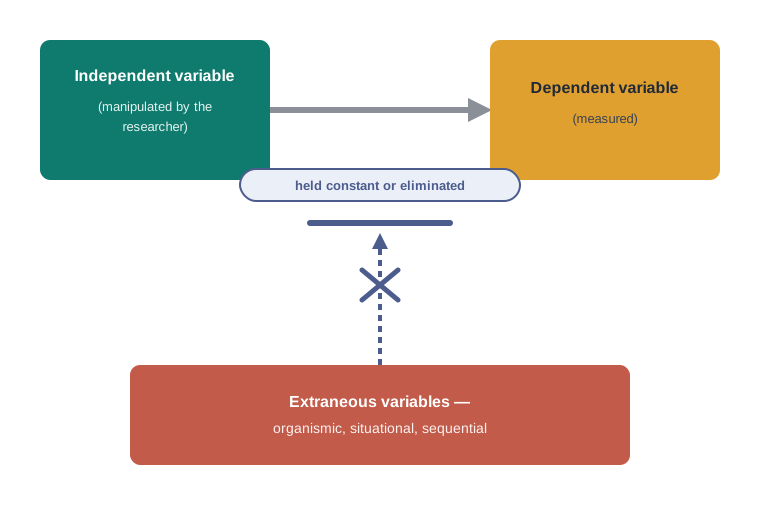
Fig. 2.3 – Logic of the experimental method.
Experimental and Control Groups
Experiments generally involve one or more experimental groups and one or more control groups.
An experimental group is a group whose members are exposed to the manipulation of the independent variable. The control group is a comparison group, treated in every way like the experimental group except that the manipulated variable is absent in it.
The control group is the quiet hero of the experimental method. Without it, you would know how the experimental group behaved, but you would have nothing to compare it with — and a result with nothing to compare it with means nothing at all.
Consider how this worked in the study by Latané and Darley. There were two experimental groups and one control group. The participants were sent to three types of rooms. In one room, no one else was present — this was the control group. In the other two rooms, two persons were already seated — these were the experimental groups. Of these two experimental groups, one group was made up of confederates instructed not to do anything when smoke filled the room; the other group was given no instructions.
After the experimental manipulation had occurred, the performance of the control group, measured in terms of the reporting of smoke, was compared with that of the experimental groups. It was found that participants in the control group reported the emergency in the largest numbers, followed by members of the first experimental group, where the participants had not been given any instructions; the second experimental group, consisting of confederates, reported the emergency the least.
Controlling relevant variables
It should be noted that in an experiment, apart from the experimental manipulation itself, all other conditions are kept constant for both the experimental and the control groups. In the smoke study, for instance, the speed with which smoke started entering the rooms, the total amount of smoke in the rooms, and the physical and other conditions of the rooms were similar for all three groups.
The distribution of participants to the experimental and control groups was done randomly — a method that ensures that each person has an equal chance of being included in any of the groups. Randomness matters more than it may appear. If the experimenter had put only males in one group and only females in the other, any difference in the results could have been due to the difference in gender rather than to the experimental manipulation, and the study would have proved nothing.
All relevant variables in experimental studies that might influence the dependent variable need to be controlled. These are of three major types:
- Organismic variables — characteristics within the person, such as anxiety, intelligence and personality.
- Situational or environmental variables — conditions operating at the time of the experiment, such as noise, temperature and humidity.
- Sequential variables — variables that arise from the order in which things are done. These become important when participants have to be tested under several conditions. Exposure to many conditions may result in experimental fatigue, or in practice effects, which influence the results and make the findings difficult to interpret.
In order to control relevant variables, experimenters use several control techniques. Some of them are described below.
- Elimination. Since the goal of an experiment is to minimise extraneous variables, the best way to handle them is to remove them from the experimental setting altogether. For example, the experiment may be conducted in a sound-proof, air-conditioned room, so as to eliminate the effects of noise and temperature.
- Holding constant. Elimination is not always possible — you cannot eliminate the time of day. In such cases, an effort is made to hold the variable constant, so that its effect remains the same throughout the experiment.
- Matching. For controlling organismic variables (such as fear or motivation) and background variables (such as rural or urban residence, caste, or socio-economic status), matching is used. In this procedure the relevant variables in the two groups are equated, or held constant, by taking matched pairs across the conditions of the experiment.
- Counter-balancing. This technique is used to minimise the sequence effect. Suppose two tasks are to be given in an experiment. Rather than giving both tasks in the same order to everyone, the experimenter interchanges the order. Half the group may receive the tasks in the order A and B, while the other half receives them in the order B and A; or the same individual may be given the tasks in the order A, B, B, A.
- Random assignment. Assigning participants randomly to the different groups eliminates any potential systematic differences between the groups.
Strengths and limitations of the experimental method
The strength of a well-designed experiment is that it can provide, relatively speaking, convincing evidence of a cause-and-effect relationship between two or more variables. No other method does this as well.
But the method has three well-known limitations.
First, experiments are often conducted in a highly controlled laboratory situation. In this sense they only simulate situations that exist in the outside world, and they are frequently criticised for exactly this reason. The results they produce may not generalise well, or may not apply to real situations. In other words, laboratory experiments may have low external validity.
Second, it is not always feasible to study a particular problem experimentally. An experiment to study the effect of nutritional deficiency on the intelligence level of children cannot be conducted, because it would be ethically wrong to starve anyone.
Third, it is difficult to know, and to control, all the relevant variables. A researcher can only control the extraneous variables she has thought of.
Field Experiments and Quasi Experiments
If a researcher wants high generalisability, or wants to study something that cannot be studied in a laboratory at all, she may go out to the field — the natural setting where the phenomenon actually exists. She then conducts a field experiment.
For example, a researcher may want to know which method leads to better learning among students: the lecture method or the demonstration method. She may prefer to conduct this experiment in a school. She may select two groups of participants, teach one group by the demonstration method and the other by the normal teaching method for some time, and compare their performance at the end of the learning session.
In such experiments, the control over relevant variables is less than in laboratory experiments. Field experiments are also more time-consuming and more expensive. What they gain in realism, they lose in precision.
Some variables cannot be manipulated in a laboratory at all. If you want to study the effect of an earthquake on children who lost their parents, you obviously cannot create this condition artificially. In such situations the researcher adopts the method of quasi experimentation — quasi is a Latin word meaning “as if”.
In this type of experiment, the independent variable is selected rather than varied or manipulated by the experimenter. For instance, the experimental group may consist of children who lost their parents in the earthquake, and the control group of children who experienced the same earthquake but did not lose their parents. A quasi experiment, then, attempts to manipulate an independent variable in a natural setting by using naturally occurring groups to form the experimental and control groups.
2.4.3 Correlational Research
In psychological research we often wish to determine the relationship between two variables — not in order to establish a cause, but in order to make predictions. This is the work of correlational research.
Suppose you are interested in knowing whether “the amount of study time” is related to “the student’s academic achievement”. This question is different from the one the experimental method seeks to answer. Here you do not manipulate the amount of study time and examine its impact on achievement. You simply find out whether the two variables are associated — whether they covary, that is, vary together — or not.
The strength and direction of the relationship between two variables is represented by a number known as the correlation coefficient. Its value can range from \(+1.0\) through \(0.0\) to \(-1.0\). The sign tells you the direction of the relationship; the size of the number, ignoring the sign, tells you its strength.
The coefficient of correlation is of three types: positive, negative and zero.
Positive correlation. A positive correlation indicates that as the value of one variable (X) increases, the value of the other variable (Y) also increases; and when X decreases, Y decreases too. Suppose it is found that the more time students spend studying, the higher their achievement score, and the less they study, the lower their achievement score. This association will be indicated by a positive number, and the stronger the association between studying and achievement, the closer that number will be to \(+1.0\). You may find a correlation of +.85, indicating a strong positive association between study time and achievement.
Negative correlation. A negative correlation tells us that as the value of one variable (X) increases, the value of the other (Y) decreases. For example, you may hypothesise that as the hours of study time increase, the number of hours spent in other activities will decrease. Here you are expecting a negative correlation, ranging between \(0\) and \(-1.0\).
Zero correlation. It is also possible that no correlation exists between two variables. This is called zero correlation. In practice it is difficult to find an exact zero correlation, but the correlations found may be close to zero — for example, -.02 or +.03. Such a value indicates that no significant relationship exists between the two variables, or that the two variables are unrelated.
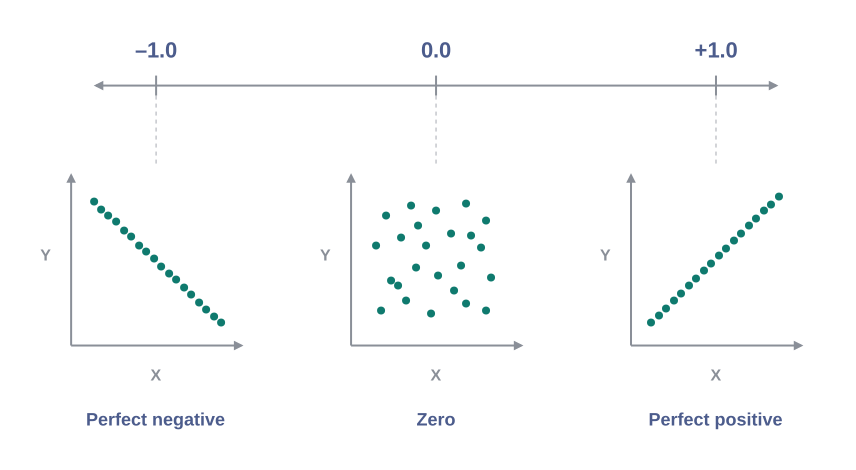
Fig. 2.4 – Range and direction of correlation coefficients.
Notice, in Fig. 2.4, that a correlation of –.85 is exactly as strong as a correlation of +.85. The minus sign does not mean “weak”; it means “in the opposite direction”.
2.4.4 Survey Research
You may have read in newspapers, or seen on television, that during elections surveys are conducted to find out whether people would vote for a particular political party, or favour a particular candidate. That is one familiar face of the survey.
Survey research came into existence to study opinions, attitudes and social facts. Its main concern, initially, was to find out the existing reality, or baseline. Surveys were used to establish facts such as the literacy rate at a particular time, religious affiliations, or the income level of a particular group of people. They were also used to find out the attitude of people towards family planning, and their attitude towards giving powers to panchayati raj institutions — the elected village-level bodies — for running programmes related to health, education and sanitation.
Surveys have since evolved into a sophisticated technique, which helps in inferring various kinds of causal relationships.
Survey research uses several different techniques for collecting information: personal interviews, questionnaires, telephone surveys, and controlled observations. These are discussed below. (The observation method has already been described; it is used for conducting surveys as well.)
Personal Interviews
The interview is one of the most frequently used methods for obtaining information from people, and it is used in an enormous range of situations. A doctor uses it to obtain information from a patient; an employer uses it when meeting a prospective employee; a salesperson uses it to find out why a customer prefers a certain brand of soap. On television, we often see media persons interviewing people on issues of national and international importance.
What actually happens in an interview? Two or more persons sit face to face, one of them — generally called the interviewer — asking questions, and the other — called the interviewee or respondent — answering them. An interview is a purposeful activity, conducted to obtain factual information, opinions and attitudes, and the reasons for particular behaviour, from the respondents. It is generally conducted face to face, but it can also take place over the telephone.
There are two broad types of interviews: structured interview (also called standardised) and unstructured interview (also called non-standardised). The distinction rests on the type of preparation made beforehand.
Since questions have to be asked during the interview, we prepare a list of questions in advance. This list is called an interview schedule. In a structured interview, the questions in the schedule are written clearly and in a particular sequence. The interviewer has little or no liberty to make changes in the wording of the questions, or in the order in which they are to be asked. The responses to these questions are also, in some cases, specified in advance. Such questions are called close-ended questions.
In an unstructured interview, by contrast, the interviewer has the flexibility to take decisions about which questions to ask, how to word them, and in what sequence to ask them. Since the responses are not specified in advance, the respondent can answer in whatever way she chooses. Such questions are called open-ended questions. If the researcher wants to know about a person’s level of happiness, she may simply ask: How happy are you? The respondent then replies in her own way.
An interview may have the following combinations of participants:
- Individual to individual — one interviewer interviews one other person.
- Individual to group — one interviewer interviews a group of persons. One variant of this is called a Focus Group Discussion (FGD).
- Group to individuals — a group of interviewers interviews one person. You may experience this when you appear for a job interview.
- Group to group — one group of interviewers interviews another group of interviewees.
Interviewing is a skill, and it requires proper training. A good interviewer knows how to put the respondent at ease and obtain the best possible answer. She remains sensitive to the way a person responds and, where necessary, probes for more information. If the respondent gives vague answers, the interviewer tries to obtain specific and concrete ones.
The interview method helps in obtaining in-depth information. It is flexible and adaptable to individual situations, and it can often be used when no other method is possible or adequate — it can be used even with children and with non-literate persons. An interviewer can also tell whether the respondent has understood a question, and can repeat or paraphrase it.
Its limitation is time. Obtaining information from a single person may take an hour or more, which may not be cost-effective when large numbers must be covered.
Questionnaire Survey
The questionnaire is the most common, simple, versatile and low-cost self-report method of collecting information. It consists of a predetermined set of questions. The respondent reads the questions and marks the answers on paper, rather than responding verbally to an interviewer. In this sense questionnaires are rather like highly structured interviews conducted in writing.
Questionnaires can be distributed to a group of persons at a time, who write down their answers and return them to the researcher; or they can be sent by post.
Generally, two types of questions are used in a questionnaire: open-ended and close-ended. With open-ended questions, the respondent is free to write whatever answer she considers appropriate. In the close-ended type, the questions and their probable answers are given, and the respondent has to select the correct or the most suitable answer.
Examples of close-ended questions require responses such as Yes/No, True/False, or multiple choice, or the use of a rating scale. In the case of a rating scale, a statement is given and the respondent is asked to give her views on a 3-point scale (Agree, Undecided, Disagree), or a 5-point scale (Strongly Agree, Agree, Undecided, Disagree, Strongly Disagree), or a 7-point, 9-point, 11-point or 13-point scale. In some cases, participants are asked to rank a number of things in order of preference.
The questionnaire is used for collecting background and demographic information, information about past behaviour, attitudes and opinions, knowledge about a particular topic, and the expectations and aspirations of the persons studied.
Sometimes a survey is conducted by sending the questionnaire by mail. The main problem with a mailed questionnaire is the poor response from respondents — a large number of people simply do not return it.
Telephone Survey
Surveys are also conducted through the telephone, and nowadays you must have seen programmes asking viewers to send in their views through SMS on mobile phones.
The telephone survey helps in reducing time. However, since the respondents do not know the interviewer, the technique suffers from uncooperativeness, reluctance, and superficial answers. There is also the possibility that those who respond differ from those who do not — in age, gender, income level, education level, and in their psychological characteristics as well. This leads to a very biased kind of result.
Strengths and limitations of the survey method
Each of the techniques above has its own advantages and limitations, and the researcher needs to exercise caution in selecting one.
The survey method as a whole has two clear advantages. First, information can be gathered quickly and efficiently from thousands of persons. Second, because surveys can be conducted quickly, public opinion on a new issue can be obtained almost as soon as the issue arises.
There are also limitations. First, people may give inaccurate information, either because of memory lapses, or because they do not want the researcher to know what they really believe about a particular issue. Second, people sometimes offer the responses they think the researcher wants to hear. A survey records what people are willing to say — which is not always the same as what they think, and is certainly not the same as what they do.
2.4.5 Psychological Testing
The assessment of individual differences has been one of the central concerns of psychology from the very beginning. Two students sit in the same class, hear the same teacher, and take the same examination — and perform quite differently. Psychologists want to measure such differences, and to measure them fairly.
For this purpose, psychologists have constructed different types of tests for the assessment of various human characteristics: intelligence, aptitude, personality, interest, attitudes, values, educational achievement, and so on. These tests are used for many purposes — personnel selection, placement, training, guidance and diagnosis — in many contexts, including educational institutions, guidance clinics, industries and defence establishments.
Have you ever taken a psychological test? If you have, you may have noticed that a test contains a number of questions, called items, along with their probable responses, all related to a particular human characteristic or attribute. It is important that the characteristic for which a test has been developed should be defined clearly and unambiguously, and that all the items should be related to that characteristic only. You may also have noticed that a test is often meant for a particular age group, and that it may or may not have a fixed time limit for answering the questions.
Technically speaking, a psychological test is a standardised and objective instrument which is used to assess an individual’s standing in relation to others on some mental or behavioural characteristic.
Two things in this definition are worth noting: objectivity and standardisation.
Objectivity, which you met in Section 2.2, means here that if two or more researchers administer a psychological test to the same group of people, both of them will arrive at more or less the same values for each person in the group. For a psychological test to become an objective measure, the items must be worded in such a way that they communicate the same meaning to different readers. The instructions to test takers about how to answer the items must be specified in advance. The procedure of administering the test — the environmental conditions, the time limit, and the mode of administration, whether individual or group — must be spelt out, and the procedure for scoring the participants’ responses must be described.
Reliability, validity and norms
The construction of a test is a systematic process, involving several steps. It requires detailed analysis of the items, and the estimation of the reliability, the validity, and the norms of the whole test.
Reliability refers to the consistency of the scores obtained by an individual on the same test on two different occasions. Suppose you administer a test to a group of students today, and re-administer it to the same students after some time — let us say 20 days. If the test is reliable, there should not be any variation in the scores obtained by the students on the two occasions.
For this, we can compute test-retest reliability, which indicates the temporal stability of the test — that is, the stability of the test scores over time. It is computed by finding out the coefficient of correlation between the two sets of scores obtained from the same set of persons. Notice that the idea of correlation, which you met in the previous subsection, has now become a tool for evaluating a test.
Another kind of test reliability is called split-half reliability. It gives an indication of the degree of internal consistency of the test. It rests on the assumption that if the items of a test come from the same domain, they should correlate with each other; if they come from different domains — apples and oranges — they will not. To find out internal consistency, the test is divided into two equal halves using the odd-even method: items 1, 3, 5, and so on in one group, and items 2, 4, 6, and so on in another. The correlation is then computed between the scores of the odd and the even items.
Validity answers a different question: “Does the test measure what it claims to measure?” For example, if you have constructed a test of mathematics achievement, you must ask whether the test is really measuring mathematical achievement — or whether, because of long and difficult wording, it is actually measuring language proficiency.
Finally, a test becomes a standardised test when norms are developed for it. A norm is the normal, or average, performance of the group. The test is administered to a large number of students, and their average performance standards are set on the basis of age, sex, place of residence, and so on. Norms allow us to compare the performance of an individual student with that of others in the same group, and they help in interpreting the score an individual has obtained on a test. Without norms, a score of 42 means nothing at all; with them, it may mean that the student stands above most of her age-group, or below it.
Types of Tests
Psychological tests are classified on the basis of their language, their mode of administration, and their difficulty level.
By language. Depending upon the language used, we have verbal tests, non-verbal tests and performance tests. Literacy is required for taking verbal tests, as the items have to be written in some language. In non-verbal tests, the items are made of symbols or pictures. Performance tests require the movement of objects from their respective places in a particular order.
By mode of administration. Depending upon the mode of administration, psychological tests are divided into individual tests and group tests. An individual test is administered by the researcher to one person at a time, while group tests can be administered to a large number of persons at the same time.
In individual tests, the researcher administers the test face to face, remains seated before the test taker, and notes down the responses. In group tests, the instructions about answering the items are written on the test itself, which the test taker reads before answering; the test administrator explains the instructions to the entire group.
Individual tests are time consuming, but they are important ways of getting responses from children, and from those who do not know the language. Group tests are easy to administer and less time consuming. However, the responses they yield carry certain limitations: the respondent may not be motivated enough to answer the questions seriously, and may give fake responses.
By difficulty level. Psychological tests are also classified into speed tests and power tests. In a speed test, there is a time limit within which the test taker is required to answer all the items. Such a test evaluates the individual on the basis of the time taken to answer the items accurately. In a speed test, all the items are of the same degree of difficulty.
A power test, on the other hand, assesses the underlying ability, or power, of the individual by allowing sufficient time — these tests do not have any time limit. In a power test, the items are generally arranged in increasing order of difficulty. If a person is unable to solve the sixth item, she will have difficulty in answering the items that follow it.
It is, however, difficult to construct a pure speed test or a pure power test. The majority of tests are a combination of both speed and power.
Using tests responsibly
While tests are often used in research, and for making decisions about people, tests must be selected and used with great care.
The test user, or the decision maker, should not rely on any single test. Test data should always be combined with information about a person’s background, interests and past performance. A single number, taken by itself, has decided the fate of far too many people.
2.4.6 Case Study
In the case study method, the emphasis is on the in-depth study of a particular case. The researcher is not trying to cover many people thinly; she is trying to understand one case thoroughly.
Researchers focus on cases that can provide critical information, or new learning about a phenomenon that is not well understood. The case may be:
- an individual with distinguishing characteristics — for example, a person showing psychological disorders;
- a small group of individuals having something in common — for example, creative writers such as Rabindra Nath Tagore and Mahadevi Verma;
- an institution — for example, a poorly or a successfully functioning school or corporate office;
- a specific event — for example, children exposed to devastation by a tsunami, war, or vehicular pollution.
The cases selected for study are unique, and therefore rich in information.
A case study employs multiple methods for collecting information — interview, observation, and psychological tests — and gathers it from a variety of respondents who, in one way or another, are associated with the case and can provide useful information. With the help of case studies, psychologists have investigated feelings, fantasies, hopes, fears, traumatic experiences and parental upbringing, all of which help us to understand a person’s mind and behaviour. Case studies provide a narrative, or a detailed description, of the events that take place in a person’s life.
The case study is a valuable research tool in clinical psychology and in the study of human development. Freud’s insights, which led to the development of psychoanalytic theory, emerged from his observations of individual patients, and showed that meticulous records must be maintained on individual cases. Similarly, Piaget developed his theory of cognitive development on the basis of observations of his three children.
Case studies have also been conducted to understand the pattern of socialisation of children. Minturn and Hitchcock conducted a case study of the socialisation of children among the Rajputs of Khalapur. S. Anandalakshmy studied aspects of childhood in a weavers’ community in Varanasi. Both remind us that childhood is lived inside a particular community, and cannot be understood apart from it.
The limits of a single case
Case studies provide detailed, in-depth depictions of people’s lives. But while generalising on the basis of individual cases, one needs to be very cautious. What was true of this child, in this family, may not be true of children in general.
The problem of validity in a single case study is quite challenging. It is therefore recommended that the information should be collected using multiple strategies, from different sources, and by a number of investigators. Careful planning of data collection is also very necessary. Throughout the process, the researcher is required to maintain a chain of evidence, linking the various data sources to the research questions being asked.
Choosing and combining methods
As you have now read, each method has its own advantages and its own limitations. The observation method describes behaviour but cannot establish a cause. The experiment establishes a cause but may not resemble real life. The correlational method predicts but does not explain. The survey covers thousands but only records what people say. The test measures individual differences but reduces a person to a score. The case study goes deep but cannot be generalised.
It is therefore desirable that a researcher should not depend upon only one method. A combination of two or more methods should be used to get the real picture. If the methods converge — that is, if they give the same result — one can be considerably more confident that the finding is genuine, and not an artefact of the way it was collected.
2.5 Analysis of Data
In the previous section you read about the different methods of collecting information. Collection, however, is only half the work. Once the data are in, the researcher’s next job is to draw conclusions from them — and that requires analysis.
Recall what you read earlier: data do not speak for themselves. A pile of test scores, a stack of filled questionnaires, or forty pages of interview notes tell you nothing until they are organised, examined and interpreted.
Two broad methodological approaches are used for the analysis of data: the quantitative method and the qualitative method. Which one a researcher uses is decided largely by the kind of data she has collected — which, in turn, was decided by the method she chose.
2.5.1 Quantitative Method
As you may have gathered by now, psychological tests, questionnaires and structured interviews contain a series of close-ended questions. That is, the questions and their probable responses are already given in these measures.
Generally, these responses are given in scaled form — that is, they indicate the strength or magnitude of the response. For example, they may vary from 1 (low) to 5, 7 or 11 (high). The participant’s task is simply to select the most appropriate response. Sometimes there are right and wrong responses instead.
The researcher then assigns a number to each answer — normally “1” for right answers and “0” for wrong ones. At the end, she calculates the total of all these numbers and arrives at an aggregate score, which tells us about the participant’s level on that particular attribute, such as intelligence or academic achievement.
In doing this, the researcher is doing something worth naming clearly: she is converting a psychological attribute into a quantity, usually a number. This is the essence of the quantitative method.
From scores to conclusions
A single score, standing alone, is not yet a conclusion. To draw one, a researcher may compare an individual’s score with that of the group, or compare the scores of two groups with each other.
This requires the use of certain statistical methods, which you will study in more detail later. You have already met several of them in mathematics in Class X: the measures of central tendency (mean, median and mode), the measures of variability (range, quartile deviation and standard deviation), and coefficients of correlation.
The mean, for instance, is simply the arithmetic average of a set of scores:
\[\bar{X} = \frac{\sum X}{N}\]
where \(\sum X\) is the sum of all the scores obtained and \(N\) is the number of scores. The mean tells you where the group sits, on average. A measure of variability tells you how spread out the group is around that average — and two classes with the same mean may be very different in this respect. A coefficient of correlation, as you have already seen, tells you how two sets of scores move together.
These, along with some more advanced statistical methods, are what enable a researcher to make inferences and to give meaning to the data.
2.5.2 Qualitative Method
Human experiences are very complex, and much of that complexity is lost when we elicit information from a respondent on the basis of a fixed question with fixed alternatives.
Suppose you want to know how a mother feels about the loss of her child. You will need to hear her story — to understand how her experience is organised, and what meaning she has given to her suffering. Any attempt to quantify this will not enable you to get at the principles by which such an experience is organised. A rating of 7 on a 10-point scale of grief tells you almost nothing.
Psychologists have therefore developed various qualitative methods to analyse such data. One of them is Narrative Analysis, which works with the story a person tells, treating its structure and its meaning as the data.
Data, moreover, are not always available in the form of scores. When the researcher uses participant observation or an unstructured interview, the data are generally in descriptive form — in the participants’ own words, in field notes taken by the researchers, in photographs, in interview responses noted down or taped and video-recorded, and in informal talks.
Such data cannot be converted into scores or subjected to statistical analysis. Instead, the researcher uses the technique of content analysis, in which she works through the material to find thematic categories, and then builds those categories up, taking examples from the data themselves. The qualitative method is, in this sense, more descriptive in nature.
The two methods are partners, not rivals
It must be understood that quantitative and qualitative methods are not contradictory. They are complementary to each other. Each answers a question that the other cannot.
A survey may tell you that 40 per cent of adolescents in a district report high examination stress. It will not tell you what that stress feels like from inside, or what these adolescents believe is causing it. An unstructured interview will tell you exactly that — for the adolescents you actually interviewed, and no others.
In order to understand a phenomenon in its totality, therefore, a suitable combination of both methods is warranted. The researcher’s task is not to decide which method is superior, but to decide what her question needs.
2.6 Limitations of Psychological Enquiry
The advantages and limitations of each individual method have already been discussed. In this section you will read about some general problems faced by psychological measurement itself — problems that no choice of method can escape.
These are not reasons to distrust psychology. They are reasons to read psychological findings carefully, and to state them modestly. A science that knows its own limits is stronger, not weaker, for knowing them.
1. Lack of a true zero point
In the physical sciences, measurement starts from zero. If you want to measure the length of a table, you begin at zero and can say that it is 3’ long. Zero length is a real thing: it means no length at all.
Psychological measurements do not have a true zero point. No person in this world has zero intelligence. All of us have some degree of it. The same is true of anxiety, of motivation, of aggression. What psychologists do, therefore, is to decide arbitrarily on a point and call it zero, and then proceed from there.
The consequence follows directly. Whatever scores we obtain in psychological studies are not absolute in nature; they have only relative value. A score of 40 on a test of anxiety does not mean “forty units of anxiety”. It means something only when compared with what other people scored.
Ranks show the same problem
In some studies, ranks are used as scores. On the basis of the marks obtained in a test, a teacher arranges the students in order — 1, 2, 3, 4, and so on.
The problem with this kind of assessment is that the difference between the first and second rank holders may not be the same as the difference between the second and third. Out of 50, the first rank holder might score 48, the second 47, and the third 40. The gap between the first two is a single mark; the gap between the next two is seven. Yet the ranks — 1, 2, 3 — make all three gaps look identical.
This too illustrates the relative nature of psychological measurement. The rank tells you the order; it does not tell you the distance.
2. The relative nature of psychological tools
Psychological tests are developed keeping in view the salient features of a particular context — and that context clings to them.
Consider a test developed for urban students. It may contain items that demand familiarity with the things available in an urban setting: multi-storeyed buildings, aeroplanes, the metro railway. Such a test is not suitable for use with children living in tribal areas, who would be far more at ease with items describing the flora and fauna they know well. If those children score poorly, the test has not shown that they reason badly. It has shown that they live somewhere else.
Similarly, a test developed in Western countries may or may not be applicable in the Indian context. Such tests need to be properly modified and adapted, keeping in view the characteristics of the context in which they are to be used.
3. Subjective interpretation of qualitative data
Data from qualitative studies are largely subjective, since they involve interpretation — on the part of the researcher, and also on the part of the person providing the data. Two researchers, working with the same interview transcript, may not read it in the same way. The interpretations may vary from one individual to another.
This is not, in itself, a fault. Meaning is what qualitative research is looking for, and meaning cannot be read off a page mechanically. But it does create a risk that one researcher’s private reading passes for a finding.
It is therefore often suggested that in qualitative studies, the field work should be done by more than one investigator. At the end of the day, the investigators should discuss their observations and arrive at an agreement before finally giving them a meaning. In fact, one is better off still if the respondents themselves are also involved in this meaning-making process. They are, after all, the people whose experience is being interpreted.
2.7 Ethical Issues
Psychological research is concerned with human beings. That single fact changes everything about how it may be done.
A chemist may heat, cool, dissolve or destroy her material as the experiment requires. A psychologist’s “material” is a person, with a life outside the study, a right to her own choices, and a reasonable expectation that taking part in research will not leave her worse off. The researcher is therefore expected to follow certain ethics — moral principles — while conducting studies.
These principles are three:
- Respect for persons’ privacy and their choice to participate in the study.
- Beneficence, or protecting the participants in the study from any harm.
- Justice, or sharing the benefits of research with all participants.
From these three principles follow the working rules that govern everyday research practice. Some of the most important are described below.
1. Voluntary participation
This principle states that the persons on whom you want to conduct a study must have the choice to decide whether to participate or not.
Participants should have the freedom to decide about their participation without any coercion — no one may be pressured into a study — and without excessive inducement, that is, without being offered a reward so large that they cannot realistically refuse it. They must also have the freedom to withdraw from the research without penalty, once it has begun.
That last clause matters more than it may seem. A person who agrees at the start of a study has not agreed to be trapped in it.
2. Informed consent
It is essential that participants in a study should understand what will happen to them during the study. The principle of informed consent states that potential participants must receive this information before any data are collected from them, so that they can make an informed decision about taking part.
Why does this need stating at all? Because psychological studies can ask a good deal of people. In some psychological experiments, electric shock is administered to participants. In some, obnoxious — that is, harmful or unpleasant — stimuli are presented. Participants may at times be required to give private information, which is generally not shared with others.
In some studies, the technique of deception is used, in which participants are given instructions to think or imagine in certain ways, and are given false information or feedback about their performance — for example, being told “you are very intelligent”, or “you are incompetent”, regardless of how they actually did.
You have already met a study of this kind. In the smoke-filled room experiment described in Section 2.4, the participants were told they had come for an interview, and the people sitting beside them were confederates of the researchers. The study could not have worked if the participants had known the truth. That is precisely why deception is ethically serious, and why it can never be used casually or for convenience.
For all these reasons, it is important that participants are told the nature of the study before it actually commences.
3. Debriefing
Once the study is over, participants are provided with the information they need to complete their understanding of the research. This is called debriefing.
Debriefing is particularly important where deception has been used. It ensures that participants leave the study in the same physical and mental state as when they entered it. It should offer reassurance to the participants, and the researcher should make efforts to remove any anxiety or other adverse effects that participants may have felt as a result of being deceived in the course of the study.
Debriefing is not an apology tacked on at the end. It is the researcher’s method of repairing what the study did, and of returning to the participant the truth that was withheld from her.
5. Confidentiality of the data source
Participants in a study have a right to privacy. The researcher must safeguard that privacy by keeping the information provided by them in strict confidence. This is the principle of confidentiality.
The information should be used only for research purposes and, in no circumstances, should it be passed on to other interested parties.
The most effective way of protecting the confidentiality of participants is not to record their identities at all. This is, however, not possible in certain kinds of research — for example, where the same people must be tested again after some months. In such cases, code numbers are given on the data sheet, and the names, with their codes, are kept separately. The identification list should be destroyed as soon as the research is over.
2.8 Summary
Psychological research is conducted for the purpose of description, prediction, explanation and control of behaviour, and for the application of the knowledge so generated — all pursued in an objective manner.
Scientific research follows four steps: conceptualising a problem, collecting data, drawing conclusions, and revising research conclusions and theory. The last step leads back to the first, which is why research is a continuous process.
Psychological enquiry is also conducted to discover and understand the subjective meanings of events as they occur in a particular context, and to reflect on one’s own behaviour and experiences.
Different types of data are collected in psychological studies — demographic, environmental, physical, physiological and psychological information. The data always remain located in a context, and are tied to the theory and the method used to collect them.
Different methods are used for collecting information. The observation method is used for describing behaviour. It is characterised by the selection of a particular behaviour, its recording, and its analysis. Observation may be naturalistic or carried out under controlled laboratory conditions, and it may take the form of participant or non-participant observation.
The experimental method helps in establishing a cause-and-effect relationship. The effect of the independent variable on the dependent variable is studied by comparing experimental and control groups, while extraneous variables are controlled.
The purpose of correlational research is to investigate the association between variables and to make predictions. The relationship between two variables can be positive, negative or zero, and the strength of the association varies from \(+1.0\) through \(0.0\) to \(-1.0\).
The focus of survey research is to inform us about existing reality. Surveys can be conducted using structured and unstructured interviews, mailed questionnaires, and the telephone.
Psychological tests are standardised and objective instruments, which help in knowing a person’s standing in comparison with others. Tests may be verbal, non-verbal or performance types, and may be administered individually or to an entire group at a time.
The case study method gives detailed, in-depth information about a particular case, but generalising from a single case must be done with great caution.
The data collected through these methods are analysed by quantitative and qualitative methods. Quantitative methods allow the use of statistical procedures for drawing conclusions. Narrative Analysis and content analysis are among the methods used in qualitative research. The two approaches are complementary, not contradictory.
The lack of an absolute zero point, the relative nature of psychological tools, and the subjective interpretation of qualitative data are some of the limitations of psychological enquiry.
A researcher must follow the ethical principles of voluntary participation of the participants, informed consent, debriefing, confidentiality of the data source, and the sharing of results with the participants.
2.9 Key Terms
Case study — An in-depth study of a single case, such as an individual, a small group, an institution or an event, using several methods together.
Confidentiality — The researcher’s duty to keep the information given by participants private, and to use it only for research purposes.
Control group — A comparison group treated exactly like the experimental group, except that the manipulated variable is absent in it.
Correlational research — Research that finds out whether and how strongly two variables are related, so that one can be predicted from the other.
Data — The information collected by a researcher about behaviour, subjective experiences and mental processes; the raw material of psychological enquiry.
Debriefing — Explaining the true nature of the study to participants after it is over, and removing any anxiety it may have caused.
Dependent variable — The variable that is measured, on which the effect of the independent variable is observed; the “effect” in an experiment.
Experimental group — The group whose members are exposed to the manipulation of the independent variable.
Experimental method — A controlled procedure in which one variable is deliberately changed to see its effect on another, while other variables are held constant.
Group test — A test that can be administered to a large number of persons at the same time.
Hypothesis — A tentative, testable answer to a research problem, stated before the data are collected.
Independent variable — The variable that the researcher manipulates or varies; the “cause” in an experiment.
Individual test — A test administered by the researcher to one person at a time, face to face.
Interview — A purposeful, face-to-face (or telephonic) exchange in which an interviewer asks questions and a respondent answers them.
Negative correlation — A relationship in which, as one variable increases, the other decreases; its value lies between 0.0 and –1.0.
Norms — The average performance standards of a group, against which an individual’s test score is compared and interpreted.
Objectivity — The quality of a measurement that makes it independent of the person making it, so that different investigators reach the same conclusion.
Observation — The systematic selection, recording and analysis of a particular behaviour as it occurs.
Performance tests — Tests in which the test taker has to manipulate objects, rather than answer in words.
Positive correlation — A relationship in which two variables increase and decrease together; its value lies between 0.0 and +1.0.
Power test — A test with no time limit, whose items increase in difficulty, and which assesses the underlying ability of the person.
Psychological test — A standardised and objective instrument used to assess an individual’s standing, in relation to others, on some mental or behavioural characteristic.
Qualitative method — An approach that analyses descriptive data — words, narratives, field notes — by identifying themes and meanings rather than converting them into numbers.
Quantitative method — An approach that converts psychological attributes into numbers and draws conclusions from them using statistical procedures.
Questionnaire — A predetermined set of written questions that respondents answer on paper themselves.
Reliability — The consistency of the scores obtained by a person on the same test on different occasions.
Speed test — A test with a strict time limit, in which all items are of the same difficulty, and which assesses how quickly items can be answered accurately.
Structured interview — An interview in which the questions, their wording and their order are fixed in advance, and the interviewer may not change them.
Survey — A method of collecting information about opinions, attitudes and social facts from a large number of people, using interviews, questionnaires, telephone or observation.
Unstructured interview — An interview in which the interviewer is free to decide the questions, their wording and their sequence as the conversation proceeds.
Validity — The extent to which a test actually measures what it claims to measure.
Variable — Any stimulus, event or characteristic that takes on different values and can be measured.
2.10 Points to Ponder
Psychologists insist that a scientific observation must be selected, recorded and analysed. But the moment you select one behaviour to watch, you have decided to ignore everything else in the room. Does selection make observation scientific, or does it quietly build the researcher’s expectations into the data before a single note is taken?
An experiment buys certainty about cause by removing almost everything that makes a real situation real. A survey buys reach by accepting whatever people are willing to say. If every method gains one thing by giving up another, is there any sense in asking which method is “best” — or only in asking what a particular question can afford to give up?
Psychological measurement has no true zero point, and its scores have only relative value. Does this make psychological measurement a weaker version of physical measurement — or a different kind of measurement altogether, which should not be judged by the standards of a metre scale at all?
Conduct a survey of the after-school activities of ten Class V students and ten Class IX students, finding out how much time they devote to studying, playing, television viewing, hobbies, and so on. What differences do you find, what conclusions do you draw, and — the harder question — how confident can you be that the differences you found are real, given the size of your sample and the way you asked your questions?
Try this small experiment in your group. Take ten six-year-olds and divide them into two groups. Give group 1 a new poem to learn and instruct them to read it aloud for 15 minutes. Give group 2 the same poem, but instruct them not to read it aloud. Deal with the two groups separately. After 15 minutes, ask both groups to recall the poem, and note down what happens. Which method of research have you used? What was your hypothesis, what were your variables, and which extraneous variables did you fail to control?
Deception is permitted in psychological research when a study would otherwise be impossible — provided the participants are debriefed afterwards. Is a truthful explanation given after the event enough to repair a lie told before it? Where would you personally draw the line?
Both the scientific and the interpretive traditions claim to be studying the same human being. If a survey says that 47 per cent of people call themselves extremely happy, and a long interview with one of them reveals something far more complicated, which of the two has come closer to the truth — and what would it mean to say that both have?
2.11 NCERT Questions
What are the goals of scientific enquiry?
Describe the various steps involved in conducting a scientific enquiry.
Explain the nature of psychological data.
How do experimental and control groups differ? Explain with the help of an example.
A researcher is studying the relationship between the speed of cycling and the presence of people. Formulate a relevant hypothesis, and identify the independent and the dependent variables.
Discuss the strengths and weaknesses of the experimental method as a method of enquiry.
Dr. Krishnan is going to observe and record children’s play behaviour at a nursery school, without attempting to influence or control the behaviour. Which method of research is involved? Explain the process, and discuss its merits and demerits.
Give two examples of situations in which the survey method can be used. What are the limitations of this method?
Differentiate between an interview and a questionnaire.
Explain the characteristics of a standardised test.
Describe the limitations of psychological enquiry.
What are the ethical guidelines that a psychologist needs to follow while conducting a psychological enquiry?
2.12 Objective Questions
- The goal of psychological enquiry that is concerned with identifying the antecedent conditions of a behaviour is:
- description
- prediction
- explanation
- application [1 mark]
- A tentative answer to a research problem, framed before data are collected, is called a:
- theory
- hypothesis
- conclusion
- norm [1 mark]
- In an experiment, the variable that the researcher manipulates is the:
- dependent variable
- extraneous variable
- organismic variable
- independent variable [1 mark]
- Noise, temperature and humidity, operating at the time of an experiment, are examples of:
- organismic variables
- situational variables
- sequential variables
- dependent variables [1 mark]
- The technique used to minimise the sequence effect, in which half the group receives two tasks in the order A–B and the other half in the order B–A, is called:
- matching
- elimination
- counter-balancing
- random assignment [1 mark]
- The value of a correlation coefficient can range from:
- 0.0 to +1.0
- –1.0 through 0.0 to +1.0
- –100 to +100
- 0.0 to +100 [1 mark]
- A test that has no time limit, and whose items are arranged in increasing order of difficulty, is a:
- speed test
- power test
- performance test
- group test [1 mark]
- Split-half reliability is computed in order to find out the:
- temporal stability of the test
- internal consistency of the test
- validity of the test
- norms of the test [1 mark]
- In a quasi experiment, the independent variable is:
- manipulated in a laboratory
- selected rather than manipulated
- held constant throughout
- measured as an effect [1 mark]
- Assertion (A): A control group is included in an experiment even though its members are not exposed to the manipulation. Reason (R): Without a comparison group, the researcher cannot say whether the change observed in the experimental group was produced by the independent variable.
- Both A and R are true, and R is the correct explanation of A.
- Both A and R are true, but R is not the correct explanation of A.
- A is true, but R is false.
- A is false, but R is true. [1 mark]
- Assertion (A): A high positive correlation between study time and achievement proves that study time causes achievement. Reason (R): A correlation coefficient indicates the strength and direction of the relationship between two variables.
- Both A and R are true, and R is the correct explanation of A.
- Both A and R are true, but R is not the correct explanation of A.
- A is true, but R is false.
- A is false, but R is true. [1 mark]
- Assertion (A): A test may be reliable and yet not valid. Reason (R): Reliability refers to the consistency of scores over occasions, while validity refers to whether the test measures what it claims to measure.
- Both A and R are true, and R is the correct explanation of A.
- Both A and R are true, but R is not the correct explanation of A.
- A is true, but R is false.
- A is false, but R is true. [1 mark]
- Assertion (A): Debriefing is especially necessary when deception has been used in a study. Reason (R): Debriefing ensures that participants leave the study in the same physical and mental state as when they entered it.
- Both A and R are true, and R is the correct explanation of A.
- Both A and R are true, but R is not the correct explanation of A.
- A is true, but R is false.
- A is false, but R is true. [1 mark]
- Match the method in Column A with the situation in Column B for which it is most appropriate.
| Column A | Column B |
|---|---|
| a. Case study | i. Finding out students’ attitude towards the privatisation of education |
| b. Experimental method | ii. Tracing the major life events of a well-known writer |
| c. Survey research | iii. Studying the effect of noise on problem-solving ability |
| d. Correlational research | iv. Finding out whether intelligence is associated with self-esteem |
[1 mark]
- Match the term in Column A with its meaning in Column B.
| Column A | Column B |
|---|---|
| a. Norms | i. Consistency of scores on two different occasions |
| b. Reliability | ii. The average performance standards of a group |
| c. Validity | iii. Independence of the measurement from the person making it |
| d. Objectivity | iv. Whether the test measures what it claims to measure |
[1 mark]
Fill in the blank: The observation in which the observer becomes a part of the group being observed is called __________ observation. [1 mark]
Fill in the blank: In psychological measurement, the absence of a true __________ point makes all scores relative rather than absolute. [1 mark]
State whether the following statement is true or false: In a speed test, the items are arranged in increasing order of difficulty. [1 mark]
State whether the following statement is true or false: Quantitative and qualitative methods of analysis are contradictory, and a researcher must choose one or the other. [1 mark]
State whether the following statement is true or false: A field experiment offers greater control over extraneous variables than a laboratory experiment does. [1 mark]
2.13 Check Your Concepts
Define a variable, and give one example of a variable that could be measured in a school setting. [2 marks]
State any two ethical principles that a psychologist must follow while conducting research. [2 marks]
What is meant by a zero correlation? Give one example of a value that would indicate it. [2 marks]
List the four types of data collected in psychological studies, giving one example of each. [2 marks]
What is meant by informed consent? [2 marks]
Differentiate between naturalistic observation and controlled laboratory observation. [3 marks]
Differentiate between a structured and an unstructured interview. [3 marks]
Explain, with reasons, why the independent and the dependent variables in an experiment cannot be defined without each other. [3 marks]
Why is random assignment of participants to groups considered essential in an experiment? Give reasons. [3 marks]
Explain briefly why a test that is highly reliable may still be of no use to a researcher. [3 marks]
Distinguish between a speed test and a power test, and state why it is difficult to construct a pure test of either kind. [3 marks]
Arrange the four steps of scientific enquiry in the correct sequence, and explain why the last step leads back to the first. [4 marks]
Explain, with one example each, the three major types of relevant variables that must be controlled in an experiment. [4 marks]
Describe the process of observation as a method of enquiry, explaining its three defining features with an example. [4 marks]
“A test developed for urban students may be unsuitable for children living in a tribal area.” Evaluate this claim, and explain what a researcher should do about it. [4 marks]
What would happen to the conclusions of an experiment if the researcher failed to control the extraneous variables? Explain with an example. [4 marks]
Describe the experimental method in full: its purpose, its variables, the role of experimental and control groups, the techniques used to control relevant variables, and its main limitations. [6 marks]
Compare correlational research with the experimental method. Explain what each can establish, what neither can establish, and when a researcher would prefer one over the other. [6 marks]
Describe the characteristics of a standardised psychological test, explaining objectivity, reliability, validity and norms, and discuss why a decision about a person should never rest on a single test score. [6 marks]
Discuss the case study as a method of enquiry. Describe what kinds of cases are studied, how information is collected, and what precautions are needed before generalising from a single case. [6 marks]
Compare the scientific and the interpretive paradigms of research. Discuss the assumptions of each, the kinds of questions each is suited to, and why psychology may need both. [6 marks]
2.14 Case-Based Questions
- A Class XI teacher notices that students who sit in the front rows of her classroom generally score higher in tests than students who sit at the back. She concludes that sitting in the front row improves academic performance, and announces a new seating plan in which the weaker students will be moved to the front.
- Identify the kind of relationship the teacher has actually observed, and name the concept involved. [2 marks]
- Explain why her conclusion about cause and effect is not justified, giving one alternative explanation of the same observation. [2 marks]
- Describe how she could design a study that would allow a fair test of her claim, naming the independent and the dependent variables. [3 marks] [7 marks]
- A researcher wants to study how children in a government primary school behave during the lunch break. She sits quietly in one corner of the playground every day for two weeks, writing down what she sees. She notices that on the first two days the children look at her constantly and behave stiffly, but that by the second week they seem to ignore her completely.
- Which type of observation is she using? Justify your answer. [2 marks]
- Explain, using a concept from the chapter, why the children behaved differently in the first week. [2 marks]
- Suggest one alternative form of observation she could have used instead, and state one advantage and one disadvantage of that alternative. [2 marks] [6 marks]
- A student researcher circulates an online questionnaire to find out what Class XII students across her city think about coaching classes. She posts the link in three WhatsApp groups of her own school, and receives 62 responses. Eighty per cent of the respondents say that coaching classes are essential. She reports that “80 per cent of Class XII students in the city believe coaching is essential.”
- Identify two limitations of the survey method that her study illustrates. [2 marks]
- Explain why her conclusion about all Class XII students in the city is not warranted. [2 marks]
- Suggest two changes to her design that would make her conclusion more trustworthy. [2 marks] [6 marks]
- A psychologist plans to study how people react when they suddenly find themselves in a confusing situation. To make the situation convincing, she intends to tell participants that they are attending a group discussion, when in fact the discussion is staged. She also plans to record the session on video, and to use the recordings later in her college lectures.
- Identify the ethical principles that this design puts at risk. [2 marks]
- Explain what the researcher must do before, and after, the study in order to conduct it ethically. [3 marks]
- State what she must do about the video recordings, and give the reason. [2 marks] [7 marks]
2.15 Practice With Data
In a study, the correlation between hours of study and achievement is found to be +.85, and the correlation between hours of study and hours spent watching television is found to be –.72. State what each of these values tells you about the direction and the strength of the relationship, and say which of the two relationships is stronger. [3 marks]
In a test marked out of 50, the first rank holder scores 48, the second scores 47, and the third scores 40. Using these figures, explain what is meant by the relative nature of psychological measurement, and state one problem in treating ranks as if they were scores. [3 marks]
A researcher administers a test of reasoning to a group of students and re-administers the same test to the same students 20 days later. She then computes the coefficient of correlation between the two sets of scores. Name the property of the test she is estimating, state what a high value would indicate, and explain what she would still not know about the test. [3 marks]
In a survey on happiness, 47 per cent of respondents said they were extremely happy, 28 per cent said they were more or less happy, 11 per cent said they were neither happy nor unhappy, and 7 per cent each said they were more or less unhappy and extremely unhappy. (i) State what kind of scale the respondents were answering on. (ii) Calculate the percentage of respondents who placed themselves above the neutral point. (iii) State one thing these figures cannot tell the researcher. [4 marks]
A researcher scores a 20-item test by giving “1” for each right answer and “0” for each wrong answer, and obtains the following aggregate scores for five students: 18, 16, 12, 11, 8. (i) Calculate the mean score of the group. (ii) State which method of analysis the researcher is using, and name one measure of variability she would still need in order to describe the group properly. (iii) Explain why the mean alone could mislead her. [4 marks]