Chapter 5: Learning
In a laboratory in Russia, towards the end of the nineteenth century, a physiologist named Ivan P. Pavlov was studying something quite ordinary: digestion. He wanted to know how the stomach and the salivary glands respond when food is placed in the mouth. His work on digestion was careful, patient and highly respected, and it later earned him a Nobel Prize.
But his dogs kept doing something that spoiled his measurements. They began to salivate before the food reached them. Saliva appeared when a dog saw the empty plate. It appeared when the attendant who usually brought the food walked into the room. There was no meat in the mouth, and yet the glands were already working.
Most researchers would have treated this as a nuisance and tried to control it away. Pavlov did the opposite. He decided that the nuisance was the more interesting finding, and he turned his laboratory towards it. If a dog can come to respond to a plate, or to footsteps, then experience must be able to attach a reflex to something entirely new.
That decision opened up a whole field. The question Pavlov stumbled into is the question of this chapter: how does experience change what an organism does? How do we come to fear some things, want other things, and perform actions we were never born able to perform?
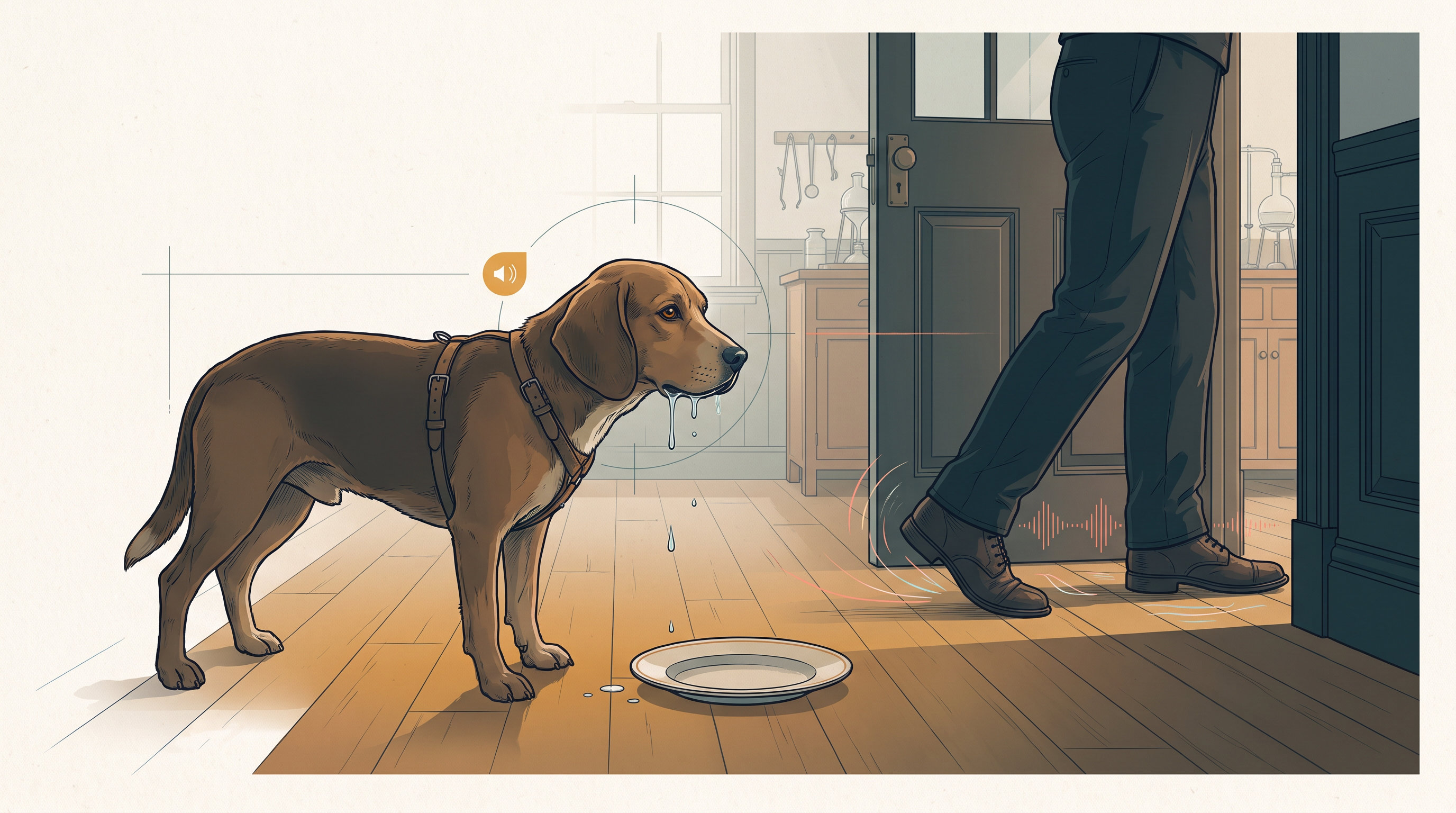
Fig. 5.4 – Anticipatory salivation in Pavlov’s laboratory.
By the end of this chapter, you will be able to answer each of these questions in the language of psychology.
5.1 Introduction
Think of a newborn baby. At the moment of birth, a human infant can do only a small number of things. It can suck, grasp, cry, blink and turn its head. These responses are reflexive: they appear automatically whenever the right stimulus is present in the environment, without any teaching and without any practice.
Now think of the same child a few years later. She recognises the faces around her and sorts them out — this one is mother, that one is father, that one is grandfather. She uses a spoon instead of her fingers while eating. She picks out the letters of the alphabet, learns to write them, and joins them into words.
She also watches. She notices what other people do in particular situations, and she copies them. She learns the names of things — book, orange, mango, cow, boy, girl — and holds on to those names so that she can use them later. None of this was available to her at birth.
The list keeps growing as a person grows. One learns to ride a scooter or drive a car, to speak to others effectively, and to get along with people in a family, a classroom and a workplace. The capacity to acquire all this comes from a single psychological process, and that process is learning.
Learning shapes the person
Notice how much of what you would call a person’s character actually rests on this process. Whether someone becomes hard-working or indolent, socially knowledgeable or awkward, skilled or clumsy, professionally competent or ineffective — a great deal of it has been acquired rather than inherited.
This is also what allows each of us to manage our own life. Every day brings small problems that no one has solved for us in advance. We handle them because we can learn from what has happened before, and adapt what we do to what the situation now demands.
What this chapter covers
The chapter approaches learning in four steps. First, learning is defined and described as a psychological process, so that you can say clearly what counts as learning and what does not.
Second, the chapter presents an account of how a person learns. Several learning methods are described, beginning with the simplest kinds of learning and moving on to the more complex ones.
Third, certain phenomena that have been observed again and again in the course of learning are explained — regular effects that show up in laboratory studies and in ordinary life alike.
Fourth, the chapter turns to the factors that determine how fast and how much a person learns. This last part also takes up learning disabilities, where the ordinary process of school learning runs into serious obstacles.
5.2 Nature of Learning
Learning is a key process in human behaviour. It is not one narrow ability but a whole spectrum of changes that take place in a person as a result of experience. Riding a bicycle, fearing a dark staircase, preferring one brand of soap, solving a quadratic equation, greeting an elder in a particular way — all of these were acquired.
Psychologists therefore define learning as any relatively permanent change in behaviour, or in behavioural potential, that is produced by experience.
Two words in that definition are doing a great deal of work, and both need attention. The first is experience: the change must come from what has happened to the person, not from some other cause. The second is relatively permanent: the change must last, at least for a reasonable stretch of time.
Notice also the phrase “behavioural potential”. You may learn something today and not show it for weeks. A student who has learnt the multiplication tables does not recite them all day; the potential to produce that behaviour is there, waiting for the occasion. Learning need not be visible at every moment to be real.
This definition also tells us what is not learning. Some changes in behaviour occur because a person has taken a drug, or because the body is tired. Such changes are temporary. They are not learning. Only changes that come from practice and experience, and that are relatively permanent, are illustrative of learning.
5.2.1 Features of Learning
The process of learning has certain distinctive characteristics. Three of them are worth setting out carefully, because together they tell you how to recognise learning when you see it.
Learning always involves experience
The first feature is that learning always involves some kind of experience. We experience an event occurring in a certain sequence, on a number of occasions. If one event happens, then certain other events tend to follow it.
Take a simple case. A student living in a hostel learns that if the bell rings after sunset, dinner is ready to be served. Nobody sat the student down and taught this. The bell and the meal have simply occurred together often enough for the connection to be picked up.
Repeated experience of satisfaction after doing something in a specified manner leads to the formation of a habit. If a particular way of arranging your books makes them easy to find, and this works day after day, the arrangement soon becomes automatic.
Sometimes a single experience is enough. A child strikes a matchstick on the side of a matchbox and burns her fingers. That one experience is sufficient to make the child careful with matchboxes in future. Learning does not always need many repetitions; what it always needs is experience.
The change is relatively permanent
The second feature is that behavioural changes produced by learning are relatively permanent. This is what separates them from behavioural changes that are neither permanent nor learned. Three ordinary sources of such changes are worth distinguishing.
The first is fatigue. Suppose you are reading your psychology textbook for a long stretch, or practising how to drive a car. After some time you feel tired and you stop. Your behaviour has certainly changed. But rest will restore it. This is a temporary change due to fatigue, and it is not learning.
The second is habituation. Suppose a wedding is being held near your house and the music goes on late into the night. At first the noise distracts you and you feel disturbed; you make what are called orienting reflexes — you look up, you turn your head towards the sound. As the noise continues, these reflexes become weaker and weaker, until eventually they are undetectable. You are no longer reacting to a sound you can still hear.
That change is caused by continuous exposure to a stimulus, and it is called habituation. It is a change in behaviour, but it is not learning. Nothing new has been acquired; an existing response has simply faded out through repeated exposure.
The third source is the action of drugs. People on sedatives, alcohol or other drugs behave differently, because these substances affect physiological functioning. Such changes are temporary in nature and disappear as the effect of the substance wears off. They too fall outside learning.
Learning is a sequence of psychological events
The third feature is that learning involves a sequence of psychological events rather than a single instant of change. This becomes clear when we describe a typical learning experiment.
Suppose psychologists want to understand how a list of words is learned. They will go through the following sequence, shown in Fig. 5.5. First, they do a pre-test, to know how much the person already knows before learning begins. Second, they present the list of words to be remembered, for a fixed time.
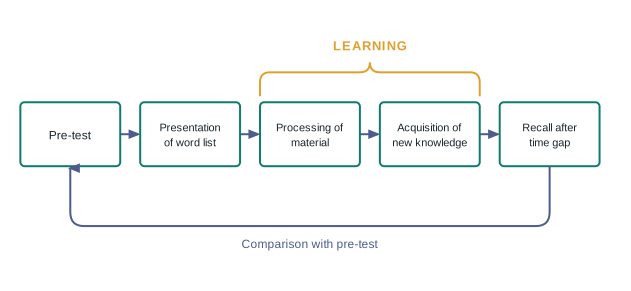
Fig. 5.5 – The sequence of events in a typical learning experiment.
Third, during that time the list is processed towards acquiring new knowledge. Fourth, once processing is complete, the new knowledge is acquired — and it is this step, and only this step, that is learning. Fifth, after some time elapses, the processed information is recalled by the person.
The last move is the crucial one. By comparing the number of words the person knows now with the number known at the pre-test, the psychologist infers that learning did take place.
Learning is inferred; performance is observed
This brings us to an important distinction. Learning is an inferred process. It is different from performance, which is a person’s observed behaviour, response or action.
Consider what “inference” means here. Your teacher asks you to memorise a poem. You read the poem a number of times, and then you say that you have learned it. You are asked to recite it, and you are able to do so.
The recitation is your performance — that is the part anyone in the room can see and hear. The learning itself is not visible; nobody watched the poem being stored. On the basis of your performance, the teacher infers that you have learned it.
5.3 Paradigms of Learning
Learning takes place in many ways, and psychologists have studied them separately. Some of these methods account for the acquisition of fairly simple responses — a dog salivating, a child flinching. Others account for complex responses, such as learning a foreign vocabulary or piloting an aircraft. A paradigm, in this sense, is simply a standard way of setting up and studying one kind of learning.
The simplest kind of learning is called conditioning. Here a response comes to be attached to a stimulus, or to a consequence, through repeated experience.
Two types of conditioning have been identified. The first is called classical conditioning, and the second is instrumental/operant conditioning. These two occupy the next two sections, and much of the vocabulary of this chapter comes from them.
Beyond conditioning, four further forms of learning are taken up in this chapter, as set out in Fig. 5.6. They are observational learning, in which we acquire behaviour by watching others; cognitive learning, in which what changes is what the learner knows rather than what she does; verbal learning, which deals with how words come to be associated with one another; and skill learning, which explains how a complex activity gradually becomes smooth and almost automatic.
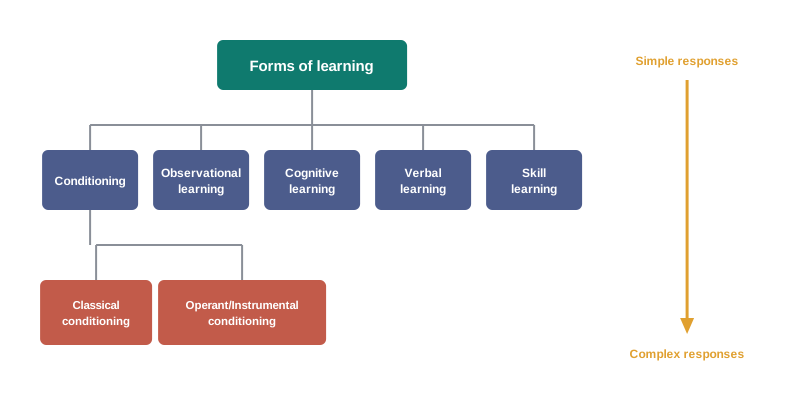
Fig. 5.6 – Paradigms of learning.
Keep this map in mind as you read on. Each of the sections that follows fills in one branch of it — the procedure used, the processes at work, and the factors that speed the learning up or slow it down.
5.4 Classical Conditioning
This type of learning was first investigated by Ivan P. Pavlov. As you have already read, Pavlov was not looking for a theory of learning at all — he was primarily interested in the physiology of digestion. What he could not ignore was that the dogs on whom he was working started secreting saliva as soon as they saw the empty plate in which food was usually served.
That was the puzzle. Saliva secretion is a reflexive response to food, or to something placed in the mouth. An empty plate is not food. Yet the plate alone was now enough to set the glands working. Pavlov therefore designed an experiment, using dogs once again, to study the process in detail.
Pavlov’s experimental procedure
In the first phase, a dog was placed in a box and harnessed. It was left in the box for some time, and this was repeated a number of times on different days, so that the animal became used to the apparatus and was not disturbed by it.
In the meantime, a simple surgery was conducted. One end of a tube was inserted in the dog’s jaw, and the other end of the tube was put in a measuring glass, so that the saliva produced could be collected and measured accurately rather than merely observed. The experimental setup is illustrated in Fig. 5.1.
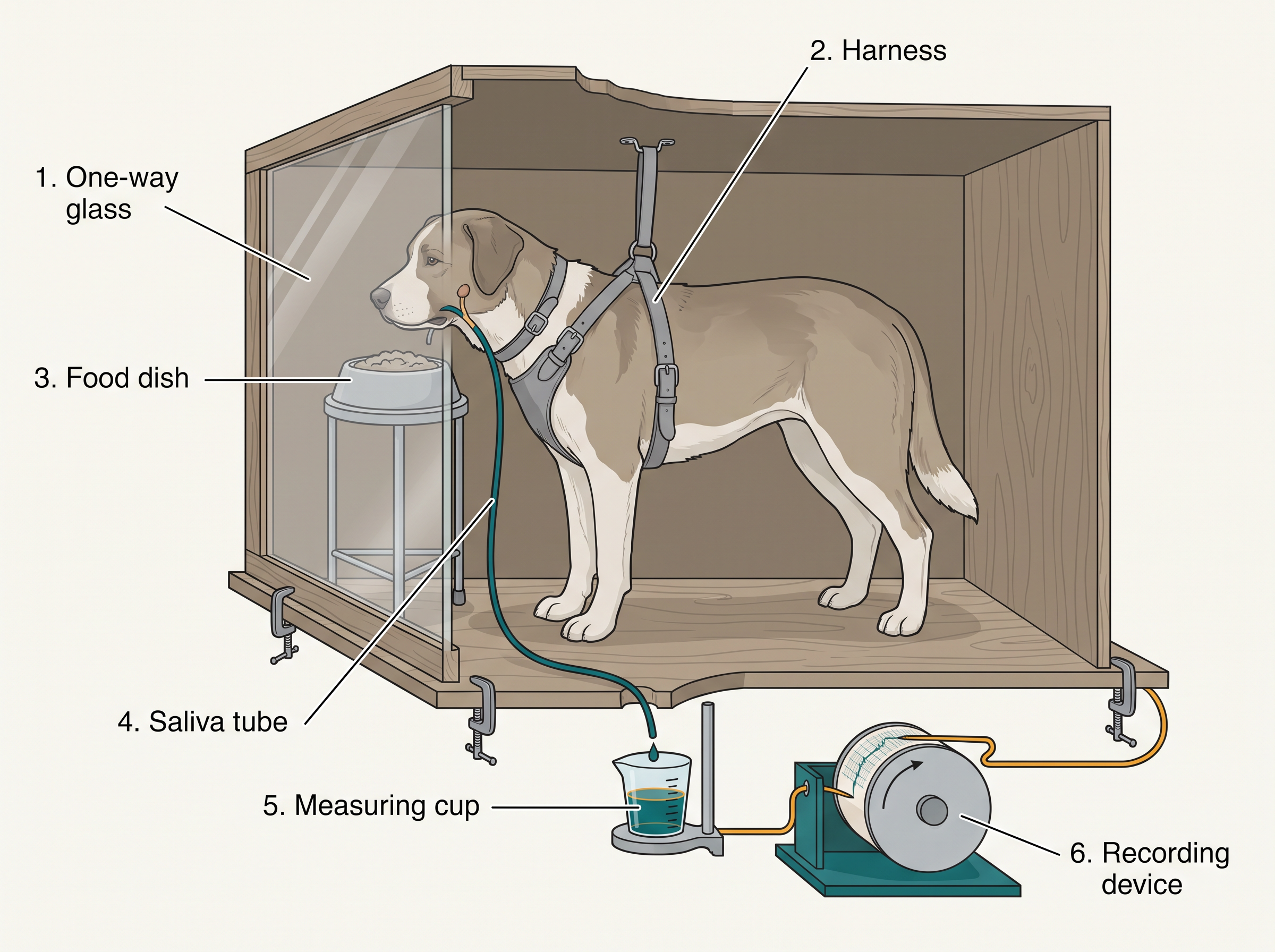
Fig. 5.1 – Pavlov’s experimental setup.
In the second phase, the dog was kept hungry and placed in the harness, with one end of the tube ending in the jaw and the other end in the glass jar. A bell was sounded, and immediately thereafter food — meat powder — was served to the dog. The dog was allowed to eat it.
For the next few days this pairing was repeated. Every time the meat powder was presented, it was preceded by the sound of a bell. The bell, in other words, always arrived just before the food.
After a number of such trials, a test trial was introduced. Everything was exactly the same as in the earlier trials, with one difference: no food followed the sounding of the bell. The dog still salivated to the sound of the bell, expecting the meat powder, because the sound of the bell had come to be connected with it.
This association between the bell and the food resulted in the acquisition of a new response by the dog — salivation to the sound of a bell. This has been termed conditioning.
The four terms you must be able to use
Pavlov gave this situation a vocabulary, and the whole of the rest of the section depends on it. Start from what was true before any training took place. You may have noticed that all dogs salivate when they are presented with food; no learning is needed for that.
Food is therefore an Unconditioned Stimulus (US) — a stimulus that produces a response naturally, without any prior learning. The salivation that follows it is an Unconditioned Response (UR).
After conditioning, salivation began to occur in the presence of the sound of the bell. The bell has now become a Conditioned Stimulus (CS), and the saliva secretion it produces is a Conditioned Response (CR). This kind of conditioning is called classical conditioning. The whole procedure is set out stage by stage in Table 5.1.
Table 5.1 : Relationship of Stages of Conditioning and Operations
| Stages of Conditioning | Nature of Stimulus | Nature of Response |
|---|---|---|
| Before | Food (US) | Salivation (UR) |
| Sound of the Bell | Alertness (No Specific Response) | |
| During | Sound of the Bell (CS) + Food (US) | Salivation (UR) |
| After | Sound of the Bell (CS) | Salivation (CR) |
Read the “Before” row carefully. The bell, on its own, is not doing nothing — it produces alertness. What it does not produce is salivation. It is a neutral stimulus with respect to the response we are interested in, and conditioning is precisely the process by which it stops being neutral.
Why this is called S–S learning
It is obvious that the learning situation in classical conditioning is one of S–S learning, in which one stimulus (for example, the sound of the bell) becomes a signal for another stimulus (for example, food). Here one stimulus signifies the possible occurrence of another stimulus.
This is worth pausing on, because it tells you what the animal has actually learnt. The dog has not learnt a new muscular skill. It has learnt a relationship between two events in the world: bell now, food shortly. The salivation is simply the body preparing for what is about to arrive.
Classical conditioning in everyday life
Examples of classical conditioning abound in everyday life. Imagine you have just finished your lunch and are feeling satisfied. Then you see a sweet dish being served at the adjoining table. The sight signals its taste in your mouth, triggers the secretion of saliva, and you feel like eating it — even though you were not hungry a moment ago. That salivation is a conditioned response.
Take another example, this time an unpleasant one. In the early stages of childhood, one is naturally afraid of any loud noise. Suppose a small child catches an inflated balloon which bursts in her hands, making a loud noise. The child becomes afraid.
Now the next time she is made to hold a balloon, the balloon becomes a signal or cue for the noise, and elicits a fear response. This happens because of the contiguous presentation of the balloon as a conditioned stimulus and the loud noise as an unconditioned stimulus. Notice that the child does not fear balloons because anyone told her to. One pairing has quietly rearranged her world.
5.4.1 Determinants of Classical Conditioning
How quickly and how strongly a response is acquired in classical conditioning is not fixed. It depends on several factors. Three of the major ones are described below.
1. Time relations between stimuli
The classical conditioning procedures are basically of four types, based on the time relations between the onset of the conditioned stimulus and the onset of the unconditioned stimulus. The first three are called forward conditioning procedures, because the CS comes first. The fourth one is called the backward conditioning procedure, because the order is reversed.
The basic experimental arrangements of these procedures are as follows, and they are easiest to grasp from the timelines in Fig. 5.7.
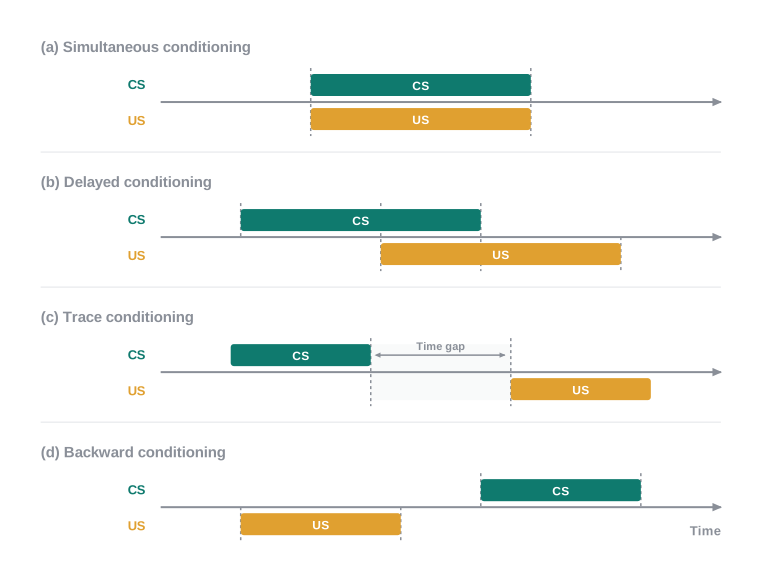
Fig. 5.7 – Time relations in classical conditioning.
When the CS and the US are presented together, it is called simultaneous conditioning.
In delayed conditioning, the onset of the CS precedes the onset of the US. The CS ends before the end of the US — that is, the two overlap for a while.
In trace conditioning, the onset and the end of the CS both precede the onset of the US, with some time gap between the two. Only a “trace” of the CS is left in the organism when the US arrives, which is where the name comes from.
In backward conditioning, the US precedes the onset of the CS.
It is now well established that the delayed conditioning procedure is the most effective way of acquiring a CR. Simultaneous and trace conditioning procedures do lead to the acquisition of a CR, but they require a greater number of acquisition trials in comparison to the delayed procedure. It may be noted that the acquisition of a response under the backward conditioning procedure is very rare.
2. Type of unconditioned stimuli
The unconditioned stimuli used in studies of classical conditioning are basically of two types: appetitive and aversive.
Appetitive unconditioned stimuli automatically elicit approach responses, such as eating, drinking or caressing. These responses give satisfaction and pleasure. Aversive unconditioned stimuli, on the other hand — noise, a bitter taste, an electric shock, a painful injection — are painful or harmful, and elicit avoidance and escape responses.
The two do not condition at the same speed. It has been found that appetitive classical conditioning is slower and requires a greater number of acquisition trials. Aversive classical conditioning is established in one, two or three trials, depending on the intensity of the aversive US.
That difference is not an accident of the laboratory. An organism that needed fifty pairings before learning to avoid something dangerous would not survive to complete the fifty. This is also why a single frightening experience — the burst balloon, a dog that once bit you, an injection at a clinic — can leave a fear that lasts for years.
3. Intensity of conditioned stimuli
The intensity of the CS influences the course of both appetitive and aversive classical conditioning. More intense conditioned stimuli are more effective in accelerating the acquisition of conditioned responses. It means that the more intense the conditioned stimulus, the fewer are the number of acquisition trials needed for conditioning.
A loud bell, in short, will be conditioned faster than a faint one. A stimulus that is barely noticed cannot easily become a signal.
5.5 Operant/Instrumental Conditioning
Classical conditioning explains a great deal, but it leaves something out. Pavlov’s dog does not do anything to earn the food; the food arrives whatever the dog does. Most of what we learn in ordinary life is not like that. We act, something follows, and what follows decides whether we act that way again.
This type of conditioning was first investigated by B.F. Skinner. Skinner studied the occurrence of voluntary responses when an organism operates on the environment. He called such responses operants.
The term “operant” is used because the organism operates on the environment rather than merely reacting to it. Conditioning of operant behaviour is called operant conditioning.
Skinner’s experimental procedure
Skinner conducted his studies on rats and pigeons in specially made boxes, called the Skinner Box. A hungry rat, one at a time, is placed in the chamber, which is so built that the rat can move about inside but cannot come out.
In the chamber there is a lever, connected to a food container kept on top of the chamber, as shown in Fig. 5.2. When the lever is pressed, a food pellet drops on a plate placed close to the lever.
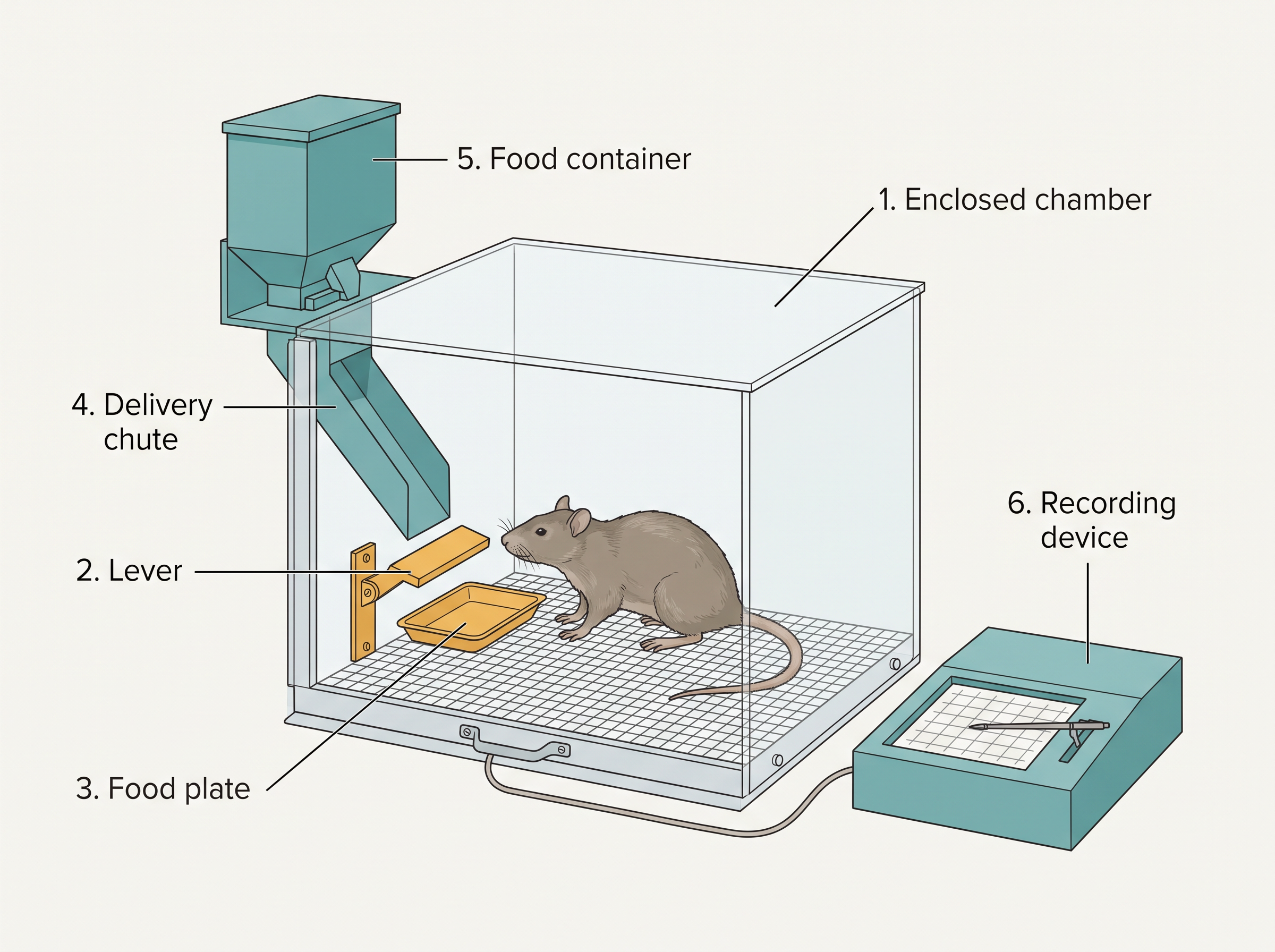
Fig. 5.2 – The Skinner Box.
At first, nothing looks like learning at all. The hungry rat moves around and paws the walls — this is simply exploratory behaviour. In the course of it, the rat accidentally presses the lever, a food pellet drops on the plate, and the hungry rat eats it.
In the next trial, after a while, the exploratory behaviour begins again. But as the number of trials increases, the rat takes less and less time to press the lever for food. Conditioning is complete when the rat presses the lever immediately after it is placed in the chamber.
It is obvious what has happened. Lever pressing is an operant response, and getting food is its consequence. The rat has not learnt that one stimulus signals another; it has learnt that one action of its own produces a result worth having.
Why it is also called instrumental conditioning
In the situation just described, the response is instrumental in getting the food — it is the means by which the food is obtained. That is why this type of learning is also called instrumental conditioning.
Examples of instrumental conditioning abound in our everyday life. Children who want sweets in the absence of their mother learn to locate the jar in which she hides them for safekeeping, and eat them. Children learn to be polite and to say ‘please’, because that is what gets them favours from parents and others.
One learns to operate mechanical gadgets — a radio, a camera, a television — on the principle of instrumental conditioning: you try, something works, and you keep doing what worked. As a matter of fact, human beings learn short cuts to attain desired goals or ends through instrumental conditioning.
5.5.1 Determinants of Operant Conditioning
You have noted that operant or instrumental conditioning is a form of learning in which behaviour is learned, maintained or changed through its consequences. Such consequences are called reinforcers.
Read that definition carefully, because it is not the same as “a reward”. A reinforcer is identified by what it does to the behaviour, not by whether it seems pleasant to us. If a scolding increases the frequency of a child’s clowning in class, then for that child, in that class, the scolding is functioning as a reinforcer.
A reinforcer has numerous features, and each of them affects the course and strength of a response. They include its type — positive or negative; its number or frequency; its quality — superior or inferior; and its schedule — continuous or intermittent (partial). All these features influence the course of operant conditioning.
Two further factors matter. One is the nature of the response or behaviour that is to be conditioned; some behaviours are easier to condition than others. The other is the interval, or length of time, that lapses between the occurrence of the response and the reinforcement. Let us examine some of these factors in detail.
Types of reinforcement
Reinforcement may be positive or negative.
Positive reinforcement involves stimuli that have pleasant consequences. They strengthen and maintain the responses that have caused them to occur. Positive reinforcers satisfy needs, and they include food, water, medals, praise, money, status and information.
Negative reinforcement works differently. Negative reinforcers involve unpleasant and painful stimuli. Responses that lead organisms to get rid of painful stimuli, or to avoid and escape from them, provide negative reinforcement.
Thus, negative reinforcement leads to the learning of avoidance and escape responses. One learns to put on woollen clothes, to burn firewood, or to use an electric heater, in order to avoid the unpleasant cold. One learns to move away from dangerous stimuli, because moving away removes the danger — and that removal is itself the reinforcement.
It may be noted, and it must be underlined, that negative reinforcement is not punishment. The use of punishment reduces or suppresses a response, whereas a negative reinforcer increases the probability of an avoidance or escape response. For instance, drivers and co-drivers wear their seat belts to avoid getting injured in an accident, and to avoid being fined by the traffic police. The seat-belt behaviour goes up, not down.
The limits of punishment
It should be understood that no punishment suppresses a response permanently. Mild and delayed punishment has no effect at all. The stronger the punishment, the more lasting is the suppression effect — but even then it is not permanent.
Sometimes punishment has no effect irrespective of its intensity. On the contrary, the punished person may develop dislike and hatred for the punishing agent, or for the person who administers the punishment. A teacher who relies on punishment may find that what the class learns most reliably is to dislike the teacher.
Number of reinforcement and other features
The number of reinforcement refers to the number of trials on which an organism has been reinforced or rewarded.
The amount of reinforcement means how much of the reinforcing stimulus one receives on each trial — how much food or water, or how intense the pain-causing agent is.
The quality of reinforcement refers to the kind of reinforcer used. Chickpeas or pieces of bread are of inferior quality as compared with raisins or pieces of cake.
The course of operant conditioning is usually accelerated, to an extent, as the number, amount and quality of reinforcement increase. Note the qualification “to an extent” — as you will see when we come to extinction, more is not always better.
Schedules of reinforcement
A reinforcement schedule is the arrangement of the delivery of reinforcement during conditioning trials. Each schedule of reinforcement influences the course of conditioning in its own way, and thus conditioned responses occur with differential characteristics.
The organism being subjected to operant conditioning may be given reinforcement in every acquisition trial, or in some trials it is given and in others it is omitted. Thus, reinforcement may be continuous or intermittent.
When a desired response is reinforced every time it occurs, we call it continuous reinforcement. In contrast, in intermittent schedules responses are sometimes reinforced and sometimes not. This is known as partial reinforcement, and it has been found to produce greater resistance to extinction than is found with continuous reinforcement.
That last finding is one of the most useful in the whole chapter, and Section 5.10 returns to it. A behaviour that has been rewarded only sometimes is remarkably hard to get rid of.
Delayed reinforcement
The effectiveness of reinforcement is dramatically altered by delay in its occurrence. It is found that delay in the delivery of reinforcement leads to a poorer level of performance.
This can be easily shown by asking children which reward they would prefer for doing some chore. Smaller rewards immediately after doing the chore will be preferred, rather than a big one after a long gap. The consequence has to arrive close enough in time for the learner to connect it with the act.
5.5.2 Key Learning Processes
When learning takes place, whether it is classical or operant conditioning, it involves the occurrence of certain processes. These include reinforcement; extinction, or the non-occurrence of a learned response; generalisation of learning to other stimuli under some specifiable conditions; discrimination between reinforcing and non-reinforcing stimuli; and spontaneous recovery.
These five are not new types of learning. They are processes that run inside the kinds of learning you have already met, and they are what a psychologist actually measures in the laboratory.
Reinforcement
Reinforcement is the operation of administering a reinforcer by the experimenter. Reinforcers are stimuli that increase the rate or probability of the responses that precede them.
We have noted that reinforced responses increase in rate, while non-reinforced responses decrease in rate. A positive reinforcer increases the rate of the response that precedes its presentation. Negative reinforcers increase the rate of the response that precedes their removal or termination.
Reinforcers may also be primary or secondary. A primary reinforcer is biologically important, since it determines the organism’s survival — food for a hungry organism is the standard example. Its power does not have to be learned.
A secondary reinforcer is one which has acquired the characteristics of a reinforcer because of the organism’s experience with the environment. We frequently use money, praise and grades as reinforcers, and these are secondary reinforcers. A hundred-rupee note is a printed piece of paper; it reinforces behaviour only because of what experience has attached to it.
Systematic use of reinforcers can lead to a desired response even when that response has never occurred. Such a response is shaped by reinforcing successive approximations to the desired response — you reinforce whatever is a little closer to the target than the last attempt, and then raise the bar.
Extinction
Extinction means the disappearance of a learned response due to the removal of reinforcement from the situation in which the response used to occur.
If the occurrence of the CS–CR is not followed by the US in classical conditioning, or if lever pressing is no longer followed by food pellets in the Skinner Box, the learned behaviour will gradually be weakened and will ultimately disappear.
But it does not disappear at once. Learning shows resistance to extinction: even though the learned response is now not reinforced, it would continue to occur for some time. With an increasing number of trials without reinforcement, the response strength gradually diminishes, and ultimately it stops occurring.
How long a learned response shows resistance to extinction depends on a number of factors, and the findings here are not all in the direction a student would first guess.
It has been found that with an increasing number of reinforced trials, resistance to extinction increases, and the learned response reaches its highest level. At this level performance gets stabilised. After that, the number of trials does not make a difference in response strength.
Indeed, resistance to extinction increases with an increasing number of reinforcements during acquisition trials only up to a point; beyond that, any further increase in the number of reinforcements reduces resistance to extinction.
Studies have also indicated that as the amount of reinforcement — the number of food pellets — increases during the acquisition trials, resistance to extinction decreases.
If the reinforcement is delayed during acquisition trials, resistance to extinction increases. Reinforcement in every acquisition trial makes the learned response less resistant to extinction. In contrast, intermittent or partial reinforcement during acquisition trials makes a learned response more resistant to extinction.
Generalisation and discrimination
The processes of generalisation and discrimination occur in all kinds of learning. However, they have been investigated most extensively in the context of conditioning.
Suppose an organism is conditioned to elicit a CR — saliva secretion, or any other reflexive response — on the presentation of a CS such as a light or the sound of a bell. After conditioning is established, another stimulus similar to the CS is presented: say, the ringing of a telephone. The organism makes the conditioned response to it as well. This phenomenon of responding similarly to similar stimuli is known as generalisation.
Generalisation occurs in operant learning too. Suppose a child has learned the location of a jar of a certain size and shape in which sweets are kept. Even when the mother is not around, the child finds the jar and obtains the sweets. This is a learned operant.
Now the sweets are kept in another jar of a different size and shape, at a different location in the kitchen. In the mother’s absence, the child locates that jar too, and obtains the sweets. This is also an example of generalisation.
Another process, which is complementary to generalisation, is called discrimination. Generalisation is due to similarity, while discrimination is a response due to difference.
For example, suppose a child is conditioned to be afraid of a person with a long moustache who wears black clothes. In a later situation, the child meets another person dressed in black clothes and wearing a beard, and shows signs of fear. The child’s fear has generalised.
Then the child meets another stranger who is wearing grey clothes and is clean-shaven. The child shows no fear. This is an example of discrimination. The child is now responding to the difference between the two strangers rather than to their similarity.
Occurrence of generalisation means failure of discrimination. Discriminative response depends on the discrimination capacity, or the discrimination learning, of the organism.
Spontaneous recovery
Spontaneous recovery occurs after a learned response has been extinguished.
Suppose an organism has learned to make a response in order to get reinforcement. Then the response is extinguished, and some time lapses. A question may now be asked: is the response completely extinguished — will it simply not occur if the CS is presented again?
It has been demonstrated that after the lapse of considerable time, the learned response, or CR, recovers and occurs to the CS. Nobody has retrained the organism. The response comes back on its own, which is why the recovery is called spontaneous.
The amount of spontaneous recovery depends on the duration of the time that has lapsed after the extinction session. The longer the duration of time lapsed, the greater is the recovery of the learned response. Fig. 5.3 shows the phenomenon.
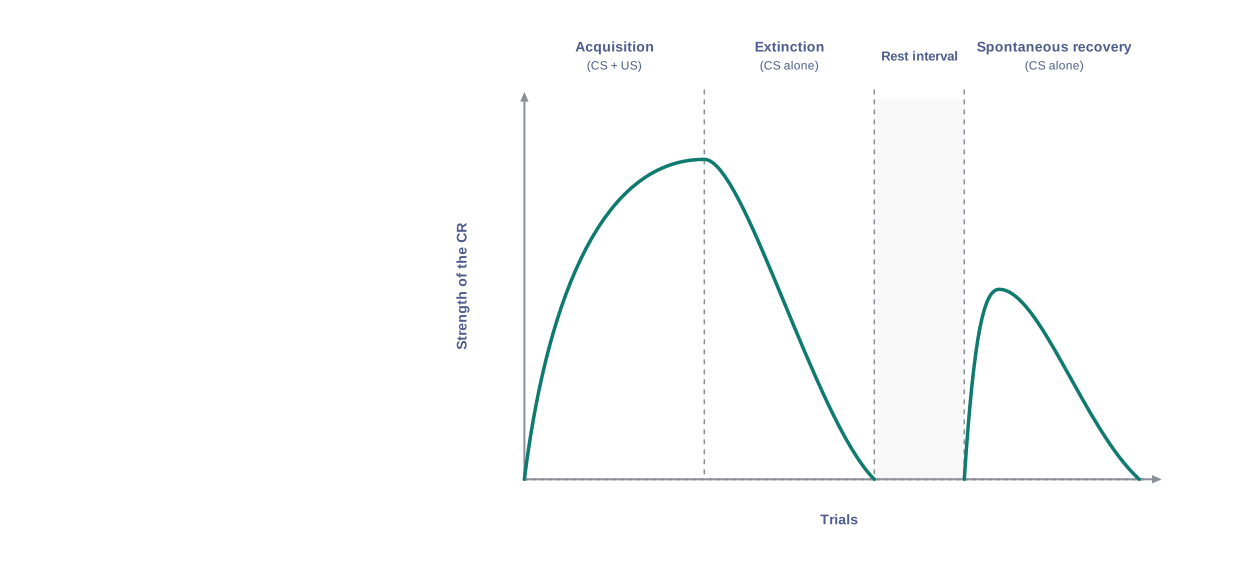
Fig. 5.3 – Acquisition, extinction and spontaneous recovery.
Notice in Fig. 5.3 that the recovered response does not return to its full original strength — the second peak is lower than the first. Extinction, then, does not erase the original learning. It lays something over it. This is why a habit you believed you had broken can reappear, unbidden, after a long gap.
A word of caution is worth adding here. A student who has failed repeatedly at mathematics, and who has been told often enough that she “cannot do maths”, may stop trying long before she has run out of ability. What looks like laziness is often helplessness that has been learned. The remedy is not more failure, but a sequence of tasks in which effort visibly produces results again.
5.6 Observational Learning
The next form of learning takes place simply by observing others. Nobody reinforces the learner, and the learner need not make any response at all while the learning is going on. Earlier, this form of learning was called imitation.
Bandura and his colleagues, in a series of experimental studies, investigated observational learning in detail. In this kind of learning, human beings acquire social behaviours; therefore it is sometimes called social learning.
In many situations individuals simply do not know how to behave. A new student on the first day in a school, a guest at an unfamiliar ceremony, a trainee on the first morning of a job — each of them watches what others are doing and then does something similar. This form of learning is called modeling, and the person being watched is the model.
Models are everywhere
Examples of observational learning abound in our social life. Fashion designers employ tall, attractive and graceful young models, both women and men, to popularise clothes of different designs and fabrics. People observe them on televised fashion shows, and in advertisements in magazines and newspapers, and they imitate these models.
The same thing happens far away from any camera. Observing one’s superiors and other likeable persons, and then emulating their behaviour in a novel social situation, is a common experience. When you are unsure which fork to use, or how loudly to speak, you look at someone who seems to know.
What Bandura’s study established
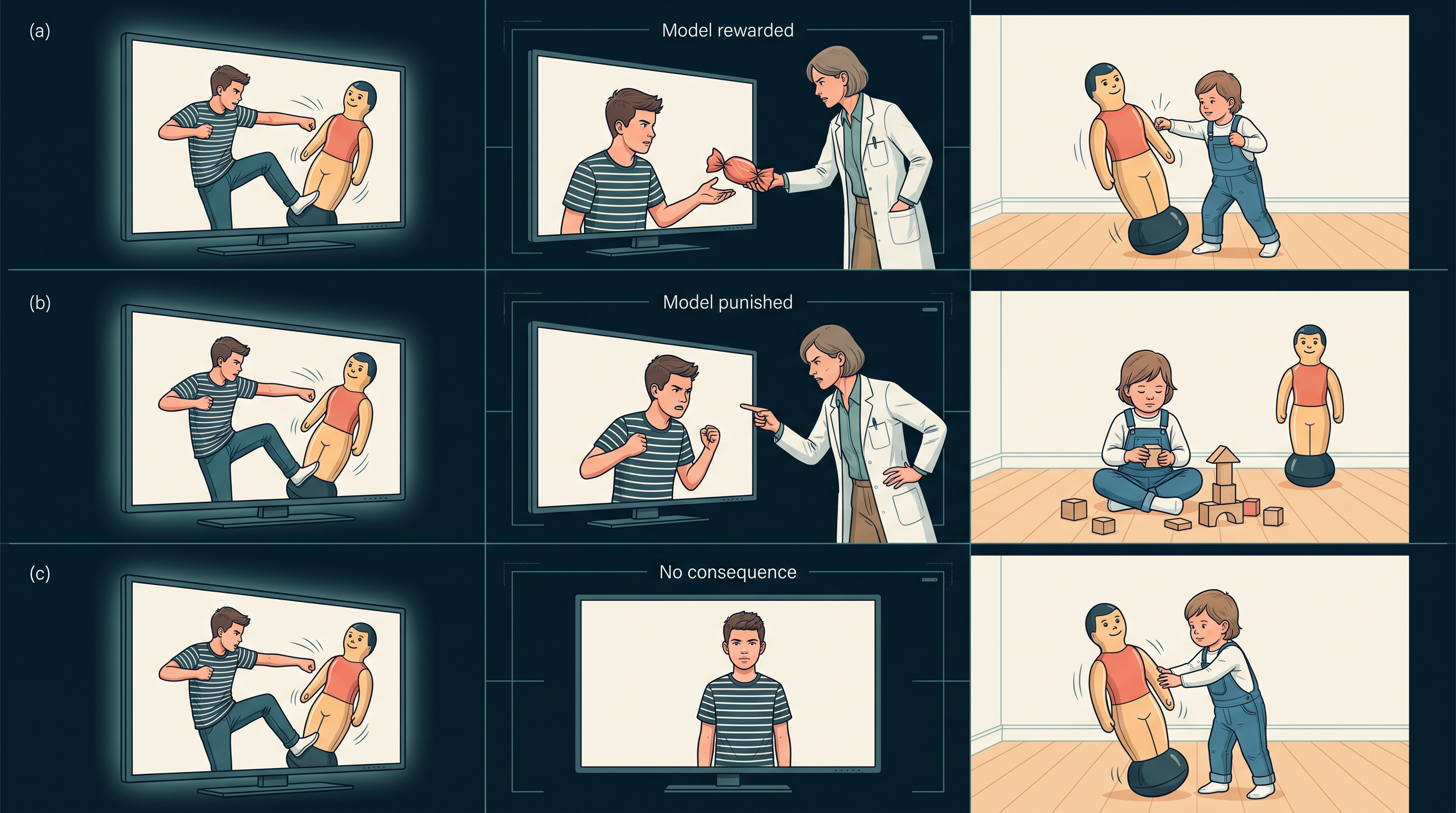
Fig. 5.8 – Observational learning and the Bobo doll experiment.
Look again at Fig. 5.8, and connect it to the distinction you met in Section 5.2. What the children saw entered them as learning; what they did in the play room was performance. The consequences to the model did not change what was acquired. They changed what was shown.
How much of childhood is observation
You must have noticed that children observe adults’ behaviours at home, and during social ceremonies and functions. They then enact adults in their plays and games. Young children play at marriage ceremonies, birthday parties, thief and policeman, and house-keeping. What they enact in their games is what they observe in society, watch on television, and read in books.
Children learn most of their social behaviours by observing and emulating adults. The way to put on clothes, to dress one’s hair, and to conduct oneself in company are all learned by watching others do it.
It has also been shown that children learn and develop various personality characteristics through observational learning. Aggressiveness, pro-social behaviour, courtesy, politeness, diligence and indolence are all acquired by this method of learning.
That last sentence deserves a moment’s thought. It means that the adults around a child are teaching all the time, whether or not they intend to. A child who is told to be patient by a parent who is visibly impatient has been given two lessons, and the observed one is usually the stronger.
5.7 Cognitive Learning
Some psychologists view learning in terms of the cognitive processes that underlie it. They have developed approaches that focus on the processes occurring during learning, rather than concentrating solely on S–R and S–S connections, as we have seen in the case of classical and operant conditioning.
The difference is fundamental. In conditioning, we watch a response grow stronger or weaker. In cognitive learning, there is a change in what the learner knows, rather than in what she does. The knowledge may be acquired long before it shows up in any behaviour — and, as you will see, it may show up in behaviour that was never practised even once.
This form of learning shows up in two well-studied phenomena: insight learning and latent learning.
5.7.1 Insight Learning
Kohler demonstrated a model of learning which could not be readily explained by conditioning. He performed a series of experiments with chimpanzees that involved solving complex problems.
Kohler placed chimpanzees in an enclosed play area where food was kept out of their reach. Tools such as poles and boxes were placed in the enclosure. The chimpanzees rapidly learned how to use a box to stand on, or a pole to move the food in their direction.
What was striking was how they learned it. In this experiment, learning did not occur as a result of trial and error and reinforcement. It came about in sudden flashes of insight. The chimpanzees would roam about the enclosure for some time, apparently getting nowhere, and then suddenly would stand on a box, grab a pole and strike a banana that was out of normal reach above the enclosure.
The chimpanzee exhibited what Kohler called insight learning — the process by which the solution to a problem suddenly becomes clear.
In a normal experiment on insight learning, a problem is presented, followed by a period of time during which no apparent progress is made, and finally a solution suddenly emerges. In insight learning, sudden solution is the rule rather than the exception.
Two further features separate this sharply from conditioning. First, once the solution has appeared, it can be repeated immediately the next time the problem is confronted — there is no slow build-up of response strength across trials. Second, and more importantly, insight learning can be generalised to other similar problem situations.
Both features point to the same conclusion. What is learned in insight is not a specific set of conditioned associations between stimuli and responses, but a cognitive relationship between a means and an end. The chimpanzee has not acquired the habit of grabbing that pole. It has grasped that a pole can extend a reach — and a grasped relationship travels to new problems in a way that a conditioned habit does not.
5.7.2 Latent Learning
The second type of cognitive learning is known as latent learning. In latent learning, a new behaviour is learned but not demonstrated until reinforcement is provided for displaying it.
Tolman made an early contribution to the concept of latent learning, and his experiment makes the idea concrete. Tolman put two groups of rats in a maze and gave them an opportunity to explore it.
In one group, the rats found food at the end of the maze, and soon learned to make their way rapidly through it. The rats in the second group were not rewarded, and showed no apparent signs of learning at all — they wandered, and their times did not improve.
Then came the crucial test. When these unrewarded rats were later reinforced, they ran through the maze as efficiently as the rewarded group. Their performance did not improve gradually, as it should have if they were only now beginning to learn. It arrived almost at once.
Tolman contended that the unrewarded rats had in fact learned the layout of the maze early in their explorations. They simply never displayed their latent learning until the reinforcement was provided. What they had acquired, he argued, was a cognitive map of the maze — that is, a mental representation of the spatial locations and directions which they needed in order to reach their goal.
5.8 Verbal Learning
Verbal learning is different from conditioning, and it is limited to human beings. No amount of training will teach a rat the difference between “sincere” and “sincerity”, because the material itself is language, and language is ours alone.
Human beings, as you must have observed, acquire knowledge about objects, events and their features largely in terms of words. Words then come to be associated with one another. You do not merely know what a mango is; you know that “mango” goes with “ripe”, with “summer”, with “fruit”, and with a hundred other words, and it is this web of associations that makes the word usable.
Psychologists have developed a number of methods to study this kind of learning in a laboratory setting. Each method is used to investigate specific questions about the learning of some kind of verbal material.
The materials used
In the study of verbal learning, psychologists use a variety of materials, including nonsense syllables, familiar words and unfamiliar words — sample items are given in Table 5.2 — as well as sentences and paragraphs.
Table 5.2 : Sample Lists of Items used in Verbal Learning Experiments
| Nonsense syllables | Unfamiliar words | Familiar words |
|---|---|---|
| YOL | ZILCH | BOAT |
| RUV | PLUMB | NOSE |
| TOJ | VERVE | KNOW |
| LIN | BLOUT | GOAL |
| LUF | THILL | BOWL |
| GOW | SCOFF | LOAD |
| NOK | TENOR | FEET |
| RIC | WRACK | MEET |
| NEZ | BOUGH | TENT |
| TAM | MALVE | FOAM |
| SUK | PATTER | TALE |
| KOZ | MANSE | JOKE |
| GUD | KYDRA | MALE |
| MUP | BORGE | BALM |
| KUG | DEVEN | SOLE |
Why bother with meaningless syllables such as YOL and RUV? Precisely because they are meaningless. A familiar word like BOAT arrives already loaded with associations, and no two participants bring exactly the same ones. A nonsense syllable is, as nearly as possible, equally new to everyone — so the experimenter can study the process of association itself, rather than the associations a person happened to have before walking into the laboratory.
5.8.1 Methods used in Studying Verbal Learning
1. Paired-associates learning
This method is similar to S–S conditioning and S–R learning: something is presented, and the learner must produce what goes with it. It is used, among other things, in learning the foreign-language equivalents of mother-tongue words.
First, a list of paired-associates is prepared. The first word of each pair is used as the stimulus, and the second word as the response. The members of each pair may be from the same language or from two different languages. A list of such words is given in Table 5.3.
Table 5.3 : Examples of Stimulus – Response Pairs used in Paired-Associates Learning
| Stimulus – Response | Stimulus – Response |
|---|---|
| GEN – LOOT | LUR – ROOF |
| BEM – TIME | RUL – GOLD |
| DIV – LAMP | VAK – HILL |
| WUF – DEER | KER – NAME |
| JIT – LION | HOZ – GOAT |
| DAX – COAL | MUW – BULL |
In Table 5.3, the first members of the pairs — the stimulus terms — are nonsense syllables of the consonant–vowel–consonant type, and the second members are English nouns, which serve as the response terms.
The learner is first shown both the stimulus–response pairs together, and is instructed to remember them and to recall the response after the presentation of each stimulus term. After that, a learning trial begins.
One by one, the stimulus words are presented, and the participant tries to give the correct response term. In case of failure, she is shown the response word. In one trial, all the stimulus terms are shown.
Trials continue until the participant gives all the response words without a single error. The total number of trials taken to reach this criterion becomes the measure of paired-associates learning. Notice that the score is a count of trials, not of words — the fewer the trials needed, the better the learning.
2. Serial learning
This method of verbal learning is used to find out how participants learn lists of verbal items, and what processes are involved in doing so. Here, unlike in paired-associates learning, the order is part of what must be learned.
First, lists of verbal items are prepared — nonsense syllables, most familiar or least familiar words, interrelated words, and so on. The participant is presented the entire list, and is required to produce the items in the same serial order as in the list.
In the first trial, the first item of the list is shown, and the participant has to produce the second item. If she fails to do so within the prescribed time, the experimenter presents the second item.
Now this item becomes the stimulus, and the participant has to produce the third item, which is the response word. If she fails, the experimenter gives the correct item, which then becomes the stimulus item for the fourth word — and so on down the list.
This procedure is called the serial anticipation method, and the name says exactly what the learner is doing: each item is a cue for anticipating the next. Learning trials continue until the participant correctly anticipates all the items in the given order. This is serial learning.
3. Free recall
In this method, participants are presented a list of words, which they read and speak out. Each word is shown at a fixed rate of exposure duration. Immediately after the presentation of the list, the participants are required to recall the words in any order they can — which is what gives the method its name, free recall.
The words in the list may be interrelated or unrelated. More than ten words are included in the list, and the presentation order of the words varies from trial to trial, so that the participant cannot simply learn a sequence.
This method is used to study how participants organise words for storage in memory. Because the order of recall is left free, the order that a participant actually produces is informative — it reveals the organisation she has imposed on the material.
Studies indicate that the items placed at the beginning or at the end of the list are easier to recall than those placed in the middle, which are more difficult to recall. This produces the curve shown in Fig. 5.9.
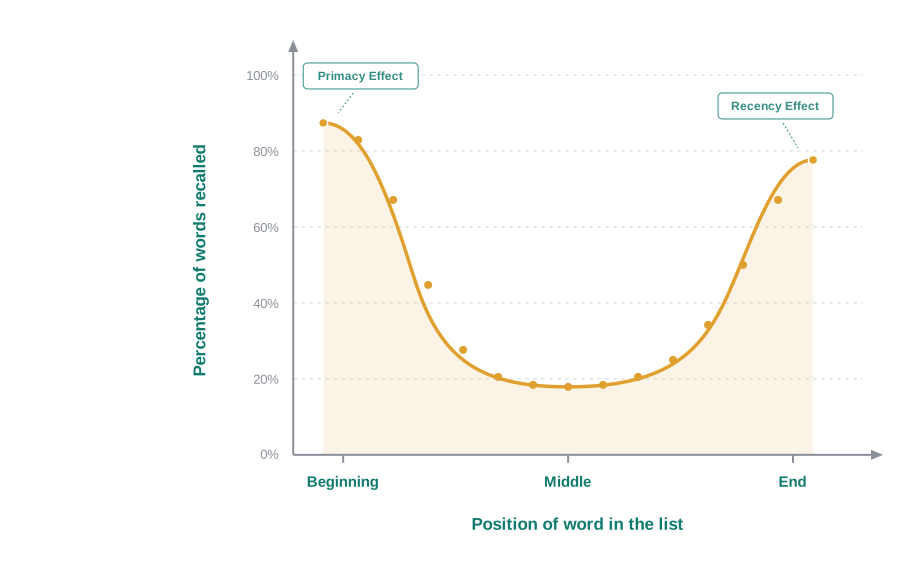
Fig. 5.9 – The serial position curve in free recall.
5.8.2 Determinants of Verbal Learning
Verbal learning has been subjected to the most extensive experimental investigation of any topic in this chapter. These studies have indicated that the course of verbal learning is influenced by a number of factors.
The most important determinants are the different features of the verbal material to be learned. They include the length of the list to be learned and the meaningfulness of the material.
Meaningfulness is not a vague notion here; it is measured in several ways. The number of associations elicited by an item in a fixed time, the familiarity of the material and the frequency of its usage, the relations among the words in the list, and the sequential dependence of each word of the list on the preceding words — all of these are used for assessing meaningfulness.
Lists of nonsense syllables are available with different levels of association value. For a clean experiment, the nonsense syllables should be selected from a list containing the same association value, so that the material is equally meaningless throughout.
What the research shows
On the basis of research findings, the following generalisations have been made.
Learning time increases with an increase in the length of the list, with the occurrence of words having low association values, and with a lack of relations among the items in the list. Long lists of unconnected, meaningless items are the hardest thing a verbal learner can be asked to do.
The more time it takes to learn the list, the stronger the learning will be. In this respect psychologists have found that the total time principle operates.
The principle has a practical edge to it. It does not say that you may divide your study time as you like and lose nothing; it says that the total time required for a given amount of material is fixed, and that time cannot be shortened by rearranging it. The more time it takes to learn, the stronger becomes the learning.
Organisation in free recall
If participants are not restricted to the serial learning method, and are allowed to give free recall, verbal learning becomes organisational. It implies that in free recall, participants recall the words not in their order of presentation, but in a new order or sequence of their own.
It has also been demonstrated that free recall is always organised subjectively. Subjective organisation shows that participants organise the words or items in their own individual ways, and recall accordingly. Two participants given the same list will group it differently, and each will recall in her own groups.
Intentional and incidental verbal learning
Verbal learning is usually intentional: you sit down meaning to learn the list. But a person may also learn some features of the words unintentionally, or incidentally.
In this kind of learning, participants notice features they were never asked to notice — whether two or more words rhyme, whether they start with identical letters, whether they have the same vowels. Nobody set out to learn this, and yet it is there afterwards. Thus, verbal learning is both intentional as well as incidental.
5.9 Skill Learning
5.9.1 Nature of Skills
Watch an experienced typist, or a driver in city traffic, and you will notice something odd: they are doing a very complicated thing, and they hardly seem to be attending to it. That combination — complexity plus ease — is what psychologists mean by a skill.
Car driving, airplane piloting, ship navigating, shorthand writing, and writing and reading are all examples of skills. Notice how ordinary the last two are. Reading this page is a skill you once could not perform at all, and it took you years.
Such skills are learned by practice and exercise. They are not acquired by being told about them, and they cannot be acquired all at once.
Psychologically, a skill consists of a chain of perceptual motor responses, or a sequence of S–R associations. Each response in the chain produces the stimulus conditions for the next one — the position of your hand after one gear change is what tells your hand where to go for the next. This is why a skill, once fluent, runs off as a single smooth unit rather than as a series of separate decisions.
5.9.2 Phases of Skill Acquisition
Skill learning passes through several qualitatively different phases. With each successive attempt at learning a skill, one’s performance becomes smoother and less effort-demanding. In other words, it becomes more spontaneous, or automatic.
It has also been shown that within each phase the performance improves. But improvement is not continuous. In the transition from one phase to the next, the level of performance stands still — and this is called a performance plateau. Once the next phase begins, performance starts improving and its level starts going up again, as shown in Fig. 5.10.
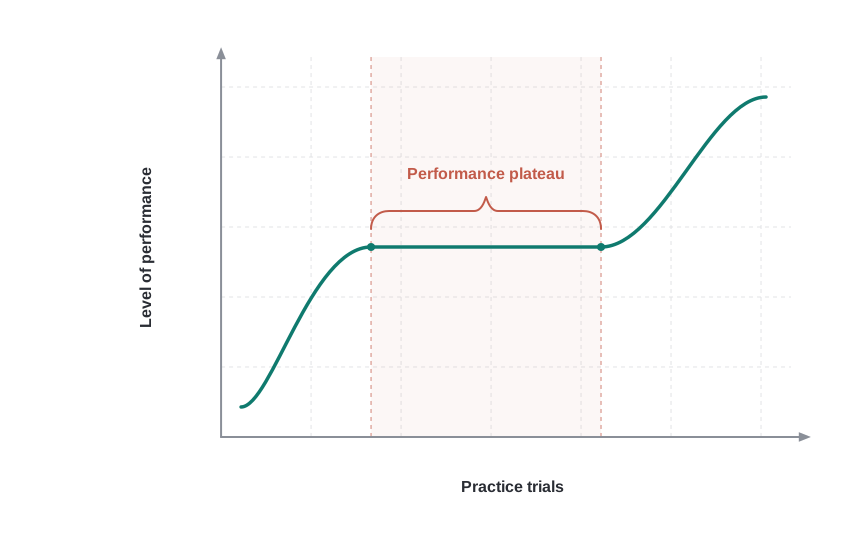
Fig. 5.10 – A performance plateau in skill learning.
The plateau is worth understanding, because it is where most learners give up. Progress feels as though it has stopped. In fact the learner is often reorganising the skill — moving from doing the task step by step to doing it in larger units — and the pay-off for that reorganisation appears only afterwards.
Fitts’s three phases
One of the most influential accounts of the phases of skill acquisition is presented by Fitts. According to him, skill learning passes through three phases, namely the cognitive, the associative and the autonomous phase. Each phase or stage of skill learning involves different types of mental processes.
In the cognitive phase of skill learning, the learner has to understand and memorise the instructions, and also understand how the task has to be performed. In this phase, every outside cue, every instructional demand, and one’s own response outcome have to be kept alive in consciousness. This is the stage at which a new driver is silently reciting the sequence — clutch, gear, mirror — and can do almost nothing else at the same time.
The second phase is associative. In this phase, the different sensory inputs or stimuli are linked with the appropriate responses. As practice increases, errors decrease, performance improves, and the time taken is also reduced.
With continued practice, errorless performance begins. But the learner still has to be attentive to all the sensory inputs and to maintain concentration on the task. The driver is no longer reciting the steps, but she still cannot hold a conversation while reversing.
Then the third phase, the autonomous phase, begins. In this phase, two important changes take place in performance. The attentional demands of the associative phase decrease, and the interference created by external factors reduces — noise, conversation and distraction no longer wreck the performance.
Finally, skilled performance attains automaticity, with minimal demands on conscious effort. The attentional demands that once consumed the whole of the learner’s mind have shrunk almost to nothing.
Why practice is not optional
The transitions from one phase to the other clearly show that practice is the only means of skill learning. One has to keep on exercising and practising. As the practice increases, the rate of improvement gradually increases, and the automaticity of errorless performance becomes the hallmark of skill. That is why it is said that ‘practice makes a man perfect’.
5.10 Factors Facilitating Learning
In the preceding sections we examined the specific determinants of learning — the ones that belong to a particular form of learning. They included the contiguous presentation of the CS and the US in classical conditioning; the number, amount and delay of reinforcement in operant conditioning; the status and attractiveness of models in observational learning; the procedure used in verbal learning; and the nature of the rules, and the perceptual features of objects and events, in concept learning.
Now we shall discuss some general determinants of learning — factors that operate whichever form of learning is involved. This discussion is not exhaustive. It deals only with some salient factors that have been found very important.
5.10.1 Continuous vs Partial Reinforcement
In experiments on learning, the experimenter can arrange to deliver reinforcement according to a specific schedule. In the context of learning, two kinds of schedules — continuous and partial — have been found very important. You met both in Section 5.5; here we look at what each of them does to a learner over the long run.
In continuous reinforcement, the participant is given reinforcement after each target response. This kind of schedule produces a high rate of responding. As long as the reinforcement keeps coming, the behaviour is strong and frequent.
However, once the reinforcement is withheld, response rates decrease very quickly, and the responses acquired under this schedule tend to extinguish. There is a further, less obvious cost: since the organism is getting reinforcement on each and every trial, the effectiveness of that reinforcer is reduced. A reward that always arrives eventually stops feeling like a reward.
In schedules where reinforcement is not continuous, some responses are not reinforced. Hence they are called partial, or intermittent, reinforcement. There are several ways in which one might reinforce responses according to an intermittent schedule.
It has been found that partial reinforcement schedules often produce very high rates of responding, particularly when responses are reinforced according to ratio — that is, after a certain number of responses have been made.
Now consider what such a schedule looks like from the inside. Under an intermittent schedule, an organism often makes several responses that are not reinforced. Therefore, it becomes difficult to tell when the reinforcement has been discontinued completely, and when it has merely been delayed. When reinforcement is continuous, it is easy to tell when it has been discontinued — two or three unrewarded responses are enough to make the change obvious.
This kind of difference has been found crucial for extinction. It has been found that extinction of a response is more difficult following partial reinforcement than following continuous reinforcement. The fact that the responses acquired under partial reinforcement are highly resistant to extinction is called the partial reinforcement effect.
5.10.2 Motivation
All living organisms have survival needs, and human beings, in addition, have growth needs. Motivation is a mental as well as a physiological state, which arouses an organism to act for fulfilling the current need.
In other words, motivation energises an organism to act vigorously for attaining some goal. Such acts persist until the goal is attained and the need is satisfied. Motivation is a prerequisite for learning: without a need to be met, there is nothing to make the organism act, and therefore nothing for its actions to teach it.
Look back at two examples you have already met, and notice that both of them started with a need. Why does a child forage in the kitchen when the mother is not in the house? Because she wants sweets, and is trying to locate the jar in which the sweets are kept. During the course of foraging, the child learns the location of the jar.
Similarly, a hungry rat is placed in a box. The animal forages in the box for food. Incidentally, it presses a lever and food drops in the box. With repeated experience of such activity, the animal learns to press the lever immediately after it is placed there. A rat that had just been fed would have done none of this, and would have learnt nothing.
Have you ever asked yourself why you are studying psychology and other subjects in Class XI? Your motivation for learning something arises from two broad sources.
You learn many things because you enjoy them for their own sake — this is intrinsic motivation. You learn other things because they provide you the means for attaining some other goal, such as a good result in the final examination — this is extrinsic motivation. The more motivated you are, the harder you work, and the more you learn.
5.10.3 Preparedness for Learning
The members of different species are very different from one another in their sensory capacities and their response abilities. A dog lives in a world of smells; a bat in a world of echoes. The mechanisms necessary for establishing associations, such as S–S or S–R, also vary from species to species.
It can therefore be said that species have biological constraints on their learning capacities. The kinds of S–S or S–R learning an organism can easily acquire depend on the associative mechanism it is genetically endowed with, or prepared for.
A particular kind of associative learning may be easy for apes or human beings, but extremely difficult, and sometimes impossible, for cats and rats. It implies that one can learn only those associations for which one is genetically prepared. No amount of patient teaching will do what the biology of a species does not allow.
The concept of preparedness may be best understood as a continuum, or a dimension, as shown in Fig. 5.11.
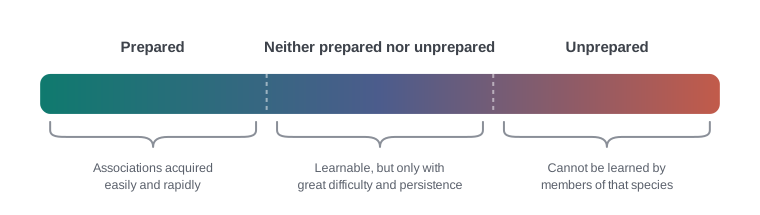
Fig. 5.11 – The continuum of preparedness for learning.
At one end of the continuum are those learning tasks or associations which are easy for the members of a species. At the other end are those learning tasks for which those members are not prepared at all, and which they cannot learn.
In the middle of the continuum fall those tasks and associations for which the members are neither prepared nor unprepared. They can learn such tasks — but only with great difficulty and persistence.
5.11 Learning Disabilities
You must have heard, observed or read that thousands of children get enrolled for education in schools. Some of them, however, find the demands of the educational process too difficult to meet, and they drop out. Such students are called “drop-outs”.
The reasons for this are numerous. They include sensory impairment, intellectual disability, social and emotional disturbance, poor economic conditions in the family, and cultural beliefs and norms or other environmental influences.
Apart from these conditions, there is another source of obstacle in the continuance of education, and it is called learning disabilities. It makes school learning — the acquisition of knowledge and skills — too difficult to grapple with, and children facing it fail to move forward in their learning activities.
What a learning disability is
Learning disability is a general term. It refers to a heterogeneous group of disorders manifested in terms of difficulty in the acquisition of learning, reading, writing, speaking, reasoning and mathematical activities.
The sources of such disorders are inherent in the child. It is presumed that these difficulties originate from problems with the functioning of the central nervous system. A learning disability may occur along with physical disabilities, sensory impairment or intellectual disability — or entirely without them.
That last point is the crucial one, and it is regularly misunderstood. It must be noted that learning disabilities may be observed as a distinct disabling condition in children of average to superior intelligence, with adequate sensory motor systems and adequate learning opportunities.
In other words, the child is not slow, is not deprived of teaching, and is not failing for want of effort. Something specific is interfering with one part of learning, while the rest of the mind works perfectly well.
If it is not remedied, a learning disability may continue throughout life and affect self-esteem, vocation, social relations and daily living activities. This is why identification matters so much, and why identifying it early matters most of all.
Symptoms of learning disabilities
There are many symptoms of learning disabilities. They become manifest in different combinations in different children, irrespective of their intelligence, their motivation and how hard they work at learning.
Before you read the list, one thing must be clearly understood. A list of symptoms is not a diagnostic tool. Every child is inattentive some days, and every child reverses a letter at some age. A learning disability can be identified only by a trained professional, using proper assessment over time — never from a textbook list, never from an online quiz, and never by a classmate.
Difficulties in writing letters, words and phrases, in reading out text, and in speaking appear quite frequently. Quite often these children have listening problems, although they may not have any auditory defect. Such children are very different from others in the way they develop learning strategies and plans.
Children with learning disabilities have disorders of attention. They get easily distracted, and cannot sustain attention on one point for long. More often than not, attentional deficiency leads to hyperactivity — they are always moving, doing different things, and trying to manipulate things incessantly.
Poor space orientation and an inadequate sense of time are common symptoms. Such children do not get easily oriented to new surroundings and get lost. They lack a sense of time, and are late — or sometimes too early — in their routine work. They also show confusion in direction, and misjudge right, left, up and down.
They have poor motor coordination and poor manual dexterity. This is evident in a lack of balance, an inability to sharpen a pencil or handle a doorknob, and difficulty in learning to ride a bicycle.
These children fail to understand and follow oral directions for doing things.
They misjudge relationships — which classmates are friendly and which ones are indifferent. They fail to learn and understand body language, and this can make ordinary social life bewildering.
Children with learning disabilities usually show perceptual disorders. These may include visual, auditory, tactual and kinesthetic misperception. They may fail to differentiate a call-bell from the ring of a telephone. It is not that they lack sensory acuity; they simply fail to use it in performance.
A fairly large number of children with learning disabilities have dyslexia. They quite often fail to copy letters and words. For example, they fail to distinguish between b and d, between p and q, between P and 9, between was and saw, and between unclear and nuclear. They fail to organise verbal materials.
What can be done
It must be noted that learning disabilities are not incurable. Remedial teaching methods go a long way in helping such children to learn and to progress like other students. Educational psychologists have developed appropriate techniques for correcting most of the symptoms related to learning disabilities.
5.12 Summary
Learning is any relatively permanent change in behaviour, or in behavioural potential, produced by experience or practice. It is an inferred process, and it differs from performance, which is the observed behaviour, response or action from which learning is inferred.
The main types of learning are classical conditioning, operant conditioning, observational learning, cognitive learning, verbal learning and skill learning.
Pavlov first investigated classical conditioning in the course of his studies on digestion in dogs. In this kind of learning, an organism comes to associate two stimuli. A neutral stimulus (the CS) that signals an unconditioned stimulus (the US) begins to produce a response (the CR) that anticipates the US and prepares the organism for it.
Skinner first investigated operant, or instrumental, conditioning. An operant is any response voluntarily emitted by an organism. Operant conditioning is a type of learning in which a response is strengthened if it is followed by reinforcement. A reinforcer can be any event that increases the frequency of the response preceding it. Thus, the consequence of a response is crucial. The rate of operant conditioning is influenced by the type, number, schedule and delay of reinforcement.
Observational learning is also known as imitation, modeling and social learning. We acquire knowledge by observing a model’s behaviour. Whether we go on to perform that behaviour depends on whether the model’s behaviour was rewarded or punished.
In verbal learning, words come to be associated with one another on the basis of structural, phonetic and semantic similarity and contrast, and they are often organised in clusters. Experimental studies use the paired-associates, serial learning and free recall methods. The meaningfulness of the material and the learner’s subjective organisation both influence learning, and verbal learning may also be incidental.
A skill is the ability to carry out complex tasks smoothly and efficiently. Skills are learned by practice and exercise. Skilled performance is the organisation of an S–R chain into large response patterns, and it passes through the cognitive, associative and autonomous phases.
Factors that facilitate learning include the motivation of the learner and the preparedness of the organism — the associations a species is genetically equipped to acquire.
Learning disabilities, such as difficulties in reading and writing, restrict learning in people who are otherwise of average or superior intelligence. Children with such disabilities may be hyperactive, may lack a sense of time, and may have poor eye–hand coordination. These disabilities are not incurable, and remedial teaching helps.
5.13 Key Terms
Associative learning — Learning in which a connection is formed between two events, either between two stimuli (S–S) or between a stimulus and a response (S–R).
Cognitive map — A mental representation of the spatial layout of an environment, including locations and directions, used to reach a goal.
Conditioned response (CR) — The learned response that comes to be produced by the conditioned stimulus after conditioning.
Conditioned stimulus (CS) — An originally neutral stimulus which, after repeated pairing with an unconditioned stimulus, comes to elicit a response of its own.
Conditioning — The simplest form of learning, in which a response comes to be attached to a stimulus or to a consequence through repeated experience.
Discrimination — Responding differently to stimuli that differ from the original conditioned stimulus; a response based on difference.
Dyslexia — A learning disability marked by great difficulty in reading and writing, including failure to distinguish similar letters and words such as b and d, or was and saw.
Extinction — The gradual disappearance of a learned response when reinforcement is removed from the situation in which the response used to occur.
Free recall — A method of studying verbal learning in which a list is presented and the participant recalls the items in any order she likes.
Generalisation — Responding in the same way to a new stimulus that resembles the original conditioned stimulus; a response based on similarity.
Insight — The process by which the solution to a problem becomes clear suddenly, rather than through gradual trial and error.
Learning disabilities — A heterogeneous group of disorders shown as difficulty in learning, reading, writing, speaking, reasoning or mathematical activities, in a child of otherwise adequate intelligence and opportunity.
Modeling — Learning a new behaviour by observing another person (the model) perform it.
Negative reinforcement — Strengthening a response by removing, avoiding or escaping an unpleasant stimulus when the response is made.
Operant or instrumental conditioning — A form of learning in which a voluntary response is learned, maintained or changed through its consequences.
Positive reinforcement — Strengthening a response by presenting a pleasant stimulus after it has occurred.
Punishment — An unpleasant consequence delivered after a response, which reduces or suppresses that response.
Reinforcement — The operation of administering a reinforcer — any stimulus or event that increases the probability of the response preceding it.
Serial learning — A method of verbal learning in which the participant must produce the items of a list in the same order in which they were presented.
Spontaneous recovery — The reappearance of an extinguished conditioned response after a period of rest, without any fresh training.
Unconditioned response (UR) — The natural, unlearned response produced by an unconditioned stimulus.
Unconditioned stimulus (US) — A stimulus that produces a response naturally, without any prior learning.
Verbal learning — Learning in which words come to be associated with one another; a form of learning limited to human beings.
5.14 Points to Ponder
Over the next week, notice five different occasions on which your parents reinforce you for behaving in the ways they think are good for you. Compare these with the reinforcement your teachers use in the classroom. Which of the concepts in this chapter — positive and negative reinforcement, punishment, schedules, delay — best describes each instance, and what is each of them actually strengthening?
If a behaviour that is reinforced only sometimes is the hardest of all to extinguish, what does that suggest about the wisdom of “giving in just this once”? Is inconsistency worse than either always saying yes or always saying no?
Learning is defined as a relatively permanent change produced by experience. How much of what you have learned in school over the last ten years would still meet that definition today — and what does your answer suggest about the difference between learning something and merely performing it once?
Bandura’s children learned an aggressive act simply by watching it, but performed it only when the model had been rewarded. If that is true of children, what responsibility does it place on the people a child watches most — parents, teachers, sportspersons, actors, and the people who make what appears on their screens?
Kohler’s chimpanzees solved a problem in a sudden flash after a period of apparently doing nothing. Can insight be taught? Or can a teacher only create the conditions in which it becomes more likely — and if so, what would those conditions look like in a classroom?
A child of superior intelligence may still be unable to read a page. What does the existence of learning disabilities tell us about the common assumption that school performance is a straightforward measure of ability or of effort?
5.15 NCERT Questions
What is learning? What are its distinguishing features?
How does classical conditioning demonstrate learning by association?
Define operant conditioning. Discuss the factors that influence the course of operant conditioning.
A good role model is very important for a growing child. Discuss the kind of learning that supports this statement.
Explain the procedures used for studying verbal learning.
What is a skill? What are the stages through which skill learning develops?
How can you distinguish between generalisation and discrimination?
Why is motivation a prerequisite for learning?
What does the notion of preparedness for learning mean?
Explain the different forms of cognitive learning.
How can we identify students with learning disabilities?
5.16 Objective Questions
- In Pavlov’s experiment, after conditioning has been established, the sound of the bell functions as the:
- unconditioned stimulus
- unconditioned response
- conditioned stimulus
- conditioned response [1 mark]
- Which of the following conditioning procedures has been found to be the most effective way of acquiring a conditioned response?
- Simultaneous conditioning
- Delayed conditioning
- Trace conditioning
- Backward conditioning [1 mark]
- In the Skinner Box, the pressing of the lever by the rat is best described as:
- a reflex elicited by the food
- an unconditioned response
- an operant response
- a respondent behaviour [1 mark]
- Responses acquired under partial reinforcement are highly resistant to extinction. This finding is known as the:
- total time principle
- partial reinforcement effect
- principle of spontaneous recovery
- law of preparedness [1 mark]
- Money, praise and grades are examples of:
- primary reinforcers
- secondary reinforcers
- unconditioned stimuli
- punishers [1 mark]
- According to Fitts, the three phases of skill acquisition occur in the following order:
- associative → cognitive → autonomous
- cognitive → autonomous → associative
- cognitive → associative → autonomous
- autonomous → associative → cognitive [1 mark]
- In Tolman’s maze experiment, the unrewarded rats were said to have developed a:
- conditioned response
- cognitive map
- performance plateau
- response chain [1 mark]
- A child who is afraid of a person in black clothes with a moustache also shows fear of a bearded man in black clothes, but shows no fear of a clean-shaven man in grey. The second part of this behaviour is an example of:
- generalisation
- extinction
- discrimination
- spontaneous recovery [1 mark]
- Assertion (A): Aversive classical conditioning can be established in one, two or three trials. Reason (R): Aversive unconditioned stimuli elicit avoidance and escape responses.
- Both A and R are true, and R is the correct explanation of A
- Both A and R are true, but R is not the correct explanation of A
- A is true, but R is false
- A is false, but R is true [1 mark]
- Assertion (A): Negative reinforcement is a form of punishment. Reason (R): Both negative reinforcement and punishment involve unpleasant stimuli.
- Both A and R are true, and R is the correct explanation of A
- Both A and R are true, but R is not the correct explanation of A
- A is true, but R is false
- A is false, but R is true [1 mark]
- Assertion (A): Extinction permanently erases a learned response. Reason (R): After a lapse of considerable time following extinction, the conditioned response may recover and occur to the conditioned stimulus.
- Both A and R are true, and R is the correct explanation of A
- Both A and R are true, but R is not the correct explanation of A
- A is true, but R is false
- A is false, but R is true [1 mark]
- Assertion (A): A child with a learning disability is necessarily below average in intelligence. Reason (R): Learning disabilities are presumed to originate from problems with the functioning of the central nervous system.
- Both A and R are true, and R is the correct explanation of A
- Both A and R are true, but R is not the correct explanation of A
- A is true, but R is false
- A is false, but R is true [1 mark]
- Match the theorist in Column I with the work in Column II.
| Column I | Column II |
|---|---|
| a. Ivan P. Pavlov | i. The Bobo doll studies of observational learning |
| b. B.F. Skinner | ii. Insight learning in chimpanzees |
| c. Albert Bandura | iii. Classical conditioning of salivation in dogs |
| d. Kohler | iv. Latent learning and the cognitive map |
| e. Tolman | v. Operant conditioning in the Skinner Box |
[1 mark]
- Match the term in Column I with its description in Column II.
| Column I | Column II |
|---|---|
| a. Shaping | i. Responding similarly to similar stimuli |
| b. Generalisation | ii. Reinforcing successive approximations to a desired response |
| c. Spontaneous recovery | iii. Learning a fixed amount of material requires a fixed amount of time |
| d. Total time principle | iv. Reappearance of an extinguished response after a rest interval |
[1 mark]
Fill in the blank: The disappearance of a learned response, due to the removal of reinforcement from the situation in which the response used to occur, is called ____________. [1 mark]
Fill in the blank: In ____________ conditioning, the unconditioned stimulus precedes the onset of the conditioned stimulus, and the acquisition of a response is very rare. [1 mark]
Fill in the blank: In the serial anticipation method, each item of the list serves as the ____________ for the item that follows it. [1 mark]
True or False: Habituation is a form of learning, because the person’s behaviour towards the stimulus changes. [1 mark]
True or False: Verbal learning is different from conditioning and is limited to human beings. [1 mark]
True or False: A learning disability can be reliably identified by matching a child’s behaviour against a list of symptoms in a textbook. [1 mark]
5.17 Check Your Concepts
Define learning. State any one behavioural change that is not counted as learning, and say why. [2 marks]
What is meant by an operant? Give one example of an operant response from everyday life. [2 marks]
What is a performance plateau in skill learning? [2 marks]
List any four symptoms of learning disabilities. [2 marks]
What is meant by category clustering in free recall? [2 marks]
State the total time principle and give one example of what it implies for a student learning a long list of terms. [2 marks]
Differentiate between negative reinforcement and punishment, with one example of each. [3 marks]
Distinguish between a primary reinforcer and a secondary reinforcer. Why is money a secondary reinforcer? [3 marks]
Explain briefly why delayed conditioning is more effective than backward conditioning in acquiring a conditioned response. [3 marks]
Give reasons: aversive classical conditioning is established in far fewer trials than appetitive classical conditioning. [3 marks]
Distinguish between insight learning and trial-and-error learning. [3 marks]
Why does a response acquired under continuous reinforcement extinguish faster than one acquired under partial reinforcement? [3 marks]
Arrange the following in the correct sequence and explain the sequence briefly: acquisition, extinction, rest interval, spontaneous recovery. Support your answer with reference to the shape of the curve in Fig. 5.3. [4 marks]
Explain the three phases of skill acquisition proposed by Fitts, using the example of a person learning to drive a car. [4 marks]
Describe the sequence of psychological events involved in a typical verbal learning experiment, and explain why psychologists say that learning is an inferred process. [4 marks]
“Reinforcement is not necessary for learning, but it is necessary for performance.” Evaluate this claim with reference to Tolman’s experiment on latent learning. [4 marks]
What is meant by preparedness for learning? Explain the concept as a continuum, giving one example from each end of it. [4 marks]
Explain the phenomenon of learned helplessness, as demonstrated by Seligman and Maier. What criticism can be made of the way this evidence was obtained? [4 marks]
Describe Pavlov’s experiment in full. Identify the US, UR, CS and CR at each stage, explain why classical conditioning is called S–S learning, and state one limitation of classical conditioning as an account of learning. [6 marks]
Compare classical conditioning and operant conditioning on at least four points of difference. Illustrate each form with one example from everyday life. [6 marks]
Describe Bandura’s Bobo doll study — its method, its findings, and what it established about the difference between acquisition and performance. Add one criticism of the study. [6 marks]
Discuss the determinants of operant conditioning under the heads of type, number and quality of reinforcement, schedules of reinforcement, and delay of reinforcement. In each case, say what the finding implies for a parent or teacher trying to encourage a behaviour. [6 marks]
Explain the three methods used in studying verbal learning, and describe the determinants that influence how easily verbal material is learned. [6 marks]
5.18 Case-Based Questions
- Rohan’s younger sister once had a bad fall from a swing in the neighbourhood park, and cried loudly for a long time. Since then she refuses to go near that swing. Lately, she has also begun to refuse the slide and the see-saw in the same park, although nothing has ever happened to her on either. She plays happily on a swing in her school playground, which is painted a different colour and stands in a different place.
- Identify the form of learning shown when the sister came to fear the swing, and name the US, UR, CS and CR involved.
- Which two processes explain her fear of the slide and see-saw, and her lack of fear of the school swing? Explain each.
- Suggest, using a concept from this chapter, what would happen to her fear of the swing if she were gently brought to sit on it many times with nothing unpleasant happening. [6 marks]
- A shopkeeper in a busy market has installed a small machine near the entrance. Most days, children who press its button get nothing. Once in a while, and quite unpredictably, a toffee drops out. The shopkeeper notices that children press the button far more persistently than they did when the machine gave a toffee every single time — and that they keep pressing it for days even during a week when the machine has run out of toffees entirely.
- Identify the schedule of reinforcement now in operation, and name the effect that explains the children’s persistence.
- Explain why the behaviour was easier to extinguish under the earlier arrangement.
- A parent wants a child to stop demanding sweets at the shop, and gives in “only occasionally”. Using this case, explain why that strategy will not work. [6 marks]
- Meera is in Class VII. She takes part confidently in class discussions, explains scientific ideas clearly, and is quick at oral arithmetic. Her written work, however, is very slow. She frequently copies letters the wrong way round, confuses similar-looking words, and often loses her place while reading aloud. Her hearing and vision have been tested and are normal. Her teacher has written “careless — must try harder” in her notebook. Her parents insist that she works hard at home every day.
- What condition does Meera’s pattern of difficulty suggest, and which specific form of it is indicated? Give two reasons from the case for your answer.
- Explain why the teacher’s comment is both inaccurate and potentially harmful.
- What steps should the school take, and who is qualified to make the identification? [6 marks]
- Two boys in a hostel are learning to play the tabla. Arun watches the senior student practising every evening for a month before touching the instrument himself; when he finally sits down, he already knows how the hands are placed and how the strokes follow one another, and he improves quickly. Vikram begins at once, and practises for an hour every day. In his second week he grows frustrated: he has stopped improving altogether, although he is not making more mistakes than before. Both boys say they enjoy the instrument and want to play at the hostel function.
- Which form of learning best describes how Arun acquired the placement of the hands and the sequence of strokes? Justify your answer.
- What is Vikram experiencing in his second week, and what should he be advised to do?
- Identify the kind of motivation at work in the two boys, and explain your answer. [6 marks]