Chapter 8: Motivation and Emotion
In the 1860s, Charles Darwin began collecting an unusual kind of data. He wanted to know whether the human face works the same way everywhere in the world, so he drew up a list of questions and sent it to missionaries, travellers and settlers living among peoples he had never met — in India, Africa, Australia, South America. Do they frown when they are puzzled? Do they raise their eyebrows in surprise? Does the face redden with shame? At home, he watched his own infant son and made careful notes of every expression that crossed the child’s face before the boy could speak a single word. He also showed photographs of posed expressions to people and asked them simply to name the feeling they saw.
The answers that came back struck him as remarkably similar. In 1872 he published them in a book on the expression of the emotions in man and animals, arguing that the basic expressions of the face are not taught by one’s society but inherited, and that we share many of them with other animals.
Darwin’s questionnaire was about how feeling shows on the outside. But the same behaviour raises a second question, just as old: what pushes a person to act at all — to work, to eat, to seek company, to keep trying? This chapter takes up both.

Fig. 8.5 – Darwin’s global inquiry into universal facial expressions.
You cannot answer these questions yet. By the end of this chapter, you will be able to.
8.1 Introduction
Sunita comes from a little known town. Every day she puts in ten to twelve hours of hard work, preparing for the various engineering entrance examinations. Hemant, who is physically challenged, wants to take part in an expedition, and trains himself extensively at a mountaineering institute. Aman saves money out of his scholarship so that he can buy a gift for his mother.
Three very different people, doing three very different things. Yet in each case we sense that something is pushing the person on. That “something” is a motive — an inner state that arouses a person, keeps them going, and steers their activity towards a particular goal. The study of such inner states is called motivation, and it is the first of the two subjects of this chapter.
Notice what the three examples have in common. Behaviour is goal-driven. Goal-seeking behaviour tends to persist until the goal is achieved, and to achieve their goals people plan and undertake different activities — Sunita organises her day around study, Hemant around training, Aman around saving. A motive, in other words, is not a single push but a sustained direction.
When the goal is missed
Now change the ending of each story. Suppose Sunita, after all that work, does not succeed. Suppose Aman’s scholarship money is stolen. How will each of them feel?
Sunita, most likely, will be sad. Aman will be angry. This is the second subject of the chapter. What moves us to act, and what we feel when the action succeeds or fails, are closely linked. Motives set goals; emotions arise around those goals — around reaching them, losing them, or being blocked from them.
What this chapter covers
This chapter will help you understand the basic concepts of motivation and emotion, and the developments in these two areas. You will look at the types of motives and their biological bases, at the way human needs can be arranged in a hierarchy, and at the basic emotions — their biological bases, their overt expressions, the cultural influences that shape them, and their relationship with motivation. The chapter ends with some techniques that can help you manage your own emotions better.
8.2 Nature of Motivation
The concept of motivation focuses on explaining what “moves” behaviour. The word itself carries this meaning. It comes from the Latin movere, which refers to movement or activity. Whatever gets an organism moving, and keeps it moving in a particular direction, falls within the study of motivation.
Most of our everyday explanations of behaviour are already given in terms of motives, even when we do not use the word. Ask yourself a simple question: why do you come to school or college?
There may be any number of reasons. You want to learn. You want to make friends. You need a diploma or a degree to get a good job. You want to make your parents happy. Some combination of these reasons, and perhaps others, would explain why you have chosen to go in for higher education.
Why motives matter to a psychologist
Motives do more than explain behaviour after it has happened. They also help us make predictions about it. Consider a person who has a very strong need for achievement. We can expect that person to work hard not only in school, but also in sports, in business, in music, and in many other situations.
This is what makes motives scientifically useful. They are general states — not tied to one situation — and so they allow a psychologist to say something about how a person is likely to behave across many different situations. Motivation, in short, is one of the determinants of behaviour.
Several related ideas belong to this same broad cluster: instincts, drives, needs, goals, and incentives. Each of these describes some aspect of what starts behaviour, what sustains it, and what ends it. You will meet them again in the sections that follow.
8.2.1 The Motivational Cycle
Psychologists now use the concept of need to describe the motivational properties of behaviour. A need is a lack or deficit of some necessity. When your body is short of water, or when you are short of friends, something necessary is missing — and that missing something makes itself felt.
The condition of need leads to drive. A drive is a state of tension or arousal produced by a need — a raised level of physical and psychological activation that will not let the organism settle. Arousal is uncomfortable, and it energises activity.
Notice that the activity it energises is at first rather random. A hungry animal does not walk straight to food; it becomes restless and moves about. But when one of these random activities happens to lead to a goal, that goal-directed behaviour is repeated, the goal is achieved, and the drive is reduced. Arousal falls. The organism stops being active and returns to a balanced state.
Because the state of balance does not last — the need arises again — the whole thing is best pictured not as a line but as a cycle, as shown in Fig. 8.1. Follow the arrows and you can see why an unfulfilled motive keeps a person going, and why a fulfilled one lets them rest.
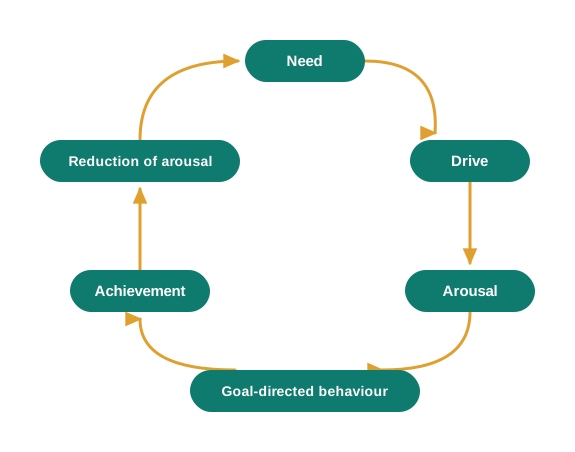
Fig. 8.1 – The motivational cycle.
This raises further questions, which the following sections take up. Are there different types of motives? Are there biological bases that explain different kinds of motives? And what happens when a motive remains unfulfilled?
8.3 Types of Motives
Basically, there are two types of motives: biological and psychosocial.
Biological motives are also known as physiological motives, because they are guided mostly by the physiological mechanisms of the body — by what is happening in your blood, your tissues and your brain. Psychosocial motives, on the other hand, are primarily learned. They grow out of the individual’s interactions with the various factors in the environment, especially other people. Fig. 8.2 sets the two side by side.
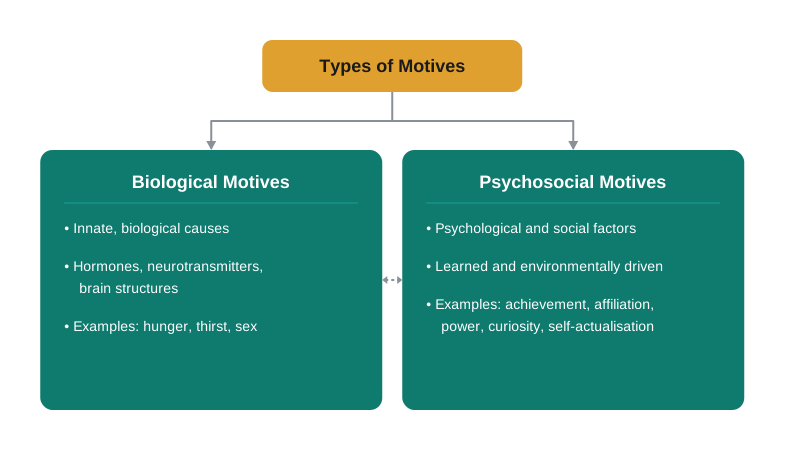
Fig. 8.2 – Types of motives: biological and psychosocial.
Two types, but not two separate worlds
It would be a mistake to read the two columns of Fig. 8.2 as two sealed boxes. The two types of motives are interdependent. In some situations the biological factors may trigger a motive, while in other situations the psychosocial factors may trigger it.
So keep this in mind as you read on: no motive is absolutely biological or absolutely psychosocial per se. Motives are aroused in the individual in varying combinations of the two.
8.3.1 Biological Motives
The biological or physiological approach to motivation is the earliest attempt to understand the causes of behaviour. It is also the most influential: most of the theories that developed later still carry traces of its influence.
This approach works with the concept of the adaptive act. Organisms have needs, which are internal physiological imbalances. A need produces a drive. The drive stimulates behaviour, which leads to certain actions towards achieving certain goals — and reaching those goals reduces the drive. You will recognise this at once as the motivational cycle of the previous section, now given a physiological content.
Instinct
The earliest explanations of motivation relied on the concept of instinct. The term instinct denotes inborn patterns of behaviour that are biologically determined rather than learned. Some common human instincts include curiosity, flight, repulsion, reproduction and parental care.
Instincts are innate tendencies found in all members of a species that direct behaviour in predictable ways. Most approximately, the term refers to an urge to do something. An instinct has an “impetus” — a force behind it — which drives the organism to do something in order to reduce that impetus.
Some of the basic biological needs explained by this approach are hunger, thirst and sex, which are essential for the sustenance of the individual. We take them one by one.
8.3.1.1 Hunger
When someone is hungry, the need for food dominates everything else. It motivates people to obtain and consume food. Of course, we must eat to live. But what exactly makes you feel hungry?
Studies have indicated that many events, both inside and outside the body, may trigger hunger or inhibit it. The internal stimuli for hunger include stomach contractions, which signify that the stomach is empty; a low concentration of glucose in the blood; a low level of protein; and the amount of fats stored in the body. The liver also responds to the lack of bodily fuel by sending nerve impulses to the brain.
There are external triggers too. The aroma, taste or appearance of food may itself result in a desire to eat — as you know if you have ever walked past a food stall without being hungry at all, and suddenly wanted to eat.
It may be noted that none of these alone gives you the feeling that you are hungry. They act in combination, together with external factors such as taste, colour, the smell of food, and the sight of others eating, to produce the experience you recognise as hunger.
Thus our food intake is regulated by a complex feeding–satiety system located in the hypothalamus, the liver and other parts of the body, as well as by the external cues available in the environment.
8.3.1.2 Thirst
What would happen to you if you were deprived of water for a long time? What makes you feel thirsty?
When we are deprived of water for a period of several hours, the mouth and throat become dry, and there is dehydration of body tissues. Drinking water is necessary to wet a dry mouth. But — and this is the interesting part — a dry mouth does not always result in water-drinking behaviour.
In fact, processes within the body itself control thirst and the drinking of water. Water must get into the tissues sufficiently to remove the dryness of the mouth and throat. Merely wetting the mouth is not enough to stop the drinking.
The motivation to drink water is mainly triggered by two conditions of the body: the loss of water from the cells, and a reduction of blood volume. When water is lost through bodily fluids, water leaves the interior of the cells. The anterior hypothalamus contains nerve cells called ‘osmoreceptors’, which generate nerve impulses when the cells are dehydrated. It is these impulses, and not the dryness of the mouth alone, that tell you that you are thirsty.
8.3.1.3 Sex
One of the most powerful drives in both animals and human beings is the sex drive. The motivation to engage in sexual activity is a very strong factor influencing human behaviour.
However, sex is far more than a biological motive. It differs from the other primary motives, such as hunger and thirst, in several ways. First, sexual activity is not necessary for an individual’s survival — a person deprived of it does not die, as a person deprived of food or water would. Second, homeostasis is not the goal of sexual activity, whereas hunger and thirst exist precisely to restore a bodily balance. Third, the sex drive develops with age, rather than being present in full from birth.
In the case of lower animals, sexual behaviour depends on many physiological conditions. In the case of human beings, although the sex drive is closely regulated biologically, it is sometimes very difficult to classify sex purely as a biological drive.
8.4 Maslow’s Hierarchy of Needs
There are various views on human motivation. The most popular among these is the one given by Abraham H. Maslow (1968; 1970).
Maslow attempted to portray a picture of human behaviour by arranging the various needs in a hierarchy — that is, in an order, with some needs placed below others and demanding attention first. His viewpoint is very popular because of both its theoretical and its applied value, and it is popularly known as the “Theory of Self-actualisation”.
The hierarchy of needs is best pictured as a pyramid, as shown in Fig. 8.3. Read it from the bottom upwards.
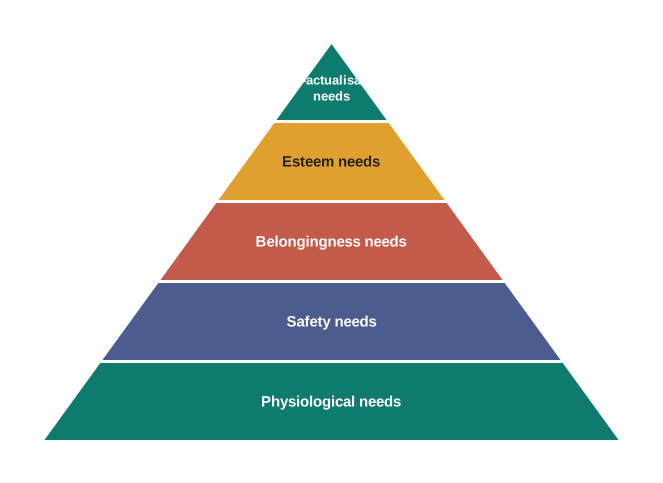
Fig. 8.3 – Maslow’s hierarchy of needs.
Climbing the pyramid
At the bottom of the hierarchy are the basic physiological or biological needs, which are basic to survival — hunger, thirst, and the like. Nothing else can compete with them while they are unmet.
Only when these needs are met does the need to be free from threatened danger arise. This refers to the safety needs, which are of a physical as well as a psychological nature. A person wants a secure home, but also a predictable life.
Next comes the need to seek out other people, to love and to be loved. These are the belongingness needs, and they will already remind you of the need for affiliation discussed in the previous section.
After these needs are fulfilled, the individual strives for esteem — that is, the need to develop a sense of self-worth. What is being sought here is self-esteem: a favourable evaluation of oneself, and the recognition of that worth by others. These are the esteem needs.
The next higher need in the hierarchy reflects an individual’s motive towards the fullest development of potential.
A self-actualised person, in Maslow’s description, is self-aware, socially responsive, creative, spontaneous, and open to novelty and challenge. Such a person also has a sense of humour, and a capacity for deep interpersonal relationships.
How the hierarchy works
The point of arranging needs in an order is a claim about what commands our attention.
Lower level needs — the physiological ones — dominate as long as they remain unsatisfied. A person who has not eaten for two days is not thinking about self-worth. Once the lower needs are adequately satisfied, the higher needs occupy the individual’s attention and effort.
Notice the word adequately. Maslow does not claim that a need must be perfectly and permanently satisfied before the next one appears; it must be satisfied enough to stop dominating.
It must also be noted that very few people reach the highest level of the hierarchy. Most people remain concerned more with the lower level needs, and the pyramid narrows towards the top for exactly this reason.
8.5 Nature of Emotions
Consider a single afternoon in a single classroom.
Joy, sorrow, hope, love, excitement, anger, hate — all of us experience many such feelings in the course of a single day. They are so familiar that we rarely stop to ask what, exactly, an emotion is.
Emotion, feeling, and mood
In everyday speech the term emotion is often treated as synonymous with the terms ‘feeling’ and ‘mood’. In psychology it is not. Both of those terms are narrower than the concept of emotion.
Feeling denotes the pleasure or pain dimension of emotion — the simple sense that something is agreeable or disagreeable — and it usually involves bodily functions.
Mood is an affective state of long duration but of lesser intensity than emotion. An emotion flares and passes; a mood sits with you for hours or days, quietly colouring everything you do, without a sharp object to attach itself to.
What an emotion is made of
An emotion, then, is not a single thing but a package of three things happening together.
Take each part in turn. There is arousal — the body is activated, the heart rate changes, the muscles tighten. There is the subjective feeling — what the experience is actually like from the inside. And there is cognitive interpretation — the person’s reading of what is happening and what it means.
Emotions, as we experience them, move us internally, and this process involves physiological as well as psychological reactions. That is why an emotion cannot be reduced either to a bodily state or to a thought. It is both at once.
Because the interpretation is the person’s own, emotion is a subjective feeling, and the experience of emotions varies from person to person — as Swati’s classroom showed.
Are some emotions basic?
If emotions vary so much between individuals and cultures, is there any common core? In psychology, attempts have been made to identify basic emotions — a small set of emotions out of which the rest are built.
It has been noted that at least six emotions are experienced and recognised everywhere. These are: anger, disgust, fear, happiness, sadness, and surprise.
Beyond this common six, psychologists differ on how long the list should be.
Izard has proposed a set of ten basic emotions: joy, surprise, anger, disgust, contempt, fear, shame, guilt, interest, and excitement. Combinations of these result in other emotional blends — much as a small set of primary colours can be mixed into many shades.
According to Plutchik, there are eight basic or primary emotions, and all other emotions result from various mixtures of these. What is distinctive about his account is the arrangement: he placed these emotions in four pairs of opposites — joy–sadness, acceptance–disgust, fear–anger, and surprise–anticipation. Fig. 8.6 shows the four pairs facing each other.
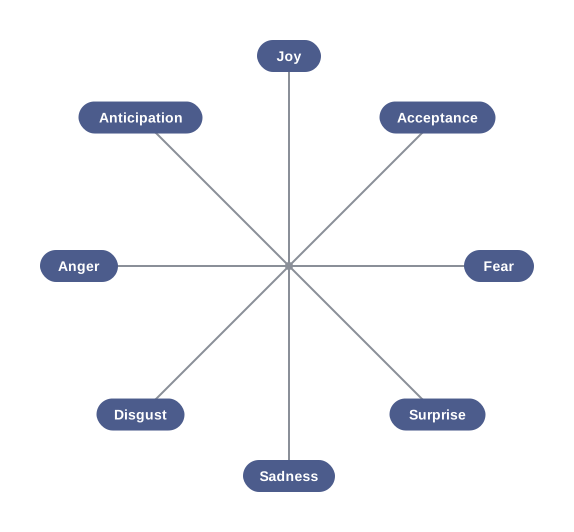
Fig. 8.6 – Plutchik’s eight primary emotions.
How emotions differ from one another
Emotions vary along two obvious dimensions. They vary in their intensity — high or low, a flicker of irritation or a burst of rage. And they vary in their quality — happiness, sadness, fear are simply different in kind, not merely different in degree.
Subjective factors and situational contexts influence the experience of emotions. Three such factors are gender, personality, and psychopathology of certain kinds.
The evidence on gender is worth stating carefully. It indicates that women experience all the emotions except anger more intensely than men, while men are prone to experience high intensity and frequency of anger.
This gender difference has been attributed to the social roles attached to men and to women — competitiveness in the case of men, affiliation and caring in the case of women. That explanation matters. It locates the difference in what boys and girls are taught to express, not in something fixed and unchangeable, and it implies that as social roles change, the difference may change with them.
8.6 Expression of Emotions
How do you get to know that your friend is happy, or sad, or simply indifferent? And does she know what you are feeling?
The question is less trivial than it looks. Emotion is an internal experience, not directly observable by others. Nobody can see your fear. What they can see, and hear, are its outward signs — and from these signs they infer the emotion.
Emotions are inferred from verbal and non-verbal expressions. These verbal and non-verbal expressions act as the channels of communication. They enable an individual to express one’s own emotions, and to understand the feelings of others. This outward showing of an inner state is what psychologists call the expression of emotions.
8.6.1 Culture and Emotional Expression
Start with the verbal channel. It is composed of spoken words — but not only of words. It also includes other vocal features of speech, such as the pitch and the loudness of the voice.
These non-verbal aspects of the voice, along with the temporal characteristics of speech, are called ‘paralanguage’. A sentence as ordinary as “I am fine” can be said in a way that means the opposite, and paralanguage is how it is done.
Other non-verbal channels include facial expression; kinetic behaviours, which are gestures, posture and movement of the body; and proximal behaviours, which concern the physical distance kept during face-to-face interaction. How near a person stands to you is itself a message.
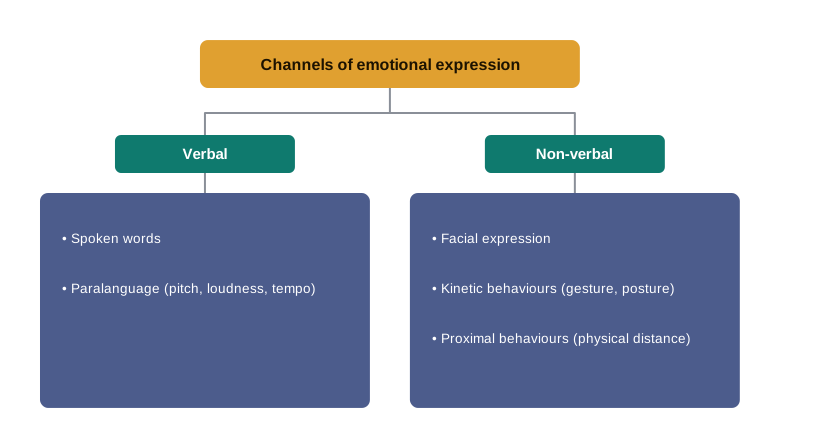
Fig. 8.7 – Channels of emotional expression.
The face
Facial expression is the most common channel of emotional communication. There is a simple reason for this. The amount and the kind of information conveyed by the face is easy to comprehend, because the face is exposed to the full view of others. Fig. 8.4 shows four such expressions; you will recognise each of them without being told what they are.
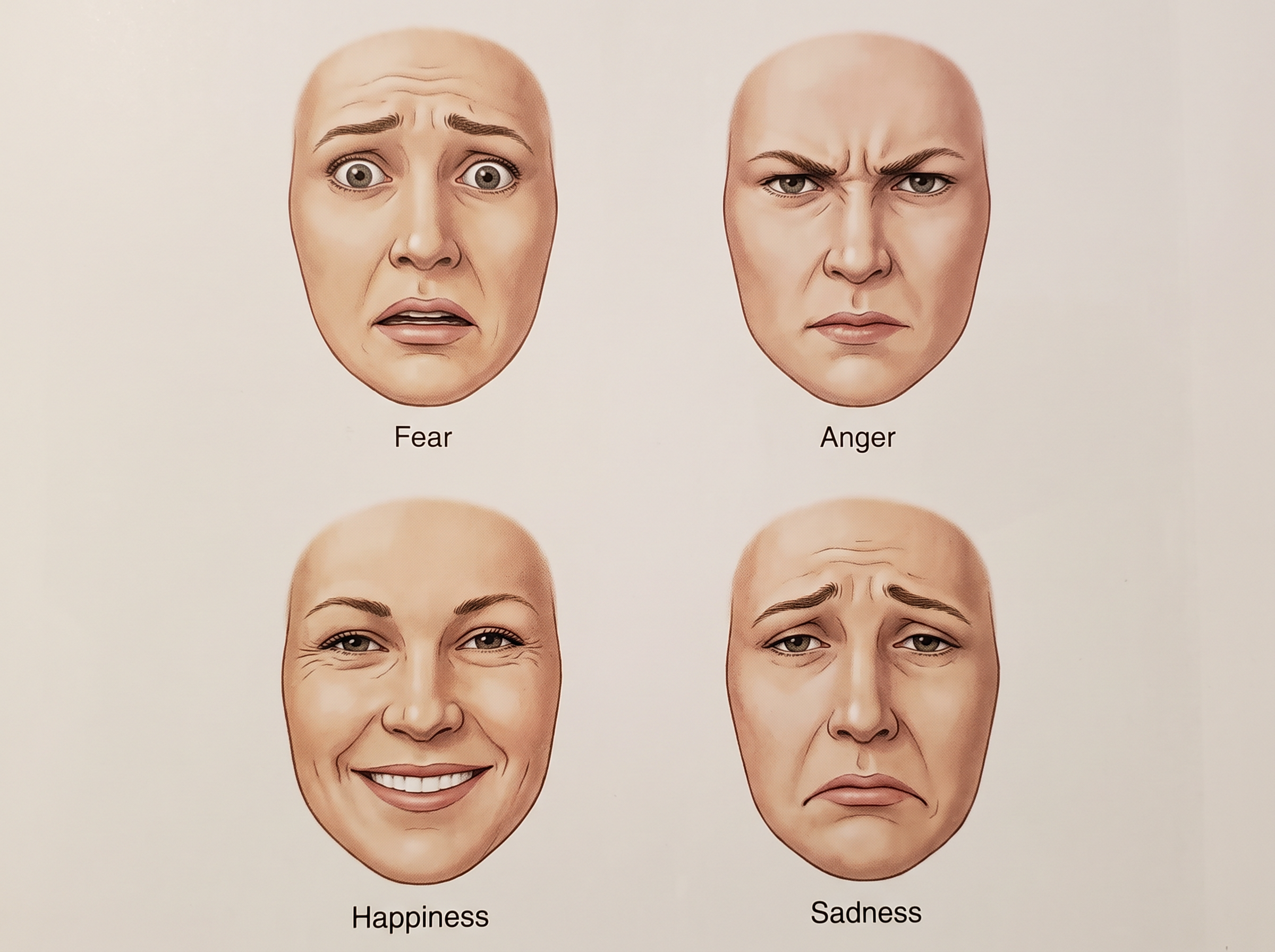
Fig. 8.4 – Facial expressions of four basic emotions.
Facial expressions can convey the intensity of an emotional state as well as its pleasantness or unpleasantness. They play an important role in our everyday lives — in a classroom, a teacher reads a room of faces before deciding whether to repeat an explanation.
There has been some research evidence supporting Darwin’s view — the view whose beginnings you read about at the start of this chapter — that facial expressions for basic emotions (joy, fear, anger, disgust, sadness, and surprise) are inborn and universal.
The body
Bodily movements further facilitate the communication of emotions. Can you feel the difference between your body movements when you feel angry, and your movements when you feel shy? The shoulders, the hands and the distance you keep all change, without any decision on your part.
Theatre and drama provide an excellent opportunity to understand the impact of body movements in communicating emotions. So do the roles of gestures and proximal behaviours, which are also significant.
8.6.2 Culture and Emotional Labeling
Culture does not only shape how emotions are shown. It also shapes how they are named — and here the differences become striking.
Basic emotions vary in the extent of their elaboration and in their categorical labels. Some cultures carve up an emotional territory finely, with many words; others use one word for the whole of it.
Consider the evidence.
The Tahitian language includes 46 labels for the English word anger. When asked to label freely, North American subjects produced 40 different responses for the facial expression of anger, and as many as 81 different responses for the facial expression of contempt. The Japanese produced varied emotional labels for facial expressions of happiness (10 labels), anger (8 labels), and disgust (6 labels).
The pattern is old, and it is visible in literature as much as in the laboratory. Ancient Chinese literature cites seven emotions, namely joy, anger, sadness, fear, love, dislike, and liking. Ancient Indian literature identifies eight such emotions, namely love, mirth, energy, wonder, anger, grief, disgust, and fear.
In Western literature, certain emotions — happiness, sadness, fear, anger, and disgust — are uniformly treated as basic to human beings. Emotions like surprise, contempt, shame, and guilt are not accepted as basic to all.
The conclusion this evidence supports
Put the two halves of the section together and the position is a balanced one, neither “emotions are universal” nor “emotions are entirely cultural”.
In brief, it might be said that there are certain basic emotions that are expressed and understood by all, despite their cultural and ethnic differences — and there are certain others that are specific to a particular culture.
8.7 Managing Negative Emotions
Try living a day in which you do not feel any emotion. You would realise that it is difficult even to imagine a life without emotions.
Emotions are a part of our daily life and existence. They form the very fabric of our life and of our interpersonal relations. The question, therefore, is never how to be rid of them. It is how to handle them well.
Effective emotion management is the key to effective social functioning in modern times. The following tips might prove useful to you for achieving the desired balance of emotions.
Tips for managing your emotions
- Enhance self-awareness. Be aware of your own emotions and feelings. Try to gain insight into the ‘how’ and the ‘why’ of your feelings, rather than only registering that you feel bad.
- Appraise the situation objectively. It has been proposed that emotion is preceded by an evaluation of the event. If the event is experienced as disturbing, your sympathetic nervous system is activated and you feel stressed. If you do not experience the event as disturbing, then there is no stress. Hence it is you who decides whether to feel sad and anxious, or happy and relaxed.
- Do some self-monitoring. This involves constant or periodic evaluation of your past accomplishments, your emotional and physical states, and your real as well as vicarious experiences. A positive appraisal would enhance your faith in yourself and lead to an enhanced feeling of wellness and contentment.
- Engage in self-modeling. Be the ideal for yourself. Repeatedly observe the best parts of your past performance and use them as an inspiration and a motivation to perform better in the future.
- Practise perceptual reorganisation and cognitive restructuring. Try viewing events differently, and visualise the other side of the coin. Restructure your thoughts so as to enhance positive and reassuring feelings and to eliminate negative thoughts.
- Be creative. Find and develop an interest or a hobby. Engage in an activity that interests and amuses you.
- Develop and nurture good relationships. Choose your friends carefully. In the company of happy and cheerful friends, you will feel happy in general.
- Have empathy. Try understanding other people’s feelings too. Make your relationships meaningful and valuable, and seek as well as provide support mutually.
- Participate in community service. Help yourself by helping others. By doing community service — for example, helping an intellectually challenged child learn an adaptive skill — you will gain important insights about your own difficulties.
Notice what the second of these tips quietly claims. It is not the event by itself that produces the emotion, but your appraisal of the event. That is why two students receiving the same marks can walk out of the same room in two entirely different states — and it is also why emotion management is possible at all.
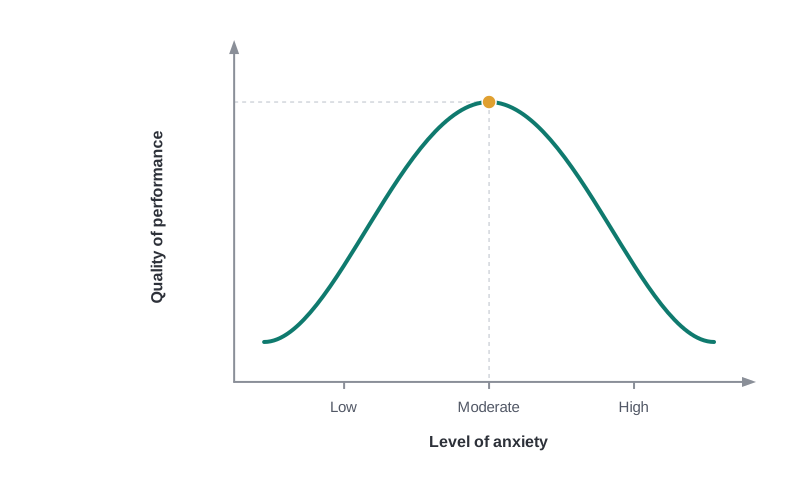
Fig. 8.8 – Relationship between anxiety level and performance.
8.7.1 Managing your Anger
Anger is a negative emotion. It carries the mind away — or, in other words, the person loses control over behavioural functions during the state of anger.
The major source of anger is the frustration of motives. Look back at the motivational cycle: when goal-directed behaviour is blocked and the drive cannot be reduced, the tension has to go somewhere, and often it goes into anger.
But here is the claim that makes anger management possible. Anger is not a reflex. It is a result of our thinking. It is neither automatic nor uncontrollable, and it is not caused by others; it is a self-induced choice that the individual makes. Anger is a result of your thinking, and hence it is controllable by your own thoughts only.
Certain key points in anger management follow from this:
- Recognise the power of your thoughts.
- Realise that you alone can control it.
- Do not engage in ‘self-talk that burns’. Do not magnify negative feelings.
- Do not ascribe intentions and ulterior motives to others.
- Resist having irrational beliefs about people and events.
- Try to find constructive ways of expressing your anger. Have control over the degree and the duration of the anger that you choose to express.
- Look inward, not outward, for anger control.
- Give yourself time to change. It takes time and effort to change a habit.
Read the sixth point again. The aim is not to feel no anger — anger at injustice has moved a great deal of good in the world. The aim is to control its degree and its duration, and to find a constructive channel for it.
8.8 Enhancing Positive Emotions
Our emotions have a purpose. They help us adapt to the ever-changing environment, and they are important for our survival and well-being. An organism that felt nothing would have no reason to run, no reason to stay, and no reason to try again.
What negative emotions are for
Negative emotions like fear, anger or disgust prepare us mentally and physically for taking immediate action towards a stimulus that is threatening. They are not defects in the design; they are part of it.
Consider the plainest example. If there was no fear, we would have picked up a poisonous snake in our hand. Fear is unpleasant precisely so that it will be obeyed.
But there is a cost. Though negative emotions protect us in such situations, their excessive or inappropriate use can become life threatening to us. Sustained fear and anger can harm our immune system and have serious consequences for our health. The emotion that saves you from the snake will damage you if it never switches off.
What positive emotions do
Positive emotions such as hope, joy, optimism, contentment, and gratitude energise us, and they enhance our sense of emotional well-being. Their effect, however, goes further than making us feel good.
When we experience positive affect, we display a greater preference for a large variety of actions and ideas. We can think of more possibilities and more options to solve whatever problems we face — and thus we become proactive rather than merely reactive.
There is evidence for this. Psychologists have found that people who were shown films depicting joy and contentment came up with more ideas regarding things they would like to do, as compared with those who were shown films evoking anger and fear. The same people, differing only in the emotion that had just been induced, differed in how widely they could think.
Positive emotions also give us a greater ability to cope with adverse circumstances, and to return quickly to a normal state afterwards. They help us set up long-term plans and goals, and they help us form new relationships — both of which require us to look beyond the present moment, which is exactly what fear and anger prevent.
Ways of enhancing positive emotions
Positive emotions are not simply a matter of luck or temperament. Various ways of enhancing them are given below.
- Personality traits of optimism, hopefulness, happiness, and a positive self-regard.
- Finding positive meaning in dire circumstances — the capacity to ask what a hard situation can still be used for.
- Having quality connections with others, and a supportive network of close relationships.
- Being engaged in work and gaining mastery, so that effort produces visible competence.
- A faith that embodies social support, purpose and hope, leading to a life of purpose.
- Positive interpretations of most daily events.
That last item is the thread running through this chapter’s final two sections. An event is not simply happy or unhappy in itself; it is appraised. A crowded bus can be an ordeal or an hour with a book. The result you did not expect can be a disaster or information. Emotion management, whether of anger or of hope, begins at the point where the interpretation is made.
8.9 Summary
- Motivation is the process of persistent behaviour directed towards a specific goal, which results from certain driving forces. A need creates a drive, the drive arouses the organism, goal-directed behaviour follows, and reaching the goal reduces the arousal.
- There are two types of motivation: biological and psychosocial. No motive is purely one or the other; the two are aroused in varying combinations.
- Biological motivation focuses on the innate, biological causes of motivation, such as hormones, neurotransmitters and brain structures like the hypothalamus and the limbic system. Examples of biological motivation are hunger, thirst and sex.
- Psychosocial motivation explains motives that result mainly from the interaction of the individual with the social environment. Examples of psychosocial motives are the need for affiliation, the need for achievement, curiosity and exploration, and the need for power.
- Maslow arranged various human needs in an ascending hierarchical order, beginning with the most basic physiological needs, then safety needs, then love and belongingness needs, then esteem needs, and finally, at the top of the hierarchy, the need for self-actualisation.
- Emotion is a complex pattern of arousal that involves physiological activation, conscious awareness of feeling, and a specific cognitive label that describes the process.
- Certain emotions are basic — joy, anger, sorrow, surprise, fear and others. The remaining emotions are experienced as a result of combinations of these basic emotions.
- Culture strongly influences both the expression and the interpretation of emotions, including how finely a language labels an emotion such as anger.
- Emotion is expressed through verbal and non-verbal channels — words and paralanguage on the one hand, and facial expression, bodily movement and physical distance on the other.
- It is important to manage emotions effectively in order to ensure physical and psychological well-being. This includes appraising situations objectively, restructuring negative thoughts, controlling the degree and duration of anger, and deliberately strengthening positive emotions.
8.10 Key Terms
Anxiety — An unpleasant state of physiological and emotional arousal, marked by worry and apprehension about a task or an outcome.
Arousal — A raised state of physical and psychological activation produced by a need, which energises activity and falls once the goal is reached.
Basic emotions — The small set of emotions, such as anger, disgust, fear, happiness, sadness and surprise, that are expressed and recognised across cultures, and out of which other emotions are formed by combination.
Biological needs (hunger, thirst, sex) — Needs arising from internal physiological imbalances, guided mainly by the physiological mechanisms of the body.
Esteem needs — The need to develop a sense of self-worth, which in Maslow’s hierarchy arises once belongingness needs are adequately satisfied.
Examination anxiety — The anxiety aroused by an approaching examination, where a task must be performed in the awareness of being evaluated; a moderate level aids performance, while a high level impedes it.
Expression of emotions — The showing of an internal emotional state through verbal and non-verbal channels, from which others infer what a person is feeling.
Hierarchy of needs — Maslow’s arrangement of human needs in an ascending order — physiological, safety, belongingness, esteem and self-actualisation — in which lower needs dominate until they are adequately met.
Motivation — The process of persistent, goal-directed behaviour arising from driving forces within the person; the study of what “moves” behaviour.
Motives — General inner states that arouse and direct behaviour, and that allow behaviour to be predicted across many different situations.
Need — A lack or deficit of some necessity, which produces a drive.
Power motive — The need to produce intended effects on the behaviour and emotions of another person — to influence, control, persuade, lead or charm others, and to enhance one’s reputation in their eyes.
Psychosocial motives — Motives that are mostly learned or acquired, resulting from the individual’s interaction with the social environment, such as affiliation, achievement, power, and curiosity and exploration.
Self-actualisation — The motive towards the fullest development of one’s potential; the highest need in Maslow’s hierarchy.
Self-esteem — A person’s evaluation of her or his own worth, which the esteem needs seek to establish and maintain.
8.11 Points to Ponder
Using Maslow’s hierarchy of needs, what kind of motivational forces might have driven the mathematician S. Ramanujan, or the shehnai maestro Ustad Bismillah Khan, to work as they did — often in conditions where the lower needs were far from comfortably met? Does their example strengthen the hierarchy, or strain it?
In many households, family members do not eat without bathing first, and many people keep religious fasts. If a biological need can be postponed for a whole day on a matter of belief, in what sense is hunger still a biological motive?
If anger is a result of our own thinking, and not caused by others, does that mean a person who is angry at an injustice is making a mistake? Where would you draw the line between anger that should be managed and anger that should be acted upon?
Curiosity is described as a motive whose goal lies in the activity itself. What happens to curiosity when the activity is attached to a reward — a prize, a certificate, a mark? Does the motive survive?
The facial expressions of the basic emotions appear to be universal, yet one language has 46 words for anger and another has 8. If you had no word for an emotion, would you still be able to feel it as clearly?
The chapter says that very few people reach self-actualisation. Is this a claim about human nature, or about the societies in which most people have to live?
8.12 NCERT Questions
Explain the concept of motivation.
What are the biological bases of the hunger and thirst needs?
How do the needs for achievement, affiliation and power influence the behaviour of adolescents? Explain with examples.
What is the basic idea behind Maslow’s hierarchy of needs? Explain with suitable examples.
How does culture influence the expression of emotions?
Why is it important to manage negative emotions? Suggest ways to manage negative emotions.
8.13 Objective Questions
- The term “motivation” is derived from the Latin word:
- movere
- motus
- emovere
- momentum [1 mark]
- A lack or deficit of some necessity is called a:
- drive
- need
- goal
- incentive [1 mark]
- The nerve cells in the anterior hypothalamus that generate nerve impulses when cells are dehydrated are called:
- neurotransmitters
- receptors of satiety
- osmoreceptors
- glucoreceptors [1 mark]
- According to Plutchik, the number of basic or primary emotions is:
- six
- eight
- ten
- forty-six [1 mark]
- Which of the following is NOT one of Maslow’s five levels of needs?
- Safety needs
- Belongingness needs
- Achievement needs
- Esteem needs [1 mark]
- The non-verbal aspects of the voice, such as pitch and loudness, together with the temporal characteristics of speech, are known as:
- kinetic behaviour
- proximal behaviour
- paralanguage
- emotional labelling [1 mark]
- Coping with a stressful examination by taking effective and direct action — preparing well, rehearsing, seeking support — is known as:
- blunting
- monitoring
- inoculation
- self-modeling [1 mark]
- Assertion (A): A dry mouth does not always result in water-drinking behaviour. Reason (R): Thirst is controlled by processes within the body, and water must reach the tissues sufficiently to remove the dryness of the mouth and throat.
- Both A and R are true, and R is the correct explanation of A.
- Both A and R are true, but R is not the correct explanation of A.
- A is true, but R is false.
- A is false, but R is true. [1 mark]
- Assertion (A): A person who has not eaten for two days is unlikely to be concerned with developing a sense of self-worth. Reason (R): In Maslow’s hierarchy, lower level needs dominate as long as they remain unsatisfied, and higher needs occupy attention only once the lower ones are adequately satisfied.
- Both A and R are true, and R is the correct explanation of A.
- Both A and R are true, but R is not the correct explanation of A.
- A is true, but R is false.
- A is false, but R is true. [1 mark]
- Assertion (A): Anger cannot be controlled, because it is an automatic reflex caused by the behaviour of other people. Reason (R): The major source of anger is the frustration of motives.
- Both A and R are true, and R is the correct explanation of A.
- Both A and R are true, but R is not the correct explanation of A.
- A is true, but R is false.
- A is false, but R is true. [1 mark]
- Match the following:
| Column A | Column B |
|---|---|
| a. David McClelland | i. Hierarchy of needs and the Theory of Self-actualisation |
| b. Abraham Maslow | ii. Eight basic emotions arranged in four pairs of opposites |
| c. Plutchik | iii. Four general ways of expressing the power motive |
| d. Izard | iv. Ten basic emotions that combine into emotional blends |
[1 mark]
- Match the term with its description:
| Column A | Column B |
|---|---|
| a. Kinetic behaviour | i. Physical distance kept during face-to-face interaction |
| b. Proximal behaviour | ii. Gesture, posture and movement of the body |
| c. Homeostasis | iii. An inborn pattern of behaviour, biologically determined rather than learned |
| d. Instinct | iv. The tendency of the organism to maintain constancy or restore equilibrium |
[1 mark]
Fill in the blank: A state of tension or arousal produced by a need is called a ____________. [1 mark]
Fill in the blank: The need for achievement is also known as ____________. [1 mark]
Fill in the blank: ____________ is an affective state of long duration but of lesser intensity than emotion. [1 mark]
True or False: Sexual activity, like hunger and thirst, is necessary for the survival of the individual. [1 mark]
True or False: A certain level of anxiety before an examination can improve performance. [1 mark]
True or False: Facial expressions of the basic emotions have been found to differ completely from one culture to another, with no common core. [1 mark]
8.14 Check Your Concepts
Define a need and a drive, and state the relationship between them. [2 marks]
List any four psychosocial motives discussed in the chapter. [2 marks]
What is homeostasis? Give one example of a motive that works to restore it. [2 marks]
State any two characteristics of a self-actualised person, as described by Maslow. [2 marks]
What is paralanguage? Give one example of how it can change the meaning of a spoken sentence. [2 marks]
Arrange the stages of the motivational cycle in the correct order, beginning with need: arousal, achievement, need, reduction of arousal, drive, goal-directed behaviour. [3 marks]
Differentiate between biological motives and psychosocial motives, giving one example of each. [3 marks]
Distinguish between emotion, feeling and mood. [3 marks]
Differentiate between the monitoring and the blunting strategies of coping with examination anxiety. [3 marks]
Why is it said that no motive is absolutely biological or psychosocial? Give reasons, with one example. [3 marks]
Why does a dry mouth alone not explain thirst? Explain the bodily conditions that actually trigger the motivation to drink water. [4 marks]
Explain, with an example, how the need for achievement influences the kind of task a person chooses and the kind of feedback the person seeks. [4 marks]
Describe the four general ways in which the power motive is expressed, according to David McClelland. [4 marks]
“Anger is not a reflex but a result of our thinking.” Evaluate this claim, and explain how it makes anger management possible. [4 marks]
What would happen to a person’s problem-solving if he or she were always in a state of fear or anger? Answer with reference to what the chapter says about the functions of negative and positive emotions. [4 marks]
Describe Maslow’s hierarchy of needs in full, with an example at each level. State the main idea that governs movement from one level to the next, and give one honest criticism of the theory. [6 marks]
Discuss the relationship between culture and emotion, covering both the expression of emotions and the labelling of emotions. What conclusion does the evidence finally support? [6 marks]
A friend tells you that she becomes so anxious before examinations that she cannot recall what she has studied. Drawing on the chapter, explain the relationship between anxiety and performance, and describe the monitoring and blunting strategies she could use. [6 marks]
Explain what an emotion is made of, and compare the views of Izard and Plutchik on the basic emotions. Why do psychologists disagree about how many basic emotions there are? [6 marks]
8.15 Case-Based Questions
- Meera is preparing for a state-level olympiad. She has three practice papers to choose from: an easy one she is certain to complete, a moderately difficult one, and one so hard that almost nobody finishes it. She chooses the moderately difficult paper, submits it to her teacher, and comes back twice to ask exactly where she lost marks. Her cousin Arun, sitting the same olympiad, picks the easy paper, and when the teacher offers to go through his mistakes, he says it does not matter.
- Identify the motive that is strong in Meera, and name the two features of her behaviour that reveal it.
- Explain why a person high in this motive avoids both very easy and impossible tasks.
- What effect is Arun’s choice likely to have on his ability to adjust his goals? Give a reason. [6 marks]
- Ashok has recently moved to a new city for work. He knows nobody there. He finds himself calling home twice a day, joining a neighbourhood cricket group he has little interest in, and feeling low even when the work itself goes well. On the day he receives a promotion, the first thing he does — before anything else — is to look for someone to tell.
- Which psychosocial motive is most clearly at work here? Justify your answer with two pieces of evidence from the situation.
- The chapter says this motive is aroused both when a person feels threatened or helpless and when the person is happy. Show how Ashok’s behaviour illustrates both.
- Where would this motive be placed in Maslow’s hierarchy, and what does that placement predict about when it becomes important? [6 marks]
- Two students, Fatima and Vikram, are given the same corrected answer script with the same marks, well below what each expected. Fatima decides that the teacher marked her harshly on purpose, spends the evening going over the injustice in her mind, and is short-tempered with her younger brother. Vikram decides the paper tells him where his preparation was weak, makes a list of the topics he misjudged, and asks a friend to test him on them the following week.
- Using the idea of appraisal, explain why the same event produced two different emotional outcomes.
- Identify two errors of thinking, of the kind listed in the chapter’s key points on anger management, that Fatima has made.
- Name the emotion-management strategies Vikram has used, and say what each section is doing for him. [6 marks]
- A theatre group is preparing a scene in which a character receives bad news in a crowded railway station. The director tells the actor that his face alone will not carry the scene to the last row, and asks him to work on his posture, his hands, the distance he keeps from the other characters, and the pitch and pace of his single line of dialogue. During rehearsal, a visiting director from another country remarks that the actor’s habit of looking away from the person he is speaking to makes the character seem shifty.
- Name the channels of emotional expression the director is asking the actor to use, and classify each as verbal or non-verbal.
- Explain the visiting director’s remark using what the chapter says about cultural differences in gaze behaviour.
- If facial expressions of the basic emotions are inborn and universal, why would an actor need any of this training at all? [6 marks]