For thousands of years, people made curd, bread, cheese and wine without any idea of why these changes happened. A jug of milk left overnight became curd; grape juice slowly turned into wine; dough swelled and softened before baking. It seemed almost like magic. The answer came in the mid-1800s, in France, when a chemist named Louis Pasteur was asked to find out why wine and beer sometimes spoiled during brewing. Studying the fermenting liquid under his microscope, Pasteur showed something remarkable: fermentation was not just a chemical accident. It was the work of tiny living organisms — microbes — feeding, growing and releasing new substances as they did so.
That single insight changed how humanity saw the invisible world. The same creatures that could spoil a drink could also, when guided properly, make food tastier, medicines that save lives, fuel for a village stove, and cleaner water for a river. We had been quietly employing microbes as partners all along, without knowing their names.
This chapter is about those useful partners. Not the germs that make us ill — you met those in the chapter on human diseases — but the enormous number of microbes that work for us. From the curd on your breakfast plate to the antibiotic in a pharmacy, from a city’s sewage plant to a farmer’s field, microbes are among the hardest-working allies of human welfare.
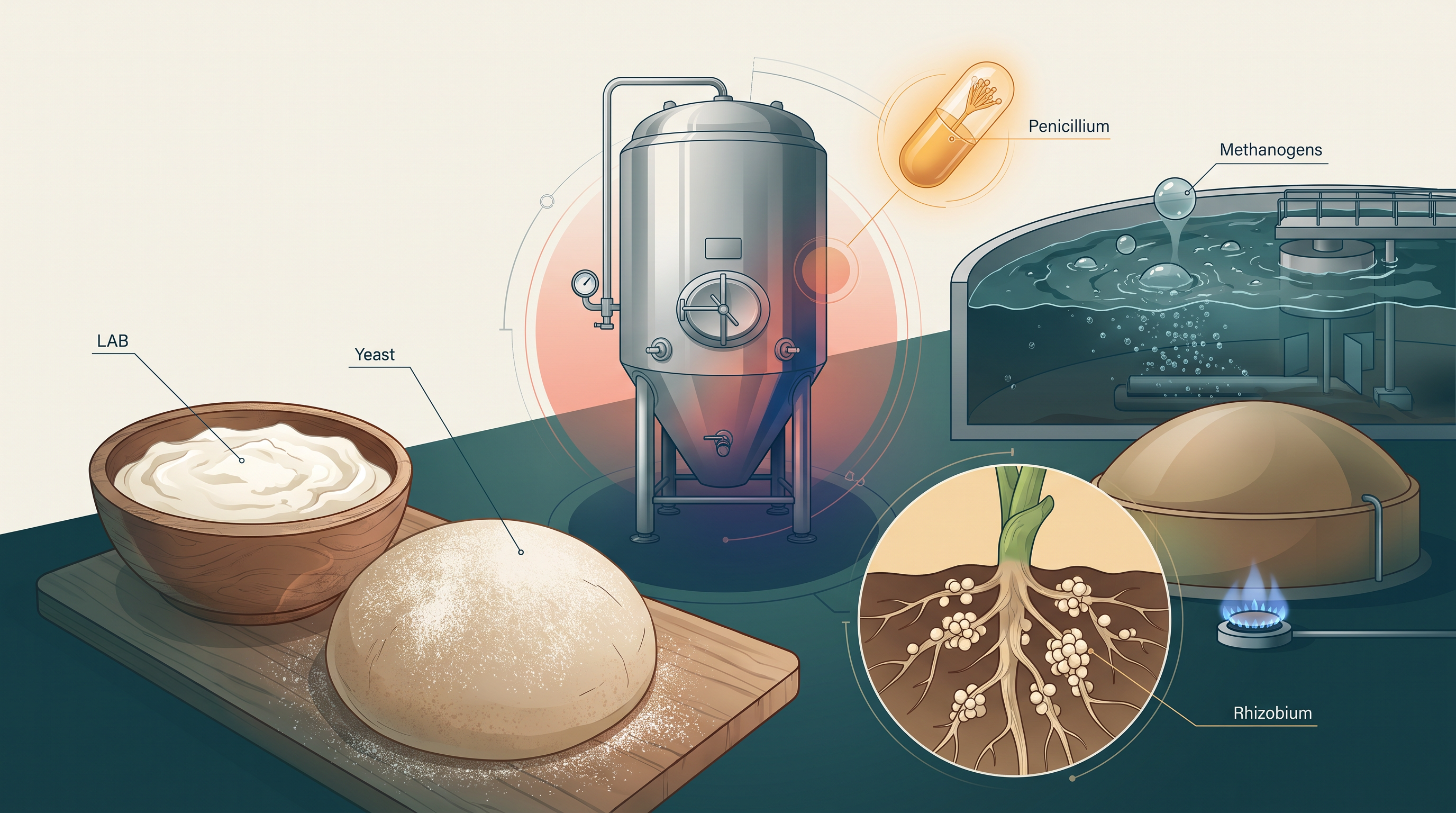
Q1. How does plain milk turn into curd on its own overnight — and why does the curd end up more nutritious than the milk it came from? Q2. Why does idli–dosa batter and bread dough puff up and rise before it is cooked? Q3. Penicillin, the first antibiotic ever found, was discovered completely by accident. What exactly happened? Q4. Every city flushes out millions of litres of dirty water each day. How is this filthy water cleaned before it flows back into a river — and who actually does the cleaning? Q5. Can cattle dung really be used to run a kitchen stove and light a lamp? Q6. Can farmers protect their crops from pests and enrich their soil without spraying harmful chemicals?
By the end of this chapter, you will be able to answer each of these questions yourself.
8.1 Microbes in Household Products
It may surprise you to learn how often you already use microbes, or things made by them, in an ordinary day. Long before anyone could see a bacterium or a yeast cell, people were putting these organisms to work in their own kitchens — without ever knowing they were doing so.
Most of these household uses depend on a single process called fermentation. Fermentation is the breakdown of sugars by microbes, usually in the absence of oxygen, during which the microbes release energy for themselves and leave behind useful by-products such as acids, alcohol and gases. It is this quiet chemistry that turns milk into curd, batter into idli, and juice into a drink.
Fermentation is the process in which microbes break down sugars (usually without oxygen), producing by-products such as acids, alcohol and gases along with energy.
Curd from Milk
The most familiar example is the making of curd from milk. Micro-organisms such as Lactobacillus, together with several similar bacteria, are commonly grouped as lactic acid bacteria (LAB). When these bacteria grow in milk, they convert it into curd.
As they grow, the LAB produce acids. These acids coagulate the milk — that is, they make the dissolved milk proteins clump together and set — and also partially digest those proteins, giving curd its soft, semi-solid texture.
Notice how curd itself is used to make more curd. A small amount of curd added to fresh milk acts as an inoculum or starter: this little spoonful already contains millions of LAB. Kept at a suitably warm temperature, these bacteria multiply rapidly and steadily turn the whole vessel of milk into curd. The warmth matters, because the bacteria multiply best in that range — which is why curd sets faster in summer than in a cold room.
Curd is not just changed milk — it is improved milk. During this process the LAB increase the amount of vitamin B\(\_{12}\), a vitamin the body needs for healthy blood and nerves. So the fermented product is more nutritious than the milk it started from.
Q1. How does plain milk turn into curd on its own overnight — and why does the curd end up more nutritious than the milk it came from?
A. Lactic acid bacteria present in the added starter multiply in the warm milk and release acids that coagulate the milk proteins, setting it into curd. While doing so, the same bacteria raise the level of vitamin B\(\_{12}\), making curd more nutritious than the original milk.
The same helpful bacteria also work inside us. In our stomach, LAB play a beneficial role by keeping disease-causing microbes in check, which is one reason curd is considered good for digestion.
The LAB in curd survive in the gut and compete with harmful microbes there. This is the same idea behind modern “probiotic” foods and drinks, which are marketed as supplying friendly bacteria to support gut health.
Fermented Foods and Drinks
The batter used for making foods such as dosa and idli is also fermented by bacteria. If you have watched the batter left overnight, you will have seen it swell and puff up. This puffed-up, spongy appearance is caused by bubbles of carbon dioxide gas, \(CO\_2\), produced as the microbes ferment the batter.
Q2. Why does idli–dosa batter and bread dough puff up and rise before it is cooked?
A. Microbes fermenting the batter or dough release carbon dioxide gas. The gas gets trapped as tiny bubbles, and these bubbles make the mixture rise and turn light and spongy.
Bread is made in much the same way. The dough for bread is fermented using baker’s yeast, Saccharomyces cerevisiae, whose \(CO\_2\) makes the loaf rise.
Many traditional drinks and foods depend on fermentation too. ‘Toddy’, a traditional drink of some parts of southern India, is made by fermenting the sap tapped from palms. Microbes are also used to ferment fish, soyabean and bamboo-shoots into a variety of foods, showing how widely different cultures have relied on the same basic process.
Cheese
Cheese is one of the oldest foods in which microbes were deliberately used. The many different varieties of cheese owe their particular texture, flavour and taste to the specific microbes used to make them.
For example, the large holes in ‘Swiss cheese’ are formed by a large amount of \(CO\_2\) released by a bacterium named Propionibacterium sharmanii. As the gas is produced inside the ripening cheese, it creates the characteristic bubbles or “eyes”. ‘Roquefort cheese’, on the other hand, is ripened by growing a specific fungus on it, which gives this cheese its distinctive flavour.
Swiss cheese vs Roquefort cheese
| Microbe used |
A bacterium, Propionibacterium sharmanii |
A specific fungus |
| Characteristic effect |
Large holes (“eyes”) in the cheese |
A distinctive ripened flavour |
| Cause of that effect |
Large amount of \(CO\_2\) released by the bacterium |
Growth of the fungus through the cheese |
This variety across cheeses is a useful reminder for exams: match-the-following and “which microbe gives which product” questions are common, so it helps to link each food or product to the exact microbe responsible for it.
8.2 Microbes in Industrial Products
Microbes are not only useful in the kitchen — they are also put to work in industry, where they are used to make a whole range of products valuable to human beings. Beverages and antibiotics are two familiar examples, and there are many more.
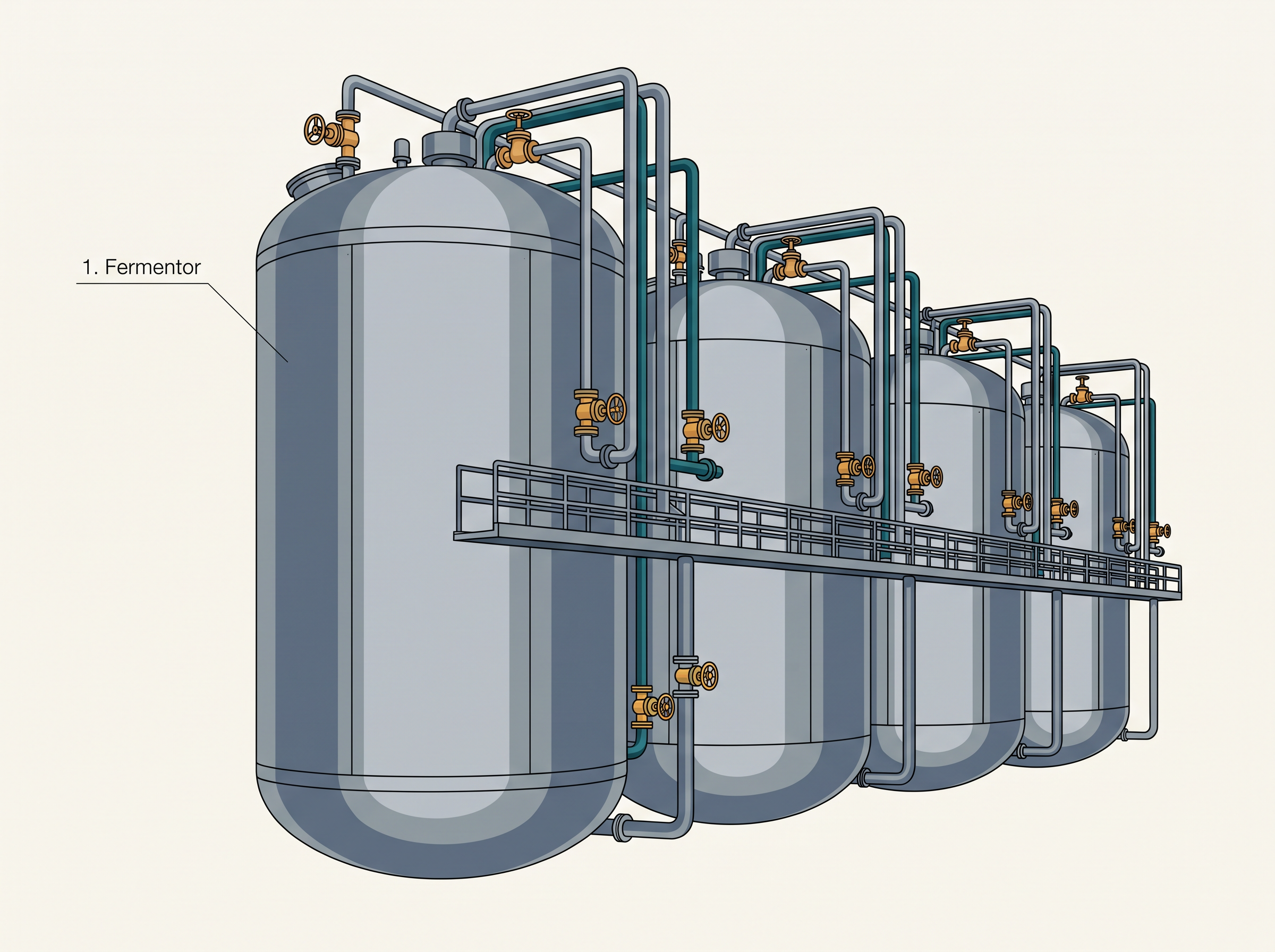
Making these products on an industrial scale means growing microbes in enormous numbers. For this, they are cultured in very large closed vessels called fermentors, as shown in Fig. 8.1. A fermentor provides the microbes with the right food, temperature and conditions so that they can grow and manufacture the desired product in bulk.
8.2.1 Fermented Beverages
Yeasts, especially, have been used since ancient times to produce alcoholic beverages such as wine, beer, whisky, brandy and rum. The yeast used is Saccharomyces cerevisiae — the same species used for bread-making, but in this role it is commonly called brewer’s yeast. It ferments malted cereals and fruit juices to produce ethanol (alcohol).
The kind of drink obtained depends on two things: the raw material used, and how the fermented liquid (the “broth”) is processed afterwards — in particular, whether or not it is distilled. Distillation means gently heating the fermented broth so that the alcohol, which boils at a lower temperature than water, evaporates and is then collected, giving a much stronger drink.
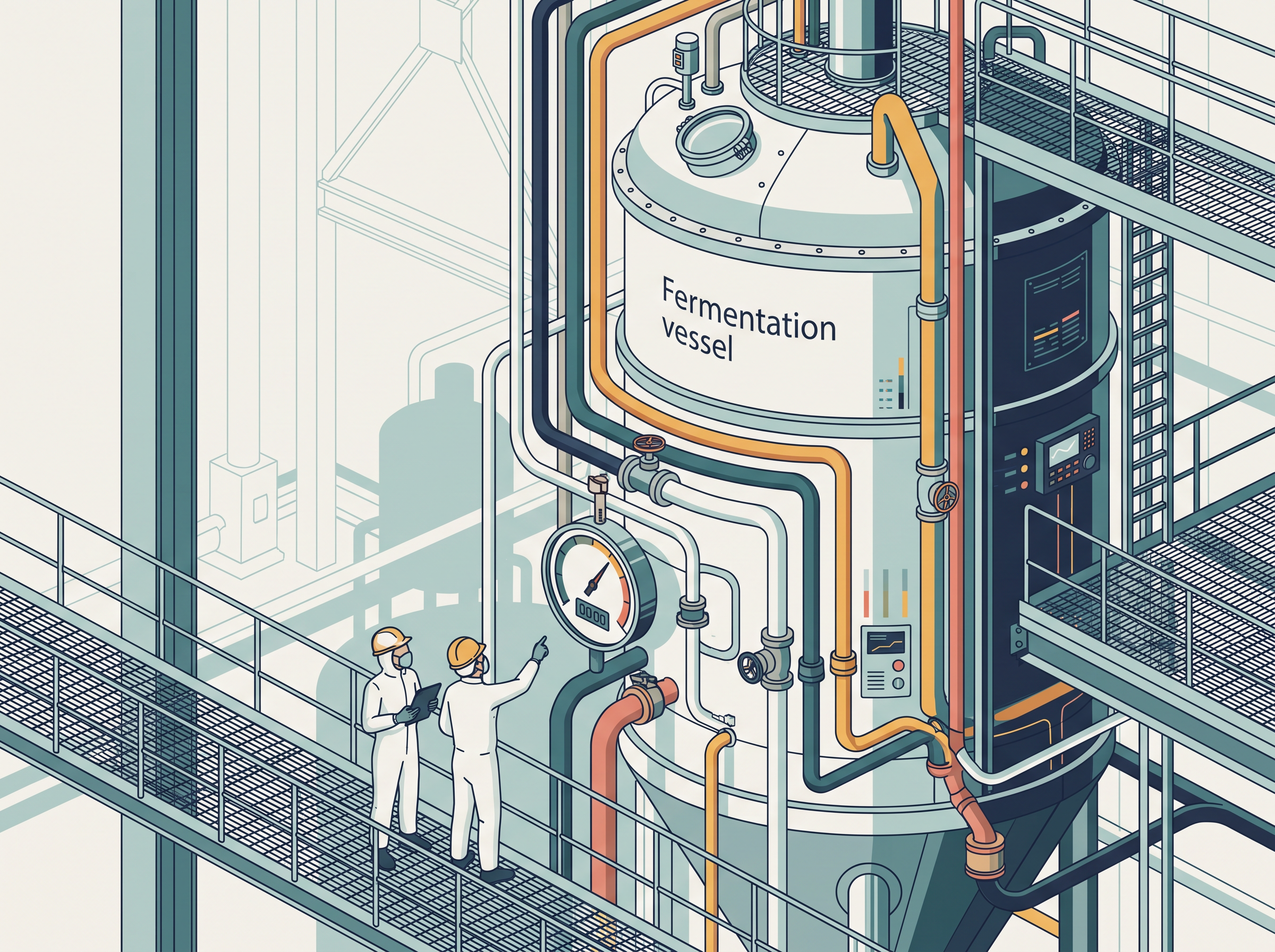
Wine and beer are produced without distillation, so they contain less alcohol. Whisky, brandy and rum are produced by distillation of the fermented broth, so they are stronger. A working fermentation plant is shown in Fig. 8.2.
Undistilled vs Distilled alcoholic beverages
| Examples |
Wine, beer |
Whisky, brandy, rum |
| Processing after fermentation |
No distillation |
Fermented broth is distilled |
| Alcohol content |
Lower |
Higher |
8.2.2 Antibiotics
Antibiotics produced by microbes are regarded as one of the most significant discoveries of the twentieth century and have greatly improved human welfare. The word itself explains the idea: anti is a Greek word meaning ‘against’ and bio means ‘life’, so together they mean ‘against life’. This is meant in the sense of being against disease-causing organisms — with respect to human beings, antibiotics are very much “pro-life”.
Antibiotics are chemical substances produced by some microbes that can kill or retard (slow down) the growth of other, disease-causing microbes.
The most familiar antibiotic is Penicillin, and its story is a famous one — it was the first antibiotic to be discovered, and it happened entirely by chance.
While working on Staphylococci bacteria, Alexander Fleming once noticed a mould growing in one of his unwashed culture plates. Strikingly, the Staphylococci could not grow in the region around this mould. Fleming found that the mould was releasing a chemical that stopped the bacteria, and he named it Penicillin after the mould, Penicillium notatum. Its full potential as an effective medicine was established much later by Ernest Chain and Howard Florey. The antibiotic was then used extensively to treat American soldiers wounded in World War II. For this work, Fleming, Chain and Florey were awarded the Nobel Prize in 1945.
Q3. Penicillin, the first antibiotic ever found, was discovered completely by accident. What exactly happened?
A. Alexander Fleming left culture plates of Staphylococci unwashed, and a mould (Penicillium notatum) happened to grow on one of them. The bacteria could not grow near the mould, and Fleming realised the mould was making a bacteria-killing chemical — which he named Penicillin.
After Penicillin, many other antibiotics were purified from other microbes. Antibiotics have hugely improved our ability to treat deadly diseases that once killed millions across the world, such as plague, whooping cough (kali khansi), diphtheria (gal ghotu) and leprosy (kusht rog). Today, it is hard to imagine a world without them.
Name a few other antibiotics you have heard of, and find out which microbe each is obtained from.
8.2.3 Chemicals, Enzymes and other Bioactive Molecules
Microbes are also used for the commercial and industrial production of many chemicals, including organic acids, alcohols and enzymes. Different microbes specialise in making different acids.
Microbes and the organic acids they produce
| Aspergillus niger |
Fungus |
Citric acid |
| Acetobacter aceti |
Bacterium |
Acetic acid |
| Clostridium butylicum |
Bacterium |
Butyric acid |
| Lactobacillus |
Bacterium |
Lactic acid |
Yeast (Saccharomyces cerevisiae) is used for the commercial production of ethanol. Microbes are also a major source of useful enzymes. Lipases, for instance, are added to detergent formulations, where they help break down and remove oily stains from laundry.
You may have noticed that bottled fruit juices bought from a shop look clearer than juice made at home. This is because the bottled juices are clarified using the enzymes pectinases and proteases, which break down the substances that make juice cloudy.
Some microbial products act directly inside the human body. Streptokinase, produced by the bacterium Streptococcus and then improved through genetic engineering, is used as a “clot buster”. It dissolves clots blocking the blood vessels of patients who have suffered a myocardial infarction — the medical term for a blockage of blood supply to the heart muscle, which leads to a heart attack.
When a clot suddenly blocks a heart vessel, streptokinase can be given to dissolve that clot quickly and restore blood flow, helping to limit the damage during a heart attack.
Two more important bioactive molecules come from fungi and yeasts. Cyclosporin A, produced by the fungus Trichoderma polysporum, is used as an immunosuppressive agent — it dampens the body’s immune response so that a transplanted organ is not rejected by the patient’s body. Statins, produced by the yeast Monascus purpureus, are commercialised as blood-cholesterol-lowering agents. Statins work by competitively inhibiting the enzyme responsible for cholesterol synthesis — that is, they resemble the enzyme’s normal target closely enough to occupy its active site and block it, so less cholesterol is made.
Bioactive molecules and their microbial sources
| Streptokinase |
Bacterium Streptococcus (genetically modified) |
Clot buster for heart patients |
| Cyclosporin A |
Fungus Trichoderma polysporum |
Immunosuppressant in organ transplants |
| Statins |
Yeast Monascus purpureus |
Lowering blood cholesterol |
This is exactly the kind of “which microbe gives which product” information that appears as match-the-following or assertion–reason questions in exams, so it is worth linking each molecule firmly to its source microbe and its use.
8.3 Microbes in Sewage Treatment
Every day, cities and towns generate huge quantities of waste water. A major part of this is human excreta. This municipal waste-water is called sewage, and it contains large amounts of organic matter along with many microbes — a good number of which are pathogenic (disease-causing).
Have you ever wondered where all this sewage goes? It clearly cannot be dumped straight into rivers and streams, because it would pollute them and spread disease. So, before disposal, sewage is first cleaned in sewage treatment plants (STPs) to make it far less polluting.
The remarkable part is who does the cleaning. The treatment relies on the heterotrophic microbes naturally present in the sewage — microbes that feed on the organic matter around them. By eating up this organic waste, they clean the water for us. The whole process is carried out in two stages: primary treatment and secondary treatment.
Primary Treatment
Primary treatment is basically the physical removal of particles — both large and small — from the sewage through filtration and sedimentation. This is done in stages.
First, floating debris is removed by passing the sewage through a series of filters (sequential filtration). Next, the grit — soil and small pebbles — is allowed to settle out by sedimentation.
All the solids that settle down form the primary sludge, while the liquid that remains on top (the supernatant) is called the effluent. This effluent from the primary settling tank is then sent on for secondary treatment.
Secondary Treatment
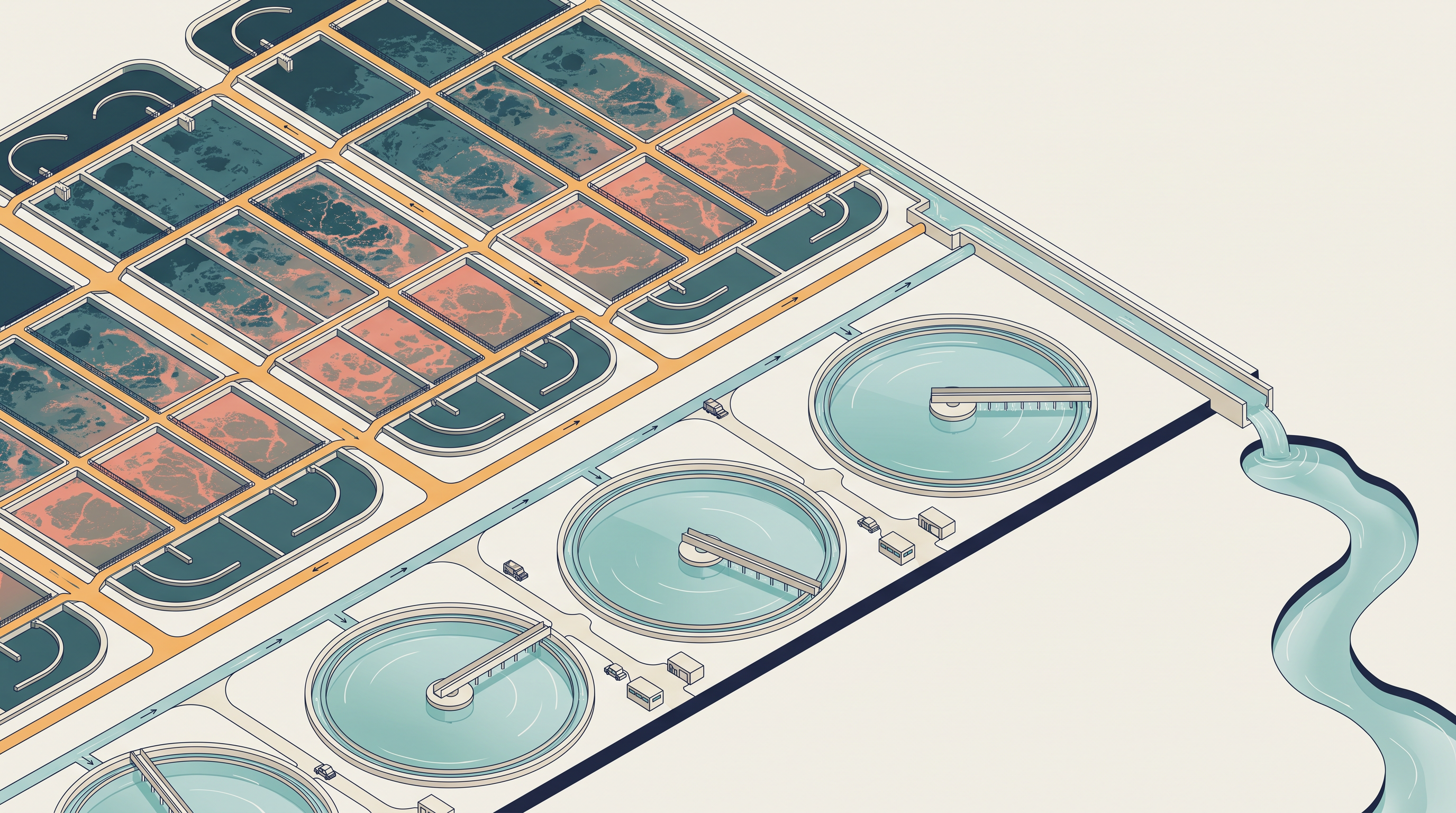
Secondary treatment is also called biological treatment, because here living microbes do the main work. The primary effluent is passed into large aeration tanks, shown in Fig. 8.3, where it is constantly stirred (agitated mechanically) while air is pumped into it.
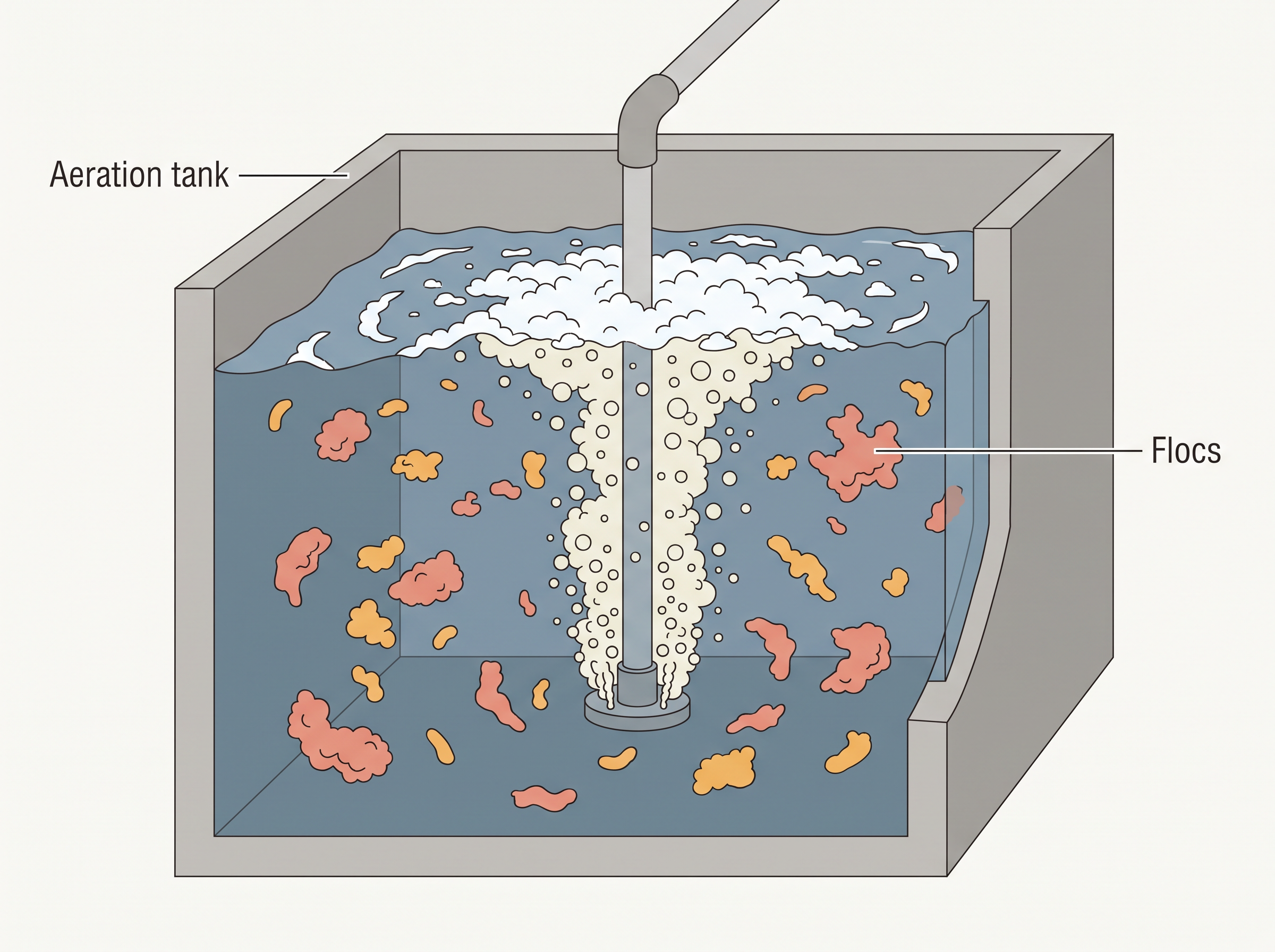
Pumping in air keeps the tank rich in oxygen, which encourages vigorous growth of useful aerobic microbes (microbes that need oxygen). These grow into flocs — masses of bacteria held together with fungal filaments to form mesh-like structures. As they grow, these microbes consume the major part of the organic matter in the effluent.
By eating up the organic matter, the microbes greatly reduce the BOD (biochemical oxygen demand) of the water. BOD tells us how much oxygen would be needed if all the organic matter in one litre of water were completely oxidised by bacteria. The BOD test actually measures how fast micro-organisms take up oxygen from a water sample — so, indirectly, BOD measures how much organic matter the water contains.
BOD (Biochemical Oxygen Demand) is the amount of oxygen that would be consumed if all the organic matter in one litre of water were oxidised by bacteria. The greater the BOD of a water sample, the more organic matter it contains, and the more polluting it is.
The sewage is treated until its BOD has dropped low enough. This is a key idea: a high BOD means dirty, heavily polluting water, and a low BOD means the water has been cleaned.
reading BOD values to judge pollution (BOD is measured in mg/L. It stands for the oxygen demand of the microbes feeding on organic waste, so it rises with the amount of organic pollution. A clean river water sample has a low BOD; untreated sewage has a very high BOD; and secondary-treated effluent falls in between but much closer to clean water. So, given three BOD readings, the highest value is the most polluted sample and the lowest is the cleanest.)
A factory releases waste water with a BOD of 600 mg/L. After passing it through a treatment plant, the BOD of the outgoing water is 30 mg/L. By what percentage has the BOD been reduced, and what does this tell you about how much organic matter was removed?
Q4. Every city flushes out millions of litres of dirty water each day. How is this filthy water cleaned before it flows back into a river — and who actually does the cleaning?
A. The dirty water (sewage) is cleaned in sewage treatment plants in two stages. Solids are first removed physically (primary treatment), and then aerobic microbes in aeration tanks eat up the organic matter, lowering the BOD (secondary treatment). The cleaning is done mainly by the heterotrophic microbes naturally present in the sewage.
From Activated Sludge to Biogas
Once the BOD has fallen significantly, the effluent is passed into a settling tank. Here the bacterial flocs are allowed to settle down, forming a sediment called activated sludge.
A small part of this activated sludge is pumped back into the aeration tank to act as the inoculum — the starting population of microbes for the next batch. The remaining, larger part is pumped into big tanks called anaerobic sludge digesters.
Inside these digesters, a different set of bacteria that grow anaerobically (without oxygen) digest the bacteria and fungi present in the sludge. As they do so, they release a mixture of gases — methane, hydrogen sulphide and carbon dioxide. This mixture forms biogas, which is inflammable and can be used as a source of energy.
primary sludge vs activated sludge (Primary sludge is the solid material physically settled out during primary treatment. Activated sludge is the sediment of bacterial flocs settled out after secondary (biological) treatment — part of it is reused as inoculum, and the rest goes to the anaerobic digesters.)
Primary treatment vs Secondary treatment
| Nature of process |
Physical (filtration, sedimentation) |
Biological (microbial breakdown) |
| Main aim |
Remove solid particles |
Reduce organic matter and BOD |
| Role of microbes |
Not the main agents |
Aerobic microbes (flocs) do the work |
| Product formed |
Primary sludge + effluent |
Activated sludge + cleaner effluent |
The effluent leaving the secondary treatment plant is generally clean enough to be released into natural water bodies such as rivers and streams. An aerial view of such a plant is shown in Fig. 8.4.
The Scale and Importance of Sewage Treatment
Microbes treat millions of gallons of waste water every day across the world. This method has been practised for more than a century, in almost every part of the globe, and till date no man-made technology has been able to rival the microbial treatment of sewage.
With increasing urbanisation, however, sewage is now being produced in far greater quantities than before, while the number of treatment plants has not grown enough to keep up. As a result, untreated sewage is often discharged straight into rivers, polluting them and increasing water-borne diseases.
To protect India’s major rivers, the Ministry of Environment and Forests launched the Ganga Action Plan and the Yamuna Action Plan. Under these plans, many more sewage treatment plants are to be built so that only treated sewage is discharged into these rivers. Visiting a sewage treatment plant near you would be an interesting and educational experience.
8.4 Microbes in Production of Biogas
Biogas is a mixture of gases — containing predominantly methane — that is produced by microbial activity and can be used as a fuel. The idea builds directly on something you have already seen: microbes release different gases as they grow and break down food.
Biogas is a mixture of gases (mainly methane) produced by the activity of microbes on organic matter, and which can be used as a fuel.
Exactly which gas a microbe releases depends on the microbe itself and on the organic substrate (the material) it is feeding on. In the earlier examples — the fermentation of dough, cheese-making and the production of beverages — the main gas released was carbon dioxide, \(CO\_2\).
Biogas, however, comes from a special group of bacteria. Certain bacteria grow anaerobically (without oxygen) on cellulosic material and produce a large amount of methane, \(CH\_4\), along with \(CO\_2\) and hydrogen, \(H\_2\). Because they make methane, these bacteria are collectively called methanogens, and one common example is Methanobacterium. Cellulose here means the tough carbohydrate that makes up plant fibre — the bulky material in grass, leaves and crop waste.
Methanogens are bacteria that grow anaerobically on cellulosic (plant) material and produce methane along with \(CO\_2\) and \(H\_2\); a common example is Methanobacterium.
gas from ordinary fermentation vs gas from methanogens (Ordinary fermentation of dough, cheese or beverages mainly releases \(CO\_2\). Methanogens are different — feeding anaerobically on cellulose, they release mainly methane (\(CH\_4\)), together with \(CO\_2\) and \(H\_2\).)
Methanogens in Sewage and in Cattle
You have already met these methanogens once before: they are commonly found in the anaerobic sludge produced during sewage treatment, where they generate biogas inside the sludge digesters.
Methanogens are also present in the rumen of cattle — a part of the stomach of these animals. The food of cattle contains a great deal of cellulosic material, which collects in the rumen. There, the methanogens break down the cellulose and so play an important role in the nutrition of cattle, helping them get energy from grass that they could not otherwise digest.
Because the rumen is full of these bacteria, the excreta (dung) of cattle — commonly called gobar — is very rich in methanogens. This is why cattle dung can be used to generate biogas, which is popularly known as gobar gas.
How a Biogas Plant Works
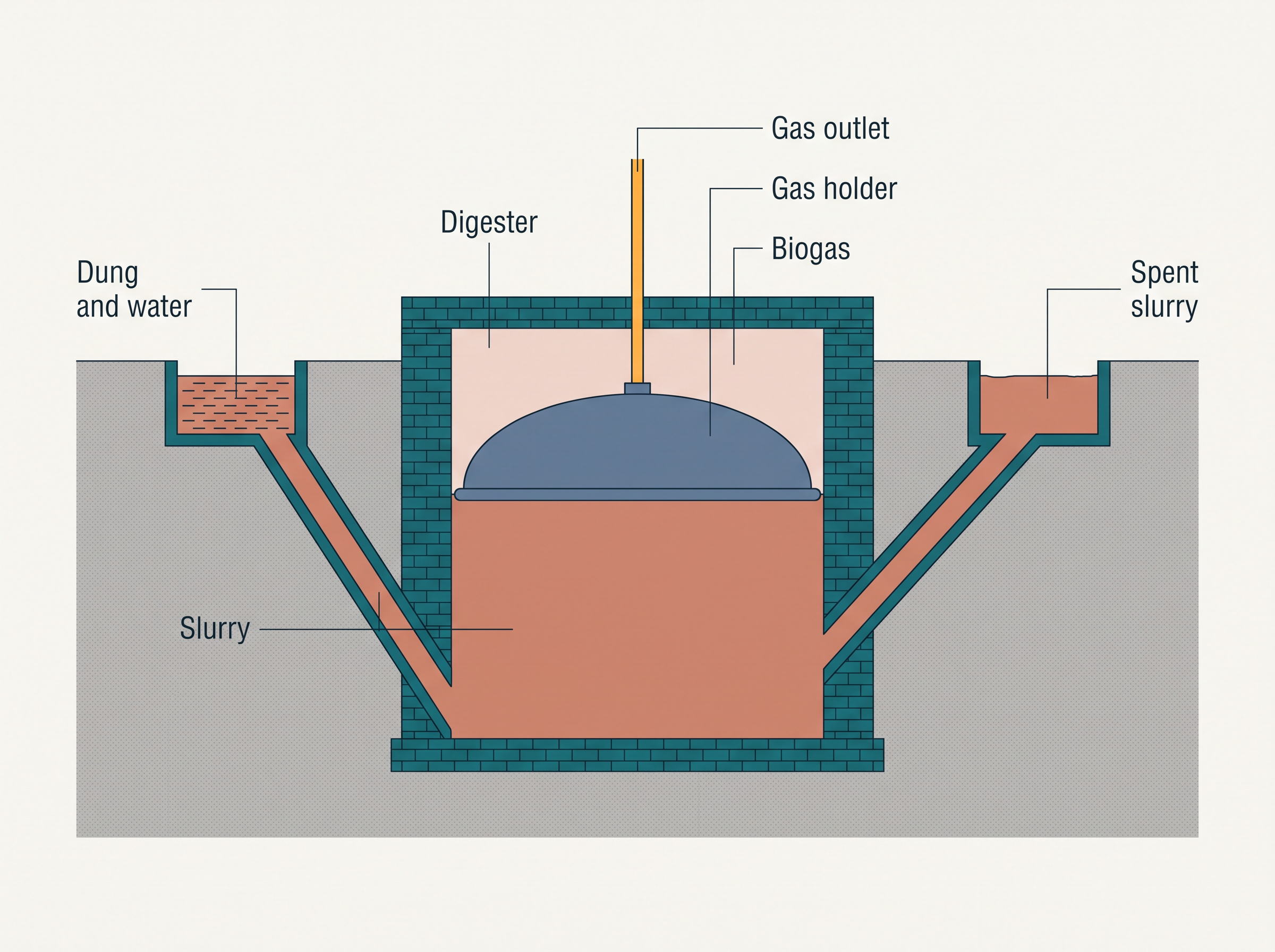
A biogas plant is built around a concrete tank, about 10–15 feet deep, in which bio-wastes are collected and a slurry of dung is fed in. As the microbes work on this slurry, gas is produced inside the tank.
A floating cover is placed over the slurry. As gas builds up, this cover keeps rising — so it both stores the gas and shows how much has collected.
floating gas-holder cover (A cover that floats freely on top of the slurry → it rises as gas is produced beneath it and sinks as gas is drawn off → this lets the plant collect and store the biogas at steady pressure, ready to be supplied through a pipe.)
The biogas plant has an outlet connected to a pipe that supplies the gas to nearby houses. A separate outlet removes the spent slurry, which is not wasted — it may be used as a good fertiliser for fields. A typical biogas plant is shown in Fig. 8.5.
Q5. Can cattle dung really be used to run a kitchen stove and light a lamp?
A. Yes. Cattle dung is rich in methanogens, which produce methane-rich biogas when the dung slurry is digested anaerobically in a biogas plant. This biogas is piped to homes and burned for cooking and lighting.
Cattle dung is available in large amounts in rural areas, where cattle are kept for many purposes, so biogas plants are more often built in villages. The gas produced is used mainly for cooking and lighting.
The technology of biogas production was developed in India largely through the efforts of the Indian Agricultural Research Institute (IARI) and the Khadi and Village Industries Commission (KVIC). If your school is in or near a village, it can be very interesting to find a biogas plant nearby and learn about it from the people who run it.
8.5 Microbes as Biocontrol Agents
Biocontrol means using biological methods — living organisms — to control plant diseases and pests, instead of relying on chemicals.
Biocontrol is the use of biological methods (living organisms) to control plant diseases and pests.
In modern farming, pests and diseases have increasingly been tackled with chemicals — insecticides and pesticides. But these chemicals are toxic and extremely harmful, to human beings and animals alike. They pollute our environment, seeping into the soil and ground water and leaving residues on fruits, vegetables and crop plants. Our soil is further polluted by weedicides, the chemicals used to kill weeds. Biocontrol offers a safer alternative to all of these.
The Organic Farmer’s Approach
In agriculture there is a way of controlling pests that relies on natural predation — letting one organism keep another in check — rather than on introduced chemicals. This is the approach of the organic farmer.
A key belief of the organic farmer is that biodiversity furthers health: the more variety of life a landscape has, the more sustainable it is. So instead of trying to wipe out every insect called a “pest”, the organic farmer aims to keep such insects at manageable levels, held in balance by a complex system of checks and balances within a living, vibrant ecosystem.
This is very different from conventional farming, which often uses chemicals that kill useful and harmful life forms alike, indiscriminately. Biocontrol is a holistic approach: it tries to understand the whole web of interactions among the many organisms that make up the field’s plants and animals.
Interestingly, the organic farmer holds that wiping out pests completely is not only difficult but actually undesirable. This is because the beneficial predatory and parasitic insects — the ones that eat or live on the pests — depend on those pests as food or hosts. Remove the pests entirely, and these helpful insects cannot survive either.
So the use of biocontrol greatly reduces our dependence on toxic chemicals and pesticides. An important part of this biological approach is to become familiar with the many life forms living in a field — both predators and pests — and to know their life cycles, feeding patterns and preferred habitats. This knowledge helps in designing the right biocontrol method for each situation.
Insects and Microbes as Biocontrol Agents
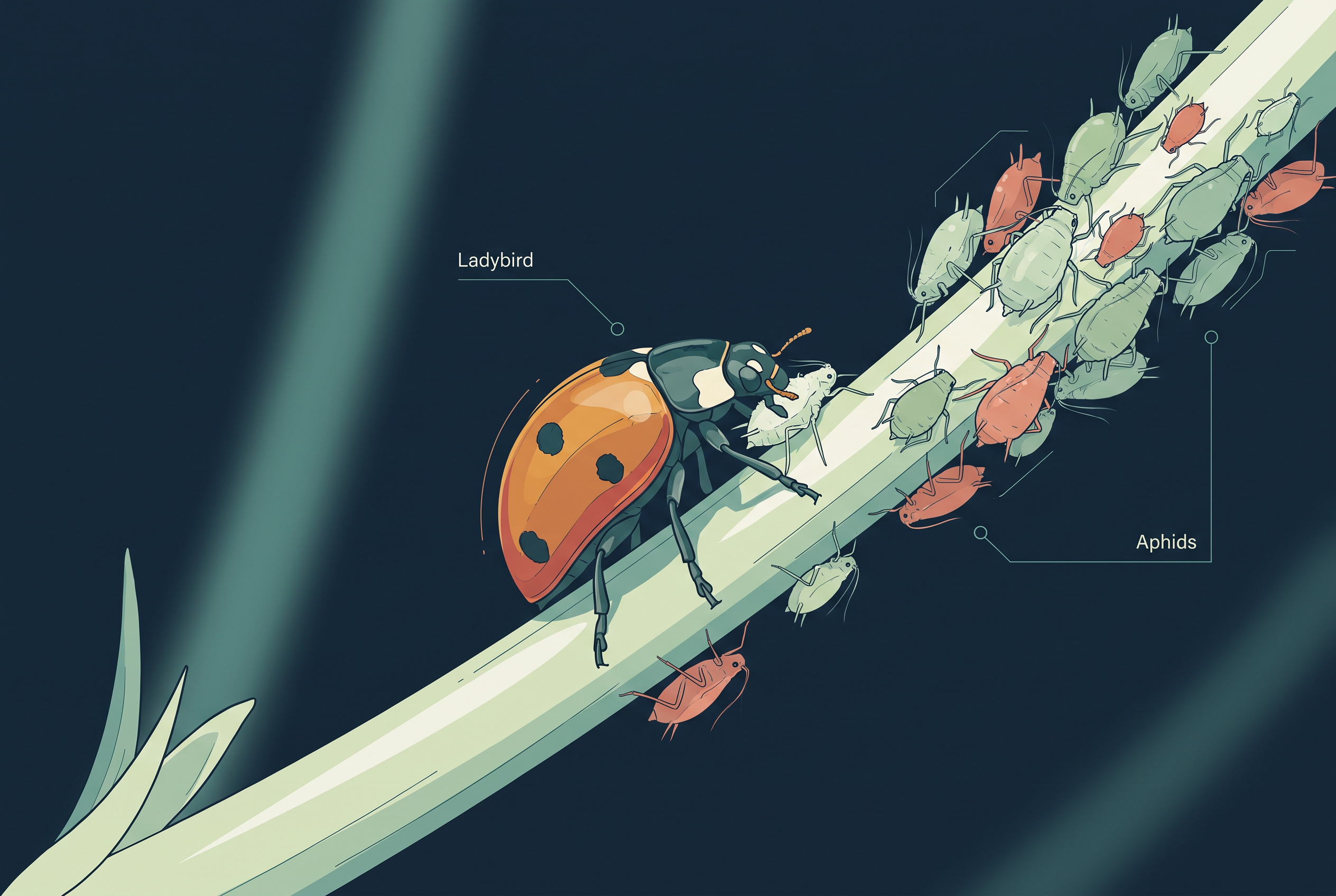
Some biocontrol agents are familiar animals. The Ladybird, the well-known beetle with red and black markings, is useful for getting rid of aphids, while Dragonflies help control mosquitoes.
An important example of a microbial biocontrol agent is the bacterium Bacillus thuringiensis, often written as Bt, which is used to control butterfly caterpillars. It is sold in sachets as dried spores. The spores are mixed with water and sprayed onto vulnerable plants, such as brassicas (the cabbage family) and fruit trees. When the insect larvae eat the sprayed leaves, the Bt spores enter their gut, the toxin is released there, and the larvae are killed.
Crucially, this bacterial disease kills the caterpillars but leaves other insects unharmed — the toxin acts only in the specific gut conditions of the target larvae. This selectiveness is what makes Bt such a valuable biocontrol tool.
Because of genetic engineering — the deliberate transfer of a gene from one organism into another — scientists have taken the B. thuringiensis toxin gene and introduced it directly into plants. Such plants make the toxin themselves and are therefore resistant to attack by insect pests. Bt-cotton is one such example, cultivated in some states of our country; you will learn more about it in Chapter 10.
Bt-cotton is a genetically engineered crop grown in several Indian states. Because each plant produces the Bt toxin in its own tissues, it resists bollworm caterpillars without the farmer needing to spray large amounts of chemical insecticide.
chemical pesticide vs biocontrol agent (A chemical pesticide is a synthetic poison that usually kills a broad range of organisms and can pollute soil, water and food. A biocontrol agent is a living organism — such as a ladybird, Bacillus thuringiensis or a baculovirus — that targets a specific pest and is far safer for non-target species and the environment.)
Another biocontrol agent being developed to treat plant diseases (not just pests) is the fungus Trichoderma. Trichoderma species are free-living fungi, very common in root ecosystems, and they are effective biocontrol agents against several plant pathogens.
Certain viruses are useful too. Baculoviruses are pathogens that attack insects and other arthropods (invertebrates with jointed limbs, such as insects). Most baculoviruses used for biological control belong to the genus Nucleopolyhedrovirus. These viruses are excellent candidates for species-specific, narrow-spectrum insecticidal use — meaning each one attacks only its particular target and nothing else.
They have been shown to have no harmful effect on plants, mammals, birds, fish or even non-target insects. This makes them especially valuable when beneficial insects are being protected as part of an overall integrated pest management (IPM) programme — an approach that combines several careful methods to keep pests down while conserving useful species — or when an ecologically sensitive area is being treated.
Some biocontrol agents and their targets
| Ladybird |
Beetle |
Aphids |
| Dragonfly |
Insect |
Mosquitoes |
| Bacillus thuringiensis (Bt) |
Bacterium |
Butterfly caterpillars |
| Trichoderma |
Fungus |
Several plant pathogens (plant diseases) |
| Nucleopolyhedrovirus (baculovirus) |
Virus |
Insects and other arthropods |
This table is exactly the kind of match-the-following material commonly tested in exams, so it helps to link each biocontrol agent firmly to what it controls.
8.6 Microbes as Biofertilisers
With our present-day lifestyles, environmental pollution has become a major concern. To meet the ever-increasing demand for agricultural produce, farmers have relied heavily on chemical fertilisers — and their overuse has added significantly to this pollution.
We now realise that there are real problems with using too much chemical fertiliser, and there is strong pressure to switch to organic farming, which makes use of biofertilisers instead.
Biofertilisers are living organisms that enrich the nutrient quality of the soil.
The main sources of biofertilisers are three groups of microbes: bacteria, fungi and cyanobacteria. To understand how they help, it is useful to recall that plants cannot use the nitrogen gas of the air directly — it must first be “fixed” into a usable form. Nitrogen fixation is the conversion of atmospheric nitrogen into combined forms that plants can absorb as nutrients.
Bacteria as Biofertilisers
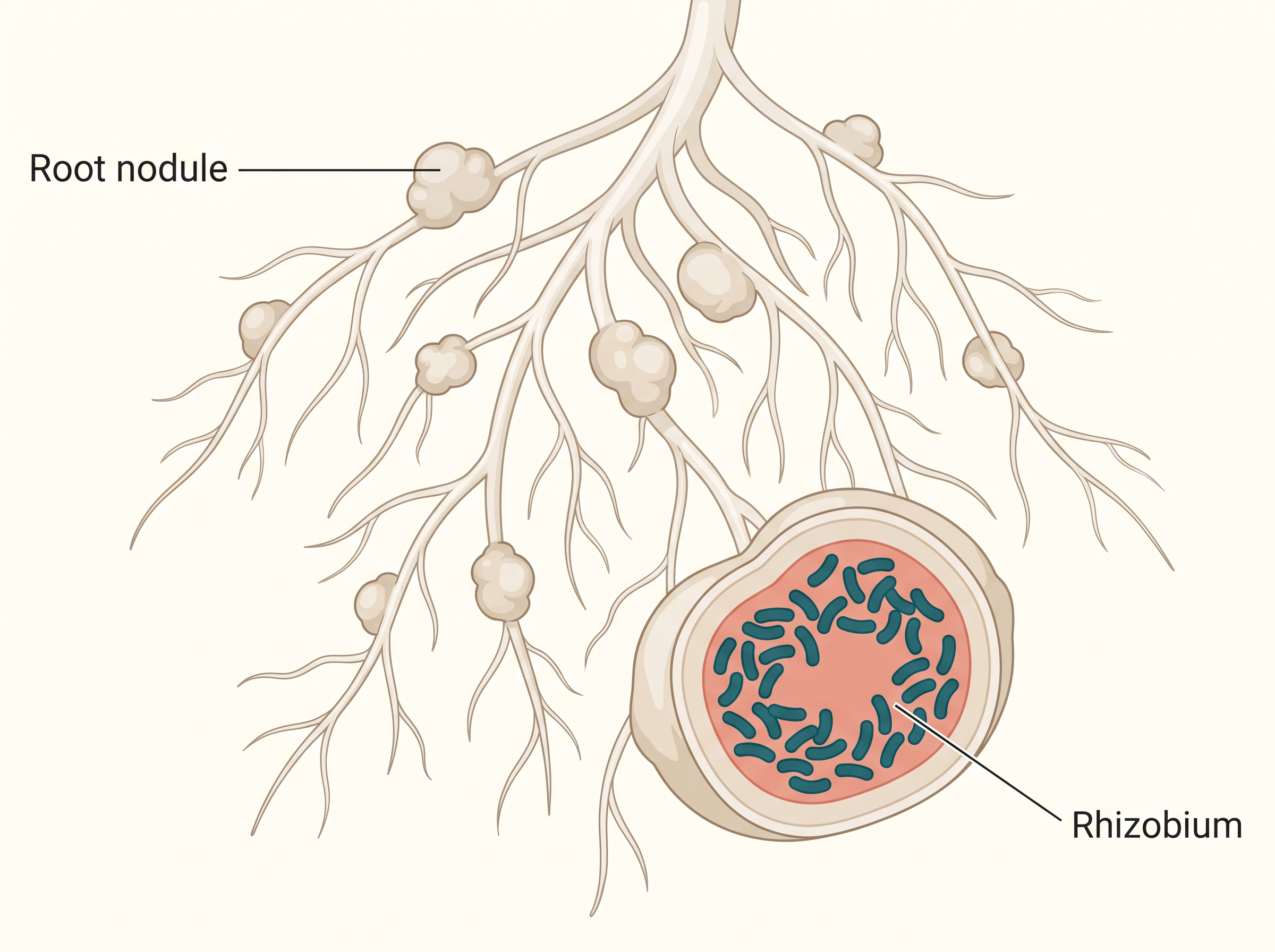
You have already studied the swellings, or nodules, found on the roots of leguminous plants (legumes such as beans, peas and gram). These nodules are formed by a symbiotic association with the bacterium Rhizobium — “symbiotic” meaning the two partners live together to their mutual benefit.
Inside these nodules, Rhizobium fixes atmospheric nitrogen into organic forms, which the plant then uses as a nutrient. In return, the plant shelters and feeds the bacteria.
root nodule of a legume (A swelling on the root that houses Rhizobium → it provides the bacteria with a protected, low-oxygen space suited to nitrogen fixation → the bacteria fix atmospheric nitrogen and pass usable nitrogen to the plant, enriching the soil as well.)
Not all nitrogen-fixing bacteria live inside roots. Some fix atmospheric nitrogen while living freely in the soil — examples are Azospirillum and Azotobacter — and in doing so they enrich the nitrogen content of the soil.
symbiotic vs free-living nitrogen-fixing bacteria (Rhizobium is symbiotic — it fixes nitrogen only while living inside the root nodules of legumes. Azospirillum and Azotobacter are free-living — they fix nitrogen on their own in the soil, without needing a plant partner.)
Fungi as Biofertilisers
Fungi too form symbiotic associations with plant roots, and such an association is called a mycorrhiza. Many members of the fungal genus Glomus form mycorrhiza.
In these associations, the fungal partner absorbs phosphorus from the soil and passes it on to the plant. Plants with mycorrhiza gain other benefits as well: resistance to root-borne pathogens, tolerance to salinity and drought, and an overall increase in growth and development.
Cyanobacteria as Biofertilisers
Cyanobacteria are autotrophic microbes — that is, they make their own food (unlike the heterotrophic microbes you met in sewage treatment, which feed on ready-made organic matter). They are widely distributed in both aquatic and terrestrial environments, and many of them can fix atmospheric nitrogen. Examples include Anabaena, Nostoc and Oscillatoria.
In paddy (rice) fields, cyanobacteria serve as an important biofertiliser. These blue-green algae not only fix nitrogen but also add organic matter to the soil, increasing its fertility.
Three groups of biofertilisers
| Bacteria (symbiotic) |
Rhizobium (in legume nodules) |
Fix atmospheric nitrogen for the plant |
| Bacteria (free-living) |
Azospirillum, Azotobacter |
Fix nitrogen freely in the soil |
| Fungi (mycorrhiza) |
Glomus |
Absorb and supply phosphorus |
| Cyanobacteria |
Anabaena, Nostoc, Oscillatoria |
Fix nitrogen and add organic matter |
Today a number of biofertilisers are sold commercially in our country, and farmers use them regularly to replenish soil nutrients and cut down their dependence on chemical fertilisers — a practical, low-pollution way to keep soil fertile.
Q6. Can farmers protect their crops from pests and enrich their soil without spraying harmful chemicals?
A. Yes. Pests can be controlled biologically using biocontrol agents such as ladybirds, Bacillus thuringiensis and baculoviruses instead of chemical pesticides. Soil can be enriched using biofertilisers — nitrogen-fixing bacteria like Rhizobium, Azospirillum and Azotobacter, phosphorus-supplying mycorrhizal fungi like Glomus, and nitrogen-fixing cyanobacteria like Anabaena — instead of chemical fertilisers.
8.7 Summary
- Microbes are a very important part of life on earth. Not all of them are pathogenic (disease-causing) — a great many are extremely useful to human beings, and we use microbes or their products almost every day.
- In the home: Lactic acid bacteria (LAB) grow in milk and turn it into curd. The dough used to make bread is fermented by the yeast Saccharomyces cerevisiae, and dishes such as idli and dosa are made from dough fermented by microbes. Bacteria and fungi are used to give cheese its particular texture, taste and flavour.
- In industry: Microbes are used to produce industrial chemicals such as lactic acid, acetic acid and alcohol, which are used in many industrial processes. Yeasts are also used to make fermented beverages.
- Antibiotics: Antibiotics such as penicillin, produced by useful microbes, are used to kill harmful, disease-causing microbes. They have played a major role in controlling infectious diseases like diphtheria, whooping cough and pneumonia.
- Sewage treatment: For more than a hundred years, microbes have been used to treat sewage (waste water) through the process of activated sludge formation, which helps recycle water in nature.
- Biogas: Methanogens produce methane (biogas) while breaking down plant waste. This biogas is used as a source of energy, especially in rural areas.
- Biocontrol: Microbes can be used to kill harmful pests — a process called biocontrol — which helps us avoid the heavy use of toxic pesticides.
- Biofertilisers: There is a growing need today to use biofertilisers in place of chemical fertilisers to enrich the soil.
- Overall, the many and diverse uses to which human beings have put microbes make it clear that these tiny organisms play an important role in the welfare of human society.
8.8 Points to Ponder
- Antibiotics literally mean “against life”, yet for human beings they are described as “pro-life”. If antibiotics are used carelessly or far too often, what might happen to their power to fight disease in the future?
- Curd, cheese, bread and toddy were all being made long before anyone knew that microbes existed. What does this tell you about the relationship between traditional knowledge passed down over generations and modern scientific understanding?
- Microbes treat our sewage more effectively than any man-made technology invented so far. What does this suggest about how much we should value — and protect — the natural biological processes happening around us?
- The organic farmer believes that completely wiping out pests is not only difficult but actually undesirable. Do you agree? What could go wrong within an ecosystem if every organism we call a “pest” were removed?
- Biofertilisers and biocontrol agents reduce pollution, but they often act more slowly and less predictably than chemicals. How should a farmer weigh the benefits to the environment against the need for quick, reliable results?
- A biogas plant turns cattle dung — a waste — into both fuel and fertiliser. Could this “waste-into-resource” idea be applied to other kinds of waste produced in your home, school or neighbourhood?
- The same yeast, Saccharomyces cerevisiae, is used to make bread and to brew alcohol, and the same methanogens live both in the rumen of cattle and in sewage sludge digesters. Why do you think a single kind of microbe can turn out to be useful in such very different settings?
8.9 NCERT Questions
- Bacteria cannot be seen with the naked eye, but they can be seen under a microscope. If you had to carry a sample from your home to your biology laboratory to show the presence of microbes under a microscope, which sample would you take, and why?
- Give examples to show that microbes release gases during metabolism.
- In which food would you find lactic acid bacteria? Mention some of their useful applications.
- Name some traditional Indian foods made from wheat, rice and Bengal gram (or their products) that involve the use of microbes.
- In what way have microbes played a major role in controlling diseases caused by harmful bacteria?
- Name any two species of fungus that are used in the production of antibiotics.
- What is sewage? In what way can sewage be harmful to us?
- What is the key difference between primary and secondary sewage treatment?
- Do you think microbes can also be used as a source of energy? If yes, how?
- Microbes can be used to reduce the use of chemical fertilisers and pesticides. Explain how this can be achieved.
- Three water samples — river water, untreated sewage water, and secondary effluent discharged from a sewage treatment plant — were tested for BOD. The samples were labelled A, B and C, but the laboratory attendant forgot to note which was which. The BOD values of samples A, B and C were recorded as 20 mg/L, 8 mg/L and 400 mg/L, respectively. Which sample is the most polluted? Assuming the river water is relatively clean, can you assign the correct label to each sample?
- Find out the names of the microbes from which Cyclosporin A (an immunosuppressive drug) and Statins (blood-cholesterol-lowering agents) are obtained.
- Find out the role of microbes in the following, and discuss it with your teacher.
- Single-cell protein (SCP)
- Soil
- Arrange the following in decreasing order of their importance (most important first) for the welfare of human society, and give reasons for your answer: Biogas, Citric acid, Penicillin and Curd.
- How do biofertilisers enrich the fertility of the soil?
8.10 Check Your Concepts
- Assertion–Reason. Assertion: Curd is more nutritious than the milk from which it is made. Reason: Lactic acid bacteria increase the amount of vitamin B\(\_{12}\) during the formation of curd. State whether the assertion and reason are true, and whether the reason correctly explains the assertion.
- Why does idli–dosa batter left to stand overnight become puffed up and spongy? Name the process and the gas responsible.
- Match the microbe in Column I with the product or role in Column II.
| a. Aspergillus niger |
i. Statins |
| b. Acetobacter aceti |
ii. Citric acid |
| c. Trichoderma polysporum |
iii. Streptokinase |
| d. Monascus purpureus |
iv. Cyclosporin A |
| e. Streptococcus |
v. Acetic acid |
- Arrange the following steps of sewage treatment in the correct sequence: release of treated effluent into rivers; formation and settling of activated sludge; removal of floating debris by filtration; aeration and formation of flocs; removal of grit by sedimentation.
- Air is pumped continuously into the aeration tanks during the secondary treatment of sewage. Why is this necessary?
- What would happen to a river if untreated sewage with a very high BOD were discharged directly into it? Explain your reasoning.
- Assertion–Reason. Assertion: Bt-cotton plants are resistant to attack by certain insect pests. Reason: The toxin gene of Bacillus thuringiensis has been introduced into the cotton plant. State whether the assertion and reason are true, and whether the reason correctly explains the assertion.
- Bacillus thuringiensis kills butterfly caterpillars but leaves other insects unharmed. Give the reason for this selective action.
- Distinguish between symbiotic and free-living nitrogen-fixing bacteria, giving one example of each.
- In a mycorrhizal association, the fungus supplies phosphorus to the plant. What does the fungus itself gain from the plant, which makes this a symbiotic (mutually beneficial) relationship?
- Draw a labelled diagram of a typical biogas plant. Label the dung-and-water inlet, the digester tank, the floating gas-holder cover, the gas outlet, and the spent-slurry outlet.
- What would happen to the nutrition of cattle if the methanogens present in their rumen were absent?
- How does the biological control of pests differ from the use of chemical pesticides? State one advantage of biocontrol.
- Wine and beer are produced without distillation, whereas whisky, brandy and rum are produced by distillation of the fermented broth. What difference does distillation make to the final drink?
- Assertion–Reason. Assertion: No man-made technology has been able to rival the microbial treatment of sewage. Reason: The heterotrophic microbes naturally present in sewage consume its organic matter and reduce its BOD. State whether the assertion and reason are true, and whether the reason correctly explains the assertion.
8.11 Practice With Numericals
- Two water samples, P and Q, have BOD values of 12 mg/L and 350 mg/L, respectively. Which sample is more polluted, and how many times greater is its BOD than that of the other sample?
- Sewage enters a treatment plant with a BOD of 500 mg/L and leaves it with a BOD of 25 mg/L. Calculate the percentage reduction in BOD achieved by the plant.
- A spherical bacterium is shown magnified 1500X. In the magnified image it appears 3 mm across. Calculate the actual diameter of the bacterium in micrometres (\(\\mu m\)). (1 mm = 1000 \(\\mu m\).)
- Yeast ferments glucose according to the equation \(C\_6H\_{12}O\_6 \\rightarrow 2C\_2H\_5OH + 2CO\_2\). If 5 molecules of glucose are completely fermented, how many molecules of ethanol and how many molecules of carbon dioxide are produced?