Chapter 13: Biodiversity and Conservation
On the island of Mauritius, in the Indian Ocean, there once lived a large, flightless bird about a metre tall, with a heavy body, stubby wings and a hooked beak. It was the dodo (Raphus cucullatus). Having evolved for thousands of years on an island with no natural predators, the dodo had no reason to fear anything — it did not flee, and it had lost the ability to fly.
Then, in the late 1500s, ships arrived. Sailors found the trusting birds easy to catch, and the animals they brought with them — pigs, rats, monkeys and dogs — feasted on dodo eggs laid openly on the ground. Within less than a hundred years of being discovered, the dodo was gone forever. By around the 1680s, not a single one remained. Today it survives only as bones, sketches and the phrase “as dead as a dodo.”
The dodo was one species on one small island. Yet planet Earth carries an astonishing wealth of life — more than 20,000 species of ants, 3,00,000 species of beetles, 28,000 species of fishes and nearly 20,000 species of orchids. This staggering variety took millions of years of evolution to build. The dodo reminds us how quickly, and how permanently, a piece of it can be lost. This chapter is about that variety of life — what it is, why it matters, and how we can protect it.
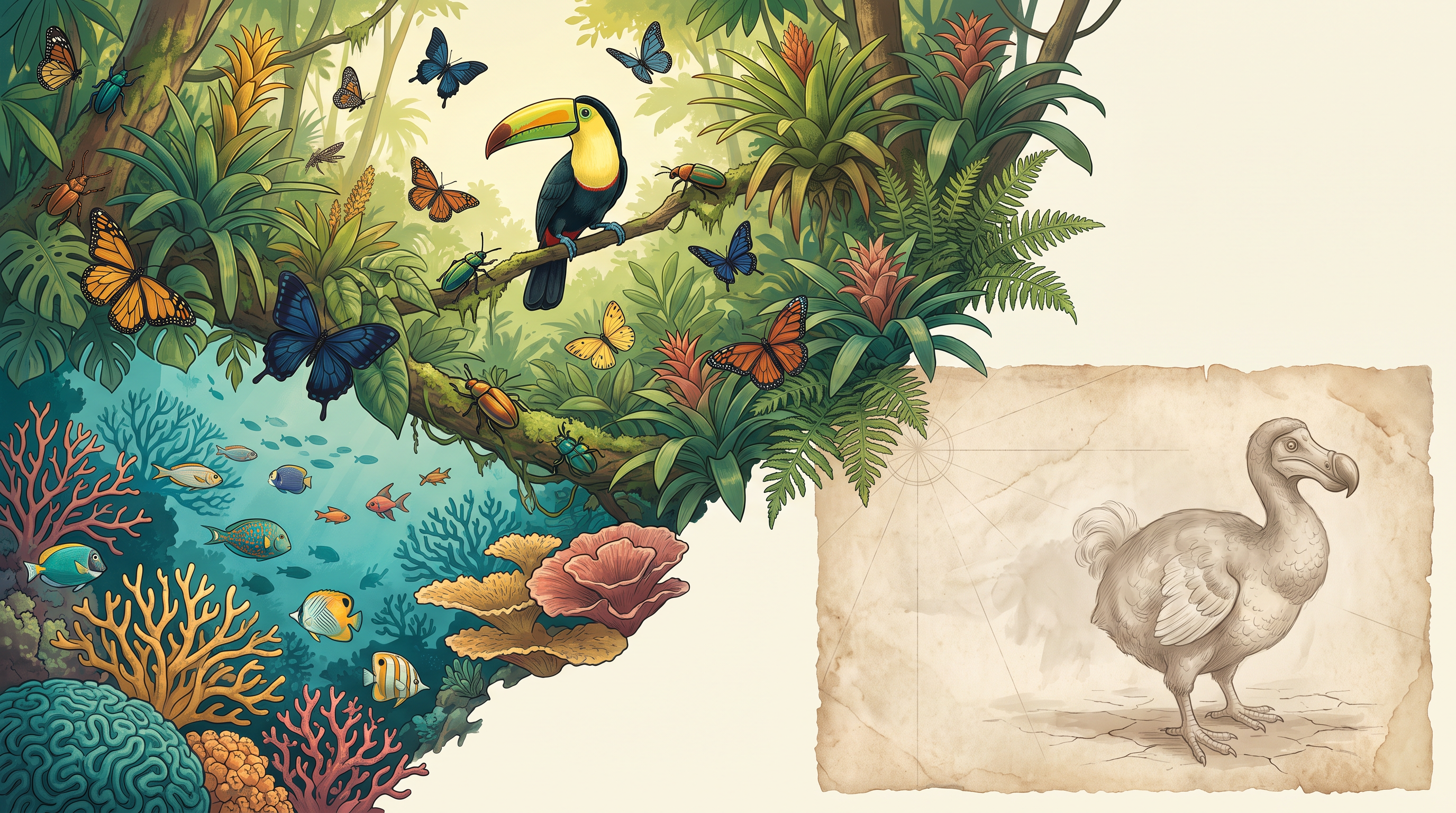
Fig. 13.0 – Earth’s biodiversity and the extinct dodo.
By the end of this chapter, you will be able to answer each of these questions.
13.1 Biodiversity
Life on Earth is not spread out in a simple or uniform way. Variety — what biologists call diversity or heterogeneity — is found at every single level of biological organisation. It exists in the giant molecules (like proteins and DNA) packed inside a single cell, in the cells themselves, in tissues, organs and organisms, and it continues right up to the enormous biomes — the very large ecological units such as deserts, tropical forests, grasslands and oceans that stretch across whole regions of the planet.
To capture this idea of variety at all these levels, we use one powerful word: biodiversity. The term was popularised by the well-known sociobiologist Edward Wilson, who used it to describe the combined diversity of life at every level of biological organisation.
The three key levels of biodiversity
Although diversity exists at many levels, three are especially important for the study of life and its conservation: genetic diversity, species diversity and ecological diversity. The way these three fit together — from variation within a species, to variation between species, to variation between whole ecosystems — is summarised in FC 13.1.
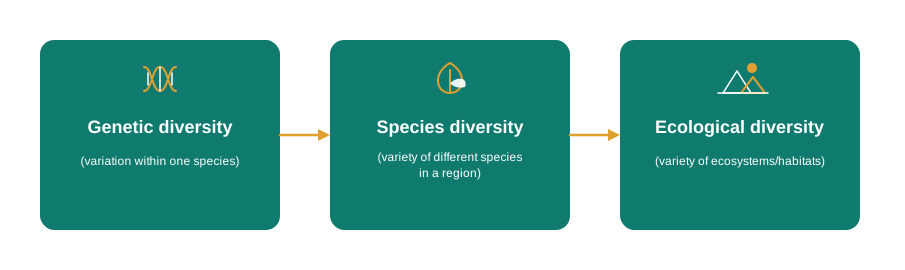
FC 13.1 – The three levels of biodiversity.
Genetic diversity is the variation found in the genes of a single species across its range of distribution. A single species can be genetically very different from one place to another. For example, the medicinal plant Rauwolfia vomitoria grows across different Himalayan ranges, and plants from different ranges differ in the potency and concentration of the active chemical reserpine they produce. Closer to home, India has more than 50,000 genetically different strains of rice and 1,000 varieties of mango — all belonging to the same species, yet genetically distinct.
Species diversity is the diversity seen at the level of species — the variety of different species present in a region. For instance, the Western Ghats have a greater amphibian species diversity than the Eastern Ghats: more kinds of frogs, toads and salamanders live there.
Ecological diversity is the diversity seen at the level of ecosystems. India, for example, has deserts, rain forests, mangroves, coral reefs, wetlands, estuaries and alpine meadows all within its borders, giving it a far greater ecosystem diversity than a Scandinavian country like Norway.
A wealth built slowly, lost quickly
It has taken millions of years of evolution to accumulate the rich diversity we see in nature. Yet we could lose all of that wealth in less than two centuries if the present rates of species loss continue. This is why biodiversity and its conservation are now vital environmental issues of international concern — more and more people around the world are realising how critically important biodiversity is for our own survival and well-being on this planet.
13.1.1 How Many Species are there on Earth and How Many in India?
Because there are published records of every species that has been discovered and named, we actually know how many species have been recorded so far. What we do not know is how many species truly exist — because a huge number are still undiscovered.
Counting the known, estimating the unknown
According to the International Union for Conservation of Nature and Natural Resources (IUCN, 2004), the total number of plant and animal species described so far is slightly more than 1.5 million. But we have no clear idea of how many species remain to be discovered and described. Estimates vary widely, and many are only educated guesses.
There is a practical reason for the uncertainty. For many groups, species lists are far more complete in temperate countries than in tropical ones — yet an overwhelmingly large proportion of the undiscovered species live in the tropics. To get around this, biologists use a clever statistical method. They take an insect group that has been studied exhaustively, work out the ratio of temperate to tropical species richness in that group, and then apply (extrapolate) that same ratio to other groups of animals and plants to arrive at a rough global total.
Using such methods, some extreme estimates run from 20 to 50 million species. A more conservative and scientifically sound estimate, made by Robert May, places global species diversity at about 7 million.
What the known species tell us
The species we have recorded reveal some striking patterns, shown in Fig. 13.2. More than 70 per cent of all recorded species are animals, while plants — including algae, fungi, bryophytes, gymnosperms and angiosperms — make up no more than 22 per cent of the total.
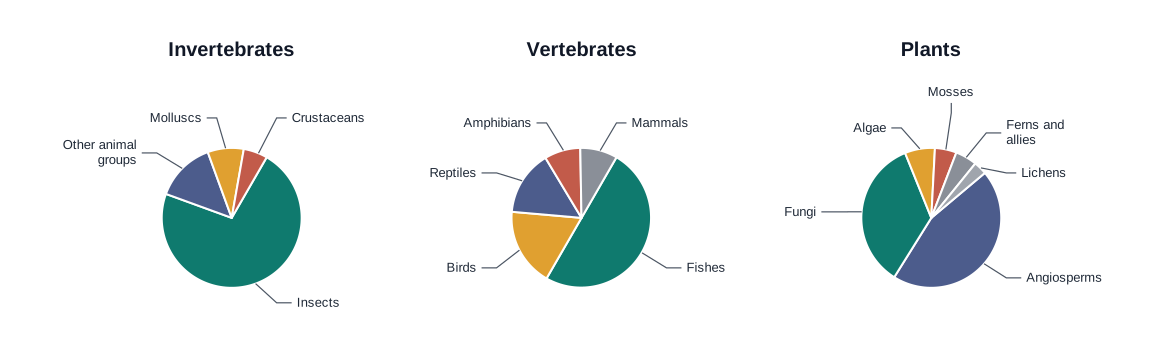
Fig. 13.2 – Proportionate number of species of major taxa.
Among animals, insects are by far the most species-rich group, making up more than 70 per cent of all animal species. In other words, out of every 10 animals on this planet, about 7 are insects. This raises a genuinely puzzling question that biologists still study: how do we explain such an enormous diversification of insects? Equally remarkable, the number of fungal species in the world is greater than the combined total of all fishes, amphibians, reptiles and mammals put together.
These estimates, however, leave out prokaryotes entirely. Biologists are unsure how many prokaryotic species there might be, because conventional taxonomic methods do not work well for microbes and many simply cannot be grown (cultured) in the laboratory. If we accept biochemical or molecular criteria to define microbial species, then their diversity alone might run into millions.
13.1.2 Patterns of Biodiversity
The diversity of plants and animals is not spread evenly across the globe. Instead, it follows some very definite and interesting patterns. Two of the best-studied are the latitudinal gradient and the species–area relationship.
Latitudinal gradients
The most well-known pattern is the latitudinal gradient in diversity. As a general rule, species diversity decreases as we move away from the equator towards the poles. With very few exceptions, the tropics (the latitudinal band from 23.5° N to 23.5° S) harbour more species than temperate or polar regions. This trend from equator to pole is shown in Fig. 13.3.
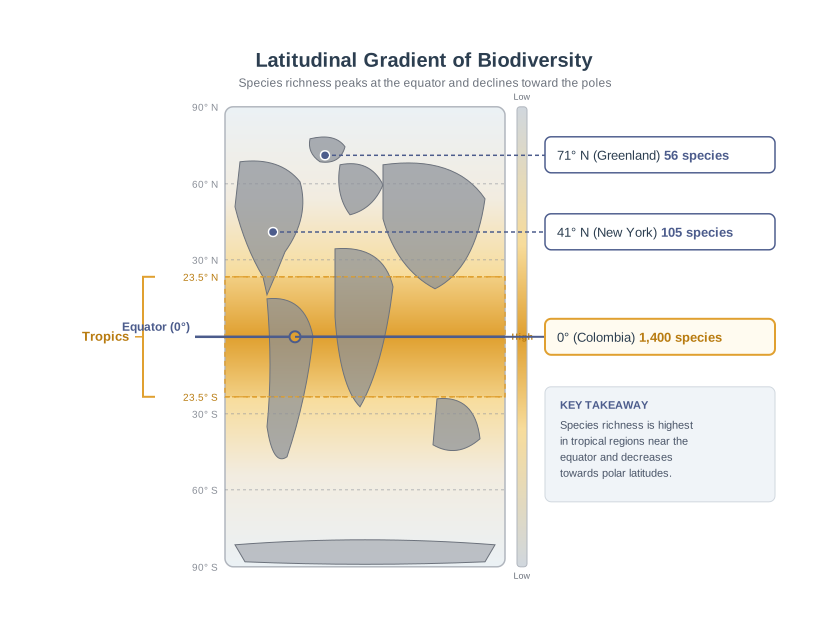
Fig. 13.3 – Latitudinal gradient of bird species richness.
The numbers make the gradient vivid. Colombia, located near the equator, has nearly 1,400 species of birds; New York at 41° N has only 105 species; and Greenland at 71° N has just 56 species. India, with much of its land in the tropical latitudes, has more than 1,200 species of birds. A tropical forest in a region like Ecuador can hold up to 10 times as many species of vascular plants as a temperate forest of equal area in the Midwest of the USA.
The richest place of all is the largely tropical Amazonian rain forest in South America, which has the greatest biodiversity on Earth. It is home to more than 40,000 species of plants, 3,000 of fishes, 1,300 of birds, 427 of mammals, 427 of amphibians and 378 of reptiles, along with more than 1,25,000 invertebrates. Scientists estimate that at least two million insect species there are still waiting to be discovered and named.
Why do the tropics hold so much more life? Ecologists and evolutionary biologists have proposed several hypotheses. Three important ones are:
More evolutionary time. Speciation — the formation of new species — is generally a function of time. Unlike temperate regions, which were repeatedly disturbed by frequent glaciations in the past, tropical latitudes have remained relatively undisturbed for millions of years. This gave tropical species a long, uninterrupted stretch of evolutionary time to diversify.
A constant, predictable environment. Tropical environments, unlike seasonal temperate ones, are less seasonal and relatively more constant and predictable. Such stable conditions promote niche specialisation — species can afford to become highly specialised in how they use resources — and this leads to greater species diversity.
More solar energy. The tropics receive more solar energy than higher latitudes. This contributes to higher productivity, which in turn may indirectly support greater diversity.
Species–Area relationships
A second clear pattern links diversity to the size of the area studied. During his pioneering explorations of the South American jungles, the great German naturalist and geographer Alexander von Humboldt observed that, within a region, species richness increased as he explored a larger area — but only up to a limit.
For a wide variety of taxa — angiosperm plants, birds, bats and freshwater fishes — this relation between species richness and area turns out to be a rectangular hyperbola, as shown in Fig. 13.4. The curve rises steeply at first and then flattens.
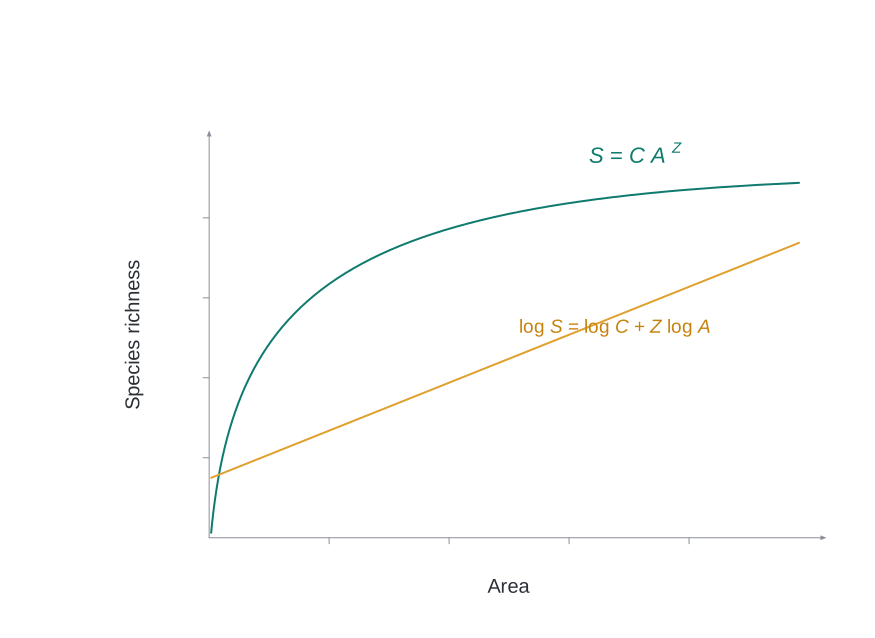
Fig. 13.4 – The species–area relationship.
On a logarithmic scale, this hyperbola straightens into a neat straight line, described by the equation:
\[\log S = \log C + Z \log A\]
where \(S\) = species richness, \(A\) = area, \(Z\) = the slope of the line (also called the regression coefficient), and \(C\) = the Y-intercept. Written in its non-logarithmic form, the same relationship is \(S = CA^Z\).
Ecologists have discovered something remarkable: for relatively small areas, the value of \(Z\) lies in a narrow range of 0.1 to 0.2, no matter what the taxonomic group or region is — whether it is plants in Britain, birds in California or molluscs in New York state, the slopes of the regression lines are amazingly similar.
But when the species–area relationship is studied over very large areas, such as whole continents, the slope becomes much steeper, with \(Z\) values in the range of 0.6 to 1.2. For example, for frugivorous (fruit-eating) birds and mammals in the tropical forests of different continents, the slope is found to be 1.15.
13.1.3 The Importance of Species Diversity to the Ecosystem
Does the number of species in a community really matter to how the ecosystem functions? This is a question ecologists have long struggled to answer definitively. For many decades, they believed that communities with more species tend, in general, to be more stable than communities with fewer species.
What does “stability” mean for a community?
But what exactly is stability for a biological community? A stable community should not show too much variation in productivity from year to year. It must be either resistant or resilient to occasional disturbances, whether natural or human-made, and it must also be resistant to invasions by alien species.
We do not fully understand how these attributes are linked to species richness, but David Tilman’s long-term ecosystem experiments, using outdoor plots, provide some tentative answers.
Why should we care if a few species vanish?
We may not completely understand how species richness supports an ecosystem, but we know enough to realise that rich biodiversity is not only essential for ecosystem health — it is imperative for the very survival of the human race on this planet.
At a time when species are being lost at an alarming pace, it is natural to ask sceptical questions. Does it really matter if a few species become extinct? Would the Western Ghats ecosystems be less functional if just one of their tree frog species were lost forever? Is our quality of life really affected if, instead of 20,000, there were only 15,000 species of ants on Earth?
There are no direct answers to such naïve-sounding questions, but the Stanford ecologist Paul Ehrlich offered a powerful way to think about them — the ‘rivet popper hypothesis’. Imagine an ecosystem as an airplane, in which all the parts are held together by thousands of rivets, each rivet standing for one species. If every passenger who boards begins popping out a rivet to take home — each rivet representing a species driven extinct — the flight may seem safe at first. But as more and more rivets are removed, the plane grows dangerously weak over time.
The analogy makes a second, subtler point too: which rivet is removed also matters. Losing rivets on the wings — the key species that drive major ecosystem functions — is a far more serious threat to flight safety than losing a few rivets from the seats or windows inside the cabin.
13.1.4 Loss of Biodiversity
While it is doubtful whether many new species are still being added to Earth’s treasury of life through speciation, there is no doubt about the continuing losses. The biological wealth of our planet has been declining rapidly, and the accusing finger points clearly at human activities.
The scale of recent extinctions
The colonisation of tropical Pacific Islands by humans is believed to have caused the extinction of more than 2,000 species of native birds. The IUCN Red List (2004) documents the extinction of 784 species — including 338 vertebrates, 359 invertebrates and 87 plants — over the last 500 years.
Some well-known recent extinctions include the dodo of Mauritius, the quagga of Africa, the thylacine of Australia, Steller’s Sea Cow of Russia, and three subspecies of tiger (Bali, Javan and Caspian). The last twenty years alone have witnessed the disappearance of 27 species.
Careful analysis of records shows that extinctions across taxa are not random: some groups, such as amphibians, appear to be more vulnerable than others. Adding to this grim picture, more than 15,500 species worldwide currently face the threat of extinction. At present, 12 per cent of all bird species, 23 per cent of all mammal species, 32 per cent of all amphibian species and 31 per cent of all gymnosperm species in the world are under threat.
The Sixth Extinction
Fossil records tell us that large-scale loss of species has happened before, even long before humans appeared. During the more than 3 billion years since life originated and diversified, there were five episodes of mass extinction.
How is the ‘Sixth Extinction’, now in progress, different from those earlier ones? The difference lies entirely in the rate. Current species extinction rates are estimated to be 100 to 1,000 times faster than in pre-human times, and our activities are responsible for these faster rates. Ecologists warn that if present trends continue, nearly half of all species on Earth could be wiped out within the next 100 years.
In general, the loss of biodiversity in a region can lead to three consequences: (a) a decline in plant production; (b) lowered resistance to environmental disturbances such as drought; and (c) increased variability in certain ecosystem processes, such as plant productivity, water use, and pest and disease cycles.
Causes of biodiversity losses — ‘The Evil Quartet’
The accelerated rates of species extinction the world faces today are largely due to human activities. There are four major causes, together nicknamed ‘The Evil Quartet’. The way each of these funnels species toward extinction is shown in FC 13.5.
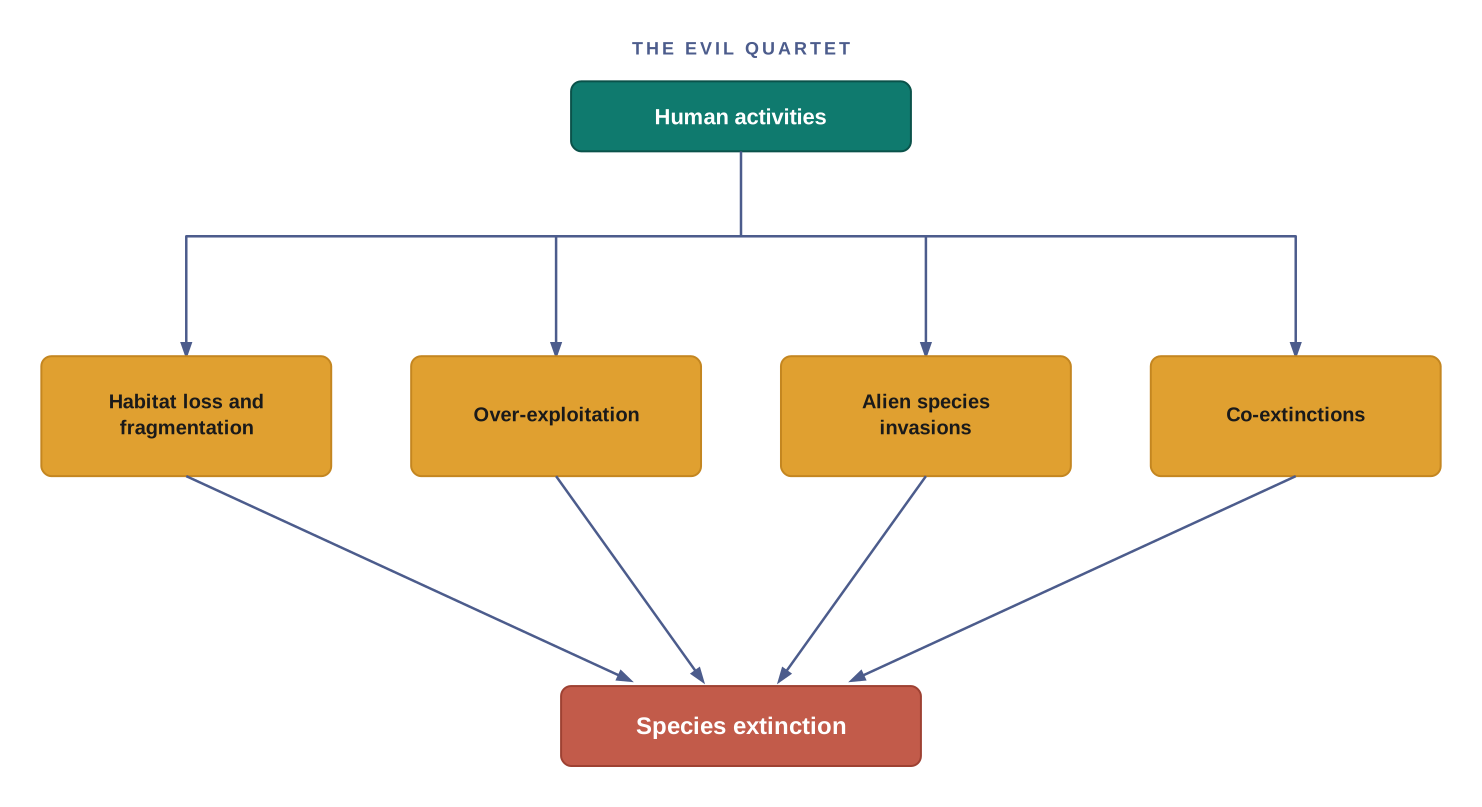
FC 13.5 – The Evil Quartet of biodiversity loss.
(i) Habitat loss and fragmentation. This is the single most important cause driving animals and plants to extinction. The most dramatic examples come from tropical rain forests. Once covering more than 14 per cent of Earth’s land surface, these forests now cover no more than 6 per cent — and they are being destroyed fast. In the time it takes to finish reading this chapter, roughly 1,000 more hectares of rain forest will have been lost. The Amazon rain forest — so vast that it is called the ‘lungs of the planet’ — harbours probably millions of species, yet it is being cut and cleared to grow soya beans and to make grasslands for raising beef cattle.
Besides total loss, the degradation of habitats by pollution also threatens many species. And when large habitats are broken up into small fragments by human activity, mammals and birds that need large territories, and animals with migratory habits, are badly affected — leading to population declines.
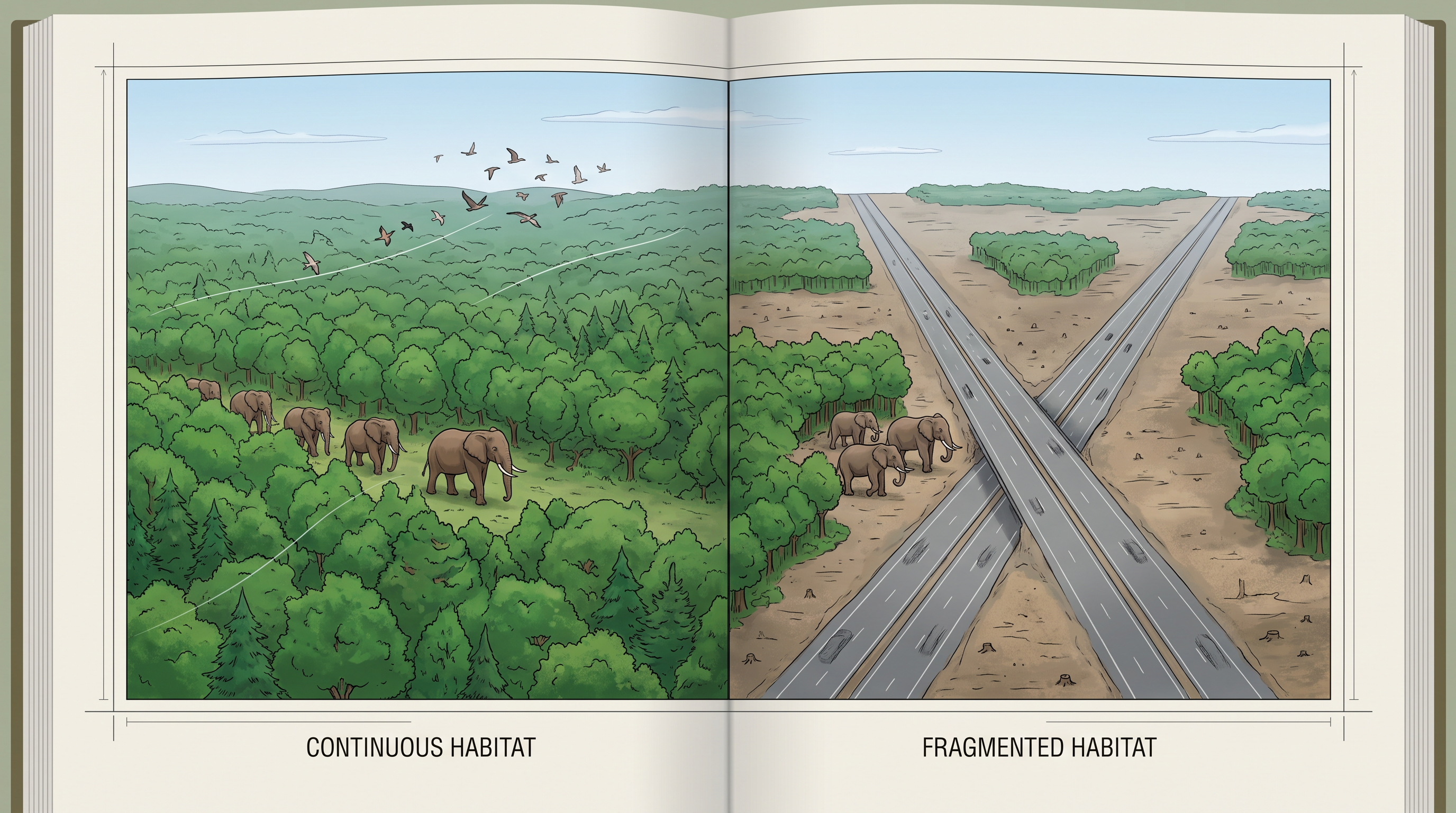
Fig. 13.6 – Habitat fragmentation restricts animal movement.
(ii) Over-exploitation. Humans have always depended on nature for food and shelter, but when ‘need’ turns into ‘greed’, it leads to over-exploitation of natural resources. Several extinctions of the last 500 years — such as Steller’s sea cow and the passenger pigeon — were caused by overexploitation. Today, many marine fish populations around the world are being over-harvested, endangering the continued existence of several commercially important species.
(iii) Alien species invasions. When alien species are introduced into a new area — whether accidentally or deliberately — some of them turn invasive and cause the decline or extinction of the native (indigenous) species.
(iv) Co-extinctions. When one species becomes extinct, other species that are obligately associated with it also become extinct. For example, when a host fish species dies out, its unique assemblage of parasites meets the same fate. Similarly, in a coevolved plant–pollinator mutualism — where the two partners depend on each other completely — the extinction of one invariably leads to the extinction of the other.
13.2 Biodiversity Conservation
Having seen how rich Earth’s biodiversity is, and how fast it is being lost, the next natural questions are: why should we bother to save it, and how can we actually do so? This section answers both.
13.2.1 Why Should We Conserve Biodiversity?
There are many reasons to conserve biodiversity — some obvious and some not so obvious — but all equally important. They can be grouped into three broad categories: narrowly utilitarian, broadly utilitarian, and ethical. These three arguments move from direct personal benefit, to shared ecosystem benefit, to a moral duty that seeks no benefit at all, as summarised in FC 13.7.
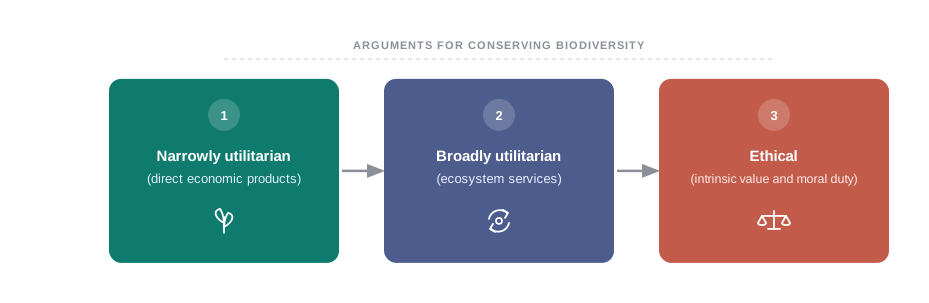
FC 13.7 – Reasons to conserve biodiversity.
The narrowly utilitarian argument
The narrowly utilitarian arguments are the most obvious ones: humans derive countless direct economic benefits from nature. These include food (cereals, pulses, fruits), firewood, fibre, construction material, and industrial products such as tannins, lubricants, dyes, resins and perfumes — as well as products of great medicinal importance.
Consider medicine alone. More than 25 per cent of the drugs currently sold worldwide are derived from plants, and around 25,000 species of plants contribute to the traditional medicines used by native peoples across the world. Nobody yet knows how many more medicinally useful plants are still waiting to be discovered in tropical rain forests.
This is exactly why bioprospecting — the exploration of molecular, genetic and species-level diversity for products of economic importance — is growing so rapidly. Nations rich in biodiversity, like India, stand to reap enormous benefits from it.
The broadly utilitarian argument
The broadly utilitarian argument says that biodiversity plays a major role in the many ecosystem services that nature provides — benefits that are shared by all of us rather than sold as products.
Take oxygen. The fast-dwindling Amazon forest is estimated to produce, through photosynthesis, about 20 per cent of the total oxygen in Earth’s atmosphere. Can we even put an economic value on such a service? One rough way to imagine it is to find out how much a neighbourhood hospital spends on a single cylinder of oxygen — and then multiply that idea across the whole planet.
Pollination is another vital service. Without pollinators, plants cannot give us fruits or seeds, and this service is provided free of charge by bees, bumblebees, birds and bats.
Nature also gives us intangible benefits that no price tag can capture — the aesthetic pleasure of walking through thick woods, watching spring flowers in full bloom, or waking to a bulbul’s song in the morning.
The ethical argument
The ethical argument concerns what we owe to the millions of plant, animal and microbe species with whom we share this planet. Philosophically or spiritually, we need to realise that every species has an intrinsic value — a worth of its own — even if it holds no current or obvious economic value for us. We therefore have a moral duty to care for their well-being and to pass on our biological legacy in good order to future generations.
13.2.2 How do we Conserve Biodiversity?
Conservation is carried out in two broad ways, depending on whether we protect species in their natural home or outside it. When we conserve and protect a whole ecosystem, its biodiversity at every level is protected automatically — in a sense, we save the entire forest in order to save the tiger. This on-site approach is called in situ conservation. But when an animal or plant is already endangered or threatened, and needs urgent rescue, the off-site approach — ex situ conservation — becomes the desirable one.
The two approaches, and their main tools, are laid out in FC 13.8.
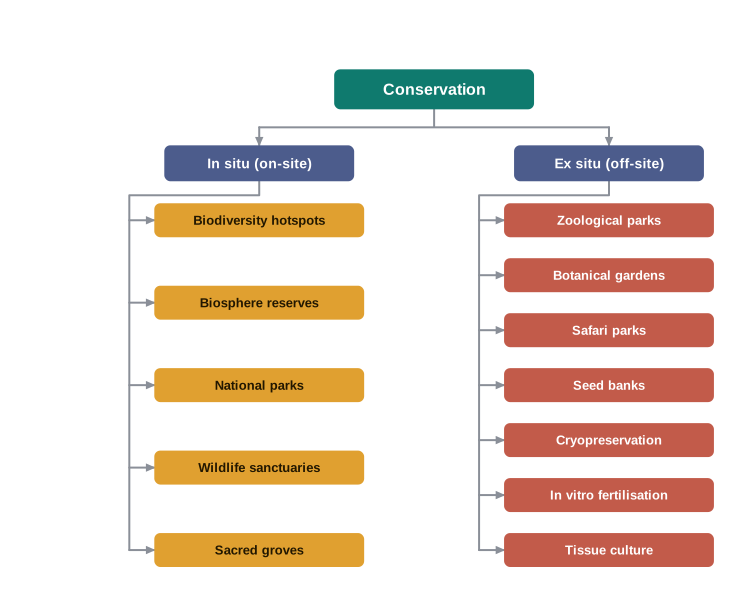
FC 13.8 – Approaches to biodiversity conservation.
In situ conservation and biodiversity hotspots
Faced with the conflict between development and conservation, many nations find it unrealistic and economically unfeasible to conserve all their biological wealth. The number of species waiting to be saved always far exceeds the conservation resources available.
To address this globally, eminent conservationists identified certain regions for maximum protection — the biodiversity hotspots. These are regions with very high levels of species richness and a high degree of endemism, meaning they contain many species found nowhere else on Earth.
Importantly, hotspots are also regions of accelerated habitat loss, which makes protecting them especially urgent. Initially, 25 biodiversity hotspots were identified; subsequently, nine more were added, bringing the world total to 34. Three of these — Western Ghats and Sri Lanka, Indo-Burma, and the Himalaya — cover India’s exceptionally biodiversity-rich regions.
The pay-off from protecting hotspots is remarkable. Although all the biodiversity hotspots put together cover less than 2 per cent of Earth’s land area, the number of species they collectively harbour is extremely high — and strictly protecting them could reduce the ongoing mass extinctions by almost 30 per cent.
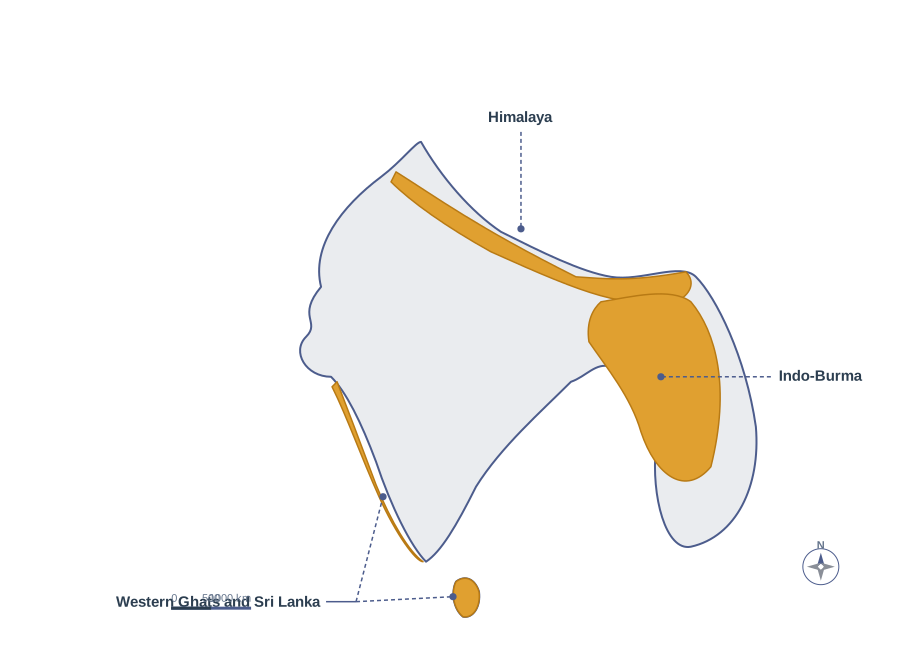
Fig. 13.9 – Biodiversity hotspots of India.
In India, ecologically unique and biodiversity-rich regions are legally protected as biosphere reserves, national parks and sanctuaries. India now has 14 biosphere reserves, 90 national parks and 448 wildlife sanctuaries.
India also has a long history of religious and cultural traditions that emphasised the protection of nature. In many cultures, tracts of forest were set aside, and all the trees and wildlife within them were venerated and given total protection. These are the sacred groves.
Ex situ conservation
In ex situ conservation, threatened animals and plants are taken out of their natural habitat and placed in special settings where they can be protected and given focused care. Zoological parks, botanical gardens and wildlife safari parks all serve this purpose. In fact, several animals that have become extinct in the wild continue to survive in zoological parks.
In recent years, ex situ conservation has advanced well beyond simply keeping threatened species in enclosures. Today, the gametes (reproductive cells) of threatened species can be preserved in a viable and fertile condition for long periods using cryopreservation (preservation at very low temperatures). Eggs can be fertilised outside the body by in vitro fertilisation, and plants can be multiplied using tissue culture methods. Seeds of different genetic strains of commercially important plants can also be stored for long periods in seed banks.
13.3 Summary
- Life originated on Earth nearly 3.8 billion years ago, and since then life forms have diversified enormously. Biodiversity is the sum total of the diversity present at all levels of biological organisation. Of special importance is the diversity at the genetic, species and ecosystem levels, and conservation efforts aim to protect diversity at all three.
- More than 1.5 million species have been recorded in the world, but there may still be nearly 6 million species on Earth waiting to be discovered and named.
- Of the named species, more than 70 per cent are animals, and of these, about 70 per cent are insects. The group Fungi alone has more species than all the vertebrates combined. India, with about 45,000 species of plants and twice as many species of animals, is one of the 12 mega diversity countries of the world.
- Species diversity is not spread uniformly across the Earth but follows clear patterns. It is generally highest in the tropics and decreases towards the poles. The main reasons for the richness of the tropics are: they had more evolutionary time, they provide a relatively constant environment, and they receive more solar energy, which raises productivity.
- Species richness also depends on the area of a region. This species–area relationship is generally a rectangular hyperbolic function, and on a log scale it becomes a straight line.
- Communities with high diversity are believed to be less variable, more productive and more resistant to biological invasions.
- Earth’s fossil history shows that mass extinctions have occurred before, but present extinction rates — largely caused by human activities — are 100 to 1,000 times higher. Nearly 700 species have become extinct in recent times, and more than 15,500 species (of which more than 650 are from India) currently face the threat of extinction.
- The main causes of today’s high extinction rates are habitat loss and fragmentation (especially of forests), over-exploitation, biological invasions and co-extinctions.
- Earth’s rich biodiversity is vital for the very survival of mankind. The reasons for conserving it are narrowly utilitarian, broadly utilitarian and ethical. Besides direct benefits (food, fibre, firewood, pharmaceuticals), we receive many indirect benefits through ecosystem services such as pollination, pest control, climate moderation and flood control. We also have a moral responsibility to care for Earth’s biodiversity and pass it on in good order to the next generation.
- Biodiversity conservation may be in situ or ex situ. In in situ conservation, endangered species are protected in their natural habitat so that the whole ecosystem is protected. Recently, 34 biodiversity hotspots have been proposed for intensive conservation; three of these — Western Ghats–Sri Lanka, Himalaya and Indo-Burma — cover India’s biodiversity-rich regions. India’s in situ efforts are seen in its 14 biosphere reserves, 90 national parks, more than 450 wildlife sanctuaries and many sacred groves.
- Ex situ conservation methods include protective maintenance of threatened species in zoological parks and botanical gardens, in vitro fertilisation, tissue culture propagation and cryopreservation of gametes.
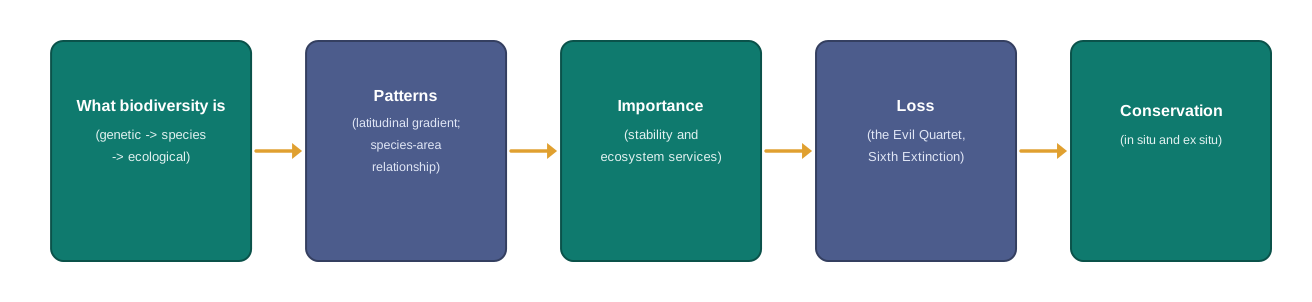
FC 13.10 – Summary of biodiversity and conservation.
13.4 Points to Ponder
- Why are there so many species on Earth? Did such great diversity exist throughout Earth’s history, or did it build up gradually — and how did this diversification come about in the first place?
- Insects make up about 70 per cent of all animal species. What is it about insects that has allowed them to diversify so enormously, far beyond any other group?
- Species richness rises steeply with area across whole continents (steep slopes), but only gently within a single region (gentle slopes). What does a steeper slope really tell us about how life is distributed?
- Does it truly matter to us if a few species become extinct? Would the Western Ghats ecosystems function any differently if just one of their tree frog species were lost forever?
- Nature performs services such as producing oxygen and pollinating our crops entirely free of charge. Can we ever put a fair economic value on these services — and what would it cost us to replace them?
- Every species is said to have an intrinsic value, even if it offers us no economic benefit at all. On what grounds can we justify protecting a species that will never be “useful” to humans?
- Can you think of a situation in which we might deliberately want to make a species extinct? How would you justify such a decision?
13.5 NCERT Questions
- Name the three important components of biodiversity.
- How do ecologists estimate the total number of species present in the world?
- Give three hypotheses for explaining why the tropics show the greatest levels of species richness.
- What is the significance of the slope of regression in a species–area relationship?
- What are the major causes of species losses in a geographical region?
- How is biodiversity important for ecosystem functioning?
- What are sacred groves? What is their role in conservation?
- Among the ecosystem services are control of floods and soil erosion. How is this achieved by the biotic components of the ecosystem?
- The species diversity of plants (22 per cent) is much less than that of animals (72 per cent). What could be the explanations for how animals achieved greater diversification?
- Can you think of a situation where we deliberately want to make a species extinct? How would you justify it?
13.6 Check Your Concepts
- Distinguish between genetic diversity, species diversity and ecological diversity, giving one example of each from India.
- Assertion: Species diversity generally decreases as we move from the equator towards the poles. Reason: The tropics have had a longer, relatively undisturbed evolutionary time for species to diversify. State whether the assertion and reason are true, and whether the reason correctly explains the assertion.
- Explain the ‘rivet popper hypothesis’. What does it teach us about the loss of key species versus the loss of minor species in an ecosystem?
- Why is the current wave of extinctions called the “Sixth Extinction”? In what single, crucial respect does it differ from the five earlier mass extinctions?
- Name the four causes of biodiversity loss described as ‘The Evil Quartet’, and give one real example of each.
- What happens in a co-extinction? Illustrate your answer with the example of a plant–pollinator mutualism.
- A stable biological community is said to be “resistant or resilient” to disturbances. In your own words, what does stability mean for such a community, and how did David Tilman’s experiments support the link between diversity and stability?
- Define endemism. Why is a high degree of endemism one of the main criteria used to identify a biodiversity hotspot?
- The reasons for conserving biodiversity are narrowly utilitarian, broadly utilitarian and ethical. Classify each of the following under the correct category: (a) oxygen produced by the Amazon forest, (b) plant-derived medicines, (c) the moral duty we owe to future generations, (d) pollination of crops.
- Match the following:
| Column A | Column B |
|---|---|
| a. Nile perch | i. Mauritius |
| b. Dodo | ii. invasive weed in India |
| c. Parthenium | iii. extinction of cichlid fish in Lake Victoria |
| d. Clarias gariepinus | iv. African catfish threatening indigenous catfishes |
- What happens if large, continuous habitats are broken up into small fragments? Which kinds of animals are affected most severely, and why?
- Compare in situ and ex situ conservation. For each of the following, state which approach it represents: national park, seed bank, biosphere reserve, cryopreservation of gametes, sacred grove, tissue culture propagation.
- The species–area curve is a rectangular hyperbola on ordinary axes but a straight line on a log–log scale. Draw a rough sketch of this straight-line graph and label the quantities represented by \(S\), \(A\), \(Z\) and \(C\) in the equation \(\log S = \log C + Z\log A\).
- Although biodiversity hotspots together cover less than 2 per cent of Earth’s land area, they are given the highest priority for protection. Justify this strategy, and name the three hotspots that cover India’s biodiversity-rich regions.
13.7 Practice With Numericals
- For a group of freshwater fishes within a single region, the species–area relationship follows \(\log S = \log C + Z\log A\), with \(Z = 0.15\) and \(\log C = 0.8\). Calculate the species richness \(S\) for an area where \(\log A = 4\).
- Two study plots of birds give the following data: for area \(A_1\), \(\log A_1 = 2\) and \(\log S_1 = 1.4\); for area \(A_2\), \(\log A_2 = 5\) and \(\log S_2 = 1.85\). Using \(\log S = \log C + Z\log A\), determine the value of the slope \(Z\).
- For frugivorous birds and mammals studied across whole continents, the slope of the species–area relationship is found to be \(Z = 1.15\). If \(\log C = 0.5\), find the species richness \(S\) for a continental area where \(\log A = 6\).
- The value of \(Z\) for species–area studies within small regions typically lies between 0.1 and 0.2, whereas across entire continents it lies between 0.6 and 1.2. If the same increase in \(\log A\) of 3 units is applied in both cases, by how many units does \(\log S\) rise when \(Z = 0.15\) compared with when \(Z = 1.1\)?
— CHANGES MADE —
- 13.0 (Earth’s biodiversity and the extinct dodo) → 13.0
- 13.1 (The three levels of biodiversity) → 13.1
- 13.2 (Proportionate number of species of major taxa) → 13.2
- 13.3 (Latitudinal gradient of bird species richness) → 13.3
- 13.4 (The species–area relationship) → 13.4
- 13.5 (The Evil Quartet of biodiversity loss) → 13.5
- 13.6 (Habitat fragmentation restricts animal movement) → 13.6
- 13.7 (Reasons to conserve biodiversity) → 13.7
- 13.8 (Approaches to biodiversity conservation) → 13.8
- 13.9 (Biodiversity hotspots of India) → 13.9
- 13.10 (Summary of biodiversity and conservation) → 13.10
Note: All 11 figures/flowcharts in this file possess matching \[Diagram:]/\[Caption:] blocks and were already in strict sequential order starting at 13.0. No text-only figures without artwork were present in this chapter.