Chapter 3: Public Nutrition And Health
The Valley That Changed India’s Salt
In the 1950s, doctors working in the sub-Himalayan districts of northern India kept meeting the same swelling at the front of the neck. It was not rare, and it was not scattered. In some villages nearly everyone had it, while families a few hundred kilometres away had never seen it. Something in that place, rather than something in those people, was causing it.
To find out, the Indian Council of Medical Research began a controlled study in the Kangra valley of Himachal Pradesh in 1956. Households in one part of the valley received salt to which iodine had been added. Households in another part received the ordinary salt they had always used. Nothing else about their food, work or medical care was changed. Over the following years, investigators measured the necks of thousands of people, again and again, and compared the two groups.
The result was plain. Where the iodised salt had gone, the swelling became steadily less common, and among children born afterwards it was rarer still. Where ordinary salt had gone, little changed.
No one had been treated as a patient. No one had visited a hospital. A single ingredient in the kitchen had been altered, and the health of a whole population had shifted with it. In 1962 India acted on that finding and launched a national goitre control programme.
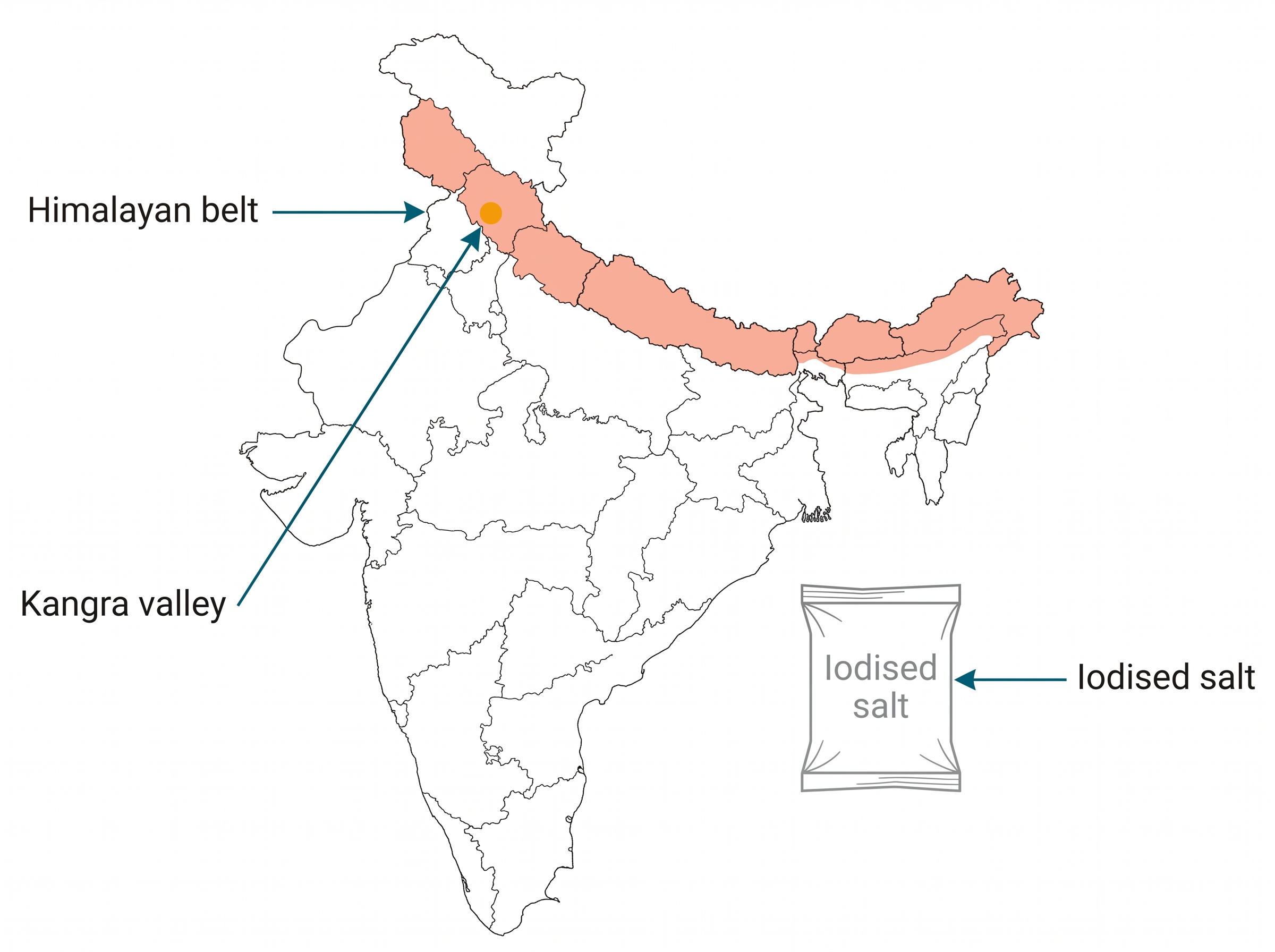
Fig. 3.0 – The Kangra valley iodised salt study, 1956.
3.1 From Personal Nutrition To Public Nutrition
In Class XI you studied what nutrients do, how the body uses them, and what physical fitness and wellness mean. All of that was learnt from the point of view of one person — what you eat, what your body needs, how well you are nourished. That way of looking at nutrition is necessary, and it is where every student of the subject begins.
But a single word changes the whole picture. When we speak of public nutrition, the person is no longer the unit we are working with. The population is.
What Changes When The Unit Changes
You already know the meaning the World Health Organization gives to health. Health is not simply the absence of disease; it is a state of complete physical, mental and social wellbeing. A person can be free of any named illness and still not be healthy in this fuller sense.
Public health takes that idea and applies it to everyone at once. It refers to the organised, collective action a society takes to protect and promote the health of whole populations. A doctor treating one patient is not doing public health; a city ensuring that its water is safe to drink is.
The difference is worth holding on to, because it decides what counts as a solution. A child with an infection needs medicine. Ten thousand children falling ill from the same water source need a different kind of answer altogether, and no amount of medicine will settle it.
The Scale Ladder
Almost every idea in Home Science sits somewhere on a ladder of scale, and this chapter climbs to its top rung. The ladder is set out in Fig. 3.1.
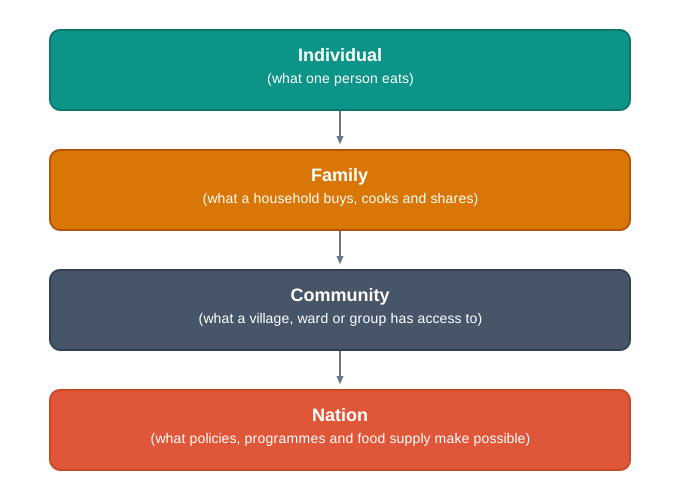
Fig. 3.1 – The scale ladder in nutrition.
A balanced diet is decided at the first rung. Planning meals for a household sits at the second. Public nutrition works at the third and fourth, where the decisions are not about a plate of food but about supply, access, price, services and awareness for large numbers of people at once.
The Two Faces Of Malnutrition
You met two terms in Class XI that return here with new weight. Undernutrition is the condition that results when the diet supplies less energy, protein or other nutrients than the body needs. Overnutrition is the condition that results when it supplies more than the body needs, particularly of energy and fat.
Both are forms of malnutrition, and this surprises students who expect malnutrition to mean hunger alone. The word means bad nutrition, not insufficient nutrition, so a diet can be faulty in either direction.
Notice that the aim is stated as prevention, not cure, and that it is stated for a population rather than for a person. Those two features will explain almost everything else this chapter describes.
3.2 Significance Of Public Nutrition
Nutrition is only one of many fields that a country’s health system must attend to. Why, then, does it need a branch of its own, staffed by its own professionals and carrying its own national programmes?
The answer lies in how much of a population’s ill health can be traced back to what people eat, and in how early that damage begins. Nutrition is not one health problem among many. It sits underneath a great many of the others.
3.2.1 The Scale Of Nutritional Problems In India
Malnutrition — a condition in which the diet supplies nutrients in wrong amounts, whether too little or too much — is rarely written on a death certificate. It works indirectly. An undernourished child catches the same infections as a well-nourished one, but is far less able to survive them. For this reason the World Health Organization estimates that undernutrition is linked to about 45 per cent of deaths among children under five worldwide.
Three patterns in India are of particular public health concern.
Low birth weight — a birth weight of less than 2500 grams (2.5 kilograms). Close to one in five infants born in India falls below this mark. Such a beginning is not made up quickly; it carries adverse effects through the growing years and into adult life, and it raises the risk of death in infancy.
Stunting — a height that is too low for the child’s age, caused by undernutrition sustained over a long period. It is widespread among preschool children, particularly in socio-economically disadvantaged households, and the National Family Health Survey of 2019–21 (NFHS-5) recorded it in 35.5 per cent of children under five.
Hidden hunger — the common name for micronutrient deficiency, a shortage of minerals and vitamins in a diet that may still fill the stomach. A large proportion of children, and of adults, carries such a shortage in some degree. The micronutrients of most concern are iron, zinc, vitamin A, vitamin C, vitamin D, iodine, folic acid and vitamin B₁₂.
The third of these deserves its name. A family whose meals are made almost entirely of a cereal and a little oil may not feel hungry at the end of a meal, and may not look thin, yet may be short of half a dozen nutrients at once. Nothing about the plate announces the problem, which is precisely why it must be looked for rather than waited for.
3.2.2 Consequences And Costs Of Malnutrition
If these problems are not corrected in time, the effects do not stay in childhood. Growth is the visible part: a child who is stunted at five is likely to be a shorter adult. The invisible part matters more, because undernutrition in the early years also affects mental and cognitive development.
A child who cannot concentrate learns less from the same classroom. An adult who learned less earns less, tires sooner and misses more days of work. What began as a nutritional shortage ends as reduced productivity and a poorer quality of life.
That chain does not stop with the individual, and it has a habit of closing on itself, as Fig. 3.2 shows.
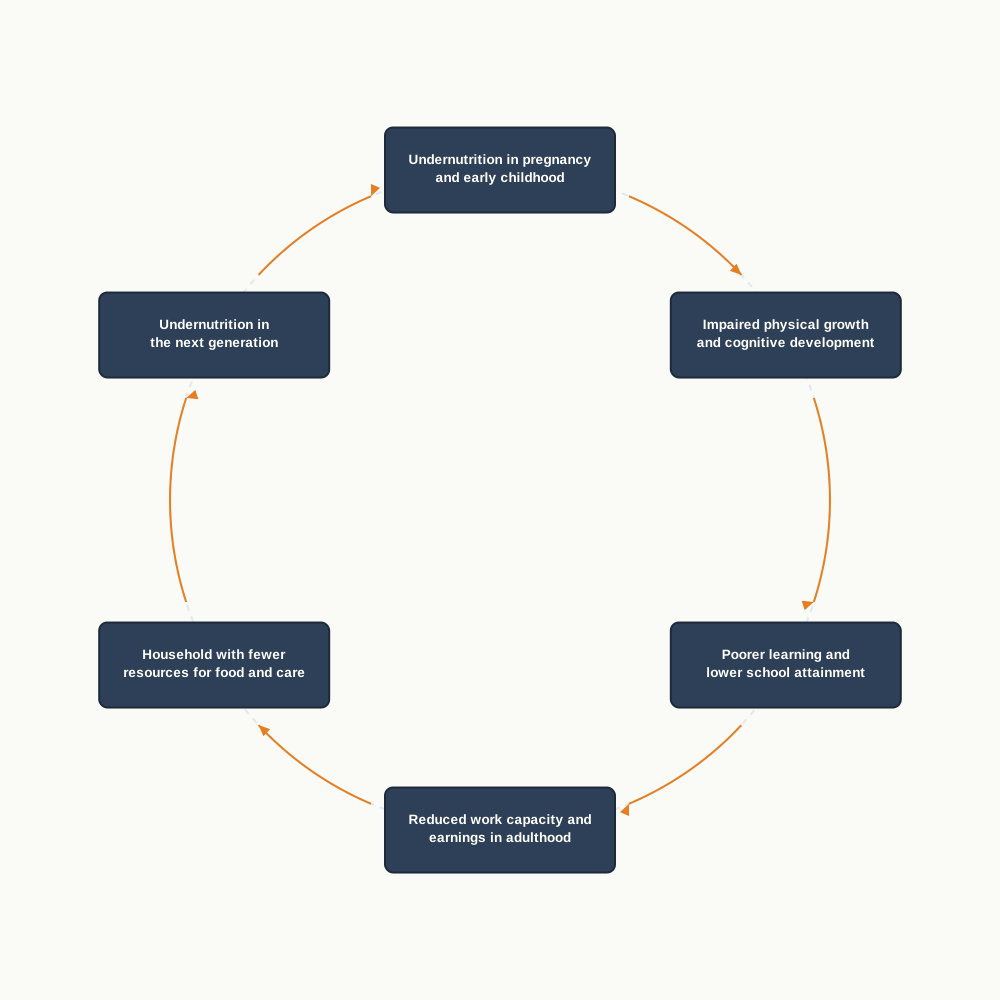
Fig. 3.2 – How early undernutrition reaches into adult life.
The costs of this cycle can be counted in money. The World Bank has estimated that malnutrition costs individuals more than 10 per cent of their lifetime earnings, and costs a country 2–3 per cent of its gross domestic product each year. A nation that reduces malnutrition is therefore not only saving lives; it is removing a standing charge on its own economy.
3.2.3 Rising Overnutrition And The Double Burden
India still faces undernutrition as its larger problem. But overnutrition is rising steadily, and in the same country — sometimes in the same city, and occasionally in the same household.
Two changes have driven it. The first is in how people live. Transport has become faster and walking rarer, work has become more sedentary, and in large cities even children get little outdoor play.
The second is in what people eat. Processed foods, fast foods and packaged snacks — burgers, pizzas, biscuits, chocolates, cakes and pastries, soft drinks, and equally Indian mithais and samosas — have moved from the occasional treat to the daily diet. These foods are high in energy, sugar, fat and salt, and low in other nutrients and in fibre. At the same time, the intake of whole grains, pulses, vegetables and fruits has fallen.
Notice that this is not a list of foreign foods to be avoided and Indian foods to be trusted. A samosa and a burger belong on the same side of this line, because the property that matters is the composition of the food, not the country it came from.
The result is inappropriate weight gain in the population, and rising overweight and obesity — conditions in which body fat has accumulated to a level that carries a risk to health. These in turn raise the risk of hypertension, heart disease, diabetes, cancer and arthritis. Such conditions are called non-communicable diseases: they are not passed from one person to another, they develop slowly, they usually last for life, and they take their toll on quality of life and on family finances as well as on the body.
A country carrying both problems at once is said to face the double burden of malnutrition — the coexistence of undernutrition and overnutrition in the same population. Table 3.1 sets the two sides side by side.
Infectious disease sits across both columns. Smallpox has been wiped out entirely, but tuberculosis, hepatitis and malaria have not, and newer infections such as HIV have been added to the list. For anyone who is not well nourished, the outcome of such an infection is worse — and that includes both the undernourished person and the person whose immunity is lowered by obesity or diabetes.
This is the argument for the field. Problems of this size, working through food, poverty, sanitation and behaviour at once, cannot be solved patient by patient. They need a trained cadre of public health professionals, and among them, public health nutritionists.
3.3 Public Health Nutrition As A Field
We have seen why a population needs its nutrition looked after as a population. We now need to name the field that does it, and to be clear about what its workers actually do.
3.3.1 What Public Health Nutrition Is
Public health nutrition is the field of study concerned with promoting good health by preventing nutrition-related illnesses and problems in a population, and with the government policies and programmes designed to solve those problems.
Read that sentence for its verbs. It says preventing, not curing. It says population, not patient. And it includes policy inside the definition itself, which no other branch of nutrition does.
The methods follow from this. Professionals in the field work through approaches that are large in scale, organised, and drawn from several disciplines at once, because the problems they address affect large numbers of people for whom group action is the only workable answer. A programme that reaches one village at a time will not close a deficiency that runs through a whole state.
Each of those five sciences earns its place. The nutritional and biological sciences say what a shortage of iodine does to a body. The behavioural and social sciences say why a household buys the salt it buys. The managerial sciences say how iodised salt is actually made to reach forty thousand villages, and how anyone would know whether it had.
This is why the field is described as multidisciplinary — built on more than one body of knowledge, so that a problem can be attacked from more than one side. It rests on the biological and the social sciences together, and a professional weak in either half will design programmes that fail in that half.
The Community As The Unit Of Work
Public nutrition works with communities rather than with individuals, so the word needs a precise meaning.
Notice the last of those. People who share nothing else may still form a community for this purpose if they share a health problem, which is what allows a programme to be designed for, say, adolescent girls with anaemia across many districts at once.
3.3.2 How It Differs From Clinical Nutrition And Dietetics
You have already studied clinical nutrition and dietetics, where a diet is planned for a particular person with a particular condition. Public nutrition asks a different question of the same subject, and Table 3.2 sets out where the two part company.
The two are not rivals, and a country needs both. But they cannot be substituted for each other. A hospital dietitian cannot prevent iodine deficiency in a district, and a public nutritionist cannot plan the post-operative diet of a patient in ward six.
Public nutrition also carries one obligation that clinical work does not: it must reach the groups least able to reach it. Its professionals are expected to address the problems of the community as a whole, and especially of its vulnerable groups — those at greater risk than the rest, such as infants, young children, adolescent girls, pregnant and lactating women, and older persons. A programme that improves the average while missing these groups has not succeeded.
3.3.3 What A Public Nutrition Professional Does
Whatever the problem and whatever the state, the work follows one sequence. Any professional in this field must first identify the problem and its magnitude, then understand how and why it occurs, then plan strategies and actions, then implement them, and finally evaluate their impact. The sequence is set out in Fig. 3.3.
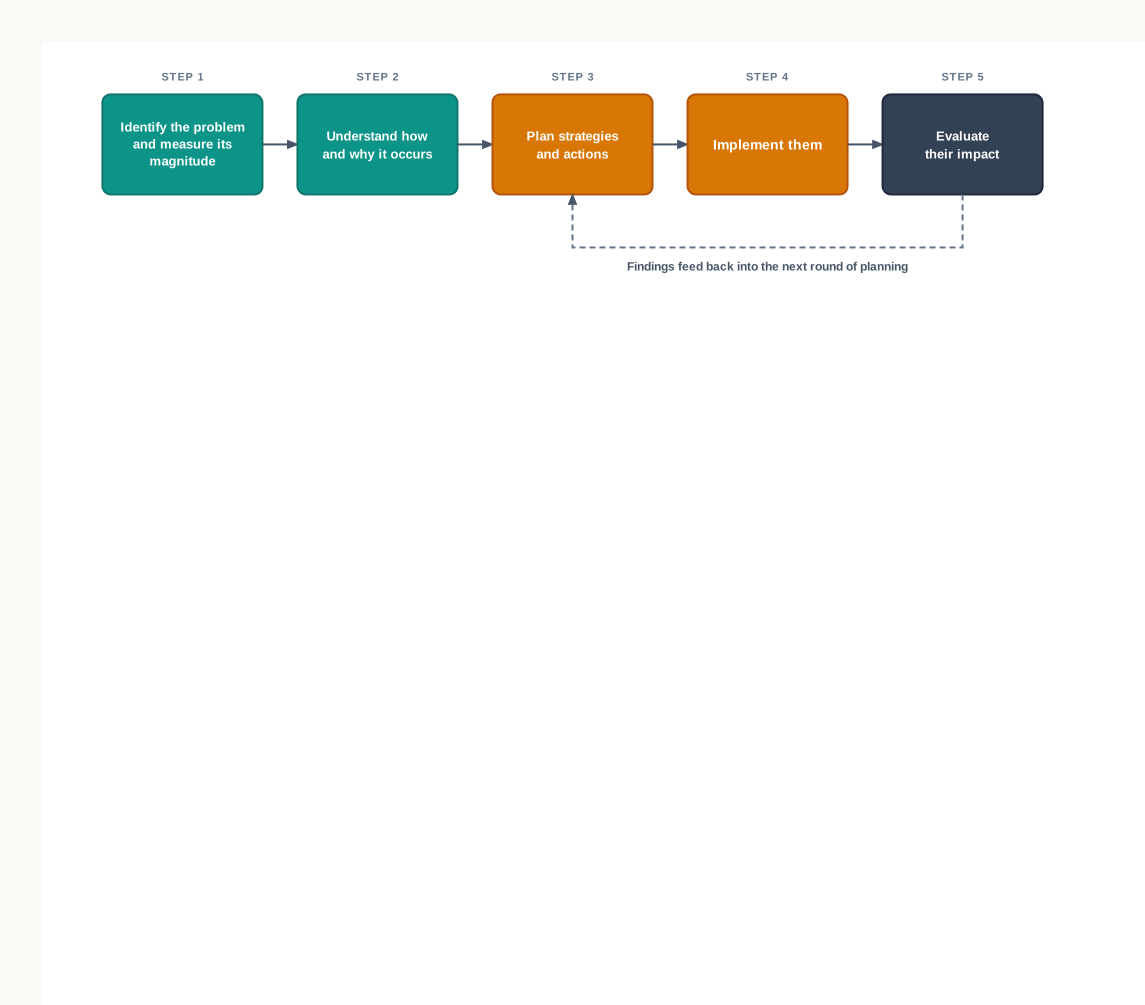
Fig. 3.3 – The working sequence in public nutrition.
The order is not arbitrary. Magnitude comes first because it decides whether a problem needs a national programme or a district one, and because without a starting measurement there is nothing to compare the ending with. Causes come second because a shortage caused by absence of a food and a shortage caused by poor absorption of that food need different answers, and no amount of good intention will make one work for the other.
Evaluation comes last and is the step most often skipped. Without it, a programme can run for years, absorb funds and produce reports, and nobody will be able to say whether a single child was better nourished for it.
3.4 Factors Behind Nutritional Problems
It is tempting to treat a nutritional problem as a food problem, and to assume that more food would settle it. In any society the link is looser than that. Nutritional problems arise from a set of interacting factors that operate at several levels at once, and food is only the level nearest the surface.
Poverty is very often the underlying cause. But even at the same income, the situation of a household worsens sharply when it lacks basic amenities. Rural households have less access to toilets, and poor sanitation costs work days and therefore income as well as health. A considerable part of the population still does not have safe drinking water, and working days are lost each year to water-borne diseases.
Widen the frame further and the factors are wider still. They include economic factors, which decide what financial resources a family has; agricultural policy, which decides what is produced and what it costs; the health care services available and whether people can actually reach them; government policies and the political will behind them; and socio-cultural factors, which decide who in a household eats what.
Four Levels Of Cause
These factors do not sit in one heap. They can be sorted into levels, according to how close each one stands to the child or adult who ends up malnourished. Fig. 3.4 shows the four levels and the direction in which they act.
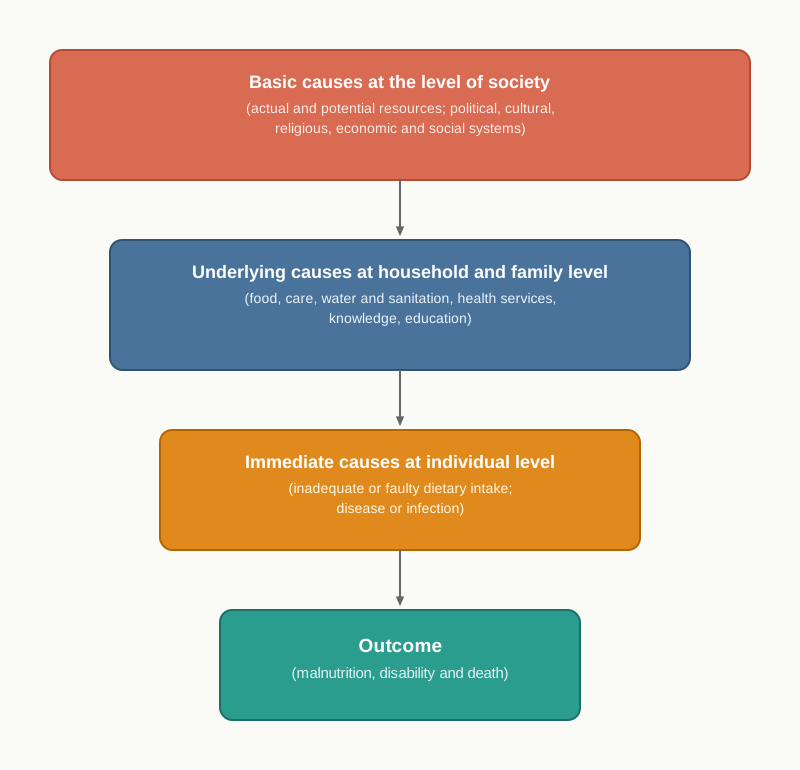
Fig. 3.4 – Levels of cause in undernutrition.
The immediate causes act on the individual body, and there are only two of them.
Inadequate or faulty dietary intake — too little food, or food of the wrong composition.
Disease or infection — which reduces appetite, blocks absorption and increases the body’s losses.
These two feed each other. An undernourished child falls ill more often; each illness leaves the child more undernourished. Neither can be treated as the whole story on its own.
The underlying causes act at the level of the household or family, and they decide whether the immediate causes ever arise.
Insufficient access to food.
Poor maternal and child care practices.
Poor water, sanitation and hygiene.
Inadequate health services, and insufficient access to the services that exist.
Inadequate or inappropriate knowledge, and discrimination in the sharing of food and care — commonly against women, older members and the girl child.
Low level of education.
Point (e) is worth pausing on, because it explains something that food supply alone cannot. A household may hold enough food and still nourish its members unequally, if the youngest girl or the oldest member is served last and least. Where that happens, adding food to the household does not reach the person who most needs it.
The basic causes lie at the level of society itself, beneath everything the family can control.
The quantity and quality of actual resources — human, financial and organisational, including which services exist and how they are run and controlled.
Political, cultural, religious, economic and social systems — including the status of women, the funds allocated to programmes, environmental degradation and biodiversity.
Potential resources — the environment, technology and people.
Why The Levels Matter For Action
Read the chain downwards and it explains a problem. Read it upwards and it explains why programmes are designed as they are.
An intervention aimed at the immediate level — a supplement, a therapeutic food — acts fast but must be repeated for every affected person, in every generation. An intervention at the underlying level — a toilet, a piped water supply, a mother’s schooling — acts slowly but removes the reason the shortage kept recurring. An intervention at the basic level changes what the other two can even attempt.
This is why a public nutritionist asks not only what the deficiency is, but at which level it is being produced. The answer decides whether the correct response is a tablet, a tap or a policy.
3.5 Nutritional Problems In India
A public nutritionist cannot plan for a country without knowing which problems that country actually has. India’s list is not the same as Sweden’s or Nigeria’s, and within India it is not the same in every state. Two groups of problems account for most of the burden: shortages of energy and protein, and shortages of micronutrients.
3.5.1 Protein-Energy Malnutrition
Protein-energy malnutrition (PEM) is the condition that follows when food intake falls short of the body’s requirement for the macronutrients — that is, for energy and protein together. It is not a disease of poor countries alone. PEM is found in every society, including developed and industrialised ones, although the numbers there are far smaller than in developing countries.
Children are at greatest risk, because they are growing and because they depend on someone else to feed them. But PEM also occurs in adults, particularly in older persons, and it accompanies several diseases — tuberculosis and AIDS among them — in which the body’s needs rise while appetite falls.
How PEM Is Assessed
PEM is assessed by anthropometric measurements — measurements of the body itself, taken and compared against standards for that age. The usual ones are weight, height, and head and chest circumference. In a well-nourished child the chest circumference usually overtakes the head circumference by about one year of age; where it does not, growth is being held back.
The value of these measurements is that they need no laboratory. A weighing scale, a measuring rod and a tape can be carried into any village, which is what makes population-wide assessment possible at all.
3.5.1.1 Underweight, Stunting And Wasting
Three terms describe what the measurements reveal, and students confuse them constantly because all three sound like ways of saying ‘too thin’. They are not. Each compares a different pair of quantities, and each tells a different story about time.
A person is underweight when the body weight is less than adequate for the age.
Stunting, or short stature, is present when the height is less than adequate for the age.
Wasting is present when the weight is not adequate relative to the height.
Table 3.3 sets the three side by side, and Fig. 3.5 shows what each one is comparing.
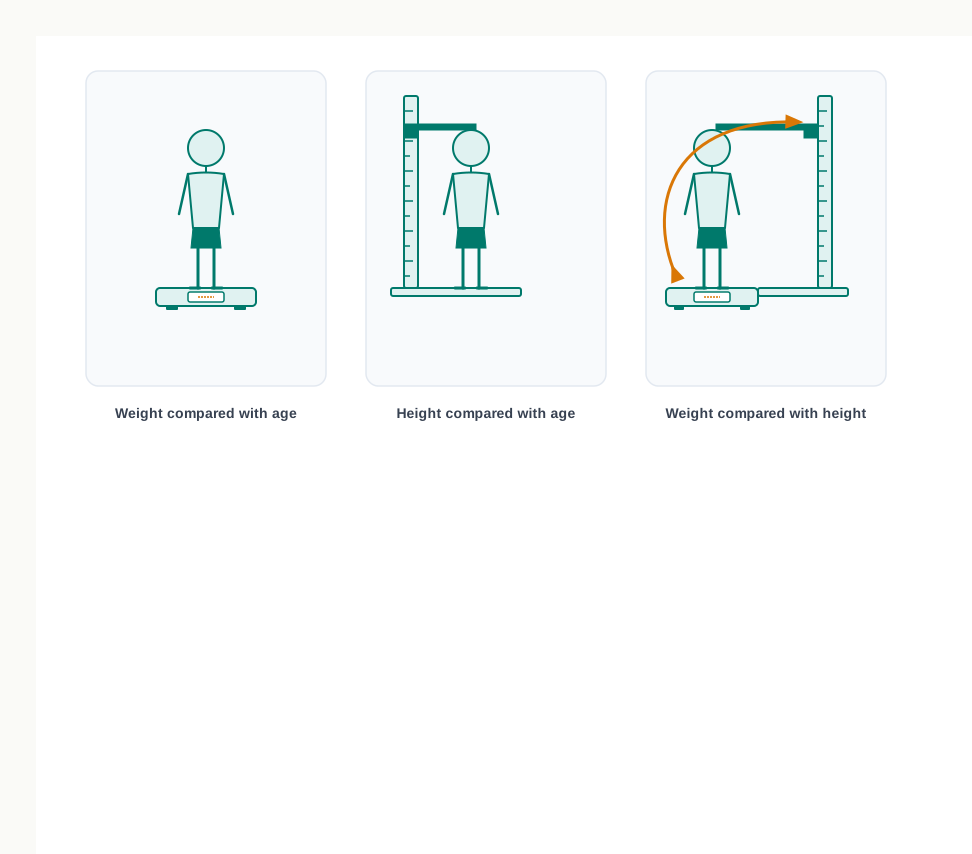
Fig. 3.5 – What each anthropometric comparison measures.
Read the table once more for the middle row. Stunting is the record of a household’s long history, while wasting is the record of its last few weeks. A district survey that finds high stunting and low wasting is describing years of quiet shortage; one that finds the reverse is describing a sudden crisis, and the two call for very different responses.
3.5.1.2 Marasmus And Kwashiorkor
At the severe end of PEM lie two named conditions.
Marasmus is severe undernutrition caused by a deficiency of food and energy. The body, receiving too little fuel, breaks down its own stores of fat and then of muscle to keep itself running, and growth stops.
Kwashiorkor is severe undernutrition caused by protein deficiency. Its distinguishing sign is oedema — a swelling, usually first seen in the feet and legs, caused by fluid collecting in the tissues. Because of this swelling a child with kwashiorkor may not look thin at all, which is exactly why the condition is missed.
Both are medical emergencies in a young child, and both are treatable when identified early and managed under medical supervision, with carefully staged feeding. Neither is corrected by simply offering the child a large meal; a body that has adapted to starvation cannot handle one, which is why treatment belongs to trained hands.
3.5.2 Micronutrient Deficiencies
A diet short of energy and protein is very unlikely to be adequate in anything else. If the food on the plate is limited in quantity and variety, it will usually also be short of the micronutrients — the minerals and vitamins the body needs in small amounts but cannot do without.
Four of these are of major public health concern in India: iron, vitamin A, iodine and zinc. Concern is also growing about vitamin B₁₂, folic acid, calcium, vitamin D and riboflavin. Three of them account for most of the public health burden, and are described below.
3.5.2.1 Iron-Deficiency Anaemia
Iron-deficiency anaemia (IDA) is the most common nutritional disorder in the world, and it is prevalent in developed and developing countries alike. The groups most vulnerable to it are women of child-bearing age, adolescent girls, pregnant women and school-age children.
The condition arises when the production of haemoglobin is considerably reduced, leaving low levels of haemoglobin in the blood. Haemoglobin is the pigment in red blood cells that carries oxygen from the lungs to every tissue, so a shortage of it is a shortage of delivered oxygen.
That single fact explains the whole picture of symptoms. Any physical exertion now outruns the oxygen supply, so the person becomes breathless on slight exertion, complains of fatigue and may feel lethargic. How severe the symptoms are depends on how fast the haemoglobin has fallen: a slow fall gives the body time to adjust, a rapid one does not.
The visible manifestations follow from the same cause. There is general pallor, and paleness of the conjunctiva of the eyes, the tongue, the nail beds and the soft palate — all sites where the colour of the blood shows through thin tissue. In children, cognitive functions are also adversely affected, with attention span, memory and concentration all suffering, so a child with anaemia is at a disadvantage in the classroom before the teaching begins.
3.5.2.2 Vitamin A Deficiency
Vitamin A is necessary for the maintenance of healthy epithelium — the tissue that lines the eyes, the respiratory passages and the gut — and for normal vision, growth and immunity.
Vitamin A deficiency (VAD) therefore strikes on several fronts at once. Its earliest sign is night blindness, an inability to see in dim light, which progresses to complete blindness if corrective measures are not taken. Vitamin A deficiency is the most common cause of childhood blindness. Alongside this, resistance to infection falls and growth may be adversely affected.
Deficiency and infection then trap each other in a cycle, shown in Fig. 3.6.
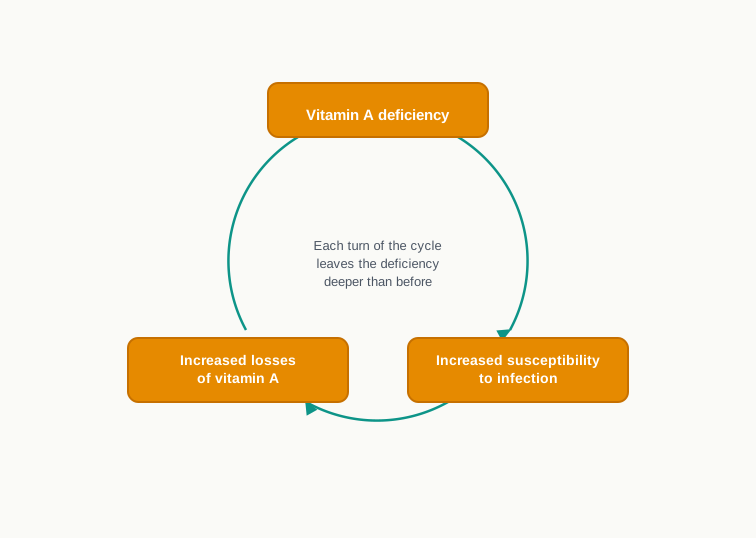
Fig. 3.6 – The vicious cycle of vitamin A deficiency and infection.
A cycle of this kind will not break on its own, because every stage strengthens the next. It is broken from outside — by treating the infections and by restoring the vitamin at the same time.
3.5.2.3 Iodine Deficiency Disorders
Iodine is required for normal mental and physical growth and development. The body uses it to make thyroid hormone, which the thyroid gland synthesises; when dietary iodine is insufficient, the amount of thyroid hormone produced is insufficient too.
The term iodine deficiency disorders (IDD) refers not to a single illness but to a spectrum of disabling conditions arising from inadequate dietary iodine, affecting health from fetal life right through adulthood.
In adults, the most common manifestation is an enlarged thyroid, known as goitre. Its position and appearance are shown in Fig. 3.7.
In children, the deficiency manifests as cretinism — a condition of severely impaired physical growth and intellectual development.
Iodine deficiency during pregnancy has several adverse effects on the developing fetus, including intellectual disability and congenital abnormalities. These effects are irreversible, which is why the deficiency must be prevented rather than treated.
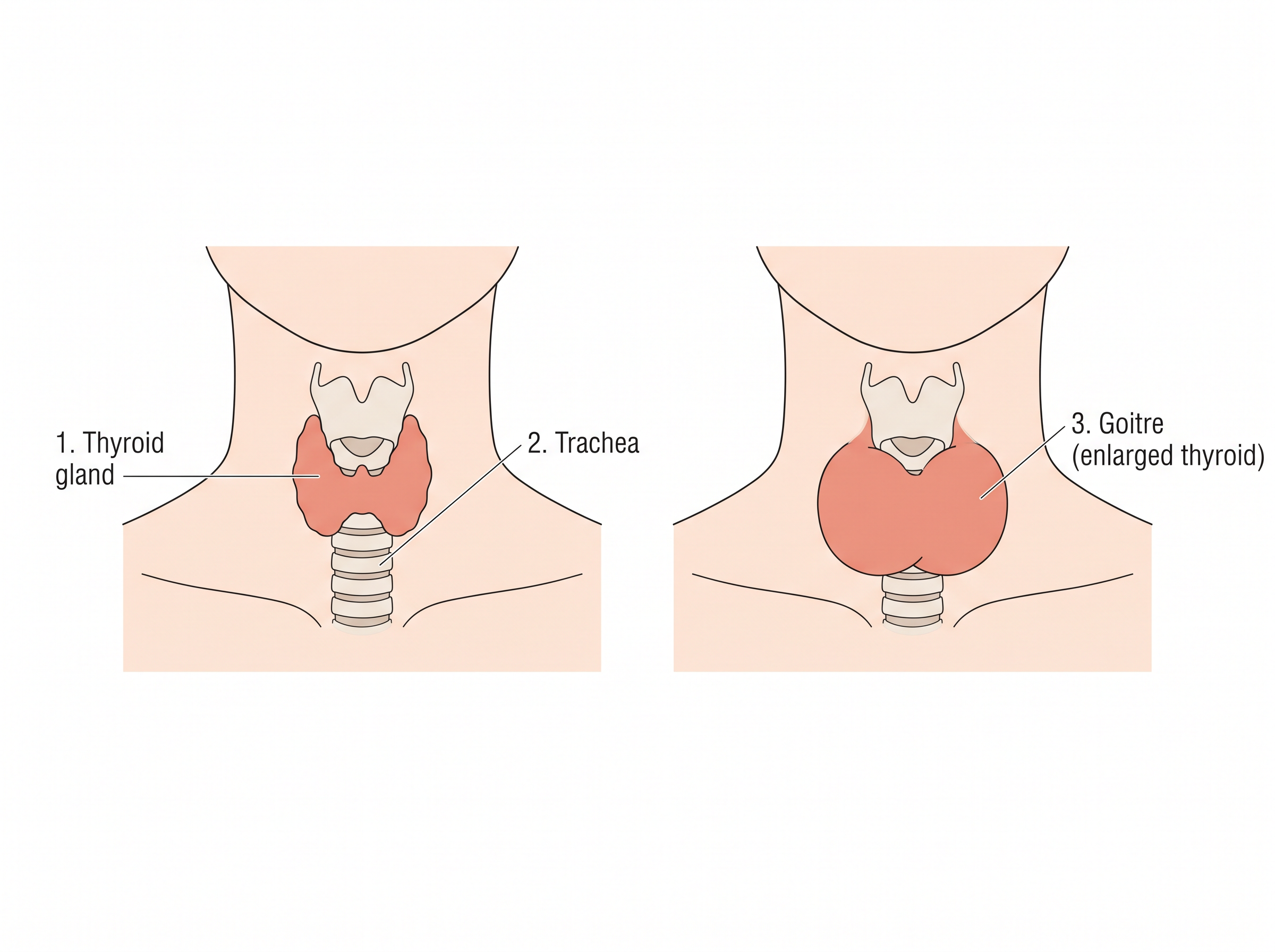
Fig. 3.7 – Position of the thyroid gland and visible goitre.
Table 3.4 brings the three deficiencies together for revision.
3.6 Strategies To Tackle Nutritional Problems
Knowing the problems is not the same as knowing what to do about them. In 2012, releasing a national report on child nutrition, the then Prime Minister Dr Manmohan Singh described malnutrition as a matter of national shame and appealed for a determined effort to remove it. The appeal was easy to make and hard to act on, for the reason we have already seen: nutritional problems are produced at several levels at once, so no single ministry, profession or method can dispose of them. A multi-disciplinary approach is not a preference here; it is a requirement.
Government efforts in India have been considerable. The largest of the recent ones is POSHAN Abhiyaan, the Prime Minister’s Overarching Scheme for Holistic Nutrition, launched at Jhunjhunu in Rajasthan in March 2018. It targets stunting, undernutrition, anaemia among young children, women and adolescent girls, and low birth weight. Its distinctive feature is that it does not run a feeding programme of its own; it monitors and reviews the working of all the schemes that do, and was scaled up in phases until it covered every district in the country.
Beneath such an umbrella sit two kinds of action, and the difference between them runs through the rest of this chapter.
3.6.1 Direct Short-Term Interventions
Direct interventions act on the nutrient or the food itself, and their effect can be seen within months. Four are central.
The Integrated Child Development Services (ICDS), which covers all vulnerable children in the age group of 0–6 years, together with all pregnant and lactating mothers.
Fortification of essential foods — most familiarly, salt fortified with iodine.
Production and popularisation of low-cost nutritious foods made from indigenous, locally available raw materials, produced through local groups including women’s self-help groups.
Control of micronutrient deficiencies in vulnerable groups — iron, vitamin A, folic acid and iodine for children, pregnant women and nursing mothers — by supplementing these nutrients and distributing tablets free of charge.
Point (c) repays attention, because it is the least expensive of the four and the most easily overlooked. A supplementary food made from a locally grown cereal and pulse, roasted and ground in the village, costs a fraction of a packaged product, keeps the money within the community, and is far more likely to be eaten because it tastes like the food the children already know.
3.6.2 Indirect Policy Instruments
Indirect instruments do not hand anybody a nutrient. They change the institutions and structures within which households feed themselves, and their results appear over years rather than months. They include:
ensuring food security — that is, improving the availability of food;
improving dietary patterns, by ensuring that nutritionally rich foods are available;
poverty alleviation for the rural and urban poor, through employment generation schemes and the public distribution system;
implementing land reforms, and improving health and family welfare services;
preventing food adulteration, and monitoring nutrition programmes;
spreading basic nutritional knowledge, including through the media;
improving the status of women, raising education and literacy, and securing community participation.
Look back at Fig. 3.4 and the reason for this list becomes clear. Direct interventions work on the immediate causes; indirect instruments work on the underlying and basic ones. A country that uses only the first will find itself repeating the same programme for the same reason in every generation.
3.6.3 Diet Or Food-Based Strategies
The many strategies available for combating public nutrition problems are broadly classified into two:
diet or food-based strategies;
the nutrient-based or medicinal approach.
Diet or food-based strategies are preventive and comprehensive strategies that use food itself as the tool for overcoming nutritional deficiencies. They work by increasing the availability of micronutrient-rich foods and the consumption of them, so that the deficiency does not arise in the first place.
Their advantages follow from that design. They are sustainable, and their benefits are long-term, because a household that has changed what it grows, buys and cooks does not need the change delivered again next year. They are cost-effective. They can be adapted to different cultural and dietary traditions rather than imposed against them. And very importantly, they carry no risk of overdose or toxicity, which the nutrient-based approach does.
The main food-based approaches are these:
dietary diversification — widening the range of foods eaten, so that what one food lacks another supplies;
dietary modification — changing how food is selected, combined, processed or cooked so that more of the nutrient survives or is absorbed;
horticulture interventions, such as home and kitchen gardening;
nutrition and health education;
food fortification — the deliberate addition of one or more nutrients to a commonly eaten food.
Fortification deserves a closer look, since it is the strategy that has changed the most lives in this country.
Fortified foods sold in India carry a mark of their own, shown in Fig. 3.8, so that a shopper can identify them at the shelf.
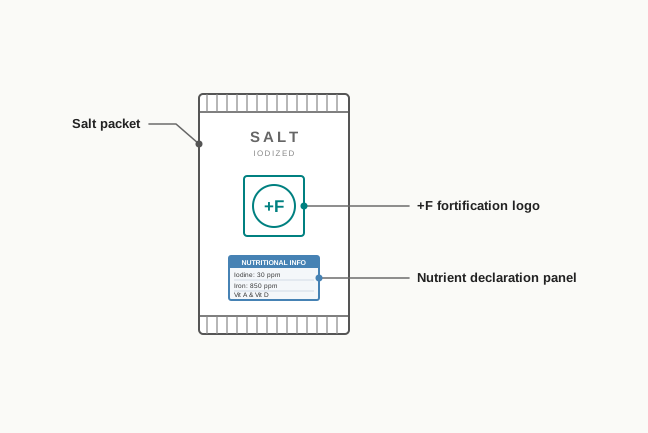
Fig. 3.8 – The ‘+F’ fortification logo.
3.6.4 Nutrient-Based Or Medicinal Approach
In the nutrient-based or medicinal approach, the nutrient is given directly as a supplement, to vulnerable groups — that is, both to those at risk of a deficiency and to those who already have one. In India this approach is used particularly for vitamin A, iron and folic acid.
It is a short-term strategy by nature, and it is meant to be. A supplement corrects a shortage while it is being taken and stops working when it stops.
Two difficulties limit it. Supplementation programmes are often expensive, and there may be problems of coverage — reaching every eligible person, repeatedly, over a long period, is far harder than beginning to reach them. A further complication is that the key target groups are different for different nutrients, so each nutrient effectively needs its own delivery system.
None of this makes the approach wrong. There are situations no food-based strategy can handle: a person who is already severely deficient needs the nutrient now, in an amount no ordinary diet can supply.
3.6.5 Choosing Between The Two Approaches
Table 3.5 compares the interventions available under the two headings.
Read the last two columns together and a pattern appears. The nutrient-based approach buys speed and precision at the cost of money, reach and permanence. The food-based approaches buy reach and permanence at the cost of time, and of the far harder work of changing what people grow, sell and eat.
It must be remembered that the long-term goal is to shift away from supplementation and towards food-based approaches. Supplementation is what a country does while it is building the conditions in which supplementation is no longer needed. A programme that is still handing out the same tablets to the same group after thirty years has kept people alive, but it has not solved anything.
3.7 Nutrition Programmes In India
The strategies of the last section do not float free. They are carried out through named programmes, most of them running for decades, each aimed at a particular problem and a particular group. It is worth knowing what these programmes are, because a public nutritionist in India will spend a working life inside one or another of them.
They fall into five groups.
Early Childhood Care And Development
The Integrated Child Development Services (ICDS) is an outreach programme for early childhood care and development. It covers pregnant and nursing mothers, and infants and young children up to six years of age.
The word ‘outreach’ is the important one. Services are not offered at a hospital for those who come; they are taken to the community, through the Anganwadi centre in the village or the neighbourhood. This is why ICDS reappears in almost every list in this chapter — it is the delivery system through which many other interventions actually arrive.
Nutrient Deficiency Control Programmes
Three national programmes target the micronutrient deficiencies you studied in section 3.5, one for each.
The National Prophylaxis Programme for Prevention of Blindness due to Vitamin A Deficiency, under which young children receive vitamin A at fixed intervals.
The National Nutritional Anaemia Prophylaxis Programme, which supplies iron and folic acid to the groups most at risk of anaemia. Its work is now carried forward under the wider Anaemia Mukt Bharat strategy, launched in 2018, which adds testing, treatment and education to supplementation.
The National Iodine Deficiency Disorders Control Programme (NIDDCP), which carries this name since 1992, when the older goitre control programme was renamed to reflect the fact that goitre is only one of the disorders iodine deficiency causes.
The word prophylaxis in two of these names means prevention rather than treatment — the nutrient is given to those at risk, before a deficiency appears, not only to those who already show it.
Food Supplementation Programmes
These programmes supply an actual meal or food, rather than a nutrient. The best known is the school meal programme, long called the Mid-Day Meal Programme and renamed in 2021 as PM POSHAN, under which a cooked meal is served to children in government and government-aided schools on every school day.
A programme of this kind does two things at once, and the second is easy to miss. It improves the nutrition of the child who eats the meal, and it improves attendance and retention at school, because the meal is a reason to come and a reason to stay through the day.
Food Security Programmes
Food security programmes work on availability and access to food for the household as a whole, not on the nutrition of one member.
The Public Distribution System (PDS), through which foodgrains and certain other essentials are supplied at controlled prices through fair price shops. It now operates under the National Food Security Act, 2013.
The Antyodaya Anna Yojana, which supplies foodgrains at especially low prices to the poorest households identified within the system.
The Annapurna Scheme, which provides free foodgrains to eligible older persons who are without support and are not receiving a pension.
The National Food for Work Programme, which supplied foodgrains as part of the wages paid for public works. Its approach now continues within the national rural employment guarantee legislation.
Self-Employment And Wage Employment Schemes
The last group does not distribute food at all. Self-employment and wage employment schemes raise the household’s own income, and are described as social safety net programmes — arrangements that catch a household before it falls below the level at which it can feed itself.
Their inclusion in a nutrition chapter is not an accident. Income is an underlying cause, and a scheme that protects income is therefore a nutrition programme, even though nothing edible changes hands.
Table 3.6 sets the five groups side by side.
Notice the last column. Read down it and you have the whole argument of this chapter in one table: a country cannot defeat malnutrition by acting at a single level, so it runs programmes at all of them at once.
3.8 Health Care In India
Nutrition programmes do not arrive on their own. They are delivered through the health system, so a public nutritionist has to know how that system is built and where in it each service sits.
Health is a fundamental human right, and it is the responsibility of the government to provide adequate health care to its citizens. But health care is a wider thing than medical care. It includes the whole range of services that help to promote, maintain, monitor or restore health — and a nutrition programme, a vaccination drive, a growth-monitoring session and a clean water supply all belong to it just as a hospital does.
Three Levels Of Care
In India, health care is provided at three levels: primary, secondary and tertiary. The levels are not ranked by importance but by complexity, and each exists so that the one above it is not swamped by work it need not do.
The primary level is the first level of contact of an individual, family or community with the health system. In our country these services are provided through a network of primary health centres (PHCs), supported below them by sub-centres, which are the most peripheral contact point of all; many of these have since been developed into health and wellness centres offering a wider package of services.
More complex health problems are resolved at the secondary level, through district hospitals and community health centres. The community health centre functions as the first referral level — the point to which a case is sent onward when it is beyond what the primary level can handle.
The tertiary level is the third and highest level of health care. It deals with the more complex health problems that cannot be dealt with at the first two levels. Its institutions are medical college hospitals, regional hospitals, specialised hospitals, and the All India Institutes of Medical Sciences.
Table 3.7 sets the three levels out together.
Why The Ladder Matters For Nutrition
Read the last row of the table and the design becomes visible. A child is weighed at the primary level, and if the weight is falling the child is sent upward; a child treated at the secondary level is sent back down for follow-up. The levels are not three separate systems but one system with a two-way path running through it.
This also explains where prevention lives. Almost all of public nutrition’s work sits at the primary level, close to the household, because that is the only level that can reach people before anything has gone wrong. By the time a case has climbed to the tertiary level, prevention has already failed and treatment is what remains.
3.9 Scope Of Public Nutrition
Everything described so far — the surveys, the programmes, the fortified staple, the evaluation nobody wants to do — has to be done by somebody. This last section is about who that somebody is.
3.9.1 Role Of The Public Nutritionist
Nutrition is an important determinant of health, and the health scenario globally has been changing fast: undernutrition has not gone, non-communicable diseases have arrived, and populations are ageing. Each of these changes has increased the challenges for the professionals in this field.
The public nutritionist, also called the community nutritionist, is trained and equipped for exactly this work, and is well placed to take part in every strategy of health promotion and prevention. The training covers eight key areas.
Nutritional science — what nutrients are and what they do.
Nutritional needs throughout the life cycle — how those needs change from infancy to old age.
Nutritional assessment — how the nutritional status of a group is measured.
Nutritional care — what is done for those found to be at risk.
Food science — how foods behave when stored, processed and cooked.
Educational methods — how people are actually taught to change a practice.
Mass media and communication — how a message reaches thousands at once.
Programme management — how a plan is run, staffed, supplied and monitored.
Read that list against Fig. 3.3 and the reason for its range becomes clear. The first four areas let a professional identify a problem and decide what should be done; the last four let the same professional get it done, which is where most programmes fail.
3.9.2 Where A Public Nutritionist Works
A community nutritionist can work in the following areas and situations.
In outreach programmes undertaken by hospitals for prevention, promotion and education.
In the national Integrated Child Development Services, at different levels according to qualifications and expertise.
At the government level, as a consultant or adviser, or on policy-making committees.
In the developmental programmes of government, voluntary organisations and NGOs, and of international organisations such as UNICEF, USAID, GAIN, Nutrition International, the Tata Trusts and IFPRI, besides numerous other national and regional organisations.
With organisations running large-scale feeding programmes for target groups — young children, school children, adolescents, pregnant and lactating mothers, older persons and persons with disabilities.
As nutritionists or school health counsellors in school health programmes.
With corporate social responsibility programmes concerned with food and nutrition security for vulnerable groups.
Besides these, there are avenues in teaching, in research, and in entrepreneurship — for instance with agencies that develop communication materials and educational packages — for those with adequate and appropriate training.
3.9.3 Career Avenues
Set out plainly, the openings for someone qualified in this field are these.
Community nutritionist in the preventive and social medicine departments of hospitals — the departments that deal with the health of populations rather than of admitted patients.
Government nutrition programmes, such as ICDS and the Food and Nutrition Board.
Voluntary organisations, regional, national and international, as nutritionists.
Independent work as a consultant.
Nutritionist or counsellor for schools, industries and similar institutions.
Teaching and academics.
Research.
The list is longer than students expect, and it is longer than it was a generation ago, because the problems have multiplied rather than been replaced. A field that must handle undernutrition, hidden hunger and non-communicable disease at the same time needs more hands, not fewer.
3.10 Summary
- Public health is the organised, collective action a society takes to protect and promote the health of whole populations, and public nutrition applies that idea to what people eat.
- Nutrition can be studied at four scales — individual, family, community and nation — and public nutrition works at the last two.
- Malnutrition means nutrition that is faulty in either direction, so both undernutrition and overnutrition are forms of it.
- The mission of public health nutrition is to prevent both, and to maintain the nutritional status of the population at its best possible level.
- Three nutritional problems are of particular public health concern in India:
- low birth weight, a birth weight below 2500 grams;
- stunting, widespread among preschool children;
- hidden hunger, or micronutrient deficiency, in which a filling diet still lacks minerals and vitamins.
- Undernutrition in early life affects physical growth and cognitive development, and through them adult productivity, so its costs are borne by the individual and by the nation.
- Overnutrition is rising because daily life has become more sedentary and energy-dense processed foods have replaced whole grains, pulses, vegetables and fruits in the diet.
- Overweight and obesity raise the risk of non-communicable diseases such as hypertension, heart disease, diabetes, cancer and arthritis.
- India therefore faces the double burden of malnutrition — undernutrition and overnutrition coexisting in the same population.
- Public health nutrition is the field concerned with preventing nutrition-related problems in a population and with the policies and programmes that address them.
- It is multidisciplinary, drawing on the nutritional, biological, behavioural, social and managerial sciences.
- It differs from clinical nutrition and dietetics because it works with communities rather than patients, and prevents rather than treats.
- A community is a group of people sharing common characteristics, such as a common language, similar conditions, a common lifestyle or the same health problem.
- Work in this field follows one sequence: identify the problem and its magnitude, understand how and why it occurs, plan strategies, implement them, and evaluate their impact.
- Nutritional problems arise from causes at four levels:
- immediate causes at individual level — inadequate or faulty dietary intake, and disease or infection;
- underlying causes at household level — access to food, care practices, water and sanitation, health services, knowledge and education;
- basic causes at the level of society — actual and potential resources, and political, cultural, economic and social systems;
- the outcome of all three — malnutrition, disability and death.
- Protein-energy malnutrition results from insufficient intake of energy and protein, and is assessed by anthropometric measurements.
- Three anthropometric findings must be distinguished:
- underweight — weight too low for age;
- stunting — height too low for age, indicating long-standing shortage;
- wasting — weight too low for height, indicating recent loss.
- Severe undernutrition from a deficiency of food and energy is marasmus; that caused by protein deficiency is kwashiorkor, whose distinguishing sign is oedema.
- Iron-deficiency anaemia is the most common nutritional disorder in the world, and reduces the blood’s capacity to carry oxygen, causing pallor, fatigue and breathlessness on slight exertion.
- Vitamin A deficiency causes night blindness progressing to complete blindness, and is the most common cause of childhood blindness.
- Vitamin A deficiency and infection form a vicious cycle, each making the other worse.
- Iodine deficiency disorders are an ecological phenomenon arising from iodine-poor soil, and produce goitre in adults, cretinism in children, and irreversible damage to the developing fetus.
- Strategies against nutritional problems are of two broad kinds — diet or food-based strategies, and the nutrient-based or medicinal approach.
- Food-based strategies include dietary diversification and modification, horticulture interventions, nutrition and health education, and food fortification.
- Food-based strategies are sustainable, cost-effective, adaptable to different food cultures, and free from the risk of overdose.
- The nutrient-based approach supplies the nutrient directly as a supplement, acts quickly, and is used in India chiefly for vitamin A, iron and folic acid.
- Supplementation is costly, limited in coverage, and effective only while it continues, so the long-term goal is to shift from supplementation towards food-based approaches.
- Direct short-term interventions include ICDS, fortification of essential foods, locally produced low-cost nutritious foods, and micronutrient control for vulnerable groups.
- Indirect policy instruments work on the underlying and basic causes — food security, poverty alleviation, education, prevention of adulteration, and community participation.
- India’s nutrition programmes fall into five groups:
- early childhood care and development, through ICDS;
- nutrient deficiency control programmes for vitamin A, anaemia and iodine;
- food supplementation, such as the school meal programme;
- food security programmes, such as the public distribution system;
- self-employment and wage employment schemes, which act as social safety nets.
- Health care is wider than medical care, and includes all services that promote, maintain, monitor or restore health.
- Health care in India is provided at three levels — primary through sub-centres and primary health centres, secondary through community health centres and district hospitals, and tertiary through specialised and medical college hospitals.
- The community health centre is the first referral level, to which cases beyond the primary level are sent onward.
- The public nutritionist, also called the community nutritionist, is trained in nutritional science, needs across the life cycle, nutritional assessment, nutritional care, food science, educational methods, communication and programme management.
- Public nutritionists work in hospital outreach, ICDS, government advisory bodies, voluntary and international organisations, large-scale feeding programmes, school health programmes and corporate social responsibility programmes, besides teaching, research and entrepreneurship.
- The chapter’s whole argument, from cause to action, is condensed in Fig. 3.9.
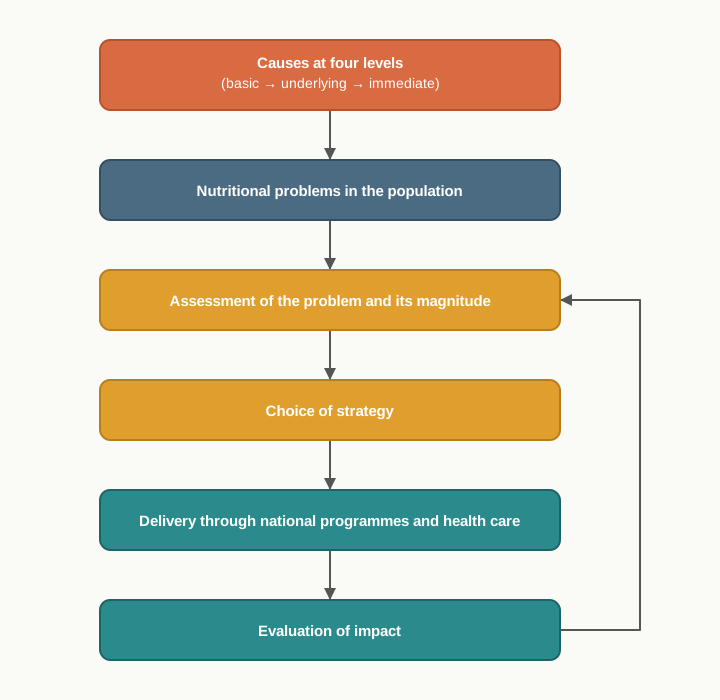
Fig. 3.9 – From cause to action in public nutrition.
3.11 Key Terms
- Anthropometric measurements: Measurements of the body itself — weight, height, head and chest circumference — compared against standards for that age to assess nutritional status.
- Basic causes: The causes of malnutrition that lie at the level of society, in its resources and its political, cultural, economic and social systems.
- Community: A specific group of people who share common characteristics, such as a common language, similar conditions, a common lifestyle or the same health problem.
- Community health centre: A secondary-level institution serving a block, which acts as the first referral level above the primary health centre.
- Diet or food-based strategies: Preventive strategies that use food itself to overcome nutritional deficiencies, by increasing the availability and consumption of nutrient-rich foods.
- Dietary diversification: Widening the range of foods eaten, so that the nutrients missing from one food are supplied by another.
- Double burden of malnutrition: The coexistence of undernutrition and overnutrition in the same population.
- Food fortification: The deliberate addition of one or more nutrients to a commonly eaten food, so that the nutrient reaches the whole population.
- Food security: Ensuring that food is available to a population, so that households are able to obtain what they need.
- Goitre: An enlarged thyroid gland, the most common manifestation of iodine deficiency in adults.
- Health care: The whole range of services that promote, maintain, monitor or restore health, of which medical care is only one part.
- Hidden hunger: Micronutrient deficiency — a shortage of minerals and vitamins in a diet that may still satisfy hunger.
- Immediate causes: The two causes of malnutrition that act directly on the individual — inadequate or faulty dietary intake, and disease or infection.
- Integrated Child Development Services (ICDS): A national outreach programme for early childhood care and development, covering children up to six years and pregnant and nursing mothers.
- Iodine deficiency disorders (IDD): The spectrum of disabling conditions, from fetal life through adulthood, caused by inadequate dietary iodine.
- Iron-deficiency anaemia (IDA): A reduction in haemoglobin production and therefore in the blood’s capacity to carry oxygen, caused by a shortage of iron.
- Kwashiorkor: Severe undernutrition caused by protein deficiency, distinguished by oedema.
- Low birth weight: A birth weight of less than 2500 grams.
- Malnutrition: A condition in which the diet supplies nutrients in wrong amounts, whether too little or too much.
- Marasmus: Severe undernutrition caused by a deficiency of food and energy.
- Multidisciplinary: Built on more than one body of knowledge, so that a problem can be approached from several sides at once.
- Non-communicable diseases: Diseases that are not passed from person to person, develop slowly and usually last for life, such as hypertension, heart disease, diabetes and arthritis.
- Nutrient-based or medicinal approach: Correcting a deficiency by giving the nutrient directly as a supplement to those at risk or already affected.
- Nutritional status: The condition of the body as a result of the food it receives and uses.
- Obesity: A condition in which body fat has accumulated to a level that carries a risk to health.
- Overnutrition: The condition resulting when the diet supplies more than the body needs, particularly of energy and fat.
- Overweight: A body weight above the range regarded as healthy for a person’s height.
- PM POSHAN: The national school meal programme, under which a cooked meal is served on every school day; formerly the Mid-Day Meal Programme.
- POSHAN Abhiyaan: The Prime Minister’s Overarching Scheme for Holistic Nutrition, launched in 2018, which monitors and reviews the working of the country’s nutrition schemes.
- Primary health centre (PHC): The institution at which an individual, family or community makes first contact with the health system.
- Protein-energy malnutrition (PEM): The condition resulting when food intake falls short of the body’s requirement for energy and protein.
- Public Distribution System (PDS): The system through which foodgrains and certain essentials are supplied at controlled prices through fair price shops.
- Public health: The organised, collective action taken by a society to protect and promote the health of whole populations.
- Public health nutrition: The field concerned with preventing nutrition-related problems in a population, and with the policies and programmes that address them.
- Public nutritionist: The professional trained to assess, plan, run and evaluate nutrition work for communities; also called a community nutritionist.
- Referral level: The point in the health system to which a case is sent onward when it is beyond the capacity of the level below.
- Stunting: A height that is too low for the child’s age, indicating undernutrition sustained over a long period.
- Underlying causes: The causes of malnutrition that act at household level — access to food, care practices, water and sanitation, health services, knowledge and education.
- Undernutrition: The condition resulting when the diet supplies less energy, protein or other nutrients than the body needs.
- Underweight: A body weight that is less than adequate for a person’s age.
- Vitamin A deficiency (VAD): A shortage of vitamin A, causing night blindness, lowered resistance to infection and, if uncorrected, complete blindness.
- Vulnerable groups: Groups at greater risk than the rest of a population, such as infants, young children, adolescent girls, pregnant and lactating women, and older persons.
- Wasting: A body weight that is not adequate relative to height, indicating recent and rapid loss of body tissue.
3.12 Points To Ponder
Fortification works precisely because nobody has to know it is happening. Is that a strength or a weakness in a strategy meant to improve a population’s nutrition over the long term?
Stunting records years of shortage and wasting records weeks of it. If a district could act on only one of the two findings, which would you argue it should act on first, and what would that choice cost?
Undernutrition and overnutrition arise from opposite imbalances, yet a country may have to fight both at once. Can a single nutrition programme address both, or does each need its own?
Evaluation is the step most often left out of a programme, and it is the only step that produces no service for anybody. What does a country lose by skipping it?
Iodine deficiency was answered through salt rather than through crops, water or medicine. What made salt the right carrier, and what would a public nutritionist look for before choosing a carrier for another nutrient?
A household may hold enough food and still nourish its members unequally. Which of the strategies in this chapter can reach inside a household, and which stop at its door?
3.13 Objective Questions
- (MCQ) A birth weight below which of the following is classified as low birth weight? [1]
- 2000 grams
- 2500 grams
- 3000 grams
- 3500 grams
- (MCQ) Wasting is said to be present when: [1]
- height is less than adequate for age
- weight is less than adequate for age
- weight is not adequate relative to height
- head circumference is less than chest circumference
- (MCQ) Which of the following is a food-based strategy? [1]
- Distribution of iron and folic acid tablets
- Vitamin A supplementation for preschool children
- Dietary diversification
- Therapeutic treatment of severe deficiency
- (MCQ) The community health centre functions as the: [1]
- first point of contact with the health system
- first referral level
- highest level of health care
- centre for pre-school education
- (MCQ) Iodine deficiency disorders are described as an ecological phenomenon because: [1]
- they occur only in cold climates
- they arise largely from a deficiency of iodine in the soil
- they are caused by air and water pollution
- they spread from one person to another
- (AR) Read the assertion and the reason and choose the correct option. [1] Assertion (A): A programme of nutrient supplementation must be continued year after year for the same group. Reason (R): Supplementation corrects a deficiency only while the supplement is being taken.
- Both A and R are true, and R is the correct explanation of A.
- Both A and R are true, but R is not the correct explanation of A.
- A is true, but R is false.
- A is false, but R is true.
- (AR) Read the assertion and the reason and choose the correct option. [1] Assertion (A): A child with kwashiorkor may not appear thin. Reason (R): Kwashiorkor is accompanied by oedema, in which fluid collects in the tissues.
- Both A and R are true, and R is the correct explanation of A.
- Both A and R are true, but R is not the correct explanation of A.
- A is true, but R is false.
- A is false, but R is true.
- (MATCH) Match the items in Column A with those in Column B. [1]
| Column A | Column B |
|---|---|
| a. Iron | i. Night blindness |
| b. Vitamin A | ii. Goitre |
| c. Iodine | iii. Pallor and breathlessness on slight exertion |
- (FILL) Fill in the blanks. [1]
- The coexistence of undernutrition and overnutrition in the same population is called the ______________.
- Micronutrient deficiency is commonly known as ______________.
- (TF) State whether each statement is true or false. [1]
- Malnutrition refers only to a shortage of food.
- Stunting indicates undernutrition sustained over a long period.
- (NAME) Name the following. [1]
- The programme that covers children up to six years of age and pregnant and nursing mothers.
- The professional trained to plan, run and evaluate nutrition work for communities.
- (ODD) Pick the odd one out and give a reason for your choice. [1] Fortification, dietary diversification, home gardening, nutrient supplementation
3.14 Check Your Concepts
(SHORT) Define public health, and state how it differs from the treatment of a single patient. [2]
(SHORT) What is meant by a community? Give one example of a community formed by a shared health problem. [2]
(SHORT) Give a reason for calling micronutrient deficiency ‘hidden hunger’. [2]
(SHORT) List any four food-based approaches used against nutritional deficiencies. [2]
(SHORT) Differentiate between stunting and wasting, stating the basis of difference. [3]
(SHORT) Explain, with an example, why anthropometric measurements are suited to assessing nutrition in a large population. [3]
(SHORT) Why does a shortage of haemoglobin produce breathlessness on slight exertion? Explain the connection. [3]
(SHORT) Describe the vicious cycle of vitamin A deficiency and infection, and state how such a cycle can be broken. [4]
(SHORT) Differentiate between the food-based and the nutrient-based approaches to combating deficiency, stating the basis of difference, and give one situation in which each is the better choice. [4]
(SHORT) What would happen to a nutrition programme that was planned and implemented but never evaluated? Explain your answer with reference to the working sequence followed in public nutrition. [4]
(SHORT) Explain the four levels at which the causes of malnutrition operate, and state why a country must act at more than one of them. [5]
(SHORT) Why is public health nutrition described as multidisciplinary? Explain with reference to the sciences it draws upon, using one nutritional problem to illustrate your answer. [5]
3.15 Identify & Label
(ID) Study Fig. 3.5. Identify the anthropometric comparison shown in each of the three panels, and state what a finding in each one tells a nutrition worker. [3]
(ID) Study Fig. 3.7. Identify the gland labelled in the drawing, name the condition shown in the second panel, and state the nutrient whose shortage causes it. [3]
(ID) Study Fig. 3.8. Identify the mark shown on the packet and state what it certifies about the food inside. [2]
(ID) Study Fig. 3.0. Identify the region marked on the map, and give a reason why iodine deficiency disorders are common along the belt shaded in it. [2]
3.16 Case & Application Based
- (CASE) A block-level survey in a coastal district finds that most preschool children are of adequate height for their age, but that a number of them have lost weight sharply in the three months following a spell of flooding. Local shops are stocked and prices are normal.
- Which anthropometric finding does this pattern describe, and how do you know it is not the other? [2]
- State whether the problem is acute or chronic, and give a reason. [2]
- Suggest one immediate and one longer-term measure the district could take, and justify each. [3]
- (CASE) A public nutritionist is asked to reduce goitre in two districts. In the first, the soil is iodine-poor and every household buys its salt from local shops. In the second, the soil is iodine-poor and most households obtain salt from an unregulated local source that is not fortified.
- Which single measure would work in the first district, and why? [2]
- Explain why the same measure would not be enough in the second district. [2]
- Suggest what else the nutritionist should include for the second district, and state which level of cause each part of your answer acts on. [3]
- (CASE) A village has a functioning Anganwadi centre and a primary health centre, but records show that many eligible children in one hamlet have never been weighed.
- Name the term used for the share of eligible people who actually receive what a programme promises. [1]
- Give two possible reasons, drawn from the underlying causes discussed in this chapter, for children in one hamlet being missed. [2]
- Explain why a programme that is well designed can still fail on this count. [2]
3.17 Practice With Data
- (DATA) The table below gives the findings of a nutrition survey of children under five years of age, carried out in three blocks of one district in the same month. Study it and answer the questions that follow.
| Block | Stunted (%) | Wasted (%) | Underweight (%) |
|---|---|---|---|
| Block A | 38 | 6 | 30 |
| Block B | 14 | 21 | 24 |
| Block C | 36 | 19 | 39 |
a. State what the stunting column and the wasting column each measure, and over what period of time. [2]
b. Which block shows the pattern of long-standing shortage without a recent crisis? Give a reason for your answer. [2]
c. Which block appears to be facing a recent crisis rather than a long history of shortage? Give a reason. [2]
d. Block C has the highest figure in the last column. Explain why the underweight figure alone would not have told the district what kind of problem Block C has. [2]
e. The district can send urgent therapeutic feeding to one block only. Which would you send it to, and what would you plan for the other two instead? Justify your answer. [3]