Chapter 9: Fashion Design And Merchandising
The House That Sold A Design Before Anyone Asked For It In 1858, an Englishman named Charles Frederick Worth opened a dressmaking house on the Rue de la Paix in Paris. Until then a dressmaker took orders. A customer arrived with a length of cloth and an idea of what she wanted, and the sewing followed her instructions.
Worth turned that arrangement around. He designed the garments first, had them made up in fabrics of his own choosing, and had them worn through his salon by young women employed to show them — an early use of live models. Clients came, watched, and chose from what had already been created. He put out a fresh set of designs every season. Inside every garment that left the house he stitched a woven label carrying his own name. A dress was no longer only a dress. It was a design, and it belonged to a named designer.
The Empress Eugénie ordered from him and the court followed. Within a few years the house employed several hundred workers, and Paris had a trade with a new name — haute couture, high dressmaking.
Almost everything the fashion business does today grew from two ideas Worth put to work: that a design can be planned before a single customer asks for it, and that it can then be shown, labelled and sold as something worth wanting. The shop windows of your own town, changing with every season, are the far end of that same chain.
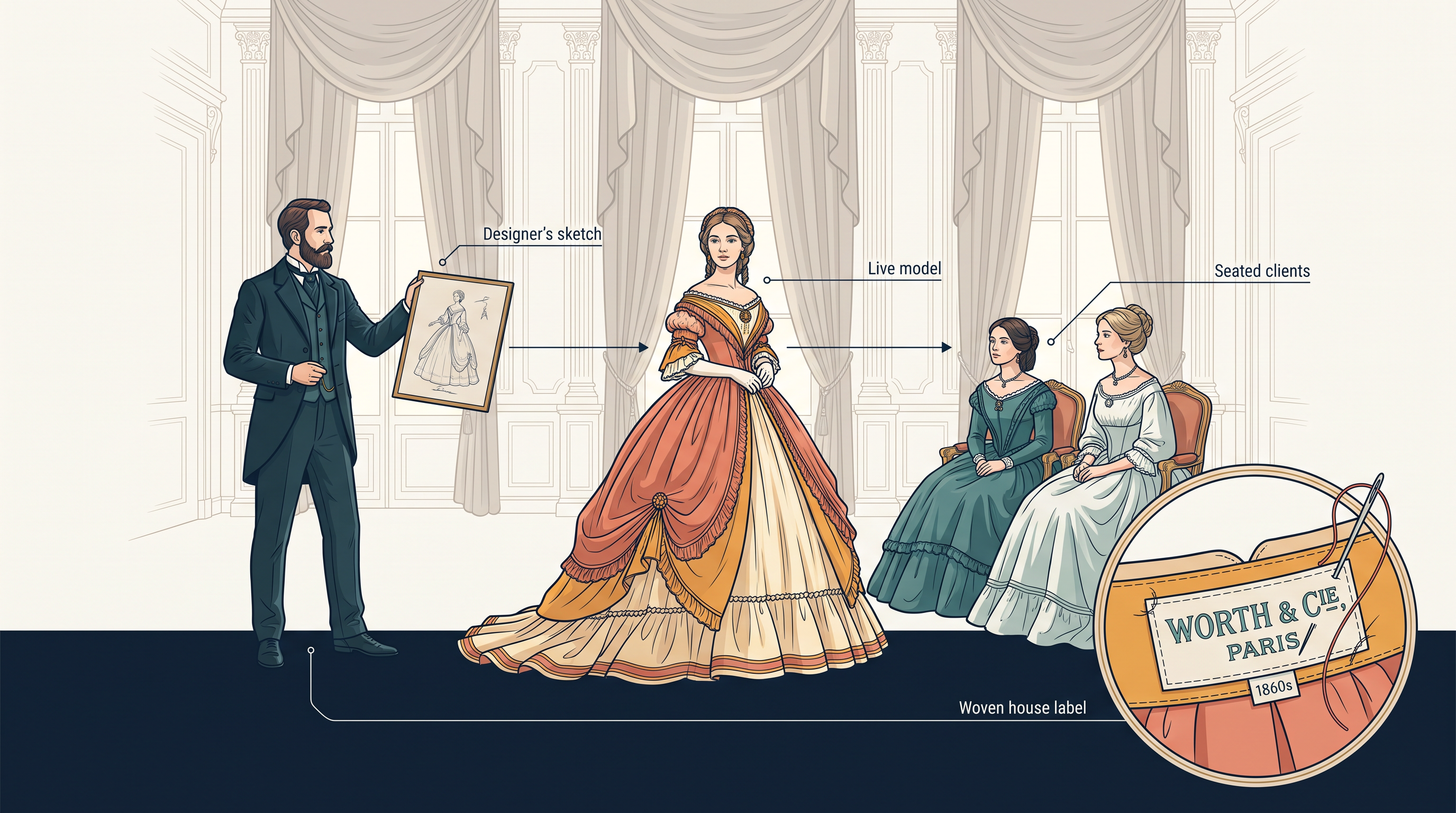
Fig. 9.0 – A Paris dressmaking house of the 1860s.
9.1 Introduction: From Barter To Ready-To-Wear
India has spun, woven, dyed and traded cloth for a very long time, and its textile industry is one of the oldest occupations the country still practises. What is new is the scale on which garments and accessories are now designed, produced and sold. Over the last few decades this growth has opened a set of careers that did not exist for earlier generations.
Fashion design and merchandising sit at the centre of those careers. The industry they serve answers two different needs at the same time — the wish to make something new, and the plain requirement of having something to wear. That double character is why a fashion business needs both a creative eye and a head for figures.
Where Merchandising Came From
The oldest form of trade was barter — the direct exchange of one good for another, with no money passing between the two sides. A weaver handed over cloth and received grain, oil or livestock in return. Such an exchange can happen only when each side happens to want exactly what the other is offering, so trade of this kind stays small and local.
For a long time after money replaced barter, selling remained a simple business. Production was limited, choice was narrow, and more or less whatever was made found a buyer. The goods a shop offers for sale are its merchandise, and for centuries deciding what merchandise to keep was hardly a decision at all.
Factory production changed that. Once a buyer can choose between ten versions of the same shirt, a shop has to decide which of them to stock, in which sizes, at what price and at what time of year. Those questions are the reason merchandising exists as a specialised job.
The Rise Of Ready-To-Wear
Ready-to-wear clothing is made up in advance in standard sizes and sold finished, instead of being stitched to the measurements of one named customer. It grew through the second half of the nineteenth century, as sewing machines, mills and standard size charts made it possible to cut many identical garments at once, and it was firmly established on a large scale by the 1920s.
Retailers were quick to see what this meant. A finished garment could be displayed, tried on and carried home the same day, and the same design could be sold hundreds of times over. Within a short period, clothing had become the most important kind of merchandise the large stores of the day carried.
That commercial success created a problem worth paying someone to solve. Stocking clothing well demands judgement about what people will want next season, and a wrong guess leaves a shop holding garments nobody will buy at full price. Out of this need a new specialisation grew — fashion merchandising, the subject of much of this chapter. The whole sequence is set out in Fig. 9.1.
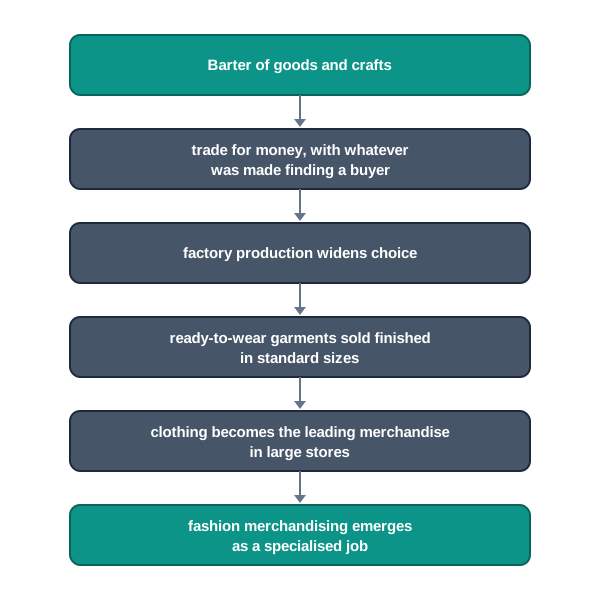
Fig. 9.1 – How fashion merchandising came into being.
The next time you pass a clothing shop, look at the window as the result of a set of decisions rather than as a display. Somebody chose that garment, that colour and that price, and chose them months before you walked past. Learning to read those decisions, and later to make them, is what this chapter prepares you for.
9.2 Significance Of Fashion Design And Merchandising
Ask most people what the fashion industry does and they will describe a designer sketching a garment. The sketch is one step in a long chain, and by itself it puts no clothes on anybody. Studying fashion design and merchandising means learning how that whole chain works, from the fibre in a field to the garment a customer carries home.
What The Field Covers
The field takes in every stage of the chain. It begins with the production of raw material, moves through the making of apparel and accessories — the articles worn or carried to complete an outfit, such as a bag, a belt, footwear or a scarf — and ends with the shops that sell fashion merchandise to the public. Fig. 9.2 sets out the stages in order.
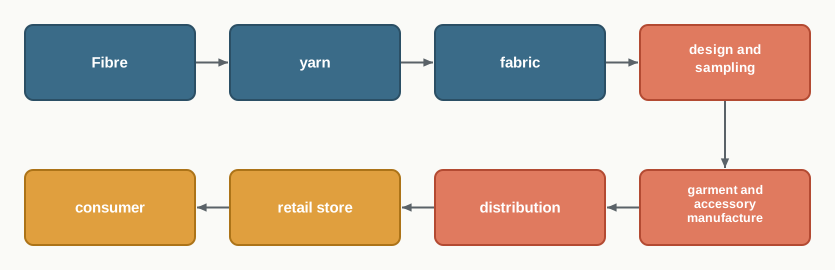
Fig. 9.2 – Stages from fibre to consumer.
A person working in this industry may stand at any point on that chain, but has to understand all of it. A merchandiser who does not know how long a fabric takes to reach a factory cannot promise a delivery date, and a designer who does not know what a shop can sell will design garments that stay on the rack.
Why Fabric Knowledge Matters
This is also why the study of textiles belongs inside the study of fashion. Fabric is not a surface a design is printed on; it is the material that decides whether the design can exist at all. A sharply pleated shape needs a fabric that will hold a crease, and a design that depends on soft folds will look stiff and wrong if it is cut in a crisp fabric.
Knowing fibres and fabrics therefore lets you judge a design before it is stitched. You can look at a drawing and a swatch together and say whether the two belong to each other. Nothing else in the industry substitutes for that judgement.
Planning, Buying And Selling
Merchandising adds a second kind of judgement, about time rather than material. It asks first what has become fashionable, why it has, and when the change happened. It then asks a narrower question — whether that particular style suits this particular shop and its customers, and for how long it is likely to keep selling.
Answering those questions well is the whole job, and it can be summed up in three words: planning, buying and selling. Decide what is wanted, obtain it in the right quantity at the right time, and move it to the customer before the demand passes.
9.3 Basic Concepts Of Fashion
Fashion today is a large business, and the people it employs are spread across many different kinds of work. Designing and manufacturing are only the beginning. Distribution, marketing, retailing, advertising, communications, publishing and consulting all draw their living from the same industry.
Because the business is this wide, it cannot be understood by studying garments alone. You need to understand what fashion actually is, how it behaves over time, and what makes it change when it does. Those are the fundamentals, and the rest of this chapter rests on them.
9.3.1 Fashion Terminology
People use the words fashion, style, fad and classic loosely in conversation, often as though they meant the same thing. In this industry they do not. Each names something different, and mixing them up leads to real mistakes — a buyer who treats a fad as a fashion will order far too much of it.
Fashion is the style or styles most popular at a given time. Notice that the word describes acceptance, not appearance. Nothing about a garment makes it a fashion; what makes it a fashion is that a large number of people are wearing it now.
Style is any particular look or characteristic in apparel or accessories — a collar shape, a sleeve, a neckline, a length. A style may come into fashion and go out of it again, but the style itself always remains. The straight-cut kurta did not stop existing in the years when nobody was wearing it; it simply stopped being in fashion.
This is the single most useful distinction in the whole vocabulary. Style is a description of a look. Fashion is a statement about how many people are choosing that look at the moment.
Fads are short-lived fashions that can come and go within a single season. They lack the design strength to hold consumer attention for long, which is why they vanish as quickly as they appear. Hot pants, baggy pants and unmatched buttons are examples of fads.
Classic styles never become completely obsolete. Instead they remain more or less accepted for an extended period, moving in and out of strong popularity without ever disappearing. A classic is characterised by simplicity of design, and it is that simplicity that keeps it from being easily dated. Blazer jackets, polo shirts and the Chanel suit are examples of classics.
The reason simplicity works this way is worth stating plainly. A garment covered in the details of one particular season carries the date of that season with it, and looks wrong once the season has passed. A garment with few details carries no date, so there is nothing in it to go out of fashion. Table 9.1 sets the four terms side by side.
For a merchandiser these four words turn into money. Stock a classic and it will keep selling quietly for years. Stock a fashion and it will sell well for a season or two. Stock a fad in large quantity and you may be left holding it after the season it belonged to has ended.
9.4 Fashion Development
Anyone working in this industry needs a grasp of the fundamentals of fashion, and the first of them is how the fashion business itself grew. A designer reads the history of fashion the way a farmer reads the weather of past years. It does not tell you what will happen, but it tells you what tends to happen, and that is enough to plan with.
There is a second reason. Ideas from the past are constantly reinterpreted for present-day fashion, so a designer who knows what has already been done has a far larger stock of material to work from.
Fashion, in the sense of a look that changes every season, is relatively new. In ancient and medieval times, styles stayed practically unchanged for a century at a stretch. Cloth was made by hand and was costly, garments were repaired and handed on rather than replaced, and most people never saw dress from outside their own district.
The Renaissance loosened all three of those constraints. As Western Europe came into contact with other cultures, customs and costumes, the pace of change in dress picked up sharply. New fabrics and new ideas arrived together, and people began to want new things more often.
9.4.1 France — The Centre Of Fashion
Before the Industrial Revolution, society was divided broadly into two groups, the wealthy and the poor. Only the wealthy could afford clothes that followed a fashion, because everyone else owned a few garments and wore them until they were finished. Fashion was therefore something a very small number of people took part in.
Within that small group, the French royal court set the standard. During the long reign of King Louis XIV, and still more in the decades that followed, members of his court became the trendsetters of taste, and Paris became the fashion capital of Europe. By the early eighteenth century, French dominance over international fashion was firmly in place.
Two things held it there. The first was the support of the royal court itself, which spent heavily on dress and made following that dress a mark of standing. The second was the French silk industry, centred on the city of Lyon, whose weavers supplied the court with silk fabrics, ribbons and laces.
The garments themselves were entirely handmade. Intricate seaming demanded painstaking hand sewing, and every piece was custom made — cut and stitched to fit one named customer’s exact measurements. A garment took weeks, and no two were identical.
The art of dressmaking practised in this way was called couture, pronounced koo-toor. A male designer working in it was a couturier and his female counterpart a couturiere. Both words are still used, though today the plain word designer is used for anyone in the role.
9.4.2 The Industrial Revolution And The Coming Of Ready-To-Wear
The Industrial Revolution marked the beginning of technological advance in textile and apparel production. The spinning jenny, invented by James Hargreaves in 1764, allowed one worker to spin several threads at once. The power loom, developed by Edmund Cartwright in the 1780s, mechanised weaving in the same way. Together they meant that far more fabric could be produced in far less time.
Mechanised spinning and weaving spread outward from Britain and gave rise to the American textile industry. Trade and industry grew rapidly on both sides, and out of that growth came something new — a middle class with money left over after necessities, and a willingness to spend it on the comforts of life, including better clothing.
That middle class is what fashion needs in order to exist on a large scale. A style can only become a fashion if a large number of people are able to replace their clothes before the old ones wear out.
The Sewing Machine
The invention of the sewing machine turned a handcraft into an industry, and in doing so it made fashionable clothing accessible to ordinary people for the first time. Mass production — making goods in large quantities to a single standard design — became possible in apparel only once seams could be stitched by machine.
Isaac Singer’s contribution was the foot treadle, developed in the 1850s. A treadle is a pedal that the worker rocks with the foot to drive the machine, and it mattered because it left both hands free to guide the fabric instead of turning a crank. An early large use of sewing machines was the making of uniforms during the American Civil War. Fig. 9.3 shows the parts of such a machine.
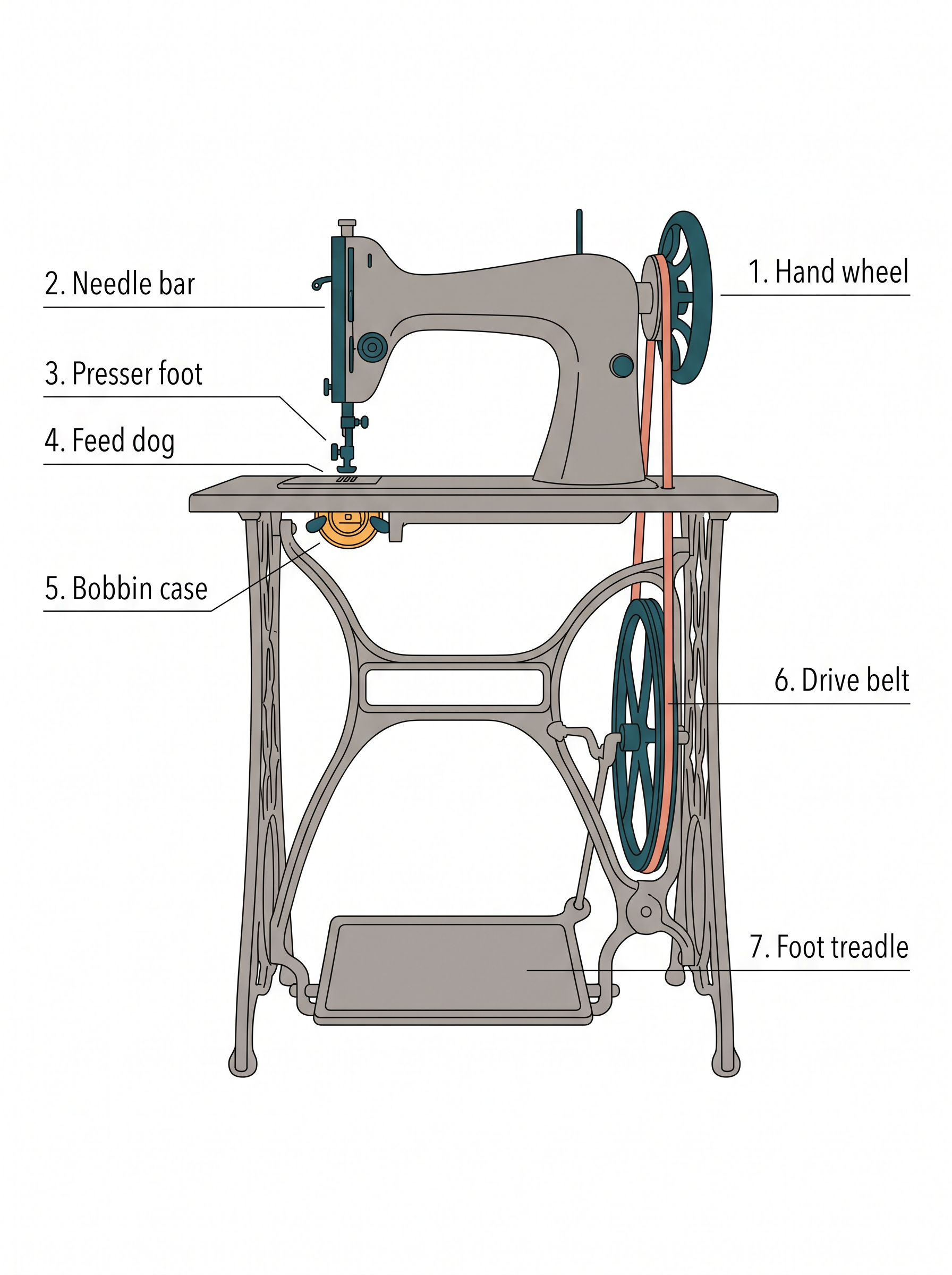
Fig. 9.3 – A treadle sewing machine.
Clothes Made For Work
Sturdy work trousers were among the first garments made in quantity for people who worked with their hands. Levi Strauss, a merchant who set up business in San Francisco in 1853, supplied hard-wearing cloth to miners and labourers. In 1873 he and a tailor, Jacob Davis, took out a patent for placing copper rivets at the points where work trousers tore first, at the pocket corners and the base of the fly.
The fabric these trousers were made from, denim, is a strong twill-woven cotton that was already old when they were made. What was new was the idea of manufacturing clothing designed for the conditions of a particular kind of work, and selling it ready-made to anyone who did that work.
Buying Clothes: Fairs, Bazaars And Shops
Through the nineteenth century, affordable fashions reached the general public mainly through fairs and bazaars. Travelling merchants brought clothes to these markets, and buyers and sellers usually bargained over the price rather than paying a fixed one.
As large numbers of people settled in towns, general stores were set up to serve them, and the growing demand for a variety of goods pushed retail stores to multiply in the cities. Women began wearing separate skirts and blouses in the 1880s, and this was an important step towards ready-made clothing for women. Lengths and waistlines could be adjusted easily, so a working household could add variety to a wardrobe simply by mixing separates.
The Arrival Of Prêt-à-Porter
Prêt-à-porter, French for ready-to-wear, describes factory-made clothing sold in finished condition and in standardised sizes. Prêt-à-porter lines were the first radical alternative to couture pieces when they reached boutiques in the 1960s. Yves Saint Laurent is credited as the first French haute couturier — a designer of the highest class of custom dressmaking — to bring out a full prêt-à-porter line.
The contrast is with bespoke, made-to-measure haute couture, in which each garment is made for one customer’s body. Table 9.2 sets the two out side by side.
9.4.3 Fashion Evolution: The Fashion Cycle
Fashion does not change at random. A style is taken up slowly, spreads, reaches a height of popularity, falls away and is finally dropped, and the next style begins the same journey. This regular movement is called the fashion cycle.
Because the cycle is measured by how many people are buying a style, it can be drawn as a graph of sales against time. The shape that results is a bell curve, rising from almost nothing, reaching a rounded peak and falling away again, as shown in Fig. 9.4.
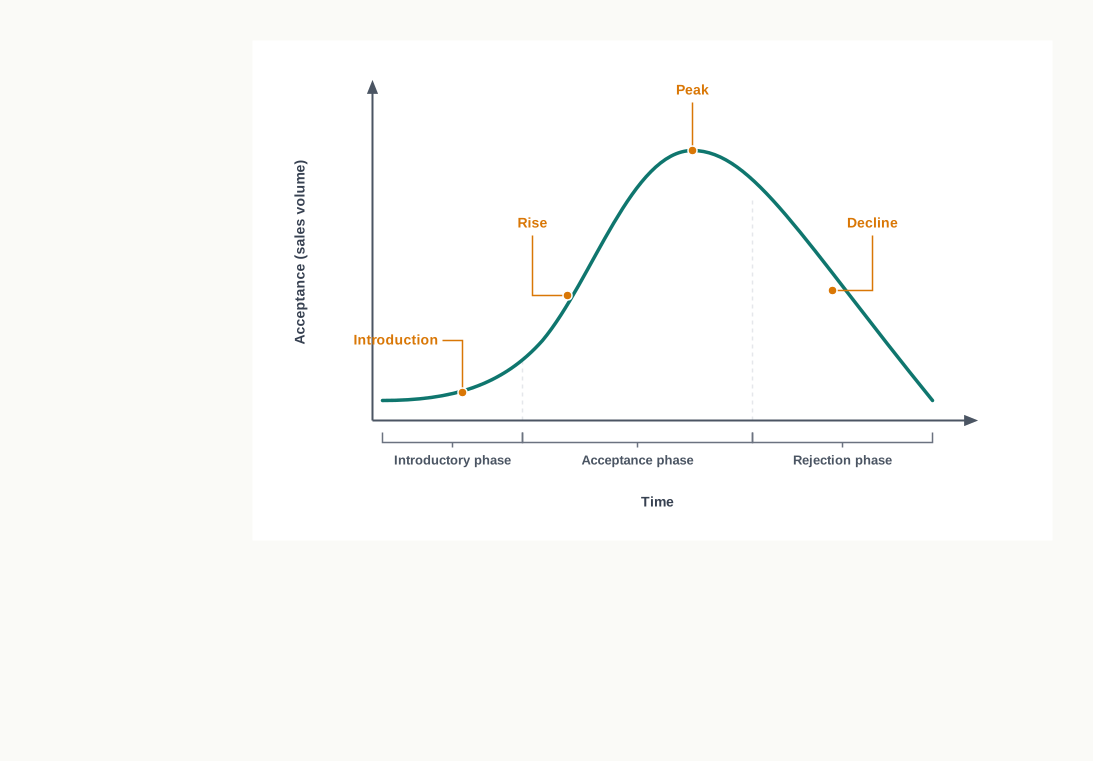
Fig. 9.4 – Stages of the fashion cycle.
9.4.3.1 Stages Of The Fashion Cycle
The cycle is described in five stages. Each is a stage in the acceptance of a style, not in its design, so what changes from stage to stage is the number of people willing to buy it.
- Introduction of a style. Designers interpret their research and creative ideas into apparel and offer the new styles to the public. Designs are created by changing elements such as line, colour, shape, fabric and details, and by altering how those elements relate to one another.
- Increase in popularity. As the new fashion is purchased, worn and seen by many people, it begins to rise in popularity.
- Peak of popularity. When a fashion is at the height of its popularity it may be in such demand that many manufacturers copy it, or produce adaptations of it at several different price levels.
- Decline in popularity. Eventually so many copies are mass produced that fashion-conscious people tire of the style and begin to look for something new. These declining styles are moved to the sale racks in retail stores.
- Rejection of a style, or obsolescence. In the last phase, some consumers have already turned to new looks, and in doing so they begin the next cycle.
The last stage is worth pausing on, because it is what makes this a cycle rather than a line. Rejection of one style is not an ending. It is the same act as the introduction of the next one, seen from the other side.
Knowing the cycle changes how you look at a shop. A style you are seeing for the first time, in only one or two shops, sits at the left of the curve and will cost the most. The same style at the end of its run, on a sale rack, sits at the right. What you are choosing between is not only a price but a position on that curve.
9.5 Fashion Merchandising
A shop that has the right garment but gets it in a month late has failed. So has a shop that has it on time but prices it beyond its customers, and so has one that prices it well but keeps it at the back of the store where nobody sees it. Getting all of these right at once is not luck. It is planning, and that planning is what merchandising means.
Fashion merchandising is the planning required to have the right merchandise, at the right time, at the right place, at the right price, in the right quantity and with the right sales promotion. When all of these conditions are planned together rather than separately, a business can work at its greatest profit.
The person who does this work is the fashion merchandiser. The role sits between the creative side of the industry and the commercial side, and belongs fully to neither.
9.5.1 The Role Of The Fashion Merchandiser
To see what the work involves, it helps to follow the merchandiser through four aspects of the business — manufacturing, buying, promoting and selling. The same person does not always do all four, but the four together describe the field.
In Manufacturing
In manufacturing, a merchandiser makes significant input on the types of fabric used for a piece of clothing. A designer’s vision reaches reality only through a fabric that can carry it, and a strong historical and socio-cultural understanding of fabrics is what allows the merchandiser to suggest the right one.
Using knowledge of fabric and clothing construction, the merchandiser then finds the best way to manufacture the item. Best here means something precise. It means the method that produces the intended garment at a cost the target market will pay.
In Buying
Buying becomes part of merchandising when the merchandiser buys fashion items to be presented in a store. Two kinds of knowledge are needed. The merchandiser must know the target market for the item, and must be well versed in forecasting — the analysis of fashion trends in order to judge what will sell in a season that has not yet arrived.
Accurate forecasting allows accurate ordering, which is the whole point. Order too little of a rising style and the shop turns customers away; order too much of a falling one and the stock has to be sold at a loss. A merchandiser working alongside a designer again offers expertise on textiles and fabrics at this stage.
In Promoting
When a merchandiser works for a designer, promoting that designer’s product to stores that may buy in large quantities becomes the first priority. The work calls for a creative mind, strong visual merchandising skills — the arrangement and display of goods so that they attract and inform the shopper — and sharp production skills as well.
One standard tool of promotion is the fashion show, in which creations and visual effects are deliberately exaggerated to capture the attention of potential buyers. It is worth understanding why the exaggeration is deliberate. The show is not selling that garment to a shopper; it is selling an idea to buyers who will then order a wearable version of it.
Merchandisers also seek out the right target market for a designer’s clothing, whether that is children’s clothing stores, large stores carrying many departments, or discount retailers.
In Selling
Selling is the final component. A merchandiser working with a designer is responsible for selling fashion items to stores, which then sell them on to consumers. Here too an understanding of forecasting and market trends is needed, because the merchandiser has to advise the designer on how much of each item to produce.
Creativity matters in selling as much as in design, since the merchandiser must suggest how the items should be displayed within the store. When the merchandiser works for a retail store rather than a designer, the responsibilities become buying the fashion items and presenting them within the store.
9.5.2 Levels Of Merchandising
Merchandising takes place at several levels of the industry. In the fashion industry there are three levels, and they differ in who employs the merchandiser and whose interest is being served.
Retail organisation merchandising is a specialised management function within the fashion industry. It is the business of moving the fashion world from the designers’ showroom to the retail sales floor and into the hands of consumers. It works through the internal planning that takes place within a retail organisation, and it ensures that an adequate amount of merchandise is on hand and sold at prices consumers are willing to pay, so that the operation stays profitable.
Buying agency merchandising provides consultancy services for the buying of goods. A buying agency acts as a procurement office on behalf of buyers, and selling through such an agency is profitable for exporters because it saves significant cost and time. The buying agent identifies vendors, negotiates costs, checks in-process quality and carries out pre-shipment quality inspection, keeping regular control over quality throughout production.
Export house merchandising is best understood through the role of a merchandiser inside an export house. There are two types. The buyer merchandiser acts as a link between the buyer and the manufacturer, and is responsible for ensuring that the product is developed as the buyer requires — which makes sourcing, sampling and communication with the buyer that person’s work. The production merchandiser is a link between production and the buyer merchandiser, and is responsible for ensuring that production runs to the buyer’s schedule and requirements. Table 9.3 compares the three levels.
9.5.3 Target Market And Market Segmentation
No business sells to everybody. The target market is the category of consumers a business is aiming at when it sells a product. Identifying it matters because it lets the sales department concentrate on the consumers who are most likely to buy, which gives the highest return on money spent on marketing and sales.
The target market is arrived at through market segmentation, a strategy that divides a larger market into subsets of consumers who share common needs and common uses for the goods and services on offer. Fig. 9.5 shows the idea.
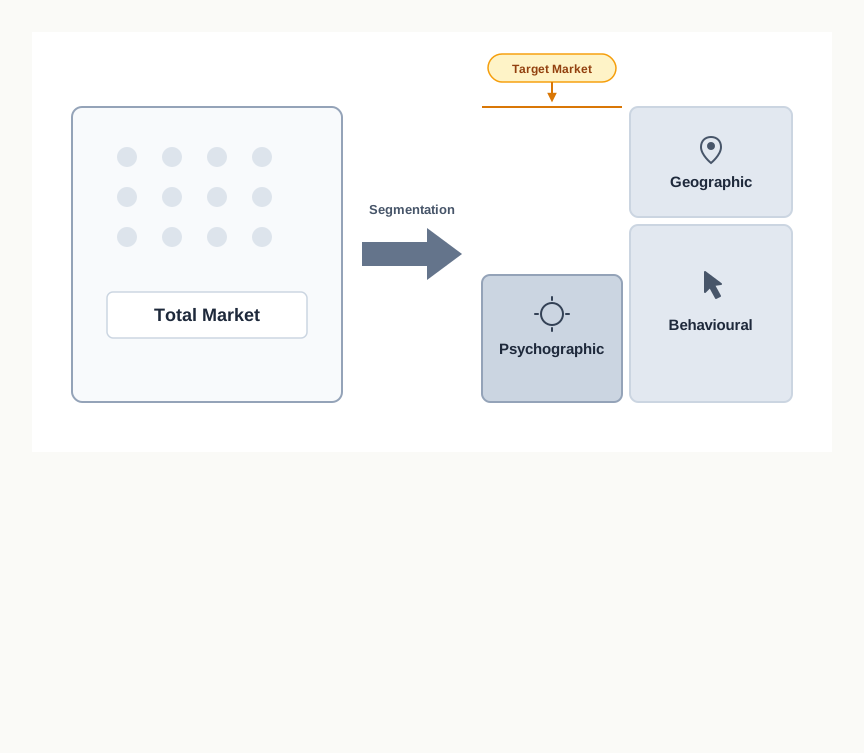
Fig. 9.5 – Market segmentation.
A market can be segmented in several ways, and they are used together rather than one at a time.
- Demographic segmentation is on the basis of population, age, gender, occupation, education and income.
- Geographic segmentation is on the basis of cities, states and regions. Climate varies from place to place and plays an important part here, because the choice of clothing is strongly climate dependent.
- Psychographic segmentation is on the basis of lifestyle — social activities, interests, leisure pursuits, needs and wants. People with similar lifestyles can together make up a target market group.
- Behavioural segmentation is on the basis of opinion about specific products or services. Ratings of how far a product or service is used are often collected, and these help in improving it and in making it different from what others offer.
A merchandiser has one more thing to read besides the segments, and that is consumer demand itself. Behind every purchase there is a reason for buying — need, comfort, price, durability, the wish to look current, the influence of people around the buyer. Understanding these buying motivations is what turns a list of segments into a workable plan.
9.5.4 The Merchandising Rights
The whole of merchandising is often summed up as a set of conditions, each described as a right. They are not six separate tasks but six tests applied to one plan, and a plan that fails any one of them fails as a whole.
- Right merchandise. Retailers must fill their shelves with the merchandise the customer wants.
- At the right place. The location of the merchandise is of prime importance, because it decides how easily customers can reach it.
- At the right time. Much merchandise is seasonal in nature and must be on hand when it is most needed.
- In the right quantity. This means a profitable balance between the volume of sales and the amount of inventory held.
- At the right price. The merchandiser must arrive at a price high enough to give the store a profit, yet low enough to meet the competition and the customers’ expectations.
- With the right promotion. A right balance between the money invested and the appeal created for customers is what makes promotion successful.
Test the six against any shop you know. If the umbrellas arrive after the rain has set in, the timing was wrong. If half of them are still stacked in July, the quantity was wrong. The rights are useful precisely because they let you name which part of a plan failed instead of calling the whole season a bad one.
9.6 Fashion Retail Organisations
Retailing is where the whole chain finally meets the customer, and it is organised in more than one way. Organisational structure means a clear understanding of the authority and responsibility attached to every job that has to be done — who decides, who carries out, and who answers for the result.
No single structure suits every business. The organisational system a retail firm adopts differs with the type of merchandise it sells, the size of the firm, and the customer it is aiming at. A shop selling one kind of goods to a neighbourhood does not need the arrangement that a firm running forty branches needs.
9.6.1 Types Of Fashion Retail Businesses
Fashion retail businesses fall into three broad types, set out in FC 9.3.
Flowchart
FC 9.3 — Types Of Fashion Retail Businesses Fashion retail businesses → branches into three: (a) small single-unit store; (b) department store; (c) chain store
A small single-unit store is a neighbourhood store. These are single stores, owned and operated by the owner and the family, and they stand or fall on knowing their own locality well.
A department store consists of separate sections, known as departments, each carrying a different class of goods — clothing, sporting goods, automotive supplies, health and beauty products, electronics equipment. Some department stores also sell food products. What defines the type is not size alone but this division into departments under one roof and one management.
Chain stores are retail outlets that share a brand and a central management, and they usually follow standardised business methods and practices. This is why a chain outlet in one city feels familiar to someone who has only ever visited its branch in another. The standardisation is deliberate, and it is what allows buying to be done centrally for all the branches at once. Table 9.5 sets the three types side by side.
9.6.2 Major Divisions Of A Retail Organisation
Once a retail firm grows past a certain size, the work is grouped into divisions, each responsible for one kind of task. The larger the firm, the more sharply these divisions are separated.
- Merchandising division: buying, merchandise planning and control, selling, and fashion coordination — the work of keeping the different lines the store carries consistent with one another and with the season.
- Sales and promotion division: advertising, visual merchandising, special events, publicity and public relations.
- Finance and control division: credit, accounts payable and inventory control, which is the tracking of what stock is held, what has moved and what has not.
- Operational division: maintenance of facilities, protection of the stores and the merchandise, personnel, customer service, and the receiving and marking of merchandise.
- Personnel and branch store division: this may function separately where store operations are very large.
Reading the list in order shows the logic behind it. The first division decides what the store will sell, the second makes it known, the third keeps account of the money and the stock, and the fourth keeps the premises and the people running. Each division exists because someone must be answerable for that class of work, not merely because the work has to be done.
This is why an organisational chart is worth reading before you judge a shop. When something goes wrong in a large store, the useful question is not who is careless but which division owns that decision — and the answer is usually visible in the structure itself.
9.7 Preparing For A Career
This career joins style to business sense, and that pairing decides what preparing for it involves. A flair for fashion on its own will not carry anyone through, because a flair produces designs and a business needs designs that can be made, priced, moved and sold.
9.7.1 Skills Required In Fashion Business
Three primary skills are needed by a fashion designer, a merchandiser and a marketer alike. They pull in different directions, which is exactly why few people arrive with all three and why each has to be worked at separately.
Forecasting Ability
The ability to forecast fashion trends is an essential part of this career. It rests on a thorough knowledge of past trends, on close attention to current ones — which often show themselves as very small changes within the industry rather than as obvious ones — and on an awareness of how the marketing of an item itself contributes to a trend.
The purpose is to stay ahead. A trend that everyone can already see has passed the point at which anyone can profit from it, so the value of forecasting lies entirely in being early enough to act.
Analytical Ability
Merchandisers and marketers must be able to handle the money side of their work. That means keeping abreast of the economy as a whole, of the position of their own company within it, and of how a particular style will fit into a consumer’s budget.
These factors do not point the same way, and the skill lies in holding them together. A style may be right, the company’s finances may allow it, and the customer’s budget may still not stretch to it — and a merchandiser who cannot see all three at once will make a decision that is correct on one count and wrong overall.
Communication Ability
Excellent communication skills are essential in this field. A merchandiser negotiates prices with manufacturers and, at the other end of the chain, has to sell fashion choices to the public. Much of that work is written — advertising copy, press releases, and letters addressed to individual consumers.
Notice that the same person must argue down a price in one conversation and make a garment sound desirable in the next. Those are two different kinds of writing and speaking, and both are learnt.
9.7.2 Educational Programmes
Fashion designers usually need a degree in fashion design. Some also combine that degree with one in business, marketing or fashion merchandising, and this combination suits those who intend to run their own business or retail store rather than work for someone else.
Several kinds of programme exist in fashion design and merchandising, and a student may take a certificate, a diploma, a bachelor’s degree or a master’s degree in the field. The right choice depends on what each programme is built to do, and the differences between them are real.
- Certificate or diploma programmes in fashion merchandising can usually be completed in 6 months to 1 year. The duration is short because the coursework concentrates on the actual job of merchandising and little else. Such a programme suits someone who wants to enter the field quickly rather than study for several years first.
- Bachelor’s degrees in fashion design or fashion merchandising are 4-year programmes. They combine a substantial amount of general education with fashion and business courses, and they suit a student who wants a broad education and the wider range of openings a degree opens up.
- Master’s programmes related to fashion merchandising are of 2 years. They too combine some general education with fashion and business courses, at a more advanced level than a bachelor’s programme.
Table 9.6 sets the three out for comparison.
There is no single correct route through these programmes, and the choice is a practical one rather than a matter of merit. What matters is matching the programme to what you want from it — speed of entry, breadth of study, or depth in a subject you have already begun.
9.8 Scope And Career Options
Two things draw people towards a career in the fashion industry. One is the income it can offer. The other is the possibility of succeeding on your own rather than inside somebody else’s organisation, and a substantial share of professional fashion designers do work for themselves rather than for an employer.
Designers work from creative and artistic ability, sharpened by training and practice, and they use it to build design concepts for a wide range of applications. That range is what makes the field larger than it first appears, because designers are now wanted in a variety of industries and not only in clothing.
Because demand tends to be for designers who are strong in one particular field, most people entering the industry concentrate their talent in a single specialised area. Interior design, merchandise display, clothing and apparel, and theatre and film sets are among the commonest of these. Specialising early gives you depth; it does not close the other doors, since the underlying skills of proportion, colour and composition travel between them.
One requirement runs through all of them. Market and fashion trends change constantly, so you have to keep equipping yourself with fresh ideas throughout a career rather than only at the start of it.
Some Careers In Fashion Design
- Visual merchandise designers are mainly responsible for designing window displays, arranging store merchandise, creating props and accents, organising the placement of clothing, styling mannequins and leading marketing campaigns.
- Fashion designers create designs for clothing and apparel. Some work with established designers, and others manage fashion labels of their own.
- Set designers conceptualise the designs needed for films, television and theatre productions. Their designs must always follow what the script or the director requires, which makes this a career in working to a brief. Some set designers also produce designs for trade shows and museums.
- Interior designers combine form with function. Their work is to introduce interior concepts that increase the beauty, safety and usefulness of a space, and they are employed in retail stores, homes, offices, hospitals, hotels and many other settings.
Table 9.7 sets the four out side by side.
You now have enough to judge the field for yourself rather than by its reputation. Ask of any fashion career three questions — what exactly is being designed, for whom, and under what constraint. A set designer works under a script, an interior designer under safety and use, a visual merchandiser under the few seconds a passer-by gives a window. Choosing a career here is largely a matter of choosing which constraint you would enjoy working against.
9.9 Summary
- Trade began with barter, the direct exchange of one good for another, and for centuries whatever was produced found a buyer, so deciding what to stock was hardly a decision.
- Factory production widened choice, and choice created the need for someone to decide what a shop should stock, in what sizes, at what price and at what time.
- Ready-to-wear clothing is made in advance in standard sizes and sold finished; it grew through the later nineteenth century and was established at scale by the 1920s.
- Fashion merchandising emerged as a specialisation once clothing became the leading merchandise of large stores.
- Fashion design and merchandising cover the whole chain from fibre to consumer, including the making of apparel and accessories and the shops that sell them.
- Textile knowledge belongs to fashion study because the fabric decides whether a design can exist at all.
- Merchandising can be summed up as planning, buying and selling.
- Four terms must be kept apart:
- fashion is the style or styles most popular at a given time;
- style is any particular look or characteristic in apparel or accessories, and it always remains even when out of fashion;
- a fad is a short-lived fashion that comes and goes in a single season, lacking the design strength to hold attention;
- a classic never becomes completely obsolete, because simplicity of design keeps it from being easily dated.
- Fashion, in the sense of a look that changes each season, is relatively new; in ancient and medieval times styles stayed practically unchanged for a century at a time.
- The Renaissance brought Western Europe into contact with other cultures, customs and costumes, and the pace of change in dress accelerated.
- France became the centre of fashion for two reasons — the support of the royal court, whose members set taste and made Paris the fashion capital of Europe, and the development of the French silk industry.
- Couture was the term for the art of dressmaking; a male designer was a couturier and a female designer a couturiere, and all such clothing was handmade and custom made to one customer’s measurements.
- The Industrial Revolution mechanised spinning and weaving, produced far more fabric in far less time, and created a middle class with money to spend on better clothing.
- The sewing machine turned a handcraft into an industry and made mass production of apparel possible; Isaac Singer’s foot treadle left both hands free to guide the fabric.
- Clothing made for particular kinds of work, such as riveted denim trousers for miners and labourers, was among the first apparel manufactured in quantity.
- Separate skirts and blouses, worn from the 1880s, were an important step towards ready-made clothing for women, because mixing separates added variety cheaply.
- Affordable fashions reached the public first through fairs and bazaars where prices were bargained, and later through general stores and the retail stores that multiplied in cities.
- Prêt-à-porter, factory-made clothing sold finished in standardised sizes, reached boutiques in the 1960s as the first radical alternative to bespoke haute couture.
- The fashion cycle is the regular movement by which a style is taken up, spreads, peaks, declines and is dropped; drawn as sales against time, it forms a bell curve.
- The cycle has five stages:
- introduction of a style, when designers offer new styles by changing line, colour, shape, fabric and details;
- increase in popularity, as the style is purchased, worn and seen by many people;
- peak of popularity, when manufacturers copy it or adapt it at several price levels;
- decline in popularity, when fashion-conscious people tire of it and it moves to the sale racks;
- rejection or obsolescence, when consumers turn to new looks and begin the next cycle.
- Fashion merchandising is the planning required to have the right merchandise, at the right time, at the right place, at the right price, in the right quantity and with the right sales promotion.
- A fashion merchandiser converts inspiration into design and manages the planning, production, promotion and distribution of fashion products to meet consumer needs.
- The merchandiser’s role runs across four aspects of the business:
- in manufacturing, advising on fabric and on the best way to make the item at a workable cost;
- in buying, using knowledge of the target market and of forecasting to order accurately;
- in promoting, using visual merchandising and fashion shows to reach stores and buyers;
- in selling, advising on production quantities and on how goods are displayed in the store.
- Merchandising takes place at three levels:
- retail organisation merchandising, the internal planning that keeps the right stock on hand at prices consumers will pay;
- buying agency merchandising, in which an agency acts as procurement office for buyers, identifying vendors, negotiating costs and inspecting quality before shipment;
- export house merchandising, in which the buyer merchandiser links buyer and manufacturer while the production merchandiser keeps production to schedule.
- The target market is the category of consumers a business aims at, and identifying it concentrates effort on those most likely to buy.
- Market segmentation divides a larger market into subsets of consumers with common needs, on four bases:
- demographic — population, age, gender, occupation, education and income;
- geographic — cities, states and regions, where climate strongly affects the choice of clothing;
- psychographic — lifestyle, social activities, interests, leisure pursuits, needs and wants;
- behavioural — opinion about, and use of, particular products and services.
- A merchandiser must also read consumer demand by understanding the motivations behind buying.
- Organisational structure means a clear understanding of the authority and responsibility attached to each job, and it differs with the type of merchandise, the size of the firm and the target customer.
- Fashion retail businesses are of three types:
- the small single-unit store, a neighbourhood store owned and operated by the owner and family;
- the department store, made up of separate sections carrying different classes of goods under one management;
- the chain store, a set of outlets sharing a brand, a central management and standardised business methods.
- A large retail organisation is divided into a merchandising division, a sales and promotion division, a finance and control division, an operational division, and a separate personnel and branch store division where operations are very large.
- Three primary skills are required in the fashion business:
- forecasting ability, resting on knowledge of past and current trends and on staying ahead of them;
- analytical ability, covering the economy, the company’s position and the consumer’s budget;
- communication ability, used to negotiate with manufacturers and to sell fashion choices to the public.
- Programmes in the field differ in length and purpose — certificate or diploma courses of 6 months to 1 year, bachelor’s degrees of 4 years, and master’s programmes of 2 years.
- Careers in fashion design include visual merchandise designers, fashion designers, set designers and interior designers, and each answers to a different constraint.
- Because market and fashion trends change constantly, a person in this industry has to keep acquiring fresh ideas throughout a career.
9.10 Key Terms
- Accessories — the articles worn or carried to complete an outfit, such as a bag, a belt, footwear or a scarf.
- Barter — the direct exchange of one good for another, with no money passing between the two sides.
- Bespoke — made to measure for one named customer, as against made in standard sizes.
- Buying agency merchandising — merchandising done by an agency that acts as a procurement office for buyers, identifying vendors, negotiating costs and checking quality before shipment.
- Chain store — one of a set of retail outlets that share a brand, a central management and standardised business methods.
- Classic — a style that never becomes completely obsolete, its simplicity of design keeping it from being easily dated.
- Couture — the art of dressmaking, in which each garment is made by hand to one customer’s measurements.
- Couturier — a male designer working in couture.
- Couturiere — a female designer working in couture.
- Denim — a strong twill-woven cotton fabric, used for hard-wearing work clothing.
- Department store — a large store made up of separate sections, called departments, each carrying a different class of goods under one management.
- Export house merchandising — merchandising carried out inside an export house, through a buyer merchandiser who links buyer and manufacturer and a production merchandiser who keeps production to schedule.
- Fad — a short-lived fashion that comes and goes within a single season, lacking the design strength to hold attention.
- Fashion — the style or styles most widely accepted and worn at a particular time.
- Fashion cycle — the regular movement by which a style is introduced, rises, peaks, declines and is finally rejected.
- Fashion merchandiser — the person who converts inspiration into design and manages the planning, production, promotion and distribution of fashion products.
- Fashion merchandising — the planning required to have the right merchandise, at the right time, place, price, quantity and promotion.
- Forecasting — the analysis of fashion trends in order to judge what will sell in a season that has not yet arrived.
- Haute couturier — a designer working in the highest class of custom dressmaking.
- Market segmentation — the strategy of dividing a larger market into subsets of consumers who share common needs and uses.
- Mass production — the making of goods in large quantities to a single standard design.
- Merchandise — the goods a shop holds in order to sell them.
- Organisational structure — a clear statement of the authority and responsibility attached to every job in a business.
- Prêt-à-porter — ready-to-wear; factory-made clothing sold in finished condition and in standardised sizes.
- Ready-to-wear — clothing made up in advance in standard sizes and sold finished, rather than stitched to one customer’s measurements.
- Retail organisation merchandising — the internal planning within a retail organisation that keeps adequate stock on hand at prices consumers will pay.
- Small single-unit store — a neighbourhood store, owned and operated by the owner and family.
- Style — any particular look or characteristic in apparel or accessories, which remains in existence whether or not it is in fashion.
- Target market — the category of consumers a business aims at when selling a product.
- Visual merchandising — the arrangement and display of goods in a store so that they attract and inform the shopper.
9.11 Points To Ponder
- A classic is said to survive because simplicity of design keeps it from being dated. Does this mean that a richly ornamented traditional garment can never become a classic, or does ‘dated’ mean something different for a garment whose ornament has been in use for centuries?
- The fashion cycle is drawn as a bell curve of sales against time. What shape would the same graph take for a classic, and what would that shape tell a merchandiser about how much to order and how often?
- Ready-to-wear put fashionable clothing within reach of far more people, but it replaced garments cut to a person’s own measurements with garments cut to standard sizes. What was gained by that exchange, and what was given up?
- Forecasting is valuable only if it is early, yet a merchandiser who stocks a style long before buyers are ready for it loses money just as surely as one who stocks it too late. How might a business act on an early forecast without carrying the whole risk of being right too soon?
- Fashion shows deliberately exaggerate creations and visual effects in order to capture attention. Where does a recognised convention of promotion end and a misleading impression of the product begin?
- Segmentation works by treating consumers as members of a group with shared needs. What does a merchandiser risk missing about individual buyers by planning this way, and when might the method mislead rather than help?
9.12 Objective Questions
- (MCQ) A style that is taken up and abandoned within a single season is called [1]
- a classic
- a fad
- couture
- a target market
- (MCQ) Factory-made clothing sold in finished condition and in standardised sizes is known as [1]
- bespoke clothing
- haute couture
- prêt-à-porter
- merchandise planning
- (MCQ) Dividing a market on the basis of social activities, interests and leisure pursuits is [1]
- demographic segmentation
- geographic segmentation
- psychographic segmentation
- behavioural segmentation
- (MCQ) In an export house, sourcing, sampling and communication with the buyer are the responsibility of the [1]
- production merchandiser
- buyer merchandiser
- visual merchandise designer
- buying agent
- (MCQ) The invention that turned dressmaking from a handcraft into an industry was the [1]
- spinning jenny
- power loom
- sewing machine
- foot treadle bobbin
- (A–R) Choose the correct option. [1] Assertion (A): A classic style does not become completely obsolete. Reason (R): Simplicity of design leaves little in the garment that can go out of date.
- Both A and R are true, and R is the correct explanation of A.
- Both A and R are true, but R is not the correct explanation of A.
- A is true, but R is false.
- A is false, but R is true.
- (A–R) Choose the correct option. [1] Assertion (A): Sales stop rising once a fashion reaches the peak of its cycle. Reason (R): Manufacturers stop producing a style as soon as it reaches its peak.
- Both A and R are true, and R is the correct explanation of A.
- Both A and R are true, but R is not the correct explanation of A.
- A is true, but R is false.
- A is false, but R is true.
- (Match) Match the terms in Column A with their descriptions in Column B. [1]
| Column A | Column B |
|---|---|
| a. Buying agency merchandising | i. Outlets sharing a brand and a central management |
| b. Chain store | ii. A female designer working in couture |
| c. Couturiere | iii. A procurement office acting for buyers |
(Fill in the blank) The direct exchange of one good for another, with no money passing between the two sides, is called ______. [1]
(True/False) Climate is taken into account under geographic segmentation because the choice of clothing depends strongly on it. [1]
(Name) Name the division of a large retail organisation that handles advertising, visual merchandising, publicity and public relations. [1]
(Odd one out) Pick the odd one out and give a reason for your choice: blazer jacket, polo shirt, hot pants, Chanel suit. [1]
9.13 Check Your Concepts
(Short answer) Define fashion merchandising. [2]
(Short answer) State the two reasons that made France the centre of fashion. [2]
(Short answer) Give a reason why a merchandiser must identify the target market before placing an order for stock. [3]
(Short answer) Differentiate between style and fashion, stating the basis of difference. [3]
(Short answer) Why does a garment move to the sale rack during the decline stage of the fashion cycle? [3]
(Short answer) Differentiate between haute couture and prêt-à-porter on any four bases. [4]
(Short answer) Explain the role of a fashion merchandiser in manufacturing and in buying. [4]
(Short answer) What would happen to a season’s business if a store planned the right merchandise at the right price, but ignored the right time and the right quantity? [4]
(Short answer) Explain the five stages of the fashion cycle, and state why the last stage is described as the beginning of a new cycle. [5]
(Short answer) Describe the three levels of merchandising in the fashion industry. [5]
(Short answer) Explain the three primary skills required in the fashion business, and give a reason why a flair for fashion alone does not bring success in this career. [5]
9.14 Identify & Label
(Identify & Label) Look at Fig. 9.3. Identify the part worked by the foot, and state what its invention allowed the operator’s hands to do. [2]
(Identify & Label) Look at Fig. 9.4. Name the three phases marked along the horizontal axis, and state what the vertical axis measures. [3]
(Identify & Label) Look at Fig. 9.4 again. Identify the stage at which manufacturers begin producing adaptations of a style at several price levels, and give a reason for your identification. [2]
(Identify & Label) Look at Fig. 9.5. Name the four bases on which the total market has been divided, and state what the shaded block represents. [3]
(Identify & Label) Look at Fig. 9.0. Identify the person shown wearing the finished gown before the seated clients, and state what her presence in the salon allowed the house to do that an earlier dressmaker could not. [2]
9.15 Case & Application Based
- (Case based) Meera runs a small single-unit store in a town market. A particular sleeve style has been selling steadily in her store for two seasons, and three large chains in the same town have now begun stocking copies of it at lower prices. A travelling supplier offers her a large lot of the same style at a heavy discount, on condition that she takes the whole lot at once.
- At which stage of the fashion cycle is this style most likely to be? Give a reason drawn from the facts of the situation. [2]
- Which of the merchandising rights is most at risk if Meera accepts the offer? [1]
- What advice would you give Meera, and why? [3]
- Which detail in the situation would have to change for the opposite advice to be correct? [2]
- (Case based) An export house has accepted an order for a large consignment of shirts, to be shipped in eight weeks. After the first samples are approved, the buyer asks for the fabric to be changed to a heavier one, which the mill can supply only after three weeks.
- Which merchandiser in the export house will deal directly with the buyer over this change, and what is that person’s responsibility? [2]
- Which merchandiser is responsible for seeing that the consignment still leaves on schedule? [1]
- Name the level of merchandising at work in this situation, and state one way it differs from retail organisation merchandising. [3]
- Explain how the fabric change affects the right time and the right quantity in the merchandise plan. [2]
- (Case based) A chain of clothing stores is opening a new branch and asks its merchandising division to prepare the first stock plan. The branch is in a coastal city where the weather is hot and humid for most of the year, and the surrounding locality is largely made up of college students and young office workers.
- Which two bases of market segmentation are being used here? Name each and quote the detail from the situation that supports it. [2]
- Suggest, with reasons, two decisions the merchandising division should take about the fabrics it stocks. [3]
- The chain follows standardised business methods across all its branches. Explain one advantage and one difficulty this creates for the new branch. [3]