Chapter 10: Care And Maintenance Of Fabrics In Institutions
The City That Sent Its Washing To One Address
In 1890, on a piece of low ground beside a railway line in Mumbai, the city authorities laid out rows of open stone wash pens fed by piped water. It was called the Mahalaxmi Dhobi Ghat, and it was built for a simple reason. A growing city had begun to generate washing that no single household could handle — sheets from hospitals, tablecloths and napkins from hotels, uniforms from clubs and offices. That washing had to go somewhere, be sorted, be returned to the right owner, and come back on time.
More than a century later the ghat is still working, and the problem it was built to solve has not changed. What has changed is the machinery. Alongside the stone pens you will now find washing machines, hydro extractors and heavy irons, and much of the same work is done inside hospitals and hotels themselves, in laundry departments that run like small factories.
Behind all of it lies one question. A hospital sheet and a banquet tablecloth are both cotton, both soiled, both washed in water — yet they are not treated alike anywhere in the process. Why not? The answer is what this chapter is about: matching the treatment to the material, to the soil on it, and to the job the article has to do when it returns.
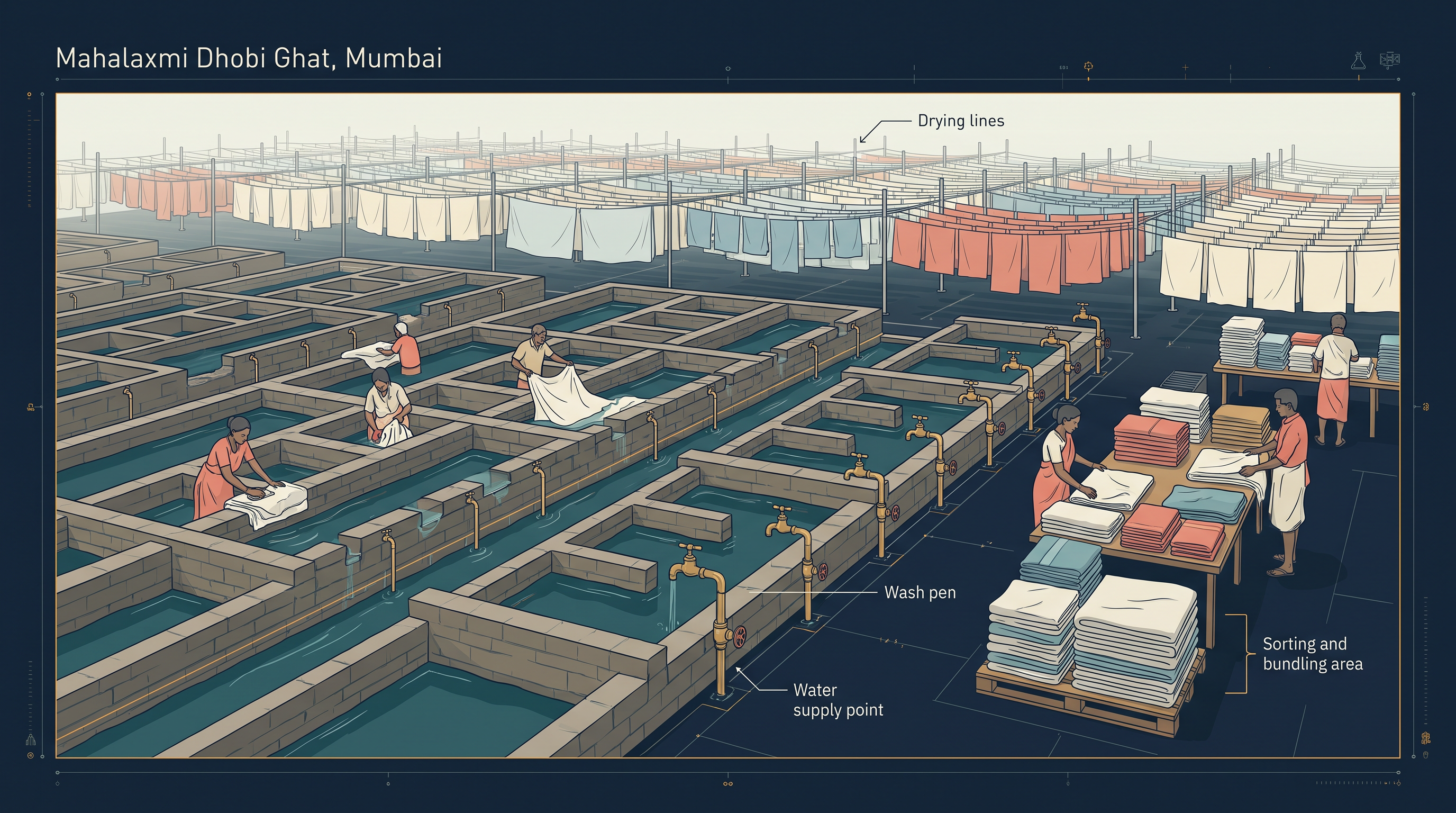
Fig. 10.0 – An open-air community washing ghat.
10.1 Care And Maintenance Of Fabrics: The Basic Idea
You already know that fabrics are used in a home for clothing, bedding, curtains and upholstery. They are also put to work in places that have nothing to do with dressing well. Fabrics line walls and false ceilings in auditoriums to absorb sound, they are used in filters and conveyor belts in industry, and in a hospital they appear as bandages, masks, gowns and drapes.
Each of these uses asks something specific of the material. A bandage must absorb; a mask must filter; a chair cover in a waiting hall must resist abrasion. The fabric is chosen because it has that property, which means the property has to survive as long as the article is expected to last.
This is the point of care and maintenance. Every wash, every drying cycle and every pressing is a small stress on the fibre, and careless treatment shortens the working life of the article. Good care extends the serviceability of a textile product — the length of time it continues to do the job it was bought for, at the standard expected of it.
10.1.1 The Two Aspects Of Care And Maintenance
Care and maintenance has two aspects, and they are not the same task.
- Keeping the material free of physical damage, and repairing any damage that has occurred during use. A torn seam, a burn mark or a missing fastener is dealt with here.
- Retaining or refreshing the appearance of the article — removing stains and dirt, and keeping its texture and visual character as it was.
The first aspect protects the structure of the article, the second its appearance. An institution that attends only to the second ends up with clean linen that tears in a week; one that attends only to the first ends up with sound linen no guest or patient wants to touch. Both are needed together.
10.1.2 Laundry As A Science And An Art
Clean, fresh clothing and crisp household linen do not happen by accident. They are the outcome of a process carried out correctly — either laundry, which cleans a textile article in water with soap or detergent, or dry-cleaning, which cleans it using an organic solvent instead of water, so that fibres which are damaged by water and rubbing are left undisturbed.
Laundry is described as both a science and an art, and each half of that description means something definite.
- It is a science because it rests on scientific principles and techniques — how water and detergent lift soil, how heat affects a fibre, how a stain reacts to an acid or an alkali.
- It is an art because applying those principles well needs mastered skill, and the result is judged by eye. Two people may follow the same instructions and turn out linen of quite different quality.
10.1.3 What Decides The Care A Fabric Needs
There is no single correct way to clean a fabric. What is right for one article will ruin another, so the treatment has to be decided from the material itself. Four things about the fabric, and one about its use, settle the question. They are shown together in Fig. 10.1.
The Fabric Itself
Fibre content is the first and strongest signal. Cotton and linen are cellulosic fibres and take hot water, hard rubbing and strong alkalis without much harm. Wool and silk are protein fibres, and heat, alkali and friction damage them — wool felts and shrinks, silk loses lustre. Synthetic fibres such as polyester and nylon tolerate water well but soften at high ironing temperatures.
The yarn matters next. A tightly twisted yarn is firm and takes rougher handling; a loosely twisted or bulky yarn snags, and a slub yarn catches on a rough surface. Yarn structure is why two cotton fabrics may need different treatment.
The way the fabric is constructed decides how much stress it can carry. A closely woven fabric holds its shape in a machine; a knitted fabric stretches when it is heavy with water and must be supported rather than hung by one corner; an open, loosely woven fabric distorts easily.
Finally, the finish — a treatment given to the fabric after it is made, to add a property it did not have. A starched, glazed, water-repellent, crease-resistant or flame-retardant finish can be dulled or stripped by the wrong detergent or by hot pressing, and with it goes the property the article was chosen for.
The Use It Is Put To
The purpose the article serves decides how far the cleaning must go. A surgical drape has to be disinfected, not merely made to look clean. A restaurant napkin has to look and feel immaculate, though nothing on it is a health risk. A hostel bedsheet has to survive a very large number of washes at low cost. The same cotton fabric, in these three roles, is treated three different ways.
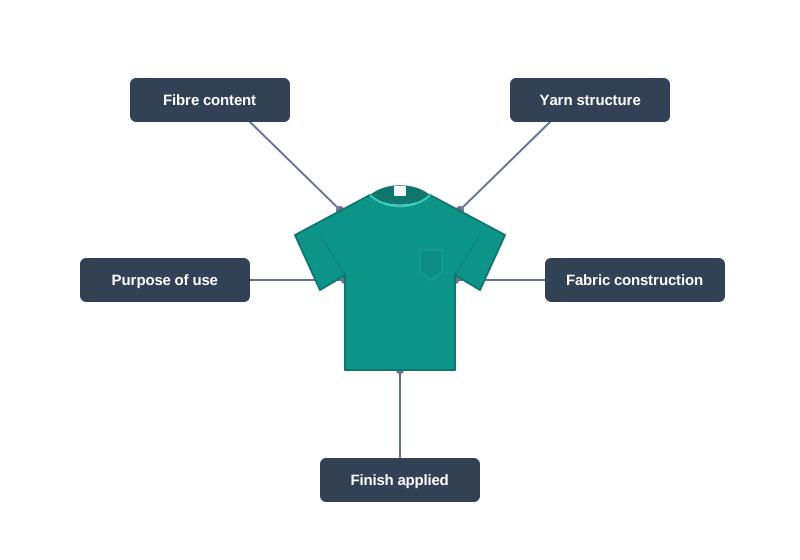
Fig. 10.1 – Factors deciding the care a fabric needs.
Everything that follows in this chapter rests on these five. The equipment in a laundry, the sections a commercial laundry is divided into, and the way a hospital sorts its linen before washing are all ways of grouping articles so that each group can be given the treatment its material and its purpose demand.
10.2 Equipment Used In Care And Maintenance
Whatever the scale of the work — a family washing for five people or a hospital washing for two thousand beds — the same three jobs have to be done. The article has to be washed, it has to be dried, and it has to be smoothed and finished. The equipment in common use therefore falls into three groups.
- Washing equipment
- Drying equipment
- Ironing and pressing equipment
At the household level a large part of the washing is still done by hand, with buckets, basins, bowls, scrubbing boards and brushes. In many homes a basic washing machine has been added to these, and it takes over the heavier part of the work while hand washing continues for delicate or lightly soiled articles.
10.2.1 Washing Equipment
10.2.1.1 Types Of Washing Machines And Levels Of Automation
Washing machines are described in two ways: by where the clothes go in, and by how much of the work the operator has to do.
By loading position there are two models. In a top loading machine the garments are put in from the top. In a front loading machine they are put in through a door on the front. A third familiar form is the two tub machine, which has one tub for washing and a separate smaller tub for spinning out water, so that the load is lifted from one to the other by hand. The three are shown in Fig. 10.2.
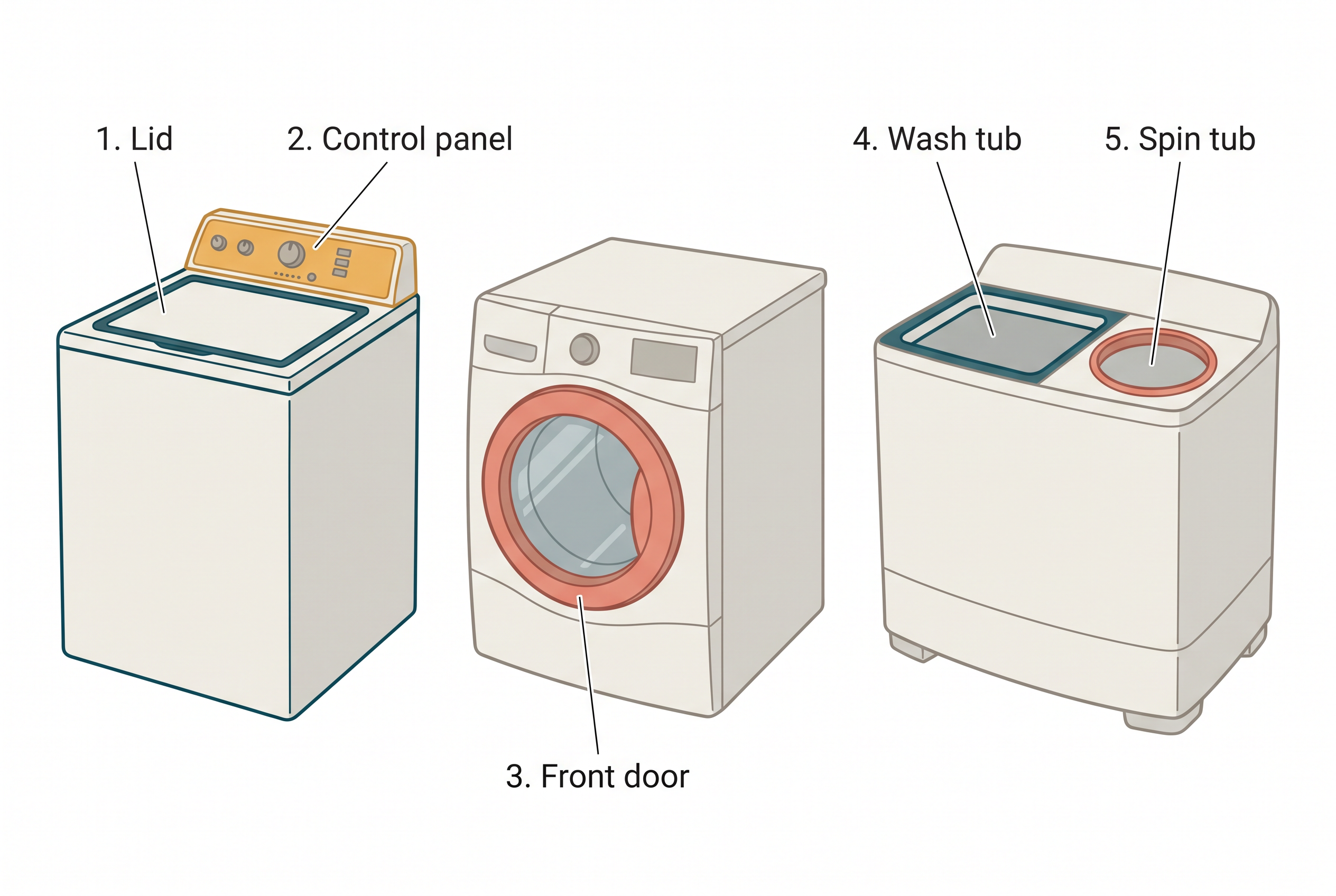
Fig. 10.2 – Three common forms of domestic washing machine.
By level of automation, machines are of three kinds, and the difference lies entirely in how often a person has to step in. Table 10.1 sets them side by side.
A fully automatic machine costs more and uses more water and power in a fixed cycle. A semi-automatic machine costs less and lets the operator reuse rinse water or shorten a cycle, but it cannot be left alone. Neither is better in the abstract; the choice depends on how much water, money and attention a household or an institution can spare.
10.2.1.2 How An Automatic Washer Works
An automatic washer carries out a fixed series of operations in order, and each one prepares for the next. The full sequence is set out in Fig. 10.3.

Fig. 10.3 – Operations of an automatic washer.
- Filling up water. The machine takes in water for the wash.
- Water level control. The level is set to match the size of the load, either automatically or by the operator. Too little water and the clothes cannot move; too much and the detergent is diluted beyond useful strength.
- Regulation of temperature of water. A button, dial or panel indication allows the desired temperature to be selected. It may be the same for the wash and the rinse, or different for the two operations, since a warm wash loosens soil while a cool rinse is gentler on colours.
- Washing. The load is moved about in the detergent solution for a set time.
- Rinsing. The detergent and the loosened soil are carried away in fresh water.
- Water extraction. The water held in the wet load is removed.
10.2.1.3 Methods Of Moving The Fabric In The Wash
Soaking a garment in detergent solution and leaving it there will not clean it. The detergent loosens the soil, but something must then carry the loosened soil away from the cloth and keep fresh solution coming into contact with it. That is the whole idea behind every washing machine ever built.
Machines achieve this movement in three ways, and which one a machine uses follows from its shape. The three are compared in Table 10.2 and shown in Fig. 10.4.
- Agitation. Used in top loading machines. An agitator — a bladed post standing in the centre of the tub — either rotates, moving in one direction, or oscillates, moving alternately in two directions. Either action sets up a current in the tub that forces water through the fabric.
- Pulsation. Also used in top loading machines. The movement is produced by a vertical pulsator, a disc or blade with very rapid vertical movements, which drives the water up through the load.
- Tumbling. Used in front loading machines. Washing takes place in a horizontally placed perforated cylinder revolving in a partly filled tub. With each revolution the clothes are carried up to the top and then dropped back into the wash water. Here the clothes move through the water, instead of the water being driven through the clothes as in the other two.
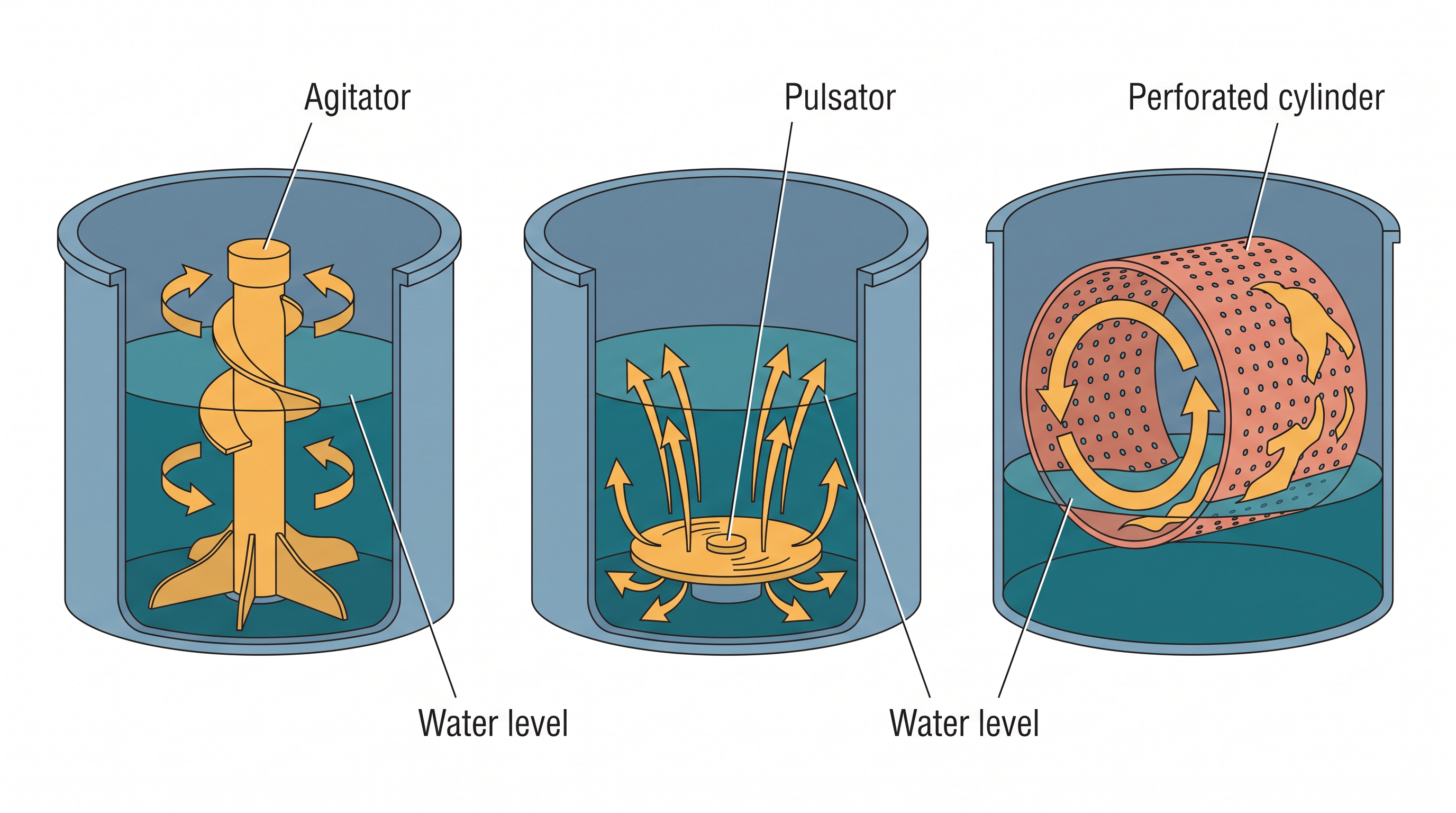
Fig. 10.4 – Agitation, pulsation and tumbling.
The agitator has to survive constant contact with detergents, bleaches and softeners, so it is made of a material those chemicals do not attack — plastic, metal such as aluminium, or bakelite, a hard moulded plastic. Its size and shape are chosen to suit the size of the machine and the kind of fabric it will handle. The speed of agitation can also be varied, so that a sturdy cotton load is worked hard and a delicate load is worked gently.
10.2.1.4 Rinsing And Water Extraction
Rinsing is the important phase of the wash cycle, and it is the one most often cut short. If the rinse is not thorough, detergent and suspended soil are left behind in the cloth. The clothes then look grey and dull and feel harsh to the touch, however well they were washed.
Water is extracted after the wash phase and after each rinse phase of the cycle, because carrying dirty water forward into the next phase defeats the purpose of that phase. It can be done in three ways.
- Spinning. The tub is spun at speeds greater than 300 revolutions per minute (rpm). The spinning generates a centrifugal force, which throws the water outward and up, away from the cloth. The water collected is pumped down the drain.
- Bottom-drain. Machines with perforated tubs stop at the end of the wash phase, and again at the end of the rinse phase, and drain through the bottom. At the end of the drain period the tub begins to spin, which removes the water remaining in the clothes.
- Combination bottom-drain and spin. Some machines drain through the bottom without stopping, so that the bottom draining takes place during the spin period. This gives the best water extraction of the three, because it removes both the heavy dirt that has settled at the bottom and the dirt still suspended in the water.
How much water comes out depends directly on how fast the tub spins. Spin speeds range from 333 rpm to 1100 rpm. A faster spin removes more water and shortens drying — but spinning to near dryness is avoided, because it presses hard creases into the fabric and those wrinkles are then difficult to remove during ironing. The optimum speed is approximately 600–620 rpm, which is a compromise between water removed and wrinkling caused.
10.2.2 Drying Equipment And The Drying Process
Drying in the open air, in sun and wind, costs nothing and is still the commonest method in Indian homes. It is also unreliable. It depends on the weather, it needs space, and it cannot be timed. An institution that must return clean linen to a ward by a fixed hour cannot work that way, so at commercial and institutional level driers are used.
A drier works by passing heated air through a load of damp articles. The moving air takes up moisture from the cloth and carries it out through an exhaust. Two systems of air circulation are used, and they differ in the temperature of the air and the speed at which it moves. Both are shown in Fig. 10.5.
- Low temperature air circulated at high velocity. Room air enters the drier from under the front panel, passes over the source of heat, then travels through the clothes and leaves through an exhaust. Because the air is not very hot and moves quickly, the temperature and humidity of the room around the drier stay normal.
- High temperature air circulated slowly. The air enters and passes over the heat source, and is then drawn by a small fan through perforations at the top of the drier, downwards through the clothes, and out through the exhaust. Since the air moves slowly, it stays in contact with the clothes longer and picks up a great deal of moisture, so the relative humidity of the exhausted air is high.
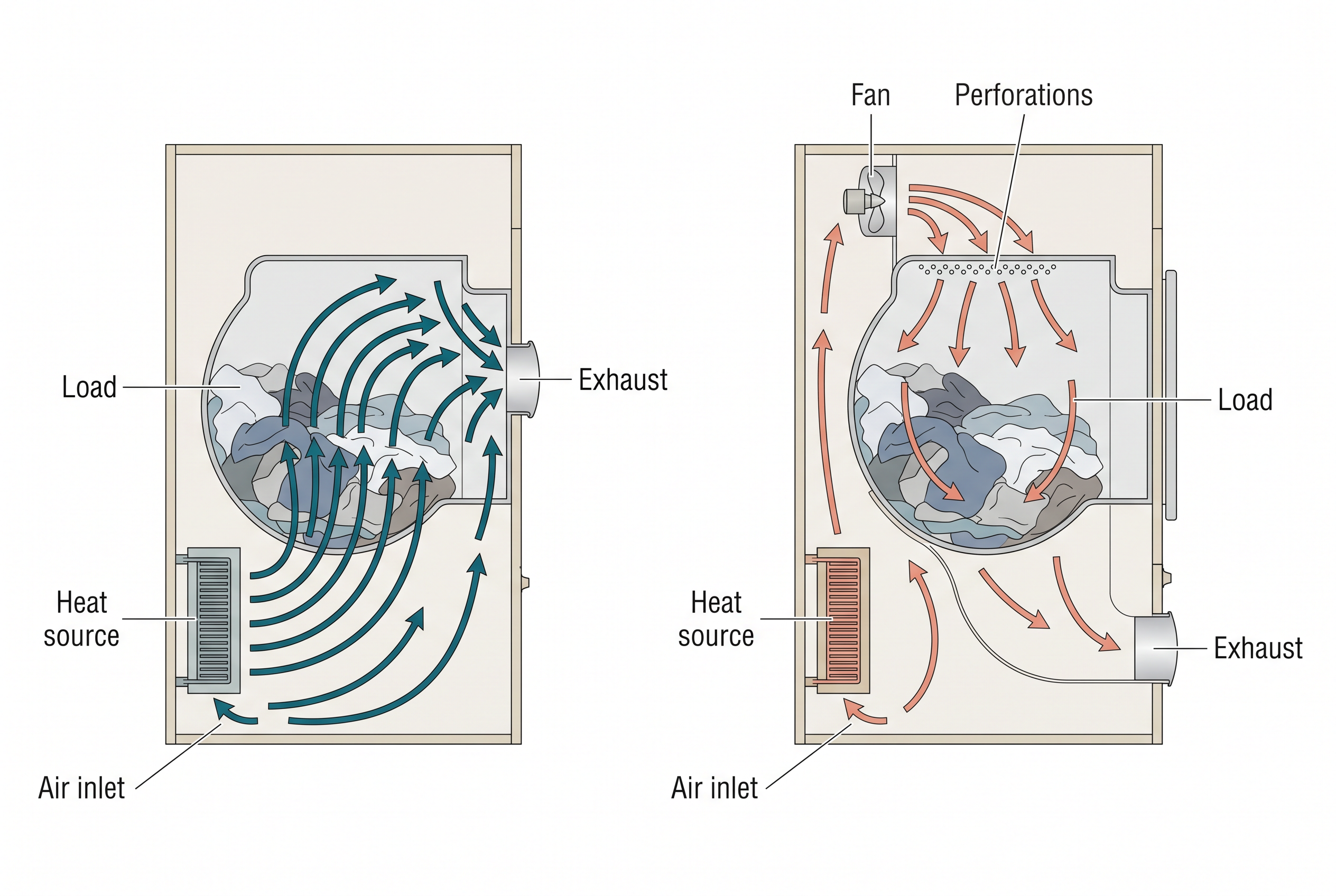
Fig. 10.5 – Two air circulation systems in a drier.
The choice between the two matters to the room as much as to the linen. The first system leaves the working area comfortable, which is why it suits a drier placed inside a building where people work. The second dries a load with less air moved, but sends out very moist air that must be led away properly.
10.2.3 Ironing And Hot Pressing
Almost every household has an iron and a place to work at, whether a permanent table or a folded sheet spread on a bed. Two different jobs are done with it, and they are worth telling apart.
Ironing is the process of smoothing out wrinkles — the creases put into a fabric by wear and by the washing process itself. Pressing is the opposite intention: it puts a crease in deliberately and holds it there, as in the front of a sleeve, a trouser leg or a pleated skirt. Ironing removes what you do not want; pressing places what you do.
An iron works by bringing a smooth, heated metal surface into contact with the fabric. The heat softens the fibres briefly, the weight and pressure of the iron flatten them, and they set in the new position as they cool. This is also why an ironed garment should be allowed to cool before it is folded away.
Most electric irons have an inbuilt thermostat — a device that switches the heating element on and off to hold the soleplate at a set temperature. The dial is marked for different fibres, because the temperature that smooths cotton will melt or glaze a synthetic. Many irons also have a system for producing steam while in use, which dampens the fabric just ahead of the soleplate and makes stubborn creases easier to remove. The parts are shown in Fig. 10.6.
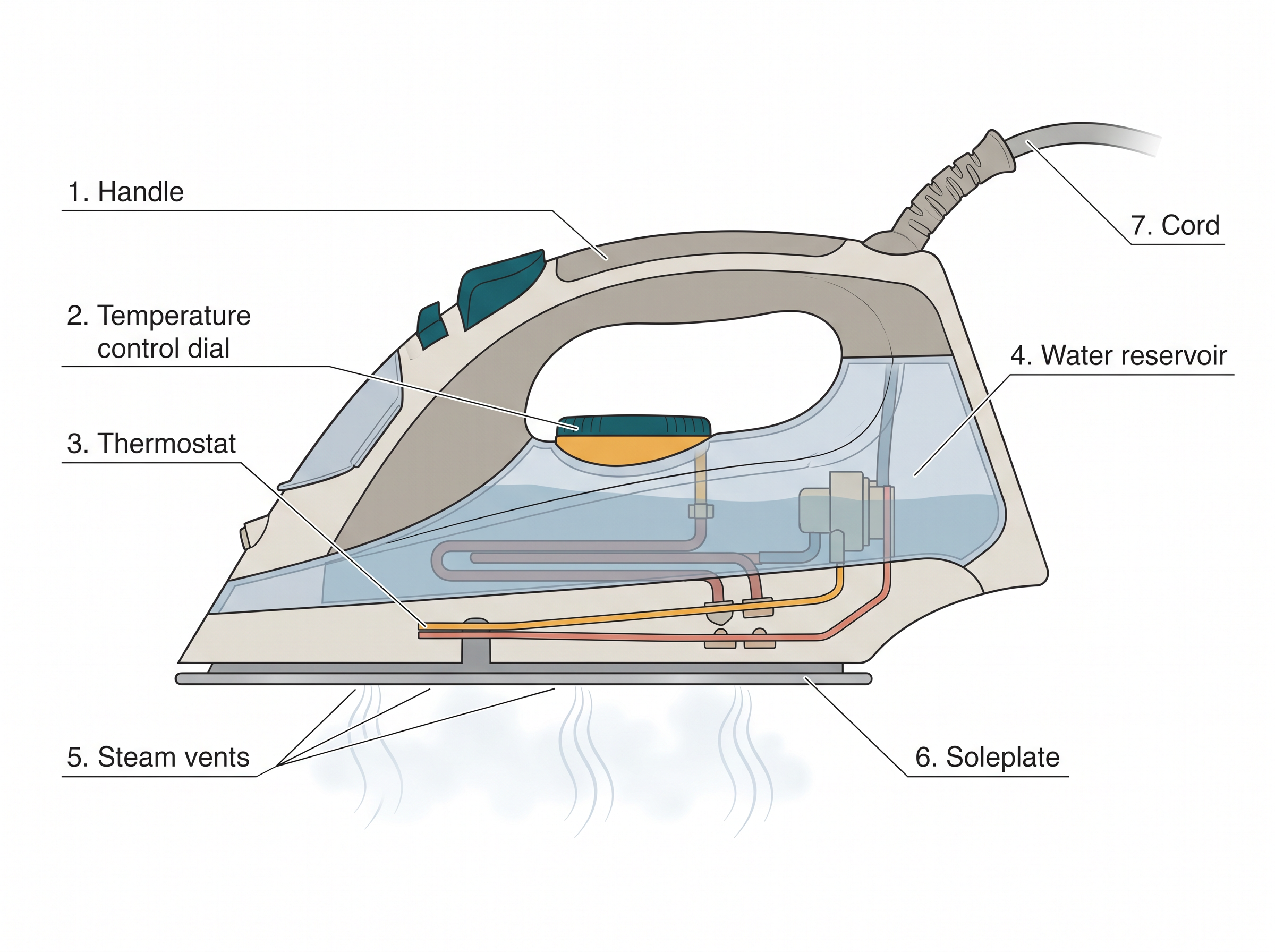
Fig. 10.6 – Parts of an electric steam iron.
The weight of an iron varies from 1.5 kg to 3.5 kg, and the weight is not incidental — part of the work of ironing is done by the pressure the iron exerts. At household level lighter irons are preferred because they are easier to move for long stretches. Heavier articles such as curtains and bed covers are thick and stiff, and need the greater pressure that a heavier iron provides.
10.3 Care And Maintenance Beyond The Household
No household cleans everything it owns. A shirt is washed at home and a heavy quilt is not, and the line between them is drawn by three practical things — the size of the article, the equipment its material needs, and the time the work would take. Care and maintenance therefore happens at several levels at once, and most families use two or three of them in the same week.
10.3.1 Household Laundry And Individual Professionals
Household laundry takes care of clothing and the small articles of daily use — shirts, saris, towels, pillow covers, dusters. These are washed frequently, in small quantities, and the household has the equipment for them.
Bigger articles of household linen, and special articles that need a treatment the household cannot give, go out. A woollen blanket, a curtain the length of a wall, an embroidered piece that must be dry-cleaned — these are sent to a commercial laundry.
Between the two lies a third arrangement. Services are hired from individual professionals, often called dhobis, who collect material from the household for washing, or for ironing and finishing, or for both. They work largely from their own homes, and they serve individual households as well as institutions such as student hostels, small hotels and restaurants.
For the washing itself they use dhobighats — places set aside and marked out for the purpose in towns and cities, with a water supply and built washing platforms. A ghat is shared infrastructure: it gives a worker with no washing plant of his own access to water, drainage and drying space in quantities no house could provide.
10.3.2 Commercial Laundries And Their Sections
Out of this work by individual professionals grew the laundry and dry-cleaning shop. Here the customer brings the articles in, leaves them, and returns a few days later to collect the finished work. The customer may be an individual or an institution.
A larger laundry may run several collection centres or shops in different parts of a city, with the actual processing done at one plant. Some also transport material to and from the customer, which matters most to institutions — hostels, small hotels, restaurants, and small hospitals and nursing homes — because their linen moves in bulk and on a schedule.
How The Work Is Divided
A commercial laundry is organised in sections, and each section does one specific job. There are two ways in which the work is divided.
The first division follows the stages of the process itself: washing, water extraction, drying, pressing and ironing. An article moves from section to section in order, and each section keeps to one operation, which is why its workers become fast and its equipment stays in constant use.
The second division follows the kind of material being handled. A laundry may keep:
- a section for hospital and institutional work, and a separate one for individual and personal work;
- a separate section for dry-cleaning;
- sections for fibre-specific articles — woollens, silks and synthetics — each of which needs its own temperature, agitation and finishing;
- a section for special articles such as blankets and carpets, which are bulky and heavy when wet.
Some laundries also have an arrangement for dyeing, and for special finishes such as zari polishing, which restores the shine of the metallic thread used in zari work after repeated handling has dulled it.
Before any of this begins, most laundries have units for inspection and for sorting out materials, and for the pretreatments that must happen before washing — mending, repairing and stain removal. This order is not negotiable. A tear that goes into a machine unmended comes out longer, and a stain that has been through hot water and pressing is usually set for good. The full path of an article is set out in Fig. 10.7.
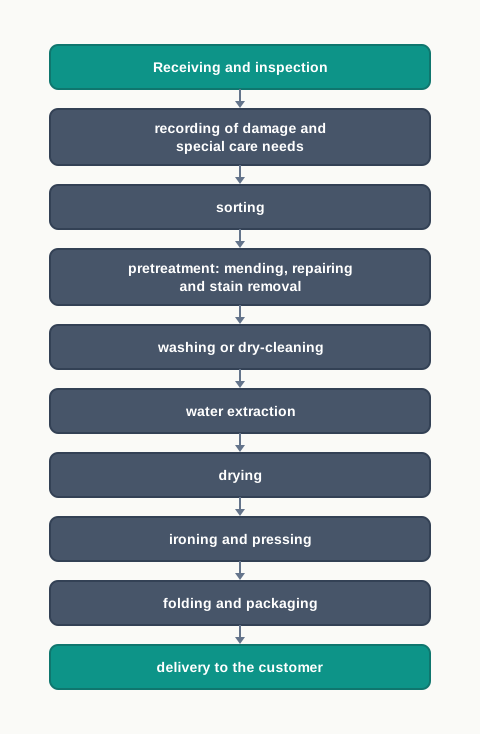
Fig. 10.7 – Path of an article through a commercial laundry.
10.3.3 Equipment And Record Keeping In Commercial Laundries
A commercial laundry uses the same kinds of equipment as a household, but bigger and in larger numbers. Its washing machines handle 100 kg or more of load in one cycle, against 5–10 kg in a domestic washing machine. Separate machines are kept for dry-cleaning, since a solvent machine cannot be used for water washing.
The other equipment follows the stages of the process.
- Hydro extractors, which remove water from a washed load by spinning it at high speed, doing at scale what the spin cycle of a domestic machine does.
- Driers, of the kind described earlier in this chapter.
- Flat bed ironing and pressing equipment, in which the article is laid flat between two heated surfaces that close on it — suited to sheets, tablecloths and other flat articles.
- Roller ironing and calendering machines, which pass the article between heated rollers. Calendering both smooths the article and gives it a flat, slightly glossy surface, and it handles long pieces continuously rather than one at a time.
- Folding and packaging tables, where the finished article is given the fold in which it will be delivered.
- Trolleys, for carrying material from one section to the next without dragging it on the floor.
Some of these are shown in Fig. 10.8. In the largest plants the separate washing machines are replaced by a tunnel washing system, in which the load moves steadily through a series of connected compartments — steeping, washing, rinsing — instead of staying in one drum for the whole cycle, so that washing becomes a continuous flow rather than a set of separate batches.
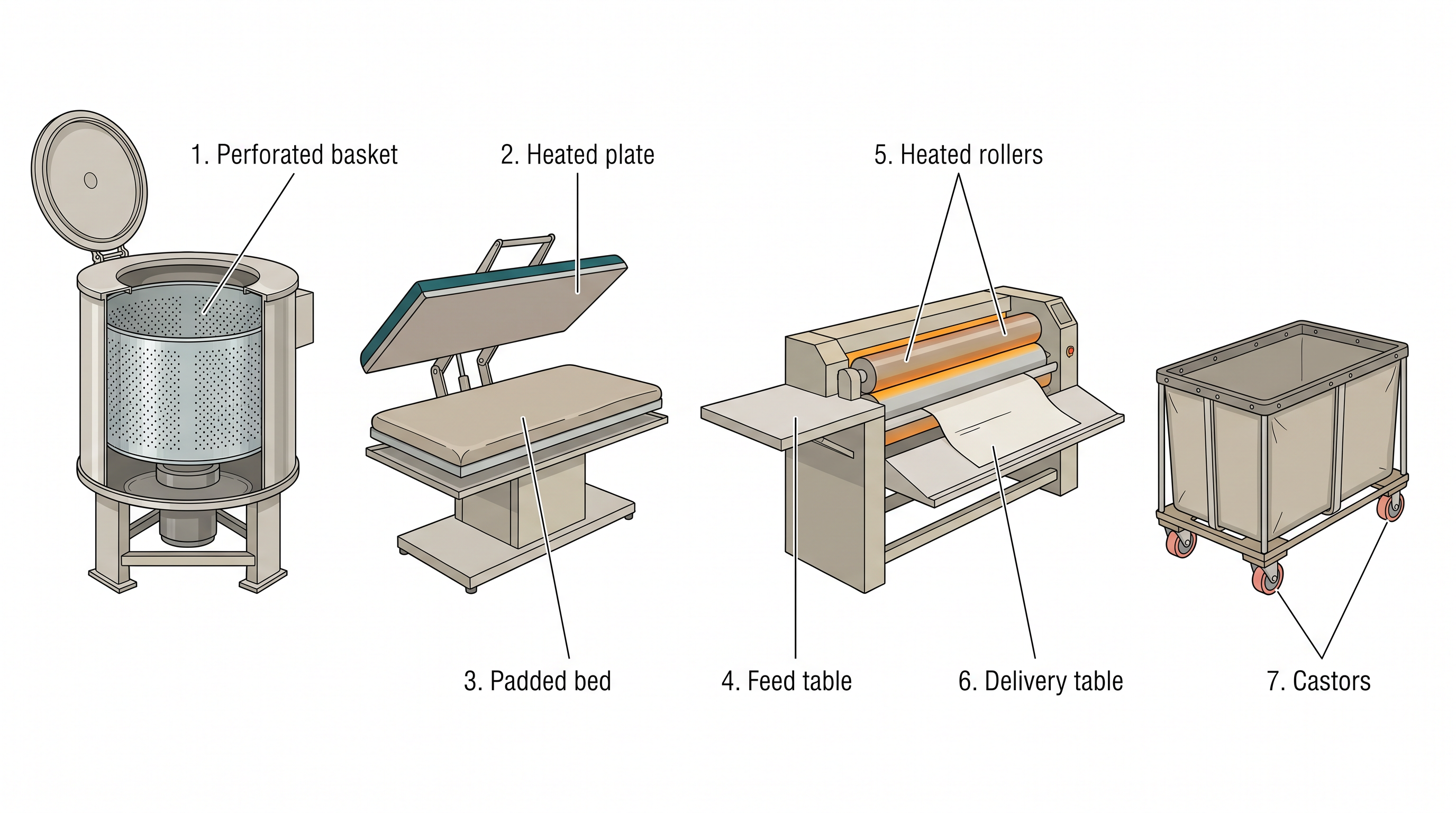
Fig. 10.8 – Equipment in a commercial laundry.
Keeping Track Of What Belongs To Whom
A plant handling several hundred articles a day faces a problem a household never has: everything looks alike once it is washed. A white bedsheet from one hostel is indistinguishable from a white bedsheet from another. Commercial establishments therefore run a system of records.
When an article is received it is checked, and any damage or special care requirement is recorded at that point — before washing, when it can still be attributed to the customer rather than to the laundry. The customer is given an invoice stating the kind and number of articles received and the date of delivery. A system of code tags matching the invoice is attached to the articles themselves, so that every item can be traced back to its customer and its invoice at any stage of the process.
This record does three jobs at once. It tells the plant what treatment each article needs, it protects both parties in a dispute about damage, and it makes it possible to reassemble one customer’s order out of a plant full of identical linen.
10.4 Care And Maintenance Of Fabrics In Institutions
10.4.1 Why Institutions Run Their Own Laundries
Some institutions cannot function at all without a constant flow of clean linen, working clothing or uniforms. Hospitals, prisons and hotels are the clearest examples, and they usually have laundry departments of their own rather than sending the work outside.
The reason is not only quantity, it is timing. The organised collection, laundering and timely delivery of processed material is essential to the operation of the institution. A ward cannot admit a patient to an unmade bed, and a hotel cannot let a room whose linen is still at a plant across the city. When the supply of clean linen fails, the institution’s main work stops.
Two kinds of institutions in particular keep an in-house laundry — a laundry run within the organisation itself, for its own material. These are hotels and hospitals. Both hold a large quantum of bed linen and other room furnishing material, and both must also launder staff uniforms and accessories such as aprons, caps, head dresses and masks.
What the two do with that material, however, is not the same at all. The difference is set out in Table 10.3, and the two subsections that follow explain where it comes from.
10.4.2 The Hospital Laundry
10.4.2.1 What The Hospital Laundry Aims At
The hospital laundry takes care of hygiene, cleanliness and disinfection — the destruction of disease-causing microorganisms on the article, which is a step beyond merely removing soil. A sheet can look clean and still carry infection from one patient to the next, so cleanliness alone is not the standard here.
Where the threat of infection is high, a number of hospitals have moved to disposables instead of launderable articles. These are used once and then destroyed by burning, so that nothing returns to circulation.
Most of the articles that are laundered are of cotton, and they are dyed in colours specific to the hospital and to the department, with dyes that have excellent wash-fastness. The colour coding tells at a glance where an article belongs, and the wash-fastness matters because these articles are washed hard and often; a dye that bled would leave the linen of every department looking alike within a month. Only the blankets are woollen.
The daily laundry therefore concentrates mainly on the cleanliness of cotton materials. Several things a commercial laundry would do are left out. Stubborn stains may not be taken notice of. Finishing treatments such as starching and whitening are not included. Even the ironing and pressing may not be done to perfection. Repair and mending, and the condemnation of unusable material — its formal withdrawal from service when it is beyond repair — may or may not form part of the services required.
None of this is carelessness. The hospital is buying safety and turnaround, not appearance, and every rupee and every minute spent on a finish that does not affect either is a rupee and a minute taken away from the linen still waiting.
10.4.2.2 The Process Of Laundry Functioning In A Hospital
The work runs as a fixed cycle from ward to ward, set out in Fig. 10.9.
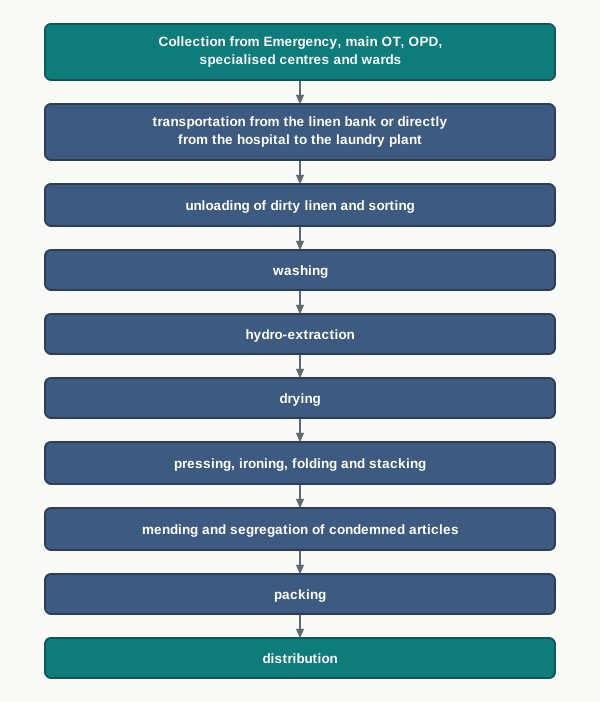
Fig. 10.9 – Process of laundry functioning in a hospital.
- Collection. Soiled linen is collected from the Emergency, the main operation theatre (OT), the outpatient department (OPD), the various specialised centres and the wards.
- Transportation. It is carried either from the linen bank — the central store where the hospital’s linen is held and issued from — or directly from the hospital, to the laundry plant.
- Unloading and sorting. The dirty linen is unloaded and sorted into groups, because these groups will not be washed alike:
- bed linen, separated further into clean, mildly soiled and very soiled;
- patients’ dress;
- doctors’ dress;
- blankets.
- Washing. This is done in large washing machines with a capacity of 100 kg per load.
- Hydro-extraction. Hydro extractors work in centrifugal motion and get rid of 60–70 per cent of the moisture in the load.
- Drying. The remaining moisture is removed in driers.
- Pressing, ironing, folding and stacking.
- Mending and segregation of condemned articles. Articles that can be repaired are repaired; those that cannot are taken out of circulation here.
- Packing.
- Distribution. The packed linen goes back to the departments it came from.
Two points in this sequence are worth pausing on. The sorting at step (c) is what makes the rest possible: it is the moment at which very soiled linen is separated from mildly soiled, so that the hard treatment goes only where it is needed and the rest is not worn out unnecessarily. And hydro-extraction is placed before drying because it is far cheaper to throw water out mechanically than to evaporate it with heat — the drier is left with only the last third of the moisture to remove.
10.4.2.3 Quantum Of Work, Linen Stock And Records
The quantum of work, especially for bed linen, is much larger for a hospital than for a hotel of comparable size. Big hotels may have up to 400–500 rooms. Larger hospitals may have to take care of 1,800–2,000 beds or even more, and the beds are not the whole of it.
Some of that linen changes far more often than once a day. Sheets in the operation theatre, the maternity ward and the labour room may require five or more changes per day, because each is changed between patients rather than between nights.
The linen requirement in stock is therefore a minimum of six sets per bed. Each set normally consists of a bed sheet, a draw sheet — a smaller sheet laid across the middle of the bed, over the bed sheet, so that the part most likely to be soiled can be changed on its own — and a pillow slip. Blankets are not changed daily unless they are soiled, which is one reason the hospital’s only woollen articles do not overwhelm a laundry set up for cotton.
Apart from linen for the patient’s bed, the articles to be laundered include:
- dress for patients — gowns, kurta, pyjamas and the like;
- dress for doctors — coats, gowns, kurta and pyjama, generally in a different colour from the patients’ dress so that the two are told apart instantly, and often made of tericot, a blended fabric of polyester and cotton that dries fast and creases little;
- general material such as tablecloths and curtains.
Records In The Hospital Laundry
As in a commercial laundry, there is a system of keeping record — here for the collection of material from each department and its disbursement back to that department. The receipt is made out when the soiled linen is handed over, and it names the type of article and the number of pieces of each, so that what returns can be checked against what was sent. A typical form is shown in Fig. 10.10.
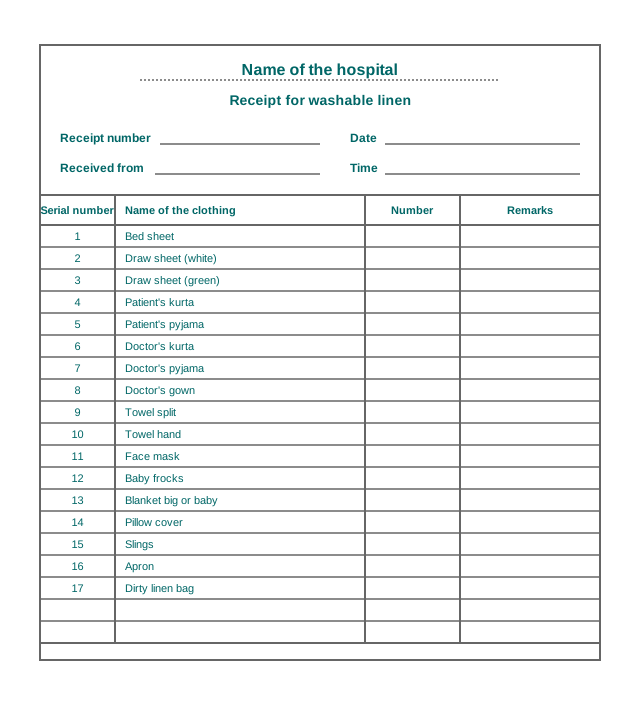
Fig. 10.10 – A hospital receipt for washable linen.
Notice how much the form itself teaches. The two draw sheets are listed separately by colour, white and green, because colour marks the department. Patients’ and doctors’ garments are listed as separate lines even where the garment is the same kurta, because they are stocked and returned separately. Blank rows are left at the end so that anything unusual can be entered rather than lumped in with something else. A record that cannot describe what was actually sent is of no use in a dispute.
10.4.3 The Laundry In Hotels And Restaurants
In the hospitality sector — hotels and restaurants — the aesthetics and the final finish of the articles are what matter most. The linen is part of what the guest is paying for, and a limp napkin or a badly folded towel is noticed at once.
Compared with a hospital, the articles here may be of many different fibre contents: cotton and linen table linen, synthetic and blended furnishing fabrics, woollen and silk items among staff uniforms and guests’ clothing. That variety is itself a demand on the laundry, since each fibre needs its own wash temperature and its own pressing temperature.
The emphasis falls on the final finishing of laundered goods — starching, ironing, pressing, and correct and perfect folding. Folding is not a small matter in this sector: a table napkin’s fold is part of the table setting, and the standard fold of a hotel’s towels is part of how the room looks when the door opens.
Hotels also have to take care of guests’ personal laundry when it is required, which is a different job again — small, varied lots, each belonging to one named person, each returned to a particular room by a particular hour. Smaller hotels, which cannot justify a plant of their own, may link up with commercial laundries from outside, as described earlier in this chapter.
10.5 Preparing For A Career In This Field
10.5.1 What The Field Requires
Care and maintenance of fabrics is a technical field. That word is worth taking seriously: the work is not simply washing carried out on a larger scale, but the running of a process on materials that behave in different ways and are damaged by the wrong treatment. Four kinds of knowledge are the primary requirements.
- Knowledge of the material — its fibre content, the yarn and fabric production techniques used, and the colour and finishes applied to it, all considered in terms of what they mean for the care the article needs.
- Knowledge of the processes involved — what each stage of laundering or dry-cleaning does, and what it depends on the previous stage having done.
- Knowledge of the chemicals and other reagents used in the process, and their effect on the fabric. Detergents, bleaches, softeners, solvents and stain-removal reagents all act on fibres as well as on soil.
- Working knowledge of the machinery — what each machine is for, how it functions, and what it must not be asked to do.
Read the four together and you will see they are the same reasoning the whole chapter has used, applied as a job: know the material, know what the process does to it, and choose accordingly.
10.5.2 Courses And Qualifications
Laundry management courses are generally short-term programmes. Along with the teaching itself, such programmes commonly offer job placement assistance, assistance in starting a business of one’s own, and practical training with a stipend in a hi-tech laundry. They point towards job opportunities in airways, shipping, railways, hotels and hi-tech hospitals.
A course on its own, however, does not finish the preparation. Every setup has different types of equipment and different requirements, so what is learnt on one plant’s machines does not transfer exactly to another’s. Practical training or an internship is therefore needed, on equipment of the kind the person will actually work with.
For anyone who wants to go further than a short course, qualifications in Textile Science, Textile Chemistry, and Fabric and Apparel are extremely useful, because they supply the first and third requirements listed above in depth. These are offered as specialisations within the graduate degree by several institutions across the country that teach Home Science.
10.6 Scope Of Work And Enterprise
Care and maintenance of fabrics is one of the areas in which a person specialising in Textiles and Clothing, or in Fabric and Apparel, can go into business rather than into employment. The service needed is steady, the skill is specialised, and the work can be started at a small scale and grown.
Demand for it comes from two directions. The first is households, particularly in cities where every adult in the family is out at work through the day and the heavier washing, dry-cleaning and finishing has to be bought in. The second, and the more reliable, is small institutions — nursing homes, small hospitals, day care centres and the like — which need such services on a regular basis but are far too small to run laundries of their own. An institutional customer signs up for a repeating weekly quantity, which is what turns an occasional service into a business.
Employment in the field runs alongside this. One may choose to work in the hi-tech laundries of the railways, the airways, shipping lines, hotels and hospitals — that is, in institutions and organisations that maintain an in-house programme for the care and maintenance of fabrics and textiles. Fig. 10.11 shows the finishing end of such a plant.
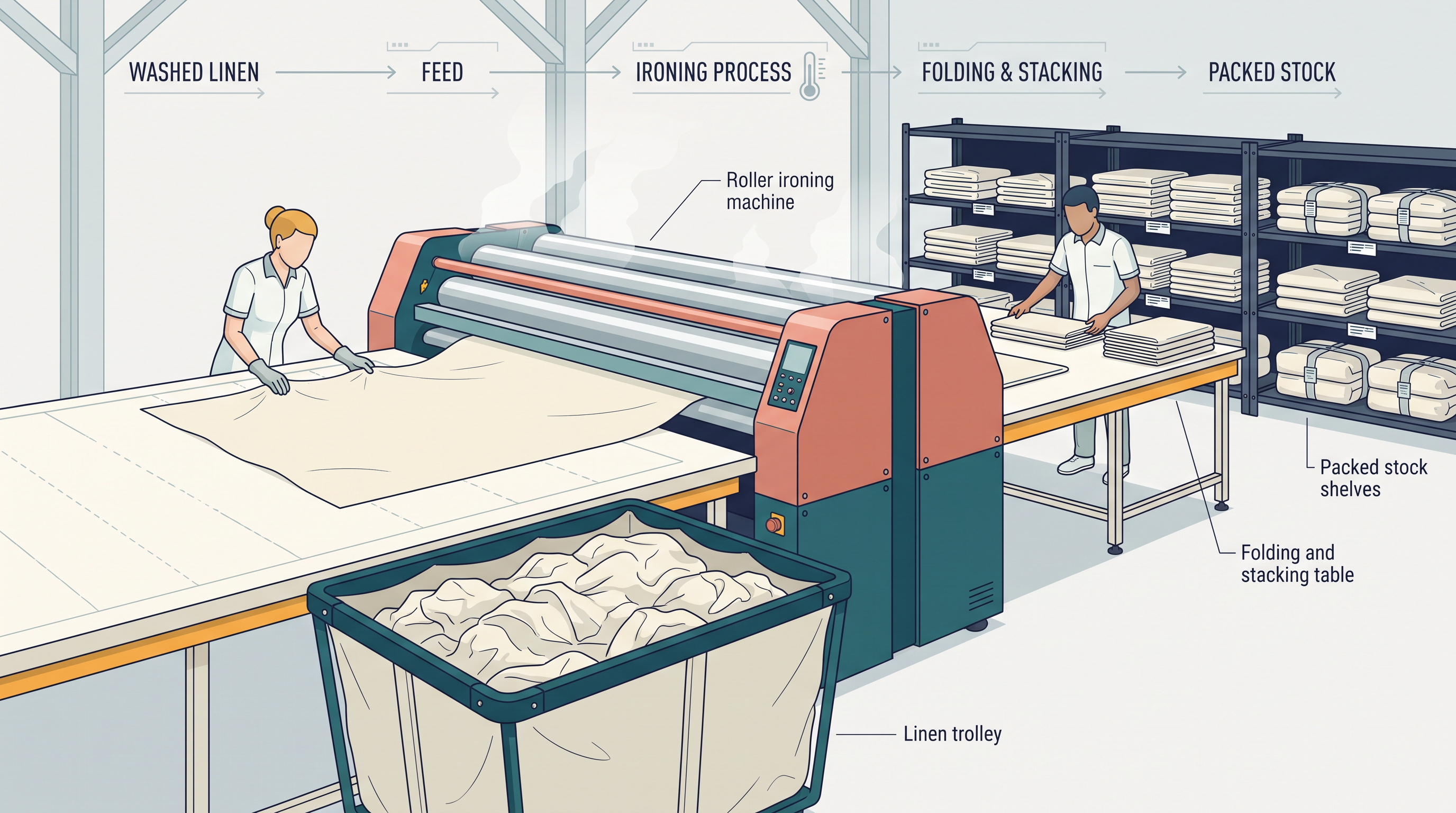
Fig. 10.11 – Finishing section of an institutional laundry.
10.7 Summary
- Fabrics are chosen for particular properties, and care and maintenance exists to keep those properties intact for the working life of the article.
- Care and maintenance has two aspects:
- keeping the material free of physical damage, and repairing damage that occurs during use;
- retaining or refreshing appearance by removing stains and dirt and preserving texture and visual character.
- Laundry cleans a textile article in water with soap or detergent; dry-cleaning cleans it in an organic solvent instead.
- Laundry is both a science and an art — a science because it rests on scientific principles and techniques, an art because applying them well requires mastered skill.
- The care a fabric needs is decided by its fibre content, its yarn, its fabric construction, the finish applied to it, and the purpose it serves.
- Equipment in common use falls into three groups: washing equipment, drying equipment, and ironing and pressing equipment.
- Washing machines are top loading or front loading; a two tub machine has separate tubs for washing and for spinning.
- By automation, machines are of three kinds:
- fully automatic, set once for water filling, temperature, wash cycle and number of rinses, needing no further intervention;
- semi-automatic, needing intervention at frequent intervals and rinse water filled and drained each cycle, generally two tub machines;
- manually operated, in which half the work or more is done by the operator.
- An automatic washer fills water, controls the water level, regulates the water temperature, washes, rinses and extracts water, in that order.
- The principle of every washing machine is to keep the fabric moving in the washing solution so that loosened dirt is carried away from it.
- The movement is produced in three ways:
- agitation, by a bladed agitator that rotates or oscillates, in top loading machines;
- pulsation, by a vertical pulsator moving very rapidly, in top loading machines;
- tumbling, by a horizontal perforated cylinder that lifts and drops the clothes, in front loading machines.
- In agitation and pulsation the water is forced through the fabric; in tumbling the clothes move through the water.
- Agitators are made of plastic, metal such as aluminium, or bakelite, so that detergents, bleaches and softeners do not attack them, and agitation speed is varied to suit the fabric.
- Rinsing must be thorough, or the clothes look grey and dull and feel harsh.
- Water is extracted after the wash and after each rinse, in three ways:
- spinning, at speeds greater than 300 rpm, using centrifugal force;
- bottom-drain, in which perforated tubs drain through the bottom and then spin;
- combination bottom-drain and spin, which gives the best extraction because it removes both settled dirt and dirt in suspension.
- Spin speeds range from 333 rpm to 1100 rpm, but spinning to near dryness sets wrinkles that are hard to iron out, so the optimum speed is approximately 600–620 rpm.
- Driers are used at commercial and institutional level, with two circulation systems:
- air of relatively low temperature circulated at high velocity, which leaves room temperature and humidity normal;
- air of high temperature circulated slowly, whose exhausted air has high relative humidity.
- Ironing smooths out unwanted wrinkles; pressing deliberately puts in creases such as those in sleeves, trouser legs and pleated skirts.
- Most electric irons have an inbuilt thermostat to hold the temperature suited to the fabric, and may produce steam; weights range from 1.5 kg to 3.5 kg, heavier irons being used for curtains and bed covers.
- Care and maintenance happens at several levels — household laundry for clothing and small daily articles, individual professionals called dhobis who wash at dhobighats, and commercial laundries for bigger and special articles.
- A commercial laundry is organised in sections, divided both by process stage — washing, water extraction, drying, pressing, ironing — and by material, with separate sections for institutional work, dry-cleaning, fibre-specific articles and special articles such as blankets and carpets.
- Inspection, sorting and pretreatments such as mending, repairing and stain removal are carried out before washing.
- Commercial washing machines take 100 kg or more per load against 5–10 kg in domestic machines, and the plant also uses hydro extractors, driers, flat bed pressing equipment, roller ironing and calendering machines, folding tables and trolleys.
- Records are kept: damage and special care needs are noted on receipt, the customer gets an invoice of articles and delivery date, and code tags matching the invoice identify every item.
- Institutions needing a constant flow of clean linen, working clothing or uniforms — hospitals, prisons and hotels — usually keep their own laundry departments, and hotels and hospitals are the two that run full in-house setups.
- The hospital laundry works for hygiene, cleanliness and disinfection; its articles are mostly cotton, dyed in department-specific colours with wash-fast dyes, with only the blankets woollen, and disposables are used where infection is a threat.
- Stubborn stains, starching, whitening and perfect pressing are not priorities in a hospital laundry, and repair and condemnation may or may not be part of the service.
- The hospital laundry process runs from collection, transportation, unloading and sorting, washing, hydro-extraction, drying, pressing, ironing, folding and stacking, mending and segregation of condemned articles, packing, to distribution.
- Hydro extractors work by centrifugal motion and remove 60–70 per cent of the moisture before drying begins.
- Large hospitals may have 1,800–2,000 beds against 400–500 rooms in big hotels; operation theatre, maternity ward and labour room sheets may need five or more changes a day, so a minimum of six sets per bed is held, each set being a bed sheet, a draw sheet and a pillow slip.
- In hotels and restaurants, aesthetics and final finish matter most — starching, ironing, pressing and correct folding — the articles are of many fibre contents, guests’ personal laundry is handled, and smaller hotels may link up with outside commercial laundries.
- The field is a technical one, requiring knowledge of the material, of the processes, of the chemicals and their effect on fabric, and a working knowledge of the machinery.
- Laundry management courses are short-term programmes, and practical training or internship is needed because each setup has different equipment; qualifications in Textile Science, Textile Chemistry, and Fabric and Apparel are useful additions.
- The field offers both enterprise, serving households and small institutions such as nursing homes and day care centres, and employment in the hi-tech laundries of railways, airways, shipping lines, hotels and hospitals.
10.8 Key Terms
- Agitation — a washing action in which a bladed agitator rotates or oscillates in the tub, forcing water through the fabric.
- Agitator — the bladed post standing at the centre of a top loading machine’s tub, which produces the washing movement.
- Bottom-drain — a method of water extraction in which a perforated tub drains through its base at the end of the wash and each rinse, and then spins.
- Calendering — passing an article between heated rollers to smooth it and give it a flat, slightly glossy surface.
- Code tags — small marked tags attached to articles in a laundry, matching the invoice, so that each item can be traced to its customer.
- Combination bottom-drain and spin — water extraction in which draining through the bottom continues during the spin, giving the most complete removal of water and dirt.
- Condemnation — the formal withdrawal of an article from service when it is damaged beyond repair.
- Dhobi — an individual professional who collects material from households and institutions for washing, or for ironing and finishing.
- Dhobighat — a place set aside and marked out in a town or city for washing, with a water supply and built washing platforms.
- Disinfection — the destruction of disease-causing microorganisms on an article, a step beyond removing soil.
- Draw sheet — a smaller sheet laid across the middle of a bed over the bed sheet, so that the part most likely to be soiled can be changed on its own.
- Drier — a machine that dries damp articles by passing heated air through the load and carrying the moisture out through an exhaust.
- Dry-cleaning — cleaning a textile article in an organic solvent instead of water, so that fibres damaged by water and rubbing are left undisturbed.
- Fibre content — the fibre or fibres a fabric is made of, which is the strongest single signal of the care it needs.
- Finish — a treatment given to a fabric after it is made, to add a property it did not have, such as glazing, water repellency or crease resistance.
- Flat bed ironing and pressing equipment — equipment in which a flat article is laid between two heated surfaces that close on it.
- Front loading machine — a washing machine into which garments are put through a door on the front face.
- Household laundry — the washing done within the home, of clothing and the small articles of daily use.
- Hydro extractor — a machine that removes water from a washed load by spinning it at high speed in centrifugal motion.
- In-house laundry — a laundry run within an organisation itself, for its own material.
- Ironing — smoothing out the wrinkles put into a fabric by wear and by washing.
- Laundry — the cleaning of textile articles in water with soap or detergent, together with stain removal, rinsing, water extraction, drying and finishing.
- Linen bank — the central store in an institution where linen is held and from which it is issued.
- Pressing — placing a crease in a garment deliberately and holding it there, as in a sleeve, a trouser leg or a pleated skirt.
- Pulsation — a washing action in which a vertical pulsator drives water up through the load with very rapid movements.
- Pulsator — the vertical disc or blade at the base of a top loading machine that produces pulsation.
- Rinsing — the phase of the wash cycle in which detergent and loosened soil are carried away in fresh water.
- Serviceability — the length of time a textile article goes on doing the job it was bought for, at the standard expected of it.
- Spinning — extracting water by rotating the tub at speed, so that centrifugal force throws the water out of the cloth.
- Thermostat — a device inside an iron that switches the heating element on and off to hold the soleplate at a set temperature.
- Top loading machine — a washing machine into which garments are put from the top.
- Tumbling — a washing action in which a horizontal perforated cylinder lifts the clothes and drops them back into the wash water.
- Tunnel washing system — a large plant system in which the load moves continuously through connected compartments instead of staying in one drum for the whole cycle.
- Two tub machine — a machine with one tub for washing and a separate tub for spinning out water.
- Water extraction — the removal of water held in a wet load, carried out after the wash and after each rinse.
- Water level control — the setting of the quantity of water in the tub to match the size of the load.
- Yarn — the twisted strand from which a fabric is made, whose structure affects how much handling the fabric will take.
- Zari polishing — a special finishing treatment that restores the shine of the metallic thread used in zari work.
10.9 Points To Ponder
- A hospital laundry accepts a faint stain on a sheet that a hotel laundry would send back for retreatment. Is the hospital lowering its standard, or applying a different one? What would be lost if each adopted the other’s priorities?
- Faster spinning removes more water and shortens drying, yet the optimum spin speed is well below the highest a machine can reach. What does this tell you about the way a process is judged as a whole rather than stage by stage? Suggest another point in laundering where the same kind of trade-off appears.
- Disposable articles are used in hospitals where infection is a threat, and are destroyed after a single use. Weigh what is gained and what is given up when a reusable textile is replaced by a disposable one.
- A commercial laundry keeps sections divided by process, and also divided by the kind of material handled. If a small plant could afford only one of the two divisions, which would serve it better, and what would go wrong under the other?
- The chapter says the treatment of a fabric follows from its fibre, its construction, its finish and its purpose. If an article of an unfamiliar new fabric arrived at a laundry with no care label, how would you go about deciding its treatment, and what would you test first?
- Individual professionals washing at a dhobighat, a commercial laundry, and an institution’s in-house department are three answers to the same problem. What does each offer that the other two cannot, and why do all three continue to exist side by side?
10.10 Objective Questions
- The washing action used in front loading machines is: [1]
- agitation
- pulsation
- tumbling
- calendering
- The optimum spin speed for water extraction is approximately: [1]
- 300–333 rpm
- 450–500 rpm
- 600–620 rpm
- 1000–1100 rpm
- Hydro extractors working in centrifugal motion get rid of: [1]
- 20–30 per cent of the moisture
- 40–50 per cent of the moisture
- 60–70 per cent of the moisture
- 90–100 per cent of the moisture
- The washing machines used in commercial laundries handle a load of: [1]
- 5–10 kg per cycle
- 25 kg per cycle
- 50 kg per cycle
- 100 kg or more per cycle
- In a hospital, the minimum linen requirement held in stock is: [1]
- two sets per bed
- four sets per bed
- six sets per bed
- ten sets per bed
- Read the assertion and the reason and choose the correct option. [1] Assertion (A): A garment is not spun to near dryness even when the machine can do it. Reason (R): Very high spin speeds set wrinkles into the fabric that are difficult to remove during ironing.
- Both A and R are true, and R is the correct explanation of A.
- Both A and R are true, but R is not the correct explanation of A.
- A is true but R is false.
- A is false but R is true.
- Read the assertion and the reason and choose the correct option. [1] Assertion (A): Articles in a hospital laundry are dyed with dyes of excellent wash-fastness. Reason (R): Most of the articles laundered in a hospital are woollen.
- Both A and R are true, and R is the correct explanation of A.
- Both A and R are true, but R is not the correct explanation of A.
- A is true but R is false.
- A is false but R is true.
- Match the items in Column A with those in Column B. [1]
| Column A | Column B |
|---|---|
| a. Pulsator | i. holds the soleplate at a set temperature |
| b. Hydro extractor | ii. removes water by centrifugal motion |
| c. Thermostat | iii. moves very rapidly in a vertical direction |
- Match the items in Column A with those in Column B. [1]
| Column A | Column B |
|---|---|
| a. Linen bank | i. attached to articles to trace them to a customer |
| b. Code tags | ii. the central store from which linen is issued |
| c. Condemnation | iii. withdrawal of an article that is beyond repair |
Fill in the blank: The weight of an iron varies from ______ kg to ______ kg. [1]
Fill in the blank: In a semi-automatic machine the rinse water has to be ______ and ______ with each cycle. [1]
State whether true or false: Ironing is the process of deliberately putting a crease into a garment. [1]
State whether true or false: In tumbling, the clothes move through the water rather than the water being driven through the clothes. [1]
Name the following: the smaller sheet laid across the middle of a hospital bed, over the bed sheet. [1]
Name the following: the cleaning process that uses an organic solvent instead of water. [1]
Pick the odd one out and give a reason for your choice: agitation, pulsation, tumbling, calendering. [1]
Pick the odd one out and give a reason for your choice: bed sheet, draw sheet, pillow slip, blanket. [1]
10.11 Check Your Concepts
State the two aspects of care and maintenance of fabrics. [2]
Define serviceability, and state one way in which good care extends it. [2]
Give a reason for the following: a rinse that is not thorough leaves the clothes looking grey and dull. [2]
List any four items of equipment used in a commercial laundry that are not usually found in a household. [2]
Differentiate between ironing and pressing, stating the basis of difference. [3]
Explain why laundry is described as both a science and an art. [3]
Differentiate between the two circulation systems used in driers, stating the basis of difference. [3]
What would happen if a stained article were washed, dried and pressed before the stain was treated? Give a reason for your answer. [3]
State the principle on which every washing machine works, and explain with an example how any two machines put that principle into effect. [4]
Differentiate between fully automatic and semi-automatic washing machines on any four points. [4]
Care and maintenance requirements differ from one fabric to another. Explain, with an example each, how fibre content and the finish applied to a fabric affect the treatment it should be given. [4]
What are the primary requirements for a career in the care and maintenance of fabrics? Explain why a practical training or internship is needed in addition to a course. [4]
Describe the sections into which a commercial laundry is organised, and explain why inspection, sorting and pretreatment are placed before washing. [5]
Explain the differences in processing laundry work in a hospital laundry and in a hotel laundry, giving the reason behind each difference. [5]
Describe the process of laundry functioning in a hospital from collection to distribution, and state why hydro-extraction is carried out before drying. [5]
10.12 Identify And Label
Look at Fig. 10.2. Identify the three machines shown, and state how the first two differ in the way the load is put in. [2]
Look at Fig. 10.4. Identify the three washing actions shown, and name the type of machine in which each is used. [3]
Look at Fig. 10.6. Label the parts marked on the electric steam iron, and state the function of the temperature control dial. [3]
Look at Fig. 10.8. Identify the four pieces of equipment shown, and state the stage of the laundry process at which each is used. [4]
Look at Fig. 10.10. Identify the record shown, and state which two entries on it would settle a dispute about damage to an article. [2]
10.13 Case And Application Based
- A 250-bed hospital sends its linen to a newly built in-house laundry. On the first day the staff tip all the collected linen onto one floor, wash it together in 100 kg loads, and send everything on to the driers. By the end of the week the ward reports that lightly used sheets are wearing thin, that a green draw sheet has been returned to a ward that uses white, and that two torn sheets have come back with the tears much longer. [4]
- Identify the step that has been left out of the process, and state where it belongs in the sequence.
- Explain how that missing step would have prevented each of the three complaints.
- Suggest one record the laundry should introduce, and state what it would achieve.
- A 60-room hotel handles its own laundry. Its load includes cotton bed linen, table napkins that must be starched and folded for the dining room, synthetic staff aprons, and guests’ personal clothing, some of it silk. A new supervisor proposes running everything through a single hot wash with a strong detergent and a high spin, to save time. [4]
- Give two reasons why this proposal would damage the load, naming the articles most at risk.
- Explain why the hotel’s finishing requirements cannot be met by this arrangement.
- Suggest how the load should be divided, and state the basis on which you have divided it.
- Aman has trained in Fabric and Apparel and wants to start a small laundry service. Two customers are available to him: a group of three day care centres nearby, which send small, brightly coloured, frequently soiled articles and expect them to look fresh; and one nursing home, which sends a fixed weekly quantity of cotton bed linen and staff uniforms in departmental colours. He can afford equipment for only one of the two to begin with. [5]
- State the difference in the standard each customer will judge him by.
- Identify two items of equipment or two facilities each customer would require, and explain why they differ.
- Give a reason for the choice you would advise him to make, based on the equipment he can afford and the regularity of the work.
- State one safety practice he must follow for the nursing home work that would not be needed for the day care centres.
10.14 Practice With Data
- A hospital has 450 beds and follows the minimum stock norm given in this chapter, with each set consisting of a bed sheet, a draw sheet and a pillow slip. [4]
- Calculate the minimum number of sets the hospital must hold.
- Calculate the total number of individual articles this comes to, and state how many of each kind.
- The hospital’s purchase officer proposes cutting the stock to three sets per bed to save money. State two positions in the linen cycle that would be left uncovered.
- A commercial laundry runs machines of 100 kg capacity per load, while a domestic machine takes 5–10 kg per load. On a particular day the plant receives 3,200 kg of soiled linen. [4]
- Calculate the number of full commercial loads this makes.
- Calculate how many domestic loads of 8 kg the same quantity would need.
- Using your two answers, explain why an institution with a steady daily quantity of this size runs its own plant instead of buying several domestic machines.
- The spin speed of a washing machine can vary from 333 rpm to 1100 rpm, and the optimum speed is approximately 600–620 rpm. [4]
- State the range within which the optimum speed falls, and express roughly what fraction of the maximum speed it represents.
- Explain what is gained by moving from 333 rpm to 600 rpm.
- Explain what is lost by moving from 620 rpm to 1100 rpm, and state which later stage of the process pays that cost.