Chapter 13: Development Communication And Journalism
The Year Television Came To The Village
On 1 August 1975, a set of television receivers began working in about 2,400 Indian villages spread across six states — Andhra Pradesh, Bihar, Karnataka, Madhya Pradesh, Odisha and Rajasthan. Most of those villages had no cinema, no library and, in many cases, no electricity supply that could be relied on. What they now had was a community set, a small dish antenna on a pole, and one hour of programming in the morning and one in the evening.
This was the Satellite Instructional Television Experiment, usually called SITE. It was carried out by the Indian Space Research Organisation with Doordarshan, using ATS-6, a satellite lent to India for a year by the American space agency NASA. The idea had come from Vikram Sarabhai, who argued that a country as large as India could not wait to build transmitters village by village.
The programmes were not entertainment. They dealt with farming practices, health and hygiene, and the education of children, and they were made in the languages people in those clusters actually spoke. Teachers were trained through the same broadcasts. When the year ended and ATS-6 moved away, the sets went quiet.
The experiment lasted twelve months. What it settled was larger: that a medium could be pointed deliberately at development, and that the message had to be built for the audience receiving it.
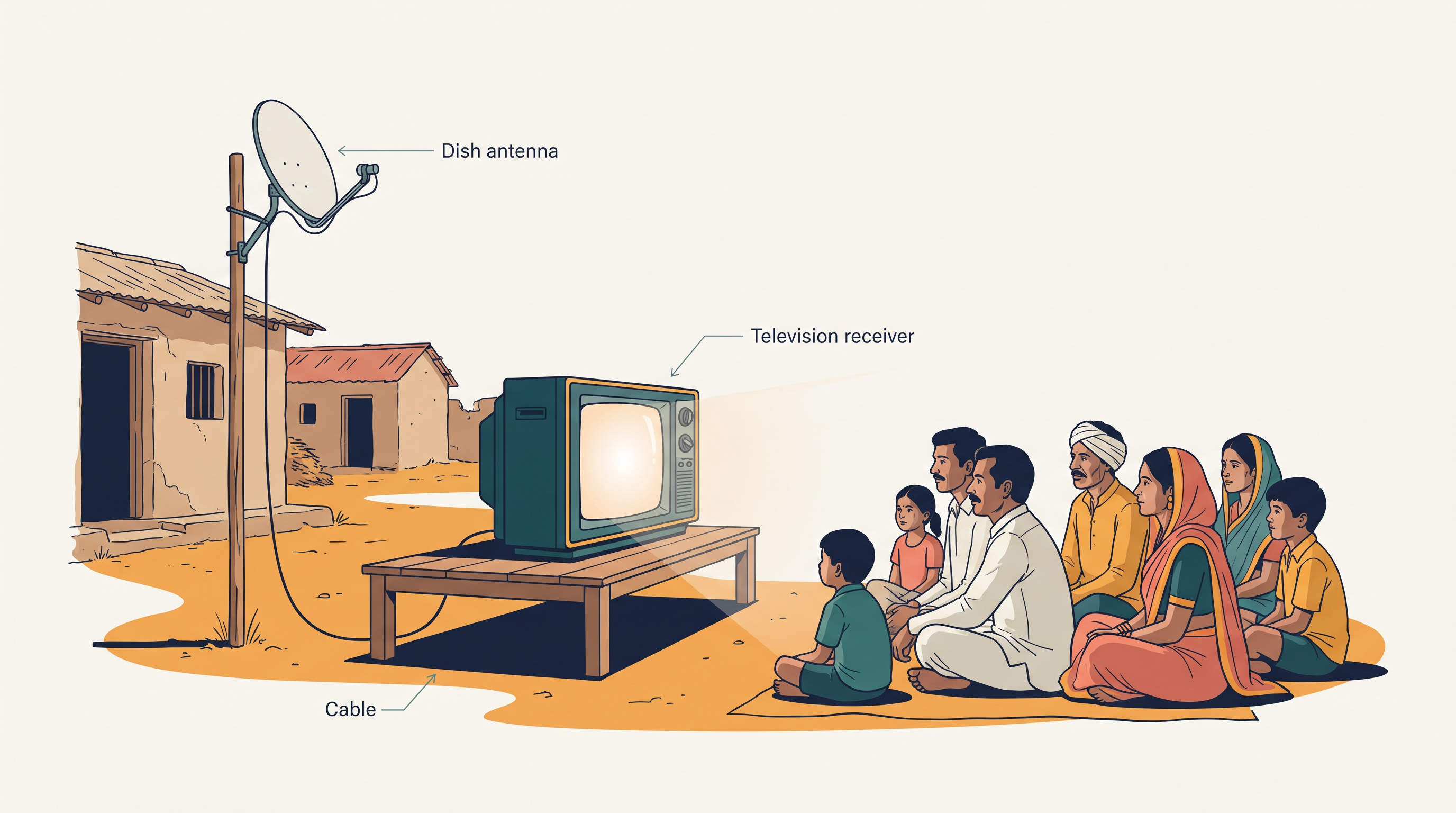
Fig. 13.0 – A community television set under the SITE experiment.
13.1 Communication, Media And Society
Communication runs through both halves of your life — the personal one and the working one. You ask, listen, explain, argue and persuade all day, and most of it happens without any planning at all. When the same activity is organised, aimed at a large audience and carried by a machine, it becomes something else.
Mass media are the channels that carry a message from one source to a very large and scattered audience at the same time — television, radio, newspapers, films and, today, the internet and social media. The audience does not have to be in one place, and the sender usually does not know who exactly is listening.
Who Writes About These Issues
Watch a news channel or open a newspaper for a week and you will find, besides the news of the day, reports on health, on the environment, on what people buy and how they are cheated, on poverty. Somebody researched each of those reports, went to the place, spoke to people and wrote it.
That work is journalism — the gathering, checking and reporting of information of public interest through the media. The journalist is not only recording events. Mass media can investigate a situation and ask what is happening, where it is happening and why, and that questioning is a large part of what the work is for.
Journalism of this kind is a social activity rather than a private one. A reporter who spends a week in a village and writes what its people are living through is carrying the feelings of a community back to that community, and outward to everyone else who reads it.
The Press And Democracy
Democracy rests on people taking part in it, and people cannot take part in what they do not know about. That is why journalism is treated as inseparable from a democratic system: it is the means by which citizens find out what is being done in their name.
The Constitution of India guarantees every citizen the freedom of speech and expression under Article 19(1)(a). A right to hold and express an opinion, however, is close to worthless if there is no platform on which the opinion can be expressed and no reliable information on which to form it. The various forms of media, social media now included, are that platform. For this reason the press — the newspapers, channels and reporters taken together — is often called the fourth pillar of democracy, standing alongside the legislature, the executive and the judiciary.
The theory and the practice of communication and journalism for development have kept changing as new media arrived, and they are still changing. The field is marked by this conceptual flexibility: its ideas are not fixed, because the media it works with are not fixed either.
13.2 Significance Of Development Communication And Journalism
Both fields are defined exactly in the next section. For the moment, take development communication to mean communication used deliberately to bring about social change, and development journalism to mean reporting that concerns itself with that change and with the people living through it.
The question worth asking first is a plain one. How does communication actually help a country develop? A new seed variety, a cheaper cooking fuel, a health service, a legal right — none of these does anything for a household that has not heard of it.
Communication does three distinct things in the development process, and it is useful to keep them apart.
- It creates awareness. People learn that a technology, a service or an entitlement exists, and what it can do for them.
- It mobilises. Awareness on its own changes nothing; a message has to move people to actually use what exists, which is a much harder job.
- It links. It puts government agencies, non-governmental organisations and people in touch with one another, so that information travels in both directions instead of only downward.
Where It Sits On The Scale Ladder
Notice that this is not work an individual does alone. A person may decide to boil drinking water; a family may decide to build a toilet; but persuading a whole block of villages to do either is community-scale and national-scale work, and it needs organised communication to happen at all. Development communication is the tool for that scale.
There is a second reason these fields matter, and it concerns the people who will do the work. Studying them sensitises students to how development actually proceeds, and trains them to write and speak about it in a way that is fair to everyone concerned. Students, working and intending journalists, campaigners and media professionals all draw on the same body of knowledge and the same practical skills.
13.3 Basic Concepts
Three terms hold this chapter together, and they are close enough to one another to be confused. It is worth taking them one at a time, in order, because each one rests on the one before it.
13.3.1 Development
Development means positive change in the socio-economic and cultural lives of the majority of people, achieved on a permanent basis and without exploitation or violence. Three conditions are packed into that sentence, and each of them is doing work.
The change must reach the majority, not a prosperous few. It must be permanent, which rules out a benefit that lasts as long as a scheme is funded and vanishes when the funding stops. And it must come without exploitation or violence, which rules out gains for one group taken out of another group’s losses.
Judged against that standard, development in most parts of the world still calls for intensive effort. The problems it has to tackle are large and connected: mass illiteracy, the pressure of population, malnutrition, poor health, hunger and pollution. None of them can be solved by a single department working alone, and none of them can be solved without people knowing what is being attempted and taking part in it.
13.3.2 Development Journalism
Development journalism is reporting that takes the development process itself as its subject — the projects, the methods and, above all, the people at work in them. It is a relatively new kind of journalism, and it came into existence after the colonial era ended.
The reason is historical. Before independence, reporting in India was largely about struggles, fights, assassinations, disasters and wars — that, and whatever the colonial rulers chose to have communicated. The newly liberated countries were then suddenly full of development activity: new dams, new crops, new schools, new cooperatives. Journalists had to take notice of it, and the older way of reporting had no shape that fitted.
What emerged was a journalism that focusses on success stories — on people who have adopted a new technology, tried a new method, or done something that helped the society around them. It seeks to describe people at work in new projects and processes, rather than only the officials who announced them.
13.3.3 Development Communication
Development communication is the use of the power of communication as a catalyst for social development. A catalyst does not itself become the product; it makes a reaction happen faster and more completely. Communication works in the same way here — it does not build the toilet or plant the crop, but without it neither happens at the scale intended.
More precisely, it is the practice of systematically applying the processes, strategies and principles of communication to bring about positive social change. The word ‘systematically’ matters. A one-off poster is not development communication; a planned sequence of messages, chosen media and follow-up is.
The field was given its name in 1972 by Nora C. Quebral, a Filipino scholar, who described it as the art and science of human communication applied to the development of a disadvantaged society, in a planned manner, so as to ensure equity and the achievement of individual potential.
Development journalism and development communication are easily mixed up, since both work through the media on the same subjects. They separate on several counts, and these are set out in Table 13.1.
13.3.3.1 Essential Features Of Development Communication
Four features mark development communication off from communication in general.
- It is oriented towards the socio-economic development and the happiness of the people and the community at large, not towards the interests of the sender.
- It aims at giving information and educating the community — telling people what exists and teaching them how to use it.
- It combines suitable mass media with interpersonal communication — direct face-to-face exchange between people, such as a health worker talking to a group of mothers. A broadcast reaches numbers; a conversation answers doubts. Used together they have far greater impact than either alone.
- It is based on the characteristics of the audience and on their environment. The language, the timing, the medium and the example used are all chosen for the particular people being addressed.
13.3.3.2 Development Communication As A Two-Way Process
Development communication is a two-way process between those who hold information and those who have not yet received it. That second group is not an empty vessel. The whole approach assumes that people who face a problem have the ability to find solutions to it themselves; what they may need is help or assistance in reaching the resources those solutions require.
This is why motivation is treated as the key element rather than instruction. A person who is merely told what to do stops when the instruction stops. A person who wants the outcome keeps going.
Consequently the effort is built as a dialogue between people and development agencies, and not as an announcement. It is a social process designed to arrive at a common understanding, or a consensus, among everyone taking part in the development effort — which is what makes concerted action possible. The sequence is shown in Fig. 13.1.
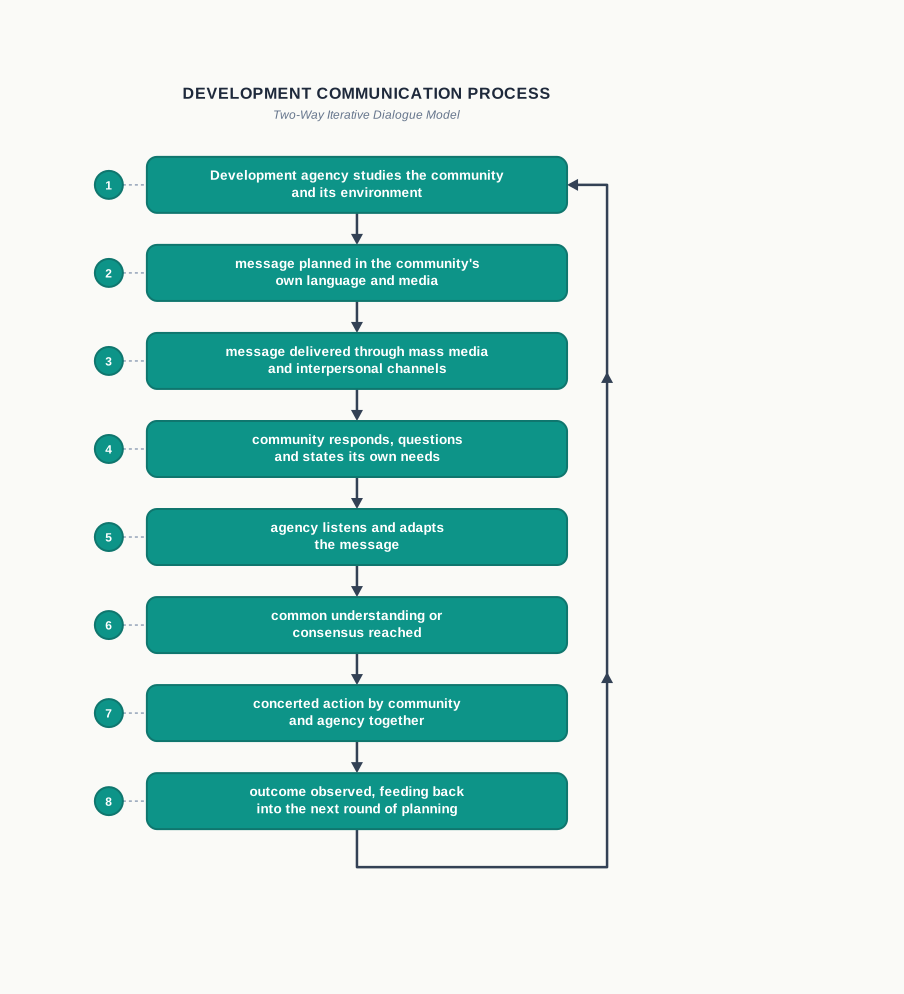
Fig. 13.1 – Development communication as a two-way process.
13.4 Methods Of Development Communication
Many methods are used in this field, and a large programme usually runs several of them together. Four of the most important are reviewed here: the campaign, radio and television, print media, and information and communication technologies.
The subjects they carry are the ordinary business of public health and public life — prevention of smoking, of tuberculosis and of HIV/AIDS, and the promotion of sanitation literacy, immunisation and safe childbirth. Consumer awareness has been carried the same way, through campaigns such as ‘Jago Grahak Jago’. India is not unusual in this. Similar work has been done in Brazil, Peru, Indonesia, Bangladesh and many coastal developing countries, which is worth knowing when you compare methods: the same medium behaves differently in different conditions.
Before the methods themselves, one term. Mass communication is the process of sending a message to a large, scattered and largely unknown audience through the mass media. Development communication uses mass communication, but not only mass communication — the interpersonal channel is always in the design as well.
13.4.1 Campaign
A campaign is a combination of different communication methods and materials — meetings, tours, newspaper articles, leaflets, exhibitions — used on a single theme for a predefined period of time. Two things in that definition do the work: the methods are combined, and the period is fixed in advance.
Combining methods matters because no single medium reaches everyone or convinces everyone. Fixing the period matters because a campaign is meant to be intensive. It is a well organised and concentrated effort rather than a message left running indefinitely, and its intensity is exactly what makes it noticed.
A campaign creates public awareness and delivers one specific message. Dramatics — a street play, a folk song, a jingle, a serial — carried through different channels hold attention and create interest, so that the message stays in people’s memory and stimulates them to act. Over the weeks of a campaign this builds an environment in which adopting the new practice becomes the normal thing to do rather than the odd thing to do. That chain is set out in Fig. 13.2.
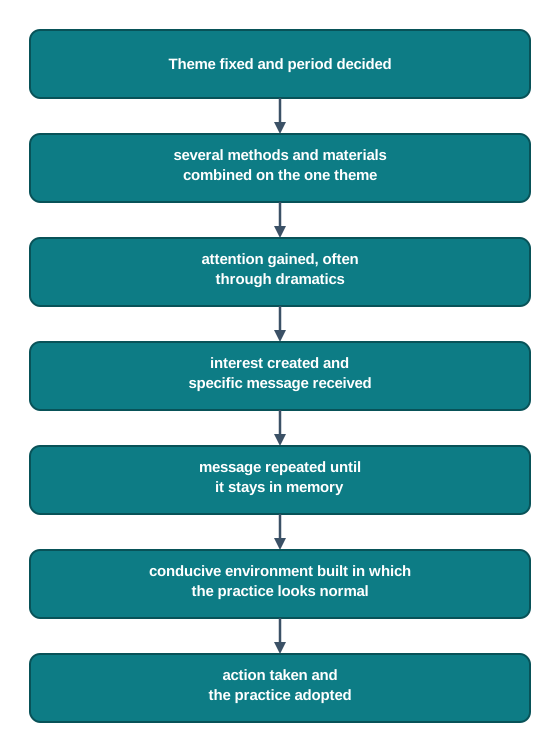
Fig. 13.2 – How a campaign leads to adoption of a practice.
A Campaign At National Scale
To accelerate the effort towards universal sanitation coverage, the Prime Minister of India launched the Swachh Bharat Mission on 2 October 2014. It was implemented as a nationwide campaign, a Janandolan or people’s movement, aimed at eliminating open defecation in rural areas over the period 2014 to 2019.
Notice how it was built. It worked through mass-scale behaviour change, through the construction of household-owned and community-owned toilets, and through mechanisms for monitoring the construction and — this is the part usually forgotten — the actual usage of those toilets. A toilet that is built and not used has changed nothing, which is why the communication component could not be dropped once the construction began.
The campaign is illustrated in Fig. 13.3.
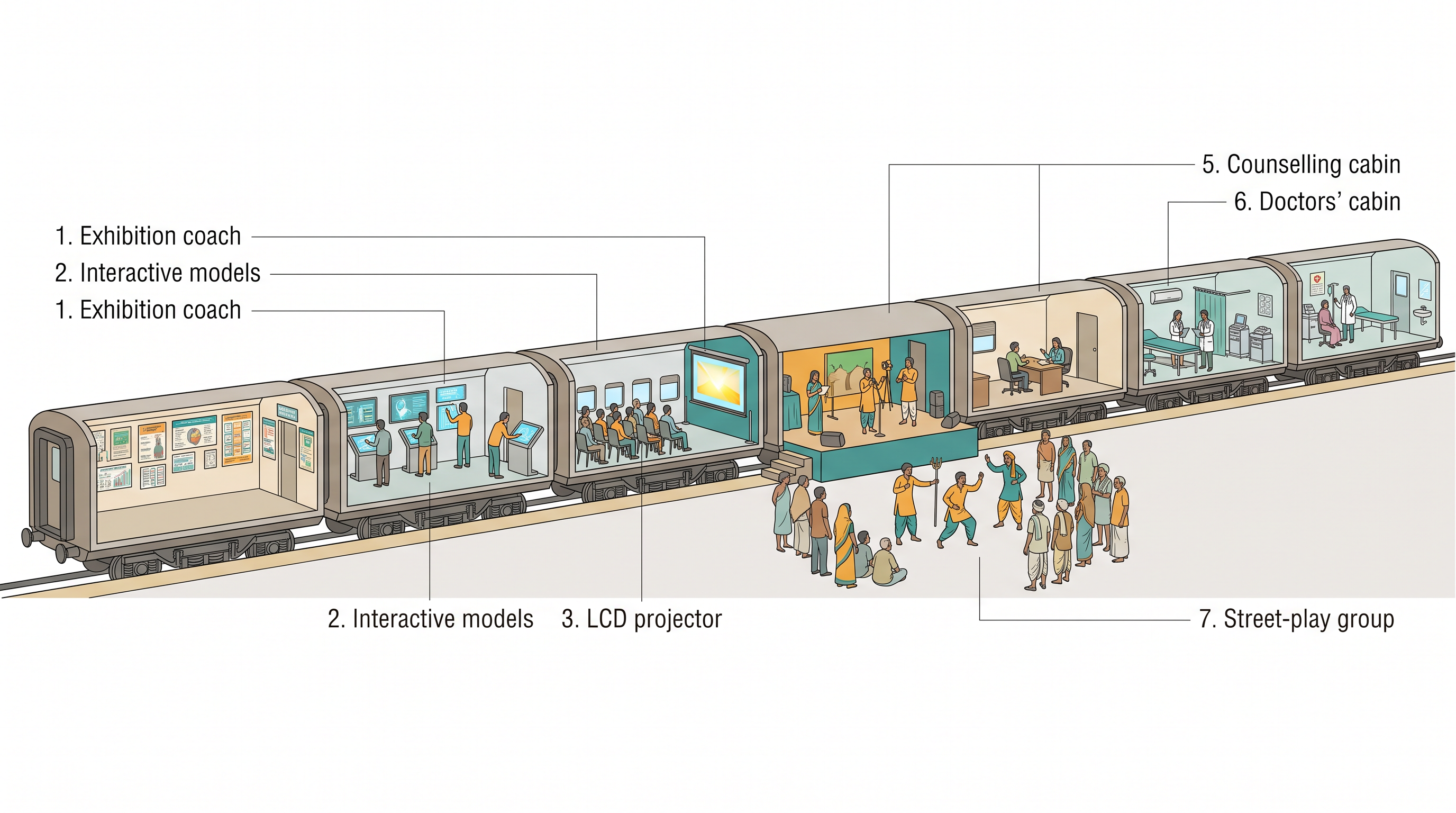
Fig. 13.3 – The Red Ribbon Express communication campaign.
13.4.2 Radio And Television
Radio and television are the most popular, the cheapest and the most convenient mass media available for development purposes, and between them they carry most of what is called broadcast journalism.
Broadcasting has one clear advantage over print. It does not require the audience to read. A person who has had little schooling is shut out of a newspaper but not out of a radio programme, and since the people development work most needs to reach are often exactly the people with the least schooling, this is not a small advantage.
13.4.2.1 Radio As A Development Medium
Radio, in turn, has an advantage over television: it is available at a comparatively lower cost, both to the broadcaster and to the household. It is also a mobile medium. A television holds you in one room; a radio moves with the listener, so it can be heard while working in a field, travelling, or resting at the end of the day.
Radio programmes take many forms — news, interviews, discussions, documentaries, drama and quiz programmes. News is efficient in a way the other forms are not: it covers many different topics in a short time. Between the programmes, at regular intervals, come interesting facts and stories of current human interest.
The Public Service Announcement
A Public Service Announcement (PSA) is a brief message of 10 to 60 seconds broadcast between programmes, generally in the form of a jingle. It gives information, or a suggestion for action, on a matter of public good — ‘obey traffic rules’, ‘say no to tobacco’.
A PSA is, in structure, an advertisement. The difference is that it sells an idea rather than a product. What makes it work is not the length of the argument, since there is no room for an argument in fifty seconds, but a catchy slogan repeated across many broadcasts until the listener knows it without trying to.
Radio had one serious limitation for development work: it sent messages out and received nothing back, so the broadcaster never learnt whether the message had landed or been misunderstood. Newer interactive formats, local radio stations and community radio have largely overcome it.
13.4.2.2 Community Radio
Because radio is so widely used, the Ministry of Information and Broadcasting introduced the idea of a local radio station, known as community radio (CR) — a small station, broadcasting over a limited area, run and managed by the local people themselves.
It is set up with a small investment and the training of a few local people, often by NGOs working on capacity building. NGOs and educational institutions can seek a licence to establish one. The arrangement is shown in Fig. 13.4.
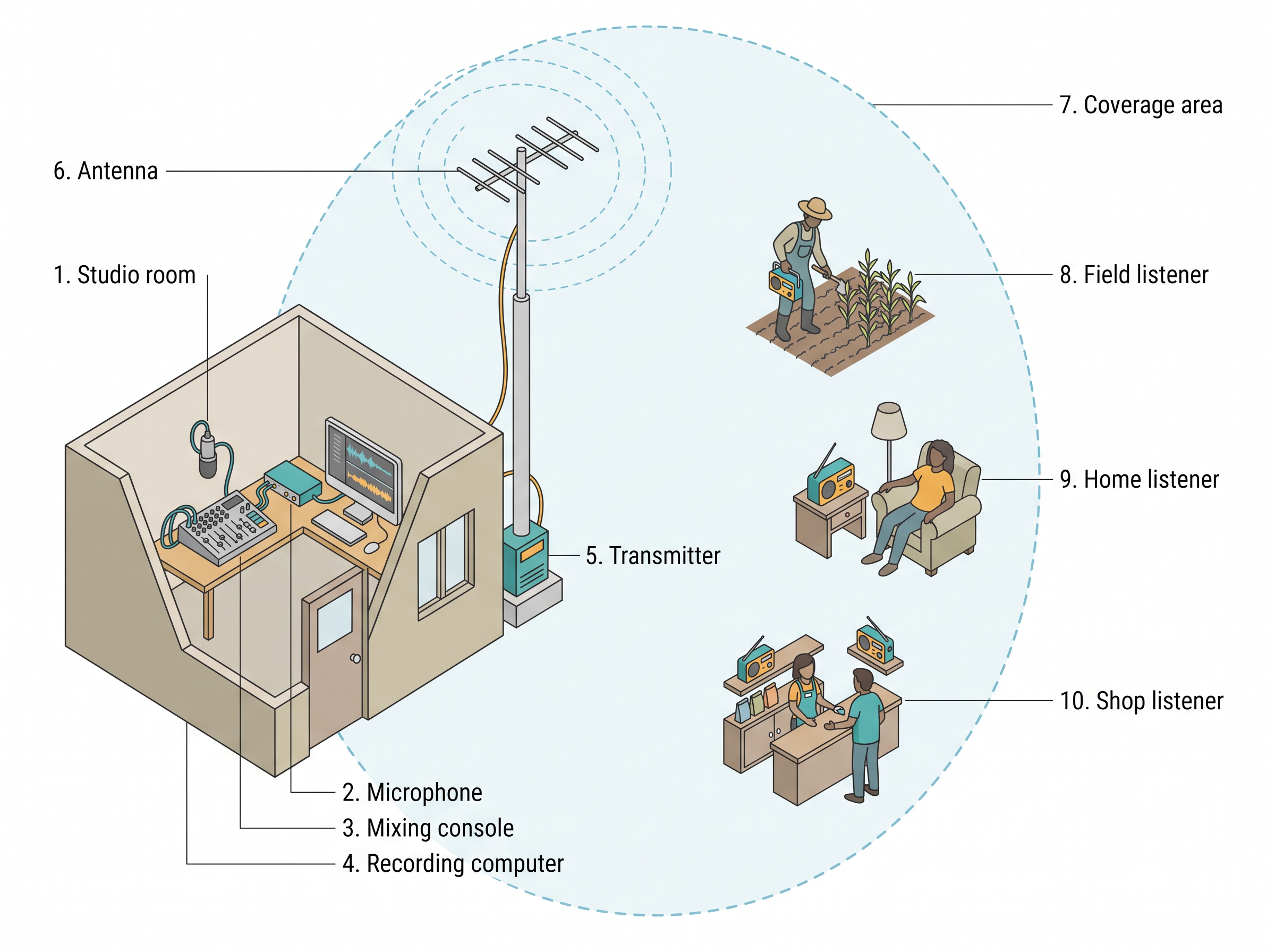
Fig. 13.4 – Set-up of a community radio station.
Two conditions decide whether such a station succeeds, and neither is technical. The content has to be developed and reviewed with the community taking part in it, and the station has to build rapport with the people it broadcasts to. A station that local people do not feel is theirs is simply a small transmitter.
Everything follows from that participation. The content is for local use and is broadcast in the local dialect. The station supports local development programmes. It gives people an opportunity to take part, to express their views and to display their talents, and it works as an information dispenser about government policies, entitlements, programmes, schemes and services — the things people most often miss out on because they never heard of them.
Radio used this way becomes the voice of the people rather than a voice speaking to them, and a catalyst for their own development. It is also, for a young listener, the first visible sign that Development Communication Journalism (DCJ) is a career that exists.
Community radio has been working in different parts of the country for years. It is operated at Banasthali Vidyapith in Rajasthan, by the Self Employed Women’s Association (SEWA) in Gujarat, and as Delhi University (DU) FM in North Delhi, among many others, all helping communities to voice their problems and find solutions.
13.4.2.3 Television And Educational Broadcasting
Television today offers a great variety of programmes on international, national and local channels. Some of them give people scope to participate directly — talk shows, reality shows and competitions.
Others are built to educate while they entertain. Indian serials such as ‘Kyunki Jeena Isi Ka Naam Hai’ and ‘Main Kuch Bhi Kar Sakti Hoon’ were written to carry health and social messages inside a continuing drama, where a viewer follows the characters week after week and absorbs the message through their choices rather than through instruction. Education and entertainment can be harnessed together for the common good, and these programmes show how far that can be taken.
Television has also been used directly as a teaching medium. In September 2004 India launched the Education Satellite, EDUSAT, the first Indian satellite built exclusively to serve the educational sector. It was used to meet the demand for an interactive satellite-based distance education system — a classroom in one city reaching students in many others, with the students able to respond.
13.4.3 Print Media
Print media are the printed channels of mass communication — newspapers, magazines and periodicals. Their strength in development work is depth: a report can carry detail, figures and photographs that a sixty-second broadcast cannot, and it can be kept and re-read.
Their weakness is a matter of what gets printed. The bulk of the news in national and regional dailies is urban in its approach. Reports on agriculture, on the problems of rural areas and on other development concerns generally remain low in priority, and newspapers and periodicals that operate in rural areas and cover local themes are few. Add the literacy requirement, and print reaches the development audience less easily than radio does.
Even so, the power of the press cannot be denied. Where it has been used well — and the good examples are limited in number — it works as a medium of continuous education, returning to the same place and the same people over months and years rather than reporting an event once and leaving.
The Development Journalist At Work
There is a shortage of DCJ professionals who write about the rural poor with passion and sensitivity, and this is one area in which students of communication and extension can demonstrate what the press can do for development.
The work itself is ordinary enough. Print journalists cover different stories and send them to the editors of different dailies. A working day may involve interviewing people, attending press conferences, or making phone calls and sending emails to create story leads — the tips and contacts from which a story is eventually built.
For a development journalist the internet is a valuable research tool, and without a basic level of computer literacy it is not possible to work satisfactorily. That requirement is not incidental; it is one reason the next method matters so much.
13.4.4 Information And Communication Technologies
Information and communication technologies (ICTs) is an umbrella term covering computer hardware and software, digital broadcast technologies, and telecommunications technologies. It is deliberately broad, because these technologies now overlap: a mobile phone is a telephone, a broadcast receiver and a computer at once.
ICTs have been used to inform people, but their effect has gone well beyond information. In poor and wealthy countries alike, mobile phone use has enabled and facilitated the expansion of markets, of social business and of public services. An entire range of economic services now runs on mobile phones — banking and financial transactions, marketing and distribution, employment, and public services. ICTs are proving to be economically, socially and politically transformative.
Tele-Centres
A more direct approach, aimed specifically at bettering the lives of the poor, is the setting up of a tele-centre — a shared public facility offering computer and internet services to a community that could not afford them individually. Many such projects were started in India, and a sizeable body of research has grown around them. One is shown in Fig. 13.5.
The Sustainable Access in Rural India (SARI) project in the state of Tamil Nadu set up some 80 tele-centre kiosks. They offered basic computer education, e-mail, web browsing and a range of e-government services, including the provision of certificates — which meant that a document that had required a journey to a distant office could be obtained in the village itself.
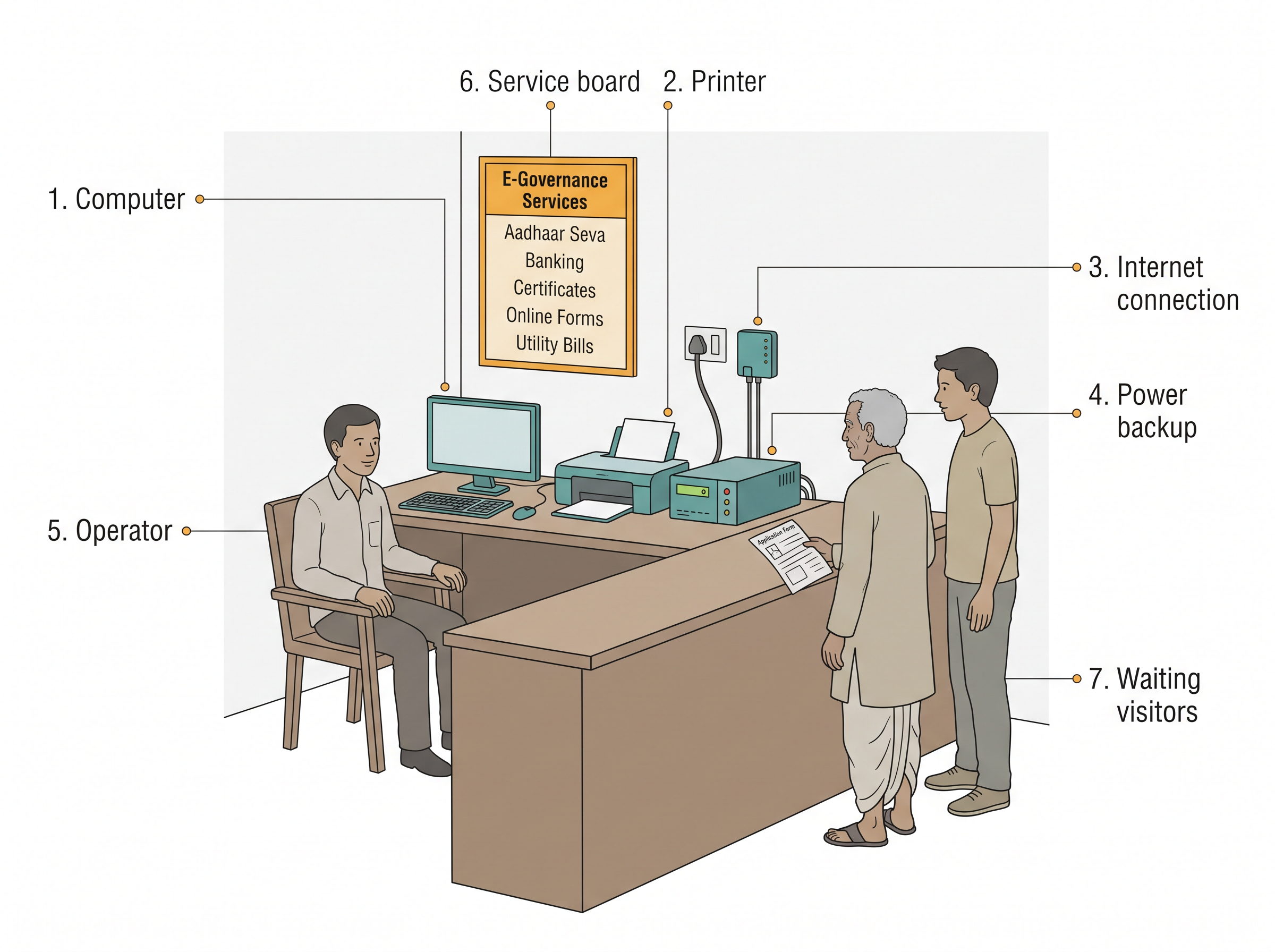
Fig. 13.5 – A rural tele-centre kiosk.
With all four methods now in view, Table 13.3 sets them side by side. A development programme rarely chooses one of them; it chooses a combination, and the table is a guide to what each contributes to that combination.
13.5 Knowledge And Skills Required For A Career In This Field
The methods in the last section do not run themselves. Behind every campaign, broadcast, column and training programme are people with a particular mix of abilities, and that mix is unusual: it takes in thinking, making, machinery and human relationships all at once. Five groups of skills are worth separating.
13.5.1 Cognitive And Creative Skills
Cognitive skills are the thinking skills — the ability to take in an issue, sort out its parts and understand what is actually going on. Nothing can be communicated that has not first been comprehended, and development issues are rarely simple: a water shortage may be a question of rainfall, of pipes, of pricing and of who is allowed to draw from which source, all together.
Creative skills are what turn that understanding into something people will attend to. They are required to project issues and concepts in a creative way, so as to attract attention and make an impact. A correct message that nobody notices has failed as surely as a wrong one.
Any student who has skills in media designing, in production, and in handling technical instruments carries a clear advantage when taking up assignments or jobs with media houses and advertising agencies.
13.5.2 Technical Skills
Technical skills are the skills of operating the equipment and the software the medium runs on. Someone interested in working as a development filmmaker needs camera techniques and video production in addition to content development and implementation, and a skill in editing is useful for marketing management as well.
More generally, DCJ professionals must be able to operate their equipment correctly, because a well-conceived programme is lost if it is badly recorded. They also need to learn the laws and regulations governing what they may and may not do — every broadcaster and publisher works inside legal limits.
Alongside the machinery come the performing skills. Presentation technique, so that a programme runs smoothly and remains enjoyable to follow, and interviewing technique, so that a person being interviewed says something worth broadcasting, are both learnt rather than innate. For radio work this extends to the computers used to run a station and to basic radio production using suitable software.
One written skill is worth naming on its own. A creative brief is the short document that tells a production team what a piece of communication must achieve — the audience, the message, the tone, the constraints. Writing one that communicates effectively is a distinct skill, and a great deal of wasted production is traced back to a vague brief.
A student on an apprenticeship usually gets real experience in exactly this way: writing a radio spot — a short piece composed for broadcast — having it recorded, and having it scheduled for airplay. The value of it is that the work meets an actual deadline and an actual audience.
A career in DCJ therefore asks for a combination of journalistic and presentation skills. An interest in current affairs and in local conditions, hands-on experience in radio, an ability to communicate, and a knowledge of music are all useful.
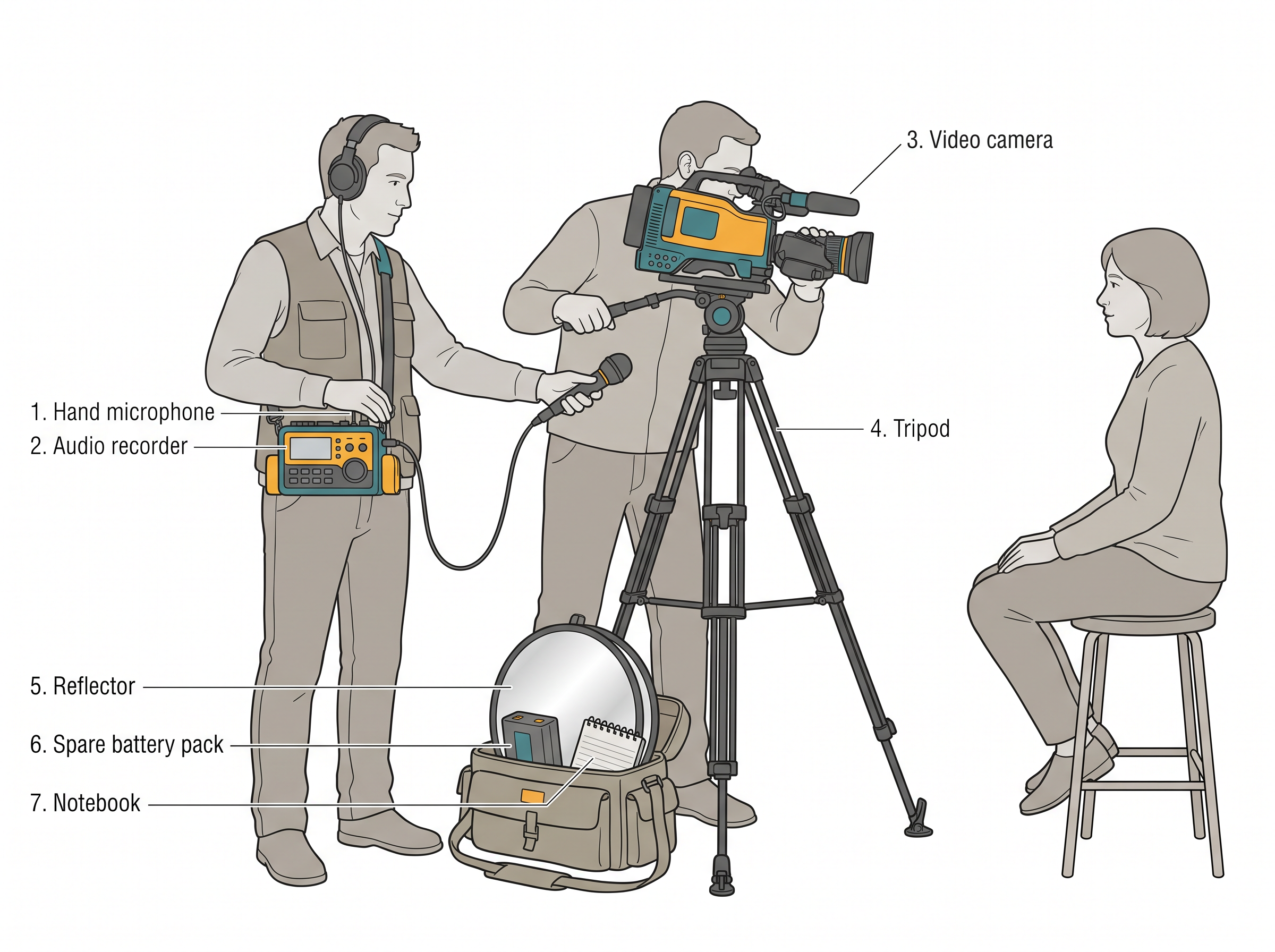
Fig. 13.6 – Field recording equipment.
13.5.3 Questioning Ability
Questioning is the habit of pressing past the first answer to look into the finer details of an issue. It is what separates a report that repeats what an official said from one that establishes what actually happened.
A passion for adventure and for travel is an added advantage in this field. The unique and interesting stories tend to be in the remotest parts of the country, and someone unwilling to travel to them will never find them.
13.5.4 Ability To Work With Diverse Groups
For a development communication student this ability is not optional but imperative, because the audience is never one uniform group. She or he needs to be people-centric — able to understand people’s own viewpoint on the issues affecting their lives, and to find solutions that will work for them rather than solutions that look correct on paper.
This is why the principles of social work matter here, and the guiding principle among them is ‘helping people help themselves’. It follows directly from what you read in section 13.3.3.2: the people facing a problem are assumed to have the ability to solve it, so the communicator’s job is to assist, not to take over.
Two further abilities belong here. Leadership skills, acquired and then practised, help in getting varied people to work together. And being a good listener is essential, because writing with sensitivity about a community is impossible without having genuinely heard it.
Present-day work culture also demands excellent interpersonal skills — the ability to interact professionally with staff, with partners and with consultants, each of whom wants something different from the same project.
13.5.5 Language And Computer Skills
Language and computer skills are essential rather than desirable. A firm command of at least one language is required, and command here means all three of speaking, writing and reading, together with the ability to write technical reports and documents. Report writing is a separate discipline from journalistic writing, and both are needed.
Basic computer skills are equally expected: word processing, spreadsheets and presentation software are the ordinary tools of the working day in this field, whatever package an office happens to use.
13.6 Scope And Career Avenues In Development Communication
The scope of a field is decided by the range of problems it is asked to work on. Judged that way, development communication is broad, because it employs a variety of media and communication techniques to address issues of several different kinds.
What The Field Covers
Six kinds of work are usually named, and they are not the same work under different labels.
- Information dissemination and education — making sure people know what exists and understand how to use it.
- Behaviour change — the harder task of getting a practice actually taken up and kept up.
- Social marketing — borrowing the techniques of commercial marketing, such as audience research, positioning and repetition, to promote a socially useful behaviour or product instead of a commercial one.
- Media advocacy — the strategic use of the media to build support for a cause and to press decision-makers on it.
- Communication for social change — working with a community so that it debates an issue and arrives at its own decision.
- Participatory development communication — designing the communication itself together with the people it is meant for.
The field is therefore wide in content and wide in use. Its scope also takes in training, advisory work and action projects, all of which have the same object: building up the communication capabilities and the communication resources of the people who are themselves in the development process. A community that can speak for itself has less need of anyone to speak for it, which is the direction all of this is meant to move in.
Where The Work Is
A development communication specialist can take up a variety of career paths across the social sector — in media houses, in government departments and in non-governmental organisations.
Large-scale projects are run by government departments with the help of international agencies, so the employment they generate is steady, and it is generally found to be satisfying both economically and psychologically. That second word is worth noticing. People stay in this field partly because the work is visibly connected to something being made better.
Some of the more specific options can be summarised as follows.
- Development journalist — in print, in television, in radio, in community media and in traditional media, including work as a radio jockey or an anchor.
- Research scholar — in research organisations, studying issues in gender and development, environment, consumption behaviour, health, agriculture and livelihoods.
- Trainer — training grassroots-level and field functionaries, policy makers, and officers of corporate houses.
- Freelancer and consultant — working on assignment for organisations rather than for one employer.
Traditional media in that first entry means the older performance forms — street theatre, folk song, puppetry, storytelling — which reach audiences that broadcast media reach only weakly, and which the Red Ribbon Express teams used at every halt.
Development communication thus offers a wide range of careers already, and the range is likely to widen further as new media appear and as more organisations recognise that a development programme without a communication component tends not to work.
13.7 Summary
- Mass media are the channels that carry a message from one source to a large, scattered audience at the same time.
- Journalism is the gathering, checking and reporting of information of public interest through the media, and it questions what is happening, where and why.
- Journalism is inseparable from democracy, because people cannot take part in what they do not know about; the press is therefore called the fourth pillar of democracy.
- Development means positive change in the socio-economic and cultural lives of the majority of people, on a permanent basis and without exploitation or violence.
- Development journalism reports the development process itself, focussing on success stories and on people at work in new projects and processes. It emerged after the colonial era ended.
- Development communication is the systematic application of the processes, strategies and principles of communication to bring about positive social change. The term was given by Nora C. Quebral in 1972.
- Development communication has four essential features:
- it is oriented to the socio-economic development and happiness of the people and community at large;
- it aims at giving information and educating the community;
- it combines mass media with interpersonal communication for greater impact;
- it is based on the characteristics of the audience and their environment.
- It is a two-way process. People facing a problem are assumed to be able to find solutions; they may need help in reaching resources, and motivation is the key element.
- It works as a dialogue between people and development agencies, seeking a common understanding that makes concerted action possible.
- A campaign combines different communication methods and materials on one theme for a predefined period. It is well organised and intensive.
- A campaign creates awareness, holds attention through dramatics, stays in memory, and builds an environment in which a practice is adopted.
- The Swachh Bharat Mission, launched on 2 October 2014, was implemented as a nationwide campaign to eliminate open defecation in rural areas between 2014 and 2019, through behaviour change, toilet construction and monitoring of construction and usage.
- Radio and television are the most popular, cheapest and most convenient mass media for development purposes, and broadcasting does not require the audience to be literate.
- Radio is the most accessible mass medium: it costs less than television and it is mobile, moving with the listener at work or at rest.
- A Public Service Announcement is a 10 to 60 second message broadcast between programmes, usually as a jingle, carrying a message for public good; it works through a catchy slogan and repeated broadcasts.
- Radio’s old limitation was the absence of feedback; interactive formats, local radio stations and community radio have overcome it.
- Community radio is a local station broadcasting over a limited area, run and managed by local people in the local dialect. NGOs and educational institutions can seek a licence to set one up.
- Community radio succeeds on participatory content development and rapport with the community, and it acts as an information dispenser about policies, entitlements, programmes, schemes and services.
- Television carries participatory and educational programmes; EDUSAT, launched in September 2004, was the first Indian satellite built exclusively for the educational sector.
- Print media carry depth and can be kept and re-read, but the bulk of news in national and regional dailies is urban in approach and rural development concerns remain low in priority.
- Print journalists build stories from interviews, press conferences and story leads, and need computer literacy and the internet as research tools.
- Information and communication technologies cover computer hardware and software, digital broadcast and telecommunications technologies, and are proving economically, socially and politically transformative.
- Tele-centres bring computer and internet services within reach of a community; the Sustainable Access in Rural India project set up about 80 such kiosks in Tamil Nadu, offering computer education, e-mail, web browsing and e-government services.
- A career in this field needs five groups of skills:
- cognitive skills, to comprehend an issue;
- creative skills, to project it so that it attracts attention;
- technical skills, to handle equipment, software, presentation, interviewing and the writing of a creative brief;
- questioning ability, to look into the finer details of an issue;
- language and computer skills, including report writing.
- The ability to work with diverse groups is imperative; it rests on the principles of social work, whose guiding principle is ‘helping people help themselves’.
- The scope of the field covers information dissemination and education, behaviour change, social marketing, media advocacy, communication for social change and participatory development communication, along with training, advisory and action projects.
- Career avenues include work as a development journalist, a research scholar, a trainer, and a freelancer or consultant, across media houses, government departments and non-governmental organisations.
13.8 Key Terms
- Campaign — a combination of different communication methods and materials used on one theme for a predefined period of time.
- Cognitive skills — the thinking skills needed to take in an issue, sort out its parts and comprehend it.
- Community radio — a small local radio station, broadcasting over a limited area, run and managed by local people in their own dialect.
- Creative brief — the short written document that tells a production team what a piece of communication must achieve, and for whom.
- Creative skills — the skills needed to project an issue or concept in a way that attracts attention and makes an impact.
- Development — positive change in the socio-economic and cultural lives of the majority of people, on a permanent basis and without exploitation or violence.
- Development communication — the systematic application of the processes, strategies and principles of communication to bring about positive social change.
- Development journalism — reporting that takes the development process as its subject, focussing on people at work in new projects and methods.
- EDUSAT — the Education Satellite launched by India in September 2004, the first Indian satellite built exclusively to serve the educational sector.
- Information and communication technologies (ICTs) — the umbrella term for computer hardware and software, digital broadcast technologies and telecommunications technologies.
- Interpersonal communication — direct face-to-face exchange between people, used alongside mass media for greater impact.
- Journalism — the gathering, checking and reporting of information of public interest through the media.
- Mass communication — the process of sending a message to a large, scattered and largely unknown audience through the mass media.
- Mass media — the channels that carry a message from one source to a very large and scattered audience at the same time.
- Media advocacy — the strategic use of the media to build support for a cause and to press decision-makers on it.
- Press — the newspapers, channels and reporters taken together, often called the fourth pillar of democracy.
- Print media — the printed channels of mass communication, such as newspapers, magazines and periodicals.
- Public Service Announcement (PSA) — a brief message of 10 to 60 seconds broadcast between programmes, usually as a jingle, carrying information or a suggestion for public good.
- Questioning — the habit of pressing past the first answer to look into the finer details of an issue.
- Radio spot — a short piece written and recorded for broadcast on radio.
- Social marketing — the use of commercial marketing techniques to promote a socially useful behaviour or product.
- Technical skills — the skills of operating correctly the equipment and software on which a medium runs.
- Tele-centre — a shared public facility offering computer and internet services to a community that could not afford them individually.
13.9 Points To Ponder
- Development communication assumes that people facing a problem already have the ability to solve it. If that assumption is true, why do development programmes so often begin by telling people what to do?
- Radio reaches people who cannot read, and print reaches people who can. Does a medium that asks less of its audience always serve development better, or does it lose something in the exchange?
- A campaign is intensive but ends on a fixed date. What happens to a newly adopted practice once the campaign stops, and what would have to be built into the campaign for the practice to survive?
- Development journalism is said to focus on success stories. What is gained by reporting what worked, and what might be missed by a journalism that reports little else?
- A community radio station is run by local people and broadcasts in the local dialect. What could go wrong if the only voices heard on it are those of the most influential people in that community?
- ICTs are described as economically, socially and politically transformative. For a household with no device and no connection, does the spread of ICTs make information easier to reach or harder?
13.10 Objective Questions
- (MCQ) The term ‘development communication’ was given in 1972 by [1]
- Vikram Sarabhai
- Nora C. Quebral
- the Ministry of Information and Broadcasting
- the National AIDS Control Organisation
- (MCQ) A Public Service Announcement is usually of [1]
- 5 to 10 seconds
- 10 to 60 seconds
- 2 to 5 minutes
- 10 to 15 minutes
- (MCQ) Which of the following is not an essential feature of development communication? [1]
- It is based on the characteristics of the audience and their environment.
- It combines mass media with interpersonal communication channels.
- It is oriented to the interests of the organisation sending the message.
- It aims at giving information and educating the community.
- (MCQ) EDUSAT, launched in September 2004, was built exclusively to serve [1]
- weather forecasting
- rural telephone connectivity
- the educational sector
- disaster warning systems
- (A–R) Read the assertion and reason given below and choose the correct option. [1] Assertion (A): Radio is described as the most accessible mass medium. Reason (R): Radio is a mobile medium and its message can be followed without literacy.
- Both A and R are true, and R is the correct explanation of A.
- Both A and R are true, but R is not the correct explanation of A.
- A is true but R is false.
- A is false but R is true.
- (A–R) Read the assertion and reason given below and choose the correct option. [1] Assertion (A): A campaign runs for a period fixed in advance. Reason (R): A campaign is meant to be an intensive effort rather than a message left running indefinitely.
- Both A and R are true, and R is the correct explanation of A.
- Both A and R are true, but R is not the correct explanation of A.
- A is true but R is false.
- A is false but R is true.
- (Match) Match the items in Column A with those in Column B. [1]
| Column A | Column B |
|---|---|
| a. Tele-centre | i. Broadcast in the local dialect over a limited area |
| b. Creative brief | ii. Tells a production team what the communication must achieve |
| c. Community radio | iii. Shared public facility offering computer and internet services |
(Fill) The press is called the ______ pillar of democracy. [1]
(T/F) State whether true or false: Development communication is a one-way process in which an agency instructs a community. [1]
(Name) Name the umbrella term that covers computer hardware and software, digital broadcast technologies and telecommunications technologies. [1]
(Odd One Out) Odd one out, and give a reason: meetings, leaflets, exhibitions, rainfall. [1]
13.11 Check Your Concepts
(Short Answer) Define development, and state the three conditions contained in the definition. [2]
(Short Answer) What is a Public Service Announcement? State why repetition matters in a PSA. [2]
(Short Answer) Give a reason: broadcast media reach the development audience more easily than print media do. [2]
(Short Answer) List the four essential features of development communication. [3]
(Short Answer) Explain, with an example, what is meant by combining mass media with interpersonal communication. [3]
(Short Answer) Why is ‘helping people help themselves’ treated as the guiding principle for a development communication specialist? [3]
(Short Answer) Differentiate between development journalism and development communication, stating the basis of difference in each case. [4]
(Short Answer) Explain how a campaign moves an audience from awareness to the adoption of a practice. [4]
(Short Answer) What would happen if a community radio station were set up in a village with the studio, equipment and licence in place, but with all its programmes written and recorded by an outside agency? [4]
(Short Answer) Describe the knowledge and skills required for a career in development communication and journalism. [5]
(Short Answer) Development communication is described as a two-way process. Explain this statement, and state why motivation rather than instruction is treated as the key element. [5]
13.12 Identify & Label
(Identify & Label) Look at Fig. 13.4. Identify the type of radio station shown, and label the transmitter, the antenna and the area of coverage. State one feature of the coverage area that distinguishes this station from a national broadcasting service. [3]
(Identify & Label) Look at Fig. 13.5. Identify the facility shown and name any three services it offers to the community. [3]
(Identify & Label) Look at Fig. 13.6. Identify any four items of equipment shown, and state the purpose of each in field recording. [4]
13.13 Case & Application Based
- (Case) A district administration wants households in eighty villages to test their drinking water sources before the monsoon and to use the testing kits supplied at the panchayat office. The kits have been supplied for two years, and almost none have been collected. A survey finds that most households have a radio, that fewer than one in four adults reads a newspaper regularly, and that the villages speak a dialect not used on the state channel. [5]
- Which medium would you place at the centre of the communication effort, and why?
- Explain how you would use interpersonal communication alongside that medium.
- The administration proposes a single announcement repeated for one week. Give two reasons why a campaign would work better.
- State one way in which the effort could be judged a success, other than by counting the kits collected.
- (Case) A college in a small town has been granted a licence for a community radio station. The station has one studio, two trained student operators, and airtime of three hours a day. The teacher in charge suggests broadcasting recorded lectures for six days a week; a group of students suggests instead a programme in which local farmers, shopkeepers, health workers and self-help group members speak about their own concerns. [5]
- Which suggestion fits the purpose of community radio better? Give reasons.
- Name two prerequisites for a successful community radio initiative, and explain how each applies to this station.
- Suggest one way the station could work as an information dispenser about government schemes and entitlements.
- State two skills the student operators would need to develop, other than technical skills.