Chapter 1: Challenges Of Nation Building
A photograph taken in Kolkata in 1947 shows a truck crowded with young men. Some are standing on the bonnet, some are hanging off the sides, and every face is turned towards the camera. Two flags fly above them. One is the flag of India. The other is the flag of Pakistan.
The men were driving through a city that had been torn by communal violence, and they flew the two flags together to say that the killing was over. The photographer, Sunil Janah, caught something that is difficult to hold in the mind at once — the joy of freedom and the tragedy of partition, in the same frame, on the same truck.
Look at the picture closely and you will notice what it is really asking. Two countries were born at midnight on 14–15 August 1947, and the line between them had been drawn on the basis of religion. Pakistan had been demanded as a country for Muslims. So what, now, was India?
Was it to be a country for Hindus? Or was it to be a country where a Muslim, a Sikh, a Christian, a Parsi or a Jew could be a full citizen, with the same rights as anyone else? That question was not settled by the picture. It had to be settled by politics — by what leaders said, what governments did, and what ordinary people would accept. This chapter is about how the answer was worked out.
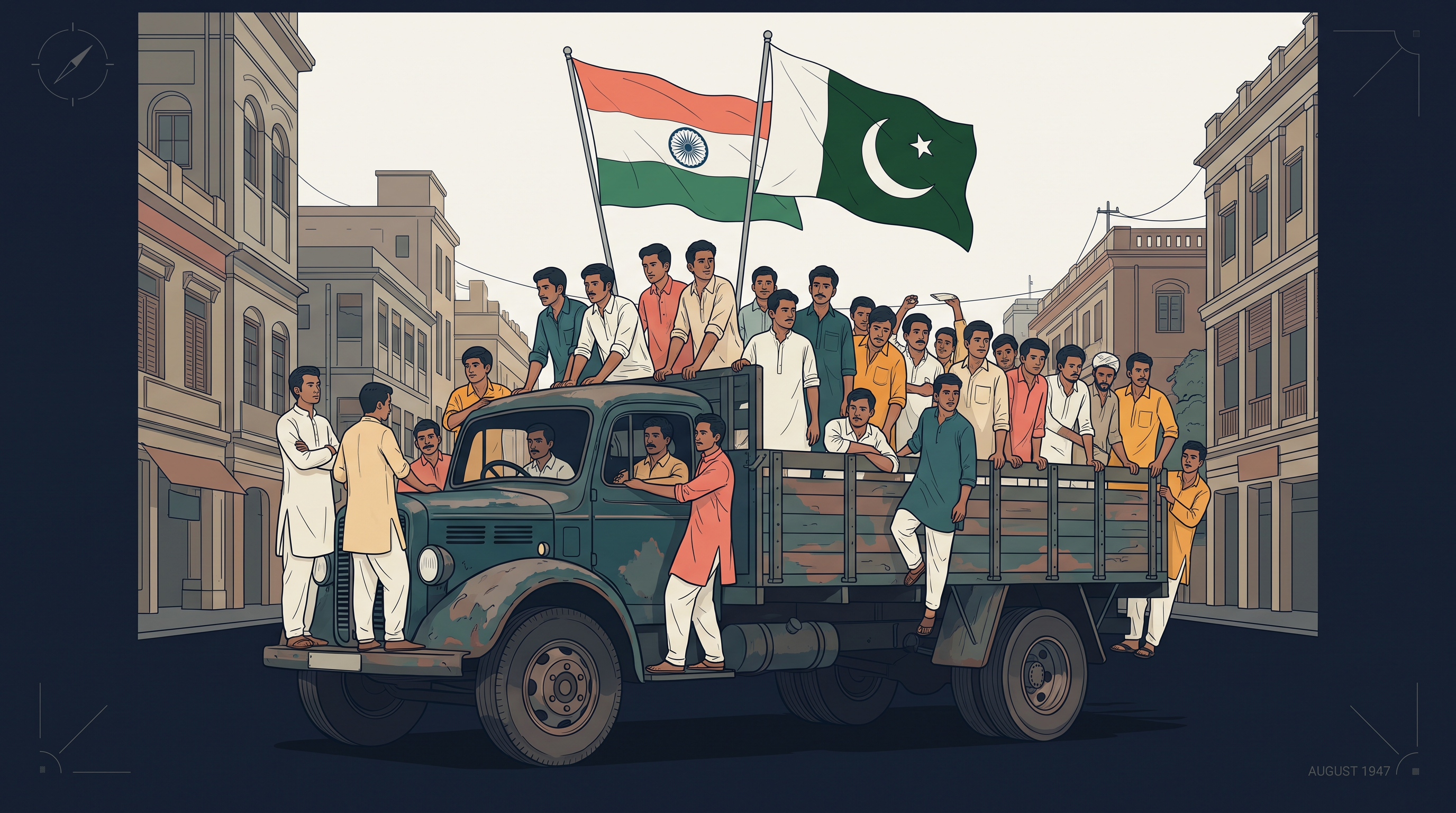
Fig. 1.0 – Hindus and Muslims on a truck in Kolkata, 1947.
1.1 Challenges For The New Nation-State
At the hour of midnight on 14-15 August 1947, India attained independence. Jawaharlal Nehru, the first Prime Minister of free India, addressed a special session of the Constituent Assembly that night. That was the famous ‘tryst with destiny’ speech, which you are already familiar with.
The Constituent Assembly was the body of members that was writing the Constitution of India, and which also acted as the country’s law-making body in these first years. So the speech was not made at a public rally. It was made to the men and women who were, at that very moment, deciding what kind of country India would be.
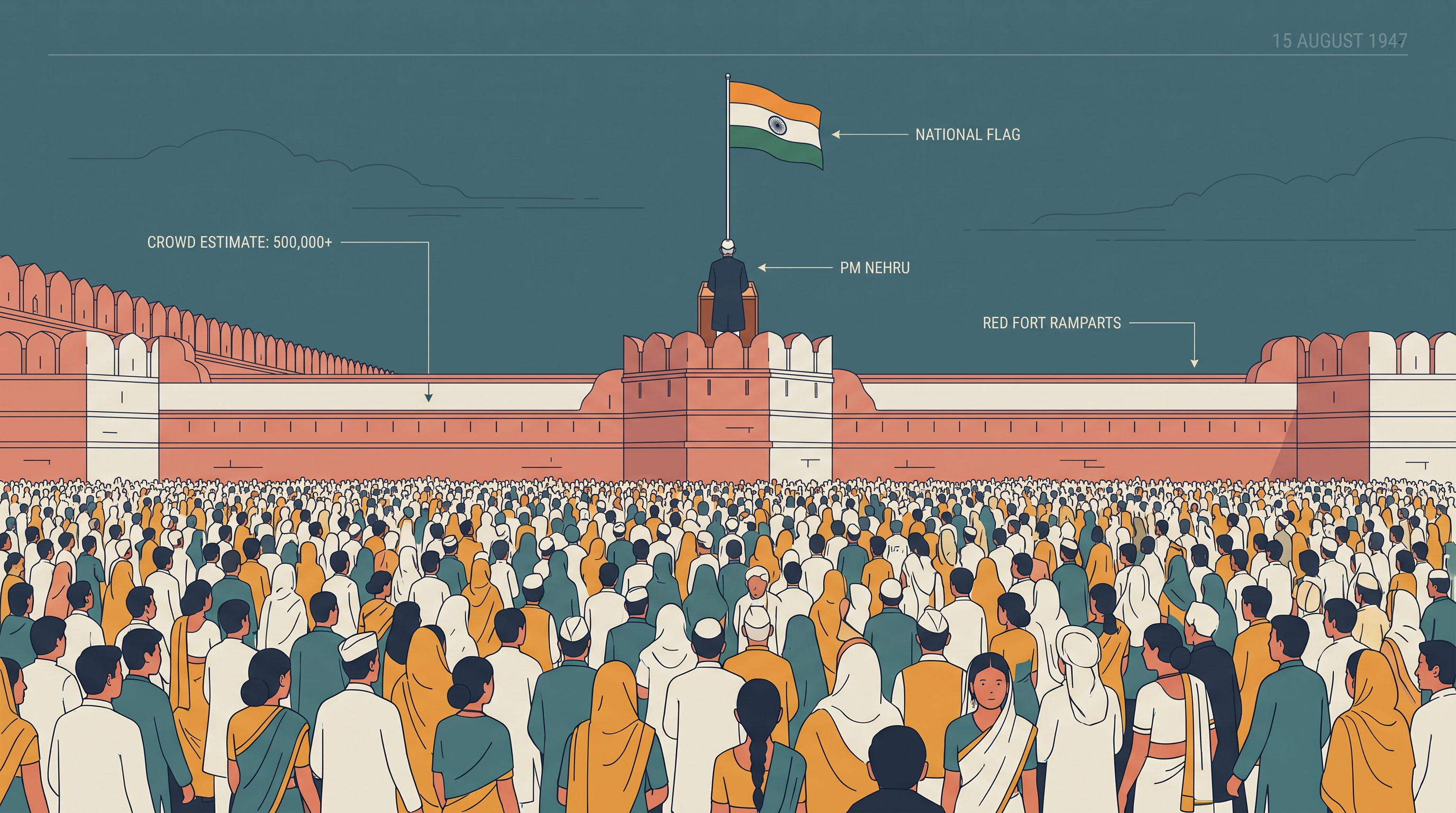
Fig. 1.1 – Prime Minister Jawaharlal Nehru speaking from the Red Fort.
This was the moment Indians had been waiting for. You have read in your history textbooks that there were many voices in our national movement. But there were two goals that almost everyone agreed upon.
The first was that after Independence we would run our country through democratic government. The second was that the government would be run for the good of all, and particularly for the poor and the socially disadvantaged groups. Now that the country was independent, the time had come to realise the promise of freedom.
Freedom Arrived With A Wound
This was not going to be easy. India was born as a nation-state in very difficult circumstances — that is, as a state governing a territory whose people were now expected to think of themselves as one nation. Perhaps no other country by then was born in a situation more difficult than that of India in 1947.
Freedom came with the partition of the country, the division of British India into two countries, India and Pakistan. The year 1947 was a year of unprecedented violence and of the trauma of displacement. It was in this situation that independent India started on its journey towards several objectives at once. Yet the turmoil that accompanied independence did not make our leaders lose sight of the multiple challenges that faced the new nation.
The chapter prints a newspaper page from those weeks. It is worth pausing on it, because it shows how the two events — freedom and partition — arrived in the same breath, and were reported in the same columns.
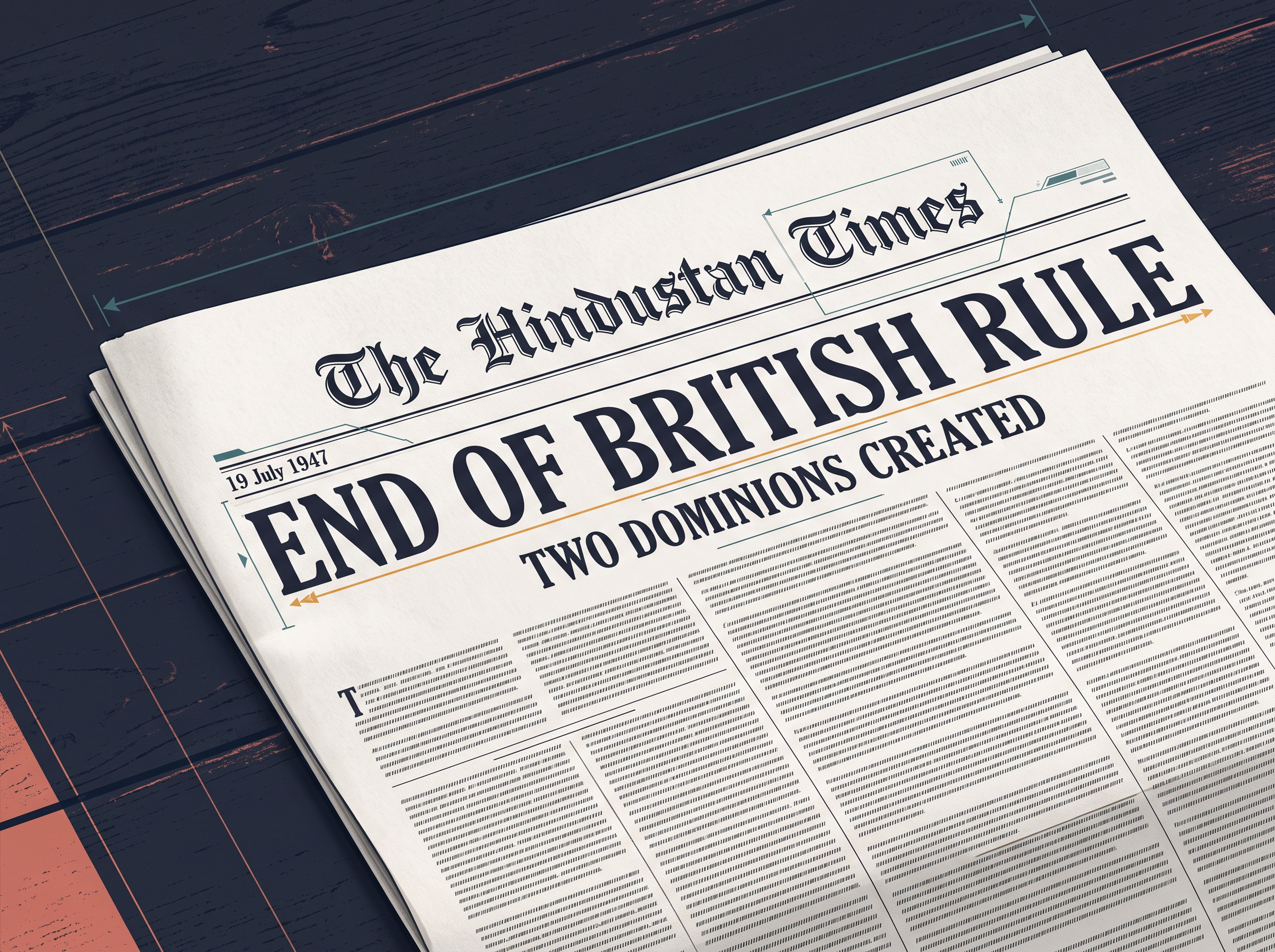
Fig. 1.2 – Hindustan Times front page, 19 July 1947.
Notice the date on the masthead: 19 July 1947. Independence was still nearly a month away, and the newspaper was already reporting that the Bill had received royal assent and that two dominions would come into existence. Freedom was not announced first, with partition following as an afterthought. The two decisions travelled together.
Two Feelings On One Night
Not everyone experienced that night in the same way. On 14 August 1947, in Kolkata, Mahatma Gandhi spoke words that sit very uneasily beside the celebrations at the Red Fort.
Read the sentence carefully. Gandhi does not deny the achievement; he says plainly that the slavery of British domination is ending. What he refuses to do is separate that achievement from its price. In one line he puts rejoicing and mourning side by side and lets neither cancel the other.
That is also a political statement, not only a personal one. If freedom and partition arrived together, then the new government could not simply celebrate the first and forget the second. It would have to govern a country in which lakhs of people were, at that moment, in fear or in flight.
But notice what the source cannot tell us. It records what one leader chose to say in public, on one day, in one city. It does not tell us what most Indians felt that night, and it cannot tell us whether the ordinary Hindu, Muslim or Sikh in a Punjab village agreed with him. A quotation from a leader is evidence of the leader’s position. It is not evidence of what a nation believed.
1.1.1 Three Challenges
Broadly, independent India faced three kinds of challenges.
The First Challenge: One Nation, Many Peoples
The first and the immediate challenge was to shape a nation that was united, yet accommodative of the diversity in our society. India was a land of continental size and diversity. Its people spoke different languages and followed different cultures and religions.
At that time it was widely believed that a country full of such kinds of diversity could not remain together for long. The partition of the country appeared to prove everyone’s worst fears. If the subcontinent had already split once along the line of religion, what was to stop the remainder splitting again along some other line?
So there were serious questions about the future of India. Would India survive as a unified country? Would it do so by emphasising national unity at the cost of every other objective? Would that mean rejecting all regional and sub-national identities? And there was an urgent question that would not wait: how was the integration of the territory of India to be achieved?
The Second Challenge: Making Democracy Work
The second challenge was to establish democracy. You have already studied the Indian Constitution. You know that the Constitution granted fundamental rights — the basic rights of citizens, such as equality and freedom of expression, which the government itself may not take away — and extended the right to vote to every citizen.
India adopted representative democracy based on the parliamentary form of government. In a representative democracy, citizens do not make laws themselves; they elect members who make laws on their behalf. In a parliamentary form of government, the government of the day is drawn from the legislature and stays in office only so long as it holds the confidence of the elected House. Together, these features ensure that political competition would take place within a democratic framework.
But here the chapter makes a claim worth slowing down for. A democratic constitution is necessary but not sufficient for establishing a democracy. The document could be written and adopted in a few years. The challenge was to develop democratic practices in accordance with the Constitution — and practices are habits, not clauses.
The Third Challenge: Development For Everyone
The third challenge was to ensure the development and well-being of the entire society, and not only of some sections of it. Here again the Constitution had already spoken. It clearly laid down the principle of equality, and special protection for socially disadvantaged groups and for religious and cultural communities.
The Constitution also set out, in the Directive Principles of State Policy, the welfare goals that democratic politics must achieve. These are instructions to the government about the kind of society it should work towards. The real challenge now was to evolve effective policies for economic development and for the eradication of poverty. Naming a goal is not the same as knowing how to reach it.
What This Book Sets Out To Do
How did independent India respond to these challenges? To what extent did India succeed in achieving the various objectives set out by the Constitution? This entire book is an attempt to respond to these questions. It tells the story of politics in India since Independence so as to equip you to develop your own answers to big questions like these. In the first three chapters we look at how the three challenges above were faced in the early years after Independence.
You may find yourself wishing for a time machine, so that you could go back and stand in the crowd during the celebrations of 15 August 1947. If you did, the day would probably look quite different from what you expect — not one mood, but several, and not all of them joyful.
In this chapter we focus on the first challenge of nation-building, the one that occupied centre-stage in the years immediately after Independence. We begin by looking at the events that formed the context of Independence, because that helps us understand why national unity and security became the primary challenge. We shall then see how India chose to shape itself into a nation, united by a shared history and a common destiny. That unity had to reflect the aspirations of people across different regions, and had to deal with the disparities that existed among regions and among different sections of people. In the next two chapters we turn to the challenge of establishing a democracy and of achieving economic development with equality and justice.
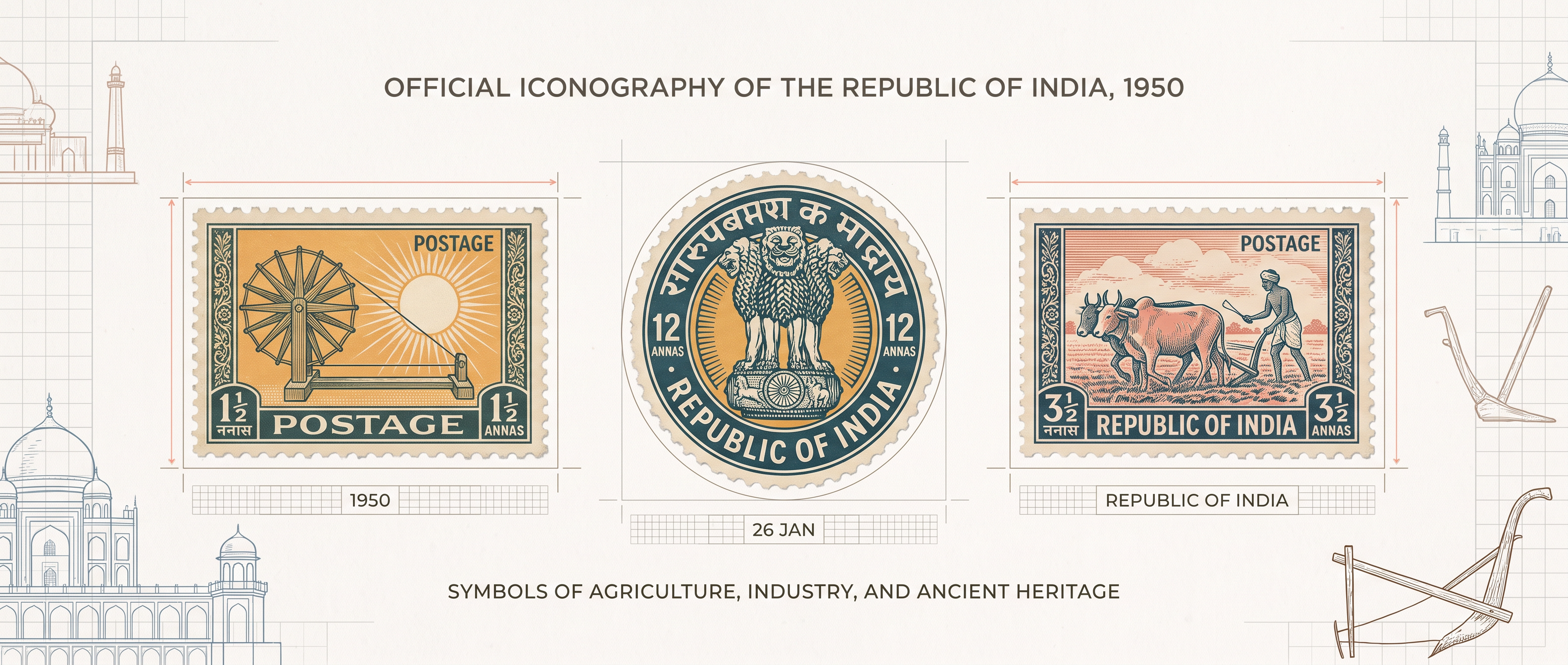
Fig. 1.3 – Stamps issued for the first Republic Day, 1950.
1.2 Partition: Displacement And Rehabilitation
On 14-15 August 1947, not one but two nation-states came into existence — India and Pakistan. This was the result of ‘partition’, the division of British India into India and Pakistan. The drawing of the border demarcating the territory of each country marked the culmination of political developments that you have read about in your history textbooks.
According to the two-nation theory advanced by the Muslim League, India consisted of not one but two ‘people’, Hindus and Muslims. That is why the League demanded Pakistan, a separate country for the Muslims. The Muslim League was a political party formed to protect the interests of Muslims in colonial India.
The Congress opposed this theory and opposed the demand for Pakistan. But several political developments in the 1940s, the political competition between the Congress and the Muslim League, and the British role, led to the decision to create Pakistan.
Voices From August 1947
Before we follow the events, the chapter asks us to listen. It prints, across two pages, the newspapers of that fortnight, two poems, and two political statements. They come from both sides of the new border, and they do not agree with each other.
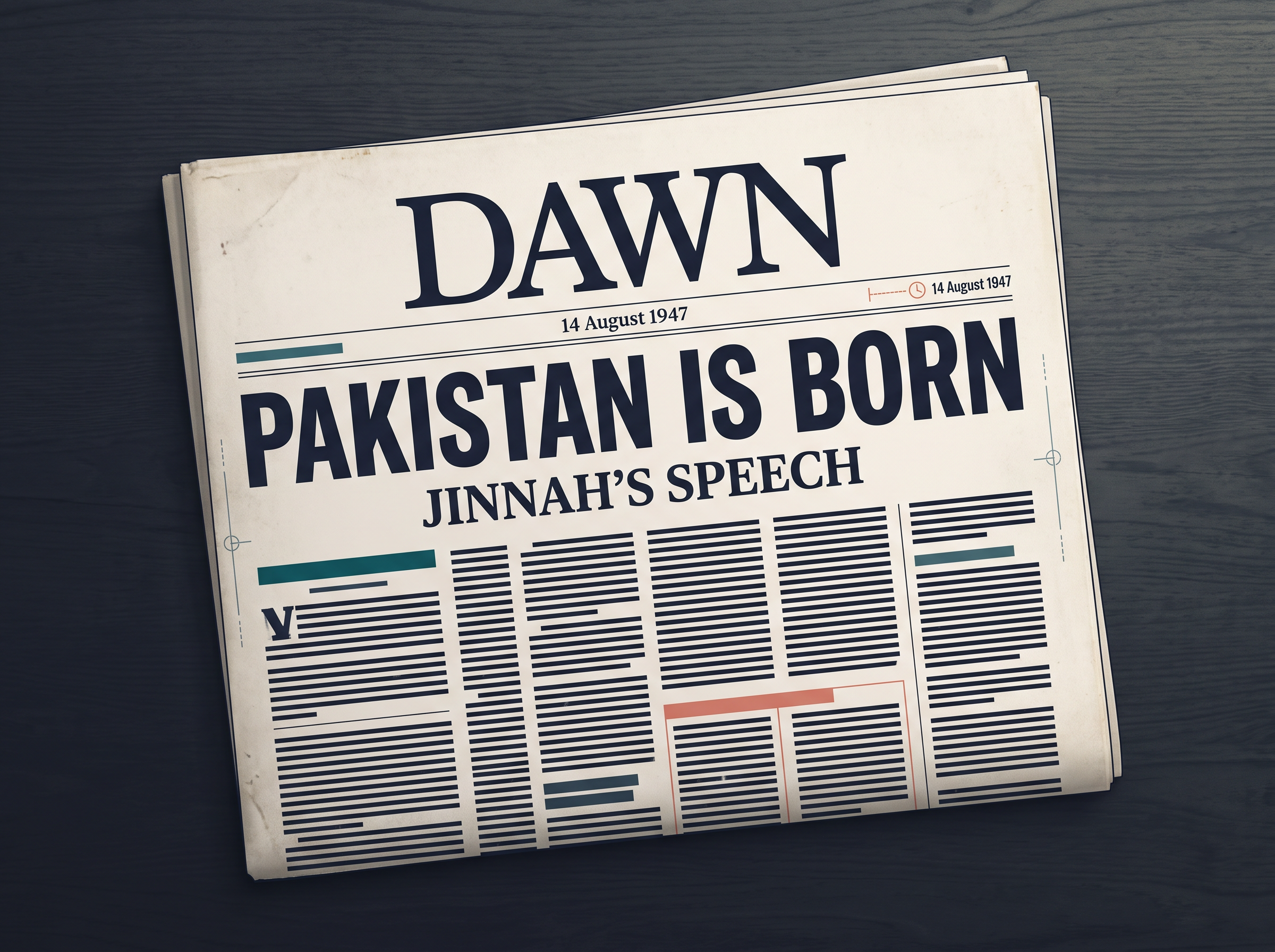
Fig. 1.4 – Dawn front page, 14 August 1947.
The first voice is a poet’s. Faiz Ahmed Faiz wrote in Urdu, in Pakistan, about the dawn that had just broken over the subcontinent.
Read the central claim in the second line: this is not that dawn. Freedom has come, and the poet does not deny it — there is brightness. But the brightness is ‘scarred’ and ‘marred’, and the night has bitten into it. The poem is saying that the thing achieved is not the thing that was hoped for.
That is a political judgement made in the language of images. It is also, notice, made from inside Pakistan, about Pakistan’s freedom as much as India’s. Disappointment with what independence turned out to be was not a feeling on one side of the border only.
What the poem cannot tell us is how widely that disappointment was shared. A poem is evidence of one writer’s response, made with great skill, and it is designed to move us rather than to count us. Millions of people celebrated in those same weeks. Both things were true at once, and the poem records only one of them.
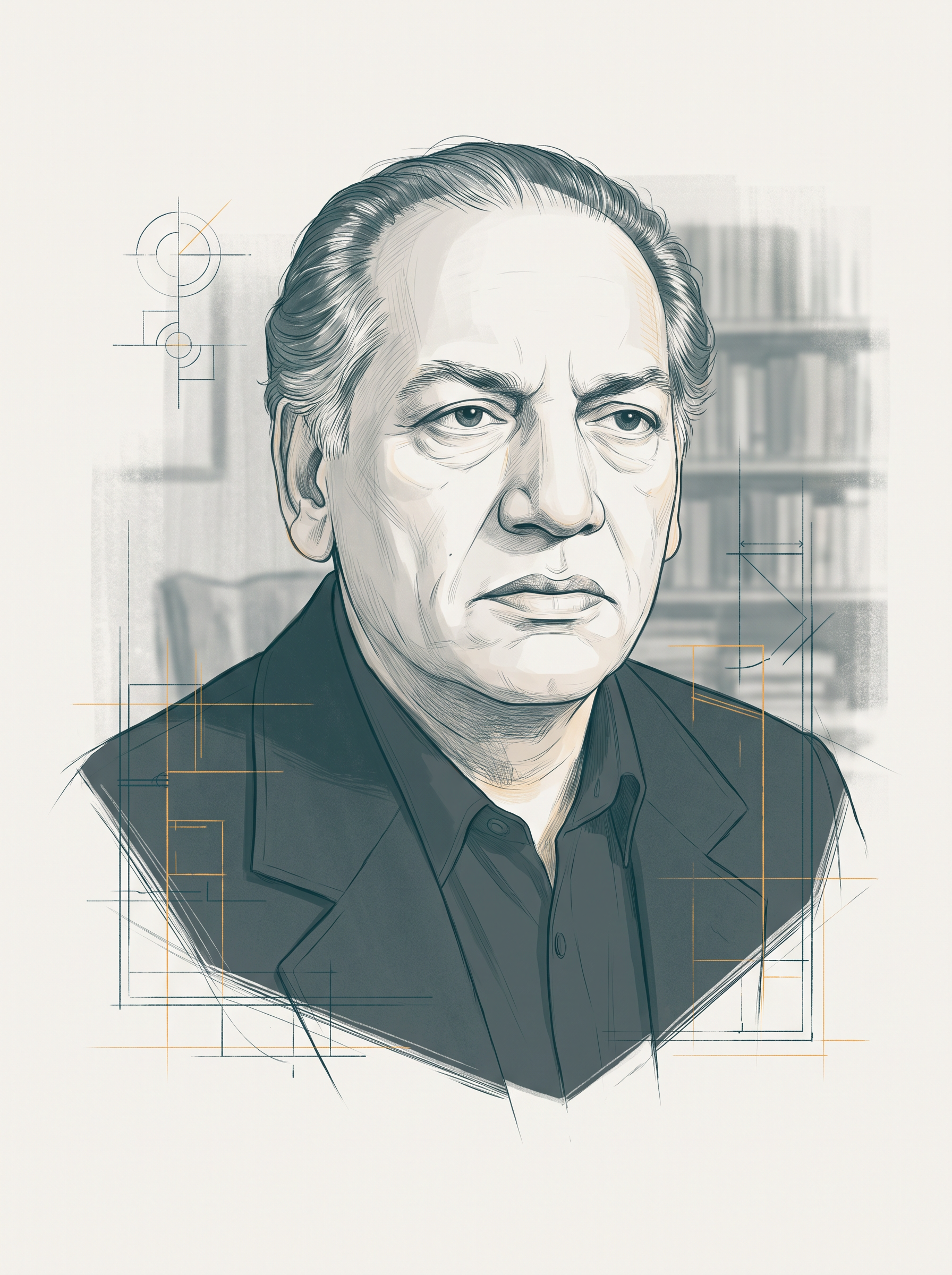
Fig. 1.5 – Faiz Ahmed Faiz.
The second voice belongs to the man who had led the demand for Pakistan. On 11 August 1947 Mohammad Ali Jinnah addressed the Constituent Assembly of Pakistan at Karachi — the body that would write Pakistan’s constitution.
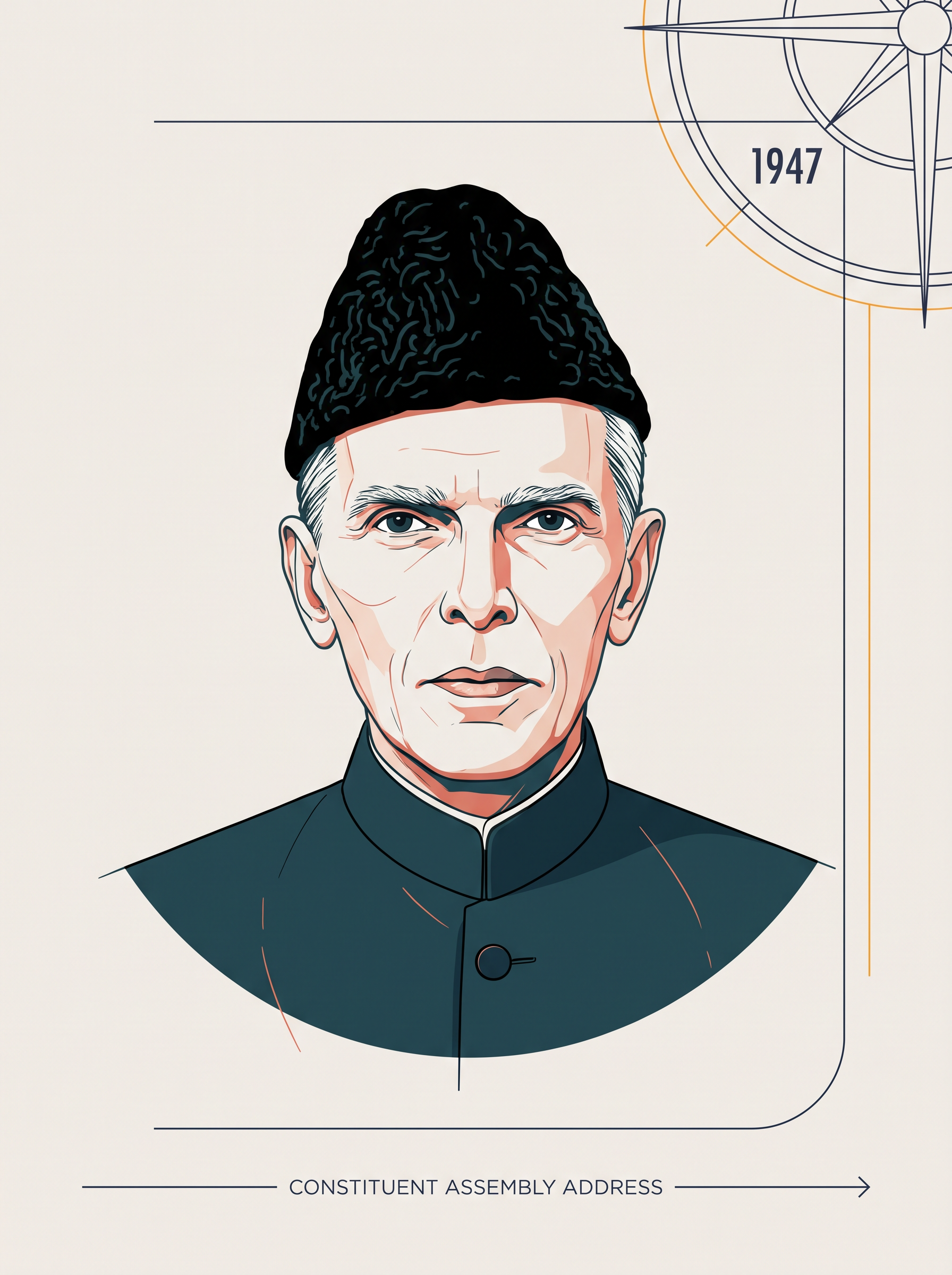
Fig. 1.6 – Mohammad Ali Jinnah.
This is a striking thing to read against the two-nation theory. Jinnah is telling the new state that religion has nothing to do with the business of the State, and that every citizen may worship as they choose. He is also saying that the labels of majority and minority will, in time, disappear.
Set the two ideas side by side and the tension is obvious. A country had just been demanded on the ground that Hindus and Muslims were two separate peoples. Its founder, three days before it came into being, was telling its assembly that religious identity should have nothing to do with the state.
Here the limit matters especially. This is a speech, made in public, to a founding assembly, at the moment when a leader is setting out what he wants his state to be. It tells us what Jinnah said he wanted. It cannot tell us what he privately believed, and it certainly cannot tell us what Pakistan actually became. A statement of intent is not a record of outcome.
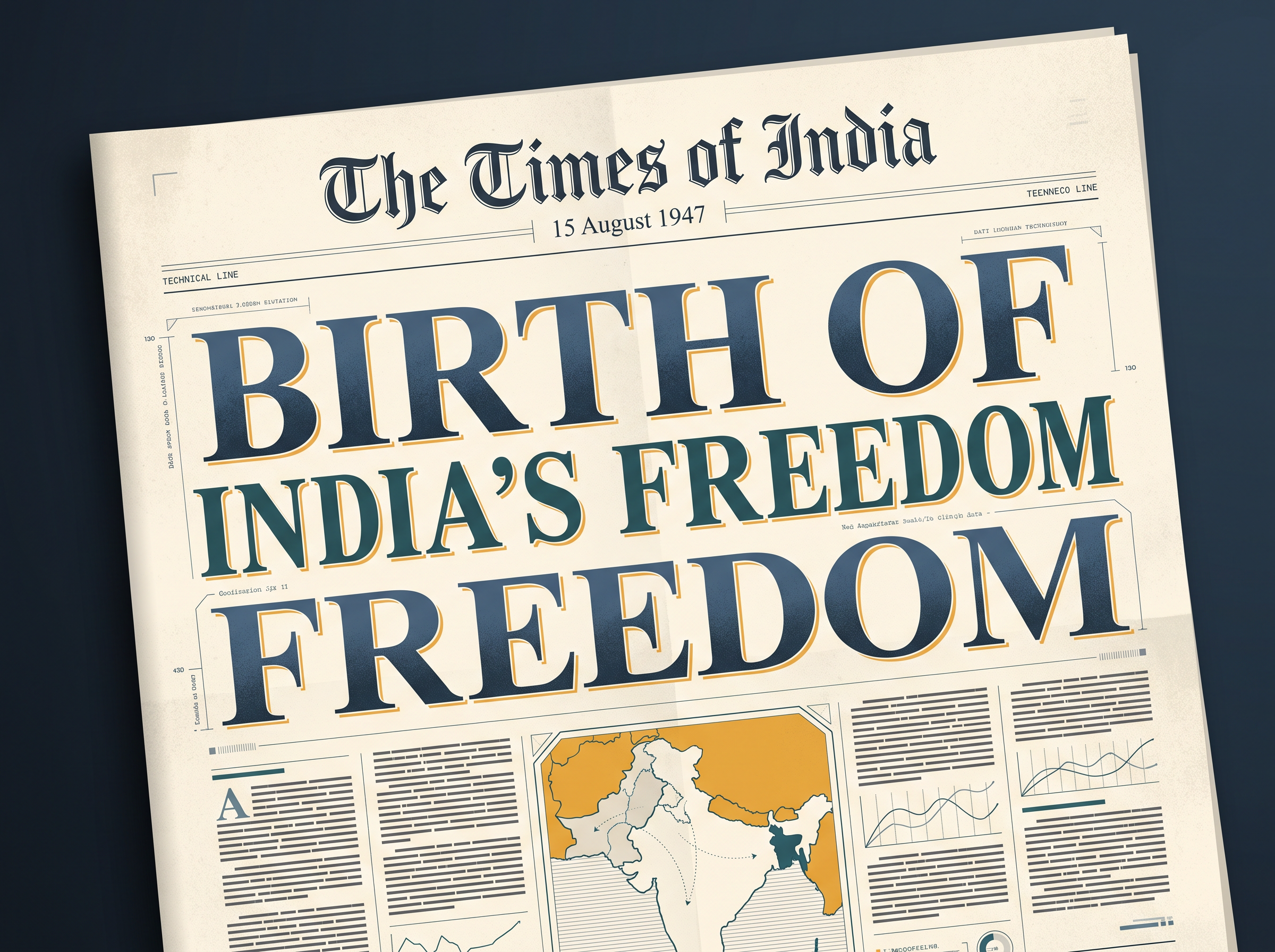
Fig. 1.7 – Times of India front page, 15 August 1947.
The third voice is a poet’s again, this time from the Indian side of the divided Punjab. Amrita Pritam calls out to Waris Shah, the eighteenth-century Punjabi poet of Heer, and asks him to rise from his grave and look at what has become of the land he sang about.
The poem is addressed to the dead. That is the point of it. Punjab had been sung about for centuries as a land of rivers and of love stories, and the poet is telling its greatest singer that the rivers now carry blood.
Notice too who is at the centre: ‘a million daughters’. Women bore a particular violence in these months, and the poem places them first, not as a footnote.
Its limit is the same as the limit of any poem used as evidence. It gives us the feeling of a catastrophe with an accuracy that no statistic can reach, and it gives us no numbers at all. To know how many died and how many moved, we have to go elsewhere — and, as you will see, even those figures are estimates.
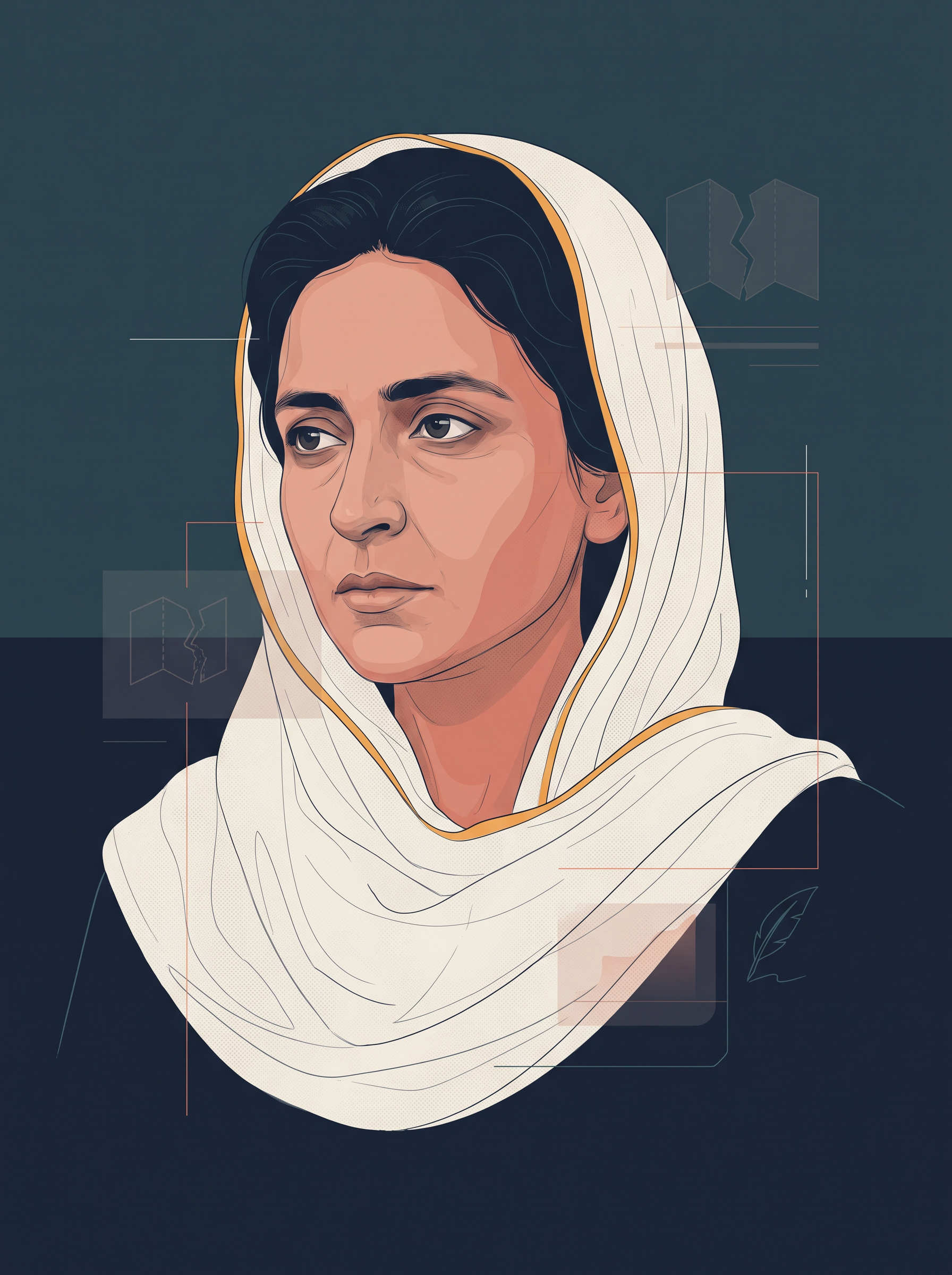
Fig. 1.8 – Amrita Pritam.
The fourth voice is that of a head of government, writing not to the public but to the men who ran India’s provinces. On 15 October 1947, Jawaharlal Nehru wrote to the Chief Ministers — the heads of the elected governments in the provinces, the people who would actually have to keep order.
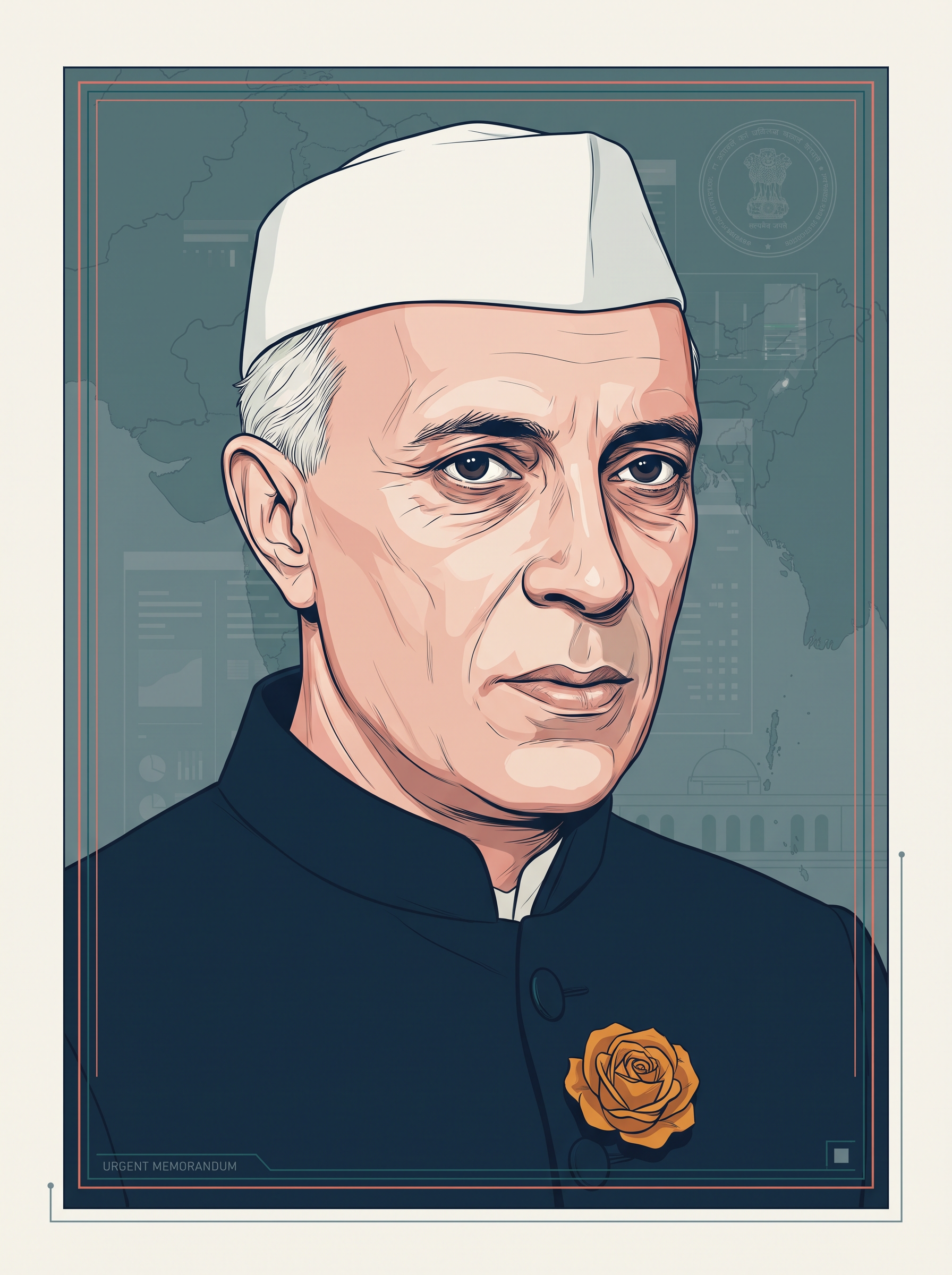
Fig. 1.9 – Jawaharlal Nehru.
Watch how the argument is built, because it is not the argument you might expect. Nehru does not begin with a moral appeal. He begins with a fact: the minority is too large to go anywhere, whatever anyone wishes.
Then he takes on the strongest objection to his own position — that Pakistan has provoked India, and that non-Muslims there have suffered horrors — and he does not deny it. He simply says it changes nothing about India’s duty.
Only at the end does he give the reason that a hard-headed politician would find hardest to dismiss. If India fails to give its Muslim citizens security and rights, the wound will poison the whole body politic and destroy it. This is not merely an ethical argument. It is also a prudential one — an argument from self-interest, about what will happen to India itself if it treats a minority badly.
And the limit? This is a private letter from a Prime Minister instructing his provincial heads. It tells us what the head of the government wanted done in October 1947. It does not tell us what the police in any district actually did, and it is not evidence that the instruction was obeyed.
1.2.1 Process Of Partition
It was decided that what was till then known as ‘India’ would be divided into two countries, ‘India’ and ‘Pakistan’. Such a division was not only very painful; it was also very difficult to decide and to implement.
It was decided to follow the principle of religious majorities. This basically means that the areas where the Muslims were in a majority would make up the territory of Pakistan. The rest was to stay with India.
The idea might appear simple. In practice it presented all kinds of difficulties, and the chapter sets out four of them. The chain of decisions is laid out in Fig. 1.10.
The First Difficulty: Two Wings, Not One
First of all, there was no single belt of Muslim majority areas in British India. There were two areas of concentration, one in the west and one in the east, and there was no way these two parts could be joined.
So it was decided that the new country, Pakistan, would comprise two territories, West and East Pakistan, separated by a long expanse of Indian territory. This is why what was ‘East’ Bengal became East Pakistan, and later became Bangladesh — and it is why our Bengal is called ‘West’ Bengal.
The Second Difficulty: Not Everyone Wanted To Go
Secondly, not all Muslim majority areas wanted to be in Pakistan. Khan Abdul Gaffar Khan, the undisputed leader of the North Western Frontier Province and known as ‘Frontier Gandhi’, was staunchly opposed to the two-nation theory. Eventually his voice was simply ignored, and the NWFP was made to merge with Pakistan.
Hold on to that sentence. The principle of religious majorities was supposed to give people the country they wanted. In the NWFP the leader of the majority community rejected the theory outright, and the province was transferred anyway.
The Third Difficulty: Provinces Cut In Two
The third problem was that two of the Muslim majority provinces of British India, Punjab and Bengal, had very large areas where the non-Muslims were in majority. Eventually it was decided that these two provinces would be bifurcated according to the religious majority at the district or even lower level.
This decision could not be made by the midnight of 14-15 August. It meant that a large number of people did not know, on the day of Independence, whether they were in India or in Pakistan. The Partition of these two provinces caused the deepest trauma of Partition.
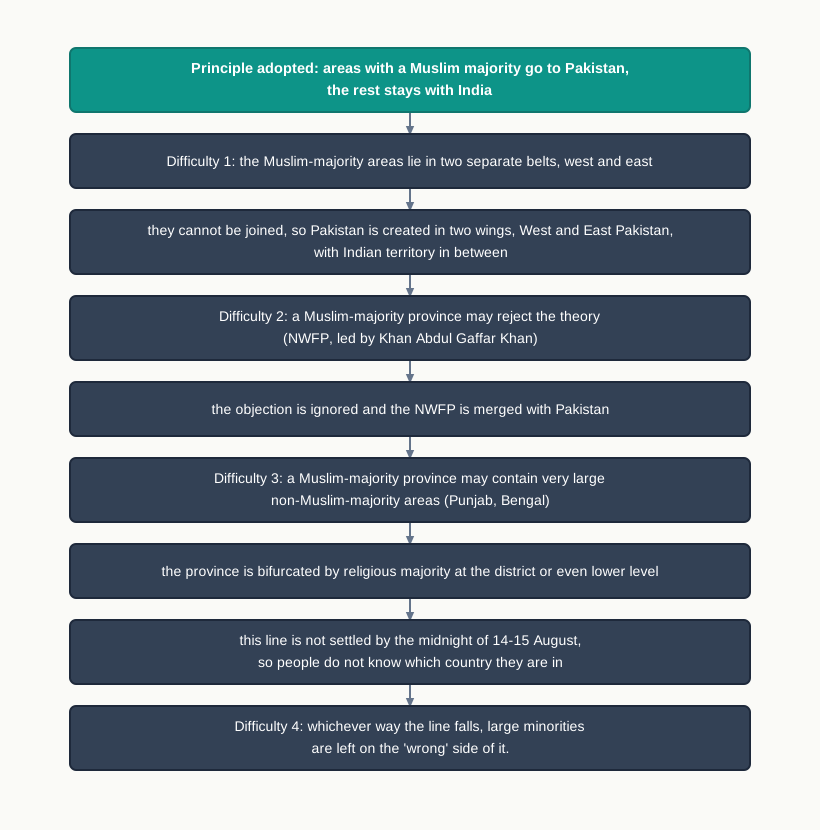
Fig. 1.10 – How The Line Was Meant To Be Drawn.
The Fourth Difficulty: The People Left Behind
This was related to the fourth and the most intractable of all the problems of partition — the problem of ‘minorities’ on both sides of the border.
Lakhs of Hindus and Sikhs in the areas that were now in Pakistan, and an equally large number of Muslims on the Indian side of Punjab and Bengal — and to some extent in Delhi and the surrounding areas — found themselves trapped. They were to discover that they were undesirable aliens in their own home, in the land where they and their ancestors had lived for centuries.
As soon as it became clear that the country was going to be partitioned, violence started at an unprecedented level against communities who were lesser in number in their respective areas. No one had quite anticipated the scale of this problem. No one had any plans for handling it.
Initially, the people and the political leaders kept hoping that this violence was temporary and would be controlled soon. But very soon the violence went out of control. Such communities on both sides of the border were often compelled to leave their homes at a few hours’ notice.
1.2.2 Consequences Of Partition
The year 1947 was the year of one of the largest, most abrupt, unplanned and tragic transfers of population that human history has known. There were killings and atrocities on both sides of the border. In the name of religion, people of one community ruthlessly killed and maimed people of the other community.
Cities like Lahore, Amritsar and Kolkata became divided into ‘communal zones’. Muslims would avoid going into an area where mainly Hindus or Sikhs lived; similarly the Hindus and Sikhs stayed away from areas of Muslim predominance. A city can be partitioned street by street, without any line being drawn on a map.
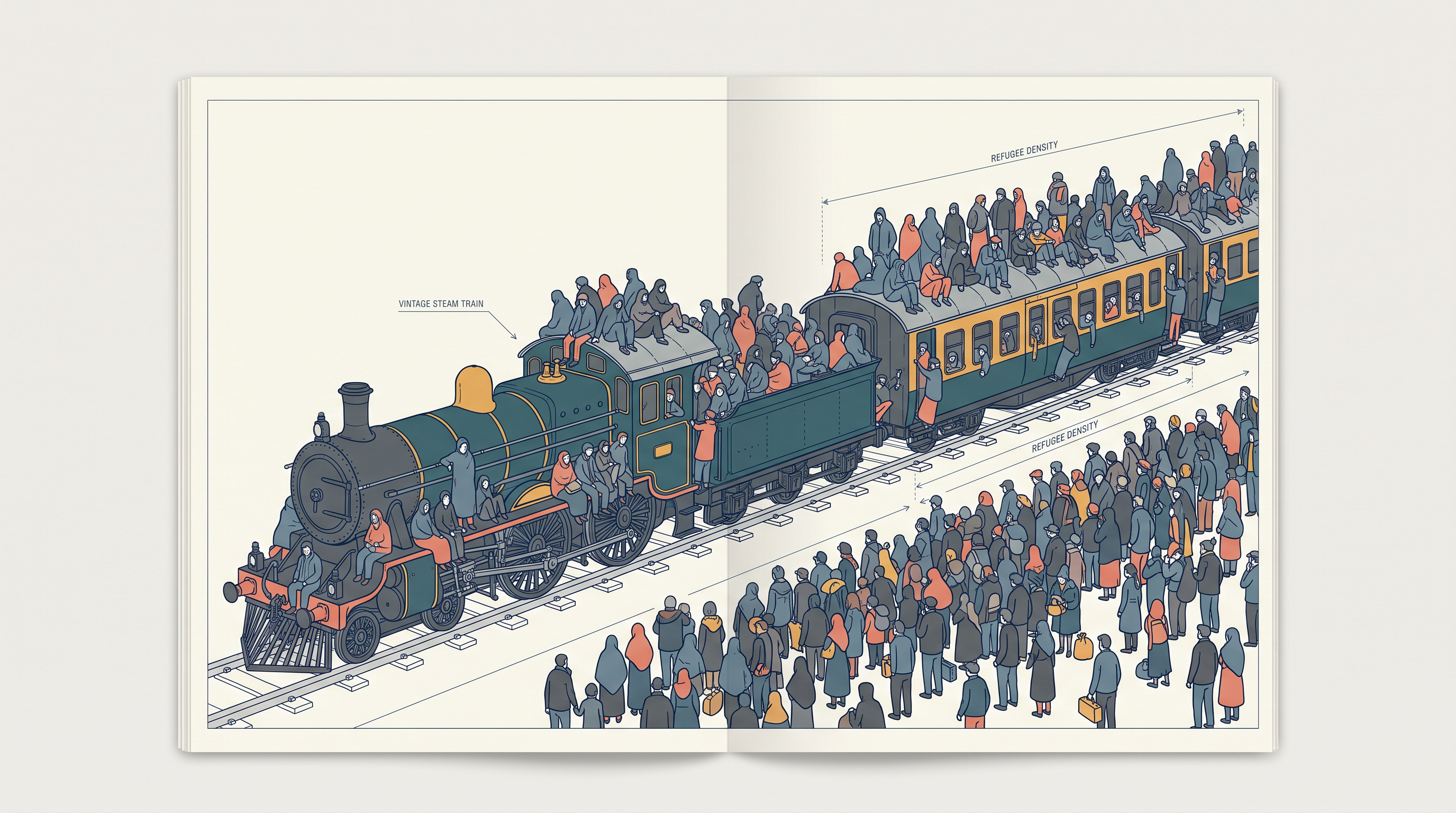
Fig. 1.11 – A train carrying refugees in 1947.
What The Journey Cost
Forced to abandon their homes and move across borders, people went through immense sufferings. Minorities on both sides of the border fled their homes and often secured temporary shelter in ‘refugee camps’.
They often found the local administration and the police unhelpful, in what was until very recently their own country. They travelled to the other side of the new border by all sorts of means, often on foot.
Even during this journey they were often attacked, killed or raped. Thousands of women were abducted. They were made to convert to the religion of the abductor and were forced into marriage. In many cases women were killed by their own family members to preserve the ‘family honour’. Many children were separated from their parents.
Those who did manage to cross the border found that they had no home. For lakhs of these ‘refugees’, the country’s freedom meant life in refugee camps, for months and sometimes for years.
The chapter prints one of Saadat Hasan Manto’s very short stories about these journeys. It is a few lines long, and it is worth reading twice.
The horror of the story is not in the first sentence. It is in the third. The killers are polite. They apologise for the poor arrangements. They think of themselves as hosts, and of the massacre they have just committed as part of the day’s programme.
What Manto is showing is how ordinary the violence had become to those carrying it out. Cruelty here does not come from monsters. It comes from people who have divided the world into ‘our community’ and ‘the other community’, and who feel no contradiction between slaughtering the second and offering halwa to the first.
The limit is important, and Manto himself would have insisted on it. This is fiction, not a police report. It is not evidence that any particular train was stopped at any particular place. It is evidence of how a writer who lived through those months understood what he had seen — and fiction can carry that understanding to us in a way a report cannot.
The Writers, And The Words They Used
Writers, poets and film-makers in India and in Pakistan have expressed the ruthlessness of the killings, and the suffering of displacement and violence, in their novels, short stories, poems and films. While recounting the trauma of Partition, they have often used the phrase that the survivors themselves used to describe Partition — as a ‘division of hearts’.
The chapter asks you to watch one of these films, Garam Hawa (1973), directed by M.S. Sathyu, with a screenplay by Kaifi Azmi, and starring Balraj Sahani, Jalal Aga, Farouque Sheikh and Gita Siddharth.
Salim Mirza is a shoe manufacturer in Agra who increasingly finds himself a stranger among the people he has lived with all his life. He feels lost in the reality that emerges after Partition. His business suffers. A refugee from the other side of partitioned India occupies his ancestral dwelling. His daughter too has a tragic end. Through all of it, he believes that things will soon be normal again.
Many of his family members, however, decide to move to Pakistan. Salim is torn between the impulse to leave and the urge to stay back. The decisive moment comes when he witnesses a students’ procession demanding fair treatment from the government — and sees that his son Sikandar has joined it.
What Was Divided
The Partition was not merely a division of properties, liabilities and assets, or a political division of the country and of the administrative apparatus. What also got divided were the financial assets, and things like tables, chairs, typewriters, paper-clips, books, and even the musical instruments of the police band. The employees of the government and of the railways were also ‘divided’.
Above all, it was a violent separation of communities who had until then lived together as neighbours.
It is estimated that the Partition forced about 80 lakh people to migrate across the new border. Between five to ten lakh people were killed in Partition-related violence. Read the second figure again: it is given as a range, and the range is enormous. Even the scale of the killing was never established precisely, because no one was in a position to count.
The Deeper Question
Beyond the administrative concerns and the financial strains, Partition posed another and deeper issue. The leaders of the Indian national struggle did not believe in the two-nation theory. And yet, partition on a religious basis had taken place. Did that make India a Hindu nation automatically?
Even after the large-scale migration of Muslims to the newly created Pakistan, the Muslim population in India accounted for 10-12 per cent of the total population in 1951. So how would the government of India treat its Muslim citizens, and its other religious minorities — Sikhs, Christians, Jains, Buddhists, Parsis and Jews? The Partition had already created severe conflict between the two communities.
There were competing political interests behind these conflicts. The Muslim League had been formed to protect the interests of the Muslims in colonial India, and it was in the forefront of the demand for a separate Muslim nation. Similarly, there were organisations which were trying to organise the Hindus in order to turn India into a Hindu nation.
But most leaders of the national movement believed that India must treat persons of all religions equally, and that India should not be a country that gave superior status to the adherents of one faith and inferior status to those who practised another. All citizens would be equal irrespective of their religious affiliation. Being religious, or being a believer, would not be a test of citizenship.
They cherished, therefore, the ideal of a secular nation — a state that does not belong to any one religion, does not discriminate between citizens on the basis of religion, and leaves faith to the citizen. This ideal was enshrined in the Indian Constitution.
Gandhi’s Last Months
Mahatma Gandhi did not participate in any of the Independence Day celebrations on 15 August 1947. He was in Kolkata, in the areas which were torn by gruesome riots between Hindus and Muslims.
He was saddened by the communal violence, and disheartened that the principles of ahimsa — non-violence — and satyagraha — active but non-violent resistance — that he had lived and worked for had failed to bind the people in troubled times. Gandhiji went on to persuade the Hindus and Muslims to give up violence.
His presence in Kolkata greatly improved the situation, and the coming of independence was celebrated there in a spirit of communal harmony, with joyous dancing in the streets. His prayer meetings attracted large crowds. But this was short-lived. Riots between Hindus and Muslims erupted once again, and Gandhiji had to resort to a fast to bring peace.
The next month Gandhiji moved to Delhi, where large-scale violence had erupted. He was deeply concerned about ensuring that Muslims should be allowed to stay in India with dignity, as equal citizens. He was also concerned about relations between India and Pakistan, and he was unhappy with what he saw as the Indian government’s decision not to honour its financial commitments to Pakistan.
With all this in mind, he undertook what turned out to be his last fast, in January 1948. As in Kolkata, the fast had a dramatic effect in Delhi. Communal tension and violence reduced. Muslims of Delhi and the surrounding areas could safely return to their homes. The Government of India agreed to give Pakistan its dues.
Gandhiji’s actions were not liked by all. Extremists in both the communities blamed him for their conditions. Despite this, he continued to meet everyone during his prayer meetings.
Finally, on 30 January 1948, one such extremist, Nathuram Vinayak Godse, walked up to Gandhiji during his evening prayer in Delhi and fired three bullets at him, killing him instantly. Thus ended a lifelong struggle for truth, non-violence, justice and tolerance.
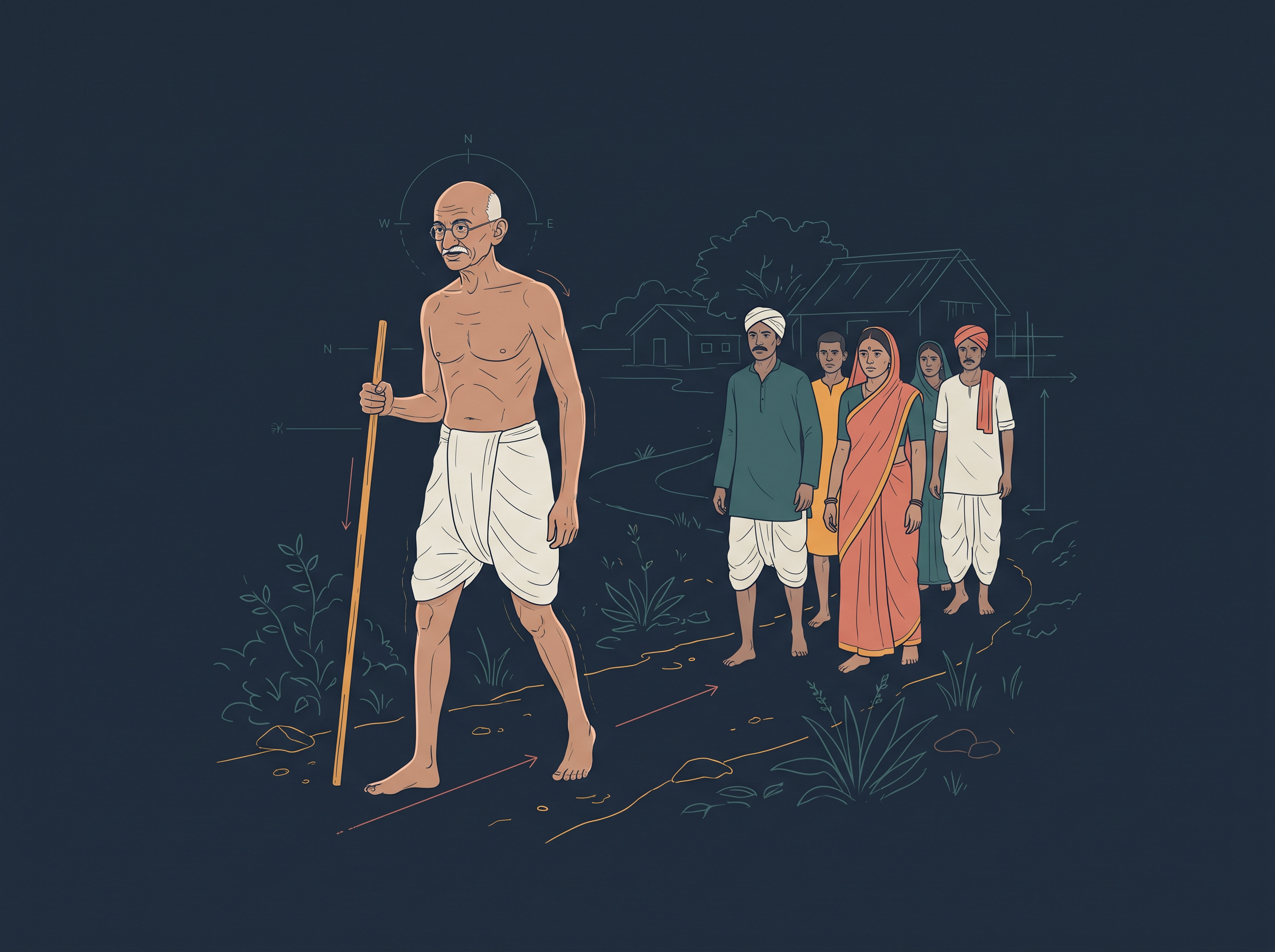
Fig. 1.12 – Mahatma Gandhi in Noakhali, 1947.
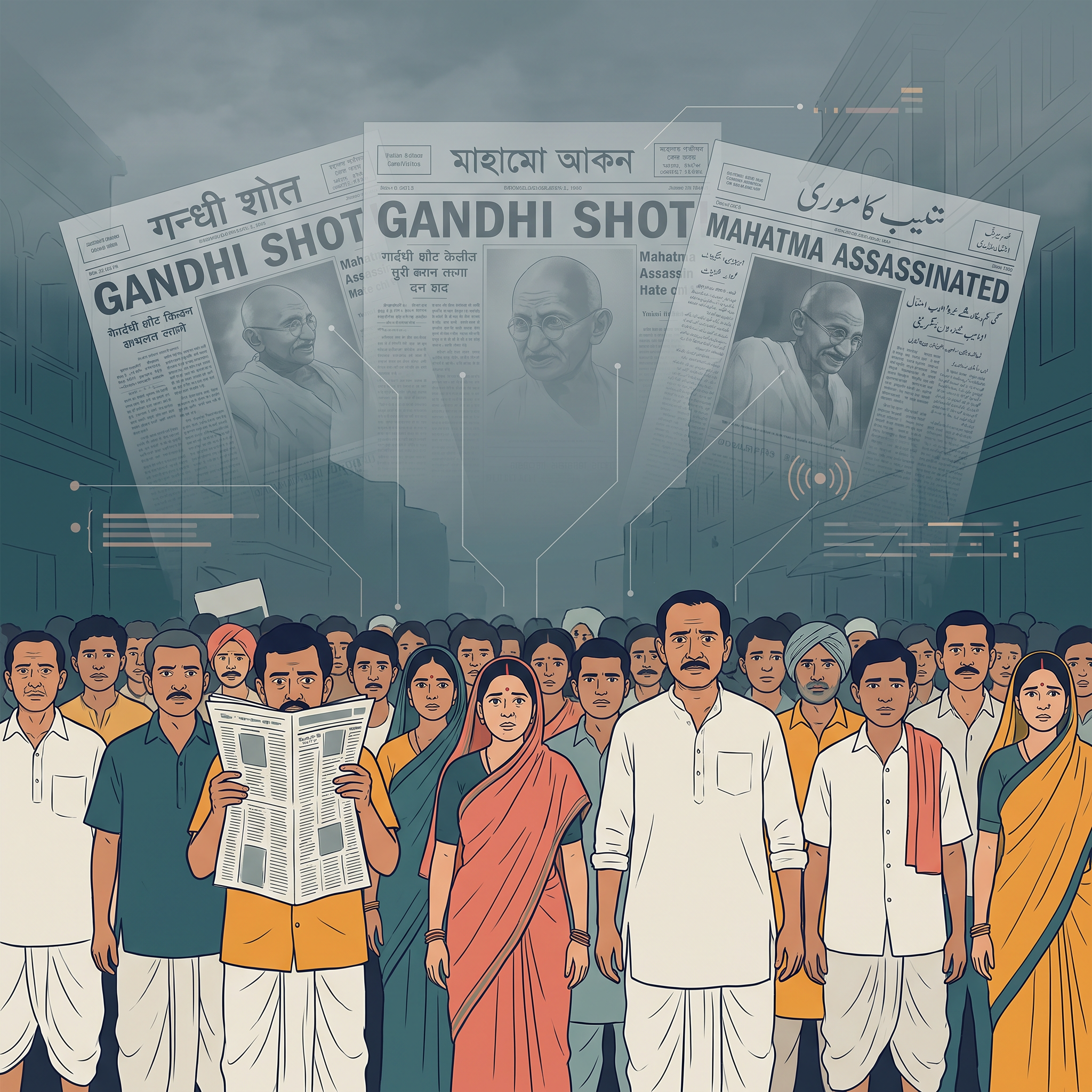
Fig. 1.13 – Crowd in Kolkata reading the news of Gandhi’s assassination.
Look at that crowd. Gandhi had been killed by a man who thought he had done too much for Muslims, and the news brought people into the streets of a city that had itself been torn by communal killing a few months earlier. The assassination did not settle the argument about what kind of country India would be. It made that argument the most urgent question in the new republic.
What Families Remember
Partition is not only a subject in a textbook. It is a memory carried in families, and it is often carried in silence.
The chapter tells the story of Shweta, who noticed that her Nana — her maternal grandfather — would go very quiet whenever anyone mentioned Pakistan. One day she asked him about it. He told her how he had moved from Lahore to Ludhiana during Partition. Both his parents were killed. Even he would not have survived, but a neighbouring Muslim family gave him shelter and kept him in hiding for several days. They helped him find some relatives, and that is how he managed to cross the border and start a new life.
There are many such examples of Hindu families and others who helped, sheltered and saved the lives of Muslim families during the crisis and violence caused by Partition. Alongside the killing, there was compassion and solidarity across religious lines, in both communities.
Have you heard a similar story? Ask your grandparents, or anyone of that generation, about their memories of Independence Day — about the celebration, about the trauma of Partition, and about the expectations they had from independence. Write down at least two of these stories, in their own words as far as you can.
1.3 Integration Of Princely States
British India was divided into what were called the British Indian Provinces and the Princely States. The British Indian Provinces were directly under the control of the British government.
The Princely States were different. Several large and small states were ruled by princes, and these rulers enjoyed some form of control over their internal affairs — so long as they accepted British supremacy. This supremacy was called paramountcy, or the suzerainty of the British crown: the British did not administer these states themselves, but the ruler could do nothing they seriously objected to.
This was not a small corner of the country. The Princely States covered one-third of the land area of the British Indian Empire, and one out of every four Indians lived under princely rule.
1.3.1 The Problem
Just before Independence it was announced by the British that with the end of their rule over India, the paramountcy of the British crown over the Princely States would also lapse. Read that sentence slowly, because everything follows from it.
If paramountcy simply lapsed, then all these states — as many as 565 in all — would become legally independent. The British government took the view that all these states were free to join either India or Pakistan, or to remain independent if they so wished.
And this decision was left not to the people of these states, but to their princely rulers. It was a very serious problem, and it could threaten the very existence of a united India.
The Refusals Begin
The problems started very soon. First of all, the ruler of Travancore announced that the state had decided on Independence. The Nizam of Hyderabad made a similar announcement the next day. Rulers like the Nawab of Bhopal were averse to joining the Constituent Assembly.
This response of the rulers meant that after Independence there was a very real possibility that India would get further divided into a number of small countries. The country had just been cut in two. Now it could be cut into hundreds of pieces.
The prospects of democracy for the people in these states also looked bleak. In most of these princely states, governments were run in a non-democratic manner, and the rulers were unwilling to give democratic rights to their populations.
This was a strange situation. Indian independence had been aimed at unity, at self-determination and at democracy. Yet the way the British ended their rule threatened all three at once — for the people of these states, freedom from Britain could mean staying under a ruler they had never chosen.
The chapter prints a map of the subcontinent as it stood at this moment, with the British Indian Provinces in one colour and the Princely States in another. It is worth studying before you read further, because it shows how the princely territories were scattered across the whole country rather than gathered in one region.
Map
Map 1.1 Caption: India before and after Partition, showing the British Indian Provinces, the Princely States, and the boundary of independent India. Brief: Reproduce the illustration as printed in the chapter, showing the subcontinent at Partition — British India in one shade, the Princely States in another, the external boundary of independent India as a dotted line, and the labels for West Pakistan (later Pakistan) and East Pakistan (later Bangladesh), together with the named states and provinces shown there. This is a historical illustration of the period around 1947 and must be captioned as such. Carry NCERT’s own note: this illustration is not a map drawn to scale and should not be taken to be an authentic depiction of India’s external boundaries. India’s external boundaries must follow the official position of the Government of India, with the full extent of India, including Jammu and Kashmir and Ladakh, shown as Indian territory; no part of India is to be shown as disputed or as belonging to any other state. Label nothing beyond what the chapter shows.
Looking at a map like this, students often ask whether the Partition could not simply be undone, the way Germany was reunited — so that one could have breakfast in Amritsar and lunch in Lahore. It is a fair thing to wish for. But there is another way of putting the question, and the chapter puts it too: is it not better that India and Pakistan now learn to live with and respect each other as independent nations? Which of the two you find more persuasive is worth arguing out with your class.
1.3.2 Government’s Approach
The interim government took a firm stance against the possible division of India into small principalities of different sizes. The interim government was the government that ran the country in the months just before and just after Independence, formed from the leaders of the national movement.
Under the Mountbatten Plan, the Princely States were free to join India or Pakistan. Sardar Patel was India’s Deputy Prime Minister and the Home Minister during the crucial period immediately following Independence. As Home Minister he was responsible for the internal security and the internal administration of the country, and the states question fell squarely in his lap.
He played a historic role in negotiating with the rulers of the princely states firmly but diplomatically, and in bringing most of them into the Indian Union.
It may look easy now. It was in fact a very complicated task, and it required skilful persuasion. Consider the sheer numbers. There were 26 small states in today’s Orissa. The Saurashtra region of Gujarat had 14 big states, 119 small states, and numerous other different administrations. Each one had a ruler, a court and an argument of its own.
Three Considerations
The government’s approach was guided by three considerations.
Firstly, the people of most of the princely states clearly wanted to become part of the Indian union. This mattered enormously. The government was not merely bargaining with rulers; it could speak in the name of the ruler’s own subjects.
Secondly, the government was prepared to be flexible in giving autonomy to some regions. The idea was to accommodate plurality, and to adopt a flexible approach in dealing with the demands of the regions.
Thirdly, in the backdrop of Partition — which had brought into sharp focus the contest over the demarcation of territory — the integration and consolidation of the territorial boundaries of the nation had assumed supreme importance.
Sardar Patel put the argument to the rulers himself, in a letter written in 1947.
Notice what is in the letter and what is not. There is no threat in it. There is an appeal to greatness, an appeal to common endeavour, and a warning — but the warning is about what will happen to everyone, ‘great and small’, if the states do not cooperate.
Notice also the phrase ‘general interest’. Patel is telling rulers that their interest and the country’s interest are the same thing, and that a state which stands alone will not be safe in the anarchy that follows.
The limit is the usual one, and it is easy to forget when a letter is this eloquent. This is what the government’s chief negotiator chose to write to the men he was negotiating with. It is evidence of the case he made in public. It is not evidence of what was said in private rooms, nor of what pressure any ruler felt — and, as Hyderabad shows, persuasion was not the only instrument the government used.
The Instrument Of Accession
Before 15 August 1947, peaceful negotiations had brought almost all the states whose territories were contiguous to the new boundaries of India into the Indian Union.
The rulers of most of the states signed a document called the ‘Instrument of Accession’, which meant that their state agreed to become a part of the Union of India.
The accession of the Princely States of Junagadh, Hyderabad, Kashmir and Manipur proved more difficult than the rest. The issue of Junagarh was resolved after a plebiscite — a direct vote in which the people themselves answer a single question — confirmed the people’s desire to join India. You will read about Kashmir in Chapter Seven. Here, let us look at the cases of Hyderabad and Manipur.
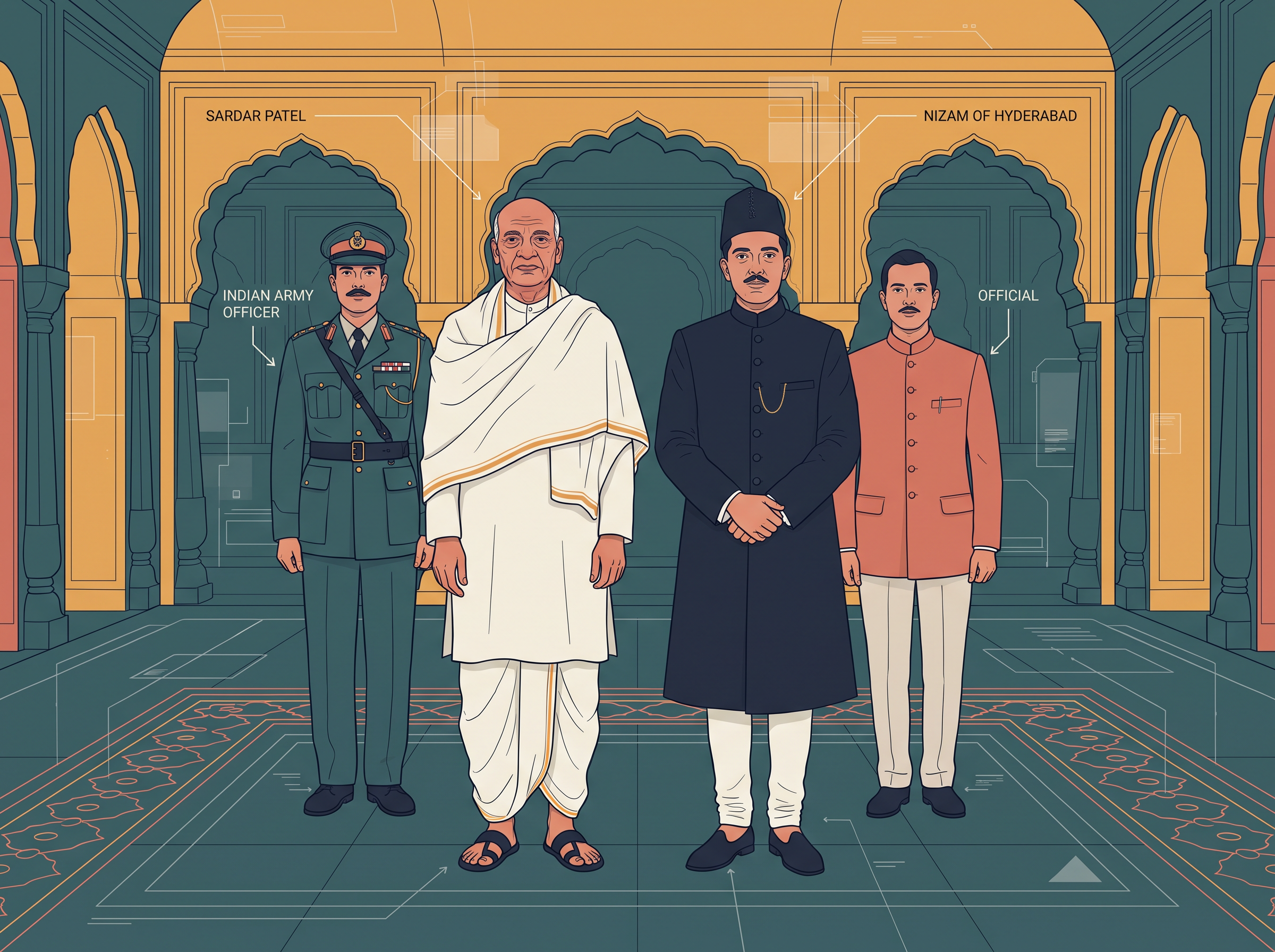
Fig. 1.14 – Sardar Patel with the Nizam of Hyderabad.
1.3.3 Hyderabad
Hyderabad was the largest of the Princely States, and it was surrounded entirely by Indian territory. Some parts of the old Hyderabad state are today parts of Maharashtra, Karnataka and Andhra Pradesh. Its ruler carried the title ‘Nizam’, and he was one of the world’s richest men.
The Nizam wanted an independent status for Hyderabad. In November 1947 he entered into what was called the Standstill Agreement with India, for a year, while negotiations with the Indian government were going on. A standstill agreement freezes the existing arrangements in place: nothing changes while the talking continues.
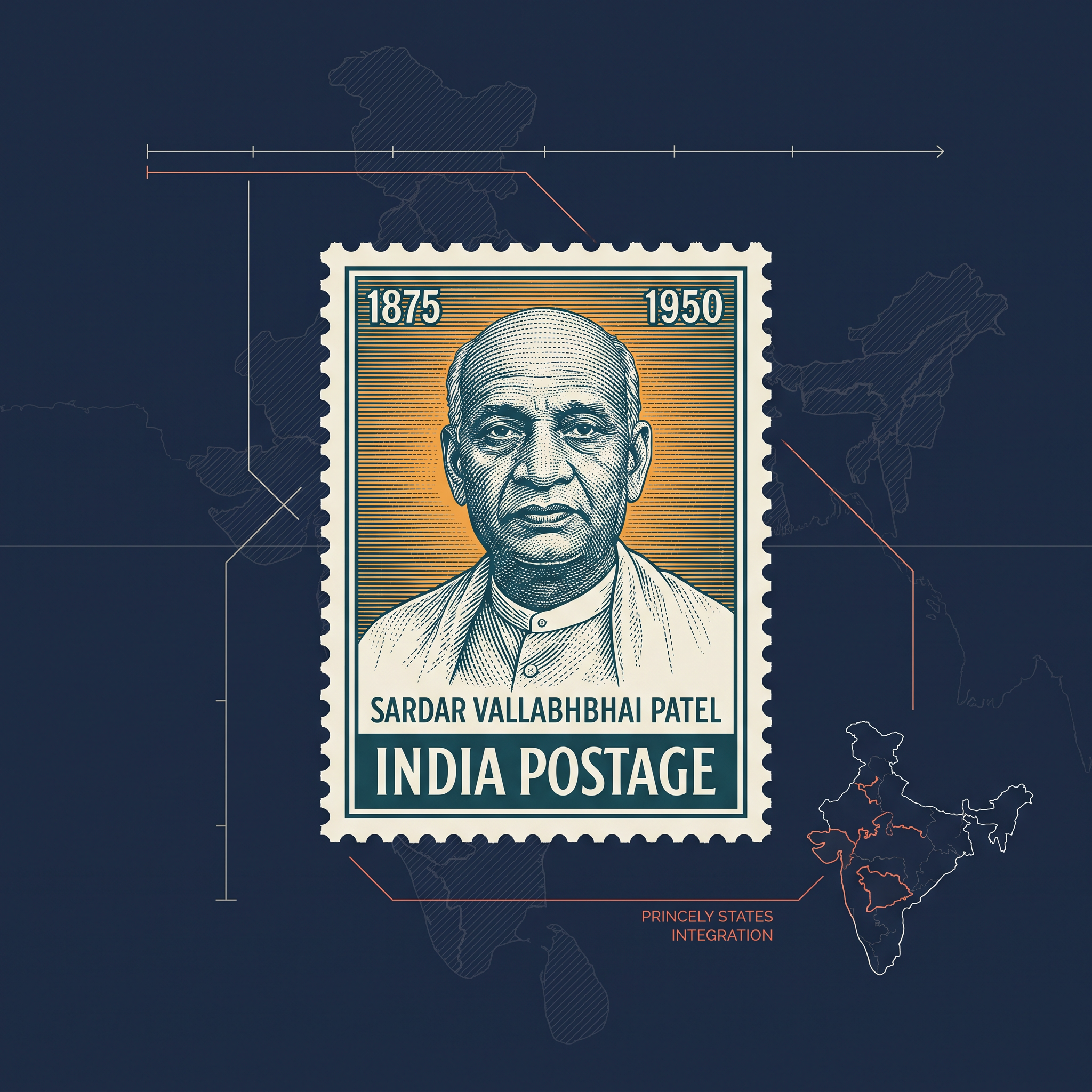
Fig. 1.15 – Postage stamp honouring Sardar Vallabhbhai Patel.
The Movement Inside Hyderabad
In the meantime, a movement of the people of Hyderabad State against the Nizam’s rule gathered force. The negotiation with Delhi was not the only thing happening; the state was also being challenged from within.
The peasantry in the Telangana region in particular was the victim of the Nizam’s oppressive rule, and rose against him. Women who had seen the worst of this oppression joined the movement in large numbers. Hyderabad town was the nerve centre of the movement, and the Communists and the Hyderabad Congress were in its forefront.
The Nizam responded by unleashing a para-military force known as the Razakars on the people. The atrocities and the communal nature of the Razakars knew no bounds. They murdered, maimed, raped and looted, targeting particularly the non-Muslims.
The central government had to order the army to tackle the situation. In September 1948 the Indian army moved in to control the Nizam’s forces. After a few days of intermittent fighting, the Nizam surrendered. This led to Hyderabad’s accession to India.
Hyderabad, then, is the case that does not fit the story of patient persuasion. Here the state’s own people were in revolt, the ruler’s force was killing them, and accession finally came at the end of a military operation, not at the end of a negotiation.
1.3.4 Manipur
A few days before Independence, the Maharaja of Manipur, Bodhachandra Singh, signed the Instrument of Accession with the Indian government — on the assurance that the internal autonomy of Manipur would be maintained.
Under the pressure of public opinion, the Maharaja held elections in Manipur in June 1948, and the state became a constitutional monarchy: the king remained, but an elected assembly now made the laws. Thus Manipur was the first part of India to hold an election based on universal adult franchise — the right of every adult citizen to vote, regardless of property, education, caste or sex.
That deserves a pause. India’s first election on universal adult franchise was held not in a British Indian province but in a princely state, and in the north-east.
In the Legislative Assembly of Manipur there were sharp differences over the question of merger with India. While the state Congress wanted the merger, other political parties were opposed to it. The Government of India succeeded in persuading the Maharaja into signing a Merger Agreement in September 1949.
Notice the sequence carefully. Manipur had just acquired an elected assembly, and that assembly was divided on the question. The agreement that settled the question was signed by the Maharaja — the very ruler whose personal authority the election had begun to replace.
Reading The Cartoon
The chapter prints a cartoon by R. K. Laxman on exactly this question: what was being asked of the princes, and where did their people stand while it was being asked?
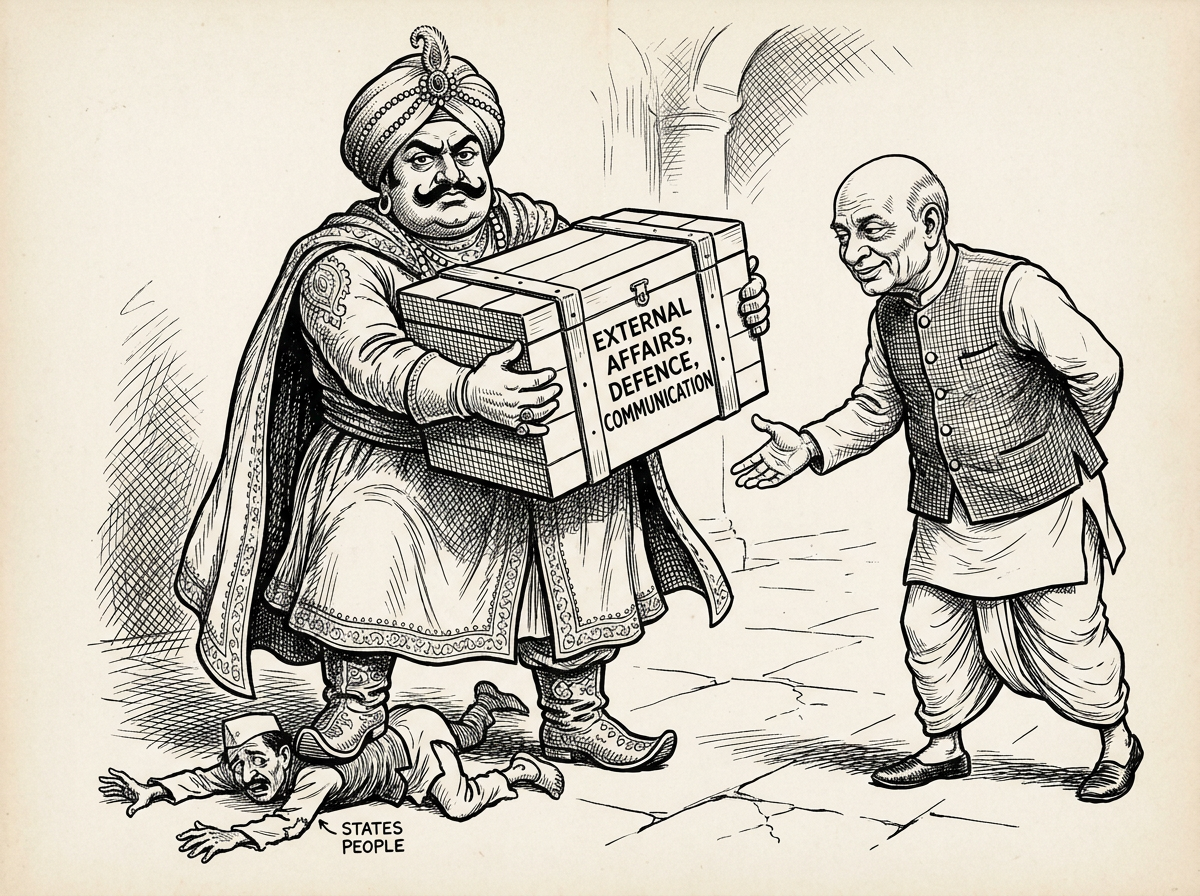
Fig. 1.16 – The relation between rulers and the people of princely states. Inspiration: R. K. Laxman, The Times of India.
Work through the drawing. The ruler is drawn large, upright and ornamented. Beneath him, crushed under his weight, is a tiny figure labelled ‘States People’ — the ruler’s own subjects, who have no say in any of this.
The box the ruler is clutching is labelled with three subjects: external affairs, defence and communication. These were the subjects the rulers were being asked to hand over. Patel’s line — don’t get up, just give me this — is the joke, and it is a sharp one. He is not asking the prince to step down. He is asking only for the box.
So what is the cartoonist claiming? That the deal being struck was between the government and the rulers, over the ruler’s head and above the people’s heads; and that the prince, who kept his throne, could afford to give up the box. The people flattened underneath the drawing are the ones nobody is negotiating with.
Now the limit. A cartoon makes one point, hard, and it is under no obligation to draw the counter-argument. This one cannot show that the people of most princely states wanted to join India, nor that in Hyderabad it was the people themselves who rose against their ruler. It is a criticism worth taking seriously, but it is a criticism, not a summary of what happened.
It is fair, too, to wonder what became of the hundreds of kings, queens, princes and princesses after all this — how they lived their lives once they were, in law, ordinary citizens like everyone else. That question belongs to the story of a later period, and this chapter does not follow them there.
1.4 Reorganisation Of States
The process of nation-building did not come to an end with Partition and with the integration of the Princely States. Now the challenge was to draw the internal boundaries of the Indian states.
This was not just a matter of administrative divisions. The boundaries had to be drawn in a way that the linguistic and cultural plurality of the country could be reflected — without affecting the unity of the nation. Both halves of that sentence carried weight, and they pulled against each other.
During colonial rule, the state boundaries were drawn either on administrative convenience, or they simply coincided with the territories annexed by the British government, or with the territories ruled by the princely powers. Nobody had ever asked the people who lived inside those lines what language they spoke.
A Promise Made Before Independence
Our national movement had rejected these divisions as artificial, and had promised the linguistic principle as the basis of the formation of states. This was not a vague sympathy. It was a working principle, and the Congress had already applied it to itself.
In fact, after the Nagpur session of Congress in 1920, the principle was recognised as the basis of the reorganisation of the Indian National Congress party itself. Many Provincial Congress Committees were created by linguistic zones, which did not follow the administrative divisions of British India.
So the party that would govern India after 1947 had spent nearly three decades organising itself by language.
And Then Postponed
Things changed after Independence and Partition. Our leaders felt that carving out states on the basis of language might lead to disruption and disintegration. It was also felt that this would draw attention away from the other social and economic challenges that the country faced.
The central leadership decided to postpone matters. The need for postponement was also felt because the fate of the Princely States had not yet been decided. And the memory of Partition was still fresh — the country had just watched what could happen when a boundary was drawn around an identity.
Not everyone in the leadership put it the same way. Gandhi, writing in January 1948, argued that language was a reason for forming provinces, not a reason against.
The argument here is about education, not about administration. Gandhi’s point is that a child learns best in the language of her own region, and that a province built around a language would strengthen that language rather than let it wither.
Notice what he is arguing against: the two alternatives of imposing Hindustani everywhere, or of continuing with English. He calls the first absurd and the second more absurd still.
The limit, again, is worth naming. This extract gives one leader’s reasoning on one aspect of the question — language and instruction. It does not address the fear that was driving the postponement, which was that linguistic states would encourage separatism. A source can be entirely persuasive on the point it makes, and silent on the point that is actually in dispute.
The Demand From Below
This decision of the national leadership was challenged by the local leaders and by the people.
Protests began in the Telugu-speaking areas of the old Madras province, which included present-day Tamil Nadu and parts of Andhra Pradesh, Kerala and Karnataka. The Vishalandhra movement — as the movement for a separate Andhra was called — demanded that the Telugu-speaking areas should be separated from the Madras province of which they were a part, and be made into a separate Andhra province. Nearly all the political forces in the Andhra region were in favour of the linguistic reorganisation of the then Madras province.
The movement gathered momentum as a result of the Central government’s vacillation — its refusal either to grant the demand or to close the question.
Potti Sriramulu, a Congress leader and a veteran Gandhian, went on an indefinite fast that led to his death after 56 days. This caused great unrest and resulted in violent outbursts in the Andhra region. People in large numbers took to the streets. Many were injured or lost their lives in police firing. In Madras, several legislators resigned their seats in protest.
Finally, the Prime Minister announced the formation of a separate Andhra state in December 1952.
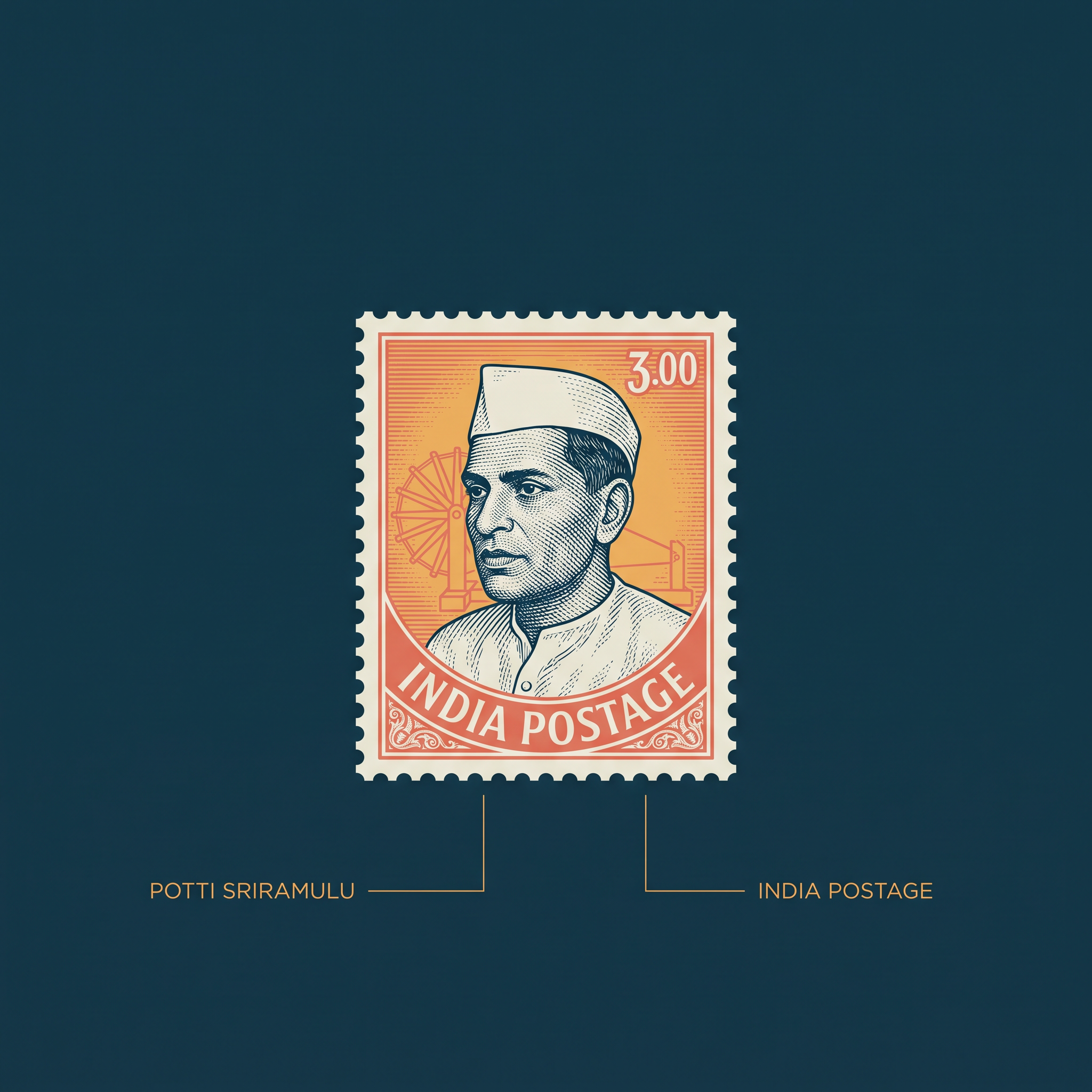
Fig. 1.17 – Postage stamp honouring Potti Sriramulu.
This is a moment worth sitting with. Nehru and the other leaders of the freedom movement were enormously popular. And yet the people did not hesitate to agitate against the wishes of those very leaders, and the government gave way. A movement that a democratic government cannot ignore is itself a fact about democracy.
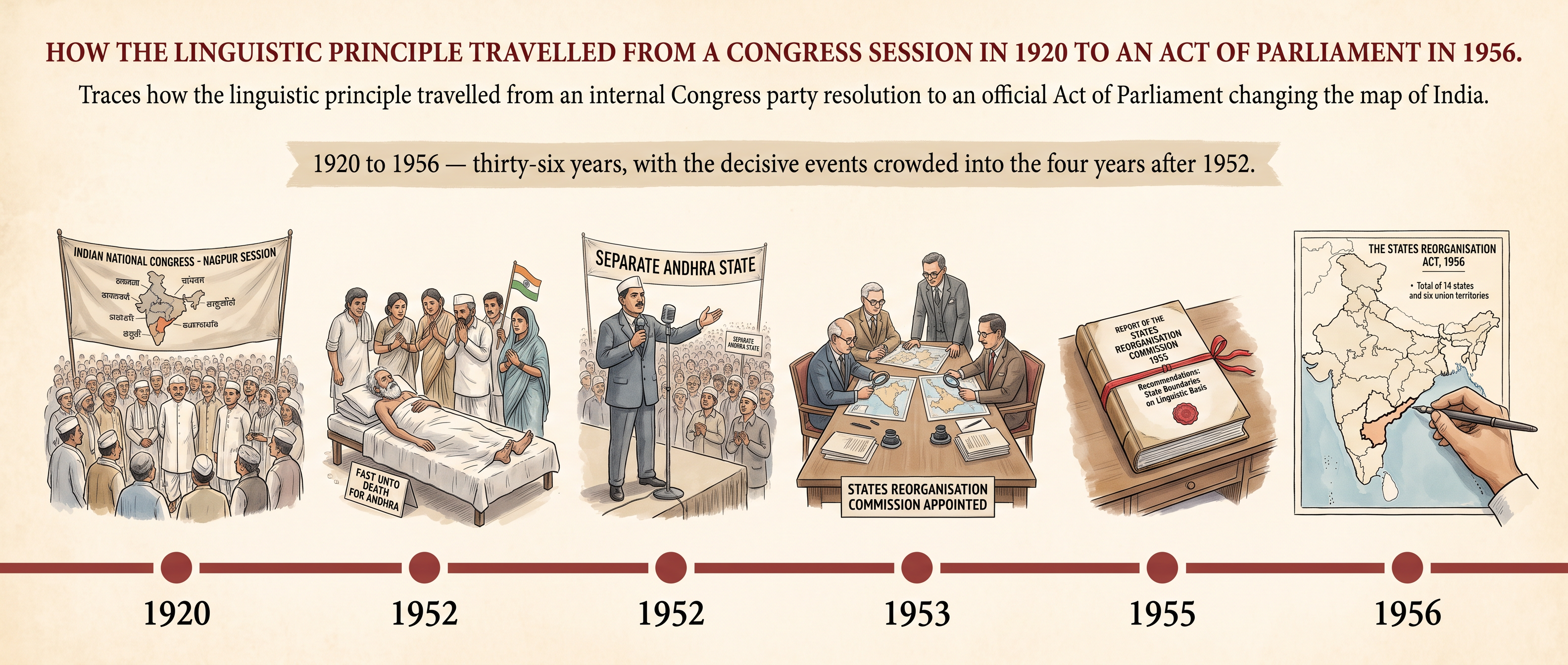
Fig. 1.18 – From A Party Principle To A New Map.
The Struggle Spreads
The formation of Andhra spurred the struggle for the making of other states on linguistic lines in other parts of the country. The chapter prints a cartoon from those months.
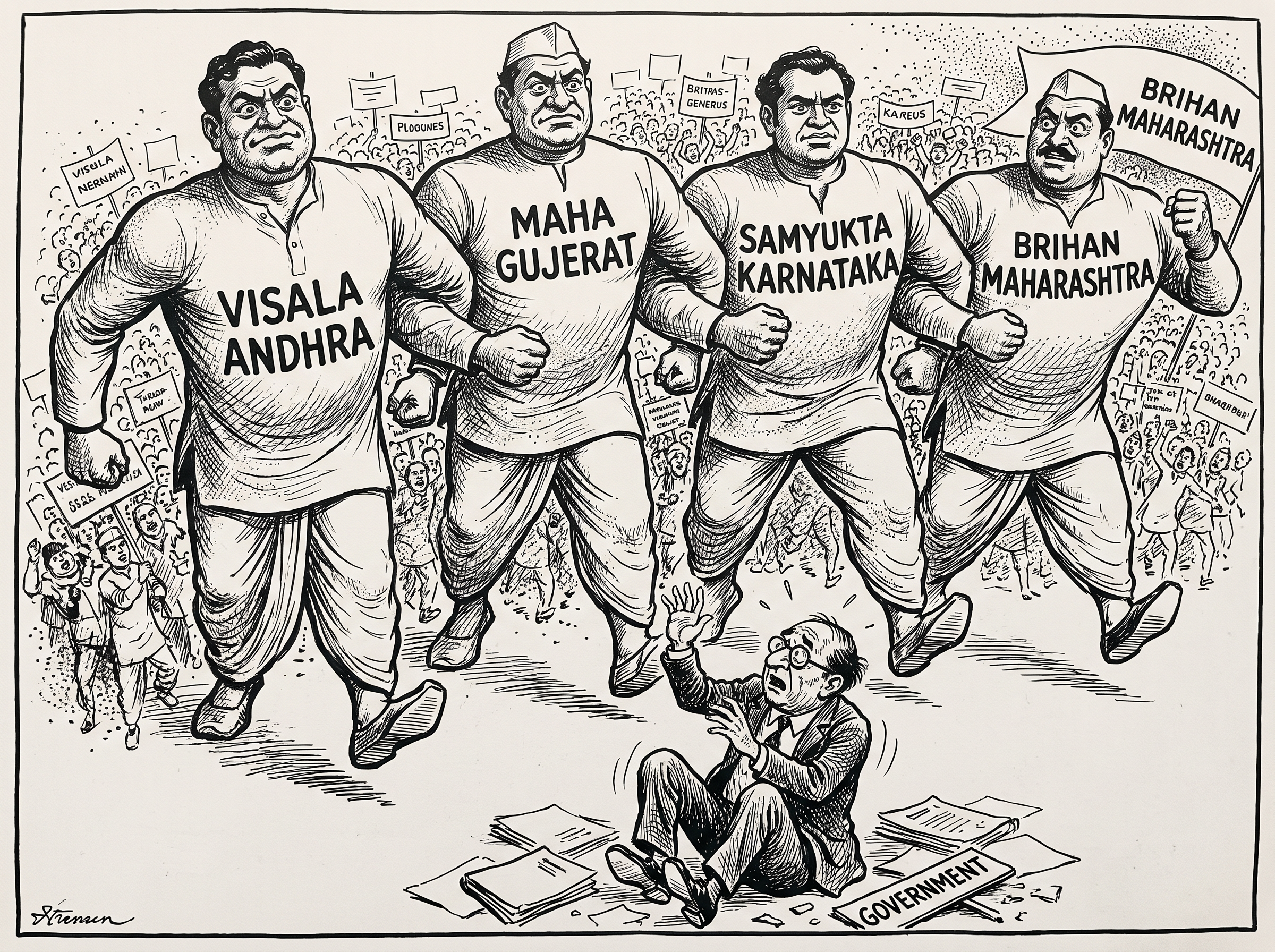
Fig. 1.19 – The demand for linguistic states. Inspiration: Shankar, 26 July 1953.
Read the drawing. The giants are the demands themselves, each one named after a movement for a linguistic state, and each one dragging a crowd behind it. The small figure in the centre, sitting in the path of all of them, is the government — outnumbered, out-run, and about to be trampled.
The cartoonist’s claim is about direction of force. Power here is not flowing from the leaders down to the people. It is coming up from the regions, and the state is being carried along by it.
And the limit? The cartoon is drawn from the point of view of a bewildered centre. It cannot tell you whether the demands were reasonable, whether the people behind them had a case, or what happened after 1953 — which is that the demands were largely conceded and the country did not fall apart.
The Commission And The Act
These struggles forced the Central Government to appoint a States Reorganisation Commission in 1953 — a body of experts asked to examine the question of redrawing the boundaries of states and to advise the government.
The Commission in its report accepted that the boundaries of the state should reflect the boundaries of different languages. On the basis of its report, the States Reorganisation Act was passed in 1956. This led to the creation of 14 states and six union territories. A union territory is a unit administered by the central government rather than by a state government of its own.
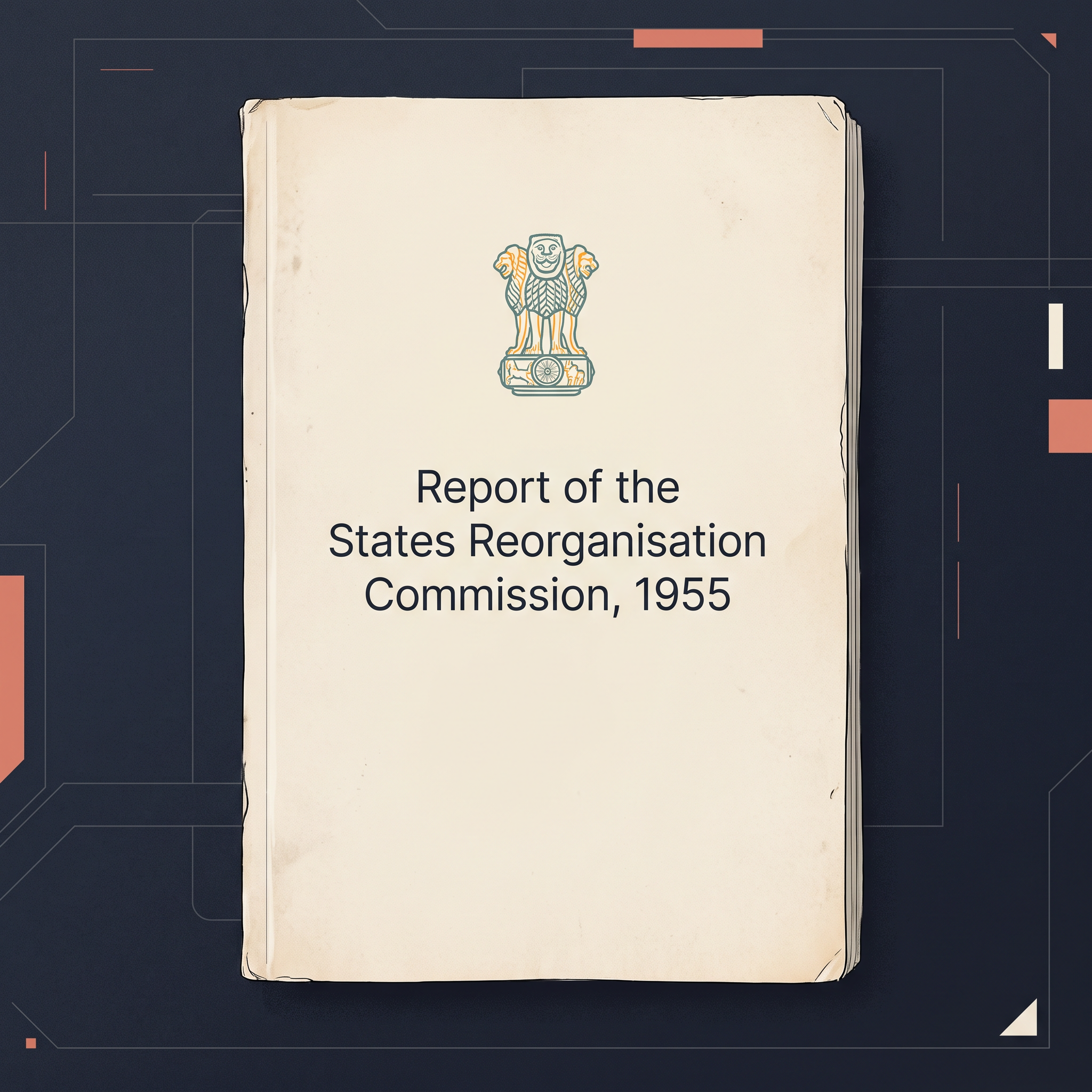
Fig. 1.20 – Cover of the States Reorganisation Commission report, 1955.
The map that came out of all this is printed in the chapter as the administrative map of 1961. Study it before answering the questions under it.
Map
Map 1.2 Caption: India after reorganisation: the administrative map of 1961. Brief: Reproduce the illustration as printed in the chapter — the states and union territories of India as they stood in 1961, with the state names shown there, and the neighbouring countries and territories labelled as in the original. Carry NCERT’s own note: this illustration is not a map drawn to scale and should not be taken to be an authentic depiction of India’s external boundaries. This is a historical map of 1961 and must be captioned as such. India’s external boundaries must follow the official position of the Government of India, showing the full extent of India, including Jammu and Kashmir and Ladakh, as Indian territory; no part of India is to be shown as disputed or as belonging to any other state. Label nothing beyond what the chapter shows.
Would The Genie Go Back In?
Not everyone was reassured. One of the most important concerns in the early years was that demands for separate states would endanger the unity of the country. It was felt that linguistic states might foster separatism, and create pressures on the newly founded nation. A second cartoon from those years puts the anxiety precisely.
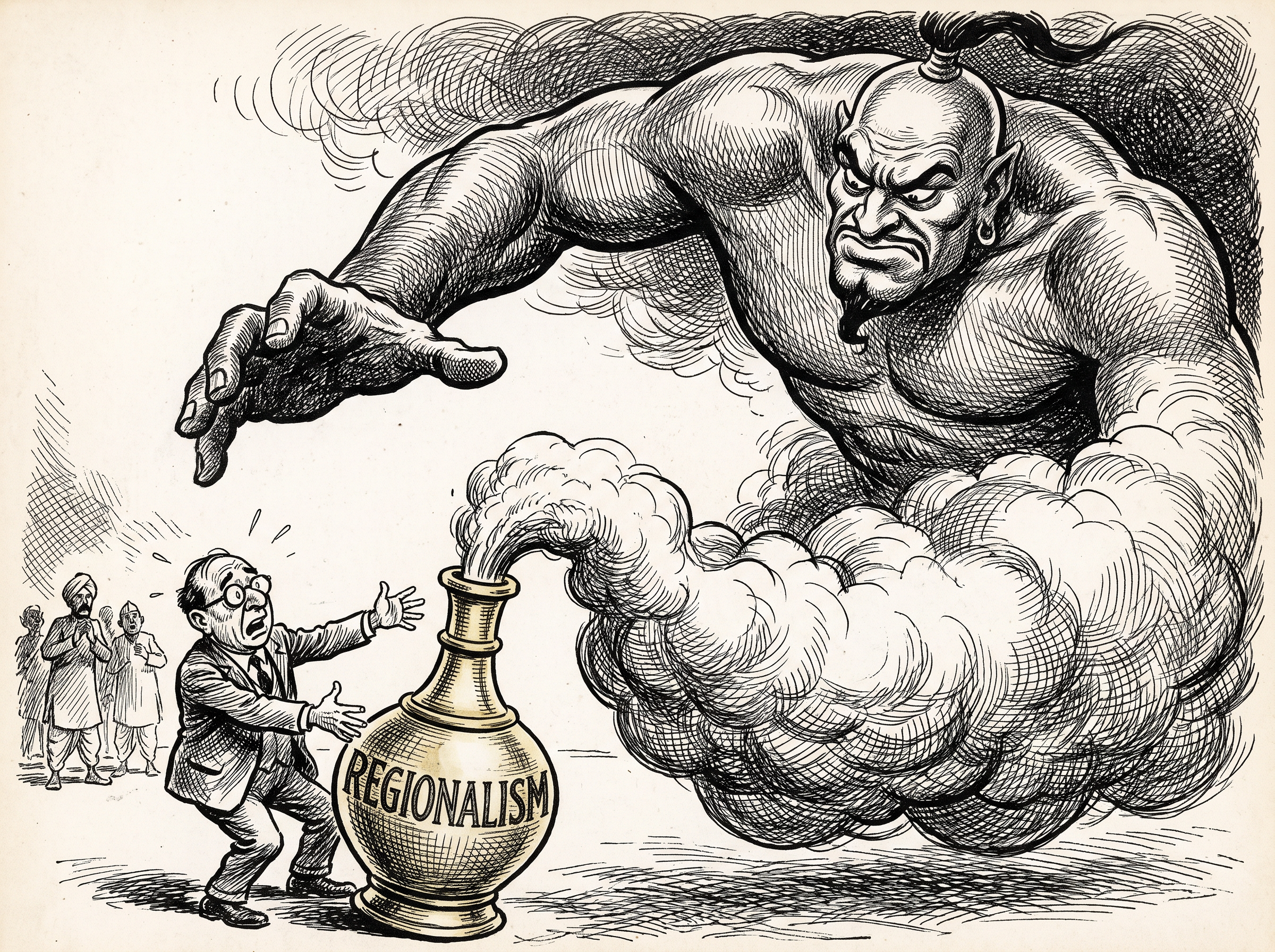
Fig. 1.21 – Coaxing the genie of linguism back into the bottle. Inspiration: Shankar, 5 February 1956.
The image works on a piece of folklore every reader knows. A genie let out of a bottle does not go back in. The cartoonist is asking whether the government, having conceded Andhra and then appointed a Commission, could still control what it had released.
That is a claim about consequences, and it was a serious one. If language could win a state, then any group with a language could demand one, and the demands need never stop.
But hold the cartoon to its limit. It is an anxiety drawn in 1956, before anyone could know the answer. It predicts; it does not report. And its prediction, on the chapter’s own evidence, turned out to be wrong.
What Linguistic States Actually Did
But the leadership, under popular pressure, finally made a choice in favour of linguistic states. It was hoped that if the regional and linguistic claims of all regions were accepted, the threat of division and separatism would be reduced — the opposite of what the critics predicted. Besides, the accommodation of regional demands, and the formation of linguistic states, were also seen as more democratic.
Now it is more than fifty years since the formation of linguistic states, and we can look at what happened.
Linguistic states, and the movements for the formation of these states, changed the nature of democratic politics and leadership in some basic ways. The path to politics and to power was now open to people other than the small English-speaking elite. If the business of a state government is conducted in Telugu or in Marathi, then a leader who commands Telugu or Marathi can rise in it.
Linguistic reorganisation also gave some uniform basis to the drawing of state boundaries, in place of the accidents of conquest and administrative convenience.
And it did not lead to the disintegration of the country, as many had feared earlier. On the contrary, it strengthened national unity.
Above all, the linguistic states underlined the acceptance of the principle of diversity. When we say that India adopted democracy, it does not simply mean that India embraced a democratic constitution, nor does it merely mean that India adopted the format of elections. The choice was larger than that.
It was a choice in favour of recognising and accepting the existence of differences, which could at times be oppositional. Democracy, in other words, was associated with plurality of ideas and ways of life. Much of the politics of the later period was to take place within this framework.
The Story Continues
The acceptance of the principle of linguistic states did not mean, however, that all states immediately became linguistic states.
There was an experiment of a ‘bilingual’ Bombay state, consisting of Gujarati- and Marathi-speaking people. After a popular agitation, the states of Maharashtra and Gujarat were created in 1960.
In Punjab also there were two linguistic groups: Hindi-speaking and Punjabi-speaking. The Punjabi-speaking people demanded a separate state, but it was not granted along with the other states in 1956. Statehood for Punjab came ten years later, in 1966, when the territories of today’s Haryana and Himachal Pradesh were separated from the larger Punjab state.
Another major reorganisation of states took place in the north-east in 1972. Meghalaya was carved out of Assam in 1972. Manipur and Tripura too emerged as separate states in the same year. The states of Mizoram and Arunachal Pradesh came into being in 1987. Nagaland had become a state much earlier, in 1963.
Language did not, however, remain the sole basis of the organisation of states. In later years, sub-regions raised demands for separate states on the basis of a separate regional culture, or on complaints of regional imbalance in development. Three such states — Chhattisgarh, Uttarakhand and Jharkhand — were created in 2000. Telangana emerged as a new state on 2 June 2014.
The story of reorganisation has not come to an end. There are many regions in the country where there are movements demanding separate and smaller states. These include Vidarbha in Maharashtra, Harit Pradesh in the western region of Uttar Pradesh, and the northern region of West Bengal.
So how many states should India have? The United States has about one-fourth of our population and fifty states, and it is fair to ask why India cannot have more than a hundred. The chapter does not answer that question, and it is not really an arithmetic question. It asks what a state is for — and whether a boundary is best drawn around a language, a culture, a level of development, or something else altogether.
1.5 Summary
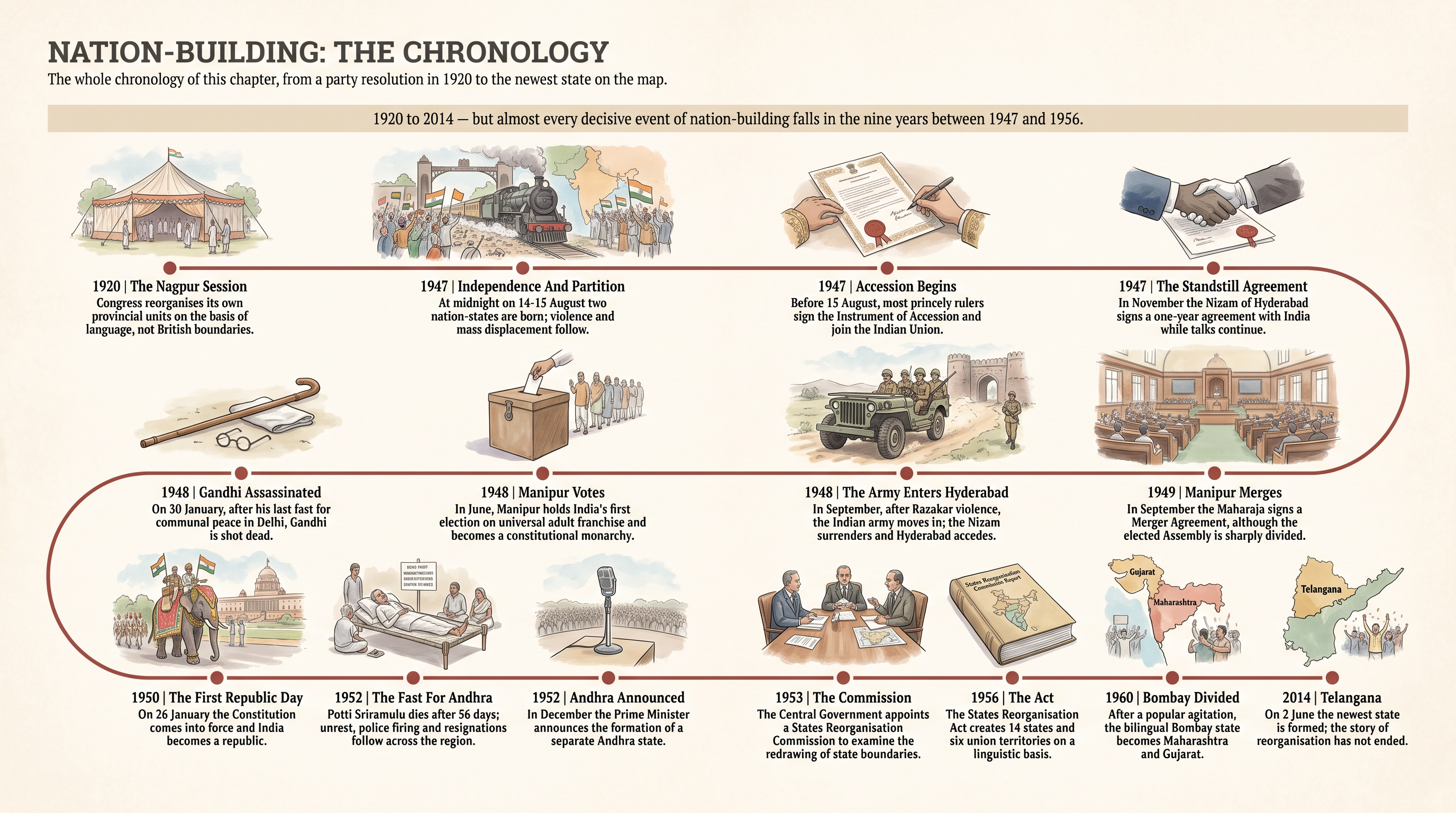
Fig. 1.22 – The First Years Of The Republic.
1.6 NCERT Questions
Which among the following statements about the Partition is incorrect?
- Partition of India was the outcome of the ‘two-nation theory.’
- Punjab and Bengal were the two provinces divided on the basis of religion.
- East Pakistan and West Pakistan were not contiguous.
- The scheme of Partition included a plan for transfer of population across the border.
Match the principles with the instances:
Principles Instances a. Mapping of boundaries on religious grounds i. Pakistan and Bangladesh b. Mapping of boundaries on grounds of different languages ii. India and Pakistan c. Demarcating boundaries within a country by geographical zones iii. Jharkhand and Chhattisgarh d. Demarcating boundaries within a country on administrative and political grounds iv. Himachal Pradesh and Uttarakhand Take a current political map of India (showing outlines of states) and mark the location of the following Princely States.
- Junagadh
- Manipur
- Mysore
- Gwalior
Here are two opinions — Bismay: ‘The merger with the Indian State was an extension of democracy to the people of the Princely States.’ Inderpreet: ‘I am not so sure, there was force being used. Democracy comes by creating consensus.’ What is your own opinion in the light of the accession of the Princely States and the responses of the people in these parts?
Read the following very different statements made in August 1947 — ‘Today you have worn on your heads a crown of thorns. The seat of power is a nasty thing. You have to remain ever wakeful on that seat…. you have to be more humble and forbearing…now there will be no end to your being tested.’ — M. K. Gandhi ‘…India will awake to a life of freedom….we step out from the old to the new…we end today a period of ill fortune and India discovers herself again. The achievement we celebrate today is but a step, an opening of opportunity…’ — Jawaharlal Nehru Spell out the agenda of nation building that flows from these two statements. Which one appeals more to you and why?
What are the reasons being used by Nehru for keeping India secular? Do you think these reasons were only ethical and sentimental? Or were there some prudential reasons as well?
Bring out two major differences between the challenge of nation building for the eastern and western regions of the country at the time of Independence.
What was the task of the States Reorganisation Commission? What was its most salient recommendation?
It is said that the nation is to a large extent an ‘imagined community’ held together by common beliefs, history, political aspirations and imaginations. Identify the features that make India a nation.
Read the following passage and answer the questions below: ‘In the history of nation-building only the Soviet experiment bears comparison with the Indian. There too, a sense of unity had to be forged between many diverse ethnic groups, religious, linguistic communities and social classes. The scale – geographic as well as demographic – was comparably massive. The raw material the state had to work with was equally unpropitious: a people divided by faith and driven by debt and disease.’ — Ramachandra Guha
- List the commonalities that the author mentions between India and the Soviet Union and give one example for each of these from India.
- The author does not talk about dissimilarities between the two experiments. Can you mention two dissimilarities?
- In retrospect, which of these two experiments worked better and why?
1.7 Check Your Concepts
- What was paramountcy? Explain what the lapse of paramountcy meant in law for the 565 Princely States, and why this created a serious problem for a united India.
- The principle of religious majorities was simple to state but ran into four difficulties. Set out all four in order, and explain why the third of them meant that lakhs of people did not know, on the day of Independence, which country they were living in.
- Look again at Fig. 1.16. Who is the small figure beneath the ruler, what is written on the box the ruler is holding, and what criticism is the cartoonist making of the way the accession of the Princely States was settled?
- Hyderabad and Manipur both proved difficult to integrate, but they were settled in very different ways. Describe how each was finally brought into the Indian Union, and state what each case shows about the relationship between a ruler and the people of the state.
- In Source 1.3, Jinnah tells the Constituent Assembly of Pakistan that a citizen’s religion has nothing to do with the business of the State. How does this sit alongside the two-nation theory? What can this speech tell us, and what can it not tell us?
- Source 1.6 is a work of fiction, while the chapter also gives you the estimates of about 80 lakh migrants and five to ten lakh deaths. What does the story show you about Partition violence that the figures cannot? What do the figures show that the story cannot?
- Fig. 1.21 asks whether the genie of linguism could be coaxed back into its bottle. Explain the fear the cartoon expresses. Then, using the evidence in this chapter, say what actually followed the creation of linguistic states — and explain why a cartoon drawn in 1956 could not have settled the question either way.
- The chapter argues that a democratic constitution is necessary but not sufficient for a democracy. Explain this claim, and then test it against the movement for a separate Andhra state: what did that movement show about where the pressure to change government policy can come from?