Chapter 4: India’s External Relations
In October 1960, in New York, five men stood together for a photograph. They were not there as guests of the United States. They were there because the United Nations was meeting, and because they had something to say to a world that had already divided itself in two.
Jawaharlal Nehru of India stood at one end. Beside him was Kwame Nkrumah of Ghana, a West African country that had won its freedom from British rule only three years earlier. Then Gamal Abdel Nasser of Egypt, whose country sat astride the Suez Canal. Then Sukarno of Indonesia, a vast island nation in South East Asia that had fought the Dutch for its independence. At the far end stood Josip Broz Tito of Yugoslavia, a communist federation in south-eastern Europe that took orders from neither Washington nor Moscow.
Between them, these five countries had almost no armies worth the name and very little money. What they had was a refusal. The United States and its allies formed one camp; the Soviet Union led the other. Nearly every new nation was being asked, politely or otherwise, to pick a side and take the aid that came with it.
These five would not pick. Within a year they would build a movement out of that refusal. The photograph is of a decision being made — and the decision was to stay out.
The men in this picture became the core leadership of the Non-Aligned Movement.
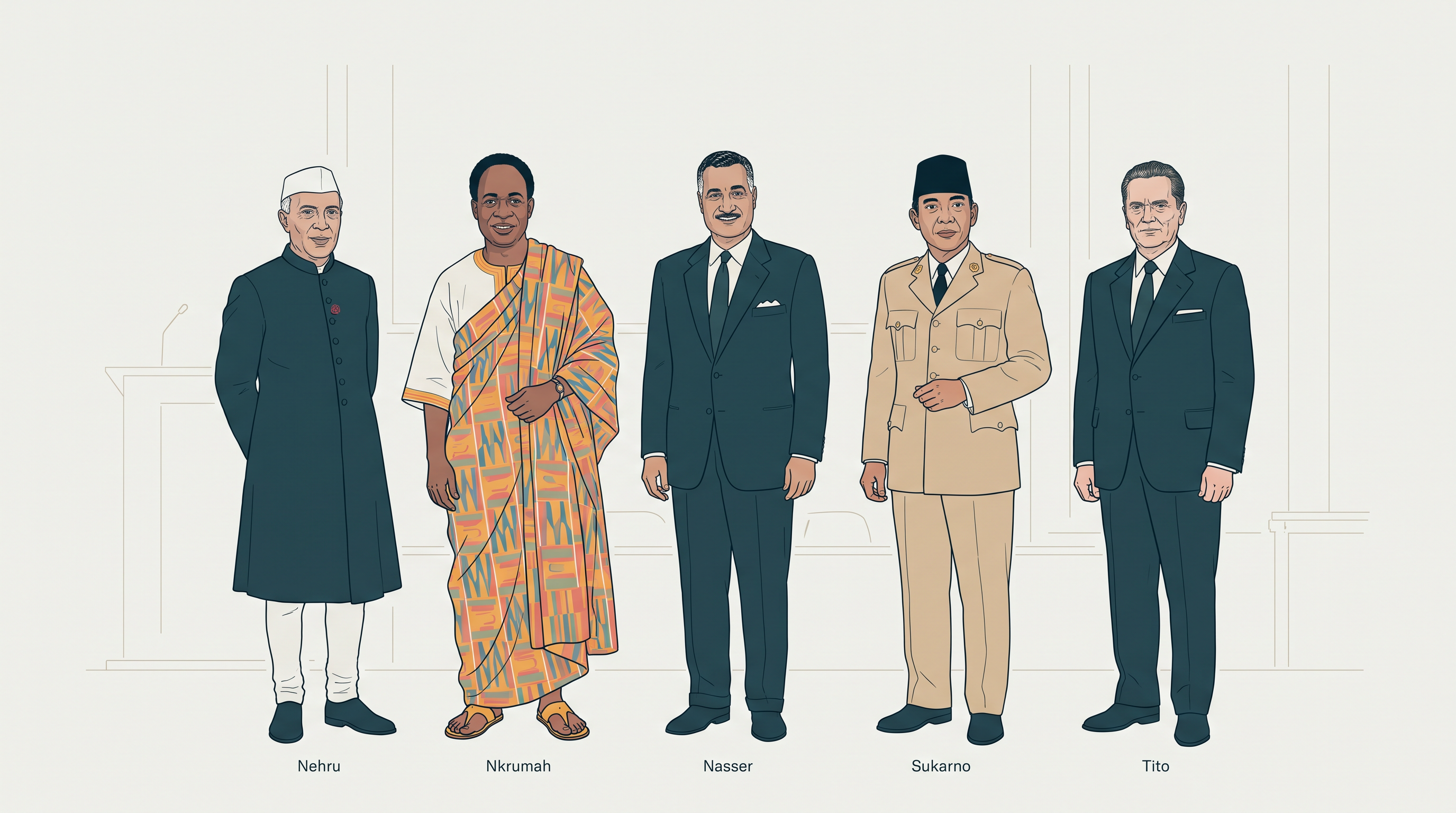
Fig. 4.0 – Core leadership of the Non-Aligned Movement, New York, 1960.
This chapter turns outward. The earlier chapters of this book looked at what happened inside India — its parties, its elections, its plans. Now we look at how India dealt with the world outside, and at how that outside world came back in and changed politics at home. India’s leaders answered the challenge with an innovative response, the policy of non-alignment. They also found themselves in conflict with neighbours, and this led to three wars — in 1962, 1965 and 1971. Those wars, and India’s external relations in general, were shaped by domestic politics and in turn reshaped it.
Four things will hold our attention: the international context that shaped India’s external relations; the operational principles that informed the country’s foreign policy; the history of India’s relations with China and Pakistan; and the evolution of India’s nuclear policy.
4.1 International Context
India became an independent nation-state — a territory with its own government, its own borders and the right to speak for itself in the world — at one of the most unsettled moments of the twentieth century. The world it walked into was not calm, and it was not waiting for India.
A World Being Rebuilt
The world had just witnessed a devastating war, the Second World War, and was grappling with the enormous task of reconstruction. Cities, economies and governments had to be rebuilt from ruins.
At the same time, yet another attempt to establish an international body was underway. The United Nations was being set up so that states could settle their quarrels by talking rather than by fighting — an attempt that had been made once before, after the First World War, and had failed.
Meanwhile, colonialism was collapsing, and many new countries were emerging from it. India was one of a whole generation of nations that had just stopped being somebody’s possession and had to learn, quickly, how to be a state.
Most of these new nations faced the same twin challenges: welfare and democracy. They had to feed and educate desperately poor populations, and they had to do it while giving those populations a vote. India’s foreign policy, in the years immediately after independence, reflected every one of these concerns.
India’s Own Burdens
Apart from these global factors, India had its own share of problems, and they were not small.
The British government left behind the legacy of many international disputes — quarrels over borders and obligations that India inherited on the day it became free, without having chosen them. Partition created its own pressures. And the task of poverty alleviation was already waiting for fulfilment; it could not be postponed while the government thought about the world.
This was the overall context in which India started participating in world affairs as an independent nation-state. It is worth pausing on how recent it all was. The men and women running India’s foreign policy in 1950 had, ten years earlier, been colonial subjects, some of them in jail.
Peace As A Constitutional Aim
Born in the shadow of a world war, India decided to conduct its foreign relations with two aims: to respect the sovereignty of all other nations — the right of a state to run its own affairs without outside interference — and to achieve security through the maintenance of peace.
This was not merely Nehru’s private preference. The aim finds an echo in the Directive Principles of State Policy, the section of the Constitution that sets out goals the state should work towards. Unlike Fundamental Rights, these principles cannot be enforced in a court; they are instructions to the government, and they are meant to guide what it does. One of them speaks directly to foreign policy.
Read the words carefully, because they are chosen carefully. The State shall endeavour — it shall try. Arbitration in clause (d) means handing a dispute to a neutral third party and agreeing to accept what that party decides. Clause (b) asks for relations that are ‘just and honourable’, not merely peaceful.
Now notice what the Article does not do. It does not say India may never fight. It does not tell a government what to do when a neighbour’s army crosses the border, or when a treaty is signed and then ignored. It sets a direction, and leaves every hard case to be argued out later. That is why the chapter asks you to come back to this question at the end: an aim written into a Constitution is a promise, and a promise can be kept in some years and strained in others. This is a text you should judge India against, not a text that decides the judgement for you.
Why Poor Countries Choose Smaller Goals
Just as both internal and external factors guide the behaviour of an individual or a family, both the domestic and the international environment influence the foreign policy of a nation — the set of goals a country pursues in its dealings with other countries, and the means it uses.
Developing countries lack the resources needed to press their concerns effectively in the international system. So they pursue more modest goals than the advanced states do. They focus on peace and development in their own neighbourhood rather than on shaping the whole world.
There is a harder edge to this too. Their economic and security dependence on more powerful states occasionally influences their foreign policy. A country that needs another country’s money, or another country’s protection, is not entirely free to disagree with it.
That is exactly what happened. In the period immediately after the Second World War, many developing nations chose to support the foreign policy preferences of the powerful countries that were giving them aid or credits. The result was a world divided into two clear camps: one under the influence of the United States and its western allies, the other under the influence of the then Soviet Union.
There was also a third possibility, an experiment called the Non-Aligned Movement, in which India played an important role. You will see in the next section what that experiment was and why India reached for it.
Two Camps, And A Question
The division did not last forever. The end of the Cold War changed the context of international relations entirely. But that end came much later. When India achieved its freedom and began framing its foreign policy, the Cold War — the long political, economic and military confrontation between the United States and the Soviet Union, fought through alliances, aid and threats rather than through direct war between them — was just beginning, and the world was getting divided into these two camps.
So the questions the rest of this chapter must answer are already on the table. Did India belong to either of these two camps in the global politics of the fifties and the sixties? And was it successful in conducting its foreign policy peacefully and avoiding international conflicts?
Nehru had an answer to a prior question — why foreign policy mattered so much to a country that had just won its freedom.
This is a striking claim, and it is worth taking seriously rather than merely admiring. Nehru is saying that a country which cannot decide its own dealings with other countries is not really free, however impressive its parliament looks. Local autonomy — running your own internal affairs — is not the same thing as independence. Under colonial rule, Indians had gradually been given some say in provincial administration, but never in war, treaties or alliances. Nehru knew what that felt like.
Notice the last line, though, because it complicates the picture: to that extent and in that measure. Nehru does not treat independence as all-or-nothing. It is a matter of degree, and a country can lose some of it without losing all of it.
Remember also where these words were spoken. Nehru was addressing the Constituent Assembly, the body that was writing India’s Constitution — a public speech, by a Prime Minister, defending a policy he had chosen. It tells us what he wanted the country to believe about foreign policy. It cannot tell us whether he was right.
4.2 The Policy Of Non-Alignment
A Freedom Struggle With Friends Abroad
The Indian national movement was never an isolated process. It was one part of a worldwide struggle against colonialism and imperialism, and it influenced the liberation movements of many Asian and African countries.
Long before 1947, Indian nationalist leaders were in contact with leaders from other colonies. They were united by a common struggle: each was trying to get a European power out of its own country. Imperialism — one country ruling or controlling another for its own benefit — was the shared enemy, and the people fighting it took an interest in one another.
The clearest sign of these linkages was the creation of the Indian National Army (INA) by Netaji Subhash Chandra Bose during the Second World War. Formed from Indians living outside India, the INA showed how far beyond the country’s borders the freedom struggle actually reached.
A New Country In A Dividing World
The foreign policy of a nation reflects the interplay of domestic and external factors. So the noble ideals that had inspired India’s struggle for freedom influenced the making of its foreign policy. A country that had argued for decades about self-rule and equality did not suddenly stop believing those things on the day it became free.
But India’s attainment of independence coincided with the beginning of the Cold War era. This was a period marked by political, economic and military confrontation at the global level between two blocs — groups of states tied together by alliance and dependence — led by the superpowers, the US and the USSR. A superpower is a state powerful enough to project military and economic force anywhere in the world.
The same period witnessed the establishment of the UN, the creation of nuclear weapons, the emergence of Communist China, and the beginning of decolonisation. Decolonisation is the process by which colonies became independent states, which is how most of the world’s countries came into existence in these years.
None of this was of India’s choosing. India’s leadership had to pursue the country’s national interests within the international context it found — not the one it might have preferred.
4.2.1 Nehru’s Role
Any student who has read this far in the book may reasonably be tired of one name. It is the fourth chapter, and it is Nehru once again. Was he a superman, or has his role been glorified? Hold on to that suspicion — but notice first why, in foreign policy in particular, one man’s judgement mattered so much.
The first Prime Minister, Jawaharlal Nehru, played a crucial role in setting the national agenda. He was also his own foreign minister. Holding both offices at once, he exercised profound influence in the formulation and implementation of India’s foreign policy from 1946 to 1964 — nearly two decades, without a break.
The three major objectives of Nehru’s foreign policy were to preserve the hard-earned sovereignty, to protect territorial integrity, and to promote rapid economic development. Territorial integrity means keeping the country’s territory whole and undivided, which for a state born in Partition was not an abstract worry. Nehru wished to achieve all three objectives through the strategy of non-alignment: refusing to join either superpower’s military bloc, and judging each international question on its merits instead.
Not Everyone Agreed
It would be a mistake to imagine that the whole country stood behind him. There were parties and groups in India that believed India should be more friendly with the bloc led by the US, because that bloc claimed to be pro-democracy. Among those who thought on these lines were leaders like Dr Ambedkar.
Some political parties that were opposed to communism also wanted India to follow a pro-US foreign policy. These included the Bharatiya Jan Sangh and, later, the Swatantra Party.
So a real argument existed. What settled it, for the time being, was not that the critics were answered. It was that Nehru possessed considerable leeway in formulating foreign policy — as Prime Minister, as Foreign Minister, and as the leader of a party that dominated Parliament, he simply had room to decide.
4.2.2 Distance From Two Camps
The foreign policy of independent India vigorously pursued the dream of a peaceful world. It did this in three ways: by advocating the policy of non-alignment, by working to reduce Cold War tensions, and by contributing human resources to the UN peacekeeping operations — Indian soldiers serving under the UN flag to keep warring sides apart in other people’s conflicts.
You might well ask why India did not simply join one of the two camps. The answer is that India wanted to keep away from the military alliances that the US and the Soviet Union were building against each other. During the Cold War, the US-led North Atlantic Treaty Organisation (NATO) and the Soviet-led Warsaw Pact came into existence. Each was a military alliance: its members promised that an attack on one of them would be treated as an attack on all. That promise is protection, but it is also a standing commitment to fight in a war you did not choose.
A Balancing Act That Did Not Always Balance
India advocated non-alignment as the ideal foreign policy approach. But it was a difficult balancing act, and sometimes the balance did not appear perfect. Two events in a single year show exactly how imperfect it could look.
Despite such episodes, the overall record is not so easily dismissed. By and large India did take an independent stand on various international issues, and it could get aid and assistance from members of both the blocs — something no country inside an alliance could have managed.
The Price Of Standing Apart
Non-alignment had costs, and they arrived quickly. While India was trying to convince other developing countries about the policy of non-alignment, Pakistan joined the US-led military alliances. India’s most difficult neighbour was now inside the American camp.
The US, for its part, was not happy about India’s independent initiatives and the policy of non-alignment. A country that would not take a side looked, from Washington, like a country that might take the wrong one. The result was a considerable unease in Indo-US relations during the 1950s. The US also resented India’s growing partnership with the Soviet Union.
Nehru had set out his reasoning years earlier, in a private letter written months before independence — and, unusually, what he wrote in private matches what he said in public.
Read the last three lines again, because they are the interesting ones. Nehru is not promising that non-alignment will make India popular. He is predicting the opposite: that both superpowers will suspect India of secretly favouring the other, and that nothing can be done about it. This cannot be helped is the line of a man who has counted the cost and decided to pay it.
What the letter cannot tell us is whether the policy worked. A statement of intent, written in January 1947, records what a leader meant to do. Only the events of the next twenty-five years — the wars, the treaties, the aid — can tell us what it produced, and you will be in a position to judge that by the end of this chapter.
The Economics Behind The Distance
There is one more piece of the explanation, and it comes from inside India rather than outside it. You have already studied the strategy of planned economic development that India adopted. That policy emphasised import-substitution: making at home the goods India had been buying from abroad, so that the country would not depend on foreign suppliers.
The emphasis on developing a resource base within the country also meant that export-oriented growth was limited. India was not building its economy around selling to the world.
The consequence matters for foreign policy. This development strategy limited India’s economic interaction with the outside world — and a country that trades less with others also has fewer economic strings tying it to them. Distance in trade made distance in diplomacy easier to sustain.
4.2.3 Afro-Asian Unity
Staying out of the two camps did not mean staying out of the world. Given its size, its location and its power potential, Nehru envisaged a major role for India in world affairs, and especially in Asian affairs. It is a striking thought, and worth pausing on: did India have more recognition and influence in the world when it was younger, poorer and more vulnerable than it is now? If so, that tells us something important — that influence in world politics is not only a matter of money and weapons.
Nehru’s era was marked by the establishment of contacts between India and other newly independent states in Asia and Africa. Throughout the 1940s and 1950s, he was an ardent advocate of Asian unity. The sequence of Indian initiatives is set out in Fig. 4.1.
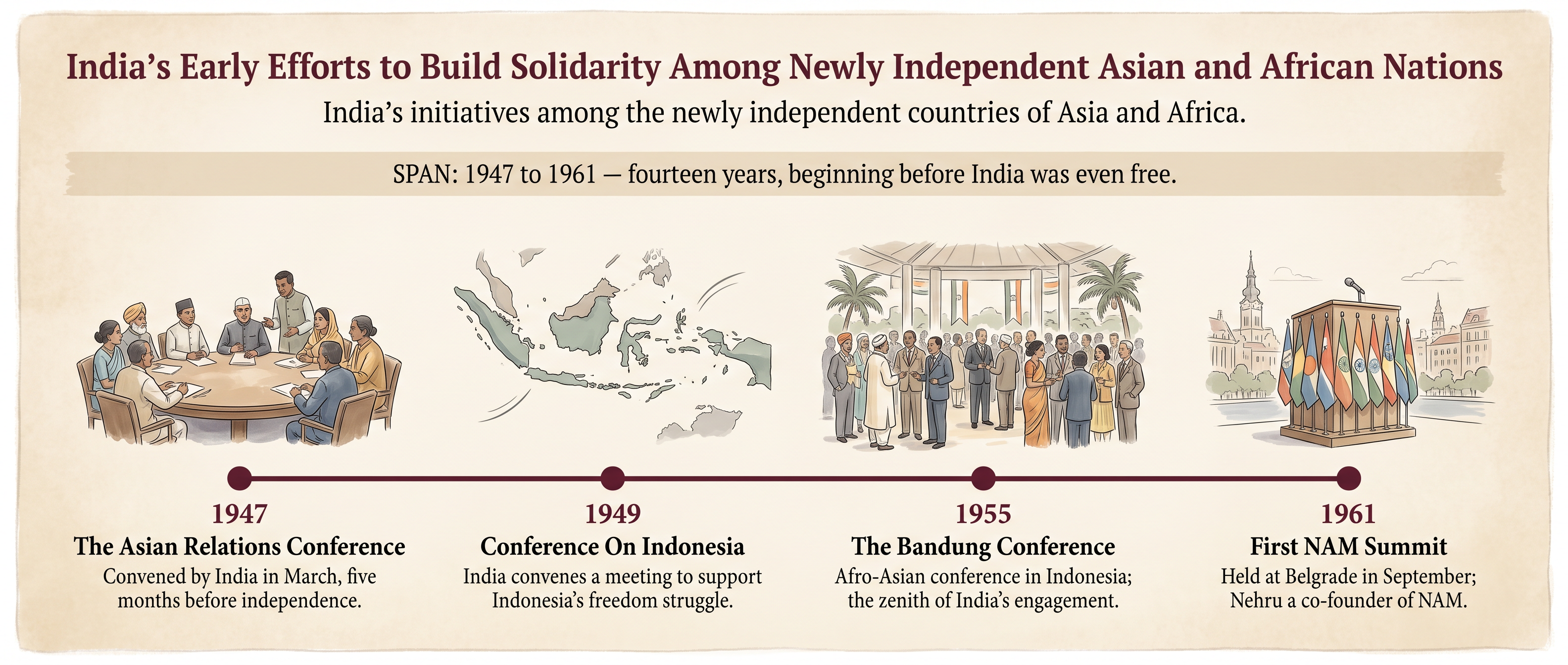
Fig. 4.1 – Building Afro-Asian Solidarity.
Notice the first date. India convened the Asian Relations Conference in March 1947, five months ahead of attaining its own independence. A country that was not yet free was already calling other Asians together.
India also made earnest efforts for the early realisation of freedom for Indonesia from the Dutch colonial regime, convening an international conference in 1949 to support its freedom struggle. And India was a staunch supporter of the decolonisation process everywhere, firmly opposing racism — especially apartheid in South Africa, the system of law that separated people by race and reserved political power for the white minority.
The Afro-Asian conference held in the Indonesian city of Bandung in 1955, commonly known as the Bandung Conference, marked the zenith of India’s engagement with the newly independent Asian and African nations. Bandung later led to the establishment of the NAM, whose First Summit was held in Belgrade in September 1961. Nehru was a co-founder of the NAM.
The Moral Power Argument
Not everyone in India was persuaded that non-alignment made India weak. One of Nehru’s own senior colleagues put the opposite case, in a letter written in 1950.
The claim is precise. Rajagopalachari names the three ordinary means of power — material, men and money — grants that India has none of them, and argues that India has acquired a fourth kind instead. Moral power is the influence a country gets from what it is seen to stand for, rather than from what it can do to you. The ‘councils of the great’ are the rooms where the powerful states settle the world’s business, and his claim is that India was now being heard there.
Now the limit, and it is a large one. This is a letter, written by an admirer of the new India to a British friend, and letters of that kind are written to be agreeable. It records a belief, held in 1950, that India’s word carried weight. It cannot show that any government changed its policy because India spoke. Moral power is, by its nature, extremely hard to measure — and the chapters ahead will test the claim harshly.
4.3 Peace And Conflict With China
A Friendly Beginning
Unlike its relationship with Pakistan, free India began its relationship with China on a very friendly note. The two were the largest countries in Asia, both were emerging from long humiliation by western powers, and both were, in their very different ways, starting again.
After the Chinese revolution of 1949 brought a communist government to power, India was one of the first countries to recognise it. Recognition means formally accepting that a government is the lawful government of its country, and it is not a small courtesy: without it, a new government cannot send ambassadors, sign treaties or take its seat in international bodies. Nehru felt strongly for this neighbour that was coming out of the shadow of western domination, and helped the new government in international fora.
Not everyone in his own cabinet agreed. Some of his colleagues, like Vallabhbhai Patel, were worried about possible Chinese aggression in future. But Nehru thought it was ‘exceedingly unlikely’ that India would face an attack from China.
That belief had a practical consequence, and it is the detail worth remembering. For a very long time, the Chinese border was guarded by para-military forces, not the army. Para-military forces are armed forces trained for policing and border duty rather than for fighting a war. India was watching that frontier, not defending it.
The Five Principles
The friendship was given a formal shape. On 29 April 1954, Nehru and the Chinese Premier Zhou Enlai jointly enunciated Panchsheel, the Five Principles of Peaceful Coexistence — an agreement that each country would respect the other’s territorial integrity and sovereignty, refrain from aggression and interference, deal with the other as an equal, and coexist peacefully.
It was meant as a step in the direction of a stronger relationship between the two countries, and for a while it looked like one. Indian and Chinese leaders visited each other’s country and were greeted by large and friendly crowds. Hindi-Chini bhai-bhai — Indians and Chinese are brothers — was the mood of those years.
Tibet: The Question Underneath
Panchsheel had a price, and it was paid in Tibet. The plateau of the central Asian region called Tibet is one of the major issues that historically caused tension between India and China. It lies between the two countries, high and thinly populated, and for centuries it decided how close they actually stood to each other.
Its status had never been simple. From time to time in history, China had claimed administrative control over Tibet. And from time to time, Tibet was independent too.
In 1950, China took over control of Tibet. Large sections of the Tibetan population opposed this takeover. India tried to persuade China to recognise Tibet’s claims for independence.
Then, in 1954, India stopped trying. When the Panchsheel agreement was signed, one of its clauses committed each side to respecting the other’s territorial integrity and sovereignty — and through that clause, India conceded China’s claim over Tibet. The principle that was meant to protect India’s own borders was the same principle that handed Tibet to China.
The Dalai Lama Crosses Over
The Tibetan spiritual leader, the Dalai Lama, accompanied the Chinese Premier Zhou Enlai during the official Chinese visit to India in 1956. He informed Nehru about the worsening situation in Tibet. But China had already assured India that Tibet would be given greater autonomy than that enjoyed by any other region of China.
In 1958, there was an armed uprising in Tibet against China’s occupation. It was suppressed by the Chinese forces. Sensing that the situation had become worse, in 1959 the Dalai Lama crossed over into the Indian border and sought asylum, which was granted. Asylum is protection given by one state to a person fleeing persecution in another. The Chinese government strongly protested against this.
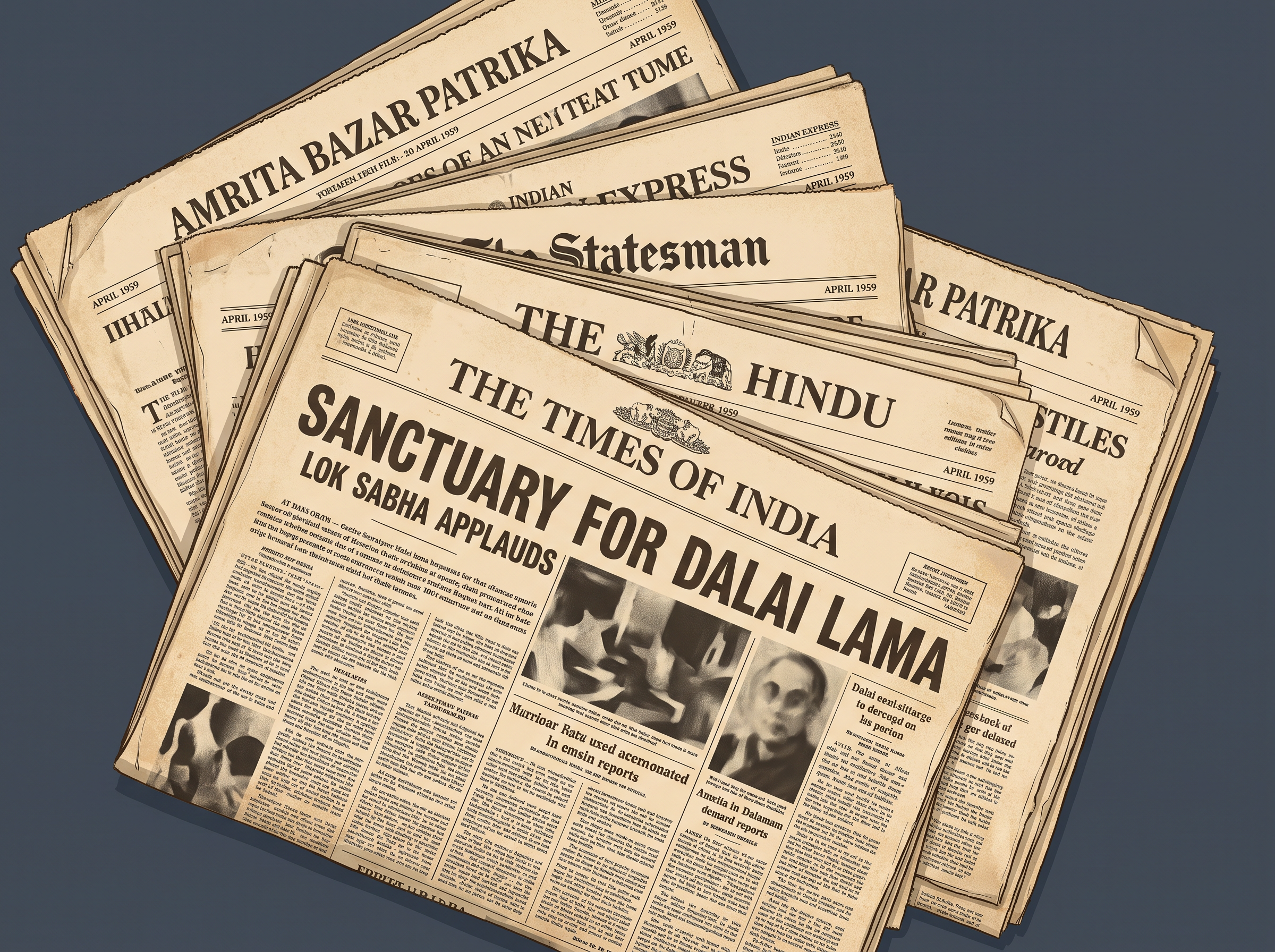
Fig. 4.2 – Newspaper reports on the Dalai Lama’s asylum, 1959.
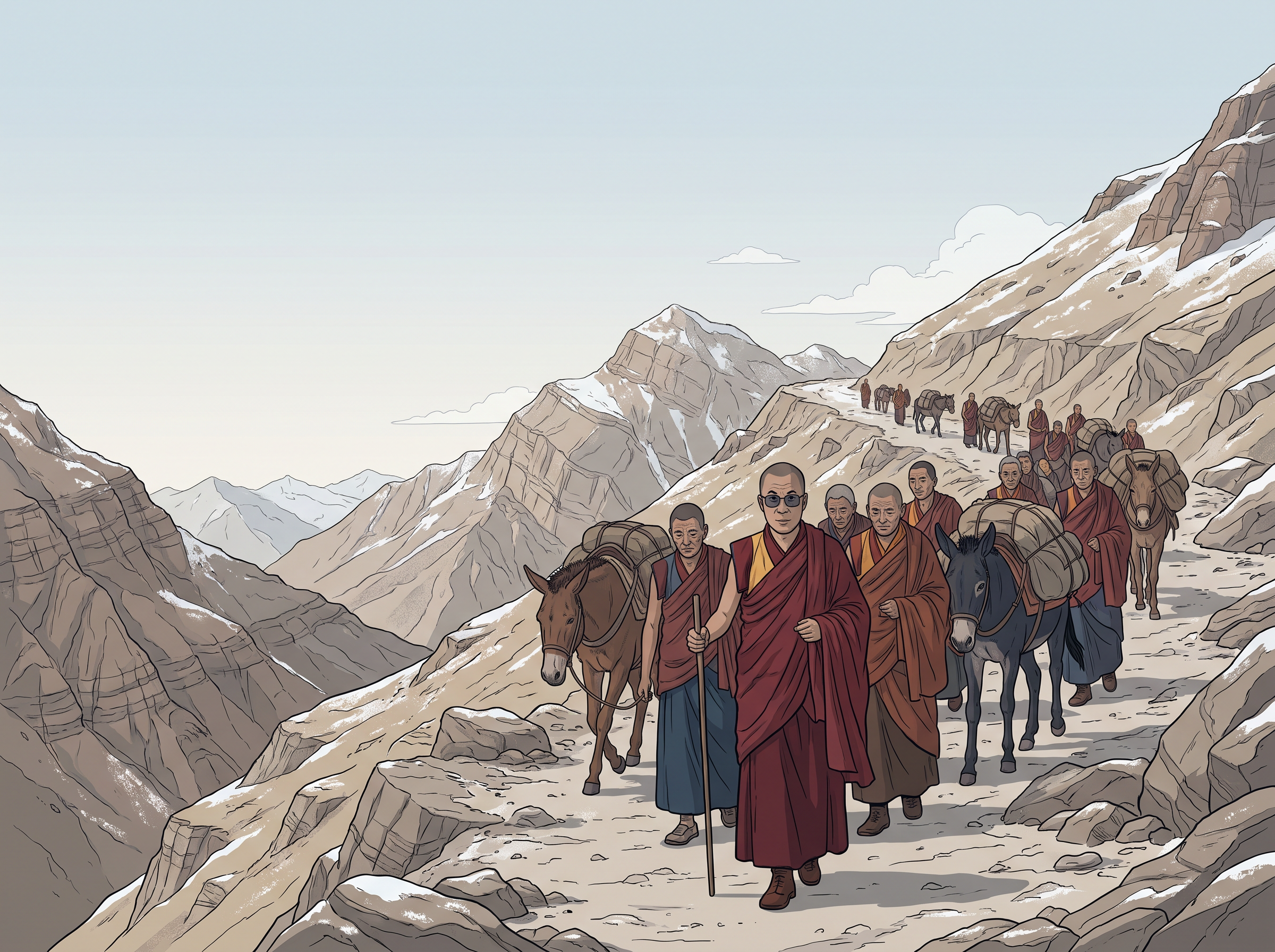
Fig. 4.3 – The Dalai Lama enters India with his followers.
The photograph shows a crossing, and a crossing is a decision. Once India granted asylum, the Tibet question stopped being a matter of distant sympathy and became a permanent presence inside India’s own territory. Over the last half century a large number of Tibetans have also sought refuge in India and in many other countries of the world. In India, particularly in Delhi, there are large settlements of Tibetan refugees. Dharmashala in Himachal Pradesh is perhaps the largest refuge settlement of Tibetans in India, and the Dalai Lama has also made Dharmashala his home in India.
Nor was sympathy for Tibet confined to the government. In the 1950s and 1960s many political leaders and parties in India, including the Socialist Party and the Jan Sangh, supported the cause of Tibet’s independence.
Two Claims That Do Not Meet
The dispute over Tibet has not gone away, and the two sides describe the same territory in incompatible ways. China has created the Tibet autonomous region, which is an integral part of China. Tibetans oppose the Chinese claim that Tibet is part of Chinese territory. They also oppose the policy of bringing more and more Chinese settlers into Tibet. Tibetans dispute China’s claim that autonomy is granted to the region, and they think that China wants to undermine the traditional religion and culture of Tibet.
Notice what this argument is actually about. It is not only about where a line runs on a map. It is about whether a people can be governed as part of a state they say they never joined — and that is one of the hardest questions in politics.
The Border Disputes Erupt
By 1960 the friendship was visibly failing. Border disputes with China erupted in that year, and talks between Nehru and Mao Tsetung proved futile. A cartoonist of the time caught the character of those talks exactly.
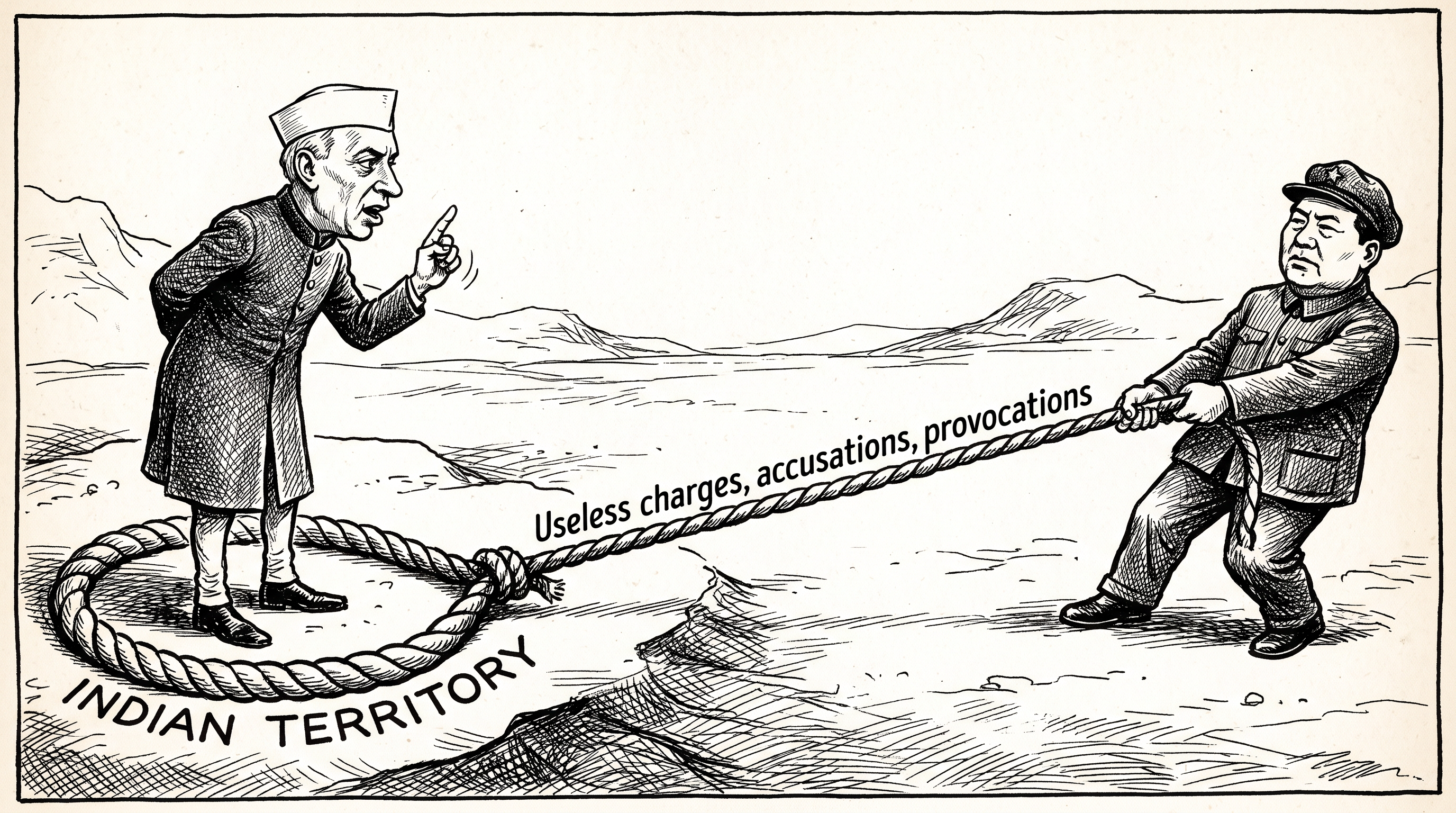
Fig. 4.4 – The breakdown of diplomatic talks. Inspiration: Period cartoon.
Read the drawing carefully. Both men are holding the same rope, and both are pulling — the cartoonist has drawn the argument, not just one side of it. The rope is labelled with the words the two governments were exchanging: charges, accusations, provocations. And the ground under the rope, the thing the tug-of-war is actually about, is Indian territory.
The joke is in Nehru’s line. He is not stopping the pull; he is warning the other man that the blame will be his. That is the cartoonist’s claim: that India was answering a physical push with a legal argument. It is a sharp claim, and an unkind one.
And it is only a claim. A cartoon states one opinion in one image, and it cannot draw the counter-argument — that a country with a small army on a distant Himalayan frontier had very few other moves available in 1960. The cartoon tells you what one commentator thought at the time. It does not tell you what India could actually have done.
Where The Dispute Lay
The disagreement had a precise geography, and Map 4.1 shows it.
Map
Map 4.1 Caption: The India-China border, showing the areas over which the two countries disagreed. Brief: Redraw the schematic border map. Show the full extent of India as officially defined by the Government of India, including Jammu and Kashmir and Ladakh, and follow the official Government of India position for every boundary shown. Mark the India-China border in red. Label Karakoram Pass, Aksai Chin, Kargil, Srinagar, Leh, Demchok, Nelang, Bara Hoti, Delhi, Tawang, Along and Dong, with China, Tibet, Nepal, Bhutan and Bangladesh named as on the original. Carry NCERT’s note: this illustration is not a map drawn to scale and should not be taken to be an authentic depiction of India’s external boundaries.
A little before the Tibet crisis came to a head, a boundary dispute had surfaced between India and China. India claimed that the boundary was a matter settled in colonial time. China said that any colonial decision did not apply — that agreements made by a British government and a weak Chinese one could not bind the new China.
The main dispute was about the western and the eastern end of the long border. China claimed two areas within the Indian territory: the Aksai-chin area in the Ladakh region of Jammu and Kashmir, and much of the state of Arunachal Pradesh, in what was then called NEFA, the North Eastern Frontier Agency.
Between 1957 and 1959, the Chinese occupied the Aksai-chin area and built a strategic road there. Despite a very long correspondence and discussion among top leaders, these differences could not be resolved. Several small border skirmishes between the armies of the two countries took place.
Now the limit. The map shows you where the claims lay and how far apart the two ends of the border are — nearly the whole width of the Himalaya. It is a schematic, not a survey, and NCERT says so on its face. It cannot show you why either side believed its claim was just, and it cannot settle which of them was right. That is an argument in documents, not in shading.
4.3.1 The Chinese Invasion, 1962
Two developments strained the relationship past repair. China annexed Tibet in 1950 and thus removed a historical buffer between the two countries — a buffer being a territory lying between two powers that keeps their armies from ever meeting. Initially, the government of India did not oppose this openly. But as more information came in about the suppression of Tibetan culture, the Indian government grew uneasy. Then the Dalai Lama sought and obtained political asylum in India in 1959, and China alleged that the government of India was allowing anti-China activities to take place from within India.
The second development was the boundary dispute you have just read about. The sequence in which the two came together is set out in Fig. 4.5.
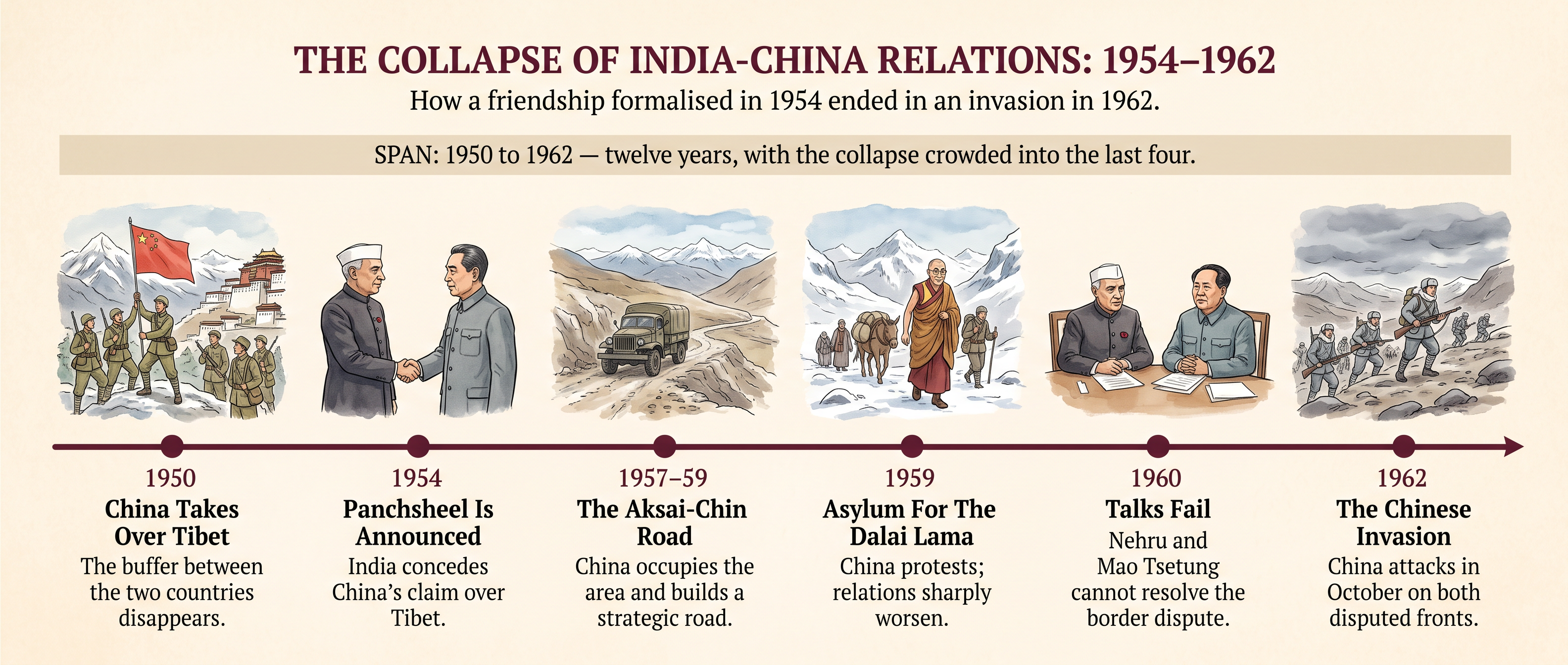
Fig. 4.5 – From Panchsheel To War.
Even as late as December 1956, one of India’s most senior figures was writing about the Chinese leadership in warm terms.
This is worth holding beside the war that followed, but it must be read for what it is. It records a personal impression, formed at a meeting, by a man who was disposed to think well of the new Asia. It tells us that India’s leadership genuinely believed the friendship was real — which is itself an important political fact, because it explains why the border was left so lightly guarded. It tells us nothing whatever about what China’s leaders intended. An impression of a man’s character is not evidence of his government’s plans.
October And November 1962
Around this time, while the entire world’s attention was on the Cuban Missile crisis — a confrontation between the two superpowers that brought them to the edge of nuclear war — China launched a swift and massive invasion in October 1962 on both the disputed regions.
The first attack lasted one week, and Chinese forces captured some key areas in Arunachal Pradesh. The second wave of attack came the next month. While the Indian forces could block the Chinese advances on the western front in Ladakh, in the east the Chinese managed to advance nearly to the entry point of the Assam plains.
Finally, China declared a unilateral ceasefire — a stop to the fighting announced by one side alone, without any agreement — and its troops withdrew to where they had been before the invasion began. China had taken no permanent territory in the east. It had made its point.
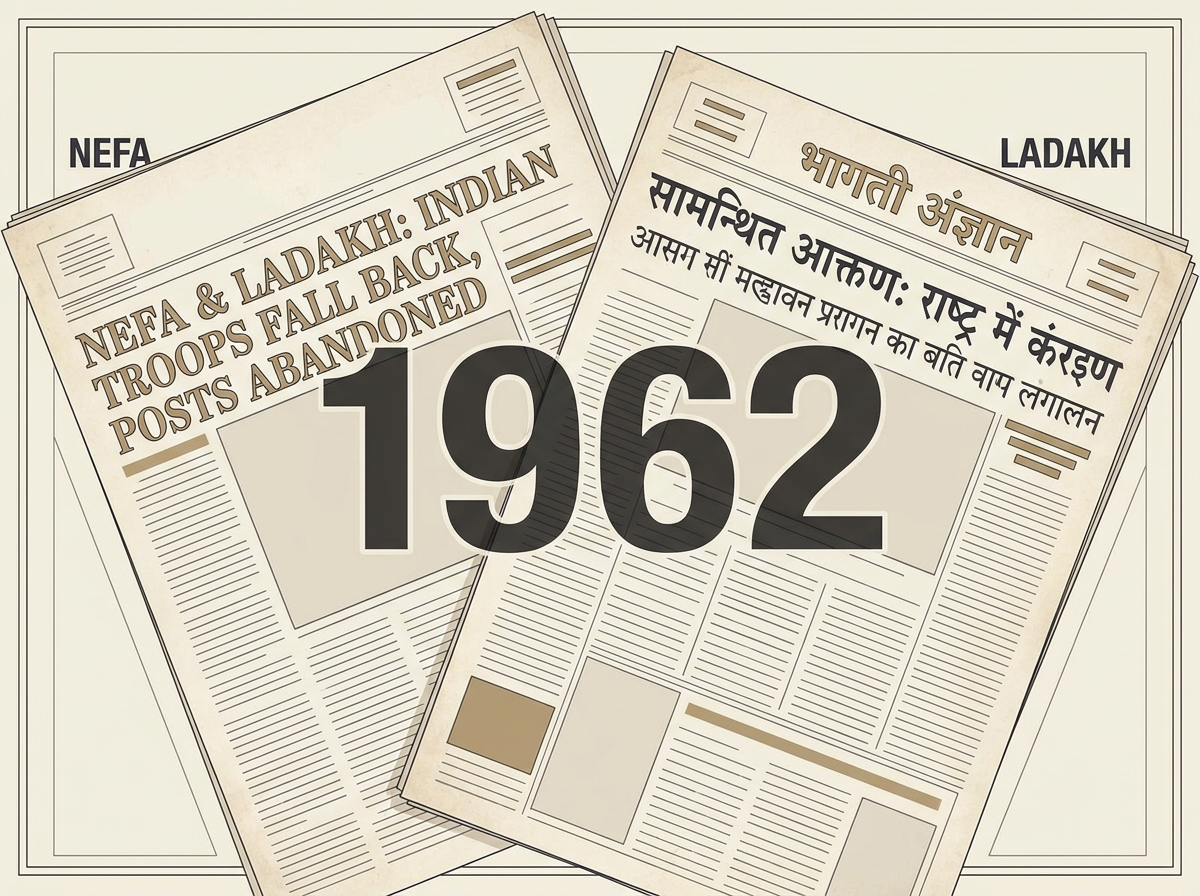
Fig. 4.6 – Newspaper reports of the Chinese advance, October 1962.
What The War Did To India
The China war dented India’s image at home and abroad. Read the next few facts slowly, because each one is a blow landing.
India had to approach the Americans and the British for military assistance to tide over the crisis — the country that had refused both camps now had to ask one of them for weapons. The Soviet Union remained neutral during the conflict; the friend India had cultivated did not take its side.
At home, the war induced a sense of national humiliation and at the same time strengthened a spirit of nationalism. Those two feelings are not opposites; defeat can make people more attached to a country, not less. Something of that mood survives in a story Indians still tell — that Nehru wept in public when Lata Mangeshkar sang Ai mere watan ke logo after the 1962 war.
Careers ended. Some of the top army commanders either resigned or were retired. Nehru’s close associate and the then Defence Minister, V. Krishna Menon, had to leave the cabinet.
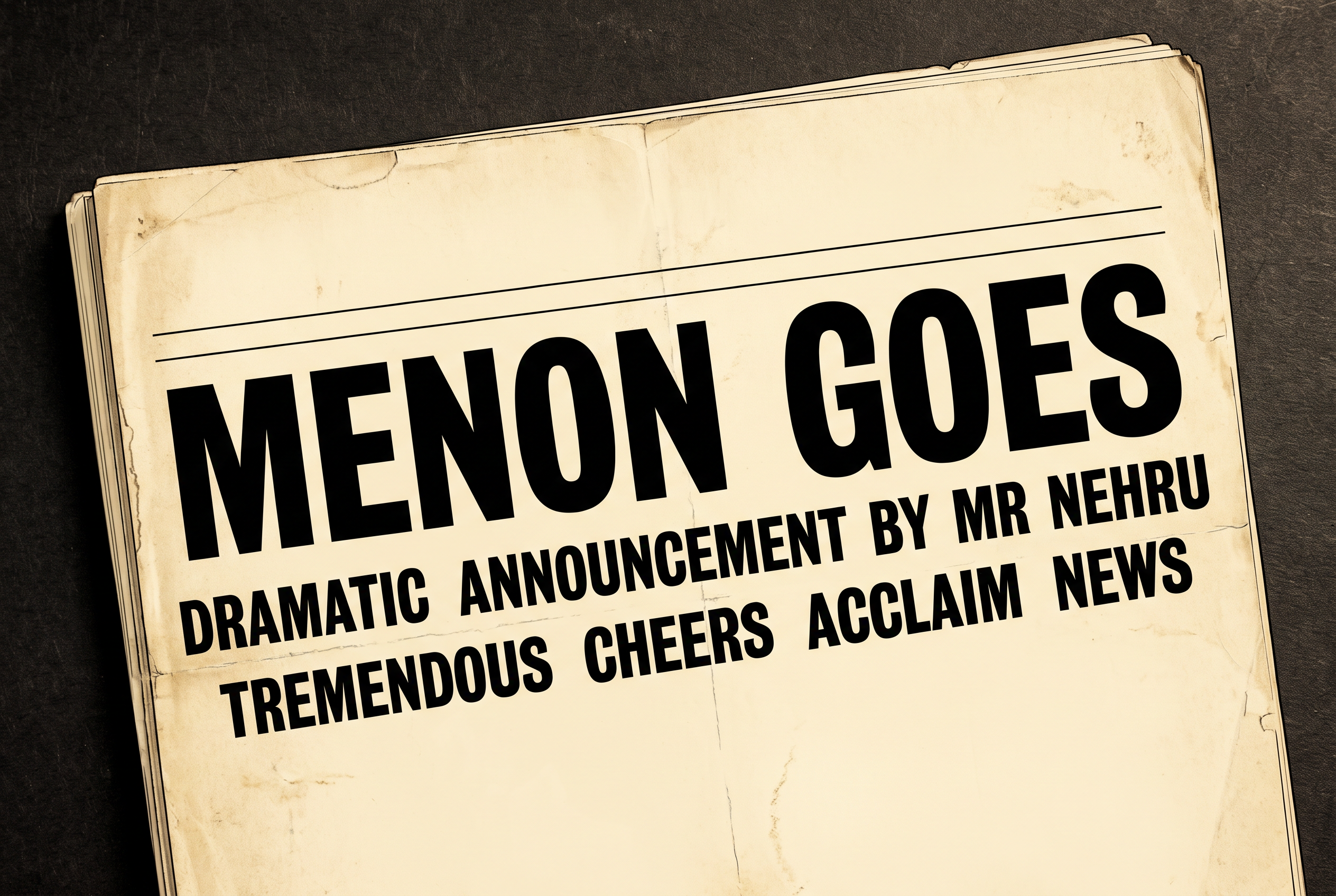
Fig. 4.7 – The resignation of Defence Minister V. Krishna Menon.
Look at the second half of that headline: the cheers were in Parliament, and they were for the removal of a minister. Defeat had found someone to blame.
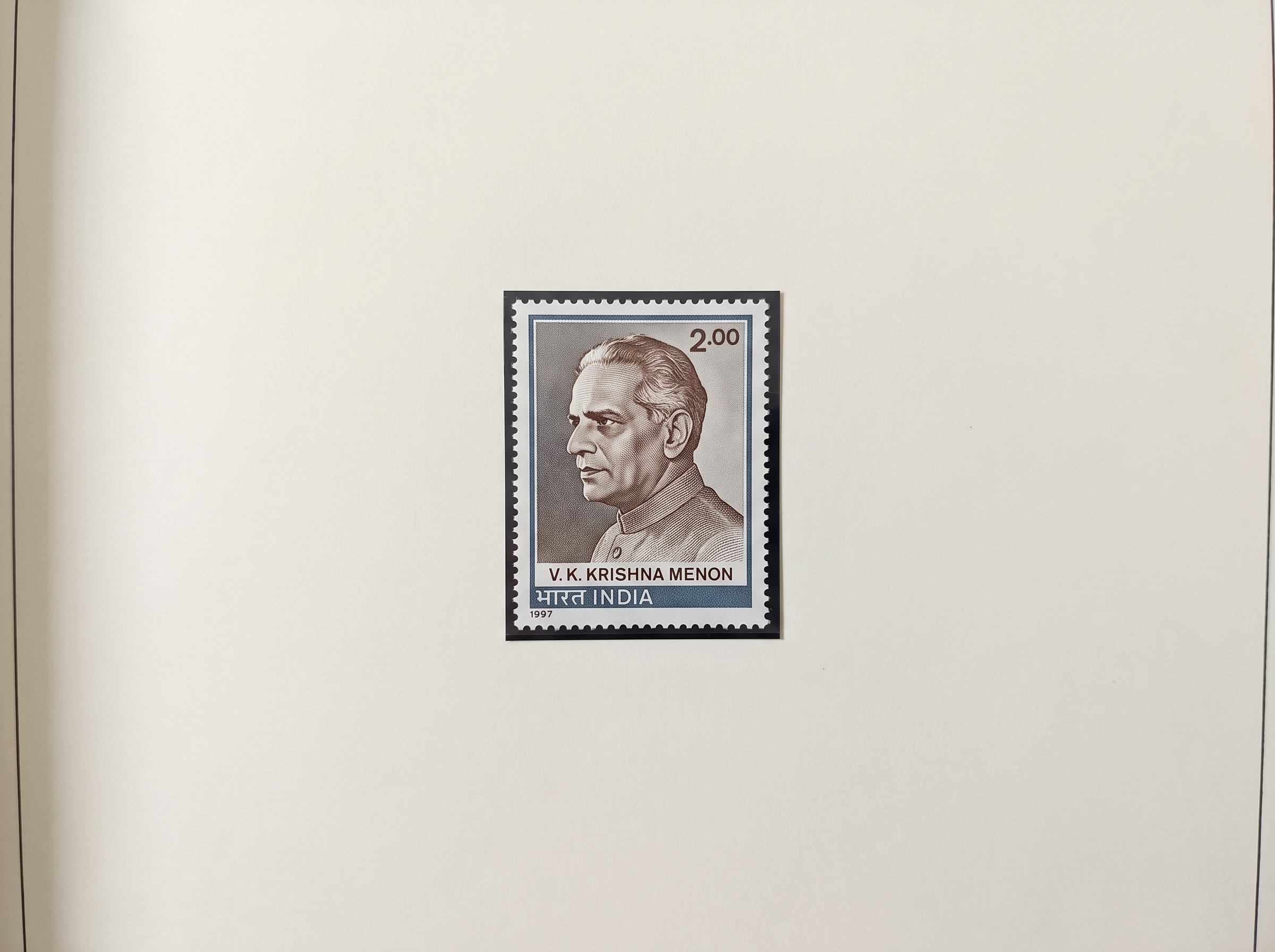
Fig. 4.8 – Commemorative postage stamp of V. K. Krishna Menon.
The Political Cost
Nehru’s own stature suffered. He was severely criticised for his naïve assessment of Chinese intentions and for the lack of military preparedness — the two charges, notice, are the same charge stated twice: he had not expected an attack, and so he had not prepared for one.
For the first time, a no-confidence motion against his government was moved and debated in the Lok Sabha. A no-confidence motion is a proposal that the House no longer supports the government; if it passes, the government must resign. That it could be moved against Nehru at all was a change in the political weather. Soon thereafter, the Congress lost some key by-elections to the Lok Sabha. The political mood of the country had begun to change.
The cartoonists were merciless, and one image did more damage than most.
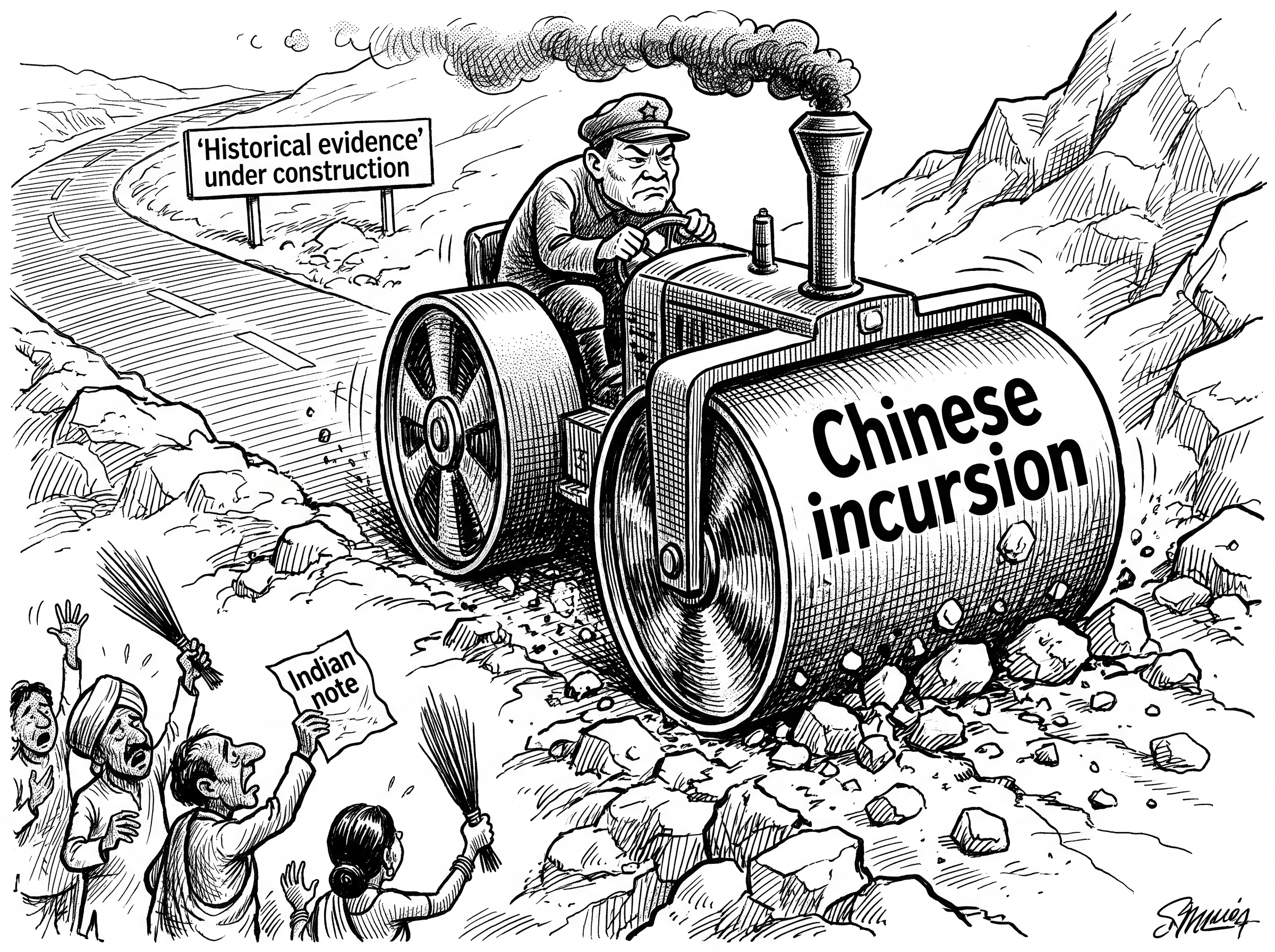
Fig. 4.9 – China roller — evidence under construction. Inspiration: R. K. Laxman.
The joke turns on a double meaning. A steamroller flattens ground to make a road — and China had, in fact, built a strategic road across Aksai-chin. But the roller in the drawing is flattening something else as well: ‘historical evidence’. The cartoonist’s claim is that China was not discovering an old border but manufacturing one, by occupying land first and producing the history afterwards. The small figures with brooms and notes are India, answering a machine with paperwork.
Then the limit, and it is the same limit as before. This is a claim, made in an Indian newspaper, for Indian readers, during a war India was losing. It is evidence of what Indians believed about Chinese intentions. It is not evidence about those intentions. A cartoon can be devastating and still be an argument rather than a finding.
Popular anger appeared in unlikelier places too. A dairy brand’s advertising hoarding of the period turned the old slogan of friendship inside out.
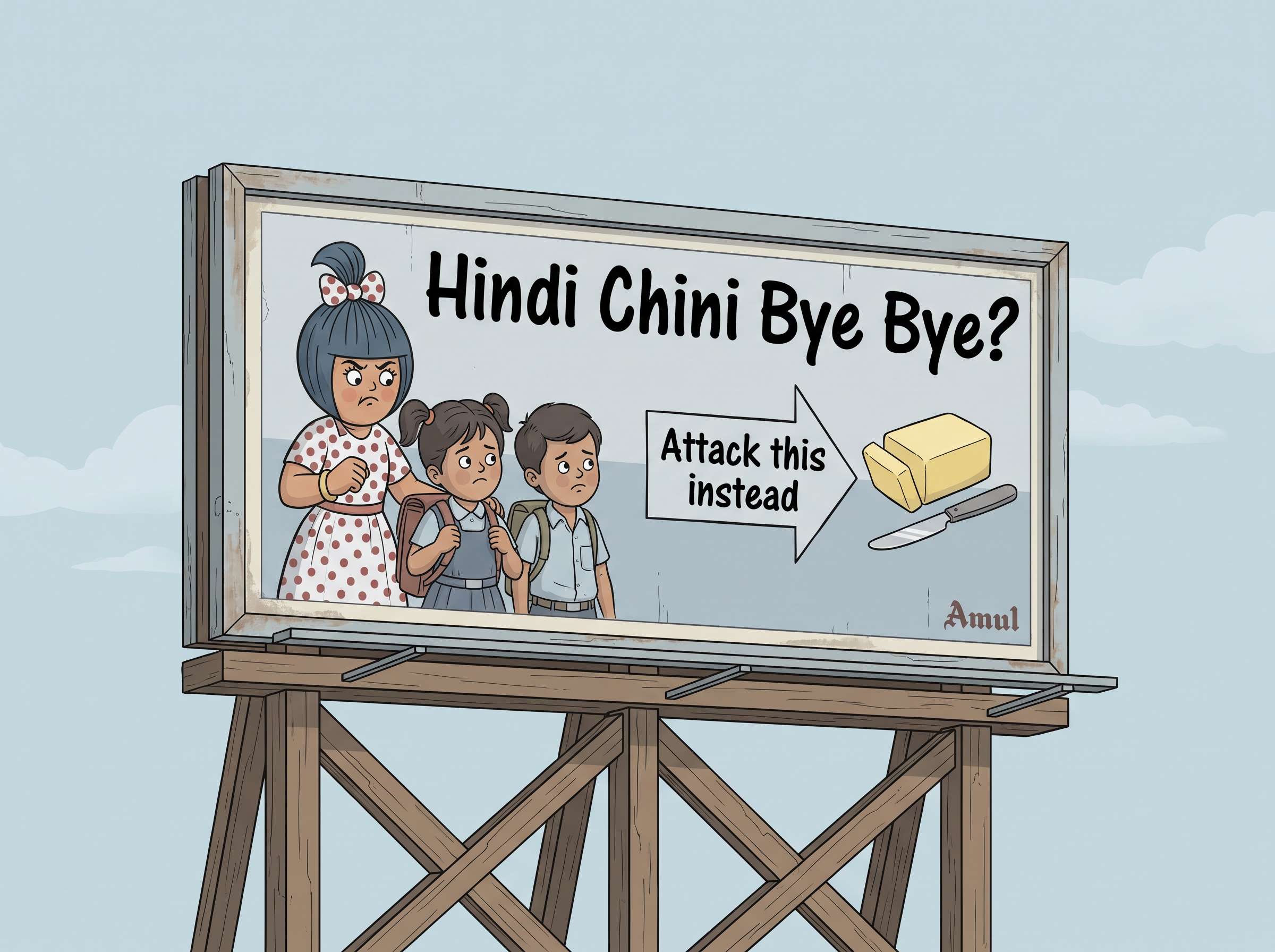
Fig. 4.10 – Advertising hoarding reflecting the public mood, 1962.
Two Long Shadows
The Sino-Indian conflict affected the opposition as well. This, and the growing rift between China and the Soviet Union, created irreconcilable differences within the Communist Party of India (CPI). The pro-USSR faction remained within the CPI and moved towards closer ties with the Congress. The other faction was for some time closer to China and was against any ties with the Congress.
The party split in 1964, and the leaders of the latter faction formed the Communist Party of India (Marxist), the CPI (M). In the wake of the China war, many leaders of what became the CPI (M) were arrested for being pro-China. A war on the border had broken a political party in two.
The war also alerted the Indian leadership to the volatile situation in the Northeast region. Apart from being isolated and extremely underdeveloped, this region also presented India with the challenge of national integration and political unity — the question of holding a very diverse country together as one political community.
The process of its reorganisation began soon after the China war. Nagaland was granted statehood. Manipur and Tripura, though Union Territories, were given the right to elect their own legislative assemblies — a Union Territory being a unit administered by the central government rather than by a state government of its own.
Afterwards
It took more than a decade for India and China to resume normal relations. It was in 1976 that full diplomatic relations were restored between the two countries. Atal Behari Vajpayee was the first top-level leader to visit China, in 1979, when he was External Affairs Minister. Later, Rajiv Gandhi became the first Prime Minister after Nehru to visit China. Since then, the emphasis has been more on trade relations between the two countries. You have already read about these developments in the book Contemporary World Politics.
Watching The War On Screen
The 1962 war entered India’s popular memory almost immediately, and the clearest evidence of that is a film released two years later.
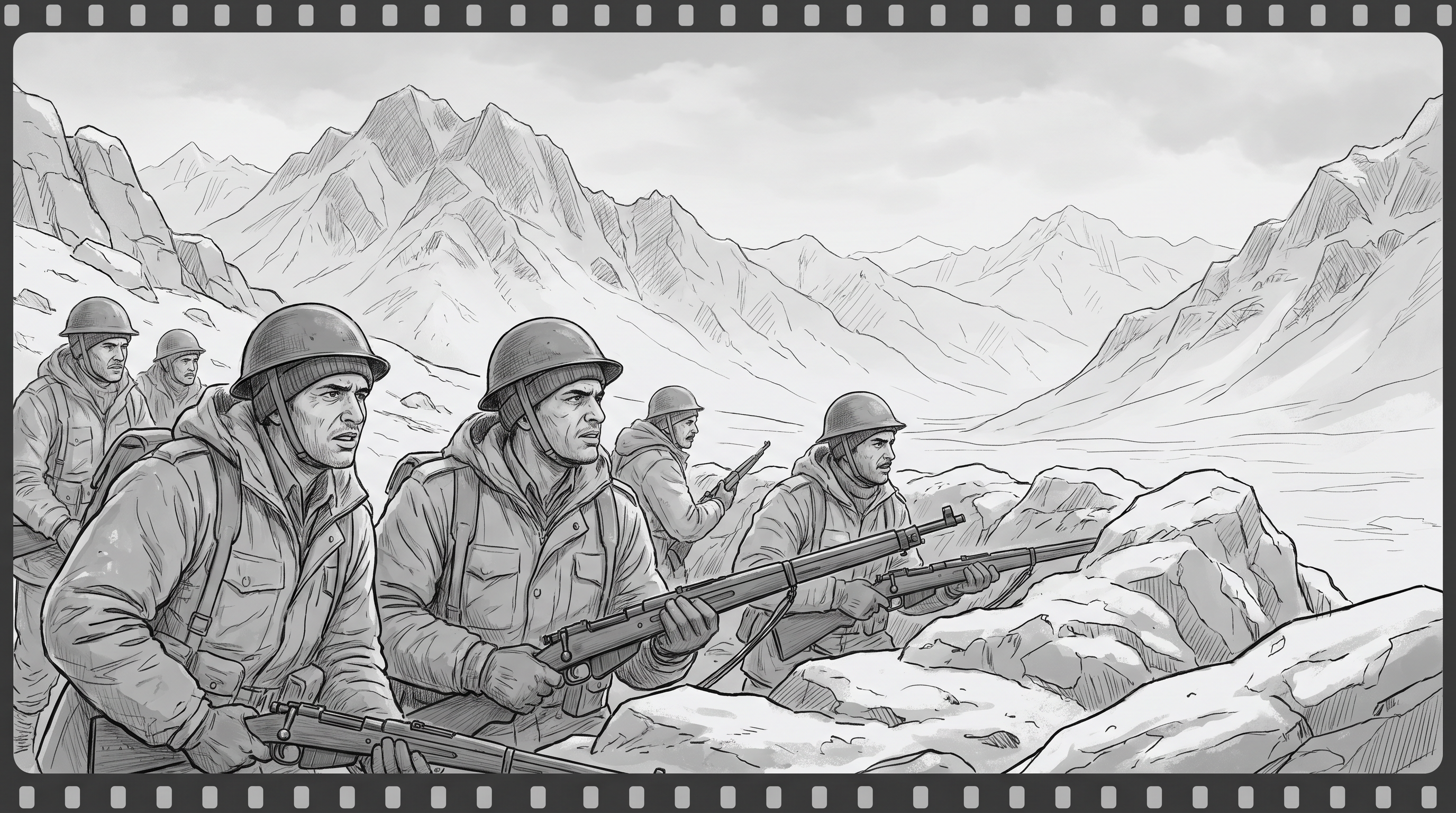
Fig. 4.11 – A still from the 1964 war film Haqeeqat.
Haqeeqat (1964), directed by Chetan Anand, tells the story of a small platoon of the Indian army in the Ladakh region. Surrounded by the enemy, the platoon is helped by the gypsies of the area. Capt. Bahadur Singh and his gypsy companion Kammo help the jawans vacate their posts. Both Bahadur Singh and Kammo die while resisting the Chinese, and the jawans too are overpowered and lay down their lives for the country. The film starred Dharmendra, Priya Rajvansh, Balraj Sahni, Jayant, Sudhir, Sanjay Khan and Vijay Anand.
Set against the backdrop of the China war of 1962, the film portrays the soldier and his travails as its central theme. It pays tribute to the soldiers while depicting their plight, and the political frustration over the betrayal by the Chinese. It uses documentary footage of war scenes, and is considered one of the early war films made in Hindi.
A film is evidence, but of a particular kind. Haqeeqat tells you what a defeated country wanted to say to itself about its soldiers in 1964 — that they were brave, that they were let down, that the betrayal came from outside. It is a record of national feeling. It is not a record of the war.
4.4 Wars And Peace With Pakistan
A Conflict That Began With The Country
With China, the quarrel took fifteen years to arrive. With Pakistan, it was there from the first weeks.
In the case of Pakistan, the conflict started just after Partition, over the dispute on Jammu and Kashmir. You will read more about that dispute in Chapter 7. A proxy war — fighting conducted through irregular forces rather than by declared armies — broke out between the Indian and Pakistani armies in Jammu and Kashmir during 1947 itself. But this did not turn into a full war. The issue was then referred to the UN.
That decision had long consequences. Pakistan soon emerged as a critical factor in India’s relations with the US, and subsequently with China. From then on, India could not deal with either great power without Pakistan standing somewhere in the room.
Cooperation Inside A Quarrel
It would be wrong, though, to imagine that the two governments did nothing but quarrel. The Kashmir conflict did not prevent cooperation between the governments of India and Pakistan, and two examples show how far that cooperation could go.
Both governments worked together to restore the women abducted during Partition to their original families. Two states that could not agree on a border agreed to find and return people.
And a long-term dispute about the sharing of river waters was resolved through mediation by the World Bank. Mediation means bringing in a neutral outsider to help two sides reach an agreement of their own — close in spirit to the settlement of disputes by a third party that Article 51 asks the Indian state to encourage.
The War Of 1965
A more serious armed conflict between the two countries began in 1965. By then, as you will read in the next chapter, Lal Bahadur Shastri had taken over as the Prime Minister.
In April 1965, Pakistan launched armed attacks in the Rann of Kutch area of Gujarat — a flat salt marsh on the western coast, far from Kashmir. This was followed by a bigger offensive in Jammu and Kashmir in August and September. The Pakistani rulers were hoping to get support from the local population there, but it did not happen.
That failure is worth pausing on, because it was a political calculation, not a military one. Pakistan had assumed that Kashmiris would rise in its favour. They did not. A war plan built on an assumption about how people would feel had collapsed in the first weeks.
In order to ease the pressure on the Kashmir front, Shastri ordered Indian troops to launch a counter-offensive on the Punjab border. If an enemy is pressing hard at one point, you can force him to pull back by threatening him somewhere he cannot afford to lose. In a fierce battle, the Indian army reached close to Lahore.
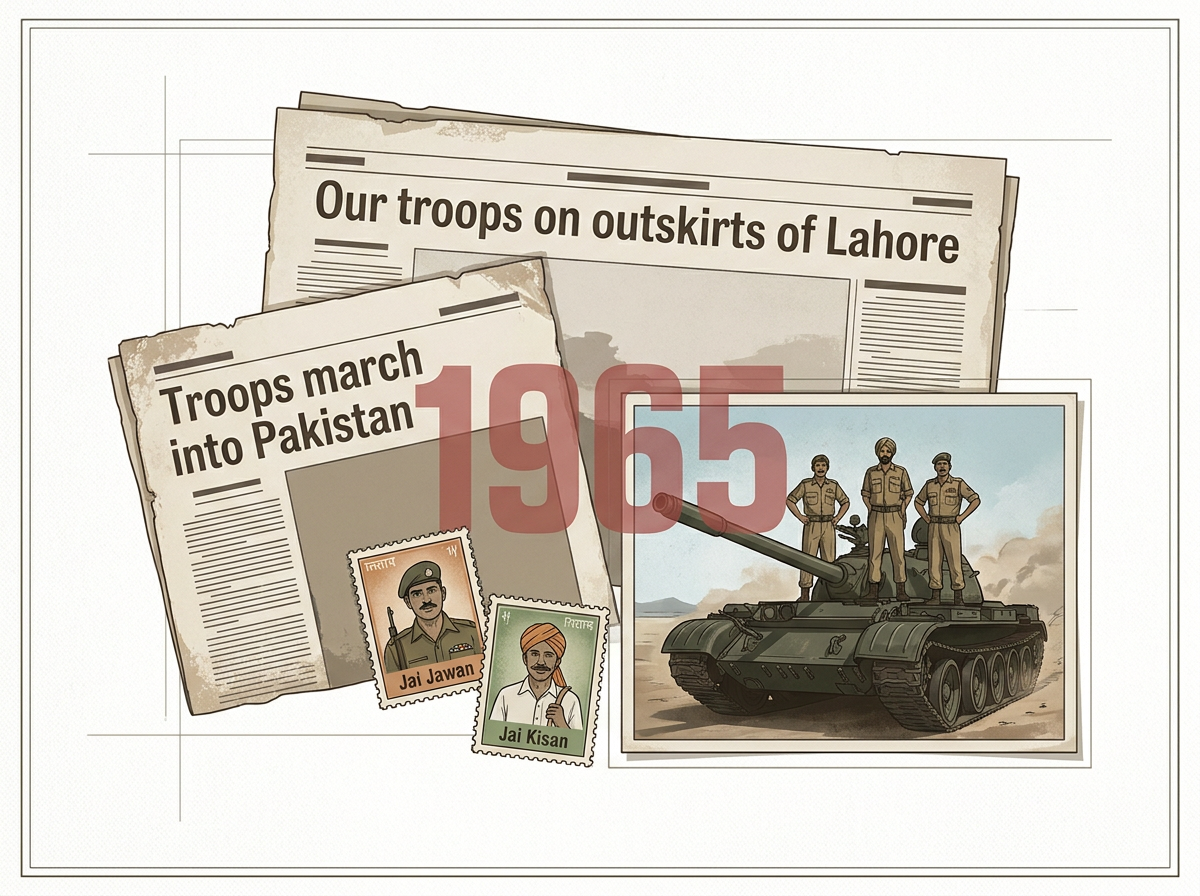
Fig. 4.12 – Newspaper reports and stamps from the 1965 war.
Notice the two stamps in the collage — Jai Jawan, Jai Kisan, hail the soldier and hail the farmer. A country fighting a war was, at the same time, short of food. The slogan was not decoration; it was an argument about where the nation’s effort had to go.
The hostilities came to an end with UN intervention. Later, the Indian Prime Minister Lal Bahadur Shastri and Pakistan’s General Ayub Khan signed the Tashkent Agreement, brokered by the Soviet Union, in January 1966. Notice who brokered it. A superpower had stepped in as peacemaker between two countries that both claimed to be outside the superpowers’ quarrels.
Though India could inflict considerable military loss on Pakistan, the 1965 war added to India’s already difficult economic situation. A war that is won is still a war that is paid for.
4.4.1 Bangladesh War, 1971
An Election Nobody Would Honour
Beginning in 1970, Pakistan faced its biggest internal crisis, and the crisis began with a vote.
The country’s first general election produced a split verdict. Zulfikar Ali Bhutto’s party emerged the winner in West Pakistan, while the Awami League, led by Sheikh Mujib-ur Rahman, swept through East Pakistan. Pakistan at this time was one country in two pieces, separated by Indian territory: West Pakistan, where the rulers sat, and East Pakistan, whose people were mostly Bengali-speaking.
The Bengali population of East Pakistan had voted to protest against years of being treated as second class citizens by the rulers based in West Pakistan. Their vote was not a mere preference between parties. It was a verdict on how they had been governed.
The Pakistani rulers were not willing to accept the democratic verdict. Nor were they ready to accept the Awami League’s demand for a federation — a system in which power is divided between a central government and units that have real authority of their own, so that the eastern wing could run its own affairs.
Instead, in early 1971, the Pakistani army arrested Sheikh Mujib and unleashed a reign of terror on the people of East Pakistan. That is the plain description, and it should not be softened. An army was used against the citizens whose votes its government would not accept.
Eighty Lakh People Cross A Border
In response to this, the people started a struggle to liberate ‘Bangladesh’ from Pakistan. Throughout 1971, India had to bear the burden of about 80 lakh refugees who fled East Pakistan and took shelter in the neighbouring areas in India — a number larger than the population of many countries, arriving in some of India’s poorest districts.
India extended moral and material support to the freedom struggle in Bangladesh. Pakistan accused India of a conspiracy to break it up.
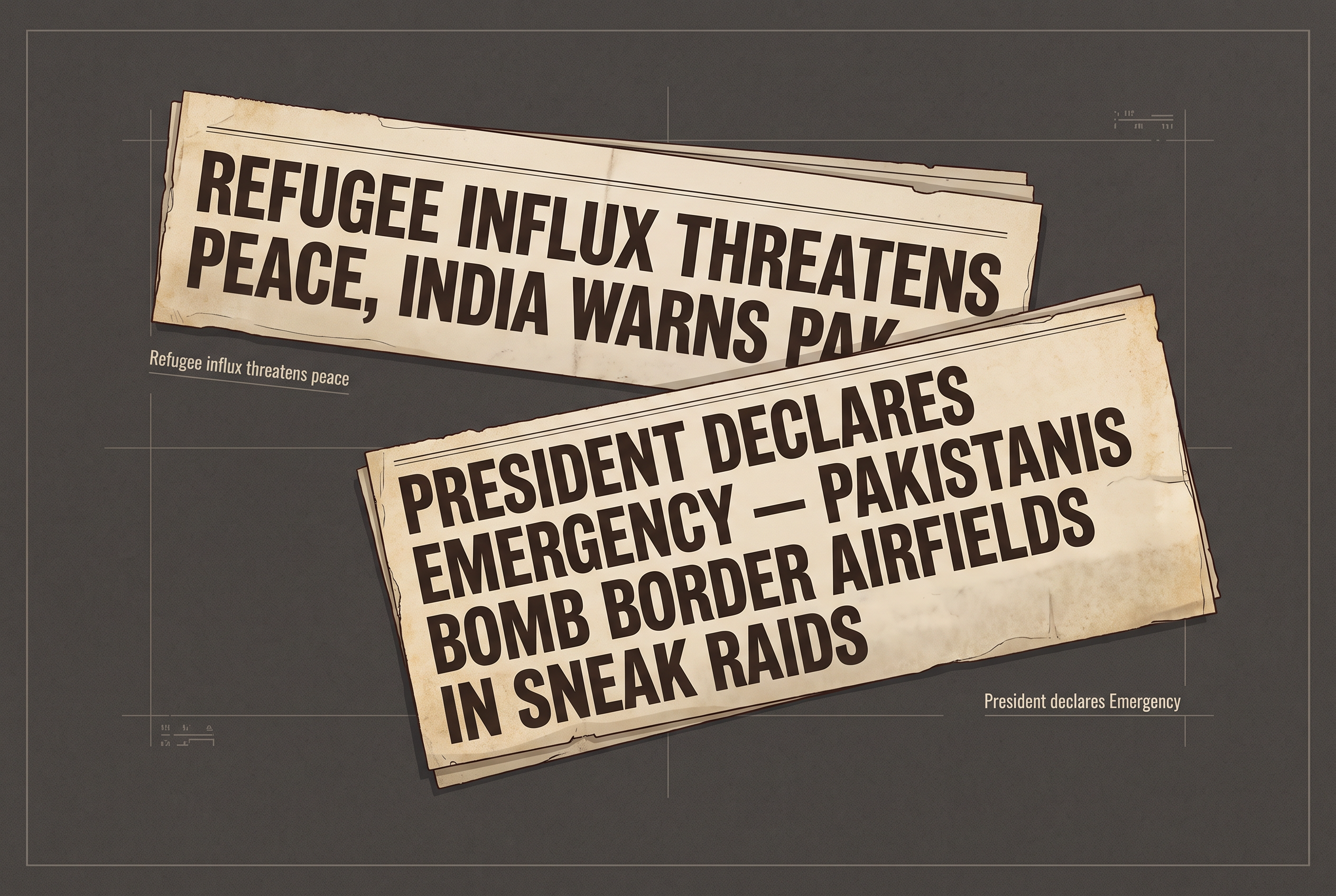
Fig. 4.13 – The refugee crisis and outbreak of hostilities, 1971.
The World Takes Sides
India did not face this alone, and neither did Pakistan. Support for Pakistan came from the US and China — two countries that had been enemies for two decades and were now, quietly, becoming useful to each other.
The US-China rapprochement — the re-establishment of friendly relations between states that had been hostile — began in the late 1960s and resulted in a realignment of forces in Asia. Henry Kissinger, the adviser to the US President Richard Nixon, made a secret visit to China via Pakistan in July 1971. Pakistan was the go-between, and it earned the gratitude of both.
In order to counter this US-Pakistan-China axis, India signed a 20-year Treaty of Peace and Friendship with the Soviet Union in August 1971. The treaty assured India of Soviet support if the country faced any attack.
Stop here, because a fair-minded student should be uneasy. This sounds very much like joining the Soviet bloc. Can India still be called non-aligned after signing such a treaty?
December 1971
After months of diplomatic tension and military build-up, a full-scale war between India and Pakistan broke out in December 1971. Pakistani aircraft attacked Punjab and Rajasthan, while its army moved on the Jammu and Kashmir front.
India retaliated with an attack involving the air force, the navy and the army, on both the Western and the Eastern front. Welcomed and supported by the local population, the Indian army made rapid progress in East Pakistan — a decisive advantage, because an army that the people help does not have to fight for every mile.
Within ten days the Indian army had surrounded Dhaka from three sides, and the Pakistani army of about 90,000 had to surrender. With Bangladesh as a free country, India declared a unilateral ceasefire.
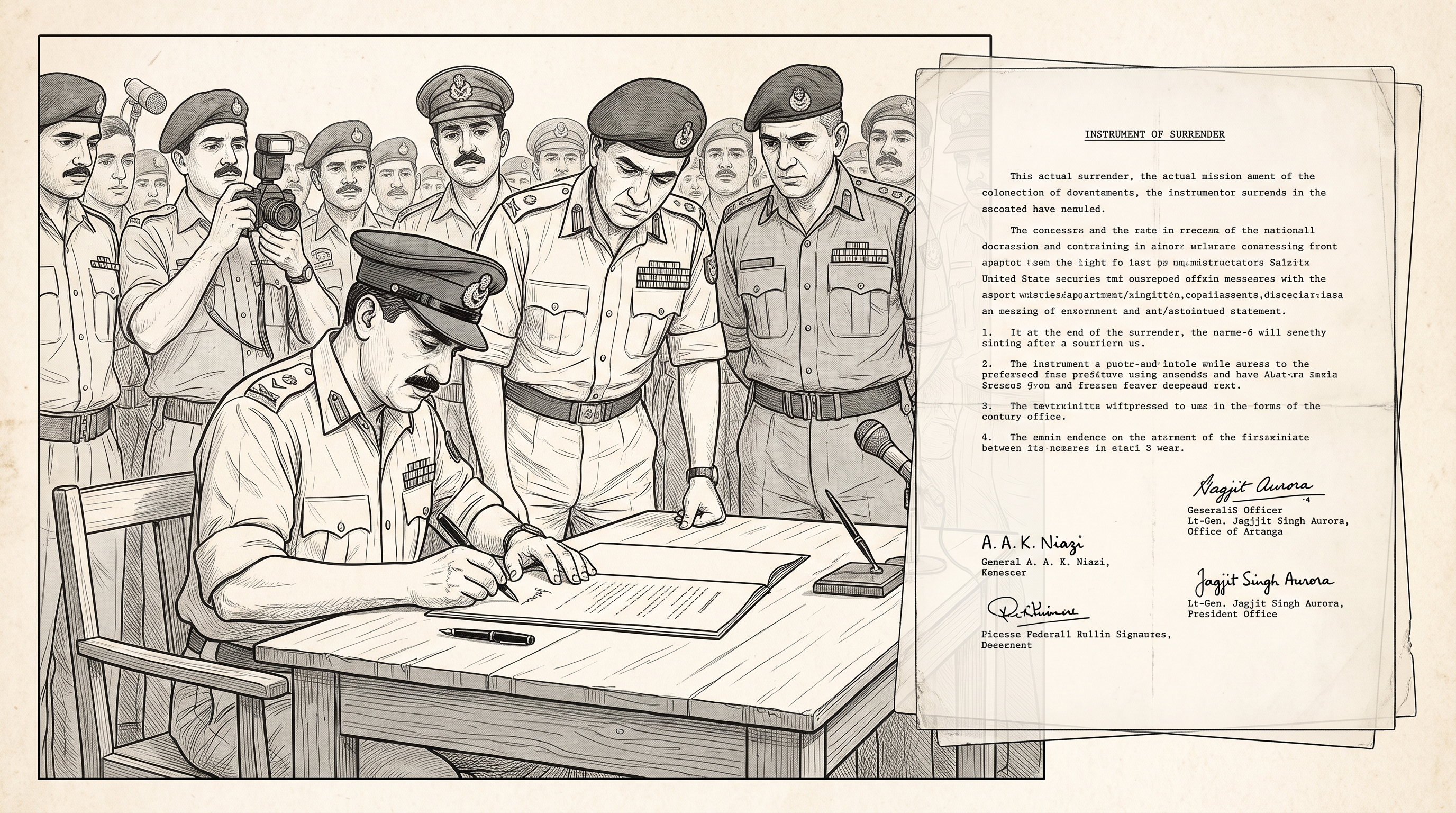
Fig. 4.14 – The signing of the instrument of surrender at Dhaka, 1971.
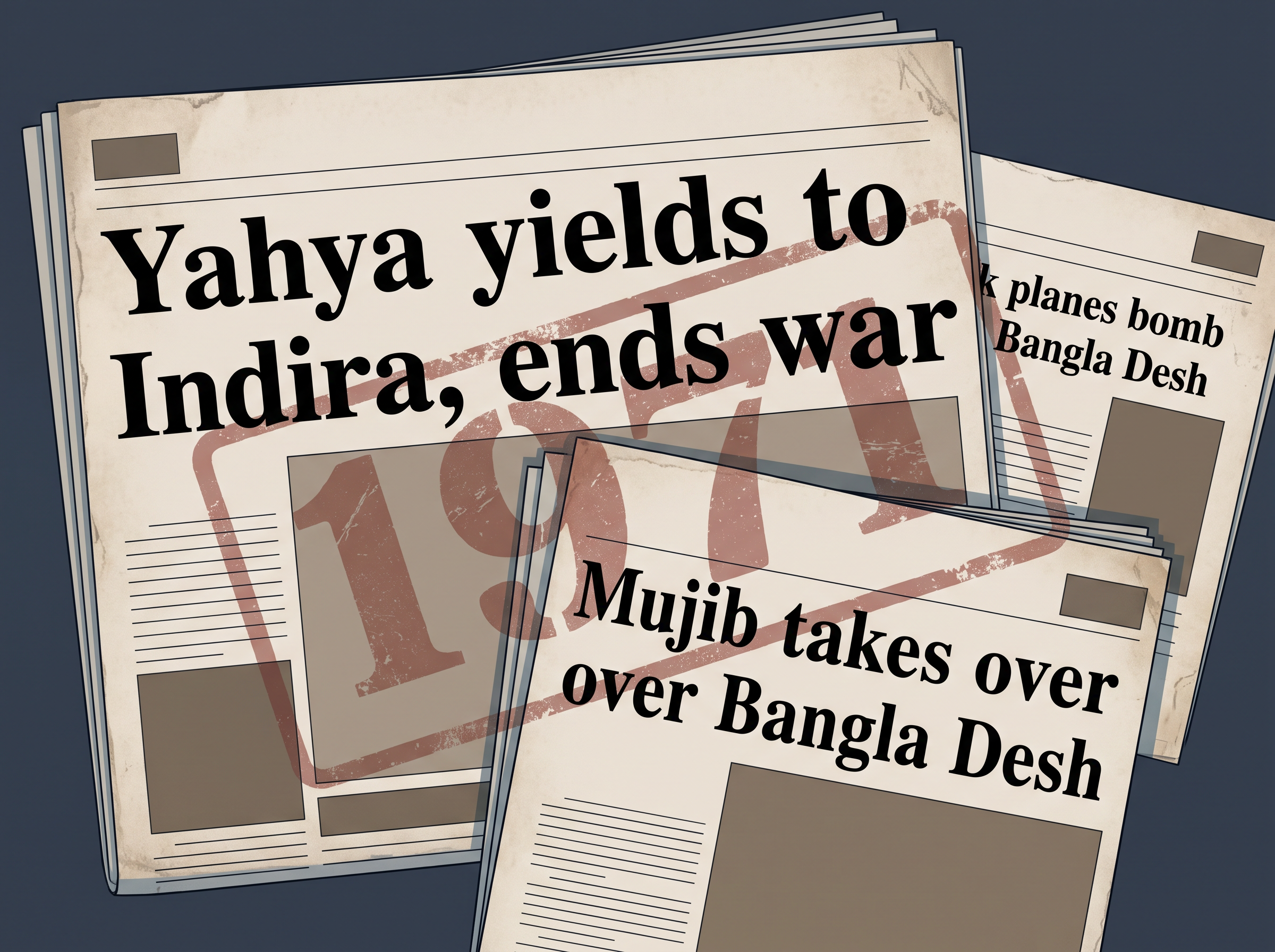
Fig. 4.15 – The war and the birth of Bangladesh in newspapers, 1971.
The surrender photograph is one of the most reproduced images in modern Indian history, and it repays a careful look. A document is being signed at a small table, in a public place, in front of cameras. That is the point of the picture: the war is being ended not by an announcement but by a signature, and the signature is being witnessed. What the photograph cannot show you is what it took to get to that table — the ten days of fighting, the eighty lakh refugees, or the year of political and military preparation that preceded them.
Later, the signing of the Shimla Agreement between Indira Gandhi and Zulfikar Ali Bhutto on 3 July 1972 formalised the return of peace.
The Politics Of Victory
A decisive victory in the war led to national jubilation. Most people in India saw this as a moment of glory and a clear sign of India’s growing military prowess.
As you will read in the next chapter, Indira Gandhi was the Prime Minister at this time. She had already won the Lok Sabha elections in 1971. Her personal popularity soared further after the 1971 war. After the war, assembly elections in most States took place, bringing large majorities for the Congress party in many states.
Set this beside 1962 and the pattern becomes visible. A defeat abroad cost a Prime Minister his authority and his Defence Minister; a victory abroad gave a Prime Minister a run of election victories at home. Foreign policy and domestic politics are not two subjects. They are one.
The whole quarter-century of India’s dealings with Pakistan, from the first fighting to the Shimla Agreement, is set out in Fig. 4.16.
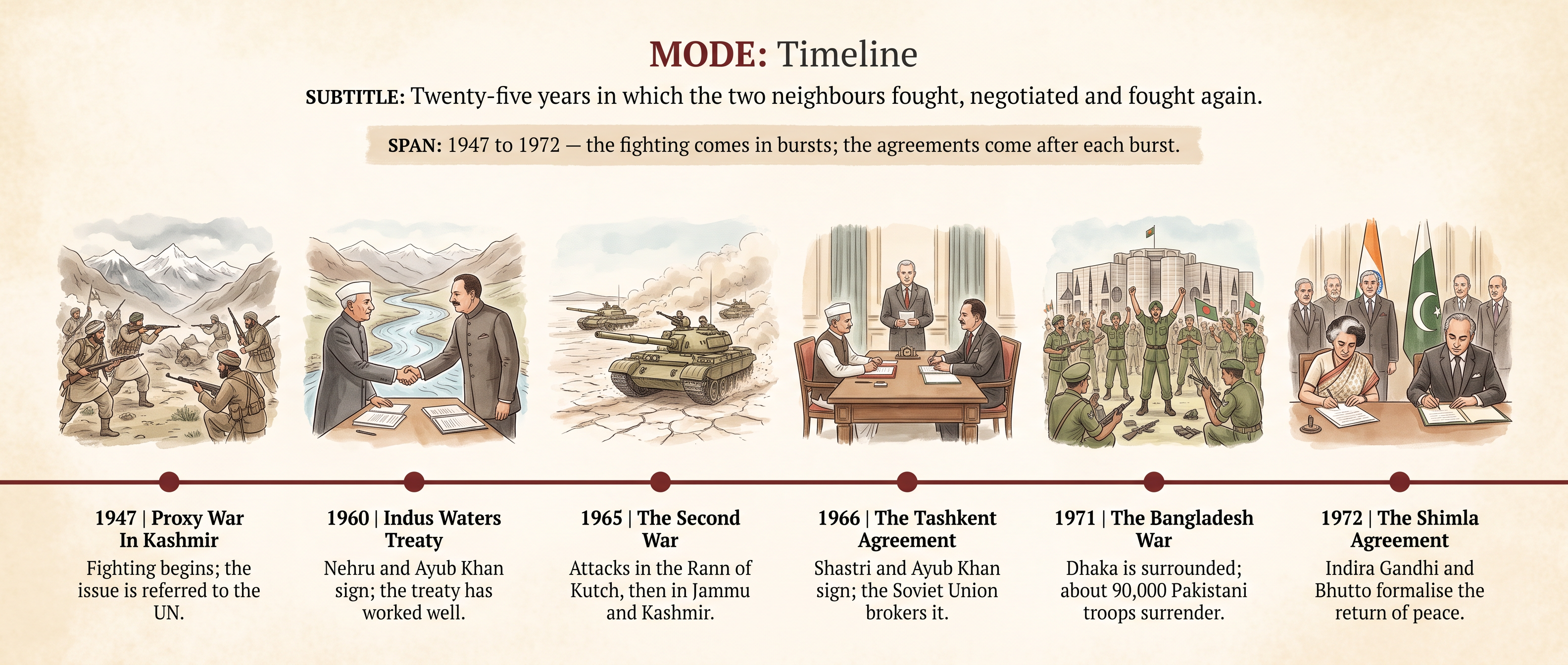
Fig. 4.16 – India And Pakistan, 1947 To 1972.
A Later Confrontation
The story did not end at Shimla. In the early part of 1999, several points on the Indian side of the Line of Control — the line that divides the parts of Jammu and Kashmir held by India and by Pakistan — in the Mashkoh, Dras, Kaksar and Batalik areas were occupied by forces claiming to be Mujahideens. Suspecting the involvement of the Pakistan Army, Indian forces started reacting to this occupation. This led to a confrontation between the two countries, known as the Kargil conflict.
The conflict went on during May and June 1999. By 26 July 1999, India had recovered control of many of the lost points. It drew worldwide attention for one reason above all: only one year before, both India and Pakistan had attained nuclear capability. Two countries with nuclear weapons were shooting at each other. Yet the conflict remained confined only to the Kargil region.
In Pakistan, the episode became the source of a major controversy, as it was alleged later that the Prime Minister of Pakistan had been kept in the dark by the Army Chief. Soon after the conflict, the government of Pakistan was taken over by the Pakistan Army, led by the Army Chief, General Parvez Musharraf.
What The Wars Cost
Three wars in ten years were not paid for out of thin air. India, with its limited resources, had initiated development planning. However, conflicts with neighbours derailed the five-year plans.
Scarce resources were diverted to the defence sector, especially after 1962, as India had to embark on a military modernisation drive. The Department of Defence Production was established in November 1962, and the Department of Defence Supplies in November 1965 — new machinery of state, built because the old assumption that India would not have to fight had failed.
The cost shows up in the plans themselves. The Third Plan (1961-66) was affected. It was followed by three Annual Plans, and the Fourth Plan could be initiated only in 1969. A country that had promised itself planned development had, in effect, lost three years of it. India’s defence expenditure increased enormously after the wars.
This is the deepest link between external relations and internal politics in the whole chapter. Money spent on the border is money not spent on a school, a dam or a hospital. Every war India fought was also a decision, taken without ever being debated in those terms, about what would not be built.
4.5 India’s Nuclear Policy
Science For A Modern India
Another crucial development of this period was the first nuclear explosion undertaken by India, in May 1974.
To understand how a country that preached disarmament came to set off a nuclear device, you have to go back nearly thirty years. Nehru had always put his faith in science and technology for rapidly building a modern India. Dams, steel plants and laboratories were, in his view, the equipment of freedom: a country that could not make things for itself would remain dependent, whatever its Constitution said.
A significant component of his industrialisation plans was the nuclear programme, initiated in the late 1940s under the guidance of Homi J. Bhabha. India wanted to generate atomic energy for peaceful purposes — electricity, not weapons.
And Nehru was against nuclear weapons. He did not merely decline to build them; he pleaded with the superpowers for comprehensive nuclear disarmament, the giving up of weapons by the states that hold them. However, the nuclear arsenal kept rising. Pleading did not work.
The Treaty That India Would Not Sign
In October 1964, Communist China conducted nuclear tests. A country on India’s border, which had invaded it two years earlier, now had the bomb.
The reaction of the existing nuclear powers was not to disarm. It was to close the door. The five nuclear weapon powers — the US, the USSR, the UK, France and China (Taiwan then represented China) — who were also the five Permanent Members of the UN Security Council, tried to impose the Nuclear Non-proliferation Treaty (NPT) of 1968 on the rest of the world. Non-proliferation means preventing the spread of nuclear weapons to states that do not already have them.
Read that sentence again and the objection writes itself. The same five states that possessed the weapons were also the five that held permanent seats — and vetoes — on the UN body responsible for international peace and security. The treaty asked everyone else to promise never to acquire what those five had already acquired, and did not require the five to give theirs up.
India always considered the NPT discriminatory and had refused to sign it.
A Peaceful Explosion
When India conducted its first nuclear test, in May 1974, it was termed a peaceful explosion. India argued that it remained committed to the policy of using nuclear power only for peaceful purposes.
A student is entitled to be confused here, and many are. Is a nuclear explosion not simply an atom bomb? Why not say so?
The honest answer is that the phrase was doing political work. The physics of a test tells you that a country can make a device; the label tells the world what the country says it means to do with that knowledge. India was insisting that it had crossed a technical line without crossing a political one — that it had the capability, but not the intention. Whether the rest of the world was obliged to believe that is exactly the question the test raised.
The Test And The Politics Around It
The period when the nuclear test was conducted was a difficult period in domestic politics, and that is not a coincidence you should pass over quickly.
Following the Arab-Israel War of 1973, the entire world was affected by the Oil Shock, caused by the massive hike in oil prices by the Arab nations. India imports much of its oil, so a rise in its price raises the cost of transport, of fertiliser, of nearly everything. It led to economic turmoil in India, resulting in high inflation — a general and sustained rise in prices, which eats the value of ordinary people’s wages.
As you will read in Chapter Six, many agitations were going on in the country around this time, including a nationwide railway strike. So the government that announced a nuclear test in May 1974 was a government facing rising prices and rising protest.
Be careful with what that observation can carry. It is a fact worth noticing, and the chapter notices it. It is not, by itself, proof that the test was conducted for domestic reasons. The timing tells you the two things happened together. It cannot tell you that one caused the other.
Nuclear Policy After 1974
India’s objection to the non-proliferation treaties did not soften with time. India has opposed the international treaties aimed at non-proliferation, on the ground that they were selectively applicable to the non-nuclear powers and legitimised the monopoly of the five nuclear weapons powers. India therefore opposed the indefinite extension of the NPT in 1995, and also refused to sign the Comprehensive Test Ban Treaty (CTBT), which would have barred it from ever testing again.
In May 1998, India conducted a series of nuclear tests, demonstrating its capacity to use nuclear energy for military purposes. The careful language of 1974 was set aside. Pakistan soon followed, thereby increasing the vulnerability of the region to a nuclear exchange — two hostile neighbours, sharing a disputed border, now both armed.
The international community was extremely critical of the nuclear tests in the subcontinent, and sanctions were imposed on both India and Pakistan, which were subsequently waived. Sanctions are penalties — bans on trade, aid or technology — imposed by states to force a change of policy.
India’s nuclear doctrine is one of credible minimum nuclear deterrence. Deterrence is the strategy of preventing an attack by convincing an opponent that the response would cost him more than he could gain. India’s doctrine professes ‘no first use’ — a commitment never to use nuclear weapons unless attacked with them first — and reiterates India’s commitment to global, verifiable and non-discriminatory nuclear disarmament, leading to a nuclear weapons free world.
Hold those last two commitments side by side, because they are the whole of India’s position in one breath: keep enough weapons to deter, while continuing to argue that nobody should have any.
Foreign Policy And Party Politics
We can now answer a question that has been running underneath this entire chapter. India’s parties disagreed about non-alignment, about China, about Tibet, about the Soviet treaty. Did those disagreements ever become the stuff of elections?
Largely, they did not. Although there are minor differences among political parties about how to conduct external relations, Indian politics is generally marked by a broad agreement among the parties on national integration, on the protection of international boundaries, and on questions of national interest.
Therefore, in the course of the decade from 1962 to 1971, when India faced three wars, and even later, when different parties came to power from time to time, foreign policy has played only a limited role in party politics. Governments have been punished for losing a war; they have rarely been chosen for a foreign policy.
What Changed After 1977, And After 1990
That consensus was tested when power changed hands. As you will read in Chapter Six and in Chapter Eight, many non-Congress governments came to power in the period starting 1977 — and this was also the time when world politics was changing dramatically. What did it mean for India’s external relations?
The Janata Party government that came to power in 1977 announced that it would follow genuine non-alignment. This implied that the pro-Soviet tilt in foreign policy would be corrected. Since then, all governments, Congress or non-Congress, have taken initiatives for restoring better relations with China and for entering into close ties with the US.
In Indian politics and in the popular mind, India’s foreign policy is always very closely linked to two questions: India’s stand vis-à-vis Pakistan, and Indo-US relations. In the post-1990 period, the ruling parties have often been criticised for their pro-US foreign policy.
Foreign policy is always dictated by ideas of national interest — what a country judges to be good for its own security, prosperity and standing. But national interest is not fixed, because the world is not fixed. In the period after 1990, Russia, though it continues to be an important friend of India, lost its global pre-eminence. India’s foreign policy therefore shifted to a more pro-US strategy. Besides, the contemporary international situation is more influenced by economic interests than by military interests, and this too has made an impact on India’s foreign policy choices.
Indo-Pakistan relations have also witnessed many new developments in this period. While Kashmir continues to be the main issue between the two countries, there have been many efforts to restore normal relations — encouraging cultural exchanges, the movement of citizens, and economic cooperation between the two countries. A train and a bus service operate between them, which has been a major achievement of recent times. None of it could prevent the near-war situation that emerged in 1999. Even after that setback to the peace process, efforts at negotiating a durable peace have continued.
Notice the shape of the whole story. Non-alignment was a response to a world divided in two. When that world ended, the policy had to be argued about again — which is what a living foreign policy is: not a doctrine to be recited, but a judgement to be remade whenever the world changes.
4.6 Summary
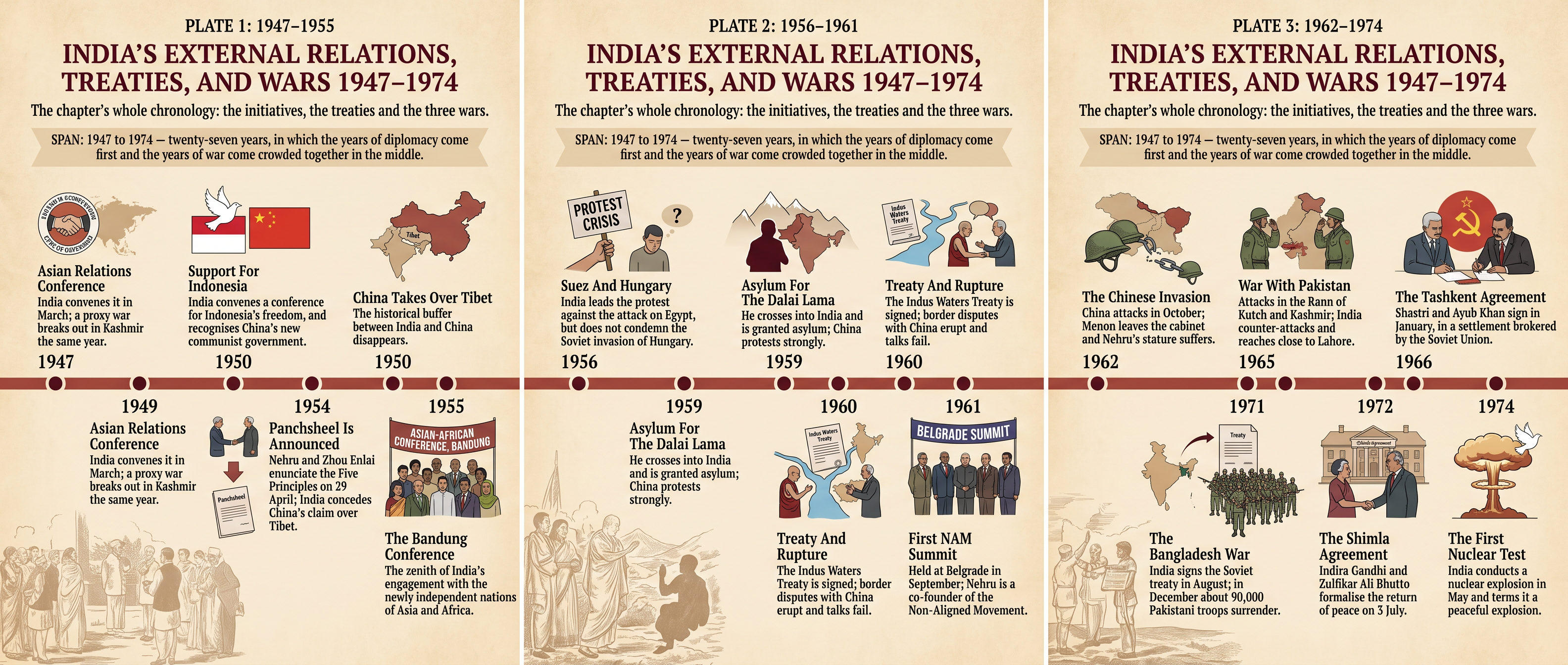
Fig. 4.17 – India And The World, 1947 To 1974.
4.7 NCERT Questions
Write ‘true’ or ‘false’ against each of these statements.
- Non-alignment allowed India to gain assistance both from USA and USSR.
- India’s relationship with her neighbours has been strained from the beginning.
- The cold war has affected the relationship between India and Pakistan.
- The treaty of Peace and Friendship in 1971 was the result of India’s closeness to USA.
Match the following.
Column A Column B a. The goal of India’s foreign policy in the period 1950-1964 i. Tibetan spiritual leader who crossed over to India b. Panchsheel ii. Preservation of territorial integrity, sovereignty and economic development c. Bandung Conference iii. Five principles of peaceful coexistence d. Dalai Lama iv. Led to the establishment of NAM Why did Nehru regard conduct of foreign relations as an essential indicator of independence? State any two reasons with examples to support your reading.
‘The conduct of foreign affairs is an outcome of a two-way interaction between domestic compulsions and prevailing international climate’. Take one example from India’s external relations in the 1960s to substantiate your answer.
Identify any two aspects of India’s foreign policy that you would like to retain and two that you would like to change, if you were to become a decision maker. Give reasons to support your position.
Write short notes on the following.
- India’s Nuclear policy
- Consensus in foreign policy matters
India’s foreign policy was built around the principles of peace and cooperation. But India fought three wars in a space of ten years between 1962 and 1971. Would you say that this was a failure of the foreign policy? Or would you say that this was a result of international situation? Give reasons to support your answer.
Does India’s foreign policy reflect her desire to be an important regional power? Argue your case with the Bangladesh war of 1971 as an example.
How does political leadership of a nation affect its foreign policy? Explain this with the help of examples from India’s foreign policy.
Read this passage and answer the questions below: ‘Broadly, non-alignment means not tying yourself off with military blocs….It means trying to view things, as far as possible, not from the military point of view, though that has to come in sometimes, but independently, and trying to maintain friendly relations with all countries.’ — Jawaharlal Nehru
- Why does Nehru want to keep off military blocs?
- Do you think that the Indo-Soviet friendship treaty violated the principle of non-alignment? Give reasons for your answer.
- If there were no military blocs, do you think non-alignment would have been unnecessary?
4.8 Check Your Concepts
- Look again at Source 4.1, the extract from Article 51 of the Constitution. Name any two things the Article asks the State to do. Then explain why the Article says the State shall ‘endeavour’ rather than saying that the State shall do them.
- Study Map 4.1. Name the two areas China claimed, and say in which region of India each of them lies. Then state one thing about the dispute that the map cannot tell you.
- The chapter says that the Kashmir conflict did not prevent cooperation between the two governments. Using the Indus Waters Treaty of 1960, explain what made agreement possible on river waters when it was not possible on Kashmir.
- The chapter says that conflicts with neighbours derailed the five-year plans. Using the Third Plan, the Fourth Plan and the two new defence departments set up in 1962 and 1965, explain what the wars cost India’s development.
- Reconstruct, step by step, the chain of events that runs from the announcement of Panchsheel in 1954 to the Chinese invasion of October 1962. Your answer should show why a friendship that was formally agreed could still end in war.
- Look at Fig. 4.4. What are the words written on the rope, and what is written on the ground beneath it? What claim is the cartoonist making about the way India was responding to China? Explain why a cartoon cannot, by itself, prove that claim.
- In Source 4.4, C. Rajagopalachari argues that a country with no material, men or money had become the biggest moral power in the world. State his claim in your own words. Then say what evidence you would need in order to test whether it was true.
- Leaders like Dr Ambedkar, and parties such as the Bharatiya Jan Sangh and the Swatantra Party, wanted India to be closer to the US-led bloc. Set out their argument and the argument for non-alignment as fairly as you can. Then identify what the disagreement between them really turns on.