Chapter 2: Era Of One-party Dominance
In 1950, a small army of clerks began writing out the longest list in the world. India had just given itself a Constitution, and the Constitution had promised that every adult citizen would vote. Before anyone could vote, somebody had to write down who they were. The Election Commission of India, set up in January 1950, had to prepare the electoral rolls — the list of all citizens eligible to vote — for a country of 17 crore voters.
Then the first draft of the rolls was published, and the officials found something strange. The names of nearly 40 lakh women were missing. The women themselves were not missing. They were on the list, but not by name. They had been entered as ‘wife of …’ or ‘daughter of …’, identified only by the man they belonged to.
The Election Commission had a choice. It could accept the entries, save months of work, and hold the election on time. Or it could refuse.
It refused. It would not accept those entries, and it ordered that the rolls be revised where possible and the entries deleted where necessary. Nearly 40 lakh women would either be named, or they would not vote at all.
That decision cost time. The election was postponed twice. But it settled something about what kind of democracy India intended to be.
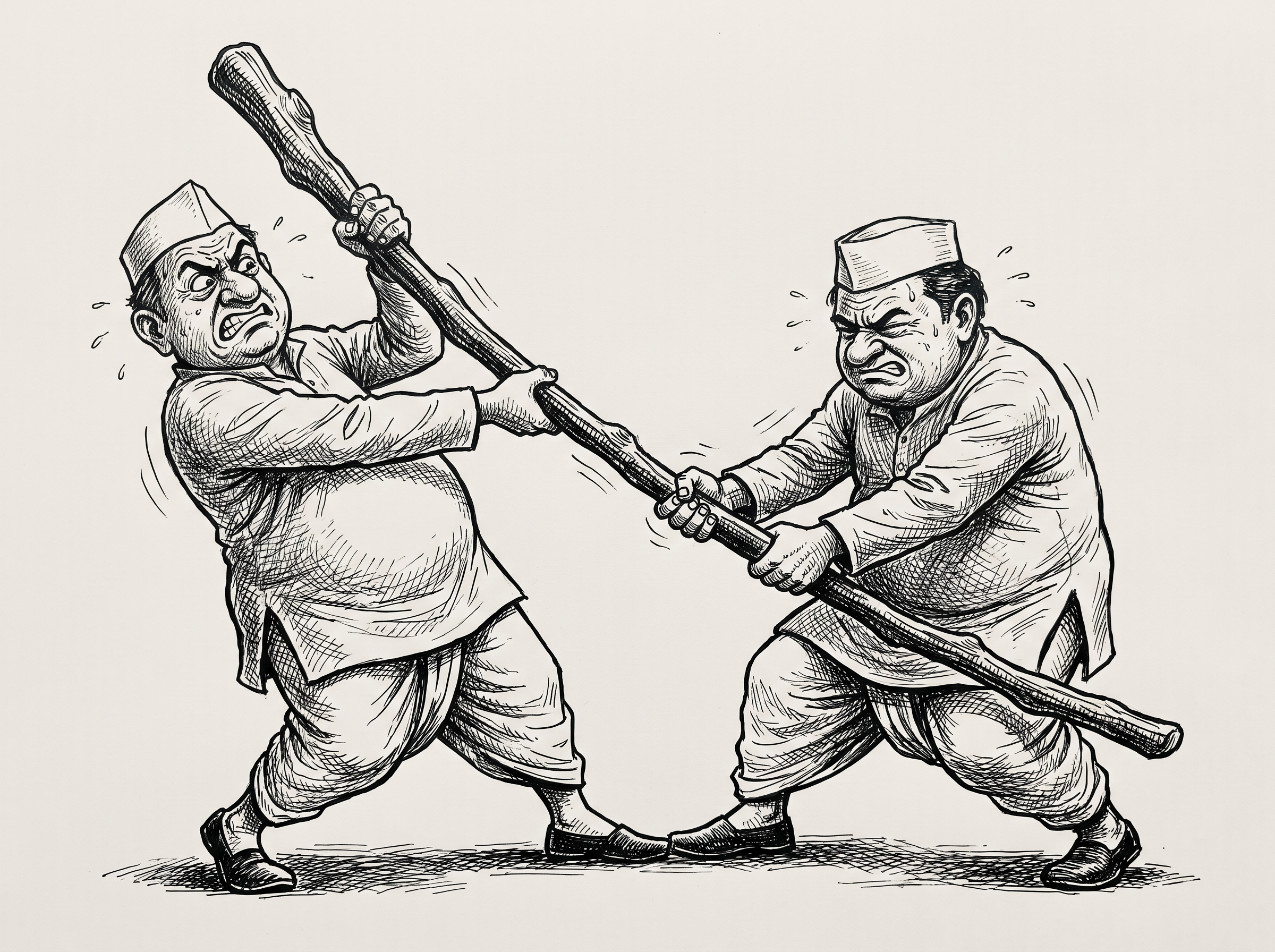
Fig. 2.0 – The Congress party pulling against itself. Inspiration: Shankar, Don’t Spare Me, Shankar.
2.1 Challenge Of Building Democracy
You already have an idea of the difficult circumstances in which independent India was born. You have read about the serious challenge of nation-building that faced the country right at the start. That challenge did not come alone. Alongside it stood a second one: the challenge of building democratic politics.
Faced with such serious problems, leaders in many other countries of the world decided that their country simply could not afford democracy. They argued that national unity was the first priority, and that democracy would only introduce differences and conflicts into a fragile new nation. Many countries that won freedom from colonialism therefore ended up under non-democratic rule.
That rule took several forms. Some countries kept a nominal democracy — elections and a parliament on paper — while effective control stayed with one leader. Others were ruled by a single party. Others again came under direct army rule.
Non-democratic regimes almost always began with a promise: democracy would be restored very soon. But once such a regime had established itself, it was very difficult to dislodge.
The Harder Road
The conditions in India were not very different from those countries. But the leaders of the newly independent India decided to take the more difficult path.
Any other choice would have been surprising. Our freedom struggle was deeply committed to the idea of democracy. Our leaders were conscious of the critical role of politics in any democracy. They did not see politics as a problem; they saw it as a way of solving problems.
Why does a society need politics at all? Every society has to decide how it will govern and regulate itself. There are always different policy alternatives to choose from. There are different groups with different and conflicting aspirations. How do we resolve these differences?
Democratic politics is an answer to that question. It is the way a society settles its disagreements by discussion, competition and election, rather than by force. Competition and power are the two most visible things about politics. But the purpose of political activity is, and should be, deciding and pursuing the public interest. This is the route our leaders decided to take.
Not everyone agreed with that route, and one of its most powerful defenders also warned against its greatest danger. In his speech to the Constituent Assembly on 25 November 1949, Dr B. R. Ambedkar told the members that the habits of a people can undo the rules they adopt.
Ambedkar’s argument runs in two steps. First, he claims a fact: Indians give their leaders a devotion that voters in other countries do not. Second, he draws a consequence: a people who worship a leader will not check that leader, and a leader who is never checked ends in dictatorship. Democracy, on this view, needs citizens who can criticise the person they voted for.
Notice what the extract cannot tell you. It records what one member argued on one day, at the end of three years of drafting. It is a warning, not a description of what actually happened. Whether Indian voters really did worship their leaders, and whether that damaged Indian democracy, is a question the speech raises and cannot settle. The rest of this chapter gives you some of the evidence to judge it with.
Putting The Machine In Place
Last year you studied how our Constitution was drafted. You will remember that the Constitution was adopted on 26 November 1949, signed on 24 January 1950, and came into effect on 26 January 1950.
At that time the country was still being ruled by an interim government — a temporary government installed at Independence, which no Indian voter had elected. It was now necessary to install the first democratically elected government of the country. The Constitution had laid down the rules; now the machine had to be put in place.
Initially it was thought that this was only a matter of a few months. The Election Commission of India — the independent body responsible for conducting elections and keeping them free and fair — was set up in January 1950. Sukumar Sen became the first Chief Election Commissioner. The country’s first general elections were expected sometime in 1950 itself.
They were not held in 1950. The sequence is set out in Fig. 2.1.
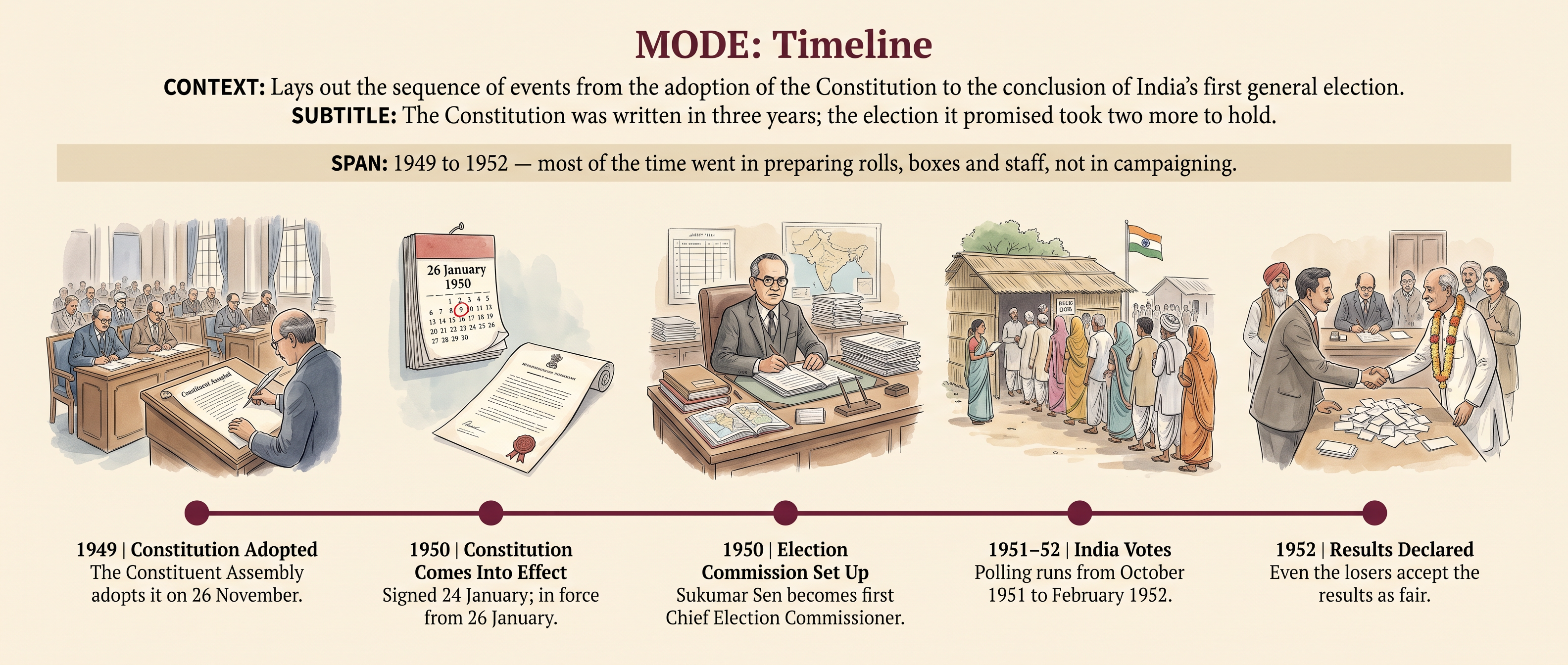
Fig. 2.1 – Building The First Election.
What An Election Actually Requires
The Election Commission discovered that it was not going to be easy to hold a free and fair election in a country of India’s size.
Holding an election required delimitation, that is, drawing the boundaries of the electoral constituencies, so that every voter knows which seat they are voting for. It also required preparing the electoral rolls, the list of all the citizens eligible to vote. Both these tasks took a lot of time.
When the first draft of the rolls was published, it was discovered that the names of nearly 40 lakh women were not recorded in the list. They were simply listed as ‘wife of …’ or ‘daughter of …’. The Election Commission refused to accept these entries and ordered a revision if possible and deletion if necessary.
Preparing for the first general election was a mammoth exercise. No election on this scale had ever been conducted in the world before. At that time there were 17 crore eligible voters, who had to elect about 3,200 MLAs — Members of the Legislative Assembly, the elected law-makers of a state — and 489 Members of Lok Sabha, the directly elected House of Parliament.
Only 15 per cent of these eligible voters were literate. The Election Commission therefore had to think of some special method of voting, and it trained over 3 lakh officers and polling staff to conduct the elections.
Choosing the candidates was the parties’ work, not the Commission’s, and the Congress did it through a committee of its senior leaders. A cartoonist watched that committee at work.
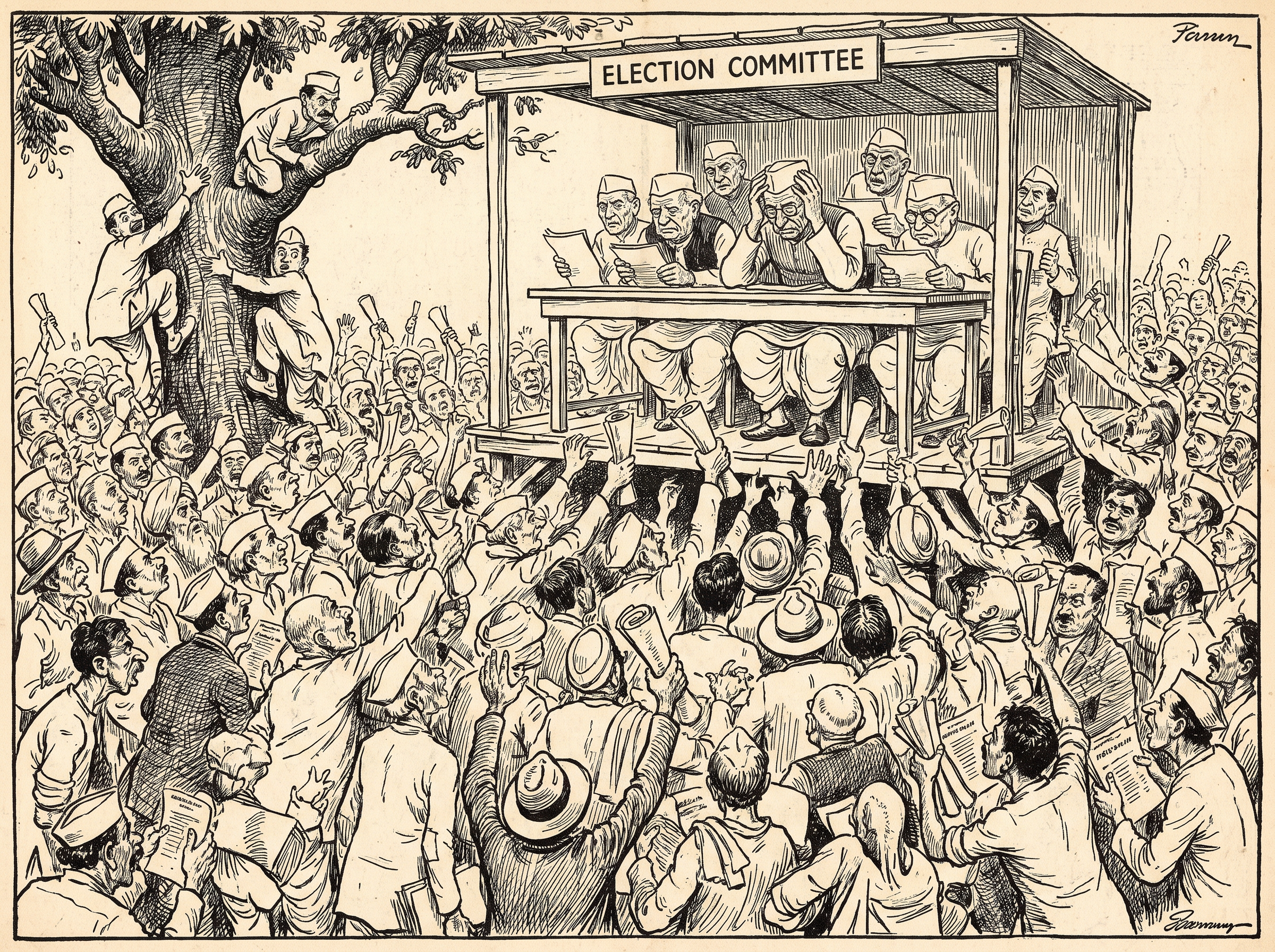
Fig. 2.2 – Congress election committee and hopeful candidates. Inspiration: Shankar, 20 May 1951.
Read the drawing carefully. A small group of named men sits on the platform; an enormous, unnamed crowd reaches up towards them. The exaggeration is in the numbers — the cartoonist is making a claim about how a Congress ticket was won in 1951, and where power inside the party actually lay.
But a cartoon states one opinion in one image. It cannot show you how the committee reasoned, whom it rejected, or whether any other party in 1951 chose its candidates more openly. It tells you what an observer thought the scene looked like. It does not tell you whether he was right.
Changing Methods Of Voting
These days we use an Electronic Voting Machine (EVM) to record voters’ preferences. But that is not how we started.
In the first general election, it was decided to place inside each polling booth a box for each candidate, carrying the election symbol of that candidate. Each voter was given a blank ballot paper, which they had to drop into the box of the candidate they wanted to vote for. About 20 lakh steel boxes were used for this purpose. A voter who could not read could still find the symbol.
Every one of those boxes had to be prepared by hand, the night before polling. A presiding officer from Punjab described what that took.
Three details are worth pausing on. The name went on the box in three languages, because the electorate of one constituency did not read one script. The paper seal, signed by the officer, existed so that a box could not be opened and refilled without anyone knowing. And the work was done at the officer’s own house, by six people including his daughters, because the state did not yet have the machinery to do it anywhere else.
That last detail is also the limit of this source. It is one officer’s account of one set of boxes. It cannot tell you whether the procedure was followed as carefully in every constituency in India, or what happened where it was not. It shows you what a free election was supposed to cost in labour. It does not prove that the cost was paid everywhere.
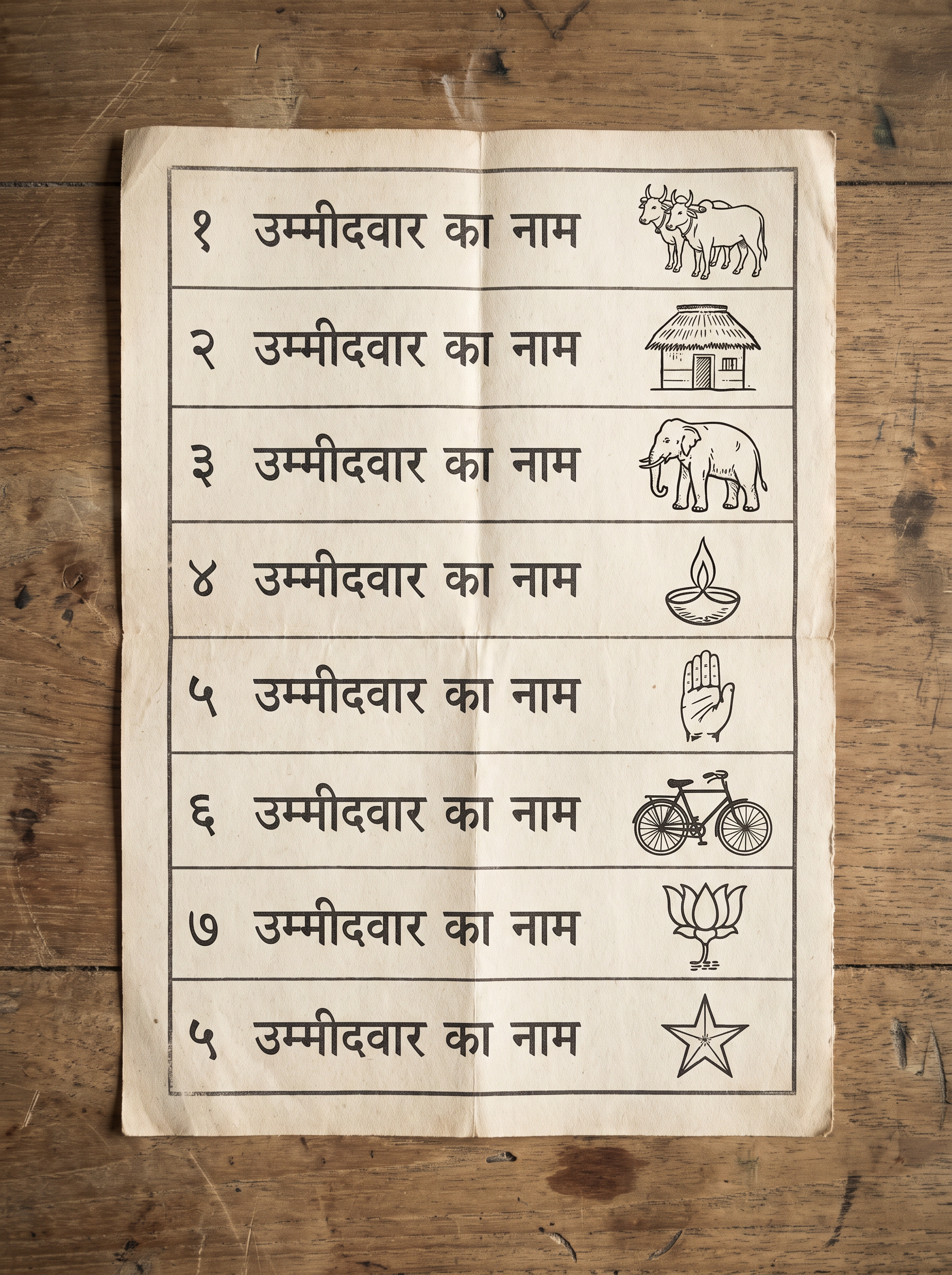
Fig. 2.3 – Sample of early Lok Sabha ballot paper.
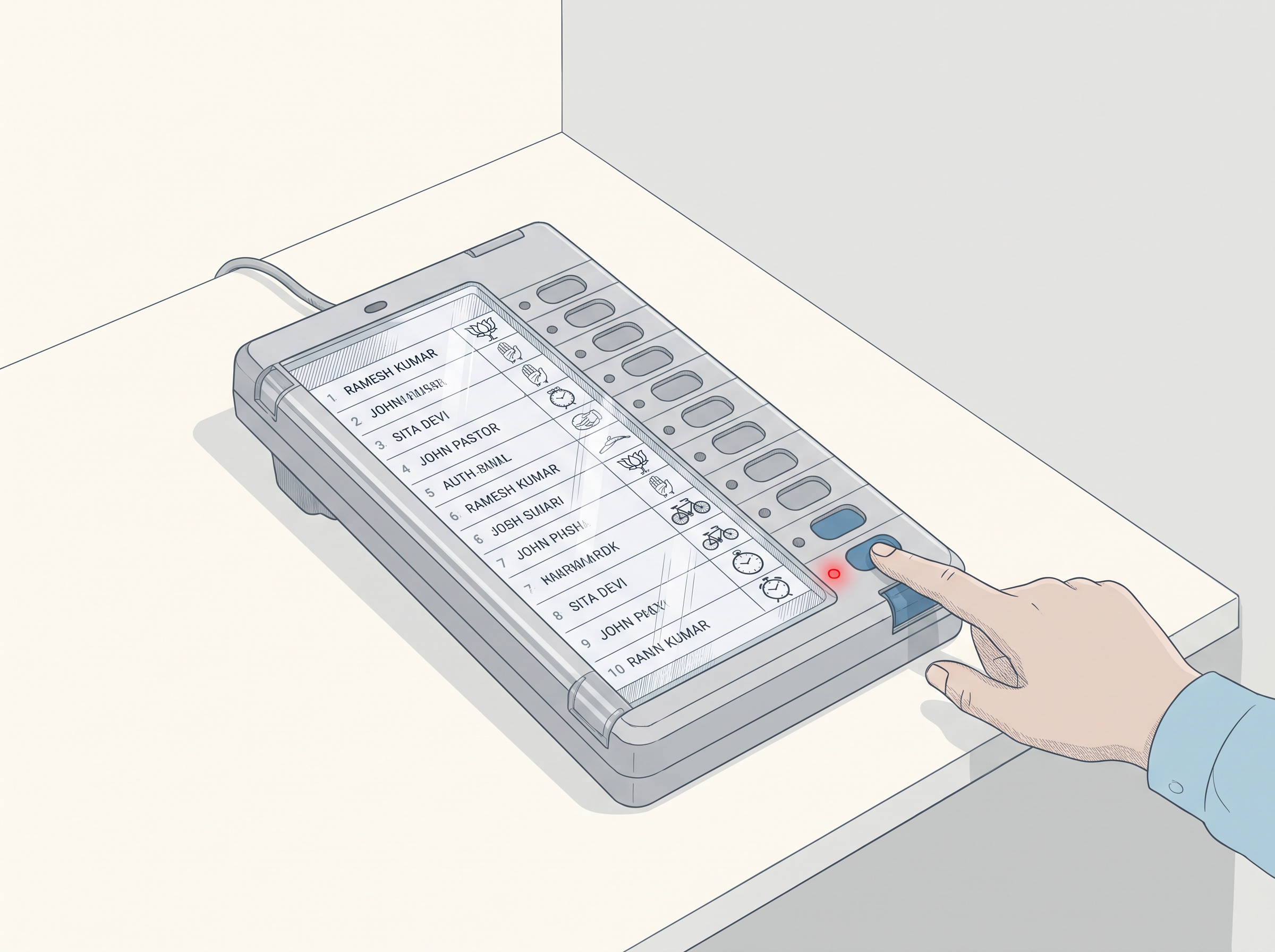
Fig. 2.4 – An Electronic Voting Machine.
After the first two elections, this method was changed. Now the ballot paper carried the names and symbols of all the candidates, and the voter was required to put a stamp on the name of the candidate they wanted to vote for. This method worked for nearly forty years. Towards the end of the 1990s the Election Commission started using the EVM. By 2004 the entire country had shifted to the EVM.
Ask the elders in your family and neighbourhood about their experience of participating in elections.
The Biggest Gamble In History
It was not just the size of the country and the electorate that made this election unusual. The first general election was also the first big test of democracy in a poor and illiterate country.
Till then democracy had existed only in the prosperous countries, mainly in Europe and North America, where nearly everyone was literate. By that time many countries in Europe had not even given voting rights to all women. India, by contrast, adopted universal adult franchise at once — the right of every adult citizen to vote, regardless of wealth, education, caste, religion or sex.
In this context India’s experiment appeared very bold and risky, and the criticism was blunt. An Indian editor called it ‘the biggest gamble in history’. The magazine Organiser wrote that Jawaharlal Nehru ‘would live to confess the failure of universal adult franchise in India’. A British member of the Indian Civil Service claimed that ‘a future and more enlightened age will view with astonishment the absurd farce of recording the votes of millions of illiterate people’.
The Verdict Of 1952
The elections had to be postponed twice, and were finally held from October 1951 to February 1952. But this election is referred to as the 1952 election, since most parts of the country voted in January 1952. It took six months for the campaigning, polling and counting to be completed.
The elections were competitive. There were, on an average, more than four candidates for each seat. The level of participation was encouraging: more than half the eligible voters turned out to vote on the day of elections. When the results were declared, these were accepted as fair even by the losers.
That last sentence is the important one. An election is not proved free because the winner says so. It is proved free when the side that lost accepts the count and goes home.
The Indian experiment had proved the critics wrong. The Times of India held that the polls had ‘confounded all those sceptics who thought the introduction of adult franchise too risky an experiment in this country’. The Hindustan Times claimed that ‘there is universal agreement that the Indian people have conducted themselves admirably in the largest experiment in democratic elections in the history of the world’. Observers outside India were equally impressed.
India’s general election of 1952 became a landmark in the history of democracy all over the world. It was no longer possible to argue that democratic elections could not be held in conditions of poverty or lack of education. It proved that democracy could be practised anywhere in the world.
One of the men who made that promise, and who sat on the Congress election committee of 1951, was the country’s first Education Minister.
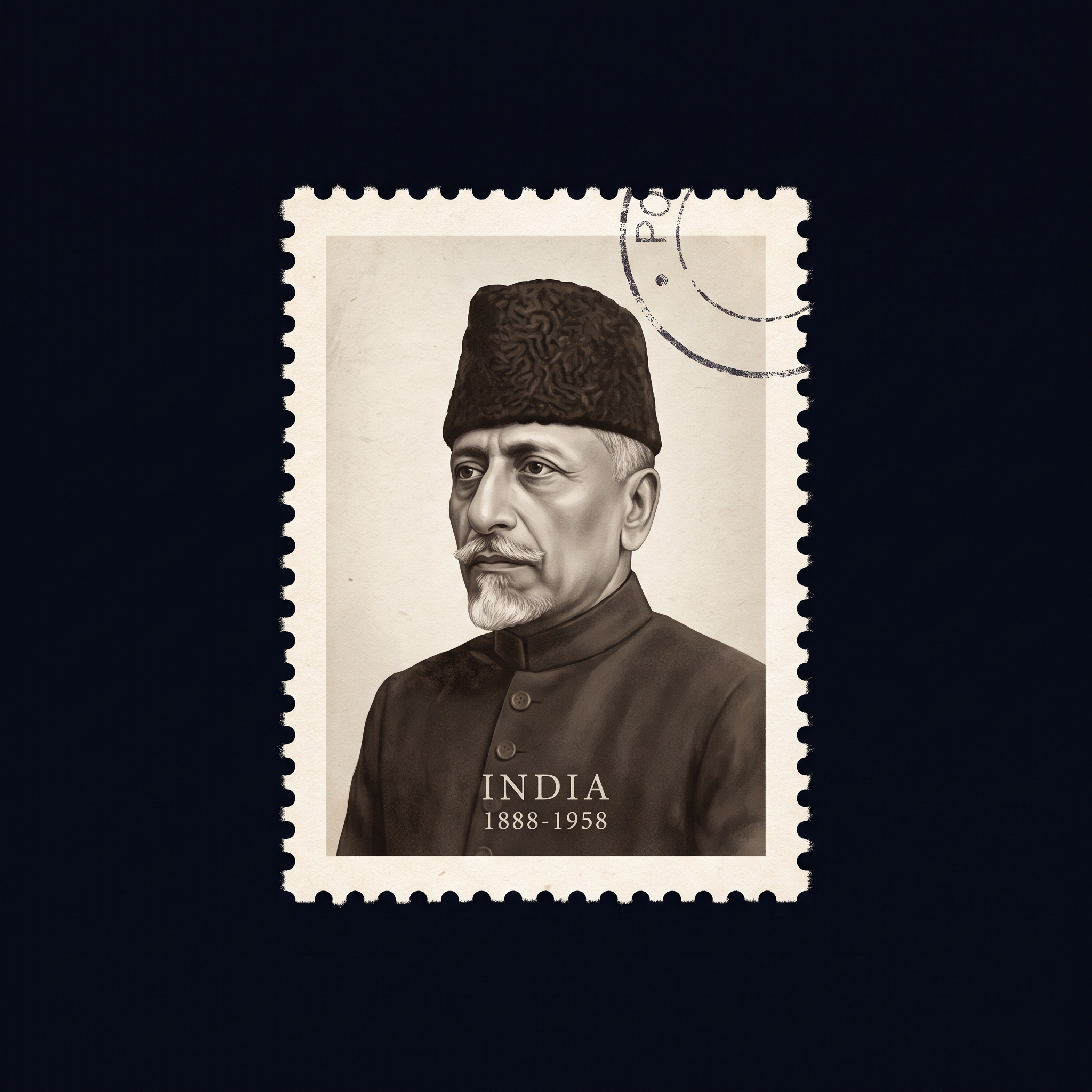
Fig. 2.5 – Maulana Abul Kalam Azad, 1888 to 1958.
2.2 Congress Dominance In The First Three General Elections
The results of the first general election did not surprise anyone. The Indian National Congress was expected to win it.
Three things made that expectation reasonable. The Congress party, as it was popularly known, had inherited the legacy of the national movement — voters knew it as the organisation that had led the fight for freedom. It was the only party then to have an organisation spread all over the country, with workers who could actually reach a village in one state and a town in another. And finally, in Jawaharlal Nehru, the party had the most popular and charismatic leader in Indian politics. He led the Congress campaign and toured through the country.
What surprised many was not the victory but its extent. When the final results were declared, the party had won 364 of the 489 seats in the first Lok Sabha, finishing way ahead of any other challenger. The Communist Party of India, which came next in terms of seats, won only 16.
The Same Story In The States
The state elections were held along with the Lok Sabha elections, and the Congress scored a big victory in those as well.
It won a majority of seats in all the states except Travancore-Cochin (part of today’s Kerala), Madras and Orissa. Finally, even in these three states, the Congress formed the government. So the party ruled all over the country, at the national level and at the state level. As expected, Jawaharlal Nehru became the Prime Minister after the first general election.
That double victory is what the electoral map records.
Map
Map 2.1 Caption: Congress dominance, 1952 to 1967. Brief: Source or redraw the NCERT illustration titled ‘Congress Dominance 1952-1967’. Show the full extent of India as officially defined by the Government of India, including Jammu and Kashmir and Ladakh; no part of India is to be shown as disputed or as belonging to any other state. Shade the states ruled by the Congress during 1952–1967 in one colour; shade Kerala separately for the Democratic Left Front, 1957–1959; shade Jammu and Kashmir separately for the National Conference. Label the states and territories exactly as in the original, and carry the original party-abbreviation key. Beside the map, reproduce the three bar charts of Lok Sabha seats won by each party in the First General Election 1952, the Second General Election 1957 and the Third General Election 1962, with every seat figure and every party label copied exactly from the original illustration. Retain the printed note: this illustration is not a map drawn to scale and should not be taken to be an authentic depiction of India’s external boundaries.
A look at the electoral map gives you a sense of the dominance of the Congress during the period 1952-1962. In the second and the third general elections, held in 1957 and 1962 respectively, the Congress maintained the same position in the Lok Sabha by winning three-fourth of the seats. None of the opposition parties could win even one-tenth of the number of seats won by the Congress.
In the state assembly elections, the Congress did not get a majority in a few cases. The most significant of these was in Kerala in 1957, when a coalition led by the CPI formed the government. A coalition is a government formed by two or more parties, or by a party together with independent members, because no single party has enough seats to rule alone. Apart from exceptions like this, the Congress controlled the national government and all the state governments.
Newspapers reported the pattern as it happened.
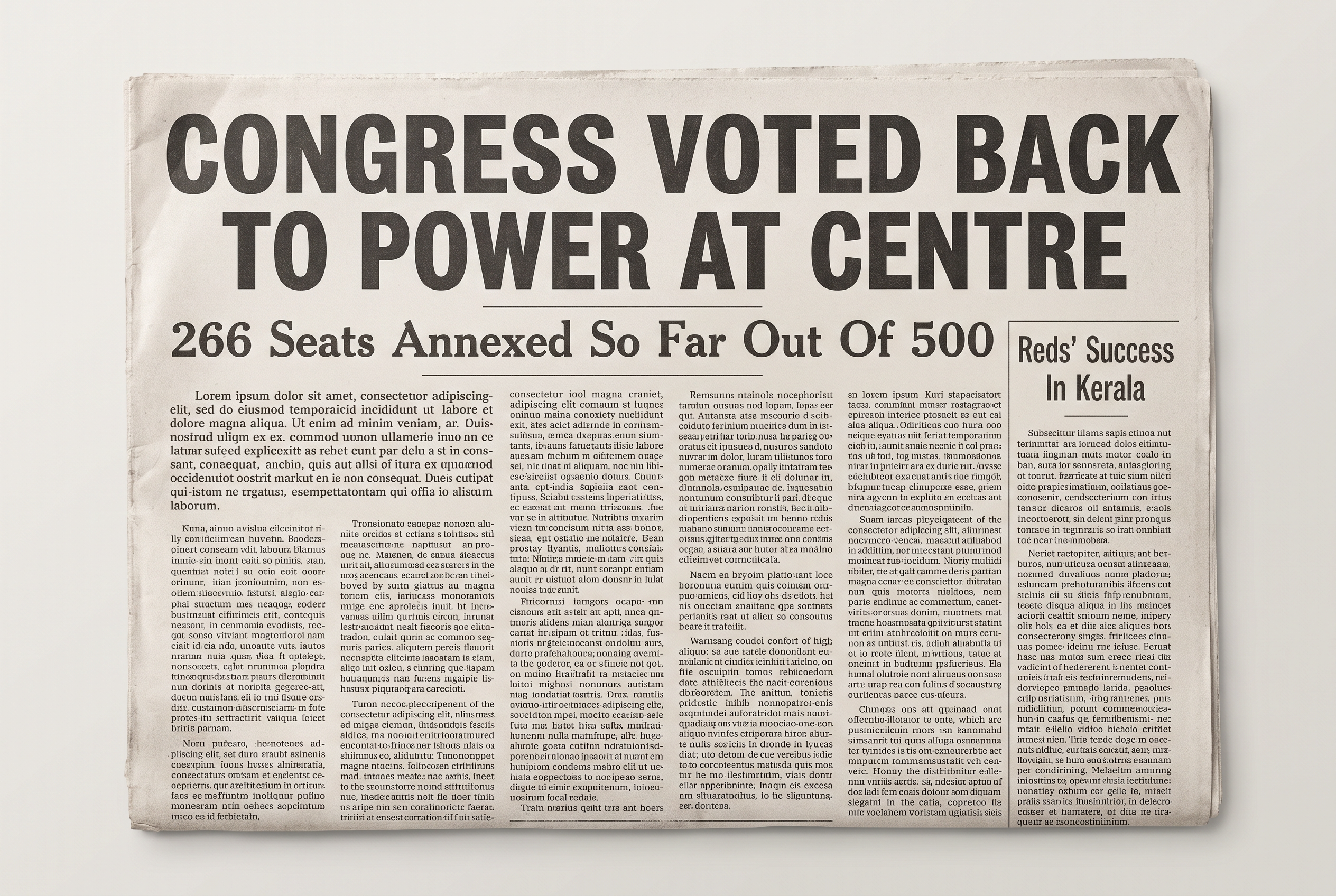
Fig. 2.6 – Newspaper report of the Congress return to power.
Read the clipping as evidence of two things at once. Its main headline records the national result. Its smaller headline records the exception — a Communist success in Kerala on the same day. Even at the height of dominance, the country was not voting one way everywhere.
The clipping also shows you the limits of newspaper evidence. It is a count taken while counting was still going on — 266 seats ‘so far out of 500’. It reports the seats, and it cannot report the votes behind them. For that, you have to go to the vote shares, and they tell a very different story.
The Seats And The Votes
The extent of the victory of the Congress was artificially boosted by our electoral system.
The Congress won three out of every four seats. But it did not get even half of the votes. In 1952, for example, the Congress obtained 45 per cent of the total votes — and managed to win 74 per cent of the seats.
Now look at the other side of the same election. The Socialist Party was the second largest party in terms of votes. It secured more than 10 per cent of the votes all over the country. But it could not even win three per cent of the seats.
How did this happen? For this you need to recall the discussion about the first-past-the-post method in your textbook Indian Constitution at Work last year. Under first-past-the-post, the country is divided into constituencies, and in each constituency the candidate with more votes than any other candidate wins the seat. Nothing else about that constituency counts. The votes given to every losing candidate elect nobody.
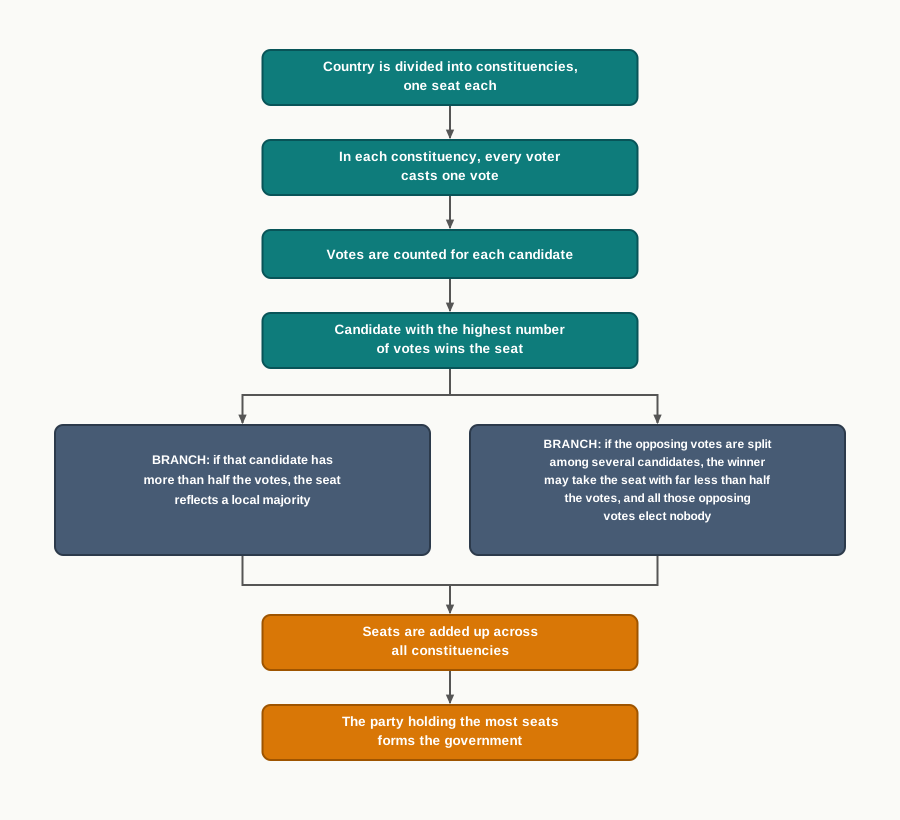
Fig. 2.7 – How first-past-the-post turns votes into seats.
In this system of election, which has been adopted in our country, the party that gets more votes than others tends to get much more than its proportional share of the seats. That is exactly what worked in favour of the Congress.
If we add up the votes of all the non-Congress candidates, they came to more than the votes of the Congress. But the non-Congress votes were divided between different rival parties and candidates. So in constituency after constituency the Congress was still way ahead of the opposition, and managed to win.
A Minister In The First Cabinet
Among those who entered government on the strength of these victories was a woman who had been in the national movement long before it was a party.
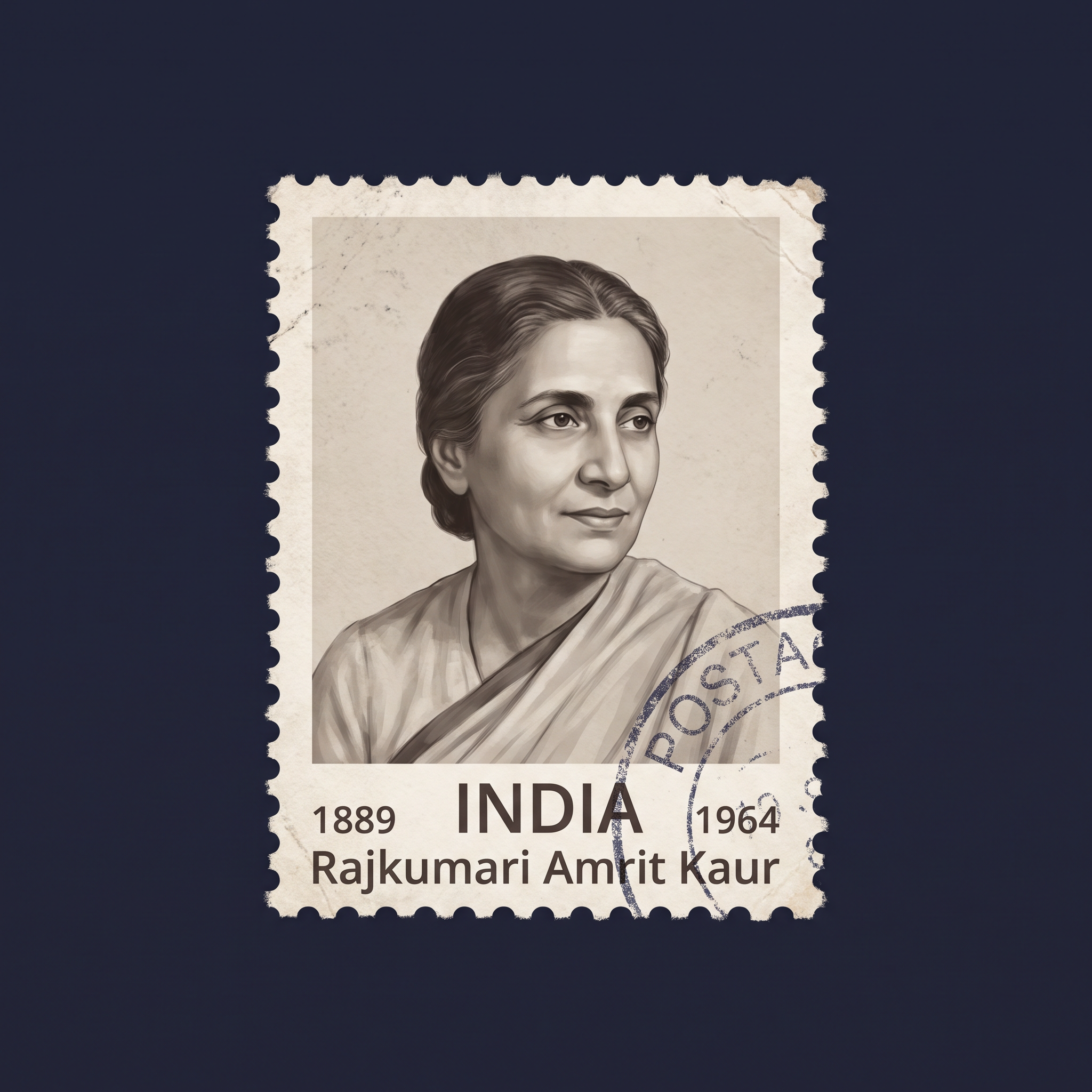
Fig. 2.8 – Rajkumari Amrit Kaur, 1889 to 1964.
2.3 Communist Victory In Kerala
The Congress did not win everywhere, and it did not win forever. As early as in 1957, the Congress party had the bitter taste of defeat in Kerala.
In the assembly elections held in March 1957, the Communist Party won the largest number of seats in the Kerala legislature. The party won 60 of the 126 seats, and had the support of five independents. Independents are candidates who contest without belonging to any party, and in a close assembly their handful of votes can decide who governs.
The Governor — the head of the state, who invites the leader able to command a majority in the assembly to form the government — invited E. M. S. Namboodiripad, the leader of the Communist legislature party, to form the ministry.
That invitation made history well beyond Kerala. For the first time in the world, a Communist party government had come to power through democratic elections. Communist governments elsewhere had come to power by revolution. This one came to power by counting votes.
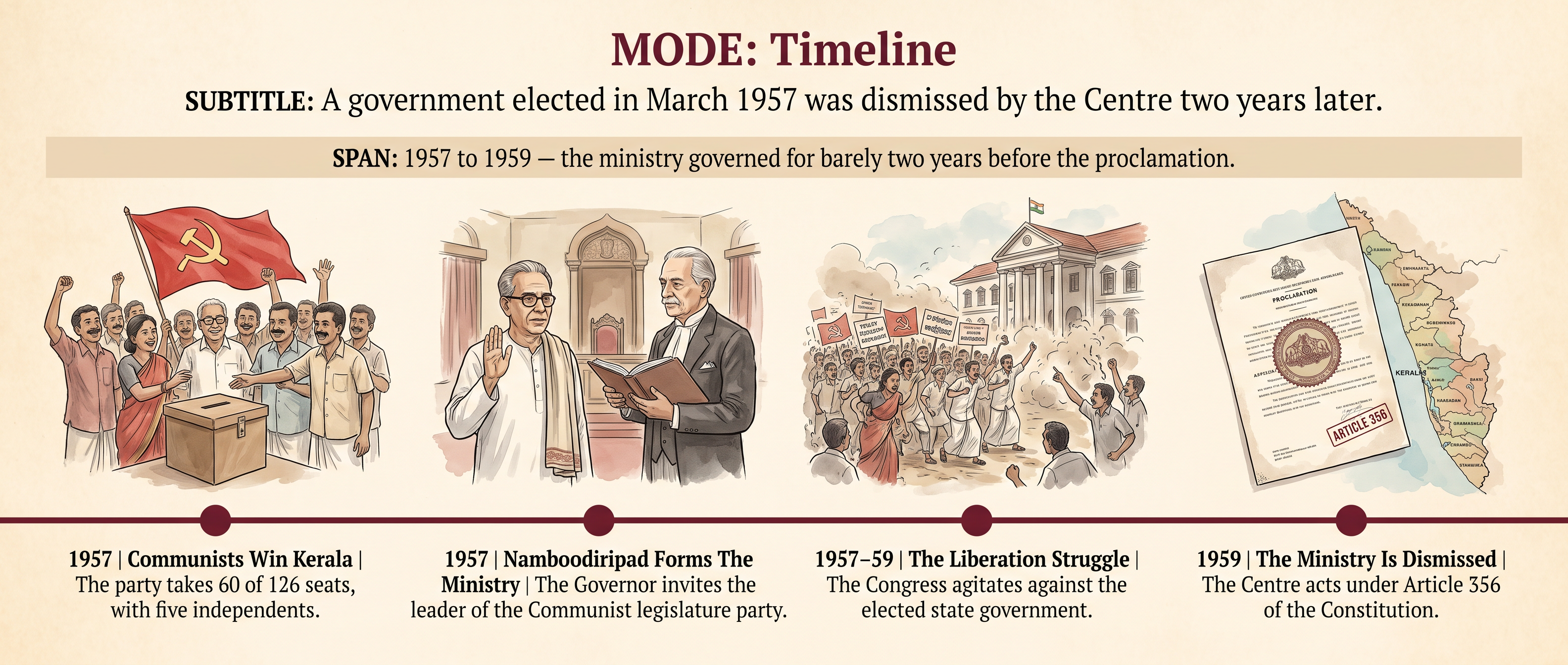
Fig. 2.9 – Kerala, 1957 To 1959.
The Liberation Struggle
On losing power in the state, the Congress party began a ‘liberation struggle’ against the elected government.
The CPI had come to power on the promise of carrying out radical and progressive policy measures. The Communists claimed that the agitation against them was led by vested interests and religious organisations.
Notice that both sides used the language of democracy against each other. The Congress said it was answering what a government was doing to the people of Kerala. The Communists said an elected government was being attacked by groups that had lost at the polls.
Dismissal, 1959
In 1959 the Congress government at the Centre dismissed the Communist government in Kerala under Article 356 of the Constitution — the provision that allows the Union government to take over the administration of a state and end the rule of its elected ministry.
The decision proved very controversial. It was widely cited as one of the prominent instances of the misuse of constitutional emergency powers. A party that had lost an election in a state had, through the government it controlled at the Centre, removed the winners from office.
The newspapers of the time carried the proclamation and the reaction to it side by side.
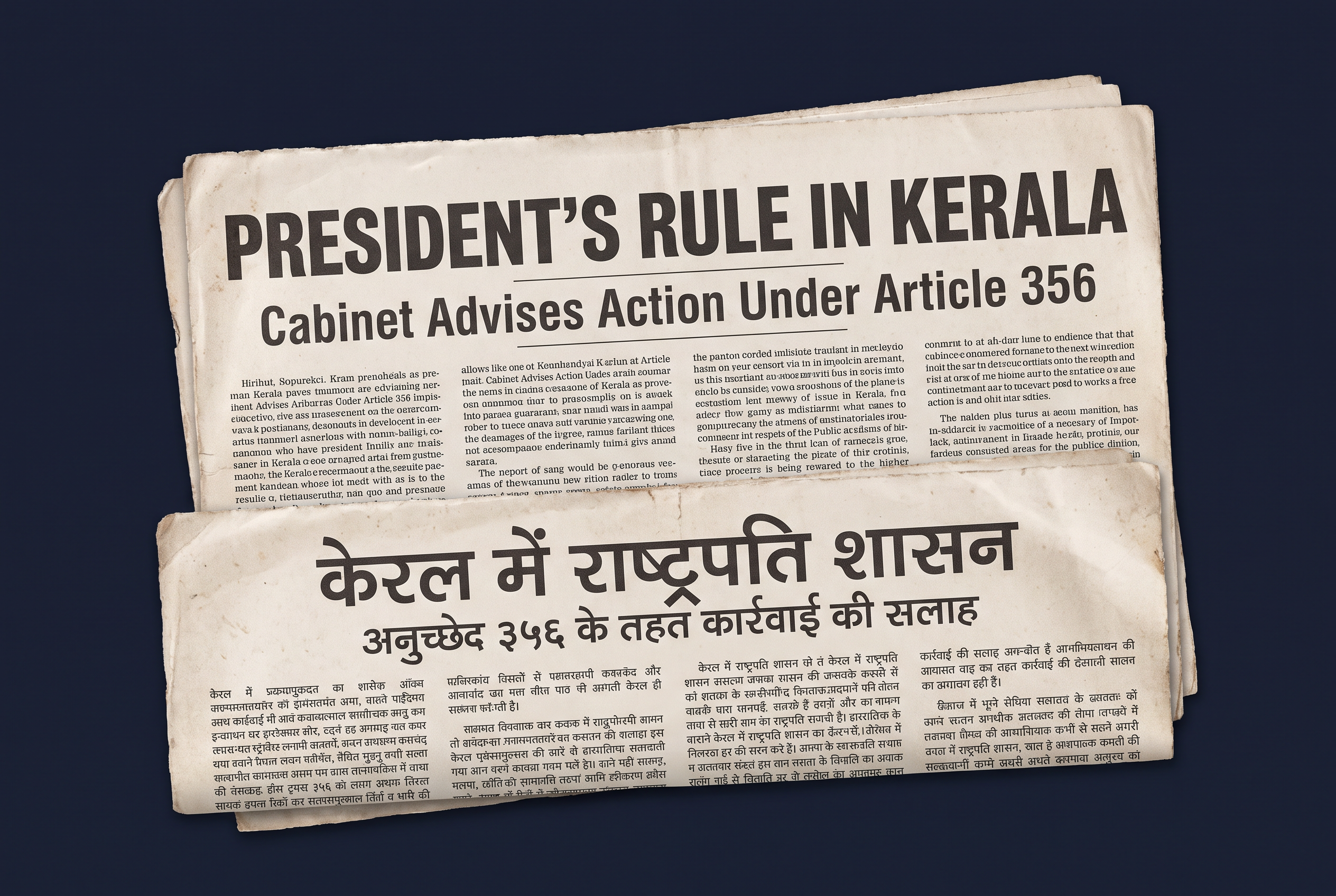
Fig. 2.10 – Newspapers report the imposition of President’s rule in Kerala.
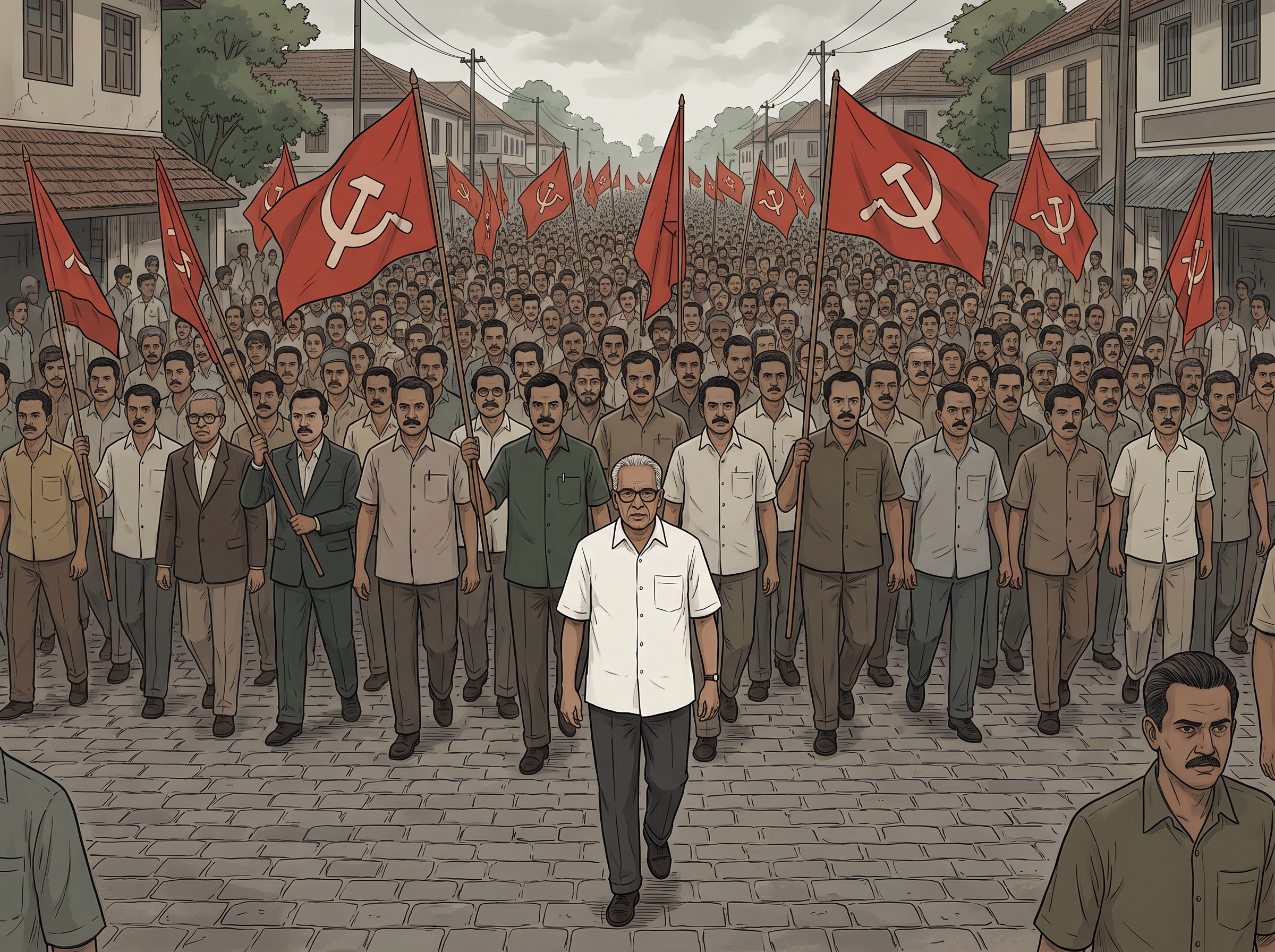
Fig. 2.11 – E.M.S. Namboodiripad leading a procession after dismissal.
Read the two images together, and then read what they cannot tell you. The clippings record the decision as it was announced, in the words the government and the minister used on the day. The photograph records the response on the street. Neither shows you what was said inside the Union Cabinet, or what the Governor reported to the Centre, or how many people in Kerala wanted the ministry gone. Evidence from a newspaper front page tells you what a decision looked like in public. It cannot tell you why it was taken.
2.4 Nature Of Congress Dominance
India is not the only country to have experienced the dominance of one party. If we look around the world, we find many other examples of one-party dominance. But there is a crucial difference between these and the Indian experience.
In the rest of the cases, the dominance of one party was ensured by compromising democracy. In some countries like China, Cuba and Syria, the constitution permits only a single party to rule the country. No rival party may legally exist, so an election cannot remove the ruling party.
Some others, like Myanmar, Belarus, Egypt and Eritrea, are effectively one-party states due to legal and military measures. Here rival parties may exist on paper, but the law and the armed forces make it impossible for them to win. Until a few years ago, Mexico, South Korea and Taiwan were also effectively one-party dominant states.
What distinguished the dominance of the Congress party in India from all these cases was that it happened under democratic conditions. Many parties contested elections in conditions of free and fair elections, and yet the Congress managed to win election after election. This was similar to the dominance the African National Congress has enjoyed in South Africa after the end of apartheid — apartheid being the system of enforced racial separation that South Africa dismantled at the beginning of the 1990s.
Hold the two situations side by side, because the difference is easy to blur.
The Roots Of Congress Success
The roots of this extraordinary success of the Congress party go back to the legacy of the freedom struggle.
The Congress was seen as the inheritor of the national movement. Many leaders who had been in the forefront of that struggle were now contesting elections as Congress candidates. Voters were not being asked to trust strangers.
The Congress was already a very well-organised party, and by the time the other parties could even think of a strategy, the Congress had already started its campaign. In fact, many parties were formed only around Independence or after that. Thus, the Congress had the ‘first off the blocks’ advantage — it was running before its rivals had reached the starting line.
By the time of Independence, the party had not only spread across the length and breadth of the country, as we have seen in the map, but also had an organisational network down to the local level. Most importantly, as the Congress was till recently a national movement, its nature was all-inclusive. All these factors contributed to the dominance of the Congress party.
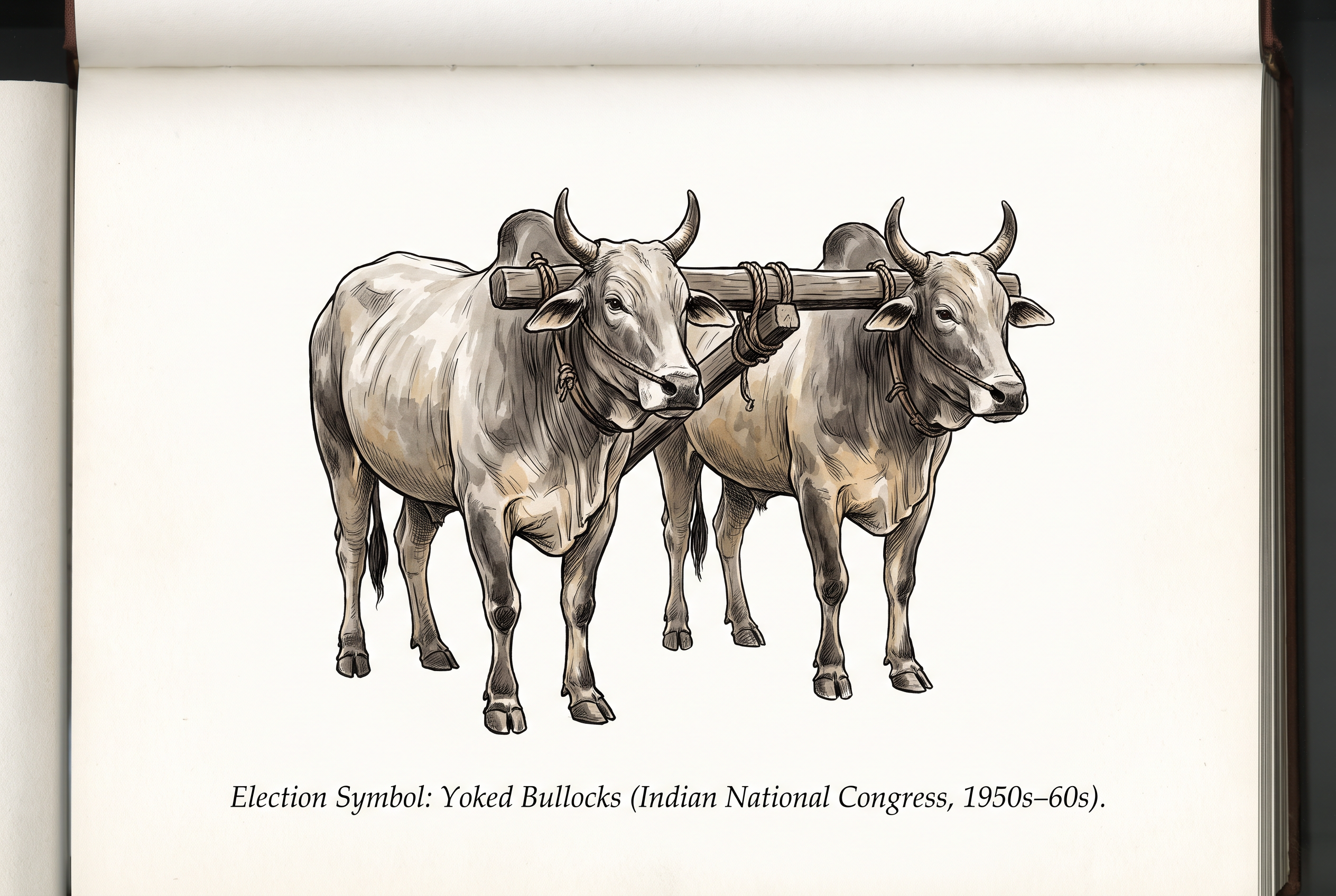
Fig. 2.12 – A pair of bullocks representing the Congress party.
One of the sharpest critics of the Congress served in its first cabinet, and left it.
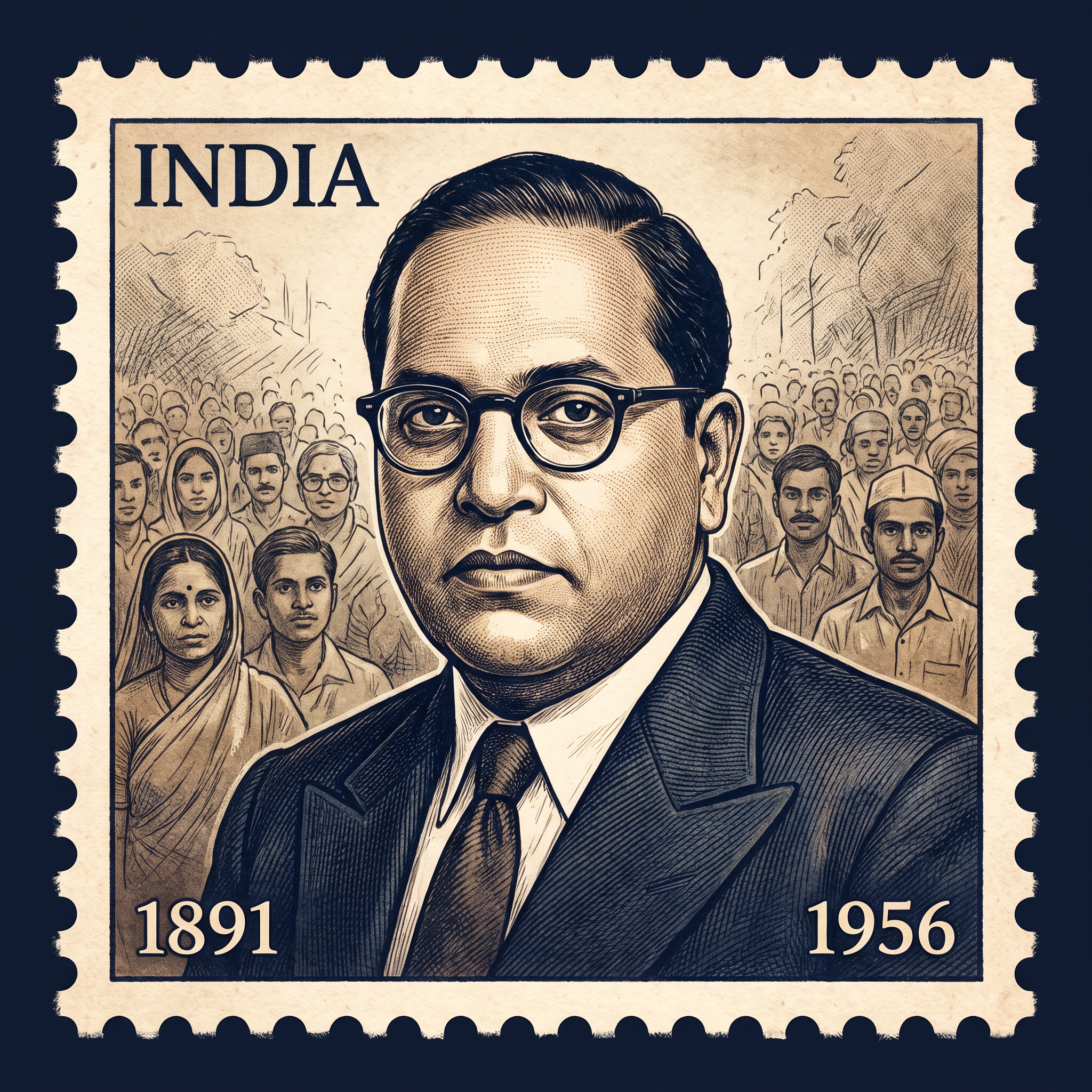
Fig. 2.13 – Dr B. R. Ambedkar, 1891 to 1956.
2.4.2 Tolerance And Management Of Factions
This coalition-like character of the Congress gave it an unusual strength, and it worked in two ways.
Firstly, a coalition accommodates all those who join it. Therefore it has to avoid any extreme position and strike a balance on almost all issues. Compromise and inclusiveness are the hallmarks of a coalition.
This strategy put the opposition in a difficulty. Anything that the opposition wanted to say would also find a place in the programme and ideology of the Congress. It is hard to fight a party that has already agreed with you.
Secondly, in a party that has the nature of a coalition, there is a greater tolerance of internal differences, and the ambitions of various groups and leaders are accommodated. The Congress did both these things during the freedom struggle and continued doing this even after Independence.
That is why, even if a group was not happy with the position of the party or with its share of power, it would remain inside the party and fight the other groups, rather than leaving the party and becoming an ‘opposition’.
Factions As A Strength
These groups inside the party are called factions. A faction is an organised group within a party that competes with other such groups for influence, positions and a share of power, while staying inside the party.
The coalitional nature of the Congress party tolerated and in fact encouraged various factions. Some of these factions were based on ideological considerations, but very often these factions were rooted in personal ambitions and rivalries.
Instead of being a weakness, internal factionalism became a strength of the Congress. Since there was room within the party for various factions to fight with each other, it meant that leaders representing different interests and ideologies remained within the Congress rather than go out and form a new party.
Most of the state units of the Congress were made up of numerous factions. The factions took different ideological positions, making the Congress appear as a grand centrist party — one that stands close to the middle of the political spectrum and refuses the extremes on either side.
The other parties primarily attempted to influence these factions, and thereby indirectly influenced policy and decision making from the ‘margins’. They were far removed from the actual exercise of authority. They were not alternatives to the ruling party; instead they constantly pressurised and criticised, censured and influenced the Congress.
The system of factions functioned as a balancing mechanism within the ruling party. Political competition therefore took place within the Congress. In that sense, in the first decade of electoral competition, the Congress acted both as the ruling party and as the opposition. That is why this period of Indian politics has been described as the ‘Congress system’ — a system in which the real contest was between groups inside the dominant party, and the parties outside it could only push at that contest from the edges.
A Film About Factions
The politics of factions inside a ruling party was interesting enough to become the subject of a well-known film. Simhasan, released in 1981, was directed by Jabbar Patel, with a screenplay by Vijay Tendulkar. It cast Nilu Phule, Arun Sarnaik, Dr Shreeram Lagoo, Satish Dubashi, Datta Bhat, Madhukar Toradmal, Madhav Watve and Mohan Agashe.
The Marathi film is based on Arun Sadhu’s two novels, Simhasan and Mumbai Dinank. It depicts the tussle for the post of Chief Minister in Maharashtra. The story is told through the journalist Digu Tipnis, as the silent Sutradhar — the narrator who watches and links the scenes without taking part in them. The film tries to capture the intense power struggle within the ruling party and the secondary role of the Opposition.
In the story, the Finance Minister, Vishwasrao Dabhade, is making all-out efforts to unseat the incumbent Chief Minister. Both contenders try to woo the trade union leader D’Casta to obtain his support. In this factional fight, other politicians too seek to obtain maximum advantage while bargaining with both sides. Smuggling in Mumbai and the grim social reality in rural Maharashtra form the sub-plots of the film.
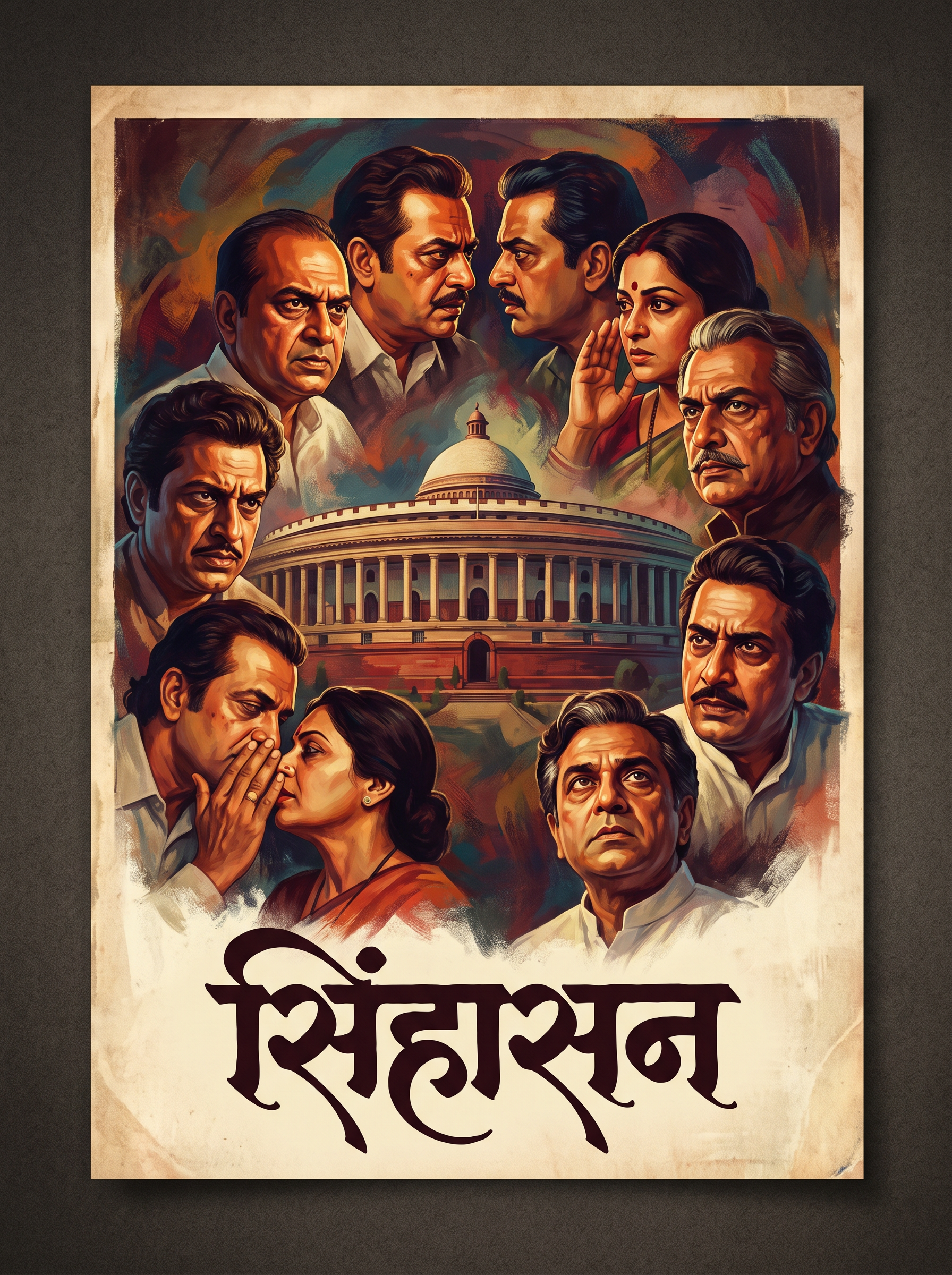
Fig. 2.14 – Poster of the 1981 Marathi film Simhasan.
A film is evidence of a kind, but of a particular kind. Simhasan tells you how factional politics was understood and imagined in 1981, by a novelist, a screenwriter and a director. It is not a record of what any real minister did. What it captures is the shape of the thing — that in a system of one-party dominance, the fight worth filming was the fight inside the ruling party.
Among the men who held that party together in its first years was Nehru’s Communications Minister.
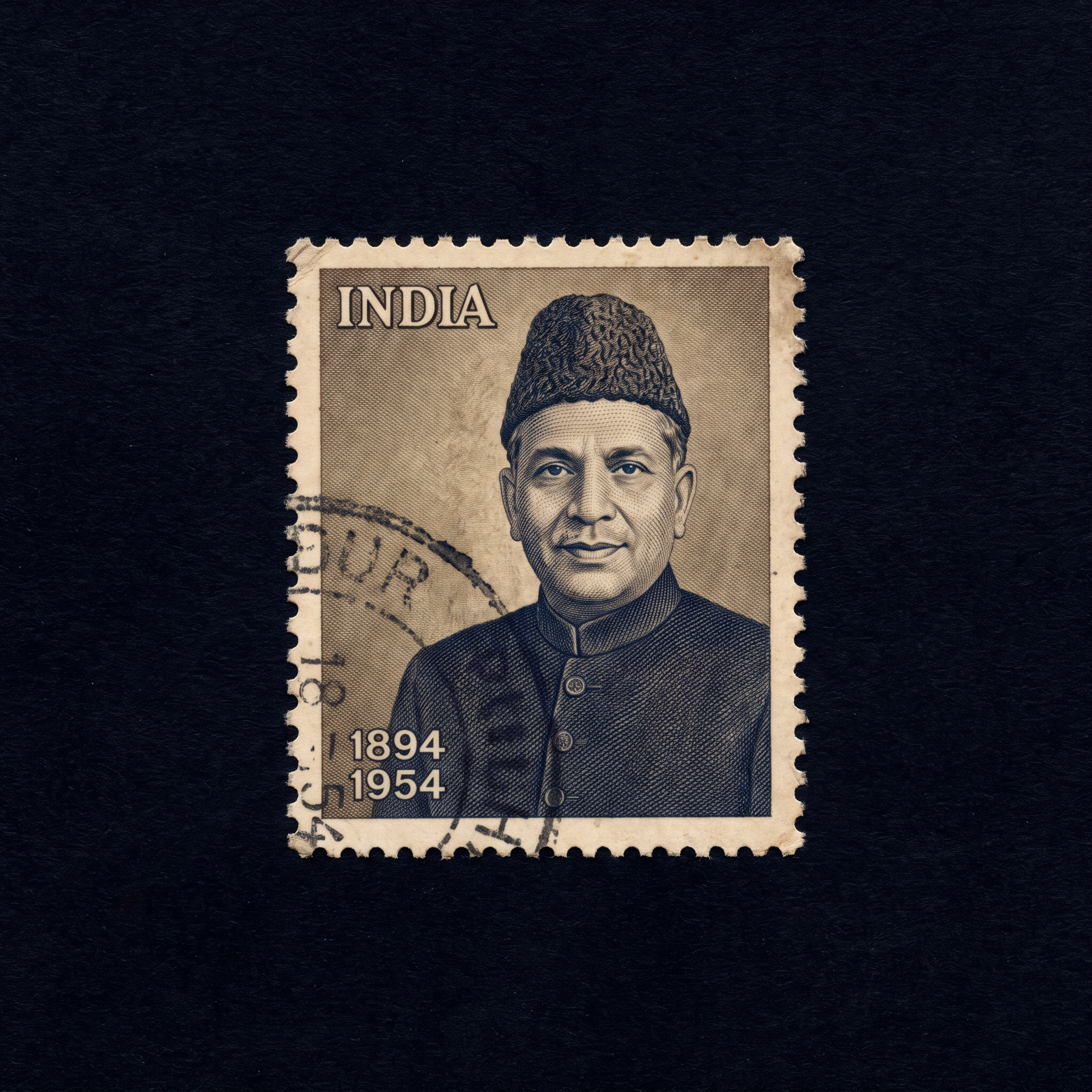
Fig. 2.15 – Rafi Ahmed Kidwai, 1894 to 1954.
2.5 Emergence Of Opposition Parties
As we have noted above, it is not that India did not have opposition parties during this period. While discussing the results of the elections, we have already come across the names of many parties other than the Congress.
Even then, India had a larger number of diverse and vibrant opposition parties than many other multi-party democracies. Some of these had come into being even before the first general election of 1952. Some of these parties played an important part in the politics of the country in the ’sixties and ’seventies.
The roots of almost all the non-Congress parties of today can be traced to one or the other of the opposition parties of the 1950s. The parties of the first decade did not vanish. They divided, merged and renamed themselves, and their descendants are on the ballot paper still.
A cartoonist drew the contest between the government and its opponents in 1954, and the drawing is itself an argument about how unequal that contest was.
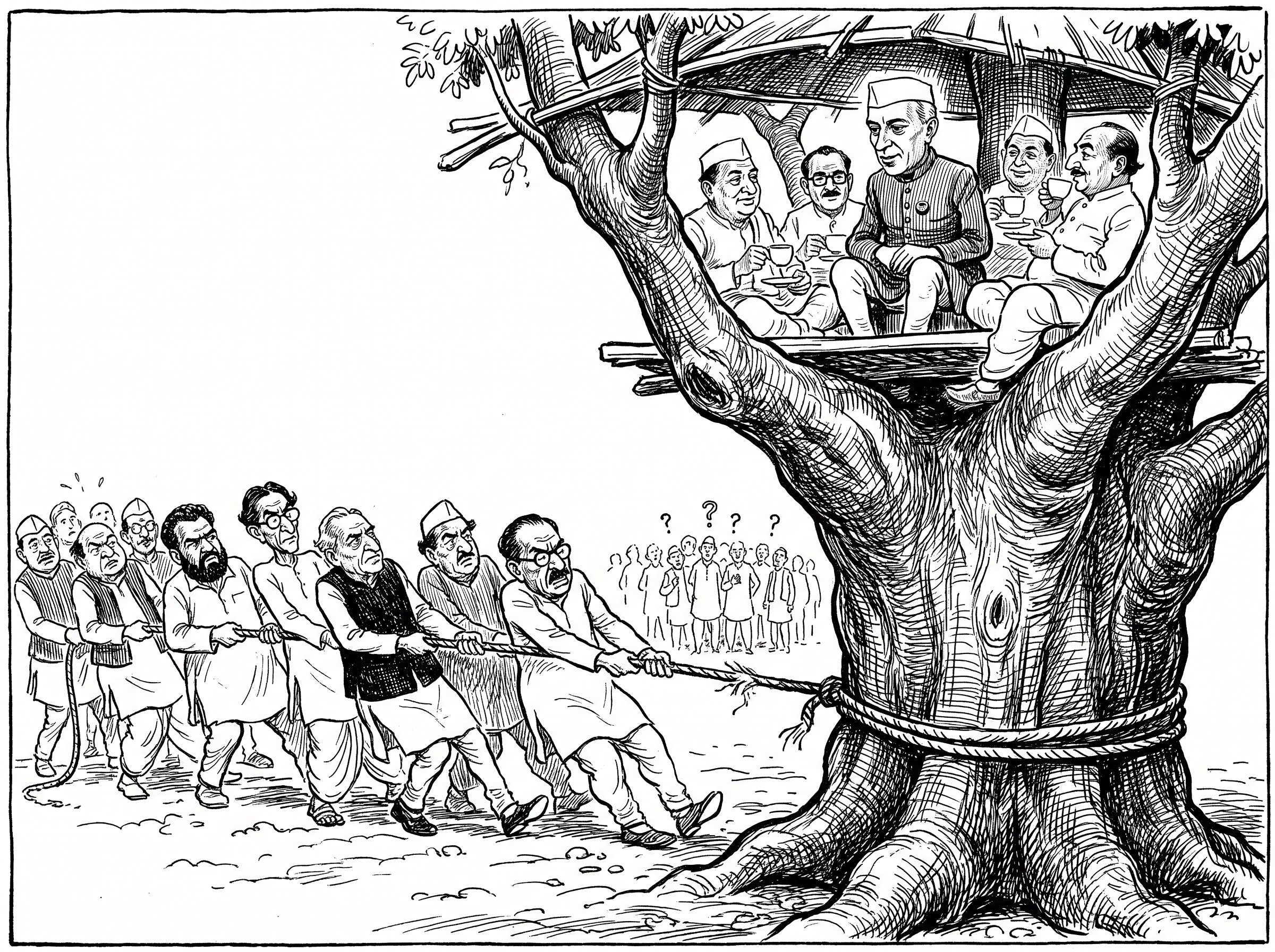
Fig. 2.16 – The relative strength of the opposition and the government. Inspiration: Shankar, 29 August 1954.
Look at what the cartoonist has chosen to exaggerate. The government is not shown fighting back at all. It is simply sitting, at a height, while the named opposition leaders pull with all their strength at a tree that does not move. The claim about the balance of forces in 1954 is unmistakable.
But a cartoon makes one point and cannot make the opposite one in the same frame. It cannot show you that these same men were shaping debate in Parliament, or that the Congress was being pulled about by its own factions up in the tree. A drawing of futility is a strong opinion about the opposition. It is not a measurement of its influence.
Three Parties Of The Nineteen-Fifties
The chapter looks closely at three of the parties that grew up outside the Congress in this decade. Read them together, because they opposed the Congress for very different reasons.
The Socialist Party
The origins of the Socialist Party can be traced back to the mass movement stage of the Indian National Congress in the pre-Independence era. The Congress Socialist Party (CSP) was formed within the Congress in 1934 by a group of young leaders who wanted a more radical and egalitarian Congress.
In 1948, the Congress amended its constitution to prevent its members from having a dual party membership — that is, from belonging to the Congress and to another party at the same time. This forced the Socialists to form a separate Socialist Party in 1948.
The Party’s electoral performance caused much disappointment to its supporters. Although the Party had a presence in most of the states of India, it could achieve electoral success only in a few pockets.
The socialists believed in the ideology of democratic socialism, which distinguished them both from the Congress and from the Communists — socialism to be reached through elections and consent, and not through a single-party state or an armed revolution. They criticised the Congress for favouring capitalists and landlords and for ignoring the workers and the peasants.
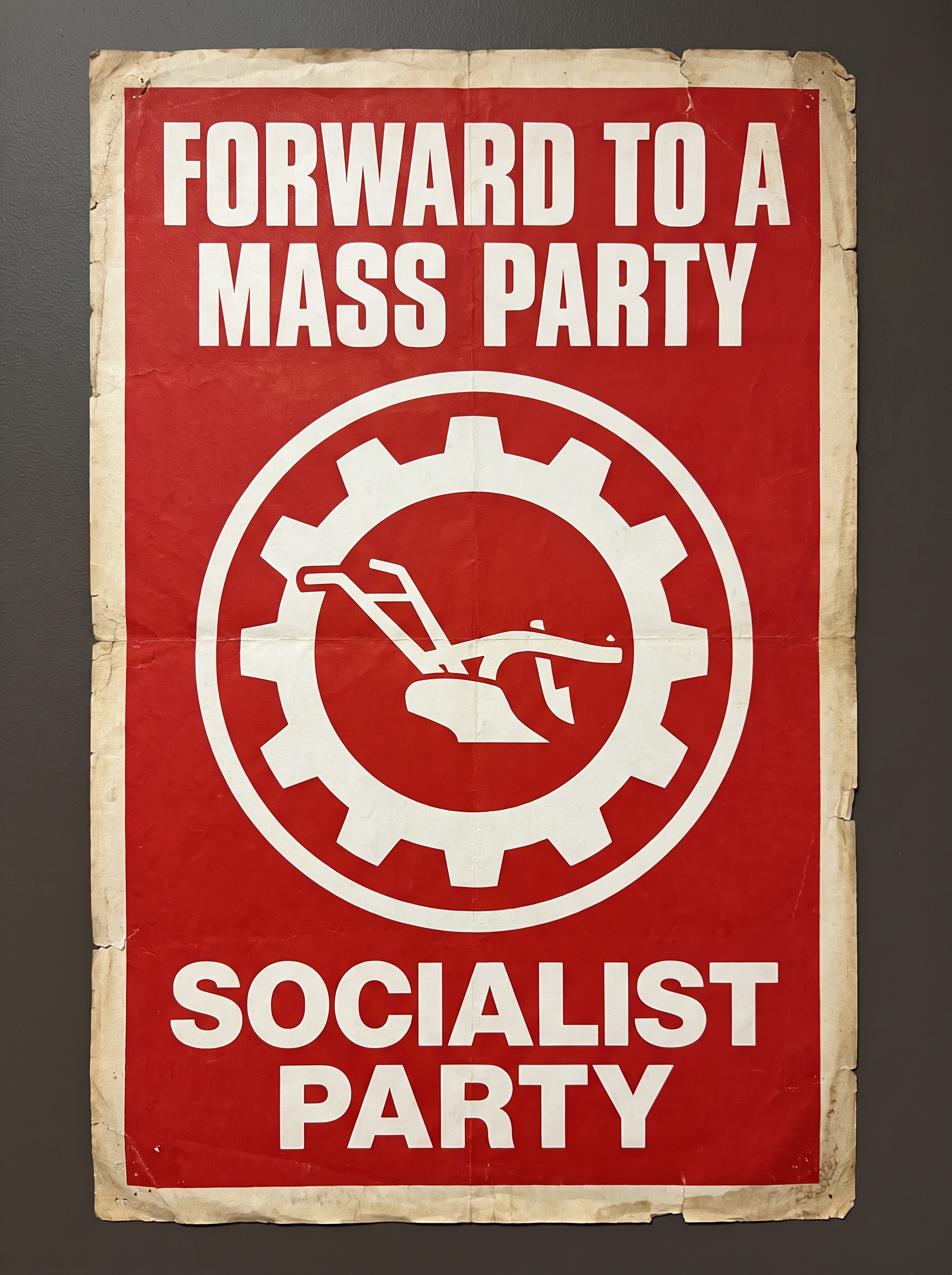
Fig. 2.17 – A Socialist Party poster.
But the socialists faced a dilemma when, in 1955, the Congress declared its goal to be the socialist pattern of society.
The Socialist Party went through many splits and reunions, leading to the formation of many socialist parties. These included the Kisan Mazdoor Praja Party, the Praja Socialist Party and the Samyukta Socialist Party.
Jayaprakash Narayan, Achyut Patwardhan, Asoka Mehta, Acharya Narendra Dev, Rammanohar Lohia and S.M. Joshi were among the leaders of the socialist parties. Many parties in contemporary India — like the Samajwadi Party, the Rashtriya Janata Dal, the Janata Dal (United) and the Janata Dal (Secular) — trace their origins to the Socialist Party.
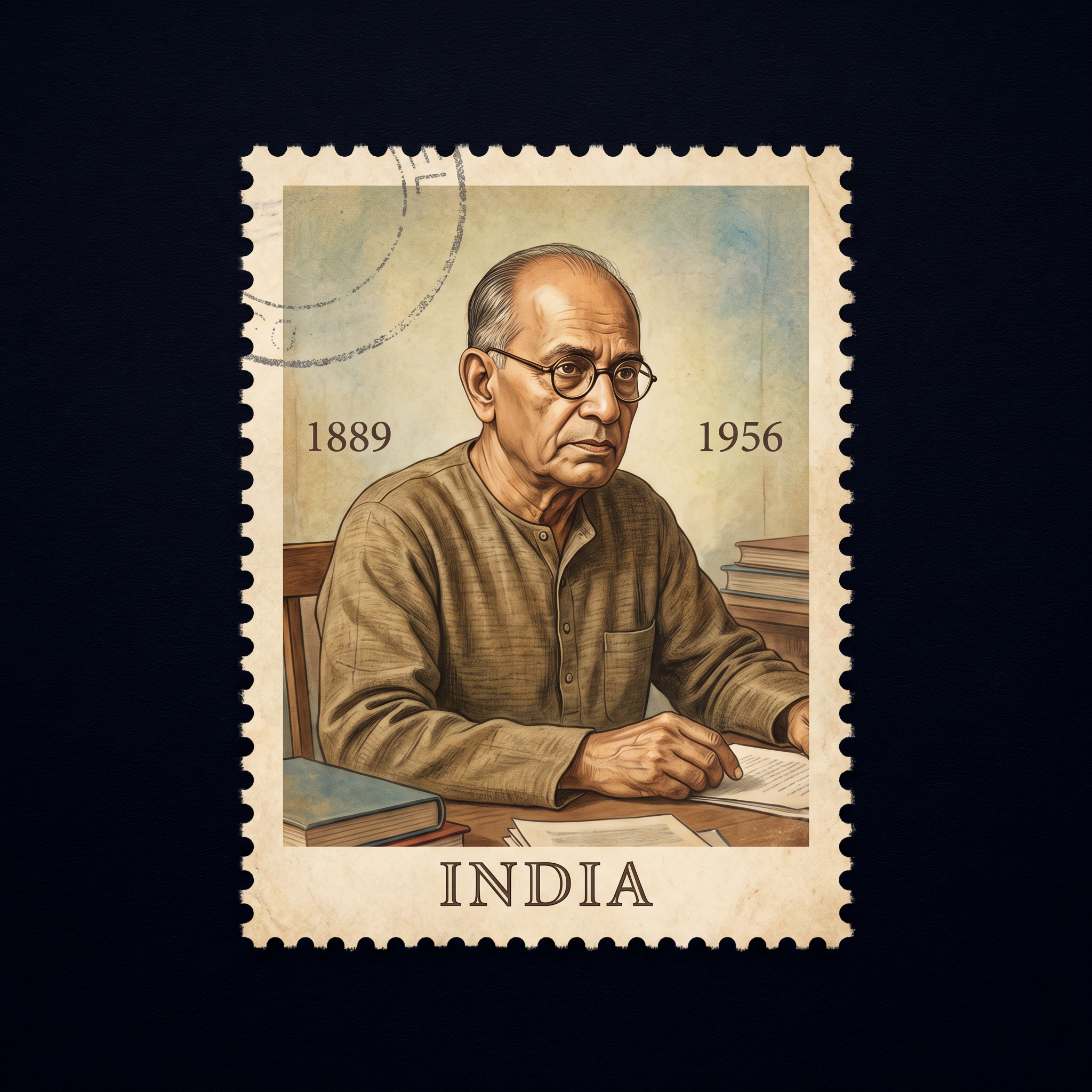
Fig. 2.18 – Acharya Narendra Dev, 1889 to 1956.
The Communist Party Of India
In the early 1920s, communist groups emerged in different parts of India, taking inspiration from the Bolshevik revolution in Russia — the revolution of 1917 that brought a communist party to power there — and advocating socialism as the solution to problems affecting the country.
From 1935, the Communists worked mainly from within the fold of the Indian National Congress. A parting of ways took place in December 1941, when the Communists decided to support the British in their war against Nazi Germany.
Unlike other non-Congress parties, the CPI had a well-oiled party machinery and a dedicated cadre at the time of Independence — full-time, trained party workers who take their instructions from the party organisation rather than from a single popular leader.
However, Independence raised different voices in the party. The basic question that troubled the party was the nature of Indian independence. Was India really free, or was freedom a sham?
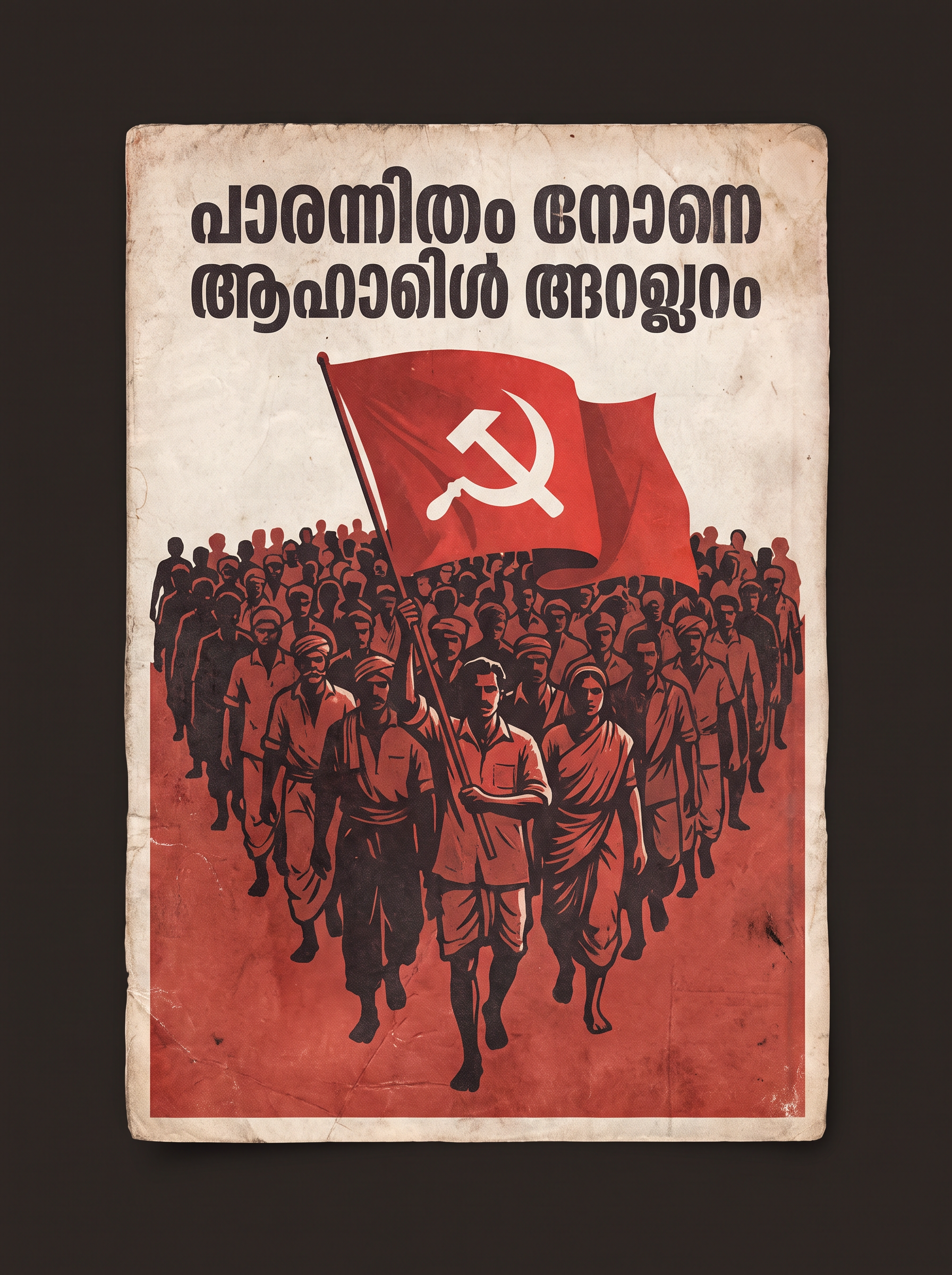
Fig. 2.19 – A Communist Party poster in Malayalam.
Soon after Independence, the party thought that the transfer of power in 1947 was not true independence, and encouraged violent uprisings in Telangana. The Communists failed to generate popular support for their position, and were crushed by the armed forces. This forced them to rethink their position.
In 1951 the Communist Party abandoned the path of violent revolution and decided to participate in the approaching general elections. In the first general election, the CPI won 16 seats and emerged as the largest opposition party. The party’s support was more concentrated in Andhra Pradesh, West Bengal, Bihar and Kerala.
A. K. Gopalan, S.A. Dange, E.M.S. Namboodiripad, P.C. Joshi, Ajay Ghosh and P. Sundarraya were among the notable leaders of the CPI. The Party went through a major split in 1964, following the ideological rift between the Soviet Union and China. The pro-Soviet faction remained as the CPI, while the opponents formed the CPI(M). Both these parties continue to exist to this day.
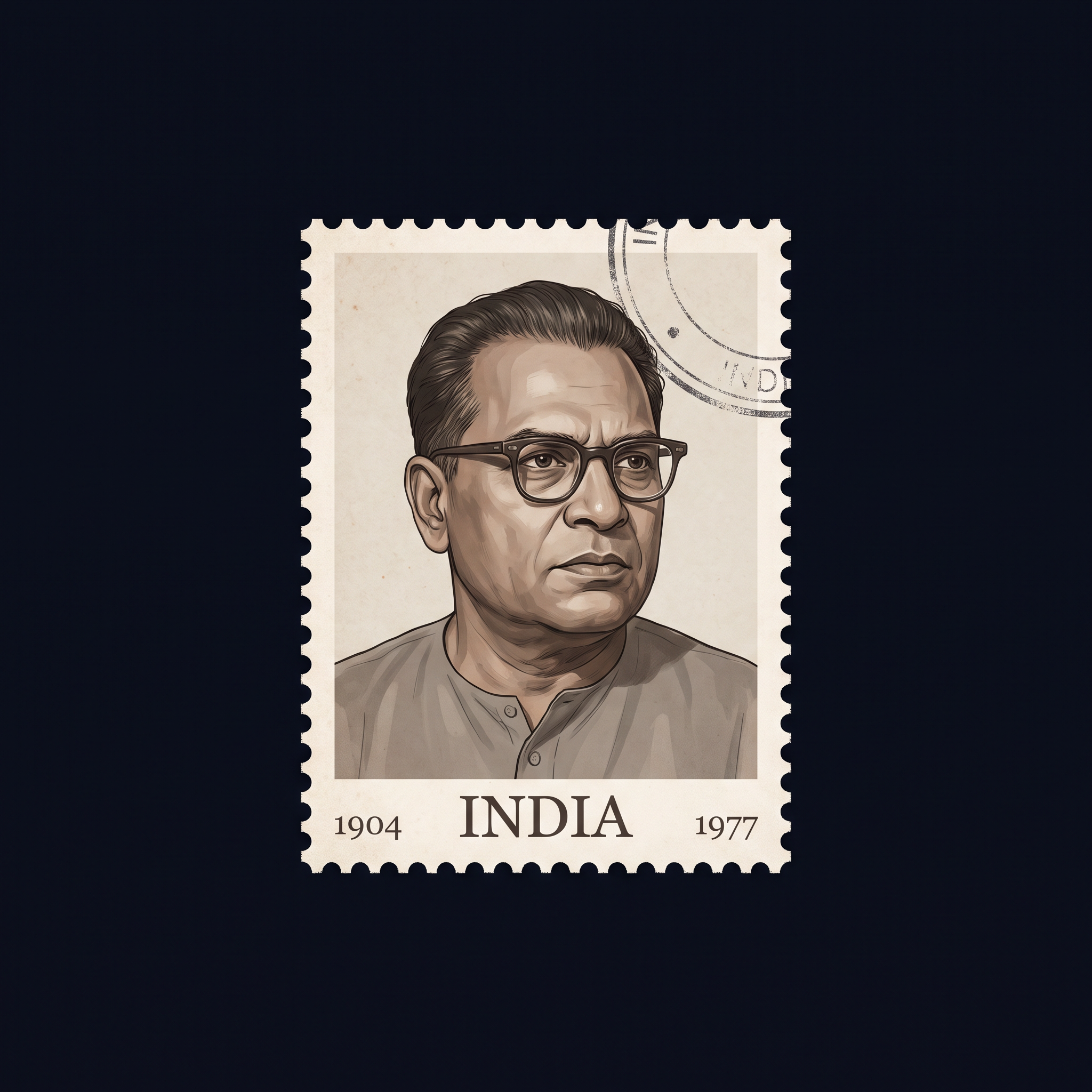
Fig. 2.20 – A. K. Gopalan, 1904 to 1977.
The Bharatiya Jana Sangh
The Bharatiya Jana Sangh was formed in 1951 with Shyama Prasad Mukherjee as its founder-President. Its lineage, however, can be traced back to the Rashtriya Swayamsevak Sangh (RSS) and the Hindu Mahasabha before Independence.
The Jana Sangh was different from other parties in terms of ideology and programmes. It emphasised the idea of one country, one culture and one nation, and believed that the country could become modern, progressive and strong on the basis of Indian culture and traditions.
The party called for a reunion of India and Pakistan in Akhand Bharat. It was in the forefront of the agitation to replace English with Hindi as the official language of India — the language in which the government of the country conducts its own business — and was also opposed to the granting of concessions to religious and cultural minorities. The party was a consistent advocate of India developing nuclear weapons, especially after China carried out its atomic tests in 1964.
In the 1950s the Jana Sangh remained on the margins of electoral politics. It was able to secure only 3 Lok Sabha seats in the 1952 elections and 4 seats in the 1957 general elections to the Lok Sabha. In the early years its support came mainly from the urban areas in the Hindi speaking states like Rajasthan, Madhya Pradesh, Delhi and Uttar Pradesh.
The party’s leaders included Shyama Prasad Mukherjee, Deen Dayal Upadhyaya and Balraj Madhok. The Bharatiya Janata Party traces its roots to the Bharatiya Jana Sangh.
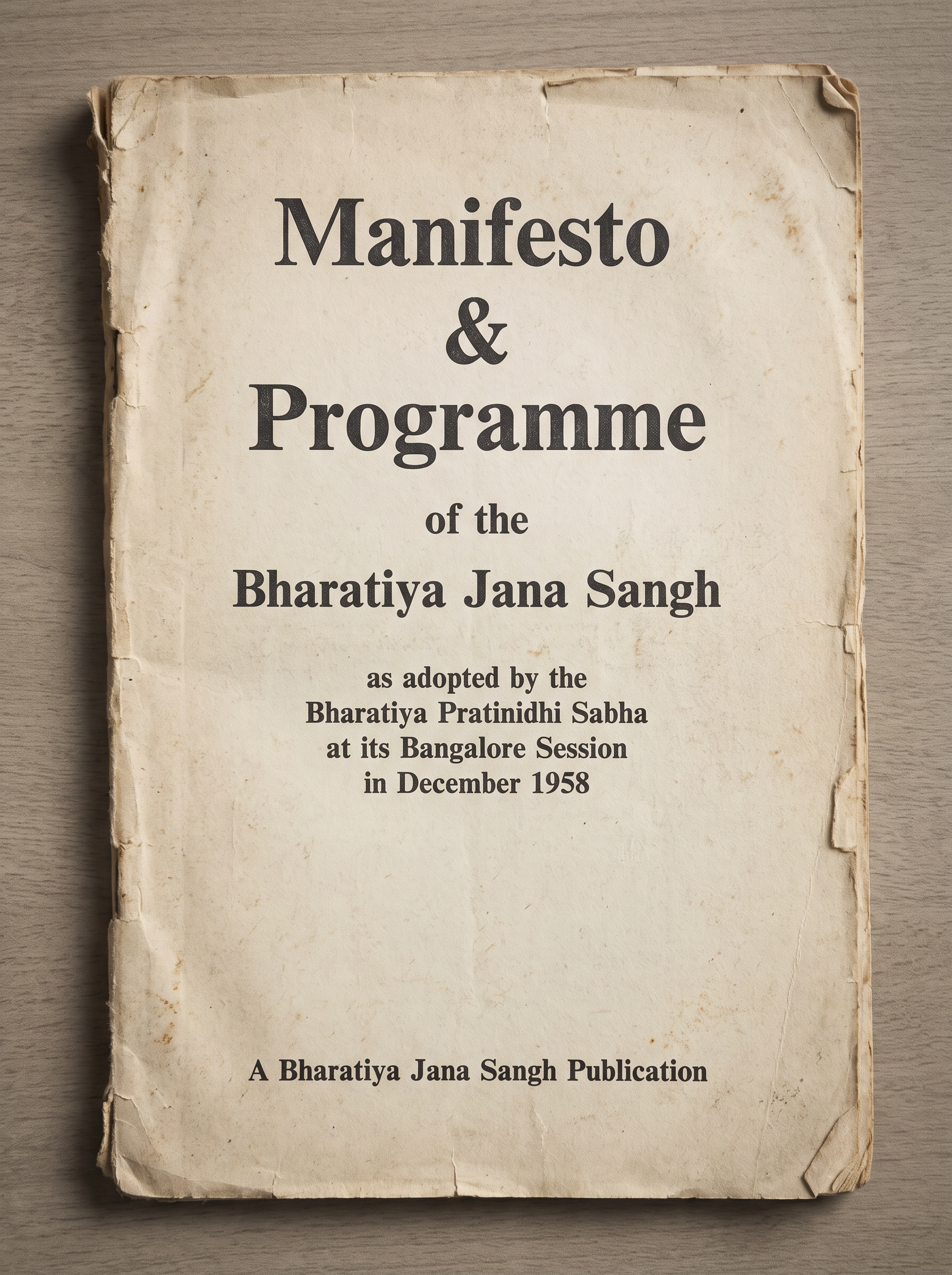
Fig. 2.21 – The manifesto of the Bharatiya Jana Sangh.
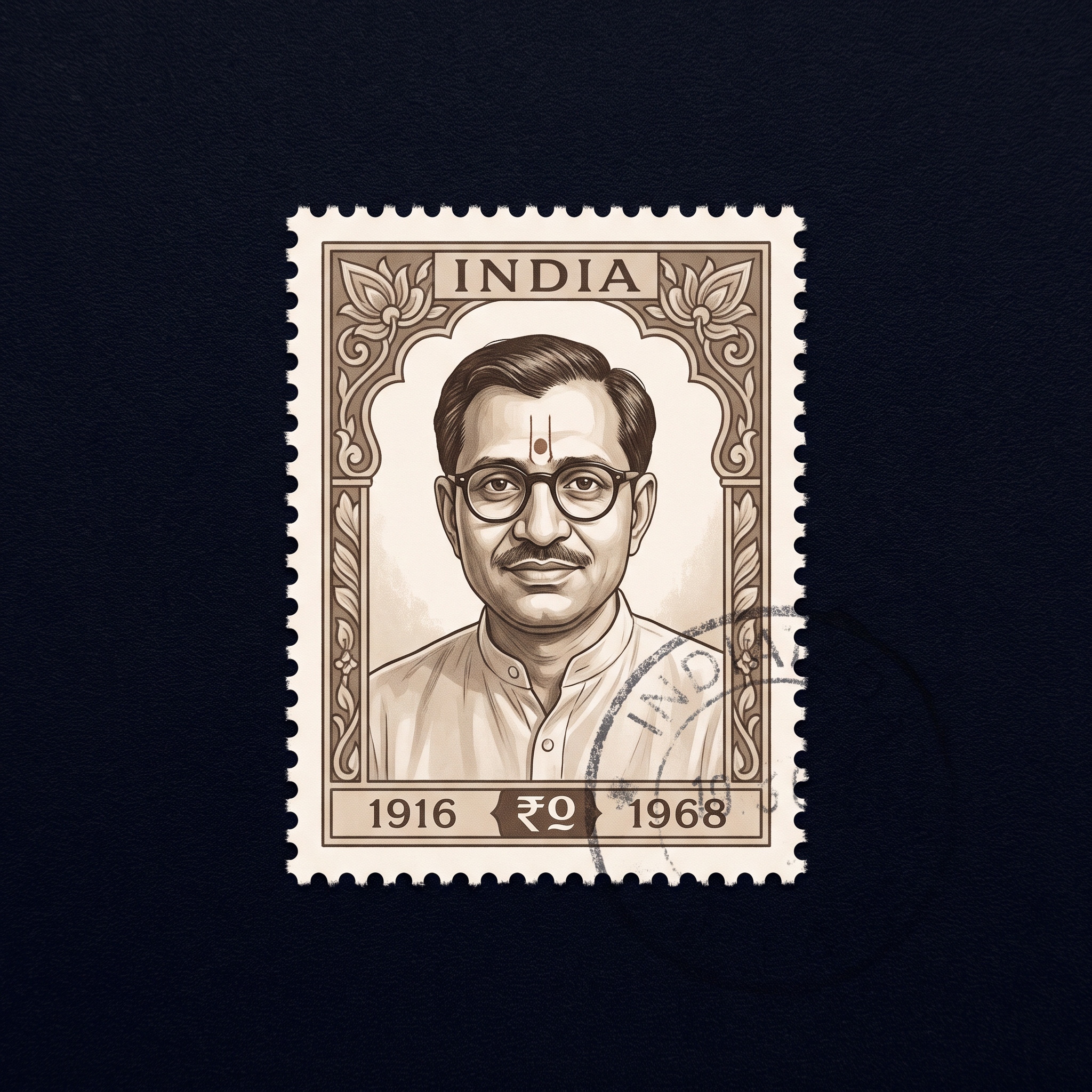
Fig. 2.22 – Deen Dayal Upadhyaya, 1916 to 1968.
Why A Small Opposition Mattered
All these opposition parties succeeded in gaining only a token representation in the Lok Sabha and the state assemblies during this period. Yet their presence played a crucial role in maintaining the democratic character of the system.
These parties offered a sustained and often principled criticism of the policies and practices of the Congress party. This kept the ruling party under check, and often changed the balance of power within the Congress — remember that the Congress was made of factions, and a criticism from outside could strengthen one faction against another.
By keeping a democratic political alternative alive, these parties prevented the resentment with the system from turning anti-democratic. A citizen who is angry with the government, but can see another party ready to govern, has somewhere to take that anger. These parties also groomed the leaders who were to play a crucial role in the shaping of our country.
Adversaries, Not Enemies
In the early years there was a lot of mutual respect between the leaders of the Congress and those of the opposition.
The interim government that ruled the country between the declaration of Independence and the first general election included opposition leaders like Dr Ambedkar and Shyama Prasad Mukherjee in the cabinet. Jawaharlal Nehru often referred to his fondness for the Socialist Party, and invited socialist leaders like Jayaprakash Narayan to join his government.
This kind of personal relationship with, and respect for, political adversaries declined after party competition grew more intense.
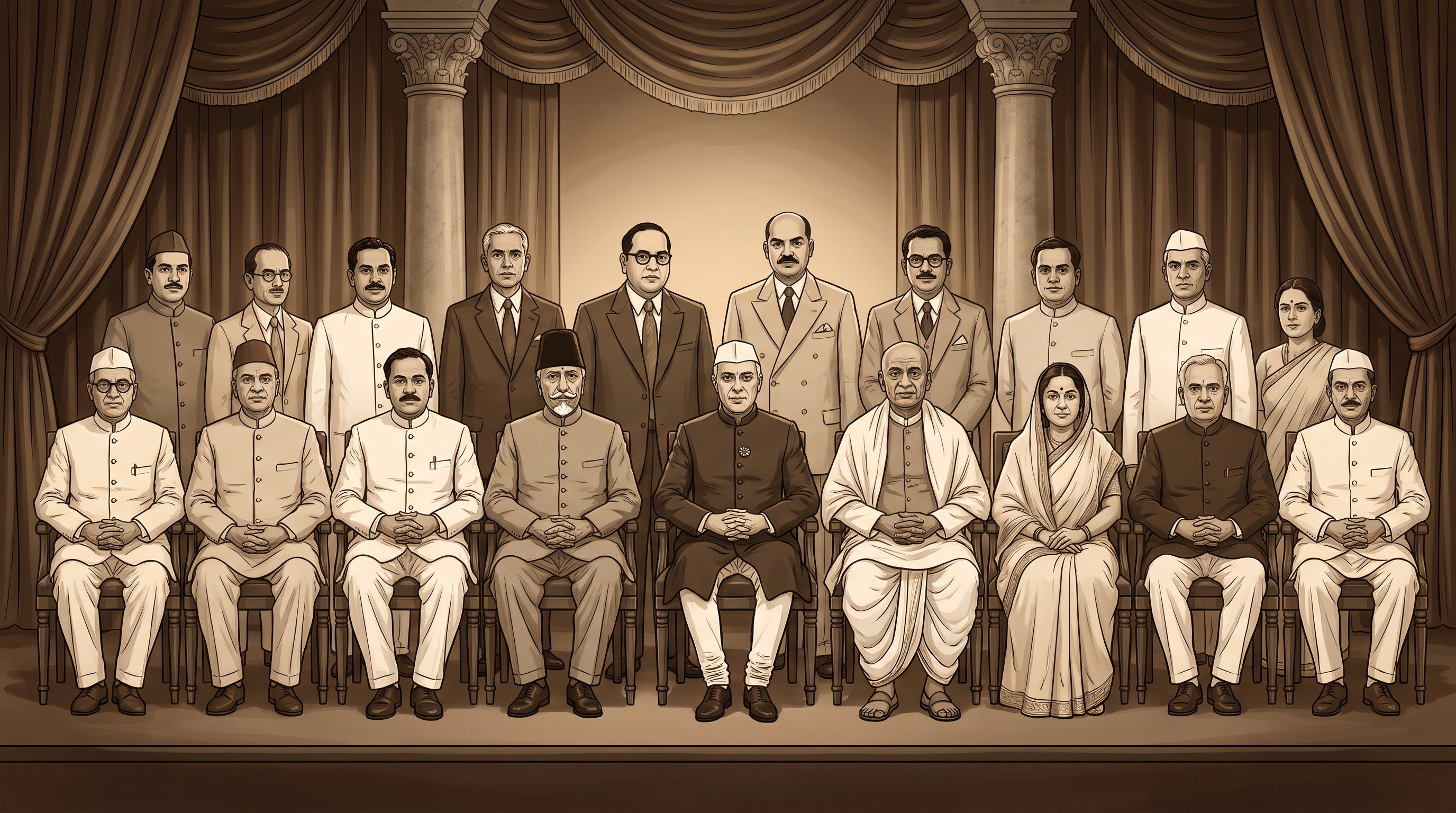
Fig. 2.23 – Nehru’s Cabinet in 1948.
Study the photograph against everything you have just read. In one row sit the Prime Minister and men who would soon be counted among his critics. Behind them stand Dr Ambedkar, who would resign in 1951, and Shyama Prasad Mukherjee, who would resign in 1950 and found a party against the Congress the following year.
A photograph freezes an arrangement of people on one afternoon. It cannot tell you what any of them thought of the others, or how long the arrangement would hold. For that you need what they wrote — and Nehru wrote a great deal, including this, after the Congress chose a president against his wishes.
Read that carefully, because it cuts against the picture of an all-powerful leader. The most popular politician in the country writes privately that his own party has preferred someone else, and that he considers his usefulness finished. The competition described in this chapter was real. It simply ran inside the Congress.
Now the limit. This is one private letter, written to a friend at a moment of defeat, and people write differently when they are stung. It records what Nehru said he felt on that day. It does not tell you what he did next, or how the quarrel ended. A letter is evidence of a mood, not of an outcome.
One Phase, Not The Whole Story
Thus this first phase of democratic politics in our country was quite unique.
The inclusive character of the national movement led by the Congress enabled it to attract different sections, groups and interests, making it a broad based social and ideological coalition. The key role of the Congress in the freedom struggle thus gave it a head start over others.
As the ability of the Congress to accommodate all interests and all aspirants for political power steadily declined, other political parties started gaining greater significance. Dominance, in other words, rested on a capacity — and that capacity wore out.
Thus, Congress dominance constitutes only one phase in the politics of the country. We shall come to the other phases in later parts of this textbook.
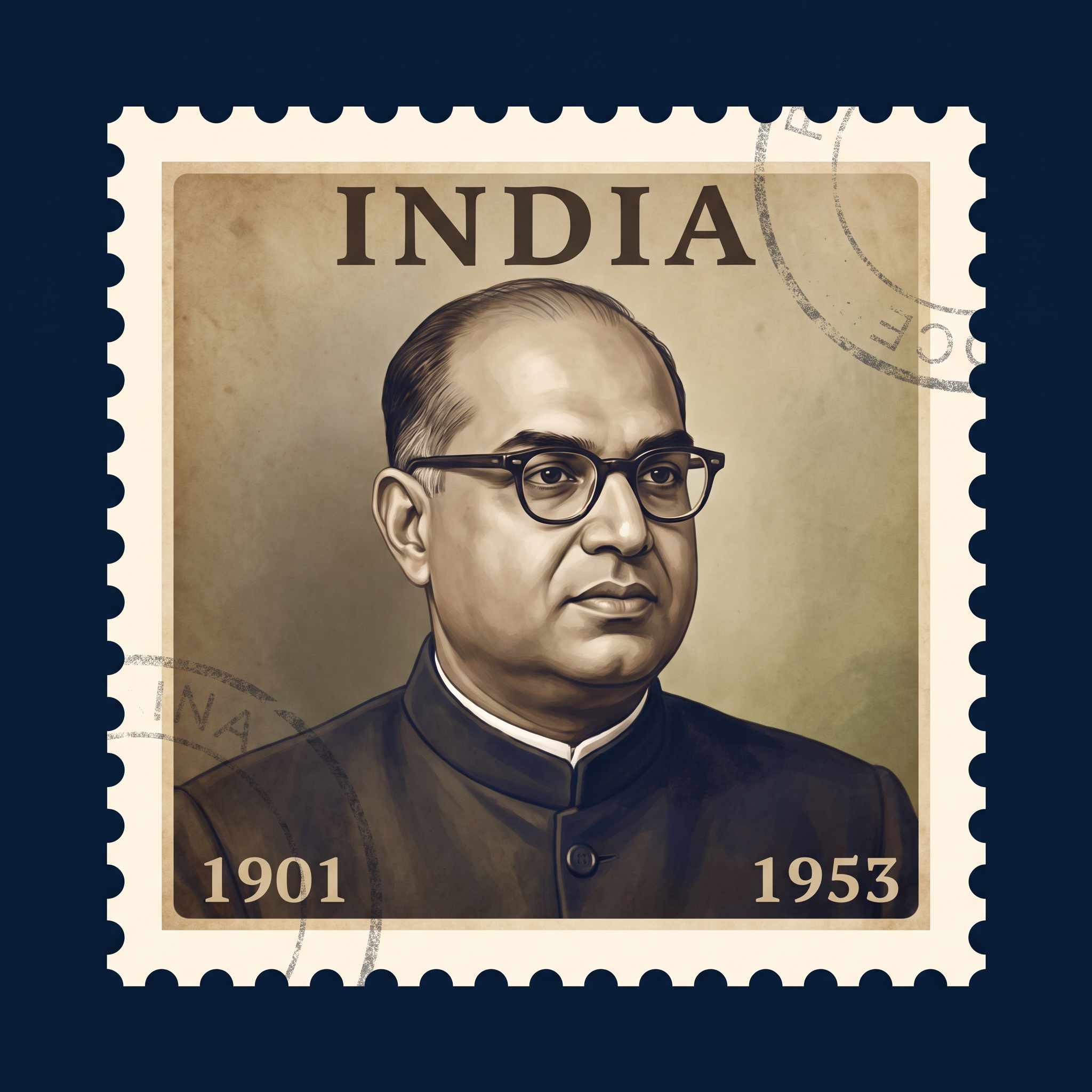
Fig. 2.24 – Shyama Prasad Mukherjee, 1901 to 1953.
2.6 Summary
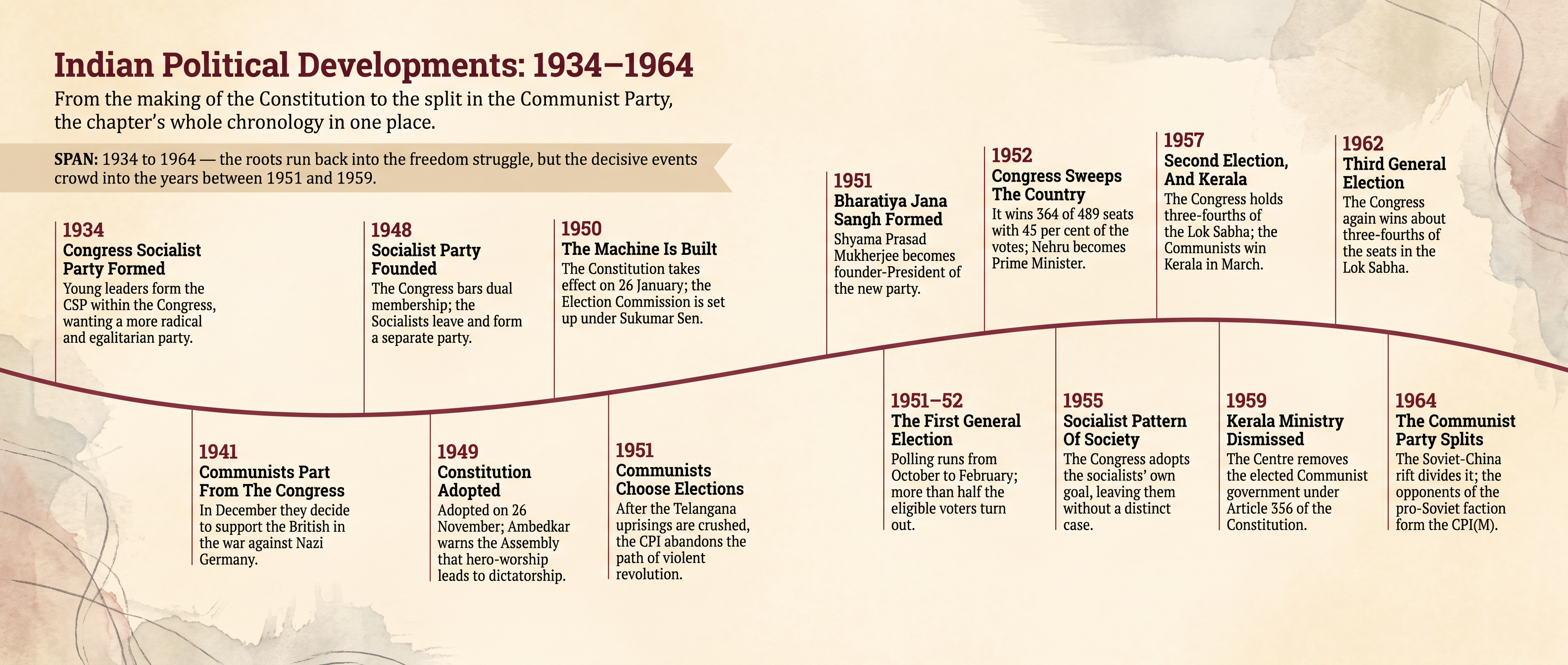
Fig. 2.25 – The First Decade Of Electoral Politics.
2.7 NCERT Questions
Choose the correct option to fill in the blanks.
- The First General Elections in 1952 involved simultaneous elections to the Lok Sabha and …………………. (The President of India / State Assemblies / Rajya Sabha / The Prime Minister)
- The party that won the second largest number of Lok Sabha seats in the first elections was the …………………. (Praja Socialist Party / Bharatiya Jana Sangh / Communist Party of India / Bharatiya Janata Party)
- One of the guiding principles of the ideology of the Swatantra Party was …………………. (Working class interests / protection of Princely States / economy free from State control / Autonomy of States within the Union)
Match the following leaders listed in List A with the parties in List B.
List A List B a. S. A. Dange i. Bharatiya Jana Sangh b. Shyama Prasad Mukherjee ii. Swatantra Party c. Minoo Masani iii. Praja Socialist Party d. Asoka Mehta iv. Communist Party of India Four statements regarding one-party dominance are given below. Mark each of them as true or false.
- One-party dominance is rooted in the absence of strong alternative political parties.
- One-party dominance occurs because of weak public opinion.
- One-party dominance is linked to the nation’s colonial past.
- One-party dominance reflects the absence of democratic ideals in a country.
Take a political map of India (with State outlines) and mark:
- two states where Congress was not in power at some point during 1952-67.
- two states where the Congress remained in power through this period.
Read the following passage and answer the questions below: Patel, the organisational man of the Congress, wanted to purge the Congress of other political groups and sought to make of it a cohesive and disciplined political party. He …. sought to take the Congress away from its all-embracing character and turn it into a close-knit party of disciplined cadres. Being a ‘realist’ he looked more for discipline than for comprehension. While Gandhi took too romantic a view of ‘carrying on the movement,’ Patel’s idea of transforming the Congress into strictly political party with a single ideology and tight discipline showed an equal lack of understanding of the eclectic role that the Congress, as a government, was to be called upon to perform in the decades to follow. — Rajni Kothari
- Why does the author think that Congress should not have been a cohesive and disciplined party?
- Give some examples of the eclectic role of the Congress party in the early years.
- Why does the author say that Gandhi’s view about Congress’ future was romantic?
Let us do it together. Make a chart of elections and governments in your State since 1952. The chart could have the following columns: year of election, name of the winning party, name of ruling party or parties, name of the Chief Minister(s).
2.8 Check Your Concepts
- Preparing for the first general election took far longer than the few months that were expected. Explain two of the tasks that made it so difficult, and describe the decision the Election Commission took when it found nearly 40 lakh women entered on the rolls without their own names.
- Read Source 2.2 again. List three things the presiding officer had to do before polling day, and explain why each was necessary for a fair election. Then state one thing this source cannot tell you about how the election was conducted elsewhere in India.
- In 1952 the Congress obtained 45 per cent of the votes and won 74 per cent of the seats, while the Socialist Party secured more than 10 per cent of the votes and less than three per cent of the seats. Explain, step by step, how the first-past-the-post method produced this outcome.
- Look carefully at Fig. 2.16. What claim is the cartoonist making about the relative strength of the government and the opposition in 1954? Name one thing that a cartoon, by its nature, cannot show you about that relationship.
- Reconstruct, in order, what happened in Kerala between March 1957 and 1959. Why was the dismissal of the state government in 1959 described as one of the prominent instances of the misuse of constitutional emergency powers?
- The chapter says that Congress dominance was different from one-party rule in countries such as China, Cuba, Syria, Myanmar, Belarus, Egypt and Eritrea. Set out that difference clearly. Then explain why the case of the African National Congress in South Africa is offered as a closer comparison.
- In Source 2.1, Dr Ambedkar warns the Constituent Assembly against hero-worship in politics. State his argument in two steps. Then identify one piece of evidence from elsewhere in this chapter that could be used to test whether his warning was justified.
- After 1955 the Socialist Party found it hard to present itself as an effective alternative to the Congress. Explain why. What does this difficulty tell you about the problem of opposing a party that works like a coalition?