Chapter 3: Politics Of Planned Development
Between 1955 and 1968, the Government of India printed a run of postage stamps that a student today would find strange. They are not portraits of leaders. They are pictures of things being built.
A dam across the Damodar valley. The Bhakra dam, printed twice. A locomotive from Chittaranjan. A refinery at Gauhati. A tractor. The fertiliser works at Sindri. An electric train. Ears of wheat. An aircraft factory. For a few paise you could buy one at a post office, lick it, and send it across the country on an ordinary letter.
A government does not choose such images casually. Together these stamps make a claim, and the claim is this: development looks like steel, water, machinery and grain — and the body building it is the state itself.
But look again. A dam is never only a dam. Water rises behind it, and it rises over land where fields and homes once stood. A steel plant needs iron ore, and ore lies under somebody’s ground. Wheat and steel compete for the same rupee. Every one of these small coloured squares is the end of an argument that somebody won and somebody else lost.
Those arguments could not be settled by engineers or economists alone. They had to be settled politically — by governments, parties and voters. This chapter is about how India argued, and what it decided.
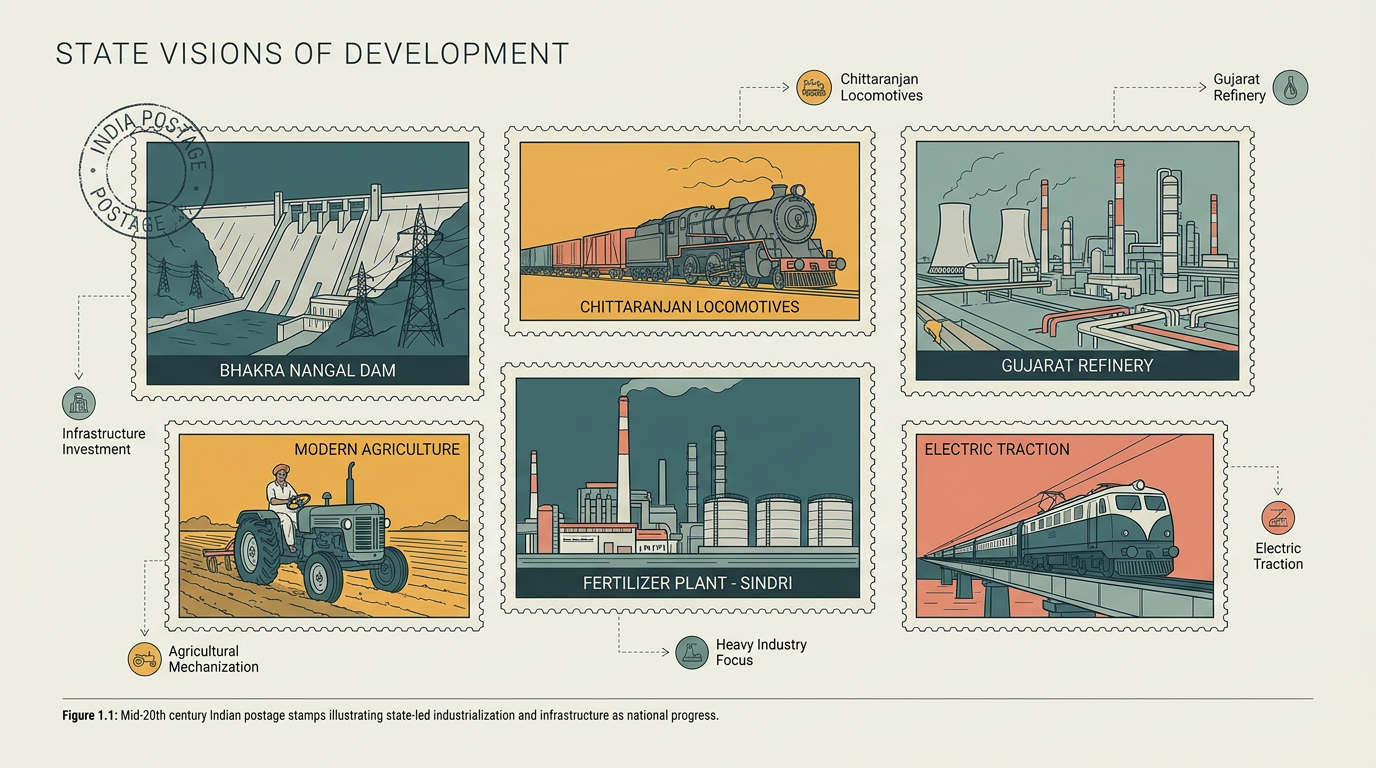
Fig. 3.0 – Postage stamps showing a vision of planned development.
3.1 Political Contestation
A Steel Plant In Orissa
Orissa, a state on India’s eastern coast facing the Bay of Bengal, holds one of the largest reserves of untapped iron ore in the country. In the middle of the 2000s, as global demand for steel rose, the state began to be seen as an important destination for investment. Ore that had lain unused for centuries suddenly had buyers.
The State government hoped to cash in on this unprecedented demand. It signed a Memorandum of Understanding (MoU) — a written agreement setting out what each side intends to do before a project actually begins — with both international and domestic steel makers. The government believed this would bring in the capital investment the state badly needed, and a great many jobs with it.
The difficulty lies in where the ore is. India’s iron ore reserves in Orissa sit in some of the most underdeveloped and predominantly tribal districts of the state. So the people living directly above the ore were not the people negotiating for it.
Four Interests, One Piece Of Land
The tribal population feared that setting up industries would mean displacement from their home and their livelihood. A mine or a plant needs the land itself; the people on it have to move, and what they lose — fields, forest, a village — is not easily replaced by a wage.
The environmentalists feared that mining and industry would pollute the environment. Their concern was not only for the people living there now, but for what the land, air and water would be like long after the ore ran out.
The central government took a third position. It felt that if the industry was not allowed, it would set a bad example and discourage investment in the country as a whole. On this view, what was at stake was not one plant in one district but India’s reputation as a place where an investor’s agreement is honoured.
So four interests met on the same piece of ground: a State government wanting revenue and jobs, a company wanting ore, villagers wanting to stay where they are, and a central government watching the signal the decision would send. Each has a case. None of them can have everything.
Villagers On The Street
The disagreement did not stay on paper. A newspaper report from June 2006 records what it looked like when people acted on it. Read it for what it can tell you, and then for what it cannot.
Take the report apart. POSCO-India is the Indian arm of a Korean steel company. Jagatsinghpur is a coastal district of Orissa. A gram panchayat is the elected village-level body of local government — so the protesters were not a stray crowd but people from three named, self-governing villages. Their demand was precise: cancel the MoU signed a year earlier between the company and the State government. And two organisations, the Rashtriya Yuva Sangathan and the Nabanirman Samiti, did the work of bringing them together. Protest, in a democracy, is usually organised by somebody.
Now the limit. This report tells you that more than a hundred people came out on one Thursday, what they said, and that the police stopped them at the gate. It cannot tell you how many people in those three villages stayed at home, or why. It cannot tell you whether a young person in Jagatsinghpur hoping for a job in the plant agreed with the marchers or resented them. It does not carry the company’s reply, or the State government’s, and it says nothing about what happened afterwards. A news report is a record of one day, written by someone who was standing in one place. It is evidence, and it is partial evidence.
Why An Expert Cannot Settle It
These questions cannot be answered by an expert. That is not because experts are ignorant; it is because the question is not the kind that expertise answers. Decisions of this kind involve weighing the interests of one social group against another, and the present generation against future generations. There is no instrument that measures a village against a steel plant.
In a democracy, major decisions of this kind should be taken — or at the very least approved — by the people themselves. It is important to take advice from experts on mining, from environmentalists and from economists, because a decision made in ignorance of the facts is not a decision but a guess. Yet the final decision must be a political one, taken by people’s representatives, who are in touch with the feelings of the people.
Here, then, is the meaning of political contestation: an open, continuing conflict between groups with different interests over a public decision, settled not by proof but by argument, negotiation and the verdict of voters.
The Decisions India Had To Make
After Independence, our country had to make a long series of major decisions like this one. Where should a dam go? Should steel come before wheat? Who should own a coal mine? Each of these decisions carried a cost for someone, and a gain for someone else.
None of them could be made independent of the others. All of them were bound together by a shared vision, or model, of economic development. A country that has decided to build heavy industry first has already, without saying so, decided what it will not build first.
What Was Agreed, And What Was Not
Almost everyone agreed that the development of India should mean two things together: economic growth, and social and economic justice. Growth alone was not the goal. A richer India that left the poor exactly where they were would not have counted as a success.
It was also agreed that this matter could not be left to businessmen, industrialists and farmers themselves. The government would have to play a key role. So far, the consensus held.
The disagreement began at the next question: what kind of role? Was it necessary to have a centralised institution to plan for the entire country? Should the government itself own and run some key industries and businesses, or only regulate those who did? And how much importance should be attached to the needs of justice, in the cases where justice pulled against the requirements of economic growth?
Each of these questions involved contestation, and that contestation has continued ever since. Each decision had a political consequence. Most of these issues required political judgement, consultation among political parties, and the approval of the public. That is precisely why the process of development has to be studied as part of the history of politics in India, and not only as a chapter in economics.
Left And Right
In the politics of most countries you will come across references to parties and groups with a Left or a Right ideology, or leaning. These terms describe where a group stands on social change, and on the role the state should play in redistributing wealth.
The Left refers to those who favour state control of the economy, and prefer state regulation to free competition. The Right refers to those who believe that free competition and a market economy alone ensure progress, and that the government should not intervene in the economy unnecessarily.
Notice that this is a spectrum, not a pair of boxes. A party may want the state to own steel plants and still leave farming to the market. Keep the two words in hand: you will need them for the rest of this chapter, and for the rest of this book.
3.2 Ideas Of Development
The Word Everyone Agrees On
Very often the contestation involves the very idea of development itself. The example of Orissa shows us that it is not enough to say that everyone wants development. Everyone does. The trouble starts the moment you ask what they mean by it.
For ‘development’ has different meanings for different sections of the people. It means one thing to an industrialist who is planning to set up a steel plant, another to an urban consumer of steel, and something else again to the Adivasi — a member of India’s tribal communities — who lives in the region where the ore is dug. The industrialist sees a plant. The consumer sees cheaper steel. The Adivasi sees the place where their family has always lived.
Thus any discussion on development is bound to generate contradictions, conflicts and debates. A word that everyone accepts, and no two people define alike, is not agreement. It is disagreement waiting to be discovered.
The West As The Measuring Rod
The first decade after Independence witnessed a great deal of debate around this question. It was common then, as it is even now, for people to refer to the ‘West’ as the standard for measuring development.
The reasoning ran like this. ‘Development’ was about becoming more ‘modern’, and being modern was about becoming more like the industrialised countries of the West. This is how common people thought, and it is how the experts thought too.
Modernisation, on this view, was a single road that every country would travel. It involved the breakdown of traditional social structures — old ties of caste, custom and village hierarchy — and the rise of capitalism and liberalism in their place. Modernisation was also associated with the ideas of growth, material progress and scientific rationality.
Notice what this idea of development permits. If there is one road, then every country can be placed somewhere along it. That is exactly how the world began to be sorted into countries that were developed, developing or underdeveloped.
But if you are alert, an awkward question is already forming. Are we saying that a country cannot be modern unless it becomes Western? Is that even possible? Hold that question. India’s leaders were asking it too.
Two Models On Offer
On the eve of Independence, India had two models of modern development before it. The first was the liberal-capitalist model, as in much of Europe and the United States, where private individuals and firms own most businesses and the market, rather than the state, decides what gets produced. The second was the socialist model, as in the USSR — the Soviet Union — where the state owned the key industries and directed the economy through a plan.
You have already studied these two ideologies, and read about the ‘cold war’ between the two superpowers, the United States and the Soviet Union, which pulled much of the world into one camp or the other.
There were many in India then who were deeply impressed by the Soviet model of development. These included not just the leaders of the Communist Party of India, but also those of the Socialist Party, and leaders like Jawaharlal Nehru inside the Congress itself. Supporters of American-style capitalist development were very few.
The Consensus Of The National Movement
This was not a sudden enthusiasm. It reflected a broad consensus that had developed during the national movement itself.
The nationalist leaders were clear about one thing. The economic concerns of the government of free India would have to be quite different from the narrowly defined commercial functions of the colonial government. The colonial state had collected revenue, kept order and served British trade; ending Indian poverty was never its business. A free India’s government would have to make it its business.
It was clear, moreover, that the task of poverty alleviation and of social and economic redistribution was being seen primarily as the responsibility of the government. Not of charity. Not of the market. Of the state.
Within that agreement, there were debates. For some, industrialisation seemed to be the preferred path: build factories, and prosperity would spread outward from them. For others, the development of agriculture, and in particular the alleviation of rural poverty, was the priority: feed the villages first, where almost everyone actually lived. That argument does not end in this section. It runs through the whole of this chapter.
3.3 Planning
The One Point Of Agreement
Despite all the differences you have just read about, there was a consensus on one point. Development could not be left to private actors alone. The government would have to draw up a design, or plan, for development.
That word deserves a moment. Planning here means a government drawing up, in advance and for the whole country, a design that sets out what should be produced, where investment should go, and in what order. A plan does not merely predict the future. It decides it.
The man who did more than anyone to put planning at the centre of Indian government was the Prime Minister himself.
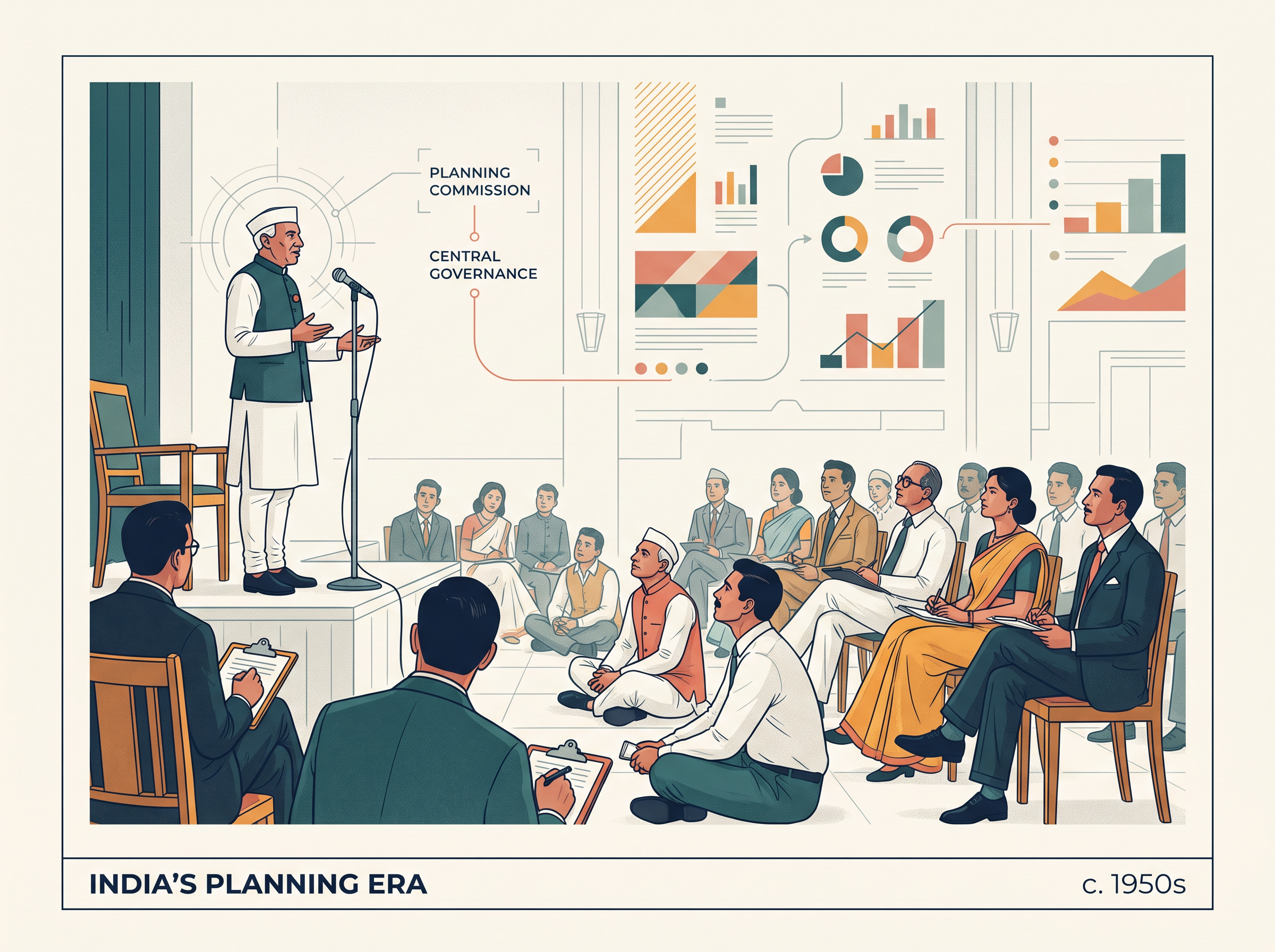
Fig. 3.1 – Nehru addressing the staff of the Planning Commission.
The Commission The Constitution Never Made
Do you recall any reference to the Planning Commission in Constitution at Work, your book from last year? There was none. And that is not an oversight: the Planning Commission is not one of the many commissions and other bodies set up by the Constitution.
So where did it come from? The Planning Commission was set up in March 1950 by a simple resolution of the Government of India — an executive decision, not a constitutional provision and not an Act of Parliament. Its role was advisory. Its recommendations became effective only once the Union Cabinet, the group of senior ministers headed by the Prime Minister that takes the government’s major decisions, had approved them.
On paper, then, this was a modest body. In practice it became something else entirely, as you will see in a moment.
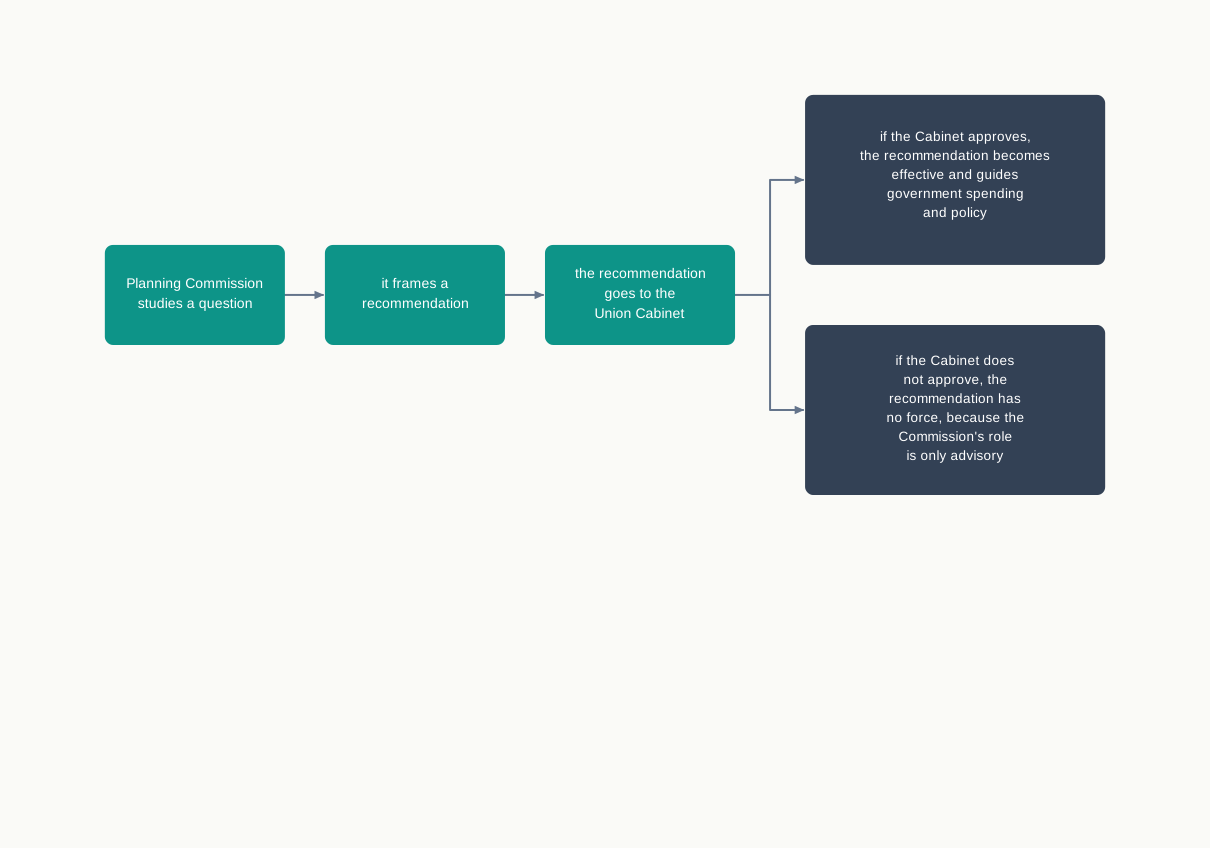
Fig. 3.2 – How a Planning Commission recommendation took effect.
What The Resolution Promised
The resolution that set up the Commission defined the scope of its work. It did so by reaching straight for the Constitution — not for a power the Constitution gives, but for the goals the Constitution sets. Read it slowly; the language is formal, and the gaps marked by dots are in the original.
Unpack the three clauses. Clause (a) says that men and women alike should have an adequate means of livelihood — that is, a way of earning enough to live on. Clause (b) says that the community’s material resources — its land, its minerals, its water — should be shared out so as to serve the common good, and not merely whoever gets there first. Clause (c) says the economic system must not end up concentrating wealth and the means of production in a few hands, to everyone else’s harm.
Notice the source of these words. They are the language of the Directive Principles of State Policy, the goals the Constitution sets for the state without making them enforceable in a court. The resolution is borrowing the Constitution’s moral authority for a body the Constitution never mentions.
Now the limit. This document tells you what the Commission was asked to aim at in 1950. It cannot tell you what the Commission actually did, or whether wealth in fact stopped concentrating, or whether any villager’s livelihood improved. A founding resolution records an intention, and an intention is not an outcome. It is fair, reading this, to wonder whether the Planning Commission ever followed these objectives in practice — and to notice that this document, by itself, cannot settle that.
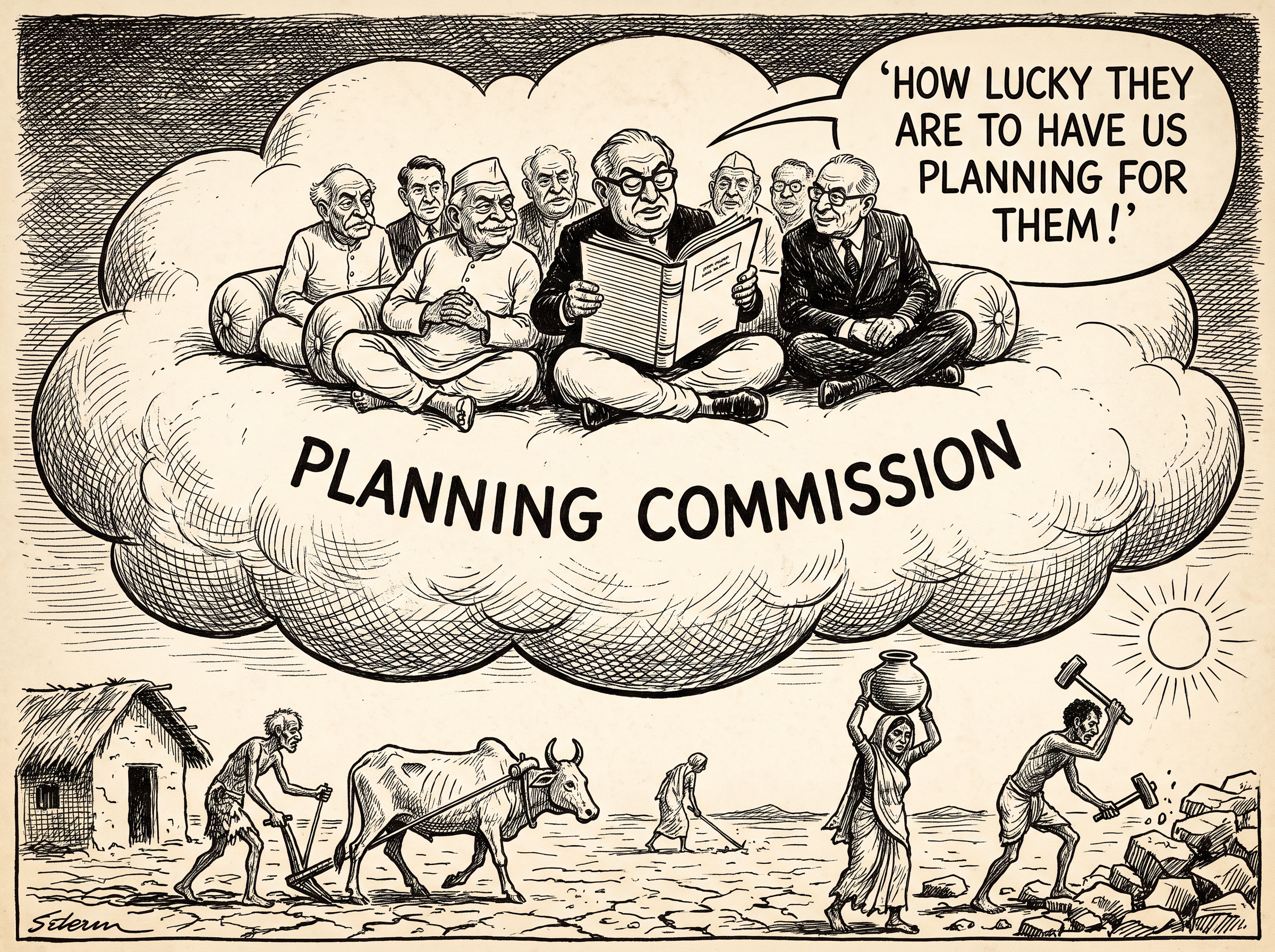
Fig. 3.3 – The Planning Commission sits on a cloud, planning for the village below. Inspiration: Ninan.
Decode the drawing. The men and women on the cloud are the planners; the cloud itself is the joke, because a cloud is exactly as far from the ground as an official file is from a field. The cartoonist has drawn them looking pleased with themselves, and has put the word ‘lucky’ in their mouths — a word the people below have plainly not used. The exaggeration makes one claim: that those who planned for India’s poor lived at a great distance from them, and did not notice.
And the limit. A cartoon makes one point in one frame; it cannot draw the reply. It cannot show what planning did build, and it cannot tell you whether a body sitting in Delhi might see something about the whole country that no single village could see. This is an opinion, sharply drawn. It is not a verdict.
Much later, the Government of India replaced the Planning Commission with a new institution named NITI Aayog, the National Institution for Transforming India, which came into existence on 1 January 2015. Its objectives and composition are set out on its website, at http://niti.gov.in — find out what they are, and ask yourself what has changed.
Why Planning Made Sense In The 1940s
None of this was an Indian eccentricity. The idea of planning as a way of rebuilding an economy earned a good deal of public support in the 1940s and 1950s all over the world.
Three experiences fed that support. The Great Depression in Europe had shown an unplanned market economy collapsing, throwing millions out of work. The inter-war reconstruction of Japan and Germany had shown states rebuilding shattered economies deliberately. And most of all, the Soviet Union had achieved spectacular economic growth against heavy odds in the 1930s and 1940s — a poor country turning itself into an industrial power, and doing it by plan.
The Bombay Plan: Planning From The Right
The Planning Commission was therefore not a sudden invention. It has a rather surprising history.
We commonly assume that private investors — big industrialists, large business entrepreneurs — are hostile to the whole idea of planning. We expect them to want an open economy, with no state control over the flow of capital. That was not what happened in India.
Rather, a section of the big industrialists got together in 1944 and drafted a joint proposal for setting up a planned economy in the country. It was called the Bombay Plan. Far from resisting the state, it wanted the state to take major initiatives in industrial and other economic investments.
Why would capitalists ask for that? Read it in their position. Building a steel plant or a power station needs enormous capital, and returns take decades. In a poor country with a thin capital market, no private firm could carry that risk alone — but every private firm would profit from the steel, the power and the railways once they existed.
So, from left to right, planning for development was the most obvious choice for the country after Independence. Soon after India became independent, the Planning Commission came into being, with the Prime Minister as its Chairperson. Whatever the resolution said about advice, this body became the most influential and central machinery for deciding what path and strategy India would adopt for its development.
3.4 The Early Initiatives
What A Five Year Plan Is
As in the USSR, the Planning Commission of India opted for five year plans, or FYPs. The idea is very simple. The Government of India prepares a document that sets out a plan for all its income and expenditure for the next five years.
Everything follows from that document. The budget of the central government and of all the State governments is divided into two parts. The ‘non-plan’ budget is spent on routine items on a yearly basis — salaries, upkeep, the ordinary running of the state. The ‘plan’ budget is spent on a five year basis, according to the priorities fixed by the plan.
A five year plan has one great advantage. It permits the government to lift its eyes from the coming twelve months, focus on the larger picture, and make long-term intervention in the economy. A dam, a steel plant or a railway line cannot be built inside one budget year. If a government can only think one year ahead, it can only build what can be finished in one year.
That is the case for planning. Its critics drew a different picture.
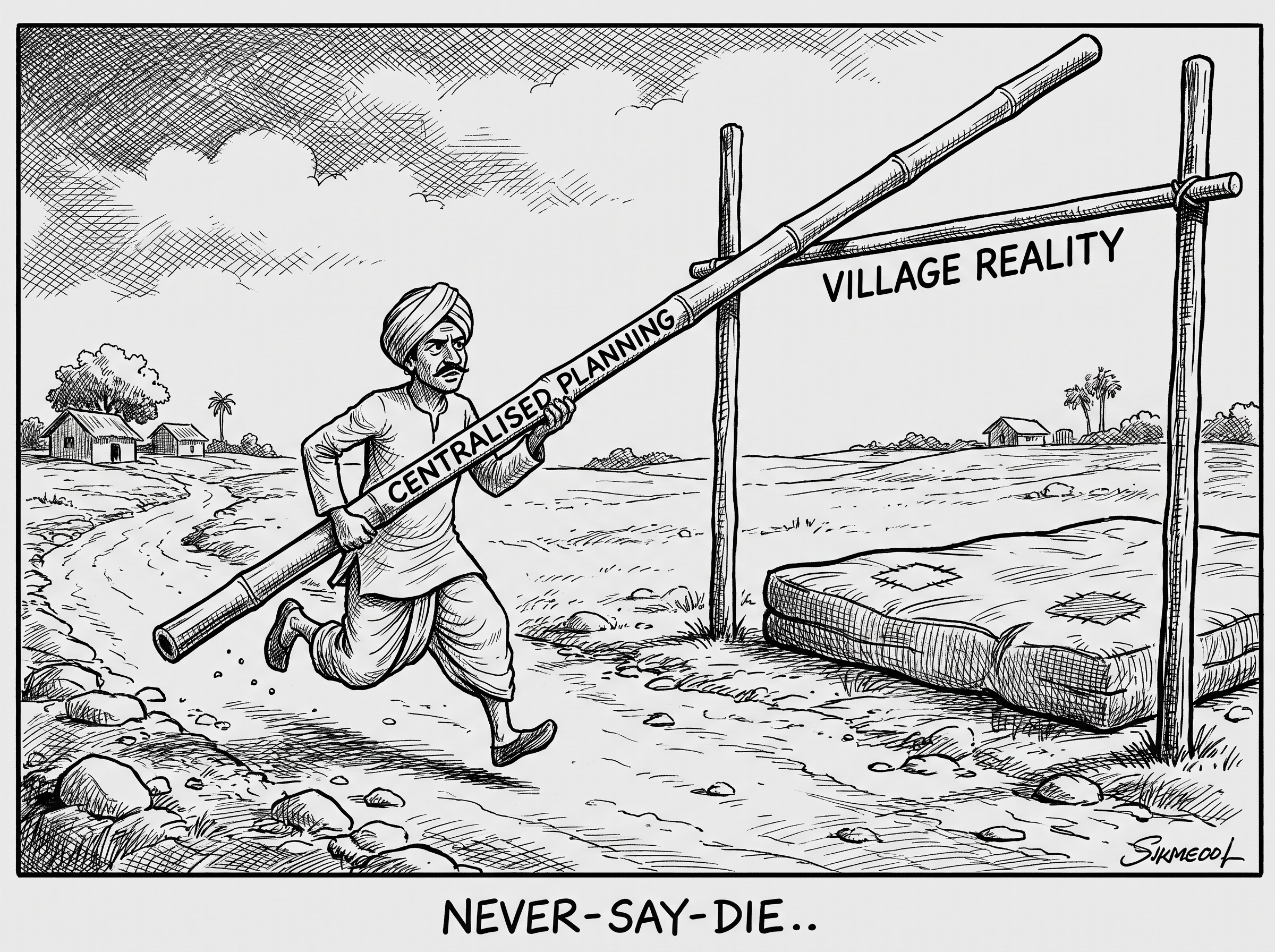
Fig. 3.4 – Centralised planning tries to clear the bar of village reality. Inspiration: Sudhir Dar/UNDP and Planning Commission.
Decode it. The athlete is the Indian state; the pole he is running with is centralised planning; the bar he must clear is what actually exists in the villages — poverty, small holdings, custom, distance. The joke is in the height of the bar and in the stones underfoot, and the caption is affectionate rather than cruel: he keeps trying. The cartoonist’s claim is that a plan drawn in Delhi is a long pole to vault village reality with, and that clearing it is far harder than the planners suppose.
And the limit. A cartoon can put a doubt in your mind in one second; it cannot argue. This one does not tell you whether the vaulter cleared the bar, or by how much he missed, or what the alternative to the pole would have been. It is a criticism of planning, drawn with sympathy — and it is still only a criticism, not a measurement.
The Excitement Of 1951
The draft of the First Five Year Plan, and then the actual Plan Document released in December 1951, generated a lot of excitement in the country. This was not a technical paper read by officials alone.
People from all walks of life discussed and debated the documents extensively — academics, journalists, government and private sector employees, industrialists, farmers, politicians. A plan for the nation’s income and expenditure was front-page news, and it was argued about the way a budget or an election is argued about.
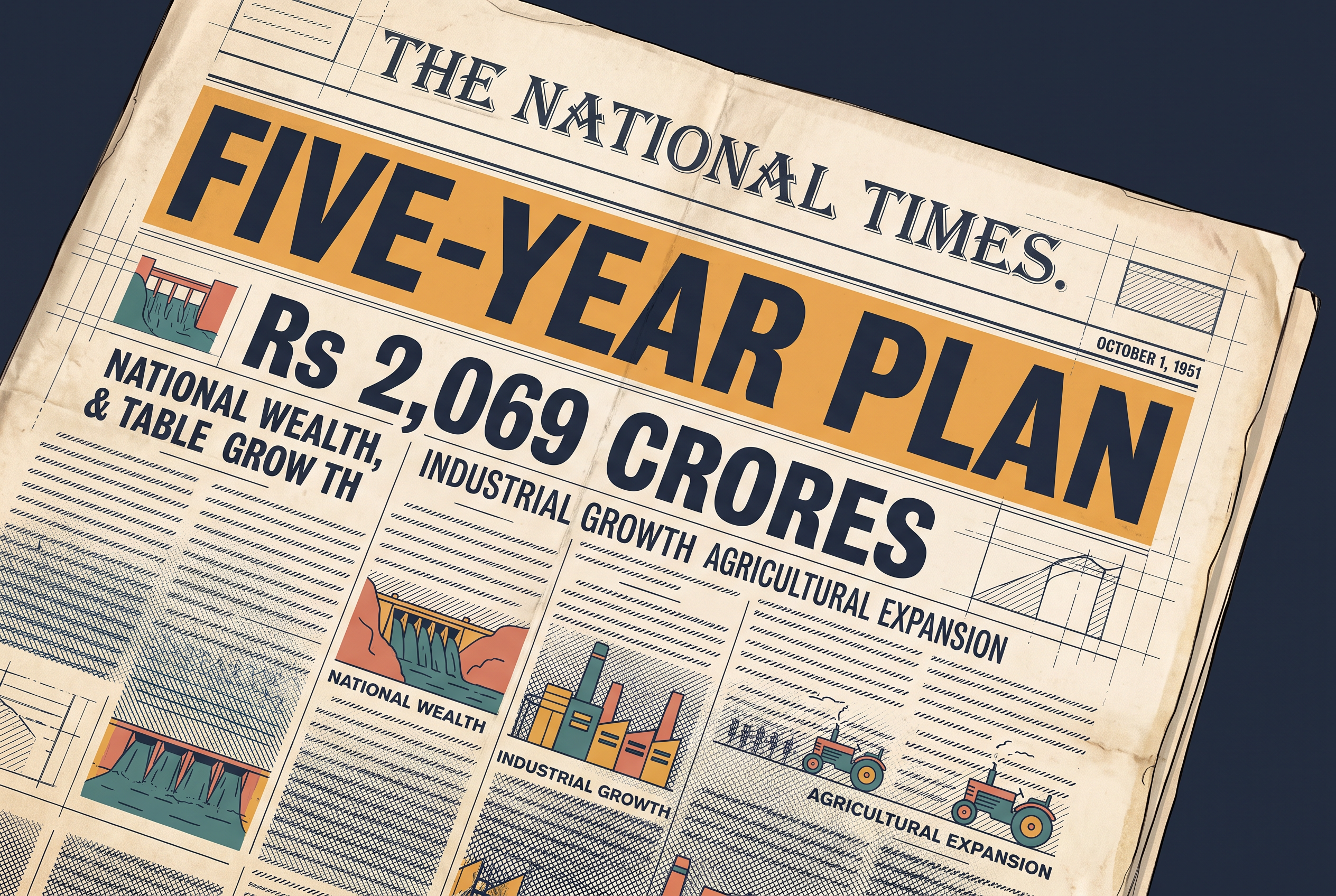
Fig. 3.5 – The First Five Year Plan presented to Parliament.
The excitement with planning reached its peak with the launching of the Second Five Year Plan in 1956, and continued somewhat till the Third Five Year Plan in 1961. The Fourth Plan was due to start in 1966.
By that time, two things had changed. The novelty of planning had declined considerably, and India was facing an acute economic crisis. The government decided to take a ‘plan holiday’ — a break in the sequence, with the Fourth Plan not beginning when it was due.
Many criticisms emerged, both about the process by which the plans were made and about the priorities they chose. You will meet those criticisms shortly. But by then the foundation of India’s economic development was firmly in place.
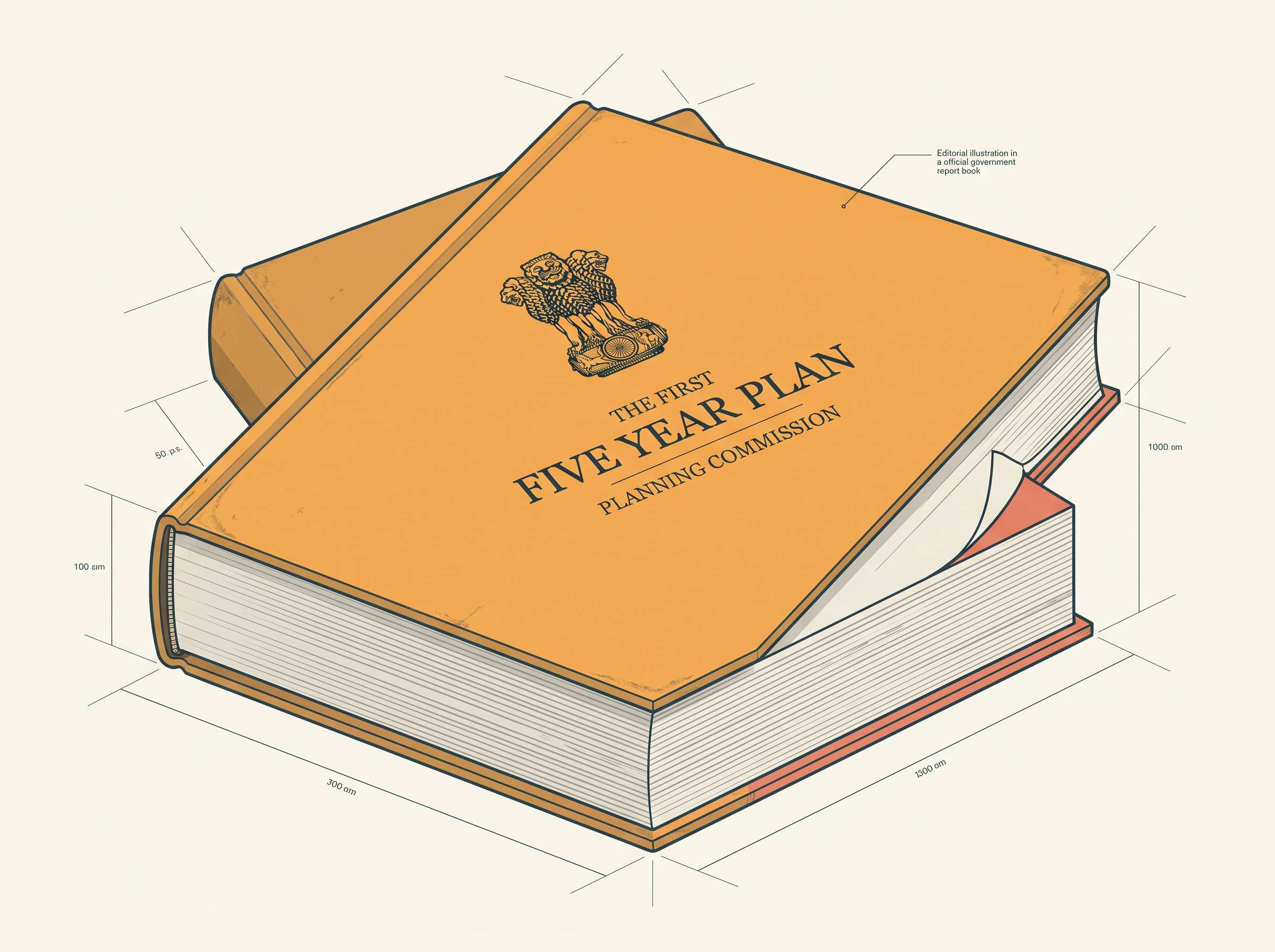
Fig. 3.6 – The First Five Year Plan document.
The sequence of those early plans is set out in Fig. 3.7.
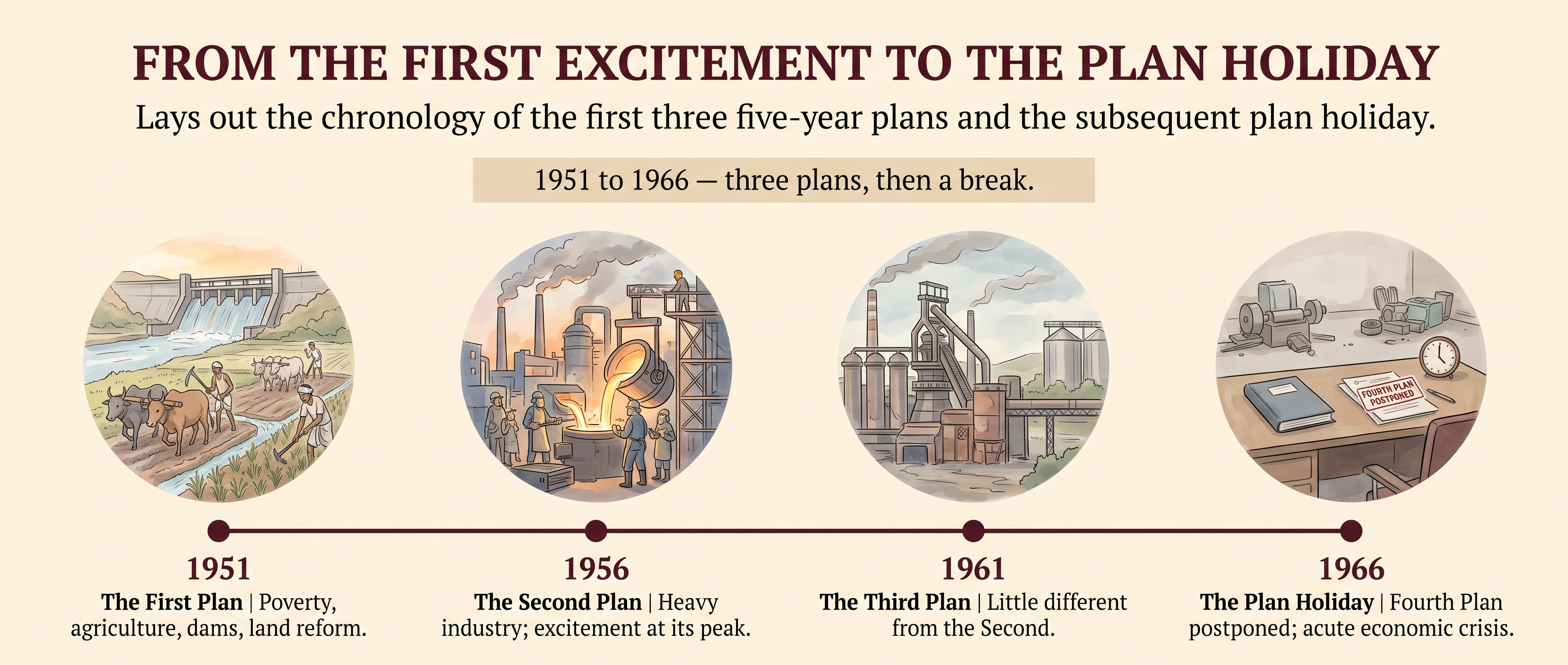
Fig. 3.7 – The Plan Years.
3.4.1 The First Five Year Plan
Hasten Slowly
The First Five Year Plan (1951–1956) sought to get the country’s economy out of the cycle of poverty. That phrase — cycle — matters. A poor country is poor partly because it is poor: it cannot save, so it cannot invest, so it does not grow, so it still cannot save.
K.N. Raj, a young economist involved in drafting the plan, argued that India should ‘hasten slowly’ for the first two decades. His reason was political, not economic: a fast rate of development might endanger democracy. Squeezing a poor population hard, and quickly, is exactly the sort of thing a government may need force to do.
The First Plan addressed mainly the agrarian sector, including investment in dams and irrigation. The agricultural sector had been hit hardest by Partition, the division of the country at Independence, and needed urgent attention. Huge allocations were made for large-scale projects like the Bhakhra Nangal Dam.
The Plan also identified the pattern of land distribution in the country as the principal obstacle in the way of agricultural growth. Too much land was held by too few, and those who actually tilled it had little reason to improve what was not theirs. So the Plan focused on land reforms as the key to the country’s development.
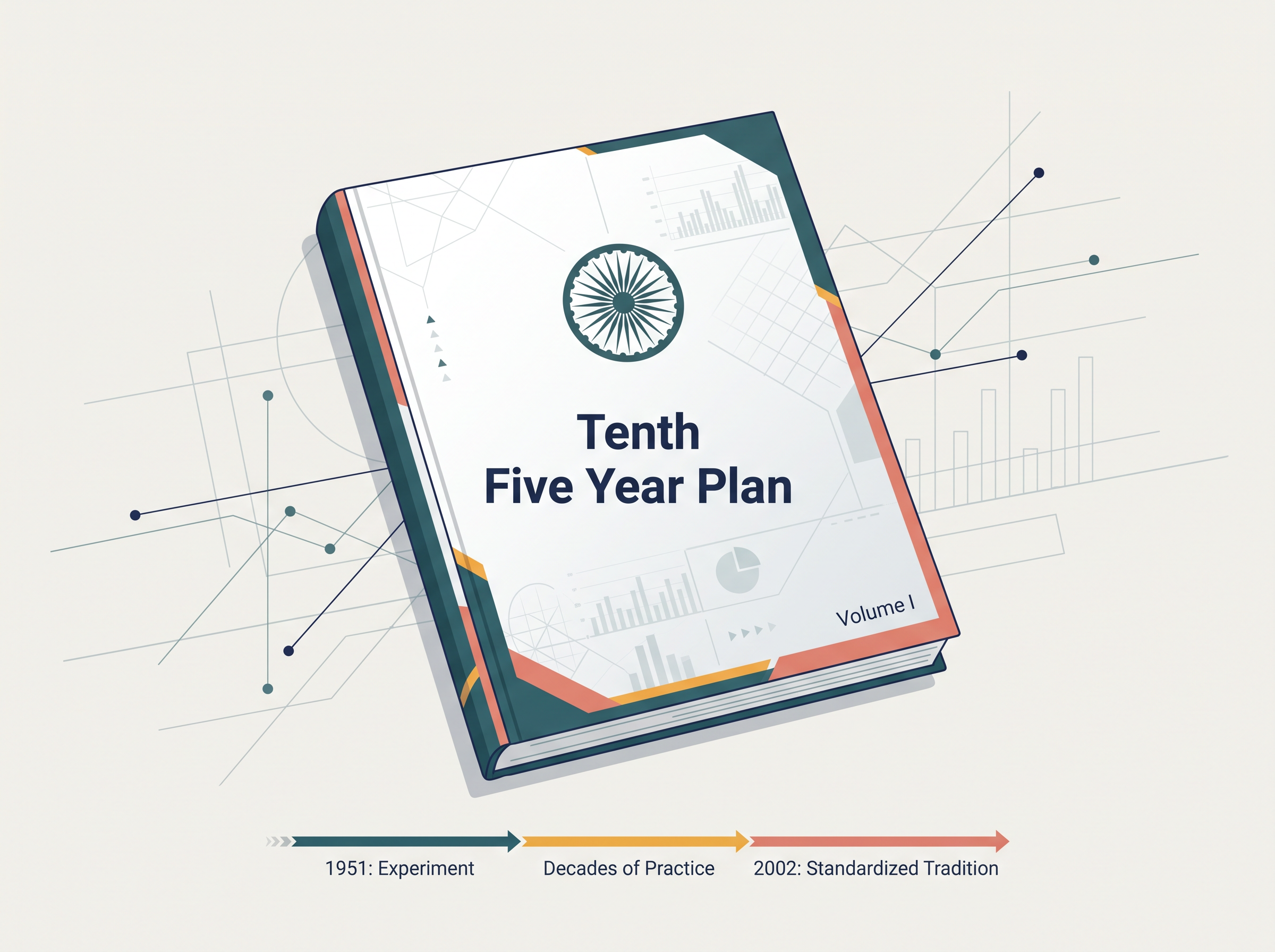
Fig. 3.8 – The Tenth Five Year Plan document.
The plan cycle that began in 1951 went on for decades, as that Tenth Plan document shows. What began as an experiment became a habit of government.
The Problem Of Savings
One of the basic aims of the planners was to raise the level of national income — the total value of what the country produces and earns in a year. That could be possible only if people saved more money than they spent, because savings are what a country has left over to build with.
Look at the arithmetic they faced. For a household, \(\text{savings} = \text{income} - \text{spending}\), where income is what is earned in the year and spending is what is consumed in it. To raise savings, you must either raise income or cut spending. But the basic level of spending was very low in the 1950s; it could not be reduced any further without people going hungry.
So the planners sought to push savings up. That too was difficult, because the total capital stock in the country — the machines, tools, factories and equipment already in existence — was rather low compared to the total number of employable people. Too many hands, too few machines for them to work with.
Nevertheless, people’s savings did rise in the first phase of the planned process, until the end of the Third Five Year Plan. But the rise was not as spectacular as had been expected at the beginning of the First Plan. And later, from the early 1960s till the early 1970s, the proportion of savings in the country actually dropped consistently.
3.4.2 Rapid Industrialisation
Patience Against Transformation
The Second FYP stressed heavy industries. It was drafted by a team of economists and planners under the leadership of P. C. Mahalanobis.
If the first plan had preached patience, the second wanted something quite different. It wanted to bring about quick structural transformation by making changes simultaneously in all possible directions. Not one sector at a time, and not one decade at a time — everything, together, now.

Fig. 3.9 – A postage stamp honouring P. C. Mahalanobis.
The Avadi Resolution
Before this plan was finalised, the Congress party, at its session held at Avadi near the then Madras city, passed an important resolution. It declared that a ‘socialist pattern of society’ was the party’s goal. This was then reflected in the Second Plan.
Read that sequence again, because it is the heart of this chapter. A party met, argued and voted. What it decided at that meeting then shaped the plan of the government, and the plan of the government then shaped what the country built. Planning was never merely technical.
Tariffs, Protection And The Public Sector
The government imposed substantial tariffs on imports. A tariff is a tax on goods brought in from abroad; it makes foreign goods dearer, and so shields producers at home from competition they are not yet strong enough to face.
This protected environment helped both public sector and private sector industries to grow. The public sector is the part of the economy owned and run by the government; the private sector is owned by individuals and firms.
As savings and investment were growing in this period, a bulk of these industries — electricity, railways, steel, machineries and communication — could be developed in the public sector. Indeed, such a push for industrialisation marked a turning point in India’s development.
You have now met both plans, and they pulled in different directions. The First went to the fields; the Second went to the factories. The First asked India to wait; the Second asked it to hurry. Table 3.A1 sets the contrast out side by side.
The Problems That Followed
It, however, had its problems as well. India was technologically backward, so it had to spend precious foreign exchange — money held in other countries’ currencies, which is what you must pay in to buy from abroad — to purchase technology from the global market. Machines had to be bought before machines could be made.
That apart, as industry attracted more investment than agriculture, the possibility of food shortage loomed large. Money is finite. What goes into a steel plant does not go into a canal.
The Indian planners found balancing industry and agriculture really difficult, and the Third Plan was not significantly different from the Second. So the imbalance was not corrected; it was continued.
Critics pointed out that the plan strategies from this time around displayed an unmistakable “urban bias” — a tilt towards the cities, in a country where most people lived in villages. Others thought that industry was wrongly given priority over agriculture. And there were those who wanted the focus placed on agriculture-related industries rather than heavy ones, so that the factory and the field would grow together instead of competing.
3.5 Summary
Development As A Political Question
- Everyone wants development, but ‘development’ means different things to different people — to an industrialist, to an urban consumer of steel, and to the Adivasi living where the ore lies. Disagreement is therefore built into the word.
- The Orissa case shows four interests meeting on one piece of land: a State government wanting investment and jobs, villagers fearing displacement, environmentalists fearing pollution, and a central government worried about the signal sent to investors.
- Such questions cannot be settled by experts. They weigh one group against another, and the present generation against future ones. Expert advice matters, but the final decision must be a political one, taken by elected representatives.
- Left and Right describe where a group stands on the state’s role: the Left prefers state control of the economy and regulation over free competition, the Right prefers free competition and a market economy with little government intervention.
- After Independence, almost everyone agreed that development meant economic growth together with social and economic justice, and that the government must play a key role. The disagreement was about what kind of role.
The Ideas On Offer
- In the first decade after Independence, the ‘West’ was widely treated as the standard of development. Modernisation meant the breakdown of traditional social structures and the rise of capitalism and liberalism, along with growth, material progress and scientific rationality.
- India had two models before it: the liberal-capitalist model of Europe and the US, and the socialist model of the USSR. Many Indians — in the Communist Party of India, in the Socialist Party, and leaders like Nehru within the Congress — were deeply impressed by the Soviet model. Supporters of American-style capitalist development were very few.
- This reflected a consensus formed during the national movement: a free India’s government would not confine itself to the narrow commercial functions of the colonial state, and poverty alleviation and redistribution would be primarily its responsibility.
- Even within that consensus, leaders disagreed. For some, industrialisation was the preferred path; for others, agriculture and the alleviation of rural poverty came first.
Planning And Its Machinery
- All sides agreed that development could not be left to private actors: the government had to draw up a design, or plan, for development.
- The Planning Commission was set up in March 1950 by a simple resolution of the Government of India, not by the Constitution. Its role was advisory, its recommendations took effect only once the Union Cabinet approved them, and the Prime Minister was its Chairperson. In practice it became the most influential machinery for deciding India’s development path.
- The resolution that created it borrowed the language of the Directive Principles: an adequate means of livelihood for men and women alike, material resources distributed to serve the common good, and an economic system that does not concentrate wealth to the common detriment.
- Planning had wide public support in the 1940s and 1950s across the world, after the Great Depression, the inter-war reconstruction of Japan and Germany, and the Soviet Union’s spectacular growth in the 1930s and 1940s.
- Planning was not only a demand of the Left. In 1944 a section of big industrialists drafted the Bombay Plan, which wanted the state to take major initiatives in industrial and other economic investment.
- Five year plans set out the government’s income and expenditure for five years. Budgets were split into a yearly ‘non-plan’ part for routine items and a ‘plan’ part spent on the plan’s priorities.
The Plans And Their Results
- The First Five Year Plan (1951–1956) sought to break the cycle of poverty. K.N. Raj argued that India should ‘hasten slowly’ for the first two decades, since a fast rate of development might endanger democracy. The Plan stressed the agrarian sector, dams and irrigation, funded projects like the Bhakhra Nangal Dam, and identified land distribution as the principal obstacle to agricultural growth.
- Raising national income required higher savings, but spending was already too low to cut and capital stock was small. Savings rose until the end of the Third Plan, though less than expected, and then dropped consistently from the early 1960s to the early 1970s.
- The Second Plan, drafted under P. C. Mahalanobis, wanted quick structural transformation and stressed heavy industries. The Congress session at Avadi had declared a ‘socialist pattern of society’ its goal, and the Plan reflected it.
- Substantial tariffs on imports protected domestic industry, and electricity, railways, steel, machineries and communication were developed largely in the public sector. This push for industrialisation marked a turning point in India’s development.
- The costs were real. Technological backwardness meant spending precious foreign exchange on imported technology; industry drew investment away from agriculture and food shortage loomed; and critics charged the plans with an unmistakable ‘urban bias’. The Third Plan was not significantly different from the Second.
- The Fourth Plan, due in 1966, was postponed. The novelty of planning had declined and India faced an acute economic crisis, so the government took a ‘plan holiday’. Much later, on 1 January 2015, NITI Aayog replaced the Planning Commission.
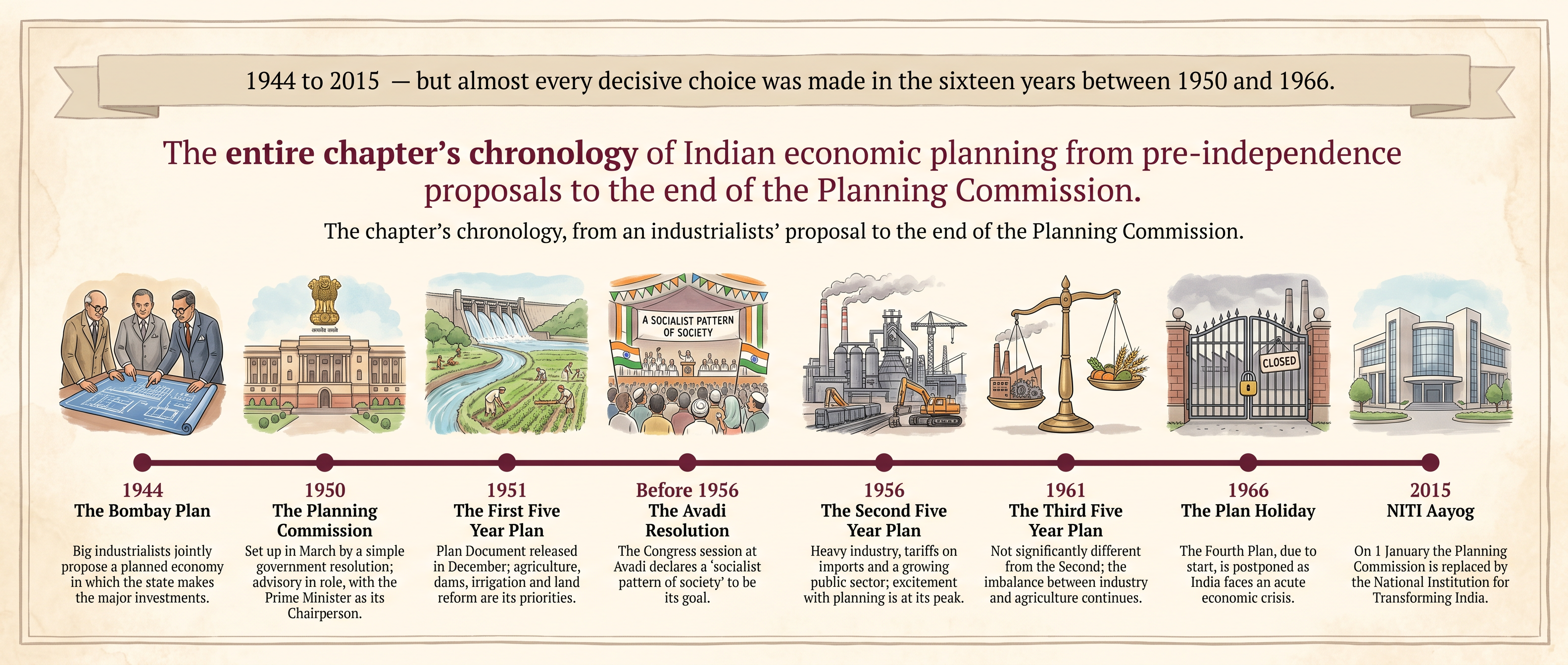
Fig. 3.10 – Planned Development In India.
3.6 NCERT Questions
Which of these statements about the Bombay Plan is incorrect?
- It was a blueprint for India’s economic future.
- It supported state-ownership of industry.
- It was made by some leading industrialists.
- It supported strongly the idea of planning.
Which of the following ideas did not form part of the early phase of India’s development policy?
- Planning
- Liberalisation
- Cooperative Farming
- Self sufficiency
The idea of planning in India was drawn from
- the Bombay plan
- experiences of the Soviet bloc countries
- Gandhian vision of society
- Demand by peasant organisations
- b and d only
- d and c only
- a and b only
- all the above
Match the following.
Column A Column B a. Charan Singh i. Industrialisation b. P C Mahalanobis ii. Zoning c. Bihar Famine iii. Farmers d. Verghese Kurien iv. Milk Cooperatives What were the major differences in the approach towards development at the time of Independence? Has the debate been resolved?
What was the major thrust of the First Five Year Plan? In which ways did the Second Plan differ from the first one?
Read the following passage and answer the questions below: ‘In the early years of Independence, two contradictory tendencies were already well advanced inside the Congress party. On the one hand, the national party executive endorsed socialist principles of state ownership, regulation and control over key sectors of the economy in order to improve productivity and at the same time curb economic concentration. On the other hand, the national Congress government pursued liberal economic policies and incentives to private investment that was justified in terms of the sole criterion of achieving maximum increase in production.’ — Francine Frankel
- What is the contradiction that the author is talking about? What would be the political implications of a contradiction like this?
- If the author is correct, why is it that the Congress was pursuing this policy? Was it related to the nature of the opposition parties?
- Was there also a contradiction between the central leadership of the Congress party and its State level leaders?
3.7 Check Your Concepts
- Explain in your own words why the questions raised by the Orissa case cannot be settled by an expert. Who, according to this chapter, must settle them, and why?
- Read Source 3.1 again. What exactly does the report tell you about who opposed the POSCO plant and what they demanded? What does it not tell you about the people of those three villages?
- The Planning Commission was created by a simple resolution and had only an advisory role. Trace the steps by which one of its recommendations could become government policy. Then explain how such a body nonetheless became the most influential machinery for deciding India’s path of development.
- Read Source 3.2 again. What three aims did the resolution set for the Planning Commission? What can a founding document like this one never tell you about the Commission’s actual work?
- Study Fig. 3.3 and Fig. 3.4. What criticism of planning does each of them make? What is it that neither cartoon can show you?
- Industrialists are usually expected to resist state control over the economy. Why, then, did the Bombay Plan of 1944 ask the state to take the major initiatives in industrial and economic investment?
- Reconstruct the chain of consequences that led critics to charge the plans with an ‘urban bias’. Begin from the decision to give heavy industry priority, and show each step that follows from it.
- K.N. Raj argued that India should ‘hasten slowly’, because a fast rate of development might endanger democracy. Set out the strongest case for his view, and the strongest case against it, using what the chapter tells you about the Second Plan.