Chapter 6: The Crisis Of Democratic Order
On the morning of 27 June 1975, the Hindi daily ‘Nai Dunia’ looked much like it did on any other day. The news columns were full. The advertisements were in place. Only one thing was missing. The space where the editorial should have been was blank.
That blankness was not a printing accident. The editorial had been censored using emergency powers. Two days earlier, on 25 June 1975, the government had declared a state of emergency, and newspapers were now required to get official approval for what they printed. An editor could still write. Whether the words reached the reader had become somebody else’s decision.
Several other newspapers carried such blank spaces too. Sometimes the gap was simply what the censor’s pencil left behind. Sometimes it was a protest — a way of telling readers, without a single printable word, that something had been removed. An empty column cannot be censored, because it says nothing.
The government understood the message. Later, leaving blank space was itself banned.
Look closely at what is being decided in that empty column. A government elected under the Constitution was using powers the Constitution itself had given it. A newspaper was resisting with the only thing it had left — silence. And an ordinary reader, in the middle of an ordinary morning, was being asked to make sense of both. This chapter is about the months in which those questions were fought out, and about the election that finally answered them.
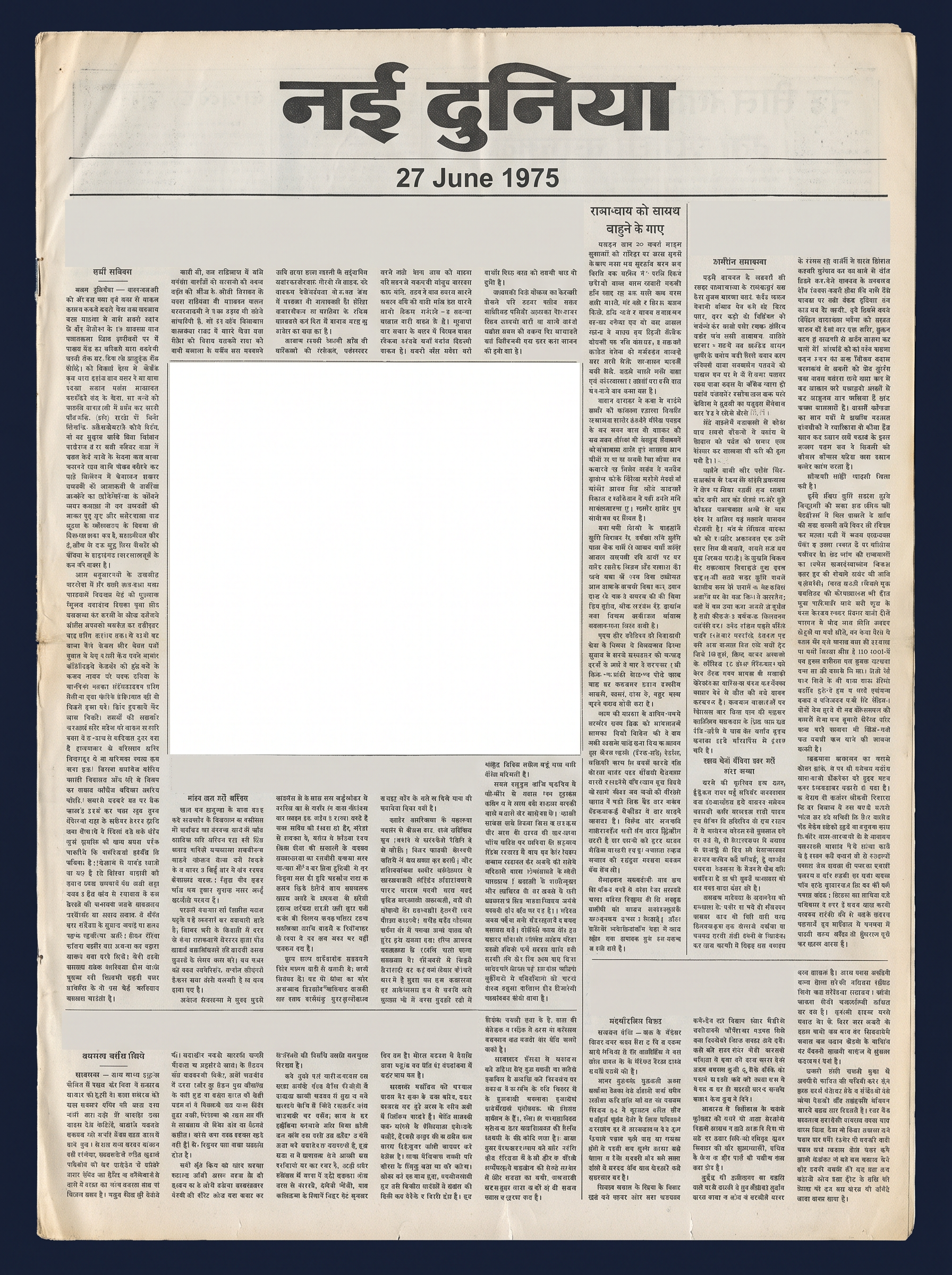
Fig. 6.0 – The blank editorial of ‘Nai Dunia’, 27 June 1975.
In the previous chapter we saw that the Congress recovered its position after 1971, but that it was no longer the same kind of party. How different it had become emerged in a series of events between 1973 and 1975 — events that placed new strains on India’s democratic politics and on the balance between institutions that the Constitution had tried to build.
Those developments led to the imposition of an ‘emergency’ in June 1975. We would normally connect the word ‘emergency’ with war, with an attack from outside, or with a natural disaster. This one was different. It was imposed because the government said it faced a threat of internal disturbance.
The Emergency ended as suddenly as it had begun. It ended in a defeat for the Congress in the Lok Sabha elections of 1977. This chapter studies that crucial phase in the history of Indian democracy, and it asks questions about it that remain controversial to this day.
6.1 Background To Emergency
We have already studied the changes that were taking place in Indian politics after 1967. By the early 1970s, Indira Gandhi had emerged as a towering leader with tremendous popularity. She had won a decisive mandate, and her authority inside her party and inside the government was very large.
The same years saw party competition turn bitter and polarised. Politics was no longer only a contest of programmes; it had become a contest between camps that found it hard to accept each other’s good faith.
This was also the period in which the relationship between the government and the judiciary came under strain. The Supreme Court found many initiatives of the government to be violative of the Constitution — that is, in conflict with what the Constitution permits. A court can say this because of judicial review, the power of a court to examine a law or an executive action and set it aside if it breaks the Constitution.
The Congress party took the position that this stand of the Court was against the principles of democracy and against parliamentary supremacy — the claim that the elected Parliament, which represents the people, should have the final word on law-making. The Congress also alleged that the Court was a conservative institution, and that it was becoming an obstacle in the way of pro-poor welfare programmes.
The parties opposed to the Congress read the same events in exactly the opposite way. They felt that politics was becoming too personalised, and that governmental authority was being converted into personal authority. The split in the Congress had already sharpened the divisions between Indira Gandhi and her opponents.
Notice that both sides claimed to be defending democracy. One side said democracy meant that an elected majority must be able to govern. The other side said democracy meant that even an elected majority must stay within limits. That disagreement is the thread running through this whole chapter.
6.1.1 Economic Context
In the elections of 1971, the Congress had given the slogan of garibi hatao — remove poverty. A slogan, however, is a promise, and promises are tested against how people actually live. After 1971-72, the social and economic condition of the country did not improve much.
Several strains came together at once. The Bangladesh crisis had put a heavy strain on India’s economy: about eight million people crossed over the East Pakistan border into India, and they had to be fed and sheltered. This was followed by war with Pakistan. After the war, the U.S government stopped all aid to India.
At the same time, oil prices in the international market increased manifold during this period. Oil is not one commodity among many; it moves goods, runs machines and lights homes. When it becomes costly, almost everything else becomes costly. This led to an all-round increase in the prices of commodities.
The figures the chapter gives are stark. Prices increased by 23 per cent in 1973 and by 30 per cent in 1974. Such a high level of inflation caused much hardship to the people. Inflation is a sustained rise in the general level of prices, and its effect is simple: the same wage buys less food than it did the year before.
Meanwhile, industrial growth was low and unemployment was very high, particularly in the rural areas. In order to reduce expenditure, the government froze the salaries of its employees. This caused further dissatisfaction among government employees, whose pay was now standing still while prices climbed.
Nature did not help either. The monsoons failed in 1972-1973. This resulted in a sharp decline in agricultural productivity, and food grain output declined by 8 per cent. Less grain in a year of rising prices meant costlier grain, and the people who felt this first were the poor.
So it is fair to ask the obvious question: poor people must have had a tough time — what happened to the promise of garibi hatao? The chapter’s answer is that the promise had not been met. The slogan of 1971 and the prices of 1974 were pulling in opposite directions, and voters could see it.
The cartoonist Abu caught exactly this gap in Fig. 6.1.
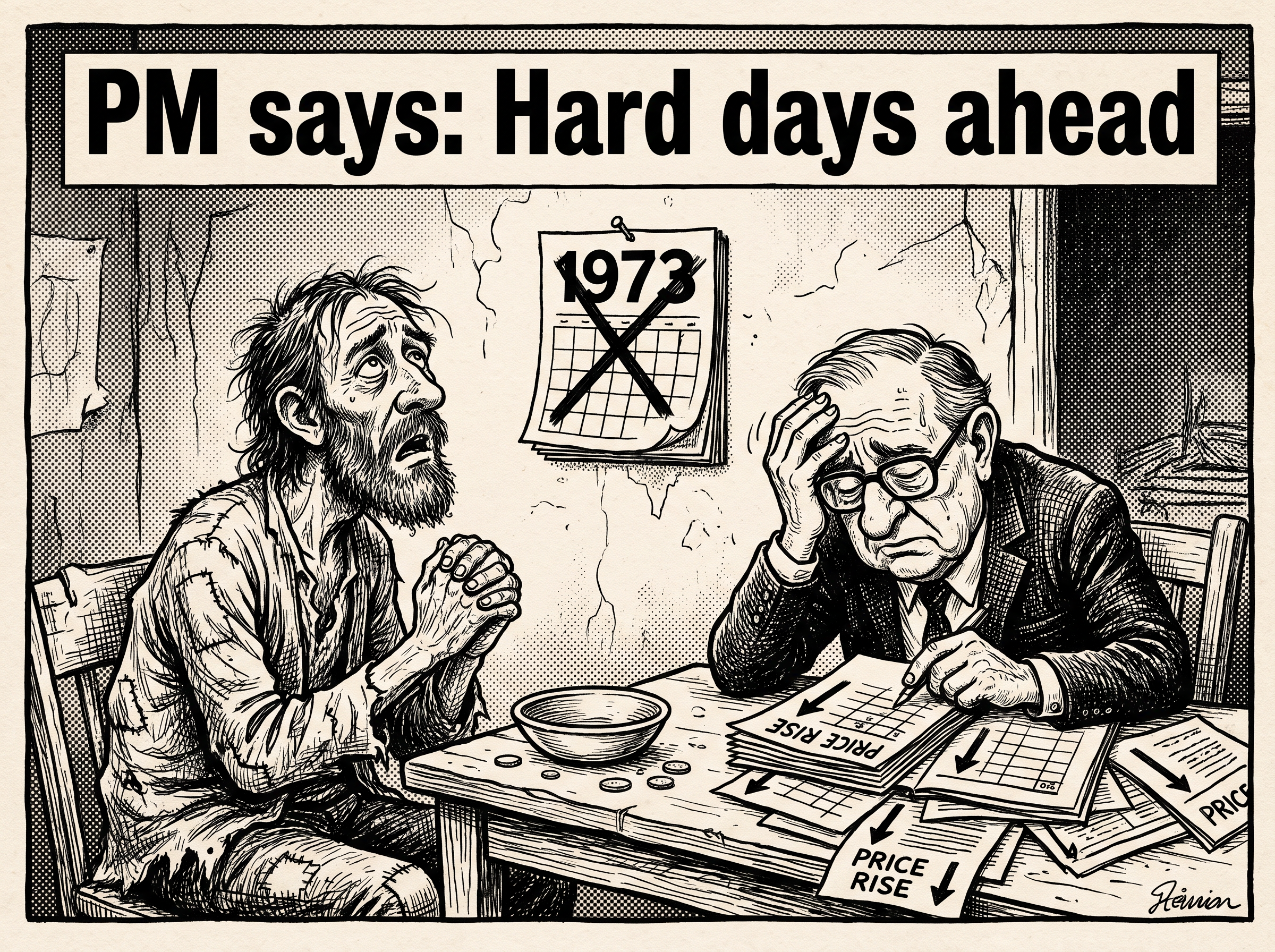
Fig. 6.1 – The promise of garibi hatao versus inflation. Inspiration: Abu.
The joke turns on a single word. The government’s slogan promised to hatao — to remove — poverty. The figure in the cartoon says he only hopes the year 1973 itself will be hataoed quickly. The cartoonist has taken the government’s own word and turned it against the government’s own record.
That is the claim. Now the limit. A cartoon states one opinion in one image, and it cannot draw the case on the other side. It cannot tell us how many people agreed with it, and it cannot show us the war, the failed monsoon and the oil shock that a government would point to in its defence. Fig. 6.1 is evidence of how the government’s promises were being read in 1973. It is not, by itself, evidence that the government was to blame for the prices.
Unrest Beyond The Ballot Box
There was a general atmosphere of dissatisfaction with the prevailing economic situation all over the country. In such a context, non-Congress opposition parties were able to organise popular protests effectively. Anger that has no organisation stays private; anger that finds an organisation becomes politics.
Instances of students’ unrest, which had persisted from the late 1960s, became more pronounced in this period. There was also an increase in the activities of Marxist groups who did not believe in parliamentary politics — that is, who rejected elections and legislatures as the way to change society.
These groups had taken to arms and to insurgent techniques for the overthrow of the capitalist order and the established political system. Known as the Marxist-Leninist (now Maoist) groups, or Naxalites, they were particularly strong in West Bengal, where the State government took stringent measures to suppress them.
Two very different challenges were therefore rising at the same time. One worked through protest, party and public opinion. The other rejected that route altogether. Both, in their own way, told the government that its authority was being questioned outside Parliament.
6.1.2 Gujarat And Bihar Movements
Students’ protests in Gujarat and Bihar — both of which were Congress-ruled States — had a far-reaching impact on the politics of the two States and on national politics. What began in classrooms did not stay there.
In January 1974, students in Gujarat started an agitation against the rising prices of food grains, cooking oil and other essential commodities, and against corruption in high places. The students’ protest was joined by major opposition parties and became widespread, leading to the imposition of President’s rule in the State.
President’s rule means that the elected State government is dismissed and the State is administered by the Centre through the Governor. Once that happened, the question became: when would Gujarat have a government of its own again?
The opposition parties demanded fresh elections to the state legislature. Morarji Desai, a prominent leader of Congress (O) — and the main rival of Indira Gandhi when he was in the Congress — announced that he would go on an indefinite fast if fresh elections were not held in the State. Under intense pressure from students, supported by the opposition political parties, assembly elections were held in Gujarat in June 1975. The Congress was defeated in this election.
Bihar And The Call For Total Revolution
In March 1974, students came together in Bihar to protest against rising prices, food scarcity, unemployment and corruption. The list is almost the same as Gujarat’s, which tells you that the grievance was national even where the agitation was local.
After a point, the students invited Jayaprakash Narayan (JP), who had given up active politics and was involved in social work, to lead the student movement. He accepted on two conditions: that the movement would remain non-violent, and that it would not limit itself to Bihar.
Those two conditions changed everything. The students’ movement now assumed a political character and had national appeal, and people from all walks of life entered it.
Jayaprakash Narayan demanded the dismissal of the Congress government in Bihar. He also gave a call for total revolution — a complete transformation in the social, economic and political spheres, in order to establish what he considered to be true democracy. A series of bandhs, gehraos and strikes was organised in protest against the Bihar government. The government, however, refused to resign.
The slogan the movement chose for itself is preserved in Source 6.1. Read it as a claim about time: it is not asking for a concession today, it is claiming tomorrow.
The slogan tells us what the movement said about itself: that it was not a protest over prices alone but a bid to remake the whole political order, and that history was on its side. That is a large claim, and it explains why the government could not treat the movement as a routine agitation.
Now the limit. A slogan records what a movement chose to shout in public. It cannot tell us how many people believed it, what the marchers privately wanted, or what ‘total revolution’ would have meant in practice — a question the movement’s own critics kept asking. Source 6.1 is evidence of the movement’s self-image, not of its strength.
The Movement Goes National
The movement was beginning to influence national politics. Jayaprakash Narayan wanted to spread the Bihar movement to other parts of the country.
Alongside the agitation led by Jayaprakash Narayan, the employees of the Railways gave a call for a nationwide strike. This threatened to paralyse the country, because in the India of the 1970s almost everything — grain, coal, cloth, people — moved by train.
In 1975, JP led a peoples’ march to the Parliament. This was one of the largest political rallies ever held in the capital. He was now supported by the non-Congress opposition parties: the Bharatiya Jana Sangh, the Congress (O), the Bharatiya Lok Dal, the Socialist Party and others.
These parties were projecting JP as an alternative to Indira Gandhi. That is a significant shift. A movement that had begun as a student agitation about prices had become a rival claim to national leadership.
The sequence of these two years is set out in Fig. 6.2.
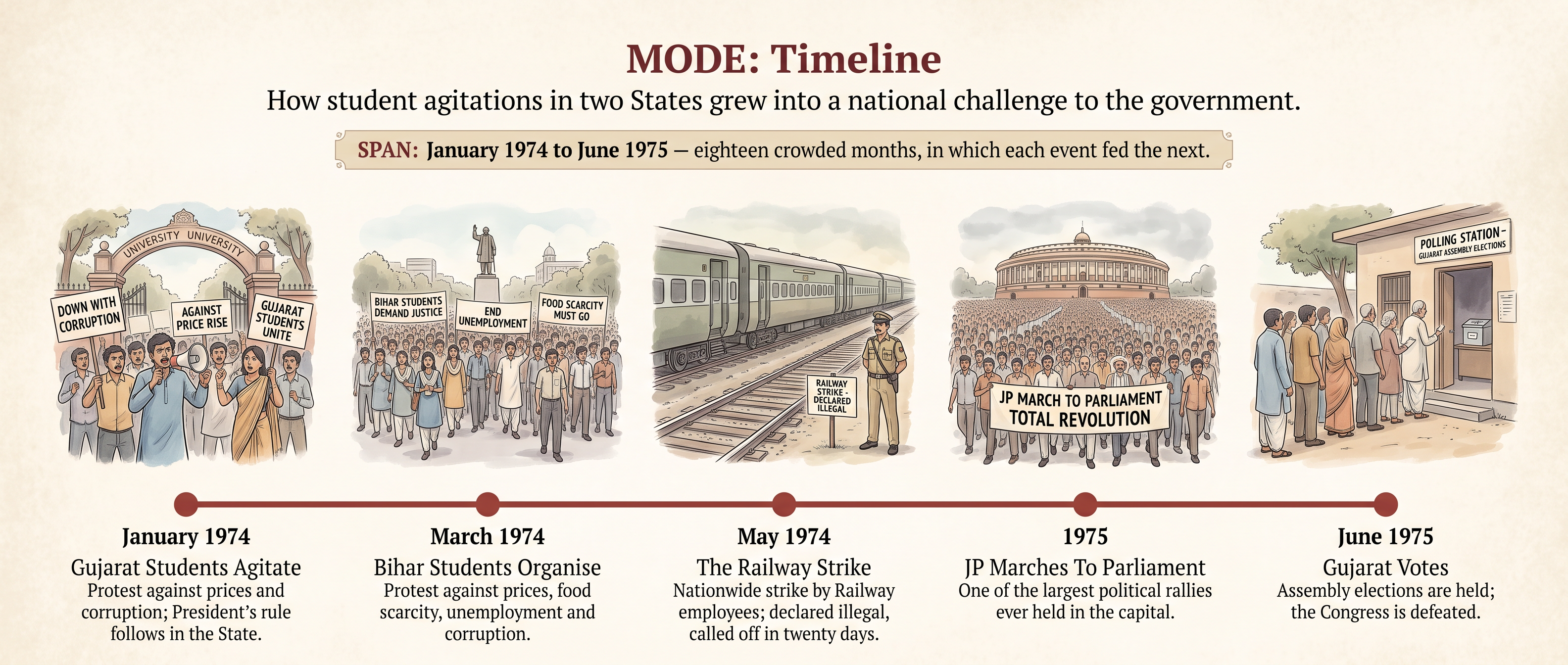
Fig. 6.2 – The Movements Of 1974 And 1975.
However, there were many criticisms about JP’s ideas, and about the politics of mass agitations that he was employing. Both the Gujarat and Bihar agitations were seen as anti-Congress; and rather than opposing the State governments, they were seen as protests against the leadership of Indira Gandhi. She believed that the movement was motivated by personal opposition to her.
This is the clash Fig. 6.3 puts on a single page.
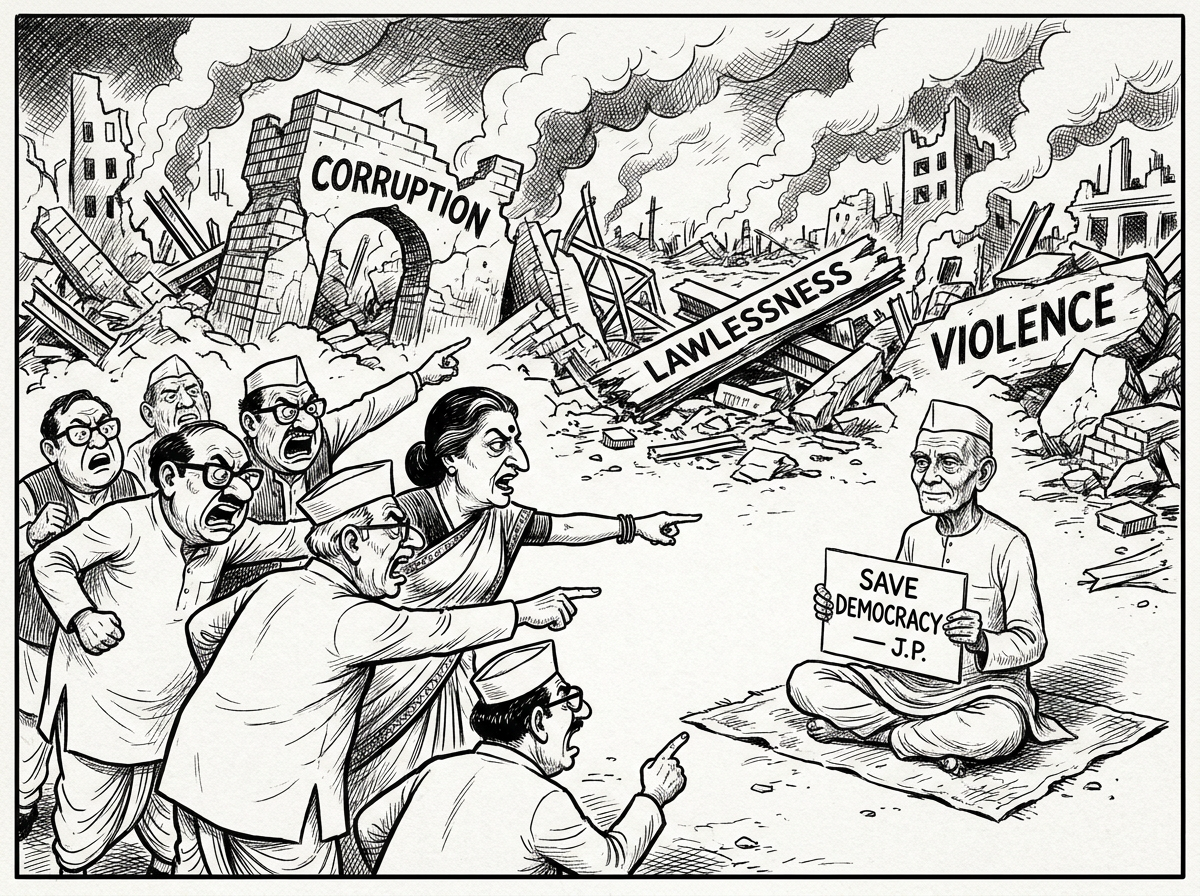
Fig. 6.3 – JP and the government’s accusations. Inspiration: R. K. Laxman, The Times of India, 16 April 1974.
Look at what the cartoonist has done with the placement. The wreckage of corruption, lawlessness and violence is already there in the background, before JP has done anything. The seated figure is calm, unarmed and holding only a placard. The men in the foreground, with their backs to the wreckage, accuse him of creating exactly the chaos that surrounds them.
The cartoonist’s claim, then, is that the charge against JP was being used to avoid the conditions that produced him. That is one opinion, drawn in April 1974.
And here is its limit. The cartoon cannot show the strongest argument on the other side — that mass agitations, bandhs and calls to defy the government carry real costs for an elected system, and that the criticisms of JP’s methods were not all made in bad faith. A cartoon takes a side. Reading it well means recognising which side it has taken.
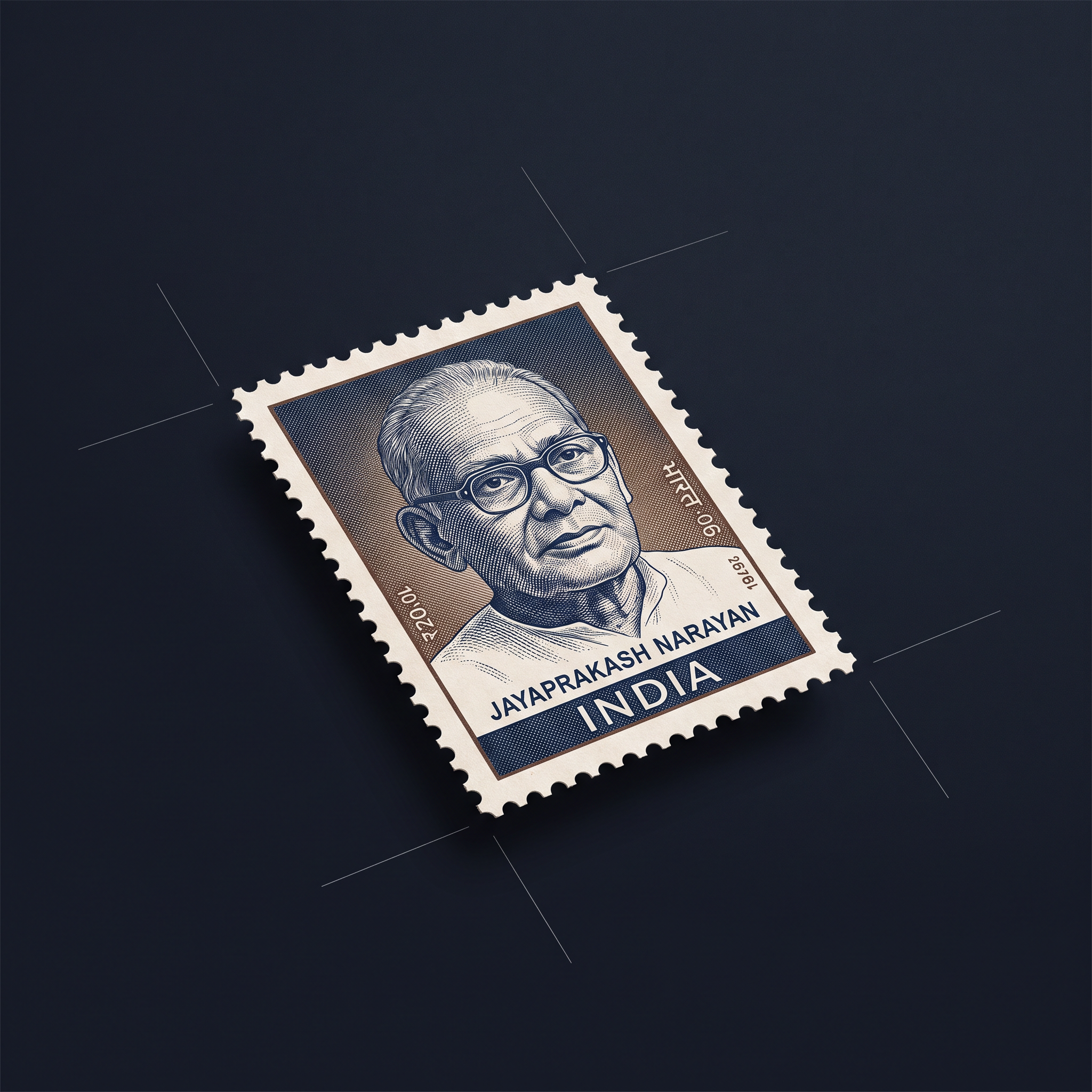
Fig. 6.4 – Commemorative postage stamp of Jayaprakash Narayan.
While the movement grew, another slogan was circulating on the government’s side. Source 6.2 comes from the President of the Congress party, and it says something important about how the ruling party now described its own leader.
Read the sentence carefully. It does not say that the leader is popular, or that she has a mandate. It equates a person with a country. If that equation is accepted, then opposing the leader is no longer ordinary political opposition — it becomes opposition to the nation itself.
The limit is important here too. This is one slogan, coined by one party president, and the chapter does not tell us that every Congress worker agreed with it. It shows us the language available in 1974, not the whole thought of a party. But it does show why the opposition’s charge — that governmental authority was being converted into personal authority — found an audience.
The Railway Strike Of 1974
What would happen if the railways stopped running — not for one or two days, but for more than a week? Many people would be inconvenienced. More seriously, the economy of the country would come to a halt, because goods are carried from one part of India to another by train.
That is close to what happened in 1974. The National Coordination Committee for Railwaymen’s Struggle, led by George Fernandes, gave a call for a nationwide strike by all employees of the Railways. Their demands related to bonus and to service conditions. The government was opposed to these demands.
So, in May 1974, the employees of India’s largest public sector undertaking went on strike. The strike added to the atmosphere of labour unrest. It also raised a hard question that democracies still argue about: workers have rights, but should employees of essential services — services a country cannot do without for even a week — use the weapon of a strike?
The government declared the strike illegal. It refused to concede the demands of the striking workers, arrested many of their leaders, and deployed the territorial army to protect railway tracks. After twenty days, the strike had to be called off without any settlement.
Notice the pattern that is forming. A protest is organised; the government treats it as a threat to order rather than as a demand to be negotiated; the protest is broken. Each such episode hardened both sides.
6.1.3 Conflict With Judiciary
This was also the period when the government and the ruling party had many differences with the judiciary. You have already studied, last year, the long-drawn conflict between the Parliament and the judiciary. It is worth recalling, because the Emergency grew directly out of it.
Three constitutional issues had emerged. First: can the Parliament abridge Fundamental Rights? The Supreme Court said it cannot. Second: can the Parliament curtail the right to property by making an amendment? Again, the Court said that Parliament cannot amend the Constitution in such a manner that rights are curtailed.
Third, the Parliament amended the Constitution saying that it can abridge Fundamental Rights for giving effect to Directive Principles. The Supreme Court rejected this provision also.
Look at what each side was really claiming. Parliament was saying that an elected majority must be free to change the Constitution in order to deliver social and economic justice. The Court was saying that some things cannot be taken away by a majority, because they are what the Constitution exists to protect. This led to a crisis as far as the relations between the government and the judiciary were concerned.
You may remember that this crisis culminated in the famous Kesavananda Bharati Case. In this case, the Court gave a decision that there are some basic features of the Constitution, and that the Parliament cannot amend these features. In one stroke, the Court had marked out a line that no majority could cross — and had reserved to itself the power to say where the line ran.
Two Developments That Deepened The Tension
Two developments further added to the tension between the judiciary and the executive.
The first was an appointment. Immediately after the Supreme Court’s decision in 1973 in the Kesavananda Bharati case, a vacancy arose for the post of the Chief Justice of India, the head of the Supreme Court. It had been a practice to appoint the senior-most judge of the Supreme Court as the Chief Justice.
But in 1973, the government set aside the seniority of three judges and appointed Justice A. N. Ray as the Chief Justice of India. The appointment became politically controversial because all the three judges who were superseded had given rulings against the stand of the government.
The message that many people read into it was uncomfortable. If ruling against the government could cost a judge the highest office in the judiciary, then constitutional interpretation and political loyalty were no longer separate things. Constitutional interpretations and political ideologies were getting mixed up rapidly.
The second development was in the language of politics itself. People close to the Prime Minister started talking of the need for a judiciary and a bureaucracy ‘committed’ to the vision of the executive and the legislature.
Does ‘committed judiciary’ and ‘committed bureaucracy’ mean that judges and government officials should be loyal to the ruling party? That is exactly the question the phrase raised at the time, and it is why the phrase was so contested. Those who used it argued that judges and officials should share the elected government’s goal of social change. Those who opposed it replied that a judge who is loyal to a party cannot check that party, and an official who is loyal to a party cannot administer the law equally for everyone.
The climax of the confrontation was, of course, the ruling of the High Court declaring Indira Gandhi’s election invalid. A conflict that had run through amendments, judgments and appointments now came to rest on the position of one person — and that is where the next section begins.
6.2 Declaration Of Emergency
On 12 June 1975, Justice Jagmohan Lal Sinha of the Allahabad High Court passed a judgment declaring Indira Gandhi’s election to the Lok Sabha invalid. A confrontation that had been building for two years now had a date on it.
The order came on an election petition filed by Raj Narain, a socialist leader and a candidate who had contested against her in 1971. An election petition is a case in which a defeated candidate asks a court to set aside the result of an election on the ground that the law was broken during it.
The petition challenged the election of Indira Gandhi on the ground that she had used the services of government servants in her election campaign. The charge, note, was not about the counting of votes. It was about whether the machinery of the State had been used to win them.
The judgment of the High Court meant that legally she was no more an MP. Therefore she could not remain the Prime Minister unless she was once again elected as an MP within six months. In our system the Prime Minister must be a member of Parliament, because the government survives only so long as it holds the confidence of the Lok Sabha.
On June 24, the Supreme Court granted her a partial stay on the High Court order. Till her appeal was decided, she could remain an MP, but she could not take part in the proceedings of the Lok Sabha. A stay is a court order that suspends the effect of an earlier order until a higher court has examined the case.
Read the position she was left in. She was still the Prime Minister. She was an MP who could not speak or vote in the House. And her right to hold either position now depended on the outcome of an appeal.
6.2.1 Crisis And Response
The stage was now set for a big political confrontation. The opposition political parties, led by Jayaprakash Narayan, pressed for Indira Gandhi’s resignation and organised a massive demonstration in Delhi’s Ramlila grounds on 25 June 1975.
At that meeting, Jayaprakash announced a nationwide satyagraha for her resignation. He also asked the army, the police and government employees not to obey ‘illegal and immoral orders’.
Pause on that appeal, because it is the hinge of the whole crisis. Asking soldiers and policemen not to obey orders sounds like asking the armed forces to disobey the government — and in a democracy that is a serious thing to ask. Is it democratic?
Two answers were given at the time, and both deserve to be stated. One: in a constitutional order no official is bound to carry out an order that is itself illegal, and refusing an unlawful order is not disobedience but duty. Two: an elected government cannot function if every official decides for himself which orders are moral, and the appeal amounted to turning the machinery of the State against the government the people had elected. The chapter records that this too threatened to bring the activities of the government to a standstill.
By now the political mood of the country had turned against the Congress, more than ever before. Fig. 6.5 was drawn in these very days.
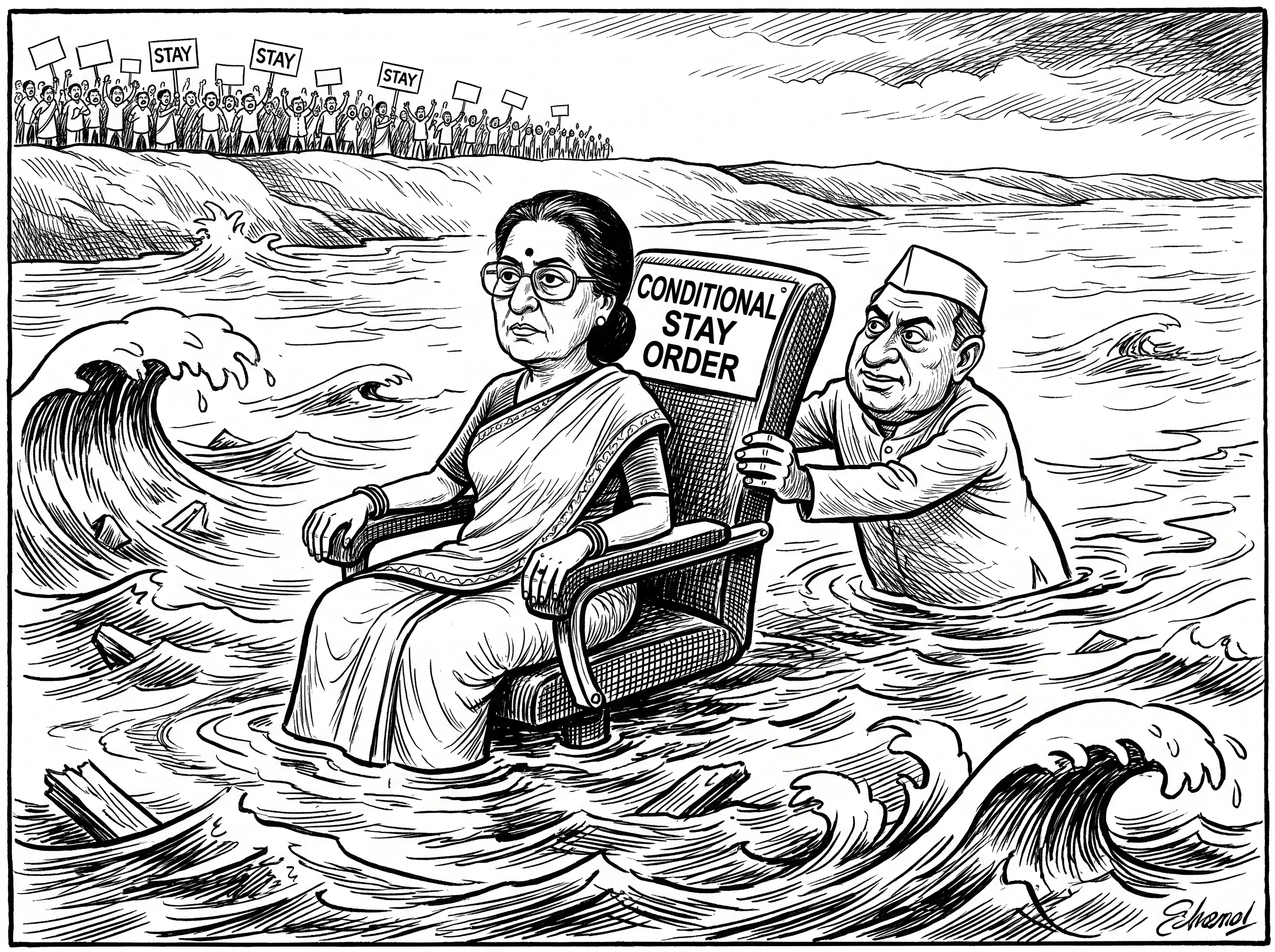
Fig. 6.5 – The conditional stay order and the political crisis. Inspiration: R. K. Laxman, The Times of India, 26 June 1975.
Every element in the drawing is doing work. The chair is a stay order, so the seat of office itself is only temporary. The water is the political crisis, and it is rising. The crowd on the bank is calling for her to stay, and the party president is pushing the chair deeper in.
The cartoonist’s claim is that the demand for her to remain in office was pushing her further into the crisis, not out of it. That is one reading, published as the situation broke.
And now the limit. A cartoon can show a mood; it cannot show a decision being taken. It tells us nothing about what was discussed inside the government, what advice was given, or what the Prime Minister believed she was facing. It is evidence of how the crisis looked from the outside in the last week of June 1975 — no more than that.
The Government’s Response
The response of the government was to declare a state of emergency. On 25 June 1975, the government declared that there was a threat of internal disturbances, and therefore invoked Article 352 of the Constitution.
Under the provision of this article, the government could declare a state of emergency on grounds of external threat or a threat of internal disturbances. The government decided that a grave crisis had arisen which made the proclamation of a state of emergency necessary. Technically speaking this was within the powers of the government, for our Constitution provides some special powers to the government once an emergency is declared.
What are those special powers? First, once an emergency is proclaimed, the federal distribution of powers remains practically suspended, and all the powers are concentrated in the hands of the union government. Federalism — the division of powers between the Centre and the States — is set aside for the duration.
Secondly, the government also gets the power to curtail or restrict all or any of the Fundamental Rights during the emergency. Fundamental Rights are the rights the Constitution guarantees to every citizen, and which the government may not ordinarily take away.
From the wording of the provisions of the Constitution, it is clear that an Emergency is seen as an extraordinary condition in which normal democratic politics cannot function. That is why special powers are granted to the government. The design assumes an exceptional situation — and everything then turns on who decides that the situation is exceptional.
The Night Of 25 June
On the night of 25 June 1975, the Prime Minister recommended the imposition of Emergency to President Fakhruddin Ali Ahmed. He issued the proclamation immediately.
After midnight, the electricity to all the major newspaper offices was disconnected. A printing press without power prints nothing, and so the country would wake up without its newspapers. In the early morning, a large number of leaders and workers of the opposition parties were arrested.
The Cabinet was informed about it at a special meeting at 6 a.m. on 26 June — after all this had already taken place.
That last sentence deserves a second reading. The Council of Ministers is the body that is collectively answerable to the Lok Sabha, and the President normally acts on its advice. Here the proclamation was recommended by the Prime Minister alone, and the Cabinet learned of it after the arrests had been made. Should the President have declared an Emergency without any recommendation from the Cabinet? The question was asked at the time, and, as we shall see in 6.2.3, the rule was later changed so that it could not happen that way again.
The thirteen days from the verdict to the proclamation are set out in Fig. 6.6.
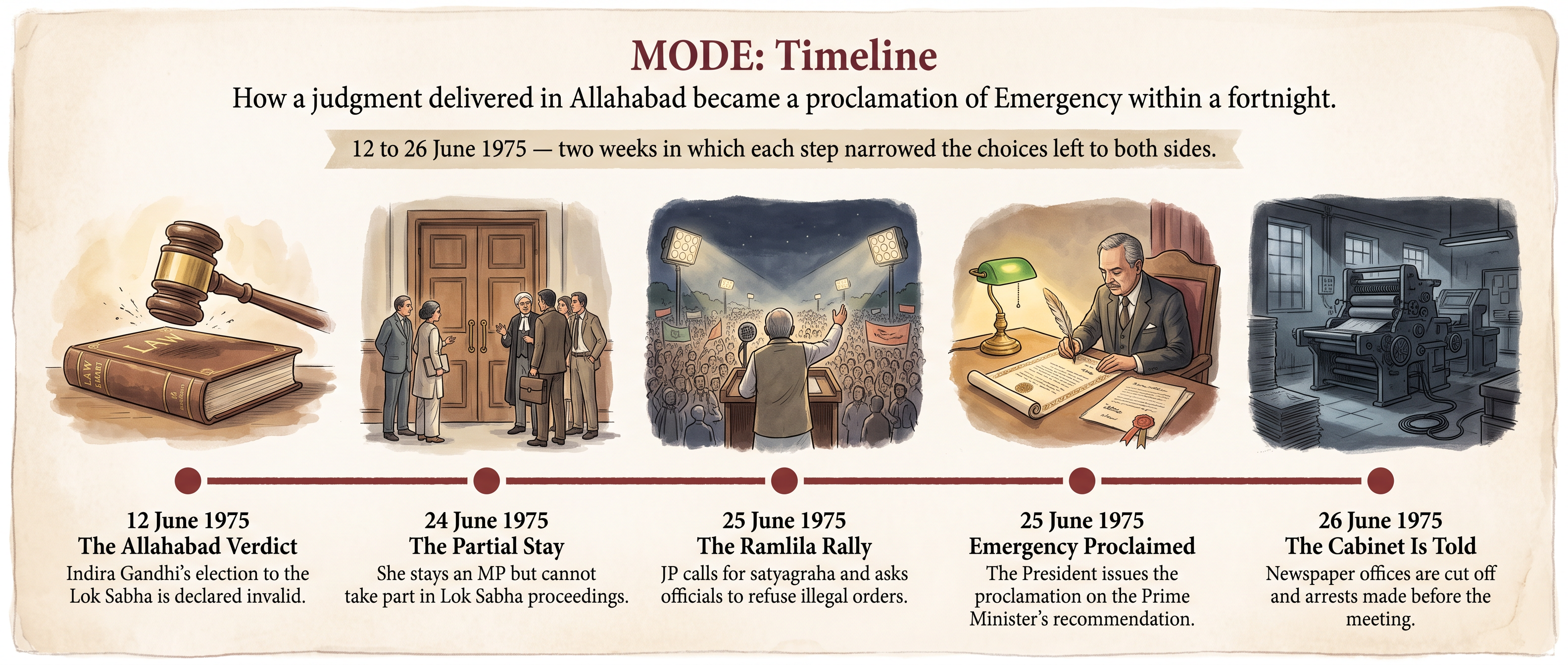
Fig. 6.6 – From The Verdict To The Proclamation.
The chapter prints two collages of newspaper material from this period, Fig. 6.7 and Fig. 6.8. Between them they carry the whole arc of what follows, and they repay slow reading.
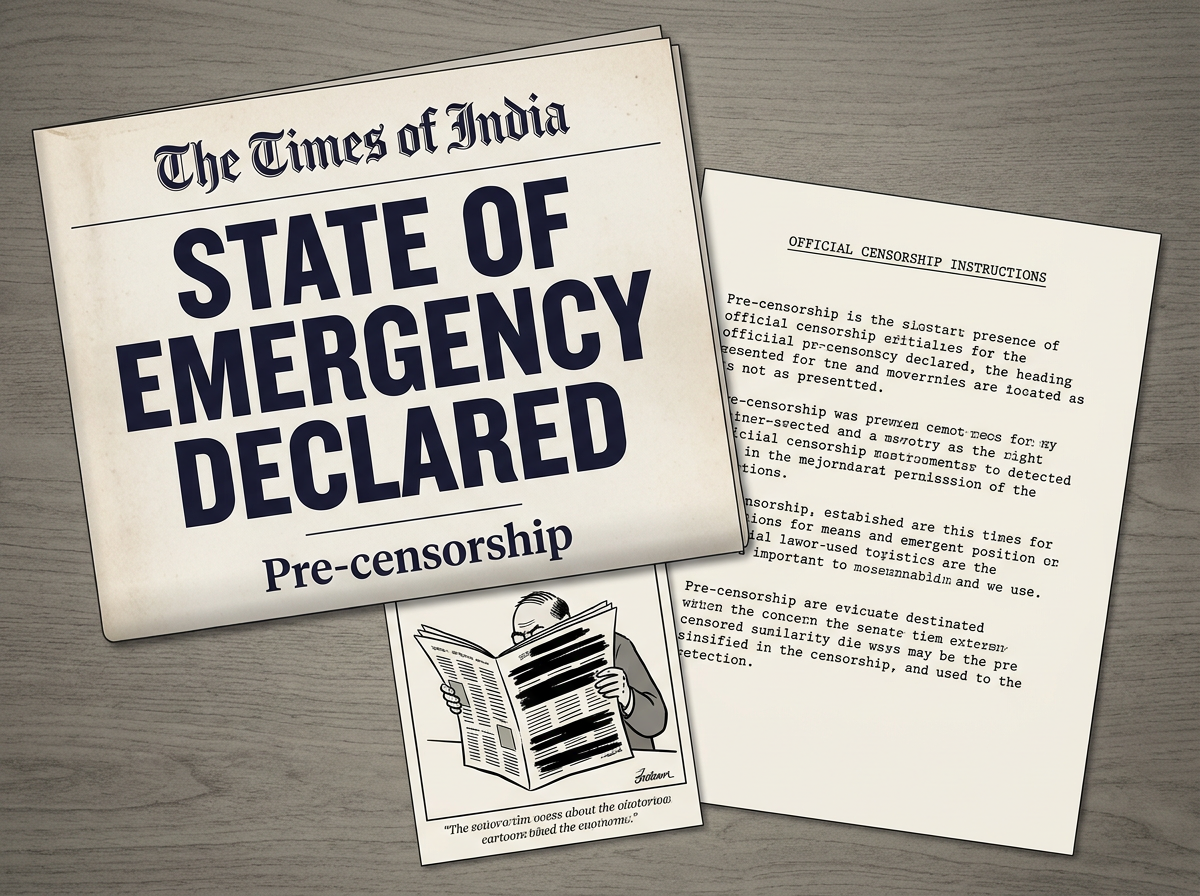
Fig. 6.7 – Press censorship and the declaration of Emergency.
Look closely at what a censor’s instruction sheet actually is. It is a short, dull, typed note telling an editor what may not be printed. It carries no argument, and no judge has signed it. Yet it decides what a whole country will read the next morning.
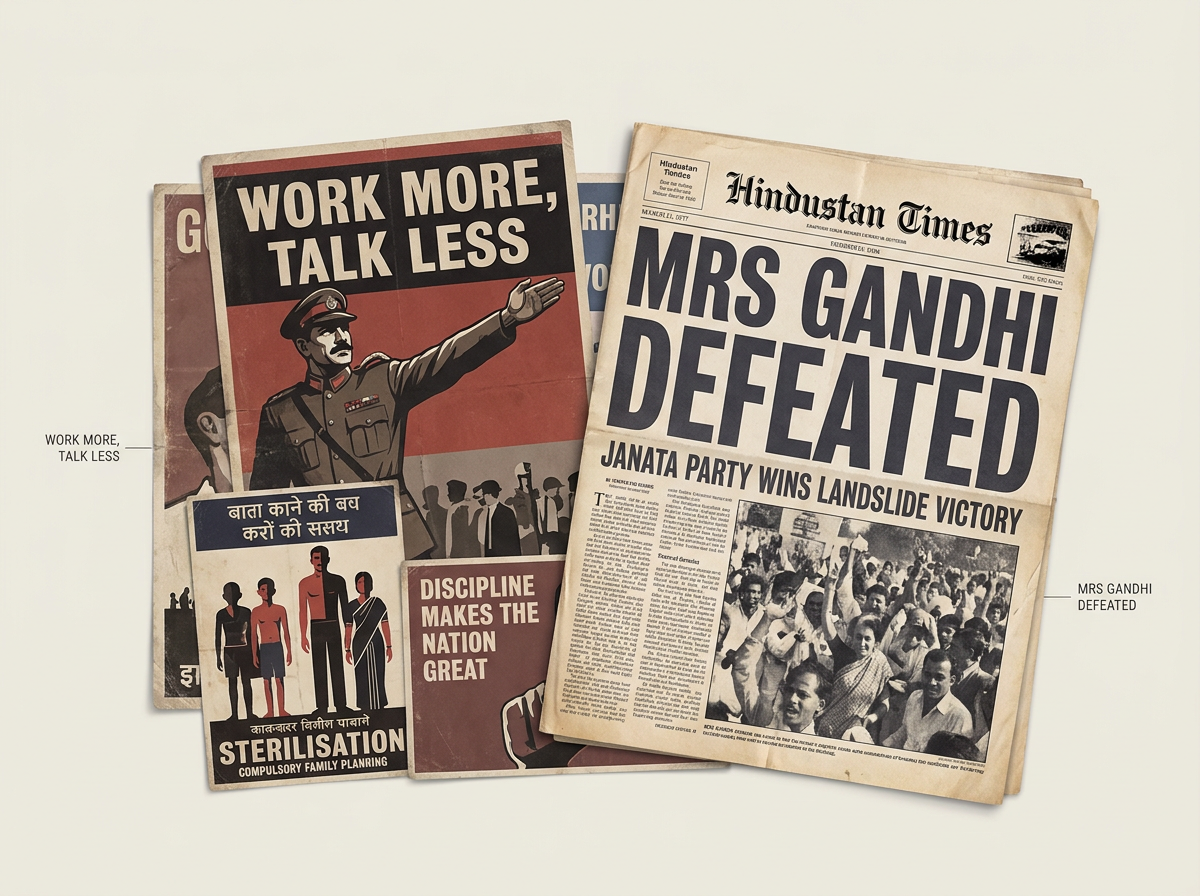
Fig. 6.8 – Emergency slogans and the 1977 electoral defeat.
Fig. 6.8 shows the Emergency speaking to the public in its own voice: work more, talk less; the Emergency is for your security. Beside it sits the headline of March 1977. The same collage therefore holds both the government’s message and the verdict the voters finally returned on it.
The limit applies to both collages. Front pages and posters tell us what was published — and under censorship, what was allowed to be published. They cannot tell us what people thought as they read them, how many believed the slogans, or what was happening in the towns and villages the newspapers could not report.
6.2.2 Consequences
The declaration brought the agitation to an abrupt stop. Strikes were banned. Many opposition leaders were put in jail. The political situation became very quiet, though tense — and the quiet is the point. It was not agreement. It was silence.
Deciding to use its special powers under the Emergency provisions, the government suspended the freedom of the Press. Newspapers were asked to get prior approval for all material to be published. This is known as press censorship: nothing appears until an official has permitted it.
Apprehending social and communal disharmony, the government banned the Rashtriya Swayamsevak Sangh (RSS) and the Jamait-e-Islami. Protests and strikes and public agitations were also disallowed.
Most importantly, under the provisions of the Emergency, the various Fundamental Rights of citizens stood suspended. This included the right of citizens to move the Court for restoring their Fundamental Rights. Consider what that second suspension does. A right you cannot go to a court to enforce is a right on paper only.
Arrest Without Trial
The government made extensive use of preventive detention. Under this provision, people are arrested and detained not because they have committed any offence, but on the apprehension that they may commit one. Using preventive detention acts, the government made large-scale arrests during the Emergency.
Arrested political workers could not challenge their arrest through habeas corpus petitions. A habeas corpus petition asks a court to have a detained person produced before it and to require the State to justify the detention. It is the oldest protection a citizen has against being locked up without a reason.
Many cases were filed in the High Courts and the Supreme Court by, and on behalf of, arrested persons. The government claimed that it was not even necessary to inform the arrested persons of the reasons and grounds of their arrest. Several High Courts gave judgments that even after the declaration of Emergency, the courts could entertain a writ of habeas corpus filed by a person challenging his or her detention.
Dissent And Resistance
There were many acts of dissent and resistance to the Emergency. Many political workers who were not arrested in the first wave went ‘underground’ and organised protests against the government.
Newspapers like the Indian Express and the Statesman protested against censorship by leaving blank spaces where news items had been censored. Magazines like the Seminar and the Mainstream chose to close down rather than submit to censorship. Many journalists were arrested for writing against the Emergency, and many underground newsletters and leaflets were published to bypass censorship.
Writers protested in their own way. The Kannada writer Shivarama Karanth, awarded the Padma Bhushan, and the Hindi writer Fanishwarnath Renu, awarded the Padma Shri, returned their awards in protest against the suspension of democracy. Returning an award is a small act. It was also one of the few acts still available.
Some protest slipped past the censor by disguising itself. Source 6.3 is an advertisement that appeared soon after the Emergency was declared.
Say the names aloud. D. E. M. O’Cracy is Democracy. T. Ruth is Truth. L. I. Bertie is Liberty. The mourners are Faith, Hope and Justice. Printed as a routine death notice, it went past a censor who was watching the editorial columns, not the obituaries.
The limit here is one the chapter states itself. By and large, such open acts of defiance and resistance were rare. So a handful of brave gestures must not be allowed to stand in for a whole country. What about the rest — the officials, the intellectuals, the social and religious leaders, the ordinary citizens? What were they doing? Our evidence is mostly evidence of the exceptions, because compliance leaves no clippings behind. Silence does not get printed, and it cannot be counted.
Changing The Constitution Itself
The Parliament also brought in many new changes to the Constitution.
In the background of the ruling of the Allahabad High Court in the Indira Gandhi case, an amendment was made declaring that elections of the Prime Minister, the President and the Vice-President could not be challenged in the Court. The very kind of petition Raj Narain had filed was thus placed beyond the reach of a judge.
The forty-second amendment was also passed during the Emergency. You have already studied that this amendment consisted of a series of changes in many parts of the Constitution.
Among the various changes made by this amendment, one was that the duration of the legislatures in the country was extended from five to six years. This change was not only for the Emergency period, but was intended to be of a permanent nature. Besides this, during an Emergency, elections can be postponed by one year.
Now do the arithmetic, because it shows what those two changes did together. The last general election had been held in 1971, and a five-year term meant elections in 1976. A six-year term pushed them to 1977. A further postponement of one year during an Emergency pushed them to 1978. Thus, effectively, after 1971, elections needed to be held only in 1978, instead of 1976.
An election that can be postponed by the very government it is meant to judge has stopped being a check on that government. This is why the Emergency is described as a constitutional crisis, and not only as a political one.
6.2.3 Lessons Of The Emergency
The Emergency at once brought out both the weaknesses and the strengths of India’s democracy. That double judgment is worth holding on to, because both halves of it are true.
Though there are many observers who think that India ceased to be democratic during the Emergency, it is noteworthy that normal democratic functioning resumed within a short span of time. Thus, one lesson of the Emergency is that it is extremely difficult to do away with democracy in India.
Secondly, it brought out some ambiguities regarding the Emergency provision in the Constitution that have been rectified since. Now, an ‘internal’ Emergency can be proclaimed only on the grounds of ‘armed rebellion’. And it is necessary that the advice to the President to proclaim an Emergency must be given in writing by the Union Cabinet.
Notice that these two changes answer exactly the two weak points we met earlier. ‘Internal disturbance’ was a vague phrase, and it has been replaced by a far harder test. And a recommendation made by one Prime Minister, with the Cabinet informed afterwards, has been replaced by written advice from the Cabinet as a body.
Thirdly, the Emergency made everyone more aware of the value of civil liberties. Civil liberties are the freedoms of a person against the State — of speech, of assembly, of the press, and freedom from arbitrary arrest. The Courts too have taken an active role after the Emergency in protecting the civil liberties of individuals. This is a response to the inability of the judiciary to protect civil liberties effectively during the emergency. Many civil liberties organisations came up after this experience.
Protest also travelled abroad. Source 6.4 was published in London on India’s Independence Day, some weeks after the proclamation.
The date was chosen with care. On the anniversary of freedom from colonial rule, the advertisement asked whether freedom at home was going out. Placing it in a London newspaper tells us something practical too: to say this in print, the campaign had to speak from beyond the reach of the censor.
Its limit is equally plain. This is an advertisement, placed by a campaign named after one leader, in a foreign newspaper, read mostly by people who were not Indian voters. It is evidence that the Emergency was being contested internationally. It is not evidence of what people inside India were thinking.
The Questions That Were Not Settled
However, the critical years of emergency brought many issues that have not been adequately grappled with.
We have noted in this chapter that there is a tension between the routine functioning of a democratic government and the continuous political protests by parties and groups. A government elected for a full term must be able to govern. Citizens who did not vote for it must be able to protest. What is the correct balance between the two? Should the citizens have full freedom to engage in protest activity, or should they have no such right at all? What are the limits to such a protest?
Secondly, the actual implementation of the Emergency rule took place through the police and the administration. These institutions could not function independently. They were turned into political instruments of the ruling party, and according to the Shah Commission Report, the administration and the police became vulnerable to political pressures. This problem did not vanish after the Emergency.
That is the most sobering line in the chapter. A provision in the Constitution can be tightened, and it was. But an administration that has once learnt to take its orders from a party does not unlearn the habit on the day the proclamation is withdrawn.
6.3 Politics After Emergency
The most valuable and lasting lesson of the Emergency was learnt as soon as the Emergency was over and the Lok Sabha elections were announced.
The 1977 elections turned into a referendum on the experience of the Emergency — that is, into a single question put to the voters, on which they were being asked to deliver a yes or a no. This was true at least in north India, where the impact of the Emergency was felt most strongly.
The opposition fought the election on the slogan of ‘save democracy’. The people’s verdict was decisively against the Emergency.
The lesson was clear, and it has been reiterated in many state level elections since: governments that are perceived to be anti-democratic are severely punished by the voters. In this sense, the experience of 1975–77 ended up strengthening the foundations of democracy in India.
Hold both halves of that sentence together. The same months that saw rights suspended also produced the clearest proof that Indian voters would not tolerate their suspension.
6.3.1 Lok Sabha Elections, 1977
In January 1977, after eighteen months of Emergency, the government decided to hold elections. Accordingly, all the leaders and activists were released from jails. Elections were held in March 1977.
That left the opposition with very little time. Two months is nothing for parties whose leaders had been in prison, whose workers had been underground, and whose newspapers had been censored. Yet political developments took place very rapidly.
The major opposition parties had already been coming closer in the pre-Emergency period, as we saw when they gathered behind Jayaprakash Narayan. Now they came together on the eve of the elections and formed a new party, known as the Janata Party. The new party accepted the leadership of Jayaprakash Narayan.
Some leaders of the Congress who were opposed to the Emergency also joined this new party. Some other Congress leaders came out and formed a separate party under the leadership of Jagjivan Ram. This party, named the Congress for Democracy, later merged with the Janata Party.
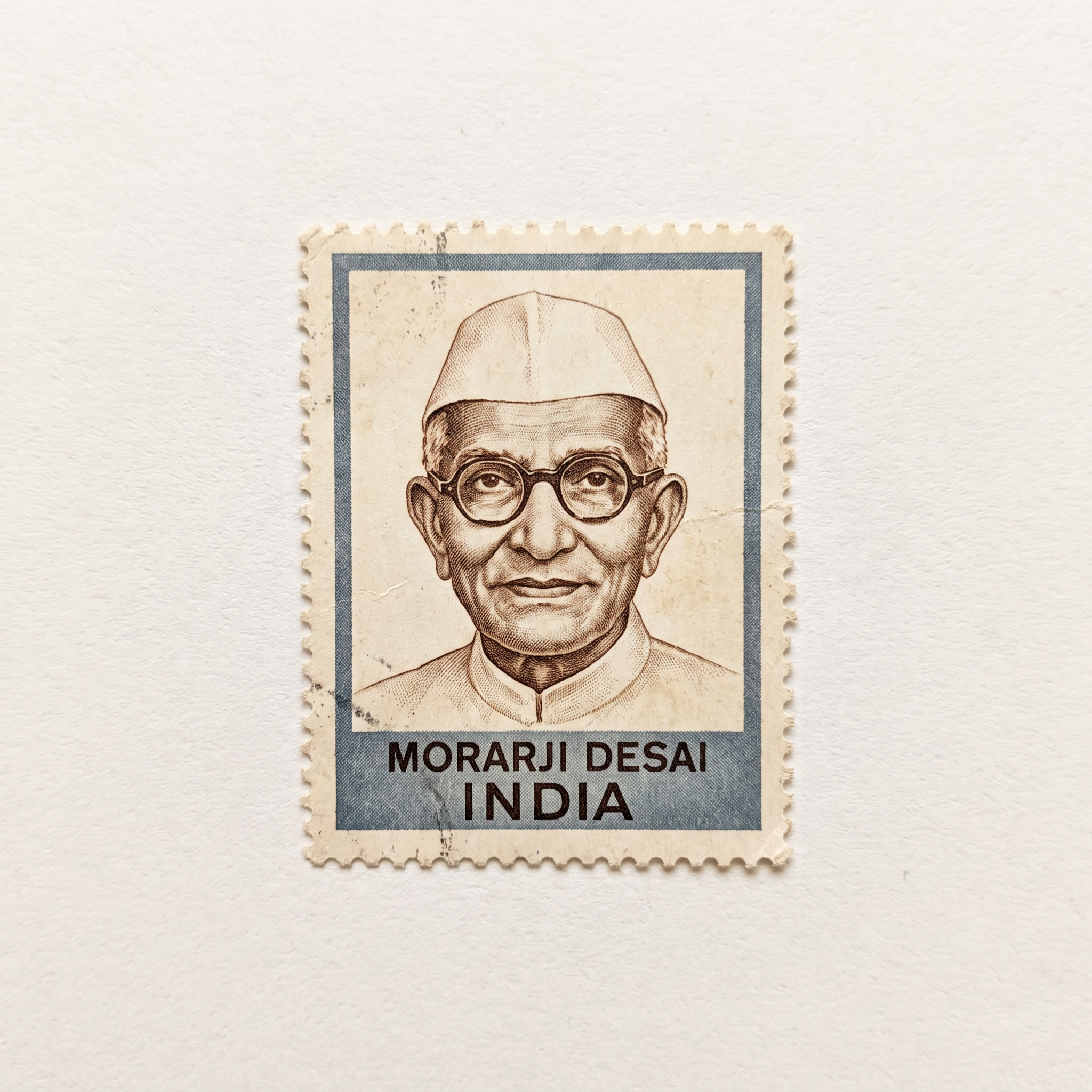
Fig. 6.9 – Commemorative postage stamp of Morarji Desai.
One Election, One Question
The Janata Party made this election into a referendum on the Emergency. Its campaign was focused on the non-democratic character of the rule, and on the various excesses that took place during this period.
In the backdrop of the arrests of thousands of persons and the censorship of the Press, public opinion was against the Congress. Jayaprakash Narayan became the popular symbol of the restoration of democracy.
The formation of the Janata Party also did something purely arithmetical, and it mattered enormously. It ensured that non-Congress votes would not be divided. In our system a seat goes to whoever gets the most votes, so a party facing four separate rivals can win a seat without winning a majority of the votes — and had done so for years. One opposition party meant one opponent in each seat. It was evident that the going was tough for the Congress.
The Result
Yet the final results took everyone by surprise.
For the first time since Independence, the Congress party was defeated in the Lok Sabha elections. The Congress could win only 154 seats. Its share of popular votes fell to less than 35 per cent.
The Janata Party and its allies won 330 out of the 542 seats in the Lok Sabha. The Janata Party itself won 295 seats, and thus enjoyed a clear majority — more than half the House on its own, without needing anyone else’s support.
In north India, it was a massive electoral wave against the Congress. The Congress lost in every constituency in Bihar, Uttar Pradesh, Delhi, Haryana and the Punjab, and could win only one seat each in Rajasthan and Madhya Pradesh. Indira Gandhi was defeated from Rae Bareli, as was her son Sanjay Gandhi from Amethi.
Read that last sentence again. A Prime Minister who had won a sweeping mandate six years earlier lost her own seat. A cartoonist’s reading of the result is Fig. 6.10.
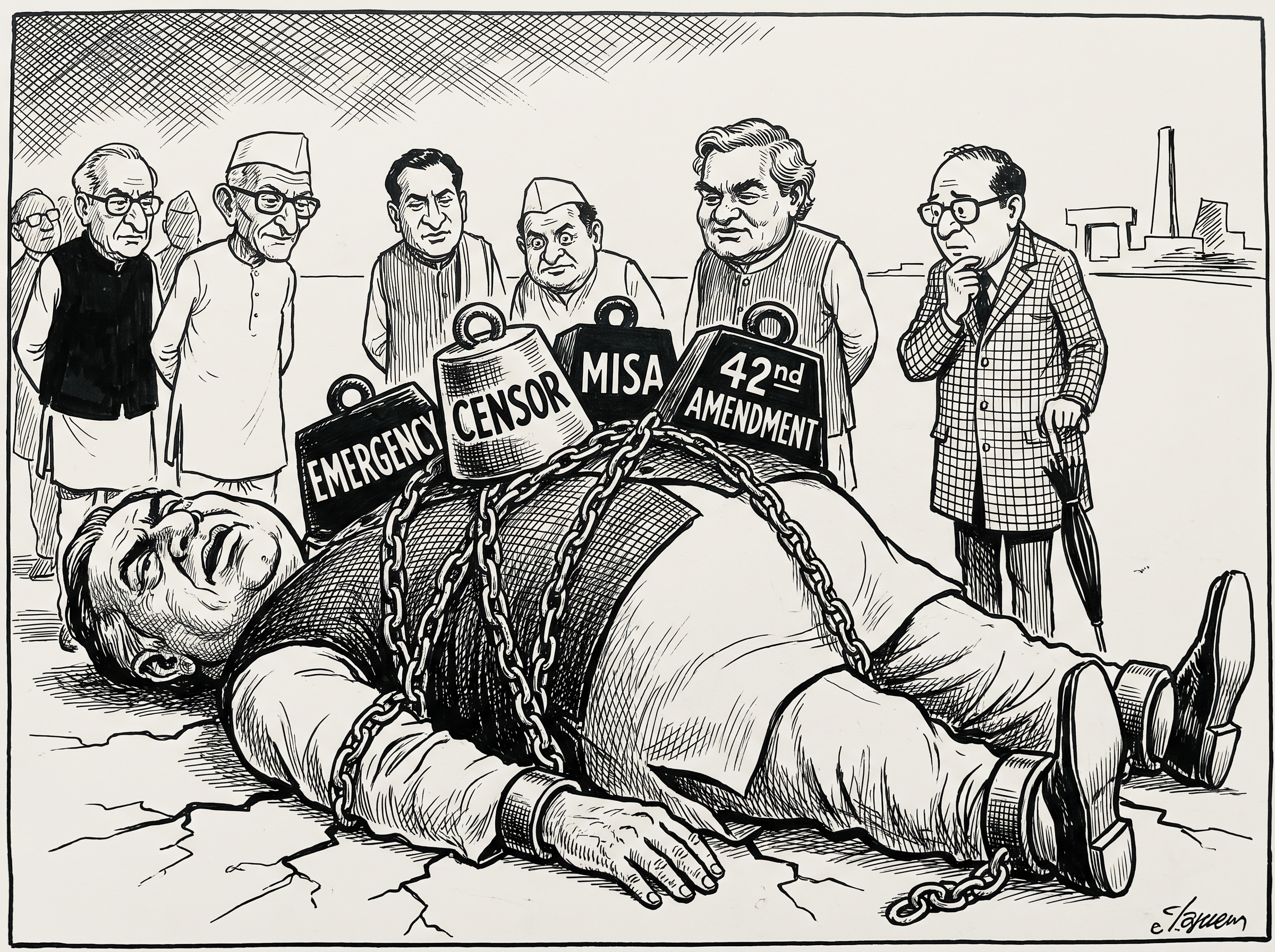
Fig. 6.10 – The defeat of the Congress in 1977. Inspiration: R. K. Laxman, The Times of India, 29 March 1977.
Notice who is standing and who is lying down. The Congress is on the ground, weighed down by the very instruments of the Emergency — censorship, detention, the amendment. Around it stand the opposition leaders, and with them the small figure of the common man.
The cartoonist’s claim is that the ordinary voter, and not the opposition leaders, has done the defeating — and that he is now a person to be careful with.
The limit deserves care here, because the cartoon makes a very confident claim. A drawing published days after the result cannot tell us why people voted as they did. It reads the entire verdict as a verdict on the Emergency. Whether that reading is complete is a question the chapter itself now raises.
The Map Tells A More Complicated Story
But if you look at the map showing the result of this election, you will notice that the Congress did not lose elections all over the country.
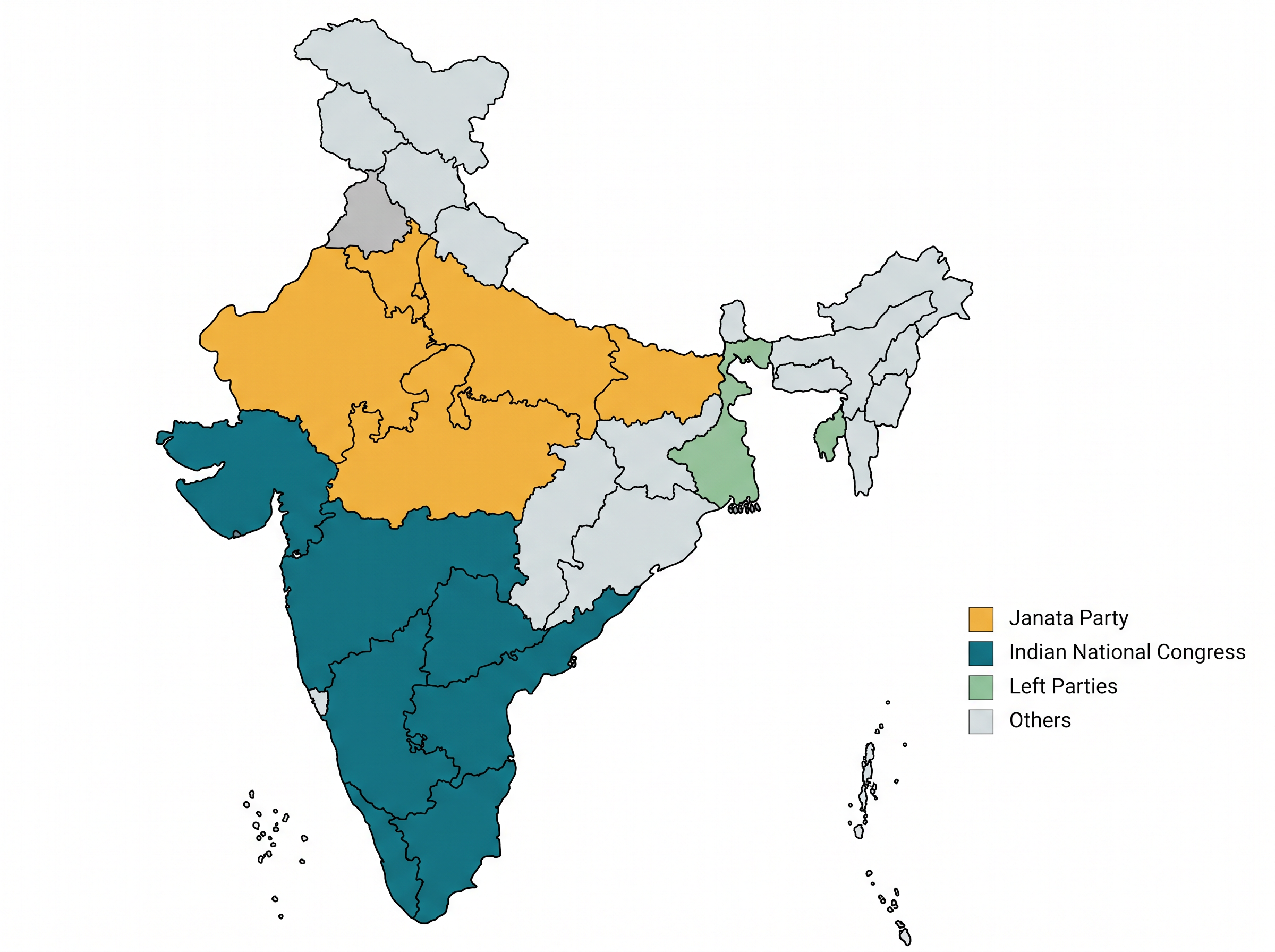
Fig. 6.11 – Lok Sabha election results, 1977.
The Congress retained many seats in Maharashtra, Gujarat and Orissa, and virtually swept through the southern States. So a single national headline — that the people rejected the Emergency — does not fit the whole map.
There are many reasons for this. To begin with, the impact of the Emergency was not felt equally in all the States. The forced relocation and displacements, and the forced sterilisations, were mostly concentrated in the northern States. Where the coercion had been felt directly, the reaction was fiercest.
But more importantly, north India had experienced some long-term changes in the nature of political competition. The middle castes from north India were beginning to move away from the Congress, and the Janata party became a platform for many of these sections to come together. In this sense, the elections of 1977 were not merely about the Emergency.
So how can we talk about a mandate or a verdict in 1977, when the north and the south voted so differently? The honest answer is that we must talk about it carefully. There was a clear verdict: the Congress lost office for the first time. But a verdict delivered in one half of the country, for reasons that were partly about the Emergency and partly about caste and competition, is not the same thing as a single national opinion.
6.3.2 Janata Government
The Janata Party government that came to power after the 1977 elections was far from cohesive. It had been assembled in a few weeks, out of parties that agreed about what they opposed rather than about what they wanted.
After the election, there was stiff competition among three leaders for the post of Prime Minister. Morarji Desai had been the rival to Indira Gandhi ever since 1966-67. Charan Singh was the leader of the Bharatiya Lok Dal and a farmers’ leader from UP. Jagjivan Ram had vast experience as a senior minister in the Congress governments.
Eventually Morarji Desai became the Prime Minister. But that did not bring the power struggle within the party to an end. It only moved the struggle inside the government.
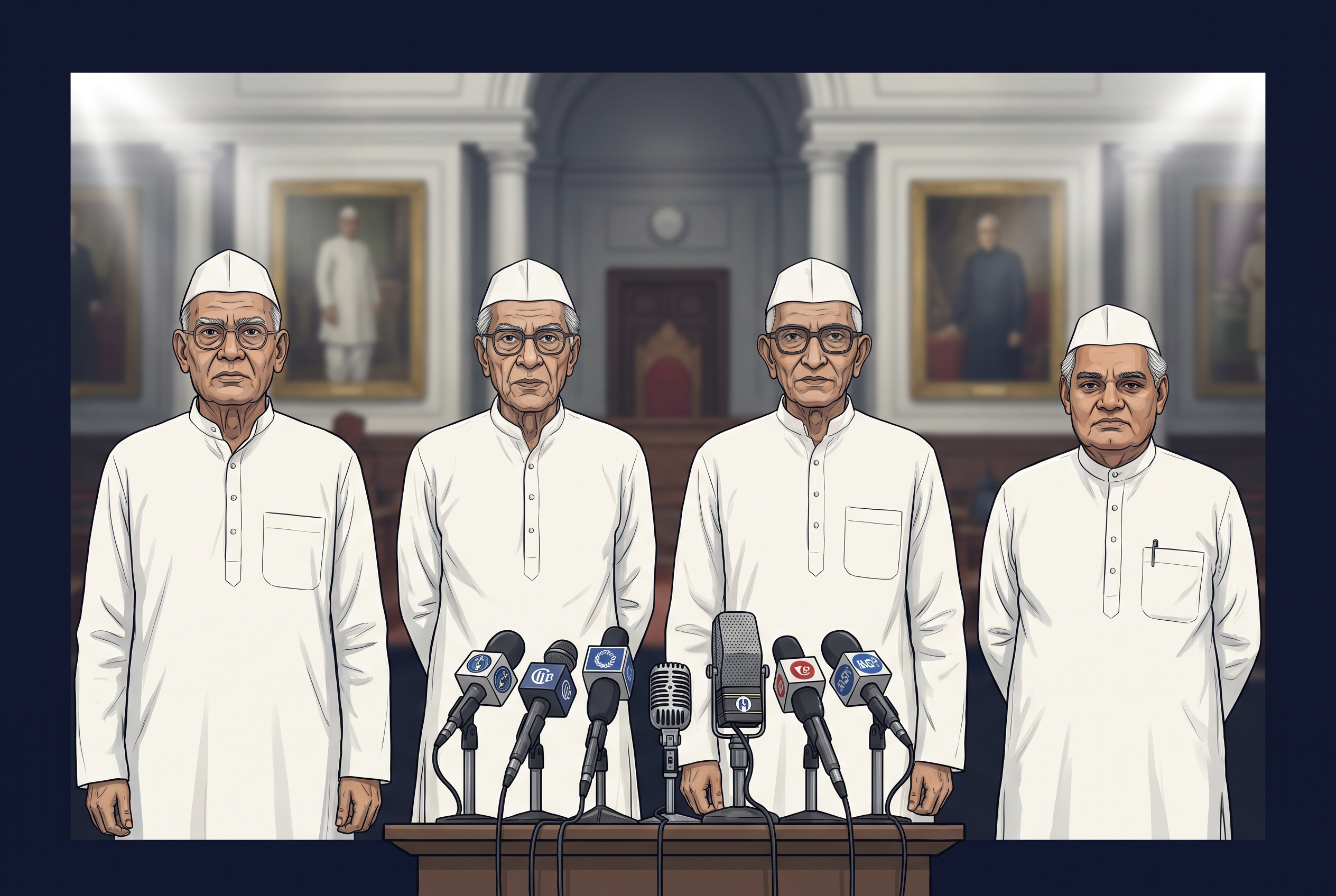
Fig. 6.12 – Oath-taking by the first non-Congress government, 1977.
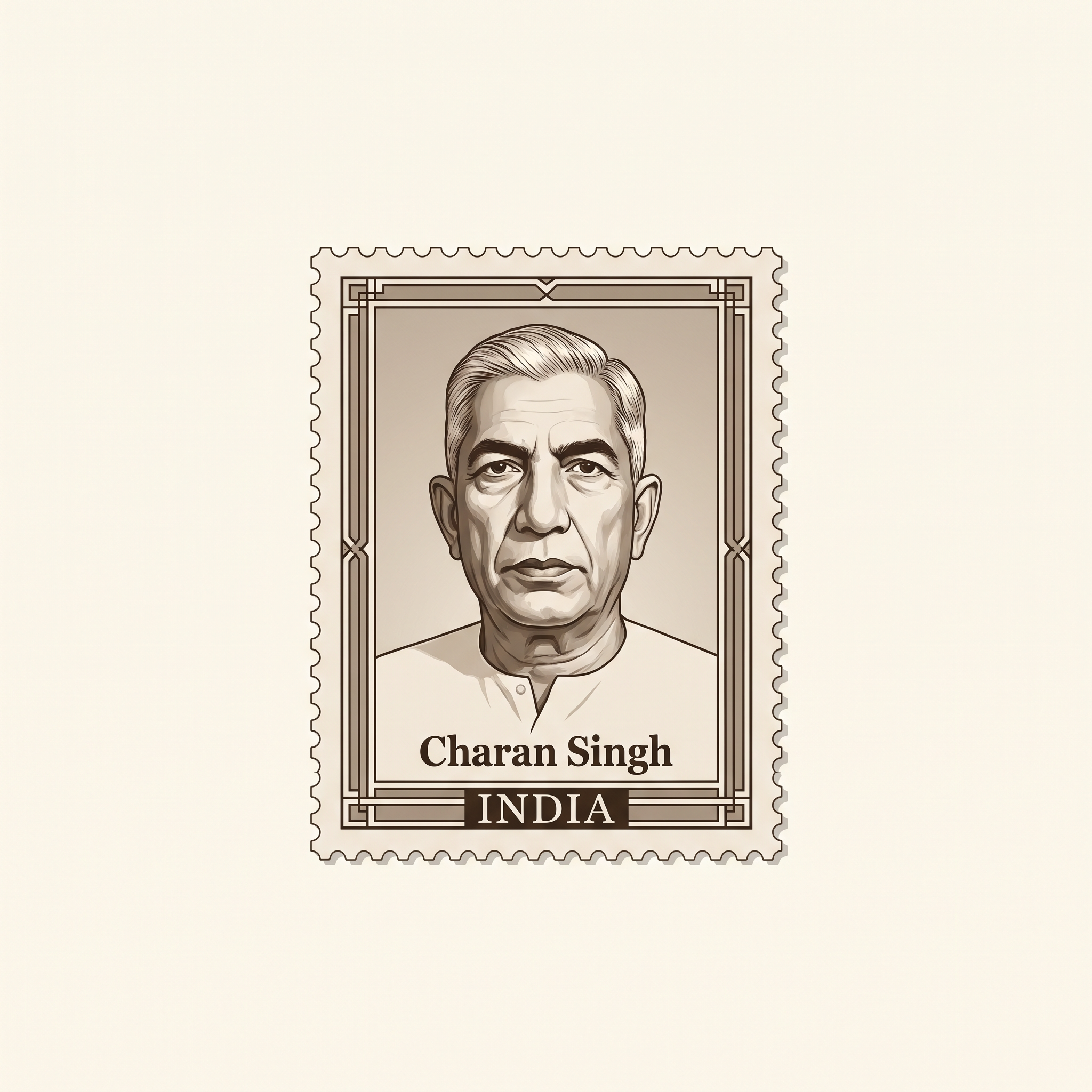
Fig. 6.13 – Commemorative postage stamp of Chaudhary Charan Singh.
The Faction Fight In Three Drawings
The quarrels inside the Janata Party were so public that they became a standing subject for cartoonists. The chapter prints a selection of them.
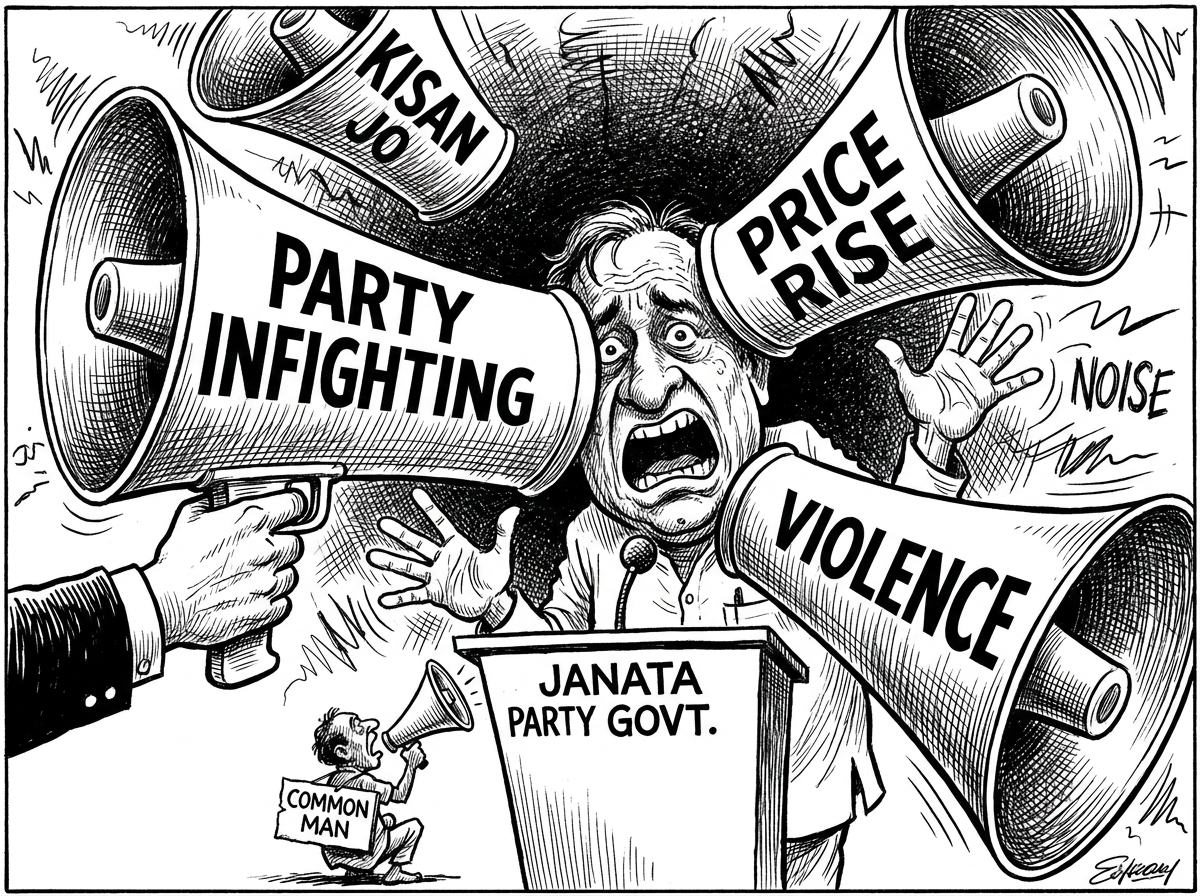
Fig. 6.14 – Factional fighting within the Janata Party. Inspiration: Atanu Roy, India Today.
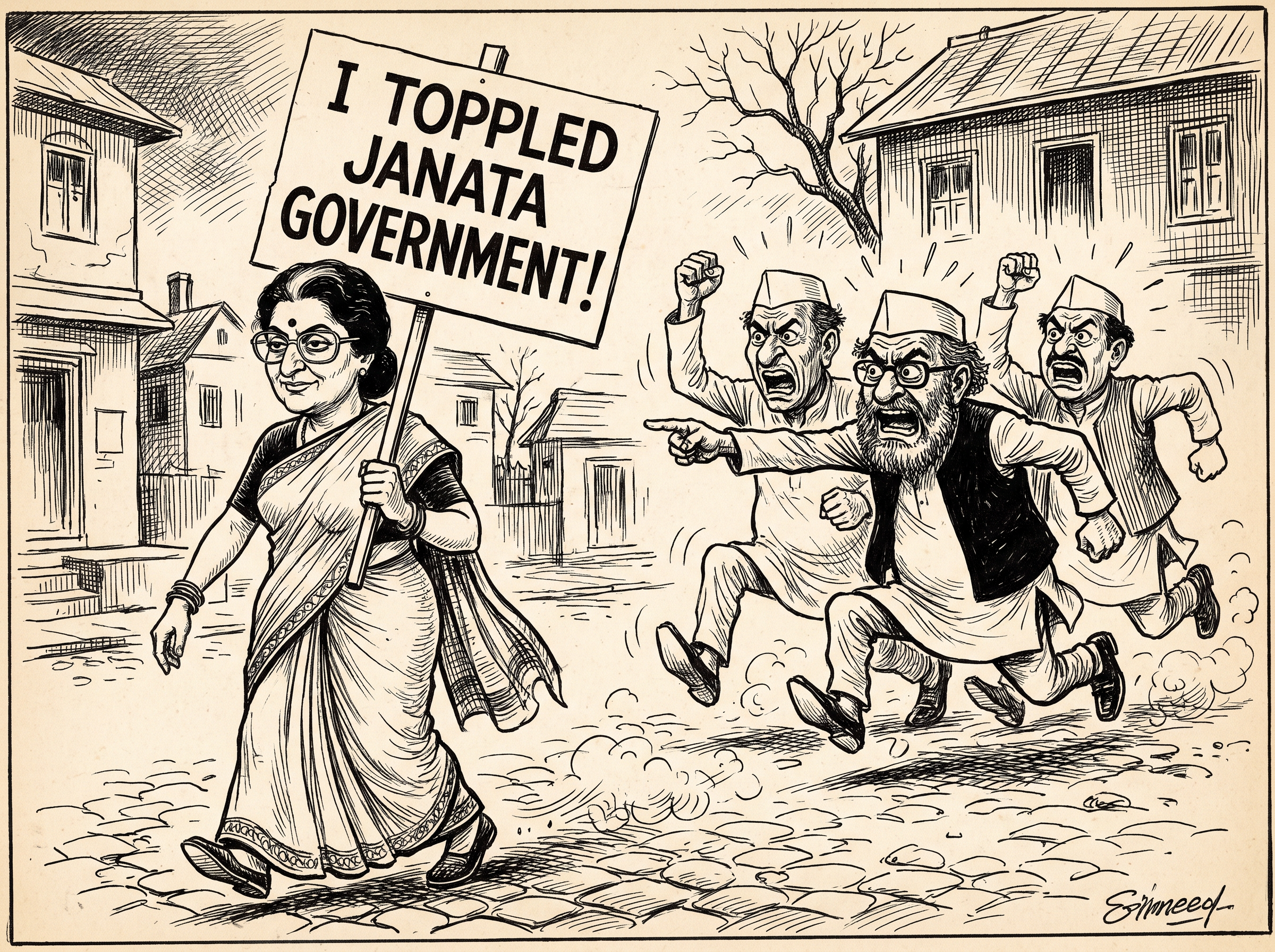
Fig. 6.15 – The fall of the Janata government. Inspiration: R. K. Laxman, The Times of India, 13 November 1979.
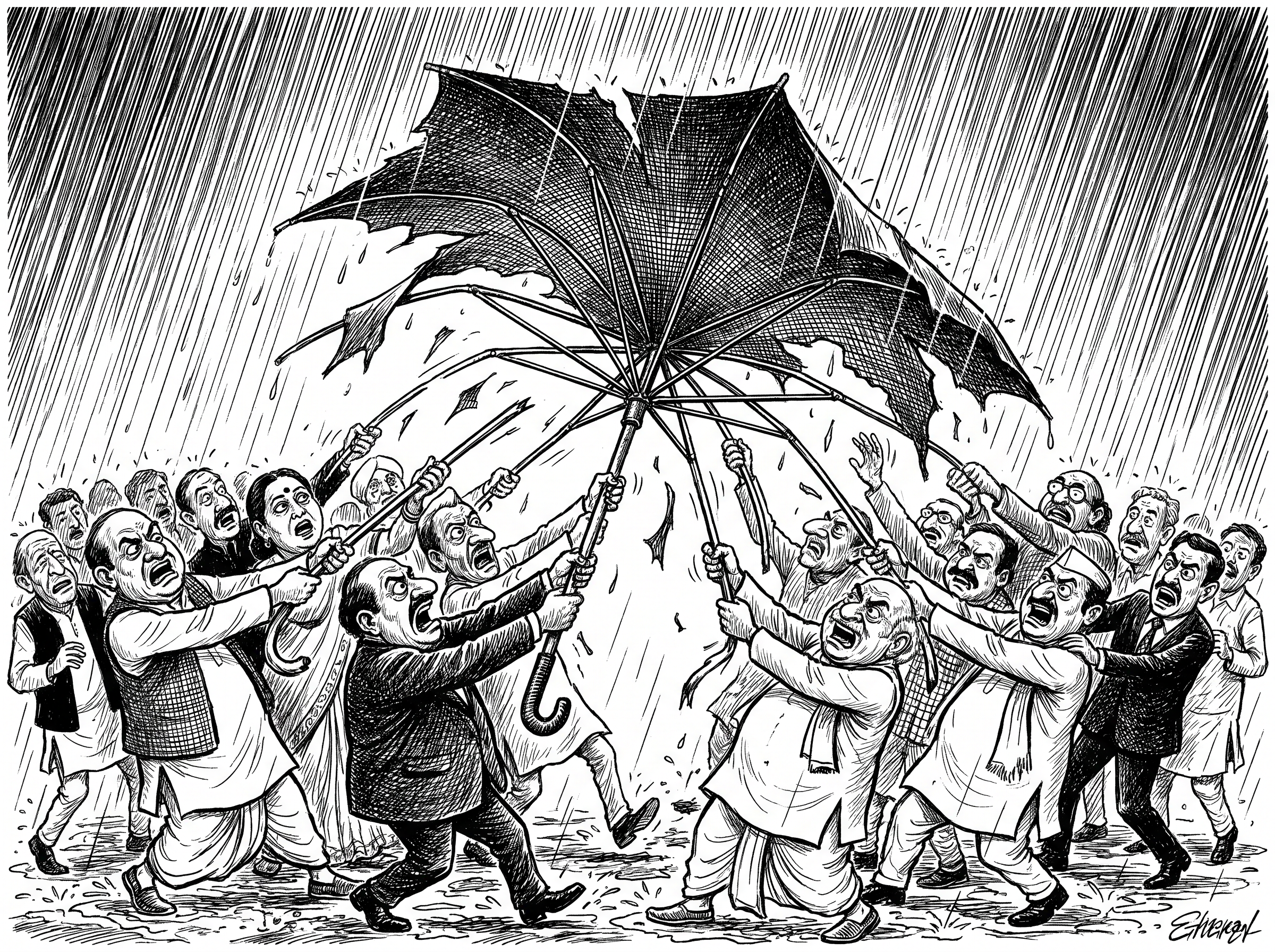
Fig. 6.16 – The struggle for leadership in the Janata Party. Inspiration: R. K. Laxman, The Times of India.
The three drawings make one argument between them. In Fig. 6.14, a leader cannot hear the country over the noise of his own party. In Fig. 6.15, the Janata leaders are so anxious to claim the credit for their own government’s fall that they dispute a rival’s boast about it. In Fig. 6.16, they all want unity — each on condition that he leads it.
Their limit is the limit of all satire. Cartoonists exaggerate for effect, and three drawings by two cartoonists are not a measurement of a party’s condition. They tell us how the Janata Party’s infighting looked to observers at the time. They cannot tell us what its ministers were attempting, or what a united Janata Party might have done with its majority.
The Government Falls
The opposition to Emergency could keep the Janata Party together only for a while. Its critics felt that the Janata Party lacked direction, leadership, and a common programme. The Janata Party government could not bring about a fundamental change in policies from those pursued by the Congress.
The Janata Party split, and the government which was led by Morarji Desai lost its majority in less than 28 months. Another government, headed by Charan Singh, was formed on the assurance of the support of the Congress party. But the Congress party later decided to withdraw its support, with the result that the Charan Singh government could remain in power for just about 4 months.
Follow the logic of that arrangement for a moment. A party that had come to power by opposing the Emergency now formed a government that depended on the votes of the party which had imposed it. When those votes were withdrawn, the government fell.
Fresh Lok Sabha elections were held in January 1980. The Janata Party suffered a comprehensive defeat, especially in north India, where it had swept the polls in 1977. The Congress party led by Indira Gandhi nearly repeated its great victory of 1971. It won 353 seats and came back to power.
The experience of 1977–79 taught another lesson in democratic politics: governments that are seen to be unstable and quarrelsome are severely punished by the voters. Voters had punished one government for taking too much power. Three years later they punished another for being unable to use the power it had.
The sequence of those three years is set out in Fig. 6.17.
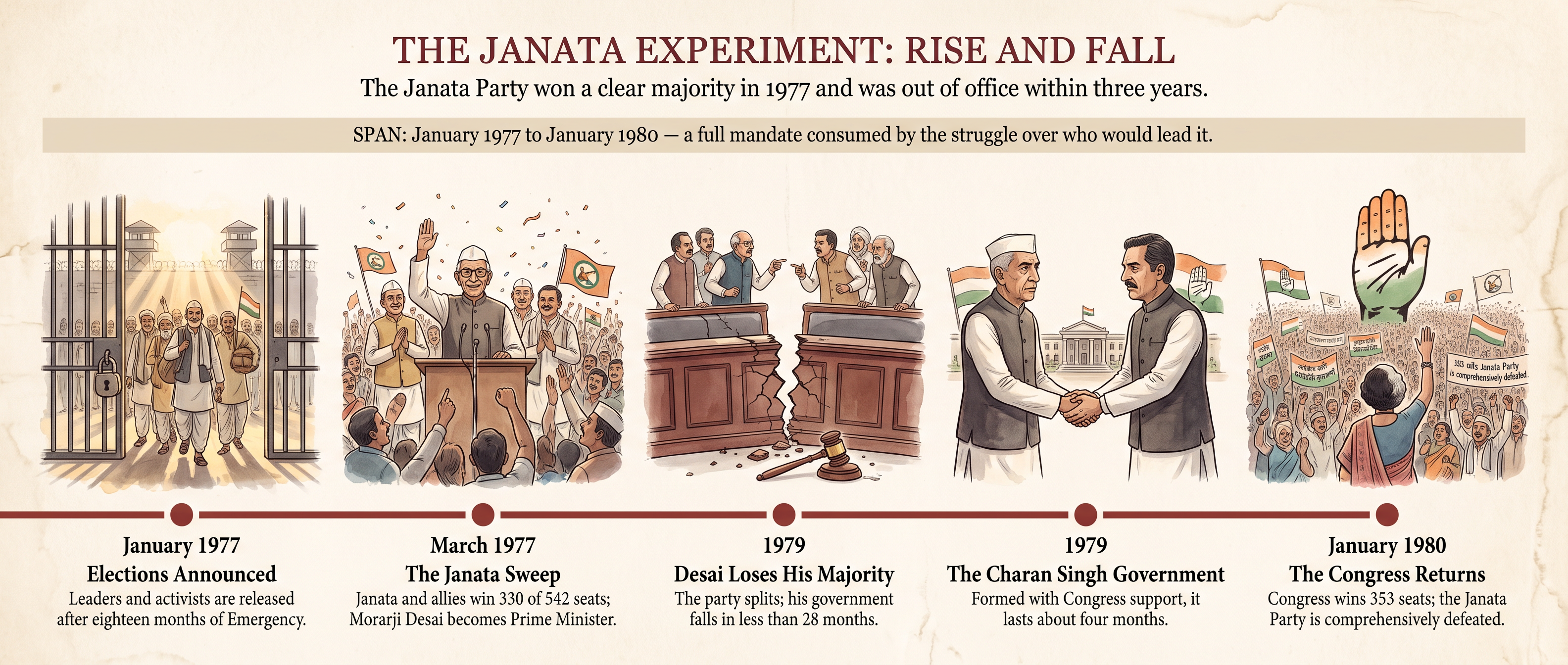
Fig. 6.17 – From The Janata Sweep To The Janata Rout.
6.3.3 Legacy
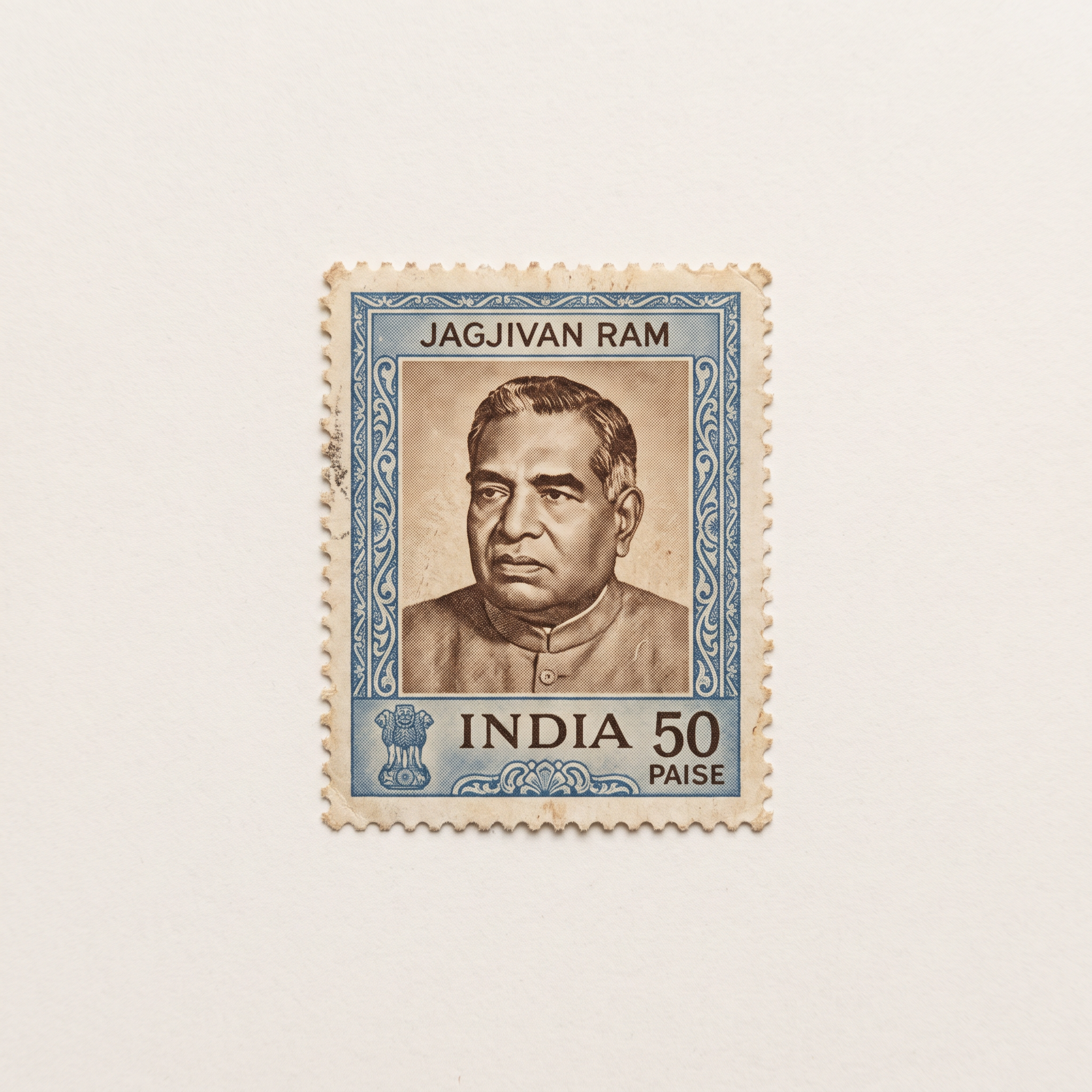
Fig. 6.18 – Commemorative postage stamp of Jagjivan Ram.
But was it only a case of the return of Indira Gandhi? If the story ended with the result of 1980, the years since 1975 would look like a long detour that changed nothing. They were not.
Between the elections of 1977 and 1980, the party system had changed dramatically.
Since 1969, the Congress party had started shedding its character as an umbrella party — a party that accommodated leaders and workers of different ideological dispensations and view points, and held them together under one banner. The Congress party now identified itself with a particular ideology, claiming to be the only socialist and pro-poor party.
Thus, from the early nineteen seventies, the Congress’s political success depended on two things: attracting people on the basis of sharp social and ideological divisions, and the appeal of one leader, Indira Gandhi. A party that had once contained its rivals inside itself now defined itself against them.
With this change in the nature of the Congress party, the other opposition parties relied more and more on what is known in Indian politics as non-Congressism — the strategy of coming together against the Congress, whatever else divided them. They also realised the need to avoid a division of non-Congress votes in the election. This factor played a major role in the elections of 1977.
Photographs from the 1980 campaign show how directly the Congress now spoke about its leader.
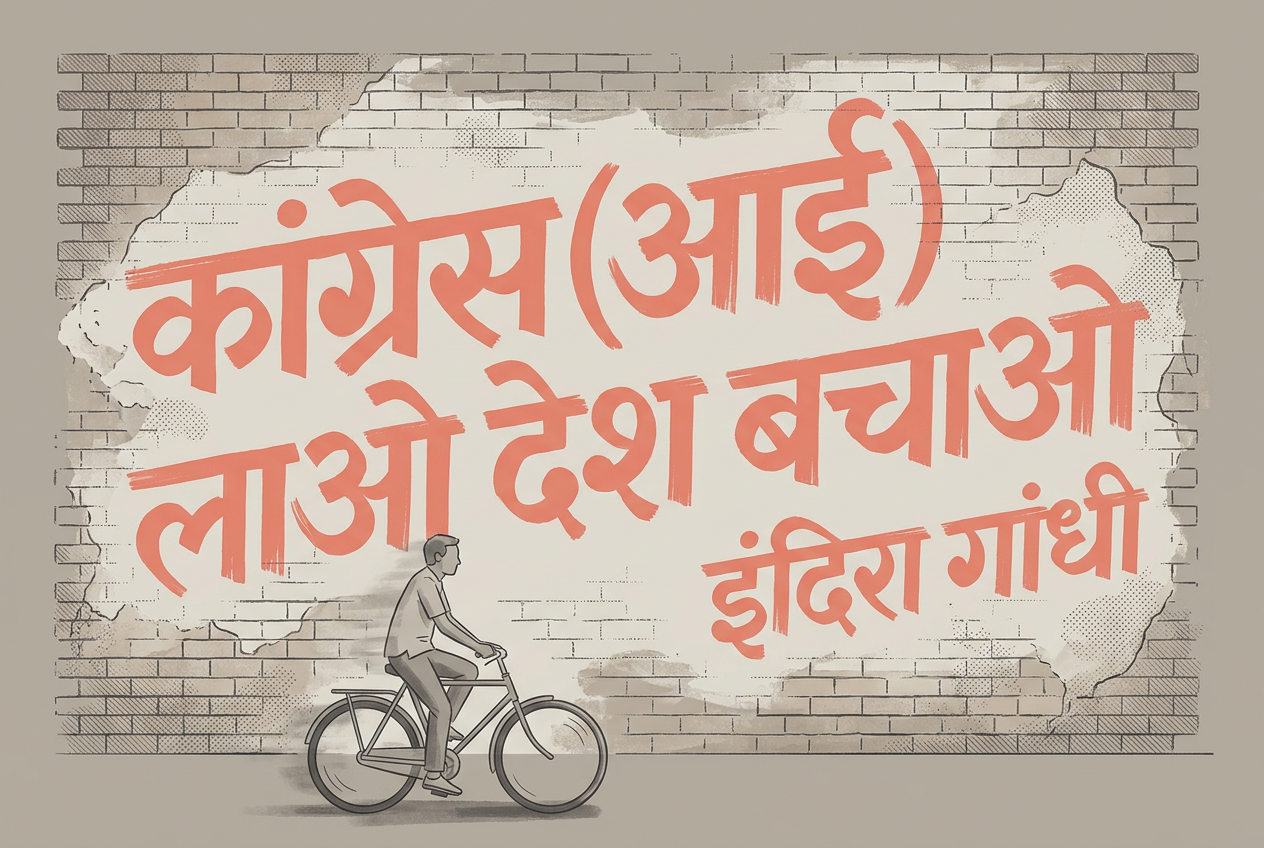
Fig. 6.19 – Congress (I) slogan on a wall in Rae Bareli.
Set that wall beside the slogans of 1977. The opposition had asked voters to save democracy. Three years later the Congress asked them to call Indira back and save the country. Both appeals were made to the voter — and in both cases the voter answered.
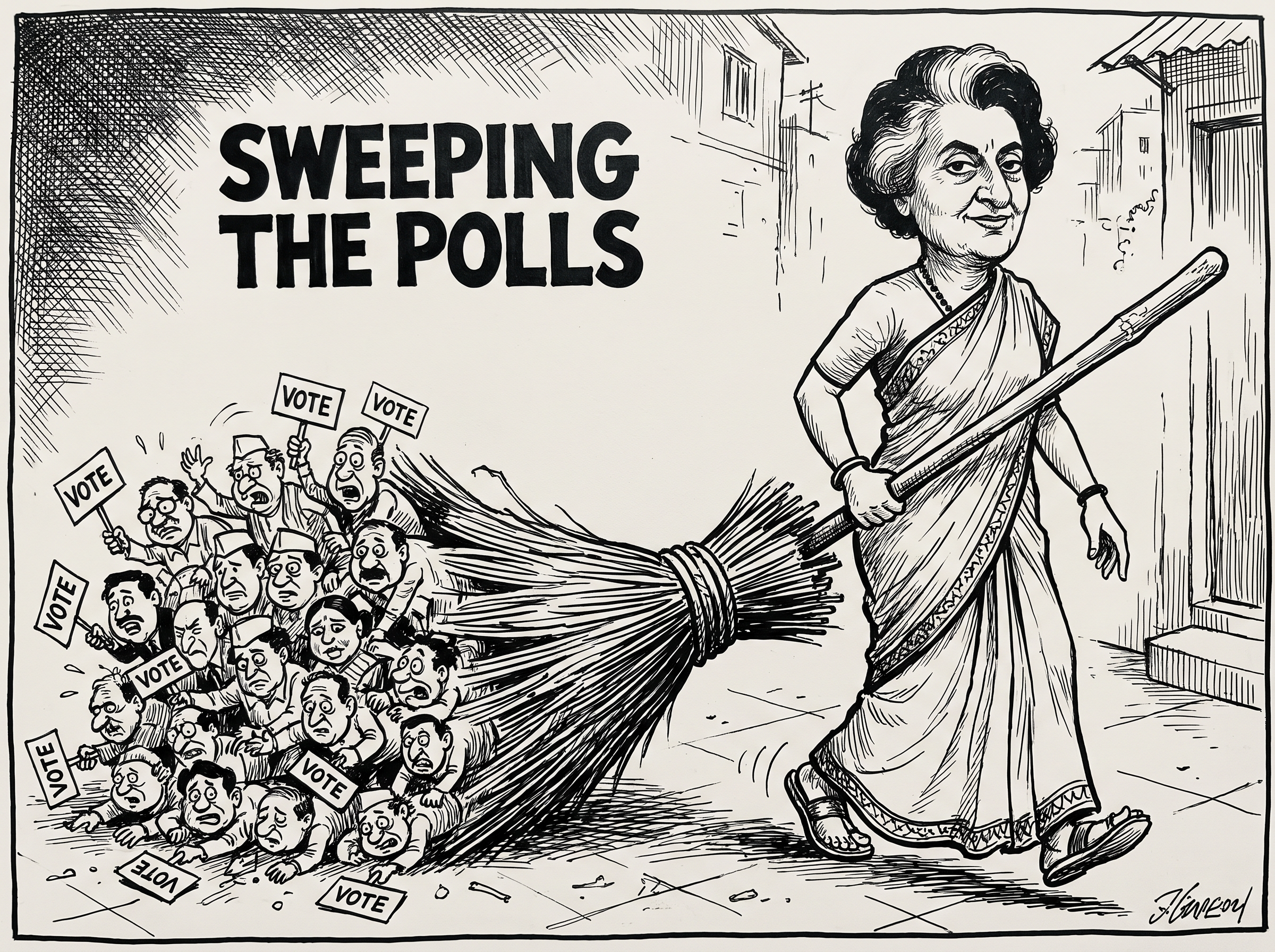
Fig. 6.20 – Congress sweeping the 1980 polls. Inspiration: R. K. Laxman, The Times of India.
The cartoonist has turned a phrase into a picture. To ‘sweep the polls’ is to win overwhelmingly; here the broom itself is made of the politicians who have been swept aside.
And the limit, once more. The drawing shows an outcome, not an explanation. It cannot tell us why the voters returned to the Congress in 1980 — whether they were endorsing Indira Gandhi’s leadership, or punishing the Janata Party’s quarrels, or doing both at once. For that we have to read the politics, not the picture.
The Castes That Changed The System
In an indirect manner, the issue of the welfare of the backward castes also began to dominate politics from 1977. As we saw above, the results of the 1977 elections were at least partly due to a shift among the backward castes of north India.
Following the Lok Sabha elections, many states also held Assembly elections in 1977. Again, the northern States elected non-Congress governments, in which the leaders of the backward castes played an important role.
The issue of reservations for ‘other backward classes’ became very controversial in Bihar. Following this, the Mandal Commission was appointed by the Janata Party government at the centre. You will read more about this, and about the role of the politics of backward castes, in the last chapter.
The elections after the Emergency, then, set off the process of this change in the party system. That is the deeper legacy — deeper than the question of which party held office in 1980.
Two Crises, And Which Was Worse
The Emergency and the period around it can be described as a period of constitutional crisis, because it had its origins in the constitutional battle over the jurisdiction of the Parliament and the judiciary.
On the other hand, it was also a period of political crisis. The party in power had an absolute majority, and yet its leadership decided to suspend the democratic process.
Why did the Constitution allow room for this? Because the makers of India’s Constitution trusted that all political parties would basically abide by the democratic norm. They expected that even during an Emergency, when the government used extraordinary powers, it would use them within the norms of the rule of law. This expectation led to the wide and open-ended powers given to the government in times of Emergency. These were abused during the Emergency.
That is why the chapter judges the political crisis to have been more serious than the constitutional crisis. A gap in the text can be closed by an amendment, and it was. A ruling party willing to walk through the gap is a harder problem, and no clause can be drafted that removes it.
Another critical issue that emerged during this period was the role and extent of mass protests in a parliamentary democracy. There was clearly a tension between institution-based democracy — elections, legislatures, courts — and democracy based on spontaneous popular participation. This tension may be attributed to the inability of the party system to incorporate the aspirations of the people. In the next chapter we shall study some of the manifestations of this tension, in particular the debates around regional identity.
You may meet the comparison that the Emergency was like a vaccination against dictatorship: painful, and it caused a fever, but it strengthened the resistance of our democracy. It is a tempting way to close the story, and it is worth thinking about twice. A vaccine is given deliberately, in a measured dose, by someone who intends the patient to recover. Nobody imposed the Emergency in order to immunise Indian democracy, and nothing guaranteed that democracy would return. It returned because an election was held — and because people voted.
Let’s Watch A Film
The chapter suggests a film from this period: Hazaron Khwaishein Aisi (2005), directed by Sudhir Mishra, with a screenplay by Sudhir Mishra, Ruchi Narain and Shivkumar Subramaniam, and starring Kay Kay Menon, Shiney Ahuja and Chitrangada Singh.
Siddharth, Vikram and Geeta are three spirited and socially engaged students. Graduating from Delhi, they follow different paths. Siddharth is a strong supporter of the revolutionary ideology of social transformation. Vikram is in favour of achieving success in life, whatever the cost. The film narrates the story of their journeys towards their goals, and the disappointments that lie underneath.
The film is set in the backdrop of the seventies, and its young characters are products of the expectations and the idealism of that period. Siddharth is not successful in his ambition to stage a revolution, but he becomes so involved in the plight of the poor that he begins to value their uplift more than revolution. Vikram, on the other hand, becomes a typical political fixer, and is constantly ill at ease.
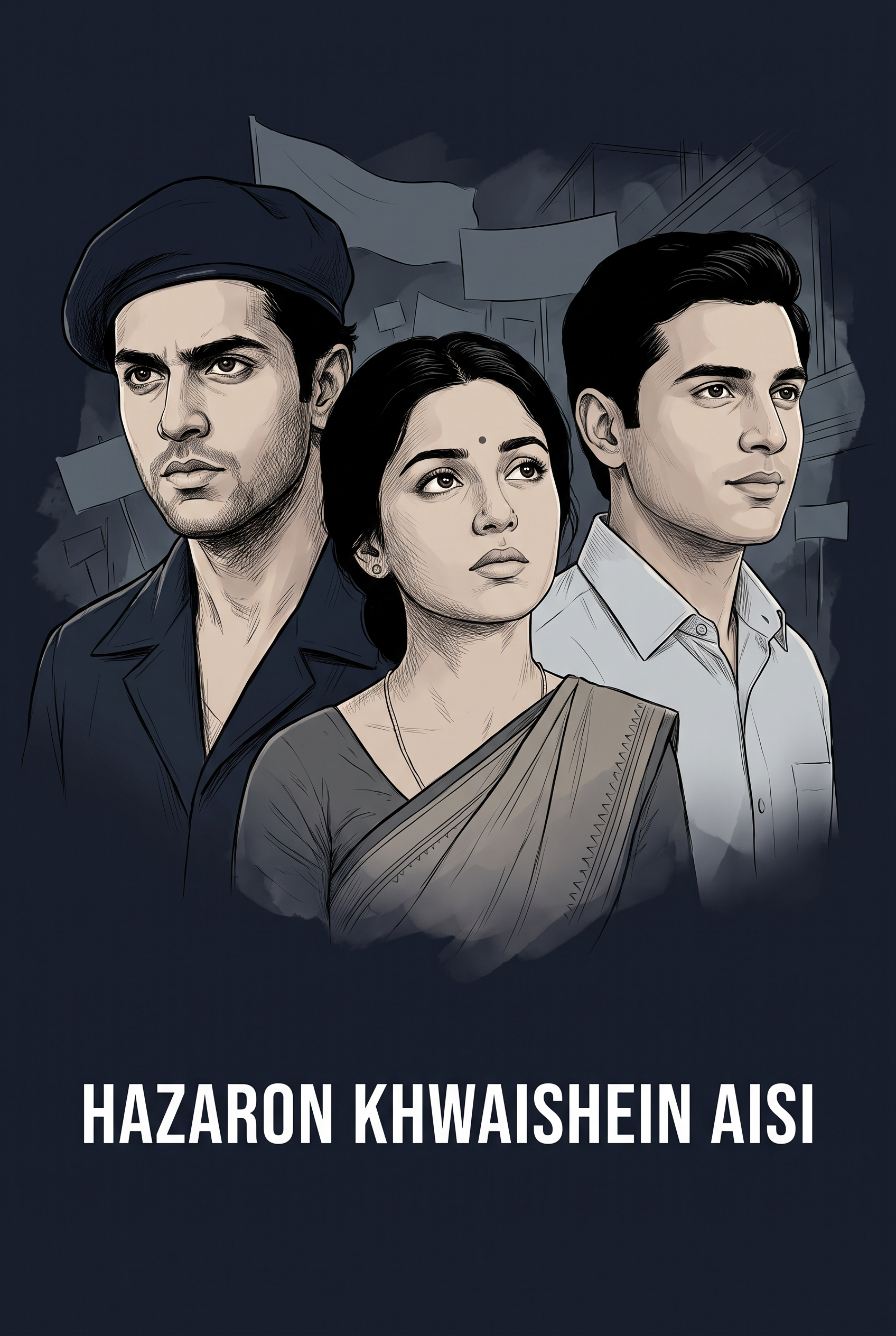
Fig. 6.21 – Poster of the film Hazaron Khwaishein Aisi.
6.4 Summary
The Background
- After 1967, Indira Gandhi emerged as a towering leader, party competition turned bitter and polarised, and the split in the Congress deepened the divide between her and her opponents.
- The government and the judiciary clashed over three questions: whether Parliament could abridge Fundamental Rights, whether it could curtail the right to property by amendment, and whether it could override rights in order to give effect to Directive Principles. The Supreme Court said no each time.
- The conflict culminated in the Kesavananda Bharati case, in which the Court held that there are basic features of the Constitution which Parliament cannot amend.
- The supersession of three judges and the appointment of Justice A. N. Ray as Chief Justice in 1973 sharpened the confrontation, and people close to the Prime Minister began to speak of a judiciary and a bureaucracy ‘committed’ to the executive’s vision.
- The promise of garibi hatao was not met. War, the stoppage of U.S aid and a manifold rise in oil prices pushed prices up by 23 per cent in 1973 and 30 per cent in 1974, while the monsoons failed and food grain output fell by 8 per cent.
- Students’ agitations in Gujarat (January 1974) and Bihar (March 1974), the Railway strike of May 1974, and Jayaprakash Narayan’s call for total revolution turned economic distress into a national political challenge.
The Emergency Itself
- On 12 June 1975 the Allahabad High Court declared Indira Gandhi’s election invalid. On 24 June the Supreme Court granted her only a partial stay.
- On 25 June 1975 the government invoked Article 352, declaring a threat of internal disturbance. The proclamation was recommended by the Prime Minister; the Cabinet was informed at 6 a.m. the next morning, after the arrests had been made.
- Once proclaimed, an Emergency practically suspends the federal distribution of powers and allows Fundamental Rights to be curtailed or restricted.
- In practice this meant press censorship, a ban on strikes, protests and public agitations, the banning of the RSS and the Jamait-e-Islami, and large-scale preventive detention.
- In April 1976 the constitution bench of the Supreme Court held that during the Emergency the government could take away the citizen’s right to life and liberty — closing the doors of the courts to detained persons.
- Resistance existed: blank spaces in newspapers, magazines that shut down rather than submit, underground newsletters, awards returned by writers. But such open acts of defiance were rare.
- Amendments passed in this period put the election of the Prime Minister beyond challenge in court, extended the term of legislatures from five to six years, and allowed elections to be postponed by a year during an Emergency.
After The Emergency
- Elections were announced in January 1977 and held in March 1977. The opposition parties came together as the Janata Party and fought on the slogan of ‘save democracy’.
- The Congress was defeated for the first time since Independence. It won 154 seats, with less than 35 per cent of the popular vote; the Janata Party and its allies won 330 of the 542 seats.
- The verdict was not uniform. The Congress swept the southern States and held many seats in Maharashtra, Gujarat and Orissa, so 1977 was about the Emergency and also about longer changes in north Indian politics.
- The Janata government was never cohesive. It split; Morarji Desai lost his majority in less than 28 months; the Charan Singh government lasted about 4 months; and the Congress returned with 353 seats in January 1980.
- Voters had punished one government for taking too much power, and then punished its successor for being unstable and quarrelsome.
- The party system itself changed. The Congress ceased to be an umbrella party, opposition parties organised around ‘non-Congressism’, and the politics of the backward castes began to reshape north India.
- The lessons drawn were these: democracy in India is extremely difficult to do away with; the Emergency provision has since been tightened; civil liberties are now valued more and guarded more actively by the courts; and the politicisation of the police and the administration, recorded in the Shah Commission Report, did not vanish afterwards.
The Chapter In One Chronology
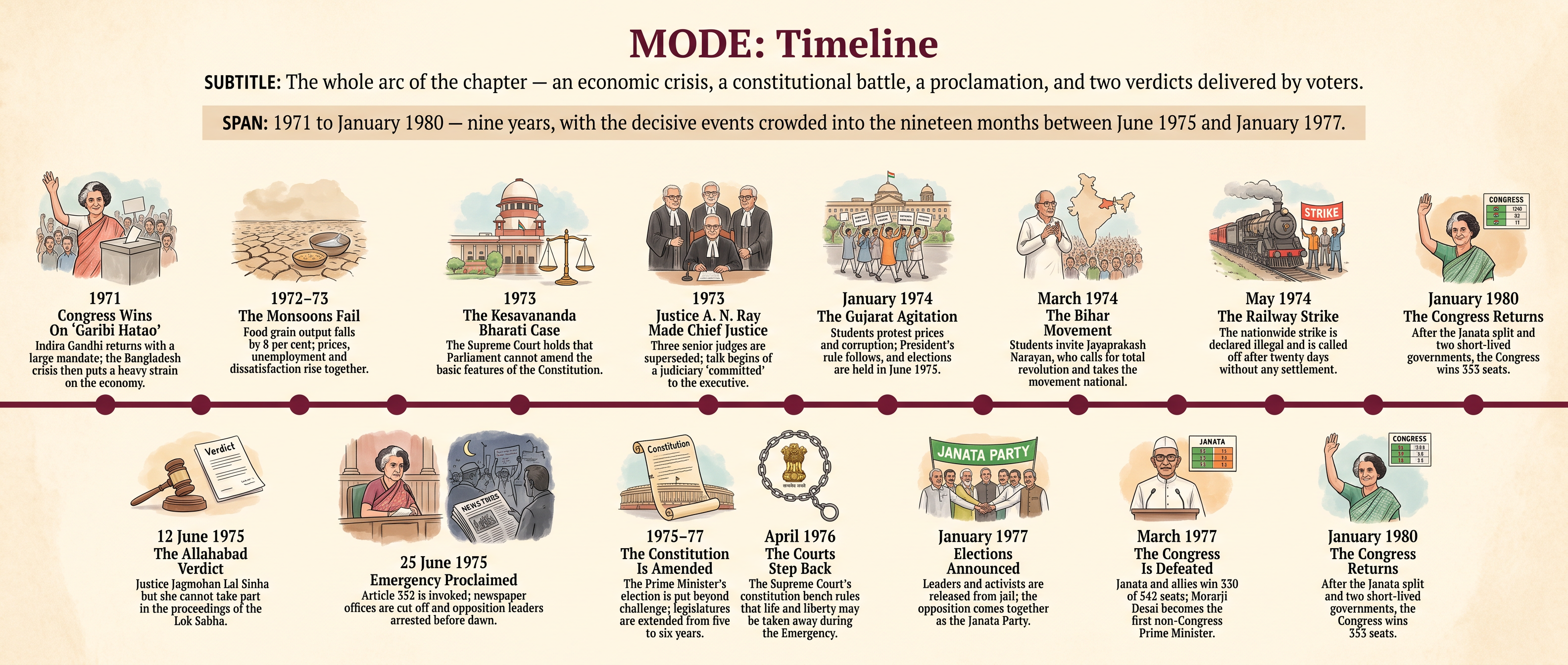
Fig. 6.22 – From The Mandate Of 1971 To The Mandate Of 1980.
6.5 NCERT Questions
State whether the following statements regarding the Emergency are correct or incorrect.
- It was declared in 1975 by Indira Gandhi.
- It led to the suspension of all fundamental rights.
- It was proclaimed due to the deteriorating economic conditions.
- Many Opposition leaders were arrested during the emergency.
- CPI supported the proclamation of the Emergency.
Find the odd one out in the context of proclamation of Emergency
- The call for ’Total Revolution.
- The Railway Strike of 1974
- The Naxalite Movement
- The Allahbad High Court verdict
- The findings of the Shah Commission Report
Match the following
Column A Column B a. Total Revolution i. Indira Gandhi b. Garibi hatao ii. Jayaprakash Narayan c. Students’ Protest iii. Bihar Movement d. Railway Strike iv. George Fernandes What were the reasons which led to the mid-term elections in 1980?
The Shah Commission was appointed in 1977 by the Janata Party Government. Why was it appointed and what were its findings?
What reasons did the Government give for declaring a National Emergency in 1975?
The 1977 elections for the first time saw the Opposition coming into power at the Centre. What would you consider as the reasons for this development?
Discuss the effects of Emergency on the following aspects of our polity.
- Effects on civil liberties for citizens.
- Impact on relationship between the Executive and Judiciary
- Functioning of Mass Media
- Working of the Police and Bureaucracy.
In what way did the imposition of Emergency affect the party system in India? Elaborate your answer with examples.
Read the passage and answer the questions below: Indian democracy was never so close to a two-party system as it was during the 1977 elections. However, the next few years saw a complete change. Soon after its defeat, the Indian National Congress split into two groups……….. … … …The Janata Party also went through major convulsions…..David Butler, Ashok Lahiri and Prannoy Roy. — Partha Chatterjee
- What made the party system in India look like a two-party system in 1977?
- Many more than two parties existed in 1977. Why then are the authors describing this period as close to a two-party system?
- What caused splits in Congress and the Janata parties?
6.6 Check Your Concepts
- Look again at Fig. 6.1, drawn by Abu. Which word of the government’s own slogan has the cartoonist borrowed, and what is he doing with it? State one thing this cartoon is good evidence for, and one thing it cannot tell you.
- Source 6.2 records the slogan given by the President of the Congress in 1974. Explain the claim the slogan makes. Why did the opposition parties treat such a claim as dangerous? What does the slogan not tell us about what Congress workers actually believed?
- Reconstruct the sequence of events from 12 June 1975 to the morning of 26 June 1975. At each step, say what the previous step had made necessary or possible for the government and for the opposition.
- On what two grounds did Article 352 permit an emergency to be proclaimed in 1975? Two ambiguities in the Emergency provision have been rectified since. State both, and explain how each correction points back to something that happened in June 1975.
- Explain preventive detention and the writ of habeas corpus in your own words. What did the Supreme Court’s judgment of April 1976 change for a person who had been detained, and why does the chapter call that judgment one of the most controversial in the Court’s history?
- The Lok Sabha elected in 1971 would ordinarily have faced the voters in 1976. Using only what the chapter tells you about the forty-second amendment and about elections during an Emergency, work out step by step how the election could instead be postponed to 1978.
- The chapter describes the Emergency as both a constitutional crisis and a political crisis. Set the two side by side: what was each about, and where did each begin? Why does the chapter judge the political crisis to be the more serious of the two?
- Study Fig. 6.11 together with the reasons the chapter gives for the uneven result of 1977. Was the 1977 election a verdict on the Emergency? Give the strongest argument on each side, and state what a historian would need to know in order to decide.