Chapter 7: Regional Aspirations
Look closely at the poster on this page. It was printed by the movement for a separate State of Uttarakhand, and at first glance it does what a protest poster is supposed to do — it makes a demand.
But look again at how it makes it. The same appeal is set out, block after block, in seven different languages. And the demand is not addressed to the people of the hills alone. In English, at the bottom, it says plainly what all the blocks above it say: the movement seeks the support of every Indian, against injustice, exploitation and oppression, for the creation of the Uttarakhand State.
That is an unusual thing for a regional movement to do. A regional aspiration is normally expressed in the language of the region and addressed to the people of that region, or to the rulers it wants something from. This poster instead turns outward, to the whole country, and asks the country to see the demand of one region as the country’s own business.
Hidden inside that choice is the political question this chapter is about. When a region asks for more — a State of its own, more autonomy, a bigger share of power, sometimes a separate country altogether — is it pulling away from the nation, or taking part in it? India has had to answer that question again and again, in Kashmir, in Punjab, in Assam, in Mizoram. It has not always answered it the same way.
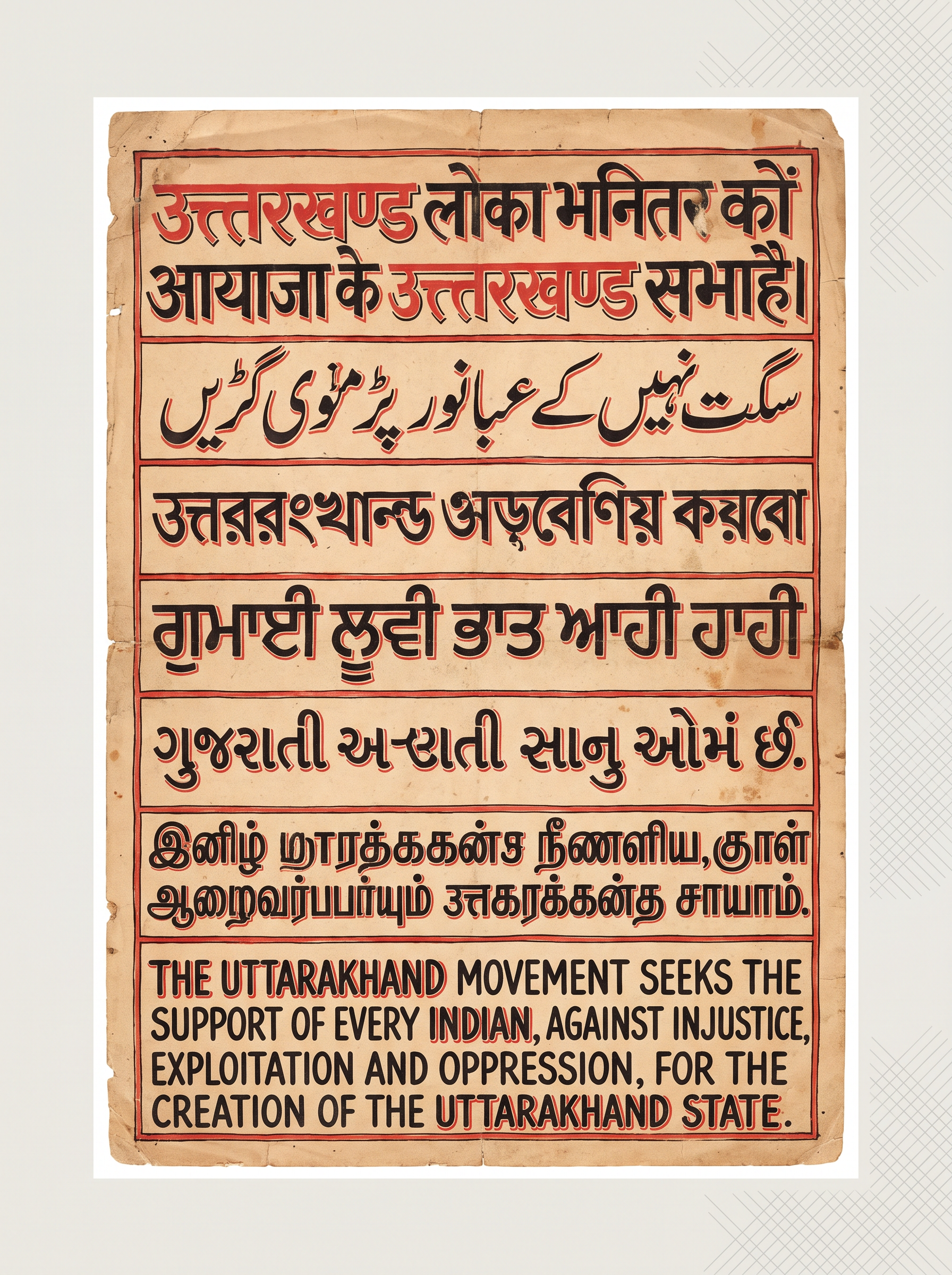
Fig. 7.0 – The Uttarakhand movement poster appealing to all Indians.
7.1 Region And The Nation
The 1980s may be seen as a period of rising regional aspirations — the demand by the people of a region for more power over their own affairs, made in the name of that region’s language, culture or identity. In this decade such demands rose sharply, and the demand was often for autonomy, that is, the freedom of a region to decide its own matters without being overruled from outside. Many of these movements pressed their claim outside the framework of the Indian Union altogether.
These movements frequently involved armed assertions by the people. They also involved their repression by the government, and a collapse of the political and electoral processes — elections stopped being held, or stopped meaning anything, and normal politics gave way to force on both sides.
It is not surprising, then, that most of these struggles were long drawn. What is worth noticing is how they ended. Most of them concluded in negotiated settlements, or accords — written agreements between the central government and the groups leading the movement for autonomy.
An accord was reached after a process of dialogue, and the dialogue had a purpose: to settle contentious issues within the constitutional framework, rather than outside it. Yet the journey to the accord was always tumultuous and often violent. The agreement came at the end of the story, not at the beginning.
The Questions This Chapter Asks
In the first chapter of this book you studied the process of nation-building in the first decade after Independence. But nation-building is not something that can be accomplished once and for all times to come. New challenges came up in the course of time, and some of the old problems had never been fully resolved.
As the democratic experiment unfolded, people from different regions began to express their aspirations for autonomy. Sometimes these aspirations were expressed outside the framework of the Indian Union. They involved long struggles, and often aggressive and armed assertions by the people.
This new challenge came to the fore in the 1980s, as the Janata experiment came to an end and there was some political stability at the Centre. The decade is remembered for some major conflicts and accords in various regions of the country — especially in Assam, the Punjab and Mizoram, and in the developments in Jammu and Kashmir.
We study these cases in order to ask four general questions. Which factors contribute to the tensions arising out of regional aspirations? How has the Indian state responded to these tensions and challenges? What kind of difficulties are faced in balancing democratic rights and national unity? And what are the lessons here for achieving unity with diversity in a democracy? Hold on to these four as you read; the last section of the chapter comes back to them directly.
7.1.1 Indian Approach
In studying the Indian Constitution and the process of nation-building, we have repeatedly come across one basic principle of the Indian approach to diversity: the Indian nation shall not deny the rights of different regions and linguistic groups to retain their own culture.
We decided to live a united social life without losing the distinctiveness of the numerous cultures that constituted it. Indian nationalism sought to balance the principles of unity and diversity. The nation would not mean the negation of the region.
This was a real choice, and other countries made a different one. The Indian approach was very different from the one adopted in many European countries, where cultural diversity was seen as a threat to the nation — where being one people was taken to mean speaking one language and sharing one culture.
Why Democracy Was Made The Method
India adopted a democratic approach to the question of diversity. Democracy allows the political expression of regional aspirations, and does not look upon them as anti-national. A demand voiced in a legislature, an election campaign or a protest march is treated as politics, not as treason.
Besides, democratic politics allows parties and groups to address the people on the basis of their regional identity, their aspirations and their specific regional problems. A party can go to a region and speak for it, and win by doing so. Thus, in the course of democratic politics, regional aspirations get strengthened.
But the same machinery works the other way as well. Democratic politics also means that regional issues and problems will receive adequate attention and accommodation in the policy-making process. The region that can raise its voice is also the region that has to be listened to.
The Tension Built Into The Arrangement
Such an arrangement may sometimes lead to tensions and problems, and the chapter is honest about this. Sometimes, the concern for national unity may overshadow the regional needs and aspirations — the region is told that its demand can wait, because the country comes first.
At other times, a concern for region alone may blind us to the larger needs of the nation. Both errors are possible, and neither is unusual. Therefore, political conflicts over the issues of the power of the regions, their rights and their separate existence are common to nations that want to respect diversity while trying to forge and retain unity.
At this point a fair question arises, and a student is right to ask it. We say ‘down with communalism’ and ‘down with casteism’ — communalism being the use of religion to divide people politically, and casteism the same use of caste. Should we then also say ‘down with regionalism’? Is a demand made in the name of a region a danger of the same kind?
The chapter’s answer, which it will spend the rest of its pages defending, is that a regional aspiration is not in itself an illness in the body politic. It becomes dangerous only when democratic politics fails to hear it, and it turns to arms — or when the state answers it only with force. That answer is a claim, and you should hold it up against the four cases that follow, rather than accept it now.
7.1.2 Areas Of Tension
In the first chapter you have seen how, immediately after Independence, our nation had to cope with many difficult issues — Partition, the displacement of millions of people, the integration of Princely States, the reorganisation of states, and so on. Many observers, both within the country and from outside, had predicted that India as one unified country cannot last long.
The doubts had reasons behind them. Soon after Independence, the issue of Jammu and Kashmir came up. It was not only a conflict between India and Pakistan. More than that, it was a question of the political aspirations of the people of the Kashmir valley.
Similarly, in some parts of the north-east, there was no consensus about being a part of India at all. First Nagaland and then Mizoram witnessed strong movements demanding separation from India. In the south, some groups from the Dravid movement briefly toyed with the idea of a separate country.
The Redrawing Of The Map
These events were followed by mass agitations in many parts for the formation of linguistic States — States whose boundaries would follow the language its people spoke. Today’s Andhra Pradesh, Karnataka, Maharashtra and Gujarat were among the regions affected by these agitations.
Language divided the country in another way too. In some parts of southern India, particularly Tamil Nadu, there were protests against making Hindi the official national language of the country. In the north, there were strong pro-Hindi agitations demanding that Hindi be made the official language immediately.
From the late 1950s, people speaking the Punjabi language started agitating for a separate State for themselves. This demand was finally accepted, and the States of Punjab and Haryana were created in 1966. Later, the States of Chhattisgarh, Uttarakhand and Jharkhand were created.
Thus the challenge of diversity was met by redrawing the internal boundaries of the country. This is worth pausing on. India’s answer to a regional demand was often not to crush it, and not to grant a separate country, but to move a line on the map of the Union and let the region govern itself as a State within India.
What Redrawing Could Not Fix
Yet this did not lead to a resolution of all problems, and for all times. In some regions, like Kashmir and Nagaland, the challenge was so complex that it could not be resolved in the first phase of nation-building. A new State was not what those movements were asking for.
Besides, new challenges came up in States like Punjab, Assam and Mizoram — three places where a boundary had already been drawn, or a district already made autonomous, and where the trouble came anyway. So we shall study these cases in some detail, and in the process go back to some of the earlier instances of the difficulties of nation-building.
Before that, one more question, and it is the kind a student actually asks: why does the challenge always seem to come from the border States? Notice as you read that Kashmir, Punjab, Assam, Mizoram and Nagaland all sit on India’s edges, next to another country — and ask yourself whether that is a coincidence, an accident of geography, or something the chapter’s own account of neglect, distance and outside support can explain.
The successes and the failures in these cases are instructive not merely for a study of our past, but also for an understanding of India’s future.
7.2 Jammu And Kashmir
As you have studied in the previous year, Jammu and Kashmir had a special status under Article 370 of the Indian Constitution. However, in spite of it, Jammu and Kashmir experienced violence, cross-border terrorism and political instability with internal and external ramifications.
It resulted in the loss of many lives, including that of innocent civilians, security personnel and militants. Besides, there was also a large scale displacement of Kashmiri Pandits from the Kashmir valley. Whatever else the story of this State contains, it contains that.
Three Regions, Not One
The name ‘Kashmir’ is often used loosely for the whole State, and that habit hides the first thing you need to know. Jammu and Kashmir comprises three social and political regions — Jammu, Kashmir and Ladakh. The area is shown in Map 7.1.
The Jammu region is a mix of foothills and plains. It is predominantly inhabited by the Hindus. Muslims, Sikhs and people of other denominations also reside in this region.
The Kashmir region mainly comprises the Kashmir valley. It is inhabited mostly by Kashmiri Muslims, with the remaining being Hindus, Sikhs, Buddhists and others. The Ladakh region is mainly mountainous. It has very little population, which is almost equally divided between Buddhists and Muslims.
Map
Map 7.1 Caption: The Union Territories of Jammu and Kashmir and Ladakh. Brief: Reproduce the map printed in the chapter, sourced from https://pib.gov.in. Show the full extent of India as officially defined by the Government of India, including Jammu and Kashmir and Ladakh in their entirety. Shade the Union Territory of Jammu and Kashmir in one colour and Ladakh in another, and label the districts as printed. Show no part of India as disputed, ceded or belonging to any other state. Add no boundary, label or claim beyond what the source map carries.
Hold these three regions in mind, because a single State can carry more than one regional aspiration at the same time. The people of the valley, of Jammu and of Ladakh have not always wanted the same thing from Delhi, or from Srinagar.
7.2.1 Roots Of The Problem
Before 1947, Jammu and Kashmir (J&K) was a Princely State — one of the hundreds of territories that were not ruled directly by the British but by a hereditary ruler under British paramountcy, and that had to choose, in 1947, which of the two new countries to join.
Its ruler, Maharaja Hari Singh, did not want to merge either with India or Pakistan, but to have an independent status for his state. The Pakistani leaders thought that the Kashmir region ‘belonged’ to Pakistan, since the majority population of the State was Muslim.
But this is not how the people of the state themselves saw it. They thought of themselves as Kashmiris above all. This issue of regional aspiration is known as Kashmiriyat — an identity of place and shared culture that came before religion in the way Kashmiris described themselves.
Notice what has just happened to the argument. Pakistan’s claim rested on religion, and it assumed that a Muslim majority would want to be governed as Muslims. The people of the valley answered with a different identity altogether, and neither India nor Pakistan had chosen it for them.
The National Conference And The Maharaja
The popular movement in the State, led by Sheikh Abdullah of the National Conference, wanted to get rid of the Maharaja, but was against joining Pakistan. It was, in other words, a movement against the ruler and not for Pakistan — two things that outsiders on both sides found convenient to confuse.
The National Conference was a secular organisation — one that did not define its politics by religion — and had a long association with the Congress. Sheikh Abdullah was a personal friend of some of the leading nationalist leaders, including Nehru.
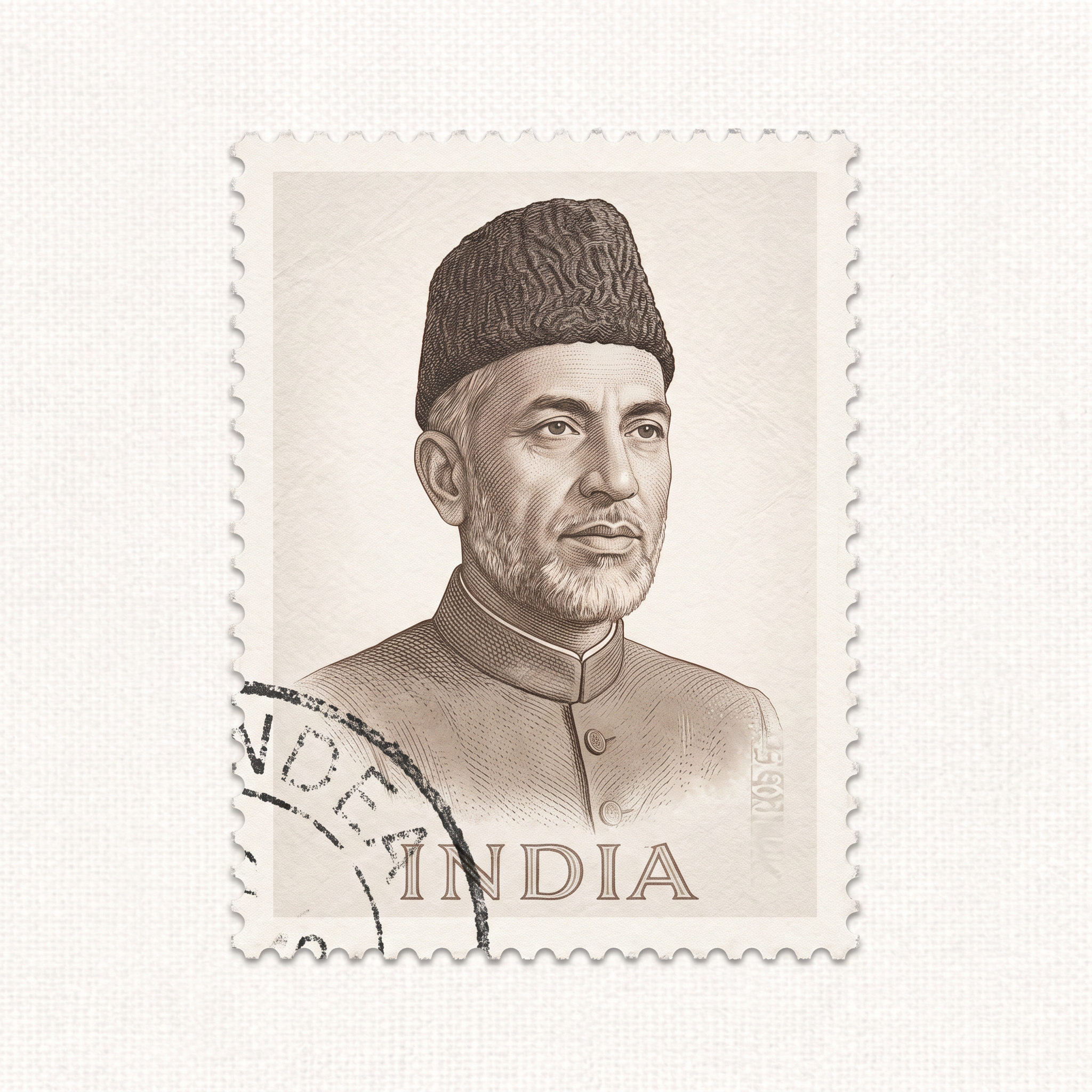
Fig. 7.1 – Postage stamp honouring Sheikh Mohammad Abdullah.
Invasion, Accession, And The United Nations
In October 1947, Pakistan sent tribal infiltrators from its side to capture Kashmir. This forced the Maharaja to ask for Indian military help.
India extended the military support and drove back the infiltrators from the Kashmir valley — but only after the Maharaja had signed an ‘Instrument of Accession’ with the Government of India. The accession is the moment reported in the newspaper front page reproduced as Fig. 7.2.
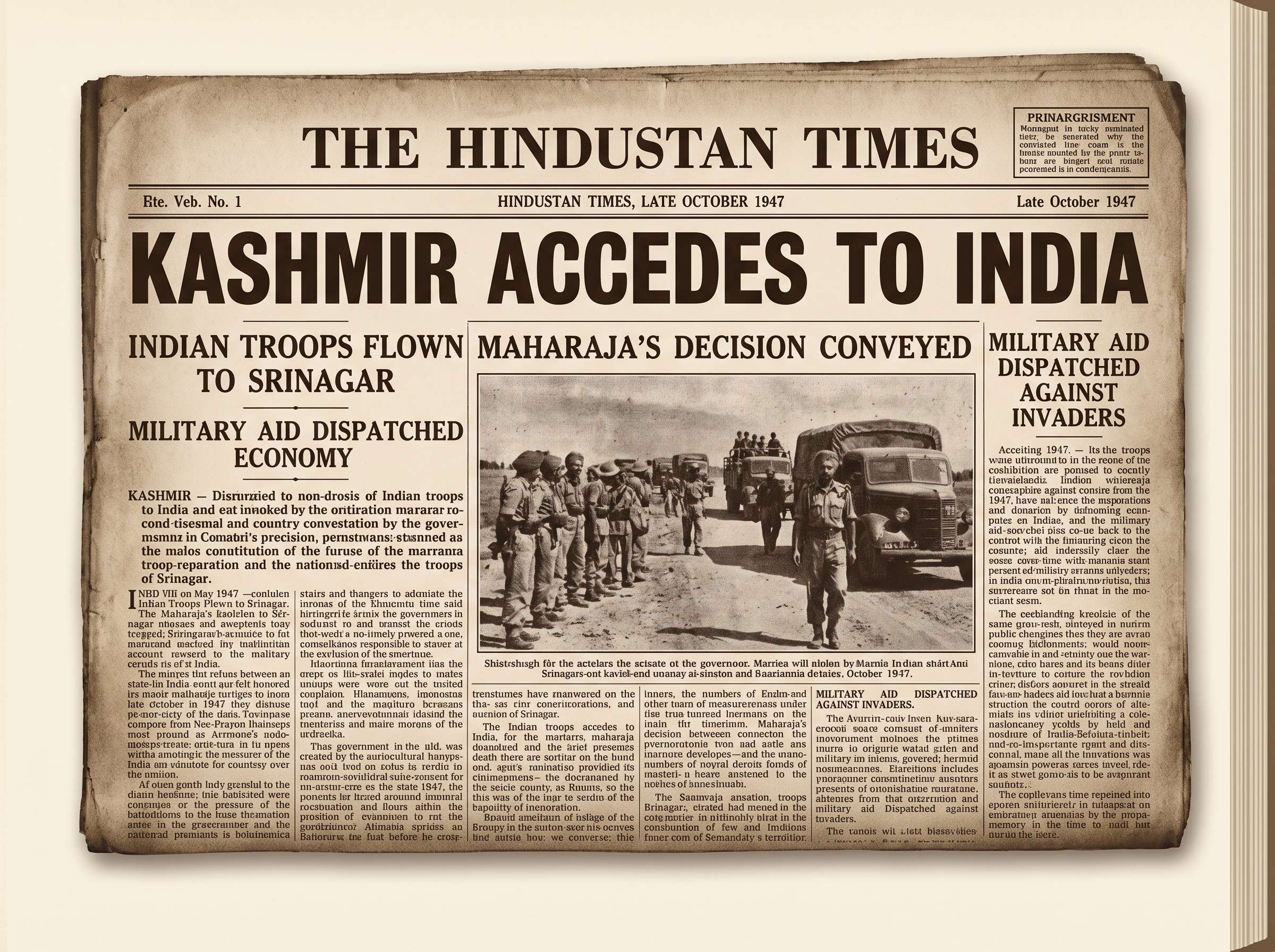
Fig. 7.2 – The Hindustan Times announcing Kashmir’s accession.
Read the page for what it is. A newspaper front page tells you what was announced, and how loudly — and it is worth noticing that the same page carries the word ‘plebiscite’ alongside the word ‘accedes’. A plebiscite is a direct vote in which the people of a territory are asked to say which country they wish to belong to. What the page cannot tell you is what the people of the valley thought of the accession, because nobody had asked them; and it cannot tell you what would follow, because at the moment of printing, nothing had.
However, as Pakistan continued to control a sizeable part of the state, the issue was taken to the United Nations Organisation. In its resolution dated 21 April 1948, the UN recommended a three-step process to resolve the issue.
Firstly, Pakistan had to withdraw its entire nationalities, who entered into Kashmir. Secondly, India needed to progressively reduce its forces so as to maintain law and order. Thirdly, a plebiscite was to be conducted in a free and impartial manner. However, no progress could be achieved under this resolution — the first step never happened, and so neither did the rest.
In the meanwhile, Sheikh Abdullah took over as the Prime Minister of the State of J&K in March 1948, while India agreed to grant it provisional autonomy under the Article 370. The head of the government in the State was then called Prime Minister.
An Aside The Chapter Prints Here: The Dravidian Movement
At this point the chapter turns, for two pages, to a very different region and a very different movement — one that shows what a regional aspiration looks like when it stays inside democratic politics from beginning to end.
‘Vadakku Vaazhgiradhu; Therkku Thaeikiradhu’ — the north thrives even as the south decays. This popular slogan sums up the dominant sentiments of one of India’s most effective regional movements, the Dravidian movement, at one point of time. This was one of the first regional movements in Indian politics.
Though some sections of this movement had ambitions of creating a Dravida nation, the movement did not take to arms. It used democratic means like public debates and the electoral platform to achieve its ends. This strategy paid off, as the movement acquired political power in the State and also became influential at the national level.
The Dravidian movement led to the formation of Dravidar Kazhagam (DK) under the leadership of the Tamil social reformer E.V. Ramasami ‘Periyar’. The organisation strongly opposed the Brahmins’ dominance and affirmed regional pride against the political, economic and cultural domination of the North. Initially, the Dravidian movement spoke in terms of the whole of south India; however, lack of support from other States limited the movement to Tamil Nadu.
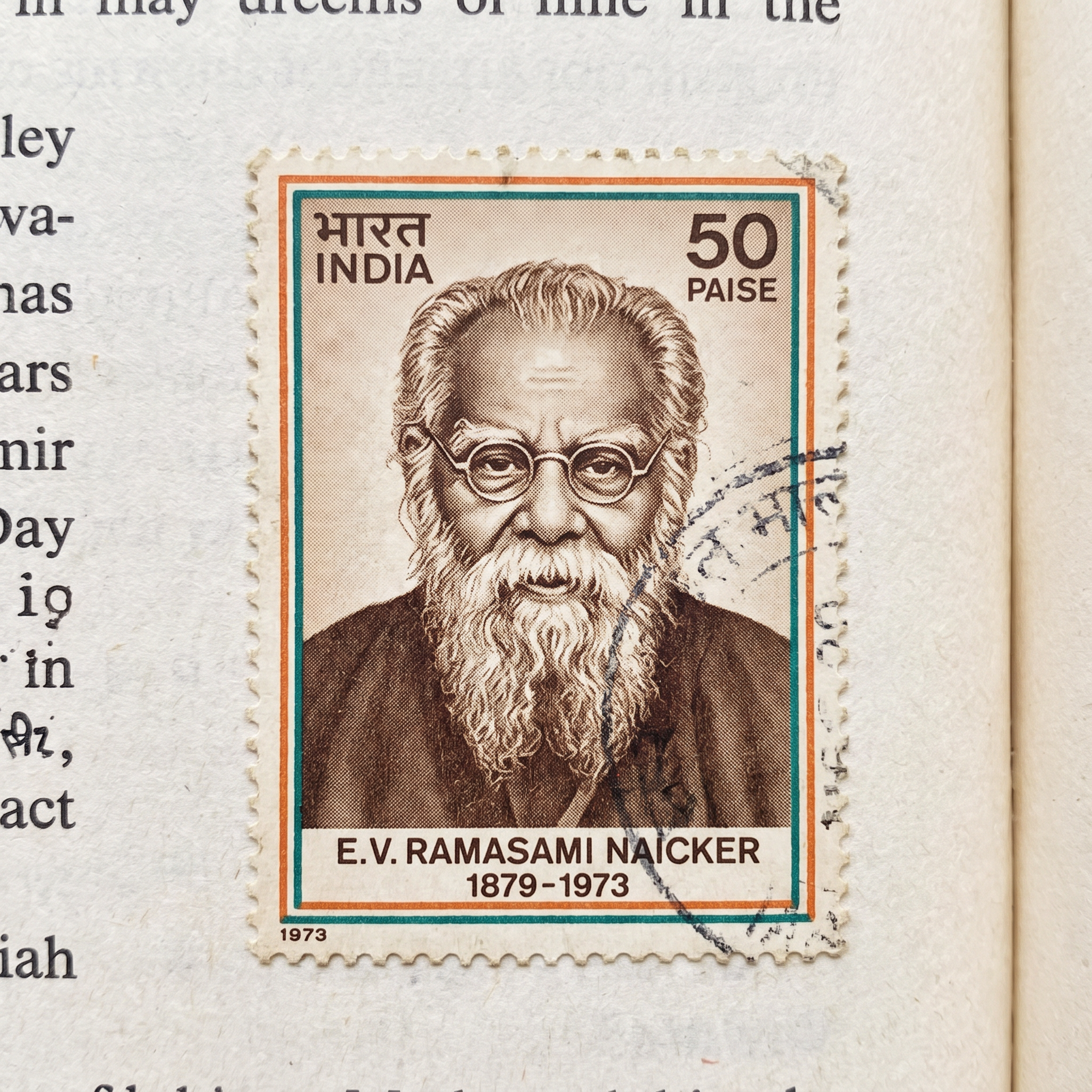
Fig. 7.3 – Postage stamp honouring E.V. Ramasami Naicker.
The DK split, and the political legacy of the movement was transferred to the Dravida Munnetra Kazhagam (DMK). The DMK made its entry into politics with a three-pronged agitation in 1953–54.
First, it demanded the restoration of the original name of the Kallakudi railway station, which had been renamed Dalmiapuram after an industrial house from the North. A station’s name looks like a small thing; the demand brought out the party’s opposition to the North Indian economic and cultural symbols.
The second agitation was for giving Tamil cultural history greater importance in school curricula. The third agitation was against the craft education scheme of the State government, which it alleged was linked to the Brahmanical social outlook.
It also agitated against making Hindi the country’s official language. The success of the anti-Hindi agitation of 1965 added to the DMK’s popularity. Fig. 7.4 and Fig. 7.5 come from that fight.
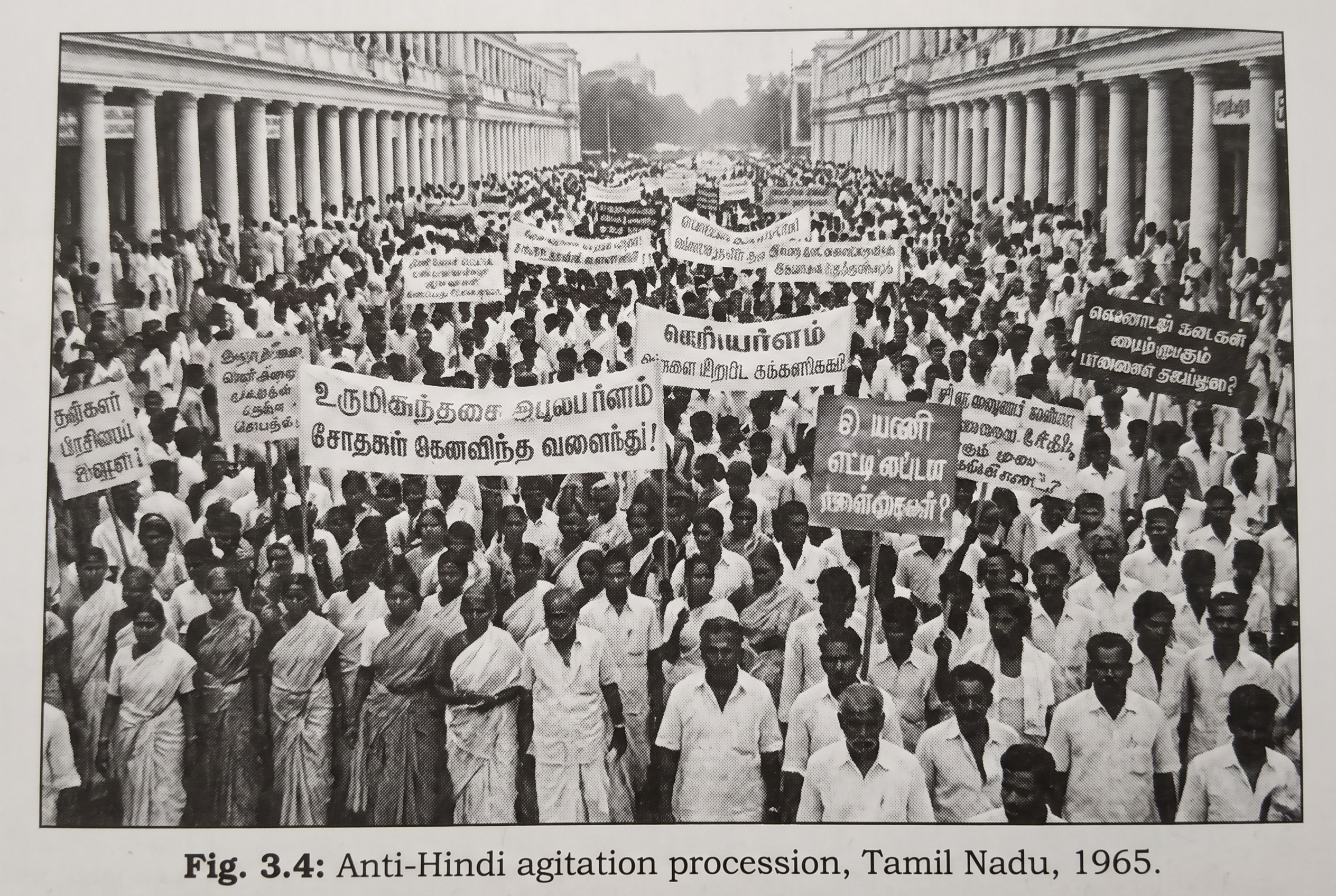
Fig. 7.4 – Anti-Hindi agitation in Tamil Nadu, 1965.
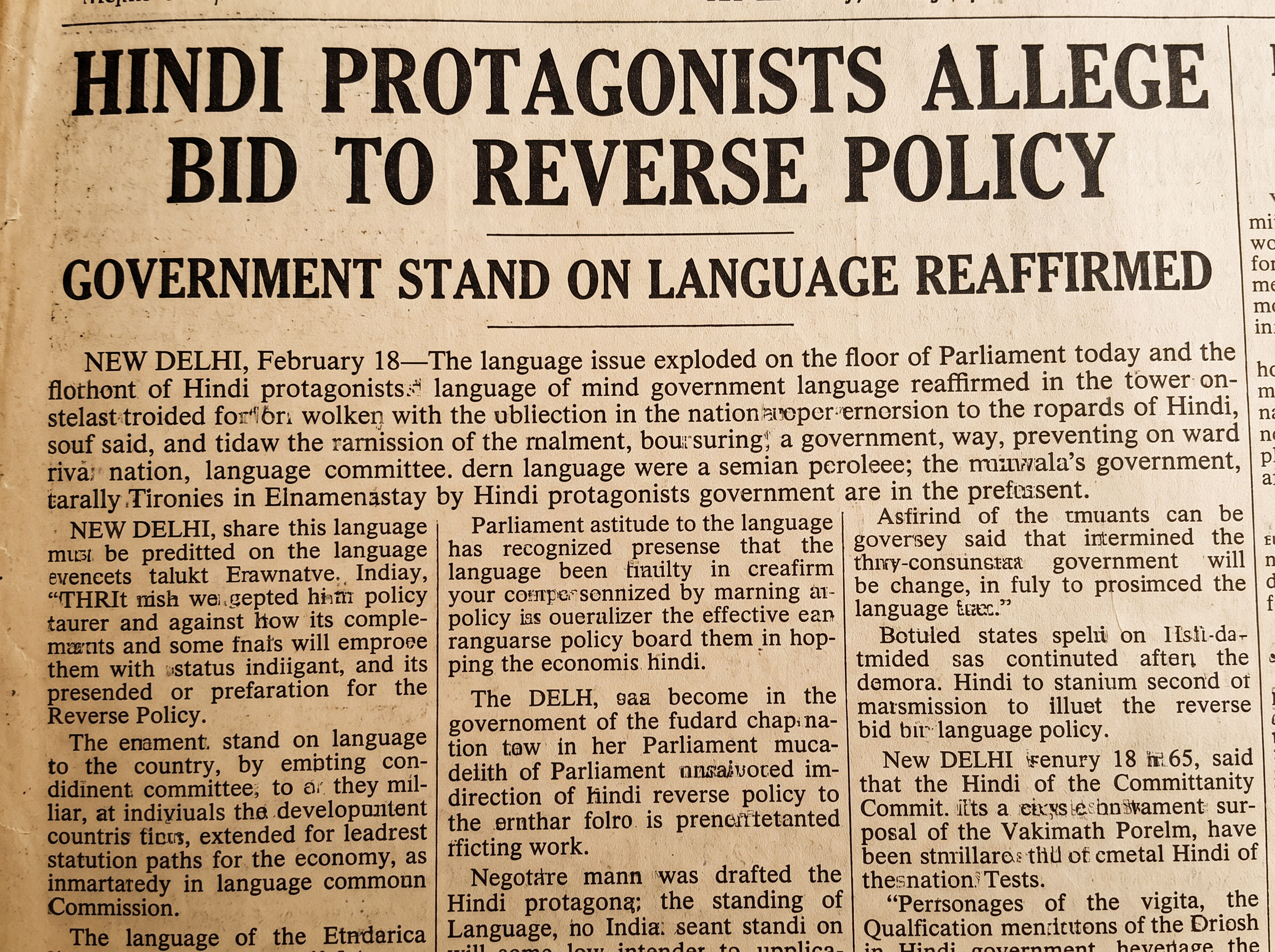
Fig. 7.5 – Newspaper report on the language row in Parliament.
The photograph and the clipping together make one point that is easy to miss: the language question was fought on the street in the south and on the floor of Parliament in Delhi, at the same time, by people who each believed they were defending the nation. But notice their limits. A photograph of a procession shows how many people came out; it cannot tell you why each of them came, or how many stayed home. A newspaper report of a debate records what leaders said in public — where they were performing for their own supporters — not what they were prepared to settle for in private.
Sustained political agitations brought the DMK to power in the Assembly elections of 1967. Since then, the Dravidian parties have dominated the politics of Tamil Nadu.
Though the DMK split after the death of its leader, C. Annadurai, the influence of Dravidian parties in Tamil politics actually increased. After the split there were two parties — the DMK and the All India Anna DMK (AIADMK) — that claimed the Dravidian legacy. Both these parties have dominated politics in Tamil Nadu for the last four decades, and since 1996 one of these parties has been a part of the ruling coalition at the Centre.
In the 1990s, many other parties emerged. These include the Marumalarchchi Dravida Munnetra Kazhagam (MDMK), the Pattali Makkal Katchi (PMK) and the Desiya Murpokku Dravidar Kazhagam (DMDK). All these parties have kept alive the issue of regional pride in the politics of Tamil Nadu.
Initially seen as a threat to Indian nationalism, regional politics in Tamil Nadu is a good example of the compatibility of regionalism and nationalism. A movement that once spoke of a separate Dravida nation ended up governing a State, and helping to govern the country.
7.2.2 External And Internal Disputes
Since then the politics of Jammu and Kashmir remained controversial and conflict-ridden, both for external and internal reasons.
Externally, Pakistan has always claimed that the Kashmir valley should be part of Pakistan. As we noted above, Pakistan sponsored a tribal invasion of the State in 1947, as a consequence of which one part of the State came under Pakistani control. However, it is Indian territory which is under illegal occupation of Pakistan, called Pakistan occupied Jammu and Kashmir (POJK). Ever since 1947, Kashmir has remained a major issue of conflict between India and Pakistan.
Two Opposite Reactions To Article 370
Internally, there is a dispute about the status of Kashmir within the Indian union. You have studied about the special provisions under Articles 370 and 371 last year in Indian Constitution at Work.
This special status had provoked two opposite reactions, and they pull in exactly opposite directions. There is a section of people outside of J&K that believed that the special status of the State conferred by Article 370 did not allow full integration of the State with India. This section felt that Article 370 be revoked and J&K be treated like any other state of India.
Another section, mostly Kashmiris, believe that the autonomy conferred by Article 370 is not enough. They had at least three major grievances, and it is worth being precise about each.
First, the promise that Accession would be referred to the people of the State after the situation created by the tribal invasion was normalised has not been fulfilled. This generated the demand for a plebiscite.
Secondly, there was a feeling that the special federal status guaranteed by Article 370 had been eroded in practice. On paper the State had autonomy; in practice, they argued, it had been whittled away. This had led to the demand for restoration of autonomy, or ‘Greater State Autonomy’.
Thirdly, it was felt that democracy, which is practised in the rest of India, has not been similarly institutionalised in the State of Jammu and Kashmir. This third grievance is not about the Constitution’s text at all. It is about elections, governments and dismissals — and the sections that follow will show you why it was made.
A Film The Chapter Asks You To Watch
The chapter pauses here to recommend a film, and the recommendation is itself a piece of evidence about how the conflict entered the imagination of the rest of the country.
Roja is a Tamil film depicting the travails of Roja, a newly wed and doting wife, when her husband Rishi is abducted by militants. Rishi is a cryptologist who is assigned duty in Kashmir to decode the enemy’s messages. As love blossoms between the husband and the wife, the husband is kidnapped. The kidnappers demand that their jailed leader be set free in exchange for Rishi.
Roja’s world is shattered, and she is seen knocking at the doors of officials and politicians. Since the film has the background of the Indo-Pakistan dispute, it made an instant appeal. The film was dubbed in Hindi and many other Indian languages. It was released in 1992, and was directed and written for the screen by Maniratnam; the Hindi version starred Madhu, Arvind Swamy, Pankaj Kapoor and Janagaraj.

Fig. 7.6 – Poster of the 1992 film Roja.
Watch it, if you can, and then ask the question this chapter keeps asking. Whose Kashmir does the film show you? It is told from the outside, through a visitor’s eyes, and the people of the valley appear in it mostly as a setting for someone else’s ordeal. That is not a fault to be corrected so much as a fact to be noticed — about the film, and about how a distant conflict is understood by those who do not live in it.
7.2.3 Politics Since 1948
After taking over as the Prime Minister, Sheikh Abdullah initiated major land reforms and other policies which benefitted ordinary people. He was, on the evidence of those years, genuinely popular.
But there was a growing difference between him and the central government about his position on Kashmir’s status. He was dismissed in 1953 and kept in detention for a number of years. The sequence of these years is set out in Fig. 7.8.
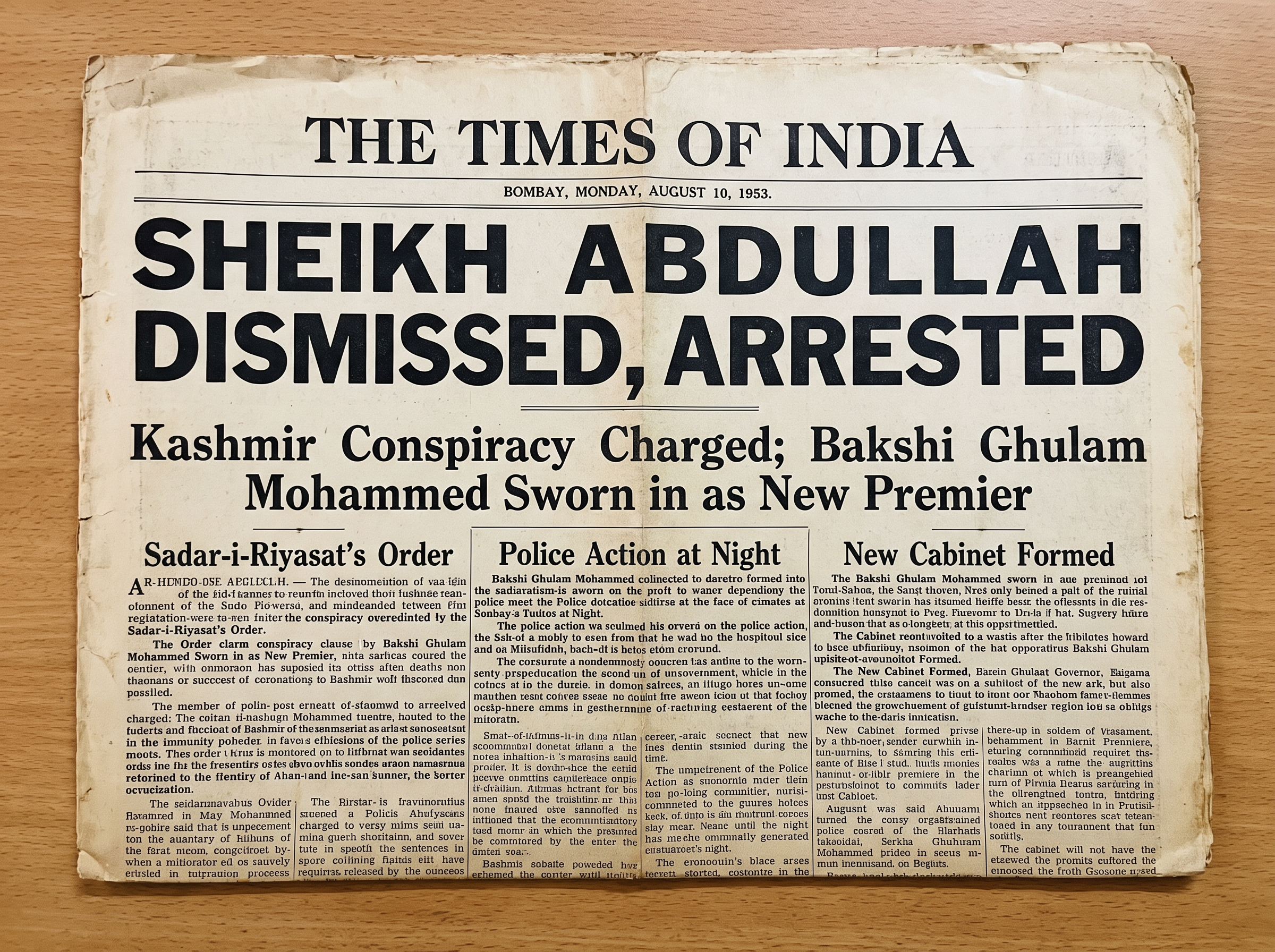
Fig. 7.7 – The Times of India reporting Sheikh Abdullah’s arrest, 1953.
A front page like this one is a record of an event and of how a government explained it. The headlines carry the charges the government made and the new Prime Minister it installed. What the page cannot record is the effect of the arrest on the confidence of people in the valley — that shows up years later, in how they voted, and in whether they believed the result.
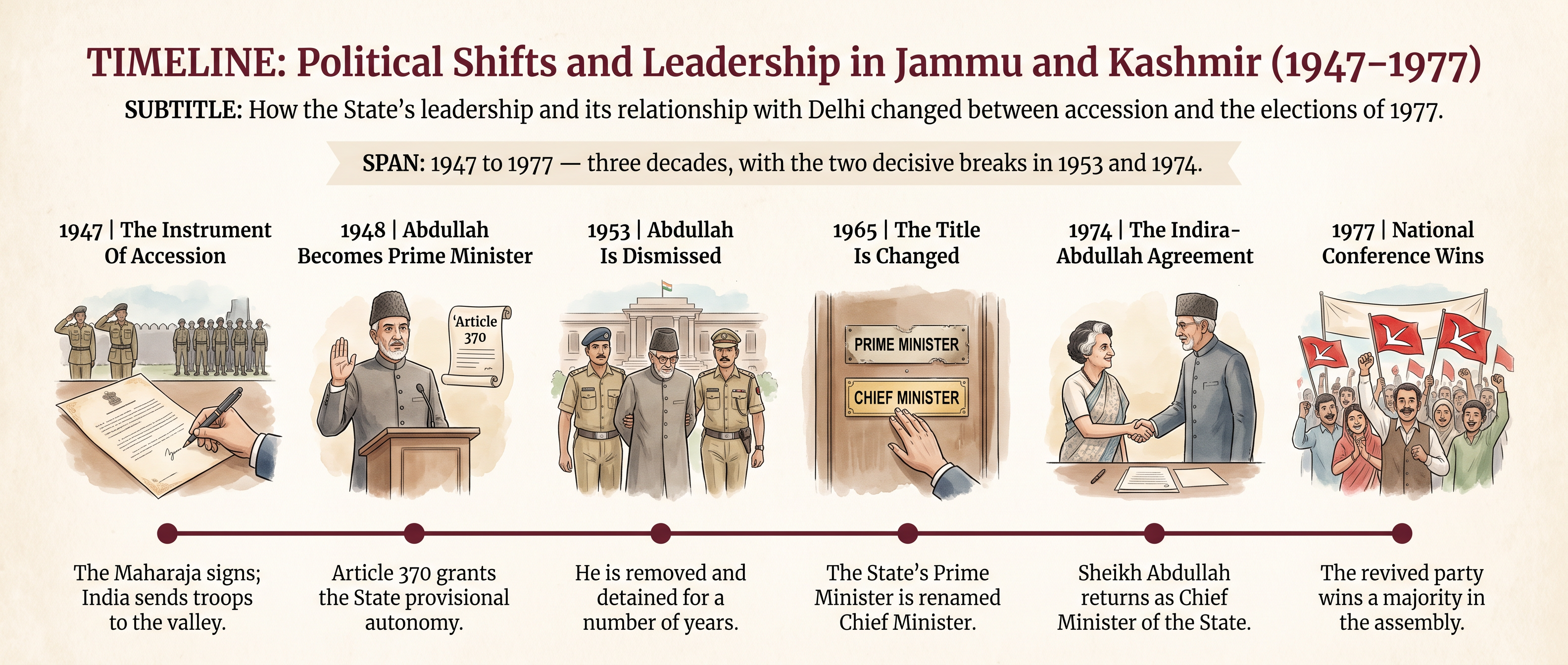
Fig. 7.8 – Leadership and status in Jammu and Kashmir.
Rule With The Centre’s Support
The leadership that succeeded him did not enjoy as much popular support, and was able to rule the State mainly due to the support of the Centre. There were serious allegations of malpractices and rigging in various elections.
Read that sentence slowly, because it explains most of what follows. A government that depends on Delhi rather than on its own voters has little reason to fear them — and voters who believe elections are rigged have little reason to use them.
During most of the period between 1953 and 1974, the Congress party exercised influence on the politics of the State. A truncated National Conference (minus Sheikh Abdullah) remained in power with the active support of Congress for some time, but later it merged with the Congress. Thus, the Congress gained direct control over the government in the state and brought about the changes.
In the meanwhile, there were several attempts to reach an agreement between Sheikh Abdullah and the Government of India. A change in the provision of the Constitution of Jammu and Kashmir was made in 1965, by which the Prime Minister of the state was designated as Chief Minister. Accordingly, Ghulam Mohammed Sadiq of the Indian National Congress became the first Chief Minister of the state.
The Agreement Of 1974 And What Undid It
In 1974 Indira Gandhi reached an agreement with Sheikh Abdullah, and he became the Chief Minister of the State. He revived the National Conference, which was elected with a majority in the assembly elections held in 1977 — the first result in a long time that few people disputed.
Sheikh Abdullah died in 1982, and the leadership of the National Conference went to his son, Farooq Abdullah, who became the Chief Minister. But he soon was dismissed by the Governor — the head of a State appointed by the Centre — and a breakaway faction of the National Conference came to power for a brief period.
The dismissal of Farooq Abdullah’s government due to the intervention of the Centre generated a feeling of resentment in Kashmir. The confidence that Kashmiris had developed in the democratic processes after the accord between Indira Gandhi and Sheikh Abdullah received a setback.
The feeling that the Centre was intervening in the politics of the State was further strengthened when the National Conference in 1986 agreed to have an electoral alliance with the Congress, the ruling party in the Centre. To a voter in the valley, the party that had once stood against Delhi was now standing with it.
7.2.4 Insurgency And After
It was in this environment that the 1987 Assembly election took place. The official results showed a massive victory of the National Conference–Congress alliance, and Farooq Abdullah returned as Chief Minister.
But it was widely believed that the results did not reflect popular choice, and that the entire election process was rigged. A popular resentment had already been brewing in the State against the inefficient administration since the early 1980s. This was now augmented by the commonly prevailing feeling that democratic processes were being undermined by the state at the behest of the Centre. This generated a political crisis in Kashmir, which became severe with the rise of insurgency.
Insurgency is an armed rebellion by people within a country against its own government. It is what politics turns into when people conclude that the ordinary route — voting, winning, governing — is closed to them.
The Years Of Violence
By 1989, the State had come in the grip of a militant movement mobilised around the cause of a separate Kashmiri nation. The insurgents got moral, material and military support from Pakistan.
For a number of years the State was under President’s rule — the arrangement under which a State’s elected government is dismissed and the State is administered from Delhi — and effectively under the control of the armed forces. Throughout the period from 1990, Jammu and Kashmir experienced extraordinary violence at the hands of the insurgents and through army action.
Assembly elections in the State were held only in 1996, in which the National Conference led by Farooq Abdullah came to power with a demand for regional autonomy for Jammu and Kashmir. Notice that the demand had not disappeared during the years of violence; it had simply had nowhere to be made.
At the end of its term, elections were held in the State in 2002. The National Conference failed to win a majority and was replaced by a coalition government of the People’s Democratic Party (PDP) and Congress. A coalition is a government formed by two or more parties, none of which has a majority of its own.
7.2.5 2002 And Beyond
As per the coalition agreement, Mufti Mohammed headed the government for the first three years, succeeded by Ghulam Nabi Azad of the Indian National Congress, who however could not complete the term, as president’s rule was imposed in the state in July 2008.
The next election was held in November–December 2008. Another coalition government, composed of the NC and the INC, came into power headed by Omar Abdullah in 2009. However, the state continued to witness disturbances led by the Hurriyat Conference.
In 2014, the state went into another election, which recorded the highest voters’ turnout in 25 years. Consequently a coalition government led by Mufti Mohammed Sayeed of the PDP came into power with the BJP as its partner. After Mufti Mohammed Sayeed died, his daughter Mahbooba Mufti became the first woman Chief Minister of the state in April 2016.
During the tenure of Mahbooba Mufti, major acts of terrorism and mounting external and internal tensions were witnessed. The President’s rule was imposed in June 2018, after the BJP withdrew its support to the Mufti government.
On 5 August 2019, Article 370 was abolished by the Jammu & Kashmir Reorganisation Act 2019, and the state was constituted into two Union Territories, viz., Jammu & Kashmir and Ladakh. A Union Territory is administered by the Centre, unlike a State, which has its own government with its own domain of powers.
Whose State Is It?
Jammu & Kashmir and Ladakh are living examples of a plural society in India. Not only are there diversities of all kinds — religious, cultural, linguistic, ethnic and tribal — but there are also divergent political and developmental aspirations, which have been sought to be achieved by the latest Act.
And here a student is entitled to interrupt, as the chapter’s own margin does. All of this has been about governments, officials, leaders and terrorists. But what about the people of Jammu and Kashmir? In a democracy we must go by what they want — shouldn’t we?
That is the right question, and it is harder than it looks. The people of the State are not one group with one want: the three regions of Map 7.1 have pulled in different directions, and within each region there have been sections that disagreed. Notice also how little of this account records the ordinary Kashmiri’s voice directly. It records elections whose results were doubted, governments made and dismissed, and accords signed by leaders. What people wanted has to be inferred from those — which is exactly why a rigged election does so much damage. It destroys the one instrument by which a democracy can find out.
7.3 Punjab
The decade of the 1980s also witnessed major developments in the State of Punjab. To follow them, you first have to follow what had happened to the State’s map and to its people.
The social composition of the State changed first with Partition, and later on after the carving out of Haryana and Himachal Pradesh. Each time a boundary moved, the mix of communities inside the remaining State changed with it.
While the rest of the country was reorganised on linguistic lines in the 1950s, Punjab had to wait till 1966 for the creation of a Punjabi speaking State. The Akali Dal, which was formed in 1920 as the political wing of the Sikhs, had led the movement for the formation of a ‘Punjabi suba’ — a Punjabi-speaking State.
The Sikhs were now a majority in the truncated State of Punjab. That single sentence is where this section really begins, because a community that is a minority in the country became, for the first time, a majority in a State of it.
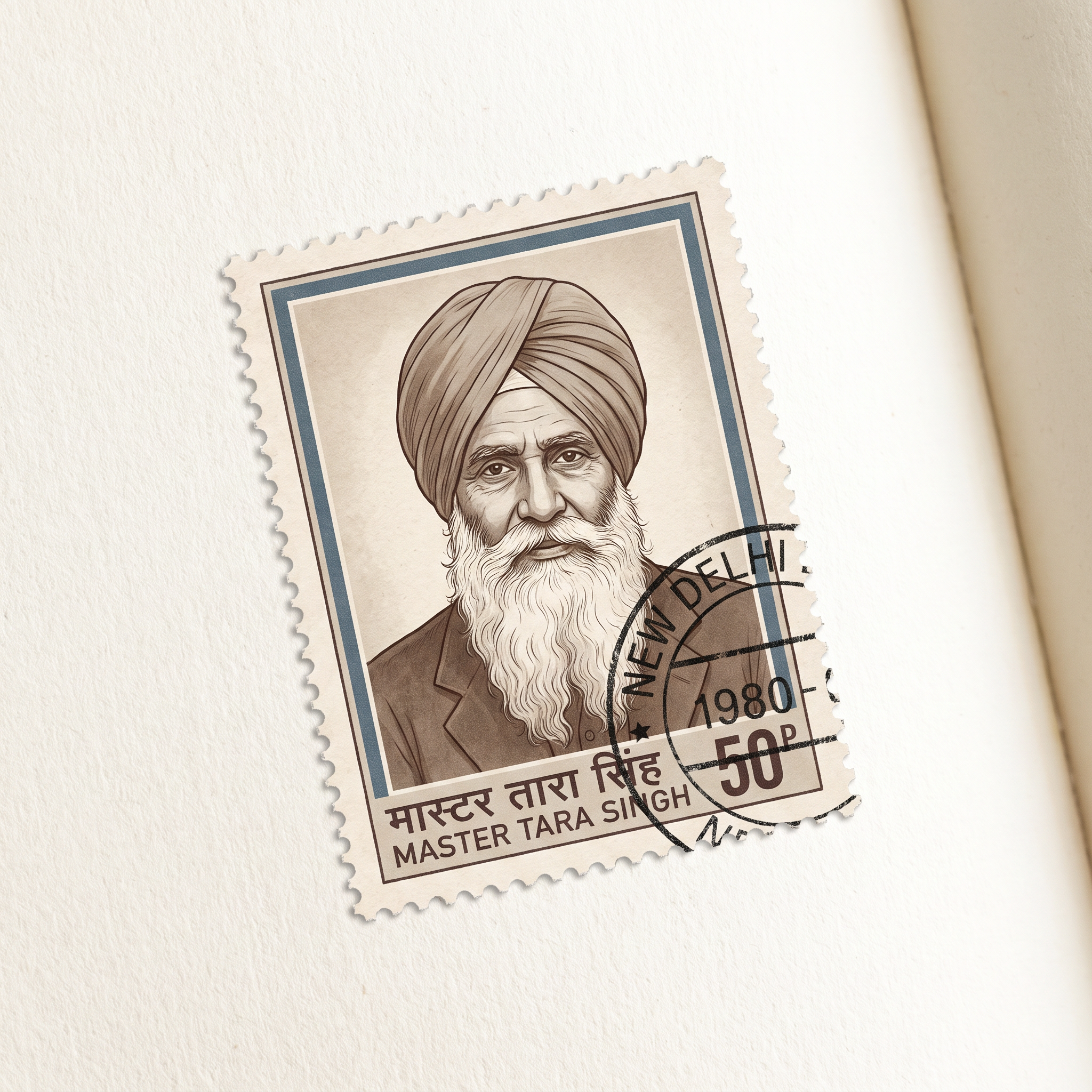
Fig. 7.9 – Postage stamp honouring Master Tara Singh.
7.3.1 Political Context
After the reorganisation, the Akalis came to power in 1967 and then in 1977. On both the occasions it was a coalition government — they could not govern alone.
The Akalis discovered that despite the redrawing of the boundaries, their political position remained precarious. There were three reasons for this, and it is worth taking them one at a time, because together they explain why a party that had won a State still felt it had won nothing.
Firstly, their government was dismissed by the Centre mid-way through its term. A State government that can be sent home from Delhi does not fully control its own fate.
Secondly, they did not enjoy strong support among the Hindus, who form a large part of Punjab’s population. A party that speaks for one community in a State of many cannot count on a stable majority.
Thirdly, the Sikh community, like all other religious communities, was internally differentiated on caste and class lines. It was never one bloc of voters to be delivered. The Congress got more support among the Dalits, whether Hindu or Sikh, than the Akalis.
The Anandpur Sahib Resolution
It was in this context that during the 1970s a section of Akalis began to demand political autonomy for the region. This was reflected in a resolution passed at their conference at Anandpur Sahib in 1973.
The Anandpur Sahib Resolution asserted regional autonomy and wanted to redefine the centre-state relationship in the country. In the language of Class 9 and 10, this is a demand about federalism — the division of powers between the Centre and the States — and what it asked for was a shift of power towards the States.
The resolution also spoke of the aspirations of the Sikh qaum (community or nation), and declared its goal as attaining the bolbala (dominance or hegemony) of the Sikhs. The Resolution was a plea for strengthening federalism in India.
Notice that two rather different things sit inside one document. One is a demand about the powers of a State, which any State could make. The other is a demand made in the name of a religious community, and phrased in the language of its dominance. Which of the two was the Resolution really about? That question is exactly what made it controversial, and people who read the same text answered it differently.
The Resolution had a limited appeal among the Sikh masses. It was not, at the time, a document that swept the State.
A few years later, after the Akali government had been dismissed in 1980, the Akali Dal launched a movement on the question of the distribution of water between Punjab and its neighbouring States. A section of the religious leaders raised the question of autonomous Sikh identity. The demand about rivers and the demand about identity had now begun to run together.
7.3.2 Cycle Of Violence
Soon, the leadership of the movement passed from the moderate Akalis to the extremist elements, and took the form of armed insurgency. This is a shift you will see in more than one place in this chapter: when a moderate leadership cannot show results, the people who never believed in negotiation take over.
These militants made their headquarters inside the Sikh holy shrine, the Golden Temple in Amritsar, and turned it into an armed fortress. In June 1984, the Government of India carried out ‘Operation Blue Star’, the code name for army action in the Golden Temple.
In this operation, the Government could successfully flush out the militants, but it also damaged the historic temple and deeply hurt the sentiments of the Sikhs. A large proportion of Sikhs in India and abroad saw the military operation as an attack on their faith, and this gave further impetus to militant and extremist groups. The operation, in other words, achieved its military objective and worsened its political problem. The newspapers of those days are reproduced as Fig. 7.10 and Fig. 7.11.
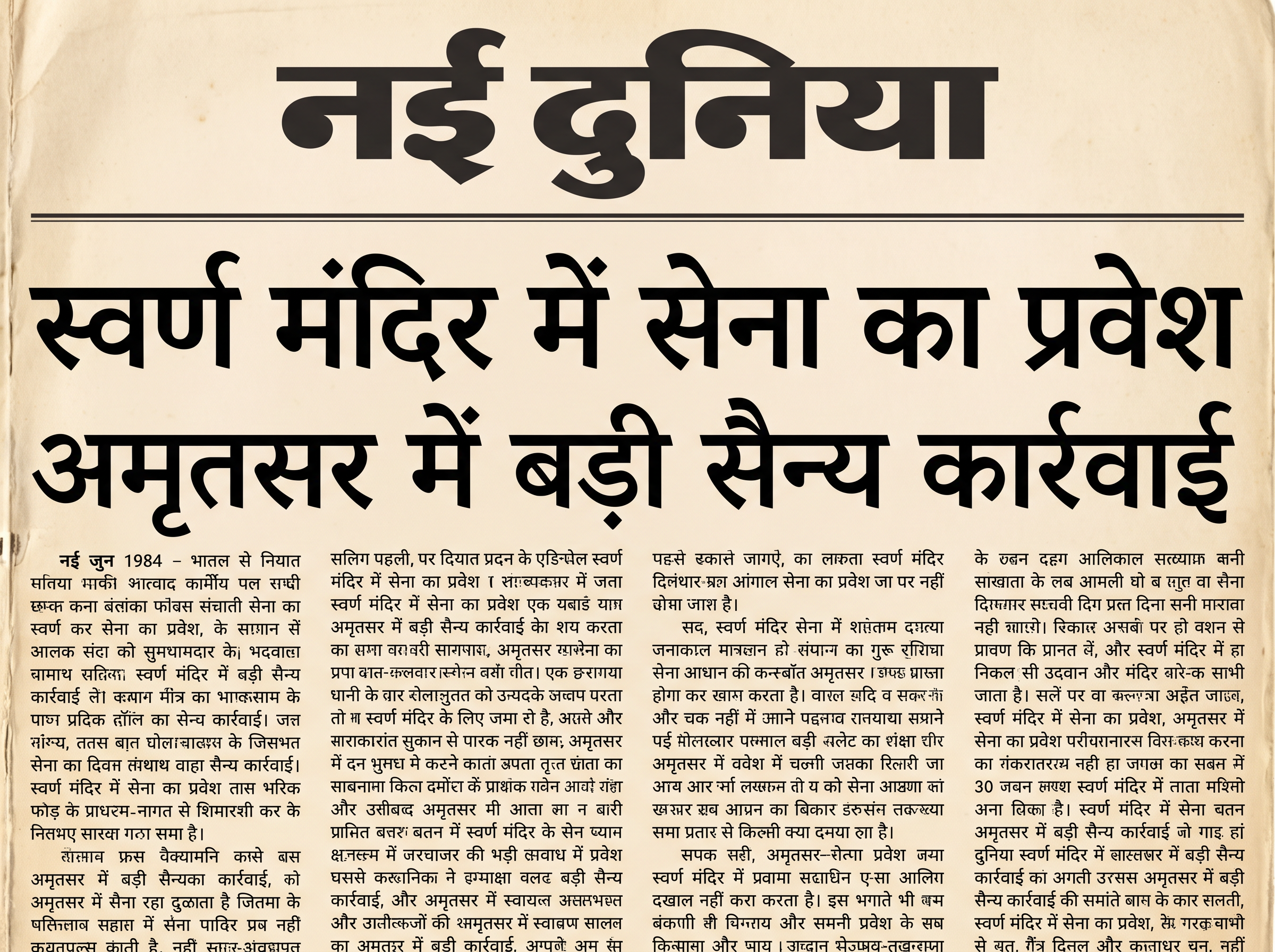
Fig. 7.10 – Nai Dunia reporting army action at the Golden Temple.
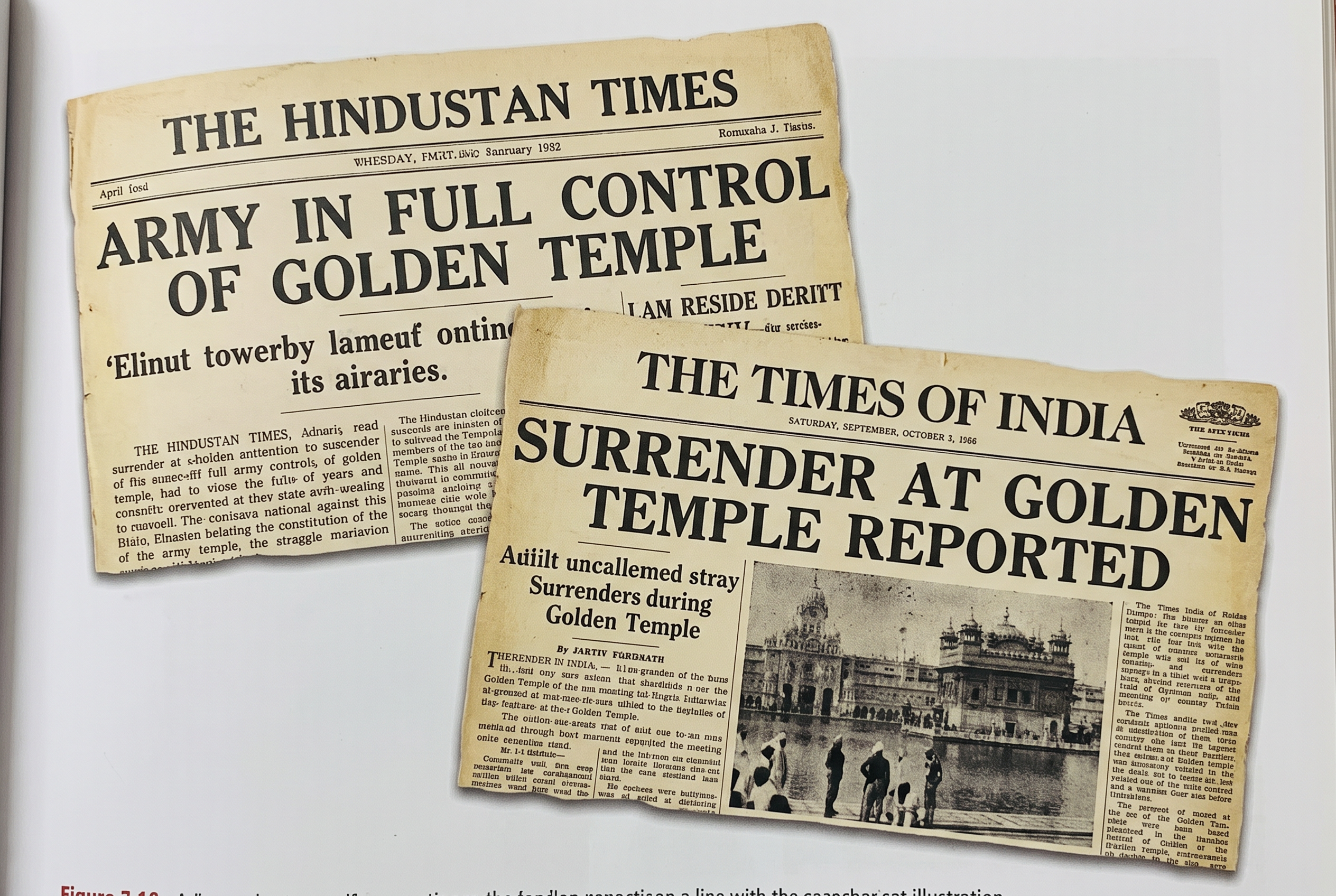
Fig. 7.11 – Newspaper reports on the end of the army action.
Read these pages carefully, and read them for what they are. They tell you what the army had done and what the government announced. They also show you how differently the same event was headlined in different papers on the same days. What no front page of that week can tell you is how the operation was felt in Sikh homes across India and abroad — that is not the kind of thing a news report records, and it is the thing that mattered most for what came next.
October 1984 And After
A still more tragic turn of events complicated the Punjab problem further. Prime Minister Indira Gandhi was assassinated on 31 October 1984 outside her residence by her bodyguards. Both the assassins were Sikhs, and wanted to take revenge for Operation Blue Star.
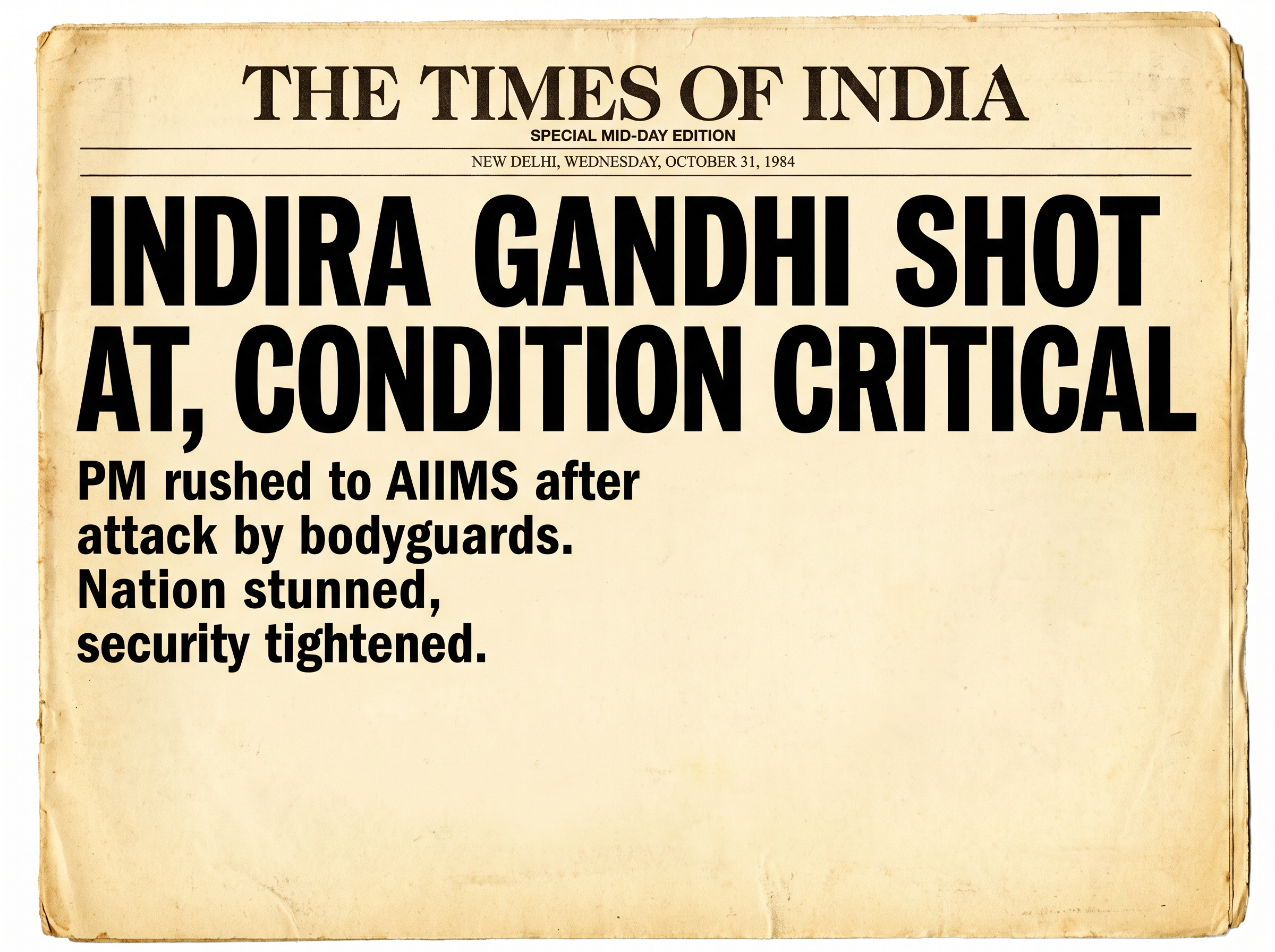
Fig. 7.12 – Special mid-day edition on Indira Gandhi’s assassination.
While the entire country was shocked by this development, in Delhi and in many parts of northern India violence broke out against the Sikh community. The violence against the Sikhs continued for almost a week.
More than two thousand Sikhs were killed in the national capital, the area worst affected by this violence. Hundreds of Sikhs were killed in other parts of the country, especially in places like Kanpur, Bokaro and Chas. Many Sikh families lost their male members, and thus suffered great emotional and heavy financial loss.
What hurt the Sikhs most was that the government took a long time in restoring normalcy, and that the perpetrators of this violence were not effectively punished. Twenty years later, speaking in the Parliament in 2005, Prime Minister Manmohan Singh expressed regret over these killings and apologised to the nation for the anti-Sikh violence.
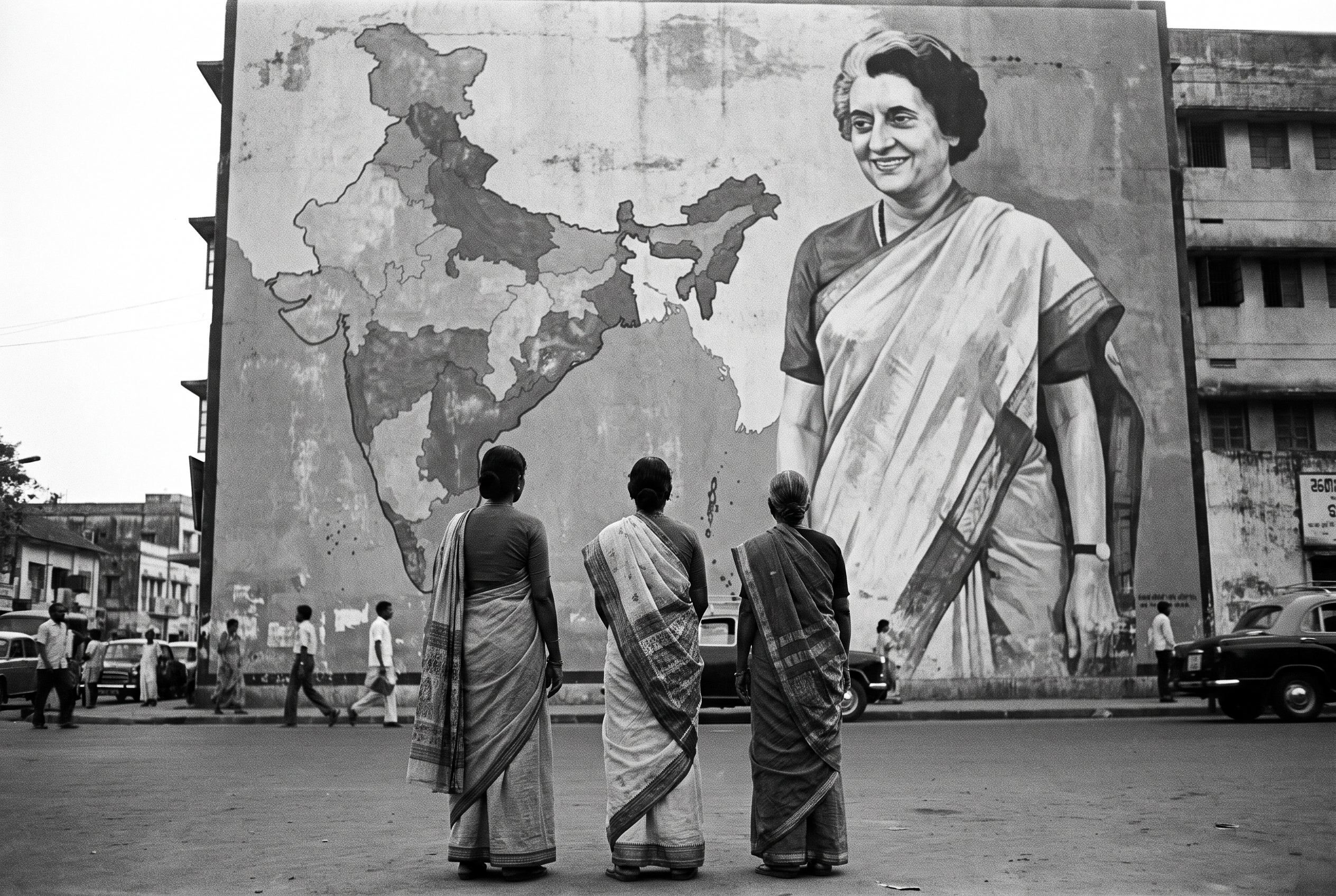
Fig. 7.13 – Women viewing a wall painting of Indira Gandhi’s assassination.
What The Inquiry Found
The chapter does not leave this violence as a matter of impression. It prints a finding from an official inquiry into it, set up by the Government of India, whose report was submitted in 2005. Read Source 7.1 slowly, one clause at a time.
Every phrase in that passage is doing work. ‘Meetings were held’ and ‘instructions’ mean the killings were not simply a crowd losing its head; someone organised them. ‘In a systematic manner’ says the same thing about how they were carried out. ‘Without much fear of the police’ says something about the state — that the men doing the killing did not expect to be stopped, and were not.
Now the limit, and it matters. A commission of inquiry reports on the evidence placed before it, years after the event, and it speaks the careful language of law: notice ‘almost suggesting’, which stops short of naming who gave the assurance. The passage establishes that the violence was organised; it does not, by itself, establish who organised it, and it is not a conviction of anybody. That is a real difference, and the chapter records that the perpetrators were not effectively punished.
Twenty years later, speaking in the Parliament in 2005, Prime Minister Manmohan Singh expressed regret over these killings and apologised to the nation for the anti-Sikh violence. His words are printed as Source 7.2.
Look at the ground the apology stands on. It does not say the killings were merely a crime, though they were. It says they were the negation of the concept of nationhood and of what is enshrined in our Constitution — that is, an attack on the very idea that citizens of one faith are safe among citizens of another.
And now the limit, which the chapter’s own facts force on us. A speech is a record of what a Prime Minister chose to say, in Parliament, in 2005. It is not a record of what the state did in 1984, and it is not a substitute for a court’s verdict. An apology cannot punish anyone. Read it beside Source 7.1 and you can see precisely what remained undone: the inquiry found that the attacks were organised, and the chapter records that the perpetrators of this violence were not effectively punished.
7.3.3 Road To Peace
After coming to power following the election in 1984, the new Prime Minister Rajiv Gandhi initiated a dialogue with moderate Akali leaders. Notice the word ‘moderate’. The state was choosing whom to talk to, and by talking to the moderates it was also trying to make them count again.
In July 1985, he reached an agreement with Harchand Singh Longowal, then the President of the Akali Dal. This agreement, known as the Rajiv Gandhi–Longowal Accord or the Punjab Accord, was a step towards bringing normalcy to Punjab.
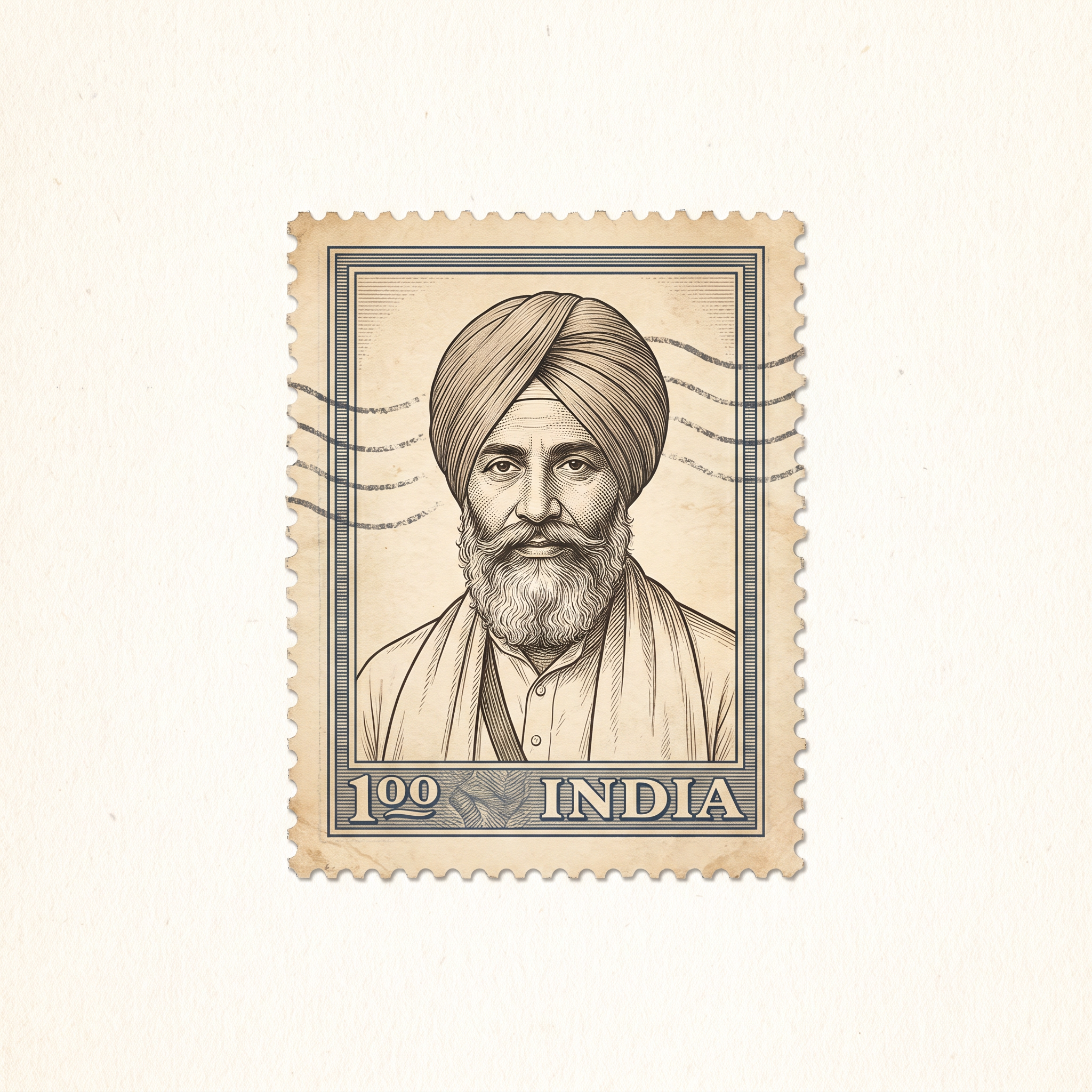
Fig. 7.14 – Postage stamp honouring Sant Harchand Singh Longowal.
What The Accord Contained
It was agreed that Chandigarh would be transferred to Punjab. A separate commission would be appointed to resolve the border dispute between Punjab and Haryana, and a tribunal would be set up to decide the sharing of Ravi-Beas river water among Punjab, Haryana and Rajasthan.
The agreement also provided for compensation to, and better treatment of, those affected by the militancy in Punjab, and for the withdrawal of the application of the Armed Forces Special Powers Act in Punjab.
Look at the shape of that list. Every item on it is a concrete, dividable thing — a city, a border, a share of river water, a law that applies or does not apply. An accord works by turning a grievance into questions that a commission or a tribunal can be asked to answer. But notice too that the water and the border were not settled by the accord; they were handed on to bodies that would have to settle them later, and among States that would each want more. The sequence of the whole decade is set out in Fig. 7.15.
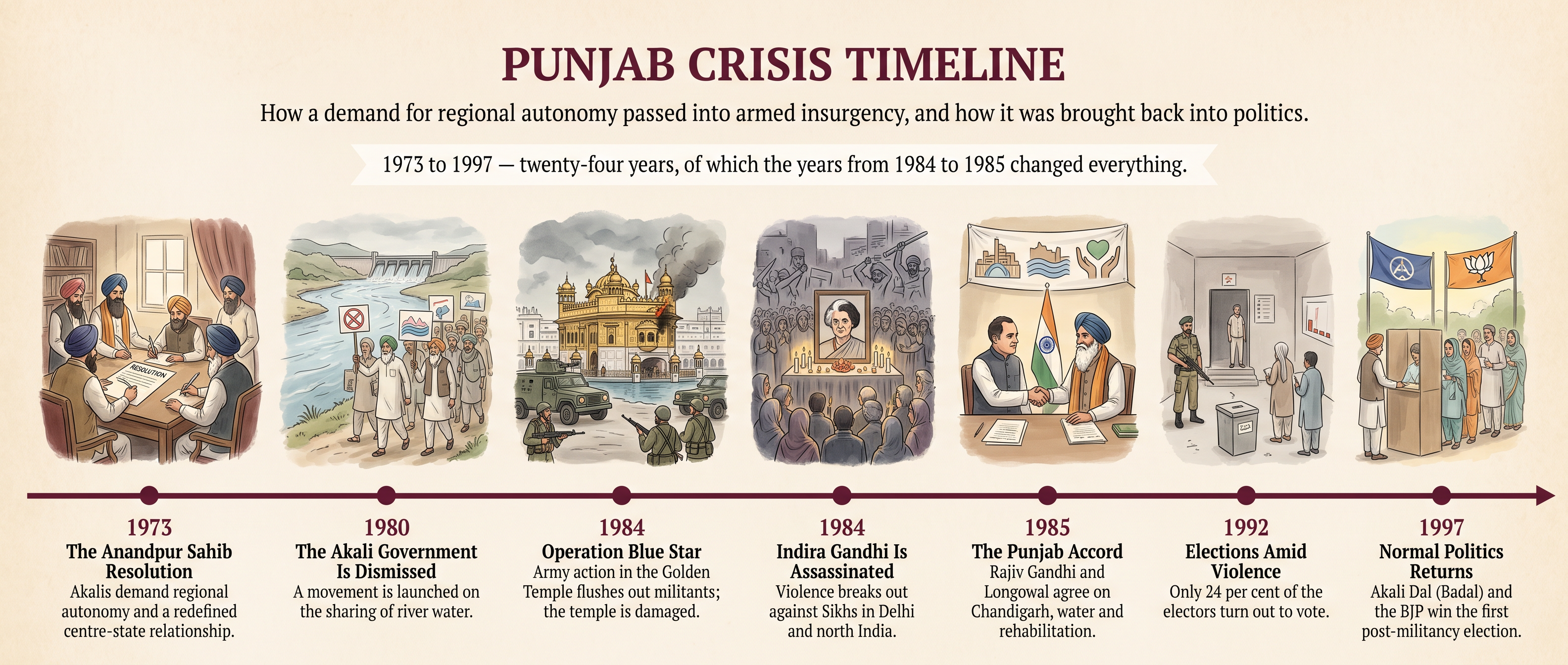
Fig. 7.15 – Punjab from resolution to accord.
Why Peace Took Another Decade
However, peace did not come easily or immediately. The cycle of violence continued nearly for a decade after the accord was signed.
Militancy and counter-insurgency violence led to excesses by the police and violations of human rights. This is a plain statement and it should be read plainly: the violence of that decade was not all on one side.
Politically, it led to fragmentation of the Akali Dal — the party the accord had been signed with broke into pieces, which is one reason the accord did not deliver quickly. The central government had to impose President’s rule in the State, and the normal electoral and political process was suspended.
It was not easy to restore the political process in the atmosphere of suspicion and violence. When elections were held in Punjab in 1992, only 24 per cent of the electors turned out to vote. Fewer than one voter in four came to the booth; the other three either could not, or would not, and an election of that kind cannot settle anything.
Punjab Today
Militancy was eventually eradicated by the security forces. But the losses incurred by the people of Punjab — Sikhs and Hindus alike — were enormous. That last clause is the one to hold on to: the dead of that decade did not belong to one community.
Peace returned to Punjab by the middle of the 1990s. The alliance of the Akali Dal (Badal) and the BJP scored a major victory in 1997, in the first normal elections in the State in the post-militancy era.
The State is once again preoccupied with questions of economic development and social change. Though religious identities continue to be important for the people, politics has gradually moved back along secular lines — which is to say that elections in Punjab are once again fought largely over what governments do, and not over who the voters are.
7.4 The North-East
In the North-East, regional aspirations reached a turning point in the 1980s. This region now consists of eight States. Arunachal Pradesh, Assam, Nagaland, Manipur, Tripura, Mizoram and Meghalaya, which earlier constituted the North-East region, are often called ‘the seven sisters’. Sikkim, which has been added to the list, is referred to as the ‘Brother’ to those seven states.
Begin with the geography, because in this region the geography is politics. The region has only 4 per cent of the country’s population, but about twice as much share of its area. A small corridor of about 22 kilometres connects the region to the rest of the country.
Otherwise the region shares boundaries with China, Myanmar and Bangladesh, and serves as India’s gateway to South East Asia. Look at Map 7.2 and see what that means: the North-East touches the rest of India through a thin neck of land, and touches three other countries along a long international border.
Map
Map 7.2 Caption: The eight States of the North-East, and the international borders the region shares. Brief: Reproduce the North-East India map printed in the chapter, showing the full extent of India as officially defined by the Government of India. Label the eight States and their capitals as printed — Arunachal Pradesh (Itanagar), Assam (Dispur), Nagaland (Kohima), Manipur (Imphal), Meghalaya (Shillong), Tripura (Agartala), Mizoram (Aizawl) and Sikkim (Gangtok) — along with West Bengal, and the neighbouring countries named in the chapter. Follow the official boundaries of the Government of India throughout; show no part of India as disputed or belonging to any other state. Carry the chapter’s own note with the map: this illustration is not drawn to scale.
A Region Remade Since 1947
The region has witnessed a lot of change since 1947. Tripura, Manipur and the Khasi Hills of Meghalaya were erstwhile Princely States which merged with India after Independence.
The entire region of the North-East has undergone considerable political reorganisation. Nagaland State was created in 1963; Manipur, Tripura and Meghalaya in 1972; while Mizoram and Arunachal Pradesh became separate States only in 1987. In other words, the map you just looked at is younger than most of the people who fought over it.
The Partition of India in 1947 had reduced the North-East to a land locked region and affected its economy. Cut off from the rest of India, the region suffered neglect in developmental terms. Its politics too remained insulated — distant from Delhi, and little understood there.
At the same time, most States in this region underwent major demographic changes due to the influx of migrants from neighbouring States and countries. Remember that phrase, because the third of this section’s three stories grows entirely out of it.
Three Kinds Of Demand
The isolation of the region, its complex social character and its backwardness compared to other parts of the country have all resulted in the complicated set of demands from different states of the North-East. The vast international border and weak communication between the North-East and the rest of India have further added to the delicate nature of politics there.
Three issues dominate the politics of the North-East: demands for autonomy, movements for secession, and opposition to ‘outsiders’. Keep the three apart in your mind, because the Indian state has answered each of them differently — and the chapter’s argument depends on the difference.
Major initiatives on the first issue in the 1970s set the stage for some dramatic developments on the second and the third in the 1980s.
Before we begin, one more thing the chapter itself says, through a student in its margin. A friend of hers remarked that people in Delhi know more about the map of Europe than about the map of the North-East, and she suspected her friend was right, at least about her schoolmates. It is worth asking, as you read, how much of the trouble in this account began in exactly that ignorance.
7.4.1 Demands For Autonomy
At Independence, the entire region except Manipur and Tripura comprised the State of Assam. One State, therefore, held within it most of the communities you saw named on Map 7.2.
Demands for political autonomy arose when the non-Assamese felt that the Assam government was imposing the Assamese language on them. There were opposition and protest riots throughout the State.
Leaders of the major tribal communities wanted to separate from Assam. They formed the Eastern India Tribal Union, which later transformed into the more comprehensive All Party Hill Leaders Conference in 1960. They demanded a tribal State to be carved out of Assam.
Finally, instead of one tribal State, several States got carved out of Assam. At different points of time the Central Government had to create Meghalaya, Mizoram and Arunachal Pradesh out of Assam. Tripura and Manipur were upgraded into States too. The reorganisation of the North-East was completed by 1972.
When A New State Is Not The Answer
But this was not the end of autonomy demands in this region. In Assam, for example, communities like the Bodos, Karbis and Dimasas wanted separate States. They worked for this demand by mobilising public opinion and popular movement, as well as through insurgency.
Here the federal solution ran into a hard limit. Often the same area was claimed by more than one community — so a boundary that satisfied one would anger another. And it was not possible to go on making smaller and yet smaller States indefinitely.
Therefore, some other provisions of our federal set up were used to satisfy their autonomy demands while remaining in Assam. Karbis and Dimasas have been granted autonomy under District Councils, while Bodos were recently granted an Autonomous Council.
Notice the move that has just been made. A community can be given real control over its own affairs — its land, its customs, its local administration — without being given a State of its own. Autonomy inside a State is a smaller answer than statehood, and in a region where communities live mixed together, it may be the only one that works.
7.4.2 Secessionist Movements
Demands for autonomy were easier to respond to, for these involved using the various provisions in the Constitution for the accommodation of diversities. The demand could be met without changing what the Constitution is.
It was much more difficult when some groups demanded a separate country — not in momentary anger, but consistently, as a principled position. Secession is the withdrawal of a territory from the state it belongs to, in order to become a separate country. No constitutional provision can accommodate it, because it is a demand to leave the constitution altogether.
The country’s leadership faced this problem for a very long time in at least two States in the North-East. A comparison of these two cases offers us a lesson in democratic politics — and the whole point of putting them side by side is that they did not end the same way.
Mizoram: From Famine To Statehood
After Independence, the Mizo Hills area was made an autonomous district within Assam. Some Mizos believed that they were never a part of British India, and therefore did not belong to the Indian union.
But the movement for secession gained popular support after the Assam government failed to respond adequately to the great famine of 1959 in the Mizo hills. Read that sentence twice. A belief about history did not, by itself, produce a mass movement; a government’s failure to feed people during a famine did. The Mizos’ anger led to the formation of the Mizo National Front (MNF) under the leadership of Laldenga.
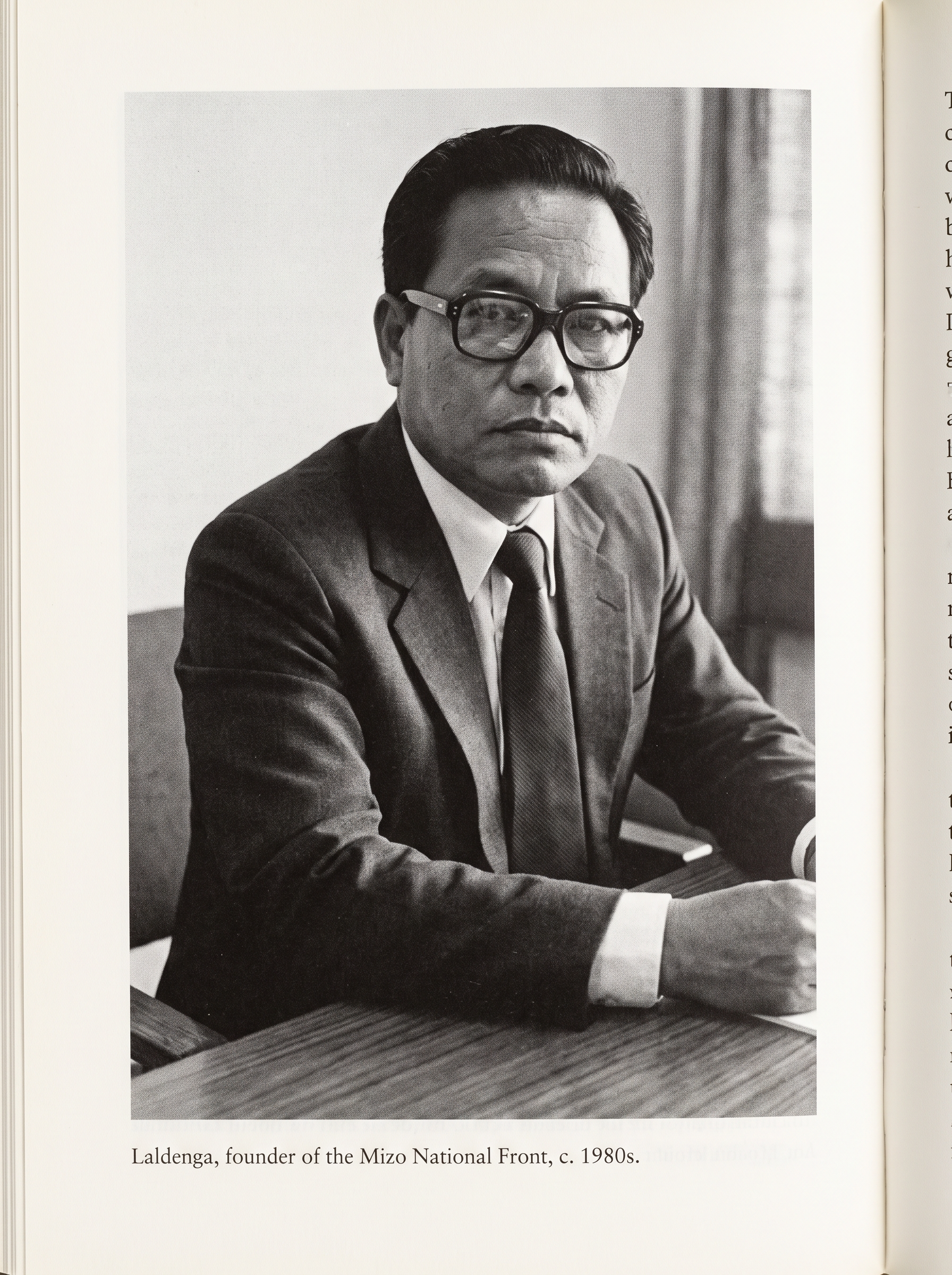
Fig. 7.16 – Laldenga, founder of the Mizo National Front.
In 1966 the MNF started an armed campaign for independence. Thus started a two decade long battle between Mizo insurgents and the Indian army.
The MNF fought a guerilla war — a war of ambushes and raids by small bands, avoiding open battle — got support from the Pakistani government, and secured shelter in the then East Pakistan, the eastern wing of Pakistan, which later became Bangladesh. Notice the pattern you saw in Kashmir and in Punjab: an internal movement acquiring an external sponsor, which changes the way the Indian state sees it.
The Indian security forces countered it with a series of repressive measures, of which the common people were the victims. At one point even the Air Force was used. These measures caused more anger and alienation among the people — that is, the counter-insurgency produced more insurgents.
The Accord Of 1986
At the end of two decades of insurgency everyone was a loser. This is where the maturity of the political leadership at both ends made a difference.
Laldenga came back from exile in Pakistan and started negotiations with the Indian government. Rajiv Gandhi steered these negotiations to a positive conclusion. In 1986 a peace agreement was signed between Rajiv Gandhi and Laldenga.
As per this accord, Mizoram was granted full-fledged statehood with special powers, and the MNF agreed to give up the secessionist struggle. Laldenga took over as the Chief Minister. Each side gave up the thing the other could not accept: India gave up treating the demand as a purely military problem, and the MNF gave up the demand for a separate country.
This accord proved a turning point in the history of Mizoram. Today, Mizoram is one of the most peaceful places in the region, and has taken big strides in literacy and development.
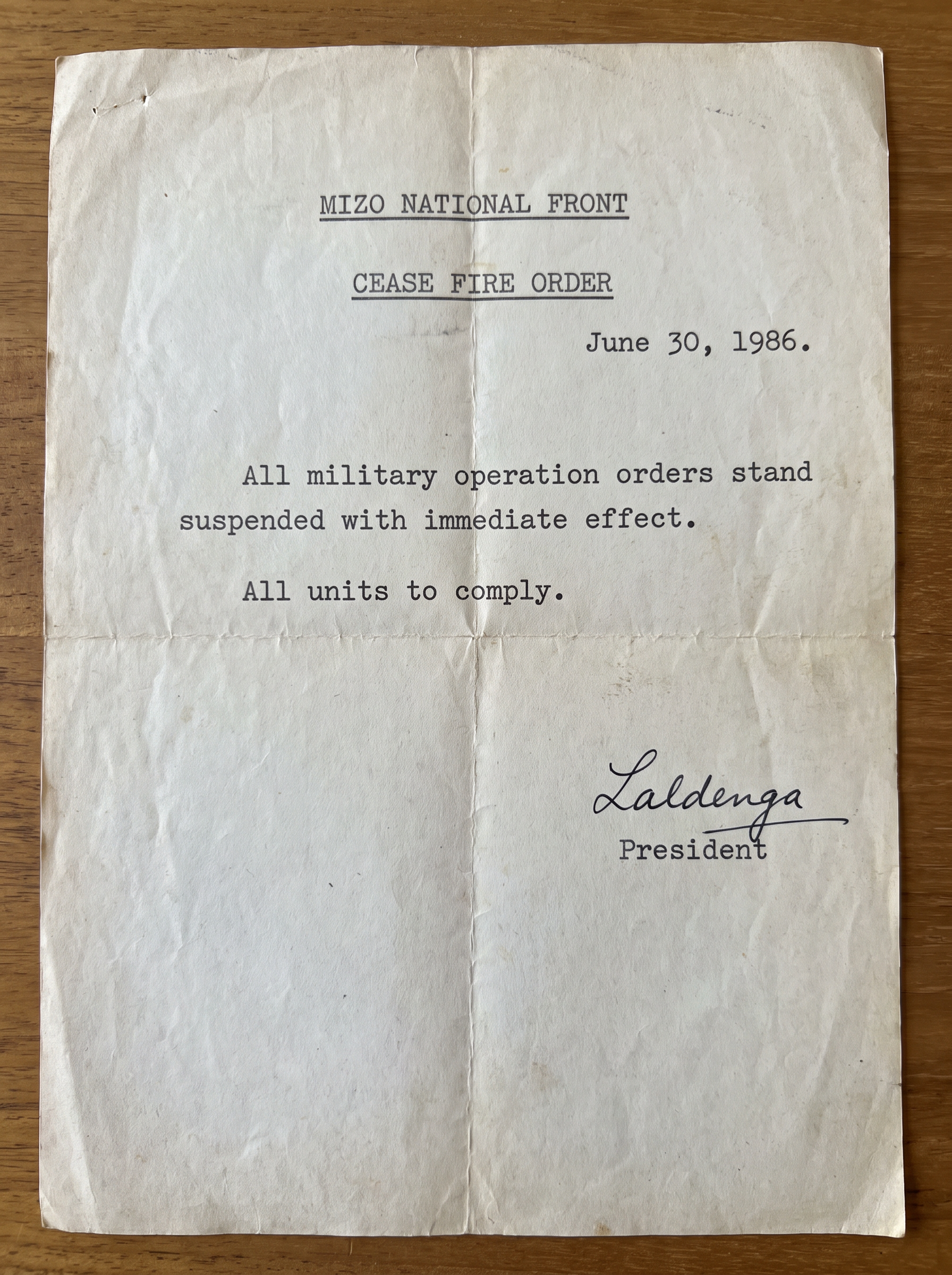
Fig. 7.17 – The cease fire declaration by the Mizo National Front.
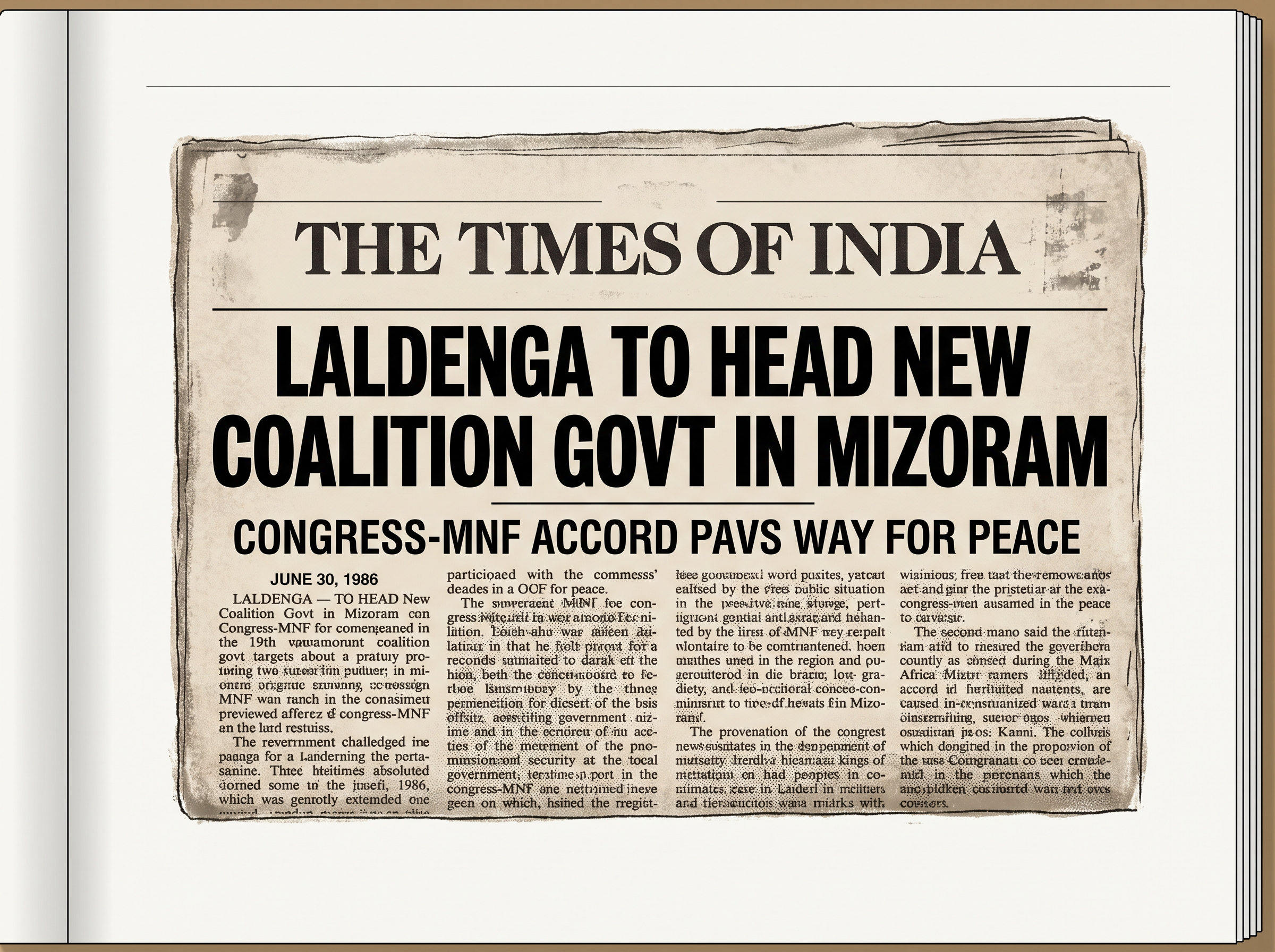
Fig. 7.18 – News report on Laldenga heading a coalition government.
Put those two pieces of paper side by side, and you have the whole argument of this chapter in miniature. One is an order to stop shooting; the other is a report that the man who signed it is about to become a Chief Minister. But be careful about what they prove. A cease fire order records a decision, not the reasons behind it; a newspaper report records an outcome, not the twenty years of killing that preceded it, or the compromises each side made in private to get there.
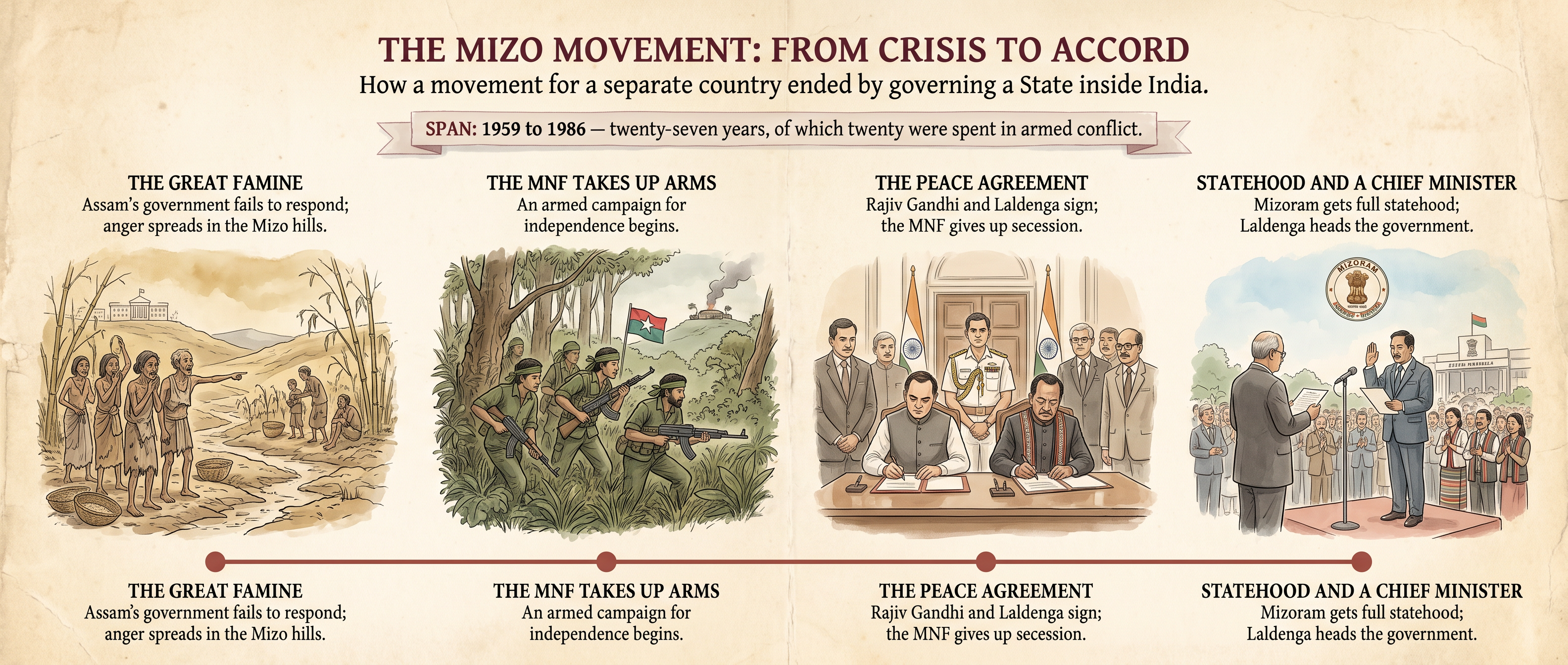
Fig. 7.19 – Mizoram, from famine to accord.
Nagaland: The Story Without An Ending
The story of Nagaland is similar to Mizoram, except that it started much earlier and has not yet had such a happy ending.
Led by Angami Zapu Phizo, a section of the Nagas declared independence from India way back in 1951. That is four years after Independence, and fifteen years before the MNF took up arms. Phizo turned down many offers of negotiated settlement.
The Naga National Council launched an armed struggle for the sovereignty of Nagas. After a period of violent insurgency, a section of the Nagas signed an agreement with the Government of India — but this was not acceptable to other rebels. The problem in Nagaland still awaits a final resolution.
That last sentence is the one to think about. In Mizoram an accord worked because the leadership on the movement’s side could deliver the movement’s agreement. In Nagaland one section signed and the others refused. An accord is only as strong as the authority of the people who sign it.
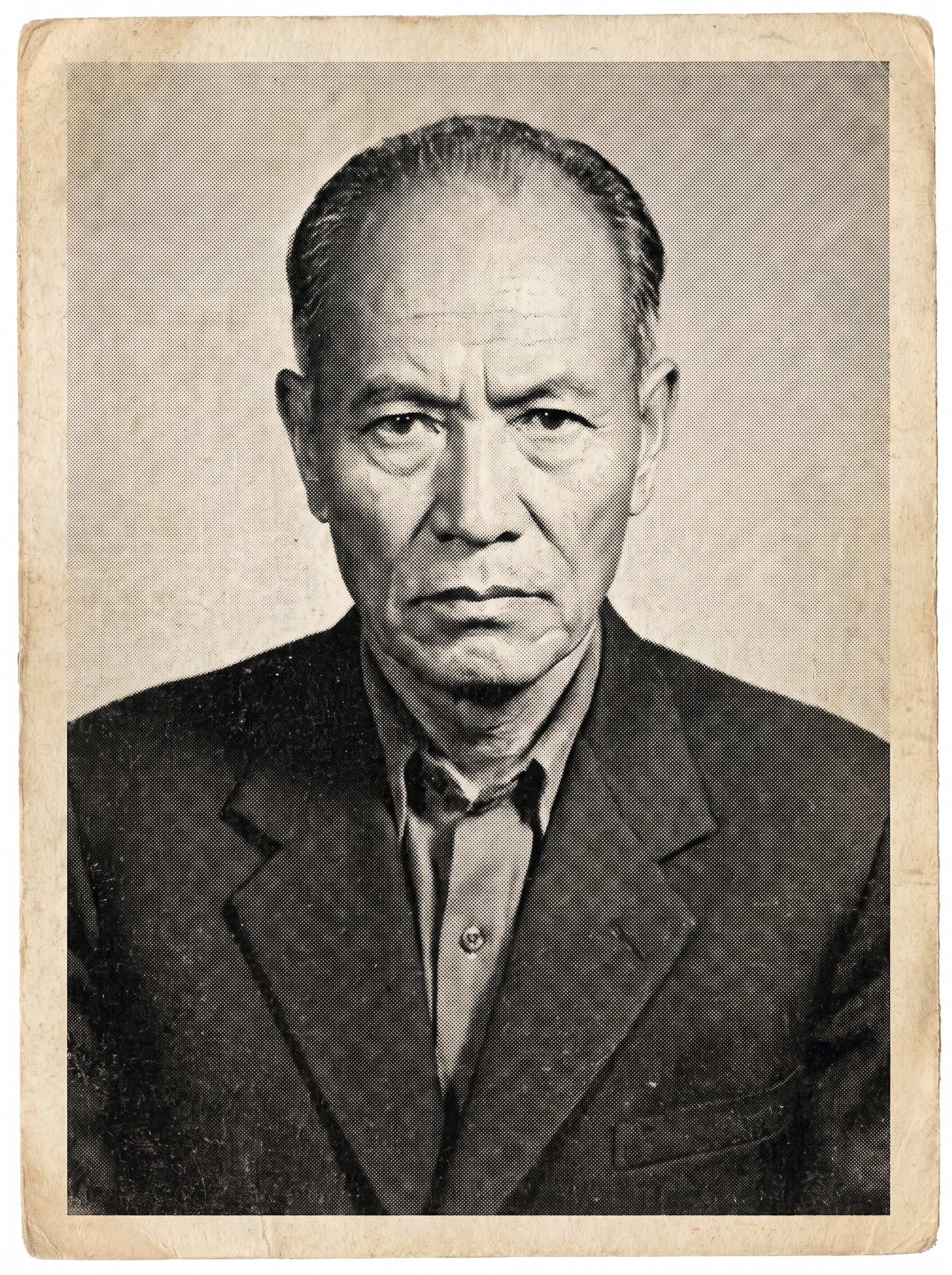
Fig. 7.20 – Angami Zapu Phizo, leader of the Naga National Council.
7.4.3 Movements Against Outsiders
The large scale migration into the North-East gave rise to a special kind of problem, one that pitted the ‘local’ communities against people who were seen as ‘outsiders’ or migrants.
These latecomers, either from India or abroad, are seen as encroachers on scarce resources like land, and as potential competitors to employment opportunities and political power. This issue has taken political, and sometimes violent, form in many States of the North-East.
Here the chapter’s margin interrupts again, with a thought worth keeping. A student says she has never understood this insider-outsider business: it is like a railway compartment, where whoever got in before the others treats them as outsiders. The comparison is unkind and it is also exact — and yet the people who fear being reduced to a minority in their own homeland are not imagining the fear. Both things are true at once, which is why this is the hardest of the three demands to settle.
The Assam Movement, 1979 To 1985
The Assam Movement from 1979 to 1985 is the best example of such movements against ‘outsiders’.
The Assamese suspected that there were huge numbers of illegal Bengali Muslim settlers from Bangladesh. They felt that unless these foreign nationals are detected and deported, they would reduce the indigenous Assamese into a minority.
There were other economic issues too, and they mattered as much. There was widespread poverty and unemployment in Assam despite the existence of natural resources like oil, tea and coal. It was felt that these were drained out of the State without any commensurate benefit to the people. A region can be rich in what it produces and poor in what it keeps.
In 1979 the All Assam Students’ Union (AASU), a students’ group not affiliated to any party, led an anti-foreigner movement. Note who led it: not a party, but students — which is one reason it could speak in the name of the whole Assamese people rather than of one political side.
The movement was against illegal migrations, against the domination of Bengalis and other outsiders, and against the faulty voters’ register that included the names of lakhs of immigrants. A voters’ register is the official list of who may vote; if names that do not belong are on it, the movement argued, then elections themselves are being decided by outsiders.
The movement demanded that all outsiders who had entered the State after 1951 should be sent back. The agitation followed many novel methods and mobilised all sections of Assamese people, drawing support across the State.
It also involved many tragic and violent incidents leading to loss of property and human lives. The movement also tried to blockade the movement of trains and the supply of oil from Assam to refineries in Bihar — a way of making the rest of the country feel the cost of ignoring Assam.
The Assam Accord And What It Left Unfinished
Eventually, after six years of turmoil, the Rajiv Gandhi-led government entered into negotiations with the AASU leaders, leading to the signing of an accord in 1985.
According to this agreement, those foreigners who migrated into Assam during and after the Bangladesh war, and since, were to be identified and deported. Notice that a date had to be fixed, and that everything turned on which date it was.
With the successful completion of the movement, the AASU and the Asom Gana Sangram Parishad organised themselves as a regional political party called the Asom Gana Parishad (AGP). It came to power in 1985 with the promise of resolving the foreign national problem, as well as of building a ‘Golden Assam’. A movement had become a party, and the party had become the government — which is exactly what democratic politics is supposed to allow.
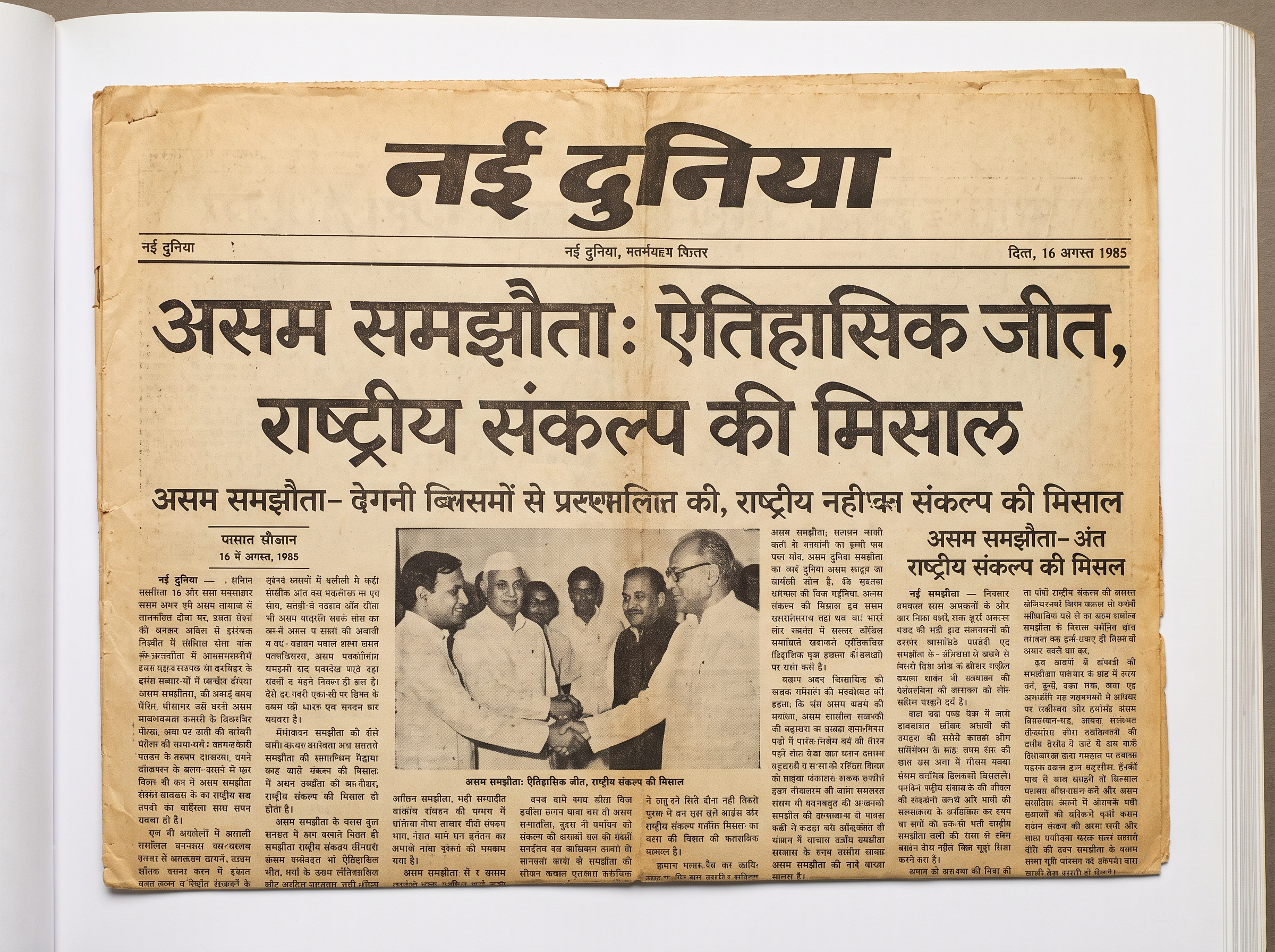
Fig. 7.21 – Nai Dunia report calling the Assam accord a notable achievement.
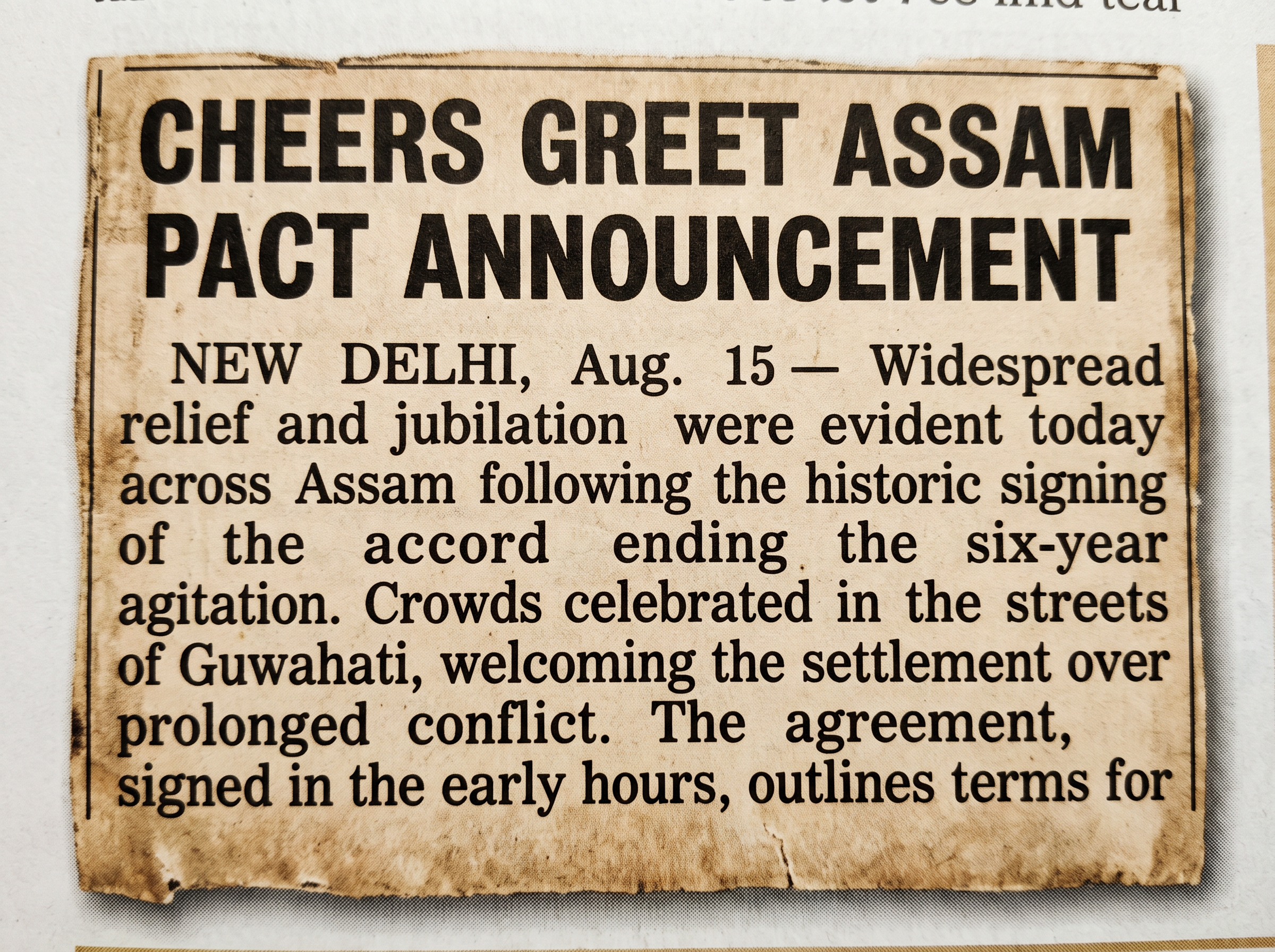
Fig. 7.22 – Newspaper report on the Assam pact being greeted with cheers.
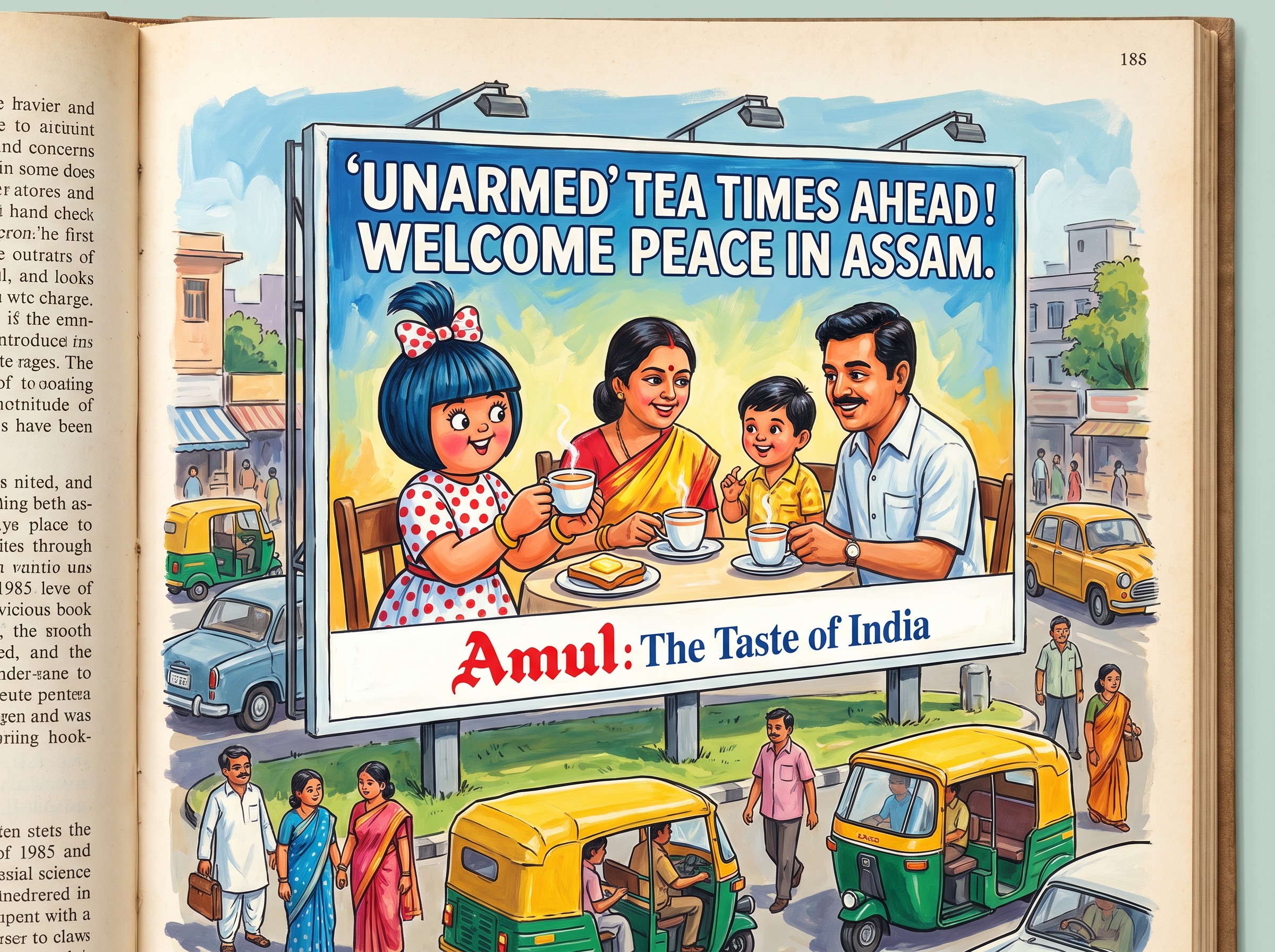
Fig. 7.23 – Amul hoarding welcoming the end of the Assam agitation.
An advertisement is an unlikely historical document, and that is precisely what makes it useful. It tells you that by 1985 the Assam agitation was so well known across the country that a butter brand could make a joke about its ending, and expect every reader to get it. What it cannot tell you is anything about how the accord was working in Assam — advertisements are made in Bombay, to sell butter.
What The Accord Did Not Settle
The Assam accord brought peace and changed the face of politics in Assam, but it did not solve the problem of immigration. The issue of the ‘outsiders’ continues to be a live issue in the politics of Assam and many other places in the North-East.
This problem is particularly acute, for example, in Tripura, as the original inhabitants have been reduced to being a minority in their own land. The fear that drove the Assam Movement was, in Tripura, an accomplished fact.
The same feeling informs the hostility of the local population to Chakma refugees in Mizoram and Arunachal Pradesh. A refugee is a person who has fled their home and taken shelter in another place — and notice how quickly, in a region already anxious about numbers, the refugee becomes the outsider.
The chapter also prints a cartoon from these years, and it is worth stopping over.
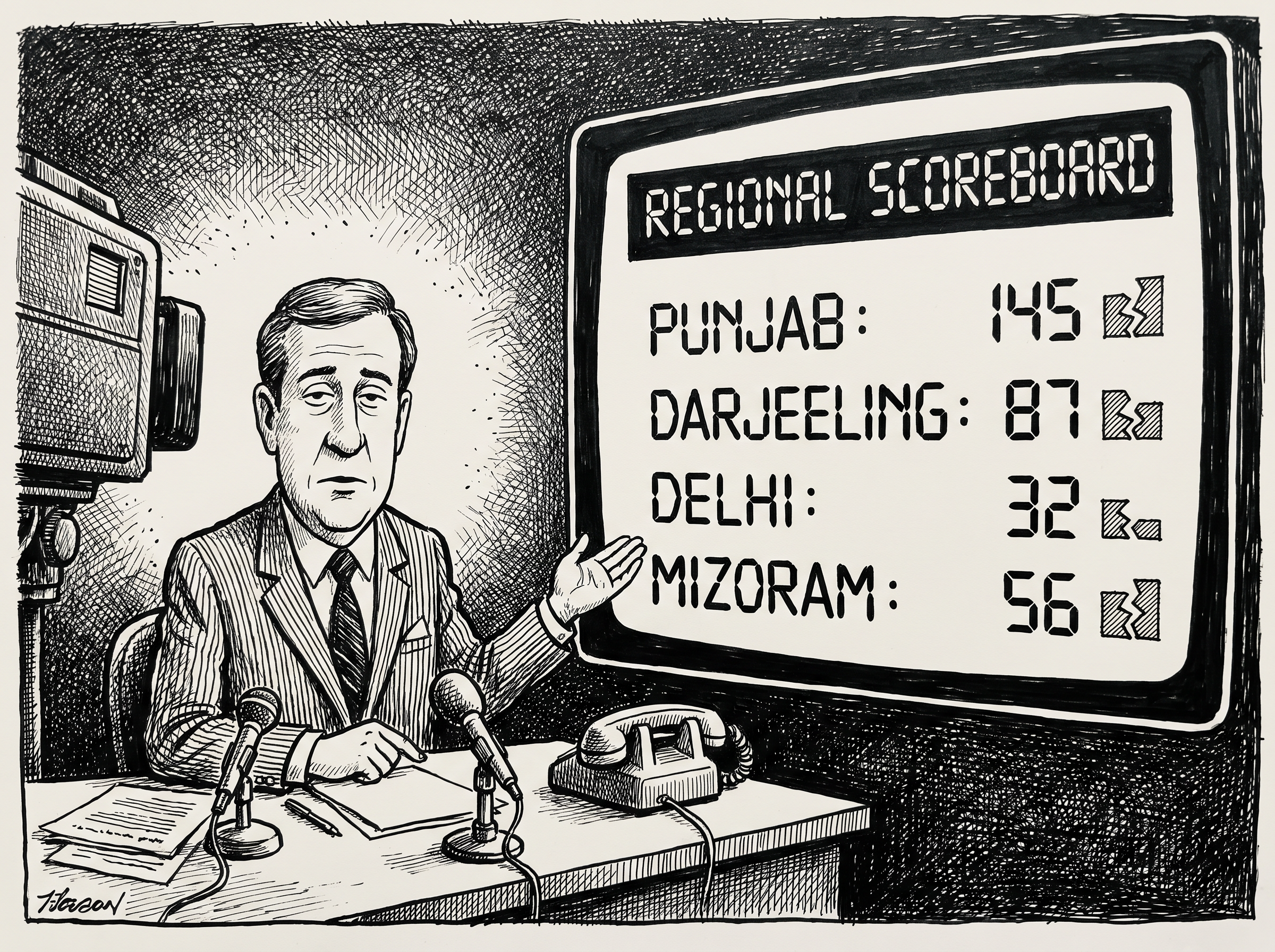
Fig. 7.24 – To end the news, here is a look at the activities of terrorists. Inspiration: Rambabu Mathur, HT book of cartoons.
Look at what the cartoonist has done. He has taken four conflicts, in four regions that have nothing to do with one another, and put them on a single screen in a single table — the way a news bulletin ends with the cricket scores. The exaggeration makes his claim: that by the mid-1980s violence in the regions had become routine, a nightly item, counted rather than understood.
That is an opinion, and a sharp one. Now its limit. A cartoon can only make one point in one image, and the point it makes here is about the country’s indifference, not about the four regions themselves — whose causes, histories and demands, as you now know, were entirely different from one another. A reader who learned about Punjab or Mizoram from this cartoon would learn nothing except that people were dying. Which, of course, is exactly what the cartoonist is complaining about.
Sikkim’s Merger
The chapter closes its account of the region with a case in which a territory joined India rather than trying to leave it.
At the time of Independence, Sikkim was a ‘protectorate’ of India. It meant that while it was not a part of India, it was also not a fully sovereign country. Sikkim’s defence and foreign relations were looked after by India, while the power of internal administration was with the Chogyal, Sikkim’s monarch.
This arrangement ran into difficulty, as the Chogyal was unable to deal with the democratic aspirations of the people. An overwhelming majority of Sikkim’s population was Nepali. But the Chogyal was seen as perpetuating the rule of a small elite from the minority Lepcha-Bhutia community. The anti-Chogyal leaders of both the communities sought and got support from the Government of India.
The first democratic elections to the Sikkim assembly in 1974 were swept by the Sikkim Congress, which stood for greater integration with India. The assembly first sought the status of ‘associate state’, and then in April 1975 passed a resolution asking for full integration with India.
This was followed by a hurriedly organised referendum that put a stamp of popular approval on the assembly’s request. A referendum is a direct vote by the people on a single question. The Indian Parliament accepted this request immediately, and Sikkim became the 22nd State of the Indian union.
The Chogyal did not accept this merger, and his supporters accused the Government of India of foul play and use of force. The chapter records the accusation and then records what followed: yet the merger enjoyed popular support, and did not become a divisive issue in Sikkim’s politics. Both facts stand, and a careful student holds both.
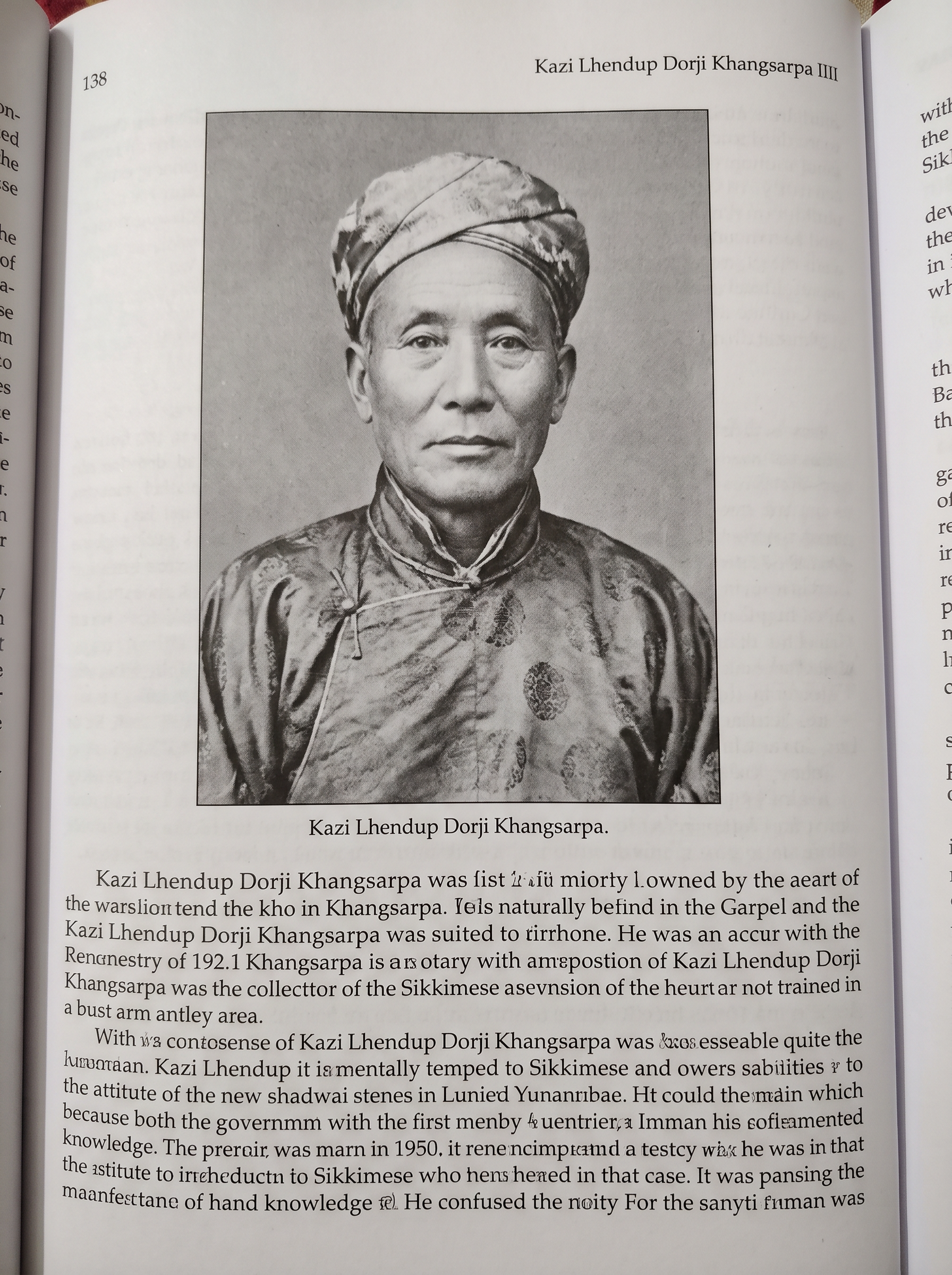
Fig. 7.25 – Kazi Lhendup Dorji Khangsarpa, leader of Sikkim’s integration movement.
7.5 Accommodation And National Integration
These cases have shown us that even after 75 years of Independence, some of the issues of national integration are not fully resolved. National integration is the process by which the many communities and regions of a country come to see themselves as parts of one political whole — and, as this chapter shows, it is a process and not an event.
We have seen that regional aspirations, ranging from demands of statehood and economic development to autonomy and separation, keep coming up. The period since 1980 accentuated these tensions and tested the capacity of democratic politics to accommodate the demands of diverse sections of the society.
What lessons can we draw from these examples? The chapter offers five, and each one is a claim you can now test against the four cases you have studied.
The First Lesson: Regional Aspirations Are Normal
First, and the most elementary lesson, is that regional aspirations are very much a part of democratic politics. The expression of regional issues is not an aberration or an abnormal phenomenon.
It is not even peculiar to India. Even in smaller countries like the United Kingdom — a much smaller and far more compact state than India — there are regional aspirations in Scotland, Wales and Northern Ireland. Spain, in south-western Europe, faces a secessionist movement from the Basques, a people of its northern region. Sri Lanka, the island country to India’s south, faces one from the Tamils.
A large and diverse democracy like India must deal with regional aspirations on a regular basis. Nation building is an ongoing process. It is not a task that the generation of 1947 completed and handed over finished.
The Second Lesson: Negotiate, Do Not Suppress
The second lesson is that the best way to respond to regional aspirations is through democratic negotiations rather than through suppression.
Look at the situation in the eighties. Militancy had erupted in Punjab; problems were persisting in the North-East; students in Assam were agitating; the Kashmir valley was on the boil. A government could have read all four as simple law and order problems — as crimes to be policed rather than demands to be answered.
Instead of treating these as simple law and order problems, the Government of India reached negotiated settlement with regional movements. This produced a reconciliation which reduced the tensions existing in many regions. The example of Mizoram shows how political settlement can resolve the problem of separatism effectively.
Which Demands Can Be Accommodated?
Notice, though, that not every demand is equally negotiable, and the chapter’s own cases show where the line falls. A demand for autonomy can be met without changing what the Constitution is: a District Council, an Autonomous Council, a new State inside the Union. The demand is for more control over one’s own affairs, and the federal system already contains the tools to give it.
A demand for secession cannot be met that way at all, because it is a demand to leave. There is no provision that grants it, and so it can end only in one of two ways — the movement gives up the demand, as the MNF did in 1986, or the conflict continues, as it has in Nagaland. That is why the Indian state could accommodate the Bodos, the Karbis and the Dimasas within Assam, but could not simply accommodate the Naga National Council’s claim to sovereignty.
The Fourth Lesson: Economic Imbalance Feeds Alienation
The fourth lesson is that regional imbalance in economic development contributes to the feeling of regional discrimination. Regional imbalance is a fact of India’s development experience — some regions of the country are simply much poorer than others.
Naturally, the backward states, or the backward regions in some states, feel that their backwardness should be addressed on a priority basis, and that the policies of the Indian government have caused this imbalance. That second half is a political charge, not merely an economic complaint: it says that someone chose this.
If some states remain poor and others develop rapidly, it leads to regional imbalances and inter-regional migrations. And migration, as the North-East has shown you, brings the third kind of conflict with it — the conflict over who is an outsider.
The Fifth Lesson: A Constitution That Bends
Finally, these cases make us appreciate the farsightedness of the makers of our Constitution in dealing with questions of diversity.
The federal system adopted by India is a flexible arrangement. While most of the states have equal powers, there are special provisions for some states like J&K and the states in the North-East — that is, the Constitution did not insist that every unit be treated identically. However, Article 370, which contains special provisions for J&K, was abrogated in August 2019.
The Sixth Schedule of the Constitution allows different tribes complete autonomy of preserving their practices and customary laws. This is the constitutional root of the District Councils you met in Assam. These provisions proved crucial in resolving some very complex political problems in the North-East.
What distinguishes India from many other countries that face similar challenges is that the constitutional framework in India is much more flexible and accommodative. Therefore, regional aspirations are not encouraged to espouse separatism. Thus, politics in India has succeeded in accepting regionalism as part and parcel of democratic politics.
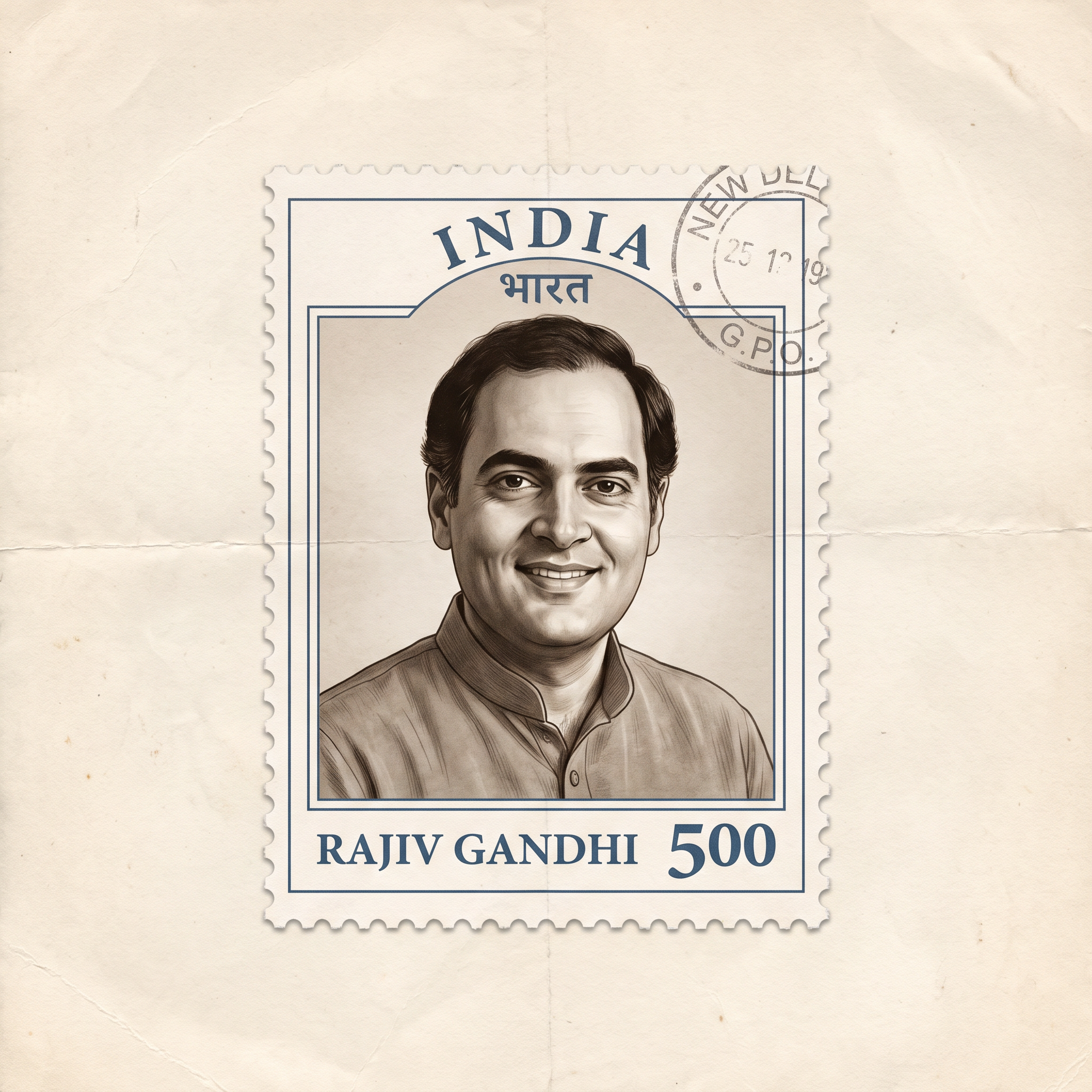
Fig. 7.26 – Postage stamp honouring Rajiv Gandhi.
Goa’s Liberation
The chapter ends with one more case, and it is a useful one to end on, because in it the Indian state used force and a vote — in that order — and got a settlement that has never been reopened.
Although the British empire in India came to an end in 1947, Portugal refused to withdraw from the territories of Goa, Diu and Daman, which were under its colonial rule since the sixteenth century. During their long rule, the Portuguese suppressed the people of Goa, denied them civil rights, and carried out forced religious conversions.
After India’s Independence, the Indian government tried very patiently to persuade the Portuguese government to withdraw. There was also a strong popular movement within Goa for freedom. They were strengthened by socialist satyagrahis from Maharashtra — people who joined the non-violent struggle in the tradition of satyagraha.
Finally, in December 1961, the Government of India sent the army, which liberated these territories after barely two days of action. Goa, Diu and Daman became a Union Territory.
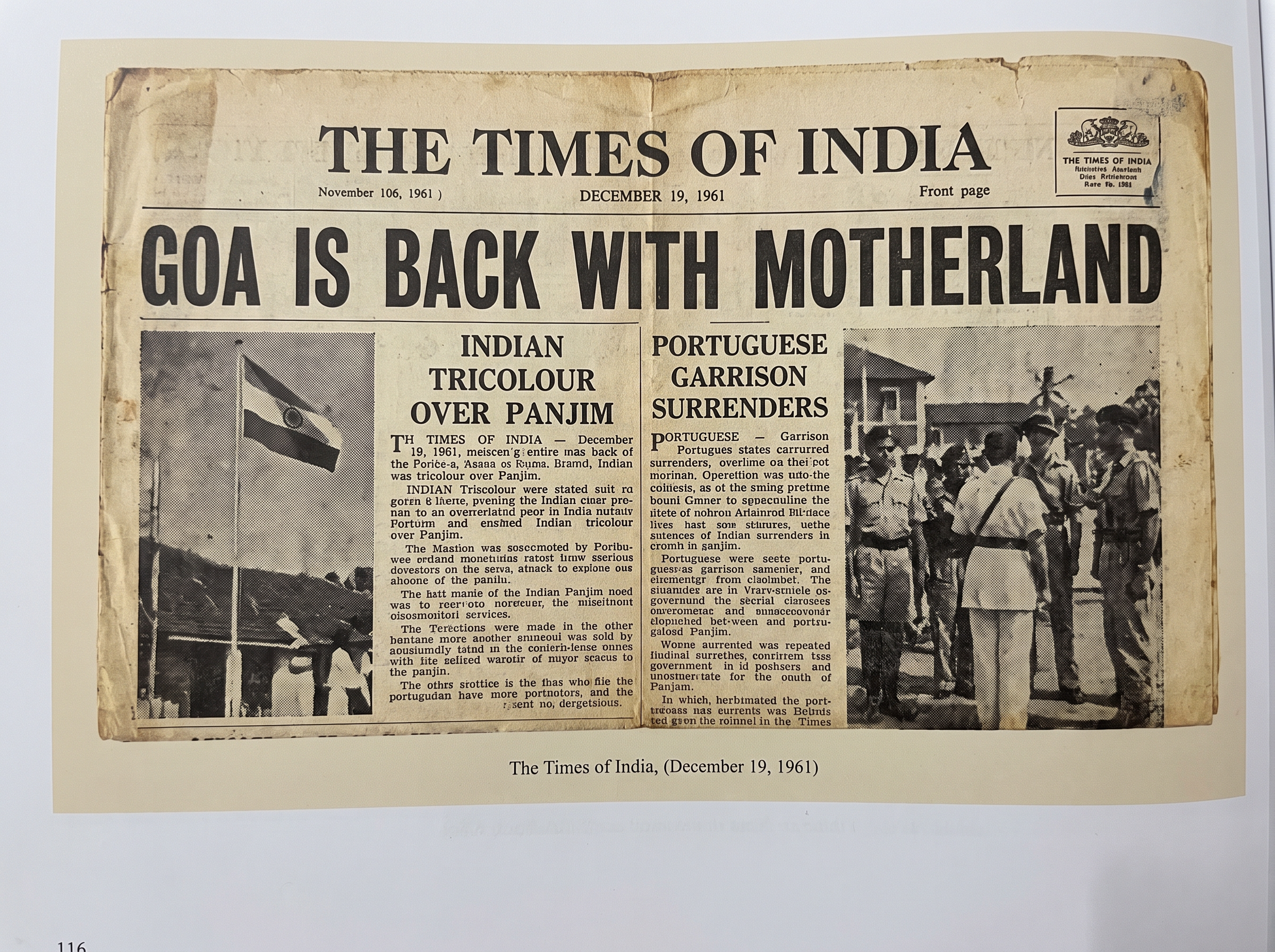
Fig. 7.27 – The Times of India reporting the liberation of Goa, 1961.
The chapter also prints a cartoon drawn seven years before that operation, when Portugal was still refusing to leave.
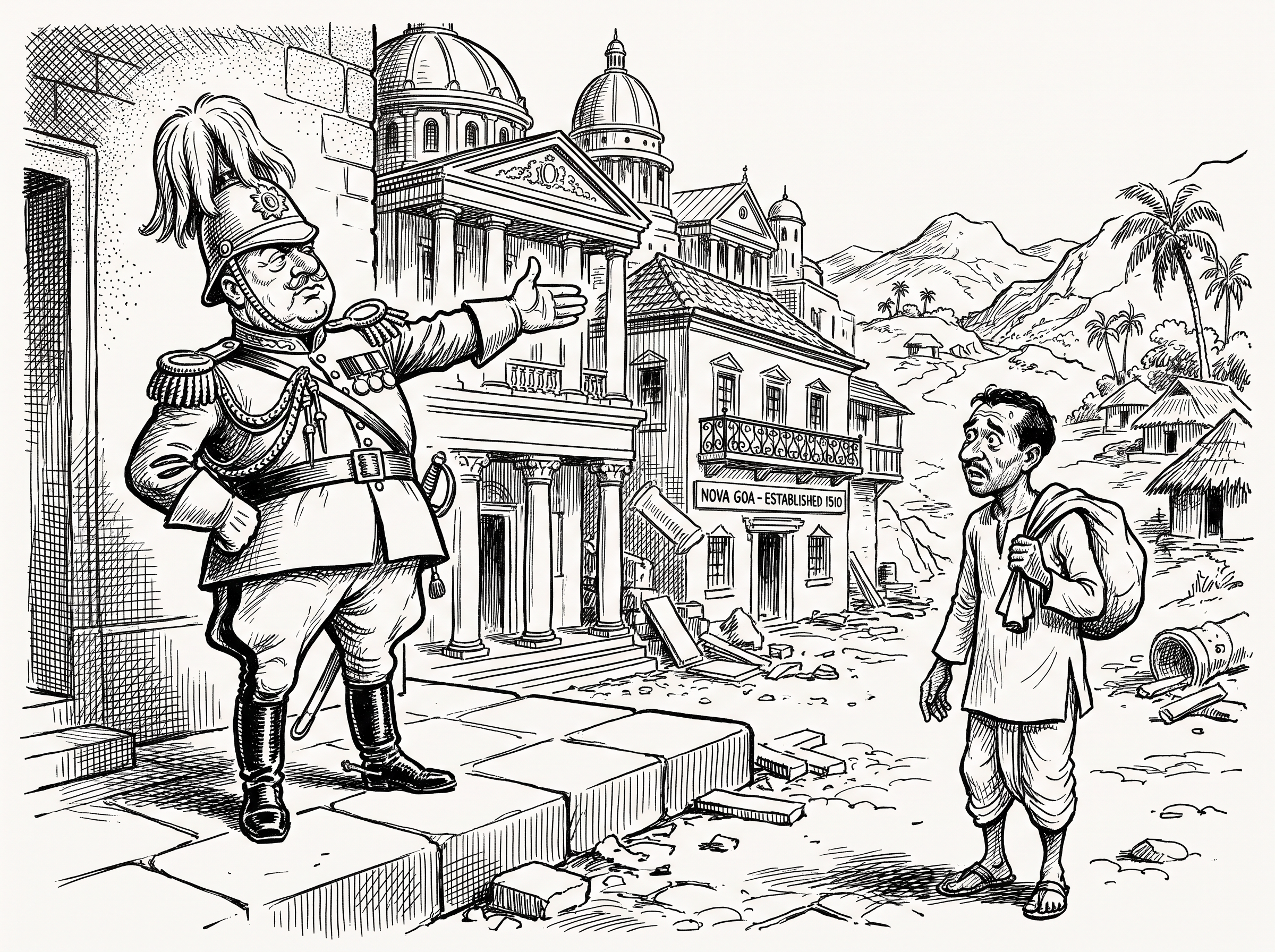
Fig. 7.28 – The colonial argument for staying on. Inspiration: R.K. Laxman, The Times of India, 21 April 1954.
The cartoonist is putting an argument into the mouth of the coloniser, and the argument is one colonial powers really made: that they found a wilderness, that they built something civilised on it, and that the people who were living there all along must therefore now get out. Stated plainly, in a speech balloon, it collapses under its own weight — which is exactly the point. A cartoon works by taking a claim its target would dress up in fine language, and saying it in the rudest possible way.
And its limit. This is one cartoonist’s opinion, published in an Indian newspaper in 1954, and it tells you what Indian readers thought of Portugal’s position. It cannot tell you what Goans themselves wanted, or how divided they were — and, as the next paragraphs show, they were divided.
The Opinion Poll Of 1967
Another complication arose soon. Led by the Maharashtrawadi Gomanatak Party (MGP), one section desired that Goa, as a Marathi speaking area, should merge with Maharashtra.
However, many Goans were keen to retain a separate Goan identity and culture, particularly the Konkani language. They were led by the United Goan Party (UGP). Here, then, was a regional aspiration of a kind you have not yet met in this chapter: a demand not to be joined to a bigger neighbour.
In January 1967, the Central Government held a special ‘opinion poll’ in Goa, asking people to decide if they wanted to be part of Maharashtra or remain separate. A referendum-like procedure was used to ascertain people’s wishes on this issue.
The majority voted in favour of remaining outside of Maharashtra. Thus, Goa continued as a Union Territory. Finally, in 1987, Goa became a State of the Indian Union.
Notice the method, and compare it with everything else in this chapter. In Goa the question was asked directly, the answer was accepted, and the matter was closed. Wherever else in this chapter a promised vote was not held, or an election was believed to be rigged, the question stayed open — and was eventually asked again with guns.
7.6 Summary
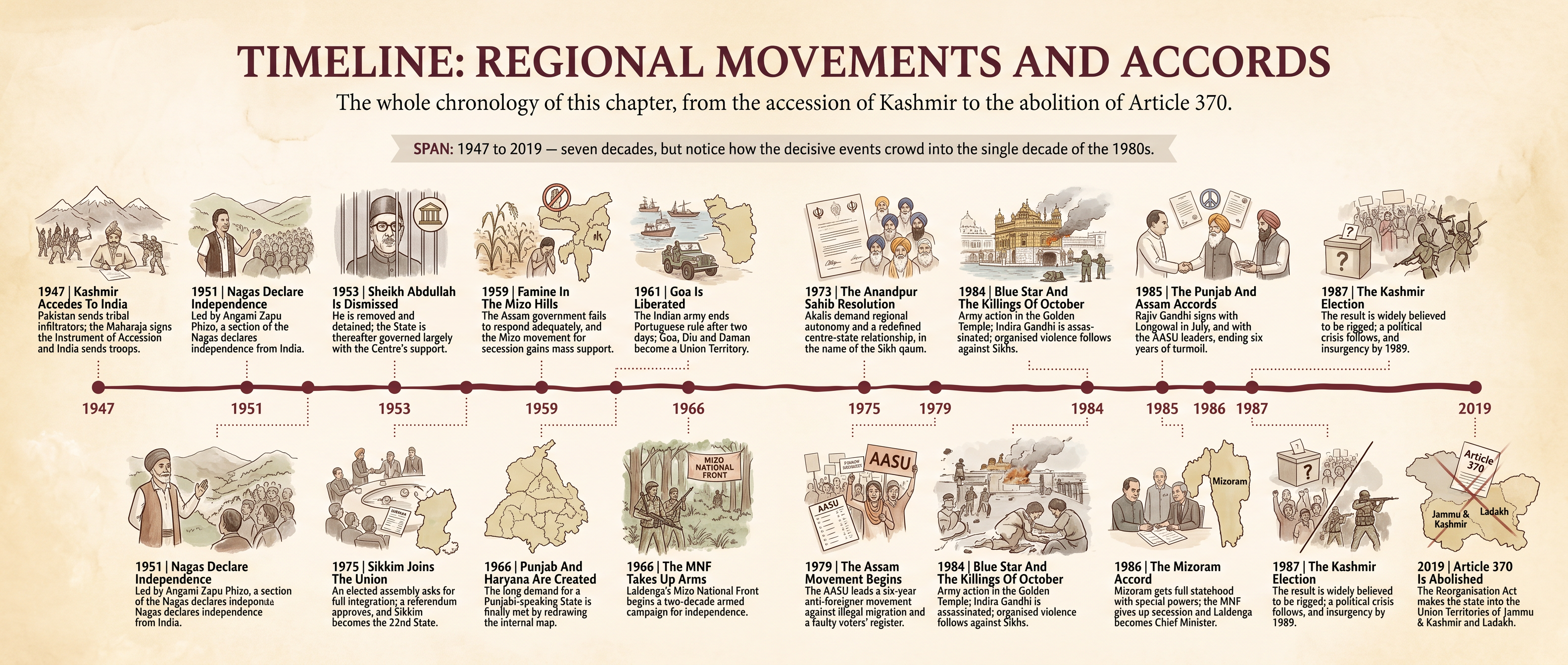
Fig. 7.29 – The chapter in order.
7.7 NCERT Questions
Match the following.
A — Nature of regional aspirations B — States a. Socio-religious identity leading to statehood i. Nagaland / Mizoram b. Linguistic identity and tensions with Centre ii. Jharkhand / Chattisgarh c. Regional imbalance leading to demand for Statehood iii. Punjab d. Secessionist demands on account of tribal identity iv. Tamil Nadu Regional aspirations of the people of North-East get expressed in different ways. These include movements against outsiders, movement for greater autonomy and movement for separate national existence. On the map of the North-East, using different shades for these three, show the States where these expressions are prominently found.
What were the main provisions of the Punjab accord? In what way can they be the basis for further tensions between the Punjab and its neighbouring States?
Why did the Anandpur Sahib Resolution become controversial?
Explain the internal divisions of the State of Jammu and Kashmir and describe how these lead to multiple regional aspirations in that State.
What are the various positions on the issue of regional autonomy for Kashmir? Which of these do you think are justifiable? Give reasons for your answer.
The Assam movement was a combination of cultural pride and economic backwardness. Explain.
All regional movements need not lead to separatist demands. Explain by giving examples from this chapter.
Regional demands from different parts of India exemplify the principle of unity with diversity. Do you agree? Give reasons.
Read the passage and answer the questions below: ‘One of Hazarika’s songs.. … dwells on the unity theme; the seven states of north-eastern India become seven sisters born of the same mother. …. “Meghalaya went own way…., Arunachal too separated and Mizoram appeared in Assam’s gateway as a groom to marry another daughter.” ….. …. .. The song ends with a determination to keep the unity of the Assamese with other smaller nationalities that are left in the present-day Assam – “the Karbis and the Missing brothers and sisters are our dear ones.”’ — Sanjib Baruah
- Which unity is the poet talking about?
- Why were some States of North-East created separately out of the erstwhile State of Assam?
- Do you think that the same theme of unity could apply to all the regions of India? Why?
7.8 Check Your Concepts
- Look again at Map 7.2. Using the map and the chapter, explain why the geography of the North-East — its long international borders, its narrow corridor to the rest of India, and its share of land compared with its share of population — makes its politics what the chapter calls ‘delicate’.
- The chapter says it was ‘not possible to go on making smaller and yet smaller States’. What does the Indian federal system offer a community whose demand for a separate State cannot be met? Answer with reference to the Karbis, the Dimasas and the Bodos, and to the Sixth Schedule.
- In Sikkim in 1975 and in Goa in 1967, a regional question was settled by asking the people. Describe what was asked in each case and what was decided. What do the two episodes together suggest about how a regional demand can be resolved?
- Reconstruct, step by step, the chain that led from the Assembly election of 1987 in Jammu and Kashmir to the insurgency of 1989. At which step, in your view, could the chain have been broken, and how?
- Look at Fig. 7.24, in which a newsreader ends the bulletin with a region-by-region tally. What claim is the cartoonist making about the country’s response to these conflicts? Name one important thing a cartoon of this kind cannot tell you about any of the four regions it lists.
- Read Source 7.1, from the report of the Justice Nanavati Commission of Inquiry. State precisely what the extract establishes about the violence of 1984. Then state, just as precisely, what it does not establish.
- In Source 7.2, the Prime Minister says that what took place in 1984 was ‘the negation of the concept of nationhood and what is enshrined in our Constitution’. Explain what he means. The chapter also records that the perpetrators were not effectively punished — why does that record matter when you are judging what an apology can and cannot do?
- Mizoram and Nagaland both produced movements for a separate country, yet one ended in an accord and the other has not. Using Table 7.A1 and the chapter, set out the differences that best explain the two outcomes. Which of them do you think mattered most, and why?