Chapter 7: World War II
Late on the night of 23 August 1939, in a room in the Kremlin in Moscow, two foreign ministers signed a treaty that startled the world. Joachim von Ribbentrop had flown in that morning for Nazi Germany. Vyacheslav Molotov signed for the Soviet Union. Stalin stood behind them, smiling, while photographers recorded the moment. For six years Hitler had denounced communism as Germany’s mortal enemy. Now the two states promised not to attack each other.
Newspapers from Tokyo to London carried the photograph within a day. What they could not carry was the rest of it. Attached to the published treaty was a secret additional protocol, drawing a line through Poland and dividing the lands from Finland to Romania into spheres of influence between the two signatories.
Nine days later, German troops crossed the Polish frontier. On 17 September, Soviet troops crossed it from the east. Poland vanished between them, close to the line the protocol had drawn.
We can read that protocol today only by accident. German officials microfilmed their treaty files, and Allied troops captured the film in 1945. The Soviet government denied for fifty years that any such page existed, and admitted it only in December 1989. A war that would kill tens of millions opened with a handshake everyone was shown — and a page nobody was meant to read.
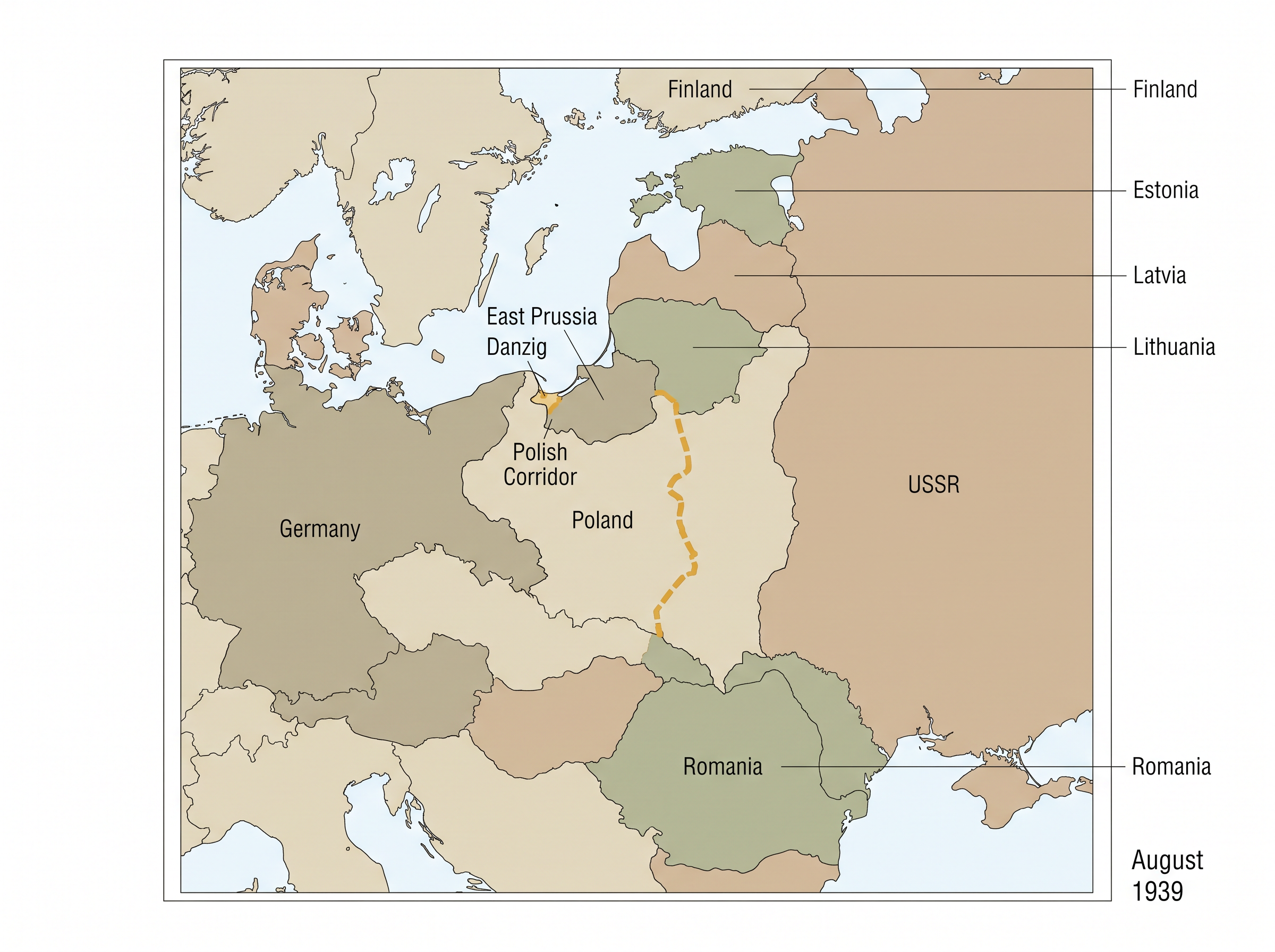
Fig. 7.0 – Central and eastern Europe, August 1939.
7.1 Factors Leading To The War: Aggressive Foreign Policies
A war that ended with fighting on three continents did not begin in one place. It grew out of the way three states — Germany, Italy and Japan — chose to behave towards their neighbours during the 1930s.
A foreign policy is the settled line a government takes towards other states: what it wants from them, and what it is willing to do to get it. For most governments of the 1930s that line involved trade, borders and alliances. For these three it came to involve territory taken by force.
Their aims were broadly similar. Each wanted an empire — land, resources and people under its own control. Each wanted the rank and prestige in world affairs that it believed it had been denied. And each was governed by men who treated war not as a disaster to be avoided but as a normal instrument of policy.
The three did not act together at first. Germany expanded in central Europe, Italy in the Mediterranean and East Africa, Japan in East Asia. What turned three separate expansions into one world war was partly the treaties that eventually joined them, and partly the fact that none of them was stopped early.
7.1.1 The Foreign Policy Of Germany
Adolf Hitler became Chancellor of Germany in January 1933. Within months he had made himself a dictator, and the foreign policy of Germany became, in effect, his own.
That policy had four connected aims: to break the restrictions imposed on Germany by the peace settlement of 1919; to rebuild German military strength; to bring all German-speaking people into a single state; and to seize territory beyond that, for land and resources.
Breaking The Settlement
The Treaty of Versailles of 1919 had disarmed Germany, stripped it of territory in Europe and overseas, and required it to pay heavy compensation. Germans across the political spectrum resented it. Hitler’s distinctive move was not to complain about the treaty but to act as though it no longer applied.
In October 1933 Germany walked out of the World Disarmament Conference at Geneva and out of the League of Nations. In March 1935 Hitler announced conscription — compulsory military service — and openly admitted the existence of a German air force. Both were flat breaches of the treaty. Neither was punished.
Building Military Power
Rearmament was the core of the policy. The Wehrmacht, the rebuilt German armed forces, grew rapidly in the second half of the 1930s, with an army, a navy, an air force and the armed formations of the Nazi party alongside them.
The new army was not simply larger. It was designed for a particular way of fighting, later called Blitzkrieg or lightning war: fast armoured columns supported by aircraft, punching through a defensive line rather than grinding at it. The point was to win a campaign in weeks, before an enemy could mobilise its full strength.
While this went on, Hitler repeatedly told foreign governments that Germany wanted only peace and would disarm if others did. The contradiction was deliberate. Aggressive action and soothing speech were used together, and the speech made the action easier to accept.
One People, One State
Germans lived scattered well beyond Germany’s borders — in Austria, in the Sudetenland district of Czechoslovakia, in Poland. Hitler’s demand was that all of them be gathered into one German state.
Beyond that lay a further claim. Germany, he argued, needed Lebensraum — living space — in eastern Europe: farmland and raw materials for a growing population, to be settled by Germans and taken from the people already there. The opening pages of Mein Kampf, the book he published in 1925, had already demanded that German Austria return to the German motherland.
This was the point at which the policy stopped being about undoing 1919. Nothing in the Treaty of Versailles had taken Ukraine or Poland from Germany. Lebensraum was a claim to land Germany had never held.
Taking Territory, 1935-1939
The Saar came first. Under the peace settlement this coal-rich district had been placed under League of Nations administration for fifteen years, with its mines worked by France, after which its people were to vote on their future. In the plebiscite of January 1935 an overwhelming majority chose Germany, and the territory returned to German rule that March. Nazi propaganda in the district had been intense, and the result was presented as proof that history was moving Hitler’s way.
In March 1936 German troops marched into the Rhineland, the German territory along the French border which the treaty had required to be kept free of soldiers. Militarily this was a gamble; the German force was small and could not have held against a French advance. No advance came. Germany now had troops on the French frontier and, in time, fortifications there.
In March 1938 German troops entered Austria and Hitler declared the Anschluss, the union of Austria with Germany, which the peace settlement had expressly forbidden. Austria ceased to exist as a state.
Attention moved at once to Czechoslovakia, where about three million German speakers lived in the Sudetenland along the German border. Nazi propaganda organised them into a movement demanding union with Germany. In September 1938 Hitler was granted the Sudetenland by an international agreement at Munich, which you will study in the next section. In March 1939 German troops occupied Prague and the rest of the Czech lands. That seizure had no German-population argument behind it at all.
The sequence is set out in Fig. 7.1.
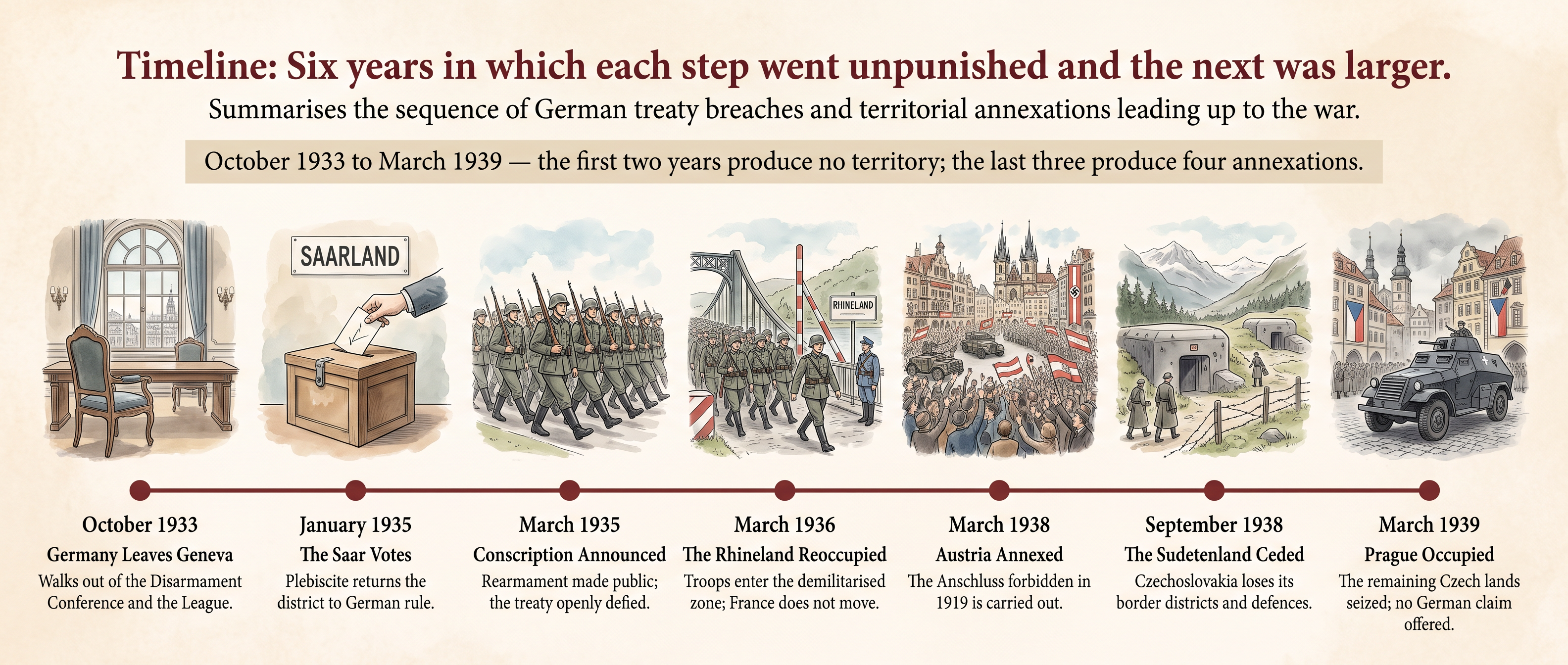
Fig. 7.1 – German expansion, 1933–1939.
Note the dates carefully. The Saar plebiscite of January 1935 came before the conscription announcement of March 1935, but the two belong to different threads: one was a vote provided for in the treaty, the other a breach of it.
7.1.2 The Foreign Policy Of Italy
Italy had fought on the winning side in the First World War, and came out of the peace settlement feeling cheated. Territories it had been promised in a secret wartime treaty were not handed over in 1919. That grievance did not by itself make Italian policy aggressive, but every later Italian government used it.
Benito Mussolini had governed Italy since 1922 as leader of the Fascist party. Fascism is a political movement built on one-party rule, an all-powerful state, intense nationalism and the open glorification of force and obedience. It leaves no room for opposition parties, free trade unions or an independent press.
Mussolini’s stated aim in foreign affairs was a new Roman empire in the Mediterranean, which he liked to call a sea belonging to Italy. He argued that a growing Italian population needed land to settle, and that conquest would supply it. Conquest had a second use. Italy’s economy was in poor condition, and a victory abroad drew attention away from hardship at home.
From Guarding Austria To Joining Germany
Italian policy did not begin as pro-German. Until the mid-1930s Mussolini treated Austria as a buffer between Italy and a resurgent Germany. When Austrian Nazis attempted to seize power in 1934, he moved Italian divisions towards the Austrian frontier, and the attempt failed. On that issue Italy stood with Britain and France.
What changed the alignment was Abyssinia.
The Attack On Abyssinia, 1935-36
Abyssinia, the independent African empire now called Ethiopia, lay between Italy’s existing colonies of Eritrea and Italian Somaliland in the Horn of Africa. Mussolini had several motives for attacking it.
The first was memory. In 1896 an Italian army had been defeated by Abyssinian forces at Adowa, a defeat Italians of Mussolini’s generation regarded as a humiliation to be wiped out. The second was economic: Eritrea and Somaliland were poor, and Abyssinia was believed to hold minerals, farmland and a market for Italian goods. The third was the pressure of the world economic slump on Italian workers, which a foreign triumph might distract from. The fourth was prestige, at home and abroad.
Italian forces invaded in October 1935. The Emperor of Abyssinia, Haile Selassie, appealed to the League of Nations, the body created after the First World War to keep peace by collective action. The League declared Italy the aggressor and imposed economic sanctions — a ban on trading with it. But the ban left out oil and coal, the two commodities that would actually have stopped an Italian army, and the Suez Canal stayed open to Italian shipping. Italian troops entered the Abyssinian capital in May 1936 and Mussolini proclaimed an empire.
Towards The Axis
Britain and France had condemned Italy but not stopped it, and had lost its friendship for nothing. Mussolini drew the obvious conclusion and moved closer to Berlin. In April 1939 Italian forces occupied Albania, across the Adriatic, which had already fallen under Italian economic control. In May 1939 Italy and Germany signed the Pact of Steel, by which each promised the other full military support in war.
Fig. 7.2 shows what Germany and Italy had gained by the summer of 1939.
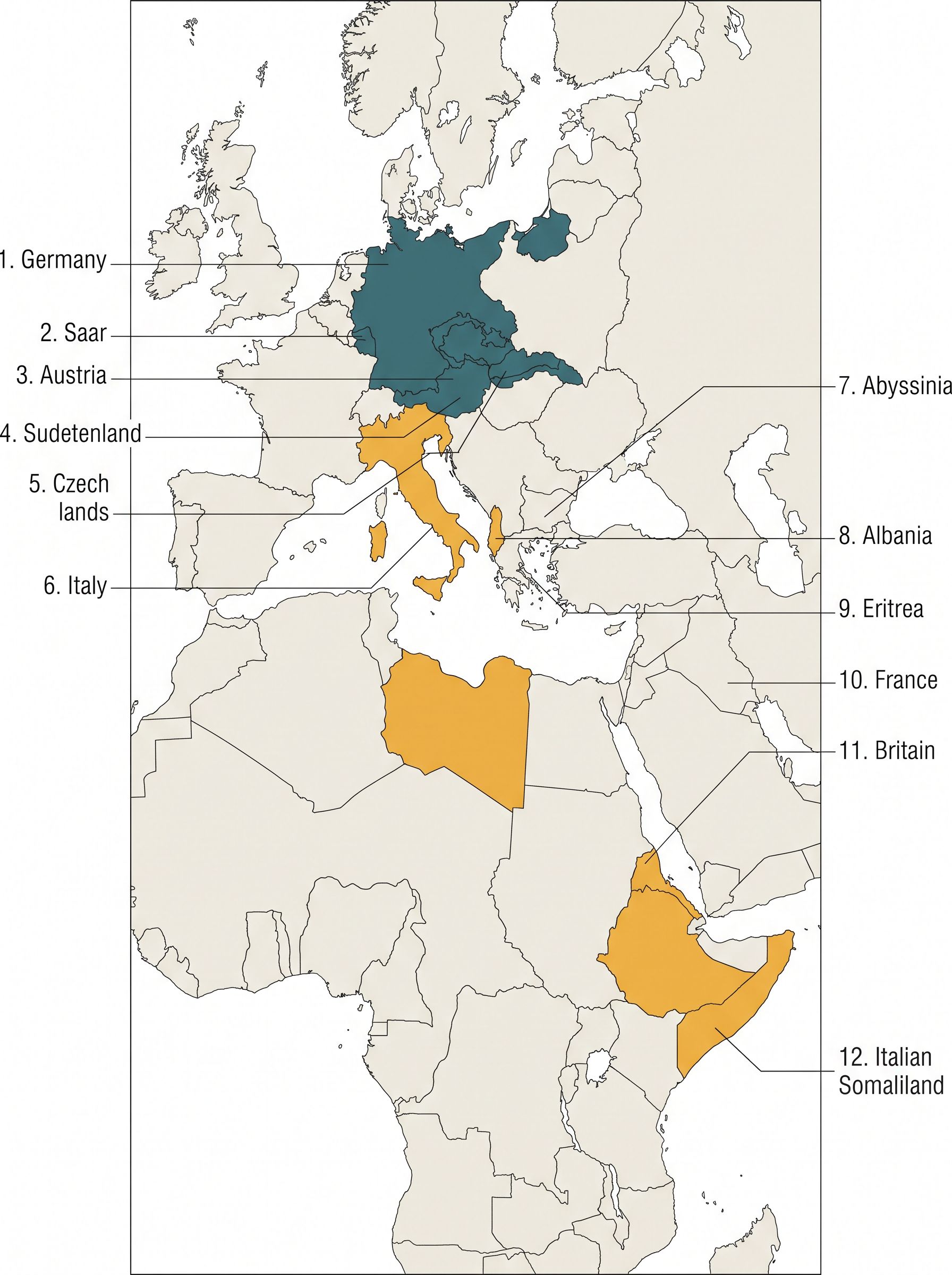
Fig. 7.2 – German and Italian expansion, 1935–1939.
7.1.3 The Foreign Policy Of Japan
Japan’s position was different again. It was an industrial power built on a group of islands with very little coal, iron, rubber or oil of its own. Everything its factories and warships consumed had to be bought abroad or taken.
When the world economic slump of 1929 closed export markets, that dependence became frightening. Japanese army officers argued that a country which could be strangled by other people’s trade decisions was not truly independent, and that territory on the Asian mainland was the answer. Through the 1930s the armed forces steadily increased their hold over the government.
Manchuria, 1931
Manchuria, the large northern region of China, was the first target, and Japan already had a foothold there. Since defeating Russia in 1905, Japan had held leased rights in southern Manchuria, including the naval base of Port Arthur, and from the 1890s onwards Japanese money had gone into railways, mines and industry in the region.
The reasons for taking the whole of it were plain enough. Manchuria held coal, iron and timber. It had a population of about thirty million and was a valuable outlet for Japanese goods at a moment when other markets were closing. And China was changing: under Chiang Kai Shek’s Kuomintang government the country was slowly being pulled together, and a united China might one day be strong enough to push Japan out.
Japanese forces occupied Manchuria in 1931. In 1932 the region was renamed Manchukuo and given a government of its own under Pu Yi, the last Chinese emperor, who had been deposed as a child. The state was Chinese in name and Japanese in fact.
China appealed to the League of Nations. The League investigated, criticised Japan, and refused to recognise Manchukuo. Japan’s answer was to leave the League in 1933. Once again an aggressor had been condemned and not stopped.
From Manchuria To Full War In China
From 1933 Japanese forces pressed south from Manchuria into northern China. China was in no condition to resist as one country: Chiang Kai Shek’s government was fighting a civil war against the Communists led by Mao Tse Dong.
In July 1937 a clash between Japanese and Chinese troops at the Marco Polo Bridge near Peking opened full-scale war. By 1938 Japanese armies had taken Shanghai, Nanking — Chiang Kai Shek’s capital — and Hankow. Nanking’s capture was accompanied by mass killing and rape of Chinese civilians on a scale that shocked foreign observers at the time.
The war did not end there, and that was the trap. Chiang Kai Shek and the Communists agreed to suspend their civil war and resist together. Chinese resistance, supplied in part from the Soviet Union, kept large Japanese armies tied down for years. On the eve of the Second World War Japan held most of eastern China and could not finish the job.
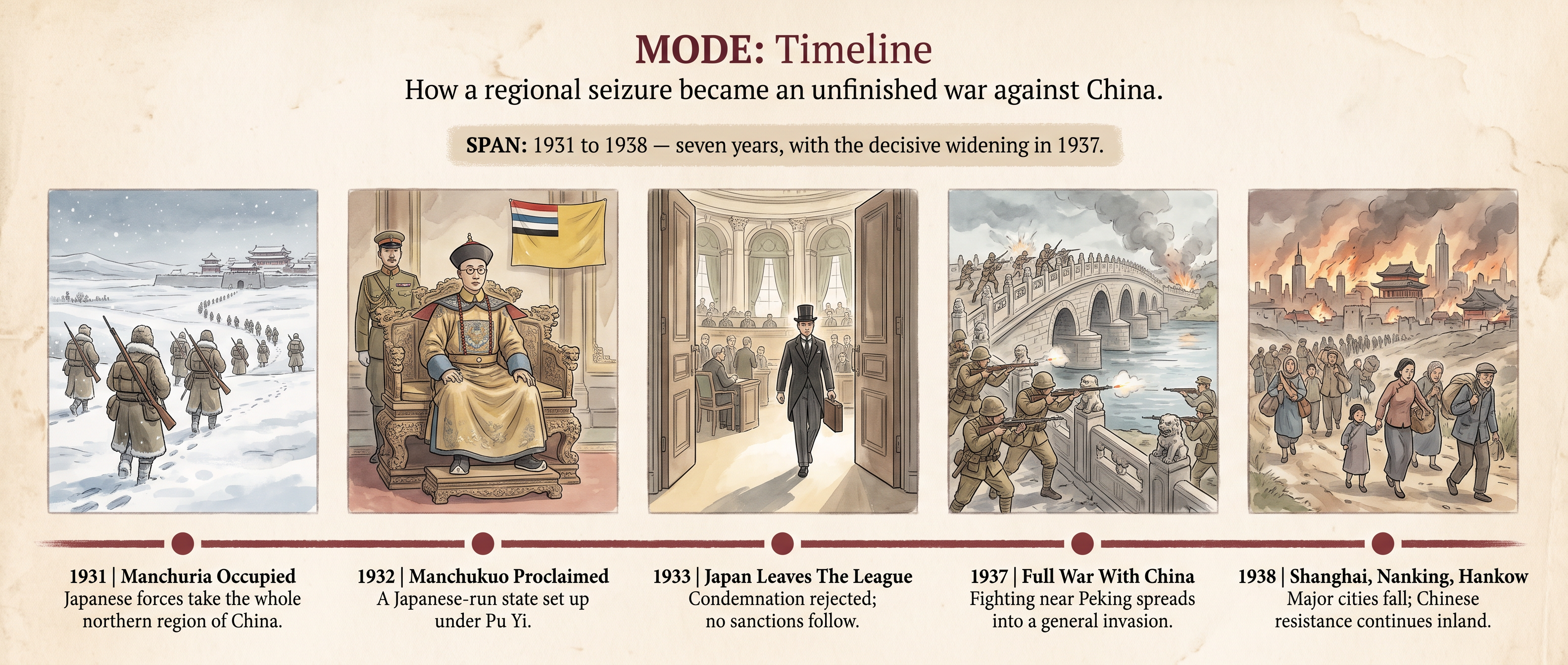
Fig. 7.3 – Japanese expansion in East Asia, 1931-1938.
Read Fig. 7.1 and Fig. 7.3 side by side. While Hitler was taking the Rhineland and Austria, Japan was taking northern China. Neither knew much about the other’s plans. What they shared was the discovery that the powers who disapproved would not act.
7.1.4 The Rome-Berlin-Tokyo Axis
The three expansions were joined by a series of agreements in the second half of the 1930s.
In October 1936 Germany and Italy announced the understanding that became known as the Rome-Berlin Axis. In November 1936 Germany and Japan signed the Anti-Comintern Pact, directed against the spread of communism from the Soviet Union; Italy joined it in 1937, and the grouping came to be called the Rome-Berlin-Tokyo Axis. The Pact of Steel bound Germany and Italy militarily in May 1939. Finally, in September 1940, the Tripartite Pact brought all three into a single alliance.
Why did they come together? Three reasons stand out.
First, they had the same opponents — Britain, the United States and the Soviet Union — and shared a hostility to communism. Second, and less obviously, they did not want the same things. Germany’s ambitions lay in Europe, Italy’s in the Mediterranean and Africa, Japan’s in East Asia and the Pacific. Powers that covet the same territory quarrel; these three could each recognise the others’ claims cheaply. Third, each gained cover. A Britain worried about Japan in Asia had less strength to spare for Europe.
It is worth noting what the Axis was not. It was never a joint command. The three governments did not plan campaigns together, share weapons research or coordinate their timing, and Japan and Germany would each begin a major war without consulting the other. That weakness matters later, in 7.5.
7.1.5 How These Policies Made War More Likely And Worldwide
Put the three stories together and the pattern is clear.
Each aggressive act that succeeded made the next one easier. Manchuria was taken and the League only reported. Abyssinia was invaded and the sanctions were survivable. The Rhineland was occupied and France stayed behind its own frontier. Governments in Berlin, Rome and Tokyo learned that force was cheap; small states learned that no one would defend them; and each of the three had reason to expect that the next demand would also be met.
Collective security failed twice in public. The League of Nations had been built on the idea that an attack on one member concerned all members. Manchuria and Abyssinia showed that its leading members would not risk their own trade or soldiers to make the idea real. After 1936 few governments planned as though the League would protect them, and rearmament looked to many like the only remaining insurance.
The wider scope came from two things. The Axis agreements linked three regional ambitions into one system, so that a war begun in one theatre could pull in the others. And the states being challenged were empires. Britain and France ruled territory across Asia and Africa, so a European war automatically became a war in Egypt, in Malaya and in the Indian Ocean, fought in part by colonial troops — including, before it ended, more than two million Indian soldiers.
None of this made war certain in 1939. Aggressive policies create the conditions for war; they do not by themselves decide that it will happen, or when. What happened between 1935 and 1939 to the states that might have stopped these policies is the subject of the next section.
7.2 Anglo-French Appeasement Policies
The aggressive policies described in 7.1 were not met by an empty world. Britain and France were the two strongest powers in Europe outside Germany, and both were victors of the First World War. What they did between 1935 and 1939 mattered as much to the coming of war as what Hitler and Mussolini did.
What they did is known as appeasement.
7.2.1 What Appeasement Meant
Appeasement is the policy of settling a dispute by granting concessions to a hostile power, in the belief that its demands are limited and that meeting them will remove the cause of conflict. It is not the same thing as surrender, and it is not by itself foolish. Governments make concessions all the time. The question is always whether the demands will stop.
Applied to the 1930s, the word describes a British policy, followed by France with less conviction, of giving way to the demands of Germany, Italy and Japan wherever those demands could be presented as reasonable.
Two Phases
The policy had two distinct phases, and students often blur them.
From the mid-1920s to 1937 appeasement was mainly passive. Britain and France reacted to each act of aggression by protesting, referring the matter to the League of Nations, and taking no effective step. German rearmament, the Rhineland, Manchuria and Abyssinia all belong to this phase. There was no plan behind it beyond a determination that war must be avoided.
From May 1937 the policy became active. Neville Chamberlain, the new British Prime Minister, believed that drifting was making things worse. His approach was to find out directly what Hitler wanted, to concede whatever seemed reasonable, and to convince him that reasonable claims could be obtained by negotiation instead of by force. Appeasement now meant seeking out the aggressor rather than waiting for him.
7.2.2 Why Britain And France Chose Appeasement
No single reason explains the policy. At least seven pressures pushed in the same direction.
The Memory Of The Last War
The First World War had ended less than twenty years earlier and had killed roughly a million men from Britain and its empire and nearly a million and a half from France. Every constituency in Britain and every village in France had its war memorial. For politicians and voters alike, another such war was not one option among several; it was the thing to be prevented at almost any cost.
Fear of a new war was sharpened by aircraft. Military opinion in the 1930s held that bombers could not be stopped and that a modern war would open with the destruction of cities and mass civilian deaths within days. That expectation turned out to be exaggerated, but it was widely believed at the time, and it shaped policy.
Money And Readiness
Britain was still recovering from the world economic slump. Rearmament on the German scale meant taxation, borrowing and cuts elsewhere, and no government was eager to attempt it. France, politically unstable through the 1930s, changed governments frequently and could not sustain a steady line.
Both countries also knew they were not ready. Britain had a vast empire to defend, with commitments in Asia and the Mediterranean as well as in Europe, and a small army. Chamberlain’s supporters argued that appeasement bought the time needed to rearm.
A Sense That Germany Had A Case
Many people in Britain, including politicians and newspaper editors, had come to think the Treaty of Versailles too harsh. If it was unjust to forbid German rearmament, unjust to keep German troops out of German territory in the Rhineland, and unjust to deny Germans and Austrians the right to join together, then Hitler’s early demands were not outrageous. They were corrections.
This belief is the key to the whole policy. Concessions were not made because Britain was afraid of Germany alone. They were made because a large part of British opinion thought the demands were fair.
Communism, The League And The Absent Americans
Several governments, and much of the British governing class, regarded the Soviet Union as the greater long-term danger. A strong Germany, on this view, was a useful barrier in the middle of Europe, and it would have been folly to destroy it to protect eastern states from Hitler.
The League of Nations, meanwhile, had already shown over Manchuria and Abyssinia that it would not act. Chamberlain drew the conclusion that if institutions could not settle disputes, individual leaders meeting face to face might. He trusted personal diplomacy because he thought there was nothing else left.
Finally, the United States was not available. After the slump the American government had turned inward and refused to be drawn into European quarrels. Britain and France could not plan on American help, and knew it.
7.2.3 How Appeasement Was Carried Out
The policy is best understood not as a single decision but as a series of things not done.
When Germany announced conscription in 1935 in open breach of the peace settlement, Britain and France protested and did nothing further. Britain then went further than inaction. In June 1935 it signed the Anglo-German Naval Agreement, accepting a German navy of up to thirty-five per cent of British strength. The agreement was negotiated without consulting France or Italy, with whom Britain had only weeks earlier joined in the Stresa Front against German treaty-breaking. At a stroke Britain had licensed a breach of a treaty it had signed, and broken the common front against Hitler. France’s confidence in Britain never fully recovered.
When German troops entered the Rhineland in March 1936, France had the strength to expel them and did not move; British opinion largely regarded German soldiers in German territory as unobjectionable. When Italy attacked Abyssinia, the sanctions were kept mild enough to be survivable. When Austria was annexed in 1938, the British government treated the Anschluss as the natural joining of one German population to another.
The steps are gathered in Fig. 7.4.
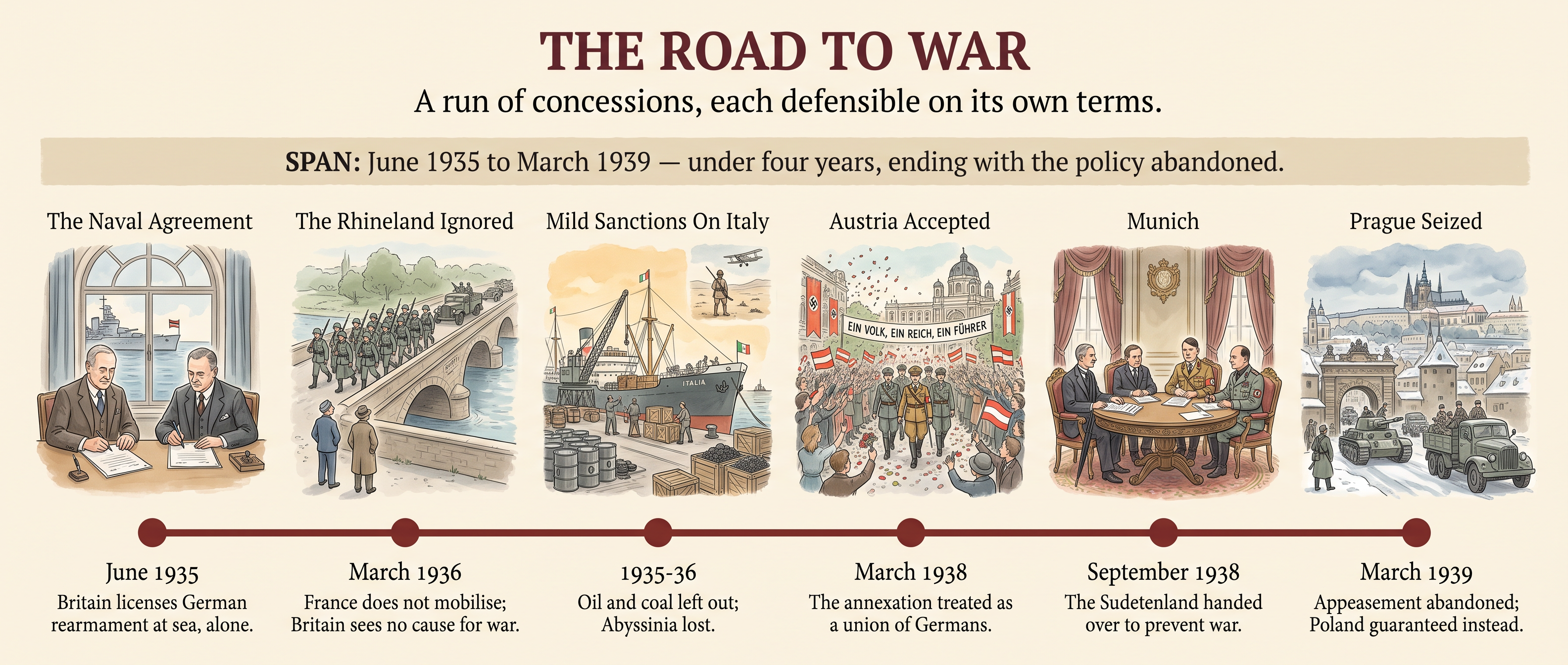
Fig. 7.4 – Appeasement in action, 1935-1939.
7.2.4 Munich, 1938, And The End Of Appeasement
In September 1938 Hitler demanded the Sudetenland, the mountainous border districts of Czechoslovakia with their large German-speaking majority. Czechoslovakia was a democracy, it was allied to France by treaty, and it had a well-equipped army. President Edvard Benes was ready to resist.
Chamberlain flew to Germany to negotiate in person — an extraordinary step for a Prime Minister at that time — and returned twice with terms. The crisis was settled at a conference at Munich on 29 September 1938, the agreement being signed in the early hours of the next day. Four powers sat at the table: Germany, Italy, Britain and France. Czechoslovakia, whose territory was being disposed of, was not invited. Nor was the Soviet Union.
The Sudetenland was handed to Germany. The Czechs were told that if they refused, they would fight alone. They accepted.
Chamberlain came home to crowds and a hero’s welcome, believing that he had prevented a European war. Not everyone agreed. Winston Churchill, then a backbench member of Parliament, told the House of Commons what he thought of the settlement a week later.
Churchill’s argument was that Britain and France had given away, without a fight, the one thing that might have deterred Hitler: a strong Czechoslovakia with defensible frontiers and an alliance behind it. With the Sudetenland went the mountain barrier and the fortifications built along it, so that what remained of the country could not be defended at all.
But note what the extract does not settle. Churchill was speaking as a critic outside the government, in a Parliament where most members supported Chamberlain, and he was arguing a case rather than reporting a fact. His words tell us that the policy was contested at the time; they do not by themselves prove that resisting in 1938 would have gone better.
The Policy Collapses
Munich rested on one assumption: that the Sudetenland was Hitler’s last territorial demand, because it was his last claim involving Germans. In March 1939 German troops occupied Prague and the remaining Czech lands, where there was no German population to appeal to. The assumption was destroyed.
Chamberlain’s response was to reverse course. Britain and France gave a public guarantee to Poland, promising to come to its aid if it were attacked. When Germany invaded Poland in September 1939, that promise was what turned a German-Polish war into a European one.
Judging Appeasement
Appeasement failed in its central purpose: it did not prevent war. Beyond that, historians and politicians have argued about it ever since, and the arguments are worth holding apart.
Against the policy: each concession strengthened Germany materially and convinced Hitler that his opponents would always give way. It also destroyed the idea that treaties and international bodies meant anything, and it disposed of the interests of small states without consulting them.
For the policy, or at least in explanation of it: Britain in 1938 was not ready to fight and knew it, public opinion would not have supported a war over the Sudetenland, and the year after Munich saw a real acceleration of British rearmament. On this view Munich was not a moral triumph but a purchase of time.
What is not in doubt is the effect on the aggressors. By March 1939 Germany, Italy and Japan had each learned that Britain and France would protest and then accept. The next section follows what happened when that expectation finally proved wrong.
7.3 Axis Invasions In Europe And Asia (1939-1941)
Between September 1939 and December 1941 the Axis powers took more territory, more quickly, than any group of states had taken in modern times. Poland, Denmark, Norway, the Netherlands, Belgium, France, Yugoslavia and Greece fell in Europe. Vast stretches of the western Soviet Union were overrun. Within six months of the attack on Pearl Harbour, Japan held most of South-East Asia and much of the western Pacific.
This section follows those invasions in order. Keep two questions in your mind as you read: why each attack succeeded, and what each success cost the attacker in the longer run.
7.3.1 The Invasion Of Poland
Why Danzig And The Corridor
Hitler’s demands on Poland concerned two things. Danzig was a port at the mouth of the river Vistula on the Baltic coast, with a largely German population. It had been Prussian, and then German, from the late eighteenth century until 1919, when the peace settlement made it a Free City under the protection of the League of Nations, with Poland given the use of its harbour. The Polish Corridor was the strip of Polish territory running to the sea beside it, which separated East Prussia from the rest of Germany.
Both mattered for reasons beyond national feeling. Danzig was Poland’s main outlet for seaborne trade, and whoever held it held Polish commerce by the throat. The Corridor carried the only land route between the two halves of Germany. Hitler demanded the return of Danzig and a German road and railway across the Corridor.
Poland refused, as it had refused before. What was new in 1939 was that the refusal was backed by the British and French guarantee given after the seizure of Prague.
The Campaign
Hitler’s remaining worry was the Soviet Union. The non-aggression pact signed in Moscow in August 1939 removed it, and convinced him that Britain and France, without a Russian ally in the east, would not fight for Poland.
German forces crossed the frontier on 1 September 1939 without any declaration of war. The campaign was the first full demonstration of Blitzkrieg. Panzer divisions — armoured formations built around tanks — drove through and around the Polish positions, while the Luftwaffe, the German air force, destroyed the Polish air force largely on the ground and cut the railways that Poland needed to bring up reserves.
Poland’s army was large and fought hard, but its equipment and its plan of defence belonged to an earlier war, and no help could reach it from the west in time. Soviet forces entered from the east on 17 September. Organised resistance ended within about five weeks, and Poland was partitioned between the two invaders.
Britain and France declared war on Germany on 3 September 1939, two days after the invasion began. They did not attack.
7.3.2 The Phoney War, Denmark And Norway
For the next six months almost nothing happened on the western front. German troops manned the Siegfried Line, the fortified belt along Germany’s western border; French and British troops sat opposite them behind the Maginot Line, the French fortified belt facing Germany. The two armies watched each other through a winter. American journalists named this period the phoney war, and the name stuck.
The inactivity was not idleness. Winter weather suited neither side, and both were building up forces and equipment. Hitler read the silence as a sign that Britain and France wanted a negotiated peace.
Denmark And Norway, April 1940
Norway mattered for iron. Sweden’s northern ore fields supplied a large part of the iron used by German industry, and in winter, when the Baltic froze, that ore left Europe through the ice-free Norwegian port of Narvik. British interference with that traffic — including the boarding of a German vessel in Norwegian waters to release British prisoners — convinced Hitler to move first.
German forces occupied Denmark and landed at the main Norwegian ports in April 1940. Allied troops sent to help were unprepared for the speed of the operation and were withdrawn.
The consequences ran in two directions. Germany secured its ore route and gained Norwegian harbours from which submarines could reach the Atlantic. In Britain, the failure destroyed confidence in Chamberlain, who resigned in May 1940. Winston Churchill, the critic of Munich, became Prime Minister.
7.3.3 The Fall Of France And Dunkirk
On 10 May 1940 the German army attacked the Netherlands, Belgium and Luxembourg, and through them France. The Dutch, bombed heavily, surrendered within days. The Belgians held out until the end of the month.
The decisive stroke came further south. German armour pushed through the wooded hills of the Ardennes, ground the French had thought too difficult for tanks and had therefore left lightly held. Once through, the Panzer columns turned north-west and drove to the Channel coast, cutting off the British, French and Belgian armies in the north from the French forces to the south.
Dunkirk
The trapped armies fell back on the French port of Dunkirk. Then, for several days, the German advance halted short of the town, and the Allies used the time to organise an evacuation across the Channel.
The operation was called Dynamo. Between late May and early June 1940 the Royal Navy, helped by merchant ships and hundreds of small civilian craft, lifted about 338,000 troops from the harbour and the beaches under repeated air attack.
The result was double-edged, and students should hold both halves. An army that would otherwise have been captured came home, and the rescue was used in Britain to build morale — the phrase Dunkirk spirit dates from these weeks. But the troops came home without their guns, vehicles and equipment, which lay abandoned on the beaches. Churchill himself described the episode as a colossal military disaster, and told Parliament that wars are not won by evacuations. Britain could no longer help France on land at all.
The Surrender Of France
German forces then swept south. Paris fell on 14 June 1940 and France signed an armistice — an agreement to stop fighting — on 22 June. Germany occupied northern France and the whole Atlantic coast, which gave its submarines bases facing the shipping lanes to Britain. The remainder was governed from Vichy by Marshal Petain, a hero of the First World War, in a state that kept its name but had little independence.
Italy had declared war on Britain and France shortly before the collapse, which is worth noticing: Mussolini entered the war when he judged it already won.
Fig. 7.5 shows the extent of Axis control by the end of 1941.
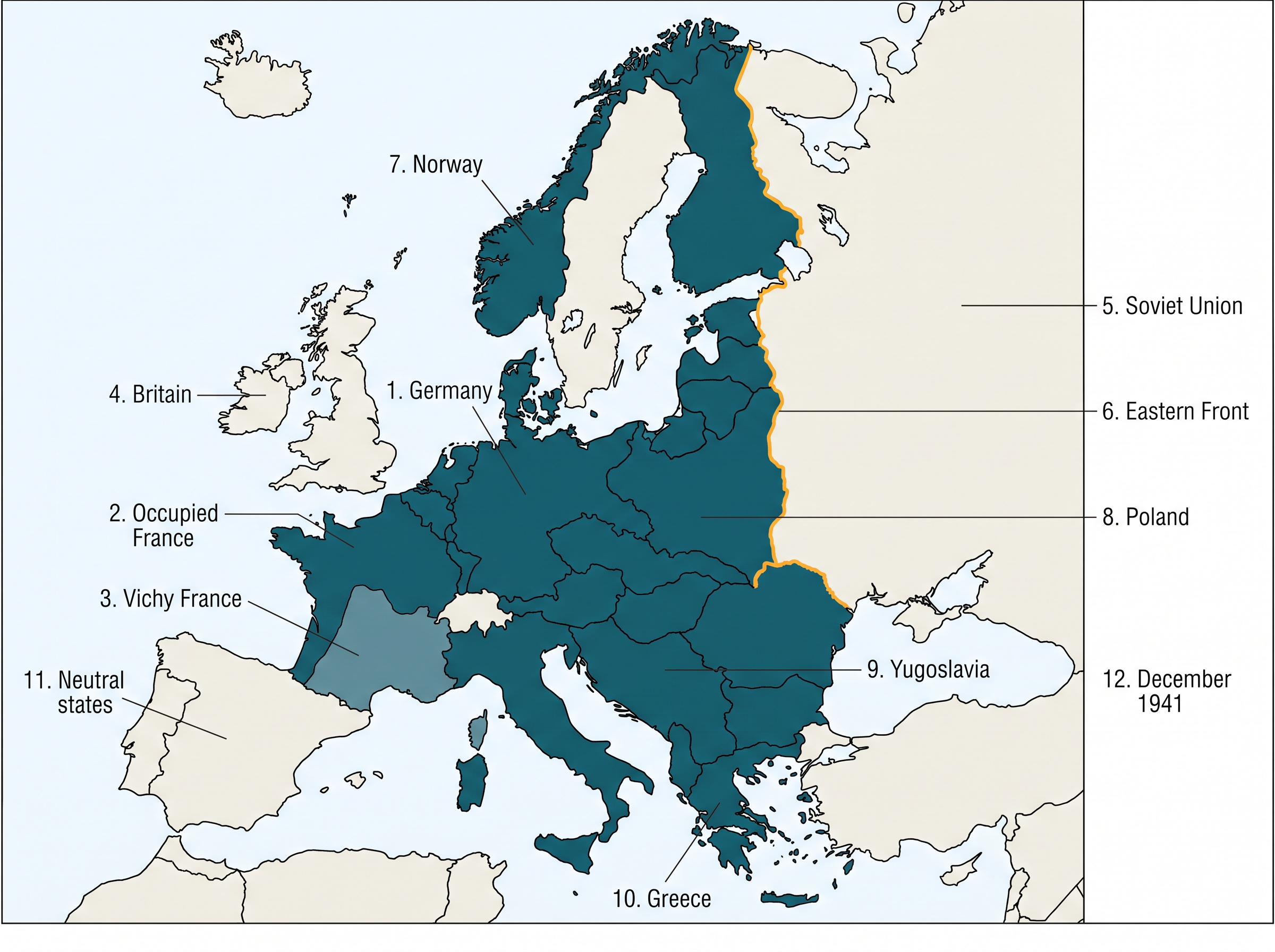
Fig. 7.5 – Axis control in Europe and North Africa, December 1941.
7.3.4 The Battle Of Britain
With France gone, Britain stood alone in western Europe. Hitler’s plan was to invade across the Channel, and any invasion required control of the air, because an invasion fleet under attack from the Royal Air Force would not survive the crossing.
Through the summer and autumn of 1940 the Luftwaffe therefore attacked British airfields, radar stations, ports and aircraft factories. Radar — a system that detects aircraft at a distance by bouncing radio waves off them — was new, and the chain of stations along the British coast was the decisive advantage. It told British commanders where the German formations were before they arrived, so that fighter squadrons were not wasted patrolling empty sky.
Two further factors told against the Germans. British fighters, the Spitfire and the Hurricane, matched or bettered their opponents over British soil, and a British pilot who came down alive could fly again the next day, while a German pilot became a prisoner. And in the autumn the Luftwaffe shifted its main effort from the airfields to the bombing of London and other cities. The change punished civilians severely, but it took the pressure off the airfields and the radar chain at the moment they were closest to breaking.
By the end of the year the invasion had been postponed indefinitely. Britain had not defeated Germany; it had denied Germany the one thing the invasion needed. For the first time an Axis offensive had been stopped.
7.3.5 The Balkans And Operation Barbarossa
In April 1941 German forces invaded Yugoslavia and Greece. British, Australian and New Zealand troops sent to help the Greeks were driven out, and the island of Crete was taken from the air soon afterwards. The southern flank of Europe was secured, and Germany was now in a position to threaten the Middle East.
The Attack On The Soviet Union
On 22 June 1941 Germany invaded the Soviet Union, breaking the pact of 1939. The operation was named Barbarossa, and more than three million men took part in it — the largest invasion force ever assembled.
Hitler’s motives were mixed and reinforced one another. He had always intended to take Lebensraum in the east and had always regarded communism as an enemy to be destroyed. He feared that the Soviet Union would grow stronger and might one day attack. And he believed that a Soviet collapse would leave Britain with no possible ally on the continent, and would discourage the United States from entering the war.
The attack went in along a front of about a thousand miles, in three great drives: towards Leningrad in the north, towards Moscow in the centre, and southwards into Ukraine, towards Kiev and beyond it the oilfields of the Caucasus. Riga, Smolensk and Kiev were taken and Soviet losses in prisoners were enormous.
Then the advance slowed. Autumn rain turned the unmetalled Russian roads to mud, and the frosts of November and December caught German troops who had been equipped for a summer campaign. Leningrad was besieged but not captured. Moscow was not reached. Hitler diverted major strength south-east towards the Caucasus oil.
The Soviet Union had lost immense territory and was not beaten. Germany, which had planned for a campaign of weeks, was now committed to a war in the east that it would have to fight through winters — while still at war with Britain.
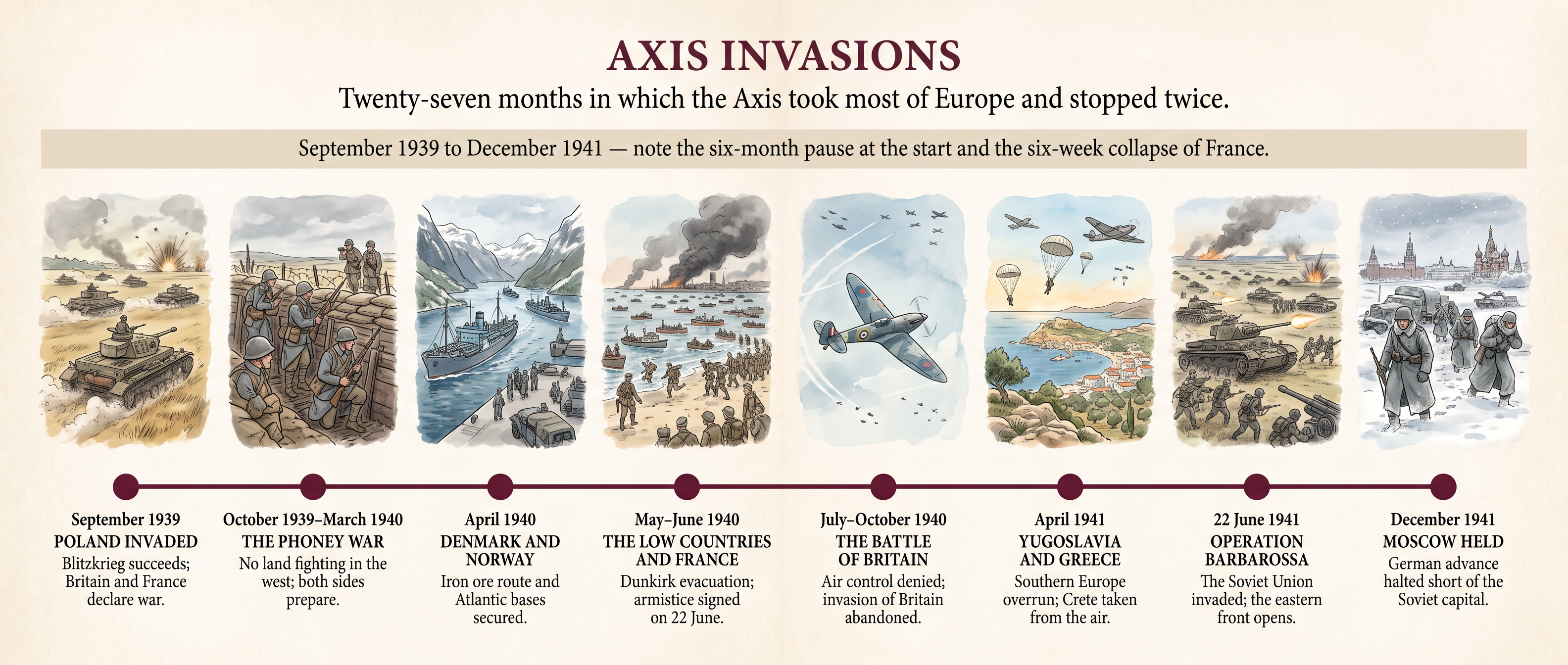
Fig. 7.6 – Axis invasions in Europe, 1939-1941.
7.3.6 Japan’s Advance And Pearl Harbour
While Germany was overrunning Europe, Japan’s war in China ground on without a decision, and the defeat of France and the Netherlands in 1940 left their Asian colonies almost undefended.
In 1940 and 1941 Japan moved into French Indo-China with the consent of the Vichy government, gaining bases within reach of Malaya and the Dutch East Indies. The United States, which had been supporting China, answered by tightening trade restrictions and finally cutting off oil supplies to Japan.
That embargo forced the issue. Japan imported most of its oil from the United States and had reserves for a limited time. It could either withdraw from China, as the Americans demanded, or seize the oil of the Dutch East Indies — which meant war with the United States and Britain. General Tojo’s government chose war.
7 December 1941
On 7 December 1941, without any declaration of war, 353 Japanese aircraft attacked the American naval base at Pearl Harbour in Hawaii. Several battleships were sunk or disabled, a large number of aircraft were destroyed on the ground, and more than two thousand American servicemen were killed. Three days later Japanese aircraft sank two British capital ships, the Prince of Wales and the Repulse, off the coast of Malaya.
The United States declared war on Japan the following day. On 11 December Germany and Italy declared war on the United States, and the United States declared war on them in turn. The European war and the Asian war had become one war.
The Japanese advance that followed was astonishingly fast. By May 1942 Japan held Hong Kong, Malaya, Singapore, Burma, the Dutch East Indies and the Philippines, along with the American islands of Guam and Wake. Burma brought Japanese forces to the eastern frontier of British India.
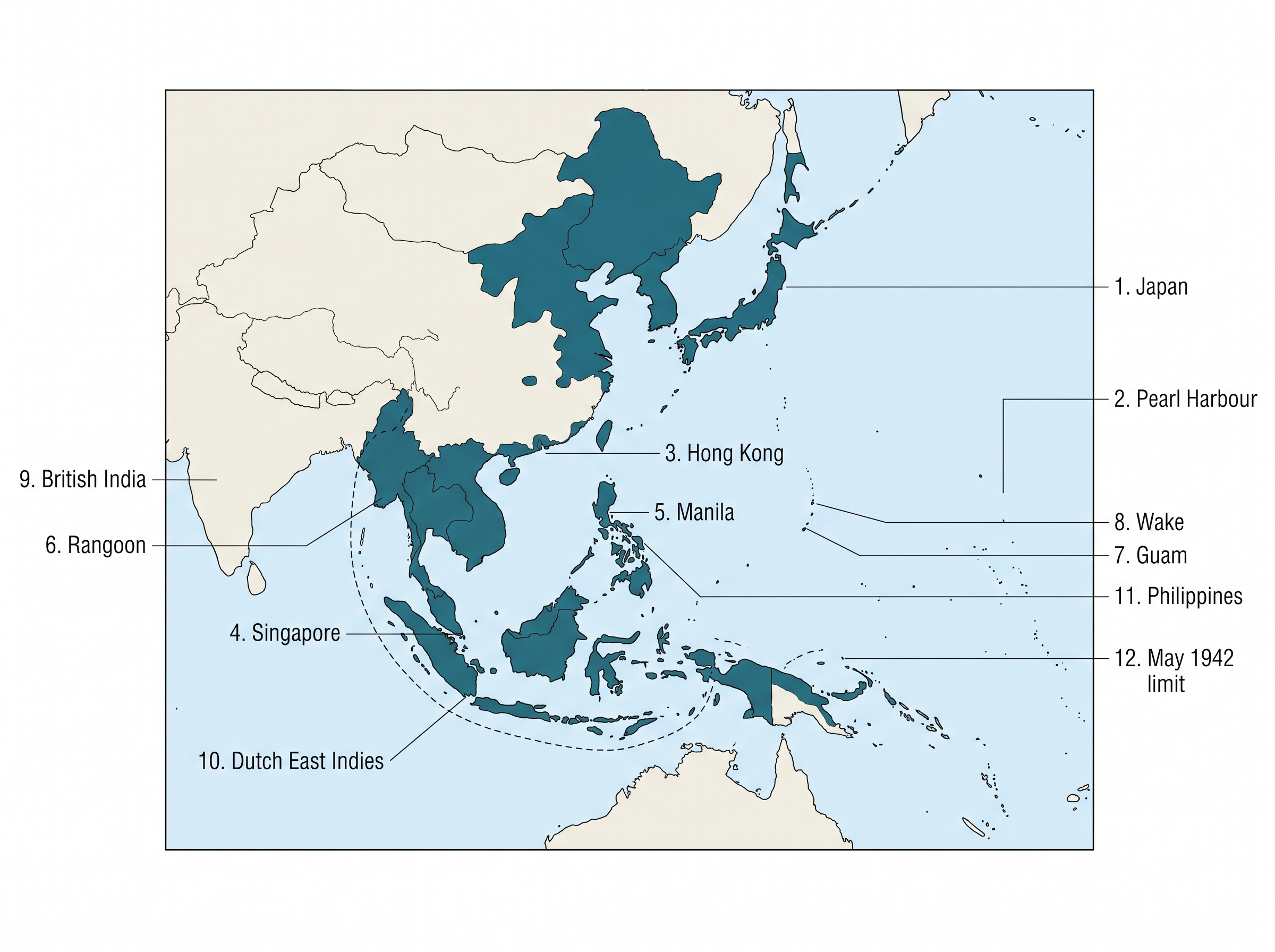
Fig. 7.7 – The Japanese advance, December 1941 to May 1942.
Look at what the attack achieved and what it cost. Japan gained six months of almost unopposed conquest and the resources it had gone to war for. It also brought into the war, on the other side, the largest industrial economy in the world — and, in doing so, gave Hitler an enemy he had not planned to fight. The turn is the subject of the next section.
7.4 Course Of The War In Europe, Africa And The Far East (1942-45)
The year 1942 divides the war. Until the middle of it, the Axis powers were still taking ground everywhere. Within six months, between June and November 1942, they were checked in three separate places: at sea in the Pacific, in the North African desert, and on the Volga in southern Russia.
Nothing was decided in those six months. What changed was the direction of movement. From then until 1945 the Axis powers were being pushed back, and the question was no longer whether they would be defeated but how long it would take and at what cost.
7.4.1 Midway And The Turn In The Pacific
Japan’s problem after its rapid conquests was that the United States had not been knocked out of the war. Its answer was to seek a decisive battle that would destroy what remained of the American Pacific fleet, and the target chosen was the American base on Midway Island.
The Americans knew they were coming. Naval intelligence had partly broken the Japanese fleet code and worked out both the target and the approximate timing, so the American carriers — three of them, against a much larger Japanese force — were waiting where they were not expected.
In June 1942 American aircraft sank four Japanese fleet carriers with their aircraft aboard, and with them a body of highly trained aircrew that Japan could not quickly replace. Carriers were the decisive weapon of the Pacific war, and Japan’s shipyards could not match American production. Midway did not end Japanese expansion, but it ended the period in which Japan could choose where the war would be fought.
7.4.2 El Alamein And The Clearing Of North Africa
Why The Desert Mattered
North Africa looks like a sideshow on a map of Europe. It was not. Whoever held Egypt held the Suez Canal, and the Canal was the short route between Britain and India, Australia and the oilfields of the Middle East. Cut it, and Britain’s war effort in Asia would have to travel round Africa.
Italy attacked Egypt from its colony of Libya, did badly, and was rescued by German forces sent under Field Marshal Erwin Rommel, whose skill in desert manoeuvre earned him the nickname the Desert Fox. By the summer of 1942 Rommel had driven the British back to El Alamein, a railway halt in the Egyptian desert about a hundred kilometres from Alexandria.
Two Battles
The first battle of El Alamein, in July 1942, was fought under General Auchinleck. It was not a victory in the ordinary sense; it was a successful defence. Rommel’s attacks were held, and the Axis advance into Egypt stopped.
The position mattered because of its geography. At El Alamein the passable desert narrows between the sea and an impassable depression to the south, so there was no open flank for armour to sweep around. An attacker had to go straight through.
Through the autumn both sides built up. General Montgomery, now commanding the Eighth Army, gathered a heavy superiority in tanks, guns and supplies, while Rommel’s fuel and ammunition were arriving across a Mediterranean where Axis convoys were being sunk.
The second battle of El Alamein opened on 23 October 1942 and ended on 5 November. The attack, code-named Lightfoot, began with a massive artillery bombardment. After twelve days of hard fighting the Axis forces broke and retreated westwards along the coast. Meanwhile Anglo-American forces landed in Morocco and Algeria behind them. Caught between the two, the Axis armies in Africa surrendered in the spring of 1943.
Churchill’s later judgement was that Britain had known no victory before Alamein and suffered no defeat after it. That overstates a complicated war, but it captures why the battle was remembered: it was the first clear British land victory over a German army.
7.4.3 Stalingrad And The Eastern Front
In the summer of 1942 the German effort in the east concentrated on the south, driving towards the oilfields of the Caucasus and towards Stalingrad, the industrial city on the Volga that guarded the flank of that advance.
As they fell back, Soviet forces followed a scorched earth policy: destroying bridges, factories, railways and standing crops so that the advancing army could use nothing it captured. It is a brutal method — it ruins the livelihood of the people who live there — and it made the German advance across enormous distances far harder to supply.
German troops reached Stalingrad at the end of August 1942 and reduced much of it to rubble. The Soviet defenders did not withdraw. The fighting became a house-by-house struggle in the ruins, which cancelled out the German advantages of movement and air support.
In November the Soviet command counterattacked, not into the city but far out on either side of it, against the weaker Axis forces holding the flanks. The two arms met behind Stalingrad and trapped the German army inside. Hitler forbade a breakout. The surrounded troops were told they would be supplied by air; they were not, and they endured the Russian winter without adequate food, fuel or ammunition.
The remnant surrendered in February 1943. Roughly ninety thousand prisoners were taken from an army that had gone into the battle more than three hundred thousand strong; few of those prisoners ever returned home.
From 1943 the Soviet army pushed steadily west. By the summer of 1944 it had cleared Soviet territory and entered eastern Europe, and it was the eastern front that consumed the largest part of German manpower for the rest of the war.
7.4.4 The Fall Of Italy
With North Africa cleared, the Allies crossed the Mediterranean. Sicily was invaded in July 1943 and taken in a matter of weeks, and Allied troops crossed to the Italian mainland.
The political effect inside Italy was immediate. Mussolini, whose war had brought defeat in Africa and invasion at home, was removed from power in July 1943. The new Italian government negotiated with the Allies and announced an armistice in September 1943.
Italy’s surrender did not mean that Italy stopped being a battlefield. German forces disarmed their former ally and took over the defence of the peninsula, which is mountainous country ideally suited to defence. The Allied advance up Italy was slow and costly, and Rome was not captured until June 1944. Mussolini himself was caught and shot by Italian anti-Fascist fighters in April 1945, as he tried to escape northwards.
Two things were nevertheless achieved. The first of the three Axis powers was out of the war, and German divisions that were badly needed elsewhere were tied down in Italy until the end.
7.4.5 Normandy And The Liberation Of Western Europe
D-Day, 6 June 1944
The Soviet government had been demanding a second front in western Europe since 1941. It came on 6 June 1944, when Allied forces landed in Normandy in northern France in the operation code-named Overlord. The day is remembered as D-Day.
The landings were made along about sixty miles of beaches, by sea and by parachute, against strong German defences. What made them possible was preparation of a kind no earlier war had seen: months of air attack on French railways and bridges, the defeat of the German submarine campaign in the Atlantic so that troops and supplies could cross from America, and command of the air over the beaches.
Within weeks Allied armies broke out of Normandy. Paris was liberated on 25 August 1944, and Belgium, including the great port of Antwerp, followed in September.
Two Checks Before The End
The advance was not unbroken. In September 1944 an airborne attempt to seize the bridges over the rivers of the Netherlands, and so open a fast route into Germany, failed at Arnhem. In December 1944 the Germans launched a surprise counter-offensive through the Ardennes — the same wooded country used in 1940 — and drove a deep bulge into the American line, which is why the fighting is remembered as the Battle of the Bulge.
The bulge was pushed back within weeks. Its real significance was arithmetic: Hitler had committed his last reserves of men, tanks and aircraft to the attack and lost them, and by 1945 Germany could not replace such losses while the Allies could.
7.4.6 The Fall Of Berlin
By early 1945 Germany was being invaded from east and west at once. The Allied commanders disagreed about how to finish it. Montgomery pressed for a single narrow thrust to reach Berlin quickly; Eisenhower, the Supreme Commander, preferred a cautious advance on a broad front and declined to race the Soviet army for the German capital.
Berlin therefore fell to Soviet forces after heavy fighting in the streets of the city. With the city surrounded, Hitler killed himself in his bunker on 30 April 1945. Germany surrendered unconditionally, and the fighting in Europe ended on 8 May 1945.
Unconditional surrender — surrender without any negotiated terms — had been the declared Allied aim since 1943. It meant that this war would not end as the First World War had, with an armistice and a treaty argued over afterwards; the victors would occupy Germany and decide its future themselves.
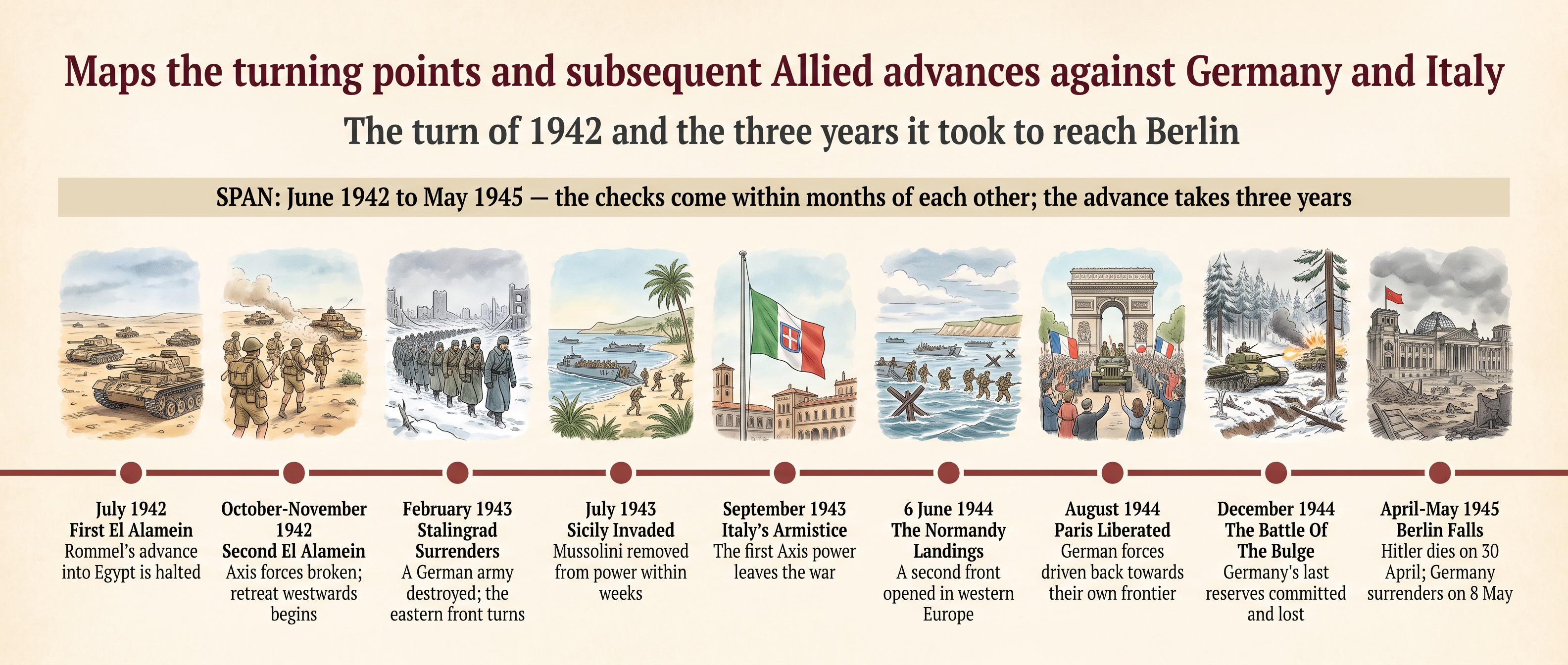
Fig. 7.8 – The Allied advance in Europe and Africa, 1942-1945.
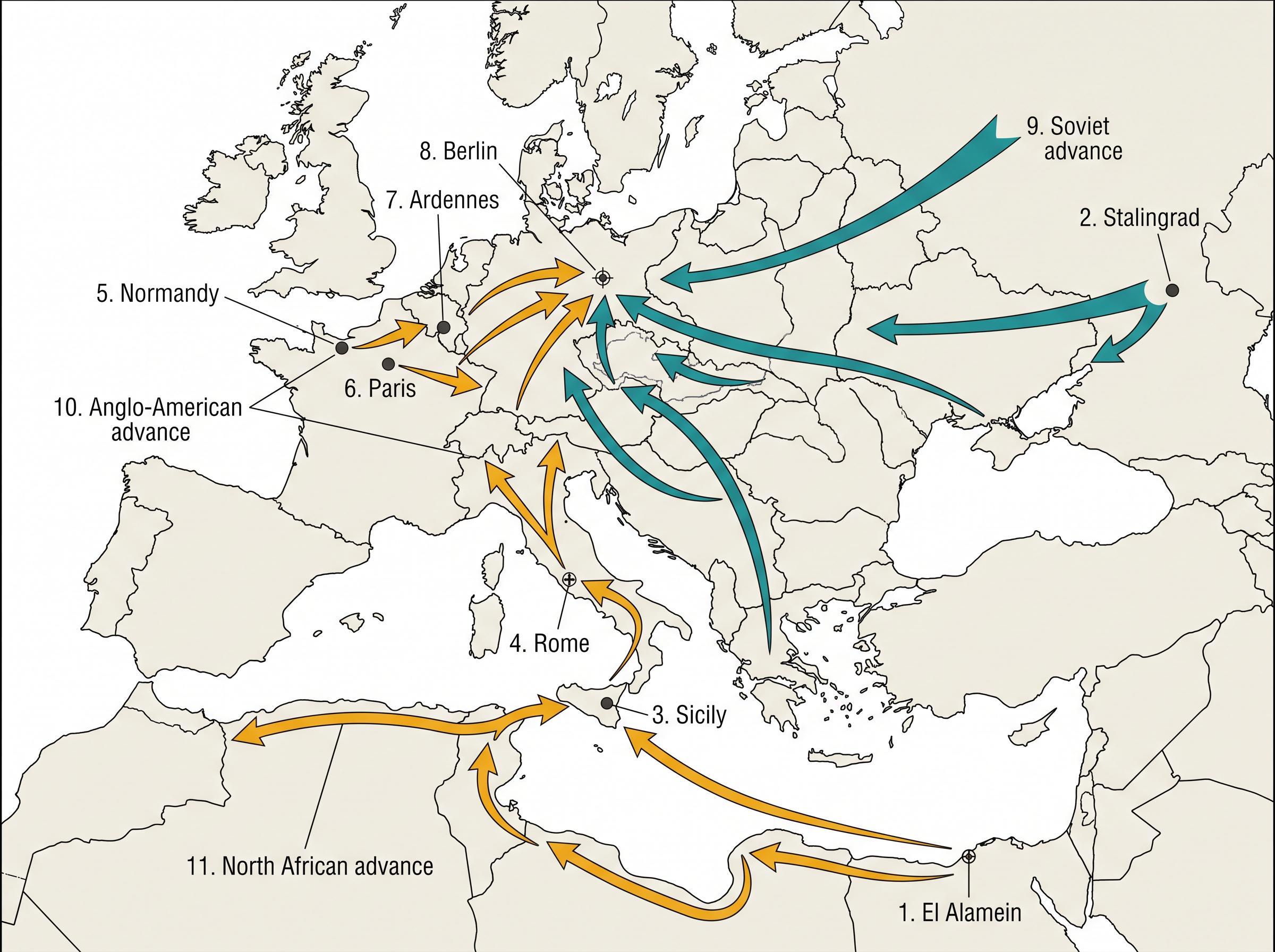
Fig. 7.9 – The Allied advance in Europe and North Africa, 1942 to 1945.
7.4.7 Island Hopping And The Surrender Of Japan
Germany’s surrender did not end the war. Japan held a wide arc of islands, each garrisoned, and taking every one of them in turn would have taken years.
The American answer, developed under General MacArthur and the Pacific naval commanders, was the strategy known as island hopping. Beginning with landings in the Solomon Islands in August 1942, Allied forces captured islands that had a particular value — an airfield, or a sheltered anchorage — and deliberately bypassed the strongest Japanese garrisons, leaving them cut off from supply and militarily useless. Each captured island shortened the distance to Japan and extended the range of American aircraft and submarines, which strangled the shipping on which Japan depended.
In South-East Asia, British and Indian forces fought a long campaign in the jungles and hills of Burma, in which Indian divisions carried much of the burden.
Hiroshima And Nagasaki
By the summer of 1945 Japan’s cities were being bombed heavily, its merchant fleet was largely sunk and its position was hopeless, but its government did not accept the Allied demand for unconditional surrender.
On 6 August 1945 an American aircraft dropped an atomic bomb on the city of Hiroshima. More than eighty thousand people were killed almost at once, and many thousands more died afterwards of burns and of radiation sickness, an illness that was barely understood at the time. On 8 August the Soviet Union declared war on Japan and attacked Japanese forces in Manchuria, removing the last power through which Tokyo had hoped to negotiate. On 9 August a second bomb was dropped on Nagasaki, killing tens of thousands more. Japan announced its surrender on 14 August 1945, and the formal surrender was signed on 2 September 1945.
The Second World War was over. It had killed tens of millions of people, a majority of them civilians, and it had ended with the demonstration of a weapon that made every earlier calculation about war obsolete.
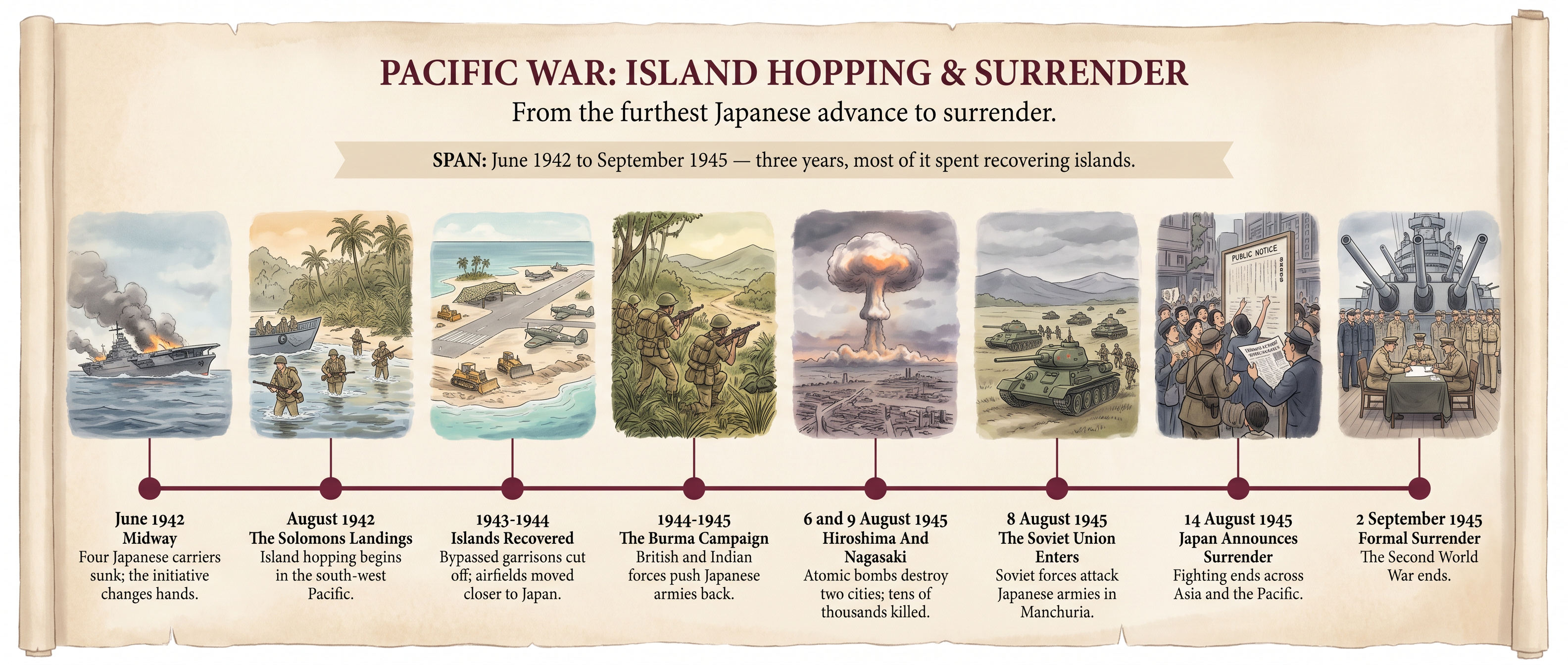
Fig. 7.10 – The war in the Far East, 1942-1945.
Read Fig. 7.8 and Fig. 7.10 together. The two wars ran on their own clocks: Germany was already beaten when the Pacific war entered its final phase, and Japan fought on for three months after Berlin fell. Why the Axis lost both of them is the question of the next section.
7.5 Reasons For The Defeat Of The Axis Powers
In the summer of 1942 the Axis powers held more territory than any comparable group in history. Three years later all three had surrendered. Explaining that reversal is the last task of this chapter, and it needs care, because the temptation is to give a single reason.
There was no single reason. The defeat came from four connected things: the Axis fought too many enemies at once, they could not match the resources ranged against them, they made a series of serious mistakes, and the alliance against them held together while their own did not.
Notice also that the reasons interlock. Fighting on many fronts made the shortage of resources worse; the shortage of resources made every mistake more expensive.
7.5.1 Fighting On Too Many Fronts
Germany began the war against Poland, Britain and France. By the end of 1941 it was fighting Britain and its empire, the Soviet Union and the United States simultaneously.
Two decisions produced that situation, and Hitler took both. The first was to invade the Soviet Union in June 1941 while Britain was still undefeated, which reopened the two-front war that German strategists had regarded since 1914 as the thing above all to be avoided. The second was to declare war on the United States in December 1941, when he was under no treaty obligation to do so and when the American war effort would otherwise have been concentrated on Japan.
Japan’s position was worse. Its war in China had never been finished, and it consumed large armies for the whole period. On top of that unfinished war Japan took on the British Empire, the Netherlands and the United States at the same time. A military historian’s judgement, quoted often since, is that Japanese forces were spread far beyond any capacity to hold what they had taken.
There is also a point about empires. Britain was not one island; it drew soldiers, food, raw materials and money from possessions across Asia, Africa, the Caribbean and the Pacific. Attacking Britain therefore meant fighting a war on every ocean.
7.5.2 The Weight Of Resources And Production
Modern industrial war is decided in large part by output — of steel, oil, aircraft, ships and trained men — and by the ability to replace what is lost.
Raw Materials
The Axis powers were poor in exactly the materials that a mechanised war consumes. Germany had coal and steel but very little oil, and depended on Romanian fields and on synthetic fuel made from coal. Its drive towards the Caucasus in 1942 was in part a search for petroleum. Japan, as you have seen, went to war to get oil and rubber, and then found that American submarines sank the ships bringing them home. Both were also short of rubber, nickel, tin and cotton.
The Allies had the opposite problem, which is to say no problem: American, Soviet and imperial territory contained almost everything needed, and the sea routes between them were held.
Production
The disparity in manufacturing was enormous and it widened every year. The United States, untouched by bombing and with an economy pulled out of the slump by war orders, out-produced all three Axis powers together in aircraft, tanks and shipping. Under the Lend-Lease Act, which became law in March 1941 while America was still formally neutral, it supplied Britain, and later the Soviet Union, with weapons, vehicles, food and raw materials. President Roosevelt described the country as the arsenal of democracy, and the description was accurate.
The Soviet contribution is often underrated. Whole factories were dismantled and moved east beyond the Ural mountains, out of German reach, and rebuilt there. From 1942 they produced tanks in numbers German industry could not approach.
The consequence was visible in every theatre. When the Allies lost a carrier, an army or a thousand aircraft, the loss was made good within months. When Japan lost four carriers at Midway or Germany lost an army at Stalingrad and its last reserves in the Ardennes, the loss was permanent.
7.5.3 Strategic And Tactical Mistakes
Resources alone do not decide wars; they have to be used well. The Axis powers made a series of errors, and the largest were made at the top.
In Germany
The invasion of the Soviet Union rested on an underestimate. German planners expected a campaign of a few months and did not equip their troops for a Russian winter; men fought through the frosts of 1941 without adequate winter clothing. They also underestimated Soviet manpower, Soviet industry and the willingness of the Soviet state to keep fighting after catastrophic losses.
A second error was political rather than military, and it was decisive. Many people in Ukraine and the Baltic lands had suffered badly under Stalin’s rule and might have been indifferent to a change of ruler. The invaders came as conquerors, treating the Slavic population as people to be dispossessed and enslaved, and killing on a vast scale. The effect was to guarantee resistance. Partisan movements behind the German lines tied down troops, cut railways and supplied intelligence for the rest of the war.
Hitler’s personal interventions added to the damage. He forbade retreat as a matter of principle, which turned the encirclement at Stalingrad into the destruction of an entire army. He switched the air attack in 1940 from British airfields to British cities at the moment the airfields were closest to collapse. And late in the war he poured scarce industrial effort into long-range rockets that could frighten a city but not defeat an air force.
In Japan And Italy
Japan’s navy had built its thinking around the battleship, and was slow to recognise that the aircraft carrier had replaced it as the decisive weapon — a lesson its own attack on Pearl Harbour had helped to teach everybody else. Its island garrisons were then left scattered across the Pacific, where the island-hopping strategy could simply bypass and isolate them.
Italy’s mistakes were of a different kind. Mussolini launched campaigns his forces could not sustain, and Germany repeatedly had to divert troops to rescue him, in North Africa and in the Balkans. An ally who has to be rescued is a drain, not a reinforcement.
7.5.4 Coalition, Leadership And Morale
An Alliance That Was Not One
The Axis was three powers with parallel ambitions, not a coalition. There was no joint command, no shared plan of campaign, no pooling of weapons research and no agreement on timing. Germany invaded the Soviet Union without telling Japan; Japan attacked the United States without telling Germany. Japan, having signed a neutrality agreement with the Soviet Union, never attacked it while German armies were fighting for their lives outside Moscow.
The Allies did the opposite. Britain and the United States established combined staffs, argued out a common strategy — Germany first, then Japan — shared intelligence and technology, and moved supplies between one another under Lend-Lease.
Here the Axis made a further miscalculation, and it was one of the most consequential of the war. Hitler and his advisers assumed that capitalist democracies and the communist Soviet Union could never cooperate, and that the alliance against them would break apart. It did not break until the fighting was over.
Leadership And What People Would Endure
Churchill, Roosevelt and Stalin had almost nothing in common politically and distrusted one another on much. They nevertheless held to the common purpose of defeating Germany and Japan first, and each held together the confidence of his own people through years of bad news.
Morale mattered in a war fought against civilians as well as armies. The bombing of British cities in 1940 did not break British willingness to continue, and the German assumption that it would was simply wrong. Meanwhile the conduct of Axis occupation — the terror in eastern Europe, the treatment of prisoners and civilians in China and South-East Asia, and above all the systematic murder of European Jews — created a moral case against the Axis that strengthened resistance everywhere and made a negotiated peace impossible.
Roosevelt gave that case a public form in January 1941, setting out four freedoms that he said should belong to people everywhere: freedom of speech and expression, freedom of worship, freedom from want and freedom from fear.
Holding The Reasons Together
It is worth ending with a caution about explanation. Every reason above was written down after the outcome was known, and that makes each one look more inevitable than it was.
In 1942 none of this was obvious. A war can be lost by a power with greater resources, and had the Soviet state collapsed in 1941, or had Britain been forced out in 1940, the arithmetic of production would never have been given time to work. The most that can be said with confidence is that by the end of 1941 the Axis powers had taken on more than they could finish, and that their own decisions had brought that about.
7.6 Summary
The Aggressive Foreign Policies
- Three states — Germany, Italy and Japan — built foreign policies in the 1930s around taking territory by force, each seeking empire, resources and rank among the great powers.
- Germany’s policy had four linked aims: to break the restrictions of the 1919 settlement, to rebuild military strength, to gather all German speakers into one state, and to take Lebensraum in the east.
- Germany translated those aims into action between 1935 and 1939: the Saar plebiscite, the reoccupation of the Rhineland, the Anschluss with Austria, the Sudetenland, and finally Prague, where no German population argument existed.
- Italy under Mussolini sought a new Roman empire in the Mediterranean, and used the invasion of Abyssinia in 1935 to avenge Adowa, to gain resources and to distract Italians from hardship at home.
- The League of Nations condemned Italy but imposed sanctions that left out oil and coal, and the invasion succeeded. Small states learned that the League would not protect them.
- Japan, an industrial power without raw materials of its own, took Manchuria in 1931, left the League in 1933, and was fighting a full war in China from 1937 that it could not finish.
- The Rome-Berlin Axis, the Anti-Comintern Pact and finally the Tripartite Pact of 1940 linked three regional ambitions into one system. The Axis was never a joint command.
- Because these three expanded in different regions, and because the powers they challenged ruled empires across Asia and Africa, any general war between them would be worldwide.
Anglo-French Appeasement
- Appeasement meant conceding to a hostile power in the belief that its demands were limited. It was led by Britain; France doubted it but would not act alone.
- It ran in two phases: passive drift until 1937, then Chamberlain’s active search from May 1937 for a negotiated settlement with Hitler.
- The reasons for it were many: the memory of the First World War, the expectation that bombing would destroy cities, economic weakness, military unreadiness, French instability, American isolation, fear of communism, and a widespread belief that Germany’s early demands were just.
- It was carried out mainly through things not done — no response to conscription, to the Rhineland, or to the Anschluss — and once through a thing actively done, the Anglo-German Naval Agreement of 1935, which licensed German rearmament at sea and broke the common front.
- At Munich in September 1938 Britain, France, Germany and Italy handed the Sudetenland to Germany. Czechoslovakia was not invited and lost its frontier defences with the territory.
- The policy assumed the Sudetenland was Hitler’s last demand. The occupation of Prague in March 1939 destroyed that assumption, and Britain and France guaranteed Poland instead.
- Appeasement failed to prevent war. Whether it usefully bought a year of rearmament remains argued.
The Axis Invasions, 1939-1941
- Germany invaded Poland on 1 September 1939 to obtain Danzig and the Polish Corridor, secure in the belief that the pact with the Soviet Union had removed the risk of a two-front war. Britain and France declared war on 3 September.
- Blitzkrieg — armoured columns supported by aircraft — destroyed Poland in about five weeks, and after the phoney war it took Denmark, Norway, the Netherlands, Belgium and France in 1940.
- Norway mattered because Narvik carried Swedish iron ore to Germany in winter; its loss also brought down Chamberlain and made Churchill Prime Minister.
- At Dunkirk about 338,000 Allied troops were evacuated but their equipment was lost. France signed an armistice on 22 June 1940.
- In the Battle of Britain the radar chain, the Spitfire and the Hurricane, and the German switch to bombing London denied Germany the air control an invasion needed. It was the first Axis offensive to be stopped.
- Operation Barbarossa, launched on 22 June 1941, took vast territory but failed to reach Moscow, and committed Germany to a winter war in the east while still at war with Britain.
- The American oil embargo forced Japan to choose between withdrawing from China and seizing the resources of South-East Asia. It chose war, attacking Pearl Harbour on 7 December 1941 and taking most of South-East Asia by May 1942.
- Germany and Italy declared war on the United States on 11 December 1941, joining the European and Asian wars into one.
The Course Of The War, 1942-45
- Between June and November 1942 the Axis were checked in three places: at Midway, at El Alamein and at Stalingrad.
- At Midway, partly broken Japanese codes allowed the Americans to sink four carriers with their aircrew — losses Japan could not replace.
- The second battle of El Alamein, from 23 October to 5 November 1942, broke the Axis in Egypt; with the Anglo-American landings in Morocco and Algeria, North Africa was cleared by the spring of 1943.
- At Stalingrad the Soviet counterattack of November 1942 encircled a German army, which surrendered in February 1943. From then the eastern front moved only westwards.
- Sicily was invaded in July 1943, Mussolini was removed within weeks, and Italy left the war in September 1943, though German forces defended the peninsula until 1945.
- The Normandy landings of 6 June 1944 opened the second front. They depended on air supremacy, on control of the Atlantic and on artificial harbours built in secret.
- Germany’s last reserves were spent in the Ardennes offensive of December 1944. Berlin fell to Soviet forces, Hitler killed himself on 30 April 1945, and Germany surrendered unconditionally on 8 May.
- In the Pacific, island hopping bypassed strong garrisons and moved airfields closer to Japan, while British and Indian forces fought the Burma campaign.
- Atomic bombs were dropped on Hiroshima on 6 August and Nagasaki on 9 August 1945. Japan announced surrender on 14 August and signed on 2 September. Why the bombs were used is still debated.
Why The Axis Lost
- The Axis fought too many enemies at once. Hitler invaded the Soviet Union with Britain undefeated and then declared war on the United States; Japan attacked three powers while its war in China was unfinished.
- They could not match Allied resources. They lacked oil, rubber and metals, while the United States out-produced all three combined and supplied Britain and the Soviet Union under Lend-Lease.
- Allied losses could be replaced and Axis losses could not — four carriers at Midway, an army at Stalingrad, the last reserves in the Ardennes.
- Serious mistakes compounded the imbalance: no winter equipment in Russia, the refusal to permit retreat, the switch from British airfields to British cities, and an occupation policy that turned possible collaborators into partisans.
- The Axis had no joint command, no shared plan and no shared research, and wrongly assumed that democracies and the Soviet Union could never work together. The Allied coalition held until the fighting ended.
- No one reason is sufficient. The reasons interlock, and none of them looked inevitable in 1942.
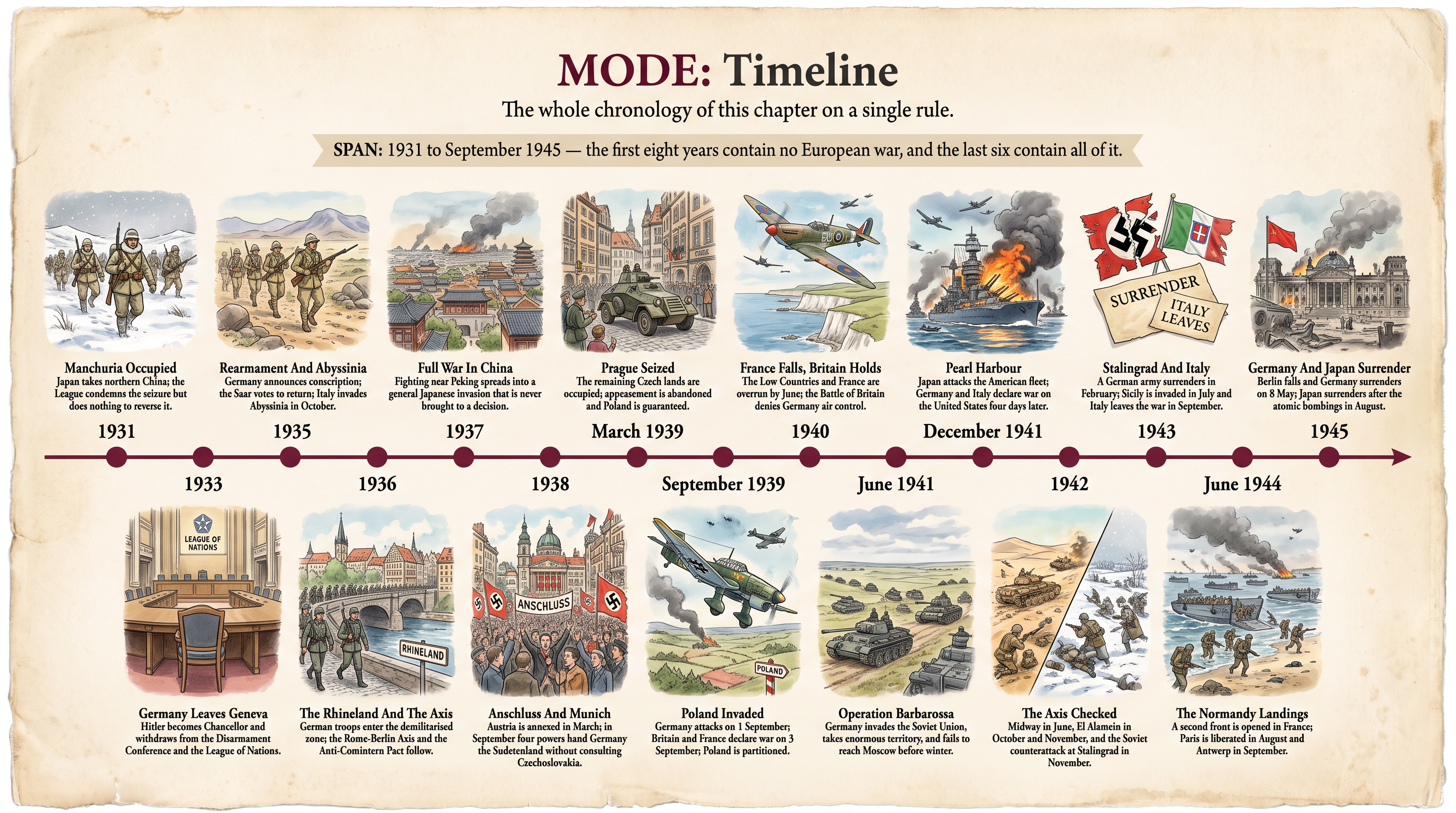
Fig. 7.11 – The coming and course of the Second World War, 1931-1945.
What The Evidence Cannot Tell Us
Almost everything in this chapter comes from records made by states, armies and newspapers — governments recording their own decisions, commanders recording their own operations, and each side describing the other for its own public.
Those records are strongest where power was, and weakest where suffering was. The casualty totals for this war are estimates, not counts, because the villages of eastern Europe and the Chinese countryside had no one left to do the counting. What the ordinary soldier, the occupied villager or the bombed civilian actually thought survives only in scattered letters and diaries, and in memories recorded long afterwards, when they had already been reshaped by knowing how it ended.
7.7 Check Your Memory
Hitler’s foreign policy rested on four connected aims. State them, and for each one name a single action taken by Germany between 1935 and 1939 that carried it out.
What is meant by appeasement? Give two reasons why Britain and France believed in the 1930s that it was the right policy.
Japan took Manchuria in 1931 and Italy conquered Abyssinia in 1935-36. Explain how these two episodes together destroyed confidence in the League of Nations, and what small states learned from them.
Set out, step by step, the chain that led from the American decision to cut off oil exports to Japan to the attack on Pearl Harbour in December 1941. At which step could the chain have been broken, and why was it not?
The chapter describes two very different kinds of fighting: the Blitzkrieg campaigns of 1939 and 1940, and the street fighting at Stalingrad in 1942. Explain what each involved, and why the advantages that made German forces successful in the first largely disappeared in the second.
Read Source 7.1 again. Who was speaking, and what was he responding to? Britain as a whole greeted the Munich agreement with relief. What does this tell you about using a single speech as evidence for what a country believed?
Using Fig. 7.5, locate Poland, Norway, France, Greece and the eastern front line as it stood in December 1941. Then explain, from the map, why Germany’s position at that date was greater in extent but weaker in security than it had been in June 1940.
The chapter states that the casualty totals for this war are estimates rather than counts. Explain why the evidence does not allow an exact figure, and say what kinds of records would have been needed to produce one.
Historians disagree about whether Hitler followed a settled programme or seized opportunities as they appeared. Choose one of these readings and argue for it, using the German actions of 1935 to 1939 as your evidence. Then state the strongest point against your own argument.
Some historians explain the defeat of the Axis mainly by the weight of Allied resources; others explain it mainly by Axis decisions. Using material from this chapter, argue which explanation you find stronger, and identify at least one piece of evidence that does not fit your answer comfortably.