Chapter 8: Decolonisation In Asia (China) And Africa (Ghana And Kenya)
On 1 July 1982, China began counting its people. Millions of enumerators walked to every household in the country, and when the returns were added up, a census had for the first time anywhere counted more than a billion people.
The questions were ordinary ones: how old are you, who lives in this house, how many children have you had. But when demographers set the age structure of 1982 beside the counts taken in 1953 and in 1964, something appeared that nobody had asked about. There was a notch. The people who should have been born in 1959, 1960 and 1961 were largely missing, and so were many older people who should still have been alive to be counted. In the same years, China released grain output and death rate figures it had kept unpublished for two decades, and those numbers pointed the same way.
The Great Leap Forward, launched in 1958 to drive China’s farms and factories forward together, had ended in the deadliest famine of the twentieth century. No confession was needed to establish it. The evidence was arithmetic — a gap in a population, visible only once three counts were laid side by side.
This chapter is about that kind of evidence as much as that kind of history. It follows three countries that took charge of themselves within a single stretch of years, and asks each time how we know what we claim to know.
Map
Map 8.1 Caption: The three countries this chapter follows: China in East Asia, Ghana in West Africa and Kenya in East Africa. Brief: World political outline with present-day boundaries; shade and label only China, Ghana and Kenya, marking Beijing, Accra and Nairobi; show the full extent of India as officially defined; do not attempt to show colonial-era boundaries.
8.1 China In 1949: The Problems Facing The Communists
On 1 October 1949, the People’s Republic of China was proclaimed in Beijing, with Mao Zedong at its head. The Chinese Communist Party had won a long struggle for control of the country, and now had to govern it.
China had never been ruled as a single European colony in the way that India or the Gold Coast had been. What it had lost instead were pieces of its sovereignty: ports where foreign traders lived under foreign law, tariffs it could not set for itself, and after 1937, vast territories held by a Japanese army of occupation. Sovereignty is the full authority of a state to govern its own territory without answering to anyone outside it. Winning that back is why China belongs in a chapter on decolonisation.
But a government that inherits a country also inherits its condition. What the Communists took charge of in 1949 was a state that had been at war, in one form or another, since 1937.
8.1.1 A Country Wrecked By War
Twelve years of fighting had fallen hardest on the things that hold a country together. Infrastructure — the roads, railways, bridges, canals and embankments that let goods and people move — had been broken deliberately by armies and then left unrepaired.
Railway track had been torn up for its metal. Bridges had been blown to slow an advancing enemy and never rebuilt. On the great rivers, the earth banks that keep floodwater out of the fields, called dykes, had gone unmaintained for years, so ordinary seasonal floods now did extraordinary damage.
The effect was not only physical destruction. A country whose transport does not work cannot move food from where it is grown to where it is eaten, cannot move coal to a furnace, and cannot collect taxes reliably from its provinces. Before the new government could change anything, it had to repair what already existed.
8.1.2 Hunger In The Countryside
Roughly four out of every five people in China lived by farming. The countryside was therefore not one problem among several; it was where the country’s food, its taxes and most of its population were.
That countryside was producing too little. Fields had been fought over, animals taken, tools worn out and irrigation channels silted up. Rural China had also lived through repeated bad harvests, and famine was a familiar rather than an exceptional event.
Land was held very unevenly. A minority of landlords and rich peasants held a large share of the cultivated land, and the families who actually worked it often did so as tenants, handing over a substantial part of each harvest as rent. A tenant with little land and a heavy rent has no margin: one poor season pushes the household into debt, and debt eventually costs it the land it has.
Because the countryside grew too little, the cities went short as well. Urban food shortages in 1949 were not caused by city problems. They were the visible end of a rural crisis.
8.1.3 Industry, Inflation And Unemployment
China in 1949 had very little modern industry, and what it had was narrowly concentrated — in a few coastal cities and in the north-eastern provinces of Manchuria, which the Japanese had developed as an industrial base. Much of that plant did not survive the end of the war intact: Soviet forces occupying Manchuria in 1945 dismantled a great deal of industrial equipment and shipped it home.
So the new state began with almost no engineering works, few trained engineers and a shortage of steel, machinery and electric power. The towns, meanwhile, had large numbers of people with no work — demobilised soldiers, refugees from the countryside, and workers from factories that had closed.
The Money Had Stopped Working
The treasury was empty, and the currency had collapsed. In the last years of Nationalist rule, China had gone through hyperinflation — a stage at which prices rise so fast that money loses its value from week to week, and people stop trusting it altogether. Wages were spent the day they were paid. Banknotes were issued in ever larger denominations to keep up, and in many places people simply went back to barter, or dealt in grain, silver and cloth.
Fig. 8.0 shows what that looked like on paper.
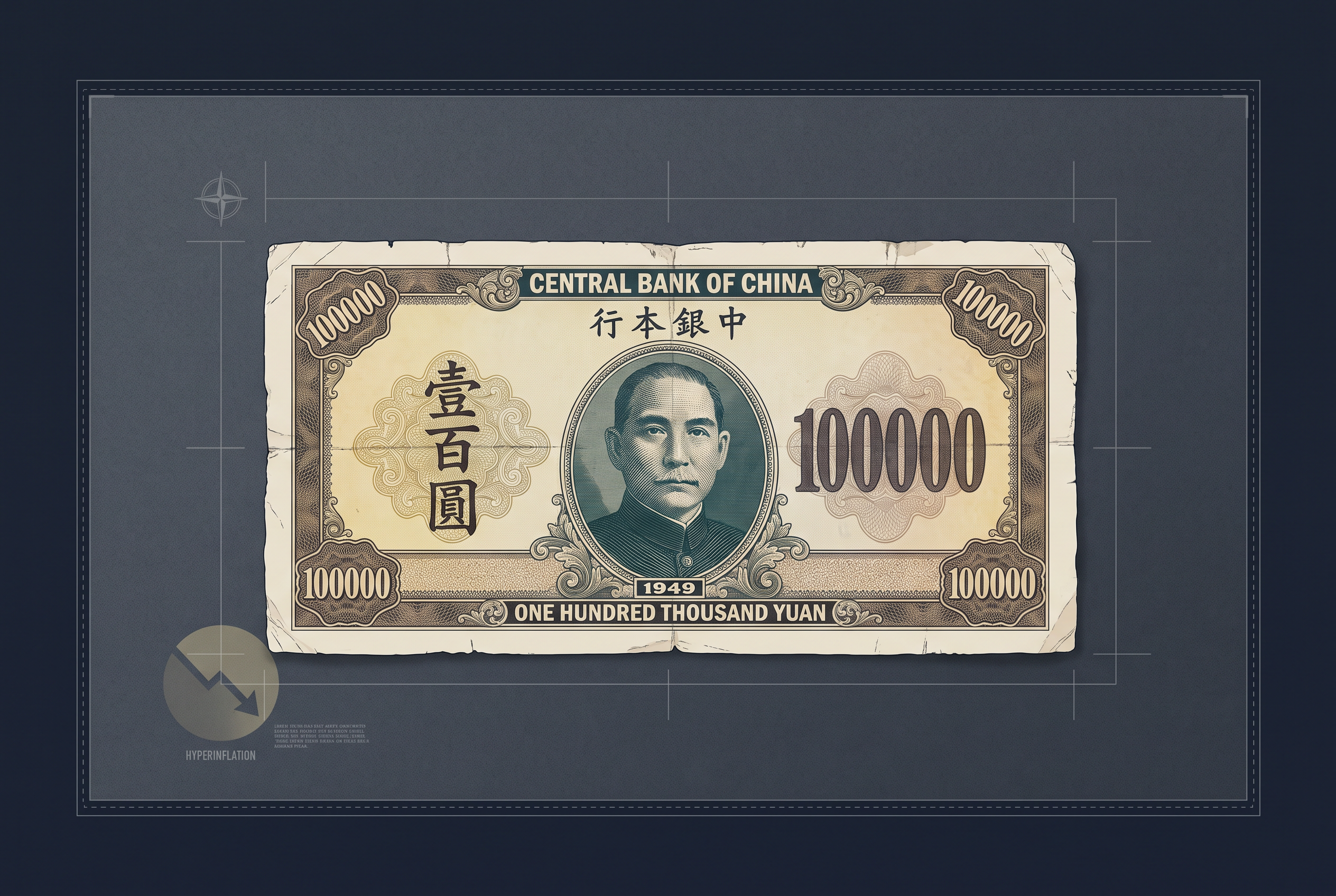
Fig. 8.0 – High-denomination Chinese banknote from the late 1940s.
Finally, there were simply a great many people to feed, and their number was rising. No trustworthy count of China’s population existed in 1949 — nothing like a full census had been attempted for decades — but every reasonable estimate put it above half a billion, larger than any other country on earth. Every year of delay meant more mouths against the same broken fields.
Two Directions Out
The government’s answers ran in two directions at once, and the next two sections follow them separately. In the countryside, it set out to change who held the land and how it was farmed. In the towns, it set out to build the industry the country did not have, with help from the Soviet Union.
8.2 Agriculture: From Land Distribution To Collective Farms
The new government’s rural policy did two different things, one after the other. First it changed who owned the land. Then it changed how the land was farmed. The two are often run together, but they were separate decisions, taken six years apart and for different reasons.
The whole process was gradual and staged, and it is easier to follow if the stages are kept in order. Fig. 8.1 sets them out.
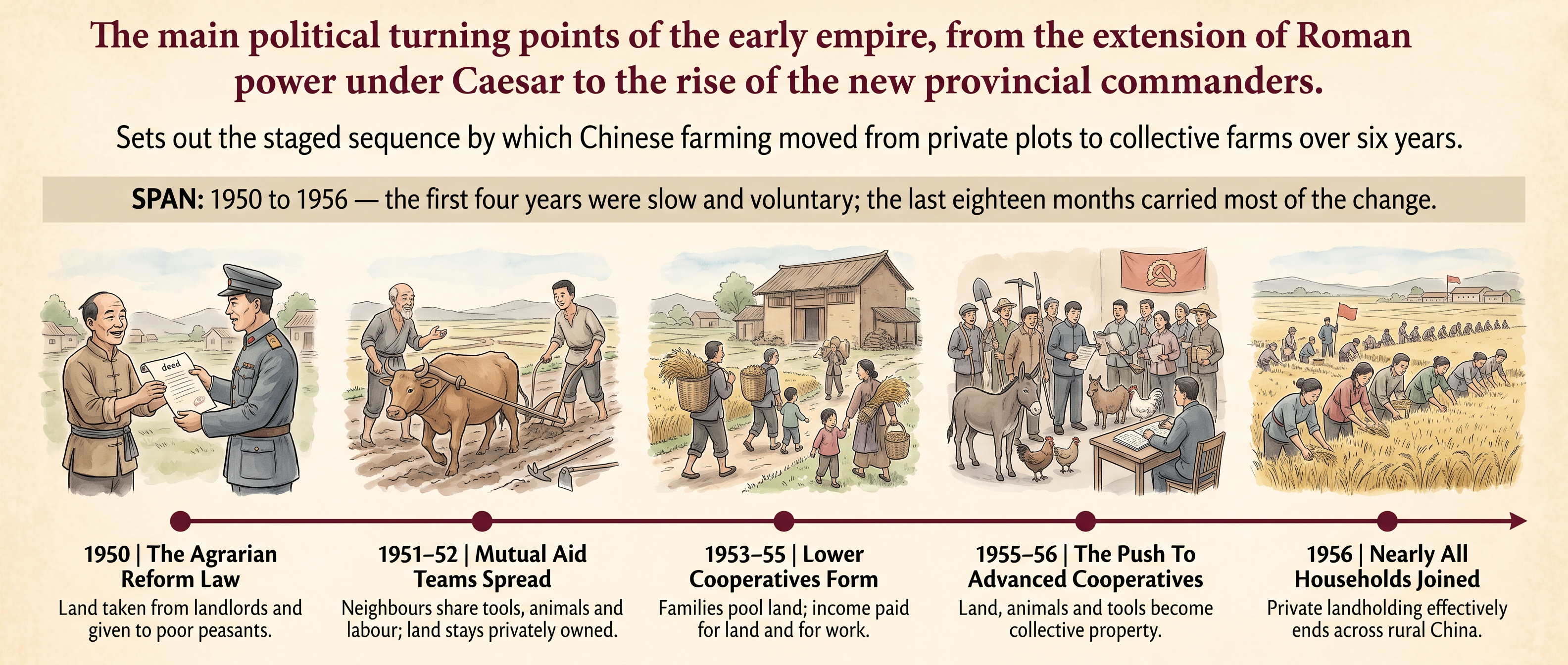
Fig. 8.1 – From Private Plots To Collective Farms.
8.2.1 The First Phase: Taking And Redistributing Land
The Agrarian Reform Law of 1950 set out the first stage. Land, tools, draught animals and grain stores were to be taken from landlords and redistributed among the households that actually worked the fields.
This was done village by village. Party work teams arrived, held meetings, and sorted households into categories — landlord, rich peasant, middle peasant, poor peasant, landless labourer — according to how much land a family held and how much of its income came from other people’s labour. The category a household was placed in decided what it lost or gained.
More Than An Economic Change
The redistribution was also political, and deliberately so. In most Chinese villages, the landlord had been the person who lent money, settled disputes and dealt with officials. Breaking his hold removed the layer of power that stood between the village and the state, and gave hundreds of millions of poor families a direct reason to support the new government.
It was frequently violent. Village meetings became public accusation sessions in which tenants denounced landlords before the whole community, and many landlords were beaten, tried and killed. How far this violence was intended by the law itself, and how far it ran ahead of the law, is genuinely disputed.
By the time the redistribution was finished, an enormous number of families held land in their own name for the first time. But the plots were very small. A household with a fragment of a field, no animal and no money could not buy a pump, dig a channel or hold back grain for a bad year. Redistribution had solved a question of justice without solving a question of scale.
8.2.2 The Second Phase: Cooperatives And Collective Farms
The second phase moved in steps rather than in one jump. Each step took a little more of the farming decision away from the household and gave it to a larger group.
The first step was the mutual aid team: a handful of neighbouring families agreeing to share their tools, animals and labour at sowing and harvest. Nothing changed about ownership. A family’s field was still its own, and so was its crop.
The second step was the cooperative, a farm in which families pooled their land and worked it as one unit. In the earlier, lower form, a household’s share of the year’s income was calculated partly from the land it had put in and partly from the work it had done. Ownership had not quite ended; it had been converted into a claim on the harvest.
The third step went further. In the advanced cooperatives — collective farms in the full sense — land, animals and equipment became the property of the collective, and a household was paid only for the labour it contributed. This is collectivisation: the pooling of privately held land into farms owned and worked in common.
The Speed Of The Last Push
Through 1953 and 1954 this process was slow and largely voluntary. Then, from mid-1955, the leadership pushed hard for it to be completed, and the pace changed completely. Within roughly eighteen months, nearly every peasant household in China had joined, and most were in the advanced form. Persuasion did much of the work; so did heavy pressure from local officials and the awkwardness of holding out when a whole village had joined.
What It Achieved, And What It Did Not
Grain output rose across the first half of the 1950s, helped as much by the return of peace, repaired dykes and restored irrigation as by any change in ownership. Collective farms also gave the state something it badly wanted: a small number of large units it could deal with directly, from which grain could be collected for the cities and for export.
It is sometimes claimed that collectivisation ended food scarcity in China for good. It did not. The worst famine in the country’s modern history was still three years away, and Section 8.5 examines it. What collective farming did establish was the unit of organisation on which the Great Leap Forward would later be built — and the habit of reorganising the countryside from above.
The other half of the government’s answer lay in the towns, and it is the subject of the next section.
8.3 Industry: The Five Year Plan And Soviet Help
A country with almost no engineering works cannot repair its own railways, still less equip its farms. The government’s answer was to build heavy industry deliberately and quickly, using a method it borrowed wholesale from the Soviet Union.
8.3.1 Nationalisation And The First Five Year Plan
The first move was to take the economy into the state’s hands. Banks, foreign-owned firms and large enterprises were taken over soon after 1949, and over the next few years private businesses were absorbed as well, first as joint state-and-private ventures and then as state property. This is nationalisation: transferring privately owned firms into the ownership of the state.
By the middle of the 1950s there was very little private industry left in China. That mattered for what came next, because a government cannot direct an economy it does not own. Once the state held the factories, it could decide what they made, at what price and with which materials.
Planning The Whole Economy
The instrument for those decisions was the First Five Year Plan, which ran from 1953 to 1957. A five year plan sets output targets for a whole economy over a fixed period, and directs money, materials and labour towards them, in place of leaving the decisions to prices and private owners. The idea, the method and much of the detail came from the Soviet Union, which had run such plans since the late 1920s.
The plan’s priority was unambiguous. Investment went overwhelmingly into heavy industry — iron and steel, coal, electric power, machinery and chemicals — rather than into light industry, which makes goods people actually buy, such as cloth, shoes, soap and household utensils.
The choice was defended on the grounds that heavy industry builds the means of building everything else. Steel makes rails, pumps, ploughs and the machinery for fertiliser plants. A country that starts with textile mills stays dependent on someone else for its machines.
The costs of the choice fell on the countryside. Imported machinery had to be paid for, and China’s exportable wealth was farm produce and raw materials. The state therefore bought grain from the collective farms at prices it set itself, and the surplus fed the cities and paid the bills.
8.3.2 Soviet Cash, Equipment And Advisers
China could not have built these industries alone in the 1950s, and did not try to. The Soviet Union supplied the plan’s backbone: designs for entire factories, the machinery to fill them, and the people who knew how to run them.
A set of large projects — the figure usually given is 156 — was designed and equipped with Soviet assistance. Steel complexes were rebuilt or newly built, among them the works at Anshan in the north-eastern province of Liaoning, which the plan turned into China’s largest producer. In 1956 the first Chinese-made trucks came off a new assembly line at Changchun, also in the north-east, built to a Soviet design.
Thousands of Soviet engineers and technical advisers worked in China during these years, and thousands of Chinese students and technicians were trained in the Soviet Union in return. Fig. 8.2 shows what the visible end of this looked like.
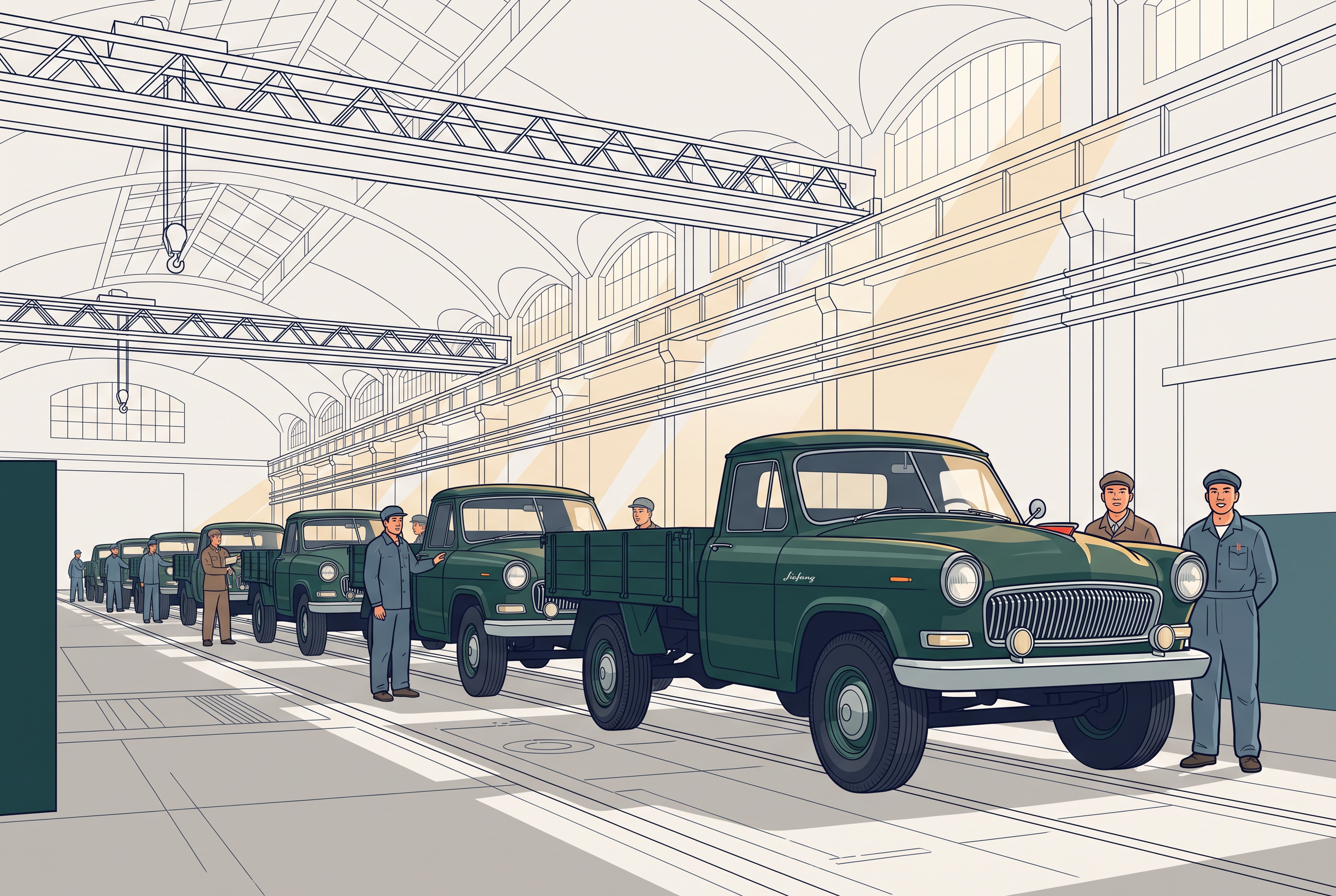
Fig. 8.2 – First trucks built at Changchun, 1956.
Help, Not A Gift
It is worth being precise about what Soviet help was. Most of it was not given; it was lent. China received credits that had to be repaid, and repayment was made largely in agricultural produce and raw materials. Every tonne of grain sent to settle a debt was a tonne not eaten in China.
The results of the plan were real. Output of steel, coal and electric power rose sharply between 1952 and 1957, and steel production several times over. But the growth was uneven in ways that stored up trouble. Farm output rose much more slowly than industrial output. The new plants were expensive and employed relatively few workers, in a country whose largest asset was people. And the whole structure depended on a foreign partner.
By 1956 Mao Zedong was arguing publicly that too much had gone to heavy industry and too little to agriculture and light industry, and that China needed a path suited to its own conditions rather than a copy of the Soviet one. Relations between the two governments cooled through the later 1950s, and in 1960 the Soviet Union withdrew its advisers, taking their blueprints with them.
That withdrawal came in the middle of a very different experiment, one built on the opposite assumption: that China’s advantage was not imported machinery but its own enormous supply of labour. That experiment is the subject of the next section.
8.4 The Great Leap Forward
In 1958 the government launched a second reorganisation of the countryside, only two years after the first had been completed. It was called the Great Leap Forward, and it was far more ambitious than anything attempted so far. Its aim was to push agriculture and industry forward at the same time and at extraordinary speed — a policy summed up in the slogan of ‘walking on two legs’.
8.4.1 Why Mao Launched The Leap
Several lines of thinking met in 1958, and it is worth separating them.
The first was dissatisfaction with the borrowed Soviet model. It had built impressive plants, but it had swallowed money, left farming behind, and made China dependent on a foreign partner whose goodwill was visibly cooling.
The second was an argument about what China actually had. It was short of capital, machinery and trained engineers. It had, in enormous quantity, people. If labour could be organised on a large enough scale, then reservoirs, canals, terraces and even iron could be produced without waiting for imported machines.
The Winter That Suggested It Was Possible
The winter of 1957 to 1958 seemed to prove the point. Tens of millions of peasants were mobilised in the slack season to dig irrigation channels, build embankments and construct reservoirs by hand. The scale of what was achieved with baskets and shovels encouraged the leadership to think that the same method could be applied to everything.
The third line of thinking was political. Mao Zedong held that mass enthusiasm, correctly directed, mattered more than technical expertise, and that China could move towards a fully communist society faster than the Soviet Union had. Targets were set to match the mood: China, it was announced, would overtake Britain in steel output within fifteen years.
8.4.2 The Commune
The unit chosen to carry all of this was the people’s commune, formed by merging existing collective farms into a single, far larger organisation. The first were set up in 1958 in Henan province in central China, and within a matter of months almost the whole of rural China had been reorganised the same way.
A commune was very large. Where a collective farm had joined a few hundred households, a commune brought together tens of thousands of people, and some were larger still. To make such a unit workable it was divided into tiers: the commune at the top, production brigades below it, and production teams at the bottom, each team usually being the households of a single village.
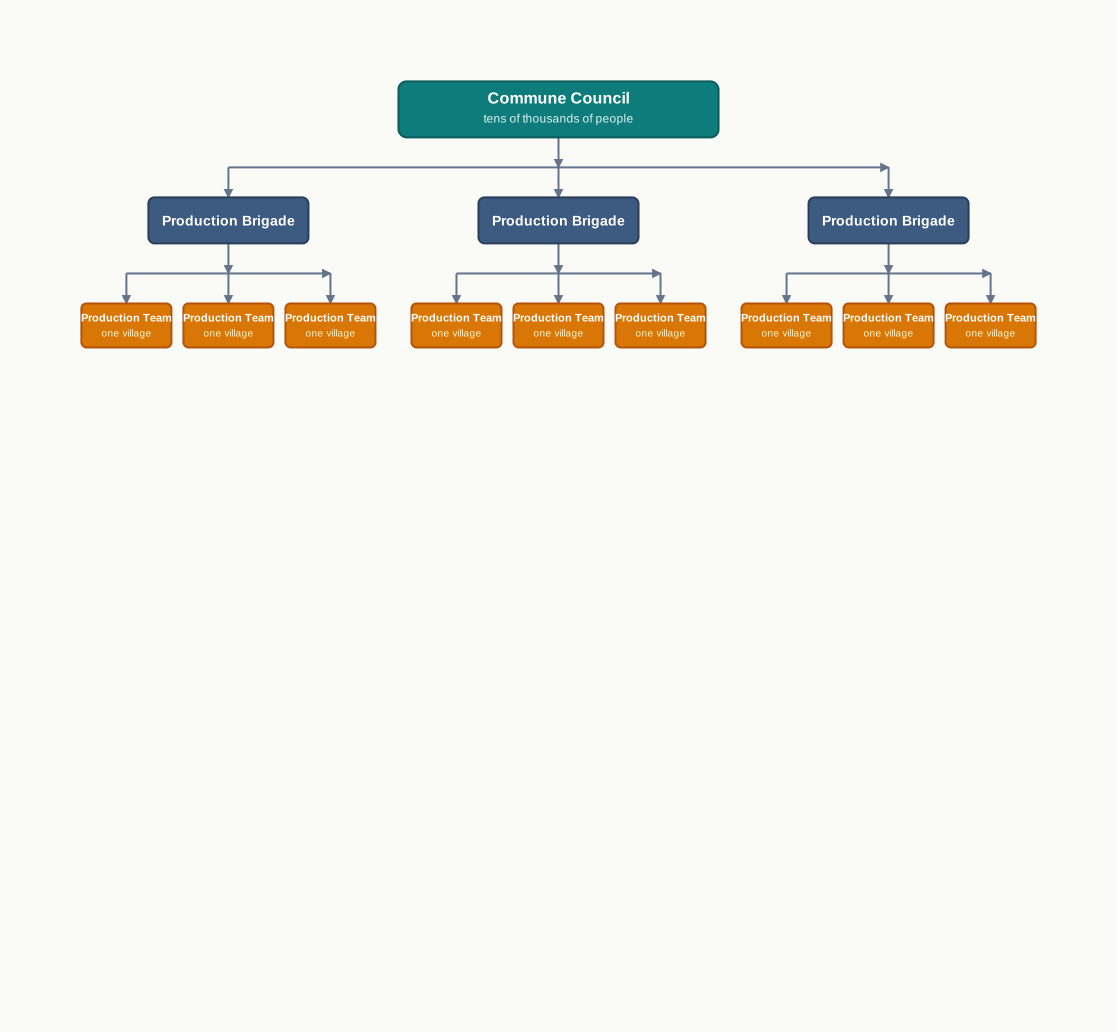
Fig. 8.3 – Three tiers of a people’s commune.
More Than A Farm
The important thing about a commune is that it was not only a farm. It was the lowest working unit of government. Alongside the fields it ran workshops and small factories, schools, clinics, nurseries and crèches, and a part-time militia. It undertook local public works — bridges, roads, canals, small dams. It kept records, settled disputes and carried out the instructions that came down from above.
It also reached into the household. Private plots and privately kept animals were taken into the commune. Communal canteens were opened, where members ate together rather than cooking at home, and for a time food was supplied without close reference to how much work a person had done. Members earned work points for labour, which determined their share of what the team produced.
Freeing women from separate household cooking and childcare was one of the stated purposes of the canteens and crèches, and it did draw large numbers of women into field and construction work.
8.4.3 The Change In Industrial Policy
The Leap reversed the industrial strategy of the First Five Year Plan. Instead of concentrating investment in a few large plants built to imported designs, industry was to be dispersed into the countryside, built cheaply and run by the communes themselves.
Small workshops were set up to make and repair the things farming needed — ploughs, hoes, cart parts, simple pumps. Larger commune projects took on brick kilns, fertiliser making and construction work. In principle this was sensible: a village that can repair its own tools does not wait months for a factory two provinces away.
The Backyard Furnaces
The best-known measure went much further. Communes were told to make iron and steel themselves, in small clay furnaces built in yards and fields. Hundreds of thousands of these backyard furnaces were put up across the country, fired with wood and charcoal and fed with whatever iron could be found.
The physics did not cooperate. Producing usable steel requires very high, sustained temperatures and careful control of impurities, neither of which a small improvised furnace can deliver. What came out was mostly brittle pig iron that no machine shop could use.
The costs were real even though the product was not. Trees were cut for fuel. Cooking pots, tools and even farm implements were melted down to meet quotas, so that useful iron became useless iron. Most damaging of all, the furnaces demanded labour, and they demanded it in 1958 at exactly the season when the crop was standing in the fields waiting to be harvested.
Those fields, and what happened to the harvest that came out of them, are where the assessment of the Great Leap Forward has to begin.
8.5 Assessing The Great Leap Forward
Assessing a policy means asking what it set out to do, what it actually did, and how we know. The Great Leap Forward is a hard case, because its short-term results and its long-term results point in different directions, and because for twenty years the evidence needed to judge it was not published.
Fig. 8.4 gives the sequence the assessment has to account for.
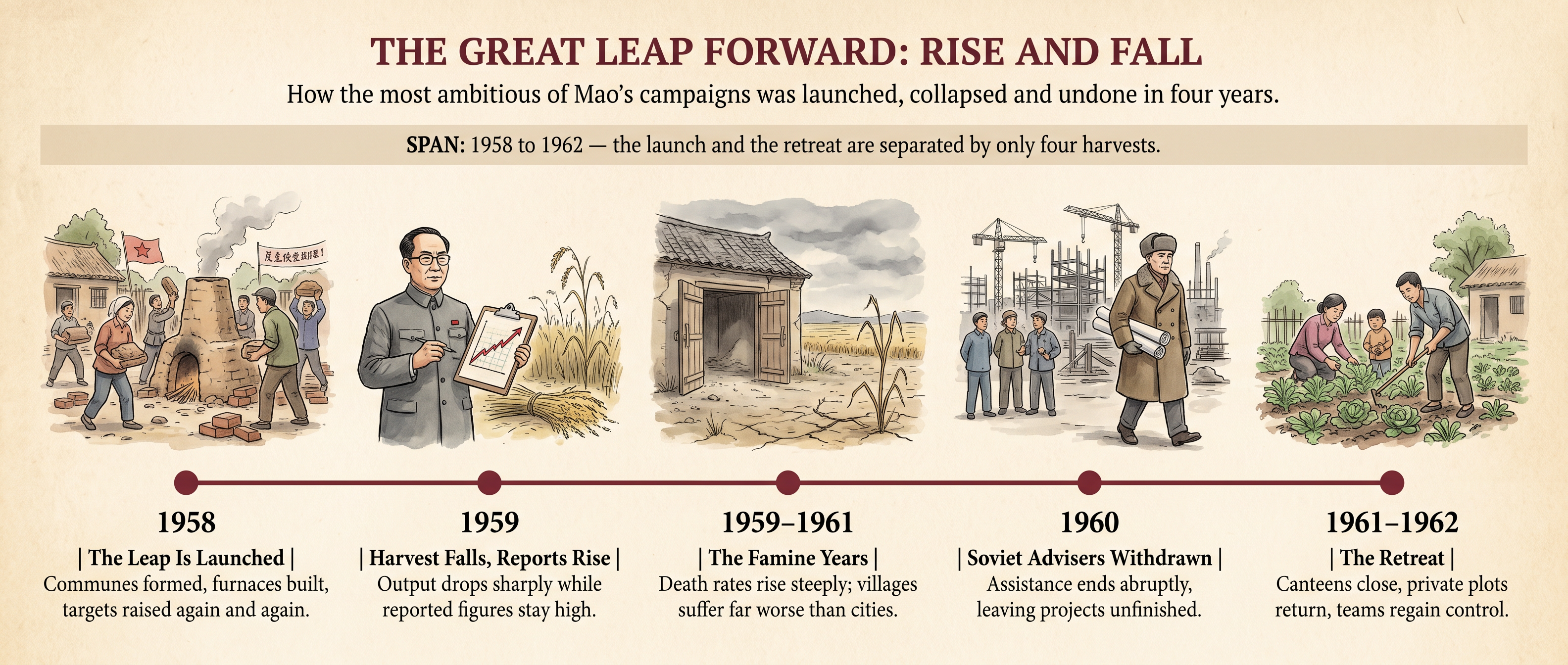
Fig. 8.4 – The Leap And Its Reversal.
8.5.1 What Went Wrong
The failure was not a single mistake. Several went wrong at once, and each made the others worse.
Labour was taken out of farming at the wrong moment. Building furnaces, dams and roads in 1958 pulled millions of workers away from fields at harvest, and part of an unusually good crop was never brought in.
Farming methods were changed on bad advice. Communes were pressed to plant seed much closer together and to plough far deeper than usual, on the theory that both would raise yields. Neither did. A campaign to destroy crop-eating birds removed a predator of insects, and pest damage rose.
The Figures That Lied
The most dangerous failure was in information. Officials at every level were under intense pressure to report success, and reporting a poor harvest was treated as a political fault rather than a fact. So the figures were inflated — a little at the team, more at the brigade, more again at the province.
The state then took its share of grain as a proportion of the reported harvest, not the real one. Where reports had been doubled, collection could strip a village of the grain it needed to eat and even of the seed it needed to sow. Fig. 8.5 sets out how this worked step by step.
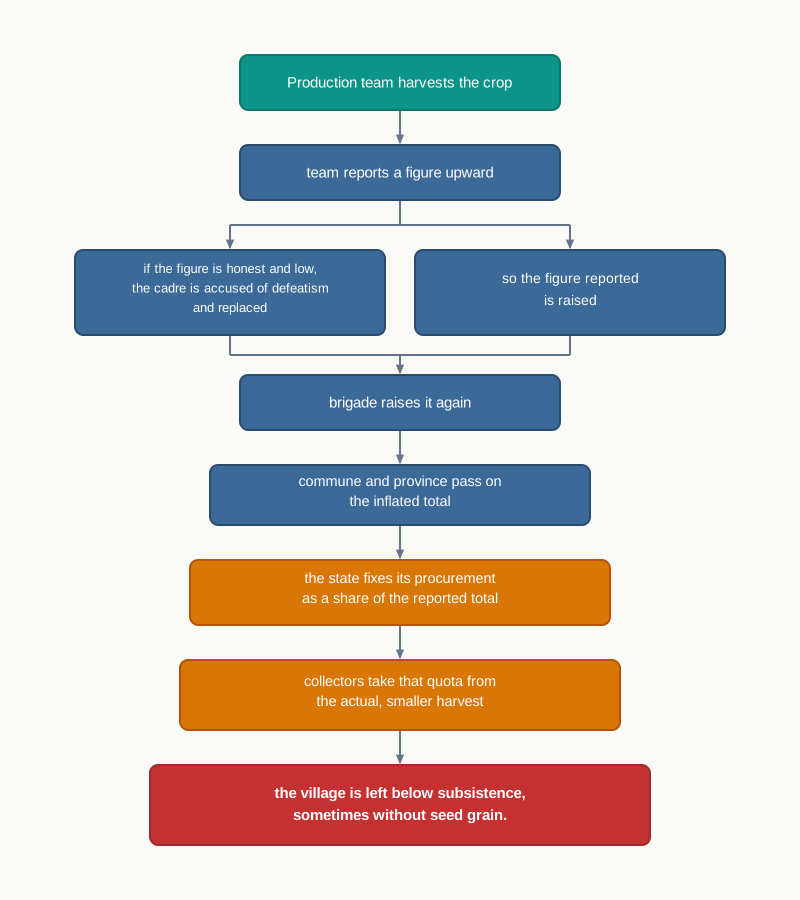
Fig. 8.5 – How an inflated figure became a famine.
Two further pressures arrived at the worst possible time. Poor weather — drought in some regions, floods in others — hit the harvests of 1959, 1960 and 1961. And in 1960 the Soviet Union withdrew its advisers, so unfinished projects stalled just as the crisis deepened.
Meanwhile the state went on collecting grain, and went on exporting some of it, partly to meet the debts described in Section 8.3. Food was leaving a countryside that had none.
The Human Cost
The result was the deadliest famine of the twentieth century. Its scale is now estimated at many millions of excess deaths — that is, deaths above the number that would normally have been expected in those years. Estimates differ widely, from around fifteen million at the lower end to well over thirty million at the higher, and the range itself tells you something about how the counting is done.
Nothing in the official record of 1959 to 1961 announced this. It became measurable only much later, when population counts taken decades apart could be compared, in the way the opening pages of this chapter described. The base figures the estimates rest on were released in China only around 1980.
8.5.2 What The Leap Achieved
An honest assessment has to record what survived, and something did.
The communes themselves outlasted the campaign by twenty years. Once the extreme features were dropped, they proved to be workable units of rural administration — collecting information, organising labour for public works, and delivering basic schooling and simple health care to villages that had never had either. Much of the rise in rural literacy and the spread of village clinics rests on that structure.
The water-control works were of uneven quality, and some were badly built, but the canals, embankments and reservoirs that held were of lasting value in a country whose farming depends on managing rivers.
Small-scale rural industry, the second idea of the Leap, was also not simply wasted. Backyard steel was a failure, but the commune workshops that made and repaired tools, bricks and fertiliser established a pattern of local industry that mattered in later decades.
Finally, the mobilisation of women into paid collective work, along with canteens and crèches, changed the working lives of many rural women, and that change did not fully reverse.
8.5.3 Weighing The Two
The Leap failed on its own terms. It set out to raise agricultural and industrial output simultaneously; agricultural output collapsed, and the industrial surge of 1958 was followed by a slump as raw materials, transport and workers ran out. By 1961 and 1962 the government was reversing its own policy — closing the canteens, returning private plots, handing day-to-day decisions back to the production team, and importing grain.
The political consequences followed. Mao Zedong gave up the state chairmanship in 1959 and Liu Shaoqi took it, though Mao remained chairman of the party and therefore the country’s most powerful figure.
So how should it be weighed? A campaign that killed on this scale cannot be balanced against reservoirs and village schools, and the attempt to do so misunderstands what an assessment is for. What an assessment can do is explain: it can show that the fatal element was not the commune itself but the destruction of honest information, and that a system which punishes bad news will eventually act on figures that do not exist.
The evidence has limits too. It can establish how many people were missing from the counts. It cannot tell us which decisions in which province cost which lives, because the records that would show that were made by the same officials whose reports caused the problem.
8.6 Ghana: The Road To Independence
The second country in this chapter took a very different road out of foreign rule. Where China’s transformation came out of a long war, the Gold Coast moved from colony to independent state in about a decade, largely through elections, strikes and negotiation.
8.6.1 The Gold Coast Under British Rule
The Gold Coast was a British colony on the coast of West Africa, in the region shown in Map 8.2. Its economy rested on what it could export: gold, timber, manganese and bauxite, and above all cocoa.
Cocoa was a cash crop — a crop grown for sale rather than to feed the household that grows it. It had been taken up by African smallholders in the forest belt with remarkable speed, and by the middle of the twentieth century the Gold Coast was the world’s largest producer. This mattered politically. It meant that a large number of ordinary farmers depended directly on a price fixed in London and New York, and that a colonial government’s decisions about cocoa reached into hundreds of thousands of households.
Map
Map 8.2 Caption: The Gold Coast, which became Ghana in 1957, on the West African coast. Brief: West Africa with present-day boundaries; shade and label Ghana, marking Accra, Tema, the Volta river and the forest cocoa belt; show the approximate area of the medieval empire of Ghana far to the north-west with a dotted outline and a note that the two do not coincide; do not shade neighbouring states.
The country was also unusually well supplied with educated Africans — lawyers, teachers, clerks and traders — many trained in Britain. British rule had depended on them to run its offices, and it was among them that the demand for self-government first took organised form.
The Grievances Of The Late 1940s
Three pressures came together after the Second World War. Prices had risen sharply, and imported goods were both scarce and expensive. Soldiers who had served in the British forces came home to unemployment and to a colonial order that looked much less permanent than before they left. And cocoa farmers were furious at a government campaign to cut down trees infected with a plant disease, which destroyed millions of trees that farmers regarded as still productive.
In 1948 these grievances broke into the open. A boycott of European-owned trading firms spread through the towns. In February a march of ex-servicemen going to present a petition to the governor at Accra was fired on by police, and men were killed. Rioting followed in Accra and other towns.
8.6.2 Nkrumah And The Convention People’s Party
The main nationalist organisation at that point was the United Gold Coast Convention, formed in 1947 by lawyers and businessmen, among them J. B. Danquah. Its method was to press, respectably and gradually, for self-government. In 1947 it invited a young Gold Coast man then living abroad to come home and run it as general secretary.
That man was Kwame Nkrumah. He had studied in the United States and in London, and had been active in movements arguing that Africa’s colonies should be free and should act together. He returned with a very different idea of what a nationalist party should be.
After the 1948 riots, Nkrumah and other leaders, including Danquah, were arrested and detained. The episode made Nkrumah a national figure, and it also exposed the gap between him and the party’s founders. They wanted self-government in the shortest possible time; he wanted it immediately, and he wanted a party built on the people who had been in the streets.
In 1949 he broke away and founded the Convention People’s Party, with the demand ‘Self-Government Now’. The CPP did what the older party had not: it organised clerks, market women, drivers, miners, cocoa farmers and school-leavers into a mass movement with branches across the country.
In 1950 the party launched Positive Action — a campaign of strikes, boycotts and non-cooperation, deliberately modelled on non-violent methods. The colonial government declared an emergency and imprisoned Nkrumah.
8.6.3 From Self-Government To Independence, 1951–1957
Britain had already begun to move. A new constitution provided for a legislative assembly with directly elected members, and elections were held in 1951. The CPP won 34 of the 38 seats chosen by popular vote, with its leader still in prison.
The governor released Nkrumah and invited him to lead the government. In 1952 he became Prime Minister. From that point the Gold Coast governed itself in most internal matters while Britain retained control of defence, foreign affairs and finance — an arrangement designed to test whether the CPP could actually run a state.
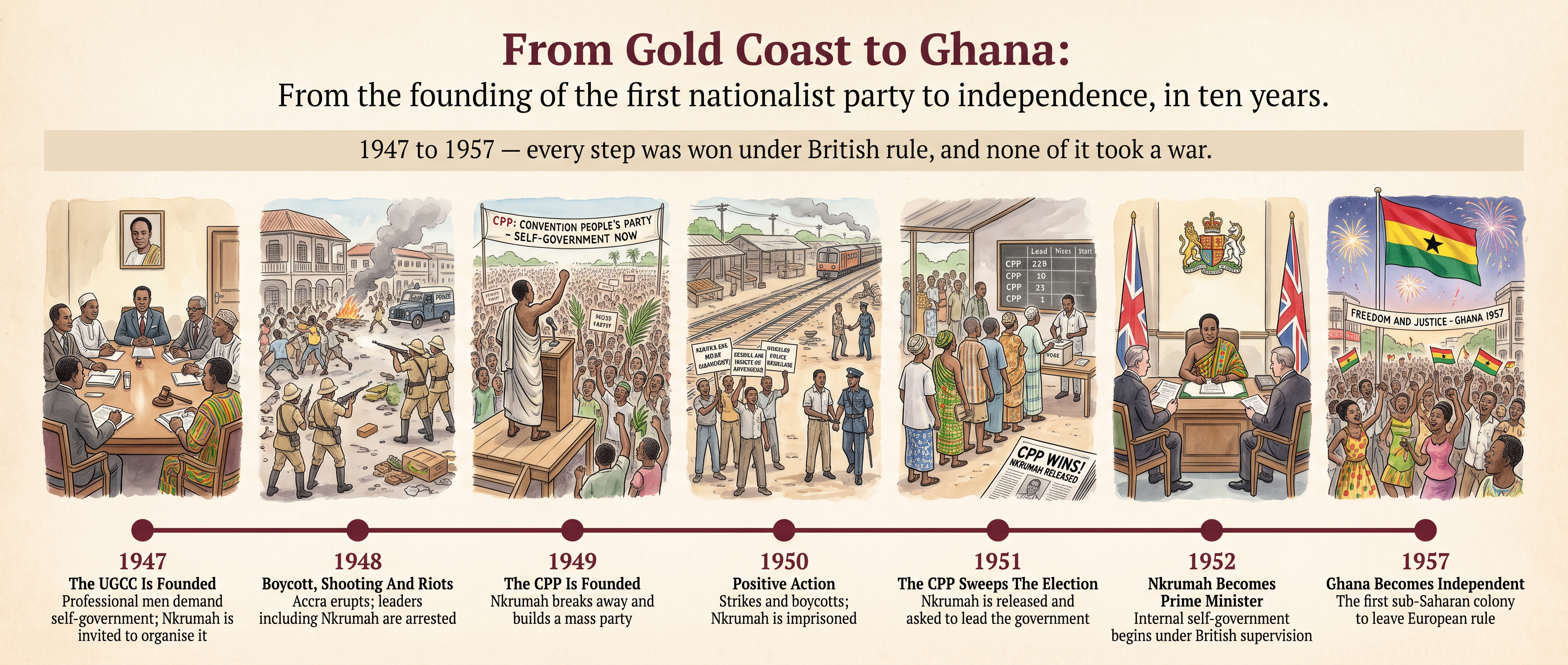
Fig. 8.6 – The Gold Coast Becomes Ghana.
Further elections in 1954 and 1956 kept the CPP in office, though not without serious opposition, particularly from a movement based in the cocoa-growing region of Ashanti which wanted a federal constitution rather than a strong central government. That argument about how much power the centre should hold did not disappear at independence, and it matters for the next section.
On 6 March 1957 the Gold Coast became independent. It took the name Ghana, after a medieval West African empire — one that had in fact lain far to the north-west, in the region of present-day Mali and Mauritania, and had no direct connection with this territory. The name was chosen as a claim to an African past older than colonial rule.
Nkrumah announced the moment in a speech to an enormous crowd in Accra that night.
The words did two things at once. They named a country that had not existed under that name a day earlier, and they addressed the crowd as its citizens rather than as subjects. What they did not describe was the machinery of the new state, which was inherited almost unchanged from the colonial government — the same civil service, the same police, the same emergency powers.
Ghana was also the first colony in sub-Saharan Africa to make this transition, and it was watched everywhere. What happened in the nine years that followed is the subject of Section 8.7.
8.7 Ghana Under Nkrumah, 1957–66
Ghana was governed by the same man and the same party from independence until 1966. Those nine years produced both a serious programme of development and the steady dismantling of the constitutional government the country had started with.
It is tempting to treat these as two phases, achievement first and dictatorship afterwards. They were not. The detention law came in the second year, and the largest dam was finished in the last. The two ran together, and part of the argument about Nkrumah is whether they were connected.
8.7.1 The Early Achievements
Nkrumah’s economic outlook was socialist. He believed that a newly independent African state could not wait for private investors to arrive, and that the government itself had to build industry, power and transport quickly.
Cocoa remained the earner. Output was pushed up substantially in the first years after independence, and forestry, fishing and cattle-rearing were expanded, while gold and bauxite mining were developed further. The revenue was directed into public projects rather than left to the export trade.
Building The Physical Country
The largest of those projects was on the Volta river. A dam was built at Akosombo to generate electricity for industry and towns, alongside a new deep-water harbour and industrial town at Tema, connected to the capital by the country’s first motorway. An aluminium smelter at Tema was to use the dam’s power and the country’s bauxite.
Money also went into services. An education law of 1961 made primary schooling free and compulsory, and school building expanded rapidly across the country. Clinics and hospitals were built, and village projects put in roads and schools in rural areas that colonial spending had largely ignored.
Ghana In The World
Nkrumah’s standing outside Ghana was greater still. He was the leading voice of Pan-Africanism — the belief that Africa’s newly independent states shared a common interest and should act together, ideally as a federation, rather than separately.
Ghana hosted conferences of African political movements, supported independence campaigns elsewhere on the continent, and was a founding member of the Organisation of African Unity, established in 1963 at Addis Ababa in Ethiopia. Ghana remained in the Commonwealth while building close links with the Soviet Union and China, and Nkrumah’s name carried weight far beyond a country of a few million people.
8.7.2 The Turn To One-Party Rule
The legal narrowing began almost at once. Laws passed in 1957 allowed the government to deport people it regarded as undesirable and banned political parties organised around a region, an ethnic group or a religion. The second measure had a defensible purpose — the opposition that worried the CPP most was regionally based — but it also removed the opposition’s strongest form of organisation.
In 1958 came the Preventive Detention Act, which allowed the government to detain people without trial for up to five years. It was used against political opponents, and later against critics inside the CPP itself. Legislation the same year brought the trade unions under a single centrally controlled body and made most strikes unlawful, which stripped the party’s own original supporters of their main weapon.
In 1960 Ghana became a republic and Nkrumah became President, with far greater powers than a Prime Minister had held. When railway workers struck in 1961 against an austerity budget, the strike was broken and its leaders detained.
Removing The Checks
The courts went next. When a treason trial in 1963 ended in acquittals the government did not want, Nkrumah dismissed the Chief Justice and had the verdict set aside. A judiciary that can be sacked for its judgements is no longer a check on anything.
In 1964 a referendum made the CPP the only lawful party in Ghana and confirmed Nkrumah in the presidency for life. Criticism was no longer permitted even within the party. Meanwhile his personal standing was built up deliberately: he took the title Osagyefo, and his portrait appeared on the coins, the stamps and the public buildings of the country.
The most damaging single case was that of J. B. Danquah, the senior figure of the older nationalist movement and once Nkrumah’s own employer. Detained without trial under the 1958 Act, he died in prison in 1965. For many Ghanaians that death settled the question of what the government had become.
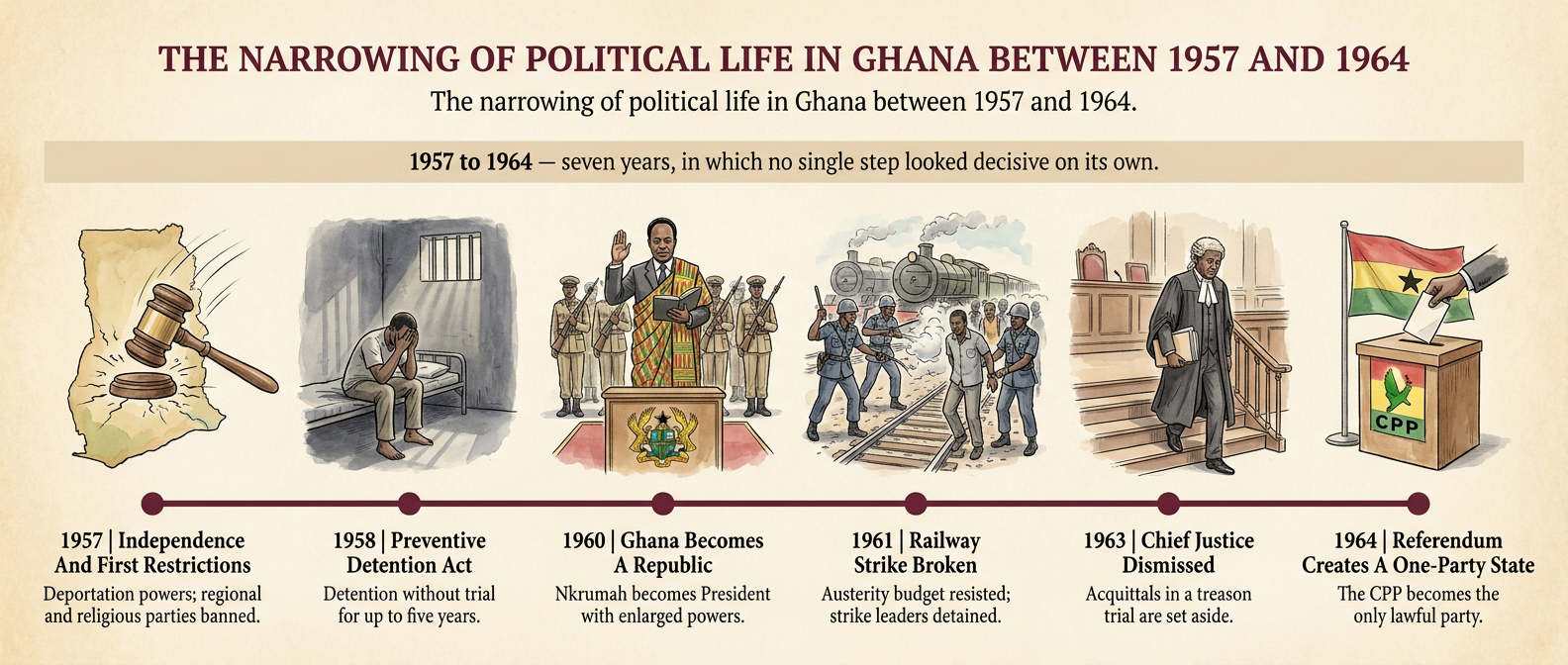
Fig. 8.7 – From Independence To One-Party Rule.
By the middle of the 1960s Nkrumah’s government had removed almost everyone who could tell it that something was going wrong. Section 8.8 examines what was in fact going wrong, and how the government fell.
8.8 The Overthrow Of Nkrumah
On 24 February 1966 the army and police seized power in Ghana while Nkrumah was out of the country. The government that had led the first sub-Saharan colony to independence fell in a few hours, and almost nobody defended it.
Explaining that requires three separate strands: an economy that had run out of money, a base of support that had been driven away, and an army with its own grievances.
8.8.1 Cocoa, Debt And The Economic Crisis
Ghana had come to independence in an unusually strong financial position. Years of high cocoa earnings, much of which the government’s marketing board had held back rather than paid to farmers, had built up large reserves abroad.
Those reserves were spent within a few years, and the development programme continued on borrowed money. Nkrumah’s calculation was straightforward: build the dam, the harbour, the factories and the schools now, and repay from rising cocoa revenue later.
The Price Collapse
The calculation failed at exactly the wrong point. Ghana and other producers expanded cocoa output steadily, world supply outran demand, and the price fell heavily in the early and middle 1960s. Ghana’s main earner was worth far less at precisely the moment its debts came due.
The consequences reached everybody. Imported goods became scarce and expensive, prices rose, and the state corporations that were supposed to industrialise the country ran at a loss. Critics pointed at expensive prestige projects — the motorway from Accra to Tema was a favourite example — and asked what they had been for.
The farmers who grew the crop were hit hardest and felt it as a betrayal. The marketing board paid them well below the world price in good years, using the difference to fund the state. When the world price fell, the producer price fell with it. The cocoa districts had been part of the movement that made the CPP; they were now taxed by it and had no way to say so.
8.8.2 Repression, Corruption And Lost Support
The political costs described in Section 8.7 now came due as well. A government that has detained its critics, absorbed the unions and made itself the only lawful party has also removed every early warning system it possessed.
Repression fed on itself. Nkrumah survived more than one attempt on his life in the early 1960s, and each was followed by further detentions and by a larger security apparatus around the President.
Corruption made it worse. Ministers and party officials grew visibly rich on contracts and licences while shortages tightened for everyone else, and the accusations reached Nkrumah himself. Whether or not every charge was true, the belief was general, and belief is what determines whether people defend a government.
8.8.3 The Army Takes Over, 1966
The final strand was military. Nkrumah did not trust the regular army, which had been trained by the British and whose senior officers he suspected. He built up instead a heavily armed presidential guard, separately equipped and trained with foreign assistance, while the regular army was left short of pay and equipment. In 1965 he dismissed its senior commanders.
The effect was to create precisely the resentment he feared. Officers saw a rival force being favoured over the national army, and saw their own careers ended at the President’s word.
In February 1966 Nkrumah left Ghana on a foreign mission, travelling towards Beijing and Hanoi. While he was away, army officers and the police commissioner acted together, seized the broadcasting station, the airport and the ministries, and announced that the government had been removed. Power passed to the National Liberation Council, a body of senior officers and police.
Nkrumah did not return. He was given asylum in Guinea, in West Africa, whose president received him with honour, and he lived out his life in exile.
In Accra, crowds pulled down the statue of him that stood before the parliament building.
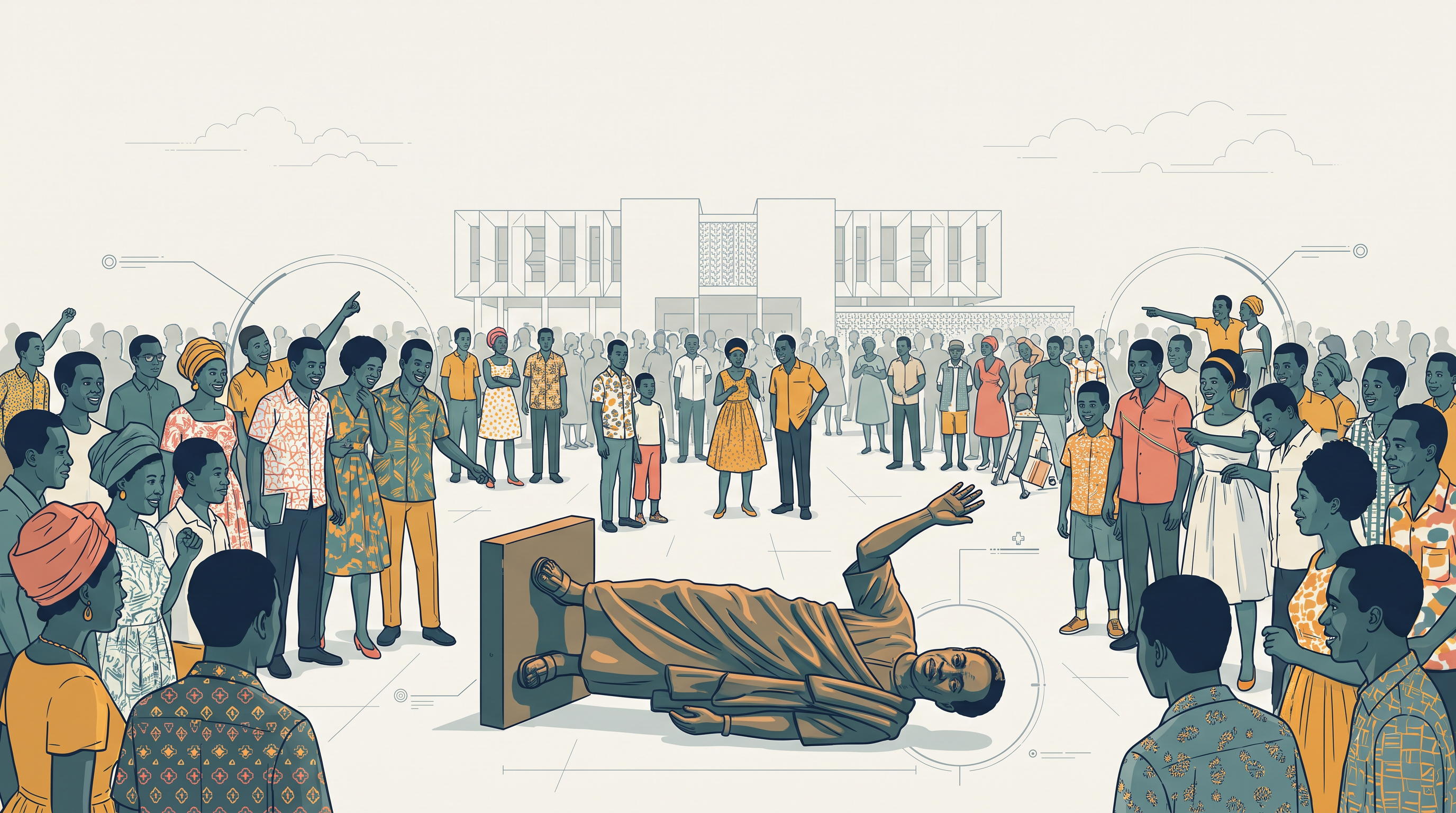
Fig. 8.8 – Crowds with the toppled statue of Nkrumah, 1966.
Ghana’s nine years of independence had produced a dam, a harbour, thousands of schools and a national name that carried weight across Africa. They had also produced detention without trial, a single legal party and an economy that could not pay its debts. Both halves of that record belong to the same government, and any judgement of Nkrumah has to hold them together.
8.9 Kenya: Settlers, Land And The Rise Of Nationalism
The third case in this chapter is the hardest of the three, and the reason is simple. Ghana had almost no permanent European population. Kenya had one, settled on the best land in the country, and its members did not regard themselves as visitors.
8.9.1 The White Highlands And The Land Question
Kenya lies on the East African coast and highlands, and its central highlands are fertile, well watered and cool enough for European farming. When Britain built a railway inland at the turn of the twentieth century, it needed the line to pay for itself, and encouraged European settlers to farm the highlands and produce for export.
To make that possible, land was taken. Large areas of the highlands were declared available for European settlement and closed to African ownership — the region became known as the White Highlands. Africans who had farmed or grazed there were moved into defined reserves, areas set aside for particular communities, with fixed boundaries that could not expand as populations grew.
Map
Map 8.3 Caption: Kenya in the 1950s, showing the highland areas reserved for European settlement and the African reserves around them. Brief: Kenya with mid-twentieth-century internal boundaries; shade the White Highlands and the neighbouring African reserves in contrasting tones; mark Nairobi, Mombasa, Mount Kenya and the Aberdare range; state the period in the caption and note in a key that these boundaries no longer exist.
The people most affected were the Kikuyu, whose farming lands lay in and around the central highlands, and pastoral communities such as the Maasai, whose grazing grounds were reduced and shifted.
Making Africans Work For Wages
Taking land was only half the system. A settler farm needs labour, and Africans with enough land of their own had no reason to work for wages on somebody else’s.
So taxes were imposed that could be paid only in cash, which meant working for it. Every African man had to carry an identity pass, the kipande, recording his employment, which made it difficult to leave a job or move without permission. And many Kikuyu families lived on settler farms as squatters, working for the owner in exchange for the right to cultivate a patch of his land and graze a few animals.
After the Second World War that last arrangement was squeezed hard. Settler farming was becoming more commercial and more mechanised, and squatters’ cultivation rights and livestock were cut back or withdrawn. Families that had lived on those farms for a generation were pushed off, and the reserves they were sent back to were already full.
The war had changed expectations as well. Kenya had been an important British military base, and Kenyan soldiers served in British forces overseas. Men who had fought for Britain came home to a country where they could not own land in the highlands, could not vote, and had to carry a pass. Meanwhile, the government settled British ex-officers on highland farms after the war, so that the settler community grew and became, if anything, more confident.
The numbers involved are worth holding on to. The European population of Kenya ran to a few tens of thousands. The African population was more than five million. There was also a substantial Asian community, mainly traders and railway workers, with its own separate and restricted position. A small minority held the land and the political rights.
8.9.2 The Kenya African Union And Kenyatta
African political organisation had existed in Kenya since the 1920s, but it took national form after the war in the Kenya African Union. The KAU’s demands were constitutional rather than revolutionary: African representation in government, an end to the pass system and the colour bar, and above all access to land in the highlands.
Its position in the political system was weak by design. Africans had no elected representation at all. A handful of African members sat on the Legislative Council, nominated by the governor rather than chosen by voters, in a council of more than fifty.
In 1947 the KAU elected as its president a man who had been away from Kenya for most of the previous fifteen years, and who became the central figure in everything that followed.
Kenyatta’s method in these years was public campaigning and negotiation. He addressed enormous meetings, and he pressed the demands of the KAU on a colonial government that conceded very little.
That was the problem. By the early 1950s the constitutional route had produced almost nothing, while the squeeze on squatters and the landless was worsening every year. Younger and poorer men, in the reserves and in Nairobi, were drawing a different conclusion about what would work. Section 8.10 follows what happened when they acted on it.
8.10 Emergency And Conflict, 1952–1960
In October 1952 the colonial government declared a state of emergency in Kenya. It lasted until January 1960. Those eight years decided that Kenya would become independent, and they also determined what kind of country it would be at independence.
Fig. 8.9 sets out the shape of the period before we examine its parts.
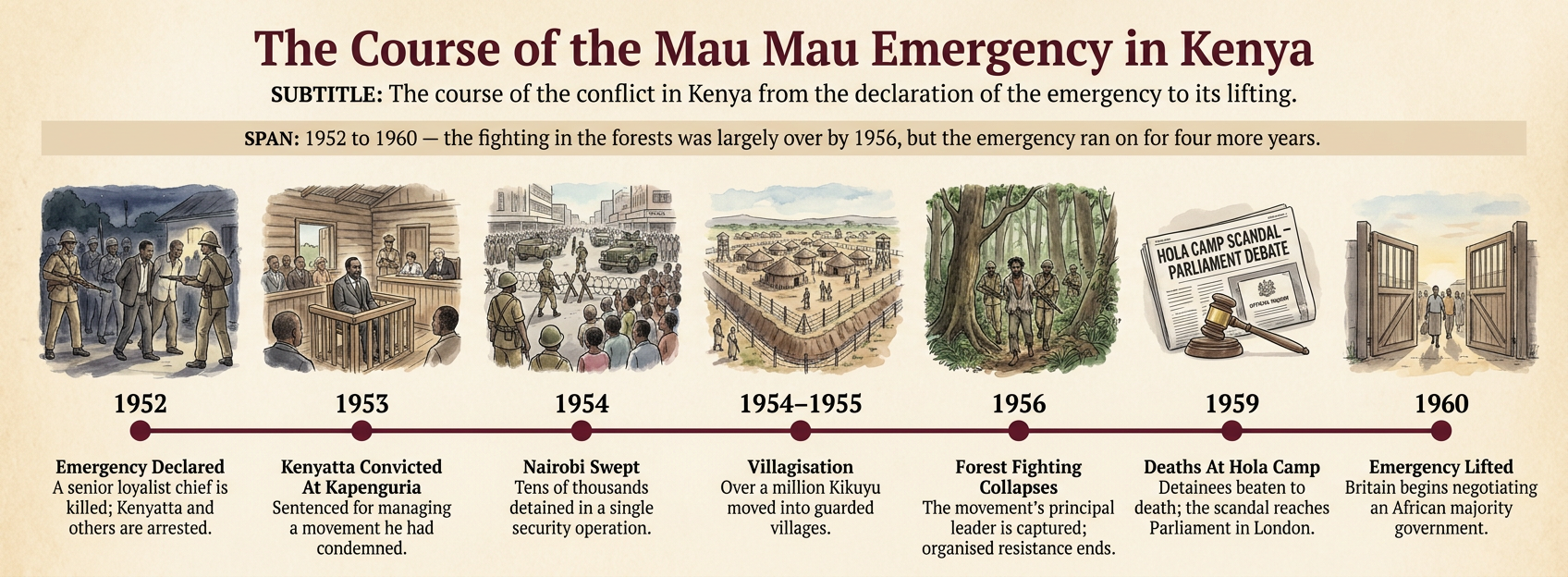
Fig. 8.9 – The Emergency Years.
8.10.1 The Mau Mau Revolt
The movement that gave the emergency its name is usually called Mau Mau. Its own fighters generally called themselves the Land and Freedom Army, and the two names carry different claims — a point Section 8.10.2 returns to.
Its members came overwhelmingly from the people who had lost most: evicted squatters, landless young men in the crowded Kikuyu reserves, and the unemployed of Nairobi. Its demands were land and self-government, in that order.
Members were bound by oath-taking, a practice adapted from Kikuyu custom to hold together a movement that could not organise openly. From 1952 armed groups operated from the forests of the Aberdare range and Mount Kenya, and attacks began on settler farms, on livestock, and on Africans who worked with the colonial government.
A Conflict Among Kikuyu As Much As Against Settlers
It is important to be accurate about who was killed, because the popular picture is misleading. Attacks on European settlers were what alarmed Britain, but they were a small part of the violence. Around thirty European civilians were killed in the whole emergency. Far more Africans died — chiefs, headmen, Christian converts, Home Guard members and their families on one side, and fighters and detainees on the other.
Kikuyu society split. Some families had land, position or church connections and stood with the government; others had nothing and joined the forest fighters. The emergency was in large part a civil war inside one community, fought under a colonial umbrella.
The killing of a senior loyalist chief in October 1952 was the immediate trigger for the emergency. The government’s first act under it was to arrest Kenyatta and the other leaders of the Kenya African Union.
The Trial At Kapenguria
Kenyatta was tried in 1953 at Kapenguria, a remote place chosen deliberately, and convicted of managing Mau Mau. He was sentenced to seven years’ hard labour, and after that sentence he was not released but held in restricted residence in a distant district.
He had publicly and repeatedly condemned Mau Mau violence. The evidence that he directed it was thin, and the principal prosecution witness later admitted that his testimony had been false. What the trial achieved was to remove the constitutional leadership of African politics — and to turn the man in the dock into the single symbol around which that politics would re-form.
8.10.2 The British Response
The response was overwhelming, and it was directed at a whole population rather than at armed groups alone.
British battalions and African troops of the colonial forces were deployed, aircraft bombed the forest hideouts, and a Home Guard of loyalist Kikuyu was armed and used for much of the fighting on the ground. In 1954 a single operation sealed off Nairobi and detained tens of thousands of people, sorting them by ethnicity.
The larger measure was villagisation. Between 1954 and 1955 more than a million Kikuyu were moved out of their scattered homesteads into guarded villages, so that the forest fighters could be cut off from food and information. It broke the movement’s supply lines. It also uprooted an entire rural society.
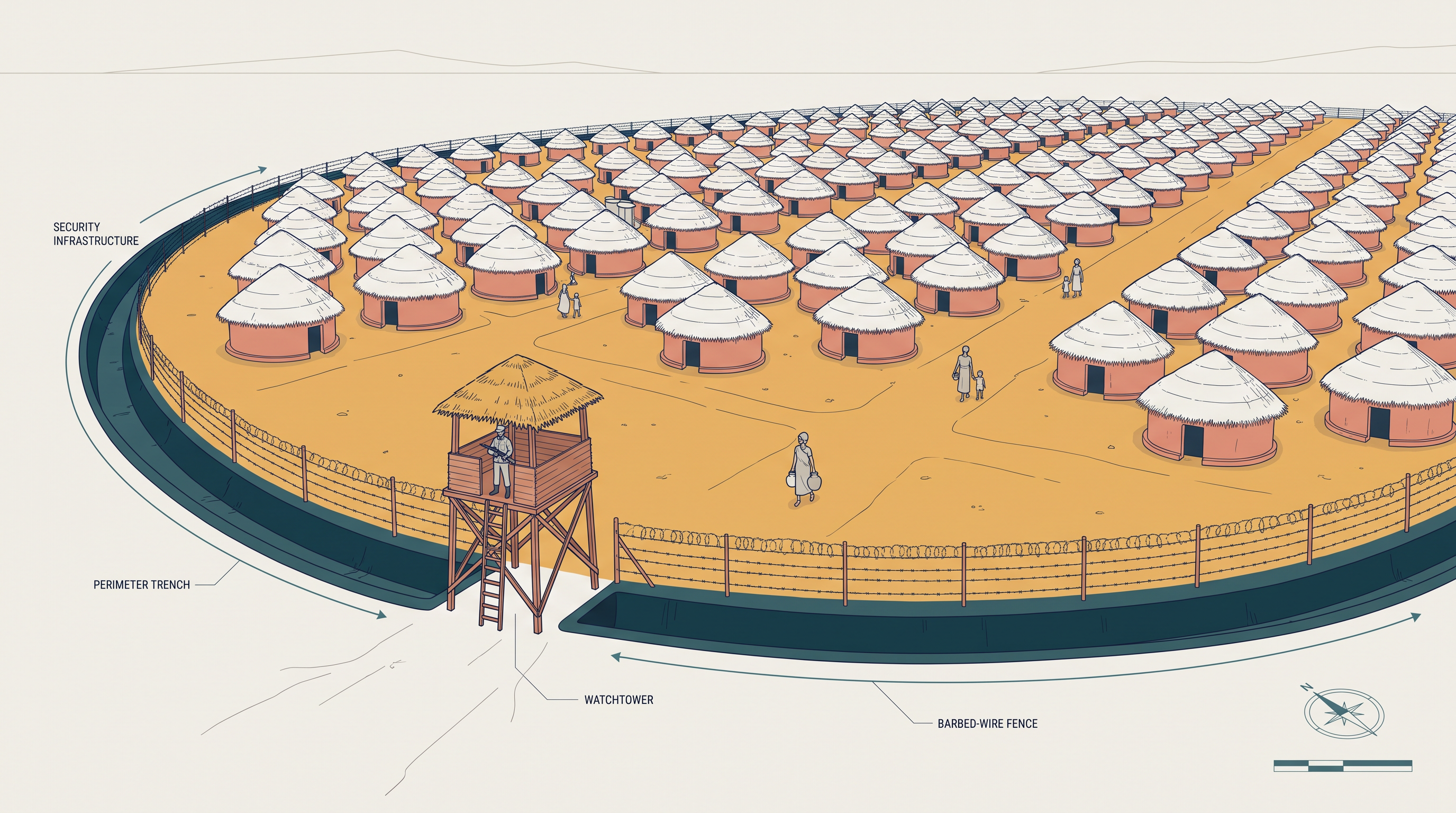
Fig. 8.10 – Guarded village for the Kikuyu, 1954–1955.
Tens of thousands passed through a system of detention camps, with official figures putting the number detained at around eighty thousand and later estimates running considerably higher. Conditions were harsh, forced labour was used, and beatings were common. More than a thousand people were hanged after trial under emergency regulations, and official counts of Africans killed in the fighting exceed eleven thousand, with historians arguing for a substantially larger figure.
By 1956 organised resistance in the forests had collapsed and its principal leader had been captured. Militarily, the emergency was effectively over. It ran on for four more years.
What Changed British Minds
Two things ended it. The first was cost: holding down a whole province with troops, camps and guarded villages was extremely expensive, and Britain was reassessing what its empire was worth.
The second was scandal. In 1959 eleven detainees at a camp at Hola were beaten to death by their guards, and the attempt to describe the deaths as accidental collapsed under scrutiny. The case was raised in Parliament in London and reported widely. A government defending a policy on the grounds that it was restoring order could not easily explain that.
The emergency was lifted in January 1960. By then African political parties had been permitted again, the first African members had been directly elected to the Legislative Council, and the question had changed. It was no longer whether Africans would govern Kenya, but when, and under whom.
8.11 Independence And The Role Of Kenyatta, 1960–1964
Between the lifting of the emergency and the declaration of a republic lie four years of negotiation. Kenya did not win independence in the forests, and it did not receive it as a gift. It was settled at conference tables in London, by people whose bargaining position had been created by the years just described.
8.11.1 The Wind Of Change
In February 1960 the British Prime Minister, Harold Macmillan, addressed the South African parliament at Cape Town on a tour of the continent, and said something British governments had not said before.
The sentence was an admission. African nationalism, Macmillan went on, was a political fact that had to be accepted, whether or not one liked it, and British policy would have to take account of it. For settlers in Kenya, who had assumed that Britain would protect their position indefinitely, it was a warning that they were on their own.
The Conferences And The Parties
The same year, conferences began at Lancaster House in London to write a new constitution, and Africans were for the first time promised a majority in Kenya’s legislature. African political parties, banned during the emergency, were permitted again, and two immediately formed.
The Kenya African National Union, or KANU, drew on the larger communities, including the Kikuyu and the Luo, and wanted a strong central government. The Kenya African Democratic Union, or KADU, spoke for smaller communities that feared domination by the larger ones, and wanted power dispersed to the regions. Many settlers preferred KADU for exactly that reason.
KANU then did something that decided the next stage. It refused to take office while its chosen leader remained in restriction, and made his release the condition of cooperation. Kenyatta was freed in August 1961, took over the leadership of KANU, and entered the legislature.
8.11.2 Kenyatta In Power
Elections in 1963 gave KANU a clear victory. Internal self-government followed in June 1963 with Kenyatta as Prime Minister, and on 12 December 1963 Kenya became independent within the Commonwealth. Exactly a year later, in December 1964, it became a republic, and Kenyatta became President, combining the headship of state, of government and of the armed forces.
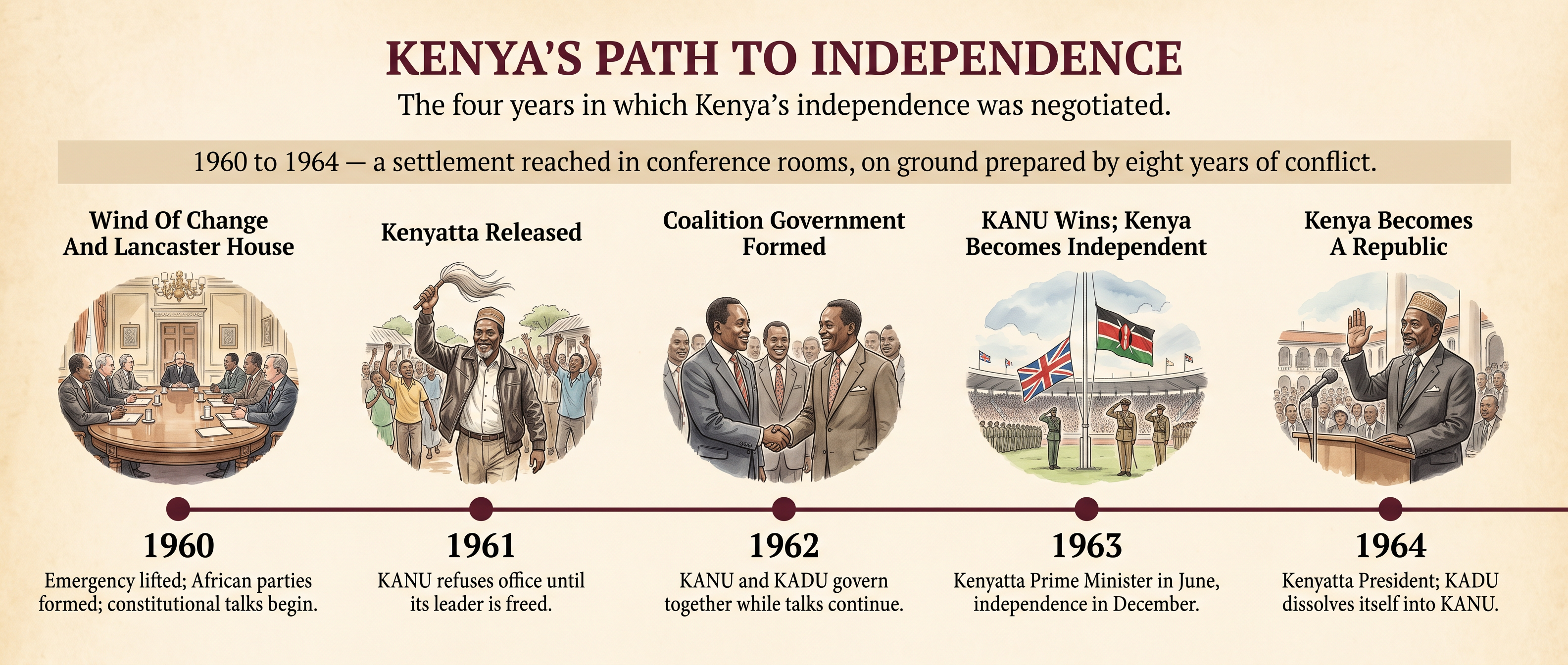
Fig. 8.11 – From Emergency To Republic.
Reconciliation Rather Than Reckoning
What Kenyatta did with power surprised many people on both sides. He had spent nine years in prison and restriction, convicted on evidence that did not hold. He now told Kenyans, settlers included, that the country’s future required them to work together rather than settle accounts, and he adopted as his slogan the Swahili word harambee, meaning to pull together.
Europeans were invited to stay, on the condition that they took Kenyan citizenship. Many did; many others sold up and left. Kenya stayed in the Commonwealth, kept close economic ties with Britain, and reassured foreign investors rather than nationalising their property.
Land was handled the same way — by purchase, not seizure. Settler farms in the highlands were bought, with British loans, and divided among African families under resettlement schemes. The White Highlands ceased to exist as a legal category, and hundreds of thousands of Kenyans obtained land there.
That last step is the heart of the argument about Kenyatta. The transfer was orderly, the economy kept running and the country avoided the collapse that settler flight might have caused. But the men who had gone to the forests over land largely did not get land, the wartime organisation they had fought in remained banned, and a new African landholding class formed on the terms of the old one.
Kenyatta’s own political position moved with it. The radical campaigner of the 1940s governed as a cautious conservative, keeping KANU’s centralising constitution, absorbing KADU when it dissolved itself in 1964, and building an administration around loyalty to himself.
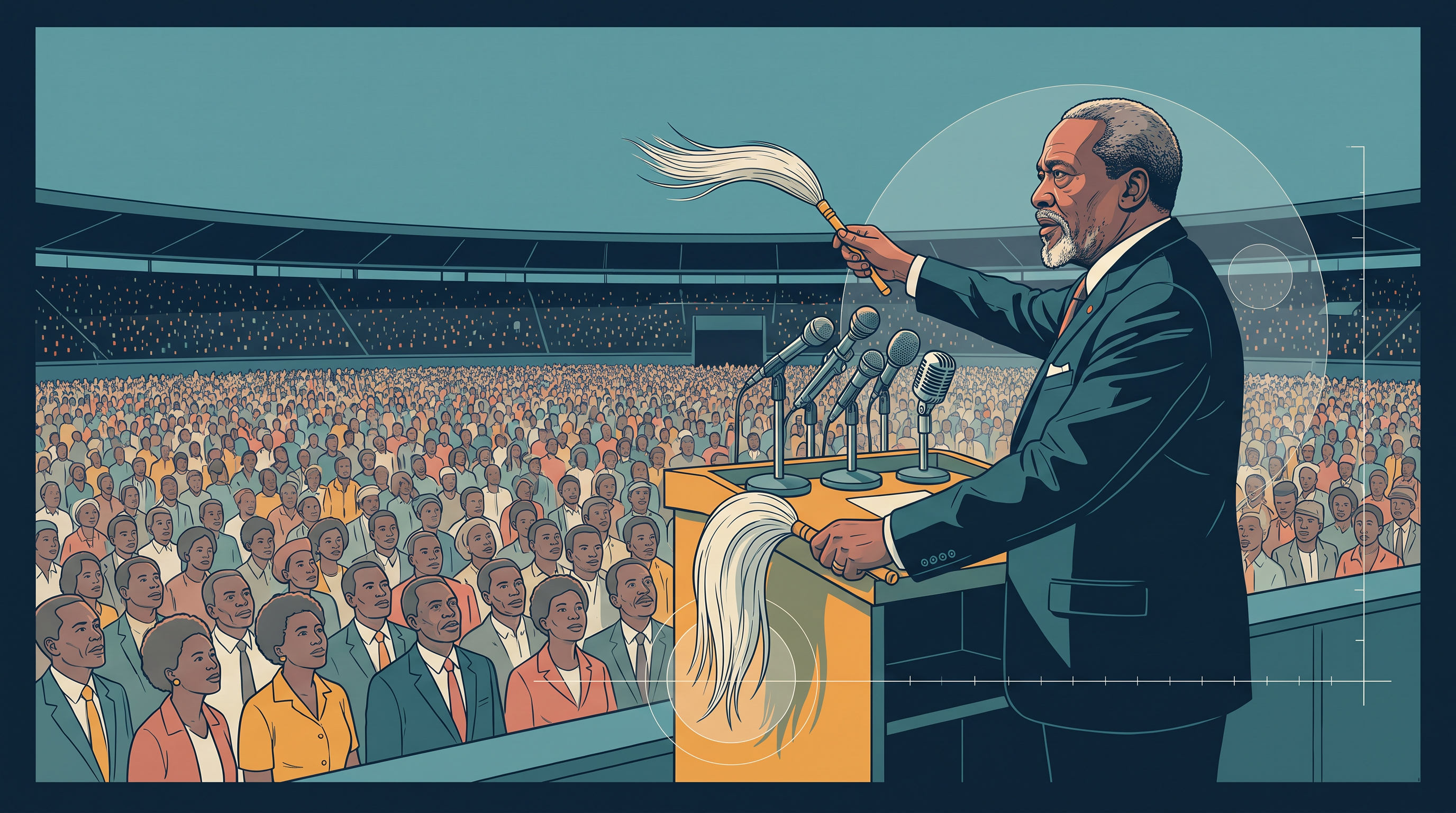
Fig. 8.12 – Jomo Kenyatta addressing a crowd, 1963.
Kenya’s route out of colonial rule was neither Ghana’s nor China’s. It was won by an armed revolt that was militarily defeated, and it was completed by a negotiator whom the same government had imprisoned for that revolt. Both halves are necessary to the explanation, and that is the difficulty this chapter leaves the reader with.
8.12 Summary
China After 1949
- The Communist government that took charge in October 1949 inherited a country wrecked by twelve years of war: broken railways and dykes, a countryside producing too little, almost no modern industry, urban unemployment and a currency destroyed by hyperinflation.
- China’s decolonisation was not the end of a colonial administration but the recovery of full sovereignty — of ports, tariffs, courts and territory that foreign powers and a Japanese occupation had held.
- Rural policy moved in two separate stages. The Agrarian Reform Law of 1950 took land from landlords and gave it to those who worked it, breaking the landlord’s hold on village power as much as redistributing acres. It was frequently violent, and how far the violence was intended is disputed.
- Redistribution left plots too small to produce a surplus or justify machinery, which is the reason collectivisation followed. Mutual aid teams gave way to lower cooperatives and then, in a rapid push across 1955 and 1956, to advanced cooperatives in which land itself became collective property.
- Industrial policy under the First Five Year Plan of 1953–57 copied the Soviet model: nationalise, then concentrate investment in heavy industry. Soviet designs, equipment and advisers built the plants, but the help was credit, repayable in farm produce, and the countryside carried the cost.
- The Great Leap Forward of 1958 reversed that strategy on the argument that China’s real asset was labour, not imported machinery. Communes merged collective farms into units of tens of thousands, ran schools, clinics, canteens, workshops and local government, and absorbed the household’s own plot.
- The Leap failed because information failed. Officials rewarded for reporting success inflated the harvest, the state took its grain as a share of the reported figure, and villages were stripped below subsistence. Bad farming advice, diverted labour, poor weather and continued exports deepened it.
- The result was the deadliest famine of the twentieth century, measurable only decades later by comparing population counts. Policy was reversed in 1961–62; the communes themselves survived, and with them rural schooling, clinics and local industry.
Ghana, 1957 To 1966
- The Gold Coast’s politics were shaped by cocoa: a cash crop grown by African smallholders, whose price was fixed abroad and whose earnings the colonial state controlled.
- Post-war prices, returning ex-servicemen, and the destruction of diseased cocoa trees produced the boycott and shooting at Accra in 1948, after which Britain began conceding constitutional reform.
- Nkrumah’s contribution was a change of method: where the UGCC petitioned as professional men, the CPP after 1949 organised a mass membership and could call strikes and fill squares.
- Independence in 1957 came through elections and negotiation, not war, and made Ghana the first sub-Saharan colony to leave European rule.
- Nkrumah’s government built genuinely — the Akosombo dam, Tema harbour, free and compulsory primary schooling, clinics — while making Ghana the leading voice of Pan-Africanism.
- It simultaneously removed every check on itself: parties restricted from 1957, detention without trial from 1958, unions absorbed, a Chief Justice dismissed in 1963, and a one-party state confirmed by referendum in 1964.
- The fall in 1966 followed from all of it. Development financed by borrowing collapsed when world cocoa prices fell; corruption and repression had driven away the party’s own base; and an army passed over for a presidential guard removed a government almost nobody defended.
Kenya, 1947 To 1964
- Kenya differed from Ghana in one decisive respect: a settler population held the best farmland by law. The White Highlands were closed to African ownership, and taxes, the kipande pass and squatter tenancies pushed Africans into wage labour on settler farms.
- Post-war eviction of squatters created a landless population in full reserves and in Nairobi, and it was from these people that the revolt came.
- Kenyatta, president of the KAU from 1947, pursued constitutional demands that produced almost nothing, since Africans had no elected representation at all.
- The emergency of 1952–1960 was fought mainly among Africans: around thirty European civilians died, while thousands of Africans were killed on both sides, over a million Kikuyu were moved into guarded villages, and tens of thousands were detained.
- Kenyatta was convicted in 1953 on evidence whose principal witness later admitted lying, which removed the constitutional leadership and turned him into the symbol around which politics re-formed.
- Britain changed course because the campaign was expensive and because the deaths at Hola camp in 1959 could not be defended. The emergency was lifted in 1960 and Macmillan’s wind of change conceded majority rule in principle.
- Independence in 1963 and the republic of 1964 were negotiated, not seized, and Kenyatta governed by reconciliation: settlers could stay as citizens, farms were bought rather than confiscated, and land was resold to Africans who could carry the debt — which usually did not include the men who had fought for it.
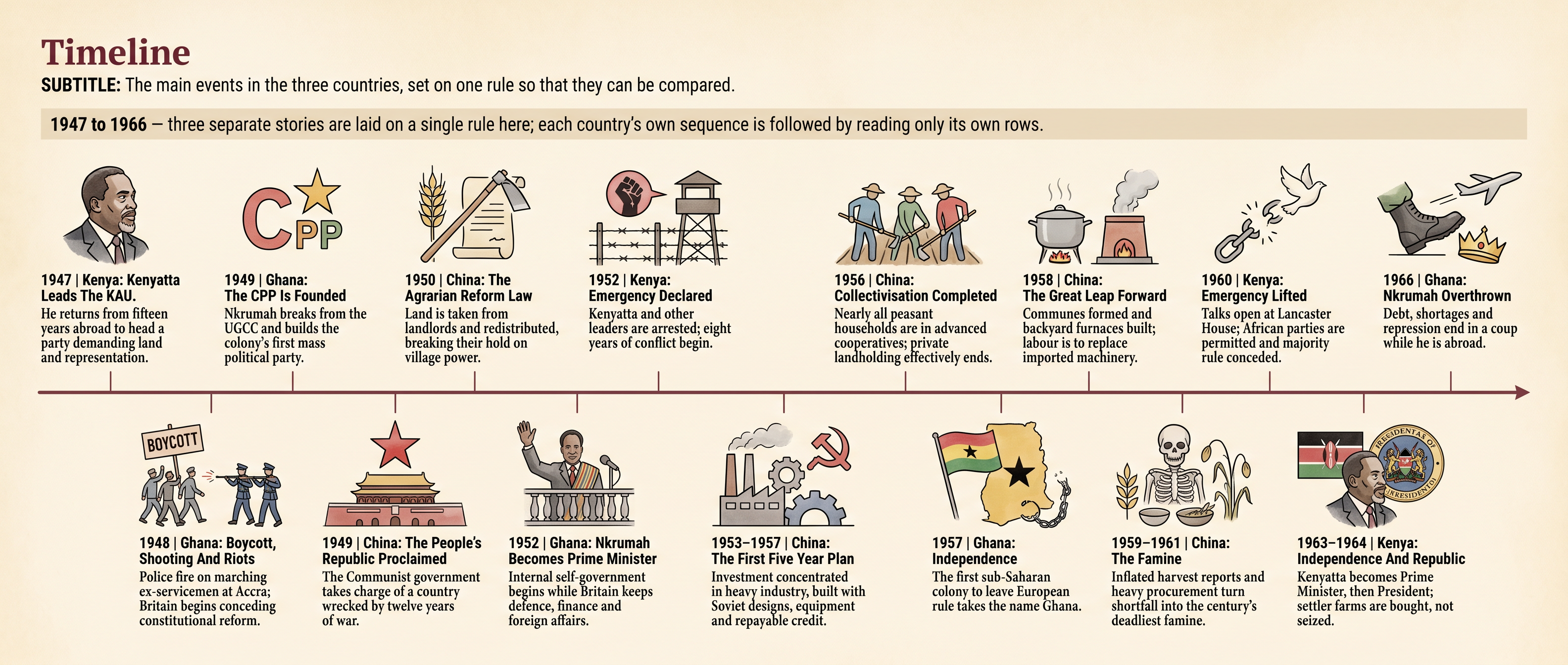
Fig. 8.13 – The Chapter In Sequence.
What The Evidence Cannot Tell Us
Almost everything in this chapter was written down by people with power. Harvest returns were filed by officials rewarded for good news, camp registers were kept by the administration that ran the camps, and independence speeches were made by the men who had just won.
The people whose lives changed most left the least. We have no diaries from the households whose plot was absorbed into a commune, no reliable account from most of the families moved into Kenya’s guarded villages, and only fragments from the cocoa farmers whose price was cut.
That is why so much of this chapter’s evidence is indirect — counts of people, prices, plots and detentions, read years afterwards for what they imply. It establishes scale reliably. It cannot tell us what any of it felt like from inside.
8.13 Check Your Memory
What was a people’s commune? Describe its three tiers, and name three things it did besides farming.
What power did the Preventive Detention Act of 1958 give the government of Ghana, and against whom was it used?
Explain why redistributing land to peasant households in 1950 did not by itself solve China’s food problem, and why the government moved on to cooperatives.
Why did the decision to concentrate investment in heavy industry between 1953 and 1957 place a burden on the Chinese countryside? Explain the connection between imported machinery and the grain the state collected.
Using Fig. 8.5, reconstruct the chain by which an inflated harvest figure ended in an empty village granary. Identify the one step at which the chain could most easily have been broken, and say why it was not.
Read Source 8.2 again. What was Macmillan conceding, and to whom was he saying it? What does the speech not tell you about why British policy in Africa changed?
Look at Map 8.3. Locate the White Highlands and the reserves, and explain how the relationship between them produced a landless African population in the years after 1945.
Ghana and Kenya were both British colonies, and both became independent within seven years of each other. One reached independence through elections and negotiation, the other after an eight-year emergency. Explain the difference, giving particular weight to who owned the land and who grew the export crop.
This chapter notes that the camp registers of the Kenyan emergency were kept by the administration that ran the camps. What does that mean for the detention figures we have? What other kinds of evidence would a historian want, and what could each of them add?
After 1963 Kenyatta invited settlers to remain as citizens and had their farms bought rather than seized. Argue both sides of the assessment that this reconciled the country at the expense of the people who had fought for the land.