Chapter 4: Salient Features of the Constitution of India
On the afternoon of 26 November 1949, a hall in New Delhi fell quiet as the Constituent Assembly of India adopted the document it had been building for two years, eleven months and eighteen days. Across eleven sessions, its members had argued over almost every line — how much power the Centre should hold, which rights a court should be able to enforce, whether a village panchayat deserved a mention. What they finally adopted was not printed on a press. It was written out by hand, in flowing calligraphy by Prem Behari Narain Raizada, and its pages were decorated by artists from Shantiniketan, among them Nandalal Bose. Two copies were signed, one titled Bhartiya Sanvidhan in Hindi and one The Constitution of India in English. Most of it came into force only on 26 January 1950 — the date the Constitution itself calls its commencement, and the date India marks every year as Republic Day. That handwritten book still decides real things today: whether a police officer may hold you without telling you why, whether a State law can be struck down, whether a Parliament with a huge majority may rewrite the Constitution’s own foundations. This chapter is about what is inside it, and why each part is there.
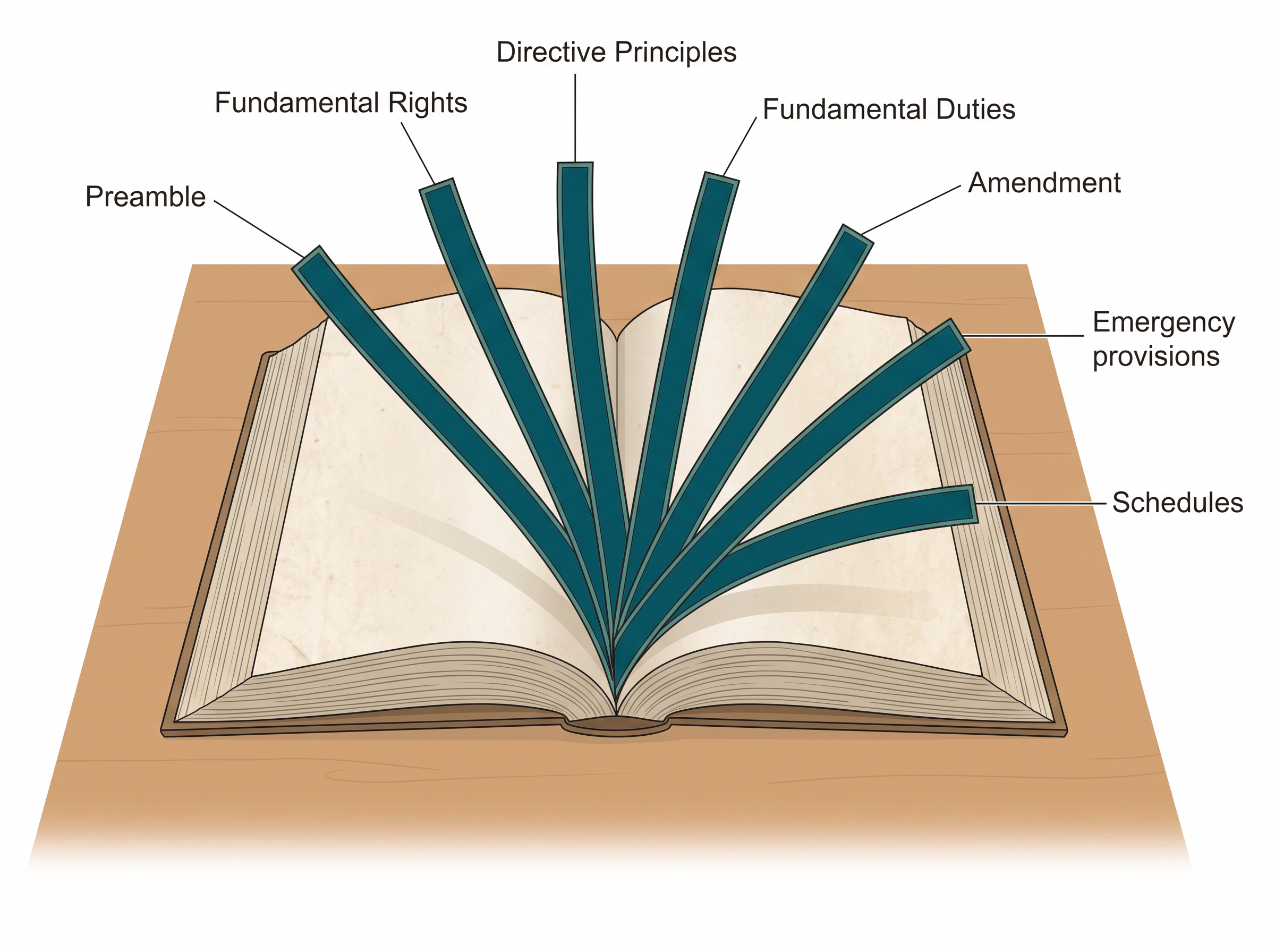
Fig. 4.0 – The Constitution and its core components.
By the end of this chapter, you will be able to answer each of these questions yourself.
4.1 Meaning of the Term Constitution
Any organised group of people, from a school club to a housing society, sooner or later needs to settle a few basic questions. Who decides? How are they chosen? What may they not do, however strongly they feel about it?
A country faces the same questions, but on a far more serious scale, because the answers decide how power is used over millions of people. The document that settles them is called the Constitution.
Where the Word Comes From
The term Constitution is derived from the Latin term “constitutio”, which means ‘to establish’. That root is worth holding on to, because it tells you what the document is for. A Constitution does not merely describe a government that already exists; it brings that government into being and fixes the terms on which it may act.
The Oxford Latin Mini Dictionary describes the Constitution as a ‘body of fundamental principles or established precedents according to which a State or other organization is acknowledged to be governed’.
Two words in that description carry weight. The principles are fundamental, meaning they sit above ordinary rules rather than beside them. And the government is acknowledged to be governed by them, meaning the arrangement is accepted as binding, not merely announced.
What a Constitution Actually Does
Wade & Phillips, in their book ‘Constitution and Administrative Law’, set out the work a Constitution performs. According to them, the Constitution of a country seeks to:
- establish the fundamental or basic or apex organs of government and administration;
- describe their structure, composition, powers and principal functions;
- define the inter-relationship of these organs with one another; and
- regulate their relationship with the people, more particularly the political relationship.
Notice that this description works at two levels. Inward, it sorts out how the organs of government — the legislature, the executive and the judiciary, which you have already studied — stand in relation to each other. Outward, it fixes how all of them stand in relation to ordinary citizens.
The Constitution of a State therefore lays down the duties, powers and functions of the various organs of government. It establishes relationships among the organs, and between the State and its citizens.
The word ‘consenting’ in that definition is not decoration. It answers a question a student should ask early: where does a government get its right to command anyone at all? Under a Constitution, the answer is that the people themselves agreed to be governed on these terms. Authority flows from that agreement, and it flows no further than the agreement allows.
4.2 Definition of the Term Constitution
Explaining what a Constitution does is one thing; defining it is another. Thinkers have tried for well over two thousand years, and the oldest attempt is still one of the most quoted.
Aristotle (384 - 322 BCE) defined Constitution as ‘the way of life which the state has chosen for itself’. It is a wide definition, and deliberately so. Aristotle was not thinking only of offices and powers. He was pointing at the values a political community decides to live by — how it treats its members, what it counts as just, what kind of society it wants to become. On that view, a Constitution is a portrait of a State’s chosen character.
Distinctive Features in the Modern Sense
Understood in its modern context, the Constitution of a State may have the following distinctive features:
- It is a body of rules.
- It may be in a written or unwritten form.
- It determines the powers and responsibilities of the state and the organs of government.
- It may be written in a single document or in several documents.
- It determines the rights and duties of the citizens of a State.
Points 2 and 4 surprise most students, so they are worth pausing on. A Constitution need not be a single printed volume that a country adopts on a fixed date. The United Kingdom, for instance, has no such single document; its constitutional arrangements are drawn from various statutes, judicial decisions and long-settled practices, and are described as unwritten for that reason. India took the opposite route and adopted one detailed written document.
Why It Is Called Fundamental Law
A Constitution is the fundamental law of a State. Ordinary laws are made under it and must answer to it; the Constitution itself answers to nothing above it. The features of the Constitution may vary from state to state, because each country writes its own according to its history and needs.
The government of a state operates in accordance with the principles laid down in its Constitution. That is what makes it more than a statement of ideals. It supplies the standard against which every act of the legislature, the executive and the administration can be tested, and in that way it helps to maintain law and order in the country.
Georg Jellinek (1851-1911) put the point sharply. He argued that in the absence of the Constitution, every individual, every institution and even the government will ignore law and as a result, there will be a ‘reign of anarchy’. His warning is aimed at the government as much as at the citizen. Where no fundamental law fixes the limits of authority, there is nothing an office-holder can be said to have exceeded.
4.3 The Constituent Assembly and the Sources of the Constitution
The Constitution of India, which came into effect on 26 January 1950, holds the distinction of being one of the lengthiest Constitutions in the world. It was adopted earlier by the Constituent Assembly on 26 November 1949. Before studying what the document contains, it helps to know who wrote it and what they wrote it from.
How the Assembly Came Together
After World War II, which ended in 1945, India’s independence from British rule was around the corner. During the winter of 1945-46, general elections for India’s provincial legislatures or assemblies were held. Those legislatures then elected the members of the Constituent Assembly that would draft the Constitution of India.
That two-step method matters. The members were not chosen directly by the people, and they were not nominated by the British either. They were elected by legislatures which had themselves just been elected — an indirect route, but one that gave the Assembly a claim to speak for the country.
Although the Constituent Assembly was ready in place in New Delhi in December 1946, the Muslim League’s demand for a separate Pakistan delayed its work of creating the new Constitution. On August 15, 1947, after the last Viceroy of British India Lord Louis Mountbatten declared India and Pakistan as two independent countries, the Constituent Assembly continued with its mandate to create the new Constitution for India.
Who Sat in the Assembly
The Constituent Assembly had members mostly from the Congress Party, with a few Communists and Independents.
Being largely a one-party body carried an obvious risk: a Constitution written by a single political viewpoint. The Congress Party guarded against it in a practical way, by arranging for some persons distinguished in law and public affairs to be elected to the Constituent Assembly, so that expertise and not just party opinion shaped the text.
India’s first law minister, Bhimrao Ramji Ambedkar, was appointed the Chairman of the Constitution Drafting Committee. It is for this reason that Dr. Ambedkar has been termed the principal architect of the Constitution of India; he is also known as modern Manu.
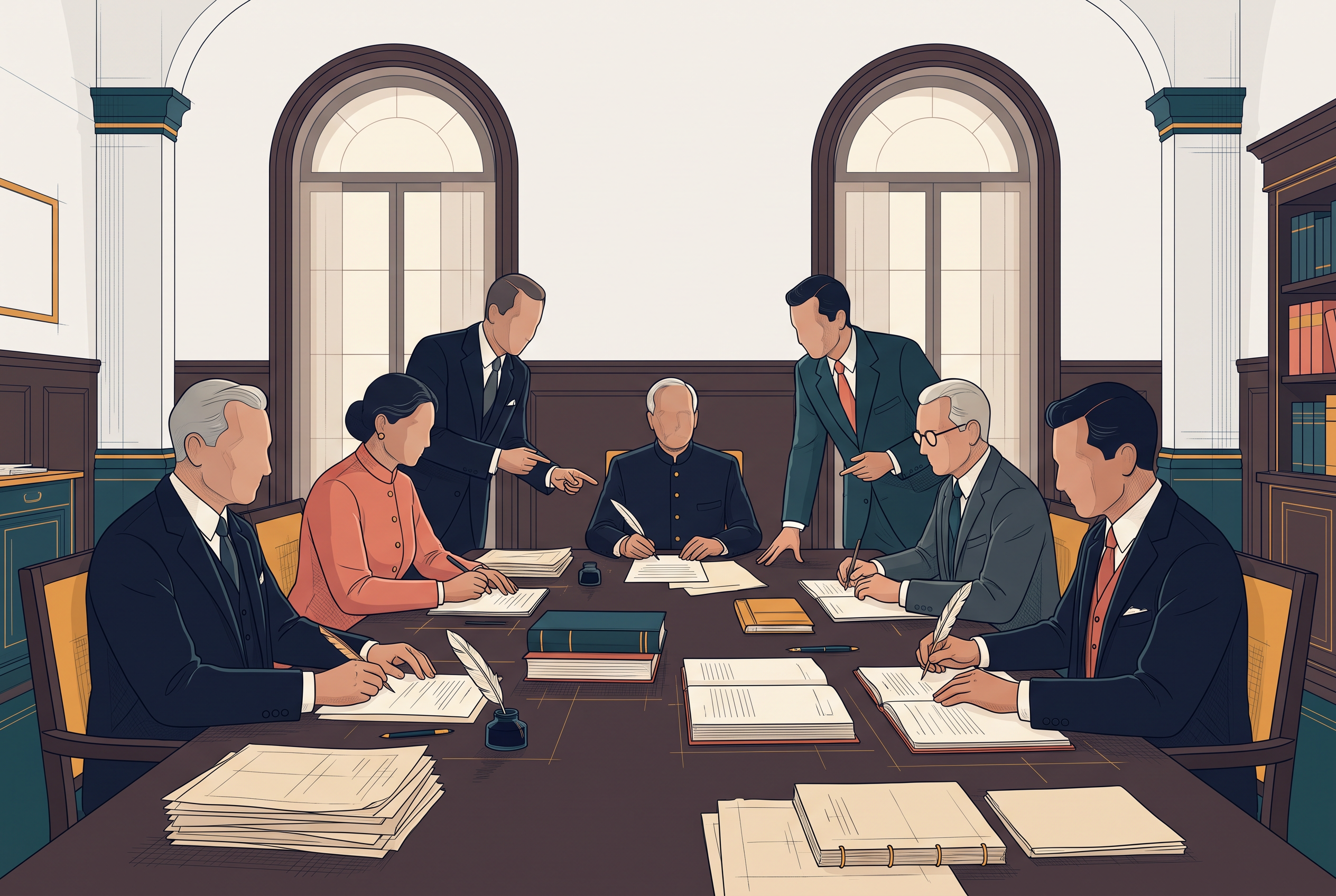
Fig. 4.1 – The Drafting Committee of the Constitution.
The Assembly also had a second job that is easy to forget. It had two roles to play — governance and the framing of the Constitution. In the mornings it dealt with the governance matters of a newly independent country, and in the afternoons it drafted the Constitution.
Sources of the Constitution of India
The framers of the Constitution of India, that is, the Constituent Assembly, drew upon three sources to draft the Constitution, as shown in Fig. 4.2.
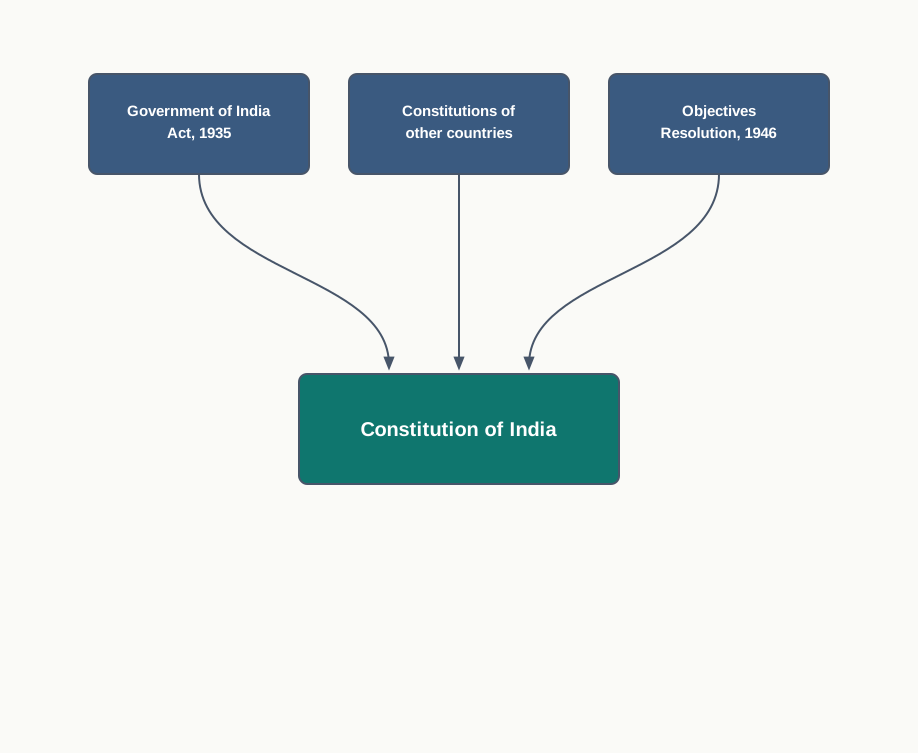
Fig. 4.2 – The three sources of the Constitution of India.
The First Source: the Government of India Act, 1935
The first source was the foundation document or the base text — the Government of India Act of 1935, which was passed by the Parliament in London. This Act was the basis for the government and was in force in India from 1935 until 1950, when the Constitution of India came into effect.
The salient features of the 1935 Act were:
- it provided for a parliamentary system (but the ultimate power was kept with the British);
- it included wide ranging administrative aspects for the structure of government;
- it created a centralized federal system; and
- it provided for elections to provincial legislatures or assemblies.
Borrowing from a colonial statute may sound odd, but the framers had a working reason for it. The machinery of administration in 1947 already ran on the 1935 Act, and the officials, the courts and the provinces knew its language. Starting from a text people could already operate reduced the risk of a breakdown in governance at the very moment the country changed hands.
The Second Source: the Constitutions of Other Countries
The second source was the constitutions of other countries. These were used mostly with respect to two chapters of the Constitution, namely the Fundamental Rights and the Directive Principles of State Policy.
The difference between those two chapters is introduced here and taken up in detail later in this chapter. Fundamental Rights largely deal with the civil and political rights of citizens — for example, the right to life and the freedom of speech and expression. The Directive Principles deal largely with the economic, social and cultural rights of the citizens — for example, the right to health and to livelihood.
The Third Source: the Objectives Resolution
The third source was the Objectives Resolution, adopted in the December 1946 Assembly session. The Constitution derived its spirit from this source: the Resolution laid down the philosophy, and the Constitution expressed that philosophy through its many lengthy and detailed provisions.
Jawaharlal Nehru, the first Prime Minister of India, had drafted the Objectives Resolution, drawing upon the Congress Party documents of the previous two decades.
The Resolution called for the integrity of the Indian Union, and declared that its authority and power were derived from the Indian people. It stated that all the people should be secured with regard to justice — social, economic and political; equality of status, of opportunity, and before the law; and freedom of thought, expression, belief, faith, worship, vocation, association and action, subject to law and public morality. Furthermore, the Objectives Resolution provided for adequate safeguards for minorities, depressed and backward classes, and underdeveloped and tribal areas.
The Objectives Resolution can be summarized to consist of three interdependent salient features:
- protecting and enhancing national unity and integrity;
- establishing the institutions and spirit of democracy; and
- promoting a social revolution for the betterment of the citizens.
4.4 Historical Perspective of the Constitution of India
Before independence, India was part of the British colonial empire. The sovereignty of the British Crown prevailed over India, and the Parliament of Britain enacted several legislations for the governance of India.
This matters for a reason that goes beyond history. India did not begin governing itself on a blank page in 1947. It inherited a working administrative system built by a series of colonial statutes, and the Constituent Assembly had to decide what to keep, what to redesign and what to throw out.
The Colonial Statutes
Some of the significant legislations of the British Parliament responsible for the governance of India were:
- Government of India Act, 1858
- Indian Councils Act, 1861
- Indian Councils Act, 1892
- Indian Councils Act, 1909
- Government of India Act, 1919
- Government of India Act, 1935
Placed on a timeline, as in Fig. 4.3, these Acts show a slow and grudging pattern: each one let a few more Indians into the machinery of government while the real power stayed with the Crown.

Fig. 4.3 – Timeline of colonial statutes.
The last of these Acts is the one that shaped the Constitution most. In the words of Durga Das Basu, as stated in his book ‘Introduction to the Constitution of India’, the Constitution of India draws much of its source from the Government of India Act, 1935, which supplied the administrative details and the language of the provisions of the Constitution.
What the Act of 1935 Set Up
Unlike the other Government of India Acts, the Act of 1935 referred to India as a federation of Provinces and Indian States. Autonomy to provinces was given effect by dividing legislative and executive powers between the Provinces and the Centre.
The Provinces were under the executive authority of the Governor appointed by the Crown, and were the autonomous units of administration. The Governor exercised the powers on the advice of Ministers, who were in turn responsible to the Provincial legislature. But the Governor was given discretion to carry out certain functions without being bound by Ministerial advice, subject to the control of the Governor General.
Read that last sentence carefully, because it is where the arrangement gives itself away. Ministers advised, but the Governor could set that advice aside — and when he did, he answered upwards to the Governor General, not to the elected legislature.
At the Central level, the Government of India was under the executive authority of the Governor-General. The Governor-General was to act on the advice of Ministers of the Central legislature, who were in turn responsible to the Central Legislature. The Executive Council formed under the Government of India Act, 1919 functioned as the Council of Ministers. The Governor-General too had discretionary functions to perform, but was subject to the control of the Secretary of State.
Division of Legislative Powers
The Government of India assumed the role of Federal Government. The Central legislature was bicameral, consisting of the Federal Assembly and the Council of States. Some of the Provincial legislatures had bicameral legislature and other Provinces had unicameral legislature.
A legislature is bicameral when it has two Houses and unicameral when it has one. The second House is usually meant to slow legislation down and give it a second reading by a differently constituted body.
The legislative powers and matters were divided between the Central Legislature and the Provincial Legislatures. The powers assigned to them were included in the Federal List and the Provincial List respectively, and on matters in the Concurrent List the Centre and Provinces could exercise their combined authority.
If this three-list design feels familiar, that is because the Constitution kept it. You will meet its successor — the Union List, the State List and the Concurrent List of the Seventh Schedule — later in this chapter.
Limits on Legislative Power
The exercise of legislative power was subject to various limitations:
- the Governor-General’s and Crown’s power to veto a bill passed by the legislature;
- the Governor-General’s power to issue ordinance and permanent acts, when the legislative house was not in session;
- the Governor-General’s power to suspend legislature, if the proceedings would affect the discharge of his special responsibilities; and
- no bill to amend or repeal the law of British Parliament as applicable in India could be introduced in the legislature without the previous sanction of the Governor-General.
Taken together, these four limits emptied the legislature’s power of much of its content. A body whose Bills can be vetoed, whose sittings can be suspended, and which can be bypassed by ordinance is not a law-making body in the full sense. Thus the Central legislature, and similarly the Provincial legislatures, were to act under the instructions of the Governor-General, the Secretary of State, and ultimately the sovereign powers of the British Crown.
The Demand for a Constituent Assembly
Indians were given very limited rights of self-governance. Growing dissatisfaction over the limited governing rights granted to Indians under the 1935 Act led to widespread protests.
Eventually the Colonial government conceded that the Constitution of India would be framed by an elected Constituent Assembly consisting of Indian people. It was also agreed to establish an independent Constituent Assembly free from outside interference to frame the Constitution of India.
On December 9, 1946, the Constituent Assembly — a body elected by members of the provincial legislatures and state legislatures — met for the first time and formally commenced the task of ‘Constitution making’. Fig. 4.4 shows one of the defining moments of those sittings.
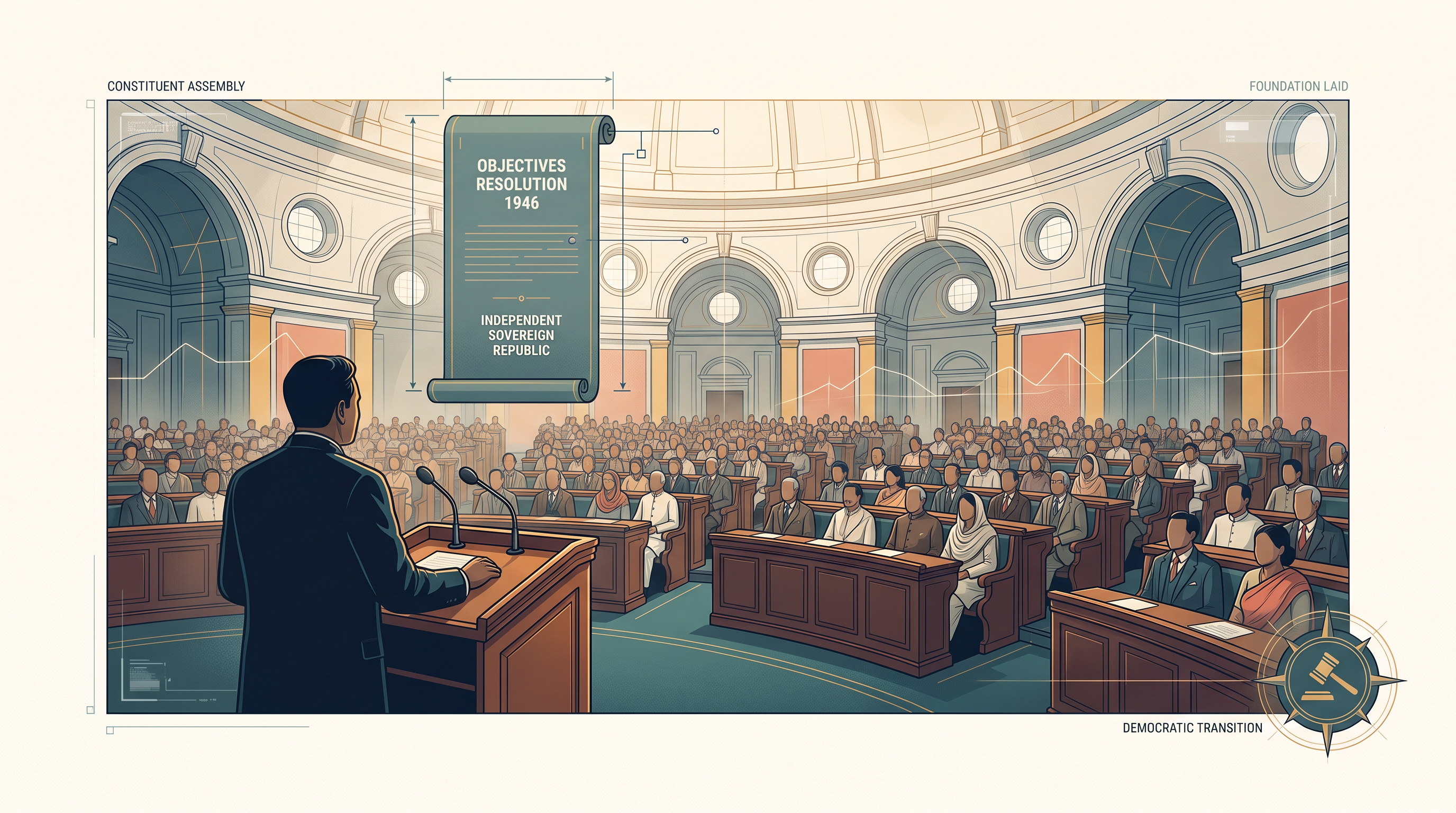
Fig. 4.4 – Moving the Objectives Resolution in the Constituent Assembly.
The Indian Independence Act, 1947
The Indian Independence Act, 1947, enacted by the British Parliament, got Royal Assent and came into force on July 18, 1947. The Act provided that from 15 August 1947, referred to as the ‘appointment date’ under the Government of India Act, 1935, two independent Dominions, to be known as India and Pakistan, would be established.
The Act also settled a question that would otherwise have hung over everything the Assembly did. The Constituent Assembly of each Dominion was to have unlimited power to frame and adopt any Constitution, and had all authority to repeal any Act of the British Parliament, including the Indian Independence Act itself.
That is a striking provision. It meant the Assembly was no longer working under a British statute at all; it could dismantle the very law that had freed it. From this point the Constitution of India rests on the authority of the people of India, not on a grant from Westminster.
Drafting, Adoption and Commencement
The Drafting Committee worked under the Chairmanship of Dr. Bhim Rao Ambedkar, the Law Minister, from 15 August 1947 to 26 January 1950. After many discussions and deliberations to improve the existing system of administration, and taking account of geographical compulsions, social and cultural diversities and historical precedents, a proposal on the Draft Constitution of India was prepared.
The draft received assent from the President of the Assembly, Dr. Rajendra Prasad, and was declared passed on 26 November 1949. The Constituent Assembly held 11 sessions and took a period of 2 years, 11 months and 18 days before it signed two copies of the document, one in Hindi by the name of ‘Bhartiya Sanvidhan’ and another in English, ‘The Constitution of India’. The original Constitution of India is hand-written in calligraphy by Prem Behari Narain Raizada, and artists from Shantiniketan, including Beohar Rammanohar Sinha and Nandalal Bose, adorned each page.
The Constitution of India was adopted on 26 November 1949. Some of the provisions were given immediate effect. The bulk of the Constitution only became effective on 26 January 1950, and this date is referred to as the date of commencement under Article 394 of the Constitution. Every year 26th January is commemorated as ‘Republic Day’ in India.
Why should a Constitution start working in two instalments? Because some machinery has to exist before the rest can operate. The Articles listed in Article 394 include those on citizenship, on the Election Commission and on the provisional arrangements for the President — the things needed to decide who the citizens are, who administers elections, and who holds office on the opening day.
4.5 A Modern Constitution
The Constitution of India, drafted in the mid-twentieth century, has assimilated the best features gathered from the existing Constitutions and fashioned them to suit the existing conditions and needs of the country.
That word ‘fashioned’ is doing important work. The framers did not copy foreign provisions as they stood. They studied what had worked elsewhere, then reshaped it for a country that was newly independent, extremely diverse, largely poor, and about to hold elections in which most voters could not read.
India, That Is Bharat
Article 1(1) declares that India, that is Bharat, shall be a Union of States.
The term Bharat was adopted by the Constituent Assembly because the country was so known in ancient times; it was the only name that suited the history and the culture of the country.
The word that repays closer study, though, is ‘Union’. All 552 Indian States within the geographical boundaries of the Dominion of India acceded to the Dominion of India by 15 August, 1947, thus unifying India into a compact State. Once those accessions were complete, the framers had to decide what to call the resulting arrangement.
Dr. B.R. Ambedkar explained, in the record from the Constituent Assembly Debates (C.A.D), that the use of the word ‘Union’ instead of ‘Federation’ has its significance, which may be summarised as follows:
- The Indian Federation is not the result of an agreement between the units, and the component units have no freedom to secede from the Union so created.
- The term Union was used as symbolic of the determination of the Assembly to maintain the unity of the country.
The contrast the framers had in mind was with federations formed by States that came together voluntarily and might, in principle, argue about leaving. India’s States were not treated as parties to a bargain that could later be withdrawn from. The country is one, and the States are the units into which it is divided.
Federal in Working, Unitary in Reserve
To promote the unitary basis of Indian Administration, the Constitution makers added detailed provisions on the distribution of powers and functions between the Union and the States in all aspects — legislative, administrative and financial — and also with regard to inter-state relations, co-ordination, and adjudication of disputes amongst the States.
Although the system of government is federal, the Constitution enables the federation to transform itself into a unitary state by the assumption of the powers of the States by the Union in case of emergencies, as described under Part XVIII. Such a combination of a federal system and a unitary system in the same Constitution is unique in itself.
This design answers a practical worry rather than a theoretical one. A federation is good at accommodating diversity in normal times, but slow and divided in a crisis. The Constitution therefore keeps a federal structure for ordinary working and a unitary switch for emergencies, instead of forcing the country to choose one temperament for all situations. The emergency provisions themselves are taken up later in this chapter.
What Was Borrowed, and From Where
Part III of the Constitution of India, on Fundamental Rights, is inspired by the American Bill of Rights. Along with it came the system of prerogative writs — the writs of habeas corpus, mandamus, quo warranto, prohibition and certiorari — which can be issued by the Supreme Court and the High Courts to protect fundamental rights and to exercise judicial control over administrative action as guaranteed by the Constitution of India. Some of these aspects are influenced by British Constitutional Law.
A writ, in the simplest terms, is a written command from a superior court ordering somebody to do something or to stop doing it. Each of the five writs is examined separately later in this chapter.
As observed by Dr. Durga Das Basu in his book ‘Introduction to the Constitution of India’, the Constitution-makers adopted the Parliamentary system of government for both the Union and the States following the British model, for the primary reason that the people had long experience of this system under the Government of India Acts. The makers deliberately rejected the Presidential form of government as followed in the U.S., apprehending conflicts on account of the separation of the executive from the legislature, which our infant democracy would not have been able to afford. Unlike the British model, India declared itself a Republic.
Part IV of the Constitution of India, on Directive Principles of State Policy, is inspired by the Irish Constitution. The special provisions for promoting freedom of trade and commerce in the country, included in Part XIII, are influenced by the Australian system. In its form and contents, however, the Constitution of India is unique.
Additions After 1950
A modern Constitution does not stop growing. By virtue of the Constitution (Seventy-Third and Seventy-Fourth Amendment) Acts, 1992, Part IX and the Eleventh Schedule, and Part IX-A and the Twelfth Schedule, were added to the Constitution. These amendments provide the framework for the establishment and election of Panchayats and Municipalities, carrying democratic government down to the village and the ward.
Three further Parts are worth knowing by name and function:
- Part XIV contains provisions regarding service matters of personnel appointed to public services under the Union and the States, and provisions on the establishment and functions of Public Service Commissions.
- Part XIV-A contains provisions on the setting-up and functioning of Administrative Tribunals for the adjudication of matters thereunder.
- Part XV contains provisions on the conduct of elections and the authorities concerned with them.
4.6 The Lengthiest Written Constitution
Dr. Durga Das Basu, in his book ‘Introduction to the Constitution of India’, described the Constitution of India as the lengthiest, most detailed and most elaborate constitutional document the world has so far produced.
The numbers bear him out. It consists of 395 Articles, many of which were added subsequently and some repealed by way of amendments. The additions have been given alpha numeric enumeration alongside the original article — which is why the Constitution carries Articles such as 21A and 51A, sitting between Article 21 and Article 22, and between Article 51 and Article 52. Originally the Constitution consisted of 8 Schedules; now it consists of 12 Schedules.
Why So Long?
Length in a Constitution is usually a sign of distrust of the unwritten. Some countries leave a great deal to convention — to the way things have always been done — and their Constitutions stay short. India’s framers were writing for a country that had just been partitioned, that had no settled tradition of self-government to fall back on, and in which almost every institution was being created for the first time. What is not written down cannot be enforced, so they wrote it down.
Three things in particular pushed up the length.
- The Constitution provides for the organization, structure and functioning of not only the Central Government organs, but also of the organs of the State Governments. Most federal Constitutions leave States to write their own; India did not.
- It contains a detailed framework on fundamental rights, fundamental duties, the functions and powers of the Executive, the functions and powers of the Parliament, the Judiciary and judicial appointments, official language, citizenship, emergency provisions and much else.
- Detailed provisions were incorporated to address issues concerning the Scheduled Castes and Tribes, Backward Classes, and Religious and Linguistic Minorities. A society with deep inequalities cannot be handed a short Constitution and a hope that things will work out.
Add to this the administrative language inherited from the Government of India Act, 1935, which you met in the previous sections, and the size of the document stops being surprising.
What the Length Bought
Detail is not the same as clutter. The length of the Constitution allowed the framers to settle, in the text itself, questions that other countries have left to be fought over later.
India was established as a ‘Union of States’ with a highly centralized federal structure and a strong Centre in relation to the States. The original Preamble provided that India shall be a ‘sovereign democratic republic’; it was later, in 1976, that the words ‘socialist’ and ‘secular’ were added to it — a change taken up in the next section.
The Constitution also provides for adult suffrage, allowing citizens to vote and elect their representatives and the government, which ensures common participation of all in a democratic fashion. Its other features — the creation of democratic political institutions and the processes of the parliamentary system, an independent judiciary, and the stipulation of civil and political rights alongside economic and social rights — together fulfil the democratic essence and the social transformation agenda of the Preamble.
One caution before moving on. The Directive Principles of State Policy outlined in Part IV shall not be enforceable in any Court, but are nevertheless fundamental in the governance of the country, and it shall be the duty of the State to apply these principles in making laws. Length, in other words, does not mean that every line of the Constitution can be taken to a judge. Which parts can, and which cannot, is one of the most heavily tested distinctions in this chapter.
4.7 Preamble to the Constitution
The Constitution begins with an introductory statement called the Preamble. Based on the Objectives Resolution, it lays down the guiding principles and the philosophy for the Constitution, and it provides for the unity and integrity of the country.
A preamble, in any legal document, is the part that states why the document exists. In a Constitution, that makes it unusually important: it tells a reader — and a judge — what the rest of the text is trying to achieve.
Is the Preamble a Part of the Constitution?
This sounds like a technical question, but a great deal turns on it. If the Preamble is only a decorative opening, a court cannot use it. If it is part of the Constitution, it can be used to read the rest.
The Constitution of India starts with its Preamble. The Supreme Court of India, in the Fundamental Rights Case (Kesavananda Bharati v. State of Kerala, AIR 1973 SC 1461), held that the Preamble is a part of the Constitution. The objectives specified in the Preamble contain the ‘basic structure’ of the Constitution, and the Preamble is the guide to interpret the provisions of the Constitution.
So when a provision of the Constitution is capable of two readings, a court will prefer the reading that serves the objectives set out in the Preamble. The idea of the basic structure — the core the Parliament cannot amend away — is examined later in this chapter, when we come to the amending power.
We, the People
The Preamble to the Constitution reaffirms that the people of India have adopted, enacted and given to themselves the Constitution.
The opening phrase ‘we the people’ emphasises the concept of popular sovereignty as laid down by J. J. Rousseau. It signifies that power emanates from the people, and that the political system will be accountable and responsible to them. The Constitution was not granted by a ruler or handed over by a departing colonial power; it was given by Indians to themselves.
Sovereign
Sovereignty means final authority — the power to decide, with no higher authority able to overrule you.
In Charan Lal Sahu v. Union of India (AIR 1990 SC 1480), popularly known as the Bhopal Gas Leak Tragedy Case, the Supreme Court held that ‘Sovereign’ denotes that India is not subject to any external authority, and that India as a State has the power to legislate on any subject in conformity with Constitutional limitations.
Read the last five words carefully, because students routinely miss them. Sovereignty means no external master; it does not mean no internal limits. Parliament is free of Westminster, but it is not free of the Constitution.
Secular
The Preamble establishes India as a Secular State. India is a country of multifarious religions, beliefs and sects, and its people profess and practise different religions. But India, as a Union of States, has no official religion, and there is no State-recognised place of worship.
What secularism requires of the State can be set out in four parts:
- The State does not identify itself with, or favour, any particular religion.
- State laws and policies prohibit any discrimination on the grounds of religion.
- The State treats all religions equally.
- The State confers protection on citizens to profess, propagate and practise their religions.
The word ‘Secular’ was also added by the Constitution (Forty-Second Amendment) Act, 1976. Even before the amendment, the operation of the concept of secularism was visible in the Fundamental Rights and the Directive Principles, and secularism has also been given the status of a part of the Basic Structure of the Constitution in Kesavananda Bharati’s case.
There is a point of exam craft here. If a question asks whether India became secular in 1976, the answer is no. The word entered the Preamble in 1976; the principle was already running through Part III and Part IV from the beginning.
Democratic
The Preamble states that India’s governing system is based on Republican and Democratic principles.
Democracy in the Indian sense therefore has a specific institutional meaning: the government of the day holds office only so long as the elected legislature supports it.
Republic
‘Republic’ denotes that the head of the State is an elected person and not a hereditary monarch. Any Indian, without any discrimination as to caste, creed or religion, can contest for Presidential elections and can occupy the office, provided he or she fulfils the eligibility conditions provided by the Constitution.
That openness is the real content of the word. In a monarchy, the highest office in the State is closed to everyone not born into one family. In a Republic, it is closed to nobody who meets the conditions the Constitution lays down.
What the Preamble Secures
Read as a whole, the Preamble seeks to achieve for all citizens social, economic and political justice; liberty of thought, expression, belief, faith and worship; equality of status and of opportunity; and fraternity, assuring the dignity of the individual and the unity and integrity of the Nation.
Equality here is not confined to paper. The Preamble and the constitutional provisions aim to secure to citizens equality of status and opportunity in State affairs such as elections, and in State employment, without any special privilege or discrimination based on religion, race, caste, sex or place of birth.
4.8 Fundamental Rights
In the Constitution of India, the human rights provisions are set out in two chapters. Part III of the Constitution provides for Fundamental Rights, largely of a political and civil nature, which are enforceable by a court of law. Part IV, which follows in the next section, carries the Directive Principles.
Part III was a revolutionary chapter, because it broke the barriers of an Indian traditional and hierarchical society that did not recognise the principle of individual equality. Rights that had been enjoyed according to birth were now declared to belong to every person as a matter of law.
What Part III Contains
The Constitution of India guarantees its people certain basic human rights and freedoms known as ‘Fundamental Rights’, which are listed in Part III of the Constitution (Articles 12 to 35). They fall into six broad groups, as set out in Fig. 4.5.
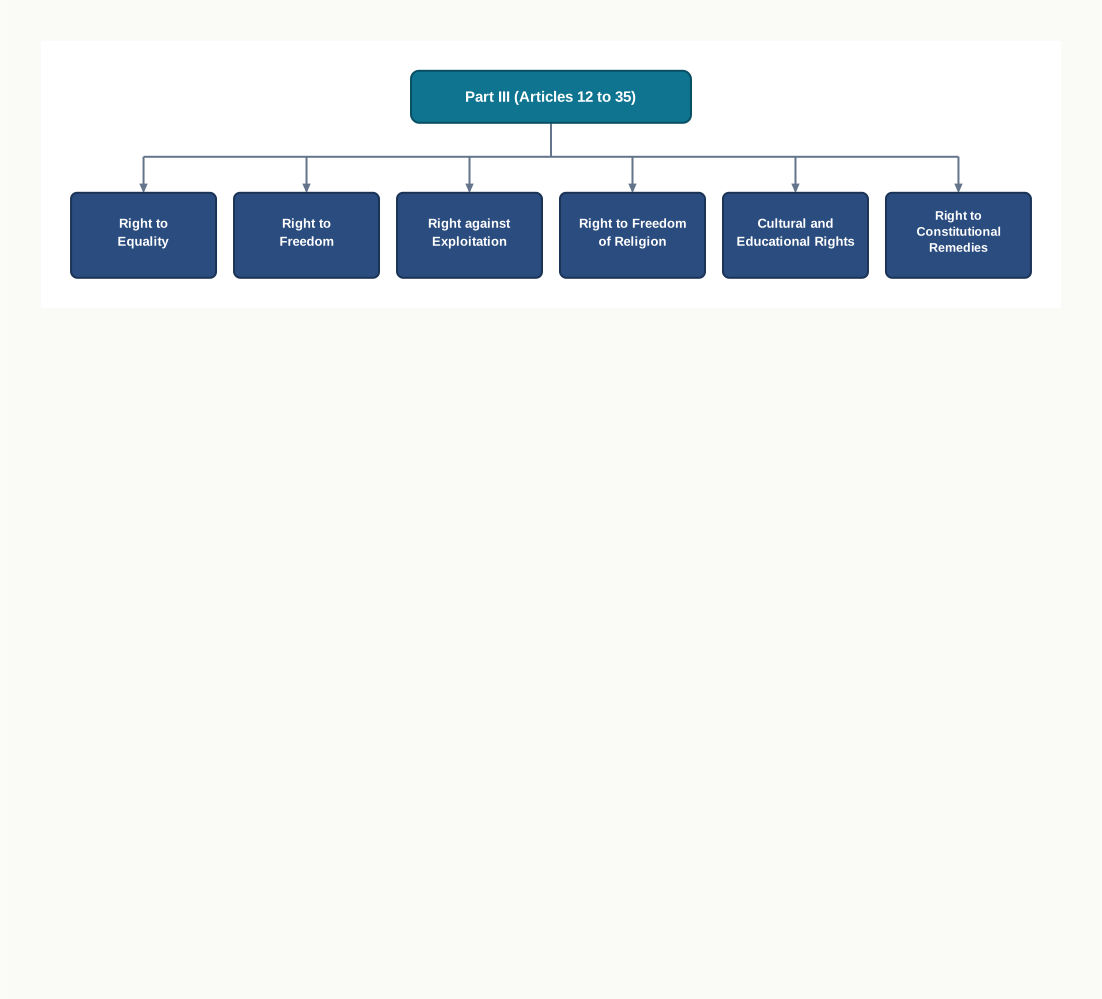
Fig. 4.5 – Classification of Fundamental Rights.
- Rights of equality — equality before the law and prohibition of discrimination on grounds of religion, race, caste, sex or place of birth; equality of opportunity in matters of public employment; abolition of untouchability and of titles.
- Right to freedom — freedom of speech and expression, the right to move freely, to form associations, and to practise any trade or occupation; protection in respect of conviction for offences; protection of life and personal liberty; and protection against arrest and detention in certain cases.
- Right against exploitation.
- Right to freedom of religion.
- Cultural and educational rights.
- Right to constitutional remedies.
The last of these deserves a moment’s thought before you read on. A list of rights is worth nothing if a person whose right is broken has nowhere to go. The sixth group is the one that supplies the somewhere.
The right to education was inserted as Article 21A vide the Constitution (Eighty-Sixth Amendment) Act, 2002 — an example of Part III growing after 1950, when the country decided that schooling belonged among the guaranteed rights rather than among the aspirations.
Who Can Claim These Rights
Most Fundamental Rights are guaranteed to citizens. But the Fundamental Rights stated under Articles 14 and 21 are conferred even on non-citizens.
There is a reason for the difference, and it is worth seeing rather than memorising. Article 14 concerns equality before the law and Article 21 concerns life and personal liberty. These are protections a person needs simply by being a human being within India’s territory — a tourist, a foreign student, a stateless person. Rights connected with the political life of the country, such as forming associations to contest elections, are tied to citizenship instead.
Why These Rights Are Called Justiciable
The Fundamental Rights guarantee to the people certain basic rights. Legislative and executive actions which infringe upon or violate the Fundamental Rights are declared ultra vires the Constitution.
Ultra vires means ‘beyond the powers’. When a court declares a law or an official order ultra vires, it is saying that the body which made it had no authority to make it, so it has no legal effect at all. A statute passed by a full Parliament can fall in this way if it collides with Part III.
The Supreme Court has the power to issue directions or orders or writs — including writs in the nature of habeas corpus, mandamus, prohibition, quo warranto and certiorari, whichever may be appropriate — for the enforcement of Fundamental Rights under Article 32, and the High Courts have the same power under Article 226.
Here the Constitution does something unusual. The speedy and effective remedy under Article 32 is itself guaranteed as a Fundamental Right. The right to go to court for your rights is a right in its own right. Because every guarantee in Part III is backed by this remedy, these are termed justiciable rights — rights a court can be asked to enforce.
The Five Writs
A writ, as noted earlier, is a written command issued by a superior court. Each of the five is designed for a different kind of wrong, and choosing the right one is a skill examiners test directly.
The pair that causes most confusion is prohibition and certiorari, and the difference is one of timing. Prohibition stops proceedings that are still going on; certiorari comes after the order has been passed and quashes it. If a tribunal is hearing a matter it has no power to hear, the writ sought is prohibition; if it has already decided that matter, the writ sought is certiorari.
The others separate more easily. If the complaint is about a person being held, the writ is habeas corpus. If a public authority is refusing to do a duty the law places on it — a municipal body that will not act on a sanitation obligation, for instance — the writ is mandamus. If the complaint is that somebody is occupying a public office he was never entitled to hold, the writ is quo warranto.
Writ Jurisdiction: Supreme Court and High Court
Both courts issue writs, but their powers are not identical, and the difference decides where a person should go.
Read the two rows together and a small paradox appears. The High Court’s writ power is wider in what it covers, because it reaches ordinary legal rights as well; the Supreme Court’s is stronger in status, because the right to approach it under Article 32 cannot itself be taken away in the ordinary course. A person whose grievance is the breach of an ordinary legal right, and not of a Fundamental Right, can move the High Court under Article 226 but cannot move the Supreme Court under Article 32.
4.9 Directive Principles of State Policy
The Directive Principles of State Policy are included in Part IV of the Constitution. These are the guiding principles governing State policies in the social sector. They are interpreted as economic and social rights, are classically socialist in nature, and fulfil the social revolution agenda of the Preamble.
The provisions are not enforceable by any court of law, but they provide guidance in carrying out and drafting laws regarding human and social development.
That single sentence contains the whole difficulty of Part IV, and it is where most students go wrong. Non-enforceable does not mean unimportant, and it does not mean optional. It means the remedy for ignoring these principles is political rather than judicial: a court will not order the State to obey them, but the Constitution still directs the State to.
What Article 37 Says
Notice the structure of the Article: a denial, then an affirmation. The denial is procedural — no court will entertain a suit for their breach. The affirmation is substantive — they are fundamental in governance, and applying them is a duty.
These directives put an obligation on the State to take positive action in order to promote the welfare of the people. This is what makes Part IV different in character from Part III. A Fundamental Right usually tells the State what it must not do to you; a Directive Principle tells the State what it must set about doing for everyone.
The Welfare Goal in Article 38
Article 38(1) states that the State shall strive to promote the welfare of the people by securing and protecting, as effectively as it may, a social order in which justice — social, economic and political — shall inform all the institutions of national life.
Article 38(2) states that the State shall, in particular, strive to minimise the inequalities in income, and endeavour to eliminate inequalities in status, facilities and opportunities, not only amongst individuals but also amongst groups of people residing in different areas or engaged in different vocations.
Clause (2) is worth reading twice. It is not satisfied by treating individuals fairly one by one. It asks the State to look at whole groups — a district, a trade, a community — and ask whether the gap between them is closing.
Some Important Directive Principles
Among the important Directive Principles are:
- the right to an adequate means of livelihood for citizens;
- equal pay for equal work for both men and women;
- living wages for workers;
- equal justice and free legal aid;
- organization of village Panchayats;
- provision of just and humane conditions of work and maternity relief;
- a uniform civil code for citizens;
- promotion of the educational and economic interests of Scheduled Castes, Scheduled Tribes and other weaker sections;
- the duty of the State to raise the level of nutrition and to improve public health;
- protection and improvement of the environment; and
- promotion of international peace and security.
Directives Turned into Statutes
A directive that cannot be enforced in court can still be enforced through Parliament, and a large number of laws have been enacted and adopted to implement the Directive Principles of State Policy. Examples include:
- the Legal Services Authorities Act, 1987;
- the Right of Children to Free and Compulsory Education Act, 2009;
- the Child Labour (Prohibition and Regulation) Act, 1986;
- the Environment (Protection) Act, 1986;
- the Wild Life Protection Act, 1972;
- the Minimum Wages Act, 1948; and
- the Equal Remuneration Act, 1976.
Look back at the list of directives and match them to this list of statutes, and the working of Part IV becomes visible. Free legal aid, education, humane conditions of work, protection of the environment, living wages — each directive that was taken seriously eventually turned into a statute that a court can enforce.
The Constitution (Seventy-Third and Seventy-Fourth Amendment) Acts, 1992 led to the establishment of Panchayati Raj Institutions and Urban Local Bodies based on democratic principles, giving effect to the directive on the organization of village Panchayats. More striking still, the Constitution (Eighty-Sixth Amendment) Act, 2002 paved the way for the introduction of the Right to Education for children in the age group of 6 to 14 years as a Fundamental Right — a directive that was promoted out of Part IV altogether and written into Part III.
When a Directive Reaches the Court Anyway
The Supreme Court of India, while interpreting constitutional provisions, has elevated some Directive Principles to the status of Fundamental Rights. Three examples are usually cited:
- the right to equal pay for equal work, in Randhir Singh v. Union of India (AIR 1982 SC 879);
- the right to a clean and healthy environment, in M.C. Mehta v. Kamal Nath; and
- the right to free legal aid, in Hussainara Khatoon v. Home Secretary (AIR 1979 SC 1369).
The technique the Court uses in all three is the same, and the first case shows it plainly.
Watch the condition the Court attached, because it is exactly the sort of detail a case-based question turns on. The claim succeeds where the work is identical, the employer is the same, and the difference in pay rests on no classification or an irrational one. Change any of those facts — different duties, different employers, a reasoned classification based on qualifications — and the claim fails.
How Part III and Part IV Fit Together
On the question of the inter-relationship between Fundamental Rights and Directive Principles, the Supreme Court in the Kesavananda Bharati case held that Fundamental Rights and Directive Principles constitute the conscience of the Constitution, that there is no antithesis between them, and that one supplements the other.
In Ashoka Kumar Thakur v. Union of India (2008) 6 SCC 1, the Supreme Court held that no distinction can be made between the two sets of rights. The Fundamental Rights represent the political and civil rights, and the Directive Principles embody the social and economic rights. Merely because the Directive Principles are non-justiciable by the judicial process, it does not mean that they are of subordinate importance.
The reasoning behind that position is worth stating for yourself, because examiners ask for it directly. A right to speak freely means little to a person with no education, no livelihood and no means of reaching a court. Part III secures liberty; Part IV secures the conditions in which liberty is usable. Neither half of the Constitution does its work alone.
4.10 Fundamental Duties
The Constitution as originally enacted told the State what it owed the citizen, and told the State what it should strive to achieve. It said very little about what the citizen owed in return. The Constitution (Forty-Second Amendment) Act, 1976 filled that gap by adding Part IV-A, containing Article 51-A on the Fundamental Duties of citizens.
The Eleven Duties
Under Article 51A, it shall be the duty of every citizen of India:
- to abide by the Constitution and respect its ideals and institutions, the National Flag and the National Anthem;
- to cherish and follow the noble ideals which inspired our national struggle for freedom;
- to uphold and protect the sovereignty, unity and integrity of India;
- to defend the country and render national service when called upon to do so;
- to promote harmony and the spirit of common brotherhood amongst all the people of India transcending religious, linguistic and regional or sectional diversities, and to renounce practices derogatory to the dignity of women;
- to value and preserve the rich heritage of our composite culture;
- to protect and improve the natural environment including forests, lakes, rivers and wild life, and to have compassion for living creatures;
- to develop the scientific temper, humanism and the spirit of inquiry and reform;
- to safeguard public property and to abjure violence;
- to strive towards excellence in all spheres of individual and collective activity, so that the nation constantly rises to higher levels of endeavour and achievement; and
- who is a parent or guardian, to provide opportunities for education to his child or, as the case may be, ward between the age of six and fourteen years.
The eleventh duty was not part of the original set. It was included in the list of Fundamental Duties by the 86th Amendment to the Constitution of India in the year 2002 — the same amendment that inserted Article 21A. The two work as a pair: the child gets an enforceable right to education, and the parent gets a matching duty to provide the opportunity for it.
Read the list again and notice how many of these duties describe attitudes rather than acts — cherishing ideals, developing a scientific temper, striving for excellence. That is a deliberate feature of Part IV-A, and it explains the enforcement problem that follows.
Are Fundamental Duties Enforceable?
There is no provision in the Constitution to enforce Fundamental Duties. No citizen can be prosecuted merely for failing to develop humanism, and no court can order a person to cherish the ideals of the freedom struggle.
What the duties do instead is supply a standard that Parliament may turn into a specific, enforceable law. The Supreme Court in Bijoe Emmanuel v. State of Kerala (AIR 1987 SC 748) held that duties imposed on citizens may be enforced through the enactment of legislations. For example, ‘The Prevention of Insults to National Honour Act, 1971’ punishes a person who insults the national honours.
These duties are therefore read along with the Fundamental Rights. As stated by the Supreme Court in Mohan Kumar Singhania v. Union of India (AIR 1992 SC 1), the courts may also enforce the duties while balancing and harmonizing them with the Fundamental Rights.
That word ‘harmonizing’ carries the whole idea. Where a duty and a right appear to pull in opposite directions, the court does not simply pick one. It looks for a reading in which both survive — which is exactly what happened when children who would not sing were allowed to remain in school, and were still required to stand.
4.11 Constitutional Provision for Amendment of the Constitution
No generation can foresee the problems of the next one. A Constitution that could never be changed would either be ignored or overthrown, so every written Constitution provides a lawful way of altering itself. This is why the Constitution of India is described as a living document.
Part XX of the Constitution of India provides in detail the procedure for amendment of the Constitution. Article 368 specifies the powers of the Parliament to amend the Constitution and lays down the procedure. On the face of Article 368 there is no limitation on the constituent power of the Parliament for amending by adding, removing or improving the provisions in the Constitution.
How an Amendment Is Passed
The initial step of an amendment is the introduction of a Bill for the purpose in either House of Parliament. The Bill has to be passed in each House by a majority of the total membership of that House, and by a majority of not less than two-thirds of that House present and voting. The Bill is then sent for the President’s assent.
Some amendments also require to be ratified by the Legislature of not less than one-half of the States, by resolutions to that effect passed by those Legislatures, before the Bill making provision for such amendment is presented to the President for assent.
The double requirement in step 2 repays attention, because students routinely state only half of it. A Bill must clear two separate tests in each House — more than half of everyone who belongs to that House, and at least two-thirds of those actually present and voting. Neither test on its own is enough.
The ratification requirement in step 3 exists for a different reason. Some provisions concern the balance of power between the Union and the States, and it would be strange if the Union alone could redraw that balance. Requiring half the State Legislatures to agree gives the States a share in decisions about their own position.
The Limit the Courts Have Placed
If Article 368 sets no express limits, could Parliament use it to abolish elections, or to remove Part III altogether? That question reached the Supreme Court in the case that defines Indian constitutional law.
The doctrine settles an apparent contradiction in this section. Article 368 contains no written limitation, and none has been inserted into it. The limitation is judicial: it comes from how the Court reads the Constitution as a whole, not from any clause a student can point to in the text.
4.12 Adult Suffrage
Adult suffrage means that the right to vote belongs to every adult citizen, and not to a favoured class of them. In 1950 this was a bold decision. Several older democracies had extended the vote slowly, decade by decade, first to men of property, then to all men, and only much later to women. India granted it to every adult from the very first general election.
Article 326 confers on the citizens of India the right to vote in the general elections to the House of the People and to the Legislative Assemblies of States.
Every citizen who is not less than 18 years of age, and who is otherwise not disqualified under the Constitution or any other law on the grounds of unsoundness of mind, non-residence, crime, or corrupt or illegal practice, shall be entitled to be registered as a voter at any such election. The voting age was reduced from 21 years to 18 years by the Constitution (Sixty-First Amendment Act), 1988 — which is why most students reading this chapter will be entitled to registration within a year or two of studying it.
Notice how the qualifications are framed. The Constitution does not list who may vote; it assumes every adult citizen may, and then names the narrow grounds on which a person may be kept off the roll. That is the difference between a privilege granted and a right presumed.
One Roll for Everybody
There is one general electoral roll for every territorial constituency, as stated in Article 325 of the Constitution, for election to either House of Parliament or to the House or Houses of a State Legislature. The Article further specifies that no person shall be ineligible for inclusion in the electoral roll on the grounds only of religion, race, caste, sex, or any of them.
The importance of a single roll is easy to miss today. Under colonial rule, voters had been divided into separate electorates along communal lines, so that a voter’s religion decided which list he appeared on and which candidates he could choose between. Article 325 ends that arrangement: one constituency, one roll, every voter on it.
Reservation of Seats
Two Articles adjust representation so that groups long kept out of public life are actually present in the legislature:
- Articles 330 and 332 provide for reservation of seats for the Scheduled Castes and Scheduled Tribes in the House of the People and in the Legislative Assemblies respectively; and
- Article 331 provided for representation of members of the Anglo-Indian community in the House of the People. This provision has now ceased to operate, the nominated Anglo-Indian seats having been discontinued by the Constitution (One Hundred and Fourth Amendment) Act, 2019, with effect from 25 January 2020.
Reservation of seats and reservation of votes are different things, and the distinction is worth fixing early. Every voter in a reserved constituency votes; what is reserved is the candidature, not the franchise.
Elections as Part of the Basic Structure
4.13 Single Citizenship
The Constitution of India provides single citizenship to its citizens. Part II of the Constitution of India contains provisions regarding citizenship at the commencement of the Constitution and other matters.
Single citizenship means that a person is a citizen of India and of nothing smaller. There is no separate citizenship of Rajasthan or of Kerala, no State roll of members, and no set of rights belonging to the people of one State alone. In some federations — the United States is the standard example — a person is a citizen both of the country and of the State of residence, and the two carry different sets of rights. India’s framers, dealing with a country freshly divided and holding many languages and regions together, deliberately refused to create a second layer of belonging.
The practical consequences are substantial. The citizens of India enjoy the political and civil rights enshrined under the Constitution, such as the right to vote, the right to contest elections, and the right to hold high offices such as those of the President, the Vice President, a Governor or a Judge, subject to satisfaction of the other criteria prescribed for the purpose. And no citizen can be denied employment in any State on the grounds of being a non-resident of that State.
That last rule is the one a student is most likely to meet in a problem question. A person born and schooled in one State who applies for a public post in another cannot be turned away merely because he belongs elsewhere; under single citizenship, he is not a stranger anywhere in India.
How Citizenship Is Acquired
The Citizenship Act, 1955 is India’s primary law governing who becomes, and who ceases to be, an Indian citizen. It establishes five ways to acquire citizenship, shown in Fig. 4.6:
- By Birth: a person born in India acquires citizenship by birth, but the condition depends on when the birth took place. For births on or after 3 December 2004, either both parents must be citizens of India, or one parent must be a citizen of India and the other must not be an illegal migrant at the time of the birth.
- By Descent: this route applies to a person born outside India, who is a citizen by descent if either parent is a citizen of India at the time of the birth. For births on or after 3 December 2004, the birth must also be registered with an Indian consulate within the period the Act prescribes.
- By Registration: citizenship can also be acquired by registration in the categories the Act specifies, which usually require residence in India of at least 7 years.
- By Naturalisation: a person may acquire citizenship by naturalisation after long residence in India — twelve months immediately before the application, and not less than eleven years of residence or Government service during the fourteen years before that period.
- By Incorporation of Territory: when new territory merges with India, the people of that territory become citizens of India.
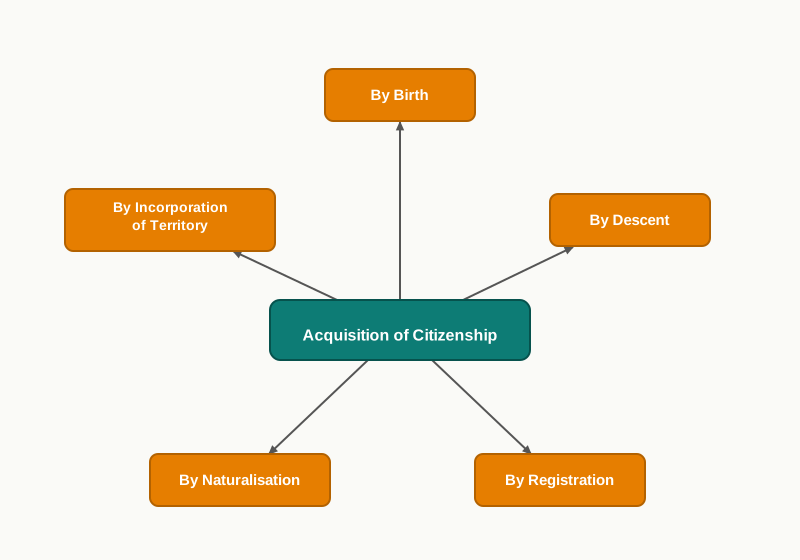
Fig. 4.6 – Modes of acquiring Indian citizenship.
4.14 Independent Judiciary
Another notable feature of the Constitution of India is its provisions which uphold the independence of the judiciary from the influence of the other organs of the Government. The Judiciary functions in accordance with the set principles of the Constitution.
Independence here has a precise meaning. It does not mean that judges may decide as they please; they are bound by the Constitution and the law. It means that the body deciding a case must not be answerable to the party whose conduct is being judged. Since a large share of constitutional litigation is brought against the State, a judiciary that could be rewarded or removed at the pleasure of the executive would be of no use to a citizen at all.
You have already seen the principle at work in this chapter. Writs under Articles 32 and 226 are issued against public authorities, and an amendment is tested against the basic structure over the head of Parliament itself. The provisions that secure judicial independence — appointment, security of tenure, protected conditions of service — are dealt with in the chapters on the judiciary.
4.15 Emergency Provisions
The Constitution makers also foresaw that there could be situations when the government could not be run as in ordinary times. A war, the collapse of government in a State, or a threat to the country’s financial stability cannot be met by the ordinary division of powers between the Union and the States. To cope with such situations, Part XVIII of the Constitution elaborates on emergency provisions.
The President, who is advised by the Cabinet of Ministers at the Centre, proclaims the state of emergency. Accordingly, the President is concerned to declare three types of emergencies:
- emergency caused by war, external aggression or armed rebellion [Article 352];
- emergency arising out of the failure of constitutional machinery in States [Articles 356 & 365]; and
- financial emergency [Article 360].
Why the Constitution Carries These Powers
The rationality behind the incorporation of these provisions is to safeguard the sovereignty, unity, integrity and security of the country, the democratic political system and the Constitution itself.
There is an apparent paradox here that a careful student should notice. The Constitution grants extraordinary powers precisely in order to protect the Constitution. The reasoning is that a State facing invasion or collapse will act somehow; if the Constitution provides no lawful route, the action taken will be outside the Constitution altogether. Better, the framers thought, to write the emergency into the text, where it is at least defined and confined.
During an emergency, the central government becomes all-powerful and the States go under the total control of the Centre. This kind of transformation of the political system — federal during normal times, unitary during an emergency — is a unique feature of the Indian Constitution, and it is the same feature you met in section 4.5 when the Constitution was described as federal in working with a unitary power held in reserve.
4.16 Federal in Form, Unitary in Character
The Constitution of India establishes a federal system of government. It contains all the usual features of a federation, such as two governments, division of powers, a written constitution, the supremacy of the constitution, the rigidity of the Constitution, an independent judiciary and bicameralism.
Yet the Indian Constitution also contains a large number of unitary or non-federal features, such as a strong Centre, a single Constitution, appointment of State Governors by the Centre, all-India services, an integrated judiciary, and so on.
Read the two columns together and the description in the heading of this section explains itself. The structure is federal; the balance within that structure leans towards the Centre.
Moreover, the term ‘Federation’ has nowhere been used in the Constitution. Article 1 describes India as a ‘Union of States’, which implies two things:
- the Indian Federation is not the result of an agreement by the States; and
- no State has the right to secede from the federation.
Both points were explained in section 4.5, in Dr. Ambedkar’s own words, and they are the reason the framers preferred ‘Union’ to ‘Federation’. A federation formed by agreement can, at least in argument, be unmade by the parties to it. A Union that was never an agreement cannot.
4.17 Division of Power – Centre-State Relations
Various articles and schedules of the Constitution lay down rules about the powers of the central and the state governments, as well as the relations between them.
The heart of the arrangement is the Seventh Schedule, which contains three legislative lists: the Union List, the State List and the Concurrent List. These three lists define the legislative jurisdictions — that is, they decide which legislature may make a law on which subject.
The central government has the exclusive legislative authority to frame laws over matters listed in the Union List. There are 99 items in the Union List, including foreign affairs, defence, armed forces, communications, posts and telegraph, and foreign trade.
The state governments ordinarily have the authority on matters stated in the State List. There are 61 subjects in the State List, including public order, police, administration of justice, prisons, local governments and agriculture. There are exceptional situations, however — such as an emergency, national interest, and international trade — when the Centre can legislate on matters of the State List.
Both Parliament and the State legislatures have powers over matters enumerated in the Concurrent List. However, Parliament has supremacy in this list: where a Union law and a State law on the same concurrent subject cannot stand together, the Union law prevails. The Concurrent List comprises 52 items and includes criminal and civil procedure, marriage and divorce, economic and social planning, trade unions, electricity, newspapers, books, education, and population control and family planning.
You met an earlier version of this design in section 4.4, in the Federal, Provincial and Concurrent Lists of the Government of India Act, 1935. The framers kept the three-list structure, renamed it, and changed who stood at the top of it.
Subjects Nobody Listed
No list can name everything. New subjects appear that the framers could not have imagined — satellite broadcasting, for example, or data stored on servers abroad. The Constitution answers this in advance: residuary items rest with the Centre. Whatever falls outside all three lists belongs to Parliament.
This single rule tells you a great deal about the Indian federation. In some federations the residue is left to the States, so that the Centre holds only what is expressly granted to it. India reversed that presumption, and the reversal is one more of the unitary features you saw listed in the previous section.
4.18 Schedules to the Constitution
Originally there were eight Schedules, but now there are 12 Schedules attached to the Constitution of India. They provide the necessary administrative details for the functioning of the organs of Government. These Schedules are amendable by Parliament.
A Schedule is best understood as a list kept at the back of the Constitution so that the Articles themselves need not carry it. You have already used three of them in this chapter: the Seventh Schedule, which holds the three legislative lists, and the Eleventh and Twelfth Schedules, which set out the subjects entrusted to Panchayats and Municipalities.

Fig. 4.7 – Signing the original Constitution of India.
4.19 Summary
- The word Constitution comes from the Latin “constitutio”, meaning ‘to establish’.
- A Constitution establishes the apex organs of government, describes their structure, composition, powers and functions, defines their relationship with one another, and regulates their relationship with the people.
- Aristotle defined a Constitution as the way of life which the State has chosen for itself.
- In its modern sense, a Constitution has these distinctive features:
- it is a body of rules;
- it may be written or unwritten;
- it determines the powers and responsibilities of the State and the organs of government;
- it may be contained in a single document or in several documents;
- it determines the rights and duties of citizens.
- A Constitution is the fundamental law of a State; Georg Jellinek argued that without one there would be a ‘reign of anarchy’.
- The Constituent Assembly was elected by the provincial legislatures chosen in the winter elections of 1945-46, met for the first time on 9 December 1946, and worked both as a governing body and as a drafting body.
- Dr. B.R. Ambedkar, India’s first law minister, was Chairman of the Drafting Committee and is called the principal architect of the Constitution.
- The Constitution drew on three sources:
- the Government of India Act, 1935, as the base text;
- the Constitutions of other countries, mainly for Fundamental Rights and Directive Principles;
- the Objectives Resolution of December 1946, drafted by Jawaharlal Nehru, which supplied its spirit.
- The Objectives Resolution had three interdependent features: national unity and integrity, the institutions and spirit of democracy, and a social revolution for the betterment of citizens.
- The Government of India Act, 1935 divided legislative power through a Federal List, a Provincial List and a Concurrent List, but left the legislature subject to the Governor-General, the Secretary of State and the Crown.
- The Indian Independence Act, 1947 gave the Constituent Assembly unlimited power to frame a Constitution and authority to repeal any British statute, including that Act itself.
- The Constitution was adopted on 26 November 1949 and, under Article 394, commenced on 26 January 1950, some provisions having come into force at once.
- Article 1(1) declares that India, that is Bharat, shall be a Union of States; ‘Union’ was chosen because India is not the result of an agreement between States and no State may secede.
- The Constitution is federal in working but can become unitary in an emergency under Part XVIII.
- Part III on Fundamental Rights was inspired by the American Bill of Rights, Part IV on Directive Principles by the Irish Constitution, the parliamentary system by the British model, and the trade and commerce provisions of Part XIII by the Australian system.
- The Constitution is the lengthiest written Constitution in the world, with 395 Articles as originally enacted and 12 Schedules in place of the original 8.
- The Preamble is based on the Objectives Resolution and, in Kesavananda Bharati v. State of Kerala, was held to be a part of the Constitution and a guide to its interpretation.
- The Preamble describes India as a Sovereign Socialist Secular Democratic Republic; ‘Socialist’ and ‘Secular’ were added by the Constitution (Forty-Second Amendment) Act, 1976.
- Fundamental Rights are contained in Part III, Articles 12 to 35, and fall into six groups: equality, freedom, against exploitation, freedom of religion, cultural and educational rights, and constitutional remedies.
- Articles 14 and 21 are available to non-citizens as well; the right to education was inserted as Article 21A by the Constitution (Eighty-Sixth Amendment) Act, 2002.
- The right to property ceased to be a Fundamental Right after the 44th Amendment Act, 1978 and is now a constitutional right under Article 300A.
- Fundamental Rights are enforced by writs issued by the Supreme Court under Article 32 and by the High Courts under Article 226; the remedy under Article 32 is itself a Fundamental Right.
- There are five writs:
- habeas corpus, to produce a detained person and release him if the detention is illegal;
- mandamus, to command a public authority to perform its legal duty;
- quo warranto, to question the authority by which a person holds an office;
- certiorari, to quash a decision made without or in excess of jurisdiction;
- prohibition, to stop an inferior court from continuing a matter beyond its jurisdiction.
- Directive Principles are contained in Part IV, Articles 36 to 51; under Article 37 they are not enforceable in any court but are fundamental in the governance of the country.
- Article 38 requires the State to promote a just social order and to minimise inequalities of income, status, facilities and opportunities.
- Courts have elevated some Directive Principles by reading them into Fundamental Rights — equal pay for equal work in Randhir Singh v. Union of India, a clean and healthy environment in M.C. Mehta v. Kamal Nath, and free legal aid in Hussainara Khatoon v. Home Secretary.
- In Ashoka Kumar Thakur v. Union of India the Supreme Court held that no distinction can be made between the two sets of rights, and that the Directive Principles are not of subordinate importance.
- Fundamental Duties were added as Part IV-A, Article 51A, by the Constitution (Forty-Second Amendment) Act, 1976; the eleventh duty, on education, was added by the 86th Amendment in 2002.
- Fundamental Duties cannot be enforced directly, but may be given effect through legislation and are read harmoniously with the Fundamental Rights.
- Article 368 in Part XX lays down the amendment procedure: passage in each House by a majority of the total membership and by two-thirds of those present and voting, ratification by half the State Legislatures where required, and the President’s assent.
- Kesavananda Bharati v. State of Kerala held that Parliament cannot damage or destroy the basic structure of the Constitution.
- Article 326 provides for adult suffrage, the voting age having been reduced from 21 to 18 by the Constitution (Sixty-First Amendment Act), 1988, and Article 325 provides one general electoral roll open to all without discrimination.
- Articles 330 and 332 reserve seats for the Scheduled Castes and Scheduled Tribes, and Indira Nehru Gandhi v. Raj Narain held free and fair elections to be part of the basic structure.
- India has single citizenship; the Citizenship Act, 1955 provides for acquisition by birth, descent, registration, naturalisation and incorporation of territory.
- Part XVIII provides for three emergencies: war, external aggression or armed rebellion under Article 352; failure of constitutional machinery in a State under Articles 356 and 365; and financial emergency under Article 360.
- The Constitution carries federal features such as two governments, division of powers and bicameralism, alongside unitary features such as a strong Centre, a single Constitution and an integrated judiciary.
- The Seventh Schedule contains the Union List, the State List and the Concurrent List; Parliament prevails on concurrent subjects, and residuary powers rest with the Centre.
4.20 Key Terms
Constitution — the agreed-upon document that establishes the basis on which consenting people govern themselves, creating the organs of government, fixing their powers, and regulating their relationship with the people.
Fundamental law — the highest law of a State, above which there is no other law, and against which every ordinary law and government act can be tested.
Constituent Assembly — the body elected by the provincial legislatures to frame the Constitution of India, which met for the first time on 9 December 1946.
Objectives Resolution — the resolution drafted by Jawaharlal Nehru and adopted by the Constituent Assembly in December 1946, which laid down the philosophy the Constitution was later to express.
Bicameral legislature — a legislature having two Houses.
Unicameral legislature — a legislature having a single House.
Union of States — the description of India in Article 1(1), signifying that India is not the result of an agreement between States and that no State may secede from it.
Preamble — the introductory statement of the Constitution, based on the Objectives Resolution, which states its guiding principles and serves as a guide to interpreting its provisions.
Popular sovereignty — the principle that the power of the State emanates from the people, expressed in the opening words ‘We, the People of India’.
Sovereign — that India is not subject to any external authority and may legislate on any subject, in conformity with constitutional limitations.
Socialist — the commitment of the State to eliminate inequality of income, status and standards of life and to provide a decent standard of life to working people.
Secular — that the State has no religion of its own, favours no religion, treats all religions equally and protects the freedom of citizens to profess, practise and propagate their religion.
Democratic — that India has a responsible parliamentary form of government which is accountable to the elected legislature.
Republic — that the head of the State is an elected person and not a hereditary monarch, and that the office is open to any citizen who meets the constitutional conditions.
Fundamental Rights — the basic rights and freedoms guaranteed by Part III of the Constitution, Articles 12 to 35, which are enforceable in a court of law.
Ultra vires — beyond the power of the authority that acted, and therefore void.
Justiciable right — a right that a court can decide upon and enforce.
Writ — a written order issued by the Supreme Court or a High Court commanding a person or authority to do, or to stop doing, something.
Habeas corpus — the writ requiring a detained person to be produced before the court and released if the detention is found illegal.
Mandamus — the writ commanding a public or quasi-public authority to perform a legal duty it has refused to perform.
Quo warranto — the writ questioning the authority by which a person holds a public office, and ousting him if he is not entitled to it.
Certiorari — the writ by which a superior court calls up the record of a case and quashes an order made without jurisdiction, in excess of jurisdiction, or in violation of natural justice.
Prohibition — the writ issued by a superior court to stop an inferior court from continuing with a matter over which it has no jurisdiction.
Directive Principles of State Policy — the social and economic goals in Part IV, Articles 36 to 51, which are fundamental in the governance of the country but not enforceable in any court.
Fundamental Duties — the eleven duties of every citizen listed in Article 51A of Part IV-A, added by the 42nd Amendment in 1976 and completed by the 86th Amendment in 2002.
Basic Structure — the essential framework of the Constitution which Parliament may not damage or destroy by an amendment, as held in Kesavananda Bharati v. State of Kerala.
Adult suffrage — the right to vote belonging to every citizen who is not less than 18 years of age and is not otherwise disqualified.
General electoral roll — the single list of voters maintained for every territorial constituency under Article 325, on which no person may be refused a place on grounds only of religion, race, caste or sex.
Single citizenship — that every citizen holds one citizenship of India as a whole, with no separate citizenship of any State.
Naturalisation — the acquisition of citizenship by a foreigner after the long residence in India that the Citizenship Act, 1955 prescribes.
Proclamation of Emergency — the declaration by the President, under Part XVIII, of a national, State or financial emergency, during which the Centre assumes control over the States.
Union List — the list in the Seventh Schedule of subjects on which only Parliament may legislate.
State List — the list in the Seventh Schedule of subjects on which the State legislature ordinarily legislates.
Concurrent List — the list in the Seventh Schedule of subjects on which both Parliament and the State legislatures may legislate, Parliament prevailing in case of conflict.
Residuary powers — the power to legislate on subjects that appear in none of the three lists, which rests with the Centre.
Schedule — a list attached to the end of the Constitution supplying administrative detail for the working of the organs of Government; there are now 12, against the original 8.
4.21 Points to Ponder
- Several features of the Constitution of India were influenced by the Constitutions of other countries — the separation of powers among the major branches of government, for instance, was adopted from the Constitution of the United States. Find out from which Constitutions each of the following was drawn: the concept of Liberty, Equality and Fraternity; the concept of five year plans; the Directive Principles containing socio-economic rights; and the independent judiciary.
- The words ‘We, the People’ at the head of the Preamble express the idea of popular sovereignty as laid down by J. J. Rousseau — that power flows from the people and that the political system remains accountable to them. Find out the significance and the implied meanings of each of the five terms used to describe the Republic: Sovereign, Socialist, Secular, Democratic and Republic.
- Working in groups, find out about ten significant amendments made to the Constitution so far. Compare them, and discuss how each one has changed something in the life of the people of India.
- Have you ever had the chance to read the Constitution of India itself? If not, is there any good reason for a citizen to go through life without reading it? Consider whether your home should keep a copy for your own reading and for your family.
- The Directive Principles are described as fundamental in the governance of the country, yet no court can enforce them. Is a duty that no court can enforce still a real duty? What holds the State to it?
- Article 51A lists duties such as developing a scientific temper and cherishing the ideals of the freedom struggle. Should duties of this kind be written into a Constitution at all, given that no law can compel them?
- The basic structure doctrine allows judges to strike down an amendment passed by an elected Parliament with a large majority. Consider the case for the doctrine and the case against it, and where the balance should lie in a democracy.
- India chose single citizenship and a strong Centre, and gave residuary powers to the Union. Think about which of these choices was shaped by the circumstances of 1947, and whether the same choices would be made if the Constitution were being written today.
- During an emergency, a federal Constitution becomes unitary in its working. What safeguards should exist to ensure that an exceptional power is not used in ordinary times?
- The Constitution is called a living document because it can be amended. In what other sense does a document stay alive — through the way courts read it, or only through the way legislatures rewrite it?
4.22 Textbook Questions
Briefly write the facts and the observation of the court in the following cases:
- Charan Lal Sahu v. Union of India
- S.R. Bommai v. Union of India
- Randhir Singh v. Union of India
- M.C. Mehta v. Kamal Nath
- Ashoka Kumar Thakur v. Union of India
Write brief notes on:
- Fundamental Rights
- Fundamental Duties
- the Preamble
- Directive Principles of State Policy
Give one point of difference between the following:
- a unicameral and a bicameral legislature
- Fundamental Rights and Fundamental Duties
- Sovereign and Secular
- Article 32 and Article 226
- the original and the advisory jurisdiction of the Supreme Court
Answer the following questions briefly:
- Why would one term the Constitution of India a ‘living document’?
- Briefly describe the three sources of the Constitution of India.
- How was the Constituent Assembly formed, and what was its purpose?
- When can the President of India proclaim a state of emergency, and what happens during such a situation?
- Can the basic structure of the Constitution be amended? Why, or why not?
Answer the following questions in about 200 words:
- Describe any six features of the Constitution of India.
- What is the importance of Fundamental Rights in a democratic country like India?
When can the President run the country in a unitary fashion? What are the three conditions under which this can happen? Explain.
Ajit was arrested by the police without being given any ground for the arrest, and was denied basic rights while in custody. Identify and explain the remedy available to him.
On the question of the inter-relationship between Fundamental Rights and Directive Principles, the Supreme Court in a landmark judgment held that ‘Fundamental Rights and Directive Principles constitute the conscience of the Constitution’. In the light of the above passage, answer the following questions:
- What are Fundamental Rights and Directive Principles?
- Which is the landmark judgment referred to here?
- Evaluate the inter-relationship between Fundamental Rights and Directive Principles.
Identify the invocation of a particular writ remedy from any judgment of the Supreme Court of India or of a High Court.
4.23 Objective Questions
The term Constitution is derived from the Latin word “constitutio”, which means:
- to establish
- to command
- to assemble
- to obey
Aristotle defined a Constitution as:
- the fundamental law enacted by a legislature
- the way of life which the State has chosen for itself
- a body of established precedents binding on the courts
- an agreement between the units of a federation
The Constituent Assembly met for the first time and formally commenced the task of Constitution making on:
- 15 August 1947
- 9 December 1946
- 26 November 1949
- 26 January 1950
The Objectives Resolution, from which the Constitution derived its spirit, was drafted by:
- Dr. Rajendra Prasad
- Dr. B.R. Ambedkar
- Jawaharlal Nehru
- Sir Benegal Narsing Rau
The date of commencement of the Constitution is fixed by:
- Article 1
- Article 368
- Article 394
- Article 326
The words ‘Socialist’ and ‘Secular’ were added to the Preamble by:
- the Constitution (Forty-Second Amendment) Act, 1976
- the Constitution (Forty-Fourth Amendment) Act, 1978
- the Constitution (Sixty-First Amendment) Act, 1988
- the Constitution (Eighty-Sixth Amendment) Act, 2002
Fundamental Rights are contained in:
- Part II, Articles 5 to 11
- Part III, Articles 12 to 35
- Part IV, Articles 36 to 51
- Part IV-A, Article 51A
After the 44th Amendment Act, 1978, the right to property is found in:
- Article 21A
- Article 226
- Article 300A
- Article 331
The writ issued to prevent a person from holding an office to which he is not entitled is:
- habeas corpus
- mandamus
- quo warranto
- certiorari
The principle of equal pay for equal work was read into the Fundamental Rights by the Supreme Court in:
- Charan Lal Sahu v. Union of India
- Randhir Singh v. Union of India
- Hussainara Khatoon v. Home Secretary
- Indira Nehru Gandhi v. Raj Narain
The voting age was reduced from 21 years to 18 years by:
- the Constitution (Forty-Second Amendment) Act, 1976
- the Constitution (Sixty-First Amendment Act), 1988
- the Constitution (Seventy-Third Amendment) Act, 1992
- the Constitution (One Hundred and Fourth Amendment) Act, 2019
A financial emergency may be proclaimed under:
- Article 352
- Article 356
- Article 360
- Article 365
Residuary powers of legislation, that is, powers over subjects appearing in none of the three lists, rest with:
- the State legislatures
- the Centre
- the Supreme Court
- the President acting on the advice of the Governors
Assertion (A): The Directive Principles of State Policy cannot be enforced by any court. Reason (R): Article 37 declares that the principles laid down in Part IV are nevertheless fundamental in the governance of the country and that it is the duty of the State to apply them in making laws.
Assertion (A): The remedy under Article 32 is itself guaranteed as a Fundamental Right. Reason (R): A right that cannot be enforced against the State is of little practical value to a citizen.
Assertion (A): Article 1 describes India as a Union of States rather than as a Federation. Reason (R): The Indian federation is not the result of an agreement between the units, and no State has the right to secede from it.
Assertion (A): Parliament cannot amend every part of the Constitution. Reason (R): Article 368 expressly prohibits the amendment of the Preamble and of Part III.
Assertion (A): A citizen cannot be punished merely for failing to perform a Fundamental Duty. Reason (R): Fundamental Duties may be given effect through legislation enacted by Parliament, such as the Prevention of Insults to National Honour Act, 1971.
Assertion (A): Fundamental Rights under Articles 14 and 21 are available to non-citizens as well. Reason (R): The Constitution confers every Fundamental Right in Part III on citizens and non-citizens alike.
4.24 Check Your Concepts
Why is a Constitution described as the fundamental law of a State, and not merely as one law among others?
A country has no single constitutional document, but is still said to have a Constitution. Explain how this is possible.
State the four things which, according to Wade & Phillips, the Constitution of a country seeks to do.
Why did the framers borrow so heavily from the Government of India Act, 1935, a statute enacted by a colonial Parliament?
The Indian Independence Act, 1947 allowed the Constituent Assembly to repeal any Act of the British Parliament, including that Act itself. Why is this provision significant for the authority of the Constitution of India?
Why did the bulk of the Constitution come into force on 26 January 1950 while a few provisions came into force at once? Give two examples of the kind of provision that could not wait.
Give three reasons why the Constitution of India is the lengthiest written Constitution in the world.
Explain why Dr. Ambedkar preferred the word ‘Union’ to the word ‘Federation’ in Article 1.
Distinguish between the following pairs, giving at least two points of difference in each:
- prohibition and certiorari
- mandamus and quo warranto
- citizenship by birth and citizenship by descent
- a justiciable and a non-justiciable provision
Identify the Article of the Constitution which provides for each of the following:
- one general electoral roll for every territorial constituency
- the non-enforceability of the Directive Principles
- the power of a High Court to issue writs
- the procedure for amending the Constitution
- the right to education
Each of the following statements contains an error. Identify the error and correct it:
- The Constitution (Forty-Second Amendment) Act, 1976 added all eleven Fundamental Duties to the Constitution.
- A citizen may enforce a Directive Principle directly by filing a writ petition under Article 32.
- The right to property is a Fundamental Right guaranteed by Article 300A.
- Citizenship by descent is claimed by a person born in India to parents who are foreign nationals.
- India became a secular State only in 1976, when the word ‘Secular’ was inserted in the Preamble.
Arrange the following steps in the correct order and name the Article that governs them: presentation of the Bill to the President for assent; introduction of the Bill in either House; ratification by the Legislatures of not less than one-half of the States, where required; passage in each House by the prescribed majority.
A constitutional amendment Bill is passed by a two-thirds majority of the members present and voting in each House, but does not secure the support of a majority of the total membership of either House. Has the requirement of Article 368 been satisfied? Give reasons.
Why are the Directive Principles of State Policy made non-justiciable? Answer with reference to what a court is able to do and what it is not.
Explain, with reference to Randhir Singh v. Union of India, how a Directive Principle that no court can enforce may nevertheless produce an enforceable right.
What did the Supreme Court hold in Ashoka Kumar Thakur v. Union of India about the relative importance of the two sets of rights?
Fundamental Duties cannot be enforced by a court. State two ways in which they nevertheless have legal effect.
What happens in each of the following situations?
- A constitutional amendment is validly passed but is found to damage the basic structure of the Constitution.
- A State law and a Union law on the same Concurrent List subject cannot stand together.
- A new subject arises which appears in none of the three legislative lists.
Why is Article 32 described as more than an ordinary remedy? Compare the writ jurisdiction of the Supreme Court with that of the High Courts, stating which is wider in reach and which is stronger in status.
The Constitution is federal in form and unitary in character. Support this statement by listing three federal features and three unitary features.
Explain why the Constitution provides for emergencies at all, when the powers granted during an emergency are so wide. What is the argument for writing such powers into the text rather than leaving them out?
What is meant by single citizenship, and what practical difference does it make to a person who moves from one State to another for employment?
4.25 Case-Based Questions
- Kabir, a nineteen-year-old college student, is picked up by the police one evening after a protest march. He is kept in the police station for two days. No ground of arrest is communicated to him, he is not produced before any court, and his family is not informed. His sister approaches a lawyer, who tells her that the High Court can be moved at once.
- Which writ should be sought on Kabir’s behalf, and what does it literally mean?
- Under which Article may the High Court be approached, and under which Article could the Supreme Court have been approached instead?
- Kabir is not a citizen of India but a foreign exchange student. Does this change the answer? Give reasons.
- Suppose, instead, that Kabir had been lawfully arrested and produced before a court, but that court had no jurisdiction to try the offence and had begun the trial anyway. Which writ would be appropriate then, and why?
- Parliament passes a constitutional amendment by the required majority in both Houses, and the President gives assent. The amendment provides that the election of any person holding the office of Prime Minister shall not be questioned in any court, and that no court shall examine whether such an election was free and fair. A defeated candidate challenges the amendment.
- State the procedure that must be followed for a constitutional amendment under Article 368.
- Can an amendment be struck down even though it was passed by the required majority? On what ground?
- Name the case in which the right to free and fair elections was held to form part of that ground, and state briefly what the Court decided.
- Would your answer differ if the amendment had also been ratified by the Legislatures of more than half the States? Explain.
- A State legislature enacts a law regulating the working conditions of trade unions in that State. Parliament has already enacted a law on the same subject, and the two cannot stand together on one point. Around the same time, a dispute arises about which legislature may regulate a new form of satellite communication that appears in none of the three lists of the Seventh Schedule.
- In which list do trade unions fall, and which legislature may make laws on that subject?
- Which of the two laws will prevail on the point of conflict, and why?
- Who may legislate on the new subject that appears in none of the three lists? Name the principle involved.
- Suppose instead that the State law had dealt with the police force of that State. Would Parliament ordinarily be able to legislate on that subject, and is there any situation in which it could?
- Two cousins apply for Indian passports. Ishaan was born in Lucknow in 2012; at the time of his birth his father was a citizen of India and his mother was a foreign national who had entered and stayed in India lawfully. Tara was born in Singapore in the same year; at the time of her birth her mother was a citizen of India, and her birth was registered at the Indian consulate within the prescribed period.
- By which mode does each of them acquire Indian citizenship? Name the governing statute.
- Explain the difference between the two modes in one sentence each.
- Suppose Ishaan’s mother had been an illegal migrant at the time of his birth. How would this change the position?
- Tara later settles in Kerala and applies for a State government post. Can she be refused on the ground that she does not belong to that State? Give reasons.
- Sunita and Ramesh are both employed as drivers by the same State-owned undertaking. They do identical work, drive the same class of vehicle, and work the same hours. Sunita is paid substantially less. When she complains, she is told that equal pay for equal work is only a Directive Principle in Part IV and therefore cannot be claimed in a court.
- Is the reply she was given correct? State the effect of Article 37 on the Directive Principles.
- Explain how a Directive Principle may still result in an enforceable right, naming the Fundamental Rights through which this is done.
- Name the case in which the Supreme Court applied this reasoning to unequal pay scales.
- Suppose Sunita and Ramesh worked for different employers on different terms. Would the outcome be same? Identify the fact that decides the answer.
4.26 Landmark Cases & Maxims
State, in one or two sentences each, the principle settled by the following cases:
- Kesavananda Bharati v. State of Kerala
- Charan Lal Sahu v. Union of India
- S.R. Bommai v. Union of India
- Indira Nehru Gandhi v. Raj Narain
- Bijoe Emmanuel v. State of Kerala
Match the case in Column A with the principle in Column B: | Column A | Column B | |—|—| | a. Randhir Singh v. Union of India | i. the right to free legal aid | | b. Hussainara Khatoon v. Home Secretary | ii. no distinction can be made between the two sets of rights, and the Directive Principles are not of subordinate importance | | c. M.C. Mehta v. Kamal Nath | iii. the right to equal pay for equal work | | d. Ashoka Kumar Thakur v. Union of India | iv. the right to a clean and healthy environment |
Identify the authority that governs each of the following fact situations, and state the principle you would apply:
- Parliament amends the Constitution so that the courts may no longer examine the validity of a particular election.
- Two employees doing identical work under the same employer are placed on different pay scales for no rational reason.
- A schoolchild is expelled for standing respectfully during the National Anthem without joining in the singing.
- A State government’s conduct is challenged as departing from the secular character of the Constitution.
Match the writ in Column A with its literal meaning in Column B: | Column A | Column B | |—|—| | a. habeas corpus | i. by what warrant or authority | | b. mandamus | ii. you may have the body | | c. quo warranto | iii. to be more fully informed, or to be certified | | d. certiorari | iv. we command |
What is meant by saying that a legislative or executive action is ultra vires the Constitution? Give one example from this chapter of an action that would be described in that way.
In Bijoe Emmanuel v. State of Kerala, the Supreme Court had to reconcile a Fundamental Duty with a Fundamental Right. Explain how the Court did so, and what this tells you about the enforceability of the duties in Article 51A.
In which case did the Supreme Court state that the courts may enforce Fundamental Duties while balancing and harmonising them with the Fundamental Rights? Explain what ‘harmonising’ requires a court to do.
Which case held that the Preamble is a part of the Constitution, and what follows from that holding when a provision of the Constitution is capable of two meanings?
Socialist
The word ‘Socialist’ was added by the Constitution (Forty-Second Amendment) Act, 1976. The term is not defined in the Constitution. In general, it means a system under which the means of production and distribution are State owned.
Indian constitutional practice, however, has read the word in a broader and less rigid sense. The Supreme Court in S.R. Bommai v. Union of India (AIR 1994 SC 1918) held that the principal aim of socialism is to eliminate inequality of income, status and standards of life, and to provide a decent standard of life to working people.
That reading is the one worth carrying into an examination answer. The word commits the State to reducing inequality; it does not commit India to any single economic model.