Chapter 11: Introduction to Judiciary
On the morning of 28 January 1950, two days after India became a Republic, a small group of judges took their seats in the Chamber of Princes inside the Parliament House building in Delhi. The room had been borrowed; the Court had no building of its own yet. But what began that morning was something India had never had before. The Supreme Court of India replaced the Federal Court of India, and appeals to the Privy Council in London came to an end. For the first time in the country’s history, the final word on Indian law would be spoken in India, by an Indian court, under a Constitution Indians had written for themselves.
Think about what that room contained. Judges sitting there could be asked to decide a case in which one of the parties was the Government of India itself — the same government that appointed them, paid them, and controlled the country’s police and money. A court that could be pressured, transferred, threatened or quietly starved of funds would decide such a case in only one way. The Constitution’s makers understood this. So they did not simply create a court. They built protections around it — fixed tenure, protected salaries, a difficult removal process, and the power to punish those who obstruct it.
Today that same system decides everything from a landlord–tenant dispute to a challenge against a national law.
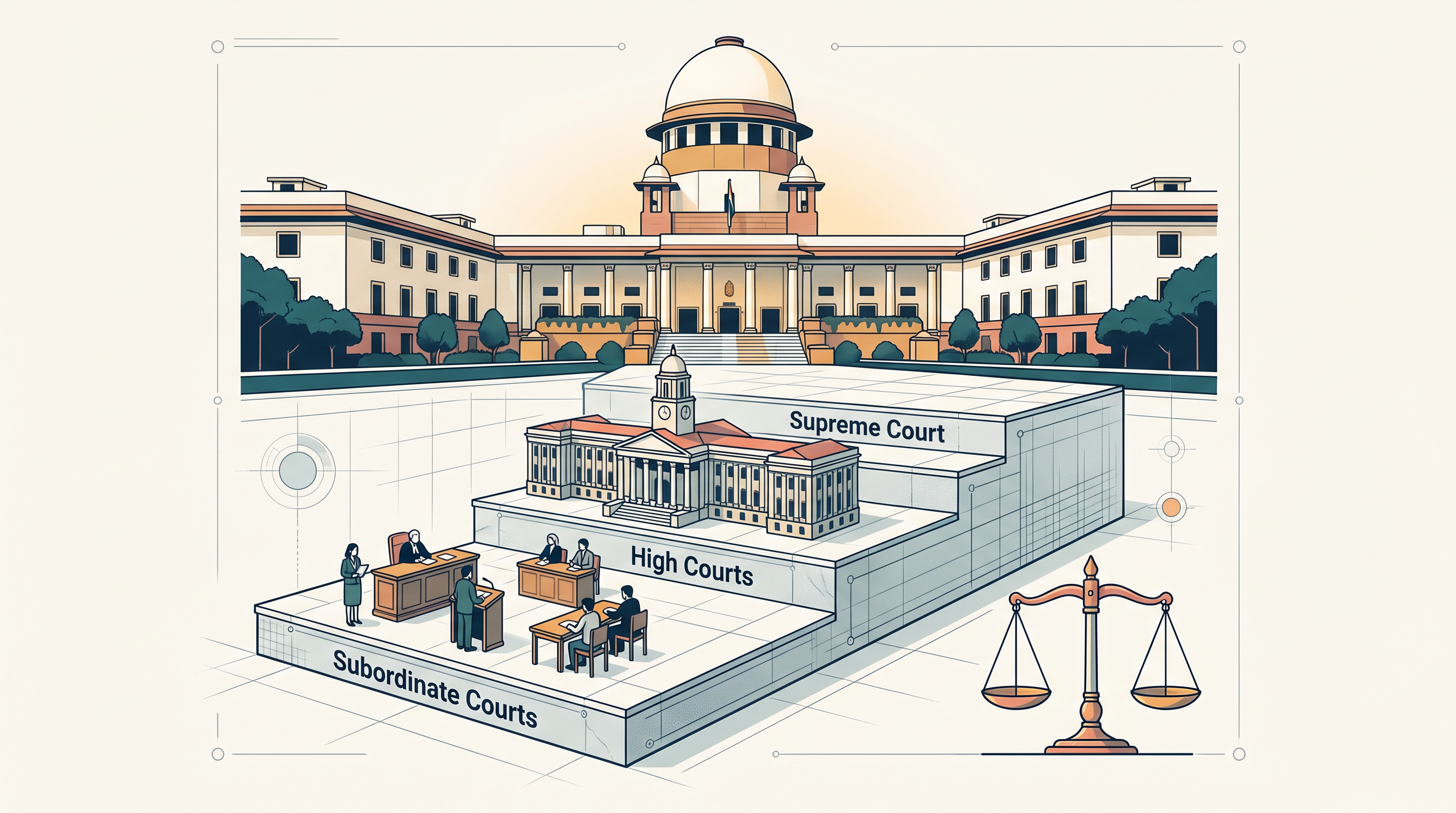
Fig. 11.0 – The Supreme Court and the judicial hierarchy.
This chapter will answer each of these questions.
11.1 Judiciary: Meaning and Role
Every democratic government works through three organs. The legislature makes the law, the executive implements it, and the judiciary interprets it and applies it to actual disputes. You have already met this three-fold division. Here we look closely at the third of them.
The judiciary is the system of courts through which the State settles disputes and enforces legal rights. Its purpose is to interpret the law, protect rights, and see that justice is actually delivered — not merely promised on paper.
In a democratic setup the judiciary acts as the guardian of the Constitution and of the law. A statute passed by the legislature, or an order issued by the executive, can be brought before a court and tested against the Constitution. If it fails that test, the court can strike down. This is what distinguishes a court from every other office of the State: it can tell the government it is wrong.
India’s judicial system is among the oldest and most prominent judicial systems in the world, and it hears an enormous volume of cases every year — from a dispute over a boundary wall to a challenge against a national law.
The Administration of Justice
The most important function of the judiciary is the administration of justice. This single phrase covers four distinct activities:
Adjudicating disputes — the court resolves disagreements between individuals, between organisations, and between the government and its own citizens.
Applying laws — the court ensures that the laws passed by the legislature are correctly applied to real-life situations. A law written in general words has to be matched to a particular set of facts, and that matching is judicial work.
Safeguarding rights — the court protects the fundamental rights and liberties of citizens against violation, whether the violation comes from a private person or from the State itself.
Enforcing legal remedies — the court provides appropriate relief to a person whose rights have been infringed, such as compensation for a loss suffered, or an injunction, which is a court order directing a person to stop doing something or to do a particular act.
Notice that the fourth of these is what gives the first three their meaning. A right that a court recognises but cannot enforce is only a statement of good intentions. The law expresses this idea in an old maxim.
The Judiciary and the Rule of Law
The judiciary also plays a crucial role in upholding the rule of law. The rule of law is not a single provision in a single statute; it is a principle that runs through the whole legal system, and it carries four consequences that a court exists to enforce:
No one is above the law — every person is subject to the law, and so is every organ of the government.
Checks on arbitrary power — the courts prevent the executive or the legislature from misusing authority. Power exercised without legal backing can be set aside.
Peaceful conflict resolution — the courts offer a formal, structured process for settling disputes, so that people do not have to resort to violence or take the law into their own hands.
Promotion of social order and justice — society functions fairly when disputes are settled according to established legal principles rather than according to who is stronger, richer or better connected.
The second of those four consequences is the one students most often see in a question paper, because it is where the judiciary and the executive meet directly. Work through the following fact pattern and watch which facts do the legal work.
11.2 Impartiality and Independence of the Judiciary
Impartiality is a cornerstone of the judiciary. Courts are expected to work free of the legislature and the executive, and free of political and social pressure as well. A judge decides on the basis of the law and the facts placed before her, not on the basis of personal opinion or outside influence.
This matters for a practical reason. A court has no army and no treasury; it cannot enforce its orders by force. Its authority rests almost entirely on public confidence — on the belief that a case will be decided the same way whoever is standing in the courtroom. Fair and unbiased decisions maintain that trust, and the judiciary is therefore expected to treat every person equally before the law, regardless of caste, religion, wealth or social status.
Two Requirements, Not One
For the effective administration of justice the judiciary must possess both impartiality and independence. The two ideas are closely related and are often used loosely as though they were the same thing. They are not. They are distinct in meaning and distinct in function, and a paper can ask you to separate them.
Impartiality
Impartiality refers to the quality of being fair, neutral and unbiased while deciding a case. An impartial judge does not favour either party. She decides the matter strictly on the basis of the law and the evidence, and she keeps out of the decision her own personal beliefs, her emotions, the social standing of the parties before her, and any external pressure brought upon her. Impartiality is what ensures that justice is delivered equally to all.
Independence
Independence of the judiciary means that judges are free from control, influence or interference by external authorities — the executive, the legislature, or any powerful individual. It allows a judge to perform her duties without fear or favour: without fear of what will happen to her if she rules one way, and without hope of reward if she rules the other.
Independence is what makes it possible for a court to uphold the rule of law even against the government itself. If the officer who decides a case against the State could be transferred, demoted or dismissed the following week by that same State, the decision would be worth very little.
How the Two Differ
Impartiality relates to the attitude and conduct of a judge while deciding a particular case. Independence relates to the freedom and institutional position of the judiciary as a whole. Independence supplies the conditions in which judges can function freely; impartiality is what they must then actually do with that freedom. Both are essential to a credible justice system, and neither is a substitute for the other. An independent judge can still be biased, and an impartial judge who is under the executive’s thumb may not be permitted to act on her conscience.
Factors Contributing to Impartiality
Impartiality is not left to a judge’s good intentions. It is maintained through the following factors:
Absence of personal interest — a judge must have no personal, financial or family interest in the case before her. This prevents a conflict of interest and ensures neutrality.
Equal treatment of parties — every party to a dispute must get an equal opportunity to present its case, whatever its social or economic standing. The wealthier party gets no longer hearing than the poorer one.
Decisions based on law and evidence — a judgment must rest only on the legal provisions that apply and the facts proved in court. Public opinion, emotion and the judge’s personal views are not sources of law.
Ethical conduct and judicial discipline — high standards of integrity, self-restraint and professional conduct, both inside and outside the courtroom, help a judge remain unbiased.
Reasoned and transparent judgments — a judgment that sets out the reasons for the decision can be examined, criticised and appealed against. Reasons are the strongest practical safeguard against an arbitrary or biased order, because a decision that cannot be explained usually cannot be defended.
The first of these factors is old enough to have its own maxim, and it is stricter than students expect.
India is the largest democracy in the world, and no healthy democracy can survive without an independent judiciary. An independent judiciary is the standing safeguard against violations of the rule of law, and the guarantee that justice will be administered impartially. Because so much rests on it, independence was not left to convention. It was written into the Constitution itself, and the next section examines the provisions that carry it.
11.3 Constitutional Provisions Ensuring an Independent Judiciary
A judiciary cannot be made independent merely by wishing it so. Independence has to be built into the structure of the office itself, so that a judge who decides against the government does not have to worry about what follows. Various provisions have therefore been included in the Constitution of India to secure an independent judiciary. Five of them matter most.
Separation of the Judiciary from the Executive
The first safeguard is structural. In colonial India the same officer often collected revenue, ran the district administration and tried criminal cases. A person prosecuted by the administration could find himself tried by that same administration. The Constitution treats this as unacceptable and directs that the two functions be kept apart.
Article 50 is a Directive Principle of State Policy. It is therefore not enforceable in a court, but it states a goal the State is expected to work towards, and it has largely been achieved — judicial functions today are performed by judicial officers, without the executive branch sitting in judgment on cases.
Security of Tenure
A judge whose job could be ended tomorrow would not be free today. The Constitution therefore fixes the tenure of judges rather than leaving it to the pleasure of the government. Judges of the Supreme Court hold office until the age of 65 years, and judges of the High Courts until the age of 62 years. A judge cannot be removed arbitrarily, and this security is what allows her to decide cases freely.
Salaries and Allowances
Money is a quieter form of pressure than dismissal, and the Constitution closes that route too. The salary of a judge of the Supreme Court is charged on the Consolidated Fund of India, and the salary of a judge of a High Court is charged on the Consolidated Fund of the State.
The word “charged” is doing important work here. Expenditure that is charged on a Consolidated Fund is not put to the vote of the legislature. It is paid out as a first claim on the fund. The legislature may discuss it, but it cannot vote it down or reduce it as a way of expressing displeasure with a judgment.
Removal of Judges
A judge is not beyond accountability, but the process for removing one is deliberately made difficult and deliberately kept out of the executive’s hands. A judge of the Supreme Court or of a High Court can be removed only on the ground of proved misbehaviour or incapacity, and only after both Houses of Parliament have passed a removal motion by the required special majority in the same session. The President then issues the order of removal.
This is popularly called “impeachment”, and you will hear the word used in the news, but it is a loose description. Impeachment in the strict constitutional sense is used for the removal of the President. For judges, the Constitution speaks of removal by an order of the President following an address by both Houses.
Contempt Powers
The last safeguard protects the working of the court itself. The Supreme Court under Article 129 and the High Courts under Article 215 are courts of record and have the power to punish for contempt of court. A court that could be obstructed, defied or scandalised with impunity would soon have orders that nobody obeyed.
The purpose of the power is not the personal dignity of the judge. It is to ensure that judicial decisions are respected and that the law is enforced without obstruction — which is why a party who simply ignores a court’s order can be proceeded against for contempt.
Taken together, these five provisions do one job. They remove from a judge’s mind every consideration except the law and the facts, which is exactly the condition that Section 11.2 described as independence.
11.4 Hierarchy of Courts in India
India does not run a separate set of courts for central law and another for State law. It runs one connected system. An integrated judicial system is one in which all the courts in the country are linked in a single unified hierarchy, so that the Supreme Court, the High Courts and the subordinate courts function as parts of one structure rather than as independent units.
Two benefits follow from this. Laws are interpreted consistently throughout the country, because every court below is bound by the courts above it. And the system stays coordinated and accountable, because the work of the lower courts is open to correction by the higher ones.
The Shape of the Structure
The structure is easiest to hold in the mind as a pyramid, as shown in Fig. 11.1. The Supreme Court of India stands at the apex. Below it are the High Courts, one for a State or, in some cases, shared between States. Below the High Courts sits the largest layer of all — the courts that most people actually go to.
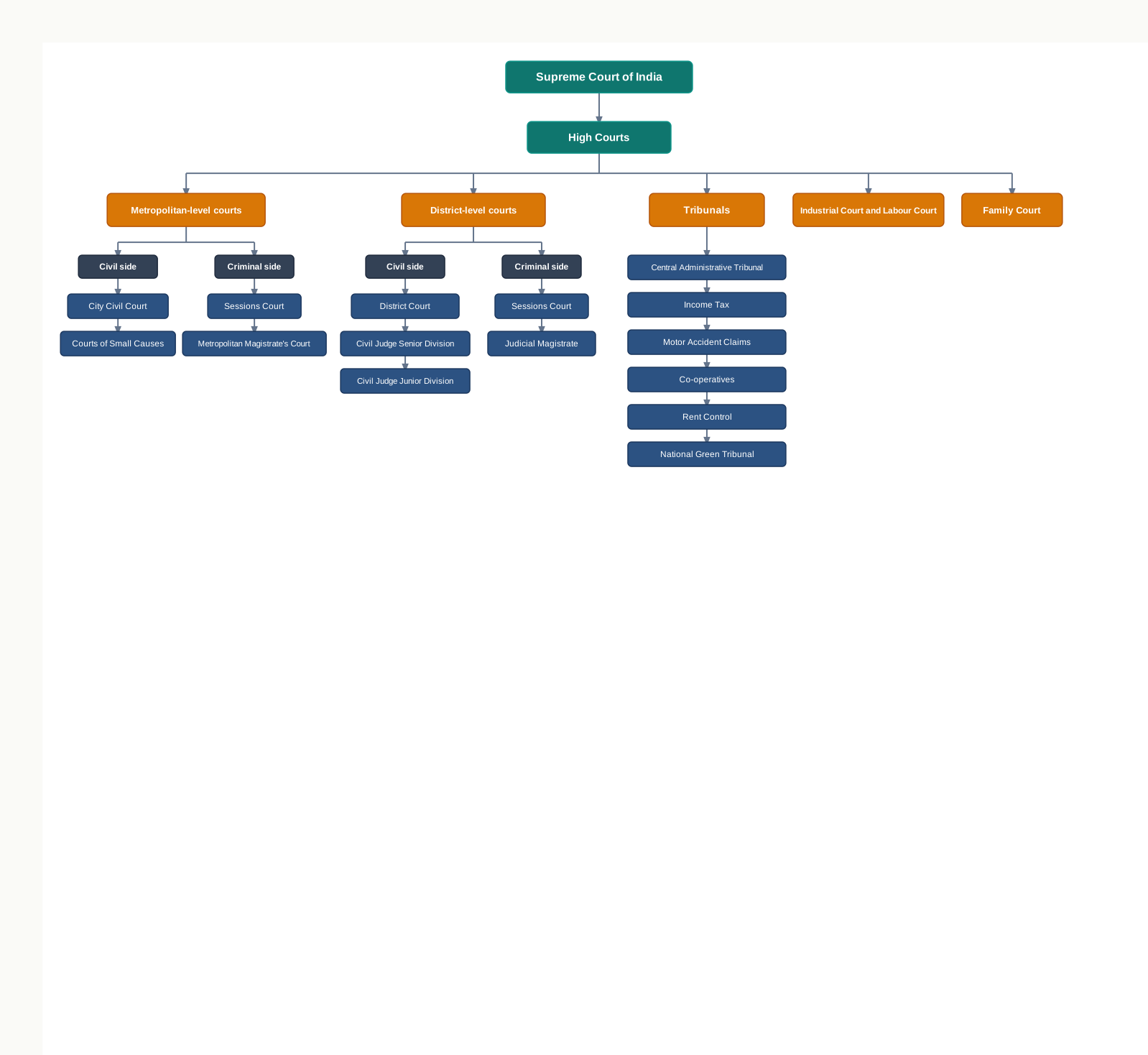
Fig. 11.1 – Hierarchy of courts in India.
Notice in Fig. 11.1 that this lower layer is not a single row of identical courts. It divides in three ways:
By level — at the metropolitan level the civil side has the City Civil Court and the Courts of Small Causes, while the criminal side has the Sessions Court and the courts of the Metropolitan Magistrates. At the district level the civil side has the District Court and the Civil Judges (Senior Division and Junior Division), and the criminal side has the Sessions Court and the Judicial Magistrates.
By subject — certain disputes are taken out of the ordinary courts and given to tribunals set up for them: the Central Administrative Tribunal, and tribunals for income tax, motor accident claims, co-operatives, rent control, and the National Green Tribunal for environmental matters.
By specialised court — the Industrial Court, which sits at both the city and the district level, and the Labour Court deal with industrial and employment disputes, and the Family Court deals with matrimonial and family matters.
You will study the civil courts, the criminal courts, and the tribunals and special courts in detail in the chapters that follow. What matters here is the shape: many courts at the bottom, fewer as you rise, one at the top.
11.4.1 Supreme Court of India
At the apex of the judicial hierarchy is the Supreme Court of India. It came into being under the Constitution of India, which commenced on 26 January 1950, and held its first sitting two days later, on 28 January 1950.
It replaced the Federal Court of India, which had been set up in 1937, and it brought to an end the practice of taking appeals from India to the Privy Council in England. From 1950 the final court of appeal for India has sat in India. There is only one Supreme Court for the whole country, and that singleness is what allows it to keep the interpretation of the law uniform across every State.
The Supreme Court exercises three kinds of jurisdiction, and the words are worth learning now because they recur throughout the subject:
Original jurisdiction — the power to hear certain matters directly, at the first instance, without the case having been to any other court.
Appellate jurisdiction — the power to hear appeals against the decisions of courts below it, and to confirm, alter or set them aside.
Advisory jurisdiction — the power to give its opinion when the President refers a question of law or of public importance to it.
The decisions of the Supreme Court are binding on all other courts in India. This is the doctrine of precedent at work, and Article 141 of the Constitution is what gives it force: a proposition of law settled by the Supreme Court is not merely persuasive for the courts below, it is the law they must apply.
11.4.2 High Courts
High Courts form the second tier of the judicial structure and function at the level of the State.
Their origin lies in the Indian High Courts Act, 1861, passed during British rule. The first High Courts were established in Calcutta, Bombay and Madras in 1862. They replaced the earlier Supreme Courts and the Sadar Adalats — two parallel sets of courts, one applying English law in the Presidency towns and the other functioning in the areas outside them — and merging the two brought much-needed uniformity to the judicial system. Over time, further High Courts were set up in other provinces.
At present a High Court is the highest court within its State. It exercises both original jurisdiction, in the classes of case it can hear directly, and appellate jurisdiction over decisions of the courts below it.
A High Court also does something the Supreme Court does not do in the same way: it exercises administrative and supervisory control over all the subordinate courts in its State. Postings, discipline and the general efficiency of the district judiciary fall under the High Court, not under the State government. That single arrangement is what keeps the lowest courts out of executive hands.
11.4.3 Subordinate Courts
Subordinate Courts form the lowest level of the judiciary and operate at the district and local levels.
During the pre-independence period these courts functioned under the control of the colonial executive, which limited judicial independence at exactly the level where most citizens encountered the law. The courts of that period included the District Courts, the Civil Courts, the Sessions Courts and the Magistrates’ Courts.
After Independence they were brought firmly under the control of the High Courts. The change of controlling authority was a change of substance, not of paperwork: a magistrate answerable to a High Court can decide against the district administration in a way that a magistrate answerable to that administration cannot.
Subordinate courts handle by far the largest number of cases in the country, and they are the courts an ordinary person is most likely to see from the inside. In that sense they are what makes justice accessible at all — a system in which the only functioning court sat in Delhi would be a system that existed only for those who could reach it.
The present three-tier judicial structure — Supreme Court, High Courts and Subordinate Courts — is therefore the result of a long historical evolution: from a fragmented colonial arrangement of overlapping courts to a unified constitutional framework designed for the effective administration of justice and the maintenance of the rule of law in India.
11.4.4 Importance of Hierarchy
Why arrange courts in tiers at all? The hierarchy is not a matter of rank or prestige. It does four specific jobs:
Appeals and review — the decision of a lower court can be examined by a higher court, so that justice is not denied because of an error made below. Judges are human, and a system that assumed otherwise would have no way of correcting itself.
Uniformity in law — conflicting judgments on the same question are prevented, because the higher court’s ruling becomes a precedent that all the courts below must follow.
Efficiency and specialisation — the higher courts can concentrate on complex and constitutionally significant matters, while the lower courts handle the great volume of routine cases.
Checks and balances — accountability is maintained within the judicial system itself, which sustains public confidence in the administration of justice.
11.5 Summary
- The judiciary is one of the three organs of government, alongside the legislature, which makes law, and the executive, which implements it.
- The judiciary interprets the law, applies it to disputes, protects rights, and acts as the guardian of the Constitution.
- The most important function of the judiciary is the administration of justice, which covers four activities:
- adjudicating disputes between individuals, between organisations, and between the government and citizens;
- applying the laws made by the legislature to real-life situations;
- safeguarding the fundamental rights and liberties of citizens;
- enforcing legal remedies such as compensation and injunctions.
- The maxim ubi jus ibi remedium means that wherever the law recognises a right, it must also provide a remedy to enforce it.
- The rule of law means that everyone, including the government, is subject to the law, that no person or authority is above it, and that all State action must conform to it.
- By upholding the rule of law the judiciary secures four things:
- that no one is above the law;
- that arbitrary power is checked;
- that conflicts are resolved peacefully through a formal process;
- that social order and justice are promoted through settled legal principles.
- Impartiality is the quality of deciding a case fairly, neutrally and without bias, strictly on the law and the evidence.
- Independence of the judiciary is the freedom of judges from control, influence or interference by the executive, the legislature or any powerful individual.
- Impartiality relates to the attitude and conduct of a judge in a particular case; independence relates to the freedom and institutional position of the judiciary as a whole.
- Independence supplies the conditions in which judges can function freely, while impartiality ensures fairness in the actual decision; both are essential to a credible justice system.
- Impartiality is maintained through five factors:
- absence of any personal, financial or family interest in the case;
- equal treatment of all parties, whatever their social or economic status;
- decisions based only on law and evidence, not on public opinion or personal views;
- ethical conduct and judicial discipline;
- reasoned and transparent judgments.
- The maxim nemo judex in causa sua means that no one may be a judge in his own cause, and a judge with an interest in a matter must withdraw from it.
- The Constitution of India secures an independent judiciary through five main provisions.
- Article 50, a Directive Principle of State Policy, directs the State to take steps to separate the judiciary from the executive in the public services of the State.
- Security of tenure is provided by fixing the retirement age of judges — 65 years for judges of the Supreme Court and 62 years for judges of the High Courts — and by preventing arbitrary removal.
- The salary of a Supreme Court judge is charged on the Consolidated Fund of India and that of a High Court judge on the Consolidated Fund of the State, so that it is not open to a vote of the legislature.
- A judge of the Supreme Court or a High Court may be removed only on the ground of proved misbehaviour or incapacity, by an order of the President after both Houses of Parliament pass a removal motion by the required special majority in the same session, under Article 124(4) read with Article 217(1)(b) and the procedure in the Judges (Inquiry) Act, 1968.
- The Supreme Court under Article 129 and the High Courts under Article 215 can punish for contempt of court, so that judicial orders are respected and the administration of justice is not obstructed.
- An integrated judicial system is one in which all courts in the country are linked in a single unified hierarchy, ensuring consistent interpretation of the law and coordination among courts.
- The Supreme Court of India stands at the apex of this hierarchy; it came into being under the Constitution, which commenced on 26 January 1950, and held its first sitting on 28 January 1950.
- The Supreme Court replaced the Federal Court of India, set up in 1937, and ended appeals to the Privy Council in England, becoming the final court of appeal in India.
- The Supreme Court exercises original, appellate and advisory jurisdiction, and under Article 141 its decisions are binding on all other courts in India.
- High Courts form the second tier and function at the State level; their origin lies in the Indian High Courts Act, 1861, and the first High Courts were established at Calcutta, Bombay and Madras in 1862, replacing the earlier Supreme Courts and Sadar Adalats.
- A High Court is the highest court in its State, exercising original and appellate jurisdiction, and it also has administrative and supervisory control over the subordinate courts of that State.
- Subordinate Courts operate at the district and local levels and include the District Courts, Civil Courts, Sessions Courts and Magistrates’ Courts.
- Before Independence the subordinate courts functioned under the control of the colonial executive; after Independence they were brought under the control of the High Courts, strengthening judicial independence.
- Subordinate courts decide the largest number of cases and make justice accessible to ordinary people.
- The present three-tier structure of Supreme Court, High Courts and Subordinate Courts is the result of a historical evolution from a fragmented colonial system to a unified constitutional framework.
- The hierarchy of courts is important for four reasons:
- it allows appeals and review, so errors of the lower courts can be corrected;
- it maintains uniformity in law through binding precedent;
- it promotes efficiency and specialisation between higher and lower courts;
- it provides checks and balances within the judiciary and sustains public confidence.
11.6 Key Terms
Judiciary — the system of courts through which the State interprets the law, settles disputes and enforces legal rights.
Administration of justice — the judiciary’s core function, covering the adjudication of disputes, the application of laws, the safeguarding of rights and the enforcement of legal remedies.
Injunction — a court order directing a person to stop doing something, or to do a particular act.
Ubi jus ibi remedium — the maxim that where the law recognises a right, it must also provide a remedy to enforce that right.
Rule of law — the principle that everyone, including the government, is subject to the law, that no person or authority is above it, and that all State action must conform to it.
Impartiality — the quality of deciding a case fairly, neutrally and without bias, on the basis of the law and the evidence alone.
Independence of the judiciary — the freedom of judges from control, influence or interference by the executive, the legislature or any powerful individual.
Nemo judex in causa sua — the maxim that no one may be a judge in his own cause, so that a judge with a personal, financial or family interest in a matter must withdraw from it.
Directive Principle of State Policy — a constitutional direction to the State that is not enforceable in a court but which the State is expected to work towards, such as Article 50.
Security of tenure — the protection given to judges by fixing their term of office and preventing arbitrary removal, so that they may decide cases without fear.
Charged expenditure — expenditure paid out of a Consolidated Fund as a first claim, which the legislature may discuss but cannot put to the vote.
Consolidated Fund of India — the central fund into which the Government of India’s revenues are paid and from which its expenditure, including the salaries of Supreme Court judges, is met; each State has its own Consolidated Fund of the State.
Proved misbehaviour or incapacity — the only grounds on which a judge of the Supreme Court or a High Court may be removed from office.
Contempt of court — conduct that disobeys a court’s order or lowers the authority of the court and obstructs the administration of justice.
Court of record — a court whose proceedings and judgments are recorded as permanent evidence and which has the power to punish for its contempt, as the Supreme Court and the High Courts do.
Integrated judicial system — a system in which all courts of the country are linked in one unified hierarchy, with the decisions of higher courts binding on the courts below.
Original jurisdiction — the power of a court to hear a matter at the first instance, before it has gone to any other court.
Appellate jurisdiction — the power of a court to hear an appeal against the decision of a court below it, and to confirm, alter or set that decision aside.
Advisory jurisdiction — the power of the Supreme Court to give its opinion on a question of law or public importance referred to it by the President.
Precedent — a proposition of law settled by a higher court, which the courts below are bound to apply.
Subordinate courts — the courts at the district and local levels, functioning under the administrative and supervisory control of the High Court of the State.
Tribunal — a body set up to decide disputes of a particular subject matter, such as service, tax, motor accident claims or environmental matters, outside the ordinary courts.
11.7 Points to Ponder
A judge who withdraws from a case because one of the parties is her cousin may well have been capable of deciding it fairly. Is it reasonable for the law to insist that justice must also appear to be done, even at the cost of losing a good judge on a case?
A court commands no army and controls no treasury; its orders are obeyed largely because people accept its authority. What happens to that authority when judgments are attacked or celebrated on social media before they have even been read?
Article 50 directs the State to separate the judiciary from the executive, but as a Directive Principle it cannot be enforced in a court. Should a direction so central to independence have been left unenforceable?
The threshold for removing a judge is deliberately very high, and no judge of the Supreme Court or a High Court has so far been removed through the process. Does protecting independence in this way make accountability too difficult to achieve in practice?
Salaries charged on the Consolidated Fund protect judges from financial pressure. Does the same reasoning apply to other constitutional offices, and if so, why is it not extended to all of them?
Subordinate courts decide the overwhelming majority of cases in India, yet the higher courts receive most of the public attention. What does this imbalance suggest about where reform effort ought to be directed?
Suppose a judge of a lower court is convinced that a binding precedent produces an unjust result in the case before her. What should she do, and what would happen to the legal system if every judge decided that question for herself?
The right of appeal corrects errors, but it also allows a party with deeper pockets to keep a dispute alive for years. Is the ladder of courts equally available to everyone who needs it?
Tribunals decide disputes faster and with greater specialised expertise than ordinary courts, but they also take those disputes outside the ordinary hierarchy. What is gained and what is lost by that shift?
The power to punish for contempt protects the working of a court, but it also sits close to the freedom to criticise judges and judgments. Where should the line between the two be drawn?
11.8 Textbook Questions
Explain the meaning of the judiciary and describe its role as an organ of government.
What is meant by the administration of justice? Explain the four activities it covers.
Explain the rule of law and describe the role of the judiciary in upholding it.
What is meant by impartiality of the judiciary? State the factors that help maintain it.
Explain the concept of independence of the judiciary and state why it is essential in a democracy.
Distinguish between impartiality and independence of the judiciary.
Discuss the provisions of the Constitution of India that ensure an independent judiciary.
Explain the hierarchy of courts in India with the help of a diagram.
Write short notes on: (a) the Supreme Court of India; (b) the High Courts; (c) the Subordinate Courts.
What is an integrated judicial system? Explain the importance of the hierarchy of courts in India.
11.9 Objective Questions
A judge of the Supreme Court of India holds office until the age of —
- 60 years
- 62 years
- 65 years
- 70 years
A judge of a High Court holds office until the age of —
- 58 years
- 60 years
- 62 years
- 65 years
Which Article of the Constitution of India directs the State to separate the judiciary from the executive in the public services of the State?
- Article 32
- Article 50
- Article 141
- Article 215
The salary of a judge of a High Court is charged on —
- the Consolidated Fund of India
- the Consolidated Fund of the State
- the Contingency Fund of India
- the annual budget of the State’s law department
The origin of the High Courts in India is traced to —
- the Regulating Act, 1773
- the Indian High Courts Act, 1861
- the Government of India Act, 1935
- the Constitution of India, 1950
The first High Courts in India were established in 1862 at —
- Delhi, Lahore and Allahabad
- Calcutta, Bombay and Madras
- Calcutta, Patna and Nagpur
- Bombay, Madras and Mysore
The Supreme Court of India replaced which of the following?
- The Sadar Adalats
- The Courts of Small Causes
- The Federal Court of India
- The Privy Council’s Indian bench
The Supreme Court of India held its first sitting on —
- 26 November 1949
- 26 January 1950
- 28 January 1950
- 15 August 1950
The power of the Supreme Court to punish for contempt of court is contained in —
- Article 124
- Article 129
- Article 141
- Article 215
Under which Article are the decisions of the Supreme Court binding on all courts in India?
- Article 50
- Article 129
- Article 141
- Article 217
The jurisdiction the Supreme Court exercises when the President refers a question of law or public importance to it is called —
- original jurisdiction
- appellate jurisdiction
- advisory jurisdiction
- supervisory jurisdiction
A judge of the Supreme Court or a High Court may be removed only on the ground of —
- an unpopular judgment
- proved misbehaviour or incapacity
- repeated reversal of her decisions on appeal
- loss of confidence of the executive
The maxim meaning that no one should be a judge in his own cause is —
- ubi jus ibi remedium
- nemo judex in causa sua
- ratio decidendi
- audi alteram partem
Which of the following is a tribunal and not an ordinary court?
- The Court of Small Causes
- The Court of the Civil Judge (Junior Division)
- The National Green Tribunal
- The Family Court
Administrative and supervisory control over the subordinate courts of a State is exercised by —
- the State government
- the District Collector
- the High Court of that State
- the Supreme Court of India
At the district level, the civil side includes the District Court and the courts of the —
- Metropolitan Magistrates
- Civil Judges, Senior Division and Junior Division
- Sessions Judge and Additional Sessions Judge
- Labour Court and Industrial Court
Assertion (A): The salary of a judge of the Supreme Court is charged on the Consolidated Fund of India. Reason (R): Expenditure charged on the Consolidated Fund is not submitted to the vote of the legislature, so a judge’s pay cannot be reduced in reaction to her judgments.
Assertion (A): A judge who has a family interest in a case must withdraw from hearing it. Reason (R): The rule applies only where it is proved that the judge was in fact biased against one of the parties.
Assertion (A): Article 50 of the Constitution of India cannot be enforced by a person in a court of law. Reason (R): Article 50 is a Directive Principle of State Policy.
Assertion (A): Impartiality and independence of the judiciary mean the same thing. Reason (R): Impartiality relates to the conduct of a judge while deciding a case, whereas independence relates to the institutional position of the judiciary.
Assertion (A): India is said to have an integrated judicial system. Reason (R): The Supreme Court, the High Courts and the subordinate courts are linked in a single hierarchy, and the decisions of the higher courts bind the courts below them.
Assertion (A): A suit for a small unpaid sum cannot be filed directly in the Supreme Court of India. Reason (R): In an integrated judicial system, an ordinary dispute begins in the lowest court competent to hear it and moves upward by appeal.
Assertion (A): The hierarchy of courts helps maintain uniformity in the interpretation of law. Reason (R): A ruling of a higher court becomes a precedent that the courts below are bound to follow.
11.10 Check Your Concepts
Why is the judiciary described as the guardian of the Constitution? What can a court do that no other organ of government can do?
Explain why the enforcement of legal remedies gives meaning to the other three functions of the administration of justice.
Apply the maxim ubi jus ibi remedium to the following situation: a worker is entitled to her wages, but the law provides no forum in which she can recover them. What does the maxim say about such a situation?
Distinguish between impartiality and independence of the judiciary on any four bases.
State the five factors through which the impartiality of the judiciary is maintained.
Why is a judge required to withdraw from a case in which she has a financial interest, even where there is no evidence that the interest would have affected her decision?
Why does a judgment have to give reasons? Explain how reasoned judgments reduce the possibility of arbitrary or biased decisions.
What would happen to judicial independence if the salaries of judges had to be voted on by the legislature every year? Explain with reference to the meaning of charged expenditure.
Article 50 is a Directive Principle and cannot be enforced in a court. Why, then, is it treated as an important safeguard of judicial independence?
Identify the provision of the Constitution that deals with each of the following:
- separation of the judiciary from the executive
- the power of the Supreme Court to punish for contempt
- the power of the High Courts to punish for contempt
- the binding force of Supreme Court decisions on all other courts
Arrange the following steps in the removal of a judge in their correct order:
- the President issues the order of removal
- a three-member inquiry committee investigates the charge
- the motion is signed by the required number of members and submitted to the Speaker or Chairman
- each House passes the motion by the required special majority in the same session
- the Speaker or Chairman admits the motion
Correct the errors in the following statement: “A judge of a High Court holds office until the age of 65 years and may be removed by the President at his discretion on any ground he thinks fit.”
Correct the errors in the following statement: “The Supreme Court of India held its first sitting on 26 January 1950 and replaced the Sadar Adalats, which had heard appeals from India until that date.”
Distinguish between the original jurisdiction and the appellate jurisdiction of a court, and give one example of each from this chapter.
Why is the power of administrative and supervisory control over subordinate courts given to the High Court rather than to the State Government? What would be the risk if it were the other way round?
Explain why a judge of a subordinate court must follow a precedent laid down by the Supreme Court even if she believes it produces an unsatisfactory result in the case before her.
What is an integrated judicial system? Explain how the position of a litigant would change if India had one set of courts for central laws and a separate set for State laws.
State the four reasons why a hierarchy of courts is important, and explain which of the four you consider most valuable to an ordinary litigant.
A person simply ignores an order passed against him by a High Court. What power does the court have in such a situation, and what is the purpose of that power?
Name any four tribunals shown in the hierarchy of courts and state the kind of dispute each of them decides.
11.11 Case-Based Questions
- A civil suit between two construction companies is listed before Justice M. Shortly before the hearing, Justice M realises that her brother is a director of one of the two companies, although he has had nothing to do with the disputed contract. She is confident that the relationship will not affect her judgment, and both parties are anxious to avoid further delay.
- Which requirement of the judiciary is in question here — impartiality or independence? Give a reason for your answer.
- Which maxim applies to this situation, and what does it require Justice M to do?
- Justice M argues that since she is certain of her own fairness, she should hear the case. Is her reasoning legally sound? Explain.
- Would your answer change if her brother had resigned as director two years before the dispute arose? State what turns on that fact.
- A district officer issues an order at short notice directing that a private coaching centre be shut down the same day. He points to no statute authorising the order, gives the owner no notice, and holds no hearing. The owner approaches the court.
- Which principle is the owner relying on, and what does that principle mean?
- What is the first question the court will ask about the officer’s order?
- Which function of the judiciary is being performed when a court examines an order of this kind?
- Suppose a State law did permit closure of unsafe premises after fifteen days’ written notice, and such notice had in fact been served. How would the legal position change, and why?
- Kavita files a civil suit in her district against a builder for a sum well within the ordinary pecuniary limits of the lowest civil court. She loses. Her lawyer tells her that the trial judge misread a provision of law, and that the same provision has been interpreted differently by two High Courts in other States.
- In which court would Kavita’s suit have begun, and why could she not have filed it directly in the Supreme Court?
- Trace the route her case may take upward through the hierarchy of courts.
- Two High Courts have taken different views of the same provision. Which court can settle the question for the whole country, and what is the effect of its ruling on all other courts?
- Which two of the four reasons for having a hierarchy of courts are illustrated by this fact situation?
- A judicial magistrate in a district decides a case against the district administration. Soon afterwards, the State Government announces that it proposes to review the postings of judicial officers in that district, and a member of the State legislature demands that the salaries of judges who “obstruct development work” be reduced in the next budget.
- Which concept studied in this chapter is under threat in this situation?
- Under whose control do judicial officers of a district function, and why was this arrangement adopted after Independence?
- Can a legislature reduce a judge’s salary as a response to an unwelcome decision? Explain with reference to the meaning of charged expenditure.
- Explain how this situation would have been different in the pre-independence period, and what change removed that difficulty.
- A High Court passes an order directing a builder to stop construction on a disputed plot until the case is decided. The builder ignores the order and continues to build. In an unrelated matter, the same builder’s truck injures a pedestrian, and the injured person wishes to claim compensation.
- What power may the High Court exercise against the builder for ignoring its order, and under which Article?
- It is argued that this power exists to protect the personal dignity of judges. Is that a correct statement of its purpose? Explain.
- Before which forum would the pedestrian’s claim for compensation ordinarily go, and why is it not decided by an ordinary civil court?
- What kind of remedy is the High Court’s order directing the builder to stop construction? Name it and define it.
11.12 Landmark Cases & Maxims
State the literal meaning and the legal meaning of the maxim nemo judex in causa sua, and give one situation in which a judge would have to act on it.
State the literal meaning and the legal meaning of the maxim ubi jus ibi remedium, and explain what it says about a right that no court can enforce.
Match the situation in Column A with the maxim or principle it attracts in Column B: | Column A | Column B | |—|—| | a. A judge holds shares in a company appearing before her and withdraws from the case. | i. ubi jus ibi remedium | | b. A tenant has a legal right to the return of her deposit and approaches a court to recover it. | ii. independence of the judiciary | | c. An officer passes an order closing a shop without any law authorising him to do so. | iii. nemo judex in causa sua | | d. A magistrate decides a case against the district administration and cannot be dismissed for it. | iv. the rule of law |
“Justice must not only be done, it must also be seen to be done.” Identify the maxim this statement supports and explain why appearance is treated as legally significant.
A statute declares that every consumer has a right to a refund for a defective product, but creates no forum before which a refund can be claimed. Which maxim is violated, and what does that maxim require the law to provide?
Identify which principle or maxim studied in this chapter governs each of the following, and give a one-line reason for your choice:
- the requirement that a judge give reasons for her decision
- the requirement that both parties get an equal opportunity to present their case
- the requirement that a government order be backed by law