Chapter 1: Political Theory: An Introduction
The new textbook is handed out in the first period, and the sighs begin before the covers are opened. ‘Another book to memorise,’ says a boy at the back, weighing it in his hand. A girl near the window says, half to herself, ‘If only we could talk about things that actually concern us.’
The teacher does not argue. She turns to the board and writes one line: ‘Why do we need government at all?’
For a minute nobody speaks. Then the boy at the back says government is where the scams come from — leaders who make tall promises, switch parties and look after themselves. A girl in the second row disagrees. She points out that the bus that brought them to school runs on a route somebody decided, the school itself is inspected by somebody, and the exam she will sit is set by somebody. Take all that away, she says, and see what is left.
A third student cuts in. If government matters that much, who decides what it does — and who decides whether what it does is fair?
The argument runs until the bell. Nobody wins it. As the class packs up, the teacher says the sentence they will spend the year testing: for the last twenty minutes, without knowing it, you have been doing political theory.
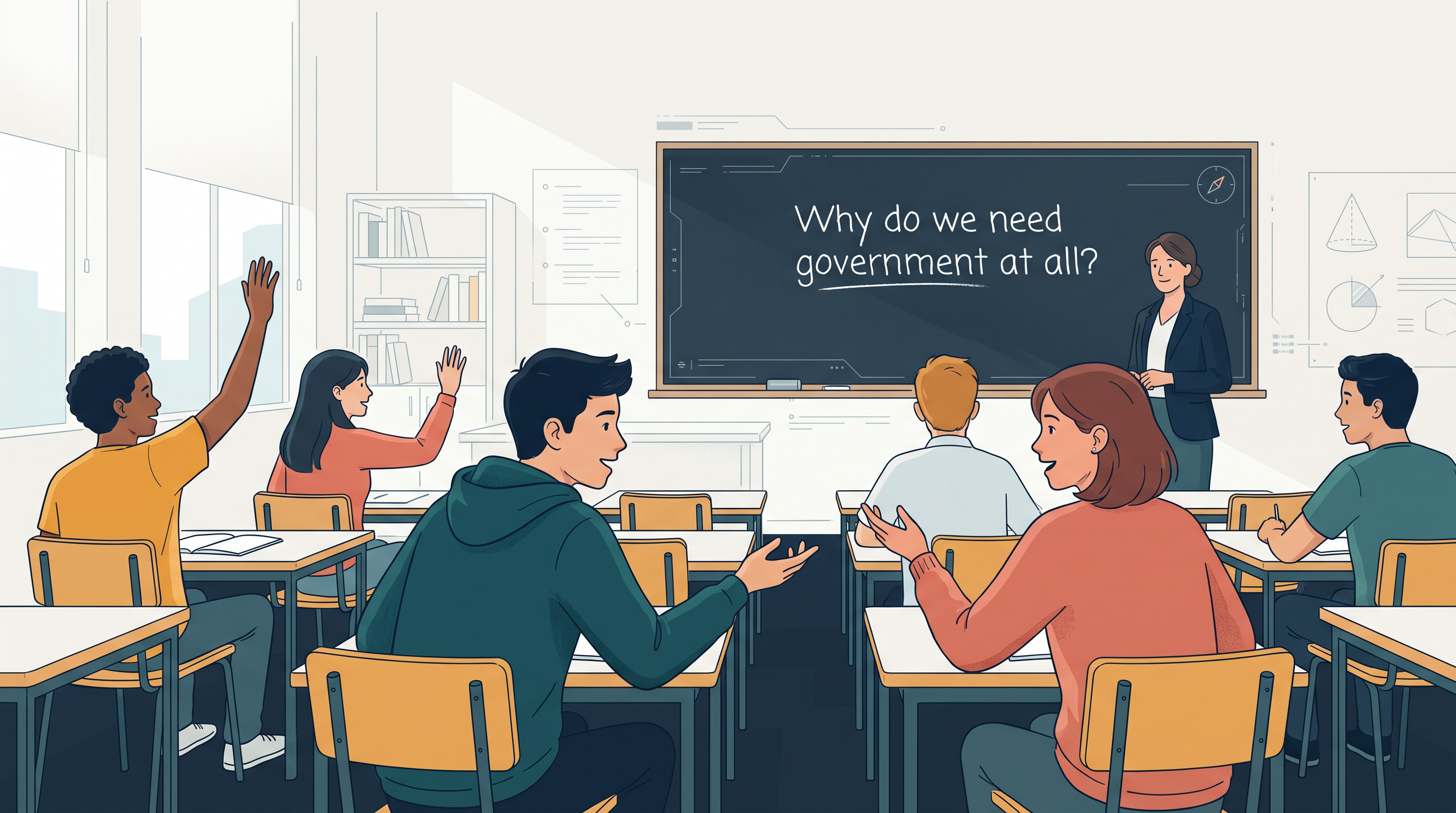
Fig. 1.0 – A political argument in a classroom.
1.1 What Is Politics?
Two Things That Make Us Political
Human beings are unusual in two respects. They possess reason, and they can reflect on their own actions — stand back from what they have done and ask whether it was right. They also possess language, and can communicate with one another.
Other species live together, but they cannot express their innermost thoughts and desires to each other. Human beings can. We share our ideas, and we argue about what we consider good and desirable.
Political theory has its roots in these twin aspects of the human self — the capacity to reason, and the capacity to talk to one another about how we should live. It is the systematic study of the ideas and values that shape political life. Because we can reason, we can ask whether an arrangement is just; because we can speak, we can put that question to other people and hear their answers.
The Questions It Asks
Political theory begins with questions that sound simple and turn out not to be. How should society be organised? Why do we need government at all? What is the best form of government?
The questions go further. Does law limit our freedom, or protect it? What does the state owe its citizens? And what do we owe each other, as citizens?
Political theory examines questions of this kind and thinks systematically about the values that inform political life — values such as freedom, equality and justice. It explains what these concepts mean and why they matter. It clarifies the definitions we already carry around by looking closely at how major political thinkers, of the past and of the present, have defended them.
It does not stop at definitions. It asks how far freedom or equality are actually present in the institutions we live inside every day — schools, shops, buses and trains, government offices. At a more advanced level, it asks whether the existing definitions are even adequate, and how institutions such as government and the bureaucracy — the permanent body of appointed officials who carry out government decisions — and the policies they run must be changed to become more democratic.
The purpose of all this is not to produce scholars. The objective of political theory is to train citizens to think rationally about political questions and to assess the political events of their own time. In this chapter we will examine what is meant by politics and by political theory, and why any of it is worth studying.
The Many Images Of Politics
You will already have noticed that people mean very different things by the word ‘politics’. Political leaders, and the people who contest elections and hold political office, may argue that it is a kind of public service. Others associate politics with manipulation and intrigue, undertaken to pursue ambitions and satisfy wants.
A few think of politics simply as whatever politicians do. And what they see politicians doing does not encourage them. They see leaders defecting from parties — abandoning the party on whose symbol they were elected — making false promises and tall claims, manipulating different sections of society, pursuing personal or group interests ruthlessly, and in the worst cases stooping to crime. From there it is a short step to linking politics with ‘scams’.
So prevalent is this way of thinking that we now use the word far beyond government. When we see people in any walk of life promoting their interests by any means possible, we say they are playing politics. A cricketer manipulating to stay in the team, a fellow student trying to use his father’s position, a colleague in an office mindlessly agreeing with the boss — of each of them we say he or she is playing ‘dirty’ politics.
Disillusioned by such pursuits of selfishness, we despair of politics altogether. We say, ‘I am not interested in politics’, or ‘I am going to stay away from politics’.
It is not only ordinary people who despair in this way. Businessmen and entrepreneurs routinely blame politics for their woes, even as they benefit from political parties and fund them. Cinema stars complain about politics too, though they seem to be quite adept at the game once they join it.
That last observation is worth pausing on. The people who complain loudest about politics are often the same people who take part in it, or profit from it. It suggests that despair about politics is easier to declare than to act upon.
A Cartoonist’s Verdict
The cartoonist R. K. Laxman made the same point in a single drawing for the Times of India, reproduced here as Fig. 1.1.
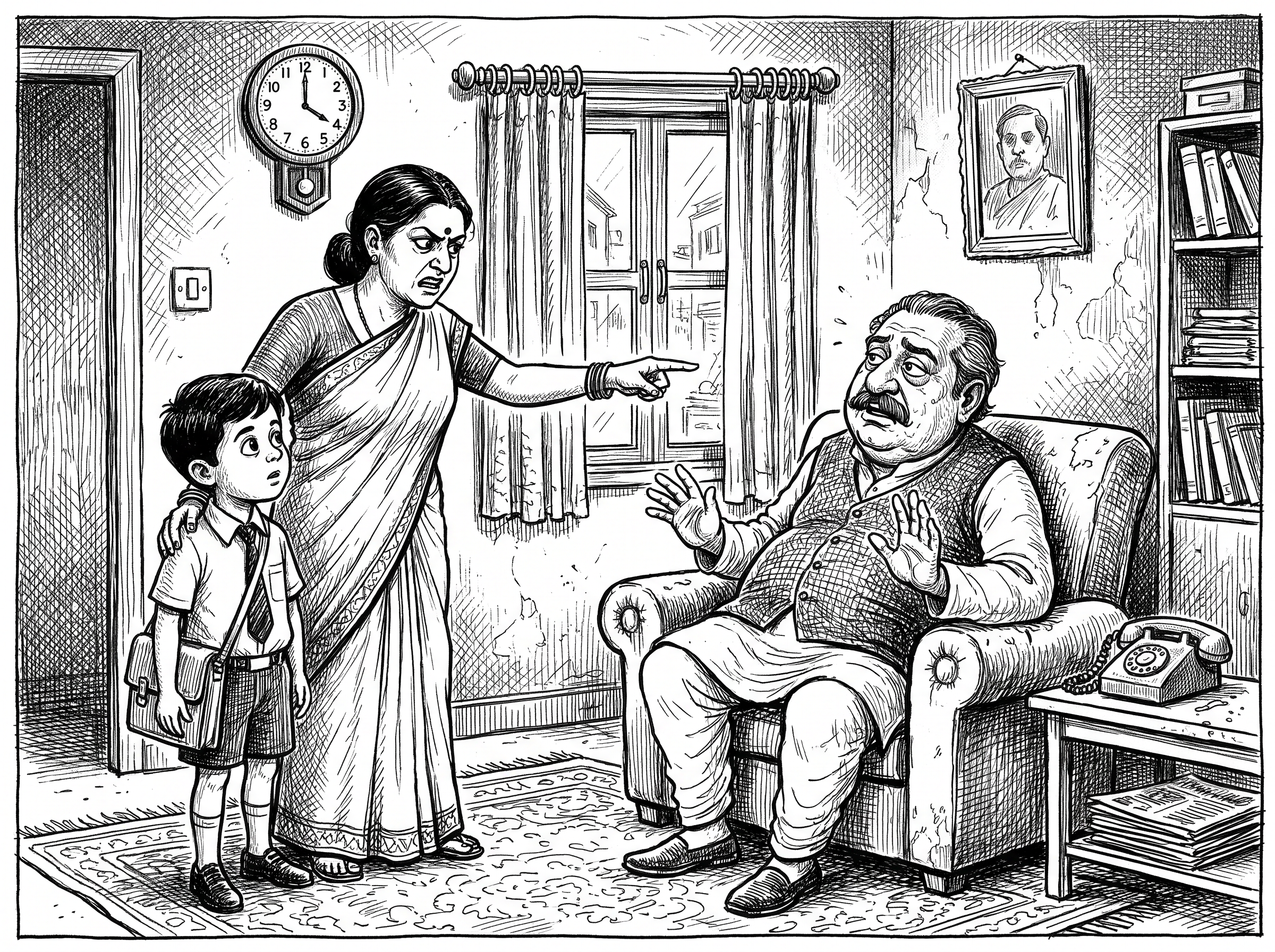
Fig. 1.1 – Politics as a bad influence. Inspiration: R. K. Laxman in the Times of India.
Read what the woman is actually saying. She does not accuse the politician of lying and cheating himself. She accuses him of teaching a child that lying and cheating work — that they are how one gets ahead.
The joke lands because the cartoonist expects us to share an assumption without being told: that politics is a school for dishonesty. He does not have to argue for it. He can simply draw it, and we laugh, and the assumption passes through us unexamined.
That is exactly what a cartoon is good at, and exactly what it cannot do. It states one opinion, forcefully, in one image. It cannot draw the counter-argument, it cannot tell us how many politicians the cartoonist had in mind, and it cannot show us the politics that is not conducted by politicians at all — the campaign, the negotiation, the petition, the vote. A cartoon records what a society finds easy to believe about itself. That is not the same as what is true.
Two Conflicting Images
We are thus confronted with conflicting images of politics. Is politics an undesirable activity, something we should stay away from and get rid of? Or is it a worthwhile activity, which we must engage with in order to make a better world?
It is unfortunate that politics has come to be associated with the pursuit of self-interest by any and every method. That association is not the whole picture, and if we accept it we will misunderstand the society we live in.
We need to realise that politics is an important and integral part of any society. Mahatma Gandhi once observed that politics envelops us like the coils of a snake, and that there is no other way out but to wrestle with it. The image is exact: you do not escape a coiled snake by refusing to look at it.
No society can exist without some form of political organisation and collective decision making. A society that wants to sustain itself must take into account the multiple needs and interests of its members — and those needs conflict, which is precisely why decisions have to be made at all.
A number of social institutions, such as the family, tribes and economic institutions, have emerged to help people fulfil their needs and aspirations. Such institutions help us find ways of living together while acknowledging our obligations to each other. Among these institutions, governments play an important part. How governments are formed and how they function is therefore an important focus of politics.
Politics Is Not Only Government
But politics is not confined to the affairs of government. What governments do is relevant precisely because it affects the lives of people in many different ways — not because government is the only place politics happens.
Consider how far a government’s decisions reach. Governments determine our economic policy, our foreign policy — the way a country conducts its dealings with other countries — and our educational policy. These policies can improve the lives of people. An inefficient or corrupt government can also endanger people’s lives and their security.
Follow one such failure through to its end. If the government in power allows conflicts to become violent, markets close down and schools are shut. Our lives are disrupted: we cannot buy things we may need urgently, and those who are sick cannot reach the hospital.
The school schedule is affected too. Syllabi cannot be completed, and we may have to take extra coaching for the examinations and pay tuition fees. A failure of government at the top ends as a bill on a family’s table.
The reverse is equally true. If the government makes policies to increase literacy and employment, we may get the opportunity to go to a good school and to find a decent job.
Since the actions of the government affect us so deeply, we take a lively interest in what governments do. The next paragraph describes what that interest looks like in practice — and every activity in it is politics.
What Citizens Actually Do
We form associations and organise campaigns to articulate our demands. We negotiate with others and try to shape the goals that governments pursue.
When we disagree with the policies of the government, we protest and organise demonstrations to persuade the government to change the existing laws. We passionately debate the actions of our representatives, and we discuss whether corruption has increased or decreased.
We ask harder questions too. Can corruption be rooted out at all? Are reservations for specific groups — quotas in education, jobs or legislatures, set aside for groups the Constitution recognises as disadvantaged — just or not? Why do some parties and some leaders win elections while others do not?
In asking these questions we are doing something specific. We are looking for the rationale underlying the prevalent chaos and decay, and we are aspiring to create a better world. Notice that not one of these activities is performed by a politician.
Politics, Defined
To sum up, politics arises from the fact that we have different visions of what is just and desirable for us and for our society. If we all wanted the same thing, there would be nothing to decide.
Politics involves the multiple negotiations that go on in society, through which collective decisions are made. It operates at two levels at once. At one level it involves what governments do, and how what they do relates to the aspirations of the people. At another level it involves how people struggle to influence decision making from outside government.
This gives us a working test. People may be said to engage in political activity whenever they negotiate with each other and take part in collective activities designed to promote social development and help resolve common problems.
Hold that test against the everyday uses of the word we began with. The cricketer manoeuvring for his place is pursuing a private interest, and nothing is being decided for anybody but himself. The residents of a colony petitioning for a bus route are deciding something that will bind them all. On this definition, only the second is politics.
1.2 What Do We Study In Political Theory?
Looking Below The Surface
If we look around us, what we see is movement, development and change. Nothing seems to stay still long enough to be studied.
But if we look deeper, we also see certain values and principles that have inspired people and guided policies. Ideals like democracy, freedom or equality, for instance. These do not change from week to week; they are what the changes are argued about.
Different countries try to protect such values by enshrining them in their constitutions — the basic law of a country, which sets out how power is to be organised and what limits it must respect. This is the case with the American and the Indian constitutions alike.
Where The Ideas Came From
These documents did not just emerge overnight. They are built upon ideas and principles that have been debated almost since the time of Kautilya and Aristotle, down to Jean Jacques Rousseau, Karl Marx, Mahatma Gandhi and Dr B. R. Ambedkar.
The debate is very old. As far back as the fifth century B.C., Plato and Aristotle discussed with their students whether monarchy or democracy was better — that is, whether a country is better ruled by one person, or by its people.
In modern times, Rousseau first argued for freedom as a fundamental right of humankind. That is a claim, not an obvious fact: it says freedom is owed to a human being simply for being human, and not granted by a ruler as a favour.
Karl Marx argued that equality was as crucial as freedom. Notice the shape of that argument — it does not attack freedom, it says freedom alone is not enough, and a society that secures one while neglecting the other has not finished its work.
Closer home, Mahatma Gandhi discussed the meaning of genuine freedom, or swaraj, in his book Hind Swaraj. Dr Ambedkar vigorously argued that the scheduled castes — the communities that had for centuries been subjected to untouchability — must be considered a minority, and as such must receive special protection.
From Argument To Constitution
These ideas did not stay in books. They find their place in the Indian Constitution.
Our Preamble, the opening declaration that states what the Constitution is for, enshrines freedom and equality. The chapter on Rights in the Indian Constitution abolishes untouchability in any form. Gandhian principles find a place in the Directive Principles — the section of the Constitution that tells governments what goals they should work towards, even though a citizen cannot go to court to enforce them.
Read that list slowly and you can see arguments turning into articles of law. Ambedkar’s argument about special protection, and Gandhi’s argument about swaraj, did not win because they were popular. They won because they were argued for, and the Constitution carries the marks of the argument.
What Political Theory Actually Does
Political theory deals, in a systematic manner, with the ideas and principles that shape Constitutions, governments and social life. It clarifies the meaning of concepts such as freedom, equality, justice, democracy and secularism — the principle that the state does not favour any religion, and treats citizens of every faith as equals.
It also probes the significance of principles that hold institutions together. The rule of law means that everyone, including those who govern, is subject to the same law. The separation of powers means that the legislature, the executive and the judiciary are kept distinct so that no one of them holds all the power. Judicial review is the power of a court to examine a law and strike it down if it conflicts with the Constitution.
How does political theory probe these? By examining the arguments that different thinkers have advanced in defence of them. The question is never merely ‘what does the rule of law mean’ but ‘what is the case for having it, and how strong is that case’.
Though Rousseau or Marx or Gandhi did not become politicians, their ideas influenced generations of politicians everywhere. There are also contemporary thinkers who draw upon them to defend freedom or democracy in our own time.
Besides examining arguments, political theorists reflect upon our current political experiences. They point out trends, and they point out possibilities for the future.
Is Any Of This Still Relevant?
But is all this relevant for us now? Have we not already achieved freedom and democracy? India is free and independent; surely the arguments are over and the answers are in the Constitution.
They are not. Questions regarding freedom and equality have not ceased to crop up, and there are three reasons why they keep returning.
One: The Same Right, Unequally Real
Issues concerning freedom, equality and democracy arise in many different areas of social life, and they are implemented in different sectors at different paces. A value can be fully achieved in one sphere of life and barely begun in another.
Take equality. It may exist in the political sphere in the form of equal rights, and yet not exist to the same extent in the economic or social spheres.
People may enjoy equal political rights and still be discriminated against socially because of their caste or their poverty. Some people have a privileged place in society while others are deprived even of basic necessities.
Some are able to achieve whatever goals they set for themselves. Many are unable even to go to school, and so cannot have decent jobs in the future. For them, freedom is still a distant dream.
That last sentence is the one to sit with. The right exists on paper; the freedom does not exist in the life. Political theory is what lets us name that gap instead of merely feeling uneasy about it.
Two: The Meaning Keeps Being Reinterpreted
Secondly, though freedom is guaranteed in our Constitution, we encounter new interpretations of it all the time.
This is a bit like playing a game. As we play chess or cricket, we learn how to interpret the rules, and in the process we discover new and broader meanings of the game itself. The rule book does not change; our grasp of what it requires does.
Similarly, the fundamental rights guaranteed by our Constitution — the rights a citizen can go to court to enforce — are continually being reinterpreted in response to new circumstances. For instance, the right to life has been interpreted by the Courts to include the right to livelihood. The right to information has been granted through a new law.
Follow the logic of that first example. If a person’s means of earning a living is taken away, the courts have held, then in a real sense the person’s life is taken away too. The words of the right did not change; what we understood them to demand did.
Societies frequently encounter new challenges, and new challenges generate new interpretations. The fundamental rights guaranteed by our Constitution have been amended and expanded over time, through judicial interpretations and through government policies designed to address new problems.
Three: New Freedoms, New Threats
Thirdly, as our world changes, we may discover new dimensions of freedom as well as new threats to freedom. The same change often produces both at once.
Global communications technology is making it easier for activists to network with one another across the world, protecting tribal cultures or forests. The very same technology also enables terrorists and criminals to network.
Moreover, internet commerce is all set to increase in the future. This means that the information we give about ourselves online, in order to buy goods or services, must be protected.
So even though netizens — citizens of the internet — do not like government control, they recognise that some form of regulation is necessary to safeguard individual security and privacy. That is an important admission, and it shifts the question.
Once you accept that some regulation is needed, the argument is no longer about whether to regulate. It is about how much freedom should be given to people using the net, and where the line falls.
The chapter puts the hard cases directly. Should people be allowed to send unsolicited e-mails to strangers? Can you advertise your products in chat rooms? Should governments be allowed to read private e-mails in order to track down terrorists? How much regulation is justified — and who should do the regulating, governments or some private regulators?
Political theory has a great deal to teach us about the possible answers to questions of this kind. That is why it is not a relic. It is very relevant.
1.3 Putting Political Theory To Practice
One Aspect, Many Definitions
Political theory is a large field, and this textbook does not attempt all of it. We confine ourselves to one aspect — the one that deals with the origins, the meaning and the significance of political ideas we are already familiar with.
These are the ideas the following chapters will take up one by one: freedom, equality, citizenship — the status of being a full member of a political community, with rights and duties attached — justice, development, nationalism and secularism.
When we begin a debate or an argument on any topic, we usually ask two questions. What does it mean? And how does it matter?
Political theorists have asked exactly this about freedom and about equality — and they have come back with diverse definitions. This is not a failure on their part. It is the nature of the subject.
Unlike in mathematics, where there can be one definition of a triangle or a square, we encounter many definitions of equality, or freedom, or justice. A triangle does not have an opinion about what a triangle is. Human beings do have opinions about what equality is, and they hold them fiercely.
The Man Who Asked The Questions
The habit of testing a definition until it breaks is very old. The chapter asks you to look at the man who made it famous.
Notice what Socrates was killed for. Not for holding a doctrine, and not for leading a revolt, but for asking questions that the rulers of Athens found dangerous. The chapter opens with this figure deliberately: it is telling you, at the start, that examining a belief is a political act.
The important thing in the dialogue is the method. Socrates uses reason to reveal the limitations and the inconsistencies in a given point of view. His adversaries eventually admit that the views they had held, and had lived by, could not be sustained.
Read the extract below and see how he achieves it. The passage is from The Republic. Socrates is the speaker who says ‘I’; his companions are Cephalus and, later, Polemarchus.
How The Argument Works
Watch the moves, one at a time. Cephalus offers an ordinary, decent definition: justice is speaking the truth and paying your debts. Almost everyone would accept it.
Socrates does not call it wrong. He looks for a single case in which it gives an answer no one could accept — a friend deposits his weapons with you, goes out of his mind, and comes back demanding them. Pay the debt, and someone dies.
One counter-example is enough. If a definition fails even once, it is not the definition of justice; it is a rough rule that usually works. That is the first lesson of the dialogue, and it applies to every political concept in this book.
The second move is the one about the thief. If justice is a skill, like guarding a camp or curing a disease, then the man who is best at keeping money will be best at stealing it — and the just man turns out to be a thief. An absurd conclusion, honestly reached from the premise, is a signal that the premise is wrong.
The third move is the hardest and the most political. Is it just to harm your enemies? Socrates argues that injuring a man makes him worse in the very quality that is proper to a man — and if that quality is justice, then harming people makes them more unjust. Justice cannot produce injustice, any more than a musician can make men unmusical. So harming another can never be just.
What The Dialogue Cannot Do
Now the limits, and they matter as much as the argument. This is not a transcript. It is a dialogue composed by Plato, a devoted student, who chose every word his opponents speak — and unsurprisingly, they concede at exactly the right moments. A real Cephalus might have fought back.
Nor does the dialogue tell us what justice is. It tells us, with great force, what justice is not, and it leaves the positive answer for later. A method that dismantles definitions is not the same as a method that builds one.
And it records nothing about the Athens outside the room — who was permitted to argue there, who was enslaved, who was never invited. A dialogue preserves the reasoning of the men who were in it. It cannot preserve the people who were left out.
Doing Political Theory Without Realising It
Why do political concepts attract so many definitions in the first place? Because terms like equality concern our relationships with other human beings, rather than our relationships with things.
Human beings, unlike things, have opinions on issues like equality. Those opinions differ, and they have to be understood and harmonised before we can act together at all. How do we go about doing that? Let us begin, as Socrates did, with common experience.
Equality In A Queue
You may have noticed that people often jump the queue in shops, in doctors’ waiting rooms, or in government offices. Sometimes they are told to get back in line, and we feel glad. Sometimes they get ahead, and we feel cheated.
Ask why we resent it. We resent it because we all want an equal opportunity to get the goods and services for which we are paying. So when we reflect on our own experience, we understand that equality of opportunity means everyone gets the same chance, and no one is allowed to cut ahead.
At the same time, if there are separate counters for the old and the disabled, we do not feel cheated at all. We understand that such special treatment may be justified. Notice that we have just made an exception to our own principle — and felt no discomfort in doing so.
Equality Outside The Queue
But we also notice every day that many poor people cannot go to the shop or to the doctor at all, because they have no money to pay for goods and services. Some of them could be day labourers, cutting stones or lugging bricks for long hours.
The queue was never their problem. Equal opportunity to buy something you cannot afford is not an opportunity.
If we are sensitive, we feel that it is not fair that in a society some members cannot even have their basic needs satisfied. We come to realise that equality must involve some kind of fairness, so that people are not unduly exploited and disadvantaged by economic factors.
Consider the fact that there are many children who cannot go to school because they have to work to feed themselves. And most girl students in poor households are pulled out of school to care for their younger siblings while the parents go to work.
Even though the Indian constitution guarantees the right to primary education for all, this right remains formal — it exists in law and not in the child’s life. Again, we may feel that the government should do more for such children and their parents, so that they are enabled to go to school.
Three Different Demands
Thus you may see that our idea of equality is quite complex — because we make three different demands of it, in three different situations.
When we are in a queue or a playground, we want equal opportunity. Treat everyone the same, and let no one jump ahead.
If we suffer from some disability, we want special provisions made. Here, treating everyone the same would be the unfair thing to do.
And when we cannot even afford basic needs, equal opportunity is not enough. We must be enabled to go to school, or get help through proactive measures such as the fair distribution of resources — jobs, decent wages, subsidised hospitals. This last demand has a consequence: it requires that some agency be made responsible for ensuring fairness. Somebody must act, and that somebody is usually the state.
So the reason we have many definitions is that the meaning of equality depends on the context. We started with what it meant for ourselves, and then proceeded to consider others — the poor, the disadvantaged, senior citizens. We discovered many layers of meaning.
And here is the point of the whole exercise. We have been doing political theory without realising it.
From Everyday Opinion To Public Policy
Political theorists clarify the meaning of political concepts by looking at how those concepts are understood and used in ordinary language. Then they debate and examine the diverse meanings and opinions in a systematic manner — which is what turns an opinion into an argument.
The questions they end up asking are the questions we have just been driven to ask ourselves. When is equality of opportunity enough? When do people need special treatment? How far, and how long, should such special treatment be given? Should poor children be given midday meals to encourage them to stay in schools?
As you can see, these issues are eminently practical. They provide the guidelines for framing public policies on education and employment. A theorist’s answer about what equality requires becomes, sooner or later, a line in a budget.
As in the case of equality, so also in the case of other concepts: political theorists engage with everyday opinions, debate the possible meanings and thrash out the policy options. Freedom, Citizenship, Rights, Development, Justice, Equality, Nationalism and Secularism are some of the concepts we will discuss in the chapters that follow.
1.4 Why Should We Study Political Theory?
The Objection, Stated Fairly
We may have political ideas already. But do we need to study political theory?
The objection deserves a hearing, and it is worth putting in its strongest form. Surely this subject is better suited to politicians, who practise politics? Or to bureaucrats, who make policies? Or to the people who teach political theory for a living?
Or perhaps to lawyers and judges, who interpret the Constitution and the laws? Or to activists and journalists, who expose exploitation and demand new rights? Each of them uses these ideas at work. What do we — high school students, who hold no office and frame no policy — gain by knowing the meaning of freedom or equality?
The chapter gives four answers. Take them in order, because they get stronger as they go.
One: You May Become One Of Them
First of all, political theory is relevant for all the target groups just listed. That much is not in dispute.
And as high school students, we may choose one of those professions in the future. So even now, indirectly, the subject is relevant to us.
But notice that this first answer is the weakest of the four, and the chapter knows it. It offers a second thought immediately. Do we not learn mathematics, although not all of us will become mathematicians or engineers? Is it not because basic arithmetic is useful to life in general?
That comparison shifts the ground. It stops claiming that political theory is job training, and starts claiming that it is a general competence — something a person needs in order to conduct an ordinary life well.
Two: You Are Going To Be A Citizen
Secondly, we are all going to be citizens entitled to vote and to decide other issues. That is not a possibility, like a career; it is a certainty.
To act responsibly as a citizen, it helps to have a basic knowledge of the political ideas and institutions that shape the world we live in. A vote cast without any grasp of what is being decided is still a vote, but it is not a considered one.
In the information society, it is crucial that we learn to be reasonable and informed. We may be called upon to participate in a gram sabha — the assembly of all adult voters of a village, which meets to question and approve what the village panchayat does — or to offer our views on websites and polls.
If we simply express arbitrary preferences, we will not be very effective. A preference that comes with no reason attached can be dismissed by anyone, because there is nothing in it to answer. But if we are thoughtful and mature, we can use the new media to discuss and express our common interests.
The Audience And The Concert
The chapter offers an image for what citizens do. As citizens, we are a bit like the audience at a music concert. We are not the main performers, interpreting the song and the melody.
But an audience is not passive. We set the agenda, we appreciate the output, and we put in new requests.
Have you noticed that musicians perform better when they know the audience is knowledgeable and appreciative? An audience that can tell a fine performance from a careless one changes what the performer dares to offer. So also, an educated and vigilant citizenry makes those who play politics more public-spirited.
Three: It Is Not Abstract, And It Is Not Elsewhere
Thirdly, freedom, equality and secularism are not abstract issues in our lives. This is the point at which the subject stops being about governments and becomes about us.
We daily encounter discrimination of various sorts — in families, in schools, in colleges, in shopping malls. And the discrimination is not always something other people do. We ourselves have prejudices against people who are different from us, whether they are of a different caste or religion, or a different gender or class.
Now watch how differently the same society looks, depending on where a person is standing in it. If we feel oppressed, we want the wrong redressed, and if redress is delayed we may come to feel that even violent revolution is justified.
If we are privileged, we do the opposite. We deny that there is any oppression at all, even as the maids and servants in our own homes struggle for dignity. Sometimes we go further, and feel that our servants deserve the treatment they get.
Read that sentence again, because the chapter is not describing somebody else. It is describing a belief that ordinary, decent households hold without ever examining it — and it is asking whether you hold it too.
What political theory encourages us to do is to examine our ideas and our feelings about political things. Not to be told what to feel, but to look at what we already feel and ask whether it survives inspection. Just by looking at them more carefully, we become moderate in our ideas and feelings.
Four: You Will Have To Defend What You Think
Finally, as students we enjoy debates and elocution competitions. We already have opinions about what is right or wrong, just or unjust.
What we do not know is whether those opinions are reasonable. An opinion held in private is never tested, because nothing in a private opinion pushes back.
Only when we argue with others do we realise the need to defend our views, and go looking for reasons and arguments. That is the moment an opinion becomes a position — when it acquires grounds that another person could examine.
Political theory exposes us to systematic thinking on justice or equality, so that we can polish our opinions and argue in an informed manner, and for the sake of common interests. Notice that last phrase. The point is not to win the argument; it is to arrive, together, at something defensible.
Such skills — debating rationally and communicating effectively — are likely to be great assets in the global informational order, where a great deal is asserted and very little is argued.
1.5 Summary
What The Chapter Established
- Human beings are unique in two respects: they can reason and reflect on their actions, and they can use language to share ideas about what is good and desirable. Political theory grows out of these twin aspects of the human self.
- It asks basic questions — how society should be organised, why we need government, what the best form of government is, whether law limits our freedom, what the state owes its citizens, and what citizens owe each other.
- People hold conflicting images of politics. Some see it as a kind of public service; others see manipulation, intrigue and scams, and say they want to stay away from it altogether.
- Politics cannot be avoided. Mahatma Gandhi observed that it envelops us like the coils of a snake. No society survives without political organisation and collective decision making.
- Politics is not confined to government. What governments do matters because it reaches our markets, hospitals, schools and jobs — but citizens who form associations, campaign, protest, negotiate and debate their representatives are doing politics too.
- Politics arises because we hold different visions of what is just and desirable, and it consists of the many negotiations through which collective decisions are made.
- Political theory studies the ideas and principles that shape Constitutions, governments and social life — freedom, equality, justice, democracy, secularism — and probes principles such as the rule of law, the separation of powers and judicial review.
- These ideas have a long history of argument, from Kautilya and Aristotle to Rousseau, Marx, Gandhi and Ambedkar, and they entered the Indian Constitution through the Preamble, the chapter on Rights, and the Directive Principles.
- The questions were not settled by Independence. Equal political rights coexist with social and economic deprivation; the Courts keep reinterpreting rights, reading the right to livelihood into the right to life; and a changing world brings new freedoms and new threats, as the internet shows.
- Political concepts, unlike mathematical ones, carry many definitions, because they concern our relationships with other human beings, who hold opinions of their own.
- Socrates, in Plato’s The Republic, showed how reason exposes the limits and inconsistencies in a point of view. A single counter-example — returning deposited weapons to a friend who has lost his reason — is enough to break the claim that justice is speaking the truth and paying your debts.
- Our own idea of equality shifts with the context: equal opportunity in a queue, special provision for the old and the disabled, and enabling measures for those who cannot meet basic needs at all. Working this out is doing political theory, whether we notice it or not.
- These questions are practical. They frame public policy on education and employment, and they require some agency to be made responsible for ensuring fairness.
- Political theory matters for every student — because we may enter these professions, because we will certainly be voting citizens, because discrimination and prejudice are part of daily life, and because an opinion becomes a position only when we are made to defend it with reasons.
The Arguments In One Place
The chapter’s central claim is that political theory is neither abstract nor optional. It trains ordinary citizens to reason about the values by which they are actually governed, and an educated, vigilant citizenry makes those who play politics more public-spirited.
The strongest position against it is one the chapter itself states before answering. Politics is manipulation and self-interest pursued by any and every method; theory belongs to politicians, bureaucrats, judges and academics; and India, already free and democratic, has settled the questions that mattered.
The chapter’s reply is that this objection mistakes the conduct of politicians for politics itself, and mistakes a right on paper for a freedom in a life. Rights are continually reinterpreted, deprivation persists alongside equal political rights, and every one of us must still vote, argue and decide.
What the chapter does not do is announce a final definition of freedom, equality or justice. It teaches the method instead — Socrates’ method of testing a definition until it breaks, and then building a better one.
What Remains Contested
The hardest questions are left open, and deliberately so. When is equality of opportunity enough, and when do people need special treatment — how far, and for how long, should such treatment be given? How much regulation of the internet is justified, and who should do the regulating: governments, or private regulators?
The chapter says that some agency must be made responsible for ensuring fairness. It does not tell us how far that agency may reach into private life before the remedy becomes a harm of its own.
And notice whose voices the chapter’s evidence was never designed to record. A dialogue composed by Plato preserves the reasoning of the men admitted to the room, not of those kept out of it; a cartoon preserves what a society finds easy to believe about itself. The day labourer cutting stones, and the girl kept home to mind her siblings, appear in this chapter as examples. Neither of them speaks in it.
1.6 NCERT Questions
Which of the following statements are true/false about Political Theory?
- It discusses ideas that form the basis of political institutions.
- It explains the relationship between different religions.
- It explains the meanings of concepts like equality and freedom.
- It predicts the performance of political parties.
Politics is more than what politicians do. Do you agree with this statement? Give examples.
Vigilant citizens are a must for the successful working of a democracy. Comment.
In what ways is the study of political theory useful for us? Identify four ways in which political theory can be useful to us?
Do you think that a good/convincing argument can compel others to listen to you?
Do you think studying political theory is like studying mathematics? Give reasons for your answer.
1.7 Check Your Concepts
Look again at Fig. 1.1. What claim about politics is the cartoonist making, and what is it that a cartoon, however sharp, cannot show you about politics?
Mahatma Gandhi observed that politics envelops us like the coils of a snake. Is this true even of a person who says they take no interest in politics at all? Use the chapter’s account of what governments do to argue your answer.
The chapter says the meaning of equality depends on the context. Using the queue at a shop, the separate counter for the old and the disabled, and the day labourer who cannot pay at all, explain why a single definition of equality will not cover all three situations.
The Constitution guarantees the right to primary education for all, yet the chapter says that for many children this right remains formal. Explain the difference between a right that exists in law and a freedom that exists in a person’s life, using the chapter’s own examples.
In Source 1.1, Socrates asks whether he should return deposited weapons to a friend who is no longer in his right mind. Show how this one example defeats the definition of justice offered by Cephalus, and say what it teaches you about the way a definition is tested.
Reconstruct the steps by which the right to life came to include the right to livelihood. What does this sequence tell you about how fundamental rights can grow even when the words of the Constitution stay the same?
Global communications technology, the chapter argues, creates a new freedom and a new threat at the same time. Set out both sides of this, and then state what you would need to know before deciding how much regulation of the internet is justified and who should carry it out.