Chapter 4: Social Justice
Imagine a district office with a single notice pinned outside it. Ten government posts are to be filled, and the rules for filling them have not yet been settled. Three people wait on the bench outside, and each of them believes, sincerely, that fairness is on their side.
The first says the rule should be simple. Treat everyone alike. Advertise the posts, let anyone apply, and choose without asking about anybody’s caste, class, religion or gender. Anything else, she says, is favouritism dressed up as fairness.
The second says that treating people alike is not the same as treating them fairly. He has spent years learning a difficult and dangerous trade. Surely effort and skill should count for something. If the careless and the diligent are rewarded identically, why be diligent at all?
The third says that both of them are standing on ground she was never allowed to stand on. Her village had no decent school and no health centre. To be told now that the race is open to all, when she began it thirty years behind, is to be offered fairness without being offered a chance.
None of the three is being unreasonable. That is exactly the difficulty. We recognise justice the way we recognise love — we feel it before we can define it, and we argue about it passionately. But unlike love, justice is not a private matter between people who know each other. It decides how a whole society shares out its goods and its duties.
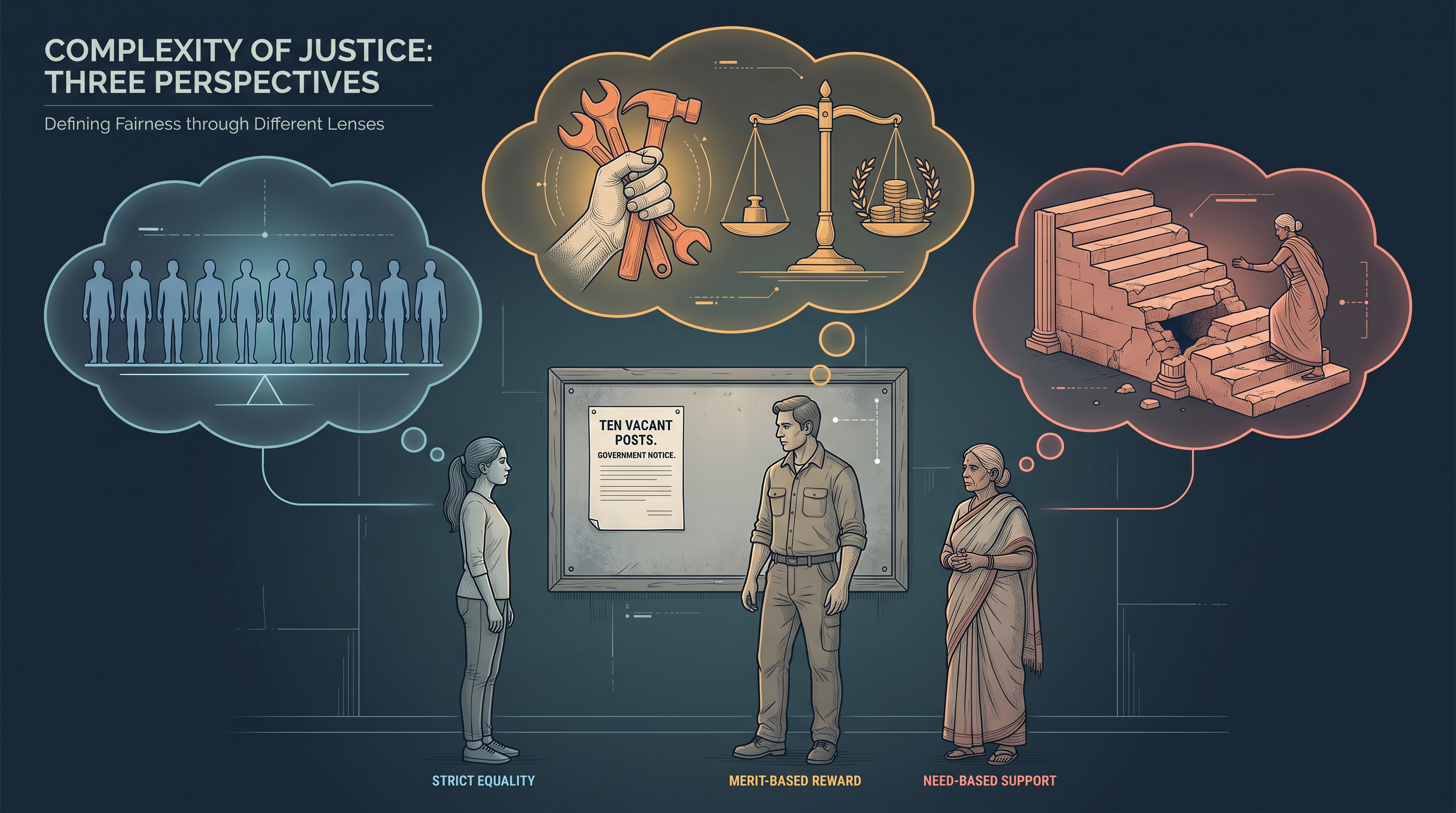
Fig. 4.0 – Three different demands for justice from the same rule.
4.1 What Is Justice?
Every culture and every tradition has struggled with the question of what justice is. They have not all answered it in the same way, and they have not all meant the same thing by the word.
In ancient Indian society, justice was tied to dharma. Maintaining dharma, or a just social order, was treated as a primary duty of kings. A king who failed in it was failing at the central task of ruling.
In China, the famous philosopher Confucius argued that kings should maintain justice by punishing wrong doers and rewarding the virtuous. Notice how much these two answers already have in common: in both, justice is something a ruler owes the ruled, not merely something private individuals practise among themselves.
The Question Socrates Was Asked
In fourth century B.C. Athens, in Greece, the philosopher Plato discussed justice in his book The Republic. The book is written as a long conversation. Socrates, Plato’s teacher, is questioned by two young friends, Glaucon and Adeimantus, and Plato uses their exchange to examine why we should be concerned about justice at all.
The young men put an uncomfortable question to Socrates: why should we be just? They had looked around and observed that people who were unjust seemed to be much better off than those who were just. Those who twisted rules to serve their own interests, avoided paying taxes, and were willing to lie and be deceitful, were often more successful than people who were truthful and just.
Their conclusion follows sharply. If a person were smart enough to avoid being caught, it would seem that being unjust is simply better than being just. You have probably heard people say something very close to this even today, which is what makes the question worth taking seriously rather than dismissing.
Glaucon puts the sceptical case to Socrates in his own words. Read the extract slowly: he is not defending injustice, he is reporting what ‘they say’, and then explaining where laws come from if that is what people really believe.
The argument in the extract runs in three steps. First, doing injustice is pleasant and suffering it is painful, and the pain is greater than the pleasure. Second, since nobody can be sure of always being the one who does the harm rather than the one who suffers it, people strike a bargain: neither will do injustice, and neither will suffer it. Third, that bargain is written down as law, and whatever the law then commands gets called just.
On this account justice is not a value people love for its own sake. It is a truce between people who would happily cheat if they could be certain of getting away with it. Justice becomes a second-best arrangement for cowards and the unlucky.
Now the limit. This extract is a speech given to a character in a philosophical dialogue, written by Plato, who intends it to be answered. It tells us what Plato thought the strongest case against justice was, and how carefully he wanted to meet it. It does not tell us what ordinary Athenians actually believed, and it certainly does not prove that people behave the way Glaucon claims they do. A speech in a dialogue is evidence of an argument, never evidence of a society.
The Answer Socrates Gives
Socrates reminds the young men of something they have overlooked. If everyone were to be unjust, if everyone manipulated the rules to suit their own interests, then no one could be sure of benefiting from injustice. Nobody would be secure, and this was likely to harm all of them.
That is the heart of his reply. It is in our own long-term interest to obey the laws and to be just. Socrates does not appeal to heroism here; he appeals to sense.
He then makes a second move. To work out why it is important to be just, we first need to understand clearly what justice actually means. Justice, he explains, does not only mean doing good to our friends and harm to our enemies, nor does it mean pursuing our own interests. Justice involves the well-being of all people.
He offers an analogy. Just as a doctor is concerned with the well-being of his or her patients, the just ruler or the just government must be concerned with the well-being of the people. A doctor who treated only the patients he liked would not be a bad friend; he would be a bad doctor. And ensuring the well-being of the people includes giving each person his due.
What Is Due To A Person?
The idea that justice involves giving each person his due is still a central part of how we understand justice today. What has changed since Plato’s time is our understanding of what is actually due to a person.
Today, what is just is closely linked to what is due to each person simply as a human being. The German philosopher Immanuel Kant argued that human beings possess dignity — a worth that belongs to a person in themselves, and not because of their rank, wealth, usefulness or birth.
If all persons are granted dignity, then what is due to each of them is the opportunity to develop their talents and to pursue the goals they have chosen for themselves. Justice, on this view, requires that we give due and equal consideration to all individuals.
4.1.1 Equal Treatment For Equals
In modern societies there is broad agreement that all people matter equally. Agreeing on that, however, does not tell us how to give each person his or her due. That is a harder question, and several different principles have been put forward to answer it.
The first is the principle of treating equals equally. The reasoning behind it is that all individuals share certain characteristics simply as human beings. Because they share those characteristics, they deserve equal rights and equal treatment.
The Rights That Follow
Most liberal democracies — systems in which an elected government’s power is limited by rights guaranteed to every individual — grant a familiar set of such rights today. Civil rights include the rights of life, liberty and property. Political rights, such as the right to vote, are what enable people to take part in political processes. And certain social rights are recognised too, including the right to enjoy equal opportunities along with other members of society.
Equal rights are only half of the principle. Treating equals equally also requires that people are not discriminated against on grounds of class, caste, race or gender. They should be judged on the basis of their work and their actions, and not on the basis of the group to which they happen to belong.
The Test Of Same Work, Same Reward
The clearest test of the principle is a simple one. If two persons from different castes perform the same kind of work — whether it is breaking stones or delivering pizzas — they should receive the same kind of reward.
Suppose one of them gets one hundred rupees for a piece of work, and the other receives only seventy five rupees for exactly the same work, because the two belong to different castes. That would be unfair and unjust. The work is identical; only the group identity differs, and group identity is precisely what the principle refuses to count.
The same test catches other cases. If a male teacher in a school gets a higher salary than a female teacher for the same job, that difference too would be unjustifiable and wrong.
4.1.2 Proportionate Justice
Equal treatment, however, is not the only principle of justice. There are circumstances in which treating everybody equally would strike us as unjust rather than just.
Consider how you would react if your school decided that everyone who sat an examination should get equal marks, on the ground that they are all students of the same school and all did the same paper. Most students would object at once. It would seem fairer if marks were awarded according to the quality of the answer papers, and possibly according to the degree of effort each student had put in.
That objection contains a whole principle. Provided everybody starts from the same base line of equal rights, justice in such cases means rewarding people in proportion to the scale and the quality of their effort.
Rewarding Different Kinds Of Work Differently
The same reasoning extends from marks to wages. Most people would agree that although people should get the same reward for the same work, it would be fair and just to reward different kinds of work differently.
What makes the difference fair is that we can name the factors that justify it: the effort a job requires, the skills it requires, the possible dangers involved in doing it, and so on. These are features of the work, not of the worker’s caste, class or gender — which is why proportionality does not contradict the first principle. It builds on it.
Apply those criteria honestly and they cut in an uncomfortable direction. We may find that certain kinds of workers in our society are not paid a wage that takes such factors sufficiently into account. Miners, skilled craftsmen, or people in sometimes dangerous but socially useful professions such as policemen may not always get a reward that looks just when it is compared with what some others in society earn.
For justice in society, then, the principle of equal treatment needs to be balanced with the principle of proportionality. Neither one on its own is enough.
4.1.3 Recognition Of Special Needs
A third principle of justice is that a society should take the special needs of people into account while it is distributing rewards or duties. This is one of the things we mean by social justice — justice that concerns not only how individuals are treated by the law, but how the goods and burdens of a society are shared out among all its members.
In terms of their basic status and their rights as members of society, justice may well require that people be treated equally. But even non-discrimination between people, combined with rewarding them proportionately to their efforts, might not be enough. It might not ensure that people enjoy equality in other aspects of their lives in society, nor that the society as a whole is just.
Read the third principle carefully and you will see that it does not necessarily contradict the principle of equal treatment. It extends it. Treating equals equally could itself imply that people who are not equal in certain important respects may be treated differently.
Before reading further, examine the following situations and discuss whether they are just. In each case, discuss the principle of justice that might be used in defence of your argument.
Which Inequalities Deserve Special Help?
People with special needs or disabilities could be considered unequal in some particular respect, and therefore deserving of special help. That much is easy to say. The difficulty is that it is not always easy to get agreement about which inequalities of people should be recognised as grounds for special help.
Some grounds are widely accepted. Physical disabilities, age, or lack of access to good education or health care are among the factors treated as grounds for special treatment in many countries.
The argument for doing so is this. If people who enjoy a very different standard of living and very different opportunities are treated equally in all respects with those who have been deprived of even the basic minimum needed to live a healthy and productive life, the result is likely to be an unequal society — not an egalitarian and just one, in which people are broadly equal in their conditions of life and not merely equal before the law.
The Indian Case
In our country, lack of access to good education, health care and other such facilities is often found combined with social discrimination on grounds of caste. The two disadvantages arrive together, and one deepens the other.
The Constitution therefore allowed for reservations of government jobs, and quotas for admissions to educational institutions, for people belonging to the Scheduled Castes and Tribes. Notice the shape of the argument the Constitution is making. It is not saying that these citizens are less capable. It is saying that a rule which ignores an inherited disadvantage does not remove that disadvantage; it preserves it.
The chapter presses exactly this difficulty through a small conversation between two students, drawn in the margin of the textbook.
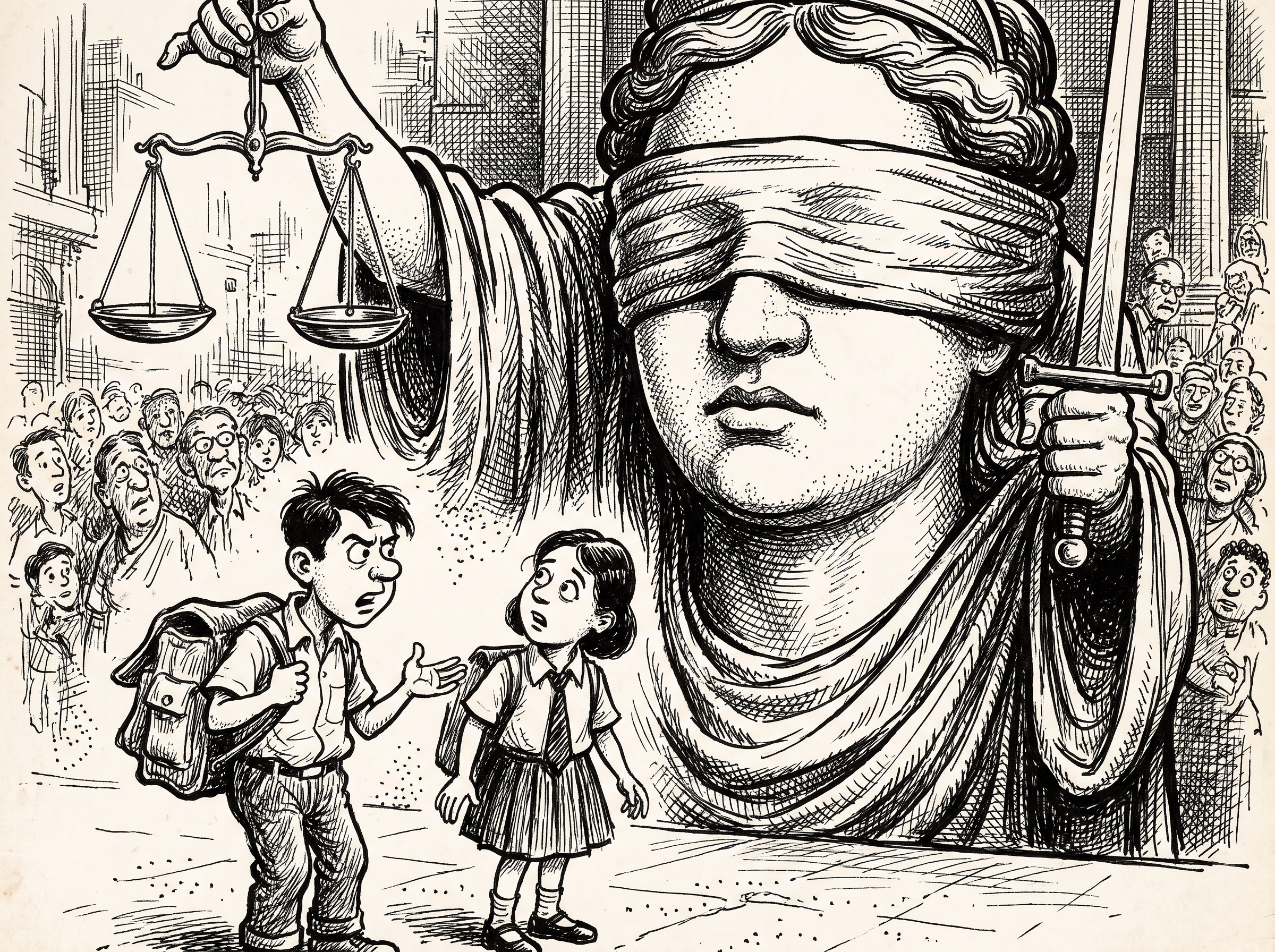
Fig. 4.1 – The tension between impartiality and recognizing special needs.
The figures are simply two students, and the joke is doing serious work. The statue of Justice is blindfolded to make one point: she must not see who is standing before her — rich or poor, of one caste or another — because if she could see, she might favour. Impartiality is built by deliberately removing information.
The boy’s second question then turns that virtue into a problem. The special needs principle requires exactly the information the blindfold was designed to remove. You cannot give a visually impaired student extra time without first noticing that he is visually impaired. The cartoonist is asking how the same institution can be blind and sighted at once.
And now the limit. The cartoon can pose the tension in three lines; it cannot resolve it. It does not tell us which needs should count, who should decide that, or how a court or a government has in fact tried to reconcile impartiality with special provision. A cartoon states one worry in one image and cannot draw the reply.
Harmonising The Three Principles
Our discussion of the different principles of justice has shown that governments might sometimes find it difficult to harmonise the three principles that have been discussed: equal treatment for equals; recognition of different efforts and skills while determining rewards and burdens; and the provision of a minimum standard of living and equal opportunities to the needy.
The principles pull against one another in practice. Pursuing equality of treatment by itself might sometimes work against giving due reward to merit. Emphasising the rewarding of merit as the main principle of justice might mean that marginalised sections would be at a disadvantage in many areas, because they have not had access to facilities such as good nourishment or education.
This is why different groups in the country might favour different policies, depending on which principle of justice they emphasise. Each group is not being unreasonable; each is standing on a genuine principle. It then becomes a function of governments to harmonise the different principles in order to promote a just society.
Now that the three principles have been set out in full, they can be held side by side.
4.2 Just Distribution
To achieve social justice in a society, governments might have to do more than simply ensure that laws and policies treat individuals in a fair manner. Fair laws are necessary, but they are not the whole of the task.
Social justice also concerns the just distribution of goods and services. That question can be asked between nations, and it can be asked between different groups and individuals within a single society. This chapter is concerned mainly with the second.
Why Fair Laws May Not Be Enough
Suppose serious economic or social inequalities exist in a society. In that situation it might become necessary to try and redistribute some of the important resources of the society, so as to provide something like a level playing field for citizens. Redistribution means moving resources — land, money, access to services — from those who have a great deal to those who have very little, usually through the action of the state.
The phrase ‘level playing field’ is worth pausing on. A game is only fair if both teams play on the same ground. If one side must run uphill for the whole match, announcing that both sides play by the same rules does not make the contest fair.
Therefore, within a country, social justice would require not only that people be treated equally in terms of the laws and policies of the society. It would also require that they enjoy some basic equality of life conditions and opportunities. This is seen as necessary if each person is to be able to pursue his or her own objectives and express himself.
The Indian Experience
Our own country supplies examples of both kinds of action. The Constitution abolished the practice of untouchability — the practice by which people of certain castes were treated as polluting and kept away from what everyone else could use. Abolishing it was meant to promote social equality, and to ensure that people belonging to ‘lower’ castes have access to temples, jobs and basic necessities like water.
Read that list again, because it is not a random one. Temples, jobs, water: a place in the community’s religious life, a livelihood, and the plainest physical necessity there is. Exclusion had operated at all three levels at once.
Different state governments have also taken measures of the second kind. They have tried to redistribute important resources like land in a more fair manner by instituting land reforms — laws that changed who owned land, so that it was spread less unevenly than before. Land is a particularly important resource to redistribute, because in an agricultural society who owns the land largely settles who is dependent on whom.
Why The Argument Turns Bitter
Differences of opinion about whether, and how, to distribute resources and ensure equal access to education and jobs arouse fierce passions in society, and even sometimes provoke violence.
The reason is not hard to find. People believe that the future of themselves and their families may be at stake. We have only to remind ourselves about the anger, and even the violence, which has sometimes been roused in our country by proposals to reserve seats in educational institutions or in government employment.
The Task Of Political Theory
As students of political theory, however, we should be able to examine the issues involved calmly, in terms of our understanding of the principles of justice. Anger tells us that something important is at stake; it does not tell us who is right.
That leaves us with a sharp question. Can schemes to help the disadvantaged be justified in terms of a theory of justice — or are they merely generosity extended to some at the expense of others?
In the next section we will discuss the theory of just distribution put forward by the well-known political philosopher John Rawls. Rawls has argued that there could indeed be a rational justification for acknowledging the need to provide help to the least privileged members of a society.
4.3 John Rawls’ Theory Of Justice
Begin with an honest observation about ourselves. If people are asked to choose the kind of society in which they would like to live, they are likely to choose one in which the rules and organisation of society allot them a privileged position.
We cannot expect everyone to put aside their personal interests and think only of the good of society. This is especially true if they believe that their decision is going to have an impact on the kind of life and the opportunities their children will have in the future.
Nor would we want to condemn them for it. Indeed, we often expect parents to think of, and support, what is best for their children; a parent who did not would strike us as strange rather than saintly. But such perspectives cannot form the basis of a theory of justice for a whole society, because every parent has them, and they point in different directions.
So how do we reach a decision that would be both fair and just? That is the question John Rawls, a well-known political philosopher, set out to answer.
Choosing Without Knowing Who You Are
Rawls argues that there is only one way we can arrive at a fair and just rule. We must imagine ourselves in a situation in which we have to make decisions about how society should be organised — while not knowing which position we would ourselves occupy in that society.
That is, we do not know what kind of family we would be born into. We do not know whether we would be born into an ‘upper’ caste or a ‘lower’ caste family, rich or poor, privileged or disadvantaged.
Rawls argues that if we do not know, in this sense, who we will be and what options would be available to us in the future society, then we are likely to support a decision about the rules and organisation of that society which would be fair for all its members. Ignorance about ourselves is what makes fairness rational.
The Veil Of Ignorance
Rawls describes this as thinking under a veil of ignorance — an imagined situation in which a person must choose the rules of a society while knowing nothing about the place they will hold in it.
Notice what the veil does not ask of people. Rawls expects that in such a situation of complete ignorance about our possible position and status, each person would decide in the way people generally do decide: in terms of their own interests. He does not require anyone to become selfless.
But since no one knows who he would be, and what is going to benefit him, each person will end up envisaging the future society from the point of view of the worst-off. That is the pivot of the whole argument, and it is worth walking through slowly.
It will be clear to any person who can reason and think for himself that those who are born privileged will enjoy certain special opportunities. So far, so obvious. But what if he has the misfortune of being born into a disadvantaged section of society, where few opportunities would be available to him?
Behind the veil, that is not a remote possibility to be waved away. It is a real chance, and it may be his chance. Hence it would make sense for each person, acting in his or her own interest, to try to think of rules of organisation that will ensure reasonable opportunities to the weaker sections.
The attempt will therefore be to see that important resources — education, health, shelter and so on — are available to all persons, even if they are not part of the upper class. A person protects the worst-off position because he may have to live in it.
Why Not Simply Ask People To Be Generous?
It is, of course, not easy to erase our identities and to imagine oneself under a veil of ignorance. Rawls is aware of this, and does not pretend otherwise.
But then, he replies, it is equally difficult for most people to be self-sacrificing and to share their good fortune with strangers. That is precisely why we habitually associate self-sacrifice with heroism — we call it heroic because we know how rare it is.
Given these human failings and limitations, it is better for us to think of a framework that does not require extraordinary actions from ordinary people. A theory of justice that works only if everyone becomes a saint is not a theory a society can be built on.
The merit of the veil of ignorance position is exactly this. It expects people to be no more than their usual rational selves: they are expected to think for themselves, and to choose what they regard to be in their own interest. The pertinent thing, however, is that when they choose under the veil of ignorance, they will find that it is in their interest to think from the position of the worst-off.
Justice Is Not Only For The Worst-Off
Wearing the imagined veil of ignorance is only the first step in arriving at a system of fair laws and policies. The second step follows from the same reasoning.
It will be evident that rational persons will not only see things from the perspective of the worst-off. They will also try to ensure that the policies they frame benefit the society as a whole. Both things have to go hand-in-hand.
The logic is symmetrical. Since no one knows what position they will occupy in the future society, each will seek rules that protect them in case they happen to be born among the worst-off. But it would make sense if they also try to ensure that their chosen policy does not make those who are better-off weaker — because it is equally possible that they could be born into a privileged position in that society.
Therefore it would be in the interests of all that society as a whole should benefit from the rules and policies that are decided, and not just any one particular section of it. And here is the conclusion Rawls is driving at: such fairness would be the outcome of rational action, not of benevolence — the wish to do good to others — or of generosity.
Rawls therefore argues that rational thinking, and not morality, could lead us to be fair and to judge impartially about how the benefits and burdens of a society should be distributed. In his example there are no goals or norms of morality that are given to us in advance, and we remain free to determine what is best for ourselves. It is this belief which makes Rawls’ theory an important and compelling way to approach the question of fairness and justice.
A Fair Rule And A Slow Court
Fair rules, however, still have to work in practice, and the textbook interrupts the argument with a small exchange between two students on exactly that point.
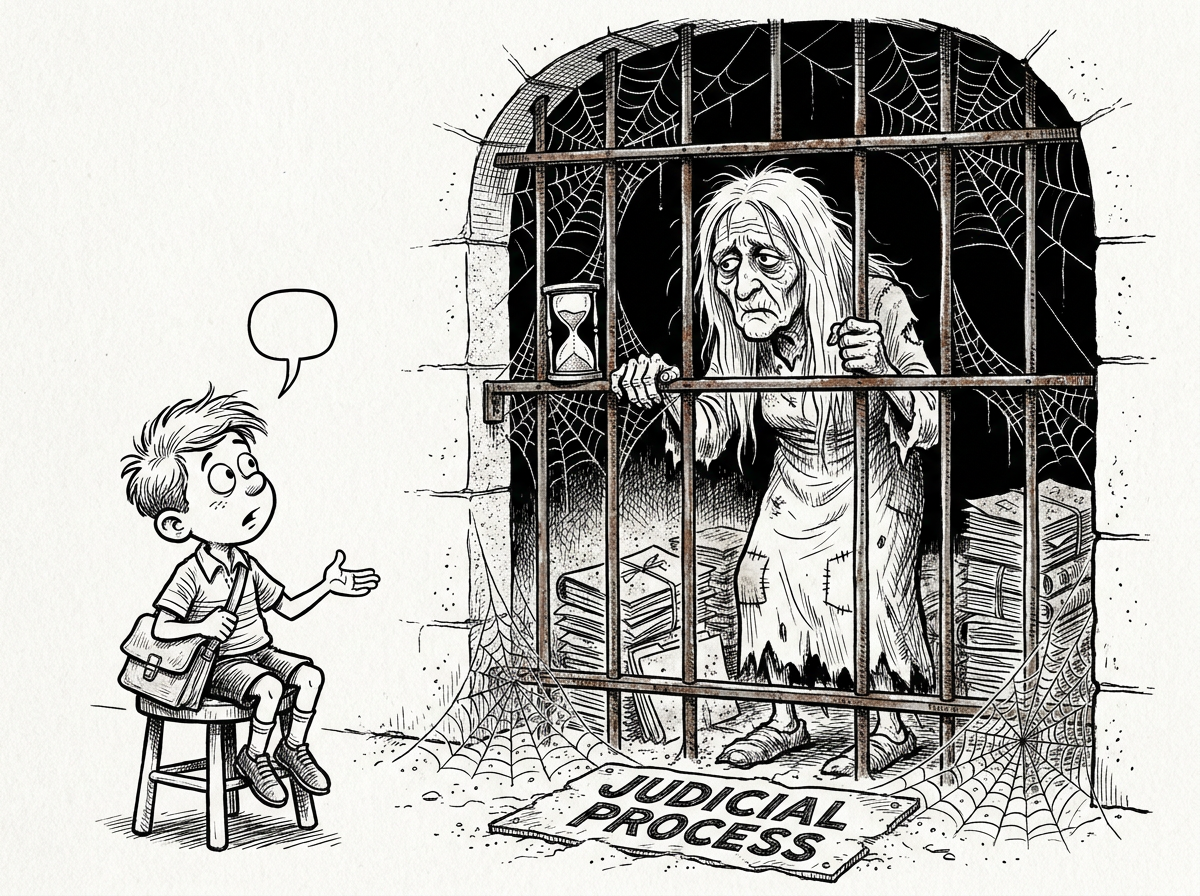
Fig. 4.2 – The denial of justice through extreme delay.
Look at what the drawing exaggerates. The cobwebs and the barred window are not literal; they compress years of waiting into a single image, so that the delay itself becomes visible. The claim the cartoonist is making is that timing is part of justice, not an administrative detail attached to it. A ruling in your favour delivered after your death is a ruling that has done nothing for you.
The cartoon connects directly to what we have just read. Behind the veil of ignorance, a rational person would not only want the rules to be fair; they would want a fair decision to arrive while they were still alive to use it. A rule that is just in its content but unusable in its working protects nobody.
And now the limit. The cartoon states the worry and stops there. It cannot tell us why decisions are delayed, how long is too long, or what would have to change to speed them up. It is a sharp complaint, not an explanation, and it was never designed to be one.
4.4 Pursuing Social Justice
Suppose that in a society there are deep and persistent divisions. On one side are those who enjoy greater wealth and property, and the power which goes along with such ownership. On the other are those who are excluded and deprived. Where those divisions run deep and last across generations, we would say that social justice is lacking there.
Be careful about what this claim does not say. We are not talking merely about the different standards of living which different individuals in a society may enjoy. Justice does not require absolute equality, and it does not require sameness in the way in which people live.
When Is A Society Unjust?
Two conditions turn a difference into an injustice. The first is scale: a society would be considered unjust if the differences between rich and poor are so great that the two seem to be living in different worlds altogether.
The second is closure. A society is unjust if the relatively deprived have no chance at all to improve their condition, however hard they may work. Notice how much rests on that phrase. Inequality that a person can work their way out of is one thing; inequality that no amount of work can shift is another.
Put positively, a just society should provide people with the basic minimum conditions that enable them to live healthy and secure lives and to develop their talents. It should also give them equal opportunities to pursue the goals they have chosen for themselves.
What Counts As The Basic Minimum?
How can we decide what the basic minimum conditions of life needed by people actually are? This is not a question that can be answered by feeling; it has to be calculated.
Various methods of calculating the basic needs of people have been devised by different governments, and by international organisations like the World Health Organisation, the agency of the United Nations that works on health across countries. Their methods differ, but they converge on a broadly similar list.
It is generally agreed that the basic amount of nourishment needed to remain healthy, housing, the supply of clean drinking water, education and a minimum wage — a floor below which an employer may not legally pay a worker — would constitute an important part of these basic conditions.
Such calculations are not locked away in ministries. Government agencies and United Nations agencies have published figures for the minimum requirements of food, income, water and similar facilities, and it is worth searching your school library, or the internet, to find any such calculation and see what it counts and how.
Providing people with their basic needs is considered to be one of the responsibilities of a democratic government. That is a demanding responsibility, and it should be stated with its difficulty attached: providing such basic conditions of life to all citizens may pose a heavy burden on governments, particularly in countries like India which have a large number of poor people.
The demand that a society be arranged around the dignity of every member is not a new one in India, and the chapter places a line from B. R. Ambedkar beside this argument.
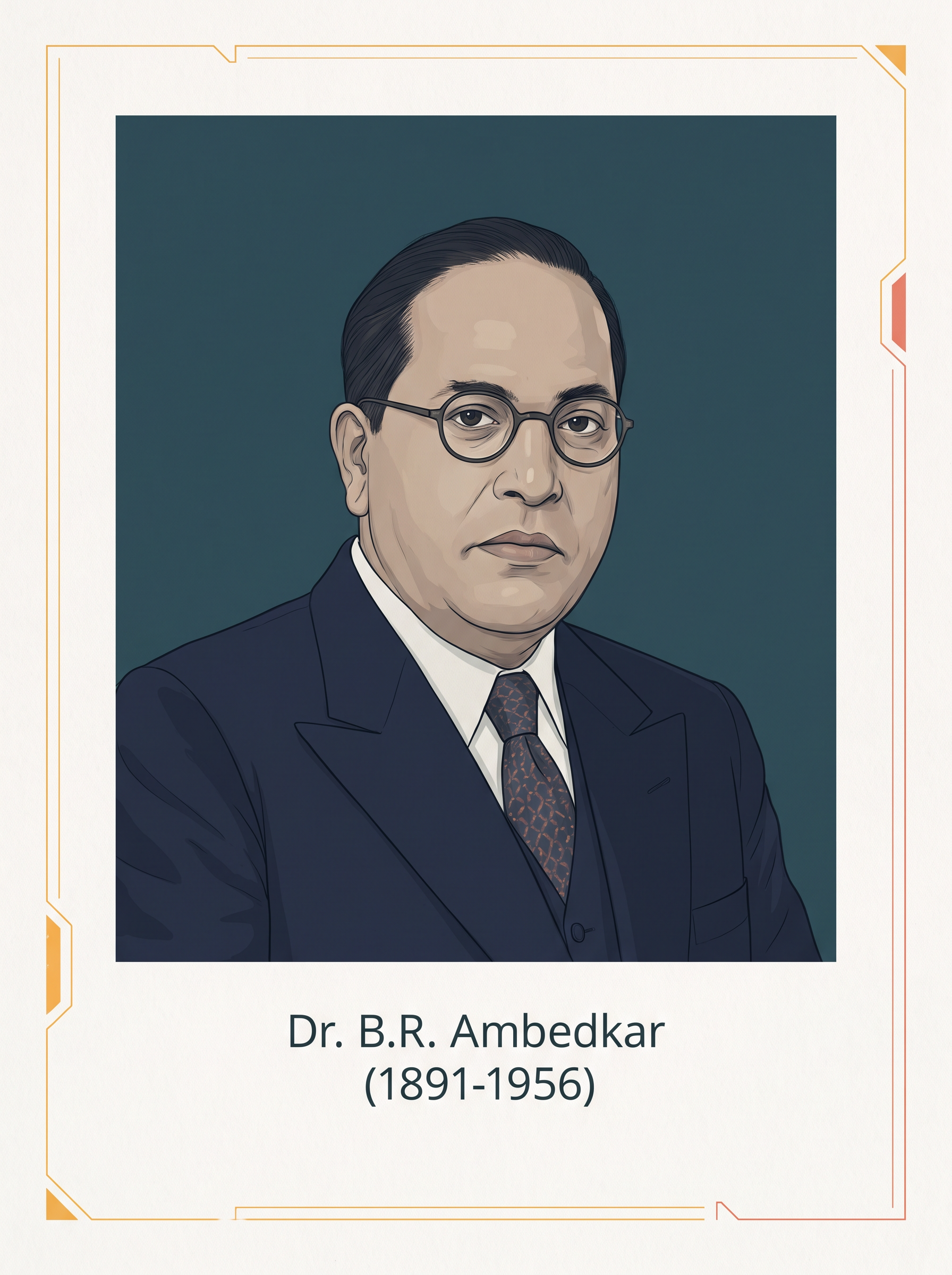
Fig. 4.3 – Dr. B. R. Ambedkar.
The sentence rewards a slow reading. An ‘ascending sense of reverence’ means that the further up the ladder a person stands, the more respect he is owed; a ‘descending sense of contempt’ means that the further down a person stands, the more scorn he may be shown. Ambedkar’s point is that these two are a single arrangement seen from two ends, and that a just society is one in which that whole arrangement is dissolved.
What he offers here is a test, not a policy. It tells us what to look for — a society in which respect no longer rises and falls with a person’s position. What it cannot tell us is how to get there: whether by equal treatment, by proportionate reward, by special provision, or by some mixture of the three. A single sentence names a destination; it does not draw the road, and it was never meant to.
Two Ways Of Helping The Disadvantaged
Even if we all agree that states should try to help the most disadvantaged members of society to enjoy some degree of equality with others, disagreements could still arise regarding the best methods of achieving this goal. Agreement about the destination is not agreement about the route.
A debate is going on in our society, as well as in other parts of the world, on exactly this. Would promoting open competition through free markets be the best way of helping the disadvantaged, without harming the better-off members of a society? Or should the government take on the responsibility of providing a basic minimum to the poor, if necessary even through a redistribution of resources?
In our country these different approaches are supported by different political groups, who debate the relative merits of different schemes for helping marginalised sections of the population, such as the rural or the urban poor. We will now examine this debate.
4.4.1 Free Markets Versus State Intervention
Supporters of free markets maintain that, as far as possible, individuals should be free to own property and to enter into contracts and agreements with others regarding prices, wages and profits. They should be free to compete with each other to gain the greatest amount of benefit. That is a simple description of a free market.
The Case For The Market
Supporters of the free market believe that if markets are left free of state interference, the sum of market transactions would ensure, overall, a just distribution of benefits and duties in society. Those with merit and talent would be rewarded accordingly, while the incompetent would get a lesser reward. On this view, whatever the outcome of market distribution turns out to be, it would be just.
Not all free market supporters today, however, would support absolutely unregulated markets. Many would now be willing to accept certain restrictions. States could step in, for instance, to ensure a basic minimum standard of living to all people, so that they are able to compete on equal terms.
But even here, they might argue, the most efficient way of providing people with basic services might be to allow markets in health care, education and such services to develop. In other words, private agencies should be encouraged to provide such services, while state policies should try to empower people to buy those services.
They would also allow that it might be necessary for the state to give special help to the old and the sick, who cannot compete. Apart from this, the role of the state should only be to maintain a framework of laws and regulations ensuring that competition between individuals remains free of coercion and other obstacles.
Is The Market Really Blind To Who You Are?
Free market supporters maintain that a free market is the basis of a fair and just society, and their strongest argument is about neutrality. The market, it is said, does not care about the caste or the religion of the person. It does not see whether you are a man or a woman. It is neutral, and concerned only with the talents and skills that you have. If you have the merit, then nothing else matters.
That is a serious claim, and it echoes the first principle of justice we studied. It deserves to be tested rather than cheered or dismissed.
Choice, And Its Price
One argument put forward in favour of market distribution is that it gives us more choices. There is no doubt that the market system does give us more choices as consumers. We can choose the rice we eat and the school we go to — provided that we have the means to pay for them. Everything hangs on that last clause.
When it comes to basic goods and services, what matters is not the number of options on the shelf. What matters is the availability of good quality goods and services at a cost that people can afford.
If private agencies do not find a market profitable, they may prefer not to enter it at all, or to provide cheap and substandard services. That is why there may be few private schools in remote rural areas, and why the few that have been set up may be of low quality. The same would be true of health care or housing. In such situations the government might have to step in.
Quality, Cost, And Who Is Left Out
Another argument often heard in defence of free markets and private enterprise is that the quality of the services they provide is often superior to that provided in government institutions. But the cost of such services may put them out of the reach of the poor. A better school that a family cannot pay for is not an option that family has.
From this follows the deeper worry. Private business tends to go where business would be most profitable, and hence free markets eventually tend to work in the interest of the strong, the wealthy and the powerful. The result may be to deny, rather than to extend, opportunities for those who are relatively weak and disadvantaged.
Arguments can be put forward on both sides of this debate. But free markets often exhibit a tendency to work in favour of the already privileged. This is why many argue that, to ensure social justice, the state should step in to see that basic facilities are made available to all the members of a society.
With both positions now set out in full, they can be placed side by side.
Disagreement Is Not A Failure
In a democratic society, disagreements about issues of distribution and justice are inevitable, and even healthy. They are healthy because they force us to examine different points of view and to defend our own views rationally, rather than merely asserting them.
Politics, in fact, is about the negotiation of such disagreements through debate. That is worth holding on to. A society in which nobody argued about distribution would not be a just society; it would be a silent one.
In our own country many kinds of social and economic inequalities exist, and much remains to be done if they are to be reduced. Studying the different principles of justice should help us to discuss the issues involved, and to come to an agreement regarding the best way of pursuing justice.
The chapter closes with a line from the nineteenth-century philosopher J. S. Mill, which returns us to where we began.
Mill is drawing a line between two things that are easily confused. Many acts are right to do and wrong to leave undone — being generous, being kind. But justice, he says, is different in one crucial way: what justice requires is something a particular person can claim from us, as their moral right. It is owed, and the person to whom it is owed may demand it.
That distinction has been running quietly beneath this entire chapter. It is why Rawls insisted that fairness follows from rational action and not from benevolence, and it is why a basic minimum is defended as a responsibility of government rather than as an act of charity towards the poor.
The limit is worth stating too. Mill’s sentence tells us what kind of thing a claim of justice is. It does not tell us who may claim what — whether equal treatment, proportionate reward, or special provision — and that is exactly the question the three principles were needed to answer.
4.5 Summary
- Every tradition has grappled with justice and interpreted it differently. In ancient India justice was tied to dharma, and maintaining a just social order was a primary duty of kings. In China, Confucius held that kings maintain justice by punishing wrong doers and rewarding the virtuous.
- In fourth century B.C. Athens, Plato used The Republic to face the hardest question about justice: if the unjust often prosper, why be just at all? Glaucon puts that challenge in Source 4.1.
- Socrates answers that if everyone manipulated the rules, no one would be secure. It is therefore in our own long-term interest to be just. Justice, he adds, concerns the well-being of all, and a just ruler must care for the people as a doctor cares for patients.
- Justice means giving each person his due. What is ‘due’ has changed since Plato. Immanuel Kant argued that human beings possess dignity, so what is due to each is the opportunity to develop their talents and pursue their chosen goals.
- The first principle is equal treatment for equals: equal civil, political and social rights, and no discrimination on grounds of class, caste, race or gender. The same work must earn the same reward.
- The second is proportionate justice: given the same base line of equal rights, rewards should be proportionate to the effort, skill and danger involved in the work.
- The third is recognition of special needs. It extends equal treatment rather than contradicting it, because people who are unequal in important respects may need to be treated differently. In India, deprivation is often combined with caste discrimination, which is why the Constitution allowed reservations of government jobs and quotas in educational institutions for the Scheduled Castes and Tribes.
- The three principles can pull against one another, and harmonising them is a function of governments.
- Social justice also requires just distribution, not only fair laws. Serious inequalities may have to be reduced by redistribution — as with the abolition of untouchability, and with land reforms undertaken by state governments.
- John Rawls argues that fair rules can be chosen rationally. Behind a veil of ignorance, not knowing what position we will occupy, each of us — thinking only of our own interest — would protect the worst-off, while also ensuring society as a whole benefits. Fairness becomes the outcome of rational action, not benevolence.
- A just society provides a basic minimum: nourishment, housing, clean drinking water, education and a minimum wage. Providing it is a responsibility of a democratic government, and a heavy burden in a country with many poor people.
- Free market supporters hold that free competition rewards merit and ignores caste, religion and gender. Critics reply that business goes where profit lies, so markets tend to favour the strong, the wealthy and the powerful.
- In a democracy, disagreement about distribution is inevitable and healthy. Politics is the negotiation of such disagreements through debate.
The Arguments In One Place
The chapter’s central claim is that justice means giving each person their due, and that this cannot be reduced to any single rule. Equal treatment, proportionate reward and the recognition of special needs are all genuine principles, and a just society has to hold all three together.
Its most demanding claim is Rawls’: that helping the least privileged needs no appeal to kindness, because rational people choosing behind a veil of ignorance would choose it out of self-interest alone.
The strongest position against that, which the chapter itself records, is twofold. Erasing our identities is very hard, and a real person may never manage it. And Glaucon’s older objection has not gone away: the clever person who is never caught still seems to gain from injustice.
Against the argument for state provision stands the free market case the chapter states fairly: that markets are neutral between persons, reward talent alone, and offer choice — while state provision may lay on a poor government a burden it cannot carry.
What Remains Contested
Which inequalities should count as grounds for special help is not settled here. Physical disability, age and lack of access to education or health care are widely accepted, but the chapter admits that agreement is hard to reach — and the blindfolded statue in Fig. 4.1 shows why the question is awkward rather than answering it.
How far the state should go, and how much should be left to the market, is left open. The chapter notes that free markets tend to favour the already privileged, but it also records that a basic minimum for all may strain a poor government.
Notice, finally, whose voices this chapter’s evidence records. Its sources are philosophers and public figures — Plato, Kant, Rawls, Mill, Ambedkar — speaking about the deprived. Not one of them was written by a person living without schooling, health care or clean water. What such a person would count as their due is a question the chapter’s own material was never designed to answer.
4.6 NCERT Questions
What does it mean to give each person his/her due? How has the meaning of ‘giving each his due’ changed over time?
Briefly discuss the three principles of justice outlined in the chapter? Explain each with examples.
Does the principle of considering the special needs of people conflict with the principle of equal treatment for all?
How does Rawls use the idea of a veil of ignorance to argue that fair and just distribution can be defended on rational grounds?
What are generally considered to be the basic minimum requirements of people for living a healthy and productive life? What is the responsibility of governments in trying to ensure this minimum to all?
Which of the following arguments could be used to justify state action to provide basic minimum conditions of life to all citizens?
- Providing free services to the poor and needy can be justified as an act of charity.
- Providing all citizens with a basic minimum standard of living is one way of ensuring equality of opportunity.
- Some people are naturally lazy and we should be kind to them.
- Ensuring basic facilities and a minimum standard of living to all is a recognition of our shared humanity and a human right.
4.7 Check Your Concepts
Look again at Fig. 4.1. Why is the statue of justice blindfolded, and why does the blindfold create a difficulty for the principle of recognising special needs?
Read Source 4.1 again. Set out, in three steps, Glaucon’s account of why laws and covenants come into existence. Then state the reply Socrates gives.
The chapter says that emphasising merit as the main principle of justice may leave marginalised sections at a disadvantage. Reconstruct that chain of reasoning, step by step.
Why, according to the chapter, may there be few private schools in remote rural areas, and why may the few that exist be of low quality? Explain the chain from profit to poor provision, and say what the chapter concludes must follow.
Supporters of the free market claim that the market does not see a person’s caste, religion or gender. State that argument in its strongest form, and then state the strongest reply the chapter makes to it.
In Source 4.2, Ambedkar speaks of an ‘ascending sense of reverence’ and a ‘descending sense of contempt’. Explain what these phrases mean, and state one thing this sentence cannot tell us about how a just society is to be built.
Source 4.3 draws a distinction between what it is merely right to do and what a person can claim from us as a moral right. Explain the distinction, and show how it connects to Rawls’ claim that fairness is the outcome of rational action rather than of benevolence.
Fig. 4.2 claims that a decision which arrives too late is no justice at all. What does the cartoon establish, and what is it unable to tell us about why decisions are delayed or what should be done about it?