Chapter 6: Citizenship
The camp is not a village and it is not a town. It is a grid of tents and tin roofs on the edge of a border, and it has stood there long enough for children to be born inside it.
One of them is seventeen — the age of the student reading this page. He has never lived anywhere else. He cannot take a job legally, because a legal job asks for papers he does not have. He cannot own the room his family sleeps in, because ownership must be registered with a state, and no state has registered him. Officials on one side of the fence say he belongs on the other side. Officials on the other side say the same thing back. He is nobody’s citizen.
An hour away, in a city, there is another seventeen-year-old. She carries an identity card. At eighteen her name will go on a list of voters. She may move to another state to study or work. She may join a demonstration, complain to a newspaper, or take her government to court — and the court will hear her, because she is a member.
The difference between these two young people is not talent, effort or character. It is membership. One of them belongs to a political community; the other belongs to none. And membership is not natural — it is decided, by laws, by struggles, and by arguments about who counts.
This chapter is about that decision.
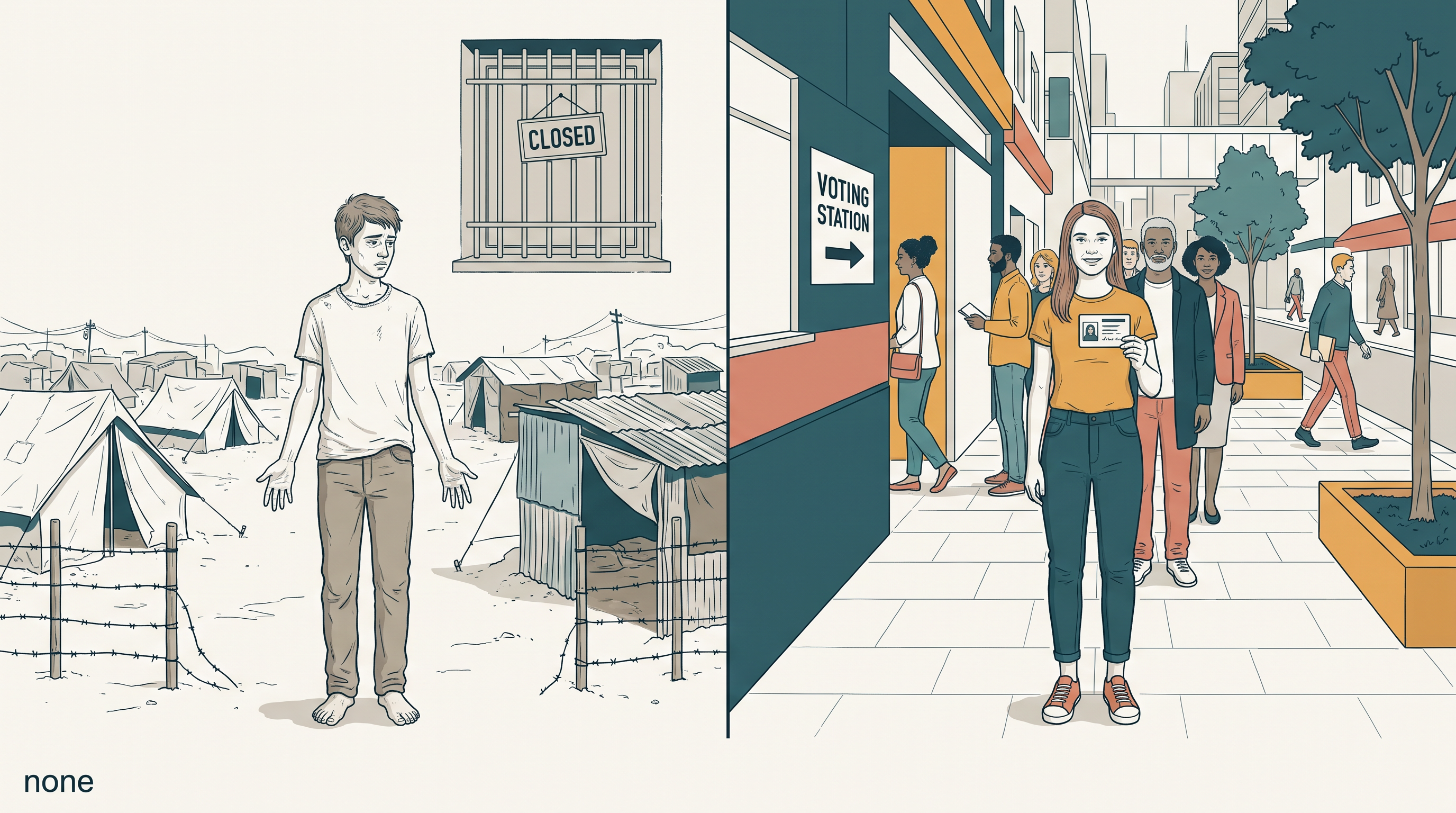
Fig. 6.0 – Two teenagers separated by membership of a state.
6.1 Introduction
What This Chapter Asks
Citizenship is full and equal membership of a political community. That short definition is easy to memorise and surprisingly hard to use, because almost every word in it has been fought over. This chapter is an attempt to unpack it.
Sections 6.2 and 6.3 look at debates and struggles that are going on right now about how the phrase ‘full and equal membership’ should be interpreted. Section 6.4 turns to the relationship between citizens and the nation, and to the different tests different countries use before granting citizenship to a new applicant.
Theories of democratic citizenship claim that citizenship should be universal. If that is so, should every person alive today be accepted as a member of one state or another? Then how do we explain the existence of so many stateless people? Section 6.5 takes up that question. Section 6.6 asks whether something called global citizenship exists at all, and whether it could ever replace national citizenship.
By the end of the chapter you should be able to explain what citizenship means, and to discuss some of the areas in which that meaning is today being expanded or challenged.
What A State Gives Its Members
In the contemporary world, states provide a collective political identity to their members, as well as certain rights. This is why we think of ourselves as Indians, or Japanese, or Germans, depending on the state to which we belong. A political community here simply means the body of people who share membership of a state and are governed together by it.
Citizens expect certain rights from their state. They also expect help and protection wherever they may travel — an Indian passport is, among other things, a request to other governments to treat its holder as somebody who belongs somewhere.
The drawing on this page shows that shared identity being performed in public.
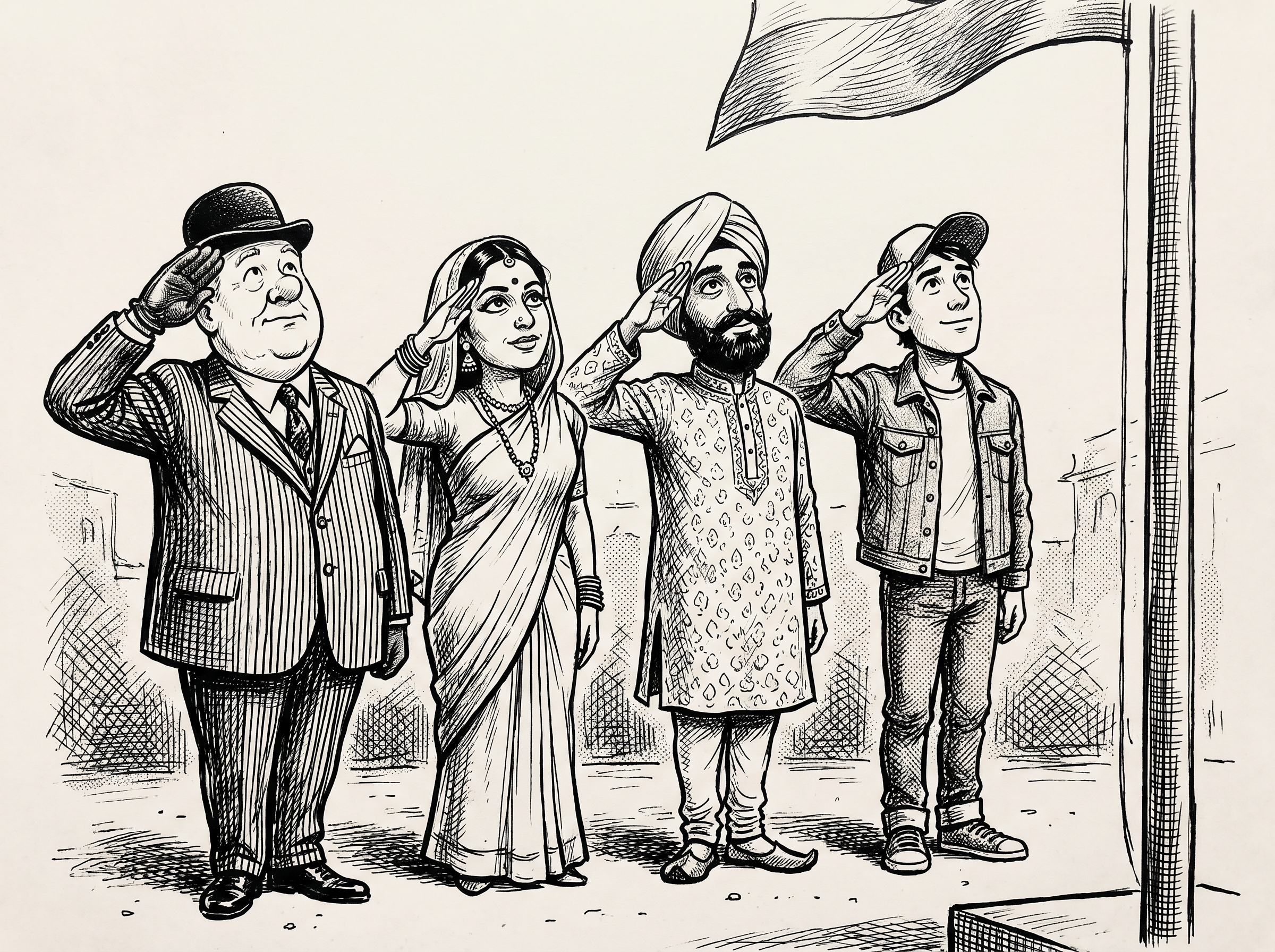
Fig. 6.1 – A shared political identity.
The four figures are drawn to look different from one another, and that is the whole point of the drawing: what they have in common is not language, dress or faith but membership. The salute is the shared identity made visible.
But notice what the cartoon cannot tell us. It shows an identity being displayed; it says nothing about what that identity actually delivers. Four people may salute the same flag and still not hold the same rights, and no drawing of a salute can settle whether they do.
What Happens Without Membership
The importance of full membership becomes clear when we think about people who do not have it. Thousands of people in the world are forced to live as refugees or as illegal migrants because no state is willing to grant them membership. A refugee is a person who has been forced to leave home and cannot return, and whom no state has accepted as its own member.
Such people are not guaranteed rights by any state, and they generally live in precarious conditions. For them, full membership of a state of their choice is not an abstract idea but a goal worth struggling for — as we see today with Palestinian refugees in the Middle East, the region of south-west Asia.
Which Rights, And How Many
The precise nature of the rights granted to citizens varies from state to state. But in most democratic countries today they would include some political rights, some civil rights, and some socio-economic rights.
Political rights are the rights that let a citizen take part in governing — the right to vote is the obvious example. Civil rights protect the citizen as a person: the freedom of speech, or the freedom of belief. Socio-economic rights are claims on the resources of the society, and could include the right to a minimum wage, or the right to education.
Equality of rights and status is itself one of the basic rights of citizenship. That is a strong claim, and the rest of this chapter is largely an argument about how far it has actually been honoured.
The second drawing on this page shows citizens using one of these rights.
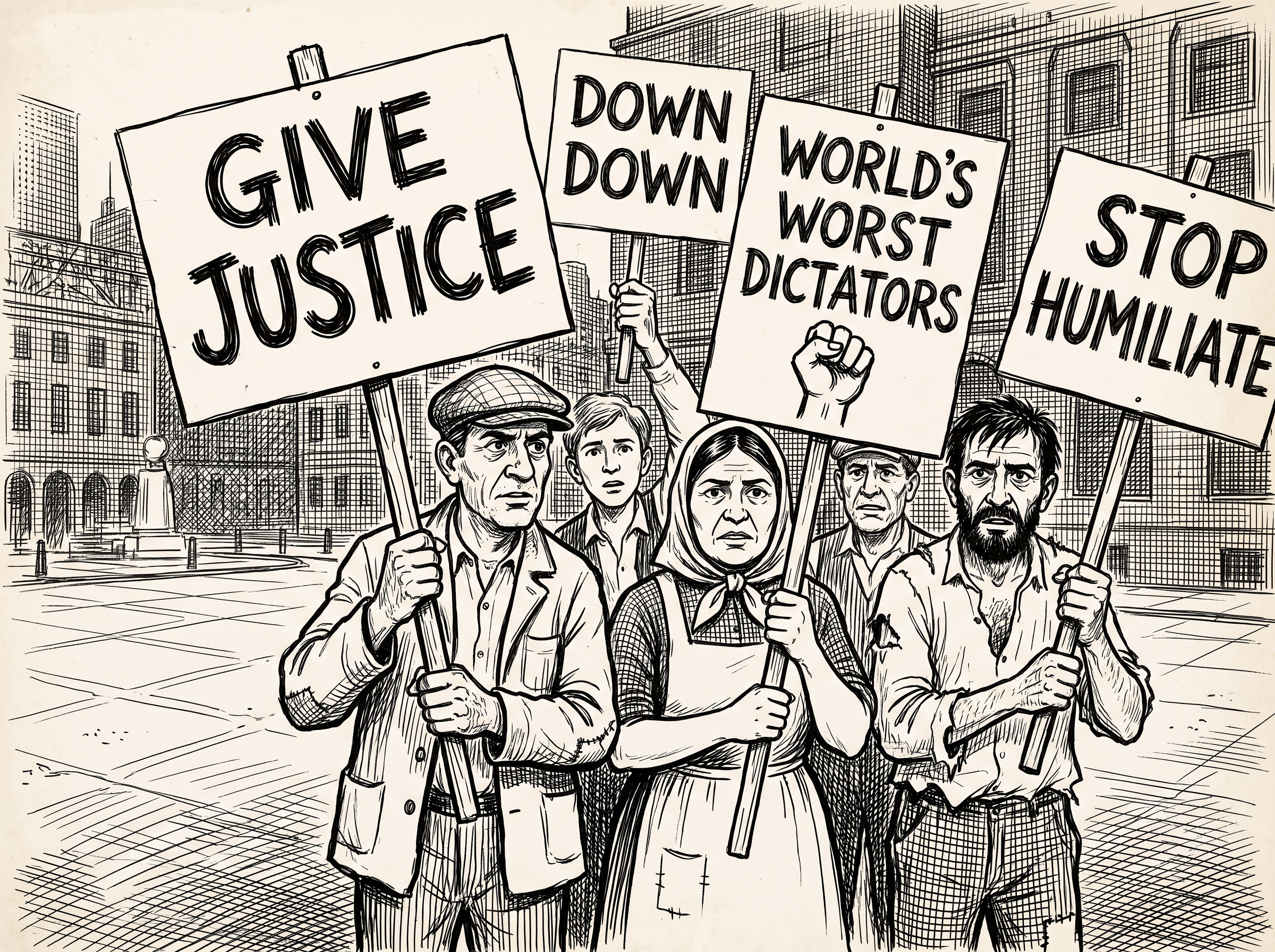
Fig. 6.2 – Citizens exercising the freedom to protest.
The protesters are exercising a civil right — the freedom to say, in public and in writing, that those in power are behaving badly. The crudeness of the placards is part of the message: this right does not belong only to the educated or the powerful, and it does not need permission.
The limit is worth stating plainly. The drawing shows a claim being made; it cannot show whether the claim was heard, or whether the protesters were protected afterwards. A right that exists on paper and a right that can actually be exercised are not the same thing — and that gap is exactly what Section 6.3 is about.
Rights Are Won, Not Received
Each of the rights now enjoyed by citizens has been won after struggle. Some of the earliest struggles were fought by people asserting their independence and rights against powerful monarchies. Many European countries went through such struggles, some of them violent — the French Revolution of 1789, in which the people of France asserted their rights against a monarchy, is the best-known example.
In the colonies of Asia and Africa, demands for equal citizenship formed part of the struggle for independence from colonial rulers. In South Africa, at the southern tip of the African continent, the black African population had to undertake a long struggle against the ruling white minority for equal citizenship. That struggle continued until the early 1990s.
Struggles to achieve full membership and equal rights continue even now, in many parts of the world. You may have read about the women’s movement and the dalit movement in our own country. Their purpose is to change public opinion by drawing attention to their needs, and to influence government policy so that equal rights and opportunities are actually secured.
The third drawing in this section sits beside this discussion of continuing struggles.
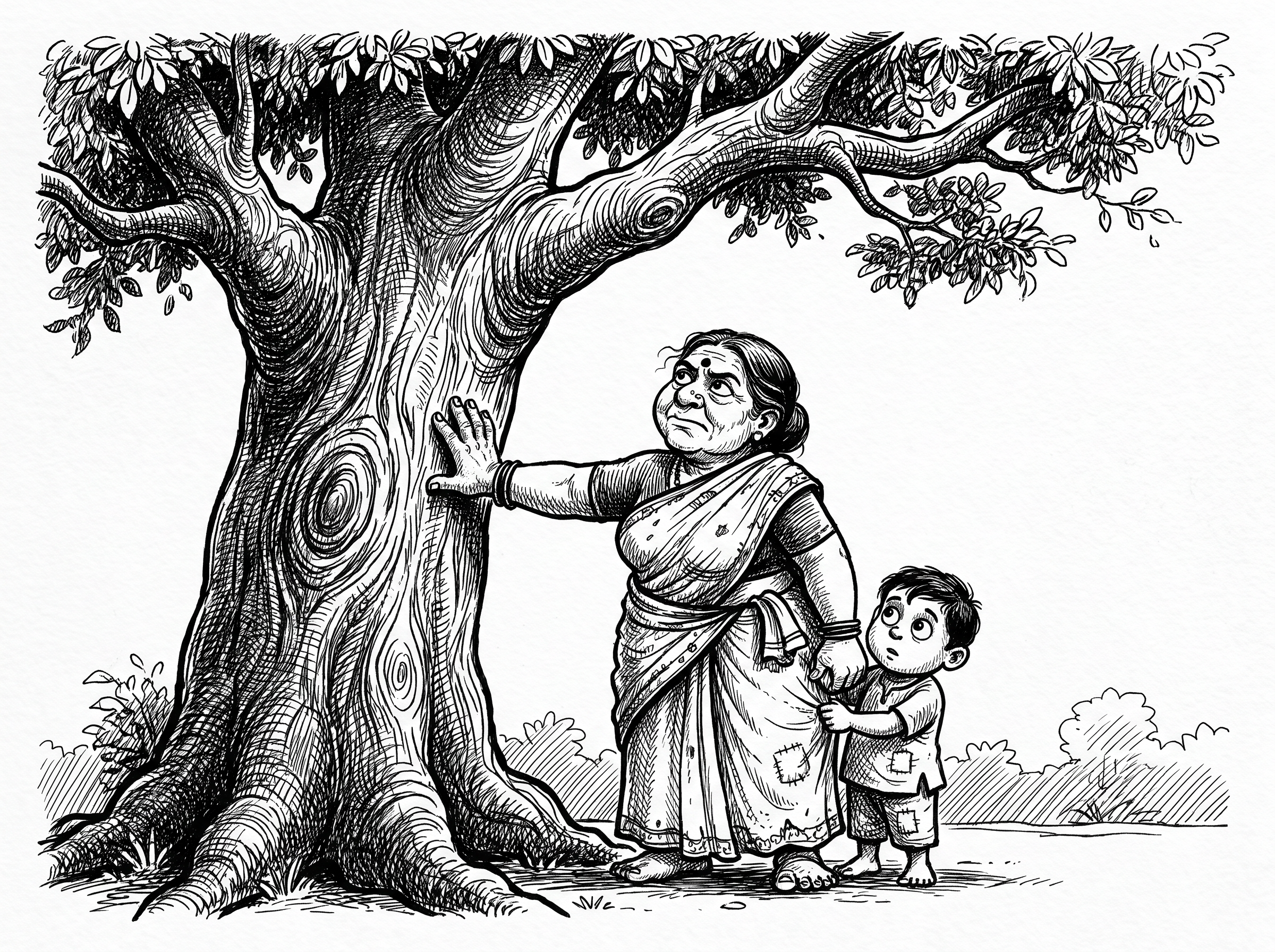
Fig. 6.3 – Citizens as trustees of natural resources.
The drawing carries no caption and no label. Placed where it is, it seems to connect the idea of citizenship with ordinary people and with the natural resources they live from — a theme the chapter picks up in a moment, when it calls citizens the trustees of the country’s culture and natural resources.
That is as far as an honest reading can go, and the limit matters. A wordless drawing cannot tell us who these two people are, what they are claiming, or against whom. An image can suggest a theme; it cannot make an argument. When you meet a picture in a textbook, ask what it can prove — usually less than it appears to.
The Struggle Against Rule By A Minority
The chapter asks you to look closely at one such struggle. From the seventeenth to the twentieth century, white people from Europe established their rule over the black people of South Africa. Until 1994, the policy practice there ran as follows.
The whites had the right to vote, to contest elections and to elect the government. They were free to purchase property and to go to any place in the country. Blacks did not have such rights.
Separate colonies for whites and for blacks were established. Blacks had to take ‘passes’ to work in white neighbourhoods, and were not allowed to keep their families in the white areas. Even the schools were separate for people of different colour.
Read that description against the definition this chapter opened with — full and equal membership of a political community — and then answer the two questions below.
Citizens And One Another
Citizenship, however, is about more than the relationship between states and their members. It is also about citizen–citizen relations, and it involves certain obligations of citizens towards each other and towards the society.
These obligations include not just the legal obligations imposed by states — paying taxes, obeying the law — but also a moral obligation to participate in, and to contribute to, the shared life of the community. Citizens are also considered to be the inheritors and the trustees of the culture and natural resources of the country. A trustee is someone who holds something not for herself but on behalf of others, including those not yet born.
Think about your own area for a moment. What activities do citizens there undertake to help others, to improve the neighbourhood, or to protect the environment? Make a list. Then mark the ones that could be undertaken by young people of your own age group — and notice how many of them require no permission from anybody.
How To Study A Political Concept
One last piece of method, before the argument begins. A good way to understand a political concept is to look for the instances where its accepted meaning is being questioned — by groups who feel that the accepted meaning does not take account of their needs and aspirations.
This is why the sections that follow are full of disputes rather than definitions. The meaning of citizenship is not found in a dictionary. It is found where people are fighting over it.
6.2 Full And Equal Membership
Insiders And Outsiders
If you have ever travelled in a crowded railway compartment or bus, you will know what happens next. The people who fought each other to get in, once inside, discover a shared interest in keeping everybody else out. A division develops between ‘insiders’ and ‘outsiders’, and the outsiders begin to look like a threat.
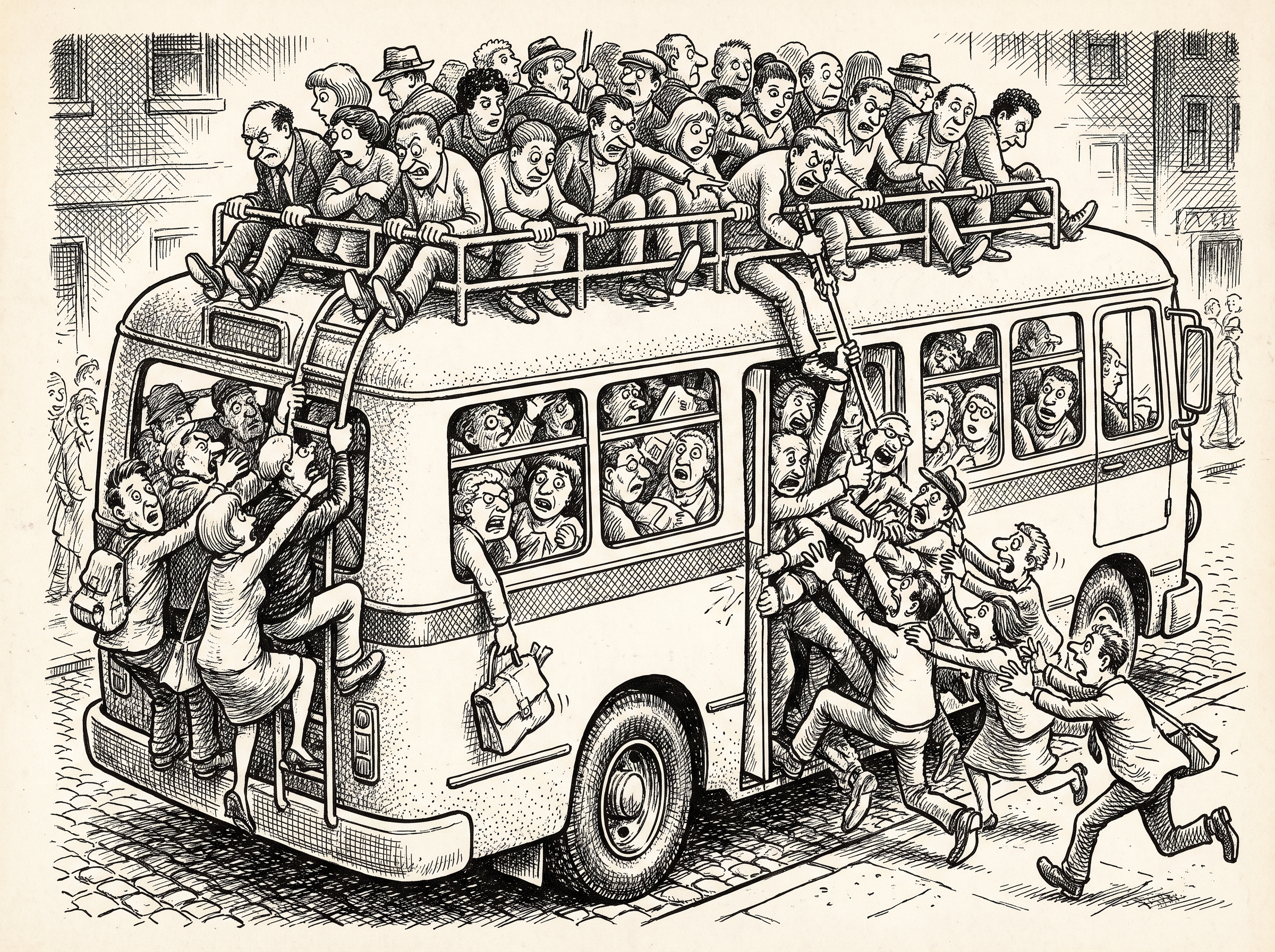
Fig. 6.4 – The shared interest in keeping outsiders out.
The cartoonist has drawn the bus so full that it is absurd, and the exaggeration is the argument: the passengers already on board are hardly comfortable, yet their energy goes into resisting the next person. What divides them is not who they are but who arrived first.
The limit of the drawing is also the useful thing about it. A bus is a fixed space; a city or a state is not. Whether jobs, water or classroom places really behave like seats on a bus — a fixed number, one person’s gain being another’s loss — is precisely what the rest of this section has to argue about, and a joke cannot settle it.
When The Same Thing Happens To A City
Similar processes take place from time to time in cities, in regions, and even in the nation as a whole. If jobs, facilities like medical care or education, and natural resources like land or water are limited, demands may be made to restrict the entry of ‘outsiders’ — even though those outsiders may be fellow citizens of the same country.
You may remember the slogan ‘Mumbai for Mumbaikars’, which expressed exactly such a feeling in the city of Mumbai, on India’s western coast. Many similar struggles have taken place in different parts of India, and in different parts of the world.
This raises the question that gives the section its name. What does ‘full and equal membership’ really mean? Does it mean that citizens should enjoy equal rights and opportunities wherever in the country they may decide to live, study or work? Or does it mean that all citizens, rich or poor, should enjoy certain basic rights and facilities?
In this section we explore the meaning of citizenship by focusing on the first of these questions. The second is taken up in Section 6.3.
Why People Move
One of the rights granted to citizens in our country, and in many others, is freedom of movement — the right to travel, live and work anywhere within the territory of the state. This right matters most to workers. A migrant is simply a person who moves from one place to another, usually in search of work.
Labour tends to migrate when opportunities are not available near home. Some people travel outside the country altogether. Within India, markets for both skilled and unskilled workers have developed in different parts of the country. Information technology workers may flock to towns like Bangalore, in the south. Nurses from Kerala, on the south-western coast, may be found all over the country.
The booming building industry in towns attracts workers from different parts of the country, and so do infrastructure projects such as road making. You have almost certainly come across workers from other regions near your own home or school. The economy you live in is held together by people who are not from where they work.
The Resistance That Follows
Often, resistance builds up among local people against so many jobs going to people from outside the area — sometimes at lower wages. A demand may develop to restrict certain jobs to those who belong to the state, or to those who know the local language. Political parties may take up the issue.
Resistance could even take the form of organised violence against ‘outsiders’. Almost every region of India has experienced such movements at one time or another. Are such movements ever justified? The chapter puts that question to you and does not answer it for you.
Notice how our own position tends to shift with the direction of travel. We all become indignant if Indian workers in other countries are ill-treated by the local population. Some of us may also feel that skilled and educated workers have a right to migrate for work, and states may even be proud of their ability to attract such workers.
But if jobs are scarce in a region, local residents may resent competition from ‘outsiders’. So the question stands: does the right to freedom of movement include the right to live or work in any part of the country?
Do We Judge Migrants By Their Wealth?
There is another factor we need to consider. There may sometimes be a difference between our response to poor migrants and our response to skilled ones. We may not always be as welcoming to poor migrants who move into our areas as we are to skilled and affluent workers.
This raises an uncomfortable question. Should poor and unskilled workers have the same right to live and work anywhere in the country as skilled workers do? These are among the issues being debated in India today about what ‘full and equal membership’ means for all citizens.
The cartoon on the facing page turns that judgement around and asks what the city would look like without the workers it resents.
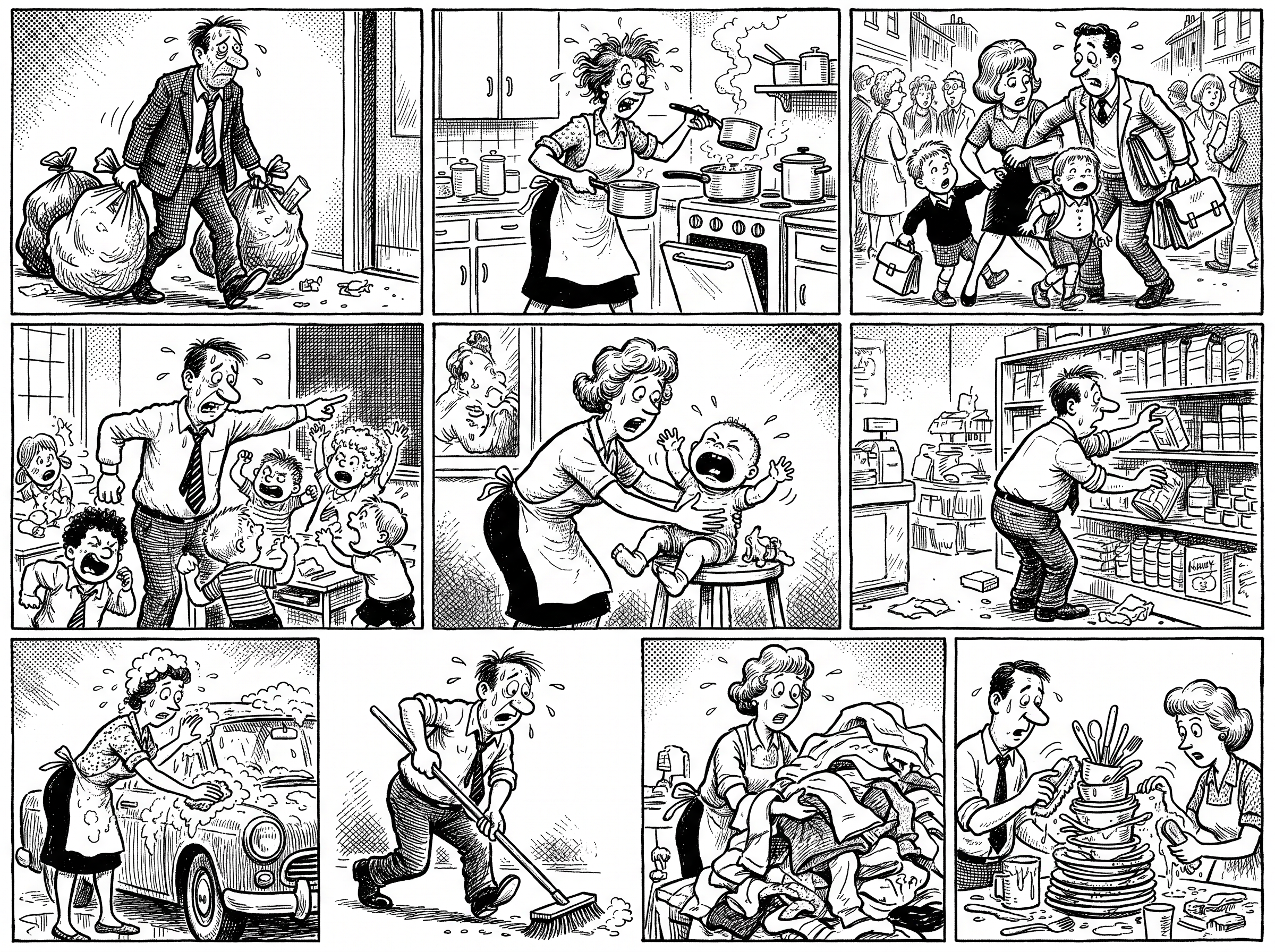
Fig. 6.5 – The urban middle class without immigrant workers.
Every panel shows a middle-class household doing, badly and sweatily, a task that somebody else normally does for it. The cartoonist is not being sentimental about migrants. The argument is colder than that: the city that resents migrant workers is the same city that depends on them, and the dependence is invisible only because the work is.
State the limit as well. The cartoon proves that migrant labour is useful to the middle class; it does not prove that migrants have a right to be there. Usefulness is a weak foundation for a right, because a right that rests on being needed can be withdrawn the moment you are not. Ask yourself which argument for freedom of movement is stronger — that migrants are useful, or that they are citizens.
A Struggle For Equal Membership: The Segregation Laws
Struggles over who counts as a full member are not peculiar to India. The 1950s saw the emergence of Civil Rights Movements against the inequalities that existed between black and white populations in many of the southern states of the USA. These inequalities were maintained by a set of laws called Segregation Laws, through which black people were denied many civil and political rights.
The Segregation Laws created separate areas for coloured and for white people in ordinary civic amenities — railways, buses, theatres, housing, hotels, restaurants and the rest. A person could hold citizenship of the country and still be turned away at the door of a restaurant in it.
Martin Luther King Jr. was a black leader of the movement against these laws, and he gave several arguments against them. First, in terms of self-worth and dignity, every human person in the world is equal, regardless of race or colour. Second, he argued that segregation is like ‘social leprosy’ on the body politic — the body politic being the community thought of as a single living body — because it inflicts deep psychological wounds on the people who suffer under such laws.
Third, King argued that segregation diminishes the quality of life for the white community as well, and he illustrated this with examples. Rather than allow black people to enter some community parks as a court had directed, the white community decided to close the parks altogether. Some baseball teams had to be disbanded, because the authorities did not want to accept black players.
The segregation laws, he said, create artificial boundaries between people and prevent them from cooperating with each other for the overall benefit of the country. For these reasons, King argued that the laws should be abolished. He gave a call for peaceful and non-violent resistance against them, and he was careful about what such resistance must not become.
The sentence is doing two things at once. It insists that protest must be creative — that is, it must be a public, inventive act of resistance, not merely obedience — and it insists that the moment such protest turns violent, it has lost, not won.
Read King’s three arguments again and notice how differently they are built. The first is a claim about human dignity, and you either accept it or you do not. The second is a claim about psychological harm. The third is a claim about the cost to the very group the laws were designed to favour — which is the only one of the three that might persuade someone who does not already agree with him.
Now the limit. One sentence from one speech, quoted in a textbook, tells us what a leader chose to say in public; it cannot tell us what the movement’s other leaders thought, whether ordinary marchers agreed with the discipline of non-violence, or how the authorities responded to it. A quotation is evidence of a position, never proof that the position prevailed.
How Democracies Are Supposed To Settle This
Disputes of this kind arise even in democratic societies. How can they be resolved?
The right to protest is an aspect of the freedom of expression guaranteed to citizens in our Constitution — the freedom to hold, state and publish one’s views. It is guaranteed provided that the protest does not harm the life or property of other people, or of the State.
Citizens are free to try and influence public opinion and government policy in several ways. They may form groups, hold demonstrations, use the media, appeal to political parties, or approach the courts. The courts may give a decision on the matter, or they may urge the government to address the issue.
It may be a slow process, and the results are uneven, but varying degrees of success are sometimes possible. If the guiding principle of providing full and equal membership to all citizens is kept in mind, it should be possible to arrive at an acceptable solution to the problems that arise from time to time in a society.
A basic principle of democracy is that such disputes should be settled by negotiation and discussion rather than by force. That is not merely good advice. It is one of the obligations of citizenship — the obligation, met in Section 6.1, that citizens owe to each other and not only to the state.
Before you move on, work through the questions below. They are the argument of this section, handed to you.
6.3 Equal Rights
The Second Question
Section 6.2 asked whether citizens may live and work anywhere in the country. This section takes up the other half of the puzzle: does full and equal membership mean that all citizens, rich or poor, should be guaranteed certain basic rights and a minimum standard of living by the state?
To discuss the question, we will look closely at one set of people — the urban poor. Dealing with the problem of the poor in towns is one of the urgent problems facing the government today.
The People The City Would Rather Not See
There is a large population of slum-dwellers and squatters in every city in India. A squatter is a person who lives on land or in a building without any legal title to it. Although these people may do necessary and useful work, often at low wages, they are frequently viewed as unwelcome visitors by the rest of the town population.
They may be blamed for straining the resources of the city, or for spreading crime and disease. It is worth pausing on that word ‘blamed’. It converts a person who lives in the city into a problem the city has.
The conditions in slums are often shocking. Many people may be crammed into small rooms with no private toilets, no running water and no sanitation. Life and property are insecure in a slum.
Yet slum dwellers make a significant contribution to the economy through their labour. They may be hawkers, petty traders, scavengers, domestic workers, plumbers or mechanics, among other occupations. Small businesses such as cane weaving, textile printing or tailoring may also develop inside slums.
And the city, for its part, probably spends relatively little on providing slum-dwellers with services such as sanitation or water supply. Read those two facts together: the labour flows one way, and the spending does not follow it back.
Marshall: Citizenship As A Status
Citizenship is not merely a legal concept. It is also closely related to larger notions of equality and rights. A widely accepted formulation of this relationship was provided by the British sociologist T. H. Marshall (1893–1981), in his book Citizenship and Social Class, published in 1950.
Read the sentence slowly, because it is doing careful work. Marshall does not say that citizens are equal in wealth, or power, or talent. He says they are equal with respect to the status — that is, in the rights and duties the status carries. Equality of status is a claim about what you are owed, not about what you have.
The key concept in Marshall’s idea of citizenship is that of ‘equality’, and for him it implies two things. First, that the quality of the given rights and duties improves. Second, that the quantity of people upon whom they are bestowed grows. Citizenship, on this view, is measured on two axes at once: how much it contains, and how many it reaches.
Marshall sees citizenship as involving three kinds of rights: civil, political and social. Civil rights protect the individual’s life, liberty and property. Political rights enable the individual to participate in the process of governance. Social rights give the individual access to education and employment. Together, the three make it possible for the citizen to lead a life of dignity.
Marshall saw social class as a ‘system of inequality’ — a way of sorting people into ranks with unequal life chances. Citizenship, he argued, ensures equality by countering the divisive effects of class hierarchy, and thus helps create a better-integrated and more harmonious community.
Now the limit, and it is a real one. Marshall’s definition is an argument, not a finding. Nothing in it proves that citizenship does counter class hierarchy — it tells us what citizenship would have to do in order to succeed. The slum on the previous page is the test his claim has to pass, and whether it passes is exactly what the rest of this section examines.
Rights That Cannot Be Used
Awareness about the condition of the urban poor is growing — among governments, among N.G.O’s and other agencies, and among the slum-dwellers themselves.
For instance, a national policy on urban street vendors was framed in January 2004. There are lakhs of street vendors in the big cities, and they often face harassment from the police and from town authorities. The policy was intended to provide recognition and regulation for vendors, so that they could carry on their profession without harassment, so long as they obeyed government regulations.
Slum-dwellers, too, are becoming aware of their rights and are beginning to organise in order to demand them. They have sometimes even approached the courts.
But here is the difficulty at the heart of this section. Even a basic political right like the right to vote may be hard for them to exercise. To be included in the list of voters, a fixed address is required — and squatters and pavement dwellers may find it difficult to provide one.
When The Court Was Asked
One such approach to the courts is worth studying in detail. The Supreme Court — the highest court in India, whose decisions bind every other court — gave an important decision on the rights of slum-dwellers in Bombay, as Mumbai was then called.
The case came to the Court in 1985 through a Public Interest Litigation, which is a case filed by a person or group on behalf of others whose rights are affected, even when the person filing it is not the one directly harmed. It was filed by a social activist, Olga Tellis, against the Bombay Municipal Corporation — the elected body that runs the city.
The petition claimed the right to live on pavements or in slums, because no alternative accommodation was available close to the petitioners’ place of work. If they were forced to move, they would lose their livelihood as well. That is the whole argument in one line: shelter and work are not two separate questions for the poor, but one.
Notice the move the Court makes. It does not invent a new right. It reads an existing one — the right to life — and asks what the right to life must include if it is to mean anything at all for a person who lives by daily labour. A life you cannot earn is not a life.
The limit is equally important, and a careful student states it. The extract tells us what the Court decided; it does not tell us what happened afterwards — whether alternative accommodation was in fact provided, to how many, or how quickly. A judgment is a statement of what the law requires. Whether the law was obeyed is a different question, and no quotation from a judgment can answer it.
Other Groups On The Margin
Among the other groups becoming marginalised in our society are tribal people and forest dwellers. These people depend on access to forests and other natural resources to maintain their way of life.
Many of them face threats to that way of life and to their livelihood, because of the pressure of increasing populations and the search for land and resources to maintain them. Pressure from commercial interests wanting to mine the resources that may exist in forests or on coasts poses a further threat, as does the tourist industry.
Governments are struggling with the problem of how to protect these people and their habitat without, at the same time, endangering the development of the country. That is an issue which affects all citizens, and not just tribal people — because the resources in question, and the development they might fund, belong to everyone.
Equal Rights Are Not Identical Policies
To try and ensure equal rights and opportunities for all citizens cannot be a simple matter for any government. Different groups of people may have different needs and different problems, and the rights of one group may conflict with the rights of another.
Equal rights for citizens need not mean that uniform policies have to be applied to all people, since different groups may have different needs. If the purpose is not merely to make policies that apply in the same way to everybody, but to make people more equal, then the different needs and claims of people would have to be taken into account when those policies are framed.
What should become clear from this discussion is that changes in the world situation, in the economy and in society demand new interpretations of the meaning and rights of citizenship. The formal laws regarding citizenship only form the starting point, and the interpretation of laws is constantly evolving.
Answers to some of the problems that arise may not be easy to find. But the concept of equal citizenship would mean that providing equal rights and protection to all citizens should be one of the guiding principles of government policies.
A Harder Case: Land In Zimbabwe
Test these ideas on a case from outside India. Zimbabwe is a country in southern Africa, and the figures below come from official publications on land distribution there.
Some 4,400 white families owned 32 per cent of the agricultural land, which is about 10m hectares. About one million black peasant families own just 16m hectares, that is 38 per cent of the land. The land held by the white families is fertile and irrigated; the land in the hands of the black population is less fertile and unirrigated.
Trace the history of ownership and one thing is obvious: a century ago the whites had taken the fertile land from the native people. Whites have now been in Zimbabwe for generations and consider themselves Zimbabweans. The total population of whites in Zimbabwe is just 0.06 per cent of the population. In the year 1997, the President of Zimbabwe, Mugabe, announced plans to take over around 1500 farms.
Read those numbers carefully before you use them. Compare 4,400 families with about one million families, and then compare 32 per cent of the land with 38 per cent — the shares of land are close, while the numbers of people sharing them are not remotely close. That is where the inequality actually sits. Note also that the two percentages do not line up neatly with the two hectare figures, which is a standing reminder to ask what any statistic is actually measuring before you argue from it.
And state the limit. These figures record how land is distributed. They cannot tell us who worked which land, what compensation was proposed, or what happened to the 1500 farms after the announcement. Numbers describe a situation; they do not settle a claim.
Two Things To Find Out
Two pieces of work, before you go on to Section 6.4.
First, survey three families of workers who work close to, or in, your home or school. Find out about their lives. Where is their ancestral place? When and why did they come here? Where do they live now, and how many people share the accommodation? What kinds of facilities are available to them? Do their children attend school?
Second, find out about the street vendors (Protection of Livelihood and Regulation of Street Vending) Act, 2014 — and read it against the national policy of January 2004 that you met earlier in this section.
6.4 Citizen And Nation
What A Nation State Claims
The concept of the nation state evolved in the modern period. It is a state whose members are held to share not only a government but also a common identity. One of the earliest assertions regarding the sovereignty of the nation state — that is, its supreme authority within its own territory, with no higher power above it — and regarding the democratic rights of citizens, was made by the revolutionaries in France in 1789, whom you met in Section 6.1.
Nation states claim that their boundaries define not just a territory but also a unique culture and a shared history. This national identity may be expressed through symbols such as a flag, a national anthem, a national language, or certain ceremonial practices, among other things.
That is a large claim, and it is worth noticing how large. A border on a map is a fact. A shared culture inside that border is an assertion — and, as we shall see, an assertion that some citizens find much easier to accept than others.
France: Public Sphere, Private Belief
France, for instance, is a country which claims to be both secular and inclusive. A secular state is one that does not identify itself with any single religion and treats religious belief as belonging to the private conscience of its citizens.
France includes not only people of European origin, but also citizens who originally came from other areas, such as North Africa. Culture and language are important features of its national identity, and all citizens are expected to assimilate into it in the public aspects of their lives. Assimilation here means taking on the national culture and language in one’s public conduct. Citizens may, however, retain their personal beliefs and practices in their private lives.
This may seem like a reasonable policy. But it is not always simple to define what is public and what is private, and this has given rise to some controversies.
Religious belief is supposed to belong to the private sphere of citizens. Yet religious symbols and practices may enter into their public lives. You may have heard of the demand of Sikh school boys in France to wear the turban to school, and of Muslim girls to wear the head scarf with their school uniforms.
This was disallowed by some schools, on the ground that it involved bringing religious symbols into the public sphere of state education. Those whose religions did not demand such practices naturally did not face the same problem. Clearly, assimilation into the national culture would be easier for some groups than for others.
Your class is asked to debate this proposition, and to argue both sides of it before deciding: ‘It is not appropriate for schools, or any other public agencies like the army, to insist on a common uniform and to ban the display of religious symbols such as the turban.’
Who Gets Let In
The criteria for granting citizenship to new applicants vary from country to country. In countries such as Israel, in west Asia, or Germany, in Europe, factors like religion or ethnic origin may be given priority when granting citizenship.
These are only a few examples of the kinds of restrictions that may be placed on citizenship even in democratic countries which pride themselves on being inclusive.
India’s Experiment
India defines itself as a secular, democratic, nation state. The movement for independence was a broad-based one, and deliberate attempts were made to bind together people of different religions, regions and cultures.
True, Partition of the country did take place in 1947, when differences with the Muslim League, a political party of the time, could not be resolved. But this only strengthened the resolve of Indian national leaders to maintain the secular and inclusive character of the Indian nation state they were committed to building. That resolve was embodied in the Constitution.
The Indian Constitution attempted to accommodate a very diverse society. To mention only a few of these diversities, it attempted to provide full and equal citizenship to groups as different as the Scheduled Castes and Scheduled Tribes — communities listed in the schedules of the Constitution as having faced long-standing disadvantage — as well as to many women who had not previously enjoyed equal rights, to some remote communities in the Andaman and Nicobar islands who had had little contact with modern civilization, and to many others.
It also attempted to find a place for the different languages, religions and practices found in different parts of the country. It had to provide equal rights to all, without at the same time forcing people to give up their personal beliefs, languages or cultural practices. It was therefore a unique experiment, and it was undertaken through the Constitution. The Republic Day parade in Delhi symbolises the attempt of the state to include people of different regions, cultures and religions.
Set this beside the French approach for a moment. Both states call themselves secular and inclusive; but one asks its citizens to assimilate into a national culture in public, while the other tries to give equal rights without asking anyone to surrender their culture at all. Two answers to one problem — and neither has escaped controversy.
What The Constitution Provides
The provisions about citizenship in the Constitution can be found in Part Two, and in subsequent laws passed by Parliament. The Constitution adopted an essentially democratic and inclusive notion of citizenship.
In India, citizenship can be acquired by birth, by descent, by registration, by naturalisation, or by the inclusion of territory. Descent means citizenship through one’s parents; naturalisation is the process by which a person who is not a citizen may become one after living in the country and applying for it; inclusion of territory refers to a territory becoming part of India, its people becoming citizens with it.
The rights and obligations of citizens are listed in the Constitution. There is also a provision that the state should not discriminate against citizens on grounds only of religion, race, caste, sex, place of birth, or any of them. The rights of religious and linguistic minorities are also protected.
Citizenship As A Project
However, even such inclusive provisions have given rise to struggles and controversies. The women’s movement, the dalit movement, and the struggles of people displaced by development projects represent only a few of the struggles being waged by people who feel that they are being denied the full rights of citizenship.
The experience of India indicates that democratic citizenship in any country is a project — an ideal to work towards, rather than an achievement to be announced. New issues are constantly being raised as societies change, and new demands are made by groups who feel they are being marginalised.
In a democratic state, these demands have to be negotiated. That word matters. Not crushed, not ignored, and not automatically granted either: negotiated — which is the slow, unglamorous, unfinished work that citizenship actually consists of.
6.5 Universal Citizenship
The Pictures In Our Heads
When we think of refugees, or of illegal migrants, many images may come to mind. One may be of people from Asia or Africa who have paid agents to smuggle them into Europe or America. The risks are high, but they seem willing to make the effort.
Another image may be of people displaced by war or famine. Such images are often shown on television. Refugees in the Darfur region of Sudan, a country in north-east Africa; Palestinians, whom you met in Section 6.1; Burmese; Bangladeshis — the examples are many. All these are people who have been forced to become refugees, either in their own country or in a neighbouring one.
Notice that the images we carry are of movement — boats, camps, queues, fences. What the images do not show is the thing that actually defines these people’s condition, which is not that they have moved, but that nobody will have them.
Universal In Theory, Restricted In Practice
We often assume that full membership of a state should be available to all those who ordinarily live and work in the country, as well as to those who apply for citizenship. This is the promise of universal citizenship — the claim of democratic theory that the rights and identity of the citizen should be available to every person in the contemporary world.
But although many states may support the idea of universal and inclusive citizenship, each of them also fixes criteria for the grant of citizenship. These criteria would generally be written into the Constitution and the laws of the country. And states use their power to keep unwanted visitors out.
Becoming Stateless
In spite of restrictions — and even the building of walls or fences — considerable migration of peoples still takes place in the world. People may be displaced by wars, by persecution, by famine, or for other reasons. Persecution means being targeted for harm because of who you are or what you believe.
If no state is willing to accept them, and they cannot return home, they become stateless peoples or refugees: people whom no state recognises as its members. They may be forced to live in camps, or to live as illegal migrants — an illegal migrant being a person who enters or stays in a country without its legal permission.
Consider what that condition actually removes. Often such people cannot legally work. They cannot educate their children. They cannot acquire property. Each of these is not a luxury but an ordinary part of a life, and each of them, it turns out, needs a state standing behind it.
The problem is so great that the United Nations — the organisation of the world’s states — has appointed a High Commissioner for Refugees to try to help them.
How Many Can A Country Absorb?
Decisions about how many people can be absorbed as citizens pose a difficult humanitarian and political problem for many states. Many countries have a policy of accepting those fleeing from persecution or war. But they may not want to accept an unmanageable number of people, or to expose the country to security risks.
India prides itself on providing refuge to persecuted peoples, as it did with the Dalai Lama, a religious leader from Tibet, and his followers, in 1959. Entry of people from neighbouring countries has taken place along all the borders of the Indian state, and the process continues.
Many of these people remain as stateless peoples for many years, or for generations, living in camps or as illegal migrants. Only a relatively few of them are eventually granted citizenship.
Such problems pose a direct challenge to the promise of democratic citizenship — the promise that the rights and identity of the citizen would be available to all people in the contemporary world. And here is the sharpest point in this section: although many people cannot achieve citizenship of a state of their choice, no alternative identity exists for them. There is no other counter to go to.
Borders Move, People Are Left Behind
The problem of stateless people is an important one confronting the world today. Borders of states are still being redefined by war or by political disputes, and for the people caught up in such disputes the consequences may be severe.
They may lose their homes, their political identities and their security, and be forced to migrate. Notice that the person need not have moved at all for this to happen: sometimes the border moves across the person.
This leaves us with questions the chapter cannot answer from inside the idea of national citizenship. Can citizenship provide a solution to the problems of such people? If not, what kind of alternative identity can be provided today? Do we need to try to evolve a more genuinely universal identity than national citizenship?
Suggestions for a notion of global citizenship are sometimes put forward. Those possibilities are the subject of the next section.
Before you turn to it, do this. Make a list of some of the stateless people living in India today, and write a short note on any one group among them — where they came from, how long they have been here, and which of the ordinary things listed above they are unable to do.
6.6 Global Citizenship
Three Statements
Begin by considering the following three statements.
There was an outpouring of sympathy and help for the victims of the tsunami which affected a number of countries in South Asia in 2004.
International networks link terrorists today.
The United Nations is working with different states to try and prevent the spread of bird flu and the possible emergence of a human viral pandemic.
They are an odd set: one is about compassion, one is about violence, and one is about disease. Before reading on, answer the two questions below for yourself.
The Interconnected World
We live today in an interconnected world. New means of communication — the internet, television, cell phones — have brought about a major change in the way we understand our world.
In the past, it might have taken months for news about developments in one part of the world to become known in other parts. New modes of communication have put us into immediate contact with developments in different parts of the globe. We can watch disasters and wars on our television screens as they are taking place.
This has helped to develop sympathies and shared concerns among people in different countries of the world. Something that once happened to strangers now happens, in a limited but real sense, in front of us.
The Case For Global Citizenship
Supporters of global citizenship argue that although a world community and a global society do not yet exist, people already feel linked to each other across national boundaries.
They would say that the outpouring of help from all parts of the world for the victims of the Asian tsunami, and for the victims of other major calamities, is a sign of the emergence of a global society. They feel that we should try to strengthen this feeling, and work towards a concept of global citizenship.
What The State Can No Longer Do Alone
The concept of national citizenship assumes that our state can provide us with the protection and the rights we need to live with dignity in the world today. But states today are faced with many problems which they cannot tackle by themselves — a spreading disease does not stop at a checkpost, and a wave does not ask for papers.
In this situation, are individual rights, guaranteed by the state, sufficient to protect the freedom of people today? Or has the time come to move to a concept of human rights and global citizenship? Human rights are rights a person is held to possess simply as a human being, and not because any particular state has granted them.
One of the attractions of the notion of global citizenship is that it might make it easier to deal with problems which extend across national boundaries, and which therefore need cooperative action by the people and governments of many states.
For instance, it might make it easier to find an acceptable solution to the issue of migrants and stateless peoples — or at least to ensure them basic rights and protection regardless of the country in which they may be living.
Supplement, Not Replacement
Set the two ideas side by side before you decide between them.
Earlier in this chapter we saw that equal citizenship within a country can be threatened by socio-economic inequalities, or by other problems that may exist. Such problems can ultimately only be solved by the governments and the people of that particular society. No global sentiment will lay a water pipe to a slum. Therefore, full and equal membership of a state remains important for people today.
But the concept of global citizenship reminds us that national citizenship might need to be supplemented by an awareness that we live in an interconnected world — and that there is a need to strengthen our links with people in different parts of the world, and to be ready to work with people and governments across national boundaries.
Something To Find Out
Find out about Global Citizenship Education, or GCED, from https://en.unesco.org/themes/gced and from https://www.gcedclearinghouse.org — and, as you read, keep asking the question this section has left open: is it teaching a status, or teaching an attitude?
6.7 Summary
The Chapter In Short
- Citizenship is full and equal membership of a political community. States give their members a collective political identity and certain rights, along with help and protection wherever they travel.
- The value of membership shows most clearly in its absence. Refugees and illegal migrants, whom no state will accept, are guaranteed rights by no state and live in precarious conditions.
- The rights of citizens vary from state to state, but in most democracies they include political rights such as the vote, civil rights such as freedom of speech and belief, and socio-economic rights such as a minimum wage or education. Equality of rights and status is itself a basic right of citizenship.
- These rights were won, not given. They were won against powerful monarchies, against colonial rule, and against minority rule in South Africa; the women’s movement and the dalit movement carry that work on.
- Citizenship also carries obligations — the legal ones a state imposes, and a moral obligation to take part in the shared life of the community. Citizens are the inheritors and trustees of the country’s culture and natural resources.
- ‘Full and equal membership’ raises two hard questions: may citizens live, study and work anywhere in the country, and must all citizens, rich or poor, be guaranteed basic rights and a minimum standard of living?
- Freedom of movement matters most to workers. Migration provokes resistance from local people, demands to reserve jobs for those who belong to the state or speak its language, and sometimes organised violence against ‘outsiders’.
- A democracy is bound to settle such disputes by negotiation and discussion rather than by force. That obligation belongs to citizens, not only to governments.
- The urban poor show that a right held on paper is not the same as a right that can be used. The voters’ list asks for a fixed address that a pavement dweller cannot give.
- The Supreme Court, in the case brought by Olga Tellis, held that the right to life includes the right to livelihood, and that pavement dwellers must be offered alternative accommodation before eviction.
- T. H. Marshall defined citizenship as a status carrying equal rights and duties, made up of civil, political and social rights, and argued that it counters the divisive effects of class.
- Equal rights need not mean uniform policies. If the purpose is to make people more equal, the different needs of different groups must be taken into account when policies are framed.
- Nation states claim that their borders enclose a shared culture. Democratic states try to define that identity inclusively, but in practice some citizens fit it more easily than others — as the turban and the head scarf in French schools showed.
- The criteria for granting citizenship differ from country to country, and religion or ethnic origin may be given priority, as in Israel or Germany.
- India defines itself as a secular, democratic nation state. Citizenship may be acquired by birth, descent, registration, naturalisation or the inclusion of territory; the state may not discriminate on grounds only of religion, race, caste, sex or place of birth; minorities are protected. Even so, democratic citizenship remains a project rather than an accomplished fact.
- Citizenship is universal in theory and restricted in practice. Every state fixes criteria and keeps others out, so stateless people may live for generations unable to work legally, educate their children or acquire property. The United Nations has appointed a High Commissioner for Refugees to help them.
- Global citizenship responds to an interconnected world and to problems that cross borders. It may strengthen the claim of migrants and stateless people to basic rights — but it supplements national citizenship rather than replacing it.
The Arguments In One Place
The chapter’s central claim is that citizenship is not a certificate but a relationship, and that ‘equal’ membership means rights a person can actually use. Since people’s circumstances differ, making them more equal may require policies that treat them differently.
Against this stands an objection the chapter itself raises and does not dismiss: the rights of one group may conflict with the rights of another, and a state that tailors policy to different needs must then choose between citizens — which is uncomfortably close to abandoning the equal status it set out to protect.
A second tension runs alongside. Full membership of a state remains, in the chapter’s own words, the only door to rights, because only a society’s own government and people can repair the inequalities inside it. Yet states now face problems they cannot solve alone, which is why the idea of global citizenship keeps returning.
Both arguments are still open. That is not a failure of the chapter; it is the reason the chapter calls democratic citizenship a project.
What Remains Contested
Does freedom of movement include the right to live and work in any part of the country — and may a region ever put its own people first? How many refugees can a state absorb before the humanitarian claim yields to the political one? Is global citizenship anything more, so far, than a shared feeling?
Notice, too, whose voices the chapter’s evidence carries. A sociologist’s book, a judgment of the Supreme Court, a leader’s speech, official land figures: every one of them was produced by someone with standing — a scholar, a judge, a leader, a government. None of them was written by a pavement dweller, a migrant construction worker, or a person living in a camp with no citizenship at all.
Their claims reach us through people speaking for them. Whether a political community can be called full and equal while its most excluded members are still spoken for, rather than heard, is the question this chapter leaves you holding.
6.8 NCERT Questions
Citizenship as full and equal membership of a political community involves both rights and obligations. Which rights could citizens expect to enjoy in most democratic states today? What kind of obligation will they have to their state and fellow citizens?
All citizens may be granted equal rights but all may not be able to equally exercise them. Explain.
Write a short note on any two struggles for full enjoyment of citizen rights which have taken place in India in recent years. Which rights were being claimed in each case?
What are some of the problems faced by refugees? In what ways could the concept of global citizenship benefit them?
Migration of people to different regions within the country is often resisted by the local inhabitants. What are some of the contributions that the migrants could make to the local economy?
‘Democratic citizenship is a project rather than an accomplished fact even in countries like India which grant equal citizenship’. Discuss some of the issues regarding citizenship being raised in India today.
6.9 Check Your Concepts
Look again at Fig. 6.4, the crowded bus. What claim is the cartoonist making about ‘insiders’ and ‘outsiders’? Then state what the image assumes about jobs, water and school places — and say whether that assumption is always true.
In Source 6.2, Marshall says that the idea of equality in citizenship implies two things. State both. Then explain how you would use them to judge whether citizenship in a country has grown or shrunk over time.
Reconstruct, step by step, how a shortage of jobs in a region can end in organised violence against ‘outsiders’. Use the chain of causes set out in Section 6.2, and name the point at which you think the chain could be broken.
In Source 6.3, how does the Supreme Court reason from the right to life to the right to livelihood? What is the one thing this judgment cannot tell us about what happened to pavement dwellers afterwards?
Martin Luther King gave three arguments against the Segregation Laws. Set them out. Which of the three is most likely to persuade a person who does not already agree with him, and why?
Fig. 6.5 shows a city struggling to manage without its migrant workers. Does the fact that migrants are useful to a city establish that they have a right to live and work in it? Give reasons for your answer.
France expects its citizens to assimilate into a national culture in the public aspects of their lives. India tried to grant equal rights without requiring anyone to give up their language, religion or cultural practices. Compare the two approaches, and state one difficulty each has run into.
‘Equal rights for citizens need not mean that uniform policies have to be applied to all people.’ Explain this claim in your own words. Then state the strongest objection to it that the chapter itself raises.