Chapter 2: Freedom
A woman sits in a house in Myanmar. She is not in a prison cell. She is in her own home, under house arrest, and the government has placed her there because of what she says in public.
She is Aung San Suu Kyi. Her children are elsewhere. Her husband is in England, and he is dying of cancer.
She could go to him. Nobody has locked the gate of her house. But she believes that if she leaves Myanmar, the authorities will not allow her to return — and returning is the whole point, because the people she speaks for are here. So the choice in front of her is not a small one. Go, and lose the country. Stay, and lose the last chance to see her husband alive.
She did not go.
Now ask yourself what the word ‘free’ is doing in this story. Nobody chained her. In a narrow sense she could walk out of the door whenever she wished. And yet almost every door that mattered had been closed by someone else’s power. Meanwhile she wrote a book of essays and gave it a title that says something strange and precise: Freedom from Fear. Not freedom from walls. Freedom from fear.
That is the puzzle this chapter is built on. Freedom is clearly more than an unlocked door — but how much more, and who decides?
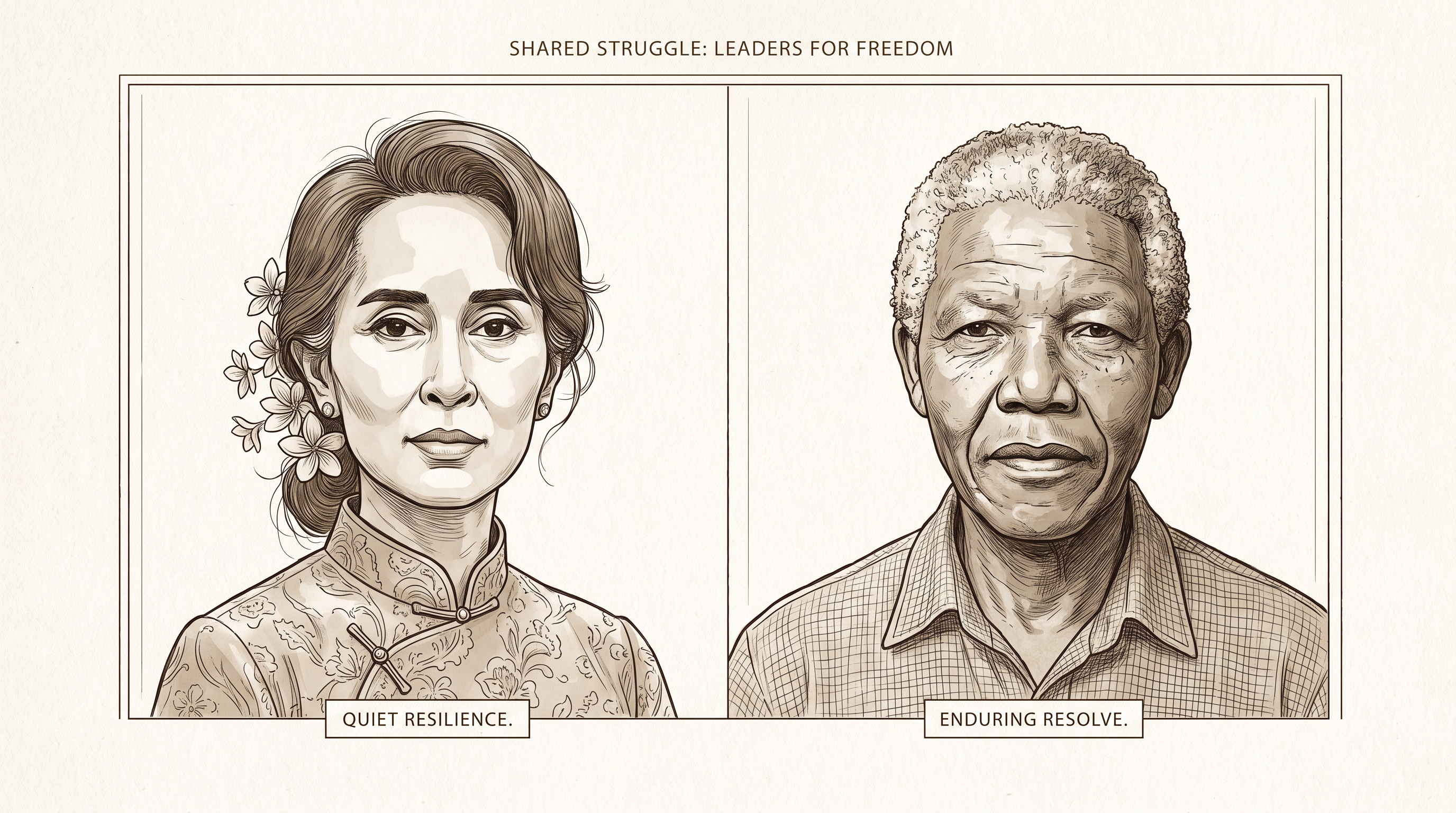
Fig. 2.0 – Aung San Suu Kyi and Nelson Mandela.
2.1 The Ideal Of Freedom
Human history gives us many examples of people and communities who were dominated, enslaved or exploited by more powerful groups. It also gives us inspiring examples of heroic struggles against that domination. What exactly is this freedom that people have been willing to sacrifice their lives for?
In its essence, the struggle for freedom expresses a simple desire: that people should be in control of their own lives and their own destinies. It is the desire to have the opportunity to express oneself through one’s own choices and activities. Not only individuals feel this. Whole societies value their independence and want to protect their culture and their future.
Yet people are many, and their interests and ambitions differ. Any form of social living therefore needs some rules and regulation. Such rules impose constraints — limits placed on what a person may do — on the freedom of individuals.
Here is the twist that makes this a subject worth studying. Those same constraints may also free us. A rule that stops others from threatening me frees me from insecurity, and creates conditions in which I can develop myself. So political theory has spent much of its energy on a single problem: how do we tell a socially necessary constraint apart from a restriction we should refuse? There is also a long argument about the limits on freedom that come not from any law, but from the social and economic structures of a society itself. This chapter walks through those debates.
By the end of it you should be able to say why freedom matters to individuals and to societies, explain the difference between the negative and the positive dimensions of freedom, and explain what is meant by the ‘harm principle’.
Mandela’s Long Walk
Before we set out to answer those questions, stop for a moment and consider an actual life. The autobiography of one of the greatest figures of the twentieth century, Nelson Mandela, is titled Long Walk to Freedom. An autobiography is a person’s account of his or her own life, so this is Mandela telling us, in his own words, what he was walking towards.
In the book he writes about his personal struggle against the apartheid regime in South Africa. Apartheid was the system of laws by which the white minority government of South Africa separated people by race and ruled over the black majority. Mandela writes about the resistance of his people to the segregationist policies of that white regime, and about the humiliations, the hardships and the police brutalities suffered by the black people of South Africa.
Notice what those policies actually did to an ordinary life. Black South Africans were bundled into townships — settlements set aside for them on the edges of towns. They were denied easy movement about their own country. They were even denied a free choice of whom to marry.
Take that list seriously for a second, because it is the heart of the argument. Where you live, where you may travel, whom you may love: these are not small administrative matters. They are the ordinary contents of a life. Collectively, such measures made up a body of constraints imposed by the apartheid regime, and the whole point of that body of constraints was to discriminate between citizens on the basis of their race.
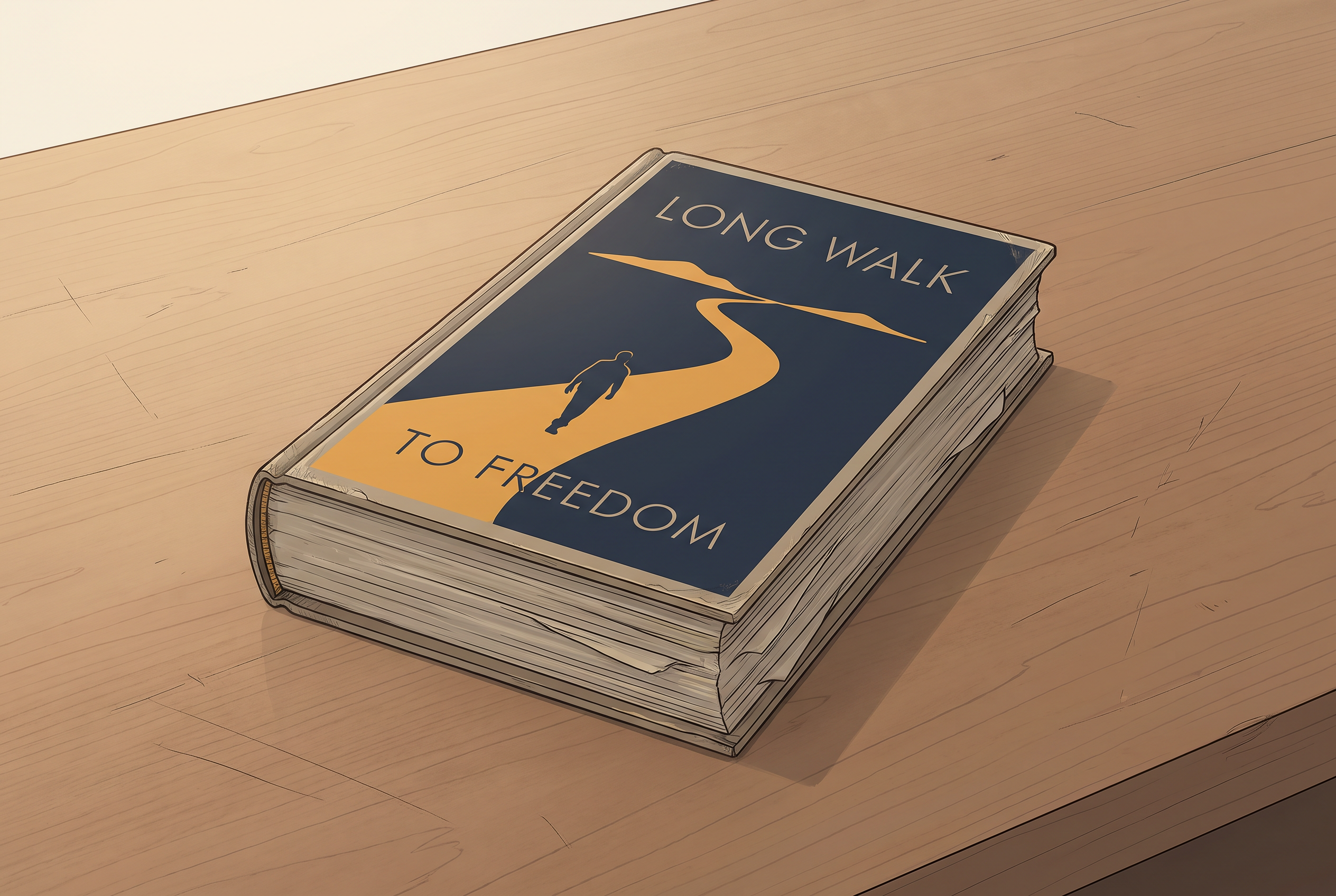
Fig. 2.1 – Mandela’s autobiography, Long Walk to Freedom.
For Mandela and his colleagues, then, the struggle was a struggle against unjust constraints. It was the struggle to remove the obstacles to the freedom of all the people of South Africa. Read that carefully, because he means it exactly as he says it — not just the black or the coloured people, but the white people too. That was the Long Walk to Freedom.
What The Walk Cost
For this freedom, Mandela spent twenty-seven years of his life in jail, often in solitary confinement — held alone, cut off from other prisoners and from the ordinary company of human beings.
Try to imagine what that meant. It meant giving up one’s youth for an ideal. It meant voluntarily giving up the pleasure of talking with one’s friends, of playing one’s favourite game — Mandela loved boxing — of wearing one’s favourite clothes, of listening to one’s favourite music, of enjoying the many festivals that are part of one’s life.
Imagine giving all of that up and choosing instead to be locked up alone in a room, not knowing when you would be released. And the only reason for it is that you campaigned for the freedom of your people.
At this point a fair question comes to mind, and the chapter itself puts it to you: do only great men and women fight for great principles like freedom? What does a principle like this mean to me? Hold the question. It is not a rhetorical one, and by the end of the chapter you should have an answer of your own.
Freedom From Fear
Now take another case, of a very different kind. Gandhiji’s thoughts on non-violence have been a source of inspiration for Aung San Suu Kyi, who remained under house arrest in Myanmar, the country to India’s east across the Bay of Bengal. House arrest means being confined by the state to one’s own home rather than to a prison. She was separated from her children. As you read at the start of this chapter, she was unable to visit her husband when he was dying of cancer in England, because she feared that if she left Myanmar she would not be allowed to return.
Aung San Suu Kyi saw her own freedom as connected to the freedom of her people. Her book of essays bears the title Freedom from Fear. In it she says, ‘for me real freedom is freedom from fear and unless you can live free from fear you cannot live a dignified human life’.
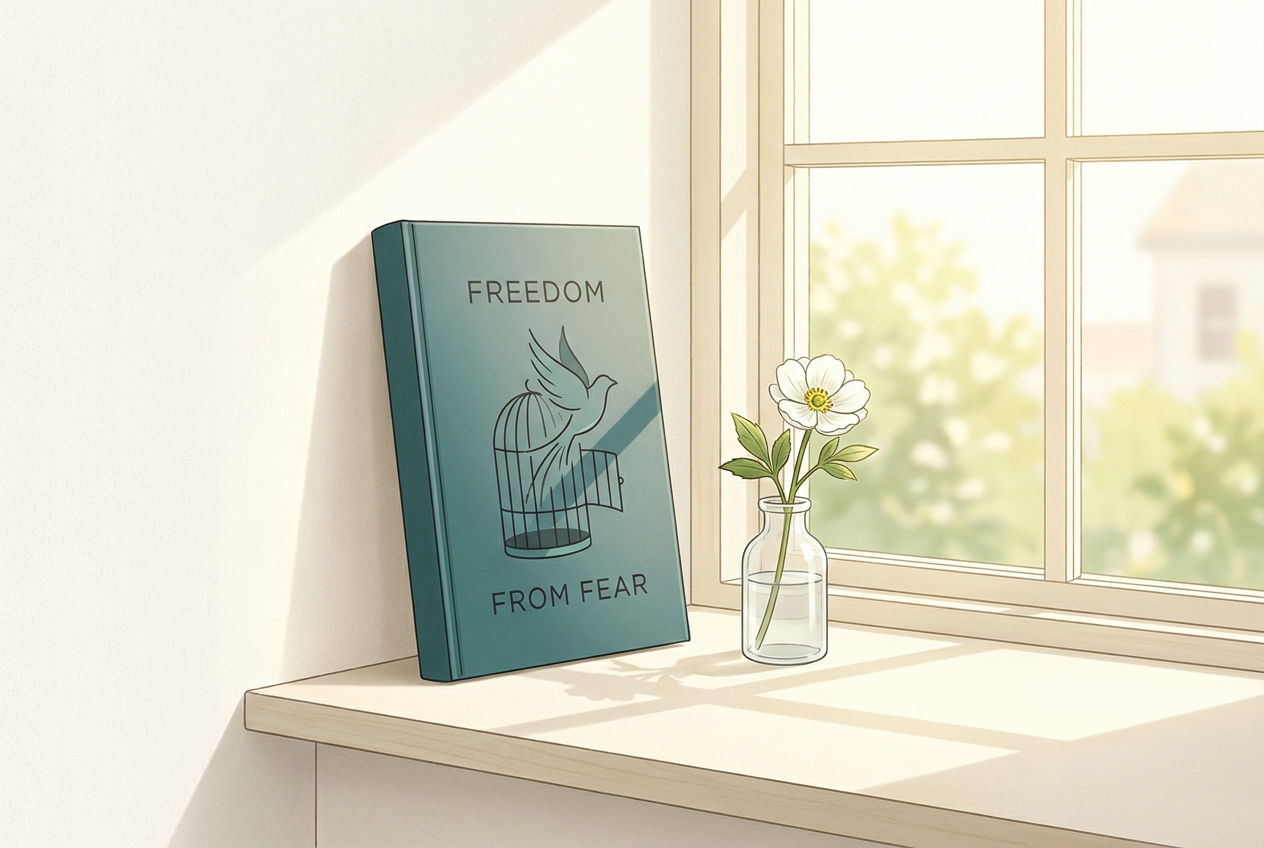
Fig. 2.2 – Aung San Suu Kyi’s book, Freedom from Fear.
These are deep thoughts, and they are worth pausing over, because her claim is larger than it first looks. We must not, her words suggest, be afraid of the opinions of other people. Nor of the attitude of authority. Nor of how the members of our community will react to the things we want to do. Nor of the ridicule of our peers. Nor of speaking our mind.
Yet we find that we often do exhibit exactly such fear — and no law compels us to. For Aung San Suu Kyi, living a ‘dignified human life’ requires us to be able to overcome that fear.
Two Books, One Ideal
From these two books — Mandela’s and Aung San Suu Kyi’s — we can see the power of the ideal of freedom. It is not a small or a private ideal. It stood at the centre of our own national struggle against British rule, and at the centre of the struggles of the peoples of Asia and Africa against British, French and Portuguese colonialism, when European powers governed distant territories as possessions and denied their people self-rule.
That is what makes freedom a political idea and not merely a personal one. Notice also that the two lives point in slightly different directions. Mandela’s account is mostly about constraints imposed from outside — laws, police, townships, prison walls. Aung San Suu Kyi’s is about something that survives even when the walls come down: fear, and the conditions a person needs in order to live without it.
Keep both in view. The rest of this chapter is, in a sense, an argument about which of the two we mean when we say the word ‘freedom’.
Before we go further, there is a piece of work for you to do. Can you think of someone in your village, town or district who has struggled for his or her own freedom, or for the freedom of others? Write a short note about that person, and be precise about one thing in particular: which aspect of freedom was he or she struggling to protect?
2.2 What Is Freedom?
A simple answer to the question ‘what is freedom’ is: the absence of constraints. On this view, freedom exists when external constraints on the individual are absent.
In terms of this definition, a person could be considered free if he or she is not subject to external controls or coercion, and is able to make independent decisions and act in an autonomous way — that is, act according to rules and choices that are one’s own rather than imposed by somebody else. Coercion is the use of force or the threat of force to make somebody act against their will.
This is a clean, usable definition. It is also, as the chapter now argues, only half of the answer.
The Second Half Of The Answer
The absence of constraints is only one dimension of freedom. Freedom is also about expanding the ability of people to freely express themselves and to develop their potential. Freedom, in this sense, is the condition in which people can develop their creativity and their capabilities.
Both these aspects matter — the absence of external constraints, and the existence of conditions in which people can actually develop their talents. Put them together and you get a definition of a good society. A free society would be one which enables all its members to develop their potential with the minimum of social constraints.
Notice the word ‘minimum’ in that sentence. It does not say ‘none’. No individual living in society can hope to enjoy the total absence of any kind of constraint or restriction. So the real work begins here: it becomes necessary to determine which social constraints are justified and which are not, which are acceptable and which should be removed.
Looking At The Relationship Itself
To work out which social constraints are necessary, discussions of freedom have to look at the core relationship between the individual and the society — or the group, the community, or the state — within which he or she is placed.
We would need to see which features of a society allow the individual the freedom to choose, to decide or to act, and which features do not. We would then need to determine which of those features are desirable and which are not, which should be removed and which should not.
And there is a further question. Do the principles we use to tell a necessary constraint from an unnecessary one also apply to the relationships between individuals, between groups, and between nations? The chapter suggests they do — which is why freedom is as much a question for a colonised country as for a single person.
Freedom Also Has A Positive Dimension
Thus far we have defined freedom as the absence of constraint. To be free, on that definition, means to reduce or minimise the social constraints that limit our ability to make choices freely. But this is only one aspect of freedom.
To put it another way, freedom also has a positive dimension — a concern not with what is being kept off our backs, but with what we are actually able to do and become. To be free, a society must widen the area in which individuals, groups, communities or nations will be able to charter their own destiny and be what they wish to be.
Freedom in this sense allows the full development of an individual’s creativity, sensibilities and capabilities — whether in sports, science, art, music or exploration. A free society is one that enables a person to pursue his or her interests with a minimum of constraints.
Why is all this thought valuable? Because freedom allows us to make choices and to exercise our judgement. It permits the exercise of the individual’s own powers of reason and judgement — and a person who is never allowed to judge for herself never learns to.
Swaraj: A Concept From Indian Political Thought
A concept analogous to freedom in Indian political thought is Swaraj. The term joins two words — Swa, meaning self, and Raj, meaning rule. It can therefore be understood to mean both the rule of the self and rule over the self.
Those two meanings pull in different directions, and that is the interesting part. In the context of the freedom struggle in India, Swaraj referred to freedom as a constitutional and political demand, and as a value at the social-collective level. That is why Swaraj was such an important rallying cry in the freedom movement, and why it inspired Tilak’s famous statement — ‘Swaraj is my birth right and I shall have it.’
It is the second understanding — Swaraj as rule over the self — that was highlighted by Mahatma Gandhi in his work Hind Swaraj, where he states, ‘It is Swaraj when we learn to rule ourselves’. On this reading Swaraj is not just freedom but liberation: the redeeming of one’s self-respect, one’s self-responsibility, and one’s capacities for self-realisation from institutions of dehumanisation — institutions that treat human beings as less than human.
Understanding the real ‘Self’, and its relation to communities and to society, is therefore critical to the project of attaining Swaraj. Gandhiji believed that the development which follows would liberate both individual and collective potentialities, guided by the principle of justice. Needless to say, such an understanding is as relevant to the twenty-first century as it was when Gandhiji wrote the Hind Swaraj in 1909 — that is, nearly four decades before Independence, while the demand was still being argued out.
A Motion For The Class
Here is a proposition the chapter puts up for debate, and it is worth taking seriously rather than treating as a formality. The motion is this: girls and boys should be free to decide whom they wish to marry, and parents should have no say in this matter.
Argue it both ways before you decide. Which dimension of freedom is each side appealing to — the absence of constraint, or the conditions in which a person can become what she wishes to be? And which constraints in this case are the kind a free society should accept?
2.2.1 The Sources Of Constraints
Restrictions on the freedom of individuals may come from domination and external controls. Such restrictions may be imposed by naked force. Or they may be imposed by a government through laws — laws which embody the power of the rulers over the people, and which may have the backing of force behind them.
This was the form of constraint represented by colonial rulers over their subjects, or by the system of apartheid in South Africa. In both cases the law itself was the instrument of domination, and there was no way for the ruled to change it.
Some form of government may be inevitable. But if the government is a democratic one, the members of a state could retain some control over their rulers — through elections, and through their power to remove a government that does not answer to them. That is why democratic government is considered to be an important means of protecting the freedom of people.
Constraints Without A Ruler
But constraints on freedom do not always arrive as an order from above. They can also result from social inequality of the kind implicit in the caste system, or from extreme economic inequality in a society.
This is a harder idea, so hold it carefully. No policeman stops a poor child from becoming a scientist, and no law commands it. Yet if the conditions in which she lives make it impossible, her freedom in the positive sense — the ability to develop her potential — has been constrained just as surely, only without anyone signing an order.
The quotation from Subhas Chandra Bose that follows draws attention to precisely this: the need for the country to work to remove such constraints. Bose was addressing a conference of students in 1929, in the middle of the freedom struggle, and he is arguing that the freedom being demanded from the British would not be enough by itself.
Read the extract slowly, because it is doing two separate jobs. First, Bose insists that freedom is not one thing but ‘all round’ — for the individual and for society, for the rich and the poor, for men and for women, for all classes. Second, he says what such freedom implies: not merely emancipation from political bondage, which means release from foreign rule, but also equal distribution of wealth, the abolition of caste barriers and social iniquities, and the destruction of communalism and religious intolerance. To call an ideal ‘Utopian’ is to call it unrealisable; Bose concedes that hard-headed people will say exactly that, and answers that only this ideal can satisfy what he calls the hunger in the soul.
So Bose is naming, in 1929, the same two sources of constraint this section has set out. Political bondage is the constraint imposed by rulers. Caste barriers, social iniquities and unequal wealth are constraints that would survive independence untouched unless a free country chose to remove them.
Now the limit, and it is a real one. This is a speech — a presidential address delivered to an audience of students by a leader seeking to inspire them. It tells us what ideal Bose chose to hold up in public in October 1929. It does not tell us whether he had a workable plan for equal distribution of wealth, or how caste barriers were to be abolished, or what he would have done when two of these goals collided. A speech records an aspiration, not an outcome. And it certainly cannot settle the question this chapter is about: which of the constraints Bose names may a society legitimately remove by force of law, and which must be left to persuasion?
2.3 Why Do We Need Constraints?
We cannot live in a world where there are no constraints at all. We need some, or else society would descend into chaos. That claim sounds harsh coming just after a chapter section praising freedom — so let us see why it holds.
Differences exist between people about their ideas and their opinions. They may have conflicting ambitions. They may compete to control scarce resources — land, water, jobs, money — which by definition cannot go to everyone at once. There are numerous reasons why disagreements develop in a society, and disagreements can express themselves through open conflict.
Conflict Is Not Always About Great Things
Look around and you will see people ready to fight for all kinds of reasons, ranging from the serious to the trivial. Rage while driving on the roads. Fighting over parking spaces. Quarrels over housing or land. Disagreements about whether a particular film should be screened.
All these, and many other issues, can lead to conflict and violence — perhaps even to loss of life. That is the point being made. Conflict is not an exotic event that happens only in wars and revolutions; it is a daily possibility in any society where people want different things.
Therefore every society needs some mechanisms to control violence and to settle disputes. Courts, police and laws are such mechanisms: they take a quarrel out of the hands of the two people quarrelling and give it to a procedure.
The Ideal, And Its Price
So long as we are able to respect each other’s views, and do not attempt to impose our views on others, we may be able to live freely and with the minimum of constraints. Ideally, in a free society we should be able to hold our own views, develop our own rules of living, and pursue our own choices.
But notice the price of that ideal. The creation of such a society itself requires some constraints. At the very least, it requires that we be willing to respect differences of views, opinions and beliefs — and ‘be willing’ is doing a great deal of work in that sentence.
Sometimes we think that a strong commitment to our own beliefs requires us to oppose all those who differ from or reject our views. We see their views, or their ways of living, as unacceptable or even undesirable. A person who is certain he is right can find toleration itself offensive.
Under such circumstances we need some legal and political restraints. Their job is to ensure that differences may be discussed and debated without one group coercively imposing its views on the other.
Worse still, we may be confronted with attempts to bully or harass us so that we conform to somebody else’s wishes. If that happens, we may want stronger support from the law to ensure that our freedom is protected.
Liberalism
One political tradition has thought about this problem for a long time, and the chapter pauses on it here. When we say that someone’s parents are very ‘liberal’, we usually mean that they are very tolerant. Liberalism, as a political ideology, has indeed been identified with tolerance as a value.
Liberals have often defended the right of a person to hold and express his or her opinions and beliefs even when they themselves disagree with them. But that is not all there is to liberalism. And liberalism is not the only modern ideology that supports tolerance.
What is more distinctive about modern liberalism is its focus on the individual. For liberals, entities like the family, society and the community have no value in themselves — they have value only if individuals value them. They would say, for example, that the decision to marry someone should be taken by the individual rather than by the family, the caste or the community.
Liberals tend to give priority to individual liberty over values like equality. They also tend to be suspicious of political authority — that is, they begin from the assumption that power over people needs to justify itself.
Historically, liberalism favoured the free market, an economy in which what is produced and at what price is decided by buyers and sellers rather than by the state, and it favoured a minimal role for the state. Present-day liberalism, however, acknowledges a role for the welfare state — a state that provides its citizens with things like education, health care and support in unemployment — and accepts the need for measures to reduce both social and economic inequalities.
That shift is worth noticing. It suggests that even a tradition built on keeping the state off the individual’s back has come to accept that some individuals cannot make use of their liberty without help.
The Question That Is Left
The important question, however, is still in front of us, and the chapter now states it plainly in three parts.
Which constraints on freedom are necessary and justifiable, and which are not? What sort of authority, external to the individual, may justifiably say what can be done and what cannot? And further — are there any areas of our life and action that should be left free of all external constraints whatsoever?
The next section takes up an answer that has shaped this argument for more than a hundred and fifty years.
2.4 Harm Principle
To answer the questions we ended with, we have to address three things about any restriction: its limits, the competence of whoever imposes it, and its consequences. In other words — how far does the restriction go, who has the standing to impose it, and what does imposing it actually do to a society?
We also have to engage with an issue that John Stuart Mill, a political thinker writing in nineteenth-century Britain, stated so eloquently in his essay On Liberty. In the discussions in political theory it is called the harm principle. Let us quote his statement and then try to explain it.
Unpacking Mill’s Sentence
The language is formal, so take it in pieces. ‘The sole end for which mankind are warranted’ means: the only reason people are justified. ‘Individually or collectively’ means: whether they act alone, or together as a society or a state. ‘Interfering with the liberty of action of any of their number’ means: stopping any one of us from doing as we choose.
Put plainly, Mill is saying that there is exactly one acceptable reason for using power over a person against his will, and that reason is to prevent harm to others. Not to improve him. Not because the majority dislikes what he is doing. Only harm to others.
One thing should have caught your ear as you read the extract. Why does Mill talk about ‘mankind’? What about women? It is a fair objection, and it is worth being clear that a nineteenth-century writer’s habit of using ‘man’ to stand for all human beings is not a small stylistic matter — language of that kind quietly leaves half the population out of the picture it is describing. Mill’s argument, as he sets it out, is meant to apply to every member of the community. Whether a language that names only men can carry a principle meant for everyone is a question you are entitled to press.
Self-Regarding And Other Regarding Actions
Mill introduces here an important distinction, and the whole principle rests on it.
Self-regarding actions are those actions that have consequences only for the individual actor and nobody else. Other regarding actions are those actions that also have consequences for others.
He argues that with respect to actions or choices that affect only one’s self, the state — or any other external authority — has no business to interfere. Put in simple language, it would be: ‘That’s my business, I’ll do what I like’, or ‘How does it concern you, if it does not affect you?’
In contrast, with respect to actions that have consequences for others — actions which may cause harm to them — there is some case for external interference. After all, if your actions cause me harm, then surely I must be saved from such harm by some external authority? In this case it is the state which can constrain a person from acting in a way that causes harm to someone else.
How Serious Must The Harm Be?
Mill does not stop there, and the second half of his principle is the half students usually forget.
Freedom is at the core of human society and is crucial for a dignified human life. It should therefore be constrained only in special circumstances. So the ‘harm caused’ must be ‘serious’. For minor harm, Mill recommends only social disapproval — not the force of law.
Take his example. Somebody plays loud music in an apartment building. This should bring only social disapproval from the other residents. They should not involve the police. They should indicate their disapproval of the inconvenience they have suffered — by, perhaps, refusing to greet the person who plays the music while disregarding the harm it causes others.
And there is real harm here. The harm that loud music causes is that of preventing those in other apartments from talking, or sleeping, or listening to their own music. But this is minor harm, and it should only provoke social disapproval. It is not a fit case for legal punishment.
Constraining actions by the force of law should only happen when other regarding actions cause serious harm to definite individuals. Otherwise, society must bear the inconvenience — and bear it in the spirit of protecting freedom. That last clause is the price Mill is asking a free society to pay, knowingly.
The Issue Of Dress Code
If choosing what to wear is an expression of one’s freedom, then how should we look at situations where there are restrictions on dress? The chapter puts four such situations in front of you, and they are deliberately unlike one another.
In China during Mao’s regime all the people had to wear ‘Mao suits’, on the argument that this was an expression of equality. A fatwa — a ruling issued by a religious authority — was issued against Sania Mirza for her style of dress, which was considered, by one cleric, to be against the dress code prescribed for women. The rules of a test match in cricket require every cricketer to wear white dress. And students are required to wear school uniforms.
Before you answer, notice how different the four are. One is a state imposing dress on a whole population. One is a religious authority pronouncing on an individual. One is a sporting body setting the rules of its own game. One is a school. The authority behind the constraint is different in each case — and, on the argument of this chapter, the authority behind a constraint is exactly what we must examine.
Now debate the questions the chapter asks.
Tolerance, And Where It Stops
People should be ready to tolerate different ways of life, different points of view and different interests — so long as these do not cause harm to others.
But such tolerance need not be extended to views and actions which may put people in danger, or which foment hatred against them. Hate campaigns cause serious harm to the freedom of others, and actions that cause ‘serious harm’ are actions on which constraints can be imposed.
Even here, though, the argument keeps its balance. We must make sure that the constraints imposed are not so severe that they destroy freedom itself. For example, we must not ask for life imprisonment for those who only conduct a hate campaign. Some restriction on their movement, or some curtailment of their right to hold public meetings, could be considered — especially if they carry on the campaign in spite of warnings by the state to desist.
Reasonable Restrictions
In the constitutional discussions in India, the term used for such justifiable constraints is reasonable restrictions. The restrictions may be there, but they must be reasonable — that is, capable of being defended by reason.
They must not be excessive, and they must not be out of proportion to the action being restricted. If they are, they would impinge on the general condition of freedom in the society as a whole, and not merely on the person restricted.
There is a warning attached to this, and it is the sentence to carry out of this section. We must not develop a habit of imposing restrictions, because such a habit is itself detrimental to freedom. A society can lose its freedom without ever passing a single dramatic law, simply by getting used to restricting.
2.5 Negative And Positive Liberty
Earlier in the chapter we mentioned two dimensions of freedom — freedom as the absence of external constraints, and freedom as the expansion of opportunities to express one’s self. In political theory these have been given names. They are called negative and positive liberty.
The words ‘negative’ and ‘positive’ here carry no praise or blame. Negative does not mean bad. It means an argument about what must be kept away from a person; positive means an argument about what must be made available to her.
Negative Liberty: Over What Area Am I The Master?
Negative liberty seeks to define and defend an area in which the individual would be inviolable — an area in which he or she could ‘do, be or become’ whatever he or she wished to ‘do, be or become’. Inviolable means that it may not be entered or violated by anyone.
This is an area in which no external authority can interfere. It is a minimum area that is sacred, and in which whatever the individual does is not to be interfered with.
The existence of this ‘minimum area of non-interference’ is the recognition of something about us: that human nature and human dignity need an area where the person can act unobstructed by others. A being who is watched and directed at every point is not a person at all, but an instrument.
How big should this area be? What exactly should it contain? These are matters of discussion, and they will continue to be matters of debate — because the bigger the area of non-interference, the more the freedom.
All we need to recognise, at this stage, is that the negative liberty tradition argues for an inviolable area of non-interference in which the individual can express himself or herself. And it argues that if the area is too small, then human dignity gets compromised.
We may here ask the obvious question, and it takes us straight back to the dress code you have just debated. Is the choice of what clothes to wear in different situations — school, playing-field, office — a choice that belongs to the minimum area, and therefore one that cannot be interfered with by any external authority? Or is it a choice that can be interfered with by the state, by religious authority, by the ICC, which governs international cricket, or by CBSE, the board whose rules many Indian schools follow?
Negative liberty arguments are answers to the question: ‘Over what area am I the master?’ They are concerned with explaining the idea of ‘freedom from’.
Positive Liberty: Who Governs Me?
In contrast, the arguments of positive liberty are concerned with explaining the idea of ‘freedom to’. They are in response to the question ‘who governs me?’ — to which the ideal answer is ‘I govern myself’.
Positive liberty discussions have a long tradition. It can be traced to Rousseau, Hegel, Marx, Gandhi and Aurobindo, and also to those who draw their inspiration from these thinkers.
This tradition is concerned with looking at the conditions and the nature of the relationship between the individual and society, and with improving those conditions so that there are fewer constraints on the development of the individual personality. The chapter offers an image for it: the individual is like a flower that blossoms when the soil is fertile, and the sun is gentle, and the water is adequate, and the care is regular.
Take the image seriously. Nobody frees a flower by promising not to interfere with it.
What The Conditions Actually Are
To develop his or her capability, the individual must get the benefit of enabling positive conditions in three domains — material, political and social.
In the material domain, the person must not be constrained by poverty or by unemployment. They must have adequate material resources to pursue their wants and needs.
In the political domain, they must have the opportunity to participate in the decision making process, so that the laws that are made reflect their choices — or at the very least take those preferences into account.
And above all, to develop their mind and their intellect, individuals must have access to education and to the other associated opportunities necessary to lead a reasonably good life.
How The Two Traditions Differ
Positive liberty recognises that one can be free only in society, and not outside it. It therefore tries to make that society such that it enables the development of the individual.
Negative liberty is concerned only with the inviolable area of non-interference, and not with the conditions in the society outside that area, as such. Of course negative liberty would like to expand this minimum area as much as is possible — while keeping in mind the stability of society.
Generally the two go together and support each other. A person needs both to be left alone and to be equipped. But there is a danger on the positive side, and the chapter names it without flinching: it can happen that tyrants justify their rule by invoking arguments of positive liberty. A ruler who claims to know what the people would want if only they were wiser can suppress them in the name of their own true freedom.
The two traditions can now be set side by side. Do not read the grid as two lists to be memorised; read it as two different questions being asked about the same person.
2.5.1 Freedom Of Expression
One of the issues that is considered to belong to the minimum area of ‘non-interference’ is freedom of expression — the freedom to hold opinions and to state them publicly. J. S. Mill set out good reasons why freedom of expression should not be restricted. This is a good case for discussion.
At various times there have been demands to ban books, plays, films, or academic articles in research journals. Let us think about such demands in the light of our discussion so far — a discussion which sees freedom as ‘the making of choices’, which distinguishes between negative and positive liberty, and which recognises the need for ‘justifiable constraints’, but insists that these have to be supported by proper procedures and important moral arguments.
Freedom of expression is a fundamental value, and for its sake a society must be willing to bear some inconvenience in order to protect it from people who want to restrict it. Remember Voltaire’s statement — ‘I disapprove of what you say but I will defend to death your right to say it’. The real question the chapter puts to you is not whether you agree with that sentence. It is: how deeply are we committed to this freedom of expression?
Mill’s Four Reasons
John Stuart Mill, whose harm principle you met in the previous section, was also an activist in nineteenth-century Britain, and in On Liberty he offered a passionate defence of freedom of expression, including freedom of thought and discussion. He gave four reasons why there should be freedom of expression even for those who hold ideas that appear ‘false’ or misleading today.
First, no idea is completely false. What appears to us as false has an element of truth in it. If we ban ‘false’ ideas, we would lose that element of truth which they contain.
This is related to the second point. Truth does not emerge by itself. It is only through a conflict of opposing views that truth emerges. Ideas that seem wrong today may have been very valuable in the emergence of what we now consider the right kind of ideas.
Thirdly, this conflict of ideas is valuable not just in the past but is of continuing value for all times. Truth always runs the risk of being reduced to an unthinking cliché — a phrase repeated so often that nobody stops to ask whether it is true. It is only when we expose an idea to opposing views that we can be sure it is trustworthy.
Finally, we cannot be sure that what we consider true is actually true. Very often, ideas that were considered false at one point by the entire society, and were therefore suppressed, turned out to be true later on. A society that completely suppresses all ideas that are not acceptable today runs the danger of losing the benefits of what might turn out to be very valuable knowledge.
Read together, the four reasons make an unusual argument. Mill is not saying that we should tolerate false ideas out of kindness to the people who hold them. He is saying that we cannot get to the truth without them.
When Books And Films Are Banned
The chapter now brings this argument down to actual cases in India and elsewhere.
Some years ago the film maker Deepa Mehta wanted to make a film about widows in Varanasi. It sought to explore the plight of widows. But there was a strong protest from a section of the polity — from people who felt that it would show India in a very bad light, who felt it was being made to cater to foreign audiences, and who felt it would bring a bad name to the ancient town. They refused to allow it to be made, and as a result it could not be made in Varanasi. It was subsequently made elsewhere.
Similarly, the book Ramayana Retold by Aubrey Menon and The Satanic Verses by Salman Rushdie were banned after protest from some sections of society. The film The Last Temptation of Christ and the play Me Nathuram Boltey were also banned after protests.
Banning is an easy solution in the short term, since it meets the immediate demand. But it is very harmful for the long-term prospects of freedom in a society, because once one begins to ban, one develops a habit of banning. You met that warning about habits at the end of the last section; here it is again, in a different form.
But does this mean that we should never ban? After all, we do have censorship of films — the official examination of a film before release, with the power to cut parts of it. Is that not similar to banning, where only a portion of a film is banned and not the whole film? The question that is often debated, therefore, is this: when should one ban and when should one not? Should one never ban?
A Constraint You Agree To
Just for interest, consider a very different case. In England, anyone who is employed to work for the Royal household is constrained by contract from writing about the inner affairs of the household. So if such a person were to leave that employment, they would still be unable to give an interview, or write an article, or author a book about the politics of the Royal household. Is this an unjustifiable constraint on the freedom of expression?
Constraints of different kinds thus exist, and we are subject to them in different situations. While reflecting on such situations we need to realise something the chapter has been building towards all along.
When constraints are backed by organised social authority — religious or cultural — or by the might of the state, they restrict our freedom in ways that are difficult to fight against. The person on the other side of such a constraint has power that we do not have.
However, if we willingly accept certain restrictions, or accept them for the sake of pursuing our own goals or ambitions, our freedom is not limited in the same way. The employee of the Royal household signed the contract; the cricketer chose the game and its whites. In any case, if we are not coerced into accepting the conditions, then we cannot claim that our freedom has been curtailed.
2.6 Summary
The Ideal Of Freedom
- The struggle for freedom is the desire of people to control their own lives and destinies, and to express themselves through their own choices. Societies, not only individuals, want this independence.
- Mandela’s Long Walk to Freedom describes apartheid as a body of constraints imposed by race, and describes the struggle to remove the obstacles to the freedom of all South Africans, white people included.
- Aung San Suu Kyi’s Freedom from Fear argues that real freedom is freedom from fear, and that without it a dignified human life is impossible.
- The ideal stood at the centre of India’s national struggle and of the struggles of Asia and Africa against British, French and Portuguese colonialism.
What Freedom Is
- The simple answer is the absence of constraints: a person is free when there is no external control or coercion over her.
- But that is only one dimension. Freedom is also the condition in which people can develop their creativity and capabilities.
- A free society enables all its members to develop their potential with the minimum of social constraints. Nobody in society can have no constraints at all.
- Swaraj joins Swa (self) and Raj (rule): it means both rule of the self and rule over the self. In the freedom movement it was a political demand; in Gandhiji’s Hind Swaraj it is also self-rule, self-respect and self-realisation.
Why Constraints Exist, And When They Are Justified
- People differ in ideas and ambitions and compete for scarce resources. Disagreement can become conflict and violence, so every society needs mechanisms to settle disputes.
- Constraints come from domination and external control — force, or law backed by force, as under colonial rule and apartheid. Democratic government matters because the ruled retain some control over their rulers.
- Constraints also arise without any ruler, from social inequality of the kind implicit in the caste system and from extreme economic inequality. Bose’s address of 1929 demanded ‘all round’ freedom, including the abolition of caste barriers and unequal wealth.
- Liberalism is identified with tolerance and, more distinctively, with a focus on the individual; it now accepts a role for the welfare state and for reducing inequalities.
- Mill’s harm principle: power may be used over a person against his will only to prevent harm to others. Self-regarding actions are not the state’s business; other regarding actions may be.
- The harm must be serious and caused to definite individuals. Minor harm calls for social disapproval, not the force of law.
- Tolerance need not extend to actions that endanger people or foment hatred, but constraints must not be so severe that they destroy freedom itself.
- In India’s constitutional discussions such justifiable constraints are called ‘reasonable restrictions’ — defensible by reason, not excessive, not out of proportion. A habit of restricting is itself detrimental to freedom.
Negative And Positive Liberty
- Negative liberty defends a minimum, inviolable area of non-interference, and answers the question ‘over what area am I the master?’. It explains ‘freedom from’.
- Positive liberty answers ‘who governs me?’, to which the ideal answer is ‘I govern myself’. It explains ‘freedom to’, and is traced to Rousseau, Hegel, Marx, Gandhi and Aurobindo.
- Positive liberty requires enabling conditions — freedom from poverty and unemployment, a share in decision making, and access to education.
- The two generally support each other, but tyrants have justified their rule by invoking arguments of positive liberty.
- Freedom of expression belongs to the minimum area of non-interference. Mill defends it even for ideas that seem false: no idea is wholly false, truth emerges only through a conflict of views, that conflict has continuing value, and what we hold true may not be.
- Banning meets an immediate demand but builds a habit of banning. Constraints backed by state or organised social authority are hard to fight; restrictions we accept willingly, without coercion, do not curtail our freedom in the same way.
Freedom, Choice And Responsibility
- We began by saying that freedom is the absence of external constraints. We end by seeing that freedom embodies our capacity and our ability to make choices.
- When we make choices, we must also accept responsibility for our actions and their consequences. It is for this reason that most advocates of liberty maintain that children must be placed in the care of parents.
- The capacity to choose well, to assess options in a reasoned manner and to shoulder responsibility has to be built through education and the cultivation of judgement — just as much as it has to be nurtured by limiting the authority of the state and of society.
The Arguments In One Place
The chapter’s central claim is that freedom cannot be defined by the absence of constraint alone. To be free is also to have the conditions in which one can develop, choose and become — which is why poverty, unemployment, caste barriers and fear count as constraints even when no law commands them.
The strongest position against that claim is one the chapter itself states. If freedom means being given the conditions for one’s true development, then someone must decide what a person’s true development is. That is the door through which tyrants have walked, justifying their rule by invoking arguments of positive liberty.
Between the two stands Mill’s attempt at a rule: the state may interfere only to prevent serious harm to others, and India’s constitutional language of ‘reasonable restrictions’ is an attempt to say the same thing in law.
What Remains Contested
How large should the minimum area of non-interference be, and what should it contain? The chapter says openly that this will continue to be a matter of debate, and it does not tell you where the line falls between a school uniform, a cricketer’s whites, a cleric’s decree and a state’s dress code.
Who decides what harm is ‘serious’? Mill leaves loud music to social disapproval, but he does not tell us how to answer the neighbour who cannot sleep — and ‘serious’ is the word on which the entire harm principle rests.
And notice whose voices the chapter’s own evidence was never designed to record. Two autobiographies and a presidential address tell us what famous leaders chose to say in public. They do not tell us how freedom looked to the people in the townships, to the students in the Lahore audience, or to the widows in Varanasi whose story a film was not permitted to tell.
2.7 NCERT Questions
What is meant by freedom? Is there a relationship between freedom for the individual and freedom for the nation?
What is the difference between the negative and positive conception of liberty?
What is meant by social constraints? Are constraints of any kind necessary for enjoying freedom?
What is the role of the state in upholding freedom of its citizens?
What is meant by freedom of expression? What in your view would be a reasonable restriction on this freedom? Give examples.
2.8 Check Your Concepts
The term Swaraj carries two meanings — rule of the self, and rule over the self. Explain both, and show how each meaning was used in the freedom movement.
Mandela described the struggle as one to remove the obstacles to the freedom of all the people of South Africa, and not only of the black and coloured people. What does this tell us about how he understood the constraints imposed by apartheid?
Read Source 2.2 again. Explain the difference Mill draws between ‘self-regarding’ and ‘other regarding’ actions. Where would you place the playing of loud music in an apartment building, and why does Mill still refuse to bring in the police?
Read Source 2.1 again. Which constraints on freedom does Bose name in addition to political bondage? Then state one thing this speech, as a piece of evidence, cannot tell us.
Reconstruct, step by step, the chain of reasoning by which the chapter moves from the fact that people have different ideas and ambitions to the conclusion that every society needs mechanisms to settle disputes.
The harm principle rests on the word ‘serious’. Using the chapter’s own examples, explain why deciding what counts as serious harm is difficult, and say who you think should decide.
The chapter warns that tyrants can justify their rule by invoking arguments of positive liberty. Explain how such a justification would work. Then, using the chapter’s account of positive liberty, set out how a defender of that tradition could answer the charge.
An employee of the Royal household in England agrees, by contract, never to write about its inner affairs. A cricketer plays a test match in white clothes. In each case, has the person’s freedom been curtailed? Use the chapter’s distinction between coerced and willingly accepted restrictions to defend your answer.