Chapter 3: Equality
In eighteenth-century France, what a person could become was mostly settled before they were born. Land, title and rank passed down through families. A monarch sat at the top of the order, and below the monarch sat a landed feudal aristocracy — the noble families who owned the estates and held the privileges. Ordinary people worked the land they did not own. Nobody had voted for any of this. It was simply the way the world was arranged, and it had been arranged that way for a very long time.
Then the French revolutionaries went out against that order carrying a slogan of three words: ‘Liberty, Equality and Fraternity’. The middle word was the sharpest of the three. It did not merely ask for kinder masters or lighter taxes. It said something far more dangerous to a society built on inherited rank — that a human being’s worth does not depend on the family they happen to be born into.
Those three words did not stay in France. In the twentieth century, people fighting colonial rule across Asia and Africa raised the same demand for equality. Groups who feel pushed to the margins of our own society — women, dalits — raise it still. Today equality is written into the constitutions and laws of many countries, including ours.
And yet inequality is exactly what we see when we look around us.
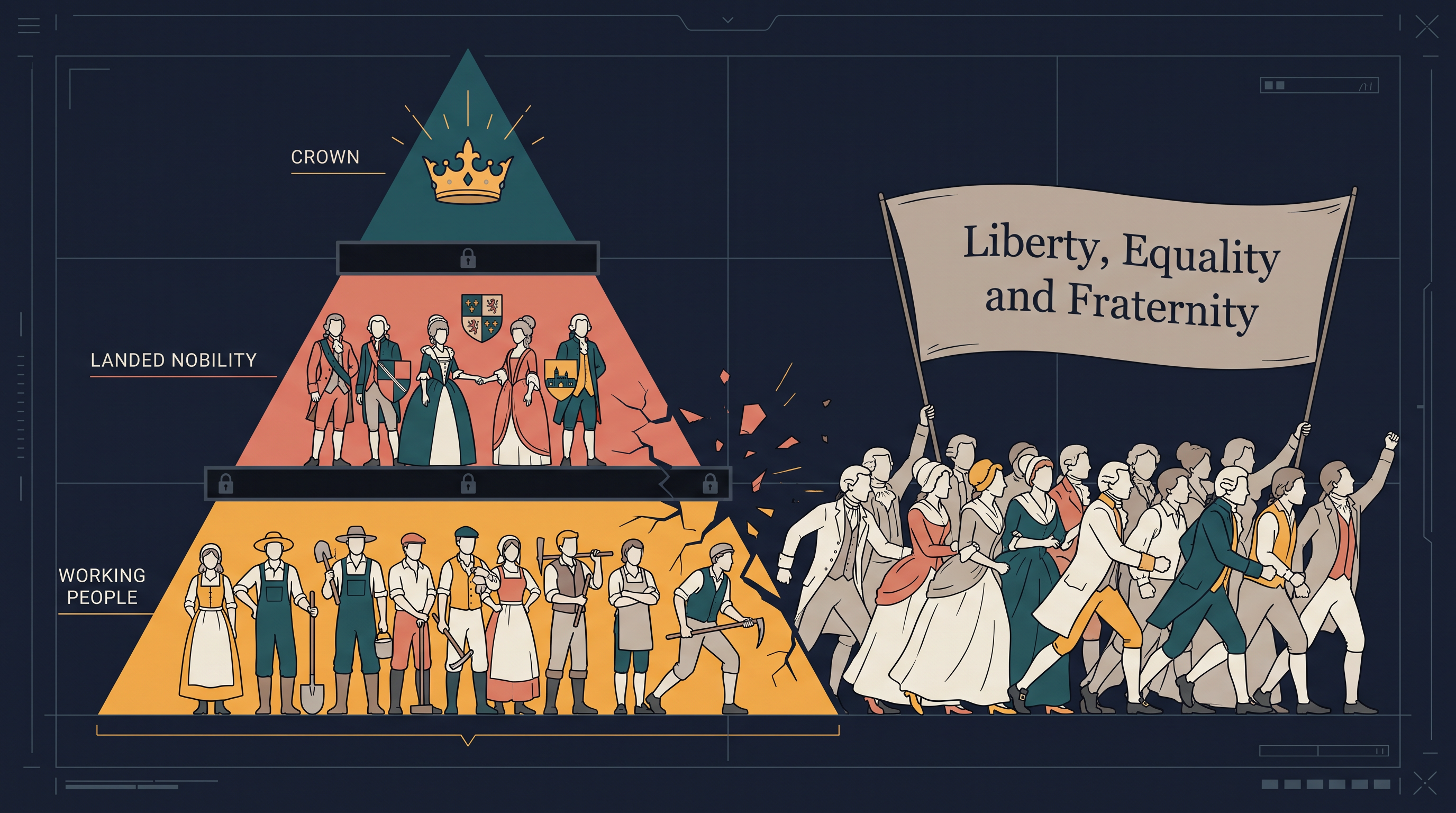
Fig. 3.0 – The demand for equality and the eighteenth-century social order.
3.1 Why Does Equality Matter?
Equality is the idea that all human beings are of equal worth and deserve equal consideration and respect. It is a powerful moral and political ideal, and it has inspired and guided human society for many centuries.
The idea is implicit in all faiths and religions which proclaim all human beings to be the creation of God. If every person is made by the same maker, then no person can be worth more than another simply by birth.
As a political ideal, equality says that all human beings have an equal worth regardless of their colour, gender, race, or nationality. It maintains that we deserve equal consideration and respect because of our common humanity — because of what we share, not because of what separates us.
That notion of a shared humanity does real work in the world. It is what lies behind the idea of universal human rights — rights a person holds simply as a human being, not as a citizen of one country or a member of one community. It also lies behind the phrase ‘crimes against humanity’, which treats certain acts as offences against all of us, whoever the victims were.
Equality As A Rallying Cry
In the modern period, the equality of all human beings has been used as a rallying slogan in struggles against states and social institutions which uphold inequalities of rank, wealth status or privilege among people. You have already met the sharpest of those slogans on the opening page of this chapter, raised by the French revolutionaries in the eighteenth century against the landed feudal aristocracy and the monarchy.
The same demand was raised again in the twentieth century, during the anti-colonial liberation struggles in Asia and Africa — by people demanding that their nations be treated as the equals of the nations that ruled them. It continues to be raised by struggling groups such as women or dalits who feel marginalised in our society.
Today, equality is a widely accepted ideal. It is embodied in the constitutions and laws of many countries, including our own. That is worth noticing: an idea that was once revolutionary is now written into the ordinary law of the land.
Since so many faiths affirm the same ideal, look for it in their own words. Search for quotations from different religious scriptures that affirm the ideal of equality, and read them out in the classroom. You will find the ideal stated in many languages and many traditions — which makes the next observation more puzzling, not less.
What We Actually See
Yet it is inequality rather than equality which is most visible around us — in the world, and within our own society. The gap between the promise and the reality is not hidden away. It is on the street.
In our country we can see slums existing side by side with luxury housing. We can see schools with world-class facilities and air-conditioned classrooms standing alongside schools which may lack even drinking water facilities or toilets. We can see waste of food as well as starvation. There are glaring differences between what the law promises and what we see around us.
So the ideal is nearly universal and the reality nearly everywhere contradicts it. To understand how wide that gap is, look first at the world, and then at our own country.
A Fact Sheet On Global Inequalities
These figures come from the Human Development Report, 2005, published by the UNDP — the United Nations Development Programme, the UN body that tracks living conditions across countries. You are not asked to memorise any of them. They are here so that you can feel the shape of the inequality the chapter is talking about.
Consider income first. The richest 50 individuals in the world have a combined income greater than that of the poorest 40 crore people. Taken as groups, the poorest 40 per cent of the world’s population receive only 5 per cent of global income, while the richest 10 per cent of the world’s population controls 54 per cent of global income.
Consider production and consumption next. The first world of the advanced industrial countries — mainly North America and Western Europe — has 25 per cent of the world’s population, yet owns 86 per cent of the world’s industry and consumes 80 per cent of the world’s energy. On a per capita basis, that is, per person, a resident of the advanced industrial countries consumes at least three times as much water, ten times as much energy, thirteen times as much iron and steel and fourteen times as much paper as someone living in a developing country like India or China.
Consider survival itself. The risk of dying from pregnancy related causes is 1 to 18 in Nigeria, a country in West Africa, but 1 to 8700 in Canada, in North America. Read that slowly. The same event, childbirth, carries a wildly different chance of killing you depending on where you were born.
Consider, finally, the cost paid by the planet and by whom. The industrial countries of the first world account for nearly two-thirds of the global emissions of carbon dioxide from the combustion of fossil fuels. They also account for three-quarters of the emissions of sulphur and nitrogen oxide that cause acid rain. Many industries known for their high rate of pollution are being shifted from the developed countries to the less developed countries.
What the fact sheet cannot tell you is why any of this is so. It counts incomes, energy, deaths and emissions; it does not explain them, and it does not tell you who decided them. A number can show you that a gap exists. It cannot tell you whether the gap is unjust, or what would remove it. That question is not settled by arithmetic. It is settled — if at all — by argument, which is what the rest of this chapter is for.
Inequality Inside One Country
Inequality is not only a distance between rich countries and poor ones. It runs through a single country, and it runs between the village and the city. Table 3.1 gives some findings from the Census of India held in 2011 — the count of the population and of household conditions that India conducts every ten years — about household amenities and assets.
You don’t need to memorise any of these figures. Just read them to understand the extent of urban-rural disparities in the country. NCERT also asks you to place yourself in the table: where would your own family fit? Answer that one privately, to yourself; the point of it is not to compare families in a classroom but to notice that the table is describing real households, and one of them may be yours.
Read the first row carefully, because it sets the pattern. Of every hundred rural families, 55 had an electricity connection; of every hundred urban families, 93 did. That is not a small gap in comfort. Electricity is the difference between studying after dark and not studying after dark.
The pattern repeats down the column. Tap water in the house: 35 per cent of rural families, 71 per cent of urban. A bathroom in the house: 45 per cent against 87 per cent. On every single amenity listed, the urban share is roughly double the rural share or more — and the gap is widest, in proportion, for a car, jeep or van, owned by 2 per cent of rural families and 10 per cent of urban ones.
Now the limit. The table counts things that families own or are connected to. It cannot tell you what it is like to live without them, and it cannot tell you why the gap exists — whether it follows from where the state built its pipes and power lines, from what work is available in a village, or from something else altogether. It also averages over everybody. Within any village and within any city there are families far above and far below these figures, and the table quietly hides them both.
The Paradox We Are Left With
Thus we face a paradox: almost everyone accepts the ideal of equality, yet almost everywhere we encounter inequality. We live in a complex world of unequal wealth, unequal opportunities, unequal work situations, and unequal power.
Should we be concerned about these kinds of inequalities at all? Are they a permanent and inevitable feature of social life, reflecting the differences of talent and ability among human beings, and their different contributions towards social progress and prosperity? Or are these inequalities a consequence of our social position and the rules a society lives by? These are questions that have troubled people all over the world for many years.
And there is a further, closer worry. Why talk about global or national inequalities when all around us there are inequalities to which nobody seems to object — such as the way a family may quietly favour a son over a daughter? Inequality is not only a matter of statistics from distant countries. It is often built into the ordinary treatment we hand out at home, in school, and among friends, where it is rarely even named as inequality.
It is a question of this kind that makes equality one of the central themes of social and political theory. A student of political theory has to address a range of questions. What does equality imply? Since we are different in many obvious ways, what does it even mean to say that we are equal? What are we trying to achieve through the ideal of equality — are we trying to eliminate all differences of income and status? In other words, what kind of equality are we pursuing, and for whom?
Three further questions about the concept of equality will guide the rest of this chapter. To promote equality, should we always treat all persons in exactly the same way? How should a society decide which differences of treatment or reward are acceptable and which are not? And what kind of policies should we pursue to try and make society more egalitarian — that is, more genuinely equal in the conditions and opportunities it gives its members?
3.2 What Is Equality?
Before we define equality, it helps to look at something that plainly violates it. Take a look at these images, drawn from a period when racial segregation was enforced in parts of the United States. They are ordinary public signs — the kind of notice a person would read on a wall while going about a normal day.
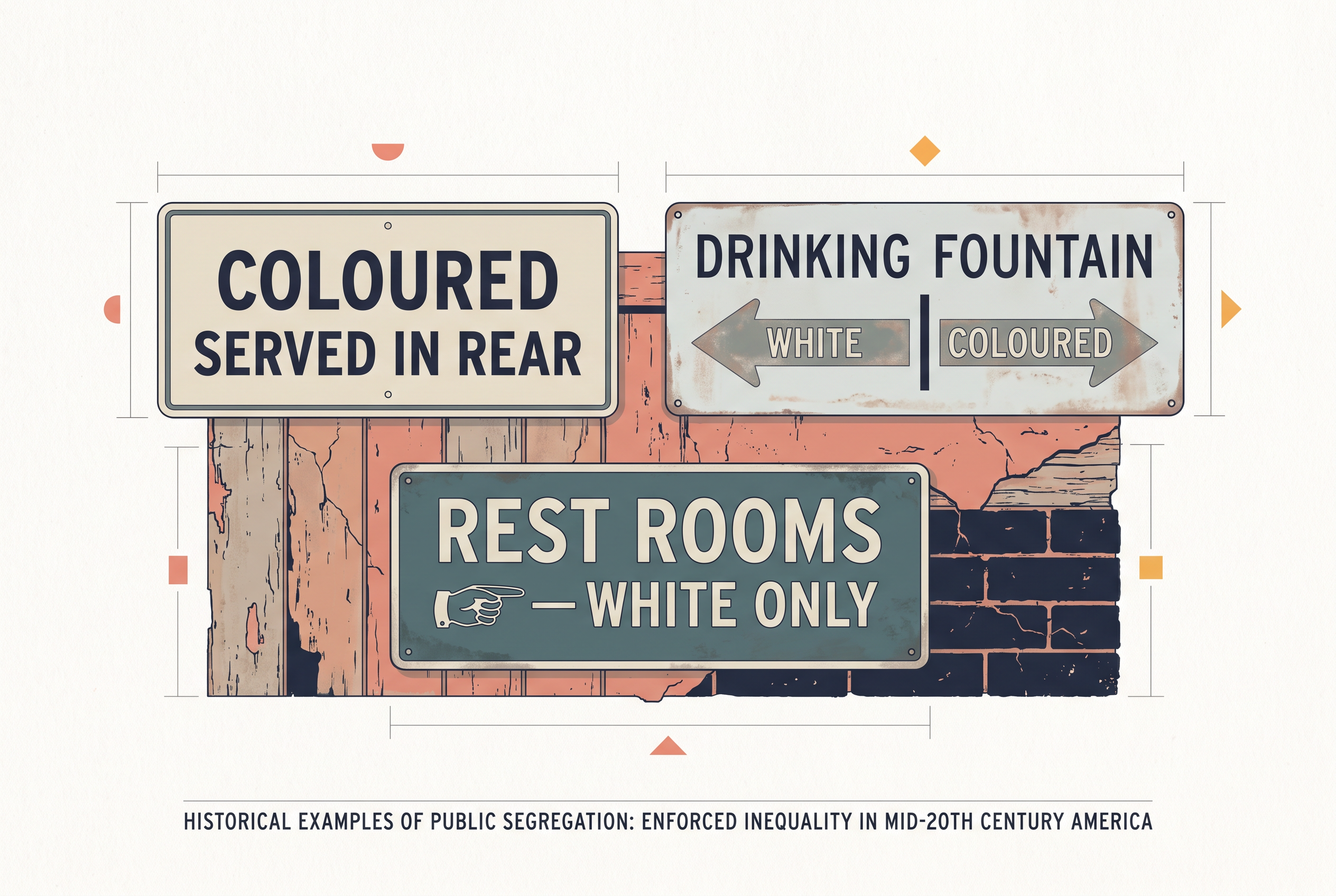
Fig. 3.1 – Public signs from the era of racial segregation.
Notice what each sign does. It sorts human beings into two kinds, on grounds of race and colour, and then hands them different treatment — a different door, a different tap, a different room. To most of us these distinctions appear unacceptable.
Why unacceptable? Because such distinctions violate our intuitive understanding of equality, which tells us that all human beings should be entitled to the same respect and consideration because of their common humanity. Nothing about being served at the back of a restaurant follows from anything a person has done. It follows only from what they were born as.
The signs are also worth reading for their limits. A signboard records what a law or an owner enforced in public. It cannot tell you what people privately believed, how many obeyed it unwillingly, or who fought it and at what cost. Evidence of this kind shows you the rule; it does not show you the struggle over the rule.
Equal Respect Is Not Identical Treatment
However, treating people with equal respect need not mean always treating them in an identical way. No society treats all its members in exactly the same way under all conditions.
The smooth functioning of society requires a division of work and functions, and people often enjoy different status and rewards on account of it. At times these differences of treatment may appear acceptable or even necessary. We usually do not feel that giving prime ministers, or army generals, a special official rank and status goes against the notion of equality — provided their privileges are not misused.
But some other kinds of inequalities seem unjust. If a child born in a slum is denied nutritious food or good education through no fault of his or her own, it appears unfair to us. The child chose nothing. The child is simply paying for an address.
So we are already using two different judgements. A rank attached to an office we accept; a disadvantage attached to a birthplace we do not. The task is to say clearly what separates the two.
Which Differences Are Acceptable?
The question that arises is: which distinctions and differences are acceptable and which are not? Start with the clearest case. When people are treated differently just because they are born into a particular religion, or race, or caste, or gender, we regard it as an unacceptable form of inequality.
Now the harder case. Human beings pursue different ambitions and goals, and not all are equally successful. So long as they are able to develop the best in themselves, we would not feel that equality has been undermined. Some may become good musicians while others are not equally outstanding. Some become famous scientists, while others are more noted for their hard work and conscientiousness.
The commitment to the ideal of equality therefore does not imply the elimination of all forms of difference. It merely suggests that the treatment we receive and the opportunities we enjoy must not be pre-determined by birth or social circumstance.
3.2.1 Equality Of Opportunities
The concept of equality implies that all people, as human beings, are entitled to the same rights and opportunities to develop their skills and talents, and to pursue their goals and ambitions. This is the idea of equality of opportunity: what matters is that the doors are genuinely open to everyone, not that everyone ends up walking through the same door.
This means that in a society people may differ with regard to their choices and preferences. They may also have different talents and skills, which results in some being more successful in their chosen careers than others.
But just because only some become ace cricketers or successful lawyers, it does not follow that society should be considered unequal. A society is not condemned by the fact that only a few reach the top of a difficult field.
Here is the crucial move in the argument, and it is easy to miss. It is not the lack of equality of status or wealth or privilege that is significant. It is the inequalities in people’s access to such basic goods as education, health care and safe housing that make for an unequal and unjust society.
Read that as a test you can apply. Do not ask first who ended up where. Ask what each person had to start with — whether they had a school worth attending, a doctor within reach, a roof that did not leak. Unequal outcomes may be tolerable. Unequal starting lines are not.
3.3 Three Dimensions Of Equality
After considering what kinds of social difference are unacceptable, we need to ask a second question. What are the different dimensions of equality that we may pursue, or seek to achieve, in society?
While identifying the different kinds of inequality that exist around them, various thinkers and ideologies have highlighted three main dimensions of equality: political, social and economic. They are not three names for the same thing. Each names a different kind of inequality, and each calls for a different kind of remedy.
That is why the chapter insists on all three together. It is only by addressing each of these three different dimensions of equality that we can move towards a more just and equal society. Fix one and neglect the others, and the inequality simply migrates.
3.3.1 Political Equality
In democratic societies, political equality would normally include granting equal citizenship to all the members of the state — that is, treating every member as a full member, with the same standing before the state as any other.
As you will read in the chapter on Citizenship, equal citizenship brings with it certain basic rights: the right to vote, freedom of expression, freedom of movement and association, and freedom of belief. These rights are considered necessary to enable citizens to develop themselves and to participate in the affairs of the state. A person who cannot speak, meet, move or vote cannot take part in ruling, and so is not really an equal member of anything.
But notice what kind of rights these are. They are legal rights, guaranteed by the constitution and the laws. They exist on paper, and they are enforced by courts.
And we know that considerable inequality can exist even in countries which grant equal rights to all citizens. The vote is the same for everyone; almost nothing else is. These inequalities are often the result of differences in the resources and opportunities available to citizens in the social and economic spheres.
For this reason a demand is often made for equal opportunities, or for ‘a level playing field’ — a field on which no side is playing uphill before the game begins. Political and legal equality by itself may not be sufficient to build a just and egalitarian society. But it is certainly an important component of it, and no other kind of equality is safe without it.
3.3.3 Economic Equality
At the simplest level, we would say that economic inequality exists in a society if there are significant differences in wealth, property or income between individuals or classes.
How would you measure it? One way would be to measure the relative difference between the richest and the poorest groups — how far apart the two ends stand. Another way could be to estimate the number of people who live below the poverty line, that is, below the level of income a society treats as the bare minimum needed to meet basic needs. The two measures answer different questions: the first asks how unequal a society is, the second asks how many people are destitute in it.
Of course, absolute equality of wealth or income has probably never existed in any society. No serious argument in this chapter demands it.
Most democracies today try to make equal opportunities available to people, in the belief that this would at least give those who have talent and determination the chance to improve their condition. With equal opportunities, inequalities may continue to exist between individuals — but there is the possibility of improving one’s position in society with sufficient effort. Movement is possible. The ladder is there to climb.
When Inequality Becomes Entrenched
Inequalities which are entrenched — that is, which remain relatively untouched over generations — are far more dangerous for a society. Here the ladder is not there to climb.
If in a society certain classes of people have enjoyed considerable wealth, and the power which goes with it, over generations, the society becomes divided between those classes and others who have remained poor over generations. Over time, such class differences can give rise to resentment and violence.
And the division protects itself. Because of the power of the wealthy classes, it might prove difficult to reform such a society to make it more open and egalitarian. The people best placed to block the reform are exactly the people the reform would cost.
Reading A Cartoon
Economic inequality rarely travels alone. It usually arrives braided together with inequality of race, caste or gender, and a cartoon can show that braiding in a way a table cannot. Fig. 3.2 makes a set of claims about racial inequality in the United States, all at once, in a single frame.
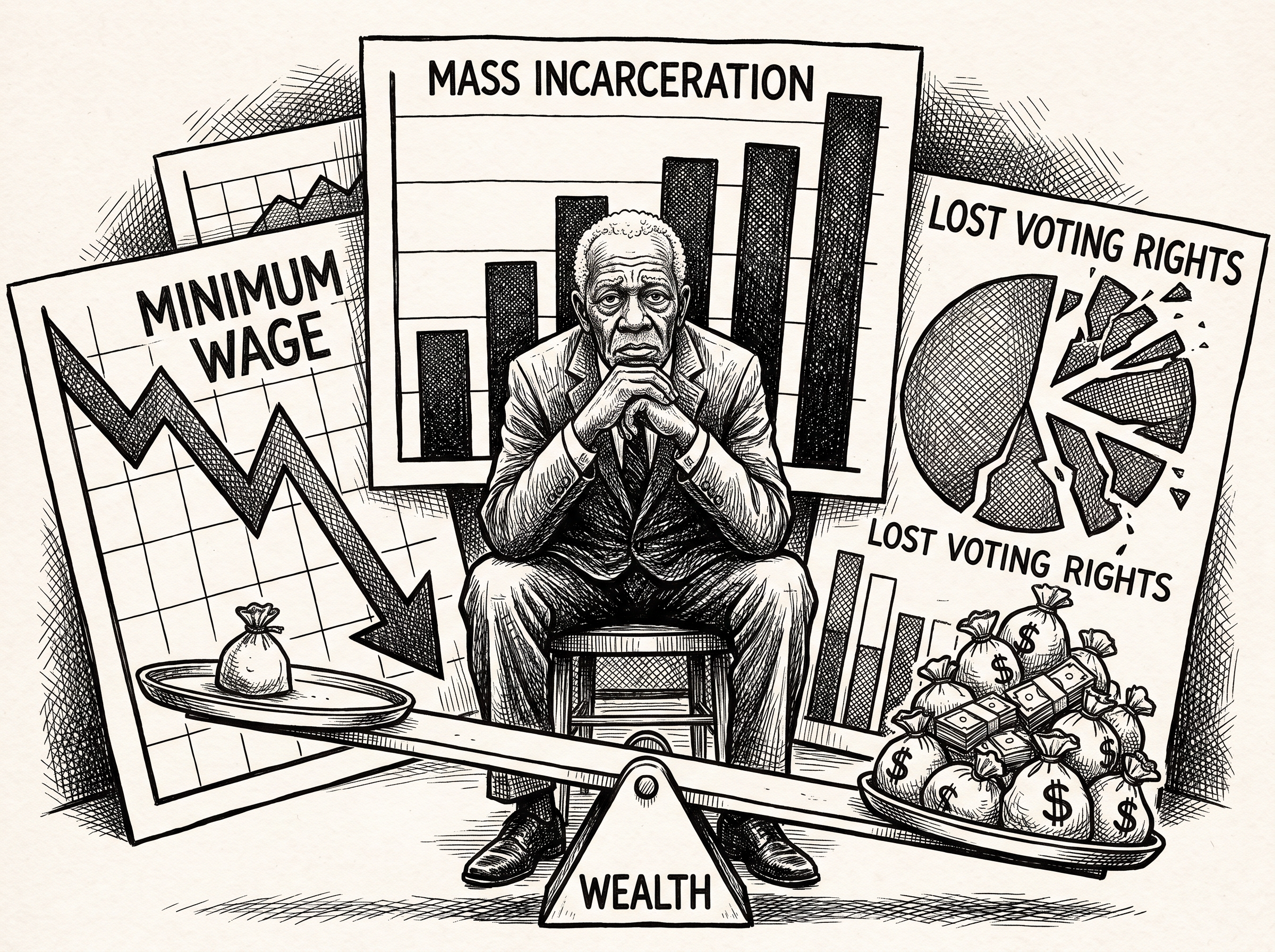
Fig. 3.2 – A Dream Deferred. Inspiration: R.J. Matson, Cagle Cartoons Inc. (13.1.2006).
Discuss: Find out more about racial inequality in the US. Which group or groups in our country suffer from similar inequality? What kind of policies have been adopted in the US to reduce this inequality? Is there something to be learnt from their experience? Can they learn something from our experience?
Take the cartoon apart. At its centre sits the figure of a leader of the American civil rights movement, drawn in a pose of waiting rather than triumph. Around him the cartoonist has hung four figures like placards: wages falling in real terms across nearly four decades, a million men of one community imprisoned, a large share of black male adults having lost the vote, and a wealth gap in which the top fifth owns most of the wealth and the bottom fifth owns none at all.
The words at the bottom carry the argument: ‘A Dream Deferred’. Deferred means postponed, put off — not refused outright, but not delivered either. The cartoonist’s claim is that the promise of equality was made and then left unpaid, and that all three dimensions you have just studied have failed together. Losing the right to vote is a failure of political equality. Imprisonment on that scale is a failure of social equality. The wage and wealth figures are a failure of economic equality.
Now the limit, and with a cartoon it is a large one. A cartoon states one opinion in one image. It selects the four figures that make its case and leaves out everything that might complicate it; it does not tell you what the figures are measured against, or what any of them was in the years between. It cannot draw the counter-argument, and it does not try to. Read it as a claim that deserves to be tested, not as a finding that has been proved.
Feminism
One ideology has pressed hardest on the point that inequality is made and not born. Feminism is a political doctrine of equal rights for women and men. Feminists are those men and women who believe that many of the inequalities we see in society between men and women are neither natural nor necessary, and can be altered so that both women and men can lead free and equal lives.
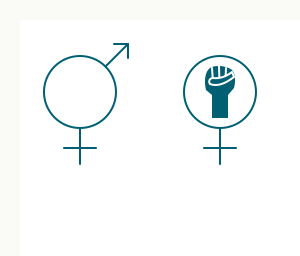
Fig. 3.3 – Symbols of the women’s movement.
According to feminists, inequality between men and women in society is the result of patriarchy. This term refers to a social, economic and cultural system that values men more than women and gives men power over women.
Patriarchy is based on an assumption you have already learnt to distrust: that men and women are different by nature, and that this difference justifies their unequal positions in society. Feminists question this way of thinking by making a distinction between ‘sex’ — the biological difference between men and women — and ‘gender’, which determines the different roles that men and women play in society.
The distinction does real work. Take the biological fact that only women can become pregnant and bear children. That is a fact of sex. It does not follow from it that only women should look after children after they are born — that is a role assigned by society, a fact of gender. Feminists show us that much of the inequality between men and women is produced by society and not by nature.
Patriarchy also produces a division of labour, by which women are supposed to be responsible for ‘private’ and ‘domestic’ matters, while men are responsible for work in the ‘public’ domain. Feminists question this distinction by pointing out that most women are in fact also active in the ‘public’ domain. Most women all over the world are employed in some form of work outside the home — but women continue to be solely responsible for housework as well.
Feminists call this the ‘double burden’. And despite carrying it, women are given little or no say in decisions taken in the public domain. Feminists contend that this public/private distinction, and all forms of gender inequality, can and should be eliminated.
Marx On Ownership And Power
Marxism and liberalism are two important political ideologies of our times, and they answer the question of economic equality in opposite ways.
Marx was an important nineteenth century thinker who argued that the root cause of entrenched inequality was private ownership of important economic resources — such as oil, or land, or forests — as well as other forms of property.
His point was not simply that such ownership makes the class of owners wealthy. It was that ownership also gives them political power. That power enables them to influence state policies and laws, and this could prove a threat to democratic government. If a small class can shape the rules, the rest are not really ruling themselves.
Marxists and socialists therefore feel that economic inequality provides support to other forms of social inequality, such as differences of rank or privilege. Economic inequality, on this view, is not one inequality among many. It is the one that holds the others up.
It follows that to tackle inequality in society we need to go beyond providing equal opportunities, and try to ensure public control over essential resources and forms of property. Such views may be debatable, but they have raised important issues which need to be addressed.
Before you go further, do this for yourself: make a list of all the social and economic inequalities that you notice among the students of your own school. Then ask which of them a fairer competition would remove, and which of them it would not.
Liberals On Competition
An opposing point of view can be found in liberal theories. Liberals uphold the principle of competition as the most efficient and fair way of distributing resources and rewards in society.
They accept that states may have to intervene to try and ensure a minimum standard of living and equal opportunities for all. But they hold that this cannot by itself bring equality and justice to society. Competition between people in free and fair conditions is, for them, the most just and efficient way of distributing rewards. As long as competition is open and free, inequalities are unlikely to become entrenched, and people will get due reward for their talents and efforts.
For liberals the principle of competition is also the most just and efficient way of selecting candidates for jobs, or for admission to educational institutions. In our country many students hope for admission to professional courses, and entry is highly competitive. From time to time the government and the courts have stepped in to regulate educational institutions and the entrance tests, to ensure that everybody gets a fair and equal chance to compete. Some may still not get admission, but it is considered a fair way of distributing limited seats.
3.4 How Can We Promote Equality?
We have already noted some of the basic differences between the socialists and the liberals on the most desirable way of achieving the goal of equality. The relative merits and limitations of each of these points of view are being debated the world over, and this chapter will not settle that debate for you.
But whichever way that argument goes, we still need to consider what principles and policies might be considered necessary for pursuing equality. Argument has to end in policy at some point, and policy is made of specific measures that specific people gain and lose by.
Specifically, we need to consider whether the use of affirmative action — positive measures taken to help disadvantaged groups — is justified for the purpose of bringing about equality. This issue has raised a lot of controversy in recent years, and we shall come to it in the last part of this chapter. Begin with something less contested.
3.4.1 Establishing Formal Equality
The first step towards bringing about equality is, of course, ending the formal system of inequality and privileges. Formal equality means that the law itself treats all citizens alike, granting nobody a privilege and denying nobody an opportunity on account of who they are.
Why is that a first step, and not the whole journey? Because social, economic and political inequalities all over the world have been protected by customs and legal systems that prohibited some sections of society from enjoying certain kinds of opportunities and rewards. The inequality was not merely tolerated by the law. It was written into it.
Look at what the law itself once did. Poor people were not granted the right to vote in a large number of countries. Women were not allowed to take up many professions and activities. The caste system in India prevented people from the ‘lower’ castes from doing anything except manual labour. In many countries only people from some families could occupy high positions.
Attainment of equality requires that all such restrictions or privileges should be brought to an end. And since many of these systems have the sanction of law, equality requires that the government and the law of the land should stop protecting these systems of inequality. The state must first stop being part of the problem.
This is what our Constitution does. The Constitution prohibits discrimination on grounds of religion, race, caste, sex or place of birth. Our Constitution also abolishes the practice of untouchability.
Most modern constitutions and democratic governments have formally accepted the principle of equality, and have incorporated it as identical treatment by law to all citizens, without any regard to their caste, race, religion or gender. That is a large achievement. It is also, as the next subsection shows, not enough.
3.4.2 Equality Through Differential Treatment
However, as we noted earlier, formal equality — equality before the law — is necessary but not sufficient to realise the principle of equality. Sometimes it is necessary to treat people differently in order to ensure that they can enjoy equal rights.
Consider what an identical rule does to people who are not identically placed. Fig. 3.4 makes the point sharply, and it is worth reading before the argument goes any further.
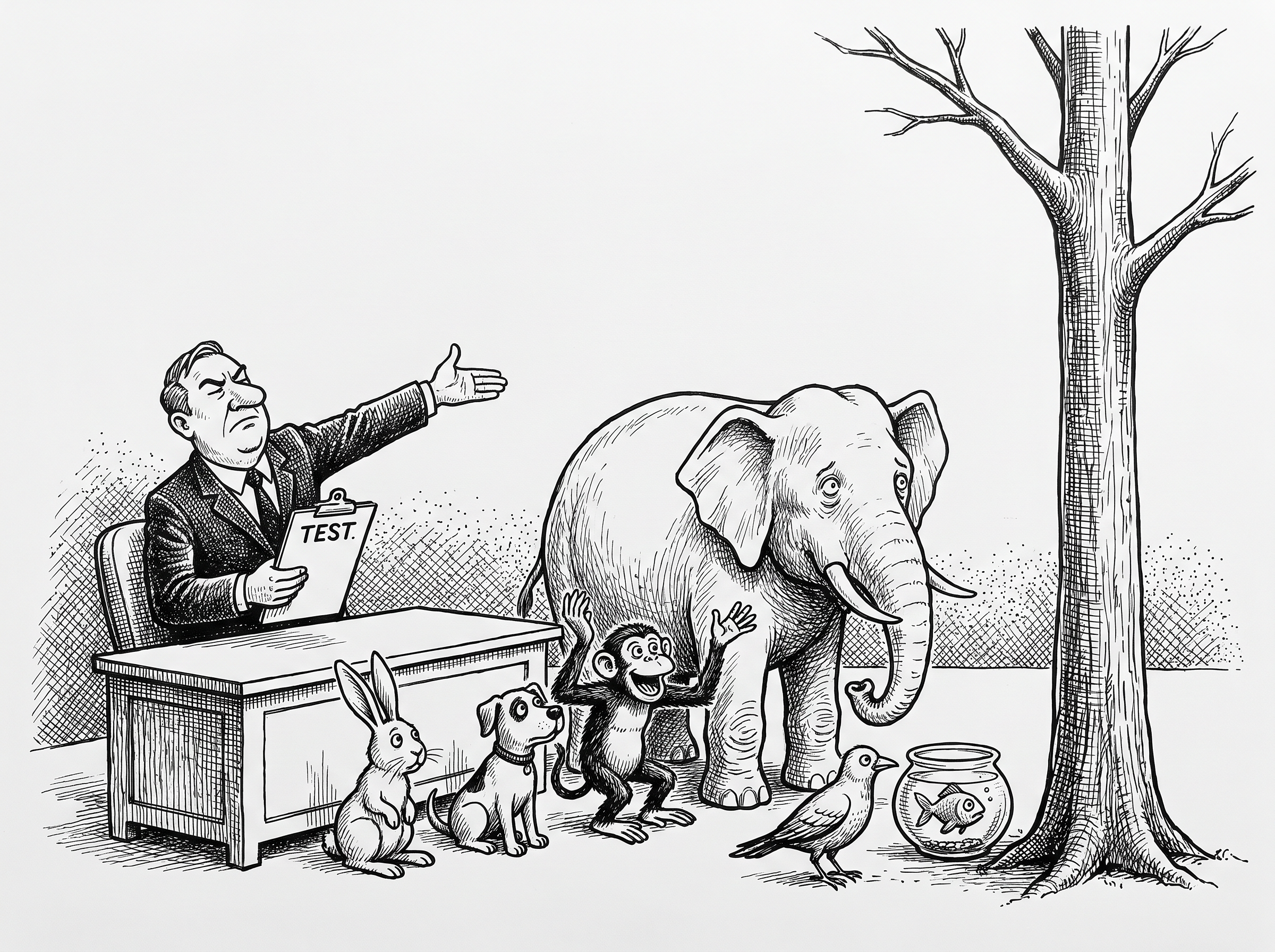
Fig. 3.4 – The examiner announces a fair selection. Inspiration: Original chapter illustration.
Unpack it. Every candidate is being treated identically, by a rule that applies to all without exception, and the examiner sincerely calls this fairness. Yet the monkey has already passed before the test begins, and the fish cannot even attempt it. The exaggeration is doing an argument: an identical rule applied to unlike creatures does not produce a fair contest, it produces a predetermined one. And notice that the unfairness is invisible if you look only at the rule. It becomes visible only when you look at who is standing in the line.
Now the limit. A cartoon can expose the absurdity of a single rule; it cannot tell you what the right rule would be. It does not say what test a fish should be given, who should decide that, or how a society should tell a genuine disadvantage from a convenient excuse. It hands you the objection, not the policy.
Ramps, Journeys And Equal Rights
Certain differences between people may therefore have to be taken into account. For instance, disabled people may justifiably demand special ramps in public spaces, so that they get an equal chance to enter public buildings. The ramp does not give them more than others have. It gives them the same thing others already have: a way in.
Or take women working in call centres at night, who may need special protection during the journey to and from the centre, so that their equal right to work may be protected. The right to work is worth little if exercising it is unsafe.
These should not be seen as infringements of equality but as enhancement of equality. Read that sentence twice, because it is the hinge of the whole chapter. The special measure is not an exception to the ideal. It is the ideal, honestly applied to an unequal world.
Test the idea on your own school. Make a list of all the facilities that students with various kinds of physical handicaps would need in order to learn as any other student does. Then ask a harder question: which of these facilities are actually available in your school?
Two Ways Of Treating People Equally
Hold the two ideas side by side before you consolidate them. Formal equality removes the legal barrier: it forbids the law from sorting citizens by religion, race, caste, sex or place of birth, and it is owed to everyone at once. Differential treatment goes further: it notices that removing the barrier does not undo the disadvantage a person already carries to the starting line, and so it supplies something extra to particular people, precisely so that they can exercise the same rights as the rest. The first is a rule about the law. The second is a rule about the world the law operates in. Table 3.A2 sets the contrast out.
What kinds of differences hinder access to equal opportunities, and what kinds of policies may be pursued to overcome those hindrances? These questions are being discussed in almost all societies today. Some countries have used policies of affirmative action to enhance equality of opportunity. In our country we have relied on the policy of reservations.
3.4.3 Affirmative Action
Affirmative action is based on the idea that it is not sufficient to establish formal equality by law. When we wish to eliminate inequalities that are deeply rooted, it is necessary to take some more positive measures to minimise and eliminate entrenched forms of social inequality.
Notice the reasoning. These inequalities were built over generations, and they accumulate — a denial in one generation becomes a disadvantage in the next. Most policies of affirmative action are thus designed to correct the cumulative effect of past inequalities. They are aimed not at today’s insult alone, but at the residue of yesterday’s.
Affirmative action can take many forms. It can mean preferential spending on facilities for disadvantaged communities, such as scholarships and hostels. It can mean special consideration for admissions to educational institutions and to jobs.
In our country we have adopted a policy of quotas, or reserved seats, in education and in jobs, to provide equality of opportunity to deprived groups. This policy has been the subject of considerable debate and disagreement — and both sides of that disagreement argue in the name of equality itself.
The Case Against Reservations
Although policies of affirmative action are supported for making society more equal, many theorists argue against them. They question whether treating people differently can ever lead to greater equality.
Critics of positive discrimination, and particularly of policies of reservation, thus invoke the principle of equality to argue against such policies. That is the striking thing about this dispute: both sides are quoting the same ideal back at each other.
They contend that any provision of reservations or quotas for the deprived, in admissions to higher education or in jobs, is unfair, because it arbitrarily denies other sections of society their right to equal treatment. They maintain that reservations are a form of reverse discrimination, and that they continue with the very practices that the principle of equality questions and rejects.
Their reasoning runs like this. Equality requires that all persons be treated alike. And when we make distinctions between individuals on the basis of their caste or colour, we are likely to reinforce caste and racial prejudices — we keep those categories alive in law and in public life, and thereby keep them alive in people’s minds. For these theorists, the important thing is to do away with the social distinctions that divide our society, not to write them into policy.
Here is a live question of exactly this kind. Debate it in class, with reasons: policies of affirmative action for the Scheduled Castes and Scheduled Tribes should be extended to admission to private educational institutions.
Equal Consideration, And Fair Competition
In the context of this debate, it is relevant to draw a distinction between equality as a guiding principle of state policy, and the equal rights of individuals. Individuals have a right to equal consideration for admission to educational institutions and to public sector employment. Nobody disputes that.
But competition should be fair. Sometimes, when competing for limited seats or jobs, people from deprived strata may be at a disadvantage — not because the rule excludes them, but because they arrive at the rule carrying less.
Take the clearest instance the chapter offers. The needs and circumstances of a first generation learner — a student whose parents and ancestors were illiterate — are very different from those of a student born into an educated family. One goes home to help with homework; the other goes home to explain what homework is.
Members of excluded groups, whether they are dalits, women, or any other category, deserve and need some special help. To provide this, the state must devise social policies which would help to make such people equal, and give them a fair chance to compete with others.
Where The Disadvantage Actually Begins
The fact is that in the spheres of education and health care, India has done far less for its deprived population than what is their due. And the inequalities in school education are glaring.
Many poor children in rural areas or urban slums have little chance of attending school at all. If they do get the chance, their schools have little to offer that would be comparable to the facilities available in elite schools.
The consequences follow the child forward. The inequalities with which children enter school tend to continue to hamper their chances of improving their qualifications or getting good jobs. These students face hurdles in gaining admission to elite professional courses, because they lack the means to pay for special coaching. The fees for professional courses may also be prohibitively high. Consequently, they cannot compete on equal terms with the more privileged sections.
So the race is often decided long before the entrance examination, in a classroom without a teacher and a home without books.
Social and economic inequalities of this kind hinder the pursuit of equal opportunities, and most theorists today recognise this. What they contest is not the goal of equal opportunity, but the policies that the state should pursue to achieve that goal.
And the policy questions are genuinely hard. Should the state reserve seats for the deprived communities, or should it instead provide special facilities that help to develop talents and skills from an early age? How should we define who is deprived? Should we use an economic criterion to identify the deprived, or should we use the social inequalities arising from the caste system in our country as the basis for identifying deprived groups?
These are aspects of social policy that are today being debated. Ultimately, the policies that we choose would have to be justified in terms of their success in making society more egalitarian and fair to all. That is the test, and it is a test of results, not of intentions.
Identical Treatment Or Treatment As Equals
While reflecting on the issue of equality, a distinction must also be made between treating everyone in an identical manner and treating everyone as equal.
The second may on occasion need differential treatment — but in all such cases the primary consideration is to promote equality. Differential or special treatment may be adopted to realise the goal of equality; it always requires justification and careful reflection.
And there is a reason for that caution which no student of Indian politics should forget. Differential treatment for different communities was part and parcel of the caste system, and of practices like apartheid — the system of legally enforced racial separation. Treating people differently, by group, is exactly what the worst systems of inequality did. This is why liberals are usually very wary of any deviation from the norm of identical treatment.
What The Women’s Movement Learnt
Many of these issues relating to the pursuit of equality have been raised by the women’s movement, and its history shows the argument being worked out in practice.
In the nineteenth century, women struggled for equal rights. They demanded the right to vote, the right to receive degrees in colleges and universities, and the right to work — that is, the same rights as the men in their society. Their demand at this stage was for identical treatment: give us what you have already given them.
However, as they entered the job market, they realised something the first demand had missed. Women required special facilities in order to exercise these rights. They required some provision for maternity leave, and crèches — day-care rooms for small children — in the workplace.
Without special considerations of this kind, they could not seriously compete for jobs, or enjoy a successful professional and personal life. They needed, in other words, sometimes to be treated differently if they were to enjoy the same rights as men. The demand for identical treatment had run into its own limits, and the movement moved on.
The Caution That Must Travel With It
As we deliberate on issues of equality, and examine whether different treatment is warranted in a particular case, we need continuously to ask ourselves one question. Is this differential treatment essential to ensure that a set of people can enjoy the same rights as the rest of society?
Caution must, however, be exercised. Differential treatment must not yield new structures of dominance and oppression. Nor must it become a means for some dominant groups to reassert special privileges and power in society — which is precisely what special treatment, historically, was used for.
Differential treatment is intended and justified only as a means to promoting a just and egalitarian society. It is a tool, and the moment it stops serving that end, it loses its justification.
3.5 Summary
Why Equality Matters
- Equality is a moral and political ideal that has guided human society for centuries. It is implicit in all faiths that proclaim human beings to be the creation of God.
- As a political ideal it holds that all human beings have equal worth, whatever their colour, gender, race or nationality, and deserve equal consideration and respect because of their common humanity.
- That idea of a shared humanity lies behind universal human rights and the notion of ‘crimes against humanity’.
- In the modern period equality became a rallying slogan — of the French revolutionaries, of anti-colonial struggles in Asia and Africa, and today of groups such as women and dalits.
- Yet inequality, not equality, is what we see: slums beside luxury housing, well-equipped schools beside schools without drinking water, waste of food beside starvation.
- The fact sheet on global inequalities and the Census figures on rural and urban households show how wide the gap is, between countries and within our own.
- Hence the paradox: almost everyone accepts the ideal, and almost everywhere we meet its opposite.
What Equality Means
- Sorting people by race or colour, as the segregation signs did, violates our intuitive sense of equality.
- But equal respect does not mean identical treatment. No society treats everyone the same in all conditions, and some differences of rank or reward — a prime minister’s, an army general’s — seem acceptable, provided privileges are not misused.
- Unacceptable inequality is treatment fixed by birth: by religion, race, caste or gender, or by the circumstance a child is born into.
- Equality of opportunity means all are entitled to the same rights and chances to develop their talents. Unequal outcomes are not the problem; unequal access to basic goods — education, health care, safe housing — is.
- Political theory has distinguished natural inequalities, arising from people’s different capabilities, from socially-produced inequalities, arising from unequal opportunity or the exploitation of some groups by others.
- That distinction is unreliable. ‘Nature’ was claimed for the supposed weakness of women and for the supposed inferiority of colonised peoples; and technology now alters what once seemed unalterable, as Stephen Hawking’s work shows.
- Many theorists therefore draw a different line: between inequality arising from our own choices, and inequality arising from the family or circumstance we are born into. It is the second that concerns advocates of equality.
The Three Dimensions
- Equality has three dimensions — political, social and economic — and a just society must address all three.
- Political equality means equal citizenship and the basic rights that come with it: the vote, freedom of expression, movement, association and belief. These are legal rights, and considerable inequality survives alongside them.
- Social equality requires more than removing legal hurdles. It requires minimum conditions of life — health care, good education, adequate nourishment, a minimum wage — so that people can compete on equal terms. Without them, a huge pool of talent is wasted.
- In India, custom as well as scarcity restricts opportunity, especially for women; the state and social groups both have roles to play.
- The education data show how large the gaps between communities are, and that caste is not the only factor at work.
- Economic inequality means significant differences of wealth, property or income; it can be measured by the gap between richest and poorest, or by the numbers below the poverty line.
- Entrenched inequality — untouched across generations — is the most dangerous kind, because wealth brings political power, reform becomes hard, and class division can produce resentment and violence.
- Feminists trace inequality between men and women to patriarchy, distinguish ‘sex’ from ‘gender’, and reject the public/private division that leaves women carrying a ‘double burden’.
- Marx traced entrenched inequality to private ownership of key resources, which makes owners wealthy and also politically powerful; socialists therefore seek public control over essential resources.
- Lohia argued that five inequalities — of gender, skin colour, caste, colonial rule and economic class — have independent roots and must be fought simultaneously, and added two revolutions more, making the Sapta Kranti.
- Liberals hold that free and fair competition is the most just way of distributing rewards, and that the three kinds of inequality are not necessarily linked. Their target is not inequality as such, but unjust and entrenched inequality.
How Equality Might Be Promoted
- The first step is formal equality: ending legal systems of privilege and restriction. Our Constitution prohibits discrimination on grounds of religion, race, caste, sex or place of birth, and abolishes untouchability.
- Formal equality is necessary but not sufficient. Ramps for disabled people, or protection for women travelling to and from night work, are enhancements of equality, not infringements of it.
- Affirmative action goes further, taking positive measures to correct the cumulative effect of past inequalities. India’s chosen form is reservation — quotas in education and jobs — meant as a time-bound measure.
- Critics answer in the name of equality itself: quotas deny others equal treatment, amount to reverse discrimination, and keep caste distinctions alive.
- Most theorists accept the goal of equal opportunity. What they contest is the policy — reserved seats, or facilities that build skills from an early age; and whether the deprived should be identified by economic criteria or by caste.
- Treating everyone identically and treating everyone as equal are not the same thing. The women’s movement discovered this: after winning the same rights as men, women found they needed maternity leave and crèches to actually exercise them.
- Differential treatment always needs justification, and must never harden into new structures of dominance, or let dominant groups reclaim privilege.
The Arguments In One Place
The chapter’s central claim is that equality does not require identical treatment; it requires that no one’s treatment or opportunities be pre-determined by birth or social circumstance, and that this sometimes demands treating people differently.
The strongest position against it, which the chapter states fully, is the critics’ one: equality requires that all persons be treated alike, and any distinction drawn by caste or colour — even a well-meant one — denies some individuals equal treatment and reinforces the very prejudices equality condemns.
Behind that stands the older disagreement the chapter also stages. Liberals hold that open and fair competition will keep inequality from becoming entrenched; Marxists and socialists reply that ownership of resources buys political power, so the competition is tilted before it starts and equal opportunity alone cannot fix it.
What Remains Contested
The chapter does not tell you whether inequalities are inevitable features of social life or the product of social rules, and it does not tell you whether reservations advance equality or violate it. Both questions are left where they belong: with you, and with reasons.
Nor does it settle who counts as deprived — the poor, or those disadvantaged by caste — or whether special treatment, once granted, can ever be withdrawn on time.
And notice whose voices the evidence in this chapter was never designed to record. The fact sheet counts incomes and emissions; the tables count amenities and graduates; the cartoons state one opinion in one frame. None of them can tell you what it is like to be the fish told to climb the tree — and that testimony, which no table holds, is exactly what the argument most needs.
3.6 NCERT Questions
Some people argue that inequality is natural while others maintain that it is equality which is natural and the inequalities which we notice around us are created by society. Which view do you support? Give reasons.
There is a view that absolute economic equality is neither possible nor desirable. It is argued that the most a society can do is to try and reduce the gaps between the richest and poorest members of society. Do you agree?
Match the following concepts with appropriate instances:
| Column A | Column B |
|---|---|
| a. Affirmative action | i. Every adult citizen has a right to vote |
| b. Equality of opportunity | ii. Banks offer higher rate of interest to senior citizen |
| c. Equal Rights | iii. Every child should get free education |
A government report on farmers’ problems says that small and marginal farmers cannot get good prices from the market. It recommends that the government should intervene to ensure a better price but only for small and marginal farmers. Is this recommendation consistent with the principle of equality?
Which of the following violate the principles of equality? And why?
- Every child in class will read the text of the play by turn.
- The Government of Canada encouraged white Europeans to migrate to Canada from the end of the Second World War till 1960.
- There is a separate railway reservation counter for the senior citizens.
- Access to some forest areas is reserved for certain tribal communities.
Here are some arguments in favour of the right to vote for women. Which of these are consistent with the idea of equality? Give reasons.
- Women are our mothers. We shall not disrespect our mothers by denying them the right to vote.
- Decisions of the government affect women as well as men, therefore they also should have a say in choosing the rulers.
- Not granting women the right to vote will cause disharmony in the family.
- Women constitute half of humanity. You cannot subjugate them for long by denying them the right to vote.
3.7 Check Your Concepts
Look again at Table 3.1. Take any two rows and state the gap between rural and urban families in your own words. Then state one thing the table cannot tell you about why that gap exists.
The chapter says that feminists distinguish between ‘sex’ and ‘gender’. Explain the difference, and show how the distinction undermines patriarchy’s claim that unequal positions are justified by nature.
Fig. 3.2 makes several claims at once about racial inequality in the United States. Identify which of its figures speak to political equality, which to social equality, and which to economic equality. Then say one thing a cartoon of this kind cannot show you.
The chapter says that political and legal equality by itself may not be sufficient to build a just and egalitarian society, but is certainly an important component of it. Explain both halves of that sentence, using one example from the chapter for each.
Reconstruct, step by step, the chain by which the chapter says an entrenched inequality protects itself — from wealth held across generations to the difficulty of reforming such a society.
Rammanohar Lohia disagreed with the socialists of his own time. State what they held, state what he held, and explain what the disagreement turned on.
Critics of reservations argue against them in the name of equality itself. Set out their argument as strongly as you can, and then set out the strongest reply the chapter offers to it.
3.3.2 Social Equality
Political equality, or equality before the law, is an important first step in the pursuit of equality. But it often needs to be supplemented by equality of opportunities.
The two do different jobs. Equality before the law removes the legal hurdles that might exclude people from a voice in government and deny them access to the social goods available in a society. That is necessary. But the pursuit of equality also requires that people belonging to different groups and communities have a fair and equal chance to compete for those goods and opportunities.
For this, it is necessary to minimise the effects of social and economic inequalities and to guarantee certain minimum conditions of life to all the members of society — adequate health care, the opportunity for good education, adequate nourishment and a minimum wage, among other things.
Why a minimum floor, and not just an open door? Because in the absence of such facilities it is exceedingly difficult for all the members of society to compete on equal terms. And there is a cost to society itself, not only to the individual: where equality of opportunity does not exist, a huge pool of potential talent tends to be wasted. The child who would have been a fine engineer never learns to read.
The Special Problem Of Custom
In India, a special problem regarding equal opportunities comes not just from a lack of facilities but from some of the customs that may prevail in different parts of the country, or among different groups.
Women, for instance, may not enjoy equal rights of inheritance in some groups. There may be social prohibitions on their taking part in certain kinds of activities. They may even be discouraged from obtaining higher education. No law says any of this. Custom says it, and custom is often obeyed more faithfully than law.
The state has a significant role in such matters. It should make policies to prevent discrimination or harassment of women in public places or in employment, provide incentives to open up education or certain professions to women, and take other such measures.
But the state cannot do it alone, because the state cannot enter every home. Social groups and individuals also have a role to play — in raising awareness, and in supporting those who want to exercise their rights.
Here is a question of exactly this kind, worth debating in your classroom, with reasons on both sides: women should be allowed to join the combat units of the army and go up to the highest position.
Reading The Education Data
If custom and circumstance really do shape opportunity, we should be able to see the effect of it in the data. Table 3.2 shows how many graduates there were per thousand persons in different caste and religious communities in urban India, from the 55th round survey of the National Sample Survey Organisation, the government body that conducts large sample surveys of Indian households.
Table 3.2 Caption: Caste-community inequalities in higher education in urban India, from the 55th round survey of the National Sample Survey Organisation, 1999-2000. | Castes/Communities | Graduates per thousand persons | |—|—| | Scheduled Caste | 47 | | Muslim | 61 | | Hindu–OBC | 86 | | Scheduled Tribes | 109 | | Christian | 237 | | Sikh | 250 | | Hindu–Upper Caste | 253 | | Other Religions | 315 | | ALL INDIA AVERAGE | 155 |
ITQ-1. Are the differences in the educational attainment of the different communities shown in Table 3.2 significant? ITQ-2. Could these differences have taken place just by chance? ITQ-3. Or do these differences point to the working of the caste system? ITQ-4. Which factor other than the caste system do you see at work here?
Read the table carefully before you answer those questions. The all-India average is 155 graduates per thousand persons. Four groups in the table sit below that average, and four sit above it. The lowest figure is 47, for Scheduled Castes; the highest listed community figure is 315, for Other Religions.
Now compare the two ends of the caste column. Hindu–Upper Caste stands at 253 graduates per thousand; Scheduled Caste stands at 47. That is more than five times as many graduates, from a thousand people, in one group as in the other. The Hindu–OBC figure, 86, sits between them, and Scheduled Tribes, at 109, sits above both — which is worth pausing over, because it means the ranking does not fall into one tidy line.
The religious communities complicate it further. Muslims, at 61, are close to the bottom of the table, while Christians at 237 and Sikhs at 250 are near the top. Whatever is producing these gaps, it is plainly not caste alone. That is what ITQ-4 is asking you to notice.
Now the limit, and it is a strict one. The table counts graduates. It does not count the reasons anyone became a graduate, or failed to. It cannot tell you whether a family could afford fees, whether a school existed nearby, whether a child was needed for work at home, or whether a person was made unwelcome in a classroom. It also groups people into large communities and averages over them, hiding the rich family inside a poor group and the poor family inside a rich one. A table can establish that a gap is real and large. It cannot, by itself, tell you what caused it — and that is precisely why the questions above ask you to argue, not to look the answer up.