Chapter 4: Primary Activities
Two people wake at dawn on the same planet, and both will spend the day drawing a living straight from the earth. That is what makes their work primary — it takes income directly from land, water, forest or rock, with nothing manufactured in between.
The first walks into the forest with an empty basket. By evening it holds a little bark, a few leaves, some nuts — enough for the household and almost nothing to spare. The tools are simple, the capital small, and the surplus close to zero. This is how human beings first fed themselves, and in a few harsh corners of the world it is still how some people live.
The second climbs into a machine the size of a small house. A combine crew can strip grain from hundreds of hectares between sunrise and sunset. The land is vast, the investment enormous, and the harvest travels to cities the farmer will never see.
Same sun. Same soil. The same human need to eat. Yet the labour, the tools, the money and the reach of the product could hardly be more different. What decides which kind of work grows where — why here and not there? The answer lies in a handful of physical and social factors: climate, terrain, population, capital, transport and market. This chapter is a tour through the many ways human beings have learned to live off the land.
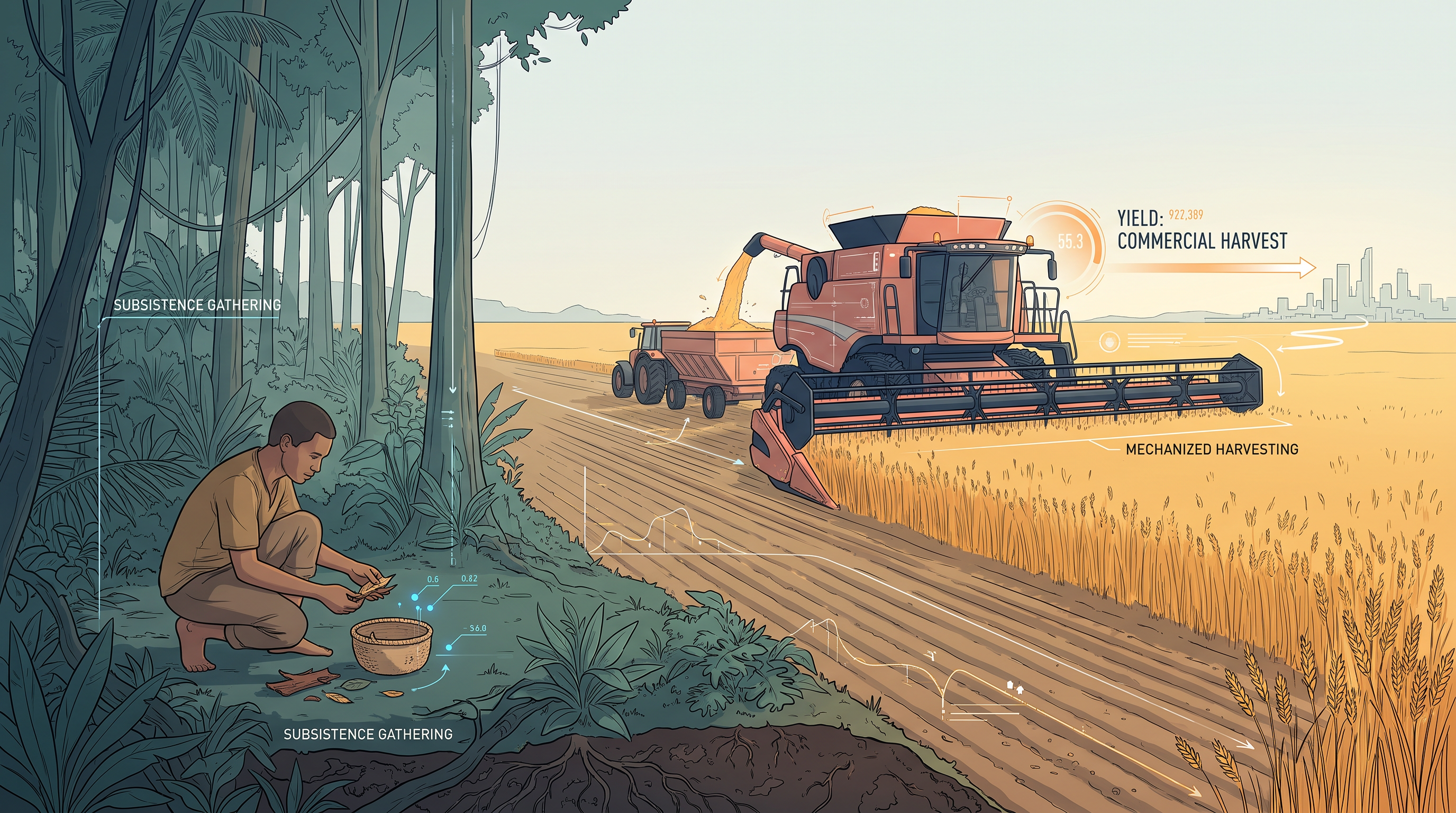
Fig. 4.0 – Subsistence gathering and commercial harvesting.
4.1 Economic Activities
Every kind of work that earns a person a living is an economic activity. Economic activities are simply the ways human beings meet their needs by working, and the income is what marks the work out. Geographers sort all such work into four broad groups: primary, secondary, tertiary and quaternary.
These four groups differ mainly in how close the work sits to the raw earth. Primary work takes its material straight from nature. Secondary work then makes things from that material, tertiary work provides services, and quaternary work deals in knowledge and information — each group standing a step further from the land itself.
Where Primary Activity Begins
Primary activities are the ones that depend directly on the environment, because they draw on the earth’s own resources — land, water, vegetation, building materials and minerals. A fisher takes fish from the sea, a farmer draws a crop from the soil, a miner cuts ore from the rock. Nothing is manufactured in between; the resource is used more or less as the earth offers it.
Because of this direct link to nature, primary activity covers a wide family of work: hunting and gathering, pastoral activities, fishing, forestry, agriculture, and mining and quarrying. People who do this work are sometimes called red-collar workers, a name that comes from the outdoor nature of so much of what they do.
The chapter groups all economic activity into four, and then opens out the primary group into its six kinds (Fig. 4.1).
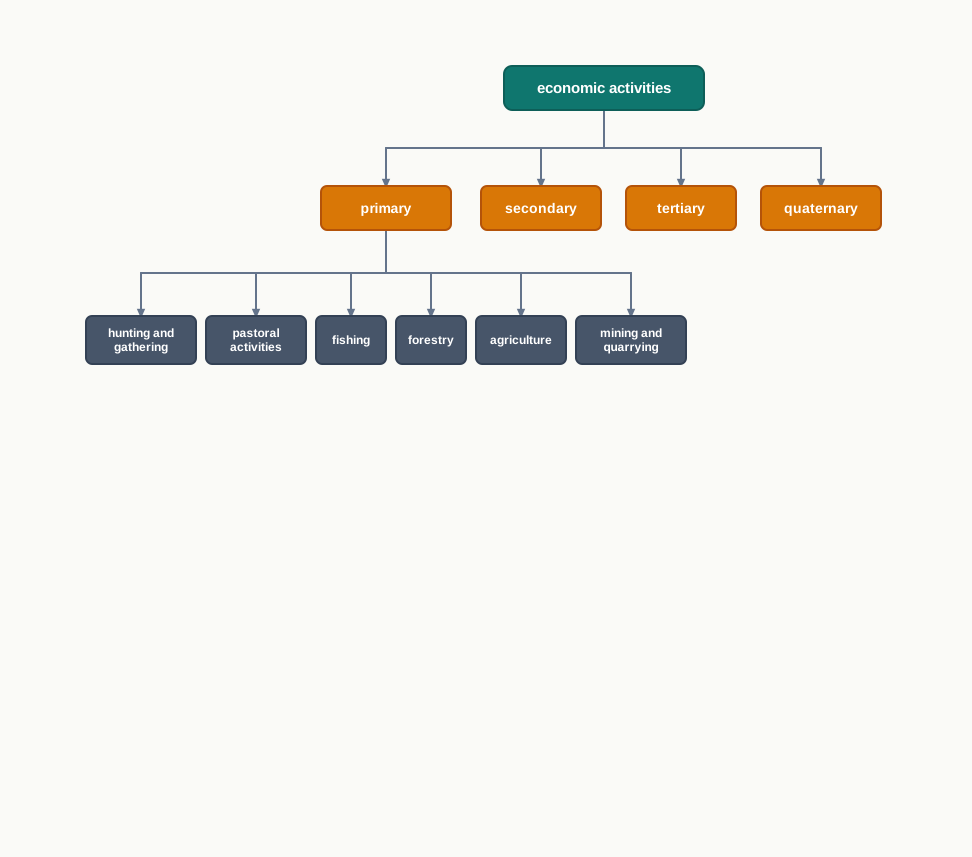
Fig. 4.1 – Classification of economic activities.
One question sits under the whole chapter. Why does a coastal village turn to fishing while an inland plain turns to farming, and what decides which primary activity takes hold in a given place? Hold on to it as you read — the rest of the chapter is, in large part, an answer.
4.2 Hunting And Gathering
The earliest human beings lived off whatever their immediate surroundings offered. They survived in two ways: by hunting the animals around them, and by gathering the edible plants they could find in nearby forests. Hunting takes animals and gathering takes plants, and between them they are the oldest economic activity we know of.
Hunting And Its Cost
Early societies leaned heavily on wild animals. Groups living in very cold lands and in extremely hot ones survived largely by hunting, because the climate left little room for anything else. Along the coasts, people caught fish, and coastal fishing still goes on today, though modern technology has changed it beyond recognition.
The early hunters carried only simple tools — stones, twigs and arrows — so they could kill only a limited number of animals at a time. Their pressure on wildlife stayed small. That balance broke later: through illegal hunting, or poaching, many species have been pushed to the edge, and some have become endangered or extinct.
It is worth pausing on a question: why has hunting been banned in India? The answer sits in that same fact. A ban is one way to halt the killing before more species disappear.
The Gatherer’s Small Harvest
Gathering survives mainly in regions with harsh climates, where little else can be done with the land. There small communities take both plants and animals from the wild to meet their needs for food, shelter and clothing. This is subsistence work — producing just enough for your own household, with little or nothing left to sell.
The activity needs very little money to begin and runs on a very low level of technology, using hands and simple tools rather than machines. Because of that, the yield per person is very low. A gatherer feeds a household and rarely more, so almost no surplus is produced.
One familiar image of this work is women gathering oranges in the forests of Mizoram, in India’s north-east (Fig. 4.2).
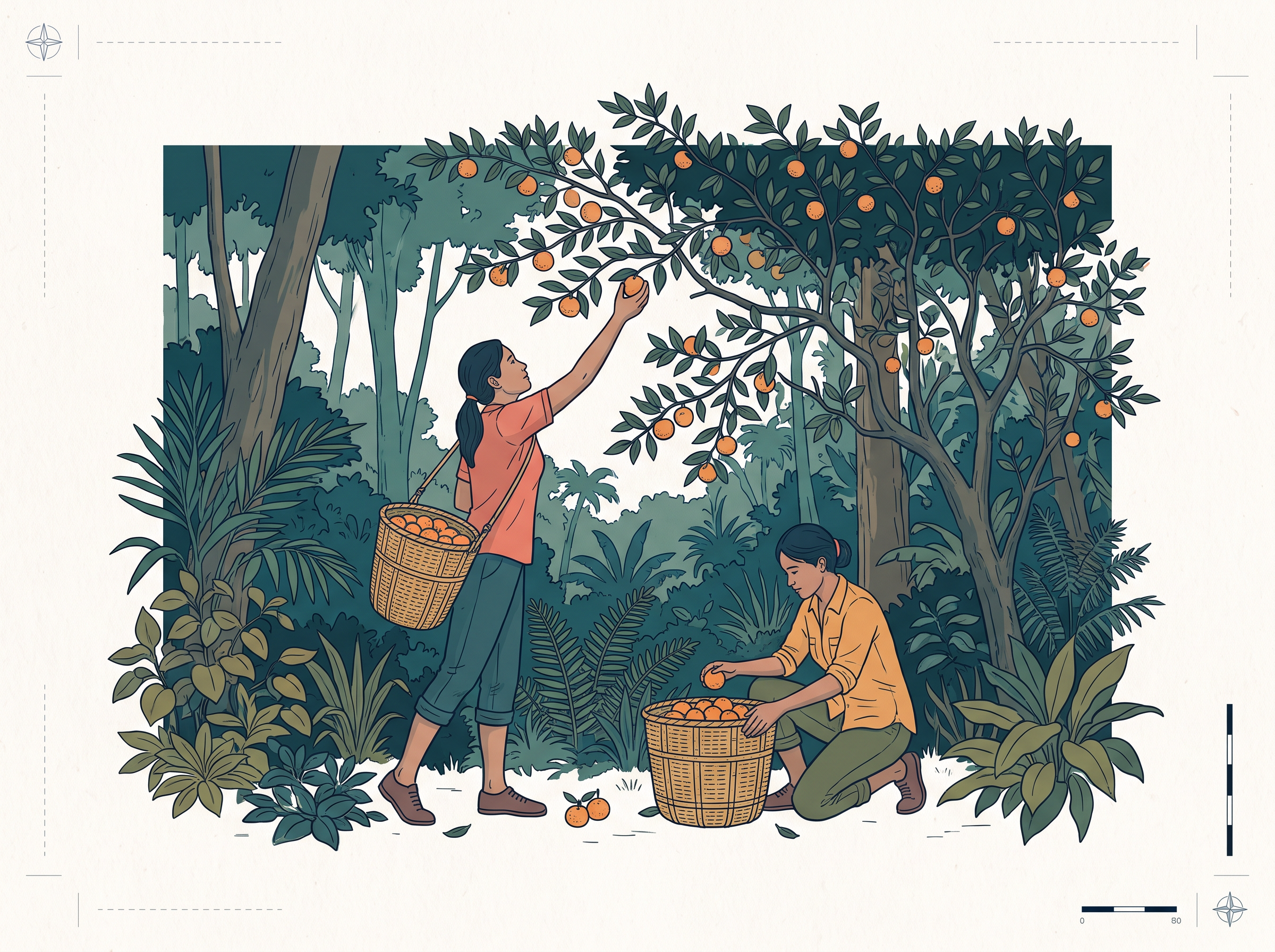
Fig. 4.2 – Women gathering oranges in Mizoram.
Gathering clusters in two very different latitude belts. Latitude measures how far a place lies from the equator: high latitudes are the cold zones near the poles, low latitudes are the hot tropics near the equator. In the high-latitude belt, gathering is found across northern Canada, northern Eurasia and southern Chile. In the low-latitude belt it appears in the Amazon Basin — the great river basin of northern South America — along with tropical Africa, the northern fringe of Australia and the interior parts of Southeast Asia (Fig. 4.3).
Map
Fig. 4.3 Caption: Areas of subsistence gathering. Brief: World map showing, by shading, the regions where subsistence gathering is practised — the high-latitude belt (northern Canada, northern Eurasia, southern Chile) and the low-latitude belt (Amazon Basin, tropical Africa, northern fringe of Australia, interior Southeast Asia). Include a key marking ‘subsistence gathering’. Show India to its full official extent.
Gathering For The Market
In modern times, part of this old activity has turned commercial. Gatherers now collect valuable plants and sell them after simple processing. The plants give up a surprising range of products. Bark can yield quinine (a medicine), along with tannin extract and cork. Leaves supply materials for beverages, drugs, cosmetics, fibres, thatch and fabrics. Nuts provide food and oils, while tree trunks yield rubber, balata, gums and resins.
Even everyday things carry a gathering story. Chicle, the base that stays in the mouth after chewing gum loses its flavour, comes from the milky juice of the zapota tree.
A Fading Activity
For all this, gathering has little chance of ever mattering at the global scale. Its products cannot compete in the world market, where low price and steady supply decide everything. Worse for the gatherer, factory-made synthetic goods — often cheaper and of more reliable quality — have already replaced many of the items that once came from tropical forests.
4.3 Pastoralism
At some point in history, people came to see that hunting could not last: kill too many wild animals and there are none left to kill. The response was domestication — taming and breeding wild animals so they live and work alongside humans, giving a steady supply of milk, meat, wool and labour. Communities in different climates picked out and tamed the animals that already thrived in their own region.
Rearing animals for a living is called pastoralism. What it looks like depends on geography and on how much technology a community has. Today it is practised at two very different levels: at the subsistence level, where a family lives directly off its herd, and at the commercial level, where animals are raised in an organised way to sell their products in the market.
4.3.1 Nomadic Herding
Nomadic herding, or pastoral nomadism, is a simple subsistence activity in which herders depend on their animals for almost everything — food, clothing, shelter, tools and transport. They move from place to place with their livestock, following the amount and quality of pastures and water. Each community keeps to a well-identified territory, held by long tradition rather than by any fence or deed.
Animals Of Each Region
Herders keep whatever animal suits their land. In tropical Africa, cattle are the most important livestock. In the Sahara — the great desert of North Africa — and in the Asiatic deserts, herders rear sheep, goats and camels, animals that endure heat and thirst. In the high mountains of Tibet, the plateau north of the Himalayas, and of the Andes along western South America, people keep yak and llamas. In the cold Arctic and sub-Arctic lands of the far north, the reindeer is the mainstay.
Pastoral nomadism is concentrated in three great belts. The core belt runs from the Atlantic shores of North Africa eastwards across the Arabian peninsula into Mongolia and Central China. A second belt stretches over the tundra of Eurasia — the cold, treeless plain of the far north where only low vegetation grows. In the southern hemisphere, only small pockets remain, in South-west Africa and on the island of Madagascar, off south-east Africa (Fig. 4.4).
Map
Fig. 4.4 Caption: Areas of nomadic herding. Brief: World map showing, by shading, the belts where pastoral nomadism is practised — the core belt from North Africa across the Arabian peninsula into Mongolia and Central China, the tundra belt of Eurasia, and small southern pockets in South-west Africa and Madagascar. Include a key marking ‘nomadic herding’. Show India to its full official extent.
Moving With The Seasons
Herders move in two ways: across vast horizontal distances, or up and down the slopes of mountains. This vertical movement has a name. Transhumance is the seasonal journey of herders and their animals from the plains up to mountain pastures in summer, and back down to the plains in winter (Fig. 4.5). It lets a herd feed on cool, green high pastures while the lowlands bake, and shelter in the warmer plains while the heights lie under snow.
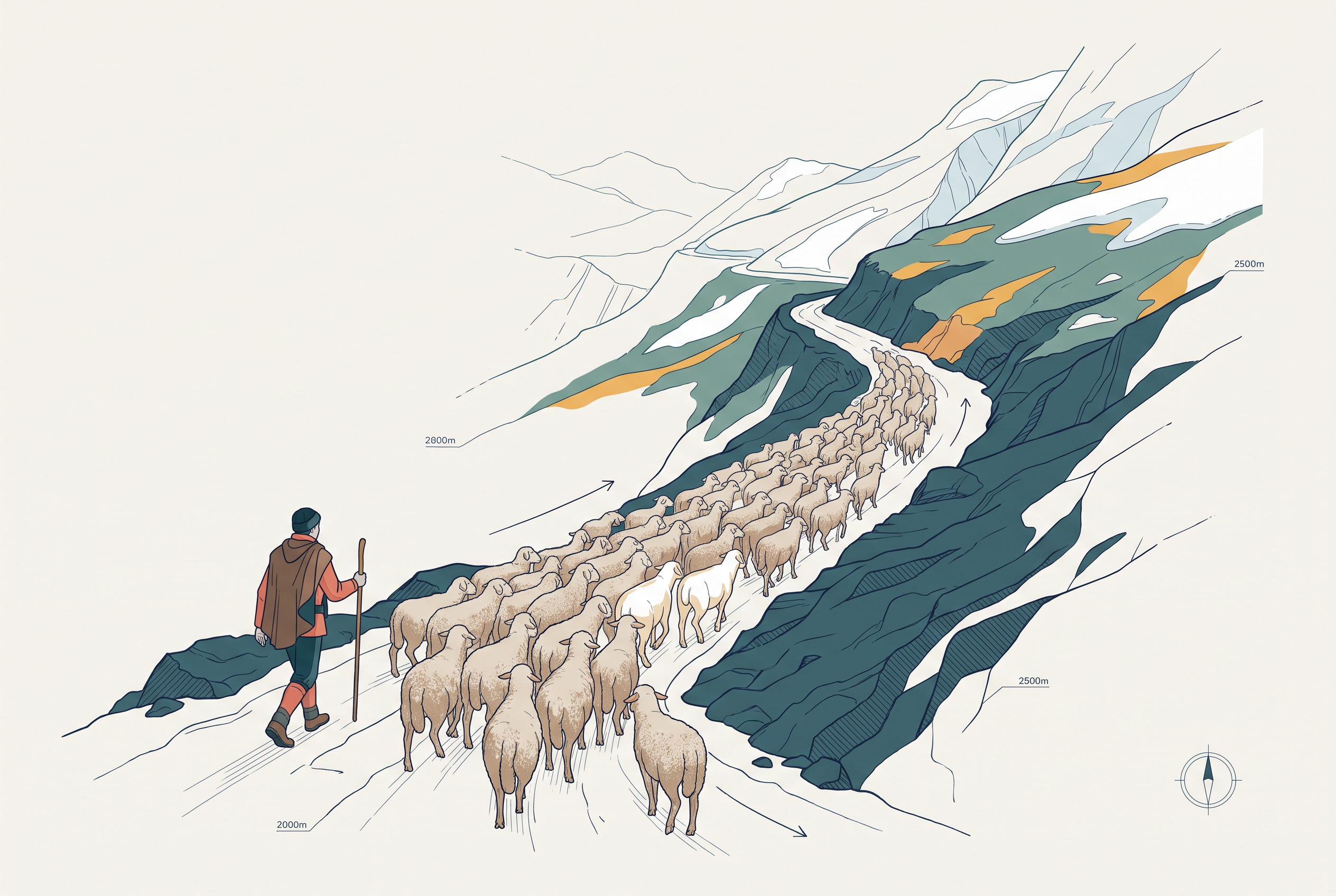
Fig. 4.5 – Nomadic herders driving sheep to mountain pastures.
In the Himalayas, the great range along India’s northern edge, herding communities such as the Gujjars, Bakarwals, Gaddis and Bhotiyas climb from the plains to the mountains each summer and return to the plains from the high pastures in winter. The tundra herders follow the same logic along the flat: they move north in summer and south in winter, chasing the season’s grazing (Fig. 4.6).
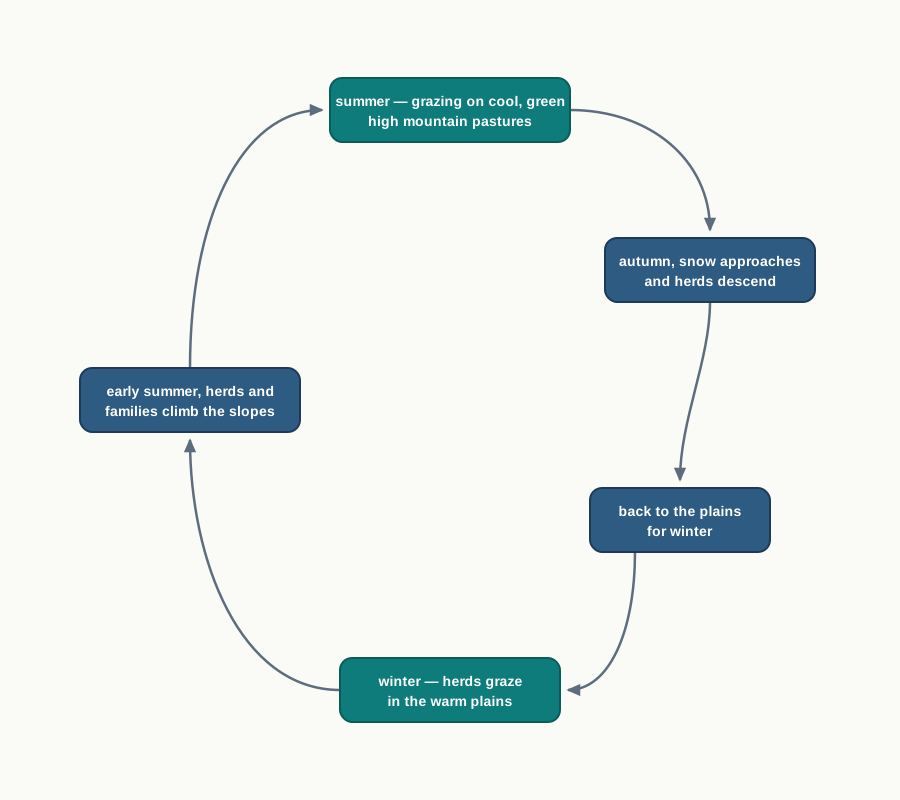
Fig. 4.6 – The transhumance cycle of mountain herders.
A Shrinking Way Of Life
The number of pastoral nomads has been falling, and the land they roam has been shrinking. Two forces are named for this. Political boundaries now cut across the old grazing routes, so a herd can no longer cross freely where a border stands. And new settlement plans by different countries fence people in place and turn open pasture to other uses.
4.3.2 Commercial Livestock Rearing
Commercial livestock rearing is the opposite of the nomad’s life: organised, capital-intensive and settled. It is carried out on permanent ranches, mostly in western countries, and each ranch covers a large area divided into fenced parcels. When the grass in one parcel is grazed down, the animals are moved to the next, giving the first time to recover.
How A Ranch Works
The number of animals on a pasture is held to its carrying capacity — the most a stretch of land can feed without being damaged. Push past it and the grass is destroyed; stay within it and the pasture renews itself year after year. Unlike the nomad, who keeps a mix of animals, a ranch is specialised: usually a single kind of animal — sheep, cattle, goats or horses — is reared.
The whole operation runs on a scientific basis. The main effort goes into breeding, genetic improvement, disease control and the health care of the animals. Their products — meat, wool, hides and skin — are processed and packed carefully and exported to markets around the world.
New Zealand, Australia, Argentina, Uruguay and the United States of America are the important commercial rearing countries (Fig. 4.7). One image the chapter offers is reindeer rearing in the northern regions of Alaska, in the far north-west of North America, where most of the Eskimos own about two-thirds of the stock (Fig. 4.8).
Map
Fig. 4.7 Caption: Areas of commercial livestock rearing. Brief: World map showing, by shading, the regions where commercial livestock rearing is practised, including New Zealand, Australia, Argentina, Uruguay and the United States of America. Include a key marking ‘commercial livestock rearing’. Show India to its full official extent.
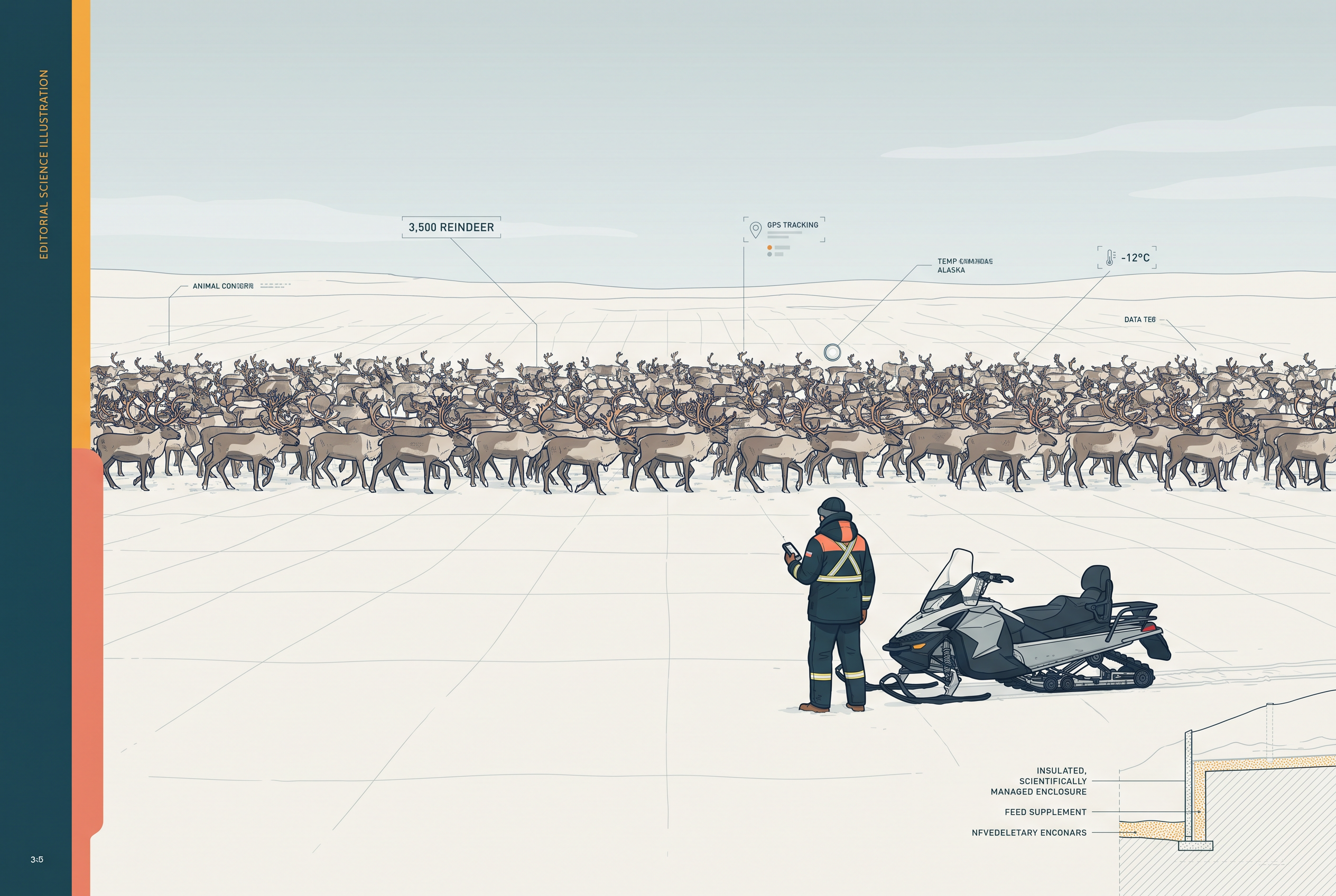
Fig. 4.8 – Commercial reindeer rearing in Alaska.
Herder And Rancher Compared
Set the two side by side and the differences are sharp. The nomad rears animals to live on directly and moves to find pasture; the rancher rears them to sell and keeps them on fixed, fenced land. The nomad keeps many kinds of animal and works by tradition; the rancher keeps one kind and works by science, watching carrying capacity and breeding. The nomad produces for the household; the rancher produces for distant world markets. Yet both depend, in the end, on grass and water — and on keeping their animals fed.
4.4 Agriculture
Agriculture is the growing of crops and the raising of livestock on the land. It is never practised the same way everywhere, because it answers to a mix of physical conditions — climate, soil, relief, water — and socio-economic ones — population, capital, technology and markets. Different mixes of these conditions give rise to different agricultural systems.
The kind of farming that takes hold, the crops grown and the animals kept, all follow from that local mix. The systems described below run from the simplest, where a family barely feeds itself, to the most organised and commercial, where the harvest is exported across the world.
4.4.1 Subsistence Agriculture
Subsistence agriculture is farming in which the growers consume all, or very nearly all, of what they produce, with little or nothing left to sell. It falls into two kinds: primitive subsistence agriculture and intensive subsistence agriculture, which sit at opposite ends of how hard the land is worked.
4.4.1.1 Primitive Subsistence Agriculture
Primitive subsistence agriculture, better known as shifting cultivation, is practised by many tribes in the tropics — especially in Africa, in south and central America, and in south-east Asia (Fig. 4.9). It is one of the oldest ways of raising a crop.
The method turns on fire. Farmers clear a patch of forest by burning the vegetation, and the ash left behind adds nutrients to the soil — which is why shifting cultivation is also called slash and burn agriculture. The cleared patches are small and are worked with very simple tools such as sticks and hoes. After three to five years the soil loses its fertility, so the farmer abandons that patch, clears a fresh one, and may return to the first only after several years have passed (Fig. 4.10).
Map
Fig. 4.9 Caption: Areas of primitive subsistence agriculture. Brief: World map showing, by shading, the tropical regions where shifting cultivation is practised — parts of Africa, south and central America, and south-east Asia. Include a key marking ‘subsistence agriculture’. Show India to its full official extent.
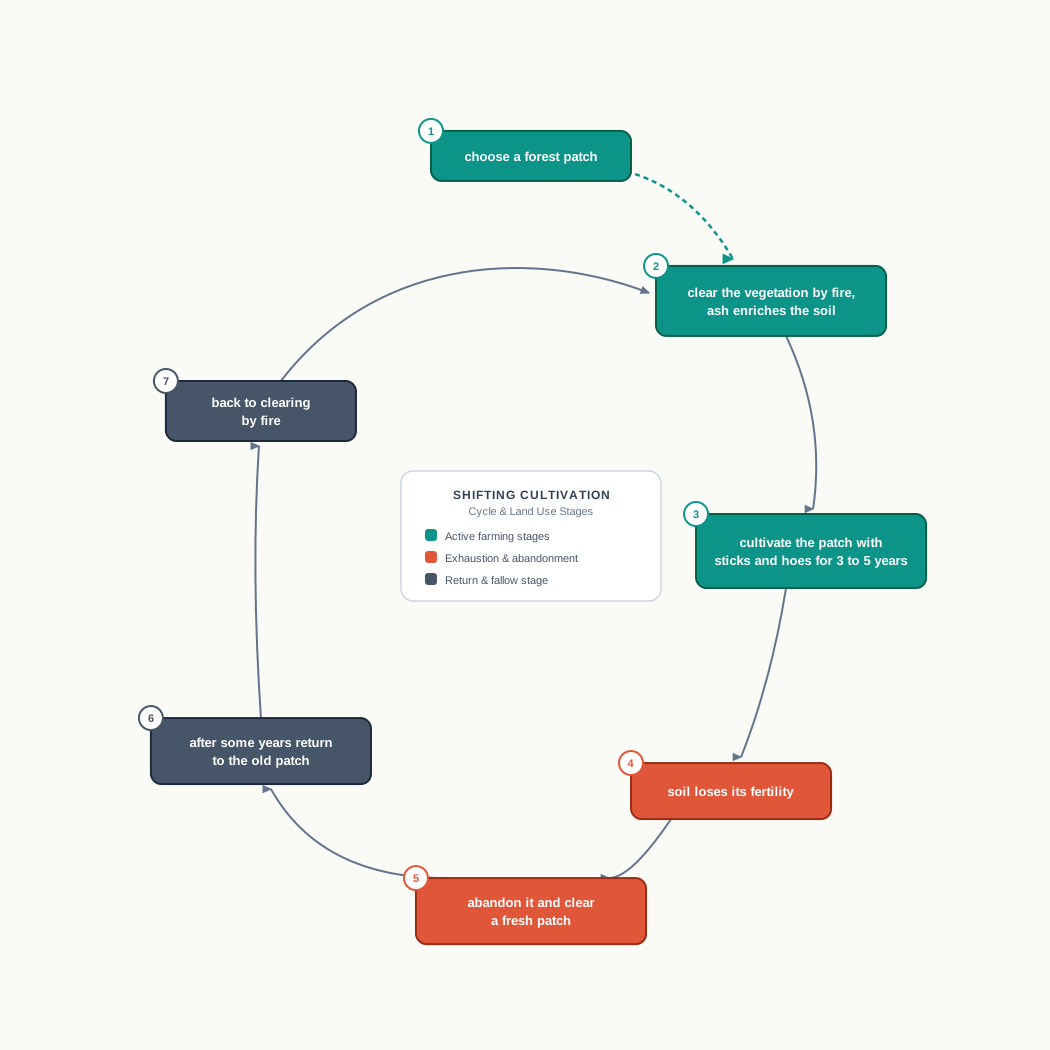
Fig. 4.10 – The shifting cultivation cycle.
The whole system depends on land having time to recover. Its main problem is that this time is running out: as fertility falls across more and more parcels, the jhum cycle — the gap before a farmer can return to a used patch — grows shorter and shorter, and the soil never fully heals. The practice carries a different local name in each region: it is Jhuming in the north-eastern states of India, Milpa in central America and Mexico, and Ladang in Indonesia and Malaysia. It is worth finding out what it is called in other parts of the world too.
4.4.1.2 Intensive Subsistence Agriculture
Intensive subsistence agriculture works a small piece of land very hard, and it is found mainly in the densely populated regions of monsoon Asia — the parts of Asia whose farming is shaped by the monsoon rains. There are two kinds of it.
The first is intensive subsistence agriculture dominated by wet paddy cultivation, where the rice crop rules. Because so many people share the land, holdings are very small. Families work them with their own labour, using the ground intensively; machinery is limited, and most operations are done by hand. Farm-yard manure — animal dung and waste — keeps the soil fertile. The result is a high yield per unit of area but a low output per worker, because so many hands share the same small plot.
The second kind is dominated by crops other than paddy. Where relief, climate or soil make paddy impractical, other grains take over. Wheat, soybean, barley and sorghum are grown in northern China, Manchuria (north-east China), North Korea and northern Japan. In India, wheat is grown in the western part of the Indo-Gangetic plains — the great northern plain built by the Indus and Ganga rivers — and millets in the drier parts of western and southern India. This farming resembles the wet-paddy kind in most ways, except that irrigation is often needed to make up for scarce rain (Fig. 4.11).
Map
Fig. 4.11 Caption: Areas of intensive subsistence farming, showing where wet rice dominates and where other crops do. Brief: World map of monsoon Asia with two shades — one for regions where wet rice is the dominant crop, another for regions dominated by other crops. Include a key distinguishing ‘wet rice dominant crop’ from ‘other crop dominated’. Show India to its full official extent.
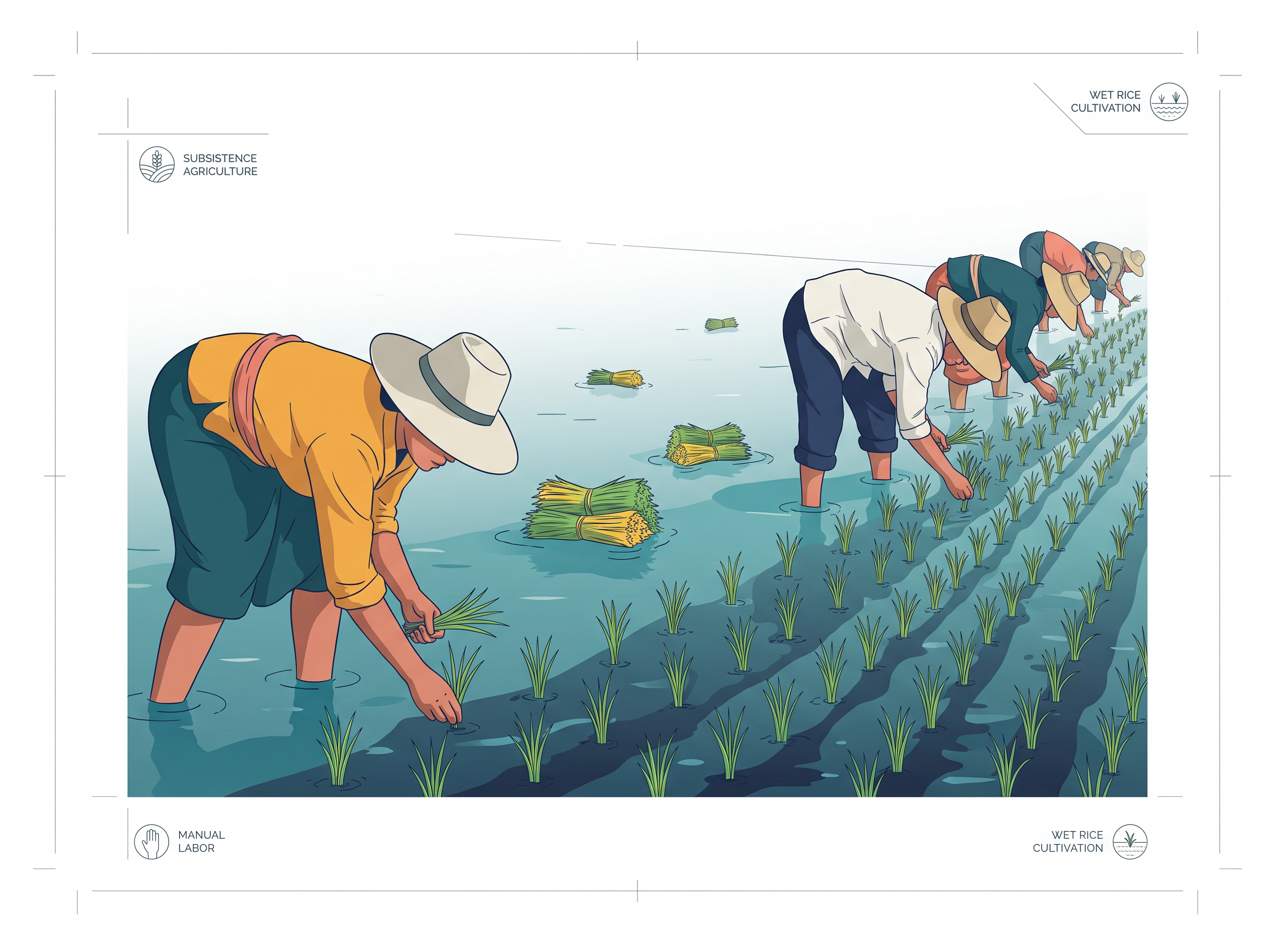
Fig. 4.12 – Rice transplantation in a flooded paddy.
4.4.2 Plantation Agriculture
When Europeans colonised much of the world, they brought a new kind of farming with them: the plantation, a large-scale system built for profit rather than food. Plantation agriculture was set up by Europeans in colonies within the tropics, and its important crops are tea, coffee, cocoa, rubber, cotton, oil palm, sugarcane, bananas and pineapples.
Its features are distinctive. Plantations are large estates that swallow big capital investment and rely on managerial and technical support, scientific methods and, crucially, cheap labour. Each estate specialises in a single crop — a practice called monoculture — and a good transport network ties the estate to the factories and to distant markets, because the whole point is export.
History is written into the map of plantations. The French established cocoa and coffee estates in west Africa. The British set up large tea gardens in India and Sri Lanka, rubber plantations in Malaysia, and sugarcane and banana plantations in the West Indies — the island chain of the Caribbean. Spanish and American investors poured money into coconut and sugarcane in the Philippines, and the Dutch once held a monopoly over sugarcane in Indonesia. Some coffee fazendas, the large plantations of Brazil, are still run by Europeans. Today, though, most plantations have passed into the hands of governments or of the people of the countries concerned.
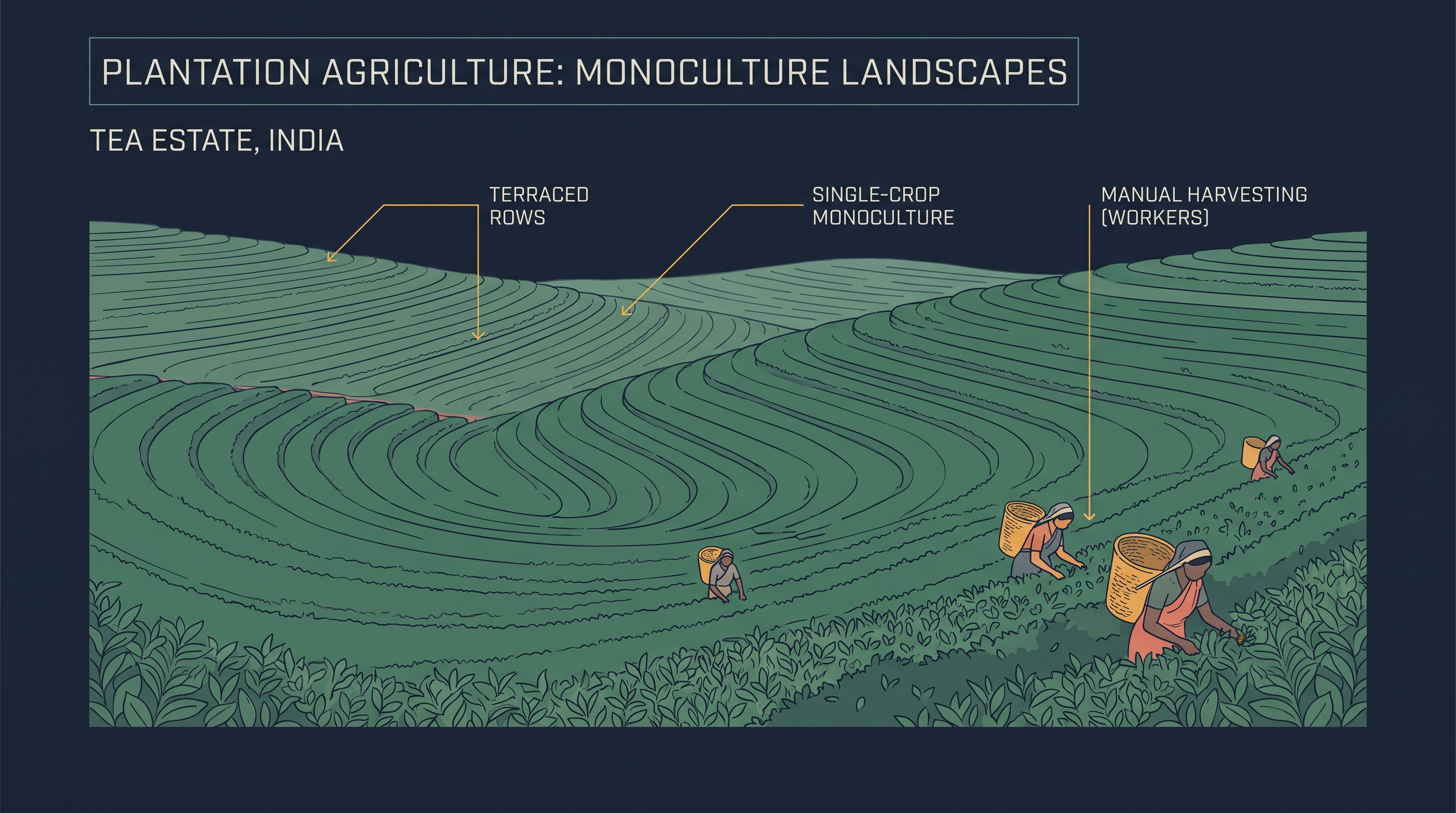
Fig. 4.13 – Tea plantation on terraced hill slopes.
4.4.3 Extensive Commercial Grain Cultivation
Extensive commercial grain cultivation spreads a crop thinly over a very large area. It is practised in the interior, semi-arid lands of the mid-latitudes — dryish country, with low rainfall, lying in the temperate belts between the tropics and the poles. Wheat is the principal crop, with corn, barley, oats and rye also grown.
The farms here are enormous, so every operation from ploughing to harvesting is done by machine (Fig. 4.14). This produces a striking result: a low yield per acre but a high yield per person. The reason is scale. Each acre of this dry, lightly worked land gives little, but a single worker driving a combine covers so many acres that output per worker is very high — the machine, not the soil, does the multiplying.
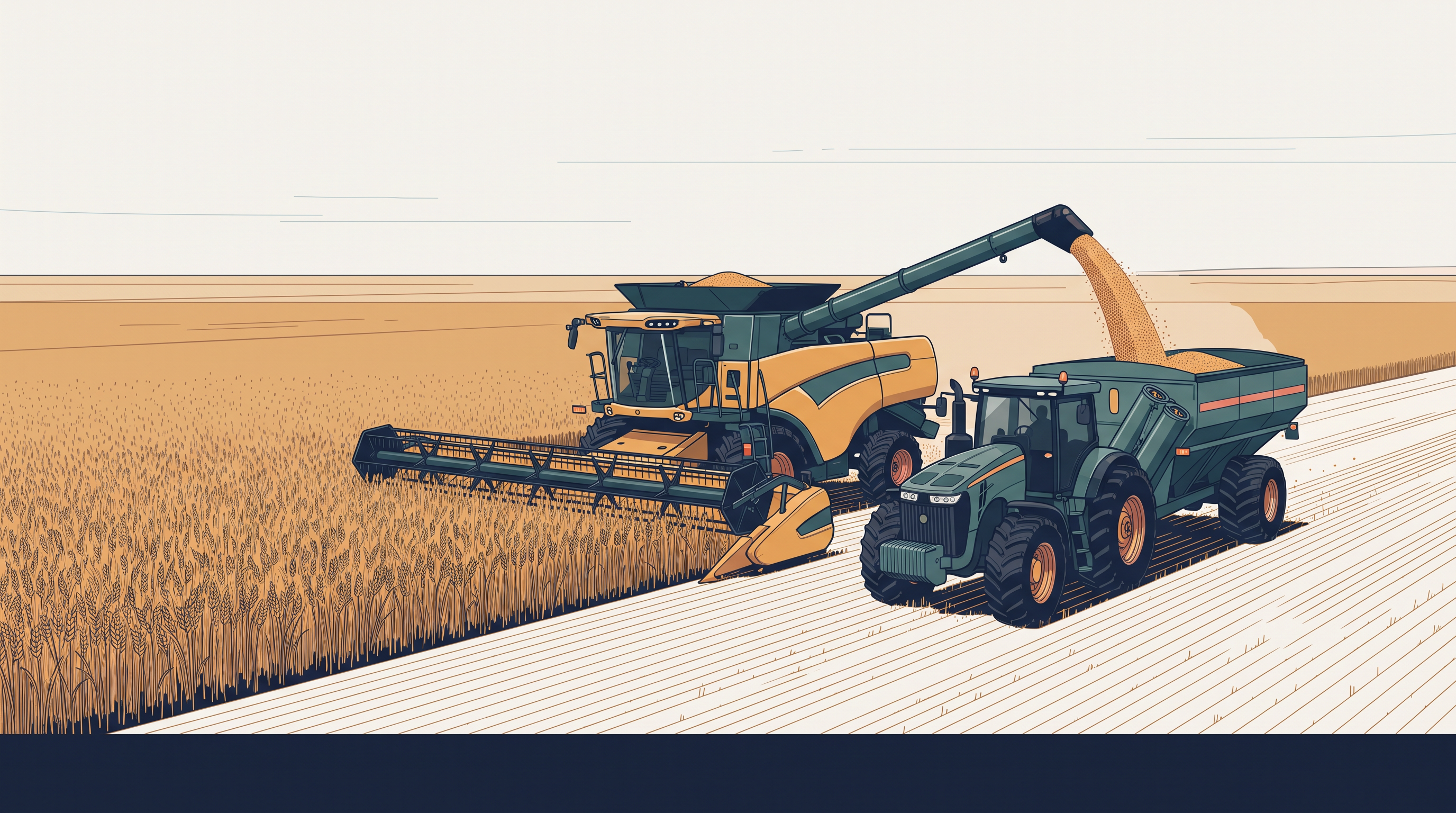
Fig. 4.14 – Mechanised harvesting in commercial grain farming.
This system is best developed in the Eurasian steppes, the Canadian and American Prairies, the Pampas of Argentina, the Velds of South Africa, the Australian Downs and the Canterbury Plains of New Zealand — all great mid-latitude grasslands. It is worth locating each of these on a world map (Fig. 4.15).
Map
Fig. 4.15 Caption: Areas of extensive commercial grain farming. Brief: World map showing, by shading, the mid-latitude grassland regions of extensive commercial grain farming — Eurasian steppes, Canadian and American Prairies, Pampas of Argentina, Velds of South Africa, Australian Downs and Canterbury Plains of New Zealand. Include a key marking ‘extensive commercial grain farming’. Show India to its full official extent.
4.4.4 Mixed Farming
Mixed farming grows crops and raises animals together on the same farm, with equal weight given to each. It is found in the highly developed parts of the world — north-western Europe, eastern North America, parts of Eurasia and the temperate latitudes of the southern continents (Fig. 4.16).
Mixed farms are moderate in size and grow wheat, barley, oats, rye, maize, fodder and root crops. Fodder — crops grown to feed the animals — is a key part of the system. Two practices keep the soil healthy: crop rotation, growing different crops on a field in turn across the seasons, and intercropping, growing more than one crop on the same field at once. Both prevent any single crop from draining the soil. Alongside the crops, animals such as cattle, sheep, pigs and poultry are raised as animal husbandry — the rearing and care of farm animals — and they bring in the main income together with the crops.
Because it does two things well at once, mixed farming demands a lot: heavy spending on machinery and buildings, generous use of chemical fertilisers and green manures, and real skill and expertise from the farmer. This balance of crops and animals is exactly why mixed farming, unlike a plantation, does not follow monoculture.
Map
Fig. 4.16 Caption: Areas of mixed farming. Brief: World map showing, by shading, the mixed-farming regions — north-western Europe, eastern North America, parts of Eurasia and the temperate southern continents. Include a key marking ‘mixed farming’. Show India to its full official extent.
4.4.5 Dairy Farming
Dairy farming is the rearing of milch animals — animals kept for their milk — and it is the most advanced and efficient form of it. It is highly capital-intensive: animal sheds, fodder stores, and feeding and milking machines all add to the cost. Great care goes into cattle breeding, health care and veterinary services.
It is also highly labour-intensive, because feeding and milking need constant, careful attention. And unlike crop farming, dairy has no off-season — the animals must be tended every single day of the year.
Where a dairy farm sits is no accident. It is practised mainly near towns and industrial centres, which give it a close market for fresh milk and dairy products. Milk spoils quickly, so nearness to the buyer matters. Advances in transport, refrigeration, pasteurisation and other preservation methods have stretched how long dairy products can be stored, and so how far they can travel.
There are three main regions of commercial dairy farming. The largest is north-western Europe; the second is Canada; and the third belt takes in south-eastern Australia, New Zealand and Tasmania, the island south of mainland Australia (Fig. 4.17).
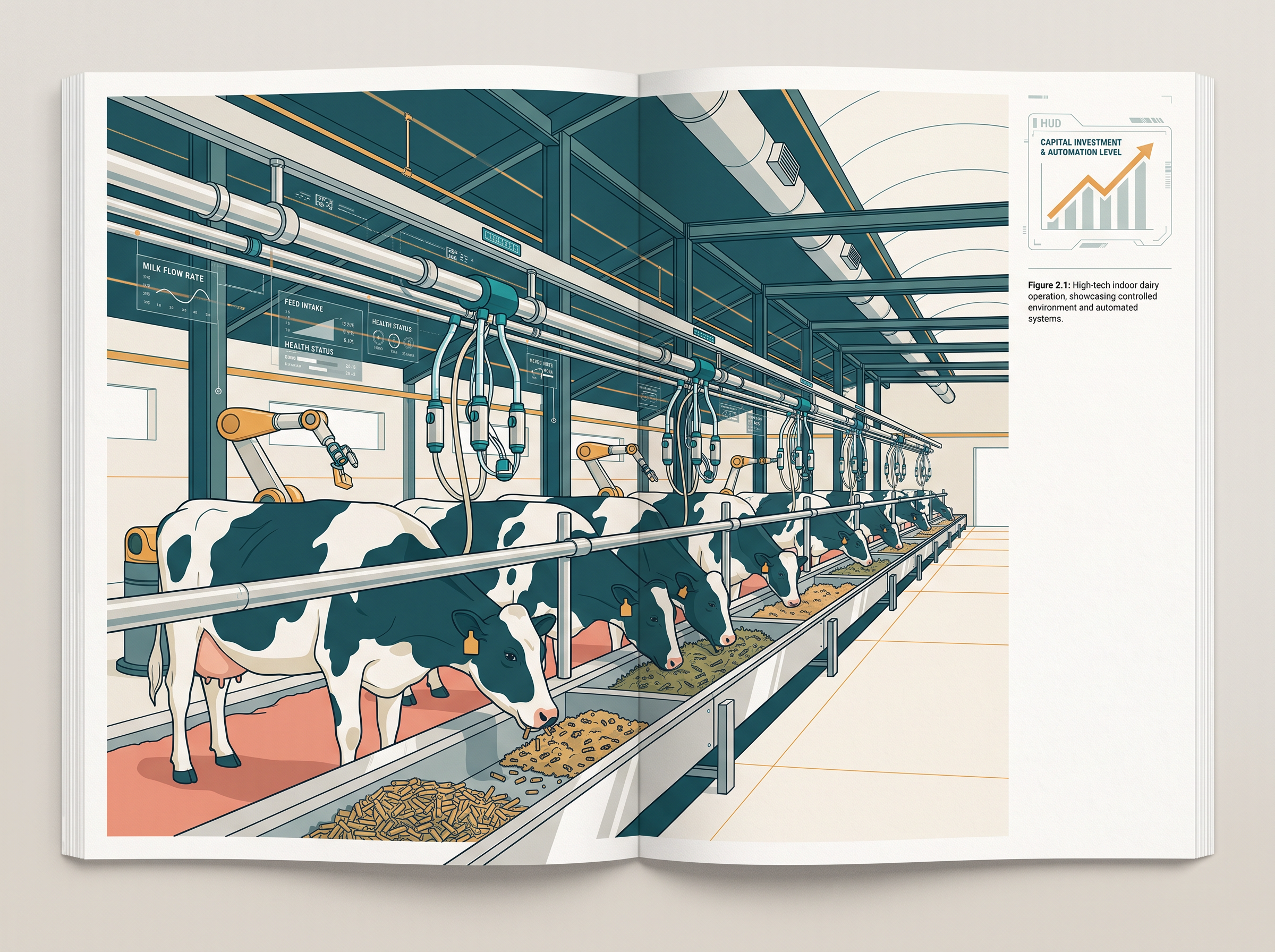
Fig. 4.18 – Indoor mechanised dairy farming.
Map
Fig. 4.17 Caption: Areas of dairy farming. Brief: World map showing, by shading, the three commercial dairy belts — north-western Europe, Canada, and south-eastern Australia with New Zealand and Tasmania. Include a key marking ‘dairy farming regions’. Show India to its full official extent.
4.4.6 Mediterranean Agriculture
Mediterranean agriculture is a highly specialised commercial farming named for the region where it began. It is practised in the countries on both sides of the Mediterranean Sea — in Europe and in north Africa from Tunisia to the Atlantic coast — and also in southern California, central Chile, the south-western parts of South Africa, and southern and south-western Australia. All these places share a similar climate, and the region is an important supplier of citrus fruits.
Its speciality is viticulture, the cultivation of grapes. The finest grapes yield the world’s best wines, with distinctive flavours from country to country, while the poorer grapes are dried into raisins and currants. The region also produces olives and figs. Its real advantage is timing: valuable crops such as fruits and vegetables ripen in winter, exactly when European and North American markets are hungry for them and will pay well.
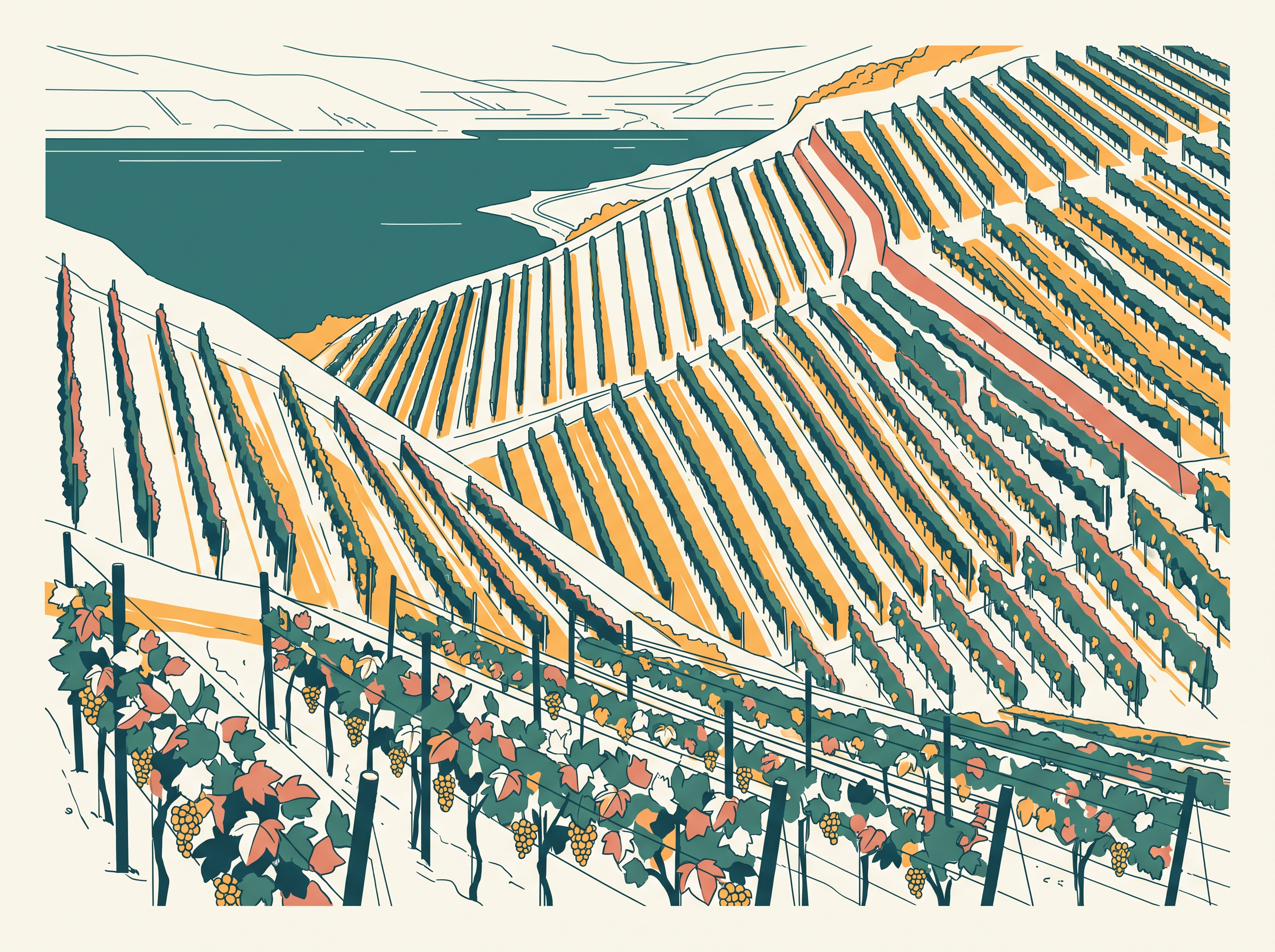
Fig. 4.19 (a) – A terraced vineyard in Switzerland.
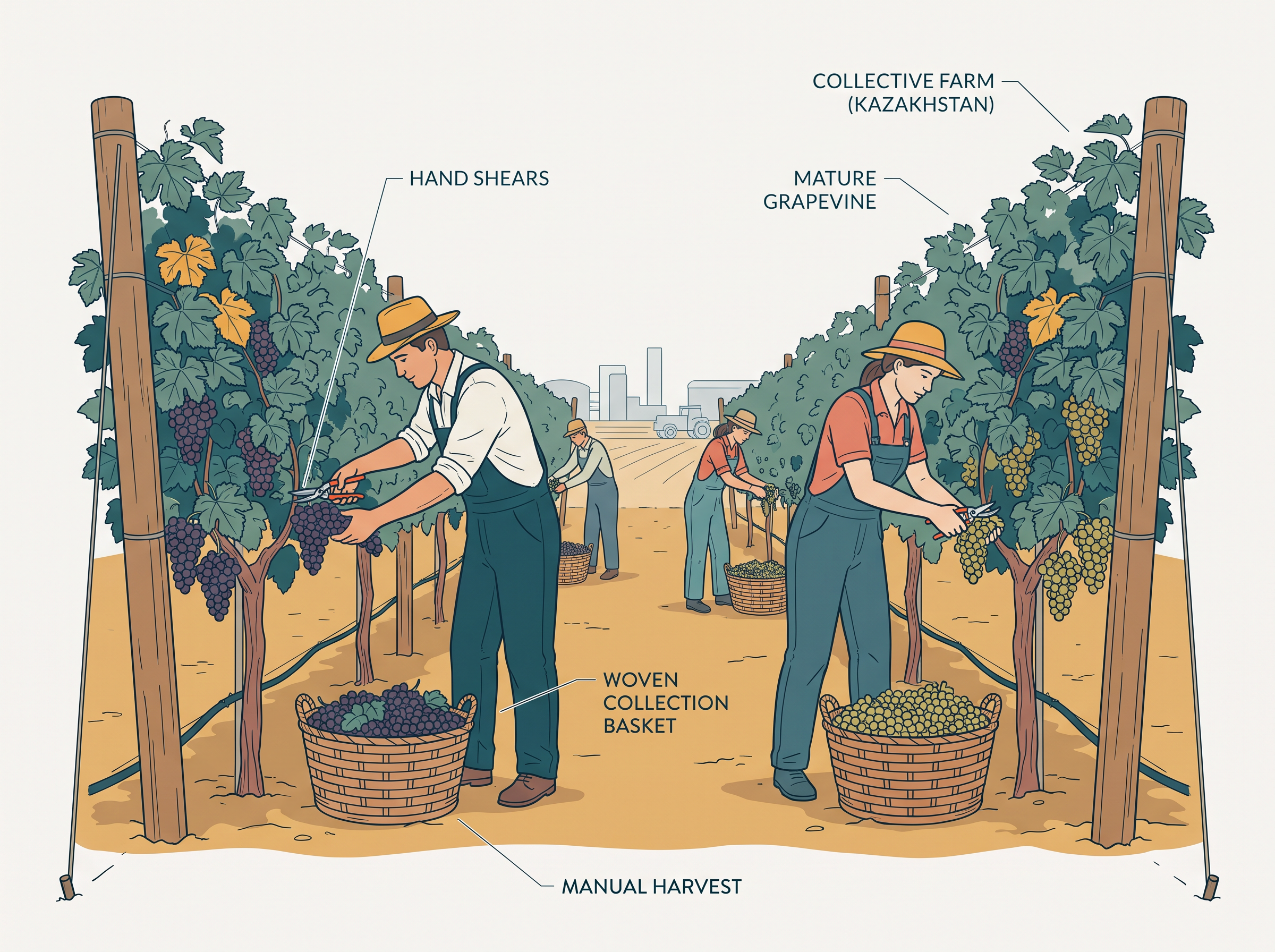
Fig. 4.19 (b) – Grape harvesting on a collective farm.
4.4.7 Market Gardening And Horticulture
Market gardening and horticulture specialise in high-value crops — vegetables, fruits and flowers — grown solely for the urban market. The farms are small and sit where transport links to the city are good and where high-income consumers live. This farming is both labour- and capital-intensive, leaning on irrigation, HYV seeds (high-yielding variety seeds, bred to give a larger crop), fertilisers, insecticides, greenhouses, and even artificial heating in colder places.
It is well developed in the densely populated industrial districts of north-west Europe, the north-eastern United States and the Mediterranean regions. The Netherlands, for instance, specialises in flowers and horticultural crops — above all tulips — which are flown to every major European city.
Truck Farming
Where farmers grow vegetables only, the system is called truck farming. Its distance from the market is set by how far a truck can travel overnight to deliver the fresh produce — which is where the name comes from. Nearness to the city, once again, is decided by how perishable the crop is.
Factory Farming
A modern relative of market gardening, found in the industrial regions of Western Europe and North America, is factory farming. Here livestock — chiefly poultry and cattle — are reared indoors in stalls and pens, fed on manufactured feed and closely guarded against disease. It calls for heavy investment in buildings, machinery, veterinary care, and heating and lighting, and it relies on careful breed selection and scientific breeding.
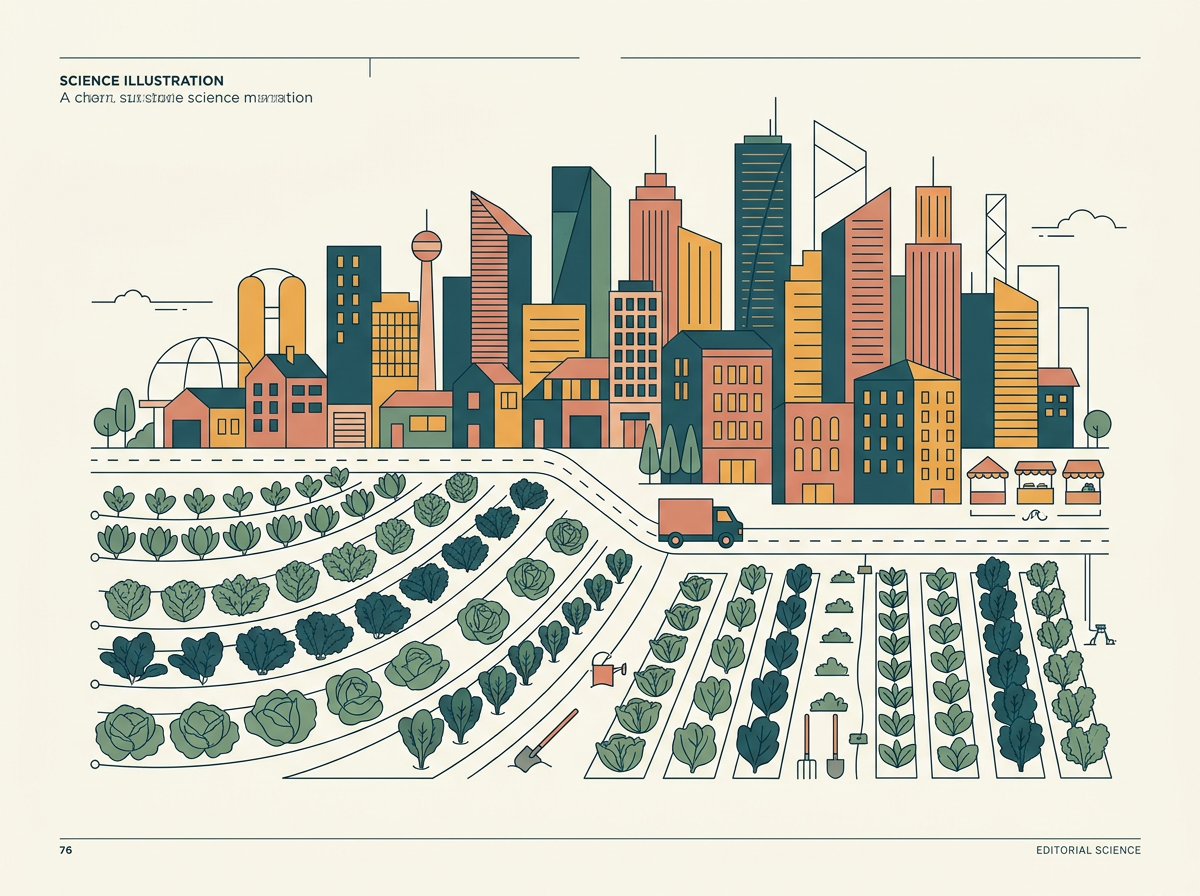
Fig. 4.20 (a) – Market gardening near an urban centre.
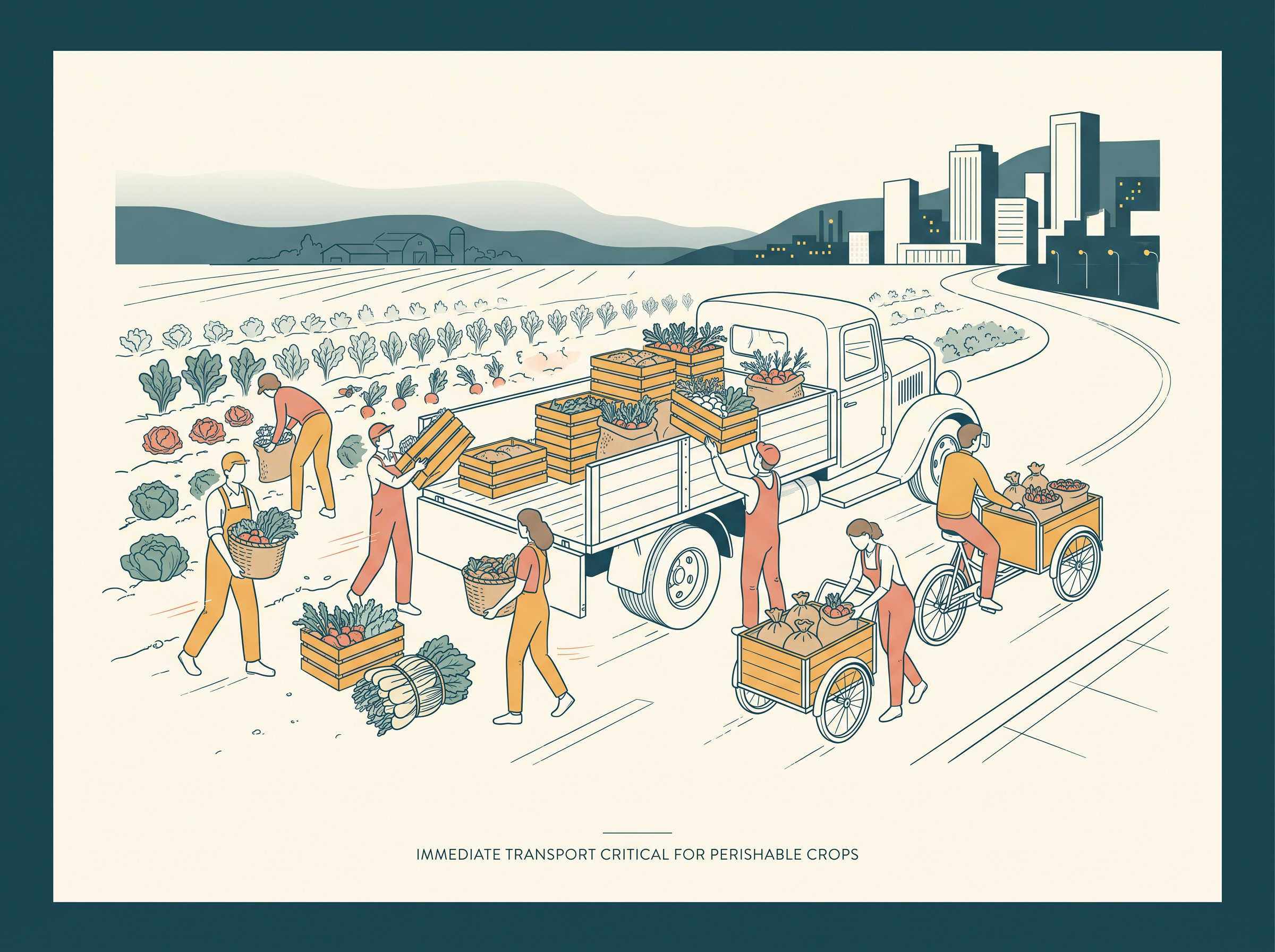
Fig. 4.20 (b) – Transporting fresh vegetables to city markets.
Farming systems can also be sorted by how the farms are owned and organised, rather than by what they grow. This organisation depends on how farmers hold their land and on the policies a government uses to support them. Two contrasting models follow.
4.4.8 Co-operative Farming
In co-operative farming, a group of farmers voluntarily form a society and pool their resources for more efficient and profitable farming. The crucial point is that each farm stays individually owned — the farmers cooperate by choice, but nobody gives up their land.
Such societies help their members buy farm inputs, sell produce on the best terms, and process quality goods more cheaply. The co-operative movement began over a century ago and has thrived in western European countries such as Denmark, the Netherlands, Belgium, Sweden and Italy. In Denmark it has succeeded so completely that almost every farmer belongs to a co-operative.
4.4.9 Collective Farming
Collective farming rests on a very different principle: social ownership of the means of production and collective labour. Its model, the Kolkhoz, was introduced in the erstwhile Soviet Union — a former country of eastern Europe and northern Asia — to overcome the inefficiency of earlier farming and to boost output for self-sufficiency.
Under it, farmers pooled all their resources — land, livestock and labour — into the collective. They were, however, allowed to keep very small private plots to grow crops for their own daily needs. The contrast with co-operative farming is sharp: co-operative farmers keep their own land and join hands by choice, while under collective farming the land itself became commonly owned.
4.5 Mining
Mining is the extraction of minerals from the earth — a mineral being a useful substance that occurs naturally in the earth’s crust. Minerals have shaped human history so deeply that whole ages are named for them: the copper age, the bronze age and the iron age, each named after the metal people mainly worked. In those early times minerals went almost entirely into tools, utensils and weapons.
Mining as we know it, though, only took off with the industrial revolution — the shift to machine-based industry — which created a huge new appetite for metals and fuels. Since then its importance has kept on rising, and modern extraction reaches everything from solid ore deep in the rock to liquid minerals such as oil, drawn up by drilling rigs (Fig. 4.21).
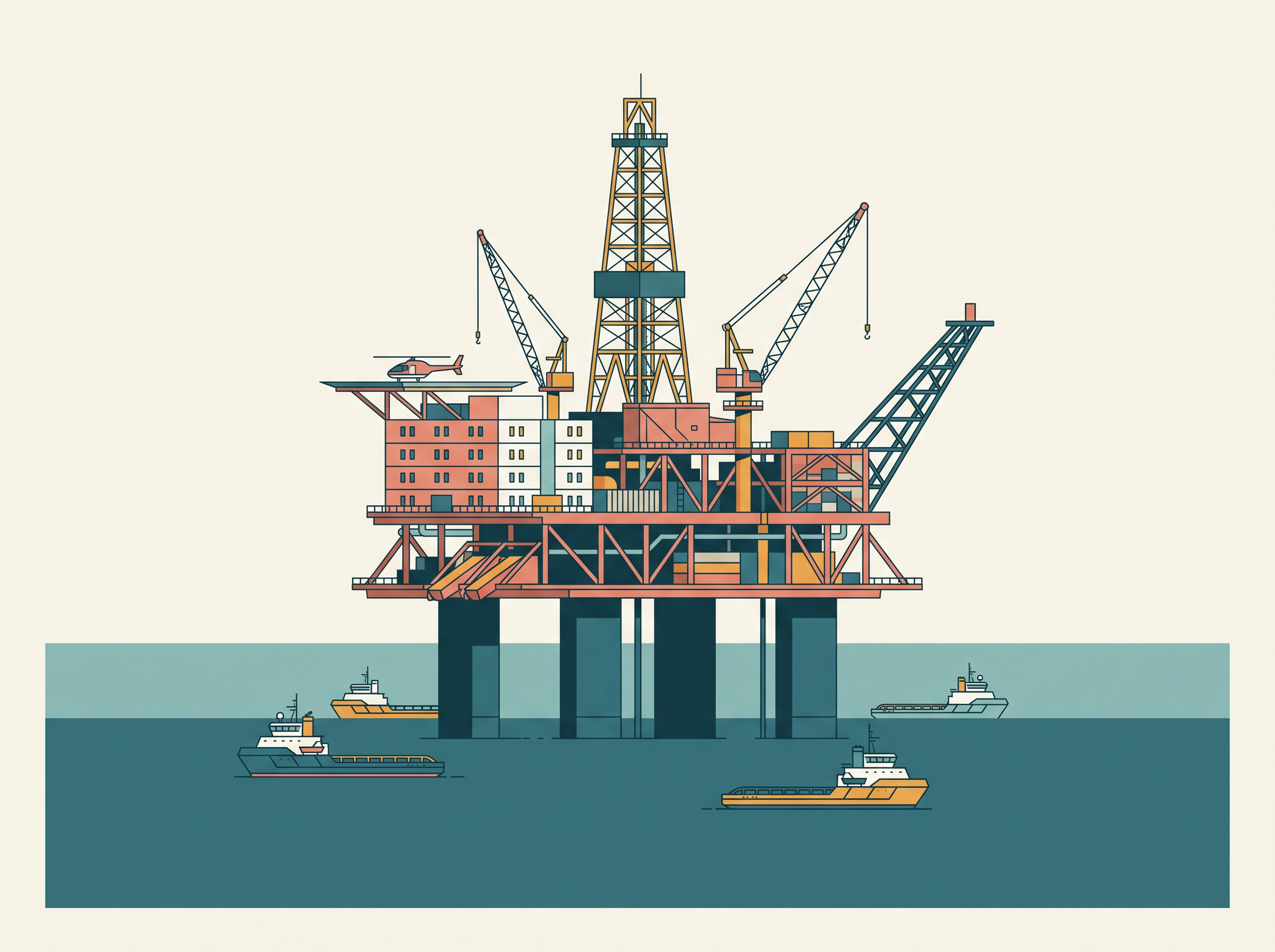
Fig. 4.21 – Offshore oil drilling rig.
4.5.1 Factors Affecting Mining Activity
Whether a mine is worth working comes down to whether it can turn a profit, and that depends on two kinds of factor. The first are physical: the size of the deposit, its grade — how rich in mineral it is — and its mode of occurrence, meaning how and where it sits in the ground. A large, rich, easily reached deposit is far cheaper to work than a small, poor or deeply buried one.
The second are economic: the demand for the mineral, the technology available and used, the capital needed to build roads, rail and machinery, and the cost of labour and transport. A deposit can be physically excellent yet stay in the ground if demand is low or the mine lies too far from any market.
4.5.2 Methods Of Mining
How a mineral is dug out depends on how deep it lies and on the nature of the ore — the rock from which the mineral can usefully be won. There are two methods (Fig. 4.22).
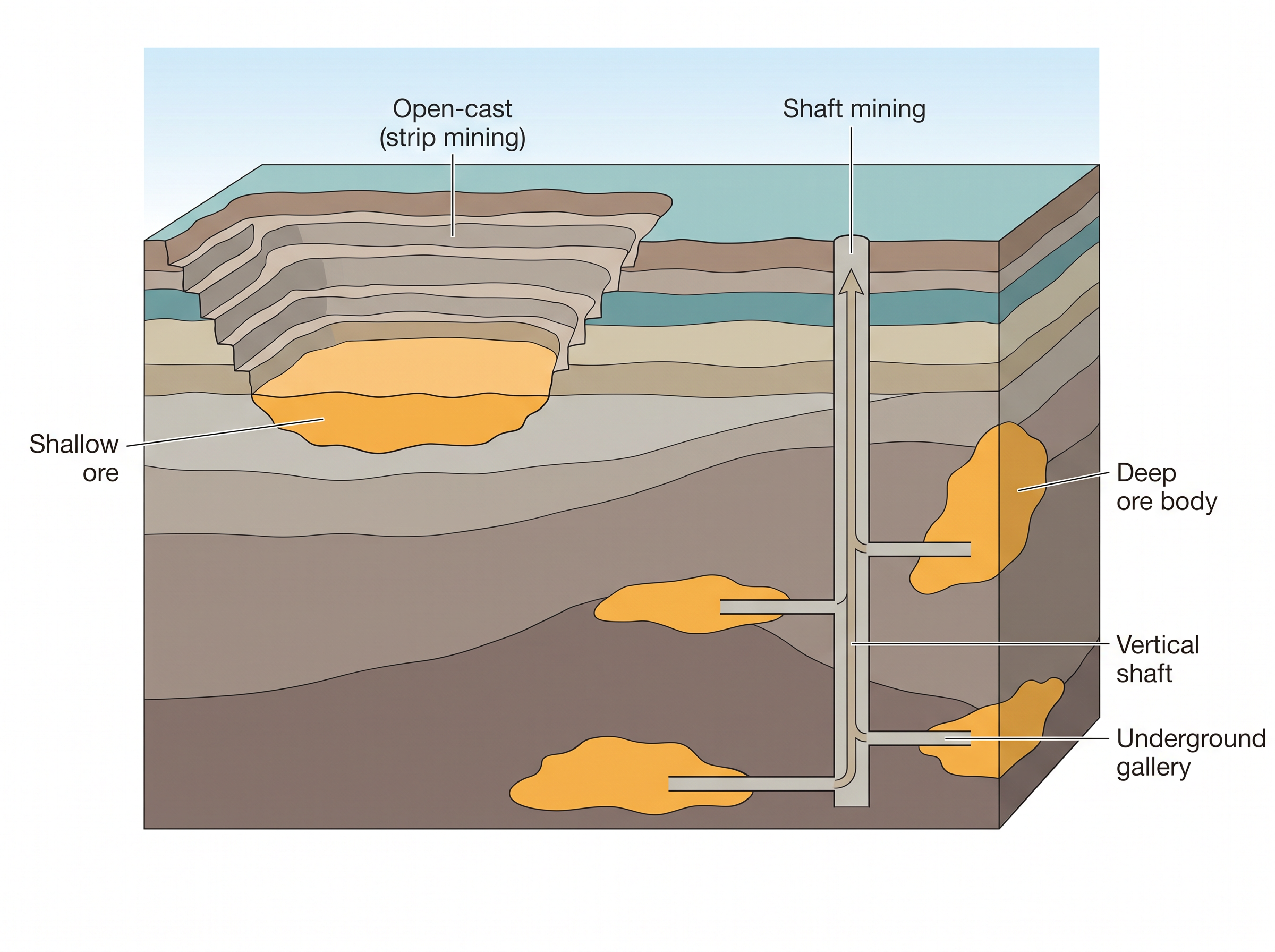
Fig. 4.22 – Surface mining and underground shaft mining.
The first method is surface mining, also called open-cast mining. It is the easiest and cheapest way to reach minerals lying close to the surface. Because the work is out in the open, overhead costs such as safety measures and equipment stay relatively low, and the output is both large and quick.
The second is underground mining, or the shaft method, used when the ore lies deep. Vertical shafts are sunk into the ground, and from them underground galleries branch out to reach the minerals, which are then carried up to the surface through these passages. It demands specially designed lifts, drills, haulage vehicles and ventilation systems to move people and material safely. This work is dangerous: poisonous gases, fires, floods and the caving in of tunnels can all kill. You may have read of mine fires and the flooding of coal mines in India — real instances of exactly these dangers.
The global map of mining is shifting. The developed economies are retreating from the mining, processing and refining stages, because their labour costs are high. The developing countries, with large labour forces and a drive to raise living standards, are taking their place. In several countries of Africa, and a few of South America and Asia, minerals alone bring in over half of all earnings.
4.6 Summary
- Income-earning work is called economic activity, and it is grouped into primary, secondary, tertiary and quaternary. Primary activities depend directly on the environment.
- Primary activities include hunting and gathering, pastoral activities, fishing, forestry, agriculture, and mining and quarrying.
- Hunting and gathering is the oldest activity: hunting takes animals, gathering takes plants. Both use little capital and low technology, and leave almost no surplus.
- Poaching has driven many species to extinction or the edge of it. Some gathering has turned commercial, but it cannot compete in world markets against cheaper synthetics.
- Pastoralism is the rearing of animals. Nomadic herders move with their livestock, using transhumance in the mountains, but their numbers and range are shrinking.
- Commercial livestock rearing is the opposite: settled, specialised and scientific, run on fenced ranches within the land’s carrying capacity and producing for world markets.
- Agriculture takes many forms, set by physical and social conditions. Subsistence agriculture feeds the grower — primitive (shifting cultivation, or slash and burn) and intensive (small holdings worked hard, under wet paddy or other crops).
- Commercial farming produces for sale: plantations grow a single tropical export crop; extensive grain farming spreads wheat over huge mechanised farms; mixed farming balances crops and animals; dairy clusters near cities; Mediterranean farming supplies fruit, grapes and winter crops; market gardening and horticulture serve urban markets.
- Farming can also be organised co-operatively, where farms stay individually owned and resources are pooled by choice, or collectively, under social ownership on the Kolkhoz model.
- Mining extracts minerals from the earth, and whether a mine pays depends on physical factors (size, grade, mode of occurrence) and economic ones (demand, technology, capital, labour and transport).
- Surface, or open-cast, mining is cheap and quick for shallow deposits; underground, or shaft, mining reaches deep ore but is costly and dangerous. Developed economies are retreating from mining as developing countries take it up.
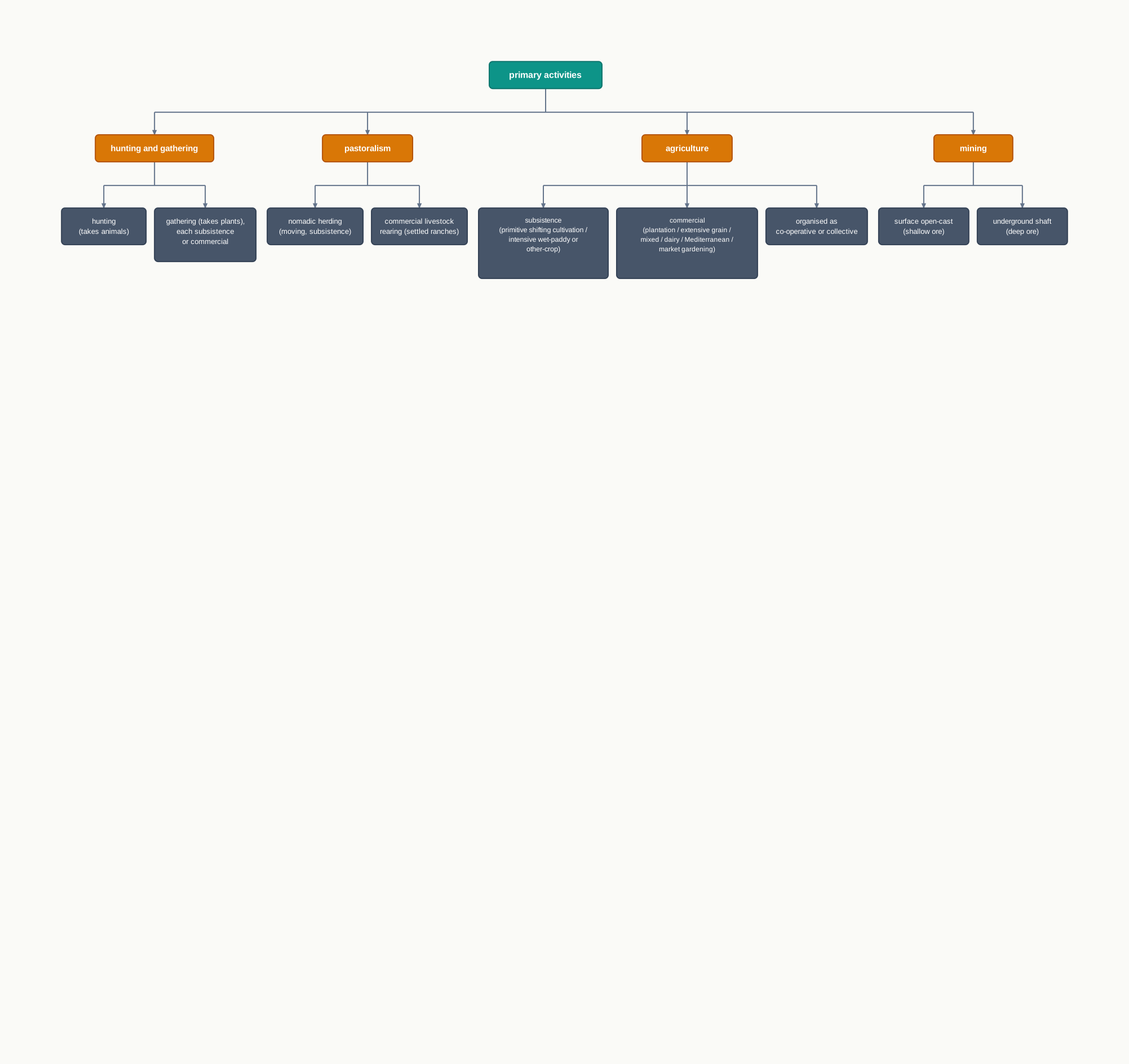
Fig. 4.23 – Overview of primary activities.
What This Chapter Cannot Tell You
The world maps show where each activity is found, not how many people practise it or how much they produce — a shaded region is not one where everyone farms or mines.
The chapter carries no recent figures, so it cannot tell you the present-day scale of these activities, or how fast each is growing or fading today.
Its neat categories also simplify a messier reality: a single real farm may blend features of several systems at once, and rarely fits one box perfectly.
4.7 NCERT Questions
- Which one of the following is not a plantation crop?
- Coffee
- Sugarcane
- Wheat
- Rubber
- In which one of the following countries co-operative farming was the most successful experiment?
- Russia
- Denmark
- India
- The Netherlands
- Growing of flowers is called:
- Truck farming
- Factory farming
- Mixed farming
- Floriculture
- Which one of the following types of cultivation was developed by European colonists?
- Kolkoz
- Viticulture
- Mixed farming
- Plantation
- In which one of the following regions is extensive commercial grain cultivation not practised?
- American Canadian prairies
- European Steppes
- Pampas of Argentina
- Amazon Basin
- In which of the following types of agriculture is the farming of citrus fruit very important?
- Market gardening
- Plantation agriculture
- Mediterranean agriculture
- Co-operative farming
- Which one type of agriculture amongst the following is also called ‘slash and burn agriculture’?
- Extensive subsistence agriculture
- Primitive subsistence agriculture
- Extensive commercial grain cultivation
- Mixed farming
- Which one of the following does not follow monoculture?
- Dairy farming
- Mixed farming
- Plantation agriculture
- Commercial grain farming
- Future of shifting cultivation is bleak. Discuss. (about 30 words)
- Market gardening is practised near urban areas. Why? (about 30 words)
- Large scale dairy farming is the result of the development of transportation and refrigeration. (about 30 words)
- Differentiate between Nomadic Herding and Commercial Livestock Rearing. (about 150 words)
- Discuss the important characteristic features of plantation agriculture. Name a few important plantation crops from different countries. (about 150 words)
4.8 Check Your Concepts
- A gatherer works all day yet brings home almost nothing to spare. Using what you know about their tools and capital, explain why the yield per person in gathering is so low.
- Trace the chain of cause and effect that leads from poaching to some wild species becoming endangered or extinct.
- Describe the transhumance cycle of a mountain herding community across a full year, saying where the herds are in summer and in winter, and why they move.
- Both co-operative farming and collective farming pool resources, yet they differ sharply in who owns the land. Bring the two side by side and explain the difference in ownership.
- Extensive commercial grain farming gives a low yield per acre but a high yield per person. Explain how both can be true of the same farm.
- Distinguish surface (open-cast) mining from underground (shaft) mining by depth and cost, and explain why the underground method is the more dangerous of the two.
- Study Fig. 4.11. What does the map tell you about the leading crops of monsoon Asia, and what is one thing it does not tell you?
- A mineral deposit may be large and rich yet remain unworked. Using the physical and economic factors given in the chapter, explain how this can happen.