Chapter 8: International Trade
Look around the room you are in. The phone on the table, the cloth of your shirt, the oil in a lamp, the tea or coffee in the kitchen — follow any one of them back far enough and it has crossed a national boundary. Almost nothing near you was made entirely where you sit. One country grew the fibre, another spun it, a third stitched the cloth, and a shipping line carried it to a shop down the road. You paid for all of that labour without ever meeting a single one of those people.
This quiet machinery is international trade: the exchange of goods and services between countries, across the lines drawn on a map. It runs on a simple fact — no country can produce everything it needs, and none produces everything equally well. A cold country cannot grow its own coffee; a country without oil must buy its fuel from abroad. So each country does what its soil, climate, minerals and people best suit it for, and exchanges the surplus for what it lacks.
But the exchange is never perfectly equal. Someone sets the price. When cheap goods pour in from abroad, a local maker can be driven out; when a country buys far more than it sells, its reserves drain away. The same trade that fills your room can hollow out an industry, a fishery or a forest. This chapter follows that exchange from the first barter to the container ship — and asks who gains, who loses, and who writes the rules.
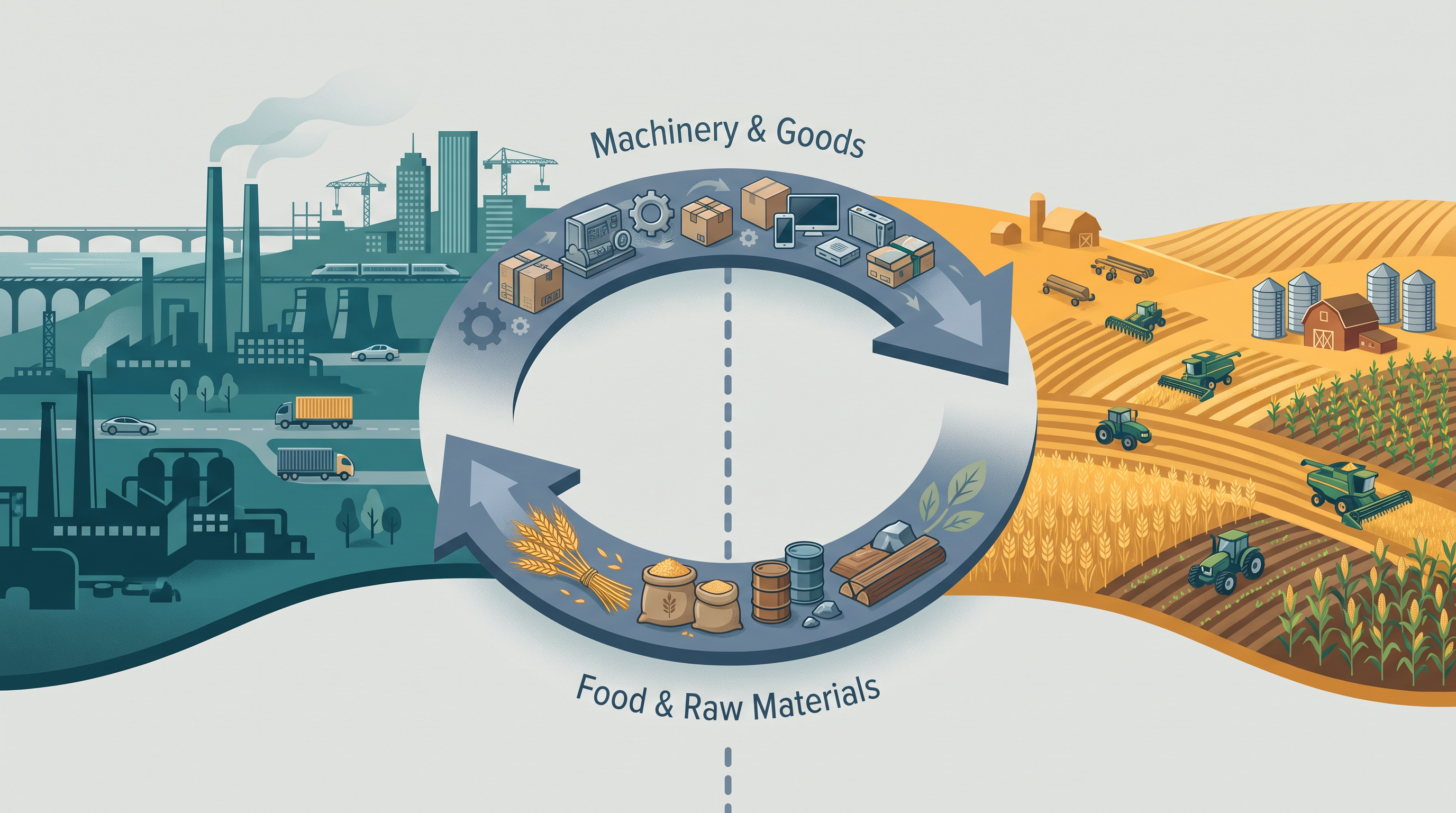
Fig. 8.0 – Resource specialisation and international trade.
8.1 Trade And The Barter System
Trade is the voluntary exchange of goods and services between two parties — one who sells and one who buys. Neither side is forced into it. Each takes part because each expects to be better off once the exchange is done, which is why trade is called mutually beneficial. You have already met trade in the previous chapter as a tertiary activity: a service that moves and exchanges goods rather than making them.
Trade takes place at two levels. National trade is exchange within the boundaries of a single country. International trade is the exchange of goods and services among countries, across national boundaries. A country enters international trade for two plain reasons: to obtain things it cannot produce at home at all, and to buy things it could make itself but can purchase more cheaply somewhere else.
The Problem With Barter
Before money existed, people traded by the barter system — the direct exchange of one good or service for another, with no money changing hands. It was the earliest form of trade, and its logic looks simple until you try to use it.
Suppose you are a potter and your drains are blocked, so you need a plumber. Under barter it is not enough to find any plumber. You must find one who happens to want pots at that very moment. If the plumber wants shoes instead, the exchange falls apart. For barter to work, each side must want exactly what the other is offering, at the same time. Lining up that double demand is hard, and it makes barter slow and often impossible.
Barter has not disappeared completely. Every January, after the harvest, the Jon Beel Mela is held at Jagiroad, about 35 km from Guwahati in Assam, in north-east India. It is possibly the only fair left in the country where barter still runs. A large market opens, and people from many tribes and communities exchange their products directly, goods for goods, without money. Fig. 8.1 shows two traders at this fair completing such an exchange.
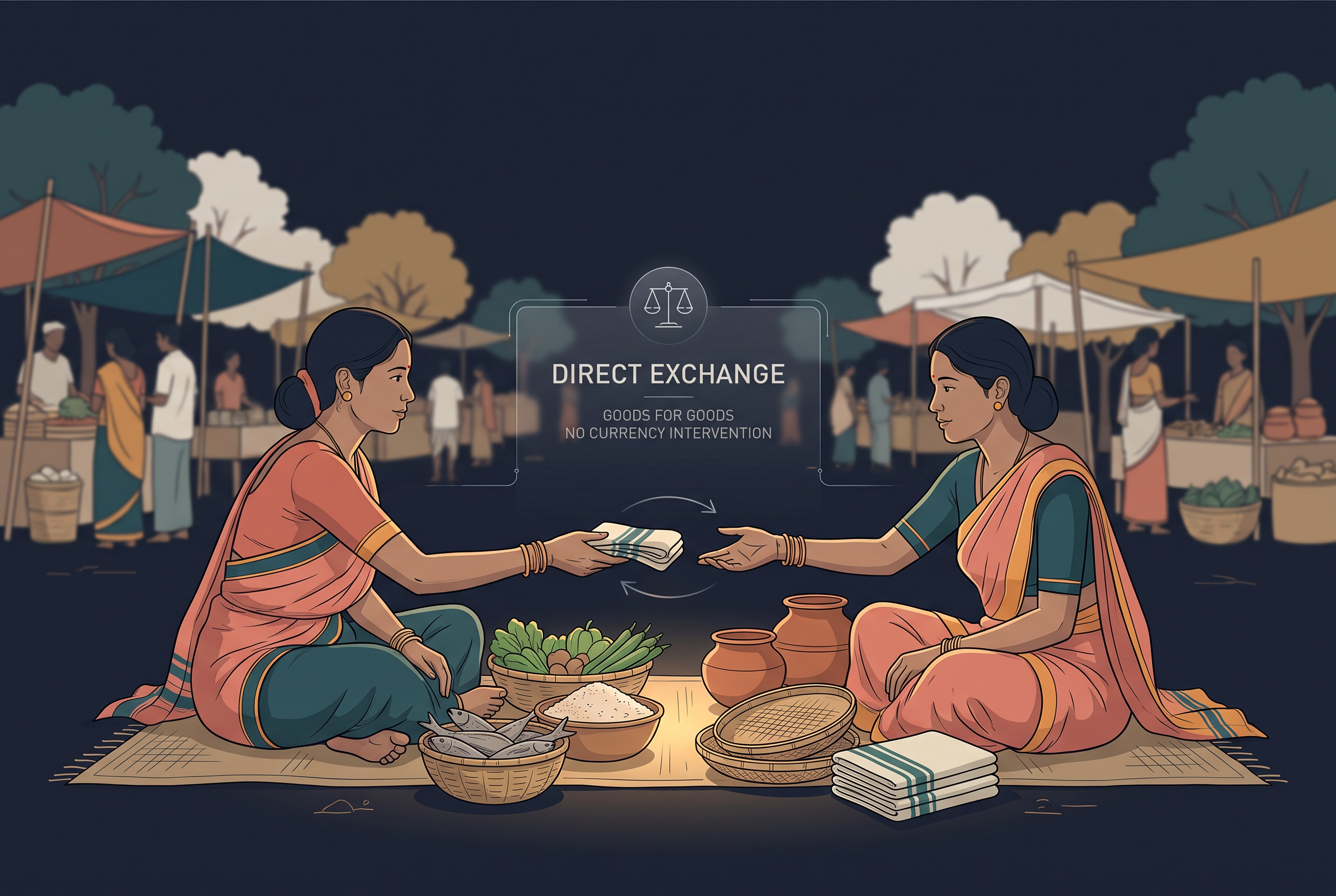
Fig. 8.1 – Barter at the Jon Beel Mela, Assam.
How Money Solved It
The difficulties of barter were overcome by the introduction of money. Money is anything widely accepted in exchange for goods, so that a seller no longer has to hunt for a buyer offering exactly what the seller wants. The potter can sell pots to anyone, keep the money, and later hand it to any plumber. One awkward two-way match is replaced by two easy one-way ones.
Long before paper notes and metal coins, this common medium took the form of rare objects that everyone valued and that were hard to fake. People used flintstones, obsidian, cowrie shells, tiger’s paws, whale’s teeth, dogs’ teeth, skins, furs, cattle, rice, peppercorns, salt, small tools, copper, silver and gold. What these things share is scarcity: because they were difficult to come by, a small quantity could stand in for a large amount of value.
Salt was prized enough to leave a mark on our language. The English word salary comes from the Latin salarium, meaning a payment made in salt. In those days, making salt from sea water was not yet understood, so it had to be dug out as rock salt, which was rare and costly — valuable enough to serve as a form of payment in its own right.
8.2 History Of International Trade
In ancient times, carrying goods over long distances was slow and risky, so most trade was restricted to local markets. People spent almost all their resources on the basic necessities of food and clothes. Only the rich could afford jewellery and costly dresses, and so the little long-distance trade that existed was a trade in luxury items.
One of the earliest examples of long-distance trade was the Silk Route, which connected Rome, in Europe, to China, across Asia, along a track about 6,000 km long. Traders carried Chinese silk, Roman wool, precious metals and many other high-value goods, picking up and dropping off commodities at intermediate points in India, Persia and Central Asia.
Ocean Trade And Empire
After the Roman Empire broke apart, European commerce revived during the twelfth and thirteenth centuries. As ocean-going warships were developed, sea trade between Europe and Asia grew, and in the course of these voyages the Americas were discovered.
From the fifteenth century onwards, European colonialism began. Alongside a trade in exotic commodities, a new and brutal form of trade emerged: the slave trade — the buying, forced transport and sale of human beings as property. The Portuguese, Dutch, Spaniards and British captured people in Africa and shipped them against their will to the newly reached Americas, to work as forced labour on plantations. Fig. 8.2 reproduces an American advertisement from 1829, announcing enslaved people for sale or temporary hire. Buyers paid as much as $2,000 for a skilled, healthy person, and such sales often tore families apart, separating members who never saw one another again.
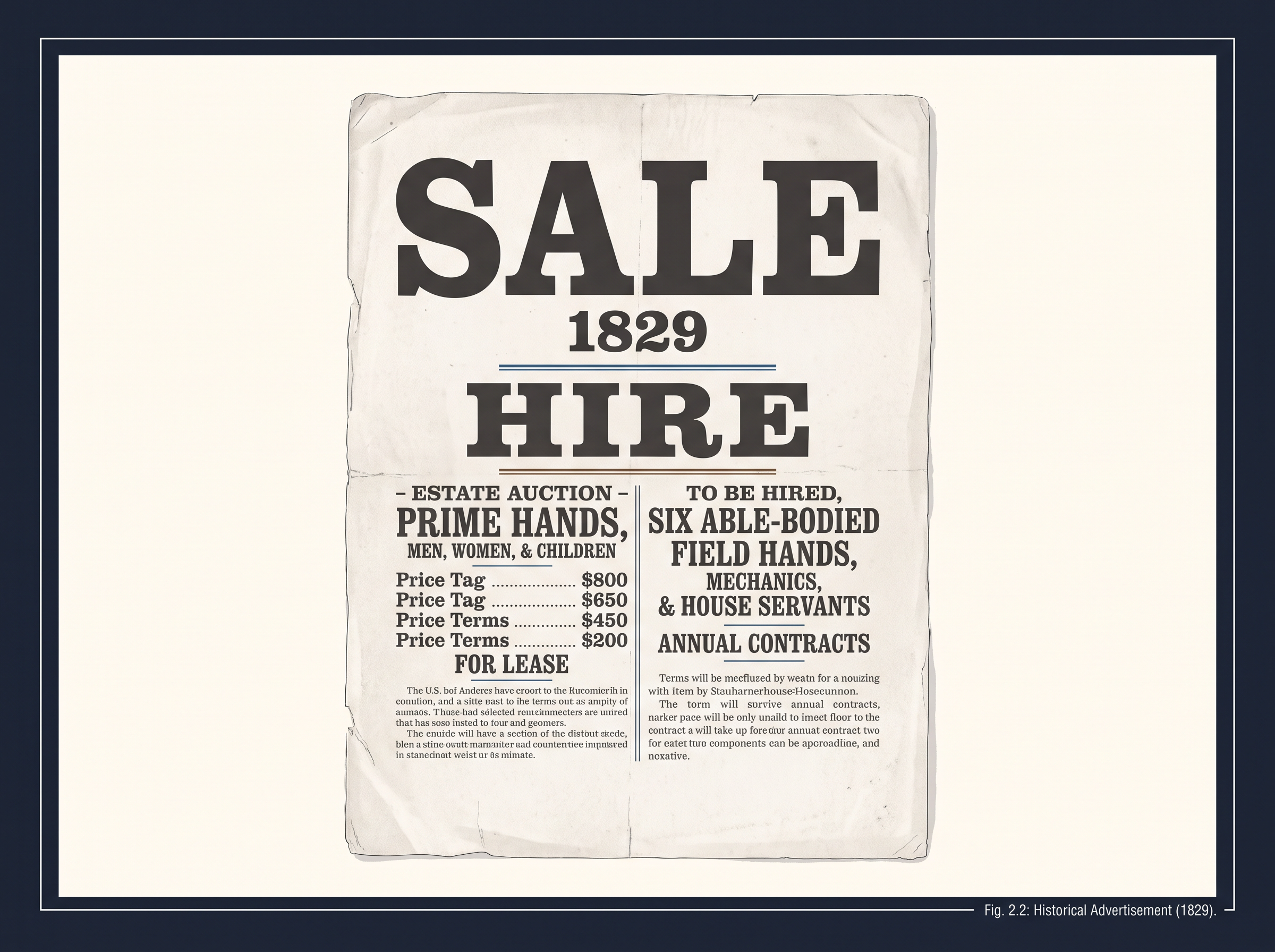
Fig. 8.2 – Advertisement for a slave auction, 1829.
The slave trade remained a hugely profitable business for more than two hundred years, until it was abolished — in Denmark in 1792, in Great Britain in 1807, and in the United States in 1808.
When Machines Changed What Was Traded
The Industrial Revolution changed not just how much was traded but what was traded, and who gained. Factories needed raw materials, so demand for grains, meat and wool expanded. Yet the money value of these raw materials fell in relation to the manufactured goods made from them. Primary products — the unprocessed output of farming, mining and forestry, an idea you met in earlier classes — were now worth less than the finished articles.
A clear pattern took shape. Industrialised nations imported primary products as raw materials, then exported the finished, value-added goods back to the non-industrialised nations. Here, value added simply means the extra worth created when a raw material is turned into a finished product — cotton is cheap, but a shirt made from it sells for much more.
By the later half of the nineteenth century, the regions that produced primary goods had become less important in world trade, and the industrial nations had become each other’s main customers.
Wars, Tariffs And The First Rules
The two World Wars broke this open trading order. During the First and Second World Wars, countries imposed trade taxes and quantitative restrictions for the first time. A tariff is a tax a country places on goods coming in from abroad; a quantitative restriction is a direct limit on how much of a good may be imported. Both make foreign goods scarcer or dearer, and both slow trade down.
After the wars, countries tried to open trade up again. Organisations such as the General Agreement for Tariffs and Trade (GATT), which later became the World Trade Organisation, helped bring tariffs back down. You will meet the World Trade Organisation again, in full, later in this chapter.
8.3 Why Does International Trade Exist?
International trade grows out of specialisation — a country concentrating its effort on producing a limited range of goods or services that its land, climate, minerals and skills are especially suited to make. When countries specialise and practise division of labour, splitting production so that each does what it does best, the world economy as a whole produces more. And once a country makes far more of something than it can use itself, that surplus has to go somewhere. Each act of specialisation, therefore, gives rise to trade.
The Three Conditions For Trade
For trade between two countries to actually happen, three things have to line up.
The first is comparative advantage — the principle that a country gains most by making and exporting the goods it can produce relatively more efficiently than others, and buying in the rest. This holds even when one country could make everything better than the other: as long as each concentrates on what it is relatively best at, both end up with more than if each tried to make everything alone.
The second is complementarity — the fit between what one country has to sell and what another wants to buy. A surplus is only useful if someone, somewhere, has a matching need for it.
The third is transferability — whether a good can actually be moved from where it is made to where it is wanted, at a cost worth paying. A crop that spoils quickly, or a heavy material worth little per tonne, may simply be too difficult or costly to shift. Where all three conditions hold, trade follows, and in principle it leaves both trading partners better off.
Why No Country Opts Out
In modern times, trade has become the very basis of the world’s economic organisation, and it is closely tied to the foreign policy of nations — the goals that guide how a country deals with other countries. With transport and communication systems now so well developed, goods and messages move quickly and cheaply across the globe. As a result, no country is willing to give up the benefits it gains by taking part in international trade.
8.4 Basis Of International Trade
Trade rests on difference. Where two countries can make exactly the same things at exactly the same cost, neither has any reason to buy from the other. It is because the world is uneven — in what lies beneath the ground, what grows on it, and who lives on it — that trade has a basis at all. That unevenness can be sorted into a few main factors.
Differences In Natural Resources
The world’s natural resources are spread out unevenly, because countries differ in their physical make-up — their geology, relief, soil and climate. Geology, the make-up and structure of a region’s rocks, sets its mineral base, while differences in relief, the height and shape of the land, decide which crops and animals it can raise. Lowlands, being flat and fertile, have greater agricultural potential; mountains, by contrast, draw tourists and support a tourism trade rather than a farming one.
Minerals themselves are unevenly distributed across the world, and where they do occur they provide the raw base for industrial development. A country rich in ores can build industries that a country without them simply cannot.
Climate influences the flora and fauna — the plant and animal life — that can survive in a region, and so it shapes the range of goods a country can offer. Wool production suits cold regions, while bananas, rubber and cocoa grow only where the climate is tropical.
People And Their Cultures
Resources are only half the story; people are the other half. The size, distribution and diversity of a country’s population shape both the kind and the volume of goods it trades.
Culture matters in its own right. Distinctive forms of art and craft grow up in particular societies and come to be prized the world over. China produces the finest porcelains and brocades; the carpets of Iran, in south-west Asia, are famous; North African leather work and Indonesian batik cloth, from the islands of south-east Asia, are prized handicrafts.
The sheer size of a population cuts two ways. A densely populated country often has a large volume of internal trade but only a little external trade, because most of what its farms and factories produce is consumed at home. And the standard of living — how much people can afford to buy — sets the demand for better imported goods: where living standards are low, only a few can afford costly imports, so demand for them stays small.
Stage Of Economic Development
A country trades different things at different stages of its development. In agriculturally important countries, agro products are exchanged for manufactured goods. Industrialised nations do the reverse: they export machinery and finished products, and import food grains and other raw materials. The same country, as it industrialises, gradually shifts from the first pattern towards the second.
Foreign Investment
Developing countries often lack the capital — the money and equipment — needed to open up mining, oil drilling, heavy engineering, lumbering and plantation agriculture. Foreign investment can supply it. When industrial nations fund such capital-intensive industries abroad, they secure for themselves a steady supply of foodstuffs and minerals, and at the same time create new markets for their own finished goods.
Transport
In olden times, poor and slow transport confined most trade to local areas, and only high-value goods such as gems, silk and spices were worth carrying over long distances. The spread of rail, ocean and air transport, together with better refrigeration and preservation, changed that. Goods that once could not travel — perishable, bulky or cheap — now can, and trade has expanded across space as a result.
8.5 Balance Of Trade
The balance of trade records the value of the goods and services a country imports against the value of those it exports over a period. In plain terms, it compares what a country buys from the rest of the world with what it sells to the rest of the world.
The comparison can go two ways. If the value of imports is greater than the value of exports, the country has a negative, or unfavourable, balance of trade — it is buying more than it is selling. If the value of exports is greater than the value of imports, the country has a positive, or favourable, balance of trade — it is selling more than it is buying.
When The Balance Turns Negative
The balance of trade, and the wider balance of payments — which sets a country’s total earnings from abroad against its total spending abroad — carry serious consequences for an economy. A country’s financial reserves are its store of foreign currency and gold: the savings it draws on to pay for its dealings with other countries.
A lasting negative balance means a country spends more on buying goods than it can earn by selling its own. That gap has to be paid for out of reserves, year after year. If it continues, those reserves are steadily used up and eventually exhausted, leaving the country unable to pay for what it needs from abroad.
8.6 Types Of International Trade
International trade can be sorted into two types, according to how many countries take part in a given trading arrangement.
Bilateral Trade
Bilateral trade is carried on between two countries and no more. The two enter into an agreement to trade specified commodities with each other. For example, country A may agree to sell some raw material to country B, on the understanding that B will buy some other specified item in return — a two-way deal fixed between just the two of them, or the same the other way round.
Multilateral Trade
Multilateral trade, as the name suggests, is conducted among many countries at once. A single country trades not with one partner but with a whole set of others. Within such an arrangement, a country may grant certain partners the status of Most Favoured Nation (MFN) — a promise to give them trade terms no less favourable than it gives to any other country.
8.7 Case For Free Trade
Free trade, also called trade liberalisation, is the act of opening up economies to trade with one another. It works by bringing down trade barriers — the obstacles a country places in the way of imports, such as tariffs. Once these barriers are lowered, goods and services from everywhere are free to compete with a country’s own domestic products and services.
That competition is the case in favour of free trade. When foreign goods can enter freely, domestic producers must match them on price and quality or lose customers, so buyers tend to gain cheaper goods and wider choice. But free trade does not touch every country in the same way, and its gains are not shared evenly.
The Uneven Playing Field
Globalisation — the growing interconnection of the world’s economies — together with free trade can work against the economies of developing countries. The playing field is not always level: conditions may be imposed on weaker economies that are unfavourable to them. Better transport and communication mean goods and services now travel faster and farther than ever before, but speed alone does not make an exchange fair.
The deeper criticism is this. Free trade should not simply throw open the markets of poorer countries to richer ones, while the developed countries quietly keep their own markets protected from foreign products. Openness that runs only one way is not really free trade at all.
Dumping
Countries also have to be cautious about dumped goods. Dumping is the practice of selling a commodity in two countries at prices that differ for reasons unrelated to the cost of making it — in effect, selling it abroad unusually cheaply. The low price is not explained by cheaper production; it is a deliberate choice, and that is what makes it unfair to producers who must cover their real costs. Alongside free trade, such cheap dumped goods can undercut and harm a country’s own domestic producers. It is worth pausing here to think about why dumping is becoming such a serious concern among trading nations.
8.8 World Trade Organisation
From GATT To The WTO
In 1948, a group of countries came together to free world trade from high customs tariffs — heavy taxes charged on imports at the border — and from various other restrictions. The agreement they signed was the General Agreement for Tariffs and Trade (GATT). For decades GATT stayed exactly that: an agreement between countries, not a standing body.
In 1994 the member countries decided to go further and set up a permanent institution to look after the promotion of free and fair trade among nations. GATT was transformed into the World Trade Organisation (WTO), which came into being on 1 January 1995.
What The WTO Does
The WTO is the only international organisation that deals with the global rules of trade between nations. It sets the rules for the whole global trading system, and it resolves disputes — the disagreements that arise between member countries over trade. This matters because it means trade quarrels are meant to be settled by agreed rules, rather than simply by which country is larger or stronger.
Its reach goes beyond goods. The WTO also covers trade in services, such as telecommunication and banking, and questions such as intellectual rights — the rights that people and firms hold over their inventions, designs and brand names.
The WTO’s headquarters are in Geneva, a city in Switzerland, in Europe. As of December 2024, 166 countries were members, and India has been one of its founder members from the very start.
The Case Against The WTO
The WTO has also been sharply criticised and opposed, by people worried about the effects of free trade and economic globalisation. They argue that free trade has not made ordinary people’s lives more prosperous. Instead, they say, it is widening the gulf between rich and poor by making already-rich countries richer — because the most influential nations in the WTO steer its rules towards their own commercial interests.
Two further charges are made. Many developed countries have not fully opened their own markets to products from developing countries, even as they press others to open up. And issues such as health, workers’ rights, child labour and the environment, critics say, are pushed aside in the rush to trade.
8.9 Regional Trade Blocs
Regional trade blocs are groups of nearby countries that agree to trade freely among themselves. They have come up to encourage trade between countries that share geographical proximity — closeness on the map — along with similarity and complementarity in the goods they trade, and to curb the trade restrictions the developing world often faces.
They developed as a response to the failure of the global organisations to speed up intra-regional trade — trade within a single region. Where the worldwide bodies moved too slowly, groups of neighbours built faster arrangements of their own. Their scale is now large: today, 120 regional trade blocs generate 52 per cent of the world’s trade. Fig. 8.3 sets that share beside the rest.
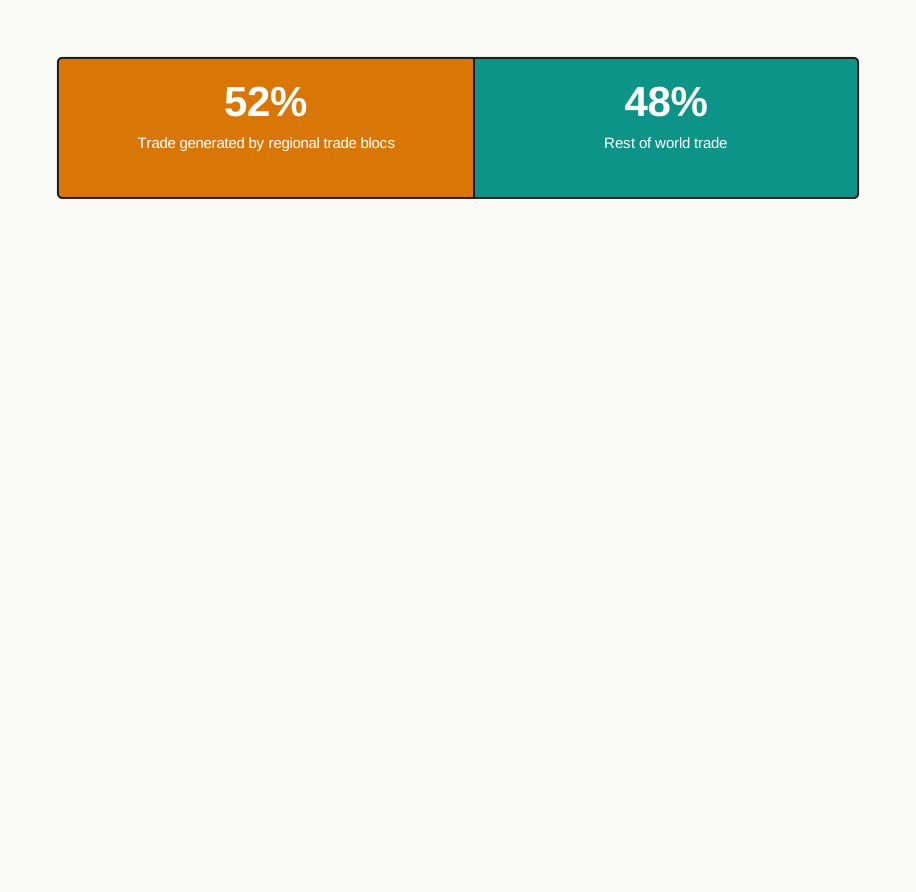
Fig. 8.3 – Share of world trade generated by regional trade blocs.
Free Inside, Walled Outside
Within a bloc, member nations remove trade tariffs on each other’s goods and encourage free trade among themselves. That is the gain. But it carries a risk looking forward. As each bloc lowers the barriers inside itself, the walls between one bloc and another may harden — and in future, free trade between different trading blocs could become increasingly difficult.
8.11 Gateways Of International Trade
8.11.1 Ports
The chief gateways of the world of international trade are its harbours and ports. Almost all cargo, and many travellers, pass from one part of the world to another through these ports. They are the doors through which trade actually enters and leaves a country.
A port provides the facilities for docking, loading, unloading and storing cargo. To keep these running, the port authorities maintain navigable channels — stretches of water kept deep and clear enough for ships to pass — arrange tugs and barges to move vessels and goods about, and provide labour and managerial services.
The importance of a port is judged by the size of the cargo and the number of ships it handles. In fact, the quantity of cargo passing through a port is a good indicator of the level of development of its hinterland — the inland area a port serves, whose goods flow out through it and whose imports flow in. A busy port usually means a productive, well-developed region lying behind it. Fig. 8.4 shows the sheltered harbour at San Francisco.
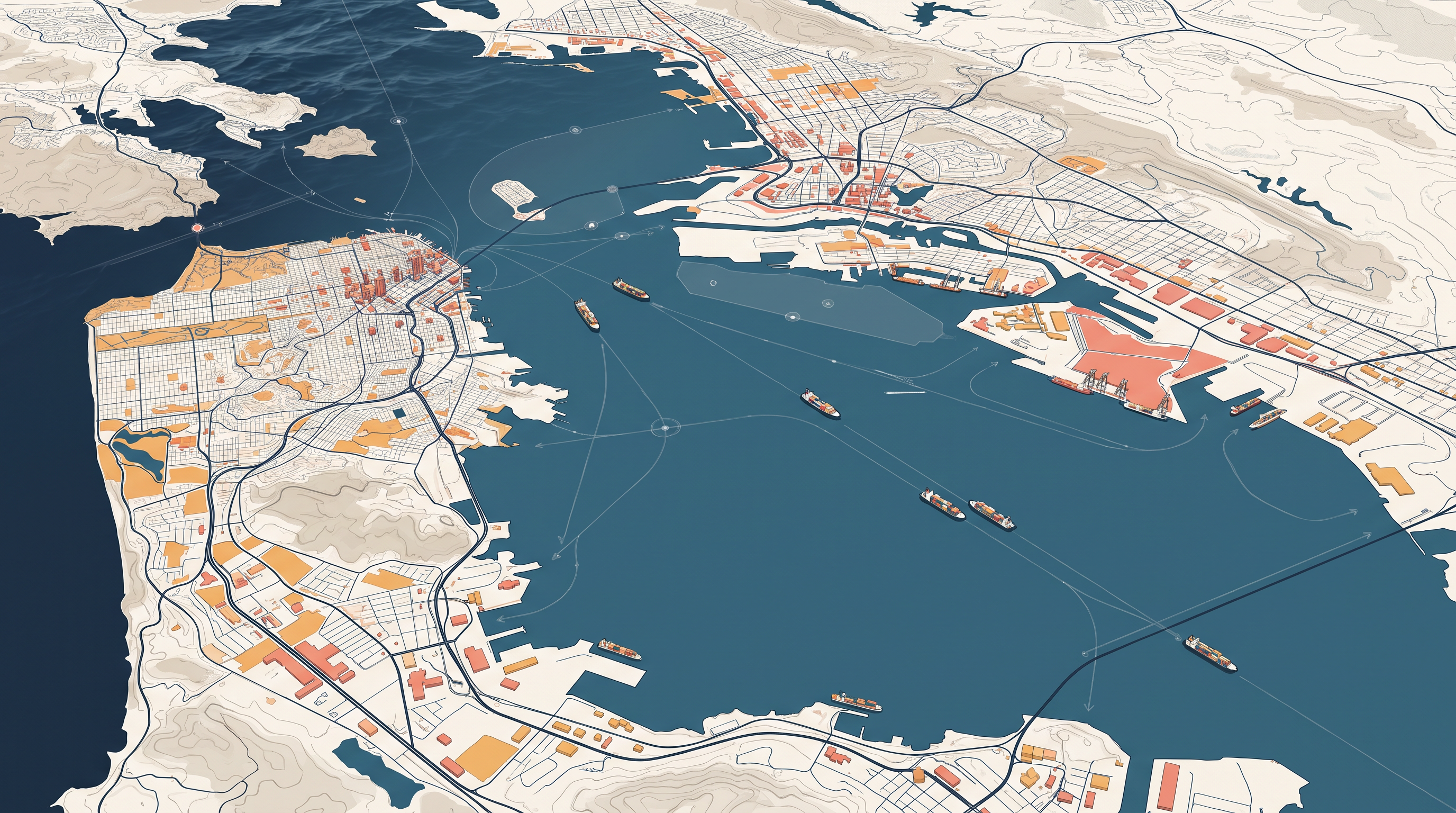
Fig. 8.4 – The sheltered harbour of San Francisco.
8.11.2 Types Of Port
Ports are generally classified according to the kind of traffic they handle. There are three different ways of sorting them — by the cargo they take, by where they lie, and by the special function they perform. Fig. 8.5 lays out the whole classification at a glance.
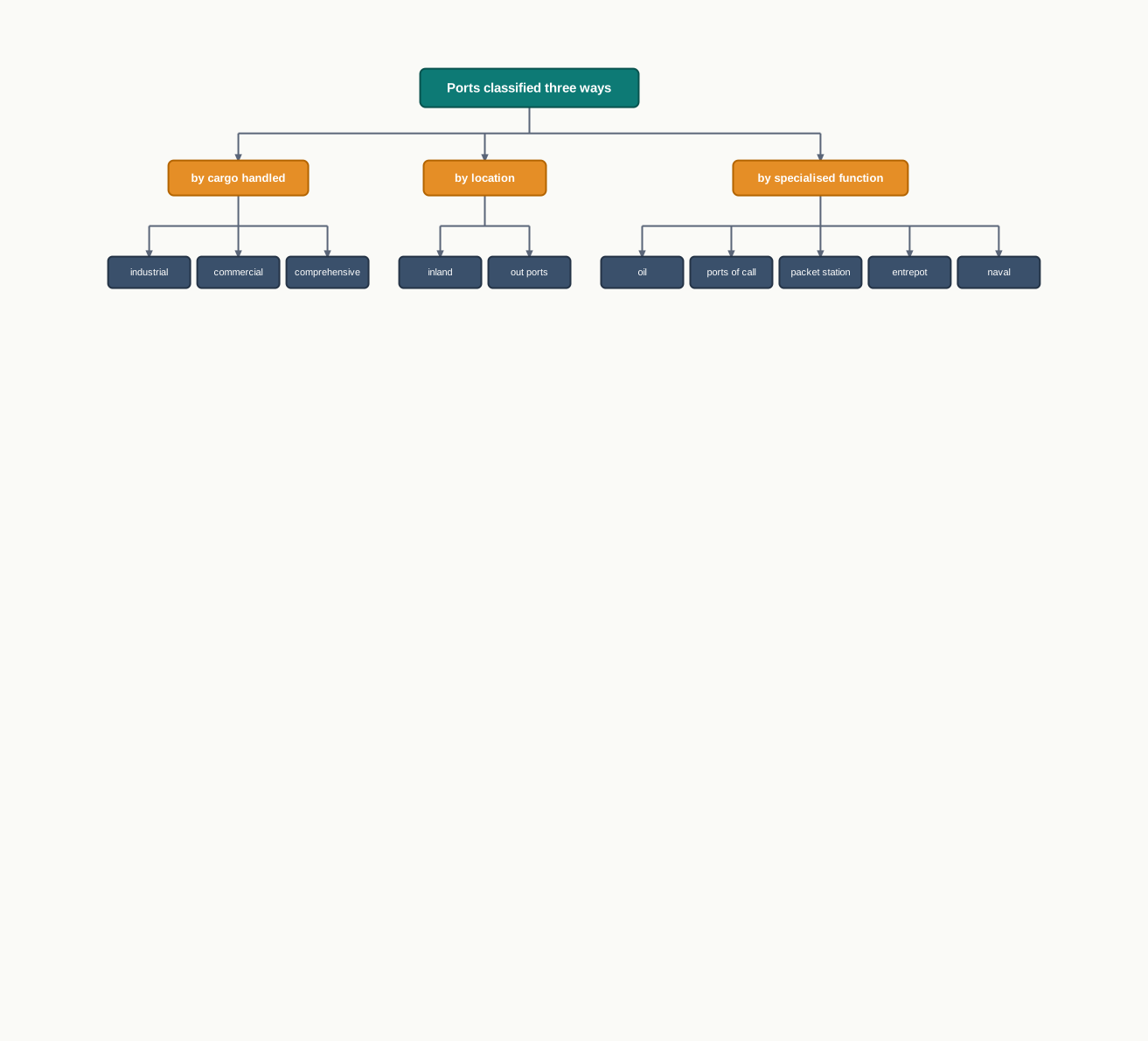
Fig. 8.5 – The classification of ports.
By Cargo Handled
Industrial ports specialise in bulk cargo — grain, sugar, ore, oil, chemicals and similar materials that are handled loose, in large quantities. Commercial ports, by contrast, handle general cargo — packaged products and manufactured goods — and also deal with passenger traffic. Comprehensive ports do both, taking bulk and general cargo in large volumes; most of the world’s great ports fall into this class. Fig. 8.6 shows one such commercial port.
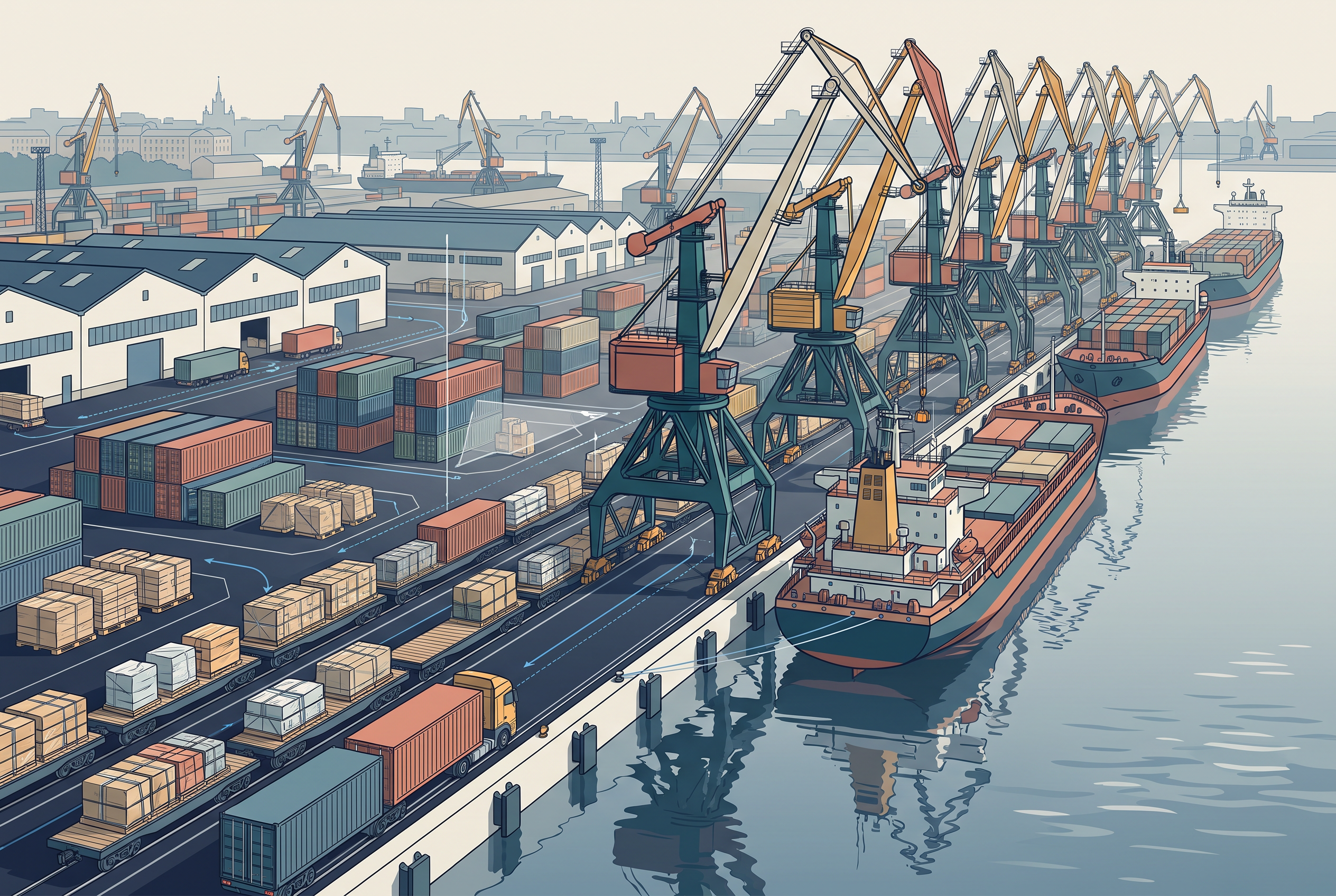
Fig. 8.6 – The commercial port at Leningrad.
By Location
Inland ports lie away from the sea coast, linked to it through a river or a canal, so that only flat-bottomed ships or barges can reach them. Manchester, in England, is linked to the sea by a canal; Memphis, in the United States, sits on the river Mississippi; the Rhine, a major river of western Europe, carries several ports such as Mannheim and Duisburg; and Kolkata, in eastern India, stands on the Hoogli, a branch of the Ganga.
Out ports are deep-water ports built away from a main, or parent, port. They serve the parent by receiving ships too large to approach it directly. A classic pairing is Athens, the capital of Greece, with its out port at Piraeus.
By Specialised Function
Oil ports deal in the processing and shipping of oil. Some are tanker ports, which load crude oil onto ships, and some are refinery ports, which process it. Maracaibo in Venezuela, Esskhira in Tunisia and Tripoli in Lebanon are tanker ports, while Abadan, on the Gulf of Persia, is a refinery port.
Ports of call began as calling points on the main sea routes, where ships anchored to refuel, take on water and pick up food, and which later grew into commercial ports. Aden, Honolulu and Singapore are good examples.
Packet stations, also known as ferry ports, are concerned only with carrying passengers and mail across short stretches of water. They occur in pairs, placed so that they face each other across the water — such as Dover in England and Calais in France, on opposite sides of the English Channel.
Entrepot ports are collection centres, where goods brought in from many different countries are gathered together for re-export. Singapore is an entrepot for Asia, Rotterdam for Europe, and Copenhagen for the Baltic region.
Naval ports carry only strategic importance. They serve warships and keep repair workshops for them. Kochi and Karwar are examples of such ports in India.
8.12 Summary
- Trade is the voluntary, mutually beneficial exchange of goods and services; international trade is that exchange carried on across national boundaries.
- Trade began as barter, the direct exchange of goods; the difficulty of matching wants was overcome by the introduction of money.
- Long-distance trade grew from the Silk Route, through European ocean commerce and the brutal slave trade, to the industrial pattern of raw materials traded for finished goods; after the World Wars, GATT and the WTO worked to lower tariffs.
- International trade exists because countries specialise, and it rests on comparative advantage, complementarity and transferability.
- The basis of trade lies in the differences between countries — in natural resources, population and culture, stage of development, foreign investment and transport.
- The balance of trade compares a country’s imports with its exports; a lasting negative balance drains its financial reserves.
- Trade may be bilateral, between two countries, or multilateral, among many.
- Free trade lowers barriers so goods can compete, but it can work unequally against developing countries, and cheap dumped goods can harm domestic producers.
- The WTO sets the rules of global trade and settles disputes, but is criticised for favouring powerful nations and neglecting health, labour and the environment.
- Regional trade blocs free trade among neighbours and now generate 52 per cent of world trade, though they may make trade between blocs harder.
- Trade can bring specialisation, higher production and shared prosperity, but also dependence, exploitation, rivalry and heavy strain on natural resources.
- Ports are the gateways of trade, classified by cargo (industrial, commercial, comprehensive), by location (inland, out ports) and by function (oil, ports of call, packet stations, entrepot, naval).
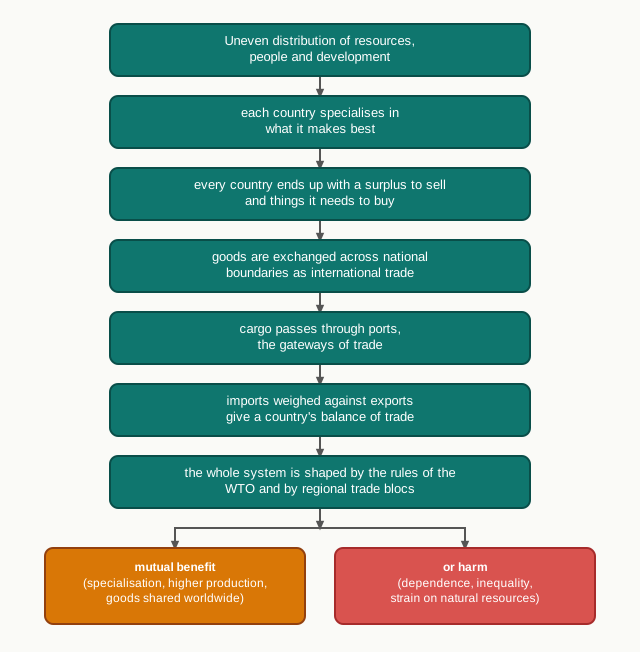
Fig. 8.7 – Summary of international trade.
What This Chapter Cannot Tell You
- It names the benefits and harms of trade but gives almost no current figures, so it cannot tell you how large any country’s trade is today, or who its main partners are.
- A single share such as 52 per cent of world trade shows that blocs are big, but not which blocs they are, how evenly the gains are spread, or who inside a trading nation actually benefits.
- The port examples show types, not volumes; they cannot tell you which gateway handles the most cargo, or how the region behind it is changing.
8.13 NCERT Questions
- Most of the world’s great ports are classified as:
- Naval Ports
- Oil Ports
- Comprehensive Ports
- Industrial Ports
- Which one of the following continents has the maximum flow of global trade?
- Asia
- North America
- Europe
- Africa
- What is the basic function of the World Trade Organisation? (about 30 words)
- Why is it detrimental for a nation to have negative balance of payments? (about 30 words)
- What benefits do nations get by forming trading blocs? (about 30 words)
- How are ports helpful for trade? Give a classification of ports on the basis of their location. (not more than 150 words)
- How do nations gain from International Trade? (not more than 150 words)
8.14 Check Your Concepts
- Under the barter system, why was it often difficult to complete an exchange, and how did the use of money overcome this difficulty?
- Distinguish between bilateral and multilateral trade.
- For trade to take place between two countries, three conditions must be met. Name the three and explain what each one means.
- The world’s natural resources are unevenly distributed between countries. Explain how this unevenness gives rise to trade.
- What is dumping, and why can dumped goods harm the domestic producers of the importing country?
- The chapter states that regional trade blocs generate 52 per cent of world trade. Calculate the percentage of world trade that is generated outside these blocs, showing your working.
- The quantity of cargo handled by a port is described as an indicator of the level of development of its hinterland. Explain the reasoning behind this statement.
- The World Trade Organisation’s stated aim is to promote free and fair trade. Why, then, has it been criticised and opposed?