Chapter 6: Tertiary And Quaternary Activities
For almost all of human history, a message could travel no faster than the person carrying it. A letter crossed a sea at the speed of a boat and a plain at the speed of a horse, a cart, and later a train. If you wanted news from far away, you waited — weeks, sometimes longer — because the message and the messenger were the same journey. Writing had preserved words on paper, but it had also tied them to whoever carried the paper: by hand, by animal, by road, rail or air.
Then, inside a single century, that tie was cut. The telegraph turned words into pulses down a wire. The telephone carried a living voice. Satellites relayed signals off the sky, and the mobile phone slipped a sending station into a pocket. A message no longer needed a messenger. The time it took to reach the far side of the world fell from weeks to minutes — and then to less than you could feel.
Notice what moved: nothing solid. No grain, no cloth, no steel — only words, facts and ideas. This is pure service. And once a call and a data file could arrive anywhere at once, the work of advising, calculating and processing information no longer had to sit beside the customer. Someone could do a full day’s work for a client half a world away, while that client slept.
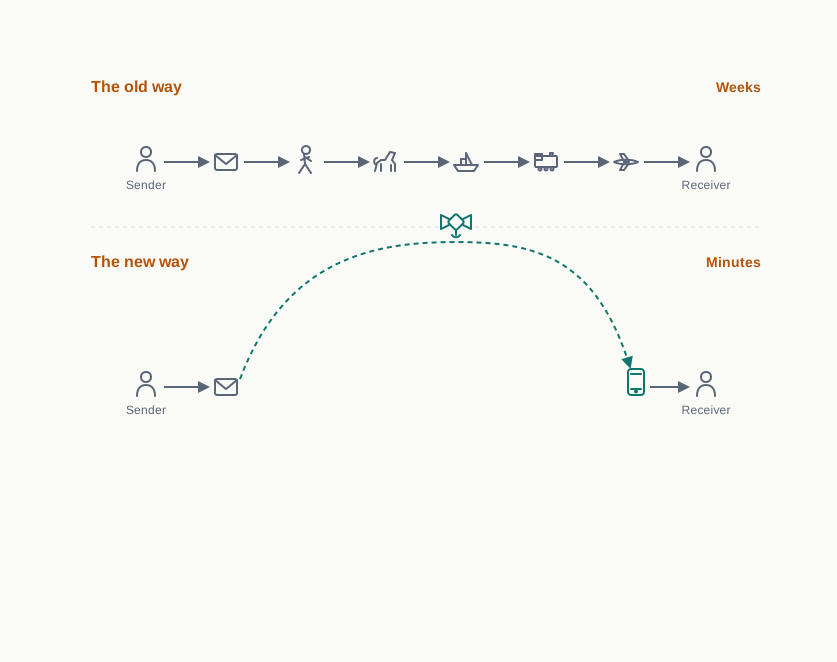
Fig. 6.0 – The historical link between message and messenger.
6.1 Understanding Tertiary Activities
When you fall ill, you go to a doctor, or your parents take you to a hospital for treatment. At school, your teachers teach you. If a dispute arises, a lawyer gives a legal opinion. Each of these people hands you something you cannot see or hold — a diagnosis, a lesson, an argument — and each is paid a fee for the skill behind it.
That exchange is the heart of a tertiary activity: a special skill offered to others in return for payment. Health, education, law, governance and recreation all work in this way. They rest on both theoretical knowledge and practical training, not on raw materials, so the people themselves are the resource. This is why manpower — skilled labour, professionally trained experts and consultants — is the main component of the service sector. Tertiary activities are, in short, the work of the service sector.
Where Services Sit Among The Sectors
In earlier classes you met the idea of dividing an economy into sectors, and that idea is worth reconnecting here. The primary sector takes materials straight from nature — farming, fishing, mining. The secondary sector turns those materials into goods in workshops and factories. The tertiary sector does neither: it provides services that help the other two run and that people draw on in daily life.
The balance between these sectors shifts as a country develops. In the initial stages of economic development, a larger proportion of people work in the primary sector, close to the land. In a developed economy the pattern is reversed: the majority of workers are employed in tertiary activity, with only a moderate proportion left in the secondary sector. A country’s move from field to factory to office is one of the clearest signs of economic growth.
Production And Exchange
Tertiary activity covers two kinds of work at once — production and exchange. Here production does not mean making an object. It means the ‘provision’ of a service that is then ‘consumed’ — a haircut given and received, a class taught and attended. Because nothing physical comes off a line, this output cannot be counted in tonnes or in pieces. It is measured indirectly, through the wages and salaries the work earns.
The other half is exchange. It covers trade, transport and communication — the facilities that move goods, people and messages, and so overcome distance. A tertiary activity, then, is a commercial output of services rather than the production of a tangible good, and it does not process physical raw materials. Its everyday examples are the work of a plumber, an electrician, a technician, a launderer, a barber, a shopkeeper, a driver, a cashier, a teacher, a doctor, a lawyer and a publisher.
Service Or Factory?
It helps to set a tertiary activity beside the secondary activity it grew out of. A secondary activity — a factory — leans on production techniques, machinery and factory processes; its value lies in how well it converts raw material into a finished product. A tertiary activity leans instead on the specialised skills, experience and knowledge of the worker. Both are paid work and both add value; the difference is that one depends on the machine and the other on the trained person. That is why a clinic or a law office needs skilled people far more than it needs a production line.
6.2 Types Of Tertiary Activities
By now you buy your books and stationery from a trader’s shop, travel by bus or rail, post letters, talk on a telephone, and turn to teachers for study and to doctors when you fall ill. Every one of these is a service you pay for, not a good you carry home. Trade, transport, communication and services are therefore the four broad tertiary activities this section works through. A single chart gathers them into one family and shows how they are classified.
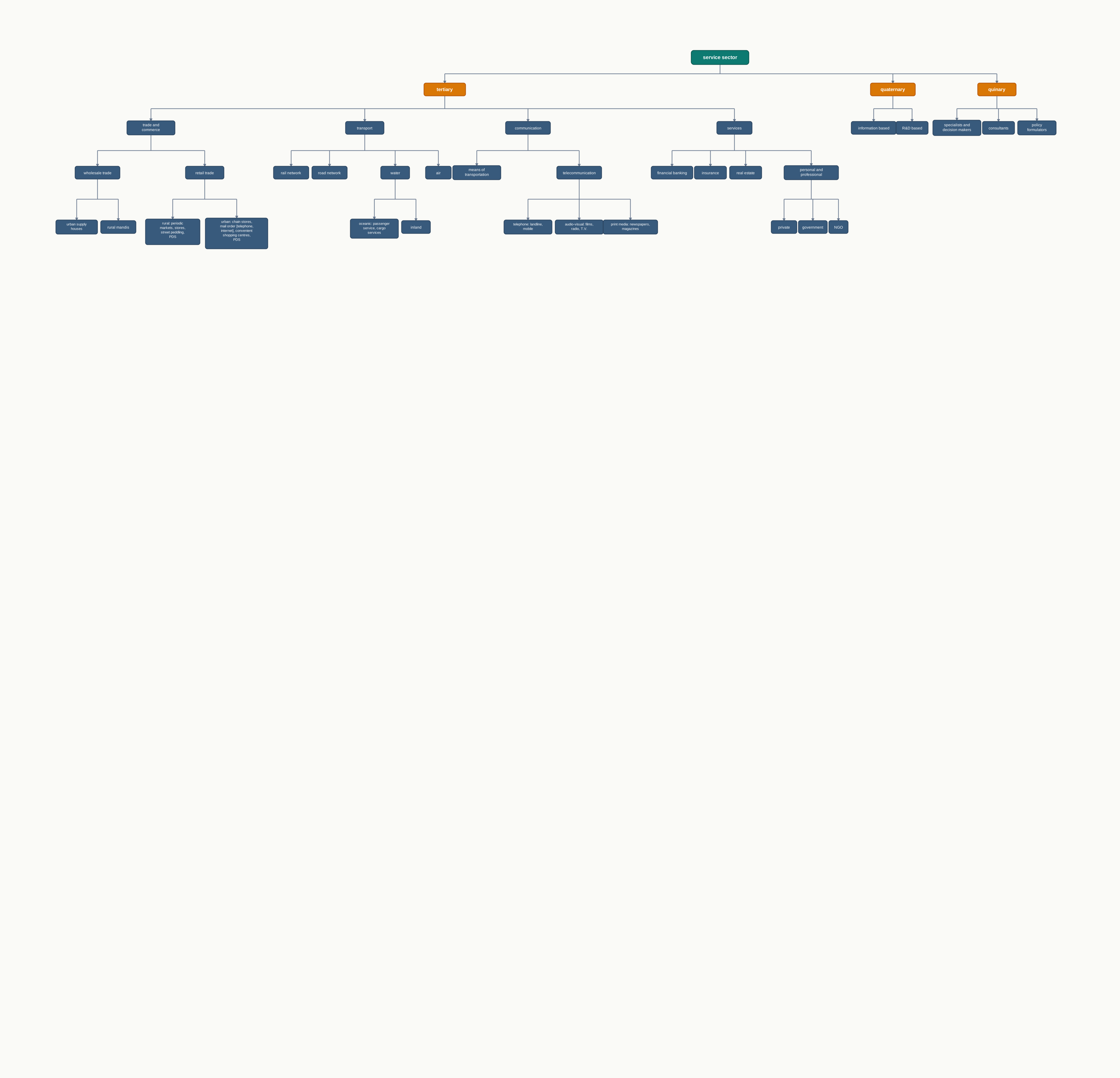
Fig. 6.1 – Classification of the service sector.
6.2.1 Trade And Commerce
Trade is essentially the buying and selling of items produced somewhere else. Every service in retail and wholesale trading, or commerce, is carried on specifically for profit. The towns and cities where all this buying and selling happens are called trading centres.
Trading did not begin with money. It grew from local barter — goods swapped directly for goods — up to money-exchange carried on at an international scale. Along the way it produced a web of centres and institutions: the trading centres themselves, and the collection and distribution points that feed them. Trading centres divide broadly into rural and urban marketing centres, and the difference between the two is really a difference in how specialised their services are.
Rural Marketing Centres
Rural marketing centres serve the settlements around them. They are quasi-urban — trading centres of the most basic kind, where personal and professional services are not yet well developed. Their work is to collect and distribute goods locally. Most contain mandis, the wholesale markets where farm produce is bought and sold in bulk, alongside ordinary retailing areas. They are not cities in their own right, but they matter, because they put within reach the goods and services that rural households most often need.
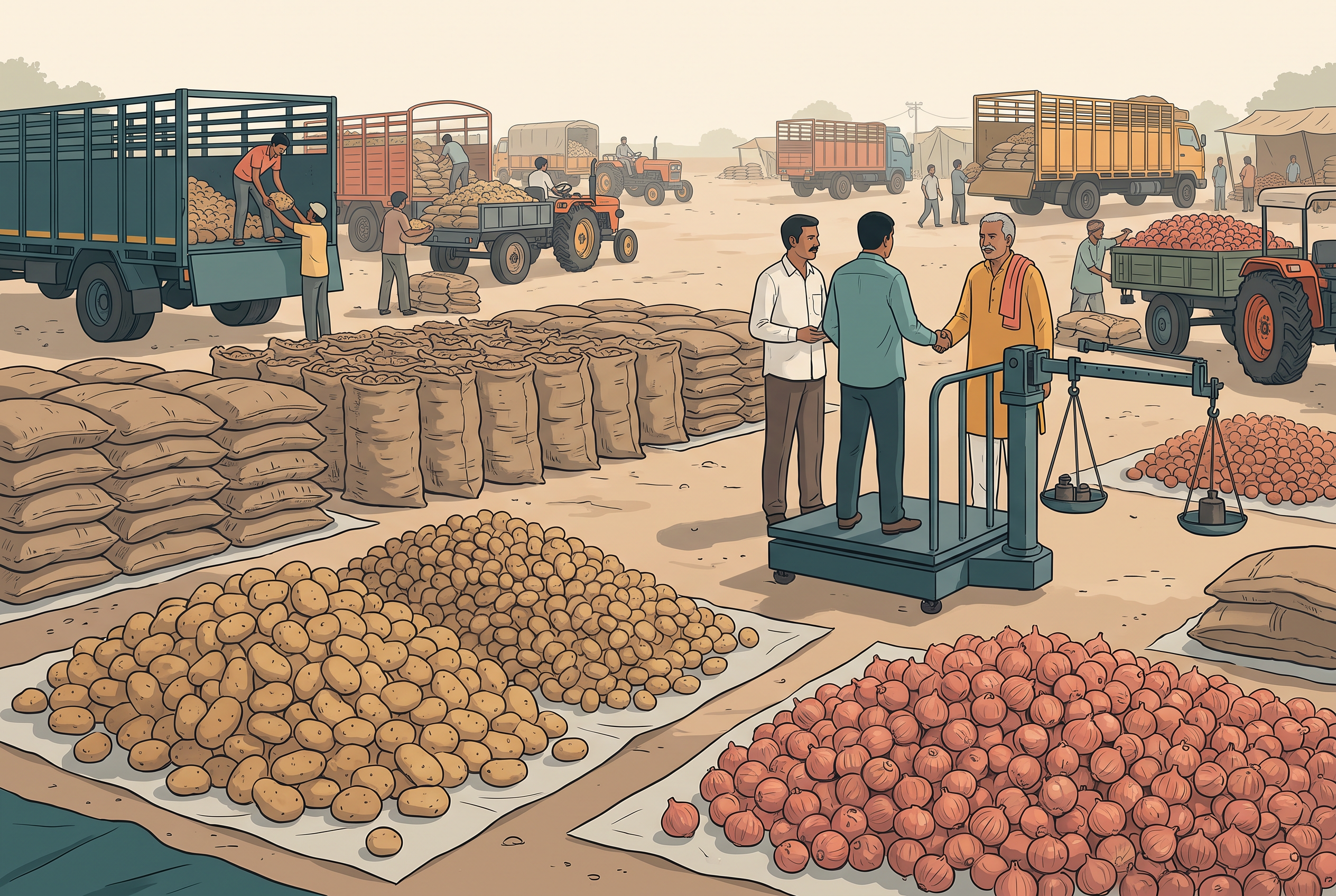
Fig. 6.2 – A wholesale vegetable market.
Periodic Markets
Periodic markets appear in rural areas that have no permanent market. Instead of trading every day in one place, they open at intervals — weekly or bi-weekly — so that people from the surrounding villages can bring their built-up demand to one gathering. Each market is held on a fixed day and then moves on to the next place. The traders stay busy right through the week by travelling a circuit, and a wide area is served without any single village needing a full-time market of its own.
Urban Marketing Centres
Urban marketing centres offer far more specialised services. Alongside everyday goods they supply the specialised goods and services that people need only occasionally, and they carry manufactured products of every kind. Whole specialised markets grow up inside them — for labour, for housing, and for semi-finished and finished products. Here too are the professionals a rural centre lacks: educational institutions, and teachers, lawyers, consultants, physicians, dentists and veterinary doctors.

Fig. 6.3 – A retail packed-food store.
6.2.1.1 Retail Trading
Retail trading is the business of selling goods directly to the people who will use them. Most of it happens in fixed shops built for nothing but selling. Yet a great deal of selling never touches a shop at all: street peddling, handcarts, trucks, door-to-door selling, mail-order, telephone orders, automatic vending machines and the internet are all forms of non-store retailing.
Retailing has also thrown up its own large-scale forms. Consumer cooperatives were the earliest big innovation, letting members pool their buying power. Departmental stores hand responsibility to the heads of separate departments, each buying its own goods and overseeing sales in its section of the store. Chain stores go furthest: by buying for many branches at once they purchase most cheaply of all, sometimes even directing manufacturers to make goods to their own specification. They employ skilled specialists, test an idea in one store, and if it works, apply the result across all of them.
6.2.1.2 Wholesale Trading
Wholesale trading is bulk business. It runs not through retail shops but through a chain of intermediary merchants and supply houses. Some large stores, including chain stores, are big enough to buy straight from the manufacturer, but most retail shops draw their stock from these intermediaries instead.
The wholesaler does more than supply goods. Wholesalers often extend credit to retailers so freely that the retailer ends up trading very largely on the wholesaler’s capital rather than on money of their own.
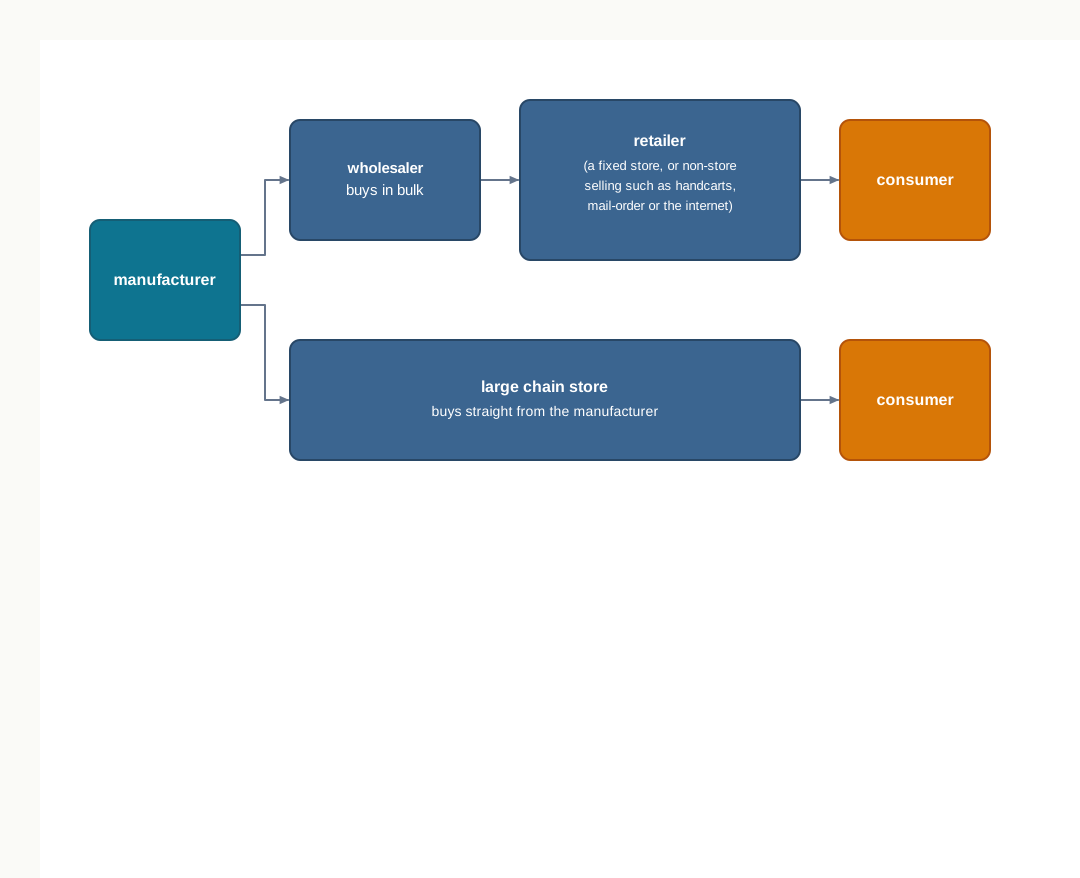
Fig. 6.4 – Supply chains in wholesale and retail trading.
6.2.2 Transport
Transport is the service by which people, materials and manufactured goods are physically carried from one place to another. It is an organised industry built to meet a basic human need — the need to move. A modern society cannot produce, distribute or consume goods without speedy, efficient transport, and at every stage the value of the goods is raised by the very act of carrying them closer to where they are wanted.
Distance for transport is not one thing but three. Km distance is the plain length of the route on the ground. Time distance is how long the journey takes. Cost distance is what the journey costs to make. When a firm chooses how to send something, it is usually time or cost, not sheer length, that settles the choice of mode — a longer route that is faster or cheaper often wins. Mapmakers can even draw isochrone lines — ‘iso’ meaning equal, ‘chrone’ meaning time — joining all the places that can be reached in the same travelling time from a starting point.
As transport routes multiply, places link up into a network. A network is built from nodes and links. A node is a meeting point of two or more routes — a place where journeys begin or end, or any sizeable town along the way. A link is any single stretch of route joining two nodes. The more links a network carries, the better connected its places are.
6.2.2.1 Factors Affecting Transport
Two things shape a region’s transport above all: how much is demanded, and where the routes can run. Demand rises with population — the more people there are, the more transport they need. Routes depend on several conditions at once: where the cities, towns, villages, industrial centres and raw materials lie; the pattern of trade among them; the nature of the land in between; the type of climate; and the funds available to push a route through whatever obstacles the land throws up.
6.2.3 Communication
Communication services carry not goods but words and messages, facts and ideas. For most of their history they leaned on transport: a written message could travel only as fast as the hand, animal, boat, cart, train or aircraft that carried it, which is why every form of transport doubles as a line of communication. Where the transport network is efficient, news spreads easily along it. Only recently have mobile telephony and satellites cut communication loose from transport altogether. The two are still not fully separate, because the older, slower systems remain cheap — which is why post offices the world over continue to move enormous volumes of mail.
6.2.3.1 Telecommunications
Telecommunications rides on modern technology, and its gift is speed: a message that once took weeks now takes minutes, and with mobile telephony it is direct and instant from almost anywhere. The telegraph, morse code and telex that once carried urgent news have nearly vanished. Radio and television relay news, pictures and sound to vast audiences and, because they reach the many at once, are called mass media; they are central to advertising and entertainment. Newspapers report events from every corner of the world, satellite communication relays information from the earth and from space, and the internet has transformed the whole global communication system.
6.2.4 Services
Services work at many levels. Some serve industry, some serve people, and some serve both — a transport system carries factory freight and holiday travellers alike. Low-order services such as grocery shops and laundries are common and found almost everywhere; high-order services — the work of accountants, consultants and physicians — are rarer and more specialised. All are offered to those who can pay for them. The gardener, the launderer and the barber work mainly with their hands, doing physical labour; the teacher, the lawyer, the physician and the musician work mainly with their minds, doing mental labour.
Many services are now regulated or run by public bodies. Building and maintaining highways and bridges, running fire-fighting departments, and supplying or supervising education and customer-care are often handled by governments or companies. State and union laws have set up corporations to oversee and control the marketing of services like transport, telecommunication, energy and water supply. Professional services — chiefly health care, engineering, law and management — sit alongside these.
Where a service locates depends on what it needs from its site. Recreation and entertainment follow the market: a multiplex or a restaurant seeks out the Central Business District, the crowded commercial heart of a city where footfall is highest even though land there is the dearest. A golf course does the opposite, choosing cheaper land well away from that centre, because it needs space rather than crowds.
Personal services help people through their daily lives. Many of the workers who provide them have migrated from the countryside in search of work and arrive without formal skills, taking jobs as housekeepers, cooks and gardeners. This part of the workforce is largely unorganised — outside fixed firms, contracts or unions. One striking Indian example is Mumbai’s dabbawala, or tiffin, service, which carries home-cooked lunches to about 1,75,000 customers across the city every working day.
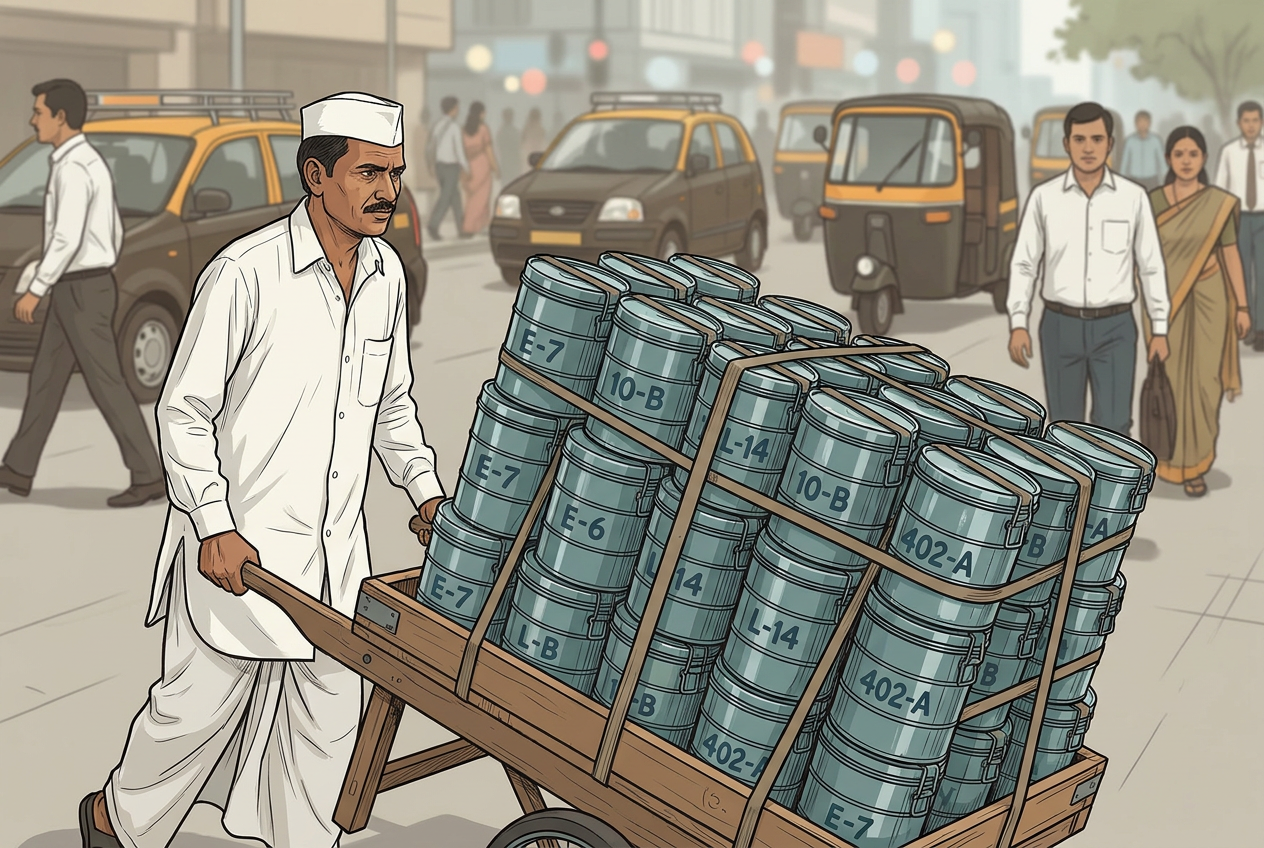
Fig. 6.5 – The dabbawala tiffin service in Mumbai.
6.3 People Engaged In Tertiary Activities
Today, most people at work are service workers. Every society, rich or poor, provides services of some kind — someone must always teach, heal, carry and sell. What differs from one country to another is how large a share of the whole workforce this takes up.
That share rises with development. In more developed countries, a higher percentage of workers is employed in providing services than in less developed countries, where more hands are still needed in primary and secondary work.
The direction of change matters as much as the level. Employment in the tertiary sector has been increasing, while employment in primary and secondary activities has stayed unchanged or fallen.
6.4 Some Selected Examples
The service sector is easiest to grasp through a few real examples. Two are taken up here — tourism, and the medical services a country like India now provides to patients from abroad.
6.4.1 Tourism
Tourism is travel undertaken for recreation rather than for business. It has grown into the world’s single largest tertiary activity, both in the number of registered jobs it supports — some 250 million — and in the revenue it earns, put at 40 per cent of total GDP, the Gross Domestic Product being the total value of goods and services an economy produces.
The gains do not stop with the traveller’s spending. Many local people are employed to supply the services tourists need: accommodation, meals, transport, entertainment and special shops. Around these, tourism draws up infrastructure industries, retail trading and craft industries turning out souvenirs.
Tourism does not flow evenly through the year. In some regions it is seasonal, because the holiday period depends on favourable weather; in others, the draw is strong enough that visitors keep coming all year round. The skiers in Fig. 6.6, on the snow-covered slopes of Switzerland — the mountainous, landlocked country in central Europe — show one such seasonal pull at work.
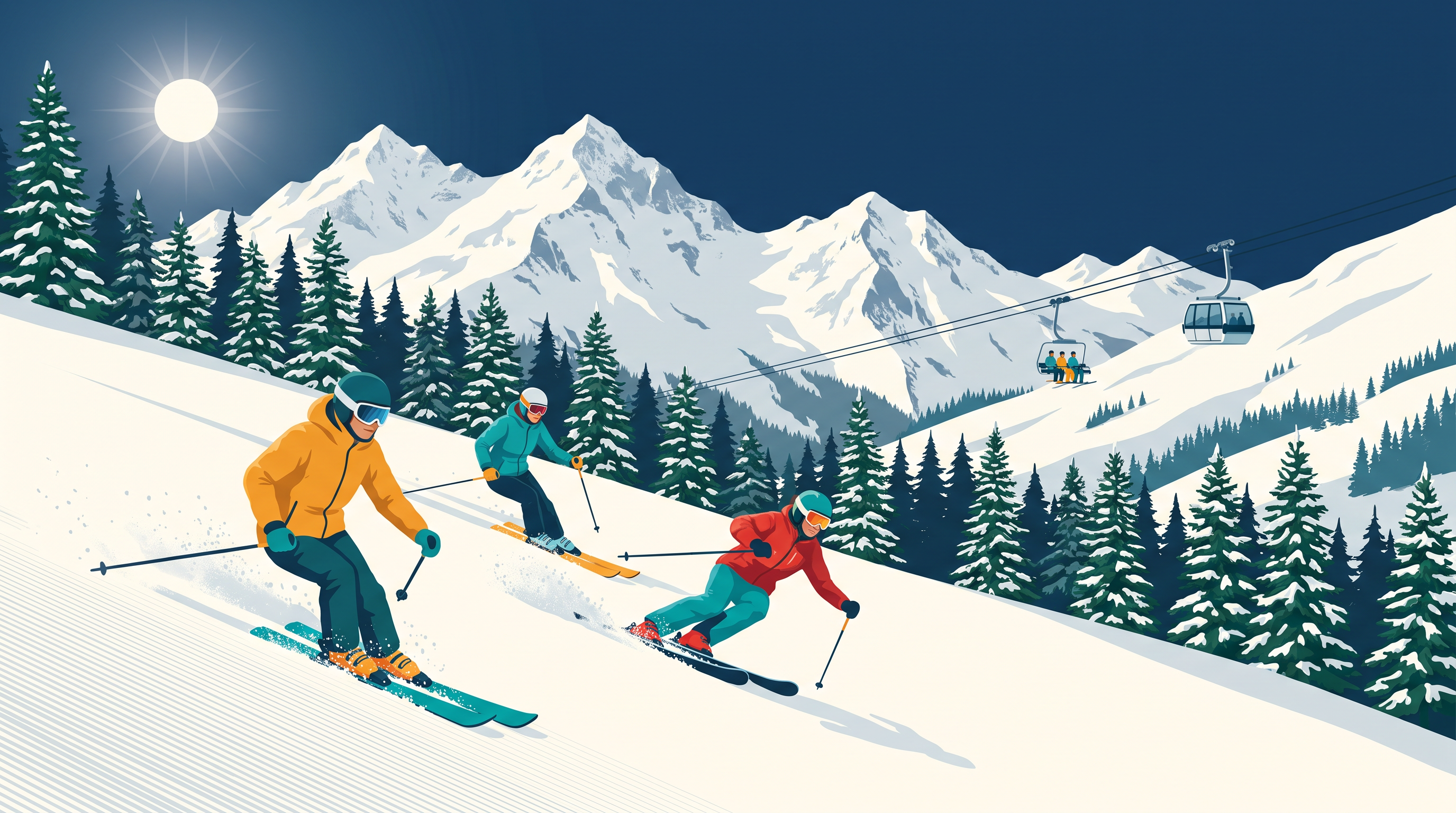
Fig. 6.6 – Winter-sports tourism in Switzerland.
6.4.1.1 Tourist Regions
A few kinds of place draw tourists again and again. The warmer lands around the Mediterranean Coast — the sea bordered by southern Europe and north Africa — and the West Coast of India, along the Arabian Sea, are among the most popular destinations in the world. Winter-sports regions, found mainly in mountainous areas, pull a different crowd, as do the many scattered scenic landscapes and national parks. Historic towns attract visitors too, for their monuments, heritage sites and cultural life.
6.4.1.2 Tourist Attractions
What actually makes a place attractive to tourists comes down to a handful of pulls, and climate is often the strongest. Most people from colder regions want warm, sunny weather for a beach holiday, and this is a chief reason for the importance of tourism in Southern Europe and the Mediterranean lands. The Mediterranean climate offers almost consistently higher temperatures than the rest of Europe, long hours of sunshine and low rainfall right through the peak holiday season. Winter holidaymakers have the opposite need — either warmth greater than at home, or snow cover fit for skiing.
Landscape is a second pull. Many people want to spend their holidays somewhere attractive — among mountains and lakes, along spectacular sea coasts, or in scenery not yet completely altered by human hands.
History and art form a third. The past of a place has its own attractiveness: people travel to see ancient or picturesque towns and archaeological sites, and to explore castles, palaces and churches.
Culture and economy make up the fourth. Some tourists come with a taste for experiencing ethnic and local customs. And a region that meets tourists’ needs cheaply is likely to become very popular. Out of this has grown home-stay as a profitable business — heritage homes let out to guests, as in Goa on India’s west coast and in Madikere and Coorg, in the hill country of Karnataka in southern India.
6.4.2 Medical Services For Overseas Patients In India
Services can now be sold across national borders, and health care is a striking case. About 55,000 patients from the U.S.A. visited India in 2005 for treatment. That is still small beside the millions of surgeries carried out each year within the U.S. healthcare system, yet India has emerged as the leading country for medical tourism in the world. World-class hospitals in its metropolitan cities treat patients from many countries. When medical treatment is combined with an international holiday in this way, it is commonly called medical tourism, and it brings substantial benefits to developing countries such as India, Thailand, Singapore and Malaysia.
The trade in medical services reaches even further than the travelling patient. Medical tests and their interpretation are now outsourced across borders. Hospitals in India, Switzerland and Australia have taken on certain medical tasks for others — from reading radiology images to interpreting Magnetic Resonance Images (MRIs) and ultrasound tests. Where such outsourcing is aimed at improving quality or providing specialised care, it holds real advantages for the patients whose scans are read.
6.5 Quaternary Activities
What do the chief executive of a multinational company — a firm operating across many countries — in Copenhagen or New York, and a medical transcriptionist in Bangalore, have in common? Copenhagen is the capital of Denmark in northern Europe; Bangalore is a city in southern India known for its knowledge industries; and a medical transcriptionist is someone who turns a doctor’s spoken notes into written records. At first glance these people share nothing. Yet all of them work in a part of the service sector that runs on knowledge rather than on muscle or machinery. This knowledge-oriented sector divides in two: quaternary activities and quinary activities.
Quaternary activities deal in information. They involve the collection, production and dissemination of information — the gathering of it, the making of it, and the passing of it onward. They centre on research and development, and may be seen as an advanced form of service, one that draws on specialised knowledge and technical skills. This flow of information — collected, produced and then spread — is what quaternary work actually does, as Fig. 6.7 sets out.

Fig. 6.7 – The information flow in quaternary activities.
Together with the tertiary sector, the quaternary sector has taken over from primary and secondary work as the main basis for economic growth. In developed economies, over half of all workers now sit in this ‘Knowledge Sector’, and the demand for information-based services has grown very fast — the work of mutual fund managers, tax consultants, software developers and statisticians. The people who fill office buildings, elementary schools and university classrooms, hospitals and doctors’ offices, theatres, and accounting and brokerage firms all belong to this category of service.
Like many tertiary functions, quaternary activities can also be outsourced — handed to a provider somewhere else. Because they work on information rather than on materials, they are not tied to any natural resource, not shaped by the local environment, and not necessarily fixed by a nearby market. That freedom is exactly what lets them be moved, even across the world.
6.6 Quinary Activities
At the very top of the knowledge sector sit the quinary activities. These are performed by the highest level of decision makers and policy makers, and they are subtly different from the knowledge-based industries the sector deals with more generally.
Quinary work turns on ideas and judgement. It focuses on the creation, rearrangement and interpretation of new and existing ideas, on the interpretation of data, and on the use and evaluation of new technologies. Because these skills are rare and highly paid, such work is often called a ‘gold collar’ profession. It forms another subdivision of the service sector, taking in senior business executives, government officials, research scientists, and financial and legal consultants. Their numbers are small, yet their importance in an advanced economy far outweighs those numbers.
It helps to hold quaternary and quinary work side by side. Quaternary work processes information — collecting it, producing it and passing it on. Quinary work sits a level above: it decides what the information means and what should be done about it. One prepares the knowledge; the other uses it to set direction.
Outsourcing And New Jobs
The reach of this knowledge economy shows clearly in outsourcing. It has opened up a large number of call centres in countries such as India, China, Israel, the Philippines and Costa Rica — the last a small nation in Central America — and across Eastern Europe, creating new jobs in each. Outsourcing goes to countries where cheap and skilled workers are available, and these tend to be out-migrating countries, whose people often leave in search of work. As outsourced work arrives, that out-migration may ease. In the countries that send the work out, meanwhile, job-seeking young people often resist the loss. What keeps the flow going is comparative advantage — the edge a place has in doing certain work more cheaply or efficiently than others.
Newer trends push quinary services further still. Knowledge processing outsourcing (KPO) and ‘home shoring’ — keeping work within the country as an alternative to sending it abroad — are two of them. KPO is not the same as Business Process Outsourcing (BPO): where BPO handles routine business processes, KPO is information-driven knowledge outsourcing that needs highly skilled workers, and it lets companies open up fresh business opportunities. Its examples run from research and development (R and D), e-learning and business research to intellectual property (IP) research, the legal profession and the banking sector.
A Staircase Of Activities
Step back, and a whole staircase comes into view. Human work has climbed from primary activity, close to the land, up through secondary activity in the factory, then into tertiary services, then quaternary information work, and finally quinary decision-making. Each rung rests on the ones below it. It is worth pausing on the question the climb itself raises: is this the beginning or the end — and what comes next?
6.7 The Digital Divide
What Outsourcing Means
The knowledge economy rests on the ability to move work around, and the clearest name for that is outsourcing. More precisely, outsourcing — or contracting out — is giving work to an outside agency in order to improve efficiency and cut costs. When the work is transferred to overseas locations, it takes the further name off-shoring, though in practice the two terms are often used together. The activities handed out in this way include information technology (IT), human resources, customer support and call-centre services, and at times even manufacturing and engineering.
Work Without Borders
Data processing shows how far this can go. It is an IT-related service that can easily be carried out in Asian, East European and African countries, where IT-skilled staff with good English are available at lower wages than in the developed world. So a company in Hyderabad, a major city in southern India, or in Manila, the capital of the Philippines, may work on a project using GIS techniques — geographic information systems, the computer tools for handling map-based data — for a client in a country like the U.S.A. or Japan. Overhead costs — the running costs of a business beyond wages — are also much lower, which makes it profitable to get such job-work done overseas, whether in India, China, or even a thinly populated country like Botswana, in southern Africa.
The chapter has already called quinary work a ‘gold collar’ profession, and that is only one of a family of such labels. As an activity, try to describe the nature of the work that lies behind each collar colour: red, gold, white, grey, blue and pink.
The Divide Itself
The chances that ICT — Information and Communication Technology — opens up are not shared out evenly. Wide economic, political and social differences separate countries, and how quickly a country can give its citizens ICT access, and the benefits that come with it, is the deciding factor. Developed countries have generally surged ahead while developing ones have lagged behind, and this gap is called the digital divide.
The divide also runs inside countries. In a large country such as India or Russia, it is almost unavoidable that metropolitan centres enjoy better connectivity and access to the digital world than the peripheral rural areas that lie beyond them.
6.8 Summary
- Tertiary activities make up the service sector: special skills offered in exchange for payment — in health, education, law, governance and recreation — resting on trained manpower rather than on raw materials.
- As an economy develops, workers shift out of the primary sector; in a developed economy most people are employed in tertiary activity, and the tertiary share keeps rising while the primary and secondary shares hold or fall.
- Tertiary work has two halves: production, the providing of services whose output is measured indirectly through wages and salaries; and exchange — trade, transport and communication — which overcomes distance.
- Trade is the buying and selling of goods made elsewhere, carried on for profit at trading centres. Rural marketing centres hold mandis and periodic markets; urban marketing centres offer specialised goods, professionals and markets of their own.
- Retail trading sells directly to consumers, in stores or through non-store forms; wholesale trading is bulk business through intermediaries who often finance retailers on credit.
- Transport carries people and goods, its distance measured in kilometres, time or cost; routes link places into networks of nodes and links, shaped by population demand and by the landscape, climate and funds along the way.
- Communication transmits words, facts and ideas. Once tied to transport, it was freed by mobile telephony and satellites; telecommunications and the mass media — radio, television, newspapers and the internet — now reach vast audiences.
- Services range from low-order and widespread to high-order and specialised; many are regulated or run by governments, and where a service locates depends on its market and on the cost of land.
- Tourism is the world’s largest tertiary activity, drawing visitors through climate, landscape, history and culture; health care too now crosses borders, through medical tourism and the outsourcing of diagnostics.
- Quaternary activities are knowledge work — the collection, production and spreading of information. Being tied to no resource, they are footloose and can be outsourced.
- Quinary activities are the highest decision- and policy-making, the ‘gold collar’ work; outsourcing — through BPO, KPO and off-shoring — moves tasks to where skilled labour is cheaper, driven by comparative advantage.
- The digital divide is the uneven spread of ICT access: between developed and developing countries, and between metropolitan and rural areas within the same country.
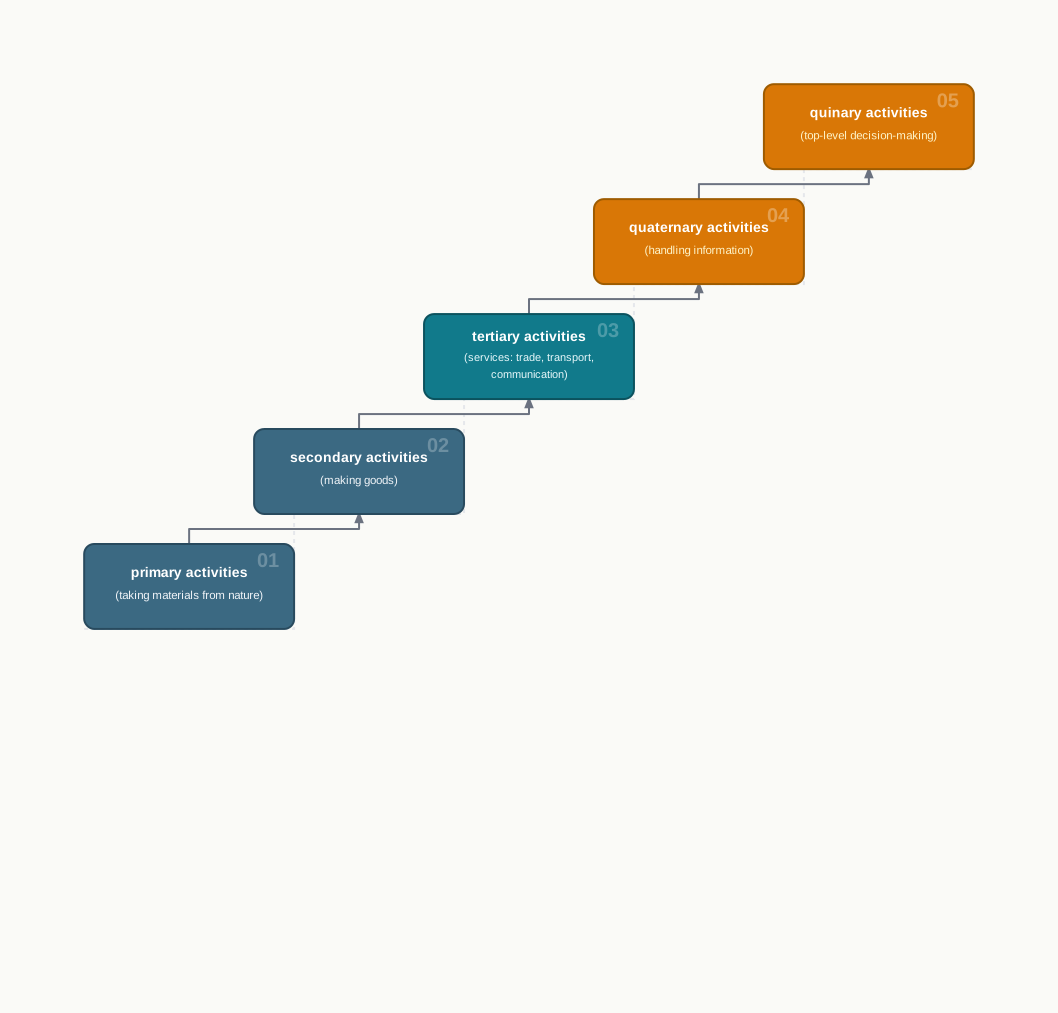
Fig. 6.8 – The staircase of economic activities.
What This Chapter Cannot Tell You
This chapter names the kinds of service but gives almost no figures, so it cannot show how large each kind is or how fast it is growing. The few numbers it does carry — tourism’s 250 million jobs, the 55,000 overseas patients of 2005 — are dated snapshots, not today’s picture. And while it points to the divide between metropolitan and rural connectivity, it cannot say where the gaps fall exactly, or what it would cost to close them.
6.9 NCERT Questions
- Which one of the following is a tertiary activity?
- Farming
- Trading
- Weaving
- Hunting
- Which one of the following activities is NOT a secondary sector activity?
- Iron Smelting
- Catching fish
- Making garments
- Basket Weaving
- Which one of the following sectors provides most of the employment in Delhi, Mumbai, Chennai and Kolkata.
- Primary
- Quaternary
- Secondary
- Service
- Jobs that involve high degrees and level of innovations are known as:
- Secondary activities
- Quaternary activities
- Quinary activities
- Primary activities
- Which one of the following activities is related to quaternary sector?
- Manufacturing computers
- Paper and Raw pulp production
- University teaching
- Printing books
- Which one out of the following statements is not true?
- Outsourcing reduces costs and increases efficiency.
- At times engineering and manufacturing jobs can also be outsourced.
- BPOs have better business opportunities as compared to KPOs.
- There may be dissatisfaction among job seekers in the countries that outsource the job.
- Explain retail trading service. (about 30 words)
- Describe quaternary services. (about 30 words)
- Name the fast emerging countries of medical tourism in the world. (about 30 words)
- What is digital divide? (about 30 words)
- Discuss the significance and growth of the service sector in modern economic development. (about 150 words)
- Explain in detail the significance of transport and communication services. (about 150 words)
- Find out the activities of BPO.
- Find out from a travel agent the documents you need to travel abroad.
6.10 Check Your Concepts
- Using Fig. 6.1, name the three main branches of tertiary activity, and give one sub-type listed under each.
- Contrast a rural marketing centre with an urban marketing centre. What can you obtain at one that you cannot easily get at the other, and why?
- Explain in your own words what a node and a link are, and why a network with more links leaves its places better connected.
- A traveller picks a longer road because it is quicker and costs less. Using the three ways of measuring transport distance, say which kind of distance decided the choice and which kind did not.
- Both quaternary and quinary activities are knowledge work. Explain how they differ, using one example of each from the chapter.
- A farm must stay where the fertile land is, yet an information-based service can be shifted to another country. Explain why the two behave so differently.
- Why does the Mediterranean draw so many beach tourists? Identify the single most decisive factor the chapter gives, and say what would happen to the tourist flow if that factor changed.